EP3000251B1 - Verfahren und system zur verwendung von spektrendaten in einem kognitiven drahtlosen zugangssystem - Google Patents
Verfahren und system zur verwendung von spektrendaten in einem kognitiven drahtlosen zugangssystem Download PDFInfo
- Publication number
- EP3000251B1 EP3000251B1 EP14732922.1A EP14732922A EP3000251B1 EP 3000251 B1 EP3000251 B1 EP 3000251B1 EP 14732922 A EP14732922 A EP 14732922A EP 3000251 B1 EP3000251 B1 EP 3000251B1
- Authority
- EP
- European Patent Office
- Prior art keywords
- bandwidth
- found
- service
- determining
- transmission channel
- Prior art date
- Legal status (The legal status is an assumption and is not a legal conclusion. Google has not performed a legal analysis and makes no representation as to the accuracy of the status listed.)
- Active
Links
Images


Classifications
-
- H—ELECTRICITY
- H04—ELECTRIC COMMUNICATION TECHNIQUE
- H04W—WIRELESS COMMUNICATION NETWORKS
- H04W72/00—Local resource management
- H04W72/50—Allocation or scheduling criteria for wireless resources
- H04W72/54—Allocation or scheduling criteria for wireless resources based on quality criteria
- H04W72/541—Allocation or scheduling criteria for wireless resources based on quality criteria using the level of interference
-
- H—ELECTRICITY
- H04—ELECTRIC COMMUNICATION TECHNIQUE
- H04W—WIRELESS COMMUNICATION NETWORKS
- H04W16/00—Network planning, e.g. coverage or traffic planning tools; Network deployment, e.g. resource partitioning or cells structures
- H04W16/14—Spectrum sharing arrangements between different networks
-
- H—ELECTRICITY
- H04—ELECTRIC COMMUNICATION TECHNIQUE
- H04W—WIRELESS COMMUNICATION NETWORKS
- H04W72/00—Local resource management
- H04W72/04—Wireless resource allocation
- H04W72/044—Wireless resource allocation based on the type of the allocated resource
- H04W72/0446—Resources in time domain, e.g. slots or frames
-
- H—ELECTRICITY
- H04—ELECTRIC COMMUNICATION TECHNIQUE
- H04W—WIRELESS COMMUNICATION NETWORKS
- H04W72/00—Local resource management
- H04W72/04—Wireless resource allocation
- H04W72/044—Wireless resource allocation based on the type of the allocated resource
- H04W72/0453—Resources in frequency domain, e.g. a carrier in FDMA
-
- H—ELECTRICITY
- H04—ELECTRIC COMMUNICATION TECHNIQUE
- H04W—WIRELESS COMMUNICATION NETWORKS
- H04W72/00—Local resource management
- H04W72/20—Control channels or signalling for resource management
- H04W72/21—Control channels or signalling for resource management in the uplink direction of a wireless link, i.e. towards the network
-
- H—ELECTRICITY
- H04—ELECTRIC COMMUNICATION TECHNIQUE
- H04W—WIRELESS COMMUNICATION NETWORKS
- H04W72/00—Local resource management
- H04W72/50—Allocation or scheduling criteria for wireless resources
- H04W72/54—Allocation or scheduling criteria for wireless resources based on quality criteria
Definitions
- the invention relates to a cognitive wireless communication system where a wireless terminal is allowed to utilize both licenced bands and unlicensed bands that are available.
- a transmission channel to a wireless terminal is allocated by utilizing gathered spectrum data.
- the invention also relates to a method for gathering spectrum data of licenced and unlicensed bands in a cognitive radio system.
- the spectrum data is gathered by spectrum sensing from databases and control channels of available wireless networks.
- a conventional spectrum allocation policy suffers from a shortage of spectrum.
- the shortage limits ability to introduce new wireless products, services, and applications such as pervasive broadband Internet access.
- the spectrum shortage limits also ability to make current systems (for example cellular telephony) more common and less expensive, to increase the data rates and ranges of existing products like WiFi, and the shortage limits even the ability to provide public safety authorities with the communications systems they need to do their jobs.
- the radio frequency spectrum bands are mostly allocated to existing licensed users. Thus, there does not seem to be much room for new wireless services.
- spectrum measurements conducted around the world reveal that many bands are used only part of the time and/or locally. With a proper spectrum sharing mechanisms and policies more efficient spectrum use could be achieved since the system needing more bandwidth could access also other bands than its own licensed band to achieve higher capacity.
- Traffic prediction may be performed for different traffic models, e.g. assuming exponentially distributed idle periods or using binomial distributed call arrival and gamma distributed call holding times.
- traffic model e.g. assuming exponentially distributed idle periods or using binomial distributed call arrival and gamma distributed call holding times.
- X. Li and S. A. Zekavat "Traffic pattern prediction and performance investigation for cognitive radio systems" in Proc. WCNC, pp. 894-899, March-April 2008 , it is described a 24-hour period prediction case for cognitive radio systems.
- a second problem is what kind of information is needed about the candidate frequency channels to be able to decide whether they are good candidates for a transmission channel of the application in mind.
- a third problem is what kind of decision-making is needed for channel selection when multiple parameters such as bandwidth and delay requirements of the application/service, spectrum occupancy and idle time statistics from different frequency bands are required.
- An aspect of the present invention is to provide a method for selecting most promising spectrum bands for an end-user application of a wireless system.
- a second aspect of the present invention is to provide a method for allocating suitable licensed or unlicensed bands to requested services.
- the allocation is based on the end-user application requirements and the data analyzed in frequency and time domain at the location of request.
- a third aspect of the present invention is to provide a system for measuring wireless communication landscape and based on the measurement results to allocate suitable licensed or unlicensed bands for different wireless communications systems.
- the aspects of the invention are achieved by a method and resource allocating system where multiple parameters are utilized in the analysis of the spectrum use in the area of interest.
- the allocating method takes into account the capacity of licensed and unlicensed bands.
- Spectrum data for the channel selection is gathered utilizing spectrum sensing, databases and control channels.
- the gathered data is analyzed to find most promising spectrum bands for a wireless system.
- the decision of the band to be allocated to the wireless system is based on the end-user application requirements.
- Spectrum occupancy, bandwidth of the revealed spectrum opportunities and their idle time characteristics are used in the channel selection process.
- the results of the analysis of the gathered spectrum data are stored as long term information to assist a dynamic spectrum management method in the given geographical area.
- An advantage of the invention is that it guarantees good service for the users already using the radio resources.
- the invention has the advantage that a combination of the analysis method and allocating method makes the channel selection faster compared to the channel selection methods known in the prior art.
- the invention has the advantage that it provides long term and short term information about the radio landscape that is utilized in determining if the bandwidth requirements of the requesting service could be fulfilled. Since the analysis is made already before the access request, the allocating information can be offered very rapidly to the apparatus that has requested a communications connection.
- the invention has the advantage that it takes into account the requirements of end-user applications and services requesting access to the band from the first beginning.
- the invention has the advantage that existing users can continue operation in the channels while a new service is allocated to an available channel supporting QoS requirements.
- the invention has the advantage that also offload channels for existing services may be utilized.
- the invention has the advantage that short term database allows classification and prediction in the bands of interest. This leads to intelligent channel selection for data and control transmission and thus improves the system performance both by increasing the throughput of the secondary system and also reducing interference caused towards primary users.
- the invention has the advantage that it classifies the traffic in different channels to deterministic and stochastic and uses specific prediction methods for different types of traffic to estimate what the following idle times in different channels will be.
- the transmission channel allocating system comprises a resource management server that is configured to allocate a transmission channel to a requested service, the resource management server comprising:
- the computer program according to the invention for allocating transmission channels in a dynamic spectrum management comprises:
- the allocating method according to the invention guarantees good service both for a new user and the users already using the radio resources.
- multiple parameters are utilized in the analysis of the spectrum use in a particular geographical area of interest.
- QoS quality of service
- the resource management server utilizes also spectrum data that can be retrieved from a database wherein sensed spectrum data of licensed and unlicensed bands have been saved in advance.
- the spectrum data includes for example channel occupation data and short and long term idle time statistics.
- the sensed spectrum data is analysed and saved in a database.
- the results of the spectrum analysis are stored as long term information to assist dynamic spectrum management method according to the invention in a particular geographical area.
- the resource management server utilizes the analysis results to find most promising spectrum bands for the wireless system based on the end-user application requirements. Spectrum occupancy, bandwidth of the revealed spectrum opportunities and their idle time characteristics are used in the analysis. Both long term (LT) information on the use of primary channels and short term (ST) data are used in defining which channels are best for data transmission.
- the resource management server finds out that a licensed band cannot be allocated to the requested service, it checks if at least one unlicensed band has the required bandwidth, low occupancy status and usable idle time statistics. If a usable transmission channel has been found, this is allocated to the new service request. In a case where also none of the unlicensed bands can be allocated to the requested service one or more existing services may be offloaded for making room to the new service request.
- the channel allocation method according to the invention enables efficient and fair spectrum sharing, increases throughput and decreases collisions with primary users.
- a requirement for the wireless device using the saved long term information is that it should be able to tell the bandwidth requirement and other parameters to the decision-making entity that manages the spectrum use.
- the invention brings new aspects to spectrum sharing by combining several application related parameters into analysis, generalizing the analysis to any frequency band, to any wireless system and to any end-user application in mind.
- the method according to the invention can be used in assisting the spectrum sharing for licensed systems to operate in spectrum bands that are not reserved for it.
- the proposed method can be easily applied to the unlicensed systems accessing opportunistically bands that are not licensed for them.
- the spectrum sharing method and system according to the invention uses spectrum sensing, databases and control channels to gather spectrum data over the frequencies of interest for example from 700 MHz to 3 GHz.
- Spectrum sensing is advantageously performed with high resolution, for example with 100 kHz frequency bins, to be able to obtain a detailed view on the spectrum in the location of interest.
- sensing is also performed frequently enough to be able to see short-term variations in spectrum use.
- the gathered spectrum data is analysed to reveal both the bandwidth of spectrum holes (with the accuracy of the resolution of the sensors) at each time instant as well as idle time statistics. Obtained data is then used to calculate spectrum occupancy with different bandwidths over the spectrum of interest. Sliding time window (for example over an hour) is advantageously used in calculations and the corresponding occupancy results are stored as long term statistics of the channels.
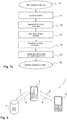
- Figure 1a depicts as an exemplary flow chart main steps of the spectrum sensing method.
- step 10 the spectrum sensing is started.
- step 11 of the flow chart the spectrum is sensed periodically with spectrum sensors of a proper measurement apparatus using rather narrow frequency bins.
- the binary results of the sensing are advantageously stored at least temporally in the memory of the measurement apparatus.
- the measurement results may also be stored in a memory unit of a resource management server for further processing.
- the measurement result for a bin may be '1' which means that the frequency bin was occupied. If the result is '0', it means that the frequency bin was idle at the time of sensing.
- a band of 10 MHz can be divided into 100 frequency bins each having a 100 kHz bandwidth. Spectrum sensing over the whole band provides binary results for each of the 100 bins at every time instant.
- the results are provided using the same timescale.
- the total measurement time is 1 hour, i.e. 3600 seconds
- the produced data includes 3600 binary samples for each 100 hundred channels (a matrix having 100 rows and 3600 columns).
- step 12 measurement results of the sensed bins are aggregated to several bandwidths in a proper information processing apparatus, for example the resource management server.
- Stored sensing results from the frequency bins are combined to analyse the frequency use with different bandwidths.
- the aggregation can be done to any bandwidth from the single frequency bin up to total sensing bandwidth. The aim behind this is to find suitable opportunities for different services and applications that may have different bandwidth requirements. For example a wireless video transmission requires more bandwidth than a voice transmission.
- the aggregation in step 12 is advantageously done to several different bandwidths and the results are stored for further use. Then, the device requesting for example 5 MHz bandwidth can obtain very useful information about the operation possibilities since the analysis done with the same bandwidth will provide informative data for the device.
- idle time statistics are calculated in the resource management server.
- the idle time statistics for the several bandwidths are calculated over a long time period to determine the lengths of idle and busy times and their distribution. Mean idle time and busy times for each analysed bandwidth are advantageously calculated.
- This step adds time domain information to the analysed channels. The added information may be utilized for finding channels providing long enough idle times for a requested operation and for reducing the amount of channel switching since more data can be transmitted during a long idle time period.
- spectrum occupancy is calculated in the resource management server.
- Spectrum occupancy i.e. the percentage of time when a particular channel is in use, is determined for each analysis bandwidths over a time period of interest.
- Very high spectrum occupancy values mean that the channel is not suitable for secondary operation nor is there room for spectrum sharing in general.
- occupancy alone without idle time statistics is not an adequate metric in characterizing channels.
- a channel having a 100 ms idle followed by a 50 ms busy time periodically has only a 33% occupancy but the possibility to opportunistically use very short idle times is very limited.
- Another channel might have 10 seconds long idle times and busy times, leading to 50% occupancy. Still, the latter channel is a much better choice for the opportunistic radio system when the channel is idle.
- step 15 measurement results are stored as long term parameters in a database whereto the resource management server has access.
- the analysed parameters are stored in the database for each analysis bandwidth to be used in the dynamic spectrum management.
- information coming from the control channels or databases may be stored in this database.
- the stored data corresponds to the bandwidth of the device/service aiming for opportunistic access in this particular band. Since different devices/services are using different bandwidths, the database should include information with several bandwidths as well to be rapidly usable.
- Figure 1b An example of sensing spectrum occupancy:
- the measurement apparatus is Fluke Networks PC Card Sensor attached to a laptop computer.
- the measurement apparatus is capable of monitoring 2.4 GHz and 5 GHz bands where the wireless local area networks (WLAN) are operating.
- the device measures the spectrum use over 641 frequency bins in the 2.4 GHz ISM band, each having a 156 kHz bandwidth. The duty cycle for each bin is obtained by the device.
- a suburban residential area and a library in the premises of a university campus were chosen as comparative measurement locations.
- the spectrum use in these areas was expected to differ significantly from each other for example regarding the busy hours.
- the measurements were conducted over a 24-hour period to investigate the spectrum occupancy at different times of day.
- Figure 1b shows the spectrum occupancy values for both studied locations with all analysis bandwidths (5 MHz, 10 MHz, and 20 MHz) over the 24-hour measurement period. The measurement is conducted on a normal working day from midnight until the following midnight. The first row shows the situation in the university library and the second row the occupancy in the suburban residential area. Significant differences between the locations can be seen both in the overall occupancy as well as in the busy hours. Clearly the office hours are most highly occupied in the university library. The highest occupancy values are found between 10 a.m. and 5 p.m. In the suburban residential area evening hours have the highest occupancy values, the busiest time being between 8 p.m. and 11 p.m.
- the university library is used by the students and university employees during working hours whereas in the suburban residential area the use is the highest during free time.
- the average spectrum occupancy defines the overall occupancy over the whole analysis bandwidth.
- the occupancy of over 20 MHz WLAN channels using the analysis method is rather high compared to the reported ISM occupancy values in the literature. However, reduction of the bandwidth has a strong impact on occupancy values. If the starting point is WLAN channel of 20 MHz, then in the suburban area can be found a 45% reduction of the spectrum occupancy when compared to a 10 MHz and 59% reduction when compared to 5 MHz. In the university library can be found a 40% reduction of the spectrum occupancy when compared to a 10 MHz and 52% reduction of the spectrum occupancy when compared to 5 MHz.
- Busy hour occupancy shown in Table I refers to mostly occupied single hour over the whole measurement period. In the suburban area the spectrum use is very flat without peaks during busy hours. In the university library the difference is much higher due to high use during office hours compared to other times.
- Figure 2 depicts an example of a spectrum management system 1 according to the invention where spectrum data created according to the measurement process of Fig.1 is utilized.
- a mobile device 3 requests a channel or link for a certain application and embeds the quality of service (QoS) requirements such as bandwidth and delay in the access request message 2 that it has sent to the resource management server 5.
- QoS quality of service
- the requested service can be allocated in the operator owned frequency band. If there is no room in the operator owned frequency band, the spectrum management system 1 starts a dynamic spectrum sharing process.
- required QoS requirements for example long term spectrum occupancy values
- Only channels with an occupancy value below a specified threshold are accepted for further decision process in the resource management server 5.
- idle time statistics over the recent short term period are checked for channel candidates (references 4 and 6).
- Channel(s) supporting the QoS requirements also in time domain are selected for transmission.
- Delay requirements of applications are taken into account as follows. Delay-tolerant applications and services can use shorter idle times and switch between candidate channels. But delay-sensitive applications should focus on licensed channels and channels with long idle times.
- the resource management server 5 uses both long term and short term information in decision-making.
- Long term database includes information which is collected for example over a day or a week.
- Short term information covers in detail the channel use for example over a few seconds or minutes.
- the resource management server 5 allocates 8 a suitable channel to the mobile device 3.
- the resource management server 5 comprises one or more processor units.
- the processor or processor means can comprise an arithmetic logic unit, a group of different registers and control circuits. It comprises also a data storing arrangement, such as a memory unit or memory means, wherein computer-readable information, measurement programs and channel measurement information can be stored, has been connected to the processor means.
- the memory means typically contain memory units, which allow both reading and writing functions (Random Access Memory, RAM), and memory units containing non-volatile memory, from which data can only be read (Read Only Memory, ROM).
- the resource management server 5 comprises also interface elements, which comprise an input/output or input/output means for receiving or sending information from or to mobile devices 3 and the database 7. The information received with the input means is transferred to be processed by the processor means of the resource management server 5.
- Figure 3a depicts as an exemplary flow chart a channel selection and allocation process according to the invention that may be utilized in the spectrum management system 1 of Fig.2 in context of delay-tolerant applications and services that can use short idle times when switching between available channels that may be in unlicensed bands.
- the channel selection and allocation process starts in step 30 where an application or service that needs an uplink and/or downlink channel is started in a mobile device 3.
- a channel request 2 arrives from the mobile device 3 to the resource management server 5.
- the resource management server 5 determines the embedded QoS requirements of the channel request, for example bandwidth.
- Channel requests may be prioritized for example according to time domain requirements such as idle time length when several channel access requests arrive at the same time from different mobile devices.
- the search for channels that are not licensed for the system/operator starts in a logical comparison step 40.
- the resource management server 5 checks from the database 7 availability of channels supporting the bandwidth requirements of the requested application or service.
- the database 7 includes long and short term spectrum information that has advantageously been received from spectrum sensing apparatuses, control channels of the wireless systems and also from other databases.
- step 40 If there are no proper available channels that have a wide enough bandwidth (alternative "NO" in step 40), the service request is discarded in step 45.
- step 40 If bandwidth requirements of the required service can be fulfilled (alternative "YES" in step 40), the occupancy status of these frequency bands is checked in step 44.
- channels with a low enough occupancy status may be selected for further decision process in a logical comparison step 46. If all the channels are heavily occupied (alternative "NO" in step 46), the service request is discarded in step 47 since there is no room for a new service in these frequency bands.
- the resource management server 5 checks idle time statistics at least over a short term in step 50.
- the idle time statistics of promising channels may be checked over both a long term and short term to find out the most suitable channels for the requested service.
- the long term and short term values may be checked from the database 7 by using different time windows in the query.
- a channel should offer long enough idle times for the requested service to enable fluent operation in that frequency band.
- step 52 At least one suitable channel supporting all the QoS requirements of the requesting service is found, then in logical comparison step 52 (alternative "YES" in step 52) at least one channel is allocated to the requested service in step 54.
- step 57 the mobile device 3 utilizes the channel allocated to it.
- step 52 If it is determined in step 52 that there are not channels fulfilling all QoS requirements of the requested service, the channel request is discarded in step 45.
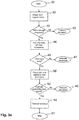
- Figure 3b depicts as an exemplary flow chart a channel selection and allocation process according to the invention that may be utilized in the spectrum management system 1 of Fig.2 in context of delay-sensitive applications and services that need longer idle times than delay-tolerant applications.
- the channel selection and allocation process starts in step 30 where a delay-sensitive application or service that needs an uplink and/or downlink channel is started in a mobile device 3.
- a channel request 2 arrives from the mobile device 3 to the resource management server 5.
- the resource management server 5 determines the embedded QoS requirements of the channel request such as bandwidth and delay for example.
- Channel requests may be prioritized for example according to time domain requirements such as delay or idle time length when several channel access requests arrive at the same time from different mobile devices.
- a logical comparison step 34 the delay sensitivity of the requested channel request is checked in the resource management server 5. If the request is delay-sensitive (alternative "YES” in step 34), the resource management server 5 checks in a comparison step 36 whether there is room in the licensed band of the service to support the requested service. If there is room for the requested service (alternative "YES” in step 36), a licensed band is allocated to the mobile device 3, step 37.
- the spectrum management system 1 If the requested service is not delay sensitive (alternative "NO” in step 34) or there is no room in the licensed band (alternative "NO” in step 36), then in the spectrum management system 1 it is started a search for channels that are not licensed for the system/operator.
- the search for channels that are not licensed for the system/operator starts in a logical comparison step 40.
- the resource management server 5 checks from the database 7 availability of channels supporting the bandwidth requirements of the requested application or service.
- the database 7 includes long and short term spectrum information that has advantageously been received from spectrum sensing apparatuses, control channels of the wireless systems and also from other databases.
- step 40 If there are no proper available channels having a wide enough bandwidth (alternative "NO” in step 40), there is still a possibility to offload some existing service to make room for the requested service. If the resource management server 5 can find a new slot for the existing service in a different frequency band to enable operation of the requested service (alternative "Yes” in step 42), then a request for offloading the existing services is sent in step 43. If the existing services cannot be offloaded (alternative "NO” in step 42), the service request is discarded in step 45a.
- step 40 If bandwidth requirements of the required service can be fulfilled (alternative "YES” in step 40), the occupancy status of these frequency bands is checked in step 44.
- Advantageously only channels with a low enough occupancy status may be selected for further decision process in a logical comparison step 46. If all the channels are heavily occupied (alternative "NO” in step 46), the service request is discarded in step 47 since there is no room for a new service in these frequency bands.
- the resource management server 5 checks idle time statistics at least over a short term in step 50.
- the idle time statistics of promising channels may be checked over both a long term and short term to find out the most suitable channels for the requested service.
- the long term and short term values may be checked from the database 7 by using different time windows in the query.
- a channel should offer long enough idle times for the requested service to enable fluent operation in that frequency band.
- step 52 At least one suitable channel supporting all the QoS requirements of the requesting service is found, then in logical comparison step 52 (alternative "YES" in step 52) at least one channel is allocated to the requested service in step 54.
- the requested services may belong to different priority classes.
- the priority classes of the requested services may be used in the channel selection process.
- the best channels offering the longest idle times are allocated to high priority services when they cannot be included in the licensed band operation.
- step 57 the mobile device 3 utilizes the channel allocated to it.
- step 52 If it is determined in step 52 that there are not channels fulfilling all QoS requirements of the requested service, the channel selection process returns to step 42 where utilization of an offload service is checked.
Landscapes
- Engineering & Computer Science (AREA)
- Computer Networks & Wireless Communication (AREA)
- Signal Processing (AREA)
- Quality & Reliability (AREA)
- Mobile Radio Communication Systems (AREA)
Claims (10)
- Verfahren zur Zuweisung eines Übertragungskanals für ein drahtloses Datenverarbeitungsgerät durch einen Ressourcenverwaltungsserver, wobei das Verfahren umfasst:- Empfangen einer Dienstanfrage von einem drahtlosen Datenverarbeitungsgerät;- Überprüfung (32) der Quality of Service (QoS) Anforderungen der empfangenen Dienstanfrage;- Überprüfung (32) der Bandbreite der empfangenen Dienstanfrage;- Überprüfen (34) der Verzögerungsempfindlichkeit der empfangenen Dienstanfrage;- Bestimmen (40), ob mindestens ein Übertragungskanal der verfügbaren nicht lizenzierten Bänder genügend Bandbreite für den angefragten Dienst hat;- Überprüfen (44) des Belegungsstatus der Übertragungskanäle mit der erforderlichen Bandbreite; und dem zulässigen Belegungsstatus gefunden wird- Überprüfen (50) Leerlaufzeitstatistiken aller Übertragungskanäle mit der erforderlichen Bandbreite und dem zulässigen Belegungsstatus;- Bestimmen (52), ob mindestens ein Übertragungskanal mit der erforderlichen Bandbreite, dem zulässigen Belegungsstatus und dem zulässigen Leerlaufzeitstatus gefunden wird; und- Zuordnen (54) des gefundenen Übertragungskanals zu dem angefragten Dienst, dadurch gekennzeichnet, dass, falls die Anfrage verzögerungsempfindlich ist, dann:- Bestimmen (36), ob es Raum in lizensierten Bändern gibt;- und falls ein solches Band gefunden wird, dann Nutzen (37) des gefundenen Bands;- und falls ein solches Band nicht gefunden wird, dann Bestimmen (40) ob mindestens ein Übertragungskanal der verfügbaren unlizensierten Bänder genug Bandbreite aufweist für den angefragten verzögerungsempfindlichen Dienst; und- falls ein Ergebnis des Bestimmens der benötigten Bandbreits ergibt, dass keiner der unlizensierten Bänder die erforderliche Bandbreite für den angefragten verzögerungsempfindlichen Dienst aufweist, dann wird ein bestehender Dienst abgeladen (42, 43), um für den angefragten verzögerungsempfindlichen Dienst Platz zu machen.
- Verfahren nach Anspruch 1, dadurch gekennzeichnet, dass der Belegungsstatus und die Leerlaufzeitstatistiken erhalten werden durch:- Erfassen (1 1) eines vorbestimmten Frequenzbands über ein vorgegebenes Zeitintervall durch ein Meßgerät periodisch von einem schmalen Frequenzbin zur Auswertung des Zeitabhängigen Belegungsstatus eines jeden Frequenzbins des vorbestimmten Frequenzbandes;- Speichern (11) des erfassten Belegungsstatus der Frequenzbins in einer Datenbank (7);- Abrufen der gespeicherten Belegungsstatusergebnisse der Frequenzbins aus der Datenbank (7) durch den Ressourcenverwaltungsserver (5) und Zusammenfassen (12) der Belegungsstatusergebnisse von einzelnen Frequenzbins mindestens auf eine Bandbreite;- Berechnen (13) durch den Ressourcenverwaltungsserver (5) von Leerlaufzeitstatistiken in dem vorbestimmten Zeitintervall für jede zusammengefasste Bandbreite;- Berechnen (14) durch den Ressourcenverwaltungsserver (5) aus der Leerlaufzeitstatistik eines Spektrumbelegungsprozentsatzes für jede zusammengefasste Bandbreite über einen Zeitraum von Interesse und;- Speichern (15) der berechneten Ergebnisse einer jeden zusammengefassten Bandbreite in der Datenbank (7), worin auch die verfügbaren Steuerungskanalinformationen von bestimmten drahtlosen Systemen gespeichert wurden, wobei die Datenbank (7) lokale, langfristige Radiospektrumstatistiken umfasst, auf die in Echtzeit zugegriffen werden kann für ein dynamisches Radiospektrummanagement.
- Verfahren nach Anspruch 2, dadurch gekennzeichnet, dass eine minimale zusammengefasste Bandbreite ein Frequenzbin ist und eine maximale zusammengefasste Bandbreite alle gemessenen Frequenzbins enthält.
- Verfahren nach Anspruch 2, dadurch gekennzeichnet, dass für jede zusammengefasste Bandbreite eine mittlere Leerlaufzeit und Belegungszeiten berechnet werden.
- Verfahren nach Anspruch 2, dadurch gekennzeichnet, dass eine Zeit zwischen zwei aufeinanderfolgenden Erfassungsperioden ausgewählt wird, um kurzfristige Veränderungen in der Spektrumsnutzung aller lokalen drahtlosen Systeme anzuzeigen.
- Verfahren nach Anspruch 5, dadurch gekennzeichnet, dass die Erfassungsperiode 1 Sekunde beträgt und das vorgegebene Messzeitintervall 24 Stunden beträgt.
- Verfahren nach Anspruch 2, dadurch gekennzeichnet, dass das Mssgerät sowohl lizenzierte Frequenzbänder als auch nicht lizenzierte Frequenzbänder misst.
- Ein Übertragungskanal-Zuweisungssystem (1) umfassend:- mobile Geräte (3), die in der Lage sind, mehrere lizenzierte oder nicht lizenzierte Frequenzbänder zu nutzen;- eine Datenbank (7) mit einer lokalen, langfristigen Radiospektrumstatistik; und- einen Ressourcenverwaltungsserver (5) umfassend:dadurch gekennzeichnet, dass der Ressourcenverwaltungsserver (5) zur Verarbeitung von verzögerungsempfindlichen Anfragen weiterhin umfasst:- Mittel zum Empfangen und Übertragen von Nachrichten von und zu drahtlosen Geräten (3) und der Datenbank (7);- Mittel zur Überprüfung der Dienstleistungsqualitätanforderungen (QoS) einer empfangenen Dienstanfrage eines Mobilgeräts (3),- Mittel zum Überprüfen der Verzögerungsempfindlichkeit einer empfangenen Anfrage;- Mittel zum Bestimmen von Bandbreiten aller verfügbaren Übertragungskanäle und ob mindestens ein Übertragungskanal mit einer erforderlichen Bandbreite gefunden wird;- Mittel zur Überprüfung des Belegungsstatus der verfügbaren Übertragungskanäle, die die erforderliche Bandbreite aufweisen;- Mittel zum Bestimmen, ob mindestens ein Übertragungskanal mit der benötigten Bandbreite und der zulässige Belegungsstatus gefunden wird,- Mittel zum Überprüfen der Leerlaufzeitstatistiken aller Übertragungskanäle mit der erforderlichen Bandbreite und der zulässigen Belegungsstatistik;- Mittel zum Bestimmen, ob mindestens ein Übertragungskanal mit der erforderlichen Bandbreite, die zulässige Belegungsstatistik und der zulässige Leerlaufzeitstatus gefunden wird; und- Mittel zur Zuordnung des gefundenen Übertragungskanals zum angefragten verzögerungsempfindlichen Dienst,- Mittel zum Bestimmen, ob es in lizensierten Bändern Raum gibt;- Mittel zum Nutzen des gefundenen Bands, falls mindestens ein Band gefunden wird;- und, falls kein Raum in den lizensierten Bändern gefunden wird, Mittel zum Bestimmen, ob mindestens ein Übertragungskanal der verfügbaren unlizensierten Bänder genug Bandbreite für den angefragten verzögerungsempfindlichen Dienst aufweist;- und, falls kein Kanal mit der erforderlichen Bandbreite gefunden wird in den unlizensierten Bändern, Mittel zum Abladen von einem bestehenden Dienst, um Platz zu machen für den angefragten verzögerungsempfindlichen Dienst.
- Das Übertragungskanal-Zuweisungssystem nach Anspruch 8, dadurch gekennzeichnet, dass zur Erstellung der Belegungsstatusstatistiken und der Leerlaufzeitstatistiken das Übertragungskanal-Zuweisungssystem weiterhin umfasst:- Mittel zum periodischen Erfassen eines vorbestimmten Frequenzbandes über ein vorgegebenes Zeitintervall periodisch durch einen schmalen Frequenzbin zur Auswertung des zeitabhängigen Belegungsstatus eines jeden Frequenzbins des vorbestimmten Frequenzbandes;- Mittel zum Speichern des erfassten Belegungsstatus der Frequenzbins in einer Datenbank (7);- Mittel zum Abrufen (5) der gespeicherten Belegungsstatusergebnisse der Frequenzbins aus der Datenbank (7) und Mittel zum Zusammenfassen von Belegungsstatusergebnissen einzelner Frequenzbins mindestens zu eine Bandbreite;- Mittel zum Berechnen (5) von Leerlaufzeitstatistiken des vorbestimmten Zeitintervalls für eine jede zusammengefasste Bandbreite;- Mittel zum Berechnen (5) eines Spektrumbelegungsprozentsatzes aus der Leerlaufzeitstatistik für eine jede zusammengefasste Bandbreite über einen Zeitraum von Interesse; und- Mittel zum Speichern (5) der berechneten Ergebnisse einer jeden zusammengefassten Bandbreite in der Datenbank (7), worin auch verfügbare Steuerkanalinformationen bestimmter drahtloser Systeme gespeichert wurden, wobei die Datenbank (7) lokale, langfristige Radiospektrumstatistiken umfasst, die sind in Echtzeit für ein dynamisches Radiospektrummanagement abrufbar sind.
- Ein Computerprogrammprodukt umfassend Computerprogrammcodemittel, die geeignet sind, um die folgenden Programmcodeschritte auszuführen, wenn das genannte Programm auf einem Computer ausgeführt wird, um Übertragungskanäle in einem dynamischen Spektrumsmanagement zuzuweisen, umfassend:- computerlesbaren Code zum Empfangen einer Dienstanfrage von einem drahtlosen Datenverarbeitungsgerät;- computerlesbaren Code zum Überprüfen der Dienstleistungsqualitätsanforderungen (QoS) der empfangenen Dienstanfrage;- computerlesbaren Code zum Überprüfen der Bandbreitenanforderungen der empfangenen Dienstanfrage;- computerlesbaren Code zum Bestimmen, ob die Dienstanfrage verzögerungsempfindlich ist;- computerlesbaren Code zum Bestimmen, ob mindestens ein Übertragungskanal der verfügbaren nicht lizenzierten Bänder eine ausreichende Bandbreite für einen angefragten verzögerungsempfindlichen Dienst aufweist;- computerlesbaren Code zur Überprüfung des Belegungsstatus der Übertragungskanäle mit der erforderlichen Bandbreite; und- computerlesbaren Code zum Bestimmen, ob mindestens ein Übertragungskanal mit der erforderlichen Bandbreite und dem zulässigen Belegungsstatus gefunden wird,- computerlesbaren Code zum Überprüfen der Leerlaufzeitstatistiken aller Übertragungskanäle mit der erforderlichen Bandbreite und dem zulässigen Belegungsstatus;- computerlesbaren Code zum Bestimmen, ob mindestens ein Übertragungskanal mit der erforderlichen Bandbreite, dem zulässigen Belegungsstatus und dem zulässigen Leerlaufzeitstatus gefunden wird; und- computerlesbaren Code für die Zuweisung des gefundenen Übertragungskanals zu dem angefragten Dienst,dadurch gekennzeichnet, dass das Computerprogrammprodukt zur Verarbeitung von verzögerungsempfindlichen Anfragen weiterhin umfasst:- computerlesbaren Code zum Bestimmen, ob die Anfrage verzögerungsempfindlich ist;- computerlesbaren Code zum Bestimmen, ob es Raum in lizensierten Bändern gibt;- computerlesbaren Code zum Nutzen eines gefundenen Bandes, falls mindestens ein Band gefunden wird;- computerlesbaren Code zum Bestimmen, ob mindestens ein Übertragungskanal der verfügbaren nicht lizenzierten Bänder genügend Bandbreite aufweist für den angefragten verzögerungsempfindlichen Dienst, wenn kein Raum in den lizenzierten Bändern gefunden wird; und- computerlesbaren Code zum Abladen eines vorhandenen Dienstes, um Platz für den angefragten verzögerungsempfindlichen Dienst zu machen, wenn kein Kanal aus den nicht lizenzierten Bändern gefunden wird, der die erforderliche Bandbreite aufweist.
Applications Claiming Priority (2)
| Application Number | Priority Date | Filing Date | Title |
|---|---|---|---|
| FI20135533 | 2013-05-20 | ||
| PCT/FI2014/050373 WO2014188064A2 (en) | 2013-05-20 | 2014-05-16 | Method and system for utilizing spectrum data in a cognitive wireless access system |
Publications (2)
| Publication Number | Publication Date |
|---|---|
| EP3000251A2 EP3000251A2 (de) | 2016-03-30 |
| EP3000251B1 true EP3000251B1 (de) | 2017-07-05 |
Family
ID=51014300
Family Applications (1)
| Application Number | Title | Priority Date | Filing Date |
|---|---|---|---|
| EP14732922.1A Active EP3000251B1 (de) | 2013-05-20 | 2014-05-16 | Verfahren und system zur verwendung von spektrendaten in einem kognitiven drahtlosen zugangssystem |
Country Status (3)
| Country | Link |
|---|---|
| US (1) | US9820288B2 (de) |
| EP (1) | EP3000251B1 (de) |
| WO (1) | WO2014188064A2 (de) |
Families Citing this family (36)
| Publication number | Priority date | Publication date | Assignee | Title |
|---|---|---|---|---|
| JP6555853B2 (ja) * | 2014-05-07 | 2019-08-07 | キヤノン株式会社 | 送信装置、送信制御方法及びプログラム |
| CN105636060B (zh) * | 2014-11-06 | 2019-10-22 | 电信科学技术研究院 | 一种频谱分配的方法和设备 |
| EP3796700B1 (de) * | 2015-12-29 | 2022-10-12 | Telefonaktiebolaget LM Ericsson (publ) | Netzwerkleistungsrahmen für drahtlose lokale netzwerke |
| US9986438B2 (en) * | 2016-01-22 | 2018-05-29 | Microsoft Technology Licensing, Llc | Hierarchical spectrum coordination |
| US10034176B2 (en) * | 2016-02-29 | 2018-07-24 | Alcatel Lucent | Extending a wireless coverage area in an unlicensed frequency band of a small cell using remote radio heads |
| KR101806065B1 (ko) * | 2017-01-13 | 2017-12-07 | 연세대학교 산학협력단 | 인지 무선 네트워크에서 2차 사용자를 위한 동적 주파수를 할당하는 방법 및 장치 |
| US20180213421A1 (en) * | 2017-01-24 | 2018-07-26 | Microsoft Technology Licensing, Llc | Predicting future spectrum utilization |
| CN109152047A (zh) * | 2017-06-19 | 2019-01-04 | 中兴通讯股份有限公司 | 资源分配方法及装置 |
| EP3755027B1 (de) * | 2018-03-16 | 2022-12-28 | Guangdong Oppo Mobile Telecommunications Corp., Ltd. | Kommunikationsverfahren und -vorrichtung |
| GB2572431B (en) * | 2018-03-29 | 2021-03-10 | British Telecomm | An improved channel selection method for a wireless LAN |
| EP3777283A1 (de) | 2018-03-29 | 2021-02-17 | British Telecommunications public limited company | Verbessertes verfahren zur kanalauswahl in einem drahtlosen netzwerk |
| EP3820118A4 (de) * | 2018-07-06 | 2022-03-09 | Hyundai Motor Company | Ressourcenverwaltungsverfahren und -vorrichtung |
| US11363465B2 (en) * | 2018-09-26 | 2022-06-14 | Qualcomm Incorporated | Licensed supplemental uplink as fallback with unlicensed uplink and downlink |
| US12137383B2 (en) | 2018-10-16 | 2024-11-05 | British Telecommunications Public Limited Company | Measuring channel performance in wireless local area networks |
| CN112888067B (zh) * | 2019-11-29 | 2022-12-06 | 华为技术有限公司 | 信道选择方法及装置 |
| US12262213B2 (en) | 2020-05-01 | 2025-03-25 | Digital Global Systems, Inc. | System, method, and apparatus for providing dynamic, prioritized spectrum management and utilization |
| US11665547B2 (en) | 2020-05-01 | 2023-05-30 | Digital Global Systems, Inc. | System, method, and apparatus for providing dynamic, prioritized spectrum management and utilization |
| US11653213B2 (en) | 2020-05-01 | 2023-05-16 | Digital Global Systems. Inc. | System, method, and apparatus for providing dynamic, prioritized spectrum management and utilization |
| US12096230B2 (en) | 2020-05-01 | 2024-09-17 | Digital Global Systems, Inc. | System, method, and apparatus for providing dynamic, prioritized spectrum management and utilization |
| US11700533B2 (en) | 2020-05-01 | 2023-07-11 | Digital Global Systems, Inc. | System, method, and apparatus for providing dynamic, prioritized spectrum management and utilization |
| US12323812B2 (en) | 2020-05-01 | 2025-06-03 | Digital Global Systems, Inc. | System, method, and apparatus for providing dynamic, prioritized spectrum management and utilization |
| US12192777B2 (en) | 2020-05-01 | 2025-01-07 | Digital Global Systems, Inc. | System, method, and apparatus for providing dynamic, prioritized spectrum management and utilization |
| US12413984B2 (en) | 2020-05-01 | 2025-09-09 | Digital Global Systems, Inc. | System, method, and apparatus for providing dynamic, prioritized spectrum management and utilization |
| US11395149B2 (en) | 2020-05-01 | 2022-07-19 | Digital Global Systems, Inc. | System, method, and apparatus for providing dynamic, prioritized spectrum management and utilization |
| US12513528B2 (en) | 2020-05-01 | 2025-12-30 | Digital Global Systems, Inc. | System, method, and apparatus for providing dynamic, prioritized spectrum management and utilization |
| US12262211B2 (en) | 2020-05-01 | 2025-03-25 | Digital Global Systems, Inc. | System, method, and apparatus for providing dynamic, prioritized spectrum management and utilization |
| US12256225B2 (en) | 2020-05-01 | 2025-03-18 | Digital Global Systems, Inc. | System, method, and apparatus for providing dynamic, prioritized spectrum management and utilization |
| US11638160B2 (en) | 2020-05-01 | 2023-04-25 | Digital Global Systems, Inc. | System, method, and apparatus for providing dynamic, prioritized spectrum management and utilization |
| US12294866B2 (en) | 2020-05-01 | 2025-05-06 | Digital Global Systems, Inc. | System, method, and apparatus for providing dynamic, prioritized spectrum management and utilization |
| US12177679B2 (en) | 2020-05-01 | 2024-12-24 | Digital Global Systems, Inc. | System, method, and apparatus for providing dynamic, prioritized spectrum management and utilization |
| US12133082B2 (en) | 2020-05-01 | 2024-10-29 | Digital Global Systems, Inc. | System, method, and apparatus for providing dynamic, prioritized spectrum management and utilization |
| US12309599B2 (en) | 2020-05-01 | 2025-05-20 | Digital Global Systems, Inc. | System, method, and apparatus for providing dynamic, prioritized spectrum management and utilization |
| US12302113B2 (en) | 2020-05-01 | 2025-05-13 | Digital Global Systems, Inc. | System, method, and apparatus for providing dynamic, prioritized spectrum management and utilization |
| US12212974B2 (en) | 2020-05-01 | 2025-01-28 | Digital Global Systems, Inc. | System, method, and apparatus for providing dynamic, prioritized spectrum management and utilization |
| US11849332B2 (en) | 2020-05-01 | 2023-12-19 | Digital Global Systems, Inc. | System, method, and apparatus for providing dynamic, prioritized spectrum management and utilization |
| US12219365B2 (en) | 2020-05-01 | 2025-02-04 | Digital Global Systems, Inc. | System, method, and apparatus for providing dynamic, prioritized spectrum management and utilization |
Family Cites Families (15)
| Publication number | Priority date | Publication date | Assignee | Title |
|---|---|---|---|---|
| WO2005062640A1 (en) * | 2003-12-24 | 2005-07-07 | Telefonaktiebolaget Lm Ericsson (Publ) | Manifold in a radio base station and method of using such a radio base station |
| US20070208835A1 (en) * | 2003-12-24 | 2007-09-06 | Arjan Te Marvelde | Radio Base Station Controlled by a Monitor Coordinating Xml-Defined Tasks, Method of Operating Such a Radio Base Station, and Corresponding Computer Program Product |
| WO2005062189A1 (en) * | 2003-12-24 | 2005-07-07 | Telefonaktiebolaget Lm Ericsson (Publ) | Multisectional bus in radio base station and method of using such a radio base station |
| US8041627B2 (en) | 2007-03-06 | 2011-10-18 | Spectrum Bridge, Inc. | System and method for identifying spectrum with transferable access rights |
| KR101048449B1 (ko) * | 2007-12-18 | 2011-07-11 | 삼성전자주식회사 | 광대역 무선통신 시스템에서 다수의 서비스 제공자들을고려한 수락 제어 장치 및 방법 |
| US9491527B2 (en) * | 2008-02-29 | 2016-11-08 | Telefonaktiebolaget Lm Ericsson (Publ) | Communication network |
| EP2367387B1 (de) | 2010-03-15 | 2016-03-30 | Stichting IMEC Nederland | Vorrichtung und Verfahren zum Suchen ausgewählter Frequenzkanäle |
| CN101841818B (zh) * | 2010-04-21 | 2012-12-19 | 东南大学 | 认知无线电中一种保证服务质量的多级信道分配方法 |
| FI20105665A0 (fi) * | 2010-06-11 | 2010-06-11 | Valtion Teknillinen | Menetelmä ja laite yhden tai useamman resurssin valitsemiseksi käyttöä varten joukosta resursseja |
| US20120134328A1 (en) | 2010-10-11 | 2012-05-31 | Interdigital Patent Holdings, Inc. | Method and apparatus for dynamic spectrum management |
| TWI524799B (zh) | 2010-10-12 | 2016-03-01 | 內數位專利控股公司 | 電視閒置頻段頻道選擇及網路配置以服務為基礎之方法 |
| EP2641412B1 (de) | 2010-11-15 | 2020-03-18 | Interdigital Patent Holdings, Inc. | Verfahren und vorrichtungen zur spektrenerfassung bei einem opportunistischen frequenzband |
| US20120250631A1 (en) | 2011-03-31 | 2012-10-04 | Renesas Mobile Corporation | Multiplexing Logical Channels in Mixed Licensed and Unlicensed Spectrum Carrier Aggregation |
| US9713056B2 (en) | 2012-09-15 | 2017-07-18 | Fujitsu Limited | Switching and aggregation of small cell wireless traffic |
| US20140162585A1 (en) * | 2012-11-28 | 2014-06-12 | Syracuse University | Dynamic spectrum trading using interference profiling |
-
2014
- 2014-05-16 EP EP14732922.1A patent/EP3000251B1/de active Active
- 2014-05-16 US US14/892,225 patent/US9820288B2/en active Active
- 2014-05-16 WO PCT/FI2014/050373 patent/WO2014188064A2/en not_active Ceased
Also Published As
| Publication number | Publication date |
|---|---|
| US20160095129A1 (en) | 2016-03-31 |
| EP3000251A2 (de) | 2016-03-30 |
| US9820288B2 (en) | 2017-11-14 |
| WO2014188064A2 (en) | 2014-11-27 |
| WO2014188064A3 (en) | 2015-01-29 |
Similar Documents
| Publication | Publication Date | Title |
|---|---|---|
| EP3000251B1 (de) | Verfahren und system zur verwendung von spektrendaten in einem kognitiven drahtlosen zugangssystem | |
| US12439269B2 (en) | Cloud controlled mesh networking | |
| CN114007225A (zh) | Bwp的分配方法、装置、电子设备及计算机可读存储介质 | |
| CN101448321A (zh) | 异构无线网络频谱资源共享的方法及装置 | |
| US12171012B2 (en) | Methods and apparatus for supporting band steering and/or channel steering in WIFI communications systems | |
| CN112055380A (zh) | 用于预测话务量的方法和装置 | |
| Kayali et al. | Downlink scheduling in LTE: Challenges, improvement, and analysis | |
| Ali et al. | Modeling of coupled collision and congestion in finite source wireless access systems | |
| CN106358295A (zh) | 一种资源分配方法及装置 | |
| Bayhan et al. | PoMeS: Profit-maximizing sensor selection for crowd-sensed spectrum discovery | |
| Leena et al. | Efficient channel allocation for cognitive radio internet of things | |
| Jembre et al. | Informed spectrum discovery in cognitive radio networks using proactive out-of-band sensing | |
| Al Attal et al. | Performance analysis of different channel allocation schemes of random access (RA) MAC protocol with back-off algorithm (BOA) | |
| Liu et al. | Strategy of dynamic spectrum access based-on spectrum pool | |
| CN115460637B (zh) | 资源负荷确定方法、装置及存储介质 | |
| Muthukkumar et al. | Enhancing cooperative spectrum sensing in cognitive radio ad hoc networks using priority-based two-stage detection model | |
| KR20140036104A (ko) | 공존 관리 시스템에서 페어니스 인덱스를 산출하는 방법 및 페어니스 인덱스를 기반으로 자원을 할당하는 방법 | |
| US20250016594A1 (en) | Wireless communication system, wireless communication method and wireless base station device | |
| KR20230114343A (ko) | 무선 네트워크 사용 패턴 분석을 통한 무선자원 할당 방법 및 그 시스템 | |
| WO2017170088A1 (ja) | 管理ノード、管理システム、管理方法およびコンピュータ読み取り可能記録媒体 | |
| US20250024499A1 (en) | Wireless communication system, wireless communication method and wireless base station device | |
| Kaur et al. | Throughput analysis for opportunistic spectrum access among unlicensed devices | |
| Zhao et al. | Increased Energy Efficiency via Delay-Tolerant Transmissions in Cognitive Radio Networks. | |
| Kulkarni | Spectrum Selection Methods for Throughput Enhancement and QoS in Cognitive Radio Networks | |
| Khabbaz et al. | DSA-based V2I communication under the microscope |
Legal Events
| Date | Code | Title | Description |
|---|---|---|---|
| PUAI | Public reference made under article 153(3) epc to a published international application that has entered the european phase |
Free format text: ORIGINAL CODE: 0009012 |
|
| 17P | Request for examination filed |
Effective date: 20151211 |
|
| AK | Designated contracting states |
Kind code of ref document: A2 Designated state(s): AL AT BE BG CH CY CZ DE DK EE ES FI FR GB GR HR HU IE IS IT LI LT LU LV MC MK MT NL NO PL PT RO RS SE SI SK SM TR |
|
| AX | Request for extension of the european patent |
Extension state: BA ME |
|
| DAX | Request for extension of the european patent (deleted) | ||
| GRAP | Despatch of communication of intention to grant a patent |
Free format text: ORIGINAL CODE: EPIDOSNIGR1 |
|
| STAA | Information on the status of an ep patent application or granted ep patent |
Free format text: STATUS: GRANT OF PATENT IS INTENDED |
|
| INTG | Intention to grant announced |
Effective date: 20161220 |
|
| GRAS | Grant fee paid |
Free format text: ORIGINAL CODE: EPIDOSNIGR3 |
|
| GRAA | (expected) grant |
Free format text: ORIGINAL CODE: 0009210 |
|
| STAA | Information on the status of an ep patent application or granted ep patent |
Free format text: STATUS: THE PATENT HAS BEEN GRANTED |
|
| AK | Designated contracting states |
Kind code of ref document: B1 Designated state(s): AL AT BE BG CH CY CZ DE DK EE ES FI FR GB GR HR HU IE IS IT LI LT LU LV MC MK MT NL NO PL PT RO RS SE SI SK SM TR |
|
| REG | Reference to a national code |
Ref country code: GB Ref legal event code: FG4D |
|
| REG | Reference to a national code |
Ref country code: CH Ref legal event code: EP |
|
| REG | Reference to a national code |
Ref country code: AT Ref legal event code: REF Ref document number: 907386 Country of ref document: AT Kind code of ref document: T Effective date: 20170715 |
|
| REG | Reference to a national code |
Ref country code: IE Ref legal event code: FG4D |
|
| REG | Reference to a national code |
Ref country code: DE Ref legal event code: R096 Ref document number: 602014011512 Country of ref document: DE |
|
| REG | Reference to a national code |
Ref country code: NL Ref legal event code: MP Effective date: 20170705 |
|
| REG | Reference to a national code |
Ref country code: AT Ref legal event code: MK05 Ref document number: 907386 Country of ref document: AT Kind code of ref document: T Effective date: 20170705 |
|
| REG | Reference to a national code |
Ref country code: LT Ref legal event code: MG4D |
|
| PG25 | Lapsed in a contracting state [announced via postgrant information from national office to epo] |
Ref country code: FI Free format text: LAPSE BECAUSE OF FAILURE TO SUBMIT A TRANSLATION OF THE DESCRIPTION OR TO PAY THE FEE WITHIN THE PRESCRIBED TIME-LIMIT Effective date: 20170705 Ref country code: LT Free format text: LAPSE BECAUSE OF FAILURE TO SUBMIT A TRANSLATION OF THE DESCRIPTION OR TO PAY THE FEE WITHIN THE PRESCRIBED TIME-LIMIT Effective date: 20170705 Ref country code: NL Free format text: LAPSE BECAUSE OF FAILURE TO SUBMIT A TRANSLATION OF THE DESCRIPTION OR TO PAY THE FEE WITHIN THE PRESCRIBED TIME-LIMIT Effective date: 20170705 Ref country code: NO Free format text: LAPSE BECAUSE OF FAILURE TO SUBMIT A TRANSLATION OF THE DESCRIPTION OR TO PAY THE FEE WITHIN THE PRESCRIBED TIME-LIMIT Effective date: 20171005 Ref country code: SE Free format text: LAPSE BECAUSE OF FAILURE TO SUBMIT A TRANSLATION OF THE DESCRIPTION OR TO PAY THE FEE WITHIN THE PRESCRIBED TIME-LIMIT Effective date: 20170705 Ref country code: AT Free format text: LAPSE BECAUSE OF FAILURE TO SUBMIT A TRANSLATION OF THE DESCRIPTION OR TO PAY THE FEE WITHIN THE PRESCRIBED TIME-LIMIT Effective date: 20170705 Ref country code: HR Free format text: LAPSE BECAUSE OF FAILURE TO SUBMIT A TRANSLATION OF THE DESCRIPTION OR TO PAY THE FEE WITHIN THE PRESCRIBED TIME-LIMIT Effective date: 20170705 |
|
| PG25 | Lapsed in a contracting state [announced via postgrant information from national office to epo] |
Ref country code: BG Free format text: LAPSE BECAUSE OF FAILURE TO SUBMIT A TRANSLATION OF THE DESCRIPTION OR TO PAY THE FEE WITHIN THE PRESCRIBED TIME-LIMIT Effective date: 20171005 Ref country code: RS Free format text: LAPSE BECAUSE OF FAILURE TO SUBMIT A TRANSLATION OF THE DESCRIPTION OR TO PAY THE FEE WITHIN THE PRESCRIBED TIME-LIMIT Effective date: 20170705 Ref country code: PL Free format text: LAPSE BECAUSE OF FAILURE TO SUBMIT A TRANSLATION OF THE DESCRIPTION OR TO PAY THE FEE WITHIN THE PRESCRIBED TIME-LIMIT Effective date: 20170705 Ref country code: LV Free format text: LAPSE BECAUSE OF FAILURE TO SUBMIT A TRANSLATION OF THE DESCRIPTION OR TO PAY THE FEE WITHIN THE PRESCRIBED TIME-LIMIT Effective date: 20170705 Ref country code: ES Free format text: LAPSE BECAUSE OF FAILURE TO SUBMIT A TRANSLATION OF THE DESCRIPTION OR TO PAY THE FEE WITHIN THE PRESCRIBED TIME-LIMIT Effective date: 20170705 Ref country code: GR Free format text: LAPSE BECAUSE OF FAILURE TO SUBMIT A TRANSLATION OF THE DESCRIPTION OR TO PAY THE FEE WITHIN THE PRESCRIBED TIME-LIMIT Effective date: 20171006 Ref country code: IS Free format text: LAPSE BECAUSE OF FAILURE TO SUBMIT A TRANSLATION OF THE DESCRIPTION OR TO PAY THE FEE WITHIN THE PRESCRIBED TIME-LIMIT Effective date: 20171105 |
|
| REG | Reference to a national code |
Ref country code: DE Ref legal event code: R097 Ref document number: 602014011512 Country of ref document: DE |
|
| PG25 | Lapsed in a contracting state [announced via postgrant information from national office to epo] |
Ref country code: DK Free format text: LAPSE BECAUSE OF FAILURE TO SUBMIT A TRANSLATION OF THE DESCRIPTION OR TO PAY THE FEE WITHIN THE PRESCRIBED TIME-LIMIT Effective date: 20170705 Ref country code: CZ Free format text: LAPSE BECAUSE OF FAILURE TO SUBMIT A TRANSLATION OF THE DESCRIPTION OR TO PAY THE FEE WITHIN THE PRESCRIBED TIME-LIMIT Effective date: 20170705 Ref country code: RO Free format text: LAPSE BECAUSE OF FAILURE TO SUBMIT A TRANSLATION OF THE DESCRIPTION OR TO PAY THE FEE WITHIN THE PRESCRIBED TIME-LIMIT Effective date: 20170705 |
|
| PLBE | No opposition filed within time limit |
Free format text: ORIGINAL CODE: 0009261 |
|
| STAA | Information on the status of an ep patent application or granted ep patent |
Free format text: STATUS: NO OPPOSITION FILED WITHIN TIME LIMIT |
|
| REG | Reference to a national code |
Ref country code: FR Ref legal event code: PLFP Year of fee payment: 5 |
|
| PG25 | Lapsed in a contracting state [announced via postgrant information from national office to epo] |
Ref country code: SM Free format text: LAPSE BECAUSE OF FAILURE TO SUBMIT A TRANSLATION OF THE DESCRIPTION OR TO PAY THE FEE WITHIN THE PRESCRIBED TIME-LIMIT Effective date: 20170705 Ref country code: SK Free format text: LAPSE BECAUSE OF FAILURE TO SUBMIT A TRANSLATION OF THE DESCRIPTION OR TO PAY THE FEE WITHIN THE PRESCRIBED TIME-LIMIT Effective date: 20170705 Ref country code: IT Free format text: LAPSE BECAUSE OF FAILURE TO SUBMIT A TRANSLATION OF THE DESCRIPTION OR TO PAY THE FEE WITHIN THE PRESCRIBED TIME-LIMIT Effective date: 20170705 Ref country code: EE Free format text: LAPSE BECAUSE OF FAILURE TO SUBMIT A TRANSLATION OF THE DESCRIPTION OR TO PAY THE FEE WITHIN THE PRESCRIBED TIME-LIMIT Effective date: 20170705 |
|
| 26N | No opposition filed |
Effective date: 20180406 |
|
| PG25 | Lapsed in a contracting state [announced via postgrant information from national office to epo] |
Ref country code: SI Free format text: LAPSE BECAUSE OF FAILURE TO SUBMIT A TRANSLATION OF THE DESCRIPTION OR TO PAY THE FEE WITHIN THE PRESCRIBED TIME-LIMIT Effective date: 20170705 |
|
| REG | Reference to a national code |
Ref country code: CH Ref legal event code: PL |
|
| REG | Reference to a national code |
Ref country code: BE Ref legal event code: MM Effective date: 20180531 |
|
| PG25 | Lapsed in a contracting state [announced via postgrant information from national office to epo] |
Ref country code: MC Free format text: LAPSE BECAUSE OF FAILURE TO SUBMIT A TRANSLATION OF THE DESCRIPTION OR TO PAY THE FEE WITHIN THE PRESCRIBED TIME-LIMIT Effective date: 20170705 |
|
| REG | Reference to a national code |
Ref country code: IE Ref legal event code: MM4A |
|
| PG25 | Lapsed in a contracting state [announced via postgrant information from national office to epo] |
Ref country code: LI Free format text: LAPSE BECAUSE OF NON-PAYMENT OF DUE FEES Effective date: 20180531 Ref country code: CH Free format text: LAPSE BECAUSE OF NON-PAYMENT OF DUE FEES Effective date: 20180531 |
|
| PG25 | Lapsed in a contracting state [announced via postgrant information from national office to epo] |
Ref country code: LU Free format text: LAPSE BECAUSE OF NON-PAYMENT OF DUE FEES Effective date: 20180516 |
|
| PG25 | Lapsed in a contracting state [announced via postgrant information from national office to epo] |
Ref country code: IE Free format text: LAPSE BECAUSE OF NON-PAYMENT OF DUE FEES Effective date: 20180516 |
|
| PG25 | Lapsed in a contracting state [announced via postgrant information from national office to epo] |
Ref country code: BE Free format text: LAPSE BECAUSE OF NON-PAYMENT OF DUE FEES Effective date: 20180531 |
|
| PG25 | Lapsed in a contracting state [announced via postgrant information from national office to epo] |
Ref country code: MT Free format text: LAPSE BECAUSE OF NON-PAYMENT OF DUE FEES Effective date: 20180516 |
|
| PG25 | Lapsed in a contracting state [announced via postgrant information from national office to epo] |
Ref country code: TR Free format text: LAPSE BECAUSE OF FAILURE TO SUBMIT A TRANSLATION OF THE DESCRIPTION OR TO PAY THE FEE WITHIN THE PRESCRIBED TIME-LIMIT Effective date: 20170705 |
|
| PG25 | Lapsed in a contracting state [announced via postgrant information from national office to epo] |
Ref country code: PT Free format text: LAPSE BECAUSE OF FAILURE TO SUBMIT A TRANSLATION OF THE DESCRIPTION OR TO PAY THE FEE WITHIN THE PRESCRIBED TIME-LIMIT Effective date: 20170705 |
|
| PG25 | Lapsed in a contracting state [announced via postgrant information from national office to epo] |
Ref country code: MK Free format text: LAPSE BECAUSE OF NON-PAYMENT OF DUE FEES Effective date: 20170705 Ref country code: CY Free format text: LAPSE BECAUSE OF FAILURE TO SUBMIT A TRANSLATION OF THE DESCRIPTION OR TO PAY THE FEE WITHIN THE PRESCRIBED TIME-LIMIT Effective date: 20170705 Ref country code: HU Free format text: LAPSE BECAUSE OF FAILURE TO SUBMIT A TRANSLATION OF THE DESCRIPTION OR TO PAY THE FEE WITHIN THE PRESCRIBED TIME-LIMIT; INVALID AB INITIO Effective date: 20140516 |
|
| PG25 | Lapsed in a contracting state [announced via postgrant information from national office to epo] |
Ref country code: AL Free format text: LAPSE BECAUSE OF FAILURE TO SUBMIT A TRANSLATION OF THE DESCRIPTION OR TO PAY THE FEE WITHIN THE PRESCRIBED TIME-LIMIT Effective date: 20170705 |
|
| PGFP | Annual fee paid to national office [announced via postgrant information from national office to epo] |
Ref country code: DE Payment date: 20250521 Year of fee payment: 12 |
|
| PGFP | Annual fee paid to national office [announced via postgrant information from national office to epo] |
Ref country code: GB Payment date: 20250527 Year of fee payment: 12 |
|
| PGFP | Annual fee paid to national office [announced via postgrant information from national office to epo] |
Ref country code: FR Payment date: 20250528 Year of fee payment: 12 |