EP3000832B1 - Verfahren zur herstellung eines elastischen terpolymers - Google Patents
Verfahren zur herstellung eines elastischen terpolymers Download PDFInfo
- Publication number
- EP3000832B1 EP3000832B1 EP13886690.0A EP13886690A EP3000832B1 EP 3000832 B1 EP3000832 B1 EP 3000832B1 EP 13886690 A EP13886690 A EP 13886690A EP 3000832 B1 EP3000832 B1 EP 3000832B1
- Authority
- EP
- European Patent Office
- Prior art keywords
- carbon atoms
- radical
- solvent
- gas
- liquid separator
- Prior art date
- Legal status (The legal status is an assumption and is not a legal conclusion. Google has not performed a legal analysis and makes no representation as to the accuracy of the status listed.)
- Active
Links
Images
Classifications
-
- C—CHEMISTRY; METALLURGY
- C08—ORGANIC MACROMOLECULAR COMPOUNDS; THEIR PREPARATION OR CHEMICAL WORKING-UP; COMPOSITIONS BASED THEREON
- C08F—MACROMOLECULAR COMPOUNDS OBTAINED BY REACTIONS ONLY INVOLVING CARBON-TO-CARBON UNSATURATED BONDS
- C08F210/00—Copolymers of unsaturated aliphatic hydrocarbons having only one carbon-to-carbon double bond
- C08F210/16—Copolymers of ethene with alpha-alkenes, e.g. EP rubbers
- C08F210/18—Copolymers of ethene with alpha-alkenes, e.g. EP rubbers with non-conjugated dienes, e.g. EPT rubbers
-
- C—CHEMISTRY; METALLURGY
- C08—ORGANIC MACROMOLECULAR COMPOUNDS; THEIR PREPARATION OR CHEMICAL WORKING-UP; COMPOSITIONS BASED THEREON
- C08F—MACROMOLECULAR COMPOUNDS OBTAINED BY REACTIONS ONLY INVOLVING CARBON-TO-CARBON UNSATURATED BONDS
- C08F4/00—Polymerisation catalysts
- C08F4/42—Metals; Metal hydrides; Metallo-organic compounds; Use thereof as catalyst precursors
- C08F4/44—Metals; Metal hydrides; Metallo-organic compounds; Use thereof as catalyst precursors selected from light metals, zinc, cadmium, mercury, copper, silver, gold, boron, gallium, indium, thallium, rare earths or actinides
- C08F4/60—Metals; Metal hydrides; Metallo-organic compounds; Use thereof as catalyst precursors selected from light metals, zinc, cadmium, mercury, copper, silver, gold, boron, gallium, indium, thallium, rare earths or actinides together with refractory metals, iron group metals, platinum group metals, manganese, rhenium technetium or compounds thereof
- C08F4/62—Refractory metals or compounds thereof
- C08F4/64—Titanium, zirconium, hafnium or compounds thereof
- C08F4/659—Component covered by group C08F4/64 containing a transition metal-carbon bond
- C08F4/6592—Component covered by group C08F4/64 containing a transition metal-carbon bond containing at least one cyclopentadienyl ring, condensed or not, e.g. an indenyl or a fluorenyl ring
-
- C—CHEMISTRY; METALLURGY
- C08—ORGANIC MACROMOLECULAR COMPOUNDS; THEIR PREPARATION OR CHEMICAL WORKING-UP; COMPOSITIONS BASED THEREON
- C08F—MACROMOLECULAR COMPOUNDS OBTAINED BY REACTIONS ONLY INVOLVING CARBON-TO-CARBON UNSATURATED BONDS
- C08F6/00—Post-polymerisation treatments
- C08F6/001—Removal of residual monomers by physical means
- C08F6/003—Removal of residual monomers by physical means from polymer solutions, suspensions, dispersions or emulsions without recovery of the polymer therefrom
-
- C—CHEMISTRY; METALLURGY
- C08—ORGANIC MACROMOLECULAR COMPOUNDS; THEIR PREPARATION OR CHEMICAL WORKING-UP; COMPOSITIONS BASED THEREON
- C08F—MACROMOLECULAR COMPOUNDS OBTAINED BY REACTIONS ONLY INVOLVING CARBON-TO-CARBON UNSATURATED BONDS
- C08F6/00—Post-polymerisation treatments
- C08F6/06—Treatment of polymer solutions
- C08F6/10—Removal of volatile materials, e.g. solvents
-
- C—CHEMISTRY; METALLURGY
- C08—ORGANIC MACROMOLECULAR COMPOUNDS; THEIR PREPARATION OR CHEMICAL WORKING-UP; COMPOSITIONS BASED THEREON
- C08F—MACROMOLECULAR COMPOUNDS OBTAINED BY REACTIONS ONLY INVOLVING CARBON-TO-CARBON UNSATURATED BONDS
- C08F6/00—Post-polymerisation treatments
- C08F6/06—Treatment of polymer solutions
- C08F6/12—Separation of polymers from solutions
-
- C—CHEMISTRY; METALLURGY
- C08—ORGANIC MACROMOLECULAR COMPOUNDS; THEIR PREPARATION OR CHEMICAL WORKING-UP; COMPOSITIONS BASED THEREON
- C08J—WORKING-UP; GENERAL PROCESSES OF COMPOUNDING; AFTER-TREATMENT NOT COVERED BY SUBCLASSES C08B, C08C, C08F, C08G or C08H
- C08J11/00—Recovery or working-up of waste materials
- C08J11/02—Recovery or working-up of waste materials of solvents, plasticisers or unreacted monomers
Definitions
- the present invention relates to a method of preparing an elastic terpolymer, including the steps of copolymerizing ethylene/ ⁇ -olefin/diene-based monomers, and then recovering the elastic polymer having high viscosity and high molecular weight by sequentially using a gas-liquid separator and a stripper for optimization of energy efficiency in a process of purifying a solvent and unreacted monomers from a polymer solution.
- EPDM ethylene-propylene-diene-monomers
- the process of preparing EPDM using the vanadium catalyst requires much energy, because high-pressure steam is directly fed to the polymer solution in order to recover unreacted monomers, comonomers, and the solvent.
- the unreacted monomers, comonomers, and solvent removed from the polymer composition are recycled to a reactor after water is removed therefrom by an additional purification process, leading to high purification costs.
- a total amount of monomers, comonomers, and hexane excluding the EPDM polymer to be fed to the inlet of the reactor is 50 to 100 tons, and to separate them from the polymer and to recycle them to the reactor, catalyst poisons such as water and a catalyst killing agent injected during the process must be eliminated.
- the conventional method has an inefficiency problem of requiring excessive energy during the process.
- Korean Patent No. 10-0226175 describes a method of removing catalyst residues of the vanadium catalytic composition using water or an aqueous alkaline solution.
- US Patent No. 3,590,026 also describes a method of removing the solvent and unreacted monomers in a two-stage steam stripping system.
- removal of the solvent and unreacted monomers from the polymer solution by steam-stripping is also disadvantageous in that it requires energy consumption that is twice or higher than that of the present invention described below, resulting in excessive costs.
- Korean Patent No. 10-0496101 discloses a method of recovering the polymer by a two-stage anhydrous solvent recovery process upon preparation of EPDM using a metallocene catalytic composition.
- This method has an advantage of using less energy, but a disadvantage of poor fluidity of the polymer solution when it is used to prepare EPDM polymers having high viscosity and high molecular weight.
- a devolatilization extruder is used, a polymer having high density is produced and thus it is necessary to blend with oil, carbon black, or an accelerator for compounding.
- there is a disadvantage of its poor mixing capacity That is, EPDM having a high molecular weight cannot be prepared by the above method, and after purification, excessively high shear is applied to the extruder, resulting in unfavorable production.
- WO99/45047 A1 discloses a method of making polymer compositions, e.g. EPDM compositions, in a multistage reactor with monomers chosen from ethylene, C3-C8 alpha-olefins, and a non-conjugated diene.
- product from the second reactor exits through a pressure control valve that reduces the pressure to atmospheric. This causes the unconverted monomers in the solution to flash into a vapor phase which is vented from the top of a vapor liquid separator.
- the liquid phase comprising mainly polymer and solvent, flows out the bottom of the separator and is collected for polymer recovery. Polymer is recovered from solution by either steam stripping following by drying, or by solvent evaporation under heat and vacuum.
- the present invention provides a method of preparing an elastic terpolymer, which is used to prepare an ethylene-alpha olefin-diene-based elastic copolymer having a high molecular weight with high energy efficiency without excessively high shear of an extruder.
- the present invention provides a method of preparing an ethylene-alpha olefin-diene-based elastic copolymer with improved productivity.
- the present invention provides a method of preparing an elastic terpolymer, including the steps of:
- the method may include the step of recovering the solvent and unreacted monomers included in the copolymer so that they are included in an amount of 10 % by weight or less, based on the total weight of the copolymer, in the stripper.
- the content of the ethylene-alpha olefin-diene-based copolymer included in the polymer solution before it is passed through the gas-liquid separator may be 10 to 20 % by weight, and the content of the ethylene-alpha olefin-diene-based copolymer included in the polymer solution after it is passed through the gas-liquid separator may be 20 to 50 % by weight.
- a process of removing the residual solvent and unreacted monomers from the polymer solution passed through the gas-liquid separator may be performed in the stripper by applying steam as a carrier gas under the conditions of a temperature of 140 to 180 °C and a pressure of 4 to 10 bar.
- the solvent and unreacted monomers that are separated in the gas-liquid separator and the stripper may be reused in the ethylene-alpha olefin-diene copolymerization.
- a step of preparing the copolymer in the form of bales or pellets may be further included, after the step of recovering the copolymer.
- a catalytic composition including a first transition metal compound represented by the following Chemical Formula 1 and a second transition metal compound represented by the following Chemical Formula 2 is preferably used:
- the catalytic composition may further include one or more cocatalyst compounds selected from the group consisting of the following Chemical Formula 3, Chemical Formula 4, and Chemical Formula 5: [Chemical Formula 3] -[Al(R)-O] n - wherein Rs may be the same as or different from each other, and each may independently be a halogen, a hydrocarbon having 1 to 20 carbon atoms, or a halogen-substituted hydrocarbon having 1 to 20 carbon atoms; and n is an integer of 2 or more; [Chemical Formula 4] D(R) 3 wherein R is the same as defined in Chemical Formula 3; and D is aluminum or boron; [Chemical Formula 5] [L-H] + [ZA 4 ] - or [L] + [ZA 4 ] - wherein L is a neutral or cationic Lewis acid; H is a hydrogen atom; Z is an element of Group 13; and As are the same as or different from each other, and each may independently be an aryl group having 6 to 20
- the alpha olefin may be one or more selected from the group consisting of propylene, 1-butene, 1-hexene, and 1-octene
- the diene may be one or more selected from the group consisting of 5-ethylidene-2-norbornene, 5-methylene-2-norbornene, 5-vinyl-2-norbornene, 1,4-hexadiene, and dicyclopentadiene.
- a solvent and unreacted monomers may be removed from a polymer solution by sequentially using a gas-liquid separator (flashing process) and a stripper, so as to prepare an elastic copolymer with high viscosity and high molecular weight.
- the solvent and unreacted monomers removed from the polymer solution may be recovered and reused in copolymerization for the preparation of the elastic polymer, thereby properly preparing EPDM having a high molecular weight with high energy efficiency without excessively high shear of an extruder.
- the term "elastic terpolymer” refers to any elastic copolymer (e.g., a crosslinkable random copolymer) obtained by copolymerization of three kinds of monomers of ethylene, an alpha-olefin having 3 to 20 carbon atoms, and diene.
- a representative example of the "elastic terpolymer” is EPDM rubber which is a copolymer of ethylene, propylene, and diene.
- this "elastic terpolymer” refers not only to the copolymer of the three monomers, but also any elastic copolymer obtained by copolymerization of one or more monomers belonging to alpha-olefin and one or more monomers belonging to diene, together with ethylene.
- an elastic copolymer obtained by copolymerization of ethylene, two kinds of alpha-olefins of propylene and 1-butene, and two kinds of dienes of ethylidene norbornene and 1,4-hexadiene may also be included in the scope of the "elastic terpolymer", because it is also obtained by copolymerization of three kinds of monomers belonging to ethylene, alpha-olefin, and diene, respectively.
- a method of preparing an elastic terpolymer including the steps of: copolymerizing a monomer composition including 40 to 70 % by weight of ethylene, 20 to 50 % by weight of alpha olefin having 3 to 20 carbon atoms, and 0 to 20 % by weight of diene in the presence of a metallocene catalyst and a solvent in a polymerization reactor so as to prepare a polymer solution including an ethylene-alpha olefin-diene-based copolymer; and separating the solvent and unreacted monomers from the polymer solution by sequentially using a gas-liquid separator and a stripper so as to recover the ethylene-alpha olefin-diene-based copolymer.
- the present invention is characterized in that the gas-liquid separator and the stripper are sequentially used in order to recover the solvent and unreacted monomers from the resulting polymer solution after reaction in the preparation process of the ethylene-alpha olefin-diene-based elastic polymer such as EPDM.
- the present invention is characterized in that the solvent and unreacted monomers are primarily recovered from the polymer solution through the gas-liquid separator so as to reduce energy costs. Further, the residual solvent and unreacted monomers are secondarily recovered from the polymer solution by steam stripping through the stripper after the gas-liquid separator, so as to prepare a copolymer with high viscosity and high molecular weight. Therefore, the polymer prepared according to the present invention shows excellent compounding with additives, thereby being easily commercialized.
- the present invention may provide a process of effectively separating and recovering the solvent, unreacted monomers, and comonomers from the elastic-based polymer including EPDM in the polymer solution prepared in a single polymerization reactor, removing catalyst poisons therefrom, and then recycling them to the reactor for commercialization of the polymer.
- the solvent and unreacted monomers separated in the gas-liquid separator and the stripper may be reused in copolymerization for preparation of the ethylene-alpha olefin-diene-based elastic copolymer.
- a step of separating and removing 40 to 70 % by weight of the total weight of all materials excluding the total polymer included in the polymer solution is performed in the gas-liquid separator, and a step of separating and removing the residual solvent and unreacted monomers excluding the polymer included in the polymer solution is performed in the stripper.
- a step of recovering the solvent and unreacted monomers included in the copolymer so that they are included in an amount of 10 % by weight or less based on the total weight of the copolymer may be performed in the stripper.
- the content of the ethylene-alpha olefin-diene-based copolymer included in the polymer solution before it is passed through the gas-liquid separator may be 10 to 20 % by weight, and the content of the ethylene-alpha olefin-diene-based copolymer included in the polymer solution after it is passed through the gas-liquid separator may be 20 to 50 % by weight. That is, the content of the elastic copolymer before purification is 10 to 20 % by weight and the content of the elastic copolymer after it is primarily passed through the gas-liquid separator is allowed to be about 20 to 50 % by weight, thereby further increasing the polymer content, compared to the conventional method.
- comonomers together with the solvent and unreacted monomers are also secondarily eliminated through the stripper, thereby improving viscosity and molecular weight of the final polymer.
- conditions of the gas-liquid separator and the stripper are specified while they are used, thereby effectively removing the solvent, unreacted monomers, and comonomers from the polymer solution.
- a process of removing the solvent and unreacted monomers from the polymer solution under the conditions of a temperature of 150 to 160 °C and a pressure of 5 to 10 bar in the upper portion of the gas-liquid separator is performed in the gas-liquid separator.
- the temperature is lower than 150 °C, or the pressure is higher than 10 bar in the upper portion of the gas-liquid separator, there is a problem that the amount of the solvent and the unreacted monomers removed from the polymer solution is less than the desired amount.
- the temperature is higher than 160 °C or the pressure is lower than 5 bar, there is a problem that the amount of the solvent and the unreacted monomers removed from the polymer solution is larger than the desired amount.
- the gas-liquid separator means an anhydrous gas-liquid separator.
- a process of removing the residual solvent and unreacted monomers from the polymer solution passed through the gas-liquid separator may be performed in the stripper by applying steam as a carrier gas under the conditions of a temperature of 140 to 180 °C and a pressure of 4 to 10 bar.
- the temperature is lower than 90 °C or the pressure is higher than 0.3 bar in the stripper, there is a problem that the amount of the solvent and the unreacted monomers removed from the polymer solution is less than the desired amount.
- the temperature is higher than 180 °C or the pressure is lower than 3 bar, there is a problem that an excessively large amount of steam is needed for removal of the solvent and the unreacted monomers from the polymer solution.
- a monomer composition having predetermined contents of monomers that is, about 40 to 70 % by weight or about 50 to 70 % by weight of ethylene, about 15 to 55 % by weight or about 25 to 45 % by weight of alpha olefin having 3 to 20 carbon atoms, and about 0.5 to 20 % by weight or about 2 to 10 % by weight of diene may be used.
- the ethylene-alpha olefin-diene-based elastic copolymer may be prepared by copolymerizing the respective monomers in the presence of a catalytic composition including a Group IV transition metal. Further, the copolymerization may be performed by solution polymerization, in particular, continuous solution polymerization. In this regard, the above-described catalytic composition may be dissolved in the solution, and thus used in the form of a homogeneous catalyst.
- the elastic terpolymer of an embodiment which satisfies a high molecular weight range and an ethylene content may be produced with high yield and productivity through a purification process of the polymer solution.
- the preparation method of the elastic copolymer includes the step of performing the polymerization reaction by solution polymerization at a reaction temperature of 80 to 150 °C and a reaction pressure of 75 to 120 bar for a retention time of 0.05 to 0.5 h to prepare an ethylene-alpha olefin-diene-based elastic copolymer having a polymer concentration of 5 to 20 % by weight.
- the respective monomers may be alternately distributed more uniformly in the polymer chains, which allows effective preparation of the elastic terpolymer satisfying the properties of an embodiment.
- the method of the present invention may further include the step of preparing the copolymer in the form of bales or pellets, after the step of recovering the copolymer.
- the method of preparing the product in the form of bales or pellets may be performed by a method that is well known in the art.
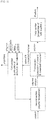
- FIG. 1 is a schematic illustration showing a flowchart of a general solution polymerization process of preparing the EPDM elastic copolymer.
- the EPDM preparation process may be largely divided into a first section for purification of solvent/raw materials, a second section for polymer preparation, a third section for separation of solvent/unreacted monomers, and a fourth section for preparation of bales/pellets.
- the first section may be a section for purifying raw materials, and the solvent and unreacted monomers that are separated from the polymer after they are used in the polymer preparation.
- the first section may include a section to which the raw materials and the solvent for preparation of the elastic polymer are fed, and in the section, a purification process is carried out to remove impurities.
- the second section is a section for preparing the polymer in the presence of the metallocene catalytic composition using the raw materials and solvent which are purified in the first section. Therefore, the metallocene catalyst may be fed to the second section.
- the third section is a section for separating the solvent and the unreacted monomers from the polymer solution prepared in the second section, and then transferring the polymer to the fourth section.
- the fourth section the residual solvent and unreacted monomers that are not separated in the third section are further separated from the polymer that is separated in the third section, and then water is removed therefrom for commercialization. Further, the fourth section is a section for preparing the product in the form of pellets or bales.
- the conventional method has a limitation in the preparation of the elastic polymer having high viscosity and high molecular weight because residual solvent and unreacted monomers are separated during commercialization of the polymer, thereby reducing energy efficiency.
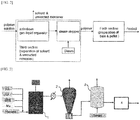
- FIG. 2 is a schematic illustration showing a process of recovering the solvent and unreacted monomers by sequentially using a gas-liquid separator and a stripper in the preparation process of EPDM elastic copolymer according to the present invention.
- the gas-liquid separator represents an anhydrous gas-liquid separator illustrated in FIG. 2
- the stripper represents a steam stripper to which steam is supplied as a carrier gas.
- the solvent and unreacted monomers used in the reaction and comonomers are separated, and the separated solvent and unreacted monomers are recovered and recycled to the first section, and then they are reused in the polymer preparation of the second section through the solvent/raw material purification process.
- the first, second, and fourth sections may be constituted according to a method that is well known in the art, except that the gas-liquid separator and the stripper are sequentially used in the third section.
- the solvent/raw material purification process of the first section is not particularly limited, and it is possible to use any method of removing impurities which is well known in the art.
- solution polymerization may be performed using the above-described metallocene catalyst in the second section.
- commercialization of the polymer may be performed by a general process of preparing bales/pellets.
- the elastic copolymer of an embodiment of the present invention may be prepared by using a device including: a polymerization reactor for preparing the polymer solution including the ethylene-alpha olefin-diene copolymer by polymerization of ethylene, alpha olefin having 3 to 20 carbon atoms, and diene which are fed from a raw material supplying device in the presence of the metallocene catalyst and the solvent; a gas-liquid separator which is connected to the polymerization reactor to primarily separate the solvent and unreacted monomers from the polymer solution; a stripper which is sequentially connected to the gas-liquid separator to secondarily separate the residual solvent and unreacted monomers from the polymer solution, from which the solvent and unreacted monomers are primarily removed in the gas-liquid separator, and to recover the copolymer; and a dryer for drying the copolymer recovered from the stripper.
- the preparation method of the elastic copolymer of the present invention is advantageous in that removal of the catalyst in the polymer
- the polymerization reactor may be equipped with a continuous agitator and an outlet for transferring the polymer solution including the ethylene-propylene-diene copolymer to the next stage after completion of the solution polymerization.
- the outlet may be installed at the upper side of the polymerization reactor to continuously discharge the polymer solution during the polymerization process and to transfer the polymer solution to the gas-liquid separator through a pump. Therefore, between the polymerization reactor and the gas-liquid separator, the pump may be equipped as a means for transferring the polymer solution from the polymerization reactor to the gas-liquid separator.
- the gas-liquid separator may be equipped with the outlet at its upper portion in order to discharge and recover a part of the solvent and unreacted monomers, which are separated from the polymer solution supplied by the polymerization reactor. That is, the solvent and unreacted monomers which are primarily separated and purified in the gas-liquid separator are recycled to the raw material supplying device via a transfer line that is connected to the upper portion of the gas-liquid separator.
- the residual polymer solution in the gas-liquid separator is discharged through the transfer line that is connected to the lower portion of the gas-liquid separator, and then transferred to the stripper.
- the stripper a process of purifying the residual solvent and unreacted monomers from the polymer solution that is primarily purified in the gas-liquid separator is performed.
- a means for supplying steam as a carrier gas and a means for controlling the supply of steam may be connected to the stripper.
- the solvent and unreacted monomers that are secondarily separated and purified in the stripper may be recycled to the raw material supplying device via the transfer line connected to the upper portion of the stripper.
- the polymer, from which the residual solvent and unreacted monomers are removed by the secondary purification process in the stripper, may be transferred to the dryer via a transfer line that is connected to the lower side of the stripper. Drying conditions for the polymer in the dryer are not particularly limited, and drying may be performed under the conditions that are well known in the art.
- the alpha-olefin may be one or more alpha-olefins having 3 to 20 carbon atoms such as propylene, 1-butene, 1-hexene, 1-octene, 1-pentene, 4-methyl-1-pentene, 1-hexene, 1-heptene, 1-decene, 1-undecene, 1-dodecene, 1-tridecene, 1-tetradecene, 1-pentadecene, 1-hexadecene, 1-heptadecene, 1-nonadecene, 9-methyl-1-decene, 11-methyl-1dodecene, 12-ethyl-1-tetradecene, etc.
- alpha-olefins having 3 to 20 carbon atoms such as propylene, 1-butene, 1-hexene, 1-octene, 1-pentene, 4-methyl-1-pentene, 1-hexene, 1-heptene, 1-de
- alpha-olefins having 3 to 10 carbon atoms as for representative examples, propylene, 1-butene, 1-hexene, or 1-octene may be properly used.
- a non-conjugated diene-based monomer may be used as the diene.
- Specific examples thereof may include 5-ethylidene-2-norbornene, 5-methylene-2-norbornene, 5-vinyl-2-norbornene, 5-(2-propenyl)-2-norbornene, 5-(3-butenyl)-2-norbornene, 5-(1-methyl-2-propenyl)-2-norbornene, 5-(4-pentenyl)-2-norbornene, 5-(1-methyl-3-butenyl)-2-norbornene, 5-(5-hexenyl)-2-norbornene, 5-(1-methyl-4-pentenyl)-2-norbornene, 5-(2,3-dimethyl-3-butenyl)-2-norbornene, 5-(2-ethyl-3-butenyl)-2-norbornene, 5-(6-heptenyl)-2-norbornene, 5-(3-methyl-hexenyl)-2-norbornene,
- the metallocene catalyst used for preparation of the elastic copolymer in the present invention may preferably be a catalytic composition including a first transition metal compound represented by the following Chemical Formula 1 and a second transition metal compound represented by the following Chemical Formula 2:
- the hydrocarbyl refers to a monovalent moiety obtained upon removal of a hydrogen atom from a hydrocarbon, and for example, it encompasses an alkyl group such as ethyl, etc., or an aryl group such as phenyl, etc.
- metalloid means a semi-metal having properties of both a metal and a non-metal, and refers to arsenic, boron, silicon, tellurium, or the like.
- M refers to, for example, a Group IV transition metal element such as titanium, zirconium, hafnium, or the like.
- the first transition metal compound of Chemical Formula 1 may be properly one or more selected from the group consisting of the following compounds: wherein R 2 and R 3 are the same as or different from each other and each is independently hydrogen or a methyl radical, M is a Group IV transition metal, and Q 1 and Q 2 are the same as or different from each other and each is independently a methyl radical, a dimethylimido radical, or a chlorine radical.
- the second transition metal compound of Chemical Formula 2 may be properly one or more selected from the group consisting of the following compounds: wherein R 2 and R 3 are the same as or different from each other and each is independently hydrogen or a methyl radical, M is a Group IV transition metal, Q 1 and Q 2 are the same as or different from each other and each is independently a methyl radical, a dimethylimido radical, or a chlorine radical.
- the catalytic composition may further include one or more cocatalytic compounds selected from the group consisting of the following Chemical Formula 3, Chemical Formula 4, and Chemical Formula 5: [Chemical Formula 3] -[Al(R)-O] n - wherein R is the same as or different from each other and each is independently halogen, a hydrocarbon having 1 to 20 carbon atoms, or a halogen-substituted hydrocarbon having 1 to 20 carbon atoms; and n is an integer of 2 or more; [Chemical Formula 4] D(R) 3 wherein R is the same as defined in Chemical Formula 3; and D is aluminum or boron; [Chemical Formula 5] [L-H] + [ZA 4 ] - or [L] + [ZA 4 ] - wherein L is a neutral or cationic Lewis acid; H is a hydrogen atom; Z is an element of Group 13; and As are the same as or different from each other and each is independently an aryl group having 6 to 20 carbon atoms or an alky
- examples of the compound represented by Chemical Formula 3 may include methylaluminoxane, ethylaluminoxane, isobutylaluminoxane, butylaluminoxane, or the like.
- examples of the compound represented by Chemical Formula 4 may include trimethylaluminum, triethylaluminum, triisobutylaluminum, tripropylaluminum, tributylaluminum, dimethylchloroaluminum, triisopropylaluminum, tri-s-butylaluminum, tricyclopentylaluminum, tripentylaluminum, triisopentylaluminum, trihexylaluminum, trioctylaluminum, ethyldimethylaluminum, methyldiethylaluminum, triphenylaluminum, tri-p-tolylaluminum, dimethylaluminum methoxide, dimethylaluminum ethoxide, trimethylboron, triethylboron, triisobutylboron, tripropylboron, tributylboron, or the like, and of them, trimethylaluminum, triethyla
- the compound represented by Chemical Formula 5 may include a non-coordinating anion compatible with a cation as the Bronsted acid.
- Preferred anions are those including a single coordination complex having a large size and a semi-metal.
- compounds including a single boron atom in the anion portion are widely used.
- salts having anions including a coordination complex including a single boron atom are preferably used as the compound represented by Chemical Formula 5.
- examples of trialkylammonium salts may include trimethylammonium tetrakis(pentafluorophenyl)borate, triethylammonium tetrakis(pentafluorophenyl)borate, tripropylammonium tetrakis(pentafluorophenyl)borate, tri(n-butyl)ammonium tetrakis(pentafluorophenyl)borate, tri(2-butyl)ammonium tetrakis(pentafluorophenyl)borate, N,N-dimethylanilinium tetrakis(pentafluorophenyl)borate, N,N-dimethylanilinium n-butyltris(pentafluorophenyl)borate, N,N-dimethylanilinium benzyltris(pentafluorophenyl)borate, N,N-d
- dialkylammonium salts may include di-(i-propyl)ammonium tetrakis(pentafluorophenyl)borate, dicyclohexylammonium tetrakis(pentafluorophenyl)borate, or the like.
- examples of carbonium salts may include tropylium tetrakis(pentafluorophenyl)borate, triphenylmethylium tetrakis(pentafluorophenyl)borate, benzene(diazonium) tetrakis(pentafluorophenyl)borate, or the like.
- the catalytic composition including the above-described first and second transition metal compounds, and optionally the cocatalytic compound may be prepared by, for example, a method including the steps of contacting the first and second transition metal compounds with the cocatalytic compound of Chemical Formula 3 or Chemical Formula 4 to prepare a mixture, and adding the cocatalytic compound of Chemical Formula 5 to the mixture.
- a molar ratio of the first transition metal compound to the second transition metal compound may be about 10:1 to 1:10
- a molar ratio of the total transition metal compound of the first and second transition metal compounds to the cocatalytic compound of Chemical Formula 3 or Chemical Formula 4 may be about 1:5 to 1:500
- a molar ratio of the total transition metal compound to the cocatalytic compound of Chemical Formula 5 may be about 1:1 to 1:10.
- the catalytic composition may additionally include a reaction solvent, and examples of the reaction solvent may include hydrocarbon-based solvents such as pentane, hexane, or heptane, etc., or aromatic solvents such as benzene, toluene, etc., but are not limited thereto.
- hydrocarbon-based solvents such as pentane, hexane, or heptane, etc.
- aromatic solvents such as benzene, toluene, etc., but are not limited thereto.
- the alpha-olefin included in the monomer composition may include propylene, 1-butene, 1-hexene, 1-octene, 1-pentene, 4-methyl-1-pentene, 1-hexene, 1-heptene, 1-decene, 1-undecene, 1-dodecene, or the like, and as the diene, a non-conjugated diene-based monomer may be used.
- the monomers typically used in the preparation of EPDM rubber for example, propylene as the alpha-olefin and a non-conjugated diene-based monomer such as 5-ethylidene-2-norbornene, 1,4-hexadiene, or dicyclopentadiene as the diene may be properly used.
- a non-conjugated diene-based monomer such as 5-ethylidene-2-norbornene, 1,4-hexadiene, or dicyclopentadiene as the diene
- the elastic copolymer prepared by the method of an embodiment of the present invention resulting from copolymerization of three kinds of monomers of ethylene, alpha-olefin, and diene within a predetermined content range, has a relatively high weight average molecular weight of about 100,000 to 500,000, or about 1500,000 to 400,000, or 200,000 to 300,000, as measured by GPC.
- Such high weight average molecular weight is achieved due to excellent activity of a Group IV transition metal catalyst, for example, metallocene-based first and second transition metal compounds of Chemical Formulae 1 and 2.
- the elastic terpolymer of an embodiment has such a high molecular weight, the elastic terpolymer, for example, EPDM rubber, exhibits excellent mechanical properties.
- the elastic terpolymer of an embodiment of the present invention satisfies more improved elasticity and flexibility at the same time, together with excellent mechanical properties. Therefore, the elastic terpolymer of an embodiment may be prepared with, for example, the characteristic high productivity and yield of a Group IV metallocene-based transition metal catalyst, and it has a high molecular weight, thereby satisfying excellent mechanical properties, while satisfying excellent processability, elasticity, and flexibility at the same time by solving the problems of the conventional EPDM rubber prepared by the Group IV metallocene-based transition metal catalyst.
- the elastic copolymer of an embodiment of the present invention prepared by the above method may have a Mooney viscosity (1+4a125 °C) range capable of satisfying physical properties suitable for EPDM rubber, for example, a Mooney viscosity of about 5 to 150, or about 10 to 130, or about 10 to 120.
- FIG. 3 is a schematic illustration showing a device for EPDM elastic copolymer preparation, which is equipped with the gas-liquid separator and the stripper according to the present invention.
- a composition including raw materials ethylene (C 2 H 4 ), propylene (C 3 H 6 ), and 5-ethylidene-2-norbornene (ENB)), a solvent (hexane), and a catalytic composition (metallocene catalyst) as in Table 1 were continuously fed to the lower side of the polymerization reactor.
- raw materials ethylene (C 2 H 4 ), propylene (C 3 H 6 ), and 5-ethylidene-2-norbornene (ENB)
- a solvent hexane
- a catalytic composition metalocene catalyst
- first and second transition metal compounds the above-described [(1,2,3,4-tetrahydroquinolin-8-yl)tetramethylcyclopentadienyl-eta5,kapa-N]titanium dimethyl and [(2-methylindolin-7-yl)tetramethylcyclopentadienyl-eta5 ,kapa-N]titanium dimethyl dissolved in hexane were fed to the reactor.
- cocatalytic compound N,N-dimethylanilinium tetrakis(pentafluorophenyl)borate dissolved in toluene was fed to the reactor.
- triisobutylaluminum dissolved in hexane was fed to the reactor.
- solution polymerization was allowed to occur while continuously feeding the respective monomers and the catalytic compositions and continuously agitating the polymerization reactor.
- a polymer solution including ethylene-propylene-diene copolymers was continuously discharged from the upper side of the polymerization reactor 1, and transferred to the gas-liquid separator 2 via a pump.
- the gas-liquid separator a part of the solvent and unreacted monomers was removed from the polymer solution, and then discharged from the upper portion of the gas-liquid separator, and recovered.
- the residual polymer solution in the gas-liquid separator was discharged from the lower portion of the gas-liquid separator, and transferred to the stripper 3.
- Table 2 shows conversion ratio and catalytic activity under feeding conditions of raw materials and internal conditions of the reactor.
- Composition and Mooney viscosity (MV) of the EPDM elastic copolymer were measured, and the results are shown in Table 3. Further, removal rates of the solvent and unreacted monomers in the entire process are as shown in Table 4.
Landscapes
- Chemical & Material Sciences (AREA)
- Health & Medical Sciences (AREA)
- Chemical Kinetics & Catalysis (AREA)
- Medicinal Chemistry (AREA)
- Polymers & Plastics (AREA)
- Organic Chemistry (AREA)
- Dispersion Chemistry (AREA)
- Crystallography & Structural Chemistry (AREA)
- Engineering & Computer Science (AREA)
- Materials Engineering (AREA)
- Life Sciences & Earth Sciences (AREA)
- Sustainable Development (AREA)
- Addition Polymer Or Copolymer, Post-Treatments, Or Chemical Modifications (AREA)
Claims (9)
- Verfahren zum Herstellen eines elastischen Terpolymers, welches die Schritte umfasst:Copolymerisieren einer Monomerzusammensetzung einschließend 40 bis 70 Gew.-% Ethylen, 15 bis 55 Gew.-% alpha-Olefin mit 3 bis 20 Kohlenstoffatomen und 0,5 bis 20 Gew.-% Dien in der Gegenwart eines Metallocenkatalysators und eines Lösungsmittels in einem Polymerisationsreaktor, um eine Polymerlösung einschließend ein Copolymer auf Basis von Ethylen-alpha-Olefin-Dien herzustellen; undTrennen des Lösungsmittels und nicht umgesetzter Monomere von der Polymerlösung durch sequentielles Verwenden eines Gas-Flüssigkeits-Separators und eines Strippers, um das Copolymer auf Basis von Ethylen-alpha-Olefin-Dien wiederzugewinnen,wobei das Verfahren den Schritt eines Trennens und Entfernens von 40 bis 70 Gew.-% des Gesamtgewichts aller Materialien ausschließend das gesamte Polymer, das in der Polymerlösung eingeschlossen ist, in dem Gas-Flüssigkeits-Separator, und einen Schritt eines Trennens und Entfernens des restlichen Lösungsmittels und nicht umgesetzter Monomere ausschließend das Polymer, das in der Polymerlösung eingeschlossen ist, in dem Stripper umfasst,wobei das Verfahren ein Verfahren zum Entfernen des Lösungsmittels und nicht umgesetzter Monomere aus der Polymerlösung unter den Bedingungen einer Temperatur von 150 bis 160°C und eines Drucks von 5 bis 10 bar in dem oberen Bereich des Gas-Flüssigkeits-Separators umfasst.
- Verfahren nach Anspruch 1, umfassend den Schritt eines Wiedergewinnens des Lösungsmittels und nicht umgesetzter Monomere, die in dem Copolymer eingeschlossen sind, so dass sie in einer Menge von 10 Gew.-% oder weniger, basierend auf dem Gesamtgewicht des Copolymers, in dem Stripper eingeschlossen sind.
- Verfahren nach Anspruch 1, wobei ein Gehalt des Copolymers auf Basis von Ethylen-alpha-Olefin-Dien, der in der Polymerlösung eingeschlossen ist, bevor sie durch den Gas-Flüssigkeits-Separator gelangt, 10 bis 20 Gew.-% ist, und ein Gehalt des Copolymers auf Basis von Ethylen-alpha-Olefin-Dien, der in der Polymerlösung eingeschlossen ist, nachdem sie durch den Gas-Flüssigkeits-Separator gelangt ist, 20 bis 50 Gew.-% ist.
- Verfahren nach Anspruch 1, umfassend ein Verfahren zum Entfernen des restlichen Lösungsmittels und nicht umgesetzter Monomere aus der Polymerlösung, die durch den Gas-Flüssigkeits-Separator gelangt ist, durch Beaufschlagen von Dampf als ein Trägergas unter den Bedingungen einer Temperatur von 140 bis 180°C und eines Drucks von 4 bis 10 bar in dem Stripper.
- Verfahren nach Anspruch 1, wobei das Lösungsmittel und nicht umgesetzte Monomere, die von dem Gas-Flüssigkeits-Separator und dem Stripper abgetrennt werden, in einer Copolymerisation für die Herstellung des Copolymers auf Basis von Ethylen-alpha-Olefin-Dien wiederverwendet werden.
- Verfahren nach Anspruch 1, weiter umfassend den Schritt eines Herstellens des Copolymers in der Form von Bündeln oder Pellets, nach dem Schritt des Wiedergewinnens des Copolymers.
- Verfahren nach Anspruch 1, wobei der Metallocenkatalysator eine katalytische Zusammensetzung einschließend eine erste Übergangsmetallverbindung dargestellt durch die folgende chemische Formel 1 und eine zweite Übergangsmetallverbindung dargestellt durch die folgende chemische Formel 2 einschließt:

 wobei R1 bis R13 gleich oder verschieden voneinander sind und jeweils unabhängig Wasserstoff, ein Alkylrest mit 1 bis 20 Kohlenstoffatomen, ein Alkenylrest mit 2 bis 20 Kohlenstoffatomen, ein Arylrest mit 6 bis 20 Kohlenstoffatomen, ein Silylrest, ein Alkylarylrest mit 7 bis 20 Kohlenstoffatomen, ein Arylalkylrest mit 7 bis 20 Kohlenstoffatomen oder ein Hydrocarbyl-substituierter Metalloidrest eines Gruppe IV-Metalls ist; wobei bei R1 bis R13 zwei unterschiedliche benachbarte Gruppen miteinander durch einen Alkylidenrest einschließend ein Alkyl mit 1 bis 20 Kohlenstoffatomen oder einen Arylrest mit 6 bis 20 Kohlenstoffatomen verbunden sind, um einen aliphatischen oder aromatischen Ring zu bilden;M ein Übergangsmetall der Gruppe IV ist;Q1 und Q2 gleich oder verschieden voneinander sind und jeweils unabhängig ein Halogenrest, ein Alkylrest mit 1 bis 20 Kohlenstoffatomen, ein Alkenylrest mit 2 bis 20 Kohlenstoffatomen, ein Arylrest mit 6 bis 20 Kohlenstoffatomen, ein Alkylarylrest mit 7 bis 20 Kohlenstoffatomen, ein Arylalkylrest mit 7 bis 20 Kohlenstoffatomen, ein Alkylamidorest mit 1 bis 20 Kohlenstoffatomen oder ein Arylamidorest mit 6 bis 20 Kohlenstoffatomen ist.
 - Verfahren nach Anspruch 1, wobei die katalytische Zusammensetzung ferner eine oder mehrere cokatalytische Verbindungen einschließt, die ausgewählt sind aus der Gruppe bestehend aus der folgenden chemischen Formel 3, chemischen Formel 4 und chemischen Formel 5:
[Chemische Formel 3] -[Al(R)-O]n-,
wobei R gleich der verschieden voneinander ist und jeweils unabhängig ein Halogen, ein Kohlenwasserstoff mit 1 bis 20 Kohlenstoffatomen oder ein Halogen-substituierter Kohlenwasserstoff mit 1 bis 20 Kohlenstoffatomen ist; und wobei n eine ganze Zahl von 2 oder mehr ist;
[Chemische Formel 4] D(R)3,
wobei R gleich wie in chemischer Formel 3 definiert ist; und D Aluminium oder Bor ist;
[Chemische Formel 5] [L-H]+[ZA4]- oder [L]+[ZA4]-,
wobei L eine neutrale oder kationische Lewis-Säure ist; H ein Wasserstoffatom ist; Z ein Element der Gruppe 13 ist; und A gleich oder verschieden voneinander ist und jeweils unabhängig eine Arylgruppe mit 6 bis 20 Kohlenstoffatomen oder eine Alkylgruppe mit 1 bis 20 Kohlenstoffatomen ist, bei der ein oder mehrere Wasserstoffatome substituiert oder unsubstituiert sind mit einem Halogen, einem Kohlenwasserstoff mit 1 bis 20 Kohlenstoffatomen, Alkoxy oder Phenoxy. - Verfahren nach Anspruch 1, wobei alpha-Olefin eines oder mehrere ist ausgewählt aus der Gruppe bestehend aus Propylen, 1-Buten, 1-Hexen und 1-Octen, und wobei das Dien eines oder mehrere ist ausgewählt aus der Gruppe bestehend aus 5-Ethyliden-2-norbornen, 5-Methylen-2-norbornen, 5-Vinyl-2-norbornen, 1,4-Hexadien und Dicyclopentadien.
Applications Claiming Priority (2)
| Application Number | Priority Date | Filing Date | Title |
|---|---|---|---|
| KR1020130066091A KR20140144076A (ko) | 2013-06-10 | 2013-06-10 | 3원계 탄성 공중합체의 제조 방법 |
| PCT/KR2013/009158 WO2014200153A1 (ko) | 2013-06-10 | 2013-10-14 | 3원계 탄성 공중합체의 제조 방법 |
Publications (3)
| Publication Number | Publication Date |
|---|---|
| EP3000832A1 EP3000832A1 (de) | 2016-03-30 |
| EP3000832A4 EP3000832A4 (de) | 2017-01-04 |
| EP3000832B1 true EP3000832B1 (de) | 2018-05-23 |
Family
ID=52022428
Family Applications (1)
| Application Number | Title | Priority Date | Filing Date |
|---|---|---|---|
| EP13886690.0A Active EP3000832B1 (de) | 2013-06-10 | 2013-10-14 | Verfahren zur herstellung eines elastischen terpolymers |
Country Status (5)
| Country | Link |
|---|---|
| US (1) | US9611349B2 (de) |
| EP (1) | EP3000832B1 (de) |
| KR (1) | KR20140144076A (de) |
| CN (1) | CN105377916B (de) |
| WO (1) | WO2014200153A1 (de) |
Families Citing this family (9)
| Publication number | Priority date | Publication date | Assignee | Title |
|---|---|---|---|---|
| KR101585206B1 (ko) * | 2013-07-22 | 2016-01-13 | 주식회사 엘지화학 | 디엔을 포함하는 3원계 탄성 공중합체 및 이의 제조 방법 |
| EP2883889A4 (de) * | 2013-06-28 | 2016-06-01 | Lg Chemical Ltd | Ternäres elastisches copolymer mit einem dien und verfahren zur herstellung davon |
| KR101585204B1 (ko) * | 2013-06-28 | 2016-01-13 | 주식회사 엘지화학 | 디엔을 포함하는 3원계 탄성 공중합체 및 이의 제조 방법 |
| IN2015DN02232A (de) | 2013-06-28 | 2015-08-21 | Lg Chemical Ltd | |
| US9650460B2 (en) | 2013-06-28 | 2017-05-16 | Lg Chem, Ltd. | Elastic diene terpolymer and preparation method thereof |
| CN105920881B (zh) * | 2016-06-07 | 2019-03-01 | 中国石油集团东北炼化工程有限公司吉林设计院 | 乙丙橡胶生产中的脱气方法 |
| KR102166467B1 (ko) * | 2016-10-05 | 2020-10-16 | 주식회사 엘지화학 | 용매 분리 장치 및 용매 분리 방법 |
| KR102535166B1 (ko) * | 2020-07-22 | 2023-05-22 | 주식회사 엘지화학 | 용매의 회수 방법 및 회수 장치 |
| EP3971221B1 (de) * | 2020-07-22 | 2024-06-19 | Lg Chem, Ltd. | Verfahren und vorrichtung zur rückgewinnung eines lösungsmittels |
Family Cites Families (19)
| Publication number | Priority date | Publication date | Assignee | Title |
|---|---|---|---|---|
| US3245967A (en) * | 1966-04-12 | Solvent and monqmer recovery | ||
| US3590026A (en) | 1969-01-03 | 1971-06-29 | Phillips Petroleum Co | Recovery of polymers from solution |
| KR100226175B1 (ko) | 1990-12-14 | 2000-03-15 | 고오사이 아끼오 | 에틸렌-α-올레핀공중합체의정제방법 |
| US5191062A (en) | 1991-09-27 | 1993-03-02 | Union Carbide Chemicals & Plastics Technology Corporation | Steam purging of granular epdm resins |
| US6545088B1 (en) | 1991-12-30 | 2003-04-08 | Dow Global Technologies Inc. | Metallocene-catalyzed process for the manufacture of EP and EPDM polymers |
| FI945873L (fi) | 1992-06-18 | 1994-12-14 | Spherilene Srl | Menetelmä etyleenisen polymeerin valmistamiseksi |
| GB9419963D0 (en) | 1994-10-04 | 1994-11-16 | Bp Chem Int Ltd | Process |
| US6150498A (en) * | 1996-07-12 | 2000-11-21 | The Dow Chemical Company | Polymer recovery |
| BR9713748A (pt) * | 1996-12-17 | 2000-03-21 | Exxon Chemical Patents Inc | Composições elastoméricas termoplásticas |
| US6329477B1 (en) * | 1998-03-04 | 2001-12-11 | Exxonmobil Chemical Patents Inc. | Method for increasing diene conversion in EPDM type polymerizations |
| JP2002517572A (ja) | 1998-06-12 | 2002-06-18 | ザ ダウ ケミカル カンパニー | ポリマーの揮発分除去用遠心方法及び装置 |
| JP3797987B2 (ja) * | 2003-07-11 | 2006-07-19 | Jsr株式会社 | ポリマー溶液の脱溶媒方法及びポリマーの製造方法 |
| KR100515596B1 (ko) | 2005-01-25 | 2005-09-16 | 주식회사 엘지화학 | 올레핀 공중합체의 제조방법 |
| KR100976131B1 (ko) | 2007-01-10 | 2010-08-16 | 주식회사 엘지화학 | 전이금속 화합물의 제조 방법, 상기 방법으로 제조된전이금속 화합물 및 상기 전이금속 화합물을 포함하는 촉매조성물 |
| KR101066969B1 (ko) | 2007-05-18 | 2011-09-22 | 주식회사 엘지화학 | 공중합성이 뛰어난 전이금속 촉매를 이용한 올레핀중합체의 제조 방법 |
| US7880047B2 (en) | 2008-05-06 | 2011-02-01 | Chemtura Corporation | Polyalphaolefins and processes for forming polyalphaolefins |
| KR101262305B1 (ko) * | 2009-07-01 | 2013-05-08 | 주식회사 엘지화학 | 전이금속 촉매를 이용한 탄성 중합체의 제조방법 |
| EP2368917B1 (de) | 2010-03-25 | 2013-01-09 | LANXESS International SA | Verfahren zur Herstellung von wasser- und lösemittelfreien hydrierten Nitrilgummis |
| KR101216691B1 (ko) | 2010-07-23 | 2012-12-28 | 한국과학기술원 | 에틸렌-프로필렌 및 에틸렌-프로필렌-디엔 공중합체 제조용 이핵 메탈로센 촉매 및 이를 이용한 중합방법 |
-
2013
- 2013-06-10 KR KR1020130066091A patent/KR20140144076A/ko not_active Ceased
- 2013-10-14 CN CN201380077279.7A patent/CN105377916B/zh active Active
- 2013-10-14 US US14/888,992 patent/US9611349B2/en active Active
- 2013-10-14 WO PCT/KR2013/009158 patent/WO2014200153A1/ko not_active Ceased
- 2013-10-14 EP EP13886690.0A patent/EP3000832B1/de active Active
Non-Patent Citations (1)
| Title |
|---|
| None * |
Also Published As
| Publication number | Publication date |
|---|---|
| US20160145367A1 (en) | 2016-05-26 |
| EP3000832A4 (de) | 2017-01-04 |
| KR20140144076A (ko) | 2014-12-18 |
| CN105377916B (zh) | 2017-04-12 |
| CN105377916A (zh) | 2016-03-02 |
| US9611349B2 (en) | 2017-04-04 |
| WO2014200153A1 (ko) | 2014-12-18 |
| EP3000832A1 (de) | 2016-03-30 |
Similar Documents
| Publication | Publication Date | Title |
|---|---|---|
| EP3000832B1 (de) | Verfahren zur herstellung eines elastischen terpolymers | |
| US9493593B2 (en) | Elastic diene terpolymer and preparation method thereof | |
| CN101679561B (zh) | 乙烯-α-烯烃共聚物 | |
| KR100496101B1 (ko) | 탄성중합체 및 그의 제조 방법 | |
| EP2147027B1 (de) | Langkettenverzweigtes ethylen-1-buten-copolymer | |
| US9650460B2 (en) | Elastic diene terpolymer and preparation method thereof | |
| JP5976938B2 (ja) | ジエンを含む3元系弾性共重合体及びその製造方法 | |
| KR101633076B1 (ko) | 3원계 탄성 공중합체의 제조 방법 | |
| KR101655392B1 (ko) | 디엔을 포함하는 3원계 탄성 공중합체 및 이의 제조 방법 | |
| KR101339391B1 (ko) | 올레핀계 공중합체 및 이의 제조방법 | |
| US8946362B2 (en) | Process for preparation of olefin polymers | |
| JP6000458B2 (ja) | ジエンを含む3元系弾性共重合体及びその製造方法 | |
| KR101587189B1 (ko) | 폴리올레핀계 삼원 공중합체 및 이의 제조방법 | |
| KR101675150B1 (ko) | 3원계 탄성 공중합체의 제조 방법 | |
| US9428600B2 (en) | Elastic diene terpolymer and preparation method thereof | |
| KR101828001B1 (ko) | 두 개의 중심 금속을 갖는 유기 금속 화합물, 이를 포함하는 촉매 조성물 및 이를 이용한 올레핀 중합체의 제조 방법 | |
| KR20170075365A (ko) | 디엔을 포함하는 3원계 탄성 공중합체 및 이의 제조 방법 | |
| KR101476374B1 (ko) | 디엔을 포함하는 3원계 탄성 공중합체 및 이의 제조 방법 | |
| KR101462208B1 (ko) | 디엔을 포함하는 3원계 탄성 공중합체 및 이의 제조 방법 | |
| KR101503004B1 (ko) | 폴리올레핀계 공중합체 및 이의 제조방법 | |
| KR101446685B1 (ko) | 디엔을 포함하는 3원계 탄성 공중합체 및 이의 제조 방법 | |
| KR101684648B1 (ko) | 디엔을 포함하는 3원계 탄성 공중합체 및 이의 제조 방법 | |
| KR20150123593A (ko) | 디엔을 포함하는 3원계 탄성 공중합체 및 이의 제조 방법 | |
| KR20130044641A (ko) | 높은 실링강도를 가지는 탄성 폴리올레핀 공중합체를 이용한 음료 포장용 필름 |
Legal Events
| Date | Code | Title | Description |
|---|---|---|---|
| PUAI | Public reference made under article 153(3) epc to a published international application that has entered the european phase |
Free format text: ORIGINAL CODE: 0009012 |
|
| 17P | Request for examination filed |
Effective date: 20151102 |
|
| AK | Designated contracting states |
Kind code of ref document: A1 Designated state(s): AL AT BE BG CH CY CZ DE DK EE ES FI FR GB GR HR HU IE IS IT LI LT LU LV MC MK MT NL NO PL PT RO RS SE SI SK SM TR |
|
| AX | Request for extension of the european patent |
Extension state: BA ME |
|
| DAX | Request for extension of the european patent (deleted) | ||
| A4 | Supplementary search report drawn up and despatched |
Effective date: 20161202 |
|
| RIC1 | Information provided on ipc code assigned before grant |
Ipc: C08F 4/6592 20060101ALI20161128BHEP Ipc: C08F 2/00 20060101ALI20161128BHEP Ipc: C08F 210/18 20060101AFI20161128BHEP Ipc: C08F 6/00 20060101ALI20161128BHEP Ipc: C08F 6/10 20060101ALI20161128BHEP |
|
| 17Q | First examination report despatched |
Effective date: 20170929 |
|
| GRAP | Despatch of communication of intention to grant a patent |
Free format text: ORIGINAL CODE: EPIDOSNIGR1 |
|
| INTG | Intention to grant announced |
Effective date: 20180216 |
|
| GRAS | Grant fee paid |
Free format text: ORIGINAL CODE: EPIDOSNIGR3 |
|
| GRAA | (expected) grant |
Free format text: ORIGINAL CODE: 0009210 |
|
| AK | Designated contracting states |
Kind code of ref document: B1 Designated state(s): AL AT BE BG CH CY CZ DE DK EE ES FI FR GB GR HR HU IE IS IT LI LT LU LV MC MK MT NL NO PL PT RO RS SE SI SK SM TR |
|
| REG | Reference to a national code |
Ref country code: GB Ref legal event code: FG4D |
|
| REG | Reference to a national code |
Ref country code: CH Ref legal event code: EP |
|
| REG | Reference to a national code |
Ref country code: IE Ref legal event code: FG4D |
|
| REG | Reference to a national code |
Ref country code: AT Ref legal event code: REF Ref document number: 1001443 Country of ref document: AT Kind code of ref document: T Effective date: 20180615 |
|
| REG | Reference to a national code |
Ref country code: DE Ref legal event code: R096 Ref document number: 602013037975 Country of ref document: DE |
|
| REG | Reference to a national code |
Ref country code: NL Ref legal event code: MP Effective date: 20180523 |
|
| REG | Reference to a national code |
Ref country code: FR Ref legal event code: PLFP Year of fee payment: 6 |
|
| REG | Reference to a national code |
Ref country code: LT Ref legal event code: MG4D |
|
| PG25 | Lapsed in a contracting state [announced via postgrant information from national office to epo] |
Ref country code: NO Free format text: LAPSE BECAUSE OF FAILURE TO SUBMIT A TRANSLATION OF THE DESCRIPTION OR TO PAY THE FEE WITHIN THE PRESCRIBED TIME-LIMIT Effective date: 20180823 Ref country code: FI Free format text: LAPSE BECAUSE OF FAILURE TO SUBMIT A TRANSLATION OF THE DESCRIPTION OR TO PAY THE FEE WITHIN THE PRESCRIBED TIME-LIMIT Effective date: 20180523 Ref country code: BG Free format text: LAPSE BECAUSE OF FAILURE TO SUBMIT A TRANSLATION OF THE DESCRIPTION OR TO PAY THE FEE WITHIN THE PRESCRIBED TIME-LIMIT Effective date: 20180823 Ref country code: ES Free format text: LAPSE BECAUSE OF FAILURE TO SUBMIT A TRANSLATION OF THE DESCRIPTION OR TO PAY THE FEE WITHIN THE PRESCRIBED TIME-LIMIT Effective date: 20180523 Ref country code: SE Free format text: LAPSE BECAUSE OF FAILURE TO SUBMIT A TRANSLATION OF THE DESCRIPTION OR TO PAY THE FEE WITHIN THE PRESCRIBED TIME-LIMIT Effective date: 20180523 Ref country code: LT Free format text: LAPSE BECAUSE OF FAILURE TO SUBMIT A TRANSLATION OF THE DESCRIPTION OR TO PAY THE FEE WITHIN THE PRESCRIBED TIME-LIMIT Effective date: 20180523 |
|
| PG25 | Lapsed in a contracting state [announced via postgrant information from national office to epo] |
Ref country code: NL Free format text: LAPSE BECAUSE OF FAILURE TO SUBMIT A TRANSLATION OF THE DESCRIPTION OR TO PAY THE FEE WITHIN THE PRESCRIBED TIME-LIMIT Effective date: 20180523 Ref country code: LV Free format text: LAPSE BECAUSE OF FAILURE TO SUBMIT A TRANSLATION OF THE DESCRIPTION OR TO PAY THE FEE WITHIN THE PRESCRIBED TIME-LIMIT Effective date: 20180523 Ref country code: HR Free format text: LAPSE BECAUSE OF FAILURE TO SUBMIT A TRANSLATION OF THE DESCRIPTION OR TO PAY THE FEE WITHIN THE PRESCRIBED TIME-LIMIT Effective date: 20180523 Ref country code: GR Free format text: LAPSE BECAUSE OF FAILURE TO SUBMIT A TRANSLATION OF THE DESCRIPTION OR TO PAY THE FEE WITHIN THE PRESCRIBED TIME-LIMIT Effective date: 20180824 Ref country code: RS Free format text: LAPSE BECAUSE OF FAILURE TO SUBMIT A TRANSLATION OF THE DESCRIPTION OR TO PAY THE FEE WITHIN THE PRESCRIBED TIME-LIMIT Effective date: 20180523 |
|
| REG | Reference to a national code |
Ref country code: AT Ref legal event code: MK05 Ref document number: 1001443 Country of ref document: AT Kind code of ref document: T Effective date: 20180523 |
|
| PG25 | Lapsed in a contracting state [announced via postgrant information from national office to epo] |
Ref country code: DK Free format text: LAPSE BECAUSE OF FAILURE TO SUBMIT A TRANSLATION OF THE DESCRIPTION OR TO PAY THE FEE WITHIN THE PRESCRIBED TIME-LIMIT Effective date: 20180523 Ref country code: EE Free format text: LAPSE BECAUSE OF FAILURE TO SUBMIT A TRANSLATION OF THE DESCRIPTION OR TO PAY THE FEE WITHIN THE PRESCRIBED TIME-LIMIT Effective date: 20180523 Ref country code: AT Free format text: LAPSE BECAUSE OF FAILURE TO SUBMIT A TRANSLATION OF THE DESCRIPTION OR TO PAY THE FEE WITHIN THE PRESCRIBED TIME-LIMIT Effective date: 20180523 Ref country code: PL Free format text: LAPSE BECAUSE OF FAILURE TO SUBMIT A TRANSLATION OF THE DESCRIPTION OR TO PAY THE FEE WITHIN THE PRESCRIBED TIME-LIMIT Effective date: 20180523 Ref country code: RO Free format text: LAPSE BECAUSE OF FAILURE TO SUBMIT A TRANSLATION OF THE DESCRIPTION OR TO PAY THE FEE WITHIN THE PRESCRIBED TIME-LIMIT Effective date: 20180523 Ref country code: CZ Free format text: LAPSE BECAUSE OF FAILURE TO SUBMIT A TRANSLATION OF THE DESCRIPTION OR TO PAY THE FEE WITHIN THE PRESCRIBED TIME-LIMIT Effective date: 20180523 Ref country code: SK Free format text: LAPSE BECAUSE OF FAILURE TO SUBMIT A TRANSLATION OF THE DESCRIPTION OR TO PAY THE FEE WITHIN THE PRESCRIBED TIME-LIMIT Effective date: 20180523 |
|
| REG | Reference to a national code |
Ref country code: DE Ref legal event code: R097 Ref document number: 602013037975 Country of ref document: DE |
|
| PG25 | Lapsed in a contracting state [announced via postgrant information from national office to epo] |
Ref country code: SM Free format text: LAPSE BECAUSE OF FAILURE TO SUBMIT A TRANSLATION OF THE DESCRIPTION OR TO PAY THE FEE WITHIN THE PRESCRIBED TIME-LIMIT Effective date: 20180523 |
|
| PLBE | No opposition filed within time limit |
Free format text: ORIGINAL CODE: 0009261 |
|
| STAA | Information on the status of an ep patent application or granted ep patent |
Free format text: STATUS: NO OPPOSITION FILED WITHIN TIME LIMIT |
|
| 26N | No opposition filed |
Effective date: 20190226 |
|
| PG25 | Lapsed in a contracting state [announced via postgrant information from national office to epo] |
Ref country code: SI Free format text: LAPSE BECAUSE OF FAILURE TO SUBMIT A TRANSLATION OF THE DESCRIPTION OR TO PAY THE FEE WITHIN THE PRESCRIBED TIME-LIMIT Effective date: 20180523 |
|
| REG | Reference to a national code |
Ref country code: CH Ref legal event code: PL |
|
| REG | Reference to a national code |
Ref country code: BE Ref legal event code: MM Effective date: 20181031 |
|
| PG25 | Lapsed in a contracting state [announced via postgrant information from national office to epo] |
Ref country code: LU Free format text: LAPSE BECAUSE OF NON-PAYMENT OF DUE FEES Effective date: 20181014 Ref country code: MC Free format text: LAPSE BECAUSE OF FAILURE TO SUBMIT A TRANSLATION OF THE DESCRIPTION OR TO PAY THE FEE WITHIN THE PRESCRIBED TIME-LIMIT Effective date: 20180523 |
|
| REG | Reference to a national code |
Ref country code: IE Ref legal event code: MM4A |
|
| PG25 | Lapsed in a contracting state [announced via postgrant information from national office to epo] |
Ref country code: LI Free format text: LAPSE BECAUSE OF NON-PAYMENT OF DUE FEES Effective date: 20181031 Ref country code: BE Free format text: LAPSE BECAUSE OF NON-PAYMENT OF DUE FEES Effective date: 20181031 Ref country code: CH Free format text: LAPSE BECAUSE OF NON-PAYMENT OF DUE FEES Effective date: 20181031 |
|
| PG25 | Lapsed in a contracting state [announced via postgrant information from national office to epo] |
Ref country code: IE Free format text: LAPSE BECAUSE OF NON-PAYMENT OF DUE FEES Effective date: 20181014 |
|
| PG25 | Lapsed in a contracting state [announced via postgrant information from national office to epo] |
Ref country code: AL Free format text: LAPSE BECAUSE OF FAILURE TO SUBMIT A TRANSLATION OF THE DESCRIPTION OR TO PAY THE FEE WITHIN THE PRESCRIBED TIME-LIMIT Effective date: 20180523 |
|
| PG25 | Lapsed in a contracting state [announced via postgrant information from national office to epo] |
Ref country code: MT Free format text: LAPSE BECAUSE OF NON-PAYMENT OF DUE FEES Effective date: 20181014 |
|
| PG25 | Lapsed in a contracting state [announced via postgrant information from national office to epo] |
Ref country code: TR Free format text: LAPSE BECAUSE OF FAILURE TO SUBMIT A TRANSLATION OF THE DESCRIPTION OR TO PAY THE FEE WITHIN THE PRESCRIBED TIME-LIMIT Effective date: 20180523 |
|
| PG25 | Lapsed in a contracting state [announced via postgrant information from national office to epo] |
Ref country code: PT Free format text: LAPSE BECAUSE OF FAILURE TO SUBMIT A TRANSLATION OF THE DESCRIPTION OR TO PAY THE FEE WITHIN THE PRESCRIBED TIME-LIMIT Effective date: 20180523 |
|
| PG25 | Lapsed in a contracting state [announced via postgrant information from national office to epo] |
Ref country code: MK Free format text: LAPSE BECAUSE OF NON-PAYMENT OF DUE FEES Effective date: 20180523 Ref country code: CY Free format text: LAPSE BECAUSE OF FAILURE TO SUBMIT A TRANSLATION OF THE DESCRIPTION OR TO PAY THE FEE WITHIN THE PRESCRIBED TIME-LIMIT Effective date: 20180523 Ref country code: HU Free format text: LAPSE BECAUSE OF FAILURE TO SUBMIT A TRANSLATION OF THE DESCRIPTION OR TO PAY THE FEE WITHIN THE PRESCRIBED TIME-LIMIT; INVALID AB INITIO Effective date: 20131014 |
|
| PG25 | Lapsed in a contracting state [announced via postgrant information from national office to epo] |
Ref country code: IS Free format text: LAPSE BECAUSE OF FAILURE TO SUBMIT A TRANSLATION OF THE DESCRIPTION OR TO PAY THE FEE WITHIN THE PRESCRIBED TIME-LIMIT Effective date: 20180923 |
|
| PGFP | Annual fee paid to national office [announced via postgrant information from national office to epo] |
Ref country code: IT Payment date: 20250924 Year of fee payment: 13 |
|
| PGFP | Annual fee paid to national office [announced via postgrant information from national office to epo] |
Ref country code: GB Payment date: 20250922 Year of fee payment: 13 |
|
| PGFP | Annual fee paid to national office [announced via postgrant information from national office to epo] |
Ref country code: FR Payment date: 20250925 Year of fee payment: 13 |
|
| PGFP | Annual fee paid to national office [announced via postgrant information from national office to epo] |
Ref country code: DE Payment date: 20250922 Year of fee payment: 13 |