EP3000882A1 - Trousse pour l'analyse d'acides nucléiques et procédé d'analyse des acides nucléiques - Google Patents
Trousse pour l'analyse d'acides nucléiques et procédé d'analyse des acides nucléiques Download PDFInfo
- Publication number
- EP3000882A1 EP3000882A1 EP14801154.7A EP14801154A EP3000882A1 EP 3000882 A1 EP3000882 A1 EP 3000882A1 EP 14801154 A EP14801154 A EP 14801154A EP 3000882 A1 EP3000882 A1 EP 3000882A1
- Authority
- EP
- European Patent Office
- Prior art keywords
- nucleic acid
- acid analysis
- identifier
- specimens
- probe
- Prior art date
- Legal status (The legal status is an assumption and is not a legal conclusion. Google has not performed a legal analysis and makes no representation as to the accuracy of the status listed.)
- Withdrawn
Links
- 102000039446 nucleic acids Human genes 0.000 title claims abstract description 197
- 108020004707 nucleic acids Proteins 0.000 title claims abstract description 197
- 150000007523 nucleic acids Chemical class 0.000 title claims abstract description 196
- 238000004458 analytical method Methods 0.000 title claims abstract description 88
- 239000000523 sample Substances 0.000 claims abstract description 140
- 230000000717 retained effect Effects 0.000 claims abstract description 10
- 108020004414 DNA Proteins 0.000 claims description 40
- 239000000758 substrate Substances 0.000 claims description 33
- 230000003321 amplification Effects 0.000 claims description 21
- 238000003199 nucleic acid amplification method Methods 0.000 claims description 21
- 238000003556 assay Methods 0.000 claims description 14
- 239000012634 fragment Substances 0.000 claims description 12
- 238000009396 hybridization Methods 0.000 claims description 5
- 108020004711 Nucleic Acid Probes Proteins 0.000 claims description 4
- 239000002853 nucleic acid probe Substances 0.000 claims description 4
- 238000007901 in situ hybridization Methods 0.000 claims description 3
- 230000000295 complement effect Effects 0.000 claims description 2
- 238000005520 cutting process Methods 0.000 claims description 2
- 102000053602 DNA Human genes 0.000 description 28
- 229920002477 rna polymer Polymers 0.000 description 20
- 238000000034 method Methods 0.000 description 13
- 238000001514 detection method Methods 0.000 description 12
- 239000000203 mixture Substances 0.000 description 9
- 102100033072 DNA replication ATP-dependent helicase DNA2 Human genes 0.000 description 7
- 101000927313 Homo sapiens DNA replication ATP-dependent helicase DNA2 Proteins 0.000 description 7
- 239000002773 nucleotide Substances 0.000 description 5
- 125000003729 nucleotide group Chemical group 0.000 description 5
- 230000000694 effects Effects 0.000 description 3
- 230000035945 sensitivity Effects 0.000 description 3
- 108091034117 Oligonucleotide Proteins 0.000 description 2
- 108091093037 Peptide nucleic acid Proteins 0.000 description 2
- 230000015556 catabolic process Effects 0.000 description 2
- 239000000470 constituent Substances 0.000 description 2
- 238000006731 degradation reaction Methods 0.000 description 2
- 238000010586 diagram Methods 0.000 description 2
- 125000002496 methyl group Chemical group [H]C([H])([H])* 0.000 description 2
- 238000003752 polymerase chain reaction Methods 0.000 description 2
- 238000002360 preparation method Methods 0.000 description 2
- 239000000126 substance Substances 0.000 description 2
- 108020004635 Complementary DNA Proteins 0.000 description 1
- 108020003215 DNA Probes Proteins 0.000 description 1
- 238000000018 DNA microarray Methods 0.000 description 1
- 239000003298 DNA probe Substances 0.000 description 1
- 108090000790 Enzymes Proteins 0.000 description 1
- 102000004190 Enzymes Human genes 0.000 description 1
- 102000006382 Ribonucleases Human genes 0.000 description 1
- 108010083644 Ribonucleases Proteins 0.000 description 1
- 108091028664 Ribonucleotide Proteins 0.000 description 1
- 125000003277 amino group Chemical group 0.000 description 1
- 230000015572 biosynthetic process Effects 0.000 description 1
- 238000010804 cDNA synthesis Methods 0.000 description 1
- 239000002299 complementary DNA Substances 0.000 description 1
- 150000001875 compounds Chemical class 0.000 description 1
- 239000006059 cover glass Substances 0.000 description 1
- 230000000593 degrading effect Effects 0.000 description 1
- 238000009826 distribution Methods 0.000 description 1
- 238000000605 extraction Methods 0.000 description 1
- 125000000524 functional group Chemical group 0.000 description 1
- -1 hexitol nucleic acid Chemical class 0.000 description 1
- 238000002372 labelling Methods 0.000 description 1
- 238000004519 manufacturing process Methods 0.000 description 1
- 125000000956 methoxy group Chemical group [H]C([H])([H])O* 0.000 description 1
- 238000002156 mixing Methods 0.000 description 1
- 108090000623 proteins and genes Proteins 0.000 description 1
- 102000004169 proteins and genes Human genes 0.000 description 1
- 238000003753 real-time PCR Methods 0.000 description 1
- 239000002336 ribonucleotide Substances 0.000 description 1
- 125000002652 ribonucleotide group Chemical group 0.000 description 1
- 229910052717 sulfur Inorganic materials 0.000 description 1
- 125000004434 sulfur atom Chemical group 0.000 description 1
- 238000003786 synthesis reaction Methods 0.000 description 1
Images



Classifications
-
- C—CHEMISTRY; METALLURGY
- C12—BIOCHEMISTRY; BEER; SPIRITS; WINE; VINEGAR; MICROBIOLOGY; ENZYMOLOGY; MUTATION OR GENETIC ENGINEERING
- C12Q—MEASURING OR TESTING PROCESSES INVOLVING ENZYMES, NUCLEIC ACIDS OR MICROORGANISMS; COMPOSITIONS OR TEST PAPERS THEREFOR; PROCESSES OF PREPARING SUCH COMPOSITIONS; CONDITION-RESPONSIVE CONTROL IN MICROBIOLOGICAL OR ENZYMOLOGICAL PROCESSES
- C12Q1/00—Measuring or testing processes involving enzymes, nucleic acids or microorganisms; Compositions therefor; Processes of preparing such compositions
- C12Q1/68—Measuring or testing processes involving enzymes, nucleic acids or microorganisms; Compositions therefor; Processes of preparing such compositions involving nucleic acids
- C12Q1/6813—Hybridisation assays
- C12Q1/6834—Enzymatic or biochemical coupling of nucleic acids to a solid phase
- C12Q1/6837—Enzymatic or biochemical coupling of nucleic acids to a solid phase using probe arrays or probe chips
-
- C—CHEMISTRY; METALLURGY
- C12—BIOCHEMISTRY; BEER; SPIRITS; WINE; VINEGAR; MICROBIOLOGY; ENZYMOLOGY; MUTATION OR GENETIC ENGINEERING
- C12Q—MEASURING OR TESTING PROCESSES INVOLVING ENZYMES, NUCLEIC ACIDS OR MICROORGANISMS; COMPOSITIONS OR TEST PAPERS THEREFOR; PROCESSES OF PREPARING SUCH COMPOSITIONS; CONDITION-RESPONSIVE CONTROL IN MICROBIOLOGICAL OR ENZYMOLOGICAL PROCESSES
- C12Q1/00—Measuring or testing processes involving enzymes, nucleic acids or microorganisms; Compositions therefor; Processes of preparing such compositions
- C12Q1/68—Measuring or testing processes involving enzymes, nucleic acids or microorganisms; Compositions therefor; Processes of preparing such compositions involving nucleic acids
- C12Q1/6813—Hybridisation assays
- C12Q1/6834—Enzymatic or biochemical coupling of nucleic acids to a solid phase
-
- C—CHEMISTRY; METALLURGY
- C12—BIOCHEMISTRY; BEER; SPIRITS; WINE; VINEGAR; MICROBIOLOGY; ENZYMOLOGY; MUTATION OR GENETIC ENGINEERING
- C12Q—MEASURING OR TESTING PROCESSES INVOLVING ENZYMES, NUCLEIC ACIDS OR MICROORGANISMS; COMPOSITIONS OR TEST PAPERS THEREFOR; PROCESSES OF PREPARING SUCH COMPOSITIONS; CONDITION-RESPONSIVE CONTROL IN MICROBIOLOGICAL OR ENZYMOLOGICAL PROCESSES
- C12Q1/00—Measuring or testing processes involving enzymes, nucleic acids or microorganisms; Compositions therefor; Processes of preparing such compositions
- C12Q1/68—Measuring or testing processes involving enzymes, nucleic acids or microorganisms; Compositions therefor; Processes of preparing such compositions involving nucleic acids
- C12Q1/6813—Hybridisation assays
-
- C—CHEMISTRY; METALLURGY
- C12—BIOCHEMISTRY; BEER; SPIRITS; WINE; VINEGAR; MICROBIOLOGY; ENZYMOLOGY; MUTATION OR GENETIC ENGINEERING
- C12Q—MEASURING OR TESTING PROCESSES INVOLVING ENZYMES, NUCLEIC ACIDS OR MICROORGANISMS; COMPOSITIONS OR TEST PAPERS THEREFOR; PROCESSES OF PREPARING SUCH COMPOSITIONS; CONDITION-RESPONSIVE CONTROL IN MICROBIOLOGICAL OR ENZYMOLOGICAL PROCESSES
- C12Q1/00—Measuring or testing processes involving enzymes, nucleic acids or microorganisms; Compositions therefor; Processes of preparing such compositions
- C12Q1/68—Measuring or testing processes involving enzymes, nucleic acids or microorganisms; Compositions therefor; Processes of preparing such compositions involving nucleic acids
- C12Q1/6844—Nucleic acid amplification reactions
Definitions
- the present invention relates to a nucleic acid analysis kit and a nucleic acid analysis method.
- Patent Documents 1 and 2 however require preparation of an identifier probe having a basic sequence or a tag for each specimen. This means that when the number of specimens to be analyzed is large, these methods are disadvantageous because many kinds of identifier probes or tags should be prepared.
- An object of the present invention is to provide a nucleic acid analysis kit and a nucleic analysis method capable of correctly identifying the origin of each of a number of samples provided for analysis by making use of smaller kinds of nucleic acids.
- the present invention provides the following means.
- a nucleic acid analysis kit having a plurality of supports which retain identifier probes containing a nucleic acid and support specimens, respectively.
- the identifier probes each contain at least one kind of a nucleic acid having a known base sequence, are different from one another in at least one of the kind and amount of the nucleic acid for each of the supports, and are retained by the supports so as to be miscible with the specimens respectively.
- the nucleic acid for identification contained in the identifier probes supported by the supports is mixed with each of the specimens.
- at least one of the kind and amount of the nucleic acid for identification to be mixed with each of the specimens is different for each of the specimens.
- a number of specimens can be distinguished from one another by differentiating at least one of the kind and amount of the nucleic acid for identification to be mixed with each of the specimens so that each of the identifier probes is only required to contain smaller kinds of nucleic acids.
- the origin of each of a number of samples can be correctly identified by making use of smaller kinds of nucleic acids.
- the nucleic acid analysis kit may be equipped with a correspondence table in which each of the plurality of supports is associated with the composition of the identifier probes retained respectively by the plurality of supports, that is, combination of the kind and amount of the nucleic acid.
- the supports are vessels having therein the specimens, respectively, and the identifier probes may be sealed in the vessels, respectively.
- the kit is equipped with a substrate which can be divided into a plurality of chips along predetermined division lines and to which a section of a biological tissue can be attached as the specimen; and the identifier probe may be retained by each of the plurality of chips.
- the nucleic acid may be a DNA (deoxyribonucleic acid).
- the nucleic acid may be an RNA (ribonucleic acid).
- the nucleic acid contained in each of the identifier probes is desirably an RNA.
- the identifier probes each contain an RNA, a modified RNA, for example, an RNA obtained by substituting the 2' position of an oligonucleotide with a methyl group may be used in order to prevent degradation of the RNA with a ribonuclease.
- the nucleic acid may be a nucleic acid analog.
- the nucleic acid analog include substances obtained by modifying the side chain or the like of a natural nucleotide (naturally occurring nucleotide) such as DNA or RNA with a functional group such as amino group and substances obtained by labeling with a protein, a low molecular compound, or the like.
- BNA bridged nucleic acid
- EDA 2'-O,4'-C-ethylene-bridged nucleic acids
- HNA hexitol nucleic acid
- PNA peptide nucleic acid
- the DNA has a base length of 20 bases or more but not more than 500 bases.
- the DNA retained by each of the supports may have 100 molecules or more but not more than 100,000 molecules.
- a nucleic acid analysis method including a probe adding step in which identifier probes each containing at least one nucleic acid having a known base sequence are added to a plurality of specimens, respectively; and a nucleic acid analyzing step in which the nucleic acid contained in each of the specimens is analyzed.
- the probe adding step the identifier probes different from each other in at least one of the kind and amount of the nucleic acid are added to the plurality of specimens, respectively, while in the nucleic acid analyzing step, the nucleic acid contained in each of the identifier probes added to the specimens is also analyzed.
- nucleic acid analysis of samples prepared from the specimens is performed in the nucleic acid analyzing step, both analysis of the nucleic acid for identification contained in each of the samples and identification of the kind and/or amount of the nucleic acid are performed. Then, the original specimen of each of the samples can be identified correctly based on the kind and/or amount of the nucleic acid for identification.
- a large number of specimens can be distinguished from one another. It is therefore only necessary that the identifier probes each contain smaller kinds of nucleic acids. The origin of each of a large number of samples can therefore be identified correctly by making use of smaller kinds of nucleic acids.
- the specimens may each be added to a vessel having each of the identifier probes therein in the probe adding step.
- a section of a biological tissue may be attached onto a substrate having the identifier probes attached thereto in scattered form, and may further include a dividing step in which the substrate having the section attached thereto is divided, together with the section, into a plurality of chips each containing one of the identifier probes.
- a portion of the section attached to each of the chips obtained in the dividing step may be analyzed.
- the identifier probes in the probe adding step, may be attached in scattered form onto a section of a biological tissue, may further include a dividing step in which the section having the identifier probes attached thereto is divided into a plurality of fragments containing one of the identifier probes and in the nucleic acid analyzing step, the fragments of the section cut in the dividing step may be analyzed. This makes it possible to easily analyze the nucleic acid present at each of the positions of the section.
- the method further includes, prior to the dividing step, a hybridization step in which the section is subjected to in situ hybridization using a nucleic acid probe having a known base sequence complementary to a target nucleic acid.
- the nucleic acids contained in the specimens and the identifier probes may be analyzed by using quantitative nucleic acid amplification assay or a base sequence reader capable of quantitative determination of the nucleic acids.
- the nucleic acid contained in the identifier probe may be a DNA.
- the base length of the DNA is preferably from 20 bases or more but not more than 500 bases.
- the number of molecules of the DNA contained in each of the identifier probes is preferably 100 or more but not more than 100,000.
- the DNA added to each of the specimens may be analyzed using quantitative nucleic acid amplification assay and the amplification rates of the DNAs in the quantitative nucleic acid amplification assay may be substantially equal to one another.
- the quantitative nucleic acid amplification assay is more preferably PCR (polymerase chain reaction) assay and a difference in amplification rate among the DNAS is preferably 1.9-fold or less, more preferably 1.1-fold or less.
- the present invention is effective for identifying the origin of each of a number of samples provided for analysis by making use of smaller kinds of nucleic acids.
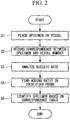
- a nucleic acid analysis kit 100 according to a first embodiment of the present invention and a nucleic acid analysis method using this kit will hereinafter be described referring to FIGS. 1 and 2 .
- the nucleic acid analysis kit 100 has, as shown in FIG. 1 , a plurality of vessels (supports) 2 having an identifier probe 1 sealed therein and a correspondence table 3 in which a vessel number given to each of the vessels 2 is associated with the composition of the identifier probe 1 sealed in each of the vessels 2.
- Each of the vessels 2 is, for example, a 1.5-mL microtube ordinarily used in a molecular biological test.
- the identifier probe 1 is attached to the inner bottom surface of the vessel 2 in dry form.
- the identifier probe 1 contains a plurality of kinds of nucleic acids having known base sequences different from each other.
- the plurality of kinds of nucleic acids is sealed in each of the vessels as a mixture obtained by adding them at ratios different for each of the vessels 2.
- the composition of the identifier probe 1, that is, the kind and amount of the nucleic acids contained in the identifier probe 1 is different for each of the vessels 2.
- DNA1, DNA2, DNA3, and DNA4 are added in four levels different from one another, respectively.
- the maximum number of the vessels 2 that the nucleic acid analysis kit 100 is able to have is 256.
- the kind of nucleic acids contained in the identifier probe 1 can be selected as needed in accordance with the kind of a target nucleic acid of the specimen and another kind of nucleic acids such as RNA may be used.
- the target nucleic acid is a DNA
- the identifier probe 1 contains preferably a DNA.
- the target nucleic acid is an RNA
- the identifier probe 1 contains preferably an RNA.
- a modified RNA for example, an RNA obtained by substituting the 2'-group of an oligonucleotide with a methyl group may be used in order to prevent degradation of the RNA by a degrading enzyme.
- DNA1 to DNA4 each have a base length of preferably 10 bases or more but not more than 1000 bases from the standpoint of handling ease in synthesis and analysis, with 20 bases or more but not more than 500 bases being more preferred.
- the total number of molecules of DNA1 to DNA4 to be sealed in each of the vessels 2 is preferably 100 or more but not more than 100,000 in order to secure sufficient quantitativeness of DNA1 to DNA4 while preventing DNA1 to DNA4 from having an influence on the analysis of a target nucleic acid in a nucleic acid analyzing step which will be described later. It is however needless to say that the total number of molecules of the identifier probe 1 can be set to fall outside the above range in accordance with the precision or sensitivity of a method of nucleic acid analysis.
- the correspondence table 3 shows one-to-one correspondence between the composition of the identifier probe 1 in each of the vessels 2, that is, the kind of nucleic acids (DNA1 to DNA4) and an adding ratio of them as the kind and amount of nucleic acids contained in each identifier probe 1, and the vessel number of each of the vessels 2.
- a target DNA contained in a specimen is analyzed by using the nucleic acid analysis kit 100 according to the present embodiment in the following manner.
- a specimen is placed in the vessel 2 and the specimen and the identifier probe 1 are mixed sufficiently in the vessel 2 (Step S1, probe adding step).
- Step S2 which specimen is placed in the vessel 2 and the number of the vessel number of the vessels 2 in which the specimen is placed are recorded (Step S2).
- each of the specimens is subjected to pretreatment for nucleic acid analysis.
- pretreatment for nucleic acid analysis for example, when the specimen is a fragment or cell of a biological tissue, treatment for extracting a DNA from the specimen is performed.
- a sample obtained by the pretreatment of each of the specimens is analyzed using quantitative nucleic acid amplification assay such as quantitative PCR to detect and quantitatively determine a target DNA contained in the sample (Step S3, nucleic acid analyzing step).
- Step S3 detection and quantitative determination performed for the target DNA are carried out also for four kinds of DNAS, that is, DNA1 to DNA4 constituting the identifier probe 1.
- the four kinds of DNAs, that is, DNA1 to DNA4 therefore each have a base sequence as amplified by a primer for the target DNA or a primer for DNA1 to DNA4 is added in Step S3. As a result, an adding ratio of DNA1 to DNA4 of each of the samples can be found (Step S4).
- DNA1 to DNA4 in each of the samples is preferably amplified at a substantially equal amplification rate. More specifically, a difference in the amplification rate among DNA1 to DNA4 is preferably 1.9-fold or less, more preferably 1.1-fold or less.
- Step S4 the adding ratio of DNA1 to DNA4 in each of the samples found in Step S4 is checked against the correspondence table 3. As a result, it is possible to identify the vessel number of the vessels 2 containing the specimen from which each of the samples is derived (Step S5).
- analysis of the identifier probe 1 contained in the sample prepared from each of the specimens enables identification of the origin of the sample.
- the specimen or a sample obtained from the specimen is ordinarily transferred from one vessel to another vessel in a plurality of times.
- the present embodiment is advantageous in that without recording, at the time of transferring the samples, which sample is transferred and to which vessel the sample is transferred, the origin of the sample can be identified correctly based on the adding ratio in the identifier probe 1 contained in the sample provided for nucleic acid analysis finally.
- the present embodiment is further advantageous in that by differentiating the adding amount of a plurality of kinds of nucleic acids, many kinds of identifier probes 1 which can be distinguished from one another can be prepared easily even though the kinds of nucleic acids used are sufficiently small and as a result, the origin of a number of samples can be identified.
- nucleic acid amplification assay is used for nucleic acid analysis, but a method of nucleic acid analysis is not limited insofar as it permits detection and quantitative determination of a specific nucleic acid contained in a sample.
- a base sequence reader (DNA sequencer) having a quantitative determination function of nucleic acids may therefore be used instead of the quantitative nucleic acid amplification assay.
- an adding ratio of DNA1 to DNA4 constituting the identifier probe 1 can be found simultaneously with detection and quantitative determination of a target DNA contained in a sample.
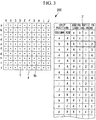
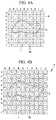
- nucleic acid analysis kit 200 according to a second embodiment of the present invention and a nucleic acid analysis method using the kit will be described referring to FIGS. 3 to 5 .
- the nucleic acid analysis kit 200 according to the present embodiment is different from the kit according to the first embodiment in that it has a substrate 4 having a plurality of kinds of identifier probes 1 attached thereto instead of the vessels 2 as shown in FIG. 3 and in a correspondence table 3', the composition of each of the identifier probes 1 and an attaching position of them on the substrate 4 are associated with each other.
- the substrate 4 is a flat plate, such as cover glass, suited for attaching thereto a section cut out from a biological tissue.
- the substrate 4 has a division line 4a for dividing the surface of the substrate into a plurality of regions in grid form.
- the regions obtained by dividing the substrate along the division line 4a each have a single kind of the identifier probe 1 attached and the adding ratio of DNA1 to DNA4 contained in the identifier probe 1 differs for each of the regions.
- the identifier probes 1 are attached to the substrate 4, for example, by using an inkjet printer or a spotter to be used in the manufacture of DNA chips.
- the substrate 4 may be divided into regions not more than 256 by the division line 4a. After division, the substrate 4 shown in FIG. 3 has 100 regions, that is, 10 rows ⁇ 10 columns.
- the correspondence table 3' shows one-to-one correspondence between the position of each of the regions and an adding ratio of each of DNA1 to DNA4 which the identifier probes 1 attached to each of the regions has.
- the position of each of the regions can be identified by row numbers a, b, c, ..., j and column numbers A, B, ..., J.
- a nucleic acid contained in a section 5 of a biological tissue is analyzed by using the nucleic acid analysis kit 200 according to the present embodiment in the following manner.
- the section 5 cut out from a biological tissue is attached to the substrate 4 (Step S21, probe adding step).
- the substrate 4 and the section 5 are cut along the division line 4a to obtain 100 chips (supports) 4b having a fragment of the section 5, which will be a specimen, attached to at least some of the chips (Step S22, dividing step).
- a method of cutting the substrate 4 and the section 5 is not particularly limited. For example, after pre-cut chips 4b are arranged two-dimensionally on a stretch sheet to prepare the substrate 4 and the section 5 is attached onto the substrate 4, the resulting sheet is stretched to separate the chips 4b from one another. In such a manner, the substrate 4 and the section 5 can be cut simultaneously along the division line 4a made of a boundary between the chips 4b.
- the chips 4b thus obtained are, for example, placed in microtubes, respectively, and the fragment of the section 5 attached to each of the chips 4b is subjected to pretreatment such as nucleic acid extraction.
- the sample obtained from each of the specimens by the pretreatment is subjected to nucleic acid analysis similar to Step S3 of the first embodiment to detect and quantitatively determine a target DNA contained in the sample (Step S23, nucleic acid analyzing step).
- Each of the samples prepared from the fragment of the section 5 has both the single kind of the identifier probe 1 attached to the substrate 4 and a target DNA derived from the fragment. Similar to the above-mentioned steps S3 to S5, an adding ratio of DNA1 to DNA4 of each of the samples can be found (Step S24) and the resulting adding ratio of DNA1 to DNA4 in each of the samples is checked against the correspondence table 3', whereby the position of the fragment from which each of the samples is derived can be identified (Step S25).
- the present embodiment has an advantage similar to that of the first embodiment so that a description of it is omitted.
- the identifier probe 1 is attached to each region of the substrate 4 but alternatively, after the section 5 is attached to the substrate 4, the identifier probe 1 may be attached onto the section 5 by using the above-mentioned inkjet printer, spotter, or the like. Also in this case, the attaching position of the identifier probe 1 is determined so that regions divided by the division line 4a each include a single kind of the identifier probe 1.
- the present embodiment relates to another nucleic acid analysis method using the nucleic acid analysis kit 200 according to the second embodiment.
- a difference from the second embodiment will therefore be described mainly and constituents similar to those in the second embodiment will be identified by the same symbols and a description of them is omitted.
- Step S31 hybridization step
- Step S31 hybridization step
- the section 5 is divided and collected (Step S22)
- nucleic acid analysis is conducted (Step S23)
- Step S24 an adding ratio in the identifier probe 1 is found (Step S24)
- the specimen is identified based on the correspondence table 3' (Step S25) similar to the second embodiment.
- Step S23 the detection probe is also analyzed and in Step S24, the kind and amount of the detection probe contained in each of the specimens are also found.
- Step S31 is followed by attachment of the identifier probe 1 to the section 5.
- improved detection accuracy can be achieved in addition to the advantage of the second embodiment, because when a target nucleic acid is analyzed using quantitative nucleic acid amplification assay, a known detection probe is used to make the amplification rate substantially equal to each other.
- the target nucleic acid is an RNA
- analysis can be conducted using quantitative nucleic acid amplification assay and a DNA sequencer without replacing the RNA with a complementary DNA upon nucleic acid analysis.
- improvement in detection accuracy and sensitivity can be achieved by detecting while replacing a readily degradable RNA to a DNA.
- the identifier probe 1 containing four kinds of nucleic acids has been described.
- the number of the kinds of the nucleic acids contained in the identifier probe 1 is not limited thereto. It is preferably the number suited for practical use.
- the number is preferably suited for use of with an inkjet printer or spotter. More specifically, the number of the kinds of nucleic acids contained in the identifier probe 1 is, when a four-color inkjet printer is used, preferably 4 or less.
- the number is preferably not more than the number of pins which the spotter has.
- the respective adding amounts of DNA1, DNA2, DNA3, and DNA4 are made different, more specifically, are made 2-fold, 3-fold, and 4-fold supposing that the minimum adding amount is 1.
- DNA1, DNA2, DNA3, and DNA4 may be added at a reduced change ratio.
- the identifier probe 1 contains a plurality of nucleic acids.
- the identifier probe 1 may contain only a single kind of a nucleic acid.
- the nucleic acid analysis kit 100 has n pieces (n is a natural number) of vessels 2, an identifier probe 1 containing only a single kind of a nucleic acid is placed in each of the vessels 2 and the amount of this nucleic acid may be varied in n stages for each of the vessels 2.
- the origin of the sample can be identified.
Landscapes
- Chemical & Material Sciences (AREA)
- Organic Chemistry (AREA)
- Life Sciences & Earth Sciences (AREA)
- Zoology (AREA)
- Wood Science & Technology (AREA)
- Proteomics, Peptides & Aminoacids (AREA)
- Health & Medical Sciences (AREA)
- Engineering & Computer Science (AREA)
- Microbiology (AREA)
- Biochemistry (AREA)
- Physics & Mathematics (AREA)
- Molecular Biology (AREA)
- Biotechnology (AREA)
- Biophysics (AREA)
- Analytical Chemistry (AREA)
- Immunology (AREA)
- Bioinformatics & Cheminformatics (AREA)
- General Engineering & Computer Science (AREA)
- General Health & Medical Sciences (AREA)
- Genetics & Genomics (AREA)
- Chemical Kinetics & Catalysis (AREA)
- Measuring Or Testing Involving Enzymes Or Micro-Organisms (AREA)
- Apparatus Associated With Microorganisms And Enzymes (AREA)
Applications Claiming Priority (2)
| Application Number | Priority Date | Filing Date | Title |
|---|---|---|---|
| JP2013108142 | 2013-05-22 | ||
| PCT/JP2014/062917 WO2014188941A1 (fr) | 2013-05-22 | 2014-05-15 | Trousse pour l'analyse d'acides nucléiques et procédé d'analyse des acides nucléiques |
Publications (2)
| Publication Number | Publication Date |
|---|---|
| EP3000882A1 true EP3000882A1 (fr) | 2016-03-30 |
| EP3000882A4 EP3000882A4 (fr) | 2017-01-25 |
Family
ID=51933501
Family Applications (1)
| Application Number | Title | Priority Date | Filing Date |
|---|---|---|---|
| EP14801154.7A Withdrawn EP3000882A4 (fr) | 2013-05-22 | 2014-05-15 | Trousse pour l'analyse d'acides nucléiques et procédé d'analyse des acides nucléiques |
Country Status (5)
| Country | Link |
|---|---|
| US (1) | US20150259732A1 (fr) |
| EP (1) | EP3000882A4 (fr) |
| JP (1) | JPWO2014188941A1 (fr) |
| CN (1) | CN104769110A (fr) |
| WO (1) | WO2014188941A1 (fr) |
Families Citing this family (1)
| Publication number | Priority date | Publication date | Assignee | Title |
|---|---|---|---|---|
| JP7138677B2 (ja) * | 2020-07-14 | 2022-09-16 | 株式会社島津製作所 | 核酸前処理キット、および塩基配列解析方法 |
Family Cites Families (8)
| Publication number | Priority date | Publication date | Assignee | Title |
|---|---|---|---|---|
| EP1090293B2 (fr) * | 1998-06-24 | 2019-01-23 | Illumina, Inc. | Décodage de détecteurs matricels à microspheres |
| US20030148339A1 (en) * | 2001-05-07 | 2003-08-07 | Hrissi Samartzidou | Artificial genes for use as controls in gene expression analysis systems |
| WO2003003015A2 (fr) * | 2001-06-28 | 2003-01-09 | Advanced Research And Technology Institute, Inc. | Procedes de preparation de billes marquees par des points quantiques multicolores et conjugues de ces billes |
| JP2007074967A (ja) * | 2005-09-13 | 2007-03-29 | Canon Inc | 識別子プローブ及びそれを用いた核酸増幅方法 |
| EP1842926B1 (fr) * | 2006-03-10 | 2015-08-19 | Epigenomics AG | Procédé d'identification d'un échantillon biologique pour analyse de méthylation |
| JP2009060862A (ja) * | 2007-09-07 | 2009-03-26 | Toppan Printing Co Ltd | 試料取違え防止用ラベル核酸 |
| WO2011127099A1 (fr) * | 2010-04-05 | 2011-10-13 | Prognosys Biosciences, Inc. | Tests biologiques à codage spatial |
| EP2647426A1 (fr) * | 2012-04-03 | 2013-10-09 | Max-Planck-Gesellschaft zur Förderung der Wissenschaften e.V. | Réplication de molécules d'acide nucléique distribuées avec conservation de leur distribution relative par liaison à base d'hybridation |
-
2014
- 2014-05-15 EP EP14801154.7A patent/EP3000882A4/fr not_active Withdrawn
- 2014-05-15 CN CN201480002850.3A patent/CN104769110A/zh active Pending
- 2014-05-15 JP JP2015518208A patent/JPWO2014188941A1/ja active Pending
- 2014-05-15 WO PCT/JP2014/062917 patent/WO2014188941A1/fr not_active Ceased
-
2015
- 2015-06-03 US US14/729,257 patent/US20150259732A1/en not_active Abandoned
Also Published As
| Publication number | Publication date |
|---|---|
| JPWO2014188941A1 (ja) | 2017-02-23 |
| EP3000882A4 (fr) | 2017-01-25 |
| CN104769110A (zh) | 2015-07-08 |
| WO2014188941A1 (fr) | 2014-11-27 |
| US20150259732A1 (en) | 2015-09-17 |
Similar Documents
| Publication | Publication Date | Title |
|---|---|---|
| US12460247B2 (en) | Methods for standardized sequencing of nucleic acids and uses thereof | |
| EP3320110B1 (fr) | Amorces universelles d'arn ribosomique 16s et leur utilisation pour les analyses microbiologiques et les diagnostics | |
| US11667970B2 (en) | Spatial molecular analysis of tissue | |
| US9850482B2 (en) | Heterologous DNA barcoding method | |
| CN107709574A (zh) | 生物组织样品的分子概况的空间作图 | |
| US9944973B2 (en) | Methods for standardized sequencing of nucleic acids and uses thereof | |
| EP1319716B1 (fr) | Procede d'analyse d'acide nucleique | |
| JPWO2018056432A1 (ja) | 血液検体の溶血を検出する方法及び溶血検出用チップ | |
| CN106367491A (zh) | 检测耳聋易感基因的试剂盒 | |
| RU2007132732A (ru) | СПОСОБ КОЛИЧЕСТВЕННОГО АНАЛИЗА МИКРООРГАНИЗМА С ПРИМЕНЕНИЕМ pPHK В КАЧЕСТВЕ МИШЕНИ | |
| US20240309434A1 (en) | Targeted rare allele crispr enrichment | |
| EP3196316B1 (fr) | PROCÉDÉ ET DISPOSITIF POUR L'ANALYSE COMPARATIVE DU NIVEAU D'EXPRESSION DE miARN | |
| US20190360897A1 (en) | Biological sample preparation for testing | |
| EP3000882A1 (fr) | Trousse pour l'analyse d'acides nucléiques et procédé d'analyse des acides nucléiques | |
| CN117604103A (zh) | 引物和探针组合物、试剂盒及在检测ikzf1基因缺失中的应用 | |
| KR102286875B1 (ko) | 무측지 수박 품종을 구별하기 위한 분자마커 및 이의 용도 | |
| KR102335806B1 (ko) | 대추 산조 품종을 구별하기 위한 엽록체 게놈 서열 기반 분자마커 및 이의 용도 | |
| CN116970684A (zh) | 多个snp位点的pcr检测方法 | |
| KR102174274B1 (ko) | 대추 품종 '보은'과 '추석'을 판별하기 위한 분자마커 및 이의 용도 | |
| KR20160129967A (ko) | 멜론 괴저반점 바이러스 저항성 및 이병성 품종 판별용 프라이머 세트 및 이를 이용한 멜론 괴저반점 바이러스 저항성 및 이병성 품종 선별방법 | |
| KR102370010B1 (ko) | 국내 대추 품종과 일본 대추 품종을 구별하기 위한 엽록체 게놈 서열 기반 분자마커 및 이의 용도 | |
| JP2013230146A (ja) | 陽性対照の概念 | |
| EP4409030A1 (fr) | Procédé d'examen d'un produit d'amplification d'acide nucléique | |
| KR20240054471A (ko) | 잎들깨 품종을 판별하기 위한 분자 마커 및 이의 이용 | |
| KR20250112958A (ko) | 영동 영국사 은행나무를 판별하기 위한 분자마커 및 이의 용도 |
Legal Events
| Date | Code | Title | Description |
|---|---|---|---|
| PUAI | Public reference made under article 153(3) epc to a published international application that has entered the european phase |
Free format text: ORIGINAL CODE: 0009012 |
|
| 17P | Request for examination filed |
Effective date: 20151202 |
|
| AK | Designated contracting states |
Kind code of ref document: A1 Designated state(s): AL AT BE BG CH CY CZ DE DK EE ES FI FR GB GR HR HU IE IS IT LI LT LU LV MC MK MT NL NO PL PT RO RS SE SI SK SM TR |
|
| AX | Request for extension of the european patent |
Extension state: BA ME |
|
| DAX | Request for extension of the european patent (deleted) | ||
| RAP1 | Party data changed (applicant data changed or rights of an application transferred) |
Owner name: OLYMPUS CORPORATION |
|
| RIN1 | Information on inventor provided before grant (corrected) |
Inventor name: HORI, KUNIO |
|
| A4 | Supplementary search report drawn up and despatched |
Effective date: 20161223 |
|
| RIC1 | Information provided on ipc code assigned before grant |
Ipc: G01N 33/53 20060101ALI20161219BHEP Ipc: C12N 15/09 20060101ALI20161219BHEP Ipc: C12Q 1/68 20060101AFI20161219BHEP |
|
| STAA | Information on the status of an ep patent application or granted ep patent |
Free format text: STATUS: REQUEST FOR EXAMINATION WAS MADE |
|
| STAA | Information on the status of an ep patent application or granted ep patent |
Free format text: STATUS: THE APPLICATION IS DEEMED TO BE WITHDRAWN |
|
| 18D | Application deemed to be withdrawn |
Effective date: 20170722 |