EP3004480B1 - Matériau de construction d'amortissement acoustique - Google Patents
Matériau de construction d'amortissement acoustique Download PDFInfo
- Publication number
- EP3004480B1 EP3004480B1 EP14723798.6A EP14723798A EP3004480B1 EP 3004480 B1 EP3004480 B1 EP 3004480B1 EP 14723798 A EP14723798 A EP 14723798A EP 3004480 B1 EP3004480 B1 EP 3004480B1
- Authority
- EP
- European Patent Office
- Prior art keywords
- acoustic damping
- building
- damping layer
- substrate
- polymeric
- Prior art date
- Legal status (The legal status is an assumption and is not a legal conclusion. Google has not performed a legal analysis and makes no representation as to the accuracy of the status listed.)
- Revoked
Links
Images



Classifications
-
- E—FIXED CONSTRUCTIONS
- E04—BUILDING
- E04B—GENERAL BUILDING CONSTRUCTIONS; WALLS, e.g. PARTITIONS; ROOFS; FLOORS; CEILINGS; INSULATION OR OTHER PROTECTION OF BUILDINGS
- E04B1/00—Constructions in general; Structures which are not restricted either to walls, e.g. partitions, or floors or ceilings or roofs
- E04B1/62—Insulation or other protection; Elements or use of specified material therefor
- E04B1/74—Heat, sound or noise insulation, absorption, or reflection; Other building methods affording favourable thermal or acoustical conditions, e.g. accumulating of heat within walls
- E04B1/82—Heat, sound or noise insulation, absorption, or reflection; Other building methods affording favourable thermal or acoustical conditions, e.g. accumulating of heat within walls specifically with respect to sound only
-
- B—PERFORMING OPERATIONS; TRANSPORTING
- B32—LAYERED PRODUCTS
- B32B—LAYERED PRODUCTS, i.e. PRODUCTS BUILT-UP OF STRATA OF FLAT OR NON-FLAT, e.g. CELLULAR OR HONEYCOMB, FORM
- B32B13/00—Layered products comprising a a layer of water-setting substance, e.g. concrete, plaster, asbestos cement, or like builders' material
- B32B13/04—Layered products comprising a a layer of water-setting substance, e.g. concrete, plaster, asbestos cement, or like builders' material comprising such water setting substance as the main or only constituent of a layer, which is next to another layer of the same or of a different material
- B32B13/047—Layered products comprising a a layer of water-setting substance, e.g. concrete, plaster, asbestos cement, or like builders' material comprising such water setting substance as the main or only constituent of a layer, which is next to another layer of the same or of a different material made of particles
-
- B—PERFORMING OPERATIONS; TRANSPORTING
- B32—LAYERED PRODUCTS
- B32B—LAYERED PRODUCTS, i.e. PRODUCTS BUILT-UP OF STRATA OF FLAT OR NON-FLAT, e.g. CELLULAR OR HONEYCOMB, FORM
- B32B5/00—Layered products characterised by the non- homogeneity or physical structure, i.e. comprising a fibrous, filamentary, particulate or foam layer; Layered products characterised by having a layer differing constitutionally or physically in different parts
- B32B5/16—Layered products characterised by the non- homogeneity or physical structure, i.e. comprising a fibrous, filamentary, particulate or foam layer; Layered products characterised by having a layer differing constitutionally or physically in different parts characterised by features of a layer formed of particles, e.g. chips, powder or granules
-
- E—FIXED CONSTRUCTIONS
- E04—BUILDING
- E04B—GENERAL BUILDING CONSTRUCTIONS; WALLS, e.g. PARTITIONS; ROOFS; FLOORS; CEILINGS; INSULATION OR OTHER PROTECTION OF BUILDINGS
- E04B1/00—Constructions in general; Structures which are not restricted either to walls, e.g. partitions, or floors or ceilings or roofs
- E04B1/62—Insulation or other protection; Elements or use of specified material therefor
- E04B1/74—Heat, sound or noise insulation, absorption, or reflection; Other building methods affording favourable thermal or acoustical conditions, e.g. accumulating of heat within walls
- E04B1/82—Heat, sound or noise insulation, absorption, or reflection; Other building methods affording favourable thermal or acoustical conditions, e.g. accumulating of heat within walls specifically with respect to sound only
- E04B1/84—Sound-absorbing elements
- E04B1/8409—Sound-absorbing elements sheet-shaped
-
- E—FIXED CONSTRUCTIONS
- E04—BUILDING
- E04B—GENERAL BUILDING CONSTRUCTIONS; WALLS, e.g. PARTITIONS; ROOFS; FLOORS; CEILINGS; INSULATION OR OTHER PROTECTION OF BUILDINGS
- E04B1/00—Constructions in general; Structures which are not restricted either to walls, e.g. partitions, or floors or ceilings or roofs
- E04B1/62—Insulation or other protection; Elements or use of specified material therefor
- E04B1/74—Heat, sound or noise insulation, absorption, or reflection; Other building methods affording favourable thermal or acoustical conditions, e.g. accumulating of heat within walls
- E04B1/82—Heat, sound or noise insulation, absorption, or reflection; Other building methods affording favourable thermal or acoustical conditions, e.g. accumulating of heat within walls specifically with respect to sound only
- E04B1/84—Sound-absorbing elements
- E04B1/86—Sound-absorbing elements slab-shaped
-
- E—FIXED CONSTRUCTIONS
- E04—BUILDING
- E04B—GENERAL BUILDING CONSTRUCTIONS; WALLS, e.g. PARTITIONS; ROOFS; FLOORS; CEILINGS; INSULATION OR OTHER PROTECTION OF BUILDINGS
- E04B2/00—Walls, e.g. partitions, for buildings; Wall construction with regard to insulation; Connections specially adapted to walls
- E04B2/56—Load-bearing walls of framework or pillarwork; Walls incorporating load-bearing elongated members
-
- E—FIXED CONSTRUCTIONS
- E04—BUILDING
- E04F—FINISHING WORK ON BUILDINGS, e.g. STAIRS, FLOORS
- E04F13/00—Coverings or linings, e.g. for walls or ceilings
- E04F13/07—Coverings or linings, e.g. for walls or ceilings composed of covering or lining elements; Sub-structures therefor; Fastening means therefor
- E04F13/072—Coverings or linings, e.g. for walls or ceilings composed of covering or lining elements; Sub-structures therefor; Fastening means therefor composed of specially adapted, structured or shaped covering or lining elements
- E04F13/075—Coverings or linings, e.g. for walls or ceilings composed of covering or lining elements; Sub-structures therefor; Fastening means therefor composed of specially adapted, structured or shaped covering or lining elements for insulation or surface protection, e.g. against noise or impact
-
- E—FIXED CONSTRUCTIONS
- E04—BUILDING
- E04F—FINISHING WORK ON BUILDINGS, e.g. STAIRS, FLOORS
- E04F19/00—Other details of constructional parts for finishing work on buildings
-
- G—PHYSICS
- G10—MUSICAL INSTRUMENTS; ACOUSTICS
- G10K—SOUND-PRODUCING DEVICES; METHODS OR DEVICES FOR PROTECTING AGAINST, OR FOR DAMPING, NOISE OR OTHER ACOUSTIC WAVES IN GENERAL; ACOUSTICS NOT OTHERWISE PROVIDED FOR
- G10K11/00—Methods or devices for transmitting, conducting or directing sound in general; Methods or devices for protecting against, or for damping, noise or other acoustic waves in general
- G10K11/16—Methods or devices for protecting against, or for damping, noise or other acoustic waves in general
-
- G—PHYSICS
- G10—MUSICAL INSTRUMENTS; ACOUSTICS
- G10K—SOUND-PRODUCING DEVICES; METHODS OR DEVICES FOR PROTECTING AGAINST, OR FOR DAMPING, NOISE OR OTHER ACOUSTIC WAVES IN GENERAL; ACOUSTICS NOT OTHERWISE PROVIDED FOR
- G10K11/00—Methods or devices for transmitting, conducting or directing sound in general; Methods or devices for protecting against, or for damping, noise or other acoustic waves in general
- G10K11/16—Methods or devices for protecting against, or for damping, noise or other acoustic waves in general
- G10K11/162—Selection of materials
- G10K11/168—Plural layers of different materials, e.g. sandwiches
-
- B—PERFORMING OPERATIONS; TRANSPORTING
- B32—LAYERED PRODUCTS
- B32B—LAYERED PRODUCTS, i.e. PRODUCTS BUILT-UP OF STRATA OF FLAT OR NON-FLAT, e.g. CELLULAR OR HONEYCOMB, FORM
- B32B2264/00—Composition or properties of particles which form a particulate layer or are present as additives
- B32B2264/02—Synthetic macromolecular particles
-
- B—PERFORMING OPERATIONS; TRANSPORTING
- B32—LAYERED PRODUCTS
- B32B—LAYERED PRODUCTS, i.e. PRODUCTS BUILT-UP OF STRATA OF FLAT OR NON-FLAT, e.g. CELLULAR OR HONEYCOMB, FORM
- B32B2307/00—Properties of the layers or laminate
- B32B2307/10—Properties of the layers or laminate having particular acoustical properties
- B32B2307/102—Insulating
-
- B—PERFORMING OPERATIONS; TRANSPORTING
- B32—LAYERED PRODUCTS
- B32B—LAYERED PRODUCTS, i.e. PRODUCTS BUILT-UP OF STRATA OF FLAT OR NON-FLAT, e.g. CELLULAR OR HONEYCOMB, FORM
- B32B2419/00—Buildings or parts thereof
-
- B—PERFORMING OPERATIONS; TRANSPORTING
- B32—LAYERED PRODUCTS
- B32B—LAYERED PRODUCTS, i.e. PRODUCTS BUILT-UP OF STRATA OF FLAT OR NON-FLAT, e.g. CELLULAR OR HONEYCOMB, FORM
- B32B2471/00—Floor coverings
-
- B—PERFORMING OPERATIONS; TRANSPORTING
- B32—LAYERED PRODUCTS
- B32B—LAYERED PRODUCTS, i.e. PRODUCTS BUILT-UP OF STRATA OF FLAT OR NON-FLAT, e.g. CELLULAR OR HONEYCOMB, FORM
- B32B2607/00—Walls, panels
-
- E—FIXED CONSTRUCTIONS
- E04—BUILDING
- E04B—GENERAL BUILDING CONSTRUCTIONS; WALLS, e.g. PARTITIONS; ROOFS; FLOORS; CEILINGS; INSULATION OR OTHER PROTECTION OF BUILDINGS
- E04B1/00—Constructions in general; Structures which are not restricted either to walls, e.g. partitions, or floors or ceilings or roofs
- E04B1/62—Insulation or other protection; Elements or use of specified material therefor
- E04B1/74—Heat, sound or noise insulation, absorption, or reflection; Other building methods affording favourable thermal or acoustical conditions, e.g. accumulating of heat within walls
- E04B2001/742—Use of special materials; Materials having special structures or shape
-
- E—FIXED CONSTRUCTIONS
- E04—BUILDING
- E04B—GENERAL BUILDING CONSTRUCTIONS; WALLS, e.g. PARTITIONS; ROOFS; FLOORS; CEILINGS; INSULATION OR OTHER PROTECTION OF BUILDINGS
- E04B1/00—Constructions in general; Structures which are not restricted either to walls, e.g. partitions, or floors or ceilings or roofs
- E04B1/62—Insulation or other protection; Elements or use of specified material therefor
- E04B1/74—Heat, sound or noise insulation, absorption, or reflection; Other building methods affording favourable thermal or acoustical conditions, e.g. accumulating of heat within walls
- E04B1/82—Heat, sound or noise insulation, absorption, or reflection; Other building methods affording favourable thermal or acoustical conditions, e.g. accumulating of heat within walls specifically with respect to sound only
- E04B2001/8263—Mounting of acoustical elements on supporting structure, e.g. framework or wall surface
- E04B2001/8281—Flat elements mounted parallel to a supporting surface with an acoustically active air gap between the elements and the mounting surface
-
- E—FIXED CONSTRUCTIONS
- E04—BUILDING
- E04B—GENERAL BUILDING CONSTRUCTIONS; WALLS, e.g. PARTITIONS; ROOFS; FLOORS; CEILINGS; INSULATION OR OTHER PROTECTION OF BUILDINGS
- E04B1/00—Constructions in general; Structures which are not restricted either to walls, e.g. partitions, or floors or ceilings or roofs
- E04B1/62—Insulation or other protection; Elements or use of specified material therefor
- E04B1/74—Heat, sound or noise insulation, absorption, or reflection; Other building methods affording favourable thermal or acoustical conditions, e.g. accumulating of heat within walls
- E04B1/82—Heat, sound or noise insulation, absorption, or reflection; Other building methods affording favourable thermal or acoustical conditions, e.g. accumulating of heat within walls specifically with respect to sound only
- E04B1/84—Sound-absorbing elements
- E04B2001/8457—Solid slabs or blocks
- E04B2001/8461—Solid slabs or blocks layered
-
- E—FIXED CONSTRUCTIONS
- E04—BUILDING
- E04B—GENERAL BUILDING CONSTRUCTIONS; WALLS, e.g. PARTITIONS; ROOFS; FLOORS; CEILINGS; INSULATION OR OTHER PROTECTION OF BUILDINGS
- E04B1/00—Constructions in general; Structures which are not restricted either to walls, e.g. partitions, or floors or ceilings or roofs
- E04B1/62—Insulation or other protection; Elements or use of specified material therefor
- E04B1/74—Heat, sound or noise insulation, absorption, or reflection; Other building methods affording favourable thermal or acoustical conditions, e.g. accumulating of heat within walls
- E04B1/82—Heat, sound or noise insulation, absorption, or reflection; Other building methods affording favourable thermal or acoustical conditions, e.g. accumulating of heat within walls specifically with respect to sound only
- E04B1/84—Sound-absorbing elements
- E04B2001/8457—Solid slabs or blocks
- E04B2001/8476—Solid slabs or blocks with acoustical cavities, with or without acoustical filling
Definitions
- the present invention relates to a building material and in particular a building material that is suitable for damping acoustic resonance or sound transmissions.
- denser materials which inherently limits sound transmission by acting as a barrier material which reflects sound waves or energy.
- use of denser materials does not address impact acoustic, noise or sound transmissions, whereby the noise or sound waves are formed in the denser material on impact.
- a further approach to reducing noise transmissions is found in multiple storey or multiple layer construction.
- combined floor-ceiling installations are placed between storeys or floors.
- the combined floor-ceiling installations comprise multiple layers including for example, a central structural flooring sheet, to which varying combinations of drywall, gypsum board or plasterboard, insulation batts, insulation boards, insulation mats, concrete slabs, aesthetic floor surfaces which are arranged in various combinations to provide a reduction in transmitted sound intensity between the storeys or layers.
- the problem associated with such systems is the amount of space such installations occupy in the building structure. Ultimately, the height of the building and or the number of storeys often needs to be adjusted to allow for such installations.
- a further example of a noise reducing technique incorporates the use of roll out insulating mats, which are placed between a pre-existing building substrate and an aesthetic surface layer. Often such insulating mats are installed over existing concrete or timber structural floors. These mats may be compressed at the point(s) where a building sheet is fixed to a subframe through the mat. It is necessary to install a building sheet, for example, an MDF layer and/or battens over the acoustic mat(s) in order to fix a decorative hard surface to the floor. It is understood, that use of such measures does not effectively reduce transmission of sound energy within the construction.
- CN 202 175 920 discloses a sound absorbing plate suitable for lining sides of municipal transportation fields according to the preamble of claim 1 and a corresponding production method according to the preamble of claim 8.
- an acoustic damping building material as set out in appended Claims 1 to 6.
- an acoustic damping building system comprising a building subframe structure and as least one section of an acoustic damping building material of Claims 1 to 6 as set out in appended Claim 7.
- a method for constructing an acoustic building system as set out in appended Claim 8.
- the advantage of the acoustic building material of the invention is that a single product provides multiple combinations of structure borne energy transmission pathways through which sound energy can be absorbed and/or transmitted.
- the acoustic building material of the invention comprises at least two differing media or materials comprising different properties which in turn generate multiple combinations of structure borne energy transmission pathways through which sound energy can be absorbed and/or transmitted.
- the acoustic damping layer provides methods by which sound fluctuations can be absorbed and/or dissipated whilst the substrate layer provides a barrier material which reflects sound fluctuations back into the acoustic damping layer. The reflected sound fluctuations are then also absorbed and dissipated. In this way, acoustic noise can be limited via impact and acoustic or vibrational transfer of sound energy through the building structure.
- direct energy transmission pathway is used to describe a transmission pathway through the acoustic damping layer that enables energy to proceed through the media following a relatively straight course i.e. a pathway that is without interruption.
- indirect energy transmission pathway is used to describe a transmission pathway through the acoustic damping layer that does not follow such a course, i.e. may include one or more interruptions.
- the at least two media are interspersed amongst each other to form the direct and indirect energy transmission pathways.
- the acoustic damping layer comprises at least two media wherein one of the at least two media comprises a different transmission coefficient ( ⁇ ) to the other of the at least two media.
- One of the at least two media comprises at least one polymeric material.
- one of the at least two media comprises one or more polymeric materials.
- the one or more polymeric materials each comprise a transmission coefficient ( ⁇ ).
- the transmission coefficients ( ⁇ ) of the one or more polymeric materials are the same for each of the polymeric materials.
- the transmission coefficients ( ⁇ ) of the one or more polymeric materials are different for each of the one or more polymeric materials.
- the transmission coefficients ( ⁇ ) of the polymeric materials are optionally the same or different relative to each other.
- the at least one polymeric material comprises a polymeric particulate material.
- the at least one polymeric particulate material comprises a plurality of particles dispersed within the acoustic damping layer.
- the polymeric material is a granular material whereby the granular material comprises small and independent granules.
- the particles and/or granules have different shapes, for example, either regular or irregular shapes.
- the particles or granules are formed by crumbing or shredding a piece of the polymeric material.
- the polymeric particles or granules comprise a mixture of crumbed or shredded particles or granules.
- the polymeric material is selected from the one or more of the group comprising natural rubbers, nitrile rubbers, butyl rubbers, silicone rubbers, Ethylene Propylene Diene Monomer rubber (EPDM), synthetic rubbers, polyacrylates, polyurethanes, vinyl polymers, copolymers.
- natural rubbers nitrile rubbers, butyl rubbers, silicone rubbers, Ethylene Propylene Diene Monomer rubber (EPDM), synthetic rubbers, polyacrylates, polyurethanes, vinyl polymers, copolymers.
- EPDM Ethylene Propylene Diene Monomer rubber
- the particles or granules of one of the at least two media and the other of the two media are dispersed amongst each other within the acoustic damping layer such that a portion of the particles or granules of one of the at least two media are contiguous to an adjacent particle or granule of the same media so as to form a direct energy transmission pathway through the acoustic damping layer and a portion of the particles or granules of the polymeric material of one of the at least two media are contiguous to an adjacent particle of the other of the at least two media so as to form an indirect energy transmission pathway through the acoustic damping layer.
- one of the at least two media comprises further polymeric materials
- a portion of the particles or granules of the polymeric material of one of the at least two media are contiguous to either an adjacent particle of a particle or granule of a further polymeric material or the other of the at least two media so as to form an indirect energy transmission pathway through the acoustic damping layer.
- the other of the at least two media comprises a void volume, wherein the void volume is understood to be a volume of unoccupied area or space dispersed within the acoustic damping layer.
- the one or more polymeric materials and the void volume are interspersed amongst each other, whereby the particles of one of the at least two media and the void volume or the other of the at least two media are dispersed amongst each other within the acoustic damping layer such that a portion of the particles of one of the at least two media are contiguous to an adjacent particle of the same media so as to form a direct energy transmission pathway through one of the at least two media of the acoustic damping layer and a portion of the particles of one of the at least two media are contiguous to an adjacent void volume so as to form an indirect energy transmission pathway through one of the at least two media of the acoustic damping layer.
- the acoustic damping layer is provided as a continuous material wherein the at least two media are interwoven together to form the continuous material.
- the acoustic damping layer comprises a continuous material in the form of a mat which is used to cover the portion or all of the substrate material.
- the acoustic damping layer comprising polymeric particulate material is configured to have an outwardly appearing continuous line. In this way, the indirect and direct energy transmission pathways within the acoustic damping layer are not readily visible to the end user.
- the polymeric particulate material is arranged such that the acoustic damping laver comprising polymeric particulate material is in the form of a mat which is used to cover a portion of the substrate material.
- the acoustic damping layer further comprises a polymeric binder.
- the polymeric binder is selected from the group comprising emulsion polymers, polymer solutions, polymer dispersions, thermosetting polymers, and thermoplastic polymers.
- the polymeric binder comprises a mixture of a polymeric resin, water and one or more additives wherein the one or more additives are selected from the group comprising flow control agents, rheology modifiers, fire retardants, preservatives, fungicides, insecticides, pigments, colorants, water repelling agents and any other suitable additive known to a person skilled in the art.
- the polymeric binder can have a different or the same transmission coefficient ( ⁇ ) as compared to one or both of the at least two media.
- the polymeric binder is combined with one or more of the at least two media to bind the one or more of the at least two media together such that the at least two media are interspersed amongst each and the polymeric binder forms a non-continuous phase intermediate the interspersed at least two media thereby forming the direct and indirect energy transmission pathways.
- one of the at least two media comprises at least two polymeric materials
- the at least two polymeric materials each comprise a polymeric particulate material.
- the at least two polymeric particle materials and the void volume are dispersed amongst each other within the acoustic damping layer such that a portion of the particles of one of the at least two polymeric particle materials are contiguous to an adjacent particle of the same polymeric particle material so as to form a direct energy transmission pathway through one of the at least two polymeric particle material of the acoustic damping layer and a portion of the particles of one of the at least two polymeric particle materials are contiguous to an adjacent particle of the other of the at least two polymeric particle materials or a void volume so as to form an indirect energy transmission pathway through one of the at least two media of the acoustic damping layer.
- the acoustic damping layer comprises a mixture of crumbed and shredded polymeric material, a void volume and a polymeric binder wherein the crumbed and shredded polymeric material comprise approximately 60% ⁇ 2% by weight of the acoustic damping layer and the polymeric binder comprises approximately 40% ⁇ 2% by weight of the acoustic damping layer.
- the ratio of crumbed polymeric material to shredded polymeric material is 1:1.
- the porosity of the acoustic damping layer of the invention is strictly controlled to ensure that the acoustic damping properties of the acoustic damping layer of the invention are enhanced.
- the substrate comprises a first face, a second face and an intermediate portion positioned between the first and second faces and an edge portion surrounding the intermediate portion such that the first and second faces, intermediate portion and edge member together form a panel or sheet of predetermined thickness.
- the first and second faces are opposing faces of the panel or sheet.
- the intermediate portion and edge portion are integrally formed with the first and second faces of the substrate.
- the substrate is a load bearing structural substrate, wherein the structural substrate is able to withstand static loading. It is be to understood that the static loading requirements are defined within each territory by the appropriate local or regulatory building codes.
- the load bearing structural substrate is a structural flooring sheet, panel or board.
- the load bearing structural substrate has a minimum loading level of 5KPa.
- the acoustic damping layer is secured to at least a portion of the first face of the substrate.
- the acoustic damping layer is secured by any appropriate means such that the acoustic damping layer is firmly attached to the substrate.
- the acoustic damping building material can be arranged such that the acoustic damping layer is positioned between the substrate and the source of the sound energy or alternatively such that the acoustic damping layer is remote from the source of the sound energy, i.e. the substrate is located between the acoustic damping layer and the source of the sound energy.
- the direct and indirect energy transmission pathways of the acoustic damping layer operate to absorb and/or dissipate a significant amount of sound energy before the sound energy reaches the substrate layer.
- the acoustic damping layer is secured to at least a portion of the first face and at least a portion of the second face of the substrate. Conveniently separate acoustic damping layers can be provided for the first and second face of the substrate respectively.
- the advantage of this embodiment of the invention is that any noise or sound energy which is transmitted through a first acoustic damping layer and the substrate is absorbed by the second acoustic damping layer on the opposite face.
- the distance from one surface of the acoustic damping layer to an opposing surface is between approximately 1 mm and approximately 20mm thick. In a further embodiment of the invention, the distance between one surface of the acoustic damping layer to the opposing surface is between approximately 2mm and approximately 10mm.
- the substrate comprises a density within the range of 900 to 1800 ⁇ 100 Kg/m 3 .
- the advantage of using a denser material is that is reduces airborne acoustic, noise or sound transmissions.
- the substrate comprises a cementitious bound material.
- the cementitious bound material comprises a fibre cement panel or sheet, for example, a fibre cement flooring sheet or a fibre cement building panel.
- the advantage of using a cementitious bound material as a substrate is that it provides a durable and workable material which has greater density than most wooden substrates normally used in construction.
- the cementitious bound material substrate together with acoustic damping layer of the invention provide an acoustic damping building material that reduces both airborne and impact acoustic, noise or sound transmissions.
- the distance between the first and second face of the substrate panel or sheet is between approximately 15mm and approximately 50mm.
- the distance between one surface of the acoustic damping building layer and the opposing surface wherein the acoustic damping building layer comprises the substrate panel and the acoustic layer is between approximately 19mm and 27mm.
- the distance between one surface of the acoustic damping building material and an opposing surface can achieve distances of 16mm to 70mm as compared to an equivalent distance of more than 200mm in prior art systems.
- the edge portion of the substrate further comprises a protruding or projecting member which extends beyond the edge of the first and/or second face of the substrate.
- the edge portion further comprises a receiving portion which is sized and shaped such that it is adapted to receive a complimentary shaped protruding or projecting member extending beyond the edge of the first and/or second face of the substrate.
- the edge portion of a substrate layer is provided with both a protruding or projecting member and a receiving portion.
- the protruding or projecting member and receiving portion are arranged on the edge portion such that the protruding or projecting member of a first substrate layer can seat within a receiving portion of an adjacent substrate layer when two or more substrate layers are nested together.
- the protruding or projecting member of the substrate and/or the receiving portion are configured to facilitate provision of a cavity intermediate the protruding or projecting member and the receiving portion, such that a securing material, for example, a sealant or adhesive can be placed in the cavity.
- the securing material acts to secure two or more substrate layers together in a nested arrangement.
- the securing material can also act as an acoustic damping material.
- the acoustic damping building material comprises an outer layer, wherein the outer layer is provided on the outermost surface of the acoustic damping building material which is normally visible to the end user.
- the outer layer provides a smoother and more durable surface for the end user, for example, an aesthetic coating such as a skimmed coating of a cementitious material or a flooring surface.
- any suitable outer layer known to a person skilled in the art which will achieve the function of the outer layer can also be used.
- the outer layer comprises an optimising layer and a finishing layer, wherein the optimising layer is used to improve surface flatness and/or provide additional structural support for the finishing layer.
- An example of such an embodiment of the invention is the use of a screed as the optimising layer to improve surface flatness and provide additional structural support for a tile finishing layer.
- the acoustic properties of the acoustic damping building material are maintained when using an outer layer.
- the acoustic damping building material is suitable for use as a structural floor surface for an underfloor heating system wherein the pipes for the underfloor heating are provided between the joists of the flooring structure.
- an acoustic damping building system comprising:
- the advantage of the acoustic damping building system of the invention is that the acoustic energy generated directly or indirectly within the aesthetic surface layer is damped by the or each acoustic damping building material section, which leads to abatement of acoustic noise transmission to adjacent room spaces through the building subframe structure.
- the acoustic damping building material is securable to the building subframe by mechanical means, wherein the mechanical means is selected from one or more of the group comprising nails, screws, scrails, staples, bolts, and masonry anchors.
- the acoustic damping building material is securable to the building subframe by a concealed fixing system.
- the acoustic damping building material is securable to the building subframe by chemical means, for example, by means of an adhesive.
- the acoustic damping material is securable to the building subframe using a combination of mechanical and chemical means.
- a method of constructing an acoustic damping building system comprising the steps of:
- the method of constructing an acoustic damping building system further comprises after step (c) the further steps of:
- the acoustic damping building material is securable to the building subframe by mechanical means, wherein the mechanical means is selected from one or more of the group comprising nails, screws, scrails, staples, bolts, and masonry anchors.
- the acoustic damping building material is securable to the building subframe by a concealed fixing system.
- the acoustic damping building material is securable to the building subframe by chemical means, for example, by means of an adhesive.
- the acoustic damping material is securable to the building subframe using a combination of mechanical and chemical means.
- the acoustic damping building material is suitable for use in combination with other acoustic damping building materials.
- the acoustic damping building material of the invention is suitable for use with an acoustic dampener comprising: a base member, wherein the base member comprises a first surface and a second surface, the first and second surface being spaced apart from each other defining a thickness there between; at least two side arms, wherein each side arm comprises a first end and a second end, each side arm extending from the first surface of the base member at a pre-determined angle, such that there is a channel formed whereby each side arm and the base member form the sides and the base of the channel formation respectively; and a pair of flanges, each flange extending substantially orthogonally from the second end of each side arm and wherein the predetermined angle is elastically deformable.
- the channel formation is configured to receive a batten and the or each flange is configured to retain a bat
- a floor structure comprising acoustic damping building material and an acoustic dampener securable to a structural substrate, a batten disposed within the channel formation and flooring material secured to the batten.
- the acoustic damping building material provides a lightweight alternative to other acoustic damping systems, which do not require application of multiple layers or skills from different trades.
- Use of a single layer of material, and the associated reduction in spacing between floors or walls means a reduction in building and materials costs which is hugely advantageous for the end user.
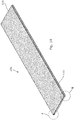
- an acoustic building damping material 100 comprising a substrate 110 and an acoustic damping layer 118 secured to the substrate 110.
- the substrate 110 is a load bearing structural substrate in the form of a flooring sheet which is approximately 499 mm in width and 2400mm in length.
- Flooring sheet 100 can support minimum static loads of 5KPa.
- the substrate 100 comprises a cementitious bound material, for example a fibre cement material with a density within the range of 900 to 1800 ⁇ 100 Kg/m 3 .
- Substrate 110 comprises a first face 112, a second face 114 and an intermediate portion 116 positioned between the first and second faces and an edge member 116a, 116b surrounding the intermediate portion.
- first and second faces, intermediate portion and edge member together integrally form a panel or sheet of predetermined thickness.
- the edge member or portion 116 of substrate layer 110 is provided with both a protruding or projecting member 116a and a receiving portion 116b, thereby comprising a tongue and groove configuration.
- the distance from the uppermost surface of the acoustic building damping material 100 to the opposing lowermost surface of the acoustic building damping material 100 is approximately 27mm, wherein the distance from the uppermost surface of the acoustic damping layer 118 to the opposing lowermost surface of the acoustic damping layer 118 is approximately 5.0mm and the distance from the uppermost surface of the substrate layer 110 to the opposing lowermost surface of the substrate layer 110 is approximately 22.0mm.
- the edge member 116 of the substrate layer is further provided with a chamfered or bevelled edge 116c (shown clearly in Figure 1b ) at the first face 112 of the substrate layer 110.
- This provides a user with a slightly opened area for a sealant to be applied easily between two adjacent sheets of the acoustic damping building material 100 of the invention.
- the chamfered or bevelled edge 116c enables a better seal to form between the adjacent sheets.
- the acoustic damping layer 118 is secured by gluing to the first face of the substrate layer 110 such that the acoustic damping layer 118 covers predominantly all of the first face of the substrate layer 110. Acoustic damping layer 118 does not extend to cover all of the first face 112 of the substrate layer 110, this is to allow for compression of the acoustic damping layer when a load is placed on the acoustic building damping material 100 of the invention.
- the uncovered area between the edge of the acoustic damping layer 118 and the edge portion 116 is approximately 2.25mm across the width of the board as shown in Figures 1b and 1c and approximately 2.0mm across the length of the board as shown in Figures 1d and 1e .
- the acoustic damping layer 118 can be arranged such that the acoustic damping layer 118 is positioned between the substrate 100 and the source of the sound energy or alternatively such that the acoustic damping layer 118 is remote from the source of the sound energy, i.e. the substrate 100 is located between the acoustic damping layer 118 and the source of the sound energy.
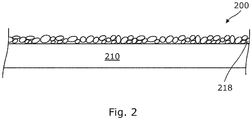
- Figure 2 shows a second embodiment of a portion of the acoustic damping building material 200 of the invention comprising a substrate 210 and an acoustic damping layer 218 secured thereto.
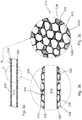
- Figure 3a shows a third embodiment of a portion of the acoustic damping building material 300 of the invention comprising a substrate 310 and a first and second acoustic damping layer 318 and 320 respectively.
- acoustic damping layers 218, 318 and 320 cover all of substrate 210, 310 respectively. It will be appreciated that it is possible for the damping layers to cover all or at least a portion of the substrate 210, 310 respectively.
- the acoustic damping layers 118, 218, 318 and 320 comprise two media wherein the media are configured such that each of the acoustic damping layers 118, 218, 318, 320 comprise at least one direct energy transmission pathway and at least one indirect energy transmission pathway through the acoustic damping layer 118, 218, 318, 320 to the substrate 210 and 310 respectively.
- the acoustic damping layer 118, 218, 318 320 are not drawn to scale, it is to be understood that in one embodiment of the invention, the acoustic damping layer 118, 218, 318, 320 has a depth of between approximately 1mm and 20mm from an exterior surface to an interior surface whereby the exterior surface is defined as the surface of the acoustic damping layer remote from the substrate 210 and 310 and the interior surface of the acoustic damping layer is adjacent the substrate 210 and 310 in any given configuration. In alternative embodiments of the invention the depth of the acoustic damping layer 118, 218, 318, 320 is any distance between approximately 2mm and 10mm.
- acoustic damping layers 318 and 320 are substantially the same.
- Each of the respective media 322 and 324 used in the acoustic damping layer 318 have a different transmission coefficient ( ⁇ ) to the other and are interspersed in the acoustic damping layer 318 to form the direct and indirect energy transmission pathways.
- the media of the acoustic damping layers can be any suitable media or material known to a person skilled in the art.
- the acoustic damping layer 318 comprises a polymeric material 322 which is in the form of a plurality of particles which have been dispersed and held in place by a polymeric binder 326.
- the polymer particles 322 are of irregular shape, consequently interstitial void volumes 324 are present between adjacent polymer particles 322.
- the polymer particles 322 are dispersed amongst each other within the acoustic damping layer 318 such that in some instances, a portion of the surface area 322a of the particles 322 are contiguous to a portion of the surface area of an adjacent particle 322 of the same media. This forms a direct energy transmission pathway through the polymer media of the acoustic damping layer.
- a portion of the surface area 322b of the polymer particles 322 are adjacent to a void volume 324 so as to form an indirect energy transmission pathway through the acoustic damping layer.
- the polymeric material 322 is selected from the group comprising natural rubbers, nitrile rubbers, butyl rubbers, silicone rubbers, EPDM, synthetic rubbers, polyacrylates, polyurethanes, vinyl polymers, copolymers.
- the polymeric binder 326 is selected from the group comprising emulsion polymers, polymer solutions, polymer dispersions, thermosetting polymers, and thermoplastic polymers.
- the void volume 324 is normally occupied by a mixture of gases, for example air. In all of the above any other materials known to a person skilled in the art which would achieve the object of the invention can also be used.
- the void volume 324 is in effect dispersed throughout the acoustic damping layer 318 due to the arrangement of the irregularly shaped particulate polymenc material 322.
- the void volume 324 occupies between 5 and 80% by volume of the acoustic damping layer. In further embodiments of the invention the void volume occupies between 10 and 50% by volume and between 15 and 35 % by volume of the acoustic damping layer respectively.
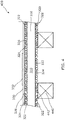
- acoustic damping building material 300 of Figure 3a comprising two acoustic damping layers 318 and 320 in use as a flooring material 400.
- the building material is secured to support 440 such that the acoustic damping layer 320 abuts the support 440 along the support surface 442.
- acoustic damping layer 320 adjacent support 440 has a greater depth than the acoustic damping layer 318 on the opposite side of the substrate 310.
- acoustic damping layer 318 has a depth that is approximately 2mm whilst acoustic damping layer 320 has a depth that is approximately 5mm.
- the advantage of this embodiment of the invention is that the acoustic damping layer 318 on the trafficable side of the flooring material is designed to reduce impact noise, whilst the acoustic damping layer 320 is designed to absorb, dissipate and limit the transfer of impact and vibration to the support 440 and consequently throughout the building structure.
- FIG. 5(a) to 5(f) there is shown an example of the steps of the method for installation flooring sheet 400 in a building structure.
- the acoustic damping building material 300 of Figure 3a is shown without defining the acoustic damping layers in Figures 5(a) to 5(e) .
- Figure 5(a) is an example a building subframe structure 440.
- the installer is shown reinforcing the building subframe structure 440 and securing a first and second section 300a and 300b respectively of the acoustic damping building material 300 of the invention to the building subframe structure 440 at predefined positions 440a on the subframe 440.
- Figure 5(f) shows an aesthetic surface layer 332 secured to the acoustic damping building material 300 for providing an aesthetic building finish.
- the acoustic damping building material is securable to the building subframe 440 by either mechanical or chemical means, wherein the mechanical means is selected from one or more of the group comprising nails, screws, scrails, staples, bolts, and masonry anchors; and the chemical means is by means of an appropriate adhesive.
- the acoustic damping building material 100, 200 or 300 of the invention were tested to determine airborne and impact transmissions.
- the acoustic damping building material 100, 200 or 300 was tested having either a single acoustic damping layer attached to one side of the substrate or a double acoustic damping layer wherein a single acoustic damping layer was secured to opposing sides of a substrate.
- the acoustic damping building material was secured to a building sub frame.
- the acoustic building material was also tested with and without an outer decorative surface, wherein the decorative surface was either a timber laminate or a ceramic tile as set out below. The temperature of the testing area was also recorded.
- Sound pressure levels are typically reported in decibel (dB) units. With 0dB representing the threshold of audibility for a person of normal hearing capacity and 100dB representing, say, the noise level in a subway railway station or heavy industrial machinery in operation. In a normal daily urban environment, a person may be exposed to sound levels such as average street noise at around 70dB, an average office environment at around 60dB, an average conversation at around 50dB, and a quiet or private office at around 40dB. The correlation between sound intensity and sound pressure is logarithmic and an increase of 10dB in sound pressure level represents a 10-fold increase in sound intensity level, so the sound intensity at 100dB is 10,000,000,000 times greater than that at 0dB.
- dB decibel
- a change of 1-2dB is not detectable.
- a change of 5dB is clearly detectable and a change of 10dB is regarded as either a halving (if reduced by 10dB) or doubling (if increased by 10dB) of the noise level.
- a relatively small change in dB sound levels may, in fact, represent a significant change in the sound intensity in an environment.
- Each material will have a characteristic sound absorption/transmission effectiveness depending not only its inherent material properties, but also its physical configuration such as shape, thickness and the like. Sound may also be transferred either directly through the material of a building section such as a wall or floor section &/or indirectly through airborne transmission.
- the ideal is to create an environment where sound intensity, through both direct and indirect transmission pathways, is below nuisance levels both for the person themselves and for any immediately adjacent neighbours.
- the first embodiment 100 of the acoustic damping building material of the invention was tested in a combined structural floor, ceiling configuration, such a configuration is typically found between storeys of a multi-storey building construction.
- the airborne noise transmission for the various embodiments of the invention is 60 and 62 Db (R w + C tr ) respectively, whilst the impact noise transmission for the various embodiments of the invention is between 55 and 64 Db (L n,Tw ).
- the results of the test exemplify that the various embodiments of the invention operated to reduce both airborne and impact acoustic, noise or sound transmissions to an acceptable level.
- the second and third embodiments (assembly) 200 and 300 respectively of the acoustic damping building material of the invention were tested at various temperatures as a flooring material to determine the effectiveness of the building material.
- the airborne noise transmission for the various embodiments of the invention is 60 and 63 Db (R w + C tr ) respectively, whilst the impact noise transmission for the various embodiments of the invention is between 52 and 59 Db (L n,Tw ).
- the results of the test exemplify that the various embodiments of the invention operated to reduce both airborne and impact acoustic, noise or sound transmissions to an acceptable level.
- the acoustic performance of all examples provided above meet or exceed the UK Building Code ADE AAA3 (Resistance to the Passage of Sound) provisions for an L' nT,w maximum value of 64 dB for floors, and stairs in buildings. (The lower the value the better).
- the L' nT,w value is the impact sound pressure level in a stated frequency band, corrected for reverberation time, according to BS EN ISO 140-7:1998.
- the R w (C tr ) standards for airborne noise transmission between rooms are also met or exceeded by all examples provided above.
- the R w (C tr ) is a measure of the is the weighted sound reduction index together with the traffic A-weighted spectrum added to take account of low frequency traffic noise in airborne transmissions.
Landscapes
- Engineering & Computer Science (AREA)
- Physics & Mathematics (AREA)
- Architecture (AREA)
- Acoustics & Sound (AREA)
- Structural Engineering (AREA)
- Civil Engineering (AREA)
- Electromagnetism (AREA)
- Multimedia (AREA)
- Life Sciences & Earth Sciences (AREA)
- Wood Science & Technology (AREA)
- Building Environments (AREA)
- Floor Finish (AREA)
- Soundproofing, Sound Blocking, And Sound Damping (AREA)
Claims (8)
- Matériau de construction d'amortissement acoustique (100, 200, 300) comprenant :un substrat ayant une première face, une seconde face et une partie intermédiaire positionnée entre les première et seconde faces et une partie de bord entourant la partie intermédiaire de telle sorte que les première et seconde faces, la partie intermédiaire et l'élément de bord forment ensemble un panneau ou une feuille d'épaisseur prédéterminée ;une couche d'amortissement acoustique (118, 218, 318) comprenant au moins deux supports (322, 324), l'un des au moins deux supports comprenant au moins un matériau polymère (322) et l'autre des au moins deux supports étant un volume vide (324) ; etun liant polymère (326), l'au moins un matériau polymère et le volume vide (324) étant configurés de telle sorte que la couche d'amortissement acoustique comprend au moins un passage de transmission d'énergie directe et au moins un passage de transmission d'énergie indirecte à travers la couche d'amortissement acoustique jusqu'au substrat,le matériau polymère broyé et le matériau polymère granulé de l'au moins un matériau polymère (322) étant ainsi dispersés l'un parmi l'autre à l'intérieur de la couche d'amortissement acoustique de telle sorte qu'une partie des particules ou des granules du matériau polymère broyé et du matériau polymère granulé sont contigu(ë)s à une particule ou un granule adjacent(e) du même support de manière à former un passage de transmission d'énergie directe à travers la couche d'amortissement acoustique et une partie des particules ou des granules du matériau polymère broyé et du matériau polymère granulé sont contigu(ë)s à un volume vide de façon à former un passage de transmission d'énergie indirecte à travers la couche d'amortissement acoustique de telle sorte que l'énergie sonore puisse être absorbée ou transmise,caractérisé en ce quela couche d'amortissement acoustique est fixée à au moins une partie de la première face du substrat (110, 210, 310) de telle sorte que la couche d'amortissement acoustique ne s'étend pas pour recouvrir toute la première face du substrat de fibrociment,l'au moins un matériau polymère de la couche d'amortissement acoustique comprenant un matériau polymère particulaire ou un matériau polymère granulaire choisi dans le groupe comprenant des caoutchoucs naturels, des caoutchoucs nitrile, des caoutchoucs butyle, des caoutchoucs silicone, des EPDM, des caoutchoucs synthétiques, des polyacrylates, des polyuréthanes, des polymères vinyliques, des copolymères ; l'au moins un matériau polymère étant un mélange de matériau polymère broyé et de matériau polymère granulé ; et le rapport entre le matériau polymère broyé et le matériau polymère granulé étant de 1:1 et le matériau polymère broyé et le matériau polymère granulé constituant 60 % ± 2 % en poids de la couche d'amortissement acoustique,le liant polymère (326) de la couche d'amortissement acoustique constituant en outre 40 % ± 2 % en poids de la couche d'amortissement acoustique ; et le substrat étant un substrat de fibrociment (110, 210, 310).
- Matériau de construction d'amortissement acoustique selon la revendication 1, l'un des au moins deux supports comprenant un ou plusieurs autres matériaux polymères, une partie des particules ou des granules du matériau polymère de l'un des au moins deux supports étant contigu(ë)s soit à une particule adjacente d'une particule ou d'un granule d'un ou plusieurs autres matériaux polymères, soit à l'autre des au moins deux supports, de manière à former un passage de transmission d'énergie indirecte à travers la couche d'amortissement acoustique.
- Matériau de construction d'amortissement acoustique selon l'une quelconque des revendications précédentes, le liant polymère étant choisi dans le groupe comprenant des polymères en émulsion, des solutions polymères, des dispersions polymères, des polymères thermodurcissables et des polymères thermoplastiques.
- Matériau de construction d'amortissement acoustique selon la revendication 1, l'épaisseur prédéterminée du panneau ou de la feuille de substrat étant comprise entre environ 15 mm et environ 50 mm.
- Matériau de construction d'amortissement acoustique selon la revendication 1, la couche d'amortissement acoustique étant également fixée sur au moins une partie de la seconde face du substrat.
- Matériau de construction d'amortissement acoustique selon l'une quelconque des revendications précédentes, le substrat comprenant un matériau ayant une densité comprise entre 900 et 1800 kg/m3.
- Système de construction d'amortissement acoustique comprenant :une structure de sous-trame de construction (440),au moins une section d'un matériau de construction d'amortissement acoustique selon l'une quelconque des revendications précédentes, la ou chaque section de feuille de construction d'amortissement acoustique pouvant être fixée à la structure de sous-trame de construction, etune couche de surface esthétique pouvant être fixée à la ou chaque feuille de construction d'amortissement acoustique, pour fournir une finition de construction esthétique.
- Procédé de construction d'un système de construction d'amortissement acoustique comprenant les étapes de :(a) fourniture d'une structure de sous-trame de construction (440) ;(b) fourniture d'au moins une section de matériau de construction d'amortissement acoustique selon l'invention, le matériau de construction d'amortissement acoustique comprenant : un substrat ayant une première face, une seconde face et une partie intermédiaire positionnée entre les première et seconde faces et une partie de bord entourant la partie intermédiaire de telle sorte que les première et seconde faces, la partie intermédiaire et l'élément de bord forment ensemble un panneau ou une feuille d'épaisseur prédéterminée ;
une couche d'amortissement acoustique (118, 218, 318) comprenant au moins deux supports (322, 324), l'un des au moins deux supports comprenant au moins un matériau polymère (322) et l'autre des au moins deux supports étant un volume vide (324) ; et
un liant polymère (326), l'au moins un matériau polymère et le volume vide (324) étant configurés de telle sorte que la couche d'amortissement acoustique comprend au moins un passage de transmission d'énergie directe et au moins un passage de transmission d'énergie indirecte à travers la couche d'amortissement acoustique jusqu'au substrat,
le matériau polymère broyé et le matériau polymère granulé de l'au moins un matériau polymère (322) étant ainsi dispersés l'un parmi l'autre à l'intérieur de la couche d'amortissement acoustique de telle sorte qu'une partie des particules ou des granules du matériau polymère broyé et du matériau polymère granulé sont contigu(ë)s à une particule ou un granule adjacent(e) du même support de manière à former un passage de transmission d'énergie directe à travers la couche d'amortissement acoustique, et une partie des particules ou des granules du matériau polymère broyé et du matériau polymère granulé sont contigu(ë)s à un volume vide de manière à former un passage de transmission d'énergie indirecte à travers la couche d'amortissement acoustique de telle sorte que l'énergie sonore peut être absorbée ou transmise,
caractérisé en ce que
la couche d'amortissement acoustique est fixée à au moins une partie de la première face du substrat (110, 210, 310) de telle sorte que la couche d'amortissement acoustique ne s'étend pas pour recouvrir toute la première face du substrat de fibrociment,
l'au moins un matériau polymère de la couche d'amortissement acoustique comprenant un matériau polymère particulaire ou un matériau polymère granulaire choisi dans le groupe comprenant des caoutchoucs naturels, des caoutchoucs nitrile, des caoutchoucs butyle, des caoutchoucs silicone, des EPDM, des caoutchoucs synthétiques, des polyacrylates, des polyuréthanes, des polymères vinyliques, des copolymères ; l'au moins un matériau polymère étant un mélange de matériau polymère broyé et de matériau polymère granulé ; et le rapport entre le matériau polymère broyé et le matériau polymère granulé étant 1:1 et le matériau polymère broyé et le matériau polymère granulé constituant 60 % ± 2 % en poids de la couche d'amortissement acoustique,
le liant polymère (326) de la couche d'amortissement acoustique constituant en outre 40 % ± 2 % en poids de la couche d'amortissement acoustique ; et le substrat étant un substrat de fibrociment (110, 210, 310),(c) l'installation d'une section du matériau de construction d'amortissement acoustique par positionnement du matériau de construction d'amortissement acoustique dans une position sélectionnable par l'utilisateur sur la sous-trame de construction et par sa fixation à la sous-trame de construction ;(d) l'application et la fixation d'une couche de surface sur la couche d'amortissement acoustique sur le matériau de construction d'amortissement acoustique pour fournir une finition esthétique ; et éventuellement, après l'étape (c), les étapes supplémentaires de :(c1) fixation d'une section suivante du matériau de construction d'amortissement acoustique sur la sous-trame de construction par rapport à la section précédemment installée du matériau de construction d'amortissement acoustique, et sa fixation à la sous-trame de construction,(c2) répétition de l'étape (c1) jusqu'à ce que la section de construction souhaitée soit recouverte.
Applications Claiming Priority (3)
| Application Number | Priority Date | Filing Date | Title |
|---|---|---|---|
| GB1308520.4A GB2517125A (en) | 2013-05-13 | 2013-05-13 | An acoustic damping building material |
| GB1322669.1A GB2521603B (en) | 2013-12-20 | 2013-12-20 | An acoustic damping building material |
| PCT/EP2014/059791 WO2014184205A1 (fr) | 2013-05-13 | 2014-05-13 | Matériau de construction d'amortissement acoustique |
Publications (2)
| Publication Number | Publication Date |
|---|---|
| EP3004480A1 EP3004480A1 (fr) | 2016-04-13 |
| EP3004480B1 true EP3004480B1 (fr) | 2021-06-23 |
Family
ID=50721791
Family Applications (1)
| Application Number | Title | Priority Date | Filing Date |
|---|---|---|---|
| EP14723798.6A Revoked EP3004480B1 (fr) | 2013-05-13 | 2014-05-13 | Matériau de construction d'amortissement acoustique |
Country Status (7)
| Country | Link |
|---|---|
| US (1) | US9567742B2 (fr) |
| EP (1) | EP3004480B1 (fr) |
| KR (1) | KR20160006761A (fr) |
| AU (1) | AU2014267406B2 (fr) |
| CA (1) | CA2910412C (fr) |
| NZ (1) | NZ713435A (fr) |
| WO (1) | WO2014184205A1 (fr) |
Families Citing this family (7)
| Publication number | Priority date | Publication date | Assignee | Title |
|---|---|---|---|---|
| EP3004480B1 (fr) | 2013-05-13 | 2021-06-23 | James Hardie Technology Limited | Matériau de construction d'amortissement acoustique |
| CN105155798A (zh) * | 2015-06-24 | 2015-12-16 | 倪传华 | 一种净化降噪防火耐腐荧光墙纸 |
| US20180330709A1 (en) * | 2017-05-10 | 2018-11-15 | Battelle Memorial Institute | Sound Attenuation Using Metal-Organic Framework Materials |
| US11120783B2 (en) * | 2018-09-07 | 2021-09-14 | GM Global Technology Operations LLC | Composite article for mitigating noise, vibration, and harshness |
| US10975562B2 (en) | 2018-11-13 | 2021-04-13 | Katerra Inc. | Smart corner and wall frame system |
| CN110748042A (zh) * | 2019-10-24 | 2020-02-04 | 中国十七冶集团有限公司 | 一种隔音型高层建筑用钢板混凝土剪力墙 |
| WO2022053976A1 (fr) * | 2020-09-11 | 2022-03-17 | 3M Innovative Properties Company | Charge d'absorption acoustique et article acoustique associé |
Citations (10)
| Publication number | Priority date | Publication date | Assignee | Title |
|---|---|---|---|---|
| GB220679A (en) * | 1923-03-22 | 1924-08-22 | Gerald Otley Case | Improvements in or relating to methods of road and pavement construction and road block manufacture in which the surface is formed of rubber |
| DE3132742A1 (de) * | 1981-08-19 | 1983-03-03 | Albert Bruens GmbH, 4404 Telgte | Platte, insbesondere fussbodenplatte sowie verfahren zu ihrer herstellung |
| JPH03161652A (ja) | 1989-11-20 | 1991-07-11 | Central Glass Co Ltd | 防音クッションフロア材 |
| JPH10238089A (ja) | 1997-02-27 | 1998-09-08 | Central Glass Co Ltd | 防音床裏打材 |
| US6194519B1 (en) | 1998-07-20 | 2001-02-27 | Christopher Blalock | Products useful as roof shingles and a process for making such products |
| US20030225171A1 (en) | 2002-05-31 | 2003-12-04 | Westinghouse Air Brake Technologies Corporation | Process for recycling rubber |
| US20060014917A1 (en) | 2002-05-16 | 2006-01-19 | Mcp Industries, Inc. | Moisture-curing polyurethane material having a long gel time |
| WO2006082114A2 (fr) | 2005-02-04 | 2006-08-10 | Lafarge Platres | Procede de fabrication de tuiles en ciment absorbant les sons |
| GB2438072A (en) | 2006-05-09 | 2007-11-14 | Glenn Melvin | A dry composition for preparing a flowable mixture for acoustic sound insulation |
| CN202175920U (zh) * | 2011-07-12 | 2012-03-28 | 中交物产集团有限公司 | 一种吸音板 |
Family Cites Families (13)
| Publication number | Priority date | Publication date | Assignee | Title |
|---|---|---|---|---|
| US3070474A (en) * | 1958-08-19 | 1962-12-25 | Owens Illinois Glass Co | Bonded glass surfaces and method therefor |
| US4702046A (en) * | 1985-11-08 | 1987-10-27 | General Communications, Inc. | Acoustical wall panel |
| US4989688A (en) * | 1989-02-16 | 1991-02-05 | Soltech, Inc. | Acoustical wall panel and method of assembly |
| ZA937092B (en) * | 1992-10-01 | 1994-04-22 | Plascon Tech | Building component |
| CA2179110C (fr) * | 1996-06-13 | 2004-08-10 | Jozef Cipin | Materiau isolant de construction |
| MY125251A (en) * | 1999-10-08 | 2006-07-31 | James Hardie Int Finance B V | Fiber-cement/gypsum laminate composite building material |
| US20050194210A1 (en) * | 2004-03-08 | 2005-09-08 | The Boeing Company | Apparatus and method for aircraft cabin noise attenuation via non-obstructive particle damping |
| US20060037815A1 (en) * | 2004-08-18 | 2006-02-23 | Schabel Norman G Jr | Particulate insulation materials |
| US7566475B2 (en) * | 2004-11-09 | 2009-07-28 | International Automotive Components Group North America, Inc. | Acoustic insulator with controlled airflow resistance and method of making same |
| US20100282632A1 (en) * | 2007-06-12 | 2010-11-11 | Schabel Jr Norman G | Lightweight pelletized materials |
| FR2929746B1 (fr) * | 2008-04-07 | 2010-09-03 | Hutchinson | Panneau d'isolation acoustique |
| US20140044955A1 (en) * | 2012-01-26 | 2014-02-13 | Schabel Polymer Technology, Llc | Lightweight polymer pellet |
| EP3004480B1 (fr) | 2013-05-13 | 2021-06-23 | James Hardie Technology Limited | Matériau de construction d'amortissement acoustique |
-
2014
- 2014-05-13 EP EP14723798.6A patent/EP3004480B1/fr not_active Revoked
- 2014-05-13 US US14/888,932 patent/US9567742B2/en active Active
- 2014-05-13 CA CA2910412A patent/CA2910412C/fr active Active
- 2014-05-13 NZ NZ713435A patent/NZ713435A/en unknown
- 2014-05-13 WO PCT/EP2014/059791 patent/WO2014184205A1/fr not_active Ceased
- 2014-05-13 AU AU2014267406A patent/AU2014267406B2/en active Active
- 2014-05-13 KR KR1020157034999A patent/KR20160006761A/ko not_active Ceased
Patent Citations (10)
| Publication number | Priority date | Publication date | Assignee | Title |
|---|---|---|---|---|
| GB220679A (en) * | 1923-03-22 | 1924-08-22 | Gerald Otley Case | Improvements in or relating to methods of road and pavement construction and road block manufacture in which the surface is formed of rubber |
| DE3132742A1 (de) * | 1981-08-19 | 1983-03-03 | Albert Bruens GmbH, 4404 Telgte | Platte, insbesondere fussbodenplatte sowie verfahren zu ihrer herstellung |
| JPH03161652A (ja) | 1989-11-20 | 1991-07-11 | Central Glass Co Ltd | 防音クッションフロア材 |
| JPH10238089A (ja) | 1997-02-27 | 1998-09-08 | Central Glass Co Ltd | 防音床裏打材 |
| US6194519B1 (en) | 1998-07-20 | 2001-02-27 | Christopher Blalock | Products useful as roof shingles and a process for making such products |
| US20060014917A1 (en) | 2002-05-16 | 2006-01-19 | Mcp Industries, Inc. | Moisture-curing polyurethane material having a long gel time |
| US20030225171A1 (en) | 2002-05-31 | 2003-12-04 | Westinghouse Air Brake Technologies Corporation | Process for recycling rubber |
| WO2006082114A2 (fr) | 2005-02-04 | 2006-08-10 | Lafarge Platres | Procede de fabrication de tuiles en ciment absorbant les sons |
| GB2438072A (en) | 2006-05-09 | 2007-11-14 | Glenn Melvin | A dry composition for preparing a flowable mixture for acoustic sound insulation |
| CN202175920U (zh) * | 2011-07-12 | 2012-03-28 | 中交物产集团有限公司 | 一种吸音板 |
Non-Patent Citations (3)
| Title |
|---|
| ANONYMOUS: "Crumb rubber - Wikipedia", 16 February 2022 (2022-02-16), pages 1 - 6, XP055907067, Retrieved from the Internet <URL:https://en.wikipedia.org/wiki/Crumb_rubber> [retrieved on 20220330] |
| SIKORA JAN, JAN TARGOSZ: "The Study of Sound and Vibration Isolating Materials Applicable Environmental Protection ", JOURNAL OF KONES POWERTRAIN AND TRANSPORT, vol. 19, no. 4, 1 January 2012 (2012-01-01), pages 556 - 564, XP055907173 |
| SIKORA JAN, TURKIEWICZ JADWIGA: "Sound absorption coefficients of granular materials", MECHANICS AND CONTROL, vol. 29, no. 3, 1 January 2010 (2010-01-01), pages 149 - 157, XP055907062 |
Also Published As
| Publication number | Publication date |
|---|---|
| WO2014184205A1 (fr) | 2014-11-20 |
| AU2014267406B2 (en) | 2018-02-01 |
| AU2014267406A1 (en) | 2015-11-12 |
| US9567742B2 (en) | 2017-02-14 |
| NZ713435A (en) | 2018-10-26 |
| EP3004480A1 (fr) | 2016-04-13 |
| CA2910412C (fr) | 2021-04-20 |
| KR20160006761A (ko) | 2016-01-19 |
| CA2910412A1 (fr) | 2014-11-20 |
| US20160083960A1 (en) | 2016-03-24 |
Similar Documents
| Publication | Publication Date | Title |
|---|---|---|
| EP3004480B1 (fr) | Matériau de construction d'amortissement acoustique | |
| USRE41945E1 (en) | Impact sound insulation | |
| US8347575B2 (en) | Lightweight acoustical flooring underlayment | |
| US6789645B1 (en) | Sound-insulating sandwich element | |
| AU771473B2 (en) | Sound-insulating sandwich element | |
| AU2015212767B2 (en) | A composite acoustic damping batten | |
| KR100827424B1 (ko) | 공동주택의 층간소음 저감을 위한 건식 온돌바닥구조 및 그시공방법 | |
| AU2017263076B2 (en) | Sound absorber arrangement and sound-damped room | |
| KR101783688B1 (ko) | 공동주택용 현관 바닥의 소음방지 구조 | |
| GB2521603A (en) | An acoustic damping building material | |
| KR100927358B1 (ko) | 중량충격음 및 경량충격음 저감 특성이 우수한 바닥 마감 구조 | |
| KR101011949B1 (ko) | 보일러배관이 일체화된 건축물의 소음 저감 층간 바닥 구조 | |
| KR102468676B1 (ko) | 층간진동소음 저감재 및 이를 이용한 시공방법 | |
| GB2517125A (en) | An acoustic damping building material | |
| KR20050029088A (ko) | 건축내부 냉온방 방음 마감재 | |
| GB2395495A (en) | Building system with acoustic damping | |
| KR200447489Y1 (ko) | 온돌마루판 | |
| JP3359025B2 (ja) | 建築物の床構造 | |
| Alexeev et al. | Acoustic foam rubber application | |
| NZ721851B2 (en) | A composite acoustic damping batten | |
| KR20040090227A (ko) | 건축물 층간바닥 저소음 단열 차음 방진재 | |
| Sergey | Vibrations and Structure-Borne Sound in Civil Engineering-Theory and Applications | |
| JP2003096961A (ja) | 建築物の床構造 | |
| LV15085B (lv) | Apdares akustiskā plātne un tās izgatavošanas paņēmiens |
Legal Events
| Date | Code | Title | Description |
|---|---|---|---|
| PUAI | Public reference made under article 153(3) epc to a published international application that has entered the european phase |
Free format text: ORIGINAL CODE: 0009012 |
|
| 17P | Request for examination filed |
Effective date: 20151210 |
|
| AK | Designated contracting states |
Kind code of ref document: A1 Designated state(s): AL AT BE BG CH CY CZ DE DK EE ES FI FR GB GR HR HU IE IS IT LI LT LU LV MC MK MT NL NO PL PT RO RS SE SI SK SM TR |
|
| AX | Request for extension of the european patent |
Extension state: BA ME |
|
| DAX | Request for extension of the european patent (deleted) | ||
| STAA | Information on the status of an ep patent application or granted ep patent |
Free format text: STATUS: EXAMINATION IS IN PROGRESS |
|
| 17Q | First examination report despatched |
Effective date: 20170710 |
|
| REG | Reference to a national code |
Ref country code: DE Ref legal event code: R079 Ref document number: 602014078263 Country of ref document: DE Free format text: PREVIOUS MAIN CLASS: E04B0001820000 Ipc: G10K0011168000 |
|
| GRAP | Despatch of communication of intention to grant a patent |
Free format text: ORIGINAL CODE: EPIDOSNIGR1 |
|
| STAA | Information on the status of an ep patent application or granted ep patent |
Free format text: STATUS: GRANT OF PATENT IS INTENDED |
|
| RIC1 | Information provided on ipc code assigned before grant |
Ipc: E04B 1/82 20060101ALI20210218BHEP Ipc: G10K 11/168 20060101AFI20210218BHEP Ipc: E04B 1/84 20060101ALI20210218BHEP |
|
| INTG | Intention to grant announced |
Effective date: 20210304 |
|
| GRAS | Grant fee paid |
Free format text: ORIGINAL CODE: EPIDOSNIGR3 |
|
| GRAA | (expected) grant |
Free format text: ORIGINAL CODE: 0009210 |
|
| STAA | Information on the status of an ep patent application or granted ep patent |
Free format text: STATUS: THE PATENT HAS BEEN GRANTED |
|
| AK | Designated contracting states |
Kind code of ref document: B1 Designated state(s): AL AT BE BG CH CY CZ DE DK EE ES FI FR GB GR HR HU IE IS IT LI LT LU LV MC MK MT NL NO PL PT RO RS SE SI SK SM TR |
|
| REG | Reference to a national code |
Ref country code: GB Ref legal event code: FG4D |
|
| REG | Reference to a national code |
Ref country code: CH Ref legal event code: EP |
|
| REG | Reference to a national code |
Ref country code: DE Ref legal event code: R096 Ref document number: 602014078263 Country of ref document: DE Ref country code: AT Ref legal event code: REF Ref document number: 1404993 Country of ref document: AT Kind code of ref document: T Effective date: 20210715 |
|
| REG | Reference to a national code |
Ref country code: IE Ref legal event code: FG4D |
|
| REG | Reference to a national code |
Ref country code: LT Ref legal event code: MG9D |
|
| PG25 | Lapsed in a contracting state [announced via postgrant information from national office to epo] |
Ref country code: HR Free format text: LAPSE BECAUSE OF FAILURE TO SUBMIT A TRANSLATION OF THE DESCRIPTION OR TO PAY THE FEE WITHIN THE PRESCRIBED TIME-LIMIT Effective date: 20210623 Ref country code: FI Free format text: LAPSE BECAUSE OF FAILURE TO SUBMIT A TRANSLATION OF THE DESCRIPTION OR TO PAY THE FEE WITHIN THE PRESCRIBED TIME-LIMIT Effective date: 20210623 Ref country code: LT Free format text: LAPSE BECAUSE OF FAILURE TO SUBMIT A TRANSLATION OF THE DESCRIPTION OR TO PAY THE FEE WITHIN THE PRESCRIBED TIME-LIMIT Effective date: 20210623 Ref country code: BG Free format text: LAPSE BECAUSE OF FAILURE TO SUBMIT A TRANSLATION OF THE DESCRIPTION OR TO PAY THE FEE WITHIN THE PRESCRIBED TIME-LIMIT Effective date: 20210923 |
|
| REG | Reference to a national code |
Ref country code: AT Ref legal event code: MK05 Ref document number: 1404993 Country of ref document: AT Kind code of ref document: T Effective date: 20210623 |
|
| PG25 | Lapsed in a contracting state [announced via postgrant information from national office to epo] |
Ref country code: NO Free format text: LAPSE BECAUSE OF FAILURE TO SUBMIT A TRANSLATION OF THE DESCRIPTION OR TO PAY THE FEE WITHIN THE PRESCRIBED TIME-LIMIT Effective date: 20210923 Ref country code: RS Free format text: LAPSE BECAUSE OF FAILURE TO SUBMIT A TRANSLATION OF THE DESCRIPTION OR TO PAY THE FEE WITHIN THE PRESCRIBED TIME-LIMIT Effective date: 20210623 Ref country code: SE Free format text: LAPSE BECAUSE OF FAILURE TO SUBMIT A TRANSLATION OF THE DESCRIPTION OR TO PAY THE FEE WITHIN THE PRESCRIBED TIME-LIMIT Effective date: 20210623 Ref country code: LV Free format text: LAPSE BECAUSE OF FAILURE TO SUBMIT A TRANSLATION OF THE DESCRIPTION OR TO PAY THE FEE WITHIN THE PRESCRIBED TIME-LIMIT Effective date: 20210623 Ref country code: GR Free format text: LAPSE BECAUSE OF FAILURE TO SUBMIT A TRANSLATION OF THE DESCRIPTION OR TO PAY THE FEE WITHIN THE PRESCRIBED TIME-LIMIT Effective date: 20210924 |
|
| REG | Reference to a national code |
Ref country code: NL Ref legal event code: MP Effective date: 20210623 |
|
| PG25 | Lapsed in a contracting state [announced via postgrant information from national office to epo] |
Ref country code: SM Free format text: LAPSE BECAUSE OF FAILURE TO SUBMIT A TRANSLATION OF THE DESCRIPTION OR TO PAY THE FEE WITHIN THE PRESCRIBED TIME-LIMIT Effective date: 20210623 Ref country code: SK Free format text: LAPSE BECAUSE OF FAILURE TO SUBMIT A TRANSLATION OF THE DESCRIPTION OR TO PAY THE FEE WITHIN THE PRESCRIBED TIME-LIMIT Effective date: 20210623 Ref country code: EE Free format text: LAPSE BECAUSE OF FAILURE TO SUBMIT A TRANSLATION OF THE DESCRIPTION OR TO PAY THE FEE WITHIN THE PRESCRIBED TIME-LIMIT Effective date: 20210623 Ref country code: CZ Free format text: LAPSE BECAUSE OF FAILURE TO SUBMIT A TRANSLATION OF THE DESCRIPTION OR TO PAY THE FEE WITHIN THE PRESCRIBED TIME-LIMIT Effective date: 20210623 Ref country code: RO Free format text: LAPSE BECAUSE OF FAILURE TO SUBMIT A TRANSLATION OF THE DESCRIPTION OR TO PAY THE FEE WITHIN THE PRESCRIBED TIME-LIMIT Effective date: 20210623 Ref country code: PT Free format text: LAPSE BECAUSE OF FAILURE TO SUBMIT A TRANSLATION OF THE DESCRIPTION OR TO PAY THE FEE WITHIN THE PRESCRIBED TIME-LIMIT Effective date: 20211025 Ref country code: NL Free format text: LAPSE BECAUSE OF FAILURE TO SUBMIT A TRANSLATION OF THE DESCRIPTION OR TO PAY THE FEE WITHIN THE PRESCRIBED TIME-LIMIT Effective date: 20210623 Ref country code: ES Free format text: LAPSE BECAUSE OF FAILURE TO SUBMIT A TRANSLATION OF THE DESCRIPTION OR TO PAY THE FEE WITHIN THE PRESCRIBED TIME-LIMIT Effective date: 20210623 Ref country code: AT Free format text: LAPSE BECAUSE OF FAILURE TO SUBMIT A TRANSLATION OF THE DESCRIPTION OR TO PAY THE FEE WITHIN THE PRESCRIBED TIME-LIMIT Effective date: 20210623 |
|
| PG25 | Lapsed in a contracting state [announced via postgrant information from national office to epo] |
Ref country code: PL Free format text: LAPSE BECAUSE OF FAILURE TO SUBMIT A TRANSLATION OF THE DESCRIPTION OR TO PAY THE FEE WITHIN THE PRESCRIBED TIME-LIMIT Effective date: 20210623 |
|
| REG | Reference to a national code |
Ref country code: DE Ref legal event code: R026 Ref document number: 602014078263 Country of ref document: DE |
|
| PLBI | Opposition filed |
Free format text: ORIGINAL CODE: 0009260 |
|
| PLAX | Notice of opposition and request to file observation + time limit sent |
Free format text: ORIGINAL CODE: EPIDOSNOBS2 |
|
| 26 | Opposition filed |
Opponent name: ETEX SERVICES NV Effective date: 20220318 |
|
| PG25 | Lapsed in a contracting state [announced via postgrant information from national office to epo] |
Ref country code: DK Free format text: LAPSE BECAUSE OF FAILURE TO SUBMIT A TRANSLATION OF THE DESCRIPTION OR TO PAY THE FEE WITHIN THE PRESCRIBED TIME-LIMIT Effective date: 20210623 |
|
| PG25 | Lapsed in a contracting state [announced via postgrant information from national office to epo] |
Ref country code: AL Free format text: LAPSE BECAUSE OF FAILURE TO SUBMIT A TRANSLATION OF THE DESCRIPTION OR TO PAY THE FEE WITHIN THE PRESCRIBED TIME-LIMIT Effective date: 20210623 |
|
| PG25 | Lapsed in a contracting state [announced via postgrant information from national office to epo] |
Ref country code: IT Free format text: LAPSE BECAUSE OF FAILURE TO SUBMIT A TRANSLATION OF THE DESCRIPTION OR TO PAY THE FEE WITHIN THE PRESCRIBED TIME-LIMIT Effective date: 20210623 |
|
| PLBB | Reply of patent proprietor to notice(s) of opposition received |
Free format text: ORIGINAL CODE: EPIDOSNOBS3 |
|
| REG | Reference to a national code |
Ref country code: CH Ref legal event code: PL |
|
| REG | Reference to a national code |
Ref country code: BE Ref legal event code: MM Effective date: 20220531 |
|
| PG25 | Lapsed in a contracting state [announced via postgrant information from national office to epo] |
Ref country code: MC Free format text: LAPSE BECAUSE OF FAILURE TO SUBMIT A TRANSLATION OF THE DESCRIPTION OR TO PAY THE FEE WITHIN THE PRESCRIBED TIME-LIMIT Effective date: 20210623 Ref country code: LU Free format text: LAPSE BECAUSE OF NON-PAYMENT OF DUE FEES Effective date: 20220513 Ref country code: LI Free format text: LAPSE BECAUSE OF NON-PAYMENT OF DUE FEES Effective date: 20220531 Ref country code: CH Free format text: LAPSE BECAUSE OF NON-PAYMENT OF DUE FEES Effective date: 20220531 |
|
| PG25 | Lapsed in a contracting state [announced via postgrant information from national office to epo] |
Ref country code: IE Free format text: LAPSE BECAUSE OF NON-PAYMENT OF DUE FEES Effective date: 20220513 |
|
| PGFP | Annual fee paid to national office [announced via postgrant information from national office to epo] |
Ref country code: FR Payment date: 20230309 Year of fee payment: 10 |
|
| PG25 | Lapsed in a contracting state [announced via postgrant information from national office to epo] |
Ref country code: BE Free format text: LAPSE BECAUSE OF NON-PAYMENT OF DUE FEES Effective date: 20220531 |
|
| PGFP | Annual fee paid to national office [announced via postgrant information from national office to epo] |
Ref country code: GB Payment date: 20230323 Year of fee payment: 10 |
|
| P01 | Opt-out of the competence of the unified patent court (upc) registered |
Effective date: 20230427 |
|
| PGFP | Annual fee paid to national office [announced via postgrant information from national office to epo] |
Ref country code: DE Payment date: 20230321 Year of fee payment: 10 |
|
| RAP4 | Party data changed (patent owner data changed or rights of a patent transferred) |
Owner name: JAMES HARDIE TECHNOLOGY LIMITED |
|
| REG | Reference to a national code |
Ref country code: DE Ref legal event code: R103 Ref document number: 602014078263 Country of ref document: DE Ref country code: DE Ref legal event code: R064 Ref document number: 602014078263 Country of ref document: DE |
|
| RDAF | Communication despatched that patent is revoked |
Free format text: ORIGINAL CODE: EPIDOSNREV1 |
|
| REG | Reference to a national code |
Ref country code: DE Ref legal event code: R081 Ref document number: 602014078263 Country of ref document: DE Owner name: JAMES HARDIE TECHNOLOGY, LTD.,, IE Free format text: FORMER OWNER: JAMES HARDIE TECHNOLOGY LIMITED, DUBLIN, IE |
|
| RDAG | Patent revoked |
Free format text: ORIGINAL CODE: 0009271 |
|
| STAA | Information on the status of an ep patent application or granted ep patent |
Free format text: STATUS: PATENT REVOKED |
|
| REG | Reference to a national code |
Ref country code: CH Ref legal event code: PL |
|
| 27W | Patent revoked |
Effective date: 20230927 |
|
| GBPR | Gb: patent revoked under art. 102 of the ep convention designating the uk as contracting state |
Effective date: 20230927 |
|
| PG25 | Lapsed in a contracting state [announced via postgrant information from national office to epo] |
Ref country code: MK Free format text: LAPSE BECAUSE OF FAILURE TO SUBMIT A TRANSLATION OF THE DESCRIPTION OR TO PAY THE FEE WITHIN THE PRESCRIBED TIME-LIMIT Effective date: 20210623 Ref country code: CY Free format text: LAPSE BECAUSE OF FAILURE TO SUBMIT A TRANSLATION OF THE DESCRIPTION OR TO PAY THE FEE WITHIN THE PRESCRIBED TIME-LIMIT Effective date: 20210623 |
|
| PG25 | Lapsed in a contracting state [announced via postgrant information from national office to epo] |
Ref country code: TR Free format text: LAPSE BECAUSE OF FAILURE TO SUBMIT A TRANSLATION OF THE DESCRIPTION OR TO PAY THE FEE WITHIN THE PRESCRIBED TIME-LIMIT Effective date: 20210623 |
|
| PG25 | Lapsed in a contracting state [announced via postgrant information from national office to epo] |
Ref country code: HU Free format text: LAPSE BECAUSE OF FAILURE TO SUBMIT A TRANSLATION OF THE DESCRIPTION OR TO PAY THE FEE WITHIN THE PRESCRIBED TIME-LIMIT; INVALID AB INITIO Effective date: 20140513 |
|
| PG25 | Lapsed in a contracting state [announced via postgrant information from national office to epo] |
Ref country code: MT Free format text: LAPSE BECAUSE OF FAILURE TO SUBMIT A TRANSLATION OF THE DESCRIPTION OR TO PAY THE FEE WITHIN THE PRESCRIBED TIME-LIMIT Effective date: 20210623 |