EP3005400B1 - Meilleure qualité de données après démultiplexage de fenêtres d'acquisition se chevauchant - Google Patents
Meilleure qualité de données après démultiplexage de fenêtres d'acquisition se chevauchant Download PDFInfo
- Publication number
- EP3005400B1 EP3005400B1 EP14808223.3A EP14808223A EP3005400B1 EP 3005400 B1 EP3005400 B1 EP 3005400B1 EP 14808223 A EP14808223 A EP 14808223A EP 3005400 B1 EP3005400 B1 EP 3005400B1
- Authority
- EP
- European Patent Office
- Prior art keywords
- product ion
- precursor
- overlapping
- precursor mass
- window
- Prior art date
- Legal status (The legal status is an assumption and is not a legal conclusion. Google has not performed a legal analysis and makes no representation as to the accuracy of the status listed.)
- Active
Links
Images



Classifications
-
- H—ELECTRICITY
- H01—ELECTRIC ELEMENTS
- H01J—ELECTRIC DISCHARGE TUBES OR DISCHARGE LAMPS
- H01J49/00—Particle spectrometers or separator tubes
- H01J49/02—Details
- H01J49/04—Arrangements for introducing or extracting samples to be analysed, e.g. vacuum locks; Arrangements for external adjustment of electron- or ion-optical components
-
- H—ELECTRICITY
- H01—ELECTRIC ELEMENTS
- H01J—ELECTRIC DISCHARGE TUBES OR DISCHARGE LAMPS
- H01J49/00—Particle spectrometers or separator tubes
- H01J49/0027—Methods for using particle spectrometers
-
- H—ELECTRICITY
- H01—ELECTRIC ELEMENTS
- H01J—ELECTRIC DISCHARGE TUBES OR DISCHARGE LAMPS
- H01J49/00—Particle spectrometers or separator tubes
- H01J49/0027—Methods for using particle spectrometers
- H01J49/0036—Step by step routines describing the handling of the data generated during a measurement
-
- H—ELECTRICITY
- H01—ELECTRIC ELEMENTS
- H01J—ELECTRIC DISCHARGE TUBES OR DISCHARGE LAMPS
- H01J49/00—Particle spectrometers or separator tubes
- H01J49/004—Combinations of spectrometers, tandem spectrometers, e.g. MS/MS, MSn
Definitions
- a current mass spectrometry technique can use overlapping acquisition windows to acquire data. Narrower windows can be extracted from the acquired data by demultiplexing the signal. Essentially, this technique involves adding overlapping related scans together, and subtracting unrelated scans from adjacent cycles to get a SWATHTM scan that now contains fragments from a Q1 window that is narrower than the original acquisition.
- SWATHTM sequential windowed acquisition
- a system for identifying missing product ions after demultiplexing product ion spectra produced by overlapping precursor ion transmission windows in sequential windowed acquisition tandem mass spectrometry.
- the system includes a tandem mass spectrometer and a processor.
- the tandem mass spectrometer performs overlapping sequential windowed acquisition on a sample. On each cycle, the tandem mass spectrometer steps a precursor mass window across a mass range, fragments transmitted precursor ions of each stepped precursor mass window, and analyzes product ions produced from the fragmented transmitted precursor ions. Between at least two cycles, the tandem mass spectrometer shifts the stepped precursor mass window to produce overlapping mass windows between the at least two cycles.
- the overlapping sequential windowed acquisition produces a product ion spectrum for each stepped precursor mass window for each cycle of the at least two cycles.
- the processor receives a plurality of overlapping stepped precursor mass windows and their corresponding product ion spectra for the at least two cycles from the tandem mass spectrometer.
- the processor selects a first precursor mass window and the corresponding first product ion spectrum from the plurality of overlapping stepped precursor mass windows and their corresponding product ion spectra.
- the processor demultiplexes a product ion spectrum for each overlapped portion of the first precursor mass window producing two or more demultiplexed first product ion spectra for the first precursor mass window.
- the processor for each overlapped portion of the first precursor mass window, the processor (a) adds the first product ion spectrum and a product ion spectrum of an overlapping precursor mass window producing a summed product ion spectrum and (b) subtracts product ion spectra of two or more precursor mass windows adjacent to the first precursor mass window and the overlapping precursor mass window that overlap with non-overlapping portions of the first precursor mass window and the overlapping precursor mass window from the summed product ion spectrum one or more times.
- the processor adds the two or more demultiplexed first product ion spectra together producing a reconstructed summed demultiplexed first product ion spectrum.
- the processor identifies missing product ions in the summed demultiplexed first product ion spectrum by comparing the summed demultiplexed first product ion spectrum and the first product ion spectrum.
- a method for identifying missing product ions after demultiplexing product ion spectra produced by overlapping precursor ion transmission windows in sequential windowed acquisition tandem mass spectrometry. Overlapping sequential windowed acquisition is performed on a sample using a tandem mass spectrometer, producing a product ion spectrum for each stepped precursor mass window for each cycle of the at least two cycles.
- a plurality of overlapping stepped precursor mass windows and their corresponding product ion spectra are received for the at least two cycles from the tandem mass spectrometer using a processor.
- a first precursor mass window and the corresponding first product ion spectrum are selected from the plurality of overlapping stepped precursor mass windows and their corresponding product ion spectra using the processor.
- a product ion spectrum is demultiplexed for each overlapped portion of the first precursor mass window producing two or more demultiplexed first product ion spectra for the first precursor mass window using the processor.
- the two or more demultiplexed first product ion spectra are added together producing a reconstructed summed demultiplexed first product ion spectrum using the processor. Missing product ions are identified in the summed demultiplexed first product ion spectrum by comparing the summed demultiplexed first product ion spectrum and the first product ion spectrum using the processor.
- a computer program product includes a non-transitory and tangible computer-readable storage medium whose contents include a program with instructions being executed on a processor so as to perform a method for identifying missing product ions after demultiplexing product ion spectra produced by overlapping precursor ion transmission windows in sequential windowed acquisition tandem mass spectrometry.
- the system includes a measurement module and an analysis module.
- the measurement module receives a plurality of overlapping stepped precursor mass windows and their corresponding product ion spectra for the at least two cycles from a tandem mass spectrometer.
- the tandem mass spectrometer performs overlapping sequential windowed acquisition on a sample, producing a product ion spectrum for each stepped precursor mass window for each cycle of the at least two cycles.
- the analysis module selects a first precursor mass window and the corresponding first product ion spectrum from the plurality of overlapping stepped precursor mass windows and their corresponding product ion spectra.
- the analysis module demultiplexes a product ion spectrum for each overlapped portion of the first precursor mass window producing two or more demultiplexed first product ion spectra for the first precursor mass window.
- the analysis module adds the two or more demultiplexed first product ion spectra together producing a reconstructed summed demultiplexed first product ion spectrum.
- the analysis module identifies missing product ions in the summed demultiplexed first product ion spectrum by comparing the summed demultiplexed first product ion spectrum and the first product ion spectrum.
- FIG. 1 is a block diagram that illustrates a computer system 100, upon which embodiments of the present teachings may be implemented.
- Computer system 100 includes a bus 102 or other communication mechanism for communicating information, and a processor 104 coupled with bus 102 for processing information.
- Computer system 100 also includes a memory 106, which can be a random access memory (RAM) or other dynamic storage device, coupled to bus 102 for storing instructions to be executed by processor 104.
- Memory 106 also may be used for storing temporary variables or other intermediate information during execution of instructions to be executed by processor 104.
- Computer system 100 further includes a read only memory (ROM) 108 or other static storage device coupled to bus 102 for storing static information and instructions for processor 104.
- a storage device 110 such as a magnetic disk or optical disk, is provided and coupled to bus 102 for storing information and instructions.
- Computer system 100 may be coupled via bus 102 to a display 112, such as a cathode ray tube (CRT) or liquid crystal display (LCD), for displaying information to a computer user.
- a display 112 such as a cathode ray tube (CRT) or liquid crystal display (LCD)
- An input device 114 is coupled to bus 102 for communicating information and command selections to processor 104.
- cursor control 116 is Another type of user input device, such as a mouse, a trackball or cursor direction keys for communicating direction information and command selections to processor 104 and for controlling cursor movement on display 112.
- This input device typically has two degrees of freedom in two axes, a first axis (i.e., x) and a second axis (i.e., y), that allows the device to specify positions in a plane.
- a computer system 100 can perform the present teachings. Consistent with certain implementations of the present teachings, results are provided by computer system 100 in response to processor 104 executing one or more sequences of one or more instructions contained in memory 106. Such instructions may be read into memory 106 from another computer-readable medium, such as storage device 110. Execution of the sequences of instructions contained in memory 106 causes processor 104 to perform the process described herein. Alternatively hard-wired circuitry may be used in place of or in combination with software instructions to implement the present teachings. Thus implementations of the present teachings are not limited to any specific combination of hardware circuitry and software.
- computer system 100 can be connected to one or more other computer systems, like computer system 100, across a network to form a networked system.
- the network can include a private network or a public network such as the Internet.
- one or more computer systems can store and serve the data to other computer systems.
- the one or more computer systems that store and serve the data can be referred to as servers or the cloud, in a cloud computing scenario.
- the one or more computer systems can include one or more web servers, for example.
- the other computer systems that send and receive data to and from the servers or the cloud can be referred to as client or cloud devices, for example.
- Non-volatile media includes, for example, optical or magnetic disks, such as storage device 110.
- Volatile media includes dynamic memory, such as memory 106.
- Transmission media includes coaxial cables, copper wire, and fiber optics, including the wires that comprise bus 102.
- Computer-readable media or computer program products include, for example, a floppy disk, a flexible disk, hard disk, magnetic tape, or any other magnetic medium, a CD-ROM, digital video disc (DVD), a Blu-ray Disc, any other optical medium, a thumb drive, a memory card, a RAM, PROM, and EPROM, a FLASH-EPROM, any other memory chip or cartridge, or any other tangible medium from which a computer can read.
- Various forms of computer readable media may be involved in carrying one or more sequences of one or more instructions to processor 104 for execution.
- the instructions may initially be carried on the magnetic disk of a remote computer.
- the remote computer can load the instructions into its dynamic memory and send the instructions over a telephone line using a modem.
- a modem local to computer system 100 can receive the data on the telephone line and use an infra-red transmitter to convert the data to an infra-red signal.
- An infra-red detector coupled to bus 102 can receive the data carried in the infra-red signal and place the data on bus 102.
- Bus 102 carries the data to memory 106, from which processor 104 retrieves and executes the instructions.
- the instructions received by memory 106 may optionally be stored on storage device 110 either before or after execution by processor 104.
- instructions configured to be executed by a processor to perform a method are stored on a computer-readable medium.
- the computer-readable medium can be a device that stores digital information.
- a computer-readable medium includes a compact disc read-only memory (CD-ROM) as is known in the art for storing software.
- CD-ROM compact disc read-only memory
- the computer-readable medium is accessed by a processor suitable for executing instructions configured to be executed.
- SWATHTM sequential windowed acquisition
- Narrower windows can be extracted from the acquired data by demultiplexing the signal.
- Demultiplexing or deconvoluting the signal involves adding overlapping related scans together, and subtracting unrelated scans from adjacent cycles, to get a SWATHTM scan that now contains fragments from a Q1 window that is narrower than the original acquisition.
- One potential problem affecting the data quality of this technique is that when similar compounds are in adjacent windows, the resulting fragments are subtracted from both (all) demultiplexed windows.
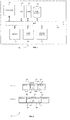
- Figure 2 is an exemplary diagram showing overlapping precursor ion transmission windows 200 in a sequential windowed acquisition experiment where similar compounds are in adjacent windows, in accordance with various embodiments. Similar compounds 210 and 220 are separated by 18 Da. Compound 220, for example, differs from compound 210 only by an in-source loss of a water ion.
- Figure 2 shows two cycles of an overlapping SWATHTM experiment. In both cycles the precursor ion transmission windows are 25 Da wide. In cycle 2 the transmission windows are shifted by 12.5 Da creating a 12.5 Da overlap between windows in each of the two cycles. This overlap enables demultiplexing of the signal into effective windows that are 12.5 Da wide.
- the overlap of 12.5 Da portion 211 of window 215 in cycle 1 and 12.5 Da portion 222 of window 224 in cycle 2 can be demultiplexed into an effective 12.5 Da precursor ion transmission window.
- demultiplexing this 12.5 window involves adding window 224 and window 215 and then subtracting window 214 and window 225 from the sum. To prevent left over signal from measurement variation of intense peaks, it is common to subtract contributions from window 214 and window 225 more than once from the sum.
- Figure 2 includes compound 210 and similar compound 220 in adjacent windows 224 and 225, for example.
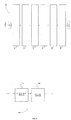
- Figure 3 is an exemplary diagram showing the demultiplexing of product ion spectra 300 corresponding to precursor ion transmission windows 214, 215, 224, and 225 of Figure 2 , in accordance with various embodiments.
- Product ion spectrum 315 is produced from precursor ion transmission window 215 of Figure 2
- product ion spectrum 324 is produced from precursor ion transmission window 224 of Figure 2 .
- Demultiplexing begins by adding overlapping related scans together.
- Product ion spectrum 315 and product ion spectrum 324 of Figure 3 are added. Both product ion spectrum 315 and product ion spectrum 324 include product ions produced from the fragmentation of precursor ion 220 in Figure 2 .
- Product ion spectrum 330 in Figure 3 is the sum of product ion spectrum 315 and product ion spectrum 324.
- Product ion spectrum 330 shows that the intensities of common product ions of product ion spectrum 315 and product ion spectrum 324 have essentially doubled. However, other product ions not shared by product ion spectrum 315 and product ion spectrum 324 (which are not shown) are not doubled.
- unrelated scans from adjacent cycles are subtracted from summed product ion spectrum. More specifically, in order to remove contributions from product ions produced from precursor ions in 12.5 Da portion 212 of window 215 in cycle 1 and from product ions in 12.5 Da portion 221 of window 224 in cycle 2 shown in Figure 2 , product ions produced from precursor ions in unrelated and overlapping precursor windows 225 and 214, respectively, of Figure 2 are subtracted from summed spectrum 330 of Figure 3 . As described above, to prevent left over signal from measurement variation of intense peaks, it is common to subtract the product ions produced from window 214 and window 225 more than once from the sum.
- Product ion spectrum 314 is produced from precursor ion transmission window 214 of Figure 2
- product ion spectrum 325 is produced from precursor ion transmission window 225 of Figure 2
- product ion spectrum 314 is subtracted twice from summed product ion spectrum 330 producing product ion spectrum 340. Since product ion 314 does not contain any ions in common with summed product ion spectrum 330, product ion spectrum 340 still includes the product ions of compound 220.
- Product ion spectrum 325 is then subtracted twice from product ion spectrum 340 producing product ion spectrum 350.
- Product ion spectrum 325 includes product ions produced from fragmentation of compound 210 of Figure 2 . Since compounds 220 and 210 of Figure 2 are similar compounds, their fragmentation patterns are almost identical. In other words, the product ions shown in product ion spectrum 325 of Figure 3 are almost identical to the common ions shown in product ion spectrum 340. As a result, the subtraction of product ion spectrum 325 twice from product ion spectrum 340 effectively removes the product ions of compound 220 of Figure 2 from resultant demultiplexed product ion spectrum 350.
- the product ions of compound 210 of Figure 2 are removed from a demultiplexed 12.5 Da window produced from precursor ions in 12.5 Da portion 227 of window 225 in cycle 2 and from precursor ions in 12.5 Da portion 217 of window 216 in cycle 1 shown in Figure 2 . Therefore the subtraction of the overlapping windows results in the loss of fragments produced from similar compounds in adjacent windows from all demultiplexed windows.
- Product ion spectra 315, 324, 330, 340, 314, 350, and 325 of Figure 3 depict only the product ions produced from compounds 210 and 220 of Figure 2 in order to more clearly show how these product ions can be affected by demultiplexing.
- product ion spectra 315, 324, 330, 340, 314, 350, and 325 of Figure 3 can include other product ions.
- precursor ion transmission windows 215, 216, 224, and 225 in Figure 2 depict only the precursor ions for compounds 210 and 220 in order to more clearly show how these precursor ions can be affected by demultiplexing.
- transmission windows 215, 216, 224, and 225 in Figure 2 can include other precursor ions.
- methods and systems provide improved data quality after demultiplexing of overlapped acquisition windows.
- methods and systems reconstruct the original acquisition windows by summing adjacent demultiplexed windows together. For example, demultiplexed product ion spectra for 12.5 Da portion 211 and 12.5 Da portion 212 can be added together to try and reconstruct the original product ion spectrum (315 of Figure 3 ) for precursor ion transmission window 215. However, shared fragments (220 of Figure 2 ) will be missing from this reconstructed spectrum.
- methods and systems identify missing ions by comparing the reconstructed spectrum to the original acquired spectrum (subtraction of the two). For example, the sum of the product ion spectrum for 12.5 Da portion 211 and product ion spectrum 12.5 Da portion 212 is compared to the original product ion spectrum (315 of Figure 3 ) for precursor ion transmission window 215. Any missing signals can then be added back to the demultiplexed windows to achieve a more accurate representation of the fragmentation spectrum for that window.
- methods and systems also provide weighting of spectrum based on the shape of transmission windows or absences of precursor signals.
- demultiplexing assumes square transmission windows and that fragments are a result of compounds spread equally across this window, which are not true.
- the actual shape of the transmission window may be used to weight the resulting spectrum.
- this spectrum is used for demultiplexing (either for addition or subtraction) its value may be weighted based on how likely the fragments detected in this spectrum are related to the region trying to be enhanced by demultiplexing.
- the full scan time-of-flight mass spectrometry (TOFMS or MS1) experiment may be used to determine whether any precursor ions exist in the region of interest (being used for adding or subtracting of a spectrum to demultiplex). Based on this TOFMS evidence of the Q1 region, the spectrum may be weighted differently for use in demultiplexing.
- TOFMS full scan time-of-flight mass spectrometry
- missing ions are identified after demultiplexing using PeakView® plugins to rewrite a proprietary file, such as an AB Sciex TripleTOF® and QTRAP® instrument (WIFF) file, with the processed version.
- a proprietary file such as an AB Sciex TripleTOF® and QTRAP® instrument (WIFF) file
- WIFF QTRAP® instrument
- methods and systems solve a potential drawback to using demultiplexing to achieve narrower windows, and provide benefits to high resolution instruments.
- methods and systems enable mass spectrometer instrument customers to obtain high quality MS/MS spectra, with better specificity (e.g., narrower Q1 windows).
- FIG. 4 is a schematic diagram showing a system 400 for identifying missing product ions after demultiplexing product ion spectra produced by overlapping precursor ion transmission windows in sequential windowed acquisition tandem mass spectrometry, in accordance with various embodiments.
- System 400 includes tandem mass spectrometer 410 and processor 420.
- system 400 can also include separation device 430.
- Tandem mass spectrometer 410 can include one or more physical mass filters and one or more physical mass analyzers.
- a mass analyzer of a tandem mass spectrometer can include, but is not limited to, a time-of-flight (TOF), quadrupole, an ion trap, a linear ion trap, an orbitrap, or a Fourier transform mass analyzer.
- Tandem mass spectrometer 410 performs overlapping sequential windowed acquisition on a sample. On each cycle, tandem mass spectrometer 410 steps a precursor mass window across a mass range, fragments transmitted precursor ions of each stepped precursor mass window, and analyzes product ions produced from the fragmented transmitted precursor ions. Between at least two cycles, tandem mass spectrometer 410 shifts the stepped precursor mass window to produce overlapping mass windows between the at least two cycles. The overlapping sequential windowed acquisition produces a product ion spectrum for each stepped precursor mass window for each cycle of the at least two cycles.
- Processor 420 can be, but is not limited to, a computer, microprocessor, or any device capable of sending and receiving control signals and data from mass spectrometer 410 and processing data. Processor 420 is in communication with tandem mass spectrometer 410.
- Processor 420 receives a plurality of overlapping stepped precursor mass windows and their corresponding product ion spectra for the at least two cycles from tandem mass spectrometer 410. Processor 420 selects a first precursor mass window and the corresponding first product ion spectrum from the plurality of overlapping stepped precursor mass windows and their corresponding product ion spectra. Processor 420 demultiplexes a product ion spectrum for each overlapped portion of the first precursor mass window producing two or more demultiplexed first product ion spectra for the first precursor mass window.
- processor 420 For each overlapped portion of the first precursor mass window, processor 420 (a) adds the first product ion spectrum and a product ion spectrum of an overlapping precursor mass window producing a summed product ion spectrum and (b) subtracts product ion spectra of two or more precursor mass windows adjacent to the first precursor mass window and the overlapping precursor mass window that overlap with non-overlapping portions of the first precursor mass window and the overlapping precursor mass window from the summed product ion spectrum one or more times.
- Processor 420 adds the two or more demultiplexed first product ion spectra together producing a reconstructed summed demultiplexed first product ion spectrum.
- processor 420 identifies missing product ions in the summed demultiplexed first product ion spectrum by comparing the summed demultiplexed first product ion spectrum and the first product ion spectrum.
- processor 420 compares the summed demultiplexed first product ion spectrum and the first product ion spectrum by subtracting the summed demultiplexed first product ion spectrum from the first product ion spectrum.
- processor 420 further adds one or more missing product ions of the identified missing product ions back to one or more product ion spectra of the two or more demultiplexed first product ion spectra to improve the data quality of the one or more product ion spectra.
- processor 420 further applies shape weightings to each product ion spectrum corresponding to each stepped precursor mass window of the plurality of overlapping stepped precursor mass windows based on the shape of each stepped precursor mass window.
- processor 420 further uses shape weightings assigned to the first product ion spectrum, the product ion spectrum of an overlapping precursor mass window, and the product ion spectra of two or more precursor mass windows adjacent to the first precursor mass window and the overlapping precursor mass window that overlap with non-overlapping portions of the first precursor mass window and the overlapping precursor mass window in steps (a) and (b) of the demultiplexing step described above.
- processor 420 further receives from the tandem mass spectrometer a precursor spectrum for each stepped precursor mass windows of the plurality of overlapping stepped precursor mass windows and applies precursor ion weightings to each product ion spectrum corresponding to each stepped precursor mass window of the plurality of overlapping stepped precursor mass windows based on whether any precursor ions exist in each stepped precursor mass window.
- processor 420 further uses precursor ion weightings assigned to the first product ion spectrum, the product ion spectrum of an overlapping precursor mass window, and the product ion spectra of two or more precursor mass windows adjacent to the first precursor mass window and the overlapping precursor mass window that overlap with non-overlapping portions of the first precursor mass window and the overlapping precursor mass window in steps (a) and (b) of the demultiplexing step described above.
- Tandem mass spectrometer 410 can also include a separation device 430.
- Separation device 430 can perform a separation technique that includes, but is not limited to, liquid chromatography, gas chromatography, capillary electrophoresis, or ion mobility. Tandem mass spectrometer 410 can include separating mass spectrometry stages or steps in space or time, respectively. Separation device 430 separates the sample from a mixture, for example.
- separation device 430 comprises a liquid chromatography device and a product ion spectrum for each stepped precursor mass window is acquired within a liquid chromatography (LC) cycle time.
- LC liquid chromatography
- Figure 5 is an exemplary flowchart showing a method 500 for identifying missing product ions after demultiplexing product ion spectra produced by overlapping precursor ion transmission windows in sequential windowed acquisition tandem mass spectrometry, in accordance with various embodiments.
- step 510 of method 500 overlapping sequential windowed acquisition is performed on a sample using a tandem mass spectrometer.
- the tandem mass spectrometer steps a precursor mass window across a mass range, fragments transmitted precursor ions of each stepped precursor mass window, and analyzes product ions produced from the fragmented transmitted precursor ions.
- the tandem mass spectrometer shifts the stepped precursor mass window to produce overlapping mass windows between the at least two cycles.
- the overlapping sequential windowed acquisition produces a product ion spectrum for each stepped precursor mass window for each cycle of the at least two cycles.
- step 520 a plurality of overlapping stepped precursor mass windows and their corresponding product ion spectra are received for the at least two cycles from the tandem mass spectrometer using a processor.
- a first precursor mass window and the corresponding first product ion spectrum are selected from the plurality of overlapping stepped precursor mass windows and their corresponding product ion spectra using the processor.
- a product ion spectrum is demultiplexed for each overlapped portion of the first precursor mass window producing two or more demultiplexed first product ion spectra for the first precursor mass window using the processor.
- the first product ion spectrum and a product ion spectrum of an overlapping precursor mass window are added producing a summed product ion spectrum.
- product ion spectra of two or more precursor mass windows adjacent to the first precursor mass window and the overlapping precursor mass window that overlap with non-overlapping portions of the first precursor mass window and the overlapping precursor mass window are subtracted from the summed product ion spectrum one or more times. To prevent left over signal from measurement variation of intense peaks, it is common to subtract these product ion spectra more than once from the sum.
- step 550 the two or more demultiplexed first product ion spectra are added together producing a reconstructed summed demultiplexed first product ion spectrum using the processor.
- step 560 missing product ions are identified in the summed demultiplexed first product ion spectrum by comparing the summed demultiplexed first product ion spectrum and the first product ion spectrum using the processor.
- a computer program product includes a tangible computer-readable storage medium whose contents include a program with instructions being executed on a processor so as to perform a method for identifying missing product ions after demultiplexing product ion spectra produced by overlapping precursor ion transmission windows in sequential windowed acquisition tandem mass spectrometry. This method is performed by a system that includes one or more distinct software modules.
- FIG. 6 is a schematic diagram of a system 600 that includes one or more distinct software modules that performs a method for identifying missing product ions after demultiplexing product ion spectra produced by overlapping precursor ion transmission windows in sequential windowed acquisition tandem mass spectrometry, in accordance with various embodiments.
- System 600 includes measurement module 610 and analysis module 620.
- Measurement module 610 receives a plurality of overlapping stepped precursor mass windows and their corresponding product ion spectra for the at least two cycles from a tandem mass spectrometer.
- the tandem mass spectrometer performs overlapping sequential windowed acquisition on a sample. For each cycle, the tandem mass spectrometer steps a precursor mass window across a mass range, fragments transmitted precursor ions of each stepped precursor mass window, and analyzes product ions produced from the fragmented transmitted precursor ions. Between at least two cycles, the tandem mass spectrometer shifts the stepped precursor mass window to produce overlapping mass windows between the at least two cycles.
- the overlapping sequential windowed acquisition produces a product ion spectrum for each stepped precursor mass window for each cycle of the at least two cycles.
- Analysis module 620 selects a first precursor mass window and the corresponding first product ion spectrum from the plurality of overlapping stepped precursor mass windows and their corresponding product ion spectra.
- Analysis module 620 demultiplexes a product ion spectrum for each overlapped portion of the first precursor mass window producing two or more demultiplexed first product ion spectra for the first precursor mass window. For example, the first product ion spectrum and a product ion spectrum of an overlapping precursor mass window are added producing a summed product ion spectrum. Then, product ion spectra of two or more precursor mass windows adjacent to the first precursor mass window and the overlapping precursor mass window that overlap with non-overlapping portions of the first precursor mass window and the overlapping precursor mass window are subtracted from the summed product ion spectrum one or more times. To prevent left over signal from measurement variation of intense peaks, it is common to subtract these product ion spectra more than once from the sum.
- Analysis module 620 adds the two or more demultiplexed first product ion spectra together producing a reconstructed summed demultiplexed first product ion spectrum. Analysis module 620 identifies missing product ions in the summed demultiplexed first product ion spectrum by comparing the summed demultiplexed first product ion spectrum and the first product ion spectrum.
- SWATHTM sequential windowed acquisition
- TOF time-of-flight
- SRM unit resolution selected reaction monitoring
- SWATHTM is described herein for illustration purposes. One skilled in the art will appreciate that other types of mass spectrometry techniques can equally be applied.
- Acquisition window width has an effect on selectivity and cycle time. Wider windows are less selective but provide faster cycle times. Narrow windows are more selective, but at the expense of longer cycle times. By overlapping acquisition windows it is possible to extract which fragments belonged to which precursor mass range.
- the 684 m/z peptide fragmentation pattern was easily distinguished from the 692 m/z peptide, demonstrating close to 5 Da windows of resolution.
- the above example is described for illustration purposes. One skilled in the art will appreciate that different m/z precursors and different windows of resolution can equally be used.
- methods and systems use overlapping windows to generate MS/MS data from apparently narrower Q1 windows, and measure the effect of narrower windows on qualitative and quantitative properties for peptide and small molecule detection.
- data is collected using, for example, a research version of Analyst TF 1.6 that allows for control of the overlap between the subsequent SWATHTM windows.
- Analyst TF 1.6 is described herein for illustration purposes. One skilled in the art will appreciate that other software tools can equally be used.
- peptide digest samples are injected and eluted from, for example, an Eksigent NanoLCTM 2D Plus system at a flow rate of 200nl.min-1.
- the gradient used for the elution of the material dependents upon the complexity of the sample injected.
- Eksigent NanoLCTM 2D Plus system is described herein for illustration purposes. One skilled in the art will appreciate that other separation devices can equally be used.
- small molecule samples are analysed using, for example, a Shimadzu Prominence UFLC system operated at 400uL/min, using a gradient from 90% of mobile phase A (water/acetonitrile (95/5 (v/v)) +0.1% formic acid) to 80% of B (water/acetonitrile (5/95 (v/v)) + 0.1% formic acid) over 5 minute, for example.
- the column oven is operated at 40°C, for example.
- a Luna Kinetex C18 (2x50mm, 2.6u) column from Phenomenex (Torrance, CA) is used with an injection volume of 10uL, for example.
- Shimadzu Prominence UFLC system and the operation conditions are described herein for illustration purposes. One skilled in the art will appreciate that other analysis systems and operation conditions can equally be used.
- the data is processed using, for example, PeakViewTM 1.2 software with a research plug-in that performs the reconstruction of the narrow windows.
- PeakViewTM 1.2 software is described herein for illustration purposes. One skilled in the art will appreciate that other software tools can equally be used.
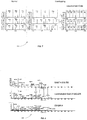
- Figure 7 illustrates exemplary plots 700 showing deconvolution of overlapping SWATHTM windows, in accordance with various embodiments.
- each cycle introduces a shift in the position of the windows.
- An example of a shift of half a window is shown in Figure 7 .
- spectra from overlapping regions are used to create a data file where spectral data from each deconvoluted window is saved in a separate experiment.
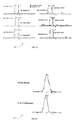
- Figure 8 illustrates exemplary plots 800 showing an example from infusion of casein digest mixture, in accordance with various embodiments.
- a normal SWATHTM window of 25 Da is dominated by fragmentation from the 692 m/z peptide. Fragments from the 684 m/z peptide are present but difficult to see.
- the 5 Da window (680-685 Da) has removed all interference from the 692 m/z peptide. The remaining fragmentation pattern looks virtually identical to a spectrum acquired from IDA experiment.
- Figure 9 illustrates exemplary plots 900 showing an example from LC separation of an E Coli protein digest, in accordance with various embodiments.
- Figure 10 illustrates exemplary plots 1000 showing XIC of multiple fragments, in accordance with various embodiments.
- Figure 11 illustrates exemplary plots 1100 showing S/N ratio improvements from narrower deconvoluted windows, in accordance with various embodiments.
- XIC for several peptides are compared for S/N ratio.
- the S/N ratio is improved when data is acquired with overlapping windows, and deconvoluted to narrower windows.
- Figure 12 illustrates exemplary plots 1200 showing that equivalent cycle time enables more than enough points across an LC peak, in accordance with various embodiments.
- the cycle time is identical to normal SWATHTM, but the data can be deconvoluted to narrower windows.
- the benefits of narrower windows can be obtained, while maintaining good cycle times.
- Figure 13 illustrates exemplary plots 1300 showing improved quantitation, in accordance with various embodiments.
- Figure 14 illustrates exemplary plots 1400 showing detection of small molecules, in accordance with various embodiments.
- Rapid LC separation can easily produce peaks of less than 3 seconds in width.
- SWATHTM to monitor for all compounds requires windows that often cover related compounds, which have very similar fragmentation patterns. Confident Identification of these compounds would require careful attention to retention time.
- the data can be deconvoluted to narrower windows, enabling easier identification of the compound.
- overlapping windows enable deconvolution to narrower windows without loss in duty cycle, and narrower windows improve MS/MS quality and quantitative properties.
- the specification may have presented a method and/or process as a particular sequence of steps.
- the method or process should not be limited to the particular sequence of steps described.
- other sequences of steps may be possible. Therefore, the particular order of the steps set forth in the specification should not be construed as limitations on the claims.
- the claims directed to the method and/or process should not be limited to the performance of their steps in the order written, and one skilled in the art can readily appreciate that the sequences may be varied and still remain within the scope of the various embodiments.
Landscapes
- Chemical & Material Sciences (AREA)
- Analytical Chemistry (AREA)
- Other Investigation Or Analysis Of Materials By Electrical Means (AREA)
- Electron Tubes For Measurement (AREA)
Claims (15)
- Système pour identifier des ions-produits manquants après le démultiplexage de spectres d'ions-produits, produits par fenêtres de transmission d'ions précurseurs se chevauchant en spectrométrie de masse en tandem par acquisition séquentielle par fenêtres, comprenant :un spectromètre de masse en tandem qui réalise une acquisition séquentielle par fenêtres se chevauchant sur un échantillon, par,sur chaque cycle, le décalage d'une fenêtre de masse de précurseur sur une plage de masse, la fragmentation d'ions précurseurs transmis de chaque fenêtre de masse de précurseur décalée, et l'analyse d'ions-produits, produits à partir des ions précurseurs transmis fragmentés, etentre au moins deux cycles, le déplacement de la fenêtre de masse de précurseur décalée pour produire des fenêtres de masse se chevauchant entre les au moins deux cycles,dans lequel l'acquisition séquentielle par fenêtres se chevauchant produit un spectre d'ions-produits pour chaque fenêtre de masse de précurseur décalée pour chaque cycle des au moins deux cycles ; etun processeur en communication avec le spectromètre de masse en tandem quireçoit une pluralité de fenêtres de masse de précurseur décalées se chevauchant et leurs spectres d'ions-produits correspondants pour les au moins deux cycles à partir du spectromètre de masse en tandem,sélectionne une première fenêtre de masse de précurseur et le premier spectre d'ions-produits correspondant parmi la pluralité de fenêtres de masse de précurseur décalées se chevauchant et leurs spectres d'ions-produits correspondants, etdémultiplexe un spectre d'ions-produits pour chaque portion sujette à chevauchement de la première fenêtre de masse de précurseur, produisant deux, ou plus, premiers spectres d'ions-produits démultiplexés pour la première fenêtre de masse de précurseur, par,pour chaque portion sujette à chevauchement de la première fenêtre de masse de précurseur,(a) l'addition du premier spectre d'ions-produits et d'un spectre d'ions-produits d'une fenêtre de masse de précurseur chevauchante, produisant un spectre d'ions-produits sommé, et(b) la soustraction de spectres d'ions-produits de deux, ou plus, fenêtres de masse de précurseur adjacentes à la première fenêtre de masse de précurseur et la fenêtre de masse de précurseur chevauchante qui chevauchent des portions ne se chevauchant pas de la première fenêtre de masse de précurseur et de la fenêtre de masse de précurseur chevauchante à partir du spectre d'ions-produits sommé une ou plusieurs fois,additionne les deux, ou plus, premiers spectres d'ions-produits démultiplexés ensemble, produisant un premier spectre d'ions-produits démultiplexé sommé reconstruit, etidentifie des ions-produits manquants dans le premier spectre d'ions-produits démultiplexé sommé par la comparaison du premier spectre d'ions-produits démultiplexé sommé et du premier spectre d'ions-produits.
- Système selon la revendication 1, dans lequel la comparaison du premier spectre d'ions-produits démultiplexé sommé et du premier spectre d'ions-produits comprend la soustraction du premier spectre d'ions-produits démultiplexé sommé à partir du premier spectre d'ions-produits.
- Système selon l'une quelconque des revendications précédentes, dans lequel le processeur ré-additionne en outre un ou plusieurs ions-produits manquants des ions-produits manquants identifiés à un ou plusieurs spectres d'ions-produits des deux, ou plus, premiers spectres d'ions-produits démultiplexés pour améliorer la qualité de données du ou des spectres d'ions-produits.
- Système selon l'une quelconque des revendications précédentes, dans lequel le processeur applique en outre des pondérations de forme sur chaque spectre d'ions-produits correspondant à chaque fenêtre de masse de précurseur décalée parmi la pluralité de fenêtres de masse de précurseur décalées se chevauchant sur la base de la forme de chaque fenêtre de masse de précurseur décalée.
- Système selon l'une quelconque des revendications précédentes, dans lequel le processeur utilise en outre des pondérations de forme attribuées au premier spectre d'ions-produits, au spectre d'ions-produits d'une fenêtre de masse de précurseur chevauchante, et aux spectres d'ions-produits de deux, ou plus, fenêtres de masse de précurseur adjacentes à la première fenêtre de masse de précurseur et la fenêtre de masse de précurseur chevauchante qui chevauchent des portions ne se chevauchant pas de la première fenêtre de masse de précurseur et de la fenêtre de masse de précurseur chevauchante dans les étapes (a) et (b) de l'étape de démultiplexage selon la revendication 1.
- Système selon l'une quelconque des revendications précédentes, dans lequel le processeur reçoit en outre, à partir du spectromètre de masse en tandem, un spectre de précurseur pour chaque fenêtre de masse de précurseur décalées parmi la pluralité de fenêtres de masse de précurseur décalées se chevauchant et applique des pondérations d'ions précurseurs sur chaque spectre d'ions-produits correspondant à chaque fenêtre de masse de précurseur décalée parmi la pluralité de fenêtres de masse de précurseur décalées se chevauchant sur la base du fait que de quelconques ions précurseurs existent dans chaque fenêtre de masse de précurseur décalée.
- Système selon l'une quelconque des revendications précédentes, dans lequel le processeur utilise en outre des pondérations d'ions précurseurs attribuées au premier spectre d'ions-produits, au spectre d'ions-produits d'une fenêtre de masse de précurseur chevauchante, et aux spectres d'ions-produits de deux, ou plus, fenêtres de masse de précurseur adjacentes à la première fenêtre de masse de précurseur et la fenêtre de masse de précurseur chevauchante qui chevauchent des portions ne se chevauchant pas de la première fenêtre de masse de précurseur et de la fenêtre de masse de précurseur chevauchante dans les étapes (a) et (b) de l'étape de démultiplexage selon la revendication 1.
- Procédé pour identifier des ions-produits manquants après le démultiplexage de spectres d'ions-produits, produits par des fenêtres de transmission d'ions précurseurs se chevauchant en spectrométrie de masse en tandem par acquisition séquentielle par fenêtres, comprenant :la réalisation d'acquisition séquentielle par fenêtres se chevauchant sur un échantillon en utilisant un spectromètre de masse en tandem, par,sur chaque cycle, le décalage d'une fenêtre de masse de précurseur sur une plage de masse, la fragmentation d'ions précurseurs transmis de chaque fenêtre de masse de précurseur décalée, et l'analyse d'ions-produits, produits à partir des ions précurseurs transmis fragmentés, etentre au moins deux cycles, le déplacement de la fenêtre de masse de précurseur décalée pour produire des fenêtres de masse se chevauchant entre les au moins deux cycles,dans lequel l'acquisition séquentielle par fenêtres se chevauchant produit un spectre d'ions-produits pour chaque fenêtre de masse de précurseur décalée pour chaque cycle des au moins deux cycles ;la réception d'une pluralité de fenêtres de masse de précurseur décalées se chevauchant et de leurs spectres d'ions-produits correspondants pour les au moins deux cycles à partir du spectromètre de masse en tandem en utilisant un processeur ;la sélection d'une première fenêtre de masse de précurseur et du premier spectre d'ions-produits correspondant parmi la pluralité de fenêtres de masse de précurseur décalées se chevauchant et leurs spectres d'ions-produits correspondants en utilisant le processeur ;le démultiplexage d'un spectre d'ions-produits pour chaque portion sujette à chevauchement de la première fenêtre de masse de précurseur, produisant deux, ou plus, premiers spectres d'ions-produits démultiplexés pour la première fenêtre de masse de précurseur en utilisant le processeur, par,
pour chaque portion sujette à chevauchement de la première fenêtre de masse de précurseur,(a) l'addition du premier spectre d'ions-produits et d'un spectre d'ions-produits d'une fenêtre de masse de précurseur chevauchante, produisant un spectre d'ions-produits sommé, et(b) la soustraction de spectres d'ions-produits de deux, ou plus, fenêtres de masse de précurseur adjacentes à la première fenêtre de masse de précurseur et la fenêtre de masse de précurseur chevauchante qui chevauchent des portions ne se chevauchant pas de la première fenêtre de masse de précurseur et de la fenêtre de masse de précurseur chevauchante à partir du spectre d'ions-produits sommé une ou plusieurs fois ;l'addition des deux, ou plus, premiers spectres d'ions-produits démultiplexés ensemble, produisant un premier spectre d'ions-produits démultiplexé sommé reconstruit, en utilisant le processeur ; etl'identification d'ions-produits manquants dans le premier spectre d'ions-produits démultiplexé sommé par la comparaison du premier spectre d'ions-produits démultiplexé sommé et du premier spectre d'ions-produits, en utilisant le processeur. - Procédé selon la revendication 8, dans lequel la comparaison du premier spectre d'ions-produits démultiplexé sommé et du premier spectre d'ions-produits comprend la soustraction du premier spectre d'ions-produits démultiplexé sommé à partir du premier spectre d'ions-produits.
- Procédé selon l'une quelconque des revendications 8 ou 9, dans lequel le processeur ré-additionne en outre un ou plusieurs ions-produits manquants des ions-produits manquants identifiés à un ou plusieurs spectres d'ions-produits des deux, ou plus, premiers spectres d'ions-produits démultiplexés pour améliorer la qualité de données du ou des spectres d'ions-produits.
- Procédé selon l'une quelconque des revendications 8 à 10, dans lequel le processeur applique en outre des pondérations de forme sur chaque spectre d'ions-produits correspondant à chaque fenêtre de masse de précurseur décalée parmi la pluralité de fenêtres de masse de précurseur décalées se chevauchant sur la base de la forme de chaque fenêtre de masse de précurseur décalée.
- Procédé selon l'une quelconque des revendications 8 à 11, dans lequel le processeur utilise en outre des pondérations de forme attribuées au premier spectre d'ions-produits, au spectre d'ions-produits d'une fenêtre de masse de précurseur chevauchante, et aux spectres d'ions-produits de deux, ou plus, fenêtres de masse de précurseur adjacentes à la première fenêtre de masse de précurseur et la fenêtre de masse de précurseur chevauchante qui chevauchent des portions ne se chevauchant pas de la première fenêtre de masse de précurseur et de la fenêtre de masse de précurseur chevauchante dans les étapes (a) et (b) de l'étape de démultiplexage selon la revendication 8.
- Procédé selon l'une quelconque des revendications 8 à 12, dans lequel le processeur reçoit en outre, à partir du spectromètre de masse en tandem, un spectre de précurseur pour chaque fenêtre de masse de précurseur décalées parmi la pluralité de fenêtres de masse de précurseur décalées se chevauchant et applique des pondérations d'ions précurseurs sur chaque spectre d'ions-produits correspondant à chaque fenêtre de masse de précurseur décalée parmi la pluralité de fenêtres de masse de précurseur décalées se chevauchant sur la base du fait que de quelconques ions précurseurs existent dans chaque fenêtre de masse de précurseur décalée.
- Procédé selon l'une quelconque des revendications 8 à 13, dans lequel le processeur utilise en outre des pondérations d'ions précurseurs attribuées au premier spectre d'ions-produits, au spectre d'ions-produits d'une fenêtre de masse de précurseur chevauchante, et aux spectres d'ions-produits de deux, ou plus, fenêtres de masse de précurseur adjacentes à la première fenêtre de masse de précurseur et la fenêtre de masse de précurseur chevauchante qui chevauchent des portions ne se chevauchant pas de la première fenêtre de masse de précurseur et de la fenêtre de masse de précurseur chevauchante dans les étapes (a) et (b) de l'étape de démultiplexage selon la revendication 8.
- Produit programme d'ordinateur, comprenant un support de stockage tangible lisible par ordinateur dont les contenus incluent un programme avec des instructions exécutées sur un processeur afin d'effectuer un procédé pour identifier des ions-produits manquants après le démultiplexage de spectres d'ions-produits, produits par fenêtres de transmission d'ions précurseurs se chevauchant en spectrométrie de masse en tandem par acquisition séquentielle par fenêtres, le procédé comprenant :la fourniture d'un système, dans lequel le système comprend un ou plusieurs modules logiciels distincts, et dans lequel les modules logiciels distincts comprennent un module de mesure et un module d'analyse ;la réception d'une pluralité de fenêtres de masse de précurseur décalées se chevauchant et de leurs spectres d'ions-produits correspondants pour les au moins deux cycles à partir d'un spectromètre de masse en tandem qui réalise une acquisition séquentielle par fenêtres se chevauchant sur un échantillon, en utilisant le module de mesure, parsur chaque cycle, le décalage d'une fenêtre de masse de précurseur sur une plage de masse, la fragmentation d'ions précurseurs transmis de chaque fenêtre de masse de précurseur décalée, et l'analyse d'ions-produits, produits à partir des ions précurseurs transmis fragmentés, etentre au moins deux cycles, le déplacement de la fenêtre de masse de précurseur décalée pour produire des fenêtres de masse se chevauchant entre les au moins deux cycles,dans lequel l'acquisition séquentielle par fenêtres se chevauchant produit un spectre d'ions-produits pour chaque fenêtre de masse de précurseur décalée pour chaque cycle des au moins deux cycles ;la sélection d'une première fenêtre de masse de précurseur et du premier spectre d'ions-produits correspondant parmi la pluralité de fenêtres de masse de précurseur décalées se chevauchant et leurs spectres d'ions-produits correspondants, en utilisant le module d'analyse ;le démultiplexage d'un spectre d'ions-produits pour chaque portion sujette à chevauchement de la première fenêtre de masse de précurseur, produisant deux, ou plus, premiers spectres d'ions-produits démultiplexés pour la première fenêtre de masse de précurseur, en utilisant le module d'analyse, par,
pour chaque portion sujette à chevauchement de la première fenêtre de masse de précurseur,(a) l'addition du premier spectre d'ions-produits et d'un spectre d'ions-produits d'une fenêtre de masse de précurseur chevauchante, produisant un spectre d'ions-produits sommé et(b) la soustraction de spectres d'ions-produits de deux, ou plus, fenêtres de masse de précurseur adjacentes à la première fenêtre de masse de précurseur et la fenêtre de masse de précurseur chevauchante qui chevauchent des portions ne se chevauchant pas de la première fenêtre de masse de précurseur et de la fenêtre de masse de précurseur chevauchante à partir du spectre d'ions-produits sommé une ou plusieurs fois,l'addition des deux, ou plus, premiers spectres d'ions-produits démultiplexés ensemble, produisant un premier spectre d'ions-produits démultiplexé sommé reconstruit, en utilisant le module d'analyse, etl'identification d'ions-produits manquants dans le premier spectre d'ions-produits démultiplexé sommé par la comparaison du premier spectre d'ions-produits démultiplexé sommé et du premier spectre d'ions-produits, en utilisant le module d'analyse.
Applications Claiming Priority (2)
| Application Number | Priority Date | Filing Date | Title |
|---|---|---|---|
| US201361832111P | 2013-06-06 | 2013-06-06 | |
| PCT/IB2014/000944 WO2014195785A1 (fr) | 2013-06-06 | 2014-06-03 | Meilleure qualité de données après démultiplexage de fenêtres d'acquisition se chevauchant |
Publications (3)
| Publication Number | Publication Date |
|---|---|
| EP3005400A1 EP3005400A1 (fr) | 2016-04-13 |
| EP3005400A4 EP3005400A4 (fr) | 2016-12-21 |
| EP3005400B1 true EP3005400B1 (fr) | 2018-04-18 |
Family
ID=52007632
Family Applications (1)
| Application Number | Title | Priority Date | Filing Date |
|---|---|---|---|
| EP14808223.3A Active EP3005400B1 (fr) | 2013-06-06 | 2014-06-03 | Meilleure qualité de données après démultiplexage de fenêtres d'acquisition se chevauchant |
Country Status (6)
| Country | Link |
|---|---|
| US (1) | US9818590B2 (fr) |
| EP (1) | EP3005400B1 (fr) |
| JP (1) | JP6367319B2 (fr) |
| CN (1) | CN105190828B (fr) |
| CA (1) | CA2905122A1 (fr) |
| WO (1) | WO2014195785A1 (fr) |
Families Citing this family (13)
| Publication number | Priority date | Publication date | Assignee | Title |
|---|---|---|---|---|
| CA2925853A1 (fr) * | 2013-10-16 | 2015-04-23 | Dh Technologies Development Pte. Ltd. | Systemes et procedes permettant d'identifier des ions precurseurs a partir d'ions produits par fenetrage d'emission arbitraire |
| US10041907B2 (en) * | 2014-09-26 | 2018-08-07 | Micromass Uk Limited | Accurate mobility chromatograms |
| JP6698668B2 (ja) * | 2015-02-05 | 2020-05-27 | ディーエイチ テクノロジーズ デベロップメント プライベート リミテッド | 断片化エネルギーを切り替えながらの幅広い四重極rf窓の高速スキャニング |
| GB201507759D0 (en) * | 2015-05-06 | 2015-06-17 | Micromass Ltd | Nested separation for oversampled time of flight instruments |
| WO2017025892A1 (fr) | 2015-08-13 | 2017-02-16 | Dh Technologies Development Pte. Ltd. | Déconvolution de spectres mixtes |
| WO2017210635A1 (fr) * | 2016-06-03 | 2017-12-07 | Vulcan Analytical, Llc. | Procédé d'acquisition et d'analyse de spectrométrie de masse utilisant des fenêtres d'isolement chevauchantes |
| EP3472853B1 (fr) | 2016-06-15 | 2021-04-07 | DH Technologies Development Pte. Ltd. | Extension de gamme dynamique utilisant l'acquisition indépendante de données (swath) |
| WO2018020363A1 (fr) * | 2016-07-25 | 2018-02-01 | Dh Technologies Development Pte. Ltd. | Systèmes et procédés d'identification de paires d'ions précurseurs et d'ions produits dans des données de bande de balayage |
| US10552151B1 (en) * | 2016-12-08 | 2020-02-04 | Ambarella, Inc. | Computer vision implementing calculations of window sums in overlapping windows |
| US11069517B2 (en) * | 2017-02-22 | 2021-07-20 | Dh Technologies Development Pte. Ltd. | Physical isolation of adducts and other complicating factors in precursor ion selection for IDA |
| JP6806253B2 (ja) * | 2017-07-10 | 2021-01-06 | 株式会社島津製作所 | 質量分析装置、質量分析方法、及び質量分析用プログラム |
| CN109830426B (zh) * | 2017-11-23 | 2021-04-02 | 株式会社岛津制作所 | 质谱数据采集方法 |
| CN113631920B (zh) | 2019-05-31 | 2024-04-26 | Dh科技发展私人贸易有限公司 | 用于前体推理的扫描带数据和概率框架的实时编码的方法 |
Family Cites Families (9)
| Publication number | Priority date | Publication date | Assignee | Title |
|---|---|---|---|---|
| AU2003262188A1 (en) * | 2002-04-12 | 2003-10-27 | Northeastern University | Matched filtration with experimental noise determination for denoising, peak picking and quantitation in lc-ms |
| GB2445169B (en) * | 2006-12-29 | 2012-03-14 | Thermo Fisher Scient Bremen | Parallel mass analysis |
| US8073635B2 (en) * | 2008-02-15 | 2011-12-06 | Dh Technologies Development Pte. Ltd. | Method of quantitation by mass spectrometry |
| GB0811574D0 (en) * | 2008-06-24 | 2008-07-30 | Trillion Genomics Ltd | Characterising planar samples by mass spectrometry |
| CA2810143C (fr) * | 2010-09-08 | 2019-03-26 | Dh Technologies Development Pte. Ltd. | Systemes et procede d'utilisation de largeurs de fenetre de selection de masse variables dans la spectrometrie de masse en tandem |
| US8809770B2 (en) * | 2010-09-15 | 2014-08-19 | Dh Technologies Development Pte. Ltd. | Data independent acquisition of product ion spectra and reference spectra library matching |
| CN103109346B (zh) * | 2010-11-08 | 2016-09-28 | Dh科技发展私人贸易有限公司 | 用于通过质谱分析快速筛选样本的系统及方法 |
| EP2715769B1 (fr) * | 2011-06-03 | 2021-07-07 | DH Technologies Development Pte. Ltd. | Extraction d'ions de balayages de sondage par filtrage passe-bande à fenêtre variable pour améliorer la plage dynamique dans le balayage |
| US9435778B2 (en) | 2011-09-28 | 2016-09-06 | BiognoSYS AG | Methods and systems for experimental set-up and data analysis in targeted proteomics applications |
-
2014
- 2014-06-03 EP EP14808223.3A patent/EP3005400B1/fr active Active
- 2014-06-03 US US14/889,139 patent/US9818590B2/en active Active
- 2014-06-03 CN CN201480025289.0A patent/CN105190828B/zh active Active
- 2014-06-03 JP JP2016517695A patent/JP6367319B2/ja not_active Expired - Fee Related
- 2014-06-03 CA CA2905122A patent/CA2905122A1/fr not_active Abandoned
- 2014-06-03 WO PCT/IB2014/000944 patent/WO2014195785A1/fr not_active Ceased
Non-Patent Citations (1)
| Title |
|---|
| None * |
Also Published As
| Publication number | Publication date |
|---|---|
| CA2905122A1 (fr) | 2014-12-11 |
| US20160086783A1 (en) | 2016-03-24 |
| EP3005400A1 (fr) | 2016-04-13 |
| JP6367319B2 (ja) | 2018-08-01 |
| CN105190828A (zh) | 2015-12-23 |
| WO2014195785A1 (fr) | 2014-12-11 |
| CN105190828B (zh) | 2017-06-30 |
| JP2016524712A (ja) | 2016-08-18 |
| EP3005400A4 (fr) | 2016-12-21 |
| US9818590B2 (en) | 2017-11-14 |
Similar Documents
| Publication | Publication Date | Title |
|---|---|---|
| EP3005400B1 (fr) | Meilleure qualité de données après démultiplexage de fenêtres d'acquisition se chevauchant | |
| JP6494588B2 (ja) | 滞留時間の決定または確認のための窓処理質量分析データの使用 | |
| JP6698668B2 (ja) | 断片化エネルギーを切り替えながらの幅広い四重極rf窓の高速スキャニング | |
| EP3218703B1 (fr) | Détermination de l'identité de composés modifiés | |
| JP2024083502A (ja) | 同位体選択的ms/msを用いたmrmピーク純度の査定 | |
| US20230005727A1 (en) | Method of Mass Analysis - SWATH with Orthogonal Fragmentation Methodology | |
| EP3355339B1 (fr) | Détection de composants lcms de faible niveau par reconstruction chromatographique | |
| JP7697941B2 (ja) | 閾値ベースのida除外リスト | |
| US12417904B2 (en) | Effective use of multiple charge states | |
| US12567573B2 (en) | Data independent acquisition with parallel isolation multiplexing |
Legal Events
| Date | Code | Title | Description |
|---|---|---|---|
| PUAI | Public reference made under article 153(3) epc to a published international application that has entered the european phase |
Free format text: ORIGINAL CODE: 0009012 |
|
| 17P | Request for examination filed |
Effective date: 20151215 |
|
| AK | Designated contracting states |
Kind code of ref document: A1 Designated state(s): AL AT BE BG CH CY CZ DE DK EE ES FI FR GB GR HR HU IE IS IT LI LT LU LV MC MK MT NL NO PL PT RO RS SE SI SK SM TR |
|
| AX | Request for extension of the european patent |
Extension state: BA ME |
|
| DAX | Request for extension of the european patent (deleted) | ||
| A4 | Supplementary search report drawn up and despatched |
Effective date: 20161117 |
|
| RIC1 | Information provided on ipc code assigned before grant |
Ipc: H01J 49/00 20060101AFI20161111BHEP |
|
| REG | Reference to a national code |
Ref country code: DE Ref legal event code: R079 Ref document number: 602014024198 Country of ref document: DE Free format text: PREVIOUS MAIN CLASS: H01J0049020000 Ipc: H01J0049000000 |
|
| GRAP | Despatch of communication of intention to grant a patent |
Free format text: ORIGINAL CODE: EPIDOSNIGR1 |
|
| STAA | Information on the status of an ep patent application or granted ep patent |
Free format text: STATUS: GRANT OF PATENT IS INTENDED |
|
| RIC1 | Information provided on ipc code assigned before grant |
Ipc: H01J 49/00 20060101AFI20171012BHEP |
|
| INTG | Intention to grant announced |
Effective date: 20171102 |
|
| GRAS | Grant fee paid |
Free format text: ORIGINAL CODE: EPIDOSNIGR3 |
|
| GRAA | (expected) grant |
Free format text: ORIGINAL CODE: 0009210 |
|
| STAA | Information on the status of an ep patent application or granted ep patent |
Free format text: STATUS: THE PATENT HAS BEEN GRANTED |
|
| AK | Designated contracting states |
Kind code of ref document: B1 Designated state(s): AL AT BE BG CH CY CZ DE DK EE ES FI FR GB GR HR HU IE IS IT LI LT LU LV MC MK MT NL NO PL PT RO RS SE SI SK SM TR |
|
| REG | Reference to a national code |
Ref country code: GB Ref legal event code: FG4D |
|
| REG | Reference to a national code |
Ref country code: CH Ref legal event code: EP |
|
| REG | Reference to a national code |
Ref country code: DE Ref legal event code: R096 Ref document number: 602014024198 Country of ref document: DE |
|
| REG | Reference to a national code |
Ref country code: AT Ref legal event code: REF Ref document number: 991314 Country of ref document: AT Kind code of ref document: T Effective date: 20180515 |
|
| REG | Reference to a national code |
Ref country code: IE Ref legal event code: FG4D |
|
| REG | Reference to a national code |
Ref country code: FR Ref legal event code: PLFP Year of fee payment: 5 |
|
| REG | Reference to a national code |
Ref country code: NL Ref legal event code: MP Effective date: 20180418 |
|
| REG | Reference to a national code |
Ref country code: LT Ref legal event code: MG4D |
|
| PG25 | Lapsed in a contracting state [announced via postgrant information from national office to epo] |
Ref country code: NL Free format text: LAPSE BECAUSE OF FAILURE TO SUBMIT A TRANSLATION OF THE DESCRIPTION OR TO PAY THE FEE WITHIN THE PRESCRIBED TIME-LIMIT Effective date: 20180418 |
|
| PG25 | Lapsed in a contracting state [announced via postgrant information from national office to epo] |
Ref country code: ES Free format text: LAPSE BECAUSE OF FAILURE TO SUBMIT A TRANSLATION OF THE DESCRIPTION OR TO PAY THE FEE WITHIN THE PRESCRIBED TIME-LIMIT Effective date: 20180418 Ref country code: PL Free format text: LAPSE BECAUSE OF FAILURE TO SUBMIT A TRANSLATION OF THE DESCRIPTION OR TO PAY THE FEE WITHIN THE PRESCRIBED TIME-LIMIT Effective date: 20180418 Ref country code: LT Free format text: LAPSE BECAUSE OF FAILURE TO SUBMIT A TRANSLATION OF THE DESCRIPTION OR TO PAY THE FEE WITHIN THE PRESCRIBED TIME-LIMIT Effective date: 20180418 Ref country code: AL Free format text: LAPSE BECAUSE OF FAILURE TO SUBMIT A TRANSLATION OF THE DESCRIPTION OR TO PAY THE FEE WITHIN THE PRESCRIBED TIME-LIMIT Effective date: 20180418 Ref country code: SE Free format text: LAPSE BECAUSE OF FAILURE TO SUBMIT A TRANSLATION OF THE DESCRIPTION OR TO PAY THE FEE WITHIN THE PRESCRIBED TIME-LIMIT Effective date: 20180418 Ref country code: FI Free format text: LAPSE BECAUSE OF FAILURE TO SUBMIT A TRANSLATION OF THE DESCRIPTION OR TO PAY THE FEE WITHIN THE PRESCRIBED TIME-LIMIT Effective date: 20180418 Ref country code: NO Free format text: LAPSE BECAUSE OF FAILURE TO SUBMIT A TRANSLATION OF THE DESCRIPTION OR TO PAY THE FEE WITHIN THE PRESCRIBED TIME-LIMIT Effective date: 20180718 Ref country code: BG Free format text: LAPSE BECAUSE OF FAILURE TO SUBMIT A TRANSLATION OF THE DESCRIPTION OR TO PAY THE FEE WITHIN THE PRESCRIBED TIME-LIMIT Effective date: 20180718 |
|
| PG25 | Lapsed in a contracting state [announced via postgrant information from national office to epo] |
Ref country code: LV Free format text: LAPSE BECAUSE OF FAILURE TO SUBMIT A TRANSLATION OF THE DESCRIPTION OR TO PAY THE FEE WITHIN THE PRESCRIBED TIME-LIMIT Effective date: 20180418 Ref country code: GR Free format text: LAPSE BECAUSE OF FAILURE TO SUBMIT A TRANSLATION OF THE DESCRIPTION OR TO PAY THE FEE WITHIN THE PRESCRIBED TIME-LIMIT Effective date: 20180719 Ref country code: HR Free format text: LAPSE BECAUSE OF FAILURE TO SUBMIT A TRANSLATION OF THE DESCRIPTION OR TO PAY THE FEE WITHIN THE PRESCRIBED TIME-LIMIT Effective date: 20180418 Ref country code: RS Free format text: LAPSE BECAUSE OF FAILURE TO SUBMIT A TRANSLATION OF THE DESCRIPTION OR TO PAY THE FEE WITHIN THE PRESCRIBED TIME-LIMIT Effective date: 20180418 |
|
| REG | Reference to a national code |
Ref country code: AT Ref legal event code: MK05 Ref document number: 991314 Country of ref document: AT Kind code of ref document: T Effective date: 20180418 |
|
| PG25 | Lapsed in a contracting state [announced via postgrant information from national office to epo] |
Ref country code: PT Free format text: LAPSE BECAUSE OF FAILURE TO SUBMIT A TRANSLATION OF THE DESCRIPTION OR TO PAY THE FEE WITHIN THE PRESCRIBED TIME-LIMIT Effective date: 20180820 |
|
| REG | Reference to a national code |
Ref country code: DE Ref legal event code: R097 Ref document number: 602014024198 Country of ref document: DE |
|
| PG25 | Lapsed in a contracting state [announced via postgrant information from national office to epo] |
Ref country code: AT Free format text: LAPSE BECAUSE OF FAILURE TO SUBMIT A TRANSLATION OF THE DESCRIPTION OR TO PAY THE FEE WITHIN THE PRESCRIBED TIME-LIMIT Effective date: 20180418 Ref country code: EE Free format text: LAPSE BECAUSE OF FAILURE TO SUBMIT A TRANSLATION OF THE DESCRIPTION OR TO PAY THE FEE WITHIN THE PRESCRIBED TIME-LIMIT Effective date: 20180418 Ref country code: DK Free format text: LAPSE BECAUSE OF FAILURE TO SUBMIT A TRANSLATION OF THE DESCRIPTION OR TO PAY THE FEE WITHIN THE PRESCRIBED TIME-LIMIT Effective date: 20180418 Ref country code: CZ Free format text: LAPSE BECAUSE OF FAILURE TO SUBMIT A TRANSLATION OF THE DESCRIPTION OR TO PAY THE FEE WITHIN THE PRESCRIBED TIME-LIMIT Effective date: 20180418 Ref country code: RO Free format text: LAPSE BECAUSE OF FAILURE TO SUBMIT A TRANSLATION OF THE DESCRIPTION OR TO PAY THE FEE WITHIN THE PRESCRIBED TIME-LIMIT Effective date: 20180418 Ref country code: SK Free format text: LAPSE BECAUSE OF FAILURE TO SUBMIT A TRANSLATION OF THE DESCRIPTION OR TO PAY THE FEE WITHIN THE PRESCRIBED TIME-LIMIT Effective date: 20180418 |
|
| REG | Reference to a national code |
Ref country code: CH Ref legal event code: PL |
|
| PLBE | No opposition filed within time limit |
Free format text: ORIGINAL CODE: 0009261 |
|
| STAA | Information on the status of an ep patent application or granted ep patent |
Free format text: STATUS: NO OPPOSITION FILED WITHIN TIME LIMIT |
|
| PG25 | Lapsed in a contracting state [announced via postgrant information from national office to epo] |
Ref country code: IT Free format text: LAPSE BECAUSE OF FAILURE TO SUBMIT A TRANSLATION OF THE DESCRIPTION OR TO PAY THE FEE WITHIN THE PRESCRIBED TIME-LIMIT Effective date: 20180418 Ref country code: SM Free format text: LAPSE BECAUSE OF FAILURE TO SUBMIT A TRANSLATION OF THE DESCRIPTION OR TO PAY THE FEE WITHIN THE PRESCRIBED TIME-LIMIT Effective date: 20180418 |
|
| REG | Reference to a national code |
Ref country code: BE Ref legal event code: MM Effective date: 20180630 |
|
| REG | Reference to a national code |
Ref country code: IE Ref legal event code: MM4A |
|
| 26N | No opposition filed |
Effective date: 20190121 |
|
| PG25 | Lapsed in a contracting state [announced via postgrant information from national office to epo] |
Ref country code: MC Free format text: LAPSE BECAUSE OF FAILURE TO SUBMIT A TRANSLATION OF THE DESCRIPTION OR TO PAY THE FEE WITHIN THE PRESCRIBED TIME-LIMIT Effective date: 20180418 Ref country code: LU Free format text: LAPSE BECAUSE OF NON-PAYMENT OF DUE FEES Effective date: 20180603 |
|
| PG25 | Lapsed in a contracting state [announced via postgrant information from national office to epo] |
Ref country code: CH Free format text: LAPSE BECAUSE OF NON-PAYMENT OF DUE FEES Effective date: 20180630 Ref country code: LI Free format text: LAPSE BECAUSE OF NON-PAYMENT OF DUE FEES Effective date: 20180630 Ref country code: IE Free format text: LAPSE BECAUSE OF NON-PAYMENT OF DUE FEES Effective date: 20180603 |
|
| PG25 | Lapsed in a contracting state [announced via postgrant information from national office to epo] |
Ref country code: BE Free format text: LAPSE BECAUSE OF NON-PAYMENT OF DUE FEES Effective date: 20180630 Ref country code: SI Free format text: LAPSE BECAUSE OF FAILURE TO SUBMIT A TRANSLATION OF THE DESCRIPTION OR TO PAY THE FEE WITHIN THE PRESCRIBED TIME-LIMIT Effective date: 20180418 |
|
| PG25 | Lapsed in a contracting state [announced via postgrant information from national office to epo] |
Ref country code: MT Free format text: LAPSE BECAUSE OF NON-PAYMENT OF DUE FEES Effective date: 20180603 |
|
| PG25 | Lapsed in a contracting state [announced via postgrant information from national office to epo] |
Ref country code: TR Free format text: LAPSE BECAUSE OF FAILURE TO SUBMIT A TRANSLATION OF THE DESCRIPTION OR TO PAY THE FEE WITHIN THE PRESCRIBED TIME-LIMIT Effective date: 20180418 |
|
| PG25 | Lapsed in a contracting state [announced via postgrant information from national office to epo] |
Ref country code: MK Free format text: LAPSE BECAUSE OF NON-PAYMENT OF DUE FEES Effective date: 20180418 Ref country code: HU Free format text: LAPSE BECAUSE OF FAILURE TO SUBMIT A TRANSLATION OF THE DESCRIPTION OR TO PAY THE FEE WITHIN THE PRESCRIBED TIME-LIMIT; INVALID AB INITIO Effective date: 20140603 Ref country code: CY Free format text: LAPSE BECAUSE OF FAILURE TO SUBMIT A TRANSLATION OF THE DESCRIPTION OR TO PAY THE FEE WITHIN THE PRESCRIBED TIME-LIMIT Effective date: 20180418 |
|
| PG25 | Lapsed in a contracting state [announced via postgrant information from national office to epo] |
Ref country code: IS Free format text: LAPSE BECAUSE OF FAILURE TO SUBMIT A TRANSLATION OF THE DESCRIPTION OR TO PAY THE FEE WITHIN THE PRESCRIBED TIME-LIMIT Effective date: 20180818 |
|
| REG | Reference to a national code |
Ref country code: FR Ref legal event code: PLFP Year of fee payment: 10 |
|
| P01 | Opt-out of the competence of the unified patent court (upc) registered |
Effective date: 20230601 |
|
| PGFP | Annual fee paid to national office [announced via postgrant information from national office to epo] |
Ref country code: FR Payment date: 20240328 Year of fee payment: 11 |
|
| PGFP | Annual fee paid to national office [announced via postgrant information from national office to epo] |
Ref country code: DE Payment date: 20250626 Year of fee payment: 12 |
|
| PGFP | Annual fee paid to national office [announced via postgrant information from national office to epo] |
Ref country code: GB Payment date: 20250617 Year of fee payment: 12 |
|
| PG25 | Lapsed in a contracting state [announced via postgrant information from national office to epo] |
Ref country code: FR Free format text: LAPSE BECAUSE OF NON-PAYMENT OF DUE FEES Effective date: 20250630 |