EP3010171B1 - Procédé et appareil de signalisation de demande de répétition automatique hybride - Google Patents
Procédé et appareil de signalisation de demande de répétition automatique hybride Download PDFInfo
- Publication number
- EP3010171B1 EP3010171B1 EP15199515.6A EP15199515A EP3010171B1 EP 3010171 B1 EP3010171 B1 EP 3010171B1 EP 15199515 A EP15199515 A EP 15199515A EP 3010171 B1 EP3010171 B1 EP 3010171B1
- Authority
- EP
- European Patent Office
- Prior art keywords
- harq
- subframe
- harq feedback
- serving cells
- serving cell
- Prior art date
- Legal status (The legal status is an assumption and is not a legal conclusion. Google has not performed a legal analysis and makes no representation as to the accuracy of the status listed.)
- Active
Links
Images






Classifications
-
- H—ELECTRICITY
- H04—ELECTRIC COMMUNICATION TECHNIQUE
- H04L—TRANSMISSION OF DIGITAL INFORMATION, e.g. TELEGRAPHIC COMMUNICATION
- H04L1/00—Arrangements for detecting or preventing errors in the information received
- H04L1/12—Arrangements for detecting or preventing errors in the information received by using return channel
- H04L1/16—Arrangements for detecting or preventing errors in the information received by using return channel in which the return channel carries supervisory signals, e.g. repetition request signals
- H04L1/18—Automatic repetition systems, e.g. Van Duuren systems
- H04L1/1829—Arrangements specially adapted for the receiver end
- H04L1/1864—ARQ related signaling
-
- H—ELECTRICITY
- H04—ELECTRIC COMMUNICATION TECHNIQUE
- H04L—TRANSMISSION OF DIGITAL INFORMATION, e.g. TELEGRAPHIC COMMUNICATION
- H04L1/00—Arrangements for detecting or preventing errors in the information received
- H04L1/12—Arrangements for detecting or preventing errors in the information received by using return channel
- H04L1/16—Arrangements for detecting or preventing errors in the information received by using return channel in which the return channel carries supervisory signals, e.g. repetition request signals
- H04L1/1607—Details of the supervisory signal
-
- H—ELECTRICITY
- H04—ELECTRIC COMMUNICATION TECHNIQUE
- H04W—WIRELESS COMMUNICATION NETWORKS
- H04W72/00—Local resource management
- H04W72/20—Control channels or signalling for resource management
-
- H—ELECTRICITY
- H04—ELECTRIC COMMUNICATION TECHNIQUE
- H04L—TRANSMISSION OF DIGITAL INFORMATION, e.g. TELEGRAPHIC COMMUNICATION
- H04L1/00—Arrangements for detecting or preventing errors in the information received
- H04L1/0001—Systems modifying transmission characteristics according to link quality, e.g. power backoff
- H04L1/0006—Systems modifying transmission characteristics according to link quality, e.g. power backoff by adapting the transmission format
- H04L1/0007—Systems modifying transmission characteristics according to link quality, e.g. power backoff by adapting the transmission format by modifying the frame length
- H04L1/0008—Systems modifying transmission characteristics according to link quality, e.g. power backoff by adapting the transmission format by modifying the frame length by supplementing frame payload, e.g. with padding bits
Definitions
- the present invention relates to systems and methods for Hybrid Automatic Repeat reQuest, HARQ, feedback using Physical Uplink Control Channel, PUCCH, for interband Time Division Duplex, TDD, carrier aggregation with different Uplink/Downlink, UL/DL, configurations on different bands.
- Carrier aggregation or CA is one of the new features recently developed by the members of the 3rd-Generation Partnership Project, 3GPP, for so-called Long Term Evolution, LTE, systems, and is standardized as part of LTE Release 10, referred to as "LTE Rel-10" or simply “Rel-10", which is also known as LTE-Advanced.
- LTE Rel-10 Long Term Evolution
- Rel-10 Long Term Evolution-Advanced
- Rel-10 is an earlier version of the LTE standards and it supports bandwidths up to 20 MHz.
- LTE-Advanced supports bandwidths up to 100 MHz.
- the very high data rates contemplated for LTE-Advanced require an expansion of the transmission bandwidth.
- CA component carriers
- CCs component carriers
- each CC is Rel-8 compatible.
- CA enables bandwidth expansion beyond the limits of LTE Rel-8 systems by allowing mobile terminals to transmit data over an "aggregation" of multiple Rel-8 compatible CCs, which together can cover up to 100 MHz of spectrum.
- This approach to CA ensures compatibility with legacy, Rel-8 mobile terminals, while also ensuring efficient use of the wider carrier bandwidths supported in Rel-10 and beyond by making it possible for the legacy mobile terminals to be scheduled in all parts of the wideband LTE-Advanced carrier.
- the number of aggregated CCs, as well as the bandwidth of the individual CCs, may be different for uplink, UL and downlink, DL, transmissions.
- the configuration of aggregated CCs is referred to as "symmetric" when the number of CCs in the UL is the same as in the DL.
- a CA configuration with different numbers of CCs aggregated in the UL versus the DL is referred to as an asymmetric configuration.
- the number of CCs configured for a geographic cell area may be different from the number of CCs seen by a given mobile terminal.
- a mobile terminal for example, may support more downlink CCs than uplink CCs, even though the same number of uplink and downlink CCs may be offered by the network in a particular area.
- LTE systems can operate in either Frequency-Division Duplex, FDD, mode or in TDD mode.
- FDD mode downlink and uplink transmissions take place in different, sufficiently separated, frequency bands.
- TDD mode on the other hand, downlink and uplink transmission take place in different, non-overlapping time slots.
- TDD can operate in unpaired spectrum, whereas FDD requires paired spectrum.
- TDD mode also allows for different asymmetries in terms of the amount of resources allocated for uplink and downlink transmission, respectively.
- the UL/DL configuration of a TDD cell determines, among other things, the particular allocation of subframes for DL use and for UL use, within a given radio frame. Different UL/DL configurations correspond to different proportions of DL and UL allocations. Accordingly, UL and DL resources can be allocated asymmetrically for a given TDD carrier.
- UL control signaling includes HARQ feedback.
- HARQ feedback denotes the HARQ-ACK bits transmitted from the mobile terminal for the involved CCs, for a given HARQ feedback window.
- HARQ feedback window refers to the overall set or span of DL subframes that is associated with the HARQ feedback being generated, as taken across all serving cells involved in the HARQ feedback generation.
- HARQ-ACK bit is used to refer to a given HARQ feedback bit, regardless of whether the state of that bit is an ACK value, a NACK value, or a Discontinuous Transmission, DTX, value.
- the time-frequency resource location of the first Control Channel Element, CCE, used to transmit the Physical Downlink Control Channel, PDCCH, for a particular downlink assignment determines the dynamic resource to be used by the targeted UE for sending corresponding HARQ feedback on a PUCCH, which in this context is referred to as a "Rel-8 PUCCH".
- Rel-10 provides a number of defined approaches to sending such feedback. These defined approaches build in some sense on the approach used in Rel-8, but with certain multiplexing and timing provisions to cover the multiple cells/CCs involved in the HARQ feedback. Rel-10 procedures, however, assume that all serving cells in a given CA configuration have the same UL/DL configurations and thus have the same UL/DL subframe allocations.
- Rel-11 adds the flexibility of aggregating carriers having different UL/DL configurations and aggregating carriers having different frequency bands and/or Radio Access Technologies, RATs. Rel-11 thus introduces a number of new HARQ feedback scenarios that are incompatible with the HARQ feedback signaling introduced in Rel-10 for CA scenarios.
- WO 2011/100646 A1 (INTERDIGITAL PATENT HOLDINGS [US]; CAI LUJING [US]; PELLETIER BENOIT ), published on 18 August 2011 discloses generating for two or more serving cells a HARQ ACK bit according to an actual feedback state for each DL subframe associated with each serving cell.
- the teachings herein provide a method, an apparatus and a computer program for generating HARQ feedback for transmission in a wireless communication network according to claims 1-14.
- the teachings herein provide a method and apparatus for extending certain HARQ feedback procedures introduced in LTE Rel-10, which are defined for CA configurations involving TDD serving cells of the same UL/DL configuration, to the new, more complex CA configurations introduced in Rel-11 and involving aggregations of interband TDD serving cells with differing UL/DL configurations.
- LTE Rel-10 which are defined for CA configurations involving TDD serving cells of the same UL/DL configuration
- Such reuse enables reliable and efficient HARQ feedback signaling in LTE Rel-11, without substantially increasing the specification or implementation complexity of HARQ feedback signaling in LTE Rel-11, despite the decidedly more complex CA configurations introduced in LTE Rel-11.
- a UE implements a method of HARQ feedback generation for transmission in a wireless communication network, where the method advantageously enables the UE to generate the same number of HARQ feedback bits for all serving cells in its CA configuration, even where two or more of the serving cells have differing UL/DL configurations.
- the UE operates according to a defined CA configuration that involves two or more TDD serving cells having different UL/DL configurations.
- the method includes determining which serving cell from among two or more serving cells has a largest association set size. It will be understood that the UL/DL configurations of the serving cells define the association set for each serving cell as which DL subframes are associated with the HARQ feedback to be generated.
- the method includes generating an equal number of HARQ-ACK bits for each serving cell, based on the largest association set size.
- Such processing includes, for the determined serving cell-i.e., the cell having the largest association set size-generating a HARQ-ACK bit according to an actual HARQ feedback state for each DL subframe that is associated with the determined serving cell.
- the processing further includes, for each remaining serving cell among the two or more serving cells, generating a HARQ-ACK bit according to an actual HARQ feedback state for each DL subframe that is associated with the remaining serving cell, and generating additional HARQ-ACK bits as DTX or NACK values, as needed, so that the number of HARQ-ACK bits generated for each remaining serving cell equals the number of HARQ-ACK bits generated for the determined serving cell.
- the UE may be configured to perform another example method, in which it uses the value of a received downlink assignment index to generate an equal number of HARQ-ACK bits for each serving cell in its CA configuration, even where two or more of the serving cells have differing UL/DL configurations.
- the method includes receiving a downlink assignment index, the value of which indicates the number of DL subframe assignments within the HARQ feedback window, as taken across all serving cells that are associated with the HARQ feedback being generated.
- the serving cells operate as TDD cells according to their respective UL/DL configurations and are known from a CA configuration for the UE.
- the method includes generating an equal number of HARQ-ACK bits for each serving cell, based on the downlink assignment index.
- Such processing includes, for each serving cell, generating a HARQ-ACK bit based on the actual HARQ feedback state for each DL assignment that is within an association set of DL subframes, as defined for the serving cell by the UL/DL configurations of the serving cells.
- the processing further includes, for each serving cell, as needed, generating additional HARQ-ACK bits as DTX or NACK bits, so that the number of HARQ-ACK bits generated for the serving cell equals the downlink assignment index.
- Fig. 1 illustrates a representative example of a modern wireless communication network 10 contemplated for use in one or more embodiments of the teachings presented herein.
- the network 10 is depicted according to the LTE standards promulgated by 3GPP.
- the network 10 includes a core network 12-an "evolved packet core" in the LTE context-and radio access network 14-which is denoted as an E-UTRAN for the LTE context-i.e., an Evolved Universal Terrestrial Radio Access Network.
- the core network 12 comprises a plurality of nodes 16 including those having the functionality of a Mobile Management Entity, MME, and a Signaling Gateway, S-GW.
- the radio access network 14 includes a number of base stations 18, referred to as evolved NodeBs, eNodeBs, or simply eNBs in the LTE context.
- the eNBs 18 communicatively connect to each other over a logical interface referred to as an "X2" interface. Further, the eNBs 18 communicate with the MME / SGWs 16 over a logical interface referred to as the "S1" interface.
- the eNBs 18 also communicate with one or more user terminals, as represented by the User Equipment, UE, 20 shown in the diagram. With respect to those communications, each eNB 18 provides or otherwise controls one or more "cells". Multiple cells associated with one eNB 18 may partly or wholly overlap in terms of geographic area. Likewise, cells associated with neighboring eNBs 18 may at least partly overlap at their respective borders. As is well understood in the art, a cell may be understood as the allocation of particular radio resources over a particular geographic area. For example, a given eNB 18 may provide two cells that partially or wholly overlap by using different carriers in the cells, e.g., carriers in different frequency bands or subbands. Unless the distinction is needed for clarity, the term "serving cell” is used interchangeably with "component carrier” or "CC”, in the CA context of interest herein.
- Fig. 1 illustrates only one UE 20.
- the network 10 may include additional eNBs 18, MME /SGWs 16, and various other entities not shown, such as for authorization, access control and accounting, operations and maintenance, etc.
- the term "UE” should be given a broad construction that encompasses essentially any wireless device or apparatus that is configured to operate within the network 10, with mobile terminals such as cellular telephones or other wireless computing devices being non-limiting examples.
- the radio access network 14 provides an air interface communicatively linking the UEs 20 and the eNBs 18, where the air interface is defined by specific frequencies, signal type/structure, timing, protocols, etc. In the example case, the air interface follows the LTE specifications.
- the eNBs 18 provide the UEs 20 with access to the core network 12, and to other systems and networks to which the core network 12 is communicatively coupled.
- Fig. 2 provides a functional block diagram illustrating components of an example UE 20 configured to operate according to one or more embodiments of the teachings herein.
- the example UE 20 comprises a programmable controller 22, a memory 24, a user I/O interface 26, and a communications interface 28.
- the user I/O interface 26 provides the components necessary for a user to interact with the UE 20 and its details depend on the intended use and features of the UE 20, which are of no particular concern in this discussion.
- the communications interface 28 comprises a transceiver-a transmitter and receiver-that supports wireless communication with the wireless communication network 10 via an air interface. That is, the communications interface 28 provides for communications with the eNBs 18 in the network 10 over the appropriate air interface.
- the air interface is an LTE-based air interface and the communications interface 28 is configured to operate according to the LTE specifications, e.g., according to Rel-11.
- the memory 24 may comprise any solid-state memory or computer readable media known in the art. Suitable examples of such media include, but are not limited to, ROM, DRAM, FLASH, or a device operable as computer-readable media, such as optical or magnetic media. Of course, working memory such as SRAM also may be included, e.g., in or accessible to the programmable controller 22.
- the programmable controller 22 also referred to as a "controller circuit" is implemented by one or more microprocessors, hardware, firmware, or any combination thereof, and generally controls the operation and functions of the UE 20 according to the appropriate standards. Such operations and functions include, but are not limited to, communicating with the eNBs 18 as previously noted.
- the programmable controller 22 may be configured to implement logic and instructions stored in memory 24 to perform the device-side method(s) described herein, or any variations or extensions.
- the example UE 20 is configured to generate HARQ feedback according to the teachings herein.
- the UE 20 is configured to generate HARQ feedback for transmission in the network 10.
- the HARQ feedback generation is performed in a manner that allows the UE 20 to operate with CA configuration wherein two or more of the serving cells have different association set sizes, such as permitted in Rel-11, while reusing certain HARQ feedback procedures established in LTE Release 10 for CA configurations involving serving cells all having the same association set size.
- association sets For example details on association sets, one may refer to Table 1 of Fig. 6 herein, which is a reproduction of Table 10.1.3.1-1 in 3GPP TS 36.213 V10.4.0 (2011 ).
- TS 36.213 includes comprehensive details for association sets and background procedures for generating HARQ feedback in the non-CA and CA contexts, which may be of interest to the reader.
- the association set for a given serving cell or CC can be understood as defining which DL subframes are associated with the HARQ feedback to be sent a given UL subframe n . Because Rel-11 permits the aggregation of serving cells with different UL/DL configurations, some serving cells in the CA configuration of the UE 20 may have a greater or lesser number of associated DL subframes, which greatly complicates the generation of HARQ feedback.
- the controller circuit 22 has an advantageous configuration that addresses such complexities.
- the controller circuit 22 is operatively associated with the communications interface 28 and is configured to determine which serving cell from among two or more serving cells has a largest association set size.
- the serving cells are serving cells according to the CA configuration defined for the UE 20 and they operate as TDD cells according to their respective UL/DL configurations, which define the association set for each serving cell.
- the size of the association set of any given serving cell may be denoted by the parameter " M ".
- the controller circuit 22 is further configured to generate the HARQ feedback, e.g., for the given UL subframe n , by, for the determined serving cell, generating a HARQ-ACK bit according to an actual HARQ feedback state for each DL subframe that is associated with the determined serving cell.
- the controller circuit 22 For each remaining serving cell among the two or more serving cells in the UE's CA configuration, the controller circuit 22 is configured to generate a HARQ-ACK bit according to an actual HARQ feedback state for each DL subframe that is associated with the remaining serving cell, and to generate additional HARQ-ACK bits as DTX or NACK values, as needed, so that the number of HARQ-ACK bits generated for each remaining serving cell equals the number of HARQ-ACK bits generated for the determined serving cell.
- This controller configuration generates an equal number of HARQ-ACK bits for each serving cell or CC that is included in the CA configuration of the UE 20, even where different ones of the serving cells have different association set sizes.
- HARQ feedback generation in this manner provides several advantages, including allowing the UE 20 to reuse HARQ feedback procedures defined in Rel-10 for CA configurations that are based on all serving cells having the same association set size.
- a computer program comprises instructions stored in the memory 24 or other computer readable medium, which, when executed by the controller circuit 22, configure the UE 20 to generate HARQ feedback for transmission in a wireless communication network 10, based on configuring the UE 20 to determine which serving cell from among two or more serving cells has a largest association set size.
- the serving cells are serving cells according to a CA configuration for the UE 20 and operate as TDD cells according to UL/DL configurations that define the association set for each serving cell as which DL subframes are associated with the HARQ feedback.
- Execution of the program instructions further configure the controller circuit 22 to generate the HARQ feedback by, for the determined serving cell, generating a HARQ-ACK bit according to an actual HARQ feedback state for each DL subframe that is associated with the determined serving cell, and, for each remaining serving cell among the two or more serving cells, generating a HARQ-ACK bit according to an actual HARQ feedback state for each DL subframe that is associated with the remaining serving cell, and generating additional HARQ-ACK bits as DTX or NACK values, as needed, so that the number of HARQ-ACK bits generated for each remaining serving cell equals the number of HARQ-ACK bits generated for the determined serving cell.
- the controller circuit 22 is configured to: receive a downlink assignment index, DAI.
- the serving cells are, as before, TDD cells having respective UL/DL configurations and the value of DAI, denoted as W DAI , indicates to the UE the number of subframes for which the UE 20 shall potentially provide HARQ feedback for and thus is not a cell-specific value, in contrast to the cell-specific association set sizes of the serving cells.
- the DAI indicated in the UL grant is single value that is valid across multiple serving cells and may be understood as a parameter that is used by the UE 20 to derive the size of the HARQ feedback window.
- the HARQ feedback window spans all of the DL subframes that are associated with the HARQ feedback to be generated, across all of the serving cells in the CA configuration for which the HARQ feedback is to be generated.
- the association set sizes, represented by the M parameters are cell-specific. That is, each serving cell in the CA configuration has its own specified M parameter, which may or may not equal the downlink assignment index W DAI .
- the downlink assignment may be received in Downlink Control Information, DCI, carrying an UL grant for the UE 20.
- the controller circuit 22 in this embodiment is configured to generate the HARQ feedback by generating HARQ-ACK bits for each serving cell equal in number to the downlink assignment index, so that the same number of HARQ-ACK bits is generated for each serving cell.
- the HARQ-ACK bits generated for each serving cell are based on actual HARQ feedback states for each DL subframe assignment that is within the association set of DL subframes defined for the serving cell, and additional HARQ-ACK bits are generated for each serving cell on an as-needed basis, to make the number of HARQ-ACK bits generated for each serving cell equal to the downlink assignment index.
- the additional HARQ-ACK bits are generated as DTX or NACK values. It will be appreciated that this example controller circuit configuration may be achieved based on the execution by the controller circuit 22 of computer program instructions stored in the memory 24 or other computer-readable medium.
- Fig. 3 illustrates a functional block diagram of an example eNB 18 that is configured to carry out network-side processing according to one or more embodiments taught herein.
- the example eNB 18 comprises a programmable controller 30, a communications interface 32, and a memory 34.
- the communications interface 32 may, for example, comprise a transmitter and receiver configured to operate in an LTE system or other similar system. As is known in the art, the transmitter and receiver are coupled to one or more antennas, which are not shown, and communicate with the UE 20 over the LTE-based air interface.
- Memory 34 may comprise any solid-state memory or computer readable media known in the art. Suitable examples of such media include, but are not limited to, ROM, DRAM, Flash, or a device capable of reading computer-readable media, such as optical or magnetic media.
- the programmable controller 30 controls the operation of the eNB 18 in accordance with the LTE standard.
- the functions of the controller 30 may be implemented by one or more microprocessors, hardware, firmware, or a combination thereof, and include performing the network-side processing described herein.
- the controller 30 may be configured, according to logic and instructions stored in memory 34, to communicate with UEs 20, and to perform the network-side aspects of HARQ-feedback related processing as taught herein.
- the eNB 18 knows how a given UE 20 is scheduled and for which UL/DL configurations the UE 20 is configured.
- the eNB 18 can configure its receiver resources with respect to the UE 20 so that it searches for the states in the HARQ feedback from the UE 20 that are valid for the UE 20.
- teachings herein disclose example methods enabling reuse of the LTE Rel-10 signaling tables and associated HARQ-ACK bit mappings and structure, including those defined for Format 1b with channel selection. Broadly, these may be referred to as "HARQ signaling protocols”. See the aforementioned TS 36.213 at Sections 10.1 and 10.2.
- Fig. 4 illustrates an example context for the innovative device-side HARQ feedback processing taught herein, wherein a UE 20 performs HARQ feedback generation according to a method 400 that is detailed later herein.
- LTE-based UEs 20 use HARQ to report whether decoding was successful (ACK) or unsuccessful (NACK) for DL subframe transmissions-PDSCH transmissions-from an eNB 18 to the UE 20.
- ACK decoding was successful
- NACK unsuccessful
- the eNB 18 can retransmit the erroneous data.
- the UE 20 incorporates the HARQ feedback message into the PUSCH transmission. If the UE 20 has not been assigned an uplink resource for PUSCH transmission in a subframe, the UE 20 uses a PUCCH to send the HARQ feedback message.
- the HARQ feedback timing depend on the UL/DL configuration of the cell originating the PDSCH transmission(s).
- Fig. 5 depicts seven defined UL/DL configurations for TDD operation of a cell in an LTE network.
- the LTE radio frame is ten milliseconds.
- Each frame includes ten subframes of one millisecond each. While not detailed in the diagram, those skilled in the art will appreciate that each subframe includes two slots of one-half millisecond each, and that each slot spans six or seven Orthogonal Frequency Division Multiplexing, OFDM, symbol times, depending on whether normal Cyclic Prefix, CP, or extended CP is being used.
- OFDM Orthogonal Frequency Division Multiplexing
- each UL/DL configuration defines a certain allocation of subframes to DL use and to UL use, and includes "special" subframes having an abbreviated DL part-DwPTS-and an abbreviated UL part-UpPTS.
- a guard portion or GP separates the DL and UL parts of a special subframe.
- LTE Rel-8 specifies that a UE shall provide HARQ feedback for PDSCH decoding in an UL subframe having a predefined position relative to the DL subframes for which the HARQ feedback is being generated.
- the association set can be understood as defining the DL subframes that are associated with the HARQ feedback being generated for transmission at UL subframe n and in that sense the associated set of DL subframes defines the HARQ feedback window.
- Table 1 as shown in Fig. 6 illustrates the association sets as specified in TS 36.213 for the different UL/DL configurations shown in Fig. 5 and is a reproduction of Table 10.1.3.1-1 in TS 36.213.
- the size of the association set K is denoted by M.
- the parameter M is used to determine the PUCCH resources and signaling.
- the parameter M may take on different values in different subframes and in cells of different UL/DL configurations.
- Rel-10 assumes that all aggregated serving cells have the same UL/DL configuration.
- the M parameters are identical across all CCs configured as serving cells for a UE in Rel-10, for any given subframe.
- This arrangement is illustrated in Fig. 7 , which shows two consecutive LTE frames of ten subframes each, where the subframes in each frame are indexed from 0 to 9.
- UL/DL Configuration #1 arrows pointing from DL subframes 0 and 1 to the UL subframe 7, indicating that the HARQ feedback sent in UL subframe 7 will be for DL subframes 0 and 1.
- the HARQ feedback window spans the two DL subframes 0 and 1 that are associated with UL subframe 7 according to the association set defined for it.
- M 2 in this case, i.e., that the association set size is two for UL subframe 7 in the first illustrated frame, denoted as "FRAME i" in the diagram.
- D indicates DL subframes
- U indicates UL subframes
- S indicates special subframes.
- K ⁇ 8, 7, 4, 6 ⁇
- M 4 for the UL subframe 2 in FRAME i+1, i.e., its association set size equals four and its HARQ feedback window includes all of the associated DL subframes.
- Figs. 9-12 illustrate example HARQ timing for multiple cells in cases where a UE is configured with different UL/DL configurations for the different cells.
- these figures illustrate that the timing may differ between different cells and that the HARQ feedback size per CC is different as well.
- Fig. 9 illustrates the association set mappings for sending HARQ feedback from a UE operating with two CCs aggregated together, where the Primary CC, PCC, operates with UL/DL Configuration #2 and the secondary CC, SCC, operates with UL/DL Configuration #1.
- the PUSCH HARQ timing of the PCC is applied to the SCC, although the SCC operates with Configuration #1 and the PCC operates with Configuration #2.
- Fig. 10 shows the opposite case, where the PCC operates according to Configuration #1 and the SCC operates according to Configuration #2.
- the PUSCH HARQ timing defined by Configuration #1 of the PCC is applied to the SCC.
- Fig. 11 depicts the two-CC case, where the Configuration #1 timing of the PCC is applied to an SCC having Configuration #3.
- Fig. 12 illustrates the application of Configuration #3 timing from the PCC, to an SCC having Configuration #1.
- the UE 20 performs the method 400 for HARQ, feedback transmission in a wireless communication network, such as the example network 10.
- a wireless communication network such as the example network 10.
- the UE 20 has a CA configuration involving two or more serving cells having different UL/DL configurations that give rise to different M parameter values for two or more of the serving cells to be reported on by the UE 20 in the HARQ feedback.
- the method 400 includes determining (Block 402) which serving cell from among two or more serving cells has a largest association set size (i.e., the largest M parameter), wherein the serving cells are serving cells according to the CA configuration defined for the UE 20.
- the CA configuration may be established using RRC signaling and the serving cells in question are TDD cells operating according to their respective UL/DL configurations. These UL/DL configurations define the association set for each serving cell, as which DL subframes are associated with the HARQ feedback. Again, see Figs. 9-12 for various two-carrier aggregations, where the SCC takes its HARQ timing from the UL/DL configuration of the PCC.
- the method 400 continues with generating (Block 404) an equal number of HARQ-ACK bits per serving cell, based on the largest association set size among the association sets of the serving cells.
- the HARQ feedback is generated (Block 404A) by generating a HARQ-ACK bit according to an actual HARQ feedback state for each DL subframe that is associated with the determined serving cell.
- the method 400 includes generating (Block 404B) generating a HARQ-ACK bit according to an actual HARQ feedback state for each DL subframe that is associated with the remaining serving cell, and generating additional HARQ-ACK bits as DTX or NACK values, as needed, so that the number of HARQ-ACK bits generated for each remaining serving cell equals the number of HARQ-ACK bits generated for the determined serving cell. While this description refers to "all" and "each" serving cell of the UE 20, it will be understood that such terms here and elsewhere in this disclosure refer to those serving cells for which the UE 20 is expected to report HARQ feedback, which may be only those serving cells in the CA configuration that are "active" with respect to the UE 20.
- the method 400 presents an advantageous example HARQ feedback generation rule that forces the number of HARQ-ACK bits to be the same for each serving cell in a given CA configuration, even where different ones of the serving cells have different M parameters.
- the method 400 further includes transmitting (Block 406) the HARQ feedback, thus generated.
- the HARQ feedback transmission may be a PUCCH transmission, e.g., a PUCCH format 1b transmission.
- the HARQ feedback may be included in a PUSCH transmission multiplexed with UL Shared Channel, U-SCH, information, or multiplexed with Channel State Information, CSI.
- the method 400 provides for transmitting the HARQ feedback using a PUCCH resource selection reserved for use in cases where all configured serving cells use the same UL/DL configuration, even when the method 400 is performed in the context of CA configurations involving two or more serving cells having different UL/DL configurations.
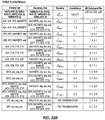
- Such reuse refers, for example, to Tables 10.1.3.2-4, 10.1.3.2-5 and 10.1.3.2-6 in Section 10 of TS 36.213.
- one or more embodiments of the method 400 include multiplexing the HARQ feedback for the two or more serving cells having different M parameters, using a HARQ feedback multiplexing procedure from Rel-10, in which all serving cells have the same M parameter.
- the method 400 may include transmitting a semi-persistent scheduling (SPS) release response within a same HARQ feedback window applicable to the HARQ feedback.
- SPS semi-persistent scheduling
- Such transmission is based, for example, on mapping the SPS release response to one of the HARQ-ACK bits generated for the serving cell associated with the SPS release.
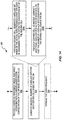
- the controller circuit 22 may be configured to carry out HARQ feedback generation according to the example method 500 shown in Fig. 15 .
- Such processing was introduced in the context of the Fig. 2 discussion earlier herein, in the context of example configurations and processing for the controller circuit 22.
- the controller circuit 22 generates an equal number of HARQ-ACK bits for each of its serving cells in a CA configuration, even where those serving cell have different M parameters.
- the controller circuit 22 uses the downlink assignment index, W DAI , to generate an equal number of HARQ-ACK bits for each serving cell.
- the method 500 includes receiving (Block 502) a downlink assignment index that indicates the number of DL subframe assignments within the HARQ feedback window, which is taken across all serving cells in the CA configuration of the UE 20 for which the HARQ feedback is to be generated.
- the downlink assignment index is received, e.g., in DCI carrying an UL grant for the UE 20 and its value indicates the number of DL assignments for the UE 20 across all the serving cells in its CA configuration.
- the method continues with generating an equal number of HARQ-ACK bits for each serving cell based on the downlink assignment index (Block 504), and transmitting the generated HARQ feedback (Block 406).
- the illustration depicts an example configuration where the controller circuit 22 of the UE 20 generates the HARQ feedback by: for each serving cell, generating (Block 504A) a HARQ-ACK bit based on the actual HARQ feedback state for each DL assignment that is within an association set of DL subframes defined for the serving cell by the UL/DL configurations of the serving cells; and for each serving cell, as needed, generating (Block 504B) additional HARQ-ACK bits as DTX or NACK bits, so that the number of HARQ-ACK bits generated for the serving cell equals the downlink assignment index.
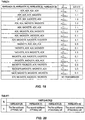
- HARQ feedback protocol reuse features provided by the teachings herein, consider Table 2 in Fig. 15 .
- the serving cell associated with the PCC is referred to as the Primary Cell or PCell and its M parameter is denoted M PCell .
- the serving cell associated with the SCC is referred to as the Secondary Cell or SCell and its M parameter is denoted M SCell .
- M map max( M Pcell , M Scell ). That is, M map gives the larger value between the M parameters of the PCell and the SCell, meaning that M map is the value of the M parameter for the serving cell determined to have the largest association set size.
- the method 400 can be considered as including the following processing rules for generating the HARQ-ACK bits in this scenario, including the following:
- the UE shall transmit b (0) b (1) on PUCCH resource n PUCCH 1 selected from A PUCCH resources, n PUCCH , j 1 where 0 ⁇ j ⁇ A - 1 and A E ⁇ 2,3,4 ⁇ , according to Table 4, Table 5 and Table 6 in subframe n using PUCCH format 1b-where the relevant tables are shown in Figs. 17, 18 and 19 , respectively.
- A can be determined in different ways.
- A is given by Table 3
- A is given by maximum number of configured transport blocks on either of the two component carrier times two
- the UE shall transmit b (0) b (1) on PUCCH resource n PUCCH 1 selected from A PUCCH resources, n PUCCH , j 1 where 0 ⁇ j ⁇ 3 according to Table 6 in subframe n using PUCCH format 1b.
- the UE shall transmit b (0) b (1) on PUCCH resource n PUCCH 1 selected from A PUCCH resources, n PUCCH , j 1 where 0 ⁇ j ⁇ 3 according to Table 8 in subframe n using PUCCH format 1b.
- the UE shall transmit b (0) b (1) on PUCCH resource n PUCCH 1 selected from A PUCCH resources, n PUCCH , j 1 where 0 ⁇ j ⁇ 3 according to Table 9 in subframe n using PUCCH format 1b.
- an SPS release response is to be transmitted within the same HARQ-ACK feedback window, it is mapped to HARQ-ACK(O) for the respective serving cell.
- the HARQ-ACK feedback is fed back on PUSCH, multiplexed either with UL-SCH or Channel State Information, CSI, feedback.
- the PUSCH transmission is a PHICH or SPS transmission, or the PUSCH transmission occurs on an UL cell that uses UL/DL Configuration #0 as the actual or reference configuration.
- the PUSCH transmission is based on an UL grant to the UE 20 and the UL/DL Configuration #0 is not used.
- the overall number of generated HARQ-ACK bits can be as described above, including the generation of HARQ-ACK bits corresponding to actual HARQ feedback states and as NACK or DTX bits, as needed, according to the "RM Code Input Bits" column in Tables 8 and 9.
- the bits for the HARQ feedback are encoded with a leaner error correction, as for example a Reed Muller code.
- the UE 20 When the UE 20 is configured with PUCCH format 1b with channel selection and is transmitting on a PUSCH not in accordance with an UL grant, the UE 20 follows the Rel-10 CA PUSCH procedure defining the number of HARQ-ACK bits to generate. See, e.g., Section 7.3 of TS 36.213 V10.6 or later, and Tables 10.1.3.2-5 and 10.1.3.2-6 in Section 10 of the same document.
- the UE 20 follows the procedure for PUCCH format 3 for scheduled transmissions on the PUSCH, according to the Rel-10 specification detailed in Section 7.3 of TS 36.213 V10.6 or later.
- the UE In cases where the HARQ-ACK bits are multiplexed on PUSCH and the PUSCH transmission is not based on an UL grant, the UE generates the number of HARQ-ACK bits according the PUCCH design set forth in Section 7.3 of TS 36.213 V10.6 or later.
- the UE 20 follows the procedure for PUCCH format 3.
- a UE 20 is configured to generate M c number of HARQ-ACK bits per DL cell for a PUCCH format 3 transmission or PUSCH transmission that is not based on an UL grant.
- the UE 20 is configured to generate min( W DAI , M c ) number of HARQ-ACK bits per DL cell in case the PUSCH transmission is based on an UL grant.
- M 0 is the number of DL subframes for which HARQ feedback should be generated for the first cell
- M 1 is the number of DL subframes for which HARQ feedback should be generated for the second cell.
- the UE 20 may be configured to generate the number of HARQ-ACK bits according PUCCH design.
Landscapes
- Engineering & Computer Science (AREA)
- Computer Networks & Wireless Communication (AREA)
- Signal Processing (AREA)
- Mobile Radio Communication Systems (AREA)
- Detection And Prevention Of Errors In Transmission (AREA)
- Immobilizing And Processing Of Enzymes And Microorganisms (AREA)
Claims (14)
- Procédé (400), au niveau d'un équipement d'utilisateur, UE (20), de génération de renvoi de demande de répétition automatique hybride, HARQ, aux fins de transmission dans un réseau de communication sans fil (10) dans une sous-trame de liaison montante, UL, n, dans lequel l'UE (20) est configuré avec deux cellules de desserte ou plus selon une configuration d'agrégation de porteuses, et dans lequel l'UE est en outre configuré avec des configurations, UL/DL, configuration de liaison montante/liaison descendante, TDD, de duplexage par répartition temporelle, qui définissent l'ensemble d'associations pour chaque cellule de desserte lorsque des sous-trames DL sont associées au renvoi HARQ étant généré aux fins de transmission dans une sous-trame UL donnée, ledit procédé comprenant :la détermination (402) de la plus grande taille M des ensembles d'associations parmi les deux cellules de desserte ou plus pour la sous-trame UL n ; etla génération (404) du renvoi HARQ par :la génération (404A), pour chacune des cellules de desserte, d'un bit HARQ-ACK selon un état réel du renvoi HARQ pour chaque sous-trame DL qui est associée à la cellule de desserte (22, 32) pour la sous-trame UL n ; etpour les cellules de desserte ayant une taille d'ensemble d'associations plus petite que M, la génération de bits HARQ-ACK supplémentaires en tant que valeurs de transmission discontinue, DTX, si nécessaire, de sorte que le nombre de bits HARQ-ACK générés pour chaque cellule de desserte est égal à M ; etla transmission du renvoi HARQ dans la sous-trame UL n.
- Procédé (400) selon la revendication 1, comprenant en outre la transmission du renvoi HARQ dans une transmission de canal physique partagé de liaison montante, PUSCH.
- Procédé (400) selon la revendication 2, comprenant en outre la transmission du renvoi HARQ dans la transmission PUSCH multiplexée avec des informations de canal partagé UL, U-SCH, ou multiplexée avec des informations d'état de canal, CSI.
- Procédé (400) selon la revendication 1, comprenant en outre la transmission du renvoi HARQ à l'aide d'une sélection de ressource de canal physique de commande de liaison montante, PUCCH, réservée pour une utilisation dans des cas où toutes les cellules de desserte configurées utilisent la même configuration UL/DL.
- Procédé (400) selon la revendication 4, dans lequel l'utilisation de la sélection de ressource PUCCH réservée comprend la réutilisation d'une table d'attribution de ressources telle qu'elle est définie dans l'édition 10, Rel-10, de la norme LTE pour M = x, où x est égal à la taille de l'ensemble d'associations pour la cellule de desserte déterminée.
- Procédé (400) selon l'une quelconque des revendications 1 à 5, comprenant en outre le multiplexage du renvoi HARQ pour les deux cellules de desserte ou plus selon un agencement de multiplexage spécifié dans une table de multiplexage de renvoi HARQ qui suppose que toutes les cellules de desserte ont la même taille d'ensemble d'associations.
- Procédé (400) selon l'une quelconque des revendications 1 à 6, comprenant en outre la transmission d'une réponse de libération d'une planification semi-persistente, SPS, à l'intérieur d'une même fenêtre de renvoi HARQ applicable au renvoi HARQ, sur la base du mappage de la réponse de libération SPS à un des bits HARQ-ACK générés pour la cellule de desserte associée à la libération SPS.
- Procédé (400) selon l'une quelconque des revendications 1 à 7, dans lequel l'UE est configuré avec deux cellules de desserte.
- Procédé (400) selon l'une quelconque des revendications 1 à 8, dans lequel l'UE est configuré avec différentes configurations UL/DL pour les différentes cellules.
- Équipement d'utilisateur, UE, (20) configuré pour générer un renvoi de demande de répétition automatique hybride, HARQ, aux fins de transmission dans un réseau de communication sans fil (10) dans une sous-trame de liaison montante, UL, n, dans lequel l'UE (20) est configuré avec deux cellules de desserte ou plus selon une configuration d'agrégation de porteuses, et dans lequel l'UE est en outre configuré avec des configurations de liaison montante/liaison descendante, UL/DL, de duplexage par répartition temporelle, TDD, qui définissent l'ensemble d'associations pour chaque cellule de desserte lorsque des sous-trames DL sont associées au renvoi HARQ étant généré aux fins de transmission à une sous-trame UL donnée, ledit UE (20) comprenant :une interface de communications (28) comprenant un émetteur-récepteur aux fins de communication avec le réseau de communication sans fil via une interface air ; etun circuit contrôleur (22) associé de manière fonctionnelle à l'interface de communications (28) et configuré pour :déterminer la plus grande taille M des ensembles d'associations parmi les deux cellules de desserte ou plus pour la sous-trame UL n ; etgénérer le renvoi HARQ par :la génération, pour chacune des cellules de desserte, d'un bit HARQ-ACK selon un état réel de renvoi HARQ pour chaque sous-trame DL qui est associée à la cellule de desserte pour la sous-trame UL n ; etpour les cellules de desserte ayant une taille d'ensemble d'associations plus petite que M, la génération de bits HARQ-ACK supplémentaires en tant que valeurs de transmission discontinue, DTX, si nécessaire, de sorte que le nombre de bits HARQ-ACK générés pour chaque cellule de desserte est égal à M ; etla transmission, via l'interface de communications (28), du renvoi HARQ dans la sous-trame UL n.
- UE (20) selon la revendication 10, dans lequel le réseau de communication sans fil (10) est un réseau Évolution à long terme, LTE, et dans lequel l'UE 20 est configuré pour fonctionner dans le réseau LTE.
- UE selon la revendication 10 ou 11, configuré en outre pour effectuer le procédé selon l'une quelconque des revendications 2 à 9.
- Programme informatique comprenant des instructions, stockées dans une mémoire (24) ou dans un autre support lisible par ordinateur, qui, lorsqu'elles sont exécutées par un circuit contrôleur (22) dans un équipement d'utilisateur, UE, (20), configurent l'UE (20) pour qu'il génère un renvoi de demande de répétition automatique hybride, HARQ, aux fins de transmission dans un réseau de communication sans fil (10), dans une sous-trame de liaison montante, UL, n, dans lequel l'UE (20) est configuré avec deux cellules de desserte ou plus selon une configuration d'agrégation de porteuses, et dans lequel l'UE est en outre configuré avec des configurations de liaison montante/liaison descendante, UL/DL, de duplexage par répartition temporelle, TDD, qui définissent l'ensemble d'associations pour chaque cellule de desserte lorsque des sous-trames de liaison descendante, DL, sont associées au renvoi HARQ étant généré aux fins de transmission à une sous-trame UL donnée, basé sur la configuration de l'UE (20) pour :déterminer la plus grande taille M des ensembles d'associations parmi les deux cellules de desserte ou plus pour la sous-trame UL n ; etgénérer le renvoi HARQ par :la génération, pour chacune des cellules de desserte, d'un bit HARQ-ACK selon un état réel de renvoi HARQ pour chaque sous-trame DL qui est associée à la cellule de desserte pour la sous-trame UL n ; etpour les cellules de desserte ayant une taille d'ensemble d'associations plus petite que M, la génération de bits HARQ-ACK supplémentaires en tant que valeurs de transmission discontinue, DTX, si nécessaire, de sorte que le nombre de bits HARQ-ACK générés pour chaque cellule de desserte est égal à M ; etla transmission du renvoi HARQ dans la sous-trame UL n.
- Programme informatique selon la revendication 13, basé en outre sur la configuration de l'UE pour effectuer le procédé selon l'une quelconque des revendications 2 à 9.
Applications Claiming Priority (2)
| Application Number | Priority Date | Filing Date | Title |
|---|---|---|---|
| US201261645397P | 2012-05-10 | 2012-05-10 | |
| EP13728844.5A EP2847911B1 (fr) | 2012-05-10 | 2013-05-08 | Procédé et appareil pour la signalisation de demande de répétition automatique hybride (harq) |
Related Parent Applications (2)
| Application Number | Title | Priority Date | Filing Date |
|---|---|---|---|
| EP13728844.5A Division EP2847911B1 (fr) | 2012-05-10 | 2013-05-08 | Procédé et appareil pour la signalisation de demande de répétition automatique hybride (harq) |
| EP13728844.5A Division-Into EP2847911B1 (fr) | 2012-05-10 | 2013-05-08 | Procédé et appareil pour la signalisation de demande de répétition automatique hybride (harq) |
Publications (2)
| Publication Number | Publication Date |
|---|---|
| EP3010171A1 EP3010171A1 (fr) | 2016-04-20 |
| EP3010171B1 true EP3010171B1 (fr) | 2017-09-27 |
Family
ID=48626102
Family Applications (2)
| Application Number | Title | Priority Date | Filing Date |
|---|---|---|---|
| EP15199515.6A Active EP3010171B1 (fr) | 2012-05-10 | 2013-05-08 | Procédé et appareil de signalisation de demande de répétition automatique hybride |
| EP13728844.5A Active EP2847911B1 (fr) | 2012-05-10 | 2013-05-08 | Procédé et appareil pour la signalisation de demande de répétition automatique hybride (harq) |
Family Applications After (1)
| Application Number | Title | Priority Date | Filing Date |
|---|---|---|---|
| EP13728844.5A Active EP2847911B1 (fr) | 2012-05-10 | 2013-05-08 | Procédé et appareil pour la signalisation de demande de répétition automatique hybride (harq) |
Country Status (11)
| Country | Link |
|---|---|
| US (2) | US9137787B2 (fr) |
| EP (2) | EP3010171B1 (fr) |
| JP (2) | JP6235565B2 (fr) |
| CN (2) | CN108183777B (fr) |
| AU (1) | AU2013260232B2 (fr) |
| DK (2) | DK2847911T3 (fr) |
| ES (2) | ES2652321T3 (fr) |
| HU (1) | HUE027326T2 (fr) |
| PL (1) | PL2847911T3 (fr) |
| PT (1) | PT3010171T (fr) |
| WO (1) | WO2013169166A1 (fr) |
Families Citing this family (25)
| Publication number | Priority date | Publication date | Assignee | Title |
|---|---|---|---|---|
| US11729770B2 (en) * | 2009-03-17 | 2023-08-15 | Nokia Solutions And Networks Oy | Configuring the transmission of periodic feedback information on a physical uplink shared channel (PUSCH) |
| EP2408134B1 (fr) * | 2009-03-17 | 2013-05-15 | Huawei Technologies Co., Ltd. | Procédé et appareil de codage de signal de réaction |
| US9722719B2 (en) * | 2012-06-06 | 2017-08-01 | Industrial Technology Research Institute | Method of handling HARQ resource in TDD system and related communication device |
| US9749094B2 (en) * | 2012-06-14 | 2017-08-29 | Sharp Kabushiki Kaisha | Devices for sending and receiving feedback information |
| EP2688238B1 (fr) * | 2012-07-20 | 2015-06-03 | HTC Corporation | Procédé de codage conjoint de rapports d' informations d'état de canal et de rétroactions de demande de répétition automatique hybride, dispositif de communication associé |
| US9559812B2 (en) * | 2012-07-27 | 2017-01-31 | Lg Electronics Inc. | Method and terminal for performing HARQ |
| US9439095B2 (en) * | 2012-09-28 | 2016-09-06 | Intel Corporation | Hybrid automatic repeat request (HARQ) mapping for carrier aggregation (CA) |
| US20160269104A1 (en) * | 2013-11-07 | 2016-09-15 | Lg Electronics Inc. | Downlink signal transmission/reception method in wireless communication system and apparatus for same |
| WO2015167222A1 (fr) * | 2014-04-28 | 2015-11-05 | 엘지전자 주식회사 | Procédé pour émettre un signal dans un système de communication sans fil et dispositif correspondant |
| US10009920B2 (en) * | 2015-01-27 | 2018-06-26 | Qualcomm Incorporated | Triggering a group acknowledgement/negative acknowledgement or channel state information |
| EP3070870B1 (fr) * | 2015-03-18 | 2018-02-21 | Panasonic Intellectual Property Corporation of America | Mécanisme de rétroaction harq amélioré pour l'agrégation de porteuses au-delà de 5 porteuses |
| EP3275268B1 (fr) * | 2015-03-26 | 2020-05-06 | Intel IP Corporation | Dispositifs pour des transmissions en liaison montante présentant un surdébit de signalisation réduit |
| JP6907119B2 (ja) * | 2015-08-31 | 2021-07-21 | 株式会社Nttドコモ | 端末、無線通信方法、基地局及びシステム |
| EP3364704B1 (fr) * | 2015-11-03 | 2021-05-26 | Samsung Electronics Co., Ltd. | Procédé et dispositif pour émettre ou recevoir des informations de commande dans un système de communication sans fil |
| WO2017120804A1 (fr) * | 2016-01-13 | 2017-07-20 | Lenovo Innovations Limited (Hong Kong) | Accusé de réception de données dans un système de communication sans fil |
| CN108282881B (zh) * | 2017-01-06 | 2020-12-15 | 华为技术有限公司 | 一种资源配置方法及装置 |
| US10506468B2 (en) | 2017-09-08 | 2019-12-10 | At&T Intellectual Property I, L.P. | Reporting hybrid automatic repeat request-acknowledgements in wireless communication systems |
| WO2019099670A1 (fr) * | 2017-11-15 | 2019-05-23 | Idac Holdings, Inc. | Procédé et appareil de détermination de taille de livre de codes harq-ack et sélection de ressources dans nr |
| EP3725066A4 (fr) * | 2017-12-14 | 2021-08-25 | Geoverse, LLC | Système de registre distribué pour la gestion et la mise en oeuvre d'échanges de services sans fil entre des fournisseurs de services sans fil |
| CN118400077A (zh) | 2018-02-17 | 2024-07-26 | 韦勒斯标准与技术协会公司 | 无线通信系统中发送上行链路控制信息的方法及使用其的装置 |
| KR20250036942A (ko) * | 2018-05-11 | 2025-03-14 | 주식회사 윌러스표준기술연구소 | 무선 통신 시스템의 상향 링크 제어 정보 멀티플렉싱 방법 및 이를 이용하는 장치 |
| US11671975B2 (en) * | 2019-11-19 | 2023-06-06 | Qualcomm Incorporated | Configuration for one-shot hybrid automatic repeat request (HARQ) feedback |
| US11889502B2 (en) * | 2020-02-24 | 2024-01-30 | Qualcomm Incorporated | Two-stage feedback procedures |
| US20240333443A1 (en) * | 2023-04-03 | 2024-10-03 | T-Mobile Innovations Llc | Primary cell change in uplink new radio carrier aggregation scenarios |
| CN118474069B (zh) * | 2024-07-11 | 2024-09-24 | 舟谱数据技术南京有限公司 | 一种基于多消息集成的统一接入管理系统及方法 |
Family Cites Families (44)
| Publication number | Priority date | Publication date | Assignee | Title |
|---|---|---|---|---|
| DE60306519T2 (de) * | 2003-08-14 | 2006-11-09 | Matsushita Electric Industrial Co., Ltd., Kadoma | Synchronisation von Basisstationen während Soft-Handover |
| WO2008024282A2 (fr) * | 2006-08-21 | 2008-02-28 | Interdigital Technology Corporation | Procédé et appareil pour commander des transmissions et des retransmissions arq et harq dans un système de communication sans fil |
| JP4997294B2 (ja) * | 2007-03-16 | 2012-08-08 | インターデイジタル テクノロジー コーポレーション | 無線リンク制御パラメータの再構成をサポートするための無線通信方法および無線通信装置 |
| KR101469281B1 (ko) * | 2007-04-30 | 2014-12-04 | 엘지전자 주식회사 | 무선단말의 상태 전환 방식 |
| US20100254329A1 (en) * | 2009-03-13 | 2010-10-07 | Interdigital Patent Holdings, Inc. | Uplink grant, downlink assignment and search space method and apparatus in carrier aggregation |
| EP2409444A2 (fr) * | 2009-03-20 | 2012-01-25 | Telefonaktiebolaget LM Ericsson (publ) | Mécanisme arq hybride pour une coopération de stations de base sur la liaison montante |
| WO2010113214A1 (fr) * | 2009-03-31 | 2010-10-07 | 富士通株式会社 | Dispositif de communication, système de communication, dispositif terminal de communication et dispositif de station de base de communication |
| CN101932027B (zh) * | 2009-06-19 | 2014-07-02 | 中兴通讯股份有限公司 | 一种多载波调度方法和系统 |
| US8670396B2 (en) * | 2009-09-29 | 2014-03-11 | Qualcomm Incorporated | Uplink control channel resource allocation for transmit diversity |
| US8989174B2 (en) * | 2009-10-06 | 2015-03-24 | Qualcomm Incorporated | MBSFN subframe generation and processing for Unicast |
| US9055576B2 (en) * | 2009-10-08 | 2015-06-09 | Qualcomm Incorporated | Uplink resource allocation for LTE advanced |
| BR112012020260A2 (pt) * | 2010-02-12 | 2016-05-03 | Interdigital Patent Holdings | envio de realimentação para múltiplas portadoras de link de recepção |
| US9287942B2 (en) * | 2010-04-27 | 2016-03-15 | Lg Electronics Inc. | Method and apparatus for uplink multiple input multiple output (MIMO) transmission |
| AU2010351964B2 (en) * | 2010-04-30 | 2015-05-14 | Nokia Solutions And Networks Oy | Support of UL ACK/NACK feedback for carrier aggregation during timing uncertainty component carrier (re-) configuration/activation/de-activation period |
| US20110268001A1 (en) * | 2010-05-03 | 2011-11-03 | Lee Jung A | Method of providing acknowledgement feedback for aggregated carriers |
| WO2012015154A1 (fr) * | 2010-07-26 | 2012-02-02 | 엘지전자 주식회사 | Procédé pour la rétroaction apériodique d'information d'état de canal dans un système d'accès sans fil de support d'agrégation multi-porteuse |
| US20120057539A1 (en) * | 2010-09-07 | 2012-03-08 | Richard Lee-Chee Kuo | Method and apparatus for hybrid automatic repeat request in a wireless communication system |
| US8885496B2 (en) * | 2010-10-08 | 2014-11-11 | Sharp Kabushiki Kaisha | Uplink control information transmission on backward compatible PUCCH formats with carrier aggregation |
| EP3029873B1 (fr) * | 2010-11-03 | 2019-05-01 | Samsung Electronics Co., Ltd. | Procédé et appareil de codage de transmission harq-ack dans les systèmes tdd avec agrégation de porteuses en liaison descendante |
| EP3367603B1 (fr) * | 2010-11-03 | 2021-07-07 | Samsung Electronics Co., Ltd. | Génération d'informations harq-ack et régulation de puissance de signaux harq-ack dans des systèmes tdd avec agrégation de porteuses en liaison descendante |
| US20120150654A1 (en) * | 2010-12-08 | 2012-06-14 | Alcatel-Lucent Usa Inc. | Method And Apparatus For Interactive Media Control |
| CN102075949B (zh) * | 2010-12-22 | 2013-03-20 | 大唐移动通信设备有限公司 | 一种基于ca技术进行数据传输的方法及装置 |
| WO2012106840A1 (fr) * | 2011-02-10 | 2012-08-16 | Renesas Mobile Corporation | Affectation de ressources pour configurer en souplesse le duplexage temporel |
| CN102137459B (zh) | 2011-02-21 | 2013-12-04 | 华为技术有限公司 | 单卡双待终端cs域同时驻留两网的方法及相关系统、装置 |
| WO2012124969A2 (fr) * | 2011-03-13 | 2012-09-20 | 엘지전자 주식회사 | Procédé servant à émettre et à recevoir un signal et dispositif associé |
| US9572138B2 (en) * | 2011-03-18 | 2017-02-14 | Lg Electronics Inc. | Method of transmitting control information in a wireless communication system and apparatus thereof |
| US8837304B2 (en) | 2011-04-08 | 2014-09-16 | Sharp Kabushiki Kaisha | Devices for multi-group communications |
| EP2702818B1 (fr) * | 2011-04-29 | 2026-01-07 | Xiaomi H.K. Limited | Procédé et appareil de rééquilibrage de la taille des ensembles d'association en liaison descendante (dl) pour des composantes porteuses présentant différentes configurations de sous-trame à duplexage par répartition dans le temps |
| CN106899391B (zh) * | 2011-05-12 | 2020-09-04 | Lg电子株式会社 | 发送控制信息的方法及其设备 |
| WO2012161510A2 (fr) * | 2011-05-23 | 2012-11-29 | 엘지전자 주식회사 | Procédé et appareil pour transmettre des données de contrôle dans un système de communication sans fil |
| CN102355731B (zh) * | 2011-08-01 | 2017-10-27 | 中兴通讯股份有限公司 | Tdd系统中进行数据传输的基站、终端、系统及方法 |
| DK2742756T3 (en) | 2011-08-12 | 2015-03-09 | Ericsson Telefon Ab L M | BASIC STATION, USER EQUIPMENT AND METHODS OF TIME MANAGEMENT CONFIGURATION ALLOCATION IN A MULTIPLE CELL TELECOMMUNICATION NETWORK |
| WO2013043023A2 (fr) * | 2011-09-23 | 2013-03-28 | 엘지전자 주식회사 | Procédé et appareil de transmission d'informations de commande |
| WO2013051855A1 (fr) * | 2011-10-04 | 2013-04-11 | 엘지전자 주식회사 | Procédé pour transmettre un rapport de marge de puissance, et appareil associé |
| CN103095433B (zh) * | 2011-11-04 | 2018-06-15 | 北京三星通信技术研究有限公司 | 一种发送harq-ack反馈信息的方法 |
| KR20130069284A (ko) * | 2011-12-16 | 2013-06-26 | 주식회사 팬택 | 송수신 포인트, 송수신 포인트의 타이밍 설정 방법, 단말, 및 단말의 pdsch a/n 전송 방법 |
| WO2013105837A1 (fr) * | 2012-01-15 | 2013-07-18 | 엘지전자 주식회사 | Procédé et appareil pour la transmission de données de contrôle dans un système de communication sans fil |
| EP2823683A1 (fr) * | 2012-02-03 | 2015-01-14 | Interdigital Patent Holdings, Inc. | Procédé et appareil pour la coexistence d'unités de transmission/réception sans fil (wtru) fonctionnant dans le même spectre |
| US9674822B2 (en) * | 2012-02-22 | 2017-06-06 | Lg Electronics Inc. | Method and apparatus for transmitting control information |
| CN104145431B (zh) * | 2012-02-29 | 2017-09-08 | Lg电子株式会社 | 用于终端在无线通信系统中接收下行链路信号的方法及其装置 |
| US9526091B2 (en) * | 2012-03-16 | 2016-12-20 | Intel Corporation | Method and apparatus for coordination of self-optimization functions in a wireless network |
| EP2826196A1 (fr) * | 2012-03-16 | 2015-01-21 | Interdigital Patent Holdings, Inc. | Procédé de fonctionnement fdd bidirectionnel à l'alternat dans un réseau fdd lte |
| KR20130125695A (ko) * | 2012-05-09 | 2013-11-19 | 주식회사 팬택 | 인터밴드 tdd 전송 방식에서 채널 셀렉션 전송을 위한 harq-ack 인덱스 매핑 및 업링크 자원 할당을 제어하는 방법 및 장치 |
| US9681326B2 (en) * | 2012-09-28 | 2017-06-13 | Intel Corporation | Hybrid automatic repeat request (HARQ) mapping for carrier aggregation (CA) |
-
2013
- 2013-05-08 EP EP15199515.6A patent/EP3010171B1/fr active Active
- 2013-05-08 ES ES15199515.6T patent/ES2652321T3/es active Active
- 2013-05-08 HU HUE13728844A patent/HUE027326T2/en unknown
- 2013-05-08 PT PT151995156T patent/PT3010171T/pt unknown
- 2013-05-08 CN CN201810149515.6A patent/CN108183777B/zh active Active
- 2013-05-08 ES ES13728844.5T patent/ES2566131T3/es active Active
- 2013-05-08 PL PL13728844T patent/PL2847911T3/pl unknown
- 2013-05-08 WO PCT/SE2013/000066 patent/WO2013169166A1/fr not_active Ceased
- 2013-05-08 EP EP13728844.5A patent/EP2847911B1/fr active Active
- 2013-05-08 JP JP2015511406A patent/JP6235565B2/ja active Active
- 2013-05-08 US US13/979,307 patent/US9137787B2/en active Active
- 2013-05-08 AU AU2013260232A patent/AU2013260232B2/en active Active
- 2013-05-08 CN CN201380023999.5A patent/CN104285399B/zh active Active
- 2013-05-08 DK DK13728844.5T patent/DK2847911T3/en active
- 2013-05-08 DK DK15199515.6T patent/DK3010171T3/en active
-
2015
- 2015-08-11 US US14/823,238 patent/US9716571B2/en active Active
-
2017
- 2017-10-19 JP JP2017202653A patent/JP6401365B2/ja active Active
Non-Patent Citations (1)
| Title |
|---|
| None * |
Also Published As
| Publication number | Publication date |
|---|---|
| JP2018056996A (ja) | 2018-04-05 |
| CN108183777A (zh) | 2018-06-19 |
| EP2847911B1 (fr) | 2016-02-03 |
| AU2013260232A1 (en) | 2014-11-27 |
| US9137787B2 (en) | 2015-09-15 |
| AU2013260232B2 (en) | 2015-12-03 |
| WO2013169166A1 (fr) | 2013-11-14 |
| HUE027326T2 (en) | 2016-09-28 |
| JP6235565B2 (ja) | 2017-11-22 |
| JP2015522970A (ja) | 2015-08-06 |
| CN104285399B (zh) | 2018-03-30 |
| US20140064159A1 (en) | 2014-03-06 |
| ES2566131T3 (es) | 2016-04-11 |
| DK2847911T3 (en) | 2016-04-18 |
| CN108183777B (zh) | 2020-12-18 |
| CN104285399A (zh) | 2015-01-14 |
| EP2847911A1 (fr) | 2015-03-18 |
| WO2013169166A8 (fr) | 2013-12-19 |
| PT3010171T (pt) | 2017-12-11 |
| PL2847911T3 (pl) | 2016-07-29 |
| EP3010171A1 (fr) | 2016-04-20 |
| DK3010171T3 (en) | 2017-12-04 |
| ES2652321T3 (es) | 2018-02-01 |
| US20160105263A1 (en) | 2016-04-14 |
| JP6401365B2 (ja) | 2018-10-10 |
| US9716571B2 (en) | 2017-07-25 |
Similar Documents
| Publication | Publication Date | Title |
|---|---|---|
| EP2847911B1 (fr) | Procédé et appareil pour la signalisation de demande de répétition automatique hybride (harq) | |
| US9716569B2 (en) | Method and apparatus for hybrid automatic repeat request signaling | |
| CN103493417B (zh) | 移动通信系统及其信道发送/接收方法 | |
| CN104205688B (zh) | 用于在无线通信系统中聚合载波的方法和设备 | |
| KR101688877B1 (ko) | 통신 시스템에서의 e-pdcch를 위한 pucch 자원 할당 | |
| US10205576B2 (en) | Acknowledgement transmission method and apparatus in wireless communication system | |
| CN104956758A (zh) | 双连通性模式的同时上行链路传输 | |
| HK1246522B (zh) | 用於针对载波聚合的混合自动重传请求信令的方法和设备 |
Legal Events
| Date | Code | Title | Description |
|---|---|---|---|
| PUAI | Public reference made under article 153(3) epc to a published international application that has entered the european phase |
Free format text: ORIGINAL CODE: 0009012 |
|
| 17P | Request for examination filed |
Effective date: 20151211 |
|
| AC | Divisional application: reference to earlier application |
Ref document number: 2847911 Country of ref document: EP Kind code of ref document: P |
|
| AK | Designated contracting states |
Kind code of ref document: A1 Designated state(s): AL AT BE BG CH CY CZ DE DK EE ES FI FR GB GR HR HU IE IS IT LI LT LU LV MC MK MT NL NO PL PT RO RS SE SI SK SM TR |
|
| 17Q | First examination report despatched |
Effective date: 20161220 |
|
| GRAP | Despatch of communication of intention to grant a patent |
Free format text: ORIGINAL CODE: EPIDOSNIGR1 |
|
| INTG | Intention to grant announced |
Effective date: 20170413 |
|
| GRAS | Grant fee paid |
Free format text: ORIGINAL CODE: EPIDOSNIGR3 |
|
| GRAA | (expected) grant |
Free format text: ORIGINAL CODE: 0009210 |
|
| AC | Divisional application: reference to earlier application |
Ref document number: 2847911 Country of ref document: EP Kind code of ref document: P |
|
| AK | Designated contracting states |
Kind code of ref document: B1 Designated state(s): AL AT BE BG CH CY CZ DE DK EE ES FI FR GB GR HR HU IE IS IT LI LT LU LV MC MK MT NL NO PL PT RO RS SE SI SK SM TR |
|
| REG | Reference to a national code |
Ref country code: GB Ref legal event code: FG4D |
|
| REG | Reference to a national code |
Ref country code: CH Ref legal event code: EP Ref country code: CH Ref legal event code: NV Representative=s name: ISLER AND PEDRAZZINI AG, CH |
|
| REG | Reference to a national code |
Ref country code: AT Ref legal event code: REF Ref document number: 932906 Country of ref document: AT Kind code of ref document: T Effective date: 20171015 |
|
| REG | Reference to a national code |
Ref country code: IE Ref legal event code: FG4D |
|
| REG | Reference to a national code |
Ref country code: DE Ref legal event code: R096 Ref document number: 602013027356 Country of ref document: DE |
|
| REG | Reference to a national code |
Ref country code: DK Ref legal event code: T3 Effective date: 20171127 |
|
| REG | Reference to a national code |
Ref country code: PT Ref legal event code: SC4A Ref document number: 3010171 Country of ref document: PT Date of ref document: 20171211 Kind code of ref document: T Free format text: AVAILABILITY OF NATIONAL TRANSLATION Effective date: 20171130 |
|
| REG | Reference to a national code |
Ref country code: RO Ref legal event code: EPE |
|
| REG | Reference to a national code |
Ref country code: SE Ref legal event code: TRGR |
|
| REG | Reference to a national code |
Ref country code: NL Ref legal event code: FP |
|
| PG25 | Lapsed in a contracting state [announced via postgrant information from national office to epo] |
Ref country code: NO Free format text: LAPSE BECAUSE OF FAILURE TO SUBMIT A TRANSLATION OF THE DESCRIPTION OR TO PAY THE FEE WITHIN THE PRESCRIBED TIME-LIMIT Effective date: 20171227 Ref country code: FI Free format text: LAPSE BECAUSE OF FAILURE TO SUBMIT A TRANSLATION OF THE DESCRIPTION OR TO PAY THE FEE WITHIN THE PRESCRIBED TIME-LIMIT Effective date: 20170927 Ref country code: HR Free format text: LAPSE BECAUSE OF FAILURE TO SUBMIT A TRANSLATION OF THE DESCRIPTION OR TO PAY THE FEE WITHIN THE PRESCRIBED TIME-LIMIT Effective date: 20170927 Ref country code: LT Free format text: LAPSE BECAUSE OF FAILURE TO SUBMIT A TRANSLATION OF THE DESCRIPTION OR TO PAY THE FEE WITHIN THE PRESCRIBED TIME-LIMIT Effective date: 20170927 |
|
| REG | Reference to a national code |
Ref country code: ES Ref legal event code: FG2A Ref document number: 2652321 Country of ref document: ES Kind code of ref document: T3 Effective date: 20180201 |
|
| REG | Reference to a national code |
Ref country code: LT Ref legal event code: MG4D |
|
| PG25 | Lapsed in a contracting state [announced via postgrant information from national office to epo] |
Ref country code: LV Free format text: LAPSE BECAUSE OF FAILURE TO SUBMIT A TRANSLATION OF THE DESCRIPTION OR TO PAY THE FEE WITHIN THE PRESCRIBED TIME-LIMIT Effective date: 20170927 Ref country code: RS Free format text: LAPSE BECAUSE OF FAILURE TO SUBMIT A TRANSLATION OF THE DESCRIPTION OR TO PAY THE FEE WITHIN THE PRESCRIBED TIME-LIMIT Effective date: 20170927 Ref country code: BG Free format text: LAPSE BECAUSE OF FAILURE TO SUBMIT A TRANSLATION OF THE DESCRIPTION OR TO PAY THE FEE WITHIN THE PRESCRIBED TIME-LIMIT Effective date: 20171227 Ref country code: GR Free format text: LAPSE BECAUSE OF FAILURE TO SUBMIT A TRANSLATION OF THE DESCRIPTION OR TO PAY THE FEE WITHIN THE PRESCRIBED TIME-LIMIT Effective date: 20171228 |
|
| PG25 | Lapsed in a contracting state [announced via postgrant information from national office to epo] |
Ref country code: CZ Free format text: LAPSE BECAUSE OF FAILURE TO SUBMIT A TRANSLATION OF THE DESCRIPTION OR TO PAY THE FEE WITHIN THE PRESCRIBED TIME-LIMIT Effective date: 20170927 |
|
| REG | Reference to a national code |
Ref country code: FR Ref legal event code: PLFP Year of fee payment: 6 |
|
| PG25 | Lapsed in a contracting state [announced via postgrant information from national office to epo] |
Ref country code: SK Free format text: LAPSE BECAUSE OF FAILURE TO SUBMIT A TRANSLATION OF THE DESCRIPTION OR TO PAY THE FEE WITHIN THE PRESCRIBED TIME-LIMIT Effective date: 20170927 Ref country code: IS Free format text: LAPSE BECAUSE OF FAILURE TO SUBMIT A TRANSLATION OF THE DESCRIPTION OR TO PAY THE FEE WITHIN THE PRESCRIBED TIME-LIMIT Effective date: 20180127 Ref country code: SM Free format text: LAPSE BECAUSE OF FAILURE TO SUBMIT A TRANSLATION OF THE DESCRIPTION OR TO PAY THE FEE WITHIN THE PRESCRIBED TIME-LIMIT Effective date: 20170927 Ref country code: EE Free format text: LAPSE BECAUSE OF FAILURE TO SUBMIT A TRANSLATION OF THE DESCRIPTION OR TO PAY THE FEE WITHIN THE PRESCRIBED TIME-LIMIT Effective date: 20170927 |
|
| REG | Reference to a national code |
Ref country code: DE Ref legal event code: R097 Ref document number: 602013027356 Country of ref document: DE |
|
| PLBE | No opposition filed within time limit |
Free format text: ORIGINAL CODE: 0009261 |
|
| STAA | Information on the status of an ep patent application or granted ep patent |
Free format text: STATUS: NO OPPOSITION FILED WITHIN TIME LIMIT |
|
| PG25 | Lapsed in a contracting state [announced via postgrant information from national office to epo] |
Ref country code: PL Free format text: LAPSE BECAUSE OF FAILURE TO SUBMIT A TRANSLATION OF THE DESCRIPTION OR TO PAY THE FEE WITHIN THE PRESCRIBED TIME-LIMIT Effective date: 20170927 |
|
| 26N | No opposition filed |
Effective date: 20180628 |
|
| PG25 | Lapsed in a contracting state [announced via postgrant information from national office to epo] |
Ref country code: SI Free format text: LAPSE BECAUSE OF FAILURE TO SUBMIT A TRANSLATION OF THE DESCRIPTION OR TO PAY THE FEE WITHIN THE PRESCRIBED TIME-LIMIT Effective date: 20170927 |
|
| REG | Reference to a national code |
Ref country code: BE Ref legal event code: MM Effective date: 20180531 |
|
| PG25 | Lapsed in a contracting state [announced via postgrant information from national office to epo] |
Ref country code: MC Free format text: LAPSE BECAUSE OF FAILURE TO SUBMIT A TRANSLATION OF THE DESCRIPTION OR TO PAY THE FEE WITHIN THE PRESCRIBED TIME-LIMIT Effective date: 20170927 |
|
| REG | Reference to a national code |
Ref country code: IE Ref legal event code: MM4A |
|
| PG25 | Lapsed in a contracting state [announced via postgrant information from national office to epo] |
Ref country code: LU Free format text: LAPSE BECAUSE OF NON-PAYMENT OF DUE FEES Effective date: 20180508 |
|
| PG25 | Lapsed in a contracting state [announced via postgrant information from national office to epo] |
Ref country code: IE Free format text: LAPSE BECAUSE OF NON-PAYMENT OF DUE FEES Effective date: 20180508 |
|
| PG25 | Lapsed in a contracting state [announced via postgrant information from national office to epo] |
Ref country code: BE Free format text: LAPSE BECAUSE OF NON-PAYMENT OF DUE FEES Effective date: 20180531 |
|
| REG | Reference to a national code |
Ref country code: AT Ref legal event code: UEP Ref document number: 932906 Country of ref document: AT Kind code of ref document: T Effective date: 20170927 |
|
| PG25 | Lapsed in a contracting state [announced via postgrant information from national office to epo] |
Ref country code: MT Free format text: LAPSE BECAUSE OF NON-PAYMENT OF DUE FEES Effective date: 20180508 |
|
| PG25 | Lapsed in a contracting state [announced via postgrant information from national office to epo] |
Ref country code: CY Free format text: LAPSE BECAUSE OF FAILURE TO SUBMIT A TRANSLATION OF THE DESCRIPTION OR TO PAY THE FEE WITHIN THE PRESCRIBED TIME-LIMIT Effective date: 20170927 Ref country code: HU Free format text: LAPSE BECAUSE OF FAILURE TO SUBMIT A TRANSLATION OF THE DESCRIPTION OR TO PAY THE FEE WITHIN THE PRESCRIBED TIME-LIMIT; INVALID AB INITIO Effective date: 20130508 Ref country code: MK Free format text: LAPSE BECAUSE OF NON-PAYMENT OF DUE FEES Effective date: 20170927 |
|
| PG25 | Lapsed in a contracting state [announced via postgrant information from national office to epo] |
Ref country code: AL Free format text: LAPSE BECAUSE OF FAILURE TO SUBMIT A TRANSLATION OF THE DESCRIPTION OR TO PAY THE FEE WITHIN THE PRESCRIBED TIME-LIMIT Effective date: 20170927 |
|
| PGFP | Annual fee paid to national office [announced via postgrant information from national office to epo] |
Ref country code: NL Payment date: 20250526 Year of fee payment: 13 |
|
| PGFP | Annual fee paid to national office [announced via postgrant information from national office to epo] |
Ref country code: DE Payment date: 20250529 Year of fee payment: 13 |
|
| PGFP | Annual fee paid to national office [announced via postgrant information from national office to epo] |
Ref country code: GB Payment date: 20250527 Year of fee payment: 13 Ref country code: DK Payment date: 20250526 Year of fee payment: 13 Ref country code: ES Payment date: 20250602 Year of fee payment: 13 |
|
| PGFP | Annual fee paid to national office [announced via postgrant information from national office to epo] |
Ref country code: IT Payment date: 20250521 Year of fee payment: 13 |
|
| PGFP | Annual fee paid to national office [announced via postgrant information from national office to epo] |
Ref country code: PT Payment date: 20250421 Year of fee payment: 13 |
|
| PGFP | Annual fee paid to national office [announced via postgrant information from national office to epo] |
Ref country code: FR Payment date: 20250526 Year of fee payment: 13 |
|
| PGFP | Annual fee paid to national office [announced via postgrant information from national office to epo] |
Ref country code: CH Payment date: 20250601 Year of fee payment: 13 |
|
| PGFP | Annual fee paid to national office [announced via postgrant information from national office to epo] |
Ref country code: RO Payment date: 20250429 Year of fee payment: 13 Ref country code: AT Payment date: 20250423 Year of fee payment: 13 |
|
| PGFP | Annual fee paid to national office [announced via postgrant information from national office to epo] |
Ref country code: TR Payment date: 20250428 Year of fee payment: 13 |
|
| PGFP | Annual fee paid to national office [announced via postgrant information from national office to epo] |
Ref country code: SE Payment date: 20250527 Year of fee payment: 13 |