EP3010230A1 - Videocodierungsvorrichtung, videocodierungsverfahren und videocodierungsprogramm - Google Patents
Videocodierungsvorrichtung, videocodierungsverfahren und videocodierungsprogramm Download PDFInfo
- Publication number
- EP3010230A1 EP3010230A1 EP14810729.5A EP14810729A EP3010230A1 EP 3010230 A1 EP3010230 A1 EP 3010230A1 EP 14810729 A EP14810729 A EP 14810729A EP 3010230 A1 EP3010230 A1 EP 3010230A1
- Authority
- EP
- European Patent Office
- Prior art keywords
- coefficient
- information bits
- orthogonal transform
- significant
- coefficient level
- Prior art date
- Legal status (The legal status is an assumption and is not a legal conclusion. Google has not performed a legal analysis and makes no representation as to the accuracy of the status listed.)
- Withdrawn
Links
- 238000000034 method Methods 0.000 title claims description 39
- 238000013139 quantization Methods 0.000 claims abstract description 54
- 230000005540 biological transmission Effects 0.000 claims abstract description 37
- 238000004364 calculation method Methods 0.000 claims description 59
- 238000001514 detection method Methods 0.000 claims description 38
- 230000001131 transforming effect Effects 0.000 claims description 9
- 238000012544 monitoring process Methods 0.000 claims description 5
- 230000003044 adaptive effect Effects 0.000 description 31
- 238000010586 diagram Methods 0.000 description 24
- 238000000638 solvent extraction Methods 0.000 description 12
- NRNCYVBFPDDJNE-UHFFFAOYSA-N pemoline Chemical compound O1C(N)=NC(=O)C1C1=CC=CC=C1 NRNCYVBFPDDJNE-UHFFFAOYSA-N 0.000 description 11
- 230000006835 compression Effects 0.000 description 7
- 238000007906 compression Methods 0.000 description 7
- 230000002265 prevention Effects 0.000 description 6
- 230000006870 function Effects 0.000 description 4
- 230000010365 information processing Effects 0.000 description 3
- 230000015556 catabolic process Effects 0.000 description 2
- 238000006731 degradation reaction Methods 0.000 description 2
- 238000004590 computer program Methods 0.000 description 1
- 230000001419 dependent effect Effects 0.000 description 1
- 230000000694 effects Effects 0.000 description 1
- 238000013213 extrapolation Methods 0.000 description 1
Images



Classifications
-
- H—ELECTRICITY
- H04—ELECTRIC COMMUNICATION TECHNIQUE
- H04N—PICTORIAL COMMUNICATION, e.g. TELEVISION
- H04N19/00—Methods or arrangements for coding, decoding, compressing or decompressing digital video signals
- H04N19/10—Methods or arrangements for coding, decoding, compressing or decompressing digital video signals using adaptive coding
- H04N19/169—Methods or arrangements for coding, decoding, compressing or decompressing digital video signals using adaptive coding characterised by the coding unit, i.e. the structural portion or semantic portion of the video signal being the object or the subject of the adaptive coding
- H04N19/18—Methods or arrangements for coding, decoding, compressing or decompressing digital video signals using adaptive coding characterised by the coding unit, i.e. the structural portion or semantic portion of the video signal being the object or the subject of the adaptive coding the unit being a set of transform coefficients
-
- H—ELECTRICITY
- H04—ELECTRIC COMMUNICATION TECHNIQUE
- H04N—PICTORIAL COMMUNICATION, e.g. TELEVISION
- H04N19/00—Methods or arrangements for coding, decoding, compressing or decompressing digital video signals
- H04N19/10—Methods or arrangements for coding, decoding, compressing or decompressing digital video signals using adaptive coding
- H04N19/102—Methods or arrangements for coding, decoding, compressing or decompressing digital video signals using adaptive coding characterised by the element, parameter or selection affected or controlled by the adaptive coding
- H04N19/124—Quantisation
-
- H—ELECTRICITY
- H04—ELECTRIC COMMUNICATION TECHNIQUE
- H04N—PICTORIAL COMMUNICATION, e.g. TELEVISION
- H04N19/00—Methods or arrangements for coding, decoding, compressing or decompressing digital video signals
- H04N19/10—Methods or arrangements for coding, decoding, compressing or decompressing digital video signals using adaptive coding
- H04N19/134—Methods or arrangements for coding, decoding, compressing or decompressing digital video signals using adaptive coding characterised by the element, parameter or criterion affecting or controlling the adaptive coding
- H04N19/136—Incoming video signal characteristics or properties
- H04N19/14—Coding unit complexity, e.g. amount of activity or edge presence estimation
-
- H—ELECTRICITY
- H04—ELECTRIC COMMUNICATION TECHNIQUE
- H04N—PICTORIAL COMMUNICATION, e.g. TELEVISION
- H04N19/00—Methods or arrangements for coding, decoding, compressing or decompressing digital video signals
- H04N19/10—Methods or arrangements for coding, decoding, compressing or decompressing digital video signals using adaptive coding
- H04N19/134—Methods or arrangements for coding, decoding, compressing or decompressing digital video signals using adaptive coding characterised by the element, parameter or criterion affecting or controlling the adaptive coding
- H04N19/146—Data rate or code amount at the encoder output
-
- H—ELECTRICITY
- H04—ELECTRIC COMMUNICATION TECHNIQUE
- H04N—PICTORIAL COMMUNICATION, e.g. TELEVISION
- H04N19/00—Methods or arrangements for coding, decoding, compressing or decompressing digital video signals
- H04N19/70—Methods or arrangements for coding, decoding, compressing or decompressing digital video signals characterised by syntax aspects related to video coding, e.g. related to compression standards
-
- H—ELECTRICITY
- H04—ELECTRIC COMMUNICATION TECHNIQUE
- H04N—PICTORIAL COMMUNICATION, e.g. TELEVISION
- H04N19/00—Methods or arrangements for coding, decoding, compressing or decompressing digital video signals
- H04N19/90—Methods or arrangements for coding, decoding, compressing or decompressing digital video signals using coding techniques not provided for in groups H04N19/10-H04N19/85, e.g. fractals
- H04N19/91—Entropy coding, e.g. variable length coding [VLC] or arithmetic coding
-
- H—ELECTRICITY
- H04—ELECTRIC COMMUNICATION TECHNIQUE
- H04N—PICTORIAL COMMUNICATION, e.g. TELEVISION
- H04N19/00—Methods or arrangements for coding, decoding, compressing or decompressing digital video signals
- H04N19/90—Methods or arrangements for coding, decoding, compressing or decompressing digital video signals using coding techniques not provided for in groups H04N19/10-H04N19/85, e.g. fractals
- H04N19/96—Tree coding, e.g. quad-tree coding
-
- H—ELECTRICITY
- H04—ELECTRIC COMMUNICATION TECHNIQUE
- H04N—PICTORIAL COMMUNICATION, e.g. TELEVISION
- H04N19/00—Methods or arrangements for coding, decoding, compressing or decompressing digital video signals
- H04N19/10—Methods or arrangements for coding, decoding, compressing or decompressing digital video signals using adaptive coding
- H04N19/134—Methods or arrangements for coding, decoding, compressing or decompressing digital video signals using adaptive coding characterised by the element, parameter or criterion affecting or controlling the adaptive coding
- H04N19/146—Data rate or code amount at the encoder output
- H04N19/147—Data rate or code amount at the encoder output according to rate distortion criteria
-
- H—ELECTRICITY
- H04—ELECTRIC COMMUNICATION TECHNIQUE
- H04N—PICTORIAL COMMUNICATION, e.g. TELEVISION
- H04N19/00—Methods or arrangements for coding, decoding, compressing or decompressing digital video signals
- H04N19/60—Methods or arrangements for coding, decoding, compressing or decompressing digital video signals using transform coding
- H04N19/63—Methods or arrangements for coding, decoding, compressing or decompressing digital video signals using transform coding using sub-band based transform, e.g. wavelets
- H04N19/64—Methods or arrangements for coding, decoding, compressing or decompressing digital video signals using transform coding using sub-band based transform, e.g. wavelets characterised by ordering of coefficients or of bits for transmission
- H04N19/647—Methods or arrangements for coding, decoding, compressing or decompressing digital video signals using transform coding using sub-band based transform, e.g. wavelets characterised by ordering of coefficients or of bits for transmission using significance based coding, e.g. Embedded Zerotrees of Wavelets [EZW] or Set Partitioning in Hierarchical Trees [SPIHT]
Definitions
- the present invention relates to a technique of simultaneously quantizing orthogonal transform coefficients successive in transmission order.
- each frame of digitized video is split into coding tree units (CTUs), and each CTU is coded in raster scan order.
- Each CTU is split into coding units (CUs) and coded, in a quadtree structure.
- Each CU is split into prediction units (PUs) and predicted.
- the prediction error of each CU is split into transform units (TUs) in a quadtree structure and frequency-transformed.
- a CU is a unit of coding in intra prediction/inter-frame prediction. Intra prediction and inter-frame prediction will be described below.
- Intra prediction is prediction from a reconstructed image of a frame to be coded.
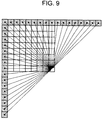
- NPL 1 defines, for example, 33 types of angular intra prediction depicted in Fig. 9 .
- angular intra prediction a reconstructed pixel near a block to be coded is used for extrapolation in any of 33 directions depicted in Fig. 9 , to generate an intra prediction signal.
- a CU using intra prediction is hereafter referred to as intra CU.
- Inter-frame prediction is prediction based on an image of a reconstructed frame (reference picture) different in display time from a frame to be coded. Inter-frame prediction is hereafter also referred to as inter prediction.
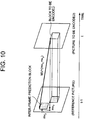
- Fig. 10 is an explanatory diagram showing an example of inter-frame prediction.
- a motion vector MV (mv x , mvy) indicates the amount of translation of a reconstructed image block of a reference picture relative to a block to be coded.
- an inter prediction signal is generated based on a reconstructed image block of a reference picture (using pixel interpolation if necessary).
- a CU using inter prediction is hereafter referred to as inter CU.
- a frame coded including only intra CUs is called I frame (or I picture).
- a frame coded including not only intra CUs but also inter CUs is called P frame (or P picture).
- a frame coded including inter CUs that each use not only one reference picture but two reference pictures simultaneously for the inter prediction of the block is called B frame (or B picture).
- FIG. 11 the configuration and operation of a typical video coding device that receives each CU of each frame of digitized video as an input image and outputs a bitstream will be described.
- a video coding device depicted in Fig. 11 includes a transformer 101, a quantizer 1020, an entropy encoder 103, an inverse transformer/inverse quantizer 104, a buffer 105, a predictor 106, and an estimator 107.
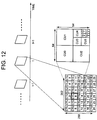
- Fig. 12 is an explanatory diagram showing an example of CTU partitioning of the t-th frame and an example of CU partitioning of the eighth CTU (CTU8), in the case where the spatial resolution of the frame is the CIF (common intermediate format) and the CTU size is 64.
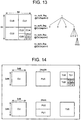
- Fig. 13 is an explanatory diagram showing a quadtree structure corresponding to the example of CU partitioning of CTU8.
- Fig. 14 is an explanatory diagram showing examples of TU partitioning of a CU.
- An example of TU partitioning of a CU for an intra prediction 2N ⁇ 2N PU is depicted in the upper part.
- the root of the quadtree is located in the PU, and the prediction error is expressed by the quadtree structure.
- An example of TU partitioning of a CU for inter prediction 2N ⁇ N PUs is depicted in the lower part.
- the root of the quadtree is located in the CU, and the prediction error is expressed by the quadtree structure.
- the estimator 107 determines a CU quadtree structure, a PU partitioning shape, and a TU quadtree structure for each CTU.
- the predictor 106 generates a prediction signal corresponding to the input image signal of the CU based on the CU quadtree structure and PU partitioning shape determined by the estimator 107.
- the prediction signal is generated based on the above-mentioned intra prediction or inter prediction.
- the transformer 101 frequency-transforms a prediction error image obtained by subtracting the prediction signal from the input image signal based on the TU quadtree structure determined by the estimator 107.
- the quantizer 1020 quantizes the frequency-transformed prediction error image (orthogonal transform coefficient).
- the quantized orthogonal transform coefficient is hereafter referred to as a coefficient level.
- a coefficient level having a value other than 0 is referred to as a significant coefficient level.
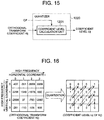
- the quantizer 1020 includes a coefficient level calculation unit 1201 that receives an orthogonal transform coefficient Kij and a quantization parameter QP and outputs a coefficient level Lij.
- the entropy encoder 103 entropy-encodes cu_split_flag indicating the quadtree structure of the CTU, the prediction parameter, and the coefficient level.
- the inverse transformer/inverse quantizer 104 inverse-quantizes the coefficient level.
- the inverse transformer/inverse quantizer 104 further inversely frequency-transforms the orthogonal transform coefficient obtained by the inverse quantization.
- the prediction signal is added to the reconstructed prediction error image obtained by the inverse frequency transform, and the result is supplied to the buffer 105.
- the buffer 105 stores the reconstructed image.
- the typical video coding device generates a bitstream based on the operation described above.
- Fig. 16 is an explanatory diagram showing an example of quantizing Kij using Qs having the value 4096 and a parameter f having the value 1/3.
- the operation of the quantizer 1020 and the entropy encoder 103 will be described below in further detail by using an example of 4 ⁇ 4 TU depicted in Fig. 16 .
- each orthogonal transform coefficient Kij and coefficient level Lij in the 4 ⁇ 4 TU are defined as follows.
- Kij (0 ⁇ i, j ⁇ 3) be the value of orthogonal transform coefficient in a horizontal position i and a vertical position j on a frequency axis.
- the coefficient level Lij be the value of coefficient level corresponding to the orthogonal transform coefficient Kij. Note that Kij and Lij become higher frequency components as the values of i and j are larger.
- the coefficient level calculation unit 1201 calculates the coefficient level Lij by dividing Kij by the quantization step Qs.
- the coefficient level Lij is represented by the following Equation (1).
- Lij Sign Kij ⁇ Floor Kij / Qs + f
- Sign(a) is a function that returns the positive or negative sign of an input a
- Floor(a) is a function that returns the largest integer less than or equal to the input a
- f is a parameter (0 ⁇ f ⁇ 0.5) for determining quantization characteristics.
- the value of f is 1/6 in inter prediction, and 1/3 in intra prediction.
- N is the block size of the TU.
- N 4.
- Fig. 16 depicts an example of quantizing Kij using Qs having the value 4096 and f having the value 1/3.
- the position information is information indicating the positions of all significant coefficient levels included in the TU.
- position information in HEVC is composed of information last_significant_x and last_significant_y indicating the horizontal position and the vertical position of a significant coefficient level to be first transmitted, and information siginificant_coeff_flag indicative of the presence or absence of a significant coefficient level in each of positions from a position subsequent to (last_significant_x, last_significant_y) up to (0, 0). Therefore, the number of position information bits is the sum of the number of last_significant_x bits, the number of last_significant_y bits, and the number of siginificant_coeff_flag bits determined based on the position of the significant coefficient level to be first transmitted.
- the value information is information indicative of the value of a significant coefficient level.
- the value information in HEVC is composed of information coeff_abs_level_greaterl_flag indicating whether the absolute value of a significant coefficient level is larger than 1, information coeff_abs_level_greater2_ flag indicating whether the absolute value of the significant coefficient level is larger than 2, information coeff_sign_flag indicative of the positive or negative sign of the significant coefficient level, and information coeff_abs_level_remaining indicative of the absolute value of a value (remaining significant coefficient level) obtained by subtracting coeff_abs_level_greaterl_flag and coeff_abs_level_greater2_flag from the absolute value of the significant coefficient level larger than coeff_abs_level_greaterl_flag and coeff_abs_level_greater2_flag.
- the number of value information bits is the sum of the number of coeff_abs_level_greaterl_flag bits, the number of coeff_abs_level_greater2_flag bits, the number of coeff_sign_flag bits, and the number of coeff_abs_level_remaining bits of the significant coefficient level.
- Table 1 shows the relationship between the position information and value information and the coefficient level Lij.
- the items in the vertical items with respect to the horizontal ones are information of each Lij in the 4 ⁇ 4 TU depicted in Fig. 16 .
- Table 2 indicates the relationship between the position information and value information and the number of bits of value information.
- the vertical items relative to the horizontal ones indicate the number of position information bits and the number of value information bits in the 4 ⁇ 4 TU depicted in Fig. 16 .
- bin number The number of bits of each information in Table 2 is represented by a bin number.
- bin denotes one bit in an intermediate bit string before being transformed into a bitstream to be output by the entropy encoder 103.
- the entropy encoder 103 transmits the number of value information bits of respective significant coefficient levels, i.e., a total of 4bin.
- the position information is composed of last_significant_x, last_significant_y, and siginificant_coeff_flag.
- the siginificant_coeff_flag indicates the presence or absence of a significant coefficient level in each of nine positions from a position (2, 1) subsequent to the position of the significant coefficient to be first transmitted up to (0, 0), which is 9bin.
- the value information is composed of coeff_abs_level_greater1_flag, coeff_coeff_abs_level_greater2_flag, coeff_sign_flag, and coeff_abs_level_remaining.
- the coeff_abs_Ievel_greater1_flag indicates whether L 30 and L 01 are larger than 1 respectively, which is 2bin.
- the coeff_coeff_abs_level_greater2_flag is 0bin because there exists no coefficient level with the absolute value of the significant coefficient level larger than 2.
- the coeff_sign_flag indicates the positive or negative signs of L 30 and L 01 , which is 2bin.
- the coeff_abs_level_remaining is 0bin because there exists no coefficient level with the absolute value of the significant coefficient level larger than 2.
- the siginificant_coeff_flag is up to 15bin because of up to 15 per 4 ⁇ 4 TU based on the section 7.3.8.11 in NPL 1.
- the coeff_abs_level_greater1_flag is up to 8bin because of up to 8 per 4 ⁇ 4 TU based on the section 7.3.9.11 in NPL 1.
- the coeff_coeff_abs_level_greater2_flag is up to 1bin because of up to 1 per 4 ⁇ 4 TU based on the section 7.3.8.11 in NPL 1.
- the coeff_sign_flag is up to 16bin because of up to 16 per 4x4 TU based on the section 7.3.8.11 in NPL 1. Based on the section 9.3.3.9 in NPL 1, bin for coeff_abs_level_remaining is calculated.
- high-dimensional TU code is applied to a bin string of the prefix part of coeff_ab_level_remaining each time the value of a significant coefficient level last transmitted exceeds a predetermined threshold value
- high-dimensional Exp-Golom code is applied to a bin string of the suffix part of coeff_abs_level_remaining.
- the quantizer in the typical video coding device described above may generate a high-cost coefficient level.
- the high-cost coefficient level is a significant coefficient level for which a large number of bits are generated as a result of entropy encoding despite a lack of improvement in signal-noise ratio.
- a representative example is a significant coefficient level with a small value and a large number of bits of position information.
- the typical video coding device described above has a problem in that the transmission of the high-cost coefficient level output from the quantizer causes a decrease in compression efficiency.
- the occurrence of the high-cost coefficient level can be suppressed by quantizing the orthogonal transform coefficient in consideration of the number of bits of value information and the number of bits of position information.
- the calculation of the number of bits of position information described in NPL 2 uses information of whether or not the quantizer has output a significant coefficient level for any orthogonal transform coefficient up to the immediately preceding orthogonal transform coefficient. Accordingly, in the case of suppressing the occurrence of the high-cost coefficient level using the number of bits of position information, a plurality of coefficient levels successive in transmission order cannot be determined simultaneously. In other words, parallel quantization cannot be performed.
- the video coding device incapable of parallel quantization needs to maintain its processing performance by raising the clock frequency, and so has a problem of an increase in power consumption.
- the present invention has an object of providing a video coding device, video coding method, and video coding program that achieves both prevention of a decrease in compression efficiency and parallel quantization of a plurality of orthogonal transform coefficients by simultaneously determining a plurality of coefficient levels successive in transmission order in consideration of the numbers of bits of value information and position information.
- a video coding device comprises: orthogonal transform means for orthogonally transforming an image block to calculate orthogonal transform coefficients; quantization means for quantizing the orthogonal transform coefficients to calculate a coefficient level; and entropy encoding means for entropy-encoding position information on all significant coefficient levels from among the coefficient levels and then entropy-encoding value information on each of the significant coefficient levels, to output a bitstream
- the quantization means includes: number of value information bits calculation means for calculating the number of value information bits of a significant coefficient level of an orthogonal transform coefficient to be processed in the image block; state variable update means for monitoring coefficient levels output from beginning to the N-th prior to the target in transmission order, and updating a state variable indicating whether or not at least one of monitored coefficient levels is significant; number of position information bits calculation means for calculating the number of position information bits of the significant coefficient level of the orthogonal transform coefficient to be processed, based on a position of the orthogonal transform coefficient to be processed and the state variable; and high
- a video coding method comprises: orthogonally transforming an image block to calculate an orthogonal transform coefficient; quantizing the orthogonal transform coefficient to calculate a coefficient levels and entropy-encoding position information of all significant coefficient levels from among the coefficient levels and then entropy-encoding value information of each of the significant coefficient levels, to output a bitstream, wherein when calculating the coefficient levels, the number of value information bits of a significant coefficient level of an orthogonal transform coefficient to be processed in the image block is calculated; a state variable indicating whether at least one of coefficient levels in the image block from beginning to the N-th prior to the target in transmission order is significant or not is updated; the number of position information bits of the significant coefficient level of the orthogonal transform coefficient to be processed is calculated based on a position of the orthogonal transform coefficient to be processed and the state variable; and the significant coefficient level is set to 0 in the case where the number of value information bits and the number of position information bits satisfy a predetermined condition.
- a video coding program causes a computer to execute: a process of orthogonally transforming an image block to calculate an orthogonal transform coefficient; a process of quantizing the orthogonal transform coefficient to calculate a coefficient level; and a process of entropy-encoding position information of all significant coefficient levels from among the coefficient levels and then entropy-encoding value information of each of the significant coefficient levels, to output a bitstream, wherein in the process to calculate the coefficient level, the computer is caused to execute: a process of calculating the number of value information bits of a significant coefficient level of an orthogonal transform coefficient to be processed in the image block; a process of updating a state variable indicating whether or not at least one of coefficient levels in the image block from beginning to the N-th prior to the target in transmission order is significant; a process of calculating the number of position information bits of the significant coefficient level of the orthogonal transform coefficient to be processed, based on a position of the orthogonal transform coefficient to be processed and the state variable; and a process of setting the
- a video coding device that achieves both prevention of a decrease in compression efficiency and parallel quantization of a plurality of orthogonal transform coefficients can be realized.
- the video coding device calculates the number of position information bits using information of whether or not the quantizer has output a significant coefficient level from beginning coefficient level to the coefficient level which is N-th (N ⁇ 2) prior to the target in transmission order, instead of using information of whether or not the quantizer has output a significant coefficient level until just before. Since the video coding device can calculate the number of bits of position information without using the immediately preceding (N - 1) coefficient levels, parallel processing is enabled.
- the probability of wrongly estimating the number ⁇ R of transmission bits to be larger is the product of the probability of the quantizer outputting always 0 from beginning of the TU to the N-th (N ⁇ 2) prior to the target and the probability of any one of the (N - 1) coefficient levels immediately preceding the processing target being a significant coefficient level. Since the former probability is a direct product of values less than 1, the former probability becomes to be lower when the processing target is closer to the end in transmission order, i.e.
- the video coding device calculates the number of position information bits of each significant coefficient level using the coefficient levels output from the quantizer from beginning of the image block to the N-th prior to the target in transmission order, and also determines the coefficient level to be output as a result of quantization in consideration of the numbers of bits of position information and value information in addition to N successive provisional coefficient levels.
- the video coding device thus achieves both prevention of a decrease in compression efficiency and parallel quantization of a plurality of orthogonal transform coefficients.
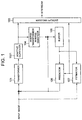
- Fig. 1 is a block diagram showing Exemplary Embodiment 1 of a video coding device according to the present invention. Referring to Fig. 1 , the configuration of the first exemplary embodiment of the video coding device that receives each frame of digitized video as an input image and outputs a bitstream will be described.
- the video coding device in Exemplary Embodiment 1 regards each coefficient level for which the number of position information bits is greater than the number of value information bits as a high-cost coefficient level, and simultaneously quantizes N successive orthogonal transform coefficients.
- the video coding device simultaneously determines a plurality of coefficient levels successive in transmission order in consideration of the number of value information bits and the number of position information bits, thus achieving both prevention of a decrease in compression efficiency and parallel quantization of a plurality of orthogonal transform coefficients.
- the video coding device depicted in Fig. 1 includes the transformer 101, an adaptive quantizer 1021, the entropy encoder 103, the inverse transformer/inverse quantizer 104, the buffer 105, the predictor 106, and the estimator 107.
- the adaptive quantizer 1021 is included instead of the quantizer 1020.
- the other blocks in the video coding device depicted in Fig. 1 are the same as the blocks in the video coding device depicted in Fig. 11 , and so only the adaptive quantizer 1021 is described below.
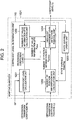
- Fig. 2 is a block diagram showing the structure of the adaptive quantizer 1021.
- the adaptive quantizer depicted in Fig. 2 includes a number of value information bits calculation unit (R value calculation unit) 1202, a number of position information bits calculation unit (R position calculation unit) 1203, a high-cost coefficient level detection/removal unit 1204, and a state variable update unit (StateFlag update unit) 1205 in addition to the coefficient level calculation unit 1201 in the quantizer depicted in Fig. 15 .
- the coefficient level calculation unit 1201, the number of value information bits calculation unit (R value calculation unit) 1202, the number of position information bits calculation unit (R position calculation unit) 1203, and the high-cost coefficient level detection/removal unit 1204 are collectively called coefficient level determination unit 110.
- the coefficient level calculation unit 1201 receives an orthogonal transform coefficient Kij and a quantization parameter QP and outputs a provisional coefficient level L'ij, using the foregoing Expression (1). For example, in the case of a 4 ⁇ 4 TU, the coefficient level calculation unit 1201 outputs L'ij (0 ⁇ i, j ⁇ 3) for each orthogonal transform coefficient Kij ⁇ i, j ⁇ 3) in transmission order ((3, 3) ⁇ (3, 2) ⁇ (2, 3) ⁇ (3, 1) ⁇ (2, 2) ⁇ (1, 3) ⁇ (3, 0) ⁇ (2, 1 ⁇ (1, 2) ⁇ (0, 3) ⁇ (2, 0) ⁇ (1, 1) ⁇ (0, 2) ⁇ (1, 0) ⁇ (0, 1) ⁇ (0, 0)).
- the R value calculation unit 1202 receives the provisional coefficient level L'ij, calculates a value information bit number R value which is the number of value information bits, and outputs it.
- R value is the number of bits of information indicating the value of L'ij.
- R value is calculated based on the number of bits of coeff_abs_level_greaterl_flag which is information indicating whether or not the absolute value of the significant coefficient level is greater than 1, the number of bits of coeff_abs_level_greater2_flag which is information indicating whether or not the absolute value of the significant coefficient level is greater than 2, the number of bits of coeff_sign_flag which is information indicating the positive or negative sign of the significant coefficient level, the absolute value of the significant coefficient level to be processed, and the absolute value(s) of significant coefficient level(s) which precedes the coefficient level(s) just before the significant coefficient level to be processed.
- R value is the sum of the absolute value of the result of subtracting coeff_abs_level_greaterl_flag and coeff_abs_level_greater2_flag from the absolute value of the significant coefficient level, and the number of bits of coeff_abs_level_remaining.
- the StateFlag update unit 1205 monitors each coefficient level Lij output from the adaptive quantizer 1021, updates StateFlag, and outputs it.
- the StateFlag update unit 1205 updates StateFlag to 1.
- the StateFlag update unit 1205 updates StateFlag of K 13 using the coefficient levels L 33 and L 32 output from the adaptive quantizer 1021 from beginning to the N-th prior to the target.
- the preceding three coefficient levels L 23 , L 31 , and L 22 are not used when updating StateFlag.
- the R position calculation unit 1203 receives the orthogonal transform coefficient position (i, j) and StateFlag, calculates a position information bit number R position which indicates the number of position information bits, and outputs it.
- R position indicates the number of position information bits indicating the positions of all significant coefficient levels of the TU on the frequency axis.
- the R position calculation unit 1203 determines that the significant coefficient level of the orthogonal transform coefficient to be processed is a significant coefficient level transmitted first, and calculates, as R position , the sum of the numbers of bits of last_significant_x and last_significant_y which are information respectively indicating the horizontal position and vertical position of the significant coefficient level and the number of bits of siginificant_coeff_flag which is information indicating whether or not there is a significant coefficient level from the position following (last_significant_x, last_significant_y) to the position (0, 0).
- the R position calculation unit 1203 determines that the information indicating the positions of all significant coefficient levels of the TU on the frequency axis has already been transmitted, and determines 0 as R position .
- the high-cost coefficient level detection/removal unit 1204 receives L'ij, R value , and R position , and outputs the coefficient level Lij. In the case where R position is greater than R value , the high-cost coefficient level detection/removal unit 1204 detects L'ij as a high-cost coefficient level, and outputs the value 0 as Lij. The high-cost coefficient level detection/removal unit 1204 thus suppresses the occurrence of the high-cost coefficient level. Otherwise, the high-cost coefficient level detection/removal unit 1204 outputs the provisional coefficient level L'ij as Lij.
- the coefficient level determination unit 110 receives Kij, QP, and the orthogonal transform coefficient position (i, j), and outputs Lij.
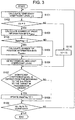
- the adaptive quantizer 1021 performs the following operation on each orthogonal transform coefficient Kij (0 ⁇ i, j ⁇ 3) in the TU in transmission order (for example, in the case of a 4 ⁇ 4 TU, in the order of (3, 3) ⁇ (3, 2) ⁇ (2, 3) ⁇ (3, 1) ⁇ (2, 2) ⁇ (1, 3) ⁇ (3, 0) ⁇ (2, 1) ⁇ (1, 2) ⁇ (0, 3) ⁇ (2, 0) ⁇ (1, 1) ⁇ (0, 2) ⁇ (1, 0) ⁇ (0, 1) ⁇ (0,0)).
- step S101 the coefficient level calculation unit 1201 receives the orthogonal transform coefficient Kij and the quantization parameter QP and outputs the provisional coefficient level L'ij, using the foregoing Expression (1).
- step S103 the R value calculation unit 1202 receives the provisional coefficient level L'ij, and calculates R value which indicates the number of value information bits of L'ij. The operation then proceeds to step S104.
- step S105 the R position calculation unit 1203 receives the orthogonal transform coefficient position (i, j) and StateFlag, and calculates R position which indicates the number of position information bits. The operation then proceeds to step S106.
- step S106 the high-cost coefficient level detection/removal unit 1204 receives L'ij, R value , and R position , and outputs the coefficient level Lij.
- R position is greater than R value
- the high-cost coefficient level detection/removal unit 1204 detects L'ij as a high-cost coefficient level, and outputs the value 0 as Lij.
- the high-cost coefficient level detection/removal unit 1204 thus suppresses the occurrence of the high-cost coefficient level. Otherwise, the high-cost coefficient level detection/removal unit 1204 outputs the provisional coefficient level L'ij as Lij. The operation then proceeds to step 5107.
- step S107 the state variable update unit 1205 determines whether or not a significant coefficient level has been output from the beginning to the N-th (N ⁇ 2) prior to the target in transmission order in the TU to be processed.
- the part that performs quantization in the adaptive quantizer 1021 outputs the coefficient level. In the case where one or more significant coefficient levels have been output, the operation proceeds to step S108. Otherwise, the operation proceeds to step S109.
- step S108 the StateFlag update unit 1205 updates StateFlag to 1. The operation then proceeds to step S109.
- step S109 the adaptive quantizer 1021 determines whether or not all orthogonal transform coefficients included in the TU have been quantized. In the case where all orthogonal transform coefficients have been quantized, the quantization process for the TU ends. Otherwise, the operation proceeds to step S101 to quantize the next orthogonal transform coefficient.
- the video coding device in this exemplary embodiment using the adaptive quantizer 1021 described above can prevent the occurrence of the high-cost coefficient level, by determining the coefficient level of the orthogonal transform coefficient (detecting/removing the high-cost coefficient level) in consideration of the number of value information bits and the number of position information bits.
- the adaptive quantizer 1021 can detect and remove high-cost coefficient levels simultaneously on N ( ⁇ 2) successive provisional coefficient levels, by calculating the number of position information bits of each significant coefficient level using coefficient levels from beginning of the TU to the N-th (N ⁇ 2) prior to the target in transmission order.
- the video coding device in this exemplary embodiment thus achieves both prevention of a decrease in compression efficiency and parallel quantization of a plurality of orthogonal transform coefficients, by simultaneously determining a plurality of coefficient levels successive in transmission order in consideration of the number of value information bits and the number of position information bits.
- Fig. 4 is a block diagram showing an example of the structure of the adaptive quantizer 1021 that processes in parallel orthogonal transform coefficients Kij successive in transmission order.
- the adaptive quantizer 1021 depicted in Fig. 4 includes two coefficient level determination units 110A and 110B, two state variable update units (StateFlag update units) 1205A and 1205B, a distributor 111, and a multiplexer 112.
- StateFlag update units state variable update units
- the distributor 111 receives two orthogonal transform coefficients Kij successive in transmission order and their orthogonal transform coefficient positions (i, j), and distributes the respective orthogonal transform coefficients Kij and orthogonal transform coefficient positions (i, j) to the coefficient level determination units 110A and 110B which follow the distributor 111.
- the distributor 111 when receiving K 33 and K 32 successive in transmission order and their orthogonal transform coefficient positions (3, 3) and (3, 2), the distributor 111 I outputs K 33 and (3, 3) to the coefficient level determination unit 110A and outputs K 32 and (3, 2) to the coefficient level determination unit 110B (the output destinations may be reversed).
- the distributor 111 performs this distributing process on all orthogonal transform coefficients in the TU in transmission order.
- the coefficient level determination units 110A and 110B operate in the same way as the coefficient level determination unit 110.
- the state variable update units (StateFlag update units) 1205A and 1205B operate in the same way as the state variable update unit (StateFlag update unit) 1205.
- the multiplexer 112 receives coefficient levels Lij output from the two coefficient level determination units and 110B, and outputs the two coefficient levels after sorting them in transmission order.
- the multiplexer 112 receives L 33 and L 32 output from the two coefficient level determination units 110A and 110B, sorts them in transmission order, and outputs L 33 and L 32 in this order.
- the multiplexer 112 performs this process on all orthogonal transform coefficients in the TU in transmission order.
- Fig. 5 is a block diagram showing Exemplary Embodiment 2 of a video coding device according to the present invention.
- the video coding device in Exemplary Embodiment 2 uses the number of value information bits, the number of position information bits, and the amount of square error reduction, when detecting a high-cost coefficient level.
- a square error reduction amount calculation unit (D calculation unit) 1206 is additionally included in the adaptive quantizer 1021, as compared with Exemplary Embodiment 1.
- the square error reduction amount calculation unit 1206 is added to the coefficient level determination unit 110.
- the high-cost coefficient level detection/removal unit 1204 in the adaptive quantizer 1021 receives L'ij, R value R position , and a square error reduction amount D, and outputs a coefficient level Lij.
- the square error reduction amount calculation unit 1206 and the high-cost coefficient level detection/removal unit 1204 are described below.
- the square error reduction amount calculation unit 1206 receives the orthogonal transform coefficient Kij, the quantization parameter QP, and L'ij, and outputs the square error reduction amount D.
- the square error reduction amount D is the amount of square error reduction for Kij.
- the square error reduction amount calculation unit 1206 calculates D using Kij, Qs, and L'ij, as shown in the following Equation (3).
- the high-cost coefficient level detection/removal unit 1204 receives L'ij, R value , R position , and D, and outputs the coefficient level Lij. In the case where the product of the sum of R value and R position and ⁇ is greater than or equal to the square error reduction amount D, the high-cost coefficient level detection/removal unit 1204 determines L'ij as a high-cost coefficient level, and outputs the value 0 as Lij. In the case where L'ij is not a high-cost coefficient level, the high-cost coefficient level detection/removal unit 1204 outputs L'ij as Lij.
- ⁇ is the gradient of the relationship between the amount of square error reduction and the amount of transmission code.
- ⁇ is dependent on the quantization parameter QP in such a manner that ⁇ is smaller when the quantization parameter is smaller (the quantization step size is smaller) and larger when the quantization parameter is larger (the quantization step size is larger).
- the adaptive quantizer 1021 For each TU, the adaptive quantizer 1021 performs the following operation on each orthogonal transform coefficient Kij (0 ⁇ i, j ⁇ 3) in the TU in transmission order (for example, in the case of a 4 ⁇ 4 TU, in the order of (3, 3) ⁇ (3, 2) ⁇ (2, 3) ⁇ (3, 1) ⁇ (2, 2) ⁇ (1, 3) ⁇ (3, 0) ⁇ (2, 1) ⁇ (1, 2) ⁇ (0, 3) ⁇ (2, 0) ⁇ (1, 1) ⁇ (0, 2) ⁇ (1, 0) ⁇ (0, 1) ⁇ (0, 0)).
- step S201 the coefficient level calculation unit 1201 receives the orthogonal transform coefficient Kij and the quantization parameter QP and outputs the provisional coefficient level L'ij, using the foregoing Expression (1).
- step S203 the R value calculation unit 1202 receives the provisional coefficient level L'ij, and calculates R value which indicates the number of value information bits of L'ij. The operation then proceeds to step S204.
- step S205 the R position calculation unit 1203 receives the orthogonal transform coefficient position (i, j) and StateFlag, and calculates R position which indicates the number of position information bits. The operation then proceeds to step S206.
- step S206 the square error reduction amount calculation unit 1206 calculates D which is the amount of square error reduction for the orthogonal transform coefficient. The operation then proceeds to step S207.
- step S207 in the case where the product of the sum of R position and R value and ⁇ is greater than or equal to D, the high-cost coefficient level detection/removal unit 1204 determines L'ij as a high-cost coefficient level, and outputs the value 0 as Lij. In the case where L'ij is not a high-cost coefficient level, the high-cost coefficient level detection/removal unit 1204 outputs L'ij as Lij. The operation then proceeds to step S208.
- step S208 the state variable update unit 1205 determines whether or not a significant coefficient level has been output from the beginning to the N-th (N ⁇ 2) prior to the target in transmission order in the TU to be processed. In the case where one or more significant coefficient levels have been output, the operation proceeds to step S209. Otherwise, the operation proceeds to step S210.
- step S209 the StateFlag update unit 1205 updates StateFlag to 1. The operation then proceeds to step S210.
- step S210 the adaptive quantizer 1021 determines whether or not all orthogonal transform coefficients included in the TU have been quantized. In the case where all orthogonal transform coefficients have been quantized, the quantization process for the TU ends. Otherwise, the operation proceeds to step S201 to quantize the next orthogonal transform coefficient.
- all significant provisional coefficient levels are subjected to the high-cost coefficient level detection/removal.
- not all significant provisional coefficient levels but only significant provisional coefficient levels having small values may be subjected to the high-cost coefficient level detection/removal. This is because significant coefficient levels having small values tend to be high-cost coefficient levels.
- significant provisional coefficient levels having small values tend to be high-cost coefficient levels.
- By subjecting significant provisional coefficient levels having small values to the high-cost coefficient level detection/removal it is possible to suppress image degradation caused by, for example, wrongly setting a coefficient level having a large value to 0.
- the number of times the high-cost coefficient level detection/removal is applied is reduced statistically, which contributes to a shorter quantization process time.
- all significant provisional coefficient levels in the TU are subjected to the high-cost coefficient level detection/removal.
- the remaining significant provisional coefficient levels in the TU may be subjected to the high-cost coefficient level detection/removal in the case where the absolute sum of the differences between the already processed provisional coefficient levels and the corresponding coefficient levels in the TU is less than or equal to a predetermined threshold.
- the absolute sum of the differences between the already processed provisional coefficient levels and the corresponding coefficient levels in the TU is less than or equal to a predetermined threshold.
- the number of times the high-cost coefficient level detection/removal is applied is reduced statistically, which contributes to a shorter quantization process time. Note that the absolute sum is easily calculated by the high-cost coefficient level detection/removal unit.
- Each of the exemplary embodiments described above may be realized by hardware, but may also be realized by a computer program.
- An information processing system depicted in Fig. 7 includes a processor 1001, a program memory 1002, a storage medium 1003 for storing video data, and a storage medium 1004 for storing a bitstream.
- the storage medium 1003 and the storage medium 1004 may be separate storage media, or storage areas included in the same storage medium.
- a magnetic storage medium such as a hard disk is available as such a storage medium.
- a program for realizing the functions of the blocks depicted in Fig. 1 is stored in the program memory 1002.
- the processor 1001 realizes the functions of the video coding device depicted in Fig. 1 , by executing the processes according to the program stored in the program memory 1002.
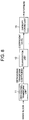
- Fig. 8 is a block diagram showing main parts of a video coding device according to the present invention.
- the video coding device according to the present invention includes an orthogonal transform unit 11 for orthogonally transforming an image block to calculate orthogonal transform coefficients, a quantization unit 12 for quantizing the orthogonal transform coefficients to calculate coefficient levels, and an entropy encoding unit 13 for entropy-encoding position information of all significant coefficient levels from among the coefficient levels and then entropy-encoding value information of each of the significant coefficient levels, to output a bitstream, wherein the quantization unit 12 includes a number of value information bits calculation unit for calculating the number of value information bits of a significant coefficient level of an orthogonal transform coefficient to be processed in the image block, a state variable update unit for monitoring coefficient levels output from the quantization unit in the image block from beginning to the N-th prior to the target in transmission order, and updating a state variable indicating whether or not at least one of monitored coefficient levels is significant, a
Landscapes
- Engineering & Computer Science (AREA)
- Multimedia (AREA)
- Signal Processing (AREA)
- Compression Or Coding Systems Of Tv Signals (AREA)
Applications Claiming Priority (2)
| Application Number | Priority Date | Filing Date | Title |
|---|---|---|---|
| JP2013122400 | 2013-06-11 | ||
| PCT/JP2014/002252 WO2014199551A1 (ja) | 2013-06-11 | 2014-04-22 | 映像符号化装置、映像符号化方法および映像符号化プログラム |
Publications (2)
| Publication Number | Publication Date |
|---|---|
| EP3010230A1 true EP3010230A1 (de) | 2016-04-20 |
| EP3010230A4 EP3010230A4 (de) | 2016-11-16 |
Family
ID=52021876
Family Applications (1)
| Application Number | Title | Priority Date | Filing Date |
|---|---|---|---|
| EP14810729.5A Withdrawn EP3010230A4 (de) | 2013-06-11 | 2014-04-22 | Videocodierungsvorrichtung, videocodierungsverfahren und videocodierungsprogramm |
Country Status (6)
| Country | Link |
|---|---|
| US (1) | US10045033B2 (de) |
| EP (1) | EP3010230A4 (de) |
| JP (1) | JP5644987B1 (de) |
| KR (1) | KR101645911B1 (de) |
| BR (1) | BR112015030096A2 (de) |
| WO (1) | WO2014199551A1 (de) |
Family Cites Families (5)
| Publication number | Priority date | Publication date | Assignee | Title |
|---|---|---|---|---|
| US8891615B2 (en) * | 2008-01-08 | 2014-11-18 | Qualcomm Incorporated | Quantization based on rate-distortion modeling for CABAC coders |
| JP2010087771A (ja) * | 2008-09-30 | 2010-04-15 | Nec Electronics Corp | 画像符号化装置及び方法 |
| WO2011080806A1 (ja) * | 2009-12-28 | 2011-07-07 | 富士通株式会社 | 動画像符号化装置および動画像復号装置 |
| US9042440B2 (en) * | 2010-12-03 | 2015-05-26 | Qualcomm Incorporated | Coding the position of a last significant coefficient within a video block based on a scanning order for the block in video coding |
| US8446301B2 (en) * | 2011-04-15 | 2013-05-21 | Research In Motion Limited | Methods and devices for coding and decoding the position of the last significant coefficient |
-
2014
- 2014-04-22 JP JP2014541455A patent/JP5644987B1/ja not_active Expired - Fee Related
- 2014-04-22 WO PCT/JP2014/002252 patent/WO2014199551A1/ja not_active Ceased
- 2014-04-22 EP EP14810729.5A patent/EP3010230A4/de not_active Withdrawn
- 2014-04-22 KR KR1020157035076A patent/KR101645911B1/ko not_active Expired - Fee Related
- 2014-04-22 BR BR112015030096A patent/BR112015030096A2/pt not_active IP Right Cessation
- 2014-04-22 US US14/888,976 patent/US10045033B2/en not_active Expired - Fee Related
Also Published As
| Publication number | Publication date |
|---|---|
| US20160119630A1 (en) | 2016-04-28 |
| KR101645911B1 (ko) | 2016-08-04 |
| BR112015030096A2 (pt) | 2017-07-25 |
| JP5644987B1 (ja) | 2014-12-24 |
| US10045033B2 (en) | 2018-08-07 |
| WO2014199551A1 (ja) | 2014-12-18 |
| KR20160006767A (ko) | 2016-01-19 |
| JPWO2014199551A1 (ja) | 2017-02-23 |
| EP3010230A4 (de) | 2016-11-16 |
Similar Documents
| Publication | Publication Date | Title |
|---|---|---|
| US20240187654A1 (en) | Method of Coding and Decoding Images, Coding and Decoding Device and Computer Programs Corresponding Thereto | |
| US7251371B2 (en) | Image encoding method, image decoding method, image encoder, image decoder, program, computer data signal, and image transmission system | |
| EP2996337A1 (de) | Verfahren und vorrichtung zur verschlüsselung und entschlüsselung von bildern mithilfe grosser transformationseinheiten | |
| EP2373031A1 (de) | Verfahren zur Dekodierung von Videosignalen | |
| US20120128064A1 (en) | Image processing device and method | |
| US20110206117A1 (en) | Data Compression for Video | |
| EP2624554B1 (de) | Dynamische bildkodiervorrichtung, dynamisches bildkodierverfahren und computerprogramm für dynamische bildkodierung | |
| US20140010278A1 (en) | Method and apparatus for coding adaptive-loop filter coefficients | |
| EP3499885B1 (de) | Verfahren und vorrichtung zur codierung von videodaten | |
| EP3673653B1 (de) | Einbettungsinformationen über token-baum traversierung | |
| US10735733B2 (en) | Method and device for encoding video data | |
| KR101710619B1 (ko) | 단계적인 영상 부호화, 복호화 방법 및 장치 | |
| US10003804B2 (en) | Video coding device using quantizing an orthogonal transform coefficient | |
| KR102465773B1 (ko) | 동화상 부호화 장치, 동화상 부호화 방법, 그리고 동화상 부호화용 컴퓨터 프로그램 | |
| EP3010230A1 (de) | Videocodierungsvorrichtung, videocodierungsverfahren und videocodierungsprogramm | |
| HK40047286A (en) | Video encoding and decoding method and electronic equipment | |
| CN112887727A (zh) | 视频编解码方法和电子设备 |
Legal Events
| Date | Code | Title | Description |
|---|---|---|---|
| PUAI | Public reference made under article 153(3) epc to a published international application that has entered the european phase |
Free format text: ORIGINAL CODE: 0009012 |
|
| 17P | Request for examination filed |
Effective date: 20151128 |
|
| AK | Designated contracting states |
Kind code of ref document: A1 Designated state(s): AL AT BE BG CH CY CZ DE DK EE ES FI FR GB GR HR HU IE IS IT LI LT LU LV MC MK MT NL NO PL PT RO RS SE SI SK SM TR |
|
| AX | Request for extension of the european patent |
Extension state: BA ME |
|
| DAX | Request for extension of the european patent (deleted) | ||
| A4 | Supplementary search report drawn up and despatched |
Effective date: 20161014 |
|
| RIC1 | Information provided on ipc code assigned before grant |
Ipc: H04N 19/146 20140101ALI20161010BHEP Ipc: H04N 19/96 20140101ALI20161010BHEP Ipc: H04N 19/18 20140101ALI20161010BHEP Ipc: H04N 19/124 20140101AFI20161010BHEP Ipc: H04N 19/91 20140101ALI20161010BHEP |
|
| 17Q | First examination report despatched |
Effective date: 20190802 |
|
| GRAP | Despatch of communication of intention to grant a patent |
Free format text: ORIGINAL CODE: EPIDOSNIGR1 |
|
| STAA | Information on the status of an ep patent application or granted ep patent |
Free format text: STATUS: GRANT OF PATENT IS INTENDED |
|
| INTG | Intention to grant announced |
Effective date: 20200608 |
|
| STAA | Information on the status of an ep patent application or granted ep patent |
Free format text: STATUS: THE APPLICATION IS DEEMED TO BE WITHDRAWN |
|
| 18D | Application deemed to be withdrawn |
Effective date: 20201020 |