EP3011014B1 - Nierenvorläuferzellen - Google Patents
Nierenvorläuferzellen Download PDFInfo
- Publication number
- EP3011014B1 EP3011014B1 EP14810526.5A EP14810526A EP3011014B1 EP 3011014 B1 EP3011014 B1 EP 3011014B1 EP 14810526 A EP14810526 A EP 14810526A EP 3011014 B1 EP3011014 B1 EP 3011014B1
- Authority
- EP
- European Patent Office
- Prior art keywords
- cells
- progenitor cells
- nephron
- kidney
- fgf9
- Prior art date
- Legal status (The legal status is an assumption and is not a legal conclusion. Google has not performed a legal analysis and makes no representation as to the accuracy of the status listed.)
- Active
Links
Images










Classifications
-
- C—CHEMISTRY; METALLURGY
- C12—BIOCHEMISTRY; BEER; SPIRITS; WINE; VINEGAR; MICROBIOLOGY; ENZYMOLOGY; MUTATION OR GENETIC ENGINEERING
- C12N—MICROORGANISMS OR ENZYMES; COMPOSITIONS THEREOF; PROPAGATING, PRESERVING, OR MAINTAINING MICROORGANISMS; MUTATION OR GENETIC ENGINEERING; CULTURE MEDIA
- C12N5/00—Undifferentiated human, animal or plant cells, e.g. cell lines; Tissues; Cultivation or maintenance thereof; Culture media therefor
- C12N5/06—Animal cells or tissues; Human cells or tissues
- C12N5/0602—Vertebrate cells
- C12N5/0684—Cells of the urinary tract or kidneys
- C12N5/0687—Renal stem cells; Renal progenitors
-
- A—HUMAN NECESSITIES
- A61—MEDICAL OR VETERINARY SCIENCE; HYGIENE
- A61P—SPECIFIC THERAPEUTIC ACTIVITY OF CHEMICAL COMPOUNDS OR MEDICINAL PREPARATIONS
- A61P13/00—Drugs for disorders of the urinary system
- A61P13/12—Drugs for disorders of the urinary system of the kidneys
-
- G—PHYSICS
- G01—MEASURING; TESTING
- G01N—INVESTIGATING OR ANALYSING MATERIALS BY DETERMINING THEIR CHEMICAL OR PHYSICAL PROPERTIES
- G01N33/00—Investigating or analysing materials by specific methods not covered by groups G01N1/00 - G01N31/00
- G01N33/48—Biological material, e.g. blood, urine; Haemocytometers
- G01N33/50—Chemical analysis of biological material, e.g. blood, urine; Testing involving biospecific ligand binding methods; Immunological testing
- G01N33/5005—Chemical analysis of biological material, e.g. blood, urine; Testing involving biospecific ligand binding methods; Immunological testing involving human or animal cells
- G01N33/5008—Chemical analysis of biological material, e.g. blood, urine; Testing involving biospecific ligand binding methods; Immunological testing involving human or animal cells for testing or evaluating the effect of chemical or biological compounds, e.g. drugs, cosmetics
- G01N33/5014—Chemical analysis of biological material, e.g. blood, urine; Testing involving biospecific ligand binding methods; Immunological testing involving human or animal cells for testing or evaluating the effect of chemical or biological compounds, e.g. drugs, cosmetics for testing toxicity
-
- G—PHYSICS
- G01—MEASURING; TESTING
- G01N—INVESTIGATING OR ANALYSING MATERIALS BY DETERMINING THEIR CHEMICAL OR PHYSICAL PROPERTIES
- G01N33/00—Investigating or analysing materials by specific methods not covered by groups G01N1/00 - G01N31/00
- G01N33/48—Biological material, e.g. blood, urine; Haemocytometers
- G01N33/50—Chemical analysis of biological material, e.g. blood, urine; Testing involving biospecific ligand binding methods; Immunological testing
- G01N33/5005—Chemical analysis of biological material, e.g. blood, urine; Testing involving biospecific ligand binding methods; Immunological testing involving human or animal cells
- G01N33/5008—Chemical analysis of biological material, e.g. blood, urine; Testing involving biospecific ligand binding methods; Immunological testing involving human or animal cells for testing or evaluating the effect of chemical or biological compounds, e.g. drugs, cosmetics
- G01N33/5044—Chemical analysis of biological material, e.g. blood, urine; Testing involving biospecific ligand binding methods; Immunological testing involving human or animal cells for testing or evaluating the effect of chemical or biological compounds, e.g. drugs, cosmetics involving specific cell types
-
- C—CHEMISTRY; METALLURGY
- C12—BIOCHEMISTRY; BEER; SPIRITS; WINE; VINEGAR; MICROBIOLOGY; ENZYMOLOGY; MUTATION OR GENETIC ENGINEERING
- C12N—MICROORGANISMS OR ENZYMES; COMPOSITIONS THEREOF; PROPAGATING, PRESERVING, OR MAINTAINING MICROORGANISMS; MUTATION OR GENETIC ENGINEERING; CULTURE MEDIA
- C12N2501/00—Active agents used in cell culture processes, e.g. differentation
- C12N2501/10—Growth factors
- C12N2501/119—Other fibroblast growth factors, e.g. FGF-4, FGF-8, FGF-10
-
- C—CHEMISTRY; METALLURGY
- C12—BIOCHEMISTRY; BEER; SPIRITS; WINE; VINEGAR; MICROBIOLOGY; ENZYMOLOGY; MUTATION OR GENETIC ENGINEERING
- C12N—MICROORGANISMS OR ENZYMES; COMPOSITIONS THEREOF; PROPAGATING, PRESERVING, OR MAINTAINING MICROORGANISMS; MUTATION OR GENETIC ENGINEERING; CULTURE MEDIA
- C12N2501/00—Active agents used in cell culture processes, e.g. differentation
- C12N2501/10—Growth factors
- C12N2501/155—Bone morphogenic proteins [BMP]; Osteogenins; Osteogenic factor; Bone inducing factor
-
- C—CHEMISTRY; METALLURGY
- C12—BIOCHEMISTRY; BEER; SPIRITS; WINE; VINEGAR; MICROBIOLOGY; ENZYMOLOGY; MUTATION OR GENETIC ENGINEERING
- C12N—MICROORGANISMS OR ENZYMES; COMPOSITIONS THEREOF; PROPAGATING, PRESERVING, OR MAINTAINING MICROORGANISMS; MUTATION OR GENETIC ENGINEERING; CULTURE MEDIA
- C12N2501/00—Active agents used in cell culture processes, e.g. differentation
- C12N2501/10—Growth factors
- C12N2501/16—Activin; Inhibin; Mullerian inhibiting substance
-
- C—CHEMISTRY; METALLURGY
- C12—BIOCHEMISTRY; BEER; SPIRITS; WINE; VINEGAR; MICROBIOLOGY; ENZYMOLOGY; MUTATION OR GENETIC ENGINEERING
- C12N—MICROORGANISMS OR ENZYMES; COMPOSITIONS THEREOF; PROPAGATING, PRESERVING, OR MAINTAINING MICROORGANISMS; MUTATION OR GENETIC ENGINEERING; CULTURE MEDIA
- C12N2501/00—Active agents used in cell culture processes, e.g. differentation
- C12N2501/30—Hormones
- C12N2501/38—Hormones with nuclear receptors
- C12N2501/385—Hormones with nuclear receptors of the family of the retinoic acid recptor, e.g. RAR, RXR; Peroxisome proliferator-activated receptor [PPAR]
-
- C—CHEMISTRY; METALLURGY
- C12—BIOCHEMISTRY; BEER; SPIRITS; WINE; VINEGAR; MICROBIOLOGY; ENZYMOLOGY; MUTATION OR GENETIC ENGINEERING
- C12N—MICROORGANISMS OR ENZYMES; COMPOSITIONS THEREOF; PROPAGATING, PRESERVING, OR MAINTAINING MICROORGANISMS; MUTATION OR GENETIC ENGINEERING; CULTURE MEDIA
- C12N2501/00—Active agents used in cell culture processes, e.g. differentation
- C12N2501/40—Regulators of development
- C12N2501/415—Wnt; Frizzeled
-
- C—CHEMISTRY; METALLURGY
- C12—BIOCHEMISTRY; BEER; SPIRITS; WINE; VINEGAR; MICROBIOLOGY; ENZYMOLOGY; MUTATION OR GENETIC ENGINEERING
- C12N—MICROORGANISMS OR ENZYMES; COMPOSITIONS THEREOF; PROPAGATING, PRESERVING, OR MAINTAINING MICROORGANISMS; MUTATION OR GENETIC ENGINEERING; CULTURE MEDIA
- C12N2501/00—Active agents used in cell culture processes, e.g. differentation
- C12N2501/90—Polysaccharides
- C12N2501/91—Heparin
-
- C—CHEMISTRY; METALLURGY
- C12—BIOCHEMISTRY; BEER; SPIRITS; WINE; VINEGAR; MICROBIOLOGY; ENZYMOLOGY; MUTATION OR GENETIC ENGINEERING
- C12N—MICROORGANISMS OR ENZYMES; COMPOSITIONS THEREOF; PROPAGATING, PRESERVING, OR MAINTAINING MICROORGANISMS; MUTATION OR GENETIC ENGINEERING; CULTURE MEDIA
- C12N2506/00—Differentiation of animal cells from one lineage to another; Differentiation of pluripotent cells
- C12N2506/02—Differentiation of animal cells from one lineage to another; Differentiation of pluripotent cells from embryonic cells
-
- C—CHEMISTRY; METALLURGY
- C12—BIOCHEMISTRY; BEER; SPIRITS; WINE; VINEGAR; MICROBIOLOGY; ENZYMOLOGY; MUTATION OR GENETIC ENGINEERING
- C12N—MICROORGANISMS OR ENZYMES; COMPOSITIONS THEREOF; PROPAGATING, PRESERVING, OR MAINTAINING MICROORGANISMS; MUTATION OR GENETIC ENGINEERING; CULTURE MEDIA
- C12N2506/00—Differentiation of animal cells from one lineage to another; Differentiation of pluripotent cells
- C12N2506/45—Differentiation of animal cells from one lineage to another; Differentiation of pluripotent cells from artificially induced pluripotent stem cells
Definitions
- THIS INVENTION relates to kidney development. More particularly, this invention relates to an in vitro method of producing nephron progenitor cells and ureteric duct progenitor cells ultimately from human pluripotent stem cells.
- the kidney is a mesodermal organ that differentiates from the intermediate mesoderm (IM) via the formation of a ureteric bud (UB) and the interaction between this bud and the adjacent IM-derived metanephric mesenchyme (MM) 2 .
- IM intermediate mesoderm
- UB ureteric bud
- MM metanephric mesenchyme
- the nephrons arise from a nephron progenitor population derived from the MM 3 .
- the IM itself is derived from the posterior primitive streak 4 . While the developmental origin of the kidney is well understood 2 , nephron formation in the human kidney is completed before birth 5 . Hence, there is no postnatal stem cell able to replace lost nephrons.
- Human Pluripotent Stem cells have great potential for the generation of a cell-based treatment for kidney disease.
- the realisation of human pluripotent stem cells as a source of cells for clinical use and as a treatment, such as for kidney disease has been hindered by the lack of understanding of how to produce the necessary cell types that give rise to nephrons and other structures of the kidney.
- the present inventors have successfully directed the differentiation of human pluripotential stem cells through posterior primitive streak and intermediate mesoderm (IM) under fully chemically defined monolayer culture conditions using growth factors used during normal embryogenesis.
- This differentiation protocol results in the synchronous induction of ureteric bud (UB) and metanephric mesenchyme (MM) that forms a self-organising structure, including nephron formation, in vitro.
- UB ureteric bud
- MM metanephric mesenchyme
- Such hESC-derived components show broad renal potential ex vivo, illustrating the potential for pluripotent stem cell-based renal regeneration.
- one aspect of the invention provides a method of producing nephron progenitor cells and ureteric epithelial progenitor cells including the step of contacting intermediate mesoderm (IM) cells with: fibroblast growth factor 9 (FGF9) and/or fibroblast growth factor 20 (FGF20); and optionally, one or more agents selected from the group consisting of: bone morphogenic protein 7 (BMP7); heparin; a Wnt agonist; retinoic acid (RA), analog or agonist; and an RA antagonist; to thereby produce nephron progenitor cells and ureteric epithelial progenitor cells from the IM cells.
- BMP7 bone morphogenic protein 7
- RA retinoic acid
- the IM cells are derived or differentiated from posterior primitive streak cells.
- the posterior primitive streak cells are derived or differentiated from human pluripotent stem cells (hPSCs).
- hPSCs include human embryonic stem cells (hESCs) and induced human pluripotent stem cells (iPSCs).
- this aspect provides a method that includes the sequential steps of:
- the one or more agents at step (ii) preferably include FGF9.
- FGF9 is present for at least part of, or entirely throughout, both steps (ii) and (iii).
- a Wnt agonist such as CHIR99021 is present during step (i).
- the method further includes the step of identifying viable nephron progenitor cells and/or ureteric epithelial progenitor cells.
- identification of viable nephron progenitor cells and/or ureteric epithelial progenitor cells includes measurement or detection of co-expression of a plurality of nucleic acids and/or proteins as markers for the viable nephron and/or ureteric epithelial progenitor cells.
- the disclosure provides isolated, enriched or purified nephron and/or ureteric epithelial progenitor cells produced according to the method of the aforementioned aspect.
- the invention provides a method of producing a kidney, or kidney cells or tissues, said method including the step of differentiating kidney, or kidney cells or tissues from the nephron progenitor cells and/or ureteric epithelial progenitor cells of the aforementioned aspect to thereby produce the kidney, or kidney cells or tissues.
- the nephron progenitor cells and/or ureteric epithelial progenitor cells may be used as a source for bioprinting or bio-engineering whole kidneys and kidney tissue for kidney transplant or treating chronic kidney disease.
- the nephron progenitor cells and/or ureteric epithelial progenitor cells may be used for the recellularisation of whole organ decellularised kidney to thereby create a reconstituted or replacement kidney.
- the nephron progenitor cells and/or ureteric epithelial progenitor cells may be used as a source for cellular therapy of kidney diseases and conditions.
- the invention provides a method of determining the nephrotoxicity of one or a plurality of compounds, said method including the step of contacting the one or plurality of compounds with the isolated or purified nephron progenitor cells and/or ureteric epithelial progenitor cells of the aforementioned aspect, or kidney cells or tissues differentiated or otherwise obtained therefrom, to thereby determine whether or not the one or plurality of compounds is nephrotoxic.
- the invention is at least partly predicated on the identification of specific in vitro culture conditions that are tailored to promote the synchronous, simultaneous differentiation of nephron progenitor cells and ureteric epithelial progenitor from intermediate mesoderm (IM). More specifically, FGF9 plus heparin alone, or in combination with one or more agents including bone morphogenic protein 7 (BMP7), retinoic acid (RA), an RA antagonist; a Wnt agonist; and/or FGF20 plus heparin, is capable of facilitating differentiation of intermediate mesoderm into nephron progenitor cells and ureteric epithelial progenitors.
- BMP7 bone morphogenic protein 7
- RA retinoic acid
- Wnt agonist a Wnt agonist
- FGF20 plus heparin is capable of facilitating differentiation of intermediate mesoderm into nephron progenitor cells and ureteric epithelial progenitors.
- the in vitro culture method provides a system for differentiating human embryonic stem cells through posterior primitive streak, IM and metanephric mesenchymal stages to produce nephron progenitor cells and ureteric epithelial progenitor cells.
- the presence or absence of certain molecules such as RA, RA antagonist and/or Wnt agonist can be manipulated to preferentially promote the production of nephron progenitor cells versus ureteric epithelial progenitors, or vice versa.
- the nephron progenitor cells and ureteric epithelial progenitor cells are simultaneously induced, direct the differentiation of each other in vivo and are capable of developing into distinct tubular epithelial structures, including ureteric tree and nephron progenitor mesenchyme, during which the epithelial structures substitute for the ureteric tip to maintain the nephron progenitor cells. It is therefore proposed that the hESC-derived ureteric epithelium and/or nephron progenitor cells produced according to the invention may be directed to differentiate into renal cells from both the ureteric and mesenchymal compartments.
- nephron progenitor cells, nephrons derived therefrom or kidney organoids "self organized" as described above may also be suited to nephrotoxicity testing, which has been hampered by a previous inability to produce cells suitable for testing.
- indefinite articles “a” and “an” are not to be read as singular indefinite articles or as otherwise excluding more than one or more than a single subject to which the indefinite article refers.
- a cell includes one cell, one or more cells and a plurality of cells.
- isolated material that has been removed from its natural state or otherwise been subjected to human manipulation.
- Isolated material e.g., cells
- Isolated material may be substantially or essentially free from components that normally accompany it in its natural state, or may be manipulated so as to be in an artificial state together with components that normally accompany it in its natural state.
- enriched or purified is meant having a higher incidence, representation or frequency in a particular state (e.g an enriched or purified state) compared to a previous state prior to enrichment or purification.
- differentiate relate to progression of a cell from an earlier or initial stage of a developmental pathway to a later or more mature stage of the developmental pathway. It will be appreciated that in this context “differentiated” does not mean or imply that the cell is fully differentiated and has lost pluropotentiality or capacity to further progress along the developmental pathway or along other developmental pathways. Differentiation may be accompanied by cell division.
- progenitor cell is a cell which is capable of differentiating along one or a plurality of developmental pathways, with or without self-renewal.
- progenitor cells are unipotent or oligopotent and are capable of at least limited self-renewal.
- the stage or state of differentiation of a cell may be characterized by the expression and/or non-expression of one of a plurality of markers.
- markers is meant nucleic acids or proteins that are encoded by the genome of a cell, cell population, lineage, compartment or subset, whose expression or pattern of expression changes throughout development.
- Nucleic acid marker expression may be detected or measured by any technique known in the art including nucleic acid sequence amplification (e.g. polymerase chain reaction) and nucleic acid hybridization (e.g. microarrays, Northern hybridization, in situ hybridization), although without limitation thereto.
- Protein marker expression may be detected or measured by any technique known in the art including flow cytometry, immunohistochemistry, immunoblotting, protein arrays, protein profiling (e.g 2D gel electrophoresis), although without limitation thereto.
- One aspect of the invention provides a method of producing nephron progenitor cells and ureteric epithelial progenitor cells including the step of contacting intermediate mesoderm (IM) cells with: BMP7; retinoic acid (RA); RA antagonist; a Wnt agonist; fibroblast growth factor 9 (FGF9) and/or FGF20; and heparin; to thereby produce nephron progenitor cells and ureteric epithelial progenitor cells from the IM cells.
- IM intermediate mesoderm
- retinoic acid or “RA” includes all forms of retinoic acid (e.g including all trans RA and 9- cis RA), analogs and/or retinoic acid receptor (RAR) agonists that have a similar biological activity to RA.
- RAR retinoic acid receptor
- RA analogs and RAR agonists including agonists non-selective and selective for RAR ⁇ , ⁇ or ⁇ are commercially available such as from R & D Systems and Tocris Bioscience.
- RA antagonist includes retinoic acid receptor (RAR) antagonists and any other molecule(s) that inhibit, block or prevent RA signalling via the RAR.
- RAR antagonists include AGN193109, LE 135, ER 50891, BMS 493, BMS 453 and MM 11253, although without limitation thereto. This definition does not exclude the possibility that the RA antagonist also or alternatively mimics a block in signalling via RAR from binding of another ligand.
- Wnt agonist is a molecule that inhibits GSK3 (e.g GSK3- ⁇ ) in the context of the canonical Wnt signalling pathway, but preferably not in the context of other non-canonical, Wnt signalling pathways.
- GSK3 e.g GSK3- ⁇
- Non-limiting examples of Wnt agonists include CHIR99021, LiCl SB-216763, CAS 853220-52-7 and other Wnt agonists that are commercially available from sources such as Santa Cruz Biotechnology and R & D Systems. This definition should not be read as absolutely excluding the possibility that the Wnt agonist mimics one or more other inhibitors of GSK30 activity.
- fibroblast growth factors such as FGF9 and FGF20 may be interchangeable, although FGF9 is preferred. Heparin is typically included to promote or enhance the biological activity of fibroblast growth factors such as FGF2, FGF9 and/or FGF20.
- FGF9, BMP7, retinoic acid (RA); RA antagonist; Wnt agonist; FGF20 and heparin will be described in more detail hereinafter.
- nephron progenitor cells are progenitor cells derived from metanephric mesenchyme that can differentiate into all nephron segments (other than collecting duct) via an initial mesenchyme to epithelial transition, which include nephron epithelia such as connecting segment, distal convoluted tubule (DCT) cells, distal straight tubule (DST) cells, proximal straight tubule (PST) segments 1 and 2, PST cells, podocytes, glomerular endothelial cells, ascending Loop of Henle and/or descending Loop of Henle, although without limitation thereto. Nephron progenitor cells are also capable of self-renewal.
- DCT distal convoluted tubule
- DST distal straight tubule
- PST proximal straight tubule
- PST podocytes
- glomerular endothelial cells ascending Loop of Henle and/or descending Loop of Henle, although without limitation there
- Non-limiting examples of markers characteristic or representative of metanephric mesenchyme include WT1, SIX1, SIX2, SALL1, GDNF and/or HOXD11, although without limitation thereto.
- markers characteristic or representative of nephron progenitor cells include WT1, SIX1, SIX2, CITEDI, PAX2, GDNF, SALL1, OSR1 and HOXD11, although without limitation thereto.
- ureteric epithelial progenitor cell an epithelial progenitor cell derived, obtainable or originating from mesonephric duct or its derivative ureteric bud that can develop into kidney tissues and/or structures such as the collecting duct.
- Non-limiting examples of characteristic or representative markers of ureteric epithelial progenitor cells include HOXB7, cRET, GATA3, CALB1, E-CADHERIN and PAX2, although without limitation thereto.
- the nephron progenitor cells and ureteric epithelial progenitor cells are differentiated from intermediate mesoderm (IM) cells is the presence of FGF9 alone or in combination with one or more agents that include BMP7, retinoic acid (RA), agonist or analog, an RA antagonist such as AGN 193109 and/or FGF20 and preferably heparin.
- IM mesoderm
- intermediate mesoderm cells is meant embryonic mesodermal cells that arise from posterior primitive streak and can ultimately develop into the urogenital system, inclusive of the ureter and kidney and other tissues such as gonad.
- markers characteristic or representative of intermediate mesoderm include PAX2, OSR1 and/or LHX1.
- IM cells production of IM cells is not meant to imply that the IM cells are a pure or homogeneous population of IM cells without other cell types being present. Accordingly, reference to "IM cells” or a “population of IM cells” means that the cells or cell population comprise(s) 1M cells.
- IM cells are produced by contacting posterior primitive streak cells with one or more agents that facilitate differentiation of the posterior primitive streak cells into IM cells, as will be described in more detail hereinafter.
- the 1M cells are produced by contacting posterior primitive streak cells with one or more agents that facilitate differentiation of the posterior primitive streak cells into IM cells
- the one or more agents include fibroblast growth factor 9 (FGF9) and, optionally, an RA antagonist such as AGN 193109 and/or one or more other FGFs such as FGF 2 and/or FGF20.
- FGF9 fibroblast growth factor 9
- AGN 193109 an RA antagonist
- FGF 2 and/or FGF20 one or more other FGFs
- posterior primitive streak cells is meant cells obtainable from, or cells functionally and/or phenotypically corresponding to, cells of the posterior end of a primitive streak structure that forms in the blastula during the early stages of mammalian embryonic development.
- the posterior primitive streak establishes bilateral symmetry, determines the site of gastrulation and initiates germ layer formation.
- posterior primitive streak is the progenitor of mesoderm (i.e presumptive mesoderm) and anterior primitive streak is the progenitor of endoderm ( i.e presumptive endoderm).
- markers characteristic or representative of posterior primitive streak include Brachyury (T).
- a non-limiting example of a marker characteristic or representative of anterior primitive streak is SOX17. MIXL1 may be expressed by both posterior and anterior primitive streak.
- posterior primitive streak cells are a pure or homogeneous population of posterior primitive streak cells without other cell types being present. Accordingly, reference to "posterior primitive streak cells” or a “population of posterior primitive streak cells” means that the cells or cell population comprise(s) posterior primitive streak cells.
- posterior primitive streak cells are produced by contacting hPSC cells with one or more agents that facilitate differentiation of the hPSC cells into posterior primitive streak cells, as will be described in more detail hereinafter.
- the one or more agents include bone morphogenic protein 4 (BMP4), Activin A and/or a Wnt agonist such as CHIR99021.
- BMP4 bone morphogenic protein 4
- Activin A Activin A
- Wnt agonist such as CHIR99021.
- human pluripotent stem cell and "hPSC” refer to cells derived, obtainable or originating from human tissue that display pluripotency.
- the hPSC may be a human embryonic stem cell or a human induced pluripotent stem cell.
- Human pluripotent stem cells may be derived from inner cell mass or reprogrammed using Yamanaka factors from many fetal or adult somatic cell types.
- human embryonic stem cell hES cell
- hESC hESC
- inducedpluripotent stem cell and “iPSC” refer to cells derivable, obtainable or originating from human adult somatic cells of any type reprogrammed to a pluripotent state through the expression of exogenous genes, such as transcription factors, including a preferred combination of OCT4, SOX2, KLF4 and c-MYC.
- hiPSC show levels of pluripotency equivalent to hESC but can be derived from a patient for autologous therapy with or without concurrent gene correction prior to differentiation and cell delivery.
- the method disclosed herein could be applied to any pluripotent stem cell derived from any patient or a hPSC subsequently modified to generate a mutant model using gene-editing or a mutant hPSC corrected using gene-editing.
- Gene-editing could be by way of CRISPR, TALEN or ZF nuclease technologies.
- hPSCs are contacted with BMP4, Activin A and/or CHIR99021 in a suitable culture medium in the absence of serum, such as APEL differentiation medium (Ng et al., 2008, Nat. Protoc. 3 : 768), although without limitation thereto, to thereby produce posterior primitive streak cells that suitably comprise posterior primitive streak cells.
- APEL differentiation medium such as APEL differentiation medium (Ng et al., 2008, Nat. Protoc. 3 : 768)
- the hPSCs may be hESCs or iPSCs.
- BMP4 is at a concentration of about 5-40 ng/mL and Activin A is at a concentration of about 3-40 ng/mL. In one embodiment the concentration of BMP4 is about 20-35 ng/mL, or more preferably about 30 ng/mL. In one embodiment, the concentration of Activin A is about 5-30 ng/mL or more preferably 10 ng/mL.
- an optimal relative activity ratio is in the range of 3:1 to 1:6 BMP4 to Activin A. Preferably, an optimal relative activity ratio is in the range of 3:1 to 1:1 BMP4 to Activin A.
- a Wnt agonist such as CHIR99021 may be at a concentration in the range of about 0.5 to 50 ⁇ M, preferably about 4-30 ⁇ M, more preferably about 5-20 ⁇ M or advantageously about 8 ⁇ M. In certain embodiments, CHIR99021 is present alone, in the absence of BMP4 and Activin A.
- the population of stem cells may be cultured in the medium with BMP4, Activin A and/or a Wnt agonist such as CHIR99021 for 36-120 hours.
- cells may be contacted for longer periods with BMP4, Activin A and/or CHIR99021 than is required for hESCs.
- cells such as iPSCs may be contacted with BMP4, Activin A and/or CHIR99021 for up to 96-120 hrs.
- the culture medium may be changed every 24-48 hrs.
- contacting hPSCs with BMP4, Activin A and/or a Wnt agonist such as CHIR99021 as disclosed herein results in formation of primitive streak (PS) including posterior primitive streak.
- PS primitive streak
- This is an initial step towards the generation of mesodermal and endodermal tissue.
- differentiation of hPSCs is toward a mixed population of cells that comprises cells expressing markers characteristic of posterior primitive streak (i . e . presumptive mesoderm) and cells expressing markers characteristic of anterior primitive streak (i.e. presumptive endoderm).
- markers characteristic of posterior primitive streak include Brachyury (T).
- a non-limiting example of a marker characteristic of anterior primitive streak is SOX17.
- posterior primitive streak cells or a mixed primitive streak population comprising posterior primitive streak cells, are contacted with one or more fibroblast growth factors (FGFs) that at least includes FGF9 and, optionally, FGF2 and/or FGF20 and/or a retinoic acid (RA) antagonist in a suitable culture medium in the absence of serum, such as APEL differentiation medium.
- FGFs fibroblast growth factors
- RA retinoic acid
- the retinoic acid signalling antagonist is a retinoic acid receptor (RAR) inhibitor or antagonist such as AGN193109.
- RAR retinoic acid receptor
- FGF2, FGF9 and/or FGF20 are at a concentration of about 100 to 400 ng/mL.
- FGF2, FGF9 and/or FGF20 are at a concentration of about 150 to 300 ng/ML or advantageously about 200 ng/mL.
- the concentration of the RA antagonist e.g. AGN193109 is about 0.1-10 ⁇ M or more preferably 0.5 -5 ⁇ M.
- the cells are contacted with FGF9, alone or together with FGF2 and/or FGF20 and/or RA antagonist (e.g. AGN193109) for at least about 96 hours but not more than about 190-200 hours.
- FGF9 alone or with FGF2 and/or FGF20 and/or RA antagonist (e.g AGN193109) for about 96 hours.
- the culture medium may be changed every 40-48 hrs.
- contacting the posterior primitive streak cells (which typically express markers characteristic of posterior primitive streak (presumptive mesoderm) and anterior primitive streak (presumptive endoderm)) with FGF9 alone or together with FGF2 and/orFGF20 results in differentiation of the cells toward a population of cells expressing markers characteristic of intermediate mesoderm (1M).
- markers characteristic of intermediate mesoderm include PAX2, LHX1 and OSR1.
- resultant 1M cells are contacted with FGF9 alone or in combination with one or more of BMP7, RA, RA antagonist, FGF20, a Wnt agonist and/or heparin in a suitable culture medium in the absence of serum, such as APEL differentiation medium.
- FGF9 is at a concentration of about 20 ng to 1 ⁇ g/mL.
- FGF9 is at a concentration of about 50-500 ng/mL, more preferably about 100-300 ng/mL or advantageously about 200 ng/mL.
- heparin is included at a concentration of about 0.1-10 ⁇ g/mL, preferably about 0.3-5 ⁇ g/mL, 0.5- 2 ⁇ g/mL or advantageously about 1 ⁇ g/mL.
- FGF20 is at a concentration of about 20 ng to 1 ⁇ g/mL. In a preferred embodiment, FGF 20 is at a concentration of about 50-500 ng/mL, more preferably about 100-300 ng/mL or advantageously about 200 ng/mL.
- FGF20 may replace or supplement FGF9, as these agents have similar biological activities.
- BMP7 is at a concentration of about 25 to 75 ng/mL. In a preferred embodiment, BMP7 is at a concentration of about 35-60 ng/mL, 45-55 ng/mL or advantageously about 50 ng/mL.
- RA is at a concentration of aboutabout 10 pM to 1 ⁇ M. In a preferred embodiment, RA is at a concentration of about 30 pM to 0.5 ⁇ M, more preferably about 50 pM to 0.2 ⁇ M or advantageously about 0.1 ⁇ M.
- an RA antagonist such as AGN193109 is at a concentration of about 50 pM to 10 ⁇ M. In a preferred embodiment, AGN193109 is at a concentration of about 0.01 ⁇ M to 5 ⁇ M, more preferably about 0.1 ⁇ M to 5 ⁇ M or advantageously about 1 pM. Although not binding on the present invention, preliminary data suggest that higher concentrations of AGN193109 promote a relative increase in the proportion of metanephric mesenchyme cells.
- a Wnt agonist such as CHIR99021 is present at a concentration in the range of about 0.1 ⁇ M to 10 ⁇ M, preferably about 0.2 ⁇ M to 5 ⁇ M or more preferably at about 1-2 ⁇ M.
- cells are contacted with FGF9 alone or together with one or more of BMP7, RA, Wnt agonist, RA antagonist and/or FGF20 plus heparin for at least 72 hours but not more than 360 hours.
- the cells are contacted for about 160-220 hrs or more preferably for about 190-200 hours.
- the culture medium may be changed every 48-72 hrs.
- contacting intermediate mesoderm cells with FGF9 alone or together with one or more of BMP7, RA, an RA antagonist; a Wnt agonist and/or FGF20 and preferably heparin, as disclosed herein differentiates the intermediate mesoderm cells into cells of metanephric mesenchyme and ureteric epithelium cell lineages.
- the metanephric mesenchyme lineage includes nephron progenitor cells that are optimally produced after about 72 hrs of culture in FGF9 and heparin.
- RA analog or agonist and/or RA antagonist may be chosen to manipulate the relative amount of ureteric epithelium that is produced by the method, compared to metanephric mesenchyme that is produced by the method.
- RA promotes the formation of ureteric epithelium at the expense of metanephric mesenchyme
- an RA antagonist such as AGNI93109 promotes the formation of metanephric mesenchyme at the expense of ureteric epithelium.
- a Wnt agonist such as CHIR99021 may also promotes the survival and/or formation of metanephric mesenchyme at the expense of ureteric epithelium.
- markers characteristic or representative of cells of the metanephric mesenchyme lineage or cells thereof include WT1, SIX1, SIX2, SALL1, GDNF and/or HOXD11, although without limitation thereto.
- Non-limiting examples of markers characteristic or representative of nephron progenitor cells include WT1, SIX2, CITED1, PAX2, GDNF, SALL1 and HOXD11, although without limitation thereto.
- Non-limiting examples of markers characteristic or representative of cells of the ureteric epithelial lineage include HOXB7, GATA3, CALB1, E-CADHERIN, PAX2 and / or cRET, although without limitation thereto.
- Nephron progenitor cells are likely to be maximally generated 11-15 days, or advantageously 14 days (range of day 11 to 15) after commencement of the method from the start of hPSC cell culture, based upon the co-expression of WT1, SIX2. ClTED1, PAX2, GDNF, SALL1 and HOXD11.
- Ureteric epithelial progenitor cells may be maximally generated after at least 10 days, or advantageously 14 days after commencement of the method from the start of hPSC culture, based upon the co-expression of HOXB7, cRET, E-CADHERIN and PAX2.
- FGF9 is present for at least part of, or entirely throughout, both steps (ii) and (iii) described herein. More preferably, a Wnt agonist such as CHIR99021 is present for at least part of step (i) described herein.
- a particularly preferred method therefor includes the sequential steps of
- kidney differentiation from an initial population of hES cells in a total culture period of about 18 - 20 days.
- protein agents such as BMP4, BMP7, Activin A, FGF2, FGF9 and FGF20 should be understood as encompassing native or recombinant or chemical synthetic proteins of any mammalian origin, inclusive of human, mouse and rat, although without limitation thereto.
- these proteins may include chemical modifications, glycosylation, lipidation, labels such as biotin and additional amino acid sequences such as epitope tags or fusion partners as are well known in the art.
- the aforementioned proteins may be obtained commercially and/or prepared as recombinant or chemical synthetic proteins by routine laboratory or manufacturing procedures.
- the disclosure provides isolated or purified nephron progenitor cells and/or ureteric epithelial progenitor cells produced according to the method disclosed herein.
- nephron progenitor cells and/or ureteric epithelial progenitor cells may be obtained after an appropriate period of culture as hereinbefore described and in some optional embodiments may be further enriched or purified according to co-expression of surface markers.
- Cell enrichment or purification may be by any technique or process known in the art inclusive of flow cytometric cell sorting (e.g. FACS), positive or negative cell selection by magnetic immunobeads (e.g Dynabeads TM ), panning, density separation, complement mediated lysis or the like, although without limitation thereto.
- Chronic kidney disease is a serious medical condition that affects 31 million Americans and 1.7 million Australians each year. Patients can lose 90% of their kidney function before they become symptomatic, resulting in kidney failure and dialysis or a kidney transplant. Medicare expenditure in the U.S. for end-stage renal disease was estimated at $28 billion in 2010.
- an aspect of the invention provides a method of producing a kidney, or kidney cells or tissues, said method including the step of differentiating the kidney, or the kidney cells or tissues from the isolated or purified nephron and/or ureteric epithelial progenitor cells to thereby produce the kidney, or kidney cells or tissues.
- the disclosure provides a method for producing cells of the ureteric epithelium and metanephric mesenchyme lineages or compartments. Preferably, these cells are simultaneously induced and direct the differentiation of each other in vivo. These cells are capable of developing into distinct tubular epithelial structures, including ureteric tree and nephron progenitor mesenchyme. It is therefore proposed that the hPSC cell-derived ureteric epithelium and/or nephron progenitor cells produced according to the invention may be directed to differentiate into renal cells from both the ureteric and mesenteric mesenchymal compartments.
- the nephron progenitor cells may be capable of differentiating into any nephron segment (other than collecting duct) including nephron epithelia such as connecting segment, distal convoluted tubule (DCT) cells, distal straight tubule (DST) cells, proximal straight tubule (PST) segments 1 and 2, PST cells, podocytes, glomerular endothelial cells, ascending loop of Henle and/or descending loop of Henle, although without limitation thereto.
- nephron epithelia such as connecting segment, distal convoluted tubule (DCT) cells, distal straight tubule (DST) cells, proximal straight tubule (PST) segments 1 and 2, PST cells, podocytes, glomerular endothelial cells, ascending loop of Henle and/or descending loop of Henle, although without limitation thereto.
- the capacity of these cells to ⁇ self-organise' may therefore be exploited to facilitate kidney repair, such as by way of kidney tissue or organ bioengineering.
- the method of this aspect may include adoptively transferring or transplanting the isolated or purified nephron and/or ureteric epithelial progenitor cells into a human to thereby produce the kidney, or kidney cells or tissues.
- differentiation of the isolated or purified nephron and/or ureteric epithelial progenitor cells into the kidney or kidney cells or tissues may occur in vivo
- Another embodiment of the method of this aspect may include at least partly differentiating the isolated or purified nephron and/or ureteric epithelial progenitor cells in vitro into kidney, or kidney cells or tissues, or progenitors of these.
- the at least partly in vitro differentiated cells kidney, or kidney cells or tissues, or progenitors thereof may adoptively transferred or transplanted into a human.
- the kidney, kidney cells or tissues may facilitate or contribute to regeneration of the kidney, cells or tissues thereof.
- isolated nephron progenitors and/or ureteric epithelial progenitors may be incorporated within a scaffold, such as a decellularised human kidney, polyester fleece or biodegradable polymer scaffold, to thereby produce a regenerated renal tubule structure.
- a scaffold such as a decellularised human kidney, polyester fleece or biodegradable polymer scaffold
- kidney cells or tissues differentiated from the isolated nephron progenitors and/or ureteric epithelial progenitors in devices for assisting or facilitating renal dialysis.
- bioartificial kidneys may be made by seeding kidney cells, or their progenitors into reactors to produce a ⁇ renal assistance device' for use in parallel with dialysis.
- kidneys or other nephron-containing organs, organoids or organ-like structures using kidney cells or tissues differentiated or otherwise obtained from the isolated nephron progenitors and/or ureteric epithelial progenitors described herein.
- Organovo partnered with Invetech have developed an organ printing machine which uses a hydrogel scaffold to place human cells in a desired orientation to recreate human organs.
- Kidney cells or tissues differentiated or otherwise obtained from the isolated nephron progenitors and/or ureteric epithelial progenitors described herein may be used with machines, such as the Organovo machine referred to above, to develop a "bioprinted" human kidney organoid or kidney.
- nephron progenitors and/or ureteric epithelial progenitors described herein may provide potential sources of purified, differentiated renal cell subtypes for cellular therapy.
- the isolated nephron progenitors and/or ureteric epithelial progenitors described herein may be useful for generating renal cells or tissues after gene correction in certain genetically-inherited renal conditions.
- correction of single gene renal disorders including Alport syndrome ( COL4A3 mutation) and the polycystic kidney diseases ( PKD1, PKD2 and others), may be assisted or facilitated by regeneration of renal tissue from the isolated nephron progenitors and/or ureteric epithelial progenitors described herein after gene correction.
- iPSC lines derived, obtained or originating from a patient with genetic renal disease may be used for repair of genetic mutation(s) in vitro. Such cells could be used according to the method of the invention and then administered to the patent for autologous cellular therapy.
- nephron progenitors and/or ureteric epithelial progenitors described herein may provide potential sources of purified, differentiated renal cell, renal organoids or renal tissue subtypes for nephrotoxicity screening.
- another aspect of the invention provides a method of determining the nephrotoxicity of one or a plurality of compounds, said method including the step of contacting the one or plurality of compounds with the nephron progenitor cells and/or ureteric epithelial progenitor cells described herein, either as an organoid or after isolation and purification, or kidney cells or tissues differentiated or otherwise obtained therefrom, to thereby determine whether or not the one or plurality of compounds is nephrotoxic.
- the method is performed using organoids or from isolated or purified nephron progenitor cells, or kidney cells or tissues derived from the nephron progenitor cells.
- kidney or bioprinted kidney organoid may also be applicable to nephrotoxicity screening.
- Nephrotoxicity may be assessed or measured by any appropriate test for renal cell function in vitro, including decreased creatinine clearance or biomarker expression such as by the Human Nephrotoxicity RT 2 Profiler TM PCR Array from Qiagen or the High Content Analysis (HCA) Multiplexed Nephrotoxicity Assay from Eurofins, although without limitation thereto.
- HCA High Content Analysis
- HES3 MIXL1 GFP/wt cells were routinely cultured on irradiated MEF feeder cells in F12/DMEM (Life Technologies) supplemented with 20% KnockOut serum replacement (Life Technologies), 100 ⁇ M MEM NEAA (Life Technologies), 110 ⁇ M 2-mercaptoethanol (Life Technologies), 1 x penicillin/streptomycin (Life Technologies), 1 x Glutamax (Life Technologies) and 10 ng/mL bFGF (R&D systems). The day before starting differentiation, cells were plated at 12,000-15,000 cells/cm 2 on a Matrigel coated 96-well plate.
- hESCs were harvested with TripLE Select (Life Technologies) at 37 °C for 5 min and dissociated using fine-tipped pipettes. After the cells had been filtered through a 40 ⁇ m nylon mesh, they were resuspended in PBS containing 0.5% FCS and 1 mM EDTA at a final density of 2 x 10 6 cells/ml. Propidium Iodide (Sigma) was added at a final concentration of 50 mg/ml to label the dead cells. FACS analyses were done with the FACS Aria (Becton Dickinson). Dead cells were excluded from the plots based on propidium iodide. All FACS analyses were successfully repeated more than three times and representative results were shown.
- rabbit anti-PAX2 (1:200, #71-6000, Zymed Laboratories Inc.
- goat anti-OSR1 (1:75, #sc-67723, Santa Cruz Biotechnology
- goat anti-LHXl (1:75, #sc-19341, Santa Cruz Biotechnology
- mouse anti-TBX6 (1:200, AF4744, R&D systems
- goat anti-SOX17 (1:200, #AF1924, R&D systems
- rabbit anti-SIX2 (1:200, #11562-1-AP, Proteintech
- mouse anti-ECAD (1:200, #610181, BD Biosciences
- rabbit anti-Wrl (1:100, #sc-192, Santa Cruz Biotechnology
- mouse anti-HOXD11 (1:200, #SAB1403944, Sigma-Aldrich
- goat anti-GATA3 (1:200, AF2605, R&D systems
- rabbit anti-JAG1 (1:200, #ab7771, Abeam
- rabbit anti-CDH6 (1:100, #H
- Pellets were fixed with 4% PFA for 10 min at 4 °C, embedded in paraffin and sectioned with 7 ⁇ m thickness. Sections were blocked with sheep serum for 1hr at RT then antigen retrieval was performed using Antigen Unmasking Solution (Vector labs). Primary antibodies were incubated overnight at 4 °C and secondary antibodies were incubated for 1 hr at RT.
- the following antibodies and dilutions were used: rabbit anti-CALB1 (1:200, #C2724, Sigma-Aldrich), rabbit anti-AQP1 (1:200, sc-20810, Santa Cruz Biotechnology), rabbit anti-AQP2 (1:200, AB3274, Millipore), rabbit anti-SLC3Al (1:100, 16343-1-AP, Proteintech) and rabbit anti-human specific mitochondria (HuMt) (1:800, #ab92824, Abcam). Frozen sections embedded in OCT compound (Sakura) were used for staining with anti-human specific nuclei (HuNu) (1:800, #MAB1281, Merck). Images were taken using Olympus BX-51 microscope or Zeiss LSM 510 Meta UV confocal microscope. All IF analyses were successfully repeated more than three times and representative images were shown.
- hESC-derived induced kidney cells were harvested and dissociated into single cells using TripLE select (Life Technologies) at day 12 to 13 of the differentiation.
- 10 x 10 5 cells were span down at x400 g for 2 min to form a pellet then placed onto a filter membrane with 0.4 ⁇ m pore of 13 mm diameter (#7060-1304 Whatman) with Collagen IV (Becton Dickinson) coat at 10 ⁇ g/cm 2 .
- the filter was floated on the culture media of 10% FCS/DMEM for 4 days.
- the re-aggregation assay was performed as previously described. 5,29 Briefly, a filter membrane was coated with Collagen IV (Becton Dickinson) at 10 ⁇ g/cm 2 .
- Collagen IV Becton Dickinson
- embryonic kidneys from 12.5-13.5 dpc mice were digested with Accutase (Life Technologies) at 37 °C for 10 min and dissociated by manually pipetting. After the cells had been filtered through a 100 ⁇ m nylon mesh, 4-10 x 10 5 of embryonic kidney cells were recombined with 4 % of hESC- derived cells then centrifuged at x400 g for 2 min to form a pellet. The pellet was placed on a filter membrane prepared as above and cultured for 4 days with 10% FCS/DMEM culture media.
- the primitive streak the progenitor population for both mesoderm and endoderm, can be induced from mouse ES cells (mESCs) using Activin A 7 with opposing gradients of BMP4 and Activin A specifying anterior (endoderm) versus posterior (mesoderm) primitive streak in mice 8,9 .
- Activin A 7 with opposing gradients of BMP4 and Activin A specifying anterior (endoderm) versus posterior (mesoderm) primitive streak in mice 8,9 .
- Canonical Wnt signalling has also been reported as an inducer for primitive streak in mouse and human ESCs 7,10 .
- the second stage of differentiation was to induce IM from primitive streak.
- the definitive mesoderm can give rise to IM, paraxial (PM) and lateral plate mesoderm (LPM).
- PM paraxial
- LPM lateral plate mesoderm
- Previous studies investigating renal differentiation of pluripotent cells have relied on OSR1 as a definitive marker of IM and even MM formation 13 .
- OSR1 expression is seen in trunk mesoderm and extends into LPM 14 .
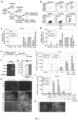
- Spontaneous differentiation after initial induction of primitive streak (BMP4/Activin A (30/10), 3 days) showed OSR1 expression ( Fig. 2d ) but no evidence of more definitive IM markers, PAX2 and LHX1 14-16 , by either RT-PCR or immunofluorescence (IF).
- FGF signalling was one possible requirement.
- FGF8 is expressed from primitive streak through to posterior trunk mesoderm and FGF9 is expressed in IM and PM 17,18 .
- MM survival in vitro is supported by culture in either FGF2/BMP7 19 or FGF9 20 .
- FGF2, FGF8 and FGF9 were tested the capacity of three FGF family members, FGF2, FGF8 and FGF9, to induce IM from posterior primitive streak.
- hESC-induced posterior primitive streak was treated with 200 ng/mL of FGF2, 8 or 9 for 4 days before analysis via IF and qRT-PCR ( Fig. 1e ).
- PAX2 and LHX1 were coexpressed with >80% of cells PAX2 + , suggesting differential IM induction ( Fig. 1f-h ).
- PAX2 and LHX1 induction in response to FGF2 or FGF9 was dramatically inhibited by PD173074, a chemical inhibitor for FGFR1 and FGPR3 ( Fig. 3a,b ).
- IM induction by FGF9 was dose-dependent (optimal at 200ng/ml) with suppression of the LPM markers, FOXF1 ( Fig. 1i ) and OSR1 ( Fig. 3b ).
- the IM differentiates into the kidney, gonad and the adrenal.
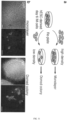
- the first structure to form is the nephric duct (ND) along which three paired excretory organs form (pronephros, mesonephros and metanephros in order from head to tail) from the same nephrogenic cord. Only the metanephros, representing the final permanent kidney, persists post birth. Key in the formation of the metanephros is reciprocal inductive events between key cellular components ( Fig. 5 ).
- the MM drives the outgrowth of the ureteric bud (UB)/ureteric epithelium (UE) via the production of GDNF.
- UB ureteric bud
- UE ureteric epithelium
- the UE promotes the survival of the MM via the production of FGF9 and induces nephron formation via Wnt signaling. After formation, each nephron elongates and segments to form the many functionally distinct cell types that comprise the nephron ( Fig. 5 ).
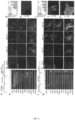
- RA and BMP7 have previously been shown to induce renal lineages from mESCs 23 and FGF9 can maintain mouse nephron progenitors in vitro 20 , we added 200 ng/mL FGF9, 50 ng/mL BMP7 and 0.1 nM RA from day 6 to day 17 after an initial induction using BMP4/Activin A ( Fig. 6a ). RT-PCR across the entire differentiation protocol ( Fig.
- RT-PCR at day 22 revealed evidence for further differentiation based on the expression of podocyte ( SYNPO, NPHS1 and WT1 ) , proximal tubule ( AQP1 and SLC3A1 ) and collecting duct genes ( AQP2 and SCNNB1 ) ( Fig. 7c ).
- podocyte SYNPO, NPHS1 and WT1
- AQP1 and SLC3A1 proximal tubule
- AQP2 and SCNNB1 collecting duct genes
- IM During embryogenesis, IM also gives rise to gonad and adrenal cortex. The expression levels of markers for these tissues were no higher than is seen in human fetal kidney ( Fig. 8b ) suggesting that these alternative fates are not significantly selected.
- the transferability of this differentiation protocol from one hESC cell line to another was investigated using the H9 hESC cell line and human iPS cell line CRL2429 C11 ( Fig. 9 ). The initial induction of posterior primitive streak, subsequent induction of IM in response to FGF9 and onward differentiation was also observed using these cell lines.
- This MM formed what appeared to be early nephrons/renal vesicles (RVs) as indicated by JAG1 and CDH6 protein ( Fig. 8f ; Fig. 5 ).
- RVs early nephrons/renal vesicles
- Nephron formation progresses post-RV via a complicated process of segmentation, patterning and differentiation 2 with the expression of specific markers defining the identity and function of each nephron segment from the glomerulus through proximal tubule to distal tubule ( Fig. 5 ).
- a previously characterized re-aggregation assay which represents a stringent assay of the renal potential of a test population 7,28-29 ( Fig. 10a ).
- mouse embryonic kidneys were dissociated to single cells then reaggregated with either undifferentiated hESC (control) or hESC at day 12-13 of renal differentiation.
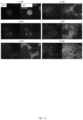
- hESC-derived cells induced using the CHIR99021/FGF9 protocol integrated into all major cellular compartments of the developing kidney, including PAX2 + CALB + UE (upper panels), CDH6 + JAG1 + early nephron / RV (middle panels) and the SIX2 + WT1 + nephron progenitor mesenchyme (lower panels), while hESC-derived cells induced using BMP4:Activin A/FGF9/FGF9:BMP7:RA only incorporated into MM and UE.
- Such integration did not occur in re-aggregations including undifferentiated hES cells. Instead, this resulted in the complete disruption of renal development and the formation of large cysts lined with hES-derived epithelium ( Fig. 10b ).
- the kidney forms in three dimensions. Isolated embryonic kidneys can grow as organoids at an air-media interface, successfully forming a branching ureteric epithelium in response to a surrounding MM and undergoing nephron formation, patterning and early segmentation. hESC differentiation was performed as monolayers which may represent an adverse environment for self-organisation and morphogenesis. To test the effect of the shape of cultures on self-organisation, we lifted and repeated the differentiating hESC cultures after IM commitment (day 6) at differing cell density ( Fig. 11a ) followed by continued culture as per the CHIR99021/FGF9 protocol.
- hESC cultures directed towards kidney differentiation should be able to form kidney organoids in the absence of any other supporting cells.
- hESC cultures differentiated to day 18 were enzymatically dissociated then pelleted via centrifugation before 4 days of explant culture ( Fig. 12a ).
- the method disclosed herein method facilitates simultaneous induction of both nephron-forming mesenchyme and ureteric epithelium, which includes and results from interaction between these developing cells and tissues. Both cell and tissue types form to varying degrees even with FGF9 alone through Stages 2 and 3. The addition of other factors such as BMP7, RA and Wnt agonist will vary the outcome in terms of the relative abundance of mesenchyme and the ureteric epithelium produced.
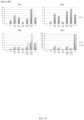
- FGF9 in Stage 2 is enough to pattern the next step, but the addition of BMP7 together with FGF9 in Stage 3 slightly improves the mesenchyme but more importantly makes the ureteric tree less "sheet-like". It is also proposed that too much FGF9 is ultimately not optimal. This has been assessed in microbioreactor studies, the results of which are shown FIG 13 .
- mesenchyme is improved if we continue to include CHIR99021 (Wnt agonist used in Stage 1) at 1 ⁇ M through Stage 2 and 3 and if we add an antagonist of RA (e.g. AGN193109).
- CHIR99021 Wnt agonist used in Stage 1
- an antagonist of RA e.g. AGN193109
- FIGS 20 and 21 show evidence that the method disclosed herein works on patient-derived iPSCs as well as hESCs. Data is shown from two different patient cells lines.
- the described hESC differentiation process generates reciprocally-inducing kidney progenitor populations able to self-organise to form early nephrons. This represents a significant advancement towards the generation of renal tissue from pluripotent cell sources.
- normal kidney development involves a careful balance between the self-renewal of nephron progenitors versus their differentiation into nephrons.
- the differentiated hESC cultures described here showed the formation of many RVs but the significant loss of nephron progenitors with time, evoking the phenotype of premature progenitor differentiation seen in Six2 mutant mice 3 .
- Particular uses of the cells generated using this method may include:
- cellular therapies and organ replacement or repair may include:
Landscapes
- Health & Medical Sciences (AREA)
- Engineering & Computer Science (AREA)
- Life Sciences & Earth Sciences (AREA)
- Biomedical Technology (AREA)
- Urology & Nephrology (AREA)
- Chemical & Material Sciences (AREA)
- Bioinformatics & Cheminformatics (AREA)
- Immunology (AREA)
- Biotechnology (AREA)
- Cell Biology (AREA)
- General Health & Medical Sciences (AREA)
- Organic Chemistry (AREA)
- Hematology (AREA)
- Molecular Biology (AREA)
- Biochemistry (AREA)
- Microbiology (AREA)
- Zoology (AREA)
- Wood Science & Technology (AREA)
- Genetics & Genomics (AREA)
- Toxicology (AREA)
- Medicinal Chemistry (AREA)
- Food Science & Technology (AREA)
- Analytical Chemistry (AREA)
- Pathology (AREA)
- General Physics & Mathematics (AREA)
- Physics & Mathematics (AREA)
- Tropical Medicine & Parasitology (AREA)
- General Engineering & Computer Science (AREA)
- Pharmacology & Pharmacy (AREA)
- Animal Behavior & Ethology (AREA)
- Veterinary Medicine (AREA)
- Public Health (AREA)
- Nuclear Medicine, Radiotherapy & Molecular Imaging (AREA)
- General Chemical & Material Sciences (AREA)
- Chemical Kinetics & Catalysis (AREA)
- Micro-Organisms Or Cultivation Processes Thereof (AREA)
- Measuring Or Testing Involving Enzymes Or Micro-Organisms (AREA)
- Medicines Containing Material From Animals Or Micro-Organisms (AREA)
- Developmental Biology & Embryology (AREA)
- Virology (AREA)
Claims (13)
- In-vitro-Verfahren zum Erzeugen von Nephron-Vorläuferzellen und Ureterepithel-Vorläuferzellen, umfassend das Inkontaktbringen von intermediären Mesodermzellen (IM-Zellen) mit: Fibroblasten-Wachstumsfaktor 9 (FGF9) und/oder Fibroblasten-Wachstumsfaktor 20 (FGF20); und gegebenenfalls einem oder mehreren, ausgewählt aus der Gruppe bestehend aus: knochenmorphogenetischem Protein 7 (BMP7); Heparin; einem Wnt-Agonisten; einem Retinsäure(RA)-Analogon oder -Agonisten; und einem RA-Antagonisten; um dadurch aus den IM-Zellen Nephron-Vorläuferzellen und Ureterepithel-Vorläuferzellen zu erzeugen.
- Verfahren nach Anspruch 1, wobei FGF9 und/oder FGF20 in einer Konzentration in dem Bereich von 20 ng bis 1 µg/ml vorliegt; wobei BMP7 in einer Konzentration in dem Bereich von 25 bis 75 ng/ml vorliegt; wobei RA, ein Analogon oder ein Agonist in einer Konzentration in dem Bereich von 10 pM bis 1 µM vorliegt; wobei der RA-Antagonist in einer Konzentration in dem Bereich von 0,50 pM bis 10 µM vorliegt; und wobei der Wnt-Agonist in einer Konzentration in dem Bereich von 0,1 µM bis 10 µM vorliegt.
- Verfahren nach Anspruch 1 oder 2, ferner umfassend: (a) Inkontaktbringen von humanen pluripotenten Stammzellen (hPSCs) mit einem oder mehreren Mitteln, die die Differenzierung der hPSCs in posterioren Primitivstreifenzellen erleichtern; und (b) Inkontaktbringen der posterioren Streifenzellen mit einem oder mehreren Mitteln, die die Differenzierung der posterioren Primitivstreifenzellen in die IM-Zellen erleichtern.
- Verfahren nach Anspruch 3, ferner umfassend: (c) Inkontaktbringen von IM-Zellen mit FGF9 allein oder in Kombination mit einem oder mehreren von BMP7; RA; einem RA-Antagonisten; einem Wnt-Agonisten; FGF20; und Heparin, um dadurch Nephron-Vorläuferzellen und Ureterepithel-Vorläuferzellen aus den IM-Zellen zu erzeugen.
- Verfahren nach Anspruch 1, umfassend in Reihenfolge:(a) Inkontaktbringen von humanen pluripotenten Stammzellen (hPCS) mit einem Wnt-Agonisten, um die Differenzierung der hPSC-Zellen in posterioren Primitivstreifenzellen zu erleichtern;(b) Inkontaktbringen der posterioren Primitivstreifenzellen mit FGF9, allein oder zusammen mit einem RA-Antagonisten, um die Differenzierung der posterioren Primitivstreifenzellen in IM-Zellen zu erleichtern; und(c) Inkontaktbringen der IM-Zellen mit FGF9, allein oder in Kombination mit einem oder mehreren von BMP7; RA; einem RA-Antagonisten; einem Wnt-Agonisten; FGF20; und Heparin, um dadurch Nephron-Vorläuferzellen und Ureterepithel-Vorläuferzellen aus den IM-Zellen zu erzeugen.
- Verfahren nach Anspruch 1, umfassend in Reihenfolge:(a) Inkontaktbringen von humanen pluripotenten Stammzellen (hPCS) mit einem Wnt-Agonisten, um die Differenzierung der hPSC-Zellen in posterioren Primitivstreifenzellen zu erleichtern;(b) Inkontaktbringen der posterioren Primitivstreifenzellen mit FGF9, um die Differenzierung der posterioren Primitivstreifenzellen in IM-Zellen zu erleichtern; und(c) Inkontaktbringen der IM-Zellen mit FGF9, um dadurch aus den IM-Zellen Nephron-Vorläuferzellen und Ureterepithel-Vorläuferzellen zu erzeugen.
- In-vitro-Verfahren zum Erzeugen von isolierten, angereicherten oder gereinigten Nephron-Vorläuferzellen und/oder Ureterepithel-Vorläuferzellen, umfassend:(a) Erzeugen von Nephron-Vorläuferzellen und Ureterepithel-Vorläuferzellen, umfassend: Inkontaktbringen von intermediären Mesodermzellen (IM-Zellen) mit: Fibroblasten-Wachstumsfaktor 9 (FGF9) und/oder Fibroblasten-Wachstumsfaktor 20 (FGF20); und gegebenenfalls einem oder mehreren, ausgewählt aus der Gruppe bestehend aus: knochenmorphogenetischem Protein 7 (BMP7); Heparin; einem Wnt-Agonisten; Retinsäure (RA), einem Analogon oder Agonisten; und einem RA-Agonisten; um dadurch aus den IM-Zellen Nephron-Vorläuferzellen und Ureterepithel-Vorläuferzellen zu erzeugen; und(b) Isolieren, Anreichern oder Reinigen der in Schritt (a) erzeugten Nephron-Vorläuferzellen und/oder Ureterepithel-Vorläuferzellen.
- In-vitro-Verfahren zum Erzeugen einer Niere oder von Nierenzellen oder Nierengewebe, umfassend:(a) Erzeugen von Nephron-Vorläuferzellen und Ureterepithel-Vorläuferzellen, umfassend das Inkontaktbringen von intermediären Mesodermzellen (IM-Zellen) mit: Fibroblasten-Wachstumsfaktor 9 (FGF9) und/oder Fibroblasten-Wachstumsfaktor 20 (FGF20); und gegebenenfalls einem oder mehreren, ausgewählt aus der Gruppe bestehend aus: knochenmorphogenetischem Protein 7 (BMP7); Heparin; einem Wnt-Agonisten; Retinsäure (RA), einem Analogon oder Agonisten; und einem RA-Agonisten; um dadurch aus den IM-Zellen Nephron-Vorläuferzellen und Ureterepithel-Vorläuferzellen zu erzeugen;(b) Isolieren, Anreichern oder Reinigen der in Schritt (a) erzeugten Nephron-Vorläuferzellen und/oder Ureterepithel-Vorläuferzellen; und(c) Differenzieren der in Schritt (b) erzeugten isolierten, angereicherten oder gereinigten Nephron- und/oder Ureterepithel-Vorläuferzellen, um dadurch eine Niere oder Nierenzellen oder Nierengewebe zu erzeugen.
- Verfahren nach Anspruch 8, ferner umfassend das Biodrucken der isolierten oder gereinigten Nephron-Vorläuferzellen und der in Schritt (b) erzeugten Ureterepithel-Vorläuferzellen.
- In-vitro-Verfahren zum Erzeugen isolierter, angereicherter oder gereinigter Nephron-Vorläuferzellen und/oder Ureterepithelzellen für die Zelltherapie von Nierenerkrankungen und - leiden, umfassend:(a) Erzeugen von Nephron-Vorläuferzellen und Ureterepithel-Vorläuferzellen, umfassend das Inkontaktbringen von intermediären Mesodermzellen (IM-Zellen) mit: Fibroblasten-Wachstumsfaktor 9 (FGF9) und/oder Fibroblasten-Wachstumsfaktor 20 (FGF20); und gegebenenfalls einem oder mehreren, ausgewählt aus der Gruppe bestehend aus: knochenmorphogenetischem Protein 7 (BMP7); Heparin; einem Wnt-Agonisten; Retinsäure (RA), einem Analogon oder Agonisten; und einem RA-Agonisten; um dadurch aus den IM-Zellen Nephron-Vorläuferzellen und Ureterepithel-Vorläuferzellen zu erzeugen; und(b) Isolieren, Anreichern oder Reinigen der in Schritt (a) erzeugten Nephron-Vorläuferzellen und/oder Ureterepithel-Vorläuferzellen.
- In-vitro-Verfahren zum Bestimmen der Nephrotoxizität einer oder einer Vielzahl von Verbindungen, umfassend:(a)(i) Erzeugen von Nephron-Vorläuferzellen und Ureterepithel-Vorläuferzellen, umfassend das Inkontaktbringen von intermediären Mesodermzellen (IM-Zellen) mit: Fibroblasten-Wachstumsfaktor 9 (FGF9) und/oder Fibroblasten-Wachstumsfaktor 20 (FGF20); und gegebenenfalls einem oder mehreren, ausgewählt aus der Gruppe bestehend aus: knochenmorphogenetischem Protein 7 (BMP7); Heparin; einem Wnt-Agonisten; Retinsäure (RA), einem Analogon oder Agonisten; und einem RA-Agonisten; um dadurch aus den IM-Zellen Nephron-Vorläuferzellen und Ureterepithel-Vorläuferzellen zu erzeugen;(ii) Isolieren, Anreichern oder Reinigen der in Schritt (a) erzeugten Nephron-Vorläuferzellen und/oder Ureterepithel-Vorläuferzellen, um isolierte, angereicherte oder gereinigte Nephron-Vorläuferzellen und/oder Ureterepithel-Vorläuferzellen zu erzeugen; und(iii) Inkontaktbringen der einen oder der Vielzahl von Verbindungen mit den in (a)(ii) erzeugten Zellen, um zu bestimmen, ob die eine oder die Vielzahl von Verbindungen nephrotoxisch ist oder nicht; oder(b)(i) Erzeugen von Nephron-Vorläuferzellen und Ureterepithel-Vorläuferzellen, umfassend das Inkontaktbringen von intermediären Mesodermzellen (IM-Zellen) mit: Fibroblasten-Wachstumsfaktor 9 (FGF9) und/oder Fibroblasten-Wachstumsfaktor 20 (FGF20); und gegebenenfalls einem oder mehreren, ausgewählt aus der Gruppe bestehend aus: knochenmorphogenetischem Protein 7 (BMP7); Heparin; einem Wnt-Agonisten; Retinsäure (RA), einem Analogon oder Agonisten; und einem RA-Agonisten; um dadurch aus den IM-Zellen Nephron-Vorläuferzellen und Ureterepithel-Vorläuferzellen zu erzeugen;(iii) Isolieren, Anreichern oder Reinigen der in Schritt (b)(i) erzeugten Nephron-Vorläuferzellen und/oder Ureterepithel-Vorläuferzellen;(iii) Differenzieren der in Schritt (b)(ii) erzeugten isolierten oder gereinigten Nephronund/oder Ureterepithel-Vorläuferzellen zum Erzeugen einer Niere, von Nierenzellen oder Nierengewebe; und(iv) Inkontaktbringen der einen oder der Vielzahl von Verbindungen mit der in (b)(iii) erzeugten Niere, den Nierenzellen oder dem Nierengewebe, um zu bestimmen, ob die eine oder die Vielzahl von Verbindungen nephrotoxisch ist oder nicht.
- Verfahren nach Anspruch 11, wobei das Verfahren von (a)(iii) oder (b)(iv) durch Inkontaktbringen der einen oder der Vielzahl von Verbindungen mit einem Nierenorganoid durchgeführt wird, das durch Differenzieren der isolierten oder gereinigten Nephron-Vorläuferzellen und Ureterepithel-Vorläuferzellen erhalten wird.
- In-vitro-Verfahren zum Erzeugen von isolierten, angereicherten oder gereinigten Nephron-Vorläuferzellen und/oder Ureterepithel-Vorläuferzellen, die in ein Gerüst eingebaut sind, zum Erzeugen einer konstruierten oder künstlichen Niere mit regenerierter Nierentubulusstruktur, das Verfahren umfassend:(a) Erzeugen von Nephron-Vorläuferzellen und Ureterepithel-Vorläuferzellen, umfassend das Inkontaktbringen von intermediären Mesodermzellen (IM-Zellen) mit: Fibroblasten-Wachstumsfaktor 9 (FGF9) und/oder Fibroblasten-Wachstumsfaktor 20 (FGF20); und gegebenenfalls einem oder mehreren, ausgewählt aus der Gruppe bestehend aus: knochenmorphogenetischem Protein 7 (BMP7); Heparin; einem Wnt-Agonisten; Retinsäure (RA), einem Analogon oder Agonisten; und einem RA-Agonisten; um dadurch aus den IM-Zellen Nephron-Vorläuferzellen und Ureterepithel-Vorläuferzellen zu erzeugen;(b) Isolieren, Anreichern oder Reinigen der in Schritt (a) erzeugten Nephron-Vorläuferzellen und/oder Ureterepithel-Vorläuferzellen; und(c) Einbringen der in Schritt (b) erzeugten Zellen in ein Gerüst.
Applications Claiming Priority (3)
| Application Number | Priority Date | Filing Date | Title |
|---|---|---|---|
| AU2013902215A AU2013902215A0 (en) | 2013-06-14 | Renal progenitor cells | |
| AU2013904580A AU2013904580A0 (en) | 2013-11-27 | Renal progenitor cells | |
| PCT/AU2014/000608 WO2014197934A1 (en) | 2013-06-14 | 2014-06-13 | Renal progenitor cells |
Publications (4)
| Publication Number | Publication Date |
|---|---|
| EP3011014A1 EP3011014A1 (de) | 2016-04-27 |
| EP3011014A4 EP3011014A4 (de) | 2017-02-08 |
| EP3011014B1 true EP3011014B1 (de) | 2024-11-13 |
| EP3011014C0 EP3011014C0 (de) | 2024-11-13 |
Family
ID=52021491
Family Applications (1)
| Application Number | Title | Priority Date | Filing Date |
|---|---|---|---|
| EP14810526.5A Active EP3011014B1 (de) | 2013-06-14 | 2014-06-13 | Nierenvorläuferzellen |
Country Status (13)
| Country | Link |
|---|---|
| US (3) | US10900022B2 (de) |
| EP (1) | EP3011014B1 (de) |
| JP (2) | JP2016527878A (de) |
| KR (1) | KR102375753B1 (de) |
| CN (1) | CN105473706B (de) |
| AU (1) | AU2014280843B2 (de) |
| BR (1) | BR112015031094A2 (de) |
| CA (1) | CA2915097C (de) |
| ES (1) | ES3002407T3 (de) |
| NZ (1) | NZ715302A (de) |
| RU (1) | RU2016100232A (de) |
| SG (1) | SG11201510238TA (de) |
| WO (1) | WO2014197934A1 (de) |
Families Citing this family (34)
| Publication number | Priority date | Publication date | Assignee | Title |
|---|---|---|---|---|
| US9719068B2 (en) | 2010-05-06 | 2017-08-01 | Children's Hospital Medical Center | Methods and systems for converting precursor cells into intestinal tissues through directed differentiation |
| RU2016100232A (ru) | 2013-06-14 | 2017-07-17 | Дзе Юниверсити Оф Квинсленд | Почечные клетки-предшественники |
| MX2015017330A (es) * | 2013-07-29 | 2016-04-06 | Hoffmann La Roche | Metodo para la diferenciacion de celulas madre pluripotenciales en precursores renales multi-competentes. |
| SG10201801654RA (en) | 2014-05-28 | 2018-04-27 | Childrens Hospital Med Ct | Methods and systems for converting precursor cells into gastric tissues through directed differentiation |
| AU2015331848B2 (en) | 2014-10-17 | 2022-03-03 | Children's Hospital Medical Center, D/B/A Cincinnati Children's Hospital Medical Center | In vivo model of human small intestine using pluripotent stem cells and methods of making and using same |
| AU2014277667B2 (en) | 2014-12-15 | 2022-07-14 | The University Of Queensland | Differentiation of pluripotent stem cells to form renal organoids |
| AU2016318114B2 (en) * | 2015-09-03 | 2023-04-20 | The Brigham And Women's Hospital, Inc. | Three-dimensional differentiation of epiblast spheroids to kidney organoids models stage-specific epithelial physiology, morphogenesis, and disease |
| US20180258404A1 (en) * | 2015-09-17 | 2018-09-13 | The Brigham And Women's Hospital, Inc. | Methods of generating nephrons from human pluripotent stem cells |
| CN109415685B (zh) | 2016-05-05 | 2023-07-04 | 儿童医院医疗中心 | 用于体外制造胃底组织的方法和与其相关的组合物 |
| US11268950B2 (en) | 2016-09-28 | 2022-03-08 | Organovo, Inc. | Use of engineered renal tissues in assays |
| EP4553082A3 (de) | 2016-11-04 | 2025-08-20 | Children's Hospital Medical Center | Leberorganoidzusammensetzungen und verfahren zur herstellung und verwendung davon |
| EP3548507A4 (de) | 2016-12-05 | 2020-07-15 | Children's Hospital Medical Center | Kolonorganoide und verfahren zur herstellung und verwendung davon |
| JP7248586B2 (ja) | 2017-04-14 | 2023-03-29 | チルドレンズ ホスピタル メディカル センター | 複数ドナー幹細胞組成物およびそれを作製する方法 |
| US11492644B2 (en) | 2017-05-24 | 2022-11-08 | Murdoch Childrens Research Institute | Genetically induced nephron progenitors |
| EP3633026A4 (de) * | 2017-05-25 | 2021-03-10 | Kyoto University | Verfahren zur induzierung der differenzierung einer mesodermalen zwischenzelle zu einer nierenvorläuferzelle und verfahren zur induktion der differenzierung einer pluripotenten stammzelle zu einer nierenvorläuferzelle |
| US11834680B2 (en) | 2017-06-28 | 2023-12-05 | Rutgers, The State University Of New Jersey | Single kidney cell-derived organoids |
| EP3694603B1 (de) | 2017-10-10 | 2026-04-08 | Children's Hospital Medical Center | Ösophagusgewebe- und/oder organoidzusammensetzungen und verfahren zu ihrer herstellung |
| SG11202003790PA (en) | 2017-10-31 | 2020-05-28 | Murdoch Childrens Res Inst | Composition and method |
| EP3727394A4 (de) | 2017-12-21 | 2021-09-08 | Children's Hospital Medical Center | Digitalisierte menschliche organoide und verfahren zu deren verwendung |
| EP4678727A3 (de) | 2018-07-26 | 2026-03-11 | Children's Hospital Medical Center | Hepatobiliäres bauchspeicheldrüsengewebe und verfahren zur herstellung davon |
| CA3112026A1 (en) | 2018-09-12 | 2020-03-19 | Children's Hospital Medical Center | Organoid compositions for the production of hematopoietic stem cells and derivatives thereof |
| US12600943B2 (en) | 2019-02-01 | 2026-04-14 | The University Of Hong Kong | Innervated organoid compositions and methods of making same |
| US12497597B2 (en) | 2019-05-31 | 2025-12-16 | Children's Hospital Medical Center | Methods of generating and expanding hematopoietic stem cells |
| AU2020283048A1 (en) | 2019-05-31 | 2021-12-23 | Children's Hospital Medical Center | Shaped organoid compositions and methods of making same |
| CN110468095A (zh) * | 2019-09-05 | 2019-11-19 | 安徽中盛溯源生物科技有限公司 | 一种肾上皮细胞及其制备方法和应用 |
| EP4043553A4 (de) * | 2019-10-01 | 2023-11-22 | Kyoto University | Verfahren zum isolieren von ureterknotenzellen |
| CN111961640B (zh) * | 2020-04-27 | 2023-05-12 | 同济大学 | 一种尿源性肾干细胞三维分化模型的构建方法及培养体系 |
| CN111638342A (zh) * | 2020-07-08 | 2020-09-08 | 上海市浦东新区公利医院(第二军医大学附属公利医院) | Sox17蛋白在制备肾透明细胞癌诊断或预后评估试剂盒中的应用 |
| JP2023550036A (ja) * | 2020-11-13 | 2023-11-30 | ティモシー エー. ベルトラム, | 富化された生体活性腎細胞集団、その特徴及び使用 |
| US20240352426A1 (en) * | 2021-08-26 | 2024-10-24 | Vanderbilt University | Accelerated Protocol for the Differentiation of Podocytes from Human Pluripotent Stem Cells |
| EP4397749A4 (de) | 2021-09-03 | 2025-09-24 | Otsuka Pharma Co Ltd | Nierenorganoid und verfahren zur herstellung davon |
| WO2023060190A1 (en) | 2021-10-08 | 2023-04-13 | Vanderbilt University | Nephron progenitor exosomes |
| EP4720261A1 (de) * | 2023-05-25 | 2026-04-08 | University of Southern California | Neue kulturbedingungen zur klonalen expansion von nephronvorläuferzellen, erzeugung von nephronorganoiden sowie schnelle und skalierbare modellierung von polyzystischer nierenerkrankung |
| AU2024281234A1 (en) * | 2023-06-01 | 2025-12-11 | Miromatrix Medical Inc. | Methods and uses of differentiated cells |
Family Cites Families (34)
| Publication number | Priority date | Publication date | Assignee | Title |
|---|---|---|---|---|
| US6517872B1 (en) | 1995-06-12 | 2003-02-11 | Yeda Research And Development Co., Ltd. | FGFR3 as a marker for mesenchymal skeletal progenitor cells |
| WO1999065897A1 (en) | 1998-06-19 | 1999-12-23 | Chiron Corporation | Inhibitors of glycogen synthase kinase 3 |
| US7045519B2 (en) | 1998-06-19 | 2006-05-16 | Chiron Corporation | Inhibitors of glycogen synthase kinase 3 |
| US7005252B1 (en) | 2000-03-09 | 2006-02-28 | Wisconsin Alumni Research Foundation | Serum free cultivation of primate embryonic stem cells |
| US7439064B2 (en) | 2000-03-09 | 2008-10-21 | Wicell Research Institute, Inc. | Cultivation of human embryonic stem cells in the absence of feeder cells or without conditioned medium |
| US7326570B2 (en) | 2000-06-16 | 2008-02-05 | The Regents Of The University Of California | Induction of tubular morphogenesis using pleiotrophin |
| US6477783B1 (en) | 2000-09-19 | 2002-11-12 | The United States Of America As Represented By The Secretary Of Transportation | Gyratory compactor angle measurement device |
| MXPA04005010A (es) * | 2001-11-26 | 2005-04-08 | Advanced Cell Tech Inc | METODO PARA HACER Y USAR NUCLEOS CELULARES SOMáTICOS METODOS PARA HACER Y USAR NUCLEOS CELULARES SOMáTICOS HUMANOS REPROGRAMADOS Y CELULAS DEL TALLO HUMANAS AUTOLOGAS E ISOGENICAS. |
| AU2004269409A1 (en) | 2003-08-29 | 2005-03-10 | Regents Of The University Of Minnesota | Kidney derived stem cells and methods for their isolation, differentiation and use |
| WO2005075636A1 (en) * | 2004-02-09 | 2005-08-18 | The University Of Queensland | Molecular markers associated with metanephric development and renal progenitors |
| US8597947B2 (en) | 2004-12-29 | 2013-12-03 | Hadasit Medical Research Services & Development Limited | Undifferentiated stem cell culture systems |
| JP5680850B2 (ja) | 2006-03-30 | 2015-03-04 | ザ・ユニバーシティ・コート・オブ・ザ・ユニバーシティ・オブ・エディンバラThe University Court of the University of Edinburgh | キナーゼインヒビターを含む培養培地およびその使用 |
| GB0615327D0 (en) | 2006-03-30 | 2006-09-13 | Univ Edinburgh | Culture medium containing kinase inhibitors and uses thereof |
| CA2901105C (en) | 2007-01-03 | 2018-02-13 | California Stem Cell, Inc. | Stem cell growth media and methods of making and using same |
| EP2798956A1 (de) | 2007-04-23 | 2014-11-05 | Stowers Institute for Medical Research | Verfahren und Zusammensetzungen für die Selbsterneuerung von haematopoetischen Stammzellen |
| US9080145B2 (en) | 2007-07-01 | 2015-07-14 | Lifescan Corporation | Single pluripotent stem cell culture |
| EP3279314A1 (de) | 2008-06-04 | 2018-02-07 | Cellular Dynamics International, Inc. | Verfahren zur herstellung von ips-zellen unter verwendung eines nicht-viralen ansatzes |
| US8278105B2 (en) | 2008-09-09 | 2012-10-02 | University Of Southern California | Induction, propagation and isolation of liver progenitor cells |
| WO2010077955A1 (en) | 2008-12-17 | 2010-07-08 | The Scripps Research Institute | Generation and maintenance of stem cells |
| WO2010108126A2 (en) | 2009-03-19 | 2010-09-23 | Fate Therapeutics, Inc. | Reprogramming compositions and methods of using the same |
| US10894944B2 (en) | 2009-04-10 | 2021-01-19 | Monash University | Cell culture media |
| US20120149110A1 (en) | 2009-08-17 | 2012-06-14 | Organ Technologies Inc. | Process for production of bioartificial organ |
| CN102242146B (zh) | 2010-05-10 | 2015-11-25 | 高丽大学校产学协力团 | 组合物和用其产生诱导全能干细胞的方法 |
| WO2011141914A1 (en) | 2010-05-13 | 2011-11-17 | Tel Hashomer Medical Research Infrastructure And Services Ltd. | Isolated populations of adult renal cells and methods of isolating and using same |
| EP2596096B1 (de) * | 2010-07-21 | 2018-01-31 | Kyoto University | Verfahren zur induktion der differenzierung menschlicher pluripotenter stammzellen in intermediäre mesodermzellen |
| US8951798B2 (en) | 2011-10-13 | 2015-02-10 | Wisconsin Alumni Research Foundation | Generation of cardiomyocytes from human pluripotent stem cells |
| US9890357B2 (en) | 2011-12-19 | 2018-02-13 | Kyoto University | Method for inducing differentiation of human pluripotent stem cells into intermediate mesoderm cells |
| KR20130119683A (ko) | 2012-04-24 | 2013-11-01 | 사회복지법인 삼성생명공익재단 | 줄기세포 배양 배지 및 이를 이용한 줄기세포의 배양방법 |
| KR101523040B1 (ko) | 2012-06-26 | 2015-05-26 | 라정찬 | 고농도의 줄기세포 제조방법 |
| US8962322B2 (en) | 2012-12-03 | 2015-02-24 | City Of Hope | Enhancers of induced pluripotent stem cell reprogramming |
| US20150037883A1 (en) | 2013-03-03 | 2015-02-05 | Royan Institute | Method for derivation and long-term establishment of ground state pluripotent embryonic stem cells |
| KR102145967B1 (ko) | 2013-06-11 | 2020-08-19 | 고쿠리츠 다이가쿠 호진 교토 다이가쿠 | 신장 전구세포의 제조 방법 및 신장 전구세포를 포함하는 의약 |
| RU2016100232A (ru) | 2013-06-14 | 2017-07-17 | Дзе Юниверсити Оф Квинсленд | Почечные клетки-предшественники |
| CN103555660B (zh) | 2013-09-09 | 2016-03-30 | 依科赛生物科技(太仓)有限公司 | 一种胚胎干细胞无血清培养基及其应用 |
-
2014
- 2014-06-13 RU RU2016100232A patent/RU2016100232A/ru not_active Application Discontinuation
- 2014-06-13 BR BR112015031094A patent/BR112015031094A2/pt not_active Application Discontinuation
- 2014-06-13 ES ES14810526T patent/ES3002407T3/es active Active
- 2014-06-13 SG SG11201510238TA patent/SG11201510238TA/en unknown
- 2014-06-13 US US14/898,213 patent/US10900022B2/en active Active
- 2014-06-13 KR KR1020167000925A patent/KR102375753B1/ko active Active
- 2014-06-13 EP EP14810526.5A patent/EP3011014B1/de active Active
- 2014-06-13 WO PCT/AU2014/000608 patent/WO2014197934A1/en not_active Ceased
- 2014-06-13 NZ NZ715302A patent/NZ715302A/en not_active IP Right Cessation
- 2014-06-13 JP JP2016518798A patent/JP2016527878A/ja active Pending
- 2014-06-13 CA CA2915097A patent/CA2915097C/en active Active
- 2014-06-13 AU AU2014280843A patent/AU2014280843B2/en active Active
- 2014-06-13 CN CN201480045180.3A patent/CN105473706B/zh active Active
-
2019
- 2019-10-23 JP JP2019192404A patent/JP6937810B2/ja active Active
-
2021
- 2021-01-22 US US17/155,631 patent/US12060580B2/en active Active
-
2024
- 2024-06-28 US US18/757,662 patent/US20240344034A1/en active Pending
Also Published As
| Publication number | Publication date |
|---|---|
| WO2014197934A1 (en) | 2014-12-18 |
| CA2915097C (en) | 2021-12-07 |
| NZ715302A (en) | 2021-12-24 |
| JP2020031648A (ja) | 2020-03-05 |
| CN105473706B (zh) | 2021-10-26 |
| US10900022B2 (en) | 2021-01-26 |
| CN105473706A (zh) | 2016-04-06 |
| ES3002407T3 (en) | 2025-03-06 |
| RU2016100232A (ru) | 2017-07-17 |
| JP2016527878A (ja) | 2016-09-15 |
| AU2014280843B2 (en) | 2017-04-20 |
| US20210371826A1 (en) | 2021-12-02 |
| CA2915097A1 (en) | 2014-12-18 |
| EP3011014A4 (de) | 2017-02-08 |
| EP3011014A1 (de) | 2016-04-27 |
| SG11201510238TA (en) | 2016-01-28 |
| KR20160030178A (ko) | 2016-03-16 |
| HK1223976A1 (en) | 2017-08-11 |
| EP3011014C0 (de) | 2024-11-13 |
| US20160237409A1 (en) | 2016-08-18 |
| JP6937810B2 (ja) | 2021-09-22 |
| KR102375753B1 (ko) | 2022-03-18 |
| US20240344034A1 (en) | 2024-10-17 |
| BR112015031094A2 (pt) | 2017-07-25 |
| AU2014280843A1 (en) | 2016-01-21 |
| US12060580B2 (en) | 2024-08-13 |
Similar Documents
| Publication | Publication Date | Title |
|---|---|---|
| US12060580B2 (en) | Renal progenitor cells | |
| AU2022204362B2 (en) | Differentiation of pluripotent stem cells to form renal organoids | |
| Takasato et al. | Directing human embryonic stem cell differentiation towards a renal lineage generates a self-organizing kidney | |
| CN102985556B (zh) | 分离高纯度细胞群体的生理学方法 | |
| CN108884438B (zh) | 肝细胞的生产方法 | |
| HK1223976B (en) | Renal progenitor cells | |
| Marchand et al. | Extracellular matrix deposition controls early differentiation patterns in human cardiac gastruloids | |
| Little | Directing human embryonic stem cell differentiation towards a renal lineage generates a self-organizing kidney. |
Legal Events
| Date | Code | Title | Description |
|---|---|---|---|
| PUAI | Public reference made under article 153(3) epc to a published international application that has entered the european phase |
Free format text: ORIGINAL CODE: 0009012 |
|
| 17P | Request for examination filed |
Effective date: 20151217 |
|
| AK | Designated contracting states |
Kind code of ref document: A1 Designated state(s): AL AT BE BG CH CY CZ DE DK EE ES FI FR GB GR HR HU IE IS IT LI LT LU LV MC MK MT NL NO PL PT RO RS SE SI SK SM TR |
|
| AX | Request for extension of the european patent |
Extension state: BA ME |
|
| DAX | Request for extension of the european patent (deleted) | ||
| A4 | Supplementary search report drawn up and despatched |
Effective date: 20170112 |
|
| RIC1 | Information provided on ipc code assigned before grant |
Ipc: C12N 5/0735 20100101ALI20170105BHEP Ipc: C12N 5/074 20100101ALI20170105BHEP Ipc: C12N 5/071 20100101AFI20170105BHEP |
|
| REG | Reference to a national code |
Ref country code: HK Ref legal event code: DE Ref document number: 1223976 Country of ref document: HK |
|
| STAA | Information on the status of an ep patent application or granted ep patent |
Free format text: STATUS: EXAMINATION IS IN PROGRESS |
|
| 17Q | First examination report despatched |
Effective date: 20180601 |
|
| TPAC | Observations filed by third parties |
Free format text: ORIGINAL CODE: EPIDOSNTIPA |
|
| GRAP | Despatch of communication of intention to grant a patent |
Free format text: ORIGINAL CODE: EPIDOSNIGR1 |
|
| GRAP | Despatch of communication of intention to grant a patent |
Free format text: ORIGINAL CODE: EPIDOSNIGR1 |
|
| STAA | Information on the status of an ep patent application or granted ep patent |
Free format text: STATUS: GRANT OF PATENT IS INTENDED |
|
| INTG | Intention to grant announced |
Effective date: 20240614 |
|
| GRAS | Grant fee paid |
Free format text: ORIGINAL CODE: EPIDOSNIGR3 |
|
| GRAA | (expected) grant |
Free format text: ORIGINAL CODE: 0009210 |
|
| STAA | Information on the status of an ep patent application or granted ep patent |
Free format text: STATUS: THE PATENT HAS BEEN GRANTED |
|
| AK | Designated contracting states |
Kind code of ref document: B1 Designated state(s): AL AT BE BG CH CY CZ DE DK EE ES FI FR GB GR HR HU IE IS IT LI LT LU LV MC MK MT NL NO PL PT RO RS SE SI SK SM TR |
|
| REG | Reference to a national code |
Ref country code: GB Ref legal event code: FG4D |
|
| REG | Reference to a national code |
Ref country code: CH Ref legal event code: EP |
|
| REG | Reference to a national code |
Ref country code: DE Ref legal event code: R096 Ref document number: 602014091162 Country of ref document: DE |
|
| REG | Reference to a national code |
Ref country code: IE Ref legal event code: FG4D |
|
| U01 | Request for unitary effect filed |
Effective date: 20241126 |
|
| U07 | Unitary effect registered |
Designated state(s): AT BE BG DE DK EE FI FR IT LT LU LV MT NL PT RO SE SI Effective date: 20241202 |
|
| REG | Reference to a national code |
Ref country code: ES Ref legal event code: FG2A Ref document number: 3002407 Country of ref document: ES Kind code of ref document: T3 Effective date: 20250306 |
|
| PG25 | Lapsed in a contracting state [announced via postgrant information from national office to epo] |
Ref country code: IS Free format text: LAPSE BECAUSE OF FAILURE TO SUBMIT A TRANSLATION OF THE DESCRIPTION OR TO PAY THE FEE WITHIN THE PRESCRIBED TIME-LIMIT Effective date: 20250313 Ref country code: HR Free format text: LAPSE BECAUSE OF FAILURE TO SUBMIT A TRANSLATION OF THE DESCRIPTION OR TO PAY THE FEE WITHIN THE PRESCRIBED TIME-LIMIT Effective date: 20241113 |
|
| PG25 | Lapsed in a contracting state [announced via postgrant information from national office to epo] |
Ref country code: NO Free format text: LAPSE BECAUSE OF FAILURE TO SUBMIT A TRANSLATION OF THE DESCRIPTION OR TO PAY THE FEE WITHIN THE PRESCRIBED TIME-LIMIT Effective date: 20250213 |
|
| PG25 | Lapsed in a contracting state [announced via postgrant information from national office to epo] |
Ref country code: GR Free format text: LAPSE BECAUSE OF FAILURE TO SUBMIT A TRANSLATION OF THE DESCRIPTION OR TO PAY THE FEE WITHIN THE PRESCRIBED TIME-LIMIT Effective date: 20250214 |
|
| PG25 | Lapsed in a contracting state [announced via postgrant information from national office to epo] |
Ref country code: PL Free format text: LAPSE BECAUSE OF FAILURE TO SUBMIT A TRANSLATION OF THE DESCRIPTION OR TO PAY THE FEE WITHIN THE PRESCRIBED TIME-LIMIT Effective date: 20241113 |
|
| PG25 | Lapsed in a contracting state [announced via postgrant information from national office to epo] |
Ref country code: RS Free format text: LAPSE BECAUSE OF FAILURE TO SUBMIT A TRANSLATION OF THE DESCRIPTION OR TO PAY THE FEE WITHIN THE PRESCRIBED TIME-LIMIT Effective date: 20250213 |
|
| PG25 | Lapsed in a contracting state [announced via postgrant information from national office to epo] |
Ref country code: SM Free format text: LAPSE BECAUSE OF FAILURE TO SUBMIT A TRANSLATION OF THE DESCRIPTION OR TO PAY THE FEE WITHIN THE PRESCRIBED TIME-LIMIT Effective date: 20241113 |
|
| PGFP | Annual fee paid to national office [announced via postgrant information from national office to epo] |
Ref country code: GB Payment date: 20250520 Year of fee payment: 12 |
|
| PG25 | Lapsed in a contracting state [announced via postgrant information from national office to epo] |
Ref country code: SK Free format text: LAPSE BECAUSE OF FAILURE TO SUBMIT A TRANSLATION OF THE DESCRIPTION OR TO PAY THE FEE WITHIN THE PRESCRIBED TIME-LIMIT Effective date: 20241113 |
|
| PG25 | Lapsed in a contracting state [announced via postgrant information from national office to epo] |
Ref country code: CZ Free format text: LAPSE BECAUSE OF FAILURE TO SUBMIT A TRANSLATION OF THE DESCRIPTION OR TO PAY THE FEE WITHIN THE PRESCRIBED TIME-LIMIT Effective date: 20241113 |
|
| U20 | Renewal fee for the european patent with unitary effect paid |
Year of fee payment: 12 Effective date: 20250630 |
|
| PLBE | No opposition filed within time limit |
Free format text: ORIGINAL CODE: 0009261 |
|
| STAA | Information on the status of an ep patent application or granted ep patent |
Free format text: STATUS: NO OPPOSITION FILED WITHIN TIME LIMIT |
|
| PGFP | Annual fee paid to national office [announced via postgrant information from national office to epo] |
Ref country code: ES Payment date: 20250701 Year of fee payment: 12 |
|
| 26N | No opposition filed |
Effective date: 20250814 |
|
| REG | Reference to a national code |
Ref country code: CH Ref legal event code: H13 Free format text: ST27 STATUS EVENT CODE: U-0-0-H10-H13 (AS PROVIDED BY THE NATIONAL OFFICE) Effective date: 20260127 |
|
| PG25 | Lapsed in a contracting state [announced via postgrant information from national office to epo] |
Ref country code: MC Free format text: LAPSE BECAUSE OF FAILURE TO SUBMIT A TRANSLATION OF THE DESCRIPTION OR TO PAY THE FEE WITHIN THE PRESCRIBED TIME-LIMIT Effective date: 20241113 |
|
| PG25 | Lapsed in a contracting state [announced via postgrant information from national office to epo] |
Ref country code: IE Free format text: LAPSE BECAUSE OF NON-PAYMENT OF DUE FEES Effective date: 20250613 |
|
| PG25 | Lapsed in a contracting state [announced via postgrant information from national office to epo] |
Ref country code: CH Free format text: LAPSE BECAUSE OF NON-PAYMENT OF DUE FEES Effective date: 20250630 |