EP3011923B1 - Dispositif de reconnaissance de métal lors d'une action sur des tissus biologiques au moyen d'un instrument électrochirurgical formant des étincelles - Google Patents
Dispositif de reconnaissance de métal lors d'une action sur des tissus biologiques au moyen d'un instrument électrochirurgical formant des étincelles Download PDFInfo
- Publication number
- EP3011923B1 EP3011923B1 EP14190155.3A EP14190155A EP3011923B1 EP 3011923 B1 EP3011923 B1 EP 3011923B1 EP 14190155 A EP14190155 A EP 14190155A EP 3011923 B1 EP3011923 B1 EP 3011923B1
- Authority
- EP
- European Patent Office
- Prior art keywords
- spark
- current
- value
- resistance
- parameter
- Prior art date
- Legal status (The legal status is an assumption and is not a legal conclusion. Google has not performed a legal analysis and makes no representation as to the accuracy of the status listed.)
- Active
Links
Images


Classifications
-
- A—HUMAN NECESSITIES
- A61—MEDICAL OR VETERINARY SCIENCE; HYGIENE
- A61B—DIAGNOSIS; SURGERY; IDENTIFICATION
- A61B18/00—Surgical instruments, devices or methods for transferring non-mechanical forms of energy to or from the body
- A61B18/04—Surgical instruments, devices or methods for transferring non-mechanical forms of energy to or from the body by heating
- A61B18/12—Surgical instruments, devices or methods for transferring non-mechanical forms of energy to or from the body by heating by passing a current through the tissue to be heated, e.g. high-frequency current
- A61B18/1206—Generators therefor
- A61B18/1233—Generators therefor with circuits for assuring patient safety
-
- A—HUMAN NECESSITIES
- A61—MEDICAL OR VETERINARY SCIENCE; HYGIENE
- A61B—DIAGNOSIS; SURGERY; IDENTIFICATION
- A61B18/00—Surgical instruments, devices or methods for transferring non-mechanical forms of energy to or from the body
-
- A—HUMAN NECESSITIES
- A61—MEDICAL OR VETERINARY SCIENCE; HYGIENE
- A61B—DIAGNOSIS; SURGERY; IDENTIFICATION
- A61B18/00—Surgical instruments, devices or methods for transferring non-mechanical forms of energy to or from the body
- A61B18/04—Surgical instruments, devices or methods for transferring non-mechanical forms of energy to or from the body by heating
- A61B18/042—Surgical instruments, devices or methods for transferring non-mechanical forms of energy to or from the body by heating using additional gas becoming plasma
-
- G—PHYSICS
- G01—MEASURING; TESTING
- G01R—MEASURING ELECTRIC VARIABLES; MEASURING MAGNETIC VARIABLES
- G01R19/00—Arrangements for measuring currents or voltages or for indicating presence or sign thereof
- G01R19/165—Indicating that current or voltage is either above or below a predetermined value or within or outside a predetermined range of values
-
- G—PHYSICS
- G01—MEASURING; TESTING
- G01R—MEASURING ELECTRIC VARIABLES; MEASURING MAGNETIC VARIABLES
- G01R27/00—Arrangements for measuring resistance, reactance, impedance, or electric characteristics derived therefrom
- G01R27/02—Measuring real or complex resistance, reactance, impedance, or other two-pole characteristics derived therefrom, e.g. time constant
-
- A—HUMAN NECESSITIES
- A61—MEDICAL OR VETERINARY SCIENCE; HYGIENE
- A61B—DIAGNOSIS; SURGERY; IDENTIFICATION
- A61B18/00—Surgical instruments, devices or methods for transferring non-mechanical forms of energy to or from the body
- A61B2018/00053—Mechanical features of the instrument of device
- A61B2018/00184—Moving parts
-
- A—HUMAN NECESSITIES
- A61—MEDICAL OR VETERINARY SCIENCE; HYGIENE
- A61B—DIAGNOSIS; SURGERY; IDENTIFICATION
- A61B18/00—Surgical instruments, devices or methods for transferring non-mechanical forms of energy to or from the body
- A61B2018/00571—Surgical instruments, devices or methods for transferring non-mechanical forms of energy to or from the body for achieving a particular surgical effect
- A61B2018/00589—Coagulation
-
- A—HUMAN NECESSITIES
- A61—MEDICAL OR VETERINARY SCIENCE; HYGIENE
- A61B—DIAGNOSIS; SURGERY; IDENTIFICATION
- A61B18/00—Surgical instruments, devices or methods for transferring non-mechanical forms of energy to or from the body
- A61B2018/00636—Sensing and controlling the application of energy
- A61B2018/00642—Sensing and controlling the application of energy with feedback, i.e. closed loop control
- A61B2018/00648—Sensing and controlling the application of energy with feedback, i.e. closed loop control using more than one sensed parameter
-
- A—HUMAN NECESSITIES
- A61—MEDICAL OR VETERINARY SCIENCE; HYGIENE
- A61B—DIAGNOSIS; SURGERY; IDENTIFICATION
- A61B18/00—Surgical instruments, devices or methods for transferring non-mechanical forms of energy to or from the body
- A61B2018/00636—Sensing and controlling the application of energy
- A61B2018/00666—Sensing and controlling the application of energy using a threshold value
-
- A—HUMAN NECESSITIES
- A61—MEDICAL OR VETERINARY SCIENCE; HYGIENE
- A61B—DIAGNOSIS; SURGERY; IDENTIFICATION
- A61B18/00—Surgical instruments, devices or methods for transferring non-mechanical forms of energy to or from the body
- A61B2018/00636—Sensing and controlling the application of energy
- A61B2018/00696—Controlled or regulated parameters
- A61B2018/00702—Power or energy
- A61B2018/00708—Power or energy switching the power on or off
-
- A—HUMAN NECESSITIES
- A61—MEDICAL OR VETERINARY SCIENCE; HYGIENE
- A61B—DIAGNOSIS; SURGERY; IDENTIFICATION
- A61B18/00—Surgical instruments, devices or methods for transferring non-mechanical forms of energy to or from the body
- A61B2018/00636—Sensing and controlling the application of energy
- A61B2018/00773—Sensed parameters
- A61B2018/00827—Current
-
- A—HUMAN NECESSITIES
- A61—MEDICAL OR VETERINARY SCIENCE; HYGIENE
- A61B—DIAGNOSIS; SURGERY; IDENTIFICATION
- A61B18/00—Surgical instruments, devices or methods for transferring non-mechanical forms of energy to or from the body
- A61B2018/00636—Sensing and controlling the application of energy
- A61B2018/00773—Sensed parameters
- A61B2018/00875—Resistance or impedance
-
- A—HUMAN NECESSITIES
- A61—MEDICAL OR VETERINARY SCIENCE; HYGIENE
- A61B—DIAGNOSIS; SURGERY; IDENTIFICATION
- A61B18/00—Surgical instruments, devices or methods for transferring non-mechanical forms of energy to or from the body
- A61B2018/00636—Sensing and controlling the application of energy
- A61B2018/00773—Sensed parameters
- A61B2018/00892—Voltage
-
- A—HUMAN NECESSITIES
- A61—MEDICAL OR VETERINARY SCIENCE; HYGIENE
- A61B—DIAGNOSIS; SURGERY; IDENTIFICATION
- A61B18/00—Surgical instruments, devices or methods for transferring non-mechanical forms of energy to or from the body
- A61B2018/0091—Handpieces of the surgical instrument or device
- A61B2018/00916—Handpieces of the surgical instrument or device with means for switching or controlling the main function of the instrument or device
- A61B2018/00922—Handpieces of the surgical instrument or device with means for switching or controlling the main function of the instrument or device by switching or controlling the treatment energy directly within the hand-piece
-
- A—HUMAN NECESSITIES
- A61—MEDICAL OR VETERINARY SCIENCE; HYGIENE
- A61B—DIAGNOSIS; SURGERY; IDENTIFICATION
- A61B18/00—Surgical instruments, devices or methods for transferring non-mechanical forms of energy to or from the body
- A61B2018/0091—Handpieces of the surgical instrument or device
- A61B2018/00916—Handpieces of the surgical instrument or device with means for switching or controlling the main function of the instrument or device
- A61B2018/0094—Types of switches or controllers
- A61B2018/00952—Types of switches or controllers rotatable
-
- A—HUMAN NECESSITIES
- A61—MEDICAL OR VETERINARY SCIENCE; HYGIENE
- A61B—DIAGNOSIS; SURGERY; IDENTIFICATION
- A61B18/00—Surgical instruments, devices or methods for transferring non-mechanical forms of energy to or from the body
- A61B18/04—Surgical instruments, devices or methods for transferring non-mechanical forms of energy to or from the body by heating
- A61B18/12—Surgical instruments, devices or methods for transferring non-mechanical forms of energy to or from the body by heating by passing a current through the tissue to be heated, e.g. high-frequency current
- A61B18/1206—Generators therefor
- A61B2018/1213—Generators therefor creating an arc
Definitions
- the invention relates to a device for recognizing foreign bodies, in particular metallic foreign bodies, in biological tissue when it is acted on by means of electrosurgical instruments which generate electrical discharges.
- Electrosurgical instruments that use an electrical discharge occurring in a fluid medium to act on biological tissue are known in principle.
- Such instruments are, for example, argon plasma coagulation instruments that generate a spark burning in an argon atmosphere or a plasma jet, spark scalpels or the like.
- Monopolar and bipolar resection instruments which are in non-conductive (Purisole) or conductive (saline solution) liquid, heat the liquid in such a way that the liquid evaporates and sparks to the tissue or another electrode are formed in this vapor.
- special care is required if foreign bodies, in particular metallic foreign bodies, are present in the biological tissue.
- This can be, for example, stents or other metal parts that have already been implanted in a patient in the past or during the current procedure are. If the effect of sparks or plasma on a stent, a metallic clamp or some other metal body in the biological tissue occurs unintentionally, this can result in damage to the metal part, as a result of which it can lose its function. The surrounding tissue can also be undesirably damaged due to heat conduction, for example.
- a method and a device for controlling the application of energy to biological tissue in electrosurgery are known.
- An HF spark is used to separate the tissue.
- a voltage characterizing the current is passed through a high-pass filter and then compared with both an upper and a lower threshold. The resulting signals are further ORed and filtered.
- the invention relates to a device according to claim 1.
- Advantageous embodiments of the invention emerge from the dependent claims.
- the device according to the invention can belong to an electrosurgical instrument or be part of the same. It can just as well belong to a generator provided for supplying the instrument or be part of the same. Alternatively, the device can be arranged as a separate assembly between the generator and the electrosurgical instrument.
- the device includes a measuring device for detecting a voltage provided by the generator for operating the instrument and for detecting the current supplied by the generator to the instrument. If the internal resistance of the generator is low or zero and the voltage output is known, the measurement of the same can be dispensed with; it is then sufficient to record the current.
- the acquisition of the current (and the voltage) can take place continuously or intermittently, for example at short time intervals. The acquisition is preferably carried out the voltage and the current at short intervals.
- the generator supplies an alternating voltage for feeding the electrosurgical instrument, preferably an HF alternating voltage
- the time intervals are preferably shorter than half the period of the voltage or the current.
- at least one suitable characteristic value of the voltage and the current is recorded. Such a characteristic value can be the instantaneous value, the peak value, the mean value, the effective value or another value suitable for characterization.
- the metal detector belonging to the device is set up to decide on the basis of the current and on the basis of the voltage, ie ultimately on the basis of one or more characteristic values for the current and one or more characteristic values for the voltage, whether a spark emanating from the instrument is on biological tissue or hits a metal part.
- the user can detect reliably and at an early stage, even in poor visibility conditions, if a metal part is being acted upon by a spark or plasma. It is possible to connect the metal detector to a signaling device in order to provide the user with a suitable, for example haptic, optical or acoustic signal so that the user can detect metal contact by the plasma or the spark. It is also possible to use a signal generated by the metal detector to switch off the generator or to control it in some other way. For example, if metal is detected, the generator's output can be reduced in order to avoid undesirable biological effects.
- the signal can be used not to switch off the generator but to increase its output when a contact with metal by the spark or the plasma is detected, for example to support the separation of metal by means of sparks or plasma.
- the metal detector contains an analysis device which determines a resistance parameter and a spark parameter.
- the resistance parameter is a value that depends on the tissue resistance.
- the spark characteristic is a value that depends on the spark size. Both parameters, the resistance value and the spark parameter, are compared with corresponding threshold values in order to generate a meaningful signal from this comparison.
- metal contact by the plasma or the spark is signaled when the electrical resistance parameter, the resistance parameter, falls below the resistance threshold value and the spark parameter, the spark parameter, exceeds the spark size threshold value. All other combinations can be assigned to other situations:
- the resistance parameter falls below the resistance threshold value and the spark parameter is lower than the spark size threshold value. There is direct contact between the electrode of the instrument and the tissue.
- the resistance parameter is greater than the resistance threshold value and at the same time the spark parameter is larger than the spark size threshold value, then there is an effect of the spark or plasma on the tissue without metal contact.
- the resistance parameter can be defined as the linear component of the electrical resistance, which results as the quotient of a parameter for the measured current and a parameter for the measured voltage.
- the quotient can be formed from the rms values of current and voltage and then multiplied by the power factor in order to form the resistance parameter.
- This resistance parameter does not only include the tissue resistance. Rather, there are additional components, for example the line resistance of the supply line of the instrument and possibly also linear resistance components from the spark. However, the resistance parameter determined in this way is a good measure of the tissue resistance.
- the non-linear component of the current can be determined, which is largely due to the non-linear resistance formed by the spark.
- the analysis device can be set up to calculate the associated current i sim (t) on the basis of a linear equivalent circuit diagram and the measured voltage (or the corresponding characteristic value of the voltage).
- the difference i f (t) between the calculated current i sim (t) and the measured current i (t) characterizes the current caused by the non-linearity of the spark.
- the ratio of the effective value F eff to this difference i f (t) and the effective value i eff of the measured current i (t) can be used as the spark parameter Frei.
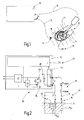
- FIG. 1 an application situation is illustrated schematically in which a treatment is carried out on biological tissue 11 by means of an electrosurgical instrument 10.
- the instrument 10 is supplied with electrical power by a device 12.
- the voltage u provided by the device 12 and the current i delivered to the instrument 10 are preferably periodic quantities with a frequency of preferably several 100 kHz, for example 350 kHz.
- a first line 13 leads from the device 12 to the instrument 10.
- a second line 14 leads from the device 12 to a large-area neutral electrode 15 attached to the intact surface of the tissue 11, in particular the patient's skin.
- the instrument 10 has at least one electrode 17 from which a current flow to the biological tissue 11 proceeds.
- the current can flow through direct tissue contact or via a spark 18 that flashes between the electrode 17 and the biological tissue 11.
- the spark 18 can traverse a volume that contains air and / or water vapor and / or steam from other liquids such as purisols, saline solution and / or another gas such as nitrogen, carbon dioxide or noble gas such as argon in particular.
- the gas or gas mixture or vapor present ionizes in the area of the spark 18 and forms a plasma, the spark touching the biological tissue 11 and introducing current into it.
- the biological tissue 11 can be electrically conductive Contain foreign bodies, in particular metal parts 19, such as in particular stents 20 ( Figure 1 ) for holding open hollow vessels 21 such as the esophagus or the like.
- the metal part 19 can also be a clip, screw, plate, wire or other component introduced into the body of a patient.
- the spark 18 When treatments are performed on the biological tissue 11, the spark 18 may come into contact with metal parts 19. Such contact should by no means take place in an uncontrolled manner. It can be desirable, for example, to specifically heat or cut metal parts, for example to shorten stents or to heat surgical forceps, for example to cause tissue coagulation between the branches of the forceps. However, it can also be undesirable, for example if the heating of metal parts 19 would lead to damage to the same and to damage to the surrounding biological tissue. If the view of the application area is poor, however, it is sometimes difficult for the user to recognize metal parts in good time. In particular, however, it can be difficult to detect the contact of the metal parts 19 by the spark 18 quickly enough.
- a metal detector 22 is provided which, as in FIG Figure 2 shown, part of the device 12 or, alternatively, part of the instrument 10 or as an intermediate module. Such an intermediate module is to be connected to the device 12 instead of the lines 13, 14, the lines 13, 14 then being connected to the intermediate module.
- the metal detector 22 can include a measuring device 23 which detects the voltage u made available for the instrument 10 and the current i supplied to the instrument 10. It records at least one characteristic value Ku of the voltage and at least one characteristic value Ki of the current.
- a characteristic value Ki of the current can be the instantaneous value i (t), the peak value i peak , the mean value i mean , the effective value i eff or another value suitable for characterization.
- Such characteristic values can be recorded continuously or in a sampled manner. When sampling instantaneous values, sampling is preferably carried out at more than twice the frequency of the current (for example at more than 700 kHz).
- the instantaneous value u (t), the peak value u peak , the mean value u mean , the effective value u eff or another value suitable for characterization can also be recorded as the characteristic value Ku for the voltage.
- the acquisition can take place continuously or periodically.
- sampling is preferably carried out at more than twice the frequency of the voltage. If in the following and in the foregoing the term "acquisition of the current” or “acquisition of the voltage” is used, this refers to the explained acquisition of a corresponding characteristic value of the current or the voltage.
- the measured characteristic values Ku, Ki for the voltage and the current are transferred from the measuring device 23 to an analysis device 24.
- the analysis device is used to distinguish, on the basis of the parameters for the current and the voltage, whether the spark 18 is in contact with the tissue 11 or with the metal part 19.
- the analysis device 24 can also use be connected to a controller 25 of a generator 26, which is shown in Figure 2 is illustrated schematically and is used to supply the instrument 10 with high-frequency electrical energy.
- the generator 26 typically includes, in addition to the control device 25, a power supply unit 27 and a connected power oscillator 28 with an oscillating circuit 29 and a potential-free HF decoupling coil 30.
- the controller 25 controls the operation of the generator 26, ie it activates and deactivates it the voltage and / or the current and / or the power and / or the crest factor of the same.
- the controller 25 can communicate with operating elements (not shown further) which are designed as switches or setting devices on the device 12 and / or the instrument 10 and / or as further separate switches or input devices.
- the analysis device 24 is set up to determine at least two parameters, namely a spark parameter F rel and a resistance parameter R.
- a spark parameter F rel a parameter is preferably selected which characterizes the size and / or the intensity of the spark 18.
- a parameter that characterizes the non-linearity of the electrical network formed by the instrument 10, the spark 18 and the biological tissue 11 can be considered as the spark parameter F rel.
- the electrical network thus formed is in simplified form in Figure 2 illustrated.
- the tissue resistance R G1 is the resistance of the biological Tissue when the spark 18 hits this.
- the tissue resistance R G2 is the typically lower tissue resistance that results from the current distribution of the metal part 19 when the spark 18 hits it.
- the network also includes the non-linear resistance of the spark 18.
- the analysis device 24 can have an internal equivalent circuit 31, an internal network model 31 of this electrical network, as in FIG Figure 3 is indicated.
- the network model 31 can actually be a simplified representation of the Figure 2 existing network, in which the occurring inductances, capacitances and resistances are combined into elements R, L, C.
- the analysis device can make and decide the selection based on the lag or lead of the current i relative to the voltage u.
- the analysis device 24 is designed to first determine the values of the elements L, R, C of the network model 31, 31a, 31b.
- the values of the elements L, R, C are determined, for example within the framework of a regression calculation or with the method of the smallest error square, so that the arithmetically occurring currents and voltages in the network model 31, 31a, 31b are as close as possible to the actually recorded current and the actually detected voltage are adjusted. Since the ohmic line resistance R cable is usually less than 1 ohm, it is negligible.
- the value R corresponds to the resistance according to the network model 31a, b according to Figure 4 or 5 the tissue resistance.
- the components of the current i and the voltage u that do not match the linear network model are assigned to the non-linear resistance F of the spark 18.
- the determination of the values of the elements L, R, C can take place at the beginning of an activation, or at time intervals or continuously.
- FIG. 3 illustrates several blocks to illustrate the processing of the measured current i (t) and the voltage u (t). These blocks can be implemented by program code or in some other way. The assignment of functions to blocks is purely exemplary and can also be made in other ways.
- a block 32 determines the elements R, L and / or C of the network model 31 sporadically, periodically or continuously Figure 3 , 4 or 5 .
- the network model 31 uses the input of the measured voltage u (t) to calculate a current i sim (t) and its difference i f (t) to the measured current i (t) and its effective value Feff of i f (t).
- the current i sim (t) in particular when the spark 18 has ignited, does not agree with the effective value i eff of the measured current i (t).
- the current error i f (t) is calculated as the difference from the equivalent circuit diagram Figure 4 or 5
- the nominal current i sim (t) calculated for the HF surgical application and the HF current i (t) measured during the HF application: i f t i sim t - i t
- Block 32 calculates the deviation of the simulated current i sim (t) from the measured current i (t) as a current error i f (t).
- i f (t) can also be calculated based on the instantaneous values of the setpoint current i sim (t) and the actual current i (t).
- the current error i f (t) becomes maximum when the measured HF current i (t) deviates from the calculated regression current to the maximum. This deviation is particularly the case in HF surgical applications with spark formation, in which the spark formation leads to a strong distortion of the HF current i (t).
- the non-linear component of the equivalent circuit diagram for calculating the regression current is particularly high.
- the linear elements of the equivalent circuit according to Figure 3 to 5 cannot fully explain the measured HF current i (t) and lead to a regression current i sim (t) that deviates from the measured HF current i (t). This correlates with a high current error i f (t), as a result of which the effective spark characteristic value F eff increases accordingly.
- a relative measure for the spark formation is obtained in block 35.
- the analysis device 24 uses the regression analysis to calculate the linear values of the network model 31 according to Figure 3 or 31a. or b according to FIG. 4 or 5.
- the ohmic component R can be used as a resistance parameter which mainly characterizes the resistance of the biological tissue 11, ie in the representation according to FIG Figure 2 to be assigned to the tissue resistance R G1 or R G2 .
- the regression calculation for this is carried out continuously by the block 32, the regression block, in order to determine the resistance parameter R during the entire operation of the instrument 10.
- the tissue resistance can also, as in Figure 3 illustrated, can be determined by a separate resistance arithmetic block 33.
- the blocks 36, 37 first determine the rms values of the HF voltage and the HF current u eff and i eff , as well as the power factor cos ⁇ , from the instantaneous values i (t) and u (t).
- the resistance calculation block 33 can also receive these effective values from the measuring device 23.
- the resistance calculation block 33 forms the quotient of the effective value u eff of the HF voltage u (t) and the effective value i eff multiplied by the power factor cos ⁇ .
- a comparator 34 compares the spark parameter F rel determined in block 35 with a spark size threshold value F 0 .
- the comparator compares the resistance parameter R with a resistance threshold value Ro.
- the sequence is illustrated Figure 6 .
- the spark parameter F rel can be larger or smaller than the spark size threshold value F 0 .
- the resistance parameter R can be greater or less than the resistance value threshold value Ro. This results in four possible constellations. It has been shown that with a suitable choice of Ro to, for example, 300 ohms and F 0 to, for example, 0.4, the contact of metal is given by the spark 18 when the resistance parameter R is less than the resistance threshold value R 0 and the spark parameter Frei is greater than the spark size threshold value F 0 .
- a branch is made to a block 38 which symbolizes a corresponding measure.
- a measure can be the transmission of a perceptible signal or an influencing of the controller 25. This can, for example, reduce or increase the power or switch off the generator 26, change the crest factor or the like.
- Figure 7 illustrates a modified embodiment of the method.
- the resistance parameter R and the spark parameter F rel are continuously determined. In contrast to the method described above, however, these are not compared with absolute threshold values F 0 and R 0 . Rather, the time change dR / dt of the resistance parameter R and the time change dF rel / dt of the spark parameter F rel are determined as evaluation criteria and compared with limit values ro and f 0 .
- a branch is made to the measure block 38 if the change dR / dt in the tissue resistance is below a resistance change threshold value ro and the change dF rel / dt in the spark parameter F rel is greater than a spark size change threshold value f 0 . This makes it possible to avoid incorrect conclusions about metal contact due to stochastic measurement value fluctuations.
- a device according to the invention for metal detection in spark-generating electrosurgical instruments 10 contains a metal detector 22 which, on the basis of the current i (t) supplied to the instrument 10 (and the voltage), distinguishes whether a spark 18 emanating from the instrument 10 is on biological tissue 11 or a Metal part 19 meets. This is preferably done by determining that portion of the current i (t) which does not match a linear equivalent circuit 31.
- the elements of the linear equivalent circuit 31 are determined beforehand or during operation in a regression calculation.
- the spark parameter F rel is determined from the current i (t) as the first decision criterion.
- a resistance parameter R is determined, which characterizes the tissue resistance. Both parameters are compared with threshold values Fo, Ro.
- Resistance parameter R cable Ohmic line resistance L cable Cable inductance C. capacity
- R G , R G1 , R G2 Tissue resistance 31, 31a, 31b
- F. Spark resistance i sim (t) current calculated with the network model T Period duration
- F eff RMS value of the current error i eff Rms current
- Regression block 33
- F 0 Spark size threshold Ro Resistance threshold
- Comparator block 35 - 38 blocks f 0 Spark Size Change Threshold r 0 Resistance change threshold cos ⁇ Power factor
Landscapes
- Health & Medical Sciences (AREA)
- Surgery (AREA)
- Life Sciences & Earth Sciences (AREA)
- Engineering & Computer Science (AREA)
- Physics & Mathematics (AREA)
- Heart & Thoracic Surgery (AREA)
- Veterinary Medicine (AREA)
- Nuclear Medicine, Radiotherapy & Molecular Imaging (AREA)
- Biomedical Technology (AREA)
- Medical Informatics (AREA)
- Molecular Biology (AREA)
- Animal Behavior & Ethology (AREA)
- General Health & Medical Sciences (AREA)
- Public Health (AREA)
- Otolaryngology (AREA)
- Plasma & Fusion (AREA)
- General Physics & Mathematics (AREA)
- Surgical Instruments (AREA)
- Oral & Maxillofacial Surgery (AREA)
- Pathology (AREA)
- Plasma Technology (AREA)
- Geophysics And Detection Of Objects (AREA)
- Measurement And Recording Of Electrical Phenomena And Electrical Characteristics Of The Living Body (AREA)
Claims (9)
- Dispositif de détection de métal lors d'une action sur des tissus biologiques (11) au moyen d'un instrument électrochirurgical (10) formant des étincelles,comprenant un dispositif de mesure (23) destiné à mesurer une tension (u) fournie par un générateur (26) en vue du fonctionnement de l'instrument (10), et à mesurer le courant (i) délivré par le générateur (26) à l'instrument (10),comprenant un détecteur de métal (22) qui est conçu pour distinguer à l'aide du courant (i) et de la tension (u), si une étincelle (18) émanant de l'instrument (10) rencontre des tissus biologiques (11) ou un élément en métal (19), caractérisé en ce que le détecteur de métal (22) présente :un dispositif d'analyse (24) qui est conçu pour déterminer une grandeur caractéristique de résistance (R), dépendant de la résistance des tissus (RG), et une grandeur caractéristique d'étincelle (Frel) dépdendant de la taille des étincelles, etun comparateur (34) qui est conçu pour comparer la grandeur caractéristique de résistance (R) avec une valeur seuil de résistance (R0) et la grandeur caractéristique d'étincelle (Frel) avec une valeur seuil de grandeur d'étincelle (F0),le comparateur (34) étant conçu pour indiquer un contact avec du métal par une étincelle (18) émanant de l'instrument (10), si :- la grandeur caractéristique de résistance (R) passe en dessous de la valeur seuil de résistance (R0), et- la grandeur caractéristique d'étincelle (Frel) dépasse la valeur seuil de grandeur d'étincelle (F0).
- Dispositif selon l'une des revendications précédentes, caractérisé en ce que le générateur (26) est un générateur HF.
- Dispositif selon l'une des revendications précédentes, caractérisé en ce que le dispositif de mesure (23) est conçu pour déterminer en continu la caractéristique (Ki, Ku), au nombre d'au moins une, du courant (i) et de la tension (u).
- Dispositif selon la revendication 3, caractérisé en ce que la caractéristique (Ki, Ku) du courant (i) et de la tension (u) est la valeur instantanée (i(t), u(t)), la valeur de crête (ipeak, upeak), la valeur moyenne (imean, umean), la valeur effective (ieff, ueff) ou une autre valeur appropriée pour la caractérisation.
- Dispositif selon l'une des revendications précédentes, caractérisé en ce que le dispositif de mesure (23) est conçu pour déterminer le facteur de puissance (cos Φ) défini par le courant (i) et la tension (u).
- Dispositif selon la revendication 1, caractérisé en ce que le dispositif d'analyse (24) est conçu pour déterminer la caractéristique de grandeur d'étincelle (Frel) à l'aide de la fraction non linéaire du courant (i).
- Dispositif selon la revendication 6, caractérisé en ce que le dispositif d'analyse (24) est conçu pour déterminer une valeur estimée pour la fraction non linéaire du courant (i).
- Dispositif selon la revendication 7, caractérisé en ce que le dispositif d'analyse (24) est conçu pour déterminer la valeur estimée pour la fraction non linéaire du courant (i) à l'aide de l'écart du courant (i) mesuré par rapport à un courant (isim) calculé à l'aide d'un circuit équivalent linéaire (31)
- Dispositif selon la revendication 8, caractérisé en ce que le dispositif d'analyse (24) est conçu pour déterminer les valeurs des éléments du circuit équivalent linéaire (31) à partir du courant (i) mesuré et de la tension (u) mesurée.
Priority Applications (7)
| Application Number | Priority Date | Filing Date | Title |
|---|---|---|---|
| PL14190155T PL3011923T3 (pl) | 2014-10-23 | 2014-10-23 | Urządzenie do wykrywania metalu podczas oddziaływania na tkankę biologiczną za pomocą wytwarzającego iskrę instrumentu elektrochirurgicznego |
| EP14190155.3A EP3011923B1 (fr) | 2014-10-23 | 2014-10-23 | Dispositif de reconnaissance de métal lors d'une action sur des tissus biologiques au moyen d'un instrument électrochirurgical formant des étincelles |
| BR102015021518-5A BR102015021518B1 (pt) | 2014-10-23 | 2015-09-03 | Dispositivo para detectar metal |
| KR1020150134042A KR101705463B1 (ko) | 2014-10-23 | 2015-09-22 | 스파킹 전기 수술 기구에 의해 생체 조직이 처치를 받을 때 금속을 검출하기 위한 디바이스 |
| JP2015199481A JP6152153B2 (ja) | 2014-10-23 | 2015-10-07 | 生体組織がスパーク発生電気手術器具による作用を受けるときの金属検知装置 |
| US14/876,998 US10166063B2 (en) | 2014-10-23 | 2015-10-07 | Device for detecting metal when biological tissue is acted on by means of a sparking electrosurgical instrument |
| CN201510650614.9A CN105534594B (zh) | 2014-10-23 | 2015-10-09 | 在点火式电外科器械作用于生物组织时检测金属的装置 |
Applications Claiming Priority (1)
| Application Number | Priority Date | Filing Date | Title |
|---|---|---|---|
| EP14190155.3A EP3011923B1 (fr) | 2014-10-23 | 2014-10-23 | Dispositif de reconnaissance de métal lors d'une action sur des tissus biologiques au moyen d'un instrument électrochirurgical formant des étincelles |
Publications (2)
| Publication Number | Publication Date |
|---|---|
| EP3011923A1 EP3011923A1 (fr) | 2016-04-27 |
| EP3011923B1 true EP3011923B1 (fr) | 2021-12-01 |
Family
ID=51786875
Family Applications (1)
| Application Number | Title | Priority Date | Filing Date |
|---|---|---|---|
| EP14190155.3A Active EP3011923B1 (fr) | 2014-10-23 | 2014-10-23 | Dispositif de reconnaissance de métal lors d'une action sur des tissus biologiques au moyen d'un instrument électrochirurgical formant des étincelles |
Country Status (7)
| Country | Link |
|---|---|
| US (1) | US10166063B2 (fr) |
| EP (1) | EP3011923B1 (fr) |
| JP (1) | JP6152153B2 (fr) |
| KR (1) | KR101705463B1 (fr) |
| CN (1) | CN105534594B (fr) |
| BR (1) | BR102015021518B1 (fr) |
| PL (1) | PL3011923T3 (fr) |
Families Citing this family (5)
| Publication number | Priority date | Publication date | Assignee | Title |
|---|---|---|---|---|
| CN107582175B (zh) * | 2017-08-24 | 2024-06-11 | 广州市番禺区中医院 | 椎弓根螺钉置入探测仪 |
| US11045247B2 (en) * | 2018-02-20 | 2021-06-29 | Covidien Lp | Systems and methods for controlling arcing |
| CN113768614A (zh) * | 2021-09-16 | 2021-12-10 | 奥克兰高分子医用材料(天津)有限公司 | 一种高频回路电极垫 |
| DE102023115741A1 (de) * | 2023-06-14 | 2024-12-19 | Olympus Winter & Ibe Gmbh | Verfahren zur Steuerung eines elektrochirurgischen Instruments zur Erzeugung einesSchneidplasmas und entsprechender elektrochirurgischer Generator |
| CN121081091A (zh) * | 2024-06-07 | 2025-12-09 | 奥林匹斯冬季和Ibe有限公司 | 用于控制电外科器械的方法和电外科发生器 |
Family Cites Families (15)
| Publication number | Priority date | Publication date | Assignee | Title |
|---|---|---|---|---|
| US5749914A (en) * | 1989-01-06 | 1998-05-12 | Advanced Coronary Intervention | Catheter for obstructed stent |
| US5558671A (en) | 1993-07-22 | 1996-09-24 | Yates; David C. | Impedance feedback monitor for electrosurgical instrument |
| US6235020B1 (en) | 1993-05-10 | 2001-05-22 | Arthrocare Corporation | Power supply and methods for fluid delivery in electrosurgery |
| NZ299133A (en) * | 1995-12-11 | 1997-09-22 | Megadyne Med Prod Inc | Electrocautery instrument; details relating to an insulation covering overlaid by a conducting layer, the layers being on a metallic shaft component of the instrument |
| EP1024769B1 (fr) * | 1997-10-23 | 2009-02-25 | Arthrocare Corporation | Alimentation en puissance pour electrochirurgie dans du fluide conducteur |
| US9168085B2 (en) * | 2006-09-29 | 2015-10-27 | Baylis Medical Company Inc. | Monitoring and controlling energy delivery of an electrosurgical device |
| DE102004010769B4 (de) * | 2004-03-05 | 2010-07-15 | Bowa-Electronic Gmbh & Co. Kg | Hochfrequenz-Chirurgiegerät zum Schneiden und Koagulieren biologischer Gewebe |
| DE102004056636B4 (de) * | 2004-11-23 | 2008-11-13 | Bowa-Electronic Gmbh | Hochfrequenzchirurgie-Gerät und Verfahren zu dessen Betrieb |
| JP2006289061A (ja) * | 2006-02-20 | 2006-10-26 | Olympus Corp | 電気外科手術装置 |
| US7651492B2 (en) * | 2006-04-24 | 2010-01-26 | Covidien Ag | Arc based adaptive control system for an electrosurgical unit |
| EP2180917B1 (fr) * | 2007-07-24 | 2018-01-24 | Boston Scientific Scimed, Inc. | Système de commander la puissance à partir de la détection d'impédance, telle que la commande de puissance fournie à des dispositifs de traitement de tissu |
| DE102008038314A1 (de) * | 2008-06-30 | 2010-01-07 | Erbe Elektromedizin Gmbh | Elektrochirurgiegenerator zum Behandeln eines biologischen Gewebes, Verfahren zum Regeln einer Ausgangsspannung eines elektrochirurgischen Generators und entsprechende Verwendung des Elektrochirurgiegeneators |
| US8989855B2 (en) | 2009-01-30 | 2015-03-24 | Medtronic Xomed, Inc. | Nerve monitoring during electrosurgery |
| US9044244B2 (en) | 2010-12-10 | 2015-06-02 | Biosense Webster (Israel), Ltd. | System and method for detection of metal disturbance based on mutual inductance measurement |
| US10307205B2 (en) * | 2010-12-10 | 2019-06-04 | Biosense Webster (Israel) Ltd. | System and method for detection of metal disturbance based on orthogonal field components |
-
2014
- 2014-10-23 PL PL14190155T patent/PL3011923T3/pl unknown
- 2014-10-23 EP EP14190155.3A patent/EP3011923B1/fr active Active
-
2015
- 2015-09-03 BR BR102015021518-5A patent/BR102015021518B1/pt active IP Right Grant
- 2015-09-22 KR KR1020150134042A patent/KR101705463B1/ko active Active
- 2015-10-07 US US14/876,998 patent/US10166063B2/en active Active
- 2015-10-07 JP JP2015199481A patent/JP6152153B2/ja active Active
- 2015-10-09 CN CN201510650614.9A patent/CN105534594B/zh active Active
Also Published As
| Publication number | Publication date |
|---|---|
| JP6152153B2 (ja) | 2017-06-21 |
| KR20160047979A (ko) | 2016-05-03 |
| EP3011923A1 (fr) | 2016-04-27 |
| CN105534594A (zh) | 2016-05-04 |
| US10166063B2 (en) | 2019-01-01 |
| PL3011923T3 (pl) | 2022-02-14 |
| CN105534594B (zh) | 2018-08-28 |
| JP2016085210A (ja) | 2016-05-19 |
| US20160113702A1 (en) | 2016-04-28 |
| KR101705463B1 (ko) | 2017-02-09 |
| BR102015021518A2 (pt) | 2016-04-26 |
| BR102015021518B1 (pt) | 2022-05-24 |
Similar Documents
| Publication | Publication Date | Title |
|---|---|---|
| EP2306918B1 (fr) | Dispositif électro-chirurgical pour traiter un tissu biologique | |
| EP2992848B1 (fr) | Dispositif de coagulation par contact de tissu biologique | |
| DE69831525T2 (de) | Elektrochirurgischer Generator mit adaptiver Leistungssteuerung | |
| EP2514380B1 (fr) | Appareil électrochirurgical avec dispositif de coupe améliorée | |
| DE60026191T2 (de) | Automatische Aktivierung des bipolaren Ausgangssignals eines elektrochirurgischen Generators | |
| EP1753356B1 (fr) | Procédé et dispositif de mesure permettant de determiner l'impedance transitoire entre deux éléctrodes partielles d'une éléctrode neutre divisée | |
| DE102004026179B4 (de) | Elektrochirurgisches Instrument | |
| EP1858428B1 (fr) | Dispositif chirurgical haute frequence | |
| DE102007034271A1 (de) | Hochfrequenzchirurgiegerät und Verfahren zu dessen Betrieb | |
| EP2540244B1 (fr) | Dispositif de coagulation optimisée de tissu biologique | |
| DE3911416A1 (de) | Elektrochirurgisches hochfrequenzgeraet | |
| DE202009001333U1 (de) | Ablationsleistungsindikator für elektrochirurgische Geräte | |
| EP0598805A1 (fr) | Dispositif d'incision de tissus biologiques avec un courant haute frequence | |
| DE3510586A1 (de) | Kontrolleinrichtung fuer ein hochfrequenz-chirurgiegeraet | |
| EP3884894B1 (fr) | Générateur d'électrochirurgie, système d'électrochirurgie et procédé de fonctionnement d'un générateur d'électrochirurgie | |
| EP2367493A1 (fr) | Appareil électrochirurgical doté d'un dispositif de mesure de température et procédé de détermination de la température et/ou d'une modification de la température d'une électrode neutre | |
| EP3011923A1 (fr) | Dispositif de reconnaissance de métal lors d'une action sur des tissus biologiques au moyen d'un instrument électrochirurgical formant des étincelles | |
| DE102009024612A1 (de) | Versorgungseinrichtung zur Bereitstellung einer HF-Ausgangsspannung, HF-Chirurgiegerät mit entsprechender Versorgungseinrichtung und Verfahren zum Betreiben einer HF-Generatoreinheit | |
| DE102004056636B4 (de) | Hochfrequenzchirurgie-Gerät und Verfahren zu dessen Betrieb | |
| EP3569171B1 (fr) | Dispositif et procédé de specification des parametres de fonctionnement pour la production d'un plasma dans un milieu aqueux | |
| DE4126607C2 (de) | Anordnung zum Schneiden von biologischem Gewebe mit Hochfrequenzstrom | |
| WO2018069533A1 (fr) | Générateur de hautes fréquences pour la connexion d'un instrument pour le traitement de tissu corporel | |
| CH680702A5 (fr) | ||
| DE102004010769B4 (de) | Hochfrequenz-Chirurgiegerät zum Schneiden und Koagulieren biologischer Gewebe | |
| DE102017110473B4 (de) | Elektrochirurgisches System mit einer Steuer- und Messvorrichtung |
Legal Events
| Date | Code | Title | Description |
|---|---|---|---|
| PUAI | Public reference made under article 153(3) epc to a published international application that has entered the european phase |
Free format text: ORIGINAL CODE: 0009012 |
|
| AK | Designated contracting states |
Kind code of ref document: A1 Designated state(s): AL AT BE BG CH CY CZ DE DK EE ES FI FR GB GR HR HU IE IS IT LI LT LU LV MC MK MT NL NO PL PT RO RS SE SI SK SM TR |
|
| AX | Request for extension of the european patent |
Extension state: BA ME |
|
| 17P | Request for examination filed |
Effective date: 20160502 |
|
| RBV | Designated contracting states (corrected) |
Designated state(s): AL AT BE BG CH CY CZ DE DK EE ES FI FR GB GR HR HU IE IS IT LI LT LU LV MC MK MT NL NO PL PT RO RS SE SI SK SM TR |
|
| RAP1 | Party data changed (applicant data changed or rights of an application transferred) |
Owner name: ERBE ELEKTROMEDIZIN GMBH |
|
| GRAP | Despatch of communication of intention to grant a patent |
Free format text: ORIGINAL CODE: EPIDOSNIGR1 |
|
| STAA | Information on the status of an ep patent application or granted ep patent |
Free format text: STATUS: GRANT OF PATENT IS INTENDED |
|
| RIC1 | Information provided on ipc code assigned before grant |
Ipc: A61B 18/00 20060101ALN20210308BHEP Ipc: A61B 18/04 20060101ALI20210308BHEP Ipc: A61B 18/12 20060101AFI20210308BHEP |
|
| RIC1 | Information provided on ipc code assigned before grant |
Ipc: A61B 18/00 20060101ALN20210312BHEP Ipc: A61B 18/04 20060101ALI20210312BHEP Ipc: A61B 18/12 20060101AFI20210312BHEP |
|
| INTG | Intention to grant announced |
Effective date: 20210330 |
|
| GRAJ | Information related to disapproval of communication of intention to grant by the applicant or resumption of examination proceedings by the epo deleted |
Free format text: ORIGINAL CODE: EPIDOSDIGR1 |
|
| STAA | Information on the status of an ep patent application or granted ep patent |
Free format text: STATUS: REQUEST FOR EXAMINATION WAS MADE |
|
| GRAP | Despatch of communication of intention to grant a patent |
Free format text: ORIGINAL CODE: EPIDOSNIGR1 |
|
| STAA | Information on the status of an ep patent application or granted ep patent |
Free format text: STATUS: GRANT OF PATENT IS INTENDED |
|
| INTC | Intention to grant announced (deleted) | ||
| RIC1 | Information provided on ipc code assigned before grant |
Ipc: A61B 18/00 20060101ALN20210813BHEP Ipc: A61B 18/04 20060101ALI20210813BHEP Ipc: A61B 18/12 20060101AFI20210813BHEP |
|
| GRAS | Grant fee paid |
Free format text: ORIGINAL CODE: EPIDOSNIGR3 |
|
| INTG | Intention to grant announced |
Effective date: 20210907 |
|
| GRAA | (expected) grant |
Free format text: ORIGINAL CODE: 0009210 |
|
| STAA | Information on the status of an ep patent application or granted ep patent |
Free format text: STATUS: THE PATENT HAS BEEN GRANTED |
|
| AK | Designated contracting states |
Kind code of ref document: B1 Designated state(s): AL AT BE BG CH CY CZ DE DK EE ES FI FR GB GR HR HU IE IS IT LI LT LU LV MC MK MT NL NO PL PT RO RS SE SI SK SM TR |
|
| REG | Reference to a national code |
Ref country code: GB Ref legal event code: FG4D Free format text: NOT ENGLISH |
|
| REG | Reference to a national code |
Ref country code: AT Ref legal event code: REF Ref document number: 1451049 Country of ref document: AT Kind code of ref document: T Effective date: 20211215 Ref country code: CH Ref legal event code: EP |
|
| REG | Reference to a national code |
Ref country code: IE Ref legal event code: FG4D Free format text: LANGUAGE OF EP DOCUMENT: GERMAN |
|
| REG | Reference to a national code |
Ref country code: DE Ref legal event code: R096 Ref document number: 502014016017 Country of ref document: DE |
|
| REG | Reference to a national code |
Ref country code: LT Ref legal event code: MG9D |
|
| REG | Reference to a national code |
Ref country code: NL Ref legal event code: MP Effective date: 20211201 |
|
| PG25 | Lapsed in a contracting state [announced via postgrant information from national office to epo] |
Ref country code: RS Free format text: LAPSE BECAUSE OF FAILURE TO SUBMIT A TRANSLATION OF THE DESCRIPTION OR TO PAY THE FEE WITHIN THE PRESCRIBED TIME-LIMIT Effective date: 20211201 Ref country code: LT Free format text: LAPSE BECAUSE OF FAILURE TO SUBMIT A TRANSLATION OF THE DESCRIPTION OR TO PAY THE FEE WITHIN THE PRESCRIBED TIME-LIMIT Effective date: 20211201 Ref country code: FI Free format text: LAPSE BECAUSE OF FAILURE TO SUBMIT A TRANSLATION OF THE DESCRIPTION OR TO PAY THE FEE WITHIN THE PRESCRIBED TIME-LIMIT Effective date: 20211201 Ref country code: BG Free format text: LAPSE BECAUSE OF FAILURE TO SUBMIT A TRANSLATION OF THE DESCRIPTION OR TO PAY THE FEE WITHIN THE PRESCRIBED TIME-LIMIT Effective date: 20220301 |
|
| PG25 | Lapsed in a contracting state [announced via postgrant information from national office to epo] |
Ref country code: SE Free format text: LAPSE BECAUSE OF FAILURE TO SUBMIT A TRANSLATION OF THE DESCRIPTION OR TO PAY THE FEE WITHIN THE PRESCRIBED TIME-LIMIT Effective date: 20211201 Ref country code: NO Free format text: LAPSE BECAUSE OF FAILURE TO SUBMIT A TRANSLATION OF THE DESCRIPTION OR TO PAY THE FEE WITHIN THE PRESCRIBED TIME-LIMIT Effective date: 20220301 Ref country code: LV Free format text: LAPSE BECAUSE OF FAILURE TO SUBMIT A TRANSLATION OF THE DESCRIPTION OR TO PAY THE FEE WITHIN THE PRESCRIBED TIME-LIMIT Effective date: 20211201 Ref country code: HR Free format text: LAPSE BECAUSE OF FAILURE TO SUBMIT A TRANSLATION OF THE DESCRIPTION OR TO PAY THE FEE WITHIN THE PRESCRIBED TIME-LIMIT Effective date: 20211201 Ref country code: GR Free format text: LAPSE BECAUSE OF FAILURE TO SUBMIT A TRANSLATION OF THE DESCRIPTION OR TO PAY THE FEE WITHIN THE PRESCRIBED TIME-LIMIT Effective date: 20220302 Ref country code: ES Free format text: LAPSE BECAUSE OF FAILURE TO SUBMIT A TRANSLATION OF THE DESCRIPTION OR TO PAY THE FEE WITHIN THE PRESCRIBED TIME-LIMIT Effective date: 20211201 |
|
| PG25 | Lapsed in a contracting state [announced via postgrant information from national office to epo] |
Ref country code: NL Free format text: LAPSE BECAUSE OF FAILURE TO SUBMIT A TRANSLATION OF THE DESCRIPTION OR TO PAY THE FEE WITHIN THE PRESCRIBED TIME-LIMIT Effective date: 20211201 |
|
| PG25 | Lapsed in a contracting state [announced via postgrant information from national office to epo] |
Ref country code: SM Free format text: LAPSE BECAUSE OF FAILURE TO SUBMIT A TRANSLATION OF THE DESCRIPTION OR TO PAY THE FEE WITHIN THE PRESCRIBED TIME-LIMIT Effective date: 20211201 Ref country code: SK Free format text: LAPSE BECAUSE OF FAILURE TO SUBMIT A TRANSLATION OF THE DESCRIPTION OR TO PAY THE FEE WITHIN THE PRESCRIBED TIME-LIMIT Effective date: 20211201 Ref country code: RO Free format text: LAPSE BECAUSE OF FAILURE TO SUBMIT A TRANSLATION OF THE DESCRIPTION OR TO PAY THE FEE WITHIN THE PRESCRIBED TIME-LIMIT Effective date: 20211201 Ref country code: PT Free format text: LAPSE BECAUSE OF FAILURE TO SUBMIT A TRANSLATION OF THE DESCRIPTION OR TO PAY THE FEE WITHIN THE PRESCRIBED TIME-LIMIT Effective date: 20220401 Ref country code: EE Free format text: LAPSE BECAUSE OF FAILURE TO SUBMIT A TRANSLATION OF THE DESCRIPTION OR TO PAY THE FEE WITHIN THE PRESCRIBED TIME-LIMIT Effective date: 20211201 Ref country code: CZ Free format text: LAPSE BECAUSE OF FAILURE TO SUBMIT A TRANSLATION OF THE DESCRIPTION OR TO PAY THE FEE WITHIN THE PRESCRIBED TIME-LIMIT Effective date: 20211201 |
|
| REG | Reference to a national code |
Ref country code: DE Ref legal event code: R097 Ref document number: 502014016017 Country of ref document: DE |
|
| PG25 | Lapsed in a contracting state [announced via postgrant information from national office to epo] |
Ref country code: IS Free format text: LAPSE BECAUSE OF FAILURE TO SUBMIT A TRANSLATION OF THE DESCRIPTION OR TO PAY THE FEE WITHIN THE PRESCRIBED TIME-LIMIT Effective date: 20220401 |
|
| PLBE | No opposition filed within time limit |
Free format text: ORIGINAL CODE: 0009261 |
|
| STAA | Information on the status of an ep patent application or granted ep patent |
Free format text: STATUS: NO OPPOSITION FILED WITHIN TIME LIMIT |
|
| PG25 | Lapsed in a contracting state [announced via postgrant information from national office to epo] |
Ref country code: DK Free format text: LAPSE BECAUSE OF FAILURE TO SUBMIT A TRANSLATION OF THE DESCRIPTION OR TO PAY THE FEE WITHIN THE PRESCRIBED TIME-LIMIT Effective date: 20211201 Ref country code: AL Free format text: LAPSE BECAUSE OF FAILURE TO SUBMIT A TRANSLATION OF THE DESCRIPTION OR TO PAY THE FEE WITHIN THE PRESCRIBED TIME-LIMIT Effective date: 20211201 |
|
| 26N | No opposition filed |
Effective date: 20220902 |
|
| PG25 | Lapsed in a contracting state [announced via postgrant information from national office to epo] |
Ref country code: SI Free format text: LAPSE BECAUSE OF FAILURE TO SUBMIT A TRANSLATION OF THE DESCRIPTION OR TO PAY THE FEE WITHIN THE PRESCRIBED TIME-LIMIT Effective date: 20211201 |
|
| REG | Reference to a national code |
Ref country code: FR Ref legal event code: PLFP Year of fee payment: 9 |
|
| PG25 | Lapsed in a contracting state [announced via postgrant information from national office to epo] |
Ref country code: MC Free format text: LAPSE BECAUSE OF FAILURE TO SUBMIT A TRANSLATION OF THE DESCRIPTION OR TO PAY THE FEE WITHIN THE PRESCRIBED TIME-LIMIT Effective date: 20211201 |
|
| REG | Reference to a national code |
Ref country code: CH Ref legal event code: PL |
|
| REG | Reference to a national code |
Ref country code: BE Ref legal event code: MM Effective date: 20221031 |
|
| PG25 | Lapsed in a contracting state [announced via postgrant information from national office to epo] |
Ref country code: LU Free format text: LAPSE BECAUSE OF NON-PAYMENT OF DUE FEES Effective date: 20221023 |
|
| PG25 | Lapsed in a contracting state [announced via postgrant information from national office to epo] |
Ref country code: LI Free format text: LAPSE BECAUSE OF NON-PAYMENT OF DUE FEES Effective date: 20221031 Ref country code: CH Free format text: LAPSE BECAUSE OF NON-PAYMENT OF DUE FEES Effective date: 20221031 |
|
| PG25 | Lapsed in a contracting state [announced via postgrant information from national office to epo] |
Ref country code: BE Free format text: LAPSE BECAUSE OF NON-PAYMENT OF DUE FEES Effective date: 20221031 |
|
| PG25 | Lapsed in a contracting state [announced via postgrant information from national office to epo] |
Ref country code: IE Free format text: LAPSE BECAUSE OF NON-PAYMENT OF DUE FEES Effective date: 20221023 |
|
| REG | Reference to a national code |
Ref country code: AT Ref legal event code: MM01 Ref document number: 1451049 Country of ref document: AT Kind code of ref document: T Effective date: 20221023 |
|
| PG25 | Lapsed in a contracting state [announced via postgrant information from national office to epo] |
Ref country code: AT Free format text: LAPSE BECAUSE OF NON-PAYMENT OF DUE FEES Effective date: 20221023 |
|
| PG25 | Lapsed in a contracting state [announced via postgrant information from national office to epo] |
Ref country code: HU Free format text: LAPSE BECAUSE OF FAILURE TO SUBMIT A TRANSLATION OF THE DESCRIPTION OR TO PAY THE FEE WITHIN THE PRESCRIBED TIME-LIMIT; INVALID AB INITIO Effective date: 20141023 |
|
| PG25 | Lapsed in a contracting state [announced via postgrant information from national office to epo] |
Ref country code: CY Free format text: LAPSE BECAUSE OF FAILURE TO SUBMIT A TRANSLATION OF THE DESCRIPTION OR TO PAY THE FEE WITHIN THE PRESCRIBED TIME-LIMIT Effective date: 20211201 |
|
| PG25 | Lapsed in a contracting state [announced via postgrant information from national office to epo] |
Ref country code: MK Free format text: LAPSE BECAUSE OF FAILURE TO SUBMIT A TRANSLATION OF THE DESCRIPTION OR TO PAY THE FEE WITHIN THE PRESCRIBED TIME-LIMIT Effective date: 20211201 |
|
| PG25 | Lapsed in a contracting state [announced via postgrant information from national office to epo] |
Ref country code: MT Free format text: LAPSE BECAUSE OF FAILURE TO SUBMIT A TRANSLATION OF THE DESCRIPTION OR TO PAY THE FEE WITHIN THE PRESCRIBED TIME-LIMIT Effective date: 20211201 |
|
| PGFP | Annual fee paid to national office [announced via postgrant information from national office to epo] |
Ref country code: PL Payment date: 20250929 Year of fee payment: 12 |
|
| PG25 | Lapsed in a contracting state [announced via postgrant information from national office to epo] |
Ref country code: TR Free format text: LAPSE BECAUSE OF FAILURE TO SUBMIT A TRANSLATION OF THE DESCRIPTION OR TO PAY THE FEE WITHIN THE PRESCRIBED TIME-LIMIT Effective date: 20211201 |
|
| PGFP | Annual fee paid to national office [announced via postgrant information from national office to epo] |
Ref country code: DE Payment date: 20251028 Year of fee payment: 12 |
|
| PGFP | Annual fee paid to national office [announced via postgrant information from national office to epo] |
Ref country code: GB Payment date: 20251023 Year of fee payment: 12 |
|
| PGFP | Annual fee paid to national office [announced via postgrant information from national office to epo] |
Ref country code: IT Payment date: 20251022 Year of fee payment: 12 |
|
| PGFP | Annual fee paid to national office [announced via postgrant information from national office to epo] |
Ref country code: FR Payment date: 20251027 Year of fee payment: 12 |