EP3016355A1 - Procédé et dispositif d'ordonnancement de serveur virtuel nuagique - Google Patents
Procédé et dispositif d'ordonnancement de serveur virtuel nuagique Download PDFInfo
- Publication number
- EP3016355A1 EP3016355A1 EP15786856.3A EP15786856A EP3016355A1 EP 3016355 A1 EP3016355 A1 EP 3016355A1 EP 15786856 A EP15786856 A EP 15786856A EP 3016355 A1 EP3016355 A1 EP 3016355A1
- Authority
- EP
- European Patent Office
- Prior art keywords
- virtual server
- virtual
- cloud
- idle state
- virtual servers
- Prior art date
- Legal status (The legal status is an assumption and is not a legal conclusion. Google has not performed a legal analysis and makes no representation as to the accuracy of the status listed.)
- Withdrawn
Links
Images



Classifications
-
- H—ELECTRICITY
- H04—ELECTRIC COMMUNICATION TECHNIQUE
- H04L—TRANSMISSION OF DIGITAL INFORMATION, e.g. TELEGRAPHIC COMMUNICATION
- H04L67/00—Network arrangements or protocols for supporting network services or applications
- H04L67/01—Protocols
- H04L67/10—Protocols in which an application is distributed across nodes in the network
- H04L67/1001—Protocols in which an application is distributed across nodes in the network for accessing one among a plurality of replicated servers
- H04L67/1031—Controlling of the operation of servers by a load balancer, e.g. adding or removing servers that serve requests
-
- H—ELECTRICITY
- H04—ELECTRIC COMMUNICATION TECHNIQUE
- H04L—TRANSMISSION OF DIGITAL INFORMATION, e.g. TELEGRAPHIC COMMUNICATION
- H04L41/00—Arrangements for maintenance, administration or management of data switching networks, e.g. of packet switching networks
- H04L41/08—Configuration management of networks or network elements
- H04L41/0803—Configuration setting
- H04L41/0806—Configuration setting for initial configuration or provisioning, e.g. plug-and-play
-
- H—ELECTRICITY
- H04—ELECTRIC COMMUNICATION TECHNIQUE
- H04L—TRANSMISSION OF DIGITAL INFORMATION, e.g. TELEGRAPHIC COMMUNICATION
- H04L67/00—Network arrangements or protocols for supporting network services or applications
- H04L67/01—Protocols
- H04L67/10—Protocols in which an application is distributed across nodes in the network
-
- H—ELECTRICITY
- H04—ELECTRIC COMMUNICATION TECHNIQUE
- H04L—TRANSMISSION OF DIGITAL INFORMATION, e.g. TELEGRAPHIC COMMUNICATION
- H04L67/00—Network arrangements or protocols for supporting network services or applications
- H04L67/01—Protocols
- H04L67/10—Protocols in which an application is distributed across nodes in the network
- H04L67/1001—Protocols in which an application is distributed across nodes in the network for accessing one among a plurality of replicated servers
- H04L67/1004—Server selection for load balancing
- H04L67/1017—Server selection for load balancing based on a round robin mechanism
Definitions
- the present disclosure generally relates to the field of cloud computing technologies and, more particularly, relates to methods and apparatuses for scheduling cloud virtual servers.
- Cloud computing allows application software to be operated using internet-enabled devices, thus improving hardware resource utilization.
- Cloud computing allows application software to be operated using internet-enabled devices, thus improving hardware resource utilization.
- the utilization rate of resources often is low.
- the management of the cloud virtual servers is implemented by users. That is, a user may start the virtual server when the user needs the virtual server, and the cloud service provider starts charging the user a fee. The user may turn off the virtual server when the user does not need the virtual server, and the cloud service provider stops charging the user the fee.
- such existing methods mainly provide convenience for the service providers to charge service fees, but has certain disadvantages.
- the user often does not continuously use the virtual server after the user starts the virtual server and, thus, even when the user does not use the virtual server, the virtual server resource may be still occupied.
- the disclosed methods and apparatuses for scheduling the cloud virtual servers are directed to solve one or more problems set forth above and other problems.
- the present invention is provided to solve the above technical problems and provides a cloud virtual server scheduling method and a cloud virtual server scheduling apparatus, which can improve usage of virtual servers.
- One aspect of the present disclosure includes a cloud virtual server scheduling method.
- the method includes creating a cloud virtual server cluster including a first preset number of virtual servers; initializing the first preset number of virtual servers included in the cloud virtual server cluster; and receiving a user request.
- the method also includes, based on the user request, determining whether the cloud virtual server cluster includes virtual servers in an idle state.
- a virtual server in the idle state refers to a virtual server that is not currently used and the cloud virtual server cluster includes a first present number of virtual servers.
- the method includes, when the cloud virtual server cluster includes virtual servers in the idle state, scheduling the virtual servers in the idle state to fulfill the user request and, when the cloud virtual server cluster does not include virtual servers in the idle state, creating and initializing a total n number of virtual servers and scheduling the n number of virtual servers to fulfill the user request, wherein n is a number of user request.
- the method includes receiving a user request and, based on the user request, determining whether a cloud virtual server cluster includes virtual servers in an idle state.
- the virtual server in the idle state refers to a virtual server that is not currently used, and the cloud virtual server cluster includes a first preset number of virtual servers.
- the method also includes, when the cloud virtual server cluster includes the virtual servers in the idle state, scheduling the virtual servers in the idle state to fulfill the user request.
- the apparatus includes a receiving module, a determining module, and a first scheduling module.
- the receiving module is configured to receive a user request.
- the determining module is configured to, based on the user request, determine whether a cloud virtual server cluster includes virtual servers in an idle state.
- the virtual server in the idle state refers to a virtual server that is not currently used, and the cloud virtual server cluster includes a first preset number of virtual servers.
- the first scheduling module is configured to, when the cloud virtual server cluster includes the at least n number of virtual servers in the idle state, schedule the virtual servers in the idle state to fulfill the user request.
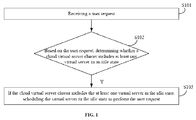
- Figure 1 illustrates a flow chart of an exemplary scheduling process for cloud virtual servers consistent with the disclosed embodiments. As shown in Figure 1 , the process may include the following steps.
- Step S101 a user request is received.
- the user request refers to a request sent by a user to use a virtual server.
- at least one virtual server may be scheduled such that the virtual server can provide services to the user.
- Step S102 based on the user request, it is determined whether a cloud virtual server cluster includes at least one virtual server in an idle state.
- a virtual server in the idle state (or an idle virtual server) refers to a virtual server that is not currently used.
- a cloud virtual server cluster may include a first preset number of virtual servers.
- the cloud virtual server cluster refers to a virtual server cluster that includes the first preset number of virtual servers.
- the virtual server in the idle state (or the idle virtual server) refers to the virtual server that is not currently used, such as a virtual server that is released by another user and is currently in the idle state, a virtual server that remains in the idle state after initialization, a virtual server that is not released by another user but is not currently used.
- whether the cloud virtual server cluster includes at least one virtual server in the idle state is determined, such that the virtual servers in the idle state can be scheduled according to the user request.
- Step S103 if the cloud virtual server cluster includes a virtual server in the idle state, the virtual server in the idle state is scheduled to fulfill the user request.
- the virtual server in the idle state can be scheduled to fulfill the user request.
- the utilization rate of the virtual servers is effectively increased.
- a cloud virtual server cluster includes any virtual server in the idle state.
- the virtual server in the idle state (or the idle virtual server) refers to a virtual server that is not currently used. If the cloud virtual server cluster includes at least one virtual server in the idle state, the virtual server in the idle state is scheduled to fulfill the user request. Because whether any virtual server is released by other users is not considered when processing the user request, and as long as the cloud virtual server cluster includes a virtual server in the idle state, the virtual server in the idle state is directly scheduled to fulfill the user request. Thus, the utilization rate of virtual servers is effectively increased, saving resources.
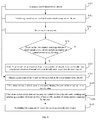
- Figure 2 illustrates a flow chart of another exemplary scheduling process for cloud virtual servers consistent with the disclosed embodiments. As shown in Figure 2 , the process may include the following steps.
- Step S201 a cloud virtual server cluster is created.
- Step S202 the virtual servers included in the cloud virtual server cluster are initialized.
- the cloud virtual server cluster is created in advance to include a plurality of virtual servers, and the virtual servers included in the cloud virtual server cluster are initialized after the cloud virtual server cluster is created.
- the virtual servers are in an idle state and can be scheduled to fulfill a user request. Because the virtual servers are created and initialized in advance, when the virtual servers need to be scheduled, the virtual servers can be directly scheduled and used without waiting additional time, thus saving time and improving the user experience.
- Step S203 a user request is received.
- Step S204 based on the user request, it is determined whether the cloud virtual server cluster includes at least one virtual server in the idle state.
- the virtual server in the idle state (or the idle virtual server) refers to a virtual server that is not currently used.
- the cloud virtual server cluster includes the first preset number of virtual servers.
- Step S205 if the cloud virtual server cluster includes at least one virtual server in the idle state, the virtual server in the idle state is scheduled to fulfill the user request.
- Step S206 if the cloud virtual server cluster does not include any virtual server in the idle state, a n number of virtual servers are created and initiated, wherein n is a number of user requests.
- Step S207 the n number of virtual servers are scheduled to perform the user requests.
- the n number of virtual servers are additionally created and initiated based on a user request.
- the virtual servers are then scheduled to perform the user request so as to provide service for the user.
- Step S208 the state of the virtual servers included in the cloud virtual server cluster is monitored.
- Step S209 if it is detected that a virtual server is not currently used, the state of the virtual server is labeled as the idle state.
- the state of the virtual server included in the cloud virtual server cluster is monitored in real-time. If a virtual server in the cloud virtual server cluster is not currently used, the state of the virtual server is labeled as the idle state.
- the virtual server that is not currently used may refer to the virtual server that is not currently used after it is released or initialized, or the virtual server that is currently not used by any other user.
- Step S210 when the total number of virtual servers included in the cloud virtual server cluster is greater than the first preset number, if the number of the virtual servers in the idle state reaches a second preset number, the virtual servers are recycled or reclaimed gradually, such that the number of virtual servers included in the cloud virtual server cluster is reduced to slightly or approximately greater than or equal to the first preset number.
- Step S210 may also be performed. That is, whether the number of the virtual servers in the idle state reaches the second preset number is monitored in real-time. When the number of the virtual servers in the idle state reaches the second preset number, it indicates that the number of the virtual servers in the idle state is high. At this time, if the number of the virtual servers included in the cloud virtual server cluster is greater than the first preset number, a part of the virtual servers may be recycled gradually, such that the number of the virtual servers included in the cloud virtual server cluster is reduced to equal to the first preset number or slightly greater than the first preset number.
- the virtual servers When the virtual servers are recycled or reclaimed, the virtual servers need to be recycled or reclaimed gradually.
- a large number of virtual servers in the idle state cannot be recycled within a short period of time. According to the rules of statistics, the peak usage may not come to an end suddenly. The peak usage is decreased gradually. If a large number of virtual servers in the idle state are recycled within a short period of time, a large number of virtual servers need to be re-created at the next time point. Repeatedly creating and recycling a large number of virtual servers within a short period of time may cause the waste of resources. Therefore, the virtual servers in the idle state is gradually recycled, i.e., recycled over a period of time that statistically allow any peak usage to be completed, rather than recycling a large number of virtual servers in the idle state within a short period of time.
- Step S208, Step S209 and Step S210 may be performed based on needs or pre-setting configurations. Step S208, Step S209 and Step S210 are not performed in a fixed order in the process, where Step S 210 is performed after Step S206 and Step S207 are performed. In addition, in practical applications, certain steps may be omitted and other Steps may be added accordingly, details of which are not repeated herein.
- the cloud virtual server cluster based on the user request for access to a virtual server, it is determined whether the cloud virtual server cluster includes the virtual server in the idle state.
- the virtual server in the idle state (or the idle virtual server) refers to the virtual server that is not currently used. If the cloud virtual server cluster includes at least one virtual server in the idle state, the virtual server in the idle state is scheduled to fulfill the user request. Because whether any virtual server is released by other users is not considered when processing the user request, and as long as the cloud virtual server cluster includes a virtual server in the idle state, the virtual server in the idle state is directly scheduled to fulfill the user request. Thus, the utilization rate of virtual servers is effectively increased, saving resources.
- the virtual servers are created and initialized in advance, the virtual servers can be directly scheduled when needed, thus decreasing waiting time and improving the user experience.
- the virtual servers can be obtained and scheduled in real-time.
- the number of the virtual servers in the idle state reaches the second preset number and the total number of the virtual servers is greater than the first preset number, the virtual servers are recycled or reclaimed gradually. The waste of resources caused by repeatedly creating and recycling a large number of virtual servers within a short period of time can be avoided.
- Figure 5 illustrates a structure schematic diagram of an exemplary scheduling apparatus for cloud virtual servers consistent with the disclosed embodiments.
- the apparatus may include a receiving module 101, a determining module 102, and a first scheduling module 103. Certain components may be omitted and other components may be added. Each of the modules can be processed by one or more computer systems. It should be noted that the apparatus shown in Figure 5 can perform the steps illustrated in Figure 1 to Figure 4 .
- the receiving module 101 may be configured to receive a user request.
- the user request refers to a request sent by a user to use a virtual server. After the user request is received, at least one virtual server may be scheduled such that the virtual server can provide services to the user.
- the determining module 102 may be configured to, based on the user request, determine whether a cloud virtual server cluster includes at least one virtual server in an idle state.
- a virtual server in the idle state (or an idle virtual server) refers to the virtual server that is not currently used.
- a cloud virtual server cluster may include a first number of virtual servers.
- the cloud virtual server cluster includes the first preset number of virtual servers.
- the virtual server in the idle state refers to the virtual server that is not currently used, such as the virtual server that is released by another user and is currently in the idle state, the virtual server that is always in the idle state after initialization, or the virtual server that is not released by another user but is currently not used.
- the determining module 102 determines whether the cloud virtual server cluster includes at least one virtual server in the idle state, such that the virtual servers in the idle state can be scheduled according to the user request.
- the first scheduling module 103 may be configured to, when the cloud virtual server cluster includes a virtual server in the idle state, schedule the virtual server in the idle state to fulfill the user request.
- the cloud virtual server cluster currently includes a virtual server in the idle state
- the virtual server in the idle state can be scheduled to fulfill the user request. Therefore, the utilization rate of the virtual servers can be effectively increased.
- a cloud virtual server cluster includes any virtual server in the idle state.
- the virtual server in the idle state (or the idle virtual server) refers to a virtual server that is not currently used. If the cloud virtual server cluster includes at least one virtual server in the idle state, the virtual server in the idle state is scheduled to fulfill the user request. Because whether any virtual server is released by other users is not considered when processing the user request, and as long as the cloud virtual server cluster includes a virtual server in the idle state, the virtual server in the idle state is directly scheduled to fulfill the user request. Thus, the utilization rate of virtual servers is effectively increased, saving resources.
- Figure 6-8 show three embodiments of scheduling apparatus for cloud virtual servers according to the present invention.
- the apparatus of the three embodiments are similar to the apparatus as shown in Figure 5 , and the similar part and relative description thereof refer to Figure 5 .
- the following description only illustrates differences.
- Figure 6 illustrates a structure schematic diagram of another exemplary scheduling apparatus for cloud virtual servers consistent with the disclosed embodiments.
- the apparatus may include a receiving module 201, a determining module 202, a first scheduling module 203, a first creating module 204, a first initialization module 205, a monitoring module 209, and a labeling module 210. Certain components may be omitted and other components may be added. Each of the modules can be processed by one or more computer systems. It should be noted that the apparatus shown in Figure 6 can perform the steps shown in Figure 2 .
- the receiving module 201 may be configured to receive a user request.
- the determining module 202 may be configured to, based on the user request, determine whether a cloud virtual server cluster includes at least one virtual server in an idle state.
- the virtual server in the idle state (or the idle virtual server) refers to the virtual server that is not currently used.
- a cloud virtual server cluster includes a first preset number of virtual servers.
- the first scheduling module 203 may be configured to, when the cloud virtual server cluster includes a virtual server in the idle state, schedule the virtual server in the idle state to fulfill the user request.
- the first creating module 204 may be configured to create a cloud virtual server cluster including a first preset number of virtual servers.
- the first initialization module 205 may be configured to initialize the first preset number of virtual servers included in the cloud virtual server cluster.
- the cloud virtual server cluster is created in advance to include the first preset number of virtual servers.
- the virtual servers included in the cloud virtual server cluster are initialized after the cloud virtual server cluster is created. After initialization, the virtual servers are in an idle state, and can be scheduled when the user request is received. Because the virtual servers are created and initialized in advance, when the virtual servers need to be scheduled, the virtual servers can be directly scheduled and used without waiting additional time, thus saving time and improving the user experience.
- the monitoring module 209 may be configured to monitor the state of the virtual servers in the cloud virtual server cluster.
- the labeling module 210 may be configured to, when one or more virtual servers are not currently used, label the state of the virtual servers that are not currently used as the idle state.
- states of the virtual servers of the cloud virtual server cluster are monitored in real time. If the virtual server, which is not currently used, is monitored, the state of this virtual server is marked as a virtual server in the idle state.
- the virtual server, which is not currently used may be a virtual server that is not currently used, such as the virtual server that is released by another user and is currently in the idle state, the virtual server that is always in the idle state after initialization, or the virtual server.
- Figure 7 illustrates a structure schematic diagram of another exemplary scheduling apparatus for cloud virtual servers consistent with the disclosed embodiments.
- the apparatus further includes a receiving module 201, a determining module 202, a first scheduling module 203, a first creating module 204, a first initialization module 205, a monitoring module 209, a labeling module 210, a second creating module 206, a second initialization module 207, and a second scheduling module 208.
- the receiving module 201, the determining module 202, the first scheduling module 203, the first creating module 204, the first initialization module 205, the monitoring module 209, and the labeling module 210 may have the same functionalities as the corresponding modules shown in Figure 6 . Certain components may be omitted and other components may be added. Each of the modules can be processed by one or more computer systems. It should be noted that the apparatus shown in Figure 7 can perform the steps illustrated in Figure 3 .
- the second creating module 206 may be configured to, when the cloud virtual server cluster does not include the n number of virtual servers in an idle state, create a total n number of virtual servers, where n is the number of virtual servers requested by a user.
- the second initialization module 207 may be configured to initialize the n number of virtual servers.
- the second scheduling module 208 may be configured to schedule the n number of virtual servers to fulfill the user request.
- the n number of virtual servers can be created and initialized again based on the number of virtual servers requested by the user. Then, the n number of newly created virtual servers may be scheduled to fulfill the user request and provide services to the user.
- Figure 8 illustrates a structure schematic diagram of another exemplary scheduling apparatus for cloud virtual servers consistent with the disclosed embodiments.
- the apparatus may include a receiving module 201, a determining module 202, a first scheduling module 203, a first creating module 204, a first initialization module 205, a monitoring module 209, a labeling module 210, a second creating module 206, a second initialization module 207, a second scheduling module 208, and a recycle module 211.
- the receiving module 201, the determining module 202, the first scheduling module 203, the first creating module 204, the first initialization module 205, the monitoring module 209, the labeling module 210, the second creating module 206, the second initialization module 207, and the second scheduling module 208 may have the same functionalities as the corresponding modules shown in Figure 7 .
- Each of the modules can be processed by one or more computer systems or cloud servers. It should be noted that the apparatus shown in Figure 8 may perform the steps illustrated in Figure 4 .
- the recycle module 211 may be configured to, when the total number of virtual servers included in the cloud virtual server cluster is greater than the first preset number, if the number of the virtual servers in the idle state reaches a second preset number, gradually recycle or reclaim the virtual servers, such that the number of the virtual servers in the cloud virtual server cluster is reduced to slightly greater than or equal to the first preset number.
- the number of virtual servers in the idle state may be monitored in real-time.
- the number of the virtual servers in the idle state reaches the second preset number, it indicates that the number of the virtual servers that are not used is large.
- the number of virtual servers in the cloud virtual server cluster is greater than the first preset number, a part of the virtual servers may be recycled, such that the virtual servers in the cloud virtual server cluster is reduced to equal to or slightly greater than the first preset number.
- the virtual servers are recycled or reclaimed, the virtual servers need to be recycled or reclaimed gradually. A large number of virtual servers in the idle state cannot be recycled suddenly.
- certain modules or units may be omitted or added, details of which are not repeated herein.
- the cloud virtual server cluster based on the user request for access to a virtual server, it is determined whether the cloud virtual server cluster includes the virtual server in the idle state.
- the virtual server in the idle state (or the idle virtual server) refers to the virtual server that is not currently used. If the cloud virtual server cluster includes at least one virtual server in the idle state, the virtual server in the idle state is scheduled to fulfill the user request. Because whether any virtual server is released by other users is not considered when processing the user request, and as long as the cloud virtual server cluster includes a virtual server in the idle state, the virtual server in the idle state is directly scheduled to fulfill the user request. Thus, the utilization rate of virtual servers is effectively increased, saving resources.
- the virtual servers are created and initialized in advance, the virtual servers can be directly scheduled when needed, thus decreasing waiting time and improving the user experience.
- the virtual servers can be obtained and scheduled in real-time.
- the number of the virtual servers in the idle state reaches the second preset number and the total number of the virtual servers in the cloud virtual server cluster is greater than the first preset number, the virtual servers are recycled or reclaimed gradually. The waste of resources caused by repeatedly creating and recycling a large number of virtual servers within a short period of time can be avoided.
Landscapes
- Engineering & Computer Science (AREA)
- Computer Networks & Wireless Communication (AREA)
- Signal Processing (AREA)
- Computer And Data Communications (AREA)
- Stored Programmes (AREA)
Applications Claiming Priority (2)
| Application Number | Priority Date | Filing Date | Title |
|---|---|---|---|
| CN201410357045.4A CN104168310A (zh) | 2014-07-24 | 2014-07-24 | 云端虚拟服务器的调度方法及装置 |
| PCT/CN2015/074872 WO2016011826A1 (fr) | 2014-07-24 | 2015-03-23 | Procédé et dispositif d'ordonnancement de serveur virtuel nuagique |
Publications (2)
| Publication Number | Publication Date |
|---|---|
| EP3016355A1 true EP3016355A1 (fr) | 2016-05-04 |
| EP3016355A4 EP3016355A4 (fr) | 2016-10-12 |
Family
ID=51911931
Family Applications (1)
| Application Number | Title | Priority Date | Filing Date |
|---|---|---|---|
| EP15786856.3A Withdrawn EP3016355A4 (fr) | 2014-07-24 | 2015-03-23 | Procédé et dispositif d'ordonnancement de serveur virtuel nuagique |
Country Status (4)
| Country | Link |
|---|---|
| US (1) | US20160269479A1 (fr) |
| EP (1) | EP3016355A4 (fr) |
| CN (1) | CN104168310A (fr) |
| WO (1) | WO2016011826A1 (fr) |
Families Citing this family (11)
| Publication number | Priority date | Publication date | Assignee | Title |
|---|---|---|---|---|
| CN104168310A (zh) * | 2014-07-24 | 2014-11-26 | 深圳天珑无线科技有限公司 | 云端虚拟服务器的调度方法及装置 |
| CN106209827A (zh) * | 2016-07-08 | 2016-12-07 | 安徽四创电子股份有限公司 | 基于容器云技术的虚拟卡口系统及其服务创建方法 |
| CN106713021B (zh) * | 2016-12-09 | 2020-02-11 | 北京奇虎科技有限公司 | 一种判断集群中的服务器是否需要回收的方法和装置 |
| CN107343045B (zh) * | 2017-07-04 | 2021-03-19 | 北京百度网讯科技有限公司 | 云计算系统及用于控制服务器的云计算方法和装置 |
| CN111143055A (zh) * | 2019-12-16 | 2020-05-12 | 上海达龙信息科技有限公司 | 虚拟云主机预分配方法、装置、可读存储介质与电子设备 |
| CN111432019B (zh) * | 2020-03-31 | 2023-07-28 | 广州微算互联信息技术有限公司 | 一种基于边云协同方式的云游戏设备分配方法及系统 |
| CN112291367B (zh) * | 2020-11-17 | 2022-06-10 | 珠海大横琴科技发展有限公司 | 一种数据处理的方法和装置 |
| CN112532634B (zh) * | 2020-11-30 | 2023-04-18 | 厦门亿联网络技术股份有限公司 | 音视频会议中服务器的扩容与缩容方法、装置及存储介质 |
| CN112529711B (zh) * | 2021-02-07 | 2021-05-14 | 腾讯科技(深圳)有限公司 | 基于区块链虚拟机复用的交易处理方法及装置 |
| CN112804352B (zh) * | 2021-03-15 | 2021-07-02 | 北京视界云天科技有限公司 | 云服务器初始化方法、装置及存储介质 |
| US12321787B2 (en) * | 2021-06-11 | 2025-06-03 | Dell Products L.P | Server classification using machine learning techniques |
Family Cites Families (11)
| Publication number | Priority date | Publication date | Assignee | Title |
|---|---|---|---|---|
| US7080378B1 (en) * | 2002-05-17 | 2006-07-18 | Storage Technology Corporation | Workload balancing using dynamically allocated virtual servers |
| US20110078303A1 (en) * | 2009-09-30 | 2011-03-31 | Alcatel-Lucent Usa Inc. | Dynamic load balancing and scaling of allocated cloud resources in an enterprise network |
| US8578121B2 (en) * | 2010-04-30 | 2013-11-05 | Hitachi, Ltd. | Computer system and control method of the same |
| US20120011005A1 (en) * | 2010-07-12 | 2012-01-12 | Miteshkumar Mahendrabhai Bilimoria | Sharing advertising revenue with user browsing website |
| US9372735B2 (en) * | 2012-01-09 | 2016-06-21 | Microsoft Technology Licensing, Llc | Auto-scaling of pool of virtual machines based on auto-scaling rules of user associated with the pool |
| CN102594912A (zh) * | 2012-03-15 | 2012-07-18 | 北京昆仑万维科技股份有限公司 | 服务器架构下的数据处理方法、服务器及服务器架构 |
| US9507612B1 (en) * | 2012-08-31 | 2016-11-29 | United Services Automobile Association (Usaa) | Managing dedicated and floating pool of virtual machines based on demand |
| CN102868763B (zh) * | 2012-10-08 | 2015-12-09 | 山东省计算中心 | 一种云计算环境下虚拟web应用集群节能的动态调整方法 |
| CN103401917B (zh) * | 2013-07-29 | 2017-04-05 | 华南理工大学 | 一种基于云总线的混合云计算系统及其实现方法 |
| CN103428008B (zh) * | 2013-08-28 | 2016-08-10 | 浙江大学 | 面向多用户群的大数据分发方法 |
| CN104168310A (zh) * | 2014-07-24 | 2014-11-26 | 深圳天珑无线科技有限公司 | 云端虚拟服务器的调度方法及装置 |
-
2014
- 2014-07-24 CN CN201410357045.4A patent/CN104168310A/zh active Pending
-
2015
- 2015-03-23 WO PCT/CN2015/074872 patent/WO2016011826A1/fr not_active Ceased
- 2015-03-23 EP EP15786856.3A patent/EP3016355A4/fr not_active Withdrawn
-
2016
- 2016-05-18 US US15/157,586 patent/US20160269479A1/en not_active Abandoned
Also Published As
| Publication number | Publication date |
|---|---|
| EP3016355A4 (fr) | 2016-10-12 |
| WO2016011826A1 (fr) | 2016-01-28 |
| CN104168310A (zh) | 2014-11-26 |
| US20160269479A1 (en) | 2016-09-15 |
Similar Documents
| Publication | Publication Date | Title |
|---|---|---|
| EP3016355A1 (fr) | Procédé et dispositif d'ordonnancement de serveur virtuel nuagique | |
| CN109451051B (zh) | 服务请求处理方法、装置、电子设备及存储介质 | |
| US11762697B2 (en) | Method and apparatus for scheduling resource for deep learning framework | |
| US10223166B2 (en) | Scheduling homogeneous and heterogeneous workloads with runtime elasticity in a parallel processing environment | |
| CN107241281B (zh) | 一种数据处理方法及其装置 | |
| US10003550B1 (en) | Smart autoscaling of a cluster for processing a work queue in a distributed system | |
| CN112165691B (zh) | 内容分发网络调度方法、装置、服务器和介质 | |
| US11201836B2 (en) | Method and device for managing stateful application on server | |
| CN112860974A (zh) | 计算资源的调度方法、装置、电子设备和存储介质 | |
| CN108810170A (zh) | 资源配置方法及系统 | |
| CN104104720A (zh) | 一种服务器集群管理方法及系统 | |
| CN112052133A (zh) | 一种基于Kubernetes的业务系统监控方法和装置 | |
| CN110659124A (zh) | 一种消息处理方法和装置 | |
| CN109428926B (zh) | 一种调度任务节点的方法和装置 | |
| CN113407331B (zh) | 一种任务处理的方法、装置及存储介质 | |
| CN108228605A (zh) | 一种数据处理方法、装置及电子设备 | |
| WO2019062019A1 (fr) | Procédé d'exportation de liste de données et terminal utilisant ce procédé | |
| WO2015050525A1 (fr) | Planification d'application réseau simultanée pour une consommation d'énergie réduite | |
| CN203301532U (zh) | 云桌面系统 | |
| EP3435232A1 (fr) | Procédé et appareil de synchronisation de comportements d'applications, terminal, et support d'informations | |
| CN106161652A (zh) | 基于Zstack请求的私有云平台及其调度方法 | |
| US11435812B1 (en) | Efficient utilization of spare datacenter capacity | |
| CN116661960A (zh) | 一种批量任务处理方法、装置、设备以及存储介质 | |
| CN111858040A (zh) | 一种资源调度方法和装置 | |
| EP3723343A1 (fr) | Procédé et système de traitement de ressources, support d'enregistrement et dispositif électronique |
Legal Events
| Date | Code | Title | Description |
|---|---|---|---|
| PUAI | Public reference made under article 153(3) epc to a published international application that has entered the european phase |
Free format text: ORIGINAL CODE: 0009012 |
|
| 17P | Request for examination filed |
Effective date: 20151106 |
|
| AK | Designated contracting states |
Kind code of ref document: A1 Designated state(s): AL AT BE BG CH CY CZ DE DK EE ES FI FR GB GR HR HU IE IS IT LI LT LU LV MC MK MT NL NO PL PT RO RS SE SI SK SM TR |
|
| AX | Request for extension of the european patent |
Extension state: BA ME |
|
| A4 | Supplementary search report drawn up and despatched |
Effective date: 20160909 |
|
| RIC1 | Information provided on ipc code assigned before grant |
Ipc: H04L 29/08 20060101AFI20160905BHEP |
|
| 17Q | First examination report despatched |
Effective date: 20161125 |
|
| DAV | Request for validation of the european patent (deleted) | ||
| DAX | Request for extension of the european patent (deleted) | ||
| STAA | Information on the status of an ep patent application or granted ep patent |
Free format text: STATUS: THE APPLICATION IS DEEMED TO BE WITHDRAWN |
|
| 18D | Application deemed to be withdrawn |
Effective date: 20190514 |