EP3017548B1 - Verfahren zur herstellung von durch einen elektrischen zähler verfügbaren komprimierten daten - Google Patents
Verfahren zur herstellung von durch einen elektrischen zähler verfügbaren komprimierten daten Download PDFInfo
- Publication number
- EP3017548B1 EP3017548B1 EP14736726.2A EP14736726A EP3017548B1 EP 3017548 B1 EP3017548 B1 EP 3017548B1 EP 14736726 A EP14736726 A EP 14736726A EP 3017548 B1 EP3017548 B1 EP 3017548B1
- Authority
- EP
- European Patent Office
- Prior art keywords
- measurement data
- class
- bits
- data
- electrical meter
- Prior art date
- Legal status (The legal status is an assumption and is not a legal conclusion. Google has not performed a legal analysis and makes no representation as to the accuracy of the status listed.)
- Active
Links
Images

Classifications
-
- H—ELECTRICITY
- H03—ELECTRONIC CIRCUITRY
- H03M—CODING; DECODING; CODE CONVERSION IN GENERAL
- H03M7/00—Conversion of a code where information is represented by a given sequence or number of digits to a code where the same, similar or subset of information is represented by a different sequence or number of digits
- H03M7/30—Compression; Expansion; Suppression of unnecessary data, e.g. redundancy reduction
- H03M7/40—Conversion to or from variable length codes, e.g. Shannon-Fano code, Huffman code, Morse code
- H03M7/4031—Fixed length to variable length coding
-
- H—ELECTRICITY
- H03—ELECTRONIC CIRCUITRY
- H03M—CODING; DECODING; CODE CONVERSION IN GENERAL
- H03M7/00—Conversion of a code where information is represented by a given sequence or number of digits to a code where the same, similar or subset of information is represented by a different sequence or number of digits
- H03M7/30—Compression; Expansion; Suppression of unnecessary data, e.g. redundancy reduction
- H03M7/40—Conversion to or from variable length codes, e.g. Shannon-Fano code, Huffman code, Morse code
- H03M7/4093—Variable length to variable length coding
-
- H—ELECTRICITY
- H04—ELECTRIC COMMUNICATION TECHNIQUE
- H04Q—SELECTING
- H04Q9/00—Arrangements in telecontrol or telemetry systems for selectively calling a substation from a main station, in which substation desired apparatus is selected for applying a control signal thereto or for obtaining measured values therefrom
-
- H—ELECTRICITY
- H04—ELECTRIC COMMUNICATION TECHNIQUE
- H04Q—SELECTING
- H04Q2209/00—Arrangements in telecontrol or telemetry systems
- H04Q2209/60—Arrangements in telecontrol or telemetry systems for transmitting utility meters data, i.e. transmission of data from the reader of the utility meter
Definitions
- the present invention relates to a compression of measurement data by an electric meter, said data typically being intended to be transmitted by the electric meter to a data concentrator by powerline communications or by another means.
- AMM Automated Meter Management
- communications are established between so-called smart electricity meters and a data concentrator, sometimes called a base node , responsible for collecting measurement data from the electricity meters, typically the energy consumed by electrical installations respectively supervised by said electricity meters.
- the exchanges between the electricity meters and the data concentrator are based on powerline communications.
- Current electricity meters also generally include a customer tele-information interface (TIC) allowing measurement data to be retrieved. carried out by electricity meters. Exchanges via the TIC interface are carried out in the form of a modulated signal of the ASK type (Amplitude Shift Keying in English).
- ASK Amplitude Shift Keying in English.
- the invention relates to a method for providing measurement data by an electricity meter, said data being derived from energy quantity measurements carried out by said electricity meter on an energy consumption of an electrical installation supervised by said electricity meter, the electricity meter recovering the measurement data to be made available.
- the method is such that the electricity meter further performs the following steps: classifying each retrieved data item, according to a minimum number of bits to represent said data item; determining, for each class of a predefined plurality of classes, a number of bits allocated to represent each data item classified in said class, according to the minimum numbers of bits to respectively represent the data classified in said class; compressing each retrieved measurement data item, by representing said retrieved data item on a number of bits equal to the number of bits allocated to the class of said measurement data item and by inserting before the compressed data item a predefined prefix associated with said class; and, including in a header associated with the compressed data, for each class, information representative of the number of bits allocated to represent each measurement data classified in said class.
- the electricity meter performs the following
- the electric meter is such that it further comprises: means for classifying each recovered measurement data, according to a minimum number of bits to represent said data; means for determining, for each class of a predefined plurality of classes, a number of bits allocated to represent each data item classified in said class, according to the minimum numbers of bits to respectively represent the data classified in said class; means for compressing each recovered measurement data item, by representing said recovered measurement data item on a number of bits equal to the number of bits allocated to the class of said data item and by inserting before the compressed data item a predefined prefix associated with said class; and means for including in a header associated with the compressed data, for each class, information representative of the number of bits allocated to represent each data item classified in said class.
- the electric meter further comprises: means for determining the most recurring value among the recovered measurement data; and means for replacing the measurement data, of value equal to the most recurring value determined, with a single bit.
- the invention is described in detail below in a context of transferring measurement data from an electricity meter to a data concentrator via power line communications.
- the principles of compression of the data provided by the electricity meter are however equally applicable at the time of storage of said data by the electricity meter or for transferring said data via a customer tele-information interface.
- the principles of compression of the data provided by the electricity meter are also equally applicable in a context of transferring measurement data from an electricity meter to a data concentrator via another medium, such as for example via GPRS (General Packet Radio Service).
- GPRS General Packet Radio Service
- the electrical system of the Fig. 1 further comprises a data concentrator 110 responsible for collecting measurement data, these measurements being carried out by the electric meters connected to the electricity supply network 100.
- the data concentrator 110 is connected to one of the phase wires of the electricity supply network 100 as well as to the neutral wire, by respective links 112 and 111.
- the data concentrator 110 and the electric meter 120 are connected to the electric power network 100 via separate phases.
- the data concentrator 110 and the electric meter 120 could be connected to the electric power network 100 via the same phase.
- the exchanges between the electric meter 120 and the data concentrator 110 are carried out by powerline communications.
- these exchanges are carried out according to the PRIME specifications ( Powerline Intelligent Metering Evolution ). These exchanges allow the data concentrator 110 to request, from the electric meter 120, a sending of measurement data corresponding to measurements made by the meter electric 120, energy consumption of the electrical installation supervised by the electric meter 120.
- the processor 210 is capable of executing instructions loaded into the RAM 211 from the ROM 212, from an external memory (not shown), from a storage medium, such as an SD card, or from a communications network. When the electricity meter 120 is powered on, the processor 210 is capable of reading instructions from the RAM 211 and executing them. These instructions form a computer program causing the processor 210 to implement all or part of the algorithms and steps described below.
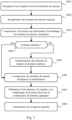
- step S303 when the measurement data are associated with at least one time stamp information, the electric meter 120 compresses said time stamp information(s).
- a single time stamp information may be found for all the measurement data to be transmitted to the data concentrator 110. This is the case for example when the data concentrator 110 requires the sending of a weekly or monthly energy consumption report by the electrical installation supervised by the electric meter 120.
- a plurality of time stamp information may be found for all the measurement data to be transmitted to the data concentrator 110, typically one time stamp information per measurement data to be transmitted. This is the case for example when the data concentrator 110 requires the sending of discrete points of the accumulated load curve of the electrical installation supervised by the electric meter 120.
- timestamp information is absolute date information represented on 14 bytes. It is then possible to encode this timestamp information in relative form on 28 or 32 bits, taking the minute as the unit, which makes it possible to cover a time range well beyond the lifetime of electrical installations.
- step S305 the electric meter 120 transforms the measurement data expressed in absolute form into measurement data expressed in relative form.
- the first measurement is kept in absolute form and, for the following measurements, the unsigned deviations between said measurements and the respective previous measurements are determined and stored as a replacement for said measurements.
- Step S306 is then carried out.
- step S306 the electric meter 120 performs compression of the measurement data to be transmitted to the data concentrator 110.
- the probability that a large number of these measurement data have several successive high-order bits at "0" is high. Rather than representing all the unsigned measurement data with the same number of bits, typically 32 bits, it is possible to represent these measurement data on different numbers of bits.
- the measurement data is negative, the probability that a large number of these measurement data have several successive high-order bits at "1" is high. Rather than representing all the negative measurement data with the same number of bits, typically 32 bits, it is possible to represent these measurement data on different numbers of bits. This limits the number of non-significant bits transmitted.
- the electric meter 120 classifies each measurement data, according to a minimum number of bits to represent said measurement data; the non-significant high-order bits are thus not taken into account. Then, the electric meter 120 determines, for each class of a predefined plurality of classes, a number of bits allocated to represent each data classified in said class, according to the minimum number of bits to represent the data classified in said class. In other words, the number of bits necessary to represent all the data classified in a class is equal to the maximum of the minimum numbers of bits determined for the data classified in said class. The number of classes available is therefore predefined, but not the number of bits to represent the data of the class, which needs to be dynamically determined.
- the electric meter 120 compresses each measurement data, by representing said measurement data on a number of bits equal to the number of bits assigned to the class of said measurement data and by inserting before said compressed data a predefined prefix associated with said class.
- the electric meter 120 generates a bit stream which is a succession of prefixes and compressed measurement data, each prefix representing a class in which the measurement data which follows said prefix has been classified, each compressed data being represented on a number of bits assigned by the electric meter 120 to said class.
- a particular embodiment of step S306 is detailed below in relation to the Fig. 4 .
- the electric meter 120 when the measurement data is signed, the electric meter 120 performs the data classification and compression as if the measurement data were unsigned.
- This embodiment is particularly advantageous when the positive measurement data is more numerous than the negative measurement data.
- the electric meter 120 can invert (1's complement) the measurement data and indicate in a header that such an inversion has been applied.
- the electric meter 120 when the measurement data is signed, dedicates one or more classes to the compression of the negative measurement data and one or more classes to the compression of the positive measurement data.
- a distribution of classes can be predefined or dynamically determined. If this distribution of classes is dynamically determined, the electric meter 120 provides in a header information representative of which distribution is applied.
- the electric meter 120 when the measurement data is signed, can return all the measurement data to positive. To do this, the electric meter 120 determines which negative data measurement data whose absolute value is the largest. This absolute value defines a recalibration value for the measurement data. The electricity meter 120 then adds the recalibration value to each measurement data item. The values of the measurement data then all become positive, and therefore unsigned. The electricity meter 120 then provides information in a header representing this recalibration value.
- the electric meter 120 generates a response to the request received in step S301.
- the generated response includes the measurement data obtained after compression and possibly at least one piece of compressed time stamp information.
- the generated response includes a header describing the data compression applied in step S306, and indicating more particularly, for each class, the number of bits allocated to represent the compressed measurement data of said class.
- the number of usable classes being predefined, a field can be pre-established for each class in the header to describe the number of bits allocated to represent the compressed measurement data of said class.
- the header can further include information indicating for each class whether said class concerns positive measurement data or negative measurement data.
- the header can further include resetting information making it possible to transform all the measurement data into positive measurement data.
- the header may further include information on the periodicity of the measurements carried out by the electric meter 120.
- the header may further include index and time offset information representative of at least one time discontinuity within the measurement data.
- the header further includes information representative of the number of measurement data included in the response.
- the electric meter 120 may add padding bits following the compressed measurement data so as to allow alignment on 8, 16 or 32 bits of the generated response.
- the electric meter 120 may further add cyclic redundancy check (CRC) information allowing the data concentrator 110 to check the integrity of the response upon reception.
- CRC cyclic redundancy check
- the electric meter 120 may further add serial number information of the electric meter 120 to enable the data concentrator 110 to verify the authenticity of the received data.
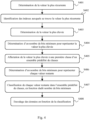
- Fig. 4 schematically illustrates an algorithm, implemented by the electric meter 120, for compressing measurement data.
- the electric meter 120 can classify the measurement data into at least two distinct classes: a first class is adapted to represent the highest value and at least a second class makes it possible to represent data on a number of bits lower than the minimum number of bits to represent the highest value.
- the electric meter 120 considers that the measurement data is unsigned, whether this measurement data is actually unsigned or not.
- the electric meter 120 determines the most recurring value among the measurement data to be transmitted to the data concentrator 110.
- the electric meter 120 has knowledge, in a predefined manner, of the most recurring a priori value among the measurement data. In the data currently transmitted by the electric meters, the most recurring a priori value among the measurement data is “0”.
- the electric meter 120 identifies the indexes of the measurement data equal to said most recurring value, in order to be able to replace each of these measurement data by a single bit in a subsequent compression step.
- the electric meter 120 determines the highest value among the measurement data to be transmitted to the data concentrator 110. If the highest value among the measurement data is equal to the most recurring value, the electric meter 120 directly performs a step S406 (not shown in the figure). Fig. 4 ).
- the electric meter 120 determines a minimum number of bits to represent the highest value among the measurement data.
- the electric meter 120 assigns the highest value among the measurement data to the first measurement data class. This defines the maximum number of bits to represent each measurement data to be transmitted to the data concentrator 110 in response to the request received in step S301.
- the electric meter 120 determines, for each remaining measurement data ( i.e. apart from the most recurring value and the highest value) a minimum number of bits to represent said measurement data.
- the electric meter 120 classifies each remaining measurement data into the first class, or into the second class or one of the second classes, according to the minimum number of bits to represent said measurement data. If the same minimum number of bits is required to represent the measurement data as to represent said highest value, then the measurement data is assigned to the first class.
- the electric meter 120 can, for example, proceed exhaustively.
- i represents the number of bits allocated to encoding the measurement data of the first class
- j represents the number of bits allocated to encoding the measurement data of a second class
- k represents the number of bits allocated to encoding the measurement data of another second class.
- the electric meter 120 tests all possible combinations of the triplet (i, j, k) and determines, for each of these combinations, the resulting size of the measurement data after compression. It should be noted that i is fixed in step S404. The electric meter 120 then retains the triplet (i, j, k) resulting in the smallest resulting size.
- the electric meter 120 still has to assign each measurement data to one of the predefined classes, according to the minimum number of bits necessary to represent said data: said class is the one whose number of bits assigned is immediately greater than, or equal to, the value of said data among the triplet (i,j,k).
- the electric meter 120 performs an encoding of each measurement data, according to the number of bits allocated to each data of the class to which said measurement data is assigned.
- a prefix can be added in front of each compressed data item to identify which class the measurement data item has been assigned to. For example, if three classes are defined and a prefix is added for each compressed measurement data item, a two-bit prefix identifies which class the measurement data item is assigned to.
- a prefix may be added in front of each compressed data item so as to be able to identify to which class the measurement data item has been assigned, when said measurement data item does not have the most recurring value; and when said measurement data item has the most recurring value, no prefix is necessary.
- the electric meter 120 uses: a bit of value "0" to represent the most recurring value (without prefix), the binary value "10” as a prefix of a compressed value of another class, the binary value "110" as a prefix of a compressed value of yet another class and the binary value "111" as a prefix of a compressed value of the last class.
- the most recurring value is represented on one bit and the other measurement data after compression are preceded by a prefix of at least two bits whose first bit in sequence is of value distinct from that used to represent the most recurring value. More generally, a truncated binary code can be used to identify the data having the most recurring value and the prefixes.
- the electric meter 120 fill in the header to be associated with the measurement data, as already described in relation to the Fig. 3 , in particular by indicating, for each class, the number of bits dynamically assigned to represent the measurement data of said class.
- the data concentrator 110 when the data concentrator 110 receives the response generated and transmitted by the electricity meter 120, the data concentrator 110 analyzes the header to find, for each predefined class, the number of bits used to represent the measurement data of said class. The data concentrator then analyzes the bitstream of the measurement data. If the first bit is "0", then the data concentrator 110 is in the presence of measurement data equal to the most recurring value. Otherwise, the data concentrator 110 is in the presence of a prefix associated with one of the classes. The data concentrator takes the bits one by one to find which prefix is represented, deduces the corresponding class, retrieves from the header the number N of bits assigned to this class and retrieves the following N bits of the bitstream to extract the corresponding measurement data. The data concentrator 110 can then convert the extracted data into its original format.
- the data concentrator 110 may perform the reverse operation of that performed in step S303 to convert the timestamp information into its original format.
- the header may also provide measurement periodicity information to enable the data concentrator 110 to re-associate timestamp information per unsigned measurement data.
- the header may also provide time offset and index information to enable the data concentrator 110 to detect changes in the time reference.
- the electrical meter 120 takes into account the signed nature of the measurement data.
- the electrical meter 120 separates, on the one hand, the positive measurement data, and on the other hand, the negative measurement data.
- the electrical meter 120 determines the highest absolute value among the positive measurement data and the highest absolute value among the negative measurement data.
- the electrical meter 120 determines a first minimum number of bits to represent the highest absolute value among the positive measurement data, and a second minimum number of bits to represent the highest absolute value among the negative measurement data.
- the electrical meter 120 assigns said first minimum number of bits determined to a first class, and said second minimum number of bits determined to a second class.
- the electrical meter 120 then tests, for each other class of said predefined plurality, a value of bits assigned to represent the data of said class, and determines a resulting size of the measurement data after compression. Then, the electric meter 120 assigns to each other class of said predefined plurality a number of bits making it possible to obtain the resulting size of the measurement data, after compression, the smallest. Finally, the electric meter 120 indicates in a header which class(es) concern(s) positive measurement data (from which successive bits of high weight equal to “0” are removed by the compression) and which class(es) concern(s) negative measurement data (from which successive bits of high weight equal to “1” are removed by the compression).
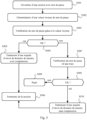
- Fig. 5 schematically illustrates an algorithm, implemented by the electric meter 120, to determine whether the electric meter 120 should send the data in compressed form or in uncompressed form. This thus allows the electric meter 120 to operate with a data concentrator which is not adapted to interpret the measurement data after compression.
- the login principle of the algorithm of the Fig. 5 allows the 110 data concentrator to operate with electricity meters that are not suitable for compressing measurement data.
- the electric meter 120 receives a login request from a data concentrator, such as the data concentrator 110.
- the login request is accompanied by a password.
- the electric meter 120 determines a reverse value of the password.
- the password being the character string “ABCDEF”
- the reverse value determined by the electric meter 120 is then “FEDCBA”.
- Other types of conversion into a reverse value can be used, for example by representing the password according to a binary base and reading the bits in reverse, or by going through a hexadecimal base and reading the hexits in reverse.
- the electric meter 120 applies a predefined transformation of the received password to obtain a transformed password.
- step S503 the electric meter 120 checks whether the password reversed (or, more generally, transformed) in step S502 corresponds to the password expected from the data concentrator 110 to open the session.
- step S504 the electric meter 120 tests whether the verification is positive. If so, the session is opened and a step S505 is performed; otherwise, a step S507 is performed.
- step S505 the electric meter 120 processes a request to send measurement data.
- This request may be received by the electric meter 120, from a data concentrator, after opening the session. This request may also be implicit at the opening of the session.
- the request is processed in accordance with the algorithm of the Fig. 3 , i.e. with compression of the measurement data.
- a step S506 is performed, in which the electricity meter 120 closes the session. The algorithm is then terminated.
- step S507 the electric meter 120 checks whether the password received in step S501 matches the password expected from the data concentrator 110 to open the session.
- step S508 the electric meter 120 tests whether the verification is positive. If so, the session is opened and a step S510 is performed; otherwise, a step S509 is performed, in which the electric meter 120 rejects the session opening request. The algorithm is then terminated.
- step S510 the electric meter 120 processes a request to send measurement data.
- This request may be received by the electric meter 120, from a data concentrator, after opening the session. This request may also be implicit at the opening of the session.
- the electric meter 120 retrieves the data concerned and transmits this data, without compression, to the concentrator. of data that issued the request. Then, step S506 is performed, and the algorithm is terminated.
- the electric meter 120 is able to determine whether the measurement data must be sent to the data concentrator in compressed form or in uncompressed form.
- the data concentrator 110 transmits an inverted password (or, more generally, transformed in accordance with the function applied by the electric meter 120 in step S502) to an electric meter not implementing compression of the measurement data, then said electric meter will refuse the session opening.
- the data concentrator 110 can then renew its session opening request with the non-inverted password (or, more generally, non-transformed).
- the data concentrator 110 may also keep track of the success or failure of a login attempt with the reversed (or, more generally, transformed) password, to directly send the appropriate password during a subsequent login with this same electric meter.
Landscapes
- Engineering & Computer Science (AREA)
- Theoretical Computer Science (AREA)
- Computer Networks & Wireless Communication (AREA)
- Arrangements For Transmission Of Measured Signals (AREA)
- Compression, Expansion, Code Conversion, And Decoders (AREA)
Claims (13)
- Verfahren zur Bereitstellung, durch einen Elektrizitätszähler (120), von Messdaten, wobei die Daten aus Messungen einer Menge an elektrischer Energie stammen, die durch den Elektrizitätszähler bezüglich eines Energieverbrauchs einer elektrischen Anlage, die durch den Elektrizitätszähler überwacht wird, durchgeführt werden, wobei der Elektrizitätszähler die bereitzustellenden Messdaten sammelt (S302), dadurch gekennzeichnet, dass der Elektrizitätszähler ferner die folgenden Schritte durchführt:- Klassifizieren (S405, S407) jedes gesammelten Datenelements in Abhängigkeit von einer Mindestanzahl von Bits zur Darstellung des Datenelements;- Bestimmen (S404, S406), für jede Klasse einer vordefinierten Vielzahl von Klassen, einer Anzahl von zugewiesenen Bits zur Darstellung jedes in der Klasse klassifizierten Datenelements, die dem Maximum der bestimmten Mindestanzahlen von Bits für die in der Klasse klassifizierten Daten entspricht;- Komprimieren (S306; S408) jedes gesammelten Messdatenelements durch Darstellen des gesammelten Messdatenelements mit einer Anzahl von Bits, die der Anzahl von der Klasse des Messdatenelements zugewiesenen Bits entspricht, und durch Einfügen eines vordefinierten Präfixes, der mit der Klasse assoziiert ist, vor dem komprimierten Datenelement; und- Einschließen (S307), in einem Header, der mit den komprimierten Daten assoziiert ist, für jede Klasse, einer Information, die für die Anzahl von zugewiesenen Bits zur Darstellung jedes in der Klasse klassifizierten Datenelements repräsentativ ist,und dadurch gekennzeichnet, dass der Elektrizitätszähler die folgenden Schritte durchführt:- Bestimmen (S401) des Werts, der innerhalb der gesammelten Messdaten am häufigsten auftritt; und- Ersetzen (S408) der Messdaten, die einen Wert aufweisen, der dem bestimmten, am häufigsten auftretenden Wert entspricht, durch ein einziges Bit.
- Verfahren nach Anspruch 1, dadurch gekennzeichnet, dass, wenn die Messdaten in absoluter Form dargestellt werden, der Elektrizitätszähler einen Vorabschritt des Umwandelns (S305) der Messdaten in absoluter Form in Messdaten in relativer Form durchführt.
- Verfahren nach Anspruch 1, dadurch gekennzeichnet, dass der Elektrizitätszähler einen verkürzten Binärcode verwendet, um die Messdaten, die den am häufigsten auftretenden Wert aufweisen, und die Präfixe zu identifizieren.
- Verfahren nach einem der Ansprüche 1 bis 3, dadurch gekennzeichnet, dass, wenn die Messdaten mit mindestens einer Zeitstempelinformation assoziiert sind, die für einen absoluten Zeitpunkt repräsentativ ist, der Elektrizitätszähler einen Schritt des Umwandelns (S303) der Zeitstempelinformation in eine in Bezug auf ein vordefiniertes Datum relative Information durchführt.
- Verfahren nach einem der Ansprüche 1 bis 4, dadurch gekennzeichnet, dass, wenn jedes Messdatenelement mit einer Zeitstempelinformation assoziiert ist und die durch den Elektrizitätszähler durchgeführten Messungen periodisch sind, der Elektrizitätszähler nur eine Zeitstempelinformation aufbewahrt und in dem Header eine Information, die für die Periodizität der Messungen repräsentativ ist, einschließt.
- Verfahren nach Anspruch 5, dadurch gekennzeichnet, dass zum Angeben einer Änderung einer Zeitreferenz innerhalb der Messdaten der Elektrizitätszähler die folgenden Schritte durchführt:- Bestimmen eines Indexes jedes Messdatenelements, bei dem die Zeitreferenzänderung gegriffen hat;- Bestimmen eines Zeitversatzes aufgrund der Zeitreferenzänderung für das Messdatenelement, dessen Index auf diese Weise bestimmt wurde; und- Einschließen, in dem Header, von Informationen, die für den Index und den Zeitversatz repräsentativ sind.
- Verfahren nach einem der Ansprüche 1 bis 6, dadurch gekennzeichnet, dass der Elektrizitätszähler, wenn die Messdaten als Daten ohne Vorzeichen betrachtet werden, die folgenden Schritte durchführt:- Bestimmen (S404) einer Mindestanzahl von Bits zur Darstellung des höchsten Werts innerhalb der Messdaten;- Zuweisen (S405) der bestimmten Mindestanzahl von Bits zu einer ersten Klasse;- Prüfen, für jede andere Klasse der vordefinierten Vielzahl, eines Werts von zugewiesenen Bits zur Darstellung der Daten der Klasse und Bestimmen einer sich daraus ergebenden Größe der Messdaten nach einer Komprimierung; und- Zuweisen, zu jeder anderen Klasse der vordefinierten Vielzahl, einer Anzahl von Bits, die es gestattet, nach einer Komprimierung die kleinste sich daraus ergebende Größe der Messdaten zu erhalten.
- Verfahren nach einem der Ansprüche 1 bis 6, dadurch gekennzeichnet, dass, wenn die Messdaten ein Vorzeichen aufweisen, der Elektrizitätszähler die folgenden Schritte durchführt:- Bestimmen einer ersten Mindestanzahl von Bits zur Darstellung des höchsten absoluten Werts innerhalb der positiven Messdaten;- Bestimmen einer zweiten Mindestanzahl von Bits zur Darstellung des höchsten absoluten Werts innerhalb der negativen Messdaten;- Zuweisen der bestimmten ersten Mindestanzahl von Bits zu einer ersten Klasse;- Zuweisen der bestimmten zweiten Mindestanzahl von Bits zu einer zweiten Klasse;- Prüfen, für jede andere Klasse der vordefinierten Vielzahl, eines Werts von zugewiesenen Bits zur Darstellung der Daten der Klasse und Bestimmen einer sich daraus ergebenden Größe der Messdaten nach einer Komprimierung;- Zuweisen, zu jeder anderen Klasse der vordefinierten Vielzahl, einer Anzahl von Bits, die es gestattet, nach einer Komprimierung die kleinste sich daraus ergebende Größe der Messdaten zu erhalten; und- Einschließen, in dem Header, einer Information, die angibt, welche Klasse(n) positive Messdaten betrifft/betreffen und welche Klasse(n) negative Messdaten betrifft/betreffen.
- Verfahren nach einem der Ansprüche 1 bis 6, dadurch gekennzeichnet, dass, wenn die Messdaten ein Vorzeichen aufweisen, der Elektrizitätszähler vorab die folgenden Schritte durchführt:- Bestimmen eines Korrekturwerts, der dem höchsten absoluten Wert innerhalb der negativen Messdaten entspricht;- Hinzufügen des Korrekturwerts zu jedem der Messdaten; und- Einschließen, in dem Header, einer Information, die für den Korrekturwert repräsentativ ist.
- Verfahren nach einem der Ansprüche 1 bis 9, dadurch gekennzeichnet, dass, wenn der Elektrizitätszähler zum Bereitstellen der Messdaten darauf wartet, ein vordefiniertes Passwort zu empfangen, der Elektrizitätszähler die folgenden Schritte durchführt:- Empfangen (S501) eines Passworts;- Bestimmen (S502) eines invertierten Werts des empfangenen Passworts;- Bereitstellen (S505) der Messdaten in komprimierter Form, wenn der invertierte Wert des empfangenen Passworts dem vordefinierten Passwort entspricht; und- Bereitstellen (S510) der Messdaten in nicht komprimierter Form, wenn das empfangene Passwort dem vordefinierten Passwort entspricht.
- Computerprogramm, dadurch gekennzeichnet, dass es Anweisungen zur Umsetzung, durch einen Elektrizitätszähler, des Verfahrens nach einem der Ansprüche 1 bis 10 beinhaltet, wenn das Programm durch einen Prozessor des Elektrizitätszählers ausgeführt wird.
- Speichermittel, dadurch gekennzeichnet, dass sie ein Computerprogramm speichern, das Anweisungen zur Umsetzung, durch einen Elektrizitätszähler, des Verfahrens nach einem der Ansprüche 1 bis 10 beinhaltet, wenn das Programm durch einen Prozessor des Elektrizitätszählers ausgeführt wird.
- Elektrizitätszähler (120), der dazu angepasst ist, Messdaten bereitzustellen, wobei die Daten aus Messungen einer Menge an elektrischer Energie stammen, die durch den Elektrizitätszähler bezüglich eines Energieverbrauchs einer elektrischen Anlage, die durch den Elektrizitätszähler überwacht wird, durchgeführt werden, wobei der Elektrizitätszähler Mittel zum Sammeln der bereitzustellenden Messdaten umfasst, dadurch gekennzeichnet, dass der Elektrizitätszähler ferner Folgendes umfasst:- Mittel zum Klassifizieren (S405, S407) jedes gesammelten Datenelements in Abhängigkeit von einer Mindestanzahl von Bits zur Darstellung des Datenelements;- Mittel zum Bestimmen (S404, S406), für jede Klasse einer vordefinierten Vielzahl von Klassen, einer Anzahl von zugewiesenen Bits zur Darstellung jedes in der Klasse klassifizierten Datenelements, die dem Maximum der bestimmten Mindestanzahlen von Bits für die in der Klasse klassifizierten Daten entspricht;- Mittel zum Komprimieren (S306; S408) jedes gesammelten Messdatenelements durch Darstellen des gesammelten Datenelements mit einer Anzahl von Bits, die der Anzahl von der Klasse des Datenelements zugewiesenen Bits entspricht, und durch Einfügen eines vordefinierten Präfixes, der mit der Klasse assoziiert ist, vor dem komprimierten Datenelement; und- Mittel zum Einschließen (S307), in einem Header, der mit den komprimierten Daten assoziiert ist, für jede Klasse, einer Information, die für die Anzahl von zugewiesenen Bits zur Darstellung jedes in der Klasse klassifizierten Datenelements repräsentativ ist,und dadurch gekennzeichnet, dass der Elektrizitätszähler ferner Folgendes umfasst:- Mittel zum Bestimmen (S401) des Werts, der innerhalb der gesammelten Messdaten am häufigsten auftritt; und- Mittel zum Ersetzen (S408) der Messdaten, die einen Wert aufweisen, der dem bestimmten, am häufigsten auftretenden Wert entspricht, durch ein einziges Bit.
Applications Claiming Priority (2)
| Application Number | Priority Date | Filing Date | Title |
|---|---|---|---|
| FR1356631A FR3008263B1 (fr) | 2013-07-05 | 2013-07-05 | Procede de mise a disposition par un compteur electrique de donnees compressees |
| PCT/EP2014/064034 WO2015000943A2 (fr) | 2013-07-05 | 2014-07-02 | Procédé de mise à disposition par un compteur électrique de données compressées |
Publications (2)
| Publication Number | Publication Date |
|---|---|
| EP3017548A2 EP3017548A2 (de) | 2016-05-11 |
| EP3017548B1 true EP3017548B1 (de) | 2025-03-19 |
Family
ID=49546524
Family Applications (1)
| Application Number | Title | Priority Date | Filing Date |
|---|---|---|---|
| EP14736726.2A Active EP3017548B1 (de) | 2013-07-05 | 2014-07-02 | Verfahren zur herstellung von durch einen elektrischen zähler verfügbaren komprimierten daten |
Country Status (4)
| Country | Link |
|---|---|
| EP (1) | EP3017548B1 (de) |
| CN (1) | CN105556849B (de) |
| FR (1) | FR3008263B1 (de) |
| WO (1) | WO2015000943A2 (de) |
Families Citing this family (6)
| Publication number | Priority date | Publication date | Assignee | Title |
|---|---|---|---|---|
| US9585790B2 (en) | 2013-11-14 | 2017-03-07 | Aquesys, Inc. | Intraocular shunt inserter |
| FR3068163B1 (fr) | 2017-06-23 | 2019-12-20 | Diehl Metering Sas | Procede et systeme de collecte de donnees fournies par des capteurs |
| CN110099236B (zh) * | 2018-01-30 | 2021-03-02 | 杭州海康威视系统技术有限公司 | 视频数据存储方法、请求方法及存储装置、请求装置 |
| CN108512831A (zh) * | 2018-03-02 | 2018-09-07 | 天津宏达瑞信科技有限公司 | 一种适用于远程抄表的数据压缩方法及装置 |
| FR3113219B1 (fr) * | 2020-07-29 | 2022-07-29 | Sagemcom Energy & Telecom Sas | Procédé de transmission de mesures permettant de réduire la charge du réseau |
| CN116052404B (zh) * | 2023-02-14 | 2023-11-28 | 安徽康能电气有限公司 | 一种基于5g通信技术的电网数据交互系统 |
Citations (1)
| Publication number | Priority date | Publication date | Assignee | Title |
|---|---|---|---|---|
| US20130028095A1 (en) * | 2011-07-28 | 2013-01-31 | Cisco Technology, Inc. | Dynamic allocation of context identifiers for header compression |
Family Cites Families (5)
| Publication number | Priority date | Publication date | Assignee | Title |
|---|---|---|---|---|
| FR2773904B1 (fr) * | 1998-01-21 | 2000-02-25 | Schlumberger Ind Sa | Procede de communication d'informations et application de ce procede a un systeme de telereleve de compteurs |
| CN101312448B (zh) * | 2007-05-23 | 2013-11-13 | 神乎科技股份有限公司 | 一种数据处理方法 |
| CN101980464B (zh) * | 2010-09-30 | 2013-01-16 | 华为技术有限公司 | 数据编码方法、解码方法、编码器和解码器 |
| JP2012222453A (ja) * | 2011-04-05 | 2012-11-12 | Sony Corp | データ処理装置、データ処理方法、プログラム、およびカメラシステム |
| CN102571101A (zh) * | 2011-12-12 | 2012-07-11 | 海南电力技术研究院 | 输电线路故障行波数据压缩方法 |
-
2013
- 2013-07-05 FR FR1356631A patent/FR3008263B1/fr not_active Expired - Fee Related
-
2014
- 2014-07-02 CN CN201480044093.6A patent/CN105556849B/zh not_active Expired - Fee Related
- 2014-07-02 WO PCT/EP2014/064034 patent/WO2015000943A2/fr not_active Ceased
- 2014-07-02 EP EP14736726.2A patent/EP3017548B1/de active Active
Patent Citations (1)
| Publication number | Priority date | Publication date | Assignee | Title |
|---|---|---|---|---|
| US20130028095A1 (en) * | 2011-07-28 | 2013-01-31 | Cisco Technology, Inc. | Dynamic allocation of context identifiers for header compression |
Non-Patent Citations (3)
| Title |
|---|
| "Handbook of Data Compression Fifth Edition", 31 December 2010, SPRINGER, article DAVID SALOMON: "Handbook of Data Compression Fifth Edition", pages: 55 - 61, XP055689140 * |
| DAVID SALOMON: "Data compression: the complete reference, 3rd Edition", 1 January 2004, DATA COMPRESSION : THE COMPLETE REFERENCE, SPRINGER VERLAG, NEW YORK, NY, US, PAGE(S) 51 - 55, XP002567706 * |
| MICHEL P TCHEOU ET AL: "Optimum Rate-Distortion Dictionary Selection for Compression of Atomic Decompositions of Electric Disturbance Signals", IEEE SIGNAL PROCESSING LETTERS, IEEE, USA, vol. 14, no. 2, 1 February 2007 (2007-02-01), pages 81 - 84, XP011155968, ISSN: 1070-9908, DOI: 10.1109/LSP.2006.882117 * |
Also Published As
| Publication number | Publication date |
|---|---|
| WO2015000943A3 (fr) | 2015-04-09 |
| FR3008263A1 (fr) | 2015-01-09 |
| CN105556849B (zh) | 2019-01-04 |
| EP3017548A2 (de) | 2016-05-11 |
| CN105556849A (zh) | 2016-05-04 |
| FR3008263B1 (fr) | 2015-08-21 |
| WO2015000943A2 (fr) | 2015-01-08 |
Similar Documents
| Publication | Publication Date | Title |
|---|---|---|
| EP3017548A2 (de) | Verfahren zur herstellung von durch einen elektrischen zähler verfügbaren komprimierten daten | |
| EP2294799B1 (de) | Verfahren und einrichtung zum vergeben von mac-adressen in einem trägeraktuellen kommunikationsnetz | |
| US10218598B2 (en) | Automatic parsing of binary-based application protocols using network traffic | |
| Bar-Yanai et al. | Realtime classification for encrypted traffic | |
| EP2145435A1 (de) | Komprimierung von datenpaketen unter aufrechterhaltung der endpunkt-zu-endpunkt-authentifikation | |
| AU2018250409B2 (en) | Entropy and value based packet truncation | |
| FR2840482A1 (fr) | Procede de reconstitution de messages achemines par un ou plusieurs reseaux de transmission par paquets | |
| CN115361455B (zh) | 一种数据传输存储方法、装置以及计算机设备 | |
| EP3759936B1 (de) | Verfahren zur übertragung mittels eines intelligenten elektrischen zählers, wobei eine nachricht die erkennung eines fehlers in der elektrischen stromversorgung darstellt | |
| CN111884883A (zh) | 一种用于业务接口的快速审计处理方法 | |
| CN117272109A (zh) | 加密流量的分类方法、装置、设备及计算机可读介质 | |
| EP4142262B1 (de) | Verfahren zur übertragung von metrologischen daten und vorrichtung zur umsetzung dieses verfahrens | |
| CN101483653B (zh) | 网络设备向应用层提供应用层数据的方法、设备和系统 | |
| FR3052944B1 (fr) | Procede de segmentation de donnees a haut rendement | |
| FR2823408A1 (fr) | Procede de transmission de donnees par une station mobile comportant une etape de determination de la mds | |
| Dubin et al. | Video quality representation classification of encrypted http adaptive video streaming. | |
| EP1733515B1 (de) | Verfahren und system zur sortierung von paketen, die auf dem verschickten volumen pro verbindung basiert | |
| EP4510610B1 (de) | Verfahren und system zur sammlung von verbrauchsdaten, die von intelligenten zählern gemessenen werden | |
| Yoon et al. | Header signature maintenance for Internet traffic identification | |
| CN120825531B (zh) | 碳数据传输方法、装置、计算机设备和可读存储介质 | |
| FR3052943A1 (fr) | Procede de reconstruction de donnees dans une transmission a bas debit | |
| EP1424832A1 (de) | Ende-zu-Ende Messvorrichtung von Netzwerkinformationen | |
| CN105763479B (zh) | 一种高效的p2p应用流量分类方法及系统 | |
| CN120223644A (zh) | 一种微突发流量识别方法和相关设备 | |
| CN121547437A (zh) | 域名分析方法、装置、系统及设备 |
Legal Events
| Date | Code | Title | Description |
|---|---|---|---|
| PUAI | Public reference made under article 153(3) epc to a published international application that has entered the european phase |
Free format text: ORIGINAL CODE: 0009012 |
|
| 17P | Request for examination filed |
Effective date: 20160120 |
|
| AK | Designated contracting states |
Kind code of ref document: A2 Designated state(s): AL AT BE BG CH CY CZ DE DK EE ES FI FR GB GR HR HU IE IS IT LI LT LU LV MC MK MT NL NO PL PT RO RS SE SI SK SM TR |
|
| AX | Request for extension of the european patent |
Extension state: BA ME |
|
| DAX | Request for extension of the european patent (deleted) | ||
| STAA | Information on the status of an ep patent application or granted ep patent |
Free format text: STATUS: EXAMINATION IS IN PROGRESS |
|
| 17Q | First examination report despatched |
Effective date: 20200504 |
|
| RAP3 | Party data changed (applicant data changed or rights of an application transferred) |
Owner name: SAGEMCOM ENERGY & TELECOM SAS |
|
| GRAP | Despatch of communication of intention to grant a patent |
Free format text: ORIGINAL CODE: EPIDOSNIGR1 |
|
| STAA | Information on the status of an ep patent application or granted ep patent |
Free format text: STATUS: GRANT OF PATENT IS INTENDED |
|
| RIC1 | Information provided on ipc code assigned before grant |
Ipc: H04Q 9/00 20060101ALI20240926BHEP Ipc: H03M 7/40 20060101AFI20240926BHEP |
|
| INTG | Intention to grant announced |
Effective date: 20241011 |
|
| GRAS | Grant fee paid |
Free format text: ORIGINAL CODE: EPIDOSNIGR3 |
|
| GRAA | (expected) grant |
Free format text: ORIGINAL CODE: 0009210 |
|
| STAA | Information on the status of an ep patent application or granted ep patent |
Free format text: STATUS: THE PATENT HAS BEEN GRANTED |
|
| AK | Designated contracting states |
Kind code of ref document: B1 Designated state(s): AL AT BE BG CH CY CZ DE DK EE ES FI FR GB GR HR HU IE IS IT LI LT LU LV MC MK MT NL NO PL PT RO RS SE SI SK SM TR |
|
| REG | Reference to a national code |
Ref country code: GB Ref legal event code: FG4D Free format text: NOT ENGLISH |
|
| REG | Reference to a national code |
Ref country code: CH Ref legal event code: EP |
|
| REG | Reference to a national code |
Ref country code: IE Ref legal event code: FG4D Free format text: LANGUAGE OF EP DOCUMENT: FRENCH |
|
| REG | Reference to a national code |
Ref country code: DE Ref legal event code: R096 Ref document number: 602014091689 Country of ref document: DE |
|
| PG25 | Lapsed in a contracting state [announced via postgrant information from national office to epo] |
Ref country code: RS Free format text: LAPSE BECAUSE OF FAILURE TO SUBMIT A TRANSLATION OF THE DESCRIPTION OR TO PAY THE FEE WITHIN THE PRESCRIBED TIME-LIMIT Effective date: 20250619 |
|
| PG25 | Lapsed in a contracting state [announced via postgrant information from national office to epo] |
Ref country code: FI Free format text: LAPSE BECAUSE OF FAILURE TO SUBMIT A TRANSLATION OF THE DESCRIPTION OR TO PAY THE FEE WITHIN THE PRESCRIBED TIME-LIMIT Effective date: 20250319 |
|
| REG | Reference to a national code |
Ref country code: LT Ref legal event code: MG9D |
|
| PG25 | Lapsed in a contracting state [announced via postgrant information from national office to epo] |
Ref country code: NO Free format text: LAPSE BECAUSE OF FAILURE TO SUBMIT A TRANSLATION OF THE DESCRIPTION OR TO PAY THE FEE WITHIN THE PRESCRIBED TIME-LIMIT Effective date: 20250619 |
|
| PG25 | Lapsed in a contracting state [announced via postgrant information from national office to epo] |
Ref country code: HR Free format text: LAPSE BECAUSE OF FAILURE TO SUBMIT A TRANSLATION OF THE DESCRIPTION OR TO PAY THE FEE WITHIN THE PRESCRIBED TIME-LIMIT Effective date: 20250319 |
|
| PG25 | Lapsed in a contracting state [announced via postgrant information from national office to epo] |
Ref country code: LV Free format text: LAPSE BECAUSE OF FAILURE TO SUBMIT A TRANSLATION OF THE DESCRIPTION OR TO PAY THE FEE WITHIN THE PRESCRIBED TIME-LIMIT Effective date: 20250319 |
|
| PGFP | Annual fee paid to national office [announced via postgrant information from national office to epo] |
Ref country code: FR Payment date: 20250619 Year of fee payment: 12 |
|
| PG25 | Lapsed in a contracting state [announced via postgrant information from national office to epo] |
Ref country code: BG Free format text: LAPSE BECAUSE OF FAILURE TO SUBMIT A TRANSLATION OF THE DESCRIPTION OR TO PAY THE FEE WITHIN THE PRESCRIBED TIME-LIMIT Effective date: 20250319 Ref country code: GR Free format text: LAPSE BECAUSE OF FAILURE TO SUBMIT A TRANSLATION OF THE DESCRIPTION OR TO PAY THE FEE WITHIN THE PRESCRIBED TIME-LIMIT Effective date: 20250620 |
|
| REG | Reference to a national code |
Ref country code: NL Ref legal event code: MP Effective date: 20250319 |
|
| REG | Reference to a national code |
Ref country code: AT Ref legal event code: MK05 Ref document number: 1777818 Country of ref document: AT Kind code of ref document: T Effective date: 20250319 |
|
| PG25 | Lapsed in a contracting state [announced via postgrant information from national office to epo] |
Ref country code: NL Free format text: LAPSE BECAUSE OF FAILURE TO SUBMIT A TRANSLATION OF THE DESCRIPTION OR TO PAY THE FEE WITHIN THE PRESCRIBED TIME-LIMIT Effective date: 20250319 |
|
| PG25 | Lapsed in a contracting state [announced via postgrant information from national office to epo] |
Ref country code: SE Free format text: LAPSE BECAUSE OF FAILURE TO SUBMIT A TRANSLATION OF THE DESCRIPTION OR TO PAY THE FEE WITHIN THE PRESCRIBED TIME-LIMIT Effective date: 20250319 |
|
| PG25 | Lapsed in a contracting state [announced via postgrant information from national office to epo] |
Ref country code: SM Free format text: LAPSE BECAUSE OF FAILURE TO SUBMIT A TRANSLATION OF THE DESCRIPTION OR TO PAY THE FEE WITHIN THE PRESCRIBED TIME-LIMIT Effective date: 20250319 |
|
| PG25 | Lapsed in a contracting state [announced via postgrant information from national office to epo] |
Ref country code: ES Free format text: LAPSE BECAUSE OF FAILURE TO SUBMIT A TRANSLATION OF THE DESCRIPTION OR TO PAY THE FEE WITHIN THE PRESCRIBED TIME-LIMIT Effective date: 20250319 Ref country code: PT Free format text: LAPSE BECAUSE OF FAILURE TO SUBMIT A TRANSLATION OF THE DESCRIPTION OR TO PAY THE FEE WITHIN THE PRESCRIBED TIME-LIMIT Effective date: 20250721 |
|
| PGFP | Annual fee paid to national office [announced via postgrant information from national office to epo] |
Ref country code: DE Payment date: 20250620 Year of fee payment: 12 |
|
| PG25 | Lapsed in a contracting state [announced via postgrant information from national office to epo] |
Ref country code: IT Free format text: LAPSE BECAUSE OF FAILURE TO SUBMIT A TRANSLATION OF THE DESCRIPTION OR TO PAY THE FEE WITHIN THE PRESCRIBED TIME-LIMIT Effective date: 20250319 Ref country code: PL Free format text: LAPSE BECAUSE OF FAILURE TO SUBMIT A TRANSLATION OF THE DESCRIPTION OR TO PAY THE FEE WITHIN THE PRESCRIBED TIME-LIMIT Effective date: 20250319 |
|
| PG25 | Lapsed in a contracting state [announced via postgrant information from national office to epo] |
Ref country code: AT Free format text: LAPSE BECAUSE OF FAILURE TO SUBMIT A TRANSLATION OF THE DESCRIPTION OR TO PAY THE FEE WITHIN THE PRESCRIBED TIME-LIMIT Effective date: 20250319 |
|
| PG25 | Lapsed in a contracting state [announced via postgrant information from national office to epo] |
Ref country code: CZ Free format text: LAPSE BECAUSE OF FAILURE TO SUBMIT A TRANSLATION OF THE DESCRIPTION OR TO PAY THE FEE WITHIN THE PRESCRIBED TIME-LIMIT Effective date: 20250319 Ref country code: EE Free format text: LAPSE BECAUSE OF FAILURE TO SUBMIT A TRANSLATION OF THE DESCRIPTION OR TO PAY THE FEE WITHIN THE PRESCRIBED TIME-LIMIT Effective date: 20250319 |
|
| PG25 | Lapsed in a contracting state [announced via postgrant information from national office to epo] |
Ref country code: RO Free format text: LAPSE BECAUSE OF FAILURE TO SUBMIT A TRANSLATION OF THE DESCRIPTION OR TO PAY THE FEE WITHIN THE PRESCRIBED TIME-LIMIT Effective date: 20250319 |
|
| PG25 | Lapsed in a contracting state [announced via postgrant information from national office to epo] |
Ref country code: SK Free format text: LAPSE BECAUSE OF FAILURE TO SUBMIT A TRANSLATION OF THE DESCRIPTION OR TO PAY THE FEE WITHIN THE PRESCRIBED TIME-LIMIT Effective date: 20250319 |
|
| PG25 | Lapsed in a contracting state [announced via postgrant information from national office to epo] |
Ref country code: IS Free format text: LAPSE BECAUSE OF FAILURE TO SUBMIT A TRANSLATION OF THE DESCRIPTION OR TO PAY THE FEE WITHIN THE PRESCRIBED TIME-LIMIT Effective date: 20250719 |
|
| REG | Reference to a national code |
Ref country code: DE Ref legal event code: R097 Ref document number: 602014091689 Country of ref document: DE |
|
| PG25 | Lapsed in a contracting state [announced via postgrant information from national office to epo] |
Ref country code: DK Free format text: LAPSE BECAUSE OF FAILURE TO SUBMIT A TRANSLATION OF THE DESCRIPTION OR TO PAY THE FEE WITHIN THE PRESCRIBED TIME-LIMIT Effective date: 20250319 |
|
| PLBE | No opposition filed within time limit |
Free format text: ORIGINAL CODE: 0009261 |
|
| STAA | Information on the status of an ep patent application or granted ep patent |
Free format text: STATUS: NO OPPOSITION FILED WITHIN TIME LIMIT |
|
| REG | Reference to a national code |
Ref country code: CH Ref legal event code: L10 Free format text: ST27 STATUS EVENT CODE: U-0-0-L10-L00 (AS PROVIDED BY THE NATIONAL OFFICE) Effective date: 20260128 |
|
| REG | Reference to a national code |
Ref country code: CH Ref legal event code: H13 Free format text: ST27 STATUS EVENT CODE: U-0-0-H10-H13 (AS PROVIDED BY THE NATIONAL OFFICE) Effective date: 20260224 |
|
| 26N | No opposition filed |
Effective date: 20251222 |
|
| PG25 | Lapsed in a contracting state [announced via postgrant information from national office to epo] |
Ref country code: LU Free format text: LAPSE BECAUSE OF NON-PAYMENT OF DUE FEES Effective date: 20250702 |
|
| GBPC | Gb: european patent ceased through non-payment of renewal fee |
Effective date: 20250702 |
|
| REG | Reference to a national code |
Ref country code: BE Ref legal event code: MM Effective date: 20250731 |
|
| PG25 | Lapsed in a contracting state [announced via postgrant information from national office to epo] |
Ref country code: GB Free format text: LAPSE BECAUSE OF NON-PAYMENT OF DUE FEES Effective date: 20250702 |
|
| PG25 | Lapsed in a contracting state [announced via postgrant information from national office to epo] |
Ref country code: BE Free format text: LAPSE BECAUSE OF NON-PAYMENT OF DUE FEES Effective date: 20250731 |
|
| PG25 | Lapsed in a contracting state [announced via postgrant information from national office to epo] |
Ref country code: CH Free format text: LAPSE BECAUSE OF NON-PAYMENT OF DUE FEES Effective date: 20250731 |