EP3018113A1 - Procédé et appareil pour la production d'éthylène à partir de monoxyde de carbone et d'hydrogène - Google Patents
Procédé et appareil pour la production d'éthylène à partir de monoxyde de carbone et d'hydrogène Download PDFInfo
- Publication number
- EP3018113A1 EP3018113A1 EP14192088.4A EP14192088A EP3018113A1 EP 3018113 A1 EP3018113 A1 EP 3018113A1 EP 14192088 A EP14192088 A EP 14192088A EP 3018113 A1 EP3018113 A1 EP 3018113A1
- Authority
- EP
- European Patent Office
- Prior art keywords
- product stream
- methanol
- carbon monoxide
- hydrogen
- stream
- Prior art date
- Legal status (The legal status is an assumption and is not a legal conclusion. Google has not performed a legal analysis and makes no representation as to the accuracy of the status listed.)
- Ceased
Links
- 238000000034 method Methods 0.000 title claims abstract description 86
- 230000008569 process Effects 0.000 title claims abstract description 80
- UGFAIRIUMAVXCW-UHFFFAOYSA-N Carbon monoxide Chemical compound [O+]#[C-] UGFAIRIUMAVXCW-UHFFFAOYSA-N 0.000 title claims abstract description 78
- 229910002091 carbon monoxide Inorganic materials 0.000 title claims abstract description 78
- 229910052739 hydrogen Inorganic materials 0.000 title claims abstract description 76
- 239000001257 hydrogen Substances 0.000 title claims abstract description 76
- UFHFLCQGNIYNRP-UHFFFAOYSA-N Hydrogen Chemical compound [H][H] UFHFLCQGNIYNRP-UHFFFAOYSA-N 0.000 title claims abstract description 65
- VGGSQFUCUMXWEO-UHFFFAOYSA-N Ethene Chemical compound C=C VGGSQFUCUMXWEO-UHFFFAOYSA-N 0.000 title claims abstract description 56
- 239000005977 Ethylene Substances 0.000 title claims abstract description 56
- 238000004519 manufacturing process Methods 0.000 title description 17
- OKKJLVBELUTLKV-UHFFFAOYSA-N Methanol Chemical compound OC OKKJLVBELUTLKV-UHFFFAOYSA-N 0.000 claims abstract description 364
- LFQSCWFLJHTTHZ-UHFFFAOYSA-N Ethanol Chemical compound CCO LFQSCWFLJHTTHZ-UHFFFAOYSA-N 0.000 claims abstract description 290
- LCGLNKUTAGEVQW-UHFFFAOYSA-N Dimethyl ether Chemical compound COC LCGLNKUTAGEVQW-UHFFFAOYSA-N 0.000 claims abstract description 138
- 239000003054 catalyst Substances 0.000 claims abstract description 125
- 230000015572 biosynthetic process Effects 0.000 claims abstract description 119
- 238000003786 synthesis reaction Methods 0.000 claims abstract description 110
- 238000006297 dehydration reaction Methods 0.000 claims abstract description 95
- 238000005810 carbonylation reaction Methods 0.000 claims abstract description 83
- 230000018044 dehydration Effects 0.000 claims abstract description 83
- 230000006315 carbonylation Effects 0.000 claims abstract description 76
- KXKVLQRXCPHEJC-UHFFFAOYSA-N acetic acid trimethyl ester Natural products COC(C)=O KXKVLQRXCPHEJC-UHFFFAOYSA-N 0.000 claims abstract description 48
- XBDQKXXYIPTUBI-UHFFFAOYSA-M Propionate Chemical compound CCC([O-])=O XBDQKXXYIPTUBI-UHFFFAOYSA-M 0.000 claims abstract description 47
- 238000006243 chemical reaction Methods 0.000 claims abstract description 45
- 239000007789 gas Substances 0.000 claims abstract description 44
- 239000010457 zeolite Substances 0.000 claims abstract description 25
- 229910021536 Zeolite Inorganic materials 0.000 claims abstract description 16
- HNPSIPDUKPIQMN-UHFFFAOYSA-N dioxosilane;oxo(oxoalumanyloxy)alumane Chemical compound O=[Si]=O.O=[Al]O[Al]=O HNPSIPDUKPIQMN-UHFFFAOYSA-N 0.000 claims abstract description 16
- 150000002431 hydrogen Chemical class 0.000 claims abstract description 12
- 238000007327 hydrogenolysis reaction Methods 0.000 claims abstract description 8
- RTZKZFJDLAIYFH-UHFFFAOYSA-N Diethyl ether Chemical class CCOCC RTZKZFJDLAIYFH-UHFFFAOYSA-N 0.000 claims description 49
- 238000000926 separation method Methods 0.000 claims description 26
- XLYOFNOQVPJJNP-UHFFFAOYSA-N water Substances O XLYOFNOQVPJJNP-UHFFFAOYSA-N 0.000 claims description 26
- 150000001298 alcohols Chemical class 0.000 claims description 11
- PNEYBMLMFCGWSK-UHFFFAOYSA-N aluminium oxide Inorganic materials [O-2].[O-2].[O-2].[Al+3].[Al+3] PNEYBMLMFCGWSK-UHFFFAOYSA-N 0.000 claims description 10
- -1 zeolites) Chemical class 0.000 claims description 10
- XOBKSJJDNFUZPF-UHFFFAOYSA-N Methoxyethane Chemical compound CCOC XOBKSJJDNFUZPF-UHFFFAOYSA-N 0.000 claims description 9
- 238000001035 drying Methods 0.000 claims description 6
- 150000004760 silicates Chemical class 0.000 claims description 3
- 208000005156 Dehydration Diseases 0.000 description 77
- 239000000047 product Substances 0.000 description 77
- XLOMVQKBTHCTTD-UHFFFAOYSA-N Zinc monoxide Chemical compound [Zn]=O XLOMVQKBTHCTTD-UHFFFAOYSA-N 0.000 description 20
- 239000000203 mixture Substances 0.000 description 19
- 239000011964 heteropoly acid Substances 0.000 description 18
- 238000005984 hydrogenation reaction Methods 0.000 description 16
- VNWKTOKETHGBQD-UHFFFAOYSA-N methane Chemical compound C VNWKTOKETHGBQD-UHFFFAOYSA-N 0.000 description 16
- 229910052751 metal Inorganic materials 0.000 description 15
- 239000002184 metal Substances 0.000 description 15
- 229910052802 copper Inorganic materials 0.000 description 14
- 239000010949 copper Substances 0.000 description 14
- 239000002253 acid Substances 0.000 description 13
- QTBSBXVTEAMEQO-UHFFFAOYSA-N Acetic acid Chemical compound CC(O)=O QTBSBXVTEAMEQO-UHFFFAOYSA-N 0.000 description 12
- RYGMFSIKBFXOCR-UHFFFAOYSA-N Copper Chemical compound [Cu] RYGMFSIKBFXOCR-UHFFFAOYSA-N 0.000 description 12
- 239000006227 byproduct Substances 0.000 description 11
- OKTJSMMVPCPJKN-UHFFFAOYSA-N Carbon Chemical compound [C] OKTJSMMVPCPJKN-UHFFFAOYSA-N 0.000 description 10
- 229910052799 carbon Inorganic materials 0.000 description 10
- 229910009112 xH2O Inorganic materials 0.000 description 10
- 239000011787 zinc oxide Substances 0.000 description 10
- 230000008901 benefit Effects 0.000 description 9
- XEEYBQQBJWHFJM-UHFFFAOYSA-N Iron Chemical compound [Fe] XEEYBQQBJWHFJM-UHFFFAOYSA-N 0.000 description 8
- 150000001336 alkenes Chemical class 0.000 description 8
- 125000004429 atom Chemical group 0.000 description 8
- GWEVSGVZZGPLCZ-UHFFFAOYSA-N Titan oxide Chemical compound O=[Ti]=O GWEVSGVZZGPLCZ-UHFFFAOYSA-N 0.000 description 7
- 239000007788 liquid Substances 0.000 description 7
- JRZJOMJEPLMPRA-UHFFFAOYSA-N olefin Natural products CCCCCCCC=C JRZJOMJEPLMPRA-UHFFFAOYSA-N 0.000 description 7
- PXHVJJICTQNCMI-UHFFFAOYSA-N Nickel Chemical compound [Ni] PXHVJJICTQNCMI-UHFFFAOYSA-N 0.000 description 6
- 238000010924 continuous production Methods 0.000 description 6
- 229960004132 diethyl ether Drugs 0.000 description 6
- 238000004821 distillation Methods 0.000 description 6
- 230000032050 esterification Effects 0.000 description 6
- 238000005886 esterification reaction Methods 0.000 description 6
- 239000012071 phase Substances 0.000 description 6
- 238000002360 preparation method Methods 0.000 description 6
- 238000000746 purification Methods 0.000 description 6
- 239000002028 Biomass Substances 0.000 description 5
- CURLTUGMZLYLDI-UHFFFAOYSA-N Carbon dioxide Chemical compound O=C=O CURLTUGMZLYLDI-UHFFFAOYSA-N 0.000 description 5
- VYPSYNLAJGMNEJ-UHFFFAOYSA-N Silicium dioxide Chemical compound O=[Si]=O VYPSYNLAJGMNEJ-UHFFFAOYSA-N 0.000 description 5
- HCHKCACWOHOZIP-UHFFFAOYSA-N Zinc Chemical compound [Zn] HCHKCACWOHOZIP-UHFFFAOYSA-N 0.000 description 5
- MCMNRKCIXSYSNV-UHFFFAOYSA-N Zirconium dioxide Chemical compound O=[Zr]=O MCMNRKCIXSYSNV-UHFFFAOYSA-N 0.000 description 5
- 239000003245 coal Substances 0.000 description 5
- 229910017052 cobalt Inorganic materials 0.000 description 5
- 239000010941 cobalt Substances 0.000 description 5
- GUTLYIVDDKVIGB-UHFFFAOYSA-N cobalt atom Chemical compound [Co] GUTLYIVDDKVIGB-UHFFFAOYSA-N 0.000 description 5
- 230000008878 coupling Effects 0.000 description 5
- 238000010168 coupling process Methods 0.000 description 5
- 238000005859 coupling reaction Methods 0.000 description 5
- 125000000816 ethylene group Chemical group [H]C([H])([*:1])C([H])([H])[*:2] 0.000 description 5
- 230000036571 hydration Effects 0.000 description 5
- 238000006703 hydration reaction Methods 0.000 description 5
- 150000002739 metals Chemical class 0.000 description 5
- 238000004064 recycling Methods 0.000 description 5
- 150000003839 salts Chemical class 0.000 description 5
- 229910052725 zinc Inorganic materials 0.000 description 5
- 239000011701 zinc Substances 0.000 description 5
- IJGRMHOSHXDMSA-UHFFFAOYSA-N Atomic nitrogen Chemical compound N#N IJGRMHOSHXDMSA-UHFFFAOYSA-N 0.000 description 4
- QPLDLSVMHZLSFG-UHFFFAOYSA-N Copper oxide Chemical compound [Cu]=O QPLDLSVMHZLSFG-UHFFFAOYSA-N 0.000 description 4
- OTMSDBZUPAUEDD-UHFFFAOYSA-N Ethane Chemical compound CC OTMSDBZUPAUEDD-UHFFFAOYSA-N 0.000 description 4
- XEKOWRVHYACXOJ-UHFFFAOYSA-N Ethyl acetate Chemical class CCOC(C)=O XEKOWRVHYACXOJ-UHFFFAOYSA-N 0.000 description 4
- KDLHZDBZIXYQEI-UHFFFAOYSA-N Palladium Chemical compound [Pd] KDLHZDBZIXYQEI-UHFFFAOYSA-N 0.000 description 4
- 229910020628 SiW12O40 Inorganic materials 0.000 description 4
- 239000012013 faujasite Substances 0.000 description 4
- 239000000543 intermediate Substances 0.000 description 4
- 229910052742 iron Inorganic materials 0.000 description 4
- 238000011068 loading method Methods 0.000 description 4
- 239000003345 natural gas Substances 0.000 description 4
- 230000003647 oxidation Effects 0.000 description 4
- 238000007254 oxidation reaction Methods 0.000 description 4
- BASFCYQUMIYNBI-UHFFFAOYSA-N platinum Chemical compound [Pt] BASFCYQUMIYNBI-UHFFFAOYSA-N 0.000 description 4
- 239000011973 solid acid Substances 0.000 description 4
- 239000000126 substance Substances 0.000 description 4
- 229910052720 vanadium Inorganic materials 0.000 description 4
- GPPXJZIENCGNKB-UHFFFAOYSA-N vanadium Chemical compound [V]#[V] GPPXJZIENCGNKB-UHFFFAOYSA-N 0.000 description 4
- VYZAMTAEIAYCRO-UHFFFAOYSA-N Chromium Chemical compound [Cr] VYZAMTAEIAYCRO-UHFFFAOYSA-N 0.000 description 3
- ZOKXTWBITQBERF-UHFFFAOYSA-N Molybdenum Chemical compound [Mo] ZOKXTWBITQBERF-UHFFFAOYSA-N 0.000 description 3
- ZLMJMSJWJFRBEC-UHFFFAOYSA-N Potassium Chemical compound [K] ZLMJMSJWJFRBEC-UHFFFAOYSA-N 0.000 description 3
- 239000003377 acid catalyst Substances 0.000 description 3
- 150000007513 acids Chemical class 0.000 description 3
- 230000002411 adverse Effects 0.000 description 3
- 239000003513 alkali Substances 0.000 description 3
- 230000003197 catalytic effect Effects 0.000 description 3
- 229910052804 chromium Inorganic materials 0.000 description 3
- 239000011651 chromium Substances 0.000 description 3
- 239000000463 material Substances 0.000 description 3
- 239000012528 membrane Substances 0.000 description 3
- 229910052750 molybdenum Inorganic materials 0.000 description 3
- 239000011733 molybdenum Substances 0.000 description 3
- 229910052759 nickel Inorganic materials 0.000 description 3
- 239000000376 reactant Substances 0.000 description 3
- WFKWXMTUELFFGS-UHFFFAOYSA-N tungsten Chemical compound [W] WFKWXMTUELFFGS-UHFFFAOYSA-N 0.000 description 3
- 229910052721 tungsten Inorganic materials 0.000 description 3
- 239000010937 tungsten Substances 0.000 description 3
- VXNZUUAINFGPBY-UHFFFAOYSA-N 1-Butene Chemical compound CCC=C VXNZUUAINFGPBY-UHFFFAOYSA-N 0.000 description 2
- ZSLUVFAKFWKJRC-IGMARMGPSA-N 232Th Chemical compound [232Th] ZSLUVFAKFWKJRC-IGMARMGPSA-N 0.000 description 2
- QGZKDVFQNNGYKY-UHFFFAOYSA-O Ammonium Chemical compound [NH4+] QGZKDVFQNNGYKY-UHFFFAOYSA-O 0.000 description 2
- XKRFYHLGVUSROY-UHFFFAOYSA-N Argon Chemical compound [Ar] XKRFYHLGVUSROY-UHFFFAOYSA-N 0.000 description 2
- 229910052684 Cerium Inorganic materials 0.000 description 2
- 239000005751 Copper oxide Substances 0.000 description 2
- CPLXHLVBOLITMK-UHFFFAOYSA-N Magnesium oxide Chemical compound [Mg]=O CPLXHLVBOLITMK-UHFFFAOYSA-N 0.000 description 2
- PWHULOQIROXLJO-UHFFFAOYSA-N Manganese Chemical compound [Mn] PWHULOQIROXLJO-UHFFFAOYSA-N 0.000 description 2
- OFBQJSOFQDEBGM-UHFFFAOYSA-N Pentane Chemical compound CCCCC OFBQJSOFQDEBGM-UHFFFAOYSA-N 0.000 description 2
- NBIIXXVUZAFLBC-UHFFFAOYSA-N Phosphoric acid Chemical compound OP(O)(O)=O NBIIXXVUZAFLBC-UHFFFAOYSA-N 0.000 description 2
- ATUOYWHBWRKTHZ-UHFFFAOYSA-N Propane Chemical compound CCC ATUOYWHBWRKTHZ-UHFFFAOYSA-N 0.000 description 2
- XUIMIQQOPSSXEZ-UHFFFAOYSA-N Silicon Chemical compound [Si] XUIMIQQOPSSXEZ-UHFFFAOYSA-N 0.000 description 2
- NINIDFKCEFEMDL-UHFFFAOYSA-N Sulfur Chemical compound [S] NINIDFKCEFEMDL-UHFFFAOYSA-N 0.000 description 2
- 239000005864 Sulphur Substances 0.000 description 2
- 229910052776 Thorium Inorganic materials 0.000 description 2
- QCWXUUIWCKQGHC-UHFFFAOYSA-N Zirconium Chemical compound [Zr] QCWXUUIWCKQGHC-UHFFFAOYSA-N 0.000 description 2
- 150000001242 acetic acid derivatives Chemical class 0.000 description 2
- 150000001335 aliphatic alkanes Chemical class 0.000 description 2
- 150000001450 anions Chemical class 0.000 description 2
- 229910052785 arsenic Inorganic materials 0.000 description 2
- RQNWIZPPADIBDY-UHFFFAOYSA-N arsenic atom Chemical compound [As] RQNWIZPPADIBDY-UHFFFAOYSA-N 0.000 description 2
- 125000003118 aryl group Chemical group 0.000 description 2
- QVGXLLKOCUKJST-UHFFFAOYSA-N atomic oxygen Chemical compound [O] QVGXLLKOCUKJST-UHFFFAOYSA-N 0.000 description 2
- 239000001569 carbon dioxide Substances 0.000 description 2
- 229910002092 carbon dioxide Inorganic materials 0.000 description 2
- 229910002090 carbon oxide Inorganic materials 0.000 description 2
- ZMIGMASIKSOYAM-UHFFFAOYSA-N cerium Chemical compound [Ce][Ce][Ce][Ce][Ce][Ce][Ce][Ce][Ce][Ce][Ce][Ce][Ce][Ce][Ce][Ce][Ce][Ce][Ce][Ce][Ce][Ce][Ce][Ce][Ce][Ce][Ce][Ce][Ce][Ce][Ce][Ce][Ce][Ce][Ce][Ce][Ce][Ce] ZMIGMASIKSOYAM-UHFFFAOYSA-N 0.000 description 2
- 239000003426 co-catalyst Substances 0.000 description 2
- 239000003034 coal gas Substances 0.000 description 2
- 229910000431 copper oxide Inorganic materials 0.000 description 2
- 239000010779 crude oil Substances 0.000 description 2
- 230000000694 effects Effects 0.000 description 2
- 230000008030 elimination Effects 0.000 description 2
- 238000003379 elimination reaction Methods 0.000 description 2
- 238000005265 energy consumption Methods 0.000 description 2
- 238000005516 engineering process Methods 0.000 description 2
- 238000002309 gasification Methods 0.000 description 2
- 229930195733 hydrocarbon Natural products 0.000 description 2
- 150000002430 hydrocarbons Chemical class 0.000 description 2
- NNPPMTNAJDCUHE-UHFFFAOYSA-N isobutane Chemical compound CC(C)C NNPPMTNAJDCUHE-UHFFFAOYSA-N 0.000 description 2
- 229910052748 manganese Inorganic materials 0.000 description 2
- 239000011572 manganese Substances 0.000 description 2
- WPBNNNQJVZRUHP-UHFFFAOYSA-L manganese(2+);methyl n-[[2-(methoxycarbonylcarbamothioylamino)phenyl]carbamothioyl]carbamate;n-[2-(sulfidocarbothioylamino)ethyl]carbamodithioate Chemical compound [Mn+2].[S-]C(=S)NCCNC([S-])=S.COC(=O)NC(=S)NC1=CC=CC=C1NC(=S)NC(=O)OC WPBNNNQJVZRUHP-UHFFFAOYSA-L 0.000 description 2
- 230000007246 mechanism Effects 0.000 description 2
- 229910052757 nitrogen Inorganic materials 0.000 description 2
- 239000001301 oxygen Substances 0.000 description 2
- 229910052760 oxygen Inorganic materials 0.000 description 2
- 229910052763 palladium Inorganic materials 0.000 description 2
- 230000000737 periodic effect Effects 0.000 description 2
- 230000002093 peripheral effect Effects 0.000 description 2
- 239000003208 petroleum Substances 0.000 description 2
- 239000004033 plastic Substances 0.000 description 2
- 229920003023 plastic Polymers 0.000 description 2
- 229910052697 platinum Inorganic materials 0.000 description 2
- 239000011148 porous material Substances 0.000 description 2
- 229910052700 potassium Inorganic materials 0.000 description 2
- 239000011591 potassium Substances 0.000 description 2
- 239000002243 precursor Substances 0.000 description 2
- 230000001737 promoting effect Effects 0.000 description 2
- 229910052702 rhenium Inorganic materials 0.000 description 2
- WUAPFZMCVAUBPE-UHFFFAOYSA-N rhenium atom Chemical compound [Re] WUAPFZMCVAUBPE-UHFFFAOYSA-N 0.000 description 2
- 229910052703 rhodium Inorganic materials 0.000 description 2
- 239000010948 rhodium Substances 0.000 description 2
- MHOVAHRLVXNVSD-UHFFFAOYSA-N rhodium atom Chemical compound [Rh] MHOVAHRLVXNVSD-UHFFFAOYSA-N 0.000 description 2
- CGFYHILWFSGVJS-UHFFFAOYSA-N silicic acid;trioxotungsten Chemical compound O[Si](O)(O)O.O=[W]1(=O)O[W](=O)(=O)O[W](=O)(=O)O1.O=[W]1(=O)O[W](=O)(=O)O[W](=O)(=O)O1.O=[W]1(=O)O[W](=O)(=O)O[W](=O)(=O)O1.O=[W]1(=O)O[W](=O)(=O)O[W](=O)(=O)O1 CGFYHILWFSGVJS-UHFFFAOYSA-N 0.000 description 2
- 229910052710 silicon Inorganic materials 0.000 description 2
- 239000010703 silicon Substances 0.000 description 2
- 239000000377 silicon dioxide Substances 0.000 description 2
- 229910052714 tellurium Inorganic materials 0.000 description 2
- PORWMNRCUJJQNO-UHFFFAOYSA-N tellurium atom Chemical compound [Te] PORWMNRCUJJQNO-UHFFFAOYSA-N 0.000 description 2
- 239000011800 void material Substances 0.000 description 2
- 239000002699 waste material Substances 0.000 description 2
- 229910052726 zirconium Inorganic materials 0.000 description 2
- ZCYVEMRRCGMTRW-UHFFFAOYSA-N 7553-56-2 Chemical compound [I] ZCYVEMRRCGMTRW-UHFFFAOYSA-N 0.000 description 1
- QTBSBXVTEAMEQO-UHFFFAOYSA-M Acetate Chemical compound CC([O-])=O QTBSBXVTEAMEQO-UHFFFAOYSA-M 0.000 description 1
- QGZKDVFQNNGYKY-UHFFFAOYSA-N Ammonia Chemical compound N QGZKDVFQNNGYKY-UHFFFAOYSA-N 0.000 description 1
- ZOXJGFHDIHLPTG-UHFFFAOYSA-N Boron Chemical compound [B] ZOXJGFHDIHLPTG-UHFFFAOYSA-N 0.000 description 1
- 239000004215 Carbon black (E152) Substances 0.000 description 1
- GYHNNYVSQQEPJS-UHFFFAOYSA-N Gallium Chemical compound [Ga] GYHNNYVSQQEPJS-UHFFFAOYSA-N 0.000 description 1
- VQTUBCCKSQIDNK-UHFFFAOYSA-N Isobutene Chemical group CC(C)=C VQTUBCCKSQIDNK-UHFFFAOYSA-N 0.000 description 1
- 239000005909 Kieselgur Substances 0.000 description 1
- 229910019142 PO4 Inorganic materials 0.000 description 1
- OAICVXFJPJFONN-UHFFFAOYSA-N Phosphorus Chemical compound [P] OAICVXFJPJFONN-UHFFFAOYSA-N 0.000 description 1
- KJTLSVCANCCWHF-UHFFFAOYSA-N Ruthenium Chemical compound [Ru] KJTLSVCANCCWHF-UHFFFAOYSA-N 0.000 description 1
- KEAYESYHFKHZAL-UHFFFAOYSA-N Sodium Chemical compound [Na] KEAYESYHFKHZAL-UHFFFAOYSA-N 0.000 description 1
- WYURNTSHIVDZCO-UHFFFAOYSA-N Tetrahydrofuran Chemical compound C1CCOC1 WYURNTSHIVDZCO-UHFFFAOYSA-N 0.000 description 1
- ATJFFYVFTNAWJD-UHFFFAOYSA-N Tin Chemical compound [Sn] ATJFFYVFTNAWJD-UHFFFAOYSA-N 0.000 description 1
- RTAQQCXQSZGOHL-UHFFFAOYSA-N Titanium Chemical compound [Ti] RTAQQCXQSZGOHL-UHFFFAOYSA-N 0.000 description 1
- 230000004913 activation Effects 0.000 description 1
- 239000003905 agrochemical Substances 0.000 description 1
- 229910052783 alkali metal Inorganic materials 0.000 description 1
- 150000001340 alkali metals Chemical class 0.000 description 1
- 125000005599 alkyl carboxylate group Chemical group 0.000 description 1
- 238000005275 alloying Methods 0.000 description 1
- 239000004411 aluminium Substances 0.000 description 1
- 229910052782 aluminium Inorganic materials 0.000 description 1
- XAGFODPZIPBFFR-UHFFFAOYSA-N aluminium Chemical compound [Al] XAGFODPZIPBFFR-UHFFFAOYSA-N 0.000 description 1
- 229910000147 aluminium phosphate Inorganic materials 0.000 description 1
- 229910000323 aluminium silicate Inorganic materials 0.000 description 1
- 229910052787 antimony Inorganic materials 0.000 description 1
- WATWJIUSRGPENY-UHFFFAOYSA-N antimony atom Chemical compound [Sb] WATWJIUSRGPENY-UHFFFAOYSA-N 0.000 description 1
- 229910001439 antimony ion Inorganic materials 0.000 description 1
- 229910052786 argon Inorganic materials 0.000 description 1
- 239000000440 bentonite Substances 0.000 description 1
- 229910000278 bentonite Inorganic materials 0.000 description 1
- SVPXDRXYRYOSEX-UHFFFAOYSA-N bentoquatam Chemical compound O.O=[Si]=O.O=[Al]O[Al]=O SVPXDRXYRYOSEX-UHFFFAOYSA-N 0.000 description 1
- 229910052790 beryllium Inorganic materials 0.000 description 1
- ATBAMAFKBVZNFJ-UHFFFAOYSA-N beryllium atom Chemical compound [Be] ATBAMAFKBVZNFJ-UHFFFAOYSA-N 0.000 description 1
- 229910052797 bismuth Inorganic materials 0.000 description 1
- JCXGWMGPZLAOME-UHFFFAOYSA-N bismuth atom Chemical compound [Bi] JCXGWMGPZLAOME-UHFFFAOYSA-N 0.000 description 1
- 238000009835 boiling Methods 0.000 description 1
- 229910052796 boron Inorganic materials 0.000 description 1
- 229910052792 caesium Inorganic materials 0.000 description 1
- TVFDJXOCXUVLDH-UHFFFAOYSA-N caesium atom Chemical compound [Cs] TVFDJXOCXUVLDH-UHFFFAOYSA-N 0.000 description 1
- 238000004523 catalytic cracking Methods 0.000 description 1
- 238000006555 catalytic reaction Methods 0.000 description 1
- 230000008859 change Effects 0.000 description 1
- IAQRGUVFOMOMEM-ARJAWSKDSA-N cis-but-2-ene Chemical compound C\C=C/C IAQRGUVFOMOMEM-ARJAWSKDSA-N 0.000 description 1
- INILCLIQNYSABH-UHFFFAOYSA-N cobalt;sulfanylidenemolybdenum Chemical compound [Mo].[Co]=S INILCLIQNYSABH-UHFFFAOYSA-N 0.000 description 1
- 238000004939 coking Methods 0.000 description 1
- 150000001875 compounds Chemical class 0.000 description 1
- 150000001879 copper Chemical class 0.000 description 1
- JGDFBJMWFLXCLJ-UHFFFAOYSA-N copper chromite Chemical compound [Cu]=O.[Cu]=O.O=[Cr]O[Cr]=O JGDFBJMWFLXCLJ-UHFFFAOYSA-N 0.000 description 1
- 229910052593 corundum Inorganic materials 0.000 description 1
- 230000009849 deactivation Effects 0.000 description 1
- GUJOJGAPFQRJSV-UHFFFAOYSA-N dialuminum;dioxosilane;oxygen(2-);hydrate Chemical compound O.[O-2].[O-2].[O-2].[Al+3].[Al+3].O=[Si]=O.O=[Si]=O.O=[Si]=O.O=[Si]=O GUJOJGAPFQRJSV-UHFFFAOYSA-N 0.000 description 1
- QDOXWKRWXJOMAK-UHFFFAOYSA-N dichromium trioxide Chemical compound O=[Cr]O[Cr]=O QDOXWKRWXJOMAK-UHFFFAOYSA-N 0.000 description 1
- 238000009826 distribution Methods 0.000 description 1
- 150000002148 esters Chemical class 0.000 description 1
- 238000006266 etherification reaction Methods 0.000 description 1
- 150000002170 ethers Chemical class 0.000 description 1
- 229940052303 ethers for general anesthesia Drugs 0.000 description 1
- 125000001495 ethyl group Chemical group [H]C([H])([H])C([H])([H])* 0.000 description 1
- 238000000855 fermentation Methods 0.000 description 1
- 230000004151 fermentation Effects 0.000 description 1
- 229910001657 ferrierite group Inorganic materials 0.000 description 1
- 239000012634 fragment Substances 0.000 description 1
- 239000000446 fuel Substances 0.000 description 1
- 229910052733 gallium Inorganic materials 0.000 description 1
- 238000004817 gas chromatography Methods 0.000 description 1
- 229910052732 germanium Inorganic materials 0.000 description 1
- GNPVGFCGXDBREM-UHFFFAOYSA-N germanium atom Chemical compound [Ge] GNPVGFCGXDBREM-UHFFFAOYSA-N 0.000 description 1
- 229910001683 gmelinite Inorganic materials 0.000 description 1
- 229910052735 hafnium Inorganic materials 0.000 description 1
- VBJZVLUMGGDVMO-UHFFFAOYSA-N hafnium atom Chemical compound [Hf] VBJZVLUMGGDVMO-UHFFFAOYSA-N 0.000 description 1
- 238000010438 heat treatment Methods 0.000 description 1
- 239000001307 helium Substances 0.000 description 1
- 229910052734 helium Inorganic materials 0.000 description 1
- SWQJXJOGLNCZEY-UHFFFAOYSA-N helium atom Chemical compound [He] SWQJXJOGLNCZEY-UHFFFAOYSA-N 0.000 description 1
- 238000005470 impregnation Methods 0.000 description 1
- 239000012535 impurity Substances 0.000 description 1
- 238000011065 in-situ storage Methods 0.000 description 1
- 230000010354 integration Effects 0.000 description 1
- 229910052740 iodine Inorganic materials 0.000 description 1
- 239000011630 iodine Substances 0.000 description 1
- 229910052741 iridium Inorganic materials 0.000 description 1
- GKOZUEZYRPOHIO-UHFFFAOYSA-N iridium atom Chemical compound [Ir] GKOZUEZYRPOHIO-UHFFFAOYSA-N 0.000 description 1
- 239000001282 iso-butane Substances 0.000 description 1
- 235000013847 iso-butane Nutrition 0.000 description 1
- QWTDNUCVQCZILF-UHFFFAOYSA-N iso-pentane Natural products CCC(C)C QWTDNUCVQCZILF-UHFFFAOYSA-N 0.000 description 1
- 230000000155 isotopic effect Effects 0.000 description 1
- 239000007791 liquid phase Substances 0.000 description 1
- 239000000395 magnesium oxide Substances 0.000 description 1
- 229910044991 metal oxide Inorganic materials 0.000 description 1
- 125000002496 methyl group Chemical group [H]C([H])([H])* 0.000 description 1
- OKKJLVBELUTLKV-UHFFFAOYSA-O methyloxidanium Chemical compound [OH2+]C OKKJLVBELUTLKV-UHFFFAOYSA-O 0.000 description 1
- 239000002808 molecular sieve Substances 0.000 description 1
- 239000000178 monomer Substances 0.000 description 1
- 229910052901 montmorillonite Inorganic materials 0.000 description 1
- 229910052680 mordenite Inorganic materials 0.000 description 1
- IJDNQMDRQITEOD-UHFFFAOYSA-N n-butane Chemical compound CCCC IJDNQMDRQITEOD-UHFFFAOYSA-N 0.000 description 1
- 229910052758 niobium Inorganic materials 0.000 description 1
- 239000010955 niobium Substances 0.000 description 1
- GUCVJGMIXFAOAE-UHFFFAOYSA-N niobium atom Chemical compound [Nb] GUCVJGMIXFAOAE-UHFFFAOYSA-N 0.000 description 1
- 239000011368 organic material Substances 0.000 description 1
- 239000003960 organic solvent Substances 0.000 description 1
- 229910052762 osmium Inorganic materials 0.000 description 1
- SYQBFIAQOQZEGI-UHFFFAOYSA-N osmium atom Chemical compound [Os] SYQBFIAQOQZEGI-UHFFFAOYSA-N 0.000 description 1
- 239000002245 particle Substances 0.000 description 1
- 230000037361 pathway Effects 0.000 description 1
- 238000005504 petroleum refining Methods 0.000 description 1
- 238000005191 phase separation Methods 0.000 description 1
- BCTWNMTZAXVEJL-UHFFFAOYSA-N phosphane;tungsten;tetracontahydrate Chemical compound O.O.O.O.O.O.O.O.O.O.O.O.O.O.O.O.O.O.O.O.O.O.O.O.O.O.O.O.O.O.O.O.O.O.O.O.O.O.O.O.P.[W].[W].[W].[W].[W].[W].[W].[W].[W].[W].[W].[W] BCTWNMTZAXVEJL-UHFFFAOYSA-N 0.000 description 1
- NBIIXXVUZAFLBC-UHFFFAOYSA-K phosphate Chemical compound [O-]P([O-])([O-])=O NBIIXXVUZAFLBC-UHFFFAOYSA-K 0.000 description 1
- 239000010452 phosphate Substances 0.000 description 1
- DHRLEVQXOMLTIM-UHFFFAOYSA-N phosphoric acid;trioxomolybdenum Chemical compound O=[Mo](=O)=O.O=[Mo](=O)=O.O=[Mo](=O)=O.O=[Mo](=O)=O.O=[Mo](=O)=O.O=[Mo](=O)=O.O=[Mo](=O)=O.O=[Mo](=O)=O.O=[Mo](=O)=O.O=[Mo](=O)=O.O=[Mo](=O)=O.O=[Mo](=O)=O.OP(O)(O)=O DHRLEVQXOMLTIM-UHFFFAOYSA-N 0.000 description 1
- IYDGMDWEHDFVQI-UHFFFAOYSA-N phosphoric acid;trioxotungsten Chemical compound O=[W](=O)=O.O=[W](=O)=O.O=[W](=O)=O.O=[W](=O)=O.O=[W](=O)=O.O=[W](=O)=O.O=[W](=O)=O.O=[W](=O)=O.O=[W](=O)=O.O=[W](=O)=O.O=[W](=O)=O.O=[W](=O)=O.OP(O)(O)=O IYDGMDWEHDFVQI-UHFFFAOYSA-N 0.000 description 1
- 229910052698 phosphorus Inorganic materials 0.000 description 1
- 239000011574 phosphorus Substances 0.000 description 1
- 239000002574 poison Substances 0.000 description 1
- 231100000614 poison Toxicity 0.000 description 1
- 239000000843 powder Substances 0.000 description 1
- 150000003138 primary alcohols Chemical class 0.000 description 1
- 239000001294 propane Substances 0.000 description 1
- QQONPFPTGQHPMA-UHFFFAOYSA-N propylene Natural products CC=C QQONPFPTGQHPMA-UHFFFAOYSA-N 0.000 description 1
- 125000004805 propylene group Chemical group [H]C([H])([H])C([H])([*:1])C([H])([H])[*:2] 0.000 description 1
- 229910052707 ruthenium Inorganic materials 0.000 description 1
- 229920006395 saturated elastomer Polymers 0.000 description 1
- URGAHOPLAPQHLN-UHFFFAOYSA-N sodium aluminosilicate Chemical compound [Na+].[Al+3].[O-][Si]([O-])=O.[O-][Si]([O-])=O URGAHOPLAPQHLN-UHFFFAOYSA-N 0.000 description 1
- 241000894007 species Species 0.000 description 1
- 238000004230 steam cracking Methods 0.000 description 1
- 238000003860 storage Methods 0.000 description 1
- 229910052715 tantalum Inorganic materials 0.000 description 1
- GUVRBAGPIYLISA-UHFFFAOYSA-N tantalum atom Chemical compound [Ta] GUVRBAGPIYLISA-UHFFFAOYSA-N 0.000 description 1
- 229910052718 tin Inorganic materials 0.000 description 1
- 229910052719 titanium Inorganic materials 0.000 description 1
- 239000010936 titanium Substances 0.000 description 1
- IAQRGUVFOMOMEM-ONEGZZNKSA-N trans-but-2-ene Chemical compound C\C=C\C IAQRGUVFOMOMEM-ONEGZZNKSA-N 0.000 description 1
- 229910001845 yogo sapphire Inorganic materials 0.000 description 1
- 229910003158 γ-Al2O3 Inorganic materials 0.000 description 1
Images
Classifications
-
- C—CHEMISTRY; METALLURGY
- C07—ORGANIC CHEMISTRY
- C07C—ACYCLIC OR CARBOCYCLIC COMPOUNDS
- C07C67/00—Preparation of carboxylic acid esters
- C07C67/36—Preparation of carboxylic acid esters by reaction with carbon monoxide or formates
- C07C67/37—Preparation of carboxylic acid esters by reaction with carbon monoxide or formates by reaction of ethers with carbon monoxide
-
- C—CHEMISTRY; METALLURGY
- C07—ORGANIC CHEMISTRY
- C07C—ACYCLIC OR CARBOCYCLIC COMPOUNDS
- C07C1/00—Preparation of hydrocarbons from one or more compounds, none of them being a hydrocarbon
- C07C1/20—Preparation of hydrocarbons from one or more compounds, none of them being a hydrocarbon starting from organic compounds containing only oxygen atoms as heteroatoms
- C07C1/24—Preparation of hydrocarbons from one or more compounds, none of them being a hydrocarbon starting from organic compounds containing only oxygen atoms as heteroatoms by elimination of water
-
- C—CHEMISTRY; METALLURGY
- C07—ORGANIC CHEMISTRY
- C07C—ACYCLIC OR CARBOCYCLIC COMPOUNDS
- C07C29/00—Preparation of compounds having hydroxy or O-metal groups bound to a carbon atom not belonging to a six-membered aromatic ring
- C07C29/132—Preparation of compounds having hydroxy or O-metal groups bound to a carbon atom not belonging to a six-membered aromatic ring by reduction of an oxygen containing functional group
- C07C29/136—Preparation of compounds having hydroxy or O-metal groups bound to a carbon atom not belonging to a six-membered aromatic ring by reduction of an oxygen containing functional group of >C=O containing groups, e.g. —COOH
- C07C29/147—Preparation of compounds having hydroxy or O-metal groups bound to a carbon atom not belonging to a six-membered aromatic ring by reduction of an oxygen containing functional group of >C=O containing groups, e.g. —COOH of carboxylic acids or derivatives thereof
- C07C29/149—Preparation of compounds having hydroxy or O-metal groups bound to a carbon atom not belonging to a six-membered aromatic ring by reduction of an oxygen containing functional group of >C=O containing groups, e.g. —COOH of carboxylic acids or derivatives thereof with hydrogen or hydrogen-containing gases
-
- C—CHEMISTRY; METALLURGY
- C07—ORGANIC CHEMISTRY
- C07C—ACYCLIC OR CARBOCYCLIC COMPOUNDS
- C07C29/00—Preparation of compounds having hydroxy or O-metal groups bound to a carbon atom not belonging to a six-membered aromatic ring
- C07C29/15—Preparation of compounds having hydroxy or O-metal groups bound to a carbon atom not belonging to a six-membered aromatic ring by reduction of oxides of carbon exclusively
- C07C29/151—Preparation of compounds having hydroxy or O-metal groups bound to a carbon atom not belonging to a six-membered aromatic ring by reduction of oxides of carbon exclusively with hydrogen or hydrogen-containing gases
- C07C29/1516—Multisteps
-
- C—CHEMISTRY; METALLURGY
- C07—ORGANIC CHEMISTRY
- C07C—ACYCLIC OR CARBOCYCLIC COMPOUNDS
- C07C2521/00—Catalysts comprising the elements, oxides or hydroxides of magnesium, boron, aluminium, carbon, silicon, titanium, zirconium or hafnium
- C07C2521/02—Boron or aluminium; Oxides or hydroxides thereof
- C07C2521/04—Alumina
-
- C—CHEMISTRY; METALLURGY
- C07—ORGANIC CHEMISTRY
- C07C—ACYCLIC OR CARBOCYCLIC COMPOUNDS
- C07C2527/00—Catalysts comprising the elements or compounds of halogens, sulfur, selenium, tellurium, phosphorus or nitrogen; Catalysts comprising carbon compounds
- C07C2527/14—Phosphorus; Compounds thereof
- C07C2527/16—Phosphorus; Compounds thereof containing oxygen
- C07C2527/18—Phosphorus; Compounds thereof containing oxygen with metals
-
- C—CHEMISTRY; METALLURGY
- C07—ORGANIC CHEMISTRY
- C07C—ACYCLIC OR CARBOCYCLIC COMPOUNDS
- C07C2529/00—Catalysts comprising molecular sieves
- C07C2529/04—Catalysts comprising molecular sieves having base-exchange properties, e.g. crystalline zeolites, pillared clays
- C07C2529/06—Crystalline aluminosilicate zeolites; Isomorphous compounds thereof
-
- C—CHEMISTRY; METALLURGY
- C07—ORGANIC CHEMISTRY
- C07C—ACYCLIC OR CARBOCYCLIC COMPOUNDS
- C07C2529/00—Catalysts comprising molecular sieves
- C07C2529/82—Phosphates
- C07C2529/84—Aluminophosphates containing other elements, e.g. metals, boron
- C07C2529/85—Silicoaluminophosphates (SAPO compounds)
-
- Y—GENERAL TAGGING OF NEW TECHNOLOGICAL DEVELOPMENTS; GENERAL TAGGING OF CROSS-SECTIONAL TECHNOLOGIES SPANNING OVER SEVERAL SECTIONS OF THE IPC; TECHNICAL SUBJECTS COVERED BY FORMER USPC CROSS-REFERENCE ART COLLECTIONS [XRACs] AND DIGESTS
- Y02—TECHNOLOGIES OR APPLICATIONS FOR MITIGATION OR ADAPTATION AGAINST CLIMATE CHANGE
- Y02P—CLIMATE CHANGE MITIGATION TECHNOLOGIES IN THE PRODUCTION OR PROCESSING OF GOODS
- Y02P20/00—Technologies relating to chemical industry
- Y02P20/50—Improvements relating to the production of bulk chemicals
- Y02P20/582—Recycling of unreacted starting or intermediate materials
-
- Y—GENERAL TAGGING OF NEW TECHNOLOGICAL DEVELOPMENTS; GENERAL TAGGING OF CROSS-SECTIONAL TECHNOLOGIES SPANNING OVER SEVERAL SECTIONS OF THE IPC; TECHNICAL SUBJECTS COVERED BY FORMER USPC CROSS-REFERENCE ART COLLECTIONS [XRACs] AND DIGESTS
- Y02—TECHNOLOGIES OR APPLICATIONS FOR MITIGATION OR ADAPTATION AGAINST CLIMATE CHANGE
- Y02P—CLIMATE CHANGE MITIGATION TECHNOLOGIES IN THE PRODUCTION OR PROCESSING OF GOODS
- Y02P30/00—Technologies relating to oil refining and petrochemical industry
- Y02P30/20—Technologies relating to oil refining and petrochemical industry using bio-feedstock
-
- Y—GENERAL TAGGING OF NEW TECHNOLOGICAL DEVELOPMENTS; GENERAL TAGGING OF CROSS-SECTIONAL TECHNOLOGIES SPANNING OVER SEVERAL SECTIONS OF THE IPC; TECHNICAL SUBJECTS COVERED BY FORMER USPC CROSS-REFERENCE ART COLLECTIONS [XRACs] AND DIGESTS
- Y02—TECHNOLOGIES OR APPLICATIONS FOR MITIGATION OR ADAPTATION AGAINST CLIMATE CHANGE
- Y02P—CLIMATE CHANGE MITIGATION TECHNOLOGIES IN THE PRODUCTION OR PROCESSING OF GOODS
- Y02P30/00—Technologies relating to oil refining and petrochemical industry
- Y02P30/40—Ethylene production
Definitions
- This invention relates to a process and an apparatus for the production of ethylene from carbon monoxide and hydrogen, preferably derived from a synthesis gas feedstream.
- the invention relates to an improved process and apparatus configuration which provides energy efficiency, whilst maintaining high ethylene product yield by recycling of by-products.
- the present invention benefits from the integration of multiple reactions involved at different stages in the conversion of carbon monoxide and hydrogen to ethylene, so as to provide a conversion process of good selectivity which makes efficient use of a few reactors.
- Ethylene is an important commodity chemical and monomer which has traditionally been produced industrially by the steam or catalytic cracking of hydrocarbons derived from crude oil.
- steam or catalytic cracking of hydrocarbons derived from crude oil due to the potential uncertainties in the availability, security of supply, and price of crude oil, there becomes an increasing need to find alternative economically viable methods of making this product.
- ethanol is emerging as an important potential feedstock from which ethylene can be made in the future.
- Synthesis gas refers to a combination of H 2 and carbon oxides, typically produced in a synthesis gas plant from a carbonaceous feedstock, such as natural gas, petroleum liquids, biomass, coal, recycled plastics, municipal wastes, or any organic material and mixtures thereof.
- a carbonaceous feedstock such as natural gas, petroleum liquids, biomass, coal, recycled plastics, municipal wastes, or any organic material and mixtures thereof.
- ethanol and ethanol derivatives may provide a non-petroleum based route for the production of ethylene.
- synthesis gas preparation e.g. the feedstock is purified to remove sulphur and other potential catalyst poisons prior to being converted into synthesis gas.
- This treatment can also be conducted after synthesis gas preparation; for example, when coal or biomass is employed.
- the reaction to produce ethanol from synthesis gas is generally exothermic.
- the formation of ethanol is believed to proceed via the formation of methanol for modified methanol synthesis catalysts and cobalt molybdenum sulphide catalysts.
- the production of methanol is equilibrium-limited and thus requires high pressures in order to achieve viable yields.
- WO 83/03409 describes a process whereby ethanol is produced by carbonylation of methanol by reaction with CO in the presence of a carbonylation catalyst to form acetic acid which is then converted to an acetate ester followed by hydrogenolysis of the acetate ester formed to give ethanol or a mixture of ethanol and another alcohol which can be separated by distillation.
- Carbonylation can be effected using a CO/H 2 mixture and hydrogenolysis can similarly be conducted in the presence of CO, leading to the possibility of circulating gas between the carbonylation and hydrogenolysis zones with synthesis gas, preferably a 2:1 H 2 :CO molar mixture being used as make up gas.
- US 4122110 relates to a process for manufacturing alcohols, particularly linear saturated primary alcohols, by reacting CO with H 2 at a pressure between 2 and 25 MPa and a temperature between 150 and 400 °C, in the presence of a catalyst, characterized in that the catalyst contains at least 4 essential elements: (a) copper (b) cobalt (c) at least one element M selected from chromium, iron, vanadium and manganese, and (d) at least one alkali metal.
- US 4831060 relates to the production of mixed alcohols from CO and H 2 gases using a catalyst, with optionally a co-catalyst, wherein the catalyst metals are molybdenum, tungsten or rhenium, and the co-catalyst metals are cobalt, nickel or iron.
- the catalyst is promoted with a Fischer-Tropsch promoter like an alkali or alkaline earth series metal or a smaller amount of thorium and is further treated by sulphiding.
- the composition of the mixed alcohols fraction can be selected by selecting the extent of intimate contact among the catalytic components.
- Journal of Catalysis, 1988, 114, 90-99 discloses a mechanism of ethanol formation from synthesis gas over CuO/ZnO/Al 2 O 3 .
- the formation of ethanol from CO and H 2 over a CuO/ZnO methanol catalyst is studied in a fixed-bed microreactor by measuring the isotopic distribution of the carbon in the product ethanol when isotopically-enriched 13 C methanol was added to the feed.
- WO 2009/077723 discloses a process for the conversion of synthesis gas to ethanol. That process involves the production of ethanol and methanol in an alcohol synthesis unit before their subsequent separation. The separated methanol stream is then conveyed to a carbonylation unit where methanol is converted to acetic acid, which is subsequently conveyed to a separate esterification unit for the formation of methyl or ethyl acetate esters. A key feature of the process is that the product stream from the esterification unit is fed back to the alcohol synthesis unit for conversion to methanol and ethanol. Thus, the synthesis of methanol and ethanol, either from synthesis gas or hydrogenation of alkyl carboxylate esters, occurs in a single alcohol synthesis unit, improving efficiency.
- Methanol itself is also known to be a useful feedstock for the production of olefins, including ethylene, through a methanol-to-olefin (MTO) process (as described in Handbook of Petroleum refining processes third edition, Chapter 15.1 editor R.A. Meyers published by McGraw Hill ).
- MTO methanol-to-olefin
- the MTO process can be described as the dehydrative coupling of methanol to olefin(s). This mechanism is thought to proceed via a coupling of C 1 fragments generated by the acid catalysed dehydration of methanol, possibly via a methyloxonium intermediate.
- Molecular sieves such as the microporous crystalline zeolite and non-zeolitic catalysts, particularly silicoaluminophosphates (SAPO), are known to promote the conversion of oxygenates by MTO chemistry to hydrocarbon mixtures. Numerous patents describe this process for various types of these catalysts: U.S. Pat. Nos. 3,928,483 , 4,025,575 , 4,252,479 (Chang et al. ); 4,496,786 (Santilli et al. ); 4,547,616 (Avidan et al. ); 4,677,243 (Kaiser ); 4,843,183 (Inui ); 4,499,314 (Seddon et al.
- SAPO silicoaluminophosphates
- the MTO reaction has a high activation energy, so in order to achieve reasonable rates there is often a need for high temperatures e.g. 300 to 450 °C.
- high temperatures e.g. 300 to 450 °C.
- catalyst deactivation e.g. 300 to 450 °C.
- coking e.g. 300 to 450 °C.
- the reactions may be operated at lower temperatures, but this necessitates larger reactors and expensive recycle of intermediates and reactants.
- Another major disadvantage associated with the MTO method is that the aromatic and alkane by-products that are co-produced together with the olefin(s) and are both difficult and expensive to separate from the desired products e.g. separating ethylene and ethane is an expensive process.
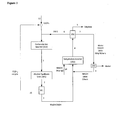
- FIG 1 represents an embodiment of an apparatus according to the present invention, wherein the references correspond to those used in the present description.
- the present invention provides a process for the conversion of carbon monoxide and hydrogen to ethylene, said process comprising the following steps:
- the present invention also provides an apparatus for the conversion of carbon monoxide and hydrogen to ethylene, said apparatus comprising:
- carbonylation of dimethyl ether (Reaction (3) above) in accordance with the present invention has the advantage that it obviates the presence of a distinct esterification unit in order to form acetate esters, from which ethanol may be formed in the alcohol synthesis unit.
- the methanol by-product from the alcohol synthesis unit is separated.
- Methanol may be converted to acetic acid in a carbonylation reactor, following which esterification takes place in a separate esterification unit in order to generate acetate esters, which are a suitable feedstock for recycling to the alcohol synthesis unit for the production of ethanol.
- Carbonylation of dimethyl ether, which is co-produced together with ethylene in the dehydration reactor according to the present invention corresponds to a more efficient means for generating an ethanol precursor for subsequently recycling to the alcohol synthesis unit.
- the process of the present invention simultaneously benefits from the energy efficiencies afforded by coupling the dehydration of methanol and ethanol and accommodating different reaction pathways for alcohol formation in a single alcohol synthesis unit, whilst also recycling the product of methanol dehydration (dimethyl ether) for generation of further ethanol, thereby increasing the yield of the ethylene product.
- carbonylation of dimethyl ether as opposed to, for example, methanol eliminates the need for esterification units, as described above.
- the process of the present invention represents an efficient, integrated process for the production of ethylene from carbon monoxide and hydrogen, preferably in the form of synthesis gas, which process may suitably be operated as a continuous process, under steady state conditions.
- step i) of the process of the present invention carbon monoxide, hydrogen and methyl acetate are introduced into an alcohol synthesis unit to produce a first product stream comprising methanol and ethanol.
- the carbon monoxide and hydrogen utilised in the process are derived from a synthesis gas feedstock, and is a mixture of carbon oxide(s) and hydrogen, preferably produced from a carbonaceous feedstock.
- the carbonaceous feedstock is preferably a material such as biomass, plastic, naphtha, refinery bottoms, crude synthesis gas (from underground coal gasification or biomass gasification), smelter off gas, municipal waste, coal bed methane, coal, and/or natural gas, with coal and natural gas being the preferred sources.
- a combination of sources can also be used, for example coal and natural gas to advantageously increase the H 2 to carbon ratio.
- Methods of preparing synthesis gas, methods for the purification of synthesis gas and/or the carbonaceous feedstock used for the preparation of synthesis gas, processes for adjusting the H 2 to carbon ratio of synthesis gas, and other related processes are well known in the art and may be used prior to using the carbon mononxide and H 2 in the process of the present invention.
- the alcohol synthesis unit comprises at least one reactor suitable for producing ethanol and methanol; if more than one reactor is employed in the alcohol synthesis unit, the reactors may be configured in series, in parallel, or in any combination thereof.
- the reactor(s) used in the alcohol synthesis unit may be a fluidised bed reactor(s) or a fixed bed reactor(s), which can be run with or without external heat exchange equipment e.g. a multi-tubular reactor; or a fluidised bed reactor; or a void reactor.
- the alcohol synthesis unit is preferably operated at a temperature of greater than 180 °C, more preferably greater than 190 °C, most preferably greater than 220 °C; and less than 320 °C, preferably less than 300 °C, more preferably less than 290 °C and most preferably less than 280 °C. Examples of preferred ranges of temperature at which the alcohol synthesis unit is operated are from 190 to 300 °C and from 220 to 280 °C.
- the alcohol synthesis unit is operated at pressure of preferably greater than 50 barg (5.1 MPa) and most preferably greater than 70 barg (7.1 MPa); and preferably less than 100 barg (10.1 MPa) and most preferably less than 90 barg (9.1 MPa).
- the alcohol synthesis unit is operated such that the reactants and the methanol and ethanol product are in the vapour phase.
- the chosen temperature of operation is governed by a balance of promoting the forward reaction (i.e. by not adversely affecting the equilibrium) and aiding the rate of conversion (i.e. higher productivity).
- the GHSV for continuous operation of the alcohol synthesis unit may be in the range 50 to 50,000 h -1 , preferably from 1,000 to 30,000 h -1 , more preferably from 2,000 to 15,000 h -1 and most preferably from 5,000 to 8,000 h -1 .
- the methyl acetate introduced into the alcohol synthesis unit preferably has an LHSV of less than 10 h -1 , more preferably of less than 5 h -1 and most preferably of less than 3 h -1 ; for example, a typical LHSV for normal operation is approximately 1.5 h -1 .
- an advantage of the process of the present invention is that the synthesis of methanol from synthesis gas and the hydrogenation of methyl acetate to methanol and ethanol (Reactions 1 and 4 above) occurs in the same alcohol synthesis unit.
- the catalyst for methanol synthesis from synthesis gas and the catalyst for acetate hydrogenation may be one and the same catalyst; or alternatively more than one catalyst may be employed in the alcohol synthesis unit.
- the catalyst, or catalysts may be any catalyst known to those skilled in the art to catalyse the synthesis of methanol from carbon monoxide and hydrogen, preferably in the form of synthesis gas, and those known to those skilled in the art which have been reported to catalyse the hydrogenation of esters to alcohols, in particular methyl acetate. Where there are multiple catalysts employed in the alcohol synthesis unit, these may be provided in separate catalyst beds within the alcohol synthesis unit or in admixture in one or more catalyst beds in the alcohol synthesis unit.
- the alcohol synthesis unit comprises a hydrogenation catalyst located downstream of a methanol synthesis catalyst; thus, according to this embodiment of the present invention, the catalyst configuration of the alcohol synthesis unit is such that the stream comprising CO, H 2 and methyl acetate is first reacted in the presence of a methanol synthesis catalyst and subsequently reacted in the presence of a hydrogenation catalyst.
- the preferred catalyst for the alcohol synthesis unit can be chosen from one of the two following groups:
- a preferred methanol synthesis catalyst is a mixture of copper, zinc oxide, and a promoter such as chromia or magnesia.
- methanol synthesis catalysts may optionally be supported on any suitable support known to those skilled in the art.
- suitable supports for such methanol synthesis catalyst include carbon, silica, titania, clays, aluminas, zinc oxide, zirconia and mixed oxides, with alumina being a particularly suitable support for such methanol synthesis catalysts.
- the aforementioned methanol synthesis catalysts may be used in a non-supported form.
- the preferred catalyst used in the alcohol synthesis unit is either a hydrogenation catalyst or consists of a mixture of the above methanol catalyst together with a hydrogenation catalyst.
- the hydrogenation catalyst can be selected from the following:
- the catalyst(s) used in the alcohol synthesis unit (which may be the aforementioned methanol catalyst and/or the aforementioned hydrogenation catalyst) is a copper based catalyst, most preferably comprising copper and zinc.
- This copper-based catalyst contains preferably more than 75 wt%, more preferably more than 90 wt% and most preferably more than 95 wt% of copper oxide and zinc oxide.
- the hydrogenation catalyst (which may be mixed with the methanol catalyst) is a copper based catalyst which is a supported catalyst which comprises copper, and preferably promoters, such as cobalt and/or manganese and/or chromium.
- All of the aforementioned hydrogenation catalysts may advantageously be supported on any suitable support known to those skilled in the art; non-limiting examples of such supports include carbon, silica, titania, clays, aluminas, zinc oxide, zirconia and mixed oxides.
- the palladium based catalysts are supported on carbon.
- the copper based catalysts are supported on zinc oxide.
- a stream rich in methanol and ethanol and a stream rich in carbon monoxide and hydrogen are separated from the first product stream of the alcohol synthesis unit. Separation may be achieved by any suitable means known to those skilled in the art. For example, the two streams may be readily separated on the basis of boiling point using, for instance, a condenser and/or phase separator and/or separator column.
- methanol and ethanol rich stream obtained from a separation of the first product stream from the alcohol synthesis unit
- it is intended to mean a separated stream having an increased combined methanol and ethanol concentration compared to the first product stream from which it is derived.
- methanol and ethanol are the major components of the ethanol and methanol rich stream (i.e. having a combined content of 50 wt.% or greater based on the weight of the stream).
- carbon monoxide and hydrogen rich stream obtained from a separation of the first product stream from the alcohol synthesis unit
- it is intended to mean a separated stream having an increased combined carbon monoxide and hydrogen concentration compared to the first product stream from which it is derived.
- carbon monoxide and hydrogen are the major components of the carbon monoxide and hydrogen rich stream (i.e. having a combined content of 50 vol.% or greater based on the volume of the stream).
- At least a portion of the hydrogen and carbon monoxide rich stream separated from the first product stream of the alcohol synthesis unit is recycled to the alcohol synthesis unit or to the carbonylation reactor.
- By-products may be formed within the alcohol synthesis unit, typically by-products that may be produced include water and carbon dioxide, although other by-products such as methane, ethane and other higher alcohols may also be formed in the alcohol synthesis unit.
- the methanol and ethanol rich stream and/or the carbon monoxide and hydrogen rich stream are purified to remove one or more of said by-products before being conveyed to the dehydration reactor or before being recycled, respectively. Purification may be performed by any suitable means known to those skilled in the art, e.g. using a distillation device comprising a sieve tray column, a packed column, a bubble cap column or a combination thereof.
- step iii) of the process of the invention at least part of the methanol and ethanol rich stream obtained from the alcohol synthesis unit is introduced into a dehydration reactor to produce a second product stream comprising ethylene and dimethyl ether.
- a dehydration reactor may be employed in step iii) of the process of the present invention.
- Equation 1 shows the endothermic direct elimination of ethanol to ethylene and water; competing with Equation 1 are Equations 2 and 3 i.e. the exothermic etherification reaction (Equation 2), and the endothermic elimination of ethoxyethane to produce ethylene and ethanol (Equation 3).
- Equation 2 shows the endothermic direct elimination of ethanol to ethylene and water; competing with Equation 1 i.e. the exothermic etherification reaction (Equation 2), and the endothermic elimination of ethoxyethane to produce ethylene and ethanol (Equation 3).
- Equation 2 shows the endothermic direct elimination of ethanol to ethylene and water; competing with Equation 1 are Equations 2 and 3 i.e. the exothermic etherification reaction (Equation 2), and the endothermic elimination of ethoxyethane to produce ethylene and ethanol (Equation 3).
- Equation 2 shows the dehydration reaction of ethanol to ethylene and water; competing with Equation 1 are Equations
- heat energy released by the reaction of dehydrating methanol may be taken up for the dehydration reaction of ethanol.
- Substantial energy savings may thus be made by co-producing dimethyl ether and ethylene from methanol and ethanol respectively in a single dehydration reactor, compared with processes where methanol and ethanol dehydration is decoupled.
- Coupling the dehydration of methanol and ethanol may also have the advantage that reactor enlargement is more readily achievable, since a single stage fixed bed reactor may be used effectively in favour of, for instance, a multistage fixed bed reactor.
- a multistage fixed bed reactor is often required in order to have a heat source at multiple positions within the reactor; such a set-up is obviated when heat transfer takes place within the reactor between the different dehydration reactions.
- the dehydration reactor is preferably operated at a temperature of greater than 160 °C, more preferably greater than 180 °C, most preferably greater than 200 °C; and less than 350 °C, preferably less than 300 °C, more preferably less than 250 °C and most preferably less than 220 °C.
- Examples of preferred ranges of temperature at which the dehydration reactor is operated are from 180 to 250 °C, or from 200 to 220 °C.
- the chosen temperature of operation is governed by a balance of promoting ethanol and methanol dehydration (i.e. by not adversely affecting the equilibrium) and aiding the rate of conversion (i.e. higher productivity).
- the dehydration reactor is operated at pressure of preferably greater than 0.5 barg (0.15 MPa), more preferably greater than 1 barg (0.20 MPa) and most preferably greater than 15 barg (1.60 MPa); and preferably less than 50 barg (5.1 MPa), more preferably less than 30 barg (3.1 MPa) and most preferably less than 25 barg (2.6 MPa).
- the GHSV for continuous operation of the dehydration reactor may be in the range 50 to 50,000 h -1 , preferably from 1,000 to 30,000 h -1 , more preferably from 2,000 to 15,000 h -1 and most preferably from 5,000 to 8,000 h -1 .
- the molar ratio of methanol : ethanol of the total feed to the dehydration reactor is preferably maintained in the range of from 1 : 1 to 3:1, more preferably from 1.8 : 1 to 2.2 : 1, yet more preferably 1.9 : 1 to 2.1 : 1. Most preferably, the molar ratio of methanol : ethanol of the total feed to the dehydration reactor is maintained at about 2:1.
- the process of the invention further comprises introducing additional methanol into the dehydration reactor from a source which is separate to that of the ethanol and methanol rich stream.
- methanol is present at higher concentration than ethanol.
- Reactions (2) and (3) above for every one mole of DME that is recycled, one mole of ethanol may be formed following carbonylation and hydrogenation reactions.
- two moles of methanol are required in order to prepare a single mole of DME. Consequently, in order to operate as a continuous process under steady state mass balance, it is desirable to have a methanol to ethanol ratio in the dehydration reactor of about 2:1.
- the catalyst for dehydration of ethanol and the catalyst for dehydration of methanol may be one and the same catalyst; or more than one catalyst may be employed in the dehydration reactor.
- the catalyst or catalysts may include those which have been reported before to catalyse the dehydration of ethanol to ethylene and/or catalyse the dehydration of methanol to dimethyl ether.
- Such catalysts include solid-acid catalysts.
- Preferred classes of solid-acid catalyst for use in the dehydration reactor are aluminas, heteropolyacids, crystalline alumina silicates (e.g. zeolites), and silicoaluminophosphates (SAPO).
- aluminas e.g. zeolites
- SAPO silicoaluminophosphates
- Preferred alumina catalysts for use in the dehydration reactor comprise ⁇ -Al 2 O 3 .
- heteropolyacid also referred to herein as "HPA"
- HPA heteropolyacid
- the heteropolyacids that may be used in conjunction with the present invention are complex, high molecular weight anions comprising oxygen-linked polyvalent metal atoms.
- each anion comprises 12-18, oxygen-linked polyvalent metal atoms.
- the polyvalent metal atoms known as peripheral atoms, surround one or more central atoms in a symmetrical manner.
- the peripheral atoms may be one or more of molybdenum, tungsten, vanadium, niobium, tantalum, or any other polyvalent metal.
- the central atoms are preferably silicon or phosphorus, but may alternatively comprise any one of a large variety of atoms from Groups I- VIII in the Periodic Table of elements.
- heteropolyacids include Keggin, Wells-Dawson and Anderson-Evans-Perloff heteropolyacids.
- heteropolyacids are as follows: 18-tungstophosphoric acid - H 6 [P 2 W 18 O 62 ].xH 2 O 12-tungstophosphoric acid - H 3 [PW 12 O 40 ].xH 2 O 12-tungstosilicic acid - H 4 [SiW 12 O 40 ].xH 2 O Cesium hydrogen tungstosilicate - Cs 3 H[SiW 12 O 40 ].xH 2 O and the free acid or partial salts of the following heteropolyacids acids: Monopotassium tungstophosphate - KH 5 [P 2 W 18 O 62 ].xH 2 O Monosodium 12-tungstosilicic acid - NaK 3 [SiW 12 O 40 ] ⁇ xH 2 O Potassium tungstophosphate - K 6 [P 2 W 18 O 62 ].xH 2 O Ammonium molybdodiphosphate - (NH 4 ) 6 [P 2 Mo 18 O 62 ].xH 2 O Potassium molybd
- the heteropolyacid is selected from one or more heteropolyacids that are based on the Keggin or Wells-Dawson structures; more preferably the heteropolyacid is selected from one or more of the following: heteropolytungstic acid (such as silicotungstic acid and phosphotungstic acid), silicomolybdic acid and phosphomolybdic acid.
- the heteropolyacid is any one or more silicotungstic acid, for example 12-tungstosilicic acid (H 4 [SiW 12 O 40 ].xH 2 O).
- heteropolyacids employed in the dehydration step iii) of the process of the present invention may have molecular weights of more than 700 and less than 8500, preferably more than 2800 and less than 6000.
- Such heteropolyacids also include dimeric complexes.
- the heteropolyacids employed in the dehydration step iii) of the process of the present invention are supported.
- the amount of heteropolyacid on the support is suitably in the range of 10 wt % to 80 wt % and preferably 20 wt % to 50 wt % based on the total weight of the heteropolyacid and the support.
- the preferred catalytic loading of heteropolyacid is 150 to 600g heteropolyacid / kg Catalyst.
- the polyvalent oxidation states and hydration states of the heteropolyacids stated previously and as represented in the typical formulae of some specific compounds only apply to the fresh acid before it is loaded onto the support, and especially before it is subjected to the dehydration process conditions.
- the degree of hydration of the heteropolyacid may affect the acidity of the supported catalyst and hence its activity and selectivity.
- either or both of these actions of impregnation and dehydration process may change the hydration and oxidation state of the metals in the heteropolyacids, i.e.
- the actual catalytic species used may not yield the hydration/oxidation states of the metals in the heteropolyacids used to impregnate the support. Naturally therefore it is to be expected that such hydration and oxidation states may also be different in the spent catalysts after reaction.
- a supported heteropolyacid catalyst may be a fresh catalyst or a previously used catalyst.
- at least a portion of the supported heteropolyacid catalyst has previously been employed in a process for the preparation of an ethylene and/or dimethyl ether from a feed comprising ethanol and/or methanol respectively.
- at least a portion of the supported heteropolyacid catalyst may derive from an extract of heteropolyacid from a previously used catalyst i.e. from a partially deactivated material.
- a heteropolytungstic acid supported catalyst having the following characteristic is employed in the dehydration step according to step iii):
- Suitable catalyst supports may be in a powder form or alternatively may be in a granular form, or in a pelletised form, a spherical form or as extrudates (including shaped particles) and include, but are not limited to, clays, bentonite, diatomaceous earth, titania, activated carbon, aluminosilicates e.g. montmorillonite, alumina, silica-alumina, silica-titania cogels, silica-zirconia cogels, carbon coated alumina, zeolites, zinc oxide, flame pyrolysed oxides.
- clays bentonite, diatomaceous earth, titania, activated carbon, aluminosilicates e.g. montmorillonite, alumina, silica-alumina, silica-titania cogels, silica-zirconia cogels, carbon coated alumina, zeolites, zinc oxide, flame pyroly
- the average pore radius (prior to loading with the heteropolyacid) of the support is 10 to 500 ⁇ , preferably 30 to 175 ⁇ , more preferably 50 to 150 ⁇ and most preferably 60 to 120 ⁇ .
- the BET surface area is preferably between 50 and 600 m 2 /g and is most preferably between 150 and 400 m 2 /g.
- a zeolite preferably in the form of the acid (H-form);
- a non-limiting example of a suitable zeolite includes the zeolites having the faujasite (FAU) framework type, such as faujasite.
- an ethylene product stream and a dimethyl ether product stream are separated from the second product stream obtained from the dehydration reactor. Separation may be performed by any suitable means known to those skilled in the art, e.g. a flash separation device, a distillation device comprising a sieve tray column, a packed column, a bubble cap column or a combination thereof. Alternatively or in addition, the separation means may comprise a membrane component.
- the ethylene product stream may undergo further purification following its separation from the second product stream from the dehydration reaction, prior to storage or use as a chemical feedstock. Purification may be performed by any suitable means known to those skilled in the art, e.g. a sieve tray column, a packed column, a bubble cap column or a combination thereof.
- separation step iv) further comprises a step of obtaining a recycle stream comprising water, unreacted alcohols (e.g. methanol and/or ethanol) and any ethyl ethers, such as DEE and MEE, that may have formed, and introducing the recycle stream into the dehydration reactor.
- unreacted alcohols e.g. methanol and/or ethanol
- any ethyl ethers such as DEE and MEE
- DEE and MEE that may be formed in the dehydration reaction may be further reacted in the dehydration reactor to produce ethylene product and DME, as illustrated below (Reactions 6 and 7): (CH 3 CH 2 ) 2 O ⁇ 2 CH 2 CH 2 + H 2 O (6) 2 CH 3 CH 2 OCH 3 ⁇ 2 CH 2 CH 2 + CH 3 OCH 3 + H 2 O (7)
- water is removed from the above-mentioned recycle stream by any suitable means known to the skilled person, for example a condenser and/or phase separator, prior to its introduction into the dehydration reactor.
- the methanol and ethanol rich stream and/or the carbon monoxide and hydrogen rich stream are purified to remove one or more of said by-products before being conveyed to the dehydration reactor or before being recycled, respectively.
- Purification may be performed by any suitable means known to those skilled in the art, e.g. a sieve tray column, a packed column, a bubble cap column or a combination thereof.
- step v) of the process of the present invention at least part of the dimethyl ether product stream, together with a stream comprising carbon monoxide and hydrogen, is introduced into a carbonylation reactor to produce a third product stream comprising methyl acetate.
- the carbonylation step v) is performed in the presence of a zeolite catalyst effective for said carbonylation.
- the dimethyl ether component of the feed for carbonylation step v) of the process of the present invention is derived at least in part from dimethyl ether produced from the dehydration of methanol in step iii) of the process of the invention.
- the dimethyl ether component of the feed for carbonylation step v) is derived exclusively from dimethyl ether produced from the dehydration of methanol in step iii) of the process of the invention.
- the feed to the carbonylation reactor may also comprise small amounts of other components arising from an imperfect separation of components contained in the dehydration product stream in step iv) of the process of the present invention.
- the feed for the carbonylation reactor may comprise small amounts of methyl ethyl ether (MEE), diethyl ether (DEE), methanol, ethanol and/or water, provided that the amount of these components is not so great as to inhibit the carbonylation of dimethyl ether to methyl acetate.
- dimethyl ether is present in the feed at a concentration in the range 0.1 to 20 mol%, based on the total feed (including recycles).
- the carbon monoxide may be substantially pure carbon monoxide, for example, carbon monoxide typically provided by suppliers of industrial gases, or it may contain impurities that do not interfere with the conversion of the dimethyl ether to methyl acetate, such as nitrogen, helium, argon, methane and/or carbon dioxide.
- the feed to the carbonylation reactor may also comprise some methanol, ethanol, methyl acetate and ethyl acetate which may be present in said carbon monoxide and hydrogen rich stream being recycled.
- Carbonylation step v) of the process of the present invention is carried out in the presence of hydrogen.
- the hydrogen may be fed as a separate stream to the carbonylation reactor or it may be fed in combination with, for example carbon monoxide.
- the feed for the carbonylation reactor may comprise synthesis gas.
- the feed to the carbonylation reactor may also comprise carbon monoxide and hydrogen derived from the carbon monoxide and hydrogen rich stream which is separated from the first product stream in step ii) of the process of the present invention and recycled to the carbonylation reactor.
- the molar ratio of carbon monoxide : hydrogen in the feed to the carbonylation reactor may be in the range 1 : 3 to 15 : 1.
- the molar ratio of (carbon monoxide + hydrogen) : (dimethyl ether + methyl acetate) is suitably in the range of 100:1 to 5:1, preferably 50 : 1 to 10 : 1.
- the carbonlyation step v) of the process of the present invention is performed under substantially anhydrous conditions.
- the process of the present invention further comprises a step of drying at least part of the dimethyl ether product stream obtained from the dehydration reactor prior to its introduction into the carbonylation reactor.
- the means for drying the dimethyl ether product stream obtained from the dehydration reactor is not limited and any suitable method of drying the dimethyl ether product stream may be used; methods of drying dimethyl ether are well known in the art.
- the zeolite catalyst may be any zeolite which is effective to catalyse the carbonylation of dimethyl ether in the presence of carbon monoxide and hydrogen to produce methyl acetate.
- zeolites suitable for use in carbonylation step of the present invention include zeolites of framework type MOR, for example mordenite, FER, such as ferrierite, OFF, for example, offretite and GME, for example gmelinite.
- the zeolite catalyst present in the carbonylation reactor is selected from the group consisting of zeolites of framework type MOR, FER, OFF and GME.
- the zeolite catalyst is dried prior to use.
- the zeolite may be dried, for example by heating to a temperature of 400 to 500 °C.
- the carbonylation step is preferably carried out under substantially anhydrous conditions, i.e. in the substantial absence of water.
- the carbonylation of dimethyl ether to methyl acetate does not generate water in-situ. Water has been found to inhibit the carbonylation of dimethyl ether to form methyl acetate.
- water is kept as low as is feasible.
- the dimethyl ether and carbon monoxide reactants (and catalyst) are preferably dried prior to introduction into the process.
- small amounts of water may be tolerated without adversely affecting the formation of methyl acetate.
- the dimethyl ether may contain, 2.5 wt% or less.
- the total combined amount of water and water equivalents present in the carbonylation reactor is less than 500 ppm relative to the amount of dimethyl ether.
- alcohols and ethers present in the carbonylation reactor can be dehydrated over the zeolite catalyst to yield water in addition to the olefin and ether products.
- Di-ethyl ether, methanol and ethanol each constitute one equivalent of water, whereas methyl-ethyl ether constitutes half an equivalent of water.
- the carbonylation step v) of the process of the present invention may suitably be carried out at a temperature in the range of 150 to 350°C.
- the carbonylation step v) of the process of the present invention may suitably be carried out at a total pressure in the range 1 to 100 barg (0.20 MPa to 10.1 MPa).
- the hydrogen partial pressure is suitably in the range 0.1 to 50 barg (0.11 MPa to 5.1 MPa).
- the carbon monoxide partial pressure should be sufficient to permit the production of methyl acetate product but is suitably in the range 0.1 to 50 barg (0.11 MPa to 5.1 MPa).
- the Gas Hourly Space Velocity (GHSV) is suitably in the range 500 to 40,000 h -1 , such as 2000 to 10,000 h -1 , for example 4000 to 6000 h -1 .
- the carbonylation step v) of the process of the present invention is suitably carried out by passing dimethyl ether vapour, hydrogen gas and carbon monoxide gas through a fixed or fluidised bed of the zeolite catalyst maintained at a desired temperature.
- the primary product of the carbonylation step v) is methyl acetate but small amounts of acetic acid may also be produced.
- the methyl acetate produced by the carbonylation step v) can be removed in the form of a vapour and thereafter condensed to a liquid.
- At least a part of the methyl acetate introduced into the alcohol synthesis unit in step i) of the process of the present invention is recycle from the third product stream produced from the carbonylation reactor in step v).
- methyl acetate which is introduced into the alcohol synthesis unit in step i) of the process of the present invention is obtained entirely from recycle of the third product stream produced from the carbonylation reactor in step v).
- This embodiment of the present invention is particularly advantageous where the process is operated as a continuous process.
- the third product stream obtained from the carbonylation reactor comprising methyl acetate is conveyed directly from the carbonylation reactor to the alcohol synthesis unit, without any intermediate processing steps.
- the third product stream obtained from the carbonylation reactor may undergo a partial separation and part of the stream may be recycled to the carbonylation reactor.
- carbon monoxide and hydrogen which is fed to the carbonylation reactor in step v) may derive at least in part from the carbon monoxide and hydrogen rich stream separated from the first product stream in step ii).
- the carbonylation reactor may take the form of a catalyst bed stack in the alcohol synthesis unit. This embodiment may have advantages in terms of space considerations and there may be further energy benefits in conducting multiple reactions within the same unit, operated under the same physical conditions of, for instance temperature and pressure.
- the carbonylation reactor may be separate from the alcohol synthesis unit, which has the advantage that the hydrogenation and carbonylation reactions may each be run at their optimal conditions of temperature and pressure.
- FIG. 1 shows an apparatus in accordance with the invention.
- the apparatus comprises an alcohol synthesis unit (101) comprising a catalyst which is effective to perform hydrogenolysis of methyl acetate and a catalyst which is effective to produce methanol from carbon monoxide and hydrogen, preferably in the form of synthesis gas.
- the alcohol synthesis unit (101) may be any reactor that is suitable for producing methanol and ethanol.
- the alcohol synthesis unit (101) may be a fluidised bed reactor or a fixed bed reactor, which can be run with or without external heat exchange equipment e.g. a multi-tubular reactor; or a fluidised bed reactor; or a void reactor.
- the feed stream (1) to the alcohol synthesis unit (101) comprises carbon monoxide, hydrogen and methyl acetate. As illustrated in Figure 1 , at least a part of the methyl acetate supplied to the alcohol synthesis unit (101) is produced by a carbonylation reactor (103), described in further detail below, which also forms part of the apparatus.
- the stream (2) which exits the alcohol synthesis unit (101), referred to hereinbefore as the first product stream, comprises, inter alia , methanol, ethanol and unreacted carbon monoxide and hydrogen.
- the first product stream (2) is conveyed to a separation means (201), where a carbon monoxide and hydrogen rich stream (10) and a methanol and ethanol rich stream (3) are separated therefrom.
- Separation means (201) is any suitable means of which the skilled person is aware which can be used to separate carbon monoxide and hydrogen (i.e. components which are gaseous at room temperature at atmospheric pressure) from methanol and ethanol (i.e. components which are liquid at room temperature at atmospheric pressure).
- Separation means (201) may, for instance, be a condenser and/or phase separator.
- carbon monoxide and hydrogen gases may be separated from methanol and ethanol liquids by a simple gas-liquid phase separation, in order to produce separated streams (10, 3).
- Carbon monoxide and hydrogen rich stream (10) may be recycled to the carbonylation reactor (103), as shown Figure 1 .
- all or a part of the carbon monoxide and hydrogen rich stream (10) may be recycled back to the alcohol synthesis unit (101).
- the dehydration reactor (102) comprises a catalyst(s) to catalyse the dehydration of ethanol to ethylene and to catalyse the dehydration of methanol to dimethyl ether, such as solid-acid catalysts preferably selected from heteropolyacids, aluminas, crystalline alumina silicates (e.g. zeolites), and silicoaluminophosphates (SAPO).
- a catalyst(s) to catalyse the dehydration of ethanol to ethylene and to catalyse the dehydration of methanol to dimethyl ether
- solid-acid catalysts preferably selected from heteropolyacids, aluminas, crystalline alumina silicates (e.g. zeolites), and silicoaluminophosphates (SAPO).
- the stream (4) which exits the dehydration reactor (102), referred to hereinbefore as the second product stream, comprises ethylene and dimethyl ether, as well as, inter alia , water, ethyl ethers (such as DEE and MEE) and unreacted alcohol (i.e. methanol and ethanol).
- the second product stream (4) is conveyed to separating means (202), where an ethylene product stream (5) and dimethyl ether product stream (6) are separated therefrom.
- Separation means (202) may comprise, for instance, a distillation device incorporating a sieve tray column, a packed column, a bubble cap column or a combination thereof. Alternatively or in addition, the separation means (202) may comprise a membrane component.
- a recycle stream (7) for the dehydration reactor may also be obtained from the separation of the second product stream (4) as shown in Figure 1 , comprising, inter alia , water, methanol, ethanol and ethyl ethers (e.g. MEE and DEE).
- water is preferably removed by a suitable separation means (203).
- Separation means (203) is any suitable means of which the skilled person is aware which can be used to separate water from lighter organic solvents, such as alcohols and ethyl ethers.
- the separation means (203) may comprise a distillation device incorporating a sieve tray column, a packed column, a bubble cap column or a combination thereof.
- the separation means (203) may comprise a membrane component.
- the stream (8), comprising predominantly methanol, ethanol and ethyl ethers, is conveyed to the dehydration reactor (102) for recycle.
- a separate methanol top-up stream (14) may also be provided in order to increase the level of methanol.
- molar ratio of methanol: ethanol is about 2:1.
- the apparatus of Figure 1 is configured such that at least a part of the dimethyl ether product stream (6) separated from the second product stream of the dehydration reactor (102) is conveyed to the carbonylation reactor (103).
- carbon monoxide and hydrogen from a carbon monoxide and hydrogen feed stream (12) and optionally also from recycle of carbon monoxide and hydrogen from the carbonylation reactor (103) (not shown) and/or recycle of the separated carbon monoxide and hydrogen rich stream (10).
- the stream (6) Prior to introduction of at least part of the dimethyl ether stream (6) into the carbonylation reactor (103), the stream (6) may optionally be dried to reduce or remove any residual water.
- the carbonylation reactor (103) comprises a zeolite catalyst suitable for converting dimethyl ether to methyl acetate in the presence of carbon monoxide and hydrogen.
- the stream (1) which exits the carbonylation reactor (103), referred to hereinbefore as the third product stream, comprises methyl acetate, in addition to carbon monoxide and hydrogen.
- the apparatus of Figure 1 is configured such that at least part of the third product stream (1) is conveyed to the alcohol synthesis unit (101).
- the apparatus of the invention is configured so as to minimise the number of reactors which are necessary for the conversion of carbon monoxide and hydrogen, preferably in the form of synthesis gas, to ethylene, whilst incorporating recycle of the products of methanol dehydration, so as to increase the yield of ethylene.
- the process of the present invention may advantageously be operated as a continuous process.
- Table 1 shows the composition of the effluent stream from the dehydration reactor, corresponding to the second product stream (4) as described hereinbefore and with reference to Figure 1 , as determined by gas chromatography.
- Table 1 Component mol% Methane 0.02 Ethane 0.05 Ethylene 29.91 Propane 0.02 Propylene 0.12 Iso-Butane 0.10 n-Butane 0.01 trans- 2-Butene 0.03 1-Butene 0.01 Iso-Butylene 0.04 Cis-2-Butene 0.02 i-Pentane 0.04 n-Pentane 0.06 Unknown 0.00 Hydrogen 0.00 CO 0.00 C6+ 0.09 DME 8.93 Methanol 12.19 Ethanol 3.18 Unknown at 3.16 mins 0.06 Unknown at 3.86 mins 0.08 Water 49.24 C9-C12 Aromatics 0.00
- the principal components of the product stream from the dehydration reactor are ethylene, dimethyl ether, methanol, ethanol and water.
- This example shows that co-dehydration of methanol and ethanol is possible in a single reactor.
- the yield of the desired ethylene product in ethanol dehydration is high at 73%.
- the principal components of the effluent stream, aside from the desired ethylene product are materials that are either committed to further processing (e.g. DME for use in the carbonylation reaction) or otherwise recycled (e.g. ethanol and methanol) in order to increase ethylene production either directly (i.e. by dehydration of ethanol) or indirectly by preparation of further dimethyl ether for subsequent conversion to an ethanol precursor (methyl acetate).
Landscapes
- Chemical & Material Sciences (AREA)
- Organic Chemistry (AREA)
- Chemical Kinetics & Catalysis (AREA)
- Organic Low-Molecular-Weight Compounds And Preparation Thereof (AREA)
Priority Applications (1)
| Application Number | Priority Date | Filing Date | Title |
|---|---|---|---|
| EP14192088.4A EP3018113A1 (fr) | 2014-11-06 | 2014-11-06 | Procédé et appareil pour la production d'éthylène à partir de monoxyde de carbone et d'hydrogène |
Applications Claiming Priority (1)
| Application Number | Priority Date | Filing Date | Title |
|---|---|---|---|
| EP14192088.4A EP3018113A1 (fr) | 2014-11-06 | 2014-11-06 | Procédé et appareil pour la production d'éthylène à partir de monoxyde de carbone et d'hydrogène |
Publications (1)
| Publication Number | Publication Date |
|---|---|
| EP3018113A1 true EP3018113A1 (fr) | 2016-05-11 |
Family
ID=51900157
Family Applications (1)
| Application Number | Title | Priority Date | Filing Date |
|---|---|---|---|
| EP14192088.4A Ceased EP3018113A1 (fr) | 2014-11-06 | 2014-11-06 | Procédé et appareil pour la production d'éthylène à partir de monoxyde de carbone et d'hydrogène |
Country Status (1)
| Country | Link |
|---|---|
| EP (1) | EP3018113A1 (fr) |
Cited By (2)
| Publication number | Priority date | Publication date | Assignee | Title |
|---|---|---|---|---|
| CN104841447A (zh) * | 2015-04-21 | 2015-08-19 | 上海大学 | 多金属氧酸盐和费托催化剂的复合催化剂、其制备和评价方法 |
| WO2021009627A1 (fr) * | 2019-07-17 | 2021-01-21 | Sabic Global Technologies B.V. | Production sélective d'éthylène à partir de méthane |
Citations (22)
| Publication number | Priority date | Publication date | Assignee | Title |
|---|---|---|---|---|
| US3928483A (en) | 1974-09-23 | 1975-12-23 | Mobil Oil Corp | Production of gasoline hydrocarbons |
| US4025575A (en) | 1975-04-08 | 1977-05-24 | Mobil Oil Corporation | Process for manufacturing olefins |
| US4122110A (en) | 1976-10-29 | 1978-10-24 | Institut Francais Du Petrole | Process for manufacturing alcohols, particularly linear saturated primary alcohols, from synthesis gas |
| US4252479A (en) | 1979-08-15 | 1981-02-24 | Dynamic Air Inc. | Rotary diverter valves |
| WO1983003409A1 (fr) | 1982-03-26 | 1983-10-13 | Bradley, Michael, William | Procede de production d'ethanol |
| US4447669A (en) | 1982-01-04 | 1984-05-08 | Societe Chimique De La Grande Paroisse, Azote Et Produits Chimiques | Production of hydrocarbons from methanol in the presence of zeolite catalysts |
| US4496786A (en) | 1983-09-30 | 1985-01-29 | Chevron Research Company | Selective conversion of methanol to low molecular weight olefins over high silica SSZ-13 zeolite |
| US4499314A (en) | 1982-03-31 | 1985-02-12 | Imperial Chemical Industries Plc | Methanol conversion to hydrocarbons with zeolites and cocatalysts |
| US4547616A (en) | 1984-12-28 | 1985-10-15 | Mobil Oil Corporation | Conversion of oxygenates to lower olefins in a turbulent fluidized catalyst bed |
| US4677243A (en) | 1982-10-04 | 1987-06-30 | Union Carbide Corporation | Production of light olefins from aliphatic hetero compounds |
| US4831060A (en) | 1984-07-30 | 1989-05-16 | The Dow Chemical Company | Mixed alcohols production from syngas |
| US4843183A (en) | 1984-08-15 | 1989-06-27 | Showa Shell Sekiyu Kabushiki Kaisha | Process for producing lower olefinic hydrocarbons from methanol |
| US4861938A (en) | 1987-07-07 | 1989-08-29 | Uop | Chemical conversion process |
| US4973792A (en) | 1987-07-07 | 1990-11-27 | Uop | Chemical conversion process |
| US5095163A (en) | 1991-02-28 | 1992-03-10 | Uop | Methanol conversion process using SAPO catalysts |
| US5126308A (en) | 1991-11-13 | 1992-06-30 | Uop | Metal aluminophosphate catalyst for converting methanol to light olefins |
| US5191141A (en) | 1991-11-13 | 1993-03-02 | Uop | Process for converting methanol to olefins using an improved metal aluminophosphate catalyst |
| US5714662A (en) * | 1995-08-10 | 1998-02-03 | Uop | Process for producing light olefins from crude methanol |
| EP1925363A1 (fr) | 2006-11-22 | 2008-05-28 | BP Chemicals Limited | Procédé pour la production d'alcènes à partir d'hydrocarbures oxygénés en utilisant des catalyseurs supportés à base de hetéropolyacides. |
| EP2072489A1 (fr) * | 2007-12-17 | 2009-06-24 | BP p.l.c. | Processus de conversion d'hydrocarbure en ethanol |
| US20100056831A1 (en) | 2006-08-11 | 2010-03-04 | China Petroleum & Chemical Corporation | Energy-effective process for co-producing ethylene and dimethyl ether |
| CN103242122A (zh) * | 2012-02-09 | 2013-08-14 | 中国石油化工股份有限公司 | 一种乙醇制乙烯和甲醇合成二甲醚的组合工艺方法及装置 |
-
2014
- 2014-11-06 EP EP14192088.4A patent/EP3018113A1/fr not_active Ceased
Patent Citations (23)
| Publication number | Priority date | Publication date | Assignee | Title |
|---|---|---|---|---|
| US3928483A (en) | 1974-09-23 | 1975-12-23 | Mobil Oil Corp | Production of gasoline hydrocarbons |
| US4025575A (en) | 1975-04-08 | 1977-05-24 | Mobil Oil Corporation | Process for manufacturing olefins |
| US4122110A (en) | 1976-10-29 | 1978-10-24 | Institut Francais Du Petrole | Process for manufacturing alcohols, particularly linear saturated primary alcohols, from synthesis gas |
| US4252479A (en) | 1979-08-15 | 1981-02-24 | Dynamic Air Inc. | Rotary diverter valves |
| US4447669A (en) | 1982-01-04 | 1984-05-08 | Societe Chimique De La Grande Paroisse, Azote Et Produits Chimiques | Production of hydrocarbons from methanol in the presence of zeolite catalysts |
| WO1983003409A1 (fr) | 1982-03-26 | 1983-10-13 | Bradley, Michael, William | Procede de production d'ethanol |
| US4499314A (en) | 1982-03-31 | 1985-02-12 | Imperial Chemical Industries Plc | Methanol conversion to hydrocarbons with zeolites and cocatalysts |
| US4677243A (en) | 1982-10-04 | 1987-06-30 | Union Carbide Corporation | Production of light olefins from aliphatic hetero compounds |
| US4496786A (en) | 1983-09-30 | 1985-01-29 | Chevron Research Company | Selective conversion of methanol to low molecular weight olefins over high silica SSZ-13 zeolite |
| US4831060A (en) | 1984-07-30 | 1989-05-16 | The Dow Chemical Company | Mixed alcohols production from syngas |
| US4843183A (en) | 1984-08-15 | 1989-06-27 | Showa Shell Sekiyu Kabushiki Kaisha | Process for producing lower olefinic hydrocarbons from methanol |
| US4547616A (en) | 1984-12-28 | 1985-10-15 | Mobil Oil Corporation | Conversion of oxygenates to lower olefins in a turbulent fluidized catalyst bed |
| US4861938A (en) | 1987-07-07 | 1989-08-29 | Uop | Chemical conversion process |
| US4973792A (en) | 1987-07-07 | 1990-11-27 | Uop | Chemical conversion process |
| US5095163A (en) | 1991-02-28 | 1992-03-10 | Uop | Methanol conversion process using SAPO catalysts |
| US5191141A (en) | 1991-11-13 | 1993-03-02 | Uop | Process for converting methanol to olefins using an improved metal aluminophosphate catalyst |
| US5126308A (en) | 1991-11-13 | 1992-06-30 | Uop | Metal aluminophosphate catalyst for converting methanol to light olefins |
| US5714662A (en) * | 1995-08-10 | 1998-02-03 | Uop | Process for producing light olefins from crude methanol |
| US20100056831A1 (en) | 2006-08-11 | 2010-03-04 | China Petroleum & Chemical Corporation | Energy-effective process for co-producing ethylene and dimethyl ether |
| EP1925363A1 (fr) | 2006-11-22 | 2008-05-28 | BP Chemicals Limited | Procédé pour la production d'alcènes à partir d'hydrocarbures oxygénés en utilisant des catalyseurs supportés à base de hetéropolyacides. |
| EP2072489A1 (fr) * | 2007-12-17 | 2009-06-24 | BP p.l.c. | Processus de conversion d'hydrocarbure en ethanol |
| WO2009077723A1 (fr) | 2007-12-17 | 2009-06-25 | Bp P.I.C. | Processus de conversion d'hydrocarbures en éthanol |
| CN103242122A (zh) * | 2012-02-09 | 2013-08-14 | 中国石油化工股份有限公司 | 一种乙醇制乙烯和甲醇合成二甲醚的组合工艺方法及装置 |
Non-Patent Citations (5)
| Title |
|---|
| "Handbook of Petroleum refining processes", MCGRAW HILL |
| CHEM. ENG COMM., vol. 95, 1990, pages 27 - 39 |
| CHEM. ENG. RES. AND DESIGN, vol. 62, 1984, pages 81 - 91 |
| JOURNAL OF CATALYSIS, vol. 114, 1988, pages 90 - 99 |
| KIRK OTHMER: "Encyclopaedia of Chemical Technology", vol. 9, pages: 411 - 413 |
Cited By (4)
| Publication number | Priority date | Publication date | Assignee | Title |
|---|---|---|---|---|
| CN104841447A (zh) * | 2015-04-21 | 2015-08-19 | 上海大学 | 多金属氧酸盐和费托催化剂的复合催化剂、其制备和评价方法 |
| CN104841447B (zh) * | 2015-04-21 | 2017-05-31 | 上海大学 | 多金属氧酸盐和费托催化剂的复合催化剂、其制备和评价方法 |
| WO2021009627A1 (fr) * | 2019-07-17 | 2021-01-21 | Sabic Global Technologies B.V. | Production sélective d'éthylène à partir de méthane |
| CN114222726A (zh) * | 2019-07-17 | 2022-03-22 | 沙特基础工业全球技术公司 | 从甲烷选择性制备乙烯 |
Similar Documents
| Publication | Publication Date | Title |
|---|---|---|
| CA2630598C (fr) | Procede de production d'ethylene | |
| EP1954654B1 (fr) | Procédé de production d'oléfines | |
| EP1899284B1 (fr) | Distillation reactive pour la deshydration d'alcools mixtes | |
| RU2165955C2 (ru) | Трехстадийный способ получения легких олефинов из метана и/или этана | |
| EP1904423B1 (fr) | Distillation reactive avec recyclage de l'olefine | |
| EP1954656B1 (fr) | Procédé de preparation de propylène | |
| US20090270668A1 (en) | Process for Producing Olefins | |
| EP1902006B1 (fr) | Déshydratation d'alcools mélangés | |
| MX2008006876A (en) | Process for producing ethylene |
Legal Events
| Date | Code | Title | Description |
|---|---|---|---|
| PUAI | Public reference made under article 153(3) epc to a published international application that has entered the european phase |
Free format text: ORIGINAL CODE: 0009012 |
|
| AK | Designated contracting states |
Kind code of ref document: A1 Designated state(s): AL AT BE BG CH CY CZ DE DK EE ES FI FR GB GR HR HU IE IS IT LI LT LU LV MC MK MT NL NO PL PT RO RS SE SI SK SM TR |
|
| AX | Request for extension of the european patent |
Extension state: BA ME |
|
| STAA | Information on the status of an ep patent application or granted ep patent |
Free format text: STATUS: THE APPLICATION HAS BEEN REFUSED |
|
| 18R | Application refused |
Effective date: 20160626 |