EP3021252B1 - Procédé et appareil pour empêcher une attaque de type à injection dans un système d'exploitation web - Google Patents
Procédé et appareil pour empêcher une attaque de type à injection dans un système d'exploitation web Download PDFInfo
- Publication number
- EP3021252B1 EP3021252B1 EP15195053.2A EP15195053A EP3021252B1 EP 3021252 B1 EP3021252 B1 EP 3021252B1 EP 15195053 A EP15195053 A EP 15195053A EP 3021252 B1 EP3021252 B1 EP 3021252B1
- Authority
- EP
- European Patent Office
- Prior art keywords
- widget
- web
- data
- metadata file
- characteristic
- Prior art date
- Legal status (The legal status is an assumption and is not a legal conclusion. Google has not performed a legal analysis and makes no representation as to the accuracy of the status listed.)
- Active
Links
Images


Classifications
-
- G—PHYSICS
- G06—COMPUTING OR CALCULATING; COUNTING
- G06F—ELECTRIC DIGITAL DATA PROCESSING
- G06F21/00—Security arrangements for protecting computers, components thereof, programs or data against unauthorised activity
- G06F21/50—Monitoring users, programs or devices to maintain the integrity of platforms, e.g. of processors, firmware or operating systems
- G06F21/55—Detecting local intrusion or implementing counter-measures
- G06F21/56—Computer malware detection or handling, e.g. anti-virus arrangements
Definitions
- the present disclosure relates to a method and system for detecting the running of a malicious code which is injected within in the execution context of a widget in a device having a web based Operating System (OS).
- OS Operating System
- the 5G communication system or the pre-5G communication system is called a Beyond 4G network communication system or a post LTE system.
- mmWave ultrahigh frequency band
- mmWave ultrahigh frequency band
- beamforming a massive Multi-Input Multi-Output (massive MIMO), a Full Dimensional MIMO (FD-MIMO), an array antenna, analog beamforming, and a large scale antenna are discussed in the 5G communication system.
- massive MIMO massive Multi-Input Multi-Output
- FD-MIMO Full Dimensional MIMO
- technologies such as an evolved small cell, an advanced small cell, a cloud Radio Access Network (cloud RAN), an ultra-dense network, a Device-to-Device communication (D2D communication), a wireless backhaul, a moving network, a cooperative communication, a Coordinated Multi-Points (CoMP), a reception interference cancellation, etc. are being developed in the 5G communication system.
- cloud RAN cloud Radio Access Network
- D2D communication Device-to-Device communication
- wireless backhaul a moving network
- a cooperative communication a Coordinated Multi-Points (CoMP), a reception interference cancellation, etc.
- CoMP Coordinated Multi-Points
- FQAM Hybrid FSK and QAM Modulation
- SWSC Sliding Window Superposition Coding
- ACM Advanced Coding Modulation
- FBMC Filter Bank Multi-Carrier
- NOMA Non-Orthogoonal Multiple Access
- SCMA Sparse Code Multiple Access
- the Internet is evolved to the Internet of Things (IoT) in which information is transmitted/received between distributed components such as things in a human-centered connection network in which the human generates and consumes information.
- IoT Internet of Things
- the Internet of Everything (IoE) technology may be an example where a technology of processing Big data through connection with a cloud server, etc. is coupled to the IoT technology.
- the IoT In order to implement the IoT, technical elements such as the sensing technology, the wired/wireless communication and network infrastructure, the service interface technology, the security technology, etc. are demanded. Thus, in recent years, technologies for connection between things, such the sensor network, the Machine-to-Machine (M2M) communication, the Machine Type Communication (MTC), etc. are being researched.
- M2M Machine-to-Machine
- MTC Machine Type Communication
- the intelligent Internet Technology may be provided which creates new values for people's lives by collecting and analyzing data generated by connected things.
- the IoT may be applied to fields such as the smart home, the smart building, the smart city, the smart car or the connected car, the smart grid, the healthcare, the smart home appliance, the advanced medical service, etc.
- 5G communication system to the IoT network.
- application of the 5G communication technology to technologies such as the sensor network, the M2M communication, the MTC, etc. is implemented by a technique such as the beamforming, the MIMO, the array antenna, etc.
- Application of the cloud wireless access network as the above-described big data processing technology may be an example of the fusion between the 5G technology and the IoT technology.
- the web-based OS is being widely used at the present time.
- a notable example thereof is the Tizen OS which is jointly developed by Samsung Electronics and Intel and is targeted to consumer devices such as a smartphone and a SmartTV.
- the web-based OS forms an execution environment constructed based on a web browser.
- This technology allows widgets, which are mainly written in HyperText Markup Language (HTML)/Java script, to be executed in a device, and the widgets are rendered by a runtime engine of the web browser.
- HTML HyperText Markup Language
- the widget is the most general software code running in the web-based OS.
- the Web based OS is typically designed for the operation of mobile devices (such as smartphones, tablet, etc.) and SmartTVs
- the various widgets are typically supplied to the relevant device from an App-Store, which is most commonly owned by the manufacturer of the specific device.
- widgets for the Samsung SmartTV are supplied by the Samsung owned App-Store.
- Injection-type vulnerabilities such as, Cross-site Scripting (XSS) and HTML injections are the most critical vulnerabilities that affect web based applications. These vulnerabilities allow execution of malicious code in the execution context of the vulnerable application (i.e., widget).
- the above-mentioned type of security weakness amplifies the severity of malicious injection to any widget and an injection that may potentially result in a broad system exploit and a complete security compromise within the consumer device.
- the user expects the widget to behave in the same manner as intended by its author. Since there are many different types and subtypes of vulnerabilities that can modify the runtime behavior and a widget's user interface (UI), it is advantageous to address the vulnerability problem in its entirety, rather than to focus on the mitigation of various specific threats.
- UI user interface
- Patent document US2009/0282480 is regarded as the closest prior art and discloses an apparatus and method for preventing Cross-Site Scripting by observing program output, which is compared to the program invariants to identify security anomalies.
- An embodiment of the present disclosure provides a method and apparatus for detecting and preventing the exploitation of injection-type vulnerabilities in a Web-based OS environment.
- An embodiment of the present disclosure provides a method and apparatus for detecting and preventing the exploitation of injection-type vulnerabilities in a Web-based OS environment and context.
- An embodiment of the present disclosure provides a method and apparatus for detecting and preventing the exploitation of injection-type vulnerabilities in a simple and compact manner in a Web based OS environment and context.
- a method for detecting a malicious code which is injected into the command stream (i.e. execution code) of a widget running on a web-based OS in a device by a web server in a wireless communication system includes: analyzing the widget in the web server; determining at least one invariant constantly maintained and conserved while the widget is running (i.e. a variable, data value, characteristic or parameter with a known, predictable and/or constant/non-varying value), on the basis of a result of the analyzing; generating a metadata file including data satisfying (i.e. including, associated with, or corresponding to) the at least one invariant; associating the metadata file with the widget and providing the widget in a state in which the associated metadata file is included in the widget.
- the data of the at least one invariant comprises one of a HyperText Markup Language (HTML) page, a Java Script (JS) function call graph, an external JS library item used by the widget, and a Cascading Style Sheet (CSS) used by the widget.
- HTML HyperText Markup Language
- JS Java Script
- CSS Cascading Style Sheet
- the HTML page included in the data of the invariant is a Document Object Model (DOM) tree of the HTML page.
- DOM Document Object Model
- the method further comprises updating the widget, updating the data of the at least one invariant included in the metadata file on the basis of a result of the updating, and providing the updated metadata file to the device.
- a method of detecting a malicious code injected in to a command stream of a widget running on a web-based OS by a device in a wireless communication system includes: receiving and executing the widget including metadata from a web server, and analyzing the running widget; determining a first invariant constantly maintained and conserved while the widget is running, on the basis of a result of the analyzing; comparing data of the first invariant with data of a second invariant included in the metadata; issuing an alert when a change equal to or larger than a predefined value is detected between the data of the first invariant and the data of the second invariant.
- the data of the first and second invariants comprises at least one of an HTML page, a JS function call graph, an external JS library item used by the widget, and a CSS used by the widget.
- the HTML page included in the data of the first and second invariants is a DOM tree of the HTML page.
- the analyzing of the running widget comprises performing Uniform Resource Locator (URL) parsing of the running widget, performing protocol processing, performing HTML parsing; and executing a JS of the widget.
- URL Uniform Resource Locator
- the performing the HTML parsing comprises comparing a list including external dependencies used during a runtime of the widget with a list including external dependencies included in the metadata or comparing a DOM tree generated during the runtime of the widget with a DOM tree included in the metadata.
- a web server for detecting a malicious code injected into a command stream of a widget running on a web-based OS at a device in a wireless communication system.
- the web server includes: a controller that analyzes the widget by the web server, determines at least one invariant constantly maintained and conserved while the widget is running, creates a metadata file including data of the at least one invariant, and associates the metadata file with the widget; and a transmission unit that includes the associated metadata file in the widget and provides the metadata file to the device.
- an apparatus for detecting a malicious code injected to a command stream of a widget running on a web-based OS in a wireless communication system includes: a controller that receives and executes the widget including metadata from a web server, determines a first invariant constantly maintained and conserved while the widget is running, on the basis of a result of the analyzing, and compares data of the first invariant with data of a second invariant included in the metadata; and a transmission unit that issues an alert when a change equal to or larger than a predefined value is detected between the data of the first invariant and the data of the second invariant.
- a “component surface” includes one or more component surfaces.
- first, second, etc. can be used for describing various elements, the structural elements are not restricted by the terms. The terms are used merely for the purpose to distinguish an element from the other elements. For example, a first element could be termed a second element, and similarly, a second element could be also termed a first element without departing from the scope of the present disclosure.
- the term "and/or" includes any and all combinations of one or more associated items.
- an electronic device may include a communication functionality.
- the terminal may, for example, be a smart phone, a tablet personal computer (PC), a mobile phone, a video phone, an e-book reader, a desktop PC, a laptop PC, a netbook PC, a personal digital assistant (PDA), a portable multimedia player (PMP), an MP3 player, a mobile medical device, a camera, or a wearable device (e.g., head-mounted device (HMD), electronic clothes, an electronic bracelet, an electronic necklace, an electronic appcessory, an electronic tattoo, or a smart watch).
- HMD head-mounted device
- the electronic device may be a smart home appliance with a communication functionality.
- the smart home appliance may, for example, be a television, a digital video disk (DVD) player, an audio player, a refrigerator, an air conditioner, a vacuum cleaner, an oven, a microwave, a washer, a drier, an air purifier, a set-top box, a TV box (e.g., Samsung HomeSyncTM, Apple TVTM, or Google TVTM), a gaming console, an electronic dictionary, a camcorder, or an electronic photo frame.
- DVD digital video disk
- the electronic device may be a medical appliance (e.g., magnetic resonance angiography (MRA) device, magnetic resonance imaging (MRI) device, computed tomography (CT) device, and ultrasonic device), a navigation device, a global positioning system (GPS) receiver, an event data recorder (EDR), a flight data recorder (FDR), an automotive infotainment device, a marine electronic device (e.g., ship navigation device and a gyrocompass), avionics, security equipment, or an industrial or home robot.
- MRA magnetic resonance angiography
- MRI magnetic resonance imaging
- CT computed tomography
- ultrasonic device e.g., ultrasonic device
- a navigation device e.g., a global positioning system (GPS) receiver, an event data recorder (EDR), a flight data recorder (FDR), an automotive infotainment device, a marine electronic device (e.g., ship navigation device and a gyrocompass), avi
- the electronic device may be a part of furniture or a building/structure, an electronic board, an electronic signature receiving device, a projector, and various kinds of measuring instruments (e.g., water meter, electric meter, gas meter, and electromagnetic wave meter), each of which has a communication functionality.
- measuring instruments e.g., water meter, electric meter, gas meter, and electromagnetic wave meter
- the electronic device may be a combination of the above-mentioned devices. Further, it will be apparent to those skilled in the art that the terminal according to various embodiments of the present disclosure is not limited to the above-mentioned devices.
- a method and apparatus proposed in an embodiment of the present disclosure can be applied to various communication systems such as an IEEE 802.11 communication system, an IEEE 802.16 communication system, mobile broadcasting services such as a Digital Multimedia Broadcasting (DMB) service, a portable Digital Video Broadcasting-Handheld (DVP-H), and a mobile/portable Advanced Television Systems Committee-Mobile/Handheld (ATSC-M/H) service, etc., a digital video broadcasting system such as an Internal Protocol TeleVision (IPTV) service, a Moving Picture Experts Group (MPEG) Media Transport (MMT) system, an Evolved Packet System (EPS), an LTE communication system, an LTE-Advanced (LTE-A) communication system, a High Speed Downlink Packet Access (HSDPA) mobile communication system, a High Rate Packet Data (HRPD) mobile communication system of the 3rd Generation Project Partnership 2, a Wideband Code Division Multiple Access (WCDMA) mobile communication system of 3GPP2, a Code Division Multiple Access (CDMA)
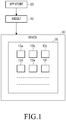
- FIG. 1 illustrates an example of running a widget within a device in a wireless communication system.
- the web-based OS 70 is a browser-like operating system for use in mobile devices, SmartTVs, and similar devices.
- the web-based OS 70 may be a sole mechanism which initiates execution of widgets 12a to 12f within a device 10 when used as an OS of the device 10.
- the web-based OS 70 is generally supplied by an App-store entity 20 of a device manufacturer, corresponding to a sole source to which update and modification of an OS are applied.
- App-store is originally associated with a digital distribution platform for a mobile application on iOS developed and maintained by Apple Inc. Later, various other manufacturers and distributors of mobile devices have adopted this type of platform, and the meaning of the term has expanded, and thus now, refers to an application (or widget) distribution and update platform maintained by a manufacturer of each device. In the present disclosure, the term “App-store” refers to the expanded meaning.
- the App-store 20 is considered to be a trusted entity having an assignment ensuring authentication, reliability, and security of the applications and widgets supplied to the device 10.
- a user of the device 10 uses one App-store 20 owned and operated by a manufacturer of the device 10.
- the App-store 20 of the device manufacturer is a supplier of the web-based OS 70 when being used to operate a device. This fact is used by a security system of the present disclosure.
- the solution by the present invention is based on the observation that when a widget executes properly, there are certain invariants or parameters/characteristics that remain constant and are preserved throughout the correct and/or entire execution of the widget (i.e. data values or characteristics which do not change or change by a predetermined amount during execution of the widget). Consequently, by identifying and comparing parameters of a running widget with those expected when the widget is executed correctly (i.e. not compromised), the injection of malicious code can be detected by virtue of identifying differences between the actual and expected parameters of the widget.
- FIG. 2 is a flowchart illustrating an operation of providing a widget to a device by an App-store in a wireless communication system according to an embodiment of the present disclosure.
- step 70 the App-Store receives the widget from the widget's author.
- step 71 the App-Store analyzes the received widget to determine and extract a structure or collection of invariants which are produced when the widget executes correctly.
- step 72 the App-Store creates a metadata file or another equivalent data file including one or more values that represent the structure or collection of invariants.
- step 73 the App-Store associates the metadata file with the respective widget, and proceeds to step 74 to transmit the widget and the associated metadata file to the device.
- the widget and the associated metadata file are selectively encoded and transmitted to the device.
- invariants there are various types of invariants that may be used by step 71.
- the following types of invariants are suitable for use by the present invention: (a) HTML pages; (b) the Java Script (JS) functional call graph; (c) external JS libraries items that are used by the widget; and (d) the CSSs (Cascading Style Sheets) that are used by the widget.
- JavaScript functions that are used by the widget are not expected to change after the widget is uploaded to the App-Store.
- a new code is added to the widget running context.
- the widget may execute one or more new JavaScript functions that were not originally present at the time when the widget was uploaded to the App-Store.
- such an exploit may generate fake items in the HTML page or alternatively it may remove or disguise HTML objects that are a part of the original page.
- FIG. 3 illustrates an example of detecting injection of a malicious code to a running context of a widget by a device in a wireless communication system according to an embodiment of the present disclosure.
- a widget 112 which is transmitted to the device 110 from an App-store 120 owned by a manufacturer of the device 110 is associated with a respective metadata file 140, which includes a list of invariants or structural details relating to the invariants, as determined by the analysis process at the App-Store 120.
- a web-based OS 170 which is supplied to the device 110 from the App-Store 120 is also modified to include a monitoring module 160.
- a monitoring module 160 is included in a web-based OS rendering engine.
- a runtime of the web browser starts execution of the widget 112
- the metadata file 140 of the widget 112 is loaded to the web-runtime together with a code of the widget 112.
- the monitoring module 160 operates in runtime by parsing a widget code executed to determine and identify the relevant invariants or a structure of the relevant invariants.
- the monitoring module 160 uses the parsing results to identify the validity, correctness, and accuracy of the invariants or the structure thereof. This identification is performed by comparing the real time parsing results with the corresponding data within the metadata file 140.
- the monitoring module 160 issues an alert. Further, when respective data within the metadata file 140 and the real-time invariants coincide with each other, the monitoring module 160 concludes that the widget execution context is clean from a malicious code.
- the present invention is based on the following assumptions:
- the App Store When a widget is firstly received by the App Store, a detailed analysis procedure of the widget is initiated to generate the metadata file 140.
- three types of invariants of which the respective lists or structures are included in the metadata file 140 will be described.
- the present disclosure is not limited to any type of invariant, since the present disclosure may use any combination of the invariants or other invariants that may be selected using similar principles.
- the present invention preferably suggests use of the following invariants, i.e., the JavaScript functional call graph, the HTML pages, and the list of external dependencies.
- call graph information within the metadata file 140 and a respective identification in real time by the monitoring module 160 allows mitigation of the script injection vulnerabilities.
- the call graph of the widget 112 may be extracted, for example, by using static code analysis techniques. It should be noted that the invention is not limited to operation with a complete call graph, as it is possible to perform the identification with a reduced call graph which includes some of the codes that are reachable from input controls. The performing of the identification with the reduced call graph will reduce some of the overhead associated with the identification by invention.
- the monitoring module 160 may identify, during the execution of the widget, any deviation from the expected list of the invariants or from the respective structure of the invariants by performing identification against the metadata file 140.
- the monitoring module 160 may identify, during the execution of the widget, any deviation from the expected list of the invariants or from the respective structure of the invariants by performing identification against the metadata file 140.
- the call graph analysis may present some challenges due to the dynamic nature of the Java script. Since the graph itself may change during a runtime, it is not always possible to construct a call graph statically. Thus, in an embodiment of the present disclosure, a dynamic call graph is generated in the App-store 120 and dynamic identification is performed at the device 110 during the running time.
- the dynamic analysis in the App Store may include running the widget multiple times and storing stacks of respective invariant information. The collected invariant information is identified with respect to a fitting thereof into the metadata file. Any stack of the call graph that is not fitted may be ignored, and may not be included in the metadata file 140.
- the widget is executed multiple times on multiple devices, and then all the stacks are collected and compared with an existing call graph. All the paths that are not yet included in the existing call graph are added to the existing call graph.
- HTML in the metadata file 140 allows alleviation of HTML injection vulnerabilities.
- the monitoring module 160 detects that the HTML Document Object Model (DOM) is not matched with the HTML DOM that is included in the metadata file 140, an alert is issued. Since substantially all the HTML parsers have a function of building a DOM of a parsed HTML page, the creation of an HTML DOM, as is done in the App Store, is relatively simple and may be efficiently implemented.
- DOM HTML Document Object Model
- the list of all the external functions that are used by the widget may also be included in the metadata file 140.
- This list of the external functions includes, among others, the respective versions. This fact allows detection of an exploit where a malicious library having the same name is downloaded by an attacker within the device. Another invariant of this type of attack is where an older version of a same library which is known to have certain vulnerabilities is brought to device by an attacker.
- the inclusion of the appropriate version number in the metadata file ensures the integrity of the library, as well as of the widget itself.
- the monitoring module 160 existing in the web-based OS 170 is included in the web-based OS rendering engine.
- the widget execution may comprise several additional steps as follows: (a) identifying the dependencies (i.e., the code components that are necessary to put into the page so that the page rendering will succeed) of the page (external JS, CSSs, images, and so on); (b) HTML parsing that includes building a DOM for rendering the page; and (c) executing JavaScript.
- the function of the monitoring unit 160 may be implemented in a form of special callbacks that are called at appropriate points in the following three steps:
- FIG. 4 is a flowchart illustrating an operation of providing a widget to a device by an App-store in a wireless communication system according to an embodiment of the present disclosure.
- step 601 the App-Store receives the widget from the widget's author or other appropriate source.
- step 602 the App-Store parses the received widget, and creates a call graph of the widget.
- step 603 the App-Store creates a list of DOMs for all the HTML pages.
- step 604 the App-Store creates a list which includes all the external dependencies (i.e., libraries and cascading stylesheets) that are used by the widget.
- the App-Store stores the data that was accumulated in steps 602, 603, and 604 in the metadata file 140.
- the metadata may be securely bound to the widget via the use of encryption and/or signing for example, such that the metadata is securely provided along with the widget and tampering of the metadata may be detected.
- the method may also include the creation and storage of other parameters or characteristics (i.e. invariants) of the widget or a subset of the aforementioned invariants.
- FIG. 5 is a flowchart illustrating an operation of receiving a widget provided from an App-store by a monitoring module of a device in a wireless communication system according to another embodiment of the present disclosure.
- step 701 the monitoring module receives and executes a widget provided from the App-Store, and performs a URL parsing of the running widget.
- step 702 the monitoring module performs a protocol handling.
- the monitoring module performs an HTML parsing. More specifically, in step 703, the monitoring unit creates a list which summarizes all the external functions that are used by the widget during runtime, and compares the list with the corresponding list in the metadata file. Furthermore, the monitoring unit creates a DOM tree for the running widget, and when the running widget is completed, the monitoring unit compares the DOM tree with the corresponding DOM tree in the metadata file 160. When any deviation is found, the monitoring unit issues an alert.
- the monitoring module executes the JavaScript of the widget.
- the monitoring unit compares the temporary function stack with the call graph stored in the metadata file while the Java Script of the widget is executed, and issues an alert when a deviation is detected.
- step 705 the monitoring module performs a page layout calculation.
- one or more other characteristics or a subset of the characteristics may be monitored by the monitoring module and compared to the corresponding values stored in the associated metadata.
- FIG. 6 is flowchart illustrating an operation of detecting injection of a malicious code to the running context of an application by a device in a wireless communication system according to an embodiment of the present disclosure.
- a device checks whether an application received from a web server (e.g., the App-Store) is an image. When it is checked that the received application is an image, the device proceeds to step 805 to decode the received image.
- a web server e.g., the App-Store
- the device proceeds to step 802 to decompress the received application.
- the device performs lexing of the decompressed application.
- step 804 the device performs parsing of the lexed application, and creates a DOM for the lexed application.
- step 806 the device detects injection of a malicious code to an execution context by comparing the DOM created in step 804 with the DOM included in the metadata received from the web server.
- step 807 the device performs rendering, in step 808.
- FIG. 7 illustrates an example of an attribute of a call graph which is one of invariants of a widget.
- a call graph "uml_class_tree_graph()" may include a plurality of attributes illustrated above, for example, apidoc.ClassDoc.mro(), DotGraph_init_(), DotGraphEdge_setitem_(), DotGraphUmlClassNode.link_attributes(), and _class_tree_graph(), and name_list().
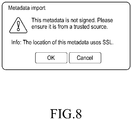
- FIG. 8 illustrates an example of a warning message alerted when a change equal to or larger than a predetermined value is detected between invariants data included in metadata and invariants data of a widget running in a device.
- the device alerts a warning message as illustrated above to alert the user of the device to a potential security issue.
- the computer-readable recording medium is a predetermined data storage device which can store data which can be read by a computer system.
- Examples of the computer readable recording medium may include a read-only memory (ROM), a random access memory (RAM), a CD-ROM, a magnetic tape, a floppy disk, an optical data storage device, and a carrier wave (such as data transmission through the Internet).
- the computer-readable recording medium may be distributed through computer systems connected to the network, and accordingly the computer-readable code is stored and executed in a distributed manner. Further, functional programs, codes and code segments for achieving the present invention may be easily interpreted by programmers skilled in the art which the present disclosure pertains to.
- a method and apparatus may be implemented in the form of hardware, software, or a combination of hardware and software. Any such software may be stored, for example, in a volatile or non-volatile storage device such as a ROM, a memory such as a RAM, a memory chip, a memory device, or a memory IC, or a recordable optical or magnetic medium such as a CD, a DVD, a magnetic disk, or a magnetic tape, regardless of its ability to be erased or its ability to be re-recorded.
- a volatile or non-volatile storage device such as a ROM, a memory such as a RAM, a memory chip, a memory device, or a memory IC, or a recordable optical or magnetic medium such as a CD, a DVD, a magnetic disk, or a magnetic tape, regardless of its ability to be erased or its ability to be re-recorded.
- the memory included in the mobile terminal is one example of machine-readable devices suitable for storing a program including instructions
- the present invention includes a program for a code implementing the apparatus and method described in the appended claims of the specification and a machine (a computer or the like)-readable storage medium for storing the program.
- the program may be electronically transferred by a predetermined medium such as a communication signal transferred through a wired or wireless connection, and the present disclosure appropriately includes equivalents of the program.
- an apparatus may receive the program from a program providing device that is wiredly or wirelessly connected thereto, and may store the program.
- the program providing device may include a program including instructions through which a program processing device performs a preset content protecting method, a memory for storing information and the like required for the content protecting method, a communication unit for performing wired or wireless communication with the program processing device, and a controller for transmitting the corresponding program to a transceiver at the request of the program processing device or automatically.
Landscapes
- Engineering & Computer Science (AREA)
- Computer Security & Cryptography (AREA)
- Software Systems (AREA)
- Computer Hardware Design (AREA)
- General Engineering & Computer Science (AREA)
- Theoretical Computer Science (AREA)
- Virology (AREA)
- Health & Medical Sciences (AREA)
- Physics & Mathematics (AREA)
- General Physics & Mathematics (AREA)
- General Health & Medical Sciences (AREA)
- Computer And Data Communications (AREA)
- Telephonic Communication Services (AREA)
Claims (15)
- Procédé de détection d'un code malveillant injecté dans un widget (12, 112) pour un système d'exploitation, OS, basé sur le Web (70, 170) d'un dispositif (10, 110), par un serveur Web, le procédé comprenant :l'analyse, par un contrôleur du serveur Web, du widget pour l'OS basé sur le Web du dispositif, etla détermination, par le contrôleur, sur la base d'un résultat de l'analyse, d'au moins une caractéristique du widget devant être maintenue et conservée en permanence tandis que le widget est exécuté dans un environnement d'exécution formé par l'OS basé sur le Web construit sur la base d'un navigateur Web du dispositif, le widget étant restitué par un moteur d'exécution du navigateur Web ;la génération, par le contrôleur, d'un fichier de métadonnées (140, 160) comprenant des données de l'au moins une caractéristique ; etl'association, par le contrôleur, du fichier de métadonnées au widget, comprenant, par le contrôleur, le fichier de métadonnées associé dans le widget, et la fourniture, par le contrôleur, du widget qui comprend le fichier de métadonnées associé au dispositif,dans lequel les données de l'au moins une caractéristique sont destinée à être utilisées par le dispositif pour détecter le code malveillant injecté dans le widget sur le dispositif en comparant les données de l'au moins une caractéristique aux données obtenues par le dispositif tandis que le widget comprenant le fichier de métadonnées associé est en cours d'exécution sur le dispositif.
- Procédé selon la revendication 1, dans lequel l'au moins une caractéristique comprend au moins un élément parmi une page en langage de balisage HyperText, HTML, un script Java, JS, un graphe d'appel de fonction, un élément de bibliothèque JS externe utilisé par le widget (12, 112), ou une feuille de style en cascade, CSS, utilisé par le widget.
- Procédé selon la revendication 2, dans lequel la page HTML incluse dans la caractéristique est une arborescence de modèle d'objet de document, DOM, de la page HTML
- Procédé selon la revendication 1, comprenant en outre :l'actualisation du widget (12, 112) ;l'actualisation des données de l'au moins une caractéristique incluse dans le fichier de métadonnées (140, 160) sur la base d'un résultat de l'actualisation ; etla fourniture du fichier de métadonnées actualisé au dispositif (10, 110).
- Procédé de détection d'un code malveillant injecté dans un widget (12, 112) s'exécutant sur un OS basé sur le Web (70, 170) par un dispositif (10, 110), le procédé comprenant :la réception et l'exécution, par un contrôleur du dispositif, du widget comprenant un fichier de métadonnées depuis un serveur Web, dans lequel le widget est exécuté dans un environnement d'exécution formé par l'OS basé sur le Web construit sur la base d'un navigateur Web du dispositif, le widget étant restitué par un moteur d'exécution du navigateur Web, etl'analyse, par le contrôleur, du widget s'exécutant sur l'OS basé sur le Web du dispositif, dans lequel le fichier de métadonnées comprend des données d'au moins une caractéristique du widget devant être maintenue et conservée en permanence tandis que le widget est exécuté dans l'environnement d'exécution formé par l'OS basé sur le Web du dispositif ;l'identification, par le contrôleur, d'une première caractéristique parmi l'au moins une caractéristique du widget sur la base d'un résultat de l'analyse ;la comparaison, par le contrôleur, de premières données de la première caractéristique obtenues par le contrôleur lors de l'exécution du widget à des secondes données de la première caractéristique incluses dans le fichier de métadonnées ;l'identification, par le contrôleur, que les premières données de la première caractéristique sont modifiées par le code malveillant sur la base d'une différence entre les premières données de la première caractéristique obtenues par le contrôleur lors de l'exécution du widget et les secondes données de la première caractéristique incluses dans le fichier de métadonnées ; etla fourniture, par le contrôleur, d'une alerte sur la base de la détermination que les premières données de la première caractéristique sont modifiées.
- Procédé selon la revendication 5, dans lequel la première caractéristique comprend au moins un élément parmi une page HTML, un graphe d'appel de fonction JS, un élément de bibliothèque JS externe utilisé par le widget (12, 112) ou un CSS utilisé par le widget.
- Procédé selon la revendication 6, dans lequel la page HTML incluse dans la première caractéristique est une arborescence DOM de la page HTML
- Procédé selon la revendication 5, dans lequel l'analyse du widget en cours d'exécution (12, 112) comprend :l'exécution d'une analyse de localisateur de ressources uniformes, URL, du widget en cours d'exécution ;l'exécution d'un traitement de protocole ;l'exécution d'une analyse HTML ; etl'exécution d'un JS du widget.
- Procédé selon la revendication 8, dans lequel l'exécution de l'analyse HTML comprend :la comparaison d'une liste comprenant des dépendances externes utilisées pendant une exécution du widget (12, 112) à une liste comprenant des dépendances externes incluses dans le fichier de métadonnées ; oula comparaison d'une arborescence DOM générée pendant l'exécution du widget à une arborescence DOM incluse dans le fichier de métadonnées.
- Serveur Web pour détecter un code malveillant injecté dans un widget (12, 112) pour un OS basé sur le Web (70, 170) au niveau d'un dispositif (10, 110), le serveur Web comprenant :un émetteur ; etun contrôleur configuré pour :analyser le widget pour l'OS basé sur le Web du dispositif, etdéterminer, sur la base d'un résultat de l'analyse, au moins une caractéristique du widget devant être maintenue et conservée en permanence tandis que le widget est exécuté dans un environnement d'exécution formé par l'OS basé sur le Web construit sur la base d'un navigateur Web du dispositif, le widget étant restitué par un moteur d'exécution du navigateur Web,générer un fichier de métadonnées (140, 160) comprenant des données de l'au moins une caractéristique ; etassocier le fichier de métadonnées au widget et comprenant le fichier de métadonnées associé dans le widget, etcommander à l'émetteur de fournir le widget qui comprend le fichier de métadonnées associé au dispositif ; etdans lequel les données de l'au moins une caractéristique sont destinées à être utilisées par le dispositif pour détecter le code malveillant injecté dans le widget sur le dispositif en comparant les données de l'au moins une caractéristique aux données obtenues par le dispositif tandis que le widget comprenant le fichier de métadonnées associé s'exécute sur le dispositif.
- Serveur Web adapté pour exécuter le procédé selon l'une quelconque des revendications 2 à 4.
- Appareil de détection d'un code malveillant injecté dans un widget (12, 112) s'exécutant sur un OS basé sur le Web (70, 170), l'appareil comprenant :un émetteur ; etun contrôleur configuré pour :recevoir et exécuter le widget comprenant un fichier de métadonnées à partir d'un serveur Web, dans lequel le widget est exécuté dans un environnement d'exécution formé par l'OS basé sur le Web construit sur la base d'un navigateur Web du dispositif, le widget étant restitué par un moteur d'exécution du navigateur Web, et analyser le widget s'exécutant sur l'OS basé sur le Web du dispositif, dans lequel le fichier de métadonnées comprend des données d'au moins une caractéristique du widget devant être maintenue et conservée en permanence tandis que le widget est exécuté dans l'environnement d'exécution formé par l'OS basé sur le Web du dispositif,identifier une première caractéristique parmi l'au moins une caractéristique du widget en fonction d'un résultat de l'analyse,comparer des premières données de la première caractéristique obtenues par le contrôleur lors de l'exécution du widget à des secondes données de la première caractéristique incluses dans le fichier de métadonnées,identifier que les premières données de la première caractéristique sont modifiées par le code malveillant sur la base d'une différence entre les premières données de la première caractéristique obtenues par le contrôleur lors de l'exécution du widget et les secondes données de la première caractéristique incluses dans le fichier de métadonnées, etcommander à l'émetteur de fournir une alerte sur la base de la détermination que les premières données de la première caractéristique sont modifiées .
- Appareil adapté pour exécuter le procédé selon l'une des revendications 6 à 9.
- Procédé selon l'une quelconque des revendications 1 à 9, dans lequel le fichier de métadonnées est lié au widget (12, 112) en utilisant au moins l'un parmi le cryptage ou la signature.
- Support de stockage lisible par ordinateur sur lequel sont stockées des instructions exécutables par ordinateur conçues pour exécuter le procédé selon l'une quelconque des revendications 1 à 9.
Applications Claiming Priority (2)
| Application Number | Priority Date | Filing Date | Title |
|---|---|---|---|
| US14/542,943 US20160142437A1 (en) | 2014-11-17 | 2014-11-17 | Method and system for preventing injection-type attacks in a web based operating system |
| KR1020150142302A KR20160058673A (ko) | 2014-11-17 | 2015-10-12 | 웹 기반 운영 체제에서의 주입형 공격을 방지하는 방법 및 장치 |
Publications (2)
| Publication Number | Publication Date |
|---|---|
| EP3021252A1 EP3021252A1 (fr) | 2016-05-18 |
| EP3021252B1 true EP3021252B1 (fr) | 2020-10-21 |
Family
ID=54703761
Family Applications (1)
| Application Number | Title | Priority Date | Filing Date |
|---|---|---|---|
| EP15195053.2A Active EP3021252B1 (fr) | 2014-11-17 | 2015-11-17 | Procédé et appareil pour empêcher une attaque de type à injection dans un système d'exploitation web |
Country Status (2)
| Country | Link |
|---|---|
| EP (1) | EP3021252B1 (fr) |
| WO (1) | WO2016080735A1 (fr) |
Families Citing this family (5)
| Publication number | Priority date | Publication date | Assignee | Title |
|---|---|---|---|---|
| DE102017222905A1 (de) | 2017-12-15 | 2019-06-19 | Audi Ag | Verfahren zum Koppeln eines Endfahrzeugs mit einem stationären Datennetzwerk sowie System zum Durchführen des Verfahrens |
| CN108171059B (zh) * | 2017-12-26 | 2020-09-04 | 中国人民解放军战略支援部队信息工程大学 | 基于软件基因的恶意代码检测与识别方法及装置 |
| CN110855705A (zh) * | 2019-11-23 | 2020-02-28 | 赣南师范大学 | 面向网络攻击与防护的无端口隐蔽通信方法 |
| CN111538990B (zh) * | 2020-04-24 | 2023-12-22 | 怀化学院 | 一种互联网分析系统 |
| CN111460442A (zh) * | 2020-04-24 | 2020-07-28 | 怀化学院 | 一种基于互联网交叉搜索缺陷的攻击检测方法 |
Citations (3)
| Publication number | Priority date | Publication date | Assignee | Title |
|---|---|---|---|---|
| EP0813133A2 (fr) * | 1996-06-11 | 1997-12-17 | International Business Machines Corporation | Mécanisme uniforme pour l'utilisation de contenus signés |
| US7565543B1 (en) * | 2005-03-23 | 2009-07-21 | American Express Travel Related Services Company, Inc. | System and method for authenticating a web page |
| US20090282480A1 (en) * | 2008-05-08 | 2009-11-12 | Edward Lee | Apparatus and Method for Monitoring Program Invariants to Identify Security Anomalies |
Family Cites Families (8)
| Publication number | Priority date | Publication date | Assignee | Title |
|---|---|---|---|---|
| FR2864655B1 (fr) * | 2003-12-31 | 2006-03-24 | Trusted Logic | Procede de controle d'integrite de programmes par verification d'empreintes de traces d'execution |
| EP1843250B1 (fr) * | 2006-04-05 | 2015-06-10 | Texas Instruments France | Système et procédé de contrôle de l'intégrité du code d'un programme informatique |
| US20080184041A1 (en) * | 2007-01-31 | 2008-07-31 | Microsoft Corporation | Graph-Based Tamper Resistance Modeling For Software Protection |
| US8108933B2 (en) * | 2008-10-21 | 2012-01-31 | Lookout, Inc. | System and method for attack and malware prevention |
| US9305165B2 (en) * | 2011-05-06 | 2016-04-05 | The University Of North Carolina At Chapel Hill | Methods, systems, and computer readable media for detecting injected machine code |
| US20130160126A1 (en) * | 2011-12-15 | 2013-06-20 | Microsoft Corporation | Malware remediation system and method for modern applications |
| US8819772B2 (en) * | 2012-06-25 | 2014-08-26 | Appthority, Inc. | In-line filtering of insecure or unwanted mobile device software components or communications |
| US9225737B2 (en) * | 2013-03-15 | 2015-12-29 | Shape Security, Inc. | Detecting the introduction of alien content |
-
2015
- 2015-11-17 WO PCT/KR2015/012352 patent/WO2016080735A1/fr not_active Ceased
- 2015-11-17 EP EP15195053.2A patent/EP3021252B1/fr active Active
Patent Citations (3)
| Publication number | Priority date | Publication date | Assignee | Title |
|---|---|---|---|---|
| EP0813133A2 (fr) * | 1996-06-11 | 1997-12-17 | International Business Machines Corporation | Mécanisme uniforme pour l'utilisation de contenus signés |
| US7565543B1 (en) * | 2005-03-23 | 2009-07-21 | American Express Travel Related Services Company, Inc. | System and method for authenticating a web page |
| US20090282480A1 (en) * | 2008-05-08 | 2009-11-12 | Edward Lee | Apparatus and Method for Monitoring Program Invariants to Identify Security Anomalies |
Also Published As
| Publication number | Publication date |
|---|---|
| EP3021252A1 (fr) | 2016-05-18 |
| WO2016080735A1 (fr) | 2016-05-26 |
Similar Documents
| Publication | Publication Date | Title |
|---|---|---|
| US10542040B2 (en) | Method and apparatus for preventing injection-type attack in web-based operating system | |
| EP3021252B1 (fr) | Procédé et appareil pour empêcher une attaque de type à injection dans un système d'exploitation web | |
| CN105940654B (zh) | 特权静态被托管的web应用 | |
| US8789204B2 (en) | Method and apparatus for secure cross-site scripting | |
| US9747449B2 (en) | Method and device for preventing application in an operating system from being uninstalled | |
| CN108182365B (zh) | 基于cpe的漏洞检测方法、设备和计算机可读存储介质 | |
| US20160197950A1 (en) | Detection system and method for statically detecting applications | |
| EP3834113B1 (fr) | Détection de risques de sécurité dans un code de logiciel binaire | |
| EP4273726B1 (fr) | Évaluation de risque basée sur une facture logicielle augmentée de matériaux | |
| US10686864B2 (en) | Initiating operating system commands based on browser cookies | |
| US10474810B2 (en) | Controlling access to web resources | |
| US10528744B2 (en) | Detecting security vulnerabilities on computing devices | |
| US9942267B1 (en) | Endpoint segregation to prevent scripting attacks | |
| CN114692157A (zh) | shellcode恶意执行的判定方法和系统 | |
| KR101382549B1 (ko) | 모바일 환경에서 sns 콘텐츠의 사전 검증 방법 | |
| US20160127412A1 (en) | Method and system for detecting execution of a malicious code in a web based operating system | |
| US10044728B1 (en) | Endpoint segregation to prevent scripting attacks | |
| US20240031166A1 (en) | Web-side data signature method and apparatus and computer device | |
| US20140208438A1 (en) | Download management method and device based on android browser | |
| Wang et al. | Firmware security verification method of distance learning terminal based on MD5 algorithm | |
| CA2798394C (fr) | Methode et systeme pour disposer des applications sur de multiples plateformes | |
| De Vincenzi et al. | Contextualizing Security and Privacy of Software-Defined Vehicles: A Literature Review and Industry Perspectives | |
| HK40102804A (en) | Risk assessment based on augmented software bill of materials | |
| HK40102804B (en) | Risk assessment based on augmented software bill of materials | |
| HK40054236A (en) | Detecting security risks in binary software code |
Legal Events
| Date | Code | Title | Description |
|---|---|---|---|
| PUAI | Public reference made under article 153(3) epc to a published international application that has entered the european phase |
Free format text: ORIGINAL CODE: 0009012 |
|
| 17P | Request for examination filed |
Effective date: 20160324 |
|
| AK | Designated contracting states |
Kind code of ref document: A1 Designated state(s): AL AT BE BG CH CY CZ DE DK EE ES FI FR GB GR HR HU IE IS IT LI LT LU LV MC MK MT NL NO PL PT RO RS SE SI SK SM TR |
|
| AX | Request for extension of the european patent |
Extension state: BA ME |
|
| STAA | Information on the status of an ep patent application or granted ep patent |
Free format text: STATUS: EXAMINATION IS IN PROGRESS |
|
| 17Q | First examination report despatched |
Effective date: 20181018 |
|
| GRAP | Despatch of communication of intention to grant a patent |
Free format text: ORIGINAL CODE: EPIDOSNIGR1 |
|
| STAA | Information on the status of an ep patent application or granted ep patent |
Free format text: STATUS: GRANT OF PATENT IS INTENDED |
|
| INTG | Intention to grant announced |
Effective date: 20200730 |
|
| GRAS | Grant fee paid |
Free format text: ORIGINAL CODE: EPIDOSNIGR3 |
|
| GRAA | (expected) grant |
Free format text: ORIGINAL CODE: 0009210 |
|
| STAA | Information on the status of an ep patent application or granted ep patent |
Free format text: STATUS: THE PATENT HAS BEEN GRANTED |
|
| AK | Designated contracting states |
Kind code of ref document: B1 Designated state(s): AL AT BE BG CH CY CZ DE DK EE ES FI FR GB GR HR HU IE IS IT LI LT LU LV MC MK MT NL NO PL PT RO RS SE SI SK SM TR |
|
| REG | Reference to a national code |
Ref country code: GB Ref legal event code: FG4D |
|
| REG | Reference to a national code |
Ref country code: CH Ref legal event code: EP |
|
| REG | Reference to a national code |
Ref country code: IE Ref legal event code: FG4D |
|
| REG | Reference to a national code |
Ref country code: DE Ref legal event code: R096 Ref document number: 602015060719 Country of ref document: DE |
|
| REG | Reference to a national code |
Ref country code: AT Ref legal event code: REF Ref document number: 1326559 Country of ref document: AT Kind code of ref document: T Effective date: 20201115 |
|
| PGFP | Annual fee paid to national office [announced via postgrant information from national office to epo] |
Ref country code: GB Payment date: 20201125 Year of fee payment: 6 Ref country code: DE Payment date: 20201120 Year of fee payment: 6 |
|
| REG | Reference to a national code |
Ref country code: AT Ref legal event code: MK05 Ref document number: 1326559 Country of ref document: AT Kind code of ref document: T Effective date: 20201021 |
|
| REG | Reference to a national code |
Ref country code: NL Ref legal event code: MP Effective date: 20201021 |
|
| PG25 | Lapsed in a contracting state [announced via postgrant information from national office to epo] |
Ref country code: GR Free format text: LAPSE BECAUSE OF FAILURE TO SUBMIT A TRANSLATION OF THE DESCRIPTION OR TO PAY THE FEE WITHIN THE PRESCRIBED TIME-LIMIT Effective date: 20210122 Ref country code: RS Free format text: LAPSE BECAUSE OF FAILURE TO SUBMIT A TRANSLATION OF THE DESCRIPTION OR TO PAY THE FEE WITHIN THE PRESCRIBED TIME-LIMIT Effective date: 20201021 Ref country code: FI Free format text: LAPSE BECAUSE OF FAILURE TO SUBMIT A TRANSLATION OF THE DESCRIPTION OR TO PAY THE FEE WITHIN THE PRESCRIBED TIME-LIMIT Effective date: 20201021 Ref country code: NL Free format text: LAPSE BECAUSE OF FAILURE TO SUBMIT A TRANSLATION OF THE DESCRIPTION OR TO PAY THE FEE WITHIN THE PRESCRIBED TIME-LIMIT Effective date: 20201021 Ref country code: PT Free format text: LAPSE BECAUSE OF FAILURE TO SUBMIT A TRANSLATION OF THE DESCRIPTION OR TO PAY THE FEE WITHIN THE PRESCRIBED TIME-LIMIT Effective date: 20210222 Ref country code: NO Free format text: LAPSE BECAUSE OF FAILURE TO SUBMIT A TRANSLATION OF THE DESCRIPTION OR TO PAY THE FEE WITHIN THE PRESCRIBED TIME-LIMIT Effective date: 20210121 |
|
| REG | Reference to a national code |
Ref country code: LT Ref legal event code: MG4D |
|
| PG25 | Lapsed in a contracting state [announced via postgrant information from national office to epo] |
Ref country code: BG Free format text: LAPSE BECAUSE OF FAILURE TO SUBMIT A TRANSLATION OF THE DESCRIPTION OR TO PAY THE FEE WITHIN THE PRESCRIBED TIME-LIMIT Effective date: 20210121 Ref country code: AT Free format text: LAPSE BECAUSE OF FAILURE TO SUBMIT A TRANSLATION OF THE DESCRIPTION OR TO PAY THE FEE WITHIN THE PRESCRIBED TIME-LIMIT Effective date: 20201021 Ref country code: ES Free format text: LAPSE BECAUSE OF FAILURE TO SUBMIT A TRANSLATION OF THE DESCRIPTION OR TO PAY THE FEE WITHIN THE PRESCRIBED TIME-LIMIT Effective date: 20201021 Ref country code: IS Free format text: LAPSE BECAUSE OF FAILURE TO SUBMIT A TRANSLATION OF THE DESCRIPTION OR TO PAY THE FEE WITHIN THE PRESCRIBED TIME-LIMIT Effective date: 20210221 Ref country code: PL Free format text: LAPSE BECAUSE OF FAILURE TO SUBMIT A TRANSLATION OF THE DESCRIPTION OR TO PAY THE FEE WITHIN THE PRESCRIBED TIME-LIMIT Effective date: 20201021 Ref country code: SE Free format text: LAPSE BECAUSE OF FAILURE TO SUBMIT A TRANSLATION OF THE DESCRIPTION OR TO PAY THE FEE WITHIN THE PRESCRIBED TIME-LIMIT Effective date: 20201021 Ref country code: LV Free format text: LAPSE BECAUSE OF FAILURE TO SUBMIT A TRANSLATION OF THE DESCRIPTION OR TO PAY THE FEE WITHIN THE PRESCRIBED TIME-LIMIT Effective date: 20201021 |
|
| PG25 | Lapsed in a contracting state [announced via postgrant information from national office to epo] |
Ref country code: HR Free format text: LAPSE BECAUSE OF FAILURE TO SUBMIT A TRANSLATION OF THE DESCRIPTION OR TO PAY THE FEE WITHIN THE PRESCRIBED TIME-LIMIT Effective date: 20201021 |
|
| REG | Reference to a national code |
Ref country code: CH Ref legal event code: PL |
|
| REG | Reference to a national code |
Ref country code: DE Ref legal event code: R097 Ref document number: 602015060719 Country of ref document: DE |
|
| PG25 | Lapsed in a contracting state [announced via postgrant information from national office to epo] |
Ref country code: SM Free format text: LAPSE BECAUSE OF FAILURE TO SUBMIT A TRANSLATION OF THE DESCRIPTION OR TO PAY THE FEE WITHIN THE PRESCRIBED TIME-LIMIT Effective date: 20201021 Ref country code: CZ Free format text: LAPSE BECAUSE OF FAILURE TO SUBMIT A TRANSLATION OF THE DESCRIPTION OR TO PAY THE FEE WITHIN THE PRESCRIBED TIME-LIMIT Effective date: 20201021 Ref country code: EE Free format text: LAPSE BECAUSE OF FAILURE TO SUBMIT A TRANSLATION OF THE DESCRIPTION OR TO PAY THE FEE WITHIN THE PRESCRIBED TIME-LIMIT Effective date: 20201021 Ref country code: RO Free format text: LAPSE BECAUSE OF FAILURE TO SUBMIT A TRANSLATION OF THE DESCRIPTION OR TO PAY THE FEE WITHIN THE PRESCRIBED TIME-LIMIT Effective date: 20201021 Ref country code: SK Free format text: LAPSE BECAUSE OF FAILURE TO SUBMIT A TRANSLATION OF THE DESCRIPTION OR TO PAY THE FEE WITHIN THE PRESCRIBED TIME-LIMIT Effective date: 20201021 Ref country code: LU Free format text: LAPSE BECAUSE OF NON-PAYMENT OF DUE FEES Effective date: 20201117 Ref country code: LT Free format text: LAPSE BECAUSE OF FAILURE TO SUBMIT A TRANSLATION OF THE DESCRIPTION OR TO PAY THE FEE WITHIN THE PRESCRIBED TIME-LIMIT Effective date: 20201021 Ref country code: MC Free format text: LAPSE BECAUSE OF FAILURE TO SUBMIT A TRANSLATION OF THE DESCRIPTION OR TO PAY THE FEE WITHIN THE PRESCRIBED TIME-LIMIT Effective date: 20201021 |
|
| REG | Reference to a national code |
Ref country code: BE Ref legal event code: MM Effective date: 20201130 |
|
| PLBE | No opposition filed within time limit |
Free format text: ORIGINAL CODE: 0009261 |
|
| STAA | Information on the status of an ep patent application or granted ep patent |
Free format text: STATUS: NO OPPOSITION FILED WITHIN TIME LIMIT |
|
| PG25 | Lapsed in a contracting state [announced via postgrant information from national office to epo] |
Ref country code: LI Free format text: LAPSE BECAUSE OF NON-PAYMENT OF DUE FEES Effective date: 20201130 Ref country code: DK Free format text: LAPSE BECAUSE OF FAILURE TO SUBMIT A TRANSLATION OF THE DESCRIPTION OR TO PAY THE FEE WITHIN THE PRESCRIBED TIME-LIMIT Effective date: 20201021 Ref country code: CH Free format text: LAPSE BECAUSE OF NON-PAYMENT OF DUE FEES Effective date: 20201130 |
|
| 26N | No opposition filed |
Effective date: 20210722 |
|
| PG25 | Lapsed in a contracting state [announced via postgrant information from national office to epo] |
Ref country code: FR Free format text: LAPSE BECAUSE OF NON-PAYMENT OF DUE FEES Effective date: 20201221 Ref country code: AL Free format text: LAPSE BECAUSE OF FAILURE TO SUBMIT A TRANSLATION OF THE DESCRIPTION OR TO PAY THE FEE WITHIN THE PRESCRIBED TIME-LIMIT Effective date: 20201021 Ref country code: IT Free format text: LAPSE BECAUSE OF FAILURE TO SUBMIT A TRANSLATION OF THE DESCRIPTION OR TO PAY THE FEE WITHIN THE PRESCRIBED TIME-LIMIT Effective date: 20201021 Ref country code: IE Free format text: LAPSE BECAUSE OF NON-PAYMENT OF DUE FEES Effective date: 20201117 |
|
| PG25 | Lapsed in a contracting state [announced via postgrant information from national office to epo] |
Ref country code: SI Free format text: LAPSE BECAUSE OF FAILURE TO SUBMIT A TRANSLATION OF THE DESCRIPTION OR TO PAY THE FEE WITHIN THE PRESCRIBED TIME-LIMIT Effective date: 20201021 |
|
| PG25 | Lapsed in a contracting state [announced via postgrant information from national office to epo] |
Ref country code: IS Free format text: LAPSE BECAUSE OF FAILURE TO SUBMIT A TRANSLATION OF THE DESCRIPTION OR TO PAY THE FEE WITHIN THE PRESCRIBED TIME-LIMIT Effective date: 20210221 Ref country code: TR Free format text: LAPSE BECAUSE OF FAILURE TO SUBMIT A TRANSLATION OF THE DESCRIPTION OR TO PAY THE FEE WITHIN THE PRESCRIBED TIME-LIMIT Effective date: 20201021 Ref country code: MT Free format text: LAPSE BECAUSE OF FAILURE TO SUBMIT A TRANSLATION OF THE DESCRIPTION OR TO PAY THE FEE WITHIN THE PRESCRIBED TIME-LIMIT Effective date: 20201021 Ref country code: CY Free format text: LAPSE BECAUSE OF FAILURE TO SUBMIT A TRANSLATION OF THE DESCRIPTION OR TO PAY THE FEE WITHIN THE PRESCRIBED TIME-LIMIT Effective date: 20201021 |
|
| REG | Reference to a national code |
Ref country code: DE Ref legal event code: R119 Ref document number: 602015060719 Country of ref document: DE |
|
| PG25 | Lapsed in a contracting state [announced via postgrant information from national office to epo] |
Ref country code: MK Free format text: LAPSE BECAUSE OF FAILURE TO SUBMIT A TRANSLATION OF THE DESCRIPTION OR TO PAY THE FEE WITHIN THE PRESCRIBED TIME-LIMIT Effective date: 20201021 |
|
| GBPC | Gb: european patent ceased through non-payment of renewal fee |
Effective date: 20211117 |
|
| PG25 | Lapsed in a contracting state [announced via postgrant information from national office to epo] |
Ref country code: BE Free format text: LAPSE BECAUSE OF NON-PAYMENT OF DUE FEES Effective date: 20201130 |
|
| PG25 | Lapsed in a contracting state [announced via postgrant information from national office to epo] |
Ref country code: GB Free format text: LAPSE BECAUSE OF NON-PAYMENT OF DUE FEES Effective date: 20211117 Ref country code: DE Free format text: LAPSE BECAUSE OF NON-PAYMENT OF DUE FEES Effective date: 20220601 |