EP3022882B1 - Verfahren und anordnung zum qos-bewussten routing in einem rechtmässigen überwachungssystem - Google Patents
Verfahren und anordnung zum qos-bewussten routing in einem rechtmässigen überwachungssystem Download PDFInfo
- Publication number
- EP3022882B1 EP3022882B1 EP13741886.9A EP13741886A EP3022882B1 EP 3022882 B1 EP3022882 B1 EP 3022882B1 EP 13741886 A EP13741886 A EP 13741886A EP 3022882 B1 EP3022882 B1 EP 3022882B1
- Authority
- EP
- European Patent Office
- Prior art keywords
- routing
- session
- communication
- communication sessions
- traffic class
- Prior art date
- Legal status (The legal status is an assumption and is not a legal conclusion. Google has not performed a legal analysis and makes no representation as to the accuracy of the status listed.)
- Active
Links
Images




Classifications
-
- H—ELECTRICITY
- H04—ELECTRIC COMMUNICATION TECHNIQUE
- H04L—TRANSMISSION OF DIGITAL INFORMATION, e.g. TELEGRAPHIC COMMUNICATION
- H04L45/00—Routing or path finding of packets in data switching networks
- H04L45/302—Route determination based on requested QoS
-
- H—ELECTRICITY
- H04—ELECTRIC COMMUNICATION TECHNIQUE
- H04L—TRANSMISSION OF DIGITAL INFORMATION, e.g. TELEGRAPHIC COMMUNICATION
- H04L63/00—Network architectures or network communication protocols for network security
- H04L63/30—Network architectures or network communication protocols for network security for supporting lawful interception, monitoring or retaining of communications or communication related information
-
- H—ELECTRICITY
- H04—ELECTRIC COMMUNICATION TECHNIQUE
- H04L—TRANSMISSION OF DIGITAL INFORMATION, e.g. TELEGRAPHIC COMMUNICATION
- H04L63/00—Network architectures or network communication protocols for network security
- H04L63/30—Network architectures or network communication protocols for network security for supporting lawful interception, monitoring or retaining of communications or communication related information
- H04L63/306—Network architectures or network communication protocols for network security for supporting lawful interception, monitoring or retaining of communications or communication related information intercepting packet switched data communications, e.g. Web, Internet or IMS communications
-
- H—ELECTRICITY
- H04—ELECTRIC COMMUNICATION TECHNIQUE
- H04L—TRANSMISSION OF DIGITAL INFORMATION, e.g. TELEGRAPHIC COMMUNICATION
- H04L65/00—Network arrangements, protocols or services for supporting real-time applications in data packet communication
- H04L65/80—Responding to QoS
-
- H—ELECTRICITY
- H04—ELECTRIC COMMUNICATION TECHNIQUE
- H04L—TRANSMISSION OF DIGITAL INFORMATION, e.g. TELEGRAPHIC COMMUNICATION
- H04L67/00—Network arrangements or protocols for supporting network services or applications
- H04L67/50—Network services
- H04L67/60—Scheduling or organising the servicing of application requests, e.g. requests for application data transmissions using the analysis and optimisation of the required network resources
- H04L67/61—Scheduling or organising the servicing of application requests, e.g. requests for application data transmissions using the analysis and optimisation of the required network resources taking into account QoS or priority requirements
Definitions
- the present disclosure is related to Lawful Interception. More particularly, the disclosure presents a method and an arrangement for providing QoS-aware routing of received session flows of separate communication sessions.
- the network operators experience a continuously growing trend of data traffic in their mobile networks due to increasing number of subscribers and the growing number of subscriber services, e.g. video traffic, audio traffic, social networking applications, interactive games etc. Said subscriber services and applications require more bandwidth capacity. Of several reasons, there is a continues growing demand for more network bandwidth.
- the growth in subscriber mobile data traffic forces mobile network operators to increase their network capacity increasing the cost per bit transmitted in order to avoid congestion problem that affect the quality of different services, e.g. multimedia or data transfer services.
- Congestion problems in LI systems have been addressed by methods, e.g. see references [6] and [7] (see reference list in the end of the Detailed Description).
- An LI system and network comprises an HI3 interface for delivering CC to a LEA.
- Sending over HI3 interface CC affected by a significant degradation leads to five main problems:
- the purpose of the following disclosure is to provide QoS support in routing of LI data, i.e. content of communication with the aim to improve the possibility to guarantee the quality of experience (QoE) perceived by LEA's operator about the services delivered on a HI3 interface and effective resource usage.
- QoE quality of experience
- Said method is a method for "Quality of Service"-aware routing of received session flows of separate communication sessions comprising Communication Content achieved and received from Lawful Interception of target sessions, as further defined in claim 1.
- an arrangement and embodiments of said arrangement are provided.
- Said arrangement is adapted for "Quality of Service"-aware routing of received session flows of separate communication sessions comprising Communication Content achieved and received from Lawful Interception of target sessions, as further defined in claim 5
- Said arrangement is an arrangement for "Quality of Service”-aware routing of received session flows of separate communication sessions comprising Communication Content achieved and received from Lawful Interception of target sessions, as further defined in claim 9.
- One advantage of the different aspects is that they provide QoS support in routing of LI data, i.e. content of communication with the aim to guarantee the quality of experience (QoE) perceived by LEA's operator about the services delivered on a HI3 interface and effective resource usage.
- QoE quality of experience
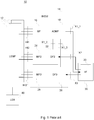
- FIG. 1 is a block diagram of an exemplary Lawful Interception (LI) system and network 10 according to prior art.
- Said system and network comprises a number of entities.
- the exemplary LI system comprises a Law Enforcement Management Function, LEMF, 12 for requesting LI services of the LI system and collecting the intercepted information of an Internal Interception Function, IIF, 20 connected to a Network Internal Function 35.
- the system shall provide access to the intercepted Content of Communications, CC, and Intercept Related Information, IRI, of a target and services related to the target on behalf of one or more Law Enforcement Agencies, LEAs 80.
- An intercept request also denoted Request for LI activation, is sent through a first Handover Interface, HI1, located between the Law Enforcement Management Function 12 and an Intercept Mediation and Delivery Unit, IMDU, 14 comprising a Mediation Function, MF, 16 and an Administration Function, ADMF, 18.
- Said Mediation Function 16 and Administration Function 18 generates based on said received request a warrant comprising said one or more target identities, and sends said warrant towards an IIF, 20, via an interface denoted X1_1.
- the IIF 20 is connected to a Network Internal Function 35, e.g. a node of a network, the Internet, a 3 GMS (third generation Mobile Communications System), etc., from which it intercepts said Content of Communications and Intercept Related Information of a mobile target.
- a Network Internal Function 35 e.g. a node of a network, the Internet, a 3 GMS (third generation Mobile Communications System), etc.
- Said CC and IRI are network related data.
- the content of communication is intercepted by the IIF in the network node and it is based upon duplication of target communication payload without modification.
- the interfaces HI1 and HI2 is specified in more detail.
- the IIF sends IRI raw data via an interface X2 to a Delivery Function for IRI reporting, DF2, 24 and a Mediation Function of IRI, MF2, 22 that generates and delivers to a collection functionality a standardized IRI report based on the received IRI report.
- Said standardized IRI report is sent over a standardized interface HI2 to the LEMF 12.
- the IIF 20 also sends CC raw data via an interface X3 to a Delivery Function for CC reporting, DF3, 26 and a Mediation Function of IRI, MF3, 28 which generates and delivers to a collection functionality a standardized CC report based on the received CC report.
- Said standardized CC report is sent over a standardized interface HI3 to the requesting LEMF 12.
- Figure 2 illustrates an exemplary Lawful Interception (LI) system and network 100 comprising the arrangement 160 for QoS-aware routing of received session flows of separate communication sessions.
- LI Lawful Interception
- the LI system and network 100 comprises at least a LEMF 120 and a LEA 80. Said LEMF communicates with an ADMF 130 over HI1, the IRI MF 150 over HI2 and the CC MF 160 over HI3 and an additional interface HI4.
- the ADMF 130 in the embodiment in figure 2 corresponds to the ADMF 18 and MF 16 in figure 1 .
- the IRI MF 150 in the embodiment in figure 2 corresponds to the Delivery Function for IRI reporting, DF2, 24 and a Mediation Function of IRI, MF2, 22 in figure 1 .
- the IIF 140 is located in a Network Internal Functions 135 for generating session flows of separate communication sessions of different targets, said communication sessions passing the IIF 140.
- the IIF sends IRI raw data via an interface X2 to a IRI MF 150 that generates and delivers to a collection functionality a standardized IRI report based on the received IRI report. Said standardized IRI report is sent over a standardized interface HI2 to the LEMF 120.
- the IIF 20 also sends CC raw data via an interface X3 to a CC MF 160 which generates and delivers a standardized CC report based on the received CC report. Said standardized CC report is sent over a standardized interface HI3 to the requesting LEMF 120.
- the CC MF 160 is an arrangement 160 for QoS-aware routing of received session flows of separate communication sessions comprising Communication Content achieved and received from Lawful Interception of target sessions.
- the arrangement 160 comprises a sorting device 170 configured to sort each separate communication session into one of two groups: a first routing group and a second routing group. The grouping based on to certain criteria wherein QoS is at least one of the criteria, and a routing circuitry 190 configured to route communication sessions sorted into the first routing group via a regular handover interface HI3 and route communication sessions sorted into the second routing group via an additional handover interface HI4 to a Law Enforcement Agency 80 via an LEMF 120.
- the new provided interface HI4 has the same feature and characteristics as the standard HI3. Said feature and characteristics are defined for HI3 in reference [5]. The difference between HI3 and HI4 is that HI4 is dedicated for transport of low quality CC. It is a handover interface which will be used, e.g. if the LEA is requesting the service of an extra HI3 for trasfering low quality marked CC as proposed in this disclosure.
- Figure 3 shows further one embodiment of the arrangement 160, i.e. a CC MF, in more detail.
- the CC MF comprises a sorting device 170 and a routing circuitry 190.
- the sorting device 170 comprises a first classifier 172 configured to classify the received session flows into separate communication sessions, and a second classifier 174 configured to classify each communication session into one of two traffic classes, a first traffic class and a second traffic class.
- the level 1 classification is performed by the first classifier 172 and said classification gives the possibility to classify the incoming streams of packets into distinct communication sessions.
- a communication session is identified by the following tuple: protocol, destination protocol port, source protocol port, destination host address, and source host address.
- the level 2 classification is performed by the second classifier 174 and it provides the algorithm with the means to determine and classify communication sessions into different traffic classes, which enables differentiated traffic handling.
- the first traffic class comprises communication sessions belonging to multimedia services and the second traffic class comprises communication sessions of other data transfer services than multimedia services.
- traffic class distinctions are possible enabling other embodiments of classification circuitry or modules.
- different kinds of multimedia services e.g. VoIP (Voice-over-IP), IPTV (Internet Protocol Television) may be classified into different traffic classes.
- more than two traffic classes are used.
- the sorting device 170 further comprises quality checking circuitry 176 configured to check QoS of each communication session in relation to a pre-determined key parameter and a pre-set threshold value of said key parameter in a threshold test.
- the Quality Checker block 176 is responsible for checking the quality level of the stream of packets through pre-determined key parameter, e.g. routing metrics.
- a routing metric is a quality requirement used by the routing algorithm to determine the best route to be chosen.
- the predetermined key parameters when checking of QoS may be information loss for communication sessions of the first traffic class and delay variation for communication sessions of the second traffic class.
- Information loss is a general term for IP packets loss or IP packets corruption, and it refers to the effects of IP packets corruption or IP packet loss during transmission, but also includes the effects of any degradation introduced by media coding for more efficient transmission, e.g. the use of low bit-rate speech codecs for voice. This metric applies especially to "Data transfer" traffic wherein information loss is sensitive.
- Delay Variation may be introduced during the transmission along the path that carries packets from the IAP to the DF3. It is generally included as a performance parameter and it is defined as the variation in the delay of received packets, also known as jitter. This may occur in case of network congestion, improper queuing, or configuration errors, and instead of remaining constant, the delay between packets can vary. This metric is especially applied to "Multimedia" traffic streams that are time-sensitive.
- QoE is a measure of the overall level of end-user satisfaction with a service and is also defined as the QoS finally perceived by end-user.
- a low QoS is perceived by LEA's operator as a low QoE. For example: if a multimedia service is affected by an high jitter, which means low QoS, then LEA's operator may experience moments of silence, which means low QoE.
- a threshold mechanism is proposed for verifying the compliance of service streams to the above listed routing metrics. IP packets belonging to the services that exceed these thresholds and so that affect the LEA's QoE are marked as LQoE, Low Quality of Experience, and others are marked as HQoE, High Quality of Experience.
- the sorting device 170 is therefore provided with marking circuitry 178 configured to mark each communication session as high quality or low quality in accordance with the outcome of the threshold test.
- the packets marked as LQoE or HQoE are treated in a different way by means of a decision making circuitry 180.
- the sorting device 170 further comprises a decision making circuitry 180.
- the decision making circuitry 180 is configured to sort each separate communication session into one of two groups: a first routing group and a second routing group. The grouping is based on certain criteria wherein QoS is at least one of the criteria. Thus, the decision making circuitry 180 is configured to sort the communication sessions according to their marking.
- the decision making block 180 handles communication sessions being marked as HQoE or LQoE.
- the decision making block 180 reads the quality marking of the communication session, and it decides based on the quality marking and traffic class if a communication session should be treated enhance the quality or routed directly over HI3 or HI4. It may also be configured to instruct the routing circuitry 190 whether to rout a communication session over HI3 or HI4 based on the quality marking and traffic class.
- communication sessions marked as low quality of the second traffic class are sorted into the second routing group and the other communication sessions are sorted into the first routing group regardless of quality marking and traffic classes.
- the first routing group may comprise low quality communication sessions of the first traffic class, e.g. LQoE multimedia streams, as such sessions are directed to a Quality Enhancer block to be de-jittered before forwarded via the HI3 interface.
- the other communication sessions marked HQoE e.g. HQoE multimedia streams and HQoE data transfer streams, are sorted into the first routing group which simply are mediated over HI3.
- Low quality communication sessions of the second traffic class e.g. LQoE data transfer streams, that enter the Decision making circuitry block 170 are delivered over HI4.
- the arrangement 160 further comprises a routing circuitry 190 configured to route communication sessions sorted into the first routing group via a regular handover interface HI3 and route communication sessions sorted into the second routing group via an additional handover interface HI4 to a Law Enforcement Agency via an LEMF 120.
- the routing circuitry 190 may also be configured to receive instructions whether to rout a communication session over HI3 or HI4 based on the quality marking and traffic class from the decision making circuitry block 180.
- the routing circuitry 190 comprises a HI3 mediator 193 for mediating the CC over the HI3 interface and a HI4 mediator 194 for mediating the CC over the HI4 interface.
- low quality marked communication sessions of the first routing group may be routed to a quality enhancer 184 configured to reduce jitter in each low quality marked communication session, thereby raising the quality.
- a quality enhancer 184 configured to reduce jitter in each low quality marked communication session, thereby raising the quality.
- This block uses a de-jitter buffer to reduce the jitter. IP packets that are out of sequence are held by the jitter buffer briefly, reordered if necessary, and delivered to the LEA.
- the de-jitter buffer works on the packet arrivals by turning variable network delays into constant delays.
- the arrangement 160 comprises a traffic shaping device 186 configured for traffic shaping communication sessions of the first routing group to control congestion in the regular handover interface HI3.
- a traffic shaping technique is applied to smooth traffic peaks over HI3 interface.
- Traffic shaping is a technique of congestion control and has been used in this proposal to guarantee that all packets are delivered to the LEA by adjusting the DF3 transmission speed. This technique may introduce a fixed IP packets delay due to buffering, but respect to the prior art, the LEA's operator may experience only brief moments of silence instead of completely understandable interception.
- the CC outgoing from DF3 is de-jittered, e.g. delay variation is reduced or removed) and the traffic shaping technique is applied only when network congestion occurs. It aims to reduce the risk to reintroduce a packet delay variation because of network congestion over HI3.
- the decision making block 180 may optionally comprise a correlation number marker 188, which is configured to generate and mark session flows with a correlation number, which is used for correlating said routing groups session flows at the LEA.
- the correlation number marker 188 may optionally be configured to notify the LEA about change of routing group for the communication session and the correlation number that the session flows are marked with. The LEA is therefore configured to receive the notification and to read correlation marking in the data packets of the incoming communication session's CC, and to correlate and link the CC received via different routing groups, i.e. via HI3 and HI4 interfaces.
- Figure 4 is a flowchart illustrating one embodiment of a method for QoS-aware routing of received session flows of separate communication sessions.
- a method for QoS-aware routing of received session flows of separate communication sessions comprise Communication Content achieved and received from Lawful Interception of target sessions as described above.
- the method comprises:
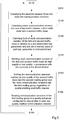
- Figure 5 is a flowchart illustrating further one embodiment of a method for QoS-aware routing of received session flows of separate communication sessions.
- the sorting S110 of each separate communication session involves:
- the level 2 classification is performed by the second classifier 174 and communication sessions are determined and classified into different traffic classes, which enables differentiated traffic handling.
- the level 2 classification implies:
- the sorting of each separate communication session also involves: S140: - Checking QoS of each communication session of the first or second traffic class in relation to a pre-determined key parameter and a pre-set threshold value of said key parameter in a threshold test.
- the sorting device 170 further comprises a quality checking circuitry 176 configured to check QoS of each communication session in relation to a pre-determined key parameter and a pre-set threshold value of said key parameter in a threshold test.
- the Quality Checker block 176 is responsible for checking the quality level of the stream of packets through key parameters, e.g. routing metrics.
- a routing metric is a quality requirement used by the routing algorithm to determine the best route to be chosen.
- the predetermined key parameters when checking of QoS is information loss for communication sessions of the first traffic class and delay variation for communication sessions of the second traffic class.
- a threshold mechanism is proposed for verifying the compliance of service streams to the above listed routing metrics. IP packets belonging to the services that exceed these thresholds and so that affect the LEA's QoE are marked as LQoE, Low Quality of Experience, and others are marked as HQoE, High Quality of Experience.
- the sorting device 170 is therefore provided with marking circuitry 178 configured to mark each communication session as high quality or low quality in accordance with the outcome of the threshold test:
- the decision making block 170 handles communication sessions being marked as HQoE or LQoE, decides and sorts each separate communication session into one of two groups, and instructs a routing circuitry 190 to route it over HI3 or HI4, respectively.
- the decision making circuitry 180 is configured to send low quality marked communication sessions of the first routing group to a quality enhancer 184 configured to reduce jitter in each low quality marked communication session:
- an alternative flow may be performed by:
- Figure 7 is a flowchart illustrating further one embodiment of a method for QoS-aware routing.
- the decision making block 180 may optionally comprise a correlation number marker 188, which is configured to generate and mark session flows with a correlation number, which is used for correlating said routing groups session flows at the LEA:
- the routing of communication sessions, S190, may therefore involve: S192: - Sending communication sessions of the first routing group for traffic shaping for congestion control in the regular handover interface HI3.
- Figure 9 is illustrating an alternative embodiment of the arrangement 160.
- This embodiment is an arrangement for QoS-aware routing of received session flows of separate communication sessions comprising Communication Content achieved and received from Lawful Interception of target sessions.
- the arrangement 160 comprises a processor 200, an in interface 220 for receiving communication sessions comprising Communication Content, an output interface for sending communication sessions comprising Communication Content, and a memory 210.
- the memory 210 contains instructions executable by said processor 200 whereby said arrangement is operative to perform:
- the memory 210 of the arrangement may further comprise a first module 172 comprising instructions to classify the received session flows into separate communication sessions, and a second module 174 comprising instructions to classify each communication session into one of two traffic classes, a first traffic class and a second traffic class.
- the first traffic class may comprise communication sessions belonging to multimedia services and the second traffic class may comprise communication sessions of other data transfer services than multimedia services.
- the memory 210 of the arrangement may further a module 176 comprising instructions to check QoS of each communication session in relation to a pre-determined key parameter and a pre-set threshold value of said key parameter in a threshold test, and a module 178 comprising instructions to mark each communication session as high quality or low quality in accordance with the outcome of the threshold test.
- the predetermined key parameters when checking of QoS may be information loss for communication sessions of the first traffic class and delay variation for communication sessions of the second traffic class.
- the arrangement may further comprise a module 180 comprising instructions to sort the communication sessions marked as low quality of the second traffic class into the second routing group and the other communication sessions into the first routing group regardless of quality marking and traffic classes.
- the module 180 may further comprise instructions to to send communication sessions of the first routing group to a quality enhancer module 184 comprising instructions to reduce jitter in each low quality marked communication session.
- the memory 210 of the arrangement may further comprise a traffic shaping module 186 comprising instructions for traffic shaping communication sessions of the first routing group to control congestion in the regular handover interface HI3.
- the memory 210 may further comprise a correlation number marker module 188 comprising instructions to generate and mark session flows of the same communication session being sorted in different routing groups with a correlation number for correlating said routing groups session flows at the LEA, said correlation number marker module is further configured to notify the LEA about change of routing group for the communication session and the correlation number, which the session flows are marked with.
- a correlation number marker module 188 comprising instructions to generate and mark session flows of the same communication session being sorted in different routing groups with a correlation number for correlating said routing groups session flows at the LEA, said correlation number marker module is further configured to notify the LEA about change of routing group for the communication session and the correlation number, which the session flows are marked with.
- the above described method, arrangement and embodiments thereof may be implemented in digital electronically circuitry, or in computer hardware, firmware, software, or in combinations of them.
- the arrangement may be implemented in a computer program product tangibly embodied in a machine readable storage device for execution by a programmable processor; and method steps may be performed by a programmable processor executing a program of instructions to perform functions of the invention by operating on input data and generating output.
- the arrangement and method may advantageously be implemented in one or more computer programs that are executable on a programmable system including at least one programmable processor coupled to receive data and instructions from, and to transmit data and instructions to, a data storage system, at least one input device, and at least one output device.
- Each computer program may be implemented in a high-level procedural or object-oriented programming language, or in assembly or machine language if desired; and in any case, the language may be a compiled or interpreted language.
- a processor will receive instructions and data from a read-only memory and/or a random access memory.
- Storage devices suitable for tangibly embodying computer program instructions and data include all forms of non-volatile memory, including by way of example semiconductor memory devices, such as EPROM, EEPROM, and flash memory devices; magnetic disks such internal hard disks and removable disks; magneto-optical disks; and CD-ROM disks. Any of the foregoing may be supplemented by, or incorporated in, specially -designed ASICs (Application Specific Integrated Circuits).
Landscapes
- Engineering & Computer Science (AREA)
- Computer Networks & Wireless Communication (AREA)
- Signal Processing (AREA)
- Technology Law (AREA)
- Computer Hardware Design (AREA)
- Computer Security & Cryptography (AREA)
- Computing Systems (AREA)
- General Engineering & Computer Science (AREA)
- Multimedia (AREA)
- Mobile Radio Communication Systems (AREA)
Claims (12)
- Verfahren (S100) zum QoS-bewussten Routen von empfangenen Sitzungsströmen von separaten Kommunikationssitzungen, die aus rechtmäßiger Überwachung von Zielsitzungen erlangten und empfangenen Kommunikationsinhalt umfassen, wobei das Verfahren umfasst:- Sortieren jeder separaten Kommunikationssitzung in eine von zwei Gruppen, eine erste Routing-Gruppe und eine zweite Routing-Gruppe, nach bestimmten Kriterien, wobei QoS mindestens eines von den Kriterien ist (S110), durch:- Klassifizieren der empfangenen Sitzungsströme in separate Kommunikationssitzungen (S120);- Klassifizieren jeder Kommunikationssitzung in eine von zwei Verkehrsklassen, eine erste Verkehrsklasse und eine zweite Verkehrsklasse (S130);- Prüfen von QoS von jeder Kommunikationssitzung von der ersten oder zweiten Verkehrsklasse in Bezug auf einen vorbestimmten Schlüsselparameter und einen voreingestellten Schwellenwert von dem besagten Schlüsselparameter in einem Schwellenwerttest (S140);- Markieren jeder Kommunikationssitzung von der ersten und zweiten Verkehrsklasse als "hohe Qualität" oder "niedrige Qualität" nach dem Ausgang von dem Schwellenwerttest (S150);- Sortieren der als "niedrige Qualität" markierten Kommunikationssitzungen von der zweiten Verkehrsklasse in die zweite Routing-Gruppe und der anderen Kommunikationssitzungen in die erste Routing-Gruppe, ohne Berücksichtigung von Qualitätsmarkierung und Verkehrsklassen (S160); und- Routen von in die erste Routing-Gruppe sortierten Kommunikationssitzungen über eine reguläre Übergabeschnittstelle (HI3) und Routen von in die zweite Routing-Gruppe sortierten Kommunikationssitzungen über eine zusätzliche Übergabeschnittstelle (HI4) zu einer Strafverfolgungsbehörde, LEA (S190).
- Das Verfahren nach Anspruch 1, wobei die erste Verkehrsklasse zu Multimediadiensten gehörende Kommunikationssitzungen umfasst und die zweite Verkehrsklasse Kommunikationssitzungen von anderen Datenübertragungsdiensten als Multimediadiensten umfasst.
- Das Verfahren nach Ansprüchen 1 oder 2, wobei das Sortieren von jeder separaten Kommunikationssitzung beinhaltet:- Senden von Kommunikationssitzungen von der ersten Routing-Gruppe zu einem Qualitätsverbesserer, der dazu konfiguriert ist, Jitter in jeder mit "niedrige Qualität" markierten Kommunikationssitzung zu reduzieren (S162).
- Das Verfahren nach einem der Ansprüche 1 - 3, wobei das Verfahren weiter umfasst:- Generieren und Markieren von Sitzungsströmen von derselben Kommunikationssitzung, die in verschiedene Routing-Gruppen sortiert sind, mit einer Korrelationszahl, um die besagten Sitzungsströme der Routing-Gruppen bei der LEA zu korrelieren (S164); und- Benachrichtigen der LEA über eine Änderung von einer Routing-Gruppe für die Kommunikationssitzung und der Korrelationszahl, mit der die Sitzungsströme markiert sind (S166).
- Eine Anordnung (160) zum QoS bewussten Routen von empfangenen Sitzungsströmen von separaten Kommunikationssitzungen, die aus rechtmäßiger Überwachung von Zielsitzungen erlangten und empfangenen Kommunikationsinhalt umfassen, wobei die Anordnung eine Sortiervorrichtung (170), die dazu konfiguriert ist, jede separate Kommunikationssitzung in eine von zwei Gruppen, eine erste Routing-Gruppe und eine zweite Routing-Gruppe, nach bestimmten Kriterien zu sortieren, wobei QoS mindestens eines von den Kriterien ist, wobei die Sortiervorrichtung (170) weiter einen ersten Klassifizierer (172), der dazu konfiguriert ist, die empfangenen Sitzungsströme in separate Kommunikationssitzungen zu klassifizieren, und einen zweiten Klassifizierer (174), der dazu konfiguriert ist, jede Kommunikationssitzung in eine von zwei Verkehrsklassen, eine erste Verkehrsklasse und eine zweite Verkehrsklasse, zu klassifizieren, eine Prüfschaltung (176), die dazu konfiguriert ist,
QoS von jeder Kommunikationssitzung in Bezug auf einen vorbestimmten Schlüsselparameter und einen voreingestellten Schwellenwert von dem besagten Schlüsselparameter in einem Schwellenwerttest zu prüfen, und eine Markierschaltung (178), die dazu konfiguriert ist, jede Kommunikationssitzung als "hohe Qualität" oder "niedrige Qualität" nach dem Ausgang von dem Schwellenwerttest zu markieren, eine Entscheidungsfindungsschaltung (180), die dazu konfiguriert ist, die als "niedrige Qualität" markierten Kommunikationssitzungen von der zweiten Verkehrsklasse in die zweite Routing-Gruppe und die anderen Kommunikationssitzungen in die erste Routing-Gruppe, ohne Berücksichtigung von Qualitätsmarkierung und Verkehrsklassen, zu sortieren, wobei die Anordnung (160) weiter eine Routingschaltung (190) umfasst, die dazu konfiguriert ist, in die erste Routing-Gruppe sortierte Kommunikationssitzungen über eine reguläre Übergabeschnittstelle (HI3) zu routen und in die zweite Routing-Gruppe sortierte Kommunikationssitzungen über eine zusätzliche Übergabeschnittstelle (HI4) zu einer Strafverfolgungsbehörde, LEA, zu routen. - Die Anordnung nach Anspruch 5, wobei die erste Verkehrsklasse zu Multimediadiensten gehörende Kommunikationssitzungen umfasst und die zweite Verkehrsklasse Kommunikationssitzungen von anderen Datenübertragungsdiensten als Multimediadiensten umfasst.
- Die Anordnung nach Anspruch 5 oder 6, wobei die Entscheidungsfindungsschaltung (180) dazu konfiguriert ist, Kommunikationssitzungen von der ersten Routing-Gruppe zu einem Qualitätsverbesserer (184) zu senden, der dazu konfiguriert ist, Jitter in jeder mit "niedrige Qualität" markierten Kommunikationssitzung zu reduzieren.
- Die Anordnung nach einem der Ansprüche 5 - 7, wobei die Anordnung weiter einen Korrelationszahlmarkierer (188) umfasst, der dazu konfiguriert ist, Sitzungsströme von derselben Kommunikationssitzung, die in verschiedene Routing-Gruppen sortiert sind, zu generieren und mit einer Korrelationszahl zu markieren, um die besagten Sitzungsströme der Routing-Gruppen bei der LEA zu korrelieren, wobei der besagte Korrelationszahlmarkierer weiter dazu konfiguriert ist, die LEA über eine Änderung von einer Routing-Gruppe für die Kommunikationssitzung und der Korrelationszahl, mit der die Sitzungsströme markiert sind, zu benachrichtigen.
- Anordnung zum QoS bewussten Routen von empfangenen Sitzungsströmen von separaten Kommunikationssitzungen, die aus rechtmäßiger Überwachung von Zielsitzungen erlangten und empfangenen Kommunikationsinhalt umfassen, wobei die Anordnung einen Prozessor (200) und einen Speicher (210) umfasst, wobei der besagte Speicher Instruktionen enthält, die durch den besagten Prozessor ausführbar sind, wobei die besagte Anordnung betriebsbereit ist, um:- jede separate Kommunikationssitzung in eine von zwei Gruppen, eine erste Routing-Gruppe und eine zweite Routing-Gruppe, nach bestimmten Kriterien zu sortieren, wobei QoS mindestens eines von den Kriterien ist;- die empfangenen Sitzungsströme in separate Kommunikationssitzungen zu klassifizieren;- jede Kommunikationssitzung in eine von zwei Verkehrsklassen, eine erste Verkehrsklasse und eine zweite Verkehrsklasse, zu klassifizieren;- QoS von jeder Kommunikationssitzung von der ersten oder zweiten Verkehrsklasse in Bezug auf einen vorbestimmten Schlüsselparameter und einen voreingestellten Schwellenwert von dem besagten Schlüsselparameter in einem Schwellenwerttest zu prüfen;- jede Kommunikationssitzung von der ersten und zweiten Verkehrsklasse nach dem Ausgang von dem Schwellenwerttest als "hohe Qualität" oder "niedrige Qualität" zu markieren;- die mit "niedrige Qualität" markierten Kommunikationssitzungen von der zweiten Verkehrsklasse in die zweite Routing-Gruppe zu sortieren und die anderen Kommunikationssitzungen in die erste Routing-Gruppe, ohne Berücksichtigung von Qualitätsmarkierung und Verkehrsklassen, zu sortieren; und- in die erste Routing-Gruppe sortierte Kommunikationssitzungen über eine reguläre Übergabeschnittstelle (HI3) zu routen und in die zweite Routing-Gruppe sortierte Kommunikationssitzungen über eine zusätzliche Übergabeschnittstelle (HI4) zu einer Strafverfolgungsbehörde, LEA, (80) zu routen.
- Die Anordnung nach Anspruch 9, wobei die erste Verkehrsklasse zu Multimediadiensten gehörende Kommunikationssitzungen umfasst und die zweite Verkehrsklasse Kommunikationssitzungen von anderen Datenübertragungsdiensten als Multimediadiensten umfasst.
- Die Anordnung nach einem der Ansprüche 9 oder 10, wobei die Anordnung weiter betriebsbereit ist, um:- Kommunikationssitzungen von der ersten Routing-Gruppe zu einem Qualitätsverbesserer zu senden, der dazu konfiguriert ist, Jitter in jeder mit "niedrige Qualität" markierten Kommunikationssitzung zu reduzieren.
- Die Anordnung nach einem der Ansprüche 9 - 11, wobei die Anordnung weiter betriebsbereit ist, um:- Sitzungsströme von derselben Kommunikationssitzung, die in verschiedene Routing-Gruppen sortiert werden, zu generieren und mit einer Korrelationszahl zu markieren, um die besagten Sitzungsströme der Routing-Gruppen bei der LEA zu korrelieren; und- die LEA über eine Änderung von einer Routing-Gruppe für die Kommunikationssitzung und der Korrelationszahl, mit der die Sitzungsströme markiert sind, zu benachrichtigen.
Applications Claiming Priority (1)
| Application Number | Priority Date | Filing Date | Title |
|---|---|---|---|
| PCT/SE2013/050907 WO2015009209A1 (en) | 2013-07-15 | 2013-07-15 | Method and arrangement for qos-aware routing in a li system |
Publications (2)
| Publication Number | Publication Date |
|---|---|
| EP3022882A1 EP3022882A1 (de) | 2016-05-25 |
| EP3022882B1 true EP3022882B1 (de) | 2017-03-15 |
Family
ID=48875143
Family Applications (1)
| Application Number | Title | Priority Date | Filing Date |
|---|---|---|---|
| EP13741886.9A Active EP3022882B1 (de) | 2013-07-15 | 2013-07-15 | Verfahren und anordnung zum qos-bewussten routing in einem rechtmässigen überwachungssystem |
Country Status (3)
| Country | Link |
|---|---|
| US (1) | US9853888B2 (de) |
| EP (1) | EP3022882B1 (de) |
| WO (1) | WO2015009209A1 (de) |
Families Citing this family (6)
| Publication number | Priority date | Publication date | Assignee | Title |
|---|---|---|---|---|
| IN2015CH05211A (de) * | 2015-09-29 | 2015-10-16 | Wipro Ltd | |
| CN110537353B (zh) * | 2017-04-26 | 2021-09-21 | 瑞典爱立信有限公司 | 合法侦听系统中的方法和节点 |
| US11050662B2 (en) * | 2017-06-30 | 2021-06-29 | Cisco Technology, Inc. | Malleable routing for data packets |
| KR102365658B1 (ko) * | 2019-12-05 | 2022-02-18 | 포항공과대학교 산학협력단 | 트래픽 분류 방법 및 장치 |
| WO2024167446A1 (en) * | 2023-02-10 | 2024-08-15 | Telefonaktiebolaget Lm Ericsson (Publ) | Resequencing delayed lawful interception data |
| WO2025160968A1 (en) * | 2024-02-02 | 2025-08-07 | Telefonaktiebolaget Lm Ericsson (Publ) | Method and apparatus for communication interception |
Family Cites Families (19)
| Publication number | Priority date | Publication date | Assignee | Title |
|---|---|---|---|---|
| US7535900B2 (en) * | 2003-01-21 | 2009-05-19 | Symmetricom, Inc. | Multiple transmission bandwidth streams with defferentiated quality of service |
| US7330433B2 (en) * | 2003-02-28 | 2008-02-12 | Mitsubishi Electric Research Laboratories, Inc. | Dynamic resource control for high-speed downlink packet access wireless channels |
| CN101218785B (zh) * | 2005-07-01 | 2010-06-16 | 艾利森电话股份有限公司 | 在电信系统中进行监测的方法和装置 |
| EP2044759A4 (de) * | 2006-07-26 | 2011-04-13 | Ericsson Telefon Ab L M | RECHTMÄßIGER ABFANG AUF DIENSTEBASIS |
| US20080026754A1 (en) * | 2006-07-31 | 2008-01-31 | Motorola, Inc. | Call handover between radio network subsystems |
| EP2090024B1 (de) * | 2006-11-29 | 2020-03-04 | Voip-Pal.Com, Inc. | Abfangen von voice-over-ip-übermittlungen und anderen datenübermittlungen |
| WO2008082329A1 (en) * | 2006-12-28 | 2008-07-10 | Telefonaktiebolaget Lm Ericsson (Publ) | Method, arrangement, node and artictle for enhancing delivery capacity in a telecommunications network by transcoding traffic into requested quality of service (qos) |
| US7978620B2 (en) | 2007-05-14 | 2011-07-12 | Cisco Technology, Inc. | Dynamically troubleshooting voice quality |
| RU2435205C2 (ru) * | 2007-06-08 | 2011-11-27 | Хуавэй Текнолоджиз Ко., Лтд. | Способ законного перехвата информации и устройство для этого |
| CN101360271B (zh) * | 2007-08-01 | 2015-05-27 | 华为技术有限公司 | 电路域业务数据的无线承载方法、装置及系统 |
| WO2010048989A1 (en) * | 2008-10-28 | 2010-05-06 | Telefonaktiebolaget Lm Ericsson (Publ) | User and traffic data retention in lawful interception |
| US8351579B2 (en) * | 2010-09-22 | 2013-01-08 | Wipro Limited | System and method for securely authenticating and lawfully intercepting data in telecommunication networks using biometrics |
| US20130088961A1 (en) * | 2011-10-11 | 2013-04-11 | General Instrument Corporation | Apparatus and Method for Load Balancing in a Cable Network |
| US20140328348A1 (en) * | 2011-12-16 | 2014-11-06 | Telefonaktiebolaget L M Ericsson (Publ) | Classification of the Intercepted Internet Payload |
| US9137201B2 (en) * | 2012-03-09 | 2015-09-15 | Ray W. Sanders | Apparatus and methods of routing with control vectors in a synchronized adaptive infrastructure (SAIN) network |
| WO2013147654A1 (en) * | 2012-03-26 | 2013-10-03 | Telefonaktiebolaget Lm Ericsson (Publ) | Smart delivery of li data in emergency conditions |
| US9602376B2 (en) * | 2012-11-02 | 2017-03-21 | Voipfuture Gmbh | Detection of periodic impairments in media streams |
| WO2014077748A1 (en) * | 2012-11-15 | 2014-05-22 | Telefonaktiebolaget L M Ericsson (Publ) | Method for providing a law enforcement agency with sampled content of communications |
| US9148817B1 (en) * | 2013-01-21 | 2015-09-29 | Sprint Spectrum L.P. | Methods and systems for routing signaling traffic |
-
2013
- 2013-07-15 EP EP13741886.9A patent/EP3022882B1/de active Active
- 2013-07-15 US US14/903,792 patent/US9853888B2/en active Active
- 2013-07-15 WO PCT/SE2013/050907 patent/WO2015009209A1/en not_active Ceased
Non-Patent Citations (1)
| Title |
|---|
| None * |
Also Published As
| Publication number | Publication date |
|---|---|
| US20160164775A1 (en) | 2016-06-09 |
| US9853888B2 (en) | 2017-12-26 |
| WO2015009209A1 (en) | 2015-01-22 |
| EP3022882A1 (de) | 2016-05-25 |
Similar Documents
| Publication | Publication Date | Title |
|---|---|---|
| EP3022882B1 (de) | Verfahren und anordnung zum qos-bewussten routing in einem rechtmässigen überwachungssystem | |
| US7706291B2 (en) | Monitoring quality of experience on a per subscriber, per session basis | |
| US6542466B1 (en) | Communication network method and apparatus | |
| US8531945B2 (en) | Method and apparatus to support deep packet inspection in a mobile network | |
| US8542592B2 (en) | Managing a network flow using application classification information and active signaling relay | |
| US6781991B1 (en) | Method and apparatus for monitoring and selectively discouraging non-elected transport service over a packetized network | |
| Chen et al. | Survey on QoS management of VoIP | |
| US9451502B2 (en) | Service control method and system, evolved nodeB, and packet data network gateway | |
| US20080192753A1 (en) | METHOD AND SYSTEM FOR PROVIDING QoS SERVICE | |
| RU2435205C2 (ru) | Способ законного перехвата информации и устройство для этого | |
| EP2166715A1 (de) | Verfahren und System zur Kontrolle von QoS | |
| KR101292873B1 (ko) | 네트워크 인터페이스 카드장치 및 상기 네트워크 인터페이스 카드장치를 이용한 트래픽 처리 방법 | |
| US20130294449A1 (en) | Efficient application recognition in network traffic | |
| WO2009146621A1 (zh) | 数据处理方法及宽带网络网关、策略控制器和接入设备 | |
| US20070086336A1 (en) | Application layer metrics monitoring | |
| US20150049613A1 (en) | Smart delivery of li data in emergency conditions | |
| US20140328348A1 (en) | Classification of the Intercepted Internet Payload | |
| US20150117217A1 (en) | Policy Tokens in Communication Networks | |
| CN106559683B (zh) | 监控业务的QoS优先级动态调节方法及装置 | |
| CN112099871A (zh) | 一种服务质量配置方法及装置 | |
| CN101390361A (zh) | 一种动态流量控制方法及系统 | |
| Ravindran et al. | Supporting dual-mode forwarding in content-centric network | |
| EP3854121B1 (de) | Verfahren, vorrichtungen und computerprogrammprodukt eines li-systems | |
| KR100621215B1 (ko) | 차등화 서비스(DiffServ) 기반 멀티미디어 서비스QoS 제공 시스템 및 방법 | |
| CN100420237C (zh) | 在路由器上对实时业务进行控制的方法 |
Legal Events
| Date | Code | Title | Description |
|---|---|---|---|
| PUAI | Public reference made under article 153(3) epc to a published international application that has entered the european phase |
Free format text: ORIGINAL CODE: 0009012 |
|
| 17P | Request for examination filed |
Effective date: 20151207 |
|
| AK | Designated contracting states |
Kind code of ref document: A1 Designated state(s): AL AT BE BG CH CY CZ DE DK EE ES FI FR GB GR HR HU IE IS IT LI LT LU LV MC MK MT NL NO PL PT RO RS SE SI SK SM TR |
|
| AX | Request for extension of the european patent |
Extension state: BA ME |
|
| DAX | Request for extension of the european patent (deleted) | ||
| GRAP | Despatch of communication of intention to grant a patent |
Free format text: ORIGINAL CODE: EPIDOSNIGR1 |
|
| STAA | Information on the status of an ep patent application or granted ep patent |
Free format text: STATUS: GRANT OF PATENT IS INTENDED |
|
| INTG | Intention to grant announced |
Effective date: 20161103 |
|
| GRAS | Grant fee paid |
Free format text: ORIGINAL CODE: EPIDOSNIGR3 |
|
| GRAA | (expected) grant |
Free format text: ORIGINAL CODE: 0009210 |
|
| STAA | Information on the status of an ep patent application or granted ep patent |
Free format text: STATUS: THE PATENT HAS BEEN GRANTED |
|
| AK | Designated contracting states |
Kind code of ref document: B1 Designated state(s): AL AT BE BG CH CY CZ DE DK EE ES FI FR GB GR HR HU IE IS IT LI LT LU LV MC MK MT NL NO PL PT RO RS SE SI SK SM TR |
|
| REG | Reference to a national code |
Ref country code: CH Ref legal event code: EP Ref country code: GB Ref legal event code: FG4D |
|
| REG | Reference to a national code |
Ref country code: IE Ref legal event code: FG4D |
|
| REG | Reference to a national code |
Ref country code: AT Ref legal event code: REF Ref document number: 876609 Country of ref document: AT Kind code of ref document: T Effective date: 20170415 |
|
| REG | Reference to a national code |
Ref country code: NL Ref legal event code: FP |
|
| REG | Reference to a national code |
Ref country code: DE Ref legal event code: R096 Ref document number: 602013018594 Country of ref document: DE |
|
| REG | Reference to a national code |
Ref country code: LT Ref legal event code: MG4D |
|
| PG25 | Lapsed in a contracting state [announced via postgrant information from national office to epo] |
Ref country code: FI Free format text: LAPSE BECAUSE OF FAILURE TO SUBMIT A TRANSLATION OF THE DESCRIPTION OR TO PAY THE FEE WITHIN THE PRESCRIBED TIME-LIMIT Effective date: 20170315 Ref country code: HR Free format text: LAPSE BECAUSE OF FAILURE TO SUBMIT A TRANSLATION OF THE DESCRIPTION OR TO PAY THE FEE WITHIN THE PRESCRIBED TIME-LIMIT Effective date: 20170315 Ref country code: GR Free format text: LAPSE BECAUSE OF FAILURE TO SUBMIT A TRANSLATION OF THE DESCRIPTION OR TO PAY THE FEE WITHIN THE PRESCRIBED TIME-LIMIT Effective date: 20170616 Ref country code: NO Free format text: LAPSE BECAUSE OF FAILURE TO SUBMIT A TRANSLATION OF THE DESCRIPTION OR TO PAY THE FEE WITHIN THE PRESCRIBED TIME-LIMIT Effective date: 20170615 Ref country code: LT Free format text: LAPSE BECAUSE OF FAILURE TO SUBMIT A TRANSLATION OF THE DESCRIPTION OR TO PAY THE FEE WITHIN THE PRESCRIBED TIME-LIMIT Effective date: 20170315 |
|
| REG | Reference to a national code |
Ref country code: AT Ref legal event code: MK05 Ref document number: 876609 Country of ref document: AT Kind code of ref document: T Effective date: 20170315 |
|
| PG25 | Lapsed in a contracting state [announced via postgrant information from national office to epo] |
Ref country code: RS Free format text: LAPSE BECAUSE OF FAILURE TO SUBMIT A TRANSLATION OF THE DESCRIPTION OR TO PAY THE FEE WITHIN THE PRESCRIBED TIME-LIMIT Effective date: 20170315 Ref country code: SE Free format text: LAPSE BECAUSE OF FAILURE TO SUBMIT A TRANSLATION OF THE DESCRIPTION OR TO PAY THE FEE WITHIN THE PRESCRIBED TIME-LIMIT Effective date: 20170315 Ref country code: LV Free format text: LAPSE BECAUSE OF FAILURE TO SUBMIT A TRANSLATION OF THE DESCRIPTION OR TO PAY THE FEE WITHIN THE PRESCRIBED TIME-LIMIT Effective date: 20170315 Ref country code: BG Free format text: LAPSE BECAUSE OF FAILURE TO SUBMIT A TRANSLATION OF THE DESCRIPTION OR TO PAY THE FEE WITHIN THE PRESCRIBED TIME-LIMIT Effective date: 20170615 |
|
| PG25 | Lapsed in a contracting state [announced via postgrant information from national office to epo] |
Ref country code: EE Free format text: LAPSE BECAUSE OF FAILURE TO SUBMIT A TRANSLATION OF THE DESCRIPTION OR TO PAY THE FEE WITHIN THE PRESCRIBED TIME-LIMIT Effective date: 20170315 Ref country code: RO Free format text: LAPSE BECAUSE OF FAILURE TO SUBMIT A TRANSLATION OF THE DESCRIPTION OR TO PAY THE FEE WITHIN THE PRESCRIBED TIME-LIMIT Effective date: 20170315 Ref country code: ES Free format text: LAPSE BECAUSE OF FAILURE TO SUBMIT A TRANSLATION OF THE DESCRIPTION OR TO PAY THE FEE WITHIN THE PRESCRIBED TIME-LIMIT Effective date: 20170315 Ref country code: CZ Free format text: LAPSE BECAUSE OF FAILURE TO SUBMIT A TRANSLATION OF THE DESCRIPTION OR TO PAY THE FEE WITHIN THE PRESCRIBED TIME-LIMIT Effective date: 20170315 Ref country code: AT Free format text: LAPSE BECAUSE OF FAILURE TO SUBMIT A TRANSLATION OF THE DESCRIPTION OR TO PAY THE FEE WITHIN THE PRESCRIBED TIME-LIMIT Effective date: 20170315 Ref country code: IT Free format text: LAPSE BECAUSE OF FAILURE TO SUBMIT A TRANSLATION OF THE DESCRIPTION OR TO PAY THE FEE WITHIN THE PRESCRIBED TIME-LIMIT Effective date: 20170315 Ref country code: SK Free format text: LAPSE BECAUSE OF FAILURE TO SUBMIT A TRANSLATION OF THE DESCRIPTION OR TO PAY THE FEE WITHIN THE PRESCRIBED TIME-LIMIT Effective date: 20170315 |
|
| PG25 | Lapsed in a contracting state [announced via postgrant information from national office to epo] |
Ref country code: IS Free format text: LAPSE BECAUSE OF FAILURE TO SUBMIT A TRANSLATION OF THE DESCRIPTION OR TO PAY THE FEE WITHIN THE PRESCRIBED TIME-LIMIT Effective date: 20170715 Ref country code: SM Free format text: LAPSE BECAUSE OF FAILURE TO SUBMIT A TRANSLATION OF THE DESCRIPTION OR TO PAY THE FEE WITHIN THE PRESCRIBED TIME-LIMIT Effective date: 20170315 Ref country code: PT Free format text: LAPSE BECAUSE OF FAILURE TO SUBMIT A TRANSLATION OF THE DESCRIPTION OR TO PAY THE FEE WITHIN THE PRESCRIBED TIME-LIMIT Effective date: 20170717 Ref country code: PL Free format text: LAPSE BECAUSE OF FAILURE TO SUBMIT A TRANSLATION OF THE DESCRIPTION OR TO PAY THE FEE WITHIN THE PRESCRIBED TIME-LIMIT Effective date: 20170315 |
|
| REG | Reference to a national code |
Ref country code: DE Ref legal event code: R097 Ref document number: 602013018594 Country of ref document: DE |
|
| PLBE | No opposition filed within time limit |
Free format text: ORIGINAL CODE: 0009261 |
|
| STAA | Information on the status of an ep patent application or granted ep patent |
Free format text: STATUS: NO OPPOSITION FILED WITHIN TIME LIMIT |
|
| PG25 | Lapsed in a contracting state [announced via postgrant information from national office to epo] |
Ref country code: DK Free format text: LAPSE BECAUSE OF FAILURE TO SUBMIT A TRANSLATION OF THE DESCRIPTION OR TO PAY THE FEE WITHIN THE PRESCRIBED TIME-LIMIT Effective date: 20170315 |
|
| 26N | No opposition filed |
Effective date: 20171218 |
|
| PG25 | Lapsed in a contracting state [announced via postgrant information from national office to epo] |
Ref country code: SI Free format text: LAPSE BECAUSE OF FAILURE TO SUBMIT A TRANSLATION OF THE DESCRIPTION OR TO PAY THE FEE WITHIN THE PRESCRIBED TIME-LIMIT Effective date: 20170315 |
|
| REG | Reference to a national code |
Ref country code: CH Ref legal event code: PL |
|
| REG | Reference to a national code |
Ref country code: IE Ref legal event code: MM4A |
|
| REG | Reference to a national code |
Ref country code: FR Ref legal event code: ST Effective date: 20180330 |
|
| PG25 | Lapsed in a contracting state [announced via postgrant information from national office to epo] |
Ref country code: LI Free format text: LAPSE BECAUSE OF NON-PAYMENT OF DUE FEES Effective date: 20170731 Ref country code: IE Free format text: LAPSE BECAUSE OF NON-PAYMENT OF DUE FEES Effective date: 20170715 Ref country code: CH Free format text: LAPSE BECAUSE OF NON-PAYMENT OF DUE FEES Effective date: 20170731 |
|
| PG25 | Lapsed in a contracting state [announced via postgrant information from national office to epo] |
Ref country code: FR Free format text: LAPSE BECAUSE OF NON-PAYMENT OF DUE FEES Effective date: 20170731 |
|
| REG | Reference to a national code |
Ref country code: BE Ref legal event code: MM Effective date: 20170731 |
|
| PG25 | Lapsed in a contracting state [announced via postgrant information from national office to epo] |
Ref country code: LU Free format text: LAPSE BECAUSE OF NON-PAYMENT OF DUE FEES Effective date: 20170715 |
|
| PG25 | Lapsed in a contracting state [announced via postgrant information from national office to epo] |
Ref country code: BE Free format text: LAPSE BECAUSE OF NON-PAYMENT OF DUE FEES Effective date: 20170731 |
|
| PG25 | Lapsed in a contracting state [announced via postgrant information from national office to epo] |
Ref country code: MT Free format text: LAPSE BECAUSE OF NON-PAYMENT OF DUE FEES Effective date: 20170715 |
|
| PG25 | Lapsed in a contracting state [announced via postgrant information from national office to epo] |
Ref country code: MC Free format text: LAPSE BECAUSE OF FAILURE TO SUBMIT A TRANSLATION OF THE DESCRIPTION OR TO PAY THE FEE WITHIN THE PRESCRIBED TIME-LIMIT Effective date: 20170315 Ref country code: HU Free format text: LAPSE BECAUSE OF FAILURE TO SUBMIT A TRANSLATION OF THE DESCRIPTION OR TO PAY THE FEE WITHIN THE PRESCRIBED TIME-LIMIT; INVALID AB INITIO Effective date: 20130715 |
|
| PG25 | Lapsed in a contracting state [announced via postgrant information from national office to epo] |
Ref country code: CY Free format text: LAPSE BECAUSE OF FAILURE TO SUBMIT A TRANSLATION OF THE DESCRIPTION OR TO PAY THE FEE WITHIN THE PRESCRIBED TIME-LIMIT Effective date: 20170315 |
|
| PG25 | Lapsed in a contracting state [announced via postgrant information from national office to epo] |
Ref country code: MK Free format text: LAPSE BECAUSE OF FAILURE TO SUBMIT A TRANSLATION OF THE DESCRIPTION OR TO PAY THE FEE WITHIN THE PRESCRIBED TIME-LIMIT Effective date: 20170315 |
|
| PG25 | Lapsed in a contracting state [announced via postgrant information from national office to epo] |
Ref country code: TR Free format text: LAPSE BECAUSE OF FAILURE TO SUBMIT A TRANSLATION OF THE DESCRIPTION OR TO PAY THE FEE WITHIN THE PRESCRIBED TIME-LIMIT Effective date: 20170315 |
|
| PG25 | Lapsed in a contracting state [announced via postgrant information from national office to epo] |
Ref country code: AL Free format text: LAPSE BECAUSE OF FAILURE TO SUBMIT A TRANSLATION OF THE DESCRIPTION OR TO PAY THE FEE WITHIN THE PRESCRIBED TIME-LIMIT Effective date: 20170315 |
|
| REG | Reference to a national code |
Ref country code: DE Ref legal event code: R079 Ref document number: 602013018594 Country of ref document: DE Free format text: PREVIOUS MAIN CLASS: H04L0029060000 Ipc: H04L0065000000 |
|
| PGFP | Annual fee paid to national office [announced via postgrant information from national office to epo] |
Ref country code: GB Payment date: 20220727 Year of fee payment: 10 |
|
| GBPC | Gb: european patent ceased through non-payment of renewal fee |
Effective date: 20230715 |
|
| PG25 | Lapsed in a contracting state [announced via postgrant information from national office to epo] |
Ref country code: GB Free format text: LAPSE BECAUSE OF NON-PAYMENT OF DUE FEES Effective date: 20230715 |
|
| PGFP | Annual fee paid to national office [announced via postgrant information from national office to epo] |
Ref country code: NL Payment date: 20250726 Year of fee payment: 13 |
|
| PGFP | Annual fee paid to national office [announced via postgrant information from national office to epo] |
Ref country code: DE Payment date: 20250729 Year of fee payment: 13 |