EP3028076B1 - System und verfahren für aktive frostvorhersage, -erkennung und -warnung - Google Patents
System und verfahren für aktive frostvorhersage, -erkennung und -warnung Download PDFInfo
- Publication number
- EP3028076B1 EP3028076B1 EP14832811.5A EP14832811A EP3028076B1 EP 3028076 B1 EP3028076 B1 EP 3028076B1 EP 14832811 A EP14832811 A EP 14832811A EP 3028076 B1 EP3028076 B1 EP 3028076B1
- Authority
- EP
- European Patent Office
- Prior art keywords
- skin
- frost
- temperature
- active
- sensor
- Prior art date
- Legal status (The legal status is an assumption and is not a legal conclusion. Google has not performed a legal analysis and makes no representation as to the accuracy of the status listed.)
- Active
Links
Images



Classifications
-
- B—PERFORMING OPERATIONS; TRANSPORTING
- B64—AIRCRAFT; AVIATION; COSMONAUTICS
- B64D—EQUIPMENT FOR FITTING IN OR TO AIRCRAFT; FLIGHT SUITS; PARACHUTES; ARRANGEMENT OR MOUNTING OF POWER PLANTS OR PROPULSION TRANSMISSIONS IN AIRCRAFT
- B64D15/00—De-icing or preventing icing on exterior surfaces of aircraft
- B64D15/20—Means for detecting icing or initiating de-icing
-
- G—PHYSICS
- G01—MEASURING; TESTING
- G01N—INVESTIGATING OR ANALYSING MATERIALS BY DETERMINING THEIR CHEMICAL OR PHYSICAL PROPERTIES
- G01N25/00—Investigating or analyzing materials by the use of thermal means
- G01N25/18—Investigating or analyzing materials by the use of thermal means by investigating thermal conductivity
-
- G—PHYSICS
- G01—MEASURING; TESTING
- G01N—INVESTIGATING OR ANALYSING MATERIALS BY DETERMINING THEIR CHEMICAL OR PHYSICAL PROPERTIES
- G01N25/00—Investigating or analyzing materials by the use of thermal means
- G01N25/56—Investigating or analyzing materials by the use of thermal means by investigating moisture content
- G01N25/66—Investigating or analyzing materials by the use of thermal means by investigating moisture content by investigating dew-point
-
- G—PHYSICS
- G01—MEASURING; TESTING
- G01N—INVESTIGATING OR ANALYSING MATERIALS BY DETERMINING THEIR CHEMICAL OR PHYSICAL PROPERTIES
- G01N33/00—Investigating or analysing materials by specific methods not covered by groups G01N1/00 - G01N31/00
- G01N33/0004—Gaseous mixtures, e.g. polluted air
- G01N33/0009—General constructional details of gas analysers, e.g. portable test equipment
- G01N33/0027—General constructional details of gas analysers, e.g. portable test equipment concerning the detector
- G01N33/0036—General constructional details of gas analysers, e.g. portable test equipment concerning the detector specially adapted to detect a particular component
-
- G—PHYSICS
- G01—MEASURING; TESTING
- G01P—MEASURING LINEAR OR ANGULAR SPEED, ACCELERATION, DECELERATION, OR SHOCK; INDICATING PRESENCE, ABSENCE, OR DIRECTION, OF MOVEMENT
- G01P5/00—Measuring speed of fluids, e.g. of air stream; Measuring speed of bodies relative to fluids, e.g. of ship, of aircraft
-
- G—PHYSICS
- G01—MEASURING; TESTING
- G01W—METEOROLOGY
- G01W1/00—Meteorology
- G01W1/02—Instruments for indicating weather conditions by measuring two or more variables, e.g. humidity, pressure, temperature, cloud cover or wind speed
-
- G—PHYSICS
- G01—MEASURING; TESTING
- G01W—METEOROLOGY
- G01W1/00—Meteorology
- G01W1/10—Devices for predicting weather conditions
Definitions
- the invention pertains to the field of de-icing, and in particular, to an active frost forecasting, detection and warning system and method that provide information to assist aircraft de-icing operations such as a warning or indication of current and/or future conditions conducive to active frost formation.
- Frost can be undesirable in a number of applications and in particular, in the airline industry where, globally, approximately 1/3 of all aircraft deicing operations are performed to remove frost from critical aircraft surfaces. At some airports, frost removal can account for over 75% of deicing events.
- Frost has a significant negative impact on aerodynamics.
- the height and close spacing of frost crystals over a wing surface can be such that it disturbs the airflow much more severely than other forms of frozen contamination.
- the aerodynamic effect of frost on lift is most pronounced when frost is located on or near a wing's leading edge, and the lift loss effect is the most severe for aircraft without leading edge devices.
- Frost's impact on drag is most severe when it is distributed extensively over an aircraft. In this case, the aircraft is unlikely to achieve a predicted climb gradient.
- frost affects an aircraft's performance and handling qualities and can prove to be lethal irrespective of the size of the aircraft involved.
- Lift can decrease by as much as 30% with an attendant rise in drag by as much as 40%.
- Airflow disturbance caused by frost can also result in control difficulties, especially if the frost is asymmetrically distributed from wing to wing, such as might be the case if one wing was in the early morning sunlight and the other was in the shade.
- Active frost conditions are defined as the environmental conditions required for the formation of frost. Once active frost conditions have ceased (i.e. environmental conditions do not support frost formation), any remaining frost is defined as passive frost.
- the FAA defines active frost as frost that actively grows in mass and thickness.
- Frost occurs when the surface temperature of an object is below the frost point. Frost point is determined by outside air temperature (OAT) and relative humidity (RH).
- OAT outside air temperature
- RH relative humidity
- Active frost occurs on aircraft surfaces that are at or below 0°C and at or below dew point with dew point being the temperature at which water vapor will begin to condense. Relative humidity at the dew point is 100%.
- Determining the onset and completion of active frost conditions is critical to aircraft operations, as active frost conditions require different strategies for aircraft de/anti-icing and preflight servicing of the aircraft.
- Passive frost can be removed from critical aircraft surfaces without concern for reoccurrence and as such anti-icing fluids may not be required.
- it is possible to remove frost without using freeze point depressant fluids, so called deicing or anti-icing fluids, such as propylene glycol, ethylene glycol or others known in the art. Reducing the use of deicing or anti-icing fluid during passive frost removal may lower costs, eliminate or reduce negative environmental impacts, and may result in quicker turnaround time and/or less aircraft delays
- frost ice crystals formed on a surface by water vapour deposition from the atmosphere.
- Transport Canada expands on this, describing frost as "a thin white deposit of frozen precipitation which is of fine crystalline texture, that adheres to exposed surfaces usually during below freezing, calm winds, cloudless nights with air of high relative humidity and with no precipitation falling. Often the frost deposit is thin enough for surface features underneath, such as paint lines, to be distinguishable.”
- Frost forms by deposition of water vapour onto a surface directly from vapour to solid without passing through the liquid stage. Deposition occurs when a surface's temperature falls below the frost point of the air above it. The surface can be cooled to below the frost point in several ways including cold soaking the wing or radiation cooling. The formation of frost does not require 100% relative humidity. In fact, Transport Canada tests suggest that the most rapid frost formation occurs near 75% relative humidity. Testing sponsored by Transport Canada has further revealed that the upper surface of a wing can be as much as 8 ° C colder than the ambient air temperature due to radiation cooling at night. Operational crews need to be aware that these conditions are conducive to the formation of frost. The lower the outside air temperature, the more tenaciously the frost appears to adhere to the surfaces.
- the frost point (also referred to as 'icing temperature' in some material) is similar to the dew point, in that it is the temperature to which a given parcel of humid air must be cooled, at constant barometric pressure, for water vapor to be deposited on a surface as ice without going through the liquid phase.
- the frost point for a given parcel of air is always higher than the dew point, at temperatures below 0°C, as the stronger bonding between water molecules on the surface of ice requires higher temperature to break.
- U.S. Patent No. 3,422,677 discloses an ice condition detecting device that employs signal-producing sensors which sense the temperature of the surface, a reference value indicative of freezing temperature, the ambient atmospheric temperature and atmospheric relative humidity. The signals produced in response to the sensed parameters are then compared in order to determine if the atmospheric conditions are such as to anticipate either condensation of the water vapor or the formation of frost on the surface.
- EP Patent No. 2 615 302 discloses a method for operating a wind turbine includes detecting a surface temperature of a component of the wind turbine and determining a risk of icing of the component of the wind turbine. A frost or dew point temperature of the ambient air is determined and a difference between the surface temperature and the frost or dew point temperature is evaluated during the determination of the risk of icing.
- the invention will be used to tell flight crews, airport operators, regulators, other meteorological agencies and other stakeholders about whether or not active frost conditions are present at airport sites.
- An object of the present invention is to provide an active frost forecasting, detection and warning system and method.
- an active frost sensor comprising an upper skin and one or more temperature sensors fixed to the skin.
- the skin of the active frost sensor is manufactured from a material with good heat transfer properties and/or is insulated on its lower surface.
- the skin can be manufactured from a variety of materials including materials typically used as the skin of commercial aircraft.
- an active frost sensor comprising an upper skin manufactured from a material with good heat transfer properties; the skin being insulated on a lower surface of the skin; one or more temperature sensors fixed to the skin; and a means of supplying heat to the skin.
- a system for active frost detection comprising one or more active frost sensors comprising an upper skin; and one or more temperature sensors fixed to the skin for measuring skin temperature; one or more sensors for measuring outside ambient temperature; and a means for comparing skin temperature with outside ambient temperature; wherein if the skin temperature is less than outside ambient temperature, the system will provide a warning to indicate that conditions for active frost may be present and/or if the skin temperature is less than the frost point, the system will provide a warning to indicate that conditions for active frost are present.
- the system is further configured to forecast or predict future active frost conditions and in some embodiments, provide a warning when future active frost conditions are likely.
- the system includes a frost sensor which detects active frost conditions by measuring the surface temperature of an exposed plate with an insulated backing.
- the system includes the above frost sensor, temperature sensors to measure the outside ambient temperature (OAT), various types of sensors to measure relative humidity, a communication system to collect data from the sensors, a processing system, and a communication system to connect to various interfaces.
- OAT outside ambient temperature
- a communication system to collect data from the sensors
- a processing system to connect to various interfaces.
- the frost detection and warning system provides three output signals after using sensor inputs to calculate the frost point (or ice point or ice temperature) according to established methods:
- a method for detecting active frost conditions comprising the steps of determining the surface temperature of an active frost sensor; the active frost sensor comprising an upper skin manufactured from a material with good heat transfer properties; comparing the surface temperature with outside ambient temperature and frost point temperature; wherein when the surface temperature is greater than the outside ambient temperature active frost conditions are not present and wherein when the surface temperature is less than frost point temperature active frost conditions are present.
- a method for forecasting active frost conditions comprising the steps of determining the surface temperature of an active frost sensor; the active frost sensor comprising an upper skin manufactured from a material with good heat transfer properties; determining the rate of cooling of the skin of the active frost sensor; comparing the surface temperature with outside ambient temperature and frost point temperature; wherein when the surface temperature is greater than the outside ambient temperature active frost conditions are not present and wherein when the surface temperature is less than frost point temperature active frost conditions are present.
- the method of forecasting active frost conditions comprises the step of predicting a time in the future when the skin temperature will be at or below the frost point from the rate of cooling of the skin and optionally providing a warning to indicate that active frost conditions are approaching and optionally forecasting a time in the future when they are expected to occur.
- the active frost warning system provides for the forecasting and/or detection of active frost conditions by determining the surface or skin temperature of an active frost sensor and comparing the surface or skin temperature with outside ambient temperature and frost point temperature. Active frost conditions are predicted when the surface or skin temperature is less than frost point temperature or rate of cooling of the skin indicates that the surface or skin temperature will be less than frost point temperature in the future.
- This invention provides an apparatus for use in detecting active frost conditions and a system comprising the same.
- the system for detecting active frost conditions comprises one or more modules, components, apparatus or sensors, which optionally can be linked to third party systems and/or receive data from third parties, including for example meteorological data.
- the design of the system can be such that individual modules, components, apparatus or sensors can be replaced or components added to the system as requirements change.
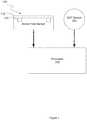
- the system for detecting active frost conditions comprises one or more active frost sensor 100 comprising a skin 110 and one or more temperature sensors 120 for measuring the temperature at or proximity to the skin, one or more sensors for measuring outside ambient temperature 200 and a processor 250 configured to compare skin temperature with outside ambient temperature.
- the system comprises and/or is operatively associated with an alarm/warning system configured to issue a warning when the outside ambient temperature is below a set point where frost may occur and if the surface temperature of the surface of the frost sensor is less than OAT.
- the alarm/warning system is optionally configured to issue regular updates on conditions.
- the system comprises a user interface.
- the system can be interfaced with third party system to provide for input of additional data including satellite images and meteorological damage.
- the system may be configured to receive and transmit data, information, warning or the like to remote locations.
- the system may further comprise additional sensors for assessing weather conditions.
- the additional sensors include means for measuring dew point, such as those commercially available from many manufacturers (e.g. Rotronic, Beko and Vaisala), means for measuring wind speed and/or wind direction; a means for estimating cloud cover such as one or more solar radiation sensors; and one or more ground-based all-sky cameras.
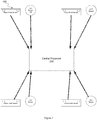
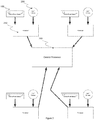
- the system is configured to assess active frost conditions at multiple locations.
- one or more active frost sensor 100 and one or more outside ambient temperature sensor 200 are placed at locations in which active frost conditions are to be assessed, such locations, for example, at large airports are individual terminals or gate areas.
- data regarding local conditions is relayed or forwarded to a central processor 260.
- a determination of active frost condition status occurs prior to rely to the central processor.
- the frost detection and warning system may be integrated into a larger system or with other systems.
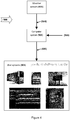
- Figure 4 illustrates an embodiment of the frost detection and warning system that could be used in aircraft de-icing as an example of the invention.
- the frost warning system 500 includes weather sensors 501, computer system 502, user systems 503, and communication links 504-506.
- Weather sensors 501 transfer weather data to the computer system 502 over link 504.
- the computer system 502 transfers information to user systems 503 over link 505.
- a weather information service, a de-icing information system, a facilities management system or other system may also transfer data to the computer system 502 over link 506.
- Weather sensors 501 include one or more of the active frost sensor described above and may also include sensors to measure outside ambient temperature, relative humidity, wind speed, dew point, precipitation type, or some other weather measurement. This weather data may also come from other systems over link 506.
- Weather sensors 501 may be individual units or may be distributed among multiple components and locations. There could be one or many such sensors. For detection of active frost, multiple sensors could be located to have varying exposure to direct sunlight and this could be factored into the warning system to provide intermediate levels of active frost warning.
- the system is configured to determine the rate of cooling of a, for example the outer skin of the frost sensor and/or the rate of radiation heat transfer.
- the rate of cooling of the outer skin could be continuously monitored or repeatedly assessed to identify an impending risk of active frost conditions.
- the rate of cooling of the skin is used to predict a time in the future when the skin temperature would approach or drop below the frost point.
- a warning is provided by the system to indicate that active frost conditions are approaching and to forecast a time in the future when they might occur.
- the computer system 502 may be any programmed general purpose computer or any special purpose circuitry and equipment as there are many different architectures fit for the purpose. In some examples, the computer system 502 will collect the data, and perform the calculations required to determine whether active frost conditions are present and will generate the data, warnings and information required by the user systems 503.
- Communications links 504-506 could use wireless, optical, or some other type of data communication mechanism. Communication links 504-506 could use dedicated links or could be part of a larger communication network. Communication links 504-506 could share some data transfer equipment.
- a wide variety of product delivery media could be used in the user systems 503 including personal computers, tablets, smart phones, electronic sign boards, cockpit communications systems, audio systems, etc.
- the system outputs such as an active frost warning, can be sent to the flight deck using ACARS or other forms of datalink, via the internet and received using tablets, mobile devices or computers. Information can also be sent to electronic message boards at the deicing positions or at gate locations.
- user systems could be in the de-icing facility, the cockpit, the control tower, airport administration or other location. Levels of warnings could be tailored to specific users and applications. End users could include flight crews, ground de-icing personnel, ground operations personnel, airport administration, airline administration, and tower personnel.
- the active frost sensor together with measurements of outside ambient temperature provides for the detection of conditions conducive for active frost formation.
- the active sensor comprises a skin and one or more temperature sensors for measuring temperature of the skin or the temperature proximate to the skin.
- the sensor can be a variety of shapes including but not limited to cone shaped, flat, slopped and dome shaped.
- the senor is designed to mimic the structure and/or shape of an object which has an outer or exposed surface which would cool more rapidly than its inner parts or other surfaces; for example, an automobile or other rolling stock, an aircraft or part thereof, an unheated building or enclosure.
- the sensor comprises a frame structure that mimics the ribs and spars of an aircraft wing and, in some embodiments, has a profile similar to that of aircraft wing.
- the one or more sensors may be raised above the surface of the ground.
- the sensor is at a similar to that of a commercial aircraft wing.
- Embodiments of the active frost sensor of the system are shown in Figures 5 to 7 .
- the senor is comprised of a flat or curved outside skin 300 which is optionally insulated on one side 301. Temperature sensors 304 are fixed to the skin 300.
- a heater, or means of supplying heat 302 is installed on the underside of the skin 300.
- the receiving surface or outside skin of the frost sensor 300 may be made of a painted metal in a variety of shapes.
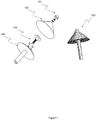
- Figures 5 and 7 show cone-shaped active frost sensor and Figure 6 shows a flat, sloped surface.
- the outside surface is optionally sloped to shed precipitation to ensure a clean surface in frost conditions.
- the slope is sufficient to shed accumulated frozen precipitation from all surfaces when the frozen precipitation is melted by the heater 302, and sufficient to shed liquid precipitation from all surfaces so that it doesn't freeze when ambient temperatures drop.
- the surface may be painted white to maximize radiative cooling.
- the skin 300 may be made of aluminum, titanium or other metal or material with good heat transfer properties or composite material or alloys.
- the outside skin 300 is insulated on one side 301.
- the insulation limits heat transfer to the material used to create surface 300.
- the insulation is designed to withstand ambient temperatures and weather conditions at the site the sensor is located. The insulation must also be sufficient to prevent heat transfer (e.g. from ambient air) on the back, insulated, side of the skin that might offset heat losses due to radiative cooling.
- the amount of insulation required will depend on the heat transfer characteristics of the sensor body which will depend on the material used, the shape and overall size, and the location. The insulation must however be sufficient so that potential (convective) heat gain from ambient air is inconsequential with respect to measurement of the potential radiant heat losses.
- a heater or means of supplying heat 302, is installed under the outside skin 300.
- the heater 302 may be an electric blanket or other heat source sized to raise and hold the temperature of the outer skin 300 above 0°C in the range of winter conditions and quantities of accumulated frozen precipitation expected at the site the sensor is located.
- the heater 302 allows the skin 300 to be warmed to eliminate any frost or (frozen) precipitation that accumulates on the sensor.
- the heater 302 After every precipitation event or prior to any anticipated frost event, the heater 302 will be required to operate to ensure that the outer skin 300 is clean and dry. This can be accomplished with a simple timing cycle which operates the heater at prescribed intervals or can be driven by logic from the computer system 502 in Figure 4 and inputs from various weather sensors 501 in Figure 4 .
- the frost sensor has one or more temperature probes 304 attached to the underside of the outside skin 300.
- the temperature probe can be a thermistor, thermocouple, or other device suitable for accurate measurement of temperatures around 0°C and designed to withstand ambient temperatures and weather conditions at the site the sensor is located.
- the temperature probe 304 could also be attached to the outside surface of 300 or embedded into the material.
- the active frost sensor 100 comprises frost cap 101, frost cone 102, internal components 103, and frost base 104.
- the temperature sensors (not shown) are fixed to the underside of the outer skin. Any number of sensors can be fixed to the underside of the outer skin by means known in the art. In one embodiment, four temperature sensors are fixed to the underside of the outer skin 90° apart.
- the heater (not shown) would also be on the underside of the outer skin. In some embodiments, the heater is a resistance wire.
- the active frost sensor is configured to determine the rate of cooling of its outer skin.
- the rate of cooling of the outer skin is continuously monitored or repeatedly assessed to identify an impending risk of active frost conditions.
- the rate of cooling of the skin is used to predict a time in the future when the skin temperature would approach or drop below the frost point.
- a warning is provided by the system to indicate that active frost conditions are approaching and to forecast a time in the future when they might occur.
- the frost detection sensor can be mounted in many different ways. It could be positioned on a pole outside in an area without any horizontal or vertical obstructions or it could be attached to the top of a structure by mean of a bracket, an example of which is shown as 405 in Figure 6 . As previously discussed, as applied to aircraft deicing, multiple sensors could be mounted under slightly different conditions to model the conditions at various gates.
- the frost detection sensor measures temperature of the outer skin and compares the measured temperature to another ambient temperature sensing device located nearby, or the ambient temperature provided by a deicing information system (DIIS). If the temperature of the outer skin is less than that measured by the DIIS or the other ambient temperature sensing device, then it can be assumed that radiation cooling is occurring, and therefore the cone surface could be in an active frost condition.
- DIIS deicing information system
- Relative humidity measurements will be obtained from a DIIS or another relative humidity sensing device located nearby. If radiation cooling is occurring, and the relative humidity is high enough (the relative humidity needed to generate frost depends on ambient temperature), then the cone of the frost sensor will begin to accrete frost.
- the surface temperature of the cone is less than the frost point or icing temperature, as calculated by established methods, tables or formulas which depend on the outside ambient temperature and the relative humidity, then a signal or alarm will be generated to warn of the likelihood of active frost conditions.
Landscapes
- Life Sciences & Earth Sciences (AREA)
- Engineering & Computer Science (AREA)
- Chemical & Material Sciences (AREA)
- Health & Medical Sciences (AREA)
- General Physics & Mathematics (AREA)
- Physics & Mathematics (AREA)
- Environmental & Geological Engineering (AREA)
- Analytical Chemistry (AREA)
- Immunology (AREA)
- Pathology (AREA)
- Biochemistry (AREA)
- General Health & Medical Sciences (AREA)
- Aviation & Aerospace Engineering (AREA)
- Atmospheric Sciences (AREA)
- Biodiversity & Conservation Biology (AREA)
- Ecology (AREA)
- Environmental Sciences (AREA)
- Medicinal Chemistry (AREA)
- Food Science & Technology (AREA)
- Combustion & Propulsion (AREA)
- Investigating Or Analyzing Materials Using Thermal Means (AREA)
- Air Conditioning Control Device (AREA)
Claims (11)
- System zur aktiven Frosterkennung, umfassend:a) mindestens einen aktiven Frostsensor (100), der eine obere Haut (110) und einen oder mehrere Temperatursensoren (120) zum Messen der Temperatur der Haut umfasst;b) mindestens einen Sensor zum Messen der Außenumgebungstemperatur (200); undc) einen Prozessor (250), der konfiguriert ist, um die Hauttemperatur mit der Außenumgebungstemperatur zu vergleichen,wobei das System konfiguriert ist, falls die Hauttemperatur unter der Außenumgebungstemperatur liegt, eine Warnung bereitzustellen, um anzugeben, dass Bedingungen für aktiven Frost vorhanden sein können,
und das System, falls die Hauttemperatur unter dem Frostpunkt liegt, ferner konfiguriert ist, eine Warnung bereitzustellen, um anzugeben, dass Bedingungen für aktiven Frost vorhanden sind,
wobei die Haut gegebenenfalls aus einem Material mit guten Wärmeübertragungseigenschaften gefertigt ist, die Haut vorzugsweise aus dem Hautmaterial eines Flügels eines Verkehrsflugzeugs gefertigt ist, oder die Haut bevorzugter Aluminium oder ein Verbundmaterial umfasst, und wobei die Haut gegebenenfalls auf einer Unterseite der Haut isoliert ist. - System nach Anspruch 1, das ein Mittel umfasst, um der Haut des aktiven Frostsensors Wärme (302) zuzuführen.
- System nach Anspruch 1 oder 2, wobei der aktive Frostsensor eine Rahmenstruktur umfasst, die Rippen und Holme eines Flugzeugflügelfragments nachbildet, und wobei der aktive Frostsensor gegebenenfalls ein Profil ähnlich dem Profil eines Flugzeugflügels aufweist.
- System nach Anspruch 1, wobei die Haut ein Verbundmaterial umfasst, und wobei das Verbundmaterial Aluminium- oder Kohlefasern umfasst.
- System nach einem der Ansprüche 1 bis 4, wobei die Temperatursensoren konfiguriert sind, um die Temperatur der Haut kontinuierlich zu messen.
- System nach einem der Ansprüche 1 bis 5, wobei der aktive Frostsensor konfiguriert ist, um eine Abkühlrate der Haut zu ermitteln.
- System nach einem der Ansprüche 1 bis 6, wobei das System ein Mittel zum Messen der relativen Feuchtigkeit und/oder ein oder mehrere Mittel zum Messen des Taupunkts und/oder ein oder mehrere Mittel zum Messen der Windgeschwindigkeit und/oder ein oder mehrere Mittel zum Messen der Windrichtung und/oder ein Mittel zum Schätzen der Wolkendecke umfasst.
- System nach Anspruch 7, wobei das Mittel zum Schätzen der Wolkendecke einen oder mehrere Sonneneinstrahlungssensoren umfasst, wobei das Mittel zum Schätzen der Wolkendecke vorzugsweise ein oder mehrere bodengestützte All-Sky-Kameras umfasst.
- System nach einem der Ansprüche 1 bis 8, wobei das System verteilte Sensoren umfasst.
- System nach Anspruch 6, wobei das System ferner konfiguriert ist, um aus der Abkühlrate der Haut eine in der Zukunft liegende Zeit vorherzusagen, wann die Hauttemperatur unter dem Frostpunkt sein wird, und dadurch eine aktive Frostbedingung vorherzusagen.
- System nach Anspruch 6, wobei die Abkühlrate der Haut verwendet wird, um eine Zeit in der Zukunft vorherzusagen, wann die Hauttemperatur sich dem Frostpunkt nähern wird, und das System konfiguriert ist, um eine Warnung bereitzustellen, um anzugeben, dass aktive Frostbedingungen näher kommen.
Applications Claiming Priority (2)
| Application Number | Priority Date | Filing Date | Title |
|---|---|---|---|
| US201361859453P | 2013-07-29 | 2013-07-29 | |
| PCT/CA2014/050714 WO2015013822A1 (en) | 2013-07-29 | 2014-07-29 | Active frost forecasting, detection and warning system and method |
Publications (3)
| Publication Number | Publication Date |
|---|---|
| EP3028076A1 EP3028076A1 (de) | 2016-06-08 |
| EP3028076A4 EP3028076A4 (de) | 2017-03-08 |
| EP3028076B1 true EP3028076B1 (de) | 2019-07-10 |
Family
ID=52430791
Family Applications (1)
| Application Number | Title | Priority Date | Filing Date |
|---|---|---|---|
| EP14832811.5A Active EP3028076B1 (de) | 2013-07-29 | 2014-07-29 | System und verfahren für aktive frostvorhersage, -erkennung und -warnung |
Country Status (4)
| Country | Link |
|---|---|
| US (1) | US10179652B2 (de) |
| EP (1) | EP3028076B1 (de) |
| CA (1) | CA2919712C (de) |
| WO (1) | WO2015013822A1 (de) |
Cited By (1)
| Publication number | Priority date | Publication date | Assignee | Title |
|---|---|---|---|---|
| US12592137B2 (en) | 2022-05-18 | 2026-03-31 | Kidde Fire Protection, Llc | Condensation monitoring in aspirating smoke detection systems |
Families Citing this family (10)
| Publication number | Priority date | Publication date | Assignee | Title |
|---|---|---|---|---|
| CA2970562C (en) * | 2014-10-01 | 2019-12-24 | Surewx Inc. | Radiation cooling/heat transfer-based methods, sensors and systems for forecasting and/or detecting active frost conditions |
| CA3012392C (en) * | 2015-03-12 | 2021-04-27 | Universite Laval | System and method for determining an icing condition status of an environment |
| CN105644791B (zh) * | 2015-08-31 | 2018-06-22 | 中国商用飞机有限责任公司 | 结冰探测系统及具有该结冰系统的飞行器 |
| KR102505910B1 (ko) * | 2017-11-17 | 2023-03-06 | 한국전자통신연구원 | 서리 예측 시스템 및 서리 예측 방법 |
| CN108267613B (zh) * | 2017-12-28 | 2021-01-29 | 华润电力技术研究院有限公司 | 一种测风数据处理方法及相关设备 |
| US11166404B2 (en) * | 2018-09-02 | 2021-11-09 | FarmX Inc. | Systems and methods for virtual agronomic sensing |
| US11203438B1 (en) * | 2018-12-13 | 2021-12-21 | Rockwell Collins, Inc. | System and method for deicing |
| US11150262B1 (en) * | 2020-04-24 | 2021-10-19 | Christohper Williams | System and method for angle of attack sensor |
| US11922331B2 (en) * | 2020-08-26 | 2024-03-05 | Northrop Grumman Systems Corporation | Machine-learning-based predictive ice detection |
| CN113552655B (zh) * | 2021-09-18 | 2021-12-10 | 成都信息工程大学 | 交替切换连续工作露-霜点仪及露-霜点连续测量方法 |
Family Cites Families (18)
| Publication number | Priority date | Publication date | Assignee | Title |
|---|---|---|---|---|
| US3422677A (en) * | 1966-06-21 | 1969-01-21 | Holley Carburetor Co | Ice condition detecting device |
| CH613546A5 (de) * | 1977-05-04 | 1979-09-28 | Boschung Fa M | |
| US4766369A (en) * | 1986-03-31 | 1988-08-23 | The United States Of America As Represented By The Administrator Of The National Aeronautics And Space Administration | Ice detector |
| US5523959A (en) * | 1994-04-25 | 1996-06-04 | The United States Of America As Represented By The Administrator Of The National Aeronautics And Space Administration | Ice detector and deicing fluid effectiveness monitoring system |
| US6535141B1 (en) * | 1996-06-07 | 2003-03-18 | John A. Doherty | Vehicle mounted travel surface and weather condition monitoring system |
| US5710408A (en) * | 1996-08-15 | 1998-01-20 | Msx, Inc. | Automatic controlled for an ice and snow melting system with ground fault circuit interruption |
| US5763858A (en) * | 1996-10-03 | 1998-06-09 | Jones; Thaddeus M. | Automatically controlled ice and snow melting system including a two-wire remote control |
| US5934617A (en) | 1997-09-22 | 1999-08-10 | Northcoast Technologies | De-ice and anti-ice system and method for aircraft surfaces |
| US6157305A (en) * | 1999-09-02 | 2000-12-05 | Motorola, Inc. | Crop frost prediction system |
| WO2007107732A1 (en) * | 2006-03-17 | 2007-09-27 | Ultra Electronics Limited | Ice protection system |
| FR2914906B1 (fr) * | 2007-04-11 | 2009-10-30 | Intertechnique Soc Par Actions | Procede et dispositif de detection de givre et /ou conditions givrantes sur aeronef en vol |
| US20100004863A1 (en) * | 2008-07-01 | 2010-01-07 | Spencer Ladow | Mobile environmental detector |
| US8242431B2 (en) * | 2008-12-12 | 2012-08-14 | GE Lighting Solutions, LLC | Automated de-icing system for low power lighting apparatus |
| GB0823121D0 (en) * | 2008-12-18 | 2009-01-28 | Penny & Giles Controls Ltd | Ice detection system |
| FR2966234B1 (fr) * | 2010-10-14 | 2012-10-05 | Aer | Procede et dispositif de detection anticipee de givre sur une piste |
| FI125286B (fi) * | 2011-07-01 | 2015-08-14 | Teknologian Tutkimuskeskus Vtt Oy | Järjestely ja menetelmä jäätymisen havainnoimiseksi |
| EP2615302B1 (de) | 2012-01-10 | 2015-09-02 | Nordex Energy GmbH | Verfahren zum Betreiben einer Windenergieanlage, bei dem auf Grundlage meteorologischer Daten eine Vereisungsgefahr ermittelt wird, und Windenergieanlage zur Ausführung des Verfahrens |
| CN202676934U (zh) | 2012-07-03 | 2013-01-16 | 潍坊大禹水文科技有限公司 | 全自动气象观测系统 |
-
2014
- 2014-07-29 CA CA2919712A patent/CA2919712C/en active Active
- 2014-07-29 EP EP14832811.5A patent/EP3028076B1/de active Active
- 2014-07-29 US US14/908,677 patent/US10179652B2/en active Active
- 2014-07-29 WO PCT/CA2014/050714 patent/WO2015013822A1/en not_active Ceased
Non-Patent Citations (1)
| Title |
|---|
| None * |
Cited By (1)
| Publication number | Priority date | Publication date | Assignee | Title |
|---|---|---|---|---|
| US12592137B2 (en) | 2022-05-18 | 2026-03-31 | Kidde Fire Protection, Llc | Condensation monitoring in aspirating smoke detection systems |
Also Published As
| Publication number | Publication date |
|---|---|
| EP3028076A1 (de) | 2016-06-08 |
| EP3028076A4 (de) | 2017-03-08 |
| CA2919712A1 (en) | 2015-02-05 |
| US20160176530A1 (en) | 2016-06-23 |
| WO2015013822A1 (en) | 2015-02-05 |
| US10179652B2 (en) | 2019-01-15 |
| CA2919712C (en) | 2016-09-27 |
Similar Documents
| Publication | Publication Date | Title |
|---|---|---|
| CA2919712C (en) | Active frost forecasting, detection and warning system and method | |
| EP0938688B1 (de) | Meldesystem für akkumulation gefrorenen niederschlags | |
| US5354015A (en) | System for warning the flight crew on board an aircraft of pre-flight aircraft icing | |
| EP3567369B1 (de) | Verfahren zur herstellung einer magnetostriktiven oszillator-eisratensonde | |
| US20140191084A1 (en) | Ice detection and mitigation device | |
| EA002165B1 (ru) | Способ и устройство для обнаружения наростов льда на поверхности летательного аппарата в движении | |
| US20120193477A1 (en) | Device and method for detecting ice deposited on an aircraft structure | |
| EP2504236A2 (de) | Verbesserte sensoranordnung | |
| Miller et al. | Multirotor UAV icing correlated to liquid water content measurements in natural supercooled clouds | |
| Ryerson et al. | Quantitative ice accretion information from the automated surface observing system | |
| US7369053B2 (en) | De-icing information system | |
| JP2005536389A (ja) | 降水による着氷リスクを決定する方法、およびその方法を実施するための装置 | |
| Zhang et al. | Analysis method and experimental study of ice accumulation detection signal based on Lamb waves | |
| US11203438B1 (en) | System and method for deicing | |
| EP3201656B1 (de) | Strahlungskühlungs-/wärmeübertragungsbasierte verfahren, sensoren und systeme zur vorhersage und/oder erkennung von aktiven frostzuständen | |
| CN107464024B (zh) | 基于覆冰形状试验的架空输电线路舞动预测方法及系统 | |
| Rasmussen et al. | Common snowfall conditions associated with aircraft takeoff accidents | |
| CN118062252A (zh) | 一种用于冰冻污染物的飞机维修方法 | |
| Mirto | A sensor for ice monitoring on bridge superstructures | |
| Sachs et al. | Flight Testing the Indirect Ice Detection System in the Horizon 2020 Project SENS4ICE | |
| Landolt et al. | Misreporting of Freezing Fog during Snowfall Conditions in US METAR Observations | |
| Sanford et al. | An Analytical Method for Prediction of High Altitude Total Water Exposure for In-Service Long Range Aircraft | |
| Landolt et al. | Weather support for terminal area icing weather information | |
| CN208796291U (zh) | 一种飞行服务装置 | |
| Bernstein et al. | The embraer-170 and-190 natural icing flight campaigns: keys to success |
Legal Events
| Date | Code | Title | Description |
|---|---|---|---|
| PUAI | Public reference made under article 153(3) epc to a published international application that has entered the european phase |
Free format text: ORIGINAL CODE: 0009012 |
|
| 17P | Request for examination filed |
Effective date: 20160129 |
|
| AK | Designated contracting states |
Kind code of ref document: A1 Designated state(s): AL AT BE BG CH CY CZ DE DK EE ES FI FR GB GR HR HU IE IS IT LI LT LU LV MC MK MT NL NO PL PT RO RS SE SI SK SM TR |
|
| AX | Request for extension of the european patent |
Extension state: BA ME |
|
| DAX | Request for extension of the european patent (deleted) | ||
| A4 | Supplementary search report drawn up and despatched |
Effective date: 20170208 |
|
| RIC1 | Information provided on ipc code assigned before grant |
Ipc: B64D 15/20 20060101ALI20170202BHEP Ipc: G08B 19/02 20060101ALI20170202BHEP Ipc: G01W 1/17 20060101AFI20170202BHEP Ipc: G01N 25/66 20060101ALI20170202BHEP |
|
| GRAP | Despatch of communication of intention to grant a patent |
Free format text: ORIGINAL CODE: EPIDOSNIGR1 |
|
| STAA | Information on the status of an ep patent application or granted ep patent |
Free format text: STATUS: GRANT OF PATENT IS INTENDED |
|
| INTG | Intention to grant announced |
Effective date: 20190124 |
|
| GRAS | Grant fee paid |
Free format text: ORIGINAL CODE: EPIDOSNIGR3 |
|
| GRAA | (expected) grant |
Free format text: ORIGINAL CODE: 0009210 |
|
| STAA | Information on the status of an ep patent application or granted ep patent |
Free format text: STATUS: THE PATENT HAS BEEN GRANTED |
|
| AK | Designated contracting states |
Kind code of ref document: B1 Designated state(s): AL AT BE BG CH CY CZ DE DK EE ES FI FR GB GR HR HU IE IS IT LI LT LU LV MC MK MT NL NO PL PT RO RS SE SI SK SM TR |
|
| RAP1 | Party data changed (applicant data changed or rights of an application transferred) |
Owner name: SUREWX INC. |
|
| REG | Reference to a national code |
Ref country code: GB Ref legal event code: FG4D |
|
| REG | Reference to a national code |
Ref country code: CH Ref legal event code: EP Ref country code: AT Ref legal event code: REF Ref document number: 1154178 Country of ref document: AT Kind code of ref document: T Effective date: 20190715 |
|
| REG | Reference to a national code |
Ref country code: DE Ref legal event code: R096 Ref document number: 602014049940 Country of ref document: DE |
|
| REG | Reference to a national code |
Ref country code: IE Ref legal event code: FG4D |
|
| REG | Reference to a national code |
Ref country code: SE Ref legal event code: TRGR |
|
| REG | Reference to a national code |
Ref country code: NL Ref legal event code: MP Effective date: 20190710 |
|
| REG | Reference to a national code |
Ref country code: LT Ref legal event code: MG4D |
|
| REG | Reference to a national code |
Ref country code: AT Ref legal event code: MK05 Ref document number: 1154178 Country of ref document: AT Kind code of ref document: T Effective date: 20190710 |
|
| PG25 | Lapsed in a contracting state [announced via postgrant information from national office to epo] |
Ref country code: BG Free format text: LAPSE BECAUSE OF FAILURE TO SUBMIT A TRANSLATION OF THE DESCRIPTION OR TO PAY THE FEE WITHIN THE PRESCRIBED TIME-LIMIT Effective date: 20191010 Ref country code: HR Free format text: LAPSE BECAUSE OF FAILURE TO SUBMIT A TRANSLATION OF THE DESCRIPTION OR TO PAY THE FEE WITHIN THE PRESCRIBED TIME-LIMIT Effective date: 20190710 Ref country code: NO Free format text: LAPSE BECAUSE OF FAILURE TO SUBMIT A TRANSLATION OF THE DESCRIPTION OR TO PAY THE FEE WITHIN THE PRESCRIBED TIME-LIMIT Effective date: 20191010 Ref country code: AT Free format text: LAPSE BECAUSE OF FAILURE TO SUBMIT A TRANSLATION OF THE DESCRIPTION OR TO PAY THE FEE WITHIN THE PRESCRIBED TIME-LIMIT Effective date: 20190710 Ref country code: FI Free format text: LAPSE BECAUSE OF FAILURE TO SUBMIT A TRANSLATION OF THE DESCRIPTION OR TO PAY THE FEE WITHIN THE PRESCRIBED TIME-LIMIT Effective date: 20190710 Ref country code: PT Free format text: LAPSE BECAUSE OF FAILURE TO SUBMIT A TRANSLATION OF THE DESCRIPTION OR TO PAY THE FEE WITHIN THE PRESCRIBED TIME-LIMIT Effective date: 20191111 Ref country code: LT Free format text: LAPSE BECAUSE OF FAILURE TO SUBMIT A TRANSLATION OF THE DESCRIPTION OR TO PAY THE FEE WITHIN THE PRESCRIBED TIME-LIMIT Effective date: 20190710 Ref country code: NL Free format text: LAPSE BECAUSE OF FAILURE TO SUBMIT A TRANSLATION OF THE DESCRIPTION OR TO PAY THE FEE WITHIN THE PRESCRIBED TIME-LIMIT Effective date: 20190710 |
|
| PG25 | Lapsed in a contracting state [announced via postgrant information from national office to epo] |
Ref country code: LV Free format text: LAPSE BECAUSE OF FAILURE TO SUBMIT A TRANSLATION OF THE DESCRIPTION OR TO PAY THE FEE WITHIN THE PRESCRIBED TIME-LIMIT Effective date: 20190710 Ref country code: ES Free format text: LAPSE BECAUSE OF FAILURE TO SUBMIT A TRANSLATION OF THE DESCRIPTION OR TO PAY THE FEE WITHIN THE PRESCRIBED TIME-LIMIT Effective date: 20190710 Ref country code: GR Free format text: LAPSE BECAUSE OF FAILURE TO SUBMIT A TRANSLATION OF THE DESCRIPTION OR TO PAY THE FEE WITHIN THE PRESCRIBED TIME-LIMIT Effective date: 20191011 Ref country code: RS Free format text: LAPSE BECAUSE OF FAILURE TO SUBMIT A TRANSLATION OF THE DESCRIPTION OR TO PAY THE FEE WITHIN THE PRESCRIBED TIME-LIMIT Effective date: 20190710 Ref country code: AL Free format text: LAPSE BECAUSE OF FAILURE TO SUBMIT A TRANSLATION OF THE DESCRIPTION OR TO PAY THE FEE WITHIN THE PRESCRIBED TIME-LIMIT Effective date: 20190710 Ref country code: IS Free format text: LAPSE BECAUSE OF FAILURE TO SUBMIT A TRANSLATION OF THE DESCRIPTION OR TO PAY THE FEE WITHIN THE PRESCRIBED TIME-LIMIT Effective date: 20191110 |
|
| REG | Reference to a national code |
Ref country code: CH Ref legal event code: PL |
|
| PG25 | Lapsed in a contracting state [announced via postgrant information from national office to epo] |
Ref country code: TR Free format text: LAPSE BECAUSE OF FAILURE TO SUBMIT A TRANSLATION OF THE DESCRIPTION OR TO PAY THE FEE WITHIN THE PRESCRIBED TIME-LIMIT Effective date: 20190710 |
|
| REG | Reference to a national code |
Ref country code: BE Ref legal event code: MM Effective date: 20190731 |
|
| PG25 | Lapsed in a contracting state [announced via postgrant information from national office to epo] |
Ref country code: PL Free format text: LAPSE BECAUSE OF FAILURE TO SUBMIT A TRANSLATION OF THE DESCRIPTION OR TO PAY THE FEE WITHIN THE PRESCRIBED TIME-LIMIT Effective date: 20190710 Ref country code: RO Free format text: LAPSE BECAUSE OF FAILURE TO SUBMIT A TRANSLATION OF THE DESCRIPTION OR TO PAY THE FEE WITHIN THE PRESCRIBED TIME-LIMIT Effective date: 20190710 Ref country code: DK Free format text: LAPSE BECAUSE OF FAILURE TO SUBMIT A TRANSLATION OF THE DESCRIPTION OR TO PAY THE FEE WITHIN THE PRESCRIBED TIME-LIMIT Effective date: 20190710 Ref country code: EE Free format text: LAPSE BECAUSE OF FAILURE TO SUBMIT A TRANSLATION OF THE DESCRIPTION OR TO PAY THE FEE WITHIN THE PRESCRIBED TIME-LIMIT Effective date: 20190710 Ref country code: IT Free format text: LAPSE BECAUSE OF FAILURE TO SUBMIT A TRANSLATION OF THE DESCRIPTION OR TO PAY THE FEE WITHIN THE PRESCRIBED TIME-LIMIT Effective date: 20190710 |
|
| PG25 | Lapsed in a contracting state [announced via postgrant information from national office to epo] |
Ref country code: IS Free format text: LAPSE BECAUSE OF FAILURE TO SUBMIT A TRANSLATION OF THE DESCRIPTION OR TO PAY THE FEE WITHIN THE PRESCRIBED TIME-LIMIT Effective date: 20200224 Ref country code: SM Free format text: LAPSE BECAUSE OF FAILURE TO SUBMIT A TRANSLATION OF THE DESCRIPTION OR TO PAY THE FEE WITHIN THE PRESCRIBED TIME-LIMIT Effective date: 20190710 Ref country code: CH Free format text: LAPSE BECAUSE OF NON-PAYMENT OF DUE FEES Effective date: 20190731 Ref country code: CZ Free format text: LAPSE BECAUSE OF FAILURE TO SUBMIT A TRANSLATION OF THE DESCRIPTION OR TO PAY THE FEE WITHIN THE PRESCRIBED TIME-LIMIT Effective date: 20190710 Ref country code: LI Free format text: LAPSE BECAUSE OF NON-PAYMENT OF DUE FEES Effective date: 20190731 Ref country code: LU Free format text: LAPSE BECAUSE OF NON-PAYMENT OF DUE FEES Effective date: 20190729 Ref country code: SK Free format text: LAPSE BECAUSE OF FAILURE TO SUBMIT A TRANSLATION OF THE DESCRIPTION OR TO PAY THE FEE WITHIN THE PRESCRIBED TIME-LIMIT Effective date: 20190710 Ref country code: BE Free format text: LAPSE BECAUSE OF NON-PAYMENT OF DUE FEES Effective date: 20190731 Ref country code: MC Free format text: LAPSE BECAUSE OF FAILURE TO SUBMIT A TRANSLATION OF THE DESCRIPTION OR TO PAY THE FEE WITHIN THE PRESCRIBED TIME-LIMIT Effective date: 20190710 |
|
| REG | Reference to a national code |
Ref country code: DE Ref legal event code: R097 Ref document number: 602014049940 Country of ref document: DE |
|
| PLBE | No opposition filed within time limit |
Free format text: ORIGINAL CODE: 0009261 |
|
| STAA | Information on the status of an ep patent application or granted ep patent |
Free format text: STATUS: NO OPPOSITION FILED WITHIN TIME LIMIT |
|
| PG2D | Information on lapse in contracting state deleted |
Ref country code: IS |
|
| PG25 | Lapsed in a contracting state [announced via postgrant information from national office to epo] |
Ref country code: IE Free format text: LAPSE BECAUSE OF NON-PAYMENT OF DUE FEES Effective date: 20190729 |
|
| 26N | No opposition filed |
Effective date: 20200603 |
|
| PG25 | Lapsed in a contracting state [announced via postgrant information from national office to epo] |
Ref country code: SI Free format text: LAPSE BECAUSE OF FAILURE TO SUBMIT A TRANSLATION OF THE DESCRIPTION OR TO PAY THE FEE WITHIN THE PRESCRIBED TIME-LIMIT Effective date: 20190710 |
|
| PG25 | Lapsed in a contracting state [announced via postgrant information from national office to epo] |
Ref country code: FR Free format text: LAPSE BECAUSE OF NON-PAYMENT OF DUE FEES Effective date: 20190910 |
|
| PG25 | Lapsed in a contracting state [announced via postgrant information from national office to epo] |
Ref country code: CY Free format text: LAPSE BECAUSE OF FAILURE TO SUBMIT A TRANSLATION OF THE DESCRIPTION OR TO PAY THE FEE WITHIN THE PRESCRIBED TIME-LIMIT Effective date: 20190710 |
|
| PG25 | Lapsed in a contracting state [announced via postgrant information from national office to epo] |
Ref country code: MT Free format text: LAPSE BECAUSE OF FAILURE TO SUBMIT A TRANSLATION OF THE DESCRIPTION OR TO PAY THE FEE WITHIN THE PRESCRIBED TIME-LIMIT Effective date: 20190710 Ref country code: HU Free format text: LAPSE BECAUSE OF FAILURE TO SUBMIT A TRANSLATION OF THE DESCRIPTION OR TO PAY THE FEE WITHIN THE PRESCRIBED TIME-LIMIT; INVALID AB INITIO Effective date: 20140729 |
|
| PG25 | Lapsed in a contracting state [announced via postgrant information from national office to epo] |
Ref country code: MK Free format text: LAPSE BECAUSE OF FAILURE TO SUBMIT A TRANSLATION OF THE DESCRIPTION OR TO PAY THE FEE WITHIN THE PRESCRIBED TIME-LIMIT Effective date: 20190710 |
|
| PGFP | Annual fee paid to national office [announced via postgrant information from national office to epo] |
Ref country code: DE Payment date: 20250731 Year of fee payment: 12 |
|
| PGFP | Annual fee paid to national office [announced via postgrant information from national office to epo] |
Ref country code: GB Payment date: 20250722 Year of fee payment: 12 |
|
| PGFP | Annual fee paid to national office [announced via postgrant information from national office to epo] |
Ref country code: SE Payment date: 20250723 Year of fee payment: 12 |