EP3028406B1 - Garanties sla basées sur profil selon la migration de charge dans un nuage distribué - Google Patents
Garanties sla basées sur profil selon la migration de charge dans un nuage distribué Download PDFInfo
- Publication number
- EP3028406B1 EP3028406B1 EP14799522.9A EP14799522A EP3028406B1 EP 3028406 B1 EP3028406 B1 EP 3028406B1 EP 14799522 A EP14799522 A EP 14799522A EP 3028406 B1 EP3028406 B1 EP 3028406B1
- Authority
- EP
- European Patent Office
- Prior art keywords
- cloud
- customer
- resource
- performance
- application requirement
- Prior art date
- Legal status (The legal status is an assumption and is not a legal conclusion. Google has not performed a legal analysis and makes no representation as to the accuracy of the status listed.)
- Active
Links
Images


Classifications
-
- H—ELECTRICITY
- H04—ELECTRIC COMMUNICATION TECHNIQUE
- H04L—TRANSMISSION OF DIGITAL INFORMATION, e.g. TELEGRAPHIC COMMUNICATION
- H04L41/00—Arrangements for maintenance, administration or management of data switching networks, e.g. of packet switching networks
- H04L41/50—Network service management, e.g. ensuring proper service fulfilment according to agreements
- H04L41/5003—Managing SLA; Interaction between SLA and QoS
- H04L41/5019—Ensuring fulfilment of SLA
-
- G—PHYSICS
- G06—COMPUTING OR CALCULATING; COUNTING
- G06F—ELECTRIC DIGITAL DATA PROCESSING
- G06F9/00—Arrangements for program control, e.g. control units
- G06F9/06—Arrangements for program control, e.g. control units using stored programs, i.e. using an internal store of processing equipment to receive or retain programs
- G06F9/46—Multiprogramming arrangements
- G06F9/50—Allocation of resources, e.g. of the central processing unit [CPU]
- G06F9/5083—Techniques for rebalancing the load in a distributed system
- G06F9/5088—Techniques for rebalancing the load in a distributed system involving task migration
-
- H—ELECTRICITY
- H04—ELECTRIC COMMUNICATION TECHNIQUE
- H04L—TRANSMISSION OF DIGITAL INFORMATION, e.g. TELEGRAPHIC COMMUNICATION
- H04L41/00—Arrangements for maintenance, administration or management of data switching networks, e.g. of packet switching networks
- H04L41/50—Network service management, e.g. ensuring proper service fulfilment according to agreements
- H04L41/5041—Network service management, e.g. ensuring proper service fulfilment according to agreements characterised by the time relationship between creation and deployment of a service
- H04L41/5054—Automatic deployment of services triggered by the service manager, e.g. service implementation by automatic configuration of network components
-
- G—PHYSICS
- G06—COMPUTING OR CALCULATING; COUNTING
- G06F—ELECTRIC DIGITAL DATA PROCESSING
- G06F2209/00—Indexing scheme relating to G06F9/00
- G06F2209/50—Indexing scheme relating to G06F9/50
- G06F2209/501—Performance criteria
-
- H—ELECTRICITY
- H04—ELECTRIC COMMUNICATION TECHNIQUE
- H04L—TRANSMISSION OF DIGITAL INFORMATION, e.g. TELEGRAPHIC COMMUNICATION
- H04L41/00—Arrangements for maintenance, administration or management of data switching networks, e.g. of packet switching networks
- H04L41/50—Network service management, e.g. ensuring proper service fulfilment according to agreements
- H04L41/508—Network service management, e.g. ensuring proper service fulfilment according to agreements based on type of value added network service under agreement
- H04L41/5096—Network service management, e.g. ensuring proper service fulfilment according to agreements based on type of value added network service under agreement wherein the managed service relates to distributed or central networked applications
-
- H—ELECTRICITY
- H04—ELECTRIC COMMUNICATION TECHNIQUE
- H04L—TRANSMISSION OF DIGITAL INFORMATION, e.g. TELEGRAPHIC COMMUNICATION
- H04L43/00—Arrangements for monitoring or testing data switching networks
- H04L43/08—Monitoring or testing based on specific metrics, e.g. QoS, energy consumption or environmental parameters
- H04L43/0805—Monitoring or testing based on specific metrics, e.g. QoS, energy consumption or environmental parameters by checking availability
- H04L43/0817—Monitoring or testing based on specific metrics, e.g. QoS, energy consumption or environmental parameters by checking availability by checking functioning
-
- H—ELECTRICITY
- H04—ELECTRIC COMMUNICATION TECHNIQUE
- H04L—TRANSMISSION OF DIGITAL INFORMATION, e.g. TELEGRAPHIC COMMUNICATION
- H04L43/00—Arrangements for monitoring or testing data switching networks
- H04L43/08—Monitoring or testing based on specific metrics, e.g. QoS, energy consumption or environmental parameters
- H04L43/0852—Delays
-
- H—ELECTRICITY
- H04—ELECTRIC COMMUNICATION TECHNIQUE
- H04L—TRANSMISSION OF DIGITAL INFORMATION, e.g. TELEGRAPHIC COMMUNICATION
- H04L43/00—Arrangements for monitoring or testing data switching networks
- H04L43/08—Monitoring or testing based on specific metrics, e.g. QoS, energy consumption or environmental parameters
- H04L43/0852—Delays
- H04L43/087—Jitter
-
- H—ELECTRICITY
- H04—ELECTRIC COMMUNICATION TECHNIQUE
- H04L—TRANSMISSION OF DIGITAL INFORMATION, e.g. TELEGRAPHIC COMMUNICATION
- H04L43/00—Arrangements for monitoring or testing data switching networks
- H04L43/10—Active monitoring, e.g. heartbeat, ping or trace-route
Definitions
- Various exemplary embodiments disclosed herein relate generally to cloud computing.
- a requestor may request the use of one or more resources from a cloud controller which may, in turn, allocate the requested resources from the data center for use by the requestor.
- This centralized operation may not be well suited for hosting various types of applications, such as those with strict delay or reliability requirements.
- Distributed data center architectures provide a larger number of smaller data centers that may be geographically distributed.
- the data centers may remain under the control of one or more cloud controllers through a network such as the Internet or carrier networks.
- a network such as the Internet or carrier networks.
- the effects of network propagation delay may be reduced by providing cloud applications that are closer to various customers in terms of geographic or network distance than a centralized cloud may be able to provide.
- WO 2013/019185 A1 describes a method for migrating virtual machines based on monitoring host capacity and virtual machine performance, calculating performance impacts of migrating one or more virtual machines, determining the virtual machines to migrate and migrating the determined virtual machines.
- the migration processor determines if there are any opportunities for improvement by determining capacity and/or performance impacts of migrating one or more virtual machines to other hosts.
- Hyung Won Choi et al. "Autonomous Learning for Efficient Resource Utilization of Dynamic VM Migration", ICS '08 - PROCEEDINGS OF THE ACM INTERNATIONAL CONFERENCE ON SUPERCOMPUTING, ISLAND OF KOS; GREECE, JUNE 7 -12, 2008; ASSOCIATION FOR COMPUTING MACHINERIY; NEW YORK; NY; USA; 7 June 2008; pages 185 - 194, XP 002629917 ) describes a method of efficient resource utilization of a dynamic virtual machine migration. From all hosts the destination host is determined which has the smallest standard deviation being smaller than the current one. Then a virtual machine with the lowest standard deviation after migration is selected from the host machine for migration.
- the term "customer" will be understood to refer to a user that interfaces with a cloud provider to receive infrastructure as a service (IaaS), platform as a service (PaaS), or software as a service (SaaS) from the cloud network.
- IaaS infrastructure as a service
- PaaS platform as a service
- SaaS software as a service
- the cloud provider and customer may have entered into a service level agreement (SLA) defining minimum performance requirements that will be provided to the customer's applications.
- SLA service level agreement
- an SLA may specify that a certain amount of computing power or a certain maximum latency between resources.
- the cloud provider may attempt to preserve the SLA by choosing devices to support the resources that meet the SLA's provisions.
- SLA may define minimum acceptable performance
- a customer experience to which a customer has become accustomed.
- an SLA may provide that 20 ms of inter-resource communication delay is acceptable, the customer may average, and therefore expect, 10 ms of inter-resource communication delay.
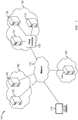
- FIG. 1 illustrates an exemplary cloud architecture 100 for providing cloud resources.
- the cloud architecture 100 may implement a networked cloud architecture and may include a client device 110, a network 115, a cloud controller 120, and data centers 130, 140, 150.
- the client device 110 may be any device configured to utilize one or more cloud resources.
- the client device 110 may be a desktop computer, laptop, tablet, mobile device, server, or blade.
- the client device 110 may communicate with other devices, such as the cloud controller 120, via the network 115.
- the client device 110 may transmit a request for one or more cloud resources to the cloud controller 120.
- the client device 110 may request the use of one or more virtual machines (VMs), groups of VMs, storage devices, memory, or other resources within the cloud network 100. Additional types of cloud resources will be apparent.
- VMs virtual machines
- Additional types of cloud resources will be apparent.
- the client device 110 may represent a device of a customer that requests the deployment of a distributed cloud application from the cloud controller 120 or the client device 110 may represent a customer of such a customer that requests the use of one or more components of such a distributed cloud application by directly communicating with such resources supported by the various cloud devices 131, 132, 133, 144, 155, 166. It will be apparent that multiple additional client devices (not shown) may be in communication with the network 115 and such additional client devices may belong to additional customers.
- the network 115 may be any network of devices or transmission media capable of enabling communication between the various devices of the exemplary cloud architecture 100.
- the network 115 may include numerous devices configured to exchange and route data packets toward various destinations.
- the network 115 may include the Internet or one or more carrier networks.
- the cloud controller 120 may be a device configured to control the operations of a networked cloud.
- the cloud controller 120 may include various hardware such as a storage device, memory, or one or more processors, as will be described in greater detail below with respect to FIG. 3 .
- the term "processor” will be understood to encompass a variety of devices such as microprocessors, field-programmable gate arrays (FPGAs), application-specific integrated circuits (ASICs), and other similar processing devices.
- the cloud controller 120 may include, for example, a server, a blade, a personal computer, a laptop, a tablet, or a mobile device.
- the cloud controller 120 may be a virtual machine that utilizes cloud resources such as, for example, the hardware resources provided by cloud devices 131, 132, 133.
- the cloud controller 120 may reside at a data center, such as data center 130, or may reside elsewhere.
- the cloud controller 120 may perform various cloud management functions, including management of cloud resource allocation.
- the cloud controller 120 may receive requests for the establishment of cloud applications from client devices such as the client device 110.
- the cloud controller 120 may allocate requested resources from one or more of the cloud devices 131, 132, 133, 144, 155, 156, for use by client devices.
- the exemplary cloud architecture 100 may include multiple cloud controllers (not shown). Various techniques for coordinating the operation of multiple cloud controllers will be apparent.
- the data centers 130, 140, 150 may each be locations supporting one or more devices that provide cloud resources.
- data center 130 may host cloud devices 131, 132, 133; data center 140 may host cloud device 144; and data center 150 may host cloud devices 155, 156.
- the data centers 130, 140, 150 may be geographically distributed or may be situated at different network distances from the client device 110.
- the client device 110 may be located in Washington, D.C.
- data center 140 may be located in Chicago
- data center 150 may be located in Paris
- data center 130 may be located in Tokyo.
- the client device 110 may experience less network latency when communicating with data center 140 than when communicating with data center 130.
- the cloud architecture 100 may include numerous additional data centers (not shown) and that each data center may include any number of cloud devices.
- Each of cloud devices 131, 132, 133, 144, 155, 156 may be a device configured to provide cloud resources for use by client devices.
- each of the cloud devices 131, 132, 133, 144, 155, 156 may be a desktop computer, laptop, tablet, mobile device, server, or blade.
- the cloud devices 131, 132, 133, 144, 155, 156 may include various hardware such as, for example, storage devices, memory, or one or more processors.
- the cloud devices 131, 132, 133, 144, 155, 156 may be configured to provide processing, storage, memory, VMs, or groups of VMs for use by client devices such as the client device 110.
- the cloud controller 120 may include or interface with an application manager (not shown) to deploy and subsequently scale a cloud application with demand.
- the application manager may be, for example, a desktop computer, laptop, tablet, mobile device, server, or blade and may include a virtual machine.
- the cloud controller 120 may determine that it is advantageous to migrate resources provisioned for the client device 110 within the cloud network 100. For example, the cloud controller may determine that a device 155 supporting a VM associated with the client device 110 is overworked and that the VM should be relocated to another device 131, 132, 133, 144, 156. In deciding which device 131, 132, 133, 144, 156 should support the migrated VM, the cloud controller 120 may consider both an explicit SLA associated with the customer of a client device and a customer profile including application requirements reflecting the customer's recent performance experience. Using this information, the cloud controller may select a device 131, 132, 133, 144, 156 that is likely to preserve the explicit SLA and application requirements.
- FIG. 2 illustrates a component diagram of an exemplary cloud controller 200.
- the cloud controller 200 may correspond to the cloud controller 120 of the exemplary cloud network 100.
- the cloud controller 200 may include a network interface 210, cloud monitor 220, cloud state storage 230, analytics engine 240, implicit SLA storage 250, explicit SLA storage 260, and workload migrator 270.
- the network interface 210 may be an interface including hardware or executable instructions encoded on a machine-readable storage medium configured to communicate with at least one other device.
- the network interface 210 may include one or more physical ports and may communicate according to one or more protocols such as, for example, TCP, IP, or Ethernet.
- the cloud monitor 220 may include hardware or executable instructions on a machine-readable storage medium configured to poll various cloud devices for performance data. For example, the cloud monitor 220 may periodically generate a message requesting performance metrics and transmit the message via the network interface 210 to a cloud device. In response, the polled device may respond with performance metrics such as CPU utilization, memory usage, storage usage, network packet delay, packet delay variation (jitter), network bandwidth, or other device-level performance metrics. Additionally or alternatively, the device may report application-level performance metrics such as VM or other resource performances, inter-resource communication metrics, or cloud-specific information such as scheduled maintenance information. In various alternative embodiments, the cloud monitor 220 may not be configured to poll some devices and, instead, may receive performance updates pushed by the respective devices. Upon receiving performance metrics, the cloud monitor 220 may store the data in the cloud state storage 230 for later use.
- performance metrics such as CPU utilization, memory usage, storage usage, network packet delay, packet delay variation (jitter), network bandwidth, or other device-level performance metrics. Additionally or alternatively, the
- the cloud state storage 230 may be a device that stores various performance metrics reported by the various devices belonging to the cloud network.
- the cloud state storage 230 may include a machine-readable storage medium such as read-only memory (ROM), random-access memory (RAM), magnetic disk storage media, optical storage media, flash-memory devices, and/or similar storage media.
- ROM read-only memory
- RAM random-access memory
- cloud state storage 230 may store device-level metrics or application-level metrics.
- the analytics engine 240 may include hardware or executable instructions on a machine-readable storage medium configured to analyze the performance metrics stored in the cloud state storage 230 to model a recent customer experience in the form of a profile or "implicit SLA.” For example, the analytics engine may retrieve, for a current customer under analysis, performance metrics associated with resources provisioned to that customer and the devices supporting those resources. Then, the analytics engine may use this data to form a summary of the performance experienced by the customer. Various additional or alternative methods of performing analytics on cloud performance data in relation to a customer experience will be apparent. After generating an implicit SLA, including one or more application requirements indicating performance metrics recently experienced by the customer, the analytics engine 240 may store the implicit SLA in the implicit SLA storage 250.
- the implicit SLA storage 250 may be a device that stores implicit SLAs generated by the analytics engine 240.
- the implicit SLA storage 250 may include a machine-readable storage medium such as read-only memory (ROM), random-access memory (RAM), magnetic disk storage media, optical storage media, flash-memory devices, and/or similar storage media.
- ROM read-only memory
- RAM random-access memory
- magnetic disk storage media such as magnetic tape, magnetic disks, optical storage media, flash-memory devices, and/or similar storage media.
- the implicit SLA storage 250 may store device-level metrics or application-level metrics to serve as application requirements for a particular customer.
- the explicit SLA storage 260 may be a device that stores explicit SLAs entered into by the cloud provider and customer.
- the explicit SLA storage 260 may include a machine-readable storage medium such as read-only memory (ROM), random-access memory (RAM), magnetic disk storage media, optical storage media, flash-memory devices, and/or similar storage media.
- the explicit SLA storage 260 may store device-level metrics or application-level metrics to serve as the explicit SLA for a particular customer.
- the workload migrator 270 may include hardware or executable instructions on a machine-readable storage medium configured to determine whether resource migration is appropriate for an application, select a new device to support the migrated resource, and effect such migration via the network interface 210. Various methods for determining that a resource should be migrated will be apparent. In selecting the new device, the workload migrator 270 may be configured to consider one or more implicit SLAs or explicit SLAs. For example, the workload migrator 270 may retrieve an application requirement from an implicit SLA stored in the implicit SLA storage 250 for the customer to which the resource-to-be-migrated is provisioned. Then, the workload migrator 270 may select a device that will likely be able to meet the application requirement.
- the workload migrator 270 may select a device known to have reported a general packet delay of 10ms or better, as reflected by the data stored in the cloud state storage. In this manner, the workload migratory 270 may take into account multiple application requirements stored in the implicit SLAs storage 250 or provisions of explicit SLAs stored in the explicit SLA storage 260.
- the workload migrator 270 may be configured to allow variance from an application requirement by a predetermined amount, such as a literal difference value or a percentage variance. For example, where an application requirement states a packet delay of 10ms and the workload migratory is configured to allow up to 100% variance for the customer or resource type, the workload migrator 270 may select a device experiencing a general packet delay of 20ms.
- the workload migrator 270 may effect actual migration of the resource. For example, the workload migrator 270 may transmit a message to the current device supporting the resource indicating that the resource should be suspended or that an image of the resource should be transmitted to the new device or the cloud controller 200. Additionally or alternatively, the workload migrator 270 may transmit a message to the new device indicating that the new device should begin supporting the migrated resource. In various embodiments, this message may include or otherwise identify an image of the resource to be supported. Various additional operations and methods for performing resource migration will be apparent.
- FIG. 3 illustrates a hardware diagram of an exemplary cloud controller 300.
- the exemplary cloud controller 300 may correspond to the exemplary cloud control 200 of FIG. 2 or the exemplary cloud controller 120 of FIG. 1 .
- the cloud controller 300 may include a processor 310, a data storage 320, and an input/output (I/O) interface 330.
- I/O input/output
- the processor 310 may control the operation of the cloud controller 300 and cooperate with the data storage 320 and the I/O interface 330, via a system bus.
- the term "processor” will be understood to encompass a variety of devices such as microprocessors, field-programmable gate arrays (FPGAs), application-specific integrated circuits (ASICs), and other similar processing devices.
- the data storage 320 may store program data such as various programs useful in managing resources in a cloud.
- the data storage 320 may store cloud management instructions 321 for performing various methods known to those of skill in the art for managing resources in a cloud network.
- the cloud management instructions 321 may include instructions for provisioning and releasing resources for customers within the cloud.
- the cloud management instructions 321 may include further instructions or methods useful in cooperating with one or more application managers and coordinating the operations of various data centers, hypervisors, or virtual machines.
- the cloud management instructions 321 may also include instructions for preserving implicit SLAs during workload migration, as will be discussed in greater detail below with respect to FIG. 7 . As shown, the cloud management instructions 321 may include cloud monitoring instructions 322 for performing functions associated with the cloud monitor 220, analytics instructions 323 for performing functions associated with the analytics engine 240, and workload migration instructions 324 for performing functions associated with the workload migrator 270.
- the data storage 320 may also store various data for use in execution of the cloud management instructions 321.
- the data storage 320 may store cloud state information 325 reported by other devices within the cloud network, explicit SLAs 326 agreed to between the cloud provider and customer, and implicit SLAs 327 generated by the cloud controller 300 based on the cloud state information 325 or other data.
- cloud state information 325 reported by other devices within the cloud network
- explicit SLAs 326 agreed to between the cloud provider and customer
- implicit SLAs 327 generated by the cloud controller 300 based on the cloud state information 325 or other data.
- the I/O interface 330 may cooperate with the processor 310 to support communications over one or more communication channels.
- the I/O interface 330 may include a user interface, such as a keyboard and monitor, and/or a network interface, such as one or more Ethernet ports.
- the processor 310 may include resources such as processors / CPU cores, the I/O interface 330 may include any suitable network interfaces, or the data storage 320 may include memory or storage devices.
- the cloud controller 300 may be any suitable physical hardware configuration such as: one or more servers or blades consisting of components such as processor, memory, network interfaces or storage devices. In some of these embodiments, the cloud controller 300 may include cloud network resources that are remote from each other.
- the cloud controller 300 may include one or more virtual machines.
- a virtual machine may include components from different physical machines or be geographically dispersed.
- the data storage 320 and the processor 310 may reside in two different physical machines.
- the cloud controller 300 may be a general purpose computer programmed to perform the methods described herein. When processor-executable programs are implemented on a processor 310, the program code segments combine with the processor to provide a unique device that operates analogously to specific logic circuits.
- FIG. 4 illustrates an exemplary data arrangement 400 for storing device-level performance metrics.
- the term "device-level” will be understood to relate to the experience of a hardware device as a whole, without regard to the specific applications which the device supports.
- the data arrangement 400 may reflect contents of the cloud state storage 230 of the exemplary cloud controller 200 and may represent reported cloud state information. It will be understood that the exemplary data arrangement 400 may be an abstraction and that data may be stored in a variety of manners such as, for example, arrays, lists, trees, or other data structures known to those of skill in the art.
- the data arrangement 400 may include a node field 405, a timestamp field 410, a CPU usage field 415, a memory usage field 420, a storage utilization field 425, a delay field 430, and a bandwidth field 435.
- a timestamp field 410 a timestamp field 410
- CPU usage field 415 a timestamp field 415
- memory usage field 420 a timestamp field 415
- storage utilization field 425 a storage utilization field 425
- delay field 430 a bandwidth field 435.
- the node field 405 may store an identification (e.g., an identifier or an address) of a hardware device to which a record applies.
- the timestamp field 410 may store a timestamp indicating the time at which the metrics carried in a specific record were reported.
- a cloud controller may maintain a history of performance metrics for each node and may utilize a time stamp to differentiate between reports.
- the cloud controller may not maintain a history and instead may, for example, only maintain the most recent report or may maintain an "average" of recently reported performance metrics. In such embodiments, the timestamp field 410 may not be present.
- the remaining fields 415-435 may indicate various reported performance metrics.
- the CPU usage field 415, memory usage field 420, and storage utilization field 425 may store performance metrics relating to a current state of the device or hardware components thereof.
- the delay field 430 and bandwidth field 435 may store performance metrics relating to the device's current experience utilizing external devices or services, such as measurements of network connection quality. It will be understood that various fields may describe a relationship between multiple nodes.
- a delay field 415 may alternatively be structure to store a delay measurement between a node and each other node in an application, rather than an average among all such nodes.
- Various additional performance metrics useful in analyzing a current cloud state and customer experience will be apparent such as, for example, page file usage or network jitter.
- record 440 indicates that, at time "1376603040,” node "1" reported that its CPU was 40% utilized, its memory was 90% full, and its storage was 50% full. Further, the record may indicate that the network connection for the device has averaged a packet delay of 12 ms and a bandwidth of 10 mbps downstream and 5 mbps upstream.
- the meanings of exemplary records 445 and 450 will be apparent in view of the foregoing.
- the data arrangement 400 may include numerous additional records 455.
- FIG. 5 illustrates an exemplary data arrangement 500 for storing application-level performance metrics.
- application-level will be understood to relate to the experience of a resource utilizing one or more hardware devices of the cloud network.
- a resource may cooperate with other resources to implement an application for a customer.
- the data arrangement 500 may reflect contents of the cloud state storage 230 of the exemplary cloud controller 200 and may represent reported cloud state information.
- the exemplary data arrangement 500 may be an abstraction and that data may be stored in a variety of manners such as, for example, arrays, lists, trees, or other data structures known to those of skill in the art.
- the data arrangement 500 may include a customer application field 505, a nodes used field 510, a resources field 515, and an inter-resource latency field 520.
- Various alternative or additional performance metrics for tracking application performance will be apparent.
- the customer application field 505 may include an indication of a customer application (e.g., a customer identifier or an application identifier) to which a record applies.
- the nodes used field 510 may include an identification of one or more physical devices that support resources associated with the customer application.
- the resources field 515 may include an indication of one or more resources provisioned on each node for the customer application.
- the inter-resource latency field 520 may include a performance metric for each such resource. As shown, the inter-resource latency field 520 may indicate an average latency experiences by the resource across communications with other resources of the application.
- the data arrangement 500 may utilize a timestamp field, may not include a nodes used field 510, may not include metrics for each resource and instead may include a single metric across all resources, or may include a resource metric for various pairs of resources.
- a timestamp field may not include a nodes used field 510, may not include metrics for each resource and instead may include a single metric across all resources, or may include a resource metric for various pairs of resources.
- record 525 may indicate that customer application "A” has reported the use of three resources.
- Resource “VM1” may utilize node “1” and may be experiencing an inter-resource latency of 5 ms. This may indicate that, an average of recent communications with DB1 or VM2 average to produce a latency of 5 ms.
- Resource “DB1” may utilize node “1” and may be experiencing an inter-resource latency of 17 ms.
- Resource “VM2” may utilize node “2” and may be experiencing an inter-resource latency of 30 ms.
- the data arrangement 500 may include numerous additional records 535.
- FIG. 6 illustrates an exemplary data arrangement 600 for storing application requirements.
- the data arrangement 600 may reflect contents of the implicit SLA storage 250 of the exemplary cloud controller 200 and may represent implicit SLAs generated using analytics.
- the data arrangement 600 may reflect contents of the explicit SLA storage 260 and may represent explicit SLAs to which the customer and cloud provider have agreed.
- the exemplary data arrangement 600 may be an abstraction and that data may be stored in a variety of manners such as, for example, arrays, lists, trees, or other data structures known to those of skill in the art.
- the data arrangement 600 may include a customer field 605 and a rule field 610.
- Various alternative or additional fields for defining implicit or explicit SLAs will be apparent.
- the customer field 605 may store an identification of a customer (e.g., a customer identifier or an application identifier) to which a record applies while the rule field 610 may store one or more rules for consideration during workload placement or migration.
- a customer e.g., a customer identifier or an application identifier
- the rule field 610 may store one or more rules for consideration during workload placement or migration.
- record 615 may identify multiple rules for a customer "X."
- a first rule may indicate that a resource "VM1” should be or has recently been located at a node reporting 40% CPU utilization.
- a second rule may indicate that two resources "VM1" and "DB1" should experience or have recently experienced an average latency of 2 ms therebetween.
- the record 615 may include multiple additional rules.
- the data arrangement 600 may include numerous additional records 625.
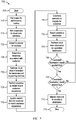
- FIG. 7 illustrates an exemplary method 700 for migrating customer resources within a cloud network.
- the method 700 may be performed by the components of a cloud controller 200 such as, for example, a cloud monitor 220, an analytics engine 240, or a workload migrator 270.
- a cloud controller 200 such as, for example, a cloud monitor 220, an analytics engine 240, or a workload migrator 270.
- the method 700 may be implemented as multiple independent processes such as, for example, a process that periodically polls for cloud state information, a process that periodically generates implicit SLAs, and a process that periodically migrates resources within the cloud. Further modification will be apparent.
- the method 700 may begin in step 705 and proceed to step 710 where the cloud controller 200 may poll one or more nodes for performance metrics. For example, the cloud controller 200 may generate and transmit request messages to the appropriate devices. After receiving a response, the cloud controller 200 may store the reported performance metrics for later analysis. In some embodiments, the cloud controller 200 may simply store the data as reported, while in other embodiments the cloud controller 200 may first process the received data such as, for example, averaging the performance data with previously-reported performance data prior to storage.
- the cloud controller 200 may begin the process of generating an implicit SLA by, in step 720, selecting a customer to be analyzed.
- the cloud controller 200 may periodically iterate through a group of customers and step 720 may comprise selecting a next customer in such group.
- the cloud controller 200 may determine which resources or devices are associated with the customer or an application belonging thereto.
- the cloud controller may retrieve a record associated with the customer that defines or otherwise describes a current application deployed for the customer.
- the cloud controller 200 may, in step 730, retrieve cloud state information for the resources or devices.
- cloud state information may include cloud state information retrieved and stored in steps 710 and 715.
- the cloud controller 200 may, in step 735, perform analytics to model the customer's recent experiences.
- the cloud controller 200 may perform such analytics according to any method known to those of skill in the art.
- the cloud controller may consider information such as metrics related to cloud usage (e.g., bandwidth consumption, CPU usage, memory usage, storage usage, inter-resource delay, data center load, etc.), peripheral information that indirectly impacts behavior (e.g., time of day, month, year, upcoming holidays, predicted natural phenomena such as storms or earthquakes), or customer service profile information (e.g., number of users, customer-provided predictions of values such as load or usership).
- metrics related to cloud usage e.g., bandwidth consumption, CPU usage, memory usage, storage usage, inter-resource delay, data center load, etc.
- peripheral information that indirectly impacts behavior e.g., time of day, month, year, upcoming holidays, predicted natural phenomena such as storms or earthquakes
- customer service profile information e.g., number of users, customer-provided predictions of values such as load
- the cloud controller 200 may use various models to gauge the user experience such as, for example, average or worst case behavior with regard to one or more metrics, or date/time-specific average or worst case behavior.
- One method of tracking behavior based on date or time may include using a Bayesian Network, as will be understood.
- the cloud controller 200 may, in step 740, update an implicit SLA associated with the customer under analysis.
- update an implicit SLA associated with the customer under analysis may include creating a new implicit SLA in cases where an implicit SLA has not been previously generated for the customer.
- the update to the SLA may take into account the model of recent customer experience as well as any rules previously generated for the customer and carried by the previous version of the implicit SLA.
- the new implicit SLA may retain one or more previously created rules or may include rules that are modified to only deviate from previous rules by a predetermined amount.
- the cloud controller 745 may begin a process or workload migration for a customer.
- the cloud controller 745 may determine that one or more resources associated with the customer should be migrated. This determination may be made according to any methods known to those of skill in the art and may be based on factors such as network state, workload of cloud devices, projected SLA violation, or any other factors useful in determining that resources should be migrated.
- step 750 the cloud controller 200 may select a cloud device as a candidate destination for s0upporting the migrated resource. This step may be performed according to any method known to those of skill in the art. In some embodiments, step 750 may comprise computing a new resource-to-device mapping for multiple, or even all, resources belonging to the application under migration.
- the cloud controller 200 may begin to evaluate the candidate destination against any appropriate SLAs by, in step 755, retrieving any cloud state information associated with the candidate device and any other relevant devices.
- the cloud controller 200 may determine whether the proposed migration will violate any explicit or implicit SLAs, respectively.
- the cloud controller may determine whether a performance metric of the candidate device stored in the cloud state information violates any application requirements of an SLA.
- the cloud controller may utilize previously-reported network performance for the candidate device or inter-process latency reported for other resources associated with the candidate device to estimate whether an inter-process latency application requirement is likely to be met after migration.
- the cloud controller may be configured to accept application requirement violations that deviate by less than a predetermined amount, such as a literal value or percentage.
- the implicit SLA may be used to provide a gradual degradation of quality of service by allowing the implicit SLA to degrade over time to meet the explicit SLA.
- Yet another feature may provide tailored service offerings. For example, if there is a significant difference between the explicit SLA and the implicit SLA, the cloud controller 200 or other entity may send a message to the customer identifying the recent performance and offering a service upgrade to bring the explicit SLA closer to the implicit SLA.
- the method 700 may loop back to step 750 where the cloud controller may attempt to select a different candidate destination or application device mapping for evaluation. Otherwise, the method 700 may proceed to step 770 where the cloud controller may effect the selected migration by, for example, sending one or more messages to cloud devices instructing the cloud devices to migrate the resource to the candidate device. The method 700 may then proceed to end in step 775.
- the cloud controller may select a destination that violates on or more SLAs.
- Various methods for effecting such selection and methods for mitigating impact when SLAs are violated will be apparent.
- step of selecting a candidate destination may itself take into account any explicit or implicit SLAs and steps 760, 765 may not be performed.
- steps 760, 765 may not be performed.
- various embodiments enable the migration of resources while preserving customer experience above and beyond any explicit SLAs agreed to by the cloud provider and customer. For example, by modeling a recent customer experience, a cloud controller may generate an "implicit SLA" that may be used in a manner similar to an explicit SLA during workload migration to avoid negative impact to the customer's experience.
- an "implicit SLA" may be used in a manner similar to an explicit SLA during workload migration to avoid negative impact to the customer's experience.
- various exemplary embodiments of the invention may be implemented by hardware.
- various exemplary embodiments may be implemented as instructions stored on a machine-readable storage medium, which may be read and executed by at least one processor to perform the operations described in detail herein.
- a machine-readable storage medium may include any mechanism for storing information in a form readable by a machine, such as a personal or laptop computer, a server, or other computing device.
- a tangible and non-transitory machine-readable storage medium may include read-only memory (ROM), random-access memory (RAM), magnetic disk storage media, optical storage media, flash-memory devices, and similar storage media.
- any block diagrams herein represent conceptual views of illustrative circuitry embodying the principles of the invention.
- any flow charts, flow diagrams, state transition diagrams, pseudo code, and the like represent various processes which may be substantially represented in machine readable media and so executed by a computer or processor, whether or not such computer or processor is explicitly shown.
Landscapes
- Engineering & Computer Science (AREA)
- Computer Networks & Wireless Communication (AREA)
- Signal Processing (AREA)
- Software Systems (AREA)
- Theoretical Computer Science (AREA)
- Physics & Mathematics (AREA)
- General Engineering & Computer Science (AREA)
- General Physics & Mathematics (AREA)
- Debugging And Monitoring (AREA)
Claims (8)
- Procédé exécuté par un contrôleur de nuage pour la migration de ressources dans un réseau en nuage, le procédé comprenant :la réception (710) de mesures de performances d'au moins un dispositif dans le réseau en nuage ;l'analyse (735) des mesures de performances pour générer au moins une exigence d'application, dans lequel ladite au moins une exigence d'application indique une performance récente associée à une ressource fournie pour un client, dans lequel la ressource est prise en charge par un premier dispositif dans le réseau en nuage ;l'identification (750, 760, 765) d'un second dispositif dans le réseau en nuage pour prendre en charge la ressource sur la base de ladite au moins une exigence d'application ;dans lequel l'identification (750, 760, 765) d'un second dispositif dans le réseau en nuage pour prendre en charge la ressource sur la base de ladite au moins une exigence d'application comprendla détermination (765), sur la base de mesures de performances signalées par le second dispositif, du fait de savoir si la migration de la ressource vers le second dispositif enfreindra ladite au moins une exigence d'application de moins d'une quantité prédéterminée ; etla migration (770) de la ressource du premier dispositif vers le second dispositif.
- Procédé selon la revendication 1, dans lequel l'identification (750, 760, 765) du second dispositif dans le réseau en nuage pour prendre en charge la ressource est en outre basée sur un accord de niveau de service, SLA, explicite associé à un client.
- Procédé selon l'une quelconque des revendications 1-2, dans lequel ladite au moins une exigence d'application comprend une mesure de performances au niveau du dispositif, dans lequel les mesures de performances au niveau du dispositif sont des mesures de performances permettant de suivre les performances d'un dispositif matériel dans son ensemble sans tenir compte d'applications spécifiques prises en charge par le dispositif matériel.
- Procédé selon l'une quelconque des revendications 1-3, dans lequel ladite au moins une exigence d'application comprend une mesure de performances au niveau de l'application, dans lequel les mesures de performances au niveau de l'application sont des mesures de performances permettant de suivre les performances d'une application mise en œuvre par une ou plusieurs ressources au moyen d'un ou plusieurs dispositifs matériels d'un réseau en nuage.
- Procédé selon la revendication 1, dans lequel le contrôleur de nuage est configuré pour générer un accord de niveau de service, SLA, implicite associé au client, dans lequel une performance de client récente est modélisée sous la forme d'un profil de client après analyse des mesures de performances utilisées pour générer ladite au moins une exigence d'application.
- Procédé selon la revendication 1, dans lequel le contrôleur de nuage est configuré pour stocker à la fois des accords de niveau de service, SLA, explicites convenus entre un fournisseur de nuage et le client et des SLA implicites générés par le contrôleur de nuage, dans lequel une performance de client récente est modélisée sous la forme d'un profil de client après analyse des mesures de performances utilisées pour générer ladite au moins une exigence d'application.
- Procédé selon la revendication 1, dans lequel le contrôleur de nuage est configuré pour offrir au client une mise à niveau de service qui rapproche un accord de niveau de service, SLA, explicite d'un SLA implicite, dans lequel une performance de client récente est modélisée sous la forme d'un profil de client après analyse des mesures de performances utilisées pour générer ladite au moins une exigence d'application.
- Contrôleur de nuage pour la migration de ressources dans un réseau en nuage, le contrôleur de nuage comprenant :une interface de réseau (210) ;une mémoire (320) ; etun processeur (310) en communication avec la mémoire, le processeur étant configuré pour :recevoir (710), par l'intermédiaire de l'interface de réseau, des mesures de performances d'au moins un dispositif dans le réseau en nuage,analyser (735) les mesures de performances pour générer au moins une exigence d'application, dans lequel ladite au moins une exigence d'application indique une performance récente associée à une ressource fournie pour un client, dans lequel la ressource est prise en charge par un premier dispositif dans le réseau en nuage,identifier (750, 760, 765) un second dispositif dans le réseau en nuage pour prendre en charge la ressource sur la base d'au moins une exigence d'application,dans lequel, lors de l'identification (750, 760, 765) d'un second dispositif dans le réseau en nuage pour prendre en charge la ressource sur la base de ladite au moins une exigence d'application, le processeur (310) est configuré pour déterminer (765), sur la base de mesures de performance signalées par le second dispositif, que la migration de la ressource vers le second dispositif enfreindra ladite au moins une exigence d'application de moins d'une quantité prédéterminée, etmigrer (770) la ressource du premier dispositif vers le second dispositif.
Applications Claiming Priority (2)
| Application Number | Priority Date | Filing Date | Title |
|---|---|---|---|
| US13/953,197 US9929918B2 (en) | 2013-07-29 | 2013-07-29 | Profile-based SLA guarantees under workload migration in a distributed cloud |
| PCT/IB2014/001695 WO2015015297A2 (fr) | 2013-07-29 | 2014-07-11 | Garanties sla basées sur profil selon la migration de charge dans un nuage distribué |
Publications (2)
| Publication Number | Publication Date |
|---|---|
| EP3028406A2 EP3028406A2 (fr) | 2016-06-08 |
| EP3028406B1 true EP3028406B1 (fr) | 2020-06-17 |
Family
ID=51903944
Family Applications (1)
| Application Number | Title | Priority Date | Filing Date |
|---|---|---|---|
| EP14799522.9A Active EP3028406B1 (fr) | 2013-07-29 | 2014-07-11 | Garanties sla basées sur profil selon la migration de charge dans un nuage distribué |
Country Status (5)
| Country | Link |
|---|---|
| US (1) | US9929918B2 (fr) |
| EP (1) | EP3028406B1 (fr) |
| JP (2) | JP2016525757A (fr) |
| CN (1) | CN105432040A (fr) |
| WO (1) | WO2015015297A2 (fr) |
Families Citing this family (30)
| Publication number | Priority date | Publication date | Assignee | Title |
|---|---|---|---|---|
| US10146395B2 (en) * | 2014-05-06 | 2018-12-04 | T-Mobile Usa, Inc. | Quality of experience diagnosis and analysis in wireless communications |
| US9491054B2 (en) * | 2014-06-06 | 2016-11-08 | Microsoft Technology Licensing, Llc | Network-state management service |
| US9887878B2 (en) | 2014-06-06 | 2018-02-06 | Microsoft Technology Licensing, Llc | Dynamic scheduling of network updates |
| US9602351B2 (en) | 2014-06-06 | 2017-03-21 | Microsoft Technology Licensing, Llc | Proactive handling of network faults |
| US9749208B2 (en) * | 2014-06-30 | 2017-08-29 | Microsoft Technology Licensing, Llc | Integrated global resource allocation and load balancing |
| US10353745B1 (en) * | 2015-03-27 | 2019-07-16 | Amazon Technologies, Inc. | Assessing performance of disparate computing environments |
| US9699109B1 (en) * | 2015-03-27 | 2017-07-04 | Amazon Technologies, Inc. | Assessing performance of networked computing environments |
| US10853111B1 (en) * | 2015-09-30 | 2020-12-01 | Amazon Technologies, Inc. | Virtual machine instance migration feedback |
| US10331383B2 (en) | 2016-06-24 | 2019-06-25 | International Business Machines Corporation | Updating storage migration rates |
| US9680696B1 (en) * | 2016-07-18 | 2017-06-13 | Capital One Financial Corporation | Cloud migration and maintenance controls |
| US10162676B2 (en) * | 2016-08-15 | 2018-12-25 | International Business Machines Corporation | Social objectives-based workload resolution in a cloud environment |
| CN106597881A (zh) * | 2016-11-03 | 2017-04-26 | 深圳量旌科技有限公司 | 基于分布式决策算法的云服务机器人 |
| CN107360210B (zh) * | 2017-06-16 | 2020-07-07 | 佛山科学技术学院 | 云计算数据中心兼顾能耗与访问延迟的虚拟机分配方法 |
| KR101926394B1 (ko) | 2017-09-19 | 2018-12-07 | 경희대학교 산학협력단 | 클라우드 컴퓨팅 시스템 및 클라우드 시스템에서의 부하 분리 방법 |
| CN108549981B (zh) * | 2018-03-30 | 2022-06-03 | 安徽大学 | 一种提高大批量并行业务流程服务质量的方法 |
| US10606575B2 (en) * | 2018-04-03 | 2020-03-31 | Accenture Global Solutions Limited | Efficiency of computing resource consumption via improved application portfolio deployment |
| KR102320899B1 (ko) * | 2018-11-02 | 2021-11-04 | 엘지전자 주식회사 | 방송 신호 송신 장치, 방송 신호 송신 방법, 방송 신호 수신 장치 및 방송 수신 신호 방법 |
| US11210124B2 (en) | 2019-01-11 | 2021-12-28 | Hewlett Packard Enterprise Development Lp | Movement of virtual machine data across clusters of nodes |
| SG11202108341TA (en) * | 2019-02-27 | 2021-09-29 | Singapore Telecommunications Ltd | System for optimising data communication |
| US11695654B2 (en) * | 2019-02-27 | 2023-07-04 | Hewlett Packard Enterprise Development Lp | High performance compute infrastructure as a service |
| US12014065B2 (en) * | 2020-02-11 | 2024-06-18 | Pure Storage, Inc. | Multi-cloud orchestration as-a-service |
| US11868622B2 (en) | 2020-02-25 | 2024-01-09 | Pure Storage, Inc. | Application recovery across storage systems |
| US11637896B1 (en) | 2020-02-25 | 2023-04-25 | Pure Storage, Inc. | Migrating applications to a cloud-computing environment |
| US11650797B2 (en) | 2020-04-17 | 2023-05-16 | Jpmorgan Chase Bank, N.A. | Cloud portability code scanning tool |
| US11915106B2 (en) | 2020-07-09 | 2024-02-27 | Kyndryl, Inc. | Machine learning for determining suitability of application migration from local to remote providers |
| US11611474B2 (en) | 2020-12-28 | 2023-03-21 | Juniper Networks, Inc. | Edge controller with network performance parameter support |
| JP7577630B2 (ja) | 2021-08-31 | 2024-11-05 | Kddi株式会社 | 制御装置、制御方法及びコンピュータプログラム |
| US11652710B1 (en) | 2021-12-14 | 2023-05-16 | International Business Machines Corporation | Service level agreement aware resource access latency minimization |
| US11863404B1 (en) * | 2022-08-23 | 2024-01-02 | Verizon Patent And Licensing Inc. | Systems and methods for calculating optimum customer access paths for applications provided by multi-cloud providers through private networks |
| US12223315B2 (en) * | 2023-03-24 | 2025-02-11 | Accenture Global Solutions Limited | Utilizing multiple analyses to migrate an application to a cloud computing environment |
Family Cites Families (36)
| Publication number | Priority date | Publication date | Assignee | Title |
|---|---|---|---|---|
| US7464163B1 (en) * | 2000-07-27 | 2008-12-09 | International Business Machines Corporation | Service provisioning via attribute-based subscription |
| US7810090B2 (en) * | 2003-12-17 | 2010-10-05 | Sap Ag | Grid compute node software application deployment |
| US20060064481A1 (en) * | 2004-09-17 | 2006-03-23 | Anthony Baron | Methods for service monitoring and control |
| US7730486B2 (en) | 2005-02-28 | 2010-06-01 | Hewlett-Packard Development Company, L.P. | System and method for migrating virtual machines on cluster systems |
| WO2007021836A2 (fr) * | 2005-08-15 | 2007-02-22 | Toutvirtual Inc. | Gestion de systemes virtuels |
| US20070204266A1 (en) | 2006-02-28 | 2007-08-30 | International Business Machines Corporation | Systems and methods for dynamically managing virtual machines |
| US8161475B2 (en) | 2006-09-29 | 2012-04-17 | Microsoft Corporation | Automatic load and balancing for virtual machines to meet resource requirements |
| US8380880B2 (en) * | 2007-02-02 | 2013-02-19 | The Mathworks, Inc. | Scalable architecture |
| US9678803B2 (en) * | 2007-06-22 | 2017-06-13 | Red Hat, Inc. | Migration of network entities to a cloud infrastructure |
| US7801994B2 (en) | 2007-11-29 | 2010-09-21 | Hitachi, Ltd. | Method and apparatus for locating candidate data centers for application migration |
| US8266618B2 (en) * | 2008-11-21 | 2012-09-11 | International Business Machines Corporation | Graphics hardware resource usage in a fully virtualized computing environment |
| US9037692B2 (en) * | 2008-11-26 | 2015-05-19 | Red Hat, Inc. | Multiple cloud marketplace aggregation |
| US9069730B2 (en) | 2009-06-29 | 2015-06-30 | Hewlett-Packard Development Company, L. P. | Coordinated reliability management of virtual machines in a virtualized system |
| CN101937357B (zh) | 2009-07-01 | 2013-11-06 | 华为技术有限公司 | 一种虚拟机迁移决策方法、装置及系统 |
| US8140682B2 (en) * | 2009-12-22 | 2012-03-20 | International Business Machines Corporation | System, method, and apparatus for server-storage-network optimization for application service level agreements |
| WO2011091056A1 (fr) * | 2010-01-19 | 2011-07-28 | Servicemesh, Inc. | Systèmes et procédés pour couche d'abstraction d'informatique en nuage |
| US8504689B2 (en) * | 2010-05-28 | 2013-08-06 | Red Hat, Inc. | Methods and systems for cloud deployment analysis featuring relative cloud resource importance |
| US9104458B1 (en) * | 2010-09-30 | 2015-08-11 | Amazon Technologies, Inc. | Managing virtual computing nodes using isolation and migration techniques |
| US8645529B2 (en) * | 2010-10-06 | 2014-02-04 | Infosys Limited | Automated service level management of applications in cloud computing environment |
| JP5577412B2 (ja) * | 2010-11-16 | 2014-08-20 | 株式会社日立製作所 | 計算機システム、マイグレーション方法及び管理サーバ |
| US8612577B2 (en) * | 2010-11-23 | 2013-12-17 | Red Hat, Inc. | Systems and methods for migrating software modules into one or more clouds |
| US9195509B2 (en) * | 2011-01-05 | 2015-11-24 | International Business Machines Corporation | Identifying optimal platforms for workload placement in a networked computing environment |
| US9612855B2 (en) * | 2011-01-10 | 2017-04-04 | International Business Machines Corporation | Virtual machine migration based on the consent by the second virtual machine running of the target host |
| WO2012120664A1 (fr) * | 2011-03-09 | 2012-09-13 | 株式会社日立製作所 | Procédé d'évaluation de migration de machine virtuelle et système de machines virtuelles |
| US8984104B2 (en) * | 2011-05-31 | 2015-03-17 | Red Hat, Inc. | Self-moving operating system installation in cloud-based network |
| US8904384B2 (en) * | 2011-06-14 | 2014-12-02 | Lenovo Enterprise Solutions (Singapore) Pte. Ltd. | Reducing data transfer overhead during live migration of a virtual machine |
| US8954961B2 (en) * | 2011-06-30 | 2015-02-10 | International Business Machines Corporation | Geophysical virtual machine policy allocation using a GPS, atomic clock source or regional peering host |
| CN103827823A (zh) | 2011-07-29 | 2014-05-28 | 惠普发展公司,有限责任合伙企业 | 迁移虚拟机 |
| US9311159B2 (en) * | 2011-10-31 | 2016-04-12 | At&T Intellectual Property I, L.P. | Systems, methods, and articles of manufacture to provide cloud resource orchestration |
| WO2013133842A1 (fr) * | 2012-03-08 | 2013-09-12 | Empire Technology Development Llc | Migration sécurisée de machines virtuelles |
| US20130282919A1 (en) * | 2012-04-20 | 2013-10-24 | Sungard Availability Services Lp | Data Migration Into And Out Of The Cloud Via A Data Kiosk/System |
| EP2852890A1 (fr) * | 2012-06-27 | 2015-04-01 | Qatar Foundation | Dispositif et procédé pour gérer les ressources d'une pluralité d'appareils informatiques |
| JP5951111B2 (ja) * | 2012-11-09 | 2016-07-13 | 株式会社日立製作所 | 管理計算機、計算機システム、及びインスタンス管理方法 |
| US20140215077A1 (en) * | 2013-01-26 | 2014-07-31 | Lyatiss, Inc. | Methods and systems for detecting, locating and remediating a congested resource or flow in a virtual infrastructure |
| US9602598B2 (en) * | 2013-05-29 | 2017-03-21 | International Business Machines Corporation | Coordinating application migration processes |
| US20140359127A1 (en) * | 2013-06-03 | 2014-12-04 | Microsoft Corporation | Zero touch deployment of private cloud infrastructure |
-
2013
- 2013-07-29 US US13/953,197 patent/US9929918B2/en active Active
-
2014
- 2014-07-11 JP JP2016530630A patent/JP2016525757A/ja active Pending
- 2014-07-11 WO PCT/IB2014/001695 patent/WO2015015297A2/fr not_active Ceased
- 2014-07-11 EP EP14799522.9A patent/EP3028406B1/fr active Active
- 2014-07-11 CN CN201480042614.4A patent/CN105432040A/zh active Pending
-
2018
- 2018-07-18 JP JP2018134938A patent/JP2018198068A/ja active Pending
Non-Patent Citations (1)
| Title |
|---|
| None * |
Also Published As
| Publication number | Publication date |
|---|---|
| EP3028406A2 (fr) | 2016-06-08 |
| CN105432040A (zh) | 2016-03-23 |
| JP2016525757A (ja) | 2016-08-25 |
| WO2015015297A3 (fr) | 2015-04-16 |
| US20150032894A1 (en) | 2015-01-29 |
| US9929918B2 (en) | 2018-03-27 |
| WO2015015297A2 (fr) | 2015-02-05 |
| JP2018198068A (ja) | 2018-12-13 |
Similar Documents
| Publication | Publication Date | Title |
|---|---|---|
| EP3028406B1 (fr) | Garanties sla basées sur profil selon la migration de charge dans un nuage distribué | |
| US11005969B2 (en) | Problem solving in a message queuing system in a computer network | |
| US12106203B2 (en) | Neural network model for predicting usage in a hyper-converged infrastructure | |
| CN112153700B (zh) | 一种网络切片资源管理方法及设备 | |
| US10305747B2 (en) | Container-based multi-tenant computing infrastructure | |
| US9712402B2 (en) | Method and apparatus for automated deployment of geographically distributed applications within a cloud | |
| US10963363B2 (en) | Correlation based adaptive system monitoring | |
| US10705872B2 (en) | Predictive virtual server scheduling and optimization of dynamic consumable resources to achieve priority-based workload performance objectives | |
| US9722930B2 (en) | Exploiting probabilistic latency expressions for placing cloud applications | |
| US8305911B2 (en) | System and method for identifying and managing service disruptions using network and systems data | |
| US11784944B2 (en) | Dynamic bandwidth allocation in cloud network switches based on traffic demand prediction | |
| US10985987B2 (en) | Control of activities executed by endpoints based on conditions involving aggregated parameters | |
| EP3058703B1 (fr) | Optimisation de transferts de données sur des plateformes informatiques en nuage | |
| US11811676B2 (en) | Proactive auto-scaling | |
| US11714638B2 (en) | Availability level-based service management | |
| US10541878B2 (en) | Client-space network monitoring | |
| US11533362B1 (en) | Network interface controller aware placement of virtualized workloads | |
| US20240054018A1 (en) | Reducing network overhead | |
| Hwang et al. | FitScale: scalability of legacy applications through migration to cloud | |
| CN119030901A (zh) | 基于时延感知的Serverless请求调度装置及系统 | |
| US11973842B2 (en) | Service status prediction based transaction failure avoidance | |
| Gilly et al. | Online prediction: four case studies |
Legal Events
| Date | Code | Title | Description |
|---|---|---|---|
| PUAI | Public reference made under article 153(3) epc to a published international application that has entered the european phase |
Free format text: ORIGINAL CODE: 0009012 |
|
| 17P | Request for examination filed |
Effective date: 20160229 |
|
| AK | Designated contracting states |
Kind code of ref document: A2 Designated state(s): AL AT BE BG CH CY CZ DE DK EE ES FI FR GB GR HR HU IE IS IT LI LT LU LV MC MK MT NL NO PL PT RO RS SE SI SK SM TR |
|
| AX | Request for extension of the european patent |
Extension state: BA ME |
|
| RIN1 | Information on inventor provided before grant (corrected) |
Inventor name: AFEK, IFAT Inventor name: SHALEV, ETTI Inventor name: ROSENSWEIG, ELISHA Inventor name: KRASNENKO, DMITRI Inventor name: MENDEL-BRIN, SHARON |
|
| DAX | Request for extension of the european patent (deleted) | ||
| STAA | Information on the status of an ep patent application or granted ep patent |
Free format text: STATUS: EXAMINATION IS IN PROGRESS |
|
| 17Q | First examination report despatched |
Effective date: 20161123 |
|
| RAP1 | Party data changed (applicant data changed or rights of an application transferred) |
Owner name: ALCATEL LUCENT |
|
| REG | Reference to a national code |
Ref country code: DE Ref legal event code: R079 Ref document number: 602014066760 Country of ref document: DE Free format text: PREVIOUS MAIN CLASS: H04L0012240000 Ipc: H04L0012260000 |
|
| GRAP | Despatch of communication of intention to grant a patent |
Free format text: ORIGINAL CODE: EPIDOSNIGR1 |
|
| STAA | Information on the status of an ep patent application or granted ep patent |
Free format text: STATUS: GRANT OF PATENT IS INTENDED |
|
| RIC1 | Information provided on ipc code assigned before grant |
Ipc: H04L 12/24 20060101ALI20191210BHEP Ipc: H04L 12/26 20060101AFI20191210BHEP |
|
| INTG | Intention to grant announced |
Effective date: 20200110 |
|
| GRAS | Grant fee paid |
Free format text: ORIGINAL CODE: EPIDOSNIGR3 |
|
| GRAA | (expected) grant |
Free format text: ORIGINAL CODE: 0009210 |
|
| STAA | Information on the status of an ep patent application or granted ep patent |
Free format text: STATUS: THE PATENT HAS BEEN GRANTED |
|
| AK | Designated contracting states |
Kind code of ref document: B1 Designated state(s): AL AT BE BG CH CY CZ DE DK EE ES FI FR GB GR HR HU IE IS IT LI LT LU LV MC MK MT NL NO PL PT RO RS SE SI SK SM TR |
|
| REG | Reference to a national code |
Ref country code: GB Ref legal event code: FG4D |
|
| REG | Reference to a national code |
Ref country code: CH Ref legal event code: EP |
|
| REG | Reference to a national code |
Ref country code: IE Ref legal event code: FG4D |
|
| REG | Reference to a national code |
Ref country code: DE Ref legal event code: R096 Ref document number: 602014066760 Country of ref document: DE |
|
| REG | Reference to a national code |
Ref country code: AT Ref legal event code: REF Ref document number: 1282681 Country of ref document: AT Kind code of ref document: T Effective date: 20200715 |
|
| PG25 | Lapsed in a contracting state [announced via postgrant information from national office to epo] |
Ref country code: SE Free format text: LAPSE BECAUSE OF FAILURE TO SUBMIT A TRANSLATION OF THE DESCRIPTION OR TO PAY THE FEE WITHIN THE PRESCRIBED TIME-LIMIT Effective date: 20200617 Ref country code: FI Free format text: LAPSE BECAUSE OF FAILURE TO SUBMIT A TRANSLATION OF THE DESCRIPTION OR TO PAY THE FEE WITHIN THE PRESCRIBED TIME-LIMIT Effective date: 20200617 Ref country code: NO Free format text: LAPSE BECAUSE OF FAILURE TO SUBMIT A TRANSLATION OF THE DESCRIPTION OR TO PAY THE FEE WITHIN THE PRESCRIBED TIME-LIMIT Effective date: 20200917 Ref country code: GR Free format text: LAPSE BECAUSE OF FAILURE TO SUBMIT A TRANSLATION OF THE DESCRIPTION OR TO PAY THE FEE WITHIN THE PRESCRIBED TIME-LIMIT Effective date: 20200918 Ref country code: LT Free format text: LAPSE BECAUSE OF FAILURE TO SUBMIT A TRANSLATION OF THE DESCRIPTION OR TO PAY THE FEE WITHIN THE PRESCRIBED TIME-LIMIT Effective date: 20200617 |
|
| REG | Reference to a national code |
Ref country code: LT Ref legal event code: MG4D |
|
| REG | Reference to a national code |
Ref country code: NL Ref legal event code: MP Effective date: 20200617 |
|
| PG25 | Lapsed in a contracting state [announced via postgrant information from national office to epo] |
Ref country code: BG Free format text: LAPSE BECAUSE OF FAILURE TO SUBMIT A TRANSLATION OF THE DESCRIPTION OR TO PAY THE FEE WITHIN THE PRESCRIBED TIME-LIMIT Effective date: 20200917 Ref country code: RS Free format text: LAPSE BECAUSE OF FAILURE TO SUBMIT A TRANSLATION OF THE DESCRIPTION OR TO PAY THE FEE WITHIN THE PRESCRIBED TIME-LIMIT Effective date: 20200617 Ref country code: HR Free format text: LAPSE BECAUSE OF FAILURE TO SUBMIT A TRANSLATION OF THE DESCRIPTION OR TO PAY THE FEE WITHIN THE PRESCRIBED TIME-LIMIT Effective date: 20200617 Ref country code: LV Free format text: LAPSE BECAUSE OF FAILURE TO SUBMIT A TRANSLATION OF THE DESCRIPTION OR TO PAY THE FEE WITHIN THE PRESCRIBED TIME-LIMIT Effective date: 20200617 |
|
| REG | Reference to a national code |
Ref country code: AT Ref legal event code: MK05 Ref document number: 1282681 Country of ref document: AT Kind code of ref document: T Effective date: 20200617 |
|
| PG25 | Lapsed in a contracting state [announced via postgrant information from national office to epo] |
Ref country code: AL Free format text: LAPSE BECAUSE OF FAILURE TO SUBMIT A TRANSLATION OF THE DESCRIPTION OR TO PAY THE FEE WITHIN THE PRESCRIBED TIME-LIMIT Effective date: 20200617 Ref country code: NL Free format text: LAPSE BECAUSE OF FAILURE TO SUBMIT A TRANSLATION OF THE DESCRIPTION OR TO PAY THE FEE WITHIN THE PRESCRIBED TIME-LIMIT Effective date: 20200617 |
|
| PG25 | Lapsed in a contracting state [announced via postgrant information from national office to epo] |
Ref country code: SM Free format text: LAPSE BECAUSE OF FAILURE TO SUBMIT A TRANSLATION OF THE DESCRIPTION OR TO PAY THE FEE WITHIN THE PRESCRIBED TIME-LIMIT Effective date: 20200617 Ref country code: EE Free format text: LAPSE BECAUSE OF FAILURE TO SUBMIT A TRANSLATION OF THE DESCRIPTION OR TO PAY THE FEE WITHIN THE PRESCRIBED TIME-LIMIT Effective date: 20200617 Ref country code: IT Free format text: LAPSE BECAUSE OF FAILURE TO SUBMIT A TRANSLATION OF THE DESCRIPTION OR TO PAY THE FEE WITHIN THE PRESCRIBED TIME-LIMIT Effective date: 20200617 Ref country code: AT Free format text: LAPSE BECAUSE OF FAILURE TO SUBMIT A TRANSLATION OF THE DESCRIPTION OR TO PAY THE FEE WITHIN THE PRESCRIBED TIME-LIMIT Effective date: 20200617 Ref country code: PT Free format text: LAPSE BECAUSE OF FAILURE TO SUBMIT A TRANSLATION OF THE DESCRIPTION OR TO PAY THE FEE WITHIN THE PRESCRIBED TIME-LIMIT Effective date: 20201019 Ref country code: RO Free format text: LAPSE BECAUSE OF FAILURE TO SUBMIT A TRANSLATION OF THE DESCRIPTION OR TO PAY THE FEE WITHIN THE PRESCRIBED TIME-LIMIT Effective date: 20200617 Ref country code: CZ Free format text: LAPSE BECAUSE OF FAILURE TO SUBMIT A TRANSLATION OF THE DESCRIPTION OR TO PAY THE FEE WITHIN THE PRESCRIBED TIME-LIMIT Effective date: 20200617 Ref country code: ES Free format text: LAPSE BECAUSE OF FAILURE TO SUBMIT A TRANSLATION OF THE DESCRIPTION OR TO PAY THE FEE WITHIN THE PRESCRIBED TIME-LIMIT Effective date: 20200617 |
|
| PG25 | Lapsed in a contracting state [announced via postgrant information from national office to epo] |
Ref country code: PL Free format text: LAPSE BECAUSE OF FAILURE TO SUBMIT A TRANSLATION OF THE DESCRIPTION OR TO PAY THE FEE WITHIN THE PRESCRIBED TIME-LIMIT Effective date: 20200617 Ref country code: SK Free format text: LAPSE BECAUSE OF FAILURE TO SUBMIT A TRANSLATION OF THE DESCRIPTION OR TO PAY THE FEE WITHIN THE PRESCRIBED TIME-LIMIT Effective date: 20200617 Ref country code: IS Free format text: LAPSE BECAUSE OF FAILURE TO SUBMIT A TRANSLATION OF THE DESCRIPTION OR TO PAY THE FEE WITHIN THE PRESCRIBED TIME-LIMIT Effective date: 20201017 |
|
| REG | Reference to a national code |
Ref country code: CH Ref legal event code: PL |
|
| REG | Reference to a national code |
Ref country code: DE Ref legal event code: R097 Ref document number: 602014066760 Country of ref document: DE |
|
| PG25 | Lapsed in a contracting state [announced via postgrant information from national office to epo] |
Ref country code: MC Free format text: LAPSE BECAUSE OF FAILURE TO SUBMIT A TRANSLATION OF THE DESCRIPTION OR TO PAY THE FEE WITHIN THE PRESCRIBED TIME-LIMIT Effective date: 20200617 |
|
| PLBE | No opposition filed within time limit |
Free format text: ORIGINAL CODE: 0009261 |
|
| STAA | Information on the status of an ep patent application or granted ep patent |
Free format text: STATUS: NO OPPOSITION FILED WITHIN TIME LIMIT |
|
| REG | Reference to a national code |
Ref country code: BE Ref legal event code: MM Effective date: 20200731 |
|
| PG25 | Lapsed in a contracting state [announced via postgrant information from national office to epo] |
Ref country code: DK Free format text: LAPSE BECAUSE OF FAILURE TO SUBMIT A TRANSLATION OF THE DESCRIPTION OR TO PAY THE FEE WITHIN THE PRESCRIBED TIME-LIMIT Effective date: 20200617 Ref country code: CH Free format text: LAPSE BECAUSE OF NON-PAYMENT OF DUE FEES Effective date: 20200731 Ref country code: LI Free format text: LAPSE BECAUSE OF NON-PAYMENT OF DUE FEES Effective date: 20200731 Ref country code: LU Free format text: LAPSE BECAUSE OF NON-PAYMENT OF DUE FEES Effective date: 20200711 |
|
| 26N | No opposition filed |
Effective date: 20210318 |
|
| PG25 | Lapsed in a contracting state [announced via postgrant information from national office to epo] |
Ref country code: BE Free format text: LAPSE BECAUSE OF NON-PAYMENT OF DUE FEES Effective date: 20200731 Ref country code: SI Free format text: LAPSE BECAUSE OF FAILURE TO SUBMIT A TRANSLATION OF THE DESCRIPTION OR TO PAY THE FEE WITHIN THE PRESCRIBED TIME-LIMIT Effective date: 20200617 |
|
| PG25 | Lapsed in a contracting state [announced via postgrant information from national office to epo] |
Ref country code: FR Free format text: LAPSE BECAUSE OF NON-PAYMENT OF DUE FEES Effective date: 20200817 |
|
| PG25 | Lapsed in a contracting state [announced via postgrant information from national office to epo] |
Ref country code: IE Free format text: LAPSE BECAUSE OF NON-PAYMENT OF DUE FEES Effective date: 20200711 |
|
| REG | Reference to a national code |
Ref country code: DE Ref legal event code: R079 Ref document number: 602014066760 Country of ref document: DE Free format text: PREVIOUS MAIN CLASS: H04L0012260000 Ipc: H04L0043000000 |
|
| PG25 | Lapsed in a contracting state [announced via postgrant information from national office to epo] |
Ref country code: TR Free format text: LAPSE BECAUSE OF FAILURE TO SUBMIT A TRANSLATION OF THE DESCRIPTION OR TO PAY THE FEE WITHIN THE PRESCRIBED TIME-LIMIT Effective date: 20200617 Ref country code: MT Free format text: LAPSE BECAUSE OF FAILURE TO SUBMIT A TRANSLATION OF THE DESCRIPTION OR TO PAY THE FEE WITHIN THE PRESCRIBED TIME-LIMIT Effective date: 20200617 Ref country code: CY Free format text: LAPSE BECAUSE OF FAILURE TO SUBMIT A TRANSLATION OF THE DESCRIPTION OR TO PAY THE FEE WITHIN THE PRESCRIBED TIME-LIMIT Effective date: 20200617 |
|
| PG25 | Lapsed in a contracting state [announced via postgrant information from national office to epo] |
Ref country code: MK Free format text: LAPSE BECAUSE OF FAILURE TO SUBMIT A TRANSLATION OF THE DESCRIPTION OR TO PAY THE FEE WITHIN THE PRESCRIBED TIME-LIMIT Effective date: 20200617 |
|
| PGFP | Annual fee paid to national office [announced via postgrant information from national office to epo] |
Ref country code: GB Payment date: 20250529 Year of fee payment: 12 |
|
| PGFP | Annual fee paid to national office [announced via postgrant information from national office to epo] |
Ref country code: DE Payment date: 20250604 Year of fee payment: 12 |