EP3028520B1 - Procédés et dispositifs de sélection de secteur - Google Patents
Procédés et dispositifs de sélection de secteur Download PDFInfo
- Publication number
- EP3028520B1 EP3028520B1 EP13752952.5A EP13752952A EP3028520B1 EP 3028520 B1 EP3028520 B1 EP 3028520B1 EP 13752952 A EP13752952 A EP 13752952A EP 3028520 B1 EP3028520 B1 EP 3028520B1
- Authority
- EP
- European Patent Office
- Prior art keywords
- sector
- sectors
- wireless device
- combining gain
- network node
- Prior art date
- Legal status (The legal status is an assumption and is not a legal conclusion. Google has not performed a legal analysis and makes no representation as to the accuracy of the status listed.)
- Active
Links
Images

Classifications
-
- H—ELECTRICITY
- H04—ELECTRIC COMMUNICATION TECHNIQUE
- H04W—WIRELESS COMMUNICATION NETWORKS
- H04W36/00—Hand-off or reselection arrangements
- H04W36/0005—Control or signalling for completing the hand-off
- H04W36/0083—Determination of parameters used for hand-off, e.g. generation or modification of neighbour cell lists
- H04W36/00835—Determination of neighbour cell lists
-
- H—ELECTRICITY
- H04—ELECTRIC COMMUNICATION TECHNIQUE
- H04W—WIRELESS COMMUNICATION NETWORKS
- H04W36/00—Hand-off or reselection arrangements
- H04W36/0005—Control or signalling for completing the hand-off
- H04W36/0083—Determination of parameters used for hand-off, e.g. generation or modification of neighbour cell lists
- H04W36/00837—Determination of triggering parameters for hand-off
-
- H—ELECTRICITY
- H04—ELECTRIC COMMUNICATION TECHNIQUE
- H04L—TRANSMISSION OF DIGITAL INFORMATION, e.g. TELEGRAPHIC COMMUNICATION
- H04L27/00—Modulated-carrier systems
- H04L27/26—Systems using multi-frequency codes
- H04L27/2601—Multicarrier modulation systems
- H04L27/2647—Arrangements specific to the receiver only
-
- H—ELECTRICITY
- H04—ELECTRIC COMMUNICATION TECHNIQUE
- H04W—WIRELESS COMMUNICATION NETWORKS
- H04W24/00—Supervisory, monitoring or testing arrangements
-
- H—ELECTRICITY
- H04—ELECTRIC COMMUNICATION TECHNIQUE
- H04W—WIRELESS COMMUNICATION NETWORKS
- H04W36/00—Hand-off or reselection arrangements
- H04W36/0005—Control or signalling for completing the hand-off
- H04W36/0055—Transmission or use of information for re-establishing the radio link
- H04W36/0069—Transmission or use of information for re-establishing the radio link in case of dual connectivity, e.g. decoupled uplink/downlink
Definitions
- the technology disclosed herein relates generally to the field of wireless communication networks, and in particular to resource usage within such communication networks.
- eNodeBs E-UTRAN Node B or evolved Node B, also denoted eNB
- eNodeB E-UTRAN Node B or evolved Node B, also denoted eNB
- eNodeB can manage one or more cells and also manage all devices, e.g. wireless user equipment, residing within the coverage area of those cells.
- the different cells are distinguished by a physical-layer cell identity (PCI) which is defined in 3GPP specification TS 36.211, ch 6.11.
- PCI physical-layer cell identity
- neighboring cells have different PCIs and when the wireless devices are in a connected state they use these PCIs as an identifier for handover measurements.
- Cell merging also denoted shared cell, combined cell or multi-sector cell in some cases, is a new cell configuration for LTE and enables a multi Radio Resource Unit (RRU) deployment without needing to care about cell planning from a Radio Frequency (RF) reuse perspective; the same radio frequencies are used by all RRUs.
- the shared cell is achieved by allowing the different RRUs to use the same PCI and thus the wireless device considers all RRUs to be part of the same cell.
- the spatially separated RRU or a group of RRUs are called sector (or sector carriers).
- the cell can contain multiple sectors, and a wireless device can belong to one sector or multiple sectors depending on the degree of sector isolation. Insufficient isolation between sectors that are identified identically, as is the case when reusing the PCI, can cause interference and thus reduce communication quality.
- Figures 1a and 1b illustrate examples of the concepts of different cells ( figure 1a ) and shared cell ( figure 1b ), respectively, used in heterogeneous-network deployment. These cell concepts have been seen as solutions for providing higher data rates and increased traffic capacity thereby meeting expectations of the rapidly growing mobile broadband.
- low power nodes e.g. pico nodes
- high power node 2 e.g. macro node
- the macro node 2 and pico nodes 3, 4 can be deployed as separate cells (cells A, B and C in figure 1a ) or as a shared cell (cell A in figure 1b ).
- the same cell ID e.g. PCI
- the pico and macro nodes may also be denoted sectors.
- a first benefit is the possibility of decoupling uplink reception and downlink transmission, which allows flexible network operation in that the reception points and transmission points may be selected independently of each other. This flexibility further provides a possibility of saving energy by muting some of the transmission points or reception points.
- uplink and downlink channels thereon can be completely decoupled, e.g. data channel and control channel transmitted on the downlink may be decoupled. It is possible to broadcast control channel in all sectors while selectively transmitting the data channel in some of the sectors; it is also possible to only transmit control information in macro to provide basic coverage, including system information, control and reference signals, while using pico to transmit data to enhance capacity and data rates.
- Still further benefits of shared cell deployment comprise easy cell planning; since all sectors belong to the same cell, there is less concern about inter-cell interference. Further, there is some reduction in control signaling because there is no need to perform handover within the shared cell. Further, since it is possible to perform joint reception from different sectors (in uplink) and multi-point transmission (in downlink) in a shared cell, signal quality can be enhanced and thus higher spectrum efficiency can be achieved.
- SDM Spatial Division Multiplexing
- the choice of sector used for uplink receptions and downlink transmissions is based on isolation degree.
- the isolation degree is defined as the filtered channel quality difference between the different sectors.
- the eNodeB compares the isolation degree with a predefined threshold to decide if the sector is to perform reception and/or transmission or not to be used at all for a particular wireless device. The sector is selected if the isolation degree is smaller than the threshold. Otherwise, it is not selected.
- a prevailing assumption is thus that the isolation requirement is the same in the entire cell, and the same isolation degree threshold is used for all wireless devices in the cell. In reality, the isolation requirement might be different for different users in a cell.
- a handover problem arises in situations where there is an imbalance between uplink and downlink and imbalance between data and control channel.
- a handover failure might happen when the wireless device moves to the new cell due to a poorer uplink reception quality since fewer uplink sectors are selected. That is because the handover decision is based on reference signal received power (RSRP) measurements, which is measured on the broadcasted cell-specific reference signal (CRS) from all sectors independently of isolation, whereas the sectors used for the other channels are selected in dependence on the isolation. Fewer uplink sectors are selected because of the irregularity of the network in different cells, that is, the fixed isolation degree threshold which is fit for one cell might be not optimized in another cell.
- RSRP reference signal received power
- CRS broadcasted cell-specific reference signal
- An object of the present teachings is to overcome or at least alleviate one or more of the above short-comings.
- the object is according to a first aspect achieved by a method for sector selection performed in a network node of a communication system.
- the communication system comprises two or more sectors using a common cell identification, and the two or more sectors each provides uplink and/or downlink connections to wireless devices located within a coverage area of the sectors.
- the method comprises: estimating, for a wireless device, a sector combining gain, wherein the sector combining gain is related to an increment in spectrum efficiency for the wireless device; and selecting one or more of the sectors for use by the wireless device based on an adjustable sector selection criterion, wherein a sector is selected if the estimated sector combining gain fulfills the adjustable sector selection criterion.
- the method uses the actual spectrum efficiency gain of adding a sector when deciding if the sector should be selected. Improved resource utilization efficiency and user experienced performance can be achieved.
- the object is according to a second aspect achieved by a network node of a communication system configured for sector selection.
- the communication system comprises two or more sectors using a common cell identification.
- the two or more sectors each provides uplink and/or downlink connections to wireless devices located within a coverage area of the sectors.
- the network node comprises a and memory, the memory containing instructions executable by the processor, whereby the network node is operative to: estimate, for a wireless device, a sector combining gain, wherein the sector combining gain is related to an increment in spectrum efficiency for the wireless device; and select one or more of the sectors for use by the wireless device based on an adjustable sector selection criterion, wherein a sector is selected if the estimated sector combining gain fulfills the adjustable sector selection criterion.
- the object is according to a third aspect achieved by a computer program for a network node of a communication system configured for sector selection.
- the communication system comprises two or more sectors using a common cell identification.
- the two or more sectors each provides uplink and/or downlink connections to wireless devices located within a coverage area of the sectors.
- the computer program comprises computer program code, which, when run on the network node causes the network node to: estimate, for a wireless device, a sector combining gain, wherein the sector combining gain is related to an increment in spectrum efficiency for the wireless device; and select one or more of the sectors for use by the wireless device based on an adjustable sector selection criterion, wherein a sector is selected if the estimated sector combining gain fulfills the adjustable sector selection criterion.
- the object is according to a fourth aspect achieved by a computer program product comprising a computer program as above, and a computer readable means on which the computer program is stored.
- FIG. 2 illustrates schematically an environment, in particular a communication system 10, in which embodiments of the present teachings may be implemented.
- the communication system 10 comprises a number of network nodes 12, 13, 14 configured to provide wireless communication channels to a number of wireless devices 15, 16.
- the wireless devices 15, 16 may comprise any type of device configured for wireless communication. Such device may be denoted and exemplified in various ways e.g. a user equipment, a mobile communication device, subscriber terminal, and may comprise e.g. a cellular telephone, a computing device, a smart phone etc.
- the network nodes 12, 13, 14 may comprise heterogeneous network nodes 12, 13, 14, wherein the network nodes for example have different capabilities, functions and/or transmission power, e.g. an eNode B12 and a number of remote radio units (RRUs) 13, 14 and/or macro 12 node and pico nodes 13, 14.
- RRUs remote radio units
- the network nodes 12, 13, 14 are configurable to form a shared cell and all thus use a common cell identification, i.e. the same cell identification is used by (/is common to) all cells.
- the network nodes 12, 13, 14 may for example be configured so that they all broadcast the same physical cell identity (PCI).
- PCI physical cell identity
- the spatially separated network nodes 12, 13, 14 may also be denoted sectors, and the communication system 10 of figure 2 is illustrated as comprising three sectors 12, 13, 14, wherein each sector provides uplink and/or downlink connections to wireless devices 15, 16 located within a coverage area 17 of the sectors 12, 13, 14.
- Figure 3 illustrates a flow chart over steps of a method 20 in accordance with the present teachings.
- the method 20 for sector selection is performed in a network node 12, e.g. an eNode B, of a communication system 10, such as the communication system described with reference to figure 2 .
- the communication system 10 comprises two or more sectors 12, 13, 14 using a common cell identification.
- the two or more sectors 12, 13, 14 each provides uplink and/or downlink connections to wireless devices 15, 16 located within a coverage area 17 of the sectors 12, 13, 14.
- the method 20 comprises estimating 21, for a wireless device 15, 16, a sector combining gain, wherein the sector combining gain is related to an increment in spectrum efficiency for the wireless device 15, 16.
- the isolation degree in practice the signal strength, is compared to a threshold value in determining whether a particular sector is chosen
- the present method 20 looks at the increase in spectrum efficiency (measured e.g. in bit/Hz) that a particular sector would add if chosen.
- the method 20 further comprises selecting 22 one or more of the sectors 12, 13, 14 for use by the wireless device 15, 16 based on an adjustable sector selection criterion, wherein a sector 12, 13, 14 is selected if the estimated sector combining gain fulfills the adjustable sector selection criterion.
- the adjustable sector selection criterion may be set for the wireless device 15, 16 depending e.g. on its radio condition and/or location within a sector.
- the present method selects a sector if the gain of using the additional sector is sufficient, i.e. if the improvement provided by selecting the sector is high enough, as determined by fulfillment of the adjustable sector selection criterion.
- Sectors may be selected and allocated so as to optimize resource usage on a user level and/or on a communication system level.
- the cost in terms of interference to another wireless device 15, 16 may be a reason to refrain from assigning this transmission point.
- the gain of combing this sector with the other sectors of the wireless device is thus not high enough for the sector to be selected.
- the estimating 21 comprises:
- the adjustable sector selection criterion may comprise using an adjustable sector combining gain threshold, which maybe set for a particular wireless device based e.g. on its location within the sector.
- the adjustable sector combining gain threshold is a value adaptively depending on a radio condition.
- the adjustable sector combining gain threshold may for example comprise the average sector combining gain in uplink for the wireless device 15, 16, which could be based on collected statistics in the communication system.
- the sector combining gain and the adjustable sector combining gain threshold can thus be adaptively depending on different radio conditions.
- the radio condition is signal to interference plus noise ratio (SINR), and this radio condition (radio parameter) is determined for the particular wireless device towards all sectors.
- SINR max The sector to which the wireless device has the highest SINR (SINR max ) is selected for the wireless device and may be denoted a primary sector.
- the sector combining gain is, in this example, represented by transport block size (TBS) and the largest TBS primary sector that can be supported for SINR max is determined, for example by using a lookup-table.
- TBS transport block size
- the sector to which the wireless device has the second highest SINR is denoted secondary sector and is the next candidate for selection.
- a SINR-based TBS is again determined, TBS secondary sector , and a combining gain G is determined as TBS secondary sector divided by TBS primary sector .
- the secondary cell is selected if the combining gain G is high enough, and this in turn is thus determined by the particular radio conditions of the wireless device.
- Wireless devices located in the same sector S1 may thus have different combining gains G depending on their particular radio conditions; a first wireless device might get a combining gain of 100 bits if combining the sector S1 with a second sector S2, while a second wireless device might get a combining gain of 200 bits if combining the sector Si with the sector S2, all depending on their respective radio conditions.
- the sector selection is based on the increase in TBS (i.e.
- the first and second wireless devices in this example may be given different sector combining gain thresholds, and such flexibly set thresholds take into account the different requirements of the different wireless devices (i.e. different users).
- the radio condition value comprises a downlink signal to interference plus noise ratio, or an uplink signal to interference plus noise ratio (SINR).
- SINR uplink signal to interference plus noise ratio
- the adjustable sector selection criterion is adjusted adaptively within a sector 12, 13, 14 for the wireless devices 15, 16 located within the coverage area 17.
- problems of the known methods occurring due to the assumption that the sector selection criterion would be suitable for use throughout the sector are overcome.
- the fixed sector selection criterion that is used today, namely isolation degree is valid throughout the entire sector irrespective of the particular radio conditions of the various wireless devices, problems such as reduced user experience and poor resource utilization result.
- the method overcomes or at least alleviates this by setting the adjustable sector selection criterion in an adaptive manner within each of the different sectors.
- the adjustable sector selection criterion is adjusted adaptively based on one or more of: a radio condition of the wireless device 15, 16, communication system load status and operative state of the wireless device 15, 16.
- the sector combining gain comprises transport block size increment, modulation and coding scheme increment, signal to interference plus noise ratio increment or data rate increment.
- the sector combining gain is related to an increment in spectrum efficiency (measured in bit/Hz) and by maximizing e.g. the data rate for the users when selecting if a sector is to be used, instead of the prior art selection using signal strength maximization, a method is provided that optimizes spectrum efficiency.
- the spectrum efficiency (bits/Hz) can thereby be further increased significantly compared to prior art.
- the method 20 further comprises scheduling resources on the selected one or more sectors 12, 13, 14 to the wireless device 15, 16 in accordance with the selection.
- the wireless device 15, 16 may for example be scheduled with the selected sector(s) and physical resource blocks.
- the following function may be used:
- the Channel Quality Indicator (CQI) report received in the network node 12 is per wireless device, and not per sector.
- the CQI report is further measured on common reference signals (CRS) which are transmitted from all sectors in the cell.
- CRS common reference signals
- the SINR u,i for user u and sector i is computed based on the CQI report from this user u, CQI u . It is further assumed that a filtered sounding reference signal (SRS) gain measurement of user u at sector i is equal to the downlink path loss of user u on sector I, and the wireless device experiences the same interference from all sectors.
- SRS filtered sounding reference signal
- ACK/NACK received downlink data acknowledgement/negative acknowledgement
- CQI u,i denote channel quality for terminal u and sector i as reported by the wireless device.
- SINR u , i ul P u ⁇ G u , i SRS I + N i ⁇ G outerLoop , u ⁇ G u IRC
- P u is the transmit power of the wireless device u as estimated by the network node and G u
- i SRS is the filtered SRS gain measurement G u IRC of user u at sector I
- (I+N) I is the noise plus interference in sector I
- u is the uplink outer loop gain adjustment of user u based on uplink data ACK/NACK.
- the network node 12 estimates the sector combining gain and based on the estimated sector combining gain decides if the sector is selected for the wireless device.
- the sector combining gain may be represented by Transport Block Size (TBS).
- TBS Transport Block Size
- ⁇ b u is the average sector combining gain for the user in uplink (the selective transmission gain in downlink) in bits/Hz/sector. It can be a fixed constant decided by an operator of the communication system 10. If it is set to 1, it means that as long as there is a TBS increment, even if it is small, the sector is selected. The sector combining gain of a user is thereby maximized.
- the sector is only selected if the sector combining gain is larger than the average sector spectrum efficiency gain, otherwise, it will not be selected for the wireless device 15, 16. Fewer sectors are selected and the unselected sector can be used by the other wireless device 15, 16 to perform spatial division multiplexing (SDM). Higher system spectrum efficiency bits/Hz/system can thereby be achieved.
- SDM spatial division multiplexing
- the average sector combining gain ⁇ b u can also be set depending on the state of the wireless device 15, 16, e.g. being in a handover state. If the wireless device 15, 16 is in a handover situation/poor radio condition, for example, after handover reconfiguration radio resource control (RRC) message (e.g., configuration of measurement gap, handover command, etc), the average sector combining gain ⁇ b u can be set to a lower value, e.g. equal to 1. As long as there is spectrum efficiency gain the sector is selected. Improved user link quality can thereby be achieved and better handover performance, for example success rate of handover, can be secured.
- RRC radio resource control
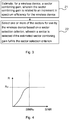
- FIG. 4 illustrates transport block size as function of signal to interference plus noise ratio. This is an example of how a determination of TBS u can be made.
- R y-axis
- SINR x-axis
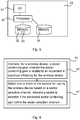
- FIG. 5 illustrates schematically a network node 12 and means for implementing methods of the present teachings.
- the network node 12 comprises a processor 30 comprising any combination of one or more of a central processing unit (CPU), multiprocessor, microcontroller, digital signal processor (DSP), application specific integrated circuit etc. capable of executing software instructions stored in a memory 32, which can thus be a computer program product.
- the processor 30 can be configured to execute any of the various embodiments of the method 20 as described in relation to figure 2 .
- a network node 12 of a communication system 10 configured for sector selection.
- the communication system 10 comprises two or more sectors 12, 13, 14 using a common cell identification, the two or more sectors 12, 13, 14 each providing uplink and/or downlink connections to wireless devices 15, 16 located within a coverage area 17 of the sectors 12, 13, 14.
- the network node 12 comprises the processor 30 and memory 32, the memory 32 containing instructions executable by the processor 30, whereby the network node 12 is operative to:
- the network node 12 is configured to estimate by:
- the radio condition value comprises a downlink signal to interference plus noise ratio or an uplink signal to interference plus noise ratio.
- the network node 12 is configured to adjust the adjustable sector selection criterion adaptively within a sector 12, 13, 14 for the wireless devices 15, 16 located within the coverage area 17.
- the network node 12 is configured to adjust the adjustable sector selection criterion adaptively based on one or more of: a radio condition of the wireless device 15, 16, network load status and operative state of the wireless device 15, 16.
- the sector combining gain comprises transport block size increment, modulation and coding scheme increment, signal to interference plus noise ratio increment or data rate increment.
- the memory 32 can be any combination of read and write memory (RAM) and read only memory (ROM).
- the memory 32 also comprises persistent storage, which, for example, can be any single one or combination of magnetic memory, optical memory, solid state memory or even remotely mounted memory.
- a data memory 34 may also be provided for reading and/or storing data during execution of software instructions in the processor 30.
- the data memory 34 can be any combination of read and write memory (RAM) and read only memory (ROM).
- the network node 12 further comprises an input/output (I/O) device 31 operatively connected to the processor 30.
- the I/O device 31 is configured to receive /transmit signaling from/to the wireless devices 15, 16 using other intermediate devices, e.g. antennas.
- the I/O device 31 is also typically configured to communicate with other network nodes through wired connections, e.g. backhaul connections.
- the I/O device may alternatively comprise several units, and it may be implemented in hardware and/or software.
- the present teachings also comprise computer program 33 for a network node 12 of a communication system 10 configured for sector selection.
- the communication system 10 comprises two or more sectors 12, 13, 14 using a common cell identification, and the two or more sectors 12, 13, 14 each provide uplink and/or downlink connections to wireless devices 15, 16 located within a coverage area 17 of the sectors 12, 13, 14.
- the computer program 33 comprises computer program code, which, when run on the network node 12 causes the network node 12 to:
- the teachings of the present application also encompasses such computer program product 32 comprising a computer program 33 as described above, and a computer readable means on which the computer program 34 is stored.
- the computer program product 32 may be any combination of read and write memory (RAM) or read only memory (ROM).
- the computer program product 35 may also comprise persistent storage, which for example can be any single one or combination of magnetic memory, optical memory or solid state memory.
- the computer program product 32 or the memory 32, thus comprises instructions executable by the processor 30.
- Such instructions may be comprised in a computer program 33, or in one or more software modules or function modules.
- Figure 6 illustrates a network node 12 comprising functions modules/software modules for implementing methods as has been described.
- FIG 6 An example of an implementation using functions modules/software modules is illustrated in figure 6 , in particular illustrating a network node 12 comprising functions modules for implementing methods as described.
- the network node 12 comprises means 40, in particular a first function module 40, for estimating, for a wireless device, a sector combining gain, wherein the sector combining gain is related to an increment in spectrum efficiency for the wireless device 15, 16.
- the network node 12 comprises means 41, in particular a second function module 41, for selecting one or more of the sectors 12, 13, 14 for use by the wireless device 15, 16 based on an adjustable sector selection criterion, wherein a sector 12, 13, 14 is selected if the estimated sector combining gain fulfills the adjustable sector selection criterion.
- the functions modules 40, 41 can be implemented using software instructions such as computer program executing in a processor and/or using hardware, such as application specific integrated circuits, field programmable gate arrays, discrete logical components etc.
- the isolation requirement is the same in the entire cell.
- the isolation requirement might be different for different users in a cell and the present teachings could be applied also to this.
- a lowered isolation degree requirement would lead to the wireless device having fewer reception sectors but higher chances of being multiplexed with other wireless devices in different sectors.
- an increased isolation requirement for wireless devices in poor radio conditions would lead to more sectors being selected for performing reception and to get better reception combining gain for this wireless device. Setting the isolation degree in an adjustable and possibly also adaptive manner would improve the situation.
Landscapes
- Engineering & Computer Science (AREA)
- Computer Networks & Wireless Communication (AREA)
- Signal Processing (AREA)
- Mobile Radio Communication Systems (AREA)
Claims (13)
- Procédé (20) de sélection de secteur mis en œuvre dans un nœud de réseau (12) d'un système de communication (10), le système de communication (10) comprenant deux secteurs ou plus (12, 13, 14) utilisant une identification de cellule commune, chaque secteur parmi les deux secteurs ou plus (12, 13, 14) étant commandé par un nœud de réseau différent, au moins un secteur parmi les deux secteurs ou plus (12, 13, 14) est commandé par une unité radio distante, les deux secteurs ou plus (12, 13, 14) fournissant chacun des connexions de liaison montante et/ou de liaison descendante à des dispositifs sans fil (15, 16) situés au sein d'une zone de couverture (17) des secteurs (12, 13, 14), le procédé (20) comprenant :- l'estimation (21), pour un dispositif sans fil (15, 16), d'un gain de combinaison de secteurs, dans lequel le gain de combinaison de secteurs se rapporte à un incrément d'efficacité spectrale pour le dispositif sans fil (15, 16), et dans lequel l'estimation (21) comprend : la détermination, pour chacun des deux secteurs ou plus (12, 13, 14), d'une valeur de condition radio pour le dispositif sans fil (15, 16), et l'estimation du gain de combinaison de secteurs sur la base des valeurs de condition radio déterminées ; et- la sélection (22) d'un ou plusieurs des secteurs (12, 13, 14) pour une utilisation par le dispositif sans fil (15, 16) sur la base d'un critère de sélection de secteur ajustable, dans lequel un secteur (12, 13, 14) est sélectionné si le gain de combinaison de secteurs estimé remplit le critère de sélection de secteur ajustable, dans lequel le critère de sélection de secteur ajustable comprend l'utilisation d'un seuil de gain de combinaison ajustable qui est ajusté de manière adaptative pour chaque dispositif sans fil (15, 16) au sein de chacun des secteurs (12, 13, 14), et dans lequel la sélection (22) comprend la sélection d'un secteur (12, 13, 14) pour réception et/ou transmission pour le dispositif sans fil (15, 16) si le gain de combinaison de secteurs estimé est supérieur au seuil de gain de combinaison ajustable.
- Procédé (20) selon la revendication 1, dans lequel le seuil de gain de combinaison ajustable est une valeur dépendant de manière adaptative d'une condition radio.
- Procédé (20) selon la revendication 2, dans lequel la valeur de condition radio comprend un rapport signal-bruit plus interférence de liaison descendante ou un rapport signal-bruit plus interférence de liaison montante.
- Procédé (20) selon l'une quelconque des revendications précédentes, dans lequel le critère de sélection de secteur ajustable est ajusté de manière adaptative au sein d'un secteur (12, 13, 14) pour les dispositifs sans fil (15, 16) situés au sein de la zone de couverture (17).
- Procédé (20) selon la revendication 4, dans lequel le critère de sélection de secteur ajustable est ajusté de manière adaptative sur la base d'un ou plusieurs parmi : une condition radio du dispositif sans fil (15, 16), un statut de charge de réseau et un état opérationnel du dispositif sans fil (15, 16).
- Procédé (20) selon l'une quelconque des revendications précédentes, dans lequel le gain de combinaison de secteurs comprend un incrément de taille de bloc de transport, un incrément de schéma de modulation et de codage, un incrément de rapport signal-bruit plus interférence ou un incrément de débit de données.
- Procédé (20) selon l'une quelconque des revendications précédentes, comprenant la planification de ressources sur le ou les secteurs sélectionnés (12, 13, 14) vers le dispositif sans fil (15, 16).
- Nœud de réseau (12) d'un système de communication (10) configuré pour une sélection de secteur, le système de communication (10) comprenant deux secteurs ou plus (12, 13, 14) utilisant une identification de cellule commune, chaque secteur parmi les deux secteurs ou plus (12, 13, 14) étant commandé par un nœud de réseau différent, au moins un secteur parmi les deux secteurs ou plus (12, 13, 14) est commandé par une unité radio distante, les deux secteurs ou plus (12, 13, 14) fournissant chacun des connexions de liaison montante et/ou de liaison descendante vers des dispositifs sans fil (15, 16) situés au sein d'une zone de couverture (17) des secteurs (12, 13, 14), le nœud de réseau (12) comprenant un processeur (30) et une mémoire (32), la mémoire (32) contenant des instructions exécutables par le processeur (30), moyennant quoi le nœud de réseau (12) est opérationnel pour :- estimer, pour un dispositif sans fil (15, 16), un gain de combinaison de secteurs, dans lequel le gain de combinaison de secteurs se rapporte à un incrément d'efficacité spectrale pour le dispositif sans fil (15, 16), dans lequel le nœud de réseau (12) est configuré pour estimer par : détermination, pour chacun des deux secteurs ou plus (12, 13, 14), d'une valeur de condition radio pour les dispositifs sans fil (15, 16), et estimation du gain de combinaison de secteurs sur la base des valeurs de condition radio déterminées, et- sélectionner un ou plusieurs des secteurs (12, 13, 14) pour une utilisation par le dispositif sans fil (15, 16) sur la base d'un critère de sélection de secteur ajustable, dans lequel un secteur (12, 13, 14) est sélectionné si le gain de combinaison de secteurs estimé remplit le critère de sélection de secteur ajustable, dans lequel le critère de sélection de secteur ajustable comprend l'utilisation d'un seuil de gain de combinaison ajustable qui est ajusté de manière adaptative pour chaque dispositif sans fil (15, 16) au sein de chacun des secteurs (12, 13, 14), et dans lequel le nœud de réseau (12) est configuré pour sélectionner en sélectionnant un secteur (12, 13, 14) pour réception et/ou transmission pour le dispositif sans fil (15, 16) si le gain de combinaison de secteurs estimé est supérieur au seuil de gain de combinaison ajustable.
- Nœud de réseau (12) selon la revendication 8, dans lequel la valeur de condition radio comprend un rapport signal-bruit plus interférence de liaison descendante ou un rapport signal-bruit plus interférence de liaison montante.
- Nœud de réseau (12) selon l'une quelconque des revendications 8 et 9, dans lequel le nœud de réseau (12) est configuré pour ajuster le critère de sélection de secteur ajustable de manière adaptative au sein d'un secteur (12, 13, 14) pour les dispositifs sans fil (15, 16) situés au sein de la zone de couverture (17).
- Nœud de réseau (12) selon la revendication 10, dans lequel le nœud de réseau (12) est configuré pour ajuster le critère de sélection de secteur ajustable de manière adaptative sur la base d'un ou plusieurs parmi : une condition radio du dispositif sans fil (15, 16), un statut de charge de réseau et un état opérationnel du dispositif sans fil (15, 16).
- Nœud de réseau (12) selon l'une quelconque des revendications 8 à 11, dans lequel le gain de combinaison de secteurs comprend un incrément de taille de bloc de transport, un incrément de schéma de modulation et de codage, un incrément de rapport signal-bruit plus interférence ou un incrément de débit de données.
- Programme informatique (33) pour un nœud de réseau (12) d'un système de communication (10) configuré pour une sélection de secteur, le système de communication (10) comprenant deux secteurs ou plus (12, 13, 14) utilisant une identification de cellule commune, chaque secteur parmi les deux secteurs ou plus (12, 13, 14) étant commandé par un nœud de réseau différent, au moins un secteur parmi les deux secteurs ou plus (12, 13, 14) est commandé par une unité radio distante, les deux secteurs ou plus (12, 13, 14) fournissant chacun des connexions de liaison montante et/ou de liaison descendante à des dispositifs sans fil (15, 16) situés au sein d'une zone de couverture (17) des secteurs (12, 13, 14), le programme informatique (33) comprenant un code de programme informatique, qui, lorsqu'il est exécuté sur le nœud de réseau (12) amène le nœud de réseau (12) à :- estimer, pour un dispositif sans fil (15, 16), un gain de combinaison de secteurs, dans lequel le gain de combinaison de secteurs se rapporte à un incrément d'efficacité spectrale pour le dispositif sans fil (15, 16), dans lequel le programme informatique (33) comprenant le code de programme informatique amène le nœud de réseau (12) à estimer par : détermination, pour chacun des deux secteurs ou plus (12, 13, 14), d'une valeur de condition radio pour les dispositifs sans fil (15, 16), et estimation du gain de combinaison de secteurs sur la base des valeurs de condition radio déterminées, et- sélectionner un ou plusieurs des secteurs (12, 13, 14) pour une utilisation par le dispositif sans fil (15, 16) sur la base d'un critère de sélection de secteur ajustable, dans lequel un secteur (12, 13, 14) est sélectionné si le gain de combinaison de secteurs estimé remplit le critère de sélection de secteur ajustable, dans lequel le critère de sélection de secteur ajustable comprend l'utilisation d'un seuil de gain de combinaison ajustable qui est ajusté de manière adaptative pour chaque dispositif sans fil (15, 16) au sein de chacun des secteurs (12, 13, 14), et dans lequel le programme informatique (33) comprenant le code de programme informatique amène le nœud de réseau (12) à sélectionner en sélectionnant un secteur (12, 13, 14) pour réception et/ou transmission pour le dispositif sans fil (15, 16) si le gain de combinaison de secteurs estimé est supérieur à un seuil de gain de combinaison ajustable.
Applications Claiming Priority (1)
| Application Number | Priority Date | Filing Date | Title |
|---|---|---|---|
| PCT/SE2013/050936 WO2015016753A1 (fr) | 2013-07-29 | 2013-07-29 | Procédés et dispositifs de sélection de secteur |
Publications (2)
| Publication Number | Publication Date |
|---|---|
| EP3028520A1 EP3028520A1 (fr) | 2016-06-08 |
| EP3028520B1 true EP3028520B1 (fr) | 2019-12-04 |
Family
ID=49034158
Family Applications (1)
| Application Number | Title | Priority Date | Filing Date |
|---|---|---|---|
| EP13752952.5A Active EP3028520B1 (fr) | 2013-07-29 | 2013-07-29 | Procédés et dispositifs de sélection de secteur |
Country Status (3)
| Country | Link |
|---|---|
| US (1) | US9706457B2 (fr) |
| EP (1) | EP3028520B1 (fr) |
| WO (1) | WO2015016753A1 (fr) |
Family Cites Families (8)
| Publication number | Priority date | Publication date | Assignee | Title |
|---|---|---|---|---|
| US20050181834A1 (en) * | 2004-02-12 | 2005-08-18 | Telefonaktiebolaget L M Ericsson (Publ) | Method and apparatus for cell-site ARQ generation under softer handoff conditions |
| US7885689B2 (en) * | 2007-06-14 | 2011-02-08 | Alcatel-Lucent Usa Inc. | Suppressing interference using beamforming of uplink signals received at multiple base stations |
| US7933604B1 (en) * | 2007-11-05 | 2011-04-26 | Sprint Spectrum L.P. | Method and system for achieving reverse link gain through an asymmetric soft handoff |
| US8064330B2 (en) * | 2008-03-26 | 2011-11-22 | Qualcomm Incorporated | Bit-width minimization scheme for wireless communication |
| US9397866B2 (en) * | 2008-09-15 | 2016-07-19 | Alcatel Lucent | Distributed multi-cell successive interference cancellation for uplink cellular networks |
| US9054852B2 (en) * | 2010-06-08 | 2015-06-09 | Lg Electronics Inc. | Method and device for transmitting/receiving channel state information in coordinated multipoint communication system |
| KR101791270B1 (ko) * | 2012-05-14 | 2017-11-20 | 삼성전자주식회사 | 이동통신 시스템에서 공동으로 신호를 송수신하는 통신 방법 및 장치 |
| US9214970B2 (en) * | 2013-10-15 | 2015-12-15 | Alcatel Lucent | Method of receiving a signal in a wireless communication network and associated network elements |
-
2013
- 2013-07-29 EP EP13752952.5A patent/EP3028520B1/fr active Active
- 2013-07-29 WO PCT/SE2013/050936 patent/WO2015016753A1/fr not_active Ceased
- 2013-07-29 US US14/908,289 patent/US9706457B2/en not_active Expired - Fee Related
Non-Patent Citations (2)
| Title |
|---|
| "3rd Generation Partnership Project; Technical Specification Group Radio Access Network; Coordinated multi-point operation for LTE physical layer aspects (Release 11)", 3GPP STANDARD; 3GPP TR 36.819, 3RD GENERATION PARTNERSHIP PROJECT (3GPP), MOBILE COMPETENCE CENTRE ; 650, ROUTE DES LUCIOLES ; F-06921 SOPHIA-ANTIPOLIS CEDEX ; FRANCE, vol. RAN WG1, no. V11.1.0, 15 December 2011 (2011-12-15), pages 1 - 69, XP050555015 * |
| TOKYO INSTITUTE OF TECHNOLOGY: "Distributed Dynamic CoMP for LTE-Advanced", 3GPP DRAFT; R1-093081 DISTRIBUTED DYNAMIC COMP FOR LTE ADVANCED, 3RD GENERATION PARTNERSHIP PROJECT (3GPP), MOBILE COMPETENCE CENTRE ; 650, ROUTE DES LUCIOLES ; F-06921 SOPHIA-ANTIPOLIS CEDEX ; FRANCE, no. Shenzhen, China; 20090818, 18 August 2009 (2009-08-18), XP050351467 * |
Also Published As
| Publication number | Publication date |
|---|---|
| US20160174116A1 (en) | 2016-06-16 |
| WO2015016753A1 (fr) | 2015-02-05 |
| US9706457B2 (en) | 2017-07-11 |
| EP3028520A1 (fr) | 2016-06-08 |
Similar Documents
| Publication | Publication Date | Title |
|---|---|---|
| JP6712791B2 (ja) | 基地局、通信方法及び集積回路 | |
| US10050734B2 (en) | Network node and method for enabling interference alignment of transmissions to user equipments | |
| EP2689627B1 (fr) | Exécution d'une émission et réception multipoint coordonnée (comp) dans un réseau de communication sans fil | |
| US9949279B2 (en) | Selection of transmission mode based on radio conditions | |
| US10129893B2 (en) | Network node and method for handling cellular and D2D communications in a wireless communications network | |
| US10985829B2 (en) | Beam management systems and methods | |
| US9357504B2 (en) | Radio communication system and radio base station | |
| US20160057768A1 (en) | Method and network node for downlink scheduling in a mobile communication network | |
| US10015754B2 (en) | Method, base station and computer-readable storage media for downlink power allocation in a wireless communication system | |
| US10454560B2 (en) | Beam management systems and methods | |
| WO2011129447A1 (fr) | Système de communications radio, station de base de forte puissance, station de base de faible puissance et procédé de régulation des communications | |
| US20180254864A1 (en) | Reference signal configuration for cell coordination | |
| US10211888B2 (en) | Network node and a method therein for performing CoMP reception of a transmission from a wireless device | |
| WO2015184884A1 (fr) | Procédé et dispositif pour sélectionner une cellule de desserte de réseau hétérogène sur la base d'une coopération inter-cellule | |
| US9584194B2 (en) | Method and apparatus for cancelling interference | |
| US20180054806A1 (en) | Systems and methods for decoupling control and data channels in wireless networks | |
| US10205568B2 (en) | Method and device for generating inter-cell information for cancelling inter-cell interference | |
| CN102804638B (zh) | 基于ffr的无线通信系统中估计信道状态的方法及其移动站 | |
| US9712271B2 (en) | Radio base station, user terminal and radio communication method | |
| EP3028520B1 (fr) | Procédés et dispositifs de sélection de secteur | |
| US20230180189A1 (en) | Resource allocation in cellular systems | |
| CN120614707A (zh) | 干扰规避调度方法、网络设备、终端、装置及存储介质 | |
| HK1234903A1 (en) | A network node and a method therein for performing comp reception of a transmission from a wireless device |
Legal Events
| Date | Code | Title | Description |
|---|---|---|---|
| PUAI | Public reference made under article 153(3) epc to a published international application that has entered the european phase |
Free format text: ORIGINAL CODE: 0009012 |
|
| 17P | Request for examination filed |
Effective date: 20160120 |
|
| AK | Designated contracting states |
Kind code of ref document: A1 Designated state(s): AL AT BE BG CH CY CZ DE DK EE ES FI FR GB GR HR HU IE IS IT LI LT LU LV MC MK MT NL NO PL PT RO RS SE SI SK SM TR |
|
| AX | Request for extension of the european patent |
Extension state: BA ME |
|
| RIN1 | Information on inventor provided before grant (corrected) |
Inventor name: SUN, YING Inventor name: BAJZEC, ZELIMIR |
|
| DAX | Request for extension of the european patent (deleted) | ||
| STAA | Information on the status of an ep patent application or granted ep patent |
Free format text: STATUS: EXAMINATION IS IN PROGRESS |
|
| 17Q | First examination report despatched |
Effective date: 20190617 |
|
| REG | Reference to a national code |
Ref country code: DE Ref legal event code: R079 Ref document number: 602013063612 Country of ref document: DE Free format text: PREVIOUS MAIN CLASS: H04W0072080000 Ipc: H04W0036000000 |
|
| RIC1 | Information provided on ipc code assigned before grant |
Ipc: H04W 36/00 20090101AFI20190828BHEP |
|
| GRAP | Despatch of communication of intention to grant a patent |
Free format text: ORIGINAL CODE: EPIDOSNIGR1 |
|
| STAA | Information on the status of an ep patent application or granted ep patent |
Free format text: STATUS: GRANT OF PATENT IS INTENDED |
|
| GRAS | Grant fee paid |
Free format text: ORIGINAL CODE: EPIDOSNIGR3 |
|
| GRAA | (expected) grant |
Free format text: ORIGINAL CODE: 0009210 |
|
| STAA | Information on the status of an ep patent application or granted ep patent |
Free format text: STATUS: THE PATENT HAS BEEN GRANTED |
|
| INTG | Intention to grant announced |
Effective date: 20191009 |
|
| AK | Designated contracting states |
Kind code of ref document: B1 Designated state(s): AL AT BE BG CH CY CZ DE DK EE ES FI FR GB GR HR HU IE IS IT LI LT LU LV MC MK MT NL NO PL PT RO RS SE SI SK SM TR |
|
| REG | Reference to a national code |
Ref country code: GB Ref legal event code: FG4D |
|
| REG | Reference to a national code |
Ref country code: CH Ref legal event code: EP |
|
| REG | Reference to a national code |
Ref country code: AT Ref legal event code: REF Ref document number: 1211095 Country of ref document: AT Kind code of ref document: T Effective date: 20191215 |
|
| REG | Reference to a national code |
Ref country code: DE Ref legal event code: R096 Ref document number: 602013063612 Country of ref document: DE |
|
| REG | Reference to a national code |
Ref country code: IE Ref legal event code: FG4D |
|
| REG | Reference to a national code |
Ref country code: NL Ref legal event code: MP Effective date: 20191204 |
|
| REG | Reference to a national code |
Ref country code: LT Ref legal event code: MG4D |
|
| PG25 | Lapsed in a contracting state [announced via postgrant information from national office to epo] |
Ref country code: LV Free format text: LAPSE BECAUSE OF FAILURE TO SUBMIT A TRANSLATION OF THE DESCRIPTION OR TO PAY THE FEE WITHIN THE PRESCRIBED TIME-LIMIT Effective date: 20191204 Ref country code: SE Free format text: LAPSE BECAUSE OF FAILURE TO SUBMIT A TRANSLATION OF THE DESCRIPTION OR TO PAY THE FEE WITHIN THE PRESCRIBED TIME-LIMIT Effective date: 20191204 Ref country code: NO Free format text: LAPSE BECAUSE OF FAILURE TO SUBMIT A TRANSLATION OF THE DESCRIPTION OR TO PAY THE FEE WITHIN THE PRESCRIBED TIME-LIMIT Effective date: 20200304 Ref country code: FI Free format text: LAPSE BECAUSE OF FAILURE TO SUBMIT A TRANSLATION OF THE DESCRIPTION OR TO PAY THE FEE WITHIN THE PRESCRIBED TIME-LIMIT Effective date: 20191204 Ref country code: BG Free format text: LAPSE BECAUSE OF FAILURE TO SUBMIT A TRANSLATION OF THE DESCRIPTION OR TO PAY THE FEE WITHIN THE PRESCRIBED TIME-LIMIT Effective date: 20200304 Ref country code: GR Free format text: LAPSE BECAUSE OF FAILURE TO SUBMIT A TRANSLATION OF THE DESCRIPTION OR TO PAY THE FEE WITHIN THE PRESCRIBED TIME-LIMIT Effective date: 20200305 Ref country code: LT Free format text: LAPSE BECAUSE OF FAILURE TO SUBMIT A TRANSLATION OF THE DESCRIPTION OR TO PAY THE FEE WITHIN THE PRESCRIBED TIME-LIMIT Effective date: 20191204 |
|
| PG25 | Lapsed in a contracting state [announced via postgrant information from national office to epo] |
Ref country code: RS Free format text: LAPSE BECAUSE OF FAILURE TO SUBMIT A TRANSLATION OF THE DESCRIPTION OR TO PAY THE FEE WITHIN THE PRESCRIBED TIME-LIMIT Effective date: 20191204 Ref country code: HR Free format text: LAPSE BECAUSE OF FAILURE TO SUBMIT A TRANSLATION OF THE DESCRIPTION OR TO PAY THE FEE WITHIN THE PRESCRIBED TIME-LIMIT Effective date: 20191204 |
|
| PG25 | Lapsed in a contracting state [announced via postgrant information from national office to epo] |
Ref country code: AL Free format text: LAPSE BECAUSE OF FAILURE TO SUBMIT A TRANSLATION OF THE DESCRIPTION OR TO PAY THE FEE WITHIN THE PRESCRIBED TIME-LIMIT Effective date: 20191204 |
|
| PG25 | Lapsed in a contracting state [announced via postgrant information from national office to epo] |
Ref country code: EE Free format text: LAPSE BECAUSE OF FAILURE TO SUBMIT A TRANSLATION OF THE DESCRIPTION OR TO PAY THE FEE WITHIN THE PRESCRIBED TIME-LIMIT Effective date: 20191204 Ref country code: RO Free format text: LAPSE BECAUSE OF FAILURE TO SUBMIT A TRANSLATION OF THE DESCRIPTION OR TO PAY THE FEE WITHIN THE PRESCRIBED TIME-LIMIT Effective date: 20191204 Ref country code: NL Free format text: LAPSE BECAUSE OF FAILURE TO SUBMIT A TRANSLATION OF THE DESCRIPTION OR TO PAY THE FEE WITHIN THE PRESCRIBED TIME-LIMIT Effective date: 20191204 Ref country code: CZ Free format text: LAPSE BECAUSE OF FAILURE TO SUBMIT A TRANSLATION OF THE DESCRIPTION OR TO PAY THE FEE WITHIN THE PRESCRIBED TIME-LIMIT Effective date: 20191204 Ref country code: ES Free format text: LAPSE BECAUSE OF FAILURE TO SUBMIT A TRANSLATION OF THE DESCRIPTION OR TO PAY THE FEE WITHIN THE PRESCRIBED TIME-LIMIT Effective date: 20191204 Ref country code: PT Free format text: LAPSE BECAUSE OF FAILURE TO SUBMIT A TRANSLATION OF THE DESCRIPTION OR TO PAY THE FEE WITHIN THE PRESCRIBED TIME-LIMIT Effective date: 20200429 |
|
| PG25 | Lapsed in a contracting state [announced via postgrant information from national office to epo] |
Ref country code: SM Free format text: LAPSE BECAUSE OF FAILURE TO SUBMIT A TRANSLATION OF THE DESCRIPTION OR TO PAY THE FEE WITHIN THE PRESCRIBED TIME-LIMIT Effective date: 20191204 Ref country code: IS Free format text: LAPSE BECAUSE OF FAILURE TO SUBMIT A TRANSLATION OF THE DESCRIPTION OR TO PAY THE FEE WITHIN THE PRESCRIBED TIME-LIMIT Effective date: 20200404 Ref country code: SK Free format text: LAPSE BECAUSE OF FAILURE TO SUBMIT A TRANSLATION OF THE DESCRIPTION OR TO PAY THE FEE WITHIN THE PRESCRIBED TIME-LIMIT Effective date: 20191204 |
|
| REG | Reference to a national code |
Ref country code: DE Ref legal event code: R097 Ref document number: 602013063612 Country of ref document: DE |
|
| REG | Reference to a national code |
Ref country code: AT Ref legal event code: MK05 Ref document number: 1211095 Country of ref document: AT Kind code of ref document: T Effective date: 20191204 |
|
| PLBE | No opposition filed within time limit |
Free format text: ORIGINAL CODE: 0009261 |
|
| STAA | Information on the status of an ep patent application or granted ep patent |
Free format text: STATUS: NO OPPOSITION FILED WITHIN TIME LIMIT |
|
| PG25 | Lapsed in a contracting state [announced via postgrant information from national office to epo] |
Ref country code: DK Free format text: LAPSE BECAUSE OF FAILURE TO SUBMIT A TRANSLATION OF THE DESCRIPTION OR TO PAY THE FEE WITHIN THE PRESCRIBED TIME-LIMIT Effective date: 20191204 |
|
| 26N | No opposition filed |
Effective date: 20200907 |
|
| PG25 | Lapsed in a contracting state [announced via postgrant information from national office to epo] |
Ref country code: SI Free format text: LAPSE BECAUSE OF FAILURE TO SUBMIT A TRANSLATION OF THE DESCRIPTION OR TO PAY THE FEE WITHIN THE PRESCRIBED TIME-LIMIT Effective date: 20191204 Ref country code: AT Free format text: LAPSE BECAUSE OF FAILURE TO SUBMIT A TRANSLATION OF THE DESCRIPTION OR TO PAY THE FEE WITHIN THE PRESCRIBED TIME-LIMIT Effective date: 20191204 Ref country code: PL Free format text: LAPSE BECAUSE OF FAILURE TO SUBMIT A TRANSLATION OF THE DESCRIPTION OR TO PAY THE FEE WITHIN THE PRESCRIBED TIME-LIMIT Effective date: 20191204 |
|
| PG25 | Lapsed in a contracting state [announced via postgrant information from national office to epo] |
Ref country code: IT Free format text: LAPSE BECAUSE OF FAILURE TO SUBMIT A TRANSLATION OF THE DESCRIPTION OR TO PAY THE FEE WITHIN THE PRESCRIBED TIME-LIMIT Effective date: 20191204 |
|
| PG25 | Lapsed in a contracting state [announced via postgrant information from national office to epo] |
Ref country code: MC Free format text: LAPSE BECAUSE OF FAILURE TO SUBMIT A TRANSLATION OF THE DESCRIPTION OR TO PAY THE FEE WITHIN THE PRESCRIBED TIME-LIMIT Effective date: 20191204 |
|
| REG | Reference to a national code |
Ref country code: CH Ref legal event code: PL |
|
| REG | Reference to a national code |
Ref country code: BE Ref legal event code: MM Effective date: 20200731 |
|
| PG25 | Lapsed in a contracting state [announced via postgrant information from national office to epo] |
Ref country code: LU Free format text: LAPSE BECAUSE OF NON-PAYMENT OF DUE FEES Effective date: 20200729 Ref country code: FR Free format text: LAPSE BECAUSE OF NON-PAYMENT OF DUE FEES Effective date: 20200731 Ref country code: CH Free format text: LAPSE BECAUSE OF NON-PAYMENT OF DUE FEES Effective date: 20200731 Ref country code: LI Free format text: LAPSE BECAUSE OF NON-PAYMENT OF DUE FEES Effective date: 20200731 |
|
| PG25 | Lapsed in a contracting state [announced via postgrant information from national office to epo] |
Ref country code: BE Free format text: LAPSE BECAUSE OF NON-PAYMENT OF DUE FEES Effective date: 20200731 |
|
| PG25 | Lapsed in a contracting state [announced via postgrant information from national office to epo] |
Ref country code: IE Free format text: LAPSE BECAUSE OF NON-PAYMENT OF DUE FEES Effective date: 20200729 |
|
| PG25 | Lapsed in a contracting state [announced via postgrant information from national office to epo] |
Ref country code: TR Free format text: LAPSE BECAUSE OF FAILURE TO SUBMIT A TRANSLATION OF THE DESCRIPTION OR TO PAY THE FEE WITHIN THE PRESCRIBED TIME-LIMIT Effective date: 20191204 Ref country code: MT Free format text: LAPSE BECAUSE OF FAILURE TO SUBMIT A TRANSLATION OF THE DESCRIPTION OR TO PAY THE FEE WITHIN THE PRESCRIBED TIME-LIMIT Effective date: 20191204 Ref country code: CY Free format text: LAPSE BECAUSE OF FAILURE TO SUBMIT A TRANSLATION OF THE DESCRIPTION OR TO PAY THE FEE WITHIN THE PRESCRIBED TIME-LIMIT Effective date: 20191204 |
|
| PG25 | Lapsed in a contracting state [announced via postgrant information from national office to epo] |
Ref country code: MK Free format text: LAPSE BECAUSE OF FAILURE TO SUBMIT A TRANSLATION OF THE DESCRIPTION OR TO PAY THE FEE WITHIN THE PRESCRIBED TIME-LIMIT Effective date: 20191204 |
|
| PGFP | Annual fee paid to national office [announced via postgrant information from national office to epo] |
Ref country code: DE Payment date: 20220727 Year of fee payment: 10 |
|
| REG | Reference to a national code |
Ref country code: DE Ref legal event code: R119 Ref document number: 602013063612 Country of ref document: DE |
|
| PG25 | Lapsed in a contracting state [announced via postgrant information from national office to epo] |
Ref country code: DE Free format text: LAPSE BECAUSE OF NON-PAYMENT OF DUE FEES Effective date: 20240201 |
|
| PGFP | Annual fee paid to national office [announced via postgrant information from national office to epo] |
Ref country code: GB Payment date: 20240729 Year of fee payment: 12 |
|
| GBPC | Gb: european patent ceased through non-payment of renewal fee |
Effective date: 20250729 |
|
| PG25 | Lapsed in a contracting state [announced via postgrant information from national office to epo] |
Ref country code: GB Free format text: LAPSE BECAUSE OF NON-PAYMENT OF DUE FEES Effective date: 20250729 |