EP3028521B1 - Verfahren, computerprogramm und vorrichtung für konfliktbasierten direktzugriff - Google Patents
Verfahren, computerprogramm und vorrichtung für konfliktbasierten direktzugriff Download PDFInfo
- Publication number
- EP3028521B1 EP3028521B1 EP13752953.3A EP13752953A EP3028521B1 EP 3028521 B1 EP3028521 B1 EP 3028521B1 EP 13752953 A EP13752953 A EP 13752953A EP 3028521 B1 EP3028521 B1 EP 3028521B1
- Authority
- EP
- European Patent Office
- Prior art keywords
- preamble
- preambles
- group
- threshold value
- wireless device
- Prior art date
- Legal status (The legal status is an assumption and is not a legal conclusion. Google has not performed a legal analysis and makes no representation as to the accuracy of the status listed.)
- Active
Links
Images


Classifications
-
- H—ELECTRICITY
- H04—ELECTRIC COMMUNICATION TECHNIQUE
- H04W—WIRELESS COMMUNICATION NETWORKS
- H04W72/00—Local resource management
- H04W72/50—Allocation or scheduling criteria for wireless resources
- H04W72/56—Allocation or scheduling criteria for wireless resources based on priority criteria
-
- H—ELECTRICITY
- H04—ELECTRIC COMMUNICATION TECHNIQUE
- H04W—WIRELESS COMMUNICATION NETWORKS
- H04W74/00—Wireless channel access
- H04W74/08—Non-scheduled access, e.g. ALOHA
- H04W74/0833—Random access procedures, e.g. with 4-step access
-
- H—ELECTRICITY
- H04—ELECTRIC COMMUNICATION TECHNIQUE
- H04W—WIRELESS COMMUNICATION NETWORKS
- H04W48/00—Access restriction; Network selection; Access point selection
- H04W48/08—Access restriction or access information delivery, e.g. discovery data delivery
- H04W48/12—Access restriction or access information delivery, e.g. discovery data delivery using downlink control channel
-
- H—ELECTRICITY
- H04—ELECTRIC COMMUNICATION TECHNIQUE
- H04W—WIRELESS COMMUNICATION NETWORKS
- H04W74/00—Wireless channel access
- H04W74/002—Transmission of channel access control information
- H04W74/006—Transmission of channel access control information in the downlink, i.e. towards the terminal
-
- H—ELECTRICITY
- H04—ELECTRIC COMMUNICATION TECHNIQUE
- H04W—WIRELESS COMMUNICATION NETWORKS
- H04W74/00—Wireless channel access
- H04W74/08—Non-scheduled access, e.g. ALOHA
- H04W74/0833—Random access procedures, e.g. with 4-step access
- H04W74/0838—Random access procedures, e.g. with 4-step access using contention-free random access [CFRA]
Definitions
- the technology disclosed herein relates generally to the field of wireless communication networks, and in particular to random access procedures within such wireless communication networks.
- a random access procedure used in a wireless communication network allows wireless devices to obtain new or renewed access to the network and to obtain uplink time synchronization. There are different reasons for the wireless device to transmit a random access request, for example when desiring initial access to the network, or when it has been set out-of-synchronization in a downlink/uplink and need to perform a random access procedure to receive a downlink data transmission/ send an uplink transmission or when there is an imminent handover.
- the random access procedure may be either contention based or contention free.
- the former is applicable for all the mentioned cases, while the latter is applicable only to downlink data transmission and incoming handover.
- contention based random access (CBRA) procedure also denoted the general random access procedure
- CBRA contention based random access
- the wireless devices can use any one of the preamble sequences and CBRA thus requires signaling to resolve any contention that may have occurred.
- the contention free random access (CFRA) procedure also denoted the dedicated, the non-contention based or the contention less random access procedure, uses a preamble sequence that is dedicated for one wireless device to use.
- the signaling between the wireless device and a radio access network (RAN) for the CBRA procedure is illustrated in Figure 1 and described in the following for a Long Term Evolution (LTE) scenario.
- the wireless device (denoted UE in the figure) initiates the CBRA procedure by transmitting (arrow 1 in figure 1 ) a randomly selected CBRA preamble from within the CBRA preamble range which is received via System information block 2 (SIB2).
- SIB2 carries radio resource configuration information which is common for all wireless devices.
- the RAN and in particular a eNodeB (evolved Node B, also denoted eNB) thereof, acknowledges the detected CBRA preamble by transmitting (arrow 2 in figure 1 ) a random access response message including among other things an initial grant to be used on an uplink shared channel, a timing advance (TA) update and a temporary cell-Radio Network Temporary Identity (C-RNTI).
- TA timing advance
- C-RNTI temporary cell-Radio Network Temporary Identity
- the wireless device uses the grant to transmit (arrow 3 in figure 1 ) a message that serves the purpose of verifying that the wireless device received the random access response and includes necessary information for the purpose of contention resolution.
- the RAN receives this message and performs contention resolution (arrow 4 in figure 1 ) based on information received in the message and eventually one wireless device will detect random access (RA) success while other wireless devices will roll back to do CBRA over again.
- the wireless device can perform CBRA in all the four cases mentioned earlier.
- a known method is to sort the preambles based on the received signal power and schedule the random access response transmissions (arrow 2 of figure 1 ) in accordance with this sorting.
- wireless devices Since the wireless devices are scheduled based on the received preamble power, a wireless device having less favorable radio conditions has to wait the longest for a random access response transmission. A wireless device in a handover situation often has such less favorable radio conditions, and may loose its connection to the wireless communication network. Operators of the wireless communication networks are well aware of the fact that users are typically more annoyed and dissatisfied when being disconnected during an ongoing call than when having to wait to obtain an initial access to the wireless communication network. There is thus a need for improvement in this regards.
- EP 1 91 6863 A2 describes a method for selecting a random access preamble wherein a preamble is randomly selected from one of two groups of preambles.
- the group to select the preamble from is determined based on radio channel conditions and the size of a message that the UE will transmit after transmitting the preamble.
- An object of the present teachings is to provide methods and devices addressing the above need, in particular addressing the need for a more flexible order in which random access responses are transmitted.
- the object is according to a first aspect achieved by a method performed in a network node of a wireless communication network providing wireless communication to wireless devices.
- the method comprises: broadcasting one or more threshold values enabling the wireless devices to determine fulfillment of one or more criteria for selecting a contention based random access preamble either from a first preamble group or from a second preamble group for use in a contention based random access procedure; to a selected wireless device one or more threshold values using dedicated signaling, the one or more threshold values sent in the dedicated signaling overriding a corresponding broadcasted threshold value and being set so that the wireless device fulfills the criteria to select a preamble from the first preamble group, wherein the threshold values sent on the dedicated signaling differ from the broadcast threshold values; and prioritizing preambles of the first preamble group over preambles of the second preamble group.
- the method provides for a more flexible ordering of random access responses in a contention based random access procedure and in particular enables differentiation of the wireless devices.
- the method thereby enables e.g. differentiating and prioritizing of wireless devices in a handover situation over other wireless devices. Reduced handover drop rates are achieved and thereby also increased user satisfaction.
- the object is according to a second aspect achieved by a network node of a wireless communication network providing wireless communication to wireless devices.
- the network node comprises a processor and memory, the memory containing instructions executable by the processor, whereby the network node is operative to: broadcast one or more threshold values enabling the wireless devices to determine fulfillment of one or more criteria for selecting a contention based random access preamble either from a first preamble group or from a second preamble group for use in a contention based random access procedure; transmit to a selected wireless device one or more threshold values using dedicated signaling, the one or more threshold values sent in the dedicated signaling overriding a corresponding broadcasted threshold value and being set so that the wireless device fulfills the criteria to select a preamble from the first preamble group, wherein the threshold values sent on the dedicated signaling differ from the broadcast threshold values; and prioritize preambles of the first preamble group over preambles of the second preamble group.
- the object is according to a third aspect achieved by a computer program for a network node of a wireless communication network providing wireless communication to wireless devices.
- the computer program comprises computer program code, which, when run on the network node causes the network node to: broadcast one or more threshold values enabling the wireless devices to determine fulfillment of one or more criteria for selecting a contention based random access preamble either from a first preamble group or from a second preamble group for use in a contention based random access procedure; transmit to a selected wireless device one or more threshold values using dedicated signaling, the one or more threshold values sent in the dedicated signaling overriding a corresponding broadcasted threshold value and being set so that the wireless device fulfills the criteria to select a preamble from the first preamble group, wherein the threshold values sent on the dedicated signaling differ from the broadcast threshold values; and prioritize preambles of the first preamble group over preambles of the second preamble group.
- FIG. 2 illustrates schematically an environment, in particular a communication system 1, in which embodiments of the present teachings may be implemented.
- the communication system 1 comprises a number of network nodes 2, 3 configured to provide wireless communication connections to a number of wireless devices 4, 5.
- the wireless devices 4, 5 may comprise any type of device configured for wireless communication. Such device may be denoted and exemplified in various ways e.g. a user equipment, a mobile communication device, subscriber terminal, and may comprise e.g. a cellular telephone, a computing device, a smart phone etc.
- the network nodes 2, 3 are configured to provide uplink and/or downlink connections to the wireless devices 4, 5 residing within a coverage area 6, 7 of the network nodes 2, 3.
- the network nodes 2, 3 may comprise e.g. eNodeBs (also denoted eNB) of a LTE system and are configured to handle random access procedures.
- the network nodes 2, 3 are also configured to handle e.g. handover situations when a wireless device 4, 5 moves from the coverage area 6 of a first network node 2 to the coverage area 7 of a second network node 3, as well as if the wireless device is changing serving network node for other reasons.
- CBRA contention based random access
- a preamble belonging to CFRA is dedicated for a particular wireless device and is typically used by a wireless device having pending downlink (DL) data or by wireless devices that are in a handover situation.
- the present teachings mainly relate to and address CBRA preambles.
- the CBRA preambles can be separated into two groups: group A and group B [refer to 3GPP 36.321 Mac Protocol Specification for further details].
- Wireless devices are configured with such group A and group B preambles and will select a preamble from one of the groups based on different criteria. Basically, the wireless device will select a preamble from group B if it is under good radio conditions and has a rather large buffer size. Wireless devices under poor radio conditions will select a preamble from group A. The wireless device sending a preamble from group B will then typically be granted a larger uplink (UL) than a wireless device sending a preamble from group A.
- UL uplink
- random access preamble group B In systems implementing random access preamble group B, the following information should be made available to the wireless devices, e.g. broadcasted to them, before a random access procedure occurs:
- the wireless device When the wireless device starts the CBRA procedure and tries to select a CBRA preamble it first decides from which preamble group to pick a random access preamble from. If Random Access Preambles group B exists and if the buffer size m (data available for transmission plus MAC header and, where required, MAC control elements) of the wireless device is greater than the threshold messageSizeGroupA and if the pathloss is less than P CMAX,c (of the serving cell performing the random access procedure) - preambleInitialReceivedTargetPower - deltaPreambleMsg3 - messagePowerOffsetGroupB, then the wireless device will select the Random Access Preambles group B. Otherwise it will select the Random Access Preambles group A.
- m data available for transmission plus MAC header and, where required, MAC control elements
- the wireless device will select a random access preamble from group B if the following two criteria, f1 and f2, are fulfilled: m > messageSizeGroupA and pathloss ⁇ P CMAX , c ⁇ preambleInitialReceivedTargetPower ⁇ deltaPreambleMsg 3 ⁇ messagePowerOffsetGroupB and else the wireless device will select a random access preamble from group A.
- a wireless device transmitting a preamble from group B should be given a larger uplink (UL) grant than a wireless device using a preamble from group A. That is, when eNB receives a preamble from group B (transmitted by a wireless device), it will grant a larger UL to the wireless device that transmitted this preamble than to a wireless device from which it received a preamble from group A. Other than that the eNB currently treats group A and group B CBRA preambles equally. It is thus currently not specified in the standard that the eNB should differentiate between the two groups of preambles, i.e. the current standards contain no indication on if and how to treat these preambles differently, e.g., prioritize one group over another group.
- UL uplink
- the eNB does not differentiate over why wireless devices are performing random access and solely schedules the wireless devices 4, 5 for the random access response based on the received preamble signal strength.
- the wireless devices 4, 5 for the random access response based on the received preamble signal strength.
- it would be advantageous to be able to differentiate between the wireless devices and prioritize among them For example, it would be advantageous to schedule wireless devices in handover situations for random access responses before scheduling wireless devices performing random access for other reasons, such as for example initial access or re-synchronization; i.e. prioritize HO wireless devices.
- group B CBRA preambles are given priority over group A CBRA preambles.
- Information based on which the wireless device 4, 5 should decide which CBRA preamble group to choose from i.e. information comprising the parameter values messagePowerOffsetGroupB, messageSizeGroupA, P CMAX, c and deltaPreambleMsg3, can be made available to wireless devices either via System Information Block (SIB) broadcasting or dedicated Radio Resource Control (RRC) signaling during handover (HO).
- SIB System Information Block
- RRC Radio Resource Control
- messageSizeGroupA and messagePowerOffsetGroupB are today used only for the purpose of selecting a preamble group.
- the present teachings use these parameters with the purpose of leading HO wireless devices into selecting a preamble from group B and other wireless devices into selecting a preamble from group A.
- the present teachings thus provide, in an aspect, solutions to prioritizing wireless devices in handover situation over other wireless devices during preamble transmission/reception phase of the CBRA (arrows 2 and 3 of figure 1 ).
- the mentioned parameters are set in such a way that wireless devices that are using broadcast thresholds (as obtained e.g. during SIB broadcasting) in preamble group selection are in reality prevented from selecting group B, or it will at least be very difficult, if at all possible, for those wireless devices to select a preamble from group B.
- broadcast thresholds as obtained e.g. during SIB broadcasting
- those thresholds and parameters can be over-written by dedicated RRC signaling so that it is easy for HO wireless devices to select a preamble from preamble group B.
- messageSizeGroupA 56,144,208,256
- messagePowerOffsetGroupB ⁇ infinity , dB 0, dB 5, dB 8, dB 8, dB 10, dB 12, dB 15, dB 18
- the broadcasted thresholds need to make the wireless devices break either the criterion [f1] or criterion [f2] mentioned earlier. That is, messageSizeGroupA should be as big as possible, and the subtraction P CMAX,c - preambleInitialReceivedTargetPower -deltaPreambleMsg3 - messagePowerOffsetGroupB should be as small as possible. Since it is difficult to predict the buffer size of wireless devices, it may be easier to make the non-HO wireless devices to break [f2].
- messagePowerOffsetGroupB is used for preamble group selection, without manipulating the other two parameters.
- the threshold to [f2] will have a range of 40 ⁇ 50dB, making it easy for non-HO wireless devices (i.e. non-prioritized wireless devices) to break [f2].
- RRC signaling in particular RRC reconfiguration sending handover command, where HO wireless devices get these threshold values, the following values can be signaled:
- the preamble On eNB side, the preamble is received.
- scheduling random access responses (compare the second message of figure 1 ) for DL scheduling and scheduled transmission for uplink (compare the third message of figure 1 )
- the following prioritization based on received preamble is made, in accordance with an embodiment of the present teachings:
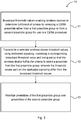
- Figure 3 illustrates a flow chart over steps of a method in a network node 2 in accordance with the present teachings.
- the method is performed in a network node 2 of a wireless communication network 1 providing wireless communication to wireless devices 4, 5, such as the wireless communication network 1 described with reference to figure 2 .
- the method 10 comprises broadcasting 11 one or more threshold values enabling the wireless devices 4, 5 to determine fulfillment of one or more criteria f1, f2 for selecting a contention based random access preamble either from a first preamble group or from a second preamble group for use in a contention based random access procedure. That is, one or more threshold values are broadcasted providing the wireless devices 4, 5 with threshold values for use in determining if one or more criteria is fulfilled for selecting a random access preamble from a first preamble group or from a second preamble group for use in a contention based random access procedure.
- the method 10 further comprises transmitting 12 to a selected wireless device 4, 5 one or more threshold values using dedicated signaling, the one or more threshold values sent in the dedicated signaling overriding a corresponding broadcasted threshold value and being set so that the wireless device 4, 5 fulfills the criteria to select a preamble from the first preamble group, wherein the threshold values sent on the dedicated signaling differ from the broadcast threshold values.
- the method 10 further comprises prioritizing 13 preambles of the first preamble group over preambles of the second preamble group.
- the broadcasted threshold values are set so that all or close to all of the wireless devices 4, 5 fulfills the criteria to select a preamble from the second preamble group. That is, the one or more threshold values that are transmitted using dedicated signaling are set so that the wireless device 4, 5 with very high probability fulfills a criterion f1, f2 to select a preamble from the first preamble group.
- the wireless devices using the "impossible" threshold values are directed towards choosing preambles from the second preamble group (e.g. group A of LTE), and the selected wireless devices (e.g. HO wireless devices) are directed towards choosing threshold values directing them to choose their preamble from the first preamble group (e.g. group B of LTE).
- the prioritizing 13 comprises scheduling a wireless device 4 that is transmitting a preamble from the first preamble group before a wireless device 5 that is transmitting a preamble from the second preamble group.
- the prioritizing 13 comprises scheduling wireless devices in the falling order of: received contention free random access preambles, received contention based random access preamble from the first preamble group and received contention based random access preamble from the second preamble group.
- the network node 2 may be configured to measure the received power of the different random access preambles and sort them in the falling order of received power within each group of preambles.
- the selected wireless device 4, 5 comprises a wireless device 4, 5 performing a handover and wherein the dedicated signaling comprises radio resource control reconfiguration signaling used for sending handover commands.
- the broadcast one or more threshold values comprises one or more of: a first threshold value (messageSizeGroupA) for data buffer size of the wireless device (4, 5) for selecting preambles of the second group of preambles, a second threshold value (P CMAX,c ) for configured wireless device (4, 5) transmission power, a third threshold value (preambleInitialReceivedTargetPower) for target power of initial target power of received preamble, a fourth threshold value (deltaPreamble Msg3) for offset between a transmitted preamble and a scheduled transmission, and a fifth threshold value (messagePowerOffsetGroupB) for power offset for selecting preambles of the first group of preambles.
- all five threshold values are broadcast to the wireless devices.
- one of the one or more broadcast threshold values comprise a fifth threshold value (messagePowerOffsetGroupB) for power offset for selecting preambles of the first group of preambles, wherein the fifth threshold value (messagePowerOffsetGroupB) is set larger than 18 dB, in particular set to larger than 50 dB or larger than 100 dB.
- the fifth threshold value (messagePowerOffsetGroupB) is set larger than 18 dB, in particular set to larger than 50 dB or larger than 100 dB.
- the threshold values sent in the dedicated signaling overriding a corresponding broadcasted threshold value comprise one or both of: a first threshold value (messageSizeGroupA) for data buffer size of the wireless device 4, 5 for selecting preambles of the second group of preambles, wherein the first threshold value (messageSizeGroupA) is set to 56 or less than 56, and a fifth threshold value (messagePowerOffsetGroupB) for power offset for selecting preambles of the first group of preambles, wherein the fifth threshold value (messagePowerOffsetGroupB) is set to -infinity.
- a first threshold value (messageSizeGroupA) for data buffer size of the wireless device 4, 5 for selecting preambles of the second group of preambles, wherein the first threshold value (messageSizeGroupA) is set to 56 or less than 56
- a fifth threshold value (messagePowerOffsetGroupB) for power offset for selecting preambles of the first group of preambles, wherein the
- FIG. 4 illustrates schematically a network node and means for implementing embodiments of the method of the present teachings.
- the network node 2 comprises a processor 20 comprising any combination of one or more of a central processing unit (CPU), multiprocessor, microcontroller, digital signal processor (DSP), application specific integrated circuit etc. capable of executing software instructions stored in a memory 22, which can thus be a computer program product.
- the processor 20 can be configured to execute any of the various embodiments of the method 10 as described in relation to figure 3 .
- a network node 2 of a wireless communication network 1 is provided.
- the wireless communication network 1 provides wireless communication to wireless devices 4, 5.
- the network node 2 comprises a processor 20 and memory 22, the memory 22 containing instructions executable by the processor 23, whereby the network node 2 is operative to:
- the broadcasted threshold values are set so that all or close to all of the wireless devices 4, 5 fulfills the criteria to select a preamble from the second preamble group.
- the network node 2 is configured to prioritize by scheduling a wireless device 4 transmitting a preamble from the first preamble group before a wireless device 5 transmitting a preamble from the second preamble group.
- the network node 2 is configured to prioritize by scheduling wireless devices in the falling order of: received contention free random access preambles, received contention based random access preamble from the first preamble group and received contention based random access preamble from the second preamble group.
- the selected wireless device 4, 5 comprises a wireless device 4, 5 performing a handover and wherein the dedicated signaling comprises radio resource control reconfiguration signaling used for sending handover commands.
- the broadcast one or more threshold values comprises a threshold determined based on one or more of a first threshold value (messageSizeGroupA) for data buffer size of the wireless device 4, 5 for selecting preambles of the second group of preambles, a second threshold value (P CMAX,c ) for configured wireless device 4, 5 transmission power, a third threshold value (preambleInitialReceivedTargetPower) for target power of initial target power of received preamble, a fourth threshold value (deltaPreamble Msg3) for offset between a transmitted preamble and a scheduled transmission, and a fifth threshold value (messagePowerOffsetGroupB) for power offset for selecting preambles of the first group of preambles.
- all the threshold values are broadcast and then used by the wireless device to determine fulfillment of criteria.
- one of the one or more broadcast threshold values comprise a fifth threshold value (messagePowerOffsetGroupB) for power offset for selecting preambles of the first group of preambles, wherein the fifth threshold value (messagePowerOffsetGroupB) is set larger than 18 dB, in particular set to larger than 50 dB or larger than 100 dB.
- a fifth threshold value (messagePowerOffsetGroupB) for power offset for selecting preambles of the first group of preambles
- the threshold values sent in the dedicated signaling overriding a corresponding broadcasted threshold value comprise one or both of: a first threshold value (messageSizeGroupA) for data buffer size of the wireless device 4, 5 for selecting preambles of the second group of preambles, wherein the first threshold value (messageSizeGroupA) is set to 56 or less than 56, and a fifth threshold value (messagePowerOffsetGroupB) for power offset for selecting preambles of the first group of preambles, wherein the fifth threshold value (messagePowerOffsetGroupB) is set to -infinity.
- a first threshold value (messageSizeGroupA) for data buffer size of the wireless device 4, 5 for selecting preambles of the second group of preambles, wherein the first threshold value (messageSizeGroupA) is set to 56 or less than 56
- a fifth threshold value (messagePowerOffsetGroupB) for power offset for selecting preambles of the first group of preambles, wherein the
- the memory 22 can be any combination of read and write memory (RAM) and read only memory (ROM).
- the memory 22 also comprises persistent storage, which, for example, can be any single one or combination of magnetic memory, optical memory, solid state memory or even remotely mounted memory.
- a data memory 24 may also be provided for reading and/or storing data during execution of software instructions in the processor 20.
- the data memory 24 can be any combination of read and write memory (RAM) and read only memory (ROM).
- the network node 2 further comprises an input/output (I/O) device 21 operatively connected to the processor 20.
- the I/O device 21 is configured to receive /transmit signaling from/to the wireless devices 4, 5 using other intermediate devices, e.g. antennas.
- the I/O device 21 is also typically configured to communicate with other network nodes through wired connections, e.g. backhaul connections.
- wired connections e.g. backhaul connections.
- the I/O device may alternatively comprise several units, and it may be implemented in hardware and/or software.
- the present teachings also encompass computer program 23 for a network node 2 of a communication system 1.
- the computer program 23 is for a network node 2 of a wireless communication network 1 providing wireless communication to wireless devices 4, 5.
- the computer program 24 comprises computer program code, which, when run on the network node 2 causes the network node 2 to perform any of the described embodiments of the method 10. In particular, causes the network node 2 to:
- the teachings of the present application also encompasses such computer program product 22 comprising a computer program 23 as described above, and a computer readable means on which the computer program 23 is stored.
- the computer program product 22 may be any combination of read and write memory (RAM) or read only memory (ROM).
- the computer program product 22 may also comprise persistent storage, which for example can be any single one or combination of magnetic memory, optical memory or solid state memory.
- the computer program product 22, or the memory 22, thus comprises instructions executable by the processor 20.
- Such instructions may be comprised in a computer program 23, or in one or more software modules or function modules.
- Figure 5 illustrates a network node 2 comprising function modules and/or software modules for implementing embodiments of the method of the present teachings.
- the network node 2 comprises means 26, in particular a first function module 26, for broadcasting one or more threshold values enabling the wireless devices 4, 5 to determine fulfillment of one or more criteria f1, f2 for selecting a contention based random access preamble either from a first preamble group or from a second preamble group for use in a contention based random access procedure.
- the network node 2 comprises means 27, in particular a second function module 27, for transmitting to a selected wireless device 4, 5 one or more threshold values using dedicated signaling, the one or more threshold values sent in the dedicated signaling overriding a corresponding broadcasted threshold value and being set so that the wireless device 4, 5 fulfills the criteria to select a preamble from the first preamble group, wherein the threshold values sent on the dedicated signaling differ from the broadcast threshold values.
- the network node 2 comprises means 28, in particular a third function module 28, for prioritizing preambles of the first preamble group over preambles of the second preamble group.
- the functions modules 26, 27, 28 can be implemented using software instructions such as computer program executing in a processor and/or using hardware, such as application specific integrated circuits, field programmable gate arrays, discrete logical components etc.
- the present teachings provides a means to increase the probability of separating HO wireless devices from other wireless devices by taking full advantage of the dedicated RRC signaling and lead the wireless devices into different CBRA preamble groups as a result.
- the present teachings describe a new way of handling CBRA preamble group A and group B enabling prioritized CBRA for e.g. HO wireless devices.
- An advantage of the present teachings is thus that HO wireless devices can be prioritized within the CBRA.
- HO drop rate is one of the most important parameters for operators of communication networks, this is a most welcome aspect.
- the present teachings impose a value range change to an existing parameter in 3GPP 36.331 RRC protocol specification to the existing standard.
- Embodiments of the present teachings comprise the following:
- WCDMA Wideband Code Division Multiple Access
Landscapes
- Engineering & Computer Science (AREA)
- Computer Networks & Wireless Communication (AREA)
- Signal Processing (AREA)
- Mobile Radio Communication Systems (AREA)
Claims (13)
- In einem Netzknoten (2) eines drahtlosen Kommunikationsnetzwerks (1) durchgeführtes Verfahren (10), das für drahtlose Vorrichtungen (4, 5) Kommunikation bereitstellt, wobei das Verfahren (10) Folgendes umfasst:- Ausstrahlen (11) von einem oder mehreren Schwellenwerten, die ermöglichen, dass die drahtlosen Vorrichtungen (4, 5) die Erfüllung von einem oder mehreren Kriterien (f1, f2) für die Wahl einer konfliktbasierten Direktzugriffspräambel entweder aus einer ersten Präambel-Gruppe oder aus einer zweiten Präambel-Gruppe zum Verwenden in einem konfliktbasierten Direktzugriffsvorgang bestimmt,
dadurch gekennzeichnet, dass er Folgendes umfasst- Übertragen (12) an eine ausgewählte drahtlose Vorrichtung (4, 5) von einem oder mehreren Schwellenwerten unter Verwendung dezidierter Signalisierung, wobei der eine oder die mehreren in der dezidierten Signalisierung gesendeten Schwellenwerte einen entsprechenden ausgestrahlten Schwellenwert überschreiben und so eingestellt sind, dass die drahtlose Vorrichtung (4, 5) die Kriterien zur Wahl einer Präambel aus der ersten Präambel-Gruppe erfüllt, wobei sich die mit der dezidierten Signalisierung gesendeten von den ausgestrahlten Schwellenwerten unterscheiden, und- Priorisieren (13) von Präambeln der ersten Präambel-Gruppe gegenüber Präambeln der zweiten Präambel-Gruppe, wobei das Priorisieren (13) die Terminierung einer drahtlosen Vorrichtung (4), die eine Präambel aus der ersten Präambel-Gruppe überträgt, vor einer drahtlosen Vorrichtung (5), die eine Präambel aus der zweiten Präambel-Gruppe überträgt, umfasst. - Verfahren (10) nach einem der vorangehenden Ansprüche, wobei das Priorisieren (13) die Terminierung drahtloser Vorrichtungen in der folgenden absteigenden Ordnung umfasst: empfangene konfliktfreie Direktzugriffspräambeln, empfangene konfliktbasierte Direktzugriffspräambel aus der ersten Präambel-Gruppe und empfangene konfliktbasierte Direktzugriffspräambel aus der zweiten Präambel-Gruppe.
- Verfahren (10) nach einem der vorangehenden Ansprüche, wobei die ausgewählte drahtlose Vorrichtung (4, 5) eine drahtlose Vorrichtung (4, 5) umfasst, die eine Übergabe durchführt, und wobei die dezidierte Signalisierung Funkressourcenkontroll-Rekonfigurationssignalisierung umfasst, die zum Senden von Übergabebefehlen verwendet werden.
- Verfahren (10) nach einem der vorangehenden Ansprüche, wobei der eine oder die mehreren ausgestrahlten Schwellenwerte einen oder mehrere von einem ersten Schwellenwert (messageSizeGroupA) für die Datenpuffergröße der drahtlosen Vorrichtung (4, 5) für die Wahl von Präambeln der zweiten Gruppe von Präambeln, einen zweiten Schwellenwert (PCMAX,c) für die Sendeleistung der konfigurierten, drahtlosen Vorrichtung (4, 5), einen dritten Schwellenwert (preambleInitialReceivedTargetPower) für die Zielleistung initialer Zielleistung von empfangener Präambel, einen vierten Schwellenwert (deltaPreamble Msg3) zur Verschiebung zwischen einer übertragenen Präambel und einer terminierten Übertragung und einen fünften Schwellenwert (messagePowerOffsetGroupB) für den Leistungsversatz für die Wahl von Präambeln der ersten Gruppe von Präambeln umfasst.
- Verfahren (10) nach einem der vorangehenden Ansprüche, wobei einer des einen oder der mehreren ausgestrahlten Schwellenwerte einen fünften Schwellenwert (messagePowerOffsetGroupB) für den Leistungsversatz für die Wahl von Präambeln aus der ersten Gruppe von Präambeln umfasst, wobei der fünfte Schwellenwert (messagePowerOffsetGroupB) größer als 18 dB, insbesondere größer als 50 dB oder größer als 100 dB eingestellt wird.
- Verfahren (10) nach einem der vorangehenden Ansprüche, wobei die in der dezidierten Signalisierung gesendeten Schwellenwerte, die einen entsprechenden ausgestrahlten Schwellenwert überschreiben, einen oder beide von folgenden umfassen: einen ersten Schwellenwert (messageSizeGroupA) für die Datenpuffergröße der drahtlosen Vorrichtung (4, 5) für die Wahl von Präambeln aus der zweiten Gruppe von Präambeln, wobei der erste Schwellenwert (messageSizeGroupA) auf 56 oder weniger als 56 eingestellt wird, und einen fünften Schwellenwert (messagePowerOffsetGroupB) für den Leistungsversatz für die Wahl von Präambeln aus der ersten Gruppe von Präambeln, wobei der fünfte Schwellenwert (messagePowerOffsetGroupB) auf -unendlich eingestellt wird.
- Netzknoten (2) eines drahtlosen Kommunikationsnetzwerks (1), das drahtlose Kommunikation für drahtlose Vorrichtungen (4, 5) bereitstellt, wobei der Netzknoten (2) einen Prozessor (20) und einen Speicher (22) umfasst, wobei der Speicher (22) Anweisungen enthält, die durch den Prozessor (23) ausführbar sind, wodurch der Netzknoten (2) zu Folgendem operativ ist:- Ausstrahlen von einem oder mehreren Schwellenwerten, die die drahtlosen Vorrichtungen (4, 5) befähigen, die Erfüllung von einem oder mehreren Kriterien (f1, f2) zur Wahl einer konfliktbasierten Direktzugriffspräambel entweder aus einer ersten Präambel-Gruppe oder aus einer zweiten Präambel-Gruppe zur Verwendung in einem konfliktbasierten Direktzugriffsverfahren zu bestimmen, dadurch gekennzeichnet, dass der Netzknoten ferner zu Folgendem operativ ist- Übertragen, an eine ausgewählte drahtlose Vorrichtung (4, 5), von einem oder mehreren Schwellenwerten unter Verwendung dezidierter Signalisierung, wobei der eine oder die mehreren in der dezidierten Signalisierung gesendeten Schwellenwerte einen entsprechenden ausgestrahlten Schwellenwert überschreiben und so eingestellt werden, dass die drahtlose Vorrichtungen (4, 5) die Kriterien zur Wahl einer Präambel aus der ersten Präambel-Gruppe erfüllt, wobei sich die mit der dezidierten Signalisierung gesendeten Schwellenwerte von den ausgestrahlten Schwellenwerten unterscheiden, und- Priorisieren von Präambeln der ersten Präambel-Gruppe gegenüber Präambeln der zweiten Präambel-Gruppe, wobei der Netzknoten (2) zur Priorisierung durch Terminierung einer drahtlosen Vorrichtung (4), die eine Präambel aus der ersten Präambel-Gruppe überträgt, vor einer drahtlosen Vorrichtung (5), die eine Präambel aus der zweiten Präambel-Gruppe überträgt, konfiguriert ist.
- Netzknoten (2) nach Anspruch 7, wobei der Netzknoten (2) zur Priorisierung durch Terminierung drahtloser Vorrichtungen in der folgenden absteigenden Ordnung konfiguriert ist: empfangene konfliktfreie Direktzugriffspräambeln, empfangene konfliktbasierte Direktzugriffspräambel aus der ersten Präambel-Gruppe und empfangene konfliktbasierte Direktzugriffspräambel aus der zweiten Präambel-Gruppe.
- Netzknoten (2) nach einem der Ansprüche 7 bis 8, wobei die ausgewählte drahtlose Vorrichtung (4, 5) eine drahtlose Vorrichtung (4, 5) umfasst, die eine Übergabe durchführt, und wobei die dezidierte Signalisierung Funkressourcenkontroll-Rekonfigurationssignalisierung umfasst, die zum Senden von Übergabebefehlen verwendet wird.
- Netzknoten (2) nach einem der Ansprüche 7 bis 9, wobei der ausgestrahlte eine oder die mehreren Schwellenwerte einen Schwellenwert umfassen, der auf Basis von einem oder mehreren von Folgendem bestimmt wurde: einem ersten Schwellenwert (messageSizeGroupA) für die Datenpuffergröße der drahtlosen Vorrichtung (4, 5) für die Wahl von Präambeln aus der zweiten Gruppe von Präambeln, einem zweiten Schwellenwert (PCMAX,c) für die Sendeleistung der konfigurierten drahtlosen Vorrichtung (4, 5), einem dritten Schwellenwert (preambleInitialReceivedTargetPower) für die Zielleistung initialer Zielleistung von empfangener Präambel, einem vierten Schwellenwert (deltaPreamble Msg3) für den Versatz zwischen einer übertragenen Präambel und einer terminierten Übertragung, und einem fünften Schwellenwert (messagePowerOffsetGroupB) für den Leistungsversatz für die Wahl von Präambeln aus der ersten Gruppe von Präambeln.
- Netzknoten (2) nach einem der Ansprüche 7 bis 10, wobei einer des einen oder der mehreren ausgestrahlten Schwellenwerte einen fünften Schwellenwert (messagePowerOffsetGroupB) für den Leistungsversatz für die Wahl von Präambeln aus der ersten Gruppe von Präambeln umfasst, wobei der fünfte Schwellenwert (messagePowerOffsetGroupB) größer als 18 dB, insbesondere größer als 50 dB oder größer als 100 dB eingestellt wird.
- Netzknoten (2) nach einem der Ansprüche 7 bis 11, wobei die in der dezidierten Signalisierung gesendeten Schwellenwerte, die einen entsprechenden ausgestrahlten Schwellenwert überschreiben, einen oder beide von Folgendem umfassen: einem ersten Schwellenwert (messageSizeGroupA) für die Datenpuffergröße der drahtlosen Vorrichtung (4, 5) für die Wahl von Präambeln aus der zweiten Gruppe von Präambeln, wobei der erste Schwellenwert (messageSizeGroupA) auf 56 oder weniger als 56 eingestellt wird, und einem fünften Schwellenwert (messagePowerOffsetGroupB) für den Leistungsversatz für die Wahl von Präambeln aus der ersten Gruppe von Präambeln, wobei der fünfte Schwellenwert (messagePowerOffsetGroupB) auf -unendlich eingestellt wird.
- Computerprogramm (23) für einen Netzknoten (2) eines drahtlosen Kommunikationsnetzwerks (1), das drahtlose Kommunikation für drahtlose Vorrichtungen (4, 5) bereitstellt, wobei das Computerprogramm (24) Computerprogrammcode umfasst, der, wenn er auf dem Netzknoten (2) ausgeführt wird, den Netzknoten (2) zu Folgendem veranlasst:- Ausstrahlen von einem oder mehreren Schwellenwerten, die die drahtlosen Vorrichtungen (4, 5) befähigen, die Erfüllung von einem oder mehreren Kriterien (f1, f2) zur Wahl einer konfliktbasierten Direktzugriffspräambel entweder aus einer ersten Präambel-Gruppe oder aus einer zweiten Präambel-Gruppe zur Verwendung in einem konfliktbasierten Direktzugriffsverfahren zu bestimmen,dadurch gekennzeichnet, dass der Computerprogrammcode ferner den Netzknoten zu Folgendem veranlasst:- Übertragen, an eine ausgewählte drahtlose Vorrichtung (4, 5), von einem oder mehreren Schwellenwerten unter Verwendung dezidierter Signalisierung, wobei der eine oder die mehreren in der dezidierten Signalisierung gesendeten Schwellenwerte einen entsprechenden ausgestrahlten Schwellenwert überschreiben und so eingestellt werden, dass die drahtlose Vorrichtungen (4, 5) die Kriterien zur Wahl einer Präambel aus der erste Präambel-Gruppe erfüllt, wobei sich die mit der dezidierten Signalisierung gesendeten Schwellenwerte von den ausgestrahlten Schwellenwerten unterscheiden, und- Priorisieren von Präambeln der ersten Präambel-Gruppe gegenüber Präambeln der zweiten Präambel-Gruppe, wobei der Computerprogrammcode ferner den Netzknoten zur Priorisierung durch Terminieren einer drahtlosen Vorrichtung (4), die eine Präambel aus der ersten Präambel-Gruppe überträgt, vor einer drahtlosen Vorrichtung (5), die eine Präambel aus der zweiten Präambel-Gruppe überträgt, veranlasst.
Applications Claiming Priority (1)
| Application Number | Priority Date | Filing Date | Title |
|---|---|---|---|
| PCT/SE2013/050938 WO2015016754A1 (en) | 2013-07-29 | 2013-07-29 | Methods and devices for contention based random access |
Publications (2)
| Publication Number | Publication Date |
|---|---|
| EP3028521A1 EP3028521A1 (de) | 2016-06-08 |
| EP3028521B1 true EP3028521B1 (de) | 2018-09-05 |
Family
ID=49034159
Family Applications (1)
| Application Number | Title | Priority Date | Filing Date |
|---|---|---|---|
| EP13752953.3A Active EP3028521B1 (de) | 2013-07-29 | 2013-07-29 | Verfahren, computerprogramm und vorrichtung für konfliktbasierten direktzugriff |
Country Status (3)
| Country | Link |
|---|---|
| US (1) | US9848434B2 (de) |
| EP (1) | EP3028521B1 (de) |
| WO (1) | WO2015016754A1 (de) |
Cited By (1)
| Publication number | Priority date | Publication date | Assignee | Title |
|---|---|---|---|---|
| US11382007B2 (en) * | 2017-05-05 | 2022-07-05 | Qualcomm Incorporated | UE selection of contention-free and contention-based random access for handover |
Families Citing this family (21)
| Publication number | Priority date | Publication date | Assignee | Title |
|---|---|---|---|---|
| EP3206445B1 (de) * | 2014-10-07 | 2019-07-03 | Ntt Docomo, Inc. | Benutzervorrichtung, mobilkommunikationssystem und verfahren zur bestimmung der höchstübertragungsleistung |
| CN106507497B (zh) | 2015-09-08 | 2020-09-11 | 华为技术有限公司 | 用于上行数据传输的方法、终端设备和网络设备 |
| JP2017163519A (ja) * | 2016-03-04 | 2017-09-14 | 株式会社Nttドコモ | ユーザ装置、及びランダムアクセス方法 |
| CN107889230B (zh) * | 2016-09-29 | 2022-11-29 | 中兴通讯股份有限公司 | 信号发送、接收发送及装置 |
| TWI618437B (zh) * | 2016-11-01 | 2018-03-11 | 財團法人資訊工業策進會 | 無線裝置、基地台、用於無線裝置之隨機存取方法及用於基地台之前置碼配置方法 |
| WO2018127549A1 (en) * | 2017-01-06 | 2018-07-12 | Sony Corporation | Wireless telecommunications apparatuses and methods |
| CN108282898B (zh) * | 2017-01-06 | 2023-10-24 | 华为技术有限公司 | 随机接入方法、用户设备和网络设备 |
| US11723063B2 (en) * | 2017-08-11 | 2023-08-08 | Qualcomm Incorporated | Different configurations for message content and transmission in a random access procedure |
| WO2019100254A1 (en) * | 2017-11-22 | 2019-05-31 | Zte Corporation | Co-existence of different random access resources and associations |
| US10939442B2 (en) * | 2018-04-06 | 2021-03-02 | Mediatek Inc. | Beam selection and resource allocation for beam-formed random access procedure |
| WO2020004940A1 (ko) * | 2018-06-28 | 2020-01-02 | 엘지전자 주식회사 | 무선 전력 전송 시스템에서 데이터를 전송 또는 수신하는 장치 및 방법 |
| CN111565471B (zh) * | 2019-02-14 | 2022-05-03 | 大唐移动通信设备有限公司 | 一种信息传输方法、装置及设备 |
| US20220191939A1 (en) * | 2019-03-28 | 2022-06-16 | Telefonaktiebolaget Lm Ericsson (Publ) | UE-Selection of a Contention-Based Random Access Procedure |
| CN114208377B (zh) * | 2019-08-01 | 2025-03-14 | 中兴通讯股份有限公司 | 增强的随机接入过程的系统和方法 |
| WO2021086466A1 (en) * | 2019-10-30 | 2021-05-06 | Google Llc | Selecting random access preambles |
| PL4101223T3 (pl) * | 2020-02-06 | 2025-09-08 | Nokia Technologies Oy | Dostęp swobodny w systemie komunikacyjnym |
| EP4676131A3 (de) * | 2020-02-07 | 2026-02-25 | Telefonaktiebolaget LM Ericsson (publ) | Verfahren und vorrichtung zur leistungssteuerung in einem direktzugriffsverfahren |
| CN115462128A (zh) * | 2020-04-29 | 2022-12-09 | 瑞典爱立信有限公司 | Cbra过程中的第一消息区分 |
| US20240340968A1 (en) * | 2021-10-21 | 2024-10-10 | Telefonaktiebolaget Lm Ericsson (Publ) | Radio network node, user equipment and methods performed therein |
| WO2023201741A1 (zh) * | 2022-04-22 | 2023-10-26 | 北京小米移动软件有限公司 | 信息处理方法、装置、通信设备及存储介质 |
| WO2024117945A1 (en) * | 2022-11-29 | 2024-06-06 | Telefonaktiebolaget Lm Ericsson (Publ) | Method for transmitting a random-access message having a first signalling structure or a second signalling structure. |
Family Cites Families (7)
| Publication number | Priority date | Publication date | Assignee | Title |
|---|---|---|---|---|
| HUE048836T2 (hu) * | 2006-10-25 | 2020-08-28 | Samsung Electronics Co Ltd | Hatékony és megbízható véletlen hozzáférésû eljárás mobil kommunikációs rendszerben |
| US8305964B2 (en) * | 2007-08-15 | 2012-11-06 | Lg Electronics Inc. | Signaling for preamble used for random access |
| JP5314017B2 (ja) * | 2008-06-19 | 2013-10-16 | シャープ株式会社 | 通信システム、基地局装置および移動局装置 |
| US8130667B2 (en) | 2008-09-19 | 2012-03-06 | Texas Instruments Incorporated | Preamble group selection in random access of wireless networks |
| WO2010087570A1 (en) * | 2009-02-02 | 2010-08-05 | Lg Electronics Inc. | Random access channel resource allocation |
| CN102271400B (zh) * | 2010-06-01 | 2014-12-10 | 中兴通讯股份有限公司 | 一种网络侧设备及其传输路损功率门限配置信息的方法 |
| US9380605B1 (en) * | 2013-07-19 | 2016-06-28 | Sprint Spectrum L.P. | Allocating resources in a wireless communication system |
-
2013
- 2013-07-29 EP EP13752953.3A patent/EP3028521B1/de active Active
- 2013-07-29 US US14/907,313 patent/US9848434B2/en active Active
- 2013-07-29 WO PCT/SE2013/050938 patent/WO2015016754A1/en not_active Ceased
Cited By (1)
| Publication number | Priority date | Publication date | Assignee | Title |
|---|---|---|---|---|
| US11382007B2 (en) * | 2017-05-05 | 2022-07-05 | Qualcomm Incorporated | UE selection of contention-free and contention-based random access for handover |
Also Published As
| Publication number | Publication date |
|---|---|
| WO2015016754A1 (en) | 2015-02-05 |
| EP3028521A1 (de) | 2016-06-08 |
| US9848434B2 (en) | 2017-12-19 |
| US20160174237A1 (en) | 2016-06-16 |
Similar Documents
| Publication | Publication Date | Title |
|---|---|---|
| US9848434B2 (en) | Methods and devices for contention based random access | |
| US10791575B2 (en) | Data transmission method, device and system | |
| US11470670B2 (en) | Beam failure recovery method and user equipment | |
| US11405952B2 (en) | User equipment and base station for improved prioritized random access | |
| US10172033B2 (en) | Overload control in a communication network | |
| US8223791B2 (en) | Methods and apparatuses for performing random access in a telecommunications systems | |
| KR20220130763A (ko) | 측정 방법, 장치, 노드 및 저장 매체 | |
| HK1206907A1 (en) | Method and arrangement in a telecommunications system | |
| EP2538743A1 (de) | Mobilstation und drahtlose basisstation | |
| EP3613252B1 (de) | Zufallszugriffsverfahren und drahtlose vorrichtung | |
| WO2015000134A1 (en) | Method and network node for managing collisions | |
| US12520233B2 (en) | Wireless communication methods, terminal device, and network device | |
| WO2020215330A1 (zh) | 随机接入过程中传输信息的方法、终端设备和网络设备 | |
| WO2018097745A1 (en) | Apparatus and method for transmitting two or more preambles per rach attempt | |
| US9237586B2 (en) | Mobile terminal and access method for enhanced uplink random access channel | |
| KR20120023511A (ko) | 사물 통신을 지원하는 통신망에서의 임의 접속 수행 장치 및 방법 | |
| KR101684564B1 (ko) | 공통 채널 획득 | |
| CN114650560A (zh) | 消息传输方法、装置及设备 | |
| US11910448B2 (en) | Random access channel preamble assignments for dual connectivity | |
| Tang et al. | Random access with channel and time division for TD-LTE trunking system | |
| RU2774924C1 (ru) | Процедура произвольного доступа | |
| RU2774924C9 (ru) | Процедура произвольного доступа | |
| WO2024212950A1 (zh) | 信息传输方法、装置及通信设备 |
Legal Events
| Date | Code | Title | Description |
|---|---|---|---|
| PUAI | Public reference made under article 153(3) epc to a published international application that has entered the european phase |
Free format text: ORIGINAL CODE: 0009012 |
|
| 17P | Request for examination filed |
Effective date: 20160126 |
|
| AK | Designated contracting states |
Kind code of ref document: A1 Designated state(s): AL AT BE BG CH CY CZ DE DK EE ES FI FR GB GR HR HU IE IS IT LI LT LU LV MC MK MT NL NO PL PT RO RS SE SI SK SM TR |
|
| AX | Request for extension of the european patent |
Extension state: BA ME |
|
| DAX | Request for extension of the european patent (deleted) | ||
| RIC1 | Information provided on ipc code assigned before grant |
Ipc: H04W 74/00 20090101ALN20180213BHEP Ipc: H04W 48/12 20090101ALN20180213BHEP Ipc: H04W 74/08 20090101AFI20180213BHEP |
|
| RIC1 | Information provided on ipc code assigned before grant |
Ipc: H04W 74/00 20090101ALN20180220BHEP Ipc: H04W 48/12 20090101ALN20180220BHEP Ipc: H04W 74/08 20090101AFI20180220BHEP |
|
| RIC1 | Information provided on ipc code assigned before grant |
Ipc: H04W 48/12 20090101ALN20180313BHEP Ipc: H04W 74/08 20090101AFI20180313BHEP Ipc: H04W 74/00 20090101ALN20180313BHEP |
|
| STAA | Information on the status of an ep patent application or granted ep patent |
Free format text: STATUS: EXAMINATION IS IN PROGRESS |
|
| RIC1 | Information provided on ipc code assigned before grant |
Ipc: H04W 74/00 20090101ALN20180411BHEP Ipc: H04W 74/08 20090101AFI20180411BHEP Ipc: H04W 48/12 20090101ALN20180411BHEP |
|
| GRAP | Despatch of communication of intention to grant a patent |
Free format text: ORIGINAL CODE: EPIDOSNIGR1 |
|
| STAA | Information on the status of an ep patent application or granted ep patent |
Free format text: STATUS: GRANT OF PATENT IS INTENDED |
|
| 17Q | First examination report despatched |
Effective date: 20180418 |
|
| RIC1 | Information provided on ipc code assigned before grant |
Ipc: H04W 74/00 20090101ALN20180502BHEP Ipc: H04W 74/08 20090101AFI20180502BHEP Ipc: H04W 48/12 20090101ALN20180502BHEP |
|
| GRAS | Grant fee paid |
Free format text: ORIGINAL CODE: EPIDOSNIGR3 |
|
| INTG | Intention to grant announced |
Effective date: 20180522 |
|
| GRAA | (expected) grant |
Free format text: ORIGINAL CODE: 0009210 |
|
| STAA | Information on the status of an ep patent application or granted ep patent |
Free format text: STATUS: THE PATENT HAS BEEN GRANTED |
|
| AK | Designated contracting states |
Kind code of ref document: B1 Designated state(s): AL AT BE BG CH CY CZ DE DK EE ES FI FR GB GR HR HU IE IS IT LI LT LU LV MC MK MT NL NO PL PT RO RS SE SI SK SM TR |
|
| REG | Reference to a national code |
Ref country code: GB Ref legal event code: FG4D |
|
| REG | Reference to a national code |
Ref country code: CH Ref legal event code: EP |
|
| REG | Reference to a national code |
Ref country code: AT Ref legal event code: REF Ref document number: 1039433 Country of ref document: AT Kind code of ref document: T Effective date: 20180915 |
|
| REG | Reference to a national code |
Ref country code: IE Ref legal event code: FG4D |
|
| REG | Reference to a national code |
Ref country code: DE Ref legal event code: R096 Ref document number: 602013043167 Country of ref document: DE |
|
| REG | Reference to a national code |
Ref country code: NL Ref legal event code: MP Effective date: 20180905 |
|
| REG | Reference to a national code |
Ref country code: LT Ref legal event code: MG4D |
|
| PG25 | Lapsed in a contracting state [announced via postgrant information from national office to epo] |
Ref country code: FI Free format text: LAPSE BECAUSE OF FAILURE TO SUBMIT A TRANSLATION OF THE DESCRIPTION OR TO PAY THE FEE WITHIN THE PRESCRIBED TIME-LIMIT Effective date: 20180905 Ref country code: BG Free format text: LAPSE BECAUSE OF FAILURE TO SUBMIT A TRANSLATION OF THE DESCRIPTION OR TO PAY THE FEE WITHIN THE PRESCRIBED TIME-LIMIT Effective date: 20181205 Ref country code: SE Free format text: LAPSE BECAUSE OF FAILURE TO SUBMIT A TRANSLATION OF THE DESCRIPTION OR TO PAY THE FEE WITHIN THE PRESCRIBED TIME-LIMIT Effective date: 20180905 Ref country code: NO Free format text: LAPSE BECAUSE OF FAILURE TO SUBMIT A TRANSLATION OF THE DESCRIPTION OR TO PAY THE FEE WITHIN THE PRESCRIBED TIME-LIMIT Effective date: 20181205 Ref country code: RS Free format text: LAPSE BECAUSE OF FAILURE TO SUBMIT A TRANSLATION OF THE DESCRIPTION OR TO PAY THE FEE WITHIN THE PRESCRIBED TIME-LIMIT Effective date: 20180905 Ref country code: GR Free format text: LAPSE BECAUSE OF FAILURE TO SUBMIT A TRANSLATION OF THE DESCRIPTION OR TO PAY THE FEE WITHIN THE PRESCRIBED TIME-LIMIT Effective date: 20181206 Ref country code: LT Free format text: LAPSE BECAUSE OF FAILURE TO SUBMIT A TRANSLATION OF THE DESCRIPTION OR TO PAY THE FEE WITHIN THE PRESCRIBED TIME-LIMIT Effective date: 20180905 |
|
| REG | Reference to a national code |
Ref country code: AT Ref legal event code: MK05 Ref document number: 1039433 Country of ref document: AT Kind code of ref document: T Effective date: 20180905 |
|
| PG25 | Lapsed in a contracting state [announced via postgrant information from national office to epo] |
Ref country code: HR Free format text: LAPSE BECAUSE OF FAILURE TO SUBMIT A TRANSLATION OF THE DESCRIPTION OR TO PAY THE FEE WITHIN THE PRESCRIBED TIME-LIMIT Effective date: 20180905 Ref country code: AL Free format text: LAPSE BECAUSE OF FAILURE TO SUBMIT A TRANSLATION OF THE DESCRIPTION OR TO PAY THE FEE WITHIN THE PRESCRIBED TIME-LIMIT Effective date: 20180905 Ref country code: LV Free format text: LAPSE BECAUSE OF FAILURE TO SUBMIT A TRANSLATION OF THE DESCRIPTION OR TO PAY THE FEE WITHIN THE PRESCRIBED TIME-LIMIT Effective date: 20180905 |
|
| PG25 | Lapsed in a contracting state [announced via postgrant information from national office to epo] |
Ref country code: ES Free format text: LAPSE BECAUSE OF FAILURE TO SUBMIT A TRANSLATION OF THE DESCRIPTION OR TO PAY THE FEE WITHIN THE PRESCRIBED TIME-LIMIT Effective date: 20180905 Ref country code: IS Free format text: LAPSE BECAUSE OF FAILURE TO SUBMIT A TRANSLATION OF THE DESCRIPTION OR TO PAY THE FEE WITHIN THE PRESCRIBED TIME-LIMIT Effective date: 20190105 Ref country code: CZ Free format text: LAPSE BECAUSE OF FAILURE TO SUBMIT A TRANSLATION OF THE DESCRIPTION OR TO PAY THE FEE WITHIN THE PRESCRIBED TIME-LIMIT Effective date: 20180905 Ref country code: NL Free format text: LAPSE BECAUSE OF FAILURE TO SUBMIT A TRANSLATION OF THE DESCRIPTION OR TO PAY THE FEE WITHIN THE PRESCRIBED TIME-LIMIT Effective date: 20180905 Ref country code: AT Free format text: LAPSE BECAUSE OF FAILURE TO SUBMIT A TRANSLATION OF THE DESCRIPTION OR TO PAY THE FEE WITHIN THE PRESCRIBED TIME-LIMIT Effective date: 20180905 Ref country code: EE Free format text: LAPSE BECAUSE OF FAILURE TO SUBMIT A TRANSLATION OF THE DESCRIPTION OR TO PAY THE FEE WITHIN THE PRESCRIBED TIME-LIMIT Effective date: 20180905 Ref country code: RO Free format text: LAPSE BECAUSE OF FAILURE TO SUBMIT A TRANSLATION OF THE DESCRIPTION OR TO PAY THE FEE WITHIN THE PRESCRIBED TIME-LIMIT Effective date: 20180905 Ref country code: IT Free format text: LAPSE BECAUSE OF FAILURE TO SUBMIT A TRANSLATION OF THE DESCRIPTION OR TO PAY THE FEE WITHIN THE PRESCRIBED TIME-LIMIT Effective date: 20180905 Ref country code: PL Free format text: LAPSE BECAUSE OF FAILURE TO SUBMIT A TRANSLATION OF THE DESCRIPTION OR TO PAY THE FEE WITHIN THE PRESCRIBED TIME-LIMIT Effective date: 20180905 |
|
| PG25 | Lapsed in a contracting state [announced via postgrant information from national office to epo] |
Ref country code: SM Free format text: LAPSE BECAUSE OF FAILURE TO SUBMIT A TRANSLATION OF THE DESCRIPTION OR TO PAY THE FEE WITHIN THE PRESCRIBED TIME-LIMIT Effective date: 20180905 Ref country code: PT Free format text: LAPSE BECAUSE OF FAILURE TO SUBMIT A TRANSLATION OF THE DESCRIPTION OR TO PAY THE FEE WITHIN THE PRESCRIBED TIME-LIMIT Effective date: 20190105 Ref country code: SK Free format text: LAPSE BECAUSE OF FAILURE TO SUBMIT A TRANSLATION OF THE DESCRIPTION OR TO PAY THE FEE WITHIN THE PRESCRIBED TIME-LIMIT Effective date: 20180905 |
|
| REG | Reference to a national code |
Ref country code: DE Ref legal event code: R097 Ref document number: 602013043167 Country of ref document: DE |
|
| PLBE | No opposition filed within time limit |
Free format text: ORIGINAL CODE: 0009261 |
|
| STAA | Information on the status of an ep patent application or granted ep patent |
Free format text: STATUS: NO OPPOSITION FILED WITHIN TIME LIMIT |
|
| PG25 | Lapsed in a contracting state [announced via postgrant information from national office to epo] |
Ref country code: DK Free format text: LAPSE BECAUSE OF FAILURE TO SUBMIT A TRANSLATION OF THE DESCRIPTION OR TO PAY THE FEE WITHIN THE PRESCRIBED TIME-LIMIT Effective date: 20180905 |
|
| 26N | No opposition filed |
Effective date: 20190606 |
|
| PG25 | Lapsed in a contracting state [announced via postgrant information from national office to epo] |
Ref country code: SI Free format text: LAPSE BECAUSE OF FAILURE TO SUBMIT A TRANSLATION OF THE DESCRIPTION OR TO PAY THE FEE WITHIN THE PRESCRIBED TIME-LIMIT Effective date: 20180905 |
|
| PG25 | Lapsed in a contracting state [announced via postgrant information from national office to epo] |
Ref country code: MC Free format text: LAPSE BECAUSE OF FAILURE TO SUBMIT A TRANSLATION OF THE DESCRIPTION OR TO PAY THE FEE WITHIN THE PRESCRIBED TIME-LIMIT Effective date: 20180905 |
|
| REG | Reference to a national code |
Ref country code: CH Ref legal event code: PL |
|
| PG25 | Lapsed in a contracting state [announced via postgrant information from national office to epo] |
Ref country code: TR Free format text: LAPSE BECAUSE OF FAILURE TO SUBMIT A TRANSLATION OF THE DESCRIPTION OR TO PAY THE FEE WITHIN THE PRESCRIBED TIME-LIMIT Effective date: 20180905 |
|
| REG | Reference to a national code |
Ref country code: BE Ref legal event code: MM Effective date: 20190731 |
|
| PG25 | Lapsed in a contracting state [announced via postgrant information from national office to epo] |
Ref country code: LU Free format text: LAPSE BECAUSE OF NON-PAYMENT OF DUE FEES Effective date: 20190729 Ref country code: BE Free format text: LAPSE BECAUSE OF NON-PAYMENT OF DUE FEES Effective date: 20190731 Ref country code: CH Free format text: LAPSE BECAUSE OF NON-PAYMENT OF DUE FEES Effective date: 20190731 Ref country code: LI Free format text: LAPSE BECAUSE OF NON-PAYMENT OF DUE FEES Effective date: 20190731 |
|
| PG25 | Lapsed in a contracting state [announced via postgrant information from national office to epo] |
Ref country code: IE Free format text: LAPSE BECAUSE OF NON-PAYMENT OF DUE FEES Effective date: 20190729 |
|
| PG25 | Lapsed in a contracting state [announced via postgrant information from national office to epo] |
Ref country code: CY Free format text: LAPSE BECAUSE OF FAILURE TO SUBMIT A TRANSLATION OF THE DESCRIPTION OR TO PAY THE FEE WITHIN THE PRESCRIBED TIME-LIMIT Effective date: 20180905 |
|
| PG25 | Lapsed in a contracting state [announced via postgrant information from national office to epo] |
Ref country code: HU Free format text: LAPSE BECAUSE OF FAILURE TO SUBMIT A TRANSLATION OF THE DESCRIPTION OR TO PAY THE FEE WITHIN THE PRESCRIBED TIME-LIMIT; INVALID AB INITIO Effective date: 20130729 Ref country code: MT Free format text: LAPSE BECAUSE OF FAILURE TO SUBMIT A TRANSLATION OF THE DESCRIPTION OR TO PAY THE FEE WITHIN THE PRESCRIBED TIME-LIMIT Effective date: 20180905 |
|
| PG25 | Lapsed in a contracting state [announced via postgrant information from national office to epo] |
Ref country code: MK Free format text: LAPSE BECAUSE OF FAILURE TO SUBMIT A TRANSLATION OF THE DESCRIPTION OR TO PAY THE FEE WITHIN THE PRESCRIBED TIME-LIMIT Effective date: 20180905 |
|
| PGFP | Annual fee paid to national office [announced via postgrant information from national office to epo] |
Ref country code: DE Payment date: 20250729 Year of fee payment: 13 |
|
| PGFP | Annual fee paid to national office [announced via postgrant information from national office to epo] |
Ref country code: GB Payment date: 20250728 Year of fee payment: 13 |
|
| PGFP | Annual fee paid to national office [announced via postgrant information from national office to epo] |
Ref country code: FR Payment date: 20250728 Year of fee payment: 13 |