EP3029146A1 - Reduzierte hemmung einer einstufigen rt-pcr - Google Patents
Reduzierte hemmung einer einstufigen rt-pcr Download PDFInfo
- Publication number
- EP3029146A1 EP3029146A1 EP16151818.8A EP16151818A EP3029146A1 EP 3029146 A1 EP3029146 A1 EP 3029146A1 EP 16151818 A EP16151818 A EP 16151818A EP 3029146 A1 EP3029146 A1 EP 3029146A1
- Authority
- EP
- European Patent Office
- Prior art keywords
- phosphorothioate
- reverse transcriptase
- kit
- pcr
- dna
- Prior art date
- Legal status (The legal status is an assumption and is not a legal conclusion. Google has not performed a legal analysis and makes no representation as to the accuracy of the status listed.)
- Granted
Links
Images









Classifications
-
- C—CHEMISTRY; METALLURGY
- C12—BIOCHEMISTRY; BEER; SPIRITS; WINE; VINEGAR; MICROBIOLOGY; ENZYMOLOGY; MUTATION OR GENETIC ENGINEERING
- C12Q—MEASURING OR TESTING PROCESSES INVOLVING ENZYMES, NUCLEIC ACIDS OR MICROORGANISMS; COMPOSITIONS OR TEST PAPERS THEREFOR; PROCESSES OF PREPARING SUCH COMPOSITIONS; CONDITION-RESPONSIVE CONTROL IN MICROBIOLOGICAL OR ENZYMOLOGICAL PROCESSES
- C12Q1/00—Measuring or testing processes involving enzymes, nucleic acids or microorganisms; Compositions therefor; Processes of preparing such compositions
- C12Q1/68—Measuring or testing processes involving enzymes, nucleic acids or microorganisms; Compositions therefor; Processes of preparing such compositions involving nucleic acids
- C12Q1/6844—Nucleic acid amplification reactions
- C12Q1/686—Polymerase chain reaction [PCR]
-
- C—CHEMISTRY; METALLURGY
- C07—ORGANIC CHEMISTRY
- C07K—PEPTIDES
- C07K14/00—Peptides having more than 20 amino acids; Gastrins; Somatostatins; Melanotropins; Derivatives thereof
- C07K14/195—Peptides having more than 20 amino acids; Gastrins; Somatostatins; Melanotropins; Derivatives thereof from bacteria
-
- C—CHEMISTRY; METALLURGY
- C12—BIOCHEMISTRY; BEER; SPIRITS; WINE; VINEGAR; MICROBIOLOGY; ENZYMOLOGY; MUTATION OR GENETIC ENGINEERING
- C12Q—MEASURING OR TESTING PROCESSES INVOLVING ENZYMES, NUCLEIC ACIDS OR MICROORGANISMS; COMPOSITIONS OR TEST PAPERS THEREFOR; PROCESSES OF PREPARING SUCH COMPOSITIONS; CONDITION-RESPONSIVE CONTROL IN MICROBIOLOGICAL OR ENZYMOLOGICAL PROCESSES
- C12Q1/00—Measuring or testing processes involving enzymes, nucleic acids or microorganisms; Compositions therefor; Processes of preparing such compositions
- C12Q1/68—Measuring or testing processes involving enzymes, nucleic acids or microorganisms; Compositions therefor; Processes of preparing such compositions involving nucleic acids
- C12Q1/6844—Nucleic acid amplification reactions
Definitions
- RNA analysis is especially important in the investigation of gene expression, diagnosis of infectious agents or genetic diseases, the generation of cDNA, and analysis of retroviruses, to name but a few applications.
- RT-PCR polymerase chain reaction amplification
- RT-PCR The RT-PCR procedure involves two separate molecular syntheses: (i) the synthesis of cDNA from an RNA template; and (ii) the replication of the newly synthesized cDNA through PCR amplification.
- RT-PCR can be performed under three general protocols: (1) uncoupled RT-PCR, also referred to as two-step RT-PCR; (2) single enzyme coupled RT-PCR (coupled RT-PCR is also referred to as one-step RT-PCR or continuous RT-PCR), in which a single polymerase is used for both the cDNA generation from RNA as well as subsequent DNA amplification; and (3) two (or more) enzyme coupled RT-PCR, in which at least two separate polymerases are used for initial cDNA synthesis and subsequent replication and amplification.
- reverse transcription is performed as an independent step using buffer and reaction conditions optimal for reverse transcriptase activity.
- an aliquot of the RT reaction product is used as template for PCR amplification with a thermostable DNA Polymerase, such as Taq DNA Polymerase, under conditions optimal for PCR amplification.
- RT-PCR In coupled RT-PCR, reverse transcription and PCR amplification are combined into a single reaction mixture.
- Single enzyme RT-PCR utilizes the reverse transcriptase activity of some DNA polymerases, such as Taq DNA Polymerase and Tth DNA polymerase, whereas two-enzyme RT-PCR typically uses a retroviral or bacterial reverse transcriptase (e.g., AMV-RT, MMLV-RT, HIV-RT, EIAV-RT, RAV2-RT, Carboxydothermus hydrogenoformans DNA Polymerase or a mutant, variant or derivative thereof), and a thermostable DNA polymerase (e.g., Taq, Tbr, Tth, Tih, Tfi, Tfl, Pfu, Pwo, Kod, VENT, DEEPVENT, Tma, Tne, Bst, Pho, Sac, Sso, ES4 and others or a mutant, variant or derivative thereof).
- Coupled RT-PCR provides numerous advantages over uncoupled RT-PCR. Coupled RT-PCR requires less handling of the reaction mixture reagents and nucleic acid products than uncoupled RT-PCR (e.g., opening of the reaction tube for component or enzyme addition in between the two reaction steps), and is therefore less labor intensive, reducing the required number of person hours. Coupled RT-PCR also requires less sample, and reduces the risk of contamination (Sellner and Turbett, 1998).
- Single enzyme coupled RT-PCR is the simplest RT-PCR procedure to date. This system is expensive to perform, however, due to the amount of DNA polymerase required.
- the single enzyme coupled RT-PCR method has been found to be less sensitive than uncoupled RT-PCR (Cusi et al., 1994), and limited to polymerizing nucleic acids of less than one kilobase pair (>1 kb) in length.
- Two enzyme RT-PCR systems show increased sensitivity over the single enzyme system generally, even when coupled in a single reaction mixture. This effect has been attributed to the higher efficiency of reverse transcriptase in comparison to the reverse transcriptase activity of DNA polymerases (Sellner and Turbett, 1998).
- a variety of solutions to overcome the inhibitory activity of reverse transcriptase on DNA polymerase have been tried, including: increasing the amount of template RNA, increasing the ratio of DNA polymerase to reverse transcriptase, adding modifier reagents that can reduce the inhibitory effect of reverse transcriptase on DNA polymerase (e.g., non-homologous tRNA, T4 gene 32 protein, sulfur or acetate-containing molecules,), and heat-inactivation of the reverse transcriptase before the addition of DNA polymerase.
- modifier reagents that can reduce the inhibitory effect of reverse transcriptase on DNA polymerase (e.g., non-homologous tRNA, T4 gene 32 protein, sulfur or acetate-containing molecules,), and heat-inactivation of the reverse transcriptase before the addition of DNA polymerase.
- a one-step RT-PCR system with reduced RT inhibition in the form of a generalized ready-to-use composition, which exhibits high sensitivity, requires a small amount of initial sample, reduces the amount of practitioner manipulation, minimizes the risks of contamination, minimizes the expense of reagents, is not restricted to the use of specific reaction buffers, and maximizes the amount of nucleic acid end product is needed in the art.
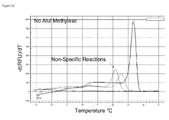
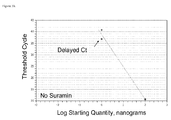
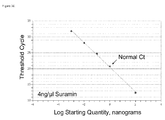
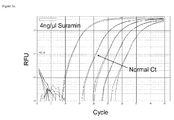
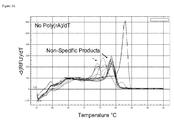
- RT inhibition in RT-PCR can be reduced by performing RT-PCR in the presence of suramin, Sso7d, a phosphoro oligodeoxynucleotide, AluI methylase or poly(rA)(dT) n , or any combination thereof.
- RT-PCR is one molecular manipulation used to generate and replicate a nucleic acid derived from an RNA template.
- RT-PCR is described herein as an exemplary protocol capable of utilizing the compositions and methods of the present invention. It will be readily understood by one of ordinary skill in the art that the present invention has utility in other processes, which involve a combination of reverse transcriptase and DNA polymerase activity.
- RT-PCR involves two separate molecular syntheses: (i) the synthesis of cDNA from an RNA template; and (ii) the replication of the newly synthesized cDNA through PCR amplification.
- the present invention provides a method for amplifying a nucleic acid molecule, including mixing an RNA template with a composition having a reverse transcriptase, a DNA polymerase and a RT inhibition reducer that can be Sso7d, Sac7d, Sac7e, Sso7e, AluI methylase, suramin, a phosphorothioate oligodeoxycytosine, a phosphorothioate oligodeoxyadenine, a phosphorothioate oligodeoxythymine or poly(rA)(dT).
- the method also includes incubating the mixture under conditions sufficient to synthesize a DNA molecule complementary to all or a portion of the RNA template, thereby amplifying the nucleic acid molecule.
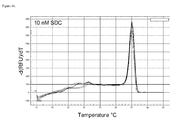
- the present invention provides a composition including a reverse transcriptase, a DNA polymerase, and a RT inhibition reducer that can be Sso7d, Sac7d, Sac7e, Sso7e, AluI methylase, suramin, a phosphorothioate oligodeoxycytosine (SdC), a phosphorothioate oligodeoxyadenine, a phosphorothioate oligodeoxythymine or poly(rA)(dT).
- a reverse transcriptase a DNA polymerase
- a RT inhibition reducer that can be Sso7d, Sac7d, Sac7e, Sso7e, AluI methylase, suramin, a phosphorothioate oligodeoxycytosine (SdC), a phosphorothioate oligodeoxyadenine, a phosphorothioate oligodeoxythymine or poly(
- the present invention provides a kit including a first solution mixture including a DNA polymerase and a RT inhibition reducer that can be Sso7d, Sac7d, Sac7e, Sso7e, AluI methylase, suramin, a phosphorothioate oligodeoxycytosine (SdC), a phosphorothioate oligodeoxyadenine, a phosphorothioate oligodeoxythymine or poly(rA)(dT).
- the kit optionally includes at least one of buffers, nucleotides, salts, stabilizers, instructions, primers, RNA templates, dyes and nuclease-free water.
- probe oligonucleotides that are structured such that a change in fluorescence is generated when the oligonucleotide(s) is hybridized to a target nucleic acid.
- FRET fluorescence resonance energy transfer
- oligonucleotides are designed to hybridize in a head-to-tail orientation with the fluorophores separated at a distance that is compatible with efficient energy transfer.
- labeled oligonucleotides that are structured to emit a signal when bound to a nucleic acid or incorporated into an extension product include: ScorpionsTM probes (e.g., Whitcombe et al., Nature Biotechnology 17:804-807, 1999 , and U.S. Pat. No. 6,326,145 ), Sunrise (or AmpliflourTM) primers (e.g., Nazarenko et al., Nuc. Acids Res. 25:2516-2521, 1997 , and U.S. Pat. No.
- the present invention provides a method for amplifying a nucleic acid molecule.
- the method involves mixing an RNA template with a composition having a reverse transcriptase, a DNA polymerase and a RT inhibition reducer.
- the RT inhibition reducer can be Sso7d, Sac7d, Sac7e, Sso7e, AluI methylase, suramin, a phosphorothioate oligodeoxycytosine, a phosphorothioate oligodeoxyadenine, a phosphorothioate oligodeoxythymine and poly(rA)(dT).
- the mixing forms a mixture that is incubated under conditions sufficient to synthesize a DNA molecule complementary to all or a portion of the RNA template, thereby amplifying the nucleic acid molecule.
- RNA template oligo dT, random hexamer, or gene-specific primer
- cDNA complementary DNA
- cDNA is defined as any DNA molecule whose nucleic acid sequence is complementary to an RNA molecule.
- RNA template is defined as any RNA molecule used to provide a nucleic acid sequence from which a cDNA molecule can be synthesized.
- the synthesis of cDNA from an RNA template is typically accomplished by utilizing a nucleic acid polymerase that exhibits reverse transcriptase activity.
- reverse transcriptase activity refers to the ability of an enzyme to polymerize a cDNA molecule from an RNA template, and reverse transcriptase broadly refers to any enzyme possessing reverse transcriptase activity.
- Reverse transcription typically occurs in a temperature range from about 20° C to about 75° C, preferably from about 35° C to about 70° C.
- the cDNA is incubated (in an appropriate buffering agent) under conditions sufficient for replication of the cDNA molecule.
- the reaction mixture can be the same as that of the previous reverse transcription reaction mixture, as employed in coupled (also called continuous, or one-step) RT-PCR, or the reaction mixture can comprise an aliquot of the previous reverse transcription reaction mixture and can be further modified for nucleic acid replication, as in uncoupled (or two-step) RT-PCR.
- Components of a replication reaction mixture typically include a nucleic acid template (in this instance the cDNA); DNA primers; a nucleic acid polymerase; and the appropriate nucleotide building blocks needed for nucleic acid synthesis.
- Nucleic acid replication refers to the polymerization of a nucleic acid whose sequence is determined by, and complementary to, another nucleic acid.
- DNA replication is synonymous with DNA amplification.
- DNA amplification occurs repetitively, thus replicating both strands of the nucleic acid sequence, i.e., DNA complementary to the RNA template, and DNA whose nucleic acid sequence is substantially identical to the RNA template.
- Repetitive, or cyclic, DNA replication can be advantageously accomplished using a thermostable polymerase in a Polymerase Chain Reaction (PCR).
- PCR is a technique well known in the art. PCR is used to amplify nucleic acids by subjecting a reaction mixture to cycles of: (i) nucleic acid denaturation, (ii) oligonucleotide primer annealization, and (iii) nucleic acid polymerization. Preferred reaction conditions for amplification comprise thermocycling, i.e., alternating the temperature of the reaction mixture to facilitate each of the steps of the PCR cycle. PCR is typically extended through multiple cycles of denaturation, annealization and replication, augmented (optionally and preferably) with an initial prolonged denaturation step and a final prolonged extension (polymerization) step.
- Thermocycling typically occurs within a temperature range of between about 23° C to about 100° C, and preferably between about 37° C to about 95° C.
- Nucleic acid denaturation typically occurs between about 90° C to about 100° C, preferably about 94° C.
- Annealization typically occurs between about 37° C to about 75° C preferably about 60° C.
- Polymerization typically occurs between about 55° C to about 80° C, preferably about 72° C.
- the number of thermocycles varies dramatically, depending upon practitioner preference, the quantity of DNA template used, and the quantity of DNA product desired.
- the number of PCR cycles ranges from about 5 to about 99, more preferably greater than about 20 cycles, most preferably about 40 cycles.
- Primers should be designed according to standard PCR guidelines with a length of 18 to 25 nucleotides, and a GC content of 40% to 65%. Primer design should avoid internal secondary structure, and complementarity at the 3' ends within each primer and primer pair. Optimal results can require titration of primer concentration between 100 and 500 nM. A final concentration of 300 nM per primer is effective for most reactions. In general, reaction efficiency and/or specificity can be optimized using equal concentrations of each primer. For best results, amplicon size should be limited to 50-200 bp for quantitative RT-PCR.
- Suggested input quantities of template are: 0.1 pg to 100 ng total RNA; 10 fg to 100 ng polyA(+) RNA.
- First strand synthesis can be performed between 40°C and 52°C. Optimal results are generally obtained with a 10-minute incubation at 504°C.
- the template RNA can be any ribonucleic acid of interest, known or unknown to the practitioner. Template RNA can be artificially synthesized or isolated from natural sources.
- the RNA template can be a ribonucleic acid such as RNA, mRNA, piRNA, tRNA, rRNA, ncRNA, gRNA, shRNA, siRNA, snRNA, miRNA and snoRNA.
- RNA is mRNA. More preferably the RNA is biologically active or encodes a biologically active polypeptide.
- the RNA template can be present in any useful amount. In some embodiments, the RNA template concentration is 50 pg/ ⁇ L or less. One of skill in the art will appreciate that other RNA template concentrations are useful in the present invention.
- Reverse transcriptases useful in the present invention can be any polymerase that exhibits reverse transcriptase activity.
- Preferred enzymes include those that exhibit reduced RNase H activity.
- Several reverse transcriptases are known in the art and are commercially available (e.g., from Boehringer Mannheim Corp., Indianapolis, Ind.; Life Technologies, Inc., Rockville, Md.; New England Biolabs, Inc., Beverley, Mass.; Perkin Elmer Corp., Norwalk, Conn.; Pharmacia LKB Biotechnology, Inc., Piscataway, N.J.; Qiagen, Inc., Valencia, Calif; Stratagene, La Jolla, Calif.).
- the reverse transcriptase can be Avian Myeloblastosis Virus reverse transcriptase (AMV-RT), Moloney Murine Leukemia Virus reverse transcriptase (M-MLV-RT), Human Immunovirus reverse transcriptase (HIV-RT), EIAV-RT, RAV2-RT, C . hydrogenoformans DNA Polymerase, rTth DNA polymerase, SUPERSCRIPT I, SUPERSCRIPT II, and mutants, variants and derivatives thereof. It is to be understood that a variety of reverse transcriptases can be used in the present invention, including reverse transcriptases not specifically disclosed above, without departing from the scope or preferred embodiments thereof. In some other embodiments, the reverse transcriptase is M-MLV reverse transcriptase.
- DNA polymerases useful in the present invention can be any polymerase capable of replicating a DNA molecule.
- Preferred DNA polymerases are thermostable polymerases, which are especially useful in PCR.
- Thermostable polymerases are isolated from a wide variety of thermophilic bacteria, such as Thermus aquaticus (Taq), Thermus brockianus (Tbr), Thermus flavus (Tfl), Thermus ruber (Tru), Thermus thermophilus (Tth), Thermococcus litoralis (Tli) and other species of the Thermococcus genus, Thermoplasma acidophilum (Tac), Thermotoga neapolitana (Tne), Thermotoga maritima (Tma), and other species of the Thermotoga genus, Pyrococcus furiosus (Pfu), Pyrococcus woesei (Pwo) and other species of the Pyrococcus
- DNA polymerases are known in the art and are commercially available (e.g., from Boehringer Mannheim Corp., Indianapolis, Ind.; Life Technologies, Inc., Rockville, Md; New England Biolabs, Inc., Beverley, Mass.; Perkin Elmer Corp., Norwalk, Conn.; Pharmacia LKB Biotechnology, Inc., Piscataway, N.J.; Qiagen, Inc., Valencia, Calif; Stratagene, La Jolla, Calif.).
- the DNA polymerase can be Taq, Tbr, Tfl, Tru, Tth, Tli, Tac, Tne, Tma, Tih, Tfi, Pfu, Pwo, Kod, Bst, Sac, Sso, Poc, Pab, Mth, Pho, ES4, VENTTM, DEEPVENTTM, and active mutants, variants and derivatives thereof. It is to be understood that a variety of DNA polymerases can be used in the present invention, including DNA polymerases not specifically disclosed above, without departing from the scope or preferred embodiments thereof. In some other embodiments, the DNA polymerase is Taq DNA polymerase. One of skill in the art will appreciate that other DNA polymerases are useful in the present invention.
- DNA polymerases useful in the method of the present invention include, but are not limited to, thermophilic DNA polymerases.
- the reverse transcriptase can be present in any appropriate ratio to the DNA polymerase. In some embodiments, the ratio of reverse transcriptase to DNA polymerase in unit activity is greater than or equal to 3. One of skill in the art will appreciate that other reverse transcriptase to DNA polymerase ratios are useful in the present invention.
- the RT inhibition reducer can be any moiety that reduces reverse transcriptase inhibition in RT-PCR.
- the present invention provides a RT inhibition reducer that can be Sso7d, Sac7d, Sac7e, Sso7e, AluI methylase, suramin, a phosphorothioate oligodeoxycytosine, a phosphorothioate oligodeoxyadenine, a phosphorothioate oligodeoxythymine and poly(rA)(dT).
- a RT inhibition reducer can be Sso7d, Sac7d, Sac7e, Sso7e, AluI methylase, suramin, a phosphorothioate oligodeoxycytosine, a phosphorothioate oligodeoxyadenine, a phosphorothioate oligodeoxythymine and poly(rA)(dT).
- the RT inhibition reducer is a sequence non-specific double stranded DNA binding protein.
- the sequence non-specific double stranded DNA binding protein is functional at any temperature. In other embodiments, the sequence non-specific double stranded DNA binding protein is functional below 70° C. In some other embodiments, the sequence non-specific double stranded DNA binding protein is functional below 55° C.
- sequence non-specific double stranded DNA binding protein can be a DNA modification enzyme including, but not limited to, methylases such as AluI methylase, double strand DNA-specific nucleases or recombinases.
- the DNA modification enzymes useful in the method of the present invention have reduced or no enzymatic activity but maintain their ability to bind to the dsDNA substrate.
- sequence non-specific double stranded DNA binding protein can be Sso7d, Sac7d, Sac7e or Sso7e.
- sequence non-specific double stranded DNA binding proteins are useful in the present invention.
- the present invention provides a sulfonic-acid molecule as the RT inhibition reducer.
- the sulfonic-acid molecule can be a sulfonic-acid salt such as ammonium sulfate, magnesium sulfate, manganese sulfate, potassium sulfate and sodium sulfate.
- the sulfonic-acid molecule can be a buffer such as AMPSO (3-[(1,1-dimethyl-2-hydroxyethyl)amino]-2-hydroxypropanesulfonic acid), BES (N,N-bis[2-hydroxyethyl]-2-aminomethanesulfonic acid), MOPS (3-N-morpholino)-propanesulfonic acid), MOPSO (3-N-morpholino)-2-hydroxypropanesulfonic acid, TES (2- ⁇ [tris-(hydroxymethyl)methyl]amino ⁇ ethanesulfonic acid), HEPES (N-2-hydroxyethylpiperazine-N'-2-ethansulfonic acid), HEPPS (N-2-hydroxyethylpiperazine-N'-3-propanesulfonic acid), HEPPSO (N-2-hydroxyethylpiperazine-N'-2-hydroxypropanesulfonic acid), TAPS (TES(3- ⁇ [tris-
- the sulfonic-acid molecule can be suramin. In yet other embodiments, the sulfonic-acid molecule can be a sulfonic-acid polymer.
- sulfonic-acid molecules are useful as the RT inhibition reducer of the present invention.
- the RT inhibition reducer can be a phosphorothioate oligodeoxynucleotide of the formula:
- the RT inhibition reducer is a duplex of DNA and RNA comprising an RNA tail.
- the DNA portion of the duplex can separately be any suitable nucleotide sequence, including homogeneous and heterogeneous sequences including dA, dC, dG and dT in any combination.
- the DNA portion of the duplex can separately be any suitable nucleotide sequence, including homogeneous and heterogeneous sequences including rA, rC, rG and rT in any combination.
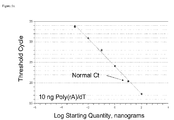
- the DNA portion is oligo(dT) and the RNA portion is poly(rA).
- the RNA tail can be any appropriate tail such as poly(rA), poly(rC), poly(rG) or poly(rT). In other embodiments, the RNA tail is poly(rA).
- the RT inhibition reducer can be present in any useful amount. In some embodiments, the RT inhibition reducer is present in an amount from about 0.01 nM to about 1000 nM. In other embodiments, the RT inhibition reducer is present in an amount from about 0.1 nM to about 100 nM. In still other embodiments, the RT inhibition reducer is present in an amount from about 1 nM to about 10 nM. One of skill in the art will appreciate that other amounts of the RT inhibition reducer are useful in the present invention.
- the method of the present invention can include a nucleic acid primer.
- Oligonucleotide primers useful in the present invention can be any oligonucleotide of two or more nucleotides in length.
- PCR primers are about 15 to about 30 bases in length, and are not palindromic (self-complementary) or complementary to other primers that can be used in the reaction mixture.
- Primers can be, but are not limited to, random primers, homopolymers, or primers specific to a target RNA template (e.g., a sequence specific primer).
- Oligonucleotide primers are oligonucleotides used to hybridize to a region of a target nucleic acid to facilitate the polymerization of a complementary nucleic acid.
- primers serve to facilitate reverse transcription of a first nucleic acid molecule complementary to a portion of an RNA template (e.g., a cDNA molecule), and also to facilitate replication of the nucleic acid (e.g., PCR amplification of DNA).
- any primer can be synthesized by a practitioner of ordinary skill in the art or can be purchased from any of a number of commercial venders (e.g., from Boehringer Mannheim Corp., Indianapolis, Ind.; New England Biolabs, Inc., Beverley, Mass.; Pharmacia LKB Biotechnology, Inc., Piscataway, N.J.; Integrated DNA Technology, Coralville, Iowa; Eurogentec, San Diego, CA; Sigma Genesys, The Woodlands, TX). It is to be understood that a vast array of primers can be useful in the present invention, including those not specifically disclosed herein, without departing from the scope or preferred embodiments thereof.
- the nucleic acid primer is complementary to a portion of the RNA template.
- Nucleotide bases useful in the present invention can be any nucleotide useful in the polymerization of a nucleic acid. Nucleotides can be naturally occurring, unusual, modified, derivative, or artificial. Nucleotides can be unlabeled, or detectably labeled by methods known in the art (e.g., using radioisotopes, vitamins, fluorescent or chemiluminescent moieties, dioxigenin).
- the nucleotides are deoxynucleoside triphosphates, dNTPs (e.g., dATP, dCTP, dGTP, dTTP, dITP, dUTP, ⁇ -thio-dNITs, biotin-dUTP, fluorescein-dUTP, digoxigenin-dUTP, 7-deaza-dGTP).
- dNTPs are also well known in the art and are commercially available venders (e.g., from Boehringer Mannheim Corp., Indianapolis, Ind.; New England Biolabs, Inc., Beverley, Mass.; Pharmacia LKB Biotechnology, Inc., Piscataway, N.J.).
- the nucleotides of the present invention can be present in any concentration. In some embodiments, the nucleotides is present in an amount from about 1 ⁇ M to about 1000 ⁇ M. In other embodiments, the nucleotides is present in an amount from about 10 ⁇ M to about 750 ⁇ M. In still other embodiments, the nucleotides is present in an amount from about 100 ⁇ M to about 500 ⁇ M.
- concentrations of nucleotides are useful in the present invention.
- Buffering agents and salts useful in the present invention provide appropriate stable pH and ionic conditions for nucleic acid synthesis, e.g., for reverse transcriptase and DNA polymerase activity.
- buffers and salt solutions and modified buffers are known in the art that can be useful in the present invention, including agents not specifically disclosed herein.
- Preferred buffering agents include, but are not limited to, TRIS, TRICINE, BIS-TRICINE, HEPES, MOPS, TES, TAPS, PIPES, CAPS.
- Preferred salt solutions include, but are not limited to solutions of, potassium acetate, potassium sulfate, potassium chloride, ammonium sulfate, ammonium chloride, ammonium acetate, magnesium chloride, magnesium acetate, magnesium sulfate, manganese chloride, manganese acetate, manganese sulfate, sodium chloride, sodium acetate, lithium chloride, and lithium acetate.
- the buffering agents of the present invention can be present in any concentration. In some embodiments, the buffer is present in an amount from about 0.1 mM to about 1000 mM. In other embodiments, the buffer is present in an amount from about 1 mM to about 500 mM. In still other embodiments, the buffer is present in an amount from about 5 mM to about 250 mM. One of skill in the art will appreciate that other concentrations of buffer are useful in the present invention.
- the salts of the present invention can be present in any concentration. In some embodiments, the salt is present in an amount from about 0.01 mM to about 1000 mM. In other embodiments, the salt is present in an amount from about 0.1 mM to about 500 mM. In still other embodiments, the salt is present in an amount from about 1 mM to about 100 mM.
- concentrations of salts are useful in the present invention.
- additives capable of facilitating reverse transcription, replication, and/or a combination of both reactions are known in the art.
- agents for facilitating RT-PCR agents for facilitating RT-PCR
- one or more of these additives can be incorporated in the present compositions to optimize the generation and replication of nucleic acids from a ribonucleic acid template.
- Additives can be organic or inorganic compounds.
- Inhibition-relieving agents useful in the present invention include, but are not limited to, polypeptides such as; human serum albumin, bovine serum albumin (BSA), ovalbumin, albumax, casein, gelatin, collagen, globulin, lysozyme, transferrin, myoglobin, hemoglobin, ⁇ -lactalbumin, fumarase, glyceraldehyde-3-phosphate dehydrogenase (GAPDH), amyloglucosidase, carbonic anhydrase, ⁇ -lactoglobulin, aprotinin, soybean trypsin inhibitor, tiypsinogen, phosphorylase b, myosin, actin, ⁇ -galactosidase, catalase, tryptic soy digests, tryptose, lectins, E.
- polypeptides such as; human serum albumin, bovine serum albumin (BSA), ovalbumin, albumax, casein,
- nonpolypeptide additives include, but are not limited to; tRNA, rRNA, sulfur-containing compounds, acetate-containing compounds, dimethylsulfoxide (DMSO), glycerol, formamide, betain, tetramethylammonium chloride (TMAC), polyethylene glycol (PEG), TWEEN 20 non-ionic surfactant, NP 40, non-ionic surfactant, ectoine, and polyols.
- Preferred additives include DMSO, glycerol, formamide, betain, TMAC, PEG, TWEEN 20 non-ionic surfactant, NP 40 non-ionic surfactant, ectoine, polyols, E. coli (SSB) protein, Phage T4 gene 32 protein, BSA.
- amplification can be performed in the presence of agents which provide a means for detection of the amplification products.
- the reaction vessel can already contain appropriate hybridization probes for homogenous real time detection of amplification products.
- these probes can be appropriately labeled with fluorescent moieties.
- Other components include dyes that bind to double-stranded DNA.
- the dye can be SYBR green.
- One of skill in the art will appreciate that other dyes are useful in the present invention.
- the present invention also provides compositions having a reverse transcriptase, a DNA polymerase, and a RT inhibition reducer that can be Sso7d, Sac7d, Sac7e, Sso7e, AluI methylase, suramin, a phosphorothioate oligodeoxycytosine, a phosphorothioate oligodeoxyadenine, a phosphorothioate oligodeoxythymine and poly(rA)(dT).
- the RT inhibition reducer is phosphorothioate oligodeoxycytosine (SdC).
- the composition can also include at least one of buffers, nucleotides, salts, stabilizers, primers or nuclease-free water.
- the present invention provides a kit having a first solution mixture including a DNA polymerase and a RT inhibition reducer that can be Sso7d, Sac7d, Sac7e, Sso7e, AluI methylase, suramin, a phosphorothioate oligodeoxycytosine, a phosphorothioate oligodeoxyadenine, a phosphorothioate oligodeoxythymine or poly(rA)(dT).
- the kit optionally includes at least one of buffers, nucleotides, salts, stabilizers, instructions, primers, RNA templates, dyes and nuclease-free water.
- RNA templates Both solution mixtures together with primers and RNA template will enable RT-PCR of the selected RNA target.
- Any of the optional buffers, nucleotides, salts, stabilizers, instructions, primers, RNA templates and nuclease-free water can be individually present in either the first solution, or present in one or more separate solutions.
- the kit also includes a reverse transcriptase.
- the reverse transcriptase is in the first solution.
- the kit includes a second solution having the reverse transcriptase.
- the first solution further comprises a buffer, nucleotides and salts, and a third solution comprises nuclease-free water.
- the first solution further comprises a buffer, nucleotides, a dye and salts, and a third solution comprises nuclease-free water.
- the RT inhibition reducer is a member selected from the group consisting of Sso7d, Alul methylase, suramin, phosphorothioate oligodeoxycytosine and poly(rA)(dT). In other embodiments, the RT inhibition reducer is a phosphorothioate oligodeoxycytosine (SdC). In some other embodiments, the DNA polymerase is Taq. In still other embodiments, the reverse transcriptase is M-MLV reverse transcriptase. In yet other embodiments, the salts can each be a magnesium salt, an ammonium salt, a potassium or a combination thereof. In still yet other embodiments, the kit can further comprise nuclease-free water.
- Stabilizers useful in the present invention include, but are not limited to, polyol (glycerol, threitol, etc.), a polyether including cyclic polyethers, polyethylene glycol, organic or inorganic salts, such as ammonium sulfate, sodium sulfate, sodium molybdate, sodium tungstate, organic sulfonate, etc., sugars, polyalcohols, amino acids, peptides or carboxylic acids, a quencher and/or scavenger such, as mannitol, glycerol, reduced glutathione, superoxide dismutase, bovine serum albumin (BSA) or gelatine, spermidine, dithiothreitol (or mercaptoethanol) and/or detergents such as TRITON® X-100 [Octophenol(ethyleneglycolether)], THESIT® [Polyoxyethylene 9 lauryl ether (Polidocanol C 12 E
- compositions and kits of the present invention can also include hybridization probes.
- a hybridization probe is a fragment of DNA that is used to detect the presence of nucleotide sequences in DNA or RNA samples. The probe hybridizes to a complementary portion of single-stranded nucleic acid (DNA or RNA).
- the hybridization probes can be any length, usually 100-1000 bases long.
- the hybridization probes useful in the present invention can be labeled, radioactively or via a fluorophore, for example, in order to facilitate detection.
- dNTP dATP, dCTP, dGTP and dTTP
- magnesium chloride stabilizers and SdC
- reaction mixture is then incubated in a real-time thermal detection system as follows:
- Kits can be prepared according to the following concentrations: Component Kit 1 Kit 2 Kit 3 (Conc.) Kit 4 (Conc.) First Reaction Mixture (Conc.) Second Reaction Mixture (Conc.) First Reaction Mixture (Conc.) Second Reaction Mixture (Conc.) Buffer Hepes 10-100 mM Tris 20-140 mM Tris 20-140 mM Hepes 10-100 mM DNA Polymerase iTaq 25-50 Units/mL iTaq 25-50 Units/mL iTaq 25-50 Units/mL iTaq 25-50 Units/mL iTaq 25-50 Units/mL dNTP 200-400 M 200-400 M 200-400 M 200-400 M 200-400 M Salt Mg 2+ 1-10 mM Mg 2+ 1-10 mM Mg 2+ 1-10 mM Mg 2+ 1-10 mM (NH 4 )SO 4 2-15 mM KCl 10-140 mM KC1
- RT inhibition reducer is phosphorothioate oligodeoxycytosine.
- a composition comprising a reverse transcriptase, a DNA polymerase, and a RT inhibition reducer selected from the group consisting of Sso7d, Sac7d, Sac7e, Sso7e, AluI methylase, suramin, a phosphorothioate oligodeoxycytosine (SdC), a phosphorothioate oligodeoxyadenine, a phosphorothioate oligodeoxythymine and poly(rA)(dT).
- a reverse transcriptase a DNA polymerase
- a RT inhibition reducer selected from the group consisting of Sso7d, Sac7d, Sac7e, Sso7e, AluI methylase, suramin, a phosphorothioate oligodeoxycytosine (SdC), a phosphorothioate oligodeoxyadenine, a phosphorothioate oligodeoxythy
- composition as defined above, wherein the RT inhibition reducer is phosphorothioate oligodeoxycytosine.
- composition as defined above further comprising at least one member selected from the group consisting of buffers, nucleotides, salts, stabilizers, primers and nuclease-free water.
- a kit comprising:
- kit as defined above, wherein the kit further comprises a reverse transcriptase.
- the kit as defined above wherein the first solution mixture further comprises a reverse transcriptase.
- kit as defined above, wherein the kit further comprises a second solution mixture comprising a reverse transcriptase.
- RT inhibition reducer is a member selected from the group consisting of Sso7d, AluI methylase, suramin, phosphorothioate oligodeoxycytosine and poly(rA)(dT).
- RT inhibition reducer is phosphorothioate oligodeoxycytosine.
- DNA polymerase is Taq.
- the salts are selected from the group consisting of a magnesium salt, an ammonium salt, a potassium salt and a combination thereof.
- kit as defined above, further comprising nuclease-free water.
Landscapes
- Chemical & Material Sciences (AREA)
- Organic Chemistry (AREA)
- Life Sciences & Earth Sciences (AREA)
- Health & Medical Sciences (AREA)
- Proteomics, Peptides & Aminoacids (AREA)
- Zoology (AREA)
- Wood Science & Technology (AREA)
- Engineering & Computer Science (AREA)
- Chemical Kinetics & Catalysis (AREA)
- Molecular Biology (AREA)
- Biochemistry (AREA)
- Genetics & Genomics (AREA)
- General Health & Medical Sciences (AREA)
- Biophysics (AREA)
- Analytical Chemistry (AREA)
- Physics & Mathematics (AREA)
- Immunology (AREA)
- Bioinformatics & Cheminformatics (AREA)
- General Engineering & Computer Science (AREA)
- Biotechnology (AREA)
- Microbiology (AREA)
- Gastroenterology & Hepatology (AREA)
- Medicinal Chemistry (AREA)
- Measuring Or Testing Involving Enzymes Or Micro-Organisms (AREA)
- Enzymes And Modification Thereof (AREA)
Applications Claiming Priority (3)
| Application Number | Priority Date | Filing Date | Title |
|---|---|---|---|
| US451607P | 2007-11-27 | 2007-11-27 | |
| PCT/US2008/084736 WO2009070604A1 (en) | 2007-11-27 | 2008-11-25 | Reduced inhibition of one-step rt-pcr |
| EP08854779.9A EP2212430B1 (de) | 2007-11-27 | 2008-11-25 | Reduzierte hemmung einer einstufigen rt-pcr |
Related Parent Applications (1)
| Application Number | Title | Priority Date | Filing Date |
|---|---|---|---|
| EP08854779.9A Division EP2212430B1 (de) | 2007-11-27 | 2008-11-25 | Reduzierte hemmung einer einstufigen rt-pcr |
Publications (2)
| Publication Number | Publication Date |
|---|---|
| EP3029146A1 true EP3029146A1 (de) | 2016-06-08 |
| EP3029146B1 EP3029146B1 (de) | 2018-08-01 |
Family
ID=40670059
Family Applications (2)
| Application Number | Title | Priority Date | Filing Date |
|---|---|---|---|
| EP16151818.8A Active EP3029146B1 (de) | 2007-11-27 | 2008-11-25 | Reduzierte hemmung einer einstufigen rt-pcr |
| EP08854779.9A Active EP2212430B1 (de) | 2007-11-27 | 2008-11-25 | Reduzierte hemmung einer einstufigen rt-pcr |
Family Applications After (1)
| Application Number | Title | Priority Date | Filing Date |
|---|---|---|---|
| EP08854779.9A Active EP2212430B1 (de) | 2007-11-27 | 2008-11-25 | Reduzierte hemmung einer einstufigen rt-pcr |
Country Status (5)
| Country | Link |
|---|---|
| US (3) | US8338094B2 (de) |
| EP (2) | EP3029146B1 (de) |
| JP (1) | JP5702148B2 (de) |
| CA (2) | CA2706444C (de) |
| WO (1) | WO2009070604A1 (de) |
Cited By (1)
| Publication number | Priority date | Publication date | Assignee | Title |
|---|---|---|---|---|
| EP4234715A4 (de) * | 2020-11-16 | 2024-09-18 | Beijing Synsortech Co., Ltd. | Verfahren zum testen einer zielnukleinsäure in einer probe |
Families Citing this family (13)
| Publication number | Priority date | Publication date | Assignee | Title |
|---|---|---|---|---|
| CN103703141B (zh) * | 2011-04-08 | 2016-08-17 | 伯乐实验室公司 | 具有降低的非特异性活性的pcr反应混合物 |
| JP6060447B2 (ja) | 2011-04-08 | 2017-01-18 | バイオ−ラッド ラボラトリーズ インコーポレーティッド | 非特異的活性が低下したSso7ポリメラーゼコンジュゲート |
| EP2559764A1 (de) * | 2011-08-17 | 2013-02-20 | Qiagen GmbH | Zusammensetzung und Verfahren für reverse Transkriptase-Polymerase-Kettenreaktion (RT-PCR )mit einem anionischen Polymer |
| WO2016028671A1 (en) * | 2014-08-19 | 2016-02-25 | Bio-Rad Laboratories, Inc. | Rna amplification methods |
| US10858694B2 (en) | 2014-12-23 | 2020-12-08 | Global Life Sciences Solutions Operations UK Ltd | Methods and reagents for reverse-transcription polymerase chain reaction |
| US10822645B1 (en) | 2014-12-23 | 2020-11-03 | Global Life Sciences Solutions Operations UK Ltd | Methods and reagents for reverse-transcription polymerase chain reaction |
| US10968478B2 (en) | 2014-12-23 | 2021-04-06 | Global Life Sciences Solutions Operations UK Ltd | Methods and reagents for reverse-transcription polymerase chain reaction |
| US9617587B1 (en) | 2016-04-04 | 2017-04-11 | Nat Diagnostics, Inc. | Isothermal amplification components and processes |
| US11299777B2 (en) | 2016-04-04 | 2022-04-12 | Nat Diagnostics, Inc. | Isothermal amplification components and processes |
| US20220154180A1 (en) * | 2019-03-13 | 2022-05-19 | Toyobo Co., Ltd. | Production and amplification of nucleic acids |
| WO2020264067A1 (en) | 2019-06-25 | 2020-12-30 | Bio-Rad Laboratories, Inc | Compositions and methods for enhancing reverse transcriptase activity and/or reducing the inhibition of reverse transcriptase |
| WO2021177041A1 (ja) * | 2020-03-02 | 2021-09-10 | 東洋紡株式会社 | 非特異的な核酸増幅を抑制する方法 |
| EP4157856A2 (de) | 2020-05-26 | 2023-04-05 | Qiagen Beverly, LLC | Polymeraseenzym |
Citations (2)
| Publication number | Priority date | Publication date | Assignee | Title |
|---|---|---|---|---|
| WO1990012022A1 (en) * | 1989-03-31 | 1990-10-18 | University Patents, Inc. | Polynucleotide phosphorodithioates as therapeutic agents for retroviral infections |
| US6495350B1 (en) * | 1997-04-03 | 2002-12-17 | Invitrogen Corporation | Compositions comprising a M-MLV reverse transcriptase and a DNA polymerase and use thereof |
Family Cites Families (13)
| Publication number | Priority date | Publication date | Assignee | Title |
|---|---|---|---|---|
| US5407800A (en) * | 1986-08-22 | 1995-04-18 | Hoffmann-La Roche Inc. | Reverse transcription with Thermus thermophilus polymerase |
| US5264423A (en) | 1987-03-25 | 1993-11-23 | The United States Of America As Represented By The Department Of Health And Human Services | Inhibitors for replication of retroviruses and for the expression of oncogene products |
| JPH08131171A (ja) * | 1994-11-11 | 1996-05-28 | Asahi Chem Ind Co Ltd | 逆転写酵素の安定化組成物 |
| ATE330031T1 (de) | 1998-07-31 | 2006-07-15 | Gen Probe Inc | Reversibel inhibierende sonden |
| US6406891B1 (en) * | 1998-09-28 | 2002-06-18 | Board Of Regents, The University Of Texas System | Dual RT procedure for cDNA synthesis |
| US6300069B1 (en) | 1999-05-03 | 2001-10-09 | Qiagen Gmbh | Generation and amplification of nucleic acids from ribonucleic acids |
| US6830902B1 (en) | 1999-07-02 | 2004-12-14 | Invitrogen Corporation | Compositions and methods for enhanced sensitivity and specificity of nucleic acid synthesis |
| US6627424B1 (en) * | 2000-05-26 | 2003-09-30 | Mj Bioworks, Inc. | Nucleic acid modifying enzymes |
| US6667165B2 (en) | 2001-11-13 | 2003-12-23 | Eppendorf Ag | Method and compositions for reversible inhibition of thermostable polymerases |
| EP1456394B2 (de) * | 2001-11-28 | 2011-04-27 | Bio-Rad Laboratories, Inc. | Verfahren zur verwendung verbesserter polymerasen |
| US7666645B2 (en) * | 2002-10-23 | 2010-02-23 | Bio-Rad Laboratories, Inc. | Sso7-polymerase conjugate proteins |
| EP1594982A4 (de) | 2003-01-29 | 2006-04-12 | Quanta Biosciences Inc | Verfahren und zusammensetzungen zum nachweis und zur quantifizierung von rna |
| US20060275792A1 (en) | 2004-11-15 | 2006-12-07 | Lee Jun E | Enhancement of nucleic acid amplification using double-stranded DNA binding proteins |
-
2008
- 2008-11-25 CA CA2706444A patent/CA2706444C/en active Active
- 2008-11-25 JP JP2010536139A patent/JP5702148B2/ja active Active
- 2008-11-25 US US12/323,256 patent/US8338094B2/en active Active
- 2008-11-25 CA CA2964559A patent/CA2964559C/en active Active
- 2008-11-25 EP EP16151818.8A patent/EP3029146B1/de active Active
- 2008-11-25 WO PCT/US2008/084736 patent/WO2009070604A1/en not_active Ceased
- 2008-11-25 EP EP08854779.9A patent/EP2212430B1/de active Active
-
2012
- 2012-11-19 US US13/681,326 patent/US9200318B2/en active Active
-
2015
- 2015-10-29 US US14/926,461 patent/US10301675B2/en active Active
Patent Citations (2)
| Publication number | Priority date | Publication date | Assignee | Title |
|---|---|---|---|---|
| WO1990012022A1 (en) * | 1989-03-31 | 1990-10-18 | University Patents, Inc. | Polynucleotide phosphorodithioates as therapeutic agents for retroviral infections |
| US6495350B1 (en) * | 1997-04-03 | 2002-12-17 | Invitrogen Corporation | Compositions comprising a M-MLV reverse transcriptase and a DNA polymerase and use thereof |
Non-Patent Citations (3)
| Title |
|---|
| DIRANI-DIAB EL R ET AL: "PHOSPHOROTHIOATE OLIGONUCLEOTIDES DERIVED FROM HUMAN IMMUNODEFICIENCY VIRUS TYPE 1 (HIV-1) PRIMER TRNALYS3 ARE STRONG INHIBITORS OF HIV-1 REVERSE TRANSCRIPTASE AND ARREST VIRAL REPLICATION IN INFECTED CELLS", ANTIMICROBIAL AGENTS AND CHEMOTHERAPY, AMERICAN SOCIETY FOR MICROBIOLOGY, US, vol. 41, no. 10, 1 October 1997 (1997-10-01), pages 2141 - 2148, XP002905459, ISSN: 0066-4804 * |
| SELLNER L N ET AL: "REVERSE TRANSCRIPTASE INHIBITS TAQ POLYMERASE ACTIVITY", NUCLEIC ACIDS RESEARCH, OXFORD UNIVERSITY PRESS, SURREY, GB, vol. 20, no. 7, 1 January 1992 (1992-01-01), pages 1487 - 1490, XP002913831, ISSN: 0305-1048 * |
| W. S. MARSHALL ET AL: "Inhibition of human immunodeficiency virus activity by phosphorodithioate oligodeoxycytidine.", PROCEEDINGS OF THE NATIONAL ACADEMY OF SCIENCES, vol. 89, no. 14, 15 July 1992 (1992-07-15), US, pages 6265 - 6269, XP055254986, ISSN: 0027-8424, DOI: 10.1073/pnas.89.14.6265 * |
Cited By (1)
| Publication number | Priority date | Publication date | Assignee | Title |
|---|---|---|---|---|
| EP4234715A4 (de) * | 2020-11-16 | 2024-09-18 | Beijing Synsortech Co., Ltd. | Verfahren zum testen einer zielnukleinsäure in einer probe |
Also Published As
| Publication number | Publication date |
|---|---|
| JP5702148B2 (ja) | 2015-04-15 |
| CA2964559C (en) | 2020-01-14 |
| JP2011504754A (ja) | 2011-02-17 |
| CA2706444C (en) | 2017-06-06 |
| US20130203122A1 (en) | 2013-08-08 |
| EP2212430B1 (de) | 2016-01-27 |
| EP3029146B1 (de) | 2018-08-01 |
| EP2212430A1 (de) | 2010-08-04 |
| CA2706444A1 (en) | 2009-06-04 |
| US10301675B2 (en) | 2019-05-28 |
| US20090137008A1 (en) | 2009-05-28 |
| US20160046982A1 (en) | 2016-02-18 |
| CA2964559A1 (en) | 2009-06-04 |
| WO2009070604A1 (en) | 2009-06-04 |
| EP2212430A4 (de) | 2011-01-05 |
| US9200318B2 (en) | 2015-12-01 |
| US8338094B2 (en) | 2012-12-25 |
Similar Documents
| Publication | Publication Date | Title |
|---|---|---|
| US10301675B2 (en) | Compositions and methods for reducing inhibition of RT-PCR | |
| EP0975806B1 (de) | Zusammensetzungen und verfahren der reversen transkriptase-polymerasekettenreaktion (rt-pcr) | |
| EP2744901B1 (de) | Zusammensetzung und verfahren für reverse transkriptase-polymerase-kettenreaktion (rt-pcr )mit einem anionischen polymer | |
| WO1998044161A9 (en) | Compositions and methods for reverse transcriptase-polymerase chain reaction (rt-pcr) | |
| US12331338B2 (en) | Compositions and methods for enhancing reverse transcriptase activity and/or reducing the inhibition of reverse transcriptase | |
| EP4022083B1 (de) | Zusammensetzungen und verfahren für multiplex-pcr und genetischen analyse |
Legal Events
| Date | Code | Title | Description |
|---|---|---|---|
| PUAI | Public reference made under article 153(3) epc to a published international application that has entered the european phase |
Free format text: ORIGINAL CODE: 0009012 |
|
| AC | Divisional application: reference to earlier application |
Ref document number: 2212430 Country of ref document: EP Kind code of ref document: P |
|
| AK | Designated contracting states |
Kind code of ref document: A1 Designated state(s): AT BE BG CH CY CZ DE DK EE ES FI FR GB GR HR HU IE IS IT LI LT LU LV MC MT NL NO PL PT RO SE SI SK TR |
|
| STAA | Information on the status of an ep patent application or granted ep patent |
Free format text: STATUS: REQUEST FOR EXAMINATION WAS MADE |
|
| 17P | Request for examination filed |
Effective date: 20161208 |
|
| RBV | Designated contracting states (corrected) |
Designated state(s): AT BE BG CH CY CZ DE DK EE ES FI FR GB GR HR HU IE IS IT LI LT LU LV MC MT NL NO PL PT RO SE SI SK TR |
|
| STAA | Information on the status of an ep patent application or granted ep patent |
Free format text: STATUS: EXAMINATION IS IN PROGRESS |
|
| 17Q | First examination report despatched |
Effective date: 20170321 |
|
| 17Q | First examination report despatched |
Effective date: 20170330 |
|
| GRAP | Despatch of communication of intention to grant a patent |
Free format text: ORIGINAL CODE: EPIDOSNIGR1 |
|
| STAA | Information on the status of an ep patent application or granted ep patent |
Free format text: STATUS: GRANT OF PATENT IS INTENDED |
|
| INTG | Intention to grant announced |
Effective date: 20180209 |
|
| GRAS | Grant fee paid |
Free format text: ORIGINAL CODE: EPIDOSNIGR3 |
|
| GRAA | (expected) grant |
Free format text: ORIGINAL CODE: 0009210 |
|
| STAA | Information on the status of an ep patent application or granted ep patent |
Free format text: STATUS: THE PATENT HAS BEEN GRANTED |
|
| AC | Divisional application: reference to earlier application |
Ref document number: 2212430 Country of ref document: EP Kind code of ref document: P |
|
| AK | Designated contracting states |
Kind code of ref document: B1 Designated state(s): AT BE BG CH CY CZ DE DK EE ES FI FR GB GR HR HU IE IS IT LI LT LU LV MC MT NL NO PL PT RO SE SI SK TR |
|
| REG | Reference to a national code |
Ref country code: GB Ref legal event code: FG4D |
|
| REG | Reference to a national code |
Ref country code: CH Ref legal event code: EP Ref country code: AT Ref legal event code: REF Ref document number: 1024362 Country of ref document: AT Kind code of ref document: T Effective date: 20180815 |
|
| REG | Reference to a national code |
Ref country code: IE Ref legal event code: FG4D |
|
| REG | Reference to a national code |
Ref country code: DE Ref legal event code: R096 Ref document number: 602008056317 Country of ref document: DE |
|
| REG | Reference to a national code |
Ref country code: NL Ref legal event code: MP Effective date: 20180801 |
|
| REG | Reference to a national code |
Ref country code: LT Ref legal event code: MG4D |
|
| REG | Reference to a national code |
Ref country code: AT Ref legal event code: MK05 Ref document number: 1024362 Country of ref document: AT Kind code of ref document: T Effective date: 20180801 |
|
| PG25 | Lapsed in a contracting state [announced via postgrant information from national office to epo] |
Ref country code: FI Free format text: LAPSE BECAUSE OF FAILURE TO SUBMIT A TRANSLATION OF THE DESCRIPTION OR TO PAY THE FEE WITHIN THE PRESCRIBED TIME-LIMIT Effective date: 20180801 Ref country code: PL Free format text: LAPSE BECAUSE OF FAILURE TO SUBMIT A TRANSLATION OF THE DESCRIPTION OR TO PAY THE FEE WITHIN THE PRESCRIBED TIME-LIMIT Effective date: 20180801 Ref country code: SE Free format text: LAPSE BECAUSE OF FAILURE TO SUBMIT A TRANSLATION OF THE DESCRIPTION OR TO PAY THE FEE WITHIN THE PRESCRIBED TIME-LIMIT Effective date: 20180801 Ref country code: GR Free format text: LAPSE BECAUSE OF FAILURE TO SUBMIT A TRANSLATION OF THE DESCRIPTION OR TO PAY THE FEE WITHIN THE PRESCRIBED TIME-LIMIT Effective date: 20181102 Ref country code: AT Free format text: LAPSE BECAUSE OF FAILURE TO SUBMIT A TRANSLATION OF THE DESCRIPTION OR TO PAY THE FEE WITHIN THE PRESCRIBED TIME-LIMIT Effective date: 20180801 Ref country code: NO Free format text: LAPSE BECAUSE OF FAILURE TO SUBMIT A TRANSLATION OF THE DESCRIPTION OR TO PAY THE FEE WITHIN THE PRESCRIBED TIME-LIMIT Effective date: 20181101 Ref country code: IS Free format text: LAPSE BECAUSE OF FAILURE TO SUBMIT A TRANSLATION OF THE DESCRIPTION OR TO PAY THE FEE WITHIN THE PRESCRIBED TIME-LIMIT Effective date: 20181201 Ref country code: LT Free format text: LAPSE BECAUSE OF FAILURE TO SUBMIT A TRANSLATION OF THE DESCRIPTION OR TO PAY THE FEE WITHIN THE PRESCRIBED TIME-LIMIT Effective date: 20180801 Ref country code: BG Free format text: LAPSE BECAUSE OF FAILURE TO SUBMIT A TRANSLATION OF THE DESCRIPTION OR TO PAY THE FEE WITHIN THE PRESCRIBED TIME-LIMIT Effective date: 20181101 Ref country code: NL Free format text: LAPSE BECAUSE OF FAILURE TO SUBMIT A TRANSLATION OF THE DESCRIPTION OR TO PAY THE FEE WITHIN THE PRESCRIBED TIME-LIMIT Effective date: 20180801 |
|
| PG25 | Lapsed in a contracting state [announced via postgrant information from national office to epo] |
Ref country code: LV Free format text: LAPSE BECAUSE OF FAILURE TO SUBMIT A TRANSLATION OF THE DESCRIPTION OR TO PAY THE FEE WITHIN THE PRESCRIBED TIME-LIMIT Effective date: 20180801 Ref country code: HR Free format text: LAPSE BECAUSE OF FAILURE TO SUBMIT A TRANSLATION OF THE DESCRIPTION OR TO PAY THE FEE WITHIN THE PRESCRIBED TIME-LIMIT Effective date: 20180801 |
|
| PG25 | Lapsed in a contracting state [announced via postgrant information from national office to epo] |
Ref country code: RO Free format text: LAPSE BECAUSE OF FAILURE TO SUBMIT A TRANSLATION OF THE DESCRIPTION OR TO PAY THE FEE WITHIN THE PRESCRIBED TIME-LIMIT Effective date: 20180801 Ref country code: ES Free format text: LAPSE BECAUSE OF FAILURE TO SUBMIT A TRANSLATION OF THE DESCRIPTION OR TO PAY THE FEE WITHIN THE PRESCRIBED TIME-LIMIT Effective date: 20180801 Ref country code: CZ Free format text: LAPSE BECAUSE OF FAILURE TO SUBMIT A TRANSLATION OF THE DESCRIPTION OR TO PAY THE FEE WITHIN THE PRESCRIBED TIME-LIMIT Effective date: 20180801 Ref country code: EE Free format text: LAPSE BECAUSE OF FAILURE TO SUBMIT A TRANSLATION OF THE DESCRIPTION OR TO PAY THE FEE WITHIN THE PRESCRIBED TIME-LIMIT Effective date: 20180801 Ref country code: IT Free format text: LAPSE BECAUSE OF FAILURE TO SUBMIT A TRANSLATION OF THE DESCRIPTION OR TO PAY THE FEE WITHIN THE PRESCRIBED TIME-LIMIT Effective date: 20180801 |
|
| REG | Reference to a national code |
Ref country code: DE Ref legal event code: R097 Ref document number: 602008056317 Country of ref document: DE |
|
| PG25 | Lapsed in a contracting state [announced via postgrant information from national office to epo] |
Ref country code: DK Free format text: LAPSE BECAUSE OF FAILURE TO SUBMIT A TRANSLATION OF THE DESCRIPTION OR TO PAY THE FEE WITHIN THE PRESCRIBED TIME-LIMIT Effective date: 20180801 Ref country code: SK Free format text: LAPSE BECAUSE OF FAILURE TO SUBMIT A TRANSLATION OF THE DESCRIPTION OR TO PAY THE FEE WITHIN THE PRESCRIBED TIME-LIMIT Effective date: 20180801 |
|
| PLBE | No opposition filed within time limit |
Free format text: ORIGINAL CODE: 0009261 |
|
| STAA | Information on the status of an ep patent application or granted ep patent |
Free format text: STATUS: NO OPPOSITION FILED WITHIN TIME LIMIT |
|
| REG | Reference to a national code |
Ref country code: CH Ref legal event code: PL |
|
| 26N | No opposition filed |
Effective date: 20190503 |
|
| PG25 | Lapsed in a contracting state [announced via postgrant information from national office to epo] |
Ref country code: MC Free format text: LAPSE BECAUSE OF FAILURE TO SUBMIT A TRANSLATION OF THE DESCRIPTION OR TO PAY THE FEE WITHIN THE PRESCRIBED TIME-LIMIT Effective date: 20180801 Ref country code: LU Free format text: LAPSE BECAUSE OF NON-PAYMENT OF DUE FEES Effective date: 20181125 |
|
| REG | Reference to a national code |
Ref country code: BE Ref legal event code: MM Effective date: 20181130 |
|
| REG | Reference to a national code |
Ref country code: IE Ref legal event code: MM4A |
|
| PG25 | Lapsed in a contracting state [announced via postgrant information from national office to epo] |
Ref country code: LI Free format text: LAPSE BECAUSE OF NON-PAYMENT OF DUE FEES Effective date: 20181130 Ref country code: CH Free format text: LAPSE BECAUSE OF NON-PAYMENT OF DUE FEES Effective date: 20181130 Ref country code: SI Free format text: LAPSE BECAUSE OF FAILURE TO SUBMIT A TRANSLATION OF THE DESCRIPTION OR TO PAY THE FEE WITHIN THE PRESCRIBED TIME-LIMIT Effective date: 20180801 |
|
| PG25 | Lapsed in a contracting state [announced via postgrant information from national office to epo] |
Ref country code: IE Free format text: LAPSE BECAUSE OF NON-PAYMENT OF DUE FEES Effective date: 20181125 |
|
| PG25 | Lapsed in a contracting state [announced via postgrant information from national office to epo] |
Ref country code: BE Free format text: LAPSE BECAUSE OF NON-PAYMENT OF DUE FEES Effective date: 20181130 |
|
| PG25 | Lapsed in a contracting state [announced via postgrant information from national office to epo] |
Ref country code: MT Free format text: LAPSE BECAUSE OF NON-PAYMENT OF DUE FEES Effective date: 20181125 |
|
| PG25 | Lapsed in a contracting state [announced via postgrant information from national office to epo] |
Ref country code: TR Free format text: LAPSE BECAUSE OF FAILURE TO SUBMIT A TRANSLATION OF THE DESCRIPTION OR TO PAY THE FEE WITHIN THE PRESCRIBED TIME-LIMIT Effective date: 20180801 |
|
| PG25 | Lapsed in a contracting state [announced via postgrant information from national office to epo] |
Ref country code: PT Free format text: LAPSE BECAUSE OF FAILURE TO SUBMIT A TRANSLATION OF THE DESCRIPTION OR TO PAY THE FEE WITHIN THE PRESCRIBED TIME-LIMIT Effective date: 20180801 |
|
| PG25 | Lapsed in a contracting state [announced via postgrant information from national office to epo] |
Ref country code: CY Free format text: LAPSE BECAUSE OF FAILURE TO SUBMIT A TRANSLATION OF THE DESCRIPTION OR TO PAY THE FEE WITHIN THE PRESCRIBED TIME-LIMIT Effective date: 20180801 Ref country code: HU Free format text: LAPSE BECAUSE OF FAILURE TO SUBMIT A TRANSLATION OF THE DESCRIPTION OR TO PAY THE FEE WITHIN THE PRESCRIBED TIME-LIMIT; INVALID AB INITIO Effective date: 20081125 |
|
| P01 | Opt-out of the competence of the unified patent court (upc) registered |
Free format text: CASE NUMBER: UPC_APP_119855/2023 Effective date: 20230510 |
|
| PGFP | Annual fee paid to national office [announced via postgrant information from national office to epo] |
Ref country code: DE Payment date: 20251126 Year of fee payment: 18 |
|
| PGFP | Annual fee paid to national office [announced via postgrant information from national office to epo] |
Ref country code: GB Payment date: 20251125 Year of fee payment: 18 |
|
| PGFP | Annual fee paid to national office [announced via postgrant information from national office to epo] |
Ref country code: FR Payment date: 20251125 Year of fee payment: 18 |