EP3035661B1 - Procédé permettant de vérifier une synchronisation de port - Google Patents
Procédé permettant de vérifier une synchronisation de port Download PDFInfo
- Publication number
- EP3035661B1 EP3035661B1 EP15460121.5A EP15460121A EP3035661B1 EP 3035661 B1 EP3035661 B1 EP 3035661B1 EP 15460121 A EP15460121 A EP 15460121A EP 3035661 B1 EP3035661 B1 EP 3035661B1
- Authority
- EP
- European Patent Office
- Prior art keywords
- synchronisation
- attempts
- information
- reading
- profile
- Prior art date
- Legal status (The legal status is an assumption and is not a legal conclusion. Google has not performed a legal analysis and makes no representation as to the accuracy of the status listed.)
- Active
Links
Images
Classifications
-
- H—ELECTRICITY
- H04—ELECTRIC COMMUNICATION TECHNIQUE
- H04M—TELEPHONIC COMMUNICATION
- H04M3/00—Automatic or semi-automatic exchanges
- H04M3/22—Arrangements for supervision, monitoring or testing
- H04M3/26—Arrangements for supervision, monitoring or testing with means for applying test signals or for measuring
- H04M3/28—Automatic routine testing ; Fault testing; Installation testing; Test methods, test equipment or test arrangements therefor
- H04M3/30—Automatic routine testing ; Fault testing; Installation testing; Test methods, test equipment or test arrangements therefor for subscriber's lines, for the local loop
-
- H—ELECTRICITY
- H04—ELECTRIC COMMUNICATION TECHNIQUE
- H04M—TELEPHONIC COMMUNICATION
- H04M2201/00—Electronic components, circuits, software, systems or apparatus used in telephone systems
- H04M2201/18—Comparators
Definitions
- the object of the invention is a method for verifying a port synchronisation for technologies of a family of DSL (Digital Subscriber Line) standards, i.e. a technique of an asymmetric digital subscriber line (Asymmetric Digital Subscriber Line, ADSL) and its subsequent versions ADSL2 and ADSL2+, as well as a technique of a digital subscriber line of very high bit bandwidth (Very High Speed DSL 2, VDSL2).
- DSL Digital Subscriber Line
- Patent publication CN1564571 discloses another example of prior art system to verify port synchronisation.
- Standard parameters available on devices do not give the opportunity to gather additional information in case there are problems with establishing the synchronisation.
- An available parameter of the management model MIB-II (RFC2863) ifOperState, as well as analogical parameters available directly on device, allows a one-time verification of whether the line is synchronised or not. Due to the fact that the process of establishing the synchronisation itself is lengthy and lasts from 20 to 120 seconds, the moment in which a parameter informing about establishing the synchronisation (e.g. the mentioned ifOperState from the model MIB-II) is read is very important. Reading the information at an inappropriate moment results in a major error in data analysis.
- a single reading of the parameter before establishing the synchronisation results in that the systems can consider the line not synchronised at the moment when in several seconds the process of establishing the synchronisation ends and the result will be totally different.
- a major problem of this process is the absence of a parameter that could show the start time of the synchronisation procedure, so one could refer to it while reading.
- the standard available parameters do not allow to verify with a single request if there is no network terminal (CPE, i.e. a modem) connected to the port, or if the terminal is visible, but for some reason the synchronisation cannot be established.
- CPE network terminal
- a method for verifying a port synchronisation according to the invention is provided by the appended claim 1.
- Preferred embodiments are provided by appended claims 2-12.
- the solution according to the invention allows, inter alia, the elimination of a major error of the measurement caused by reading the parameters in a wrong moment, and the initial diagnosis of the subscriber line showing the synchronisation status for basic and emergency configuration, which is not possible on the basis of a single reading of the parameters in the currently known standards.
- the solution may be used by telecom service providers having their own access networks with active telecommunication devices, DSLAM, OLT, service providers based on infrastructure made available to them (BSA - Bit Stream Access; LLU - Local Loop Unbundling), as well as units which are subcontractors for the aforementioned entities.
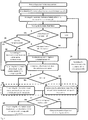
- Fig. 1 shows a block diagram of the particular steps of the method.
- Fig. 1 The particular steps of the method for verifying the synchronisation of the port are shown in Fig. 1 .
- the server Upon receiving by the system a request transmitted by the unit that issues measurement requests, the server, on the basis of data contained in the request for the initialisation, is awaiting at the indicated resource to achieve the synchronisation.
- the unit that issues measurement requests may for example be: a software module (implementation in the form of e.g. a software library, a packet, a separate namespace), a hardware module (e.g. a hardware implementation as part of the meter of the line), an independent separate system (then the method is implemented in the form of a separate, independent existence, and communication takes place remotely using e.g. WebService, RMI, HTTP and other ways).
- a software module that can be e.g. a component of the system in the form of a platform described further in embodiments and solutions for the installation, maintenance and qualification of the subscriber line, submitted by the Applicant as parallel applications.
- the software module can also be used on network devices themselves (such as DSLAM, a modem) for verification of establishing the synchronisation.
- the implementation in the hardware form is essential for the use in the meters that use FPGA programmable circuits. Implementation in the form of an independent system allows to share functionality to other systems from one central location.
- the essential parameters are:
- the port for the measurement is configured at step 1, if the devices used in the measurement allow it, the mode Loop Diagnostic Mode is activated and the resynchronisation is forced, and in the system at step 2 there is recorded the information about the inactive emergency profile (Emergency), in other words about the absence of activation of the emergency profile.
- the inactive emergency profile Emergency
- the emergency profile has been defined for the purposes of the present solution.
- the requirements defined in this profile concerning minimum uplink and downlink bitrates needed to achieve during the synchronisation, are reduced to the lowest possible value, which is zero, or to the lowest value that the device allows to configure (often it is 128 kbit/s).
- the requirements concerning maximum uplink and downlink bitrates needed to achieve during the synchronisation are set to the maximum possible value that the device allows to configure.
- the rest of the parameters of that profile e.g. minimum and maximum signal to noise ratio, an acceptable BER error rate, etc.
- the emergency profile has defined settings with which it is possible to achieve the synchronisation on the line of any features for the measurement of these characteristics in the case when the standard settings dedicated to provide services do not allow to achieve the synchronisation.
- the number of synchronisation attempts (FI1) is read and the current time is recorded in a memory (e.g. in a database).
- the number of failed the synchronisation attempts is read.
- the administrative status is read, as well as the operational status, and they are compared at step 5 with the reference value UP (active).
- the current time is measured and it is checked whether the difference between the current time and the time measured at step 3 of reading is smaller than 3 minutes.
- the system waits for another 5 seconds and returns to step 4 of reading the values of the administrative status and the operational status, and the system performs the successive steps again.
- the time difference exceeds 3 minutes
- the system at step 7 the number of the synchronisation attempts - FI2 (or in another embodiment - the number of failed synchronisation attempts) is read once again and at step 8 the information about the absence of synchronisation is transmitted to the unit that issues measurement requests.
- the read value of the parameters FI1, FI2 associated with numbers of synchronisation attempts at different times are compared at step 9, and at step 10 there is transmitted the information about the port status along with instructions.
- the value FI2 measured at a later point in time is greater than the earlier value FI1
- the unit that issues measurement requests, along with instructions at step 18 there is transmitted the information about the occurrence of synchronisation attempts to check the quality of the connection, or whether there is no discontinuity in the connection.
- the value FI2 measured at a later point in time is lower than the earlier value FI1
- there is transmitted the information about the absence of synchronisation attempts to check whether there is no discontinuity in the connection when the value FI2 measured at a later point in time is lower than the earlier value FI1, then to the unit that issues measurement requests, along with instructions at step 19, there is transmitted the information about the absence of synchronisation attempts to check whether there is no discontinuity in the connection.
- step 11 there is checked the state of activation of the emergency profile. If the emergency profile is inactive, then, through the system, at step 12 the emergency profile is activated, i.e. the DSL physical layer is reconfigured, and at step 13 the information about the activation of the emergency profile is recorded in the system. Then the system returns to step 3 of reading and repeats the entire method from the moment of the first reading of the Full Init parameters (or Failed Full Init, depending on which of the parameters has been selected at step 3) at step 3. If, in turn, the emergency profile is activated, then to the unit that issues measurement requests at step 14 there is transmitted the message about the absence of synchronisation, following the earlier instructions and repeating the measurement. Exemplary instructions are: the information about the absence of the synchronisation in the emergency profile, the information about serious damage to the line when the synchronisation attempts take place on the line, or the information about the discontinuity on the line when there are no synchronisation attempts.
- the emergency profile applied in the solution has the settings allowing the synchronisation of the modem for virtually any subscriber line (short, long, damaged, undamaged).
- a standard service profile does not allow for obtaining the synchronisation, it is possible to find out the real capabilities of the line, diagnose it, decide what and how to repair, and transmit a recommendation.
- threshold value of 3 minutes of waiting for the synchronisation results from the fact that it is a time in which the synchronisation can be surely established if possible (which results from the standard procedures of establishing the DSL synchronisation).
- the interval of 5 seconds was chosen as the optimal interval of transmitting requests to the DSLAM / OLT device so that the device was not overloaded with too many requests, but also to allow for a quick response to obtaining the synchronisation, without having to wait in every case full three minutes, if the devices establish the synchronisation earlier (e.g. at the moment when the modem synchronises after 27 seconds, then after 30 seconds the waiting can be stopped).
- An important feature of the invention is integration of the process of waiting for the synchronisation with reading the parameter of the synchronisation attempts (FI and FFI, in the presented embodiment FI1 and FI2) in the respectively selected moments in time, which resulted in the ability to perform these operations in parallel. Reading and comparing the parameter of synchronisation attempts (in the presented embodiment FI1 and FI2) makes it possible to determine in the event when after 3 minutes of synchronisation it fails to establish whether the modem is visible for the DSLAM device, i.e.
- the emergency profile is activated when it fails to obtain the synchronisation on the standard parameters. For this reason, the configuration is changed and on the emergency profile the 3-minute waiting for the synchronisation of the modem is repeated once more. If the synchronisation in the emergency profile is successful, the technician working with the unit that issues measurement requests can read the parameters and determine how much the synchronisation parameters differ from those that would occur for the standard profile. On this basis it is possible to direct repair works or determine that the line cannot be repaired. For example, if the standard profile needs to achieve a minimum bitrate of the line of 10 Mbit/s, and the emergency profile allows the synchronisation from 1 Mbit/s, it is known that it is easier to achieve the proper bitrate on the latter profile.
- the line does not synchronise in the standard profile, this means that it cannot reach 10 Mbit/s, but on the emergency profile, for example, it reaches 9.5 Mbit/s. Since so little is missing to achieve the bitrate of 10 Mbit/s, such a situation may be caused by the increased suppression caused by damage that the technician can easily find and remove or change the place of the modem connection. If on the emergency profile the line reaches the bitrate of 2 Mbit/s, this means that due to the large difference with 10 Mbit/s the activation of the service of the bitrate of 10Mbit/s will be difficult and will require a considerable intervention on the line or will not be possible at all. While waiting for the synchronisation on the emergency profile the parameters FI2 and FI1 are compared to determine whether the line is not interrupted.
- the method for verifying the port synchronisation can be carried out via any application, any system, can also be carried out on a manual meter.
- An exemplary system may be the system in the form of a platform which comprises:
- the application server is responsible for:
- the customer premises equipment is not a direct component of the system, but is one of the key and necessary components allowing the implementation of the method for verifying the synchronisation.
- the customer premises equipment is responsible for termination of the signal from the access network. It can be an xDSL (ADSL2/2+, SHDSL, VDSL2) modem, as well as an ONT unit terminating the fibre optic line.
Landscapes
- Engineering & Computer Science (AREA)
- Signal Processing (AREA)
- Maintenance And Management Of Digital Transmission (AREA)
- Data Exchanges In Wide-Area Networks (AREA)
- Synchronisation In Digital Transmission Systems (AREA)
Claims (12)
- Procédé permettant de vérifier d'une synchronisation de port pour des lignes DSL, comprenant les étapes suivantes exécutées par un système- le port est configuré (1) pour la mesure et
des informations sur les profils d'urgence inactifs, qui permettent d'effectuer la synchronisation sur la ligne dans le cas où les réglages standard dédiés à la prestation de services ne permettent pas d'effectuer la synchronisation, sont enregistrées (2) dans le système ;- puis on lit (3a) au moins un des paramètres tels que :- le nombre de tentatives de synchronisation et- le nombre de tentatives de synchronisation ayant échoué ;- le temps de lecture de ces paramètres est enregistrée (3b) dans une mémoire ;- afin de déterminer l'absence de synchronisation, les valeurs d'état administratif permettant la gestion des ressources et l'état opérationnel du port indiquant si la ligne d'abonné est en service sont lues (4) successivement par le système;- puis la valeur de l'état administratif et de l'état opérationnel sont vérifiés (5)- dans le cas où l'état administratif et l'état opérationnel ne sont pas tous deux « UP », le temps actuel est mesurée (6) et il est vérifié si une différence entre le temps actuel et le temps mesuré à l'étape de lecture (3a) est inférieure à un seuil prédéfini ; et- si la différence dépasse le seuil prédéfini, un paramètre de tentatives de synchronisation présélectionné à l'étape (3a) de lecture est relu (7) et des informations sur l'absence de synchronisation sont transmises (8) à une unité qui émet des demandes de mesure,- puis les valeurs de lecture des paramètres de l'étape (3a) de lecture et de l'étape (7) de relecture associées au nombre de tentatives de synchronisation à différents moments sont comparées (9),- les informations sur les tentatives de synchronisation sur le port sont transmises (10) avec des instructions à l'unité qui émet des demandes de mesure et- il est vérifié (11) si le profil d'urgence est activé sur le port, où :- en cas de résultat négatif de la vérification (11) de l'état d'activation du profil d'urgence, le profil d'urgence est activé (12) et les informations concernant l'activation du profil d'urgence sont enregistrées (13) dans le système, et le système revient à l'étape de lecture (3a) du paramètre précédemment sélectionné pour les tentatives de synchronisation et répète successivement les étapes précédentes,- en cas de résultat positif de la vérification (11) de l'état d'activation du profil d'urgence, à l'unité émettrice des demandes de mesure, ainsi que des instructions, sont transmises (14) les informations relatives à l'absence de synchronisation en cas de profil d'urgence. - Procédé selon la revendication 1, caractérisé en ce que lorsque les valeurs de l'état administratif et de l'état opérationnel sont vérifiées (5) - dans le cas où le l'état administratif et l'état opérationnel sont « UP », via le système, il est vérifié (15) si le profil d'urgence est activé, et si le résultat est négatif, les informations relatives à l'obtention correctement de la synchronisation sont transmises à l'unité émettrice des demandes de mesure (16).
- Procédé selon la revendication 1, caractérisé en ce qu'en cas de résultat positif de la comparaison (5), successivement, via le système, il est vérifié (15) si le profil d'urgence est activé, et si le résultat est positif, à l'unité émettrice des demandes de mesure, il est transmis (17) les informations relatives à l'obtention de la synchronisation avec le profil d'urgence activé.
- Procédé selon la revendication 1, caractérisé en ce qu'à l'étape de comparaison (6), lorsque la différence entre le temps actuel et le temps mesuré à l'étape (3a) de lecture est inférieure au seuil prédéfini, puis après la période du temps prédéfinie, le système revient à l'étape (4) de lecture du paramètre de tentatives de synchronisation précédemment sélectionné et répète successivement les étapes mentionnées (4, 5).
- Procédé selon la revendication 4, caractérisé en ce qu'une valeur seuil de 3 minutes est utilisée.
- Procédé selon la revendication 4, caractérisé en ce qu'une durée prédéfinie de 5 secondes est utilisée.
- Procédé selon la revendication 1, caractérisé en ce qu'à l'étape (9) de comparaison des valeurs des paramètres des tentatives de synchronisation à des temps différents, les valeurs obtenues sont comparées et lorsque la valeur mesurée à un instant ultérieur est différente de la valeur précédente, puis à l'unité émettrice des demandes de mesure, avec les instructions, il est transmis (18) les informations relatives à l'occurrence des tentatives de synchronisation.
- Procédé selon la revendication 1, caractérisé en ce qu'à l'étape (9) de comparaison des valeurs des paramètres des tentatives de synchronisation à des moments différents, les valeurs obtenues sont comparées et lorsque la valeur mesurée à un instant ultérieur est égale à la valeur précédente, puis à l'unité émettrice des demandes de mesure, avec les instructions, il est transmis (19) les informations relatives à l'absence des tentatives de synchronisation.
- Procédé selon l'une quelconque des revendications 1 à 8, caractérisé en qu'à l'étape (1) de configuration du port pour la mesure, le mode Loop Diagnostic Mode est activé.
- Procédé selon l'une quelconque des revendications 1 à 9, caractérisé en qu'à l'étape (1) de configuration du port pour la mesure, la resynchronisation du port est forcée.
- Procédé selon l'une quelconque des revendications 1 à 10, caractérisé en que dans le profil d'urgence, les paramètres des débits minimaux de liaison montante et de liaison descendante sont réduits à la valeur la plus basse possible, tandis que le reste des paramètres de ce profil est identique à celui des profils de service.
- Procédé selon l'une quelconque des revendications 1 à 11, caractérisé en que dans le profil d'urgence, les paramètres des débits binaires maximaux des liaisons montante et descendante sont réglés sur la valeur la plus élevée possible, tandis que les autres paramètres de ce profil sont identiques à ceux des profils de service.
Priority Applications (1)
| Application Number | Priority Date | Filing Date | Title |
|---|---|---|---|
| PL15460121T PL3035661T3 (pl) | 2014-12-18 | 2015-12-17 | Sposób weryfikacji synchronizacji portu |
Applications Claiming Priority (1)
| Application Number | Priority Date | Filing Date | Title |
|---|---|---|---|
| PL410613A PL410613A1 (pl) | 2014-12-18 | 2014-12-18 | Sposób weryfikacji synchronizacji portu |
Publications (2)
| Publication Number | Publication Date |
|---|---|
| EP3035661A1 EP3035661A1 (fr) | 2016-06-22 |
| EP3035661B1 true EP3035661B1 (fr) | 2019-07-17 |
Family
ID=55083330
Family Applications (1)
| Application Number | Title | Priority Date | Filing Date |
|---|---|---|---|
| EP15460121.5A Active EP3035661B1 (fr) | 2014-12-18 | 2015-12-17 | Procédé permettant de vérifier une synchronisation de port |
Country Status (2)
| Country | Link |
|---|---|
| EP (1) | EP3035661B1 (fr) |
| PL (2) | PL410613A1 (fr) |
Family Cites Families (2)
| Publication number | Priority date | Publication date | Assignee | Title |
|---|---|---|---|---|
| US20040264961A1 (en) | 2003-06-12 | 2004-12-30 | Nam Hong Soon | Ethernet passive optical network system, and optical network terminal and optical line terminal provided in the same |
| CN1564571A (zh) * | 2004-04-16 | 2005-01-12 | 港湾网络有限公司 | 规避adsl端口无法同步的方法 |
-
2014
- 2014-12-18 PL PL410613A patent/PL410613A1/pl unknown
-
2015
- 2015-12-17 EP EP15460121.5A patent/EP3035661B1/fr active Active
- 2015-12-17 PL PL15460121T patent/PL3035661T3/pl unknown
Non-Patent Citations (1)
| Title |
|---|
| None * |
Also Published As
| Publication number | Publication date |
|---|---|
| PL3035661T3 (pl) | 2020-06-15 |
| EP3035661A1 (fr) | 2016-06-22 |
| PL410613A1 (pl) | 2016-06-20 |
Similar Documents
| Publication | Publication Date | Title |
|---|---|---|
| WO2017219966A1 (fr) | Message de réinitialisation d'une unité de réseau optique | |
| EP2947793B1 (fr) | Dispositif et procédé de détection de liaison pour réseau optique passif | |
| US20070022331A1 (en) | Single-ended ethernet management system and method | |
| US20150095961A1 (en) | Moca remote monitoring and management system | |
| KR100970513B1 (ko) | 몇몇 개별적인 루프-백 테스트를 사용하는, 디지털 가입자회선 통신 네트워크의 종단 노드들 사이에서 링크 테스트를수행하는 방법 및 장치 | |
| US11050486B2 (en) | Loop detection in a passive optical LAN network | |
| US9137129B2 (en) | Propagating link status across a network | |
| EP1733506B1 (fr) | Gestion des defauts dans un systeme de communication base sur ethernet | |
| US7400586B2 (en) | Collaborative remote communication circuit diagnostic tool | |
| EP3193458B1 (fr) | Procédé pour l'élimination automatique du crosstalk et appareil associé | |
| US8165271B2 (en) | Chattering line detection system and method | |
| EP3035661B1 (fr) | Procédé permettant de vérifier une synchronisation de port | |
| US9137112B2 (en) | Bonding line mismatch discovery method and node arrangements | |
| US10756988B2 (en) | System and method of isolating QoS fault | |
| CN115842760B (zh) | 故障检测方法、装置、电子设备及存储介质 | |
| CN101800666A (zh) | 数字用户线端口信息收集方法及系统 | |
| US10162733B2 (en) | Debugging failure of a service validation test | |
| EP2770715B1 (fr) | Procédé de migration de services VHBB à partir de la technique ADSL/2/2+ vers la technique VDSL2 | |
| KR20060126619A (ko) | 이더넷 기반 통신시스템에서의 장애 관리 시스템 및 방법 | |
| US12363230B2 (en) | Systems and methods for monitoring voice services | |
| EP2770717B1 (fr) | Procédé de migration de services VHBB à partir de la technique ADSL/2/2+ vers la technique VDSL2 | |
| EP2770716B1 (fr) | Procédé de migration de services vhbb à partir de la technique adsl/2/2+ vers la technique vdsl2 | |
| EP3035660A1 (fr) | Procédé de qualification d'une ligne d'abonné | |
| EP3035658A1 (fr) | Procédé permettant de maintenir une ligne d'abonné | |
| EP3035659A1 (fr) | Procédé d'installation d'une ligne d'abonné |
Legal Events
| Date | Code | Title | Description |
|---|---|---|---|
| PUAI | Public reference made under article 153(3) epc to a published international application that has entered the european phase |
Free format text: ORIGINAL CODE: 0009012 |
|
| AK | Designated contracting states |
Kind code of ref document: A1 Designated state(s): AL AT BE BG CH CY CZ DE DK EE ES FI FR GB GR HR HU IE IS IT LI LT LU LV MC MK MT NL NO PL PT RO RS SE SI SK SM TR |
|
| AX | Request for extension of the european patent |
Extension state: BA ME |
|
| STAA | Information on the status of an ep patent application or granted ep patent |
Free format text: STATUS: REQUEST FOR EXAMINATION WAS MADE |
|
| 17P | Request for examination filed |
Effective date: 20161209 |
|
| RBV | Designated contracting states (corrected) |
Designated state(s): AL AT BE BG CH CY CZ DE DK EE ES FI FR GB GR HR HU IE IS IT LI LT LU LV MC MK MT NL NO PL PT RO RS SE SI SK SM TR |
|
| STAA | Information on the status of an ep patent application or granted ep patent |
Free format text: STATUS: EXAMINATION IS IN PROGRESS |
|
| 17Q | First examination report despatched |
Effective date: 20170324 |
|
| GRAP | Despatch of communication of intention to grant a patent |
Free format text: ORIGINAL CODE: EPIDOSNIGR1 |
|
| STAA | Information on the status of an ep patent application or granted ep patent |
Free format text: STATUS: GRANT OF PATENT IS INTENDED |
|
| INTG | Intention to grant announced |
Effective date: 20190213 |
|
| GRAS | Grant fee paid |
Free format text: ORIGINAL CODE: EPIDOSNIGR3 |
|
| GRAA | (expected) grant |
Free format text: ORIGINAL CODE: 0009210 |
|
| STAA | Information on the status of an ep patent application or granted ep patent |
Free format text: STATUS: THE PATENT HAS BEEN GRANTED |
|
| RIN1 | Information on inventor provided before grant (corrected) |
Inventor name: MALYSZ, KRZYSZTOF Inventor name: ZYCH, PIOTR Inventor name: STANISZEWSKI, ROBERT Inventor name: RATKIEWICZ, MARCIN Inventor name: ZAWADZKI, KONRAD |
|
| AK | Designated contracting states |
Kind code of ref document: B1 Designated state(s): AL AT BE BG CH CY CZ DE DK EE ES FI FR GB GR HR HU IE IS IT LI LT LU LV MC MK MT NL NO PL PT RO RS SE SI SK SM TR |
|
| REG | Reference to a national code |
Ref country code: GB Ref legal event code: FG4D |
|
| REG | Reference to a national code |
Ref country code: CH Ref legal event code: EP |
|
| REG | Reference to a national code |
Ref country code: IE Ref legal event code: FG4D |
|
| REG | Reference to a national code |
Ref country code: DE Ref legal event code: R096 Ref document number: 602015033866 Country of ref document: DE |
|
| REG | Reference to a national code |
Ref country code: AT Ref legal event code: REF Ref document number: 1156888 Country of ref document: AT Kind code of ref document: T Effective date: 20190815 |
|
| REG | Reference to a national code |
Ref country code: NL Ref legal event code: MP Effective date: 20190717 |
|
| REG | Reference to a national code |
Ref country code: LT Ref legal event code: MG4D |
|
| REG | Reference to a national code |
Ref country code: AT Ref legal event code: MK05 Ref document number: 1156888 Country of ref document: AT Kind code of ref document: T Effective date: 20190717 |
|
| PG25 | Lapsed in a contracting state [announced via postgrant information from national office to epo] |
Ref country code: HR Free format text: LAPSE BECAUSE OF FAILURE TO SUBMIT A TRANSLATION OF THE DESCRIPTION OR TO PAY THE FEE WITHIN THE PRESCRIBED TIME-LIMIT Effective date: 20190717 Ref country code: PT Free format text: LAPSE BECAUSE OF FAILURE TO SUBMIT A TRANSLATION OF THE DESCRIPTION OR TO PAY THE FEE WITHIN THE PRESCRIBED TIME-LIMIT Effective date: 20191118 Ref country code: LT Free format text: LAPSE BECAUSE OF FAILURE TO SUBMIT A TRANSLATION OF THE DESCRIPTION OR TO PAY THE FEE WITHIN THE PRESCRIBED TIME-LIMIT Effective date: 20190717 Ref country code: AT Free format text: LAPSE BECAUSE OF FAILURE TO SUBMIT A TRANSLATION OF THE DESCRIPTION OR TO PAY THE FEE WITHIN THE PRESCRIBED TIME-LIMIT Effective date: 20190717 Ref country code: NO Free format text: LAPSE BECAUSE OF FAILURE TO SUBMIT A TRANSLATION OF THE DESCRIPTION OR TO PAY THE FEE WITHIN THE PRESCRIBED TIME-LIMIT Effective date: 20191017 Ref country code: FI Free format text: LAPSE BECAUSE OF FAILURE TO SUBMIT A TRANSLATION OF THE DESCRIPTION OR TO PAY THE FEE WITHIN THE PRESCRIBED TIME-LIMIT Effective date: 20190717 Ref country code: SE Free format text: LAPSE BECAUSE OF FAILURE TO SUBMIT A TRANSLATION OF THE DESCRIPTION OR TO PAY THE FEE WITHIN THE PRESCRIBED TIME-LIMIT Effective date: 20190717 Ref country code: BG Free format text: LAPSE BECAUSE OF FAILURE TO SUBMIT A TRANSLATION OF THE DESCRIPTION OR TO PAY THE FEE WITHIN THE PRESCRIBED TIME-LIMIT Effective date: 20191017 Ref country code: NL Free format text: LAPSE BECAUSE OF FAILURE TO SUBMIT A TRANSLATION OF THE DESCRIPTION OR TO PAY THE FEE WITHIN THE PRESCRIBED TIME-LIMIT Effective date: 20190717 |
|
| PG25 | Lapsed in a contracting state [announced via postgrant information from national office to epo] |
Ref country code: RS Free format text: LAPSE BECAUSE OF FAILURE TO SUBMIT A TRANSLATION OF THE DESCRIPTION OR TO PAY THE FEE WITHIN THE PRESCRIBED TIME-LIMIT Effective date: 20190717 Ref country code: LV Free format text: LAPSE BECAUSE OF FAILURE TO SUBMIT A TRANSLATION OF THE DESCRIPTION OR TO PAY THE FEE WITHIN THE PRESCRIBED TIME-LIMIT Effective date: 20190717 Ref country code: ES Free format text: LAPSE BECAUSE OF FAILURE TO SUBMIT A TRANSLATION OF THE DESCRIPTION OR TO PAY THE FEE WITHIN THE PRESCRIBED TIME-LIMIT Effective date: 20190717 Ref country code: AL Free format text: LAPSE BECAUSE OF FAILURE TO SUBMIT A TRANSLATION OF THE DESCRIPTION OR TO PAY THE FEE WITHIN THE PRESCRIBED TIME-LIMIT Effective date: 20190717 Ref country code: GR Free format text: LAPSE BECAUSE OF FAILURE TO SUBMIT A TRANSLATION OF THE DESCRIPTION OR TO PAY THE FEE WITHIN THE PRESCRIBED TIME-LIMIT Effective date: 20191018 Ref country code: IS Free format text: LAPSE BECAUSE OF FAILURE TO SUBMIT A TRANSLATION OF THE DESCRIPTION OR TO PAY THE FEE WITHIN THE PRESCRIBED TIME-LIMIT Effective date: 20191117 |
|
| PG25 | Lapsed in a contracting state [announced via postgrant information from national office to epo] |
Ref country code: TR Free format text: LAPSE BECAUSE OF FAILURE TO SUBMIT A TRANSLATION OF THE DESCRIPTION OR TO PAY THE FEE WITHIN THE PRESCRIBED TIME-LIMIT Effective date: 20190717 |
|
| PG25 | Lapsed in a contracting state [announced via postgrant information from national office to epo] |
Ref country code: RO Free format text: LAPSE BECAUSE OF FAILURE TO SUBMIT A TRANSLATION OF THE DESCRIPTION OR TO PAY THE FEE WITHIN THE PRESCRIBED TIME-LIMIT Effective date: 20190717 Ref country code: IT Free format text: LAPSE BECAUSE OF FAILURE TO SUBMIT A TRANSLATION OF THE DESCRIPTION OR TO PAY THE FEE WITHIN THE PRESCRIBED TIME-LIMIT Effective date: 20190717 Ref country code: EE Free format text: LAPSE BECAUSE OF FAILURE TO SUBMIT A TRANSLATION OF THE DESCRIPTION OR TO PAY THE FEE WITHIN THE PRESCRIBED TIME-LIMIT Effective date: 20190717 Ref country code: DK Free format text: LAPSE BECAUSE OF FAILURE TO SUBMIT A TRANSLATION OF THE DESCRIPTION OR TO PAY THE FEE WITHIN THE PRESCRIBED TIME-LIMIT Effective date: 20190717 |
|
| PG25 | Lapsed in a contracting state [announced via postgrant information from national office to epo] |
Ref country code: IS Free format text: LAPSE BECAUSE OF FAILURE TO SUBMIT A TRANSLATION OF THE DESCRIPTION OR TO PAY THE FEE WITHIN THE PRESCRIBED TIME-LIMIT Effective date: 20200224 Ref country code: SM Free format text: LAPSE BECAUSE OF FAILURE TO SUBMIT A TRANSLATION OF THE DESCRIPTION OR TO PAY THE FEE WITHIN THE PRESCRIBED TIME-LIMIT Effective date: 20190717 Ref country code: CZ Free format text: LAPSE BECAUSE OF FAILURE TO SUBMIT A TRANSLATION OF THE DESCRIPTION OR TO PAY THE FEE WITHIN THE PRESCRIBED TIME-LIMIT Effective date: 20190717 Ref country code: SK Free format text: LAPSE BECAUSE OF FAILURE TO SUBMIT A TRANSLATION OF THE DESCRIPTION OR TO PAY THE FEE WITHIN THE PRESCRIBED TIME-LIMIT Effective date: 20190717 |
|
| REG | Reference to a national code |
Ref country code: DE Ref legal event code: R097 Ref document number: 602015033866 Country of ref document: DE |
|
| PLBE | No opposition filed within time limit |
Free format text: ORIGINAL CODE: 0009261 |
|
| STAA | Information on the status of an ep patent application or granted ep patent |
Free format text: STATUS: NO OPPOSITION FILED WITHIN TIME LIMIT |
|
| PG2D | Information on lapse in contracting state deleted |
Ref country code: IS |
|
| REG | Reference to a national code |
Ref country code: CH Ref legal event code: PL |
|
| 26N | No opposition filed |
Effective date: 20200603 |
|
| REG | Reference to a national code |
Ref country code: BE Ref legal event code: MM Effective date: 20191231 |
|
| PG25 | Lapsed in a contracting state [announced via postgrant information from national office to epo] |
Ref country code: MC Free format text: LAPSE BECAUSE OF FAILURE TO SUBMIT A TRANSLATION OF THE DESCRIPTION OR TO PAY THE FEE WITHIN THE PRESCRIBED TIME-LIMIT Effective date: 20190717 Ref country code: SI Free format text: LAPSE BECAUSE OF FAILURE TO SUBMIT A TRANSLATION OF THE DESCRIPTION OR TO PAY THE FEE WITHIN THE PRESCRIBED TIME-LIMIT Effective date: 20190717 |
|
| PG25 | Lapsed in a contracting state [announced via postgrant information from national office to epo] |
Ref country code: LU Free format text: LAPSE BECAUSE OF NON-PAYMENT OF DUE FEES Effective date: 20191217 Ref country code: IE Free format text: LAPSE BECAUSE OF NON-PAYMENT OF DUE FEES Effective date: 20191217 |
|
| PG25 | Lapsed in a contracting state [announced via postgrant information from national office to epo] |
Ref country code: CH Free format text: LAPSE BECAUSE OF NON-PAYMENT OF DUE FEES Effective date: 20191231 Ref country code: LI Free format text: LAPSE BECAUSE OF NON-PAYMENT OF DUE FEES Effective date: 20191231 Ref country code: BE Free format text: LAPSE BECAUSE OF NON-PAYMENT OF DUE FEES Effective date: 20191231 |
|
| PG25 | Lapsed in a contracting state [announced via postgrant information from national office to epo] |
Ref country code: CY Free format text: LAPSE BECAUSE OF FAILURE TO SUBMIT A TRANSLATION OF THE DESCRIPTION OR TO PAY THE FEE WITHIN THE PRESCRIBED TIME-LIMIT Effective date: 20190717 |
|
| PG25 | Lapsed in a contracting state [announced via postgrant information from national office to epo] |
Ref country code: HU Free format text: LAPSE BECAUSE OF FAILURE TO SUBMIT A TRANSLATION OF THE DESCRIPTION OR TO PAY THE FEE WITHIN THE PRESCRIBED TIME-LIMIT; INVALID AB INITIO Effective date: 20151217 Ref country code: MT Free format text: LAPSE BECAUSE OF FAILURE TO SUBMIT A TRANSLATION OF THE DESCRIPTION OR TO PAY THE FEE WITHIN THE PRESCRIBED TIME-LIMIT Effective date: 20190717 |
|
| PG25 | Lapsed in a contracting state [announced via postgrant information from national office to epo] |
Ref country code: MK Free format text: LAPSE BECAUSE OF FAILURE TO SUBMIT A TRANSLATION OF THE DESCRIPTION OR TO PAY THE FEE WITHIN THE PRESCRIBED TIME-LIMIT Effective date: 20190717 |
|
| PGFP | Annual fee paid to national office [announced via postgrant information from national office to epo] |
Ref country code: DE Payment date: 20241210 Year of fee payment: 10 |
|
| PGFP | Annual fee paid to national office [announced via postgrant information from national office to epo] |
Ref country code: PL Payment date: 20241107 Year of fee payment: 10 |
|
| PGFP | Annual fee paid to national office [announced via postgrant information from national office to epo] |
Ref country code: GB Payment date: 20241224 Year of fee payment: 10 |
|
| PGFP | Annual fee paid to national office [announced via postgrant information from national office to epo] |
Ref country code: FR Payment date: 20241224 Year of fee payment: 10 |