EP3036643B1 - Verfahren und system zur verteilung von geheimnissen - Google Patents
Verfahren und system zur verteilung von geheimnissen Download PDFInfo
- Publication number
- EP3036643B1 EP3036643B1 EP14853607.1A EP14853607A EP3036643B1 EP 3036643 B1 EP3036643 B1 EP 3036643B1 EP 14853607 A EP14853607 A EP 14853607A EP 3036643 B1 EP3036643 B1 EP 3036643B1
- Authority
- EP
- European Patent Office
- Prior art keywords
- secrets
- virtual asset
- data
- requesting virtual
- requesting
- Prior art date
- Legal status (The legal status is an assumption and is not a legal conclusion. Google has not performed a legal analysis and makes no representation as to the accuracy of the status listed.)
- Active
Links
Images



Classifications
-
- G—PHYSICS
- G06—COMPUTING OR CALCULATING; COUNTING
- G06F—ELECTRIC DIGITAL DATA PROCESSING
- G06F21/00—Security arrangements for protecting computers, components thereof, programs or data against unauthorised activity
- G06F21/60—Protecting data
- G06F21/62—Protecting access to data via a platform, e.g. using keys or access control rules
- G06F21/6218—Protecting access to data via a platform, e.g. using keys or access control rules to a system of files or objects, e.g. local or distributed file system or database
-
- G—PHYSICS
- G06—COMPUTING OR CALCULATING; COUNTING
- G06F—ELECTRIC DIGITAL DATA PROCESSING
- G06F21/00—Security arrangements for protecting computers, components thereof, programs or data against unauthorised activity
- G06F21/30—Authentication, i.e. establishing the identity or authorisation of security principals
- G06F21/31—User authentication
- G06F21/33—User authentication using certificates
-
- G—PHYSICS
- G06—COMPUTING OR CALCULATING; COUNTING
- G06F—ELECTRIC DIGITAL DATA PROCESSING
- G06F21/00—Security arrangements for protecting computers, components thereof, programs or data against unauthorised activity
- G06F21/30—Authentication, i.e. establishing the identity or authorisation of security principals
- G06F21/31—User authentication
- G06F21/33—User authentication using certificates
- G06F21/335—User authentication using certificates for accessing specific resources, e.g. using Kerberos tickets
-
- H—ELECTRICITY
- H04—ELECTRIC COMMUNICATION TECHNIQUE
- H04L—TRANSMISSION OF DIGITAL INFORMATION, e.g. TELEGRAPHIC COMMUNICATION
- H04L63/00—Network architectures or network communication protocols for network security
- H04L63/06—Network architectures or network communication protocols for network security for supporting key management in a packet data network
- H04L63/062—Network architectures or network communication protocols for network security for supporting key management in a packet data network for key distribution, e.g. centrally by trusted party
-
- H—ELECTRICITY
- H04—ELECTRIC COMMUNICATION TECHNIQUE
- H04L—TRANSMISSION OF DIGITAL INFORMATION, e.g. TELEGRAPHIC COMMUNICATION
- H04L63/00—Network architectures or network communication protocols for network security
- H04L63/08—Network architectures or network communication protocols for network security for authentication of entities
- H04L63/0884—Network architectures or network communication protocols for network security for authentication of entities by delegation of authentication, e.g. a proxy authenticates an entity to be authenticated on behalf of this entity vis-à-vis an authentication entity
-
- H—ELECTRICITY
- H04—ELECTRIC COMMUNICATION TECHNIQUE
- H04L—TRANSMISSION OF DIGITAL INFORMATION, e.g. TELEGRAPHIC COMMUNICATION
- H04L9/00—Cryptographic mechanisms or cryptographic arrangements for secret or secure communications; Network security protocols
- H04L9/32—Cryptographic mechanisms or cryptographic arrangements for secret or secure communications; Network security protocols including means for verifying the identity or authority of a user of the system or for message authentication, e.g. authorization, entity authentication, data integrity or data verification, non-repudiation, key authentication or verification of credentials
- H04L9/321—Cryptographic mechanisms or cryptographic arrangements for secret or secure communications; Network security protocols including means for verifying the identity or authority of a user of the system or for message authentication, e.g. authorization, entity authentication, data integrity or data verification, non-repudiation, key authentication or verification of credentials involving a third party or a trusted authority
-
- H—ELECTRICITY
- H04—ELECTRIC COMMUNICATION TECHNIQUE
- H04L—TRANSMISSION OF DIGITAL INFORMATION, e.g. TELEGRAPHIC COMMUNICATION
- H04L9/00—Cryptographic mechanisms or cryptographic arrangements for secret or secure communications; Network security protocols
- H04L9/32—Cryptographic mechanisms or cryptographic arrangements for secret or secure communications; Network security protocols including means for verifying the identity or authority of a user of the system or for message authentication, e.g. authorization, entity authentication, data integrity or data verification, non-repudiation, key authentication or verification of credentials
- H04L9/3226—Cryptographic mechanisms or cryptographic arrangements for secret or secure communications; Network security protocols including means for verifying the identity or authority of a user of the system or for message authentication, e.g. authorization, entity authentication, data integrity or data verification, non-repudiation, key authentication or verification of credentials using a predetermined code, e.g. password, passphrase or PIN
-
- H—ELECTRICITY
- H04—ELECTRIC COMMUNICATION TECHNIQUE
- H04W—WIRELESS COMMUNICATION NETWORKS
- H04W12/00—Security arrangements; Authentication; Protecting privacy or anonymity
- H04W12/04—Key management, e.g. using generic bootstrapping architecture [GBA]
-
- H—ELECTRICITY
- H04—ELECTRIC COMMUNICATION TECHNIQUE
- H04W—WIRELESS COMMUNICATION NETWORKS
- H04W12/00—Security arrangements; Authentication; Protecting privacy or anonymity
- H04W12/06—Authentication
- H04W12/068—Authentication using credential vaults, e.g. password manager applications or one time password [OTP] applications
Definitions
- What is needed is a method and system to authenticate that a virtual asset is eligible to receive one or more secrets, then determine the secrets, or secret classes, legitimately needed by that particular virtual asset, then collect the secrets determined to be legitimately needed by the particular virtual asset, and then provide the virtual asset access to only these secrets.
- US 2013247144 discloses a method for controlling access to data on a network. Upon receiving a request comprising a device identifier and at least one user credential to access a remote resource, the request may be authenticated according to at least one compliance policy. If the request is authenticated, a resource credential associated with the remote resource may be provided.
- US 2010082991 discloses providing a secure service to an application virtual machine running in a first domain of a virtualized computing platform, whereby a second domain is arranged to run a corresponding service driver exclusively for the application virtual machine.
- the service driver effects a key-based cryptographic operation; to do so, the service driver has to obtain the appropriate key from a key manager.
- the key manager is arranged to store the key and to release it to the service driver only upon receiving evidence of its identity and being satisfied of compliance with release policies associated with the key. These policies include receipt of valid integrity metrics, signed by trusted-device functionality of the virtualized computing platform, for the service driver and the code on which it depends.
- FIG.s depict one or more exemplary embodiments.
- Embodiments may be implemented in many different forms and should not be construed as limited to the embodiments set forth herein, shown in the FIG.s, and/or described below. Rather, these exemplary embodiments are provided to allow a complete disclosure that conveys the principles of the invention, as set forth in the claims, to those of skill in the art.
- a method and system for distributing secrets includes a process for distributing secrets implemented, at least in part, by one or more computing systems.
- computing system includes, but is not limited to, a server computing system; a workstation; desktop computing system; a database system or storage cluster; a switching system; a router; any hardware system; any communications systems; any form of proxy system; a gateway system; a firewall system; a load balancing system; or any device, subsystem, or mechanism that includes components that can execute all, or part, of any one of the processes and/or operations as described herein.
- computing system can denote, but is not limited to, systems made up of multiple server computing systems; workstations; desktop computing systems; database systems or storage clusters; switching systems; routers; hardware systems; communications systems; proxy systems; gateway systems; firewall systems; load balancing systems; or any devices that can be used to perform the processes and/or operations as described herein.
- one or more computing systems are connected by one or more communications channels, and/or distributed computing system networks, such as, but not limited to: a public cloud; a private cloud; a virtual private cloud (VPN); a subnet; any general network, communications network, or general network/communications network system; a combination of different network types; a public network; a private network; a satellite network; a cable network; or any other network capable of allowing communication between two or more computing systems, as discussed herein, and/or available or known at the time of filing, and/or as developed after the time of filing.
- VPN virtual private cloud
- network includes, but is not limited to, any network or network system such as, but not limited to, a peer-to-peer network, a hybrid peer-to-peer network, a Local Area Network (LAN), a Wide Area Network (WAN), a public network, such as the Internet, a private network, a cellular network, any general network, communications network, or general network/communications network system; a wireless network; a wired network; a wireless and wired combination network; a satellite network; a cable network; any combination of different network types; or any other system capable of allowing communication between two or more computing systems, whether available or known at the time of filing or as later developed.
- a peer-to-peer network such as, but not limited to, a peer-to-peer network, a hybrid peer-to-peer network, a Local Area Network (LAN), a Wide Area Network (WAN), a public network, such as the Internet, a private network, a cellular network, any general network, communications network, or general network/communications network
- secrets data representing one or more secrets is obtained and/or provided.
- secrets includes any information, credentials, or other devices, necessary to access one or more resources and/or computing systems.
- secrets include, but are not limited to, usernames; passwords; passphrases; encryption keys; digital certificates; multifactor authentication data; account numbers; identification numbers; and/or any other information, credentials, data, devices, and/or mechanisms used to control access to various systems, resources, file systems and any other persistent storage, and data and that are required for such access, as discussed herein, and/or as known/available in the art at the time of filing, and/or as developed/made available after the time of filing.
- the secrets represented by the secrets data are of one or more types, or classifications, of secrets.
- the secrets are classified according to the type of resource the secret is used to access. For example, usernames, passwords, and passphrases, necessary to access various applications would be classified as user account access secrets, while digital certificates associated with Secure Socket Layer (SSL) communications channels would be classified as communication secrets, and encryption keys would be classified as encryption secrets.
- the secrets represented by the secrets data can be classified according to whether the secrets provide access to internal resources, such as databases and data in a data center, or access to external resources such as services offered through a cloud or the Internet.
- the different classes of secrets are provided by, and/or originate from, different secret sources.
- the secrets data representing the different classes of secrets are maintained in separate secret databases or data stores.
- the secrets data is provided, and/or maintained by, and/or on behalf of, a data/resources services center, such as a data center, providing data and/or resources to distributed computing systems, such as cloud-based systems and resources. Consequently, in one embodiment, the secrets data includes data representing one or more classes of secrets used to control access to one or more types of resources associated with the classes of secrets by one or more entities, such as a requesting virtual asset, residing physically or logically outside the data/resources services center where the secrets data is maintained, and/or accessed.
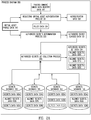
- FIG.1 is a functional diagram of the interaction of various elements associated with one embodiment of the method and system for distributing secrets discussed herein.
- the various elements in FIG.1 are shown for illustrative purposes as being associated with specific systems such as cloud 11 and data/resources services center 12.
- any individual element shown in FIG.1 , or combination of elements shown in FIG.1 can be implemented and/or deployed on any of one or more various systems shown, and/or architectural or infrastructure components, such as one or more hardware systems, one or more software systems, one or more data centers, more or more clouds or cloud types, one or more third party service capabilities, or any other architectural and/or infrastructure components as discussed herein, and/or as known in the art at the time of filing, and/or as developed/made available after the time of filing.
- the elements shown in FIG.1 can be under the control of, or otherwise associated with, various parties or entities, or multiple parties or entities, such as, but not limited to, the owner of a data center keeping or accessing the secrets data, a party and/or entity providing all or a portion of a cloud-based environment, the owner or a provider of a service, the owner or provider of one or more resources accessible using the secrets, and/or any other party and/or entity providing one or more functions, and/or any other party and/or entity as discussed herein, and/or as known in the art at the time of filing, and/or as made known after the time of filing.
- parties or entities such as, but not limited to, the owner of a data center keeping or accessing the secrets data, a party and/or entity providing all or a portion of a cloud-based environment, the owner or a provider of a service, the owner or provider of one or more resources accessible using the secrets, and/or any other party and/or entity providing one or more functions, and/or any other party and/
- the secrets data is represented by secrets data 100A, allowed secrets data 100S, secrets data 100N included in secrets database 100; secrets data 101A, allowed secrets data 101S, secrets data 101N, included in secrets database 101; secrets data 102A, secrets data 102B, secrets data 102N, included in secrets database 102; and secrets data 103A, allowed secrets data 103S, secrets data 103N included in secrets database 103.
- each of secrets databases 100, 101, 102, and 103 is a source of a different class of secrets that is part of, or accessible by, data/resources services center 12 and secrets distribution management system 120.
- the secrets represented in the secrets data are used to access various resources such as resource 170D, residing in data/resources service center 120; and/or resource 170R, residing at a location outside of data/resources service center 120 and cloud 11; and/or resource 170C, residing within cloud 11.
- resource 170D residing in data/resources service center 120
- resource 170R residing at a location outside of data/resources service center 120 and cloud 11
- resource 170C residing within cloud 11.
- FIG. four secrets databases, 100, 101, 102, and 103 are illustratively shown. However, in various embodiments, any number of secrets databases are utilized and/or accessed.
- secrets distribution policy data representing secrets distribution policy and one or more secrets distribution factors used to control the distribution of the one or more secrets, and classes of secrets, is generated and provided.
- each virtual asset is assigned a given role.
- the secrets that can be provided to each role is defined. In one embodiment, these roles are defined in secrets meta-data.
- each virtual asset is assigned a single role. However, many virtual assets can be assigned, and play, the same role. For example, a "POD1-WEB-Instance".
- a given virtual asset can play multiple roles, for example, a Web Instance can have a role called “web-instance” and same instance can have the role of "cache-server”.
- the secrets distribution factors include one or more checks or tests to be performed on virtual assets requesting secrets data that allow for a determination as to what secrets the requesting virtual asset legitimately needs.
- the secrets distribution policy data is open-endedly defined such that the secrets distribution policy, and/or secrets distribution factors, can be defined by the one or more parties associated with the distribution of the secrets, such as, but not limited to, the owner of a data center keeping or accessing the secrets data, the owner or provider of a cloud, the owner or a provider of a service, the owner or provider of one or more resources accessible using the secrets data, and/or any other party legitimately authorized to control the distribution of secrets.
- the secrets distribution policy can be tailored to the specific needs of the one or more parties associated with the distribution of the secrets.
- the secrets distribution policies, and/or secrets distribution factors can be added, modified, or deleted, as needed to meet the needs of the one or more parties associated with the distribution of secrets.
- the secrets distribution policy data including one or more secrets distribution factors, is represented by policy data 124, shown in the one illustrative example of FIG.1 as residing in secrets distribution management system 120 of data/resources services center 12.
- a secrets request is received from a requesting virtual asset for one or more secrets required to obtain access to one or more resources.
- the term "virtual asset” includes any virtualized entity or resource, and/or actual, or “bare metal” resources requiring access to various resources, and types of resources.
- the virtual assets can be, but are not limited to, virtual machines, virtual servers, and instances implemented in a cloud computing environment; databases implemented, or associated with, a cloud computing environment and/or instances implemented in a cloud computing environment; services associated with, and or delivered through, a cloud computing environment; communications systems used with, part of, or provided through, a cloud computing environment; and/or any other virtualized assets and/or mobile devices, remote sensors, laptops, desktops, point-of-sale devices, ATMs, electronic voting machines requiring access to various resources, and/or types of resources, located within a data center, within the cloud, and/or any other physical or logical location, as discussed herein, and/or as known/available in the art at the time of filing, and/or as developed/made available after the time of filing.
- a virtual asset when a virtual asset is initiated, or created, in a cloud environment, the virtual asset typically requires access to one or more resources in the cloud, external to the cloud, and/or in one or more data centers. As also discussed in more detail below, in order to access these resources the virtual assets typically must obtain secrets data representing one or more secrets required to access the needed resources.
- a virtual asset attempting to access a resource, and therefore requesting secrets data is referred to as a "requesting virtual asset.”
- the secrets request is received from the requesting virtual asset in the form of secrets request data.
- the secrets request data is received from the requesting virtual data at a services gateway associated with a data/resources services center, e.g., a data center, where the secrets data is maintained, and/or through which the secrets data is accessed.
- the requesting virtual asset is configured such that when the virtual asset is initiated, code built into the virtual asset image is used to contact the services gateway directly.
- the secrets request data is received from the requesting virtual asset at the services gateway through a trusted communication channel such as, for example, an authenticated Secure Sockets Layer (SSL) communication channel.
- SSL Secure Sockets Layer
- the secrets request data is received from the requesting virtual asset through a services gateway proxy that, in turn, is communicatively coupled to the services gateway.
- the secrets request data is received from the requesting virtual asset at the services gateway proxy through a trusted communication channel such as, for example, an authenticated SSL communication channel.
- the services gateway proxy is also connected to the services gateway by a trusted communication channel, such as an authenticated SSL communication channel.
- the secrets request data from the requesting virtual asset is a listing or set of the requesting virtual asset's specific parameters that will be used by services gateway to verify the provided parameters by making API calls to the owner or provider of a cloud service.
- virtual asset 140 is shown as residing in cloud 11 and including secrets request data represented by request data 142 in FIG.1 which is provided in one example, to services gateway 121 through communications interface 141 and trusted communications channel 180, in one embodiment, an SSL channel authenticated by authentication module 127.
- request data 142 is provided to services gateway proxy 187 via communications interface 141 and trusted communications channel 181A.
- services gateway proxy 187 then provides request data 142 to services gateway 121 via trusted communications channel 181B.
- the secrets request data includes requests for certain classes of secrets or specific secrets associated with specific resources.
- the secrets request data is actually a request for access to resources that require secrets so that the request to access the resources is, de-facto, a request for secrets data.
- the secrets request data is forwarded from the services gateway to a secrets distribution management service/system.
- the secrets distribution management service/system then obtains requesting virtual asset profile data associated with the requesting virtual asset.
- the virtual asset profile data associated with the requesting virtual asset includes, but is not limited to, owner identification data associated with an owner of the requesting virtual asset, such as the account number of an owner of the virtual asset; data indicating the type of requesting virtual asset such as whether the requesting virtual asset is a server instance, a data store, and whether the requesting virtual asset is associated with a specific location or tier, such as a web tier, and/or logically requires access to internal resources or external resources, such as the Internet, etc.; data indicating any special capabilities or modules associated with the requesting virtual asset; data indicating the size and number of resources allocated to the requesting virtual asset; data indicating how long the requesting virtual asset has existed or has been running; data indicating where the virtual asset resides and/or is being initiated, such as in a subnet of a Virtual Private Cloud (VPC), or in a public cloud, etc.; data indicating security parameters and procedures associated with the requesting virtual asset; an instance ID; an instance type; an instance IP address; an authorization role assigned
- VPC
- the requesting virtual asset profile data to be obtained is open-endedly defined such that the virtual asset profile data obtained can be defined by the one or more parties associated with the distribution of the secrets, such as, but not limited to, the owner of a data center keeping or accessing the secrets data, the owner or provider of a cloud, the owner or a provider of a service, the owner or provider of one or more resources accessible using the secrets data, and/or any other party legitimately authorized to control the distribution of secrets.
- the requesting virtual asset profile data obtained, and therefore the requesting virtual asset profile data available for analysis can be tailored to the specific needs of the one or more parties associated with the distribution of the secrets.
- portions of the requesting virtual asset profile data to be obtained can be added, modified, or deleted, as needed to meet the needs of the one or more parties associated with the distribution of secrets.
- the requesting virtual asset profile data is obtained by secrets distribution management system 120 via services gateway 121 and trusted communications channel 180, or services gateway proxy 187 and trusted communications channels 181A and 181B, and communications interface 141.
- the requesting virtual asset is authenticated to confirm that the requesting virtual asset is a legitimate entity and is eligible to receive any portion of secrets data, i.e., any secrets, at all.
- the authentication process is coordinated using authentication module 127, as discussed below, to generate authentication data 128 indicating the virtual asset is a legitimate entity and is eligible to receive secrets data.
- the requesting virtual asset is authenticated by analyzing the requesting virtual asset profile data to determine an identification number associated with the owner of the requesting virtual asset. Then the identification number associated with the owner of the requesting virtual asset is compared with a registry or listing of identification numbers associated with known and trusted owners. In addition, in many cases, the identification number associated with the owner of the requesting virtual asset is also linked to data indicating all virtual assets associated with that owner. Consequently, by determining the identification of the owner of the requesting virtual asset, a determination can be made as to whether the requesting virtual asset itself is a legitimate virtual asset.
- an owner's account number is compared with a registry or listing of trusted owners' account numbers.
- an owner's account number with a cloud provider is compared with a list of trusted owners' account numbers to determine if the owner of the requesting virtual asset is a trusted entity. Since, as noted, an owner's account number is typically linked to data indicating all virtual assets associated with the account, comparing the owner's account number with a registry of trusted account numbers allows for a determination to be made at least as to whether the requesting virtual asset is an asset that should be provided some portion of the secrets data, i.e., one or more secrets represented by the secrets data.
- trusted owners' owner data registry data 125 the registry or listing of identification numbers associated with known and trusted owners is represented by trusted owners' owner data registry data 125.
- the requesting virtual asset is authenticated by analyzing the requesting virtual asset profile data to determine whether the requesting virtual asset is in compliance with one or more security policies. Using this authentication parameter, an initial determination can be made at least as to whether the requesting virtual asset has sufficient security mechanisms/features in place, and/or associated with it, to ensure not only that the requesting virtual asset is authorized to receive such secrets, but that the secrets data itself will be secure once it is provided to the requesting virtual asset.
- the requesting virtual asset is authenticated using any authentication means, processes, methods, and/or procedures, or combinations of authentication means, processes, methods, and/or procedures, as discussed herein, and/or as known in the art/available at the time of filing, and/or as developed/made available after the time of filing.
- the requesting virtual asset profile data is further analyzed to determine what classes of secrets the requesting virtual asset legitimately needs, and therefore is eligible to receive.
- the secrets distribution policy data includes data representing secrets distribution factors.
- the secrets distribution factors include one or more checks or tests to be performed on requesting virtual assets profile data to determine what secrets, and/or classes of secrets, the requesting virtual asset legitimately needs and is authorized to receive.
- secrets distribution factors include but are not limited to, making a determination as to whether owner identification data associated with the owner of the requesting virtual asset is included in a registry of trusted owners' owner identification data; if this determination has not already been made as part of the authentication process discussed above.
- a registry of trusted owners' owner identification data such as, in one illustrative example, an owner's account number
- a registry or listing of trusted owners' account numbers is compared with a registry or listing of trusted owners' account numbers.
- an owner's account number with a cloud provider is compared with a list of trusted owner's account numbers to determine if the requesting virtual asset is a trusted entity.
- an owner's account number includes data indicating all virtual assets associated with the account
- comparing the owner's account number with a registry of trusted account numbers allows for a determination to be made about the type of requesting virtual asset and what types of secrets that requesting virtual asset might legitimately need.
- an analysis of the account number associated with an owner of the requesting virtual asset can also provide information regarding a budget associated with that account number and therefore what resources the owner of the requesting virtual asset can afford to access on behalf of the requesting virtual asset. Consequently, this data also can be used to determine what classes of secrets, or individual secrets, the requesting virtual asset is eligible to receive.
- a secrets distribution factor includes making a determination as to security associated with the requesting virtual asset, and whether the requesting virtual asset is in compliance with one or more security policies. Using this secrets distribution factor, an initial determination can be made at least as to whether the requesting virtual asset has sufficient security mechanisms/features in place, and/or associated with it, to receive certain classes of secrets. For instance, there may be a requirement that in order to receive secrets classified as encryption related secrets, a higher level of security must be in place on the requesting virtual asset than that required to receive passwords to a social networking system. Consequently, this data can be used to determine what classes of secrets, or individual secrets, the requesting virtual asset is eligible to receive.
- Another specific illustrative example of a secrets distribution factor includes making a determination as to how long the requesting virtual asset has currently been operating. Using this secrets distribution factor a determination can be made as to whether the requesting virtual assets request for secrets data is temporally logical.
- virtual assets include instances generated within a cloud computing environment.
- an instance is a virtual server generated within a cloud computing environment that includes allocated operating systems, processing power, data storage, and communication systems. Instances can generally be created and destroyed within the cloud as needed.
- instances When instances are first initiated, i.e., created or re-created, in the cloud, the instance typically needs to access various resources in order to perform its intended task. To this end, the instance also typically requires one or more secrets in order to access the required resources. Consequently, the most logical time for an instance, or other virtual asset, to have need for, and to request, secrets data is when the instance, or other virtual asset, is being initiated. Typically, it is at this point in the virtual asset's life that it requires the secrets data in order to access the resources it needs to perform its function.
- a requesting virtual asset makes a secrets data request after the requesting virtual asset has been in existence for a threshold period of time, this can be an indication that the requesting virtual asset is not a legitimate recipient of secrets data.
- a virtual asset can have a legitimate need to obtain secrets data after that virtual asset has been in existence for significant amount of time. In these cases, this particular secrets distribution factor is either not used, or is given a lower weight or priority.
- a secrets distribution factor includes a determination of the number or resources associated with the requesting virtual asset. Using this secrets distribution factor a determination is made as to the number of resources that are already allocated to the requesting virtual asset. For instance, a requesting virtual asset that currently has large amounts of processing power, data storage capacity, and perhaps multiple instances, associated with it, is naturally given greater scrutiny than a requesting virtual asset having minimal resources. As a specific example, when large amounts of resources associated with a requesting virtual asset are identified, multiple secret distribution factors may be applied to that virtual asset before secrets data is provided to the virtual asset.
- a secrets distribution factor includes a determination of modules or capabilities associated with the requesting virtual asset. By examining the capabilities, and/or special modules or functions, associated with, and/or performed by a requesting virtual asset, a determination can be made as to what classes of secrets the requesting virtual asset may need. For instance, a requesting virtual asset that includes a module for processing financial data is likely to have a legitimate need for access to secrets related to accessing financial data from a data center. In contrast, a specialized requesting virtual asset that includes a module associated with analyzing genome data, or includes resources that are directed to processing large amounts of empirical data, is less likely to have a legitimate need for access to secrets related to accessing financial data.
- Another specific illustrative example of a secrets distribution factor includes a determination of the type of requesting virtual asset and the legitimate access requirements of that type of requesting virtual asset. For instance, a requesting virtual asset that is related to a database is considered potentially more problematic than a requesting virtual asset that is a single instance within a cloud computing environment. Consequently, when a determination is made that the requesting virtual asset is a database related asset, that requesting virtual asset is held to a higher security standard and subjected to more secrets distribution factor analysis.
- each virtual asset is assigned a given role.
- the secrets that can be provided to each role is defined.
- these roles are defined in secrets meta-data.
- another specific illustrative example of a secrets distribution factor includes determining an authorization role assigned to the virtual asset by the owner or provider of a cloud service.
- the number and types of secret distribution factors to be applied to the requesting virtual asset is determined, at least in part, based on various features of the requesting virtual asset as indicated in the analysis of requesting virtual asset profile data.
- both the secrets distribution policy data, including the secrets distribution factors, and the virtual asset profile data to be obtained are open-ended and can be defined by the one or more parties associated with the distribution of the secrets. Consequently, the type and number of secret distribution factors applied to a requesting virtual asset is also open-ended.
- the result of this determination is the generation of authorized secret classes data indicating the authorized classes of secrets, and/or specific secrets, the requesting virtual asset is eligible to receive.
- authorized secret classes data the analysis of the requesting virtual assets profile data using the secrets distribution policy data, represented as policy data 124 in FIG.1 , is performed under the direction of analysis module 130 which generates authorized secret classes data 131.
- data representing one or more secrets in the secrets data is obtained for the requesting virtual asset in accordance with the authorized secret classes data.
- the data representing one or more secrets is obtained from one or more secrets databases through a secrets distribution management system that resides, in one embodiment, at the data/resources service center, e.g., the data center.
- the data representing the one or more secrets determined to be appropriate to provide to the requesting virtual asset is collected into a single set of authorized secret set data that includes all of the secrets that it has been determined the requesting resource asset legitimately requires.
- data representing one or more secrets is collected from secrets databases 100, 101, and 103 under the supervision of authorized secret set collection module 133 and included in allowed secrets set data 134.
- the authorized secret set data is provided to the requesting virtual asset.
- the authorized secret set data is provided to the requesting virtual asset via a trusted communications channel, such as an authenticated SSL communications channel, and/or through the services gateway, and/or a services gateway proxy, if present.
- allowed secrets set data 134 is shown as residing in virtual asset 140 after having been received from secrets distribution management system 120 of data/resources services center 12.
- the requesting virtual asset uses the secrets contained in the authorized secret set data to obtain access to the resources it needs to perform its designated tasks.
- the authorized secret set data is encrypted, in one embodiment by an encryption engine located at the data/resources services center, e.g., the data center.
- the encrypted authorized secret set data is assigned authorized secret set data identification data and is then transferred/transmitted to a secrets data store where it is stored pending access by the requesting virtual asset.
- authorized secret set data 134 is encrypted by encryption engine 135 to generate encrypted authorized secret set data 136 and assigned authorized secret set data identification data, represented as ID data 137. Also shown is encryption key data 138 capable of decrypting encrypted authorized secret set data 136 to provide authorized secret set data 134 to the provider of encryption key data 138. As seen in FIG.1 , encrypted authorized secret set data 136 is provided to secrets data store 160.
- data representing the encryption key i.e., a single secret
- the requesting virtual asset uses the identification data to identify the desired encrypted authorized secret set data in the secret data store and provides the encryption key data to access and decrypt the authorized secrets.
- ID data 137 and encryption key data 138 are shown as residing in virtual asset 140 as received from secrets distribution management system 120 and data/resources services center 12.
- ID data 137 is used by virtual asset 140 to identify encrypted authorized secret set data 136
- encryption key data 138 is used by virtual asset 140 to decrypt encrypted authorized secret set data 136 to yield authorized secret set data 134.
- the requesting virtual asset uses the secrets contained in the authorized secret set data to obtain access to the resources it needs to perform its designated tasks.
- the secrets data store is a data store or database, or other data storage mechanism, located outside the data center and, in one embodiment, at a physical location closer to the requesting virtual asset.
- encrypted authorized secret set data is pre-generated for specific types, and/or classes, of virtual assets and then pre-deployed to a local secrets data store to await a secrets request data from a requesting virtual asset of the particular type, or class, associated with the encrypted authorized secret set data.
- the secrets request data is received from a requesting virtual asset of the particular type, or class, associated with the pre-deployed encrypted authorized secret set data
- the requesting virtual asset is provided the identification data associated with the pre-deployed encrypted authorized secret set data and the encryption key.
- the requesting virtual asset uses the secrets included in the authorized secretive data to access the resources it needs to perform its function.
- the latencies involved in actually collecting the authorized secret set data and transmitting the entire set of authorized secret set data to the requesting virtual asset are avoided.
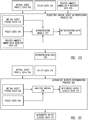
- FIG. 2A is a process diagram showing one illustrative example of the interaction of various illustrative processes, or sub-processes, 201, 203, and 205, used to implement all, or part of, a process for distributing secrets, such as exemplary processes 300 ( FIG.3 ) and 400 ( FIG.4 ) discussed herein.
- FIG.s 2B, 2C , and 2D show illustrative examples of processes 201, 203, and 205 in accordance with one embodiment.
- virtual asset profile data 143 policy data 124, and, optionally, trusted owners owner data registry data 125, are provided as input to requesting virtual asset authentication process 201 which generates authentication data 128.
- FIG.2B shows requesting virtual asset authentication process 201 in more detail.
- virtual asset profile data 143, policy data 124, and, optionally, trusted owners owner data registry data 125 are used as input data to authentication module 127 which then transforms virtual asset profile data 143, policy data 124, and, optionally, trusted owners owner data registry data 125 into authentication data 128 by one or more of the methods and processes discussed above, and/or any other method, process, procedure, or mechanism, or combinations thereof, as discussed herein, and/or as known in the art at the time of filing, and/or as developed after the time of filing.
- authentication module 127 analyzes virtual asset profile data 143, in one embodiment using one or more secret distribution factors included in policy data 124, and, in one embodiment, a trusted owners identification registry indicated in trusted owners owner data registry data 125, to determine if the requesting virtual asset is a legitimate recipient of one or more secrets data. If authentication module 127 determines that the requesting virtual asset is legitimate, this is indicated in authentication data 128 generated by authentication module 127.
- virtual asset profile data 143 and policy data 124 are provided as input to authorized secrets determination process 203 which generates authorized secret classes data 131.
- FIG.2C shows authorized secrets determination process 203 in more detail.
- virtual asset profile data 143 and policy data 124 are used as input data to analysis module 130 which transforms virtual asset profile data 143 and policy data 124 into authorized secret classes data 131 by one or more of the methods and processes discussed above, and/or any other method, process, procedure, or mechanism, or combinations thereof, as discussed herein, and/or as known in the art at the time of filing, and/or as developed after the time of filing.
- analysis module 130 uses the secrets distribution factors indicated in policy data 124 to analyze virtual asset profile data 143 and determine what classes of secrets the requesting virtual asset legitimately needs to perform its functions. The results of this analysis is then used to generate authorized secret classes data 131.
- authorized secret class data 131 and secrets data from secrets database 100, secrets database 101, secrets database 102, and secrets database 103 are provided as input to authorized secrets set collection process 205 which generates authorized secrets set data 134, including allowed secrets data 100S, allowed secrets data 101S, and allowed secrets data 103S.
- FIG.2D shows authorized secrets set collection process 205 in more detail.
- authorized secret class data 131 and secrets data from secrets database 100, secrets database 101, secrets database 102, and secrets database 103 are used as input data to authorized secrets set collection module 133 which transforms at least part of authorized secret class data 131 and secrets data from secrets database 100, secrets database 101, secrets database 102, and secrets database 103 into authorized secrets set data 134, including allowed secrets data 100S, allowed secrets data 101S, and allowed secrets data 103S by one or more of the methods and processes discussed above, and/or any other method, process, procedure, or mechanism, or combinations thereof, as discussed herein, and/or as known in the art at the time of filing, and/or as developed after the time of filing.
- authorized secrets set collection module 133 obtains allowed secrets data 100S from secrets database 100, allowed secrets data 101S from secrets database 101, and allowed secrets data 103S from database 103 in accordance with the guidelines of authorized secret classes data 131. In one embodiment, authorized secret set collection module 133 then includes allowed secrets data 100S, allowed secrets data 101S, and allowed secrets data 103S in generated authorized secret set data 134.
- portions of one or more of the processes, sub-processes, steps, operations and/or instructions can be re-grouped as portions of one or more other of processes, sub-processes, steps, operations and/or instructions discussed herein. Consequently, the particular order and/or grouping of the processes, sub-processes, steps, operations and/or instructions discussed herein do not limit the scope of the invention as claimed below.
- requesting virtual asset profile data associated with a virtual asset requesting secrets is used to authenticate the requesting virtual asset and then to determine the classes of secrets that requesting virtual asset legitimately needs. Then a set of secrets determined to be legitimately required by the requesting virtual asset is created and sent to the requesting virtual asset. Consequently, using the method and system for providing secrets disclosed herein, a virtual asset can be provided the secrets it needs to perform its tasks in a comprehensive and highly automated manner while still maintaining the security of the secrets and the resources protected by those secrets.
- portions of one or more of the processes, sub-processes, steps, operations and/or instructions can be re-grouped as portions of one or more other of processes, sub-processes, steps, operations and/or instructions discussed herein. Consequently, the particular order and/or grouping of the processes, sub-processes, steps, operations and/or instructions discussed herein do not limit the scope of the invention as claimed below.
- a method and system for distributing secrets includes providing secrets data representing one or more secrets, such as but not limited to, passwords, encryption keys, and digital certificates that are required to access associated resources, such as but not limited to, data and databases, communications channels, and external and internal services.
- secrets distribution policy data is provided representing one or more secrets distribution factors used to control the distribution of the one or more secrets.
- secrets request data when secrets request data is received requesting secrets data necessary to access one or more associated resources from a requesting virtual asset such as, but not limited to, a virtual machine, virtual server instance, a database or storage entity, the requesting virtual asset is authenticated to determine if the requesting virtual asset is eligible to receive any of the secrets data.
- a requesting virtual asset such as, but not limited to, a virtual machine, virtual server instance, a database or storage entity
- requesting virtual asset profile data associated with the requesting virtual asset is obtained.
- the requesting virtual asset profile data is analyzed using one or more of the one or more secrets distribution factors to determine what secrets, or classes of secrets the requesting virtual asset legitimately needs.
- Authorized secrets data for the requesting virtual asset representing one or more authorized secrets of the one or more secrets represented in the secrets data is then generated.
- the requesting virtual asset is then provided access to the authorized secrets data for the requesting virtual asset.
- FIG.3 is a flow chart of a process 300 for distributing secrets in accordance with one embodiment.
- process 300 for distributing secrets begins at ENTER OPERATION 301 of FIG.3 and process flow proceeds to PROVIDE SECRETS DATA REPRESENTING ONE OR MORE SECRETS OF ONE OR MORE SECRET CLASSES REQUIRED TO ACCESS ASSOCIATED RESOURCES OF ONE OR MORE RESOURCE CLASSES OPERATION 303.
- secrets includes any information, credentials, or other devices, necessary to access one or more resources and/or computing systems.
- secrets include, but are not limited to, usernames; passwords; passphrases; encryption keys; digital certificates; multifactor authentication data; account numbers; identification numbers; and/or any other information, credentials, data, devices, and/or mechanisms used to control access to various systems, resources, file systems and any other persistent storage, and data and that are required for such access, as discussed herein, and/or as known/available in the art at the time of filing, and/or as developed/made available after the time of filing.
- the secrets represented by the secrets data of PROVIDE SECRETS DATA REPRESENTING ONE OR MORE SECRETS OF ONE OR MORE SECRET CLASSES REQUIRED TO ACCESS ASSOCIATED RESOURCES OF ONE OR MORE RESOURCE CLASSES OPERATION 303 are of one or more types, or classifications, of secrets. In various embodiments, the secrets are classified according to the type of resource the secret is used to access.
- the secrets represented by the secrets data of PROVIDE SECRETS DATA REPRESENTING ONE OR MORE SECRETS OF ONE OR MORE SECRET CLASSES REQUIRED TO ACCESS ASSOCIATED RESOURCES OF ONE OR MORE RESOURCE CLASSES OPERATION 303 can be classified according to whether the secrets provide access to internal resources, such as databases and data in a data center, or access to external resources such as services offered through a cloud or the Internet.
- the different classes of secrets of PROVIDE SECRETS DATA REPRESENTING ONE OR MORE SECRETS OF ONE OR MORE SECRET CLASSES REQUIRED TO ACCESS ASSOCIATED RESOURCES OF ONE OR MORE RESOURCE CLASSES OPERATION 303 are provided by, and/or originate from, different secret sources.
- the secrets data representing the different classes of secrets of PROVIDE SECRETS DATA REPRESENTING ONE OR MORE SECRETS OF ONE OR MORE SECRET CLASSES REQUIRED TO ACCESS ASSOCIATED RESOURCES OF ONE OR MORE RESOURCE CLASSES OPERATION 303 are maintained in separate secret databases or data stores.
- the secrets data is provided, and/or maintained by, and/or on behalf of, a data/resources services center, such as a data center, providing data and/or resources to distributed computing systems, such as cloud-based systems and resources. Consequently, in one embodiment, the secrets data of PROVIDE SECRETS DATA REPRESENTING ONE OR MORE SECRETS OF ONE OR MORE SECRET CLASSES REQUIRED TO ACCESS ASSOCIATED RESOURCES OF ONE OR MORE RESOURCE CLASSES OPERATION 303 includes data representing one or more classes of secrets used to control access to one or more classes/types of resources associated with the classes of secrets by one or more entities, such as a requesting virtual asset, residing physically or logically outside the data/resources services center where the secrets data is maintained, and/or accessed.
- a data/resources services center such as a data center
- process flow proceeds to PROVIDE SECRETS DISTRIBUTION POLICY DATA INCLUDING ONE OR MORE SECRETS DISTRIBUTION FACTORS USED TO CONTROL THE DISTRIBUTION OF THE ONE OR MORE SECRETS OPERATION 305.
- the secrets data be kept secure and only be released to entities, such as virtual assets, that are authenticated and legitimately qualified to receive secrets, and the specific classes of secrets.
- the secrets distribution factors include one or more checks or tests to be performed on virtual assets requesting secrets data that allow for a determination as to what secrets the requesting virtual asset legitimately needs.
- each virtual asset is assigned a given role.
- the secrets that can be provided to each role is defined. In one embodiment, these roles are defined in secrets meta-data.
- each virtual asset is assigned a single role. However, many virtual assets can be assigned, and play, the same role. For example, this would be the case with a "POD1-WEB-Instance".
- a given virtual asset can play multiple roles, for example, a Web Instance can have a role called “web-instance” and same instance can have the role of "cache-server”.
- the secrets distribution factors include one or more checks or tests to be performed on virtual assets requesting secrets data that allow for a determination as to what secrets the requesting virtual asset legitimately needs.
- the secrets distribution policy data is open-endedly defined such that the secrets distribution policy, and/or secrets distribution factors, can be defined by the one or more parties associated with the distribution of the secrets, such as, but not limited to, the owner of a data center keeping or accessing the secrets data, the owner or provider of a cloud, the owner or a provider of a service, the owner or provider of one or more resources accessible using the secrets data, and/or any other party legitimately authorized to control the distribution of secrets.
- the secrets distribution policy can of PROVIDE SECRETS DISTRIBUTION POLICY DATA INCLUDING ONE OR MORE SECRETS DISTRIBUTION FACTORS USED TO CONTROL THE DISTRIBUTION OF THE ONE OR MORE SECRETS OPERATION 305 be tailored to the specific needs of the one or more parties associated with the distribution of the secrets.
- the secrets distribution policies, and/or secrets distribution factors can be added, modified, or deleted, as needed to meet the needs of the one or more parties associated with the distribution of secrets.
- secrets distribution policy data representing secrets distribution policy and one or more secrets distribution factors used to control the distribution of the one or more secrets, and classes of secrets
- process flow proceeds to RECEIVE SECRETS REQUEST DATA FROM A REQUESTING VIRTUAL ASSET OPERATION 307.
- a secrets request is received from a requesting virtual asset for one or more secrets required to obtain access to one or more resources.
- the term "virtual asset” includes any virtualized entity or resource requiring access to various resources, and types of resources.
- the virtual assets can be, but are not limited to, virtual machines, virtual servers, and instances implemented in a cloud computing environment; databases implemented, or associated with, a cloud computing environment and/or instances implemented in a cloud computing environment; services associated with, and or delivered through, a cloud computing environment; communications systems used with, part of, or provided through, a cloud computing environment; and/or any other virtualized assets and/or mobile devices, remote sensors, laptops, desktops, point-of-sale devices, ATMs, electronic voting machines requiring access to various resources, and/or types of resources, located within a data center, within the cloud, and/or any other physical or logical location, as discussed herein, and/or as known/available in the art at the time of filing, and/or as developed/made available after the time of filing.
- a virtual asset when a virtual asset is initiated, or created, in a cloud environment, the virtual asset typically requires access to one or more resources in the cloud, external to the cloud, and/or in one or more data centers. As also discussed in more detail below, in order to access these resources the virtual assets typically must obtain secrets data representing one or more secrets required to access the needed resources.
- a virtual asset attempting to access a resource, and therefore requesting secrets data is referred to as a "requesting virtual asset.”
- the secrets request data is generated under the direction of a secret managing client module that initiates the request to get secrets.
- the secret managing client module is distributed to authenticated virtual assets.
- the secrets request is received from the requesting virtual asset in the form of secrets request data.
- the secrets request data is received from the requesting virtual data at a services gateway associated with a data/resources services center, e.g., a data center, where the secrets data is maintained, and/or through which the secrets data is accessed.
- the requesting virtual asset is configured such that when the virtual asset is initiated, code built into the virtual asset image is used to contact the services gateway directly.
- the secrets request data is received from the requesting virtual asset at the services gateway through a trusted communication channel such as, for example, an authenticated Secure Sockets Layer (SSL) communication channel.
- SSL Secure Sockets Layer
- the secrets request data is received from the requesting virtual asset at RECEIVE SECRETS REQUEST DATA FROM A REQUESTING VIRTUAL ASSET OPERATION 307 through a services gateway proxy that, in turn, is communicatively coupled to the services gateway.
- the secrets request data is received from the requesting virtual asset at the services gateway proxy through a trusted communication channel such as, for example, an authenticated SSL communication channel.
- the services gateway proxy is also connected to the services gateway by a trusted communication channel, such as an authenticated SSL communication channel.
- the secrets request data of RECEIVE SECRETS REQUEST DATA FROM A REQUESTING VIRTUAL ASSET OPERATION 307 includes a request for certain classes of secrets or specific secrets associated with specific resources.
- the secrets request data of RECEIVE SECRETS REQUEST DATA FROM A REQUESTING VIRTUAL ASSET OPERATION 307 is actually a request for access to resources that require secrets so that the request to access the resources is, de-facto, a request for secrets data.
- the secrets request data of RECEIVE SECRETS REQUEST DATA FROM A REQUESTING VIRTUAL ASSET OPERATION 307 is a listing or set of the requesting virtual asset's specific parameters that will be used by services gateway to verify the provided parameters by making API calls to the owner or provider of a cloud service.
- the secrets request data is forwarded from the services gateway to a secrets distribution management service/system.
- process flow proceeds to OBTAIN REQUESTING VIRTUAL ASSET PROFILE DATA ASSOCIATED WITH THE REQUESTING VIRTUAL ASSET OPERATION 309.
- the secrets distribution management service/system obtains the requesting virtual asset profile data associated with the requesting virtual asset.
- the virtual asset profile data associated with the requesting virtual asset of OBTAIN REQUESTING VIRTUAL ASSET PROFILE DATA ASSOCIATED WITH THE REQUESTING VIRTUAL ASSET OPERATION 309 includes, but is not limited to, owner identification data associated with an owner of the requesting virtual asset, such as the account number of an owner of the virtual asset; data indicating the type of requesting virtual asset such as whether the requesting virtual asset is a server instance, a data store, and whether the requesting virtual asset is associated with a specific location or tier, such as a web tier, and/or logically requires access to internal resources or external resources, such as the Internet, etc.; data indicating any special capabilities or modules associated with the requesting virtual asset; data indicating the size and number of resources allocated to the requesting virtual asset; data indicating how long the requesting virtual asset has existed or has been running; data indicating where the virtual asset resides and/or is being initiated, such as in a subnet of a Virtual Private Cloud (VPC), or in a
- VPC
- the requesting virtual asset profile data to be obtained at OBTAIN REQUESTING VIRTUAL ASSET PROFILE DATA ASSOCIATED WITH THE REQUESTING VIRTUAL ASSET OPERATION 309 is open-endedly defined such that the virtual asset profile data obtained can be defined by the one or more parties associated with the distribution of the secrets, such as, but not limited to, the owner of a data center keeping or accessing the secrets data, the owner or provider of a cloud, the owner or a provider of a service, the owner or provider of one or more resources accessible using the secrets data, and/or any other party legitimately authorized to control the distribution of secrets.
- the requesting virtual asset profile data obtained can be tailored to the specific needs of the one or more parties associated with the distribution of the secrets.
- portions of the requesting virtual asset profile data to be obtained can be added, modified, or deleted, as needed to meet the needs of the one or more parties associated with the distribution of secrets.
- process flow proceeds to AUTHENTICATE THE REQUESTING VIRTUAL ASSET OPERATION 311.
- the requesting virtual asset profile data is obtained at OBTAIN REQUESTING VIRTUAL ASSET PROFILE DATA ASSOCIATED WITH THE REQUESTING VIRTUAL ASSET OPERATION 309
- the requesting virtual asset is authenticated at AUTHENTICATE THE REQUESTING VIRTUAL ASSET OPERATION 311 to confirm that the requesting virtual asset is a legitimate entity and is eligible to receive any portion of secrets data, i.e., any secrets, at all.
- the requesting virtual asset is authenticated at AUTHENTICATE THE REQUESTING VIRTUAL ASSET OPERATION 311 by analyzing the requesting virtual asset profile data of OBTAIN REQUESTING VIRTUAL ASSET PROFILE DATA ASSOCIATED WITH THE REQUESTING VIRTUAL ASSET OPERATION 309 to determine an identification number associated with the owner of the requesting virtual asset. Then the identification number associated with the owner of the requesting virtual asset is compared with a registry or listing of identification numbers associated with known and trusted owners.
- the identification number associated with the owner of the requesting virtual asset is also linked to data indicating all virtual assets associated with that owner. Consequently, by determining the identification of the owner of the requesting virtual asset at AUTHENTICATE THE REQUESTING VIRTUAL ASSET OPERATION 311, a determination can be made as to whether the requesting virtual asset itself is a legitimate virtual asset.
- an owner's account number is compared with a registry or listing of trusted owners' account numbers.
- an owner's account number with a cloud provider is compared with a list of trusted owners' account numbers to determine if the owner of the requesting virtual asset is a trusted entity.
- an owner's account number is typically linked to data indicating all virtual assets associated with the account
- comparing the owner's account number with a registry of trusted account numbers allows for a determination to be made at least as to whether the requesting virtual asset is an asset that should be provided some portion of the secrets data, i.e., one or more secrets represented by the secrets data.
- the requesting virtual asset is authenticated at AUTHENTICATE THE REQUESTING VIRTUAL ASSET OPERATION 311 by analyzing the requesting virtual asset profile data to determine whether the requesting virtual asset is in compliance with one or more security policies. Using this authentication parameter, an initial determination can be made at least as to whether the requesting virtual asset has sufficient security mechanisms/features in place, and/or associated with it, to ensure not only that the requesting virtual asset is authorized to receive such secrets, but that the secrets data itself will be secure once it is provided to the requesting virtual asset.
- the requesting virtual asset is authenticated at AUTHENTICATE THE REQUESTING VIRTUAL ASSET OPERATION 311 using any authentication means, processes, methods, and/or procedures, or combinations of authentication means, processes, methods, and/or procedures, as discussed herein, and/or as known in the art/available at the time of filing, and/or as developed/made available after the time of filing.
- process flow proceeds to ANALYZE THE REQUESTING VIRTUAL ASSET PROFILE DATA USING ONE OR MORE OF THE ONE OR MORE SECRETS DISTRIBUTION FACTORS TO GENERATE AUTHORIZED SECRET CLASSES DATA FOR THE REQUESTING VIRTUAL ASSET OPERATION 313.
- the requesting virtual asset profile data is further analyzed at ANALYZE THE REQUESTING VIRTUAL ASSET PROFILE DATA USING ONE OR MORE OF THE ONE OR MORE SECRETS DISTRIBUTION FACTORS TO GENERATE AUTHORIZED SECRET CLASSES DATA FOR THE REQUESTING VIRTUAL ASSET OPERATION 313 to determine what classes of secrets the requesting virtual asset of RECEIVE SECRETS REQUEST DATA FROM A REQUESTING VIRTUAL ASSET OPERATION 307 legitimately needs, and therefore is eligible to receive.
- the secrets distribution policy data of PROVIDE SECRETS DISTRIBUTION POLICY DATA INCLUDING ONE OR MORE SECRETS DISTRIBUTION FACTORS USED TO CONTROL THE DISTRIBUTION OF THE ONE OR MORE SECRETS OPERATION 305 includes data representing secrets distribution factors.
- the secrets distribution factors include one or more checks or tests to be performed on requesting virtual assets profile data to determine what secrets, and/or classes of secrets, the requesting virtual asset legitimately needs and is authorized to receive.
- a registry of trusted owners' owner identification data such as, in one illustrative example, an owner's account number is compared with a registry or listing of trusted owners' account numbers.
- an owner's account number with a cloud provider is compared with a list of trusted owner's account numbers to determine if the requesting virtual asset is a trusted entity.
- an owner's account number includes data indicating all virtual assets associated with the account
- comparing the owner's account number with a registry of trusted account numbers allows for a determination to be made about the type of requesting virtual asset and what types of secrets that requesting virtual asset might legitimately need.
- an analysis of the account number associated with an owner of the requesting virtual asset at ANALYZE THE REQUESTING VIRTUAL ASSET PROFILE DATA USING ONE OR MORE OF THE ONE OR MORE SECRETS DISTRIBUTION FACTORS TO GENERATE AUTHORIZED SECRET CLASSES DATA FOR THE REQUESTING VIRTUAL ASSET OPERATION 313 can also provide information regarding a budget associated with that account number and therefore what resources the owner of the requesting virtual asset can afford to access on behalf of the requesting virtual asset. Consequently, this data also can be used to determine what classes of secrets, or individual secrets, the requesting virtual asset is eligible to receive.
- a secrets distribution factor that can be used at ANALYZE THE REQUESTING VIRTUAL ASSET PROFILE DATA USING ONE OR MORE OF THE ONE OR MORE SECRETS DISTRIBUTION FACTORS TO GENERATE AUTHORIZED SECRET CLASSES DATA FOR THE REQUESTING VIRTUAL ASSET OPERATION 313 includes making a determination as to security associated with the requesting virtual asset, and whether the requesting virtual asset is in compliance with one or more security policies.
- an initial determination can be made at least as to whether the requesting virtual asset has sufficient security mechanisms/features in place, and/or associated with it, to receive certain classes of secrets.
- Another specific illustrative example of a secrets distribution factor used at ANALYZE THE REQUESTING VIRTUAL ASSET PROFILE DATA USING ONE OR MORE OF THE ONE OR MORE SECRETS DISTRIBUTION FACTORS TO GENERATE AUTHORIZED SECRET CLASSES DATA FOR THE REQUESTING VIRTUAL ASSET OPERATION 313 includes making a determination as to how long the requesting virtual asset has currently been operating. Using this secrets distribution factor a determination can be made as to whether the requesting virtual assets request for secrets data is temporally logical.
- virtual assets include instances generated within a cloud computing environment.
- an instance is a virtual server generated within a cloud computing environment that includes allocated operating systems, processing power, data storage, and communication systems. Instances can generally be created and destroyed within the cloud as needed.
- instances When instances are first initiated, i.e., created or re-created, in the cloud, the instance typically needs to access various resources in order to perform its intended task. To this end, the instance also typically requires one or more secrets in order to access the required resources. Consequently, the most logical time for an instance, or other virtual asset, to have need for, and to request, secrets data is when the instance, or other virtual asset, is being initiated. Typically, it is at this point in the virtual asset's life that it requires the secrets data in order to access the resources it needs to perform its function.
- this particular secrets distribution factor is either not used at ANALYZE THE REQUESTING VIRTUAL ASSET PROFILE DATA USING ONE OR MORE OF THE ONE OR MORE SECRETS DISTRIBUTION FACTORS TO GENERATE AUTHORIZED SECRET CLASSES DATA FOR THE REQUESTING VIRTUAL ASSET OPERATION 313, or is given a lower weight or priority at ANALYZE THE REQUESTING VIRTUAL ASSET PROFILE DATA USING ONE OR MORE OF THE ONE OR MORE SECRETS DISTRIBUTION FACTORS TO GENERATE AUTHORIZED SECRET CLASSES DATA FOR THE REQUESTING VIRTUAL ASSET OPERATION 313.
- Another specific illustrative example of a secrets distribution factor used at ANALYZE THE REQUESTING VIRTUAL ASSET PROFILE DATA USING ONE OR MORE OF THE ONE OR MORE SECRETS DISTRIBUTION FACTORS TO GENERATE AUTHORIZED SECRET CLASSES DATA FOR THE REQUESTING VIRTUAL ASSET OPERATION 313 includes a determination of the number or resources associated with the requesting virtual asset. Using this secrets distribution factor a determination is made as to the number of resources that are already allocated to the requesting virtual asset.
- a requesting virtual asset that currently has large amounts of processing power, data storage capacity, and perhaps multiple instances, associated with it, is naturally given greater scrutiny at ANALYZE THE REQUESTING VIRTUAL ASSET PROFILE DATA USING ONE OR MORE OF THE ONE OR MORE SECRETS DISTRIBUTION FACTORS TO GENERATE AUTHORIZED SECRET CLASSES DATA FOR THE REQUESTING VIRTUAL ASSET OPERATION 313 than a requesting virtual asset having minimal resources.
- multiple secret distribution factors may be applied to that virtual asset at ANALYZE THE REQUESTING VIRTUAL ASSET PROFILE DATA USING ONE OR MORE OF THE ONE OR MORE SECRETS DISTRIBUTION FACTORS TO GENERATE AUTHORIZED SECRET CLASSES DATA FOR THE REQUESTING VIRTUAL ASSET OPERATION 313 before secrets data is provided to the virtual asset.
- Another specific illustrative example of a secrets distribution factor used at ANALYZE THE REQUESTING VIRTUAL ASSET PROFILE DATA USING ONE OR MORE OF THE ONE OR MORE SECRETS DISTRIBUTION FACTORS TO GENERATE AUTHORIZED SECRET CLASSES DATA FOR THE REQUESTING VIRTUAL ASSET OPERATION 313 includes a determination of modules or capabilities associated with the requesting virtual asset.
- a requesting virtual asset that includes a module for processing financial data is likely to have a legitimate need for access to secrets related to accessing financial data from a data center.
- a specialized requesting virtual asset that includes a module associated with analyzing genome data, or includes resources that are directed to processing large amounts of empirical data is less likely to have a legitimate need for access to secrets related to accessing financial data.
- Another specific illustrative example of a secrets distribution factor used at ANALYZE THE REQUESTING VIRTUAL ASSET PROFILE DATA USING ONE OR MORE OF THE ONE OR MORE SECRETS DISTRIBUTION FACTORS TO GENERATE AUTHORIZED SECRET CLASSES DATA FOR THE REQUESTING VIRTUAL ASSET OPERATION 313 includes a determination of the type of requesting virtual asset and the legitimate access requirements of that type of requesting virtual asset.
- a requesting virtual asset that is related to a database is considered potentially more problematic than a requesting virtual asset that is a single instance within a cloud computing environment. Consequently, when a determination is made at ANALYZE THE REQUESTING VIRTUAL ASSET PROFILE DATA USING ONE OR MORE OF THE ONE OR MORE SECRETS DISTRIBUTION FACTORS TO GENERATE AUTHORIZED SECRET CLASSES DATA FOR THE REQUESTING VIRTUAL ASSET OPERATION 313 that the requesting virtual asset is a database related asset, that requesting virtual asset is held to a higher security standard and subjected to more secrets distribution factor analysis.
- each virtual asset is assigned a given role.
- the secrets that can be provided to each role is defined.
- these roles are defined in secrets meta-data.
- a secrets distribution factor used at ANALYZE THE REQUESTING VIRTUAL ASSET PROFILE DATA USING ONE OR MORE OF THE ONE OR MORE SECRETS DISTRIBUTION FACTORS TO GENERATE AUTHORIZED SECRET CLASSES DATA FOR THE REQUESTING VIRTUAL ASSET OPERATION 313 includes determining an authorization role assigned to the virtual asset by the owner or provider of a cloud service.
- the number and types of secret distribution factors to be applied to the requesting virtual asset at ANALYZE THE REQUESTING VIRTUAL ASSET PROFILE DATA USING ONE OR MORE OF THE ONE OR MORE SECRETS DISTRIBUTION FACTORS TO GENERATE AUTHORIZED SECRET CLASSES DATA FOR THE REQUESTING VIRTUAL ASSET OPERATION 313 is determined, at least in part, based on various features of the requesting virtual asset as indicated in the analysis of requesting virtual asset profile data.
- process flow proceeds to OBTAIN AUTHORIZED SECRETS SET DATA FOR THE REQUESTING VIRTUAL ASSET IN ACCORDANCE WITH THE AUTHORIZED SECRET CLASSES DATA FOR THE REQUESTING VIRTUAL ASSET OPERATION 315.
- the secrets distribution policy including the secret distribution factors, of ANALYZE THE REQUESTING VIRTUAL ASSET PROFILE DATA USING ONE OR MORE OF THE ONE OR MORE SECRETS DISTRIBUTION FACTORS TO GENERATE AUTHORIZED SECRET CLASSES DATA FOR THE REQUESTING VIRTUAL ASSET OPERATION 313 a determination is made as to what classes of secrets, or specific secrets, the requesting virtual asset is eligible to receive at OBTAIN AUTHORIZED SECRETS SET DATA FOR THE REQUESTING VIRTUAL ASSET IN ACCORDANCE WITH THE AUTHORIZED SECRET CLASSES DATA FOR THE REQUESTING VIRTUAL ASSET OPERATION 315.
- the result of the determination of ANALYZE THE REQUESTING VIRTUAL ASSET PROFILE DATA USING ONE OR MORE OF THE ONE OR MORE SECRETS DISTRIBUTION FACTORS TO GENERATE AUTHORIZED SECRET CLASSES DATA FOR THE REQUESTING VIRTUAL ASSET OPERATION 313 is the generation of authorized secret classes data indicating the authorized classes of secrets, and/or specific secrets, the requesting virtual asset is eligible to receive.
- OBTAIN AUTHORIZED SECRETS SET DATA FOR THE REQUESTING VIRTUAL ASSET IN ACCORDANCE WITH THE AUTHORIZED SECRET CLASSES DATA FOR THE REQUESTING VIRTUAL ASSET OPERATION 315 data representing one or more secrets in the secrets data of PROVIDE SECRETS DATA REPRESENTING ONE OR MORE SECRETS OF ONE OR MORE SECRET CLASSES REQUIRED TO ACCESS ASSOCIATED RESOURCES OF ONE OR MORE RESOURCE CLASSES OPERATION 303 is obtained for the requesting virtual asset of RECEIVE SECRETS REQUEST DATA FROM A REQUESTING VIRTUAL ASSET OPERATION 307 in accordance with the authorized secret classes data of OBTAIN AUTHORIZED SECRETS SET DATA FOR THE REQUESTING VIRTUAL ASSET IN ACCORDANCE WITH THE AUTHORIZED SECRET CLASSES DATA FOR THE REQUESTING VIRTUAL ASSET OPERATION 315
- the data representing one or more secrets is obtained at OBTAIN AUTHORIZED SECRETS SET DATA FOR THE REQUESTING VIRTUAL ASSET IN ACCORDANCE WITH THE AUTHORIZED SECRET CLASSES DATA FOR THE REQUESTING VIRTUAL ASSET OPERATION 315 from one or more secrets databases through a secrets distribution management system that resides, in one embodiment, at the data/resources service center, e.g., the data center.
- the data representing the one or more secrets determined to be appropriate to provide to the requesting virtual asset is collected into a single set of authorized secret set data at OBTAIN AUTHORIZED SECRETS SET DATA FOR THE REQUESTING VIRTUAL ASSET IN ACCORDANCE WITH THE AUTHORIZED SECRET CLASSES DATA FOR THE REQUESTING VIRTUAL ASSET OPERATION 315 that includes all of the secrets that it has been determined the requesting resource asset of RECEIVE SECRETS REQUEST DATA FROM A REQUESTING VIRTUAL ASSET OPERATION 307 legitimately requires.
- the authorized secret set data is obtained at OBTAIN AUTHORIZED SECRETS SET DATA FOR THE REQUESTING VIRTUAL ASSET IN ACCORDANCE WITH THE AUTHORIZED SECRET CLASSES DATA FOR THE REQUESTING VIRTUAL ASSET OPERATION 315
- the authorized secret set data is provided to the requesting virtual asset of RECEIVE SECRETS REQUEST DATA FROM A REQUESTING VIRTUAL ASSET OPERATION 307 at PROVIDE THE REQUESTING VIRTUAL ASSET ACCESS TO THE AUTHORIZED SECRETS SET DATA FOR THE REQUESTING VIRTUAL ASSET OPERATION 317.
- the authorized secret set data is provided to the requesting virtual asset at PROVIDE THE REQUESTING VIRTUAL ASSET ACCESS TO THE AUTHORIZED SECRETS SET DATA FOR THE REQUESTING VIRTUAL ASSET OPERATION 317 via a trusted communications channel, such as an authenticated SSL communications channel, and/or through a services gateway, and/or a services gateway proxy, if present.
- a trusted communications channel such as an authenticated SSL communications channel
- the requesting virtual asset of RECEIVE SECRETS REQUEST DATA FROM A REQUESTING VIRTUAL ASSET OPERATION 307 receives the authorized secret set data of OBTAIN AUTHORIZED SECRETS SET DATA FOR THE REQUESTING VIRTUAL ASSET IN ACCORDANCE WITH THE AUTHORIZED SECRET CLASSES DATA FOR THE REQUESTING VIRTUAL ASSET OPERATION 315 at PROVIDE THE REQUESTING VIRTUAL ASSET ACCESS TO THE AUTHORIZED SECRETS SET DATA FOR THE REQUESTING VIRTUAL ASSET OPERATION 317, the requesting virtual asset uses the secrets contained in the authorized secret set data to obtain access to the resources it needs to perform its designated tasks.
- process 300 for distributing secrets is exited to await new data.
- the authorized secret set data is provided to the requesting virtual asset via a secrets data store a separate location.
- FIG.4 is a flow chart of a process 400 for distributing secrets in accordance with one embodiment.
- process 400 for distributing secrets begins at ENTER OPERATION 401 of FIG.4 and process flow proceeds to PROVIDE SECRETS DATA REPRESENTING ONE OR MORE SECRETS OF ONE OR MORE SECRET CLASSES REQUIRED TO ACCESS ASSOCIATED RESOURCES OF ONE OR MORE RESOURCE CLASSES OPERATION 403.
- the authorized secret set data of OBTAIN AUTHORIZED SECRETS SET DATA FOR THE REQUESTING VIRTUAL ASSET IN ACCORDANCE WITH THE AUTHORIZED SECRET CLASSES DATA FOR THE REQUESTING VIRTUAL ASSET OPERATION 415 is encrypted.
- the authorized secret set data of OBTAIN AUTHORIZED SECRETS SET DATA FOR THE REQUESTING VIRTUAL ASSET IN ACCORDANCE WITH THE AUTHORIZED SECRET CLASSES DATA FOR THE REQUESTING VIRTUAL ASSET OPERATION 415 is encrypted by an encryption engine located at the data/resources services center, e.g., the data center.
- the encrypted authorized secret set data of ENCRYPT THE AUTHORIZED SECRETS SET DATA FOR THE REQUESTING VIRTUAL ASSET OPERATION 417 is assigned authorized secret set data identification data and is then transferred/transmitted to a secrets data store where it is stored pending access by the requesting virtual asset.
- data representing the encryption key i.e., a single secret
- data representing the encryption key is provided to the requesting virtual asset of RECEIVE SECRETS REQUEST DATA FROM A REQUESTING VIRTUAL ASSET OPERATION 407 along with the identification data for the encrypted authorized secret set data of ASSIGN IDENTIFICATION DATA TO THE ENCRYPTED AUTHORIZED SECRETS SET DATA FOR THE REQUESTING VIRTUAL ASSET AND STORE THE ENCRYPTED AUTHORIZED SECRETS SET DATA FOR THE REQUESTING VIRTUAL ASSET IN A SECRETS STORE OPERATION 419.
- the requesting virtual asset of RECEIVE SECRETS REQUEST DATA FROM A REQUESTING VIRTUAL ASSET OPERATION 407 is provided access to the secrets data store of ASSIGN IDENTIFICATION DATA TO THE ENCRYPTED AUTHORIZED SECRETS SET DATA FOR THE REQUESTING VIRTUAL ASSET AND STORE THE ENCRYPTED AUTHORIZED SECRETS SET DATA FOR THE REQUESTING VIRTUAL ASSET IN A SECRETS STORE OPERATION 419.
- the requesting virtual asset of RECEIVE SECRETS REQUEST DATA FROM A REQUESTING VIRTUAL ASSET OPERATION 407 uses the identification data of PROVIDE THE REQUESTING VIRTUAL ASSET THE IDENTIFICATION DATA AND AN ENCRYPTION KEY FOR THE ENCRYPTED AUTHORIZED SECRETS SET DATA FOR THE REQUESTING VIRTUAL ASSET OPERATION 421 to identify the desired encrypted authorized secret set data in the secret data store and provides the encryption key data to access and decrypt the authorized secrets.
- the requesting virtual asset then uses the secrets contained in the authorized secret set data to obtain access to the resources it needs to perform its designated tasks.
- the secrets data store of ASSIGN IDENTIFICATION DATA TO THE ENCRYPTED AUTHORIZED SECRETS SET DATA FOR THE REQUESTING VIRTUAL ASSET AND STORE THE ENCRYPTED AUTHORIZED SECRETS SET DATA FOR THE REQUESTING VIRTUAL ASSET IN A SECRETS STORE OPERATION 419 is a data store or database, or other data storage mechanism, located outside the data center and, in one embodiment, at a physical location closer to the requesting virtual asset.
- encrypted authorized secret set data is pre-generated at OBTAIN AUTHORIZED SECRETS SET DATA FOR THE REQUESTING VIRTUAL ASSET IN ACCORDANCE WITH THE AUTHORIZED SECRET CLASSES DATA FOR THE REQUESTING VIRTUAL ASSET OPERATION 415 for specific types, and/or classes, of virtual assets and then pre-deployed at ASSIGN IDENTIFICATION DATA TO THE ENCRYPTED AUTHORIZED SECRETS SET DATA FOR THE REQUESTING VIRTUAL ASSET AND STORE THE ENCRYPTED AUTHORIZED SECRETS SET DATA FOR THE REQUESTING VIRTUAL ASSET IN A SECRETS STORE OPERATION 419 to a local secrets data store to await a secrets request data from a requesting virtual asset of the particular type, or class, associated with the encrypted authorized secret set data.
- the secrets request data is received from a requesting virtual asset of the particular type, or class, associated with the pre-deployed encrypted authorized secret set data at RECEIVE SECRETS REQUEST DATA FROM A REQUESTING VIRTUAL ASSET OPERATION 407
- the requesting virtual asset is provided the identification data associated with the pre-deployed encrypted authorized secret set data and the encryption key at PROVIDE THE REQUESTING VIRTUAL ASSET THE IDENTIFICATION DATA AND AN ENCRYPTION KEY FOR THE ENCRYPTED AUTHORIZED SECRETS SET DATA FOR THE REQUESTING VIRTUAL ASSET OPERATION 421.
- the requesting virtual asset uses the secrets included in the authorized secretive data to access the resources it needs to perform its function at PROVIDE THE REQUESTING VIRTUAL ASSET ACCESS TO THE SECRETS STORE OPERATION 423.
- the latencies involved in actually collecting the authorized secret set data and transmitting the entire set of authorized secret set data to the requesting virtual asset are avoided.
- process 400 for distributing secrets is exited to await new data.
- requesting virtual asset profile data associated with a virtual asset requesting secrets is used to authenticate the requesting virtual asset and then to determine the classes of secrets that requesting virtual asset legitimately needs. Then a set of secrets determined to be legitimately required by the requesting virtual asset is created and sent to the requesting virtual asset. Consequently, using processes 300 and 400 for distributing secrets, a virtual asset can be provided the secrets it needs to perform its tasks in a comprehensive and highly automated manner while still maintaining the security of the secrets and the resources protected by those secrets.
- certain aspects of one embodiment include process steps and/or operations and/or instructions described herein for illustrative purposes in a particular order and/or grouping.
- the particular order and/or grouping shown and discussed herein are illustrative only and not limiting.
- Those of skill in the art will recognize that other orders and/or grouping of the process steps and/or operations and/or instructions are possible and, in some embodiments, one or more of the process steps and/or operations and/or instructions discussed above can be combined and/or deleted.
- portions of one or more of the process steps and/or operations and/or instructions can be re-grouped as portions of one or more other of the process steps and/or operations and/or instructions discussed herein. Consequently, the particular order and/or grouping of the process steps and/or operations and/or instructions discussed herein do not limit the scope of the invention as claimed below.
- the present invention also relates to an apparatus or system for performing the operations described herein.
- This apparatus or system may be specifically constructed for the required purposes, or the apparatus or system can comprise a general purpose system selectively activated or configured/reconfigured by a computer program stored on a computer program product as discussed herein that can be accessed by a computing system or other device.
- the present invention is well suited to a wide variety of computer network systems operating over numerous topologies.
- the configuration and management of large networks comprise storage devices and computers that are communicatively coupled to similar or dissimilar computers and storage devices over a private network, a LAN, a WAN, a private network, or a public network, such as the Internet.
Landscapes
- Engineering & Computer Science (AREA)
- Computer Security & Cryptography (AREA)
- Signal Processing (AREA)
- Computer Networks & Wireless Communication (AREA)
- Theoretical Computer Science (AREA)
- General Engineering & Computer Science (AREA)
- Computer Hardware Design (AREA)
- General Physics & Mathematics (AREA)
- Physics & Mathematics (AREA)
- Software Systems (AREA)
- Computing Systems (AREA)
- General Health & Medical Sciences (AREA)
- Bioethics (AREA)
- Health & Medical Sciences (AREA)
- Databases & Information Systems (AREA)
- Mobile Radio Communication Systems (AREA)
- Storage Device Security (AREA)
- Computer And Data Communications (AREA)
- Information Retrieval, Db Structures And Fs Structures Therefor (AREA)
- Data Exchanges In Wide-Area Networks (AREA)
Claims (13)
- System zum Verteilen von Geheimnissen, umfassend:mindestens einen Prozessor; undmindestens einen Speicher, der mit dem mindestens einen Prozessor gekoppelt ist, wobei der mindestens eine Speicher darauf gespeicherte Anweisungen aufweist, die bei Ausführung durch eine beliebige Menge des einen oder der mehreren Prozessoren einen Prozess zum Verteilen von Geheimnissen durchführen, wobei der Prozess zum Verteilen von Geheimnissen Folgendes beinhaltet:Bereitstellen von Geheimnisdaten (100A, ... 104A), die ein oder mehrere Geheimnisse repräsentieren, die zum Zugreifen auf assoziierte Ressourcen (170C, 170R) benötigt werden;Bereitstellen von Geheimnisverteilungsrichtliniendaten (124), die einen oder mehrere Geheimnisverteilungsfaktoren repräsentieren, die zum Steuern der Verteilung des einen oder der mehreren Geheimnisse verwendet werden;Empfangen von Geheimnisanfragedaten (142) von einem anfordernden virtuellen Posten (140) für Geheimnisdaten, die zum Zugreifen auf eine oder mehrere assoziierte Ressourcen notwendig sind;Erhalten von Profildaten (143) des anfordernden virtuellen Postens, die mit dem anfordernden virtuellen Posten assoziiert sind;Authentifizieren des anfordernden virtuellen Postens;Analysieren der Profildaten des anfordernden virtuellen Postens unter Verwendung von einem oder mehreren des einen oder der mehreren Geheimnisverteilungsfaktoren, um autorisierte Geheimnisdaten (100S, 101S, 103S) für den anfordernden virtuellen Posten zu erzeugen; undBereitstellen eines Zugriffs an den anfordernden virtuellen Posten auf die autorisierten Geheimnisdaten für den anfordernden virtuellen Posten;wobei das eine oder die mehreren Geheimnisse eine oder mehrere Geheimklassen umfassen, wobei jede der Geheimklassen mit einem Ressourcentyp assoziiert ist, wobei die Geheimnisse gemäß dem Typ der Ressource, auf die unter Verwendung des Geheimnisses zugegriffen wird, klassifiziert werden, wobei die Geheimnisanfragedaten eine Anfrage für gewisse Klassen von Geheimnissen, die mit spezifischen Ressourcen assoziiert sind, umfassen und wobei die Geheimnisverteilungsfaktoren zum Steuern der Verteilung der Klassen von Geheimnissen verwendet werden;und wobei die Profildaten des anfordernden virtuellen Postens unter Verwendung von einem oder mehreren des einen oder der mehreren Geheimnisverteilungsfaktoren analysiert werden, um zu bestimmen, welche Geheimklassen der anfordernde virtuelle Posten legitim braucht, und autorisierte Geheimklassendaten für den anfordernden virtuellen Posten zu erzeugen, die die Klassen von Geheimnissen angeben, die der anfordernde virtuelle Posten autorisiert ist, zu empfangen;wobei das Verfahren ferner ein Erhalten von autorisierten Geheimnismengendaten (134) für den anfordernden virtuellen Posten umfasst, die eine Menge von Geheimnissen für den anfordernden virtuellen Posten repräsentieren, die gemäß den autorisierten Geheimklassendaten für den anfordernden virtuellen Posten erhalten werden;wobei das Bereitstellen eines Zugriffs an den anfordernden virtuellen Posten auf die autorisierten Geheimnismengendaten für den anfordernden virtuellen Posten Folgendes beinhaltet:Verschlüsseln der autorisierten Geheimnismengendaten für den anfordernden virtuellen Posten;Zuweisen von Identifikationsdaten (137) zu den verschlüsselten autorisierten Geheimnismengendaten (136) für den anfordernden virtuellen Posten;Speichern der verschlüsselten autorisierten Geheimnismengendaten für den anfordernden virtuellen Posten in einem Geheimnisspeicher (160);Bereitstellen der Identifikationsdaten und eines Verschlüsselungsschlüssels (138) an den anfordernden virtuellen Posten zum Identifizieren und Entschlüsseln der verschlüsselten autorisierten Geheimnismengendaten für den anfordernden virtuellen Posten; undBereitstellen eines Zugriffs an den anfordernden virtuellen Posten auf den Geheimnisspeicher.
- System zum Verteilen von Geheimnissen nach Anspruch 1, wobei mindestens eine der einen oder der mehreren Klassen von Geheimnissen aus der Gruppe von Klassen von Geheimnissen ausgewählt wird, die aus Folgendem besteht:Datenbankzugriffsgeheimnissen;externen Dienstzugriffsgeheimnissen;internen Dienstzugriffsdaten;Passwörtern;Passphrasen;biometrischen Daten;digitalen Zertifikaten;Verschlüsselungsschlüsseln; undSSL-Zertifikaten.
- System zum Verteilen von Geheimnissen nach Anspruch 1, wobei mindestens einer des einen oder der mehreren Ressourcentypen aus der Gruppe von Ressourcentypen ausgewählt wird, die aus Folgendem besteht:Datenbanken und Daten;externen Diensten;internen Diensten;Cloud-basierten Diensten;datenzentrumbasierten Diensten;dem Internet;einer Cloud;Anwendungen;verschlüsselten Daten;authentifizierten SSL-Kommunikationskanälen;drahtlos zugreifbaren Diensten; undbeliebigen Kommunikationskanälen.
- System zum Verteilen von Geheimnissen nach Anspruch 1, wobei mindestens einer des einen oder der mehreren Geheimnisverteilungsfaktoren aus der Gruppe von Geheimnisverteilungsfaktoren ausgewählt wird, die aus Folgenden besteht:einer Bestimmung, ob Eigentümeridentifikationsdaten, die mit dem Eigentümer des anfordernden virtuellen Postens assoziiert sind, in einem Register von Eigentümeridentifikationsdaten von vertrauenswürdigen Eigentümern enthalten sind;einer Bestimmung, ob der anfordernde virtuelle Posten einer oder mehreren Sicherheitsrichtlinien entspricht;einer Bestimmung, wie lange sich der anfordernde virtuelle Posten gegenwärtig in Betrieb befunden hat;einer Bestimmung der Anzahl oder Ressourcen, die mit dem anfordernden virtuellen Posten assoziiert sind;einer Bestimmung von Modulen oder Fähigkeiten, die mit dem anfordernden virtuellen Posten assoziiert sind;einer Bestimmung des Typs von anforderndem virtuellem Posten und der legitimen Zugriffsanforderungen dieses Typs von anforderndem virtuellem Posten; undeiner beliebigen Kombination davon.
- System zum Verteilen von Geheimnissen nach Anspruch 1, wobei die Geheimnisanfragedaten vom anfordernden virtuellen Posten über ein Ressourcendienst-Gateway (121) empfangen werden, und optional wobei der anfordernde virtuelle Posten kommunikativ mit dem Ressourcendienst-Gateway über einen sicheren Kommunikationskanal gekoppelt ist, und optional wobei der sichere Kommunikationskanal ein authentifizierter SSL(Secure Sockets Layer)-Kommunikationskanal ist.
- System zum Verteilen von Geheimnissen nach Anspruch 1, wobei die Geheimnisanfragedaten vom anfordernden virtuellen Posten über ein Ressourcendienst-Gateway-Proxy (187) empfangen werden, und optional wobei der anfordernde virtuelle Posten kommunikativ mit dem Ressourcendienst-Gateway-Proxy über einen sicheren Kommunikationskanal (181A) gekoppelt ist.
- System zum Verteilen von Geheimnissen nach Anspruch 6, wobei der sichere Kommunikationskanal ein authentifizierter SSL(Secure Sockets Layer)-Kommunikationskanal oder ein beliebiger privater Kommunikationskanal ist.
- System zum Verteilen von Geheimnissen nach Anspruch 1, wobei das Authentifizieren des anfordernden virtuellen Postens ein Bestimmen beinhaltet, ob Eigentümeridentifikationsdaten, die mit dem Eigentümer des anfordernden virtuellen Postens assoziiert sind, in einem Register (125) von Eigentümeridentifikationsdaten von vertrauenswürdigen Eigentümern enthalten sind, und optional wobei Eigentümeridentifikationsdaten eine Kontonummer sind, die mit dem Eigentümer des anfordernden virtuellen Postens assoziiert ist.
- System zum Verteilen von Geheimnissen nach Anspruch 1, wobei die Anzahl und der Typ von Geheimnisverteilungsfaktoren, die zum Analysieren der Profildaten des anfordernden virtuellen Postens verwendet werden, durch den Typ des anfordernden virtuellen Postens bestimmt werden.
- System zum Verteilen von Geheimnissen nach Anspruch 1, wobei die Anzahl und der Typ von Geheimnisverteilungsfaktoren, die zum Analysieren der Profildaten des anfordernden virtuellen Postens verwendet werden, durch die Fähigkeiten des anfordernden virtuellen Postens bestimmt werden.
- System zum Verteilen von Geheimnissen nach Anspruch 1, wobei die Anzahl und der Typ von Geheimnisverteilungsfaktoren, die zum Analysieren der Profildaten des anfordernden virtuellen Postens verwendet werden, durch das Reputationsprofil des virtuellen anfordernden Postens bestimmt werden.
- System zum Verteilen von Geheimnissen nach Anspruch 1, wobei die Anzahl und der Typ von Geheimnisverteilungsfaktoren, die zum Analysieren der Profildaten des anfordernden virtuellen Postens verwendet werden, durch die Ressourcen bestimmt werden, die mit dem anfordernden virtuellen Posten assoziiert sind.
- System zum Verteilen von Geheimnissen nach Anspruch 1, wobei das System ferner Folgendes umfasst:eine oder mehrere Ressourcen, auf die potenziell durch einen oder mehrere virtuelle Posten zugegriffen werden kann, wobei die eine oder die mehreren Ressourcen einen oder mehrere Ressourcentypen besitzen;eine oder mehrere Geheimnisdatenbanken (100 ... 103), wobei jede Geheimnisdatenbank die Geheimnisdaten beinhaltet, die ein oder mehrere Geheimnisse repräsentieren;ein Geheimnisverteilungsverwaltungssystem (120), wobei das Geheimnisverteilungsverwaltungssystem Zugriff auf das eine oder die mehreren Geheimnisse in der einen oder den mehreren Geheimnisdatenbanken und auf die Geheimnisverteilungsrichtliniendaten aufweist;den anfordernden virtuellen Posten; undein Dienst-Gateway (121), wobei das Dienst-Gateway kommunikativ mit dem anfordernden virtuellen Posten gekoppelt ist und das Dienst-Gateway kommunikativ mit dem Geheimnisverteilungsverwaltungssystem gekoppelt ist;wobei die Geheimnisanfragedaten am Dienst-Gateway vom anfordernden virtuellen Posten empfangen werden;und wobei das Geheimnisverteilungsverwaltungssystem den anfordernden virtuellen Posten authentifiziert, die Profildaten des anfordernden virtuellen Postens unter Verwendung von einem oder mehreren des einen oder der mehreren Geheimnisverteilungsfaktoren analysiert, um die autorisierten Geheimklassendaten zu erzeugen, und autorisierte Geheimnismengendaten für den anfordernden virtuellen Posten erhält, die die Menge von Geheimnissen für den anfordernden virtuellen Posten repräsentieren, die aus der einen oder den mehreren Geheimnisdatenbanken gemäß den autorisierten Geheimklassendaten für den anfordernden virtuellen Posten erhalten werden.
Applications Claiming Priority (2)
| Application Number | Priority Date | Filing Date | Title |
|---|---|---|---|
| US14/053,488 US9384362B2 (en) | 2013-10-14 | 2013-10-14 | Method and system for distributing secrets |
| PCT/US2014/058410 WO2015057384A1 (en) | 2013-10-14 | 2014-09-30 | Method and system for distributing secrets |
Publications (3)
| Publication Number | Publication Date |
|---|---|
| EP3036643A1 EP3036643A1 (de) | 2016-06-29 |
| EP3036643A4 EP3036643A4 (de) | 2017-05-10 |
| EP3036643B1 true EP3036643B1 (de) | 2018-12-26 |
Family
ID=52810807
Family Applications (1)
| Application Number | Title | Priority Date | Filing Date |
|---|---|---|---|
| EP14853607.1A Active EP3036643B1 (de) | 2013-10-14 | 2014-09-30 | Verfahren und system zur verteilung von geheimnissen |
Country Status (5)
| Country | Link |
|---|---|
| US (1) | US9384362B2 (de) |
| EP (1) | EP3036643B1 (de) |
| AU (1) | AU2014334841B2 (de) |
| CA (1) | CA2924858C (de) |
| WO (1) | WO2015057384A1 (de) |
Cited By (1)
| Publication number | Priority date | Publication date | Assignee | Title |
|---|---|---|---|---|
| US20230073503A1 (en) * | 2021-09-07 | 2023-03-09 | Micron Technology, Inc. | Security file system for a memory system |
Families Citing this family (17)
| Publication number | Priority date | Publication date | Assignee | Title |
|---|---|---|---|---|
| US9396338B2 (en) | 2013-10-15 | 2016-07-19 | Intuit Inc. | Method and system for providing a secure secrets proxy |
| US9467477B2 (en) | 2013-11-06 | 2016-10-11 | Intuit Inc. | Method and system for automatically managing secrets in multiple data security jurisdiction zones |
| US9444818B2 (en) | 2013-11-01 | 2016-09-13 | Intuit Inc. | Method and system for automatically managing secure communications in multiple communications jurisdiction zones |
| WO2015157295A1 (en) * | 2014-04-08 | 2015-10-15 | Capital One Financial Corporation | Systems and methods for transacting at an atm using a mobile device |
| GB2533098B (en) * | 2014-12-09 | 2016-12-14 | Ibm | Automated management of confidential data in cloud environments |
| US9882855B1 (en) * | 2015-05-29 | 2018-01-30 | Amazon Technologies, Inc. | Instance messaging service |
| US10701039B2 (en) * | 2015-09-25 | 2020-06-30 | Intel Corporation | Mutual approval for privacy-preserving computing |
| US10142325B2 (en) * | 2016-08-29 | 2018-11-27 | Ivanti, Inc. | Systems and methods for credentials distribution |
| US10027669B2 (en) | 2016-10-26 | 2018-07-17 | Intuit Inc. | Authorization to access a server in the cloud without obtaining an initial secret |
| US10412097B1 (en) | 2017-01-24 | 2019-09-10 | Intuit Inc. | Method and system for providing distributed authentication |
| US10366240B1 (en) | 2017-01-25 | 2019-07-30 | Intuit Inc. | Authorization to access a server in the cloud without obtaining an initial secret |
| US10936711B2 (en) | 2017-04-18 | 2021-03-02 | Intuit Inc. | Systems and mechanism to control the lifetime of an access token dynamically based on access token use |
| EP3465579B1 (de) | 2017-06-07 | 2019-11-20 | Nchain Holdings Limited | Verfahren und system zur erzeugung und verteilung von zugangsdaten für ein blockchain-netzwerk |
| US10530860B2 (en) | 2017-06-30 | 2020-01-07 | Microsoft Technology Licensing, Llc | Single multi-instance tenant computing system |
| JP7032908B2 (ja) * | 2017-10-24 | 2022-03-09 | 株式会社Nobori | 医療情報転送システム及び医療情報転送方法 |
| US10635829B1 (en) | 2017-11-28 | 2020-04-28 | Intuit Inc. | Method and system for granting permissions to parties within an organization |
| US12627640B1 (en) * | 2024-11-12 | 2026-05-12 | International Business Machines Corporation | Secured cloud workload deployment |
Family Cites Families (68)
| Publication number | Priority date | Publication date | Assignee | Title |
|---|---|---|---|---|
| US5003596A (en) | 1989-08-17 | 1991-03-26 | Cryptech, Inc. | Method of cryptographically transforming electronic digital data from one form to another |
| US6157723A (en) | 1997-03-03 | 2000-12-05 | Motorola, Inc. | Method and apparatus for secure communications with encryption key scheduling |
| US6996716B1 (en) | 1999-04-15 | 2006-02-07 | Avaya Technology Corp. | Dual-tier security architecture for inter-domain environments |
| US7336790B1 (en) | 1999-12-10 | 2008-02-26 | Sun Microsystems Inc. | Decoupling access control from key management in a network |
| US6324648B1 (en) | 1999-12-14 | 2001-11-27 | Gte Service Corporation | Secure gateway having user identification and password authentication |
| US6981041B2 (en) | 2000-04-13 | 2005-12-27 | Aep Networks, Inc. | Apparatus and accompanying methods for providing, through a centralized server site, an integrated virtual office environment, remotely accessible via a network-connected web browser, with remote network monitoring and management capabilities |
| US7120119B2 (en) | 2000-06-08 | 2006-10-10 | International Business Machines Corporation | Management of protocol information in PNNI hierarchical networks |
| AU7182701A (en) | 2000-07-06 | 2002-01-21 | David Paul Felsher | Information record infrastructure, system and method |
| US20110219035A1 (en) | 2000-09-25 | 2011-09-08 | Yevgeny Korsunsky | Database security via data flow processing |
| US7669051B2 (en) | 2000-11-13 | 2010-02-23 | DigitalDoors, Inc. | Data security system and method with multiple independent levels of security |
| US7181017B1 (en) | 2001-03-23 | 2007-02-20 | David Felsher | System and method for secure three-party communications |
| US7546629B2 (en) * | 2002-03-06 | 2009-06-09 | Check Point Software Technologies, Inc. | System and methodology for security policy arbitration |
| US7380120B1 (en) * | 2001-12-12 | 2008-05-27 | Guardian Data Storage, Llc | Secured data format for access control |
| US20030163692A1 (en) | 2002-01-31 | 2003-08-28 | Brocade Communications Systems, Inc. | Network security and applications to the fabric |
| US7257584B2 (en) | 2002-03-18 | 2007-08-14 | Surgient, Inc. | Server file management |
| JP4064914B2 (ja) | 2003-12-02 | 2008-03-19 | インターナショナル・ビジネス・マシーンズ・コーポレーション | 情報処理装置、サーバ装置、情報処理装置のための方法、サーバ装置のための方法および装置実行可能なプログラム |
| US20060053285A1 (en) | 2004-07-29 | 2006-03-09 | Kimmel Gerald D | Object access level |
| WO2006066999A2 (en) | 2004-12-22 | 2006-06-29 | International Business Machines Corporation | Method, system and computer program product for handling data |
| US8295492B2 (en) | 2005-06-27 | 2012-10-23 | Wells Fargo Bank, N.A. | Automated key management system |
| US8095960B2 (en) | 2005-11-21 | 2012-01-10 | Novell, Inc. | Secure synchronization and sharing of secrets |
| US9002018B2 (en) | 2006-05-09 | 2015-04-07 | Sync Up Technologies Corporation | Encryption key exchange system and method |
| US8793390B2 (en) | 2006-05-23 | 2014-07-29 | Blue Coat Systems, Inc. | Systems and methods for protocol detection in a proxy |
| US7715433B2 (en) | 2006-07-14 | 2010-05-11 | Boren Gary W | Universal controller and signal monitor |
| US8352999B1 (en) | 2006-07-21 | 2013-01-08 | Cadence Design Systems, Inc. | Method for managing data in a shared computing environment |
| US8601598B2 (en) | 2006-09-29 | 2013-12-03 | Microsoft Corporation | Off-premise encryption of data storage |
| US7793101B2 (en) * | 2006-10-19 | 2010-09-07 | Novell, Inc. | Verifiable virtualized storage port assignments for virtual machines |
| US20080109491A1 (en) | 2006-11-03 | 2008-05-08 | Sezwho Inc. | Method and system for managing reputation profile on online communities |
| US20090092252A1 (en) | 2007-04-12 | 2009-04-09 | Landon Curt Noll | Method and System for Identifying and Managing Keys |
| US7864960B2 (en) | 2007-05-31 | 2011-01-04 | Novell, Inc. | Techniques for securing content in an untrusted environment |
| US20080319909A1 (en) | 2007-06-25 | 2008-12-25 | Perkins George S | System and method for managing the lifecycle of encryption keys |
| JP2009100238A (ja) | 2007-10-17 | 2009-05-07 | Nec Corp | 通信装置、通信システム及びそれらに用いる鍵再交換方法並びにそのプログラム |
| US8782637B2 (en) | 2007-11-03 | 2014-07-15 | ATM Shafiqul Khalid | Mini-cloud system for enabling user subscription to cloud service in residential environment |
| US8055668B2 (en) | 2008-02-13 | 2011-11-08 | Camouflage Software, Inc. | Method and system for masking data in a consistent manner across multiple data sources |
| US9069599B2 (en) | 2008-06-19 | 2015-06-30 | Servicemesh, Inc. | System and method for a cloud computing abstraction layer with security zone facilities |
| US9559842B2 (en) | 2008-09-30 | 2017-01-31 | Hewlett Packard Enterprise Development Lp | Trusted key management for virtualized platforms |
| US8161527B2 (en) | 2009-01-23 | 2012-04-17 | Edward Curren | Security Enhanced Data Platform |
| WO2010127365A1 (en) | 2009-05-01 | 2010-11-04 | Citrix Systems, Inc. | Systems and methods for establishing a cloud bridge between virtual storage resources |
| JP5261577B2 (ja) | 2009-05-25 | 2013-08-14 | 株式会社日立製作所 | ストレージ装置及びその制御方法 |
| US20100318782A1 (en) | 2009-06-12 | 2010-12-16 | Microsoft Corporation | Secure and private backup storage and processing for trusted computing and data services |
| US8914631B2 (en) | 2009-07-01 | 2014-12-16 | Oracle International Corporation | Performing secure and non-secure communication over the same socket |
| US8826013B1 (en) | 2009-09-23 | 2014-09-02 | Trend Micro Incorporated | Protection of customer data in cloud virtual machines using a central management server |
| US8468345B2 (en) | 2009-11-16 | 2013-06-18 | Microsoft Corporation | Containerless data for trustworthy computing and data services |
| US8489893B2 (en) | 2010-01-29 | 2013-07-16 | Hewlett-Packard Development Company, L.P. | Encryption key rotation messages written and observed by storage controllers via storage media |
| US9811662B2 (en) | 2010-05-03 | 2017-11-07 | Panzura, Inc. | Performing anti-virus checks for a distributed filesystem |
| US9461996B2 (en) | 2010-05-07 | 2016-10-04 | Citrix Systems, Inc. | Systems and methods for providing a single click access to enterprise, SAAS and cloud hosted application |
| CN106452737A (zh) | 2010-08-11 | 2017-02-22 | 安全第公司 | 用于安全多租户数据存储的系统和方法 |
| WO2012042509A1 (en) | 2010-10-01 | 2012-04-05 | Peter Chacko | A distributed virtual storage cloud architecture and a method thereof |
| US20120131189A1 (en) | 2010-11-24 | 2012-05-24 | Raytheon Company | Apparatus and method for information sharing and privacy assurance |
| US8700906B2 (en) | 2011-01-14 | 2014-04-15 | Microsoft Corporation | Secure computing in multi-tenant data centers |
| US9065800B2 (en) * | 2011-03-18 | 2015-06-23 | Zscaler, Inc. | Dynamic user identification and policy enforcement in cloud-based secure web gateways |
| US9052939B2 (en) | 2011-05-27 | 2015-06-09 | Red Hat, Inc. | Data compliance management associated with cloud migration events |
| US20130019284A1 (en) * | 2011-06-10 | 2013-01-17 | Pacyga James W | Automated web based applications with a wireless communication device |
| US8595269B2 (en) | 2011-09-02 | 2013-11-26 | Infosys Limited | Managing classification hierarchies in master data management environments |
| EP2610776B1 (de) | 2011-09-16 | 2019-08-21 | Veracode, Inc. | Automatisierte verhaltens- und statische analyse unter verwendung eines instrumentierten sandkastens und maschinenlernklassifizierung für mobile sicherheit |
| US8695071B2 (en) | 2011-10-23 | 2014-04-08 | Gopal Nandakumar | Authentication method |
| US9015857B2 (en) * | 2011-11-14 | 2015-04-21 | Wave Systems Corp. | Security systems and methods for encoding and decoding digital content |
| US9787655B2 (en) | 2011-12-09 | 2017-10-10 | Airwatch Llc | Controlling access to resources on a network |
| US8863297B2 (en) | 2012-01-06 | 2014-10-14 | Mobile Iron, Inc. | Secure virtual file management system |
| US8880882B2 (en) * | 2012-04-04 | 2014-11-04 | Google Inc. | Securely performing programmatic cloud-based data analysis |
| US20130346558A1 (en) | 2012-06-21 | 2013-12-26 | Microsoft Corporation | Delivery controller between cloud and enterprise |
| US9003477B2 (en) | 2012-06-27 | 2015-04-07 | Microsoft Technology Licensing, Llc | Model for managing hosted resources using logical scopes |
| EP2880837B1 (de) * | 2012-08-02 | 2019-10-30 | Cellsec Limited | Mehrstufige automatische föderation und durchsetzung von informationsverwaltungsrichtlinien in einem vorrichtungsnetzwerk |
| US8769701B2 (en) | 2012-09-05 | 2014-07-01 | International Business Machines Corporation | Single tenant audit view in a multi-tenant environment |
| US9619540B2 (en) | 2012-09-07 | 2017-04-11 | Oracle International Corporation | Subscription order generation for cloud services |
| US10192216B2 (en) | 2012-09-11 | 2019-01-29 | Visa International Service Association | Cloud-based virtual wallet NFC apparatuses, methods and systems |
| US20140282840A1 (en) | 2013-03-15 | 2014-09-18 | True Ultimate Standards Everywhere, Inc. | Managing data handling policies |
| US9292673B2 (en) | 2013-03-15 | 2016-03-22 | International Business Machines Corporation | Virtual key management and isolation of data deployments in multi-tenant environments |
| US9411973B2 (en) | 2013-05-02 | 2016-08-09 | International Business Machines Corporation | Secure isolation of tenant resources in a multi-tenant storage system using a security gateway |
-
2013
- 2013-10-14 US US14/053,488 patent/US9384362B2/en active Active
-
2014
- 2014-09-30 EP EP14853607.1A patent/EP3036643B1/de active Active
- 2014-09-30 CA CA2924858A patent/CA2924858C/en active Active
- 2014-09-30 WO PCT/US2014/058410 patent/WO2015057384A1/en not_active Ceased
- 2014-09-30 AU AU2014334841A patent/AU2014334841B2/en active Active
Non-Patent Citations (1)
| Title |
|---|
| None * |
Cited By (1)
| Publication number | Priority date | Publication date | Assignee | Title |
|---|---|---|---|---|
| US20230073503A1 (en) * | 2021-09-07 | 2023-03-09 | Micron Technology, Inc. | Security file system for a memory system |
Also Published As
| Publication number | Publication date |
|---|---|
| AU2014334841A1 (en) | 2016-04-07 |
| US9384362B2 (en) | 2016-07-05 |
| EP3036643A1 (de) | 2016-06-29 |
| WO2015057384A1 (en) | 2015-04-23 |
| EP3036643A4 (de) | 2017-05-10 |
| AU2014334841B2 (en) | 2019-12-05 |
| US20150106869A1 (en) | 2015-04-16 |
| CA2924858A1 (en) | 2015-04-23 |
| CA2924858C (en) | 2024-03-12 |
Similar Documents
| Publication | Publication Date | Title |
|---|---|---|
| CA2924858C (en) | Method and system for distributing secrets | |
| AU2020200059B2 (en) | Method and system for providing a secure secrets proxy | |
| EP2951747B1 (de) | System zur automatischen verwaltung von geheimnissen in mehreren datensicherheitszonen | |
| US9942275B2 (en) | Method and system for automatically managing secure communications and distribution of secrets in multiple communications jurisdiction zones | |
| US9894069B2 (en) | Method and system for automatically managing secret application and maintenance | |
| EP3063690B1 (de) | Verfahren und system zur validierung einer virtuellen anlage | |
| US20150128130A1 (en) | Method and system for providing and dynamically deploying hardened task specific virtual hosts | |
| AU2014342834A1 (en) | Method and system for validating a virtual asset |
Legal Events
| Date | Code | Title | Description |
|---|---|---|---|
| PUAI | Public reference made under article 153(3) epc to a published international application that has entered the european phase |
Free format text: ORIGINAL CODE: 0009012 |
|
| 17P | Request for examination filed |
Effective date: 20160323 |
|
| AK | Designated contracting states |
Kind code of ref document: A1 Designated state(s): AL AT BE BG CH CY CZ DE DK EE ES FI FR GB GR HR HU IE IS IT LI LT LU LV MC MK MT NL NO PL PT RO RS SE SI SK SM TR |
|
| AX | Request for extension of the european patent |
Extension state: BA ME |
|
| DAX | Request for extension of the european patent (deleted) | ||
| A4 | Supplementary search report drawn up and despatched |
Effective date: 20170411 |
|
| RIC1 | Information provided on ipc code assigned before grant |
Ipc: G06F 21/33 20130101ALI20170405BHEP Ipc: H04L 9/08 20060101ALI20170405BHEP Ipc: G06F 21/62 20130101ALI20170405BHEP Ipc: H04W 12/04 20090101ALI20170405BHEP Ipc: H04L 29/06 20060101ALI20170405BHEP Ipc: G06F 12/14 20060101AFI20170405BHEP |
|
| GRAP | Despatch of communication of intention to grant a patent |
Free format text: ORIGINAL CODE: EPIDOSNIGR1 |
|
| STAA | Information on the status of an ep patent application or granted ep patent |
Free format text: STATUS: GRANT OF PATENT IS INTENDED |
|
| RIC1 | Information provided on ipc code assigned before grant |
Ipc: G06F 12/14 20060101AFI20180612BHEP Ipc: H04W 12/04 20090101ALI20180612BHEP Ipc: H04L 29/06 20060101ALI20180612BHEP Ipc: G06F 21/33 20130101ALI20180612BHEP Ipc: G06F 21/62 20130101ALI20180612BHEP Ipc: H04L 9/32 20060101ALI20180612BHEP Ipc: H04L 9/08 20060101ALI20180612BHEP |
|
| INTG | Intention to grant announced |
Effective date: 20180706 |
|
| GRAJ | Information related to disapproval of communication of intention to grant by the applicant or resumption of examination proceedings by the epo deleted |
Free format text: ORIGINAL CODE: EPIDOSDIGR1 |
|
| STAA | Information on the status of an ep patent application or granted ep patent |
Free format text: STATUS: REQUEST FOR EXAMINATION WAS MADE |
|
| GRAR | Information related to intention to grant a patent recorded |
Free format text: ORIGINAL CODE: EPIDOSNIGR71 |
|
| GRAS | Grant fee paid |
Free format text: ORIGINAL CODE: EPIDOSNIGR3 |
|
| STAA | Information on the status of an ep patent application or granted ep patent |
Free format text: STATUS: GRANT OF PATENT IS INTENDED |
|
| GRAA | (expected) grant |
Free format text: ORIGINAL CODE: 0009210 |
|
| STAA | Information on the status of an ep patent application or granted ep patent |
Free format text: STATUS: THE PATENT HAS BEEN GRANTED |
|
| INTC | Intention to grant announced (deleted) | ||
| INTG | Intention to grant announced |
Effective date: 20181114 |
|
| AK | Designated contracting states |
Kind code of ref document: B1 Designated state(s): AL AT BE BG CH CY CZ DE DK EE ES FI FR GB GR HR HU IE IS IT LI LT LU LV MC MK MT NL NO PL PT RO RS SE SI SK SM TR |
|
| REG | Reference to a national code |
Ref country code: GB Ref legal event code: FG4D |
|
| REG | Reference to a national code |
Ref country code: CH Ref legal event code: EP |
|
| REG | Reference to a national code |
Ref country code: AT Ref legal event code: REF Ref document number: 1082370 Country of ref document: AT Kind code of ref document: T Effective date: 20190115 |
|
| REG | Reference to a national code |
Ref country code: DE Ref legal event code: R096 Ref document number: 602014038847 Country of ref document: DE |
|
| REG | Reference to a national code |
Ref country code: IE Ref legal event code: FG4D |
|
| PG25 | Lapsed in a contracting state [announced via postgrant information from national office to epo] |
Ref country code: LV Free format text: LAPSE BECAUSE OF FAILURE TO SUBMIT A TRANSLATION OF THE DESCRIPTION OR TO PAY THE FEE WITHIN THE PRESCRIBED TIME-LIMIT Effective date: 20181226 Ref country code: HR Free format text: LAPSE BECAUSE OF FAILURE TO SUBMIT A TRANSLATION OF THE DESCRIPTION OR TO PAY THE FEE WITHIN THE PRESCRIBED TIME-LIMIT Effective date: 20181226 Ref country code: NO Free format text: LAPSE BECAUSE OF FAILURE TO SUBMIT A TRANSLATION OF THE DESCRIPTION OR TO PAY THE FEE WITHIN THE PRESCRIBED TIME-LIMIT Effective date: 20190326 Ref country code: FI Free format text: LAPSE BECAUSE OF FAILURE TO SUBMIT A TRANSLATION OF THE DESCRIPTION OR TO PAY THE FEE WITHIN THE PRESCRIBED TIME-LIMIT Effective date: 20181226 Ref country code: BG Free format text: LAPSE BECAUSE OF FAILURE TO SUBMIT A TRANSLATION OF THE DESCRIPTION OR TO PAY THE FEE WITHIN THE PRESCRIBED TIME-LIMIT Effective date: 20190326 Ref country code: LT Free format text: LAPSE BECAUSE OF FAILURE TO SUBMIT A TRANSLATION OF THE DESCRIPTION OR TO PAY THE FEE WITHIN THE PRESCRIBED TIME-LIMIT Effective date: 20181226 |
|
| REG | Reference to a national code |
Ref country code: NL Ref legal event code: MP Effective date: 20181226 |
|
| REG | Reference to a national code |
Ref country code: LT Ref legal event code: MG4D |
|
| PG25 | Lapsed in a contracting state [announced via postgrant information from national office to epo] |
Ref country code: GR Free format text: LAPSE BECAUSE OF FAILURE TO SUBMIT A TRANSLATION OF THE DESCRIPTION OR TO PAY THE FEE WITHIN THE PRESCRIBED TIME-LIMIT Effective date: 20190327 Ref country code: AL Free format text: LAPSE BECAUSE OF FAILURE TO SUBMIT A TRANSLATION OF THE DESCRIPTION OR TO PAY THE FEE WITHIN THE PRESCRIBED TIME-LIMIT Effective date: 20181226 Ref country code: SE Free format text: LAPSE BECAUSE OF FAILURE TO SUBMIT A TRANSLATION OF THE DESCRIPTION OR TO PAY THE FEE WITHIN THE PRESCRIBED TIME-LIMIT Effective date: 20181226 Ref country code: RS Free format text: LAPSE BECAUSE OF FAILURE TO SUBMIT A TRANSLATION OF THE DESCRIPTION OR TO PAY THE FEE WITHIN THE PRESCRIBED TIME-LIMIT Effective date: 20181226 |
|
| REG | Reference to a national code |
Ref country code: AT Ref legal event code: MK05 Ref document number: 1082370 Country of ref document: AT Kind code of ref document: T Effective date: 20181226 |
|
| PG25 | Lapsed in a contracting state [announced via postgrant information from national office to epo] |
Ref country code: NL Free format text: LAPSE BECAUSE OF FAILURE TO SUBMIT A TRANSLATION OF THE DESCRIPTION OR TO PAY THE FEE WITHIN THE PRESCRIBED TIME-LIMIT Effective date: 20181226 |
|
| PG25 | Lapsed in a contracting state [announced via postgrant information from national office to epo] |
Ref country code: PL Free format text: LAPSE BECAUSE OF FAILURE TO SUBMIT A TRANSLATION OF THE DESCRIPTION OR TO PAY THE FEE WITHIN THE PRESCRIBED TIME-LIMIT Effective date: 20181226 Ref country code: ES Free format text: LAPSE BECAUSE OF FAILURE TO SUBMIT A TRANSLATION OF THE DESCRIPTION OR TO PAY THE FEE WITHIN THE PRESCRIBED TIME-LIMIT Effective date: 20181226 Ref country code: CZ Free format text: LAPSE BECAUSE OF FAILURE TO SUBMIT A TRANSLATION OF THE DESCRIPTION OR TO PAY THE FEE WITHIN THE PRESCRIBED TIME-LIMIT Effective date: 20181226 Ref country code: IT Free format text: LAPSE BECAUSE OF FAILURE TO SUBMIT A TRANSLATION OF THE DESCRIPTION OR TO PAY THE FEE WITHIN THE PRESCRIBED TIME-LIMIT Effective date: 20181226 Ref country code: PT Free format text: LAPSE BECAUSE OF FAILURE TO SUBMIT A TRANSLATION OF THE DESCRIPTION OR TO PAY THE FEE WITHIN THE PRESCRIBED TIME-LIMIT Effective date: 20190426 |
|
| PG25 | Lapsed in a contracting state [announced via postgrant information from national office to epo] |
Ref country code: RO Free format text: LAPSE BECAUSE OF FAILURE TO SUBMIT A TRANSLATION OF THE DESCRIPTION OR TO PAY THE FEE WITHIN THE PRESCRIBED TIME-LIMIT Effective date: 20181226 Ref country code: SK Free format text: LAPSE BECAUSE OF FAILURE TO SUBMIT A TRANSLATION OF THE DESCRIPTION OR TO PAY THE FEE WITHIN THE PRESCRIBED TIME-LIMIT Effective date: 20181226 Ref country code: SM Free format text: LAPSE BECAUSE OF FAILURE TO SUBMIT A TRANSLATION OF THE DESCRIPTION OR TO PAY THE FEE WITHIN THE PRESCRIBED TIME-LIMIT Effective date: 20181226 Ref country code: EE Free format text: LAPSE BECAUSE OF FAILURE TO SUBMIT A TRANSLATION OF THE DESCRIPTION OR TO PAY THE FEE WITHIN THE PRESCRIBED TIME-LIMIT Effective date: 20181226 Ref country code: IS Free format text: LAPSE BECAUSE OF FAILURE TO SUBMIT A TRANSLATION OF THE DESCRIPTION OR TO PAY THE FEE WITHIN THE PRESCRIBED TIME-LIMIT Effective date: 20190426 |
|
| REG | Reference to a national code |
Ref country code: DE Ref legal event code: R097 Ref document number: 602014038847 Country of ref document: DE |
|
| PG25 | Lapsed in a contracting state [announced via postgrant information from national office to epo] |
Ref country code: DK Free format text: LAPSE BECAUSE OF FAILURE TO SUBMIT A TRANSLATION OF THE DESCRIPTION OR TO PAY THE FEE WITHIN THE PRESCRIBED TIME-LIMIT Effective date: 20181226 Ref country code: AT Free format text: LAPSE BECAUSE OF FAILURE TO SUBMIT A TRANSLATION OF THE DESCRIPTION OR TO PAY THE FEE WITHIN THE PRESCRIBED TIME-LIMIT Effective date: 20181226 |
|
| PLBE | No opposition filed within time limit |
Free format text: ORIGINAL CODE: 0009261 |
|
| STAA | Information on the status of an ep patent application or granted ep patent |
Free format text: STATUS: NO OPPOSITION FILED WITHIN TIME LIMIT |
|
| 26N | No opposition filed |
Effective date: 20190927 |
|
| PG25 | Lapsed in a contracting state [announced via postgrant information from national office to epo] |
Ref country code: SI Free format text: LAPSE BECAUSE OF FAILURE TO SUBMIT A TRANSLATION OF THE DESCRIPTION OR TO PAY THE FEE WITHIN THE PRESCRIBED TIME-LIMIT Effective date: 20181226 |
|
| PG25 | Lapsed in a contracting state [announced via postgrant information from national office to epo] |
Ref country code: TR Free format text: LAPSE BECAUSE OF FAILURE TO SUBMIT A TRANSLATION OF THE DESCRIPTION OR TO PAY THE FEE WITHIN THE PRESCRIBED TIME-LIMIT Effective date: 20181226 |
|
| PG25 | Lapsed in a contracting state [announced via postgrant information from national office to epo] |
Ref country code: MC Free format text: LAPSE BECAUSE OF FAILURE TO SUBMIT A TRANSLATION OF THE DESCRIPTION OR TO PAY THE FEE WITHIN THE PRESCRIBED TIME-LIMIT Effective date: 20181226 |
|
| REG | Reference to a national code |
Ref country code: CH Ref legal event code: PL |
|
| PG25 | Lapsed in a contracting state [announced via postgrant information from national office to epo] |
Ref country code: IE Free format text: LAPSE BECAUSE OF NON-PAYMENT OF DUE FEES Effective date: 20190930 Ref country code: CH Free format text: LAPSE BECAUSE OF NON-PAYMENT OF DUE FEES Effective date: 20190930 Ref country code: LU Free format text: LAPSE BECAUSE OF NON-PAYMENT OF DUE FEES Effective date: 20190930 Ref country code: LI Free format text: LAPSE BECAUSE OF NON-PAYMENT OF DUE FEES Effective date: 20190930 |
|
| REG | Reference to a national code |
Ref country code: BE Ref legal event code: MM Effective date: 20190930 |
|
| PG25 | Lapsed in a contracting state [announced via postgrant information from national office to epo] |
Ref country code: BE Free format text: LAPSE BECAUSE OF NON-PAYMENT OF DUE FEES Effective date: 20190930 |
|
| PG25 | Lapsed in a contracting state [announced via postgrant information from national office to epo] |
Ref country code: CY Free format text: LAPSE BECAUSE OF FAILURE TO SUBMIT A TRANSLATION OF THE DESCRIPTION OR TO PAY THE FEE WITHIN THE PRESCRIBED TIME-LIMIT Effective date: 20181226 |
|
| PG25 | Lapsed in a contracting state [announced via postgrant information from national office to epo] |
Ref country code: HU Free format text: LAPSE BECAUSE OF FAILURE TO SUBMIT A TRANSLATION OF THE DESCRIPTION OR TO PAY THE FEE WITHIN THE PRESCRIBED TIME-LIMIT; INVALID AB INITIO Effective date: 20140930 Ref country code: MT Free format text: LAPSE BECAUSE OF FAILURE TO SUBMIT A TRANSLATION OF THE DESCRIPTION OR TO PAY THE FEE WITHIN THE PRESCRIBED TIME-LIMIT Effective date: 20181226 |
|
| PG25 | Lapsed in a contracting state [announced via postgrant information from national office to epo] |
Ref country code: MK Free format text: LAPSE BECAUSE OF FAILURE TO SUBMIT A TRANSLATION OF THE DESCRIPTION OR TO PAY THE FEE WITHIN THE PRESCRIBED TIME-LIMIT Effective date: 20181226 |
|
| P01 | Opt-out of the competence of the unified patent court (upc) registered |
Effective date: 20230522 |
|
| PGFP | Annual fee paid to national office [announced via postgrant information from national office to epo] |
Ref country code: DE Payment date: 20250929 Year of fee payment: 12 |
|
| PGFP | Annual fee paid to national office [announced via postgrant information from national office to epo] |
Ref country code: GB Payment date: 20250929 Year of fee payment: 12 |
|
| PGFP | Annual fee paid to national office [announced via postgrant information from national office to epo] |
Ref country code: FR Payment date: 20250925 Year of fee payment: 12 |