EP3038376A1 - Procédé de migration de données et noeud de communication - Google Patents
Procédé de migration de données et noeud de communication Download PDFInfo
- Publication number
- EP3038376A1 EP3038376A1 EP14843337.8A EP14843337A EP3038376A1 EP 3038376 A1 EP3038376 A1 EP 3038376A1 EP 14843337 A EP14843337 A EP 14843337A EP 3038376 A1 EP3038376 A1 EP 3038376A1
- Authority
- EP
- European Patent Office
- Prior art keywords
- tributary slot
- node
- tributary
- low
- optical channel
- Prior art date
- Legal status (The legal status is an assumption and is not a legal conclusion. Google has not performed a legal analysis and makes no representation as to the accuracy of the status listed.)
- Granted
Links
Images






Classifications
-
- H—ELECTRICITY
- H04—ELECTRIC COMMUNICATION TECHNIQUE
- H04J—MULTIPLEX COMMUNICATION
- H04J3/00—Time-division multiplex systems
- H04J3/16—Time-division multiplex systems in which the time allocation to individual channels within a transmission cycle is variable, e.g. to accommodate varying complexity of signals, to vary number of channels transmitted
- H04J3/1605—Fixed allocated frame structures
- H04J3/1652—Optical Transport Network [OTN]
-
- H—ELECTRICITY
- H04—ELECTRIC COMMUNICATION TECHNIQUE
- H04Q—SELECTING
- H04Q11/00—Selecting arrangements for multiplex systems
- H04Q11/0001—Selecting arrangements for multiplex systems using optical switching
- H04Q11/0062—Network aspects
- H04Q11/0066—Provisions for optical burst or packet networks
-
- H—ELECTRICITY
- H04—ELECTRIC COMMUNICATION TECHNIQUE
- H04J—MULTIPLEX COMMUNICATION
- H04J2203/00—Aspects of optical multiplex systems other than those covered by H04J14/05 and H04J14/07
- H04J2203/0001—Provisions for broadband connections in integrated services digital network using frames of the Optical Transport Network [OTN] or using synchronous transfer mode [STM], e.g. SONET, SDH
- H04J2203/0064—Admission Control
- H04J2203/0067—Resource management and allocation
- H04J2203/0069—Channel allocation
-
- H—ELECTRICITY
- H04—ELECTRIC COMMUNICATION TECHNIQUE
- H04J—MULTIPLEX COMMUNICATION
- H04J2203/00—Aspects of optical multiplex systems other than those covered by H04J14/05 and H04J14/07
- H04J2203/0001—Provisions for broadband connections in integrated services digital network using frames of the Optical Transport Network [OTN] or using synchronous transfer mode [STM], e.g. SONET, SDH
- H04J2203/0089—Multiplexing, e.g. coding, scrambling, SONET
- H04J2203/0091—Time slot assignment
-
- H—ELECTRICITY
- H04—ELECTRIC COMMUNICATION TECHNIQUE
- H04Q—SELECTING
- H04Q11/00—Selecting arrangements for multiplex systems
- H04Q11/0001—Selecting arrangements for multiplex systems using optical switching
- H04Q11/0062—Network aspects
- H04Q2011/0086—Network resource allocation, dimensioning or optimisation
Definitions
- the present invention relates to the field of communications, and in particular, to a data migration method and a communications node.
- an optical transport network As a core technology of a next-generation transport network, an optical transport network (Optical Transport Network, OTN) has rich operation, administration and maintenance capabilities, a powerful tandem connection monitoring capability, and the like, and can implement flexible scheduling and management on large-capacity services.
- OTN Optical Transport Network
- the OTN technology defines a standard frame structure to map various client services.
- an optical channel payload unit (Optical Channel Payload Unit, OPU) overhead is added to a client service to form an optical channel payload unit-k (Optical Channel Payload Unit-k, OPUk), and then the OPUk is encapsulated, an optical channel data unit (Optical Channel Data Unit, ODU) overhead is added to form an optical channel data unit-k (Optical Channel Data Unit-k, ODUk), and then an optical channel transport unit (Optical Channel Transport Unit, OTU) overhead is added to the ODUk to form an optical channel transport unit-k (Optical Channel Transport Unit-k, OTUk).
- k 1, 2, 3, and 4, which are corresponding to four fixed rate levels, namely, 2.5 Gbit/s, 10 Gbit/s, 40 Gbit/s and 100 Gbit/s respectively.
- a bit rate of the OTUCn signal is n multiples of a reference rate, and n is variable, where the reference rate may be preferably a rate at a rate level of 100 Gbit/s, and the foregoing C is the number "100".
- optical channel data unit-Cn Optical Channel Data Unit-Cn, ODUCn
- optical channel payload unit-Cn Optical Channel Payload Unit-Cn, OPUCn
- the OPUCn signal may be split into 10n 10G tributary slots, to implement hybrid carrying for multiple low-order services. Because various low-order services occupy tributary slots (Tributary Slot, TS) of the OPUCn randomly, tributary slot fragments may exist in the OPUCn signal, or after some low-order services are canceled, tributary slot fragments may also exist in the OPUCn signal. Because of the existence of these tributary slot fragments, network bandwidth resources cannot be allocated according to requirements of actually carried low-order ODU services, which decreases utilization of the network bandwidth resources.
- Tributary Slot, TS Tributary Slot
- Embodiments of the present invention provide a data migration method and a communications node, which can improve utilization of network bandwidth resources.
- a data migration method including: determining, by a first node in an OPUCn signal, a second tributary slot corresponding to a first tributary slot, where the second tributary slot is an idle tributary slot; and migrating, by the first node, a first low-order ODU service from the first tributary slot to the second tributary slot.
- the determining a second tributary slot corresponding to a first tributary slot includes: determining, by the first node, idle tributary slots in the OPUCn signal according to a payload structure identifier of the OPUCn signal; and selecting, by the first node, the second tributary slot from the idle tributary slots.
- the method further includes: sending, by the first node in the second tributary slot, first migration information to a second node, where the first migration information is used to request to migrate the first low-order ODU service from the first tributary slot to the second tributary slot; receiving, by the first node, second migration information that is sent by the second node in the second tributary slot according to the first migration information, where the second migration information is used to indicate that it is agreed to migrate the first low-order ODU service from the first tributary slot to the second tributary slot; and sending, by the first node in the second tributary slot, third migration information to the second node according to the second migration information, where the third migration information is used to indicate an operation of migrating the first low-
- the method further includes: receiving, by the first node, fourth migration information that is sent by the second node in the second tributary slot, where the fourth migration information is used to request to migrate a second low-order ODU service from the first tributary slot to the second tributary slot; sending, by the first node, fifth migration information to the second node according to the fourth migration information, where the fifth migration information is used to indicate that it is agreed to migrate the second low-order ODU service from the first tributary slot to the second tributary slot; receiving, by the first node, sixth migration information that is sent by the second node in the second tributary slot according to the fifth migration information, where the sixth migration information is used to indicate that an operation of migrating the second low-order ODU service from the first tributary slot to the second tributary slot is to be executed; and acquiring, by the first node after a second multi-frame, the second low-order
- the multi-frame is a t1-optical channel payload unit-Cn multi-frame that is formed by t1 optical channel payload unit-Cn signal frames; or, the multi-frame is a t2-optical channel payload unit-Cn multi-frame that is formed by t2 optical channel payload unit-Cn signal frames, where t1 is a quantity of tributary slots included in each optical channel payload lane in the optical channel payload unit-Cn signal, t2 is a least common multiple of t1 and 256, and both t1 and t2 are positive integers.
- the migrating, by the first node, a first low-order ODU service from the first tributary slot to the second tributary slot includes: switching, by the first node by using a Generic Mapping Procedure GMP, the first low-order ODU service from being mapped to the first tributary slot in a first optical channel data tributary unit-Cn.M to being mapped to the second tributary slot in a second optical channel data tributary unit-Cn.M, where the first optical channel data tributary unit-Cn.M includes M tributary slots in an OPUCn multi-frame, the second optical channel data tributary unit-Cn.M includes M tributary slots in the OPUCn multi-frame, and M is a positive integer.
- GMP Generic Mapping Procedure
- the method further includes: updating, by the first node, the payload structure identifier.
- a data migration method including: receiving, by a second node, first migration information sent by a first node in a second tributary slot, where the first migration information is used to request to migrate a first low-order ODU service from the first tributary slot to the second tributary slot, and the second tributary slot is an idle tributary slot; sending, by the second node in the second tributary slot, second migration information to the first node according to the first migration information, where the second migration information is used to indicate that it is agreed to migrate the first low-order ODU service from the first tributary slot to the second tributary slot; receiving, by the second node, third migration information that is sent by the first node in the second tributary slot according to the second migration information, where the third migration information is used to indicate that an operation of migrating the first low-order ODU service from the first tributary slot to the second tributary slot is to be executed; and acquiring, by a second node, first migration information
- the acquiring, by the second node, the first low-order ODU service from the second tributary slot according to the third migration information includes:
- a communications node including: a determining unit, configured to determine, in an OPUCn signal, a second tributary slot corresponding to a first tributary slot, where the second tributary slot is an idle tributary slot; and a migrating unit, configured to migrate a first low-order ODU service from the first tributary slot to the second tributary slot.
- the determining unit is specifically configured to: determine idle tributary slots in the OPUCn signal according to a payload structure identifier of the OPUCn signal; and select the second tributary slot from the idle tributary slots.
- the communications node further includes a sending unit and a receiving unit, where the sending unit is configured to: before the first node migrates the first low-order ODU service from the first tributary slot to the second tributary slot, send, in the second tributary slot, first migration information to a second node, where the first migration information is used to request to migrate the first low-order ODU service from the first tributary slot to the second tributary slot; the receiving unit is configured to receive second migration information that is sent by the second node in the second tributary slot according to the first migration information, where the second migration information is used to indicate that it is agreed to migrate the first low-order ODU service from the first tributary slot to the second tributary slot; the sending unit is further configured to send, in the second tributary slot, third migration information to the second node according to the second migration information, where the third migration information is used to indicate that an
- the receiving unit is further configured to receive fourth migration information that is sent by the second node in the second tributary slot, where the fourth migration information is used to request to migrate a second low-order ODU service from the first tributary slot to the second tributary slot;
- the sending unit is further configured to send fifth migration information to the second node according to the fourth migration information, where the fifth migration information is used to indicate that it is agreed to migrate the second low-order ODU service from the first tributary slot to the second tributary slot;
- the receiving unit is further configured to receive sixth migration information that is sent by the second node in the second tributary slot according to the fifth migration information, where the sixth migration information is used to indicate that an operation of migrating the second low-order ODU service from the first tributary slot to the second tributary slot is to be executed; and the receiving unit is further configured to receive, after a second multi-frame, the second low-order ODU service from
- the migrating unit is specifically configured to switch, by using a Generic Mapping Procedure, the first low-order ODU service from being mapped to the first tributary slot in a first optical channel data tributary unit-Cn.M to being mapped to the second tributary slot in a second optical channel data tributary unit-Cn.M, where the first optical channel data tributary unit-Cn.M includes M tributary slots in an OPUCn multi-frame, the second optical channel data tributary unit-Cn.M includes M tributary slots in the OPUCn multi-frame, and M is a positive integer.
- the communications node further includes: an updating unit, configured to update the payload structure identifier after the first node migrates the first low-order ODU service from the first tributary slot to the destination tributary slot.
- a communications node including: a receiving unit, configured to receive first migration information sent by a first node in a second tributary slot, where the first migration information is used to request to migrate a first low-order ODU service from the first tributary slot to the second tributary slot, and the second tributary slot is an idle tributary slot; a generating unit, configured to generate second migration information according to the first migration information, where the second migration information is used to indicate that it is agreed to migrate the first low-order ODU service from the first tributary slot to the second tributary slot; and a sending unit, configured to send, in the second tributary slot, the second migration information to the first node, where the receiving unit is further configured to receive third migration information that is sent by the first node in the second tributary slot according to the second migration information, where the third migration information is used to indicate that an operation of migrating the first low-order ODU service from the first tributary slot to
- the receiving unit is specifically configured to receive, after a first multi-frame, the first low-order ODU service from the second tributary slot, where the first multi-frame is an x th multi-frame after a multi-frame used to carry the third migration information, and x is a positive integer greater than 1.
- FIG. 1 is a schematic diagram of a frame structure of an OTUCn signal according to an embodiment of the present invention.
- a frame structure of an OTUCn signal has 4 rows and 4080xn columns, where columns 1 to 7n in row 1 are a frame header indication overhead, columns 7n+1 to 14n in row 1 are an OTUCn overhead (Overhead, OH) area, columns 1 to 14n in rows 2 to 4 are an ODUCn overhead area, columns 14n+1 to 16n in rows 1 to 4 are an OPUCn overhead area, columns 16n+1 to 3824n in rows 1 to 4 are an OPUCn payload (Payload) area, and columns 3824n+1 to 4080n in rows 1 to 4 are a forward error correction (Forward Error Correction, FEC) check area of the OTUCn signal.
- OTUCn overhead Overhead, OH
- columns 14n+1 to 16n in rows 2 to 4 are an ODUCn overhead area
- columns 14n+1 to 16n in rows 1 to 4 are an OPUCn overhead area
- columns 16n+1 to 3824n in rows 1 to 4 are an OPUCn payload (Pay
- a rate of the OTUCn is n multiples of a reference rate, where n is variable, and the reference rate may be any rate.
- the reference rate is preferably a rate at a rate level of 100 Gbit/s.
- this embodiment of the present invention provides two solutions for rates of the OTUCn, ODUCn and OPUCn: Solution (1): Signal type Rate Rate tolerance OTUCn n x 112304707.965 kbit/s (n x 255/226 x 99532800 kbit/s) ⁇ 20 ppm ODUCn n x 105258138.053 kbit/s (n x 239/226 x 99532800 kbit/s) ⁇ 20 ppm OPUCn payload n x 104817727.434 kbit/s (n x 238/226 x 99532800 kbit/s) ⁇ 20
- the OTUCn signal may be split into n optical channel transport lane (Optical Channel Transport Lane, OTL) signals in a byte interleaving manner, and the signals are sequentially numbered as OTLCn.n #1, OTLCn.n #2,..., OTLCn.n #n, where n is a positive integer greater than 1.
- OTL Optical Channel Transport Lane
- the n OTLCn.n signals may be transmitted by using multiple channels of multi-subcarriers or multiple channels of optical signals.
- the first byte of the first row in the OTUCn signal is allocated to OTLCn.n #1, the second byte in the first row is allocated to OTLCn.n #2,..., the n th byte is allocated to OTLCn.n #n, and then the (n+1) th byte is allocated to OTLCn.n #1.
- the rest may be deduced by analogy, and the OTUCn signal is split into n OTL signals.
- the ODUCn may also be split into n optical channel data lane (Optical Channel Data Lane, ODL) signals in a byte interleaving manner, that is, n ODLCn.n signals exist, which may be sequentially numbered as ODLCn.n #1, ODLCn.n #2,..., ODLCn.n #n; and the OPUCn may also be split into n optical channel payload lane (Optical Channel Payload Lane, OPL) signals in a byte interleaving manner, that is, n OPLCn.n signals exist, which may be sequentially numbered as OPLCn.n #1, OPLCn.n #2,..., OPLCn.n #n.
- FIG. 2 is a schematic diagram of frame structures of n OTLCn.n signals according to an embodiment of the present invention.
- the OPUCn signal may be split into 10n 10G tributary slots, where the tributary slots may be sequentially numbered 1 to 10n.
- Each OPL signal may include 10 tributary slots.
- OPLCn.n #1 may include tributary slots 1 to 10
- OPLCn.n #2 may include tributary slots 11 to 20; the rest may be deduced by analogy, and OPLCn.n #n may include tributary slots 10n-9to 10n.
- tributary slot division manners for the OPUCn signal There may be two tributary slot division manners for the OPUCn signal, that is, a tributary slot division manner in a case in which there are padding columns, and a tributary slot division manner in a case in which there is no padding column.
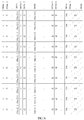
- FIG. 3a to FIG. 3c are each a partial schematic diagram of a tributary slot division manner of an OPUCn signal according to an embodiment of the present invention.
- FIG. 3a to FIG. 3c may form a complete schematic diagram to show this tributary slot division manner.
- FIG. 3a to FIG. 3c show a tributary slot division manner in a case in which there are padding columns.
- tributary slot division is performed in a column interleaving manner on a multi-frame that includes 10 OPUCn frames.
- 10n tributary slots are located at 16n+1 to 3816n, and padding columns are located in columns 3816n+1 to 3824n.
- Each tributary slot occupies 40 rows and 380 columns, and from the perspective of a quantity of columns, each tributary slot occupies 380 columns. As can be seen from FIG.
- Tributary slot overheads are located in columns 14n+1 to 16n, and tributary slot overheads corresponding to each tributary slot appear at intervals of 10 OPUCn frames, and are indicated by using 5 to 8 bits of an OPU multi-frame identifier (OPU Multi-Frame Identifier, OMFI).
- an OPUCn signal is considered as an entity, and is split into 10n tributary slots in a byte interleaving manner; or may be construed as follows: first, an OPUCn signal is split into n OPL signals in a byte interleaving manner, as shown in the division manner of n OPL signals in FIG. 2 , and then, each OPL signal is split into 10 tributary slots in a byte interleaving manner, to obtain 10n tributary slots. As shown in FIG. 3a to FIG.
- the division manner of 10n tributary slots may be considered as a column interleaving division manner.
- rates of the OTUCn, ODUCn and OPUCn may follow the foregoing rate solution (1), and a rate corresponding to a 10G tributary slot of the OPUCn is 10504285.839 kbit/s ⁇ 100 ppm.
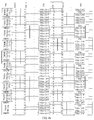
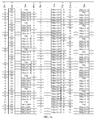
- FIG. 4a to FIG. 4f are each a partial schematic diagram of another tributary slot division manner of an OPUCn signal according to an embodiment of the present invention.
- FIG. 4a to FIG. 4f may form a complete schematic diagram to show this tributary slot division manner.
- FIG. 4a to FIG. 4f show a tributary slot division manner in a case in which there is no padding column.
- tributary slot division is performed in a byte interleaving manner on a multi-frame that includes 10 OPUCn frames.
- 10n tributary slots are located at 16n+1 to 3824n, where there is no padding column.
- a superrow (Superrow) needs to be introduced in this division manner, and division is performed by forming every 5 rows into 1 superrow, thereby implementing complete division of 10n tributary slots.
- the multi-frame formed by 10 OPUCn frames includes 8 superrows.
- an OPUCn signal is considered as an entity, and is split into 10n tributary slots in a byte interleaving manner; or may be construed as follows: first, an OPUCn signal is split into n OPL signals in a byte interleaving manner, as shown in the division manner of n OPL signals in FIG. 2 , and then, each OPL signal is split into 10 tributary slots in a byte interleaving manner, to obtain 10n tributary slots.
- rates of the OTUCn, ODUCn and OPUCn may follow the foregoing rate solution (2), and a rate corresponding to a 10G tributary slot of the OPUCn is 10479823.134 kbit/s ⁇ 100 ppm.
- Tributary slot overheads are located in columns 14n+1 to 16n, and tributary slot overheads corresponding to each tributary slot appear at intervals of 10 OPUCn frames, and are indicated by using 5 to 8 bits of an OMFI.
- the OPUCn signal implements hybrid carrying for multiple low-order services by using 10n 10G tributary slots. Because low-order services occupy tributary slots of the OPUCn signal randomly, tributary slot fragments may appear in the OPUCn signal. Alternatively, after some low-order services are canceled, tributary slot fragments may also appear in the OPUCn signal. Because the tributary slot fragments reduce utilization of network bandwidth resources, the tributary slot fragments need to be eliminated, and therefore, services in the tributary slots need to be migrated. The following describes in detail a data migration method and a node on an OTN according to the embodiments of the present invention.
- FIG. 5 is a schematic flowchart of a data migration method according to an embodiment of the present invention. The method of FIG. 5 is performed by a node on an OTN.
- a first node determines, in an OPUCn signal, a second tributary slot corresponding to a first tributary slot, where the second tributary slot is an idle tributary slot.
- the first node migrates a first low-order ODU service from the first tributary slot to the second tributary slot.
- the first node may be a source node on the OTN, or may be a sink node.
- the low-order ODU service may include ODU0, ODU1, ODU2, ODU2e, ODU3, ODU4 or ODUflex.
- the first node may determine, according to an actual requirement, whether the first low-order ODU service in the first tributary slot needs to be migrated. For example, because some low-order ODU services in the OPL signal are canceled, only some scattered tributary slots in the OPL signal carry low-order ODU services. In a case in which these low-order ODU services need to be managed in a centralized manner, or in a case in which resources occupied by the OPL signal need to be released, the first node may determine to migrate the low-order ODU services carried by the scattered tributary slots.
- the first tributary slot may be any one of these scattered tributary slots.
- a destination tributary slot that is, the second tributary slot, to which the first low-order ODU service is migrated needs to be determined.
- the second tributary slot should be an idle tributary slot, so as to ensure that the first low-order ODU service of the first tributary slot can be migrated to the second tributary slot.
- An OPL signal to which the first tributary slot belongs and an OPL signal to which the second tributary slot belongs may be the same or may be different.
- the first node may migrate the first low-order ODU service of the first tributary slot to the second tributary slot, that is, the first node may transmit the first low-order ODU service by using the second tributary slot, so that the first tributary slot no longer carries valid data.
- the existence of tributary slot fragments is avoided effectively, thereby improving utilization of network bandwidth resources.
- centralized management can further be performed on low-order ODU services.
- the first tributary slot and the second tributary slot may belong to a same OPL signal, for example, in the OPL signal, the second tributary slot may be adjacent to a tributary slot carrying another low-order ODU service.
- the low-order ODU services may be centralized in successive tributary slots. If tributary slots occupied by the low-order ODU services are scattered, it may increase the complexity of managing these scattered tributary slots, and may also cause scattered idle tributary slots, which makes it inconvenient to use the idle tributary slots.
- this embodiment of the present invention by migrating a low-order ODU service, it not only can reduce the complexity of managing tributary slots, but also can centralize idle tributary slots, so that the idle tributary slots can be allocated to other low-order ODU services easily, thereby improving utilization of network bandwidth resources.
- the first tributary slot and the second tributary slot may separately belong to different OPL signals, and therefore, by migrating the first low-order ODU service of the first tributary slot to the second tributary slot to centralize low-order ODU services on the same OPL signal, preparation can be made for subsequent deletion of the OPL signal to which the first tributary slot belongs, thereby improving utilization of network bandwidth resources, and also facilitating centralized management on the low-order ODU services.
- protection switching of two OTUk signals is also often used to ensure transmission of a client signal.
- a protection switching process because of a delay difference, usually, accurate synchronization of the two OTUk signals cannot be implemented, which may cause damage to a service.
- this embodiment of the present invention because migration of a low-order ODU service is performed between tributary slots in a same OPUCn signal, synchronism of OPL signals can be ensured, and therefore, lossless migration of the low-order ODU service can be implemented.
- the "low-order ODU service” may be construed as a "low-order ODU service data stream" or a "low-order ODU service signal”.
- the first node may determine idle tributary slots in the OPUCn signal according to a payload structure identifier (Payload Structure Identifier, PSI) of the OPUCn signal.
- PSI Payload Structure Identifier
- the first node may select the second tributary slot from the idle tributary slots.
- the first node may determine a current tributary slot occupation status in the OPUCn signal according to a PSI of a 256-multi-frame (Multi-Frame) of the OPUCn signal, thereby determining idle tributary slots.
- FIG. 6 is a schematic diagram of PSI overheads according to an embodiment of the present invention. As shown in FIG. 6 , the PSI is located at row 4 and columns 14n+1 to 15n, which separately indicate occupation statuses of tributary slots in n OPL signals.
- PSI[2] to PSI[21] of the (14n+1) th column indicate tributary slots 1 to 10
- PSI[2] to PSI[21] of the (14n+2) th column indicate tributary slots 11 to 20, and so on,...
- PSI[2] to PSI[21] of the (15n) th column indicate tributary slots 10n-9 to 10n.
- OPUCn payload such as an OPUCn payload, an OTUCn FEC, a tributary slot overhead (Tributary Slot Overhead, TSOH), a most significant bit (Most Significant Bit, MSB), a last significant bit (Last Significant Bit, LSB) and a multiplex structure identifier (Multiplex Structure Identifier, MSI), reference may be made to meanings in the prior art, and details are not described herein again.
- FIG. 7 is a schematic diagram of a byte structure of a PSI according to an embodiment of the present invention. As shown in FIG. 7 , indication for each tributary slot occupies 2 bytes, where the first bit of the first byte indicates whether a corresponding tributary slot is occupied (Occupation), and if the corresponding tributary slot is occupied, an assigned value is 1; otherwise, an assigned value is 0.
- a payload type (Payload Type, PT) is assigned a value of 0x22, and is located at row 4 and column 14n+1.
- j 1 to n, denoting the 1 st to n th OPL s .
- the first node may migrate the first low-order ODU service from the first tributary slot to the second tributary slot.
- Migration processing needs to follow a given rule, and therefore, a migration protocol is defined.
- the following fields are defined: MCTRL (Moving Control), MTSID (Moving Tributary Slot Identifier), RESP and CRC. These fields are set in columns 14n+1 to 15n in rows 1 to 3, and occupy 3 bytes in each OPL signal.
- FIG. 8 is a schematic diagram of migration protocol overheads according to an embodiment of the present invention. As shown in FIG. 8 , these fields occupy the 15 th column of the 1 st to 3 rd rows of each OPL signal.
- the MCTRL is a control signaling indicator, and occupies 2 bits (bit). For example, when a value of the MCTRL is 00, it may denote idle (IDLE); when the value is 01, it may denote a migration request indication (MOVE_REQ); when the value is 10, it may denote a migration implementation indication (MOVE_DO), that is, denote a migration operation to be executed; and when the value is 11, it denotes reserved.
- the MTSID is an identifier of a tributary slot in which a low-order service is to be migrated; the MTSID occupies 13 bits, and may denote tributary slots 1 to 10n. 13 bits may denote a range of 0 to 8191.
- the field may be further expanded according to a requirement.
- the RESP is a response state indicator, and occupies 1 bit. For example, when a value of the RESP is 1, it may denote that migration is approved (ACK); and when the value is 0, it may denote that migration is rejected (NACK).
- the CRC is check information, and occupies 8 bits.
- the first node may complete unidirectional migration processing, or the first node and the second node jointly complete bidirectional migration processing.
- the unidirectional migration processing refers to migration processing executed by a source node.
- the bidirectional migration processing refers to migration processing executed by both a source node and a sink node.
- the first node may be a source node
- the second node may be a sink node.
- one of the first node and the second node may be a source node, and the other one may be a sink node.
- the first node may send, in the second tributary slot, first migration information to the second node, where the first migration information is used to request to migrate the first low-order ODU service from the first tributary slot to the destination tributary slot.
- the first node may receive second migration information that is sent by the second node in the second tributary slot according to the first migration information, where the second migration information is used to indicate that it is agreed to migrate the first low-order ODU service from the first tributary slot to the second tributary slot.
- the first node may send, in the second tributary slot, third migration information to the second node according to the second migration information, where the third migration information is used to indicate that an operation of migrating the first low-order ODU service from the first tributary slot to the second tributary slot is to be executed.
- the first node may migrate, after a first multi-frame, the first low-order ODU service from the first tributary slot to the second tributary slot, where the first multi-frame is an x th multi-frame after a multi-frame used to carry the third migration information, and x is a positive integer greater than 1.
- the first migration information, the second migration information and the third migration information may all include fields defined in the migration protocol. For different information, values of the foregoing fields are different.
- the first migration information may be expressed as ⁇ MOVE_REQ, first tributary slot identifier, NACK ⁇ .
- the second migration information may be expressed as ⁇ IDLE, 0, ACK ⁇ .
- the third migration information may be expressed as ⁇ MOVE_DO, first tributary slot identifier, ACK ⁇ .
- the first node may migrate, after a first multi-frame, the first low-order ODU service from the first tributary slot to the second tributary slot.
- the first multi-frame may be an x th multi-frame after a multi-frame used to carry the third migration information.
- the second node may acquire, after the first multi-frame, data of the first low-order ODU service from the second tributary slot.
- the third migration information is used to notify the second nod of a migration operation to be executed, and the first low-order ODU service is migrated, after the x th multi-frame following a multi-frame that carries the third migration information, to the second tributary slot, thereby ensuring synchronized operations of the first node and the second node, so that the second node can correctly receive, in the second tributary slot, the first low-order ODU service.
- a value of x may be preset, and the first node and the second node may separately store the value locally.
- the first node may be a source node
- the second node may be a sink node
- the first node may be a sink node
- the second node may be a source node
- time for executing the migration operation is determined, so that consistency of operations on both sides can be ensured, thereby ensuring losslessness of the migrated low-order ODU service.
- the multi-frame may be a t1-OPUCn multi-frame that is formed by t1 OPUCn signal frames; or, the multi-frame may be a t2-OPUCn multi-frame that is formed by t2 OPUCn signal frames, where t1 is a quantity of tributary slots included in each OPL in the OPUCn, t2 is a least common multiple of t1 and 256, and both t1 and t2 are positive integers.
- the OPUCn signal may be split into 10n tributary slots.
- division may be performed by using a 10-OPUCn multi-frame as a unit. Therefore, t1 may be 10, and the multi-frame herein may refer to a 10-OPUCn multi-frame, that is, a 10-frame multi-frame of OPUCn, where 10 OPUCn frames form a 10-frame multi-frame.
- the multi-frame may be a 2560-OPUCn multi-frame, that is, t2 may be 2560, that is, t2 is a least common multiple of 10 and 256.
- the 2560-OPUCn multi-frame may be formed by 2560 OPUCn signal frames.
- the migration operation may be executed by using a multi-frame as a unit, for example, the first node migrates, after the first multi-frame, the first low-order ODU service from the first tributary slot to the second tributary slot.
- the first node may receive fourth migration information that is sent by the second node in the second tributary slot, where the fourth migration information is used to request to migrate a second low-order ODU service from the first tributary slot to the second tributary slot.
- the first node may send fifth migration information to the second node according to the fourth migration information, where the fifth migration information is used to indicate that it is agreed to migrate the second low-order ODU service from the first tributary slot to the second tributary slot.
- the first node may receive sixth migration information that is sent by the second node in the second tributary slot according to the fifth migration information, where the sixth migration information is used to indicate that an operation of migrating the second low-order ODU service from the first tributary slot to the second tributary slot is to be executed.
- the first node may receive, after a second multi-frame, the second low-order ODU service from the second tributary slot, where the second multi-frame may be an x th multi-frame after a multi-frame used to carry the sixth migration information.
- the second node may also initiate a migration request.
- the two nodes may each send a migration response to the peer node.
- the two nodes may each send a migration implementation indication to the peer node.
- the first node may migrate the first low-order ODU service of the first tributary slot to the second tributary slot
- the second node may migrate the second low-order ODU service of the second tributary slot to the second tributary slot. Therefore, the first node may acquire, from the second tributary slot, valid data of the second low-order ODU service
- the second node may acquire, from the second tributary slot, valid data of the first low-order ODU service.
- the fourth migration information, the fifth migration information and the sixth migration information may be separately used to implement functions of a migration request, a migration response and a migration implementation indication.
- the fourth migration information, the fifth migration information and the sixth migration information may all include fields defined in the migration protocol. For different information, values of the foregoing fields are different.
- the fourth migration information may be expressed as ⁇ MOVE_REQ, first tributary slot identifier, NACK ⁇ .
- the fifth migration information may be expressed as ⁇ MOVE_REQ, first tributary slot identifier, ACK ⁇ .
- the sixth migration information may be expressed as ⁇ MOVE_DO, first tributary slot identifier, ACK ⁇ .
- the multi-frame may be a t1-OPUCn multi-frame that is formed by t1 OPUCn signal frames; or, the multi-frame may be a t2-OPUCn multi-frame that is formed by t2 OPUCn signal frames, where t1 is a quantity of tributary slots included in each OPL in the OPUCn, t2 is a least common multiple of t1 and 256, and both t1 and t2 are positive integers.
- the OPUCn signal may be split into 10n tributary slots.
- the multi-frame herein may refer to a 10-OPUCn multi-frame, that is, a 10-frame multi-frame of OPUCn, where 10 OPUCn frames form a 10-frame multi-frame.
- the foregoing multi-frame may be a 2560-OPUCn multi-frame, that is, t2 may be 2560, that is, t2 is a least common multiple of 10 and 256.
- the 2560-OPUCn multi-frame may be formed by 2560 OPUCn signal frames.
- the second low-order ODU service and the first low-order ODU service may be of a same service type, or may be of different service types.
- the first low-order ODU service and the second low-order ODU service may be ODUflex, or the first low-order ODU service is ODUflex, and the second low-order ODU service is ODU3.
- time for executing the migration operation is determined, so that consistency of operations on both sides can be ensured, thereby ensuring losslessness of the migrated low-order ODU service.
- the first node may switch, by using a Generic Mapping Procedure (Generic Mapping Procedure, GMP), the first low-order ODU service from being mapped to a first optical channel data tributary unit-Cn.M (Optical Channel Data Tributray Unit-Cn.M, ODTUCn.M) to being mapped to a second ODTUCn.M, where the first ODTUCn.M includes M tributary slots in an OPUCn multi-frame, the second ODTUCn.M includes M tributary slots in the OPUCn multi-frame, and M is a positive integer.
- GMP Generic Mapping Procedure
- ODTUCn.M may be formed by M tributary slots of a 10-OPUCn multi-frame and corresponding tributary slot overheads, where the 10-OPUCn multi-frame is formed by 10 OPUCn frames, for example, the 10 OPUCn frames herein may include the OPUCn signal.
- FIG. 1 For example, FIG. 1
- FIG. 9 is a schematic diagram of an ODTUCn.M structure and mapping overheads according to an embodiment of the present invention, where the ODTUCn.M structure and mapping overheads are formed by 40 rows (where there are 10 OPUCn frames, and each OPUCn frame occupies 4 rows) and 380xM columns (which correspond to an OPUCn tributary slot division manner in a case in which there are padding columns, where each tributary slot includes 380 columns) and 6 bytes of tributary slot overheads (which are tributary slot overheads corresponding to one of the tributary slots). As shown in FIG.
- a mapping granularity may be preferably 4xM bytes, and the mapping overheads are set in tributary slot overheads of a last tributary slot occupied by the first low-order ODU service.
- the mapping overheads may include Cm and C 8D information, where Cm is data information, denoting a quantity of low-order ODU services carried in a payload area, and C 8D is clock information, denoting clock information of the low-order ODU services carried in the payload area. CRC is check information.
- the first node switches, after the x th multi-frame following the multi-frame that carries the third migration information, the first low-order ODU service from being mapped to the first ODTUCn.M to being mapped to the second ODTUCn.M.
- the multi-frame carrying migration information may refer to a 10-OPUCn multi-frame, or may refer to a 2560-OPUCn multi-frame, where 2560 is a least common multiple of 256 and 10, that is, the 2560-OPUCn multi-frame is formed by 2560 OPUCn frames.
- ODTUCn.M is formed by M tributary slots in the 10-OPUCn multi-frame and corresponding tributary slot overheads. It can be seen that, the composition of the multi-frame used to transmit the first ODU low-order service and the composition of the multi-frame carrying the migration information may be the same as or may be different.
- the first node may update the PSI.
- the first node may update the PSI of the 256-multi-frame of the OPUCn signal, that is, update the occupation statuses of the tributary slots.
- the second node may also update the PSI of the 256-multi-frame of the OPUCn signal after executing the operation of migrating the second low-order ODU service.
- FIG. 10 is a schematic flowchart of a data migration method according to another embodiment of the present invention. The method of FIG. 10 is performed by a node on an OTN.
- a second node receives first migration information sent by a first node in a second tributary slot, where the first migration information is used to request to migrate a first low-order ODU service from a first tributary slot to the second tributary slot, and the second tributary slot is an idle tributary slot.
- the second node sends, in the second tributary slot, second migration information to the first node according to the first migration information, where the second migration information is used to indicate that it is agreed to migrate the first low-order ODU service from the first tributary slot to the second tributary slot.
- the second node receives third migration information that is sent by the first node in the second tributary slot according to the second migration information, where the third migration information is used to indicate that an operation of migrating the first low-order ODU service from the first tributary slot to the second tributary slot is to be executed.
- the second node receives the first low-order ODU service from the second tributary slot according to the third migration information.
- the first node may be a source node
- the second node may be a sink node.
- the source node may migrate the first low-order ODU service in the first tributary slot to the second tributary slot, and send the first low-order ODU service by using the second tributary slot.
- the sink node may acquire the first low-order ODU service from the second tributary slot.
- the source node needs to negotiate with the sink node before executing the migration operation, thereby ensuring consistency of operations of the nodes at two ends.
- the second node receives a migration request of the first node, and then sends a migration response to the first node according to the migration request.
- the first node After receiving the migration response, the first node sends a migration implementation indication to the second node, and migrates the first low-order ODU service from the first tributary slot to the second tributary slot.
- the second node may acquire the first low-order ODU service in the second tributary slot according to the migration implementation indication.
- the migration request, the migration response and the migration implementation indication may be implemented by using the first migration information, the second migration information and the third migration information respectively.
- the first migration information, the second migration information and the third migration information may all include fields defined in the migration protocol. For different information, values of the foregoing fields are different.
- the first migration information may be expressed as ⁇ MOVE_REQ, first tributary slot identifier, NACK ⁇ .
- the second migration information may be expressed as ⁇ IDLE, 0, ACK ⁇ .
- the third migration information may be expressed as ⁇ MOVE_DO, first tributary slot identifier, ACK ⁇ .
- the second node may receive, after a first multi-frame, the first low-order ODU service from the second tributary slot, where the first multi-frame is an x th multi-frame after a multi-frame used to carry the third migration information, and x is a positive integer greater than 1.
- the first node may migrate, after the x th multi-frame following a multi-frame that carries the migration implementation indication, the first low-order ODU service from the first tributary slot to the second tributary slot.
- the second node may acquire, after the x th multi-frame, the first low-order ODU service from the second tributary slot.
- a value of x may be preset, and the first node and the second node may separately store the value locally, thereby ensuring consistency of operations of the first node and the second node, so that the second node accurately receives the first low-order ODU service.
- a second node sends, to a first node according to first migration information of the first node, second migration information used to indicate that it is agreed to execute a migration operation, so that the first node may migrate a first low-order ODU service from a first tributary slot to an idle second tributary slot, and the existence of tributary slot fragments can be avoided, thereby improving utilization of network bandwidth resources.
- FIG. 11 is a schematic distribution diagram of low-order ODU services in an OPUCn signal according to an embodiment of the present invention.
- TS 30 is an idle tributary slot
- both TS 21 and TS 22 carry low-order ODU services
- some idle tributary slots exist on other OPLs for example, on OPLCn.n #1, TS 10 is an idle tributary slot, and on OPLCn.n #2, TS 12 is an idle tributary slot.
- OPLCn.n #3 is a tributary signal that needs to be deleted
- the low-order ODU service in TS 21 and the low-order ODU service in TS 22 need to be migrated.
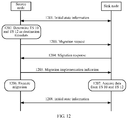
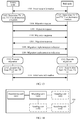
- FIG. 12 is a schematic flowchart of a process of a data migration method according to an embodiment of the present invention.
- a source node may be the first node
- a sink node may be the second node.
- a source node and a sink node transmit, in idle tributary slots, initial state information to each other.
- the initial state information may indicate that a corresponding tributary slot is idle. For example, in FIG. 11 , both TS 10 and TS 12 are idle tributary slots.
- the source node and the sink node may transmit, in TS 10, corresponding initial state information to each other.
- the initial state information may be expressed as: ⁇ IDLE, 0, NACK ⁇ .
- the source node and the sink node may transmit, in TS 12, corresponding initial state information to each other, where the initial state information may be expressed as ⁇ IDLE, 0, NACK ⁇ .
- the source node selects, in the idle tributary slots, a destination tributary slot corresponding to TS 21, and selects a destination tributary slot corresponding to TS 22.
- the source node selects TS 10 as the destination tributary slot corresponding to TS 21, and TS 12 as the destination tributary slot corresponding to TS 22.
- the source node separately initiates, in TS 10 and TS 12, a migration request to the sink node.
- the migration request sent in TS 10 may be used to request to migrate a low-order ODU service in TS 21 to TS 10, where the information may be specifically expressed as: ⁇ MOVE_REQ, #21, NACK ⁇ .
- the migration request sent in TS 12 may be used to request to migrate a low-order ODU service in TS 22 to TS 12, where the information may be specifically expressed as: ⁇ MOVE_REQ, #22, NACK ⁇ .
- the sink node separately initiates, in TS 10 and TS 12, a migration response to the source node according to the migration request of the source node.
- the migration response sent in TS 10 may be used to indicate that it is agreed to migrate the low-order ODU service in TS 21 to TS 10, where the information may be specifically expressed as: ⁇ IDLE, 0, ACK ⁇ .
- the migration response sent in TS 12 may be used to indicate that it is agreed to migrate the low-order ODU service in TS 22 to TS 12, where the information may be specifically expressed as: ⁇ IDLE, 0, ACK ⁇ .
- the source node separately sends, in TS 10 and TS 12, a migration implementation indication to the sink node according to the migration response of the sink node.
- the migration implementation indication sent in TS 10 may be used to indicate that an operation of migrating the low-order ODU service in TS 21 to TS 10 is to be executed, where the information may be specifically expressed as: ⁇ MOVE_DO, #21, ACK ⁇ .
- the migration implementation indication sent in TS 12 may be used to indicate that an operation of migrating the low-order ODU service in TS 22 to TS 12 is to be executed, where the information may be specifically expressed as: ⁇ MOVE_DO, #22, ACK ⁇ .
- the source node migrates a low-order ODU service in TS 21 to TS 10, and migrates a low-order ODU service in TS 22 to TS 12.
- the source node may migrate, after a first multi-frame, the low-order ODU service in TS 21 to TS 10, and migrate the low-order ODU service in TS 22 to TS 12.
- the first multi-frame may be an x th multi-frame after a multi-frame carrying the migration implementation indication.
- x is a positive integer greater than 1.
- the sink node separately acquires the low-order ODU services from TS 10 and TS 12.
- the sink node may separately acquire, after a first multi-frame, the low-order ODU services from TS 10 and TS 12.
- the sink node After the sink node acquires the low-order ODU services from TS 10 and TS 12, the source node and the sink node separately transmit, in TS 10 and TS 12, the initial state information to each other.
- the source node and the sink node may send, in TS 10 and TS 12, the initial state information to each other again.
- FIG. 13 is a schematic flowchart of a process of a data migration method according to another embodiment of the present invention.
- a source node may be the first node, and a sink node may be the second node.
- a source node may be the second node, and a sink node may be the first node.
- TS 21 carries a low-order ODU service 1 and a low-order ODU service 2, where a transmission direction of the low-order ODU service 1 is from the source node to the sink node, and a transmission direction of the low-order ODU service 2 is from the sink node to the source node.
- TS 22 carries a low-order ODU service 3 and a low-order ODU service 4, where a transmission direction of the low-order ODU service 3 is from the source node to the sink node, and a transmission direction of the low-order ODU service 4 is from the sink node to the source node.
- a source node and a sink node transmit, in idle tributary slots, initial state information to each other.
- the initial state information may indicate that a corresponding tributary slot is idle. For example, in FIG. 11 , both TS 10 and TS 12 are idle tributary slots.
- the source node and the sink node may transmit, in TS 10, corresponding initial state information to each other.
- the initial state information may be expressed as: ⁇ IDLE, 0, NACK ⁇ .
- the source node and the sink node may transmit, in TS 12, corresponding initial state information to each other, where the initial state information may be expressed as ⁇ IDLE, 0, NACK ⁇ .
- the source node determines that tributary slots corresponding to TS 21 and TS 22 are TS 10 and TS 12 respectively.
- a destination tributary slot to which the low-order ODU service 1 in TS 21 is migrated is TS 10
- a destination tributary slot to which the low-order ODU service 3 in TS 22 is migrated is TS 12.
- the sink node determines that tributary slots corresponding to TS 21 and TS 22 are TS 10 and TS 12 respectively.
- a destination tributary slot to which the low-order ODU service 2 in TS 21 is migrated is TS 10
- a destination tributary slot to which the low-order ODU service 4 in TS 22 is migrated is TS 12.
- the source node separately initiates, in TS 10 and TS 12, a migration request to the sink node.
- the migration request sent in TS 10 may be used to request to migrate the low-order ODU service 1 in TS 21 to TS 10, where the information may be specifically expressed as: ⁇ MOVE_REQ, #21, NACK ⁇ .
- the migration request sent in TS 12 may be used to request to migrate the low-order ODU service 3 in TS 22 to TS 12, where the information may be specifically expressed as: ⁇ MOVE_REQ, #22, NACK ⁇ .
- the sink node separately initiates, in TS 10 and TS 12, a migration request to the sink node.
- the migration request sent in TS 10 may be used to request to migrate the low-order ODU service 2 in TS 21 to TS 10, where the information may be specifically expressed as: ⁇ MOVE_REQ, #21, NACK ⁇ .
- the migration request sent in TS 12 may be used to request to migrate the low-order ODU service 4 in TS 22 to TS 12, where the information may be specifically expressed as: ⁇ MOVE_REQ, #22, NACK ⁇ .
- the source node separately initiates, in TS 10 and TS 12, a migration response to the sink node according to the migration request of the sink node.
- the migration response sent in TS 10 may be used to indicate that it is agreed to migrate the low-order ODU service 2 in TS 21 to TS 10, where the information may be specifically expressed as: ⁇ MOVE_REQ, #21, ACK ⁇ .
- the migration response sent in TS 12 may be used to indicate that it is agreed to migrate the low-order ODU service 4 in TS 22 to TS 12, where the information may be specifically expressed as: ⁇ MOVE_REQ, #22, ACK ⁇ .
- the sink node separately initiates, in TS 10 and TS 12, a migration response to the source node according to the migration request of the source node.
- the migration response sent in TS 10 may be used to indicate that it is agreed to migrate the low-order ODU service 1 in TS 21 to TS 10, where the information may be specifically expressed as: ⁇ MOVE_REQ, #21, ACK ⁇ .
- the migration response sent in TS 12 may be used to indicate that it is agreed to migrate the low-order ODU service 3 in TS 22 to TS 12, where the information may be specifically expressed as: ⁇ MOVE_REQ, #22, ACK ⁇ .
- the source node separately sends, in TS 10 and TS 12, a migration implementation indication to the sink node according to the migration response of the sink node.
- the migration implementation indication sent in TS 10 may be used to indicate that an operation of migrating the low-order ODU service 1 in TS 21 to TS 10 is to be executed, where the information may be specifically expressed as: ⁇ MOVE_DO, #21, ACK ⁇ .
- the migration implementation indication sent in TS 12 may be used to indicate that an operation of migrating the low-order ODU service 3 in TS 22 to TS 12 is to be executed, where the information may be specifically expressed as: ⁇ MOVE_DO, #22, ACK ⁇ .
- the sink node separately initiates, in TS 10 and TS 12, a migration implementation indication to the source node according to the migration response of the source node.
- the migration implementation indication sent in TS 10 may be used to indicate that an operation of migrating the low-order ODU service 2 in TS 21 to TS 10 is to be executed, where the information may be specifically expressed as: ⁇ MOVE_DO, #21, ACK ⁇ .
- the migration implementation indication sent in TS 12 may be used to indicate that an operation of migrating the low-order ODU service 4 in TS 22 to TS 12 is to be executed, where the information may be specifically expressed as: ⁇ MOVE_DO, #22, ACK ⁇ .
- the source node migrates a low-order ODU service 1 in TS 21 to TS 10, and migrates a low-order ODU service 3 in TS 22 to TS 12.
- the source node may migrate, after a first multi-frame, the low-order ODU service 1 in TS 21 to TS 10, and migrate the low-order ODU service 3 in TS 22 to TS 12.
- the first multi-frame may be an x th multi-frame after a multi-frame carrying the migration implementation indication. x is a positive integer greater than 1.
- the sink node migrates a low-order ODU service 2 in TS 21 to TS 10, and migrates a low-order ODU service 4 in TS 22 to TS 12.
- the source node may migrate, after a second multi-frame, the low-order ODU service 2 in TS 21 to TS 10, and migrate the low-order ODU service 4 in TS 22 to TS 12.
- the second multi-frame may be an x th multi-frame after a multi-frame carrying the migration implementation indication of the sink node.
- the source node separately acquires the low-order ODU service 2 and the low-order ODU service 4 from TS 10 and TS 12.
- the source node may separately acquire, after the second multi-frame, the low-order ODU service 2 and the low-order ODU service 4 from TS 10 and TS 12.
- the sink node separately acquires the low-order ODU service 1 and the low-order ODU service 3 from TS 10 and TS 12.
- the sink node may separately acquire, after the first multi-frame, the low-order ODU service 1 and the low-order ODU service 3 from TS 10 and TS 12.
- the source node and the sink node separately transmit, in TS 10 and TS 12, the initial state information.
- step 1302 and step 1303 may be performed at the same time, or step 1303 may be performed first, and then step 1302 is performed.
- step 1304 and step 1305 may be performed at the same time, or step 1304 may be performed first, and then step 1303 is performed.
- Step 1306 and step 1307 may be performed at the same time, or step 1307 may be performed first, and then step 1306 is performed.
- Situations of step 1308 and step 1309, step 1310 and step 1311, and step 1312 and step 1313 are similar.
- FIG. 14 is a schematic block diagram of a communications node according to an embodiment of the present invention.
- a communications node 1400 of FIG. 14 includes a determining unit 1410 and a migrating unit 1420.
- the determining unit 1410 determines, in an OPUCn signal, a second tributary slot corresponding to a first tributary slot, where the second tributary slot is an idle tributary slot.
- the migrating unit 1420 migrates a first low-order ODU service from the first tributary slot to the second tributary slot.
- the determining unit 1410 may determine, according to a PSI of the OPUCn signal, idle tributary slots in the OPUCn signal, and may select the second tributary slot from the idle tributary slots.
- the communications node 1400 may further include a sending unit 1430 and a receiving unit 1440.
- the sending unit 1430 may send, in the second tributary slot, first migration information to a second node before a first node migrates the first low-order ODU service from the first tributary slot to the second tributary slot, where the first migration information is used to request to migrate the first low-order ODU service from the first tributary slot to the second tributary slot.
- the receiving unit 1440 may receive second migration information that is sent by the second node in the second tributary slot according to the first migration information, where the second migration information is used to indicate that it is agreed to migrate the first low-order ODU service from the first tributary slot to the second tributary slot.
- the sending unit 1430 may further send, in the second tributary slot, third migration information to the second node according to the second migration information, where the third migration information is used to indicate that an operation of migrating the first low-order ODU service from the first tributary slot to the second tributary slot is to be executed.
- the migrating unit 1420 may migrate, after a first multi-frame, the first low-order ODU service from the first tributary slot to the second tributary slot, where the first multi-frame is an x th multi-frame after a multi-frame used to carry the third migration information, and x is a positive integer greater than 1.
- the migrating unit 1420 may switch, by using a GMP, the first low-order ODU service from being mapped to the first tributary slot in a first ODTUCn.M to being mapped to the second tributary slot in a second ODTUCn.M, where the first ODTUCn.M includes M tributary slots in an OPUCn multi-frame, the second ODTUCn.M includes M tributary slots in the OPUCn multi-frame, and M is a positive integer.
- the receiving unit 1440 may further receive fourth migration information that is sent by the second node in the second tributary slot, where the fourth migration information is used to request to migrate a second low-order ODU service from the first tributary slot to the second tributary slot.
- the sending unit 1430 may further send fifth migration information to the second node according to the fourth migration information, where the fifth migration information is used to indicate that it is agreed to migrate the second low-order ODU service from the first tributary slot to the second tributary slot.
- the receiving unit 1440 may further receive sixth migration information that is sent by the second node in the second tributary slot according to the fifth migration information, where the sixth migration information is used to indicate that an operation of migrating the second low-order ODU service from the first tributary slot to the second tributary slot is to be executed.
- the receiving unit 1440 may further receive, after a second multi-frame, the second low-order ODU service from the second tributary slot, where the second multi-frame is an x th multi-frame after a multi-frame used to carry the sixth migration information.
- the communications node 1400 may further include an updating unit 1450.
- the updating unit 1450 may update the PSI after the first node migrates the first low-order ODU service from the first tributary slot to the destination tributary slot.
- the multi-frame may be a t1-OPUCn multi-frame that is formed by t1 OPUCn signal frames; or, the multi-frame is a t2-OPUCn multi-frame that is formed by t2 OPUCn signal frames, where t1 is a quantity of tributary slots included in each optical channel payload lane in the OPUCn signal, t2 is a least common multiple of t1 and 256, and both t1 and t2 are positive integers.
- FIG. 15 is a schematic block diagram of a communications node according to another embodiment of the present invention.
- a communications node 1500 of FIG. 15 includes a receiving unit 1510, a generating unit 1520, and a sending unit 1530.
- the receiving unit 1510 receives first migration information sent in a second tributary slot by a first node, where the first migration information is used to request to migrate a first low-order ODU service from a first tributary slot to the second tributary slot, and the second tributary slot is an idle tributary slot.
- the generating unit 1520 generates second migration information according to the first migration information, where the second migration information is used to indicate that it is agreed to migrate the first low-order ODU service from the first tributary slot to the second tributary slot.
- the sending unit 1530 sends, in the second tributary slot, the second migration information to the first node.
- the receiving unit 1510 further receives third migration information that is sent by the first node in the second tributary slot according to the second migration information, where the third migration information is used to indicate that an operation of migrating the first low-order ODU service from the first tributary slot to the second tributary slot is to be executed.
- the receiving unit 1510 further receives the first low-order ODU service from the second tributary slot according to the third migration information.
- a second node sends, to a first node according to first migration information of the first node, second migration information used to indicate that it is agreed to execute a migration operation, so that the first node may migrate a first low-order ODU service from a first tributary slot to an idle second tributary slot, so that the existence of tributary slot fragments can be avoided, thereby improving utilization of network bandwidth resources.
- the receiving unit 1510 may receive, after a first multi-frame, the first low-order ODU service from the second tributary slot, where the first multi-frame is an x th multi-frame after a multi-frame used to carry the third migration information, and x is a positive integer greater than 1.
- FIG. 16 is a schematic block diagram of a communications node according to another embodiment of the present invention.
- the communications node 1600 of FIG. 16 includes a memory 1610 and a processor 1620.
- the memory 1610 may include a random access memory, a flash memory, a read-only memory, a programmable read-only memory, a non-volatile memory, a register, or the like.
- the processor 1620 may be a central processing unit (Central Processing Unit, CPU).
- the memory 1610 is configured to store an executable instruction.
- the processor 1620 may execute the executable instruction stored in the memory 1610, and is configured to: determine, in an OPUCn signal, a second tributary slot corresponding to a first tributary slot, where the second tributary slot is an idle tributary slot; and migrate a first low-order ODU service from the first tributary slot to the second tributary slot.
- the processor 1620 may determine, according to a payload structure identifier PSI of the OPUCn signal, idle tributary slots in the OPUCn signal, and may select the second tributary slot from the idle tributary slots.
- the communications node 1600 may further include a transmitter 1630 and a receiver 1640.
- the transmitter 1630 may send, in the second tributary slot, first migration information to a second node before a first node migrates the first low-order ODU service from the first tributary slot to the second tributary slot, where the first migration information is used to request to migrate the first low-order ODU service from the first tributary slot to the second tributary slot.
- the receiver 1640 may receive second migration information that is sent by the second node in the second tributary slot according to the first migration information, where the second migration information is used to indicate that it is agreed to migrate the first low-order ODU service from the first tributary slot to the second tributary slot.
- the transmitter 1630 may further send, in the second tributary slot, third migration information to the second node according to the second migration information, where the third migration information is used to indicate that an operation of migrating the first low-order ODU service from the first tributary slot to the second tributary slot is to be executed.
- the processor 1620 may migrate, after a first multi-frame, the first low-order ODU service from the first tributary slot to the second tributary slot, where the first multi-frame is an x th multi-frame after a multi-frame used to carry the third migration information, and x is a positive integer greater than 1.
- the processor 1620 may switch, by using a GMP, the first low-order ODU service from being mapped to the first tributary slot in a first optical channel data tributary unit ODTUCn.M to being mapped to the second tributary slot in a second ODTUCn.M, where the first ODTUCn.M includes M tributary slots in an OPUCn multi-frame, the second ODTUCn.M includes M tributary slots in the OPUCn multi-frame, and M is a positive integer.
- the receiver 1640 may further receive fourth migration information that is sent by the second node in the second tributary slot, where the fourth migration information is used to request to migrate a second low-order ODU service from the first tributary slot to the second tributary slot.
- the transmitter 1630 may further send fifth migration information to the second node according to the fourth migration information, where the fifth migration information is used to indicate that it is agreed to migrate the second low-order ODU service from the first tributary slot to the second tributary slot.
- the receiver 1640 may further receive sixth migration information that is sent by the second node in the second tributary slot according to the fifth migration information, where the sixth migration information is used to indicate that an operation of migrating the second low-order ODU service from the first tributary slot to the second tributary slot is to be executed.
- the receiver 1640 may further receive, after a second multi-frame, the second low-order ODU service from the second tributary slot, where the second multi-frame is an x th multi-frame after a multi-frame used to carry the sixth migration information.
- the processor 1620 may update the PSI after the first node migrates the first low-order ODU service from the first tributary slot to the destination tributary slot.
- the multi-frame may be a t1-OPUCn multi-frame that is formed by t1 OPUCn signal frames; or, the multi-frame is a t2-OPUCn multi-frame that is formed by t2 OPUCn signal frames, where t1 is a quantity of tributary slots included in each optical channel payload lane in the OPUCn signal, t2 is a least common multiple of t1 and 256, and both t1 and t2 are positive integers.
- FIG. 17 is a schematic block diagram of a communications node according to another embodiment of the present invention.
- the communications node 1700 of FIG. 17 includes a receiver 1710, a processor 1720, and a transmitter 1730.
- the receiver 1710 receives first migration information sent in a second tributary slot by a first node, where the first migration information is used to request to migrate a first low-order ODU service from a first tributary slot to the second tributary slot, and the second tributary slot is an idle tributary slot.
- the processor 1720 generates second migration information according to the first migration information, where the second migration information is used to indicate that it is agreed to migrate the first low-order ODU service from the first tributary slot to the second tributary slot.
- the transmitter 1730 sends, in the second tributary slot, the second migration information to the first node.
- the receiver 1710 further receives third migration information that is sent by the first node in the second tributary slot according to the second migration information, where the third migration information is used to indicate that an operation of migrating the first low-order ODU service from the first tributary slot to the second tributary slot is to be executed.
- the receiver 1710 further receives the first low-order ODU service from the second tributary slot according to the third migration information.
- a second node sends, to a first node according to first migration information of the first node, second migration information used to indicate that it is agreed to execute a migration operation, so that the first node may migrate a first low-order ODU service from a first tributary slot to an idle second tributary slot, so that the existence of tributary slot fragments can be avoided, thereby improving utilization of network bandwidth resources.
- the receiver 1710 may receive, after a first multi-frame, the first low-order ODU service from the second tributary slot, where the first multi-frame is an x th multi-frame after a multi-frame used to carry the third migration information, and x is a positive integer greater than 1.
- the disclosed system, apparatus, and method may be implemented in other manners.
- the described apparatus embodiment is merely exemplary.
- the unit division is merely logical function division and may be other division in actual implementation.
- a plurality of units or components may be combined or integrated into another system, or some features may be ignored or not performed.
- the displayed or discussed mutual couplings or direct couplings or communication connections may be implemented by using some interfaces.
- the indirect couplings or communication connections between the apparatuses or units may be implemented in electronic, mechanical, or other forms.
- the units described as separate parts may or may not be physically separate, and parts displayed as units may or may not be physical units, may be located in one position, or may be distributed on a plurality of network units. Some or all of the units may be selected according to actual needs to achieve the objectives of the solutions of the embodiments.
- functional units in the embodiments of the present invention may be integrated into one processing unit, or each of the units may exist alone physically, or two or more units are integrated into one unit.
- the functions When the functions are implemented in the form of a software functional unit and sold or used as an independent product, the functions may be stored in a computer-readable storage medium. Based on such an understanding, the technical solutions of the present invention essentially, or the part contributing to the prior art, or some of the technical solutions may be implemented in a form of a software product.
- the computer software product is stored in a storage medium, and includes several instructions for instructing a computer device (which may be a personal computer, a server, or a network device) to perform all or some of the steps of the methods described in the embodiments of the present invention.
- the foregoing storage medium includes: any medium that can store program code, such as a USB flash drive, a removable hard disk, a read-only memory (ROM, Read-Only Memory), a random access memory (RAM, Random Access Memory), a magnetic disk, or an optical disc.
- program code such as a USB flash drive, a removable hard disk, a read-only memory (ROM, Read-Only Memory), a random access memory (RAM, Random Access Memory), a magnetic disk, or an optical disc.
Landscapes
- Engineering & Computer Science (AREA)
- Computer Networks & Wireless Communication (AREA)
- Signal Processing (AREA)
- Time-Division Multiplex Systems (AREA)
Applications Claiming Priority (2)
| Application Number | Priority Date | Filing Date | Title |
|---|---|---|---|
| CN201310418549.8A CN103533464B (zh) | 2013-09-13 | 2013-09-13 | 迁移数据的方法和通信节点 |
| PCT/CN2014/085973 WO2015035883A1 (fr) | 2013-09-13 | 2014-09-05 | Procédé de migration de données et noeud de communication |
Publications (3)
| Publication Number | Publication Date |
|---|---|
| EP3038376A1 true EP3038376A1 (fr) | 2016-06-29 |
| EP3038376A4 EP3038376A4 (fr) | 2016-10-05 |
| EP3038376B1 EP3038376B1 (fr) | 2018-07-18 |
Family
ID=49935067
Family Applications (1)
| Application Number | Title | Priority Date | Filing Date |
|---|---|---|---|
| EP14843337.8A Active EP3038376B1 (fr) | 2013-09-13 | 2014-09-05 | Procédé de migration de données et noeud de communication |
Country Status (4)
| Country | Link |
|---|---|
| US (1) | US10044458B2 (fr) |
| EP (1) | EP3038376B1 (fr) |
| CN (1) | CN103533464B (fr) |
| WO (1) | WO2015035883A1 (fr) |
Cited By (3)
| Publication number | Priority date | Publication date | Assignee | Title |
|---|---|---|---|---|
| EP3177029A4 (fr) * | 2014-08-22 | 2017-08-16 | Huawei Technologies Co., Ltd. | Procédé, dispositif et système de traitement de signal |
| EP3208957A4 (fr) * | 2014-11-28 | 2018-06-20 | Nippon Telegraph and Telephone Corporation | Système de transmission optique et procédé d'optimisation de ressource |
| WO2020051851A1 (fr) * | 2018-09-13 | 2020-03-19 | 华为技术有限公司 | Procédé et appareil de transmission de données dans un réseau de transport optique |
Families Citing this family (12)
| Publication number | Priority date | Publication date | Assignee | Title |
|---|---|---|---|---|
| CN104066017B (zh) * | 2013-03-21 | 2018-10-23 | 中兴通讯股份有限公司 | 设备单元、节点设备、隧道带宽调整的方法和系统 |
| CN103533464B (zh) | 2013-09-13 | 2016-11-23 | 华为技术有限公司 | 迁移数据的方法和通信节点 |
| CN105657583B (zh) * | 2014-11-10 | 2020-11-20 | 中兴通讯股份有限公司 | 分组业务信号发送方法、装置及接收方法、装置 |
| CN107210832B (zh) * | 2014-11-28 | 2019-05-10 | 日本电信电话株式会社 | 成帧器和成帧方法 |
| EP3208956B1 (fr) | 2014-11-28 | 2019-08-28 | Nippon Telegraph and Telephone Corporation | Trameur et méthode de tramage |
| WO2016084934A1 (fr) * | 2014-11-28 | 2016-06-02 | 日本電信電話株式会社 | Appareil de tramage, dispositif de transmission optique, et procédé de tramage |
| CN109478941B (zh) | 2016-07-22 | 2020-06-26 | 华为技术有限公司 | 一种多路业务传送、接收方法及装置 |
| CN108347317B (zh) | 2017-01-22 | 2020-11-10 | 华为技术有限公司 | 一种业务的传输方法、网络设备及网络系统 |
| KR102755085B1 (ko) | 2019-05-15 | 2025-01-17 | 삼성전자주식회사 | 전자 장치의 발열을 제어하기 위한 방법, 이를 위한 전자 장치 및 저장 매체 |
| CN112821982B (zh) * | 2021-01-19 | 2022-06-24 | 柳州达迪通信技术股份有限公司 | 基于光传送网的业务通道分组方法、系统及存储介质 |
| CN116132854A (zh) * | 2021-11-15 | 2023-05-16 | 深圳市中兴微电子技术有限公司 | 光传送网的流量处理方法、装置、电子设备及存储介质 |
| CN114860685A (zh) * | 2022-03-24 | 2022-08-05 | 中国银行股份有限公司 | 数据库迁移方法、装置、存储介质以及设备 |
Family Cites Families (14)
| Publication number | Priority date | Publication date | Assignee | Title |
|---|---|---|---|---|
| US7317728B2 (en) * | 2003-02-25 | 2008-01-08 | Lucent Technologies Inc. | System and method for increasing provisionable bandwidth in time-division multiplexed communication links |
| US7397815B2 (en) * | 2005-01-27 | 2008-07-08 | Lucent Technologies Inc. | Method and apparatus for performing link defragmentation subject to an interface rate constraint |
| CN101146368B (zh) * | 2006-09-13 | 2010-08-04 | 华为技术有限公司 | 一种多光口链路时隙碎片整理方法及其装置 |
| CN100589365C (zh) * | 2007-09-14 | 2010-02-10 | 中兴通讯股份有限公司 | 一种光传输网中光净荷单元的时隙划分与开销处理的方法 |
| KR101041569B1 (ko) * | 2008-11-13 | 2011-06-15 | 한국전자통신연구원 | 클라이언트 신호 전송장치, 클라이언트 신호 전송에서의 종속슬롯 매핑 및 디매핑 장치 및 그 방법 |
| US20100142947A1 (en) * | 2008-12-08 | 2010-06-10 | Jong-Yoon Shin | Apparatus and method for pseudo-inverse multiplexing/de-multiplexing transporting |
| CN102036132B (zh) * | 2009-09-30 | 2013-04-24 | 华为技术有限公司 | 时隙端口号分配方法、装置及系统 |
| CN102195859B (zh) * | 2010-03-04 | 2015-05-06 | 中兴通讯股份有限公司 | 基于gfp的灵活光通道数据单元带宽调整方法及系统 |
| CN102255809A (zh) * | 2010-05-18 | 2011-11-23 | 韩国电子通信研究院 | 用于在光传输网络中传送分组的方法和设备 |
| US10320510B2 (en) * | 2010-10-05 | 2019-06-11 | Infinera Corporation | TE-link bandwidth model of ODU switch capable OTN interfaces |
| US8451564B2 (en) * | 2010-12-27 | 2013-05-28 | HGST Netherlands B.V. | Impact energy dispersing crash stop for a hard disk drive |
| JP5691543B2 (ja) * | 2011-01-18 | 2015-04-01 | 富士通株式会社 | 光伝送装置 |
| CN102893629A (zh) * | 2012-06-01 | 2013-01-23 | 华为技术有限公司 | 光传送网中传送客户信号的方法及传送设备 |
| CN103533464B (zh) * | 2013-09-13 | 2016-11-23 | 华为技术有限公司 | 迁移数据的方法和通信节点 |
-
2013
- 2013-09-13 CN CN201310418549.8A patent/CN103533464B/zh active Active
-
2014
- 2014-09-05 WO PCT/CN2014/085973 patent/WO2015035883A1/fr not_active Ceased
- 2014-09-05 EP EP14843337.8A patent/EP3038376B1/fr active Active
-
2016
- 2016-03-11 US US15/067,666 patent/US10044458B2/en active Active
Cited By (5)
| Publication number | Priority date | Publication date | Assignee | Title |
|---|---|---|---|---|
| EP3177029A4 (fr) * | 2014-08-22 | 2017-08-16 | Huawei Technologies Co., Ltd. | Procédé, dispositif et système de traitement de signal |
| EP3509233A1 (fr) * | 2014-08-22 | 2019-07-10 | Huawei Technologies Co., Ltd. | Procédé de traitement de signaux, appareil et système |
| EP3208957A4 (fr) * | 2014-11-28 | 2018-06-20 | Nippon Telegraph and Telephone Corporation | Système de transmission optique et procédé d'optimisation de ressource |
| US10250348B2 (en) | 2014-11-28 | 2019-04-02 | Nippon Telegraph And Telephone Corporation | Optical transport system and resource optimization method |
| WO2020051851A1 (fr) * | 2018-09-13 | 2020-03-19 | 华为技术有限公司 | Procédé et appareil de transmission de données dans un réseau de transport optique |
Also Published As
| Publication number | Publication date |
|---|---|
| US20160197691A1 (en) | 2016-07-07 |
| EP3038376A4 (fr) | 2016-10-05 |
| WO2015035883A1 (fr) | 2015-03-19 |
| US10044458B2 (en) | 2018-08-07 |
| CN103533464B (zh) | 2016-11-23 |
| EP3038376B1 (fr) | 2018-07-18 |
| CN103533464A (zh) | 2014-01-22 |
Similar Documents
| Publication | Publication Date | Title |
|---|---|---|
| EP3038376B1 (fr) | Procédé de migration de données et noeud de communication | |
| EP3955479B1 (fr) | Procédé et dispositif permettant de transmettre des données dans un réseau de transport optique | |
| US10608766B2 (en) | Multi-service transport and receiving method and apparatus | |
| EP3787208B1 (fr) | Procédé de transmission de données et systéme de communication | |
| US10440454B2 (en) | Signal processing method, apparatus, and system | |
| KR102192294B1 (ko) | 광 전송 네트워크에서 클라이언트 신호를 송신하는 방법 및 광 전송 디바이스 | |
| US20220337925A1 (en) | Optical Signal Transmission Method and Related Apparatus | |
| EP4443779B1 (fr) | Procédé et appareil de transmission de données | |
| US10623836B2 (en) | Service transmission method and first transmission device | |
| ES2710512T3 (es) | Método, sistema y aparato de transmisión de datos en red óptica de transporte | |
| CN110830858A (zh) | 客户业务数据传送方法、装置、光传送网设备及存储介质 | |
| US9634813B2 (en) | Hitless multi-carrier spectrum migration method and apparatus | |
| CN111740782B (zh) | 一种业务数据的处理方法及装置 | |
| EP3343805B1 (fr) | Procédé, appareil, et système d'envoi et de réception de signal | |
| WO2023134508A1 (fr) | Procédé, appareil et système de traitement de service dans un réseau de transport optique |
Legal Events
| Date | Code | Title | Description |
|---|---|---|---|
| PUAI | Public reference made under article 153(3) epc to a published international application that has entered the european phase |
Free format text: ORIGINAL CODE: 0009012 |
|
| 17P | Request for examination filed |
Effective date: 20160323 |
|
| AK | Designated contracting states |
Kind code of ref document: A1 Designated state(s): AL AT BE BG CH CY CZ DE DK EE ES FI FR GB GR HR HU IE IS IT LI LT LU LV MC MK MT NL NO PL PT RO RS SE SI SK SM TR |
|
| AX | Request for extension of the european patent |
Extension state: BA ME |
|
| A4 | Supplementary search report drawn up and despatched |
Effective date: 20160907 |
|
| RIC1 | Information provided on ipc code assigned before grant |
Ipc: H04L 5/22 20060101ALI20160901BHEP Ipc: H04J 3/16 20060101ALI20160901BHEP Ipc: H04Q 11/00 20060101AFI20160901BHEP |
|
| DAX | Request for extension of the european patent (deleted) | ||
| STAA | Information on the status of an ep patent application or granted ep patent |
Free format text: STATUS: EXAMINATION IS IN PROGRESS |
|
| 17Q | First examination report despatched |
Effective date: 20170630 |
|
| GRAP | Despatch of communication of intention to grant a patent |
Free format text: ORIGINAL CODE: EPIDOSNIGR1 |
|
| STAA | Information on the status of an ep patent application or granted ep patent |
Free format text: STATUS: GRANT OF PATENT IS INTENDED |
|
| INTG | Intention to grant announced |
Effective date: 20180209 |
|
| GRAS | Grant fee paid |
Free format text: ORIGINAL CODE: EPIDOSNIGR3 |
|
| GRAA | (expected) grant |
Free format text: ORIGINAL CODE: 0009210 |
|
| STAA | Information on the status of an ep patent application or granted ep patent |
Free format text: STATUS: THE PATENT HAS BEEN GRANTED |
|
| AK | Designated contracting states |
Kind code of ref document: B1 Designated state(s): AL AT BE BG CH CY CZ DE DK EE ES FI FR GB GR HR HU IE IS IT LI LT LU LV MC MK MT NL NO PL PT RO RS SE SI SK SM TR |
|
| REG | Reference to a national code |
Ref country code: GB Ref legal event code: FG4D |
|
| REG | Reference to a national code |
Ref country code: CH Ref legal event code: EP |
|
| REG | Reference to a national code |
Ref country code: IE Ref legal event code: FG4D |
|
| REG | Reference to a national code |
Ref country code: AT Ref legal event code: REF Ref document number: 1020640 Country of ref document: AT Kind code of ref document: T Effective date: 20180815 |
|
| REG | Reference to a national code |
Ref country code: DE Ref legal event code: R096 Ref document number: 602014028883 Country of ref document: DE |
|
| REG | Reference to a national code |
Ref country code: NL Ref legal event code: MP Effective date: 20180718 |
|
| REG | Reference to a national code |
Ref country code: LT Ref legal event code: MG4D |
|
| REG | Reference to a national code |
Ref country code: AT Ref legal event code: MK05 Ref document number: 1020640 Country of ref document: AT Kind code of ref document: T Effective date: 20180718 |
|
| PG25 | Lapsed in a contracting state [announced via postgrant information from national office to epo] |
Ref country code: NL Free format text: LAPSE BECAUSE OF FAILURE TO SUBMIT A TRANSLATION OF THE DESCRIPTION OR TO PAY THE FEE WITHIN THE PRESCRIBED TIME-LIMIT Effective date: 20180718 |
|
| PG25 | Lapsed in a contracting state [announced via postgrant information from national office to epo] |
Ref country code: RS Free format text: LAPSE BECAUSE OF FAILURE TO SUBMIT A TRANSLATION OF THE DESCRIPTION OR TO PAY THE FEE WITHIN THE PRESCRIBED TIME-LIMIT Effective date: 20180718 Ref country code: LT Free format text: LAPSE BECAUSE OF FAILURE TO SUBMIT A TRANSLATION OF THE DESCRIPTION OR TO PAY THE FEE WITHIN THE PRESCRIBED TIME-LIMIT Effective date: 20180718 Ref country code: SE Free format text: LAPSE BECAUSE OF FAILURE TO SUBMIT A TRANSLATION OF THE DESCRIPTION OR TO PAY THE FEE WITHIN THE PRESCRIBED TIME-LIMIT Effective date: 20180718 Ref country code: BG Free format text: LAPSE BECAUSE OF FAILURE TO SUBMIT A TRANSLATION OF THE DESCRIPTION OR TO PAY THE FEE WITHIN THE PRESCRIBED TIME-LIMIT Effective date: 20181018 Ref country code: PL Free format text: LAPSE BECAUSE OF FAILURE TO SUBMIT A TRANSLATION OF THE DESCRIPTION OR TO PAY THE FEE WITHIN THE PRESCRIBED TIME-LIMIT Effective date: 20180718 Ref country code: NO Free format text: LAPSE BECAUSE OF FAILURE TO SUBMIT A TRANSLATION OF THE DESCRIPTION OR TO PAY THE FEE WITHIN THE PRESCRIBED TIME-LIMIT Effective date: 20181018 Ref country code: GR Free format text: LAPSE BECAUSE OF FAILURE TO SUBMIT A TRANSLATION OF THE DESCRIPTION OR TO PAY THE FEE WITHIN THE PRESCRIBED TIME-LIMIT Effective date: 20181019 Ref country code: FI Free format text: LAPSE BECAUSE OF FAILURE TO SUBMIT A TRANSLATION OF THE DESCRIPTION OR TO PAY THE FEE WITHIN THE PRESCRIBED TIME-LIMIT Effective date: 20180718 Ref country code: AT Free format text: LAPSE BECAUSE OF FAILURE TO SUBMIT A TRANSLATION OF THE DESCRIPTION OR TO PAY THE FEE WITHIN THE PRESCRIBED TIME-LIMIT Effective date: 20180718 Ref country code: IS Free format text: LAPSE BECAUSE OF FAILURE TO SUBMIT A TRANSLATION OF THE DESCRIPTION OR TO PAY THE FEE WITHIN THE PRESCRIBED TIME-LIMIT Effective date: 20181118 |
|
| PG25 | Lapsed in a contracting state [announced via postgrant information from national office to epo] |
Ref country code: HR Free format text: LAPSE BECAUSE OF FAILURE TO SUBMIT A TRANSLATION OF THE DESCRIPTION OR TO PAY THE FEE WITHIN THE PRESCRIBED TIME-LIMIT Effective date: 20180718 Ref country code: LV Free format text: LAPSE BECAUSE OF FAILURE TO SUBMIT A TRANSLATION OF THE DESCRIPTION OR TO PAY THE FEE WITHIN THE PRESCRIBED TIME-LIMIT Effective date: 20180718 Ref country code: AL Free format text: LAPSE BECAUSE OF FAILURE TO SUBMIT A TRANSLATION OF THE DESCRIPTION OR TO PAY THE FEE WITHIN THE PRESCRIBED TIME-LIMIT Effective date: 20180718 |
|
| REG | Reference to a national code |
Ref country code: DE Ref legal event code: R097 Ref document number: 602014028883 Country of ref document: DE |
|
| PG25 | Lapsed in a contracting state [announced via postgrant information from national office to epo] |
Ref country code: CZ Free format text: LAPSE BECAUSE OF FAILURE TO SUBMIT A TRANSLATION OF THE DESCRIPTION OR TO PAY THE FEE WITHIN THE PRESCRIBED TIME-LIMIT Effective date: 20180718 Ref country code: RO Free format text: LAPSE BECAUSE OF FAILURE TO SUBMIT A TRANSLATION OF THE DESCRIPTION OR TO PAY THE FEE WITHIN THE PRESCRIBED TIME-LIMIT Effective date: 20180718 Ref country code: EE Free format text: LAPSE BECAUSE OF FAILURE TO SUBMIT A TRANSLATION OF THE DESCRIPTION OR TO PAY THE FEE WITHIN THE PRESCRIBED TIME-LIMIT Effective date: 20180718 Ref country code: IT Free format text: LAPSE BECAUSE OF FAILURE TO SUBMIT A TRANSLATION OF THE DESCRIPTION OR TO PAY THE FEE WITHIN THE PRESCRIBED TIME-LIMIT Effective date: 20180718 Ref country code: MC Free format text: LAPSE BECAUSE OF FAILURE TO SUBMIT A TRANSLATION OF THE DESCRIPTION OR TO PAY THE FEE WITHIN THE PRESCRIBED TIME-LIMIT Effective date: 20180718 Ref country code: ES Free format text: LAPSE BECAUSE OF FAILURE TO SUBMIT A TRANSLATION OF THE DESCRIPTION OR TO PAY THE FEE WITHIN THE PRESCRIBED TIME-LIMIT Effective date: 20180718 |
|
| REG | Reference to a national code |
Ref country code: CH Ref legal event code: PL |
|
| PLBE | No opposition filed within time limit |
Free format text: ORIGINAL CODE: 0009261 |
|
| STAA | Information on the status of an ep patent application or granted ep patent |
Free format text: STATUS: NO OPPOSITION FILED WITHIN TIME LIMIT |
|
| PG25 | Lapsed in a contracting state [announced via postgrant information from national office to epo] |
Ref country code: SK Free format text: LAPSE BECAUSE OF FAILURE TO SUBMIT A TRANSLATION OF THE DESCRIPTION OR TO PAY THE FEE WITHIN THE PRESCRIBED TIME-LIMIT Effective date: 20180718 Ref country code: DK Free format text: LAPSE BECAUSE OF FAILURE TO SUBMIT A TRANSLATION OF THE DESCRIPTION OR TO PAY THE FEE WITHIN THE PRESCRIBED TIME-LIMIT Effective date: 20180718 Ref country code: SM Free format text: LAPSE BECAUSE OF FAILURE TO SUBMIT A TRANSLATION OF THE DESCRIPTION OR TO PAY THE FEE WITHIN THE PRESCRIBED TIME-LIMIT Effective date: 20180718 |
|
| REG | Reference to a national code |
Ref country code: BE Ref legal event code: MM Effective date: 20180930 |
|
| 26N | No opposition filed |
Effective date: 20190423 |
|
| REG | Reference to a national code |
Ref country code: IE Ref legal event code: MM4A |
|
| PG25 | Lapsed in a contracting state [announced via postgrant information from national office to epo] |
Ref country code: LU Free format text: LAPSE BECAUSE OF NON-PAYMENT OF DUE FEES Effective date: 20180905 |
|
| PG25 | Lapsed in a contracting state [announced via postgrant information from national office to epo] |
Ref country code: IE Free format text: LAPSE BECAUSE OF NON-PAYMENT OF DUE FEES Effective date: 20180905 |
|
| PG25 | Lapsed in a contracting state [announced via postgrant information from national office to epo] |
Ref country code: CH Free format text: LAPSE BECAUSE OF NON-PAYMENT OF DUE FEES Effective date: 20180930 Ref country code: FR Free format text: LAPSE BECAUSE OF NON-PAYMENT OF DUE FEES Effective date: 20180918 Ref country code: BE Free format text: LAPSE BECAUSE OF NON-PAYMENT OF DUE FEES Effective date: 20180930 Ref country code: SI Free format text: LAPSE BECAUSE OF FAILURE TO SUBMIT A TRANSLATION OF THE DESCRIPTION OR TO PAY THE FEE WITHIN THE PRESCRIBED TIME-LIMIT Effective date: 20180718 Ref country code: LI Free format text: LAPSE BECAUSE OF NON-PAYMENT OF DUE FEES Effective date: 20180930 |
|
| PG25 | Lapsed in a contracting state [announced via postgrant information from national office to epo] |
Ref country code: MT Free format text: LAPSE BECAUSE OF NON-PAYMENT OF DUE FEES Effective date: 20180905 |
|
| PG25 | Lapsed in a contracting state [announced via postgrant information from national office to epo] |
Ref country code: TR Free format text: LAPSE BECAUSE OF FAILURE TO SUBMIT A TRANSLATION OF THE DESCRIPTION OR TO PAY THE FEE WITHIN THE PRESCRIBED TIME-LIMIT Effective date: 20180718 |
|
| PG25 | Lapsed in a contracting state [announced via postgrant information from national office to epo] |
Ref country code: PT Free format text: LAPSE BECAUSE OF FAILURE TO SUBMIT A TRANSLATION OF THE DESCRIPTION OR TO PAY THE FEE WITHIN THE PRESCRIBED TIME-LIMIT Effective date: 20180718 |
|
| PG25 | Lapsed in a contracting state [announced via postgrant information from national office to epo] |
Ref country code: MK Free format text: LAPSE BECAUSE OF NON-PAYMENT OF DUE FEES Effective date: 20180718 Ref country code: HU Free format text: LAPSE BECAUSE OF FAILURE TO SUBMIT A TRANSLATION OF THE DESCRIPTION OR TO PAY THE FEE WITHIN THE PRESCRIBED TIME-LIMIT; INVALID AB INITIO Effective date: 20140905 Ref country code: CY Free format text: LAPSE BECAUSE OF FAILURE TO SUBMIT A TRANSLATION OF THE DESCRIPTION OR TO PAY THE FEE WITHIN THE PRESCRIBED TIME-LIMIT Effective date: 20180718 |
|
| PGFP | Annual fee paid to national office [announced via postgrant information from national office to epo] |
Ref country code: DE Payment date: 20250730 Year of fee payment: 12 |
|
| PGFP | Annual fee paid to national office [announced via postgrant information from national office to epo] |
Ref country code: GB Payment date: 20250731 Year of fee payment: 12 |