EP3040414A1 - Biomolekulare gruppe im zusammenhang mit anti-aging von zellen - Google Patents
Biomolekulare gruppe im zusammenhang mit anti-aging von zellen Download PDFInfo
- Publication number
- EP3040414A1 EP3040414A1 EP14840797.6A EP14840797A EP3040414A1 EP 3040414 A1 EP3040414 A1 EP 3040414A1 EP 14840797 A EP14840797 A EP 14840797A EP 3040414 A1 EP3040414 A1 EP 3040414A1
- Authority
- EP
- European Patent Office
- Prior art keywords
- cell
- muse
- elavl2
- gatad2b
- tead1
- Prior art date
- Legal status (The legal status is an assumption and is not a legal conclusion. Google has not performed a legal analysis and makes no representation as to the accuracy of the status listed.)
- Granted
Links
Images



Classifications
-
- A—HUMAN NECESSITIES
- A61—MEDICAL OR VETERINARY SCIENCE; HYGIENE
- A61K—PREPARATIONS FOR MEDICAL, DENTAL OR TOILETRY PURPOSES
- A61K35/00—Medicinal preparations containing materials or reaction products thereof with undetermined constitution
- A61K35/12—Materials from mammals; Compositions comprising non-specified tissues or cells; Compositions comprising non-embryonic stem cells; Genetically modified cells
- A61K35/48—Reproductive organs
- A61K35/54—Ovaries; Ova; Ovules; Embryos; Foetal cells; Germ cells
- A61K35/545—Embryonic stem cells; Pluripotent stem cells; Induced pluripotent stem cells; Uncharacterised stem cells
-
- A—HUMAN NECESSITIES
- A61—MEDICAL OR VETERINARY SCIENCE; HYGIENE
- A61P—SPECIFIC THERAPEUTIC ACTIVITY OF CHEMICAL COMPOUNDS OR MEDICINAL PREPARATIONS
- A61P43/00—Drugs for specific purposes, not provided for in groups A61P1/00-A61P41/00
-
- C—CHEMISTRY; METALLURGY
- C12—BIOCHEMISTRY; BEER; SPIRITS; WINE; VINEGAR; MICROBIOLOGY; ENZYMOLOGY; MUTATION OR GENETIC ENGINEERING
- C12N—MICROORGANISMS OR ENZYMES; COMPOSITIONS THEREOF; PROPAGATING, PRESERVING, OR MAINTAINING MICROORGANISMS; MUTATION OR GENETIC ENGINEERING; CULTURE MEDIA
- C12N15/00—Mutation or genetic engineering; DNA or RNA concerning genetic engineering, vectors, e.g. plasmids, or their isolation, preparation or purification; Use of hosts therefor
- C12N15/09—Recombinant DNA-technology
- C12N15/11—DNA or RNA fragments; Modified forms thereof; Non-coding nucleic acids having a biological activity
- C12N15/113—Non-coding nucleic acids modulating the expression of genes, e.g. antisense oligonucleotides; Antisense DNA or RNA; Triplex- forming oligonucleotides; Catalytic nucleic acids, e.g. ribozymes; Nucleic acids used in co-suppression or gene silencing
-
- C—CHEMISTRY; METALLURGY
- C12—BIOCHEMISTRY; BEER; SPIRITS; WINE; VINEGAR; MICROBIOLOGY; ENZYMOLOGY; MUTATION OR GENETIC ENGINEERING
- C12N—MICROORGANISMS OR ENZYMES; COMPOSITIONS THEREOF; PROPAGATING, PRESERVING, OR MAINTAINING MICROORGANISMS; MUTATION OR GENETIC ENGINEERING; CULTURE MEDIA
- C12N5/00—Undifferentiated human, animal or plant cells, e.g. cell lines; Tissues; Cultivation or maintenance thereof; Culture media therefor
- C12N5/06—Animal cells or tissues; Human cells or tissues
- C12N5/0602—Vertebrate cells
- C12N5/0607—Non-embryonic pluripotent stem cells, e.g. MASC
-
- A—HUMAN NECESSITIES
- A61—MEDICAL OR VETERINARY SCIENCE; HYGIENE
- A61K—PREPARATIONS FOR MEDICAL, DENTAL OR TOILETRY PURPOSES
- A61K35/00—Medicinal preparations containing materials or reaction products thereof with undetermined constitution
-
- C—CHEMISTRY; METALLURGY
- C12—BIOCHEMISTRY; BEER; SPIRITS; WINE; VINEGAR; MICROBIOLOGY; ENZYMOLOGY; MUTATION OR GENETIC ENGINEERING
- C12N—MICROORGANISMS OR ENZYMES; COMPOSITIONS THEREOF; PROPAGATING, PRESERVING, OR MAINTAINING MICROORGANISMS; MUTATION OR GENETIC ENGINEERING; CULTURE MEDIA
- C12N2310/00—Structure or type of the nucleic acid
- C12N2310/10—Type of nucleic acid
- C12N2310/14—Type of nucleic acid interfering nucleic acids [NA]
-
- C—CHEMISTRY; METALLURGY
- C12—BIOCHEMISTRY; BEER; SPIRITS; WINE; VINEGAR; MICROBIOLOGY; ENZYMOLOGY; MUTATION OR GENETIC ENGINEERING
- C12N—MICROORGANISMS OR ENZYMES; COMPOSITIONS THEREOF; PROPAGATING, PRESERVING, OR MAINTAINING MICROORGANISMS; MUTATION OR GENETIC ENGINEERING; CULTURE MEDIA
- C12N2310/00—Structure or type of the nucleic acid
- C12N2310/50—Physical structure
- C12N2310/53—Physical structure partially self-complementary or closed
- C12N2310/531—Stem-loop; Hairpin
-
- C—CHEMISTRY; METALLURGY
- C12—BIOCHEMISTRY; BEER; SPIRITS; WINE; VINEGAR; MICROBIOLOGY; ENZYMOLOGY; MUTATION OR GENETIC ENGINEERING
- C12N—MICROORGANISMS OR ENZYMES; COMPOSITIONS THEREOF; PROPAGATING, PRESERVING, OR MAINTAINING MICROORGANISMS; MUTATION OR GENETIC ENGINEERING; CULTURE MEDIA
- C12N2501/00—Active agents used in cell culture processes, e.g. differentation
- C12N2501/60—Transcription factors
-
- C—CHEMISTRY; METALLURGY
- C12—BIOCHEMISTRY; BEER; SPIRITS; WINE; VINEGAR; MICROBIOLOGY; ENZYMOLOGY; MUTATION OR GENETIC ENGINEERING
- C12N—MICROORGANISMS OR ENZYMES; COMPOSITIONS THEREOF; PROPAGATING, PRESERVING, OR MAINTAINING MICROORGANISMS; MUTATION OR GENETIC ENGINEERING; CULTURE MEDIA
- C12N2501/00—Active agents used in cell culture processes, e.g. differentation
- C12N2501/998—Proteins not provided for elsewhere
-
- C—CHEMISTRY; METALLURGY
- C12—BIOCHEMISTRY; BEER; SPIRITS; WINE; VINEGAR; MICROBIOLOGY; ENZYMOLOGY; MUTATION OR GENETIC ENGINEERING
- C12N—MICROORGANISMS OR ENZYMES; COMPOSITIONS THEREOF; PROPAGATING, PRESERVING, OR MAINTAINING MICROORGANISMS; MUTATION OR GENETIC ENGINEERING; CULTURE MEDIA
- C12N2501/00—Active agents used in cell culture processes, e.g. differentation
- C12N2501/999—Small molecules not provided for elsewhere
Definitions
- the present invention relates to a process for producing a Muse cell-like cell or a method for extending the replicative life span of a cell polulation.
- Patent Literature 1 discloses that introduction of four genes (Oct3/4, Klf4, Sox2, c-Myc) into a cell causes a pluripotent stem cell to be induced from the cell.
- Patent Literature 2 discloses that introduction of three genes (Oct3/4, Klf4, Sox2) and one miRNA (e.g., hsa-miR-372) into a cell causes a pluripotent stem cell to be generated.
- Non-Patent Literature 1 describes that if the p53 gene is disrupted in a cell to be induced into a pluripotent stem cell when the above four or three genes are introduced, the pluripotent stem cell generation efficiency is increased.
- Patent Literatures 3 and 4 disclose that a pluripotent stem cell can be generated by introducing, into a cell, a specific RNA strand (e.g., miR-520d-5p).
- Patent Literature 5 shows the isolation of a cell fraction containing a Muse cell as a novel approach to pluripotent stem cells.
- This Patent Literature 5 discloses that the Muse cell shown in Patent Literature 5 can differentiate into any type of tissue, is useful as an iPS cell source (having a high efficiency of generating iPS cells), and can be isolated without introduction of any gene.
- Non-Patent Literature 1 " Suppression of induced pluripotent stem cell generation by the p53-p21 pathway.”, Hong et al., Nature, 2009, Aug 27;460(7259):1132-5 , Epub. Aug 9, 2009.
- pluripotent stem cells have been prepared as described above, approval of the manufacture and marketing of a pharmaceutical-use product has not been granted by the agencies. This is because the research has made only some progress due to limited use of the technology for preparing pluripotent stem cells. Note that when methods with verified side effects (e.g., c-Myc-mediated carcinogenesis during the initial stage of culture) are excluded from the above few methods, effective methods are further limited.
- side effects e.g., c-Myc-mediated carcinogenesis during the initial stage of culture
- the Muse cell disclosed in Patent Literature 5 has to be isolated from an in vivo mesenchymal tissue or cultured mesenchymal cells by using, as an index, the feature where the cell is positive for SSEA-3.
- the preparation of the source materials and the isolation of the Muse cell are complicated and costly.
- the present invention has been completed in light of the above situations.
- the purpose of the present invention is to provide, for example, a process for producing a Muse cell-like cell or a method for extending the replicative life span of a cell population.
- the present inventors found that when expression of ELAVL2, TEAD1, or GATAD2B was inhibited as described in the Examples below, a Muse cell-like cell appeared. Then, the present inventors have completed the present invention. Surprisingly, the replicative life span of the cell preparation was also extended at this time.
- an aspect of the present invention provides a process for producing a Muse cell-like cell, comprising the step of inhibiting expression or function of ELAVL2, TEAD1, or GATAD2B.
- another aspect of the present invention provides a Muse cell-like cell or a population containing the Muse cell-like cell obtainable by means of the above production process.
- another aspect of the present invention provides a material for regenerative medicine, the material being obtainable by culturing a Muse cell-like cell obtainable by means of the above production process.
- another aspect of the present invention provides a drug or cosmetics comprising the above Muse cell-like cell or population containing the Muse cell-like cell.
- aspects of the present invention provide a Muse cell-like cell inducer, a drug, cosmetics, or an agent for extending cell population replicative life span, comprising an inhibitor of ELAVL2, TEAD1, or GATAD2B.
- aspects of the present invention provide: a method for extending cellular or cell population replicative life span, comprising the step of inhibiting expression or function of ELAVL2, TEAD1, or GATAD2B; a process for producing a cell or cell population of which the replicative life span has been extended; a process for producing a cell expressing a high level of CD 105 mRNA; a process for producing a fibroblast-producing cell; or a method for activating a Muse cell-like cell.
- the novel process can be used to produce a Muse cell-like cell.
- the replicative life span of a cell or cell population can be significantly extended.
- An embodiment of the present invention provides a novel process for producing a Muse cell-like cell.
- This production process is a process for producing a Muse cell-like cell, comprising the step of inhibiting the expression or function of ELAVL2, TEAD1, or GATAD2B.
- This production process can be used to easily produce a Muse cell-like cell or a population containing a Muse cell-like cell. This production process does not necessarily require complicated manipulations, so that the efficiency and cost performance are excellent.
- This production process may comprise the steps of: introducing, into a cell population, an RNA strand that inhibits the expression of ELAVL2, TEAD1, or GATAD2B; and collecting a Muse cell-like cell from the cell population into which the RNA strand has been introduced.
- the above collection may be carried out with reference to, as an index, the cell morphology or gene expression.
- the above collection includes separation or isolation.
- the above Muse cell-like cell may express high levels of endogenous hTERT and SIRT1.
- the hTERT and SIRT1 are expressed at high levels in juvenile cells. Accordingly, the Muse cell-like cell expressing high levels of hTERT and SIRT1 can be said to be a juvenile cell.
- the above Muse cell-like cell may express a high level of endogenous p53.
- p53 is one of the malignant-tumor suppressor genes, so that the Muse cell-like cell expressing a high level of p53 can be said to have a low risk of developing a malignant tumor.
- the above Muse cell-like cell may be positive for CD105, SIRT1, hTERT, P53, Oct4, Nanog, and/or SSEA-3. It is preferable that the levels of expression of CD105, SIRT1, hTERT, P53, Oct4, Nanog, and/or SSEA-3 (hereinafter, sometimes referred to as "CD105, etc.") are significantly higher than those of control samples (e.g., hiPSC (HPS0002 253G1), CD105-knockout cells, normal cells, non-pluripotent cells, or samples derived therefrom).
- control samples e.g., hiPSC (HPS0002 253G1), CD105-knockout cells, normal cells, non-pluripotent cells, or samples derived therefrom.
- the levels of expression of CD105, etc. may be 1.1, 1.2, 1.4, 1.6, 1.8, 2.0, 3.0, 4.0, 5.0, 10, 20, 30, 40, 50, 100, 500, or 1000 times higher than those of the control samples.
- a real-time PCR is a preferable method for measuring the levels of expression of CD105, etc., in view of measurement accuracy and convenience.
- the presence of the Muse cell-like cell may be determined using, as an index, whether or not the cell has morphology like an eyeball (with black and white portions).
- the Muse cell-like cell may be adherent or floating. Further, the Muse cell-like cell may become an eyeball-like shape, may then be transformed into fibroblast-like morphology, and may finally be returned to the eyeball-like shape.
- examples of the Muse cell-like cell include the Muse cell described in the above Patent Literature 5 and cells having characteristics substantially equivalent to those of the Muse cell. Whether or not a cell of interest is the Muse cell-like cell may be evaluated by comparing the morphology or the levels of expression of genes therebetween.
- the Muse cell-like cell as obtained using the production process according to this embodiment is a more juvenile cell, which has a high level of expression of hTERT, than the Muse cell described in the above Patent Literature 5.
- whether or not a cell of interest is the Muse cell-like cell may be evaluated by determining that the cell of interest expresses a higher level of one of CD105, etc., than the control cells.
- the above Muse cell-like cell may have a diameter of 1, 5, 10, 20, 50, 75, or 100 ⁇ m.
- the diameter may be between any two of the above values. From the viewpoint of efficient isolation of the Muse cell-like cell from a cell population, the diameter is preferably 5 ⁇ m or greater and more preferably 10 ⁇ m or greater.
- the details of the nucleotide sequences and other characteristics of ELAVL2, etc., can be obtained from the Web sites of the HGNC (HUGO Gene Nomenclature Committee) or NCBI (National Center for Biotechnology Information).
- HGNC IDs according to HGNC, ELAVL2, TEAD1, and GATAD2B have been assigned to HGNC:3313, HGNC: 11714, and HGNC:30778, respectively.
- the ELAVL2 mRNA may contain the nucleotide sequence set forth in SEQ ID NO: 29.
- the TEAD 1 mRNA may contain the nucleotide sequence set forth in SEQ ID NO: 30.
- the GATAD2B mRNA may contain the nucleotide sequence set forth in SEQ ID NO: 31.
- the respective genes have alternative names. These alternative names are designated in the Web sites of the HGNC. Accordingly, the respective genes may be referred to as the alternative names.
- ELAVL2 include genes called HEL-N1 or HuB.
- An embodiment of the present invention provides a process for producing a material for regenerative medicine, comprising the step of culturing the above Muse cell-like cell.
- the material for regenerative medicine include organs for regenerative medicine.
- another embodiment provides a material for regenerative medicine, the material being obtainable by culturing the above Muse cell-like cell.
- another embodiment provides a method for treating a damaged tissue, comprising the step of injecting the above Muse cell-like cell or Muse cell-like cell population into a damaged site.
- another embodiment provides a drug for treating a damaged tissue, comprising the above Muse cell-like cell or Muse cell-like cell population.
- another embodiment provides an anti-aging method comprising the step of injecting the above Muse cell-like cell or Muse cell-like cell population into a tissue.
- another embodiment provides cosmetics for an anti-aging comprising the above Muse cell-like cell or Muse cell-like cell population.
- An embodiment of the present invention provides a Muse cell-like cell inducer comprising an inhibitor of ELAVL2, TEAD1, or GATAD2B.
- a Muse cell can be induced from a cell.
- this Muse cell-like cell inducer is given to malignant tumor cells, the malignant tumor can be treated.
- the inducer can be used as additives, etc. that help livestock animals grow while the effect of suppressing a malignant tumor, etc., is exerted.
- An embodiment of the present invention provides a method for treating a damaged tissue, comprising the step of inhibiting the expression or function of ELAVL2, TEAD1, or GATAD2B in a cell of the damaged tissue. At this time, the cell in the damaged tissue is transformed into a Muse cell and further differentiated, so that the damaged tissue is repaired.
- another embodiment provides a drug comprising an inhibitor of ELAVL2, TEAD1, or GATAD2B.
- An embodiment of the present invention provides a tissue anti-aging method comprising the step of inhibiting the expression or function of ELAVL2, TEAD 1, or GATAD2B in a cell of a tissue. At this time, the cell in the tissue is transformed into a Muse cell and further differentiated, so that the tissue is reconstructed.
- another embodiment provides an anti-aging agent or anti-aging cosmetics comprising an inhibitor of ELAVL2, TEAD1, or GATAD2B.
- An embodiment of the present invention provides a method for extending cellular or cell population replicative life span, comprising the step of inhibiting the expression or function of ELAVL2, TEAD1, or GATAD2B.
- the cellular or cell population replicative life span can be extended, so that the cells can be cultured for a long period for the purpose of research.
- this method is applicable to anti-aging.
- another embodiment provides an agent for extending cellular or cell population replicative life span, comprising an inhibitor of ELAVL2, TEAD 1, or GATAD2B.
- the extended period may be 1, 2, 3, 4, 5, 10, 15, 20, 25, 30 weeks or longer.
- the period may be between any two of the above values.
- the extended cellular replicative life span may be 6, 7, 8, 9, 10, 15, 18, 20, 25, 30, 40 weeks or longer.
- the extended cellular replicative life span may be between any two of the above values.
- Normal cells replicate to form a tissue. Meanwhile, it has been known that the number of replicative cycles is limited and normal cells cease to divide at a certain time point. This phenomenon that the cells enter a state of growth arrest is generally referred to as cellular senescence. The cellular senescence seems to be responsible for a decrease in tissue functions and/or human aging. This cellular senescence can be actually observed in experiments in vitro. When normal cells are subjected to repeated culture passage, the cells stop proliferation at a certain time point. This provides a barrier to usage of research-use cells, which is a cause of preventing research progress in the field of cell engineering. In addition, use of the method according to the above embodiments enables the cellular or cell population replicative life span to be extended.
- An embodiment of the present invention provides a process for producing a cell or cell population of which the replicative life span has been extended, comprising the step of inhibiting the expression or function of ELAVL2, TEAD1, or GATAD2B. According to this production process, a cell or cell population of which the replicative life span has been extended can be easily produced. Because the resulting cell or cell population has extended replicative life span, they are useful for research or regenerative medicine applications etc.
- An embodiment of the present invention provides a process for producing a cell expressing a high level of CD105 mRNA, comprising the step of inhibiting the expression or function of ELAVL2, TEAD1, or GATAD2B. According to this production process, the cell expressing a high level of CD105 mRNA can be easily produced. In addition, the resulting cell with a high level of expression of CD 105 mRNA can be used for substantially the same applications for the above-described Muse cell-like cell.
- An embodiment of the present invention provides a process for producing a fibroblast-producing cell, comprising the step of inhibiting the expression or function of ELAVL2, TEAD1, or GATAD2B. According to this production process, the fibroblast-producing cell can be easily produced. In addition, the resulting fibroblast-producing cell can be used for substantially the same applications for the above-described Muse cell-like cell.
- An embodiment of the present invention provides a method for activating a Muse cell-like cell, comprising the step of inhibiting the expression or function of ELAVL2, TEAD1, or GATAD2B.
- the Muse cell-like cell can be easily activated.
- activation includes an increase in the size of the cell. The size of the cell at this time may be increased 2-, 5-, or 10-fold.
- the activated Muse cell-like cell can be used for substantially the same applications for the above-described Muse cell-like cell.
- another embodiment provides a Muse cell-like cell activator comprising an inhibitor of ELAVL2, TEAD1, or GATAD2B.
- An embodiment of the present invention provides a method for treating a malignant tumor, comprising the step of inhibiting the expression or function of ELAVL2, TEAD1, or GATAD2B.
- another embodiment provides an anti-malignant tumor drug comprising an inhibitor of ELAVL2, TEAD1, or GATAD2B.
- Conventional drugs containing a low-molecular-weight compound induce apoptosis to treat a malignant tumor.
- the treatment method, drug, or inducer according to the embodiments can cause a malignant tumor cell to be induced into a Muse cell-like cell, thereby exhibiting therapeutic efficacy.
- Each method or process according to the above embodiments may further comprise the steps of: (a) introducing to a cell an inhibitor of ELAVL2, TEAD1, or GATAD2B; or (b) culturing or growing the cell into which the above inhibitor has been introduced.
- An embodiment of the present invention provides a method for increasing a ratio of a Muse cell-like cell to a cell population, comprising the step of causing an inhibitor of ELAVL2, TEAD1, or GATAD2B to contact the cell population.
- another embodiment provides a process for producing a cell population in which a ratio of a Muse cell-like cell is increased, comprising the step of causing an inhibitor of ELAVL2, TEAD1, or GATAD2B to contact the cell population.
- kits for Muse cell-like cell preparation, synthetic organ preparation, anti-aging, or treatment may include kits for extending cellular or cell population replicative life span.
- This kit may further contain, for example, a buffer, a package insert describing information on an active ingredient, a container for storing an active ingredient, and/or a package.
- An embodiment of the present invention provides a method for screening for a Muse cell-like cell inducer, an agent for extending cellular or cell population replicative life span, a Muse cell-like cell activator, an anti-aging agent, anti-aging cosmetics, or a drug, the method comprising the step of selecting a test substance that decreases the expression or function of ELAVL2, TEAD1, or GATAD2B.
- This method may be used to obtain a Muse cell-like cell inducer, etc.
- This method may comprise the steps of introducing a test substance into a cell and measuring a level of expression or function of ELAVL2, TEAD1, or GATAD2B.
- the "cell” used in an embodiment of the present invention may be a somatic cell.
- This somatic cell refers to a cell other than reproductive cells and examples include a skin cell and a fibroblast.
- the somatic cell is usually not pluripotent or lacks pluripotency.
- the above somatic cell may be derived from the skin, heart, lung, stomach, intestine, kidney, uterus, aortic tunica adventitia, or mesenchymal tissue.
- the above cell may be a malignant tumor cell. Examples of the malignant tumor include tumors caused by a mutation in a normal cell. It has been known that a malignant tumor may be generated from any organ or tissue in the body.
- the malignant tumor cells proliferate, a solid thereof infiltrates into and destroys a surrounding normal tissue.
- the malignant tumor include carcinoma, sarcoma, hematological malignancies, lung cancer, esophagus cancer, gastric cancer, liver cancer, pancreatic cancer, renal cancer, adrenal cancer, biliary tract cancer, breast cancer, colon cancer, small intestinal cancer, cervical cancer, endometrial cancer, ovarian cancer, bladder cancer, prostate cancer, ureteral cancer, renal pelvis cancer, ureteral cancer, penile cancer, testicular cancer, brain tumor, central nervous system cancer, peripheral nervous system cancer, head and neck carcinoma (e.g., oral cancer, pharyngeal cancer, laryngeal cancer, nasal cancer, paranasal cancer, salivary gland cancer, thyroid cancer), glioma, glioblastoma multiforme, skin cancer, melanoma, thyroid cancer, salivary gland cancer, and malignant lymphoma.
- carcinoma e.g., oral
- endogenous means that a substance of interest is present depending on an intracellular mechanism.
- a protein that is constitutively expressed in a cell is included in an endogenous protein as long as the protein is so expressed.
- the wording "inhibiting the expression of a gene” means the inhibition of transcription of a gene to mRNA or the inhibition of translation of mRNA to a protein or polypeptide.
- the examples include the inhibition induced by decomposition of a gene, mRNA, or protein.
- examples of a role involving a gene include generating mRNA from the gene, producing a protein encoded by the gene, and causing the protein to exert its activity. Because of this, the wording "inhibiting the function of a gene” as used herein includes a decrease in the production level of mRNA or protein after the expression of the gene is inhibited. Also, the wording "inhibiting the function of a gene” includes a decrease in the activity of the mRNA or protein encoded by the gene.
- the wording "a state in which the expression is inhibited” includes a state in which the level of expression is significantly decreased when compared with that in a normal state.
- the above "significantly decreased” may refer to a state in which the level of expression is decreased to 0.35 or less, 0.3, 0.2, 0.1, 0.05, 0.01, or 0 times the level of expression.
- the level may be decreased to between any two of the above values.
- a Muse cell-like cell may be stably induced.
- the cellular or cell population replicative life span may be reliably extended. From these viewpoints, the level is decreased to preferably 0.2 or less times the level and more preferably 0.1 or less times the level.
- the level of expression may be determined by using, as an index, the level of mRNA or protein.
- the term "significantly” may include a case of p ⁇ 0.05 when Student's t test (one-sided or two-sided) is used to evaluate a statistically significant difference.
- the term may include a state in which there is a substantial difference.
- the intensity of inhibition with respect to a "state in which the function is inhibited” may also refer to the intensity of inhibition with respect to the inhibition of expression in substantially the same manner as in some embodiments.
- examples of the "form of an inhibitor” include, but are not particularly limited to, an RNA strand, DNA strand, low-molecular-weight organic compound, antibody, and polypeptide.
- examples of the above RNA strand that can be used include RNA strands (e.g., siRNA, shRNA, or small RNA) having RNAi activity against ELAVL2, TEAD1, or GATAD2B.
- examples of the above DNA strand that can be used include DNA strands encoding the above RNA strands.
- the form of the DNA strand may be, for example, a vector.
- the above low-molecular-weight organic compound may be produced using combinatorial chemistry or HTS (high-throughput screening).
- an automated synthesizer for the combinatorial chemistry, an automated synthesizer, an L-COS series (SHOKO, Inc.), for example, may be used.
- an Octet system for example, may be used.
- the above antibody may be generated using a known antibody-generating method (e.g., a method disclosed in Clackson et al., Nature, Aug 15, 1991, 352 (6336), 624-628 ) or may be purchased from a service company (e.g., EVEC, Inc.). At this time, an antibody library may be constructed and it is preferable to select an antibody with increased inhibitory activity.
- the above polypeptide can be purchased from a service company (e.g., Wako Pure Chemical Industries, Ltd.).
- the inhibitor contains a substance that inhibits the expression or function of a target.
- the inhibitor is less toxic or a substance with substantially no cell toxicity.
- the adverse effects can be suppressed.
- the cell toxicity or adverse effects may be suppressed and a Muse cell-like cell may then be stably induced.
- the cell toxicity or adverse effects may be suppressed and the cellular or cell population replicative life span may then be reliably extended.
- the inhibitor is an RNA strand with RNAi activity or a DNA strand with a DNA sequence encoding the RNA strand. Note that when particularly indicated, hsa-miR-520d-5p, nucleic acid containing this guide strand, nucleic acid substantially equivalent thereto, or nucleic acid from which the former is expressed may be excluded from the form of the inhibitor.
- RNAi includes phenomena in which siRNA, shRNA, miRNA, short or long single or multi-stranded RNA, and/or modification products thereof are used to suppress or silence the function of a target gene or mRNA, etc.
- the RNAi-mediated suppression mechanism is specific to its sequence and is present across various organisms.
- siRNA or shRNA the RNAi mechanism in typical mammals is described below.
- the RISC uses the incorporated single-strand RNA as a guide molecule to recognize a target RNA strand with a sequence highly complementary to this single-strand RNA.
- the target RNA strand is cut by an enzyme, such as AGO2, in the RISC. After that, the cut target RNA strand is decomposed.
- AGO2 enzyme that catalyzes the RISC.
- the above illustrates an example of the mechanism. Note that, a plurality of the RNA strands with RNAi activity or the DNA strands encoding each RNA strand may be introduced into a cell.
- the number of strands introduced may be 1, 2, 3, 4, 5, 6, 8, 10, 20, or more. The number may be between any two of the above values.
- the RNA strand with RNAi activity is preferably a single strand or a double strand.
- RNAi designer Invitrogen
- siDirect 2.0 Naito et al., BMC Bioinformatics, Nov 30, 2009, 10:392
- the service provided by a service company e.g., GeneCopoeia, Inc., Thermo Scientific, Inc.
- the RNAi activity may be verified by quantifying the level of expression of the RNA strand by using a real-time RT-PCR.
- RNAi activity may be analyzed with respect to the level of expression of the RNA strand by using Northern blotting and/or may be analyzed with respect to the level of the protein by using Western blotting as well as may be verified using a method such as phenotype observation.
- the real-time RT-PCR protocol in particular, is efficient.
- the term "siRNA” includes an RNA strand which can induce RNAi.
- the siRNA double strand may be separated into a guide strand and a passenger strand.
- the guide strand is incorporated into a RISC.
- the guide strand incorporated into the RISC is used for recognition of a target RNA.
- synthetic RNA is primarily used in RNAi research.
- the above guide strand may be composed of RNA containing 15 or more nucleotides. If the number of nucleotides is 15 or more, the RNA is likely to bind specifically to a target polynucleotide.
- the above guide strand may be composed of RNA containing 40 or less nucleotides. When the number of nucleotides is 40 or less, there is a lower risk of disadvantageous phenomena such as interferon responses etc.
- shRNA includes a single RNA strand that can induce RNAi and can produce a structure (a hairpin-like structure) in which the RNA is bent like a hairpin.
- the shRNA is typically cut in a cell into siRNA by a Dicer. This siRNA is known to cause a target RNA to be cut.
- the above shRNA may be composed of 35 or more nucleotides. If the number of nucleotides is 35 or more, a particular hairpin-like structure is likely to be specifically formed in the shRNA.
- the above shRNA may be composed of RNA containing 100 or less nucleotides.
- the length of shRNA is not necessarily limited to 100 nucleotides or less, which seem to be functional as the length of shRNA.
- miRNA includes an RNA strand with a function similar to that of siRNA.
- the miRNA has been known to be involved in the translational suppression and/or decomposition of a target RNA strand.
- the difference between miRNA and siRNA resides generally in their biosynthesis pathways and detailed mechanisms.
- small RNA refers to a relatively small RNA strand.
- the examples include, but are not limited to, siRNA, shRNA, miRNA, antisense RNA, and single or multi-stranded low-molecular-weight RNA.
- Use of the small RNA enables disadvantageous phenomena such as interferon responses to be suppressed.
- the above RNA strand may contain a 5' or 3' nucleotide overhang consisting of 1 to 5 nucleotides. In this case, the RNAi efficiency seems to increase.
- the number of nucleotides may be, for example, 5, 4, 3, 2, or 1. The number may be between any two of the above values.
- the overhang may be, for example, ac, c, uc, ag, aa, or uu. From the viewpoint of stably exerting RNAi activity, the overhand is preferably ac, c, or uc at the 3' end.
- mismatched RNA nucleotides may be present between the respective RNA strands.
- the number of the nucleotides may be, for example, 1, 2, 3, 4, 5, or 10 or less. The number may be between any two of the above values.
- the above RNA strand may contain a hairpin loop.
- the number of nucleotides in the hairpin loop may be, for example, 10, 8, 6, 5, 4, or 3.
- the number may be between any two of the above values.
- the nucleotide sequence of the hairpin loop may be, for example, gugcuc or cucuuga. This nucleotide sequence may have one or several nucleotide deletions, substitutions, insertions, or additions as long as they can exert desired effects. Note that regarding the arrangement of each nucleotide sequence, the left side is the 5' end and the right side is the 3' end.
- the nucleotide length of the above RNA strand may be, for example, 15, 16, 17, 18, 19, 20, 21, 22, 23, 24, 25, 26, 27, 28, 29, 30, 31, 32, 33, 34, 40, 50, 60, 80, 100, 200, or 500.
- the length may be between any two of the above values. If the number of nucleotides is 15 or more, the RNA is likely to bind specifically to a target polynucleotide. When the number of nucleotides is 100 or less, there is a lower risk of disadvantageous phenomena such as interferon responses when the RNA strand is administered in vivo.
- the interferon responses in general, have been known as a phenomenon in which a cell senses dsRNA and then becomes resistant to viruses.
- RNA strand includes a configuration in which a plurality of RNAs or equivalents thereof bind to one another.
- DNA strand includes a configuration in which a plurality of DNAs or equivalents thereof bind to one another. Examples of this RNA strand and DNA strand include a single or multi-stranded (e.g., a double strand) RNA or DNA strand.
- the RNA or DNA strand may be conjugated to, for example, a substance that promotes their incorporation into a cell (e.g., PEG or derivatives thereof), a label (e.g., a fluorescent label), a linker (e.g., a nucleotide linker), or a chemotherapeutic agent (e.g., an anti-malignant tumor substance).
- a label e.g., a fluorescent label
- a linker e.g., a nucleotide linker
- chemotherapeutic agent e.g., an anti-malignant tumor substance.
- the RNA or DNA strand can be synthesized using a nucleic acid synthesizer.
- the RNA or DNA strand can be purchased from a service company (e.g., Invitrogen, Inc.).
- the RNA or DNA strand in a living body may form a salt or a solvate.
- RNA or DNA strand in a living body may be chemically modified.
- the term "RNA strand” or “DNA strand” includes: an RNA or DNA strand in which a salt or a solvate is formed; a chemically-modified RNA or DNA strand; and others.
- the RNA or DNA strand may be an RNA strand analog or a DNA strand analog.
- the salt include, but are not particularly limited to, anionic salts that are formed using any acidic group (e.g., carboxyl) and cationic salts that are formed using any basic group (e.g., amino).
- the salts include inorganic or organic salts. For example, the salts disclosed in Berge et al., J.
- solvate refers to a compound formed by a solute and a solvent. J. Honig et al., The Van Nostrand Chemist's Dictionary P650 (1953 ) can be consulted regarding the solvate. If the solvent is water, the solvate formed is a hydrate. Preferably, the solvent does not interfere with the biological activity of the solute. Examples of the preferable solvent include, but are not limited to, water and various buffers. Examples of the above “chemical modifications” include modifications using PEG or derivatives thereof, fluorescein modifications, and biotin modifications.
- the above RNA strand preferably contains a nucleotide sequence complementary to part of the nucleotide sequence of a target gene-derived mRNA.
- the number of nucleotides included in the above "part” may be, for example, 5, 10, 15, 18, 19, 20, 21, 22, 23, 24, 25, 26, 27, 28, 29, 30, 35, 40, 50, or more. The number may be between any two of the above values.
- the plasmids used to generate siRNA or shRNA against a particular gene can be purchased from a service company (e.g., GeneCopoeia. Inc., Thermo Scientific, Inc.). In the below-described Examples, a validated shRNA clone set was purchased from GeneCopoeia, Inc., and was then used.
- the validated shRNA clone set used in the below-described Example 1 contains four plasmids that can be used to generate ELAVL2 siRNA, four plasmids that can be used to generate TEAD1 siRNA, and four plasmids that can be used to generate GATAD2B siRNA.
- the nucleotide sequences of the four plasmids that can be used to generate the ELAVL2 siRNA used in the following Example 1 are set forth in SEQ ID NO: 25, 26, 27, or 28.
- the DNA sequence encoding TEAD 1 shRNA or GATAD2B shRNA was inserted into a psiLv-U6TM vector to generate eight plasmids that can be used to generate TEAD1 siRNA or GATAD2B siRNA, respectively, used in the below-described Example 1.
- the shRNA containing a nucleotide sequence set forth in SEQ ID NO: 5, 6, 7, or 8 is generated from the four respective plasmids from which ELAVL2 siRNA used in the following Example 1 can be produced.
- the shRNA can be considered to be cut in a cell by an enzyme to generate siRNA.
- These siRNAs include the nucleotide sequence set forth in SEQ ID NO: 1 (uuauugguguuaaagucacgg), SEQ ID NO: 2 (aauacgagaaguaauaaugcg), SEQ ID NO: 3 (uuuguuugucuuaaaggag), or SEQ ID NO: 4 (auuugcaucucugauagaagc).
- the nucleotide sequence set forth in SEQ ID NO: 1, 2, 3, or 4 is a nucleotide sequence complementary to part of ELAVL2 mRNA and is considered to be a portion serving as a guide strand.
- the shRNA containing a nucleotide sequence set forth in 13, 14, 15, or 16 is generated from the four respective plasmids from which TEAD 1 siRNA used in the following Example 1 can be produced.
- the shRNA can be considered to be cut in a cell by an enzyme to generate siRNA.
- These siRNAs include the nucleotide sequence set forth in SEQ ID NO: 9 (uuggcuuaucugcagaguc), SEQ ID NO: 10 (gcuuguuaugaauggcag), SEQ ID NO: 11 (guaagaaugguuggcaugc), or SEQ ID NO: 12 (aguuccuuuaagccaccuu).
- the nucleotide sequence set forth in SEQ ID NO: 9, 10, 11, or 12 is a nucleotide sequence complementary to part of TEAD1 mRNA and is considered to be a portion serving as a guide strand.
- the shRNA containing a nucleotide sequence set forth in 21, 22, 23, or 24 is generated from the four respective plasmids from which GATAD2B siRNA used in the following Example 1 can be produced.
- the shRNA can be considered to be cut in a cell by an enzyme to generate siRNA.
- These siRNAs include the nucleotide sequence set forth in SEQ ID NO: 17 (caacagauucaagcgaaga), SEQ ID NO: 18 (caauagaugcugcauucug), SEQ ID NO: 19 (caucaacauguguggaagg), or SEQ ID NO: 20 (aggauguuguacgcugaca).
- the nucleotide sequence set forth in SEQ ID NO: 17, 18, 19, or 20 is a nucleotide sequence complementary to part of GATAD2B mRNA and is considered to be a portion serving as a guide strand.
- ELAVL2 siRNA may contain a nucleotide sequence complementary to the nucleotide sequence set forth in SEQ ID NO: 1, 2, 3 or 4 (e.g., a nucleotide sequence at positions 1 to 21 of the nucleotide sequence set forth in SEQ ID NO: 5, a nucleotide sequence at positions 1 to 21 of the nucleotide sequence set forth in SEQ ID NO: 6, or a nucleotide sequence at positions 1 to 19 of the nucleotide sequence set forth in SEQ ID NO: 7, or a nucleotide sequence at positions 1 to 21 of the nucleotide sequence set forth in SEQ ID NO: 8).
- a nucleotide sequence complementary to the nucleotide sequence set forth in SEQ ID NO: 1, 2, 3 or 4 e.g., a nucleotide sequence at positions 1 to 21 of the nucleotide sequence set forth in SEQ ID NO: 5, a nucleotide sequence at positions 1 to 21 of the nucleo
- TEAD1 siRNA may contain a nucleotide sequence complementary to the nucleotide sequence set forth in SEQ ID NO: 9, 10, 11 or 12 (e.g., a nucleotide sequence at positions 1 to 19 of the nucleotide sequence set forth in SEQ ID NO: 13, a nucleotide sequence at positions 1 to 18 of the nucleotide sequence set forth in SEQ ID NO: 14, or a nucleotide sequence at positions 1 to 19 of the nucleotide sequence set forth in SEQ ID NO: 15, or a nucleotide sequence at positions 1 to 19 of the nucleotide sequence set forth in SEQ ID NO: 16).
- a nucleotide sequence complementary to the nucleotide sequence set forth in SEQ ID NO: 9, 10, 11 or 12 e.g., a nucleotide sequence at positions 1 to 19 of the nucleotide sequence set forth in SEQ ID NO: 13, a nucleotide sequence at positions 1 to 18 of the nucleotide
- GATAD2B siRNA may contain a nucleotide sequence complementary to the nucleotide sequence set forth in SEQ ID NO: 17, 18, 19 or 20 (e.g., a nucleotide sequence at positions 1 to 19 of the nucleotide sequence set forth in SEQ ID NO: 21, 22, 23, or 24).
- nucleotide sequences set forth in SEQ ID NOs: 1 to 40 may be at least one nucleotide sequence selected from the group consisting of: (c) nucleotide sequences having one or several nucleotide deletions, substitutions, insertions, or additions in any of the above nucleotide sequences; (d) nucleotide sequences having 90% or more homology to any of the above nucleotide sequences; and (e) nucleotide sequences of polynucleotides specifically hybridizing, under a stringent condition, with polynucleotides having nucleotide sequences complementary to any of the above nucleotide sequences.
- complementary nucleotide sequence refers to a nucleotide sequence of one polynucleotide that is highly complementary to and can hybridize with another polynucleotide.
- hybridizing refers to a characteristic in which base pairs can be formed, via a hydrogen bond between bases, between polynucleotides. The base pairs can occur as Watson-Crick base pairs, Hoogsteen base pairs, or any other sequence-specific forms. A state where two single strands are hybridized is called a double strand.
- RNA strands having one or several nucleotide deletions, additions, insertions, or substitutions can maintain their biological activities.
- the above term “90% or more” may mean that the number is, for example, 90, 95, 96, 97, 98, 99, or 100%.
- the number may be between any two of the above values.
- the Muse cell-like cell may be stably induced.
- the cellular or cell population replicative life span may be reliably extended. From these viewpoints, a larger number is preferable.
- the above term “homology” may refer to a ratio of the number of identical nucleotides between two or among a plurality of nucleotide sequences to the total number of nucleotides as calculated in accordance with a method known in the art.
- nucleotide sequences selected from the group of nucleotide sequences compared are aligned. If the ratio needs to be optimized with respect to the identical nucleotides, gaps are inserted in some portions of the nucleotide sequences. Alignment methods, ratio calculation methods, comparison methods, and related computer programs have been conventionally well-known in the art (e.g., BLAST, GENETYX). As used herein, unless otherwise indicated, the term "homology" can be represented by a value determined by the NCBI BLAST program. Blastn can be used in default setting as an algorithm when BLAST is used for nucleotide sequence comparison.
- a low ionic strength solution is used for washing at a high temperature (e.g., a 50°C solution containing 0.015 M sodium chloride, 0.0015 M sodium citrate, 0.1% sodium dodecyl sulfate).
- a denaturing agent such as formamide is used during hybridization (e.g., a 42°C solution containing 50% (v/v) formamide, 0.1% bovine serum albumin, 0.1% Ficoll, 0.1% polyvinylpyrrolidone, 50 mM sodium phosphate buffer (pH 6.5), 750 mM sodium chloride, and 75 mM sodium citrate).
- a filter is incubated overnight at 37°C in a solution containing 20% formamide, 5 ⁇ SSC , 50 mM sodium phosphate (pH 7.6), 5 ⁇ Denhardt's solution, 10% dextran sulfate, and 20 mg/ml denatured, sheared salmon sperm DNA and is then washed at about 37 to 50°C with 1 ⁇ SSC.
- concentration of formamide may be 50% or more.
- the washing time may be 5, 15, 30, 60, 120 minutes or longer.
- a plurality of factors such as a temperature and a salt concentration seem to affect the stringency of a hybridization reaction. The details can be found in Ausubel et al., Current Protocols in Molecular Biology, Wiley Interscience Publishers, (1995 ).
- the above inhibitor can be introduced into cells and the cells can be cultured in accordance with a method known in the art.
- the available method for introduction into a cell include infection using a viral vector, a calcium phosphate method, lipofection, electroporation, and microinjection.
- drug resistance and a cell sorter may be used to select only the cell into which the inhibitor has been introduced.
- the available medium include media for keeping cells undifferentiated (e.g., pluripotent stem cell medium, ReproStem medium, primate ES cell medium (COSMO BIO Co., Ltd.) and regular human cell media (e.g., DMEM- or RPMI-based medium).
- the culturing may be performed in ReproStem medium supplemented with 10% FBS under conditions at 37°C and 5% CO 2 .
- These numerical values may have a deviation of, for example, 10, 20, or 30%.
- the cells may be established or cultured without feeder cells.
- the number of days of culturing until the Muse cell-like cell is established may be, for example, 1, 2, 3, 4, 5, 6, 8, 10, 15, 30, 60, 100, or more. The number may be between any two of the above values.
- the Muse cell-like cell may be stably induced.
- RNA strands when the above RNA strand is introduced into a cell, a plurality of RNA strands may be combined and introduced into the cell. Further, when the above DNA strand is introduced into a cell, a plurality of DNA strands may be introduced into the cell.
- the numbers of the "RNA strands" and "DNA strands" maybe 2, 3, 4, 5, 10, 20, or more.
- examples of the available "vector” include viral vectors (e.g., lentivirus, adenovirus, retrovirus, or HIV vectors), E. coli -derived plasmids (e.g., pBR322), Bacillus subtilis -derived plasmids (e.g., pUB110), yeast-derived plasmids (e.g., pSH19), bacteriophages (e.g., a ⁇ phage), psiCHECK-2, pA1-11, pXT1, pRc/CMV, pRc/RSV, pcDNAI/Neo, pSUPER (OligoEngine, Inc.), BLOCK-it Inducible H1 RNAi Entry Vector (Invitrogen.
- viral vectors e.g., lentivirus, adenovirus, retrovirus, or HIV vectors
- E. coli -derived plasmids e.g., pBR
- the above vectors each contain, for example, a promoter, a replication origin, and/or an antibiotic resistance gene, which are essential components for expression of the DNA strand.
- the above vectors may be what is called an expression vector.
- the term "cell population” refers to a population containing a plurality of cells. This cell population may be, for example, a population containing substantially uniform cells. In addition, the cell population may be a cell preparation. The cell preparation may contain, for example, cells and a buffer or medium components. The Muse cell-like cell population may contain, for example, 80, 90, 95, 96, 97, 98, 99, or 100% of a Muse cell-like cell. The content may be between any two of the above values.
- the term "treatment” includes exerting a prophylactic effect or a symptom-improving effect on a disease (including fibrosis) of a subject or on one or more symptoms involving the disease.
- the "drug” may be a pharmaceutical composition containing at least one pharmacologically acceptable carrier.
- the pharmaceutical composition can be manufactured by any process known in the technical field of drug formulation. Examples of the process include: mixing an active ingredient with the above carrier.
- the dosage form of the drug is not limited as long as the drug can be used for treatment.
- the drug may be an active ingredient alone or a mixture of an active ingredient and any component.
- examples of the dosage form of the above carrier include, but are not particularly limited to, a solid and a liquid (e.g., a buffer).
- examples of a drug for malignant tumor include: an agent (prophylactic) for preventing a malignant tumor; an inducer for ameliorating a malignant tumor; and an inducer for producing a normal stem cell.
- a drug administration route effective in treatment is preferably used.
- the administration route include intravenous, subcutaneous, intramuscular, intraperitoneal, and oral administration.
- the dosage form may include an injection, a capsule, a tablet, and granules.
- An aqueous solution for an injection may be stored in, for example, a vial or a stainless container.
- the aqueous solution for an injection may be formulated with, for example, a saline solution, sugar (e.g., trehalose), NaCl, or NaOH.
- the drug may be formulated with, for example, a buffer (e.g., a phosphate buffer) and/or a stabilizer.
- Examples of the dosage include, but are not particularly limited to, 0.0001 mg to 1000 mg/kg body weight per dosing.
- An administration interval is not particularly limited, but may be, for example, once every 1 to 10 days.
- the dosage, the administration interval, and the administration method can be appropriately selected depending on the age, weight, symptom, affected organ, etc., of a subject.
- the administration may be combined with a suitable chemotherapeutic agent.
- the drug preferably contains a therapeutically effective amount or a dose, which is effective in exerting a desired effect, of active ingredient. One may judge such that when a marker for a malignant tumor is decreased after dosing, there is a therapeutic effect.
- examples of the "subject” include a human and non-human mammals (e.g., at least one of a mouse, guinea pig, hamster, rat, mouse, rabbit, pig, sheep, goat, cow, horse, cat, dog, marmoset, monkey, and chimpanzee).
- a human and non-human mammals e.g., at least one of a mouse, guinea pig, hamster, rat, mouse, rabbit, pig, sheep, goat, cow, horse, cat, dog, marmoset, monkey, and chimpanzee.
- an embodiment of the present invention provides a process for producing a Muse cell-like cell or a method for extending cellular or cell population replicative life span, comprising the step of inhibiting the activity of an RNA strand or protein derived from ELAVL2, TEAD1, or GATAD2B.
- FIG. 1A is an image at day 0 of the purchased NHDF-Ad.
- FIG. 1B is an image of the cells of FIG. 1A after 4 weeks of culturing.
- FIG. 1C shows the cells that had once been stored after one month of culturing of the above NHDF-Ad and were then reseeded for the purpose of culturing again.
- FIG. 1D is an image of the cells of FIG. 1C after 4 weeks of culturing.
- Each plasmid DNA (a validated shRNA clone set) used to generate ELAVL2 siRNA, TEAD 1 siRNA, or GATAD2B siRNA was purchased from GeneCopoeia, Inc. Each plasmid DNA was introduced with a Virapower (for increasing transfection efficiency; Invitrogen, Inc.) into a human renal mesangial cell line (293FT cells). Next, lentivirus particles as produced into culture medium (supernatant) were ultra-centrifuged and separated as a pellet.
- the titer was measured using a miR-X lenti titration kit (TakaraBio, Inc.) and human adult fibroblasts (NHDF-Ad, TakaraBio, Inc.) were infected with the resulting lentivirus while the intended MOI was set to 1. After that, the transformed cells were evaluated with respect to a change in the cell morphology, the expression of genes (e.g., Muse cell markers (e.g., CD105, Oct4, Sirt1, hTERT, Nanog), pluripotency markers, aging markers, senescence markers), and the collagen productivity.
- Muse cell markers e.g., CD105, Oct4, Sirt1, hTERT, Nanog
- pluripotency markers e.g., aging markers, senescence markers
- FIG. 2 is a photograph of the cell at day 0 of culturing.
- FIG. 3 is a photograph of the cell after one month of culturing. The number of cells decreased, indicating that the cellular senescence occurred. Note that the cells were split 4 to 5 times during the one month of culturing.
- FIG. 4 is a photograph of the cell after one month and three weeks of culturing. The number of cells further decreased when compared with that of FIG. 3 , indicating that the cellular senescence further proceeded.
- FIG. 5 is a photograph showing the cells obtained by infecting the cells at one month of culturing (represented by FIG. 3 ) with the lentivirus, followed by three weeks of culturing. As shown in the right side of the photograph, a dense cell population was observed. This means that the cellular senescence progression was suppressed and juvenile cells were produced.
- FIG. 6 is a photograph showing the cells obtained by culturing the cell population of FIG. 5 in ReproStem medium (ReproCELL Inc.) for additional one week. As shown in the center of the photograph, a round Muse cell-like cell was observed.
- FIG. 7 is a photograph showing the cells obtained by culturing the Muse cell-like cell of FIG. 6 in ReproStem medium for additional four days. It was found that many juvenile fibroblasts were produced from the Muse cell-like cell at the center of the photograph and spread radially one after another. In addition, this Muse cell-like cell is shaped like an eyeball (with black and white portions).
- this Muse cell-like cell still survived at a time point after 18 weeks of culturing and continued producing fibroblasts.
- the fibroblasts undergo cellular senescence after about one month. In view of the above, it is surprising that the above cell survived for 18 weeks.
- FIG. 8 is a photograph showing the cells obtained by culturing the cell population of FIG. 5 in FBM+FGM-2 medium (Ronza Inc.) for additional one week. In this case, no Muse cell-like cell was observed.
- FIG. 9 is a photograph showing the cells obtained by culturing the cell population of FIG. 8 in FBM+FGM-2 medium for additional four days.
- the fibroblasts each had a sharp outline and were more juvenile, healthy cells.
- an RT-PCR (a OneStep RT-PCR kit, QIAGEN, Inc.) was used to measure the level of expression of CD105 (CD105 is a Muse cell marker).
- RNA was used for all the samples to normalize their Ct value, which was measured using a thermal cycler (LineGene, Bioflux, Inc.), to that of ⁇ -actin.
- the level of expression of CD105 was calculated in accordance with the 2 - ⁇ method.
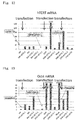
- FIG. 10 shows the results.
- the NHDF-Ad into which no siETG (ELAVL2 siRNA, TEAD 1 siRNA, and GATAD2B siRNA) were introduced had no expression of CD105 mRNA (see 2W and 5W of FIG. 10 ).
- siETG was introduced, there was expression of CD105 mRNA (see 7W of FIG. 10 ).
- a Muse cell-like cell was formed, there was a markedly high level of expression of CD105 mRNA (see the right end of FIG. 10 ).
- RNA was extracted therefrom.
- an RT-PCR was used to measure the level of expression of each gene.
- 25 ng of RNA was used for all the samples to normalize the Ct value, which was measured using a thermal cycler (LineGene, Bioflux, Inc.), to that of ⁇ -actin.
- the level of expression of each gene was calculated in accordance with the 2 - ⁇ method.
- the level detected when the NHDF-Ad was cultured for 4 weeks was set to 1 and each level was represented as a fold change. Note that the cells under a condition in which the senescence has been induced or the cells just before cell death were infected with siETG-encoding viruses at MOI of 1 and the subsequent changes were likewise examined.
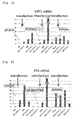
- the Muse cell-like cell of this Example had high levels of expression of CD105, hTERT, Oct4, SIRT1, P53, and Nanog mRNAs.
- FIGS. 10 to 16 show the measured results.
- CD105 is a marker for a Muse cell.
- the hTERT and SIRT1 genes are expressed at high levels in juvenile cells.
- Oct4 and Nanog are markers for pluripotency.
- p53 is one of malignant tumor suppressor genes.
- the Muse cell-like cell of this Example had high levels of expression of not only CD105, but also SIRT1, hTERT, P53, Oct4, and Nanog in a synchronous manner. That is, the Muse cell-like cell as obtained in this Example was a pluripotent, juvenile, normal cell. In addition, because of the high levels of expression of p53 mRNA, the Muse cell-like cell of this Example can be said to have a low risk of developing a malignat tumor.
- the letter “W” of the sample names in the Figures means a period (weeks) of culturing.
- the word “siETG” of the sample names in the Figures means a sample into which siETG was introduced.
- the signs "-1" and “-2" of the sample names in the Figures mean that there were two samples tested.
- the word “transfection” in the Figures means that siETG was introduced.
- the word “senescence” in the Figures means that cells underwent normal cell death.
- the name "10W-siETG-1" under the 9th bar from the left in the Figures is used to show the results as obtained by: reintroducing siETG into the cells represented by the name "10W-siETG-1" under the 6th bar; culturing the cells for 3 days; collecting them; and then performing measurements.
- the name "10W-siETG-2" under the 8th bar from the left in the Figures is used to show the results as obtained by: reintroducing siETG into the cells that are represented by the name "8W-siETG-2" under the 5th bar and were cultured for additional 2 months; culturing the cells for 3 days; collecting them; and then measuring the level of expression of each mRNA.
- the name "Muse” under the 10th bar from the left in the Figures is used to show the results as obtained by selecting and picking up one of the Muse cell-like cell-containing colonies observed after the cells represented by the name "10W-siETG-2" under the 8th bar from the left were cultured for 1 week and then by measuring the level of expression of each mRNA.
- the name "19W-siETG” in the Figures is used to show the results as obtained by culturing, for additional 3 weeks, the cells represented by the name "16W-siETG-2" under the 12th bar from the left.
- the collagen productivity of the transformed cells was measured.
- a human collagen type I ELISA kit (ACEL, Inc.) was used for this measurement.
- the resulting fibroblasts were activated, thereby producing more amount of collagen ( FIG. 17 ). Note that this graph represents one example. Because the senescence was induced after about six weeks, the genes were then introduced. Consequently, there was a group of the activated cells.
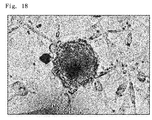
- hsa-miR-520d-5p (SEQ ID NO: 32) was introduced into 293FT cells, and their cell morphology was observed. Specifically, first, the pMIR-520d-5p/GFP purchased from S&B, Inc., was used to construct a plasmid DNA. Next, the plasmid DNA was introduced into 293FT cells in substantially the same procedure as in the above. Then, the resulting virus particles were collected. After the titer was measured, TIG-1-20 cells were infected with the viruses. As a result, a Muse cell-like cell was observed ( FIG. 18 ). Further, this Muse cell was cultured. Then, the Muse cell grew on the radially spread TIG-1-20 cells. In this regard, however, the cell was larger than the case of Example 1. Also, the cell outline was not sharp. That is, the cellular aging was in progress when compared with that of Example 1.
Landscapes
- Health & Medical Sciences (AREA)
- Life Sciences & Earth Sciences (AREA)
- Engineering & Computer Science (AREA)
- Biomedical Technology (AREA)
- Genetics & Genomics (AREA)
- Chemical & Material Sciences (AREA)
- Zoology (AREA)
- Biotechnology (AREA)
- Organic Chemistry (AREA)
- Bioinformatics & Cheminformatics (AREA)
- Wood Science & Technology (AREA)
- General Health & Medical Sciences (AREA)
- General Engineering & Computer Science (AREA)
- Developmental Biology & Embryology (AREA)
- Cell Biology (AREA)
- Microbiology (AREA)
- Biochemistry (AREA)
- Molecular Biology (AREA)
- Reproductive Health (AREA)
- Pharmacology & Pharmacy (AREA)
- Medicinal Chemistry (AREA)
- Veterinary Medicine (AREA)
- Animal Behavior & Ethology (AREA)
- Public Health (AREA)
- Physics & Mathematics (AREA)
- Biophysics (AREA)
- Plant Pathology (AREA)
- Epidemiology (AREA)
- Immunology (AREA)
- Virology (AREA)
- Gynecology & Obstetrics (AREA)
- General Chemical & Material Sciences (AREA)
- Chemical Kinetics & Catalysis (AREA)
- Nuclear Medicine, Radiotherapy & Molecular Imaging (AREA)
- Micro-Organisms Or Cultivation Processes Thereof (AREA)
- Pharmaceuticals Containing Other Organic And Inorganic Compounds (AREA)
- Measuring Or Testing Involving Enzymes Or Micro-Organisms (AREA)
- Materials For Medical Uses (AREA)
- Medicines That Contain Protein Lipid Enzymes And Other Medicines (AREA)
- Medicines Containing Material From Animals Or Micro-Organisms (AREA)
Applications Claiming Priority (2)
| Application Number | Priority Date | Filing Date | Title |
|---|---|---|---|
| JP2013177763 | 2013-08-29 | ||
| PCT/JP2014/072661 WO2015030149A1 (ja) | 2013-08-29 | 2014-08-28 | 細胞のアンチエイジングに関連する生体分子群 |
Publications (3)
| Publication Number | Publication Date |
|---|---|
| EP3040414A1 true EP3040414A1 (de) | 2016-07-06 |
| EP3040414A4 EP3040414A4 (de) | 2017-02-15 |
| EP3040414B1 EP3040414B1 (de) | 2018-12-12 |
Family
ID=52586697
Family Applications (1)
| Application Number | Title | Priority Date | Filing Date |
|---|---|---|---|
| EP14840797.6A Active EP3040414B1 (de) | 2013-08-29 | 2014-08-28 | Biomolekulare gruppe im zusammenhang mit anti-aging von zellen |
Country Status (5)
| Country | Link |
|---|---|
| US (1) | US10265347B2 (de) |
| EP (1) | EP3040414B1 (de) |
| JP (1) | JPWO2015030149A1 (de) |
| CN (1) | CN105492598B (de) |
| WO (1) | WO2015030149A1 (de) |
Cited By (2)
| Publication number | Priority date | Publication date | Assignee | Title |
|---|---|---|---|---|
| CN108795934A (zh) * | 2018-05-23 | 2018-11-13 | 中国农业科学院上海兽医研究所(中国动物卫生与流行病学中心上海分中心) | 日本血吸虫SjELAV-like 2基因的siRNA及其应用 |
| CN108795935A (zh) * | 2018-05-23 | 2018-11-13 | 中国农业科学院上海兽医研究所(中国动物卫生与流行病学中心上海分中心) | 日本血吸虫SjELAV-like 1基因的siRNA及其应用 |
Families Citing this family (11)
| Publication number | Priority date | Publication date | Assignee | Title |
|---|---|---|---|---|
| US9828582B2 (en) | 2013-03-19 | 2017-11-28 | Duke University | Compositions and methods for the induction and tuning of gene expression |
| JP6929791B2 (ja) | 2015-02-09 | 2021-09-01 | デューク ユニバーシティ | エピゲノム編集のための組成物および方法 |
| EP3369417A4 (de) * | 2015-10-30 | 2019-05-01 | MIURA, Norimasa | Rna-molekül zur reparatur von dna-schäden |
| WO2017095967A2 (en) | 2015-11-30 | 2017-06-08 | Duke University | Therapeutic targets for the correction of the human dystrophin gene by gene editing and methods of use |
| EP3443081A4 (de) | 2016-04-13 | 2019-10-30 | Duke University | Crispr/cas9-basierte repressoren zur in-vivo-ausschaltung von gen-targets und verfahren zur verwendung |
| EP4275747A3 (de) | 2016-07-19 | 2024-01-24 | Duke University | Therapeutische anwendungen von cpf1-basierter genomeditierung |
| US12509492B2 (en) | 2018-01-19 | 2025-12-30 | Duke University | Genome engineering with CRISPR-Cas systems in eukaryotes |
| US20250345461A1 (en) * | 2021-12-29 | 2025-11-13 | Livius Pte. Ltd. | Method for repairing hair cycle-related genes and method for treating hair cycle-related diseases using mir-520d-5p |
| WO2024077262A2 (en) * | 2022-10-07 | 2024-04-11 | University Of Massachusetts | Methods and compositions for silencing elavl2 expression for the treatment of disease |
| WO2024112568A1 (en) * | 2022-11-16 | 2024-05-30 | The Regents Of The University Of California | Antisense oligomer (aso) as an inhibitor of liver fibrosis |
| WO2024249458A2 (en) * | 2023-05-31 | 2024-12-05 | The Trustees Of Columbia University In The City Of New York | Fine-tuning inflammation by altering 3'utr length |
Family Cites Families (19)
| Publication number | Priority date | Publication date | Assignee | Title |
|---|---|---|---|---|
| WO2006112239A1 (ja) | 2005-04-15 | 2006-10-26 | National University Corporation Tottori University | hTERT発現調節遺伝子 |
| US8129187B2 (en) | 2005-12-13 | 2012-03-06 | Kyoto University | Somatic cell reprogramming by retroviral vectors encoding Oct3/4. Klf4, c-Myc and Sox2 |
| US8278104B2 (en) | 2005-12-13 | 2012-10-02 | Kyoto University | Induced pluripotent stem cells produced with Oct3/4, Klf4 and Sox2 |
| CN101864392B (zh) | 2005-12-13 | 2016-03-23 | 国立大学法人京都大学 | 核重新编程因子 |
| US20090227032A1 (en) | 2005-12-13 | 2009-09-10 | Kyoto University | Nuclear reprogramming factor and induced pluripotent stem cells |
| JP2010510964A (ja) | 2006-09-19 | 2010-04-08 | アシュラジェン インコーポレイテッド | 治療的介入の標的としての、miR−15、miR−26、miR−31、miR−145、miR−147、miR−188、miR−215、miR−216、miR−331、mmu−miR−292−3pによって調節される遺伝子および経路 |
| CA2663878A1 (en) | 2006-09-19 | 2008-03-27 | Asuragen, Inc. | Mir-200 regulated genes and pathways as targets for therapeutic intervention |
| US20090232893A1 (en) | 2007-05-22 | 2009-09-17 | Bader Andreas G | miR-143 REGULATED GENES AND PATHWAYS AS TARGETS FOR THERAPEUTIC INTERVENTION |
| AU2008307544A1 (en) | 2007-10-02 | 2009-04-09 | University Of Rochester | Methods and compositions related to synergistic responses to oncogenic mutations |
| US20120082659A1 (en) | 2007-10-02 | 2012-04-05 | Hartmut Land | Methods And Compositions Related To Synergistic Responses To Oncogenic Mutations |
| US20120114670A1 (en) | 2007-10-02 | 2012-05-10 | University Of Rochester | Methods and compositions related to synergistic responses to oncogenic mutations |
| JP5558097B2 (ja) | 2007-12-10 | 2014-07-23 | 国立大学法人京都大学 | 効率的な核初期化方法 |
| US9683232B2 (en) | 2007-12-10 | 2017-06-20 | Kyoto University | Efficient method for nuclear reprogramming |
| US9550975B2 (en) * | 2009-07-15 | 2017-01-24 | Mari Dezawa | SSEA-3 pluripotent stem cell isolated from body tissue |
| US9399758B2 (en) | 2009-07-15 | 2016-07-26 | Mari Dezawa | SSEA3(+) pluripotent stem cell that can be isolated from body tissue |
| US20130052169A1 (en) | 2010-05-06 | 2013-02-28 | Stem Cell Medicine Ltd. | Stem cell bank for personalized medicine |
| US20130184223A1 (en) | 2010-05-20 | 2013-07-18 | University Of Rochester | Methods and compositions related to modulating autophagy |
| JP5099571B2 (ja) | 2010-07-12 | 2012-12-19 | 国立大学法人鳥取大学 | miRNA導入による新規hiPSC作製法 |
| WO2014097875A1 (ja) | 2012-12-20 | 2014-06-26 | 国立大学法人鳥取大学 | 新規の脱分化誘導方法を用いた多能性幹細胞化 |
-
2014
- 2014-08-28 US US14/914,788 patent/US10265347B2/en active Active
- 2014-08-28 JP JP2015534314A patent/JPWO2015030149A1/ja active Pending
- 2014-08-28 CN CN201480047897.1A patent/CN105492598B/zh active Active
- 2014-08-28 EP EP14840797.6A patent/EP3040414B1/de active Active
- 2014-08-28 WO PCT/JP2014/072661 patent/WO2015030149A1/ja not_active Ceased
Non-Patent Citations (1)
| Title |
|---|
| See references of WO2015030149A1 * |
Cited By (4)
| Publication number | Priority date | Publication date | Assignee | Title |
|---|---|---|---|---|
| CN108795934A (zh) * | 2018-05-23 | 2018-11-13 | 中国农业科学院上海兽医研究所(中国动物卫生与流行病学中心上海分中心) | 日本血吸虫SjELAV-like 2基因的siRNA及其应用 |
| CN108795935A (zh) * | 2018-05-23 | 2018-11-13 | 中国农业科学院上海兽医研究所(中国动物卫生与流行病学中心上海分中心) | 日本血吸虫SjELAV-like 1基因的siRNA及其应用 |
| CN108795934B (zh) * | 2018-05-23 | 2022-06-21 | 中国农业科学院上海兽医研究所(中国动物卫生与流行病学中心上海分中心) | 日本血吸虫SjELAV-like 2基因的siRNA及其应用 |
| CN108795935B (zh) * | 2018-05-23 | 2022-06-21 | 中国农业科学院上海兽医研究所(中国动物卫生与流行病学中心上海分中心) | 日本血吸虫SjELAV-like 1基因的siRNA及其应用 |
Also Published As
| Publication number | Publication date |
|---|---|
| EP3040414A4 (de) | 2017-02-15 |
| EP3040414B1 (de) | 2018-12-12 |
| US20160199419A1 (en) | 2016-07-14 |
| CN105492598B (zh) | 2019-12-03 |
| WO2015030149A1 (ja) | 2015-03-05 |
| JPWO2015030149A1 (ja) | 2017-03-02 |
| US10265347B2 (en) | 2019-04-23 |
| CN105492598A (zh) | 2016-04-13 |
Similar Documents
| Publication | Publication Date | Title |
|---|---|---|
| EP3040414B1 (de) | Biomolekulare gruppe im zusammenhang mit anti-aging von zellen | |
| US9476041B2 (en) | Method for producing novel hipsc by means of siRNA introduction | |
| CN108368487B (zh) | 核酸的外泌体包装 | |
| JP2011522514A (ja) | Rna干渉を介する多能性遺伝子の誘発による細胞の再プログラミング | |
| JPWO2014097875A1 (ja) | 新規の脱分化誘導方法を用いた多能性幹細胞化 | |
| KR20220119084A (ko) | 폴리뉴클레오티드를 엑소솜에 전달하기 위한 핵산 구축물 | |
| EP3421598B1 (de) | Verfahren zur förderung der differenzierung pluripotenter stammzellen durch verringerung des undifferenzierten zustands davon | |
| JP2022130675A (ja) | メチル化関連酵素hat1とkat8の阻害薬 | |
| WO2019006512A1 (en) | REGENERATION OF CARDIOMYOCYTES | |
| CN104726500A (zh) | MicroRNA26b-3p抑制剂在制备人脐带来源间充质干细胞中的应用 | |
| Hoffmann et al. | Selectively expressed RNA molecules: a new dimension in functionalized cell targeting | |
| Zhu | RNA pull-down-confocal nanoscanning (RP-CONA), a novel method for studying RNA/protein interactions in cell extracts that detected potential drugs for Parkinson’s disease targeting RNA/HuR complexes | |
| WO2023057653A1 (en) | Trps1 inhibitor for use in the treatment of rhabdomyosarcoma | |
| Lam | Elucidating the Role of Pabpn1 in Alternative Polyadenylation During Satellite Cell Activation | |
| CN105648041B (zh) | 人kiaa0101基因的用途及其相关药物 | |
| CN105803053A (zh) | 人rbm17基因的用途及其相关药物 | |
| WO2017073689A1 (ja) | Dna損傷を修復するrna分子 | |
| Kalantari | Building the Human Argonaute 2 Interaction Network | |
| WO2015155718A1 (en) | Cib1 manipulation to kill cancer cells |
Legal Events
| Date | Code | Title | Description |
|---|---|---|---|
| PUAI | Public reference made under article 153(3) epc to a published international application that has entered the european phase |
Free format text: ORIGINAL CODE: 0009012 |
|
| 17P | Request for examination filed |
Effective date: 20160322 |
|
| AK | Designated contracting states |
Kind code of ref document: A1 Designated state(s): AL AT BE BG CH CY CZ DE DK EE ES FI FR GB GR HR HU IE IS IT LI LT LU LV MC MK MT NL NO PL PT RO RS SE SI SK SM TR |
|
| AX | Request for extension of the european patent |
Extension state: BA ME |
|
| RAP1 | Party data changed (applicant data changed or rights of an application transferred) |
Owner name: MIURA, NORIMASA |
|
| RIN1 | Information on inventor provided before grant (corrected) |
Inventor name: MIURA, NORIMASA |
|
| DAX | Request for extension of the european patent (deleted) | ||
| A4 | Supplementary search report drawn up and despatched |
Effective date: 20170118 |
|
| RIC1 | Information provided on ipc code assigned before grant |
Ipc: A61L 27/00 20060101ALI20170112BHEP Ipc: A61K 35/00 20060101ALN20170112BHEP Ipc: A61P 43/00 20060101ALI20170112BHEP Ipc: C12N 5/10 20060101AFI20170112BHEP Ipc: C12N 15/113 20100101ALI20170112BHEP Ipc: C12N 5/074 20100101ALN20170112BHEP Ipc: A61K 45/00 20060101ALI20170112BHEP Ipc: A61K 35/12 20150101ALI20170112BHEP |
|
| STAA | Information on the status of an ep patent application or granted ep patent |
Free format text: STATUS: EXAMINATION IS IN PROGRESS |
|
| 17Q | First examination report despatched |
Effective date: 20171121 |
|
| GRAP | Despatch of communication of intention to grant a patent |
Free format text: ORIGINAL CODE: EPIDOSNIGR1 |
|
| STAA | Information on the status of an ep patent application or granted ep patent |
Free format text: STATUS: GRANT OF PATENT IS INTENDED |
|
| RIC1 | Information provided on ipc code assigned before grant |
Ipc: A61K 45/00 20060101ALI20180528BHEP Ipc: A61K 35/00 20060101ALN20180528BHEP Ipc: A61L 27/00 20060101ALI20180528BHEP Ipc: C12N 5/10 20060101AFI20180528BHEP Ipc: A61K 35/12 20150101ALI20180528BHEP Ipc: A61P 43/00 20060101ALI20180528BHEP Ipc: C12N 15/113 20100101ALI20180528BHEP Ipc: C12N 5/074 20100101ALN20180528BHEP |
|
| RIC1 | Information provided on ipc code assigned before grant |
Ipc: C12N 5/074 20100101ALN20180605BHEP Ipc: A61P 43/00 20060101ALI20180605BHEP Ipc: C12N 15/113 20100101ALI20180605BHEP Ipc: A61K 35/12 20150101ALI20180605BHEP Ipc: A61K 35/00 20060101ALN20180605BHEP Ipc: A61L 27/00 20060101ALI20180605BHEP Ipc: A61K 45/00 20060101ALI20180605BHEP Ipc: C12N 5/10 20060101AFI20180605BHEP |
|
| RIC1 | Information provided on ipc code assigned before grant |
Ipc: C12N 5/074 20100101ALN20180608BHEP Ipc: A61K 35/00 20060101ALN20180608BHEP Ipc: C12N 15/113 20100101ALI20180608BHEP Ipc: C12N 5/10 20060101AFI20180608BHEP Ipc: A61L 27/00 20060101ALI20180608BHEP Ipc: A61K 45/00 20060101ALI20180608BHEP Ipc: A61P 43/00 20060101ALI20180608BHEP Ipc: A61K 35/12 20150101ALI20180608BHEP |
|
| INTG | Intention to grant announced |
Effective date: 20180702 |
|
| RIC1 | Information provided on ipc code assigned before grant |
Ipc: A61K 45/00 20060101ALI20180622BHEP Ipc: A61K 35/00 20060101ALN20180622BHEP Ipc: A61L 27/00 20060101ALI20180622BHEP Ipc: C12N 5/074 20100101ALN20180622BHEP Ipc: A61P 43/00 20060101ALI20180622BHEP Ipc: A61K 35/12 20150101ALI20180622BHEP Ipc: C12N 5/10 20060101AFI20180622BHEP Ipc: C12N 15/113 20100101ALI20180622BHEP |
|
| GRAS | Grant fee paid |
Free format text: ORIGINAL CODE: EPIDOSNIGR3 |
|
| GRAA | (expected) grant |
Free format text: ORIGINAL CODE: 0009210 |
|
| STAA | Information on the status of an ep patent application or granted ep patent |
Free format text: STATUS: THE PATENT HAS BEEN GRANTED |
|
| AK | Designated contracting states |
Kind code of ref document: B1 Designated state(s): AL AT BE BG CH CY CZ DE DK EE ES FI FR GB GR HR HU IE IS IT LI LT LU LV MC MK MT NL NO PL PT RO RS SE SI SK SM TR |
|
| REG | Reference to a national code |
Ref country code: GB Ref legal event code: FG4D |
|
| REG | Reference to a national code |
Ref country code: CH Ref legal event code: EP |
|
| REG | Reference to a national code |
Ref country code: AT Ref legal event code: REF Ref document number: 1075991 Country of ref document: AT Kind code of ref document: T Effective date: 20181215 |
|
| REG | Reference to a national code |
Ref country code: DE Ref legal event code: R096 Ref document number: 602014037968 Country of ref document: DE |
|
| REG | Reference to a national code |
Ref country code: IE Ref legal event code: FG4D |
|
| REG | Reference to a national code |
Ref country code: CH Ref legal event code: NV Representative=s name: HEPP WENGER RYFFEL AG, CH |
|
| REG | Reference to a national code |
Ref country code: NL Ref legal event code: MP Effective date: 20181212 |
|
| REG | Reference to a national code |
Ref country code: LT Ref legal event code: MG4D |
|
| PG25 | Lapsed in a contracting state [announced via postgrant information from national office to epo] |
Ref country code: FI Free format text: LAPSE BECAUSE OF FAILURE TO SUBMIT A TRANSLATION OF THE DESCRIPTION OR TO PAY THE FEE WITHIN THE PRESCRIBED TIME-LIMIT Effective date: 20181212 Ref country code: NO Free format text: LAPSE BECAUSE OF FAILURE TO SUBMIT A TRANSLATION OF THE DESCRIPTION OR TO PAY THE FEE WITHIN THE PRESCRIBED TIME-LIMIT Effective date: 20190312 Ref country code: ES Free format text: LAPSE BECAUSE OF FAILURE TO SUBMIT A TRANSLATION OF THE DESCRIPTION OR TO PAY THE FEE WITHIN THE PRESCRIBED TIME-LIMIT Effective date: 20181212 Ref country code: LV Free format text: LAPSE BECAUSE OF FAILURE TO SUBMIT A TRANSLATION OF THE DESCRIPTION OR TO PAY THE FEE WITHIN THE PRESCRIBED TIME-LIMIT Effective date: 20181212 Ref country code: HR Free format text: LAPSE BECAUSE OF FAILURE TO SUBMIT A TRANSLATION OF THE DESCRIPTION OR TO PAY THE FEE WITHIN THE PRESCRIBED TIME-LIMIT Effective date: 20181212 Ref country code: BG Free format text: LAPSE BECAUSE OF FAILURE TO SUBMIT A TRANSLATION OF THE DESCRIPTION OR TO PAY THE FEE WITHIN THE PRESCRIBED TIME-LIMIT Effective date: 20190312 Ref country code: LT Free format text: LAPSE BECAUSE OF FAILURE TO SUBMIT A TRANSLATION OF THE DESCRIPTION OR TO PAY THE FEE WITHIN THE PRESCRIBED TIME-LIMIT Effective date: 20181212 |
|
| PG25 | Lapsed in a contracting state [announced via postgrant information from national office to epo] |
Ref country code: RS Free format text: LAPSE BECAUSE OF FAILURE TO SUBMIT A TRANSLATION OF THE DESCRIPTION OR TO PAY THE FEE WITHIN THE PRESCRIBED TIME-LIMIT Effective date: 20181212 Ref country code: SE Free format text: LAPSE BECAUSE OF FAILURE TO SUBMIT A TRANSLATION OF THE DESCRIPTION OR TO PAY THE FEE WITHIN THE PRESCRIBED TIME-LIMIT Effective date: 20181212 Ref country code: GR Free format text: LAPSE BECAUSE OF FAILURE TO SUBMIT A TRANSLATION OF THE DESCRIPTION OR TO PAY THE FEE WITHIN THE PRESCRIBED TIME-LIMIT Effective date: 20190313 Ref country code: AL Free format text: LAPSE BECAUSE OF FAILURE TO SUBMIT A TRANSLATION OF THE DESCRIPTION OR TO PAY THE FEE WITHIN THE PRESCRIBED TIME-LIMIT Effective date: 20181212 |
|
| PG25 | Lapsed in a contracting state [announced via postgrant information from national office to epo] |
Ref country code: NL Free format text: LAPSE BECAUSE OF FAILURE TO SUBMIT A TRANSLATION OF THE DESCRIPTION OR TO PAY THE FEE WITHIN THE PRESCRIBED TIME-LIMIT Effective date: 20181212 |
|
| PG25 | Lapsed in a contracting state [announced via postgrant information from national office to epo] |
Ref country code: IT Free format text: LAPSE BECAUSE OF FAILURE TO SUBMIT A TRANSLATION OF THE DESCRIPTION OR TO PAY THE FEE WITHIN THE PRESCRIBED TIME-LIMIT Effective date: 20181212 Ref country code: PL Free format text: LAPSE BECAUSE OF FAILURE TO SUBMIT A TRANSLATION OF THE DESCRIPTION OR TO PAY THE FEE WITHIN THE PRESCRIBED TIME-LIMIT Effective date: 20181212 Ref country code: CZ Free format text: LAPSE BECAUSE OF FAILURE TO SUBMIT A TRANSLATION OF THE DESCRIPTION OR TO PAY THE FEE WITHIN THE PRESCRIBED TIME-LIMIT Effective date: 20181212 Ref country code: PT Free format text: LAPSE BECAUSE OF FAILURE TO SUBMIT A TRANSLATION OF THE DESCRIPTION OR TO PAY THE FEE WITHIN THE PRESCRIBED TIME-LIMIT Effective date: 20190412 |
|
| PG25 | Lapsed in a contracting state [announced via postgrant information from national office to epo] |
Ref country code: SM Free format text: LAPSE BECAUSE OF FAILURE TO SUBMIT A TRANSLATION OF THE DESCRIPTION OR TO PAY THE FEE WITHIN THE PRESCRIBED TIME-LIMIT Effective date: 20181212 Ref country code: EE Free format text: LAPSE BECAUSE OF FAILURE TO SUBMIT A TRANSLATION OF THE DESCRIPTION OR TO PAY THE FEE WITHIN THE PRESCRIBED TIME-LIMIT Effective date: 20181212 Ref country code: RO Free format text: LAPSE BECAUSE OF FAILURE TO SUBMIT A TRANSLATION OF THE DESCRIPTION OR TO PAY THE FEE WITHIN THE PRESCRIBED TIME-LIMIT Effective date: 20181212 Ref country code: IS Free format text: LAPSE BECAUSE OF FAILURE TO SUBMIT A TRANSLATION OF THE DESCRIPTION OR TO PAY THE FEE WITHIN THE PRESCRIBED TIME-LIMIT Effective date: 20190412 Ref country code: SK Free format text: LAPSE BECAUSE OF FAILURE TO SUBMIT A TRANSLATION OF THE DESCRIPTION OR TO PAY THE FEE WITHIN THE PRESCRIBED TIME-LIMIT Effective date: 20181212 |
|
| REG | Reference to a national code |
Ref country code: DE Ref legal event code: R097 Ref document number: 602014037968 Country of ref document: DE |
|
| PLBE | No opposition filed within time limit |
Free format text: ORIGINAL CODE: 0009261 |
|
| STAA | Information on the status of an ep patent application or granted ep patent |
Free format text: STATUS: NO OPPOSITION FILED WITHIN TIME LIMIT |
|
| PG25 | Lapsed in a contracting state [announced via postgrant information from national office to epo] |
Ref country code: DK Free format text: LAPSE BECAUSE OF FAILURE TO SUBMIT A TRANSLATION OF THE DESCRIPTION OR TO PAY THE FEE WITHIN THE PRESCRIBED TIME-LIMIT Effective date: 20181212 Ref country code: SI Free format text: LAPSE BECAUSE OF FAILURE TO SUBMIT A TRANSLATION OF THE DESCRIPTION OR TO PAY THE FEE WITHIN THE PRESCRIBED TIME-LIMIT Effective date: 20181212 |
|
| 26N | No opposition filed |
Effective date: 20190913 |
|
| PG25 | Lapsed in a contracting state [announced via postgrant information from national office to epo] |
Ref country code: TR Free format text: LAPSE BECAUSE OF FAILURE TO SUBMIT A TRANSLATION OF THE DESCRIPTION OR TO PAY THE FEE WITHIN THE PRESCRIBED TIME-LIMIT Effective date: 20181212 |
|
| PG25 | Lapsed in a contracting state [announced via postgrant information from national office to epo] |
Ref country code: LU Free format text: LAPSE BECAUSE OF NON-PAYMENT OF DUE FEES Effective date: 20190828 Ref country code: MC Free format text: LAPSE BECAUSE OF FAILURE TO SUBMIT A TRANSLATION OF THE DESCRIPTION OR TO PAY THE FEE WITHIN THE PRESCRIBED TIME-LIMIT Effective date: 20181212 |
|
| REG | Reference to a national code |
Ref country code: BE Ref legal event code: MM Effective date: 20190831 |
|
| PG25 | Lapsed in a contracting state [announced via postgrant information from national office to epo] |
Ref country code: IE Free format text: LAPSE BECAUSE OF NON-PAYMENT OF DUE FEES Effective date: 20190828 |
|
| PG25 | Lapsed in a contracting state [announced via postgrant information from national office to epo] |
Ref country code: BE Free format text: LAPSE BECAUSE OF NON-PAYMENT OF DUE FEES Effective date: 20190831 |
|
| REG | Reference to a national code |
Ref country code: AT Ref legal event code: UEP Ref document number: 1075991 Country of ref document: AT Kind code of ref document: T Effective date: 20181212 |
|
| PG25 | Lapsed in a contracting state [announced via postgrant information from national office to epo] |
Ref country code: CY Free format text: LAPSE BECAUSE OF FAILURE TO SUBMIT A TRANSLATION OF THE DESCRIPTION OR TO PAY THE FEE WITHIN THE PRESCRIBED TIME-LIMIT Effective date: 20181212 |
|
| PG25 | Lapsed in a contracting state [announced via postgrant information from national office to epo] |
Ref country code: HU Free format text: LAPSE BECAUSE OF FAILURE TO SUBMIT A TRANSLATION OF THE DESCRIPTION OR TO PAY THE FEE WITHIN THE PRESCRIBED TIME-LIMIT; INVALID AB INITIO Effective date: 20140828 Ref country code: MT Free format text: LAPSE BECAUSE OF FAILURE TO SUBMIT A TRANSLATION OF THE DESCRIPTION OR TO PAY THE FEE WITHIN THE PRESCRIBED TIME-LIMIT Effective date: 20181212 |
|
| REG | Reference to a national code |
Ref country code: DE Ref legal event code: R081 Ref document number: 602014037968 Country of ref document: DE Owner name: LIVIUS PTE. LTD., SG Free format text: FORMER OWNER: MIURA, NORIMASA, TOTTORI, JP |
|
| REG | Reference to a national code |
Ref country code: AT Ref legal event code: PC Ref document number: 1075991 Country of ref document: AT Kind code of ref document: T Owner name: LIVIUS PTE. LTD., SG Effective date: 20220411 |
|
| REG | Reference to a national code |
Ref country code: GB Ref legal event code: 732E Free format text: REGISTERED BETWEEN 20220519 AND 20220525 |
|
| PG25 | Lapsed in a contracting state [announced via postgrant information from national office to epo] |
Ref country code: MK Free format text: LAPSE BECAUSE OF FAILURE TO SUBMIT A TRANSLATION OF THE DESCRIPTION OR TO PAY THE FEE WITHIN THE PRESCRIBED TIME-LIMIT Effective date: 20181212 |
|
| PGFP | Annual fee paid to national office [announced via postgrant information from national office to epo] |
Ref country code: GB Payment date: 20250825 Year of fee payment: 12 |
|
| PGFP | Annual fee paid to national office [announced via postgrant information from national office to epo] |
Ref country code: FR Payment date: 20250827 Year of fee payment: 12 Ref country code: AT Payment date: 20250822 Year of fee payment: 12 |
|
| PGFP | Annual fee paid to national office [announced via postgrant information from national office to epo] |
Ref country code: CH Payment date: 20250901 Year of fee payment: 12 |
|
| PGFP | Annual fee paid to national office [announced via postgrant information from national office to epo] |
Ref country code: DE Payment date: 20251023 Year of fee payment: 12 |