EP3040860A1 - Gestion de ressources dans des systèmes de nuage - Google Patents
Gestion de ressources dans des systèmes de nuage Download PDFInfo
- Publication number
- EP3040860A1 EP3040860A1 EP14200452.2A EP14200452A EP3040860A1 EP 3040860 A1 EP3040860 A1 EP 3040860A1 EP 14200452 A EP14200452 A EP 14200452A EP 3040860 A1 EP3040860 A1 EP 3040860A1
- Authority
- EP
- European Patent Office
- Prior art keywords
- resources
- affinity
- tenant
- virtual
- resource
- Prior art date
- Legal status (The legal status is an assumption and is not a legal conclusion. Google has not performed a legal analysis and makes no representation as to the accuracy of the status listed.)
- Withdrawn
Links
Images




Classifications
-
- H—ELECTRICITY
- H04—ELECTRIC COMMUNICATION TECHNIQUE
- H04L—TRANSMISSION OF DIGITAL INFORMATION, e.g. TELEGRAPHIC COMMUNICATION
- H04L41/00—Arrangements for maintenance, administration or management of data switching networks, e.g. of packet switching networks
-
- G—PHYSICS
- G06—COMPUTING OR CALCULATING; COUNTING
- G06F—ELECTRIC DIGITAL DATA PROCESSING
- G06F9/00—Arrangements for program control, e.g. control units
- G06F9/06—Arrangements for program control, e.g. control units using stored programs, i.e. using an internal store of processing equipment to receive or retain programs
- G06F9/46—Multiprogramming arrangements
- G06F9/50—Allocation of resources, e.g. of the central processing unit [CPU]
- G06F9/5061—Partitioning or combining of resources
- G06F9/5077—Logical partitioning of resources; Management or configuration of virtualized resources
-
- G—PHYSICS
- G06—COMPUTING OR CALCULATING; COUNTING
- G06F—ELECTRIC DIGITAL DATA PROCESSING
- G06F9/00—Arrangements for program control, e.g. control units
- G06F9/06—Arrangements for program control, e.g. control units using stored programs, i.e. using an internal store of processing equipment to receive or retain programs
- G06F9/44—Arrangements for executing specific programs
- G06F9/455—Emulation; Interpretation; Software simulation, e.g. virtualisation or emulation of application or operating system execution engines
- G06F9/45533—Hypervisors; Virtual machine monitors
- G06F9/45558—Hypervisor-specific management and integration aspects
-
- H—ELECTRICITY
- H04—ELECTRIC COMMUNICATION TECHNIQUE
- H04L—TRANSMISSION OF DIGITAL INFORMATION, e.g. TELEGRAPHIC COMMUNICATION
- H04L47/00—Traffic control in data switching networks
- H04L47/70—Admission control; Resource allocation
- H04L47/72—Admission control; Resource allocation using reservation actions during connection setup
-
- H—ELECTRICITY
- H04—ELECTRIC COMMUNICATION TECHNIQUE
- H04L—TRANSMISSION OF DIGITAL INFORMATION, e.g. TELEGRAPHIC COMMUNICATION
- H04L47/00—Traffic control in data switching networks
- H04L47/70—Admission control; Resource allocation
- H04L47/80—Actions related to the user profile or the type of traffic
- H04L47/805—QOS or priority aware
-
- H—ELECTRICITY
- H04—ELECTRIC COMMUNICATION TECHNIQUE
- H04L—TRANSMISSION OF DIGITAL INFORMATION, e.g. TELEGRAPHIC COMMUNICATION
- H04L67/00—Network arrangements or protocols for supporting network services or applications
- H04L67/01—Protocols
- H04L67/10—Protocols in which an application is distributed across nodes in the network
- H04L67/1001—Protocols in which an application is distributed across nodes in the network for accessing one among a plurality of replicated servers
- H04L67/1004—Server selection for load balancing
-
- H—ELECTRICITY
- H04—ELECTRIC COMMUNICATION TECHNIQUE
- H04L—TRANSMISSION OF DIGITAL INFORMATION, e.g. TELEGRAPHIC COMMUNICATION
- H04L67/00—Network arrangements or protocols for supporting network services or applications
- H04L67/01—Protocols
- H04L67/10—Protocols in which an application is distributed across nodes in the network
- H04L67/104—Peer-to-peer [P2P] networks
- H04L67/1074—Peer-to-peer [P2P] networks for supporting data block transmission mechanisms
-
- G—PHYSICS
- G06—COMPUTING OR CALCULATING; COUNTING
- G06F—ELECTRIC DIGITAL DATA PROCESSING
- G06F9/00—Arrangements for program control, e.g. control units
- G06F9/06—Arrangements for program control, e.g. control units using stored programs, i.e. using an internal store of processing equipment to receive or retain programs
- G06F9/44—Arrangements for executing specific programs
- G06F9/455—Emulation; Interpretation; Software simulation, e.g. virtualisation or emulation of application or operating system execution engines
- G06F9/45533—Hypervisors; Virtual machine monitors
- G06F9/45558—Hypervisor-specific management and integration aspects
- G06F2009/45583—Memory management, e.g. access or allocation
-
- G—PHYSICS
- G06—COMPUTING OR CALCULATING; COUNTING
- G06F—ELECTRIC DIGITAL DATA PROCESSING
- G06F9/00—Arrangements for program control, e.g. control units
- G06F9/06—Arrangements for program control, e.g. control units using stored programs, i.e. using an internal store of processing equipment to receive or retain programs
- G06F9/44—Arrangements for executing specific programs
- G06F9/455—Emulation; Interpretation; Software simulation, e.g. virtualisation or emulation of application or operating system execution engines
- G06F9/45533—Hypervisors; Virtual machine monitors
- G06F9/45558—Hypervisor-specific management and integration aspects
- G06F2009/45595—Network integration; Enabling network access in virtual machine instances
Definitions
- the present technology relates to a method and apparatus for allocating at least one virtual resource to a physical and/or software resource from a plurality of physical and/or software resources.
- the present technology relates to tenant affinity for resource management in telco cloud systems.
- NFV Network Functions Virtualization
- IT Virtualization and automation techniques from IT to move the current network functions (e.g. Firewall, DPI, Serving Gateway, ...) in an operator's network from dedicated hardware to general purpose IT infrastructure.
- VNF Virtual Network Functions
- a VNF can be composed by one or several virtual machines (VMs) and virtual networks, which together implement the network function. These VMs and virtual networks are commonly referred as virtualized resources in the current invention.
- Physical clustering in this context means that a predefined set of computing and storage resources is exclusively assigned to application software from a specific vendor, also referred to as “tenant” within this document. Thus, application software from another vendor cannot use these resources, even if they are free. There are two main reasons for such "physical clustering”:
- the term "software” refers to one of the following: First, software that may be shared by different tenants and which is part of the system infrastructure, e.g. software in the form of hypervisor software; second, software that is provided by a tenant to perform application or service functionality, specifically network functions. If necessary and if not otherwise apparent from the context, explicit reference is made to "hypervisor software” vs. "application software” or "VNF software” to differentiate the two distinct uses of the term.
- Figure 2 illustrates an example of the physical clustering problem outlined above.
- Four different clusters are created and assigned to their respective vendors (tenants), namely T-A, T-B, T-C and T-D.
- the figure also shows how VMs are allocated to certain physical hosts (servers), and how, depending on traffic loads, etc., the physical clustering can lead to wasting resources within each cluster.
- the pool of resources in the data center that could have been shared is now fragmented into different clusters impeding the allocation of resources to vendors/tenants other than the owner/user of the cluster.
- VSphere allows several types of affinity to be defined:
- the last type of affinity is the one used to partition resources in the data center and create resource clusters, as the ones shown in Figure 2 .
- These clusters of specific physical hosts can then be assigned to tenants (VM DRS group).
- VM DRS group can then be assigned to tenants (VM DRS group).
- creation is made offline (pre-planned) and ahead to receive VM allocation requests, i.e., the allocation has already been designated beforehand. Therefore, it does not solve the issue of resources waste.
- the data center schema in Figure 2 and other figures specifies four virtual machines (VMs) per physical server. This configuration has been chosen for illustration and may vary in actual embodiments, i.e. there may be one or more virtual machines per physical server.
- affinity rules can be very complex and labor-intensive, especially in data center configurations with a numerous tenants that have diverse workloads with different requirements.
- a similar approach based on declaring affinity groups and allocating data items and computing resources based on such affinity groups is described by Peirault et al. in US patent US 8577892 B2 .
- the basic idea of this approach is that computing resources can be associated with affinity groups, and such affinity groups may be associated with a geographic region or a number of data centers. Data items and computing resources are associated with affinity groups, and can then be allocated based on such associated affinity group. This solution is very similar to what VMware supports via its DRS clusters.
- a matching system which could be a cloud management system, collects information about available cloud appliances, which could be physical hosts or servers in the data center, and matches these appliances with user requested services. Such requested services are applications deployed on a number of VMs.
- the matching system can also track and manage resources, so users can have specific rights and assigned resources are made available to the users.
- US 8402139 B2 does not solve the problem of allocating resources based on expressed and required affinities in comparison with other tenant requests.
- the main difference of the solution is that it allows defragmenting the cloud/data center resources, which is related to the technology disclosed herein, but in this case, the allocation is based on VM loads and load priorities of the VMs as expressed in the requests by the customer. Therefore, it does not consider explicit inter-tenant affinity information.
- a method of allocating by a virtualized resource management engine at least one virtual resource to a physical and/or software resource from a plurality of physical and/or software resources comprising the step of obtaining information used to identify a first tenant requesting said at least one virtual resource obtaining affinity information, specifying whether or not said requested virtual resource may be collocated on the same physical and/or software resource with one or more virtual resources of another tenant different from said first tenant.
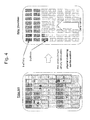
- This method has the effect and advantage that resources in the data center may be allocated without having to pre-plan and/or pre-allocate physical and hypervisor software resources to tenants (vendors). Without such pre-allocation, fewer resources are needed in the data center, as the pool of resources is statistically shared among tenants while at the same time affinity information, expressing constraints on the placement of virtual machines of different tenants, are taken into account when determining the allocation. Therefore, savings in infrastructure resources and capital expenditure are possible, as illustrated in Figure 4 , which at the same time also reduce the operational cost due to the reduced amount of required resources.
- the method includes an intermediate step to obtain information related to the current allocation of virtual resources to the plurality of physical and software resources.
- the allocating of the at least one virtual resource is based on said affinity information.
- the virtualized resource management engine is part of an entity responsible for the virtualized infrastructure management of virtual, physical, and software resources in a data center or cloud infrastructure.
- the implementation of the application software does not have to consider how to establish and enforce affinity constraints when being deployed in a specific cloud environment.
- An entity responsible for the virtualized infrastructure management may, for example, be the VIM in the NFV Architectural Framework.
- a signaling entity of the information used to identify a first tenant and the affinity information is an entity responsible for the management of virtual network functions.
- An entity responsible for the management of virtual network functions may, for example, be the VNFM in the NFV Architectural Framework.
- the signaling is forwarded through an entity responsible for orchestration of resources and virtual network functions.
- An entity that is responsible for the orchestration of resources and virtual network functions may, for example, be the NFVO in the NFV Architectural Framework.
- the method includes an intermediate step to discover the affinity information based on information received to identify the first tenant.
- the method includes an intermediate step to discover the affinity information based on information received to identify the first tenant, wherein the signaling entity of the information used to identify the first tenant is an entity responsible for the management of virtual network functions, and wherein the discovery of the information related to the affinity based on the information used to identify the first tenant is performed by an entity responsible for the orchestration of resources and virtual network functions, and wherein signaling of information used to identify the first tenant and the information related to the affinity is performed by an entity responsible for the orchestration of resources and virtual network functions.
- tenants which control the entity responsible for the management of virtual network functions, are allowed to decide on a per VNF deployment/operation case how such VNF and the corresponding virtualized resources should be deployed in terms of being or not collocated with virtualized resources of other tenants, furthermore vendors and network operators may have different VNF provisioning strategies under different situations, like traffic load in the data center, priority of their VNFs, and/or additional network service and resource policy constraints; finally the signaling protocol may be more efficient and it allows an entity other than the tenant (vendor) to determine the specific tenant affinity information.
- the information related to the affinity is part of a policy and the affinity information is signaled as part of the setup process of the policy.
- the process of allocating said at least one virtual resource to a physical and/or software resource from a plurality of physical and/or software resources is part of management operations wherein management operations preferably include the first instantiation of a virtualized deployment, or the full or partial scaling out, migration or healing of virtualized resources of an existing virtualized deployment.
- the at least one virtual resource is a virtual machine (VM) to run on a hypervisor or a virtual application container to run on an operating system, or a virtual disk drive for storage.
- VM virtual machine
- the allocation of virtual resources is provided for a virtualized deployment, wherein the virtualized deployment is a virtual network function (VNF).
- VNF virtual network function
- the affinity information can take multiple values to cover different allocation cases, preferably including one or more of anti-affinity to specific tenants, affinity to specific tenants, affinity to virtual resources which are compute, storage or network intensive.
- affinity information can express affinity or anti-affinity to a certain part or a whole set of vendors, or that affinity information can express affinity or anti-affinity to collocate virtualized resources with certain capabilities.
- an apparatus for allocating by a virtualized resource management engine at least one virtual resource to a physical and/or software resource from a plurality of physical and/or software resources comprising: a module for obtaining information used to identify a first tenant requesting said at least one virtual resource, a module for obtaining affinity information, specifying whether or not said requested virtual resource may be collocated on the same physical and/or software resource with one or more virtual resources of another tenant different from said first tenant.
- the apparatus further comprises a module for obtaining information related to the current allocation of virtual resources to the plurality of physical and software resources.
- the apparatus further comprises a module for allocating said at least one virtual resource based on said affinity information.
- ETSI NFV has defined an NFV Architectural Framework, which focuses on the new functional blocks and reference points brought by the virtualization of an operator's network. An overview of the NFV Architectural Framework is shown in Figure 1 .
- the NFV Architectural Framework describes the functional blocks and the reference points in between such functional blocks.
- the split of functionalities and the declared reference points support the management and orchestration of VNFs 101 in a multi-vendor ecosystem.
- the framework provides the required split of functionalities to ensure that the VNF software can be decoupled from the underlying infrastructure.
- VNF vendors and implementers become actual tenants on using the infrastructure likely managed by another entity, like for instance a mobile network operator.
- This infrastructure is composed of computing, storage and network resources placed in one or several data centers.
- the infrastructure is also meant to be shared: by using virtualization techniques, several VMs can be allocated and run on a single physical server.
- VNFMs can interact directly with the VIM (e.g. CMS) to request management of virtualized resources as part of the deployment and management of VNFs.
- VIM e.g. CMS
- An example for such an interaction is a capacity extension for a deployed VNF: this extension can consist of the VNFM requesting additional VMs from the CMS that are then added to the VNF.
- the teachings of the present disclosure tackle the following problem in the context of the NFV Architectural Framework: Given a multi-vendor VNF scenario, with VNFs coming from different vendors, each with their particular resource requirements, how can one ensure that physical clustering of resources can be avoided, thus guaranteeing better statistical gains on sharing resources among different vendors?
- the technology disclosed herein is based on declaring explicit affinity rules based on tenant/vendor information. By declaring such information, the virtualized resource manager engine (part of a Cloud Management System, or of a VIM) can then allocate virtualized resources (e.g., VMs) as part of a virtualized deployment (e.g., VNF) without having to pre-plan in advance the partitioning of physical and software resources in the data center.
- virtualized resources e.g., VMs
- VNF virtualized deployment
- the tenant-affinity parameter which is referred to in the claims as affinity information, gives information whether the virtualized resources requested by the tenant (vendor) can or cannot be collocated on the same physical and/or software resources with other virtualized resources from other tenants (vendors).
- the tenant-affinity is a parameter, which is different from other affinity parameters known in the state of the art, e.g., those described in the background section as offered by VMware's DRS.
- Figure 3 explains and illustrates the tenant affinity parameter according to an embodiment and how the use of the tenant-affinity information is complementary to VM-affinity information (i.e. VM-to-VM affinity as defined above) as used in the state of the art.
- This VM-affinity information refers only to affinity among selected VMs, not servers.
- FIG. 3 shows an example with only two selected VMs, the same principle can also be applied to more than two selected VMs , which are to be allocated.
- Figure 4 compares the prior art (based on DRS clusters) and the technology according to the present disclosure.
- the left hand side of the figure shows the above described "physical clustering" approach.
- the right hand side shows an example of using the tenant-affinity parameter.
- an affinity value of "1” means that resources cannot be shared among tenants, thus virtualized resources with this value can only share servers with other virtualized resources from the same tenant.
- Figure 5 illustrates an example where the inter-tenant-affinity value is "1". This means that VMs cannot be collocated with VMs from other tenants.
- Figure 6 illustrates an example where the inter-tenant-affinity value is "0".
- the request is that VMs can be allocated and collocated with VMs from other tenants.
- Figures 7 to 10 illustrate exemplary information flows flow between functional blocks of the NFV architecture framework when performing the exemplary embodiments of the method to allocate virtualized resources based on tenant-affinity information, which are described in the following as embodiment 1 to embodiment 4 respectively.
- embodiments A to embodiment D include making use of the invention during resource management operations such as scaling-out a virtualized deployment (e.g., a VNF), or during partial or full migration of virtualized resources, or during partial or full healing of a virtualized deployment.
- the tenant-affinity parameter could be extended not only to hold one of the binary values of "0" and "1" that have been used as example up to now, but rather to hold a value from a set with more than two values. All these embodiments are summarized and explained in the following sections.
- the first set of embodiments 1 to 4 covers the usage of the invention during the resource allocation request procedure:
- the second set of embodiments relate to different types of resource operations like scaling the capacity of a VNF, or partially or fully migrating virtual machines of a VNF from one physical host to another for which such tenant-affinity can be used, or partially or fully healing a VNF.
- These embodiments are thus orthogonal to the first set of embodiments:
- the first set describes different ways to implement the signaling procedure to support tenant-affinity related information being passed through different functional blocks within the NFV Architecture Framework;
- the second set describes different operations on the virtualized resources that can be supported.
- the features of embodiments from both sets of embodiments may be combined.
- Embodiment A uses the tenant-affinity information as part of an actual virtualized resource allocation request during the new instantiation process of a VNF (virtualized deployment). This is the example that has been used in this description so far.
- the VNF should be scaled-out, e.g. by adding more virtual machines to this VNF.
- This scale-out procedure thus also requires the allocation of new resources and tenant-affinity information is used to ensure proper instantiation of such resources.
- new virtualized resources may be requested as part of such VNF, or expansion on the existing ones, for example, allocation of more vCPUs or virtual memory to an existing virtualized resource (VM).
- VM virtualized resource
- a scale-in procedure in which the capacity of a VNF is reduced, might need tenant-affinity information. Examples are the case that the VIM wants to decide which VM to remove first, or for the case that a VM in the wake of resource consolidation after scale-in should be migrated (as described in the following embodiment C).
- Embodiment C assumes a migration scenario, i.e. either the complete VNF or parts of it are to be migrated to different servers within or among datacenters. This is feasible with standard virtual machine migration technologies as commonly used in datacenters.
- the tenant-affinity information is used to determine to which servers the VMs of a VNF can or cannot be migrated.
- Embodiment D covers virtualized resource healing (failure recovery) of the VNF, either for the complete VNF or for parts of it.
- An example here is the failure of certain VMs of a VNF that then need to be redeployed on new servers.
- the tenant-affinity information is used to determine suitable candidate servers for such a re-deployment.
- the possible values of the tenant-affinity parameter are varied. Either they are binary as described up to now, or they take different values from a pre-defined value set.
- the tenant-affinity parameter is a binary value that determines if virtualized resources can be collocated with virtualized resources from other tenants or not: If the parameter is equal to "0", the virtualized resources can be collocated on shared physical and software resources in the data center with other virtualized resources from other tenants; whereas if this parameter is equal to "1", the virtualized resources cannot be collocated with those from other tenants. This is the embodiment that has been described in the above text.
- the tenant-affinity parameter can take values from a value set, wherein the different values denote information to affinity or anti-affinity to a certain part of or a whole set of tenants (vendors). For instance,
- the tenant-affinity parameter can take values from a value set with more than two values, wherein the different values denote information to affinity or anti-affinity to collocated virtualized resources with certain capabilities. For instance,
Landscapes
- Engineering & Computer Science (AREA)
- Software Systems (AREA)
- Theoretical Computer Science (AREA)
- Computer Networks & Wireless Communication (AREA)
- Signal Processing (AREA)
- Physics & Mathematics (AREA)
- General Engineering & Computer Science (AREA)
- General Physics & Mathematics (AREA)
- Data Exchanges In Wide-Area Networks (AREA)
- Management, Administration, Business Operations System, And Electronic Commerce (AREA)
- Stored Programmes (AREA)
Priority Applications (5)
| Application Number | Priority Date | Filing Date | Title |
|---|---|---|---|
| EP14200452.2A EP3040860A1 (fr) | 2014-12-29 | 2014-12-29 | Gestion de ressources dans des systèmes de nuage |
| JP2017529726A JP6435050B2 (ja) | 2014-12-29 | 2015-12-29 | クラウドシステムにおけるリソース管理 |
| CN201580071573.6A CN107113192A (zh) | 2014-12-29 | 2015-12-29 | 云系统中的资源管理 |
| PCT/EP2015/081333 WO2016107862A1 (fr) | 2014-12-29 | 2015-12-29 | Gestion de ressources dans des systèmes en nuage |
| US15/540,436 US20170371717A1 (en) | 2014-12-29 | 2015-12-29 | Resource management in cloud systems |
Applications Claiming Priority (1)
| Application Number | Priority Date | Filing Date | Title |
|---|---|---|---|
| EP14200452.2A EP3040860A1 (fr) | 2014-12-29 | 2014-12-29 | Gestion de ressources dans des systèmes de nuage |
Publications (1)
| Publication Number | Publication Date |
|---|---|
| EP3040860A1 true EP3040860A1 (fr) | 2016-07-06 |
Family
ID=52272943
Family Applications (1)
| Application Number | Title | Priority Date | Filing Date |
|---|---|---|---|
| EP14200452.2A Withdrawn EP3040860A1 (fr) | 2014-12-29 | 2014-12-29 | Gestion de ressources dans des systèmes de nuage |
Country Status (5)
| Country | Link |
|---|---|
| US (1) | US20170371717A1 (fr) |
| EP (1) | EP3040860A1 (fr) |
| JP (1) | JP6435050B2 (fr) |
| CN (1) | CN107113192A (fr) |
| WO (1) | WO2016107862A1 (fr) |
Cited By (10)
| Publication number | Priority date | Publication date | Assignee | Title |
|---|---|---|---|---|
| CN106648462A (zh) * | 2016-11-21 | 2017-05-10 | 华为技术有限公司 | 数据存储方法及装置 |
| WO2018028781A1 (fr) * | 2016-08-10 | 2018-02-15 | NEC Laboratories Europe GmbH | Procédé de gestion des ressources de calcul d'un centre de données |
| EP3438826A1 (fr) * | 2017-07-31 | 2019-02-06 | Hewlett-Packard Enterprise Development LP | Attribution de fonctions de réseau virtuel dans un centre de données |
| US10642896B2 (en) | 2016-02-05 | 2020-05-05 | Sas Institute Inc. | Handling of data sets during execution of task routines of multiple languages |
| US10650046B2 (en) | 2016-02-05 | 2020-05-12 | Sas Institute Inc. | Many task computing with distributed file system |
| US10650045B2 (en) | 2016-02-05 | 2020-05-12 | Sas Institute Inc. | Staged training of neural networks for improved time series prediction performance |
| USD898059S1 (en) | 2017-02-06 | 2020-10-06 | Sas Institute Inc. | Display screen or portion thereof with graphical user interface |
| USD898060S1 (en) | 2017-06-05 | 2020-10-06 | Sas Institute Inc. | Display screen or portion thereof with graphical user interface |
| US10795935B2 (en) | 2016-02-05 | 2020-10-06 | Sas Institute Inc. | Automated generation of job flow definitions |
| WO2021242324A1 (fr) * | 2020-05-29 | 2021-12-02 | Equinix, Inc. | Attribution dynamique et pilotée par l'abonné de ressources pour des fonctions de réseau virtuelles |
Families Citing this family (37)
| Publication number | Priority date | Publication date | Assignee | Title |
|---|---|---|---|---|
| US10938900B1 (en) * | 2015-12-18 | 2021-03-02 | EMC IP Holding Company LLC | Software defined storage defragmentation |
| KR102184512B1 (ko) * | 2016-04-08 | 2020-11-30 | 후아웨이 테크놀러지 컴퍼니 리미티드 | 관리 방법 및 디바이스 |
| US10243878B2 (en) * | 2016-06-16 | 2019-03-26 | Cisco Technology, Inc. | Fog computing network resource partitioning |
| CN108123924B (zh) * | 2016-11-30 | 2021-02-12 | 中兴通讯股份有限公司 | 一种资源管理方法及系统 |
| CN108234536A (zh) * | 2016-12-14 | 2018-06-29 | 中国电信股份有限公司 | 虚拟资源分配方法和云管平台 |
| US10200463B2 (en) * | 2017-05-22 | 2019-02-05 | At&T Intellectual Property I, L.P. | Systems and methods to improve the performance of a network by more efficient virtual network resource allocation |
| US10728132B2 (en) * | 2017-06-01 | 2020-07-28 | Hewlett Packard Enterprise Development Lp | Network affinity index increase |
| CN107766001B (zh) * | 2017-10-18 | 2021-05-25 | 成都索贝数码科技股份有限公司 | 一种基于用户群组的存储配额方法 |
| CN110098946B (zh) * | 2018-01-31 | 2021-09-03 | 华为技术有限公司 | 虚拟化网元设备的部署方法以及装置 |
| US11297622B1 (en) | 2018-06-25 | 2022-04-05 | At&T Intellectual Property I, L.P. | Dynamic hierarchical reserved resource allocation |
| US11327780B2 (en) * | 2018-09-18 | 2022-05-10 | Vmware, Inc. | Network-efficient isolation environment redistribution |
| US10958730B2 (en) * | 2018-09-28 | 2021-03-23 | Hewlett Packard Enterprise Development Lp | Mapping virtual network functions |
| CN109460298A (zh) * | 2018-11-01 | 2019-03-12 | 云宏信息科技股份有限公司 | 一种数据处理方法及装置 |
| CN111355602B (zh) * | 2018-12-21 | 2021-11-30 | 华为技术有限公司 | 一种资源对象的管理方法及装置 |
| CN109783196B (zh) * | 2019-01-17 | 2021-03-12 | 新华三信息安全技术有限公司 | 一种虚拟机的迁移方法及装置 |
| EP3939207B1 (fr) | 2019-03-14 | 2024-05-01 | Telefonaktiebolaget LM Ericsson (publ) | Détection et résolution sémantiques de conflits et de redondances dans des politiques de virtualisation de fonction de réseau |
| US11057306B2 (en) * | 2019-03-14 | 2021-07-06 | Intel Corporation | Traffic overload protection of virtual network functions |
| CN112286622B (zh) * | 2019-07-22 | 2025-03-04 | 中兴通讯股份有限公司 | 虚机迁移处理及策略生成方法、装置、设备及存储介质 |
| US11507408B1 (en) * | 2020-01-21 | 2022-11-22 | Amazon Technologies, Inc. | Locked virtual machines for high availability workloads |
| JP2021149808A (ja) | 2020-03-23 | 2021-09-27 | 富士通株式会社 | Cpu状態表示方法及びcpu状態表示プログラム |
| CN113918268B (zh) * | 2020-07-07 | 2026-04-14 | 华为技术有限公司 | 一种多租户管理方法及装置 |
| US11627472B2 (en) | 2020-12-10 | 2023-04-11 | Amazon Technologies, Inc. | Automated deployment of radio-based networks |
| US11601348B2 (en) | 2020-12-10 | 2023-03-07 | Amazon Technologies, Inc. | Managing radio-based private networks |
| US11729091B2 (en) | 2020-12-10 | 2023-08-15 | Amazon Technologies, Inc. | Highly available data-processing network functions for radio-based networks |
| US11886315B2 (en) * | 2020-12-10 | 2024-01-30 | Amazon Technologies, Inc. | Managing computing capacity in radio-based networks |
| US11711727B1 (en) | 2021-03-16 | 2023-07-25 | Amazon Technologies, Inc. | Provisioning radio-based networks on demand |
| US11895508B1 (en) | 2021-03-18 | 2024-02-06 | Amazon Technologies, Inc. | Demand-based allocation of ephemeral radio-based network resources |
| US11838273B2 (en) | 2021-03-29 | 2023-12-05 | Amazon Technologies, Inc. | Extending cloud-based virtual private networks to radio-based networks |
| CN115967712B (zh) * | 2021-05-12 | 2026-01-09 | 华为云计算技术有限公司 | 一种云平台的云服务部署方法及其相关设备 |
| US11743953B2 (en) | 2021-05-26 | 2023-08-29 | Amazon Technologies, Inc. | Distributed user plane functions for radio-based networks |
| US20220398134A1 (en) * | 2021-06-11 | 2022-12-15 | International Business Machines Corporation | Allocation of services to containers |
| US11871240B2 (en) | 2021-06-28 | 2024-01-09 | Amazon Technologies, Inc. | Interfaces for creating radio-based private networks |
| US12267366B2 (en) * | 2021-11-22 | 2025-04-01 | Nutanix, Inc. | System and method for scheduling virtual machines based on security policy |
| KR102613365B1 (ko) * | 2021-12-09 | 2023-12-13 | 국민대학교산학협력단 | 인공지능 기반 클라우드 서비스 서버 결정 장치 및 방법 |
| WO2023191830A1 (fr) * | 2022-04-01 | 2023-10-05 | Altiostar Networks, Inc. | Mise à l'échelle de capacité de gestion d'abonné et débit dans un réseau d'accès radio natif en nuage |
| CN116244063A (zh) * | 2022-12-16 | 2023-06-09 | 北京百度网讯科技有限公司 | 资源池创建与数据处理方法、装置 |
| US20240340255A1 (en) * | 2023-04-07 | 2024-10-10 | VMware LLC | Methods and apparatus to manage cloud computing resources |
Family Cites Families (7)
| Publication number | Priority date | Publication date | Assignee | Title |
|---|---|---|---|---|
| JP2010205209A (ja) * | 2009-03-06 | 2010-09-16 | Hitachi Ltd | 管理計算機、計算機システム、物理リソース割り当て方法 |
| US9712402B2 (en) * | 2012-10-10 | 2017-07-18 | Alcatel Lucent | Method and apparatus for automated deployment of geographically distributed applications within a cloud |
| US9621425B2 (en) * | 2013-03-27 | 2017-04-11 | Telefonaktiebolaget L M Ericsson | Method and system to allocate bandwidth for heterogeneous bandwidth request in cloud computing networks |
| CN203219314U (zh) * | 2013-04-15 | 2013-09-25 | 四川省电力公司信息通信公司 | 云数据中心资源池管理控制系统 |
| CN103412792B (zh) * | 2013-07-18 | 2015-06-10 | 成都国科海博信息技术股份有限公司 | 一种云计算平台环境下的动态任务调度方法及装置 |
| CN103593229B (zh) * | 2013-11-26 | 2016-06-15 | 西安工程大学 | 异构云操作系统的集成与统一调度框架及调度方法 |
| CN104142864A (zh) * | 2014-08-07 | 2014-11-12 | 浪潮电子信息产业股份有限公司 | 一种基于虚拟化技术的多租户性能隔离框架 |
-
2014
- 2014-12-29 EP EP14200452.2A patent/EP3040860A1/fr not_active Withdrawn
-
2015
- 2015-12-29 CN CN201580071573.6A patent/CN107113192A/zh active Pending
- 2015-12-29 US US15/540,436 patent/US20170371717A1/en not_active Abandoned
- 2015-12-29 JP JP2017529726A patent/JP6435050B2/ja active Active
- 2015-12-29 WO PCT/EP2015/081333 patent/WO2016107862A1/fr not_active Ceased
Non-Patent Citations (5)
| Title |
|---|
| "Cloud Security: Attacks and Current Defenses", 8TH ANNUAL SYMPOSIUM ON INFORMATION ASSURANCE (ASIA'13), 4 June 2013 (2013-06-04), pages 56 - 62, XP055199703, Retrieved from the Internet <URL:http://people.scs.carleton.ca/~soma/pubs/booth-asia2013.pdf> [retrieved on 20150702] * |
| BHANU THOLETI: "Use placement approaches to deliver HA and performance on VMware", IBM DEVELOPERWORKS, 17 June 2014 (2014-06-17), XP055199695, Retrieved from the Internet <URL:https://www.ibm.com/developerworks/cloud/library/cl-placement-HA-VMware/> [retrieved on 20150702] * |
| BIJON KHALID ZAMAN ET AL: "A Formal Model for Isolation Management in Cloud Infrastructure-as-a-Service", 15 October 2014, ADVANCES IN COMMUNICATION NETWORKING : 20TH EUNICE/IFIP EG 6.2, 6.6 INTERNATIONAL WORKSHOP, RENNES, FRANCE, SEPTEMBER 1-5, 2014, REVISED SELECTED PAPERS; [LECTURE NOTES IN COMPUTER SCIENCE , ISSN 1611-3349], SPRINGER VERLAG, DE, PAGE(S) 41 - 53, ISSN: 0302-9743, XP047301330 * |
| CARON EDDY ET AL: "Improving Users' Isolation in IaaS: Virtual Machine Placement with Security Constraints", 2014 IEEE 7TH INTERNATIONAL CONFERENCE ON CLOUD COMPUTING, IEEE, 27 June 2014 (2014-06-27), pages 64 - 71, XP032696528, DOI: 10.1109/CLOUD.2014.19 * |
| S. BERGER ET AL: "Security for the cloud infrastructure: Trusted virtual data center implementation", IBM JOURNAL OF RESEARCH AND DEVELOPMENT, vol. 53, no. 4, 1 July 2009 (2009-07-01), pages 6:1 - 6:12, XP055199690, ISSN: 0018-8646, DOI: 10.1147/JRD.2009.5429060 * |
Cited By (22)
| Publication number | Priority date | Publication date | Assignee | Title |
|---|---|---|---|---|
| US10740076B2 (en) | 2016-02-05 | 2020-08-11 | SAS Institute | Many task computing with message passing interface |
| US10747517B2 (en) | 2016-02-05 | 2020-08-18 | Sas Institute Inc. | Automated exchanges of job flow objects between federated area and external storage space |
| US10795935B2 (en) | 2016-02-05 | 2020-10-06 | Sas Institute Inc. | Automated generation of job flow definitions |
| US10740395B2 (en) | 2016-02-05 | 2020-08-11 | Sas Institute Inc. | Staged training of neural networks for improved time series prediction performance |
| US10642896B2 (en) | 2016-02-05 | 2020-05-05 | Sas Institute Inc. | Handling of data sets during execution of task routines of multiple languages |
| US10650046B2 (en) | 2016-02-05 | 2020-05-12 | Sas Institute Inc. | Many task computing with distributed file system |
| US10649750B2 (en) | 2016-02-05 | 2020-05-12 | Sas Institute Inc. | Automated exchanges of job flow objects between federated area and external storage space |
| US10650045B2 (en) | 2016-02-05 | 2020-05-12 | Sas Institute Inc. | Staged training of neural networks for improved time series prediction performance |
| US10657107B1 (en) | 2016-02-05 | 2020-05-19 | Sas Institute Inc. | Many task computing with message passing interface |
| US11042417B2 (en) | 2016-08-10 | 2021-06-22 | Nec Corporation | Method for managing computational resources of a data center using a single performance metric for management decisions |
| WO2018028781A1 (fr) * | 2016-08-10 | 2018-02-15 | NEC Laboratories Europe GmbH | Procédé de gestion des ressources de calcul d'un centre de données |
| CN106648462A (zh) * | 2016-11-21 | 2017-05-10 | 华为技术有限公司 | 数据存储方法及装置 |
| CN106648462B (zh) * | 2016-11-21 | 2019-10-25 | 华为技术有限公司 | 数据存储方法及装置 |
| US11036535B2 (en) | 2016-11-21 | 2021-06-15 | Huawei Technologies Co., Ltd. | Data storage method and apparatus |
| USD898059S1 (en) | 2017-02-06 | 2020-10-06 | Sas Institute Inc. | Display screen or portion thereof with graphical user interface |
| USD898060S1 (en) | 2017-06-05 | 2020-10-06 | Sas Institute Inc. | Display screen or portion thereof with graphical user interface |
| US11669358B2 (en) | 2017-07-31 | 2023-06-06 | Hewlett Packard Enterprise Development Lp | Virtual network functions allocation in a datacenter |
| US10768963B2 (en) | 2017-07-31 | 2020-09-08 | Hewlett Packard Enterprise Development Lp | Virtual network functions allocation in a datacenter based on extinction factor |
| EP3438826A1 (fr) * | 2017-07-31 | 2019-02-06 | Hewlett-Packard Enterprise Development LP | Attribution de fonctions de réseau virtuel dans un centre de données |
| WO2021242324A1 (fr) * | 2020-05-29 | 2021-12-02 | Equinix, Inc. | Attribution dynamique et pilotée par l'abonné de ressources pour des fonctions de réseau virtuelles |
| US11611517B2 (en) | 2020-05-29 | 2023-03-21 | Equinix, Inc. | Tenant-driven dynamic resource allocation for virtual network functions |
| EP4576713A3 (fr) * | 2020-05-29 | 2025-09-17 | Equinix, Inc. | Attribution dynamique et pilotée par l'abonné de ressources pour des fonctions de réseau virtuelles |
Also Published As
| Publication number | Publication date |
|---|---|
| CN107113192A (zh) | 2017-08-29 |
| JP6435050B2 (ja) | 2018-12-05 |
| WO2016107862A1 (fr) | 2016-07-07 |
| JP2018503897A (ja) | 2018-02-08 |
| US20170371717A1 (en) | 2017-12-28 |
Similar Documents
| Publication | Publication Date | Title |
|---|---|---|
| EP3040860A1 (fr) | Gestion de ressources dans des systèmes de nuage | |
| US11855904B2 (en) | Automated migration of compute instances to isolated virtual networks | |
| EP3462316B1 (fr) | Système et procédé permettant de prendre en charge le tranchage de réseau dans un système mec fournissant une résolution automatique de conflits découlant d'une tenance multiple dans l'environnement mec | |
| US11113782B2 (en) | Dynamic kernel slicing for VGPU sharing in serverless computing systems | |
| US10635496B2 (en) | Thread pool management | |
| US10988793B2 (en) | Cloud management with power management support | |
| EP3365780B1 (fr) | Catalogues multi-sessions, multi-locataires ayant un isolement niveau machine | |
| US10102018B2 (en) | Introspective application reporting to facilitate virtual machine movement between cloud hosts | |
| US8863138B2 (en) | Application service performance in cloud computing | |
| US8862720B2 (en) | Flexible cloud management including external clouds | |
| KR100834340B1 (ko) | 서버 최적화 방법과 시스템 및 컴퓨터 판독 가능한 저장매체 | |
| EP2585910B1 (fr) | Procédés et systèmes de planification du déploiement d'applications | |
| CN115280285B (zh) | 由独立操作的多个调度器在公共资源集上调度工作负载 | |
| EP3442201B1 (fr) | Procédé de construction de plateforme en nuage et plateforme en nuage | |
| CN107222531B (zh) | 一种容器云资源调度方法 | |
| US20180129524A1 (en) | Managing pre-allocated virtual machine instance pools | |
| US20220035626A1 (en) | Cloud-independent node upgrade | |
| WO2011094301A1 (fr) | Procédé et système d'abstraction d'exigences non fonctionnelles sur la base d'un déploiement de machines virtuelles | |
| Sahasrabudhe et al. | Comparing openstack and VMware | |
| US20150286508A1 (en) | Transparently routing job submissions between disparate environments | |
| US20240370310A1 (en) | Resource sharing in an orchestrated environment | |
| CN114157569A (zh) | 集群系统及其构建方法和构建装置 | |
| KR20140044597A (ko) | 태스크 처리 장치 및 방법 | |
| US11689411B1 (en) | Hardware resource management for management appliances running on a shared cluster of hosts | |
| KR20170017183A (ko) | 가상 cpu를 제어하는 장치, 방법 및 컴퓨터 프로그램 |
Legal Events
| Date | Code | Title | Description |
|---|---|---|---|
| PUAI | Public reference made under article 153(3) epc to a published international application that has entered the european phase |
Free format text: ORIGINAL CODE: 0009012 |
|
| 17P | Request for examination filed |
Effective date: 20151230 |
|
| AK | Designated contracting states |
Kind code of ref document: A1 Designated state(s): AL AT BE BG CH CY CZ DE DK EE ES FI FR GB GR HR HU IE IS IT LI LT LU LV MC MK MT NL NO PL PT RO RS SE SI SK SM TR |
|
| AX | Request for extension of the european patent |
Extension state: BA ME |
|
| STAA | Information on the status of an ep patent application or granted ep patent |
Free format text: STATUS: THE APPLICATION HAS BEEN WITHDRAWN |
|
| 18W | Application withdrawn |
Effective date: 20191113 |