EP3041353B1 - Zusammensetzungen umfassend bakteristatika und brillant blau g - Google Patents
Zusammensetzungen umfassend bakteristatika und brillant blau g Download PDFInfo
- Publication number
- EP3041353B1 EP3041353B1 EP14765882.7A EP14765882A EP3041353B1 EP 3041353 B1 EP3041353 B1 EP 3041353B1 EP 14765882 A EP14765882 A EP 14765882A EP 3041353 B1 EP3041353 B1 EP 3041353B1
- Authority
- EP
- European Patent Office
- Prior art keywords
- bbg
- brilliant blue
- octenidine
- composition
- effect
- Prior art date
- Legal status (The legal status is an assumption and is not a legal conclusion. Google has not performed a legal analysis and makes no representation as to the accuracy of the status listed.)
- Active
Links
- 0 CC*(Cc(cc1)ccc1S(O)(=O)=O)C1=CC[C@@](C(c(cc2)ccc2Nc(cc2)ccc2OCC)=C(C=C2)C(C)=CC2=[N+](CC)Cc2cc(S([O-])(=O)=O)ccc2)C(C)=C1 Chemical compound CC*(Cc(cc1)ccc1S(O)(=O)=O)C1=CC[C@@](C(c(cc2)ccc2Nc(cc2)ccc2OCC)=C(C=C2)C(C)=CC2=[N+](CC)Cc2cc(S([O-])(=O)=O)ccc2)C(C)=C1 0.000 description 1
Images



Classifications
-
- A—HUMAN NECESSITIES
- A01—AGRICULTURE; FORESTRY; ANIMAL HUSBANDRY; HUNTING; TRAPPING; FISHING
- A01N—PRESERVATION OF BODIES OF HUMANS OR ANIMALS OR PLANTS OR PARTS THEREOF; BIOCIDES, e.g. AS DISINFECTANTS, AS PESTICIDES OR AS HERBICIDES; PEST REPELLANTS OR ATTRACTANTS; PLANT GROWTH REGULATORS
- A01N41/00—Biocides, pest repellants or attractants, or plant growth regulators containing organic compounds containing a sulfur atom bound to a hetero atom
- A01N41/02—Biocides, pest repellants or attractants, or plant growth regulators containing organic compounds containing a sulfur atom bound to a hetero atom containing a sulfur-to-oxygen double bond
- A01N41/04—Sulfonic acids; Derivatives thereof
-
- A—HUMAN NECESSITIES
- A01—AGRICULTURE; FORESTRY; ANIMAL HUSBANDRY; HUNTING; TRAPPING; FISHING
- A01N—PRESERVATION OF BODIES OF HUMANS OR ANIMALS OR PLANTS OR PARTS THEREOF; BIOCIDES, e.g. AS DISINFECTANTS, AS PESTICIDES OR AS HERBICIDES; PEST REPELLANTS OR ATTRACTANTS; PLANT GROWTH REGULATORS
- A01N25/00—Biocides, pest repellants or attractants, or plant growth regulators, characterised by their forms, or by their non-active ingredients or by their methods of application, e.g. seed treatment or sequential application; Substances for reducing the noxious effect of the active ingredients to organisms other than pests
- A01N25/32—Ingredients for reducing the noxious effect of the active substances to organisms other than pests, e.g. toxicity reducing compositions, self-destructing compositions
-
- A—HUMAN NECESSITIES
- A61—MEDICAL OR VETERINARY SCIENCE; HYGIENE
- A61K—PREPARATIONS FOR MEDICAL, DENTAL OR TOILETRY PURPOSES
- A61K31/00—Medicinal preparations containing organic active ingredients
- A61K31/13—Amines
- A61K31/14—Quaternary ammonium compounds, e.g. edrophonium, choline
-
- A—HUMAN NECESSITIES
- A61—MEDICAL OR VETERINARY SCIENCE; HYGIENE
- A61K—PREPARATIONS FOR MEDICAL, DENTAL OR TOILETRY PURPOSES
- A61K31/00—Medicinal preparations containing organic active ingredients
- A61K31/13—Amines
- A61K31/155—Amidines (), e.g. guanidine (H2N—C(=NH)—NH2), isourea (N=C(OH)—NH2), isothiourea (—N=C(SH)—NH2)
-
- A—HUMAN NECESSITIES
- A61—MEDICAL OR VETERINARY SCIENCE; HYGIENE
- A61K—PREPARATIONS FOR MEDICAL, DENTAL OR TOILETRY PURPOSES
- A61K31/00—Medicinal preparations containing organic active ingredients
- A61K31/185—Acids; Anhydrides, halides or salts thereof, e.g. sulfur acids, imidic, hydrazonic or hydroximic acids
-
- A—HUMAN NECESSITIES
- A61—MEDICAL OR VETERINARY SCIENCE; HYGIENE
- A61K—PREPARATIONS FOR MEDICAL, DENTAL OR TOILETRY PURPOSES
- A61K31/00—Medicinal preparations containing organic active ingredients
- A61K31/33—Heterocyclic compounds
- A61K31/395—Heterocyclic compounds having nitrogen as a ring hetero atom, e.g. guanethidine or rifamycins
- A61K31/435—Heterocyclic compounds having nitrogen as a ring hetero atom, e.g. guanethidine or rifamycins having six-membered rings with one nitrogen as the only ring hetero atom
- A61K31/44—Non condensed pyridines; Hydrogenated derivatives thereof
- A61K31/4425—Pyridinium derivatives, e.g. pralidoxime, pyridostigmine
-
- A—HUMAN NECESSITIES
- A61—MEDICAL OR VETERINARY SCIENCE; HYGIENE
- A61K—PREPARATIONS FOR MEDICAL, DENTAL OR TOILETRY PURPOSES
- A61K31/00—Medicinal preparations containing organic active ingredients
- A61K31/33—Heterocyclic compounds
- A61K31/395—Heterocyclic compounds having nitrogen as a ring hetero atom, e.g. guanethidine or rifamycins
- A61K31/435—Heterocyclic compounds having nitrogen as a ring hetero atom, e.g. guanethidine or rifamycins having six-membered rings with one nitrogen as the only ring hetero atom
- A61K31/44—Non condensed pyridines; Hydrogenated derivatives thereof
- A61K31/4427—Non condensed pyridines; Hydrogenated derivatives thereof containing further heterocyclic ring systems
- A61K31/444—Non condensed pyridines; Hydrogenated derivatives thereof containing further heterocyclic ring systems containing a six-membered ring with nitrogen as a ring heteroatom, e.g. amrinone
-
- A—HUMAN NECESSITIES
- A61—MEDICAL OR VETERINARY SCIENCE; HYGIENE
- A61P—SPECIFIC THERAPEUTIC ACTIVITY OF CHEMICAL COMPOUNDS OR MEDICINAL PREPARATIONS
- A61P31/00—Antiinfectives, i.e. antibiotics, antiseptics, chemotherapeutics
- A61P31/04—Antibacterial agents
Definitions
- the invention relates to compositions comprising bacteriostats and brilliant blue G.
- US Pat. No. 6,583,181 B1 describes that the addition of an electrolyte such as the sodium salt of ethylenediaminetetraacetic acid (EDTA) to a disinfecting composition containing quaternary ammonium compounds or amines reduces eye irritation and increases the disinfecting and sterilizing efficacy of the composition.
- an electrolyte such as the sodium salt of ethylenediaminetetraacetic acid (EDTA)
- DE 2005 10 063 375 A1 relates to wound treatment suitable antimicrobial preparations containing octenidine dihydrochloride encapsulated in liposomes, such as phospholipid liposomes, and having a low cytotoxicity.
- WO 2011/117384 A1 discloses a wound dressing comprising a polymeric substrate and a composition comprising a) at least one antimicrobial agent and b) a cytotoxicity lowering agent comprising an oil-in-water emulsion additionally containing one or more alkanediols and / or a or more glycerol ether.
- the object of the present invention is to provide a possibility to reduce the damage of cells involved in wound healing by bacteriostats.
- the invention provides a composition for use as a wound disinfectant, wherein the composition comprises at least one bacteriostat and the dye brilliant blue G, or a salt thereof, and wherein the bacteriostat is selected from the group consisting of octenidine, benzalkonium chloride, chlorhexidine , Cetylpyridinium chloride and polyhexanide, or salts thereof, and combinations thereof.
- the inventors have surprisingly found that the cytotoxic effect of the abovementioned bacteriostats is greatly reduced by the simultaneous administration of the dye Brilliant Blue G (BBG). At the same time their bacteriostatic effect is largely preserved, so that protection against bacteria is still present.
- the invention thus makes use of the surprising finding that these bacteriostats in the presence of BBG thus continue to exert their protective effect against bacterial infections, while their toxic effect on human and non-human cells, in particular mammalian cells, is significantly reduced. This effect is specific for BBG, because for the structurally very similar dye BBR (Brilliant Blue R), this protective effect was not.
- Salts of BBG are preferably pharmaceutically acceptable salts.
- An example of a suitable salt is a sodium salt.
- Brilliant Blue G is present in the composition for use as a wound disinfectant in an amount effective to reduce the toxicity of the bacteriostat to human and non-human mammalian cells.
- the amount of Brilliant Blue G in the composition for use as a wound disinfectant is ⁇ 0.003 wt% and ⁇ 0.25 wt%, based on the total weight of the composition.
- the amount of brilliant blue G in the composition for use as a wound disinfectant is 0.003-0.2% by weight, preferably 0.003-0.1% by weight, more preferably 0.003-0.08% by weight, or 0.003-0.05 % By weight, more preferably 0.005-0.03% by weight, based on the total weight of the composition.
- the proportion of brilliant blue G (BGG) in the composition for use as a wound disinfectant is selected by the skilled person, if appropriate, from the concentration and / or the type of bacteriostat (bacteriostatics) used. At higher concentrations of the bacteriostat, or in the case of several bacteriostats of the total concentration of bacteriostats, the skilled person will tend to increase the level of BGG. Suitable ratios can easily be determined by tests on cells, eg HCE cells.
- Range specifications such as 0.003-0.2 wt.% are understood to mean that any intermediate value between the limits of the respective area and any Areas within the area are expressly meant with. Of course, in the case of an indication which can only concern integers, such as a number of C atoms, this means that only integers are meant.
- a range specification such as 0.003-0.2 wt.% therefore includes, for example, a single value such as 0.025 wt .-% or even ranges such as 0.003-0.025 wt .-% or 0.010-0.15 wt .-%.
- bacteriostat is meant a compound that inhibits the growth of bacteria, which term also includes compounds which, when suitably concentrated, can have a killing effect on bacteria.
- bacteriostats are octenidine, benzalkonium chloride, chlorhexidine, cetylpyridinium chloride and polyhexanide, or salts thereof.
- chlorhexidine is here a compound of formula (IV) Understood.
- Cetylpyridinium chloride here is a compound of the general formula (V) Understood.
- FIG. 1 shows the effect of BBG 0.025% wt.% on the toxicity of varying concentrations (in wt.%) of benzalkonium chloride (BAK) on human corneal epithelium (HCE) cells at various exposure times (5, 30 , 60 min).
- BAK benzalkonium chloride
- HCE human corneal epithelium
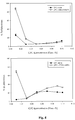
- FIG. 2 shows the effect of BBG (in wt%) at different concentrations and two different media (PBS and BSS) on the toxicity of BAK at 0.003% (top) and 0.008% (bottom) in HCE cells.
- the protective effect of BBG at lower BAC concentrations starts at 0.003% BBG.
- 0.015% is required for higher BAC concentrations.
- Even higher concentrations (0.05% and higher) lead to a slight decrease in survival.
- FIG. 3 shows the effect of BBG (0.025 wt%) on the toxicity of octenidine (Oct) form of octenidine dihydrochloride at various concentrations (in wt%) after 5 min incubation (above) and 30 min incubation (bottom).
- Octenidine alone octenidine alone (without BBG).
- Octenidine is highly cell-damaging even at 0.002 wt .-% and 5 min exposure time.
- BBG 0.025 wt%) can prevent this effect from 5 minutes incubation (left) to an oct concentration of 0.01% (the highest concentration tested). At a reaction time of 30 minutes (on the right) the protection is no longer maximal until 0.009% by weight.
- FIGS. 4 and 5 show the effect of BBG (0.025 wt%) on the toxicity of cetylpyridinium chloride (CPC, Fig. 4 ) and chlorhexidine (CHex in the form of chlorhexidine digluconate, Fig. 5 ) in different concentrations (in wt .-%) after 5 min incubation (above) and 30 min incubation (below).
- CPC cetylpyridinium chloride
- chlorhexidine CHex in the form of chlorhexidine digluconate
- Fig. 5 chlorhexidine
- BAK concentration (% by weight) 0.01% 0.006% 0.004% 0.0025% 0.0016% 0.001% No BAK 0.030% R - + + + + + 0.030% G + + + + + + + 0.015% R - - - + + + 0.015% G - - + + + + 0.007% R - - - + + + 0.007% g - - - + + + BAK - - BAK concentration (% by weight) 00:01% 0.001% No BAK 0.007% R - - 0.007% G - - 0.030% R + 0.030% G + BAK -
- BBR and BBG do not affect bacterial growth (right columns).
- Gram-negative bacteria in this case E. coli
- Gram-positive bacteria here Bacillus sp.
- BBG has a slightly greater impact than BBR, but BBR also removes part of the bacteriostatic effect.
- Octenidine concentration 0.01% 0.009% 0.007% 0.005% 0.003% 0.002% 0% Escherichia coli DH5 ⁇ 0.030% BBG + + + + + + + 0.015% BBG - - - + + + + 0.007% BBG - - - - - + + octenidine - - - - - Pseudomonas putida DSM 291 0.030% BBG + + + + + + + + + + + + + + + + + + + + + + + + + + + + + 0.015% BBG - - - + + + + + + + 0.007% BBG - - - - + + octenidine - - - - - - Vibrio sp.
Landscapes
- Health & Medical Sciences (AREA)
- Life Sciences & Earth Sciences (AREA)
- General Health & Medical Sciences (AREA)
- Medicinal Chemistry (AREA)
- Veterinary Medicine (AREA)
- Public Health (AREA)
- Chemical & Material Sciences (AREA)
- Animal Behavior & Ethology (AREA)
- Pharmacology & Pharmacy (AREA)
- Epidemiology (AREA)
- Wood Science & Technology (AREA)
- Environmental Sciences (AREA)
- Dentistry (AREA)
- Zoology (AREA)
- Plant Pathology (AREA)
- Engineering & Computer Science (AREA)
- Agronomy & Crop Science (AREA)
- Pest Control & Pesticides (AREA)
- Nuclear Medicine, Radiotherapy & Molecular Imaging (AREA)
- Oncology (AREA)
- Chemical Kinetics & Catalysis (AREA)
- Organic Chemistry (AREA)
- General Chemical & Material Sciences (AREA)
- Communicable Diseases (AREA)
- Toxicology (AREA)
- Pharmaceuticals Containing Other Organic And Inorganic Compounds (AREA)
- Acyclic And Carbocyclic Compounds In Medicinal Compositions (AREA)
Description
- Die Erfindung betrifft Zusammensetzungen, die Bakteriostatika und Brilliant Blau G umfassen.
- Wunden auf der Haut und an anderen Körperoberflächen müssen während ihrer Heilung vor bakteriellen Infektionen geschützt werden. Dies geschieht mit unspezifischen Bakteriostatika wie beispielsweise Benzalkoniumchlorid (BAK), Octenidin (Oct), Chlorhexidin (CHex) und ähnlichen Substanzen. Alle diese Substanzen führen aber in den Konzentrationen, in denen sie angewendet werden, auch zu einer Schädigung der Zellen, die zur Schließung der Wunde notwendig sind, z.B. Hautzellen. Dadurch wird der Wundheilungsprozess verzögert.
-
US 6 583 181 B1 beschreibt, dass der Zusatz eines Elektrolyten wie das Natriumsalz von Ethylendiamintetraessigsäure (EDTA) zu einer desinfizierenden Zusammensetzung, die quartäre Ammoniumverbindungen oder Amine enthält, die Augenreizung verringert und die desinfizierende und sterilisierende Wirksamkeit der Zusammensetzung erhöht. -
DE 2005 10 063 375 A1 betrifft zur Wundbehandlung geeignete antimikrobielle Zubereitungen, die Octenidindihydrochlorid verkapselt in Liposomen, beispielsweise Phospholipid-Liposomen, enthalten und eine geringe Zytotoxizität aufweisen. -
WO 2011/117384 A1 offenbart eine Wundauflage, umfassend ein polymeres Substrat und eine Zusammensetzung umfassend a) mindestens einen antimikrobiellen Wirkstoff und b) ein die Zytotoxizität absenkendes Mittel, umfassend eine Öl-in-Wasser-Emulsion, die zusätzlich ein oder mehrere Alkandiol(e) und/oder ein oder mehrere Glycerinether aufweist. -
US 2009/0220516 A1 beschreibt die Verwendung von Antagonisten des P2X7-Rezeptors auf Ganglienzellen, beispielsweise Brillantblau G, um Ganglienzellen vor einem Absterben durch zu hohe ATP-Mengen im extrazellulären Raum der Retina zu bewahren. - Jiang et al. 2000 (Jiang LH, Mackenzie AB, North RA, Surprenant A, Brilliant Blue G Selectively Blocks ATP-Gated Rat P2X7 Receptors, Molecular Pharmacology 58 (1) 82-88, DOI: https://doi.org/10.1124/mol.58.1.82) beschreiben, dass Brillantblau G den P2X7-Rezeptor spezifisch nicht-kompetitiv hemmt.
- Aufgabe der vorliegenden Erfindung ist es, eine Möglichkeit bereitzustellen, die Schädigung von an der Wundheilung beteiligten Zellen durch Bakteriostatika zu vermindern.
- Zur Lösung der Aufgabe stellt die Erfindung eine Zusammensetzung zur Verwendung als Wunddesinfektionsmittel bereit, wobei die Zusammensetzung mindestens ein Bakteriostatikum und den Farbstoff Brillantblau G, oder ein Salz davon, umfasst, und wobei das Bakteriostatikum ausgewählt ist aus der Gruppe bestehend aus Octenidin, Benzalkoniumchlorid, Chlorhexidin, Cetylpyridiniumchlorid und Polyhexanid, oder Salzen davon, und Kombinationen davon.
- Die Erfinder haben überraschend gefunden, dass die zelltoxische Wirkung der oben genannten Bakteriostatika durch die gleichzeitige Gabe des Farbstoffs Brillantblau G (BBG) stark reduziert wird. Gleichzeitig bleibt deren bakteriostatische Wirkung weitgehend erhalten, so dass ein Schutz vor Bakterien immer noch gegeben ist. Die Erfindung macht sich somit den überraschenden Befund zunutze, dass diese Bakteriostatika in Gegenwart von BBG somit weiterhin ihre vor bakteriellen Infektionen schützende Wirkung ausüben, während ihre toxische Wirkung auf menschliche und nicht-menschliche Zellen, insbesondere Säugetierzellen, deutlich reduziert ist. Diese Wirkung ist spezifisch für BBG, denn für den strukturell sehr ähnlichen Farbstoff BBR (Brillantblau R) zeigte sich diese Schutzwirkung nicht.
- Unter "Brillantblau G" (Coomassie-Brillant-Blau G-250, Acid Blue 90) wird eine Verbindung der nachfolgenden Formel (I) verstanden:

- Salze von BBG sind bevorzugt pharmazeutisch annehmbare Salze. Ein Beispiel für ein geeignetes Salz ist ein Natriumsalz.
- Vorzugsweise ist Brillantblau G in der Zusammensetzung zur Verwendung als Wunddesinfektionsmittel in einer Menge vorhanden, die wirksam ist, um die Toxizität des Bakteriostatikums für menschliche und nicht-menschliche Säugetierzellen zu vermindern. Vorzugsweise beträgt der Anteil an Brillantblau G in der Zusammensetzung zur Verwendung als Wunddesinfektionsmittel ≥0,003 Gew.-% und <0,25 Gew.-%, bezogen auf das Gesamtgewicht der Zusammensetzung. Besonders bevorzugt beträgt der Anteil an Brillantblau G in der Zusammensetzung zur Verwendung als Wunddesinfektionsmittel 0,003-0,2 Gew. %, bevorzugt 0,003-0,1 Gew. %, weiter bevorzugt 0,003-0,08 Gew. % oder 0,003-0,05 Gew. %, besonders bevorzugt 0,005-0,03 Gew. %, bezogen auf das Gesamtgewicht der Zusammensetzung.
- Der Anteil an Brillantblau G (BGG) in der Zusammensetzung zur Verwendung als Wunddesinfektionsmittel wird vom Fachmann gegebenenfalls von der Konzentration und/oder der Art des(der) verwendeten Bakteriostatikums (Bakteriostatika) gewählt. Bei höheren Konzentrationen des Bakteriostatikums, oder im Falle mehrerer Bakteriostatika der Gesamtkonzentration der Bakteriostatika wird der Fachmann tendenziell den Anteil an BGG erhöhen. Geeignete Verhältnisse können leicht mittels Tests an Zellen, z.B. HCE-Zellen, ermittelt werden.
- Bereichsangaben wie beispielsweise 0,003-0,2 Gew. % sind hier so zu verstehen, dass jeder beliebige Zwischenwert zwischen den Grenzwerten des jeweiligen Bereichs und auch beliebige Bereiche innerhalb des Bereichs ausdrücklich mit gemeint ist. Im Fall einer Angabe, die nur Ganzzahlen betreffen kann, wie beispielsweise eine Zahl von C-Atomen, bedeutet dies selbstverständlich, dass nur Ganzzahlen gemeint sind. Eine Bereichsangabe wie 0,003-0,2 Gew. % umfasst daher beispielsweise einen Einzelwert wie 0,025 Gew.-% oder auch Bereiche wie 0,003-0,025 Gew.-% oder 0,010-0,15 Gew.-%.
- Unter einem "Bakteriostatikum" wird eine Verbindung verstanden, die das Wachstum von Bakterien hemmt, wobei der Begriff auch Verbindungen umfasst, die bei geeigneter Konzentation eine abtötende Wirkung auf Bakterien haben können. Beispiele für Bakteriostatika sind Octenidin, Benzalkoniumchlorid, Chlorhexidin, Cetylpyridiniumchlorid und Polyhexanid, oder Salze davon.
- Unter "Octenidin" wird eine Verbindung der folgenden Formel (II)

- Unter Benzalkoniumchlorid wird hier eine Verbindung der Formel (III)

- Unter "Chlorhexidin" wird hier eine Verbindung der Formel (IV)

- Unter Cetylpyridiniumchlorid wird hier eine Verbindung der allgemeinen Formel (V)

- Unter "Polyhexanid" (Polyhexamethylenbiguanid, PHMB) wird hier eine Verbindung der allgemeinen Formel (VI)

Im folgenden wird die Erfindung anhand von Ausführungsbeispielen näher erläutert. - Die Erfindung wird im Folgenden rein zu Veranschaulichungszwecken anhand der angehängten Figuren und von Ausführungsbeispielen näher erläutert.
-
Figur 1 Effekt von 0,025% BBG auf die Toxizität von unterschiedlichen Konzentrationen (in Gew.-%) von Benzalkoniumchlorid (BAK) auf HCE-Zellen (HCE = human corneal epithelium, Menschliche Hornhautepithelzellen) bei verschiedenen Einwirkdauern (5, 30, 60 min). Oben: BAK ohne BBG. Unten: BAK mit BBG. Inkubationsmedium: Phosphat-gepufferte Kochsalzlösung (PBS). -
Figur 2 Effekt von BBG (in Gew.-%) in unterschiedlichen Konzentrationen auf die Toxizität von BAK bei 0,003% (oben) und 0,008% (unten). PBS = Phosphat-gepufferte Kochsalzlösung; BBS = balanced salt solution (ausgeglichene Salzlösung). -
Figur 3 Effekt von BBG (0,025 Gew.-%) auf die Toxizität von Octenidindihydrochlorid (Oct) in unterschiedlichen Konzentrationen (in Gew.-%) nach 5 min Inkubation (oben) und 30 min Inkubation (unten). Octenidin alone = Octenidin allein (ohne BBG). -
Figur 4 Effekt von BBG (0,025 %) auf die Toxizität von Cetylpyridiniumchlorid (CPC) in unterschiedlichen Konzentrationen (in Gew.-%) nach 5 min Inkubation (oben) und 30 min Inkubation (unten). CPC alone = Cetylpyridiniumchlorid allein (ohne BBG). -
Figur 5 Effekt von BBG (0,025 %) auf die Toxizität von Chlorhexidin (CHex) in Form von Chlorhexidindigluconat in unterschiedlichen Konzentrationen (in Gew.-%) nach 5 min Inkubation (oben) und 30 min Inkubation (unten). Chlorhexidin alone = Chlorhexidin allein (ohne BBG) -
Figur 1 zeigt die Wirkung von BBG 0,025% Gew.-% auf die Toxizität von unterschiedlichen Konzentrationen (in Gew.-%) von Benzalkoniumchlorid (BAK) auf HCE-Zellen (HCE = human corneal epithelium, Menschliche Hornhautepithelzellen) bei verschiedenen Einwirkdauern (5, 30, 60 min). Die Schutzwirkung (=erhöhtes Zellüberleben) ist selbst bei 60 min Einwirkzeit noch deutlich vorhanden. -
Figur 2 zeigt die Wirkung von BBG (in Gew.-%) in unterschiedlichen Konzentrationen und zwei unterschiedlichen Medien (PBS und BSS) auf die Toxizität von BAK bei 0,003% (oben) und 0,008% (unten) bei HCE-Zellen. Die Schutzwirkung von BBG bei niedrigeren BAK-Konzentrationen setzt schon bei 0,003% BBG ein. Bei höheren BAK-Konzentrationen sind 0,015% notwendig. Noch höhere Konzentrationen (0,05% und höher) führen zu einer leichten Erniedrigung des Überlebens. -
Figur 3 zeigt die Wirkung von BBG (0,025 Gew.-%) auf die Toxizität von Octenidin (Oct) Form von Octenidindihydrochlorid in unterschiedlichen Konzentrationen (in Gew.-%) nach 5 min Inkubation (oben) und 30 min Inkubation (unten). Octenidin alone = Octenidin allein (ohne BBG). Octenidin ist schon bei 0,002 Gew.-% und 5 min Einwirkzeit stark zellschädigend. BBG (0,025 Gew.-%) kann diesen Effekt bei 5 min Inkubation (links) bis zu einer Oct-Konzentration von 0,01% (der höchsten getesteten Konzentration) verhindern. Bei 30 min Einwirkzeit (rechts) ist erst ab 0,009 Gew.-% Oct der Schutz nicht mehr maximal. - Die
Figuren 4 und5 zeigen die Wirkung von BBG (0,025 Gew.-%) auf die Toxizität von Cetylpyridiniumchlorid (CPC,Fig. 4 ) und Chlorhexidin (CHex in Form von Chlorhexidindigluconat,Fig. 5 ) in unterschiedlichen Konzentrationen (in Gew.-%) nach 5 min Inkubation (jeweils oben) und 30 min Inkubation (jeweils unten). Mit CPC ist der Schutzeffekt nur bis etwa 0,02% CPC gegeben, dies jedoch auch noch bei 30 min Einwirkzeit (Fig. 4 , unten). Ähnliches gilt für Chlorhexidin. - Zur Untersuchung des Einflusses von BBG auf die bakteriostatische Wirkung wurden Bakterien 24 h mit erfindungsgemäßen Zusammensetzungen, Benzalkoniumchlorid (BAK) und Octenidin (Oct) als Bakteriostatikum enthielten, inkubiert. Wenn sich die Inkubationsmischung trübte, wurde das als Bakterienwachstum interpretiert. Zum Vergleich wurde Brillantblau R (BBR) anstelle von BBG eingesetzt. Die Ergebnisse sind in den Tabellen 1-4 wiedergegeben.
Tabelle 1: Einfluss von BBG und BBR auf die bakteriostatische Wirkung von BAK gegenüber Escherichia coli (E. coli), + = Bakterienwachstum nach 24 h Inkubation, - = kein Bakterienwachstum nach 24 h Inkubation, R = Brillantblau R (BBR), G = Brillantblau G (BBG). BAK-Konzentration (Gew.-%) 0,01% 0,006% 0,004% 0,0025% 0,0016% 0,001 % Kein BAK 0,030% R - + + + + + + 0,030% G + + + + + + + 0,015% R - - - + + + 0,015% G - - + + + + 0,007% R - - - - + + 0,007% G - - - + + + BAK - - Tabelle 2: Einfluss von BBG und BBR auf die bakteriostatische Wirkung von BAK gegenüber Bacillus sp., + = Bakterienwachstum nach 24 h Inkubation, - = kein Bakterienwachstum nach 24 h Inkubation, R = Brillantblau R (BBR), G = Brillantblau G (BBG). BAK-Konzentration (Gew.-%) 0.01% 0.001% Kein BAK 0.007% R - - 0.007% G - - 0.030% R + 0.030% G + BAK - - BBR und BBG beeinflussen das Bakterienwachstum nicht (rechte Spalten). Gram-negative Bakterien (hier E. coli) sind widerstandsfähiger als Gram-positive Bakterien (hier Bacillus sp.) und wachsen konzentrationsabhängig. BBG hat dabei einen etwas größeren Einfluss als BBR, aber auch BBR hebt einen Teil der bakteriostatischen Wirkung auf.
Tabelle 3: Einfluss von BBG auf die bakteriostatische Wirkung von Octenidin (Oct) gegenüber Gram-negativen Bakterien., + = Bakterienwachstum nach 24 h Inkubation, - = kein Bakterienwachstum nach 24 h Inkubation, BBG = Brillantblau G. Octenidin-Konzentration (Gew.-%) 0,01% 0,009% 0,007% 0,005% 0,003% 0,002% 0% Escherichia coli DH5α 0,030% BBG + + + + + + + 0,015% BBG - - - + + + + 0,007% BBG - - - - - + + Octenidin - - - - - - Pseudomonas putida DSM 291 0,030% BBG + + + + + + + 0,015% BBG - - - + + + + 0,007% BBG - - - - - + + Octenidin - - - - - - Vibrio sp. Gal12 0,030% BBG + + + + + + + 0,015% BBG - - - + + + + 0,007% BBG - - - - - + + Octenidin - - - - - - Tabelle 4: Einfluss von BBG auf die bakteriostatische Wirkung von Octenidin (Oct) gegenüber Gram-positiven Bakterien., + = Bakterienwachstum nach 24 h Inkubation, - = kein Bakterienwachstum nach 24 h Inkubation, +/- = geringes Wachstum nach 24 h Inkubation, BBG = Brillantblau G. Octenidin-Konzentration (Gew.-%) 0,01% 0,009% 0,007% 0,005% 0,003% 0,002% 0% Bacillus subtilis 0,030% BBG - - + + + + + 0,015% BBG - - - - + + + 0,007% BBG - - - - - + + Octenidin - - - - - - Bacillus megaterium 0,030% BBG - - +/- +/- + + + 0,015% BBG - - - - +/- + + 0,007% BBG - - - - - - + Octenidin - - - - - - Clavibacter michiganensis 0,030% BBG - - + + + + + 0,015% BBG - - - - + + + 0,007% BBG - - - - - + + Octenidin - - - - - - Paenibacillus sp. 0,030% BBG - + + + + + + 0,015% BBG - - - - + + + 0,007% BBG - - - - - - + Octenidin - - - - - - - Die Resultate mit Octenidin entsprechen bei Gram-negativen Bakterien in etwa denen mit BAK. Bei Gram-positiven Bakterien wurde die bakteriostatische Wirkung von Octenidin zum Teil wieder aufgehoben, so dass höhere Octenidin-Konzentrationen notwendig waren, um denselben bakteriostatischen Effekt zu erreichen.
Claims (3)
- Zusammensetzung umfassend mindestens ein Bakteriostatikum und den Farbstoff Brillantblau G gemäß nachfolgender Formel (I)

- Zusammensetzung zur Verwendung als Wunddesinfektionsmittel nach Anspruch 1, wobei der Anteil an Brillantblau G in der Zusammensetzung ≥0,003 Gew.-% und <0,25 Gew.-%, bezogen auf das Gesamtgewicht der Zusammensetzung, beträgt.
- Zusammensetzung zur Verwendung als Wunddesinfektionsmittel nach Anspruch 2, wobei der Anteil an Brillantblau G in der Zusammensetzung 0,003-0,2 Gew. %, bevorzugt 0,003-0,1 Gew. %, weiter bevorzugt 0,003-0,08 Gew. % oder 0,003-0,05 Gew. %, besonders bevorzugt 0,005-0,03 Gew. %, bezogen auf das Gesamtgewicht der Zusammensetzung, beträgt.
Applications Claiming Priority (2)
| Application Number | Priority Date | Filing Date | Title |
|---|---|---|---|
| DE201310109514 DE102013109514A1 (de) | 2013-09-02 | 2013-09-02 | Reduktion der Zelltoxizität von Bakteriostatika mittels Farbstoffen |
| PCT/EP2014/068195 WO2015028522A1 (de) | 2013-09-02 | 2014-08-27 | Zusammensetzungen umfassend bakteristatika und brillant blau g |
Publications (2)
| Publication Number | Publication Date |
|---|---|
| EP3041353A1 EP3041353A1 (de) | 2016-07-13 |
| EP3041353B1 true EP3041353B1 (de) | 2018-10-10 |
Family
ID=51539237
Family Applications (1)
| Application Number | Title | Priority Date | Filing Date |
|---|---|---|---|
| EP14765882.7A Active EP3041353B1 (de) | 2013-09-02 | 2014-08-27 | Zusammensetzungen umfassend bakteristatika und brillant blau g |
Country Status (3)
| Country | Link |
|---|---|
| EP (1) | EP3041353B1 (de) |
| DE (1) | DE102013109514A1 (de) |
| WO (1) | WO2015028522A1 (de) |
Family Cites Families (9)
| Publication number | Priority date | Publication date | Assignee | Title |
|---|---|---|---|---|
| US5767172A (en) * | 1992-08-13 | 1998-06-16 | Kabushiki Kaisha Pilot | Water base ink composition directly fed to a pen body of a ball-point pen |
| US5547662A (en) * | 1993-08-27 | 1996-08-20 | Becton, Dickinson And Company | Preparation of a skin surface for a surgical procedure |
| US6583181B1 (en) * | 2000-11-22 | 2003-06-24 | Lonza Inc. | Antimicrobial quaternary ammonium compositions with reduced ocular irritation |
| CA2434254C (en) * | 2001-01-12 | 2013-08-13 | Board Of Regents, The University Of Texas System | Novel antiseptic derivatives with broad spectrum antimicrobial activity for the impregnation of surfaces |
| GB2403408B (en) * | 2003-07-03 | 2007-09-19 | Michael Hilary Burke | Process for preparing a stable anthelmintic suspension formulation |
| US20090220516A1 (en) * | 2005-06-22 | 2009-09-03 | Alan Laties | Neuroprotection of retinal ganglion cells |
| DE102005063375A1 (de) * | 2005-09-15 | 2007-04-19 | Schülke & Mayr GmbH | Antimikrobielle Zubereitungen mit einem Gehalt an Octenidindihydrochlorid verkapselt in Liposomen |
| DE102009049505A1 (de) * | 2009-10-15 | 2011-04-21 | Schülke & Mayr GmbH | Desinfektionsverfahren mit gleichzeitiger Ultraschallbehandlung |
| DE102010013075A1 (de) * | 2010-03-26 | 2011-09-29 | B. Braun Melsungen Ag | Antimikrobielle Wundauflage |
-
2013
- 2013-09-02 DE DE201310109514 patent/DE102013109514A1/de not_active Ceased
-
2014
- 2014-08-27 WO PCT/EP2014/068195 patent/WO2015028522A1/de not_active Ceased
- 2014-08-27 EP EP14765882.7A patent/EP3041353B1/de active Active
Non-Patent Citations (1)
| Title |
|---|
| None * |
Also Published As
| Publication number | Publication date |
|---|---|
| DE102013109514A1 (de) | 2015-03-05 |
| EP3041353A1 (de) | 2016-07-13 |
| WO2015028522A1 (de) | 2015-03-05 |
Similar Documents
| Publication | Publication Date | Title |
|---|---|---|
| EP0700249B1 (de) | Antiinfektivum | |
| EP2001440B1 (de) | Polihexanidhaltige Liposomen | |
| EP1982696B1 (de) | Gel zur Behandlung von Wunden | |
| DE202009019116U1 (de) | Wässrige pharmazeutische Zusammensetzungen, die Borat-Polyol-Komplexe enthalten | |
| DE69100414T2 (de) | Phenothrin enthaltendes Shampoo. | |
| EP2818163B1 (de) | Zusammensetzung für die nasale Applikation mit verbesserter Stabilität | |
| EP0819434B1 (de) | Verwendung von PHMB zur Behandlung von Tumorerkrankungen | |
| DE202017104738U1 (de) | Neue Zusammensetzung für die nasale Applikation | |
| EP3041353B1 (de) | Zusammensetzungen umfassend bakteristatika und brillant blau g | |
| EP2047855B1 (de) | Antitumorale, antibakterielle und antivirale pharmazeutische zusammensetzung (varianten) | |
| EP1194145B1 (de) | Stabile xylometazolin- und oxymetazolinlösung | |
| EP0575290B1 (de) | Kontaktlinsenpflegemittel für harte und weiche Kontaktlinsen | |
| DE102010013081A1 (de) | Antimikrobielle Öl in Wasser Emulsion | |
| EP0986300B2 (de) | Aldehydfreie desinfektionsmittel für flächen und instrumente | |
| WO2012034659A2 (de) | Pharmazeutische zusammensetzung, enthaltend elektrochemisch aktivierte salzlösung | |
| EP3040007B1 (de) | Biocid-freies, vorbefeuchtetes schwammtuch | |
| EP2165701A1 (de) | Antimikrobiell und intiviral wirkende zusammensetzung | |
| DE10331557B3 (de) | Verwendung von Taurolidin und Taurultam in Zubereitungen zur Behandlung, Reinigung, Aufbewahrung und zum Conditioning von Kontaktlinsen | |
| EP1627646A1 (de) | Reinigungs- und Desinfektionsmittel für medizinische Instrumente mit verbesserter Wirksamkeit gegen Hepatitis-B-Viren | |
| EP3400949B1 (de) | Zusammensetzung für die topische anwendung, insbesondere zur blaseninstillation | |
| Niedermeier et al. | Learning from our patients | |
| DE102021121104A1 (de) | Herbizidzusammensetzung in Form einer Suspension | |
| DE102021109454A1 (de) | Eine herbizide Zusammensetzung | |
| EP4245294A1 (de) | Kathetergleitgel mit erhöhter stabilität | |
| DE102020129488A1 (de) | Suspension einer Herbizidzusammensetzung |
Legal Events
| Date | Code | Title | Description |
|---|---|---|---|
| PUAI | Public reference made under article 153(3) epc to a published international application that has entered the european phase |
Free format text: ORIGINAL CODE: 0009012 |
|
| 17P | Request for examination filed |
Effective date: 20160404 |
|
| AK | Designated contracting states |
Kind code of ref document: A1 Designated state(s): AL AT BE BG CH CY CZ DE DK EE ES FI FR GB GR HR HU IE IS IT LI LT LU LV MC MK MT NL NO PL PT RO RS SE SI SK SM TR |
|
| AX | Request for extension of the european patent |
Extension state: BA ME |
|
| RIN1 | Information on inventor provided before grant (corrected) |
Inventor name: GABEL, DETLEF Inventor name: BARTOK, MELINDA |
|
| DAX | Request for extension of the european patent (deleted) | ||
| STAA | Information on the status of an ep patent application or granted ep patent |
Free format text: STATUS: EXAMINATION IS IN PROGRESS |
|
| 17Q | First examination report despatched |
Effective date: 20170824 |
|
| GRAP | Despatch of communication of intention to grant a patent |
Free format text: ORIGINAL CODE: EPIDOSNIGR1 |
|
| STAA | Information on the status of an ep patent application or granted ep patent |
Free format text: STATUS: GRANT OF PATENT IS INTENDED |
|
| RIC1 | Information provided on ipc code assigned before grant |
Ipc: A01N 41/04 20060101ALI20180625BHEP Ipc: A61K 31/155 20060101ALI20180625BHEP Ipc: A01N 47/44 20060101ALI20180625BHEP Ipc: A01N 25/32 20060101ALI20180625BHEP Ipc: A61K 31/14 20060101ALI20180625BHEP Ipc: A61K 31/444 20060101ALI20180625BHEP Ipc: A01N 43/40 20060101ALI20180625BHEP Ipc: A61K 31/4425 20060101ALI20180625BHEP Ipc: A61K 31/185 20060101ALI20180625BHEP Ipc: A01N 33/12 20060101AFI20180625BHEP |
|
| INTG | Intention to grant announced |
Effective date: 20180709 |
|
| GRAS | Grant fee paid |
Free format text: ORIGINAL CODE: EPIDOSNIGR3 |
|
| GRAA | (expected) grant |
Free format text: ORIGINAL CODE: 0009210 |
|
| STAA | Information on the status of an ep patent application or granted ep patent |
Free format text: STATUS: THE PATENT HAS BEEN GRANTED |
|
| AK | Designated contracting states |
Kind code of ref document: B1 Designated state(s): AL AT BE BG CH CY CZ DE DK EE ES FI FR GB GR HR HU IE IS IT LI LT LU LV MC MK MT NL NO PL PT RO RS SE SI SK SM TR |
|
| REG | Reference to a national code |
Ref country code: GB Ref legal event code: FG4D Free format text: NOT ENGLISH |
|
| REG | Reference to a national code |
Ref country code: CH Ref legal event code: EP Ref country code: AT Ref legal event code: REF Ref document number: 1050162 Country of ref document: AT Kind code of ref document: T Effective date: 20181015 |
|
| REG | Reference to a national code |
Ref country code: DE Ref legal event code: R096 Ref document number: 502014009740 Country of ref document: DE Ref country code: IE Ref legal event code: FG4D Free format text: LANGUAGE OF EP DOCUMENT: GERMAN |
|
| REG | Reference to a national code |
Ref country code: NL Ref legal event code: MP Effective date: 20181010 |
|
| REG | Reference to a national code |
Ref country code: LT Ref legal event code: MG4D |
|
| PG25 | Lapsed in a contracting state [announced via postgrant information from national office to epo] |
Ref country code: NL Free format text: LAPSE BECAUSE OF FAILURE TO SUBMIT A TRANSLATION OF THE DESCRIPTION OR TO PAY THE FEE WITHIN THE PRESCRIBED TIME-LIMIT Effective date: 20181010 |
|
| PG25 | Lapsed in a contracting state [announced via postgrant information from national office to epo] |
Ref country code: FI Free format text: LAPSE BECAUSE OF FAILURE TO SUBMIT A TRANSLATION OF THE DESCRIPTION OR TO PAY THE FEE WITHIN THE PRESCRIBED TIME-LIMIT Effective date: 20181010 Ref country code: LV Free format text: LAPSE BECAUSE OF FAILURE TO SUBMIT A TRANSLATION OF THE DESCRIPTION OR TO PAY THE FEE WITHIN THE PRESCRIBED TIME-LIMIT Effective date: 20181010 Ref country code: PL Free format text: LAPSE BECAUSE OF FAILURE TO SUBMIT A TRANSLATION OF THE DESCRIPTION OR TO PAY THE FEE WITHIN THE PRESCRIBED TIME-LIMIT Effective date: 20181010 Ref country code: HR Free format text: LAPSE BECAUSE OF FAILURE TO SUBMIT A TRANSLATION OF THE DESCRIPTION OR TO PAY THE FEE WITHIN THE PRESCRIBED TIME-LIMIT Effective date: 20181010 Ref country code: NO Free format text: LAPSE BECAUSE OF FAILURE TO SUBMIT A TRANSLATION OF THE DESCRIPTION OR TO PAY THE FEE WITHIN THE PRESCRIBED TIME-LIMIT Effective date: 20190110 Ref country code: BG Free format text: LAPSE BECAUSE OF FAILURE TO SUBMIT A TRANSLATION OF THE DESCRIPTION OR TO PAY THE FEE WITHIN THE PRESCRIBED TIME-LIMIT Effective date: 20190110 Ref country code: IS Free format text: LAPSE BECAUSE OF FAILURE TO SUBMIT A TRANSLATION OF THE DESCRIPTION OR TO PAY THE FEE WITHIN THE PRESCRIBED TIME-LIMIT Effective date: 20190210 Ref country code: LT Free format text: LAPSE BECAUSE OF FAILURE TO SUBMIT A TRANSLATION OF THE DESCRIPTION OR TO PAY THE FEE WITHIN THE PRESCRIBED TIME-LIMIT Effective date: 20181010 Ref country code: ES Free format text: LAPSE BECAUSE OF FAILURE TO SUBMIT A TRANSLATION OF THE DESCRIPTION OR TO PAY THE FEE WITHIN THE PRESCRIBED TIME-LIMIT Effective date: 20181010 |
|
| PG25 | Lapsed in a contracting state [announced via postgrant information from national office to epo] |
Ref country code: PT Free format text: LAPSE BECAUSE OF FAILURE TO SUBMIT A TRANSLATION OF THE DESCRIPTION OR TO PAY THE FEE WITHIN THE PRESCRIBED TIME-LIMIT Effective date: 20190210 Ref country code: AL Free format text: LAPSE BECAUSE OF FAILURE TO SUBMIT A TRANSLATION OF THE DESCRIPTION OR TO PAY THE FEE WITHIN THE PRESCRIBED TIME-LIMIT Effective date: 20181010 Ref country code: GR Free format text: LAPSE BECAUSE OF FAILURE TO SUBMIT A TRANSLATION OF THE DESCRIPTION OR TO PAY THE FEE WITHIN THE PRESCRIBED TIME-LIMIT Effective date: 20190111 Ref country code: SE Free format text: LAPSE BECAUSE OF FAILURE TO SUBMIT A TRANSLATION OF THE DESCRIPTION OR TO PAY THE FEE WITHIN THE PRESCRIBED TIME-LIMIT Effective date: 20181010 Ref country code: RS Free format text: LAPSE BECAUSE OF FAILURE TO SUBMIT A TRANSLATION OF THE DESCRIPTION OR TO PAY THE FEE WITHIN THE PRESCRIBED TIME-LIMIT Effective date: 20181010 |
|
| REG | Reference to a national code |
Ref country code: DE Ref legal event code: R097 Ref document number: 502014009740 Country of ref document: DE |
|
| PG25 | Lapsed in a contracting state [announced via postgrant information from national office to epo] |
Ref country code: CZ Free format text: LAPSE BECAUSE OF FAILURE TO SUBMIT A TRANSLATION OF THE DESCRIPTION OR TO PAY THE FEE WITHIN THE PRESCRIBED TIME-LIMIT Effective date: 20181010 Ref country code: IT Free format text: LAPSE BECAUSE OF FAILURE TO SUBMIT A TRANSLATION OF THE DESCRIPTION OR TO PAY THE FEE WITHIN THE PRESCRIBED TIME-LIMIT Effective date: 20181010 Ref country code: DK Free format text: LAPSE BECAUSE OF FAILURE TO SUBMIT A TRANSLATION OF THE DESCRIPTION OR TO PAY THE FEE WITHIN THE PRESCRIBED TIME-LIMIT Effective date: 20181010 |
|
| PLBE | No opposition filed within time limit |
Free format text: ORIGINAL CODE: 0009261 |
|
| STAA | Information on the status of an ep patent application or granted ep patent |
Free format text: STATUS: NO OPPOSITION FILED WITHIN TIME LIMIT |
|
| PG25 | Lapsed in a contracting state [announced via postgrant information from national office to epo] |
Ref country code: SM Free format text: LAPSE BECAUSE OF FAILURE TO SUBMIT A TRANSLATION OF THE DESCRIPTION OR TO PAY THE FEE WITHIN THE PRESCRIBED TIME-LIMIT Effective date: 20181010 Ref country code: EE Free format text: LAPSE BECAUSE OF FAILURE TO SUBMIT A TRANSLATION OF THE DESCRIPTION OR TO PAY THE FEE WITHIN THE PRESCRIBED TIME-LIMIT Effective date: 20181010 Ref country code: RO Free format text: LAPSE BECAUSE OF FAILURE TO SUBMIT A TRANSLATION OF THE DESCRIPTION OR TO PAY THE FEE WITHIN THE PRESCRIBED TIME-LIMIT Effective date: 20181010 Ref country code: SK Free format text: LAPSE BECAUSE OF FAILURE TO SUBMIT A TRANSLATION OF THE DESCRIPTION OR TO PAY THE FEE WITHIN THE PRESCRIBED TIME-LIMIT Effective date: 20181010 |
|
| 26N | No opposition filed |
Effective date: 20190711 |
|
| PG25 | Lapsed in a contracting state [announced via postgrant information from national office to epo] |
Ref country code: SI Free format text: LAPSE BECAUSE OF FAILURE TO SUBMIT A TRANSLATION OF THE DESCRIPTION OR TO PAY THE FEE WITHIN THE PRESCRIBED TIME-LIMIT Effective date: 20181010 |
|
| PGFP | Annual fee paid to national office [announced via postgrant information from national office to epo] |
Ref country code: FR Payment date: 20190822 Year of fee payment: 6 |
|
| PGFP | Annual fee paid to national office [announced via postgrant information from national office to epo] |
Ref country code: GB Payment date: 20190827 Year of fee payment: 6 |
|
| PG25 | Lapsed in a contracting state [announced via postgrant information from national office to epo] |
Ref country code: TR Free format text: LAPSE BECAUSE OF FAILURE TO SUBMIT A TRANSLATION OF THE DESCRIPTION OR TO PAY THE FEE WITHIN THE PRESCRIBED TIME-LIMIT Effective date: 20181010 |
|
| PG25 | Lapsed in a contracting state [announced via postgrant information from national office to epo] |
Ref country code: CH Free format text: LAPSE BECAUSE OF NON-PAYMENT OF DUE FEES Effective date: 20190831 Ref country code: LI Free format text: LAPSE BECAUSE OF NON-PAYMENT OF DUE FEES Effective date: 20190831 Ref country code: MC Free format text: LAPSE BECAUSE OF FAILURE TO SUBMIT A TRANSLATION OF THE DESCRIPTION OR TO PAY THE FEE WITHIN THE PRESCRIBED TIME-LIMIT Effective date: 20181010 Ref country code: LU Free format text: LAPSE BECAUSE OF NON-PAYMENT OF DUE FEES Effective date: 20190827 |
|
| REG | Reference to a national code |
Ref country code: BE Ref legal event code: MM Effective date: 20190831 |
|
| PG25 | Lapsed in a contracting state [announced via postgrant information from national office to epo] |
Ref country code: IE Free format text: LAPSE BECAUSE OF NON-PAYMENT OF DUE FEES Effective date: 20190827 |
|
| PG25 | Lapsed in a contracting state [announced via postgrant information from national office to epo] |
Ref country code: BE Free format text: LAPSE BECAUSE OF NON-PAYMENT OF DUE FEES Effective date: 20190831 |
|
| REG | Reference to a national code |
Ref country code: AT Ref legal event code: MM01 Ref document number: 1050162 Country of ref document: AT Kind code of ref document: T Effective date: 20190827 |
|
| PG25 | Lapsed in a contracting state [announced via postgrant information from national office to epo] |
Ref country code: AT Free format text: LAPSE BECAUSE OF NON-PAYMENT OF DUE FEES Effective date: 20190827 |
|
| GBPC | Gb: european patent ceased through non-payment of renewal fee |
Effective date: 20200827 |
|
| PG25 | Lapsed in a contracting state [announced via postgrant information from national office to epo] |
Ref country code: CY Free format text: LAPSE BECAUSE OF FAILURE TO SUBMIT A TRANSLATION OF THE DESCRIPTION OR TO PAY THE FEE WITHIN THE PRESCRIBED TIME-LIMIT Effective date: 20181010 |
|
| PG25 | Lapsed in a contracting state [announced via postgrant information from national office to epo] |
Ref country code: MT Free format text: LAPSE BECAUSE OF FAILURE TO SUBMIT A TRANSLATION OF THE DESCRIPTION OR TO PAY THE FEE WITHIN THE PRESCRIBED TIME-LIMIT Effective date: 20181010 Ref country code: HU Free format text: LAPSE BECAUSE OF FAILURE TO SUBMIT A TRANSLATION OF THE DESCRIPTION OR TO PAY THE FEE WITHIN THE PRESCRIBED TIME-LIMIT; INVALID AB INITIO Effective date: 20140827 Ref country code: FR Free format text: LAPSE BECAUSE OF NON-PAYMENT OF DUE FEES Effective date: 20200831 |
|
| PG25 | Lapsed in a contracting state [announced via postgrant information from national office to epo] |
Ref country code: GB Free format text: LAPSE BECAUSE OF NON-PAYMENT OF DUE FEES Effective date: 20200827 |
|
| PG25 | Lapsed in a contracting state [announced via postgrant information from national office to epo] |
Ref country code: MK Free format text: LAPSE BECAUSE OF FAILURE TO SUBMIT A TRANSLATION OF THE DESCRIPTION OR TO PAY THE FEE WITHIN THE PRESCRIBED TIME-LIMIT Effective date: 20181010 |
|
| REG | Reference to a national code |
Ref country code: DE Ref legal event code: R081 Ref document number: 502014009740 Country of ref document: DE Owner name: CONSTRUCTOR UNIVERSITY BREMEN GGMBH, DE Free format text: FORMER OWNER: JACOBS UNIVERSITY BREMEN GGMBH, 28759 BREMEN, DE |
|
| P01 | Opt-out of the competence of the unified patent court (upc) registered |
Effective date: 20230530 |
|
| PGFP | Annual fee paid to national office [announced via postgrant information from national office to epo] |
Ref country code: DE Payment date: 20250523 Year of fee payment: 12 |