EP3043603A1 - Downlink-steuerungsverfahren und vorrichtung - Google Patents
Downlink-steuerungsverfahren und vorrichtung Download PDFInfo
- Publication number
- EP3043603A1 EP3043603A1 EP13894119.0A EP13894119A EP3043603A1 EP 3043603 A1 EP3043603 A1 EP 3043603A1 EP 13894119 A EP13894119 A EP 13894119A EP 3043603 A1 EP3043603 A1 EP 3043603A1
- Authority
- EP
- European Patent Office
- Prior art keywords
- cell
- downlink control
- user equipment
- transmit power
- control information
- Prior art date
- Legal status (The legal status is an assumption and is not a legal conclusion. Google has not performed a legal analysis and makes no representation as to the accuracy of the status listed.)
- Withdrawn
Links
- 238000000034 method Methods 0.000 title claims abstract description 58
- 230000003247 decreasing effect Effects 0.000 claims description 17
- 238000010586 diagram Methods 0.000 description 15
- 230000006870 function Effects 0.000 description 6
- 230000009286 beneficial effect Effects 0.000 description 1
- 230000015572 biosynthetic process Effects 0.000 description 1
- 238000005516 engineering process Methods 0.000 description 1
- 230000003287 optical effect Effects 0.000 description 1
- 239000002699 waste material Substances 0.000 description 1
Images


Classifications
-
- H—ELECTRICITY
- H04—ELECTRIC COMMUNICATION TECHNIQUE
- H04W—WIRELESS COMMUNICATION NETWORKS
- H04W52/00—Power management, e.g. Transmission Power Control [TPC] or power classes
- H04W52/02—Power saving arrangements
- H04W52/0203—Power saving arrangements in the radio access network or backbone network of wireless communication networks
- H04W52/0206—Power saving arrangements in the radio access network or backbone network of wireless communication networks in access points, e.g. base stations
-
- H—ELECTRICITY
- H04—ELECTRIC COMMUNICATION TECHNIQUE
- H04W—WIRELESS COMMUNICATION NETWORKS
- H04W52/00—Power management, e.g. Transmission Power Control [TPC] or power classes
- H04W52/04—Transmission power control [TPC]
- H04W52/06—TPC algorithms
- H04W52/14—Separate analysis of uplink or downlink
- H04W52/143—Downlink power control
-
- H—ELECTRICITY
- H04—ELECTRIC COMMUNICATION TECHNIQUE
- H04W—WIRELESS COMMUNICATION NETWORKS
- H04W52/00—Power management, e.g. Transmission Power Control [TPC] or power classes
- H04W52/04—Transmission power control [TPC]
- H04W52/30—Transmission power control [TPC] using constraints in the total amount of available transmission power
- H04W52/32—TPC of broadcast or control channels
- H04W52/325—Power control of control or pilot channels
-
- H—ELECTRICITY
- H04—ELECTRIC COMMUNICATION TECHNIQUE
- H04W—WIRELESS COMMUNICATION NETWORKS
- H04W52/00—Power management, e.g. Transmission Power Control [TPC] or power classes
- H04W52/04—Transmission power control [TPC]
- H04W52/38—TPC being performed in particular situations
- H04W52/40—TPC being performed in particular situations during macro-diversity or soft handoff
-
- Y—GENERAL TAGGING OF NEW TECHNOLOGICAL DEVELOPMENTS; GENERAL TAGGING OF CROSS-SECTIONAL TECHNOLOGIES SPANNING OVER SEVERAL SECTIONS OF THE IPC; TECHNICAL SUBJECTS COVERED BY FORMER USPC CROSS-REFERENCE ART COLLECTIONS [XRACs] AND DIGESTS
- Y02—TECHNOLOGIES OR APPLICATIONS FOR MITIGATION OR ADAPTATION AGAINST CLIMATE CHANGE
- Y02D—CLIMATE CHANGE MITIGATION TECHNOLOGIES IN INFORMATION AND COMMUNICATION TECHNOLOGIES [ICT], I.E. INFORMATION AND COMMUNICATION TECHNOLOGIES AIMING AT THE REDUCTION OF THEIR OWN ENERGY USE
- Y02D30/00—Reducing energy consumption in communication networks
- Y02D30/70—Reducing energy consumption in communication networks in wireless communication networks
Definitions
- the present invention relates to the field of communications technologies, and in particular, to a downlink control method and apparatus.
- Universal Mobile Telecommunications System Universal Mobile Telecommunications System
- UE User Equipment
- TPC transmit power control command
- TFCI transport format combination indicator
- the user equipment may simultaneously establish connections to multiple cells and exchange the above-mentioned control information, in order to ensure service continuity.
- multiple cells need to serve the user equipment at the same time.
- the network side and the user equipment side jointly maintain an active set, where the active set includes identification (Identification, ID) information of multiple cells.
- the active set includes identification (Identification, ID) information of multiple cells.
- Each cell indicated in the active set needs to establish a connection to the user equipment, and in every slot (slot), needs to exchange control information with the user equipment by using a dedicated physical channel (Dedicated Physical Channel, DPCH)/fractional dedicated physical channel (Fractional Dedicated Physical Channel, F-DPCH).
- a transmit power of a downlink DPCH/F-DPCH is controlled by an uplink TPC command that is sent by the user equipment to the network side.
- the network side increases the transmit power of the downlink DPCH/F-DPCH, and vice versa.
- a transmit power of a downlink DPCH/F-DPCH of each cell in an active set in the SHO state is controlled by the uplink TPC command.
- the downlink DPCH/F-DPCH consumes a large amount of downlink power resources of the network side.
- N is equal to a quantity of cells in an active set of the user equipment
- high consumption of downlink power resources of the network side is caused, which increases the burden of the network side, and greatly affects network services and stability.
- a technical problem to be resolved by the present invention is that UE in an SHO state causes waste of network downlink power resources.
- the present invention provides a downlink control method, including:
- the controlling the first cell to decrease a transmit power at which downlink control information is sent to the user equipment includes:
- controlling the first cell to stop sending the downlink control information to the user equipment includes:
- the downlink control method further includes:
- the downlink control method further includes:
- the determining, according to at least one downlink control condition, that a first cell is a cell under downlink control includes: if at least one cell existing in the active set of the user equipment is not the cell under downlink control, and the first cell satisfies the following at least one downlink control condition, determining that the first cell is the cell under downlink control, where the downlink control condition includes:
- the present invention provides a downlink control method, including:
- the downlink control method further includes:
- the present invention provides a downlink control apparatus, including:
- control unit is further configured to control, in a first time period of each control cycle, the first cell to decrease the transmit power at which the downlink control information is sent to the user equipment, where duration of the first time period is less than or equal to duration of the control cycle.
- control unit is further configured to control, in a first time period of each control cycle, the first cell to stop sending the downlink control information to the user equipment, where duration of the first time period is less than or equal to duration of the control cycle.
- the determining unit is further configured to: when a first cycle is reached, determine, according to the at least one downlink control condition, that a second cell is the cell under downlink control; the control unit is further configured to control the second cell to decrease the transmit power at which the downlink control information is sent to the user equipment, or control the second cell to stop sending the downlink control information to the user equipment; and the control unit is further configured to control the first cell to restore the transmit power at which the downlink control information is sent to the user equipment, or control the first cell to resume sending the downlink control information to the user equipment.
- control unit is further configured to:
- the determining unit is further configured to: if there is at least one cell, in the active set of the user equipment, that is not the cell under downlink control, and the first cell satisfies the following at least one downlink control condition, determine that the first cell is the cell under downlink control, where the downlink control condition includes:
- the present invention provides a downlink control apparatus, including:
- the receiving unit is further configured to receive data that is sent by the first cell at a normal transmit power, where the normal transmit power is a transmit power that is restored by the first cell under control of the radio network controller when the first cell needs to send the data to the apparatus.
- the downlink control method of the embodiments it is determined, in an active set and according to at least one downlink control condition, that a first cell is a cell under downlink control, and the first cell is controlled to decrease a transmit power at which downlink control information is sent to user equipment, or the first cell is controlled to stop sending the downlink control information to the user equipment, thereby reducing downlink power resources occupied by the user equipment and improving utilization efficiency of downlink power resources.
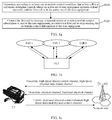
- FIG. 1a is a flowchart of a downlink control method according to Embodiment 1 of the present invention.
- the method is applicable to a scenario in which multiple cells of a network side serve one user equipment at the same time and the multiple cells needs to separately consume downlink power resources for the user equipment, so as to reduce downlink power resources occupied by the user equipment and improve utilization efficiency of downlink power resources.
- the downlink control method may include:
- UE user equipment
- a network side such as a radio network controller (Radio Network Controller in English, RNC for short).
- RNC Radio Network Controller in English
- FIG. 1b is a schematic diagram of connections between user equipment in an SHO state and cells according to Embodiment 1 of the present invention.
- cell 1, cell 2 and cell 3 are cells connected to UE 1; accordingly, an active set of UE 1 may include cell 1, cell 2 and cell 3, and the active set may be stored in the network side, for example, in an RNC.
- At least one cell under downlink control may be determined in an active set of the user equipment according to at least one downlink control condition, and therefore, a transmit power of a downlink DPCH/F-DPCH in the cell under downlink control may be adjusted.
- the cell under downlink control may receive uplink information sent by the UE in the uplink, and may also send downlink data to the UE.
- sending of the downlink control information to the UE by the cell under downlink control is limited, for example, the cell under downlink control sends the downlink control information to the UE at a transmit power lower than a normal transmit power or stops sending the downlink control information to the UE.
- the normal transmit power is a transmit power of a downlink DPCH/F-DPCH that is indicated in an uplink TPC command sent by the UE to the network side.
- the RNC may determine that in the first time period, cell 2 and cell 3 send downlink control information to UE 1 at a normal transmit power, and that cell 1 is a first cell, that is, cell 1 is a cell under downlink control; assuming that in a second time period, the available power resource of cell 3 is less than the set power threshold, and the available power resources of cell 1 and cell 2 are both greater than the set power threshold, the RNC may determine that in the second time period, cell 1 and cell 2 send downlink control information to UE 1 at a normal transmit power, and that cell 3 is a first cell, that is, cell 3 is a cell under downlink control.
- the downlink control condition may include at least one of the following:
- the RNC may determine that cell 2 is a first cell, that is, cell 2 is a cell under downlink control, and may control cell 1 and cell 3 to send downlink control information to UE 1 at a normal transmit power.
- the determining, according to at least one downlink control condition, that a first cell is a cell under downlink control includes: if there is at least one cell, in the active set of the user equipment, that is not the cell under downlink control, and the first cell satisfies at least one downlink control condition, determining that the first cell is the cell under downlink control.
- the RNC may determine a cell under downlink control according to some downlink control conditions such as an available power resource of a cell, and if a first cell satisfies at least one downlink control condition, determine that the first cell is a cell under downlink control.
- some downlink control conditions such as an available power resource of a cell
- the RNC may determine, in the active set and according to the downlink control condition, multiple cells as first cells.
- the RNC may determine that in the first time period, cell 2 sends downlink control information to UE 1 at a normal transmit power, and that cell 1 and cell 3 are both first cells, that is, cell 1 and cell 3 are both cells under downlink control.
- Step S120 Control the first cell to decrease a transmit power at which downlink control information is sent to the user equipment, or control the first cell to stop sending the downlink control information to the user equipment.
- FIG. 1c is a schematic diagram of downlink control when user equipment is in an SHO state in the downlink control method according to Embodiment 1 of the present invention.
- downlink control information sent by a network side to the UE may be sent over a downlink DPCH/downlink F-DPCH, where a DPCH may be used to send control information, such as a pilot, a TPC command or a TFCI, or an F-DPCH may be used to send a downlink TPC command.
- the UE may control and adjust a transmit power of an uplink dedicate physical control channel (Dedicate Physical Control Channel, DPCCH) according to a TPC command that is sent over a DPCH/F-DPCH.
- DPCCH Downlink Physical Control Channel
- the uplink DPCCH may be used to send an uplink TPC command to the network side, and the network side may adjust a transmit power of the downlink DPCH/F-DPCH according to the received uplink TPC command.
- Closed-loop control over uplink and downlink transmit powers can be implemented by using the downlink TPC command transmitted over the downlink DPCH/F-DPCH and the uplink TPC command transmitted over the uplink DPCCH, where the uplink TPC command may be used to adjust the transmit power of the downlink DPCH of the network side, the purpose of adjustment is to make a received signal-to-noise ratio (Signal Noise Ratio, SNR) of the downlink F-DPCH received by the UE converge to a target SNR value SNR target of the downlink DPCH, and the target value SNR target is assigned by a higher layer of a protocol stack.
- SNR Signal-to-noise ratio
- the UE can send uplink information, such as uplink control information or uplink data to all cells in the active set, all the cells in the active set can receive the uplink information sent by the UE in the uplink, and all the cells in the active set can send downlink data to the UE.
- the RNC may control the first cell to decrease the transmit power at which downlink control information is sent to the UE, or control the first cell to stop sending downlink control information to the UE.
- the RNC may control the first cell to decrease a transmit power at which downlink DPCH/F-DPCH information is sent to the UE, or may control the first cell to stop sending downlink DPCH/F-DPCH information to the UE.
- the RNC may control all cells in the active set except the first cell to send downlink control information to the UE at a normal transmit power. If the first cell sends downlink control information to the UE, utilization efficiency of downlink power resources of the network is reduced.
- the controlling the first cell to decrease a transmit power at which downlink control information is sent to the user equipment includes:
- the RNC determines that cell 2 and cell 3 send downlink control information to UE 1 at a normal transmit power, and that cell 1 is a first cell, that is, cell 1 is a cell under downlink control.
- the RNC may control cell 1 to decrease, within 600 ms, a transmit power at which downlink control information is sent to UE 1.
- controlling the first cell to stop sending the downlink control information to the user equipment includes:
- the RNC determines that cell 1 and cell 3 send downlink control information to UE 1 at a normal transmit power, and that cell 2 is a first cell, that is, cell 2 is a cell under downlink control.
- the RNC may control cell 2 to stop, within 700 ms, sending downlink control information to UE 1.
- the downlink control method of this embodiment it is determined, in an active set and according to at least one downlink control condition, that a first cell is a cell under downlink control, and the first cell is controlled to decrease a transmit power at which downlink control information is sent to user equipment, or the first cell is controlled to stop sending the downlink control information to the user equipment, thereby reducing downlink power resources occupied by the user equipment and improving utilization efficiency of downlink power resources.
- FIG. 2 is a flowchart of a downlink control method according to Embodiment 2 of the present invention. Steps in FIG. 2 that have the same reference signs as those in FIG. 1a have the same functions, and for brevity, detailed descriptions of these steps are omitted.
- the downlink control method shown in FIG. 2 is mainly different from the downlink control method shown in FIG. 1a in that in addition to step S100 and step S120 in the foregoing Embodiment 1, the downlink control method shown in FIG. 2 may further include:
- the RNC may determine, in the active set and according to the at least one downlink control condition, that a second cell is the cell under downlink control. That is, the cell under downlink control may change as resources of cells in the active set dynamically change.
- the first cell and the second cell may be a same cell, or may be different cells.
- the RNC may determine within the first 800 ms that cell 2 is a first cell, and that cell 1 and cell 3 send downlink control information to UE 1 at a normal transmit power.
- the RNC may determine within the second 800 ms that cell 1 and cell 2 are first cells, and that cell 3 sends downlink control information to UE 1 at a normal transmit power.
- Step S220 Control the second cell to decrease the transmit power at which the downlink control information is sent to the user equipment, or control the second cell to stop sending the downlink control information to the user equipment.
- the RNC may control the second cell to decrease the transmit power at which the downlink control information is sent to the UE, or control the second cell to stop sending the downlink control information to the UE.
- the RNC may control the second cell to decrease a transmit power at which downlink DPCH/F-DPCH information is sent to the UE, or may control the second cell to stop sending the downlink DPCH/F-DPCH information to the UE.
- the RNC may control all cells in the active set except the cell under downlink control to send downlink control information to the UE at a normal transmit power.
- the RNC controls the second cell to decrease the transmit power at which the downlink control information is sent to the user equipment or controls the second cell to stop sending the downlink control information to the user equipment, refer to the related description in step S120 in the foregoing Embodiment 1.
- Step S240 Control the first cell to restore the transmit power at which the downlink control information is sent to the user equipment, or control the first cell to resume sending the downlink control information to the user equipment.
- the RNC may determine within the first 800 ms that cell 2 is a first cell, and that cell 1 and cell 3 send downlink control information to UE 1 at a normal transmit power.
- the RNC may determine within the second 800 ms that cell 2 is a first cell, and that cell 1 and cell 3 send downlink control information to UE 1 at a normal transmit power. In addition, the RNC may control cell 1 to restore the transmit power at which the downlink control information is sent to UE 1, or may control cell 1 to resume sending the downlink control information to UE 1.
- the downlink control method of this embodiment it is determined, in an active set and according to at least one downlink control condition, that a first cell is a cell under downlink control, and the first cell is controlled to decrease a transmit power at which downlink control information is sent to user equipment, or the first cell is controlled to stop sending the downlink control information to the user equipment, thereby reducing downlink power resources occupied by the user equipment and improving utilization efficiency of downlink power resources.
- the determined cell under downlink control dynamically changes as the cycle changes, thereby further reducing the downlink power resources occupied by the user equipment and improving the utilization efficiency of downlink power resources.
- FIG. 3 is a flowchart of a downlink control method according to Embodiment 3 of the present invention. Steps in FIG. 3 that have the same reference signs as those in FIG. 1a have the same functions, and for brevity, detailed descriptions of these steps are omitted.
- the method shown in FIG. 3 is mainly different from the method shown in FIG. 1a in that in addition to step S100 and step S120 in the foregoing Embodiment 1, the method shown in FIG. 3 may further include:
- an RNC determines that cell 2 and cell 3 send downlink control information to UE 1 at a normal transmit power, and that cell 1 is a first cell, that is, cell 1 is a cell under downlink control. If the RNC controls cell 1 to decrease a transmit power at which downlink control information is sent to UE 1, and cell 1 needs to send data to UE 1, the RNC may control cell 1 to restore the transmit power at which the downlink control information is sent to UE 1, so that cell 1 may send the downlink control information to UE 1 at a normal transmit power.
- the RNC may control cell 1 to resume sending the downlink control information to UE 1, so that cell 1 may send the downlink control information to UE 1 at a normal transmit power.
- the RNC controls the first cell to restore the transmit power at which the downlink control information is sent to the user equipment, or controls the first cell to resume sending the downlink control information to the user equipment.
- the RNC may control the second cell to restore the transmit power at which the downlink control information is sent to the user equipment, or may control the second cell to resume sending the downlink control information to the user equipment.
- the RNC determines that cell 2 and cell 3 send downlink control information to UE 1 at a normal transmit power, and that cell 1 is a second cell, that is, cell 1 is a cell under downlink control. If the RNC controls cell 1 to decrease the transmit power at which the downlink control information is sent to UE 1, and cell 1 needs to send data to UE 1, the RNC may control cell 1 to restore the transmit power at which the downlink control information is sent to UE 1, so that cell 1 may send the downlink control information to UE 1 at a normal transmit power.
- the RNC may control cell 1 to resume sending the downlink control information to UE 1, so that cell 1 may send the downlink control information to UE 1 at a normal transmit power.
- the downlink control method of this embodiment it is determined, in an active set and according to at least one downlink control condition, that a first cell is a cell under downlink control, and the first cell is controlled to decrease a transmit power at which downlink control information is sent to user equipment, or the first cell is controlled to stop sending the downlink control information to the user equipment, thereby reducing downlink power resources occupied by the user equipment and improving utilization efficiency of downlink power resources.
- the determined cell under downlink control dynamically changes as the cycle changes, thereby further reducing the downlink power resources occupied by the user equipment and improving the utilization efficiency of downlink power resources.
- FIG. 4 is a flowchart of a downlink control method according to Embodiment 4 of the present invention. As shown in FIG. 4 , the downlink control method may include:
- UE user equipment
- a network side such as a radio network controller (RNC).
- RNC radio network controller
- a large quantity of UEs may maintain an online connection to a network side at the same time.
- the network side When UE is in an SHO state, in a process of handing over the UE from one cell to another cell, the network side always communicates with the UE by using at least one cell; therefore, the network side needs to control multiple cells to serve one UE at the same time, and send control information to the UE.
- Multiple cells simultaneously connected to one UE belong to a same active set, that is, an active set includes at least two cells connected to the UE.
- cells included in an active set of UE may change with time and different signals.
- cell 1, cell 2 and cell 3 are cells connected to UE 1; accordingly, an active set of UE 1 may include cell 1, cell 2 and cell 3, and the active set may be stored in the network side, for example, in an RNC.
- the UE can send uplink information to the first cell, and the UE can receive downlink control information that is sent at a normal transmit power by another cell in the active set other than the first cell. In addition, the UE can also receive downlink control information that is sent by the first cell at a decreased transmit power.
- an RNC determines that cell 1 is a first cell
- UE 1 may receive downlink control information that is sent by cell 1 at a decreased transmit power
- UE 1 may also receive downlink control information that is sent by cell 2 and cell 3 at a normal transmit power.
- the RNC determines that cell 3 is a first cell
- the UE 1 may receive downlink control information that is sent by cell 3 at a decreased transmit power
- UE 1 may also receive downlink control information that is sent by cell 1 and cell 2 at a normal transmit power.
- Step S420 Receive data that is sent by the first cell at a normal transmit power, where the normal transmit power is a transmit power that is restored by the first cell under control of the radio network controller when the first cell needs to send the data to the user equipment.
- the normal transmit power is a transmit power that is restored by the first cell under control of the radio network controller when the first cell needs to send the data to the user equipment.
- the RNC determines that cell 1 is a first cell
- UE 1 may receive downlink control information that is sent by cell 2 and cell 3 at a normal transmit power
- UE 1 may also receive downlink control information that is sent by cell 1 at a decreased transmit power. If the RNC controls cell 1 to restore the transmit power at which the downlink control information is sent to UE 1, the UE 1 may receive data that is sent by cell 1 at a normal transmit power.
- downlink control information that is sent by a first cell at a decreased transmit power can be received, thereby reducing downlink power resources occupied by the user equipment and improving utilization efficiency of downlink power resources.
- data sent by the first cell at a normal transmit power can be received, thereby ensuring service continuity of the user equipment.
- FIG. 5 is a structural block diagram of a downlink control apparatus according to Embodiment 5 of the present invention.
- the downlink control apparatus 500 provided by this embodiment is configured to implement the downlink control method provided by Embodiment 1 shown in FIG. 1a .
- the downlink control apparatus 500 may include:
- user equipment such as a mobile phone, a smartphone, a computer, or an in-vehicle mobile apparatus
- a network side such as a radio network controller (RNC).
- RNC radio network controller
- a large quantity of UEs may maintain an online connection to a network side at the same time.
- the network side When UE is in an SHO state, in a process of handing over the UE from one cell to another cell, the network side always communicates with the UE by using at least one cell; therefore, the network side needs to control multiple cells to serve one UE at the same time, and send control information to the UE.
- Multiple cells simultaneously connected to one UE belong to a same active set, that is, an active set includes at least two cells connected to the UE.
- cells included in an active set of UE may change with time and different signals. For a specific example, refer to the related description of step S100 in the foregoing Embodiment 1.
- the first cell can receive uplink information sent by the UE, and other cells in the active set than the first cell not only can send downlink control information to the UE at a normal transmit power, but also can receive the uplink information sent by the UE. That is, all the cells in the active set can receive uplink information sent by the UE without being affected by the downlink control condition.
- uplink and downlink are not symmetrical, that is, other cells in the active set than the first cell can send downlink control information to the UE at a normal transmit power, and all the cells in the active set can receive the uplink information sent by the UE.
- the first cell can change as the downlink control condition changes, that is, the first cell can change as the downlink control condition dynamically changes.
- the downlink control apparatus 500 may be disposed in an RNC, and the determining unit 520 may determine that the first cell is the cell under downlink control. For example, referring to FIG. 1b , assuming that in a first time period, an available power resource of cell 1 is less than a set power threshold, and available power resources of cell 2 and cell 3 are both greater than the set power threshold, the determining unit 520 may determine that in the first time period, cell 1 is a first cell, that is, cell 1 is a cell under downlink control; assuming that in a second time period, the available power resource of cell 3 is less than the set power threshold, and the available power resources of cell 1 and cell 2 are both greater than the set power threshold, the determining unit 520 may determine that in the second time period, cell 3 is a first cell, that is, cell 3 is a cell under downlink control.
- the downlink control condition may include:
- the determining unit 520 is further configured to: if there is at least one cell, in the active set of the user equipment, that is not the cell under downlink control, and the first cell satisfies the following at least one downlink control condition, determine that the first cell is the cell under downlink control.
- the determining unit 520 may determine a cell under downlink control according to some downlink control conditions such as an available power resource of a cell, and if a first cell satisfies at least one downlink control condition, the determining unit 520 may determine that the first cell is a cell under downlink control.
- the determining unit 420 may determine, in the active set and according to the downlink control condition, multiple cells as first cells.
- the determining unit 520 may determine that in the first time period, cell 2 sends downlink control information to UE 1 at a normal transmit power, and that cell 1 and cell 3 are both first cells, that is, cell 1 and cell 3 are both cells under downlink control.
- a control unit 540 connected to the determining unit 520, and configured to control the first cell to decrease a transmit power at which downlink control information is sent to the user equipment, or control the first cell to stop sending the downlink control information to the user equipment.
- the UE can send uplink information, such as uplink control information or uplink data to all cells in the active set, all the cells in the active set can receive the uplink information sent by the UE in the uplink, and all the cells in the active set can send downlink data to the UE.
- the control unit 540 may control the first cell to decrease the transmit power at which downlink control information is sent to the UE, or the control unit 440 controls the first cell to stop sending downlink control information to the UE.
- control unit 540 may control the first cell to decrease a transmit power at which downlink DPCH/F-DPCH information is sent to the UE, or the control unit 540 may control the first cell to stop sending downlink DPCH/F-DPCH information to the UE.
- control unit 540 may control other cells in the active set than the first cell to send downlink control information to the UE at a normal transmit power. If the first cell sends downlink control information to the UE, utilization efficiency of downlink power resources of the network is reduced.
- control unit 540 is further configured to control, in a first time period of each control cycle, the first cell to decrease the transmit power at which the downlink control information is sent to the user equipment, where duration of the first time period is less than or equal to duration of the control cycle.
- the control cycle is 800 ms
- the first time period is 600 ms
- the determining unit 520 determines that cell 2 and cell 3 send downlink control information to UE 1 at a normal transmit power
- cell 1 is a first cell, that is, cell 1 is a cell under downlink control.
- the control unit 540 may control cell 1 to decrease, within 600 ms, a transmit power at which downlink control information is sent to UE 1.
- control unit 540 is further configured to control, in a first time period of each control cycle, the first cell to stop sending the downlink control information to the user equipment, where duration of the first time period is less than or equal to duration of the control cycle.
- the control cycle is 800 ms
- the first time period is 700 ms
- the determining unit 520 determines that cell 1 and cell 3 send downlink control information to UE 1 at a normal transmit power
- cell 2 is a first cell, that is, cell 2 is a cell under downlink control.
- the control unit 540 may control cell 2 to stop, within 700 ms, sending downlink control information to UE 1.
- a determining unit determines, in an active set and according to at least one downlink control condition, that a first cell is a cell under downlink control, and a control unit controls the first cell to decrease a transmit power at which downlink control information is sent to user equipment, or controls the first cell to stop sending downlink control information to the user equipment, thereby reducing downlink power resources occupied by the user equipment and improving utilization efficiency of downlink power resources.
- FIG. 6 is a structural block diagram of a downlink control apparatus according to Embodiment 5 of the present invention.
- the downlink control apparatus 600 provided by this embodiment is configured to implement the downlink control method provided by Embodiment 2 shown in FIG. 2 .
- the downlink control apparatus 600 shown in FIG. 6 is mainly different from the downlink control apparatus 500 shown in FIG. 5 in that, a determining unit 620 and a control unit 640 are not only configured to execute steps S100 and S120 in the foregoing Embodiment 1, but also are further configured to execute step S200, step S220 and step S240 in the foregoing Embodiment 2.
- the determining unit 620 is further configured to: when a first cycle is reached, determine, according to the at least one downlink control condition, that a second cell is the cell under downlink control.
- the determining unit 620 may determine, in the active set and according to the at least one downlink control condition, that a second cell is the cell under downlink control. That is, the cell under downlink control may change as resources of cells in the active set dynamically change.
- the first cell and the second cell may be a same cell, or may be different cells.
- the determining unit 620 may determine within the first 800 ms that cell 2 is a first cell, and that cell 1 and cell 3 send downlink control information to UE 1 at a normal transmit power.
- the determining unit 620 may determine within the second 800 ms that cell 1 and cell 2 are first cells, and that cell 3 sends downlink control information to UE 1 at a normal transmit power.
- the control unit 640 is further configured to control the second cell to decrease the transmit power at which the downlink control information is sent to the user equipment, or control the second cell to stop sending the downlink control information to the user equipment.
- the control unit 640 may control the second cell to decrease the transmit power at which the downlink control information is sent to the UE, or the control unit 640 controls the second cell to stop sending the downlink control information to the UE.
- the control unit 640 may control the second cell to decrease a transmit power at which downlink DPCH/F-DPCH information is sent to the UE, or the control unit 640 may control the second cell to stop sending the downlink DPCH/F-DPCH information to the UE.
- the control unit 640 may control all cells in the active set except the cell under downlink control to send downlink control information to the UE at a normal transmit power.
- control unit 640 controls the second cell to decrease the transmit power at which the downlink control information is sent to the user equipment or the control unit 640 controls the second cell to stop sending the downlink control information to the user equipment, refer to the related description in step S120 in the foregoing Embodiment 1.
- the control unit 640 is further configured to control the first cell to restore the transmit power at which the downlink control information is sent to the user equipment, or control the first cell to resume sending the downlink control information to the user equipment.
- the determining unit 620 may determine within the first 800 ms that cell 2 is a first cell, and the control unit 640 controls cell 1 and cell 3 to send downlink control information to UE 1 at a normal transmit power.
- the determining unit 620 may determine within the second 800 ms that cell 2 is a first cell, and the control unit 640 controls cell 1 and cell 3 to send downlink control information to UE 1 at a normal transmit power.
- the control unit 640 may control cell 1 to restore the transmit power at which the downlink control information is sent to UE 1, or may control cell 1 to resume sending the downlink control information to UE 1.
- a determining unit determines, in an active set and according to at least one downlink control condition, that a first cell is a cell under downlink control, and a control unit controls the first cell to decrease a transmit power at which downlink control information is sent to user equipment, or controls the first cell to stop sending downlink control information to the user equipment, thereby reducing downlink power resources occupied by the user equipment and improving utilization efficiency of downlink power resources.
- the cell under downlink control determined by the determining unit dynamically changes as the cycle changes, thereby further reducing the downlink power resources occupied by the user equipment and improving utilization efficiency of downlink power resources.
- FIG. 7 is a structural block diagram of a downlink control apparatus according to Embodiment 6 of the present invention.
- the downlink control apparatus 700 provided by this embodiment is configured to implement the downlink control method provided by Embodiment 3 shown in FIG. 3 .
- the downlink control apparatus 700 shown in FIG. 7 is mainly different from the downlink control apparatus 500 shown in FIG. 5 in that, a determining unit 720 and a control unit 740 are not only configured to execute steps S100 and S120 in the foregoing Embodiment 1, but also are further configured to execute step S300 in the foregoing Embodiment 3.
- the control unit 740 is further configured to: if the first cell sends data to the user equipment, control the first cell to restore the transmit power at which the downlink control information is sent to the user equipment; or if the first cell sends data to the user equipment, control the first cell to resume sending the downlink control information to the user equipment.
- the determining unit 720 determines that cell 2 and cell 3 send downlink control information to UE 1 at a normal transmit power, and that cell 1 is a first cell, that is, cell 1 is a cell under downlink control. If the control unit 740 controls cell 1 to decrease a transmit power at which downlink control information is sent to UE 1, and cell 1 needs to send data to UE 1, the control unit 740 controls cell 1 to restore the transmit power at which the downlink control information is sent to UE 1, so that cell 1 may send downlink control information to UE 1 at a normal transmit power.
- control unit 740 controls cell 1 to stop sending the downlink control information to UE 1, and cell 1 needs to send data to UE 1, the control unit 740 controls cell 1 to resume sending the downlink control information to UE 1, so that cell 1 may send downlink control information to UE 1 at a normal transmit power.
- control unit 740 is configured to: if the first cell sends data to the user equipment, the control unit 740 controls the first cell to restore the transmit power at which the downlink control information is sent to the user equipment, or the control unit 740 controls the first cell to resume sending the downlink control information to the user equipment. However, if a second cell sends data to the user equipment, the control unit 740 may control the second cell to restore the transmit power at which the downlink control information is sent to the user equipment, or the control unit 740 may control the second cell to resume sending the downlink control information to the user equipment.
- the determining unit 720 determines that cell 2 and cell 3 send downlink control information to UE 1 at a normal transmit power, and that cell 1 is a second cell, that is, cell 1 is a cell under downlink control. If the control unit 740 controls cell 1 to decrease the transmit power at which the downlink control information is sent to UE 1, and cell 1 needs to send data to UE 1, the control unit 740 may control cell 1 to restore the transmit power at which the downlink control information is sent to UE 1, so that cell 1 may send downlink control information to UE 1 at a normal transmit power.
- control unit 740 may control cell 1 to resume sending the downlink control information to UE 1, so that cell 1 may send downlink control information to UE 1 at a normal transmit power.
- a determining unit determines, in an active set and according to at least one downlink control condition, that a first cell is a cell under downlink control, and a control unit controls the first cell to decrease a transmit power at which downlink control information is sent to user equipment, or controls the first cell to stop sending downlink control information to the user equipment, thereby reducing downlink power resources occupied by the user equipment and improving utilization efficiency of downlink power resources.
- the cell under downlink control determined by the determining unit dynamically changes as the cycle changes, thereby further reducing the downlink power resources occupied by the user equipment and improving utilization efficiency of downlink power resources.
- the adjusting unit can quickly restore the cell under downlink control to send the data to the user equipment at a normal transmit power, thereby ensuring service continuity of the user equipment.
- FIG. 8 is a structural block diagram of a downlink control apparatus according to Embodiment 8 of the present invention.
- the downlink control apparatus 800 provided by this embodiment is configured to implement the downlink control method provided by Embodiment 4 shown in FIG. 4 .
- the downlink control apparatus 800 may include:
- UE user equipment
- a network side such as a radio network controller (RNC).
- RNC radio network controller
- a large quantity of UEs may maintain an online connection to a network side at the same time.
- the network side When UE is in an SHO state, in a process of handing over the UE from one cell to another cell, the network side always communicates with the UE by using at least one cell; therefore, the network side needs to control multiple cells to serve one UE at the same time, and send control information to the UE.
- Multiple cells simultaneously connected to one UE belong to a same active set, that is, an active set includes at least two cells connected to the UE.
- cells included in an active set of UE may change with time and different signals.
- cell 1, cell 2 and cell 3 are cells connected to UE 1; accordingly, an active set of UE 1 may include cell 1, cell 2 and cell 3, and the active set may be stored in the network side, for example, in an RNC.
- the UE can send uplink information to the first cell, and the receiving unit 820 can receive downlink control information that is sent at a normal transmit power by another cell in the active set other than the first cell. In addition, the receiving unit 820 can also receive downlink control information that is sent by the first cell at a decreased transmit power.
- an RNC determines that cell 1 is a first cell
- the receiving unit 820 may receive downlink control information that is sent by cell 1 at a decreased transmit power, and the receiving unit 820 may also receive downlink control information that is sent by cell 2 and cell 3 at a normal transmit power.
- the RNC determines that cell 3 is a first cell
- the receiving unit 820 may receive downlink control information that is sent by cell 3 at a decreased transmit power
- the receiving unit 820 may also receive downlink control information that is sent by cell 1 and cell 2 at a normal transmit power.
- the receiving unit 820 is further configured to receive data that is sent by the first cell at a normal transmit power, where the normal transmit power is a transmit power that is restored by the first cell under control of the radio network controller when the first cell needs to send the data to the apparatus.
- the receiving unit 820 may receive downlink control information that is sent by cell 2 and cell 3 at a normal transmit power, and the receiving unit 820 may also receive downlink control information that is sent by cell 1 at a decreased transmit power. If the RNC controls cell 1 to restore the transmit power at which the downlink control information is sent to UE 1, the receiving unit 820 may receive data that is sent by cell 1 at a normal transmit power.
- the receiving unit in a case in which user equipment receives downlink control information that is sent by at least one cell at a normal transmit power, the receiving unit can receive downlink control information that is sent by a first cell at a decreased transmit power, thereby reducing downlink power resources occupied by the user equipment and improving utilization efficiency of downlink power resources.
- the receiving unit can receive data sent by the first cell at a normal transmit power, thereby ensuring service continuity of the user equipment.
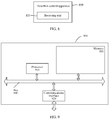
- FIG. 9 is a structural block diagram of a downlink control apparatus according to Embodiment 9 of the present invention.
- the downlink control apparatus 900 may be a host server, a personal computer PC, a portable computer or terminal or the like that has a computing capability. Specific implementation of a computing node is not limited in specific embodiments of the present invention.
- the downlink control apparatus 900 includes a processor (processor) 910, a communications interface (Communications Interface) 920, a memory (memory array) 930, and a bus 940.
- the processor 910, the communications interface 920, and the memory 930 communicate with each other by using the bus 940.
- the communications interface 920 is configured to communicate with a network element, where the network element includes, for example, a virtual machine management center and a shared memory.
- the processor 910 is configured to run a program.
- the processor 910 may be a central processing unit CPU, or an application-specific integrated circuit (Application Specific Integrated Circuit, ASIC), or one or more integrated circuits configured to implement this embodiment of the present invention.
- ASIC Application Specific Integrated Circuit
- the memory 930 is configured to store a file.
- the memory 930 may include a high-speed RAM memory, and may further include a non-volatile memory (non-volatile memory), for example, at least one magnetic disk storage.
- the memory 930 may also be a memory array.
- the memory 930 may further be divided into blocks, and the blocks can be combined according to a particular rule to form a virtual volume.
- the foregoing program may be program code including computer operation instructions.
- the program may be specifically be used to:
- the controlling the first cell to decrease a transmit power at which downlink control information is sent to the user equipment includes:
- controlling the first cell to stop sending the downlink control information to the user equipment includes:
- the program may specifically be further used to:
- the program may specifically be further used to:
- the downlink control condition includes any one or more of the following: the determining, according to at least one downlink control condition, that a first cell is a cell under downlink control includes: if there is at least one cell, in the active set of the user equipment, that is not the cell under downlink control, and the first cell satisfies the following at least one downlink control condition, determining that the first cell is the cell under downlink control, where the downlink control condition includes:
- the program may specifically be further used to:
- data that is sent by the first cell at a normal transmit power is received, where the normal transmit power is a transmit power that is restored by the first cell under control of the radio network controller when the first cell needs to send the data to the apparatus.
- the downlink control method of this embodiment it is determined, in an active set and according to at least one downlink control condition, that a first cell is a cell under downlink control, and the first cell is controlled to decrease a transmit power at which downlink control information is sent to user equipment, or the first cell is controlled to stop sending the downlink control information to the user equipment, thereby reducing downlink power resources occupied by the user equipment and improving utilization efficiency of downlink power resources.
- the computer software product is generally stored in a computer readable storage medium and includes several instructions for instructing a computer device (which may be a personal computer, a server, or a network device, and the like) to perform all or some of the steps of the methods described in the embodiments of the present invention.
- the foregoing storage medium includes: any medium that can store program code, such as a USB flash drive, a removable hard disk, a read-only memory (ROM, Read-Only Memory), a random access memory (RAM, Random Access Memory), a magnetic disk, or an optical disc.
- program code such as a USB flash drive, a removable hard disk, a read-only memory (ROM, Read-Only Memory), a random access memory (RAM, Random Access Memory), a magnetic disk, or an optical disc.
Landscapes
- Engineering & Computer Science (AREA)
- Computer Networks & Wireless Communication (AREA)
- Signal Processing (AREA)
- Mobile Radio Communication Systems (AREA)
Applications Claiming Priority (1)
| Application Number | Priority Date | Filing Date | Title |
|---|---|---|---|
| PCT/CN2013/084726 WO2015042958A1 (zh) | 2013-09-30 | 2013-09-30 | 下行链路控制方法及装置 |
Publications (2)
| Publication Number | Publication Date |
|---|---|
| EP3043603A1 true EP3043603A1 (de) | 2016-07-13 |
| EP3043603A4 EP3043603A4 (de) | 2016-09-21 |
Family
ID=50323348
Family Applications (1)
| Application Number | Title | Priority Date | Filing Date |
|---|---|---|---|
| EP13894119.0A Withdrawn EP3043603A4 (de) | 2013-09-30 | 2013-09-30 | Downlink-steuerungsverfahren und vorrichtung |
Country Status (3)
| Country | Link |
|---|---|
| EP (1) | EP3043603A4 (de) |
| CN (1) | CN103688577A (de) |
| WO (1) | WO2015042958A1 (de) |
Cited By (2)
| Publication number | Priority date | Publication date | Assignee | Title |
|---|---|---|---|---|
| US10182408B2 (en) | 2014-06-20 | 2019-01-15 | Huawei Technologies Co., Ltd. | Transmit power control command generating method, device, and system |
| CN109218344A (zh) * | 2017-06-29 | 2019-01-15 | 华为技术有限公司 | 选择参数配置的方法、设备以及系统 |
Families Citing this family (2)
| Publication number | Priority date | Publication date | Assignee | Title |
|---|---|---|---|---|
| WO2015042958A1 (zh) * | 2013-09-30 | 2015-04-02 | 华为技术有限公司 | 下行链路控制方法及装置 |
| DE112015006590B4 (de) * | 2015-06-04 | 2024-05-29 | Mitsubishi Electric Corporation | Drahtlose Kommunikationsvorrichtung |
Family Cites Families (7)
| Publication number | Priority date | Publication date | Assignee | Title |
|---|---|---|---|---|
| US6628958B1 (en) * | 1999-09-15 | 2003-09-30 | Lucent Technologies Inc. | Method for adjusting the transmit power level during soft handoff in wireless communication systems |
| US6580920B2 (en) * | 2001-06-05 | 2003-06-17 | Nokia Mobile Phones Ltd. | System for adjusting gain of a mobile station during an idle period of the serving base station |
| JP4559240B2 (ja) * | 2005-01-13 | 2010-10-06 | 株式会社エヌ・ティ・ティ・ドコモ | 移動通信システム、無線基地局、無線回線制御局及び電力制御方法 |
| CN100557997C (zh) * | 2005-12-23 | 2009-11-04 | 华为技术有限公司 | 码分多址网络中控制软切换链路功率的方法及其系统 |
| US20120315948A1 (en) * | 2010-02-24 | 2012-12-13 | Telefonaktiebolaget Lm Ericsson (Publ) | Method and Apparatus for Controlling Energy Consumption in a Multi-Antenna Base Station |
| WO2014101235A1 (zh) * | 2012-12-31 | 2014-07-03 | 华为技术有限公司 | 一种信道资源配置方法、装置、基站及用户设备 |
| WO2015042958A1 (zh) * | 2013-09-30 | 2015-04-02 | 华为技术有限公司 | 下行链路控制方法及装置 |
-
2013
- 2013-09-30 WO PCT/CN2013/084726 patent/WO2015042958A1/zh not_active Ceased
- 2013-09-30 CN CN201380001330.6A patent/CN103688577A/zh active Pending
- 2013-09-30 EP EP13894119.0A patent/EP3043603A4/de not_active Withdrawn
Cited By (2)
| Publication number | Priority date | Publication date | Assignee | Title |
|---|---|---|---|---|
| US10182408B2 (en) | 2014-06-20 | 2019-01-15 | Huawei Technologies Co., Ltd. | Transmit power control command generating method, device, and system |
| CN109218344A (zh) * | 2017-06-29 | 2019-01-15 | 华为技术有限公司 | 选择参数配置的方法、设备以及系统 |
Also Published As
| Publication number | Publication date |
|---|---|
| WO2015042958A1 (zh) | 2015-04-02 |
| CN103688577A (zh) | 2014-03-26 |
| EP3043603A4 (de) | 2016-09-21 |
Similar Documents
| Publication | Publication Date | Title |
|---|---|---|
| US11350405B2 (en) | Enabling exchange of information on radio frame configuration in neighbor cells | |
| CN109309954B (zh) | 一种上行功率控制方法、基站和终端 | |
| US9344975B2 (en) | Power adjustment method and device | |
| US10687287B2 (en) | Dynamic power sharing for dual connectivity | |
| US9532359B2 (en) | Resource allocation method and device | |
| EP2525620B1 (de) | Verfahren, vorrichtung und kommunikationssystem zur inaktivitäts-timing-steuerung | |
| US9686756B2 (en) | Wireless communication apparatus and wireless communication method | |
| US10051482B2 (en) | Method and apparatus for adjusting air interface capacity density | |
| US20160285727A1 (en) | Method for controlling transmission power and transmission delay, and communication terminal using same | |
| JP2007134840A (ja) | 移動通信システム、基地局装置及びそれらに用いる消費電力低減方法並びにそのプログラム | |
| EP3043603A1 (de) | Downlink-steuerungsverfahren und vorrichtung | |
| US10932269B2 (en) | Bandwidth adjustment of multiple concurrent bandwidth parts for a base station of a cellular network | |
| CN106301676B (zh) | 一种数据传输方法、设备及系统 | |
| WO2023246101A1 (zh) | 节能方法、基站及终端设备 | |
| CN108696343B (zh) | 一种载波聚合激活处理方法及装置 | |
| CN111918375B (zh) | 一种上行功率控制方法、装置、存储介质和基站 | |
| CN113348712A (zh) | Mimo层数自适应调整方法及相关产品 | |
| US20230359500A1 (en) | Computing system management | |
| US20160037419A1 (en) | Control method for power configuration on heterogeneous network, and user equipment | |
| US20250280322A1 (en) | Correlated parameter information exchange for next generation mobile networks | |
| US12170963B1 (en) | Reducing energy consumption of a base station cluster over a fixed time window | |
| JP7311170B2 (ja) | 給電システム、制御装置、給電方法及びプログラム | |
| CN115088372B (zh) | 更新用于早期数据传输的配置 | |
| WO2025183901A1 (en) | Correlated parameter information exchange for next generation mobile networks | |
| EP2713657B1 (de) | Verfahren und vorrichtung zur steuerung einer zugangsnetzwerkvorrichtung und zugangsnetzwerksteuervorrichtung |
Legal Events
| Date | Code | Title | Description |
|---|---|---|---|
| PUAI | Public reference made under article 153(3) epc to a published international application that has entered the european phase |
Free format text: ORIGINAL CODE: 0009012 |
|
| 17P | Request for examination filed |
Effective date: 20160404 |
|
| AK | Designated contracting states |
Kind code of ref document: A1 Designated state(s): AL AT BE BG CH CY CZ DE DK EE ES FI FR GB GR HR HU IE IS IT LI LT LU LV MC MK MT NL NO PL PT RO RS SE SI SK SM TR |
|
| AX | Request for extension of the european patent |
Extension state: BA ME |
|
| A4 | Supplementary search report drawn up and despatched |
Effective date: 20160819 |
|
| RIC1 | Information provided on ipc code assigned before grant |
Ipc: H04W 52/40 20090101ALI20160815BHEP Ipc: H04W 52/14 20090101AFI20160815BHEP Ipc: H04W 52/32 20090101ALI20160815BHEP Ipc: H04W 52/02 20090101ALI20160815BHEP |
|
| DAX | Request for extension of the european patent (deleted) | ||
| GRAP | Despatch of communication of intention to grant a patent |
Free format text: ORIGINAL CODE: EPIDOSNIGR1 |
|
| INTG | Intention to grant announced |
Effective date: 20180212 |
|
| STAA | Information on the status of an ep patent application or granted ep patent |
Free format text: STATUS: THE APPLICATION IS DEEMED TO BE WITHDRAWN |
|
| 18D | Application deemed to be withdrawn |
Effective date: 20180623 |