EP3043696B1 - Systeme und verfahren zur verbesserten gehirnüberwachung während der allgemeinen anästhesie und sedierung - Google Patents
Systeme und verfahren zur verbesserten gehirnüberwachung während der allgemeinen anästhesie und sedierung Download PDFInfo
- Publication number
- EP3043696B1 EP3043696B1 EP14777976.3A EP14777976A EP3043696B1 EP 3043696 B1 EP3043696 B1 EP 3043696B1 EP 14777976 A EP14777976 A EP 14777976A EP 3043696 B1 EP3043696 B1 EP 3043696B1
- Authority
- EP
- European Patent Office
- Prior art keywords
- age
- patient
- data
- eeg
- patients
- Prior art date
- Legal status (The legal status is an assumption and is not a legal conclusion. Google has not performed a legal analysis and makes no representation as to the accuracy of the status listed.)
- Active
Links
Images











Classifications
-
- A—HUMAN NECESSITIES
- A61—MEDICAL OR VETERINARY SCIENCE; HYGIENE
- A61B—DIAGNOSIS; SURGERY; IDENTIFICATION
- A61B5/00—Measuring for diagnostic purposes; Identification of persons
- A61B5/48—Other medical applications
- A61B5/4821—Determining level or depth of anaesthesia
-
- A—HUMAN NECESSITIES
- A61—MEDICAL OR VETERINARY SCIENCE; HYGIENE
- A61B—DIAGNOSIS; SURGERY; IDENTIFICATION
- A61B5/00—Measuring for diagnostic purposes; Identification of persons
- A61B5/24—Detecting, measuring or recording bioelectric or biomagnetic signals of the body or parts thereof
- A61B5/316—Modalities, i.e. specific diagnostic methods
- A61B5/369—Electroencephalography [EEG]
- A61B5/372—Analysis of electroencephalograms
- A61B5/374—Detecting the frequency distribution of signals, e.g. detecting delta, theta, alpha, beta or gamma waves
-
- A—HUMAN NECESSITIES
- A61—MEDICAL OR VETERINARY SCIENCE; HYGIENE
- A61B—DIAGNOSIS; SURGERY; IDENTIFICATION
- A61B5/00—Measuring for diagnostic purposes; Identification of persons
- A61B5/74—Details of notification to user or communication with user or patient; User input means
- A61B5/7475—User input or interface means, e.g. keyboard, pointing device, joystick
-
- A—HUMAN NECESSITIES
- A61—MEDICAL OR VETERINARY SCIENCE; HYGIENE
- A61B—DIAGNOSIS; SURGERY; IDENTIFICATION
- A61B5/00—Measuring for diagnostic purposes; Identification of persons
- A61B5/48—Other medical applications
- A61B5/4806—Sleep evaluation
-
- A—HUMAN NECESSITIES
- A61—MEDICAL OR VETERINARY SCIENCE; HYGIENE
- A61B—DIAGNOSIS; SURGERY; IDENTIFICATION
- A61B5/00—Measuring for diagnostic purposes; Identification of persons
- A61B5/72—Signal processing specially adapted for physiological signals or for diagnostic purposes
- A61B5/7235—Details of waveform analysis
- A61B5/7253—Details of waveform analysis characterised by using transforms
- A61B5/7257—Details of waveform analysis characterised by using transforms using Fourier transforms
-
- G—PHYSICS
- G16—INFORMATION AND COMMUNICATION TECHNOLOGY [ICT] SPECIALLY ADAPTED FOR SPECIFIC APPLICATION FIELDS
- G16H—HEALTHCARE INFORMATICS, i.e. INFORMATION AND COMMUNICATION TECHNOLOGY [ICT] SPECIALLY ADAPTED FOR THE HANDLING OR PROCESSING OF MEDICAL OR HEALTHCARE DATA
- G16H15/00—ICT specially adapted for medical reports, e.g. generation or transmission thereof
Definitions
- the present disclosure is generally directed to systems and methods for monitoring patients states and, more particularly, relates to systems and methods for monitoring and controlling patients states during medical interventions, evaluations or procedures, such as receiving anesthesia or sedation, and using patient-specific information.
- the present disclosure provides systems and methods for monitoring and controlling patients using acquired physiological data, for use associated certain medical interventions, evaluations or procedures, such as general anesthesia and sedation.
- the present invention provides systems and methods capable of accurate brain monitoring, achieved via patient-specific characteristics identified in the electroencephalography data, as defined in the appended claims.
- a brain monitoring approach may be capable of determining patient characteristics, based on measured brain signals, activity or functionality, and adjust a data acquisition process, modify a display, or perform an analysis based on the determined patient characteristics.
- determined patient characteristics can include an apparent or likely patient age, which can be similar or different from the patient's real age, as well as other patient information.
- systems and methods described herein may be used to appropriately scale, modify and visualize acquired data. Also, systems and methods described may be used to generate compensated data, such as age-appropriate data, and conduct an accurate analysis based on the compensated or appropriately modified or adapted data.
- a patient condition or predisposition may be assessed using an approach described herein. Specifically, patients potentially at higher risk for post-operative cognitive conditions or disorders may be pre-operatively identified, and given certain indications, such as specific regimens for anesthetic, post-anesthetic, or intensive care, using information provided using systems and methods herein.
- such an approach may be used to monitor anesthetic responses in children to achieve anesthetic or sedative states reflecting the unique level of development in brain circuits associated with different ages, age ranges, and a patient's specific level of development.
- a system for age-compensated monitoring of a patient experiencing an administration of at least one drug having anesthetic properties includes a plurality of sensors configured to acquire physiological data from the patient while receiving the at least one drug having anesthetic properties, and at least one processor configured to acquire physiological data from the plurality of sensors, the physiological data being electroencephalography data, determine, from the physiological data and using a spectral estimation method, signal markers at least consistent with an apparent patient age, and determine the apparent patient age based on at least one of the signal markers.
- the at least one processor is also configured to generate a report including at least the physiological data adjusted for the apparent patient age.
- the processor is further configured to identify signatures related to at least one of an amplitude and a power spectrum to determine the signal markers from the physiological data, adjust at least one of an amplifier gain and a scale for the report including at least the physiological data in based on at least one of the signal markers and the indication, assemble the physiological data into time-series data using a multitaper approach to account for a dynamic range of signals spanning several orders of magnitude.
- the system may further include a user interface configured to receive an indication of at least one characteristic of the patient and wherein the processor is further configured to adjust for the patient age based on the at least one a characteristic of the patient.
- a method for age-compensated monitoring of a patient experiencing an administration of at least one drug having anesthetic properties includes acquiring scout data from the plurality of sensors, the scout data being electroencephalography data, determining, from the scout data, an apparent patient age, and acquiring physiological data from the plurality of sensors.
- the method also includes generating a report including the physiological data at least one of scaled and reported against a scale based on the apparent patient age.
- determining the apparent patient age includes determining signal markers from the scout data related to at least one of an amplitude and a power spectrum and comparing the signal markers against an age indicator.
- the method may also include regulating acquisition of the physiological data based on the apparent patient age, wherein regulating includes adjusting at least one amplifier gain based on the apparent age, and performing a multitaper analysis to account for a dynamic range of signals spanning several orders of magnitude.
- POCD post-operative cognitive dysfunction
- delirium is an acute form of dysfunction whose symptoms include disorientation, impairment of attention and memory
- POCD post-operative cognitive dysfunction
- POCD can range from difficulty with fact-finding and memory impairment to dementia and Alzheimer's-like symptoms.
- the prevalence of more subtle forms of POCD which may go undetected without formal neuropsychological testing, may be greater than currently appreciated.
- cortical thinning In one study, young and middle-aged patients showed cortical thinning to be greatest in heteromodal associative cortices and in regions of high postnatal surface expansion. This is consistent with the idea that areas that had the greatest postnatal development show the greatest level of thinning, that is, the first-in-first-out hypothesis. However, it was found that cortical thinning in individuals 80 years and older was greatest in the primary sensory/motor cortices and regions of low postnatal surface area expansion. As a consequence, those investigators postulated that different factors affect cortical vulnerability as a function of age. Early on, developmental factors may confer vulnerability, whereas late in life factors specific to the primary sensory and motor cortices confer vulnerability.
- Another group compared two independent samples of adult individuals who were cognitively normal when scanned at baseline. In one sample, 25 of the individuals were cognitively normal on follow-up and seven were Alzheimer's disease converters after an average follow-up of 11.1 years. In the second sample, 25 cognitively normal individuals were compared with seven Alzheimer's disease converters with an average follow-up of 7.1 years.
- the Alzheimer's disease converter individuals in both groups could be readily distinguished from the cognitively normal individuals by a small but consistent decrease in cortical thinning measured in nine pre-specified areas of interest. Cognitively normal individuals with mild thinning at baseline were more likely to convert to Alzheimer's disease than those with thicker cortical areas.
- the aging brain also has a diminished maintenance capacity, in that factors that act to preserve normal function decline and are less effective. For example, neuroprotection and neurogenesis are important features that decline with normal aging.
- the brain becomes more susceptible to factors that impair functions, such as oxidative stress and inflammation. Since the brain is especially susceptible to oxidative stress, consuming a higher fraction of oxygen relative to the other parts of the body, aggravated oxidative stress has been shown to increase with aging, while antioxidant activity decreases. As such, oxidative stress facilitates neuronal injury through modifications of DNA, proteins and lipids, leading to altered mitochondrial- and Ca 2+ -mediated functions and an increase in reactive astrocytes.
- the brain-derived neurotrophic factor is postulated to play an important role in neurogenesis, yet also has antioxidant and anti-inflammatory effects.
- decreased brain-derived neurotrophic factor activity in the hippocampus impairs stem cell activity in the nearby dentate gyrus.
- telomeres the DNA-protein complexes that protect DNA from damage, tend to shorten with age, as well as with processes that are genotoxic and cytotoxic. Given that neurons in the brain generally do not die or divide, cellular damage typically accumulates it with aging. Together these factors contribute to a decrease in plasticity with age.
- neurodegenerative disorders are also associated with specific anatomic features, such as the neurofibrillary tangles and amyloid plaques commonly related to Alzheimer's disease, and micro-vascular changes, associated with lacunar stroke, leukoaraiosis, vascular dementia as well as Alzheimer's disease.
- neurofibrillary tangles and amyloid plaques commonly related to Alzheimer's disease
- micro-vascular changes associated with lacunar stroke, leukoaraiosis, vascular dementia as well as Alzheimer's disease.
- recent studies have provided information in relation to postoperative outcomes of patients with preoperative cognitive impairments. In a double-blinded protocol, BIS values and time to extubation were compared in a cohort of patients with MCI and age-matched controls.
- MMSE Mini Mental State Examination
- EEG electroencephalogram
- anesthetic exposure in children could result in significant lasting changes in brain function or development, including neurodegeneration.
- EEG-based anesthetic brain monitors are not approved for use in children.
- the ongoing development of brain circuits throughout childhood suggest that anesthesia-induced EEG signals could take different forms compared to their adult counterparts, which in turn suggests that adult monitors might misinterpret anesthesia-induced EEG signals in children.
- Establishing the correct dose of anesthetic drugs in pediatric patients is a high priority in order to limit the potentially damaging effects of anesthetic exposure.
- the present disclosure in recognizing the need for accurate and appropriate brain monitoring not found in previous technologies, provides systems and methods directed to determining and using patient-specific from brain signals. For example, age-related information may be determined or inferred. As will become apparent, systems and methods described herein may be particularly beneficial for applications associated with medical procedures, including general anesthesia and sedation. For example, such approaches may be used to pre-operatively identify patients potentially at higher risk for post-operative cognitive conditions or disorders. In addition, age-related information may be used to give certain age-appropriate indications or treatments, such as specific regimens for anesthetic, post-anesthetic, or intensive care.
- patient-specific information such as an apparent or likely patient age information
- the most appropriate EEG signatures could be utilized, specified in terms of spectrum and/or coherence, for example, to infer the level of anesthesia or sedation.
- the characteristic spectrum and coherence for this age group could be used to infer when patients are anesthetized.
- knowledge of the patient's age could be used to establish the most appropriate scale to use for displaying the EEG or processed EEG such as the spectrogram.
- systems in accordance with this disclosure could use a patient's age to select the most appropriate age-dependent EEG signatures, specified in terms of spectrum and/or coherence, for example, to infer the level of anesthesia or sedation for that patient.
- the systems as described is configured to analyze a patient's EEG, and use it to infer that patient's apparent age or brain age.
- both the patient's age as well as the patient's EEG could be used to both infer the patient's apparent age or brain age, and to select the most appropriate age-dependent EEG signatures to infer the level of anesthesia or sedation for that patient.
- This quantitative or computational representation could take the form of reference databases, or listings, to include mathematical or statistical models relating EEG patterns and age.
- FIGs 1A and 1B illustrate example patient monitoring systems and sensors that can be used to provide physiological monitoring of a patient, such as age-compensated monitoring of a patient experiencing an administration of at least one drug having anesthetic properties.
- FIG. 1A shows an embodiment of a physiological monitoring system 10.
- a medical patient 12 is monitored using one or more sensors 13, each of which transmits a signal over a cable 15 or other communication link or medium to a physiological monitor 17.
- the physiological monitor 17 includes a processor 19 and, optionally, a display 11.
- the one or more sensors 13 include sensing elements such as, for example, electrical EEG sensors, or the like.
- the sensors 13 can generate respective signals by measuring a physiological parameter of the patient 12.
- the signals are then processed by one or more processors 19.
- the one or more processors 19 then communicate the processed signal to the display 11 if a display 11 is provided.
- the display 11 is incorporated in the physiological monitor 17.
- the display 11 is separate from the physiological monitor 17.
- the monitoring system 10 is a portable monitoring system in one configuration.
- the monitoring system 10 is a pod, without a display, and is adapted to provide physiological parameter data to a display.
- the senor 13 shown is intended to represent one or more sensors.
- the one or more sensors 13 include a single sensor of one of the types described below.
- the one or more sensors 13 include at least two EEG sensors.
- the one or more sensors 13 include at least two EEG sensors and one or more brain oxygenation sensors, and the like.
- additional sensors of different types are also optionally included. Other combinations of numbers and types of sensors are also suitable for use with the physiological monitoring system 10.
- the hardware used to receive and process signals from the sensors are housed within the same housing. In other embodiments, some of the hardware used to receive and process signals is housed within a separate housing.
- the physiological monitor 17 of certain embodiments includes hardware, software, or both hardware and software, whether in one housing or multiple housings, used to receive and process the signals transmitted by the sensors 13.
- the EEG sensor 13 can include a cable 25.
- the cable 25 can include three conductors within an electrical shielding.
- One conductor 26 can provide power to a physiological monitor 17, one conductor 28 can provide a ground signal to the physiological monitor 17, and one conductor 28 can transmit signals from the sensor 13 to the physiological monitor 17.
- one or more additional cables 15 can be provided.
- the ground signal is an earth ground, but in other embodiments, the ground signal is a patient ground, sometimes referred to as a patient reference, a patient reference signal, a return, or a patient return.
- the cable 25 carries two conductors within an electrical shielding layer, and the shielding layer acts as the ground conductor. Electrical interfaces 23 in the cable 25 can enable the cable to electrically connect to electrical interfaces 21 in a connector 20 of the physiological monitor 17. In another embodiment, the sensor 13 and the physiological monitor 17 communicate wirelessly.
- systems shown in FIG. 1A and 1B may further include a memory, database or other data storage locations (not shown), accessible by processor 19, to include reference information or other data.
- reference information can include reference listings, look-up tables, and models, including patient categories, such as various age categories, and other categories, along with associated signals, signal markers or signatures.
- signal markers or signatures can include various signal amplitudes, phases, frequencies, power spectra, spectrograms, coherograms, and so forth.
- such reference information can be used by the processor 19, optionally including user input or selections, to determine specific patient characteristics, such an apparent or likely patient age, or other patient conditions or categories.
- a processor 19 may process and analyze acquired data to determine signal markers or signatures, using various analysis methods, including waveform analyses, spectral analyses, frequency analyses, coherence analyses and so on. Subsequently, patient characteristics may be identified by performing a comparison of the determined signal markers or signatures with those categorized in the reference, thus indentifying a patient category closely resembling the patient-specific information. For example, a spectrogram or coherogram generated from the acquired data by the processor 19 may then be compared to a listing of spectrograms or coherograms to identify specific patient categories, related to patient characteristics, such as an apparent or likely patient age, or age range. In addition, inferences regarding patient characteristics can be performed by the processor 19 using regression or statistical models, perhaps employing Bayesian inference to jointly incorporate age and EEG-related information, machine learning methods, or through cross-correlation, clustering, or related techniques.
- the reference information may include pertinent covariate information for interpreting the EEG and age information, including patient variables and history such as height, weight, or gender, as well as information about the drugs administered to the patient, their doses and timing.
- the assessment of apparent age could be related or represented in terms of numerical age, but could also be represented in terms of neurological or cognitive conditions related to age, such as developmental stages in children, or age-related conditions such as cognitive impairment, dementia, or Alzheimer's disease, for instance.
- the representation of the EEG in the database or model could be made in any number of ways, including frequency-dependent measures such as spectrum, coherence, spectrogram, or cohereogram, time-domain measures such as amplitude or morphology, or other measures such as cross-frequency coupling, for instance.
- Inferences from the database or model could be made using any number of appropriate established methods, including look-up tables, prediction using a regression or statistical model, perhaps employing Bayesian inference to jointly incorporate age and EEG-related information, machine learning methods, or through cross-correlation, clustering, or related techniques.
- a data acquisition process may be regulated or modified based on selected and/or determined patient characteristics.
- the processor 19 may be configured to determine and apply an appropriate scale during data acquisition using the patient characteristics, such as an apparent or likely patient age, identified in scout data.
- a display of acquired physiological data may be modified based on determined patient characteristics. Specifically, the data may be displayed against a scale determined by processor 19.
- scale may be displayed using a numerical scale, a color scale, a gray scale, or combinations thereof.
- an exemplary system 200 in accordance with aspects of the present disclosure is illustrated, which may be constructed as a stand-alone brain monitoring device, or portable device, or could be incorporated as a central component of an existing brain monitoring device.
- the system 200 may find valuable usage within an operating room or an intensive care setting, in association with conducting a variety of medical procedures, such as during administration of an anesthetic, as well as within a pre- or post-operative evaluation situation.
- the system 200 includes a patient monitoring device 202, such as a physiological monitoring device, illustrated in FIG. 2 as an electroencephalography (EEG) electrode array.
- EEG electroencephalography
- the patient monitoring device 202 may include a number of different sensors in addition to the EEG electrode array.
- the patient monitoring device 202 may also include mechanisms for monitoring galvanic skin response (GSR), for example, to measure arousal to external stimuli or other monitoring system such as cardiovascular monitors, including electrocardiographic and blood pressure monitors, and also ocular microtremor monitors.
- GSR galvanic skin response
- One realization of this design may utilize a frontal Laplacian EEG electrode layout with additional electrodes to measure GSR and/or ocular microtremor.
- Another realization of this design may incorporate a frontal array of electrodes that could be combined in post-processing to obtain any combination of electrodes found to optimally detect the EEG signatures described earlier, also with separate GSR electrodes.
- Another realization of this design may utilize a high-density layout sampling the entire scalp surface using between 64 to 256 sensors for the purpose of source localization, also with separate GSR electrodes.
- the patient monitoring device 202 is connected via a cable 204 to communicate with a monitoring system 206. Also, the cable 204 and similar connections can be replaced by wireless connections between components.
- the monitoring system 206 may be configured to receive raw signals from patient monitoring device 202, such as signals acquired by the EEG electrode array, and assemble, process, and even display the signals in various forms, including time-series waveforms, spectrograms, and the like. In some modes of operation, the monitoring system 206 may be designed to acquire scout data, in the form of physiological or other data, from sensors on the patient monitoring device 202 and identify, using the scout data, signal markers, or signatures therein.
- signal amplitudes, phases, frequencies, power spectra, and other signal markers or signatures may be identified in scout data, and other acquired data, using various suitable methods.
- a multitaper analysis may be performed to identify and account for a dynamic range of signals spanning several orders of magnitude.
- Such signal markers or signature may then be used by the monitoring system 206 to determine various patient characteristics, including an apparent and/or likely patient age.
- acquisition of physiological data using monitoring system 206 may be adjusted or regulated based patient characteristics determined from scout data.
- the monitoring system 206 may be configured to determine a scale consistent with certain determined patient characteristics, and adjust subsequent data acquisition, based on the determined scale and/or any indication provided by user. For instance, data acquisition may be regulated by adjusting one or more amplifier gains, along with other data acquisition parameters.
- the monitoring system 206 may be further configured to format various acquired physiological data to be displayed against the scale. In this manner, an age-appropriate scale may be determined based on the apparent and/or likely patient age, and any subsequent data acquisition using a selected age-appropriate scale would generate and illustrate age-compensated data.
- the monitoring system 206 may be further connected to a dedicated analysis system 208.
- the monitoring system 206 and analysis system 208 may be integrated or combined into a common system.
- the analysis system 208 may receive EEG waveforms from the monitoring system 206 and, as will be described, analyze the EEG waveforms and signatures therein.
- any analysis or processing functions of the monitoring system 206 and analysis system 208 may be shared or individually distributed, as required or desired.
- information related to determined characteristics of a patient undergoing a specific medical procedure may be provided to a clinician or operator of system 200.
- burst suppression is the profound state of brain inactivation in which bursts of electrical activity are interspersed with isoelectric periods termed suppressions.
- Brain states of anesthetic-induced unconsciousness, defined by the alpha wave (8 - 10 Hz) and slow wave (0.1 - 4 Hz) signal oscillations, can be obtained with doses of anesthetics that are less than those required to produce burst suppression. This may mean reducing anesthetic dosing to levels substantially less than what are currently recommended for elderly individuals.
- system 200 may provide, based on determined patient characteristics, information for use in selecting an appropriate anesthetic dosing. In this manner, for example, incidence of post-operative cognitive disorders for elderly patients under general anesthesia may be reduced.
- monitoring system 206 and/or analysis system 208 may be capable of providing a pre- or post- operative assessment of specific patients, such as the young, middle-aged and elderly, as well as drug addicted patients, to determine prior information that could be used to identify and/or predict specific patient conditions, including anesthetic sensitivity, and any potential for post-operative complications, such as cognitive disorders.
- specific regimens for anesthetic care, post-anesthesia care, or intensive care may also be provided.
- the system 200 may also include a drug delivery system 210.
- the drug delivery system 210 may be coupled to the analysis system 208 and monitoring system 208, such that the system 200 forms a closed-loop monitoring and control system.
- a closed-loop monitoring and control system in accordance with the present disclosure is capable of a wide range of operation, but includes user interfaces 212 to allow a user to configure the closed-loop monitoring and control system, receive feedback from the closed-loop monitoring and control system, and, if needed reconfigure and/or override the closed-loop monitoring and control system.
- the drug delivery system 210 is not only able to control the administration of anesthetic compounds for the purpose of placing the patient in a state of reduced consciousness influenced by the anesthetic compounds, such as general anesthesia or sedation, but can also implement and reflect systems and methods for bringing a patient to and from a state of greater or lesser consciousness.
- methylphenidate can be used as an inhibitor of dopamine and norepinephrine reuptake transporters and actively induces emergence from isoflurane general anesthesia.
- MPH can be used to restore consciousness, induce electroencephalogram changes consistent with arousal, and increase respiratory drive.
- the behavioral and respiratory effects induced by methylphenidate can be inhibited by droperidol, supporting the evidence that methylphenidate induces arousal by activating a dopaminergic arousal pathway.
- Plethysmography and blood gas experiments establish that methylphenidate increases minute ventilation, which increases the rate of anesthetic elimination from the brain.
- ethylphenidate or other agents can be used to actively induce emergence from isoflurane, propofol, or other general anesthesia by increasing arousal using a control system, such as described above.
- a system such as described above with respect to FIG. 2 , can be provided to carry out active emergence from anesthesia by including a drug delivery system 210 with two specific sub-systems.
- the drug delivery system 210 may include an anesthetic compound administration system 224 that is designed to deliver doses of one or more anesthetic compounds to a subject and may also include a emergence compound administration system 226 that is designed to deliver doses of one or more compounds that will reverse general anesthesia or the enhance the natural emergence of a subject from anesthesia.
- MPH and analogues and derivatives thereof induces emergence of a subject from anesthesia-induced unconsciousness by increasing arousal and respiratory drive.
- the emergence compound administration system 326 can be used to deliver MPH, amphetamine, modafinil, amantadine, or caffeine to reverse general anesthetic-induced unconsciousness and respiratory depression at the end of surgery.
- the MPH may be dextro-methylphenidate (D-MPH), racemic methylphenidate, or leva-methylphenidate (L-MPH), or may be compositions in equal or different ratios, such as about 50 percent:50 percent, or about 60 percent:40 percent, or about 70 percent:30 percent, or 80 percent:20 percent, 90 percent:10 percent,95 percent:5 percent and the like.
- Other agents may be administered as a higher dose of methylphenidate than the dose used for the treatment of Attention Deficit Disorder (ADD) or Attention Deficit Hyperactivity Disorder (ADHD), such as a dose of methylphenidate can be between about 10mg/kg and about 5mg/kg, and any integer between about 5mg/kg and 10mg/kg. In some situations, the dose is between about 7mg/kg and about 0.1mg/kg, or between about 5mg/kg and about 0.5mg/kg.
- Other agents may include those that are inhaled.
- any amount of physiological data may be acquired, wherein the physiological data is representative of physiological signals, such as EEG signals, obtained from a patient using, for example, the patient monitoring device 202.
- the physiological data may include scout data for purposes including determining various patient characteristics.
- signal markers or signatures are identified or determined using the acquired physiological data. For example, signal amplitudes, phases, frequencies, power spectra, and other signal markers or signatures, may be identified in scout data, and/or other acquired data, using various suitable methods.
- the signal markers or signatures may be used to determine patient characteristics, including an apparent and/or likely patient age.
- process block 304 may also include steps of determining a scale consistent with determined patient characteristics.
- use of spectral estimation methods such as the multi-taper method, that can inherently account for a wide dynamic range of signals spanning many orders of magnitude may be employed.
- an automatic estimation of signal amplitudes may be performed to infer a correct age cohort and attendant settings for a visualization scale, as well as for acquisition amplifier gains.
- a data acquisition process may be adjusted or regulated, in relation to signal data to be acquired subsequently.
- data acquisition may be regulated by adjusting one or more amplifier gains, along with other data acquisition parameters.
- regulating data acquisition may also include determining and using a scale consistent with determined patient characteristics, and adjusting a subsequent data acquisition process based on the determined scale and/or any indication provided by user.
- an age-appropriate scale determined at process block 304 based on the apparent and/or likely patient age, may be used, and any subsequent data acquisition using a selected age-appropriate scale would generate age-compensated data.
- a display of physiological data acquired at process block 302 may be modified using the scale. Such scale may be displayed using a numerical scale, a color scale, a gray scale, or combinations thereof.
- data acquired in a manner described may be used to determine current or future brain states of patient. For example, analyzed or processed EEG waveforms assembled using age-compensated data may be used to assess a present and/or future depth of anesthesia or sedation. In addition, determining such brain states may also include any information provided by a clinician or user, such as information related to a medical procedure.
- a report is generated, for example, in the form a printed report or, preferably, a real-time display.
- the report may include raw or processed data, signature information, indications of current or future brain states, as well as information related to patient-specific characteristics, including as a likely and/or apparent patient age. Displayed signature information or determined states may be in the form of a waveforms, spectrograms, coherograms, probability curves and so forth.
- the report may include formatted physiological data displayed against a scale.
- the report may indicate an anesthetic sensitivity, a probability for post-operative complications, such as cognitive disorders, and also regimens for anesthetic care, post-anesthesia care, or intensive care, and so forth
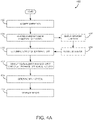
- the process 400 begins at process block 402 where sample or scout data is acquired using, for example, patient monitoring systems, as described.
- the sample data is then analyzed using various adjustment or reference categories, to identify patient categories representative of the acquired sample data.
- this step includes identifying signal markers or signatures in the sample data and performing a comparison with signal markers or signatures associated with the reference categories. For example, signal amplitudes, phases, frequencies, power spectra, and other signal markers or signatures, can be detected in the sample data using various suitable methods.
- Analysis can indicate specific patient characteristics, including an apparent and/or likely patient age.
- an identified or apparent category indicating specific patient characteristics may be optionally displayed at process block 406.
- a user input may also be received.
- data acquired or processed in a manner described may be used to determine current or future brain states of patient.
- analyzed or processed EEG waveforms assembled using age-compensated data may be used to assess a present and/or future depth of anesthesia or sedation.
- determining such brain states may also include any information provided by a clinician or user, such as information related to a medical procedure.
- a report is generated of any suitable shape or form.
- the report may be a display scaled data or data categories describing the data.
- the report may indicate an anesthetic sensitivity, a probability for operative or post-operative complications, an apparent or likely patient age, and other information related to aspects of the present disclosure.
- acquired data 420 may be used to determine signal markers or signatures at step 424.
- this step includes a number of processing or analysis steps, including waveform analyses, spectral analyses, frequency analyses, coherence analyses and so on.
- information related to the determined signal markers or signatures may be determined.
- patient characteristics may be identified by performing a comparison of the determined signal markers or signatures with those categorized in a reference, thus indentifying a most similar patient category. For example, an apparent or likely age may be identified.
- an appropriate scale 430 for the acquired data 420 may be determined and/or selected at step 428 and applied to the acquired data to generate and display modified or scaled data 432.
- a determined apparent or likely patient age, or age range may be used to identify an age-appropriate scale, and generate age-compensated data, which may be optionally displayed.
- this step may also include receiving a user input at step 426.
- a clinician may provide information relevant to a monitored patient, including a patient's real age, as well as information related to a medical procedure, such as a specific anesthetic or dose.
- the modified data 432, appropriately scaled and/or displayed may then be utilized in a brain analysis process to correctly identify brain states of the patient.
- FIG. 4C shows an example scale adjustment for a 61 year old patient, in accordance with aspects of the present disclosure.
- acquired spectrogram data 460 is displayed using a default scale 462 setting, which may not be ideal or appropriate.
- scaled data 464 is generated and displayed against an appropriate scale 466 determined using identified patient characteristics.
- the power limits 468 of the appropriate scale 466, and the amplitude limits 470 for an amplitude scale, for a representative time-domain EEG trace data are adjusted based on age.
- the scale By adjusting the scale, the resulting display more clearly represents the frequency structure and time-domain morphology of the EEG signal, enabling accurate visualization and assessment of the patient's state of anesthesia or sedation.
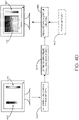
- FIG. 4D a schematic diagram illustrating steps is shown.
- Particularly scout data 440 may be utilized at step 444 to determine signal markers present in the scout data 440, using analyses as described.
- an appropriate or compensated scale 452 which may different than a default setting, is determined using signal markers and other information determined from the scout data 440.
- other parameters may also be determined at step 446 from the scout data 400, including a number of data acquisition parameters. For example, appropriate amplifier gains may also be identified via dynamic range exhibited by the scout data.
- a data acquisition process 450 may be regulated or modified using the appropriate scale 452 in order to generate appropriate data 454.
- this step may include input 448 received from a user.
- a clinician may provide information relevant to a monitored patient, including a patient's real age, as well as information related to a medical procedure, such as a specific anesthetic or dose.
- a user input may include selection of acquisition parameters, over-riding instructions, or other input related to the data acquisition process.
- the appropriate data 454 suitably acquired and/or displayed using patient-specific characteristics, may then be utilized in a brain analysis process to correctly identify brain states of the patient.
- Examples of acquired data, scout data, and modified data, shown in FIGs 4B , 4C and 4C as spectrograms, or portions thereof, are given for illustrative purposes, and are in no way limiting. That is, it may be understood that other types of data may be utilized, processed, displayed, or scaled, including waveform data, spectral data, coherogram data, and so forth.
- FIG. 5 shows representative EEG spectrograms during propofol general anesthesia for patients across a wide range of ages from childhood through old age.
- the spectrogram for the 30 year old patient in this example shows characteristic slow ( ⁇ 1 Hz) and alpha (8-12 Hz) oscillations consistent with the unconscious state during propofol anesthesia.
- ⁇ 1 Hz characteristic slow
- alpha (8-12 Hz) oscillations consistent with the unconscious state during propofol anesthesia.
- the same pattern is visible, but in the 81 year old patient, this pattern is faint and difficult to discern because the EEG signal and EEG power are much smaller.
- FIG. 5 shows a 56 year old patient whose EEG spectrogram more closely resembles that of the 81-year old patient than the 57 year old patient who is closer in chronological age.
- EEG-based anesthetic monitors that ignore age information are unlikely to accurately represent level of consciousness or anesthesia in children and elderly patients.
- existing EEG-based depth-of-anesthesia monitors compute proprietary indices based on EEG power and functions of EEG power, which are shown herein to be significantly different in children compared to adults, and in elderly adults compared to younger adults.
- EEG-based anesthetic monitoring devices often use power in higher-frequency bands, such as beta (12-25 Hz) or gamma (25-40 Hz), to infer when patients are lightly anesthetized, sedated, or recovering consciousness.
- EEG-based anesthetic monitoring devices Since children have much higher EEG power in these bands compared to adults, EEG-based anesthetic devices that do not account for age may incorrectly infer that children are not anesthetized, and compel anesthetists to increase the dose of anesthetic beyond what is actually required, resulting in systematic overdose. EEG-based anesthetic monitoring devices also rely on increased power in lower-frequency EEG bands, such as the slow (0.1 to 1 Hz), delta (1 to 4 Hz), theta (4 to 8 Hz), and alpha (8 to 12 Hz), for instance, to infer that patients are sedated or anesthetized.
- EEG-based anesthetic devices that do not account for age may sense the reduced EEG power in these frequency bands in elderly patients, and then incorrectly infer that the patients are not anesthetized, compelling anesthetists to increase the dose of anesthetic beyond what is actually required, resulting in systematic overdose.
- the systems and methods of the present disclosure overcome these limitations by incorporating age information in the assessment of the patient's brain state under anesthesia or sedation.
- the display scaling example described above and illustrated in FIG 4C indicates that one way of using age information includes adjusting color scales or scale limits according to age or apparent age, in order to more accurately display EEG and anesthetic brain state information. As described earlier, this information could be used to establish the most appropriate EEG signatures given a patient's age or apparent age, or to estimate the patient's apparent age, or both. Additional examples of how age information could be utilized or estimated are provided below.
- FIG. 6 shows the relationship between total EEG power (1-50 Hz) and age, observed in children and young adults during sevoflurane anesthesia (bottom), along with representative spectrograms from individual subjects across this age range (top).
- FIG. 6 also illustrates that total power increases between the ages of 0 to approximately 6 years of age, and then decreases with increasing age.
- the form of the EEG spectrum (top row) also changes with age. For children less than 1 year of age (top row, left), the EEG spectrum shows a large concentration of power around approximately 1 Hz that decreases with increasing frequency.
- the spectrum in older children shows a form similar to adults (top row, 3 rd , and 4 th panels from the left), showing peaks in the spectrum at approximately 1 and 10 Hz, but with higher power across all frequencies compared to adults.
- These age-dependent differences in the form of the spectrogram and spectrum are also illustrated in FIG. 7 and FIG. 8 , respectively.
- FIG. 6 also illustrates how age information could be used.
- patient's could be used to select the most appropriate age-dependent EEG signatures. For instance, given the patient's age, the anesthesia-induced EEG signatures associated with that age or age range could be used to infer the patient state. For a patient less than 1 year of age, a different form of EEG spectrum would be associated with the unconscious state ( FIG. 6 , top row, left), for instance.
- the present invention analyzes the patient's EEG, and use it to infer that patient's apparent age or brain age.
- the patient's apparent or developmental age could be characterized as equivalent to a 10 year old.
- the corresponding anesthesia-induced EEG signatures for a 10 year old could then be used to assess patient brain state during anesthesia.
- both the patient's age as well as the patient's EEG could be used to both infer the patient's apparent age or brain age, and to select the most appropriate age-dependent EEG signatures to infer the level of anesthesia or sedation for that patient.
- a patient has a chronological age of approximately 1 year, it is possible that this patient could have a brain response resembling patients less than 1 year, or a brain response that resembles patients between 1 and 2 years of age, depending on that patient's specific level of brain development.
- Scout data could be analyzed to determine which apparent age, less than 1 year or between 1 and 2 years, most closely matches the given patient.
- the EEG signatures corresponding to the patient's apparent age could be used to assess and monitor the patient's brain state under anesthesia.
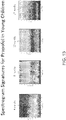
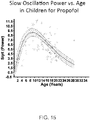
- FIG. 6 shows how the relationship between total power in the anesthesia-induced unconscious state and age can be represented in terms of a polynomial regression model (lower plot), whose mean (red line) and 95% confidence interval (grey shading) represent the mean power and its distribution, respectively, as a function of age, for instance. Similar representations are illustrated in FIG. 14 (total EEG power versus age in children under propofol), FIG.
- FIG. 15 ECG slow oscillation power versus age in children under propofol
- FIG. 16 EG alpha power versus age in children under propofol
- FIG. 17 EG total, slow and alpha power versus age in adults under propofol and sevoflurane.
- a comprehensive database of EEG as a function of age could also be used, exemplified in FIG. 6 in terms of the scatter plot (lower plot), where each point represents an EEG record for a given patient at a given age, with total power, and spectrum as well (top row), for instance.
- Such models could be formulated in terms of continuous functions of age, as shown in FIG. 6 (bottom row), as well as FIG. 14 , FIG. 15 , FIG. 16 , and FIG. 17 .
- this information could be formulated in terms of relevant discrete age ranges, as shown in FIG. 7 , which illustrates the mean spectrogram across different age range categories, including ⁇ 1 year, between 1 and 6 years, 6 and 14 years, and so on, for instance.
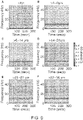
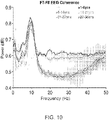
- EEG information is not limited to a spectrogram representation, and could be represented in any number of ways, including a spectral representation ( FIG. 8 ), as well as a cohereogram representation ( FIG. 9 ), or the coherence representation ( FIG. 10 ), for instance.
- Coherence information could also be represented as continuous functions of age, as shown in FIG. 11 .
- the age representation could take on differing levels of detail with respect to age, allowing greater levels of age resolution over age ranges in which brain development is occurring rapidly, for instance.
- FIG. 12 illustrates how a more detailed month-by-month characterization of both spectrogram (left column) and cohereogram (right column), shown for the anesthetic drug sevoflurane, can be constructed to identify apparent brain age, and characterize the EEG signatures of anesthesia and sedation for a given age or apparent age.
- FIG. 15 shows an example of how a similar characterization can be used for the drug propofol.
- a month-by-month characterization allows for more precise monitoring appropriate to a child patient's unique state of brain development during this period of rapid maturation.
- inferences from using reference information could be made using any number of appropriate established methods, including look-up tables, prediction using a regression or statistical model, perhaps employing Bayesian inference to jointly incorporate age and EEG-related information, machine learning methods, or through cross-correlation, clustering, or related techniques.
- the characterizations specific to the drugs sevoflurane and propofol, shown in FIG. 12 , 13 , and 17 , express how pertinent covariate information such as drug information can be used.
- the appropriate sevoflurane database or model could be used, whereas for patients administered propofol the appropriate propofol model or database could be used.
- Different anesthetic drugs produce different EEG patterns associated with different brain states or states of consciousness, and accounting for these drug-dependent differences in EEG patterns and brain state would be important for accurate assessments of apparent age and age-dependent level of anesthesia.
- the model or database relating EEG features, patient state, and age could include additional patient covariate information such as height, weight or gender, for instance.
- Anesthesia-induced alpha and beta oscillations are thought to occur through resonant cortical and thalamocortical networks potentially involved in top-down modulation of attention and perception.
- the loss of alpha oscillations in some elderly patients may reflect age-related reductions in cortical and thalamic grey matter and reductions in thalamocortical function.
- anatomic and physiological differences between patients of different ages, or those with neurodegenerative or cognitive conditions or disorders have a profound impact on brain functionality and how anesthetics affect the brain.
- the assessment of apparent age could be related or represented not just in terms of numerical age, but also in terms of neurological or cognitive conditions related to age, such as developmental stages in children, or age-related conditions such as cognitive impairment, dementia, or Alzheimer's disease, for instance.
- the 56 year old patient shows an EEG spectrogram under propofol with dramatically reduced alpha power compared to younger patients, and compared to a 57 year old patient (bottom row, left panel).
- the reduced propofol-induced alpha power in this 56 year old patient could likely be a consequence of underlying neurobiological changes, such as cortical thinning, grey matter volume reduction, and reduced synaptic density, for instance, that are related to aging, cognitive impairment, and dementia.
- the assessment or characterization of apparent age could be characterized in terms of the underlying neurobiological, neurological, or cognitive condition associated with the anesthesia-induced EEG patterns and the patient's chronological age.
- this 56 year old patient as having an "old brain" due to the similarity with the 81 year old patient shown in the same figure ( FIG. 5 , bottom row, right panel).
- Refinements in our understanding of the neurobiology of aging, neurodegeneration, and dementia could allow us to refine such characterizations in terms of specific conditions such as mild cognitive impairment, Parkinson's disease, or Alzheimer's disease, for instance. Identification of such conditions, or simply of old apparent age, could help anesthesiologists select specific anesthetic regimens intended to optimize care for these particularly vulnerable patients.
- the present invention recognizes the need for accurate age-appropriate brain monitoring during certain medical procedures, such as general anesthesia and sedation, and therefore provides systems and methods directed to using, determining or inferring age-related information from brain signals.
- certain medical procedures such as general anesthesia and sedation
- highly structured oscillations in EEG signals that occur during different states of anesthesia-induced sedation and unconsciousness may provide objective neuro-physiological endpoints that could be used to monitor general anesthesia.
- the present disclosure therefore provides systems and methods for various applications, including pre-operatively identifying sensitivity to anesthetics and those patients potentially at higher risk for post-operative cognitive conditions or disorders, using such patient-specific information to prescribe specific regimens for anesthetic, post-anesthetic, or intensive care.
- EEG-based anesthetic monitoring devices use the power in lower-frequency EEG bands, such as the slow (0.1 to 1 Hz), delta (1 to 4 Hz), theta (4 to 8 Hz), and alpha (8 to 12 Hz), for instance, to infer that patients are sedated or anesthetized.
- EEG-based anesthetic devices or systems that do not account for age may sense the reduced EEG power in these frequency bands, and then falsely infer that elderly patients are not anesthetized, compelling anesthetists to increase the dose of anesthetic beyond what is actually required, resulting in systematic overdose.
Landscapes
- Health & Medical Sciences (AREA)
- Life Sciences & Earth Sciences (AREA)
- Surgery (AREA)
- Biophysics (AREA)
- Pathology (AREA)
- Engineering & Computer Science (AREA)
- Biomedical Technology (AREA)
- Heart & Thoracic Surgery (AREA)
- Medical Informatics (AREA)
- Molecular Biology (AREA)
- Physics & Mathematics (AREA)
- Animal Behavior & Ethology (AREA)
- General Health & Medical Sciences (AREA)
- Public Health (AREA)
- Veterinary Medicine (AREA)
- Anesthesiology (AREA)
- Psychiatry (AREA)
- Psychology (AREA)
- Measurement And Recording Of Electrical Phenomena And Electrical Characteristics Of The Living Body (AREA)
- Measuring And Recording Apparatus For Diagnosis (AREA)
Claims (9)
- System zur alterskompensierten Überwachung eines Patienten, der eine Verabreichung mindestens eines Medikaments mit anästhetischen Eigenschaften erfährt, wobei das System umfasst:eine Vielzahl von Sensoren, die konfiguriert sind, um physiologische Daten des Patienten zu erfassen, während dieser das mindestens eine Medikament mit anästhetischen Eigenschaften erhält;mindestens einen Prozessor, der konfiguriert ist, um:physiologische Daten von der Vielzahl von Sensoren zu empfangen, wobei die physiologischen Daten Elektroenzephalographie-Daten sind;aus den physiologischen Daten und unter Verwendung einer Spektralschätzungsmethode Signalmarker zu bestimmen, die zumindest mit einem scheinbaren Patientenalter übereinstimmen;das scheinbare Patientenalter auf der Grundlage von mindestens einem der Signalmarker zu bestimmen; undeinen Bericht zu erstellen, der zumindest die physiologischen Daten enthält, die um das scheinbare Patientenalter bereinigt sind.
- System nach Anspruch 1, wobei der Prozessor ferner so konfiguriert ist, dass er Signaturen identifiziert, die sich auf mindestens eine Amplitude und/oder ein Powerspektrum beziehen, um die Signalmarker aus den physiologischen Daten zu bestimmen.
- System nach Anspruch 1, wobei der Prozessor ferner so konfiguriert ist, dass er mindestens eine Verstärkung und/oder eine Skala für den Bericht, der mindestens die physiologischen Daten enthält, unter Verwendung mindestens der Signalmarker einstellt.
- System nach Anspruch 1, wobei die Spektralschätzungsmethode einen Multitaper-Ansatz umfasst und der Prozessor ferner so konfiguriert ist, dass er die physiologischen Daten unter Verwendung des Multitaper-Ansatzes zu Zeitseriendaten zusammensetzt, um einen dynamischen Bereich von Signalen zu berücksichtigen, der mehrere Größenordnungen umfasst.
- System nach Anspruch 1, ferner umfassend eine Benutzerschnittstelle, die so konfiguriert ist, dass sie einen Hinweis auf mindestens eine Eigenschaft des Patienten empfängt, und wobei der Prozessor ferner so konfiguriert ist, dass er das scheinbare Patientenalter auf der Grundlage der mindestens einen Eigenschaft des Patienten anpasst.
- Verfahren zur alterskompensierten Überwachung eines Patienten, der eine Verabreichung von mindestens einem Medikament mit anästhetischen Eigenschaften erfährt, wobei das Verfahren Folgendes umfasst:Erlangen von Aufklärungsdaten, die sich auf die Physiologie eines Gehirns des Patienten beziehen, von einer Vielzahl von Sensoren, wobei die Aufklärungsdaten Elektroenzephalographie-Daten sind;Bestimmen eines scheinbaren Alters des Patienten aus den Aufklärungsdaten mit Hilfe eines Prozessors;Erlangen von physiologischen Daten von der Vielzahl von Sensoren und Regulieren des Erlangens der physiologischen Daten auf der Grundlage des scheinbaren Patientenalters; undErzeugen eines Berichts, der die physiologischen Daten mindestens entweder skaliert oder anhand einer auf dem scheinbaren Patientenalter basierenden Skala berichtet.
- Verfahren nach Anspruch 6, bei dem das Bestimmen des scheinbaren Alters des Patienten das Bestimmen von Signalmarkern aus den Aufklärungsdaten, die sich auf mindestens eine Amplitude oder ein Powerspektrum beziehen, und den Vergleich der Signalmarker mit einem Altersindikator umfasst.
- Verfahren nach Anspruch 6, wobei das Regulieren ein Anpassen mindestens einer Verstärkung auf der Grundlage des scheinbaren Patientenalters umfasst.
- Verfahren nach Anspruch 6, wobei das Regulieren ein Durchführen einer Multitaper-Analyse umfasst, um einen dynamischen Bereich von Signalen zu berücksichtigen, der mehrere Größenordnungen umfasst.
Priority Applications (1)
| Application Number | Priority Date | Filing Date | Title |
|---|---|---|---|
| EP22204827.4A EP4166072A1 (de) | 2013-09-13 | 2014-09-12 | Systeme und verfahren zur verbesserten gehirnüberwachung während der allgemeinen anästhesie und sedierung |
Applications Claiming Priority (2)
| Application Number | Priority Date | Filing Date | Title |
|---|---|---|---|
| US201361877800P | 2013-09-13 | 2013-09-13 | |
| PCT/US2014/055509 WO2015038969A1 (en) | 2013-09-13 | 2014-09-12 | Systems and methods for improved brain monitoring during general anesthesia and sedation |
Related Child Applications (1)
| Application Number | Title | Priority Date | Filing Date |
|---|---|---|---|
| EP22204827.4A Division EP4166072A1 (de) | 2013-09-13 | 2014-09-12 | Systeme und verfahren zur verbesserten gehirnüberwachung während der allgemeinen anästhesie und sedierung |
Publications (2)
| Publication Number | Publication Date |
|---|---|
| EP3043696A1 EP3043696A1 (de) | 2016-07-20 |
| EP3043696B1 true EP3043696B1 (de) | 2022-11-02 |
Family
ID=51656071
Family Applications (2)
| Application Number | Title | Priority Date | Filing Date |
|---|---|---|---|
| EP22204827.4A Withdrawn EP4166072A1 (de) | 2013-09-13 | 2014-09-12 | Systeme und verfahren zur verbesserten gehirnüberwachung während der allgemeinen anästhesie und sedierung |
| EP14777976.3A Active EP3043696B1 (de) | 2013-09-13 | 2014-09-12 | Systeme und verfahren zur verbesserten gehirnüberwachung während der allgemeinen anästhesie und sedierung |
Family Applications Before (1)
| Application Number | Title | Priority Date | Filing Date |
|---|---|---|---|
| EP22204827.4A Withdrawn EP4166072A1 (de) | 2013-09-13 | 2014-09-12 | Systeme und verfahren zur verbesserten gehirnüberwachung während der allgemeinen anästhesie und sedierung |
Country Status (4)
| Country | Link |
|---|---|
| US (2) | US10602978B2 (de) |
| EP (2) | EP4166072A1 (de) |
| JP (3) | JP6586093B2 (de) |
| WO (1) | WO2015038969A1 (de) |
Families Citing this family (290)
| Publication number | Priority date | Publication date | Assignee | Title |
|---|---|---|---|---|
| WO1999062399A1 (en) | 1998-06-03 | 1999-12-09 | Masimo Corporation | Stereo pulse oximeter |
| US6684090B2 (en) | 1999-01-07 | 2004-01-27 | Masimo Corporation | Pulse oximetry data confidence indicator |
| WO2002015781A1 (en) | 2000-08-18 | 2002-02-28 | Masimo Corporation | Dual-mode pulse oximeter |
| US6850787B2 (en) | 2001-06-29 | 2005-02-01 | Masimo Laboratories, Inc. | Signal component processor |
| US6697658B2 (en) | 2001-07-02 | 2004-02-24 | Masimo Corporation | Low power pulse oximeter |
| US7355512B1 (en) | 2002-01-24 | 2008-04-08 | Masimo Corporation | Parallel alarm processor |
| US6850788B2 (en) | 2002-03-25 | 2005-02-01 | Masimo Corporation | Physiological measurement communications adapter |
| US6920345B2 (en) | 2003-01-24 | 2005-07-19 | Masimo Corporation | Optical sensor including disposable and reusable elements |
| US7003338B2 (en) | 2003-07-08 | 2006-02-21 | Masimo Corporation | Method and apparatus for reducing coupling between signals |
| US7500950B2 (en) | 2003-07-25 | 2009-03-10 | Masimo Corporation | Multipurpose sensor port |
| US7483729B2 (en) | 2003-11-05 | 2009-01-27 | Masimo Corporation | Pulse oximeter access apparatus and method |
| US7415297B2 (en) | 2004-03-08 | 2008-08-19 | Masimo Corporation | Physiological parameter system |
| JP5328159B2 (ja) | 2005-03-01 | 2013-10-30 | セルカコア・ラボラトリーズ・インコーポレーテッド | 多波長センサ発光体 |
| CA2604653A1 (en) | 2005-04-13 | 2006-10-19 | Glucolight Corporation | Method for data reduction and calibration of an oct-based blood glucose monitor |
| US12014328B2 (en) | 2005-07-13 | 2024-06-18 | Vccb Holdings, Inc. | Medicine bottle cap with electronic embedded curved display |
| US7962188B2 (en) | 2005-10-14 | 2011-06-14 | Masimo Corporation | Robust alarm system |
| US8182443B1 (en) | 2006-01-17 | 2012-05-22 | Masimo Corporation | Drug administration controller |
| US8219172B2 (en) | 2006-03-17 | 2012-07-10 | Glt Acquisition Corp. | System and method for creating a stable optical interface |
| US7941199B2 (en) | 2006-05-15 | 2011-05-10 | Masimo Laboratories, Inc. | Sepsis monitor |
| US10188348B2 (en) | 2006-06-05 | 2019-01-29 | Masimo Corporation | Parameter upgrade system |
| US8457707B2 (en) | 2006-09-20 | 2013-06-04 | Masimo Corporation | Congenital heart disease monitor |
| US8840549B2 (en) | 2006-09-22 | 2014-09-23 | Masimo Corporation | Modular patient monitor |
| US7880626B2 (en) | 2006-10-12 | 2011-02-01 | Masimo Corporation | System and method for monitoring the life of a physiological sensor |
| US9861305B1 (en) | 2006-10-12 | 2018-01-09 | Masimo Corporation | Method and apparatus for calibration to reduce coupling between signals in a measurement system |
| US8255026B1 (en) | 2006-10-12 | 2012-08-28 | Masimo Corporation, Inc. | Patient monitor capable of monitoring the quality of attached probes and accessories |
| US8280473B2 (en) | 2006-10-12 | 2012-10-02 | Masino Corporation, Inc. | Perfusion index smoother |
| US8265723B1 (en) | 2006-10-12 | 2012-09-11 | Cercacor Laboratories, Inc. | Oximeter probe off indicator defining probe off space |
| US8600467B2 (en) | 2006-11-29 | 2013-12-03 | Cercacor Laboratories, Inc. | Optical sensor including disposable and reusable elements |
| EP2096994B1 (de) | 2006-12-09 | 2018-10-03 | Masimo Corporation | Bestimmung der variabilität eines plethysmografen |
| US8852094B2 (en) | 2006-12-22 | 2014-10-07 | Masimo Corporation | Physiological parameter system |
| US8652060B2 (en) | 2007-01-20 | 2014-02-18 | Masimo Corporation | Perfusion trend indicator |
| US8374665B2 (en) | 2007-04-21 | 2013-02-12 | Cercacor Laboratories, Inc. | Tissue profile wellness monitor |
| US8768423B2 (en) | 2008-03-04 | 2014-07-01 | Glt Acquisition Corp. | Multispot monitoring for use in optical coherence tomography |
| EP2278911A1 (de) | 2008-05-02 | 2011-02-02 | Masimo Corporation | System für bildschirmkonfiguration |
| EP2312995B1 (de) | 2008-05-05 | 2017-06-28 | Masimo Corporation | Pulsoximetriesystem mit schaltung zur elektrischen entkopplung |
| US20100004518A1 (en) | 2008-07-03 | 2010-01-07 | Masimo Laboratories, Inc. | Heat sink for noninvasive medical sensor |
| US8203438B2 (en) | 2008-07-29 | 2012-06-19 | Masimo Corporation | Alarm suspend system |
| US8630691B2 (en) | 2008-08-04 | 2014-01-14 | Cercacor Laboratories, Inc. | Multi-stream sensor front ends for noninvasive measurement of blood constituents |
| SE532941C2 (sv) | 2008-09-15 | 2010-05-18 | Phasein Ab | Gasprovtagningsledning för andningsgaser |
| US8771204B2 (en) | 2008-12-30 | 2014-07-08 | Masimo Corporation | Acoustic sensor assembly |
| US8588880B2 (en) | 2009-02-16 | 2013-11-19 | Masimo Corporation | Ear sensor |
| US10007758B2 (en) | 2009-03-04 | 2018-06-26 | Masimo Corporation | Medical monitoring system |
| US9323894B2 (en) | 2011-08-19 | 2016-04-26 | Masimo Corporation | Health care sanitation monitoring system |
| US10032002B2 (en) | 2009-03-04 | 2018-07-24 | Masimo Corporation | Medical monitoring system |
| WO2010102069A2 (en) | 2009-03-04 | 2010-09-10 | Masimo Corporation | Medical monitoring system |
| US8388353B2 (en) | 2009-03-11 | 2013-03-05 | Cercacor Laboratories, Inc. | Magnetic connector |
| US8989831B2 (en) | 2009-05-19 | 2015-03-24 | Masimo Corporation | Disposable components for reusable physiological sensor |
| US8571619B2 (en) | 2009-05-20 | 2013-10-29 | Masimo Corporation | Hemoglobin display and patient treatment |
| US20110208015A1 (en) | 2009-07-20 | 2011-08-25 | Masimo Corporation | Wireless patient monitoring system |
| US8473020B2 (en) | 2009-07-29 | 2013-06-25 | Cercacor Laboratories, Inc. | Non-invasive physiological sensor cover |
| US9579039B2 (en) | 2011-01-10 | 2017-02-28 | Masimo Corporation | Non-invasive intravascular volume index monitor |
| US20110137297A1 (en) | 2009-09-17 | 2011-06-09 | Kiani Massi Joe E | Pharmacological management system |
| US20110082711A1 (en) | 2009-10-06 | 2011-04-07 | Masimo Laboratories, Inc. | Personal digital assistant or organizer for monitoring glucose levels |
| US8702627B2 (en) | 2009-10-15 | 2014-04-22 | Masimo Corporation | Acoustic respiratory monitoring sensor having multiple sensing elements |
| WO2011047216A2 (en) | 2009-10-15 | 2011-04-21 | Masimo Corporation | Physiological acoustic monitoring system |
| US9066680B1 (en) | 2009-10-15 | 2015-06-30 | Masimo Corporation | System for determining confidence in respiratory rate measurements |
| US8790268B2 (en) | 2009-10-15 | 2014-07-29 | Masimo Corporation | Bidirectional physiological information display |
| US8821415B2 (en) | 2009-10-15 | 2014-09-02 | Masimo Corporation | Physiological acoustic monitoring system |
| US9724016B1 (en) | 2009-10-16 | 2017-08-08 | Masimo Corp. | Respiration processor |
| US9839381B1 (en) | 2009-11-24 | 2017-12-12 | Cercacor Laboratories, Inc. | Physiological measurement system with automatic wavelength adjustment |
| GB2487882B (en) | 2009-12-04 | 2017-03-29 | Masimo Corp | Calibration for multi-stage physiological monitors |
| US9153112B1 (en) | 2009-12-21 | 2015-10-06 | Masimo Corporation | Modular patient monitor |
| DE112011100282T5 (de) | 2010-01-19 | 2012-11-29 | Masimo Corporation | Wellness-Analysesystem |
| WO2011109312A2 (en) | 2010-03-01 | 2011-09-09 | Masimo Corporation | Adaptive alarm system |
| EP2544591B1 (de) | 2010-03-08 | 2021-07-21 | Masimo Corporation | Wiederverarbeitung eines physiologischen sensors |
| US9307928B1 (en) | 2010-03-30 | 2016-04-12 | Masimo Corporation | Plethysmographic respiration processor |
| US9138180B1 (en) | 2010-05-03 | 2015-09-22 | Masimo Corporation | Sensor adapter cable |
| US8666468B1 (en) | 2010-05-06 | 2014-03-04 | Masimo Corporation | Patient monitor for determining microcirculation state |
| US9408542B1 (en) | 2010-07-22 | 2016-08-09 | Masimo Corporation | Non-invasive blood pressure measurement system |
| WO2012031125A2 (en) | 2010-09-01 | 2012-03-08 | The General Hospital Corporation | Reversal of general anesthesia by administration of methylphenidate, amphetamine, modafinil, amantadine, and/or caffeine |
| WO2012050847A2 (en) | 2010-09-28 | 2012-04-19 | Masimo Corporation | Depth of consciousness monitor including oximeter |
| US12198790B1 (en) | 2010-10-07 | 2025-01-14 | Masimo Corporation | Physiological monitor sensor systems and methods |
| US9211095B1 (en) | 2010-10-13 | 2015-12-15 | Masimo Corporation | Physiological measurement logic engine |
| US20120226117A1 (en) | 2010-12-01 | 2012-09-06 | Lamego Marcelo M | Handheld processing device including medical applications for minimally and non invasive glucose measurements |
| EP2673721A1 (de) | 2011-02-13 | 2013-12-18 | Masimo Corporation | Medizinisches charakterisierungssystem |
| US9066666B2 (en) | 2011-02-25 | 2015-06-30 | Cercacor Laboratories, Inc. | Patient monitor for monitoring microcirculation |
| US9532722B2 (en) | 2011-06-21 | 2017-01-03 | Masimo Corporation | Patient monitoring system |
| US9986919B2 (en) | 2011-06-21 | 2018-06-05 | Masimo Corporation | Patient monitoring system |
| US11439329B2 (en) | 2011-07-13 | 2022-09-13 | Masimo Corporation | Multiple measurement mode in a physiological sensor |
| US9782077B2 (en) | 2011-08-17 | 2017-10-10 | Masimo Corporation | Modulated physiological sensor |
| US9808188B1 (en) | 2011-10-13 | 2017-11-07 | Masimo Corporation | Robust fractional saturation determination |
| US9943269B2 (en) | 2011-10-13 | 2018-04-17 | Masimo Corporation | System for displaying medical monitoring data |
| EP3603502B1 (de) | 2011-10-13 | 2023-10-04 | Masimo Corporation | Physiologisches akustisches überwachungssystem |
| US9436645B2 (en) | 2011-10-13 | 2016-09-06 | Masimo Corporation | Medical monitoring hub |
| US9778079B1 (en) | 2011-10-27 | 2017-10-03 | Masimo Corporation | Physiological monitor gauge panel |
| US9392945B2 (en) | 2012-01-04 | 2016-07-19 | Masimo Corporation | Automated CCHD screening and detection |
| US12004881B2 (en) | 2012-01-04 | 2024-06-11 | Masimo Corporation | Automated condition screening and detection |
| US11172890B2 (en) | 2012-01-04 | 2021-11-16 | Masimo Corporation | Automated condition screening and detection |
| US9267572B2 (en) | 2012-02-08 | 2016-02-23 | Masimo Corporation | Cable tether system |
| US10149616B2 (en) | 2012-02-09 | 2018-12-11 | Masimo Corporation | Wireless patient monitoring device |
| EP2845086B1 (de) | 2012-03-25 | 2021-12-22 | Masimo Corporation | Berührungsbildschirmschnittstelle für physiologischen monitor |
| US9131881B2 (en) | 2012-04-17 | 2015-09-15 | Masimo Corporation | Hypersaturation index |
| WO2013184965A1 (en) | 2012-06-07 | 2013-12-12 | Masimo Corporation | Depth of consciousness monitor |
| US9697928B2 (en) | 2012-08-01 | 2017-07-04 | Masimo Corporation | Automated assembly sensor cable |
| US10827961B1 (en) | 2012-08-29 | 2020-11-10 | Masimo Corporation | Physiological measurement calibration |
| US9877650B2 (en) | 2012-09-20 | 2018-01-30 | Masimo Corporation | Physiological monitor with mobile computing device connectivity |
| US9749232B2 (en) | 2012-09-20 | 2017-08-29 | Masimo Corporation | Intelligent medical network edge router |
| US9955937B2 (en) | 2012-09-20 | 2018-05-01 | Masimo Corporation | Acoustic patient sensor coupler |
| US9717458B2 (en) | 2012-10-20 | 2017-08-01 | Masimo Corporation | Magnetic-flap optical sensor |
| US9560996B2 (en) | 2012-10-30 | 2017-02-07 | Masimo Corporation | Universal medical system |
| US9787568B2 (en) | 2012-11-05 | 2017-10-10 | Cercacor Laboratories, Inc. | Physiological test credit method |
| US9750461B1 (en) | 2013-01-02 | 2017-09-05 | Masimo Corporation | Acoustic respiratory monitoring sensor with probe-off detection |
| US9724025B1 (en) | 2013-01-16 | 2017-08-08 | Masimo Corporation | Active-pulse blood analysis system |
| US10441181B1 (en) | 2013-03-13 | 2019-10-15 | Masimo Corporation | Acoustic pulse and respiration monitoring system |
| US9965946B2 (en) | 2013-03-13 | 2018-05-08 | Masimo Corporation | Systems and methods for monitoring a patient health network |
| US9936917B2 (en) | 2013-03-14 | 2018-04-10 | Masimo Laboratories, Inc. | Patient monitor placement indicator |
| US10456038B2 (en) | 2013-03-15 | 2019-10-29 | Cercacor Laboratories, Inc. | Cloud-based physiological monitoring system |
| ES2877551T3 (es) | 2013-04-24 | 2021-11-17 | Fresenius Kabi Deutschland Gmbh | Procedimiento de funcionamiento de un dispositivo de control para controlar un dispositivo de infusión |
| US12178572B1 (en) | 2013-06-11 | 2024-12-31 | Masimo Corporation | Blood glucose sensing system |
| WO2014210549A1 (en) | 2013-06-27 | 2014-12-31 | The General Hospital Corporation | Systems and methods for tracking non-stationary spectral structure and dynamics in physiological data |
| WO2014210527A1 (en) | 2013-06-28 | 2014-12-31 | The General Hospital Corporation | System and method to infer brain state during burst suppression |
| US9891079B2 (en) | 2013-07-17 | 2018-02-13 | Masimo Corporation | Pulser with double-bearing position encoder for non-invasive physiological monitoring |
| WO2015020911A2 (en) | 2013-08-05 | 2015-02-12 | Cercacor Laboratories, Inc. | Blood pressure monitor with valve-chamber assembly |
| WO2015038683A2 (en) | 2013-09-12 | 2015-03-19 | Cercacor Laboratories, Inc. | Medical device management system |
| US12367973B2 (en) | 2013-09-12 | 2025-07-22 | Willow Laboratories, Inc. | Medical device calibration |
| JP6586093B2 (ja) | 2013-09-13 | 2019-10-02 | ザ ジェネラル ホスピタル コーポレイション | 全身麻酔および鎮静中の改良された脳監視のためのシステム |
| US10010276B2 (en) | 2013-10-07 | 2018-07-03 | Masimo Corporation | Regional oximetry user interface |
| US11147518B1 (en) | 2013-10-07 | 2021-10-19 | Masimo Corporation | Regional oximetry signal processor |
| US10828007B1 (en) | 2013-10-11 | 2020-11-10 | Masimo Corporation | Acoustic sensor with attachment portion |
| US10832818B2 (en) | 2013-10-11 | 2020-11-10 | Masimo Corporation | Alarm notification system |
| US10279247B2 (en) | 2013-12-13 | 2019-05-07 | Masimo Corporation | Avatar-incentive healthcare therapy |
| US11259745B2 (en) | 2014-01-28 | 2022-03-01 | Masimo Corporation | Autonomous drug delivery system |
| US10086138B1 (en) | 2014-01-28 | 2018-10-02 | Masimo Corporation | Autonomous drug delivery system |
| US10123729B2 (en) | 2014-06-13 | 2018-11-13 | Nanthealth, Inc. | Alarm fatigue management systems and methods |
| US10231670B2 (en) | 2014-06-19 | 2019-03-19 | Masimo Corporation | Proximity sensor in pulse oximeter |
| US10111591B2 (en) | 2014-08-26 | 2018-10-30 | Nanthealth, Inc. | Real-time monitoring systems and methods in a healthcare environment |
| US10231657B2 (en) | 2014-09-04 | 2019-03-19 | Masimo Corporation | Total hemoglobin screening sensor |
| US10383520B2 (en) | 2014-09-18 | 2019-08-20 | Masimo Semiconductor, Inc. | Enhanced visible near-infrared photodiode and non-invasive physiological sensor |
| US10154815B2 (en) | 2014-10-07 | 2018-12-18 | Masimo Corporation | Modular physiological sensors |
| AU2016209104B2 (en) | 2015-01-23 | 2020-04-30 | Masimo Sweden Ab | Nasal/oral cannula system and manufacturing |
| US10568553B2 (en) | 2015-02-06 | 2020-02-25 | Masimo Corporation | Soft boot pulse oximetry sensor |
| US10327337B2 (en) | 2015-02-06 | 2019-06-18 | Masimo Corporation | Fold flex circuit for LNOP |
| BR112017016308B1 (pt) | 2015-02-06 | 2023-04-11 | Masimo Corporation | Montagem de conector e sensor |
| US10702208B2 (en) * | 2015-03-31 | 2020-07-07 | Cerenion Oy | Apparatus and method for electroencephalographic examination |
| US10524738B2 (en) | 2015-05-04 | 2020-01-07 | Cercacor Laboratories, Inc. | Noninvasive sensor system with visual infographic display |
| US11653862B2 (en) | 2015-05-22 | 2023-05-23 | Cercacor Laboratories, Inc. | Non-invasive optical physiological differential pathlength sensor |
| US10448871B2 (en) | 2015-07-02 | 2019-10-22 | Masimo Corporation | Advanced pulse oximetry sensor |
| AU2016304884B2 (en) | 2015-08-11 | 2021-01-28 | Masimo Corporation | Medical monitoring analysis and replay including indicia responsive to light attenuated by body tissue |
| AU2016315947B2 (en) | 2015-08-31 | 2021-02-18 | Masimo Corporation | Wireless patient monitoring systems and methods |
| US11504066B1 (en) | 2015-09-04 | 2022-11-22 | Cercacor Laboratories, Inc. | Low-noise sensor system |
| US11679579B2 (en) | 2015-12-17 | 2023-06-20 | Masimo Corporation | Varnish-coated release liner |
| US10471159B1 (en) | 2016-02-12 | 2019-11-12 | Masimo Corporation | Diagnosis, removal, or mechanical damaging of tumor using plasmonic nanobubbles |
| US10993662B2 (en) | 2016-03-04 | 2021-05-04 | Masimo Corporation | Nose sensor |
| US10537285B2 (en) | 2016-03-04 | 2020-01-21 | Masimo Corporation | Nose sensor |
| US11191484B2 (en) | 2016-04-29 | 2021-12-07 | Masimo Corporation | Optical sensor tape |
| WO2018009612A1 (en) | 2016-07-06 | 2018-01-11 | Patient Doctor Technologies, Inc. | Secure and zero knowledge data sharing for cloud applications |
| US10617302B2 (en) | 2016-07-07 | 2020-04-14 | Masimo Corporation | Wearable pulse oximeter and respiration monitor |
| US11076777B2 (en) | 2016-10-13 | 2021-08-03 | Masimo Corporation | Systems and methods for monitoring orientation to reduce pressure ulcer formation |
| US10786168B2 (en) | 2016-11-29 | 2020-09-29 | The General Hospital Corporation | Systems and methods for analyzing electrophysiological data from patients undergoing medical treatments |
| GB2557199B (en) | 2016-11-30 | 2020-11-04 | Lidco Group Plc | Haemodynamic monitor with improved filtering |
| US11504058B1 (en) | 2016-12-02 | 2022-11-22 | Masimo Corporation | Multi-site noninvasive measurement of a physiological parameter |
| US10750984B2 (en) | 2016-12-22 | 2020-08-25 | Cercacor Laboratories, Inc. | Methods and devices for detecting intensity of light with translucent detector |
| IL267689B2 (en) | 2016-12-31 | 2025-05-01 | Bioxcel Therapeutics Inc | Use of sublingual dexmedetomidine for the treatment of agitation |
| US10721785B2 (en) | 2017-01-18 | 2020-07-21 | Masimo Corporation | Patient-worn wireless physiological sensor with pairing functionality |
| US10388120B2 (en) | 2017-02-24 | 2019-08-20 | Masimo Corporation | Localized projection of audible noises in medical settings |
| WO2018156648A1 (en) | 2017-02-24 | 2018-08-30 | Masimo Corporation | Managing dynamic licenses for physiological parameters in a patient monitoring environment |
| US11086609B2 (en) | 2017-02-24 | 2021-08-10 | Masimo Corporation | Medical monitoring hub |
| EP3585254B1 (de) | 2017-02-24 | 2024-03-20 | Masimo Corporation | Kabel für eine medizinische vorrichtung und verfahren zur teilung von daten zwischen verbundenen medizinischen vorrichtungen |
| WO2018156809A1 (en) | 2017-02-24 | 2018-08-30 | Masimo Corporation | Augmented reality system for displaying patient data |
| US10327713B2 (en) | 2017-02-24 | 2019-06-25 | Masimo Corporation | Modular multi-parameter patient monitoring device |
| WO2018165618A1 (en) | 2017-03-10 | 2018-09-13 | Masimo Corporation | Pneumonia screener |
| WO2018194992A1 (en) | 2017-04-18 | 2018-10-25 | Masimo Corporation | Nose sensor |
| US10918281B2 (en) | 2017-04-26 | 2021-02-16 | Masimo Corporation | Medical monitoring device having multiple configurations |
| USD835283S1 (en) | 2017-04-28 | 2018-12-04 | Masimo Corporation | Medical monitoring device |
| EP4368104A3 (de) | 2017-04-28 | 2024-09-25 | Masimo Corporation | Punktprüfmesssystem |
| USD835282S1 (en) | 2017-04-28 | 2018-12-04 | Masimo Corporation | Medical monitoring device |
| USD835284S1 (en) | 2017-04-28 | 2018-12-04 | Masimo Corporation | Medical monitoring device |
| USD835285S1 (en) | 2017-04-28 | 2018-12-04 | Masimo Corporation | Medical monitoring device |
| JP7159208B2 (ja) | 2017-05-08 | 2022-10-24 | マシモ・コーポレイション | ドングルを使用することによって医療システムをネットワークコントローラとペアリングするためのシステム |
| WO2019014629A1 (en) | 2017-07-13 | 2019-01-17 | Cercacor Laboratories, Inc. | MEDICAL MONITORING DEVICE FOR HARMONIZING PHYSIOLOGICAL MEASUREMENTS |
| WO2019036379A1 (en) | 2017-08-15 | 2019-02-21 | Masimo Corporation | WATER RESISTANT CONNECTOR FOR NON-INVASIVE PATIENT MONITOR |
| USD906970S1 (en) | 2017-08-15 | 2021-01-05 | Masimo Corporation | Connector |
| USD880477S1 (en) | 2017-08-15 | 2020-04-07 | Masimo Corporation | Connector |
| USD890708S1 (en) | 2017-08-15 | 2020-07-21 | Masimo Corporation | Connector |
| EP3675713B1 (de) | 2017-10-19 | 2024-09-18 | Masimo Corporation | Anzeigeanordnung für ein medizinisches überwachungssystem |
| JP7282085B2 (ja) | 2017-10-31 | 2023-05-26 | マシモ・コーポレイション | 酸素状態指標を表示するためのシステム |
| USD925597S1 (en) | 2017-10-31 | 2021-07-20 | Masimo Corporation | Display screen or portion thereof with graphical user interface |
| US11766198B2 (en) | 2018-02-02 | 2023-09-26 | Cercacor Laboratories, Inc. | Limb-worn patient monitoring device |
| EP3782165A1 (de) | 2018-04-19 | 2021-02-24 | Masimo Corporation | Mobile patientenalarmanzeige |
| US11883129B2 (en) | 2018-04-24 | 2024-01-30 | Cercacor Laboratories, Inc. | Easy insert finger sensor for transmission based spectroscopy sensor |
| CN112512406A (zh) | 2018-06-06 | 2021-03-16 | 梅西莫股份有限公司 | 阿片类药物过量监测 |
| US12097043B2 (en) | 2018-06-06 | 2024-09-24 | Masimo Corporation | Locating a locally stored medication |
| DE102018114364B4 (de) * | 2018-06-15 | 2026-04-23 | Susanne Koch | Vorrichtungen zur Bereitstellung eines Parameters, der auf eine erhöhte Wahrscheinlichkeit des Auftretens eines postoperativen Delirs hinweist |
| BR112020026672A2 (pt) | 2018-06-27 | 2021-03-30 | Bioxcel Therapeutics, Inc. | Formulações de filme contendo dexmedetomidina e métodos para produzi-las |
| US10779098B2 (en) | 2018-07-10 | 2020-09-15 | Masimo Corporation | Patient monitor alarm speaker analyzer |
| US11872156B2 (en) | 2018-08-22 | 2024-01-16 | Masimo Corporation | Core body temperature measurement |
| USD999246S1 (en) | 2018-10-11 | 2023-09-19 | Masimo Corporation | Display screen or portion thereof with a graphical user interface |
| USD998631S1 (en) | 2018-10-11 | 2023-09-12 | Masimo Corporation | Display screen or portion thereof with a graphical user interface |
| USD917564S1 (en) | 2018-10-11 | 2021-04-27 | Masimo Corporation | Display screen or portion thereof with graphical user interface |
| USD1041511S1 (en) | 2018-10-11 | 2024-09-10 | Masimo Corporation | Display screen or portion thereof with a graphical user interface |
| USD916135S1 (en) | 2018-10-11 | 2021-04-13 | Masimo Corporation | Display screen or portion thereof with a graphical user interface |
| CA3115776A1 (en) | 2018-10-11 | 2020-04-16 | Masimo Corporation | Patient connector assembly with vertical detents |
| USD917550S1 (en) | 2018-10-11 | 2021-04-27 | Masimo Corporation | Display screen or portion thereof with a graphical user interface |
| USD998630S1 (en) | 2018-10-11 | 2023-09-12 | Masimo Corporation | Display screen or portion thereof with a graphical user interface |
| US11406286B2 (en) | 2018-10-11 | 2022-08-09 | Masimo Corporation | Patient monitoring device with improved user interface |
| US11389093B2 (en) | 2018-10-11 | 2022-07-19 | Masimo Corporation | Low noise oximetry cable |
| USD897098S1 (en) | 2018-10-12 | 2020-09-29 | Masimo Corporation | Card holder set |
| US12495968B2 (en) | 2018-10-12 | 2025-12-16 | Masimo Corporation | System for transmission of sensor data using dual communication protocol |
| CA3115108A1 (en) | 2018-10-12 | 2020-04-16 | Masimo Corporation | System for transmission of sensor data using dual communication protocol |
| US11464410B2 (en) | 2018-10-12 | 2022-10-11 | Masimo Corporation | Medical systems and methods |
| US12004869B2 (en) | 2018-11-05 | 2024-06-11 | Masimo Corporation | System to monitor and manage patient hydration via plethysmograph variablity index in response to the passive leg raising |
| US11986289B2 (en) | 2018-11-27 | 2024-05-21 | Willow Laboratories, Inc. | Assembly for medical monitoring device with multiple physiological sensors |
| US20200253474A1 (en) | 2018-12-18 | 2020-08-13 | Masimo Corporation | Modular wireless physiological parameter system |
| US11684296B2 (en) | 2018-12-21 | 2023-06-27 | Cercacor Laboratories, Inc. | Noninvasive physiological sensor |
| US12066426B1 (en) | 2019-01-16 | 2024-08-20 | Masimo Corporation | Pulsed micro-chip laser for malaria detection |
| WO2020163640A1 (en) | 2019-02-07 | 2020-08-13 | Masimo Corporation | Combining multiple qeeg features to estimate drug-independent sedation level using machine learning |
| US12220207B2 (en) | 2019-02-26 | 2025-02-11 | Masimo Corporation | Non-contact core body temperature measurement systems and methods |
| US11678829B2 (en) | 2019-04-17 | 2023-06-20 | Masimo Corporation | Physiological monitoring device attachment assembly |
| WO2021011588A1 (en) | 2019-07-15 | 2021-01-21 | Massachusetts Institute Of Technology | Tracking nociception under anesthesia using a multimodal metric |
| BR112022000992A2 (pt) | 2019-07-19 | 2022-06-14 | Arx Llc | Regimes de tratamento de dexmedetomidina não sedantes |
| US20210022671A1 (en) * | 2019-07-26 | 2021-01-28 | Oridion Medical 1987 Ltd. | Adaptive depth of anesthesia monitor |
| US12207901B1 (en) | 2019-08-16 | 2025-01-28 | Masimo Corporation | Optical detection of transient vapor nanobubbles in a microfluidic device |
| USD985498S1 (en) | 2019-08-16 | 2023-05-09 | Masimo Corporation | Connector |
| USD919094S1 (en) | 2019-08-16 | 2021-05-11 | Masimo Corporation | Blood pressure device |
| USD919100S1 (en) | 2019-08-16 | 2021-05-11 | Masimo Corporation | Holder for a patient monitor |
| USD921202S1 (en) | 2019-08-16 | 2021-06-01 | Masimo Corporation | Holder for a blood pressure device |
| USD917704S1 (en) | 2019-08-16 | 2021-04-27 | Masimo Corporation | Patient monitor |
| US11832940B2 (en) | 2019-08-27 | 2023-12-05 | Cercacor Laboratories, Inc. | Non-invasive medical monitoring device for blood analyte measurements |
| US12131661B2 (en) | 2019-10-03 | 2024-10-29 | Willow Laboratories, Inc. | Personalized health coaching system |
| WO2021072405A1 (en) * | 2019-10-11 | 2021-04-15 | The Trustees Of Columbia University In The City Of New York | System, method and computer-accessible medium for anesthesia monitoring using electroencephalographic monitoring |
| USD927699S1 (en) | 2019-10-18 | 2021-08-10 | Masimo Corporation | Electrode pad |
| WO2021077019A1 (en) | 2019-10-18 | 2021-04-22 | Masimo Corporation | Display layout and interactive objects for patient monitoring |
| WO2021081504A1 (en) * | 2019-10-24 | 2021-04-29 | The Trustees Of Columbia University In The City Of New York | System, method, and computer-accessible medium for visualization and analysis of electroencephalogram oscillations in the alpha band |
| EP4049032A1 (de) | 2019-10-25 | 2022-08-31 | Cercacor Laboratories, Inc. | Indikatorverbindungen, vorrichtungen, die indikatorverbindungen umfassen, und verfahren zur herstellung und verwendung derselben |
| US12272445B1 (en) | 2019-12-05 | 2025-04-08 | Masimo Corporation | Automated medical coding |
| KR20220129033A (ko) | 2020-01-13 | 2022-09-22 | 마시모 코오퍼레이션 | 생리학적 파라미터 모니터링 기능이 있는 웨어러블 디바이스 |
| CA3165055A1 (en) | 2020-01-30 | 2021-08-05 | Massi Joe E. Kiani | Redundant staggered glucose sensor disease management system |
| US11879960B2 (en) | 2020-02-13 | 2024-01-23 | Masimo Corporation | System and method for monitoring clinical activities |
| WO2021163447A1 (en) | 2020-02-13 | 2021-08-19 | Masimo Corporation | System and method for monitoring clinical activities |
| US12048534B2 (en) | 2020-03-04 | 2024-07-30 | Willow Laboratories, Inc. | Systems and methods for securing a tissue site to a sensor |
| JP7737391B2 (ja) | 2020-03-20 | 2025-09-10 | マシモ・コーポレイション | 非侵襲的な体温測定のためのウェアラブルデバイス |
| USD933232S1 (en) | 2020-05-11 | 2021-10-12 | Masimo Corporation | Blood pressure monitor |
| US12127838B2 (en) | 2020-04-22 | 2024-10-29 | Willow Laboratories, Inc. | Self-contained minimal action invasive blood constituent system |
| USD979516S1 (en) | 2020-05-11 | 2023-02-28 | Masimo Corporation | Connector |
| US12575797B2 (en) | 2020-06-11 | 2026-03-17 | Willow Laboratories, Inc. | Blood glucose disease management system |
| WO2021262877A1 (en) | 2020-06-25 | 2021-12-30 | Cercacor Laboratories, Inc. | Combination spirometer-inhaler |
| USD980091S1 (en) | 2020-07-27 | 2023-03-07 | Masimo Corporation | Wearable temperature measurement device |
| USD974193S1 (en) | 2020-07-27 | 2023-01-03 | Masimo Corporation | Wearable temperature measurement device |
| US12082926B2 (en) | 2020-08-04 | 2024-09-10 | Masimo Corporation | Optical sensor with multiple detectors or multiple emitters |
| KR102915456B1 (ko) | 2020-08-19 | 2026-01-20 | 마시모 코오퍼레이션 | 웨어러블 장치용 스트랩 |
| US12178852B2 (en) | 2020-09-30 | 2024-12-31 | Willow Laboratories, Inc. | Insulin formulations and uses in infusion devices |
| USD946598S1 (en) | 2020-09-30 | 2022-03-22 | Masimo Corporation | Display screen or portion thereof with graphical user interface |
| USD946596S1 (en) | 2020-09-30 | 2022-03-22 | Masimo Corporation | Display screen or portion thereof with graphical user interface |
| USD946597S1 (en) | 2020-09-30 | 2022-03-22 | Masimo Corporation | Display screen or portion thereof with graphical user interface |
| US12478293B1 (en) | 2020-10-14 | 2025-11-25 | Masimo Corporation | Systems and methods for assessment of placement of a detector of a physiological monitoring device |
| USD1061585S1 (en) | 2020-10-16 | 2025-02-11 | Masimo Corporation | Display screen or portion thereof with graphical user interface |
| USD1072836S1 (en) | 2020-10-16 | 2025-04-29 | Masimo Corporation | Display screen or portion thereof with graphical user interface |
| USD1072837S1 (en) | 2020-10-27 | 2025-04-29 | Masimo Corporation | Display screen or portion thereof with graphical user interface |
| US12478272B2 (en) | 2020-12-23 | 2025-11-25 | Masimo Corporation | Patient monitoring systems, devices, and methods |
| USD1085102S1 (en) | 2021-03-19 | 2025-07-22 | Masimo Corporation | Display screen or portion thereof with graphical user interface |
| CN113180677B (zh) * | 2021-04-27 | 2023-05-16 | 清华大学 | 脑电信号获取装置以及脑电信号获取方法 |
| WO2022240765A1 (en) | 2021-05-11 | 2022-11-17 | Masimo Corporation | Optical physiological nose sensor |
| US12521506B2 (en) | 2021-05-26 | 2026-01-13 | Masimo Corporation | Low deadspace airway adapter |
| USD997365S1 (en) | 2021-06-24 | 2023-08-29 | Masimo Corporation | Physiological nose sensor |
| EP4370022A1 (de) | 2021-07-13 | 2024-05-22 | Masimo Corporation | Tragbare vorrichtung mit überwachung physiologischer parameter |
| EP4373386A1 (de) | 2021-07-21 | 2024-05-29 | Masimo Corporation | Tragbares band für eine gesundheitsüberwachungsvorrichtung |
| USD1036293S1 (en) | 2021-08-17 | 2024-07-23 | Masimo Corporation | Straps for a wearable device |
| US12362596B2 (en) | 2021-08-19 | 2025-07-15 | Masimo Corporation | Wearable physiological monitoring devices |
| EP4395636A1 (de) | 2021-08-31 | 2024-07-10 | Masimo Corporation | Privatsphärenschalter für ein mobilkommunikationsgerät |
| US12521021B2 (en) | 2021-09-22 | 2026-01-13 | Masimo Corporation | Wearable device for noninvasive body temperature measurement |
| USD1000975S1 (en) | 2021-09-22 | 2023-10-10 | Masimo Corporation | Wearable temperature measurement device |
| USD1048571S1 (en) | 2021-10-07 | 2024-10-22 | Masimo Corporation | Bite block |
| GB202116218D0 (en) * | 2021-11-11 | 2021-12-29 | Univ Oxford Innovation Ltd | Systems and methods for measuring a response of a subject to an event |
| WO2023132952A1 (en) | 2022-01-05 | 2023-07-13 | Masimo Corporation | Wrist and finger worn pulse oximetry system |
| US20230222805A1 (en) | 2022-01-11 | 2023-07-13 | Masimo Corporation | Machine learning based monitoring system |
| USD1063893S1 (en) | 2022-03-11 | 2025-02-25 | Masimo Corporation | Electronic device |
| USD1057160S1 (en) | 2022-03-29 | 2025-01-07 | Masimo Corporation | Electronic measurement device |
| USD1057159S1 (en) | 2022-03-29 | 2025-01-07 | Masimo Corporation | Electronic measurement device |
| JP7836222B2 (ja) | 2022-05-11 | 2026-03-26 | ホシデン株式会社 | レンズ、レンズと光ファイバのアッセンブリ及び光通信システム |
| USD1095288S1 (en) | 2022-07-20 | 2025-09-30 | Masimo Corporation | Set of straps for a wearable device |
| USD1083653S1 (en) | 2022-09-09 | 2025-07-15 | Masimo Corporation | Band |
| USD1092244S1 (en) | 2023-07-03 | 2025-09-09 | Masimo Corporation | Band for an electronic device |
| USD1095483S1 (en) | 2022-09-23 | 2025-09-30 | Masimo Corporation | Caregiver notification device |
| USD1048908S1 (en) | 2022-10-04 | 2024-10-29 | Masimo Corporation | Wearable sensor |
| USD1071195S1 (en) | 2022-10-06 | 2025-04-15 | Masimo Corporation | Mounting device for a medical transducer |
| US12539046B2 (en) | 2022-10-17 | 2026-02-03 | Masimo Corporation | Physiological monitoring soundbar |
| USD1078689S1 (en) | 2022-12-12 | 2025-06-10 | Masimo Corporation | Electronic device |
| USD1042596S1 (en) | 2022-12-12 | 2024-09-17 | Masimo Corporation | Monitoring camera |
| US11806334B1 (en) | 2023-01-12 | 2023-11-07 | Bioxcel Therapeutics, Inc. | Non-sedating dexmedetomidine treatment regimens |
| US12538084B1 (en) | 2023-02-06 | 2026-01-27 | Masimo Corporation | Systems and methods for generating an equal-loudness contour response using an auricular device |
| US12587806B2 (en) | 2023-02-06 | 2026-03-24 | Viper Holdings Corporation | Systems for using an auricular device configured with an indicator and beamformer filter unit |
| USD1066244S1 (en) | 2023-05-11 | 2025-03-11 | Masimo Corporation | Charger |
| USD1068656S1 (en) | 2023-05-11 | 2025-04-01 | Masimo Corporation | Charger |
| USD1094735S1 (en) | 2023-05-25 | 2025-09-23 | Masimo Corporation | Wearable device for physiological monitoring |
| USD1102622S1 (en) | 2023-08-03 | 2025-11-18 | Masimo Corporation | Holder |
| CN116884605B (zh) * | 2023-08-24 | 2024-04-26 | 上海罗根医疗科技有限公司 | 一种手术麻醉信息智能管理系统 |
| CN118557147A (zh) * | 2024-04-30 | 2024-08-30 | 四川新源生物电子科技有限公司 | 麻醉深度评估方法、系统和存储介质 |
| WO2025255407A1 (en) * | 2024-06-05 | 2025-12-11 | Pascall Systems, Inc. | Real-time early stage delirium detection and management |
| CN118452838B (zh) * | 2024-07-09 | 2024-10-15 | 上海岩思类脑人工智能研究院有限公司 | 一种基于神经尖峰编码的麻醉状态检测方法及装置 |
| USD1106466S1 (en) | 2024-08-30 | 2025-12-16 | Masimo Corporation | Electrical stimulation device |
Citations (2)
| Publication number | Priority date | Publication date | Assignee | Title |
|---|---|---|---|---|
| US20110118620A1 (en) * | 2008-04-15 | 2011-05-19 | Christopher Scheib | Method and system for monitoring and displaying physiological conditions |
| WO2012154701A1 (en) * | 2011-05-06 | 2012-11-15 | The General Hospital Corporation | System and method for tracking brain states during administration of anesthesia |
Family Cites Families (85)
| Publication number | Priority date | Publication date | Assignee | Title |
|---|---|---|---|---|
| US2507631A (en) | 1944-01-19 | 1950-05-16 | Ciba Pharm Prod Inc | Pyridine and piperidine compounds and process of making same |
| US2957880A (en) | 1953-12-23 | 1960-10-25 | Ciba Pharm Prod Inc | Process for the conversion of stereoisomers |
| US4195643A (en) | 1976-12-27 | 1980-04-01 | Massachusetts Institute Of Technology | Diagnostic force analysis system |
| DE3004126C2 (de) | 1980-02-05 | 1986-06-05 | Schmid, geb.Bühl, Annemarie, 7914 Pfaffenhofen | Bioelektrische Hautkontaktelektrode |
| US4392849A (en) | 1981-07-27 | 1983-07-12 | The Cleveland Clinic Foundation | Infusion pump controller |
| US4911167A (en) | 1985-06-07 | 1990-03-27 | Nellcor Incorporated | Method and apparatus for detecting optical pulses |
| US5195530A (en) | 1990-12-10 | 1993-03-23 | Larry Shindel | Apparatus for analyzing EEG and related waveforms |
| US6067467A (en) | 1994-02-07 | 2000-05-23 | New York University | EEG operative and post-operative patient monitoring method |
| NL1001309C2 (nl) * | 1995-09-28 | 1997-04-03 | Tno | Werkwijze en inrichting voor de bepaling van brachiale arteriedrukgolf op basis van nietinvasief gemeten vingerbloeddrukgolf. |
| DE19538925C2 (de) * | 1995-10-19 | 2000-07-27 | Wieland Friedmund | Vorrichtung zur Auswertung eines Narkose- oder Intensiv-EEG |
| US5908850A (en) | 1995-12-04 | 1999-06-01 | Celgene Corporation | Method of treating attention deficit disorders with d-threo methylphenidate |
| JP3811978B2 (ja) * | 1996-01-11 | 2006-08-23 | 松下電器産業株式会社 | 健康判定装置 |
| DE69823851D1 (de) | 1997-07-15 | 2004-06-17 | Daiichi Seiyaku Co | Nefiracetam zur prophylaxe und behandlung von propofol verursachtem gedächtnisschwund |
| US6032065A (en) | 1997-07-21 | 2000-02-29 | Nellcor Puritan Bennett | Sensor mask and method of making same |
| US5851438A (en) | 1997-08-29 | 1998-12-22 | E. I. Du Pont De Nemours And Company | Thick film compositions for making medical electrodes |
| US6032063A (en) | 1997-12-09 | 2000-02-29 | Vital Connections, Inc. | Distributed resistance leadwire harness assembly for physiological monitoring during magnetic resonance imaging |
| GB9809918D0 (en) | 1998-05-08 | 1998-07-08 | Isis Innovation | Microelectrode biosensor and method therefor |
| US9113801B2 (en) | 1998-08-05 | 2015-08-25 | Cyberonics, Inc. | Methods and systems for continuous EEG monitoring |
| US7209787B2 (en) | 1998-08-05 | 2007-04-24 | Bioneuronics Corporation | Apparatus and method for closed-loop intracranial stimulation for optimal control of neurological disease |
| US6338713B1 (en) | 1998-08-18 | 2002-01-15 | Aspect Medical Systems, Inc. | System and method for facilitating clinical decision making |
| US6025362A (en) | 1998-08-31 | 2000-02-15 | Fukunaga; Atsuo F. | Uses of xanthine compounds |
| US6708051B1 (en) | 1998-11-10 | 2004-03-16 | Compumedics Limited | FMRI compatible electrode and electrode placement techniques |
| US7860583B2 (en) | 2004-08-25 | 2010-12-28 | Carefusion 303, Inc. | System and method for dynamically adjusting patient therapy |
| US6757558B2 (en) | 2000-07-06 | 2004-06-29 | Algodyne, Ltd. | Objective pain measurement system and method |
| US7727157B2 (en) * | 2002-09-13 | 2010-06-01 | Sharrock Nigel E | Non-invasive measurement of suprasystolic signals |
| EP1355571A2 (de) | 2000-08-15 | 2003-10-29 | The Regents Of The University Of California | Verfahren und anlage zur verminderung der verunreinigung eines elektrischen signals |
| WO2002015781A1 (en) | 2000-08-18 | 2002-02-28 | Masimo Corporation | Dual-mode pulse oximeter |
| US6418333B1 (en) | 2000-10-02 | 2002-07-09 | Axelgaard Manufacturing Co., Ltd. | Floating electrode |
| US7011410B2 (en) | 2000-11-22 | 2006-03-14 | Eyetect, L.L.C. | Method and apparatus for monitoring eye tremor |
| US6671555B2 (en) | 2001-04-27 | 2003-12-30 | Medtronic, Inc. | Closed loop neuromodulation for suppression of epileptic activity |
| CA2448806C (en) | 2001-06-13 | 2011-10-18 | Compumedics Limited | Methods and apparatus for monitoring consciousness |
| US20030088167A1 (en) | 2001-11-07 | 2003-05-08 | Neurometrix, Inc. | Biopotential electrode apparatus with integrated conductive gel switch |
| US6751493B2 (en) | 2002-01-09 | 2004-06-15 | Unilead International, Inc. | Universal electrocardiogram sensor positioning mask with repositionable sensors and method for employing same |
| JP2003325467A (ja) | 2002-05-13 | 2003-11-18 | Nagoya Industrial Science Research Inst | 意思伝達支援装置、及び意思伝達支援ソフトウエア |
| US20040092809A1 (en) | 2002-07-26 | 2004-05-13 | Neurion Inc. | Methods for measurement and analysis of brain activity |
| WO2004036379A2 (en) | 2002-10-17 | 2004-04-29 | The General Hospital Corporation | Arrangement and method for detecting abnormalities and inconsistencies in a body |
| US7089927B2 (en) | 2002-10-23 | 2006-08-15 | New York University | System and method for guidance of anesthesia, analgesia and amnesia |
| AU2003295943A1 (en) | 2002-11-21 | 2004-06-18 | General Hospital Corporation | Apparatus and method for ascertaining and recording electrophysiological signals |
| US7528172B2 (en) | 2003-01-21 | 2009-05-05 | The Cooper Health System, Inc. | Compositions and methods for improving recovery after general anesthesia |
| US6944565B2 (en) | 2003-08-08 | 2005-09-13 | Poseidon Scientific Instruments Pty Ltd | Signal analysis instrument, and a module for a signal analysis instrument |
| EP1659940B1 (de) | 2003-08-22 | 2014-07-23 | Foster-Miller, Inc. | Physiologisches überwachungskleidungsstück |
| US7625340B2 (en) | 2004-12-02 | 2009-12-01 | Instrumentarium Corporation | Identification of a dominant signal component in a biosignal |
| US8260611B2 (en) | 2005-04-01 | 2012-09-04 | Qualcomm Incorporated | Systems, methods, and apparatus for highband excitation generation |
| JP4069929B2 (ja) * | 2005-04-06 | 2008-04-02 | コニカミノルタセンシング株式会社 | 生体情報処理装置 |
| EP1903935B1 (de) | 2005-05-06 | 2016-11-16 | The General Hospital Corporation | Geräte für die elektrophysiologische signalabgabe und aufzeichung bei mrt |
| WO2006121455A1 (en) | 2005-05-10 | 2006-11-16 | The Salk Institute For Biological Studies | Dynamic signal processing |
| US7783343B2 (en) | 2005-07-07 | 2010-08-24 | The General Electric Company | Monitoring of the cerebral state of a subject |
| US8163701B2 (en) | 2005-08-19 | 2012-04-24 | Signature Therapeutics, Inc. | Prodrugs of active agents |
| US8374696B2 (en) | 2005-09-14 | 2013-02-12 | University Of Florida Research Foundation, Inc. | Closed-loop micro-control system for predicting and preventing epileptic seizures |
| US7684867B2 (en) | 2005-11-01 | 2010-03-23 | Boston Scientific Neuromodulation Corporation | Treatment of aphasia by electrical stimulation and/or drug infusion |
| US20070167694A1 (en) | 2005-12-21 | 2007-07-19 | Everest Biomedical Instruments Co. | Integrated Portable Anesthesia and Sedation Monitoring Apparatus |
| US8725243B2 (en) | 2005-12-28 | 2014-05-13 | Cyberonics, Inc. | Methods and systems for recommending an appropriate pharmacological treatment to a patient for managing epilepsy and other neurological disorders |
| US8452415B2 (en) | 2006-02-24 | 2013-05-28 | Medtronic, Inc. | Electrical and activation field models for programming a stimulation lead with complex electrode array geometry |
| US7725174B2 (en) | 2006-06-28 | 2010-05-25 | The University Of Utah Research Foundation | Distinguishing different drug effects from the electroencephalogram |
| DK2076173T3 (da) | 2006-09-29 | 2015-02-09 | Univ California | Overvågning af burst-suppression ved induceret koma |
| EP2111152A2 (de) | 2007-01-10 | 2009-10-28 | Starr Life Sciences Corporation | Techniken zur genauen ableitung von physiologischen parametern einer person aus photoplethysmographischen messungen |
| CA2711445A1 (en) | 2007-01-17 | 2008-07-24 | Universite De Montreal | Method and system for administering an anaesthetic |
| JP4978860B2 (ja) | 2007-01-24 | 2012-07-18 | 株式会社国際電気通信基礎技術研究所 | 行動予測方法及び行動予測装置 |
| EP2180823A4 (de) | 2007-07-27 | 2010-11-24 | Hospital For Sick Children | Medizinisches werkzeug, system und verfahren zum anzeigen von vitalzeichen |
| CN102077108B (zh) | 2008-04-28 | 2015-02-25 | 康奈尔大学 | 分子mri中的磁敏度精确量化 |
| US20110082381A1 (en) | 2008-06-25 | 2011-04-07 | Basim M Uthman | Time Frequency Transformation Analysis for Detection and Quantification of Epileptiform Activity Load in Generalized Epilepsies |
| WO2010045724A1 (en) | 2008-10-20 | 2010-04-29 | Neurochip Corporation | Method and rhythm extractor for detecting and isolating rhythmic signal features from an input signal using the wavelet packet transform |
| WO2010048613A2 (en) | 2008-10-24 | 2010-04-29 | The General Hospital Corporation | System and method for dynamically configurable deep brain stimulation |
| JP2012508628A (ja) | 2008-11-14 | 2012-04-12 | ニューロヴィジル,インク. | 睡眠と覚醒のパターンの識別の方法およびその利用 |
| US8355769B2 (en) | 2009-03-17 | 2013-01-15 | Advanced Brain Monitoring, Inc. | System for the assessment of sleep quality in adults and children |
| GB0906029D0 (en) | 2009-04-07 | 2009-05-20 | Nat Univ Ireland Cork | A method of analysing an electroencephalogram (EEG) signal |
| US20110137297A1 (en) | 2009-09-17 | 2011-06-09 | Kiani Massi Joe E | Pharmacological management system |
| US8346688B2 (en) | 2009-11-25 | 2013-01-01 | International Business Machines Corporation | Predicting states of subjects |
| RU95243U1 (ru) | 2010-02-12 | 2010-06-27 | Российская Федерация, от имени которой выступает Федеральное Агентство по науке и инновациям | Устройство для контроля уровня анестезии |
| US8364255B2 (en) | 2010-03-10 | 2013-01-29 | Brainscope Company, Inc. | Method and device for removing EEG artifacts |
| US8700141B2 (en) | 2010-03-10 | 2014-04-15 | Brainscope Company, Inc. | Method and apparatus for automatic evoked potentials assessment |
| WO2012012746A2 (en) | 2010-07-22 | 2012-01-26 | Washington University | Multimodal brain computer interface |
| WO2012031125A2 (en) | 2010-09-01 | 2012-03-08 | The General Hospital Corporation | Reversal of general anesthesia by administration of methylphenidate, amphetamine, modafinil, amantadine, and/or caffeine |
| WO2012050847A2 (en) | 2010-09-28 | 2012-04-19 | Masimo Corporation | Depth of consciousness monitor including oximeter |
| US10463268B2 (en) | 2011-04-20 | 2019-11-05 | The Brigham And Women's Hospital | System and method for acquiring patient physiological information during an MRI scan |
| WO2013112935A1 (en) * | 2012-01-25 | 2013-08-01 | The Regents Of The University Of California | Systems and methods for automatic segment selection for multi-dimensional biomedical signals |
| US20130197339A1 (en) | 2012-01-31 | 2013-08-01 | Neurochip Corporation | Method of monitoring depth of anesthesia and apparatus for same |
| WO2013184965A1 (en) * | 2012-06-07 | 2013-12-12 | Masimo Corporation | Depth of consciousness monitor |
| US20140180160A1 (en) | 2012-10-12 | 2014-06-26 | Emery N. Brown | System and method for monitoring and controlling a state of a patient during and after administration of anesthetic compound |
| US20140316218A1 (en) | 2013-04-23 | 2014-10-23 | Patrick L. Purdon | Systems and methods for monitoring brain metabolism and activity using electroencephalogram and optical imaging |
| WO2014176356A1 (en) | 2013-04-23 | 2014-10-30 | The General Hospital Corporation | System and method for monitoring anesthesia and sedation using measures of brain coherence and synchrony |
| WO2014176436A1 (en) | 2013-04-24 | 2014-10-30 | The General Hospital Corporation | System and method for estimating high time-frequency resolution eeg spectrograms to monitor patient state |
| US20140323898A1 (en) | 2013-04-24 | 2014-10-30 | Patrick L. Purdon | System and Method for Monitoring Level of Dexmedatomidine-Induced Sedation |
| WO2014210527A1 (en) | 2013-06-28 | 2014-12-31 | The General Hospital Corporation | System and method to infer brain state during burst suppression |
| JP6586093B2 (ja) | 2013-09-13 | 2019-10-02 | ザ ジェネラル ホスピタル コーポレイション | 全身麻酔および鎮静中の改良された脳監視のためのシステム |
-
2014
- 2014-09-12 JP JP2016542832A patent/JP6586093B2/ja active Active
- 2014-09-12 WO PCT/US2014/055509 patent/WO2015038969A1/en not_active Ceased
- 2014-09-12 EP EP22204827.4A patent/EP4166072A1/de not_active Withdrawn
- 2014-09-12 EP EP14777976.3A patent/EP3043696B1/de active Active
- 2014-09-12 US US14/485,523 patent/US10602978B2/en active Active
-
2019
- 2019-09-05 JP JP2019161818A patent/JP7066663B2/ja active Active
-
2020
- 2020-02-27 US US16/802,841 patent/US20200187853A1/en active Pending
-
2022
- 2022-04-26 JP JP2022072446A patent/JP7406586B2/ja active Active
Patent Citations (2)
| Publication number | Priority date | Publication date | Assignee | Title |
|---|---|---|---|---|
| US20110118620A1 (en) * | 2008-04-15 | 2011-05-19 | Christopher Scheib | Method and system for monitoring and displaying physiological conditions |
| WO2012154701A1 (en) * | 2011-05-06 | 2012-11-15 | The General Hospital Corporation | System and method for tracking brain states during administration of anesthesia |
Also Published As
| Publication number | Publication date |
|---|---|
| WO2015038969A1 (en) | 2015-03-19 |
| JP2020014863A (ja) | 2020-01-30 |
| JP6586093B2 (ja) | 2019-10-02 |
| JP2022106848A (ja) | 2022-07-20 |
| JP7406586B2 (ja) | 2023-12-27 |
| JP2016534838A (ja) | 2016-11-10 |
| EP4166072A1 (de) | 2023-04-19 |
| US20200187853A1 (en) | 2020-06-18 |
| US10602978B2 (en) | 2020-03-31 |
| US20150080754A1 (en) | 2015-03-19 |
| JP7066663B2 (ja) | 2022-05-13 |
| EP3043696A1 (de) | 2016-07-20 |
Similar Documents
| Publication | Publication Date | Title |
|---|---|---|
| JP7406586B2 (ja) | 全身麻酔および鎮静中の改良された脳監視のためのシステム | |
| US12114987B2 (en) | Perception loss detection | |
| US12369856B2 (en) | Systems and methods to infer brain state during burst suppression | |
| Critchley et al. | Human cingulate cortex and autonomic control: converging neuroimaging and clinical evidence | |
| US9474452B2 (en) | Method and system for quantifying anaesthesia or a state of vigilance | |
| Nicotra et al. | Emotional and autonomic consequences of spinal cord injury explored using functional brain imaging | |
| US20190374158A1 (en) | System and method for monitoring and controlling a state of a patient during and after administration of anesthetic compound | |
| US20140316217A1 (en) | System and method for monitoring anesthesia and sedation using measures of brain coherence and synchrony | |
| Liu et al. | Multiphasic modification of intrinsic functional connectivity of the rat brain during increasing levels of propofol | |
| WO2016029227A1 (en) | Systems and methods for predicting arousal to consciousness during general anesthesia and sedation | |
| Harmata et al. | Failure to breathe persists without air hunger or alarm following amygdala seizures | |
| EP3454735B1 (de) | Vorrichtung zur elektroenzephalografischen messung | |
| Jiang et al. | Dynamic neuromagnetic network changes of seizure termination in absence epilepsy: a magnetoencephalography study | |
| US20190142336A1 (en) | Systems and methods for determining response to anesthetic and sedative drugs using markers of brain function | |
| US20200046229A1 (en) | Systems and methods for predicting arousal to consciousness during general anesthesia and sedation | |
| Zhao et al. | Alpha oscillatory dysregulation: mapping EEG oscillatory in suicidal depression | |
| RU2807285C1 (ru) | Способ оценки адекватности анестезии | |
| Coombes et al. | Adults with dyslexia: theta power changes during performance of a sequential motor task | |
| Ma et al. | Application of electroencephalography in the management of postoperative cognitive dysfunction | |
| Laitinen | Improving EMG tolerance of EEG-based depth of anesthesia monitoring | |
| Liu et al. | An Electroencephalographic Study of Sleep Spindle and Infraslow Oscillation in Children With Autism Spectrum Disorder | |
| De Koninck et al. | Longitudinal characterization of electroencephalography features in consciousness recovery following severe traumatic brain injury: a case series study in male patients | |
| US20230284961A1 (en) | A method and system for monitoring a level of modified consciousness and a level of pain |
Legal Events
| Date | Code | Title | Description |
|---|---|---|---|
| PUAI | Public reference made under article 153(3) epc to a published international application that has entered the european phase |
Free format text: ORIGINAL CODE: 0009012 |
|
| 17P | Request for examination filed |
Effective date: 20160411 |
|
| AK | Designated contracting states |
Kind code of ref document: A1 Designated state(s): AL AT BE BG CH CY CZ DE DK EE ES FI FR GB GR HR HU IE IS IT LI LT LU LV MC MK MT NL NO PL PT RO RS SE SI SK SM TR |
|
| AX | Request for extension of the european patent |
Extension state: BA ME |
|
| DAX | Request for extension of the european patent (deleted) | ||
| STAA | Information on the status of an ep patent application or granted ep patent |
Free format text: STATUS: EXAMINATION IS IN PROGRESS |
|
| 17Q | First examination report despatched |
Effective date: 20200414 |
|
| REG | Reference to a national code |
Ref country code: DE Ref legal event code: R079 Ref document number: 602014085410 Country of ref document: DE Free format text: PREVIOUS MAIN CLASS: A61B0005000000 Ipc: A61B0005369000 |
|
| RIC1 | Information provided on ipc code assigned before grant |
Ipc: G16H 15/00 20180101ALN20220228BHEP Ipc: A61B 5/00 20060101ALI20220228BHEP Ipc: A61B 5/316 20210101ALI20220228BHEP Ipc: A61B 5/369 20210101AFI20220228BHEP |
|
| GRAP | Despatch of communication of intention to grant a patent |
Free format text: ORIGINAL CODE: EPIDOSNIGR1 |
|
| RIC1 | Information provided on ipc code assigned before grant |
Ipc: G16H 15/00 20180101ALN20220308BHEP Ipc: A61B 5/00 20060101ALI20220308BHEP Ipc: A61B 5/316 20210101ALI20220308BHEP Ipc: A61B 5/369 20210101AFI20220308BHEP |
|
| STAA | Information on the status of an ep patent application or granted ep patent |
Free format text: STATUS: GRANT OF PATENT IS INTENDED |
|
| RIC1 | Information provided on ipc code assigned before grant |
Ipc: G16H 15/00 20180101ALN20220318BHEP Ipc: A61B 5/00 20060101ALI20220318BHEP Ipc: A61B 5/316 20210101ALI20220318BHEP Ipc: A61B 5/369 20210101AFI20220318BHEP |
|
| INTG | Intention to grant announced |
Effective date: 20220414 |
|
| GRAS | Grant fee paid |
Free format text: ORIGINAL CODE: EPIDOSNIGR3 |
|
| GRAA | (expected) grant |
Free format text: ORIGINAL CODE: 0009210 |
|
| STAA | Information on the status of an ep patent application or granted ep patent |
Free format text: STATUS: THE PATENT HAS BEEN GRANTED |
|
| AK | Designated contracting states |
Kind code of ref document: B1 Designated state(s): AL AT BE BG CH CY CZ DE DK EE ES FI FR GB GR HR HU IE IS IT LI LT LU LV MC MK MT NL NO PL PT RO RS SE SI SK SM TR |
|
| REG | Reference to a national code |
Ref country code: GB Ref legal event code: FG4D |
|
| REG | Reference to a national code |
Ref country code: CH Ref legal event code: EP Ref country code: AT Ref legal event code: REF Ref document number: 1528164 Country of ref document: AT Kind code of ref document: T Effective date: 20221115 |
|
| REG | Reference to a national code |
Ref country code: DE Ref legal event code: R096 Ref document number: 602014085410 Country of ref document: DE |
|
| REG | Reference to a national code |
Ref country code: IE Ref legal event code: FG4D |
|
| REG | Reference to a national code |
Ref country code: NL Ref legal event code: FP |
|
| REG | Reference to a national code |
Ref country code: LT Ref legal event code: MG9D |
|
| REG | Reference to a national code |
Ref country code: AT Ref legal event code: MK05 Ref document number: 1528164 Country of ref document: AT Kind code of ref document: T Effective date: 20221102 |
|
| PG25 | Lapsed in a contracting state [announced via postgrant information from national office to epo] |
Ref country code: SE Free format text: LAPSE BECAUSE OF FAILURE TO SUBMIT A TRANSLATION OF THE DESCRIPTION OR TO PAY THE FEE WITHIN THE PRESCRIBED TIME-LIMIT Effective date: 20221102 Ref country code: PT Free format text: LAPSE BECAUSE OF FAILURE TO SUBMIT A TRANSLATION OF THE DESCRIPTION OR TO PAY THE FEE WITHIN THE PRESCRIBED TIME-LIMIT Effective date: 20230302 Ref country code: NO Free format text: LAPSE BECAUSE OF FAILURE TO SUBMIT A TRANSLATION OF THE DESCRIPTION OR TO PAY THE FEE WITHIN THE PRESCRIBED TIME-LIMIT Effective date: 20230202 Ref country code: LT Free format text: LAPSE BECAUSE OF FAILURE TO SUBMIT A TRANSLATION OF THE DESCRIPTION OR TO PAY THE FEE WITHIN THE PRESCRIBED TIME-LIMIT Effective date: 20221102 Ref country code: FI Free format text: LAPSE BECAUSE OF FAILURE TO SUBMIT A TRANSLATION OF THE DESCRIPTION OR TO PAY THE FEE WITHIN THE PRESCRIBED TIME-LIMIT Effective date: 20221102 Ref country code: ES Free format text: LAPSE BECAUSE OF FAILURE TO SUBMIT A TRANSLATION OF THE DESCRIPTION OR TO PAY THE FEE WITHIN THE PRESCRIBED TIME-LIMIT Effective date: 20221102 Ref country code: AT Free format text: LAPSE BECAUSE OF FAILURE TO SUBMIT A TRANSLATION OF THE DESCRIPTION OR TO PAY THE FEE WITHIN THE PRESCRIBED TIME-LIMIT Effective date: 20221102 |
|
| PG25 | Lapsed in a contracting state [announced via postgrant information from national office to epo] |
Ref country code: RS Free format text: LAPSE BECAUSE OF FAILURE TO SUBMIT A TRANSLATION OF THE DESCRIPTION OR TO PAY THE FEE WITHIN THE PRESCRIBED TIME-LIMIT Effective date: 20221102 Ref country code: PL Free format text: LAPSE BECAUSE OF FAILURE TO SUBMIT A TRANSLATION OF THE DESCRIPTION OR TO PAY THE FEE WITHIN THE PRESCRIBED TIME-LIMIT Effective date: 20221102 Ref country code: LV Free format text: LAPSE BECAUSE OF FAILURE TO SUBMIT A TRANSLATION OF THE DESCRIPTION OR TO PAY THE FEE WITHIN THE PRESCRIBED TIME-LIMIT Effective date: 20221102 Ref country code: IS Free format text: LAPSE BECAUSE OF FAILURE TO SUBMIT A TRANSLATION OF THE DESCRIPTION OR TO PAY THE FEE WITHIN THE PRESCRIBED TIME-LIMIT Effective date: 20230302 Ref country code: HR Free format text: LAPSE BECAUSE OF FAILURE TO SUBMIT A TRANSLATION OF THE DESCRIPTION OR TO PAY THE FEE WITHIN THE PRESCRIBED TIME-LIMIT Effective date: 20221102 Ref country code: GR Free format text: LAPSE BECAUSE OF FAILURE TO SUBMIT A TRANSLATION OF THE DESCRIPTION OR TO PAY THE FEE WITHIN THE PRESCRIBED TIME-LIMIT Effective date: 20230203 |
|
| P01 | Opt-out of the competence of the unified patent court (upc) registered |
Effective date: 20230528 |
|
| PG25 | Lapsed in a contracting state [announced via postgrant information from national office to epo] |
Ref country code: SM Free format text: LAPSE BECAUSE OF FAILURE TO SUBMIT A TRANSLATION OF THE DESCRIPTION OR TO PAY THE FEE WITHIN THE PRESCRIBED TIME-LIMIT Effective date: 20221102 Ref country code: RO Free format text: LAPSE BECAUSE OF FAILURE TO SUBMIT A TRANSLATION OF THE DESCRIPTION OR TO PAY THE FEE WITHIN THE PRESCRIBED TIME-LIMIT Effective date: 20221102 Ref country code: EE Free format text: LAPSE BECAUSE OF FAILURE TO SUBMIT A TRANSLATION OF THE DESCRIPTION OR TO PAY THE FEE WITHIN THE PRESCRIBED TIME-LIMIT Effective date: 20221102 Ref country code: DK Free format text: LAPSE BECAUSE OF FAILURE TO SUBMIT A TRANSLATION OF THE DESCRIPTION OR TO PAY THE FEE WITHIN THE PRESCRIBED TIME-LIMIT Effective date: 20221102 Ref country code: CZ Free format text: LAPSE BECAUSE OF FAILURE TO SUBMIT A TRANSLATION OF THE DESCRIPTION OR TO PAY THE FEE WITHIN THE PRESCRIBED TIME-LIMIT Effective date: 20221102 |
|
| REG | Reference to a national code |
Ref country code: DE Ref legal event code: R097 Ref document number: 602014085410 Country of ref document: DE |
|
| PG25 | Lapsed in a contracting state [announced via postgrant information from national office to epo] |
Ref country code: SK Free format text: LAPSE BECAUSE OF FAILURE TO SUBMIT A TRANSLATION OF THE DESCRIPTION OR TO PAY THE FEE WITHIN THE PRESCRIBED TIME-LIMIT Effective date: 20221102 Ref country code: AL Free format text: LAPSE BECAUSE OF FAILURE TO SUBMIT A TRANSLATION OF THE DESCRIPTION OR TO PAY THE FEE WITHIN THE PRESCRIBED TIME-LIMIT Effective date: 20221102 |
|
| PLBE | No opposition filed within time limit |
Free format text: ORIGINAL CODE: 0009261 |
|
| STAA | Information on the status of an ep patent application or granted ep patent |
Free format text: STATUS: NO OPPOSITION FILED WITHIN TIME LIMIT |
|
| 26N | No opposition filed |
Effective date: 20230803 |
|
| PG25 | Lapsed in a contracting state [announced via postgrant information from national office to epo] |
Ref country code: SI Free format text: LAPSE BECAUSE OF FAILURE TO SUBMIT A TRANSLATION OF THE DESCRIPTION OR TO PAY THE FEE WITHIN THE PRESCRIBED TIME-LIMIT Effective date: 20221102 |
|
| REG | Reference to a national code |
Ref country code: CH Ref legal event code: PL |
|
| PG25 | Lapsed in a contracting state [announced via postgrant information from national office to epo] |
Ref country code: LU Free format text: LAPSE BECAUSE OF NON-PAYMENT OF DUE FEES Effective date: 20230912 |
|
| REG | Reference to a national code |
Ref country code: BE Ref legal event code: MM Effective date: 20230930 |
|
| PG25 | Lapsed in a contracting state [announced via postgrant information from national office to epo] |
Ref country code: LU Free format text: LAPSE BECAUSE OF NON-PAYMENT OF DUE FEES Effective date: 20230912 Ref country code: IT Free format text: LAPSE BECAUSE OF FAILURE TO SUBMIT A TRANSLATION OF THE DESCRIPTION OR TO PAY THE FEE WITHIN THE PRESCRIBED TIME-LIMIT Effective date: 20221102 Ref country code: MC Free format text: LAPSE BECAUSE OF FAILURE TO SUBMIT A TRANSLATION OF THE DESCRIPTION OR TO PAY THE FEE WITHIN THE PRESCRIBED TIME-LIMIT Effective date: 20221102 |
|
| REG | Reference to a national code |
Ref country code: IE Ref legal event code: MM4A |
|
| PG25 | Lapsed in a contracting state [announced via postgrant information from national office to epo] |
Ref country code: IE Free format text: LAPSE BECAUSE OF NON-PAYMENT OF DUE FEES Effective date: 20230912 |
|
| PG25 | Lapsed in a contracting state [announced via postgrant information from national office to epo] |
Ref country code: CH Free format text: LAPSE BECAUSE OF NON-PAYMENT OF DUE FEES Effective date: 20230930 |
|
| PG25 | Lapsed in a contracting state [announced via postgrant information from national office to epo] |
Ref country code: IE Free format text: LAPSE BECAUSE OF NON-PAYMENT OF DUE FEES Effective date: 20230912 Ref country code: CH Free format text: LAPSE BECAUSE OF NON-PAYMENT OF DUE FEES Effective date: 20230930 |
|
| PG25 | Lapsed in a contracting state [announced via postgrant information from national office to epo] |
Ref country code: BE Free format text: LAPSE BECAUSE OF NON-PAYMENT OF DUE FEES Effective date: 20230930 |
|
| PG25 | Lapsed in a contracting state [announced via postgrant information from national office to epo] |
Ref country code: BG Free format text: LAPSE BECAUSE OF FAILURE TO SUBMIT A TRANSLATION OF THE DESCRIPTION OR TO PAY THE FEE WITHIN THE PRESCRIBED TIME-LIMIT Effective date: 20221102 |
|
| PG25 | Lapsed in a contracting state [announced via postgrant information from national office to epo] |
Ref country code: BG Free format text: LAPSE BECAUSE OF FAILURE TO SUBMIT A TRANSLATION OF THE DESCRIPTION OR TO PAY THE FEE WITHIN THE PRESCRIBED TIME-LIMIT Effective date: 20221102 |
|
| PG25 | Lapsed in a contracting state [announced via postgrant information from national office to epo] |
Ref country code: CY Free format text: LAPSE BECAUSE OF FAILURE TO SUBMIT A TRANSLATION OF THE DESCRIPTION OR TO PAY THE FEE WITHIN THE PRESCRIBED TIME-LIMIT; INVALID AB INITIO Effective date: 20140912 |
|
| PG25 | Lapsed in a contracting state [announced via postgrant information from national office to epo] |
Ref country code: HU Free format text: LAPSE BECAUSE OF FAILURE TO SUBMIT A TRANSLATION OF THE DESCRIPTION OR TO PAY THE FEE WITHIN THE PRESCRIBED TIME-LIMIT; INVALID AB INITIO Effective date: 20140912 |
|
| PGFP | Annual fee paid to national office [announced via postgrant information from national office to epo] |
Ref country code: DE Payment date: 20250929 Year of fee payment: 12 |
|
| PGFP | Annual fee paid to national office [announced via postgrant information from national office to epo] |
Ref country code: NL Payment date: 20250926 Year of fee payment: 12 |
|
| PGFP | Annual fee paid to national office [announced via postgrant information from national office to epo] |
Ref country code: GB Payment date: 20250929 Year of fee payment: 12 |
|
| PGFP | Annual fee paid to national office [announced via postgrant information from national office to epo] |
Ref country code: FR Payment date: 20250925 Year of fee payment: 12 |
|
| PG25 | Lapsed in a contracting state [announced via postgrant information from national office to epo] |
Ref country code: TR Free format text: LAPSE BECAUSE OF FAILURE TO SUBMIT A TRANSLATION OF THE DESCRIPTION OR TO PAY THE FEE WITHIN THE PRESCRIBED TIME-LIMIT Effective date: 20221102 |