EP3043785B1 - R-ketamin und dessen salze als medikament - Google Patents
R-ketamin und dessen salze als medikament Download PDFInfo
- Publication number
- EP3043785B1 EP3043785B1 EP14793319.6A EP14793319A EP3043785B1 EP 3043785 B1 EP3043785 B1 EP 3043785B1 EP 14793319 A EP14793319 A EP 14793319A EP 3043785 B1 EP3043785 B1 EP 3043785B1
- Authority
- EP
- European Patent Office
- Prior art keywords
- ketamine
- acceptable salt
- pharmacologically acceptable
- mice
- saline
- Prior art date
- Legal status (The legal status is an assumption and is not a legal conclusion. Google has not performed a legal analysis and makes no representation as to the accuracy of the status listed.)
- Active
Links
Images









Classifications
-
- A—HUMAN NECESSITIES
- A61—MEDICAL OR VETERINARY SCIENCE; HYGIENE
- A61K—PREPARATIONS FOR MEDICAL, DENTAL OR TOILETRY PURPOSES
- A61K31/00—Medicinal preparations containing organic active ingredients
- A61K31/13—Amines
- A61K31/135—Amines having aromatic rings, e.g. ketamine, nortriptyline
-
- A—HUMAN NECESSITIES
- A61—MEDICAL OR VETERINARY SCIENCE; HYGIENE
- A61P—SPECIFIC THERAPEUTIC ACTIVITY OF CHEMICAL COMPOUNDS OR MEDICINAL PREPARATIONS
- A61P25/00—Drugs for disorders of the nervous system
-
- A—HUMAN NECESSITIES
- A61—MEDICAL OR VETERINARY SCIENCE; HYGIENE
- A61P—SPECIFIC THERAPEUTIC ACTIVITY OF CHEMICAL COMPOUNDS OR MEDICINAL PREPARATIONS
- A61P25/00—Drugs for disorders of the nervous system
- A61P25/18—Antipsychotics, i.e. neuroleptics; Drugs for mania or schizophrenia
-
- A—HUMAN NECESSITIES
- A61—MEDICAL OR VETERINARY SCIENCE; HYGIENE
- A61P—SPECIFIC THERAPEUTIC ACTIVITY OF CHEMICAL COMPOUNDS OR MEDICINAL PREPARATIONS
- A61P25/00—Drugs for disorders of the nervous system
- A61P25/20—Hypnotics; Sedatives
-
- A—HUMAN NECESSITIES
- A61—MEDICAL OR VETERINARY SCIENCE; HYGIENE
- A61P—SPECIFIC THERAPEUTIC ACTIVITY OF CHEMICAL COMPOUNDS OR MEDICINAL PREPARATIONS
- A61P25/00—Drugs for disorders of the nervous system
- A61P25/22—Anxiolytics
-
- A—HUMAN NECESSITIES
- A61—MEDICAL OR VETERINARY SCIENCE; HYGIENE
- A61P—SPECIFIC THERAPEUTIC ACTIVITY OF CHEMICAL COMPOUNDS OR MEDICINAL PREPARATIONS
- A61P25/00—Drugs for disorders of the nervous system
- A61P25/24—Antidepressants
-
- A—HUMAN NECESSITIES
- A61—MEDICAL OR VETERINARY SCIENCE; HYGIENE
- A61P—SPECIFIC THERAPEUTIC ACTIVITY OF CHEMICAL COMPOUNDS OR MEDICINAL PREPARATIONS
- A61P43/00—Drugs for specific purposes, not provided for in groups A61P1/00-A61P41/00
Definitions
- the present invention relates to a pharmaceutical for prevention and/or treatment of psychiatric diseases, preferably diseases exhibiting depressive symptoms. More specifically, the present invention relates to R-ketamine or a pharmacologically acceptable salt thereof, and to a pharmaceutical composition for prevention and/or treatment of diseases exhibiting depressive symptoms, wherein the R- ketamine or the pharmacologically acceptable salt thereof does not contain S-ketamine or a pharmacologically acceptable salt thereof.
- psychiatric diseases and neurological diseases tend to increase as a whole.
- high incidences of depression and schizophrenia, which are major psychiatric diseases have become a serious problem from the viewpoint of medical economy as well.
- obsessive-compulsive disorder is an anxiety disorder involving obsessions and compulsions.
- an antidepressant e.g., a tricyclic antidepressant, a selective serotonin reuptake inhibitor, and a serotonin and norepinephrine reuptake inhibitor
- an antipsychotic e.g., a phenothiazine-based compound, a butyrophenone-based compound, a benzamide-based compound, an iminodibenzyl compound, a thiepin-based compound, an indole-based compound, and a serotonin/dopamine receptor antagonist
- an anti-anxiety drug are administered.
- NMDA N-methyl-D-aspartate
- MDD major depressive disorder
- Non Patent Literatures 3 to 5 It has been reported that an NMDA receptor antagonist ketamine exhibits rapid and robust antidepressant effects on treatment-resistant patients with MDD and depressive symptoms of treatment-resistant bipolar disorder (Non Patent Literatures 3 to 5). In addition, it has been reported that ketamine is also effective for treatment-resistant obsessive-compulsive disorder and treatment-resistant posttraumatic stress disorder (hereinafter abbreviated as PTSD) (Non Patent Literatures 6 to 8). Ketamine has also been reported to have an effect of inhibiting suicide ideation (Non Patent Literature 9). Further, ketamine treatment in an adult with autism spectrum has been reported (Non Patent Literature 10). Ketamine, which was a compound developed as an anesthetic in 1962, started to be applied clinically in 1965. However, ketamine is designated as a controlled substance because of its problems of psychotic symptoms such as hallucination and delusion, and drug dependence. At present, ketamine is used as an anesthetic and for treatment of chronic pain in
- Non Patent Literatures 3, 4, and 11 It has been reported that clinical antidepressant effects of ketamine last for a short period of from 1 to 2 days starting from several hours after its single administration. Meanwhile, it has been reported that the effects may last over 2 weeks or more (Non Patent Literatures 3, 4, and 11). In addition, it has been reported that ketamine has psychotomimetic effects as side effects, and antidepressant effects of ketamine were not present until after the side effects had disappeared (Non Patent Literatures 3 and4).
- Ketamine (or sometimes referred to as RS(+/-)-ketamine) is a racemic mixture containing equal amounts of R(-)-ketamine and S(+)-ketamine.
- R(-)-ketamine and S(+)-ketamine are also called R-isomer and S-isomer of ketamine, respectively.
- S(+)-ketamine has approximately 4-fold greater affinity for the NMDA receptor than R-isomer (Non Patent Literature 12). Further, S(+)-ketamine has an approximately 3-to 4-fold anesthetic effect as compared to R-isomer, and has greater psychotomimetic side effects than R-isomer (Non Patent Literature 12).
- Non Patent Literature 12 A positron emission tomography (PET) study in healthy volunteers demonstrated that psychotomimetic doses of S(+)-ketamine (i.e., intravenous infusion of 15 mg for 5 min, then infusion of the dose (0.014 to 0.02 mg/kg/min for 53 min) increased cerebral metabolic rates of glucose (hereinafter abbreviated as CMRglu) markedly in the frontal cortex and thalamus (Non Patent Literature 13).
- CMRglu glucose
- equimolar doses of R(-)-ketamine tended to decrease CMRglu across brain regions, and did not produce psychotic symptoms, but a state of relaxation and a feeling of well being (Non Patent Literature 13).
- ketamine is one of the drugs that have attracted attention for treatment of treatment-resistant patients with MDD, depressive symptoms of treatment-resistant bipolar disorder, treatment-resistant obsessive-compulsive disorder, and treatment-resistant PTSD (Non Patent Literatures 5 to 12).
- a previous case report showed that antidepressant effects of S(+)-ketamine (0.25 mg/kg, i.v.) in treatment-resistant patients with MDD were weaker than those of RS(+/-)-ketamine (0.5 mg/kg, i.v.) (Non Patent Literature 14).
- Non Patent Literature 15 an open label study (Non Patent Literature 15) and a case report (Non Patent Literature 16) showed that effective oral doses of RS(+/-)-ketamine and S(+)-ketamine in patients with depression were 0.5 mg/kg and 1.25 mg/kg, respectively.
- intranasal administration of ketamine showed antidepressant effect in treatment-resistant patients with MDD (Patent Literature 1 and Non Patent Literature 17).
- Ketamine has also been identified in the treatment of symptoms associated with bipolar disorder (Patent Literature 3 and Patent Literature 4), and in the treatment of major depression in a patient with PTSD (Non Patent Literature 20)
- ketamine exhibits rapid antidepressant effects in treatment-resistant patients with depression.
- the glutamatergic neurotransmission via the NMDA receptor is considered to be involved in depression
- ketamine includes optical isomers, i.e., S-isomer and R-isomer, and S-isomer has higher affinity for the NMDA receptor than R-isomer.
- S-isomer or a racemic mixture has been used for research on treatment of depression with ketamine.
- ketamine has problems of side effects including psychotic symptoms such as hallucination and delusion, and dependence, and is designated as a controlled substance. Accordingly, it is difficult to practically use ketamine in a clinical field.
- An object of the present invention is to provide a novel compound having rapid and long-lasting antidepressant effects on diseases exhibiting depressive symptoms, such as depression, bipolar disorder, obsessive-compulsive disorder, PTSD, and autism spectrum disorder.
- the inventors of the present invention have made intensive studies in order to achieve the above-mentioned object.
- the inventors have focused attention on R(-)-ketamine, which has not been used for research on antidepressant effects of ketamine heretofore.
- R(-)-ketamine exhibits more potent antidepressant effects on the depression-like symptoms of the mouse model at a juvenile stage than S(+)-ketamine, and the effects last for a longer period.
- the inventors also found in social defeat stress model mice that R(-)-ketamine showed more potent and long lasting anti-depressant effect compared to S(+)-ketamine.
- the present invention relates to R(-)-ketamine or a pharmacologically acceptable salt thereof for use in the treatment of a depressive symptom, the treatment comprising administering R(-)-ketamine or the pharmacologically acceptable salt thereof to a subject, wherein the subject has been diagnosed with having a depressive symptom, in an amount effective to treat the depressive symptom, wherein the R(-)-ketamine or the pharmacologically acceptable salt thereof does not contain (S+)-ketamine or a pharmacologically acceptable salt thereof, and wherein the depressive symptom accompanies depression in children or adults, obsessive-compulsive disorder, or post-traumatic stress disorder.
- the present invention also relates to a pharmaceutical composition for use in the treatment of a depressive symptom, the treatment comprising administering the pharmaceutical composition to a subject, wherein the pharmaceutical composition comprisesR(-)-ketamine or a pharmacologically acceptable salt thereof in an effective amount for reducing a depressive symptom, and a pharmaceutically acceptable carrier, and does not contain S(+)-ketamine or a pharmacologically acceptable salt thereof and wherein the subject has been diagnosed with having a depressive symptom, wherein the depressive symptom accompanies depression in children or adults, obsessive-compulsive disorder, or post-traumatic stress disorder.
- the depressive symptom is mood depression, lowering of motivation, anxiety, insomnia, anorexia, or suicidal ideation
- the subject has been diagnosed with depression in children or adults
- the subject has been diagnosed with obsessive-compulsive disorder.
- the subject has been diagnosed with posttraumatic stress disorder.
- composition or the R(-)-ketamine or pharmacologically acceptable salt thereof is administered orally. In some embodiments, the composition or the R(-)-ketamine or pharmacologically acceptable salt thereof is administered as a tablet, a capsule, a coated tablet, a troche, or a liquid.
- the composition or the R(-)-ketamine or pharmacologically acceptable salt thereof is administered parenterally. In some embodiments, the composition or the R(-)-ketamine or pharmacologically acceptable salt thereof is administered by intravenous injection, intramuscular injection, subcutaneous injection, transmucosally, rectally, or transdermally. In some embodiments, the composition or the R(-)-ketamine or pharmacologically acceptable salt thereof is administered transdermally using a patch, a liniment or a gel.
- R(-)-ketamine or a pharmaceutically acceptable salt thereof has rapid and long-lasting antidepressant effects and less side effects, and hence is effective for prevention and/or treatment of psychiatric diseases exhibiting depressive symptoms.
- the agent consisting of R(-)-ketamine or a pharmacologically acceptable salt thereof, and the pharmaceutical composition including R (-)-ketamine or a pharmacologically acceptable salt thereof, and which does not contain S(+)-ketamine or a pharmacologically acceptable salt thereof are useful as novel pharmaceuticals in the field of prevention and/or treatment of psychiatric diseases exhibiting depressive symptoms.
- the present invention relates to R(-)-ketamine or a pharmacologically acceptable salt thereof for use in the treatment of a depressive symptom, the treatment comprising administering R(-)-ketamine or the pharmacologically acceptable salt thereof to a subject, wherein the subject has been diagnosed with having a depressive symptom, in an amount effective to treat the depressive symptom, and wherein the R(-)-ketamine or the pharmacologically acceptable salt thereof does not contain S(+)-ketamine or a pharmacologically acceptable salt thereof, and wherein the depressive symptom accompanies depression in children or adults, obsessive-compulsive disorder, or post-traumatic stress disorder.
- the present invention also relates to a pharmaceutical composition for use in the treatment of a depressive symptom, including R(-)-ketamine or a pharmacologically acceptable salt thereof in an effective amount for reducing a de- pressive symptom, and does not contain S(+)-ketamine or a pharmacologically acceptable salt thereof, and wherein the subject has been diagnosed with having a depressive symptom, wherein the depressive symptom accompanies depression in children or adults, obsessive-compulsive disorder, or post-traumatic stress disorder.
- the present disclosure provides a method of treating a depressive symptom, comprising administering R(-)-ketamine or a pharmacologically acceptable salt thereof to a subject, wherein the subject has been diagnosed with having a depressive symptom, in an amount effective to treat the depressive symptom.
- the present disclosure also provides a method of treating a depressive symptom, comprising administering a pharmaceutical composition to a subject, wherein the pharmaceutical composition comprises R(-)-ketamine or a pharmaceutically acceptable salt thereof in an amount effective to treat a depressive symptom, and a pharmaceutically acceptable carrier, and being substantially free of S(+)-ketamine or a pharmacologically acceptable salt thereof, and wherein the subject has been diagnosed with having a depressive symptom.
- the present disclosure also relates to use of R(-)-ketamine for the manufacture of a pharmaceutical composition for treating a depressive symptom.
- R(-)-ketamine had antidepressant effects in a social defeat stress model as well.
- the social defeat stress model is a typical animal model of depression, which is used throughout the world (Non Patent Literature 19).
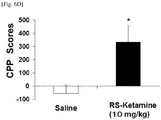
- R(-)-ketamine exhibited rapid and long-lasting antidepressant effects on depression-like behaviors of the juvenile mice after the neonatal DEX exposure and the social defeat stress mouse model through its single administration (see Example 1 and Example 2). Meanwhile, in locomotion-enhancing effects, disruption of prepulse inhibition, and a dependence test using a conditioned place preference test, which are evaluation systems for side effects, significant changes were found in S(+)-ketamine, whereas such side effects were not found in R(-)-ketamine (see Examples 4, 5, and 6). In addition, in the conditioned place preference test, RS(+/- )-ketamine increased a conditioned place preference (CPP) score, indicating drug dependence of RS(+/- )-ketamine.
- CCPP conditioned place preference
- R(-)-ketamine has low affinity for the NMDA receptor as compared to S(+)-ketamine, and thus is considered to have less side effects such as psychotomimetic effects. Accordingly, R(-)-ketamine can serve as a promising and safe antidepressant as compared to S(+)-ketamine and RS(+/-)-ketamine.
- R(-)-ketamine or a pharmacologically acceptable salt thereof may be used as an antidepressant, specifically, as an agent to be used for treatment and/or prevention of depressive symptoms such as mood depression, lowering of motivation, anxiety, the accompanying insomnia and anorexia, and suicidal ideation.
- the agent and pharmaceutical composition according to the present invention are applicable to diseases exhibiting depressive symptoms, for example, de- pression such as MDD or pediatric depression, and bipolar disorder involving a repeat of depressive symptoms and manic symptoms as their opposite symptoms, and are more preferably applicable to depression in children and depression in adults.
- de-pression such as MDD or pediatric depression
- bipolar disorder involving a repeat of depressive symptoms and manic symptoms as their opposite symptoms and are more preferably applicable to depression in children and depression in adults.
- ketamine is also effective for treatment-resistant obsessive-compulsive disorder and treatment-resistant PTSD (Non Patent Literatures 6, 7, and 8).
- the agent and pharmaceutical composition according to the present invention are preferably applicable to obsessive-compulsive disorder and PTSD.
- Obsessive-compulsive disorder which is one type of anxiety disorder and is a disease with pathological conditions characterized by obsessions and compulsions, is considered to be associated with depression.
- Patients with obsessive-compulsive disorder have depression as well and exhibit depressive symptoms in addition to ob- sessions and compulsions in extremely many cases.
- Patients with PTSD exhibit de- pressive symptoms in many cases.
- an antidepressant such as an SSRI is used as a therapeutic drug for PTSD, but its therapeutic effects are weak.
- the scope of the present invention encompasses a pharmaceutical composition for prevention and/or treatment of obsessive-compulsive disorder and PTSD, containing R(-)-ketamine ora pharmacologically acceptable salt thereof in an effective amount for reducing symptoms of obsessive-compulsive disorder and PTSD, and does not contain S(+)-ketamine or a pharmacologically acceptable salt thereof.
- ketamine treatment in an adult with autism spectrum has been reported (Non Patent Literature 10).
- the agent and pharmaceutical composition according to the present invention may be administered orally or parenterally.
- a known dosage form for administration including a tablet, a capsule, a coated tablet, a troche, or a liquid such as a solution or a suspension
- examples of the parenteral administration may include: intravenous, intramuscular, or subcutaneous admin-istration by injection; transmucosal administration such as transnasal or oral admin-istration using a spray, an aerosol, or the like; rectal administration using a suppository or the like; and transdermal administration using a patch, a liniment, a gel, or the like.
- Preferred examples thereof may include oral administration, transnasal administration, and intravenous administration.
- R(-)-ketamine may be used in both the forms of a free base and a pharmaceutically acceptable salt thereof.
- the pharmaceutically acceptable salt is preferably a pharmaceutically acceptable acid addition salt, more preferably a hydrochloride.
- R(-)-ketamine hydrochloride is represented by the following formula (I).
- R(-)-ketamine or a pharmacologically acceptable salt thereof may be subjected to modification, for example, substitution of a chlorine molecule as a substituent by another halogen molecule and/or substitution of a methyl group as a substituent by another alkyl group, to thereby manufacture a derivative.
- modification for example, substitution of a chlorine molecule as a substituent by another halogen molecule and/or substitution of a methyl group as a substituent by another alkyl group
- the compound according to the present invention when labeled with an isotope such as a stable isotope 13 C or 2 H (D), the compound can be measured for its in vivo kinetics and quantitatively measured for its affinity for the NMDA receptor in the brain, for example.
- an isotope such as a stable isotope 13 C or 2 H (D)
- the pharmaceutical composition according to the present invention may contain, in addition to R(-)-ketamine or a pharmacologically acceptable salt thereof, other in- gredients having drug efficacy that are effective for depressive symptoms, the in- gredients being other than S(+)-ketamine.
- the pharmaceutical composition according to the present invention may appropriately contain, in addition to those in- gredients having drug efficacy, an appropriate pharmaceutically acceptable carrier well known to those of ordinary skill in the art, depending on an administration form and the like.
- Examples of the pharmaceutically acceptable carrier may include an an- tioxidant, a stabilizer, a preservative, a taste-masking agent, a colorant, a solubilizer, a solubilizing agent, a surfactant, an emulsifier, an antifoaming agent, a viscosity adjustor, a gelling agent, an absorption accelerator, a dispersant, an excipient, and a pH adjustor.
- an an- tioxidant a stabilizer, a preservative, a taste-masking agent, a colorant, a solubilizer, a solubilizing agent, a surfactant, an emulsifier, an antifoaming agent, a viscosity adjustor, a gelling agent, an absorption accelerator, a dispersant, an excipient, and a pH adjustor.
- the formulation be in the form of a solution or a suspension.
- the agent and pharmaceutical com- position are each prepared as a formulation for transmucosal administration such as transnasal or oral administration, it is preferred that the formulation be in the form of a powder, a drop, or an aerosol.
- the formulation be in the form of a semisolid formulation such as a cream or a sup- pository.
- each of those formulations may be prepared by any one of the methods known to those skilled in the art of pharmacy as disclosed in, for example, Remington's Pharmaceutical Sciences (Mack Publishing Company, Easton, PA, 1970 ).
- a plasma-derived protein such as albumin
- an amino acid such as glycine
- a sugar such as mannitol
- a buffer, a solubilizing aid, an isotonic agent, and the like may also be added.
- a surfactant such as TweenTM 80 or TweenTM 20 in order to prevent aggregation.
- a dosage form for parenteral administration other than the formulation for injection may contain distilled water or saline, polyalkylene glycol such as polyethylene glycol, a plant-derived oil, hydrogenated naphthalene, and the like.
- a formulation for rectal admin-istration such as a suppository contains general excipients such as polyalkylene glycol, petrolatum, and cacao oil and fat.
- a vaginal formulation may contain an absorption ac- celerator such as a bile salt, an ethylenediamine salt, and a citric acid salt.
- a formulation for inhalation may be solid, and may contain an excipient such as lactose.
- a transnasal drop may be a water or oil solution.
- the accurate dosage and dosing regimen of each of the agent and pharmaceutical composition according to the present invention may be adjusted depending on required amounts, treatment methods, diseases, degrees of necessity, or the like for individual treatment targets.
- the dosage may be specifically determined depending on an age, a body weight, a general health condition, a sex, a meal, an administration time, an administration method, an elimination rate, a combination of drugs, a medical condition of a patient, and the like, and may be determined in consideration of other factors.
- an active ingredient contained in the pharmaceutical composition be contained in an effective amount for reducing symptoms of the diseases such as depression, bipolar disorder, and obsessive-compulsive disorder, preferably depressive symptoms of the diseases.
- R(-)-ketamine or a pharmaceutically acceptable salt thereof can be safely used because of having less side effects found in S(+)-ketamine and RS(+/-)-ketamine. Its dosage per day varies depending on the condition and body weight of a patient, the kind of a compound, an administration route, and the like.
- the dosage in the case of parenteral administration be from about 0.01 to 1,000 mg/person/day, preferably from 0.1 to 500 mg/person/day, and the dosage in the case of oral administration be from about 0.01 to 500 mg/person/day, preferably from 0.1 to 100 mg/person/day.
- Non Patent Literature 18 A new animal model of depression (Non Patent Literature 18) was used to investigate antidepressant effects of R(-)- and S(+)-ketamine on the depression-like behavior of the animal model. All tests were performed under the approval of the Animal Care and Use Committee of Chiba University.
- R(-)- and S(+)-ketamine hydrochloride were prepared from RS(+/-)-ketamine (Ketalar TM, ketamine hydrochloride, Daiichi Sankyo Co., Ltd., Tokyo, Japan) using D(-)- and L(+)-tartaric acid, respectively, by the method disclosed in the previous report (Patent Literature 2) ( FIG. 1 ).
- a new animal model of depression was prepared by exposing mice neonatally to dexamethasone (hereinafter abbreviated as DEX). Through the neonatal DEX exposure, depression-like behavior was observed in each of juvenile mice and adult mice. Thus, the mouse model was shown to be able to serve as a novel animal model of depression.
- the mouse model was prepared and reported only recently by the inventors of the present application and their collaborators (Non Patent Literature 18). Specifically, the juvenile mice exposed neonatally to DEX and the adult mice exposed neonatally to DEX showed a significant decrease in novel object search time in a novel object recognition test as compared to control mice, which indicated a reduction in social learning property in the model mice.
- mice exposed neonatally to DEX showed a significant decrease in stimulation target follow-up time, which indicated a reduction in social recognition ability.
- a time spent in the center of a field significantly decreased, which indicated a reduction in spontaneous activity.
- a time spent in a white box significantly decreased, which indicated that anxiety-like behavior was caused.
- TST tail suspension test
- PST forced swimming test
- LMT locomotion test
- Non Patent Literature 18 alterations were found in levels of amino acids (glutamate, glutamine, glycine, D-serine, and L-serine) in mouse brains after the neonatal DEX exposure. Those amino acids are known to be associated with NMDA receptor mediated neurotransmission. Thus, it is conceivable that alterations in glutamatergic transmission via the NMDA receptor after the neonatal DEX exposure may be involved in the depression-like behavior in the juvenile mice and the adult mice (Non Patent Literature 18).
- mice Male and female ICR mice (9-week-old, Japan SLC, Inc., Hamamatsu, Japan) were used. The mice were given free access to water and feed. A breeding procedure consisted of housing three to four females with one male, for 14 days. On the final day of this period, the females were placed in isolation and checked daily around the expected delivery day. The day of birth was defined as day 0. The mice were injected intraperitoneally with DEX (Wako Pure Chemical Industries, Ltd., Tokyo, Japan) dissolved in saline on day 1, day 2, and day 3 at doses of 0.5 mg/kg body weight, 0.3 mg/kg body weight, and 0.1 mg/kg body weight, respectively.
- DEX Woodo Pure Chemical Industries, Ltd., Tokyo, Japan
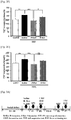
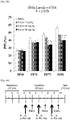
- the antidepressant effects of the agent were investigated for juvenile mice by behavioral tests such as the TST, the PST, the LMT, and a 1% sucrose preference test (SPT) ( FIG. 2A ).
- the TST and the PST were performed twice, i.e., the day (27 hours and 29 hours, respectively) and 7 days after the injection of ketamine, and the LMT and the SPT were performed on the day and 2 days after the injection of ketamine.
- the TST was performed as described below. First, the mice were taken out from cages, and then a small piece of an adhesive tape was bonded onto a portion approximately 2 cm away from the tip of the tail of the mice. A small hole was opened in the small piece, and the mice were each fixed upside down on a hook through the small hole.
- the immobility time of each mouse was recorded for 10 minutes. Mice were considered immobile only when they hung passively and completely motionless. The immobility time increases in a depressive state.
- the PST was performed as described below. First, the mice were placed individually in a cylinder (diameter: 23 cm; height: 31 cm) containing 15 cm of water, maintained at 22 to 24 deg C. The mice were tested in an automated forced-swimming apparatus using SCANET MV-40 (MELQUEST Co., Ltd., Toyama, Japan). The immobility time was calculated as a value obtained by subtracting active time from total time, using the analysis software of the apparatus. Cumulative immobility time was recorded over 6 minutes during a test period. The LMT was performed as described below.
- mice were placed in experimental cages (length x width x height: 560 x 560 x 330 mm).
- the locomotor activity of the mice was counted with SCANET MV-40, and the cumulative exercise of the mice was recorded for 60 minutes.
- the cages were cleaned between testing session.
- the immobility time increases in a depressive state.
- the SPT was performed by preparing general drinking water and a 1% sucrose solution so that the mice had free access thereto, and measuring the ratio of the amount of the sucrose solution consumed. The consumption of the sucrose solution, which is a reward response, reduces in a depressive state.
- Non Patent Literature 19 A social defeat stress model of depression (Non Patent Literature 19) was used to m-vestigate antidepressant effects of R(-)- and S(+)-ketamine on the depression-like behavior of the animal model. All tests were performed under the approval of the Animal Care and Use Committee of Chiba University.
- R(-)- and S(+)-ketamine hydrochloride were prepared from RS(+/-)-ketamine (KetalarTM, ketamine hydrochloride, Daiichi Sankyo Co., Ltd., Tokyo, Japan) using D(-)- and L(+)-tartaric acid, respectively, by the method disclosed in the previous report (Patent Literature 2) ( FIG. 1 ).
- a social defeat stress model of depression was prepared by bringing C57/B6 male mice into contact with ICR male mice (large aggressive mice) for 10 consecutive days to apply a stress called a "social defeat stress" in accordance with the previous report (Non Patent Literature 19). Depression-like behavior was observed in the mice that had received the social defeat stress. Specifically, an increase in immobility time was found in each of a tail suspension test (TST) and a forced swimming test (PST). In addition, in a 1% sucrose preference test, the ratio of sucrose water drunk significantly reduced, suggesting that depression-like behavior (e.g. anhedonia) was shown. On the other hand, in a locomotion test (LMT), there was no difference in locomotion between social defeat stress mice and control mice.
- TST tail suspension test
- PST forced swimming test
- LMT locomotion test
- mice Male C57/B6 mice (7-week-old, Japan SLC, Inc., Hamamatsu, Japan) and ICR mice (9-week-old, Japan SLC, Inc., Hamamatsu, Japan) were used. The mice were given free access to water and feed. A social defeat stress was applied by housing one C57/B6 mouse with one ICR mouse for 10 days. On day 11, a social interaction test was performed to select mice exhibiting depressive symptoms, which were used for the subsequent behavioral evaluation.
- mice were injected with vehicle (saline 10 ml/kg) and the mice exhibiting depressive symptoms were injected intraperitoneally with R(-)- or S(+)-ketamine at a dose of 10 mg/kg body weight, or vehicle (saline 10 ml/kg).
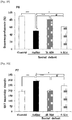
- the antidepressant effects of the agent were investigated by behavioral tests such as the TST, the PST, the LMT, and a 1% sucrose preference test (SPT) ( FIG. 3A ).
- the 1% sucrose preference test (SPT) was performed on 1 day and 6 days after the injection of ketamine.
- Each of the TST and the PST was performed on 2 days and 7 days after the injection of ketamine.
- the TST was performed as described below. First, the mice were taken out from cages, and then a small piece of an adhesive tape was bonded onto a portion approximately 2 cm away from the tip of the tail of the mice. A small hole was opened in the small piece, and the mice were each fixed upside down on a hook through the small hole. The immobility time of each mouse was recorded for 10 minutes.
- mice were considered immobile only when they hung passively and completely motionless.
- the immobility time increases in a depressive state.
- the PST was performed as described below. First, the mice were placed individually in a cylinder (diameter: 23 cm; height: 31 cm) containing 15 cm of water, maintained at 22 to 24 deg C. The mice were tested in an automated forced-swimming apparatus using SCANET MV-40(MELQUEST Co., Ltd., Toyama, Japan).
- the immobility time was calculated as a value obtained by subtracting active time from total time, using the analysis software of the apparatus. Cumulative immobility time was recorded over 6 minutes during a test period.
- the LMT was performed as described below.
- mice were placed in experimental cages (length x width x height: 560 x 560 x 330 mm).
- the locomotor activity of the mice was counted with SCANET MV-40, and the cumulative exercise of the mice was recorded for 60 minutes.
- the cages were cleaned between testing session.
- the immobility time increases in a depressive state.
- the SPT was performed by preparing general drinking water and a 1% sucrose solution so that the mice had free access thereto, and measuring the ratio of the amount of the sucrose solution consumed. The consumption of the sucrose solution, which is a reward response, reduces in a depressive state.
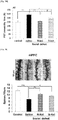
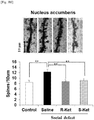
- mice were decapitated 5 days after the injection of ketamine, and the brain was quickly dissected out and subjected to Golgi staining.
- a spine density was quantitatively evaluated by observation with a KEYENCE microscope (BZ-9000, Osaka, Japan).
- R(-)- and S(+)-ketamine were investigated by a locomotion-enhancing effect, disruption of prepulse inhibition, and a dependence test using a conditioned place preference test, which were systems for evaluating side effects.
- the agent and pharmaceutical composition for prevention and/or treatment of a depressive symptom according to the present invention have rapid and long-lasting antidepressant effects and less side effects such as psychotomimetic effects, and hence are useful as novel pharmaceuticals in the field of prevention and/or treatment of a number of psychiatric diseases exhibiting depressive symptoms.
Landscapes
- Health & Medical Sciences (AREA)
- Veterinary Medicine (AREA)
- Public Health (AREA)
- General Health & Medical Sciences (AREA)
- Animal Behavior & Ethology (AREA)
- Chemical & Material Sciences (AREA)
- Life Sciences & Earth Sciences (AREA)
- Pharmacology & Pharmacy (AREA)
- Medicinal Chemistry (AREA)
- Engineering & Computer Science (AREA)
- Bioinformatics & Cheminformatics (AREA)
- Organic Chemistry (AREA)
- Nuclear Medicine, Radiotherapy & Molecular Imaging (AREA)
- General Chemical & Material Sciences (AREA)
- Chemical Kinetics & Catalysis (AREA)
- Neurosurgery (AREA)
- Neurology (AREA)
- Biomedical Technology (AREA)
- Epidemiology (AREA)
- Psychiatry (AREA)
- Anesthesiology (AREA)
- Pain & Pain Management (AREA)
- Acyclic And Carbocyclic Compounds In Medicinal Compositions (AREA)
- Medicinal Preparation (AREA)
Claims (14)
- R(-)-Ketamin oder ein pharmakologisch annehmbares Salz davon zur Verwendung bei der Behandlung eines depressiven Symptoms, wobei die Behandlung ein Verabreichen von R(-)-Ketamin oder des pharmakologisch annehmbaren Salzes davon an einen Probanden, wobei der Proband damit diagnostiziert wurde, ein depressives Symptom aufzuweisen, in einer Menge, die zum Behandeln des depressiven Symptoms wirksam ist, umfasst,
wobei das R(-)-Ketamin oder das pharmakologisch annehmbare Salz davon kein S(+)-Ketamin oder ein pharmakologisch annehmbares Salz davon enthält und
wobei das depressive Symptom mit einer Depression im Kindes- oder Erwachsenenalter, einer Zwangsneurose oder einem posttraumatischen Stresssyndrom einhergeht. - R(-)-Ketamin oder ein pharmakologisch annehmbares Salz davon zur Verwendung nach Anspruch 1, wobei das depressive Symptom eine affektive Störung, eine Abnahme der Motivation, ein Angstgefühl, Schlaflosigkeit, Magersucht oder ein Suizidgedanke ist.
- R(-)-Ketamin oder ein pharmakologisch annehmbares Salz davon zur Verwendung nach Anspruch 1, wobei der Proband mit einer Depression im Kindes- oder Erwachsenenalter diagnostiziert wurde.
- R(-)-Ketamin oder ein pharmakologisch annehmbares Salz davon zur Verwendung nach Anspruch 1, wobei der Proband mit einer Zwangsneurose diagnostiziert wurde.
- R(-)-Ketamin oder ein pharmakologisch annehmbares Salz davon zur Verwendung nach Anspruch 1, wobei der Proband mit einem posttraumatischen Stresssyndrom diagnostiziert wurde.
- Pharmazeutische Zusammensetzung zur Verwendung bei der Behandlung eines depressiven Symptoms, wobei die Behandlung ein Verabreichen der pharmazeutischen Zusammensetzung an einen Probanden umfasst,
wobei die pharmazeutische Zusammensetzung R(-)-Ketamin oder ein pharmazeutisch annehmbares Salz davon in einer Menge, die zum Behandeln eines depressiven Symptoms wirksam ist, und einen pharmazeutisch annehmbaren Trägerstoff umfasst und kein S(+)-Ketamin oder ein pharmakologisch annehmbares Salz davon enthält,
und wobei der Proband damit diagnostiziert wurde, ein depressives Symptom aufzuweisen, wobei das depressive Symptom mit einer Depression im Kindes- oder Erwachsenenalter, einer Zwangsneurose oder einem posttraumatischen Stresssyndrom einhergeht. - Pharmazeutische Zusammensetzung zur Verwendung nach Anspruch 6, wobei der Proband mit einer Depression im Kindes- oder Erwachsenenalter diagnostiziert wurde.
- Pharmazeutische Zusammensetzung zur Verwendung nach Anspruch 6, wobei der Proband mit einer Zwangsneurose diagnostiziert wurde.
- Pharmazeutische Zusammensetzung zur Verwendung nach Anspruch 6, wobei der Proband mit einem posttraumatischen Stresssyndrom diagnostiziert wurde.
- R(-)-Ketamin oder ein pharmakologisch annehmbares Salz davon zur Verwendung nach einem der Ansprüche 1-5 oder pharmazeutische Zusammensetzung zur Verwendung nach einem der Ansprüche 6-9, wobei die Zusammensetzung oder das R(-)-Ketamin oder das pharmakologisch annehmbare Salz davon oral verabreicht wird.
- R(-)-Ketamin oder ein pharmakologisch annehmbares Salz davon oder pharmazeutische Zusammensetzung zur Verwendung nach Anspruch 10, wobei die Zusammensetzung oder das R(-)-Ketamin oder das pharmakologisch annehmbare Salz davon als eine Tablette, eine Kapsel, ein Dragee, eine Pastille oder eine Flüssigkeit verabreicht wird.
- R(-)-Ketamin oder ein pharmakologisch annehmbares Salz davon zur Verwendung nach einem der Ansprüche 1-5 oder pharmazeutische Zusammensetzung zur Verwendung nach einem der Ansprüche 6-9, wobei die Zusammensetzung oder das R(-)-Ketamin oder das pharmakologisch annehmbare Salz davon parenteral verabreicht wird.
- R(-)-Ketamin oder ein pharmakologisch annehmbares Salz davon oder pharmazeutische Zusammensetzung zur Verwendung nach Anspruch 12, wobei die Zusammensetzung oder das R(-)-Ketamin oder das pharmakologisch annehmbare Salz davon mittels intravenöser Injektion, intramuskulärer Injektion, subkutaner Injektion, transmukosal, rektal oder transdermal verabreicht wird.
- R(-)-Ketamin oder ein pharmakologisch annehmbares Salz davon oder pharmazeutische Zusammensetzung zur Verwendung nach Anspruch 13, wobei die Zusammensetzung oder das R(-)-Ketamin oder das pharmakologisch annehmbare Salz davon transdermal unter Verwendung eines Pflasters, eines Einreibemittels oder eines Gels verabreicht wird.
Priority Applications (6)
| Application Number | Priority Date | Filing Date | Title |
|---|---|---|---|
| HRP20211629TT HRP20211629T1 (hr) | 2013-09-13 | 2014-09-12 | Primjena r-ketamina i njegove soli kao lijekova |
| PL14793319T PL3043785T3 (pl) | 2013-09-13 | 2014-09-12 | Zastosowanie R-ketaminy i jej soli jako środków farmaceutycznych |
| SI201431903T SI3043785T1 (sl) | 2013-09-13 | 2014-09-12 | Uporaba R-ketamina in njegove soli kot farmacevtska sredstva |
| SM20210641T SMT202100641T1 (it) | 2013-09-13 | 2014-09-12 | Applicazione di r-ketamina e suo sale come prodotti farmaceutici |
| EP21192664.7A EP3964203A1 (de) | 2013-09-13 | 2014-09-12 | R-ketamin und dessen salze als medikament |
| RS20211346A RS62516B1 (sr) | 2013-09-13 | 2014-09-12 | Primena r-ketamina i njegove soli kao farmaceutskih proizvoda |
Applications Claiming Priority (2)
| Application Number | Priority Date | Filing Date | Title |
|---|---|---|---|
| JP2013190066 | 2013-09-13 | ||
| PCT/JP2014/004730 WO2015037248A1 (en) | 2013-09-13 | 2014-09-12 | Application of r-ketamine and salt thereof as pharmaceuticals |
Related Child Applications (1)
| Application Number | Title | Priority Date | Filing Date |
|---|---|---|---|
| EP21192664.7A Division EP3964203A1 (de) | 2013-09-13 | 2014-09-12 | R-ketamin und dessen salze als medikament |
Publications (2)
| Publication Number | Publication Date |
|---|---|
| EP3043785A1 EP3043785A1 (de) | 2016-07-20 |
| EP3043785B1 true EP3043785B1 (de) | 2021-08-25 |
Family
ID=51846870
Family Applications (2)
| Application Number | Title | Priority Date | Filing Date |
|---|---|---|---|
| EP21192664.7A Pending EP3964203A1 (de) | 2013-09-13 | 2014-09-12 | R-ketamin und dessen salze als medikament |
| EP14793319.6A Active EP3043785B1 (de) | 2013-09-13 | 2014-09-12 | R-ketamin und dessen salze als medikament |
Family Applications Before (1)
| Application Number | Title | Priority Date | Filing Date |
|---|---|---|---|
| EP21192664.7A Pending EP3964203A1 (de) | 2013-09-13 | 2014-09-12 | R-ketamin und dessen salze als medikament |
Country Status (16)
| Country | Link |
|---|---|
| US (5) | US9872841B2 (de) |
| EP (2) | EP3964203A1 (de) |
| JP (7) | JP6366439B2 (de) |
| CA (2) | CA3143962A1 (de) |
| CY (1) | CY1125290T1 (de) |
| DK (1) | DK3043785T3 (de) |
| ES (1) | ES2897453T3 (de) |
| HR (1) | HRP20211629T1 (de) |
| HU (1) | HUE056378T2 (de) |
| LT (1) | LT3043785T (de) |
| PL (1) | PL3043785T3 (de) |
| PT (1) | PT3043785T (de) |
| RS (1) | RS62516B1 (de) |
| SI (1) | SI3043785T1 (de) |
| SM (1) | SMT202100641T1 (de) |
| WO (1) | WO2015037248A1 (de) |
Families Citing this family (28)
| Publication number | Priority date | Publication date | Assignee | Title |
|---|---|---|---|---|
| US20140275278A1 (en) | 2013-03-15 | 2014-09-18 | Janssen Pharmaceutica Nv | Pharmaceutical composition of s-ketamine hydrochloride |
| HRP20211629T1 (hr) * | 2013-09-13 | 2022-02-04 | National University Corporation Chiba University | Primjena r-ketamina i njegove soli kao lijekova |
| CA2961208A1 (en) | 2014-09-15 | 2016-03-24 | Janssen Pharmaceutica Nv | Val66met (snp rs6265) genotype specific dosing regimens and methods for the treatment of depression |
| US20160332962A1 (en) * | 2015-05-13 | 2016-11-17 | Janssen Pharmaceutica Nv | (s)-csa salt of s-ketamine, (r)-csa salt of s-ketamine and processes for the preparation of s-ketamine |
| AU2016288188B2 (en) | 2015-06-27 | 2021-08-05 | Shenox Pharmaceuticals, Llc | Ketamine transdermal delivery system |
| WO2017087691A1 (en) | 2015-11-17 | 2017-05-26 | The Trustees Of Columbia University In The City Of New York | Pharmacological prophylactics against stress-induced affective disorders and their associated symptoms |
| US20190240184A1 (en) | 2016-10-27 | 2019-08-08 | National University Corporation Chiba University | Pharmaceutical applications for (s)-norketamine and salts thereof |
| JP2021003001A (ja) * | 2017-09-07 | 2021-01-14 | 国立大学法人千葉大学 | うつ症状の検査方法、及び治療薬のスクリーニング方法 |
| US20200009081A1 (en) | 2017-09-13 | 2020-01-09 | Janssen Pharmaceutica N.V. | Delivery Of Esketamine For The Treatment Of Depression |
| JP7265990B2 (ja) * | 2017-09-27 | 2023-04-27 | 国立大学法人千葉大学 | 神経変性疾患あるいは認知機能障害の予防または治療剤としてのr-ケタミンおよびその誘導体 |
| WO2019094596A1 (en) | 2017-11-09 | 2019-05-16 | The Trustees Of Columbia University In The City Of New York | Biomarkers for efficacy of prophylactic treatments against stress-induced affective disorders |
| US11491120B2 (en) | 2017-11-09 | 2022-11-08 | The Trustees Of Columbia University In The City Of New York | Pharmacological prophylactics against stress-induced affective disorders in females |
| MX2020006650A (es) | 2017-12-22 | 2020-11-06 | Janssen Pharmaceuticals Inc | Esketamina para el tratamiento de la depresión. |
| PL3505157T3 (pl) | 2017-12-29 | 2022-04-11 | Celon Pharma S.A. | Kompozycja ketaminy w postaci suchego proszku do podawania dopłucnego w leczeniu depresji opornej na leczenie |
| CN118453559A (zh) * | 2018-02-15 | 2024-08-09 | 国立大学法人千叶大学 | 炎症性疾病或骨病的预防或治疗剂及医药组合物 |
| CA3099293A1 (en) * | 2018-05-04 | 2019-11-07 | Perception Neuroscience, Inc. | Methods of treating substance abuse |
| US11154537B2 (en) | 2018-08-10 | 2021-10-26 | Eleusis Therapeutics Us, Inc. | Method of treatment for ketamine infusion |
| US20220110889A1 (en) * | 2018-12-27 | 2022-04-14 | National University Corporation Chiba University | R-ketamine and derivative thereof as prophylactic or therapeutic agent for neurodevelopmental disorder |
| WO2020178653A1 (en) | 2019-03-05 | 2020-09-10 | Janssen Pharmaceuticals, Inc. | Esketamine for the treatment of depression |
| CA3133012A1 (en) * | 2019-08-05 | 2021-02-11 | The Ketamine Research Foundation | Ketamine for the treatment of postpartum symptoms and disorders |
| CN112125816A (zh) * | 2020-03-17 | 2020-12-25 | 国药集团工业有限公司 | 一种氯胺酮、其衍生物或其盐的消旋化方法 |
| EP4125836A1 (de) * | 2020-03-27 | 2023-02-08 | Homeostasis Therapeutics, Limited | Verfahren zur behandlung von anorexia nervosa, bulimia und verwandten klinischen syndromen |
| CN114306219B (zh) * | 2020-09-30 | 2023-09-26 | 四川普锐特药业有限公司 | 稳定的r-氯胺酮药物组合物 |
| WO2022118783A1 (ja) * | 2020-12-04 | 2022-06-09 | 国立大学法人大阪大学 | 治療抵抗性うつ病または緊急性を有するうつ病の症状を治療するための組成物 |
| WO2023064363A1 (en) | 2021-10-12 | 2023-04-20 | Perception Neuroscience, Inc. | R-ketamine salts and methods of use thereof |
| JP2025509517A (ja) | 2022-03-14 | 2025-04-11 | パーセプション ニューロサイエンス,インコーポレイティド | R-ケタミンの医薬製剤 |
| CN115006375A (zh) * | 2022-06-24 | 2022-09-06 | 华中科技大学 | 艾司氯胺酮用于制备治疗社交障碍药物的应用 |
| WO2025256585A1 (zh) * | 2024-06-12 | 2025-12-18 | 江苏恩华药业股份有限公司 | R-氯胺酮在治疗伴急性自杀意念或行为的抑郁症中的应用 |
Family Cites Families (93)
| Publication number | Priority date | Publication date | Assignee | Title |
|---|---|---|---|---|
| US3254124A (en) | 1962-06-29 | 1966-05-31 | Parke Davis & Co | Aminoketones and methods for their production |
| CH535201A (de) | 1969-12-19 | 1973-03-31 | Bristol Myers Co | Verfahren zur Spaltung von racemischen 2-(o-Chlorphenyl)-2-methylaminocyclohexanon in die optisch-aktiven Isomeren |
| US4670459A (en) | 1984-10-03 | 1987-06-02 | Merrell Dow Pharmaceuticals Inc. | Method of alleviating withdrawal symptoms |
| US5543434A (en) | 1994-02-25 | 1996-08-06 | Weg; Stuart L. | Nasal administration of ketamine to manage pain |
| US5679714A (en) | 1995-06-07 | 1997-10-21 | Weg; Stuart L. | Administration of ketamine for detoxification and treatment of tobacco addiction |
| DE19619665C2 (de) | 1996-05-15 | 2001-03-08 | Goedecke Ag | Racemattrennung von Ketamin |
| US6248789B1 (en) | 1996-08-29 | 2001-06-19 | Stuart L. Weg | Administration of ketamine to manage pain and to reduce drug dependency |
| US7001609B1 (en) | 1998-10-02 | 2006-02-21 | Regents Of The University Of Minnesota | Mucosal originated drug delivery systems and animal applications |
| US6382204B1 (en) | 1999-10-14 | 2002-05-07 | Becton Dickinson And Company | Drug delivery system including holder and drug container |
| US6962151B1 (en) | 1999-11-05 | 2005-11-08 | Pari GmbH Spezialisten für effektive Inhalation | Inhalation nebulizer |
| SI1257648T2 (sl) | 2000-02-23 | 2016-11-30 | Amgen Inc. | Antagonistični selektivni vezavni agensi za osteoprotegerin vezavni protein |
| BRPI0002693B8 (pt) | 2000-06-19 | 2021-05-25 | Cristalia Produtos Quim Farmaceuticos Ltda | processo de obtenção dos enantiômeros da cetamina e seus sais farmaceuticamente aceitáveis |
| US7090830B2 (en) | 2001-05-24 | 2006-08-15 | Alexza Pharmaceuticals, Inc. | Drug condensation aerosols and kits |
| EP1551393A4 (de) | 2002-07-30 | 2010-06-16 | Peter Migaly | Kombinationstherapie gegen depression, prävention von suizid und verschiedener medizinischer und psychiatrischer erkrankungen |
| US7273889B2 (en) | 2002-09-25 | 2007-09-25 | Innovative Drug Delivery Systems, Inc. | NMDA receptor antagonist formulation with reduced neurotoxicity |
| CA2506615A1 (en) | 2002-11-18 | 2004-06-03 | Yaupon Therapeutics, Inc. | Analgesic uses of norketamine and ketamine/norketamine prodrugs |
| US7713440B2 (en) | 2003-10-08 | 2010-05-11 | Lyotropic Therapeutics, Inc. | Stabilized uncoated particles of reversed liquid crystalline phase materials |
| US7928132B2 (en) | 2004-08-06 | 2011-04-19 | Ohio University | Methods for the amelioration of episodes of acute or chronic ulcerative colitis |
| PT1928405E (pt) | 2005-09-28 | 2014-10-20 | Auris Medical Ag | Composições farmacêuticas para o tratamento de distúrbios do ouvido interno |
| CN101466364A (zh) * | 2006-03-22 | 2009-06-24 | 纽约大学西奈山医学院 | 鼻内施用氯胺酮治疗抑郁症 |
| CN101765582A (zh) | 2007-04-26 | 2010-06-30 | 奥斯拜客斯制药有限公司 | 氘标记的氯胺酮 |
| US20120225949A1 (en) * | 2009-08-14 | 2012-09-06 | Demitri Papalos | Compositions and methods for treating bipolar disorder |
| US20110038807A1 (en) * | 2009-08-14 | 2011-02-17 | Demitri Papolos | Compositions and methods for treating bipolar disorder |
| US9737531B2 (en) | 2012-07-12 | 2017-08-22 | Glytech, Llc | Composition and method for treatment of depression and psychosis in humans |
| WO2013138322A1 (en) | 2012-03-12 | 2013-09-19 | Janssen Pharmaceutica Nv | Esketamine for the treatment of treatment-refractory or treatment-resistant depression |
| JP2015512418A (ja) | 2012-03-30 | 2015-04-27 | ザ ジェネラル ホスピタル コーポレイション | うつ病の治療におけるスコポラミンおよびケタミンを含む組成物 |
| AU2013305580A1 (en) | 2012-08-23 | 2015-04-09 | Stuart L. Weg | Anxiolytic composition, formulation and method of use |
| SG11201507358VA (en) | 2013-03-15 | 2015-10-29 | Janssen Pharmaceutica Nv | Pharmaceutical composition of s-ketamine hydrochloride |
| US20140275278A1 (en) | 2013-03-15 | 2014-09-18 | Janssen Pharmaceutica Nv | Pharmaceutical composition of s-ketamine hydrochloride |
| AU2014250756B2 (en) | 2013-04-12 | 2019-03-07 | Icahn School Of Medicine At Mount Sinai | Method for treating post-traumatic stress disorder |
| HRP20211629T1 (hr) | 2013-09-13 | 2022-02-04 | National University Corporation Chiba University | Primjena r-ketamina i njegove soli kao lijekova |
| WO2015051259A1 (en) | 2013-10-04 | 2015-04-09 | Impax Laboratories, Inc. | Pharmaceutical compositions and methods of use |
| CA2936809A1 (en) | 2014-01-14 | 2015-07-23 | Children's Hospital Medical Center | Compositions comprising ketamine for treating an autism spectrum disorder |
| KR101705446B1 (ko) | 2014-04-29 | 2017-02-09 | 가톨릭대학교 산학협력단 | 면역질환 치료효과를 갖는 신규한 화합물 및 이의 용도 |
| EP3179993B1 (de) | 2014-08-13 | 2021-01-20 | Janssen Pharmaceutica NV | Esketamine zur verwendung in einem verfahren zur behandlung von depression |
| CA2961208A1 (en) | 2014-09-15 | 2016-03-24 | Janssen Pharmaceutica Nv | Val66met (snp rs6265) genotype specific dosing regimens and methods for the treatment of depression |
| RU2771275C2 (ru) | 2014-11-04 | 2022-04-29 | Аморса Терапьютикс, Инк. | Нейро-аттенуирующие кетаминовые и норкетаминовые соединения, их производные и способы их получения |
| EP3085366A1 (de) | 2015-04-22 | 2016-10-26 | Institut du Cerveau et de la Moelle Epiniere-ICM | Nmda-antagonisten zur behandlung von mentalen erkrankungen mit auftreten von aggressivem und/oder impulsivem verhalten |
| US20160332962A1 (en) | 2015-05-13 | 2016-11-17 | Janssen Pharmaceutica Nv | (s)-csa salt of s-ketamine, (r)-csa salt of s-ketamine and processes for the preparation of s-ketamine |
| WO2016186968A1 (en) | 2015-05-15 | 2016-11-24 | The Arizona Board Of Regents On Behalf Of The University Of Arizona | Compositions and methods for treating motor disorders |
| US20200297734A1 (en) | 2015-06-19 | 2020-09-24 | Melt Pharmaceuticals, Inc. | Pharmaceutical compositions and methods for anesthesiological applications |
| KR101964571B1 (ko) | 2015-06-19 | 2019-04-02 | 해로우 헬스 인코포레이티드 | 마취용 약학 조성물 |
| AU2016288188B2 (en) | 2015-06-27 | 2021-08-05 | Shenox Pharmaceuticals, Llc | Ketamine transdermal delivery system |
| WO2017087691A1 (en) | 2015-11-17 | 2017-05-26 | The Trustees Of Columbia University In The City Of New York | Pharmacological prophylactics against stress-induced affective disorders and their associated symptoms |
| AU2017238858A1 (en) | 2016-03-25 | 2018-10-18 | The United States Of America, As Represented By The Secretary, Department Of Health And Human Services | Methods of using (2R, 6R)-hydroxynorketamine and (2S, 6S)-hydroxynorketamine in the treatment of depression, anxiety, anhedonia, fatigue, suicidal ideation, and post traumatic stress disorders |
| WO2017180589A1 (en) | 2016-04-11 | 2017-10-19 | Auspex Pharmaceuticals, Inc. | Deuterated ketamine derivatives |
| US20200261442A1 (en) | 2016-08-26 | 2020-08-20 | Sreenivasarao Vepachedu | Targeted drug rescue with novel compositions, combinations, and methods thereof |
| JP7096813B2 (ja) | 2016-08-26 | 2022-07-06 | エクシーバ ゲーエムベーハー | 組成物及びその方法 |
| WO2018075481A1 (en) | 2016-10-17 | 2018-04-26 | Yale University | Compounds, compositions and methods for treating or preventing depression and other diseases |
| US20190240184A1 (en) | 2016-10-27 | 2019-08-08 | National University Corporation Chiba University | Pharmaceutical applications for (s)-norketamine and salts thereof |
| US20180177743A1 (en) | 2016-12-22 | 2018-06-28 | Gary Jay | Method of treating pain using racemic mixture of s-ketamine and r-ketamine |
| JP6856840B2 (ja) | 2016-12-27 | 2021-04-14 | アクション メディカル テクノロジーズ,エルエルシーAction Medical Technologies,Llc | 注入器、および注入器を動作させる方法 |
| KR20190124722A (ko) | 2017-01-31 | 2019-11-05 | 파올로 엘. 만프레디 | 신경계 장애의 치료에서 사용하기 위한 d-메타돈 및 이의 유도체 |
| US11478467B2 (en) | 2017-05-04 | 2022-10-25 | Sreenivasarao Vepachedu | Targeted drug rescue with novel compositions, combinations, and methods thereof |
| KR102608479B1 (ko) | 2017-05-25 | 2023-12-01 | 글리테크 엘엘씨. | Nmdar 길항제-반응성 신경정신 질환을 위한 병용 요법 |
| WO2018234568A2 (en) | 2017-06-23 | 2018-12-27 | Develco Pharma Schweiz Ag | HYDROXYNORKETAMINE FOR USE IN TREATING DEPRESSION |
| JP7265990B2 (ja) | 2017-09-27 | 2023-04-27 | 国立大学法人千葉大学 | 神経変性疾患あるいは認知機能障害の予防または治療剤としてのr-ケタミンおよびその誘導体 |
| US10869838B2 (en) | 2017-10-10 | 2020-12-22 | Douglas Pharmaceuticals, Ltd. | Extended release pharmaceutical formulation |
| US10441544B2 (en) | 2017-10-10 | 2019-10-15 | Douglas Pharmaceuticals, Ltd. | Extended release pharmaceutical formulation |
| US11491120B2 (en) | 2017-11-09 | 2022-11-08 | The Trustees Of Columbia University In The City Of New York | Pharmacological prophylactics against stress-induced affective disorders in females |
| CN107823195A (zh) | 2017-11-24 | 2018-03-23 | 无锡市精神卫生中心 | R‑氯胺酮在抑郁症急性期治疗中的应用 |
| EP3505509A1 (de) | 2017-12-29 | 2019-07-03 | Université de Liège | Verfahren zur herstellung von arylcycloalkylamin-derivaten |
| KR20260028033A (ko) | 2018-01-10 | 2026-03-03 | 엑스더블유파마 리미티드 | 케타민의 전구약물, 및 이의 조성물 및 용도 |
| CN118453559A (zh) | 2018-02-15 | 2024-08-09 | 国立大学法人千叶大学 | 炎症性疾病或骨病的预防或治疗剂及医药组合物 |
| WO2019169165A1 (en) | 2018-02-28 | 2019-09-06 | Novocine Therapeutics, Llc | Ketamine and ketamine-related compounds for the treatment of neurological disorders |
| WO2019186357A1 (en) | 2018-03-26 | 2019-10-03 | Cellix Bio Private Limited | Compositions and methods for the treatment of neurological diseases |
| CA3099293A1 (en) | 2018-05-04 | 2019-11-07 | Perception Neuroscience, Inc. | Methods of treating substance abuse |
| GB201809976D0 (en) | 2018-06-18 | 2018-08-01 | Neurocentrx Pharma Ltd | Novel formulations |
| BR112020023882A2 (pt) | 2018-06-27 | 2021-02-09 | Clexio Biosciences Ltd. | método para tratar transtorno depressivo maior |
| WO2020041329A1 (en) | 2018-08-20 | 2020-02-27 | Yale University | Combination therapy for treating or preventing depression or other mood diseases |
| US11865088B2 (en) | 2018-10-05 | 2024-01-09 | Clexio Biosciences Ltd. | Method of treating major depressive disorder |
| EP3863617A1 (de) | 2018-10-11 | 2021-08-18 | Clexio Biosciences Ltd. | Esketamin zur verwendung bei der behandlung einer schweren depressiven störung |
| US20220110889A1 (en) | 2018-12-27 | 2022-04-14 | National University Corporation Chiba University | R-ketamine and derivative thereof as prophylactic or therapeutic agent for neurodevelopmental disorder |
| FI3908570T3 (fi) | 2019-01-11 | 2024-02-13 | Alar Pharmaceuticals Inc | Ketamiinipamoaatti ja sen käyttö |
| WO2020198039A1 (en) | 2019-03-23 | 2020-10-01 | Sermone Sandra | Ketamine for treatment of sensory processing deficits |
| WO2020212510A1 (en) | 2019-04-16 | 2020-10-22 | Janssen Pharmaceutica Nv | Synthetic methods of preparing esketamine |
| WO2020232274A1 (en) | 2019-05-15 | 2020-11-19 | Bexson Biomedical, Inc. | Ketamine formulation for subcutaneous injection |
| CA3133012A1 (en) | 2019-08-05 | 2021-02-11 | The Ketamine Research Foundation | Ketamine for the treatment of postpartum symptoms and disorders |
| US11007200B2 (en) | 2019-08-21 | 2021-05-18 | MediSynergics, LLC | Cycloalkyl-diamines for the treatment of pain |
| WO2021121366A1 (en) | 2019-12-20 | 2021-06-24 | Alar Pharmaceuticals Inc. | Long-acting injectable formulations of ketamine pamoate salts |
| CN115190815B (zh) | 2019-12-26 | 2024-06-18 | 吉尔伽美什制药公司 | 芳基环己基胺衍生物及其在精神障碍的治疗中的用途 |
| US12268658B2 (en) | 2019-12-30 | 2025-04-08 | Clexio Biosciences Ltd. | Dosage regime with esketamine for treating major depressive disorder |
| US12478592B2 (en) | 2019-12-30 | 2025-11-25 | Clexio Biosciences Ltd. | Dosage regime with esketamine for treating neuropsychiatric or neurological conditions |
| PH12022551856A1 (en) | 2020-01-22 | 2024-01-03 | Seelos Therapeutics Inc | Reducing side effects of nmda antagonists |
| EP4125836A1 (de) | 2020-03-27 | 2023-02-08 | Homeostasis Therapeutics, Limited | Verfahren zur behandlung von anorexia nervosa, bulimia und verwandten klinischen syndromen |
| CN115916174A (zh) | 2020-04-07 | 2023-04-04 | 纽约市哥伦比亚大学理事会 | 用于预防应激诱导的恐惧、抑郁样和焦虑样行为的组合物和方法 |
| US12128012B2 (en) | 2020-05-15 | 2024-10-29 | University Of Kansas | Ketamine treatment for amyotrophic lateral sclerosis |
| WO2021252971A2 (en) | 2020-06-12 | 2021-12-16 | Bexson Biomedical, Inc. | Systems and devices for controlled drug delivery |
| CA3182424A1 (en) | 2020-06-17 | 2021-12-23 | Irving William Wainer | Hydroxynorketamine analogues, compositions comprising same and methods of use thereof |
| WO2023064363A1 (en) | 2021-10-12 | 2023-04-20 | Perception Neuroscience, Inc. | R-ketamine salts and methods of use thereof |
| JP2025509517A (ja) | 2022-03-14 | 2025-04-11 | パーセプション ニューロサイエンス,インコーポレイティド | R-ケタミンの医薬製剤 |
| US20250281426A1 (en) | 2022-04-26 | 2025-09-11 | Yichang Humanwell Pharmaceutical Co., Ltd. | R-ketamine liquid preparation and use thereof |
| US20260027068A1 (en) | 2022-12-28 | 2026-01-29 | Perception Neuroscience, Inc. | Methods of administering r-ketamine |
-
2014
- 2014-09-12 HR HRP20211629TT patent/HRP20211629T1/hr unknown
- 2014-09-12 PT PT147933196T patent/PT3043785T/pt unknown
- 2014-09-12 CA CA3143962A patent/CA3143962A1/en active Pending
- 2014-09-12 HU HUE14793319A patent/HUE056378T2/hu unknown
- 2014-09-12 CA CA2923685A patent/CA2923685C/en active Active
- 2014-09-12 PL PL14793319T patent/PL3043785T3/pl unknown
- 2014-09-12 SI SI201431903T patent/SI3043785T1/sl unknown
- 2014-09-12 DK DK14793319.6T patent/DK3043785T3/da active
- 2014-09-12 ES ES14793319T patent/ES2897453T3/es active Active
- 2014-09-12 EP EP21192664.7A patent/EP3964203A1/de active Pending
- 2014-09-12 US US15/021,003 patent/US9872841B2/en active Active
- 2014-09-12 WO PCT/JP2014/004730 patent/WO2015037248A1/en not_active Ceased
- 2014-09-12 EP EP14793319.6A patent/EP3043785B1/de active Active
- 2014-09-12 LT LTEPPCT/JP2014/004730T patent/LT3043785T/lt unknown
- 2014-09-12 SM SM20210641T patent/SMT202100641T1/it unknown
- 2014-09-12 JP JP2014186056A patent/JP6366439B2/ja active Active
- 2014-09-12 RS RS20211346A patent/RS62516B1/sr unknown
-
2017
- 2017-12-21 US US15/849,698 patent/US10406121B2/en active Active
-
2018
- 2018-07-03 JP JP2018126684A patent/JP6615277B2/ja active Active
-
2019
- 2019-07-26 US US16/522,815 patent/US11207279B2/en active Active
- 2019-11-01 JP JP2019199496A patent/JP6842206B2/ja active Active
-
2021
- 2021-02-11 JP JP2021020280A patent/JP2021073310A/ja active Pending
- 2021-11-16 US US17/527,693 patent/US20220071929A1/en not_active Abandoned
- 2021-11-24 CY CY20211101022T patent/CY1125290T1/el unknown
-
2022
- 2022-11-27 JP JP2022188797A patent/JP7398836B2/ja active Active
-
2023
- 2023-11-28 JP JP2023200421A patent/JP7627514B2/ja active Active
- 2023-12-19 US US18/545,395 patent/US12558324B2/en active Active
-
2025
- 2025-01-20 JP JP2025007274A patent/JP2025061458A/ja active Pending
Non-Patent Citations (1)
| Title |
|---|
| None * |
Also Published As
Similar Documents
| Publication | Publication Date | Title |
|---|---|---|
| US12558324B2 (en) | Application of R-ketamine and salt thereof as pharmaceuticals | |
| EP3533444A1 (de) | Pharmazeutische anwendungen von (s)-norketamin und salzen davon | |
| JP2017533276A (ja) | 認知低下を処置するための方法 | |
| JPWO2019065900A1 (ja) | 神経変性疾患あるいは認知機能障害の予防または治療剤としてのr−ケタミンおよびその誘導体 | |
| HK40069995A (en) | Application of r-ketamine and salt thereof as pharmaceuticals | |
| CN106535913B (zh) | 神经活性肽的稳定组合物 | |
| JP7121859B2 (ja) | 安息香酸塩または安息香酸誘導体を含む、抗n-メチル-d-アスパラギン酸受容体脳炎を予防または治療するための医薬組成物 | |
| JP6977979B2 (ja) | 神経損傷治療又は予防用医薬 | |
| Margoob et al. | Treatment‐resistant obsessive‐compulsive disorder (OCD)–current understanding | |
| JP2017088584A (ja) | 医薬組成物 | |
| WO2024236159A1 (en) | Hip/pap protein or a derivative thereof for treating a cognitive disorder associated with anxiety disorder | |
| WO2018008733A1 (ja) | 医薬組成物 | |
| HK40065529A (en) | Combination of gaboxadol and lithium for the treatment of psychiatric disorders | |
| JP2019531329A (ja) | 女性の性機能障害を治療する医薬組成物および方法 | |
| HK40007794A (en) | Pharmaceutical applications for (s)-norketamine and salts thereof |
Legal Events
| Date | Code | Title | Description |
|---|---|---|---|
| REG | Reference to a national code |
Ref country code: HR Ref legal event code: TUEP Ref document number: P20211629T Country of ref document: HR |
|
| PUAI | Public reference made under article 153(3) epc to a published international application that has entered the european phase |
Free format text: ORIGINAL CODE: 0009012 |
|
| 17P | Request for examination filed |
Effective date: 20160412 |
|
| AK | Designated contracting states |
Kind code of ref document: A1 Designated state(s): AL AT BE BG CH CY CZ DE DK EE ES FI FR GB GR HR HU IE IS IT LI LT LU LV MC MK MT NL NO PL PT RO RS SE SI SK SM TR |
|
| AX | Request for extension of the european patent |
Extension state: BA ME |
|
| DAX | Request for extension of the european patent (deleted) | ||
| STAA | Information on the status of an ep patent application or granted ep patent |
Free format text: STATUS: EXAMINATION IS IN PROGRESS |
|
| 17Q | First examination report despatched |
Effective date: 20171213 |
|
| GRAP | Despatch of communication of intention to grant a patent |
Free format text: ORIGINAL CODE: EPIDOSNIGR1 |
|
| STAA | Information on the status of an ep patent application or granted ep patent |
Free format text: STATUS: GRANT OF PATENT IS INTENDED |
|
| RIC1 | Information provided on ipc code assigned before grant |
Ipc: A61P 25/20 20060101ALI20210224BHEP Ipc: A61P 25/18 20060101ALI20210224BHEP Ipc: A61K 31/135 20060101AFI20210224BHEP Ipc: A61P 25/24 20060101ALI20210224BHEP Ipc: A61P 25/22 20060101ALI20210224BHEP Ipc: A61P 43/00 20060101ALI20210224BHEP Ipc: A61P 25/00 20060101ALI20210224BHEP |
|
| INTG | Intention to grant announced |
Effective date: 20210326 |
|
| GRAS | Grant fee paid |
Free format text: ORIGINAL CODE: EPIDOSNIGR3 |
|
| GRAA | (expected) grant |
Free format text: ORIGINAL CODE: 0009210 |
|
| STAA | Information on the status of an ep patent application or granted ep patent |
Free format text: STATUS: THE PATENT HAS BEEN GRANTED |
|
| AK | Designated contracting states |
Kind code of ref document: B1 Designated state(s): AL AT BE BG CH CY CZ DE DK EE ES FI FR GB GR HR HU IE IS IT LI LT LU LV MC MK MT NL NO PL PT RO RS SE SI SK SM TR |
|
| REG | Reference to a national code |
Ref country code: GB Ref legal event code: FG4D |
|
| REG | Reference to a national code |
Ref country code: CH Ref legal event code: EP |
|
| REG | Reference to a national code |
Ref country code: DE Ref legal event code: R096 Ref document number: 602014079687 Country of ref document: DE |
|
| REG | Reference to a national code |
Ref country code: IE Ref legal event code: FG4D Ref country code: AT Ref legal event code: REF Ref document number: 1423076 Country of ref document: AT Kind code of ref document: T Effective date: 20210915 |
|
| REG | Reference to a national code |
Ref country code: FI Ref legal event code: FGE |
|
| REG | Reference to a national code |
Ref country code: PT Ref legal event code: SC4A Ref document number: 3043785 Country of ref document: PT Date of ref document: 20211105 Kind code of ref document: T Free format text: AVAILABILITY OF NATIONAL TRANSLATION Effective date: 20211028 |
|
| REG | Reference to a national code |
Ref country code: DK Ref legal event code: T3 Effective date: 20211112 |
|
| REG | Reference to a national code |
Ref country code: NO Ref legal event code: T2 Effective date: 20210825 |
|
| REG | Reference to a national code |
Ref country code: SE Ref legal event code: TRGR |
|
| REG | Reference to a national code |
Ref country code: GR Ref legal event code: EP Ref document number: 20210403078 Country of ref document: GR Effective date: 20211209 |
|
| REG | Reference to a national code |
Ref country code: NL Ref legal event code: FP Ref country code: EE Ref legal event code: FG4A Ref document number: E021472 Country of ref document: EE Effective date: 20211029 |
|
| REG | Reference to a national code |
Ref country code: HR Ref legal event code: ODRP Ref document number: P20211629T Country of ref document: HR Payment date: 20211021 Year of fee payment: 8 |
|
| REG | Reference to a national code |
Ref country code: SK Ref legal event code: T3 Ref document number: E 38638 Country of ref document: SK |
|
| REG | Reference to a national code |
Ref country code: HR Ref legal event code: T1PR Ref document number: P20211629 Country of ref document: HR |
|
| REG | Reference to a national code |
Ref country code: HU Ref legal event code: AG4A Ref document number: E056378 Country of ref document: HU |
|
| REG | Reference to a national code |
Ref country code: ES Ref legal event code: FG2A Ref document number: 2897453 Country of ref document: ES Kind code of ref document: T3 Effective date: 20220301 |
|
| REG | Reference to a national code |
Ref country code: DE Ref legal event code: R097 Ref document number: 602014079687 Country of ref document: DE |
|
| PLBE | No opposition filed within time limit |
Free format text: ORIGINAL CODE: 0009261 |
|
| STAA | Information on the status of an ep patent application or granted ep patent |
Free format text: STATUS: NO OPPOSITION FILED WITHIN TIME LIMIT |
|
| 26N | No opposition filed |
Effective date: 20220527 |
|
| PG25 | Lapsed in a contracting state [announced via postgrant information from national office to epo] |
Ref country code: CY Free format text: LAPSE BECAUSE OF NON-PAYMENT OF DUE FEES Effective date: 20210912 |
|
| REG | Reference to a national code |
Ref country code: HR Ref legal event code: ODRP Ref document number: P20211629 Country of ref document: HR Payment date: 20221010 Year of fee payment: 9 |
|
| REG | Reference to a national code |
Ref country code: AT Ref legal event code: UEP Ref document number: 1423076 Country of ref document: AT Kind code of ref document: T Effective date: 20210825 |
|
| P01 | Opt-out of the competence of the unified patent court (upc) registered |
Effective date: 20230513 |
|
| REG | Reference to a national code |
Ref country code: HR Ref legal event code: ODRP Ref document number: P20211629 Country of ref document: HR Payment date: 20230901 Year of fee payment: 10 |
|
| REG | Reference to a national code |
Ref country code: HR Ref legal event code: ODRP Ref document number: P20211629 Country of ref document: HR Payment date: 20240829 Year of fee payment: 11 |
|
| PGFP | Annual fee paid to national office [announced via postgrant information from national office to epo] |
Ref country code: NO Payment date: 20240923 Year of fee payment: 11 |
|
| PGFP | Annual fee paid to national office [announced via postgrant information from national office to epo] |
Ref country code: AL Payment date: 20240923 Year of fee payment: 11 |
|
| REG | Reference to a national code |
Ref country code: HR Ref legal event code: ODRP Ref document number: P20211629 Country of ref document: HR Payment date: 20260203 Year of fee payment: 12 |
|
| PGFP | Annual fee paid to national office [announced via postgrant information from national office to epo] |
Ref country code: NL Payment date: 20260206 Year of fee payment: 12 Ref country code: LU Payment date: 20260204 Year of fee payment: 12 |
|
| PGFP | Annual fee paid to national office [announced via postgrant information from national office to epo] |
Ref country code: HU Payment date: 20260206 Year of fee payment: 12 |
|
| REG | Reference to a national code |
Ref country code: CH Ref legal event code: U11 Free format text: ST27 STATUS EVENT CODE: U-0-0-U10-U11 (AS PROVIDED BY THE NATIONAL OFFICE) Effective date: 20260320 |
|
| PGFP | Annual fee paid to national office [announced via postgrant information from national office to epo] |
Ref country code: SM Payment date: 20260312 Year of fee payment: 12 |
|
| PGFP | Annual fee paid to national office [announced via postgrant information from national office to epo] |
Ref country code: SE Payment date: 20260205 Year of fee payment: 12 |
|
| PGFP | Annual fee paid to national office [announced via postgrant information from national office to epo] |
Ref country code: LT Payment date: 20260310 Year of fee payment: 12 Ref country code: GB Payment date: 20260317 Year of fee payment: 12 |
|
| PGFP | Annual fee paid to national office [announced via postgrant information from national office to epo] |
Ref country code: MC Payment date: 20260323 Year of fee payment: 12 Ref country code: ES Payment date: 20260213 Year of fee payment: 12 |
|
| PGFP | Annual fee paid to national office [announced via postgrant information from national office to epo] |
Ref country code: DE Payment date: 20260213 Year of fee payment: 12 Ref country code: DK Payment date: 20260205 Year of fee payment: 12 Ref country code: IE Payment date: 20260317 Year of fee payment: 12 |
|
| PGFP | Annual fee paid to national office [announced via postgrant information from national office to epo] |
Ref country code: AT Payment date: 20260324 Year of fee payment: 12 Ref country code: HR Payment date: 20260203 Year of fee payment: 12 |
|
| PGFP | Annual fee paid to national office [announced via postgrant information from national office to epo] |
Ref country code: FI Payment date: 20260324 Year of fee payment: 12 Ref country code: RO Payment date: 20260203 Year of fee payment: 12 Ref country code: BE Payment date: 20260320 Year of fee payment: 12 Ref country code: IT Payment date: 20260217 Year of fee payment: 12 |
|
| PGFP | Annual fee paid to national office [announced via postgrant information from national office to epo] |
Ref country code: RS Payment date: 20260203 Year of fee payment: 12 |
|
| PGFP | Annual fee paid to national office [announced via postgrant information from national office to epo] |
Ref country code: IS Payment date: 20260204 Year of fee payment: 12 Ref country code: FR Payment date: 20260130 Year of fee payment: 12 |
|
| PGFP | Annual fee paid to national office [announced via postgrant information from national office to epo] |
Ref country code: TR Payment date: 20260206 Year of fee payment: 12 |
|
| PGFP | Annual fee paid to national office [announced via postgrant information from national office to epo] |
Ref country code: CZ Payment date: 20260310 Year of fee payment: 12 Ref country code: PT Payment date: 20260310 Year of fee payment: 12 Ref country code: CH Payment date: 20260320 Year of fee payment: 12 |
|
| PGFP | Annual fee paid to national office [announced via postgrant information from national office to epo] |
Ref country code: GR Payment date: 20260226 Year of fee payment: 12 Ref country code: PL Payment date: 20260209 Year of fee payment: 12 Ref country code: CY Payment date: 20260211 Year of fee payment: 12 Ref country code: MT Payment date: 20260311 Year of fee payment: 12 |
|
| PGFP | Annual fee paid to national office [announced via postgrant information from national office to epo] |
Ref country code: EE Payment date: 20260204 Year of fee payment: 12 Ref country code: LV Payment date: 20260203 Year of fee payment: 12 Ref country code: SK Payment date: 20260203 Year of fee payment: 12 |
|
| PGFP | Annual fee paid to national office [announced via postgrant information from national office to epo] |
Ref country code: SI Payment date: 20260204 Year of fee payment: 12 |
|
| PGFP | Annual fee paid to national office [announced via postgrant information from national office to epo] |
Ref country code: BG Payment date: 20260203 Year of fee payment: 12 |
|
| PGFP | Annual fee paid to national office [announced via postgrant information from national office to epo] |
Ref country code: MK Payment date: 20260128 Year of fee payment: 12 |