EP3045365A1 - Système et procédé de commande de véhicule hybride - Google Patents
Système et procédé de commande de véhicule hybride Download PDFInfo
- Publication number
- EP3045365A1 EP3045365A1 EP14842391.6A EP14842391A EP3045365A1 EP 3045365 A1 EP3045365 A1 EP 3045365A1 EP 14842391 A EP14842391 A EP 14842391A EP 3045365 A1 EP3045365 A1 EP 3045365A1
- Authority
- EP
- European Patent Office
- Prior art keywords
- hybrid electrical
- electrical vehicle
- engine
- power
- torque
- Prior art date
- Legal status (The legal status is an assumption and is not a legal conclusion. Google has not performed a legal analysis and makes no representation as to the accuracy of the status listed.)
- Withdrawn
Links
Images


Classifications
-
- B—PERFORMING OPERATIONS; TRANSPORTING
- B60—VEHICLES IN GENERAL
- B60W—CONJOINT CONTROL OF VEHICLE SUB-UNITS OF DIFFERENT TYPE OR DIFFERENT FUNCTION; CONTROL SYSTEMS SPECIALLY ADAPTED FOR HYBRID VEHICLES; ROAD VEHICLE DRIVE CONTROL SYSTEMS FOR PURPOSES NOT RELATED TO THE CONTROL OF A PARTICULAR SUB-UNIT
- B60W20/00—Control systems specially adapted for hybrid vehicles
- B60W20/10—Controlling the power contribution of each of the prime movers to meet required power demand
- B60W20/13—Controlling the power contribution of each of the prime movers to meet required power demand in order to stay within battery power input or output limits; in order to prevent overcharging or battery depletion
-
- B—PERFORMING OPERATIONS; TRANSPORTING
- B60—VEHICLES IN GENERAL
- B60W—CONJOINT CONTROL OF VEHICLE SUB-UNITS OF DIFFERENT TYPE OR DIFFERENT FUNCTION; CONTROL SYSTEMS SPECIALLY ADAPTED FOR HYBRID VEHICLES; ROAD VEHICLE DRIVE CONTROL SYSTEMS FOR PURPOSES NOT RELATED TO THE CONTROL OF A PARTICULAR SUB-UNIT
- B60W30/00—Purposes of road vehicle drive control systems not related to the control of a particular sub-unit, e.g. of systems using conjoint control of vehicle sub-units
- B60W30/18—Propelling the vehicle
- B60W30/182—Selecting between different operative modes, e.g. comfort and performance modes
-
- B—PERFORMING OPERATIONS; TRANSPORTING
- B60—VEHICLES IN GENERAL
- B60W—CONJOINT CONTROL OF VEHICLE SUB-UNITS OF DIFFERENT TYPE OR DIFFERENT FUNCTION; CONTROL SYSTEMS SPECIALLY ADAPTED FOR HYBRID VEHICLES; ROAD VEHICLE DRIVE CONTROL SYSTEMS FOR PURPOSES NOT RELATED TO THE CONTROL OF A PARTICULAR SUB-UNIT
- B60W10/00—Conjoint control of vehicle sub-units of different type or different function
- B60W10/04—Conjoint control of vehicle sub-units of different type or different function including control of propulsion units
- B60W10/06—Conjoint control of vehicle sub-units of different type or different function including control of propulsion units including control of combustion engines
-
- B—PERFORMING OPERATIONS; TRANSPORTING
- B60—VEHICLES IN GENERAL
- B60W—CONJOINT CONTROL OF VEHICLE SUB-UNITS OF DIFFERENT TYPE OR DIFFERENT FUNCTION; CONTROL SYSTEMS SPECIALLY ADAPTED FOR HYBRID VEHICLES; ROAD VEHICLE DRIVE CONTROL SYSTEMS FOR PURPOSES NOT RELATED TO THE CONTROL OF A PARTICULAR SUB-UNIT
- B60W10/00—Conjoint control of vehicle sub-units of different type or different function
- B60W10/04—Conjoint control of vehicle sub-units of different type or different function including control of propulsion units
- B60W10/08—Conjoint control of vehicle sub-units of different type or different function including control of propulsion units including control of electric propulsion units, e.g. motors or generators
-
- B—PERFORMING OPERATIONS; TRANSPORTING
- B60—VEHICLES IN GENERAL
- B60W—CONJOINT CONTROL OF VEHICLE SUB-UNITS OF DIFFERENT TYPE OR DIFFERENT FUNCTION; CONTROL SYSTEMS SPECIALLY ADAPTED FOR HYBRID VEHICLES; ROAD VEHICLE DRIVE CONTROL SYSTEMS FOR PURPOSES NOT RELATED TO THE CONTROL OF A PARTICULAR SUB-UNIT
- B60W10/00—Conjoint control of vehicle sub-units of different type or different function
- B60W10/24—Conjoint control of vehicle sub-units of different type or different function including control of energy storage means
- B60W10/26—Conjoint control of vehicle sub-units of different type or different function including control of energy storage means for electrical energy, e.g. batteries or capacitors
-
- B—PERFORMING OPERATIONS; TRANSPORTING
- B60—VEHICLES IN GENERAL
- B60W—CONJOINT CONTROL OF VEHICLE SUB-UNITS OF DIFFERENT TYPE OR DIFFERENT FUNCTION; CONTROL SYSTEMS SPECIALLY ADAPTED FOR HYBRID VEHICLES; ROAD VEHICLE DRIVE CONTROL SYSTEMS FOR PURPOSES NOT RELATED TO THE CONTROL OF A PARTICULAR SUB-UNIT
- B60W20/00—Control systems specially adapted for hybrid vehicles
- B60W20/10—Controlling the power contribution of each of the prime movers to meet required power demand
-
- B—PERFORMING OPERATIONS; TRANSPORTING
- B60—VEHICLES IN GENERAL
- B60W—CONJOINT CONTROL OF VEHICLE SUB-UNITS OF DIFFERENT TYPE OR DIFFERENT FUNCTION; CONTROL SYSTEMS SPECIALLY ADAPTED FOR HYBRID VEHICLES; ROAD VEHICLE DRIVE CONTROL SYSTEMS FOR PURPOSES NOT RELATED TO THE CONTROL OF A PARTICULAR SUB-UNIT
- B60W20/00—Control systems specially adapted for hybrid vehicles
- B60W20/10—Controlling the power contribution of each of the prime movers to meet required power demand
- B60W20/15—Control strategies specially adapted for achieving a particular effect
-
- B—PERFORMING OPERATIONS; TRANSPORTING
- B60—VEHICLES IN GENERAL
- B60W—CONJOINT CONTROL OF VEHICLE SUB-UNITS OF DIFFERENT TYPE OR DIFFERENT FUNCTION; CONTROL SYSTEMS SPECIALLY ADAPTED FOR HYBRID VEHICLES; ROAD VEHICLE DRIVE CONTROL SYSTEMS FOR PURPOSES NOT RELATED TO THE CONTROL OF A PARTICULAR SUB-UNIT
- B60W30/00—Purposes of road vehicle drive control systems not related to the control of a particular sub-unit, e.g. of systems using conjoint control of vehicle sub-units
- B60W30/18—Propelling the vehicle
- B60W30/188—Controlling power parameters of the driveline, e.g. determining the required power
- B60W30/1882—Controlling power parameters of the driveline, e.g. determining the required power characterised by the working point of the engine, e.g. by using engine output chart
-
- B—PERFORMING OPERATIONS; TRANSPORTING
- B60—VEHICLES IN GENERAL
- B60W—CONJOINT CONTROL OF VEHICLE SUB-UNITS OF DIFFERENT TYPE OR DIFFERENT FUNCTION; CONTROL SYSTEMS SPECIALLY ADAPTED FOR HYBRID VEHICLES; ROAD VEHICLE DRIVE CONTROL SYSTEMS FOR PURPOSES NOT RELATED TO THE CONTROL OF A PARTICULAR SUB-UNIT
- B60W2510/00—Input parameters relating to a particular sub-units
- B60W2510/24—Energy storage means
- B60W2510/242—Energy storage means for electrical energy
- B60W2510/244—Charge state
-
- B—PERFORMING OPERATIONS; TRANSPORTING
- B60—VEHICLES IN GENERAL
- B60W—CONJOINT CONTROL OF VEHICLE SUB-UNITS OF DIFFERENT TYPE OR DIFFERENT FUNCTION; CONTROL SYSTEMS SPECIALLY ADAPTED FOR HYBRID VEHICLES; ROAD VEHICLE DRIVE CONTROL SYSTEMS FOR PURPOSES NOT RELATED TO THE CONTROL OF A PARTICULAR SUB-UNIT
- B60W2552/00—Input parameters relating to infrastructure
- B60W2552/15—Road slope, i.e. the inclination of a road segment in the longitudinal direction
-
- B—PERFORMING OPERATIONS; TRANSPORTING
- B60—VEHICLES IN GENERAL
- B60W—CONJOINT CONTROL OF VEHICLE SUB-UNITS OF DIFFERENT TYPE OR DIFFERENT FUNCTION; CONTROL SYSTEMS SPECIALLY ADAPTED FOR HYBRID VEHICLES; ROAD VEHICLE DRIVE CONTROL SYSTEMS FOR PURPOSES NOT RELATED TO THE CONTROL OF A PARTICULAR SUB-UNIT
- B60W2710/00—Output or target parameters relating to a particular sub-units
- B60W2710/06—Combustion engines, Gas turbines
- B60W2710/0666—Engine torque
-
- B—PERFORMING OPERATIONS; TRANSPORTING
- B60—VEHICLES IN GENERAL
- B60W—CONJOINT CONTROL OF VEHICLE SUB-UNITS OF DIFFERENT TYPE OR DIFFERENT FUNCTION; CONTROL SYSTEMS SPECIALLY ADAPTED FOR HYBRID VEHICLES; ROAD VEHICLE DRIVE CONTROL SYSTEMS FOR PURPOSES NOT RELATED TO THE CONTROL OF A PARTICULAR SUB-UNIT
- B60W2710/00—Output or target parameters relating to a particular sub-units
- B60W2710/06—Combustion engines, Gas turbines
- B60W2710/0677—Engine power
-
- B—PERFORMING OPERATIONS; TRANSPORTING
- B60—VEHICLES IN GENERAL
- B60W—CONJOINT CONTROL OF VEHICLE SUB-UNITS OF DIFFERENT TYPE OR DIFFERENT FUNCTION; CONTROL SYSTEMS SPECIALLY ADAPTED FOR HYBRID VEHICLES; ROAD VEHICLE DRIVE CONTROL SYSTEMS FOR PURPOSES NOT RELATED TO THE CONTROL OF A PARTICULAR SUB-UNIT
- B60W2710/00—Output or target parameters relating to a particular sub-units
- B60W2710/08—Electric propulsion units
- B60W2710/083—Torque
-
- B—PERFORMING OPERATIONS; TRANSPORTING
- B60—VEHICLES IN GENERAL
- B60W—CONJOINT CONTROL OF VEHICLE SUB-UNITS OF DIFFERENT TYPE OR DIFFERENT FUNCTION; CONTROL SYSTEMS SPECIALLY ADAPTED FOR HYBRID VEHICLES; ROAD VEHICLE DRIVE CONTROL SYSTEMS FOR PURPOSES NOT RELATED TO THE CONTROL OF A PARTICULAR SUB-UNIT
- B60W2710/00—Output or target parameters relating to a particular sub-units
- B60W2710/24—Energy storage means
- B60W2710/242—Energy storage means for electrical energy
- B60W2710/244—Charge state
-
- Y—GENERAL TAGGING OF NEW TECHNOLOGICAL DEVELOPMENTS; GENERAL TAGGING OF CROSS-SECTIONAL TECHNOLOGIES SPANNING OVER SEVERAL SECTIONS OF THE IPC; TECHNICAL SUBJECTS COVERED BY FORMER USPC CROSS-REFERENCE ART COLLECTIONS [XRACs] AND DIGESTS
- Y02—TECHNOLOGIES OR APPLICATIONS FOR MITIGATION OR ADAPTATION AGAINST CLIMATE CHANGE
- Y02T—CLIMATE CHANGE MITIGATION TECHNOLOGIES RELATED TO TRANSPORTATION
- Y02T10/00—Road transport of goods or passengers
- Y02T10/10—Internal combustion engine [ICE] based vehicles
- Y02T10/40—Engine management systems
-
- Y—GENERAL TAGGING OF NEW TECHNOLOGICAL DEVELOPMENTS; GENERAL TAGGING OF CROSS-SECTIONAL TECHNOLOGIES SPANNING OVER SEVERAL SECTIONS OF THE IPC; TECHNICAL SUBJECTS COVERED BY FORMER USPC CROSS-REFERENCE ART COLLECTIONS [XRACs] AND DIGESTS
- Y02—TECHNOLOGIES OR APPLICATIONS FOR MITIGATION OR ADAPTATION AGAINST CLIMATE CHANGE
- Y02T—CLIMATE CHANGE MITIGATION TECHNOLOGIES RELATED TO TRANSPORTATION
- Y02T10/00—Road transport of goods or passengers
- Y02T10/60—Other road transportation technologies with climate change mitigation effect
- Y02T10/62—Hybrid vehicles
-
- Y—GENERAL TAGGING OF NEW TECHNOLOGICAL DEVELOPMENTS; GENERAL TAGGING OF CROSS-SECTIONAL TECHNOLOGIES SPANNING OVER SEVERAL SECTIONS OF THE IPC; TECHNICAL SUBJECTS COVERED BY FORMER USPC CROSS-REFERENCE ART COLLECTIONS [XRACs] AND DIGESTS
- Y02—TECHNOLOGIES OR APPLICATIONS FOR MITIGATION OR ADAPTATION AGAINST CLIMATE CHANGE
- Y02T—CLIMATE CHANGE MITIGATION TECHNOLOGIES RELATED TO TRANSPORTATION
- Y02T10/00—Road transport of goods or passengers
- Y02T10/80—Technologies aiming to reduce greenhouse gasses emissions common to all road transportation technologies
- Y02T10/84—Data processing systems or methods, management, administration
-
- Y—GENERAL TAGGING OF NEW TECHNOLOGICAL DEVELOPMENTS; GENERAL TAGGING OF CROSS-SECTIONAL TECHNOLOGIES SPANNING OVER SEVERAL SECTIONS OF THE IPC; TECHNICAL SUBJECTS COVERED BY FORMER USPC CROSS-REFERENCE ART COLLECTIONS [XRACs] AND DIGESTS
- Y10—TECHNICAL SUBJECTS COVERED BY FORMER USPC
- Y10S—TECHNICAL SUBJECTS COVERED BY FORMER USPC CROSS-REFERENCE ART COLLECTIONS [XRACs] AND DIGESTS
- Y10S903/00—Hybrid electric vehicles, HEVS
- Y10S903/902—Prime movers comprising electrical and internal combustion motors
- Y10S903/903—Prime movers comprising electrical and internal combustion motors having energy storing means, e.g. battery, capacitor
- Y10S903/93—Conjoint control of different elements
Definitions
- Embodiments of the present disclosure generally relate to a vehicle technology filed, and more particularly, to a control system of a hybrid electrical vehicle and a control method for a hybrid electrical vehicle.
- a hybrid electrical vehicle refers to a vehicle equipped with two types of power sources, i.e., a thermal power source (generating power by a conventional gasoline engine or diesel engine) and an electric power source (generating power by a battery and an electric motor).
- a thermal power source generating power by a conventional gasoline engine or diesel engine
- an electric power source generating power by a battery and an electric motor.
- Some of the existing hybrid electrical vehicles adopt a series-parallel hybrid power system, which is characterized by disposing a mechanical gear shifting mechanism in the internal combustion engine system and the electric motor drive system respectively.
- the two mechanical gear shifting mechanisms are connected via a planetary wheel structure, such that the rotating speed relationship between the internal combustion engine system and the electric motor drive system can be adjusted synthetically.
- the driving mode of the conventional hybrid electrical vehicle is simplex and the driver cannot select the driving mode according to individual driving habits, the long term and constant driving condition. For example, considering that Asians often live in concentrated districts and have a relatively constant driving path to and from work which is typically less than 50km, it is very appropriate to drive in a pure electric driving mode.
- the conventional hybrid electrical vehicle reduces the oil wear by adjusting the engine via the electric motor instead of eliminating the oil wear completely. Therefore, the conventional hybrid electrical vehicle generally does not have the manual electrical vehicle (EV) mode switching function. Even if the conventional electrical vehicle has the manual EV mode switching function, the pure electric driving mileage of the vehicle is short due to the limitation of the electric quantity of the battery.
- EV manual electrical vehicle
- the purpose of the conventional hybrid electrical vehicle is to reduce the oil wear, the electric motor and engine with a high power and a high torque will not be selected, and thus the power performance of the hybrid electrical vehicle is low and the driving fun is greatly reduced.
- some hybrid electrical vehicles take more than 10s to accelerate from 0 to 100km/h and provide a poor high speed performance.
- some conventional hybrid electrical vehicles adopt the series-parallel structure and the method for controlling the series-parallel structure, and the strategy in which the engine drives the vehicle solely does not exist.
- the engine still charges the battery via a first electric motor MG1 and adjusts the rotating speed thereof via the first electric motor MG1 to implement the gear shift.
- the engine in the heavy load acceleration condition, due to the limitation of the battery capacity, only if a part of the power of the engine is used to drive the first electric motor MG1 to generate power can the engine provide the electric energy to the second electric motor MG2 together with the battery.
- the predetermined demanded power and speed threshold are relatively low, and the speed switching condition is set as a point instead of an interval, thus resulting in a premature and frequent start of the engine.
- Embodiments of the present disclosure seek to solve at least one of the problems existing in the related art to at least some extent.
- a control strategy of a conventional hybrid electrical vehicle may be: when the SOC (State of Charge) of power battery is higher, the hybrid electrical vehicle is driving in the pure electrical mode in the starting condition, the start driving condition and the low speed condition, the ECU (electrical control unit) detects the information such as the SOC of the power battery and the actual power requirement and so on and adjusts the starting and the stopping of the engine; in the starting process of the engine, using the planet gear to achieve the stepless speed change, the rotation speed relationship between the engine and the electric motor is adjusted, and the hybrid electrical vehicle has two electric motors, the first electric motor MG1 controls the rotation speed, and adjusts the speed proportion between the engine and the wheel, and the second electric motor MG2 can control the torque, provide the torque and responds to the requirement of the driver and the power battery.
- SOC State of Charge
- the transmission mechanism is ECVT, the idle rotation speed of the engine is greater, the idle noise, the fuel consumption and the emission are high, thus adding the first electric motor MG1, adjusting the rotation speed of the engine, and increasing the cost of the electric motor, and the structure of the ECVT is complex, the process requirement is high and the matching is very difficult, and the software cost and the hardware cost of the transmission mechanism is greatly increased; when the hybrid electrical vehicle is in the acceleration condition with the large load, due to the restriction of the hybrid electrical vehicle capacity, a part power of the engine is used to drive the first electric motor MG1 to generate power and then together with the power battery provide power to drive the second electric motor MG2, which may increase the conversion times of the energy and reduce the efficiency.
- An object of the present disclosure is to provide a control system of the hybrid electrical vehicle.
- Another object of the present disclosure is to provide a control method for a hybrid electrical vehicle.
- a control system for a hybrid electrical vehicle including: a transmission device connected with wheels of the hybrid electrical vehicle; an engine power subsystem connected with the transmission device; a motor power subsystem connected with the transmission device; and a control module configured to control the hybrid electrical vehicle to operate in a hybrid electrical-economical mode by controlling the engine power subsystem and the motor power subsystem and to control the hybrid electrical vehicle to operate in a first manner if a current slope detected by the hybrid electrical vehicle is less than or equal to a minimum slope, a current electric quantity of a power battery of the motor power subsystem is larger than or equal to a first electric quantity threshold and a maximum allowable discharge power of the power battery is larger than or equal to a first power threshold.
- the engine power subsystem and the motor power subsystem are connected in parallel, which can enable the power between the engine power subsystem and the motor power subsystem to easily match, improve the transformation efficiency and effectively improve an energy utilization factor as compared with a series connection structure adopted in a power system of the conventional hybrid electrical vehicle.
- the parallel connection is simple and can avoid a complex ECVT match in a series-parallel connection, which reduces a risk of driving uncomfortably caused by the match failure, thus the economy of the hybrid electrical vehicle is greatly improved on the premise of ensuring the power performance of the hybrid electrical vehicle.
- the predetermined starting value is large, which can drop the proportion of the engine-driven participation in the urban condition, reduce the fuel consumption emissions and avoid the frequent start-stop phenomenon of the engine, thus increasing the starter life, reducing the traffic noise and improving the driving comfort.
- embodiments of a second aspect of the present disclosure provide a control method for a hybrid electrical vehicle, including: controlling the hybrid electrical vehicle to operate in a hybrid electrical-economical mode by controlling the engine power subsystem and the motor power subsystem when the hybrid electrical vehicle is running; detecting a current electric quantity of a power battery of the motor power subsystem, a maximum allowable discharge power of the power battery of the motor power subsystem and a current slope of the hybrid electrical vehicle; and controlling the hybrid electrical vehicle to operate in a first manner if a current slope detected by the hybrid electrical vehicle is less than or equal to a minimum slope, a current electric quantity of a power battery of the motor power subsystem is larger than or equal to a first electric quantity threshold and a maximum allowable discharge power of the power battery is larger than or equal to a first power threshold.
- a driving requirement of the user in different operating conditions can be satisfied, i.e., not only pure electric consumption in a city operating condition can be satisfied, but also power performance requirement in a suburban district operating condition can be satisfied, thus the hybrid electrical vehicle can be driven according to subjective operation intentions of the user and the driving fun is improved.
- the method for controlling the hybrid electrical vehicle is simple and reliable and is easy to operate by users.
- the predetermined starting value is large, which can drop the proportion of the engine-driven participation in the urban condition, reduce the fuel consumption emissions and avoid the frequent start-stop phenomenon of the engine, thus increasing the starter life, reducing the traffic noise and improving the driving comfort.
- the following description provides a plurality of embodiments or examples configured to achieve different structures of the present disclosure.
- components and dispositions of the particular embodiment are described in the following, which are only explanatory and not construed to limit the present disclosure.
- the present disclosure may repeat the reference number and/or letter in different embodiments for the purpose of simplicity and clarity and the repetition does not indicate the relationship of the plurality of embodiments and/or dispositions.
- the structure of the second characteristic "above" the first characteristic may include an embodiment formed by the first and second characteristic contacted directly, and also may include another embodiment formed between the first and the second characteristic, in which the first characteristic and the second characteristic may not contact directly.
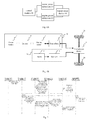
- Fig. 1A is a schematic diagram of a control system for a hybrid electrical vehicle according to a first embodiment of the present disclosure.
- the control system for the hybrid electrical vehicle includes a transmission device 10, an engine power subsystem 20, a motor power subsystem 30 and a control module 40.
- the transmission device 10 is configured to drive the wheels 2a and 2b of the hybrid electrical vehicle, the engine power subsystem 20 is connected with the transmission device 10, the motor power subsystem 30 is connected with the transmission device 10.
- the control module 40 controls the hybrid electrical vehicle to operate in a hybrid electrical-economical mode by controlling the engine power subsystem 20 and the motor power subsystem 30, and controls the hybrid electrical vehicle to operate in a first manner if a current slope detected by the hybrid electrical vehicle is less than or equal to a minimum slope, a current electric quantity of a power battery of the motor power subsystem is greater than or equal to a first electric quantity threshold and a maximum allowable discharge power of the power battery is larger than or equal to a first power threshold.
- Fig. 1B is a schematic diagram of a control system for a hybrid electrical vehicle according to a second embodiment of the present disclosure.
- the engine power subsystem 20 includes an engine 3 and a gearbox 4, and the motor power subsystem 30 includes an electric motor 5, a gear reducer 6, a power battery 7 and an inverter 8.
- the engine 3 is connected with the transmission device 10 via the gearbox 4, the electric motor 5 is connected with the transmission device 10 via the gear reducer 6 and the power battery 7 is configured to provide power to the electric motor 5.
- the above hybrid electrical vehicle is a plug-in dual-mode hybrid electrical vehicle wherein the engine 3 is an efficient turbocharged direct injection engine capable of outputting power for driving the vehicle, the gearbox 4 is a double clutch gearbox capable of transmitting the power output from the engine 3, the power battery 7 is connected with the inverter 8 via a DC (direct current) bus, the inverter 8 is connected with the electric motor 5 via an AC three-phase wire, and then electric power and fuel power are coupled at the transmission device 10 and transmitted to the wheels 2a and 2b.
- the user can select the running mode of the hybrid electrical vehicle via an EV mode selecting button, a HEV mode selecting button and an operating mode selecting knob.
- the working modes of the hybrid electrical vehicle include the HEV mode and the EV mode, in which the EV mode has two running modes such as an electrical-economical mode (EV-eco mode) and an electrical-sport mode (EV-s mode).
- the HEV mode has two running modes such as the hybrid electrical-economical mode (HEV-eco mode) and the hybrid electrical-sport mode (HEV-s mode).
- the hybrid electrical vehicle includes the electrical-economical mode (EV-eco mode), the electrical-sport mode (EV-s mode), the hybrid electrical-economical mode (HEV-eco mode) and the hybrid electrical-sport mode (HEV-s mode).
- the EV mode selecting button is configured to select an EV mode manually
- the HEV mode selecting button is configured to select a HEV mode manually
- the operating mode selecting knob is configured to switch between an economical mode and a sport mode manually.
- one of the EV mode and HEV mode can be selected and one of the economical mode and sport mode can be selected, thus four running modes can be obtained by switching between each two modes, i.e., the EV-eco mode, the EV-s mode, the HEV-eco mode and the HEV-s mode can be obtained.
- the hybrid electrical vehicle In the EV mode, the hybrid electrical vehicle is in a pure electric power mode and the engine is kept out of operation.
- the hybrid electrical vehicle In the HEV mode, the hybrid electrical vehicle is in a hybrid power mode, and the electric motor cooperates with the engine, drives the engine or adjusts the engine so as to make the engine to operate in a working region with an optimal comprehensive property.
- maximum outputs of the electric motor, the engine and the power battery are limited to ensure the electric motor, the engine and the power battery to operate in a most economical region.
- a power performance of the hybrid electrical vehicle is satisfied.
- maximum outputs of the electric motor, the engine and the power battery are not limited, such that total power of the power system can be obtained.
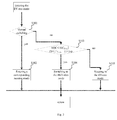
- Fig. 2 is a schematic diagram showing a signal flow of a hybrid electrical vehicle according to an embodiment of the present disclosure.
- the control module 40 includes a gear controller (SCU), an electric motor controller (ECN), a battery manager (BMS), an engine controller (ECM) and a transmission controller (TCU).
- the gear controller (SCU) is configured to sample a gear signal and an EV/HEV/eco/Sport mode signal and to transmit the gear signal and the EV/HEV/eco/Sport mode signal to the electric motor controller (ECN).
- the electric motor controller checks the EV/HEV/eco/Sport mode signal and forwards the gear signal and the EV/HEV/eco/Sport mode signal to the battery manager (BMS), the engine controller (ECM), the transmission controller (TCU) and a combination instrument. At the same time, the electric motor controller (ECN) performs a corresponding power system control scheme according to different mode strategies and sends an engine stop-start instruction and an engine target torque signal to the engine controller (ECM).
- the battery manager (BMS) checks the EV/HEV/eco/Sport mode signal and performs a power management strategy.
- the engine controller (ECM) performs an engine system control scheme and sends a current torque of the engine to the transmission controller (TCU).
- the transmission controller (TCU) samples a throttle signal, a brake signal and a vehicle speed signal and shifts the gear according to a gear shifting strategy of the gearbox.
- the combined instrument is configured to display the current EV/HEV/eco/Sport mode.
- control module 40 controls the hybrid electrical vehicle to switch among the electrical-economical mode, the electrical-sport mode, the hybrid electrical-economical and the hybrid electrical-sport mode according to a driving state of the hybrid electrical vehicle and/or a operating state of the power battery.
- the control module 40 controls the hybrid electrical vehicle to switch to the hybrid electrical-economical mode from the electrical-economical mode if a current electric quantity of the power battery is less than or equal to a second electric quantity threshold such as 20%, a maximum allowable discharge power of the power battery is less than or equal to a second power threshold such as 12KW, or a slope detected by the hybrid electrical vehicle is greater than or equal to a maximum slope such as 15%.
- a second electric quantity threshold such as 20%
- a maximum allowable discharge power of the power battery is less than or equal to a second power threshold such as 12KW
- a slope detected by the hybrid electrical vehicle is greater than or equal to a maximum slope such as 15%.
- the power battery provides power to the electric motor 5 to drive the hybrid electrical vehicle and the engine 3 is kept out of operation.
- the HEV mode selecting button is pressed manually, the mode of the hybrid electrical vehicle is switched to the HEV-eco mode.
- the operating mode selecting knob is rotated to the Sport mode the mode of the hybrid electrical vehicle is switched to the EV-s mode.
- the control module 40 controls the hybrid electrical vehicle to switch to the HEV-eco mode automatically if the current electric quantity of the power battery is less than or equal to a minimum electric quantity threshold such as 20%, the maximum allowable discharge power of the power battery is less than or equal to a minimum power threshold such as 12KW, or the slope detected by the hybrid electrical vehicle is greater than or equal to the maximum slope such as 15%.
- a maximum output power of the electric motor is limited; moreover considering an accelerating ability of the hybrid electrical vehicle and a maximum output torque of the electric motor is not limited.
- the control module controls the hybrid electrical vehicle to drive with a limited power.
- the control module 40 controls the hybrid electrical vehicle to switch to the hybrid electrical-sport mode from the electrical-sport mode if the current electric quantity of the power battery is less than or equal to the second electric quantity threshold such as 20%, the maximum allowable discharge power of the power battery is less than or equal to the second power threshold such as 12KW, or the slope detected by the hybrid electrical vehicle is greater than or equal to the maximum slope such as 15%.
- the hybrid electrical vehicle when the hybrid electrical vehicle is driving in the EV-s mode and no mode switching condition is triggered, the power battery provides power to the electric motor to drive the vehicle and the engine is kept out of operation.
- the HEV mode selecting button is pressed manually, the hybrid electrical vehicle is switched to the HEV-s mode.
- the operating mode selecting knob is rotated to the economical mode, the hybrid electrical vehicle is switched to the EV-eco mode.
- the control module 40 controls the hybrid electrical vehicle to switch to the HEV-s mode automatically if the current electric quantity of the power battery is less than or equal to the minimum electric quantity threshold such as 20%, the maximum allowable discharge power of the power battery is less than or equal to the minimum power threshold such as 12KW, or the slope detected by the hybrid electrical vehicle is greater than or equal to the maximum slope such as 15%.
- the minimum electric quantity threshold such as 20%
- the maximum allowable discharge power of the power battery is less than or equal to the minimum power threshold such as 12KW
- the slope detected by the hybrid electrical vehicle is greater than or equal to the maximum slope such as 15%.
- the output power of the electric motor is not limited.
- the control module 40 controls the hybrid electrical vehicle to switch to the mode corresponding to the mode switching instruction.
- the hybrid electrical vehicle can operate in the EV-eco mode or the EV-s mode. Due to the hybrid electrical vehicle using a plug-in battery charging structure, the capacity of the power battery is increased and a larger power and a larger torque of the electric motor 5 is selected and the hybrid electrical vehicle in the EV mode can operate in a more powerful manner, thus dealing with all city road conditions and most suburban road conditions without triggering the automatic mode switch function. Only when the slope detected by the hybrid electrical vehicle is greater than the maximum slope, e.g., 15% (an upper limit maximum in EV mode), the hybrid electrical vehicle is automatically switched to the HEV mode, unless the operator manually selects other modes, otherwise the hybrid electrical vehicle can remain in the HEV mode.
- the maximum slope e.g. 15% (an upper limit maximum in EV mode
- the output maximum torque of the electric motor is limited and the output power of the electric motor is not limited, thus the climb performance at the low speed and the high efficiency at the high speed can be ensured.
- the output maximum torque of the electric motor and the output power of the electric motor are not limited to ensure the strongest power in the EV mode.
- the control system of the hybrid electrical vehicle can ensure the dynamic performance and the extend driving range when the hybrid electrical vehicle is in pure electrical driving mode and at the same time meet the driving needs of the hybrid electric cars, which can avoid higher power consumption for a long time so as to improve the electrical efficiency.
- the maximum output power of the power battery or the slope is larger, thus avoiding the dynamic performance to decrease due to certain factors.
- operation in automatic mode may avoid frequent start and stop of the engine, thus improving the life of the started engine, reducing the noise and improving the driving comfort.
- the control module 40 controls the hybrid electrical vehicle to switch to the electric-economical mode if the current electric quantity of the power battery is larger than or equal to the first electric quantity threshold such as 30%, or a current speed of the hybrid electrical vehicle is less than or equal to a third speed threshold such as 150km/h.
- control module 40 controls the hybrid electrical vehicle to operate in a first manner if the slope detected by the hybrid electrical vehicle is less than or equal to the minimum slope such as 5%, the current electric quantity of the power battery is larger than or equal to the first electric quantity threshold such as 30% and the maximum allowable discharge power of the power battery is greater than or equal to the first power threshold such as 30kw.
- the control module 40 controls the hybrid electrical vehicle to operate in a second manner if the slope detected by the hybrid electrical vehicle is less than or equal to the minimum slope such as 5% and the current electric quantity of the power battery is less than or equal to the second electric quantity threshold such as 20% or if the current slope detected by the hybrid electrical vehicle is less than or equal to the minimum slope such as 5% and the maximum allowable discharge power of the power battery is less than or equal to the second power threshold such as 12KW, wherein the first electric quantity threshold is greater than the second electric quantity threshold, and the first power threshold is greater than the second power threshold.
- the first manner may be an economical manner
- the second manner may be a low power manner in which the engine 3 drives the electric motor 5 to generate power quickly so as to get out of a low power state such that the electric motor 5 again has the ability of adjusting the working region of the engine, thus ensuring the economy of the hybrid electrical vehicle.
- the control module 40 controls the engine 3 of the engine power subsystem 20 to stop and to control the electric motor 5 of the motor power subsystem 30 still to operate.
- the engine 3 is controlled to stop, at this time only the electric motor 5.
- the control module 40 controls the engine 3 to output a torque with a predetermined torque upper limit curve and controls the electric motor to complement the torque if a torque requirement of the hybrid electrical vehicle exceeds the predetermined torque upper limit curve of the engine (i.e., a torque required to keep the hybrid electrical vehicle driving normally in a current state).
- the control module 40 controls the engine to output a torque with a predetermined torque lower limit curve and controls the electric motor 5 to generate power if the torque requirement of the hybrid electrical vehicle is below the predetermined torque lower limit curve of the engine and the control module 40 controls the engine 3 to output a torque satisfying the torque requirement of the hybrid electrical vehicle and controls the electric motor 5 to generate power if the torque requirement of the hybrid electrical vehicle exceeds the predetermined torque lower limit curve of the engine and is below the predetermined torque upper limit curve of the engine.
- the predetermined torque upper limit curve and the predetermined torque lower limit curve of the engine are shown in Fig. 7 .
- the control module 40 controls the engine to output a torque with the predetermined torque upper limit curve and controls the electric motor 5 to complement the torque if the torque requirement of the hybrid electrical vehicle exceeds the predetermined torque upper limit curve of the engine.
- the control module 40 controls the engine to output a torque with the predetermined torque lower limit curve and controls the electric motor 5 to generate power if the torque requirement of the hybrid electrical vehicle is below the predetermined torque lower limit curve of the engine; and the control module 40 controls the engine 3 to output a torque satisfying the torque requirement of the hybrid electrical vehicle and controls the electric motor 5 to generate power if the torque requirement of the hybrid electrical vehicle exceeds the predetermined torque lower limit curve of the engine and is below the predetermined torque upper limit curve of the engine. Moreover, when the hybrid electrical vehicle operates in the low power manner and is in a P gear, the control module 40 controls the hybrid electrical vehicle to enter an idle stop-start mode.
- the control module 40 determines whether idle stop-start conditions are satisfied and if the idle stop-start conditions are satisfied the control module 40 controls an engine of the engine power subsystem to be stalled.
- the idle stop-start conditions includes: a current speed of the hybrid electrical vehicle is less than a first speed threshold such as 0, the hybrid electrical vehicle is in a P gear and the current electric quantity of the power battery of the motor power subsystem is greater than or equal to the first electric quantity threshold such as 20%.
- the hybrid electrical vehicle when the hybrid electrical vehicle is driving in the HEV-eco mode and the EV mode selecting button is pressed manually the hybrid electrical vehicle is allowed to switch to the EV-eco mode only if the current electric quantity of the power battery is greater than or equal to the maximum electric quantity threshold such as 30% or the current speed of the hybrid electrical vehicle is less than or equal to the third speed threshold such as 150km/h, otherwise the hybrid electrical vehicle cannot be switched to the EV-eco mode.
- the hybrid electrical vehicle is driving in the HEV-eco mode and the operating mode knob is rotated to the sport mode, the hybrid electrical vehicle is switched to the HEV-s mode.
- the hybrid electrical vehicle When the hybrid electrical vehicle is in the HEV-eco mode and there is no manual input to the mode selecting buttons the hybrid electrical vehicle is kept in the HEV-eco mode and the engine 3 and the electric motor 5 perform power distribution in terms of the economic strategy and the low power strategy respectively according to region division of the electric quantity of the power battery and the maximum allowable discharge power of the power battery. As shown in Fig.
- the hybrid electrical vehicle in the economical manner, if the current speed of the hybrid electrical vehicle is less than or equal to the first speed threshold such as 15km/h the hybrid electrical vehicle is in the pure electric driving mode. If the current speed of the hybrid electrical vehicle is greater than or equal to the second speed threshold such as 30km/h, the engine 3 takes part in driving the vehicle until the speed of the vehicle is reduced to the first speed threshold as 15km/h and then the hybrid electrical vehicle returns to the pure electric driving mode. In the pure electric mode, if the electric motor sends an alarm indicating the driving capability is not enough, the engine is started. As shown in Fig. 9 , in the low power manner, the pure electric driving mode at a low speed is cancelled and an engine stop-start function engaging the P gear is added.
- the engine outputs the torque with the predetermined torque upper limit and the insufficient torque is complemented by the electric motor. If the electric motor 5 has an insufficient generation capability due to the limitation of itself or the power battery the electric motor generates power with the maximum allowable capability of itself and the power battery, and the upper limit and lower limit of the output of the engine are cancelled and the engine outputs the torque with reference to requirements of the hybrid electrical vehicle.
- the electric motor mainly takes part in generating power, in which the generation power of the electric motor has a certain function relation with the current SOC of the power battery, as shown in Fig. 8 .
- a total output torque of the engine does not exceed the predetermined torque upper limit curve and if the electric motor 5 has an insufficient generation capability due to the limitation of itself or the power battery the electric motor generates power with the maximum allowable capability of itself and the power battery.
- the above HEV-eco mode driving strategy is performed when the slope detected by the vehicle is less than or equal to the maximum slope such as 15%.
- the slope detected by the vehicle is greater than the maximum slope such as 15%, in order to satisfy the grade ability of the hybrid electrical vehicle, it is ruled that the engine must start at this time and the torque upper limit of the engine, the torque lower limit curve of the engine and the output power limit of the electric motor are cancelled and the original driving strategy is not performed until the slope detected by the vehicle is less than the minimum slope such as 5%.
- the control system of the hybrid electrical vehicle in embodiments of the present disclosure from the power structure, the control system of the hybrid electrical vehicle in embodiments of the present disclosure, one engine and one electric motor are connected in parallel via the double clutch gearbox, the traditional control system of the hybrid electrical vehicle includes one engine, a first electric motor MG1 and a second electric motor MG2 connected via the planet gear. From the start-stop of the engine, the control system of the hybrid electrical vehicle in embodiments of the present disclosure does not consider the power requirement of the whole vehicle and controls the engine to start or stop according to the vehicle speed within a certain slope and the predetermined vehicle speed is relatively large when the slope is larger when the engine is running.
- the traditional control system of the hybrid electrical vehicle considers the vehicle speed, the charging power requirement of the power battery, the driving power requirement of the whole vehicle and the predetermined vehicle speed in the traditional control system of the hybrid electrical vehicle is lower. From the definition for the SOC in the low power manner, the SOC of the power battery in the control system of the hybrid electrical vehicle in embodiments of the present disclosure is less than or equal to 20%, the hybrid electrical vehicle operates in the low power manner, and the SOC of the power battery in the traditional control system of the hybrid electrical vehicle is less than or equal to 45%, the hybrid electrical vehicle operates in the low power manner; from the idle start-stop strategy in the P gear, if the vehicle speed is equal to 0, the vehicle is in the P gear, the SOC is larger or equal to 20%, the engine stops and the traditional control system of the hybrid electrical vehicle further considers the temperature of the engine and the SOC is in the high level.
- the control system of the hybrid electrical vehicle in embodiments of the present disclosure can switch between the economical manner and the low power manner according to the actual road condition rather than keeping the electricity balance, and in the traditional control system of the hybrid electrical vehicle, the SOC of the power battery enters a balance state after the vehicle is running for a short time.
- the difference of the power structure decides the control strategy between the control system in embodiments of the present disclosure and the traditional control system has some difference
- the first electrical motor in the traditional control system is adjusting the speed in the real time so as to adjust the rotation speed of the engine
- the idle rotation speed of the engine is 1200 rpm
- the idle rotation speed of the engine is about 800 rpm
- the control system only controls six double clutch shift levers, the shift operation is relatively simple.
- the power of the engine is completely used to drive the vehicle, or the part power of the engine is used to generate power to the power battery, and when the traditional control system of the hybrid electrical vehicle is operating with the large load, the part power of the engine is used to drive the first electric motor MG1 to generate power and then together with the power battery provide power to drive the second electric motor MG2 so as to drive the vehicle.
- the whole vehicle power of the engine when starting and stopping and the switched predetermined vehicle speed are lower, which can cause the engine to start and stop frequently and early and increases the proportion of the engine running, thus increasing the fuel consumption and the emission in the urban condition.
- the control system of the hybrid electrical vehicle in embodiments of the present disclosure has strong performance of pure electrical operation, meeting the vast majority of drive requirements, thus the predetermined vehicle speed are larger which can reduce the proportion of the engine running in the urban condition and reduce the fuel consumption and the emission in the urban condition.
- the driver when the driver operates the throttle it causes the power requirement to change for the whole vehicle more and frequently, thus avoiding the judgement of the whole vehicle power, reducing the start-stop frequency of the engine, extending the life of the start engine, reducing the noise and improving the comfort of the driver and at the same time, reducing the acceleration at the wide-open throttle, reducing the power pound of the engine start when climbing uphill, improving the driving safety and the driving comfort.
- the traditional control system of the hybrid electrical vehicle controls the engine to start or stop when the vehicle stops and is in the P gear, the SOC of the power battery and the temperature of the engine are need to be considered and the above factors are not controlled by the drivers, thus it is hard to summarize the operation rule.
- the SOC of the power battery is larger, which causes the engine to not stop when waiting for the red light and the vehicle is in the P gear, thus increasing the parking noise and reducing the comfort, and at the same time, the idle rotation speed of the engine is 1200rpm due to the transmission mechanism, which may cause the engine noise to be louder than a fuel vehicle.
- the engine can stop when the vehicle is the P gear in most conditions, which can be easily summarized in the operation rule to reduce the parking noise and improve the parking comfort, and the idle rotation speed of the engine is similar to the idle rotation speed of the fuel vehicle.
- control system of the hybrid electrical vehicle in embodiments of the present disclosure does not keep the electricity balanced and can switch between the economical manner and the low power manner according to the actual road condition, which can reduce the fuel consumption and the emission, and the transmission mechanism is the double clutch gearbox.
- the structure of the double clutch gearbox is simple, and the matching cycle is short, thus reducing the cost greatly; and the engine and the electric motor are connected in parallel when the vehicle operates in the HEV mode, the control strategy between the engine and the electric motor are easy to match and the convention efficiency is high.
- the generation strategy of the control system of the hybrid electrical vehicle in embodiments of the present disclosure is changed with the SOC of the power battery, thus the vehicle with the low load can keep the high electricity in the normal running.
- the control module 40 controls the hybrid electrical vehicle to switch to the electrical-sport mode if the current electric quantity of the power battery is larger than or equal to the first electric quantity threshold such as 30% or the current speed of the hybrid electrical vehicle is less than the third speed threshold such as 150km/h.
- the control module 40 controls the hybrid electrical vehicle to enter the idle stop-start mode.
- the control module 40 controls the engine to output a predetermined peak torque of the engine and controls the electric motor 5 to complement the torque if the torque requirement of the hybrid electrical vehicle exceeds the predetermined peak torque; and the control module 40 controls the engine to output a torque satisfying the torque requirement of the hybrid electrical vehicle and controls the electric motor 5 to generate power if the torque requirement of the hybrid electrical vehicle is less than or equal to the predetermined peak torque of the engine.
- the hybrid electrical vehicle driving in the HEV-s mode
- the EV mode selecting button when the EV mode selecting button is pressed manually, only if the current electric quantity of the power battery is greater than or equal to the maximum electric quantity threshold such as 30% or the current speed of the electrical vehicle is less than or equal to the third speed threshold such as 150km/h can the hybrid electrical vehicle be switched to the EV-s mode, otherwise no mode switching is performed.
- the operating mode knob is rotated to the economical mode, the hybrid electrical vehicle is switched to the HEV-eco mode.
- the hybrid electrical vehicle is kept in the HEV-s mode.
- the HEV-s mode is similar to the low power manner in the HEV-eco mode and the pure electric driving mode at a low speed is cancelled and the engine stop-start function with engaging the P gear is added. Furthermore, the output power of the electric motor is not limited and the torque upper limit and the torque lower limit of the engine are also cancelled such that the engine and the electric motor can output the peak values, thus obtaining the best power performance in the HEV-s mode.
- the double-clutch gearbox when the engine starts to operate, transmits the power from the engine and performs the gear shift.
- the hybrid electrical vehicle is in the HEV-eco mode or in the HEV-s mode, two gear shift strategies are used respectively.
- the HEV-eco mode focuses on reducing the oil wear and a principle of the gear shift strategy thereof is to ensure the engine operates in efficient regions as far as possible, thus a shift point of each gear may be a little earlier and the engine mainly operates in a rotating speed region of 1500-2000rpm during driving.
- the HEV-s mode focuses on the power performance and a principle of the gear shift strategy thereof is to ensure the torque transmitted to the wheels from the engine is as large as possible so as to obtain a better driving performance, thus the shift point of each gear may be a little later. Furthermore, with respect to the rapid acceleration with a full throttle, the shift point is defined as a maximum torque point of the engine calibrated under each gear, thus extremely improving the acceleration performance.
- the maximum output power of the power battery when the hybrid electrical vehicle is in the electrical-economical mode, the maximum output power of the power battery is less than a first predetermined power; when the hybrid electrical vehicle operates in the electrical-sport mode, the maximum output power of the power battery is less than a second predetermined power, in which the second predetermined power is greater than the first predetermined power; when the hybrid electrical vehicle operates in the hybrid electrical-economical mode, each of the maximum output power of the power battery and the maximum output power of the engine is less than the first predetermined power, and a maximum output torque of the engine is less than a first torque threshold; when the hybrid electrical vehicle operates in the hybrid electrical-sport mode, the maximum output power of the power battery is less than the second predetermined power, and the control module 40 allows the engine to output the maximum output torque and the maximum output power.
- the first predetermined power is 70KW
- the second predetermined power is 110KW
- the first torque threshold is 185 N•M.
- the hybrid electrical vehicle consumes the electric power purely and the maximum output power of the power battery is less than a maximum output power (such as 70KW) in the economical mode and the power battery operates in the most economical regions; in the electrical-sport mode, the hybrid electrical vehicle consumes the electric power purely and the maximum output power of the power battery is less than the maximum output power (such as 110KW) in the sport mode; in the hybrid electrical-economical mode, the hybrid electrical vehicle consumes both the electric power and the thermal power and the maximum output power of the engine is less than the maximum output power (such as 70KW) in the economical mode and the maximum output torque of the engine is less than a maximum output torque (such as 185 N•M) in the economical mode, such that the engine and the electric motor work in the most economical regions; in the hybrid electrical-sport mode, the hybrid electrical vehicle consumes both the electric power and the thermal power and the maximum output power of the power battery is less than the maximum output power such as 110KW in the sport mode and the control module 40 allows the engine to output
- the most economical region in the pure electric driving mode refers to the region in which the power battery operates with a relatively lower discharging power preferentially on the premise of satisfying the power performance (operating performance and acceleration performance) of the vehicle, this is because the working efficiency of the power battery reduces with the increment of the discharging power of the power battery.
- the most economical region in the hybrid mode refers to the region in which the power battery operating with a relatively lower discharging power preferentially on the premise of satisfying the power performance (operating performance and acceleration performance) of the vehicle, this is because the working efficiency of the power battery reduces with the increment of the discharging power of the power battery.
- the most economical region of the engine is determined by the torque and rotating speed of engine.
- a horizontal ordinate represents the rotating speed of the engine and a longitudinal coordinate represents the torque of the engine and the most economical region of the engine can be obtained by matching an appropriate rotating speed with a certain torque.
- the torque of the engine is too large the torque of the engine can be reduced and the rest torque is complemented by the electric motor; if the torque of the engine is too small, the torque of the engine can be increased, but it does not need the increased torque to drive the vehicle, thus energy generated by the increased torque is recovered to be used for power generation of the electric motor.
- the maximum output power in the economical mode can be understood as a maximum output power for keeping the power battery or the engine operating in the most economical regions.
- the maximum output power in the sport mode is a unique property, in which the engine outputs the maximum torque or the maximum power and the power battery outputs the maximum power, thus the power system provides the maximum output torque or the maximum output power for the vehicle.
- the running mode when the hybrid electrical vehicle starts is still the running mode when the hybrid electrical vehicle is stalled at last time.
- the hybrid electrical vehicle also has a pure fuel mode which is a fault mode.
- the engine power subsystem and the motor power subsystem are connected in parallel, which can enable the power between the engine power subsystem and the motor power subsystem to match easily, improve the transformation efficiency and effectively improve an energy utilization factor as compared with a series connection structure adopted in a power system of the conventional hybrid electrical vehicle.
- the parallel connection is simple in structure and can avoid a complex ECVT match in a series-parallel connection, which reduces a risk of driving uncomfortably caused by the match failure, thus the economy of the hybrid electrical vehicle is greatly improved on the premise of ensuring the power performance of the hybrid electrical vehicle.
- the predetermined start-stop value is large, which can drop the proportion of the engine-driven participation in the urban condition, reduce the fuel consumption emissions, and avoid the frequent start-stop phenomenon of the engine, thus increasing the starter life, reducing the traffic noise, and improve the driving comfort.
- the hybrid electrical vehicle includes a transmission device, an engine power subsystem, a motor power subsystem and a control module.
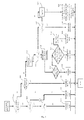
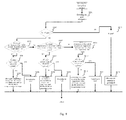
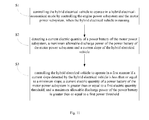
- Fig. 11 is a flow chart of a control method for a hybrid electrical vehicle according to an embodiment of the present disclosure. As shown in Fig. 11 , the method for controlling the hybrid electrical vehicle includes following steps.
- the first manner may be an economical manner, and a second manner may be a low power manner.
- a control method for the hybrid electrical vehicle in an electrical-economical includes following steps.
- the electric motor drives the hybrid electrical vehicle continuously as the single power source.
- the EV-eco mode focuses on saving electric power on the premise of satisfying a power performance requirement of the hybrid electrical vehicle and also focuses on improving the electricity efficiency by avoiding the long term and high power consumption, thus the maximum output power of the electric motor is limited to a certain value, such as 70KW.
- the maximum output torque of the electric motor is not limited, i.e., when the hybrid electrical vehicle is in the EV-eco mode, the control module controls the hybrid electrical vehicle to drive with a limited power.
- the control method for the hybrid electrical vehicle in the EV-eco mode by determining the current electric quantity of the power battery, the maximum allowable discharge power of the power battery and the slope detected by the hybrid electrical vehicle to control the vehicle to switch to the HEV-eco mode automatically, normal driving of the hybrid electrical vehicle can be ensured and risks of reducing the power performance can be avoided.
- the method for controlling the hybrid electrical vehicle in the EV-eco mode on the premise of satisfying the power performance of the whole vehicle, the power battery keeps operating in high efficient regions, thus realizing a long driving mileage, a low operation cost and a low emission.
- a control method for the hybrid electrical vehicle in the electrical-sport mode includes following steps.
- manual switching information is obtained, in which the manual switching information may be about whether a HEV mode selecting button switching operation is performed, whether an economical mode selecting button switching operation is performed or whether no mode selecting button switching operation is performed. In other words, it is determined whether a manual switch is performed, if yes, execute step S202 and if no, execute step S103.
- a running mode switching is performed and a corresponding control strategy of the power system is performed.
- the control module controls the hybrid electrical vehicle to switch to a running mode corresponding to the mode switching instruction from the user.
- the running mode is not switched, and then the current electric quantity (state of charge, SOC) of the power battery, the maximum allowable discharge power Pb of the power battery and a slope i detected by the hybrid electrical vehicle are compared with predetermined thresholds (i.e., the lower threshold of the electric quantity SOC down (such as 20%), the lower threshold of the maximum allowable discharge power Pb down (such as 12KW), and the upper threshold of the slope i up (such as 15%)) respectively to determine whether SOC ⁇ SOC down , whether Pb ⁇ Pb down and whether i up ⁇ i.
- predetermined thresholds i.e., the lower threshold of the electric quantity SOC down (such as 20%), the lower threshold of the maximum allowable discharge power Pb down (such as 12KW), and the upper threshold of the slope i up (such as 15%)
- the hybrid electrical vehicle is switched to the HEV-s mode automatically.
- the control module controls the hybrid electrical vehicle to switch to the hybrid electrical-economical mode.
- step S205 if each of the above three conditions is not satisfied, the hybrid electrical vehicle is not switched to the HEV-s mode and is kept driving in the EV-s mode.
- the electric motor drives the hybrid electrical vehicle continuously as the single power source.
- the maximum output torque and the maximum output power of the electric motor are not limited, and thus the electric motor drives the vehicle with the maximum capacity, and a higher power performance requirement (such as overtaking acceleration and fast climbing) can be achieved in the EV mode.
- the control method for the hybrid electrical vehicle in the EV-s mode by determining the current electric quantity of the power battery, the maximum allowable discharge power of the power battery and the slope detected by the hybrid electrical vehicle to control the vehicle to switch to the HEV-s mode automatically and normal driving of the hybrid electrical vehicle can be ensured and risks of reducing the power performance can be avoided.
- the vehicle can be driven in the pure electric driving mode and a better power performance can be achieved, and the running mode is flexible and changeable, thus providing the user with more driving fun.
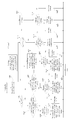
- a control method for the hybrid electrical vehicle in the hybrid electrical-economical mode includes following steps.
- step S301 switching information about the EV mode selecting button is obtained, and it is determined whether a manual switching to the EV mode is performed, if yes, execute step S302 or step S303 and if no, execute step S306.
- step S302 the current electric quantity (state of charge, SOC) of the power battery is compared with the predetermined upper electric quantity threshold SOC up such as 30% to determine whether SOC u p ⁇ SOC, if yes, execute step S304 and if no, execute step S305.
- step S303 the current speed of the hybrid electrical vehicle is compared with the maximum speed threshold V max (i.e., a highest speed which allows the hybrid electric vehicle to switch to the EV mode from the HEV mode, such as 150km/h) to determine whether v ⁇ V max , if yes, execute step 304 and if no, execute step S305.
- V max a highest speed which allows the hybrid electric vehicle to switch to the EV mode from the HEV mode, such as 150km/h
- step S304 the hybrid electrical vehicle is controlled to switch to the EV-eco mode.
- the control module controls the hybrid electrical vehicle to switch to the electrical-economical mode if the current electric quantity of the power battery is greater than or equal to the first electric quantity threshold such as 30%, or the current speed of the hybrid electrical vehicle is less than or equal to the third speed threshold such as 150km/h.
- the hybrid electrical vehicle keeps driving in the HEV-eco mode.
- step S306 switching information about the Sport mode selecting button is obtained, and it is determined whether a manual switching to the sport mode is performed, if yes, execute step S307 and if no, execute step S308.
- step S307 the hybrid electrical vehicle is controlled to switch to the HEV-s mode and a corresponding control strategy of the power system is performed.
- step S308 the running mode is not switched, and then slope information is obtained, i.e., the slope i is detected.
- step S309 it is determined whether i ⁇ i down , if yes, execute step S310, and if no, execute step S317.
- the current electric quantity (state of charge, SOC) of the power battery and the maximum allowable discharge power Pb of the power battery are detected and are compared with the thresholds (i.e., the upper electric quantity threshold SOC up (such as 30%), the lower electric quantity threshold SOC down (such as 20%), the upper threshold of the maximum allowable discharge power Pb up (such as 30KW) and the lower threshold of the maximum allowable discharge power Pb down (such as 12KW)) respectively.
- the thresholds i.e., the upper electric quantity threshold SOC up (such as 30%), the lower electric quantity threshold SOC down (such as 20%), the upper threshold of the maximum allowable discharge power Pb up (such as 30KW) and the lower threshold of the maximum allowable discharge power Pb down (such as 12KW)
- step S311 it is determined whether SOC up ⁇ SOC and whether Pb up ⁇ Pb, if yes, execute step S312, if no, execute step S313.
- step S312 the hybrid electrical vehicle is controlled in the economical manner.
- the control module 40 controls the hybrid electrical vehicle to operate in the economical manner if the slope detected by the hybrid electrical vehicle is less than or equal to the minimum slope such as 5%, and the current electric quantity of the power battery is greater than or equal to the first electric quantity threshold such as 30% and the maximum allowable discharge power of the power battery is greater than or equal to the first power threshold such as 30 KW.
- step S313 it is determined whether SOC up >SOC>SOC down and Pb up ⁇ Pb, or whether SOC up ⁇ SOC and Pb up >Pb>Pb down , if yes, execute step S314, if no, execute step S315.
- the hybrid electrical vehicle is controlled in the original manner, i.e., if the original manner is the economical manner, the hybrid electrical vehicle still operates in the economical manner. If the original manner is the low power manner, the hybrid electrical vehicle still operates in the low power manner.
- step S315 it is determined whether SOC ⁇ SOC down or whether Pb ⁇ Pb down , execute step S316.
- step S316 the hybrid electrical vehicle is controlled in the low power manner.
- the control module 40 controls the hybrid electrical vehicle to operate in the economical manner if the slope detected by the hybrid electrical vehicle is less than or equal to the minimum slope such as 5% and the current electric quantity of the power battery is less than or equal to the second electric quantity threshold such as 20%, or if the current slope detected by the hybrid electrical vehicle is less than or equal to the minimum slope such as 5% and the maximum allowable discharge power of the power battery is less than or equal to the second power threshold such as 12KW, in which the first electric quantity threshold is greater than the second electric quantity threshold, and the first power threshold is greater than the second power threshold.
- step S317 it is determined whether i up >i>i down , and if yes, execute step S318, if no, execute step S319.
- step S318 the hybrid electrical vehicle is controlled in the original manner i.e. the economical manner or the lower power manner.
- step S319 it is determined that i up ⁇ i, and execute step S320.
- the hybrid electrical vehicle is controlled to operate in the economical manner, moreover, the pure electric driving mode at a low speed, the upper limit of the engine, and the upper limit of the electric motor are cancelled.
- the engine drives the electric motor to generate power quickly so as to get out of a low power state, such that the electric motor again has the ability of adjusting the working region of the engine, thus ensuring the economy of the hybrid electrical vehicle.
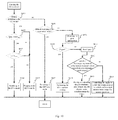
- a control method for the hybrid electrical vehicle in the economical manner includes following steps.
- step S401 the current speed of the hybrid electrical vehicle is obtained and the current speed v of the hybrid electrical vehicle is compared with the second speed threshold such as 15km/h and the third speed threshold such as 30km/h.
- step S402 it is determined whether v up ⁇ v, and if yes, execute step S403, if no, execute step S415.
- step S403 it is determined whether the torque requirement of the hybrid electrical vehicle exceeds the predetermined torque upper limit curve of the engine as shown in Fig. 7 , and if yes, execute step S404, if no, execute step S407.
- step S404 it is determined whether a fault occurs in the power system of the hybrid electrical vehicle, if yes, execute step S406, and if no, execute step S405.
- the engine is controlled to output a torque with the predetermined torque upper limit curve and the electric motor is controlled to complement the torque.
- the control module controls the engine to output a torque with the predetermined torque upper limit curve and controls the electric motor to complement the torque if a torque requirement of the hybrid electrical vehicle exceeds the predetermined torque upper limit curve of the engine.
- step S406 the fault is processed.
- step S407 it is determined whether the torque requirement of the hybrid electrical vehicle is below the predetermined torque lower limit curve of the engine as shown in Fig. 7 , and if yes, execute step S408, if no, execute step S411.
- step S408 it is determined whether a fault occurs in the power system of the hybrid electrical vehicle, if yes, execute step S410, and if no, execute step S409.
- the engine is controlled to output a torque with the predetermined torque lower limit curve and the electric motor is controlled to generate power.
- the control module controls the engine to output a torque with the predetermined torque lower limit curve and controls the electric motor to generate power if the torque requirement of the hybrid electrical vehicle is below the predetermined torque lower limit curve of the engine.
- step S410 the fault is processed.
- step S411 it is determined that the torque requirement of the hybrid electrical vehicle exceeds the predetermined torque lower limit curve of the engine and is below the predetermined torque upper limit curve of the engine as shown in Fig. 7 .
- step S412 it is determined whether a fault occurs in the power system of the hybrid electrical vehicle, if yes, execute step S414, and if no, execute step S413.
- the engine is controlled preferentially to satisfy the torque requirement of the hybrid electrical vehicle, and also controlled to output another more torque for generating power.
- the control module controls the engine to output the torque satisfying the torque requirement of the hybrid electrical vehicle and controls the electric motor to generate power if the torque requirement of the hybrid electrical vehicle exceeds the predetermined torque lower limit curve of the engine and is below the predetermined torque upper limit curve of the engine.
- a principle of generating power follows the functional relationship between the generation power and SOC of the power battery as shown in Fig.
- a generating torque converted to the electric motor is not greater than Tm max ; (2) a total output torque of the engine does not exceed the predetermined torque upper limit curve as shown in Fig. 7 . If the torque of the engine calculated from a generation power curve does not satisfy any of the above two conditions, the above two conditions are used as upper limits to constraint the torque of the engine configured to generate power.
- step S415 it is determined whether v up >v>v down , and if yes, execute step S416, if no, execute step S419.
- step S416 it is determined whether a fault occurs in the power system of the hybrid electrical vehicle, if yes, execute step S418; and if no, execute step S417.
- the hybrid electrical vehicle is controlled to operate in the original manner, i.e., the hybrid electrical vehicle is still driven by the electric motor only, or the electric motor still assists the engine to drive the hybrid electrical vehicle.
- step S419 it is determined that v ⁇ v down , and execute step S420.
- step S420 it is determined whether a fault occurs in the power system, if yes, execute step S422 and if no, execute step S421.
- the hybrid electrical vehicle is driven by the electric motor only and the engine is stalled.
- the control module controls the engine of the engine power subsystem to stop and controls the electric motor of the motor power subsystem still to operate, at this time, the hybrid electrical vehicle operates in the hybrid electrical-economical mode.
- step S422 the fault is processed.
- a control method for the hybrid electrical vehicle in the low power manner includes following steps.
- step S502 it is determined whether the hybrid electrical vehicle is in a non-P gear, and execute step S503, if no, execute step S515.
- step 503 it is determined whether the torque requirement of the hybrid electrical vehicle exceeds the predetermined torque upper limit curve of the engine as shown in Fig. 7 , and if yes, execute step S504, if no, execute step S507.
- step S504 it is determined whether a fault occurs in the power system of the hybrid electrical vehicle, if yes, execute step S506; and if no, execute step S505.
- the engine is controlled to output a torque with the predetermined torque upper limit curve and the electric motor is controlled to complement the torque.
- the control module 40 controls the engine to output a torque with the predetermined torque upper limit curve and controls the electric motor to complement the torque if a torque requirement of the hybrid electrical vehicle exceeds the predetermined torque upper limit curve of the engine.
- step S506 the fault is processed.
- step S507 it is determined whether he torque requirement of the hybrid electrical vehicle is below the predetermined torque lower limit curve of the engine as shown in Fig. 7 , and if yes, execute step S508, if no, execute step S511.
- step S508 it is determined whether a fault occurs in the power system of the hybrid electrical vehicle, if yes, execute step S510; and if no, execute step S509.
- the engine is controlled to output a torque with the predetermined torque lower limit curve and the electric motor is controlled to generate power.
- the control module 40 controls the engine to output a torque with the predetermined torque lower limit curve and controls the electric motor to generate power if the torque requirement of the hybrid electrical vehicle is below the predetermined torque lower limit curve of the engine.
- step S510 the fault is processed.
- step S511 it is determined that the torque requirement of the hybrid electrical vehicle exceeds the predetermined torque lower limit curve of the engine and is below the predetermined torque upper limit curve of the engine, and execute step S512.
- step S512 it is determined whether a fault occurs in the power system, if yes, execute step S514; and if no, execute step S513.
- the engine is controlled preferentially to satisfy the torque requirement of the hybrid electrical vehicle and is also controlled to output more torque for generating power.
- the control module controls the engine to output the torque satisfying the torque requirement of the hybrid electrical vehicle and controls the electric motor to generate power if the torque requirement of the hybrid electrical vehicle exceeds the predetermined torque lower limit curve of the engine and is below the predetermined torque upper limit curve of the engine.
- the principle of generating power follows the functional relationship between the generation power and SOC of the power battery as shown in Fig.
- step S515 it is determined that the hybrid electrical vehicle is in the P gear, and execute step S516.
- an idle stop-start strategy is performed.
- the control module 40 controls the hybrid electrical vehicle to enter an idle stop-start mode, and the engine is stalled.
- the electric motor cooperates with the engine to improve the energy utilization factor and general procedures are shown as follows.
- the electric motor is used more often than the engine; when the hybrid electrical vehicle operates in the economical regions of the engine, the engine can generate some power to charge the power battery, and the less the electric quantity of the power battery is, the higher the generation power of the engine is.
- the maximum output power of the electric motor is limited so as to avoid a long term high power consumption, such that the electric quantity of the power battery is kept in a relatively high level and the electric motor always has electric energy to adjust the engine to operate in high efficiency regions, thus reducing the oil wear during the hybrid electrical driving as much as possible and ensuring the economy and emission behavior of the hybrid electrical vehicle.
- the electric motor can assist the engine to drive the vehicle together, and thus the power performance is greatly improved as compared with that in the EV mode.
- the user needs long distance driving and wants to reduce the oil wear as much as possible, he can choose the above mode.
- a control method for the hybrid electrical vehicle in the hybrid electrical-sport mode includes following steps.
- step S601 switching information about the EV mode selecting button is obtained and it is determined whether a manual switch to the EV mode is performed, if yes, execute step S602; and if no, execute step S606.
- step S602 the current electric quantity SOC of the power battery is compared with the second electric quantity threshold such as 30% and it is determined whether SOC up ⁇ SOC, if yes, execute step S603, if no, execute step S605.
- step S603 the current speed of the hybrid electrical vehicle is compared with the first speed threshold V max (i.e., the highest speed that allows the hybrid electric vehicle to switch to the EV mode from the HEV mode, such as 150km/h), and it is determined whether v ⁇ V max , if yes, execute step 604; and if no, execute step S605.
- V max the highest speed that allows the hybrid electric vehicle to switch to the EV mode from the HEV mode, such as 150km/h
- step S604 the hybrid electrical vehicle is controlled to switch to the EV-s mode and a corresponding control strategy of the power system is performed.
- the control module controls the hybrid electrical vehicle to switch to the electrical-sport mode if the current electric quantity of the power battery is greater than or equal to the first electric quantity threshold such as 30%, or the current speed of the hybrid electrical vehicle is less than or equal to the third speed threshold such as 150km/h.
- the hybrid electrical vehicle keeps driving in the HEV-s mode.
- step S606 the switching information about the economical mode selecting button is obtained and it is determined whether a manual switch to the economical mode is performed, if yes, execute step S607; and if no, execute step S608.
- step S607 the hybrid electrical vehicle is controlled to switch to the HEV-eco mode and a corresponding control strategy of the power system is performed.
- step S608 the running mode is not switched, and the gear information is obtained to determine the current gear of the hybrid electrical vehicle.
- step S609 it is determined whether the hybrid electrical vehicle is in the P gear, and if yes, execute step S610, and if no, execute step S611.
- the idle stop-start strategy is performed.
- the control module 40 controls the hybrid electrical vehicle to enter the idle stop-start mode.
- step S611 it is determined that the hybrid electrical vehicle is in the non-P gear, and if yes, execute step S612.
- step S612 the torque requirement of the hybrid electrical vehicle is compared with a predetermined peak torque of the engine and it is determined whether the torque requirement of the hybrid electrical vehicle exceeds the predetermined peak torque, if yes, execute step S613; and if no, execute step S614.
- the engine is controlled to output the predetermined peak torque and the electric motor is controlled to complement the torque.
- the electric motor is limited by its current capability or the capability of the power battery, it drives with the maximum capabilities of itself and the power battery.
- the control module 40 controls the engine to output the predetermined peak torque of the engine and controls the electric motor to complement the torque if the torque requirement of the hybrid electrical vehicle exceeds the predetermined peak torque of the engine.
- the engine is controlled preferentially to satisfy the torque requirement of the hybrid electrical vehicle and is also controlled to output another more torque for generating power.
- the control module 40 controls the engine to output a torque satisfying the torque requirement of the hybrid electrical vehicle and controls the electric motor to generate power if the torque requirement of the hybrid electrical vehicle is less than or equal to the predetermined peak torque of the engine.
- the principle of generating power follows the relationship between the generation power and SOC of the power battery as shown in Fig.
- the engine When the hybrid electrical vehicle is driven in the HEV-s mode and is in the non-P gear, the engine is kept in a starting state. Only if the hybrid electrical vehicle is in the P gear and the idle stop-start conditions are satisfied can the engine be stalled.
- the maximum output torque and the maximum output power of the engine and the electric motor are not limited any more, thus a maximum driving capability of the power system can be achieved.
- the HEV-s mode realizes the best power performance among the four running modes.
- the HEV-s mode is suitable for users who have a high requirement for power performance and has enough power equal to that of the fuel vehicle with a high emission.
- the EV, HEV, economical and Sport mode selecting buttons four different running modes (i.e., the EV-eco mode, the EV-s mode, the HEV-eco mode and the HEV-s mode) can be obtained, each of which has different power performance requirement and economy requirement and thus has different driving strategies.
- the power system of the hybrid electrical vehicle adopts the parallel connection mode instead of the series connection mode or the series-parallel connection mode.
- driving strategies a starting point of the engine is optimized, a speed threshold is increased, the slope detection is added and a determination about the demanded power is cancelled.
- the engine is limited to operate in the region between the predetermined torque upper limit curve and the predetermined torque lower limit curve, and the generation power is represented by a dynamic curve taking the SOC value of the power battery as its independent variable.
- the hybrid electrical vehicle can be driven according to subjective operation intentions of the user and the driving fun is improved.
- the power system of the hybrid electrical vehicle adopts the parallel connection mode which can effectively improve the energy utilization factor as compared with the series connection mode.
- the parallel connection is simple in structure and can avoid a complex ECVT match in the series-parallel connection, which reduces a risk of driving uncomfortably caused by the match failure.
- the starting point of the engine is optimized to avoid premature and frequent start of the engine, such that noise when the engine starts can be reduced effectively, a working life of a starting system can be improved and a risk of pulling down a low voltage frequently caused by frequent start can also be reduced, thus other low voltage electrical equipments can be ensured to operate normally.
- the working region of the engine is also optimized so as to ensure that the engine keeps operating in the high efficiency region, and the generation power is also optimized so as to ensure that there are high power equilibrium points during the driving of the vehicle, thus facilitating the hybrid electrical vehicle mostly being in the economical strategy and reducing the oil wear efficiently.
- control method for the hybrid electrical vehicle can ensure the running power performance of the pure electric vehicle and the driving range, avoid the high- power electricity of the vehicle for a long time when meeting the power requirement of the whole vehicle so as to improve the electric efficiency, at the same time, avoiding the frequent start-stop phenomenon of the engine, thus increasing the starter life, reducing the traffic noise, and improve the driving comfort.
- Any procedure or method described in the flow charts or described in any other way herein may be understood to comprise one or more modules, portions or parts for storing executable codes that realize particular logic functions or procedures.
- advantageous embodiments of the present disclosure comprises other implementations in which the order of execution is different from that which is depicted or discussed, including executing functions in a substantially simultaneous manner or in an opposite order according to the related functions. This should be understood by those skilled in the art which embodiments of the present disclosure belong to.
- a particular sequence table of executable instructions for realizing the logical function may be specifically achieved in any computer readable medium to be used by the instruction execution system, device or equipment (such as the system based on computers, the system comprising processors or other systems capable of obtaining the instruction from the instruction execution system, device and equipment and executing the instruction), or to be used in combination with the instruction execution system, device and equipment.
- each part of the present disclosure may be realized by the hardware, software, firmware or their combination.
- a plurality of steps or methods may be realized by the software or firmware stored in the memory and executed by the appropriate instruction execution system.
- the steps or methods may be realized by one or a combination of the following techniques known in the art: a discrete logic circuit having a logic gate circuit for realizing a logic function of a data signal, an application-specific integrated circuit having an appropriate combination logic gate circuit, a programmable gate array (PGA), a field programmable gate array (FPGA), etc.
- each function cell of the embodiments of the present disclosure may be integrated in a processing module, or these cells may be separate physical existence, or two or more cells are integrated in a processing module.
- the integrated module may be realized in a form of hardware or in a form of software function modules. When the integrated module is realized in a form of software function module and is sold or used as a standalone product, the integrated module may be stored in a computer readable storage medium.
- the storage medium mentioned above may be read-only memories, magnetic disks or CD, etc.
Landscapes
- Engineering & Computer Science (AREA)
- Transportation (AREA)
- Mechanical Engineering (AREA)
- Chemical & Material Sciences (AREA)
- Combustion & Propulsion (AREA)
- Automation & Control Theory (AREA)
- Electric Propulsion And Braking For Vehicles (AREA)
- Hybrid Electric Vehicles (AREA)
Applications Claiming Priority (3)
| Application Number | Priority Date | Filing Date | Title |
|---|---|---|---|
| CN201310409911 | 2013-09-09 | ||
| CN201310557279.9A CN104417543B (zh) | 2013-09-09 | 2013-11-11 | 混合动力汽车的控制系统和控制方法 |
| PCT/CN2014/085829 WO2015032323A1 (fr) | 2013-09-09 | 2014-09-03 | Système et procédé de commande de véhicule hybride |
Publications (2)
| Publication Number | Publication Date |
|---|---|
| EP3045365A1 true EP3045365A1 (fr) | 2016-07-20 |
| EP3045365A4 EP3045365A4 (fr) | 2017-05-17 |
Family
ID=52627808
Family Applications (1)
| Application Number | Title | Priority Date | Filing Date |
|---|---|---|---|
| EP14842391.6A Withdrawn EP3045365A4 (fr) | 2013-09-09 | 2014-09-03 | Système et procédé de commande de véhicule hybride |
Country Status (4)
| Country | Link |
|---|---|
| US (1) | US10011264B2 (fr) |
| EP (1) | EP3045365A4 (fr) |
| CN (1) | CN104417543B (fr) |
| WO (1) | WO2015032323A1 (fr) |
Families Citing this family (34)
| Publication number | Priority date | Publication date | Assignee | Title |
|---|---|---|---|---|
| CN104417347B (zh) | 2013-09-09 | 2017-08-04 | 比亚迪股份有限公司 | 混合动力汽车的控制系统和控制方法 |
| CN104417554B (zh) | 2013-09-09 | 2018-03-13 | 比亚迪股份有限公司 | 混合动力汽车及其的巡航控制方法 |
| CN104417543B (zh) | 2013-09-09 | 2017-08-22 | 比亚迪股份有限公司 | 混合动力汽车的控制系统和控制方法 |
| CN104417344B (zh) * | 2013-09-09 | 2017-03-15 | 比亚迪股份有限公司 | 混合动力汽车及其的驱动控制方法 |
| CN104417346B (zh) | 2013-09-09 | 2017-04-12 | 比亚迪股份有限公司 | 混合动力汽车的控制系统和控制方法 |
| CN104417544B (zh) | 2013-09-09 | 2017-08-22 | 比亚迪股份有限公司 | 混合动力汽车的控制系统和控制方法 |
| CN104417557B (zh) | 2013-09-09 | 2017-07-04 | 比亚迪股份有限公司 | 一种车辆的滑行回馈控制系统及其控制方法 |
| JP6446886B2 (ja) | 2014-07-23 | 2019-01-09 | スズキ株式会社 | モータ制御装置 |
| CN106143475B (zh) * | 2015-03-25 | 2019-01-11 | 比亚迪股份有限公司 | 混合动力汽车及其驱动控制方法和装置 |
| CN106143476B (zh) * | 2015-03-25 | 2019-11-08 | 比亚迪股份有限公司 | 混合动力汽车及其驱动控制方法和装置 |
| CN106143474B (zh) * | 2015-03-25 | 2019-02-26 | 比亚迪股份有限公司 | 混合动力汽车及其驱动控制方法和装置 |
| US9718456B2 (en) * | 2015-03-26 | 2017-08-01 | Ford Global Technologies, Llc | Torque assist based on battery state of charge allocation |
| JP6361634B2 (ja) * | 2015-11-12 | 2018-07-25 | トヨタ自動車株式会社 | ハイブリッド自動車 |
| CN105667500B (zh) * | 2016-02-29 | 2018-01-02 | 潍柴动力股份有限公司 | 单轴并联混合动力公交车电量平衡自适应标定方法 |
| DE102016208238A1 (de) * | 2016-05-12 | 2017-11-16 | Volkswagen Aktiengesellschaft | Steuerungsverfahren für einen Hybridantrieb, Steuergerät und Hybridantrieb |
| CN106564406B (zh) * | 2016-11-02 | 2019-07-23 | 孙立 | 用于电动交通工具的双能源动力总成系统及其控制方法 |
| CN109383486A (zh) * | 2017-08-04 | 2019-02-26 | 郑州宇通客车股份有限公司 | 混合动力汽车扭矩控制方法和混合动力汽车动力系统 |
| CN110682904A (zh) * | 2018-07-06 | 2020-01-14 | 郑州宇通客车股份有限公司 | 一种混合动力车辆的节油控制方法及系统 |
| US10543739B1 (en) * | 2018-07-25 | 2020-01-28 | Fca Us Llc | Mode transition control techniques for an electrically all-wheel drive hybrid vehicle |
| CN109613911B (zh) * | 2018-12-14 | 2021-02-05 | 北京新能源汽车股份有限公司 | 一种车辆测试系统及方法 |
| DE102019101782A1 (de) | 2019-01-24 | 2020-07-30 | Bayerische Motoren Werke Aktiengesellschaft | Systeme und Verfahren zur Steuerung eines Fahrmodus |
| JP7184008B2 (ja) * | 2019-10-02 | 2022-12-06 | トヨタ自動車株式会社 | ハイブリッド車両の制御装置 |
| EP3882068A1 (fr) * | 2020-03-18 | 2021-09-22 | Volvo Car Corporation | Procédé et système pour commander la distribution de couple |
| CN111409645B (zh) * | 2020-04-13 | 2021-04-27 | 宁波吉利汽车研究开发有限公司 | 一种用于混合动力车辆的驾驶模式切换的控制方法及系统 |
| CN113715802B (zh) * | 2020-05-22 | 2024-05-17 | 广州汽车集团股份有限公司 | 具有混合动力耦合系统的车辆的控制器、控制方法和车辆 |
| CN111894747A (zh) * | 2020-07-14 | 2020-11-06 | 北京汽车股份有限公司 | 混动车辆发动机启动控制方法、系统及混动车辆 |
| CN113460026B (zh) * | 2021-07-02 | 2024-01-19 | 北京汽车集团越野车有限公司 | 一种功率分配方法、装置、设备及汽车 |
| EP4530117A4 (fr) * | 2022-06-30 | 2025-08-06 | Shenzhen Yinwang Intelligent Technology Co Ltd | Procédé et appareil de compensation d'accélération, et véhicule |
| KR20240003397A (ko) * | 2022-06-30 | 2024-01-09 | 현대자동차주식회사 | 하이브리드 차량, 그 주행모드 제어 방법 및 장치 |
| TWI854400B (zh) * | 2022-12-19 | 2024-09-01 | 亞福儲能股份有限公司 | 混合動力系統及其最佳化方法 |
| CN117022143A (zh) * | 2023-09-12 | 2023-11-10 | 浙江吉利控股集团有限公司 | 增程式电动汽车的控制方法、装置、电子设备及介质 |
| CN117818620B (zh) * | 2023-12-28 | 2025-06-27 | 岚图汽车科技有限公司 | 驾驶模式自适应调整方法、装置、设备及存储介质 |
| CN117962855B (zh) * | 2024-02-28 | 2025-06-20 | 广州汽车集团股份有限公司 | 能量管理控制方法、装置、计算机可读介质及电子设备 |
| CN118238598B (zh) * | 2024-05-27 | 2024-09-10 | 株洲变流技术国家工程研究中心有限公司 | 一种混合电驱动系统、方法、存储介质及电子设备 |
Family Cites Families (148)
| Publication number | Priority date | Publication date | Assignee | Title |
|---|---|---|---|---|
| JP3094872B2 (ja) | 1995-10-20 | 2000-10-03 | トヨタ自動車株式会社 | ハイブリッド車用制御装置 |
| DE19709457A1 (de) | 1997-03-07 | 1998-09-10 | Mannesmann Sachs Ag | Antriebsanordnung für ein Kraftfahrzeug |
| JP3211751B2 (ja) | 1997-03-24 | 2001-09-25 | トヨタ自動車株式会社 | 動力出力装置およびその制御方法 |
| JP3767103B2 (ja) | 1997-07-16 | 2006-04-19 | 日産自動車株式会社 | 電気自動車の制御装置 |
| US6554088B2 (en) | 1998-09-14 | 2003-04-29 | Paice Corporation | Hybrid vehicles |
| JP3525218B2 (ja) | 1998-09-18 | 2004-05-10 | 本田技研工業株式会社 | ハイブリッド車両の回生制御装置 |
| JP4070401B2 (ja) | 2000-10-31 | 2008-04-02 | 日産ディーゼル工業株式会社 | 車両のハイブリッドシステム |
| US7122979B2 (en) | 2000-12-27 | 2006-10-17 | Transportation Techniques, Llc | Method and apparatus for selective operation of a hybrid electric vehicle in various driving modes |
| JP3835202B2 (ja) * | 2001-05-18 | 2006-10-18 | トヨタ自動車株式会社 | 車両用駆動制御装置 |
| JP3612711B2 (ja) * | 2002-07-03 | 2005-01-19 | トヨタ自動車株式会社 | 自動車 |
| US7216729B2 (en) | 2003-09-19 | 2007-05-15 | Ford Global Technologies, Llc | Method and system of requesting engine on/off state in a hybrid electric vehicle |
| CN1238213C (zh) | 2003-10-17 | 2006-01-25 | 清华大学 | 混合动力轿车动力总成的动力输出切换方法及其控制系统 |
| US7653474B2 (en) | 2004-05-14 | 2010-01-26 | Gm Global Technology Operations, Inc. | Method of determining engine output power in a hybrid electric vehicle |
| US7107956B2 (en) | 2004-07-30 | 2006-09-19 | Ford Global Technologies, Llc | Vehicle and method for controlling engine start in a vehicle |
| JP4239923B2 (ja) | 2004-08-02 | 2009-03-18 | 日産自動車株式会社 | 電動力伝達装置 |
| JP2006094626A (ja) | 2004-09-24 | 2006-04-06 | Toyota Motor Corp | ハイブリッド車およびその制御方法 |
| JP4327692B2 (ja) | 2004-09-30 | 2009-09-09 | トヨタ自動車株式会社 | 二次電池の充放電制御装置 |
| US7332881B2 (en) | 2004-10-28 | 2008-02-19 | Textron Inc. | AC drive system for electrically operated vehicle |
| JP2006183547A (ja) | 2004-12-27 | 2006-07-13 | Nissan Motor Co Ltd | ハイブリッド車両のエンジン始動装置 |
| JP4474293B2 (ja) | 2005-01-31 | 2010-06-02 | トヨタ自動車株式会社 | ハイブリッド車およびその制御方法 |
| CN1895942A (zh) | 2005-07-15 | 2007-01-17 | 中国第一汽车集团公司 | 双电机混合动力汽车动力系统控制方法 |
| KR100747796B1 (ko) * | 2005-11-17 | 2007-08-08 | 현대자동차주식회사 | 하이브리드차의 경사로 구동 제어장치 및 제어방법 |
| FR2894547B1 (fr) | 2005-12-08 | 2009-06-05 | Renault Sas | Procede et dispositif de controle et de supervision d'un vehicule hybride du type comportant quatre roues motrices |
| JP5247000B2 (ja) | 2005-12-21 | 2013-07-24 | 日産自動車株式会社 | 車両のコースト減速制御装置 |
| FR2896750B1 (fr) | 2006-01-30 | 2009-11-13 | Peugeot Citroen Automobiles Sa | Procede de commande d'un groupe motopropulseur de vehicule automobile |
| US8620498B2 (en) | 2006-06-20 | 2013-12-31 | GM Global Technology Operations LLC | Hybrid road grade determination system |
| CN101096180A (zh) | 2006-06-30 | 2008-01-02 | 比亚迪股份有限公司 | 四轮驱动混合动力系统及工作方法 |
| DE102006034932A1 (de) | 2006-07-28 | 2008-01-31 | Dr.Ing.H.C. F. Porsche Ag | Verfahren und Vorrichtung zur Steuerung eines Hybrid-Fahrzeugantriebs |
| JP5162998B2 (ja) | 2006-10-12 | 2013-03-13 | 日産自動車株式会社 | ハイブリッド車両のモード切り替え制御装置 |
| CN1944139A (zh) * | 2006-11-08 | 2007-04-11 | 北京理工大学 | 串联式混合动力车辆的整车控制策略 |
| JP4793233B2 (ja) | 2006-11-24 | 2011-10-12 | トヨタ自動車株式会社 | 動力出力装置、それを搭載した車両及びその制御方法 |
| JP4254852B2 (ja) | 2006-12-06 | 2009-04-15 | トヨタ自動車株式会社 | 車両およびその制御方法 |
| US7678005B2 (en) | 2006-12-19 | 2010-03-16 | Chrysler Group Llc | Fixed speed operation in a hybrid transmission including sport and economy modes |
| JP4201044B2 (ja) * | 2007-01-09 | 2008-12-24 | トヨタ自動車株式会社 | 車両およびその制御方法 |
| JP5098338B2 (ja) | 2007-01-10 | 2012-12-12 | 日産自動車株式会社 | ハイブリッド車両 |
| JP4229185B2 (ja) | 2007-01-12 | 2009-02-25 | トヨタ自動車株式会社 | ハイブリッド自動車およびその制御方法 |
| JP4241837B2 (ja) * | 2007-01-15 | 2009-03-18 | トヨタ自動車株式会社 | 車両およびその制御方法 |
| JP4127314B1 (ja) * | 2007-02-13 | 2008-07-30 | トヨタ自動車株式会社 | 電動車両制御装置 |
| JP4345824B2 (ja) * | 2007-02-21 | 2009-10-14 | トヨタ自動車株式会社 | 車両およびその制御方法 |
| JP4241845B2 (ja) | 2007-03-06 | 2009-03-18 | トヨタ自動車株式会社 | 車両の制御装置、制御方法、その方法を実現するプログラムおよびそのプログラムを記録した記録媒体 |
| DE102007016515A1 (de) | 2007-04-05 | 2008-10-09 | Daimler Ag | Verfahren zur Steuerung eines Antriebssystems für ein Kraftfahrzeug |
| AU2008236395B2 (en) | 2007-04-10 | 2012-07-05 | Toyota Jidosha Kabushiki Kaisha | Control unit and control method for variable valve timing mechanism, program for implementing the control method, and recording medium on which the program is recorded |
| JP2008261244A (ja) | 2007-04-10 | 2008-10-30 | Toyota Motor Corp | 可変バルブタイミング機構の制御装置、制御方法、その方法を実現させるプログラムおよびそのプログラムを記録した記録媒体 |
| JP4183013B1 (ja) | 2007-05-15 | 2008-11-19 | トヨタ自動車株式会社 | 車両およびその制御方法 |
| JP4544273B2 (ja) | 2007-06-20 | 2010-09-15 | トヨタ自動車株式会社 | 車両用電源装置および車両用電源装置における蓄電装置の充電状態推定方法 |
| CN101445105B (zh) | 2007-11-26 | 2011-07-06 | 比亚迪股份有限公司 | 一种混合动力驱动系统的驱动控制方法 |
| JP4527138B2 (ja) * | 2007-07-12 | 2010-08-18 | 本田技研工業株式会社 | ハイブリッド車両の制御装置 |
| JP4341704B2 (ja) | 2007-07-12 | 2009-10-07 | トヨタ自動車株式会社 | ハイブリッド車両およびハイブリッド車両の制御方法 |
| CN101186209B (zh) | 2007-09-04 | 2013-01-16 | 深圳先进技术研究院 | 采用电气系统实现混联功率分配的混合动力系统 |
| CN101125548B (zh) | 2007-09-07 | 2012-10-24 | 南京工业职业技术学院 | 并联式混合动力系统的能量流控制方法 |
| KR100887797B1 (ko) | 2007-09-28 | 2009-03-09 | 현대자동차주식회사 | 하이브리드 차량의 오토크루즈 주행 제어 방법 |
| JP4909863B2 (ja) | 2007-10-04 | 2012-04-04 | 本田技研工業株式会社 | ハイブリッド車両の制御装置 |
| US8043194B2 (en) | 2007-10-05 | 2011-10-25 | Ford Global Technologies, Llc | Vehicle creep control in a hybrid electric vehicle |
| CN101445042B (zh) | 2008-10-11 | 2012-03-21 | 比亚迪股份有限公司 | 一种混合动力汽车 |
| CN201214410Y (zh) | 2007-12-29 | 2009-04-01 | 桂林吉星电子等平衡动力有限公司 | 一种油电混合动力电动车的速度巡航控制装置 |
| CN101214797B (zh) | 2007-12-29 | 2010-08-11 | 奇瑞汽车有限公司 | 一种混合动力汽车电池充放电电流限制保护方法 |
| JP2009166516A (ja) | 2008-01-10 | 2009-07-30 | Toyota Motor Corp | ハイブリッド自動車およびその制御方法 |
| JP2009198223A (ja) | 2008-02-19 | 2009-09-03 | Toyota Motor Corp | 車両およびその制御方法 |
| CN101587212A (zh) | 2008-05-19 | 2009-11-25 | 鸿富锦精密工业(深圳)有限公司 | 套筒及采用该套筒的光纤连接器插座 |
| JP4386138B1 (ja) | 2008-06-27 | 2009-12-16 | トヨタ自動車株式会社 | ハイブリッド車両の制御装置および制御方法 |
| CN101618718B (zh) | 2008-06-30 | 2013-06-19 | 比亚迪股份有限公司 | 一种混合动力系统及其控制方法 |
| JP4513907B2 (ja) | 2008-06-30 | 2010-07-28 | トヨタ自動車株式会社 | ハイブリッド車両 |
| US8082089B2 (en) | 2008-07-23 | 2011-12-20 | GM Global Technology Operations LLC | Vehicle speed control in a cruise mode using vehicle brakes |
| US8095290B2 (en) * | 2008-08-01 | 2012-01-10 | GM Global Technology Operations LLC | Method to control vehicular powertrain by monitoring map preview information |
| JP5330812B2 (ja) | 2008-11-20 | 2013-10-30 | トヨタ自動車株式会社 | ハイブリッド車両 |
| JP4478900B1 (ja) | 2008-12-03 | 2010-06-09 | 本田技研工業株式会社 | 蓄電器加温装置 |
| JP4607222B2 (ja) | 2009-01-27 | 2011-01-05 | 本田技研工業株式会社 | ハイブリッド車両 |
| JP5521340B2 (ja) | 2009-02-06 | 2014-06-11 | 日産自動車株式会社 | ハイブリッド車両の制御装置 |
| US8180509B2 (en) | 2009-03-12 | 2012-05-15 | Ford Global Technologies, Llc | Tail pipe emissions mode control for hybrid electric vehicles |
| JP5265439B2 (ja) | 2009-04-03 | 2013-08-14 | 株式会社デンソー | 燃料噴射弁 |
| JP2010241260A (ja) | 2009-04-06 | 2010-10-28 | Toyota Motor Corp | ハイブリッド車両の制御装置および制御方法 |
| US9296289B2 (en) | 2009-04-27 | 2016-03-29 | Toyota Jidosha Kabushiki Kaisha | Hybrid vehicle and control method of hybrid vehicle |
| US8751081B2 (en) | 2009-05-19 | 2014-06-10 | Toyota Jidosha Kabushiki Kaisha | Hybrid vehicle and control method thereof |
| US8177006B2 (en) | 2009-05-28 | 2012-05-15 | Ford Global Technologies, Llc | Plug-in hybrid electric vehicle |
| CN102459769B (zh) | 2009-06-09 | 2014-03-26 | 住友重机械工业株式会社 | 混合式挖土机及其控制方法 |
| SE535739C2 (sv) | 2009-06-10 | 2012-11-27 | Scania Cv Ab | Metod och system för att styra en elmaskin i ett hybridfordon |
| DE102009039615A1 (de) | 2009-09-01 | 2011-03-03 | Bayerische Motoren Werke Aktiengesellschaft | Verfahren zur Steuerung eines rekuperativen Verzögerungssystems für ein Kraftfahrzeug |
| JP4968303B2 (ja) | 2009-09-18 | 2012-07-04 | トヨタ自動車株式会社 | エンジン制御装置 |
| US20110130906A1 (en) | 2009-12-01 | 2011-06-02 | Ise Corporation | Location Based Vehicle Data Logging and Diagnostic System and Method |
| US20110130916A1 (en) | 2009-12-01 | 2011-06-02 | Ise Corporation | Location Based Vehicle Data Logging and Diagnostic System and Method |
| US9764632B2 (en) | 2010-01-07 | 2017-09-19 | Ford Global Technologies, Llc | Plug-in hybrid electric vehicle battery state of charge hold function and energy management |
| DE112010005325B4 (de) | 2010-03-01 | 2021-05-06 | Denso Corporation | Elektrisch betriebenes Fahrzeug und Verfahren zur Steuerung desselben |
| CN101830222A (zh) | 2010-03-01 | 2010-09-15 | 盛能动力科技(深圳)有限公司 | 混合动力车辆及其控制方法 |
| JP2011189814A (ja) | 2010-03-12 | 2011-09-29 | Toyota Motor Corp | 四輪駆動車の制動制御装置 |
| EP2371645B1 (fr) | 2010-03-25 | 2012-12-05 | Iveco S.p.A. | Procédé d'actionnement de la fonction d'arrêt/démarrage dans un véhicule en mouvement, en particulier dans un véhicule industriel, commercial ou de spécialité |
| US9145048B2 (en) | 2010-03-31 | 2015-09-29 | General Electric Company | Apparatus for hybrid engine control and method of manufacture same |
| JP2011213166A (ja) | 2010-03-31 | 2011-10-27 | Honda Motor Co Ltd | ハイブリッド車両用駆動装置 |
| CN102883934B (zh) | 2010-04-07 | 2016-08-03 | 丰田自动车株式会社 | 混合动力车辆的控制装置及具有该控制装置的混合动力车辆 |
| WO2011143165A1 (fr) | 2010-05-13 | 2011-11-17 | Coda Automotive, Inc. | Modes d'entraînement sélectionnables |
| CN102844218B (zh) | 2010-05-17 | 2014-12-31 | 本田技研工业株式会社 | 电动车辆的控制装置以及控制方法 |
| US8103397B2 (en) | 2010-06-10 | 2012-01-24 | Ford Global Technologies, Llc | Method for optimizing powertrain efficiency for a vehicle |
| JP5278614B2 (ja) | 2010-06-25 | 2013-09-04 | トヨタ自動車株式会社 | ハイブリッド車両およびその制御方法 |
| CN102336148A (zh) | 2010-07-19 | 2012-02-01 | 深圳市汇川技术股份有限公司 | 电动车动能回收控制系统、方法及电动车 |
| WO2012010952A2 (fr) | 2010-07-21 | 2012-01-26 | Nissan Motor Co., Ltd. | Appareil et procédé pour commander un véhicule hybride |
| JP5514661B2 (ja) | 2010-07-23 | 2014-06-04 | 株式会社日立製作所 | 電動車両の駆動制御装置 |
| US8532854B2 (en) | 2010-10-01 | 2013-09-10 | GM Global Technology Operations LLC | Method and apparatus for managing multiple battery packs in a hybrid or electric vehicle |
| JP2012086701A (ja) | 2010-10-20 | 2012-05-10 | Nissan Motor Co Ltd | ハイブリッド車両の制御装置 |
| JP5834393B2 (ja) | 2010-10-25 | 2015-12-24 | 日産自動車株式会社 | ハイブリッド車両の制御装置 |
| WO2012059999A1 (fr) | 2010-11-04 | 2012-05-10 | トヨタ自動車株式会社 | Dispositif de commande de véhicule hybride |
| US8798837B2 (en) * | 2010-11-04 | 2014-08-05 | Toyota Jidosha Kabushiki Kaisha | Vehicle hybrid drive device |
| CN102612448B (zh) | 2010-11-10 | 2014-12-10 | 本田技研工业株式会社 | 电动车辆 |
| DE102010060681B4 (de) | 2010-11-19 | 2024-02-08 | Dr. Ing. H.C. F. Porsche Aktiengesellschaft | Verfahren zum Betrieb eines Parallel-Hybridfahrzeuges |
| CN102009651B (zh) | 2010-11-24 | 2013-06-19 | 北京汽车新能源汽车有限公司 | 一种ev-at深度混合动力汽车控制方法 |
| CN102009652A (zh) | 2010-12-01 | 2011-04-13 | 重庆长安汽车股份有限公司 | 一种混合动力汽车由纯电动进入联合驱动过程的控制方法 |
| ES2718256T3 (es) | 2010-12-06 | 2019-06-28 | Iveco Spa | Método para accionar la función de control de crucero en un vehículo equipado con conducción híbrida, especialmente un vehículo comercial o industrial |
| JP5079864B2 (ja) | 2010-12-06 | 2012-11-21 | 日野自動車株式会社 | 回生制御装置、ハイブリッド自動車および回生制御方法、並びにプログラム |
| KR101241210B1 (ko) * | 2010-12-07 | 2013-03-13 | 기아자동차주식회사 | 하이브리드 자동차의 오일펌프 제어장치 및 방법 |
| CN102030005B (zh) | 2010-12-10 | 2013-07-03 | 上海中科深江电动车辆有限公司 | 电动汽车惯性滑行状态下的自动式机械变速器控制方法 |
| CN102126496B (zh) | 2011-01-24 | 2013-01-16 | 浙江大学 | 一种并联式混合动力管理控制系统及其管理控制方法 |
| WO2012104905A1 (fr) | 2011-01-31 | 2012-08-09 | スズキ株式会社 | Procédé de commande d'entraînement et dispositif de commande d'entraînement pour véhicule hybride et véhicule hybride |
| GB2489211B (en) | 2011-03-15 | 2013-11-20 | Jaguar Land Rover Ltd | Vehicle and method of control thereof |
| CN102166963A (zh) | 2011-03-29 | 2011-08-31 | 重庆长安汽车股份有限公司 | 一种纯电动汽车制动能量回馈控制方法 |
| CN102180169B (zh) | 2011-04-15 | 2013-09-18 | 合肥工业大学 | 一种基于成本的可外接充电混合动力汽车动力总成优化方法及其应用 |
| EP2708399A4 (fr) | 2011-05-10 | 2015-04-29 | Toyota Motor Co Ltd | Dispositif d'affichage de véhicule |
| US8655532B2 (en) | 2011-06-30 | 2014-02-18 | GM Global Technology Operations LLC | System and method for operating a hybrid vehicle |
| US8947025B2 (en) | 2011-07-15 | 2015-02-03 | Mitsubishi Jidosha Kogyo Kabushiki Kaisha | Regeneration control device of electrically powered vehicle |
| JP5913314B2 (ja) | 2011-07-27 | 2016-04-27 | トヨタ自動車株式会社 | ハイブリッド車両の制御装置および制御方法 |
| WO2013018208A1 (fr) | 2011-08-03 | 2013-02-07 | トヨタ自動車株式会社 | Véhicule hybride et son procédé de commande |
| CN102358283B (zh) | 2011-08-19 | 2013-12-18 | 奇瑞汽车股份有限公司 | 一种混合动力车驱动轴扭矩解析控制方法 |
| JP2013086704A (ja) | 2011-10-20 | 2013-05-13 | Toyota Motor Corp | ハイブリッド車両およびその制御方法 |
| DE112011105844T5 (de) | 2011-11-14 | 2014-08-28 | Toyota Jidosha Kabushiki Kaisha | Hybridfahrzeug |
| US9266530B2 (en) | 2011-12-08 | 2016-02-23 | Toyota Jidosha Kabushiki Kaisha | Control device for hybrid vehicle |
| US9162675B2 (en) * | 2011-12-13 | 2015-10-20 | Toyota Jidosha Kabushiki Kaisha | Control device of hybrid system |
| CN103158695B (zh) | 2011-12-16 | 2016-01-13 | 北汽福田汽车股份有限公司 | 混合动力汽车动力分配的控制方法 |
| JP5957873B2 (ja) | 2011-12-21 | 2016-07-27 | スズキ株式会社 | エンジン始動制御装置 |
| DE102011122307A1 (de) | 2011-12-23 | 2013-06-27 | Daimler Ag | Hybridfahrzeug |
| CN102490722B (zh) | 2011-12-28 | 2014-08-20 | 重庆长安汽车股份有限公司 | 一种汽车滑行能量回收方法及系统 |
| JP5673862B2 (ja) | 2012-01-23 | 2015-02-18 | トヨタ自動車株式会社 | 車両および車両用制御方法 |
| GB201201221D0 (en) | 2012-01-25 | 2012-03-07 | Jaguar Cars | Hybrid electric vehicle and method of control thereof |
| EP2645467A1 (fr) | 2012-03-26 | 2013-10-02 | Samsung SDI Co., Ltd. | Système de charge de bloc batterie et son procédé de commande |
| CN102658817B (zh) | 2012-05-07 | 2015-04-29 | 奇瑞汽车股份有限公司 | 一种混合动力汽车实现纯电动功能的控制方法 |
| US8834317B2 (en) | 2012-07-02 | 2014-09-16 | Ford Global Technologies, Llc | Hybrid vehicle and associated control method |
| US8657045B2 (en) | 2012-07-02 | 2014-02-25 | Ford Global Technologies, Llc | Hybrid vehicle and associated engine speed control method |
| DE112012006654B8 (de) | 2012-07-05 | 2024-10-17 | Toyota Jidosha Kabushiki Kaisha | Steuerungssystem für Hybridfahrzeug |
| CN102745092B (zh) | 2012-07-27 | 2015-11-25 | 浙江吉利汽车研究院有限公司杭州分公司 | 增程式混合动力轿车发电机组的控制方法及控制装置 |
| CN102815295B (zh) | 2012-08-23 | 2015-10-28 | 浙江吉利汽车研究院有限公司杭州分公司 | 一种混联式混合动力车辆的动力控制方法 |
| DE102012108736A1 (de) | 2012-09-18 | 2014-05-28 | Dr. Ing. H.C. F. Porsche Aktiengesellschaft | Bedienelement |
| CN102849066B (zh) | 2012-09-24 | 2015-06-03 | 重庆长鹏实业(集团)有限公司 | 一种基于油电混合电动车的燃油发电机控制器及控制方法 |
| WO2014109065A1 (fr) | 2013-01-11 | 2014-07-17 | 本田技研工業株式会社 | Procédé de commande et dispositif de commande d'un véhicule hybride |
| US9045136B2 (en) | 2013-02-08 | 2015-06-02 | Efficient Drivetrains, Inc. | Systems and methods for implementing dynamic operating modes and control policies for hybrid electric vehicles |
| CN105189235B (zh) * | 2013-03-14 | 2018-01-19 | 艾里逊变速箱公司 | 用于混合动力车的在再生过程中断开发动机动力传动系的系统及方法 |
| EP2969619A4 (fr) | 2013-03-15 | 2016-11-23 | Stored Energy Solutions Inc | Système hydraulique hybride |
| CN104417543B (zh) | 2013-09-09 | 2017-08-22 | 比亚迪股份有限公司 | 混合动力汽车的控制系统和控制方法 |
| CN104417544B (zh) | 2013-09-09 | 2017-08-22 | 比亚迪股份有限公司 | 混合动力汽车的控制系统和控制方法 |
| CN104417347B (zh) | 2013-09-09 | 2017-08-04 | 比亚迪股份有限公司 | 混合动力汽车的控制系统和控制方法 |
| US9056613B2 (en) | 2013-11-06 | 2015-06-16 | Ford Global Technologies, Llc | System and method for upshift torque modification using an upstream clutch in a hybrid vehicle |
| US9145133B2 (en) | 2013-11-08 | 2015-09-29 | Ford Global Technologies, Llc | Method and system for selecting an engine operating point for a hybrid vehicle |
| CN104494599B (zh) | 2014-01-30 | 2015-11-25 | 比亚迪股份有限公司 | 车辆及其的滑行回馈控制方法 |
-
2013
- 2013-11-11 CN CN201310557279.9A patent/CN104417543B/zh active Active
-
2014
- 2014-09-03 WO PCT/CN2014/085829 patent/WO2015032323A1/fr not_active Ceased
- 2014-09-03 US US14/917,881 patent/US10011264B2/en active Active
- 2014-09-03 EP EP14842391.6A patent/EP3045365A4/fr not_active Withdrawn
Also Published As
| Publication number | Publication date |
|---|---|
| CN104417543B (zh) | 2017-08-22 |
| US10011264B2 (en) | 2018-07-03 |
| CN104417543A (zh) | 2015-03-18 |
| WO2015032323A1 (fr) | 2015-03-12 |
| US20160221570A1 (en) | 2016-08-04 |
| EP3045365A4 (fr) | 2017-05-17 |
Similar Documents
| Publication | Publication Date | Title |
|---|---|---|
| EP3045368B1 (fr) | Système et procédé de commande de véhicule électrique hybride | |
| EP3045365A1 (fr) | Système et procédé de commande de véhicule hybride | |
| EP3044022B1 (fr) | Véhicule électrique hybride et procédé permettant de commander ce dernier | |
| EP3045366A1 (fr) | Système et procédé de commande de véhicule électrique hybride | |
| CN104417345B (zh) | 混合动力汽车的控制系统和控制方法 | |
| CN104417346B (zh) | 混合动力汽车的控制系统和控制方法 | |
| CN104417523B (zh) | 混合动力汽车的控制系统和控制方法 | |
| EP3044059B1 (fr) | Véhicule électrique hybride et procédé de régulation de vitesse | |
| US8818595B2 (en) | Controller for hybrid vehicle | |
| EP2808213B1 (fr) | Système de gestion de véhicule hybride, appareil de commande de véhicule hybride et procédé de commande de véhicule hybride | |
| JP2014034388A (ja) | ハイブリッド電気自動車の出発制御装置及び方法 | |
| KR20190052297A (ko) | 하이브리드 차량용 파워트레인 및 그 제어방법 |
Legal Events
| Date | Code | Title | Description |
|---|---|---|---|
| PUAI | Public reference made under article 153(3) epc to a published international application that has entered the european phase |
Free format text: ORIGINAL CODE: 0009012 |
|
| 17P | Request for examination filed |
Effective date: 20160407 |
|
| AK | Designated contracting states |
Kind code of ref document: A1 Designated state(s): AL AT BE BG CH CY CZ DE DK EE ES FI FR GB GR HR HU IE IS IT LI LT LU LV MC MK MT NL NO PL PT RO RS SE SI SK SM TR |
|
| AX | Request for extension of the european patent |
Extension state: BA ME |
|
| DAX | Request for extension of the european patent (deleted) | ||
| A4 | Supplementary search report drawn up and despatched |
Effective date: 20170420 |
|
| RIC1 | Information provided on ipc code assigned before grant |
Ipc: B60W 20/00 20160101AFI20170412BHEP Ipc: B60W 10/08 20060101ALI20170412BHEP Ipc: B60W 10/06 20060101ALI20170412BHEP Ipc: B60W 30/182 20120101ALI20170412BHEP |
|
| STAA | Information on the status of an ep patent application or granted ep patent |
Free format text: STATUS: THE APPLICATION HAS BEEN WITHDRAWN |
|
| 18W | Application withdrawn |
Effective date: 20190830 |