EP3045646B1 - Entrainement de porte automatique et procede de fonctionnement associe - Google Patents
Entrainement de porte automatique et procede de fonctionnement associe Download PDFInfo
- Publication number
- EP3045646B1 EP3045646B1 EP15196581.1A EP15196581A EP3045646B1 EP 3045646 B1 EP3045646 B1 EP 3045646B1 EP 15196581 A EP15196581 A EP 15196581A EP 3045646 B1 EP3045646 B1 EP 3045646B1
- Authority
- EP
- European Patent Office
- Prior art keywords
- door leaf
- evaluation
- control unit
- operating mode
- door
- Prior art date
- Legal status (The legal status is an assumption and is not a legal conclusion. Google has not performed a legal analysis and makes no representation as to the accuracy of the status listed.)
- Active
Links
Images

Classifications
-
- E—FIXED CONSTRUCTIONS
- E05—LOCKS; KEYS; WINDOW OR DOOR FITTINGS; SAFES
- E05F—DEVICES FOR MOVING WINGS INTO OPEN OR CLOSED POSITION; CHECKS FOR WINGS; WING FITTINGS NOT OTHERWISE PROVIDED FOR, CONCERNED WITH THE FUNCTIONING OF THE WING
- E05F15/00—Power-operated mechanisms for wings
- E05F15/70—Power-operated mechanisms for wings with automatic actuation
- E05F15/79—Power-operated mechanisms for wings with automatic actuation using time control
-
- E—FIXED CONSTRUCTIONS
- E05—LOCKS; KEYS; WINDOW OR DOOR FITTINGS; SAFES
- E05F—DEVICES FOR MOVING WINGS INTO OPEN OR CLOSED POSITION; CHECKS FOR WINGS; WING FITTINGS NOT OTHERWISE PROVIDED FOR, CONCERNED WITH THE FUNCTIONING OF THE WING
- E05F15/00—Power-operated mechanisms for wings
- E05F15/60—Power-operated mechanisms for wings using electrical actuators
- E05F15/603—Power-operated mechanisms for wings using electrical actuators using rotary electromotors
- E05F15/611—Power-operated mechanisms for wings using electrical actuators using rotary electromotors for swinging wings
-
- E—FIXED CONSTRUCTIONS
- E05—LOCKS; KEYS; WINDOW OR DOOR FITTINGS; SAFES
- E05Y—INDEXING SCHEME ASSOCIATED WITH SUBCLASSES E05D AND E05F, RELATING TO CONSTRUCTION ELEMENTS, ELECTRIC CONTROL, POWER SUPPLY, POWER SIGNAL OR TRANSMISSION, USER INTERFACES, MOUNTING OR COUPLING, DETAILS, ACCESSORIES, AUXILIARY OPERATIONS NOT OTHERWISE PROVIDED FOR, APPLICATION THEREOF
- E05Y2400/00—Electronic control; Electrical power; Power supply; Power or signal transmission; User interfaces
- E05Y2400/10—Electronic control
- E05Y2400/32—Position control, detection or monitoring
-
- E—FIXED CONSTRUCTIONS
- E05—LOCKS; KEYS; WINDOW OR DOOR FITTINGS; SAFES
- E05Y—INDEXING SCHEME ASSOCIATED WITH SUBCLASSES E05D AND E05F, RELATING TO CONSTRUCTION ELEMENTS, ELECTRIC CONTROL, POWER SUPPLY, POWER SIGNAL OR TRANSMISSION, USER INTERFACES, MOUNTING OR COUPLING, DETAILS, ACCESSORIES, AUXILIARY OPERATIONS NOT OTHERWISE PROVIDED FOR, APPLICATION THEREOF
- E05Y2400/00—Electronic control; Electrical power; Power supply; Power or signal transmission; User interfaces
- E05Y2400/10—Electronic control
- E05Y2400/45—Control modes
Definitions
- the invention relates to an automatic door drive referred to in the preamble of claim 1.
- a device for controlling mobile devices which has a designed as a potentiometer incremental encoder to determine the current position of a rolling shutter.
- US 3874117 discloses an automatic door operator having the features of the preamble of claim 1. After a predetermined hold-open period, the door is automatically closed again and in the hold-open state, a low-voltage hold operation mode is applied.
- the door drive device according to DE-102011078832 is a manual detention of the door at the user evaluated as a locking request at the controller and controls accordingly the drive device for locking the door in the holding position.
- the invention has for its object to provide an automatic door drive and an associated operating method, which allow a simple and fast switching between two different modes.
- the automatic door drive has a drive unit with a position sensor whose output signals evaluates an evaluation and control unit for determining a current position of a door leaf.
- the evaluation and control unit activates a second operating mode in which the door leaf is permanently held in an open position when the evaluation and control unit detects in the open position that the door leaf is manually moved further in the opening direction.
- the evaluation and control unit automatically closes the door leaf after a predetermined hold-open period.
- the operating method for an automatic door drive evaluates output signals of a position sensor for determining a current position of the door leaf and activates the second mode in which the door is permanently held in an open position, when it is detected in the open position that the door manually further in the opening direction is moved. In the first operating mode, the door leaf is automatically closed again after a predetermined hold-open period.
- the position sensor can be executed, for example, as an incremental encoder or as a proximity sensor.
- Embodiments of the automatic door drive according to the invention can preferably be used for designed as a swing-wing door.
- the individual increments of the incremental encoder can correspond to a predefinable angle value.
- the closed position of the door leaf a first value can be assigned, which represents an angle of the door leaf in the closed state.
- the open position of the door leaf can be assigned a second value, which represents an angle of the door leaf in the open state.
- the evaluation and control unit then knows after how many increments the door leaf has reached its open position. If the user presses the door manually over this open position, the evaluation and control unit switches the mode to the second mode in which the door is held permanently in the open position.
- An executed as a proximity sensor position sensor can detect the distance of the door leaf to a stop.
- the proximity sensor can be placed on the door leaf or on the stop.
- the proximity sensor can be designed for example as an ultrasonic or infrared sensor or as a button or switch.
- the evaluation and control unit can detect the manual movement in the opening direction in that the value of the output signal of the incremental encoder increases.
- the evaluation and control unit can detect the manual movement in the opening direction in that the output signal of the proximity sensor represents a decreasing distance.
- the evaluation and control unit can activate the first mode and shoot the door again when the evaluation and control unit recognizes in the open position that the door is moved manually in the closing direction.
- the door can be closed both in the first mode and in the second mode and moved from the open position to the closed position when a manual operation in the closing direction is detected.
- the evaluation and control unit can activate the first operating mode and shoot the door leaf if the evaluation and control unit detects during the second operating mode in the open position that the door leaf is manually moved in the closing direction.
- the door can be closed only in the second mode and moved from the open position to the closed position when a manual operation in the closing direction is detected.
- the evaluation and control unit can detect the manual movement in the closing direction in that the value of the output signal of the incremental encoder decreases.
- the evaluation and control unit can detect the manual movement in the closing direction in that the output signal of the proximity sensor represents an increasing distance.
- the evaluation and control unit can close the open door in the second mode after a predetermined safety period, which is longer than the hold-open period. This can be ensured in an advantageous manner that the door is not inadvertently open.
- a resilient ⁇ kannsbegrenzer pretend the open position of the door leaf to avoid unwanted change of mode, for example by wind influence.
- the automatic door drive 1 in the illustrated embodiment comprises a drive unit 20 and an evaluation and control unit 10, which automatically opens and closes a door 3 by means of the drive unit 20.
- the evaluation and control unit 10 In a first operating mode BA, automatically closes the door leaf 3 again after a predetermined hold-open period and moves the door leaf 3 from the open position to the closed position.
- the evaluation and control unit 10 keeps the door leaf 3 permanently in the open position.
- the drive unit 20 has a position transmitter 22, the output signals of which are the evaluation and control unit 10 for determining a current position of the door leaf 3, the evaluation and control unit 10 activating the second operating mode BD when the evaluation and control unit 10 recognizes in the open position that the door leaf 3 is manually moved further in the opening direction.
- the position sensor 22 can be executed, for example, as an incremental encoder or as a proximity sensor.
- the door 3 are designed as swivel wings and the position sensor 22 as an incremental encoder.
- the individual increments of the incremental encoder each correspond to a predetermined angle value.
- the closed position of the door leaf 3 corresponds to a first value and the open position of the door leaf corresponds to a second value. If the door leaf 3 now moves in the opening direction from the closed position to the open position, the current value of the incremental encoder 22 increases. If the door leaf 3 moves in the closing direction from the open position to the closed position, the current value of the incremental encoder 22 decreases.
- the evaluation and control unit knows after how many increments the door leaf has reached its open position.
- the evaluation and control unit detects the corresponding increase of the current value of the incremental encoder 22 over the second value and switches the operating mode of the automatic door drive 1 to the second operating mode BD, in which the door leaf 3 is permanently held in the open position.
- the evaluation and control unit 10 activates the first operating mode 14 and closes the door leaf 3 when the evaluation and control unit 10 during the second operating mode 14 in the open position detects that the door leaf 3 is manually moved in the closing direction.
- the evaluation and control unit 10 can be designed so that regardless of the current mode, the first mode BA is activated and the door closed when the evaluation and control unit 10 detects in the open position that the door leaf 3 is moved manually in the closing direction ,
- a safety period of, for example, about 2 minutes is given, which is longer than the hold-open period. This means that the evaluation and control unit 10 closes the open door 3 in the second operating mode 14 again after the expiry of the safety period in order to ensure that the door leaf 3 is not unintentionally open.
- a resilient opening limiter can be used, which predefines the open position of the door leaf 3.
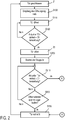
- the drive device 20 receives in the closed position Z1 of the door leaf 2 in step S100 an opening signal from the evaluation and control unit 10.
- the drive device 20 opens in step S110 the door leaf 3 and moves the door leaf 3 from the closed position Z1 in the open position Z2.
- the evaluation and control unit 10 monitors the opening movement and compares the current door angle with the predetermined angle of the open position Z2. If the door leaf 3 reaches the open position Z2, the evaluation and control unit 10 starts a stopwatch in step S200 to detect when the hold-open period has expired. For this purpose, the evaluation and control unit 10 continuously compares the elapsed time of the stopwatch with the value of the hold-open period.
- the evaluation and control unit 10 continuously checks the current door angle to detect whether the door leaf 3 is moved. If the evaluation and control unit 10 detects in step S210 that the current value of the incremental encoder 22 representing the current door angle is greater than the second value representing the open position, then the evaluation and control unit 10 branches to step S300. If the evaluation and control unit 10 detects no movement of the door leaf 3, then the evaluation and control unit 10 checks in step S220 whether the hold-open period has expired. If the hold-open time has expired, the evaluation and control unit 10 controls the drive device 20 which closes the door leaf 3 in step S230 until the closed position Z1 is reached and the automatic opening and closing operation of the door leaf 3 initiated by the opening signal is completed.
- step S300 the evaluation and control unit 10 switches the mode from the first mode DA “automatic” to the second mode BD “continuous open” and starts the stopwatch in step S310 to detect when the safety period has expired.
- the evaluation and control unit 10 continuously compares the elapsed time of the stopwatch with the value of the safety period of about 2 minutes.
- the evaluation and control unit 10 continuously checks the current door angle to detect whether the door leaf 3 is moved. If the evaluation and control unit 10 recognizes in step S320 that the current value of the incremental encoder 22 representing the current door angle is smaller than the second value representing the open position, then the evaluation and control unit 10 branches to step S360.
- step S330 If the evaluation and control unit 10 detects no movement of the door leaf 3, then the evaluation and control unit 10 checks in step S330 whether the safety period has expired. If the safety period has expired, then the evaluation and control unit 10 switches the operating mode in step S340 from the second operating mode BD "permanently open” to the first operating mode DA "automatic". In addition, the evaluation and control unit 10 checks the current door angle to detect whether the door leaf 3 is moved again.
- step S350 If the evaluation and control unit 10 detects in step S350 that the current value of the incremental encoder 22 representing the current door angle is greater than the second value representing the open position, then the evaluation and control unit 10 branches to step S300 and repeats steps S300 to S340 , If the evaluation and control unit 10 has detected no movement of the door leaf 3 in step S350, the evaluation and control unit 10 branches to step S230 and controls the drive device 20, which closes the door leaf 3 in step S230 until reaching the closed position Z1.
- step S360 the evaluation and control unit 10 switches the operating mode from the second operating mode BD "permanently open” to the first operating mode DA “automatic”. Subsequently, the evaluation and control unit 10 branches to step S230 and controls the drive device 20, which closes the door leaf 3 in step S230 until reaching the closed position Z1.
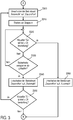
- the position sensor 22 is designed as a proximity sensor, which detects a distance of the door leaf 3 to a stop.
- the position sensor 22 designed as a proximity sensor can be arranged on the door leaf 3 or on the stop.
- the closed position of the door leaf 3 is assigned a first distance value which represents an angle of the door leaf in the closed state.
- the open position of the door leaf 3 is assigned a second distance value which represents an angle of the door leaf 3 in the open state.
- the evaluation and control unit 10 then knows when the door leaf 3 is approaching its open position and when the door leaf 3 has moved away from the open position or has reached the open position.
- the proximity sensor may for example be designed as an ultrasonic or infrared sensor.
- the evaluation and control unit 10 detects the manual movement of the door leaf 3 in the opening direction in that the output signal of the proximity sensor represents a decreasing distance.
- the manual movement of the door leaf 3 in the closing direction recognizes the evaluation and control unit 10 in that the output signal of the proximity sensor represents an increasing distance. Therefore, the evaluation and control unit 10 perform the switching operations described above between the various modes of the automatic door drive 1.
- the automatic door drive according to the invention advantageously allows a door-angle-controlled mode change function ("push and keep” function).
Landscapes
- Power-Operated Mechanisms For Wings (AREA)
Claims (19)
- Dispositif d'entraînement de porte automatique (1) comportant une unité d'entraînement (20) et une unité d'évaluation et de commande (10) qui ouvre et ferme automatiquement un vantail de porte (3) au moyen de l'unité d'entraînement (20), dans lequel l'unité d'évaluation et de commande (10) referme automatiquement le vantail de porte (3) dans un premier mode de fonctionnement (BA) après une période de maintien en position ouverte prédéterminée et le déplace de la position ouverte à la position fermée et dans lequel l'unité d'évaluation et de commande (10) maintient en permanence le vantail de porte (3) en position ouverte dans un deuxième mode de fonctionnement (BD),
caractérisé en ce que l'unité d'entraînement (20) comporte un capteur de position (22) dont les signaux de sortie sont évalués par l'unité d'évaluation et de commande (10) pour déterminer une position actuelle du vantail de porte (3), dans lequel l'unité d'évaluation et de commande (10) active le deuxième mode de fonctionnement (BD) lorsque l'unité d'évaluation et de commande (10) détecte, en position ouverte, que le vantail de porte (3) est déplacé manuellement dans le sens de l'ouverture. - Dispositif d'entraînement de porte automatique selon la revendication 1,
caractérisé en ce que le capteur de position (22) est réalisé sous la forme d'un capteur incrémentiel ou d'un capteur de proximité. - Dispositif d'entraînement de porte automatique selon la revendication 2,
caractérisé en ce que l'unité d'évaluation et de commande (10) détecte le déplacement manuel dans le sens de l'ouverture par le fait que la valeur du signal de sortie du système de mesure incrémentiel croît. - Dispositif d'entraînement de porte automatique selon la revendication 2,
caractérisé en ce que l'unité d'évaluation et de commande (10) détecte le déplacement manuel dans le sens de l'ouverture par le fait que le signal de sortie du détecteur de proximité représente une distance décroissante. - Dispositif d'entraînement de porte automatique selon l'une des revendications 1 à 4, caractérisé en ce que l'unité d'évaluation et de commande (10) active le premier mode de fonctionnement (BA) et ferme le vantail de porte (3) lorsque l'unité d'évaluation et de commande (10) détecte, en position ouverte, que le vantail de porte (3) est déplacé manuellement dans le sens de la fermeture.
- Dispositif d'entraînement de porte automatique selon l'une des revendications 1 à 4, caractérisé en ce que l'unité d'évaluation et de commande (10) active le premier mode de fonctionnement (BA) et ferme le vantail de porte (3) lorsque l'unité d'évaluation et de commande (10) détecte, pendant le deuxième mode de fonctionnement (BD), en position ouverte, que le vantail de porte (3) est déplacé manuellement dans le sens de la fermeture.
- Dispositif d'entraînement de porte automatique selon la revendication 5 ou 6,
caractérisé en ce que l'unité d'évaluation et de commande (10) détecte le déplacement manuel dans le sens de la fermeture par le fait que la valeur du signal de sortie du codeur incrémentiel décroît. - Dispositif d'entraînement de porte automatique selon la revendication 5 ou 6,
caractérisé en ce que l'unité d'évaluation et de commande (10) détecte le déplacement manuel dans le sens de la fermeture par le fait que le signal de sortie du détecteur de proximité représente une distance croissante. - Dispositif d'entraînement de porte automatique selon l'une des revendications 1 à 8, caractérisé en ce que l'unité d'évaluation et de commande (10) referme le vantail de porte ouvert (3) dans le deuxième mode de fonctionnement (BD) après une période de sécurité prédéterminée qui est plus longue que la période de maintien en position ouverte.
- Dispositif d'entraînement de porte automatique selon l'une des revendications 1 à 9, caractérisé en ce qu'un limiteur d'ouverture à ressort prédétermine la position ouverte du vantail de porte (3) .
- Dispositif d'entraînement de porte automatique selon l'une des revendications 1 à 10, caractérisé en ce que le vantail de porte (3) est réalisé sous la forme d'un vantail pivotant.
- Dispositif d'entraînement de porte automatique selon la revendication 11,
caractérisé en ce que les incréments individuels du codeur incrémentiel correspondent à une valeur angulaire pouvant être prédéterminée. - Procédé pour faire fonctionner un dispositif d'entraînement de porte automatique (1) qui ouvre et ferme automatiquement un vantail de porte (3) au moyen d'une unité d'entraînement (20), dans lequel le vantail de porte (3) se referme automatiquement dans un premier mode de fonctionnement (BA) après une période de maintien en position ouverte prédéterminée et est déplacé d'une position ouverte à une position fermée et dans lequel le vantail de porte (3) est maintenu en permanence en position ouverte dans un deuxième mode de fonctionnement (BD),
caractérisé en ce que des signaux de sortie d'un capteur de position (22) sont évalués pour déterminer une position actuelle du vantail de porte (3) et en ce que le deuxième mode de fonctionnement (BD) est activé lorsqu'il est détecté, en position ouverte, que le vantail de porte (3) est déplacé manuellement dans le sens de l'ouverture. - Procédé selon la revendication 13,
caractérisé en ce que le capteur de position (22) est réalisé sous la forme d'un capteur incrémentiel ou d'un capteur de proximité. - Procédé selon la revendication 14,
caractérisé en ce que le déplacement manuel dans le sens de l'ouverture est détecté par le fait que la valeur du signal de sortie du codeur incrémentiel croît ou que le signal de sortie du capteur de proximité représente une distance décroissante. - Procédé selon l'une des revendications 13 à 15,
caractérisé en ce que le premier mode de fonctionnement (BA) est activé et en ce que le vantail de porte (3) est fermé lorsque, en position ouverte, un déplacement manuel du vantail de porte (3) dans le sens de la fermeture est détecté. - Procédé selon l'une des revendications 13 à 15,
caractérisé en ce que le premier mode de fonctionnement (BA) est activé et en ce que le vantail de porte (3) est fermé lorsque, pendant le deuxième mode de fonctionnement (BD) , en position ouverte, un déplacement manuel du vantail de porte (3) dans le sens de la fermeture est détecté. - Procédé selon la revendication 16 ou 17, caractérisé en ce que le déplacement manuel dans le sens de la fermeture est détecté par le fait que la valeur du signal de sortie du codeur incrémentiel (22) décroît ou que le signal de sortie du détecteur de proximité représente une distance croissante.
- Procédé selon l'une des revendications 13 à 18,
caractérisé en ce que, dans le deuxième mode de fonctionnement (BD), le vantail de porte ouvert (3) est refermé après une période de sécurité prédéterminée qui est plus longue que la période de maintien en position ouverte.
Priority Applications (1)
| Application Number | Priority Date | Filing Date | Title |
|---|---|---|---|
| PL15196581T PL3045646T3 (pl) | 2015-01-15 | 2015-11-26 | Automatyczny napęd drzwi i związany z nim sposób eksploatacji |
Applications Claiming Priority (1)
| Application Number | Priority Date | Filing Date | Title |
|---|---|---|---|
| DE102015200521.6A DE102015200521B4 (de) | 2015-01-15 | 2015-01-15 | Automatischer Türantrieb und zugehöriges Betriebsverfahren |
Publications (2)
| Publication Number | Publication Date |
|---|---|
| EP3045646A1 EP3045646A1 (fr) | 2016-07-20 |
| EP3045646B1 true EP3045646B1 (fr) | 2019-03-20 |
Family
ID=54707619
Family Applications (1)
| Application Number | Title | Priority Date | Filing Date |
|---|---|---|---|
| EP15196581.1A Active EP3045646B1 (fr) | 2015-01-15 | 2015-11-26 | Entrainement de porte automatique et procede de fonctionnement associe |
Country Status (5)
| Country | Link |
|---|---|
| EP (1) | EP3045646B1 (fr) |
| DE (1) | DE102015200521B4 (fr) |
| DK (1) | DK3045646T3 (fr) |
| ES (1) | ES2731230T3 (fr) |
| PL (1) | PL3045646T3 (fr) |
Family Cites Families (4)
| Publication number | Priority date | Publication date | Assignee | Title |
|---|---|---|---|---|
| US3874117A (en) * | 1973-09-28 | 1975-04-01 | R H Boehm Company Inc | Electric door opener |
| DE4442948A1 (de) | 1993-12-04 | 1995-06-08 | Braselmann Klaus Andre | Vorrichtung zur Steuerung von beweglichen Einrichtungen wie Rolltoren o. dgl. |
| DE102009004503B4 (de) | 2009-01-09 | 2017-11-16 | Dormakaba Deutschland Gmbh | Verfahren zum Betrieb eines Drehflügelbetätigers und damit betriebene Drehflügelbetätiger |
| DE102011078832B4 (de) * | 2011-07-07 | 2017-07-13 | Eds - Electric Drive Solution Gmbh & Co. Kg | Gebäudetür |
-
2015
- 2015-01-15 DE DE102015200521.6A patent/DE102015200521B4/de not_active Withdrawn - After Issue
- 2015-11-26 PL PL15196581T patent/PL3045646T3/pl unknown
- 2015-11-26 EP EP15196581.1A patent/EP3045646B1/fr active Active
- 2015-11-26 ES ES15196581T patent/ES2731230T3/es active Active
- 2015-11-26 DK DK15196581.1T patent/DK3045646T3/da active
Non-Patent Citations (1)
| Title |
|---|
| None * |
Also Published As
| Publication number | Publication date |
|---|---|
| EP3045646A1 (fr) | 2016-07-20 |
| DE102015200521A1 (de) | 2016-07-21 |
| DK3045646T3 (da) | 2019-06-17 |
| ES2731230T3 (es) | 2019-11-14 |
| PL3045646T3 (pl) | 2019-09-30 |
| DE102015200521B4 (de) | 2018-03-01 |
Similar Documents
| Publication | Publication Date | Title |
|---|---|---|
| DE10253138B4 (de) | Türvorrichtung für ein Fahrzeug und Verfahren zum Steuern einer Bewegung einer Tür | |
| EP3361028B1 (fr) | Unité d'entraînement | |
| DE102004007883A1 (de) | Automatischer Torantrieb | |
| DE102015210216B4 (de) | Verfahren und System zur Positionierung einer Fahrzeugtür | |
| DE102014018187A1 (de) | Verfahren und Vorrichtung zum Betrieb eines Fahrzeugs | |
| EP2642899B1 (fr) | Meuble avec dispositif d'entraînement | |
| DE102013015119A1 (de) | Stellvorrichtung zur Verstellung eines zwischen einer Schließstellung und einer Offenstellung verstellbaren Fahrzeugteils | |
| WO2014090222A1 (fr) | Dispositif et procédé d'actionnement d'un dispositif de fermeture de véhicule automobile | |
| DE102014225150A1 (de) | Verschwenken eines verschwenkbaren Karosserieteils eines Kraftfahrzeugs mittels eines fremdkraftbetriebenen Antriebs in einem Automatik-Betrieb oder in einem Servo-Betrieb | |
| DE102014009714A1 (de) | Fensterheber für ein Fahrzeug und Verfahren zum Betrieb eines solchen | |
| DE102009035449B3 (de) | Verfahren und Vorrichtung zur zeitgesteuerten Einklemmerkennung | |
| WO2022167043A1 (fr) | Procédé d'assistance motorisée du mouvement d'une porte de véhicule | |
| DE102015217895A1 (de) | Ansteuerverfahren für einen Fensterheber eines Cabriolets mit einem motorisch verstellbaren Verdeck | |
| EP3045646B1 (fr) | Entrainement de porte automatique et procede de fonctionnement associe | |
| DE29621794U1 (de) | Verstellvorrichtung insbesondere für ein Schiebe-Hebe-Dach eines Kraftfahrzeugs | |
| EP2767742B1 (fr) | Procédé de fabrication d'un composant de changement de vitesse et aussi l'utilisation d'un coulisseau | |
| DE102009036870A1 (de) | Türeinheit | |
| DE102016113696A1 (de) | Vorrichtung zur Beeinflussung der Beweglichkeit einer Tür | |
| EP2265838B1 (fr) | Procédé et dispositif de fermeture d'un accouplement | |
| DE102015226108A1 (de) | Einklemmschutzverfahren zur Durchführung bei einer motorischen Stellvorrichtung für ein verstellbares Fahrzeugteil sowie zugehörige Stellvorrichtung | |
| EP3224072B1 (fr) | Procédé de fonctionnement d'un dispositif de déplacement | |
| WO2015078453A1 (fr) | Dispositif de détection de force pour portes industrielles | |
| EP1242734B1 (fr) | Dispositif de reglage pour vehicule comportant un element ajustable de maniere mecanique et procede pour actionner ledit dispositif de reglage | |
| EP1727274B1 (fr) | Procédé et dispositif de fonctionnement d'un servomoteur | |
| EP2122423B1 (fr) | Entraînement à moteur électrique pour un élément d'actionnement de véhicule automobile, et procédé d'asservissement |
Legal Events
| Date | Code | Title | Description |
|---|---|---|---|
| PUAI | Public reference made under article 153(3) epc to a published international application that has entered the european phase |
Free format text: ORIGINAL CODE: 0009012 |
|
| AK | Designated contracting states |
Kind code of ref document: A1 Designated state(s): AL AT BE BG CH CY CZ DE DK EE ES FI FR GB GR HR HU IE IS IT LI LT LU LV MC MK MT NL NO PL PT RO RS SE SI SK SM TR |
|
| AX | Request for extension of the european patent |
Extension state: BA ME |
|
| 17P | Request for examination filed |
Effective date: 20160815 |
|
| RBV | Designated contracting states (corrected) |
Designated state(s): AL AT BE BG CH CY CZ DE DK EE ES FI FR GB GR HR HU IE IS IT LI LT LU LV MC MK MT NL NO PL PT RO RS SE SI SK SM TR |
|
| GRAP | Despatch of communication of intention to grant a patent |
Free format text: ORIGINAL CODE: EPIDOSNIGR1 |
|
| STAA | Information on the status of an ep patent application or granted ep patent |
Free format text: STATUS: GRANT OF PATENT IS INTENDED |
|
| INTG | Intention to grant announced |
Effective date: 20181025 |
|
| GRAS | Grant fee paid |
Free format text: ORIGINAL CODE: EPIDOSNIGR3 |
|
| GRAA | (expected) grant |
Free format text: ORIGINAL CODE: 0009210 |
|
| STAA | Information on the status of an ep patent application or granted ep patent |
Free format text: STATUS: THE PATENT HAS BEEN GRANTED |
|
| AK | Designated contracting states |
Kind code of ref document: B1 Designated state(s): AL AT BE BG CH CY CZ DE DK EE ES FI FR GB GR HR HU IE IS IT LI LT LU LV MC MK MT NL NO PL PT RO RS SE SI SK SM TR |
|
| REG | Reference to a national code |
Ref country code: GB Ref legal event code: FG4D Free format text: NOT ENGLISH |
|
| REG | Reference to a national code |
Ref country code: CH Ref legal event code: EP |
|
| REG | Reference to a national code |
Ref country code: DE Ref legal event code: R096 Ref document number: 502015008396 Country of ref document: DE |
|
| REG | Reference to a national code |
Ref country code: AT Ref legal event code: REF Ref document number: 1110699 Country of ref document: AT Kind code of ref document: T Effective date: 20190415 |
|
| REG | Reference to a national code |
Ref country code: IE Ref legal event code: FG4D Free format text: LANGUAGE OF EP DOCUMENT: GERMAN |
|
| REG | Reference to a national code |
Ref country code: DK Ref legal event code: T3 Effective date: 20190613 |
|
| REG | Reference to a national code |
Ref country code: NO Ref legal event code: T2 Effective date: 20190320 |
|
| REG | Reference to a national code |
Ref country code: NL Ref legal event code: FP |
|
| PG25 | Lapsed in a contracting state [announced via postgrant information from national office to epo] |
Ref country code: SE Free format text: LAPSE BECAUSE OF FAILURE TO SUBMIT A TRANSLATION OF THE DESCRIPTION OR TO PAY THE FEE WITHIN THE PRESCRIBED TIME-LIMIT Effective date: 20190320 Ref country code: LT Free format text: LAPSE BECAUSE OF FAILURE TO SUBMIT A TRANSLATION OF THE DESCRIPTION OR TO PAY THE FEE WITHIN THE PRESCRIBED TIME-LIMIT Effective date: 20190320 |
|
| REG | Reference to a national code |
Ref country code: LT Ref legal event code: MG4D |
|
| PG25 | Lapsed in a contracting state [announced via postgrant information from national office to epo] |
Ref country code: BG Free format text: LAPSE BECAUSE OF FAILURE TO SUBMIT A TRANSLATION OF THE DESCRIPTION OR TO PAY THE FEE WITHIN THE PRESCRIBED TIME-LIMIT Effective date: 20190620 Ref country code: GR Free format text: LAPSE BECAUSE OF FAILURE TO SUBMIT A TRANSLATION OF THE DESCRIPTION OR TO PAY THE FEE WITHIN THE PRESCRIBED TIME-LIMIT Effective date: 20190621 Ref country code: LV Free format text: LAPSE BECAUSE OF FAILURE TO SUBMIT A TRANSLATION OF THE DESCRIPTION OR TO PAY THE FEE WITHIN THE PRESCRIBED TIME-LIMIT Effective date: 20190320 Ref country code: HR Free format text: LAPSE BECAUSE OF FAILURE TO SUBMIT A TRANSLATION OF THE DESCRIPTION OR TO PAY THE FEE WITHIN THE PRESCRIBED TIME-LIMIT Effective date: 20190320 Ref country code: RS Free format text: LAPSE BECAUSE OF FAILURE TO SUBMIT A TRANSLATION OF THE DESCRIPTION OR TO PAY THE FEE WITHIN THE PRESCRIBED TIME-LIMIT Effective date: 20190320 |
|
| PG25 | Lapsed in a contracting state [announced via postgrant information from national office to epo] |
Ref country code: CZ Free format text: LAPSE BECAUSE OF FAILURE TO SUBMIT A TRANSLATION OF THE DESCRIPTION OR TO PAY THE FEE WITHIN THE PRESCRIBED TIME-LIMIT Effective date: 20190320 Ref country code: RO Free format text: LAPSE BECAUSE OF FAILURE TO SUBMIT A TRANSLATION OF THE DESCRIPTION OR TO PAY THE FEE WITHIN THE PRESCRIBED TIME-LIMIT Effective date: 20190320 Ref country code: EE Free format text: LAPSE BECAUSE OF FAILURE TO SUBMIT A TRANSLATION OF THE DESCRIPTION OR TO PAY THE FEE WITHIN THE PRESCRIBED TIME-LIMIT Effective date: 20190320 Ref country code: AL Free format text: LAPSE BECAUSE OF FAILURE TO SUBMIT A TRANSLATION OF THE DESCRIPTION OR TO PAY THE FEE WITHIN THE PRESCRIBED TIME-LIMIT Effective date: 20190320 Ref country code: SK Free format text: LAPSE BECAUSE OF FAILURE TO SUBMIT A TRANSLATION OF THE DESCRIPTION OR TO PAY THE FEE WITHIN THE PRESCRIBED TIME-LIMIT Effective date: 20190320 Ref country code: PT Free format text: LAPSE BECAUSE OF FAILURE TO SUBMIT A TRANSLATION OF THE DESCRIPTION OR TO PAY THE FEE WITHIN THE PRESCRIBED TIME-LIMIT Effective date: 20190720 |
|
| REG | Reference to a national code |
Ref country code: ES Ref legal event code: FG2A Ref document number: 2731230 Country of ref document: ES Kind code of ref document: T3 Effective date: 20191114 |
|
| PG25 | Lapsed in a contracting state [announced via postgrant information from national office to epo] |
Ref country code: SM Free format text: LAPSE BECAUSE OF FAILURE TO SUBMIT A TRANSLATION OF THE DESCRIPTION OR TO PAY THE FEE WITHIN THE PRESCRIBED TIME-LIMIT Effective date: 20190320 |
|
| PG25 | Lapsed in a contracting state [announced via postgrant information from national office to epo] |
Ref country code: IS Free format text: LAPSE BECAUSE OF FAILURE TO SUBMIT A TRANSLATION OF THE DESCRIPTION OR TO PAY THE FEE WITHIN THE PRESCRIBED TIME-LIMIT Effective date: 20190720 |
|
| REG | Reference to a national code |
Ref country code: DE Ref legal event code: R097 Ref document number: 502015008396 Country of ref document: DE |
|
| PLBE | No opposition filed within time limit |
Free format text: ORIGINAL CODE: 0009261 |
|
| STAA | Information on the status of an ep patent application or granted ep patent |
Free format text: STATUS: NO OPPOSITION FILED WITHIN TIME LIMIT |
|
| 26N | No opposition filed |
Effective date: 20200102 |
|
| PG25 | Lapsed in a contracting state [announced via postgrant information from national office to epo] |
Ref country code: SI Free format text: LAPSE BECAUSE OF FAILURE TO SUBMIT A TRANSLATION OF THE DESCRIPTION OR TO PAY THE FEE WITHIN THE PRESCRIBED TIME-LIMIT Effective date: 20190320 |
|
| PG25 | Lapsed in a contracting state [announced via postgrant information from national office to epo] |
Ref country code: TR Free format text: LAPSE BECAUSE OF FAILURE TO SUBMIT A TRANSLATION OF THE DESCRIPTION OR TO PAY THE FEE WITHIN THE PRESCRIBED TIME-LIMIT Effective date: 20190320 |
|
| PG25 | Lapsed in a contracting state [announced via postgrant information from national office to epo] |
Ref country code: MC Free format text: LAPSE BECAUSE OF FAILURE TO SUBMIT A TRANSLATION OF THE DESCRIPTION OR TO PAY THE FEE WITHIN THE PRESCRIBED TIME-LIMIT Effective date: 20190320 |
|
| PG25 | Lapsed in a contracting state [announced via postgrant information from national office to epo] |
Ref country code: CY Free format text: LAPSE BECAUSE OF FAILURE TO SUBMIT A TRANSLATION OF THE DESCRIPTION OR TO PAY THE FEE WITHIN THE PRESCRIBED TIME-LIMIT Effective date: 20190320 |
|
| PG25 | Lapsed in a contracting state [announced via postgrant information from national office to epo] |
Ref country code: MT Free format text: LAPSE BECAUSE OF FAILURE TO SUBMIT A TRANSLATION OF THE DESCRIPTION OR TO PAY THE FEE WITHIN THE PRESCRIBED TIME-LIMIT Effective date: 20190320 Ref country code: HU Free format text: LAPSE BECAUSE OF FAILURE TO SUBMIT A TRANSLATION OF THE DESCRIPTION OR TO PAY THE FEE WITHIN THE PRESCRIBED TIME-LIMIT; INVALID AB INITIO Effective date: 20151126 |
|
| PG25 | Lapsed in a contracting state [announced via postgrant information from national office to epo] |
Ref country code: MK Free format text: LAPSE BECAUSE OF FAILURE TO SUBMIT A TRANSLATION OF THE DESCRIPTION OR TO PAY THE FEE WITHIN THE PRESCRIBED TIME-LIMIT Effective date: 20190320 |
|
| P01 | Opt-out of the competence of the unified patent court (upc) registered |
Effective date: 20230510 |
|
| PGFP | Annual fee paid to national office [announced via postgrant information from national office to epo] |
Ref country code: NL Payment date: 20231120 Year of fee payment: 9 Ref country code: LU Payment date: 20231120 Year of fee payment: 9 |
|
| PGFP | Annual fee paid to national office [announced via postgrant information from national office to epo] |
Ref country code: IE Payment date: 20231121 Year of fee payment: 9 Ref country code: FR Payment date: 20231120 Year of fee payment: 9 Ref country code: DK Payment date: 20231124 Year of fee payment: 9 Ref country code: AT Payment date: 20231121 Year of fee payment: 9 |
|
| PGFP | Annual fee paid to national office [announced via postgrant information from national office to epo] |
Ref country code: PL Payment date: 20231117 Year of fee payment: 9 Ref country code: BE Payment date: 20231120 Year of fee payment: 9 |
|
| PGFP | Annual fee paid to national office [announced via postgrant information from national office to epo] |
Ref country code: ES Payment date: 20240129 Year of fee payment: 9 |
|
| REG | Reference to a national code |
Ref country code: DK Ref legal event code: EBP Effective date: 20241130 |
|
| REG | Reference to a national code |
Ref country code: NL Ref legal event code: MM Effective date: 20241201 |
|
| PG25 | Lapsed in a contracting state [announced via postgrant information from national office to epo] |
Ref country code: LU Free format text: LAPSE BECAUSE OF NON-PAYMENT OF DUE FEES Effective date: 20241126 |
|
| REG | Reference to a national code |
Ref country code: AT Ref legal event code: MM01 Ref document number: 1110699 Country of ref document: AT Kind code of ref document: T Effective date: 20241126 |
|
| PG25 | Lapsed in a contracting state [announced via postgrant information from national office to epo] |
Ref country code: AT Free format text: LAPSE BECAUSE OF NON-PAYMENT OF DUE FEES Effective date: 20241126 |
|
| PG25 | Lapsed in a contracting state [announced via postgrant information from national office to epo] |
Ref country code: NL Free format text: LAPSE BECAUSE OF NON-PAYMENT OF DUE FEES Effective date: 20241201 |
|
| REG | Reference to a national code |
Ref country code: BE Ref legal event code: MM Effective date: 20241130 |
|
| PG25 | Lapsed in a contracting state [announced via postgrant information from national office to epo] |
Ref country code: DK Free format text: LAPSE BECAUSE OF NON-PAYMENT OF DUE FEES Effective date: 20241130 |
|
| PG25 | Lapsed in a contracting state [announced via postgrant information from national office to epo] |
Ref country code: BE Free format text: LAPSE BECAUSE OF NON-PAYMENT OF DUE FEES Effective date: 20241130 |
|
| PG25 | Lapsed in a contracting state [announced via postgrant information from national office to epo] |
Ref country code: FR Free format text: LAPSE BECAUSE OF NON-PAYMENT OF DUE FEES Effective date: 20241130 |
|
| PG25 | Lapsed in a contracting state [announced via postgrant information from national office to epo] |
Ref country code: IE Free format text: LAPSE BECAUSE OF NON-PAYMENT OF DUE FEES Effective date: 20241126 |
|
| REG | Reference to a national code |
Ref country code: CH Ref legal event code: U11 Free format text: ST27 STATUS EVENT CODE: U-0-0-U10-U11 (AS PROVIDED BY THE NATIONAL OFFICE) Effective date: 20251201 |
|
| REG | Reference to a national code |
Ref country code: ES Ref legal event code: FD2A Effective date: 20260107 |
|
| PGFP | Annual fee paid to national office [announced via postgrant information from national office to epo] |
Ref country code: DE Payment date: 20251130 Year of fee payment: 11 |
|
| PGFP | Annual fee paid to national office [announced via postgrant information from national office to epo] |
Ref country code: GB Payment date: 20251121 Year of fee payment: 11 |
|
| PGFP | Annual fee paid to national office [announced via postgrant information from national office to epo] |
Ref country code: NO Payment date: 20251125 Year of fee payment: 11 |
|
| PGFP | Annual fee paid to national office [announced via postgrant information from national office to epo] |
Ref country code: FI Payment date: 20251125 Year of fee payment: 11 Ref country code: IT Payment date: 20251125 Year of fee payment: 11 |
|
| PGFP | Annual fee paid to national office [announced via postgrant information from national office to epo] |
Ref country code: CH Payment date: 20251201 Year of fee payment: 11 |
|
| PG25 | Lapsed in a contracting state [announced via postgrant information from national office to epo] |
Ref country code: ES Free format text: LAPSE BECAUSE OF NON-PAYMENT OF DUE FEES Effective date: 20241127 |