EP3047341B1 - Système de création informatisée de règles de surveillance et/ou de diagnostic d'une installation technique - Google Patents
Système de création informatisée de règles de surveillance et/ou de diagnostic d'une installation technique Download PDFInfo
- Publication number
- EP3047341B1 EP3047341B1 EP14793564.7A EP14793564A EP3047341B1 EP 3047341 B1 EP3047341 B1 EP 3047341B1 EP 14793564 A EP14793564 A EP 14793564A EP 3047341 B1 EP3047341 B1 EP 3047341B1
- Authority
- EP
- European Patent Office
- Prior art keywords
- ontology
- rules
- rule
- plant
- concepts
- Prior art date
- Legal status (The legal status is an assumption and is not a legal conclusion. Google has not performed a legal analysis and makes no representation as to the accuracy of the status listed.)
- Not-in-force
Links
Images



Classifications
-
- G—PHYSICS
- G06—COMPUTING OR CALCULATING; COUNTING
- G06N—COMPUTING ARRANGEMENTS BASED ON SPECIFIC COMPUTATIONAL MODELS
- G06N5/00—Computing arrangements using knowledge-based models
- G06N5/02—Knowledge representation; Symbolic representation
- G06N5/022—Knowledge engineering; Knowledge acquisition
-
- G—PHYSICS
- G05—CONTROLLING; REGULATING
- G05B—CONTROL OR REGULATING SYSTEMS IN GENERAL; FUNCTIONAL ELEMENTS OF SUCH SYSTEMS; MONITORING OR TESTING ARRANGEMENTS FOR SUCH SYSTEMS OR ELEMENTS
- G05B19/00—Program-control systems
- G05B19/02—Program-control systems electric
- G05B19/04—Program control other than numerical control, i.e. in sequence controllers or logic controllers
- G05B19/042—Program control other than numerical control, i.e. in sequence controllers or logic controllers using digital processors
- G05B19/0428—Safety, monitoring
-
- G—PHYSICS
- G06—COMPUTING OR CALCULATING; COUNTING
- G06F—ELECTRIC DIGITAL DATA PROCESSING
- G06F16/00—Information retrieval; Database structures therefor; File system structures therefor
- G06F16/30—Information retrieval; Database structures therefor; File system structures therefor of unstructured textual data
- G06F16/36—Creation of semantic tools, e.g. ontology or thesauri
- G06F16/367—Ontology
Definitions
- the invention relates to a system for the computer-aided creation of rules for monitoring and / or diagnosis of a technical installation, in particular an industrial installation, e.g. a production or production plant.
- Rule-based monitoring systems are known in the art which can adapt their behavior based on rules which, however, do not allow to identify redundant rules or to check the consistency of rules or otherwise analyze the rules.
- EP 2 447 845 A1 and US 2013/179388 A1 disclose methods and systems that create rules for diagnosing a technical facility based on a knowledge base using a reasoner.
- the object of the invention is to provide a system for the creation of rules for monitoring and / or diagnosis of a technical facility in which a user is easily and flexibly supported in the drafting of rules and the rules can be checked automatically.
- the system according to the invention comprises a digital knowledge base in the form of a first ontology.
- Ontologies are well known in the art and represent semantic knowledge in the form of digital data. For this purpose, ontologies use so-called concepts or classes and relations between the concepts as well as other constructs, such as inference and integrity rules to infer and to ensure their validity.
- the first ontology comprises a plant ontology, which describes the technical plant based on concepts and relations, as well as a rule ontology, which as concepts comprises rules and thus depicts the structure of the rules.
- Each rule is linked via a condition relation to concepts in the form of one or more conditions that refer to one or more concepts of the plant ontology.
- a respective rule is linked via a consequence relation to the concept of a consequence (eg of a state) derived from the condition (s), which refers to one or more concepts of the plant ontology.
- a consequence eg of a state
- condition e.g of a state
- each rule derives a consequence with respect to a plant component when the one or more conditions of the rule are met.
- the system according to the invention further comprises a user interface, via which a user can change the rule ontology by specifying rules (in particular instantiation of rules), whereby the first ontology is edited.
- a reasoner (renter) is provided, with reasoners being known per se for processing ontologies.
- the reasoner is applied to a second ontology.
- the second ontology may be identical to the first edited ontology or derived from the first edited ontology using an ontology transformation means.
- the reasoner verifies the rules in the second ontology and outputs the verification result via the user interface.
- the user is thus repeatedly given the opportunity to make changes to the rules again based on the verification result of the reasoner via the user interface and then run the reasoner again.
- the reasoner recognizes redundant, similar, contradictory, and inconsistent rules, and these erroneous rules can then be remedied by a user.
- the system according to the invention further comprises a rule generation means for generating from the first edited ontology executable rules that can be executed by a rule engine.
- rules are created which can subsequently be processed in the operation of the technical system by means of the control machine, wherein the control machine can recognize or diagnose critical states, fault conditions and the like of the technical system based on the rules.
- the execution of rules based on rule machines is known per se from the prior art.
- the invention is based on the recognition that in a rule-based monitoring or diagnosis system the rules can be represented based on an ontology, which creates the possibility that rules created by the user can be automatically analyzed by means of a reasoner. As a result, an improved system for creating user-specific rules is created, which can then be used in the operation of a technical system for their monitoring or diagnosis.
- the first ontology is described based on an ontology editor and is editable with the ontology editor.
- the Editor can be Semantic Mediawiki based on OWL / RDF.
- Semantic Mediawiki is a well-known editor of the Semantic Web area, which is based on web pages. This editor is particularly easy to create a user interface for editing rules. Possibly. however, the first ontology can also be accessed via other editors, such as Protege.
- the second ontology is realized based on the known description language OWL (OWL - Ontology Web Language).
- the plant ontology comprises a structural ontology and a process ontology, wherein the structural ontology describes components of the plant as well as their structural relationships and the process ontology performed by the components of the plant processes.
- the system according to the invention is configured such that it first exports the edited first ontology, wherein the exported ontology is subsequently transferred to the ontology with the ontology transformation means.
- the exported ontology is merged with a generic ontology, where the generic ontology contains axioms and concepts that are needed in the context of verification by the reasoner.
- the combination of ontologies and the definition of a suitable generic ontology is known per se from the prior art or is within the scope of expert action (see, eg Bao, J. and Honavar, V., "Adapt OWL as a Modular Ontology Language", In Proceedings of OWLED 2006 (November 10-11, 2006) )).
- the further ontology can be used by the rule generation means to generate the executable rules.
- the reasoner used in the system according to the invention is preferably further configured such that it classifies the concepts in the second ontology and outputs the classification result via the user interface. This provides the user with helpful information about the technology Attachment or the processed rules given, which he then again in the context of editing the first ontology can be considered.
- the user interface is configured such that a user can direct queries to the second ontology, the query results being output via the user interface.
- queries are processed in the known query language SPARQL.
- the user can appropriately analyze the second ontology based on his wishes.
- the rule generation means is designed in such a way that it first generates rules in the per se known RIF XML serialization syntax and then translates the rules of this syntax into the executable rules of the format of the rule machine, where appropriate translation algorithms are known per se.
- the format of the rule machine is e.g. the Etalis format.
- the system is configured to execute the generated executable rules via the control machine for monitoring and / or diagnosis of the technical system during operation of the technical system.
- the invention further relates to a method for computer-aided creation of rules for monitoring and / or diagnosis of a technical installation by means of the system according to the invention described above.
- a digital knowledge base is provided in the form of a first ontology, wherein the first ontology comprises a plant ontology which describes the technical plant based on concepts and relations describes, as well as a rule ontology, which as concepts comprises rules, wherein a respective rule is linked via a condition relation with concepts in the form of one or more conditions, which refer to one or more concepts of the plant ontology, and a consequence relation is linked to the concept of a consequence derived from the condition (s), which refers to one or more concepts of the plant ontology.
- a user interface is provided by which a user can change the rule ontology by specifying rules, thereby editing the first ontology.
- a reasoner is applied to a second ontology derived from the first edited ontology by means of an ontology transforming means, or which is the first edited ontology, the reasoner verifying the rules in the second ontology and verifying the verification result via the ontology Outputs user interface.
- a rule generation means generates executable rules that can be executed by a rule engine from the first edited ontology.
- a variant of the method according to the invention also relates to a method, wherein executable rules, which are or are created with the inventive system described above, are executed during the operation of the technical system via a control machine.
- the invention further comprises a computer program product having a program code stored on a machine-readable medium for carrying out the above-described method according to the invention for creating rules or the method according to the invention for monitoring and / or diagnosing a technical installation described above, when the program code is executed on a computer.
- the monitoring includes an industrial plant the derivation of device states of the industrial plant in order to plan the maintenance of these devices appropriately.
- the monitoring usually also includes a so-called process monitoring, in which certain processes that are carried out during operation of the system are monitored to ensure their correct execution.
- the monitoring of an industrial plant usually also includes an energy monitoring, which analyzes the current energy consumption of the plant compared to an expected energy consumption. The operators of an industrial plant thus have to perform a variety of different types of monitoring tasks.
- the embodiment described below provides a system with which appropriate rules for monitoring the system can be easily and efficiently created, managed and executed.
- Fig. 1 shows a schematic representation of an architecture with which appropriate rules can be created.
- the generated rules can be used in the context of monitoring or, if appropriate, a diagnosis of a technical system.
- the architecture comprises the component RUEN, which relates to the creation of corresponding rules by a user (so-called rule engineering), the component RUMA, which relates to the further processing or administration of the rules (so-called rule maintenance), and the component RUDE, which the Implementation or use of the rules (so-called Rule Deployment).
- a knowledge base KB is provided in the form of a (first) ontology ON1.
- This ontology includes a plant ontology PON and a rule ontology RON.
- a user interface UI is provided, with which a user who designs rules for monitoring or diagnosing the technical installation can edit the knowledge base or the first ontology by specifying rules in the rule ontology RON.
- a user may also add concepts to the plant ontology or rule ontology. Examples of a Plant ontology and a rule ontology are described below.
- Essential to the invention is that in the knowledge base KB, the rules themselves are in turn included as an ontology, which makes it possible in the context of further processing of the rules (component RUMA) to verify and classify these rules appropriately via a reasoner.
- a user e.g. an engineer with knowledge of the plant, to deposit or edit his knowledge in the form of an ontology library ON1 in the KB knowledge base.
- the knowledge base includes ontologies that assist the engineer to generate plant-specific ontologies by manipulating the knowledge base.
- the user has the option of either adding additional concepts to the library or mapping concepts to existing concepts in the library. This ensures the flexibility and adaptability of the knowledge base.
- Semantic Mediawiki supports experts in their task of modeling plant data and rules for monitoring or diagnosing the plant.
- Semantic Mediawiki enables the visualization and navigation in corresponding modeled data about the technical system. With the component RUEN and the associated interface UI, an expert is thus enabled to specify the technical system underlying the monitoring or diagnosis in more detail and to define corresponding rules for monitoring or diagnosing the system.
- OWL Ontology Web Language
- This export can be done via Semantic Mediawiki via the special website "Special: ExportRDF”.
- the export of ontology is in Fig. 1 denoted by the arrow P1.
- the exported ontology is again imported into the knowledge base KB, which is indicated by the arrow P2.
- This is achieved by a script that converts OWL to SMW syntax.
- Another feature of SMW is a user guidance achieved through templates and semantic forms, which makes it possible to explicitly specify rule templates for users.
- Semantic Mediawiki An advantage of using Semantic Mediawiki is also that it enables collaboration by different experts who are familiar with different aspects of the installation. For example, manufacturers of components of the plant may specify general monitoring rules for these components because they have in-depth knowledge needed to monitor the components. Another advantage of Semantic Mediawiki is that it provides an overview of all aspects of the monitored site with navigational links and filters specific aspects of the site with so-called ASK queries.
- the generated plant-specific ontology PSON is transferred to a second OWL ontology ON2 with an ontology transformation means OTM, which is indicated by the arrow P3.
- This ontology ON2 annotates the ontology PSON with corresponding axioms and concepts (also referred to as classes), which are needed in the further processing of the rules in the component RUMA.
- a so-called reasoner REA is used, whereby reasoners are known per se for deriving knowledge from ontologies.
- the reasoner HermiT or Fact ++ or Pellet can be used.
- the reasoner REA is applied to the ontology ON2, as indicated by the arrow P4.
- the reasoner verifies the rules contained in the ON2 ontology by identifying semantically incorrect rules. Furthermore, he classifies the rules by arranging them in a structured taxonomy (ie classification). The corresponding verification and classification result is in turn output via the user interface UI. The user can then correct corresponding inconsistencies in the original knowledge base or errors contained therein based on the displayed result.
- a user requests queries QUE to the ontology ON2, as indicated by the arrow P5. As a result, he can eg filter out reusable rules from the ontology.
- a conversion RUDE of the rules takes place in such a way that with a rule generation means RGM the ontology PSON is translated into so-called RIF rules RR (see arrow P6).
- RIF is a well-known format that can be represented, for example, by the RIF XML Serialization syntax.
- This syntax is converted with the rule generation means RGM via methods known per se into executable rules EXR of a rule speech format, which can then be executed by a rule engine RM (rule engine).
- the conversion of the RIF rules RR into executable rules EXR is in Fig. 1 indicated by the arrow P7.
- the executable rules are based on the Etalis format. With the corresponding rule machine RM, these rules can then be executed in real operation of the technical system (arrow P8).
- corresponding monitoring or diagnostic states of the technical installation and their components can be derived in their operation based on sensor data or process data using the executable rules.
- Warning messages are issued if critical conditions occur during operation of the technical system.
- the executable rules e.g. Diagnostic data of the technical system are obtained.
- the flexibility of the system is increased because the user can select a suitable rule machine depending on the plant-specific circumstances. If the system is e.g. To monitor real-time events, it can use a more complex complex event processing (CEP) rule engine, such as Drool's Fusion, use.
- CEP complex complex event processing
- the ontologies PON and RON contained in the knowledge base KB are explained in more detail.
- the ontologies described below are based in part on ontology patterns from known ontology sources. For example, they are based on the Process Specification Language (PSL), which identifies, formally defines and structures semantic concepts related to the process performed by the plant.
- PSL Process Specification Language
- the plant ontology PON contains semantic knowledge of the specific plant, such as about connections between components of the plant or about products made by the plant.
- the rule ontology RON contains rules for detecting conditions in the plant, e.g. a rule for deriving the state "powerTooHigh" (i.e., too high electric power) for a motor m1 of the plant.
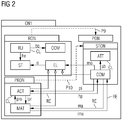
- the plant ontology PON is further divided into a structural ontology STON and a process ontology PRON (FIG. Fig. 2 ).
- the structural ontology defines different types of basic information.
- a component taxonomy is defined, which identifies classes of components and names and arranges them in a hierarchy.
- the structural ontology describes the topology of the plant, which is achieved via a hierarchy that determines which components are included in other components.
- part-of abbreviated po
- structural ontology defines properties of components via attributes.
- the namespace of the structural ontology is "pl:”.
- the process ontology PRON specifies the material that is processed by activities of the plant and manipulated by components of the plant during the entire production process.
- the namespace of the process ontology is "pr:”.
- the rule ontology PON uses concepts needed to specify basic rules for detecting states of the monitored elements of the other ontologies.
- This rule ontology is an essential part of the system according to the invention, since it is needed for the creation and further processing of the rules.
- the namespace of the rule ontology is "mon:”.
- the following German terms for the concepts are equivalent to the English terms in brackets.
- Activity occurrence ACO activity occurrence
- An action that is instantiated at a specific location and time eg, corresponds to "m1RunFast being executed by engine m1 at 2:00 pm on May 25, 2013" when the activity "m1RunFast” occurs.
- Component COM Component
- This concept describes a single or a compound component in the plant. The components can participate in activities via the relation pi. Each system consists of several components, eg the component "Motor m1" is part of the workcell 1.
- the class material is either a natural resource NAR, a product PRO or an auxiliary material AUM.
- An example of a natural resource is energy.
- Material occurrence MAO material occurrence
- This class refers to material that is processed in an installation at a specific location and at a specific time, eg "a part of a vehicle that is being transported by a conveyor belt at 2 pm on 24 June 2013".
- Attribute ATT attributes
- Attribute occurrence ATO attribute occurrence
- This class describes a property of an item that is instantiated at a given time, eg, "an engine m1 has the input power of 500W at 2:00 pm on May 25, 2013".
- a rule the expert can select all elements related to the component m1, in particular the just-mentioned attributes or processes "powerM1" and "RunFast". Based on this, he can then specify a rule, such as rule RU1, which is described below Fig. 6 is shown.
- Rule RU1 which is described below Fig. 6 is shown.
- the system can then verify various specifications via an axiom, eg by means of an axiom, which states that all monitored conditions that are linked via the relation lo to a rule (in this case RU1) only have one relation structural-relation (str) to the objects to which the monitored element (in this case m1) refers.
- a user may use the rule ontology concepts to manually construct states, supervised conditions, or rules.
- Such taxonomies have several advantages. On the one hand, higher reusability of the monitored rules is achieved due to the common information structures as new rules are designed by the user. On the other hand, the collaboration between different experts is facilitated, as the automatic selection of objects with identical meanings is simplified.
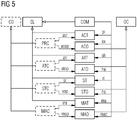
- Fig. 5 shows a schematic representation of a possible extension of in Fig. 4 shown ontology, wherein a taxonomy of the monitored condition CO is formed.
- the class of the monitored condition CO contains the subclasses PRC (Process Condition), ATC (Attribute Condition), STC (Condition Condition), and MAC (Material Condition).
- PRC Process Condition
- ATC Attribute Condition
- STC Supplement Condition
- MAC Mediation Condition
- These Conditions are associated with subclasses of the class Element EL and the class Occurrence OC, namely the classes ACT, ACO, ATT, ATO, ST, STO, MAT, MAO, which have already been described above.
- the relation mac means that the component COM processes the material occurrence MAC.
- the individual classes PRC, ATC, STC and MAC have relations with the subclasses of the class Element EL and the class Occurrence OC.
- the relations acr, acop, atr, atop, sr, sop, mr and mop are used.
- the rule ontology can be extended to different technical domains by adding domain-specific classes.
- the process condition PRC is a subclass of the monitored condition CO.
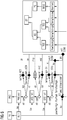
- Fig. 6 exemplifies one via the user interface UI in the KB knowledge base Fig. 1 instantiated rule RU1 with respect to the motor m1.
- the rule contains the process condition PRC-m1, the attribute condition ATC-m1 and the condition STC-m1.
- the presentation of the Fig. 6 is well known to those skilled in the art and is based on OWL. In this case, rectangular boxes denote OWL classes, black diamonds OWL individuals, white diamonds anonymous OWL individuals, solid arrows OWL object properties, and dashed arrows OWL data type properties.
- Fig. 6 contains the type declarations RDF: type as well as the known relation differentFrom from the OWL namespace.
- the component wc1 designates the workcell 1 and the activity occurrence ProcessOccM1, the attribute occurrence InputPowerM1, the state TempTooHigh and the state occurrence StateOccWc1 exist.
- the state powTooHigh_RunFast_TempTooHigh exists.
- the relation mip denotes the maximum input power.
- a taxonomy of states reproduced via the user interface UI Fig. 1 can be determined by a user.
- PowTooHigh designates the condition with too high power of the motor m1, TempTooHigh the condition with too high temperature of the motor m1 and TempTooLow the condition with too low temperature of the motor m1.
- RunFast refers to the condition of a high-speed engine.
- the state PowTooHigh is a subclass of the power state POS.
- the states TempTooHigh and TempTooLow are subclasses of the temperature state TES.
- the states POS and TES are in turn subclasses of the attribute state AS, which in turn is a subclass of the state ST.
- the RunFast state is a subclass of the engine state MOS, which is a subclass of the process state PS, which in turn is a subclass of state ST.
- the rule illustrated in FIG. 1 indicates that "If an engine m1 performs an activity corresponding to the activity RunFast and the measured value of the input power is greater than 400, and m1 is a part of the component of the workcell 1 having the identity wc1 that is currently in a state is too high temperature TempTooHigh, then the state of the motor m1 is set to PowTooHigh_RunFast_TempTooHigh, which means that the power consumption and the ambient temperature of the motor during the process RunFast are too high.
- a rule Rulel derives the condition TempTooHigh and a rule Rule2 derives the condition TempTooLow
- a suitable OWL-DL reasoner such as Pellet.
- Another example of a verification task is the identification of rules that can never be executed. This is the case, for example, when rules use inverse supervised conditions. This applies, for example, when a rule contains the two conditions "temperature of m1 greater than 20 ° C" and "temperature of m1 less than 20 ° C". Even such inverse conditions within a rule are recognized by a suitable reasoner.
- Reasoner REA used can also perform a classification.
- known classification mechanisms of OWL reasoners are used to structure the rules RU and the monitored conditions CO into different classification hierarchies or taxonomies.
- rules can be structured by identifying subtypes of monitored conditions.
- a rule Rulel may be classified as a subtype of another rule Rule2 if the rule Rulel uses a subset of the rule Rule2 CO conditions.
- An example of an implementation of this classification task is as follows: If the rule Rulel off Fig. 6 has three conditions, while another rule Rule2 has only two of these conditions, the rule Rulel is classified as a subtype of rule Rule2 by an OWL reasoner.
- redundant rules can also be identified. The reasoner checks in this case whether some rules in rule ontology have equivalent conditions and infer the same states. These rules are then considered equivalent by the reasoner.
- queries QUE can also be directed by a user to the ontology ON2.
- SPARQL queries are processed. For example, a user may wish to replace all M1FK7 engines in the plant with new M1PH8 engines with less power consumption. Using a corresponding query in ontology ON2, he can then identify all the rules that contain the engine of type M1FK7 and refer to the power consumption POS. In the Fig. 6 The shown taxonomy of states can be used within this query. Queries can also be used to filter meta-information and analyze data.
- Fig. 1 shown conversion of the knowledge base KB or ontology ON1 into executable rules EXR can be described as a workflow.
- both the plant ontology PON and the rule ontology RON are defined via Semantic Mediawiki.
- These ontologies form the knowledge base KB, which is then converted into the plant-specific OWL ontology PSON by means of an export.
- the ontology ON2 is then derived from this ontology, which is then validated via the reasoner.
- a consistent ontology is finally created.
- the rules in the ontology PSON are mapped to the generic RIF format.
- the rules are translated into the RIF XML Serialization syntax.
- the translation takes place by means of XSLT with a suitable XSL stylesheet. It then obtains the RIF XML serialization syntax as shown in the W3C RIF standard.
- an XSLT processor such as Saxon, is used, which is parameterized with an XSL style sheet containing the XSLT translation specific to the RIF XML syntax.
- the XSL style sheet consists of a number of XML templates, which are consistent XML structures identify and specify appropriate RIF-specific code fragments into which the XML structures are translated.
- the RIF rules are finally converted via XSLT into specific rules of the language format of a rule engine RM.
- XSLT processing matching XML structures are determined and translated into rule code fragments.
- executable rules are obtained via the corresponding rules engine.
- the executable rules are based on the rule language Etalis.
- the embodiments of the invention described above have a number of advantages.
- a simple and efficient creation of rules for a technical installation is achieved via a user interface, the rules being presented as ontologies, in contrast to the prior art.
- This makes it possible to use knowledge-based reasoning or query mechanisms to check the rules appropriately, and in particular to verify and classify them.
- the verification result can be presented to the user, who can then make adjustments to the rules created in case of inconsistencies in the rule base.
- the system also enables automatic conversion of the rules from the ontology into suitable executable rules of a rule machine, which can subsequently be used simply and efficiently for monitoring or diagnosing the technical installation.
Landscapes
- Engineering & Computer Science (AREA)
- Theoretical Computer Science (AREA)
- General Physics & Mathematics (AREA)
- Physics & Mathematics (AREA)
- General Engineering & Computer Science (AREA)
- Data Mining & Analysis (AREA)
- Computational Linguistics (AREA)
- Databases & Information Systems (AREA)
- Animal Behavior & Ethology (AREA)
- Life Sciences & Earth Sciences (AREA)
- Automation & Control Theory (AREA)
- Artificial Intelligence (AREA)
- Evolutionary Computation (AREA)
- Computing Systems (AREA)
- Mathematical Physics (AREA)
- Software Systems (AREA)
- Information Retrieval, Db Structures And Fs Structures Therefor (AREA)
Claims (12)
- Système de création informatisée de règles de surveillance et/ou de diagnostic d'une installation technique comportant :- un raisonneur (REA),- une base de connaissances numérique (KB) sous la forme d'une première ontologie (ON1), comprenant une ontologie d'installation (PON) qui décrit l'installation technique sur la base de concepts (CL, CL') et de relations (RE),caractérisé en ce que- la première ontologie (ON1) comprend en outre une ontologie de règles (RON) qui comprend des règles (RU) en tant que concepts (CL, CL'), une règle respective (RU) étant associée, via une relation de condition (bo), à des concepts (CL, CL') sous la forme d'une ou de plusieurs conditions (CO), la condition ou les conditions (CO) renvoyant à un ou plusieurs concepts de l'ontologie d'installation (PON) et la règle respective (RU) étant associée, via une relation de conséquence (he), au concept d'une conséquence (ST) dérivée de la ou des conditions (CO) et qui renvoie à un ou à plusieurs concepts (CL, CL') de l'ontologie d'installation (PON) ;- une interface utilisateur (UI) est prévue, via laquelle un utilisateur peut modifier l'ontologie de règles (RON) par spécification de règles (RU), ce par quoi la première ontologie (ON1) est éditée ;- le raisonneur (REA) est appliqué, pendant le fonctionnement, à une deuxième ontologie (ON2) qui est dérivée de la première ontologie éditée (ON1) au moyen d'un moyen de transformation d'ontologie (OTM) ou qui est la première ontologie éditée (ON1), le raisonneur (REA) vérifiant des règles (RU) dans la deuxième ontologie (ON2) et produisant en sortie le résultat de la vérification via l'interface utilisateur (UI) ;- un moyen de génération de règles (RGM) est prévu pour générer, à partir de la première ontologie éditée (ON1), des règles exécutables (EXR) qui peuvent être exécutées par une machine de règles (RM).
- Système selon la revendication 1, la première ontologie (ON1) étant décrite et pouvant être éditée sur la base d'un éditeur d'ontologie.
- Système selon la revendication 1 ou 2, la deuxième ontologie (ON2) étant décrite sur la base de l'OWL.
- Système selon l'une des revendications précédentes, l'ontologie d'installation (PON) comprenant une ontologie structurelle (STON) et une ontologie de processus (PRON), l'ontologie structurelle (STON) décrivant des composants de l'installation ainsi que leurs rapports structurels et l'ontologie de processus (PRON), des processus exécutés par les composants de l'installation.
- Système selon l'une des revendications précédentes, des concepts (CL, CL') et/ou des relations (RE) de la première ontologie (ON1) pouvant en outre être spécifiés par un utilisateur via l'interface utilisateur (UI).
- Système selon l'une des revendications précédentes, le raisonneur (REA) étant en outre conçu pour classer des concepts (CL, CL') dans la deuxième ontologie (ON2) et produire en sortie le résultat du classement via l'interface utilisateur (UI).
- Système selon l'une des revendications précédentes, l'interface utilisateur (UI) étant conçue de telle sorte qu'un utilisateur peut adresser des requêtes à la deuxième ontologie (ON2), les résultats des requêtes étant produits en sortie via l'interface utilisateur (UI) .
- Système selon l'une des revendications précédentes, le moyen de génération de règles (RGM) étant conçu pour générer tout d'abord des règles (RR) dans la syntaxe RIF XML Serialization et pour ensuite traduire les règles (RR) de cette syntaxe dans les règles exécutables (EXR) du format de la machine de règles (RM).
- Système selon l'une des revendications précédentes, configuré pour exécuter via la machine de règles (RM) les règles exécutables générées (EXR) aux fins de la surveillance et/ou du diagnostic de l'installation technique pendant le fonctionnement de l'installation technique.
- Procédé de création informatisée de règles de surveillance et/ou de diagnostic d'une installation technique au moyen d'un système selon l'une des revendications précédentes,- un raisonneur (REA) étant fourni,- une base de connaissances numérique (KB) étant fournie sous la forme d'une première ontologie (ON1) comprenant une ontologie d'installation (PON) qui décrit l'installation technique sur la base de concepts (CL, CL') et de relations (RE),caractérisé en ce que- la première ontologie (ON1) comprend en outre une ontologie de règles (RON) qui comprend des règles (RU) en tant que concepts (CL, CL'), une règle respective (RU) étant associée, via une relation de condition (bo), à des concepts (CL, CL') sous la forme d'une ou de plusieurs conditions (CO), la condition ou les conditions (CO) renvoyant à un ou plusieurs concepts de l'ontologie d'installation (PON) et la règle respective (RU) étant associée, via une relation de conséquence (he), au concept d'une conséquence (ST) dérivée de la ou des conditions (CO) et qui renvoie à un ou à plusieurs concepts (CL, CL') de l'ontologie d'installation (PON) ;- une interface utilisateur (UI) est fournie, via laquelle un utilisateur peut modifier l'ontologie de règles (RON) par spécification de règles (RU), ce par quoi la première ontologie (ON1) est éditée ;- le raisonneur (REA) est appliqué à une deuxième ontologie (ON2) qui est dérivée de la première ontologie éditée (ON1) au moyen d'un moyen de transformation d'ontologie (OTM) ou qui est la première ontologie éditée (ON1), le raisonneur (REA) vérifiant des règles (RU) dans la deuxième ontologie (ON2) et produisant en sortie le résultat de la vérification via l'interface utilisateur (UI) ;- un moyen de génération de règles (RGM) générant, à partir de la première ontologie éditée (ON1), des règles exécutables (EXR) qui peuvent être exécutées par une machine de règles (RM).
- Procédé selon la revendication 10, les règles exécutables (EXR) étant exécutées pendant le fonctionnement de l'installation technique via la machine de règles (RM).
- Produit de programme informatique comportant un code de programme sauvegardé sur un support lisible par machine pour exécuter un procédé selon la revendication 10 ou 11 lorsque le code de programme est exécuté sur un ordinateur.
Applications Claiming Priority (2)
| Application Number | Priority Date | Filing Date | Title |
|---|---|---|---|
| DE102013223833.9A DE102013223833A1 (de) | 2013-11-21 | 2013-11-21 | System zum rechnergestützten Erstellen von Regeln zur Überwachung und/oder Diagnose einer technischen Anlage |
| PCT/EP2014/073777 WO2015074871A1 (fr) | 2013-11-21 | 2014-11-05 | Système de création informatisée de règles de surveillance et/ou de diagnostic d'une installation technique |
Publications (2)
| Publication Number | Publication Date |
|---|---|
| EP3047341A1 EP3047341A1 (fr) | 2016-07-27 |
| EP3047341B1 true EP3047341B1 (fr) | 2018-09-12 |
Family
ID=51862315
Family Applications (1)
| Application Number | Title | Priority Date | Filing Date |
|---|---|---|---|
| EP14793564.7A Not-in-force EP3047341B1 (fr) | 2013-11-21 | 2014-11-05 | Système de création informatisée de règles de surveillance et/ou de diagnostic d'une installation technique |
Country Status (4)
| Country | Link |
|---|---|
| US (1) | US20160300137A1 (fr) |
| EP (1) | EP3047341B1 (fr) |
| DE (1) | DE102013223833A1 (fr) |
| WO (1) | WO2015074871A1 (fr) |
Families Citing this family (6)
| Publication number | Priority date | Publication date | Assignee | Title |
|---|---|---|---|---|
| BR112017008380B1 (pt) * | 2014-11-13 | 2022-06-28 | Siemens Aktiengesellschaft | Módulo, sistema e dispositivo de planejamento de produção, e, método de planejamento de fabricação de um produto intermediário ou produto final |
| DE102016224457A1 (de) * | 2016-11-29 | 2018-05-30 | Siemens Aktiengesellschaft | Verfahren zur Prüfung, Vorrichtung und Computerprogrammprodukt |
| DE102016224630A1 (de) * | 2016-12-09 | 2018-06-14 | Siemens Aktiengesellschaft | Verfahren zur rechnergestützten Erzeugung von digitalen Eingabedaten für ein Planungsprogramm |
| EP3404558A1 (fr) * | 2017-05-18 | 2018-11-21 | Siemens Aktiengesellschaft | Procédé d'élaboration assisté par ordinateur de règles numériques destinées à surveiller le système technique |
| EP3748518A1 (fr) * | 2019-06-06 | 2020-12-09 | Siemens Aktiengesellschaft | Conception et construction d'un système d'automatisation permettant d'exécuter des transformations basées sur des règles sur des systèmes techniques complexes |
| EP4123454A1 (fr) * | 2021-07-21 | 2023-01-25 | Abb Schweiz Ag | Validation de spécifications de composants pour systèmes d'automatisation industrielle |
Family Cites Families (3)
| Publication number | Priority date | Publication date | Assignee | Title |
|---|---|---|---|---|
| DE102008008500B3 (de) * | 2008-02-11 | 2009-09-24 | Siemens Aktiengesellschaft | Verfahren zur rechnergestützten Konfiguration eines technischen Systems |
| EP2447845A1 (fr) * | 2010-10-19 | 2012-05-02 | Siemens Aktiengesellschaft | Procédé, système, et programme informatique pour diagnostic automatique avec raisonnement de logique de description |
| US20130179388A1 (en) * | 2012-01-05 | 2013-07-11 | Anurag Agarwal | Method, System and Program Product for Intelligent Prediction of Industrial Gas Turbine Maintenance Workscope |
-
2013
- 2013-11-21 DE DE102013223833.9A patent/DE102013223833A1/de not_active Withdrawn
-
2014
- 2014-11-05 EP EP14793564.7A patent/EP3047341B1/fr not_active Not-in-force
- 2014-11-05 WO PCT/EP2014/073777 patent/WO2015074871A1/fr not_active Ceased
- 2014-11-05 US US15/037,366 patent/US20160300137A1/en not_active Abandoned
Non-Patent Citations (1)
| Title |
|---|
| None * |
Also Published As
| Publication number | Publication date |
|---|---|
| DE102013223833A1 (de) | 2015-05-21 |
| WO2015074871A1 (fr) | 2015-05-28 |
| US20160300137A1 (en) | 2016-10-13 |
| EP3047341A1 (fr) | 2016-07-27 |
Similar Documents
| Publication | Publication Date | Title |
|---|---|---|
| EP3047341B1 (fr) | Système de création informatisée de règles de surveillance et/ou de diagnostic d'une installation technique | |
| EP4010766B1 (fr) | Procédé pour générer un jumeau numérique d'une installation ou d'un dispositif | |
| DE69523588T2 (de) | Gerät und methode zur ereigniskorrelation und problemmeldung | |
| DE60017457T2 (de) | Verfahren zur isolierung eines fehlers in fehlernachrichten | |
| EP3968149B1 (fr) | Génération des règles de commande à partir d'un régulateur schématisé | |
| DE102018003142A1 (de) | Automatische Einstellung von Multitasking-Konfigurationen für ein Codeprüfsystem | |
| EP0685086B1 (fr) | Dispositif permettant de produire automatiquement une base de connaissances pour un system expert de diagnostic | |
| DE102007040823A1 (de) | Editier- und Berichts-Tool für Grafische Programmiersprachenobjekte | |
| DE102010008889A1 (de) | Plattformunabhängiges Verfahren und System für den Einsatz einer Steuerlogikprogrammierung | |
| DE102005055133A1 (de) | System für den maschinengestützten Entwurf technischer Vorrichtungen | |
| DE102011011951A1 (de) | Anforderungsgetriebener Merkmalsentwicklungsprozess | |
| WO2010112264A1 (fr) | Dispositif et procédé de réalisation d'un modèle de processus | |
| DE102012001406A1 (de) | Automatische Konfiguration eines Produktdatenmanagementsystems | |
| DE102010033861A1 (de) | Auf einer formellen Analyse basierte Entwicklung von Anforderungsspezifikationen | |
| DE102021116315A1 (de) | Verfahren zum Zusammenführen von Architekturinformationen | |
| DE102011012068A1 (de) | Begriffsverwaltungssystem (tms) | |
| DE102013202376A1 (de) | Syteme und Verfahren zum Erzeugen von qualitativ hochwertigen formalen ausführbaren Softwaremerkmalanforderungen | |
| DE102010047954A1 (de) | Formelle offline-Verifikation ausführbarer Modelle | |
| DE102010047957A1 (de) | Formelle online-Verifikation ausführbarer Modelle | |
| EP3709188A1 (fr) | Architecture informatique pour une interface d'agrégation des objets de données dans un système distribué | |
| EP4160446A1 (fr) | Analyse de capacité d'un composant dans une installation d'automatisation industrielle | |
| DE102011012071A1 (de) | Anforderungseinbringungs-/-auslesewerkzeug, genannt r2db | |
| EP1202166A1 (fr) | Système pour la verification de modèles de logiciels dans chaines d'outils pour developpement de logiciel | |
| DE202021101570U1 (de) | System zur Zustandsdarstellung für eine Automatisierungsanlage | |
| EP3907574A1 (fr) | Procédé de génération d'une explication d'une décision prise d'un système de commande de fabrication |
Legal Events
| Date | Code | Title | Description |
|---|---|---|---|
| PUAI | Public reference made under article 153(3) epc to a published international application that has entered the european phase |
Free format text: ORIGINAL CODE: 0009012 |
|
| 17P | Request for examination filed |
Effective date: 20160422 |
|
| AK | Designated contracting states |
Kind code of ref document: A1 Designated state(s): AL AT BE BG CH CY CZ DE DK EE ES FI FR GB GR HR HU IE IS IT LI LT LU LV MC MK MT NL NO PL PT RO RS SE SI SK SM TR |
|
| AX | Request for extension of the european patent |
Extension state: BA ME |
|
| RIN1 | Information on inventor provided before grant (corrected) |
Inventor name: WATZKE, MICHAEL Inventor name: ABELE, LISA THERESA Inventor name: GRIMM, STEPHAN |
|
| DAX | Request for extension of the european patent (deleted) | ||
| RAP1 | Party data changed (applicant data changed or rights of an application transferred) |
Owner name: SIEMENS AKTIENGESELLSCHAFT |
|
| GRAP | Despatch of communication of intention to grant a patent |
Free format text: ORIGINAL CODE: EPIDOSNIGR1 |
|
| INTG | Intention to grant announced |
Effective date: 20180416 |
|
| GRAS | Grant fee paid |
Free format text: ORIGINAL CODE: EPIDOSNIGR3 |
|
| GRAA | (expected) grant |
Free format text: ORIGINAL CODE: 0009210 |
|
| AK | Designated contracting states |
Kind code of ref document: B1 Designated state(s): AL AT BE BG CH CY CZ DE DK EE ES FI FR GB GR HR HU IE IS IT LI LT LU LV MC MK MT NL NO PL PT RO RS SE SI SK SM TR |
|
| REG | Reference to a national code |
Ref country code: GB Ref legal event code: FG4D Free format text: NOT ENGLISH |
|
| REG | Reference to a national code |
Ref country code: CH Ref legal event code: EP |
|
| REG | Reference to a national code |
Ref country code: IE Ref legal event code: FG4D Free format text: LANGUAGE OF EP DOCUMENT: GERMAN |
|
| REG | Reference to a national code |
Ref country code: DE Ref legal event code: R096 Ref document number: 502014009471 Country of ref document: DE |
|
| REG | Reference to a national code |
Ref country code: AT Ref legal event code: REF Ref document number: 1041339 Country of ref document: AT Kind code of ref document: T Effective date: 20181015 |
|
| REG | Reference to a national code |
Ref country code: NL Ref legal event code: MP Effective date: 20180912 |
|
| REG | Reference to a national code |
Ref country code: LT Ref legal event code: MG4D |
|
| PG25 | Lapsed in a contracting state [announced via postgrant information from national office to epo] |
Ref country code: BG Free format text: LAPSE BECAUSE OF FAILURE TO SUBMIT A TRANSLATION OF THE DESCRIPTION OR TO PAY THE FEE WITHIN THE PRESCRIBED TIME-LIMIT Effective date: 20181212 Ref country code: SE Free format text: LAPSE BECAUSE OF FAILURE TO SUBMIT A TRANSLATION OF THE DESCRIPTION OR TO PAY THE FEE WITHIN THE PRESCRIBED TIME-LIMIT Effective date: 20180912 Ref country code: GR Free format text: LAPSE BECAUSE OF FAILURE TO SUBMIT A TRANSLATION OF THE DESCRIPTION OR TO PAY THE FEE WITHIN THE PRESCRIBED TIME-LIMIT Effective date: 20181213 Ref country code: LT Free format text: LAPSE BECAUSE OF FAILURE TO SUBMIT A TRANSLATION OF THE DESCRIPTION OR TO PAY THE FEE WITHIN THE PRESCRIBED TIME-LIMIT Effective date: 20180912 Ref country code: RS Free format text: LAPSE BECAUSE OF FAILURE TO SUBMIT A TRANSLATION OF THE DESCRIPTION OR TO PAY THE FEE WITHIN THE PRESCRIBED TIME-LIMIT Effective date: 20180912 Ref country code: FI Free format text: LAPSE BECAUSE OF FAILURE TO SUBMIT A TRANSLATION OF THE DESCRIPTION OR TO PAY THE FEE WITHIN THE PRESCRIBED TIME-LIMIT Effective date: 20180912 Ref country code: NO Free format text: LAPSE BECAUSE OF FAILURE TO SUBMIT A TRANSLATION OF THE DESCRIPTION OR TO PAY THE FEE WITHIN THE PRESCRIBED TIME-LIMIT Effective date: 20181212 |
|
| PG25 | Lapsed in a contracting state [announced via postgrant information from national office to epo] |
Ref country code: LV Free format text: LAPSE BECAUSE OF FAILURE TO SUBMIT A TRANSLATION OF THE DESCRIPTION OR TO PAY THE FEE WITHIN THE PRESCRIBED TIME-LIMIT Effective date: 20180912 Ref country code: HR Free format text: LAPSE BECAUSE OF FAILURE TO SUBMIT A TRANSLATION OF THE DESCRIPTION OR TO PAY THE FEE WITHIN THE PRESCRIBED TIME-LIMIT Effective date: 20180912 Ref country code: AL Free format text: LAPSE BECAUSE OF FAILURE TO SUBMIT A TRANSLATION OF THE DESCRIPTION OR TO PAY THE FEE WITHIN THE PRESCRIBED TIME-LIMIT Effective date: 20180912 |
|
| PG25 | Lapsed in a contracting state [announced via postgrant information from national office to epo] |
Ref country code: RO Free format text: LAPSE BECAUSE OF FAILURE TO SUBMIT A TRANSLATION OF THE DESCRIPTION OR TO PAY THE FEE WITHIN THE PRESCRIBED TIME-LIMIT Effective date: 20180912 Ref country code: IT Free format text: LAPSE BECAUSE OF FAILURE TO SUBMIT A TRANSLATION OF THE DESCRIPTION OR TO PAY THE FEE WITHIN THE PRESCRIBED TIME-LIMIT Effective date: 20180912 Ref country code: EE Free format text: LAPSE BECAUSE OF FAILURE TO SUBMIT A TRANSLATION OF THE DESCRIPTION OR TO PAY THE FEE WITHIN THE PRESCRIBED TIME-LIMIT Effective date: 20180912 Ref country code: CZ Free format text: LAPSE BECAUSE OF FAILURE TO SUBMIT A TRANSLATION OF THE DESCRIPTION OR TO PAY THE FEE WITHIN THE PRESCRIBED TIME-LIMIT Effective date: 20180912 Ref country code: NL Free format text: LAPSE BECAUSE OF FAILURE TO SUBMIT A TRANSLATION OF THE DESCRIPTION OR TO PAY THE FEE WITHIN THE PRESCRIBED TIME-LIMIT Effective date: 20180912 Ref country code: IS Free format text: LAPSE BECAUSE OF FAILURE TO SUBMIT A TRANSLATION OF THE DESCRIPTION OR TO PAY THE FEE WITHIN THE PRESCRIBED TIME-LIMIT Effective date: 20190112 Ref country code: ES Free format text: LAPSE BECAUSE OF FAILURE TO SUBMIT A TRANSLATION OF THE DESCRIPTION OR TO PAY THE FEE WITHIN THE PRESCRIBED TIME-LIMIT Effective date: 20180912 Ref country code: PL Free format text: LAPSE BECAUSE OF FAILURE TO SUBMIT A TRANSLATION OF THE DESCRIPTION OR TO PAY THE FEE WITHIN THE PRESCRIBED TIME-LIMIT Effective date: 20180912 |
|
| PG25 | Lapsed in a contracting state [announced via postgrant information from national office to epo] |
Ref country code: SK Free format text: LAPSE BECAUSE OF FAILURE TO SUBMIT A TRANSLATION OF THE DESCRIPTION OR TO PAY THE FEE WITHIN THE PRESCRIBED TIME-LIMIT Effective date: 20180912 Ref country code: PT Free format text: LAPSE BECAUSE OF FAILURE TO SUBMIT A TRANSLATION OF THE DESCRIPTION OR TO PAY THE FEE WITHIN THE PRESCRIBED TIME-LIMIT Effective date: 20190112 Ref country code: SM Free format text: LAPSE BECAUSE OF FAILURE TO SUBMIT A TRANSLATION OF THE DESCRIPTION OR TO PAY THE FEE WITHIN THE PRESCRIBED TIME-LIMIT Effective date: 20180912 |
|
| REG | Reference to a national code |
Ref country code: DE Ref legal event code: R097 Ref document number: 502014009471 Country of ref document: DE |
|
| REG | Reference to a national code |
Ref country code: CH Ref legal event code: PL |
|
| PLBE | No opposition filed within time limit |
Free format text: ORIGINAL CODE: 0009261 |
|
| STAA | Information on the status of an ep patent application or granted ep patent |
Free format text: STATUS: NO OPPOSITION FILED WITHIN TIME LIMIT |
|
| PG25 | Lapsed in a contracting state [announced via postgrant information from national office to epo] |
Ref country code: MC Free format text: LAPSE BECAUSE OF FAILURE TO SUBMIT A TRANSLATION OF THE DESCRIPTION OR TO PAY THE FEE WITHIN THE PRESCRIBED TIME-LIMIT Effective date: 20180912 Ref country code: LU Free format text: LAPSE BECAUSE OF NON-PAYMENT OF DUE FEES Effective date: 20181105 Ref country code: DK Free format text: LAPSE BECAUSE OF FAILURE TO SUBMIT A TRANSLATION OF THE DESCRIPTION OR TO PAY THE FEE WITHIN THE PRESCRIBED TIME-LIMIT Effective date: 20180912 |
|
| REG | Reference to a national code |
Ref country code: BE Ref legal event code: MM Effective date: 20181130 |
|
| 26N | No opposition filed |
Effective date: 20190613 |
|
| REG | Reference to a national code |
Ref country code: IE Ref legal event code: MM4A |
|
| PG25 | Lapsed in a contracting state [announced via postgrant information from national office to epo] |
Ref country code: CH Free format text: LAPSE BECAUSE OF NON-PAYMENT OF DUE FEES Effective date: 20181130 Ref country code: LI Free format text: LAPSE BECAUSE OF NON-PAYMENT OF DUE FEES Effective date: 20181130 Ref country code: SI Free format text: LAPSE BECAUSE OF FAILURE TO SUBMIT A TRANSLATION OF THE DESCRIPTION OR TO PAY THE FEE WITHIN THE PRESCRIBED TIME-LIMIT Effective date: 20180912 |
|
| PG25 | Lapsed in a contracting state [announced via postgrant information from national office to epo] |
Ref country code: IE Free format text: LAPSE BECAUSE OF NON-PAYMENT OF DUE FEES Effective date: 20181105 |
|
| PG25 | Lapsed in a contracting state [announced via postgrant information from national office to epo] |
Ref country code: BE Free format text: LAPSE BECAUSE OF NON-PAYMENT OF DUE FEES Effective date: 20181130 |
|
| PG25 | Lapsed in a contracting state [announced via postgrant information from national office to epo] |
Ref country code: MT Free format text: LAPSE BECAUSE OF FAILURE TO SUBMIT A TRANSLATION OF THE DESCRIPTION OR TO PAY THE FEE WITHIN THE PRESCRIBED TIME-LIMIT Effective date: 20180912 |
|
| PG25 | Lapsed in a contracting state [announced via postgrant information from national office to epo] |
Ref country code: TR Free format text: LAPSE BECAUSE OF FAILURE TO SUBMIT A TRANSLATION OF THE DESCRIPTION OR TO PAY THE FEE WITHIN THE PRESCRIBED TIME-LIMIT Effective date: 20180912 |
|
| PG25 | Lapsed in a contracting state [announced via postgrant information from national office to epo] |
Ref country code: MK Free format text: LAPSE BECAUSE OF NON-PAYMENT OF DUE FEES Effective date: 20180912 Ref country code: CY Free format text: LAPSE BECAUSE OF FAILURE TO SUBMIT A TRANSLATION OF THE DESCRIPTION OR TO PAY THE FEE WITHIN THE PRESCRIBED TIME-LIMIT Effective date: 20180912 Ref country code: HU Free format text: LAPSE BECAUSE OF FAILURE TO SUBMIT A TRANSLATION OF THE DESCRIPTION OR TO PAY THE FEE WITHIN THE PRESCRIBED TIME-LIMIT; INVALID AB INITIO Effective date: 20141105 |
|
| REG | Reference to a national code |
Ref country code: AT Ref legal event code: MM01 Ref document number: 1041339 Country of ref document: AT Kind code of ref document: T Effective date: 20191105 |
|
| PG25 | Lapsed in a contracting state [announced via postgrant information from national office to epo] |
Ref country code: AT Free format text: LAPSE BECAUSE OF NON-PAYMENT OF DUE FEES Effective date: 20191105 |
|
| PGFP | Annual fee paid to national office [announced via postgrant information from national office to epo] |
Ref country code: GB Payment date: 20201202 Year of fee payment: 7 Ref country code: FR Payment date: 20201112 Year of fee payment: 7 |
|
| PGFP | Annual fee paid to national office [announced via postgrant information from national office to epo] |
Ref country code: DE Payment date: 20210119 Year of fee payment: 7 |
|
| REG | Reference to a national code |
Ref country code: DE Ref legal event code: R119 Ref document number: 502014009471 Country of ref document: DE |
|
| GBPC | Gb: european patent ceased through non-payment of renewal fee |
Effective date: 20211105 |
|
| PG25 | Lapsed in a contracting state [announced via postgrant information from national office to epo] |
Ref country code: GB Free format text: LAPSE BECAUSE OF NON-PAYMENT OF DUE FEES Effective date: 20211105 Ref country code: DE Free format text: LAPSE BECAUSE OF NON-PAYMENT OF DUE FEES Effective date: 20220601 |
|
| PG25 | Lapsed in a contracting state [announced via postgrant information from national office to epo] |
Ref country code: FR Free format text: LAPSE BECAUSE OF NON-PAYMENT OF DUE FEES Effective date: 20211130 |