EP3048103B1 - Verbindung zur immunmodulation, verwendung davon und pharmazeutische zusammensetzung damit - Google Patents
Verbindung zur immunmodulation, verwendung davon und pharmazeutische zusammensetzung damit Download PDFInfo
- Publication number
- EP3048103B1 EP3048103B1 EP14846294.8A EP14846294A EP3048103B1 EP 3048103 B1 EP3048103 B1 EP 3048103B1 EP 14846294 A EP14846294 A EP 14846294A EP 3048103 B1 EP3048103 B1 EP 3048103B1
- Authority
- EP
- European Patent Office
- Prior art keywords
- formula
- isobutylphenyl
- oxadiazol
- fluoro
- compound
- Prior art date
- Legal status (The legal status is an assumption and is not a legal conclusion. Google has not performed a legal analysis and makes no representation as to the accuracy of the status listed.)
- Active
Links
- OHTJLVYJCABMNN-UHFFFAOYSA-N CC(C)Cc(cc1)ccc1-c1nc(-c2cc(Cl)c(CN(C3)CC3C(O)=O)cc2)n[o]1 Chemical compound CC(C)Cc(cc1)ccc1-c1nc(-c2cc(Cl)c(CN(C3)CC3C(O)=O)cc2)n[o]1 OHTJLVYJCABMNN-UHFFFAOYSA-N 0.000 description 1
- LYNKONSHWKGVAN-UHFFFAOYSA-N CN/C(/c1cc(Cl)c(C=O)cc1)=N\OC Chemical compound CN/C(/c1cc(Cl)c(C=O)cc1)=N\OC LYNKONSHWKGVAN-UHFFFAOYSA-N 0.000 description 1
- CFNCHDKRIRTKBU-UHFFFAOYSA-N CN/C(/c1cc(Cl)c(CN(C2)CC2C(O)=O)cc1)=N\OC Chemical compound CN/C(/c1cc(Cl)c(CN(C2)CC2C(O)=O)cc1)=N\OC CFNCHDKRIRTKBU-UHFFFAOYSA-N 0.000 description 1
- IFKWLKCPUIQXPU-UHFFFAOYSA-N Cc1c(CO)ccc(Br)c1 Chemical compound Cc1c(CO)ccc(Br)c1 IFKWLKCPUIQXPU-UHFFFAOYSA-N 0.000 description 1
- FWFZOFOJIGRTLM-UHFFFAOYSA-N Cc1c(CO)ccc(C#N)c1 Chemical compound Cc1c(CO)ccc(C#N)c1 FWFZOFOJIGRTLM-UHFFFAOYSA-N 0.000 description 1
- YGAURRAHPYQHDC-UHFFFAOYSA-N N#Cc1cc(F)c(CO)cc1 Chemical compound N#Cc1cc(F)c(CO)cc1 YGAURRAHPYQHDC-UHFFFAOYSA-N 0.000 description 1
- LMKVEJWFFPCGJC-UHFFFAOYSA-N N#Cc1ccc(CO)c(Br)c1 Chemical compound N#Cc1ccc(CO)c(Br)c1 LMKVEJWFFPCGJC-UHFFFAOYSA-N 0.000 description 1
- HSLRTFINMIBVCZ-UHFFFAOYSA-N N/C(/c1cc(Br)c(CO)cc1)=N\O Chemical compound N/C(/c1cc(Br)c(CO)cc1)=N\O HSLRTFINMIBVCZ-UHFFFAOYSA-N 0.000 description 1
- BWBJZMQPVBWEJU-UHFFFAOYSA-N OCc(ccc(Br)c1)c1F Chemical compound OCc(ccc(Br)c1)c1F BWBJZMQPVBWEJU-UHFFFAOYSA-N 0.000 description 1
Images


Classifications
-
- C—CHEMISTRY; METALLURGY
- C07—ORGANIC CHEMISTRY
- C07D—HETEROCYCLIC COMPOUNDS
- C07D413/00—Heterocyclic compounds containing two or more hetero rings, at least one ring having nitrogen and oxygen atoms as the only ring hetero atoms
- C07D413/02—Heterocyclic compounds containing two or more hetero rings, at least one ring having nitrogen and oxygen atoms as the only ring hetero atoms containing two hetero rings
- C07D413/10—Heterocyclic compounds containing two or more hetero rings, at least one ring having nitrogen and oxygen atoms as the only ring hetero atoms containing two hetero rings linked by a carbon chain containing aromatic rings
-
- A—HUMAN NECESSITIES
- A61—MEDICAL OR VETERINARY SCIENCE; HYGIENE
- A61K—PREPARATIONS FOR MEDICAL, DENTAL OR TOILETRY PURPOSES
- A61K31/00—Medicinal preparations containing organic active ingredients
- A61K31/33—Heterocyclic compounds
- A61K31/395—Heterocyclic compounds having nitrogen as a ring hetero atom, e.g. guanethidine or rifamycins
- A61K31/41—Heterocyclic compounds having nitrogen as a ring hetero atom, e.g. guanethidine or rifamycins having five-membered rings with two or more ring hetero atoms, at least one of which being nitrogen, e.g. tetrazole
- A61K31/4245—Oxadiazoles
-
- A—HUMAN NECESSITIES
- A61—MEDICAL OR VETERINARY SCIENCE; HYGIENE
- A61K—PREPARATIONS FOR MEDICAL, DENTAL OR TOILETRY PURPOSES
- A61K9/00—Medicinal preparations characterised by special physical form
-
- A—HUMAN NECESSITIES
- A61—MEDICAL OR VETERINARY SCIENCE; HYGIENE
- A61P—SPECIFIC THERAPEUTIC ACTIVITY OF CHEMICAL COMPOUNDS OR MEDICINAL PREPARATIONS
- A61P1/00—Drugs for disorders of the alimentary tract or the digestive system
-
- A—HUMAN NECESSITIES
- A61—MEDICAL OR VETERINARY SCIENCE; HYGIENE
- A61P—SPECIFIC THERAPEUTIC ACTIVITY OF CHEMICAL COMPOUNDS OR MEDICINAL PREPARATIONS
- A61P1/00—Drugs for disorders of the alimentary tract or the digestive system
- A61P1/04—Drugs for disorders of the alimentary tract or the digestive system for ulcers, gastritis or reflux esophagitis, e.g. antacids, inhibitors of acid secretion, mucosal protectants
-
- A—HUMAN NECESSITIES
- A61—MEDICAL OR VETERINARY SCIENCE; HYGIENE
- A61P—SPECIFIC THERAPEUTIC ACTIVITY OF CHEMICAL COMPOUNDS OR MEDICINAL PREPARATIONS
- A61P11/00—Drugs for disorders of the respiratory system
- A61P11/06—Antiasthmatics
-
- A—HUMAN NECESSITIES
- A61—MEDICAL OR VETERINARY SCIENCE; HYGIENE
- A61P—SPECIFIC THERAPEUTIC ACTIVITY OF CHEMICAL COMPOUNDS OR MEDICINAL PREPARATIONS
- A61P17/00—Drugs for dermatological disorders
- A61P17/06—Antipsoriatics
-
- A—HUMAN NECESSITIES
- A61—MEDICAL OR VETERINARY SCIENCE; HYGIENE
- A61P—SPECIFIC THERAPEUTIC ACTIVITY OF CHEMICAL COMPOUNDS OR MEDICINAL PREPARATIONS
- A61P19/00—Drugs for skeletal disorders
- A61P19/02—Drugs for skeletal disorders for joint disorders, e.g. arthritis, arthrosis
-
- A—HUMAN NECESSITIES
- A61—MEDICAL OR VETERINARY SCIENCE; HYGIENE
- A61P—SPECIFIC THERAPEUTIC ACTIVITY OF CHEMICAL COMPOUNDS OR MEDICINAL PREPARATIONS
- A61P19/00—Drugs for skeletal disorders
- A61P19/04—Drugs for skeletal disorders for non-specific disorders of the connective tissue
-
- A—HUMAN NECESSITIES
- A61—MEDICAL OR VETERINARY SCIENCE; HYGIENE
- A61P—SPECIFIC THERAPEUTIC ACTIVITY OF CHEMICAL COMPOUNDS OR MEDICINAL PREPARATIONS
- A61P25/00—Drugs for disorders of the nervous system
-
- A—HUMAN NECESSITIES
- A61—MEDICAL OR VETERINARY SCIENCE; HYGIENE
- A61P—SPECIFIC THERAPEUTIC ACTIVITY OF CHEMICAL COMPOUNDS OR MEDICINAL PREPARATIONS
- A61P25/00—Drugs for disorders of the nervous system
- A61P25/04—Centrally acting analgesics, e.g. opioids
-
- A—HUMAN NECESSITIES
- A61—MEDICAL OR VETERINARY SCIENCE; HYGIENE
- A61P—SPECIFIC THERAPEUTIC ACTIVITY OF CHEMICAL COMPOUNDS OR MEDICINAL PREPARATIONS
- A61P29/00—Non-central analgesic, antipyretic or antiinflammatory agents, e.g. antirheumatic agents; Non-steroidal antiinflammatory drugs [NSAID]
-
- A—HUMAN NECESSITIES
- A61—MEDICAL OR VETERINARY SCIENCE; HYGIENE
- A61P—SPECIFIC THERAPEUTIC ACTIVITY OF CHEMICAL COMPOUNDS OR MEDICINAL PREPARATIONS
- A61P3/00—Drugs for disorders of the metabolism
- A61P3/08—Drugs for disorders of the metabolism for glucose homeostasis
- A61P3/10—Drugs for disorders of the metabolism for glucose homeostasis for hyperglycaemia, e.g. antidiabetics
-
- A—HUMAN NECESSITIES
- A61—MEDICAL OR VETERINARY SCIENCE; HYGIENE
- A61P—SPECIFIC THERAPEUTIC ACTIVITY OF CHEMICAL COMPOUNDS OR MEDICINAL PREPARATIONS
- A61P31/00—Antiinfectives, i.e. antibiotics, antiseptics, chemotherapeutics
- A61P31/12—Antivirals
-
- A—HUMAN NECESSITIES
- A61—MEDICAL OR VETERINARY SCIENCE; HYGIENE
- A61P—SPECIFIC THERAPEUTIC ACTIVITY OF CHEMICAL COMPOUNDS OR MEDICINAL PREPARATIONS
- A61P35/00—Antineoplastic agents
-
- A—HUMAN NECESSITIES
- A61—MEDICAL OR VETERINARY SCIENCE; HYGIENE
- A61P—SPECIFIC THERAPEUTIC ACTIVITY OF CHEMICAL COMPOUNDS OR MEDICINAL PREPARATIONS
- A61P37/00—Drugs for immunological or allergic disorders
-
- A—HUMAN NECESSITIES
- A61—MEDICAL OR VETERINARY SCIENCE; HYGIENE
- A61P—SPECIFIC THERAPEUTIC ACTIVITY OF CHEMICAL COMPOUNDS OR MEDICINAL PREPARATIONS
- A61P37/00—Drugs for immunological or allergic disorders
- A61P37/02—Immunomodulators
-
- A—HUMAN NECESSITIES
- A61—MEDICAL OR VETERINARY SCIENCE; HYGIENE
- A61P—SPECIFIC THERAPEUTIC ACTIVITY OF CHEMICAL COMPOUNDS OR MEDICINAL PREPARATIONS
- A61P37/00—Drugs for immunological or allergic disorders
- A61P37/02—Immunomodulators
- A61P37/06—Immunosuppressants, e.g. drugs for graft rejection
-
- A—HUMAN NECESSITIES
- A61—MEDICAL OR VETERINARY SCIENCE; HYGIENE
- A61P—SPECIFIC THERAPEUTIC ACTIVITY OF CHEMICAL COMPOUNDS OR MEDICINAL PREPARATIONS
- A61P43/00—Drugs for specific purposes, not provided for in groups A61P1/00-A61P41/00
-
- A—HUMAN NECESSITIES
- A61—MEDICAL OR VETERINARY SCIENCE; HYGIENE
- A61P—SPECIFIC THERAPEUTIC ACTIVITY OF CHEMICAL COMPOUNDS OR MEDICINAL PREPARATIONS
- A61P9/00—Drugs for disorders of the cardiovascular system
- A61P9/10—Drugs for disorders of the cardiovascular system for treating ischaemic or atherosclerotic diseases, e.g. antianginal drugs, coronary vasodilators, drugs for myocardial infarction, retinopathy, cerebrovascula insufficiency, renal arteriosclerosis
Definitions
- the present invention relates to the field of medicine. Particularly, the present invention relates to a novel compound having an activity of S1P1 receptor agonists, a pharmaceutical composition comprising the compound. Disclosed herein is also the use of the compound and pharmaceutical composition for manufacturing a medicament for the treatment of disease mediated by S1P1 receptor. Disclosed herein is also the use of the compound and pharmaceutical composition for treating related disease mediated by S1P1 receptor.
- S1P1 sphingosine-1-phosphate receptor-1
- S1P1 receptor agonists which can bind to homologous receptors expressed on lymphocytes and result in the internalization of S1P1, thereby preventing the transport of lymphocytes.
- S1P1 receptor agonists can reduce the ability of human to initiate immune response by preventing the transport of lymphocytes, therefore they could serve as immunosuppressants for the treatment of various autoimmune diseases.
- FTY720 also known as "Fingolimod”
- FTY720 is promoted and sold by Novartis under a trade name "Gilenya", for the treatment of Multiple sclerosis.
- Gilenya for the treatment of Multiple sclerosis.
- FTY720 has clinical efficacy, it is a non-selective S1P receptor agonist and may activate several S1P receptors, such as S1P1, S1P2, S1P3, S1P4, and S1P5.
- S1P1P3 may result in a series of side effects, for example, bradycardia and tissue fibrosis. Therefore, many pharmaceutical companies and biotechnology groups are searching for the second generation of S1P1 agonist which is more specific and safer, so as to overcome the side effects of FTY720.
- S1P1 receptor agonist such as FTY720
- FTY720 S1P1 receptor agonist
- Patent application CN103450171 provides a synthesis of a compound comprising a group which is a halogen or a C1-C6 alkyl, and which has S1P1 receptor agonist activity, selectivity and specificity.
- An intermediate compound of the synthesis is purified using column chromatography.
- one purpose of the present invention is to provide a novel compound, to solve the deficiency in selectivity and half-life of existing S1P1 receptor agonists.
- Another purpose within the context of the present invention is to provide a use of the compound for manufacturing a medicament.
- Yet another purpose of the present invention is to provide a pharmaceutical composition comprising the compound as major active ingredient.
- Still another purpose within the context of the present invention is to provide a compound or pharmaceutical composition for treating disease.
- Still yet another purpose of the present invention is to provide a synthesis method of the compound.
- Described herein is a compound as shown in Formula I, wherein, R is halogen or C 1 -C 6 alkyl.
- the present invention relates to a compound of formula I wherein R is halogen.
- R is F, Cl or Br; also disclosed herein is that R is C1-C3 alkyl (not according to the invention), more preferably methyl (not according to the invention).
- the present disclosure provides a use of above compounds for manufacturing a medicament for the treatment of disease or condition mediated by S1P1. Accordingly, the present invention also relates to the compound of the invention for use in the treatment of a disease or condition mediated by S1P1.
- said disease or condition is selected from the group consisting of rheumatoid arthritis, multiple sclerosis, inflammatory enteritis, autoimmune disease, chronic inflammatory disease, asthma, inflammatory neuropathies, arthritis, transplantation, Crohn's disease, ulcerative colitis, lupus erythematosus, psoriasis, ischemia-reperfusion injury, solid tumor, disease associated with angiogenesis, disease of blood vessel, pain, acute viral disease, inflammatory bowel disease, insulin and non-insulin dependent diabetes mellitus, and other related immune diseases.
- said disease or condition is selected from the group consisting of multiple sclerosis, rheumatoid arthritis, inflammatory enteritis and psoriasis.
- treating also refers to preventing above diseases or conditions or delaying symptoms and the like, apart from curing diseases or conditions mediated by S1P1.
- the present invention provides a pharmaceutical composition
- a pharmaceutical composition comprising the compound provided by the present invention and optionally a pharmaceutically acceptable carrier.
- the pharmaceutical composition can be a medicinal formulation itself, or can be prepared as a medicinal formulation or a combined medicinal formulation with other excipient(s) or drug(s).
- the pharmaceutical composition provided by the present invention may be in a form of tablet, suppository, dispersible tablet, enteric-coated tablet, chewable tablet, orally disintegrating tablet, capsule, sugar-coated agent, granule, dry powder, oral solution, small needle for injection, lyophilized powder or large volume parenteral solution for injection; preferably the pharmaceutically acceptable carrier is selected from the group consisting of diluents, solubilizers, disintegrating agents, suspending agents, lubricants, binders, fillers, flavoring agents, sweeteners, antioxidants, surfactants, preservatives, wrapping agents and pigments, etc.
- the present disclosure provides a method for treating a disease or condition mediated by S1P1, comprising administering to a subject a therapeutically effective amount of the compound or the pharmaceutical composition of the present invention.
- the present invention also relates to the compound of the invention or the pharmaceutical composition of the invention for use in treating a disease or condition mediated by S1P1, comprising administering to a subject a therapeutically effective amount of said compound or pharmaceutical composition.
- said subject is a mammalian.
- said disease or condition is selected from the group consisting of rheumatoid arthritis, multiple sclerosis, inflammatory enteritis, autoimmune disease, chronic inflammatory disease, asthma, inflammatory neuropathies, arthritis, transplantation, Crohn's disease, ulcerativecolitis, lupus erythematosus, psoriasis, ischemia-reperfusion injury, solid tumor, disease associated with angiogenesis, disease of blood vessel, pain, acute viral disease, inflammatory bowel disease, insulin and non-insulin dependent diabetes mellitus, and other related immune diseases.
- said disease or condition is selected from the group consisting of multiple sclerosis, rheumatoid arthritis, inflammatory enteritis and psoriasis.
- the compound or pharmaceutical composition provided by the present invention can be co-administered with other therapies or therapeutic agents. What's more, doses of the compound or pharmaceutical composition needed for playing the role of treatment, prevention or delay depend on the particular compound to be administered, patient, specific disease or disorder and severity thereof, route and frequency of administration and so on, and need to be determined by the attending doctor in accordance with specific conditions.
- the present invention provides a novel compound having an activity of S1P1 agonists, and the compound is obtained by substituting at position 2 in the compound represented by Formula IA with halogen, especially fluorine, chlorine or bromine. It can be proven that the compounds of the present invention have the activity of S1P1 agonists by the experimentally detected internalization of S1P1 and the reduced number of lymphocytes in the peripheral blood. In addition, internalization induction experiments using cells expressing S1P3 subtype also prove that the compounds have a selective specificity for S1P1.
- the compounds of the present invention obtained through substitution with halogen have significantly shortened half-life.
- Pharmacokinetic experiments proven that the half-life of those compounds was shortened significantly from about 11 hours to less than 5.5 hours. Both intravenous and oral administration modes showed a significantly shortened half-life, which was consistent with the reduced parameter of mean residence time.
- the half-life of the compound obtained by substituting at the same position with a lower alkyl, especially with methyl (Compound 5; not according to the invention) is not shortened, the effects on lymphocytes in vivo are similar to those of compounds substituted with halogen.
- the present invention further provides a synthesis method which involves simple reaction conditions, and is convenient to post-treatment and suitable for industrialized manufacture with a high yield and stable process.
- the present invention provides a synthesis method of a compound being 1- ⁇ 2-fluoro-4-[5-(4-isobutylphenyl)-1,2,4-oxadiazol-3-yl]-benzyl ⁇ -3-azetidine carboxylic acid (also known as "Compound 2”) as shown in Formula IB, comprising the following steps:
- step (1) also comprises a step of purifying the obtained crude product after the generation of 2-fluoro-4-[5-(4-isobutylphenyl)-1,2,4-oxadiazol-3-yl]-benzyl alcohol as shown in formula 1-5; preferably, the purification is conducted through column chromatography or crystallization. According to the invention, the purification is conducted through crystallization.
- the crystallization solvent utilized is one or more selected from methanol, ethanol, acetone, dichloromethane, ethyl acetate, and water; preferably, the crystallization solvent is a mixture of methanol and water; according to the invention, the crystallization solvent is a mixture of methanol and water in a ratio of 3: 1 by volume.
- the ratio of the crude product (in g, by weight) to the crystallization solvent (in ml, by volume) is 1: 3-20; according to the invention the ratio of the crude product (in g, by weight) to the crystallization solvent (in ml, by volume) is 1: 5.
- the crystallization is carried out at 20 °C.
- step (1) the reaction of step (1) is carried out in a reaction solvent which is one or more selected from acetonitrile, N-methylpyrrolidone and N,N-dimethylformamide; the reaction is conducted at a temperature of 80-140 °C; and the mole ratio of 3-fluoro-N'-hydroxy-4-hydroxymethyl benzamidine as shown in formula 1-3 and 4-isobutyl benzoicacid as shown in formula 1-4 is 1: 1-2.0, and/or (b) in step (1), the reaction solvent is N,N-dimethylformamide; preferably, the reaction temperature is 130-140 °C; preferably, the mole ratio of 3-fluoro-N'-hydroxy-4-hydroxymethyl benzamidine as shown in formula 1-3 to 4-isobutyl benzoicacid as shown in formula 1-4 is 1: 1-1.5, more preferably 1: 1-1.2.
- a reaction solvent which is one or more selected from acetonitrile, N-methylpyrrolidone and N,N-dimethylformamide
- step (2) the reaction is conducted at a temperature of 40-70°C, preferably 60-70°C.
- step (3) the mole ratio of 2-fluoro-4-[5-(4-isobutylphenyl)-1,2,4-oxadiazol-3-yl]-benzaldehyde as shown in formula 1-6 to azetidine-3-carboxylic acid as shown in formula 1-7 is 1:1-1.2, and the reaction is conducted at a temperature of 0-30°C for a reaction period of 1-16 hours.
- step (3) the mole ratio of 2-fluoro-4-[5-(4-isobutylphenyl)-1,2,4-oxadiazol-3-yl]-benzaldehyde as shown in formula 1-6 to azetidine-3-carboxylic acid as shown in formula 1-7 is 1:1-1.1, more preferably 1:1; preferably, the reaction temperature is 10-20°C, more preferably 15-20°C; preferably, the reaction period is 4-16 hours.
- step (2) is carried out in a reaction solvent which is one or more selected from toluene, tetrahydrofuran and ethyl acetate; the ratio of 2-fluoro-4-[5-(4-isobutylphenyl)-1,2,4-oxadiazol-3-yl]-benzyl alcohol as shown in formula 1-5 (in g, by weight) to the reaction solvent (in ml, by volume) is 1: 10-30; the reaction is conducted at a temperature of 40-70 °C; and the mole ratio of 2-fluoro-4-[5-(4-isobutylphenyl)-1,2,4-oxadiazol-3-yl]-benzyl alcohol as shown in formula 1-5 to manganese dioxide is 1: 4-10.
- a reaction solvent which is one or more selected from toluene, tetrahydrofuran and ethyl acetate
- the reaction solvent is ethyl acetate; the ratio of 2-fluoro-4-[5-(4-isobutylphenyl)-1,2,4-oxadiazol-3-yl]-benzyl alcohol as shown in formula 1-5 (in g, by weight) to the reaction solvent (in ml, by volume) is 1: 10; preferably, the reaction temperature is 60-70 °C; and preferably, the mole ratio of 2-fluoro-4-[5-(4-isobutylphenyl)-1,2,4-oxadiazol-3-yl]-benzyl alcohol as shown in formula 1-5 to manganese dioxide is 1: 5-6, more preferably 1: 6.
- step (3) is carried out in a reaction solvent which is selected from tetrahydrofuran and/or methanol;
- a reaction solvent which is selected from tetrahydrofuran and/or methanol;
- the mole ratio of 2-fluoro-4-[5-(4-isobutylphenyl)-1,2,4-oxadiazol-3-yl]-benzaldehyde as shown in formula 1-6 to azetidine-3-carboxylic acid as shown in formula 1-7 is 1: 1-1.2;
- the mole ratio of 2-fluoro-4-[5-(4-isobutylphenyl)-1,2,4-oxadiazol-3-yl]-benzaldehyde as shown in formula 1-6 to sodium cyanoborohydride is 1: 0.5-6; the reaction is conducted at a temperature of 0-30 °C for a reaction period of 1-16 hours.
- the reaction solvent is methanol; preferably, the mole ratio of 2-fluoro-4-[5-(4-isobutylphenyl)-1,2,4-oxadiazol-3-yl]-benzaldehyde as shown in formula 1-6 to azetidine-3-carboxylic acid as shown in formula 1-7 is 1: 1-1.1, more preferably 1:1; preferably, the sodium cyanoborohydride is dissolved in methanol and dropped into the reaction system at a temperature of 0-20 °C, more preferably 15-20 °C; preferably, the mole ratio of 2-fluoro-4-[5-(4-isobutylphenyl)-1,2,4-oxadiazol-3-yl]-benzaldehyde as shown in formula 1-6 to sodium cyanoborohydride is 1: 1; preferably, the reaction temperature is 10-20 °C, more preferably 15-20 °C; and preferably, the reaction period is 4-16 hours.
- step (1) of synthesis method of the compound represented by formula IB (compound 2) provided by the present invention the purification of the intermediate crude product is preferably conducted with crystallization, rather than column chromatography.
- the purification operation will be simplified and the use of large amounts of solvents will be avoided by abandoning column chromatography which needs large amounts of solvents, is less friendly to the environment and has a higher cost.
- the reactants, solvents and the amounts thereof used in each step of the method provided by present invention are also adjusted.
- step (2) a reduced amount of manganese dioxide can be used for decreasing the cost; and it is ethyl acetate, rather than tetrahydrofuran, used as the reaction solvent for avoiding safety risk that may arise.
- step (3) methanol is used as the reaction solvent, which can reduce by-product generation during the reaction, increase the yield of the reaction and reduce the amount of the solvent used in the reaction.
- cost is decreased and manufacture on a large scale with a low cost, and high efficiency and safety level is realized through those improvements.
- lithium aluminum hydride (1.14 g, 30 mmol) was dropped into a solution of Methyl 4-Bromo-2-fluorobenzoate (4.66 g, 20 mmol) in tetrahydrofuran (100 mL) slowly. The ice-salt bath used was removed after that dropping. The reaction was complete (detected by LCMS and TLC) after stirred for 1 hour at room temperature. The mixture was cooled to 0 °C again and the reaction was quenched with water (1.14 mL) and 10% NaOH solution (11.4 mL) respectively.
- Zinc cyanide (1.85 g, 15.85 mmol) and tetrakis(triphenylphosphine) palladium (Pd(PPh 3 ) 4 , 0.916 g, 0.79 mmol) were added into a solution of 4-bromo-2-fluorobenzyl alcohol ( 1-1, 3.25 g, 15.85 mmol) in DMF (35 mL).
- reaction mixture was heated at 100 °C and reacted for 16 hours, cooled down to room temperature, diluted with ethyl acetate (100 mL), washed successively with water (100 mL ⁇ 3) and saturated brine (100 mL ⁇ 3), dried with anhydrous sodium sulfate and filtered. The filtrate was concentrated to obtain a crude product.
- thionyl chloride (3.57 g, 30 mmol) was added dropwise into a solution of 4-bromo-2-chlorobenzoic acid (4.71 g, 20 mmol) in methanol (100 mL) slowly. The ice-salt bath used was removed after that dropping and then the reaction mixture was heated to reflux for 3 hours. TLC and LCMS indicated that starting materials reacted completely. The solvent and excess thionyl chloride were removed by rotary evaporation to give a crude product.
- lithium aluminum hydride (1.09 g, 30 mmol) was dropped into a solution of methyl 4-bromo-2-chlorobenzoate (4.78 g, 19.16 mmol) in tetrahydrofuran (100 mL) slowly. The ice-salt bath used was removed after that dropping. The reaction was complete (detected with LCMS and TLC) after stirred for 1 hour at room temperature. The mixture was cooled to 0 °C again and the reaction was quenched with water (1.09 mL) and 10% NaOH solution (10.9 mL) respectively.
- Zinc cyanide (0.67 g, 5.73 mmol) and tetrakis(triphenylphosphine) palladium (Pd(PPh 3 ) 4 , 0.33 g, 0.287 mmol) were added into a solution of 4-bromo-2-chlorobenzyl alcohol ( 1-1, 1.27 g, 5.73 mmol) in DMF (15 mL).
- the molecular ion peak shown by liquid chromatography-mass spectrometry was: MS (ESI): m / z 341.1 [M+H] + .
- thionyl chloride (3.57 g, 30 mmol) was added dropwise into a solution of 2,4-dibromobenzoicacid (5.60 g, 20 mmol) in methanol (100 mL) slowly. The ice-salt bath used was removed after that dropping and then the reaction mixture was heated to reflux for 3 hours. TLC and LCMS indicated that starting materials reacted completely. The solvent and excess thionyl chloride were removed by rotary evaporation to give a crude product.
- lithium aluminum hydride (1.14 g, 30 mmol) was dropped into a solution of methyl 2,4-dibromobenzoate (5.90 g, 20 mmol) in tetrahydrofuran (120 mL) slowly.
- the ice-salt bath used was removed after that dropping.
- the reaction was complete (detected with LCMS and TLC) after stirred for 1 hour at room temperature.
- the mixture was cooled to 0 °C again and the reaction was quenched with water (1.14 mL) and 10% NaOH solution (11.4 mL) respectively.
- Zinc cyanide (1.01 g, 8.65 mmol) and tetrakis(triphenylphosphine) palladium (Pd(PPh 3 ) 4 , 0.50 g, 0.43 mmol) were added into a solution of 2,4-dibromobenzyl alcohol ( 1-1, 2.3 g, 8.65 mmol) in DMF (20 mL).
- the molecular ion peak shown by liquid chromatography-mass spectrometry was: MS (ESI): m / z 385.0/387.0 [M+H] + .
- Example 5 (not according to the invention): Synthesis of 1- ⁇ 2-methyl-4-[5-(4-isobutylphenyl)-1,2,4-oxadiazol-3-yl]-benzyl ⁇ -3-azetidine carboxylic acid (Compound 5)
- lithium aluminum hydride 1.25 g, 37.5 mmol
- methyl 4-bromo-2-methylbenzoate 5.725 g, 25 mmol
- tetrahydrofuran 120 mL
- the ice-salt bath used was removed after that dropping.
- the reaction was complete (detected by LCMS and TLC) after stirred for 1 hour at room temperature.
- the mixture was cooled to 0 °C again and the reaction was quenched with water (1.43 mL) and 10% NaOH solution (14.3 mL) respectively.
- Zinc cyanide (2.63 g, 22.5 mmol) and tetrakis(triphenylphosphine) palladium (Pd(PPh 3 ) 4 , 1.31 g, 1.13 mmol) were added into a solution of 4-bromo-2-methylbenzyl alcohol ( 1-1, 4.53 g, 22.5 mmol) in DMF (50 mL).
- reaction mixture was heated at 100 °C and reacted for 16 hours, cooled down to room temperature, diluted with ethyl acetate (120 mL), washed successively with water (120 mL ⁇ 3) and saturated brine (120 mL ⁇ 3), dried with anhydrous sodium sulfate and filtered. The filtrate was concentrated to obtain a crude product.
- Example 6 In vivo pharmacokinetic experiment of compounds provided by present invention
- mice used in this Example and hereinafter were male SD rats of 7-9 weeks old, with body weight ranging from 186 to 231 g, which were purchased from Beijing Vital River Laboratory Animal Technology Co., Ltd.
- the animals were quarantined by veterinarian for 5 days after purchase, then animals had passed quarantine inspection were selected to be tested under SPE conditions, wherein the tested animals are assigned into 3 rats per group as follows.
- Oral administration group 2.74 mg of each of compounds 1-5 was respectively prepared into a solution of 0.3 mg/mL by using 9.113 mL 0.5% CMC-Na as a diluent. Each solution was vortexed 1-2 mins after mixed fully, and then was ultrasonically treated for 20-30 mins until a uniform suspension was obtained. The uniform suspension was used as medicine administrated to oral administration group, and the administration was conducted with a dose of 10 mL/kg body weight of each rat.
- Intravenous administration group 1.61 mg of each of compounds 1-5 was respectively prepared into a solution of 1 mg/mL by using 1.610 mL 10% HP- ⁇ -CD as a diluent. Each solution was vortexed 1-2 mins after mixed fully, and then was ultrasonically treated for 28-30 mins. The obtained solution was used as medicine administrated to intravenous administration group, and the administration was conducted with a dose of 1 mL/kg body weight of each rat.
- the collected blood samples were placed in EP tubes containing heparin sodium (about 10 ⁇ l, 1000 IU/mL), which were then placed in trash ice immediately, and centrifuged at 4,500 rpm and a low temperature (4 °C) for 5 minutes. The plasma was isolated rapidly and then stored at -20 °C until analysis.
- the concentration of each compound in blood was measured by LC-MS/MS-001 (Q-trap-3200) with osalmide as internal standard material, as follows. 24 ⁇ L blank plasma was added into 6 ⁇ L plasma sample (5 times of dilution), and then a solution of acetonitrile containing 150 ⁇ L internal standard material (osalmide in 100 ⁇ g/mL) was added in. The mixture was shaken for 5 minutes, and then centrifuged at 14,000 rpm for 5 minutes. 2 ⁇ L of the obtained sample was implanted into LC-MS/MS for analysis.
- undiluted plasma sample As for undiluted plasma sample, 30 ⁇ L of it was added into a solution of acetonitrile containing 150 ⁇ L internal standard material (osalmide in 100 ⁇ g/mL). The mixture was shaken for 5 minutes, and then centrifuged at 14,000 rpm for 5 minutes. 2 ⁇ L of the obtained sample was implanted into LC-MS/MS for analysis.
- WinNolin (V6.2) non-compartment model (NCA) was used for calculating main metabolic pharmacokinetic parameters including t1/2, AUC(0-t), AUCinf, V, Cl, MRT, etc.
- Microsoft Office EXCEL was used for calculating mean values, standard deviations and coefficients of variation.
- Table 1 pharmacokinetics of oral administration (3 mg/kg) Compound T max (hr) C max (ng/mL) AUC inf (hr*ng/mL) T1/2 (hr) F (%) Compound 1* 2.00 365 ⁇ 51.5 6197 ⁇ 147 10.6 ⁇ 1.07 82.5 Compound 2 2.00 341 ⁇ 36.2 3829 ⁇ 184 5.47 ⁇ 0.63 63.4 Compound 3 3.33 681 ⁇ 61.1 8107 ⁇ 469 5.30 ⁇ 0.51 96.1 Compound 4 1.15 346 ⁇ 29.6 4419 ⁇ 449 5.37 ⁇ 0.15 52.9 Compound 5* 3.33 249 ⁇ 8.74 5460 ⁇ 401 12.3 ⁇ 2.09 74.0 * Not according to the invention.
- Table 2 pharmacokinetics of intravenous administration (1 mg/kg) Compound CL (L/hr/kg) Vss (L/kg) AUC inf (hr*ng/mL) T1/2 (hr) MRT inf (hr) Compound 1* 0.427 ⁇ 0.063 4.65 ⁇ 0.389 2376 ⁇ 329 8.69 ⁇ 0.80 11.0 ⁇ 1.20 Compound 2 0.499 ⁇ 0.039 3.12 ⁇ 0.101 2012 ⁇ 146 5.47 ⁇ 0.42 6.28 ⁇ 0.44 Compound 3 0.366 ⁇ 0.050 2.65 ⁇ 0.229 2767 ⁇ 410 5.04 ⁇ 0.37 5.11 ⁇ 0.39 Compound 4 0.362 ⁇ 0.026 2.75 ⁇ 0.112 2768 ⁇ 200 5.29 ⁇ 0.60 5.23 ⁇ 0.36 Compound 5* 0.454 ⁇ 0.018 5.87 ⁇ 0.802 2203 ⁇ 89.5 10.1 ⁇ 1.02 12.9 ⁇ 1.24 * Not according to the invention.
- S1P1 small molecule agonists can prevent lymphocytes from entering the peripheral circulation by inducing internalization of S1P1 on cell surface.
- CHO-S cells expressing human S1P1 to replace the lymphocytes, are used as detection system of S1P1 internalization.
- a Myc tag is fused to N-terminal of S1P1, thus the expression of S1P1 is analyzed by flow cytometry after incubating the cells with fluorescent-labeled antibody against the Myc tag.
- a 10 mM stock solution was prepared by dissolving compound 2 provided by the present invention in dimethyl sulfoxide (DMSO), and then the stock solution was diluted to different concentrations as desired with DMEM.
- DMSO dimethyl sulfoxide
- CHO-S cells bearing human S1P1 with Myc tag were harvested and then adjusted to a density of one million cells per mL by Dulbecco's modified Eagle's medium (DMEM).
- DMEM Dulbecco's modified Eagle's medium
- Different concentrations of Compound 2 diluted in an equal volume were mixed and the cell suspension and then incubated at 37 °C for 1 hour. After incubation, the mixture was centrifuged at 800 RPM for 5 minutes to obtain the cells.
- the cells were resuspended in FACS buffer (PBS containing 1% BSA), and Myc antibody labelled with fluorescein isothiocyanate (FITC) (from Californian Miltenyi Biotec GmbH, USA) was added in and incubated for 1 hour on ice. The cells were washed, resuspended in pre-cooled FACS buffer and analysed by FACS Calibur flow cytometry.
- FACS buffer PBS containing 1% BSA
- FITC fluorescein isothiocyanate
- CHO-S cells expressing human S1P3 were used to perform internalization detection test. Besides cells, experimental method was the same with the method of the internalized detection experiment of S1P1.
- FTY720 may activate several S1P receptors, such as S1P1, S1P2, S1P3, S1P4 and S1P5, thereby resulting in a series of severe side effects, for example, bradycardia.
- Table 3 Activity and selectivity of compounds 2, 3 and 4 to receptors Receptor Internalization (EC50) S1P1 S1P3 Compound 1* 5.69 nM >1000 nM Compound 2 9.83 nM >1000 nM Compound 3 3.21 nM >1000 nM Compound 4 4.20 nM >1000 nM * Not according to the invention.
- S1P1 which is expressed on the surface of lymphocytes, is essential for lymphocytes to leave the secondary lymphoid tissue and then enter into the peripheral circulation.
- Small molecule agonists of S1P1 can activate the receptor and result in an internalization effect on the receptor. This mechanism is a currently known mechanism by which lymphocytes are prevented from leaving the secondary lymphoid tissue, then resulting in a decreased number of lymphocytes in the peripheral circulation.
- an in vivo effect experiment on lymphocytes is performed.
- CMC-Na sodium carboxymethylcellulose
- SD Sprague-Dawley rats.
- Blood samples 0.5 ml were collected at 30 min before the administration and at different time points after the administration (the collected blood samples were placed in EP tubes containing an appropriate amount of EDTA-2K solution), and analyzed on ADVIA2120 blood cell analyzer directly.
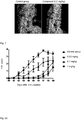
- Rheumatoid arthritis in human is an autoimmune disease, in which the patient' own immune system attacks joint tissues. Lymphocytes including T and B cells play an important part in the pathogenesis of the disease. It is known that inhibition of T cell functions by blocking the activation of T cells is an effective treatment of rheumatoid arthritis. Since Compound 2 blocks egress of lymphocytes, it was of interest to determine if it would be efficacious in inhibiting the development of arthritis in the rat CIA mode. To perform the testing, Lewis rats were induced to develop the disease as follows. Rats were anesthetized with isoflurane and were injected intradermally with a total of 0.5 mL CII/CFA emulsion.
- the emulsion was injected at 3 sites, one site at the base of the tail (0.1 mL), and the other two sites (0.2 mL/site) on the back of the rat near to the base of the tail.
- An identical booster injection was given i.d. at 7 days after the primary immunization avoiding previous injection sites.
- Compound 2 was prepared as a suspension in 0.5% CMC-Na and was given orally to the rats at the time of CII/CFA injection.
- the positive control group was given TOFACITINIB orally on day 12 after sensitization.
- the severity of arthritis in four paws was scored 2 times per week starting on day 7 after sensitization.
- S1P1 agonists have been shown to be effective in human multiple sclerosis and in animal model of MS.
- Compound 2 was evaluated for its efficacy for experimental autoimmune encephalomyelitis (EAE), a mouse model of human multiple sclerosis.
- EAE experimental autoimmune encephalomyelitis
- Eighty female C57BL/6 mice were randomly assigned into eight groups based on body weight and immunized in this study. Each group consisted of ten (10) mice.
- MOG 35-55 MOG, myelin oligo-dendrocyte glycoprotein
- CFA modified complete Freund's Adjuvant
- mice were anesthetized with isoflurane and were then injected with 100 ⁇ L of emulsion subcutaneously into the shaved backs of the mice at three sites, one along the midline of the back between the shoulders, and two on each side of the midline on the lower back.
- Pertuxus toxin 200 ng in 200 ⁇ L of PBS
- EAE development was assessed by clinically scoring of the mice once daily from Day 0 to Day 30 post immunization.
- Compound 2 prepared as a Na CMC suspension, was administered orally starting at the time of MOG immunization and continued for the entire duration of the study. The data showed that at all three dosages evaluated (0.03, 0.1 and 1 mg/kg), Compound 2 effectively inhibited development of EAE ( Figure 7 ).
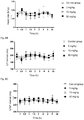
- FTY720 is a non-selective S1P1 agonist that has been shown to have various cardiovascular effects including bradycardia in humans. To determine whether Compound 2 has an effect on heart rate and QT interval, the compound was evaluated in a telemetry assay in conscious beagle dog.
- CMC-Na An appropriate amount of CMC-Na was prepared as a 0.5% CMC-Na (w/v) solution with sterilized water for injection. The solution was prepared one day before administration.
- compositions of Compound 2 (samples) with the concentration of 2, 6 and 20 mg/mL were prepared one day before administration as follows. An appropriate amount of Compound 2 was added into an appropriate amount of 0.5% CMC-Na solution. The obtained mixture was emulsified and homogenized on an emulsification isotropic machine. Theoretical concentrations of Compound 2 in the prepared sample solutions were 2, 6 and 20 mg/mL.
- a total of 8 animals and a Double Latin squared experimental design were used in this experiment.
- Administration cycles were separated by 3-5 days. One day before each administration cycle, the animals were weighted and fasted overnight.
- telemetry system International physiological signal telemetry system 1, Data Science International Inc., USA
- test parameters were set
- implants were activated and physiological indexes of the animals were recorded.
- index data of blood pressure, electrocardiogram, body temperature and the like of the animals were collected within 24 hours after the administration. During the collection, the system was turned off properly and then turned on again in order to avoid possible data overflow.
- the switching process did not affect the value of the setting data points and times switching the system were recorded. On the next day when the recording was completed, the telemetry system was turned off. Time points of detection are: 1 hour before administration (-1 h), and 0.5 h ( ⁇ 5 min), 1 h ( ⁇ 10 min), 1.5 h ( ⁇ 10 min), 2 h ( ⁇ 15 min), 3 h ( ⁇ 15 min), 4 h ( ⁇ 15 min), 8 h ( ⁇ 45 min), 24 h ( ⁇ 1 h) after administration. All data was collected by PONEMAH Version 4.8 software automatically. Parameters would be analyzed using artificial set after the collection was completed. The data was, firstly, analyzed by PONEMAH Version 4.8 software automatically, and then checked point by point artificially for selected values.
- indexes of heart rate blood pressure, respiration and body temperature
- mean values of continuous waveform within 1 min were selected, and mean values of continuous waveform within 10 seconds were selected for other electro-cardio indexes.
- immediate data at the detection time points was preferred.
- waveform with clear signal in the given range was selected.
- data which is available for analysis should be found around the value points, which should be explained specially in a value point table. Time at which values were selected were recorded.
- the change range was calculated after the data collected at time points with significant difference or significant change trend are normalized.
- Example 12 Screening for step (1) in synthesis method of the present invention
- a screening for crystallization purification condition was conducted on the prepared crude product. Crystallization operation was as follows: the crude product was dissolved in a crystallization solvent, crystallized at 20 °C, and dried by vacuum to obtain 2-fluoro-4-[5-(4-isobutylphenyl)-1,2,4-oxadiazol-3-yl]-benzyl alcohol represented by formula 1-5 which is an almost white solid product. The purity was detected by LCMS.
- Table 5 Screening of the ratio of methanol and water in the mixed solvent Solvent Solvent ratio (volume ratio) Purity of crude product Purity of pure product Yield of purification Methanol and water 1: 1 77.25% 98.32% 75.2% Methanol and water 2: 1 77.25% 99.13% 73.1% Methanol and water* 3: 1 77.25% 99.27% 72.7% Methanol and water 1: 2 77.25% 97.20% 79.8% Methanol and water 1: 3 77.25% 95.68% 83.2% * According to the invention.
- Example 13 Screening for step (2) in synthesis method of the present invention
- Step (2) of the present invention was conducted according to the following procedure: 2-fluoro-4-[5-(4-isobutylphenyl)-1,2,4-oxadiazol-3-yl]-benzyl alcohol represented by formula 1-5 purified from Example 1 was dissolved in reaction solvent, and then active manganese dioxide was added in. The reaction liquid was heated to reflux and continued to react. The reaction was cooled down to room temperature and filtered. A light yellow filtrate was collected, dried with anhydrous sodium sulfate and concentrated under reduced pressure to obtain 2-fluoro-4-[5-(4-isobutylphenyl)-1,2,4-oxadiazol-3-yl]-benzaldehyde represented by formula 1-6 which was a white solid product. The conversion rate was detected by LCMS.
- Table 8 Screening of the amount of the reaction solvent Amount of the solvent (raw material: solvent) Reaction time Conversion rate (LCMS) Yield 1 g: 10ml* 1 h 97.76% 93.3% 1 g: 20 ml 1 h 98.93% 92.6% 1 g: 30 ml 1 h 98.83% 93.1% * According to the invention.
- Table 9 Screening of the amount of oxidant Amount of oxidant (the mole ratio of raw material to manganese dioxide) Reaction time Conversion rate (LCMS) Yield 1: 4 3 h 96.91% 86.6% 1: 5 3 h 97.06% 91.0% 1: 6* 3 h 97.03% 93.3% 1: 10 3 h 97.12% 93.6% * According to the invention.
- Example 14 Screening for step (3) in synthesis methods of the present invention
- the step (3) of the present invention was conducted according to the following procedure: At room temperature, 2-fluoro-4-[5-(4-isobutylphenyl)-1,2,4-oxadiazol-3-yl]-benzaldehyde of formula 1-6, azetidine-3-carboxylic acid of formula 1-7 and glacial acetic acid were added into the reaction solvent and stirred for 2 hours at 20 °C. NaBH3CN was dissolved in methanol, and then the solution of NaBH3CN in methanol was added dropwise into the reaction system within 1 hour. The reaction liquid was stirred to react at 20 °C after dropping and filtered.
- Table 11 Screening of the amount of reducing agent Amount of reducing agent (the mole ratio of raw material to sodium cyanoborohydride) Reaction time Conversion rate (LCMS) Yield Purity 1: 0.5 15 h 66.42% 67.20% 94.58% 1: 1* 15 h 79.26% 69.10% 95.50% 1: 2 15 h 73.77% 65.61% 94.24% 1: 6 15 h 64.51% 53.27% 94.36% * According to the invention.
- Amount of reducing agent the mole ratio of raw material to sodium cyanoborohydride
- LCMS Reaction time Conversion rate
Landscapes
- Health & Medical Sciences (AREA)
- Chemical & Material Sciences (AREA)
- Organic Chemistry (AREA)
- Life Sciences & Earth Sciences (AREA)
- Medicinal Chemistry (AREA)
- Pharmacology & Pharmacy (AREA)
- Veterinary Medicine (AREA)
- Animal Behavior & Ethology (AREA)
- General Health & Medical Sciences (AREA)
- Public Health (AREA)
- Chemical Kinetics & Catalysis (AREA)
- General Chemical & Material Sciences (AREA)
- Nuclear Medicine, Radiotherapy & Molecular Imaging (AREA)
- Engineering & Computer Science (AREA)
- Bioinformatics & Cheminformatics (AREA)
- Immunology (AREA)
- Biomedical Technology (AREA)
- Diabetes (AREA)
- Epidemiology (AREA)
- Physical Education & Sports Medicine (AREA)
- Neurology (AREA)
- Pulmonology (AREA)
- Rheumatology (AREA)
- Neurosurgery (AREA)
- Pain & Pain Management (AREA)
- Hematology (AREA)
- Orthopedic Medicine & Surgery (AREA)
- Transplantation (AREA)
- Obesity (AREA)
- Heart & Thoracic Surgery (AREA)
- Cardiology (AREA)
- Endocrinology (AREA)
- Oncology (AREA)
- Communicable Diseases (AREA)
- Emergency Medicine (AREA)
- Urology & Nephrology (AREA)
- Dermatology (AREA)
- Virology (AREA)
- Vascular Medicine (AREA)
- Pharmaceuticals Containing Other Organic And Inorganic Compounds (AREA)
Claims (14)
- Verbindung, wie in Formel I gezeigt:

- Verbindung nach Anspruch 1, wobei R F, Cl or Br ist.
- Verbindung nach Anspruch 1 oder Anspruch 2 zur Verwendung bei der Behandlung einer durch S1P1 vermittelten Krankheit oder eines durch S1P1 vermittelten Zustands.
- Verbindung zur Verwendung nach Anspruch 3, wobei die Krankheit oder der Zustand ausgewählt ist aus der Gruppe bestehend aus rheumatoider Arthritis, multipler Sklerose, entzündlicher Enteritis, Autoimmunerkrankung, chronischer entzündlicher Erkrankung, Asthma, entzündlichen Neuropathien, Arthritis, Transplantation, Morbus Crohn, Colitis ulcerosa, Lupus erythematodes, Psoriasis, Ischämie-Reperfusions-Verletzung, solidem Tumor, Erkrankung im Zusammenhang mit Angiogenese, Blutgefäßerkrankung, Schmerz, akuter Viruserkrankung, entzündlicher Darmerkrankung, insulin- und nicht insulinabhängigem Diabetes mellitus und anderen verwandten Immunerkrankungen; wobei vorzugsweise die Krankheit oder der Zustand ausgewählt ist aus der Gruppe bestehend aus multipler Sklerose, rheumatoider Arthritis, entzündlicher Enteritis und Psoriasis.
- Pharmazeutische Zusammensetzung, umfassend die Verbindung nach Anspruch 1 oder Anspruch 2 und gegebenenfalls einen pharmazeutisch verträglichen Träger.
- Pharmazeutische Zusammensetzung nach Anspruch 5, wobei die pharmazeutische Zusammensetzung in Form einer Tablette, eines Suppositoriums, einer dispergierbaren Tablette, einer magensaftresistenten Tablette, einer Kautablette, einer oral zerfallenden Tablette, einer Kapsel, eines zuckerbeschichteten Mittels, eines Granulats, eines trockenen Pulvers, einer Lösung zum Einnehmen, einer kleinen Nadel zur Injektion, eines lyophilisierten Pulvers oder einer großvolumigen parenteralen Injektionslösung vorliegt; wobei vorzugsweise der pharmazeutisch verträgliche Träger ausgewählt ist aus der Gruppe bestehend aus Verdünnungsmitteln, Lösungsvermittlern, Sprengmitteln, Suspendiermitteln, Gleitmitteln, Bindemitteln, Füllstoffen, Geschmacksstoffen, Süßungsmitteln, Antioxidationsmitteln, Tensiden, Konservierungsmitteln, Umhüllungsmitteln und Pigmenten.
- Verbindung nach Anspruch 1 oder Anspruch 2 oder pharmazeutische Zusammensetzung nach Anspruch 5 oder 6 zur Verwendung bei der Behandlung einer durch S1P1 vermittelten Krankheit oder eines durch S1P1 vermittelten Zustands, umfassend die Verabreichung einer therapeutisch wirksamen Menge der Verbindung oder pharmazeutischen Zusammensetzung an ein Subjekt; wobei vorzugsweise das Subjekt ein Säuger ist.
- Verbindung oder pharmazeutische Zusammensetzung zur Verwendung nach Anspruch 7, wobei die Krankheit oder der Zustand ausgewählt ist aus der Gruppe bestehend aus rheumatoider Arthritis, multipler Sklerose, entzündlicher Enteritis, Autoimmunerkrankung, chronischer entzündlicher Erkrankung, Asthma, entzündlichen Neuropathien, Arthritis, Transplantation, Morbus Crohn, Colitis ulcerosa, Lupus erythematodes, Psoriasis, Ischämie-Reperfusions-Verletzung, solidem Tumor, Erkrankung im Zusammenhang mit Angiogenese, Blutgefäßerkrankung, Schmerz, akuter Viruserkrankung, entzündlicher Darmerkrankung, insulin- und nicht insulinabhängigem Diabetes mellitus und anderen verwandten Immunerkrankungen; wobei vorzugsweise die Krankheit oder der Zustand ausgewählt ist aus der Gruppe bestehend aus multipler Sklerose, rheumatoider Arthritis, entzündlicher Enteritis und Psoriasis.
- Syntheseverfahren der Verbindung nach Anspruch 1, worin R F ist, wobei die Verbindung 1-{2-Fluor-4-[5-(4-isobutylphenyl)-1,2,4-oxadiazol-3-yl]-benzyl}-3-azetidincarbonsäure ist, wobei das Syntheseverfahren die folgenden Schritte umfasst:(1) Umsetzen von 3-Fluor-N'-hydroxy-4-hydroxymethylbenzamidin, wie in Formel 1-3 gezeigt, mit 4-Isobutylbenzoesäure, wie in Formel 1-4 gezeigt, in der Gegenwart von Kondensationsmitteln 1-(3-Dimethylaminopropyl)-3-ethylcarbodiimidhydrochlorid und 1-Hydroxybenzotriazol, um 2-Fluor-4-[5-(4-isobutylphenyl)-1,2,4-oxadiazol-3-yl]-benzylalkohol, wie in Formel 1-5 gezeigt, zu erzeugen:
 (2) Umsetzen von 2-Fluor-4-[5-(4-isobutylphenyl)-1,2,4-oxadiazol-3-yl]-benzylalkohol, wie in Formel 1-5 gezeigt und in Stufe (1) erhalten, mit Mangandioxid, um 2-Fluor-4-[5-(4-isobutylphenyl)-1,2,4-oxadiazol-3-yl]-benzaldehyd, wie in Formel 1-6 gezeigt, zu erzeugen:
 (3) Umsetzen von 2-Fluor-4-[5-(4-isobutylphenyl)-1,2,4-oxadiazol-3-yl]-benzaldehyd, wie in Formel 1-6 gezeigt und in Stufe (2) erhalten, mit Azetidin-3-carbonsäure, wie in Formel 1-7 gezeigt, unter Verwendung von Essigsäure als Katalysator und Natriumcyanoborhydrid als Reduktionsmittel, um die Verbindung, wie in Formel IB gezeigt, zu erzeugen:
- Syntheseverfahren nach Anspruch 9, wobei in Stufe (1) die Kristallisation bei 20°C durchgeführt wird.
- Syntheseverfahren nach einem der Ansprüche 9 bis 10,(a) wobei die Reaktion der Stufe (1) in einem Reaktionslösungsmittel durchgeführt wird, welches eines oder mehrere ist, ausgewählt aus Acetonitril, N-Methylpyrrolidon und N,N-Dimethylformamid; die Reaktion bei einer Temperatur von 80-140°C durchgeführt wird; und das Molverhältnis von 3-Fluor-N'-hydroxy-4-hydroxymethylbenzamidin, wie in Formel 1-3 gezeigt, und 4-Isobutylbenzoesäure, wie in Formel 1-4 gezeigt, 1:1-2,0 beträgt, und/oder(b) wobei in Stufe (1) das Reaktionslösungsmittel N,N-Dimethylformamid ist; wobei vorzugsweise die Reaktionstemperatur 130-140°C beträgt; wobei vorzugsweise das Molverhältnis von 3-Fluor-N'-hydroxy-4-hydroxymethylbenzamidin, wie in Formel 1-3 gezeigt, zu 4-Isobutylbenzoesäure, wie in Formel 1-4 gezeigt, 1:1-1,5, stärker bevorzugt 1:1-1.2, beträgt.
- Syntheseverfahren nach einem der Ansprüche 9 bis 11, wobei in Stufe (2) die Reaktion bei einer Temperatur von 40-70°C, vorzugsweise 60-70°C, durchgeführt wird.
- Syntheseverfahren nach einem der Ansprüche 9 bis 12, wobei in Sufe (3) das Molverhältnis von 2-Fluor-4-[5-(4-isobutylphenyl)-1,2,4-oxadiazol-3-yl]-benzaldehyd, wie in Formel 1-6 gezeigt, zu Azetidin-3-carbonsäure, wie in Formel 1-7 gezeigt, 1:1-1,2 beträgt und die Reaktion bei einer Temperatur von 0-30°C für eine Reaktionsdauer von 1-16 Stunden durchgeführt wird.
- Syntheseverfahren nach einem der Ansprüche 9 bis 13, wobei in Sufe (3) das Molverhältnis von 2-Fluor-4-[5-(4-isobutylphenyl)-1,2,4-oxadiazol-3-yl]-benzaldehyd, wie in Formel 1-6 gezeigt, zu Azetidin-3-carbonsäure, wie in Formel 1-7 gezeigt, 1:1-1,1, stärker bevorzugt 1:1, beträgt; wobei vorzugsweise die Reaktionstemperatur 10-20°C, stärker bevorzugt 15-20°C, beträgt; wobei vorzugsweise die Reaktionsdauer 4-16 Stunden beträgt.
Applications Claiming Priority (2)
| Application Number | Priority Date | Filing Date | Title |
|---|---|---|---|
| CN201310433018.6A CN103450171B (zh) | 2013-09-22 | 2013-09-22 | 一种免疫调节化合物、其用途和包含其的药物组合物 |
| PCT/CN2014/086538 WO2015039587A1 (zh) | 2013-09-22 | 2014-09-15 | 一种免疫调节新型化合物、其用途和包含其的药物组合物 |
Publications (3)
| Publication Number | Publication Date |
|---|---|
| EP3048103A1 EP3048103A1 (de) | 2016-07-27 |
| EP3048103A4 EP3048103A4 (de) | 2017-03-22 |
| EP3048103B1 true EP3048103B1 (de) | 2020-03-11 |
Family
ID=49733057
Family Applications (1)
| Application Number | Title | Priority Date | Filing Date |
|---|---|---|---|
| EP14846294.8A Active EP3048103B1 (de) | 2013-09-22 | 2014-09-15 | Verbindung zur immunmodulation, verwendung davon und pharmazeutische zusammensetzung damit |
Country Status (9)
| Country | Link |
|---|---|
| US (1) | US10280158B2 (de) |
| EP (1) | EP3048103B1 (de) |
| JP (1) | JP6470757B2 (de) |
| KR (1) | KR102372201B1 (de) |
| CN (1) | CN103450171B (de) |
| AU (1) | AU2014323822B2 (de) |
| CA (1) | CA2928300C (de) |
| ES (1) | ES2802977T3 (de) |
| WO (1) | WO2015039587A1 (de) |
Families Citing this family (10)
| Publication number | Priority date | Publication date | Assignee | Title |
|---|---|---|---|---|
| CN103450171B (zh) | 2013-09-22 | 2015-07-08 | 苏州康乃德生物医药有限公司 | 一种免疫调节化合物、其用途和包含其的药物组合物 |
| CN105315266B (zh) * | 2014-08-01 | 2019-10-01 | 苏州康乃德生物医药有限公司 | 1-{2-氟-4-[5-(4-异丁基苯基)-1,2,4-噁二唑-3-基]-苄基}-3-吖丁啶羧酸的晶型 |
| CN105348276B (zh) * | 2014-08-22 | 2020-05-26 | 苏州康乃德生物医药有限公司 | 1-{2-氟-4-[5-(4-异丁基苯基)-1,2,4-噁二唑-3-基]-苄基}-3-吖丁啶羧酸的合成方法 |
| CN112778290B (zh) * | 2017-01-11 | 2022-12-06 | 苏州康乃德生物医药有限公司 | 一种s1p1受体激动剂的加成盐及其晶型和药物组合物 |
| CN109956912B (zh) * | 2017-12-26 | 2021-10-22 | 中国医学科学院药物研究所 | 含二苯基噁二唑的羧酸类化合物、其制备方法及医药用途 |
| IL278464B2 (en) * | 2018-05-04 | 2024-10-01 | Suzhou Connect Biopharmaceuticals Ltd | Addition salt of s1p1 receptor agonist and crystal form thereof, and pharmaceutical composition |
| WO2020114477A1 (zh) * | 2018-12-06 | 2020-06-11 | 上海济煜医药科技有限公司 | 作为免疫调节剂的化合物及其制备方法和应用 |
| CA3201000A1 (en) * | 2020-11-09 | 2022-05-12 | Arena Pharmaceuticals, Inc. | Methods of treating conditions related to the s1p1 receptor |
| CN113480410A (zh) * | 2021-07-07 | 2021-10-08 | 南京伊派森化学科技有限公司 | 一种2,4-二溴苯甲醇的合成方法 |
| WO2025083549A1 (en) | 2023-10-16 | 2025-04-24 | Sun Pharma Advanced Research Company Limited | Methods and combinations of inhibitors of il-23 pathway and modulators of s1p signaling pathway for the treatment of autoimmune disorders |
Family Cites Families (6)
| Publication number | Priority date | Publication date | Assignee | Title |
|---|---|---|---|---|
| JP2005533058A (ja) * | 2002-06-17 | 2005-11-04 | メルク エンド カムパニー インコーポレーテッド | Edg受容体アゴニストとしての1−((5−アリール−1,2,4−オキサジアゾール−3−イル)ベンジル)アゼチジン−3−カルボキシラートおよび1−((5−アリール−1,2,4−オキサジアゾール−3−イル)ベンジル)ピロリジン−3−カルボキシラート |
| WO2004035538A1 (en) | 2002-10-15 | 2004-04-29 | Merck & Co., Inc. | Process for making azetidine-3-carboxylic acid |
| JP2012515787A (ja) * | 2009-01-23 | 2012-07-12 | ブリストル−マイヤーズ スクイブ カンパニー | 自己免疫疾患および炎症性疾患の処置におけるs1pアゴニストとしての置換オキサジアゾール誘導体 |
| EP2241558A1 (de) * | 2009-04-03 | 2010-10-20 | Merck Serono SA | Oxadiazolderivate |
| CN103480171A (zh) * | 2013-08-27 | 2014-01-01 | 仙桃市康化科技有限公司 | 一种对苯醌汽提塔顶部除泥装置 |
| CN103450171B (zh) * | 2013-09-22 | 2015-07-08 | 苏州康乃德生物医药有限公司 | 一种免疫调节化合物、其用途和包含其的药物组合物 |
-
2013
- 2013-09-22 CN CN201310433018.6A patent/CN103450171B/zh active Active
-
2014
- 2014-09-15 WO PCT/CN2014/086538 patent/WO2015039587A1/zh not_active Ceased
- 2014-09-15 AU AU2014323822A patent/AU2014323822B2/en active Active
- 2014-09-15 JP JP2016543299A patent/JP6470757B2/ja active Active
- 2014-09-15 US US15/023,246 patent/US10280158B2/en active Active
- 2014-09-15 KR KR1020167010722A patent/KR102372201B1/ko active Active
- 2014-09-15 ES ES14846294T patent/ES2802977T3/es active Active
- 2014-09-15 EP EP14846294.8A patent/EP3048103B1/de active Active
- 2014-09-15 CA CA2928300A patent/CA2928300C/en active Active
Non-Patent Citations (1)
| Title |
|---|
| None * |
Also Published As
| Publication number | Publication date |
|---|---|
| AU2014323822A1 (en) | 2016-05-12 |
| EP3048103A1 (de) | 2016-07-27 |
| US10280158B2 (en) | 2019-05-07 |
| JP6470757B2 (ja) | 2019-02-13 |
| JP2016530334A (ja) | 2016-09-29 |
| US20160347745A1 (en) | 2016-12-01 |
| KR102372201B1 (ko) | 2022-03-07 |
| KR20170055445A (ko) | 2017-05-19 |
| WO2015039587A1 (zh) | 2015-03-26 |
| AU2014323822B2 (en) | 2018-10-04 |
| CN103450171A (zh) | 2013-12-18 |
| CN103450171B (zh) | 2015-07-08 |
| EP3048103A4 (de) | 2017-03-22 |
| CA2928300A1 (en) | 2015-03-26 |
| ES2802977T3 (es) | 2021-01-22 |
| CA2928300C (en) | 2022-05-10 |
| NZ719186A (en) | 2021-05-28 |
Similar Documents
| Publication | Publication Date | Title |
|---|---|---|
| EP3048103B1 (de) | Verbindung zur immunmodulation, verwendung davon und pharmazeutische zusammensetzung damit | |
| US9346764B2 (en) | Imidazolidinedione compounds and their uses | |
| AU2024200693A1 (en) | Methods of treating Alport syndrome using bardoxolone methyl or analogs thereof | |
| WO1999020620A1 (en) | Isoquinoline derivative and drug | |
| EP4273139A1 (de) | 2-pyridonderivat und herstellungsverfahren dafür und pharmazeutische anwendung davon | |
| CN102958926A (zh) | 作为抗组胺剂的卢帕他定盐 | |
| JP4814789B2 (ja) | 6−ヒドロキシベンズブロマロン又はその塩からなる医薬組成物 | |
| JP2008179541A (ja) | 神経因性疼痛治療薬 | |
| EP3984993A1 (de) | Verwendung von aminothiolverbindungen als hirnnerven- oder herzschutzmittel | |
| WO2015092720A1 (en) | Metabolites of sonidegib (lde225) | |
| CN115003661B (zh) | 芳基葡糖苷衍生物及其在药物中的用途 | |
| NZ719186B2 (en) | Immune adjustment compound, use thereof and pharmaceutical composition comprising same | |
| EP4559923A1 (de) | Antihistaminverbindung und herstellungsverfahren dafür und verwendung davon | |
| US10351566B2 (en) | Therapeutic compounds for pain and synthesis thereof | |
| CN111417632B (zh) | 噻唑-5-甲酸衍生物及其制备方法与应用 | |
| CN101684103A (zh) | 1,2,4-三唑结构的化合物、其制备方法和用途 | |
| CN101684088A (zh) | 氰甲基吡咯衍生物、其制备方法和用途 | |
| WO2025193111A1 (en) | An imidazole-indole derivative binding to 5-ht7 serotonin receptor, a pharmaceutical composition comprising the derivative, uses of the derivative and the composition, and an intermediate product for manufacturing the imidazole-indole derivative | |
| CN117105868A (zh) | 酰胺类醛脱氢酶激动剂、其合成方法及用途 | |
| TW202339760A (zh) | 用於預防或治療心臟衰竭(hf)之組合物 | |
| JP2025503184A (ja) | 肺動脈高血圧症を予防又は処置するための組成物 | |
| EP4559922A1 (de) | Antihistaminverbindung, herstellungsverfahren dafür und verwendung davon | |
| IT202400002560A1 (it) | Inibitori della proteina rock per uso nel trattamento della fibrosi polmonare | |
| CN116768791A (zh) | 酰胺类醛脱氢酶激动剂、其合成方法及用途 | |
| US20110086862A1 (en) | Polymorphs of pardoprunox |
Legal Events
| Date | Code | Title | Description |
|---|---|---|---|
| PUAI | Public reference made under article 153(3) epc to a published international application that has entered the european phase |
Free format text: ORIGINAL CODE: 0009012 |
|
| 17P | Request for examination filed |
Effective date: 20160414 |
|
| AK | Designated contracting states |
Kind code of ref document: A1 Designated state(s): AL AT BE BG CH CY CZ DE DK EE ES FI FR GB GR HR HU IE IS IT LI LT LU LV MC MK MT NL NO PL PT RO RS SE SI SK SM TR |
|
| AX | Request for extension of the european patent |
Extension state: BA ME |
|
| DAX | Request for extension of the european patent (deleted) | ||
| A4 | Supplementary search report drawn up and despatched |
Effective date: 20170222 |
|
| RIC1 | Information provided on ipc code assigned before grant |
Ipc: A61P 1/00 20060101ALI20170216BHEP Ipc: A61P 29/00 20060101ALI20170216BHEP Ipc: A61P 25/00 20060101ALI20170216BHEP Ipc: A61P 19/04 20060101ALI20170216BHEP Ipc: A61P 31/12 20060101ALI20170216BHEP Ipc: A61K 31/4245 20060101ALI20170216BHEP Ipc: C07D 413/10 20060101AFI20170216BHEP Ipc: A61P 3/10 20060101ALI20170216BHEP Ipc: A61P 37/02 20060101ALI20170216BHEP Ipc: A61P 9/10 20060101ALI20170216BHEP Ipc: A61P 17/06 20060101ALI20170216BHEP Ipc: A61P 19/02 20060101ALI20170216BHEP Ipc: A61P 11/06 20060101ALI20170216BHEP Ipc: A61P 1/04 20060101ALI20170216BHEP Ipc: A61P 35/00 20060101ALI20170216BHEP Ipc: A61P 37/06 20060101ALI20170216BHEP |
|
| STAA | Information on the status of an ep patent application or granted ep patent |
Free format text: STATUS: EXAMINATION IS IN PROGRESS |
|
| 17Q | First examination report despatched |
Effective date: 20171222 |
|
| GRAP | Despatch of communication of intention to grant a patent |
Free format text: ORIGINAL CODE: EPIDOSNIGR1 |
|
| STAA | Information on the status of an ep patent application or granted ep patent |
Free format text: STATUS: GRANT OF PATENT IS INTENDED |
|
| INTG | Intention to grant announced |
Effective date: 20190924 |
|
| GRAS | Grant fee paid |
Free format text: ORIGINAL CODE: EPIDOSNIGR3 |
|
| GRAA | (expected) grant |
Free format text: ORIGINAL CODE: 0009210 |
|
| STAA | Information on the status of an ep patent application or granted ep patent |
Free format text: STATUS: THE PATENT HAS BEEN GRANTED |
|
| RAP1 | Party data changed (applicant data changed or rights of an application transferred) |
Owner name: SUZHOU CONNECT BIOPHARMACEUTICALS, LTD. |
|
| AK | Designated contracting states |
Kind code of ref document: B1 Designated state(s): AL AT BE BG CH CY CZ DE DK EE ES FI FR GB GR HR HU IE IS IT LI LT LU LV MC MK MT NL NO PL PT RO RS SE SI SK SM TR |
|
| REG | Reference to a national code |
Ref country code: GB Ref legal event code: FG4D |
|
| REG | Reference to a national code |
Ref country code: CH Ref legal event code: EP |
|
| REG | Reference to a national code |
Ref country code: AT Ref legal event code: REF Ref document number: 1243009 Country of ref document: AT Kind code of ref document: T Effective date: 20200315 |
|
| REG | Reference to a national code |
Ref country code: IE Ref legal event code: FG4D |
|
| REG | Reference to a national code |
Ref country code: DE Ref legal event code: R096 Ref document number: 602014062303 Country of ref document: DE |
|
| REG | Reference to a national code |
Ref country code: NL Ref legal event code: FP |
|
| REG | Reference to a national code |
Ref country code: SE Ref legal event code: TRGR |
|
| PG25 | Lapsed in a contracting state [announced via postgrant information from national office to epo] |
Ref country code: RS Free format text: LAPSE BECAUSE OF FAILURE TO SUBMIT A TRANSLATION OF THE DESCRIPTION OR TO PAY THE FEE WITHIN THE PRESCRIBED TIME-LIMIT Effective date: 20200311 Ref country code: NO Free format text: LAPSE BECAUSE OF FAILURE TO SUBMIT A TRANSLATION OF THE DESCRIPTION OR TO PAY THE FEE WITHIN THE PRESCRIBED TIME-LIMIT Effective date: 20200611 Ref country code: FI Free format text: LAPSE BECAUSE OF FAILURE TO SUBMIT A TRANSLATION OF THE DESCRIPTION OR TO PAY THE FEE WITHIN THE PRESCRIBED TIME-LIMIT Effective date: 20200311 |
|
| PG25 | Lapsed in a contracting state [announced via postgrant information from national office to epo] |
Ref country code: LV Free format text: LAPSE BECAUSE OF FAILURE TO SUBMIT A TRANSLATION OF THE DESCRIPTION OR TO PAY THE FEE WITHIN THE PRESCRIBED TIME-LIMIT Effective date: 20200311 Ref country code: HR Free format text: LAPSE BECAUSE OF FAILURE TO SUBMIT A TRANSLATION OF THE DESCRIPTION OR TO PAY THE FEE WITHIN THE PRESCRIBED TIME-LIMIT Effective date: 20200311 Ref country code: BG Free format text: LAPSE BECAUSE OF FAILURE TO SUBMIT A TRANSLATION OF THE DESCRIPTION OR TO PAY THE FEE WITHIN THE PRESCRIBED TIME-LIMIT Effective date: 20200611 Ref country code: GR Free format text: LAPSE BECAUSE OF FAILURE TO SUBMIT A TRANSLATION OF THE DESCRIPTION OR TO PAY THE FEE WITHIN THE PRESCRIBED TIME-LIMIT Effective date: 20200612 |
|
| REG | Reference to a national code |
Ref country code: LT Ref legal event code: MG4D |
|
| PG25 | Lapsed in a contracting state [announced via postgrant information from national office to epo] |
Ref country code: SK Free format text: LAPSE BECAUSE OF FAILURE TO SUBMIT A TRANSLATION OF THE DESCRIPTION OR TO PAY THE FEE WITHIN THE PRESCRIBED TIME-LIMIT Effective date: 20200311 Ref country code: RO Free format text: LAPSE BECAUSE OF FAILURE TO SUBMIT A TRANSLATION OF THE DESCRIPTION OR TO PAY THE FEE WITHIN THE PRESCRIBED TIME-LIMIT Effective date: 20200311 Ref country code: LT Free format text: LAPSE BECAUSE OF FAILURE TO SUBMIT A TRANSLATION OF THE DESCRIPTION OR TO PAY THE FEE WITHIN THE PRESCRIBED TIME-LIMIT Effective date: 20200311 Ref country code: EE Free format text: LAPSE BECAUSE OF FAILURE TO SUBMIT A TRANSLATION OF THE DESCRIPTION OR TO PAY THE FEE WITHIN THE PRESCRIBED TIME-LIMIT Effective date: 20200311 Ref country code: CZ Free format text: LAPSE BECAUSE OF FAILURE TO SUBMIT A TRANSLATION OF THE DESCRIPTION OR TO PAY THE FEE WITHIN THE PRESCRIBED TIME-LIMIT Effective date: 20200311 Ref country code: SM Free format text: LAPSE BECAUSE OF FAILURE TO SUBMIT A TRANSLATION OF THE DESCRIPTION OR TO PAY THE FEE WITHIN THE PRESCRIBED TIME-LIMIT Effective date: 20200311 Ref country code: PT Free format text: LAPSE BECAUSE OF FAILURE TO SUBMIT A TRANSLATION OF THE DESCRIPTION OR TO PAY THE FEE WITHIN THE PRESCRIBED TIME-LIMIT Effective date: 20200805 Ref country code: IS Free format text: LAPSE BECAUSE OF FAILURE TO SUBMIT A TRANSLATION OF THE DESCRIPTION OR TO PAY THE FEE WITHIN THE PRESCRIBED TIME-LIMIT Effective date: 20200711 |
|
| REG | Reference to a national code |
Ref country code: AT Ref legal event code: MK05 Ref document number: 1243009 Country of ref document: AT Kind code of ref document: T Effective date: 20200311 |
|
| REG | Reference to a national code |
Ref country code: DE Ref legal event code: R097 Ref document number: 602014062303 Country of ref document: DE |
|
| PLBE | No opposition filed within time limit |
Free format text: ORIGINAL CODE: 0009261 |
|
| STAA | Information on the status of an ep patent application or granted ep patent |
Free format text: STATUS: NO OPPOSITION FILED WITHIN TIME LIMIT |
|
| REG | Reference to a national code |
Ref country code: ES Ref legal event code: FG2A Ref document number: 2802977 Country of ref document: ES Kind code of ref document: T3 Effective date: 20210122 |
|
| PG25 | Lapsed in a contracting state [announced via postgrant information from national office to epo] |
Ref country code: AT Free format text: LAPSE BECAUSE OF FAILURE TO SUBMIT A TRANSLATION OF THE DESCRIPTION OR TO PAY THE FEE WITHIN THE PRESCRIBED TIME-LIMIT Effective date: 20200311 Ref country code: DK Free format text: LAPSE BECAUSE OF FAILURE TO SUBMIT A TRANSLATION OF THE DESCRIPTION OR TO PAY THE FEE WITHIN THE PRESCRIBED TIME-LIMIT Effective date: 20200311 |
|
| 26N | No opposition filed |
Effective date: 20201214 |
|
| PG25 | Lapsed in a contracting state [announced via postgrant information from national office to epo] |
Ref country code: PL Free format text: LAPSE BECAUSE OF FAILURE TO SUBMIT A TRANSLATION OF THE DESCRIPTION OR TO PAY THE FEE WITHIN THE PRESCRIBED TIME-LIMIT Effective date: 20200311 Ref country code: SI Free format text: LAPSE BECAUSE OF FAILURE TO SUBMIT A TRANSLATION OF THE DESCRIPTION OR TO PAY THE FEE WITHIN THE PRESCRIBED TIME-LIMIT Effective date: 20200311 |
|
| PG25 | Lapsed in a contracting state [announced via postgrant information from national office to epo] |
Ref country code: MC Free format text: LAPSE BECAUSE OF FAILURE TO SUBMIT A TRANSLATION OF THE DESCRIPTION OR TO PAY THE FEE WITHIN THE PRESCRIBED TIME-LIMIT Effective date: 20200311 |
|
| PG25 | Lapsed in a contracting state [announced via postgrant information from national office to epo] |
Ref country code: LU Free format text: LAPSE BECAUSE OF NON-PAYMENT OF DUE FEES Effective date: 20200915 |
|
| PG25 | Lapsed in a contracting state [announced via postgrant information from national office to epo] |
Ref country code: IE Free format text: LAPSE BECAUSE OF NON-PAYMENT OF DUE FEES Effective date: 20200915 |
|
| PG25 | Lapsed in a contracting state [announced via postgrant information from national office to epo] |
Ref country code: TR Free format text: LAPSE BECAUSE OF FAILURE TO SUBMIT A TRANSLATION OF THE DESCRIPTION OR TO PAY THE FEE WITHIN THE PRESCRIBED TIME-LIMIT Effective date: 20200311 Ref country code: MT Free format text: LAPSE BECAUSE OF FAILURE TO SUBMIT A TRANSLATION OF THE DESCRIPTION OR TO PAY THE FEE WITHIN THE PRESCRIBED TIME-LIMIT Effective date: 20200311 Ref country code: CY Free format text: LAPSE BECAUSE OF FAILURE TO SUBMIT A TRANSLATION OF THE DESCRIPTION OR TO PAY THE FEE WITHIN THE PRESCRIBED TIME-LIMIT Effective date: 20200311 |
|
| PG25 | Lapsed in a contracting state [announced via postgrant information from national office to epo] |
Ref country code: MK Free format text: LAPSE BECAUSE OF FAILURE TO SUBMIT A TRANSLATION OF THE DESCRIPTION OR TO PAY THE FEE WITHIN THE PRESCRIBED TIME-LIMIT Effective date: 20200311 Ref country code: AL Free format text: LAPSE BECAUSE OF FAILURE TO SUBMIT A TRANSLATION OF THE DESCRIPTION OR TO PAY THE FEE WITHIN THE PRESCRIBED TIME-LIMIT Effective date: 20200311 |
|
| P01 | Opt-out of the competence of the unified patent court (upc) registered |
Effective date: 20230525 |
|
| REG | Reference to a national code |
Ref country code: CH Ref legal event code: U11 Free format text: ST27 STATUS EVENT CODE: U-0-0-U10-U11 (AS PROVIDED BY THE NATIONAL OFFICE) Effective date: 20251001 |
|
| PGFP | Annual fee paid to national office [announced via postgrant information from national office to epo] |
Ref country code: DE Payment date: 20250919 Year of fee payment: 12 |
|
| PGFP | Annual fee paid to national office [announced via postgrant information from national office to epo] |
Ref country code: NL Payment date: 20250916 Year of fee payment: 12 |
|
| PGFP | Annual fee paid to national office [announced via postgrant information from national office to epo] |
Ref country code: BE Payment date: 20250923 Year of fee payment: 12 Ref country code: GB Payment date: 20250915 Year of fee payment: 12 |
|
| PGFP | Annual fee paid to national office [announced via postgrant information from national office to epo] |
Ref country code: FR Payment date: 20250916 Year of fee payment: 12 |
|
| PGFP | Annual fee paid to national office [announced via postgrant information from national office to epo] |
Ref country code: SE Payment date: 20250916 Year of fee payment: 12 |
|
| PGFP | Annual fee paid to national office [announced via postgrant information from national office to epo] |
Ref country code: IT Payment date: 20250930 Year of fee payment: 12 |
|
| PGFP | Annual fee paid to national office [announced via postgrant information from national office to epo] |
Ref country code: CH Payment date: 20251001 Year of fee payment: 12 |
|
| PGFP | Annual fee paid to national office [announced via postgrant information from national office to epo] |
Ref country code: ES Payment date: 20251020 Year of fee payment: 12 |