EP3048794B1 - Dispositif de transmission et procédé de transmission, dispositif de réception et procédé de réception, et programme informatique - Google Patents
Dispositif de transmission et procédé de transmission, dispositif de réception et procédé de réception, et programme informatique Download PDFInfo
- Publication number
- EP3048794B1 EP3048794B1 EP14845467.1A EP14845467A EP3048794B1 EP 3048794 B1 EP3048794 B1 EP 3048794B1 EP 14845467 A EP14845467 A EP 14845467A EP 3048794 B1 EP3048794 B1 EP 3048794B1
- Authority
- EP
- European Patent Office
- Prior art keywords
- emergency alert
- alert information
- transmission frame
- payload
- prescribed signal
- Prior art date
- Legal status (The legal status is an assumption and is not a legal conclusion. Google has not performed a legal analysis and makes no representation as to the accuracy of the status listed.)
- Active
Links
Images



Classifications
-
- H—ELECTRICITY
- H04—ELECTRIC COMMUNICATION TECHNIQUE
- H04N—PICTORIAL COMMUNICATION, e.g. TELEVISION
- H04N21/00—Selective content distribution, e.g. interactive television or video on demand [VOD]
- H04N21/80—Generation or processing of content or additional data by content creator independently of the distribution process; Content per se
- H04N21/81—Monomedia components thereof
- H04N21/8126—Monomedia components thereof involving additional data, e.g. news, sports, stocks, weather forecasts
- H04N21/814—Monomedia components thereof involving additional data, e.g. news, sports, stocks, weather forecasts comprising emergency warnings
-
- G—PHYSICS
- G08—SIGNALLING
- G08B—SIGNALLING SYSTEMS, e.g. PERSONAL CALLING SYSTEMS; ORDER TELEGRAPHS; ALARM SYSTEMS
- G08B27/00—Alarm systems in which the alarm condition is signalled from a central station to a plurality of substations
- G08B27/008—Alarm systems in which the alarm condition is signalled from a central station to a plurality of substations with transmission via TV or radio broadcast
-
- H—ELECTRICITY
- H04—ELECTRIC COMMUNICATION TECHNIQUE
- H04N—PICTORIAL COMMUNICATION, e.g. TELEVISION
- H04N21/00—Selective content distribution, e.g. interactive television or video on demand [VOD]
- H04N21/20—Servers specifically adapted for the distribution of content, e.g. VOD servers; Operations thereof
- H04N21/23—Processing of content or additional data; Elementary server operations; Server middleware
- H04N21/236—Assembling of a multiplex stream, e.g. transport stream, by combining a video stream with other content or additional data, e.g. inserting a URL [Uniform Resource Locator] into a video stream, multiplexing software data into a video stream; Remultiplexing of multiplex streams; Insertion of stuffing bits into the multiplex stream, e.g. to obtain a constant bit-rate; Assembling of a packetised elementary stream
- H04N21/2362—Generation or processing of Service Information [SI]
-
- H—ELECTRICITY
- H04—ELECTRIC COMMUNICATION TECHNIQUE
- H04N—PICTORIAL COMMUNICATION, e.g. TELEVISION
- H04N21/00—Selective content distribution, e.g. interactive television or video on demand [VOD]
- H04N21/20—Servers specifically adapted for the distribution of content, e.g. VOD servers; Operations thereof
- H04N21/23—Processing of content or additional data; Elementary server operations; Server middleware
- H04N21/237—Communication with additional data server
-
- H—ELECTRICITY
- H04—ELECTRIC COMMUNICATION TECHNIQUE
- H04N—PICTORIAL COMMUNICATION, e.g. TELEVISION
- H04N21/00—Selective content distribution, e.g. interactive television or video on demand [VOD]
- H04N21/40—Client devices specifically adapted for the reception of or interaction with content, e.g. set-top-box [STB]; Operations thereof
- H04N21/43—Processing of content or additional data, e.g. demultiplexing additional data from a digital video stream; Elementary client operations, e.g. monitoring of home network or synchronising decoder's clock; Client middleware
- H04N21/434—Disassembling of a multiplex stream, e.g. demultiplexing audio and video streams, extraction of additional data from a video stream; Remultiplexing of multiplex streams; Extraction or processing of SI; Disassembling of packetised elementary stream
-
- H—ELECTRICITY
- H04—ELECTRIC COMMUNICATION TECHNIQUE
- H04N—PICTORIAL COMMUNICATION, e.g. TELEVISION
- H04N21/00—Selective content distribution, e.g. interactive television or video on demand [VOD]
- H04N21/40—Client devices specifically adapted for the reception of or interaction with content, e.g. set-top-box [STB]; Operations thereof
- H04N21/47—End-user applications
- H04N21/488—Data services, e.g. news ticker
- H04N21/4882—Data services, e.g. news ticker for displaying messages, e.g. warnings, reminders
-
- H—ELECTRICITY
- H04—ELECTRIC COMMUNICATION TECHNIQUE
- H04N—PICTORIAL COMMUNICATION, e.g. TELEVISION
- H04N21/00—Selective content distribution, e.g. interactive television or video on demand [VOD]
- H04N21/60—Network structure or processes for video distribution between server and client or between remote clients; Control signalling between clients, server and network components; Transmission of management data between server and client, e.g. sending from server to client commands for recording incoming content stream; Communication details between server and client
- H04N21/61—Network physical structure; Signal processing
- H04N21/615—Signal processing at physical level
-
- H—ELECTRICITY
- H04—ELECTRIC COMMUNICATION TECHNIQUE
- H04N—PICTORIAL COMMUNICATION, e.g. TELEVISION
- H04N21/00—Selective content distribution, e.g. interactive television or video on demand [VOD]
- H04N21/60—Network structure or processes for video distribution between server and client or between remote clients; Control signalling between clients, server and network components; Transmission of management data between server and client, e.g. sending from server to client commands for recording incoming content stream; Communication details between server and client
- H04N21/65—Transmission of management data between client and server
- H04N21/654—Transmission by server directed to the client
- H04N21/6543—Transmission by server directed to the client for forcing some client operations, e.g. recording
-
- H—ELECTRICITY
- H04—ELECTRIC COMMUNICATION TECHNIQUE
- H04N—PICTORIAL COMMUNICATION, e.g. TELEVISION
- H04N21/00—Selective content distribution, e.g. interactive television or video on demand [VOD]
- H04N21/80—Generation or processing of content or additional data by content creator independently of the distribution process; Content per se
- H04N21/85—Assembly of content; Generation of multimedia applications
- H04N21/854—Content authoring
- H04N21/85406—Content authoring involving a specific file format, e.g. MP4 format
Definitions
- the technology disclosed in this specification relates to a transmission device and transmission method that transmit emergency alert information, a reception device and reception method that receive emergency alert information, and a computer program.
- Emergency alert information during a disaster is typically provided by a government agency, such as the Meteorological Agency.
- broadcast services such as television may be utilized to report emergency alert information.
- a signal that transmits an emergency alert is defined in a program management table (PMT) packet of program-specific information.
- PMT program management table
- a reception device for digital terrestrial broadcasts of the ISDB-T scheme is equipped with a transmission control signal reception function that detects an activation flag for an emergency alert broadcast stored in a transmission and multiplexing configuration control (TMCC) carrier provided for transmitting information related to the demodulation operation of the reception device when power for normal operation of the reception device is not being supplied.
- TMCC transmission and multiplexing configuration control
- a digital broadcasting system in which, if the reception device is not powered on or receiving another channel, the digital broadcasting system encourages powering on or changing the channel when there is emergency alert information (for example, see Patent Literature 2).
- the reception device upon receiving a TMCC signal and an AC signal in a partial reception segment, plays back other disaster or prevention information as well as video and audio after the device is powered on or the channel is changed.
- US 2010/330951 A1 discloses a base station (BS), a subordinate station (SS) and emergency information transmission methods which are thereof provided.
- the SS is in a power-saving state.
- the BS shall allocate an emergency alert indicator and emergency information in a transmission channel.
- the SS in the power-saving state receives the emergency information according to the emergency alert indicator and proceeds with a handshake protocol with the BS to establish an emergency service flow between the BS and the SS.
- An objective of the technology disclosed in this specification is to provide an excellent transmission device and transmission method capable of suitably transmitting emergency alert information, an excellent reception device and reception method capable of suitably receiving emergency alert information, and a computer program.
- a further objective of the technology disclosed in this specification is to provide an excellent transmission device and transmission method, reception device and reception method, and computer program capable of suitably transmitting emergency alert information by utilizing a broadcast service.
- emergency alert information is stored in a prescribed signal portion that is periodically transmitted for tuning to a broadcast channel, and thus the emergency alert information may be transmitted reliably to each reception device that receives the broadcast signal.
- a prescribed signal is mapped in front of the payload (in the preamble) in a transmission frame of the broadcast signal. Consequently, on the reception device side, a message may be provided to users immediately and with low load by simply decoding the prescribed signal (in other words, by simply processing the physical layer or a lower layer of the communication protocol, without decoding the broadcast data itself).
- emergency alert information at various granularities may be transmitted in a single prescribed signal or over multiple prescribed signals.
- the desired emergency alert information to report may be expressed in a format of index information prescribed in advance, and thus may be reduced in size and transmitted with a single prescribed signal.
- users may be alerted immediately and with low load (by simply processing the physical layer or a lower layer of the communication protocol) from a single prescribed signal.
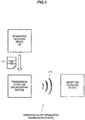
- FIG. 1 schematically illustrates an example configuration of an emergency alert information transmission system 1.
- the emergency alert information transmission system 1 illustrated in the drawing is made up of an information providing device 100 that provides emergency alert information, a transmission device 200 that transmits provided emergency alert information 110, and a reception device 300 that receives emergency alert information and informs nearby users.
- the information providing device 100 is administered by the Meteorological Agency or some other government agency, for example, and provides the transmission device 200 with emergency alert information 110 that warns about the occurrence of various emergency situations, including natural disasters such as earthquakes, tsunamis that accompany earthquakes, typhoons, torrential rains, windstorms, tornados, floods, and forest fires, as well as large-scale terrorism, and additionally, the service status of means of transportation and school information.
- natural disasters such as earthquakes, tsunamis that accompany earthquakes, typhoons, torrential rains, windstorms, tornados, floods, and forest fires, as well as large-scale terrorism, and additionally, the service status of means of transportation and school information.
- the configuration of the communication link connecting the information providing device 100 and the transmission device 200 is arbitrary.
- a public network such as the Internet, or a dedicated line may be used for the communication link.
- emergency alert information entered on a paper medium may be sent to the user of the transmission device 200 using facsimile or the like.
- the format in which the emergency alert information 110 is described is arbitrary.
- the emergency alert information 110 may be described in the format of a structure description language such as Extensible Markup Language (XML).
- XML Extensible Markup Language
- USGS United States Geological Survey
- CAP Common Alerting Protocol
- the information providing device 100 may provide the transmission device 200 with emergency alert information 110 in CAP format.
- the transmission device 200 is administered by a broadcasting station that provides digital terrestrial broadcasting services, for example, and broadcasts a broadcast signal 210 in a prescribed format, such as a television program.
- a broadcasting station that provides digital terrestrial broadcasting services, for example, and broadcasts a broadcast signal 210 in a prescribed format, such as a television program.
- FIG. 1 only one transmission device 200 is illustrated for the sake of simplicity, but this should be understood as a transmission device 200 being installed in each broadcasting station.
- the transmission device 200 inserts emergency alert information in a format discussed later into the broadcast signal 210 that carries moving image content such as a television program, and broadcasts the result.
- the transmission device 200 is configured to receive emergency alert information 110 from the information providing device 100 administered by a government agency, but the transmission device 200 may also acquire emergency alert information from a source of information other than the information providing device 100. Additionally, the information providing device 100 is not necessarily required to be administered by a government agency, and may also be administered by a private group or the broadcasting station itself.
- the reception device 300 corresponds to a television set or a set-top box, for example, and is internally equipped with a tuner that receives the digital terrestrial broadcast signal 210. It is herein supposed that one or more television sets or set-top boxes are installed in each general household, but in FIG. 1 , only one reception device 300 is illustrated for the sake of simplicity.
- the reception device 300 upon decoding emergency alert information inserted in a format discussed later into a received broadcast signal, displays an alert message on the TV screen, outputs audio of an alert sound, and the like to immediately warn users viewing the television program.
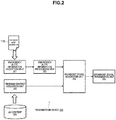
- FIG. 2 schematically illustrates an internal configuration of the transmission device 200.
- the transmission device 200 illustrated in the drawing is made up of an emergency alert information reception unit 201, an emergency alert information processing unit 202, a program content acquisition unit 203, a broadcast signal generation unit 204, and a broadcast signal transmission unit 205.
- the emergency alert information reception unit 201 receives emergency alert information 110 stated in CAP format or some other arbitrary format from the information providing device 100 via a communication link which may be a public network, such as the Internet, or a dedicated line (none illustrated).
- a communication link which may be a public network, such as the Internet, or a dedicated line (none illustrated).
- the emergency alert information processing unit 202 performs processes on the received emergency alert information 110, such as a filtering process that removes unwanted information (for example, information unrelated to the broadcast area), and file format conversion. Additionally, in the present embodiment, multiple formats are prepared for transmitting emergency alert information from the transmission device 200 to the reception device 300 (discussed later), and the emergency alert information processing unit 202 decides which format to use for transmitting the emergency alert information. For example, the emergency alert information processing unit 202 may decide the transmission format by analyzing the content of the emergency alert information, or decide the transmission format according to manual operations by a user (the policy at the broadcasting station).
- the program content acquisition unit 203 acquires the AV content that forms the main broadcast program.
- the program content acquisition unit 203 may retrieve relevant AV content according to the broadcast time from a storage location for prerecorded AV content, but may also be supplied with live AV content from a studio or a filming location.
- the broadcast signal generation unit 204 generates a broadcast signal in a format conforming to a designated broadcast standard.
- the broadcast standard may be, for example, an Advanced Television Systems Committee (ATSC) standard adopted in countries such as the United States of America, Canada, Mexico, and the Republic of Korea.
- the broadcast signal is made up of a preamble used to tune to a broadcast channel on the receiving side, and a payload of fixed length or variable length storing the AV content that forms the main program.
- the broadcast signal generation unit 204 stores emergency alert information inside the preamble, in a format decided by the emergency alert information processing unit 202, but further details will be deferred until later.
- the broadcast signal transmission unit 205 performs processing on the generated broadcast signal, including coding, digital modulation such as orthogonal frequency-division multiplexing (OFDM), AD conversion, upconversion to the RF band (a frequency channel allocated to the relevant broadcasting station), and power amplification, and sends out the resulting broadcast signal from a transmit antenna such as a radio tower (not illustrated).
- digital modulation such as orthogonal frequency-division multiplexing (OFDM)
- AD conversion upconversion to the RF band (a frequency channel allocated to the relevant broadcasting station)
- power amplification amplification
- the function modules 201 to 205 are required to be physically disposed inside a single device, and an embodiment is also possible in which at least some of the function modules are configured as physically independent device from another function module.
- the emergency alert information processing unit 202 may also be configured as an emergency alert information processing server on the Internet (not illustrated).
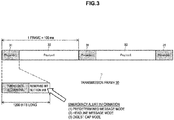
- FIG. 3 schematically illustrates an example format of a transmission frame of a broadcast signal conforming to a designated broadcast standard.
- a transmission frame 30 is made up of a preamble section 31 used to tune to a broadcast channel on the receiving side, and a payload 32 of fixed length storing the AV content that forms the main program as well as auxiliary data.
- One frame of the transmission frame 30 varies depending on the transmission scheme. In the present embodiment, one frame is taken to be 100 ms as an example.
- the preamble section 31 includes a tuning data section 31A and a reserved bit section 31B.
- the total bit length of the preamble section 31 varies depending on the transmission scheme. In the present embodiment, the total bit length of the preamble section 31 is taken to be 1200 bits as an example.
- the tuning data section 31A stores L1 data, which is data for tuning to a relevant broadcast channel on the receiving side (critical data for tuning).
- the reserved bit section 31B inside the preamble section 31 stores emergency alert information processed by the emergency alert information processing unit 202. Since the transmission frame is 100 ms, emergency alert information arrives at the receiving side in 100 ms intervals. Since the emergency alert information is stored in the preamble section 31 and not the payload 32, it should be understood that the present scheme is clearly different from the ISDB-T scheme which transmits emergency alert information as a control packet (PMT) within the transport stream (TS).
- PMT control packet
- TS transport stream
- the predetermined message mode is a format that expresses emergency alert information having a message determined in advance in a binary format of small size, and transmits the emergency alert information in just one frame (that is, one preamble).
- an emergency alert should be issued, including natural disasters such as earthquakes, tsunamis that accompany earthquakes, typhoons, torrential rains, windstorms, tornados, floods, and forest fires, as well as large-scale terrorism, and additionally, the service status of means of transportation and school information, but by substituting index information of small size expressed in a binary format for which standard messages reporting each event are prescribed in advance, emergency alert information may be stored inside one preamble.
- an index number in a binary format is assigned to an event that should be reported, and just the index number is stored in the reserved bit section 31B inside the preamble.
- an index number decoded from any one preamble arriving at 100 ms intervals may be used to search for the original emergency alert information, and an alert may be issued immediately.
- a standard message may be issued immediately and with low load (by simply processing the physical layer or a lower layer of the communication protocol).
- the headline message mode is a format that configures emergency alert information as headline text information stated in text format, and transmits the emergency alert information using 10 to 20 transmission frames. Since emergency alert information is stated as text rather than being encoded in a binary format, the power of expression becomes richer. Consequently, on the receiving side, emergency alert information with more detailed content than a standard message may be provided. Additionally, since simply decoding the preamble is sufficient and decoding the payload is not necessary, on the receiving side, an emergency alert message may be issued with low load (by simply processing the physical layer or a lower layer of the communication protocol). However, since an alert cannot be issued until 10 to 20 frames have been received, this mode is inferior to the predetermined message mode in terms of immediacy.
- the digest CAP mode is a format that performs a digest process, such as filtering and file format conversion, on emergency alert information in CAP format provided by the information providing device 100, and then transmits the emergency alert information.
- the size of emergency alert information in CAP format is large even after performing digest processing, and is transmitted using a number of frames in excess of 20 frames. Although it becomes possible to provide even more detailed emergency alert information than headline text information, the processing time from when the transmission of emergency alert information is started until an alert is issued on the receiving side becomes even longer than headline message mode.
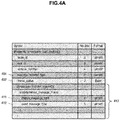
- FIGS. 4A to 4C illustrate example syntax of emergency alert information stored in the reserved bit section 31B. Also, FIG. 5 illustrates a definition of each statement used in FIGS. 4A to 4C .
- the table_id is an 8-bit value to be decided by future discussion.
- the alert id is an 8-bit value expressing identification information of the emergency alert information, and uniquely identifies an Emergency Alert System (EAS) message.
- the version_number is a 4-bit value expressing identification information of the version of each EAS message.
- the message_transfer_type is a 2-bit value expressing the format in which the emergency alert information is transmitted, in which 00 (the default value) is predetermined message mode, 01 is headline text mode, 10 is digest CAP mode, and 11 is a reserved value.
- the frame_status is a 2-bit value expressing the status of the relevant transmission frame, in which 00 (the default value) indicates an invalid frame, 01 indicates the start frame of the emergency alert information message, 10 indicates a continue frame of the emergency alert information message, and 11 indicates the end frame of the emergency alert information message.
- the display_message_type is an 8-bit value expressing an index of predefined text messages (messages are prescribed in advance, such 1 indicating "Terrorists Attack!, for example).
- the aural_message_type is an 8-bit value expressing an index of predefined aural messages, which correspond to the predefined text messages.
- the total_message_length is an 8-bit value expressing the total character length of a headline text message.
- the message_length_per_frame is a 4-bit value expressing the character length of the message per frame, but the bit assignment of this value depends on the number of available bits inside the preamble per frame.
- the message_text() is a variable into which the text of a headline text message is substituted.
- the total_cap_length is an 8-bit value expressing the total character length of a CAP file.
- the cap_length_per_frame is a 4-bit value expressing the character length storing data from inside the CAP file per frame, but the bit assignment of this value depends on the number of available bits inside the preamble per frame.
- the cap_text() is a variable into which text from inside the CAP file is substituted.
- the syntax of emergency alert information will be described with reference to FIGS. 4A to 4C .
- the format in which the emergency alert information is transmitted being one of predetermined message mode, headline message mode, or digest CAP mode, is indicated in the preamble of the relevant frame.
- the 2-bit frame_status field indicated by the reference number 402 the relevant frame is indicated as corresponding to a start, continue, or end position of the emergency alert information message.
- the section indicated by the reference number 410 is the syntax in the case of predetermined message mode (message_transfer_type is 0).
- messages_transfer_type is 0
- the format of the message to display on-screen as emergency alert information is stated using 8 bits.
- the format of the message to output as audio is stated using 8 bits.
- the section indicated by the reference number 420 is the syntax in the case of headline message mode.
- frame_status is 1
- the data length of the entire headline message to transmit is stated using 8 bits
- the data length of the message stored in the current frame is stated using 4 bits
- the text of the message is stated.
- the data length of the message stored in the current frame (message_lenght_per_frame) is stated using 4 bits, and as indicated by the reference number 425, the text of the message (message_text) is stated.
- the section indicated by the reference number 430 is the syntax in the case of digest CAP mode.
- frame_status is 1
- the data length of the entire headline message to transmit is stated using 16 bits
- the data length of the CAP file stored in the current frame is stated using 4 bits
- the text from the content of the CAP file is stated.
- FIG. 3 illustrates an example format of a transmission frame including emergency alert information inside the preamble.
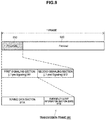
- FIG. 9 illustrates another example format of a transmission frame that includes emergency alert information inside the preamble.
- the transmission frame 900 illustrated in the drawing is made up of a preamble section 910 and a payload 920, but the preamble section 910 is made up of multiple signaling sections.
- the preamble section 910 is taken to include a first signaling section (LI-pre Signaling) 911 and a second signaling section (L1-post Signaling) 912.
- LI-pre Signaling LI-pre Signaling
- L1-post Signaling L1-post Signaling
- the first signaling section 911 is made up of a tuning data section 911A used to tune to a broadcast channel on the receiving side, and an emergency alert information section (EWS) 911B.
- EWS emergency alert information section
- emergency alert information section 911B emergency alert information processed by the emergency alert information processing unit 202 is stored. Since the emergency alert information is stored in the preamble section 911, it should be understood that the present scheme is clearly different from the ISDB-T scheme which transmits emergency alert information as a control packet (PMT) within the transport stream (TS).
- PMT control packet
- TS transport stream
- FIG. 10 illustrates example syntax of emergency alert information (EWS) stored in the emergency alert information section 911B in predetermined message mode format.
- the EWS_ALERT_ID indicated by the reference number 1001 is a field stating emergency alert message identification information. This identification information uniquely identifies each emergency alert message. An EWS_ALERT_ID of "0000" means "no alert”.
- the EWS_ALERT_VERSION indicated by the reference number 1002 is a field identifying the version of the emergency alert message. As the emergency situation increases or decreases in urgency, the value of EWS_ALERT_VERSION should be increased. For example, as a tornado approaches a certain area, the first version of the emergency alert warns users to "take caution".
- the EWS_MESSAGE_INDEX indicated by the reference number 1003 is a field stating the index of the predefined text message. For example, an EWS_MESSAGE_INDEX with a value of 1 represents the predefined text message "Earthquake”. The EWS_MESSAGE_INDEX may be assigned to up to 256 types of messages.
- aural messages may be broadcast from the reception device 300. It is intended that the contents of the text and aural message are aligned with a particular EWS_MESSAGE_INDEX.
- the EWS_LOCALITY_INDEX indicated by the reference number 1004 is a field indicating the locality where the emergency situation takes place.
- the EWS_LOCALITY_INDEX may be defined for up to 256 localities.
- FIG. 6 illustrates in flowchart format a processing sequence by which the transmission device 200 transmits (broadcasts) emergency alert information to the reception device 300.
- the emergency alert information reception unit 201 receives emergency alert information 110 stated in CAP file format or some other arbitrary data format from the information providing device 100 via a communication link which may be a public network, such as the Internet, or a dedicated line (step S601).
- the emergency alert information processing unit 202 performs processes on the received emergency alert information 110, such as a filtering process that removes unwanted information (for example, information unrelated to the broadcast area), and file format conversion (step S602).
- the program content acquisition unit 203 acquires the AV content that forms the main broadcast program (step S603).
- the emergency alert information processing unit 202 decides which of the formats (1) to (3) discussed above to use for transmitting emergency alert information to the reception device 300, and generates emergency alert information in accordance with that format (step S604).
- the broadcast signal generation unit 204 generates a transmission frame made up of a preamble used to tune to a broadcast channel on the receiving side, and a payload of fixed length or variable length storing the AV content that forms the main program (step S605). At this point, the broadcast signal generation unit 204 stores the emergency alert information inside the preamble.
- the broadcast signal transmission unit 205 performs processes such as digital modulation, DA conversion, upconversion to the RF band, and power amplification on the generated transmission frame, and sends out the transmission frame from a transmit antenna such as a TV tower (step S606).
- the reception device 300 upon decoding the emergency alert information inserted into the preamble of a transmission frame received from a transmission device, displays the message of the emergency alert on-screen, outputs audio, or the like.
- the reception device 300 corresponds to a television set or a set-top box, for example, and is equipped with a tuner that receives the digital terrestrial broadcast signal 210.
- FIG. 7 illustrates an example internal configuration of the reception device 300.
- a tuner 702 performs modulation on the components of a designated frequency channel from a broadcast signal received by an antenna 701.
- a demodulator 703 performs a demodulation process on the tuned broadcast signal.
- the demodulator 703 features a buffer 704 for temporarily storing emergency alert information.
- the demodulator 703 performs demodulation inside the preamble section 31 of the transmission frame 30, and when valid emergency alert information is detected inside the preamble section 31, the demodulator 703 stores the emergency alert information in the buffer 704.
- the demodulator 703 is not required to continuously perform a demodulation process for detecting the preamble section 31, and may also save power by intermittently activating and performing the detection of the preamble section 31.
- a control unit 705 centrally controls the operation of the reception device 300 overall.
- the control unit 705 performs a process causing received broadcast content and emergency alert information messages to be displayed on-screen on a display unit 706 or output as audio from a speaker 707.
- the control unit 705 is made up of a system on a chip (SoC), for example.
- control unit 705 has a control bus 712 for controlling the demodulator 703.
- the control unit 705 directly reads data stored in the buffer 704 (discussed earlier) inside the demodulator 703 via the control bus 712.
- the control bus 712 is envisaged to be made up of a serial interface such as Inter-Integrated Circuit (I 2 C), for example, but is not limited thereto.
- the demodulator 703 also features a boot trigger signal 713 for booting the SoC inside the control unit 705 which is in a standby state.
- the demodulator 703 stores the emergency alert information in the buffer 704, and also outputs the boot trigger signal 713 to boot the SoC which is in a standby state.
- the control unit 705 is able to read out the emergency alert information being stored in the buffer 704 inside the demodulator 703 via the I 2 C interface 712, and immediately (that is, before processing the payload of the transmission frame) conduct a process of displaying an emergency alert information message on-screen on the display unit 706, outputting audio from the speaker 707, and the like.
- the SoC inside the control unit 705 is equipped with an emergency operation mode with a short boot time and capable of processing only the preamble section, in addition to a normal operation mode capable of completely processing the payload of a transmission frame, the required time between the arrival of a transmission frame at the reception device 300 and the display of the emergency alert information message may be shortened further.
- the boot time may be shortened further.
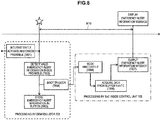
- FIG. 8 illustrates a time chart for the reception device 300 from the receiving of a transmission frame transmitted from a transmission device 200 to the displaying of an alert information message.
- the demodulator 703 intermittently activates and checks the data in the preamble section 31 of a transmission frame 30 received by the antenna 701 (T801).
- the demodulator 703 stores the emergency alert information in the buffer 704 (T803), and also outputs the boot trigger signal 713 to boot the SoC inside the control unit 705 which is in a standby state (T804).
- the control unit 705 After the SoC boots from a standby state (T805), the control unit 705 reads out the emergency alert information being stored in the buffer 704 inside the demodulator 703 via the I 2 C interface 712 (T806), and displays an emergency alert information message on-screen on the display unit 706, outputs audio from the speaker 707, and the like (T807).
- the segment indicated by the reference number 810 is the required time between the arrival of a transmission frame at the reception device 300 and the display of the emergency alert information message.
- the boot time is short, the SoC inside the control unit 705 is able to display the emergency alert information message in a short time, even from a standby state.
- advanced processing such as analyzing text information or CAP data, and it is sufficient for a simple processing function module inside the SoC to be operating.
- the boot time may be shortened further.
- the technology disclosed in this specification may be applied to broadcasting systems of various types that broadcast content using transmission frames including a preamble, and thereby transmit emergency alert information.
- the technology disclosed in this specification may be applied to a broadcasting system based on the ATSC broadcast standard adopted in countries such as the United States of America, but the range of application is not limited thereto.
- the technology disclosed in this specification may be applied similarly to broadcasting systems conforming to a broadcast standard that adds data to a payload in a format other than a preamble.
- the technology disclosed in this specification may be applied similarly not to broadcasting but to wired or wireless communication systems such as IP networks.
Landscapes
- Engineering & Computer Science (AREA)
- Multimedia (AREA)
- Signal Processing (AREA)
- Business, Economics & Management (AREA)
- Emergency Management (AREA)
- Computer Security & Cryptography (AREA)
- Physics & Mathematics (AREA)
- General Physics & Mathematics (AREA)
- Two-Way Televisions, Distribution Of Moving Picture Or The Like (AREA)
- Circuits Of Receivers In General (AREA)
- Alarm Systems (AREA)
Claims (14)
- Dispositif de transmission (200), comprenant :une unité d'acquisition d'informations d'alerte d'urgence (201) configurée pour acquérir des informations d'alerte d'urgence (110) ;une unité d'acquisition de contenu de diffusion (203) configurée pour acquérir un contenu de diffusion ;une unité de génération de trame de transmission (204) configurée pour générer une trame de transmission (30, 900) composée d'une charge utile (32, 920) et d'un signal prescrit, ladite charge utile stockant le contenu de diffusion et ledit signal prescrit, extérieur à la charge utile, contenant les informations d'alerte d'urgence (110), l'unité de génération de trame de transmission (204) générant et insérant le signal prescrit dans un préambule (31, 910) qui contient des données de syntonisation permettant une syntonisation d'un côté réception, et ledit préambule précédant la charge utile dans la trame de transmission ; etune unité de transmission (205) configurée pour transmettre la trame de transmission sur un canal de diffusion assigné à une station de diffusion.
- Dispositif de transmission (200) selon la revendication 1, dans lequel
l'unité de génération de trame de transmission (204) stocke des informations d'alerte d'urgence (110) comprenant un message prédéfini et exprimées dans un format binaire dans un signal prescrit, ou au moyen d'une pluralité de signaux prescrits, ou composées de texte au moyen d'une pluralité de signaux prescrits, ou composées d'un format de fichier désigné au moyen d'une pluralité de signaux prescrits. - Dispositif de transmission (200) selon la revendication 2, dans lequel
l'unité d'acquisition d'informations d'alerte d'urgence (201) acquiert des informations d'alerte d'urgence composées d'un format de fichier désigné,
le dispositif de transmission (200) comporte en outre une unité de traitement d'informations d'alerte d'urgence (202) configurée pour réaliser un filtrage ou une conversion de format sur les informations d'alerte d'urgence (110) composées d'un format de fichier désigné, et
l'unité de génération de trame de transmission (204) stocke les informations d'alerte d'urgence (110) traitées par l'unité de traitement d'informations d'alerte d'urgence (202) dans le signal prescrit. - Dispositif de transmission (200) selon la revendication 1, dans lequel
l'unité de génération de trame de transmission (204) utilise un format parmi un format de stockage d'informations d'alerte d'urgence (110) comprenant un message prédéfini et exprimées dans un format binaire dans un signal prescrit, un format de stockage d'informations d'alerte d'urgence (110) composées de texte au moyen d'une pluralité de signaux prescrits et un format de stockage d'informations d'alerte d'urgence (110) composées d'un format de fichier désigné au moyen d'une pluralité de signaux prescrits, et stipule le format à utiliser à l'intérieur d'un signal prescrit. - Procédé de transmission, comprenant :une étape d'acquisition d'informations d'alerte d'urgence consistant à acquérir des informations d'alerte d'urgence (110) ;une étape d'acquisition de contenu de diffusion consistant à acquérir un contenu de diffusion ;une étape de génération de trame de transmission consistant à générer une trame de transmission composée d'une charge utile et d'un signal prescrit, ladite charge utile stockant le contenu de diffusion et ledit signal prescrit, extérieur à la charge utile, contenant les informations d'alerte d'urgence (110), l'étape de génération de trame de transmission générant et insérant le signal prescrit dans un préambule qui contient des données de syntonisation permettant une syntonisation d'un côté réception, et ledit préambule précédant la charge utile dans la trame de transmission ; etune étape de transmission consistant à transmettre la trame de transmission sur un canal de diffusion assigné à une station de diffusion.
- Dispositif de réception (300), comprenant :une unité de réception configurée pour recevoir une trame de transmission par syntonisation sur un canal de diffusion souhaité, et la trame de transmission étant composée d'une charge utile stockant un contenu de diffusion et d'un signal prescrit, extérieur à la charge utile, contenant des informations d'alerte d'urgence (110),le signal prescrit étant contenu dans un préambule précédant la charge utile, ledit préambule contenant les données de syntonisation ;un démodulateur (703) configuré pour démoduler la trame de transmission reçue ;une unité d'affichage (706) configurée pour afficher une image ; etune unité de commande (705) configurée pour commander l'unité d'affichage (706),l'unité de commande (705) amenant l'unité d'affichage (706) à afficher les informations d'alerte d'urgence (110) obtenues par démodulation du signal prescrit dans la trame de transmission reçue à l'aide du démodulateur (703).
- Dispositif de réception (300) selon la revendication 6, dans lequel
l'unité de réception reçoit la trame de transmission par syntonisation sur un canal de diffusion souhaité. - Dispositif de réception (300) selon la revendication 6, dans lequel
l'unité de réception reçoit la trame de transmission contenant le signal prescrit dans un préambule précédant la charge utile. - Dispositif de réception (300) selon la revendication 6, comprenant en outre :une unité de sortie audio configurée pour délivrer de l'audio,l'unité de commande (705) amenant l'unité de sortie audio à délivrer de l'audio relative aux informations d'alerte d'urgence (110) obtenues par démodulation du signal prescrit à l'aide du démodulateur (703).
- Dispositif de réception (300) selon la revendication 6, comprenant en outre :un tampon (704) configuré pour stocker provisoirement les informations d'alerte d'urgence (110) obtenues par démodulation du signal prescrit à l'aide du démodulateur (703),l'unité de commande (705) lisant les informations d'alerte d'urgence (110) dans le tampon via une interface série.
- Dispositif de réception (300) selon la revendication 6, dans lequel l'unité de commande (705) attend dans un état de veille, et
le démodulateur (703), dés qu'il obtient des informations d'alerte d'urgence (110) valides à partir de la trame de transmission reçue, active l'unité de commande (705) en délivrant un signal de déclenchement d'amorce. - Dispositif de réception (300) selon la revendication 6, dans lequel
le démodulateur (700) s'active par intermittence et recherche le signal prescrit dans la trame de transmission reçue. - Procédé de réception, comprenant :une étape de réception consistant à recevoir une trame de transmission par syntonisation sur un canal de diffusion souhaité, et la trame de transmission étant composée d'une charge utile stockant un contenu de diffusion et d'un signal prescrit, extérieur à la charge utile, contenant des informations d'alerte d'urgence (110),le signal prescrit étant contenu dans un préambule précédant la charge utile, ledit préambule contenant les données de syntonisation ;une étape de démodulation consistant à démoduler la trame de transmission reçue ; etune étape d'affichage (706) consistant à afficher, sur l'unité d'affichage (706), les informations d'alerte d'urgence (110) obtenues par démodulation du signal prescrit dans la trame de transmission reçue.
- Programme d'ordinateur énoncé dans un format lisible par ordinateur de manière à amener un ordinateur à fonctionner comme :une unité de réception configurée pour recevoir une trame de transmission par syntonisation sur un canal de diffusion souhaité, et la trame de transmission étant composée d'une charge utile stockant un contenu de diffusion et d'un signal prescrit, extérieur à la charge utile, contenant des informations d'alerte d'urgence,le signal prescrit étant contenu dans un préambule précédant la charge utile, ledit préambule contenant les données de syntonisation ;un démodulateur (703) configuré pour démoduler la trame de transmission reçue ;une unité d'affichage (706) configurée pour afficher une image ; etune unité de commande (705) configurée pour amener l'unité d'affichage (706) à afficher les informations d'alerte d'urgence (110) obtenues par démodulation du signal prescrit dans la trame de transmission reçue à l'aide du démodulateur (703).
Applications Claiming Priority (2)
| Application Number | Priority Date | Filing Date | Title |
|---|---|---|---|
| JP2013194590A JP2015061240A (ja) | 2013-09-19 | 2013-09-19 | 送信装置及び送信方法、受信装置及び受信方法、並びにコンピューター・プログラム |
| PCT/JP2014/066595 WO2015040914A1 (fr) | 2013-09-19 | 2014-06-23 | Dispositif de transmission et procédé de transmission, dispositif de réception et procédé de réception, et programme informatique |
Publications (3)
| Publication Number | Publication Date |
|---|---|
| EP3048794A1 EP3048794A1 (fr) | 2016-07-27 |
| EP3048794A4 EP3048794A4 (fr) | 2017-04-12 |
| EP3048794B1 true EP3048794B1 (fr) | 2018-04-25 |
Family
ID=52688576
Family Applications (1)
| Application Number | Title | Priority Date | Filing Date |
|---|---|---|---|
| EP14845467.1A Active EP3048794B1 (fr) | 2013-09-19 | 2014-06-23 | Dispositif de transmission et procédé de transmission, dispositif de réception et procédé de réception, et programme informatique |
Country Status (8)
| Country | Link |
|---|---|
| US (1) | US20160192034A1 (fr) |
| EP (1) | EP3048794B1 (fr) |
| JP (1) | JP2015061240A (fr) |
| KR (1) | KR20160058778A (fr) |
| CN (1) | CN105532010B (fr) |
| CA (1) | CA2923386C (fr) |
| MX (1) | MX361267B (fr) |
| WO (1) | WO2015040914A1 (fr) |
Families Citing this family (12)
| Publication number | Priority date | Publication date | Assignee | Title |
|---|---|---|---|---|
| JP6321195B2 (ja) * | 2014-02-20 | 2018-05-09 | エルジー エレクトロニクス インコーポレイティド | 放送受信装置、放送受信装置の動作方法、放送受信装置及び放送受信装置の動作方法 |
| CN105427557B (zh) * | 2015-06-29 | 2018-06-22 | 知鑫知识产权服务(上海)有限公司 | 一种车载环境下无线接入的通用报警发送方法和接收方法 |
| WO2017164595A1 (fr) * | 2016-03-21 | 2017-09-28 | 엘지전자(주) | Dispositif et procédé d'émission/réception de signal de diffusion |
| JPWO2018003542A1 (ja) * | 2016-06-30 | 2019-04-18 | ソニーセミコンダクタソリューションズ株式会社 | 送信装置、送信方法、受信装置、及び、受信方法 |
| US10812872B2 (en) | 2016-06-30 | 2020-10-20 | Sony Semiconductor Solutions Corporation | Transmitting device, transmitting method, receiving device, and receiving method for providing emergency alert information |
| CN109964489B (zh) * | 2016-11-09 | 2021-11-05 | 索尼半导体解决方案公司 | 接收装置、接收方法、发送装置和发送方法 |
| US10979158B2 (en) * | 2017-08-03 | 2021-04-13 | T-Mobile Usa, Inc. | User equipment including spectrum analyzer, and network device |
| JP2019135806A (ja) * | 2018-02-05 | 2019-08-15 | ソニーセミコンダクタソリューションズ株式会社 | 復調回路、処理回路、処理方法、および処理装置 |
| CN111771346B (zh) * | 2018-02-23 | 2023-02-21 | 路创技术有限责任公司 | 冲突检测方法 |
| CN111866556B (zh) * | 2019-04-30 | 2023-04-28 | 广东中元创新科技有限公司 | 一种用于电视天线接收的信号直通和放大兼容模块 |
| US11094314B2 (en) * | 2020-01-18 | 2021-08-17 | Interra Systems | System and method for detecting a simulated emergency alert signal (EAS) |
| US20250227347A1 (en) * | 2024-01-04 | 2025-07-10 | Sony Group Corporation | Atsc 3.0-delivered alerts for people with accessibility needs |
Family Cites Families (13)
| Publication number | Priority date | Publication date | Assignee | Title |
|---|---|---|---|---|
| US5825865A (en) * | 1991-10-04 | 1998-10-20 | Motorola, Inc. | Temporary message routing and destination selection |
| JP4758677B2 (ja) | 2005-05-13 | 2011-08-31 | 日本放送協会 | 伝送制御信号受信機及びそれを用いた地上デジタルテレビジョン放送受信機 |
| JP4417965B2 (ja) | 2006-02-07 | 2010-02-17 | 株式会社東芝 | デジタル放送システムとこのシステムに用いられる放送装置、緊急放送処理装置及び受信機 |
| CN101018095B (zh) * | 2006-02-07 | 2012-09-05 | 株式会社东芝 | 紧急信息快报系统 |
| KR100937430B1 (ko) * | 2008-01-25 | 2010-01-18 | 엘지전자 주식회사 | 신호 송수신 방법 및 신호 송수신 장치 |
| CN101262678A (zh) * | 2008-04-30 | 2008-09-10 | 中兴通讯股份有限公司 | 一种移动终端及基于该移动终端的紧急广播方法 |
| JP4555360B2 (ja) * | 2008-05-08 | 2010-09-29 | 財団法人エヌエイチケイエンジニアリングサービス | 地上デジタルテレビジョン放送における緊急速報を受信する受信機 |
| JP4555392B2 (ja) * | 2008-10-29 | 2010-09-29 | 日本放送協会 | 地上デジタルテレビジョン放送における緊急速報の受信機 |
| JP5382308B2 (ja) * | 2008-12-17 | 2014-01-08 | 株式会社メガチップス | Ac1パケットフォーマットおよび緊急警報放送復調装置 |
| TWI426797B (zh) * | 2009-06-29 | 2014-02-11 | Inst Information Industry | 基地台、下級站台及其緊急資訊傳輸方法 |
| US9769635B2 (en) * | 2010-11-23 | 2017-09-19 | Lg Electronics Inc. | Broadcast signal transmitting apparatus, broadcast signal receiving apparatus, and broadcast signal transceiving method in broadcasting signal transmitting and receiving apparatuses |
| US8990851B2 (en) * | 2013-03-14 | 2015-03-24 | Google Technology Holdings LLC | System and method for using emergency alert system messages |
| CA2927130C (fr) * | 2013-08-22 | 2023-02-21 | Thomson Licensing | Message de reveil destine a un systeme de television numerique |
-
2013
- 2013-09-19 JP JP2013194590A patent/JP2015061240A/ja active Pending
-
2014
- 2014-06-23 CN CN201480050375.7A patent/CN105532010B/zh active Active
- 2014-06-23 US US14/908,354 patent/US20160192034A1/en not_active Abandoned
- 2014-06-23 KR KR1020167006296A patent/KR20160058778A/ko not_active Ceased
- 2014-06-23 MX MX2016003224A patent/MX361267B/es active IP Right Grant
- 2014-06-23 EP EP14845467.1A patent/EP3048794B1/fr active Active
- 2014-06-23 WO PCT/JP2014/066595 patent/WO2015040914A1/fr not_active Ceased
- 2014-06-23 CA CA2923386A patent/CA2923386C/fr active Active
Non-Patent Citations (1)
| Title |
|---|
| None * |
Also Published As
| Publication number | Publication date |
|---|---|
| MX361267B (es) | 2018-12-03 |
| MX2016003224A (es) | 2016-06-07 |
| CN105532010A (zh) | 2016-04-27 |
| EP3048794A1 (fr) | 2016-07-27 |
| CA2923386A1 (fr) | 2015-03-26 |
| CN105532010B (zh) | 2019-08-13 |
| WO2015040914A1 (fr) | 2015-03-26 |
| KR20160058778A (ko) | 2016-05-25 |
| CA2923386C (fr) | 2021-11-16 |
| JP2015061240A (ja) | 2015-03-30 |
| US20160192034A1 (en) | 2016-06-30 |
| EP3048794A4 (fr) | 2017-04-12 |
Similar Documents
| Publication | Publication Date | Title |
|---|---|---|
| EP3048794B1 (fr) | Dispositif de transmission et procédé de transmission, dispositif de réception et procédé de réception, et programme informatique | |
| KR102216521B1 (ko) | 송신 장치 및 송신 방법, 수신 장치 및 수신 방법, 및 컴퓨터 프로그램 | |
| US20160211931A1 (en) | Reception device and reception method, computer program, and external device | |
| US20200288216A1 (en) | Systems and methods for signaling of emergency alert messages | |
| KR102080726B1 (ko) | 비상 경보의 시그널링을 위한 시스템 및 방법 | |
| CA3044996A1 (fr) | Systemes et procedes pour la signalisation de messages d'alerte d'urgence | |
| CA3035658A1 (fr) | Systemes et procedes pour la signalisation de messages d'alerte d'urgence | |
| CN109937577B (zh) | 接收装置、接收方法、发送装置以及发送方法 | |
| TWI742186B (zh) | 收訊裝置、收訊方法、送訊裝置、及送訊方法 | |
| KR20150088485A (ko) | 방송 시스템을 이용한 재해 조기경보 방법 및 시스템 | |
| KR101984066B1 (ko) | 방송 시스템을 이용한 재해 조기경보 방법 및 시스템 |
Legal Events
| Date | Code | Title | Description |
|---|---|---|---|
| PUAI | Public reference made under article 153(3) epc to a published international application that has entered the european phase |
Free format text: ORIGINAL CODE: 0009012 |
|
| 17P | Request for examination filed |
Effective date: 20160311 |
|
| AK | Designated contracting states |
Kind code of ref document: A1 Designated state(s): AL AT BE BG CH CY CZ DE DK EE ES FI FR GB GR HR HU IE IS IT LI LT LU LV MC MK MT NL NO PL PT RO RS SE SI SK SM TR |
|
| AX | Request for extension of the european patent |
Extension state: BA ME |
|
| DAX | Request for extension of the european patent (deleted) | ||
| A4 | Supplementary search report drawn up and despatched |
Effective date: 20170314 |
|
| RIC1 | Information provided on ipc code assigned before grant |
Ipc: H04N 21/6543 20110101ALI20170308BHEP Ipc: H04N 21/81 20110101ALI20170308BHEP Ipc: H04N 21/633 20110101ALI20170308BHEP Ipc: H04N 21/434 20110101ALI20170308BHEP Ipc: H04N 21/488 20110101ALI20170308BHEP Ipc: H04N 21/2362 20110101AFI20170308BHEP |
|
| GRAP | Despatch of communication of intention to grant a patent |
Free format text: ORIGINAL CODE: EPIDOSNIGR1 |
|
| INTG | Intention to grant announced |
Effective date: 20171116 |
|
| GRAA | (expected) grant |
Free format text: ORIGINAL CODE: 0009210 |
|
| GRAS | Grant fee paid |
Free format text: ORIGINAL CODE: EPIDOSNIGR3 |
|
| AK | Designated contracting states |
Kind code of ref document: B1 Designated state(s): AL AT BE BG CH CY CZ DE DK EE ES FI FR GB GR HR HU IE IS IT LI LT LU LV MC MK MT NL NO PL PT RO RS SE SI SK SM TR |
|
| REG | Reference to a national code |
Ref country code: GB Ref legal event code: FG4D |
|
| REG | Reference to a national code |
Ref country code: CH Ref legal event code: EP |
|
| REG | Reference to a national code |
Ref country code: AT Ref legal event code: REF Ref document number: 994101 Country of ref document: AT Kind code of ref document: T Effective date: 20180515 |
|
| REG | Reference to a national code |
Ref country code: IE Ref legal event code: FG4D |
|
| REG | Reference to a national code |
Ref country code: DE Ref legal event code: R096 Ref document number: 602014024670 Country of ref document: DE |
|
| REG | Reference to a national code |
Ref country code: FR Ref legal event code: PLFP Year of fee payment: 5 |
|
| REG | Reference to a national code |
Ref country code: NL Ref legal event code: FP |
|
| REG | Reference to a national code |
Ref country code: LT Ref legal event code: MG4D |
|
| PG25 | Lapsed in a contracting state [announced via postgrant information from national office to epo] |
Ref country code: SE Free format text: LAPSE BECAUSE OF FAILURE TO SUBMIT A TRANSLATION OF THE DESCRIPTION OR TO PAY THE FEE WITHIN THE PRESCRIBED TIME-LIMIT Effective date: 20180425 Ref country code: FI Free format text: LAPSE BECAUSE OF FAILURE TO SUBMIT A TRANSLATION OF THE DESCRIPTION OR TO PAY THE FEE WITHIN THE PRESCRIBED TIME-LIMIT Effective date: 20180425 Ref country code: BG Free format text: LAPSE BECAUSE OF FAILURE TO SUBMIT A TRANSLATION OF THE DESCRIPTION OR TO PAY THE FEE WITHIN THE PRESCRIBED TIME-LIMIT Effective date: 20180725 Ref country code: NO Free format text: LAPSE BECAUSE OF FAILURE TO SUBMIT A TRANSLATION OF THE DESCRIPTION OR TO PAY THE FEE WITHIN THE PRESCRIBED TIME-LIMIT Effective date: 20180725 Ref country code: ES Free format text: LAPSE BECAUSE OF FAILURE TO SUBMIT A TRANSLATION OF THE DESCRIPTION OR TO PAY THE FEE WITHIN THE PRESCRIBED TIME-LIMIT Effective date: 20180425 Ref country code: LT Free format text: LAPSE BECAUSE OF FAILURE TO SUBMIT A TRANSLATION OF THE DESCRIPTION OR TO PAY THE FEE WITHIN THE PRESCRIBED TIME-LIMIT Effective date: 20180425 Ref country code: PL Free format text: LAPSE BECAUSE OF FAILURE TO SUBMIT A TRANSLATION OF THE DESCRIPTION OR TO PAY THE FEE WITHIN THE PRESCRIBED TIME-LIMIT Effective date: 20180425 |
|
| RAP2 | Party data changed (patent owner data changed or rights of a patent transferred) |
Owner name: SATURN LICENSING LLC |
|
| PG25 | Lapsed in a contracting state [announced via postgrant information from national office to epo] |
Ref country code: GR Free format text: LAPSE BECAUSE OF FAILURE TO SUBMIT A TRANSLATION OF THE DESCRIPTION OR TO PAY THE FEE WITHIN THE PRESCRIBED TIME-LIMIT Effective date: 20180726 Ref country code: HR Free format text: LAPSE BECAUSE OF FAILURE TO SUBMIT A TRANSLATION OF THE DESCRIPTION OR TO PAY THE FEE WITHIN THE PRESCRIBED TIME-LIMIT Effective date: 20180425 Ref country code: RS Free format text: LAPSE BECAUSE OF FAILURE TO SUBMIT A TRANSLATION OF THE DESCRIPTION OR TO PAY THE FEE WITHIN THE PRESCRIBED TIME-LIMIT Effective date: 20180425 Ref country code: LV Free format text: LAPSE BECAUSE OF FAILURE TO SUBMIT A TRANSLATION OF THE DESCRIPTION OR TO PAY THE FEE WITHIN THE PRESCRIBED TIME-LIMIT Effective date: 20180425 |
|
| REG | Reference to a national code |
Ref country code: AT Ref legal event code: MK05 Ref document number: 994101 Country of ref document: AT Kind code of ref document: T Effective date: 20180425 |
|
| PG25 | Lapsed in a contracting state [announced via postgrant information from national office to epo] |
Ref country code: PT Free format text: LAPSE BECAUSE OF FAILURE TO SUBMIT A TRANSLATION OF THE DESCRIPTION OR TO PAY THE FEE WITHIN THE PRESCRIBED TIME-LIMIT Effective date: 20180827 |
|
| REG | Reference to a national code |
Ref country code: DE Ref legal event code: R097 Ref document number: 602014024670 Country of ref document: DE |
|
| PG25 | Lapsed in a contracting state [announced via postgrant information from national office to epo] |
Ref country code: AT Free format text: LAPSE BECAUSE OF FAILURE TO SUBMIT A TRANSLATION OF THE DESCRIPTION OR TO PAY THE FEE WITHIN THE PRESCRIBED TIME-LIMIT Effective date: 20180425 Ref country code: CZ Free format text: LAPSE BECAUSE OF FAILURE TO SUBMIT A TRANSLATION OF THE DESCRIPTION OR TO PAY THE FEE WITHIN THE PRESCRIBED TIME-LIMIT Effective date: 20180425 Ref country code: RO Free format text: LAPSE BECAUSE OF FAILURE TO SUBMIT A TRANSLATION OF THE DESCRIPTION OR TO PAY THE FEE WITHIN THE PRESCRIBED TIME-LIMIT Effective date: 20180425 Ref country code: EE Free format text: LAPSE BECAUSE OF FAILURE TO SUBMIT A TRANSLATION OF THE DESCRIPTION OR TO PAY THE FEE WITHIN THE PRESCRIBED TIME-LIMIT Effective date: 20180425 Ref country code: DK Free format text: LAPSE BECAUSE OF FAILURE TO SUBMIT A TRANSLATION OF THE DESCRIPTION OR TO PAY THE FEE WITHIN THE PRESCRIBED TIME-LIMIT Effective date: 20180425 Ref country code: SK Free format text: LAPSE BECAUSE OF FAILURE TO SUBMIT A TRANSLATION OF THE DESCRIPTION OR TO PAY THE FEE WITHIN THE PRESCRIBED TIME-LIMIT Effective date: 20180425 |
|
| REG | Reference to a national code |
Ref country code: CH Ref legal event code: PL |
|
| PG25 | Lapsed in a contracting state [announced via postgrant information from national office to epo] |
Ref country code: IT Free format text: LAPSE BECAUSE OF FAILURE TO SUBMIT A TRANSLATION OF THE DESCRIPTION OR TO PAY THE FEE WITHIN THE PRESCRIBED TIME-LIMIT Effective date: 20180425 Ref country code: SM Free format text: LAPSE BECAUSE OF FAILURE TO SUBMIT A TRANSLATION OF THE DESCRIPTION OR TO PAY THE FEE WITHIN THE PRESCRIBED TIME-LIMIT Effective date: 20180425 |
|
| PLBE | No opposition filed within time limit |
Free format text: ORIGINAL CODE: 0009261 |
|
| STAA | Information on the status of an ep patent application or granted ep patent |
Free format text: STATUS: NO OPPOSITION FILED WITHIN TIME LIMIT |
|
| REG | Reference to a national code |
Ref country code: BE Ref legal event code: MM Effective date: 20180630 |
|
| REG | Reference to a national code |
Ref country code: IE Ref legal event code: MM4A |
|
| PG25 | Lapsed in a contracting state [announced via postgrant information from national office to epo] |
Ref country code: LU Free format text: LAPSE BECAUSE OF NON-PAYMENT OF DUE FEES Effective date: 20180623 Ref country code: MC Free format text: LAPSE BECAUSE OF FAILURE TO SUBMIT A TRANSLATION OF THE DESCRIPTION OR TO PAY THE FEE WITHIN THE PRESCRIBED TIME-LIMIT Effective date: 20180425 |
|
| 26N | No opposition filed |
Effective date: 20190128 |
|
| PG25 | Lapsed in a contracting state [announced via postgrant information from national office to epo] |
Ref country code: LI Free format text: LAPSE BECAUSE OF NON-PAYMENT OF DUE FEES Effective date: 20180630 Ref country code: IE Free format text: LAPSE BECAUSE OF NON-PAYMENT OF DUE FEES Effective date: 20180623 Ref country code: CH Free format text: LAPSE BECAUSE OF NON-PAYMENT OF DUE FEES Effective date: 20180630 |
|
| PG25 | Lapsed in a contracting state [announced via postgrant information from national office to epo] |
Ref country code: SI Free format text: LAPSE BECAUSE OF FAILURE TO SUBMIT A TRANSLATION OF THE DESCRIPTION OR TO PAY THE FEE WITHIN THE PRESCRIBED TIME-LIMIT Effective date: 20180425 Ref country code: BE Free format text: LAPSE BECAUSE OF NON-PAYMENT OF DUE FEES Effective date: 20180630 |
|
| PG25 | Lapsed in a contracting state [announced via postgrant information from national office to epo] |
Ref country code: AL Free format text: LAPSE BECAUSE OF FAILURE TO SUBMIT A TRANSLATION OF THE DESCRIPTION OR TO PAY THE FEE WITHIN THE PRESCRIBED TIME-LIMIT Effective date: 20180425 |
|
| PG25 | Lapsed in a contracting state [announced via postgrant information from national office to epo] |
Ref country code: MT Free format text: LAPSE BECAUSE OF NON-PAYMENT OF DUE FEES Effective date: 20180623 |
|
| PG25 | Lapsed in a contracting state [announced via postgrant information from national office to epo] |
Ref country code: TR Free format text: LAPSE BECAUSE OF FAILURE TO SUBMIT A TRANSLATION OF THE DESCRIPTION OR TO PAY THE FEE WITHIN THE PRESCRIBED TIME-LIMIT Effective date: 20180425 |
|
| PG25 | Lapsed in a contracting state [announced via postgrant information from national office to epo] |
Ref country code: CY Free format text: LAPSE BECAUSE OF FAILURE TO SUBMIT A TRANSLATION OF THE DESCRIPTION OR TO PAY THE FEE WITHIN THE PRESCRIBED TIME-LIMIT Effective date: 20180425 Ref country code: MK Free format text: LAPSE BECAUSE OF NON-PAYMENT OF DUE FEES Effective date: 20180425 Ref country code: HU Free format text: LAPSE BECAUSE OF FAILURE TO SUBMIT A TRANSLATION OF THE DESCRIPTION OR TO PAY THE FEE WITHIN THE PRESCRIBED TIME-LIMIT; INVALID AB INITIO Effective date: 20140623 |
|
| PG25 | Lapsed in a contracting state [announced via postgrant information from national office to epo] |
Ref country code: IS Free format text: LAPSE BECAUSE OF FAILURE TO SUBMIT A TRANSLATION OF THE DESCRIPTION OR TO PAY THE FEE WITHIN THE PRESCRIBED TIME-LIMIT Effective date: 20180825 |
|
| P01 | Opt-out of the competence of the unified patent court (upc) registered |
Effective date: 20230514 |
|
| PGFP | Annual fee paid to national office [announced via postgrant information from national office to epo] |
Ref country code: DE Payment date: 20250626 Year of fee payment: 12 |
|
| PGFP | Annual fee paid to national office [announced via postgrant information from national office to epo] |
Ref country code: GB Payment date: 20250617 Year of fee payment: 12 |
|
| PGFP | Annual fee paid to national office [announced via postgrant information from national office to epo] |
Ref country code: NL Payment date: 20250624 Year of fee payment: 12 |
|
| PGFP | Annual fee paid to national office [announced via postgrant information from national office to epo] |
Ref country code: FR Payment date: 20250624 Year of fee payment: 12 |