EP3048829A1 - Appareil domestique intelligent et son procédé de commande - Google Patents
Appareil domestique intelligent et son procédé de commande Download PDFInfo
- Publication number
- EP3048829A1 EP3048829A1 EP15188141.4A EP15188141A EP3048829A1 EP 3048829 A1 EP3048829 A1 EP 3048829A1 EP 15188141 A EP15188141 A EP 15188141A EP 3048829 A1 EP3048829 A1 EP 3048829A1
- Authority
- EP
- European Patent Office
- Prior art keywords
- electronic device
- information
- access point
- predetermined
- preset
- Prior art date
- Legal status (The legal status is an assumption and is not a legal conclusion. Google has not performed a legal analysis and makes no representation as to the accuracy of the status listed.)
- Ceased
Links
Images


Classifications
-
- H—ELECTRICITY
- H04—ELECTRIC COMMUNICATION TECHNIQUE
- H04W—WIRELESS COMMUNICATION NETWORKS
- H04W48/00—Access restriction; Network selection; Access point selection
- H04W48/16—Discovering, processing access restriction or access information
-
- H—ELECTRICITY
- H04—ELECTRIC COMMUNICATION TECHNIQUE
- H04L—TRANSMISSION OF DIGITAL INFORMATION, e.g. TELEGRAPHIC COMMUNICATION
- H04L12/00—Data switching networks
- H04L12/28—Data switching networks characterised by path configuration, e.g. LAN [Local Area Networks] or WAN [Wide Area Networks]
- H04L12/2803—Home automation networks
-
- H—ELECTRICITY
- H04—ELECTRIC COMMUNICATION TECHNIQUE
- H04L—TRANSMISSION OF DIGITAL INFORMATION, e.g. TELEGRAPHIC COMMUNICATION
- H04L12/00—Data switching networks
- H04L12/28—Data switching networks characterised by path configuration, e.g. LAN [Local Area Networks] or WAN [Wide Area Networks]
- H04L12/2803—Home automation networks
- H04L12/2807—Exchanging configuration information on appliance services in a home automation network
- H04L12/2809—Exchanging configuration information on appliance services in a home automation network indicating that an appliance service is present in a home automation network
-
- H—ELECTRICITY
- H04—ELECTRIC COMMUNICATION TECHNIQUE
- H04L—TRANSMISSION OF DIGITAL INFORMATION, e.g. TELEGRAPHIC COMMUNICATION
- H04L63/00—Network architectures or network communication protocols for network security
- H04L63/08—Network architectures or network communication protocols for network security for authentication of entities
-
- H—ELECTRICITY
- H04—ELECTRIC COMMUNICATION TECHNIQUE
- H04L—TRANSMISSION OF DIGITAL INFORMATION, e.g. TELEGRAPHIC COMMUNICATION
- H04L67/00—Network arrangements or protocols for supporting network services or applications
- H04L67/50—Network services
- H04L67/51—Discovery or management thereof, e.g. service location protocol [SLP] or web services
-
- H—ELECTRICITY
- H04—ELECTRIC COMMUNICATION TECHNIQUE
- H04W—WIRELESS COMMUNICATION NETWORKS
- H04W12/00—Security arrangements; Authentication; Protecting privacy or anonymity
- H04W12/06—Authentication
-
- H—ELECTRICITY
- H04—ELECTRIC COMMUNICATION TECHNIQUE
- H04W—WIRELESS COMMUNICATION NETWORKS
- H04W12/00—Security arrangements; Authentication; Protecting privacy or anonymity
- H04W12/50—Secure pairing of devices
-
- H—ELECTRICITY
- H04—ELECTRIC COMMUNICATION TECHNIQUE
- H04W—WIRELESS COMMUNICATION NETWORKS
- H04W76/00—Connection management
- H04W76/10—Connection setup
-
- H—ELECTRICITY
- H04—ELECTRIC COMMUNICATION TECHNIQUE
- H04L—TRANSMISSION OF DIGITAL INFORMATION, e.g. TELEGRAPHIC COMMUNICATION
- H04L12/00—Data switching networks
- H04L12/28—Data switching networks characterised by path configuration, e.g. LAN [Local Area Networks] or WAN [Wide Area Networks]
- H04L12/2803—Home automation networks
- H04L2012/284—Home automation networks characterised by the type of medium used
- H04L2012/2841—Wireless
Definitions
- the present disclosure relates to a smart home appliance and a control method thereof.
- Smart home indicates a technology that connects and monitors or controls items in various fields, such as consumer electronics including a TV, air conditioner, refrigerator and oven, energy consumption apparatuses including water service, electricity and air cooling and heating apparatuses, and security devices including a door lock and monitoring camera.
- consumer electronics including a TV, air conditioner, refrigerator and oven
- energy consumption apparatuses including water service, electricity and air cooling and heating apparatuses
- security devices including a door lock and monitoring camera.
- smart home appliances such as consumer electronics, energy consumption apparatuses and security devices that support such smart home are gradually receiving attention in the consumer electronics market.
- a typical smart home appliance is disclosed in Korean Patent Laid Open Publication No. 10-2002-0041193 .
- the smart home appliance as disclosed in the publication generally accesses an access point connected to a main service providing a service by using a local network, performs user authentication on each of individual electronic devices and accesses them.
- the typical smart home appliance has a limitation in that it is inconvenient for a user because an added electronic device needs to access the main server and perform user authentication whenever electronic devices are added.
- Embodiments provide a smart home appliance that may more simply implement main server access and user authentication processes whenever electronic devices are added, and a control method of the smart home appliance.
- a smart home appliance accessing a main server providing a service includes: at least one first electronic device accessing an access point connected to the main server and having preset AP information and preset authentication information; and at least one second electronic device connected to the access point and the at least one first electronic device to perform wireless communication and having AP information matching the preset AP information, wherein the at least one first electronic device transmits the access point information and the preset authentication information to the at least one second electronic device, when the at least one second electronic device having the AP information matching the preset AP information is found.
- the at least one first electronic device may search for the AP information matching the preset AP information, when a preset search mode is executed.
- the preset search mode may be executed according to a preset time, the occurrence of a user manipulation event on the first electronic device, or the power-ON of the first electronic device.
- the at least one first electronic device may cancel an access to the access point and access the at least one second electronic device when the at least one second electronic device is found.
- the at least one first electronic device may cancel an access to the at least one second electronic device and access the access point when the access point information and the preset authentication information are transmitted.
- the at least one first electronic device may search for the AP information matching the preset AP information, when the at least one first electronic device accesses the access point.
- the at least one second electronic device may receive the access point information and the preset authentication information from the at least one first electronic device when a preset AP mode is executed.
- the preset AP mode may be executed, when the second electronic device is initially powered-ON or when a user manipulation event on the second electronic device after the initial power-ON occurs.
- the at least one second electronic device may end the preset AP mode when the reception of the access point information and the preset authentication information is completed.
- the at least one second electronic device may cancel an access to the at least one first electronic device and access the access point, when the preset AP mode ends.
- a control method of a smart home appliance including at least one first electronic device accessing an access point connected to a main server providing a service and having preset AP information and preset authentication information; and at least one second electronic device connected to the access point and the at least one first electronic device to perform wireless communication and having AP information matching the preset AP information includes: searching for the at least one second electronic device having AP information matching the preset AP information through the at least one first electronic device; and transmitting the access point information and the preset authentication information from the at least one first electronic device to the at least one second electronic device found.
- the at least one first electronic device may search for the AP information matching the preset AP information, when a preset search mode is executed.
- the preset search mode may be executed according to a preset time, the occurrence of a user manipulation event on the first electronic device, or the power-ON of the first electronic device.
- the at least one first electronic device may cancel an access to the access point and access the at least one second electronic device, when the at least one second electronic device is found.
- the at least one first electronic device may cancel an access to the at least one second electronic device and access the access point, when the access point information and the preset authentication information are transmitted.
- the at least one first electronic device may search for the AP information matching the preset AP information, when the at least one first electronic device accesses the access point.
- the at least one second electronic device may receive the access point information and the preset authentication information from the at least one first electronic device, when a preset AP mode is executed.
- the preset AP mode may be executed, when the second electronic device is initially powered-ON or when a user manipulation event on the second electronic device after the initial power-ON occurs.
- the at least one second electronic device may end the preset AP mode when the reception of the access point information and the preset authentication information is completed.
- the at least one second electronic device may cancel an access to the at least one first electronic device and access the access point, when the preset AP mode ends.
- a smart home appliance may more simply implement main server access and user authentication processes whenever electronic device are added, and a control method of the smart home appliance.
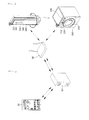
- FIG. 1 represents the configuration of a smart home appliance according to an embodiment.
- a smart home appliance 1 includes a main server 10, a portable electronic device 20, an access point 30, a first electronic device 100, and a second electronic device 200.
- the main server 10 is platform for providing a smart home service and is connected to various contents of the portable electronic device 20, the first electronic device 100, the second electronic device 200, and so on wirelessly or in a wired manner to control the above-described devices.
- the main server 10 may function as a path that connects various contents of the portable electronic device 20, the first electronic device 100 and the second electronic device 200.
- the main server 10 may be connected to a matched device through user authentication information.
- the main server 10 may be connected to devices on which user authentication has been completed, and provide a smart home service.
- the portable electronic device 20 may communicate with the main server wirelessly and function as the control device of the smart home appliance 1.
- a user may control the first electronic device 100 and the second electronic device 200 on which user authentication has been completed, through the portable electronic device 20 on which user authentication has also been completed by the main server 10.
- the access point 30 wirelessly connects the main server 10 to the first electronic device 100, and the main server 10 to the second electronic device 200. Since the access point 30 has been well known, its detailed description is omitted.
- the first electronic device 100 may be various electronic devices that may implement a smart home service.
- the first electronic device 100 may be various consumer electronics that may be connected to the main server 10 to implement a smart home service, such as an air conditioner, refrigerator, washing machine, cooking device, and dish washer.
- the first electronic device 100 may be in singularity or in plurality.
- the first electronic device 100 accesses the access point 30 connected to the main server 10 to be capable of wirelessly communicating with the access point and has preset AP information and preset authentication information.
- the preset AP information may be service set identifier (SSID) information provided through an agreement with the main server 10
- the preset authentication information may be user authentication information for the user authentication by the main server 10.
- the first electronic device 100 may be in a state in which user authentication has already been completed by the main server 10.
- the first electronic device 100 may transmit, to the second electronic device, the information of the access point connected to the main server and the preset authentication information, when the second electronic device 200 having AP information matching the preset AP information is found.
- the first electronic device 100 includes a wireless communication module 110, a power supply unit 120, a user manipulation unit 130, and a control unit 140.
- the wireless communication module 110 may be a Wi-Fi module.
- the inventive concept is not limited thereto, and the wireless communication module may also be other modules that may enable wireless communication with external devices.
- a main antenna module 600 may also be a Bluetooth module, NFC antenna module, or wireless communication antenna module that performs communication according to various communication protocols, such as IEEE, Zigbee, 3rd generation (3G), 3rd generation partnership project (3GPP) and long term evolution (LTE) communication protocols.
- the Wi-Fi module is used for descriptions.
- the power supply unit 120 is a component for the power-ON/OFF of the first electronic device 100.
- the power supply unit 120 may be a button, keypad or touch pad.
- the user manipulation unit 130 is a component for performing key manipulation for various operations of the first electronic device 100.
- the user manipulation unit 130 may be a button, keypad or touch pad.
- the control unit 140 is a component for controlling the operation of the first electronic device 100.
- the control unit 140 has access point 30 information connected to the main server 10, preset AP information, and preset authentication information.
- the control unit 140 enables the first electronic device 100 to transmit the access point 30 information and the preset authentication information to at least one second electronic device 200 having AP information matching the preset AP information, when the at least one second electronic device 200 is found.
- control unit 140 may enable the first electronic device 100 to search for AP information matching the preset AP information when the first electronic device accesses the access point 30 connected to the main server 10.
- the control unit 140 may search for AP information matching the preset AP information when a preset search mode is executed.
- the preset search mode may be executed according to a preset time, the occurrence of a user manipulation event on the first electronic device 100, or the power-ON of the first electronic device 100.
- the preset time may be a regularly set time. That is, the control unit 140 may search for AP information matching the preset AP information, i.e., an AP matching the preset AP information, at the regularly set time.
- the occurrence of the user manipulation event on the first electronic device 100 may be user manipulation on the user manipulation unit 130. That is, the control unit 140 may search for AP information matching the preset AP information, i.e., an AP matching the preset AP information, when the user manipulation on the user manipulation unit 130 occurs by the user.
- the power-ON of the first electronic device 100 may be the ON of the power supply unit 120. That is, the control unit 140 may search for AP information matching the preset AP information, i.e., an AP matching the preset AP information, when the power supply unit 120 is ON.
- the control unit 140 may enable the first electronic device 100 to cancel an access to the access point 30 and to access the at least one second electronic device 200 having an AP matching the preset AP information, when the at least one second electronic device 200 is found.
- control unit 140 may enable the first electronic device 100 to cancel an access to the at least one second electronic device and to access the access point 30 connected again to the main server 10, when the access point 30 information connected to the main server 10 and the preset authentication information are transmitted to the at least one second electronic device 200.
- the second electronic device 200 may be various electronic devices that may implement a smart home service, like the first electronic device 100.
- the second electronic device 200 may be various consumer electronics that may be connected to the main server 10 to implement a smart home service, such as an air conditioner, refrigerator, washing machine, cooking device, and dish washer.
- the second electronic device 200 may be a factory default state product on which user authentication has not been performed by the main server 10. That is, the second electronic device 200 may be a product on which user authentication has not been performed by the main server 10.
- the second electronic device 200 is connected to the access point 30 and the first electronic device 100 to be capable of wirelessly communicating with them and has AP information matching the preset AP information of the first electronic device 100.
- the second electronic device 200 includes a wireless communication module 210, a power supply unit 220, a user manipulation unit 230, and a control unit 240.
- the wireless communication module 210 may be a Wi-Fi module, like the wireless communication module 110 of the first electronic device 200, and also be other modules.
- a main antenna module 600 may also be a Bluetooth module, NFC antenna module, or wireless communication antenna module that performs communication according to various communication protocols, such as IEEE, Zigbee, 3G, 3GPP and LTE communication protocols.
- the Wi-Fi module is used for descriptions.
- the power supply unit 220 is a component for the power-ON/OFF of the second electronic device 200.
- the power supply unit 120 may be a button, keypad or touch pad.
- the user manipulation unit 230 is a component for performing key manipulation for various operations of the second electronic device 200.
- the user manipulation unit 230 may be a button, keypad or touch pad.
- the control unit 240 is a component for controlling the operation of the second electronic device 200.
- the control unit 240 may enable the second electronic device 200 to receive the access point 30 information connected to the main server 10 and the preset authentication information from the first electronic device 100 when a preset AP mode is executed.
- the preset AP mode may be executed when the second electronic device 200 is initially powered-ON or when a user manipulation event on the second electronic device 200 after the initial power-ON of the second electronic device 200 occurs.
- the preset AP mode may be a soft AP mode set as the SSID information provided through an agreement with the main server 10.
- the control unit 240 may operate the second electronic device 200 in any one of the soft AP mode and a general station mode.
- the general station mode may be a general mode for the execution of a smart ON service, the control of the second electronic device 200, and so on.
- the initial power-ON of the second electronic device 200 may be the initial power-ON of the power supply unit 220. That is, the control unit 240 may execute the preset AP mode when the power supply unit 220 is initially powered-ON.
- the occurrence of the user manipulation event on the second electronic device after the initial power-ON thereof 200 may be user manipulation on the user manipulation unit 230. That is, the control unit 240 may execute the preset AP mode when user manipulation on the user manipulation unit 230 occurs.
- the control unit 240 may enable the second electronic device 200 to end the preset AP mode when the reception of the access point 30 information connected to the main server 10 and the preset authentication information from the first electronic device 100 is completed. That is, the control unit 240 may operate the second electronic device 200 in the general station mode when the reception of the access point 30 information connected to the main server 10 and the preset authentication information is completed.
- the control unit 240 may cancel an access to the first electronic device 100 and access the access point 30 connected to the main server 10 when the preset AP mode ends, after completing the reception of the access point 30 information and the preset authentication information.
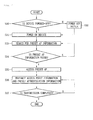
- Fig. 2 is a flowchart of an operation according to an embodiment of a first second electronic device of a smart home appliance in Fig. 1 .
- the first electronic device may search for preset AP information in step S10.
- the first electronic device may be in a state in which it has accessed an access point connected to a main server.
- the first electronic device may search for the preset AP information regularly at a preset time.
- the first electronic device may access an AP matching the preset AP information in step S14.
- the AP matching the preset AP information may be a second electronic device.
- the first electronic device may cancel an access to the access point for an access to the AP.
- the first electronic device may transmit, to the second electronic device, the information of the access point connected to the main server and preset authentication information in step S16. Subsequently, the first electronic device may complete transmission in step S18, and may or may not search for the preset AP information again.
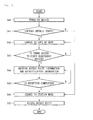
- Fig. 3 is a flowchart of an operation according to another embodiment of a first electronic device of a smart home appliance in Fig. 1 .
- the first electronic device may be in a standby state after the power-ON of the first electronic device in step S20. Subsequently, when a user manipulation event occurs in step S21, e.g., when key manipulation on a user manipulation unit occurs, the first electronic device may search for preset AP information in step S22.
- the first electronic device may access an AP matching the preset AP information in step S24.
- the AP matching the preset AP information may be a second electronic device.
- the first electronic device may cancel an access to the access point for an access to the AP.
- the first electronic device may transmit, to the second electronic device, the information of the access point connected to a main server and preset authentication information in step S25. Subsequently, the first electronic device may complete transmission in step S26, and may or may not search for the preset AP information again.
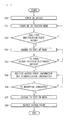
- Fig. 4 is a flowchart of an operation according to still another embodiment of a first electronic device of a smart home appliance in Fig. 1 .
- the first electronic device determines the power-OFF of the first electronic device in step S30. In a power-OFF state, the first electronic device is powered-ON in step S31, and in a power-ON state, the first electronic device is powered-OFF in step S32 and then powered-ON in step S31.
- the first electronic device may search for preset AP information in step S33 when it is powered-ON.
- the first electronic device may access an AP matching the preset AP information in step S35.
- the AP matching the preset AP information may be a second electronic device.
- the first electronic device may cancel an access to the access point for an access to the AP.
- the first electronic device may transmit, to the second electronic device, the information of the access point connected to a main server and preset authentication information in step S36. Subsequently, the first electronic device may complete transmission in step S37, and may or may not search for the preset AP information again.
- the first electronic device may search for preset AP information through various operations, and transmit, to a found AP, the information of the access point connected to a main server and preset authentication information when an AP matching the preset AP information is found.
- Fig. 5 is a flowchart of an operation according to an embodiment of a second electronic device of a smart home appliance in Fig. 1 .
- the second electronic device may be powered-ON in step S40.
- the power-ON of the second electronic device may be initial power-ON at user home.
- the second electronic device determines a factory default state in step S41.
- the second electronic device changes a preset SSID to a soft AP mode having AP information in step S42.
- the second electronic device accesses the first electronic device in step S43.
- the second electronic device receives, from the first electronic device, the information of the access point connected to a main server and user authentication information for authentication by the main server in step S44.
- step S45 When the reception is completed in step S45, the second electronic device is changed from the soft AP mode to a general station mode in step S46. Subsequently, after the cancellation of the access to the first electronic device, the second electronic device accesses the access point connected to the main server in step S47.
- Fig. 6 is a flowchart of an operation according to another embodiment of a second electronic device of a smart home appliance in Fig. 1 .
- the second electronic device stands by in a general station mode after power-ON in step S51. Subsequently, when a user manipulation event occurs, the second electronic device may be changed from the station mode to a soft AP mode in step S53.
- the second electronic device accesses a first electronic device in step S54.
- the second electronic device receives, from the first electronic device, the information of the access point connected to a main server and user authentication information for authentication by the main server in step S55.
- the second electronic device When the reception is completed in step S56, the second electronic device is changed from the soft AP mode back to the general station mode in step S57. Subsequently, after the cancellation of the access to the first electronic device, the second electronic device may access the access point connected to the main server in step S58.
- the second electronic device may be changed to the soft AP mode having present AP information through various operations and receive, from the first electronic device, the information of the access point connected to the main server and preset authentication information in the soft AP mode.
- the smart home appliance 1 may enable the first electronic device to transmit information on an access to the main server 10 and authentication information for user authentication to the second electronic device.
- the smart home appliance 1 may prevent the second electronic device 200 from separately performing cumbersome procedures for an access to the main server 10 and user authentication.
- the smart home appliance 1 may simplify access and authentication processes occurring whenever an electronic device supporting a new smart home service is added.
- the smart home appliance 1 according to the present embodiment may provide a smart home appliance providing remarkably improved user convenience that may more easily implement a process of accessing a main server and a user authentication process whenever electronic devices are added.
Landscapes
- Engineering & Computer Science (AREA)
- Computer Networks & Wireless Communication (AREA)
- Signal Processing (AREA)
- Automation & Control Theory (AREA)
- Computer Security & Cryptography (AREA)
- Computer Hardware Design (AREA)
- Computing Systems (AREA)
- General Engineering & Computer Science (AREA)
- Telephone Function (AREA)
- Selective Calling Equipment (AREA)
- Telephonic Communication Services (AREA)
Applications Claiming Priority (1)
| Application Number | Priority Date | Filing Date | Title |
|---|---|---|---|
| KR1020150012083A KR101617579B1 (ko) | 2015-01-26 | 2015-01-26 | 스마트 홈 어플라이언스 및 스마트 홈 어플라이언스의 제어 방법 |
Publications (1)
| Publication Number | Publication Date |
|---|---|
| EP3048829A1 true EP3048829A1 (fr) | 2016-07-27 |
Family
ID=54291059
Family Applications (1)
| Application Number | Title | Priority Date | Filing Date |
|---|---|---|---|
| EP15188141.4A Ceased EP3048829A1 (fr) | 2015-01-26 | 2015-10-02 | Appareil domestique intelligent et son procédé de commande |
Country Status (3)
| Country | Link |
|---|---|
| US (1) | US9930612B2 (fr) |
| EP (1) | EP3048829A1 (fr) |
| KR (1) | KR101617579B1 (fr) |
Cited By (1)
| Publication number | Priority date | Publication date | Assignee | Title |
|---|---|---|---|---|
| EP3664408B1 (fr) | 2018-12-06 | 2021-08-11 | Whirlpool Corporation | Système de communication et procédé d'autorisation d'un appareil |
Families Citing this family (9)
| Publication number | Priority date | Publication date | Assignee | Title |
|---|---|---|---|---|
| KR102161443B1 (ko) * | 2013-12-20 | 2020-10-06 | 삼성전자 주식회사 | 스마트 홈 시스템의 피 제어 장치 검색 및 제어 방법과 장치 |
| CN110300432B (zh) | 2018-03-22 | 2022-04-26 | 阿里巴巴集团控股有限公司 | 一种对设备进行配网的方法及配网系统 |
| KR102026696B1 (ko) * | 2018-05-15 | 2019-09-30 | 엘지전자 주식회사 | 홈 어플라이언스 시스템의 동작 방법 |
| KR102054176B1 (ko) * | 2018-06-25 | 2019-12-10 | 모비두 주식회사 | IoT 장치의 무선랜 설정 방법 및 IoT 장치 |
| KR102833924B1 (ko) * | 2019-09-02 | 2025-07-11 | 엘지전자 주식회사 | 홈 어플라이언스 및 이를 서버에 등록하기 위한 어플리케이션을 갖춘 이동 단말기 |
| KR20210060111A (ko) | 2019-11-18 | 2021-05-26 | 삼성전자주식회사 | 전자 장치 및 그 제어 방법 |
| CN111447624B (zh) * | 2020-03-04 | 2023-12-15 | 浙江大华技术股份有限公司 | WiFi设备及其配网方法、具有存储功能的装置 |
| CN117413492A (zh) | 2021-06-29 | 2024-01-16 | 三星电子株式会社 | 家用电器、用于控制家用电器的方法以及用于控制与家用电器通信的移动装置的方法 |
| US20250030571A1 (en) * | 2023-07-21 | 2025-01-23 | Haier Us Appliance Solutions, Inc. | Household appliances connection management |
Citations (6)
| Publication number | Priority date | Publication date | Assignee | Title |
|---|---|---|---|---|
| KR20020041193A (ko) | 2000-11-27 | 2002-06-01 | 구자홍 | 홈 어플라이언스 네트워크 장치 및 방법 |
| US20100165879A1 (en) * | 2008-12-31 | 2010-07-01 | Microsoft Corporation | Wireless provisioning a device for a network using a soft access point |
| EP2611079A1 (fr) * | 2011-12-28 | 2013-07-03 | Samsung Electronics Co., Ltd | Système de réseau d'appareil ménager et procédé de configuration de réseau de celui-ci |
| US20140156082A1 (en) * | 2011-07-27 | 2014-06-05 | Mikyung HA | Laundry machine and online system including the same |
| WO2014163877A1 (fr) * | 2013-03-12 | 2014-10-09 | Gthrive, Inc. | Configuration réseau pour dispositifs à interface utilisateur limitée |
| US20150026779A1 (en) * | 2013-07-16 | 2015-01-22 | Qualcomm Connected Experiences, Inc. | Performing remote wi-fi network configuration when a network security protocol is unknown |
Family Cites Families (9)
| Publication number | Priority date | Publication date | Assignee | Title |
|---|---|---|---|---|
| US9143402B2 (en) * | 2012-02-24 | 2015-09-22 | Qualcomm Incorporated | Sensor based configuration and control of network devices |
| EP2648386B1 (fr) * | 2012-04-08 | 2021-08-25 | Samsung Electronics Co., Ltd. | Serveur de gestion et procédé de commande de dispositif, terminal utilisateur et procédé de commande de dispositif, terminal utilisateur et son procédé de commande |
| US9385784B2 (en) * | 2012-09-24 | 2016-07-05 | Lg Electronics Inc. | Mobile terminal, home appliance and method for operating the same |
| KR102069876B1 (ko) | 2012-12-21 | 2020-01-23 | 삼성전자주식회사 | 전자 기기, 개인 클라우드 기기, 개인 클라우드 시스템 및 이들의 개인 클라우드 기기 등록 방법 |
| KR20140100171A (ko) | 2013-02-05 | 2014-08-14 | 엘지전자 주식회사 | 전자 기기, 전자 기기의 제어 방법 및 무선 통신 연결 방법 |
| US9351158B2 (en) * | 2013-03-08 | 2016-05-24 | Microchip Technology Incorporated | Method for wireless easy connect |
| KR20140146954A (ko) * | 2013-06-18 | 2014-12-29 | 삼성전자주식회사 | 서비스 제공 방법 및 이를 위한 전자 기기 |
| US9451462B2 (en) * | 2014-08-10 | 2016-09-20 | Belkin International Inc. | Setup of multiple IoT network devices |
| US10555170B2 (en) * | 2015-09-04 | 2020-02-04 | Huawei Technologies Co., Ltd. | Method and apparatus for authentication of wireless devices |
-
2015
- 2015-01-26 KR KR1020150012083A patent/KR101617579B1/ko not_active Expired - Fee Related
- 2015-09-28 US US14/867,484 patent/US9930612B2/en active Active
- 2015-10-02 EP EP15188141.4A patent/EP3048829A1/fr not_active Ceased
Patent Citations (6)
| Publication number | Priority date | Publication date | Assignee | Title |
|---|---|---|---|---|
| KR20020041193A (ko) | 2000-11-27 | 2002-06-01 | 구자홍 | 홈 어플라이언스 네트워크 장치 및 방법 |
| US20100165879A1 (en) * | 2008-12-31 | 2010-07-01 | Microsoft Corporation | Wireless provisioning a device for a network using a soft access point |
| US20140156082A1 (en) * | 2011-07-27 | 2014-06-05 | Mikyung HA | Laundry machine and online system including the same |
| EP2611079A1 (fr) * | 2011-12-28 | 2013-07-03 | Samsung Electronics Co., Ltd | Système de réseau d'appareil ménager et procédé de configuration de réseau de celui-ci |
| WO2014163877A1 (fr) * | 2013-03-12 | 2014-10-09 | Gthrive, Inc. | Configuration réseau pour dispositifs à interface utilisateur limitée |
| US20150026779A1 (en) * | 2013-07-16 | 2015-01-22 | Qualcomm Connected Experiences, Inc. | Performing remote wi-fi network configuration when a network security protocol is unknown |
Non-Patent Citations (1)
| Title |
|---|
| IEEE: "IEEE Standard for Information Technology-Telecommunications and information exchange between systems-Local and metropolitan area networks-Specific requirements Part 11: Wireless LAN Medium Access Control (MAC) and Physical Layer (PHY) Specifications", 8 March 2007 (2007-03-08), XP055530268, Retrieved from the Internet <URL:https://ieeexplore.ieee.org/stampPDF/getPDF.jsp?tp=&arnumber=4248378> [retrieved on 20181205] * |
Cited By (1)
| Publication number | Priority date | Publication date | Assignee | Title |
|---|---|---|---|---|
| EP3664408B1 (fr) | 2018-12-06 | 2021-08-11 | Whirlpool Corporation | Système de communication et procédé d'autorisation d'un appareil |
Also Published As
| Publication number | Publication date |
|---|---|
| US9930612B2 (en) | 2018-03-27 |
| KR101617579B1 (ko) | 2016-05-18 |
| US20160219496A1 (en) | 2016-07-28 |
Similar Documents
| Publication | Publication Date | Title |
|---|---|---|
| EP3048829A1 (fr) | Appareil domestique intelligent et son procédé de commande | |
| US11882431B2 (en) | Network system of home appliance and network setup method of the same | |
| EP3173888B1 (fr) | Procédé pour administrer des dispositifs ménagers | |
| US10097984B2 (en) | IoT device environment detection, identification and caching | |
| US10177932B2 (en) | Method for connecting a domestic appliance to a wireless home network, computer program product, portable communications terminal and domestic appliance | |
| US9553876B2 (en) | IOT device environment detection, identification and caching | |
| US11221596B2 (en) | Hub for managing networked household appliances | |
| US20150382198A1 (en) | Systems and techniques for wireless device configuration | |
| US20160044719A1 (en) | Location and pairing of devices on a local area network using a unique identifier | |
| KR20210026834A (ko) | 홈 어플라이언스 및 이를 서버에 등록하기 위한 어플리케이션을 갖춘 이동 단말기 | |
| JP7281370B2 (ja) | 家電システム及び家電機器 | |
| CN104363179A (zh) | 智能路由器、智能控制装置以及智能家居控制系统 | |
| EP3264386A1 (fr) | Interface utilisateur externe pour commander au moins un appareil électroménager | |
| US12156124B2 (en) | Electronic device and method for registering thereof | |
| US9608837B1 (en) | Method for using portable controlling device for home network | |
| KR101667027B1 (ko) | 무선랜을 이용한 원스톱 가전제품 제어 시스템 및 방법 | |
| WO2018146020A1 (fr) | Appareil électroménager | |
| KR20170016418A (ko) | 블루투스 기반 콘센트장치 | |
| KR20240173963A (ko) | 홈 네트워크 시스템, 및 홈 네트워크 시스템의 제어 방법 | |
| CN115460586A (zh) | 信息处理方法、密钥材料的获取方法及设备 | |
| CN105511337A (zh) | 无线系统的近端与远程控制协调方法 | |
| JP2019036945A (ja) | 無線接続方法及び家電機器 |
Legal Events
| Date | Code | Title | Description |
|---|---|---|---|
| PUAI | Public reference made under article 153(3) epc to a published international application that has entered the european phase |
Free format text: ORIGINAL CODE: 0009012 |
|
| 17P | Request for examination filed |
Effective date: 20151102 |
|
| AK | Designated contracting states |
Kind code of ref document: A1 Designated state(s): AL AT BE BG CH CY CZ DE DK EE ES FI FR GB GR HR HU IE IS IT LI LT LU LV MC MK MT NL NO PL PT RO RS SE SI SK SM TR |
|
| AX | Request for extension of the european patent |
Extension state: BA ME |
|
| RBV | Designated contracting states (corrected) |
Designated state(s): AL AT BE BG CH CY CZ DE DK EE ES FI FR GB GR HR HU IE IS IT LI LT LU LV MC MK MT NL NO PL PT RO RS SE SI SK SM TR |
|
| 17Q | First examination report despatched |
Effective date: 20170227 |
|
| STAA | Information on the status of an ep patent application or granted ep patent |
Free format text: STATUS: THE APPLICATION HAS BEEN REFUSED |
|
| 18R | Application refused |
Effective date: 20190530 |