EP3050879B1 - Composé hétérocyclique et élément électroluminescent organique le comprenant - Google Patents
Composé hétérocyclique et élément électroluminescent organique le comprenant Download PDFInfo
- Publication number
- EP3050879B1 EP3050879B1 EP14847799.5A EP14847799A EP3050879B1 EP 3050879 B1 EP3050879 B1 EP 3050879B1 EP 14847799 A EP14847799 A EP 14847799A EP 3050879 B1 EP3050879 B1 EP 3050879B1
- Authority
- EP
- European Patent Office
- Prior art keywords
- chemical formula
- group
- compound
- light emitting
- layer
- Prior art date
- Legal status (The legal status is an assumption and is not a legal conclusion. Google has not performed a legal analysis and makes no representation as to the accuracy of the status listed.)
- Active
Links
- 0 Cc1cccc(*)c1 Chemical compound Cc1cccc(*)c1 0.000 description 9
- OJXBSPJYWODHAH-UHFFFAOYSA-N CC1(C)c2cc(-c3nc(-c(c4ccc5)cccc4c5-c4nc(-c(cc5)cc6c5-c5ccccc5C6(C)C)cc(-c(cc5)cc(C6(C)C)c5-c5c6cccc5)n4)nc(-c(cc4)cc5c4-c4ccccc4C5(C)C)c3)ccc2-c2c1cccc2 Chemical compound CC1(C)c2cc(-c3nc(-c(c4ccc5)cccc4c5-c4nc(-c(cc5)cc6c5-c5ccccc5C6(C)C)cc(-c(cc5)cc(C6(C)C)c5-c5c6cccc5)n4)nc(-c(cc4)cc5c4-c4ccccc4C5(C)C)c3)ccc2-c2c1cccc2 OJXBSPJYWODHAH-UHFFFAOYSA-N 0.000 description 2
- ZKYRSQQIQODRIS-UHFFFAOYSA-N C1C=C(C=CC(c2cc(-c3ccccc3)nc(-c(c3ccc4)cccc3c4-c3nc(-c4ccccc4)cc(-c4ccc(CCC=C5)c5c4)n3)n2)=C2)C2=CC1 Chemical compound C1C=C(C=CC(c2cc(-c3ccccc3)nc(-c(c3ccc4)cccc3c4-c3nc(-c4ccccc4)cc(-c4ccc(CCC=C5)c5c4)n3)n2)=C2)C2=CC1 ZKYRSQQIQODRIS-UHFFFAOYSA-N 0.000 description 1
- BPXIZAUCFQAGPW-UHFFFAOYSA-N C1C=CC(c(cc2)ccc2-c(cc2)ccc2-c2cc(-c3ccncc3)nc(-c3c(cccc4-c5nc(-c(cc6)ccc6-c(cc6)ccc6-c6ccccc6)cc(-c6ccncc6)n5)c4ccc3)n2)=CC1 Chemical compound C1C=CC(c(cc2)ccc2-c(cc2)ccc2-c2cc(-c3ccncc3)nc(-c3c(cccc4-c5nc(-c(cc6)ccc6-c(cc6)ccc6-c6ccccc6)cc(-c6ccncc6)n5)c4ccc3)n2)=CC1 BPXIZAUCFQAGPW-UHFFFAOYSA-N 0.000 description 1
- FZDLVMHGXZIMNY-UHFFFAOYSA-N C1C=CC(c2cc(-c3ccccc3)nc(-c(cc3)ccc3-c3cccc4c3cccc4-c(cc3)ccc3-c3nc(-c4ccccc4)cc(-c4ccccc4)n3)n2)=CC1 Chemical compound C1C=CC(c2cc(-c3ccccc3)nc(-c(cc3)ccc3-c3cccc4c3cccc4-c(cc3)ccc3-c3nc(-c4ccccc4)cc(-c4ccccc4)n3)n2)=CC1 FZDLVMHGXZIMNY-UHFFFAOYSA-N 0.000 description 1
- WVRCDAQICPLENC-UHFFFAOYSA-N Clc1nc(-c(cc2)ccc2C2=CC=CCC2)cc(-c2ccccc2)n1 Chemical compound Clc1nc(-c(cc2)ccc2C2=CC=CCC2)cc(-c2ccccc2)n1 WVRCDAQICPLENC-UHFFFAOYSA-N 0.000 description 1
- PTBAOWRTQRFCON-UHFFFAOYSA-N N#Cc(cccc1)c1-c1nc(-c2cccc3c2cccc3-c2nc(-c3ccccc3C#N)cc(C3=CCCC=C3)n2)nc(-c2ccccc2)c1 Chemical compound N#Cc(cccc1)c1-c1nc(-c2cccc3c2cccc3-c2nc(-c3ccccc3C#N)cc(C3=CCCC=C3)n2)nc(-c2ccccc2)c1 PTBAOWRTQRFCON-UHFFFAOYSA-N 0.000 description 1
- QRQJRSYTPZHFQE-UHFFFAOYSA-N N#Cc1cc(-c2nc(-c3ccccc3)cc(-c3cccc4c3cccc4-c3nc(-c4cc(C#N)ccc4)nc(-c4ccccc4)c3)n2)ccc1 Chemical compound N#Cc1cc(-c2nc(-c3ccccc3)cc(-c3cccc4c3cccc4-c3nc(-c4cc(C#N)ccc4)nc(-c4ccccc4)c3)n2)ccc1 QRQJRSYTPZHFQE-UHFFFAOYSA-N 0.000 description 1
- AWAUJKMCCDWZLH-UHFFFAOYSA-N N#Cc1ccccc1-c1cc(-c2ccccc2)nc(-c(cc2)ccc2-c2c(cccc3-c(cc4)ccc4-c4nc(-c5ccccc5)cc(-c(cccc5)c5C#N)n4)c3ccc2)n1 Chemical compound N#Cc1ccccc1-c1cc(-c2ccccc2)nc(-c(cc2)ccc2-c2c(cccc3-c(cc4)ccc4-c4nc(-c5ccccc5)cc(-c(cccc5)c5C#N)n4)c3ccc2)n1 AWAUJKMCCDWZLH-UHFFFAOYSA-N 0.000 description 1
- CAYQIZIAYYNFCS-UHFFFAOYSA-N OB(c(cc1)ccc1Cl)O Chemical compound OB(c(cc1)ccc1Cl)O CAYQIZIAYYNFCS-UHFFFAOYSA-N 0.000 description 1
- VBDGWLFRUJRCKQ-UHFFFAOYSA-N c(cc1)cc(cc2)c1cc2-c1cc(-c2c(cccc3)c3ccc2)nc(-c(cc2)ccc2-c(c2ccc3)cccc2c3-c(cc2)ccc2-c2nc(-c3cc(cccc4)c4cc3)cc(-c3cccc4c3cccc4)n2)n1 Chemical compound c(cc1)cc(cc2)c1cc2-c1cc(-c2c(cccc3)c3ccc2)nc(-c(cc2)ccc2-c(c2ccc3)cccc2c3-c(cc2)ccc2-c2nc(-c3cc(cccc4)c4cc3)cc(-c3cccc4c3cccc4)n2)n1 VBDGWLFRUJRCKQ-UHFFFAOYSA-N 0.000 description 1
- FBWGGHALJLUYNW-UHFFFAOYSA-N c(cc1)cc2c1c(-c1nc(-c3cccc4c3cccc4)nc(-c(cc3)ccc3-c3c(cccc4-c(cc5)ccc5-c5cc(-c6c(cccc7)c7ccc6)nc(-c6cccc7c6cccc7)n5)c4ccc3)c1)ccc2 Chemical compound c(cc1)cc2c1c(-c1nc(-c3cccc4c3cccc4)nc(-c(cc3)ccc3-c3c(cccc4-c(cc5)ccc5-c5cc(-c6c(cccc7)c7ccc6)nc(-c6cccc7c6cccc7)n5)c4ccc3)c1)ccc2 FBWGGHALJLUYNW-UHFFFAOYSA-N 0.000 description 1
- GSYYPBWILQORAQ-UHFFFAOYSA-N c(cc1)ccc1-c(cc1)ccc1-c1nc(-c(cc2)ccc2-c2c(cccc3-c(cc4)ccc4-c4nc(-c(cc5)ccc5-c5ccccc5)cc(-c5ccncc5)n4)c3ccc2)nc(-c2ccncc2)c1 Chemical compound c(cc1)ccc1-c(cc1)ccc1-c1nc(-c(cc2)ccc2-c2c(cccc3-c(cc4)ccc4-c4nc(-c(cc5)ccc5-c5ccccc5)cc(-c5ccncc5)n4)c3ccc2)nc(-c2ccncc2)c1 GSYYPBWILQORAQ-UHFFFAOYSA-N 0.000 description 1
- HWWXVPGAFBOOQT-UHFFFAOYSA-N c(cc1)ccc1-c(cc1)ccc1-c1nc(-c2c(cccc3-c4nc(-c(cc5)ccc5-c5ccccc5)cc(-c5ccncc5)n4)c3ccc2)nc(-c2ccncc2)c1 Chemical compound c(cc1)ccc1-c(cc1)ccc1-c1nc(-c2c(cccc3-c4nc(-c(cc5)ccc5-c5ccccc5)cc(-c5ccncc5)n4)c3ccc2)nc(-c2ccncc2)c1 HWWXVPGAFBOOQT-UHFFFAOYSA-N 0.000 description 1
- MDZHTMBWUTZBFW-UHFFFAOYSA-N c(cc1)ccc1-c1nc(-c(c2ccc3)cccc2c3-c2nc(-c3ccccc3)cc(-c3ccc(cccc4)c4c3)n2)nc(-c2cc3ccccc3cc2)c1 Chemical compound c(cc1)ccc1-c1nc(-c(c2ccc3)cccc2c3-c2nc(-c3ccccc3)cc(-c3ccc(cccc4)c4c3)n2)nc(-c2cc3ccccc3cc2)c1 MDZHTMBWUTZBFW-UHFFFAOYSA-N 0.000 description 1
- SEJLPWNMYWFIBB-UHFFFAOYSA-N c(cc1)ccc1-c1nc(-c(c2ccc3)cccc2c3-c2nc(-c3ccccc3)cc(-c3cccc4c3cccc4)n2)nc(-c2c(cccc3)c3ccc2)c1 Chemical compound c(cc1)ccc1-c1nc(-c(c2ccc3)cccc2c3-c2nc(-c3ccccc3)cc(-c3cccc4c3cccc4)n2)nc(-c2c(cccc3)c3ccc2)c1 SEJLPWNMYWFIBB-UHFFFAOYSA-N 0.000 description 1
- KEACIULRCWTKFC-UHFFFAOYSA-N c(cc1)ccc1-c1nc(-c(cc2)ccc2-c2c(cccc3-c(cc4)ccc4-c4nc(-c5ccccc5)cc(-c5ccncc5)n4)c3ccc2)nc(-c2ccncc2)c1 Chemical compound c(cc1)ccc1-c1nc(-c(cc2)ccc2-c2c(cccc3-c(cc4)ccc4-c4nc(-c5ccccc5)cc(-c5ccncc5)n4)c3ccc2)nc(-c2ccncc2)c1 KEACIULRCWTKFC-UHFFFAOYSA-N 0.000 description 1
- YZGKFHUQBIYWHZ-UHFFFAOYSA-N c(cc1)ccc1-c1nc(-c2ccc(cccc3)c3c2)cc(-c2c(cccc3-c4nc(-c5ccccc5)nc(-c5cc6ccccc6cc5)c4)c3ccc2)n1 Chemical compound c(cc1)ccc1-c1nc(-c2ccc(cccc3)c3c2)cc(-c2c(cccc3-c4nc(-c5ccccc5)nc(-c5cc6ccccc6cc5)c4)c3ccc2)n1 YZGKFHUQBIYWHZ-UHFFFAOYSA-N 0.000 description 1
- SFJIFFJLNDGVBR-UHFFFAOYSA-N c(cc1)ccc1-c1nc(-c2ccc3c4ccccc4ccc3c2)cc(-c(cc2)ccc2-c2c(cccc3-c(cc4)ccc4-c4nc(-c5ccccc5)nc(-c(cc5)cc6c5c(cccc5)c5cc6)c4)c3ccc2)n1 Chemical compound c(cc1)ccc1-c1nc(-c2ccc3c4ccccc4ccc3c2)cc(-c(cc2)ccc2-c2c(cccc3-c(cc4)ccc4-c4nc(-c5ccccc5)nc(-c(cc5)cc6c5c(cccc5)c5cc6)c4)c3ccc2)n1 SFJIFFJLNDGVBR-UHFFFAOYSA-N 0.000 description 1
- ISCNWAPWJIYSBK-UHFFFAOYSA-N c(cc1)ccc1-c1nc(-c2ccc3c4ccccc4ccc3c2)cc(-c2cccc3c2cccc3-c2nc(-c3ccccc3)nc(-c3cc4ccc(cccc5)c5c4cc3)c2)n1 Chemical compound c(cc1)ccc1-c1nc(-c2ccc3c4ccccc4ccc3c2)cc(-c2cccc3c2cccc3-c2nc(-c3ccccc3)nc(-c3cc4ccc(cccc5)c5c4cc3)c2)n1 ISCNWAPWJIYSBK-UHFFFAOYSA-N 0.000 description 1
- XHSADGCKQYPFKL-UHFFFAOYSA-N c(cc1)ccc1-c1nc(-c2cccc3ccccc23)nc(-c(cc2)ccc2-c2c(cccc3-c(cc4)ccc4-c4nc(-c5cccc6c5cccc6)nc(-c5ccccc5)c4)c3ccc2)c1 Chemical compound c(cc1)ccc1-c1nc(-c2cccc3ccccc23)nc(-c(cc2)ccc2-c2c(cccc3-c(cc4)ccc4-c4nc(-c5cccc6c5cccc6)nc(-c5ccccc5)c4)c3ccc2)c1 XHSADGCKQYPFKL-UHFFFAOYSA-N 0.000 description 1
- GVYSFUWNDLHRIX-UHFFFAOYSA-N c1c[s]c(-c2cc(-c(cc3)ccc3-c3cccc4c3cccc4-c(cc3)ccc3-c3nc(-c4ccccc4)nc(-c4ccc[s]4)c3)nc(-c3ccccc3)n2)c1 Chemical compound c1c[s]c(-c2cc(-c(cc3)ccc3-c3cccc4c3cccc4-c(cc3)ccc3-c3nc(-c4ccccc4)nc(-c4ccc[s]4)c3)nc(-c3ccccc3)n2)c1 GVYSFUWNDLHRIX-UHFFFAOYSA-N 0.000 description 1
- YXRNRSYMFIADAT-UHFFFAOYSA-N c1ccc(C2(c(cc(cc3)-c4cc(-c5ccccc5)nc(-c5cccc6c(C(NC(c7ccccc7)=C7)N=C7c(cc78)ccc7-c7ccccc7C8(c7ccccc7)c7ccccc7)cccc56)n4)c3-c3ccccc23)c2ccccc2)cc1 Chemical compound c1ccc(C2(c(cc(cc3)-c4cc(-c5ccccc5)nc(-c5cccc6c(C(NC(c7ccccc7)=C7)N=C7c(cc78)ccc7-c7ccccc7C8(c7ccccc7)c7ccccc7)cccc56)n4)c3-c3ccccc23)c2ccccc2)cc1 YXRNRSYMFIADAT-UHFFFAOYSA-N 0.000 description 1
- KYNCTMMEAHRPLV-UHFFFAOYSA-N c1ccc(cc(cc2)-c3nc(-c4cccc5c4cccc5)cc(-c(cc4)ccc4-c4cccc5c4cccc5-c(cc4)ccc4-c4nc(-c5cc6ccccc6cc5)nc(-c5cccc6c5cccc6)c4)n3)c2c1 Chemical compound c1ccc(cc(cc2)-c3nc(-c4cccc5c4cccc5)cc(-c(cc4)ccc4-c4cccc5c4cccc5-c(cc4)ccc4-c4nc(-c5cc6ccccc6cc5)nc(-c5cccc6c5cccc6)c4)n3)c2c1 KYNCTMMEAHRPLV-UHFFFAOYSA-N 0.000 description 1
Images

Classifications
-
- C—CHEMISTRY; METALLURGY
- C07—ORGANIC CHEMISTRY
- C07D—HETEROCYCLIC COMPOUNDS
- C07D403/00—Heterocyclic compounds containing two or more hetero rings, having nitrogen atoms as the only ring hetero atoms, not provided for by group C07D401/00
- C07D403/02—Heterocyclic compounds containing two or more hetero rings, having nitrogen atoms as the only ring hetero atoms, not provided for by group C07D401/00 containing two hetero rings
- C07D403/10—Heterocyclic compounds containing two or more hetero rings, having nitrogen atoms as the only ring hetero atoms, not provided for by group C07D401/00 containing two hetero rings linked by a carbon chain containing aromatic rings
-
- C—CHEMISTRY; METALLURGY
- C07—ORGANIC CHEMISTRY
- C07D—HETEROCYCLIC COMPOUNDS
- C07D307/00—Heterocyclic compounds containing five-membered rings having one oxygen atom as the only ring hetero atom
- C07D307/77—Heterocyclic compounds containing five-membered rings having one oxygen atom as the only ring hetero atom ortho- or peri-condensed with carbocyclic rings or ring systems
- C07D307/78—Benzo [b] furans; Hydrogenated benzo [b] furans
-
- C—CHEMISTRY; METALLURGY
- C07—ORGANIC CHEMISTRY
- C07D—HETEROCYCLIC COMPOUNDS
- C07D401/00—Heterocyclic compounds containing two or more hetero rings, having nitrogen atoms as the only ring hetero atoms, at least one ring being a six-membered ring with only one nitrogen atom
- C07D401/02—Heterocyclic compounds containing two or more hetero rings, having nitrogen atoms as the only ring hetero atoms, at least one ring being a six-membered ring with only one nitrogen atom containing two hetero rings
- C07D401/10—Heterocyclic compounds containing two or more hetero rings, having nitrogen atoms as the only ring hetero atoms, at least one ring being a six-membered ring with only one nitrogen atom containing two hetero rings linked by a carbon chain containing aromatic rings
-
- C—CHEMISTRY; METALLURGY
- C07—ORGANIC CHEMISTRY
- C07D—HETEROCYCLIC COMPOUNDS
- C07D401/00—Heterocyclic compounds containing two or more hetero rings, having nitrogen atoms as the only ring hetero atoms, at least one ring being a six-membered ring with only one nitrogen atom
- C07D401/14—Heterocyclic compounds containing two or more hetero rings, having nitrogen atoms as the only ring hetero atoms, at least one ring being a six-membered ring with only one nitrogen atom containing three or more hetero rings
-
- C—CHEMISTRY; METALLURGY
- C07—ORGANIC CHEMISTRY
- C07D—HETEROCYCLIC COMPOUNDS
- C07D409/00—Heterocyclic compounds containing two or more hetero rings, at least one ring having sulfur atoms as the only ring hetero atoms
- C07D409/14—Heterocyclic compounds containing two or more hetero rings, at least one ring having sulfur atoms as the only ring hetero atoms containing three or more hetero rings
-
- C—CHEMISTRY; METALLURGY
- C07—ORGANIC CHEMISTRY
- C07D—HETEROCYCLIC COMPOUNDS
- C07D471/00—Heterocyclic compounds containing nitrogen atoms as the only ring hetero atoms in the condensed system, at least one ring being a six-membered ring with one nitrogen atom, not provided for by groups C07D451/00 - C07D463/00
- C07D471/02—Heterocyclic compounds containing nitrogen atoms as the only ring hetero atoms in the condensed system, at least one ring being a six-membered ring with one nitrogen atom, not provided for by groups C07D451/00 - C07D463/00 in which the condensed system contains two hetero rings
- C07D471/04—Ortho-condensed systems
-
- C—CHEMISTRY; METALLURGY
- C07—ORGANIC CHEMISTRY
- C07F—ACYCLIC, CARBOCYCLIC OR HETEROCYCLIC COMPOUNDS CONTAINING ELEMENTS OTHER THAN CARBON, HYDROGEN, HALOGEN, OXYGEN, NITROGEN, SULFUR, SELENIUM OR TELLURIUM
- C07F13/00—Compounds containing elements of Groups 7 or 17 of the Periodic Table
-
- C—CHEMISTRY; METALLURGY
- C09—DYES; PAINTS; POLISHES; NATURAL RESINS; ADHESIVES; COMPOSITIONS NOT OTHERWISE PROVIDED FOR; APPLICATIONS OF MATERIALS NOT OTHERWISE PROVIDED FOR
- C09K—MATERIALS FOR MISCELLANEOUS APPLICATIONS, NOT PROVIDED FOR ELSEWHERE
- C09K11/00—Luminescent materials, e.g. electroluminescent or chemiluminescent
- C09K11/02—Use of particular materials as binders, particle coatings or suspension media therefor
- C09K11/025—Use of particular materials as binders, particle coatings or suspension media therefor non-luminescent particle coatings or suspension media
-
- C—CHEMISTRY; METALLURGY
- C09—DYES; PAINTS; POLISHES; NATURAL RESINS; ADHESIVES; COMPOSITIONS NOT OTHERWISE PROVIDED FOR; APPLICATIONS OF MATERIALS NOT OTHERWISE PROVIDED FOR
- C09K—MATERIALS FOR MISCELLANEOUS APPLICATIONS, NOT PROVIDED FOR ELSEWHERE
- C09K11/00—Luminescent materials, e.g. electroluminescent or chemiluminescent
- C09K11/06—Luminescent materials, e.g. electroluminescent or chemiluminescent containing organic luminescent materials
-
- H—ELECTRICITY
- H10—SEMICONDUCTOR DEVICES; ELECTRIC SOLID-STATE DEVICES NOT OTHERWISE PROVIDED FOR
- H10K—ORGANIC ELECTRIC SOLID-STATE DEVICES
- H10K85/00—Organic materials used in the body or electrodes of devices covered by this subclass
- H10K85/60—Organic compounds having low molecular weight
- H10K85/615—Polycyclic condensed aromatic hydrocarbons, e.g. anthracene
-
- H—ELECTRICITY
- H10—SEMICONDUCTOR DEVICES; ELECTRIC SOLID-STATE DEVICES NOT OTHERWISE PROVIDED FOR
- H10K—ORGANIC ELECTRIC SOLID-STATE DEVICES
- H10K85/00—Organic materials used in the body or electrodes of devices covered by this subclass
- H10K85/60—Organic compounds having low molecular weight
- H10K85/615—Polycyclic condensed aromatic hydrocarbons, e.g. anthracene
- H10K85/626—Polycyclic condensed aromatic hydrocarbons, e.g. anthracene containing more than one polycyclic condensed aromatic rings, e.g. bis-anthracene
-
- H—ELECTRICITY
- H10—SEMICONDUCTOR DEVICES; ELECTRIC SOLID-STATE DEVICES NOT OTHERWISE PROVIDED FOR
- H10K—ORGANIC ELECTRIC SOLID-STATE DEVICES
- H10K85/00—Organic materials used in the body or electrodes of devices covered by this subclass
- H10K85/60—Organic compounds having low molecular weight
- H10K85/649—Aromatic compounds comprising a hetero atom
- H10K85/654—Aromatic compounds comprising a hetero atom comprising only nitrogen as heteroatom
-
- H—ELECTRICITY
- H10—SEMICONDUCTOR DEVICES; ELECTRIC SOLID-STATE DEVICES NOT OTHERWISE PROVIDED FOR
- H10K—ORGANIC ELECTRIC SOLID-STATE DEVICES
- H10K85/00—Organic materials used in the body or electrodes of devices covered by this subclass
- H10K85/60—Organic compounds having low molecular weight
- H10K85/649—Aromatic compounds comprising a hetero atom
- H10K85/655—Aromatic compounds comprising a hetero atom comprising only sulfur as heteroatom
-
- H—ELECTRICITY
- H10—SEMICONDUCTOR DEVICES; ELECTRIC SOLID-STATE DEVICES NOT OTHERWISE PROVIDED FOR
- H10K—ORGANIC ELECTRIC SOLID-STATE DEVICES
- H10K50/00—Organic light-emitting devices
- H10K50/10—OLEDs or polymer light-emitting diodes [PLED]
- H10K50/11—OLEDs or polymer light-emitting diodes [PLED] characterised by the electroluminescent [EL] layers
-
- H—ELECTRICITY
- H10—SEMICONDUCTOR DEVICES; ELECTRIC SOLID-STATE DEVICES NOT OTHERWISE PROVIDED FOR
- H10K—ORGANIC ELECTRIC SOLID-STATE DEVICES
- H10K50/00—Organic light-emitting devices
- H10K50/10—OLEDs or polymer light-emitting diodes [PLED]
- H10K50/14—Carrier transporting layers
- H10K50/15—Hole transporting layers
-
- H—ELECTRICITY
- H10—SEMICONDUCTOR DEVICES; ELECTRIC SOLID-STATE DEVICES NOT OTHERWISE PROVIDED FOR
- H10K—ORGANIC ELECTRIC SOLID-STATE DEVICES
- H10K50/00—Organic light-emitting devices
- H10K50/10—OLEDs or polymer light-emitting diodes [PLED]
- H10K50/14—Carrier transporting layers
- H10K50/16—Electron transporting layers
-
- H—ELECTRICITY
- H10—SEMICONDUCTOR DEVICES; ELECTRIC SOLID-STATE DEVICES NOT OTHERWISE PROVIDED FOR
- H10K—ORGANIC ELECTRIC SOLID-STATE DEVICES
- H10K50/00—Organic light-emitting devices
- H10K50/10—OLEDs or polymer light-emitting diodes [PLED]
- H10K50/14—Carrier transporting layers
- H10K50/16—Electron transporting layers
- H10K50/165—Electron transporting layers comprising dopants
-
- H—ELECTRICITY
- H10—SEMICONDUCTOR DEVICES; ELECTRIC SOLID-STATE DEVICES NOT OTHERWISE PROVIDED FOR
- H10K—ORGANIC ELECTRIC SOLID-STATE DEVICES
- H10K50/00—Organic light-emitting devices
- H10K50/10—OLEDs or polymer light-emitting diodes [PLED]
- H10K50/17—Carrier injection layers
-
- H—ELECTRICITY
- H10—SEMICONDUCTOR DEVICES; ELECTRIC SOLID-STATE DEVICES NOT OTHERWISE PROVIDED FOR
- H10K—ORGANIC ELECTRIC SOLID-STATE DEVICES
- H10K50/00—Organic light-emitting devices
- H10K50/10—OLEDs or polymer light-emitting diodes [PLED]
- H10K50/17—Carrier injection layers
- H10K50/171—Electron injection layers
-
- H—ELECTRICITY
- H10—SEMICONDUCTOR DEVICES; ELECTRIC SOLID-STATE DEVICES NOT OTHERWISE PROVIDED FOR
- H10K—ORGANIC ELECTRIC SOLID-STATE DEVICES
- H10K50/00—Organic light-emitting devices
- H10K50/10—OLEDs or polymer light-emitting diodes [PLED]
- H10K50/18—Carrier blocking layers
-
- H—ELECTRICITY
- H10—SEMICONDUCTOR DEVICES; ELECTRIC SOLID-STATE DEVICES NOT OTHERWISE PROVIDED FOR
- H10K—ORGANIC ELECTRIC SOLID-STATE DEVICES
- H10K85/00—Organic materials used in the body or electrodes of devices covered by this subclass
- H10K85/30—Coordination compounds
-
- H—ELECTRICITY
- H10—SEMICONDUCTOR DEVICES; ELECTRIC SOLID-STATE DEVICES NOT OTHERWISE PROVIDED FOR
- H10K—ORGANIC ELECTRIC SOLID-STATE DEVICES
- H10K85/00—Organic materials used in the body or electrodes of devices covered by this subclass
- H10K85/60—Organic compounds having low molecular weight
- H10K85/631—Amine compounds having at least two aryl rest on at least one amine-nitrogen atom, e.g. triphenylamine
- H10K85/633—Amine compounds having at least two aryl rest on at least one amine-nitrogen atom, e.g. triphenylamine comprising polycyclic condensed aromatic hydrocarbons as substituents on the nitrogen atom
-
- H—ELECTRICITY
- H10—SEMICONDUCTOR DEVICES; ELECTRIC SOLID-STATE DEVICES NOT OTHERWISE PROVIDED FOR
- H10K—ORGANIC ELECTRIC SOLID-STATE DEVICES
- H10K85/00—Organic materials used in the body or electrodes of devices covered by this subclass
- H10K85/60—Organic compounds having low molecular weight
- H10K85/649—Aromatic compounds comprising a hetero atom
- H10K85/657—Polycyclic condensed heteroaromatic hydrocarbons
- H10K85/6572—Polycyclic condensed heteroaromatic hydrocarbons comprising only nitrogen in the heteroaromatic polycondensed ring system, e.g. phenanthroline or carbazole
Definitions
- the present specification relates to a novel hetero-cyclic compound and an organic light emitting device including the same.
- an organic light emitting phenomenon means a phenomenon where electric energy is converted into light energy by using an organic material.
- An organic light emitting device using the organic light emitting phenomenon has a structure generally including an anode, a cathode, and an organic material layer interposed therebetween.
- the organic material layer has a multilayered structure constituted by different materials in order to increase efficiency and stability of the organic light emitting device, and for example, the organic material layer may be formed of a hole injection layer, a hole transport layer, a light emitting layer, an electron transport layer, an electron injection layer, and the like.
- the organic light emitting device In the structure of the organic light emitting device, if a voltage is applied between two electrodes, holes are injected from the anode to the organic material layer and electrons are injected from the cathode to the organic material layer, and when the injected holes and electrons meet each other, an exciton is formed, and light is emitted when the exciton falls to a bottom state again.
- CN 101 412 907 A mentions polyaryl substituted pyridine derivatives and a synthetic method to make these.
- Patent Document 1 Korean Patent Application Laid-Open No. 2005-0084912
- the present inventors aim to provide a hetero-cyclic compound having a chemical structure that can perform various roles required in an organic light emitting device according to a substituent group due to the aforementioned reason, and an organic light emitting device including the same.
- an organic light emitting device including: a first electrode; a second electrode provided to face the first electrode; and one or more organic material layers including a light emitting layer provided between the first electrode and the second electrode, in which one or more layers of the organic material layers include the hetero-cyclic compound represented by Chemical Formula 1.
- a novel compound according to the present specification can be used as a material of an organic material layer of an organic light emitting device, and efficiency can be improved and low driving voltage and/or life-span properties can be improved in the organic light emitting device by using the compound.
- L1 and L2 are the same as or different from each other, and are each independently a direct bond; or a substituted or unsubstituted arylene group having 6 to 9 carbon atoms.
- 1,5-naphthalene serves as an electron donor
- a monocycle including X1 to X3 and X4 to X6 that is, a hetero-cycle including one or two Ns serves as an electron acceptor.
- L1 and L2 connecting the electron acceptor and the electron donor are an arylene group having 6 to 9 carbon atoms
- an orbital distribution of a HOMO (highest occupied molecular orbital) and a LUMO (lowest unoccupied molecular orbital) is smooth.
- substituted or unsubstituted means that substitution is performed by one or two or more substituent groups selected from the group consisting of deuterium; a halogen group; a nitrile group; a nitro group; an imide group; an amide group; a hydroxy group; a thiol group; an alkyl group; an alkenyl group; an alkoxy group; a cycloalkyl group; a silyl group; an arylalkenyl group; an aryloxy group; an alkylthioxy group; an arylthioxy group; an alkylsulfoxy group; an arylsulfoxy group; a silyl group; a boron group; an alkylamine group; an aralkylamine group; an arylamine group; an aryl group; an arylalkyl group; an arylalkenyl group; and a hetero-cyclic group, substitution is performed by one or two or more substituent groups selected from the
- the "substituent group where two or more substituent groups are connected” may be a biphenyl group. That is, the biphenyl group may be an aryl group, or may be interpreted as a substituent group where two phenyl groups are connected.
- substituted or unsubstituted means that substitution is performed by the substituent group where two or more substituent groups of the exemplified substituent groups are connected or there is no substitution.
- the "substituent group where two or more substituent groups are connected” may be a biphenyl group. That is, the biphenyl group may be an aryl group, or may be interpreted as a substituent group where two phenyl groups are connected.
- substituted means that a hydrogen atom bonded to a carbon atom of a compound is changed into another substituent group, a substitution position is not limited as long as the substitution position is a position at which the hydrogen atom is substituted, that is, a position at which the substituent group can be substituted, and in the case where two or more atoms are substituted, two or more substituent groups may be the same as or different from each other.
- examples of a halogen group include fluorine, chlorine, bromine, or iodine.
- the number of carbon atoms of an imide group is not particularly limited but is preferably 1 to 25.
- the imide group may be compounds having the following structures, but is not limited thereto.
- one or two nitrogen atoms of an amide group may be substituted by hydrogen, a straight-chained, branched-chained, or cyclic-chained alkyl group having 1 to 25 carbon atoms, or an aryl group having 6 to 25 carbon atoms.
- the amide group may be compounds having the following Structural Formulas, but is not limited thereto.
- an alkyl group may be a straight or branched chain, and the number of carbon atoms thereof is not particularly limited but is preferably 1 to 50. Specific examples thereof include methyl, ethyl, propyl, n-propyl, isopropyl, butyl, n-butyl, isobutyl, tert-butyl, sec-butyl, 1-methyl-butyl, 1-ethyl-butyl, pentyl, n-pentyl, isopentyl, neopentyl, tert-pentyl, hexyl, n-hexyl, 1-methylpentyl, 2-methylpentyl, 4-methyl-2-pentyl, 3,3-dimethylbutyl, 2-ethylbutyl, heptyl, n-heptyl, 1-methylhexyl, cyclopentylmethyl, cyclohexylmethyl, octy
- a cycloalkyl group is not particularly limited, but the number of carbon atoms thereof is preferably 3 to 60, and specific examples thereof include cyclopropyl, cyclobutyl, cyclopentyl, 3-methylcyclopentyl, 2,3-dimethylcyclopentyl, cyclohexyl, 3-methylcyclohexyl, 4-methylcyclohexyl, 2,3-dimethylcyclohexyl, 3,4,5-trimethylcyclohexyl, 4-tert-butylcyclohexyl, cycloheptyl, cyclooctyl, and the like, but are not limited thereto.
- the alkoxy group may be a straight, branched, or cyclic chain.
- the number of carbon atoms of the alkoxy group is not particularly limited, but preferably 1 to 20. Specific examples thereof may include methoxy, ethoxy, n-propoxy, isopropoxy, i-propyloxy, n-butoxy, isobutoxy, tert-butoxy, sec-butoxy, n-pentyloxy, neopentyloxy, isopentyloxy, n-hexyloxy, 3,3-dimethylbutyloxy, 2-ethylbutyloxy, n-octyloxy, n-nonyloxy, n-decyloxy, benzyloxy, p-methylbenzyloxy, and the like, but are not limited thereto.
- the alkenyl group may be a straight or branched chain, and the number of carbon atoms thereof is not particularly limited but is preferably 2 to 40.
- Specific examples thereof include vinyl, 1-prophenyl, isoprophenyl, 1-butenyl, 2-butenyl, 3-butenyl, 1-pentenyl, 2-pentenyl, 3-pentenyl, 3-methyl-1-butenyl, 1,3-butadienyl, allyl, 1-phenylvinyl-1-yl, 2-phenylvinyl-1-yl, 2,2-diphenylvinyl-1-yl, 2-phenyl-2-(naphthyl-1-yl)vinyl-1-yl, 2,2-bis(diphenyl-1-yl)vinyl-1-yl, a stilbenyl group, a styrenyl group, and the like, but are not limited thereto.
- the aryl group may be a monocyclic aryl group or a polycyclic aryl group. Further, in the present specification, the aryl group may mean an aromatic cycle.
- the aryl group is the monocyclic aryl group
- the number of carbon atoms thereof is not particularly limited but is preferably 6 to 25.
- Specific examples of the monocyclic aryl group may include a phenyl group, a biphenyl group, a terphenyl group, and the like, but are not limited thereto.
- the aryl group is the polycyclic aryl group
- the number of carbon atoms thereof is not particularly limited but is preferably 10 to 24.
- Specific examples of the polycyclic aryl group may include a naphthyl group, an anthracenyl group, a phenanthryl group, a pyrenyl group, a perylenyl group, a chrysenyl group, a fluorenyl group, and the like, but are not limited thereto.
- the fluorenyl group may be substituted, and the adjacent substituent groups may be bonded to each other to form a cycle.
- silyl group examples include a trimethylsilyl group, a triethylsilyl group, a t-butyldimethylsilyl group, a vinyldimethylsilyl group, a propyldimethylsilyl group, a triphenylsilyl group, a diphenylsilyl group, a phenylsilyl group, and the like, but are not limited thereto.
- the number of carbon atoms of the amine group is not particularly limited, but preferably 1 to 50.
- Specific examples of the amine group include a methylamine group, a dimethylamine group, an ethylamine group, a diethylamine group, a phenylamine group, a naphthylamine group, a biphenylamine group, an anthracenylamine group, a 9-methyl-anthracenylamine group, a diphenylamine group, a phenylnaphthylamine group, a ditolylamine group, a phenyltolylamine group, a triphenylamine group, and the like, but are not limited thereto.
- examples of an arylamine group include a substituted or unsubstituted monoarylamine group, a substituted or unsubstituted diarylamine group, or a substituted or unsubstituted triarylamine group.
- the aryl group of the arylamine group may be a monocyclic aryl group or a polycyclic aryl group.
- the arylamine group including two or more aryl groups may include the monocyclic aryl group, the polycyclic aryl group, or both the monocyclic aryl group and the polycyclic aryl group.
- arylamine group examples include phenylamine, naphthylamine, biphenylamine, anthracenylamine, 3-methyl-phenylamine, 4-methyl-naphthylamine, 2-methyl-biphenylamine, 9-methyl-anthracenylamine, a diphenylamine group, a phenylnaphthylamine group, a ditolylamine group, a phenyltolylamine group, carbazole, a triphenylamine group, and the like, but are not limited thereto.
- the hetero-cyclic group includes an atom other than carbon, or one or more heteroatoms, and specifically, the heteroatom may include one or more atoms selected from the group consisting of O, N, Se, S, and the like. It is preferable that the number of carbon atoms of the hetero-cyclic group be 2 to 60.
- hetero-cyclic group examples include a thiophene group, a furan group, a pyrrole group, an imidazole group, a thiazole group, an oxazol group, an oxadiazol group, a triazol group, a pyridyl group, a bipyridyl group, a pyrimidyl group, a triazine group, a triazole group, an acridyl group, a pyridazine group, a pyrazinyl group, a quinolinyl group, a quinazoline group, a quinoxalinyl group, a phthalazinyl group, a pyridopyrimidinyl group, a pyridopyrazinyl group, a pyrazinopyrazinyl group, an isoquinoline group, an indole group, a carbazole group, a benzoxazole group, a
- heteroaryl group of the heteroarylamine group may be selected from the aforementioned examples of the hetero-cyclic group.
- the aryl group of the aryloxy group, the arylthioxy group, the arylsulfoxy group, and the aralkylamine group is the same as the aforementioned examples of the aryl group.
- Specific examples of the aryloxy group include phenoxy, p-tolyloxy, m-tolyloxy, 3,5-dimethyl-phenoxy, 2,4,6-trimethylphenoxy, p-tert-butylphenoxy, 3-biphenyloxy, 4-biphenyloxy, 1-naphthyloxy, 2-naphthyloxy, 4-methyl-1-naphthyloxy, 5-methyl-2-naphthyloxy, 1-anthryloxy, 2-anthryloxy, 9-anthryloxy, 1-phenanthryloxy, 3-phenanthryloxy, 9-phenanthryloxy, and the like
- specific examples of the arylthioxy group include a phenylthioxy group, a 2-methylphenyl
- the alkyl group of an alkylthioxy group and an alkylsulfoxy group is the same as the aforementioned examples of the alkyl group.
- Specific examples of the alkylthioxy group include a methylthioxy group, an ethylthioxy group, a tert-butylthioxy group, a hexylthioxy group, an octylthioxy group, and the like
- specific examples of the alkylsulfoxy group include mesyl, an ethylsulfoxy group, a propylsulfoxy group, a butylsulfoxy group, and the like, but the examples are not limited thereto.
- the arylene group means a matter where two bonding positions exist at the aryl group, that is, a divalent group. Except that the groups are each the divalent group, the aforementioned description of the aryl group may be applied thereto.
- L1 and L2 are the same as or different from each other, and are each independently a direct bond; or a substituted or unsubstituted phenylene group.
- L1 is a direct bond.
- L2 is a direct bond.
- L1 is a substituted or unsubstituted arylene group having 6 to 9 carbon atoms.
- L1 is a substituted or unsubstituted phenylene group.
- L1 is a phenylene group.
- L1 is a phenylene group
- the phenylene group is
- L2 is a substituted or unsubstituted arylene group.
- L2 is a substituted or unsubstituted phenylene group.
- L2 is a phenylene group.
- L2 is a phenylene group, and the phenylene group is
- examples of the trivalent hetero atom include N, P, or the like, but are not limited thereto.
- the trivalent hetero atom is N.
- X1 to X3 are the same as or different from each other and are each independently N or CH, at least one of X1 to X3 is N, and at least one of X1 to X3 is CH.
- X1 may be N and X2 and X3 may be CH.
- X2 may be N and X1 and X3 may be CH.
- X3 may be N and X1 and X2 may be CH.
- X1 and X2 may be N.
- X3 is CH.
- X1 and X3 may be N.
- X2 is CH.
- X2 and X3 may be N.
- X1 is CH.
- X4 to X6 are the same as or different from each other and are each independently N or CH, at least one of X4 to X6 is N, and at least one of X4 to X6 is CH.
- X4 may be N and X5 and X6 may be CH.
- X5 may be N and X4 and X6 may be CH.
- X6 may be N and X4 and X5 may be CH.
- X4 and X5 may be N.
- X6 is CH.
- X4 and X6 may be N.
- X5 is CH.
- X5 and X6 may be N.
- X4 is CH.
- Ar1 to Ar4 are the same as or different from each other, and are each independently a phenyl group which is unsubstituted or substituted with a nitrile group; a biphenyl group; a terphenyl group; a fluorenyl group which is substituted with an alkyl group or an aryl group; a phenanthryl group; a naphthyl group; a pyridine group; or a thiophene group.
- Ar1 to Ar4 are the same as or different from each other, and are each independently a pyridine group; or a thiophene group.
- Ar1 is a phenyl group.
- Ar1 is a phenyl group substituted by a nitrile group.
- Ar1 is N-(2-aminoethyl)-2-aminoethyl-N-(2-aminoethyl)-2-aminoethyl-N-(2-aminoethyl)-2-aminoethyl-N-(2-aminoethyl)-2-aminoethyl-N-(2-aminoethyl)-2-aminoethyl-N-(2-aminoethyl)-2-aminoethyl-N-(2-aminoethyl)-2-aminoethyl-N-(2-aminoethyl)-2-aminoethyl-N-(2-aminoethyl)-2-aminoethyl-N-(2-aminoethyl)-2-aminoethyl-N-(2-aminoethyl)-2-aminoethyl-N
- Ar1 is N-(2-aminoethyl)-2-aminoethyl-N-(2-aminoethyl)-2-aminoethyl-N-(2-aminoethyl)-2-aminoethyl-N-(2-aminoethyl)-2-aminoethyl-N-(2-aminoethyl)-2-aminoethyl-N-(2-aminoethyl)-2-aminoethyl-N-(2-aminoethyl)-2-aminoethyl-N-(2-aminoethyl)-2-aminoethyl-N-(2-aminoethyl)-2-aminoethyl-N-(2-aminoethyl)-2-aminoethyl-N-(2-aminoethyl)-2-aminoethyl-N
- Ar1 is N-(2-aminoethyl)-2-aminoethyl-N-(2-aminoethyl)-2-aminoethyl-N-(2-aminoethyl)-2-aminoethyl-N-(2-aminoethyl)-2-aminoethyl-N-(2-aminoethyl)-2-aminoethyl-N-(2-aminoethyl)-2-aminoethyl-N-(2-aminoethyl)-2-aminoethyl-N-(2-aminoethyl)-2-aminoethyl-N-(2-aminoethyl)-2-aminoethyl-N-(2-aminoethyl)-2-aminoethyl-N-(2-aminoethyl)-2-aminoethyl-N
- Ar1 is a biphenyl group.
- Ar1 is a biphenyl group
- Ar1 is a terphenyl group.
- Ar1 is a terphenyl group
- Ar1 is a terphenyl group
- Ar1 is a fluorenyl group substituted by an alkyl group.
- Ar1 is a fluorenyl group substituted by a methyl group.
- Ar1 is a fluorenyl group substituted by an aryl group.
- Ar1 is a fluorenyl group substituted by a phenyl group.
- a second carbon position of the fluorenyl group and a hetero-cycle including one or two or more Ns may be connected.
- Ar1 is a naphthyl group.
- Ar1 is a naphthyl group
- Ar1 is a naphthyl group
- Ar1 is a phenanthryl group.
- Ar1 is a phenanthryl group
- Ar1 is a pyridine group.
- Ar1 is a pyridine group
- Ar1 is a thiophene group.
- Ar2 is a phenyl group.
- Ar2 is a phenyl group substituted by a nitrile group.
- Ar2 is
- Ar2 is
- Ar2 is
- Ar2 is a biphenyl group.
- Ar2 is a biphenyl group
- Ar2 is a terphenyl group.
- Ar2 is a terphenyl group
- Ar2 is a terphenyl group
- Ar2 is a fluorenyl group substituted by an alkyl group.
- Ar2 is a fluorenyl group substituted by a methyl group.
- Ar2 is a fluorenyl group substituted by an aryl group.
- Ar2 is a fluorenyl group substituted by a phenyl group.
- a second carbon position of the fluorenyl group and a hetero-cycle including one or two or more Ns may be connected.
- Ar2 is a naphthyl group.
- Ar2 is a naphthyl group
- Ar2 is a naphthyl group
- Ar2 is a phenanthryl group.
- Ar2 is a phenanthryl group
- Ar2 is a pyridine group.
- Ar2 is a pyridine group
- Ar2 is a thiophene group.
- Ar3 is a phenyl group.
- Ar3 is a phenyl group substituted by a nitrile group.
- Ar3 is
- Ar3 is
- Ar3 is
- Ar3 is a biphenyl group.
- Ar3 is a biphenyl group
- Ar3 is a terphenyl group.
- Ar3 is a terphenyl group
- Ar3 is a terphenyl group
- Ar3 is a fluorenyl group substituted by an alkyl group.
- Ar3 is a fluorenyl group substituted by a methyl group.
- Ar3 is a fluorenyl group substituted by an aryl group.
- Ar3 is a fluorenyl group substituted by a phenyl group.
- a second carbon position of the fluorenyl group and a hetero-cycle including one or two or more Ns may be connected.
- Ar3 is a naphthyl group.
- Ar3 is a naphthyl group
- Ar3 is a naphthyl group
- Ar3 is a phenanthryl group.
- Ar3 is a phenanthryl group
- Ar3 is a pyridine group.
- Ar3 is a pyridine group
- Ar3 is a thiophene group.
- Ar4 is a phenyl group.
- Ar4 is a phenyl group substituted by a nitrile group.
- Ar4 is
- Ar4 is
- Ar4 is
- Ar4 is a biphenyl group.
- Ar4 is a biphenyl group
- Ar4 is a terphenyl group.
- Ar4 is a terphenyl group
- Ar4 is a terphenyl group
- Ar4 is a fluorenyl group substituted by an alkyl group.
- Ar4 is a fluorenyl group substituted by a methyl group.
- Ar4 is a fluorenyl group substituted by an aryl group.
- Ar4 is a fluorenyl group substituted by a phenyl group.
- a second carbon position of the fluorenyl group and a hetero-cycle including one or two or more Ns may be connected.
- Ar4 is a naphthyl group.
- Ar4 is a naphthyl group
- Ar4 is a naphthyl group
- Ar4 is a phenanthryl group.
- Ar4 is a phenanthryl group
- Ar4 is a pyridine group.
- Ar4 is a pyridine group
- Ar4 is a thiophene group.
- the hetero-cyclic compound represented by Chemical Formula 1 is represented by any one of the following Chemical Formulas 1-1 to 1-50.
- the hetero-cyclic compound represented by Chemical Formula 1 is any one of the following Chemical Formulas 2-1 to 2-50.
- the compound of Chemical Formula 1 may have a property that is suitable to be used as the organic material layer used in the organic light emitting device by introducing substituent groups including a hetero-cycle into both sides on the basis of a naphthalene group.
- the compound represented by Chemical Formula 1 includes a hetero-cyclic structure, the compound may have an appropriate energy level as an electron injection and/or electron transport material in the organic light emitting device. Further, in the present specification, it is possible to implement a device having a low driving voltage and high light efficiency by selecting the compound having an appropriate energy level according to the substituent group among the compounds represented by Chemical Formula 1 and using the compound in the organic light emitting device.
- substituent groups are introduced to a core structure, so that an energy band gap can be finely adjusted, a property at an interface between organic materials can be improved, and the material may be used for various purposes.
- thermal stability is excellent. Such increase in thermal stability is an important factor providing driving stability to the device.
- the compounds represented by Chemical Formula 1 may be prepared based on Preparation Examples as will be described later.
- the compound represented by Chemical Formula 1 may be prepared by a structure where Ar1, Ar2, and L1 are substituted at a hetero-cycle including X1 to X3 in a 1,5-naphthyl group and a method of bonding Ar3, Ar4, and L2 to the hetero-cycle including X4 to X6.
- the hetero-cyclic compound represented by Chemical Formula 1 may be prepared by changing the number of hetero atoms of X1 to X6, Ar1 to Ar4, L1, and L2.
- an organic light emitting device including the hetero-cyclic compound represented by Chemical Formula 1.
- an organic light emitting device including: a first electrode; a second electrode provided to face the first electrode; and one or more organic material layers including a light emitting layer provided between the first electrode and the second electrode, in which one or more layers of the organic material layers include the hetero-cyclic compound.
- the organic material layer of the organic light emitting device of the present specification may have a single layer structure, or a multilayered structure in which two or more layers of the organic material layers are laminated.
- the organic light emitting device of the present invention may have a structure including a hole injection layer, a hole transport layer, a light emitting layer, an electron transport layer, an electron injection layer, and the like as the organic material layer.
- the structure of the organic light emitting device is not limited thereto, but may include a smaller number of organic layers.
- the organic material layer includes the hole injection layer or the hole transport layer, and the hole injection layer or the hole transport layer includes the hetero-cyclic compound.
- the organic material layer includes the light emitting layer, and the light emitting layer includes the hetero-cyclic compound as a host of the light emitting layer.
- the organic material layer includes the electron transport layer, the electron injection layer, or a layer simultaneously transporting and injecting electrons, and the electron transport layer or the electron injection layer includes the hetero-cyclic compound.
- an organic light emitting device including: a first electrode; a second electrode provided to face the first electrode; a light emitting layer provided between the first electrode and the second electrode; and two or more organic material layers provided between the light emitting layer and the first electrode or between the light emitting layer and the second electrode, in which at least one of the two or more organic material layers includes the hetero-cyclic compound.
- the two or more organic material layers may include two or more selected from the group consisting of an electron transport layer, an electron injection layer, a layer simultaneously transporting and injecting electrons, and a hole blocking layer.
- the organic material layer includes two or more electron transport layers, and at least one of the two or more electron transport layers includes the hetero-cyclic compound.
- the hetero-cyclic compound may be included in one layer of the two or more electron transport layers, and may be included in each of the two or more electron transport layers.
- hetero-cyclic compound in the case where the hetero-cyclic compound is included in each of the two or more electron transport layers, materials other than the hetero-cyclic compound may be the same as or different from each other.
- the electron transport layer, the electron injection layer, or the layer simultaneously transporting and injecting the electrons includes only the hetero-cyclic compound.
- the organic material layer further includes the hole injection layer or the hole transport layer including a compound including an arylamino group, a carbazole group, or a benzocarbazole group in addition to the organic material layer including the hetero-cyclic compound.
- the organic material layer including the hetero-cyclic compound includes the hetero-cyclic compound as a host, and includes another organic compound, a metal, or a metal compound as a dopant.
- the organic light emitting device further includes one layer or two or more layers selected from the group consisting of the hole injection layer, the hole transport layer, the electron transport layer, the electron injection layer, the electron blocking layer, and the hole blocking layer.
- the organic light emitting device may be an organic light emitting device having a structure (normal type) where an anode, one or more organic material layers, and a cathode are sequentially laminated on a substrate.
- the organic light emitting device may be an organic light emitting device having an inverted direction structure (inverted type) where a cathode, one or more organic material layers, and an anode are sequentially laminated on a substrate.
- inverted direction structure inverted type
- FIGS. 1 and 2 the structure of the organic light emitting device according to the exemplary embodiment of the present specification is illustrated in FIGS. 1 and 2 .
- FIG. 1 illustrates a structure of an organic light emitting device where a substrate 1, an anode 2, a light emitting layer 3, and a cathode 4 are sequentially laminated.
- the hetero-cyclic compound may be included in the light emitting layer 3.
- FIG. 2 illustrates a structure of an organic light emitting device where the substrate 1, the anode 2, a hole injection layer 5, a hole transport layer 6, the light emitting layer 3, an electron transport layer 7, and the cathode 4 are sequentially laminated.
- the hetero-cyclic compound may be included in one or more layers of the hole injection layer 5, the hole transport layer 6, the light emitting layer 3, and the electron transport layer 7.
- the compound may be included in one or more layers of the hole injection layer, the hole transport layer, the light emitting layer, and the electron transport layer.
- the organic light emitting device of the present specification may be manufactured by materials and methods known in the art, except that one or more layers of the organic material layers include the compound of the present specification, that is, the hetero-cyclic compound.
- the organic material layers may be formed of the same material or different materials.
- the organic light emitting device of the present specification may be manufactured by materials and methods known in the art, except that one or more layers of the organic material layers include the hetero-cyclic compound, that is, the compound represented by Chemical Formula 1.
- the organic light emitting device of the present specification may be manufactured by sequentially laminating the first electrode, the organic material layer, and the second electrode on the substrate.
- the organic light emitting device may be manufactured by depositing a metal, metal oxides having conductivity, or an alloy thereof on the substrate by using a PVD (physical vapor deposition) method such as a sputtering method or an e-beam evaporation method to form the anode, forming the organic material layers including the hole injection layer, the hole transport layer, the light emitting layer, and the electron transport layer thereon, and then depositing a material that can be used as the cathode thereon.
- the organic light emitting device may be manufactured by sequentially depositing a cathode material, the organic material layer, and an anode material on the substrate.
- the compound of Chemical Formula 1 may be formed as the organic material layer by a solution coating method as well as a vacuum deposition method when the organic light emitting device is manufactured.
- the solution coating method means spin coating, dip coating, doctor blading, inkjet printing, screen printing, a spray method, roll coating, or the like, but is not limited thereto.
- the organic light emitting device may be manufactured by sequentially depositing the cathode material, the organic material layer, and the anode material on the substrate (International Patent Application Laid-Open No. WO 2003/012890 ).
- the manufacturing method is not limited thereto.
- the first electrode is the anode
- the second electrode is the cathode
- the first electrode is the cathode
- the second electrode is the anode
- the anode material be, in general, a material having a large work function so as to smoothly inject holes into the organic material layer.
- the anode material include metals such as vanadium, chrome, copper, zinc, and gold, or an alloy thereof; metal oxides such as zinc oxides, indium oxides, indium tin oxides (ITO), and indium zinc oxides (IZO); a combination of metals and oxides, such as ZnO:Al or SnO 2 :Sb; conductive polymers such as poly(3-methylthiophene), poly[3,4-(ethylene-1,2-dioxy)thiophene] (PEDOT), polypyrrole, and polyaniline, and the like, but are not limited thereto.
- the cathode material be, in general, a material having a small work function so as to easily inject electrons into the organic material layer.
- the cathode material include metals such as magnesium, calcium, sodium, potassium, titanium, indium, yttrium, lithium, gadolinium, aluminum, silver, tin, and lead, or an alloy thereof; a multilayered structure material such as LiF/Al or LiO 2 /Al, and the like, but are not limited thereto.
- the hole injection material is used for a layer injecting the holes from the electrode, and it is preferable that the hole injection material be a compound which has an ability of transporting the holes to have a hole injection effect from the anode and an excellent hole injection effect to the light emitting layer or the light emitting material, prevents movement of an exciton generated in the light emitting layer to the electron injection layer or the electron injection material, and has an excellent thin film forming ability. It is preferable that a HOMO (highest occupied molecular orbital) of the hole injection material be between the work function of the anode material and a HOMO of a peripheral organic material layer.
- a HOMO highest occupied molecular orbital
- the hole injection material examples include metal porphyrine, oligothiophene, an arylamine-based organic material, a hexanitrilehexaazatriphenylene-based organic material, a quinacridone-based organic material, a perylene-based organic material, anthraquinone, polyaniline, a polythiophene-based conductive polymer, and the like, but are not limited thereto.
- the hole transport layer is a layer receiving the holes from the hole injection layer and transporting the holes to the light emitting layer
- the hole transport material is a material capable of receiving the holes from the anode or the hole injection layer and transporting the holes to the light emitting layer
- a material having large mobility to the holes is suitable as the hole transport material.
- Specific examples thereof include an arylamine-based organic material, a conductive polymer, a block copolymer in which a conjugate portion and a non-conjugate portion are present together, and the like, but are not limited thereto.
- the light emitting material is a material that can receive the holes and the electrons from the hole transport layer and the electron transport layer, respectively, and bond the holes and the electrons to emit light in a visible ray region, and is preferably a material having good quantum efficiency to fluorescence or phosphorescence.
- Specific examples thereof include a 8-hydroxy-quinoline aluminum complex (Alq 3 ); a carbazole-based compound; a dimerized styryl compound; BAlq; a 10-hydroxybenzoquinoline-metal compound; benzoxazole, benzthiazole, and benzimidazole-based compounds; a poly(p-phenylenevinylene) (PPV)-based polymer; a spiro compound; polyfluorene, lubrene, and the like, but are not limited thereto.
- Alq 3 8-hydroxy-quinoline aluminum complex
- a carbazole-based compound a dimerized styryl compound
- BAlq a 10-hydroxybenzoquinoline-metal compound
- benzoxazole, benzthiazole, and benzimidazole-based compounds a poly(p-phenylenevinylene) (PPV)-based polymer
- a spiro compound polyfluorene, lubrene, and the like
- the light emitting layer may include a host material and a dopant material.
- the host material include a condensation aromatic cycle derivative, a hetero-cycle-containing compound, or the like.
- Specific examples of the compensation aromatic cycle derivative include an anthracene derivative, a pyrene derivative, a naphthalene derivative, a pentacene derivative, a phenanthrene compound, a fluoranthene compound, and the like
- specific examples of the hetero-cycle-containing compound include a carbazole derivative, a dibenzofuran derivative, a ladder-type furan compound, a pyrimidine derivative, and the like, but the examples are not limited thereto.
- Examples of the dopant material include an organic compound, a metal, or a metal compound.
- the organic compound as the dopant material examples include an aromatic amine derivative, a styrylamine compound, a boron complex, a fluoranthene compound, and the like.
- the aromatic amine derivative is a compensation aromatic cycle derivative having a substituted or unsubstituted arylamino group, examples thereof include pyrene, anthracene, chrysene, and periflanthene having the arylamino group, and the like
- the styrylamine compound is a compound where at least one arylvinyl group is substituted in substituted or unsubstituted arylamine, and in the styrylamine compound, one or two or more substituent groups selected from the group consisting of an aryl group, a silyl group, an alkyl group, a cycloalkyl group, and an arylamino group are substituted or unsubstituted.
- styrylamine examples include styrylamine, styryldiamine, styryltriamine, styryltetraamine, and the like, but are not limited thereto.
- a general metal or metal compound may be used as the metal or the metal compound, and specifically, a metal complex may be used.
- the metal complex examples include an iridium complex, a platinum complex, and the like, but are not limited thereto.
- the electron transport material is used for a layer receiving the electrons from the electron injection layer and transporting the electrons to the light emitting layer
- the electron transport material is a material that can receive the electrons well from the cathode and transport the electrons to the light emitting layer
- a material having large mobility to the electrons is suitable as the electron transport material.
- Specific examples thereof include an 8-hydroxyquinoline Al complex; a complex including Alq 3 ; an organic radical compound; a hydroxyflavone-metal complex, and the like, but are not limited thereto.
- the electron transport layer may be used together with a predetermined desired cathode material as used according to a known technology.
- an example of an appropriate cathode material is a general material having the low work function and followed by an aluminum layer or a silver layer.
- Specific examples thereof include cesium, barium, calcium, ytterbium, and samarium, and each case is followed by the aluminum layer or the silver layer.
- the electron injection layer is a layer injecting the electrons from the electrode, and a compound which has an ability of transporting the electrons, an electron injection effect from the cathode, and an excellent electron injection effect to the light emitting layer or the light emitting material, prevents movement of an exciton generated in the light emitting layer to the hole injection layer, and has an excellent thin film forming ability is preferable.
- fluorenone anthraquinodimethane, diphenoquinone, thiopyran dioxide, oxazole, oxadiazole, triazole, imidazole, perylene tetracarboxylic acid, fluorenylidene methane, anthrone, and the like, and derivatives thereof, a metal complex compound, a nitrogen-containing 5-membered cycle derivative, and the like, but are not limited thereto.
- Examples of the metal complex compound include 8-hydroxyquinolinato lithium, bis(8-hydroxyquinolinato)zinc, bis(8-hydroxyquinolinato)copper, bis(8-hydroxyquinolinato)manganese, tris(8-hydroxyquinolinato)aluminum, tris(2-methyl-8-hydroxyquinolinato)aluminum, tris(8-hydroxyquinolinato)gallium, bis(10-hydroxybenzo[h]quinolinato)beryllium, bis(10-hydroxybenzo[h]quinolinato)zinc, bis(2-methyl-8-quinolinato)chlorogallium, bis(2-methyl-8-quinolinato)(o-cresolato)gallium, bis(2-methyl-8-quinolinato)(1-naphtholato)aluminum, bis(2-methyl-8-quinolinato)(2-naphtholato)gallium, and the like, but are not limited thereto.
- the organic light emitting device may be divided into a top emission type, a bottom emission type, or a both-sided emission type according to the used material.
- the hetero-cyclic compound may be included in an organic solar cell or an organic transistor in addition to the organic light emitting device.
- Compound 2-3 was prepared by the same method as the method of preparing compound 2-1, except that 4-([1,1'-biphenyl]-4-yl)-2-chloro-6-phenylpyrimidine was used instead of the compound of 4-chloro-2,6-diphenylpyrimidine.
- Compound 2-4 was prepared by the same method as the method of preparing compound 2-1, except that 4-([1,1'-biphenyl]-4-yl)-6-chloro-2-phenylpyrimidine was used instead of the compound of 4-chloro-2,6-diphenylpyrimidine.
- MS[M+H] + 741
- the glass substrate on which a thin film of ITO (indium tin oxide) was applied in a thickness of 1,000 ⁇ was put into distilled water having the detergent dissolved therein and washed by the ultrasonic wave.
- ITO indium tin oxide
- the product manufactured by Fischer Co. was used as the detergent
- distilled water which had been twice filtered by the filter manufactured by Millipore Co.
- the ITO was washed for 30 minutes, and washing with ultrasonic waves was then repeated twice for 10 minutes by using distilled water. After the washing with distilled water was finished, washing with ultrasonic waves was performed by solvents such as isopropyl alcohol, acetone, and methanol, and the ITO was dried and transported to the plasma washing machine. Further, the substrate was washed by using oxygen plasma for 5 minutes, and then transported to the vacuum deposition machine.
- Hexanitrile hexaazatriphenylene (HAT) of the following Chemical Formula was thermally deposited in a thicknesses of 500 ⁇ under the vacuum on the ITO transparent electrode thus prepared to form the hole injecting layer.
- NPB 4-4'-bis[N-(1-naphthyl)-N-phenylamino]biphenyl (NPB) (400 ⁇ ) of the following compound that was the material transporting the holes was deposited under the vacuum on the hole injection layer to form the hole transport layer.
- BH and BD shown below were deposited under the vacuum at a weight ratio of 25:1 on the hole transport layer to form the light emitting layer in a film thickness of 300 ⁇ .
- Compound 1-1 prepared in Preparation Example 1 and the compound of LiQ were deposited under the vacuum at a weight ratio of 1:1 on the light emitting layer to form the electron injection and transport layer in a thickness of 300 ⁇ .
- Lithium fluoride (LiF) in a thickness of 12 ⁇ and aluminum in a thickness of 2,000 ⁇ were subsequently deposited on the electron injection and transport layer to form the cathode.
- the deposition speed of the organic material was maintained at 0.4 to 0.7 ⁇ /sec
- the deposition speed of lithium fluoride of the cathode was maintained at 0.3 ⁇ /sec
- the deposition speed of aluminum was maintained at 2 ⁇ /sec
- the degree of vacuum during deposition was maintained at 2 ⁇ 10 -7 to 5 ⁇ 10 -6 torr to manufacture the organic light emitting device.
- the organic light emitting device was manufactured by the same method as Experimental Example 1, except that compound 1-3 was used instead of compound 1-1 in Experimental Example 1.
- the organic light emitting device was manufactured by the same method as Experimental Example 1, except that compound 1-4 was used instead of compound 1-1 in Experimental Example 1.
- the organic light emitting device was manufactured by the same method as Experimental Example 1, except that compound 1-5 was used instead of compound 1-1 in Experimental Example 1.
- the organic light emitting device was manufactured by the same method as Experimental Example 1, except that compound 1-6 was used instead of compound 1-1 in Experimental Example 1.
- the organic light emitting device was manufactured by the same method as Experimental Example 1, except that compound 1-15 was used instead of compound 1-1 in Experimental Example 1.
- the organic light emitting device was manufactured by the same method as Experimental Example 1, except that compound 1-24 was used instead of compound 1-1 in Experimental Example 1.
- the organic light emitting device was manufactured by the same method as Experimental Example 1, except that compound 1-47 was used instead of compound 1-1 in Experimental Example 1.
- the organic light emitting device was manufactured by the same method as Experimental Example 1, except that compound 2-1 was used instead of compound 1-1 in Experimental Example 1.
- the organic light emitting device was manufactured by the same method as Experimental Example 1, except that compound 2-3 was used instead of compound 1-1 in Experimental Example 1.
- the organic light emitting device was manufactured by the same method as Experimental Example 1, except that compound 2-4 was used instead of compound 1-1 in Experimental Example 1.
- the organic light emitting device was manufactured by the same method as Experimental Example 1, except that compound 2-5 was used instead of compound 1-1 in Experimental Example 1.
- the organic light emitting device was manufactured by the same method as Experimental Example 1, except that compound 2-15 was used instead of compound 1-1 in Experimental Example 1.
- the organic light emitting device was manufactured by the same method as Experimental Example 1, except that compound 2-24 was used instead of compound 1-1 in Experimental Example 1.
- the organic light emitting device was manufactured by the same method as Experimental Example 1, except that compound 2-47 was used instead of compound 1-1 in Experimental Example 1.
- the organic light emitting device was manufactured by the same method as Experimental Example 1, except that the following compound of ET1 was used instead of compound 1-1 in Experimental Example 1.
- the organic light emitting device was manufactured by the same method as Experimental Example 1, except that the following compound of ET2 was used instead of compound 1-1 in Experimental Example 1.
- the organic light emitting device was manufactured by the same method as Experimental Example 1, except that the following compound of ET3 was used instead of compound 1-1 in Experimental Example 1.
- the organic light emitting device was manufactured by the same method as Experimental Example 1, except that the following compound of ET4 was used instead of compound 1-1 in Experimental Example 1.
- the compound according to the present invention has the excellent electron transporting and injection ability and thus can be applied to the organic light emitting device.
Landscapes
- Chemical & Material Sciences (AREA)
- Organic Chemistry (AREA)
- Engineering & Computer Science (AREA)
- Materials Engineering (AREA)
- Physics & Mathematics (AREA)
- Spectroscopy & Molecular Physics (AREA)
- Electroluminescent Light Sources (AREA)
- Plural Heterocyclic Compounds (AREA)
- Pyridine Compounds (AREA)
Claims (11)
- Composé hétérocyclique représenté par la Formule Chimique 1 suivante :
 X1 à X6 sont identiques ou différents les uns des autres, et sont chacun indépendamment un hétéroatome trivalent ou CH,au moins un de X1 à X3 est CH ou au moins un de X4 à X6 est CH,au moins un de X1 à X3 est N ou au moins un de X4 à X6 est N,
L1 et L2 sont identiques l'un par rapport à l'autre, et sont une liaison directe ; ou un groupe arylène non substitué ou substitué ayant de 6 à 9 atomes de carbone,Ar1 à Ar4 sont identiques ou différents les uns des autres, et sont chacun indépendamment un groupe phényle qui est non substitué ou substitué avec un groupe nitrile ; un groupe biphényle ; un groupe terphényle ; un groupe fluorényle qui est substitué avec un groupe alkyle ou un groupe aryle ; un groupe phénanthryle ; un groupe naphtyle ; un groupe pyridine ; ou un groupe thiophène, et
- Composé hétérocyclique selon la Revendication 1, dans lequel L1 et L2 sont identiques l'un par rapport à l'autre, et sont une liaison directe; ou un groupe phénylène non substitué ou substitué.
- Composé hétérocyclique selon la Revendication 1, dans lequel le composé représenté par la Formule Chimique 1 est représenté par l'une quelconque des Formules Chimiques 1-1 à 1-50 :
Formule Chimique 1-1 Formule Chimique 1-2 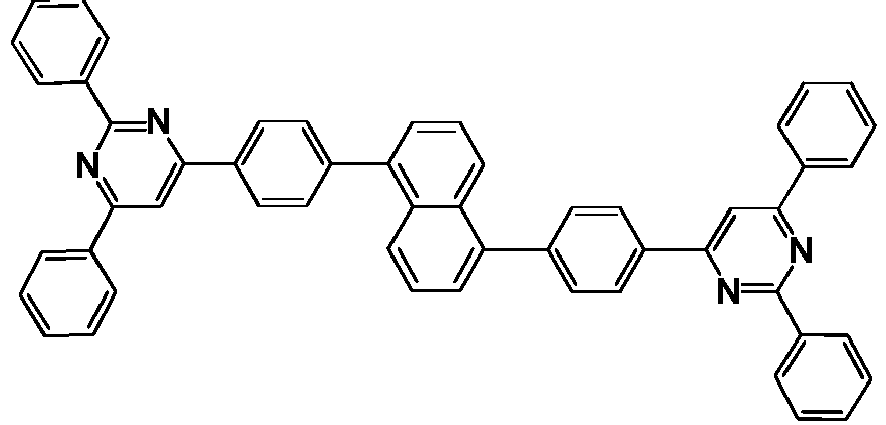

Formule Chimique 1-3 Formule Chimique 1-4 

Formule Chimique 1-5 Formule Chimique 1-6 
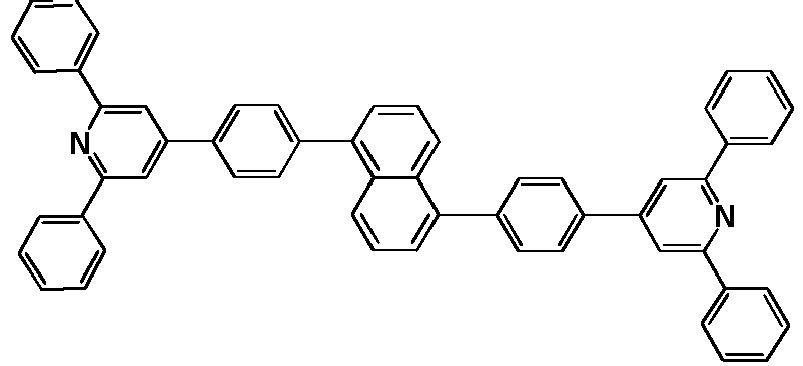
Formule Chimique 1-7 Formule Chimique 1-8 

Formule Chimique 1-9 Formule Chimique 1-10 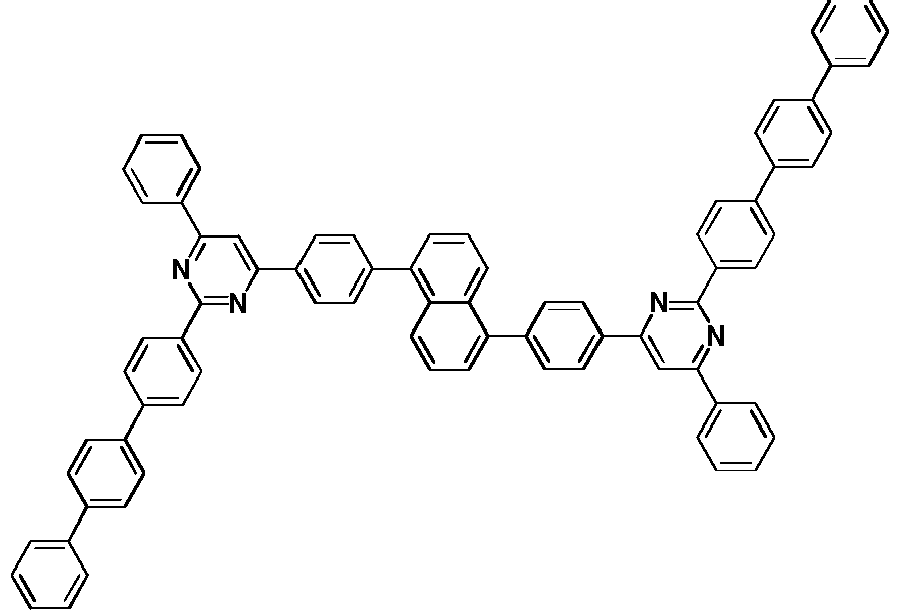

Formule Chimique 1-11 Formule Chimique 1-12 
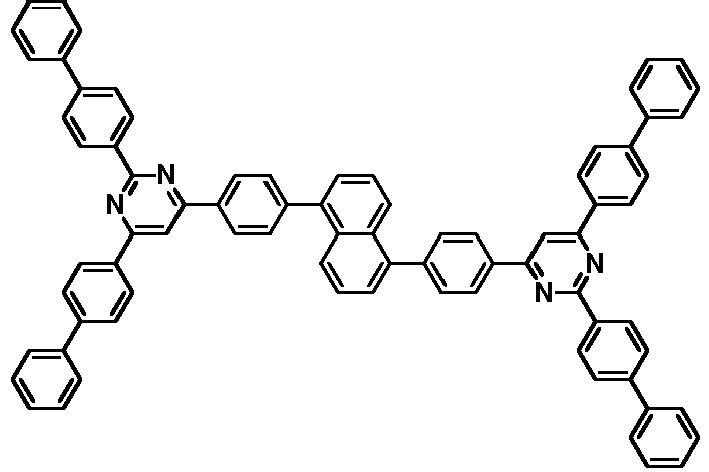
Formule Chimique 1-13 Formule Chimique 1-14 

Formule Chimique 1-15 Formule Chimique 1-16 
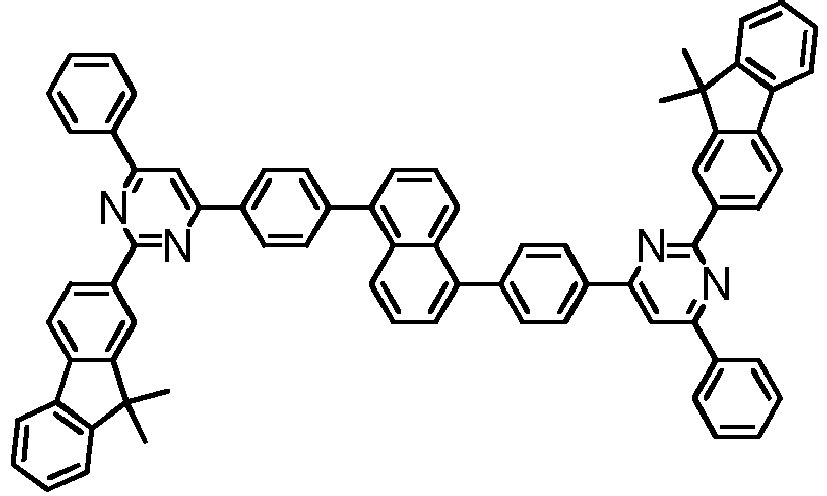
Formule Chimique 1-17 Formule Chimique 1-18 

Formule Chimique 1-19 Formule Chimique 1-20 

Formule Chimique 1-21 Formule Chimique 1-22 

Formule Chimique 1-23 Formule Chimique 1-24 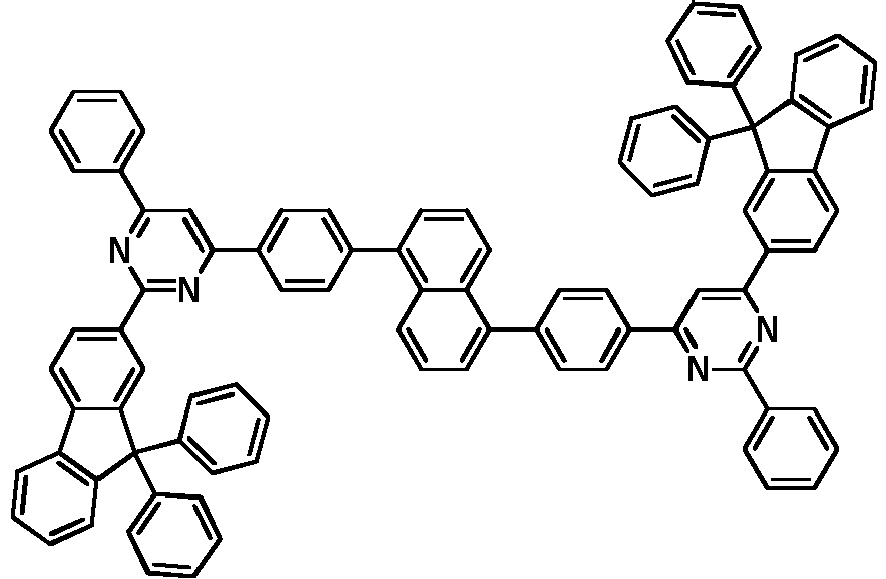

Formule Chimique 1-25 Formule Chimique 1-26 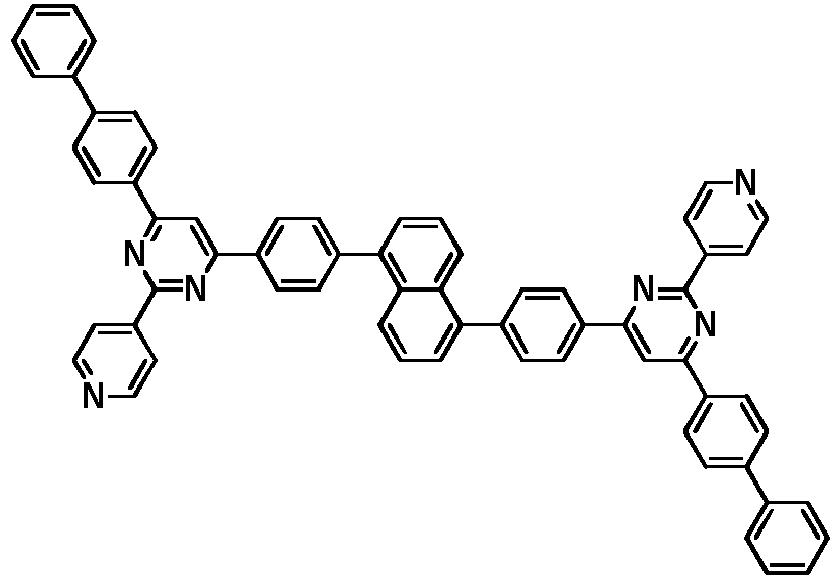

Formule Chimique 1-27 Formule Chimique 1-28 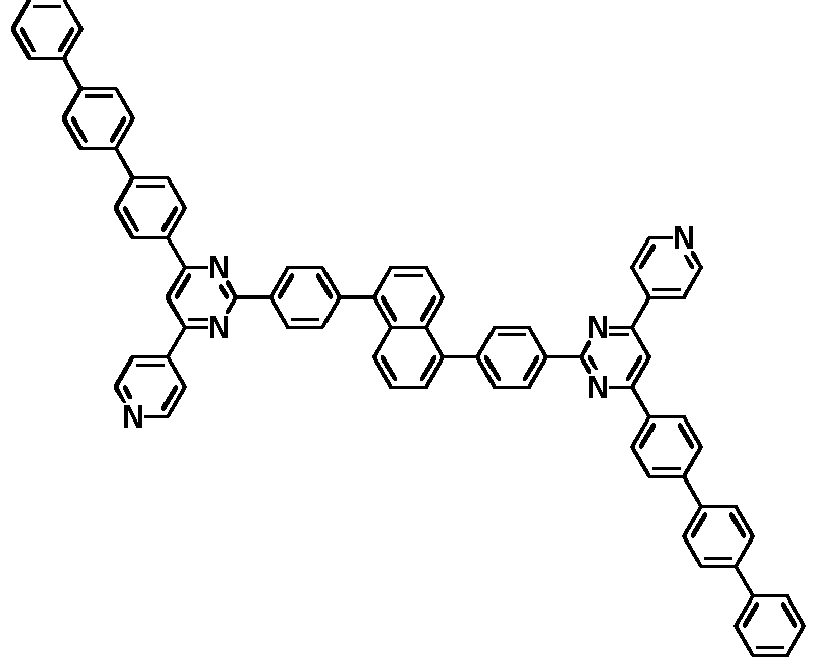

Formule Chimique 1-29 Formule Chimique 1-30 

Formule Chimique 1-31 Formule Chimique 1-32 

Formule Chimique 1-33 Formule Chimique 1-34 

Formule Chimique 1-35 Formule Chimique 1-36 
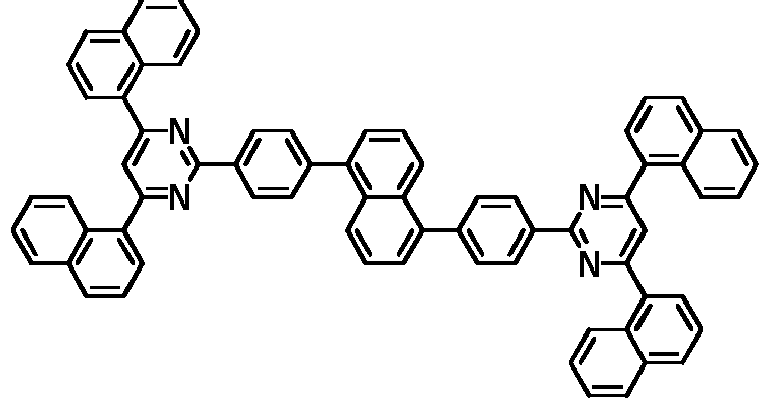
Formule Chimique 1-37 Formule Chimique 1-38 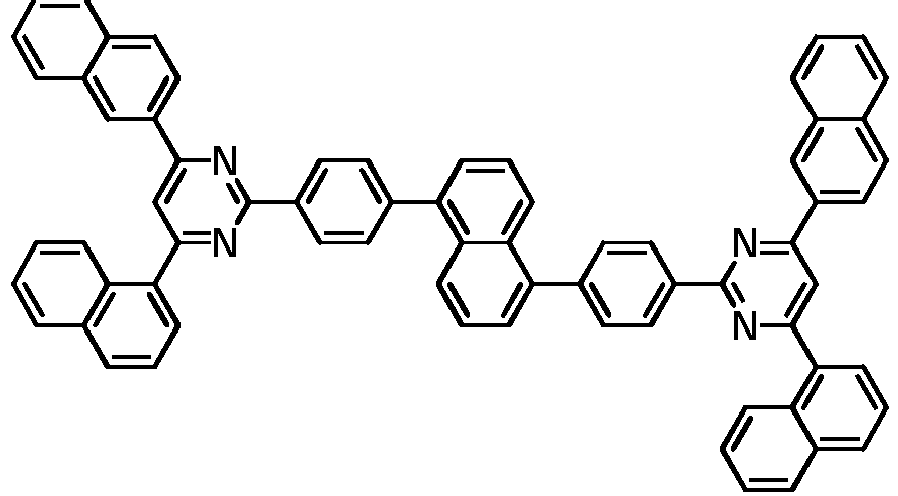

Formule Chimique 1-39 Formule Chimique 1-40 

Formule Chimique 1-41 Formule Chimique 1-42 

Formule Chimique 1-43 Formule Chimique 1-44 

Formule Chimique 1-45 Formule Chimique 1-46 

Formule Chimique 1-47 Formule Chimique 1-48 

Formule Chimique 1-49 Formule Chimique 1-50 

- Composé hétérocyclique selon la Revendication 1, dans lequel le composé représenté par la Formule Chimique 1 est représenté par l'une quelconque des Formules Chimiques 2-1 à 2-50 :
Formule Chimique 2-1 Formule Chimique 2-2 

Formule Chimique 2-3 Formule Chimique 2-4 

Formule Chimique 2-5 Formule Chimique 2-6 

Formule Chimique 2-7 Formule Chimique 2-8 

Formule Chimique 2-9 Formule Chimique 2-10 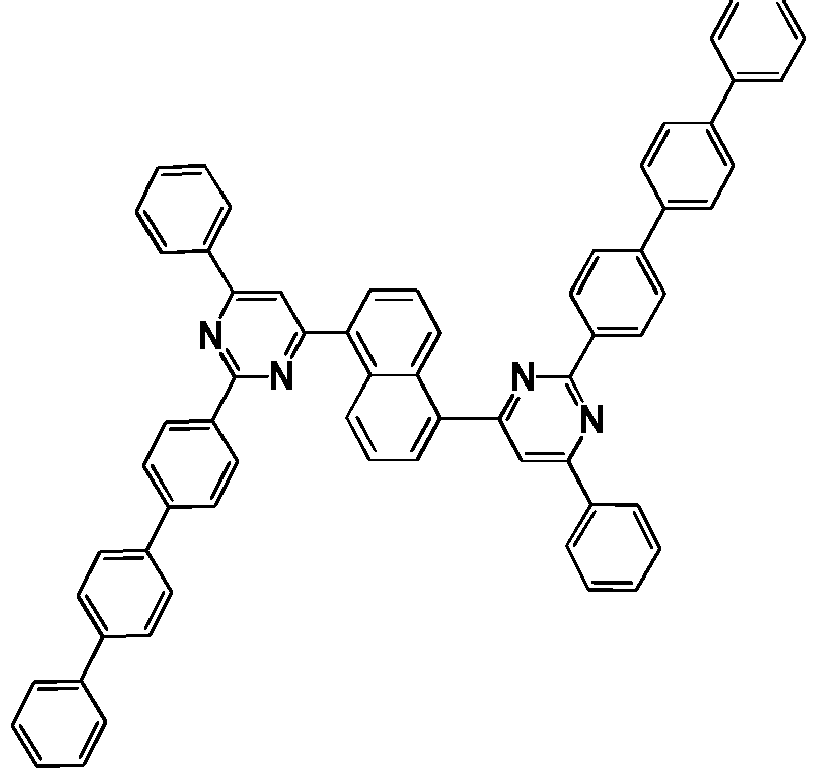

Formule Chimique 2-11 Formule Chimique 2-12 

Formule Chimique 2-13 Formule Chimique 2-14 

Formule Chimique 2-15 Formule Chimique 2-16 

Formule Chimique 2-17 Formule Chimique 2-18 

Formule Chimique 2-19 Formule Chimique 2-20 

Formule Chimique 2-21 Formule Chimique 2-22 

Formule Chimique 2-23 Formule Chimique 2-24 
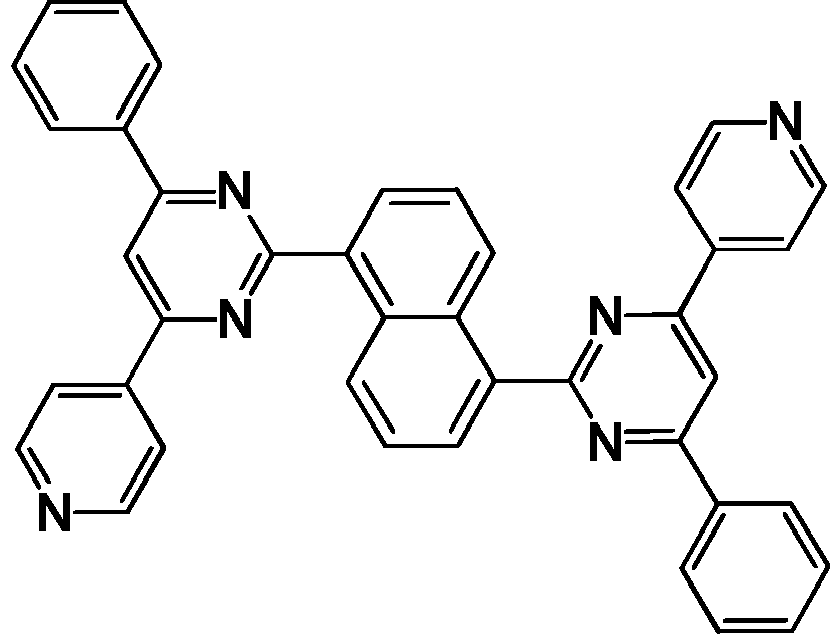
Formule Chimique 2-25 Formule Chimique 2-26 
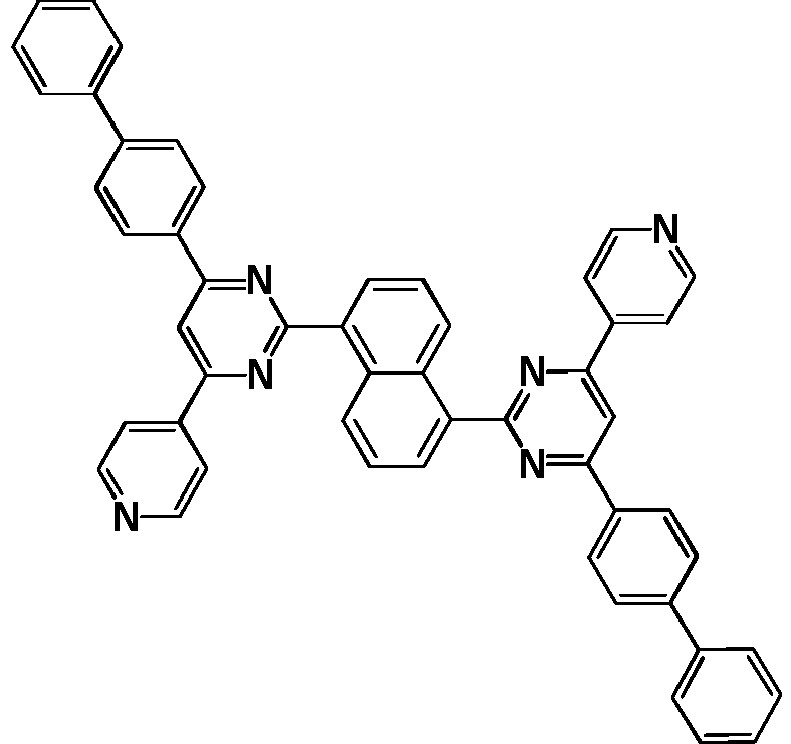
Formule Chimique 2-27 Formule Chimique 2-28 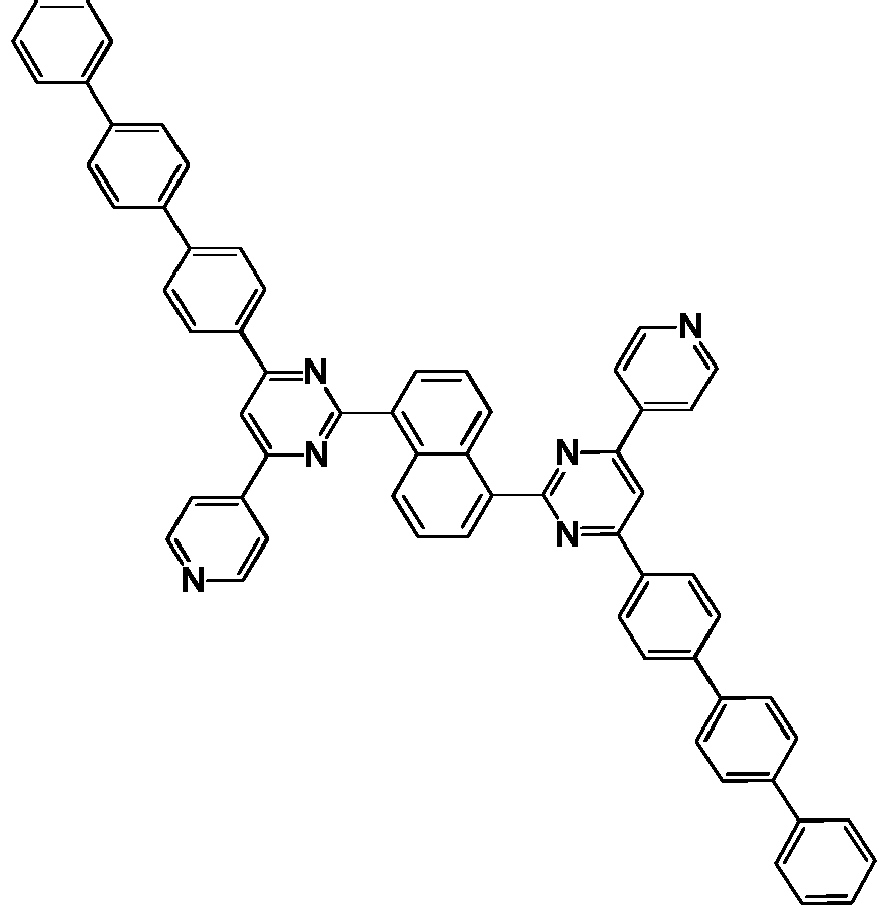

Formule Chimique 2-29 Formule Chimique 2-30 

Formule Chimique 2-31 Formule Chimique 2-32 

Formule Chimique 2-33 Formule Chimique 2-34 

Formule Chimique 2-35 Formule Chimique 2-36 

Formule Chimique 2-37 Formule Chimique 2-38 

Formule Chimique 2-39 Formule Chimique 2-40 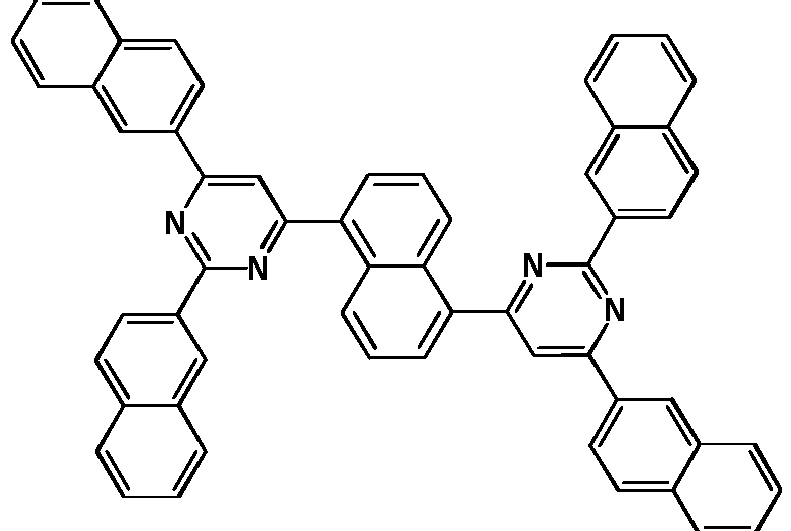

Formule Chimique 2-41 Formule Chimique 2-42 

Formule Chimique 2-43 Formule Chimique 2-44 

Formule Chimique 2-45 Formule Chimique 2-46 

Formule Chimique 2-47 Formule Chimique 2-48 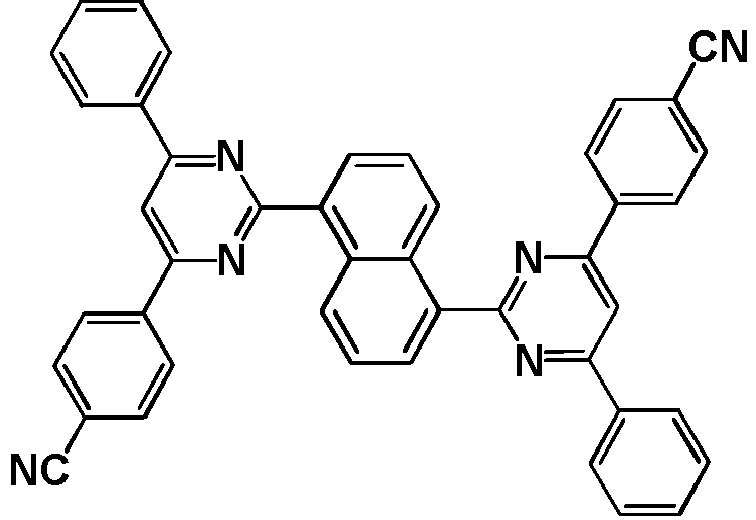
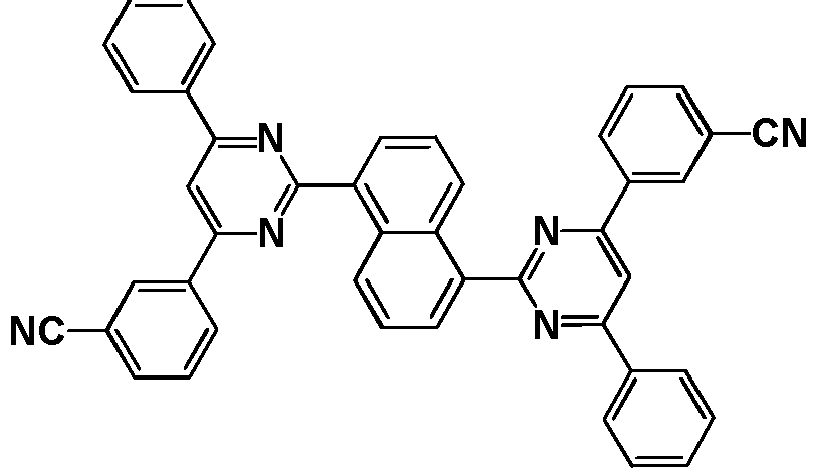
Formule Chimique 2-49 Formule Chimique 2-50 

- Dispositif électroluminescent organique comprenant :une première électrode ;une deuxième électrode fournie de sorte à faire face à la première électrode ;etune ou plusieurs couches de matériau organique comportant une couche électroluminescente fournie entre la première électrode et la deuxième électrode,dans lequel une ou plusieurs des couches de matériau organique comporte(nt) le composé hétérocyclique tel que défini dans l'une quelconque des revendications précédentes.
- Dispositif électroluminescent organique selon la Revendication 5, dans lequel la couche de matériau organique comporte une couche d'injection de trous et une couche de transport de trous, et la couche d'injections de trous ou la couche de transport de trous comporte le composé hétérocyclique.
- Dispositif électroluminescent organique selon la Revendication 5, dans lequel la couche électroluminescente comporte le composé hétérocyclique comme un hôte de la couche électroluminescente.
- Dispositif électroluminescent organique selon la Revendication 5, dans lequel la couche de matériau organique comporte une couche de transport d'électrons ou une couche d'injection d'électrons, et la couche de transport d'électrons ou la couche d'injection d'électrons comporte le composé hétérocyclique.
- Dispositif électroluminescent organique selon la Revendication 5, dans lequel la couche de matériau organique comportant le composé hétérocyclique comporte le composé hétérocyclique comme un hôte, et comporte un autre composé organique, un métal, ou un composé métallique en tant que dopant.
- Dispositif électroluminescent organique selon la Revendication 5, comprenant en outre :
une couche ou deux ou plusieurs couches choisie(s) parmi le groupe constitué d'une couche d'injection de trous, une couche de transport de trous, une couche de transport d'électrons, une couche d'injection d'électrons, une couche de blocage d'électrons, et une couche de blocage de trous. - Dispositif électroluminescent organique comprenant :une première électrode ;une deuxième électrode fournie de sorte à faire face à la première électrode ;etune couche électroluminescente fournie entre la première électrode et la deuxième électrode ; etdeux ou plusieurs couches de matériau organique fournies entre la couche électroluminescente et la première électrode ou entre la couche électroluminescente et la deuxième électrode,dans lequel au moins l'une des deux ou plusieurs couches de matériau organique comporte le composé hétérocyclique tel que défini dans l'une quelconque des Revendications 1-4, et les deux ou plusieurs couches de matériau organique comportent deux ou plus choisis parmi le groupe constitué d'une couche de transport d'électrons, une couche d'injection d'électrons, une couche simultanément transportant et injectant des électrons, et une couche de blocage de trous.
Applications Claiming Priority (2)
| Application Number | Priority Date | Filing Date | Title |
|---|---|---|---|
| KR20130113112 | 2013-09-24 | ||
| PCT/KR2014/008773 WO2015046835A1 (fr) | 2013-09-24 | 2014-09-22 | Composé hétérocyclique et élément électroluminescent organique le comprenant |
Publications (3)
| Publication Number | Publication Date |
|---|---|
| EP3050879A1 EP3050879A1 (fr) | 2016-08-03 |
| EP3050879A4 EP3050879A4 (fr) | 2017-03-29 |
| EP3050879B1 true EP3050879B1 (fr) | 2018-09-05 |
Family
ID=52743887
Family Applications (1)
| Application Number | Title | Priority Date | Filing Date |
|---|---|---|---|
| EP14847799.5A Active EP3050879B1 (fr) | 2013-09-24 | 2014-09-22 | Composé hétérocyclique et élément électroluminescent organique le comprenant |
Country Status (7)
| Country | Link |
|---|---|
| US (1) | US9954181B2 (fr) |
| EP (1) | EP3050879B1 (fr) |
| JP (1) | JP6290381B2 (fr) |
| KR (1) | KR101644700B1 (fr) |
| CN (1) | CN105579445B (fr) |
| TW (1) | TWI553002B (fr) |
| WO (1) | WO2015046835A1 (fr) |
Families Citing this family (14)
| Publication number | Priority date | Publication date | Assignee | Title |
|---|---|---|---|---|
| KR101841351B1 (ko) * | 2015-09-11 | 2018-03-22 | 주식회사 엘지화학 | 헤테로환 화합물 및 이를 이용한 유기 발광 소자 |
| KR102153447B1 (ko) * | 2015-12-01 | 2020-09-08 | 엘티소재주식회사 | 헤테로고리 화합물 및 이를 이용한 유기 발광 소자 |
| CN108026060B (zh) | 2016-02-25 | 2020-12-25 | 株式会社Lg化学 | 杂环化合物和包含其的有机发光二极管 |
| TWI582081B (zh) * | 2016-03-25 | 2017-05-11 | 昱鐳光電科技股份有限公司 | 用於有機電激發光元件之化合物及使用該化合物之有機電激發光元件 |
| JP6610447B2 (ja) * | 2016-06-22 | 2019-11-27 | Jnc株式会社 | 自己組織化し得る多環式芳香族化合物およびそれを用いた有機el素子 |
| KR102055973B1 (ko) * | 2016-12-07 | 2019-12-13 | 주식회사 엘지화학 | 헤테로고리 화합물 및 이를 포함하는 유기 발광 소자 |
| KR102134507B1 (ko) | 2017-03-21 | 2020-07-16 | 주식회사 엘지화학 | 화합물 및 이를 포함하는 유기 태양 전지 |
| WO2019013486A1 (fr) | 2017-07-10 | 2019-01-17 | 주식회사 엘지화학 | Dispositif électrochrome comprenant un composé électrochrome et son procédé de fabrication |
| KR102120532B1 (ko) | 2017-09-18 | 2020-06-16 | 주식회사 엘지화학 | 유기트랜지스터 |
| KR102250385B1 (ko) * | 2017-10-18 | 2021-05-11 | 주식회사 엘지화학 | 유기 광 다이오드 및 이를 포함하는 유기 이미지 센서 |
| WO2019176384A1 (fr) * | 2018-03-15 | 2019-09-19 | コニカミノルタ株式会社 | Élément d'électroluminescence organique, matériau pour électroluminescence organique, dispositif d'affichage et dispositif d'éclairage |
| WO2020012685A1 (fr) * | 2018-07-09 | 2020-01-16 | コニカミノルタ株式会社 | Film mince, dispositif électronique, élément électroluminescent organique, matériau pour électroluminescence organique, dispositif d'affichage et équipement d'éclairage |
| CN110105350A (zh) * | 2019-05-21 | 2019-08-09 | 武汉华星光电半导体显示技术有限公司 | 有机发光材料及其制备方法、有机发光器件 |
| KR20250079495A (ko) * | 2023-11-27 | 2025-06-04 | 솔루스첨단소재 주식회사 | 유기 발광 화합물 및 이를 포함하는 유기 전계 발광 소자 |
Family Cites Families (11)
| Publication number | Priority date | Publication date | Assignee | Title |
|---|---|---|---|---|
| US6057048A (en) * | 1998-10-01 | 2000-05-02 | Xerox Corporation | Electroluminescent (EL) devices |
| DE10135513B4 (de) | 2001-07-20 | 2005-02-24 | Novaled Gmbh | Lichtemittierendes Bauelement mit organischen Schichten |
| EP1556360B1 (fr) | 2002-10-30 | 2008-01-23 | Ciba SC Holding AG | Dispositif electroluminescent |
| JP4856882B2 (ja) | 2005-02-17 | 2012-01-18 | 東ソー株式会社 | 1,3,5−トリアジン誘導体,その製法およびそれから成る薄膜 |
| CN101412907A (zh) * | 2007-10-17 | 2009-04-22 | 中国科学院理化技术研究所 | 有机电致发光材料及其合成方法和用途 |
| KR20110079197A (ko) * | 2009-12-31 | 2011-07-07 | 제일모직주식회사 | 유기광전소자용 화합물 및 이를 포함하는 유기광전소자 |
| JP5477180B2 (ja) | 2010-06-10 | 2014-04-23 | 信越化学工業株式会社 | 太陽電池素子の電極焼成用焼成炉、太陽電池素子の製造方法及び太陽電池素子 |
| WO2012133256A1 (fr) | 2011-03-25 | 2012-10-04 | 住友化学株式会社 | Composé polymère et élément à émission de lumière l'utilisant |
| EP2749625B1 (fr) | 2012-02-27 | 2017-12-20 | LG Chem, Ltd. | Diode électroluminescente organique |
| KR101604168B1 (ko) * | 2012-02-27 | 2016-03-16 | 주식회사 엘지화학 | 유기 발광 소자 |
| KR101499356B1 (ko) | 2013-06-28 | 2015-03-05 | 주식회사 엘지화학 | 헤테로환 화합물 및 이를 포함하는 유기 발광 소자 |
-
2014
- 2014-09-22 KR KR1020140125770A patent/KR101644700B1/ko active Active
- 2014-09-22 WO PCT/KR2014/008773 patent/WO2015046835A1/fr not_active Ceased
- 2014-09-22 CN CN201480052454.1A patent/CN105579445B/zh active Active
- 2014-09-22 JP JP2016515395A patent/JP6290381B2/ja active Active
- 2014-09-22 EP EP14847799.5A patent/EP3050879B1/fr active Active
- 2014-09-22 US US15/022,849 patent/US9954181B2/en active Active
- 2014-09-24 TW TW103132922A patent/TWI553002B/zh active
Non-Patent Citations (1)
| Title |
|---|
| None * |
Also Published As
| Publication number | Publication date |
|---|---|
| TWI553002B (zh) | 2016-10-11 |
| EP3050879A4 (fr) | 2017-03-29 |
| CN105579445B (zh) | 2017-10-27 |
| KR20150033562A (ko) | 2015-04-01 |
| TW201527296A (zh) | 2015-07-16 |
| JP2016538238A (ja) | 2016-12-08 |
| US9954181B2 (en) | 2018-04-24 |
| JP6290381B2 (ja) | 2018-03-07 |
| WO2015046835A1 (fr) | 2015-04-02 |
| KR101644700B1 (ko) | 2016-08-01 |
| US20160233430A1 (en) | 2016-08-11 |
| EP3050879A1 (fr) | 2016-08-03 |
| CN105579445A (zh) | 2016-05-11 |
Similar Documents
| Publication | Publication Date | Title |
|---|---|---|
| EP3050879B1 (fr) | Composé hétérocyclique et élément électroluminescent organique le comprenant | |
| EP3002282B1 (fr) | Composé hétérocyclique et diode électroluminescente organique le comprenant | |
| EP3415512B1 (fr) | Nouveau composé hétérocyclique et élément électroluminescent organique l'utilisant | |
| EP3476833B1 (fr) | Composé polycyclique et élément électroluminescent organique le comprenant | |
| EP3366682B1 (fr) | Composé hétérocyclique et élément électroluminescent organique le comprenant | |
| EP3439062B1 (fr) | Elément électroluminescent organique | |
| EP3428163B1 (fr) | Composé polycyclique et élément électroluminescent organique le comprenant | |
| EP3305771B1 (fr) | Dispositif électroluminescent organique contenant un composé hétérocyclique | |
| EP3392242A1 (fr) | Nouveau composé hétérocylique et dispositif électroluminescent organique utilisant celui-ci | |
| EP3296293A2 (fr) | Composé hétérocyclique et élément électroluminescent organique le comprenant | |
| EP3053985A1 (fr) | Composé hétérocyclique et élément électroluminescent organique utilisant ce composé | |
| EP3214084B1 (fr) | Composé cyclique et élément électroluminescent organique comprenant celui-ci | |
| EP3575290B1 (fr) | Composé hétérocyclique et élément électroluminescent organique comprenant ledit composé | |
| EP3363782B1 (fr) | Composé et élément électronique organique le comprenant | |
| EP2960240B1 (fr) | Composé hétérocyclique et élément électroluminescent organique l'utilisant | |
| EP3388438A1 (fr) | Composé à structure spiro et dispositif électronique organique comprenant ledit composé | |
| EP3389108B1 (fr) | Élément électroluminescent organique | |
| EP3483152A1 (fr) | Composé et dispositif électroluminescent organique le comprenant | |
| EP3266780B1 (fr) | Composé hétérocyclique et élément électroluminescent organique le comprenant | |
| EP3730488A1 (fr) | Nouveau composé hétérocyclique et dispositif électroluminescent organique l'utilisant | |
| EP3263555B1 (fr) | Composé hétérocyclique et élément luminescent organique comprenant celui-ci | |
| EP3147286B1 (fr) | Composé hétérocyclique et dispositif électroluminescent organique contenant ce composé | |
| EP3321246B1 (fr) | Composé double spiro et élément électroluminescent organique comprenant ledit composé | |
| EP3369719B1 (fr) | Composé de type spiro et élément électroluminescent organique comprenant celui-ci | |
| EP4258372B1 (fr) | Dispositif électroluminescent organique |
Legal Events
| Date | Code | Title | Description |
|---|---|---|---|
| PUAI | Public reference made under article 153(3) epc to a published international application that has entered the european phase |
Free format text: ORIGINAL CODE: 0009012 |
|
| 17P | Request for examination filed |
Effective date: 20160317 |
|
| AK | Designated contracting states |
Kind code of ref document: A1 Designated state(s): AL AT BE BG CH CY CZ DE DK EE ES FI FR GB GR HR HU IE IS IT LI LT LU LV MC MK MT NL NO PL PT RO RS SE SI SK SM TR |
|
| AX | Request for extension of the european patent |
Extension state: BA ME |
|
| DAX | Request for extension of the european patent (deleted) | ||
| A4 | Supplementary search report drawn up and despatched |
Effective date: 20170224 |
|
| RIC1 | Information provided on ipc code assigned before grant |
Ipc: H01L 51/50 20060101ALI20170220BHEP Ipc: C09K 11/06 20060101ALI20170220BHEP Ipc: C07D 403/10 20060101AFI20170220BHEP |
|
| 17Q | First examination report despatched |
Effective date: 20180207 |
|
| REG | Reference to a national code |
Ref country code: DE Ref legal event code: R079 Ref document number: 602014032029 Country of ref document: DE Free format text: PREVIOUS MAIN CLASS: C07D0403100000 Ipc: H01L0051540000 |
|
| GRAP | Despatch of communication of intention to grant a patent |
Free format text: ORIGINAL CODE: EPIDOSNIGR1 |
|
| RIC1 | Information provided on ipc code assigned before grant |
Ipc: C07D 403/10 20060101ALI20180403BHEP Ipc: H01L 51/54 20060101AFI20180403BHEP Ipc: C09K 11/06 20060101ALI20180403BHEP |
|
| INTG | Intention to grant announced |
Effective date: 20180507 |
|
| GRAS | Grant fee paid |
Free format text: ORIGINAL CODE: EPIDOSNIGR3 |
|
| GRAA | (expected) grant |
Free format text: ORIGINAL CODE: 0009210 |
|
| AK | Designated contracting states |
Kind code of ref document: B1 Designated state(s): AL AT BE BG CH CY CZ DE DK EE ES FI FR GB GR HR HU IE IS IT LI LT LU LV MC MK MT NL NO PL PT RO RS SE SI SK SM TR |
|
| REG | Reference to a national code |
Ref country code: GB Ref legal event code: FG4D |
|
| REG | Reference to a national code |
Ref country code: CH Ref legal event code: EP |
|
| REG | Reference to a national code |
Ref country code: AT Ref legal event code: REF Ref document number: 1038877 Country of ref document: AT Kind code of ref document: T Effective date: 20180915 |
|
| REG | Reference to a national code |
Ref country code: IE Ref legal event code: FG4D |
|
| REG | Reference to a national code |
Ref country code: DE Ref legal event code: R096 Ref document number: 602014032029 Country of ref document: DE |
|
| REG | Reference to a national code |
Ref country code: NL Ref legal event code: MP Effective date: 20180905 |
|
| REG | Reference to a national code |
Ref country code: LT Ref legal event code: MG4D |
|
| PG25 | Lapsed in a contracting state [announced via postgrant information from national office to epo] |
Ref country code: GR Free format text: LAPSE BECAUSE OF FAILURE TO SUBMIT A TRANSLATION OF THE DESCRIPTION OR TO PAY THE FEE WITHIN THE PRESCRIBED TIME-LIMIT Effective date: 20181206 Ref country code: RS Free format text: LAPSE BECAUSE OF FAILURE TO SUBMIT A TRANSLATION OF THE DESCRIPTION OR TO PAY THE FEE WITHIN THE PRESCRIBED TIME-LIMIT Effective date: 20180905 Ref country code: NO Free format text: LAPSE BECAUSE OF FAILURE TO SUBMIT A TRANSLATION OF THE DESCRIPTION OR TO PAY THE FEE WITHIN THE PRESCRIBED TIME-LIMIT Effective date: 20181205 Ref country code: LT Free format text: LAPSE BECAUSE OF FAILURE TO SUBMIT A TRANSLATION OF THE DESCRIPTION OR TO PAY THE FEE WITHIN THE PRESCRIBED TIME-LIMIT Effective date: 20180905 Ref country code: FI Free format text: LAPSE BECAUSE OF FAILURE TO SUBMIT A TRANSLATION OF THE DESCRIPTION OR TO PAY THE FEE WITHIN THE PRESCRIBED TIME-LIMIT Effective date: 20180905 Ref country code: SE Free format text: LAPSE BECAUSE OF FAILURE TO SUBMIT A TRANSLATION OF THE DESCRIPTION OR TO PAY THE FEE WITHIN THE PRESCRIBED TIME-LIMIT Effective date: 20180905 Ref country code: BG Free format text: LAPSE BECAUSE OF FAILURE TO SUBMIT A TRANSLATION OF THE DESCRIPTION OR TO PAY THE FEE WITHIN THE PRESCRIBED TIME-LIMIT Effective date: 20181205 |
|
| REG | Reference to a national code |
Ref country code: AT Ref legal event code: MK05 Ref document number: 1038877 Country of ref document: AT Kind code of ref document: T Effective date: 20180905 |
|
| PG25 | Lapsed in a contracting state [announced via postgrant information from national office to epo] |
Ref country code: LV Free format text: LAPSE BECAUSE OF FAILURE TO SUBMIT A TRANSLATION OF THE DESCRIPTION OR TO PAY THE FEE WITHIN THE PRESCRIBED TIME-LIMIT Effective date: 20180905 Ref country code: AL Free format text: LAPSE BECAUSE OF FAILURE TO SUBMIT A TRANSLATION OF THE DESCRIPTION OR TO PAY THE FEE WITHIN THE PRESCRIBED TIME-LIMIT Effective date: 20180905 Ref country code: HR Free format text: LAPSE BECAUSE OF FAILURE TO SUBMIT A TRANSLATION OF THE DESCRIPTION OR TO PAY THE FEE WITHIN THE PRESCRIBED TIME-LIMIT Effective date: 20180905 |
|
| PG25 | Lapsed in a contracting state [announced via postgrant information from national office to epo] |
Ref country code: NL Free format text: LAPSE BECAUSE OF FAILURE TO SUBMIT A TRANSLATION OF THE DESCRIPTION OR TO PAY THE FEE WITHIN THE PRESCRIBED TIME-LIMIT Effective date: 20180905 Ref country code: ES Free format text: LAPSE BECAUSE OF FAILURE TO SUBMIT A TRANSLATION OF THE DESCRIPTION OR TO PAY THE FEE WITHIN THE PRESCRIBED TIME-LIMIT Effective date: 20180905 Ref country code: PL Free format text: LAPSE BECAUSE OF FAILURE TO SUBMIT A TRANSLATION OF THE DESCRIPTION OR TO PAY THE FEE WITHIN THE PRESCRIBED TIME-LIMIT Effective date: 20180905 Ref country code: IS Free format text: LAPSE BECAUSE OF FAILURE TO SUBMIT A TRANSLATION OF THE DESCRIPTION OR TO PAY THE FEE WITHIN THE PRESCRIBED TIME-LIMIT Effective date: 20190105 Ref country code: RO Free format text: LAPSE BECAUSE OF FAILURE TO SUBMIT A TRANSLATION OF THE DESCRIPTION OR TO PAY THE FEE WITHIN THE PRESCRIBED TIME-LIMIT Effective date: 20180905 Ref country code: CZ Free format text: LAPSE BECAUSE OF FAILURE TO SUBMIT A TRANSLATION OF THE DESCRIPTION OR TO PAY THE FEE WITHIN THE PRESCRIBED TIME-LIMIT Effective date: 20180905 Ref country code: IT Free format text: LAPSE BECAUSE OF FAILURE TO SUBMIT A TRANSLATION OF THE DESCRIPTION OR TO PAY THE FEE WITHIN THE PRESCRIBED TIME-LIMIT Effective date: 20180905 Ref country code: AT Free format text: LAPSE BECAUSE OF FAILURE TO SUBMIT A TRANSLATION OF THE DESCRIPTION OR TO PAY THE FEE WITHIN THE PRESCRIBED TIME-LIMIT Effective date: 20180905 Ref country code: EE Free format text: LAPSE BECAUSE OF FAILURE TO SUBMIT A TRANSLATION OF THE DESCRIPTION OR TO PAY THE FEE WITHIN THE PRESCRIBED TIME-LIMIT Effective date: 20180905 |
|
| REG | Reference to a national code |
Ref country code: CH Ref legal event code: PL |
|
| PG25 | Lapsed in a contracting state [announced via postgrant information from national office to epo] |
Ref country code: SK Free format text: LAPSE BECAUSE OF FAILURE TO SUBMIT A TRANSLATION OF THE DESCRIPTION OR TO PAY THE FEE WITHIN THE PRESCRIBED TIME-LIMIT Effective date: 20180905 Ref country code: SM Free format text: LAPSE BECAUSE OF FAILURE TO SUBMIT A TRANSLATION OF THE DESCRIPTION OR TO PAY THE FEE WITHIN THE PRESCRIBED TIME-LIMIT Effective date: 20180905 Ref country code: PT Free format text: LAPSE BECAUSE OF FAILURE TO SUBMIT A TRANSLATION OF THE DESCRIPTION OR TO PAY THE FEE WITHIN THE PRESCRIBED TIME-LIMIT Effective date: 20190105 |
|
| REG | Reference to a national code |
Ref country code: DE Ref legal event code: R097 Ref document number: 602014032029 Country of ref document: DE |
|
| REG | Reference to a national code |
Ref country code: BE Ref legal event code: MM Effective date: 20180930 |
|
| REG | Reference to a national code |
Ref country code: IE Ref legal event code: MM4A |
|
| PG25 | Lapsed in a contracting state [announced via postgrant information from national office to epo] |
Ref country code: LU Free format text: LAPSE BECAUSE OF NON-PAYMENT OF DUE FEES Effective date: 20180922 |
|
| PLBE | No opposition filed within time limit |
Free format text: ORIGINAL CODE: 0009261 |
|
| STAA | Information on the status of an ep patent application or granted ep patent |
Free format text: STATUS: NO OPPOSITION FILED WITHIN TIME LIMIT |
|
| PG25 | Lapsed in a contracting state [announced via postgrant information from national office to epo] |
Ref country code: DK Free format text: LAPSE BECAUSE OF FAILURE TO SUBMIT A TRANSLATION OF THE DESCRIPTION OR TO PAY THE FEE WITHIN THE PRESCRIBED TIME-LIMIT Effective date: 20180905 Ref country code: MC Free format text: LAPSE BECAUSE OF FAILURE TO SUBMIT A TRANSLATION OF THE DESCRIPTION OR TO PAY THE FEE WITHIN THE PRESCRIBED TIME-LIMIT Effective date: 20180905 Ref country code: IE Free format text: LAPSE BECAUSE OF NON-PAYMENT OF DUE FEES Effective date: 20180922 |
|
| 26N | No opposition filed |
Effective date: 20190606 |
|
| GBPC | Gb: european patent ceased through non-payment of renewal fee |
Effective date: 20181205 |
|
| PG25 | Lapsed in a contracting state [announced via postgrant information from national office to epo] |
Ref country code: SI Free format text: LAPSE BECAUSE OF FAILURE TO SUBMIT A TRANSLATION OF THE DESCRIPTION OR TO PAY THE FEE WITHIN THE PRESCRIBED TIME-LIMIT Effective date: 20180905 Ref country code: LI Free format text: LAPSE BECAUSE OF NON-PAYMENT OF DUE FEES Effective date: 20180930 Ref country code: CH Free format text: LAPSE BECAUSE OF NON-PAYMENT OF DUE FEES Effective date: 20180930 Ref country code: BE Free format text: LAPSE BECAUSE OF NON-PAYMENT OF DUE FEES Effective date: 20180930 |
|
| PG25 | Lapsed in a contracting state [announced via postgrant information from national office to epo] |
Ref country code: FR Free format text: LAPSE BECAUSE OF NON-PAYMENT OF DUE FEES Effective date: 20181105 |
|
| PG25 | Lapsed in a contracting state [announced via postgrant information from national office to epo] |
Ref country code: GB Free format text: LAPSE BECAUSE OF NON-PAYMENT OF DUE FEES Effective date: 20181205 |
|
| PG25 | Lapsed in a contracting state [announced via postgrant information from national office to epo] |
Ref country code: MT Free format text: LAPSE BECAUSE OF NON-PAYMENT OF DUE FEES Effective date: 20180922 |
|
| PG25 | Lapsed in a contracting state [announced via postgrant information from national office to epo] |
Ref country code: TR Free format text: LAPSE BECAUSE OF FAILURE TO SUBMIT A TRANSLATION OF THE DESCRIPTION OR TO PAY THE FEE WITHIN THE PRESCRIBED TIME-LIMIT Effective date: 20180905 |
|
| PG25 | Lapsed in a contracting state [announced via postgrant information from national office to epo] |
Ref country code: MK Free format text: LAPSE BECAUSE OF NON-PAYMENT OF DUE FEES Effective date: 20180905 Ref country code: CY Free format text: LAPSE BECAUSE OF FAILURE TO SUBMIT A TRANSLATION OF THE DESCRIPTION OR TO PAY THE FEE WITHIN THE PRESCRIBED TIME-LIMIT Effective date: 20180905 Ref country code: HU Free format text: LAPSE BECAUSE OF FAILURE TO SUBMIT A TRANSLATION OF THE DESCRIPTION OR TO PAY THE FEE WITHIN THE PRESCRIBED TIME-LIMIT; INVALID AB INITIO Effective date: 20140922 |
|
| REG | Reference to a national code |
Ref country code: DE Ref legal event code: R079 Ref document number: 602014032029 Country of ref document: DE Free format text: PREVIOUS MAIN CLASS: H01L0051540000 Ipc: H10K0085000000 |
|
| PGFP | Annual fee paid to national office [announced via postgrant information from national office to epo] |
Ref country code: DE Payment date: 20250820 Year of fee payment: 12 |