EP3050943A1 - Verfahren zur thermochemischen Vorbehandlung einer Biomasse aus Holzzellulose im Trockenprozess - Google Patents
Verfahren zur thermochemischen Vorbehandlung einer Biomasse aus Holzzellulose im Trockenprozess Download PDFInfo
- Publication number
- EP3050943A1 EP3050943A1 EP15305091.9A EP15305091A EP3050943A1 EP 3050943 A1 EP3050943 A1 EP 3050943A1 EP 15305091 A EP15305091 A EP 15305091A EP 3050943 A1 EP3050943 A1 EP 3050943A1
- Authority
- EP
- European Patent Office
- Prior art keywords
- biomass
- roasting
- energy
- pretreatment
- carried out
- Prior art date
- Legal status (The legal status is an assumption and is not a legal conclusion. Google has not performed a legal analysis and makes no representation as to the accuracy of the status listed.)
- Withdrawn
Links
Images





Classifications
-
- C—CHEMISTRY; METALLURGY
- C10—PETROLEUM, GAS OR COKE INDUSTRIES; TECHNICAL GASES CONTAINING CARBON MONOXIDE; FUELS; LUBRICANTS; PEAT
- C10L—FUELS NOT OTHERWISE PROVIDED FOR; NATURAL GAS; SYNTHETIC NATURAL GAS OBTAINED BY PROCESSES NOT COVERED BY SUBCLASSES C10G OR C10K; LIQUIFIED PETROLEUM GAS; USE OF ADDITIVES TO FUELS OR FIRES; FIRE-LIGHTERS
- C10L9/00—Treating solid fuels to improve their combustion
- C10L9/08—Treating solid fuels to improve their combustion by heat treatments, e.g. calcining
- C10L9/083—Torrefaction
-
- C—CHEMISTRY; METALLURGY
- C10—PETROLEUM, GAS OR COKE INDUSTRIES; TECHNICAL GASES CONTAINING CARBON MONOXIDE; FUELS; LUBRICANTS; PEAT
- C10L—FUELS NOT OTHERWISE PROVIDED FOR; NATURAL GAS; SYNTHETIC NATURAL GAS OBTAINED BY PROCESSES NOT COVERED BY SUBCLASSES C10G OR C10K; LIQUIFIED PETROLEUM GAS; USE OF ADDITIVES TO FUELS OR FIRES; FIRE-LIGHTERS
- C10L3/00—Gaseous fuels; Natural gas; Synthetic natural gas obtained by processes not covered by subclass C10G, C10K; Liquefied petroleum gas
- C10L3/06—Natural gas; Synthetic natural gas obtained by processes not covered by C10G, C10K3/02 or C10K3/04
- C10L3/08—Production of synthetic natural gas
-
- C—CHEMISTRY; METALLURGY
- C10—PETROLEUM, GAS OR COKE INDUSTRIES; TECHNICAL GASES CONTAINING CARBON MONOXIDE; FUELS; LUBRICANTS; PEAT
- C10L—FUELS NOT OTHERWISE PROVIDED FOR; NATURAL GAS; SYNTHETIC NATURAL GAS OBTAINED BY PROCESSES NOT COVERED BY SUBCLASSES C10G OR C10K; LIQUIFIED PETROLEUM GAS; USE OF ADDITIVES TO FUELS OR FIRES; FIRE-LIGHTERS
- C10L5/00—Solid fuels
- C10L5/02—Solid fuels such as briquettes consisting mainly of carbonaceous materials of mineral or non-mineral origin
- C10L5/34—Other details of the shaped fuels, e.g. briquettes
- C10L5/36—Shape
- C10L5/366—Powders
-
- C—CHEMISTRY; METALLURGY
- C10—PETROLEUM, GAS OR COKE INDUSTRIES; TECHNICAL GASES CONTAINING CARBON MONOXIDE; FUELS; LUBRICANTS; PEAT
- C10L—FUELS NOT OTHERWISE PROVIDED FOR; NATURAL GAS; SYNTHETIC NATURAL GAS OBTAINED BY PROCESSES NOT COVERED BY SUBCLASSES C10G OR C10K; LIQUIFIED PETROLEUM GAS; USE OF ADDITIVES TO FUELS OR FIRES; FIRE-LIGHTERS
- C10L9/00—Treating solid fuels to improve their combustion
- C10L9/08—Treating solid fuels to improve their combustion by heat treatments, e.g. calcining
-
- C—CHEMISTRY; METALLURGY
- C12—BIOCHEMISTRY; BEER; SPIRITS; WINE; VINEGAR; MICROBIOLOGY; ENZYMOLOGY; MUTATION OR GENETIC ENGINEERING
- C12P—FERMENTATION OR ENZYME-USING PROCESSES TO SYNTHESISE A DESIRED CHEMICAL COMPOUND OR COMPOSITION OR TO SEPARATE OPTICAL ISOMERS FROM A RACEMIC MIXTURE
- C12P5/00—Preparation of hydrocarbons or halogenated hydrocarbons
- C12P5/02—Preparation of hydrocarbons or halogenated hydrocarbons acyclic
- C12P5/023—Methane
-
- C—CHEMISTRY; METALLURGY
- C12—BIOCHEMISTRY; BEER; SPIRITS; WINE; VINEGAR; MICROBIOLOGY; ENZYMOLOGY; MUTATION OR GENETIC ENGINEERING
- C12P—FERMENTATION OR ENZYME-USING PROCESSES TO SYNTHESISE A DESIRED CHEMICAL COMPOUND OR COMPOSITION OR TO SEPARATE OPTICAL ISOMERS FROM A RACEMIC MIXTURE
- C12P7/00—Preparation of oxygen-containing organic compounds
- C12P7/02—Preparation of oxygen-containing organic compounds containing a hydroxy group
- C12P7/04—Preparation of oxygen-containing organic compounds containing a hydroxy group acyclic
- C12P7/06—Ethanol, i.e. non-beverage
- C12P7/08—Ethanol, i.e. non-beverage produced as by-product or from waste or cellulosic material substrate
- C12P7/10—Ethanol, i.e. non-beverage produced as by-product or from waste or cellulosic material substrate substrate containing cellulosic material
-
- C—CHEMISTRY; METALLURGY
- C12—BIOCHEMISTRY; BEER; SPIRITS; WINE; VINEGAR; MICROBIOLOGY; ENZYMOLOGY; MUTATION OR GENETIC ENGINEERING
- C12P—FERMENTATION OR ENZYME-USING PROCESSES TO SYNTHESISE A DESIRED CHEMICAL COMPOUND OR COMPOSITION OR TO SEPARATE OPTICAL ISOMERS FROM A RACEMIC MIXTURE
- C12P2201/00—Pretreatment of cellulosic or lignocellulosic material for subsequent enzymatic treatment or hydrolysis
-
- Y—GENERAL TAGGING OF NEW TECHNOLOGICAL DEVELOPMENTS; GENERAL TAGGING OF CROSS-SECTIONAL TECHNOLOGIES SPANNING OVER SEVERAL SECTIONS OF THE IPC; TECHNICAL SUBJECTS COVERED BY FORMER USPC CROSS-REFERENCE ART COLLECTIONS [XRACs] AND DIGESTS
- Y02—TECHNOLOGIES OR APPLICATIONS FOR MITIGATION OR ADAPTATION AGAINST CLIMATE CHANGE
- Y02E—REDUCTION OF GREENHOUSE GAS [GHG] EMISSIONS, RELATED TO ENERGY GENERATION, TRANSMISSION OR DISTRIBUTION
- Y02E50/00—Technologies for the production of fuel of non-fossil origin
- Y02E50/10—Biofuels, e.g. bio-diesel
-
- Y—GENERAL TAGGING OF NEW TECHNOLOGICAL DEVELOPMENTS; GENERAL TAGGING OF CROSS-SECTIONAL TECHNOLOGIES SPANNING OVER SEVERAL SECTIONS OF THE IPC; TECHNICAL SUBJECTS COVERED BY FORMER USPC CROSS-REFERENCE ART COLLECTIONS [XRACs] AND DIGESTS
- Y02—TECHNOLOGIES OR APPLICATIONS FOR MITIGATION OR ADAPTATION AGAINST CLIMATE CHANGE
- Y02E—REDUCTION OF GREENHOUSE GAS [GHG] EMISSIONS, RELATED TO ENERGY GENERATION, TRANSMISSION OR DISTRIBUTION
- Y02E50/00—Technologies for the production of fuel of non-fossil origin
- Y02E50/30—Fuel from waste, e.g. synthetic alcohol or diesel
Definitions
- Bioenergy production from lignocellulosic biomass is considered a promising alternative to the depletion of fossil fuels, especially oil. It can be used to produce for example bioethanol or "biofuel” and biogas, but also to produce biomolecules and synthons that can be substituted for products derived from petrochemistry, for the synthesis of polymers and biomaterials such as resins or certain composite materials.
- LC biomass is mainly composed of cellulose, hemicellulose and lignin. Its composite nature and matrix structure make it difficult for enzymes to access biologically transformable molecules and its digestion. It is therefore necessary to pretreat the LC biomass in order to improve the efficiency of the enzymatic hydrolysis of the parietal polymers, a key step for the production of bioethanol, methane and other biomolecules.
- Chemical pretreatments are commonly used to increase the enzymatic accessibility of cellulose and hemicellulose. These pretreatments are carried out in the presence of an acid, a base, an oxidant, etc.
- the acidic pretreatments are used to eliminate the hemicelluloses and solubilize the cellulose. They can be conducted with concentrated or diluted acids, knowing that the use of concentrated acids has the disadvantage of leading to the formation of compounds that inhibit fermentation.
- Alkaline pretreatments primarily solubilize lignin and hemicelluloses. They can be carried out in the presence of sodium hydroxide solution, potassium, calcium or ammonium. These chemical treatments have the disadvantage of using a large amount of water, solvents and chemical reagents, while generating a lot of toxic effluents that must then be treated and removed.
- Thermal pretreatments are more environmentally friendly processes compared to chemical pretreatments ( Chew et al. 2011 Renewable and Sustainable Energy Reviews, 15: 4212-4222 ), but they consume a lot of thermal energy.
- the present invention relates to a method for dry fractionation of an LC biomass comprising an alkaline chemical treatment step followed by a roasting heat treatment step and a mechanical ultrafine milling step. It also relates to a process for producing bioenergies obtained by biotransformation of a pretreated LC biomass according to the fractionation method of the invention, and more generally to a process for producing recoverable products. The present invention also relates to the pretreated biomass by applying the fractionation method of the invention.
- the subject of the present invention is a LC biomass dry fractionation process comprising an alkaline chemical treatment step followed by a heat treatment step and a mechanical ultrafine grinding step.
- fractionation process is therefore a pretreatment process combining three successive stages: chemical dry, thermal and mechanical.
- biomass fractionation process or “biomass pretreatment method” are therefore equivalent and will be used interchangeably in the text of the present application.
- pretreatment steps are essential because they will allow a very efficient hydrolysis of cellulose and hemicelluloses obtained from an LC biomass and an increased release of the recoverable products compared to previously described methods.
- the fractionation method according to the invention has the advantage of requiring small amounts of water and chemicals which limits the production of effluents.
- Pretreatment with soda alone and coupled with roasting improve the accessibility of holocelluloses.
- pretreatment with oxygen peroxide improves the accessibility of the cellulose.
- the fractionation or pretreatment method according to the invention has the other advantage of presenting a positive energy balance. Biomass thus pretreated then undergoes a biological transformation that allows the production of gas and condensable species and in particular methane and bioethanol.
- this process allows a quantitative improvement (increased production of energy) and qualitative (production of many products recoverable).
- the LC biomass that can be used in a process according to the invention comprises agricultural and forestry co-products such as straws, wood, stems and leaves.
- the straws are a raw material particularly suitable for such a process.
- the application of the process according to the invention to wheat straw is presented by way of example in the experimental part.
- the fractionation process according to the invention has in particular the characteristic of being carried out “in the dry process", in particular the chemical pretreatment stage is carried out in the dry process.
- dry process fractionation process is meant a process implemented by limiting the amount of water added.
- the amount of water present, especially during the chemical dry pretreatment of a biomass is generally about 30%, and can be reduced to 20%, or even 10% (weight / weight of the biomass).
- This type of process has the advantage, compared to liquid-channel processes, of not requiring treatment or separation of the liquid / solid phase. It thus makes it possible to minimize the water supply, to reduce the effluent treatment and to reduce the investment and subsequent transportation costs of the pretreated biomass.
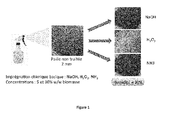
- the first step of the LC biomass fractionation process according to the invention is therefore a dry process alkaline chemical treatment carried out by impregnating a biomass with the alkaline solution, for example using a spray, an aerosol or in the form of gas.
- the alkaline treatment step may be carried out using various basic solutions, in particular sodium, calcium or potassium solutions which may be, for example, in the form of a solution of calcium hydroxide, sodium hydroxide, sodium hydroxide or sodium hydroxide. ammonia, soda or oxygen peroxide. Any basic solution adapted to the use according to the invention can be used.
- the basic solution is a solution of sodium hydroxide (NaOH) or oxygen peroxide (H 2 O 2 ), preferably at a concentration of between about 1% to 20%.
- the concentration of the solution is between 5 and 15%, in particular between 5% and 10%.
- the impregnation of the biomass is carried out with a solution of 10% oxygen peroxide or a 10% solution of sodium hydroxide.
- the second step of the LC biomass fractionation process according to the invention is a heat treatment.
- the heat treatment is carried out by roasting.
- the roasting consists in subjecting the biomass to a heat treatment at a temperature of between 100 ° C. and 300 ° C. without oxygen (in the presence of N 2 ) in order to degrade the mechanical properties and modify the chemical composition of the LC matrix. .
- the present invention proposes to combine the roasting with a chemical impregnation.
- the latter allows a weakening and a structural modification of the parietal architecture to destructure the matter to the heart and increase its reactivity.
- roasting is intended to mean exposing the biomass to a moderate temperature of between 100 ° C. and 300 ° C. in the absence of oxygen.
- the roasting can be carried out at temperatures between 100 ° C and 240 ° C for a period of 10 min to 120 min.
- the roasting can be carried out at a temperature of 140 ° C, 160 ° C, 175 ° C, 190 ° C or 200 ° C.
- the roasting is carried out at a moderate temperature ranging from 140 ° C. to 200 ° C. for a period of 45 minutes.
- the inventors have shown that temperatures above 200 ° C have a negative effect on the performance of methanation and fermentation; above 200 ° C, the biomass would be too degraded.
- the positive effect of thermal pretreatment of the biomass is significant at temperatures above 100 ° C.
- the biomass is subjected to temperatures ranging from 100 ° C to 200 ° C, preferably from 140 ° C to 200 ° C.
- the biomass first undergoes an alkaline chemical treatment by impregnating a 10% sodium hydroxide solution or 10% oxygen peroxide and then roasting between 140 ° C. and 200 ° C. ° C.
- the pretreatment of the biomass consists of a chemical treatment by impregnation of a 10% sodium hydroxide solution followed by a roasting at 140 ° C.
- the pretreatment of the biomass consists of a chemical treatment by impregnation of a 10% sodium hydroxide solution followed by a roasting at 200 ° C.
- the roasting step has several advantages over and above that of allowing the biomass to be split by thermal action. Indeed, it makes it possible to recover recoverable products before biological transformation of the pretreated biomass. These products, some of which have a high added value, can be used in other types of industry (chemistry, cosmetics, pharmacy, food).
- Recoverable products means any material that can be used in any type of application if it has a utility that is extracted from the LC biomass during one of the steps of the biomass pre-treatment process or when of the process for producing bioenergies according to the invention.
- the recoverable products obtained by roasting consist of "dry” gases and condensable species at room temperature
- the roasting is carried out in a reactor which makes it possible to recover after roasting, on the one hand, condensable species at ambient temperature and, on the other hand, incondensable species at room temperature or "gas dry ".
- the products obtained at the same time are gaseous, liquid and solid form are then quantified.
- the products collected during roasting or by condensation after roasting are part of what we call "valuable products”.
- the subject of the present invention is therefore a process for producing products that can be upgraded from an LC biomass comprising the implementation of the fractionation method according to the invention.
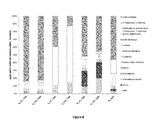
- the conditions of production of other products of interest are described in Figure 8 .
- the operating conditions of the process can be determined according to the desired chemical species. These species will be selected for the interest of green molecules in sectors such as cosmetics, pharmacy or food, for their cost of production compared to that of the conventional industry, or for the purity of the species after separation.
- the chemical treatment is coupled to the roasting step, which makes it possible to use the energy associated with the temperature rise of the roaster to dry the liquid or wet residues resulting from the chemical treatment; this coupling makes it possible to optimize energy expenditure.
- roasting releases energy.
- the amount of energy produced depends on the samples, namely their nature and the pretreatment they have undergone, as well as the operating conditions of roasting.
- the energy balance linked to the roasting are integrated the energy necessary for the heating of the sample for its drying then for its roasting and the energy obtained via the combustion of the released volatiles (acetic acid, phenols ...) during roasting.
- the method of calculating the energies related to this process is detailed in the experimental part.
- gaseous fuel species can either be recovered and exploited as such, or burned to produce energy.
- the methane can either be burned immediately during the roasting step or be recovered and used later as a biofuel.
- the combustible species were burned.
- the fractionation process according to the invention finally comprises a mechanical treatment step, namely an ultrafine milling step, which follows chemical treatment and roasting.
- the purpose of this grinding is to obtain ultrafine powders that can be used in subsequent biological transformations.
- ultrafine grinding makes it possible to obtain particles that can pass through a grid of 0.5 mm to 0.1 mm in diameter. As is apparent from the Figure 3 , the grinding energy increases with the smoothness of the grid.
- the LC biomass is pre-milled prior to the implementation of the fractionation process according to the invention.
- This step aims to make more malleable the raw material which is transformed into a relatively homogeneous material.
- This pre-grinding step is a step common to all LC pre-treatment processes described and tested in the present application.
- the particles obtained at the end of this pre-crushing step can pass through a grid 2 mm in diameter.
- the fractionation method of the invention has many advantages that result from the coupling of three pretreatment steps: first a dry chemical pretreatment, followed by a roasting at moderate temperature and finally ultrafine grinding.
- LC biomass thus pretreated is a particularly suitable substrate for a biological transformation whose performance will be significantly improved, as will be exposed now.
- the present invention therefore has for another object a process for producing bioenergies from a pretreated LC biomass by applying the fractionation method according to the invention, comprising a step of biologically transforming said pretreated biomass.
- bioenergy are part of the products that can be used for the purposes of the invention.
- synthons, biopolymers and other biomolecules are recoverable products obtained by the bioenergy production process of the invention.
- the subject of the present invention is also a method for producing synthons and biomolecules which comprises a step of pretreatment of an LC biomass by application of the fractionation method of the invention and a step of biological transformation of the biomass thus pretreated.
- the present invention also relates to a method for producing recoverable products obtained from an LC biomass, this method comprising a step of pretreatment of said biomass by applying the fractionation method of the invention.
- Valuable products can be recovered directly after roasting.
- the pretreatment of the biomass can be followed by a biological transformation stage and the recoverable products recovered after this transformation stage.
- the subject of the present invention is therefore a method for producing products that can be upgraded from an LC biomass comprising a step of pretreatment of said biomass by application of the fractionation method of the invention followed, optionally, by a step of transformation by biological pathway of said biomass obtained in the previous step, and finally a step of recovering the recoverable products obtained.
- the recoverable products obtained during this process include gases, condensables, bioenergies, synthons, biopolymers and other biomolecules in varying amounts depending on the operating conditions.
- bioenergys we mean biogas such as methane (CH 4 ) or bioethanol, also called “biofuel”. These bioenergies which constitute biofuels are part of the products that can be used for the purposes of the invention.
- the biological transformation of the LC biomass can be carried out, for example, by methanation, by enzymatic hydrolysis or by alcoholic fermentation.
- Methanization can be defined as an anaerobic digestion that transforms organic matter into digestate (with fertilizing characteristics), methane and carbon dioxide by a complex microbial ecosystem functioning in the absence of oxygen.
- the methane, biogas mainly produced during this reaction can be used as a source of energy in 3 main ways: thermal energy, electric energy and biofuel.
- the anaerobic digestion can, for example, be carried out in a reactor by means of anaerobic microorganisms coming, for example, from sewage sludge.
- anaerobic digestion protocols have been described and are part of the general knowledge of those skilled in the art.
- Alcoholic fermentation can be defined as a biochemical process by which carbohydrates, mainly glucose, are decomposed in oxygen-poor medium into ethanol and carbon dioxide, with release of energy. Most microorganisms that have the capacity for alcoholic fermentation use this reaction temporarily to gain energy, when the oxygen needed for cellular respiration is lacking. This reaction allows the production of bioethanol and carbon dioxide as well as by-products such as alcohols (propanol, isobutanol %) and aromatic alcohols, carboxylic esters or carbonyl compounds. Bioethanol, in particular, is increasingly used as a fuel.
- the biological transformation step or biotransformation is therefore to contact the pretreated biomass with enzymes or microorganisms capable of degrading the substrates contained in the biomass.
- the inventors have carried out comparative studies of this novel process with processes in which the LC biomass had undergone only thermal pretreatment or only chemical pretreatment before being crushed. The comparison was made at different levels of the process and the results show that the pretreatment process combining both chemical pretreatment and roasting provides the best quantitative balance based on the overall energy balance of the methane production process or bioethanol.
- the roasting step provides a qualitative advantage because it makes it possible to recover recoverable products such as dry gases and condensable species without specific additional energy cost.
- the energy balance of the production processes of recoverable products comprising a pretreatment step according to the invention is particularly interesting.
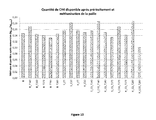
- the implementation of a fractionation process comprising an alkaline chemical impregnation step, followed by a roasting between 100 ° C and 240 ° C and ultrafine milling makes it possible to obtain an energy balance in which the amount of energy produced is much greater than the amount of energy consumed.
- the energy balance is particularly interesting when the impregnation is carried out with a 10% soda solution, as is clear from the Figure 9 .
- the overall favorable energy balance is a result of the decrease in energy expenditure associated with pretreatment of LC biomass.
- the fractionation process used to pretreat the LC biomass is also qualitatively efficient because of the condensable species and "dry" gases generated during the roasting step.
- a selectivity of the condensable species is observed as a function of the chemical pretreatment, as previously described. It is therefore possible to modify the parameters of the fractionation process to favor the production of certain species and / or to limit the production of other species.
- the process for the biological transformation of the pretreated LC biomass according to the fractionation method of the present invention is also efficient if one considers the gain in bioenergy production, whether in the form of methane or bioethanol.
- the overall value of the process according to the invention is therefore to be considered both qualitatively (nature of the recoverable products) and quantitatively (amount of energy produced).
- the fractionation process and the process for producing recoverable species according to the invention is very advantageous compared to those previously described.
- the process for pretreating an LC biomass developed by the inventors fulfills the expected profitability criteria for such a process by proposing an innovative process in which the overall cost and the environmental impact are controlled.
- the pretreatments were carried out according to the same experimental protocol: the straw samples were first pre-milled using a Retsch SM100 mill with a 2mm grid, impregnated, roasted and ground very finely with a grinder. Alpine TM UPZ 100 with two grids 0.5mm and 0.1mm.
- Pre-grinding was performed by cutting and shearing with knives in a Retsch SM100 mill.
- the straw was introduced into the grinding zone by a hopper.
- the residence time of the straw in the grinding zone was determined as a function of the particle size and the chosen grid.
- the rotational speed of the rotor was set at 1390 rpm.
- the engine rated power in this experiment was 1500 watts.
- a power measuring box was installed on the mill feed. This allowed, after integration of the power as a function of time, to compare the grinding energy of the raw straw and treated straw.
- This mill was used for the pre-grinding of wheat straw with measurement of the energy required for this pre-grinding.
- the roasting of the straw was carried out in a TORPILLE reactor. Five roasting temperatures between 140 ° C and 200 ° C were used (140 ° C, 160 ° C, 175 ° C, 190 ° C and 200 ° C). The chemically treated samples were roasted at 3 temperatures (140 ° C, 175 ° C and 200 ° C). The different combinations are reported in Table 1.
- This reactor is based on a fixed-bed batch system heated in a temperature-controlled forced convection oven.
- This reactor TORPILLE for TORREFaction PILOT Laboratory.
- Dinitrogen (N 2) sweep was selected because it is inert; this gas was preheated in a coil placed in the oven.
- the gases produced and the condensable species were maintained at the outlet temperature of the reactor to avoid condensation.
- the condensable species were subsequently condensed in 2 glass coils immersed in a bath thermostated at -15 ° C.
- the "dry" gases were then analyzed in a Varian micro-GC, which makes it possible to quantify CO 2 , CO, CH 4 and H 2 .
- three thermocouples were installed. Two are inside the reactor, below and above the bed of straw; the third is placed in the oven.
- the furnace power was measured continuously using a Janitza UMG 96 RM datalogger. A nitrogen flow rate of 6 Nl / min was retained to ensure good homogenization of the straw bed. The residence time of 45 minutes began when the thermocouple T3 reached the set temperature. The recovered condensables were analyzed later, first with the Karl Fisher method to determine their water content, then by GC-MS to characterize and quantify the main species produced.
- the Alpine TM UPZ 100 grinding station was used to reduce particle size and obtain ultrafine powders. It consists of a movable axis on which are fixed pallets which project the product against a fixed grid. The product remained in the grinding chamber until it was crushed. It was milled both by impact and shear (it was thrown against the grate and circulated against it until it passed through). The rotor speed was set at 18000 rpm with a continuous feed at 1kg / h. The mill was equipped with a power meter to measure the power consumed. Two 0.5mm and 0.1mm grids were used.
- the methane potential (BMP or Biochemical methane potential) corresponds to the maximum volume of methane produced during the anaerobic degradation of the organic substrate. It is expressed in mLCH4 (g MV) -1 in the standard conditions for temperature and pressure (STP: 0 ° C, 1013 hPa).
- STP temperature and pressure
- the test is based on measurement of methane production in a sealed 500mL flask in contact with a known quantity of test sample (0.999g MV / flask, MV: volatile material, corresponds to organic matter) and anaerobic microorganisms from granular sludge treating effluents from a Marseille sugar refinery (64.5 mL or 2 g of MV / flask).
- the ratio S / X that is to say the ratio of substrate amount to amount of microbial biomass was therefore 0.5.
- these have been placed under optimal conditions, by adding a solution of macronutrients, a solution of trace elements and a bicarbonate buffer to set the pH between 6.5 and 7.5.
- the volume is completed at 400mL with osmosis water.
- the atmosphere of the flasks was replaced by nitrogen and then stirred in a chamber at 37 ° C to be in mesophilic anaerobic condition.
- the test was carried out in duplicate and was continued until a plateau was obtained on the methane production curve (ml of CH4 / g MV ).
- Reactors are used to evaluate the kinetics of the biodegradation reaction of straw samples during anaerobic digestion. These tests also make it possible to evaluate the degradation of the samples with microorganisms that have potentially developed clean / specific activities for the degradation of these samples by means of an adaptation of the microbial population during successive additions of substrate.
- Enzymatic hydrolysis was performed with a commercial cellulase cocktail with 20 ⁇ FP / g substrate.
- the tubes were shaken for 72 hours using an agitator placed in an oven at 37 ° C.
- 1 ml was taken from an eppendorf which was heated to 100 ° C in a water bath to block the enzymatic reaction.
- the samples were then centrifuged for 10 minutes at 1200 rpm. The supernatant was recovered and injected into HPLC to determine the amount of sugars released by the enzymes.
- the flasks were then incubated at 28 ° C. Fermentation was followed by weighing the flasks over time and the difference in mass loss between the samples and control flasks without straw was determined. The amount of ethanol produced was calculated from the fermentation yields by applying a factor of 0.47 / 0.45 to the measured mass loss.
- H T % mass loss . h f 0 VS x H there O z + ⁇ 298 T Pc Straw . d T
- E S E s - 1 2 m water . lv water to 105 ° VS
- E S m Straw anhydrous . Pc Straw . T 105 ° VS - T ⁇ + m water . Pc water . T 105 ° VS - T ⁇ + 1 2 . m water . lv water to 105 ° VS
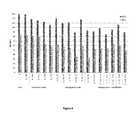
- Roasting has a significant effect on the reduction of the grinding energy (60% reduction at 200 ° C) as well as on the reduction of the particle size (33% reduction at 200 ° C).
- Pretreatment of the samples by chemical impregnation also significantly reduces the grinding energy (51% reduction with 10% w / w NaOH, 48% reduction with 10% w / w H 2 O 2 ) and the size reduction. particles (57% reduction with 10% w / w NaOH, 61% reduction with 10% w / w H 2 O 2 ).
- Pretreatments with sodium hydroxide prove to be more effective than those carried out with H 2 O 2 .
- the coupling of roasting and chemical pretreatments does not make it possible to significantly increase these effects (no obvious synergistic or additive effect).
- roasting proved to have a negative effect on the release of sugars (-54% at 200 ° C) as well as on the production of ethanol but only for temperatures above 175 ° C (-42% at 200 ° C).
- Chemical impregnations significantly increase the release of sugars (+ 191% with 10% NaOH) and ethanol production (+ 98% with 10% NaOH, + 72% with 10% H 2 O 2 ) .
- Pretreatments with sodium hydroxide prove to be more effective than those carried out with H 2 O 2 .
- the methane potentials of samples treated with 10% sodium hydroxide (S-C10) are the highest (327mLCH4 / gMV).
- the methane potential is of the order of 288mLCH4 / gMV in batch and 376mLCH4 / gMV in bioreactor.
- the samples both chemically impregnated and roasted have a methane potential always higher than that of the raw sample.
- Samples impregnated with H 2 O 2 have BMP methane potentials higher than that of the raw sample but in a lesser proportion than those treated with sodium hydroxide. This is not true in a bioreactor where yields are similar.
- the coupling chemical treatment with H 2 O 2 with roasting which reduces this potential seems uninteresting.
- the figure 7 presents the yields obtained for the condensable and incondensable gaseous species as a function of the pretreatments. It appears that soda has a strong influence on the production of gas and water (about 3 times more than for roasting alone). One can also notice an influence of H 2 O 2 mainly for dry condensables and water. NH 3 has very little influence on the formation of co-products with even a decrease in the amount of condensables and water.
- H 2 O 2 favors the production of dry condensables compared to roasting alone in equivalent proportions for all species produced, except for formic acid and furfural, which is produced in a much higher quantity than conventional roasting.
- Concerning pretreatment with sodium hydroxide it can be seen that the proportion of acetic acid is much lower and that the major compound of the dry condensables is 2-propanone, 1-hydroxy which increases with the concentration of sodium hydroxide.
- pretreatments comprising a 10% sodium hydroxide impregnation followed by a roasting between 140 ° C. and 200 ° C. and ultrafine grinding are those which make it possible to produce the highest amounts of CH4.
Landscapes
- Chemical & Material Sciences (AREA)
- Organic Chemistry (AREA)
- Engineering & Computer Science (AREA)
- Oil, Petroleum & Natural Gas (AREA)
- Life Sciences & Earth Sciences (AREA)
- Zoology (AREA)
- Wood Science & Technology (AREA)
- Chemical Kinetics & Catalysis (AREA)
- General Chemical & Material Sciences (AREA)
- Bioinformatics & Cheminformatics (AREA)
- Biotechnology (AREA)
- Biochemistry (AREA)
- Microbiology (AREA)
- General Engineering & Computer Science (AREA)
- General Health & Medical Sciences (AREA)
- Genetics & Genomics (AREA)
- Health & Medical Sciences (AREA)
- Physics & Mathematics (AREA)
- Thermal Sciences (AREA)
- Combustion & Propulsion (AREA)
- Environmental & Geological Engineering (AREA)
- General Life Sciences & Earth Sciences (AREA)
- Geochemistry & Mineralogy (AREA)
- Geology (AREA)
- Processing Of Solid Wastes (AREA)
Priority Applications (2)
| Application Number | Priority Date | Filing Date | Title |
|---|---|---|---|
| EP15305091.9A EP3050943A1 (de) | 2015-01-27 | 2015-01-27 | Verfahren zur thermochemischen Vorbehandlung einer Biomasse aus Holzzellulose im Trockenprozess |
| PCT/IB2016/050404 WO2016120801A1 (fr) | 2015-01-27 | 2016-01-27 | Procédé de prétraitement thermo-chimique d'une biomasse ligno-cellulosique en voie sèche |
Applications Claiming Priority (1)
| Application Number | Priority Date | Filing Date | Title |
|---|---|---|---|
| EP15305091.9A EP3050943A1 (de) | 2015-01-27 | 2015-01-27 | Verfahren zur thermochemischen Vorbehandlung einer Biomasse aus Holzzellulose im Trockenprozess |
Publications (1)
| Publication Number | Publication Date |
|---|---|
| EP3050943A1 true EP3050943A1 (de) | 2016-08-03 |
Family
ID=52450031
Family Applications (1)
| Application Number | Title | Priority Date | Filing Date |
|---|---|---|---|
| EP15305091.9A Withdrawn EP3050943A1 (de) | 2015-01-27 | 2015-01-27 | Verfahren zur thermochemischen Vorbehandlung einer Biomasse aus Holzzellulose im Trockenprozess |
Country Status (2)
| Country | Link |
|---|---|
| EP (1) | EP3050943A1 (de) |
| WO (1) | WO2016120801A1 (de) |
Cited By (2)
| Publication number | Priority date | Publication date | Assignee | Title |
|---|---|---|---|---|
| CN108503862A (zh) * | 2018-03-05 | 2018-09-07 | 南京工业大学 | 一种超微木质素的制备方法 |
| US11766626B2 (en) * | 2017-06-28 | 2023-09-26 | Oy Lunawood Ltd | Method and apparatus to extract products from heat treatment process |
Citations (3)
| Publication number | Priority date | Publication date | Assignee | Title |
|---|---|---|---|---|
| US20120060408A1 (en) * | 2008-12-10 | 2012-03-15 | Kior Inc. | Process for preparing a fluidizable biomass-catalyst composite material |
| US20140338217A1 (en) * | 2011-11-29 | 2014-11-20 | Valmet Power Ab | Method and arrangement for torrefaction with controlled addition of cooling liquid to the torrefied material |
| US20150007492A1 (en) * | 2012-01-18 | 2015-01-08 | Centre De Cooperation International En Recherche Agronomique Pour Le Developpement (Cirad) | Solid fuel in the form of a powder, including a lignocellulosic component |
Family Cites Families (2)
| Publication number | Priority date | Publication date | Assignee | Title |
|---|---|---|---|---|
| FR2939431B1 (fr) * | 2008-12-05 | 2011-01-28 | Valagro Carbone Renouvelable | Procede de production d'un produit intermediaire destine a la production d'ethanol, et produit intermediaire obtenu. |
| FR3004190B1 (fr) * | 2013-04-03 | 2016-03-18 | Csj Technologie | Procede de torrefaction de la biomasse |
-
2015
- 2015-01-27 EP EP15305091.9A patent/EP3050943A1/de not_active Withdrawn
-
2016
- 2016-01-27 WO PCT/IB2016/050404 patent/WO2016120801A1/fr not_active Ceased
Patent Citations (3)
| Publication number | Priority date | Publication date | Assignee | Title |
|---|---|---|---|---|
| US20120060408A1 (en) * | 2008-12-10 | 2012-03-15 | Kior Inc. | Process for preparing a fluidizable biomass-catalyst composite material |
| US20140338217A1 (en) * | 2011-11-29 | 2014-11-20 | Valmet Power Ab | Method and arrangement for torrefaction with controlled addition of cooling liquid to the torrefied material |
| US20150007492A1 (en) * | 2012-01-18 | 2015-01-08 | Centre De Cooperation International En Recherche Agronomique Pour Le Developpement (Cirad) | Solid fuel in the form of a powder, including a lignocellulosic component |
Non-Patent Citations (7)
| Title |
|---|
| BARAKAT ABDELLATIF ET AL: "Eco-friendly dry chemo-mechanical pretreatments of lignocellulosic biomass: Impact on energy and yield of the enzymatic hydrolysis", APPLIED ENERGY, vol. 113, 2014, pages 97 - 105, XP028762920, ISSN: 0306-2619, DOI: 10.1016/J.APENERGY.2013.07.015 * |
| BARAKAT ET AL., APPLIED ENERGY, vol. 113, 2014, pages 97 - 105 |
| BARAKAT ET AL., BIOSOURCE TECHNOLOGY, vol. 134, 2013, pages 362 - 373 |
| CHEW ET AL., RENEWABLE AND SUSTAINABLE ENERGY REVIEWS, vol. 15, 2011, pages 4212 - 4222 |
| GIRIO ET AL., BIOSOURCE TECHNOLOGY, vol. 101, 2010, pages 4775 - 4800 |
| REPELLIN ET AL., BIOMASS AND ENERGY, vol. 34, no. 7, 2010, pages 923 - 930 |
| VAN DYK, BIOTECHNOLOGY ADVANCES, vol. 30, 2012, pages 1458 - 1480 |
Cited By (3)
| Publication number | Priority date | Publication date | Assignee | Title |
|---|---|---|---|---|
| US11766626B2 (en) * | 2017-06-28 | 2023-09-26 | Oy Lunawood Ltd | Method and apparatus to extract products from heat treatment process |
| CN108503862A (zh) * | 2018-03-05 | 2018-09-07 | 南京工业大学 | 一种超微木质素的制备方法 |
| CN108503862B (zh) * | 2018-03-05 | 2020-10-02 | 南京工业大学 | 一种超微木质素的制备方法 |
Also Published As
| Publication number | Publication date |
|---|---|
| WO2016120801A1 (fr) | 2016-08-04 |
Similar Documents
| Publication | Publication Date | Title |
|---|---|---|
| Selvakumar et al. | Optimization of binary acids pretreatment of corncob biomass for enhanced recovery of cellulose to produce bioethanol | |
| Makoś et al. | Extractive detoxification of feedstocks for the production of biofuels using new hydrophobic deep eutectic solvents–Experimental and theoretical studies | |
| Yildirim et al. | Statistical optimization of dilute acid pretreatment of lignocellulosic biomass by response surface methodology to obtain fermentable sugars for bioethanol production | |
| Moncada et al. | Wood residue (Pinus patula bark) as an alternative feedstock for producing ethanol and furfural in Colombia: experimental, techno-economic and environmental assessments | |
| Rohowsky et al. | Feasibility of simultaneous saccharification and juice co-fermentation on hydrothermal pretreated sweet sorghum bagasse for ethanol production | |
| Draszewski et al. | Subcritical water hydrolysis of rice husks pretreated with deep eutectic solvent for enhance fermentable sugars production | |
| Paini et al. | Subcritical water hydrolysis coupled with hydrothermal carbonization for apple pomace integrated cascade valorization | |
| BR122017001973A2 (pt) | método de fermentação de um açúcar de baixo peso molecular na presença de biomassa | |
| Kratky et al. | The effect of process parameters during the thermal-expansionary pretreatment of wheat straw on hydrolysate quality and on biogas yield | |
| EP2035568B1 (de) | Verfahren zur produktion von bioethanol und zur koproduktion von energie aus einem stärkehaltigen pflanzlichen ausgangsmaterial | |
| Yildirim et al. | Optimization of enzymatic hydrolysis conditions of chemical pretreated cotton stalk using response surface methodology for enhanced bioethanol production yield | |
| Kazemi et al. | Efficient bio-hydrogen production by dark co-fermentation of food-rich municipal solid waste and urban pruning wastes of pine, cypress, and berry | |
| Audibert et al. | Determination of trade-offs between 2G bioethanol production yields and pretreatment costs for industrially steam exploded woody biomass | |
| Zhang et al. | Pretreatment of Arundo donax L. for photo-fermentative biohydrogen production by ultrasonication and ionic liquid | |
| EP3914723A1 (de) | Verfahren zur behandlung von biomasse aus lignocellulose | |
| FR3069248A1 (fr) | Procede de traitement de biomasse ligno-cellulosique . | |
| Rahman et al. | Investigating the potential of avocado seeds for bioethanol production: A study on boiled water delignification pretreatment | |
| Aguilar-Aguilar et al. | Biochemical methane potential of coyol fruit as a substrate for biogas production through mixture design and kinetic modeling | |
| EP3050943A1 (de) | Verfahren zur thermochemischen Vorbehandlung einer Biomasse aus Holzzellulose im Trockenprozess | |
| CA3138869A1 (fr) | Substrat pulverulent obtenu par vapocraquage d'une biomasse sans auxiliaire chimique et ses utilisations | |
| WO2022023686A1 (fr) | Procede de production d'un sirop de sucres a partir d'une biomasse lignocellulosique residuaire | |
| Barrios et al. | Biorefinery based on discarded red beetroot: production of bioactive compounds and 2, 3-butanediol | |
| EP3461902B2 (de) | Enzymatisches hydrolyseverfahren mit sequentieller zufuhr von zusätzen von vorbehandeltem substrat in immer grösseren zeitabständen | |
| FR2692908A1 (fr) | Procédé de cofermentation du glucose et du xylose en éthanol par culture mixte de microorganismes. | |
| Nyong et al. | Utilization of Sponge Gourd (Luffa Acutangula) as a Starting Material in the Production of Bioethanol |
Legal Events
| Date | Code | Title | Description |
|---|---|---|---|
| PUAI | Public reference made under article 153(3) epc to a published international application that has entered the european phase |
Free format text: ORIGINAL CODE: 0009012 |
|
| AK | Designated contracting states |
Kind code of ref document: A1 Designated state(s): AL AT BE BG CH CY CZ DE DK EE ES FI FR GB GR HR HU IE IS IT LI LT LU LV MC MK MT NL NO PL PT RO RS SE SI SK SM TR |
|
| AX | Request for extension of the european patent |
Extension state: BA ME |
|
| STAA | Information on the status of an ep patent application or granted ep patent |
Free format text: STATUS: THE APPLICATION IS DEEMED TO BE WITHDRAWN |
|
| 18D | Application deemed to be withdrawn |
Effective date: 20170204 |