EP3050971A1 - Procédé enzymatique de production d'acides cinnamiques 3,4-O-diméthylés, de 3,4-diméthoxyphénéthylamines et d'amides d'acide cinnamique 4-O-méthylés - Google Patents
Procédé enzymatique de production d'acides cinnamiques 3,4-O-diméthylés, de 3,4-diméthoxyphénéthylamines et d'amides d'acide cinnamique 4-O-méthylés Download PDFInfo
- Publication number
- EP3050971A1 EP3050971A1 EP15153218.1A EP15153218A EP3050971A1 EP 3050971 A1 EP3050971 A1 EP 3050971A1 EP 15153218 A EP15153218 A EP 15153218A EP 3050971 A1 EP3050971 A1 EP 3050971A1
- Authority
- EP
- European Patent Office
- Prior art keywords
- nucleic acid
- optionally
- encoding
- gene
- fungus
- Prior art date
- Legal status (The legal status is an assumption and is not a legal conclusion. Google has not performed a legal analysis and makes no representation as to the accuracy of the status listed.)
- Granted
Links
Images







Classifications
-
- C—CHEMISTRY; METALLURGY
- C12—BIOCHEMISTRY; BEER; SPIRITS; WINE; VINEGAR; MICROBIOLOGY; ENZYMOLOGY; MUTATION OR GENETIC ENGINEERING
- C12P—FERMENTATION OR ENZYME-USING PROCESSES TO SYNTHESISE A DESIRED CHEMICAL COMPOUND OR COMPOSITION OR TO SEPARATE OPTICAL ISOMERS FROM A RACEMIC MIXTURE
- C12P13/00—Preparation of nitrogen-containing organic compounds
- C12P13/02—Amides, e.g. chloramphenicol or polyamides; Imides or polyimides; Urethanes, i.e. compounds comprising N-C=O structural element or polyurethanes
-
- A—HUMAN NECESSITIES
- A23—FOODS OR FOODSTUFFS; TREATMENT THEREOF, NOT COVERED BY OTHER CLASSES
- A23L—FOODS, FOODSTUFFS OR NON-ALCOHOLIC BEVERAGES, NOT OTHERWISE PROVIDED FOR; PREPARATION OR TREATMENT THEREOF
- A23L27/00—Spices; Flavouring agents or condiments; Artificial sweetening agents; Table salts; Dietetic salt substitutes; Preparation or treatment thereof
- A23L27/20—Synthetic spices, flavouring agents or condiments
- A23L27/204—Aromatic compounds
-
- A—HUMAN NECESSITIES
- A23—FOODS OR FOODSTUFFS; TREATMENT THEREOF, NOT COVERED BY OTHER CLASSES
- A23L—FOODS, FOODSTUFFS OR NON-ALCOHOLIC BEVERAGES, NOT OTHERWISE PROVIDED FOR; PREPARATION OR TREATMENT THEREOF
- A23L27/00—Spices; Flavouring agents or condiments; Artificial sweetening agents; Table salts; Dietetic salt substitutes; Preparation or treatment thereof
- A23L27/20—Synthetic spices, flavouring agents or condiments
- A23L27/24—Synthetic spices, flavouring agents or condiments prepared by fermentation
-
- C—CHEMISTRY; METALLURGY
- C12—BIOCHEMISTRY; BEER; SPIRITS; WINE; VINEGAR; MICROBIOLOGY; ENZYMOLOGY; MUTATION OR GENETIC ENGINEERING
- C12N—MICROORGANISMS OR ENZYMES; COMPOSITIONS THEREOF; PROPAGATING, PRESERVING, OR MAINTAINING MICROORGANISMS; MUTATION OR GENETIC ENGINEERING; CULTURE MEDIA
- C12N9/00—Enzymes; Proenzymes; Compositions thereof; Processes for preparing, activating, inhibiting, separating or purifying enzymes
- C12N9/10—Transferases (2.)
- C12N9/1003—Transferases (2.) transferring one-carbon groups (2.1)
- C12N9/1007—Methyltransferases (general) (2.1.1.)
-
- C—CHEMISTRY; METALLURGY
- C12—BIOCHEMISTRY; BEER; SPIRITS; WINE; VINEGAR; MICROBIOLOGY; ENZYMOLOGY; MUTATION OR GENETIC ENGINEERING
- C12N—MICROORGANISMS OR ENZYMES; COMPOSITIONS THEREOF; PROPAGATING, PRESERVING, OR MAINTAINING MICROORGANISMS; MUTATION OR GENETIC ENGINEERING; CULTURE MEDIA
- C12N9/00—Enzymes; Proenzymes; Compositions thereof; Processes for preparing, activating, inhibiting, separating or purifying enzymes
- C12N9/10—Transferases (2.)
- C12N9/1085—Transferases (2.) transferring alkyl or aryl groups other than methyl groups (2.5)
-
- C—CHEMISTRY; METALLURGY
- C12—BIOCHEMISTRY; BEER; SPIRITS; WINE; VINEGAR; MICROBIOLOGY; ENZYMOLOGY; MUTATION OR GENETIC ENGINEERING
- C12P—FERMENTATION OR ENZYME-USING PROCESSES TO SYNTHESISE A DESIRED CHEMICAL COMPOUND OR COMPOSITION OR TO SEPARATE OPTICAL ISOMERS FROM A RACEMIC MIXTURE
- C12P13/00—Preparation of nitrogen-containing organic compounds
- C12P13/001—Amines; Imines
-
- C—CHEMISTRY; METALLURGY
- C12—BIOCHEMISTRY; BEER; SPIRITS; WINE; VINEGAR; MICROBIOLOGY; ENZYMOLOGY; MUTATION OR GENETIC ENGINEERING
- C12P—FERMENTATION OR ENZYME-USING PROCESSES TO SYNTHESISE A DESIRED CHEMICAL COMPOUND OR COMPOSITION OR TO SEPARATE OPTICAL ISOMERS FROM A RACEMIC MIXTURE
- C12P7/00—Preparation of oxygen-containing organic compounds
- C12P7/02—Preparation of oxygen-containing organic compounds containing a hydroxy group
- C12P7/22—Preparation of oxygen-containing organic compounds containing a hydroxy group aromatic
-
- C—CHEMISTRY; METALLURGY
- C12—BIOCHEMISTRY; BEER; SPIRITS; WINE; VINEGAR; MICROBIOLOGY; ENZYMOLOGY; MUTATION OR GENETIC ENGINEERING
- C12P—FERMENTATION OR ENZYME-USING PROCESSES TO SYNTHESISE A DESIRED CHEMICAL COMPOUND OR COMPOSITION OR TO SEPARATE OPTICAL ISOMERS FROM A RACEMIC MIXTURE
- C12P7/00—Preparation of oxygen-containing organic compounds
- C12P7/40—Preparation of oxygen-containing organic compounds containing a carboxyl group including Peroxycarboxylic acids
-
- C—CHEMISTRY; METALLURGY
- C12—BIOCHEMISTRY; BEER; SPIRITS; WINE; VINEGAR; MICROBIOLOGY; ENZYMOLOGY; MUTATION OR GENETIC ENGINEERING
- C12P—FERMENTATION OR ENZYME-USING PROCESSES TO SYNTHESISE A DESIRED CHEMICAL COMPOUND OR COMPOSITION OR TO SEPARATE OPTICAL ISOMERS FROM A RACEMIC MIXTURE
- C12P7/00—Preparation of oxygen-containing organic compounds
- C12P7/40—Preparation of oxygen-containing organic compounds containing a carboxyl group including Peroxycarboxylic acids
- C12P7/42—Hydroxy-carboxylic acids
-
- C—CHEMISTRY; METALLURGY
- C12—BIOCHEMISTRY; BEER; SPIRITS; WINE; VINEGAR; MICROBIOLOGY; ENZYMOLOGY; MUTATION OR GENETIC ENGINEERING
- C12P—FERMENTATION OR ENZYME-USING PROCESSES TO SYNTHESISE A DESIRED CHEMICAL COMPOUND OR COMPOSITION OR TO SEPARATE OPTICAL ISOMERS FROM A RACEMIC MIXTURE
- C12P7/00—Preparation of oxygen-containing organic compounds
- C12P7/62—Carboxylic acid esters
-
- C—CHEMISTRY; METALLURGY
- C12—BIOCHEMISTRY; BEER; SPIRITS; WINE; VINEGAR; MICROBIOLOGY; ENZYMOLOGY; MUTATION OR GENETIC ENGINEERING
- C12Y—ENZYMES
- C12Y201/00—Transferases transferring one-carbon groups (2.1)
- C12Y201/01—Methyltransferases (2.1.1)
-
- C—CHEMISTRY; METALLURGY
- C12—BIOCHEMISTRY; BEER; SPIRITS; WINE; VINEGAR; MICROBIOLOGY; ENZYMOLOGY; MUTATION OR GENETIC ENGINEERING
- C12Y—ENZYMES
- C12Y205/00—Transferases transferring alkyl or aryl groups, other than methyl groups (2.5)
- C12Y205/01—Transferases transferring alkyl or aryl groups, other than methyl groups (2.5) transferring alkyl or aryl groups, other than methyl groups (2.5.1)
- C12Y205/01006—Methionine adenosyltransferase (2.5.1.6), i.e. adenosylmethionine synthetase
-
- A—HUMAN NECESSITIES
- A23—FOODS OR FOODSTUFFS; TREATMENT THEREOF, NOT COVERED BY OTHER CLASSES
- A23V—INDEXING SCHEME RELATING TO FOODS, FOODSTUFFS OR NON-ALCOHOLIC BEVERAGES AND LACTIC OR PROPIONIC ACID BACTERIA USED IN FOODSTUFFS OR FOOD PREPARATION
- A23V2002/00—Food compositions, function of food ingredients or processes for food or foodstuffs
Definitions
- the present invention relates to both fermentative and biotechnological processes for the preparation of 3,4-methylated cinnamic acids, 3,4-methylated cinnamic acid esters, 3,4-dimethoxyphenethylamine and 4-methylated cinnamic acid amides using a 4'-O-methyltransferase, optionally in combination with an S-adenosylmethionine synthase or a 3'-O-methyltransferase and other enzymes.
- the present invention relates to vector systems and recombinant microorganisms or fungi which can encode / express the enzymes for carrying out the present invention and nucleic acid sections and polypeptides suitable therefor. Further, the present invention relates to compositions obtained by the methods according to the present invention.
- flavoring agents are methylated cinnamic acids and cinnamic acid esters, methylated phenethylamines and their coupling products, especially of cinnamic acid amides.
- An exemplary simian amide is rubemamine. Rubemamin has been identified as a natural product in the plant Zanthoxylum rubescens . However, no biotechnological process has yet been described for the preparation of this particular substance and its direct precursors.
- caffeic acid is converted by various caffeoyl-CoA-O-methyltransferases (CcAOMT) or cathechol-O-methyltransferases (COMT) as well as transgenic microorganisms which form a CcAOMT or COMT ( Fellenberg, C. et al. Tapetum-specific location of a cation-dependent O-methyltransferase in Arabidopsis thaliana. Plant J. 56, 132-45 (2008 ); Ibdah, M., Zhang, X.-H., Schmidt, J. & Vogt, T.
- a method for the enzymatic permethylation of phenethylamines such as dopamine, 3-methoxytyramine or 3-hydroxy-4-methoxy-phenethylamine is not known.
- DOPA decarboxylases as well as by transgenic microorganisms which produce these enzymes has already been described ( Facchini et al. Plant aromatic L-amino acid decarboxylases: evolution, biochemistry, regulation, and metabolic engineering applications. Phytochemistry 54, 121-38 (2000 )).
- 4-methoxytyramine is also produced by the activity of the enzyme SafC from the delta proteobacterium Myxococcus xanthus from dopamine ( Nelson, JT, Lee, J., Sims, JW & Schmidt, EW Characterization of SafC, a catechol 4-O-methyltransferase involved in saframycin biosynthesis. Appl. Environ. Microbiol. 73, 3575-80 (2007 )).
- SAMSs S-adenosylmethionine synthases
- SAMs S-adenosylmethionine synthases
- O-methyltransferases with S-adenosylmethionine synthases for the improved delivery of the cofactor S-adenosylmethionine has so far been shown only for the formation of flavonoids ( Sung, SH Optimization of Rhamnetin Production in Escherichia coli. J. Microbiol. Biotechnol. 21, 854-857 (2011 )), but not to the formation of methylated cinnamic acids and phenethylamines.
- CoA ligases The formation of coenzyme A esters of cinnamic acids by the activity of 4-coumarate: CoA ligases is also known ( Lindermayr, C. et al. Divergent members of a soybean (Glycine max L.) 4-coumarate: coenzyme A ligase gene family. Eur. J. Biochem. 1315, 1304-1315 (2002 )).
- the ligation However, the formed CoA esters with the amines by tyramine-N-hydroxycinnamoyltransferases have so far only been shown for non-permethylated substrates such as ferulic acid and dopamine ( Yu, M.
- hydroxycinnamoyl-CoA Tyramine N- (hydroxycinnamoyl) transferase from opium poppy. Planta 209, 33-44 (1999 )).
- a synthesis method based on cinnamic acids and L-DOPA is not known.
- the methods known from the prior art are not biotechnological processes for the preparation of cinnamamides in the context of the present invention, in particular no process which is suitable for the industrial production of cinnamamides, since the yields are considered to be very low (eg 215 mg / L in Kang, K. & Back, K.
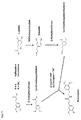
- the present invention is therefore based on the object of providing both fermentative and enzymatic biotechnological processes and the necessary recombinant organisms, nucleic acid sections, polypeptides and vector systems by means of which both (i) methylated cinnamic acids and cinnamic acid esters, (ii) methylated phenethylamines; and (iii) amide coupling, ie the merging of the biosynthetic pathways of (i) and (ii) at different levels of these synthetic routes, and cinnamic acid amides, such as rubemamine, can be produced on an industrial scale.
- enzymes which have been established by metabolic engineering and can be used for the mentioned biotechnological processes include an S-adenosylmethionine synthase or a 3'-O-methyltransferase and optionally a decarboxylase, a 4-Courmarat: CoA ligase (CL) and a tyramine N-hydroxycinnamoyltransferase (THT).
- CL CoA ligase
- TGT tyramine N-hydroxycinnamoyltransferase
- the reaction can be carried out either completely fermentatively or fermentatively and enzymatically or completely enzymatically, with the proviso that an enzyme which has been produced by one of the processes according to the invention is always used.
- suitable recombinant microorganisms and fungi as well as vector systems, nucleic acid sections and Polypeptides are disclosed which are suitable for carrying out a method according to the present invention.
- a 3,4-methylated cinnamic acid or a 3,4-methylated cinnamic acid ester using a 4'-O-methyltransferase (4-OMT) and optionally additionally a 3'-O-methyltransferase (3-OMT) and an S-adenosylmethionine synthase (SAMS).
- 4-OMT 4'-O-methyltransferase
- SAMS S-adenosylmethionine synthase
- the reaction may be purely fermentative.
- the final reaction of the educts takes place enzymatically.
- the reaction may be purely fermentative.
- the final reaction of the educts takes place enzymatically.
- a 4-methylated cinnamic acid amide using a 4-OMT a 4-methylated cinnamic acid amide using a 4-OMT, a Coumarate: CoA ligase (CL) and a tyramine-N-hydroxycinnamoyltransferase (THT) and optionally other polypeptides, or of nucleic acids which encode these polypeptides.
- the reaction may be completely fermentative.
- the final reaction of the educts takes place enzymatically.
- the amide coupling can be carried out in the fermentative reaction using a CL and a THT.
- the amide coupling is carried out by enzymatic reaction by a lipase.
- the enzymatic step of the amide coupling can be catalyzed by a lipase.
- the amide coupling is carried out in any order to the reaction steps of the 4'-O-methylation and the optional 3'-methylation.
- recombinant microorganisms and fungi which carry the vectors necessary for carrying out the method according to the invention or a vector system and thus encode the nucleic acids for carrying out the methods according to the invention.
- nucleic acid segments as well as polypeptides which are particularly suitable for the application of the methods disclosed herein.
- composition which comprises the products of the method according to the invention according to aspect three.
- cinnamic acids disclosed may be present either in their free form or esterified with hemicelluloses, which may be present as constituents of the plant cell wall.
- the nucleic acids which are used according to the present invention for expression of a desired target protein may optionally be codon-optimized, ie the codon usage of a gene is adapted to that of the recombinant microorganism or fungus selected as the expression strain. It is known to those skilled in the art that a desired target gene encoding a protein of interest can be modified without changing the translated protein sequence to account for specific species-dependent codon usage. Thus, the nucleic acids of the present invention to be transformed may specifically target the codon usage of E. coli or another bacterium, Saccharomyces spp. or another yeast or Trichoderma spp. or another fungus.
- progeny in the context of a recombinant microorganism or fungus according to the present disclosure, refers to the progeny of such an organism which emerge from the parent organism by natural reproductive propagation including sex and asexuality. It is known to those skilled in the art that in the course of reproduction mutations can naturally be introduced into the genome of an organism, whereby the progeny is genomically different from the parent organism, but can still be assigned to the same (sub-) species. Also, such naturally-altered progeny are therefore encompassed by the term progeny according to the present disclosure.
- vector system refers to a system consisting of or containing at least one or more vectors or plasmid vectors.
- a vector system may contain a (plasmid) vector encoding two different target genes.
- a vector system may also contain multiple (plasmid) vectors, which in turn contain at least one target gene according to the present disclosure.
- a vector system can thus comprise only one (plasmid) vector construct or multiple (plasmid) vector constructs, the latter being able to be stably or transiently transformed simultaneously or sequentially into the corresponding recombinant host organism so that the target genes encoded by the individual constructs are transcribed and translated by the host organism can.
- protein polypeptide and enzyme are used interchangeably due to the always enzymatic function of the gene products disclosed herein.
- gene and nucleic acid are used interchangeably for purposes of the present disclosure.
- a 3,4-methylated cinnamic acid or a 3,4-methylated cinnamic acid ester using a 4'-O-methyltransferase (4-OMT) and a S-adenosylmethionine synthase (SAMS).
- 4-OMT 4'-O-methyltransferase
- SAMS S-adenosylmethionine synthase
- This reaction is carried out by providing a recombinant microorganism or fungus containing (a1) a nucleic acid portion comprising or consisting of at least one gene encoding / encoding a 4'-O-methyltransferase (4-OMT), and (a2) optionally a nucleic acid segment comprising or consisting of at least one gene encoding / encoding a 3'-O-methyltransferase (3-OMT), and (b) optionally for the fermentative production, a nucleic acid segment comprising or consisting of a / a gene encoding / encoding a S-adenosylmethionine synthase (SAMS), and cultivating the recombinant microorganism or fungus under conditions permitting expression of the nucleic acid portion (s) to give the corresponding expression product (s); optionally isolating and optionally purifying the obtained expression product (s) and adding one or more hydroxycinnamic acid (
- the hydroxycinnamic acid may be in free or esterified form. Esters of hydroxycinnamic acids are present approximately in the plant cell wall.
- E. coli spp. Such as E coli BL21, E. coli MG1655, E. coli W3110 and their derivatives, Bacillus spp., such as Bacillus licheniformis, Bacillus subitilis or Bacillus amyloliquefaciens, and their derivatives Saccharomyces spp., eg S. cerevesiae, and their derivatives, Hansenula or Pichia spp., Eg P. pastoris and H.
- E. coli spp. Such as E coli BL21, E. coli MG1655, E. coli W3110 and their derivatives
- Bacillus spp. such as Bacillus licheniformis, Bacillus subitilis or Bacillus amyloliquefaciens, and their derivatives Saccharomyces spp., eg S. cerevesiae, and their derivatives, Hansenula or Pichia spp., E
- 4'-O-methyltransferases for use in all aspects of the present invention are those which, due to their substrate specificity and regioselectivity, methylate a 4'-O group of a free or esterified hydroxycinnamic acid or L-dihydroxyphenylalanine or a precursor or a derivative thereof or coupling products of a free or esterified hydroxycinnamic acid or L-dihydroxyphenylalanine or a precursor or derivative.
- Preferred nucleic acids encoding the 4-OMTs of the present invention include those selected from the group consisting of SEQ ID NOs: 5, 6, 7, 8, 9, 15, 17, 18, and 85, and at least 80% sequences.
- Preferred 4-OMT polypeptides encoded by the nucleic acids according to the present invention include those selected from the group consisting of SEQ ID NOs: 25, 26, 27, 28, 29, 35, 37, 38 and 86, as well as sequences with at least 80%, 81%, 82%, 83%, 84%, 85%, 86%, 87%, 88%, 89%, 90%, 91%, 92%, 93%, 94%, 95%, 96%, 97%, 98% or 99% sequence homology to these sequences, which despite modification still fulfill the same enzymatic function as the respective unmodified polypeptide with the corresponding SEQ ID NO.
- the said nucleic acid sequences may be codon-optimized or truncated, or they may contain targeted point mutations.
- a preferred point mutation is at position 133 or 322 in relation to SEQ ID NO.35.
- Preferred point mutations are L322N (see SEQ ID NOs: 8 and 28) or T133S (see SEQ ID NOs: 9 and 29) or a combination of both mutations (SEQ ID NOs: 85 and 86 according to the corresponding nucleic acid or polypeptide sequence, respectively).
- 3'-O-methyltransferases for use in all aspects of the present invention are those which, due to their substrate specificity and regioselectivity, methylate a 3'-O group of a free or esterified hydroxycinnamic acid or L-dihydroxyphenylalanine or a precursor or a derivative thereof or coupling products of a free or esterified hydroxycinnamic acid or L-dihydroxyphenylalanine or a precursor or derivative.
- Preferred nucleic acids encoding the 3-OMTs of the present invention include those selected from the group consisting of SEQ ID NOs: 3, 4, 16, 19 and 20, as well as sequences of at least 80%, 81%, 82%, 83 %, 84%, 85%, 86%, 87%, 88%, 89%, 90%, 91%, 92%, 93%, 94%, 95%, 96%, 97%, 98% or 99% sequence homology to these sequences.
- Preferred 3-OMT polypeptides encoded by the nucleic acids according to the present invention include those selected from the group consisting of SEQ ID NOs: 23, 24, 36, 39 and 40, as well as sequences of at least 80%, 81%, 82%, 83%, 84%, 85%, 86%, 87%, 88%, 89%, 90%, 91%, 92%, 93%, 94%, 95%, 96%, 97%, 98% or 99% sequence homology to these sequences, with the proviso that a sequence with a corresponding degree of homology to the respectively listed SEQ ID NOs still fulfills the same enzymatic function as that respectively modified polypeptide having the corresponding SEQ ID NO.
- the said nucleic acid sequences may be codon-optimized or truncated, or they may contain targeted point mutations.
- S-adenosylmethionine synthases for use in all aspects of the present invention are those which, because of their substrate specificity and regioselectivity, can catalyze the conversion of ATP and methionine to S-adenosylmethionine.
- Preferred nucleic acids encoding the SAMSs of the present invention include those selected from the group consisting of SEQ ID NOs: 10, 65, 67, 69 and 71, as well as sequences of at least 80%, 81%, 82%, 83%, 84%, 85%, 86%, 87%, 88%, 89%, 90%, 91%, 92%, 93%, 94%, 95%, 96%, 97%, 98% or 99% sequence homology to these sequences.
- Preferred SAMS polypeptides encoded by the nucleic acids according to the present invention include those selected from the group consisting of SEQ ID NOs: 30, 66, 68, 70 and 72, as well as sequences of at least 80%, 81%, 82%.
- sequence homology to these sequences, with the proviso that a sequence with a corresponding degree of homology to the respective SEQ ID NOs listed in each case still fulfills the same enzymatic function as the respective unmodified polypeptide having the corresponding SEQ ID NO.
- the said nucleic acid sequences may be codon-optimized or truncated, or they may contain targeted point mutations.
- SAMS S-adenosylmethionine synthase
- the reaction may be purely fermentative.
- the reaction is / are expressing the nucleic acid (s) of interest in a recombinant microorganism or fungus, and reaction of the products takes place in vivo in the recombinant microorganism or fungus.
- the final reaction of the educts takes place enzymatically.
- the nucleic acid (s) of interest is / are first expressed in a recombinant microorganism or fungus.
- the protein (s) so obtained is then optionally purified and the resulting purified protein (s) will be used in vitro to convert a selected starting material according to any aspect of the present invention Invention optionally with the addition of further substances or enzymes in a suitable buffer which allows the reaction of the products and optionally with the use of further additives which are required for the reaction under reaction conditions which ensure the activity of the / proteins for a period of time which is sufficient to obtain maximum implementation, merged.
- Suitable reaction conditions such as buffers, additives, temperature and pH conditions, and optionally other proteins, can be determined by those skilled in the art, having regard to a biosynthesis pathway disclosed herein and the enzymes necessary for the choice of reaction conditions, according to any aspect of the present invention be readily determined.
- a recombinant microorganism or fungus containing (a1) a nucleic acid portion comprising or consisting of at least one gene encoding / encoding a 4'-O-methyltransferase, and (a2) a nucleic acid portion, comprising or consisting of at least one gene encoding / encoding a 3'-O-methyltransferase, and (b) optionally, a nucleic acid segment comprising or consisting of a gene encoding / encoding a S-adenosylmethionine synthase, and (c) optionally, a nucleic acid portion comprising or consisting of a DOPA decarboxylase (DDC) encoding / encoding gene, and cultivating the recombinant microorganism under conditions permitting expression of the nucleic acid portions to obtain the nucleic acid portion corresponding expression products; and optionally isolating and optionally purifying the resulting expression products
- DDC
- Preferred precursors or derivatives of dopamine are selected from L-dihydroxyphenylalanine (L-DOPA), tyrosine or phenylalanine.
- the reaction may be purely fermentative.
- the final reaction of the educts takes place enzymatically.
- the step of methylation by the 4-OMT and the 3-OMT can be done simultaneously or in any order in succession.
- a SAMS-encoding nucleic acid segment is also transcribed and translated from the recombinant microorganism or fungus.
- a DDC-encoding nucleic acid portion of the recombinant microorganism or fungus is transcribed and translated.
- Preferred nucleic acids encoding the DOPA decarboxylases (DDCs) of the present invention include those selected from the group consisting of SEQ ID NOs: 1 (DmDDC, codon optimized), 2 (AmDDC, codon optimized), 59, 61 and 63, as well as sequences of at least 80%, 81%, 82%, 83%, 84%, 85%, 86%, 87%, 88%, 89%, 90%, 91%, 92%, 93%, 94 %, 95%, 96%, 97%, 98% or 99% sequence homology to these sequences.
- Preferred DDC polypeptides encoded by the nucleic acids according to the present invention include those selected from the group consisting of SEQ ID NOs: 21, 22, 60, 62 and 64, as well as sequences of at least 80%, 81%, 82%. , 83, 84, 85, 86, 87, 88, 89, 90, 91, 92, 93, 94, 95, 96, 97, 98, or 99 % Sequence homology to these sequences, with the proviso that a sequence with a corresponding degree of homology to the respective SEQ ID NOs listed in each case still fulfills the same enzymatic function as the respective unmodified polypeptide having the corresponding SEQ ID NO.
- the said nucleic acid sequences may be codon-optimized or truncated, or they may contain targeted point mutations.
- a 4-OMT is specifically linked to a further enzyme, in this case a 3-OMT and optionally a SAMS and / or a DDC, as a result of which the Present invention provided biosynthetic pathway can be performed to achieve the target products.
- a 4-methylated cinnamic acid amide using a 4-OMT starting from a hydroxycinnamic acid or a hemicellulose-esterified hydroxycinnamic acid and dopamine and / or L-dihydroxyphenylalanine or a precursor or derivative thereof, a 4-methylated cinnamic acid amide using a 4-OMT, a SAMS and received a 3-OMT.
- a recombinant microorganism or fungus as defined for the first aspect of the present invention, additionally comprising: (d) a nucleic acid segment comprising or consisting of at least one 4-coumarate: CoA ligase (CL ), and (e) a nucleic acid segment comprising or consisting of at least one tyramine N-hydroxycinnamoyltransferase (THT) -coding gene, and (f) optionally a nucleic acid segment comprising or consisting of a gene encoding / encoding a DOPA decarboxylase (DDC), and cultivating the recombinant microorganism or fungus under conditions involving expression allowing the nucleic acid sections to yield the corresponding expression products; optionally: isolating and optionally purifying the resulting expression products; Adding dopamine and / or L-dihydroxyphenylalanine and from a hydroxycinnamic acid, preferably from caffeic acid
- the reaction may be completely fermentative.
- the final reaction of the educts takes place enzymatically.
- coenzyme A and adenosine triphosphate (ATP) are added to the batch.
- Preferred nucleic acids encoding the coumarate: CoA ligases (CLs) of the present invention include those selected from the group consisting of SEQ ID NOs: 11, 12, 73, 75 and 77, as well as sequences of at least 80%, 81%. 82% 83% 84% 85% 86% 87% 88% 89% 90% 91% 92% 93% 94% 95% 96% 97% 98 % or 99% sequence homology to these sequences.
- Preferred CL polypeptides encoded by the nucleic acids according to the present invention include those selected from the group consisting of SEQ ID NOs: 31, 32, 74, 76 and 78, as well as sequences of at least 80%, 81%, 82%.
- sequence homology to these sequences, with the proviso that a sequence with a corresponding degree of homology to the respective SEQ ID NOs listed in each case still fulfills the same enzymatic function as the respective unmodified polypeptide having the corresponding SEQ ID NO.
- the said nucleic acid sequences may be codon-optimized or truncated, or they may contain targeted point mutations.
- Preferred nucleic acids encoding the tyramine N-hydroxycinnamoyltransferases (THTs) of the present invention include those selected from the group consisting of SEQ ID NOs: 13, 14, 79 and 81, as well as sequences of at least 80%, 81%, 82 %, 83%, 84%, 85%, 86%, 87%, 88%, 89%, 90%, 91%, 92%, 93%, 94%, 95%, 96%, 97%, 98% or 99% sequence homology to these sequences.
- Preferred THT polypeptides derived from the nucleic acids according to the include, selected from the group consisting of SEQ ID NOs: 33, 34, 80 and 82, as well as sequences with at least 80%, 81%, 82%, 83%, 84%, 85%, 86% , 87%, 88%, 89%, 90%, 91%, 92%, 93%, 94%, 95%, 96%, 97%, 98% or 99% Sequence homology to these sequences, with the proviso that a Sequence with a corresponding degree of homology to each of the listed SEQ ID NOs nor the same enzymatic function as the respective unmodified polypeptide with the corresponding SEQ ID NO.
- the said nucleic acid sequences may be codon-optimized or truncated, or they may contain targeted point mutations.
- Another preferred embodiment according to any aspect of the present invention also includes the use of nucleic acid sequences encoding polypeptides which are for the purpose of purification, secretion, detection or localization of the decarboxylase and / or the 3'-O-methyltransferase and / or the 4'-O methyltransferase and / or S-adenosylmethionine synthase and / or 4-coumarate: CoA ligase and / or tyramine N-hydroxycinnamoyltransferase serve.
- nucleic acid segments are also referred to as tag sequences and can be used for the nucleic acid segments encoding decarboxylase and / or 3'-O-methyltransferase and / or 4'-O methyltransferase and / or S-adenosylmethionine synthase and / or the 4-coumarate: CoA ligase and / or the tyramine-N-hydroxycinnamoyltransferase are prefixed (N-terminal) and / or readjusted (C-terminal).
- tag sequences selected from the following list: polyhistidine (His) tag, glutathione S-transferase (GST) tag, thioredoxin tag, FLAG tag, green fluorescent protein (GFP) tag, streptavidin tag , Maltose-binding protein (MBP) tag, chloroplast transit peptide, mitochondrial transit peptide, and / or a secretion tag.
- the lipase used is a lipase B.
- the lipase may be immobilized.
- the lipase is a lipase B from Candida antarctica.
- a nucleic acid or polypeptide sequence of a lipase B from Candida antarctica is shown in SEQ ID NOs: 83 and 84.
- a further embodiment also includes sequences having at least 80%, 81%, 82%, 83%, 84%, 85%, 86%, 87%, 88%, 89%, 90%, 91%, 92%, 93%.
- lipase B from Candida antarctica may be in immobilized form. Suitable lipases for use according to the present invention are commercially available (for example from Roche, Mannheim).
- the amide coupling may be carried out in the fermentative reaction using a 4-coumarate: CoA ligase (CL) and a tyramine N-hydroxycinnamoyltransferase (THT).
- CL CoA ligase
- THT tyramine N-hydroxycinnamoyltransferase
- the amide coupling is carried out at enzymatic Implementation by a lipase.
- the enzymatic step of the amide coupling can be catalyzed by a lipase.
- the amide coupling is carried out in any order to the reaction steps of the 4'-O-methylation and the optional 3'-methylation.
- the 4-methylated cinnamic acid amide of aspect three is selected from the group consisting of rubemamine [(2E) -3- (3,4-dimethoxyphenyl) -N- [2- (3,4-dimethoxyphenyl) ethyl] prop -2-enamide], feruloyl-3-methoxytyramide [(2E) -3- (4-hydroxy-3-methoxy-phenyl) -N- [2- (4-hydroxy-3-methoxyphenyl) -ethyl] -prop-2-enamide] , (2E) -3- (3,4-Dimethoxyphenyl) -N- [2- (4-hydroxy-3-methoxyphenyl) ethyl] prop-2-enamide] and 3,4-Dimethoxycinnamoylmethoxytyramide [(2E) - 3- (3,4-dimethoxyphenyl) -N- [2- (4-methoxyphen
- This third aspect of the present invention brings together two metabolic pathways, continuing the first and second aspects. While intermediate products are provided by novel biotechnological processes in the first and second aspects, the combination and continuation of the two routes according to the method according to aspect three leads to further more complex synthesis products. For all three aspects of the present invention, this is achieved biotechnologically by using a targeted linkage of metabolic pathways and using a recombinant microorganism or fungus and a 4-OMT.
- vector systems comprising or consisting of the nucleic acid segments or vectors according to any of the aspects of the present invention.
- a vector system in particular a plasmid vector system, consisting of or containing one or more vectors or plasmid vectors comprising (a1) a nucleic acid segment comprising or consisting of at least one gene encoding / coding for a 4'-O-methyltransferase and (a2) optionally a nucleic acid segment comprising or consisting of at least one gene coding for / coding for a 3'-O-methyltransferase, and (b) optionally a nucleic acid segment comprising or consisting of one for a S Adenosylmethionine synthase encoding / encoding gene, wherein in the presence of a nucleic acid portion (a2) and / or a nucleic acid portion (b), the nucleic acid portions are provided on the same vector or two or more separate vectors disclosed.
- a vector system in particular a plasmid vector system containing one or more vectors or plasmid vectors, containing (a1) a nucleic acid segment comprising or consisting of at least one gene coding for a 4'-O-methyltransferase / the gene , and (a2) a nucleic acid segment comprising or consisting of at least one gene encoding / encoding a 3'-O-methyltransferase, and (b) optionally a nucleic acid segment comprising or consisting of one for one S-adenosylmethionine Synthase encoding / encoding gene, and (c) optionally a nucleic acid segment comprising or consisting of a DOPA decarboxylase encoding / encoding gene, said nucleic acid segments being provided on the same vector or two or more separate vectors , disclosed.
- a vector system in particular a plasmid vector system, comprising (a1) a nucleic acid segment comprising or consisting of at least one gene encoding / encoding a 4'-O-methyltransferase, and (a2) optionally a nucleic acid segment comprising or consisting of at least one gene encoding / encoding a 3'-O-methyltransferase, and (b) optionally a nucleic acid segment comprising or consisting of a S-adenosylmethionine synthase encoding / coding gene And additionally containing one or more vectors or plasmid vectors (d) a nucleic acid segment comprising or consisting of at least one gene encoding / encoding a 4-coumarate: CoA ligase, and (e) a nucleic acid segment, comprising or consisting of at least one gene coding for a tyramine-N-hydroxycinnam
- recombinant microorganisms and fungi which carry the vectors or a vector system necessary for carrying out the methods according to the invention and thus encode the nucleic acids for carrying out the methods according to the invention according to one of the aspects described.
- the recombinant microorganism or fungus comprises a vector system, in particular a plasmid vector system, as described herein.
- Preferred recombinant microorganisms or fungi are selected from the group consisting of Eschericia coli spp., Preferably E. coli BL21, E. coli MG1655 or E. coli W3110 and their derivatives, Bacillus spp., Preferably Bacillus licheniformis, Bacillus subitilis or Bacillus amyloliquefaciens, and their derivatives Saccharomyces spp., preferably S. cerevesiae, and their derivatives, Hansenula or Pichia spp., preferably P. pastoris and H. polymorpha, and their derivatives, Kluyveromyces spp, preferably K.
- Eschericia coli spp. Preferably E. coli BL21, E. coli MG1655 or E. coli W3110 and their derivatives, Bacillus spp., Preferably Bacillus licheniformis, Bacillus subitilis
- lactis and their derivatives, Aspergillus spp , preferably A. oryzae, A. nidulans, or A. niger, and their derivatives, or Trichoderma spp., preferably T. reesei or T. harzianum, and their derivatives.
- nucleic acid sections as well as polypeptides which have been specifically mutated and optionally codon optimized for use in carrying out the methods according to the present invention.
- These nucleic acid sections are selected, but not limited to, the group consisting of SEQ ID Nos: 8, 16, 17, 20, and 85.
- the mutation-bearing polypeptides are selected from, but not limited to, the group consisting of SEQ ID NOs: 28, 36, 37, 40 and 86.
- composition which comprises the products of the method according to the invention according to aspect three.
- the composition comprises rubemamine and at least one further substance selected from the group consisting of 3,4-dimethoxycinnamic acid, ferulic acid, caffeic acid, 3-methoxytyramine, 3-hydroxy-4-methoxyphenethylamine, L-DOPA, 3,4-dimethoxyphenethylamine.
- the composition comprises 50-99% by weight of rubemamine, 0.1-49.9% by weight of 3,4-dimethoxycinnamic acid and 0.1-49.9% by weight of 3,4-dimethoxyphenethylamine.
- Table 1 Overview of the cloned genes with vector used and restriction sites gene SEQ ID NO (nucleic acid / protein) Used vector Used restriction sites Cb1EMT1 15/35 pET28a BamH I , Xho I CbMOMT (also called MOMT4 or CbMOMT4) 7.27 pET28a BamH I , Xho I CrOMT 16/36 pET28a BamH I , Xho I GmSOMT 5/25 pET28a Nde I , BamH I McPFOMT 4.24 pET28a BamH I , Hind III MxSafC 26.6 pET28a BamH I , Hind III RcOMT 17/37 pET28a BamH I , Hind III AtCOMT 3/23 pQE30 BamH I, Hind III PsOMT 18/38 pQE30 BamH I , Kpn I SynOMT 19/39 pQE30
- the coding sequence of the target genes (SEQ ID NO: 1, SEQ ID NO: 2) as GeneArt ⁇ gene synthesis on behalf of Life Technologies GmbH (Darmstadt) for later application in E. coli in a Codon-optimized variant synthesized. Subsequently, the coding sequence of the genes was cut from the gene-synthesis plasmid by standard methods known to those skilled in the art by restriction digestion with the restriction endonucleases BamHI and NcoI (New England BioLabs GmbH, Frankfurt).
- the restriction mixture was then separated on an agarose gel and the 1430 base pair target fragment was eluted from the gel using the NucleoSpin® Gel and PCR Cleanup Kit (Macherey-Nagel GmbH & Co. KG, Düren).
- the basic expression plasmid was digested with the restriction endonucleases BamHI and Ncol (New England BioLabs GmbH, Frankfurt) and the resulting 2981 base pair DNA fragment was digested using the NucleoSpin® Gel and PCR Clean -up kit (Macherey-Nagel GmbH & Co. KG, Düren) eluted after electrophoretic separation from an agarose gel.
- the preparation of the expression plasmid was carried out via a ligation reaction with 50 ng each of the purified DNA fragments (target fragment and expression plasmid fragment) and T4 DNA ligase (New England BioLabs GmbH, Frankfurt) according to common practice known in the art.
- T4 DNA ligase New England BioLabs GmbH, Frankfurt
- the reaction products were introduced into competent E. coli XL1-blue cells and the cells incubated for 18 h at 37 ° C on selective solid medium (LB + ampicillin (100 mg / L) + 6 g / L agar ) dressed.
- selective solid medium LB + ampicillin (100 mg / L) + 6 g / L agar
- the plasmid DNA of the cells was analyzed by restriction gene mapping using the GeneJET Plasmid Miniprep Kit (Thermo Scientific) and following common practice known to those skilled in the art.
- the verification of the cloned DNA sequences of positive clones was carried out by GATC Biotech (Konstanz, Germany).
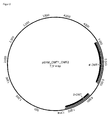
- the preparation of the plasmid pET28a_CbMOMT_ScSAMS was carried out using the Golden Gate technology ( WO2011 / 154147 A1 ). To prepare for this, first the specific nucleic acid sequence (SEQ ID NO: 53) was synthesized and subsequently cut with the restriction enzymes BamHI and HindIII and introduced into the vector pET28a (Merck Chemicals GmbH, Schwalbach) in a ligation mixture known to the person skilled in the art, thereby obtaining the plasmid pET28a_GG has been.
- the gene CbMOMT was amplified from plasmid DNA of the construct pET28a_CbMOMT (see Example 1) by means of the polymerase chain reaction (PCR) using the DreamTaq DNA polymerase (Thermo Fisher Scientific, Bonn) according to common practice known to those skilled in the art.
- the primers M_term-F (SEQ ID NO: 49) and M_term-R (SEQ ID NO: 50) were used.
- the PCR batch was then separated on a 1% agarose gel and the target fragment 1280 base pairs in length eluted from the gel using the QIAprep Spin Miniprep Kit (Qiagen, Hilden).
- the gene ScSAMS was amplified from plasmid DNA of the construct pCDFDuet-1_ScSAMS (see Example 1) by means of the polymerase chain reaction (PCR) using the DreamTaq DNA polymerase (Thermo Fisher Scientific, Bonn) according to common practice known to the person skilled in the art ,
- the primers S_prom-F (SEQ ID NO: 51) and S_prom-R (SEQ ID NO: 52) were used.
- the PCR batch was then separated on a 1% agarose gel and the target fragment 1425 base pairs long was eluted from the gel using the QIAprep Spin Miniprep Kit (Qiagen, Hilden).
- step 3.1 a 100 ng of the plasmid pET28a_GG (see step 3.1 a) with 24 ng of the purified CbMOMT fragment and 25 ng of the purified ScSAMS fragment in a 15 ⁇ L reaction mixture with 1xNEB T4 ligase buffer (New England Biolabs, Frankfurt am Main), 0.1 mg / mL BSA (New England Biolabs, Frankfurt), 20 U Bsa I (New England Biolabs, Frankfurt) and 100 U NEB T4 DNA Ligase (New England Biolabs, Frankfurt) for 1 h 37 ° C, then for 5 min at 50 ° C and to stop the reaction for 5 min at 80 ° C incubated.
- 1xNEB T4 ligase buffer New England Biolabs, Frankfurt am Main
- BSA New England Biolabs, Frankfurt
- 20 U Bsa I New England Biolabs, Frankfurt
- 100 U NEB T4 DNA Ligase New England Biolabs, Frankfurt
- a nucleic acid sequence comprising the T7 promoter, the coding sequence of McPFOMT and the T7 terminator was found using the OneTaq polymerase (New England Biolabs, Frankfurt am Main) as well as recognition sequences for the restriction enzymes Sph I and Bgl II, respectively Practice in a polymerase chain reaction (PCR) from plasmid DNA of the construct pET28a_McPFOMT (see Example 1) amplified (primer: SEQ ID NO: 54, SEQ ID NO: 55). The PCR approach was subsequently opened 1% agarose gel and the target fragment with a length of 1079 base pairs was eluted from the gel using the QIAprep Spin Miniprep Kit (Qiagen, Hilden).
- PCR polymerase chain reaction
- the respective coding sequences of the target genes were (SEQ ID NO: At4CL2 11, codon-optimized for T. reesei; CaTHT: 14: SEQ ID NO) is synthesized and then between the restriction cleavage sites Pst I and Not I (At4CL2 ) or Kpn I and Xho I (CaTHT) are cloned into the vector pCDFDuet (Merck Chemicals GmbH, Schwalbach). For both genes, the codon usage was adapted to E. coli as a possible expression host. The corresponding translated sequences are shown as SEQ ID NOs: 31 and 34, respectively.
- the respective coding sequences of the target genes (Nt4CL1: SEQ ID NO: 12, codon-optimized for A. niger; NtTHT: SEQ ID NO: 13) were synthesized and then between the restriction sites Pst I and Not I (NtCL1 ) or Pac I and Avr II (NtTHT) are cloned into the vector pCDFDuet (Merck Chemicals GmbH, Schwalbach).
- the codon usage was adapted to E. coli as a possible expression host.
- the corresponding translated sequences are shown as SEQ ID NOs: 32 and 33, respectively.
- a transformation of the plasmid DNA into chemically competent E. coli cells was carried NEB5 ⁇ (New England Biolabs, Frankfurt am Main). 50 ⁇ L aliquoted cells were incubated on ice for 5 minutes. After addition of 1 ⁇ L of plasmid DNA, the suspension was mixed and incubated for an additional 30 minutes on ice. The transformation was carried out by the suspension for 30 s at 42 ° C in a thermoblock and then transferred to wet ice for 2 min. Thereafter, 600 ⁇ L of Luria broth (LB) medium (Carl Roth GmbH, Düsseldorf) was added and the cells were cultured for 1 h at 37 ° C and 180 rpm. Finally, 200 ⁇ L of the culture on LB agar (Carl Roth GmbH, Düsseldorf) were streaked with the respective antibiotic. The Petri dish was incubated for 16 h at 37 ° C.
- LB Luria broth
- the transformation of the respective plasmid DNA into E. coli BL21 (DE) cells was carried out. Chemically competent cells aliquoted to 50 ⁇ L were incubated on ice for 5 minutes. After addition of 1 ⁇ L of plasmid DNA, the suspension was mixed and incubated for an additional 5 minutes on ice. The transformation was carried out by transferring the suspension for 30 s at 42 ° C. in a thermoblock and subsequently for 2 min to wet ice. Then 250 ⁇ L LB medium (Carl Roth GmbH, Düsseldorf) were added and the cells were cultured for 1 h at 37 ° C. and 180 rpm. Finally, 200 ⁇ L of the culture on LB agar (Carl Roth GmbH, Düsseldorf) were streaked with the respective antibiotic. The Petri dish was incubated for 16 h at 37 ° C.
- a preculture of 5 ml LB medium (Carl Roth GmbH, Düsseldorf) was prepared with the appropriate antibiotic and cells of the respective strain were removed from the agar plate by means of a loop and transferred to the preculture , This was then incubated for 16 h at 37 ° C and 150 rpm. From the preculture, the main culture with 50 mL LB medium (Carl Roth GmbH, Düsseldorf) and the corresponding antibiotic inoculated so that an optical density at 600 nm of 0.1 was present. The main culture was then incubated at 37 ° C and 150 rpm until an optical density at 600 nm of 0.4-0.8 was reached.
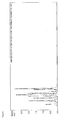
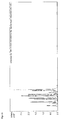
- 2mM ferulic acid was dissolved in 50mM Tris buffer, pH 7.5, and co-primed with 4mM S-adenosylmethionine and 50 ⁇ g CbMOMT, CbMOMT-L322N, CbMOMT-T133S, CbMOMT-T133S / L322N (SEQ ID NO: 86 ) or GmSOMT protein in a total volume of 350 ⁇ L for 6 h at 30 ° C. Subsequently, the reaction was stopped by addition of 350 ⁇ L acetonitrile. The resulting reaction mixture was subsequently analyzed by HPLC.
- a Poroshell 120 SB-C 18 (2.7 ⁇ m) separation column having a diameter of 2.1 mm and a length of 100 mm was used.
- the separation was carried out at a column temperature of 40 ° C by means of the gradient method shown below.
- the mobile phase was water with 0.1% formic acid (A) and acetonitrile (B) at a flow rate of 0.4 ml / min.
- the detection was carried out at a wavelength of 320 nm.
- the determination of the retention times and the quantitative determination were carried out according to the external standard method with the respective reference substances.
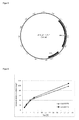
- E. coli BL21 (DE3) cells transformed with pET28a_CbMOMT-L322N or with pET28a_CbMOMT-L322N_ScSAMS were incubated in TB medium (23.6 g / L yeast extract, 11.8 g / L tryptone, 9.4 g / LK 2 HPO 4 , 2.2 g / L KH 2 PO 4 , 4 mL / L glycerol) was cultured to 0.6 optical density at 600 nm and protein production was induced by addition of 0.2 mM isopropyl- ⁇ -D-thiogalactopyranoside. Immediately after addition of the inducer, the cultures were spiked with 5 mM ferulic acid and added at 30 ° C for 48 h 130 rpm incubated. The resulting reaction mixture was subsequently analyzed by HPLC as described in Example 7.1.
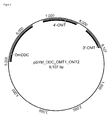
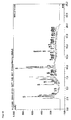
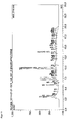
- 1 mM L-DOPA was co-incubated with 50 ⁇ g McPFOMT, 50 ⁇ g CbMOMT, 50 ⁇ g DmDDC (SEQ ID NO: 1, codon-optimized sequence), 140 ⁇ M magnesium chloride, 40 ⁇ M pyridoxal phosphate and 4 mM S-adenosylmethionine in 100 mM potassium phosphate. Buffer, pH 7.5 mixed and incubated for 24 h at 30 ° C. The resulting reaction mixture was subsequently analyzed by HPLC. For analysis, a Grom Sil ODS-4 HE (5 ⁇ m) separation column with a diameter of 4 mm and a length of 250 mm was used.
- a Grom Sil ODS-4 HE 5 ⁇ m
- the separation was carried out at a column temperature of 40 ° C by means of the gradient method shown below.
- the mobile phase used was 20 mM potassium phosphate buffer pH 4.0 (A) and acetonitrile (B) at a flow rate of 0.8 ml / min.
- the detection was carried out at a wavelength of 214 nm.
- the determination of the retention times and the quantitative determination were carried out according to the external standard method with the respective reference substances.
- E. coli transformed BL21 (DE3) cells were (separately in TB medium 23.6 g / L yeast extract, 11.8 g / L tryptone, 9.4 g / LK 2 HPO 4, 2 , 2 g / L KH 2 PO 4 , 4 mL / L glycerol) was cultured to 0.6 optical density at 600 nm and then mixed so that both cultures each had an optical density at 600 nm of 0.5 , Subsequently, 1 mM isopropyl- ⁇ -D-thiogalactopyranoside and 0.1% arabinose were added to induce protein expression and 5 mM L-DOPA as a substrate. After incubation of the cultures at 30 ° C and 170 rpm for 48 h, the fermentation supernatant was analyzed by HPLC as described in Example 8.1.
- E. coli BL21 (DE3) cells transformed with pET28a_McPFOMT_CbMOMT-T133S were incubated in TB medium (23.6 g / L yeast extract, 11.8 g / L tryptone, 9.4 g / LK 2 HPO 4 , 2.2 g / L KH 2 PO 4 , 4 mL / L glycerol) to 1.1 nm at 600 nm optical density. This was followed by the addition of 0.2 mM isopropyl- ⁇ -D-thiogalactopyranoside to induce protein expression and 5 mM dopamine as a substrate. After incubation of the cultures at 30 ° C and 150 rpm for 48 h, the fermentation supernatant was analyzed by HPLC as described in Example 8.1.
- E. coli BL21 (DE3) cells transformed with pCDFDuet_At4CL2_CaTHT, pMA7-1 and pET28a_CbMOMT-L322N_ScSAMS were separated into TB medium (23.6 g / L yeast extract, 11.8 g / L tryptone, 9.4 g / LK 2 HPO 4 , 2.2 g / L KH 2 PO 4 , 4 mL / L glycerol) was cultured to 1.3 optical density at 600 nm and then mixed so that all cultures each had an optical density of 600 nm 0.5 templates.
- the mobile phase was water with 0.1% formic acid (A) and acetonitrile with 0.09% formic acid (B) at a flow rate of 0.3 ml / min.
- the determination of the retention times and the quantitative determination were carried out according to the external standard method with the respective reference substances.
- Gradient method according to Example 9 0.00 min A: 90% B: 10% 25.00 min A: 65% B: 35% 26.00 min A: 0% B: 100% 30.00 min A: 0% B: 100%
- E. coli BL21 (DE3) cells transformed with pCDFDuet_Nt4CL1_NtTHT and pMA7-2 were separated in TB medium (23.6 g / L yeast extract, 11.8 g / L tryptone, 9.4 g / LK 2 HPO 4 , 2 , 2 g / L KH 2 PO 4 , 4 mL / L Glycerol) to a 600 nm optical density of 1.0 and then mixed so that both cultures were each at 600 nm optical density of 0.5.
- Example 12 Enzymatic preparation of dimethoxycinnamoylmethoxytyramide starting from (E) -3- (3,4-dimethoxyphenyl) -N- [2- (4-hydroxyphenyl) ethyl] prop-2-enamide
- the sample was separated by means of an Acquity HSS T3 (1.8 ⁇ m) separation column with a diameter of 2.1 mm and a length of 150 mm at a column temperature of 50 ° C. by means of the gradient method shown below.
- the mobile phase used was water with 0.1% formic acid (A) and acetonitrile with 0.09% formic acid (B) at a flow rate of 0.35 ml / min.
- the determination of the retention times and the quantitative determination were carried out according to the external standard method with the respective reference substances.
- Example 14 Enzymatic conversion of cinnamic acid esters and phenethylamines to the corresponding cinnamic acid amides
- 0.1 mmol of cinnamic acid methyl ester are dissolved with 0.1 mmol of phenethylamine in 5 mL of triethylamine and stirred together with 50 mg of immobilized lipase B from Candida antartica (Roche, Mannheim) at 70 ° C for 24 h at reflux. The immobilized enzyme is then recovered by filtration. The filtrate was analyzed by LC-MS.
- a main culture with 150 ml of YPD medium (Formedium, Great Britain) was first inoculated from an overnight culture of S. cerevisiae strain BY4741. After reaching an OD 600 nm of ⁇ 0.2, the culture was centrifuged, the supernatant discarded and the resulting pellet in 1.5 mL of 1xTE / 1xLiAc buffer (10 mM Tris-HCl, 1 mM EDTA, 0.1 M lithium acetate, pH 7.5) resuspended.
- 1xTE / 1xLiAc buffer (10 mM Tris-HCl, 1 mM EDTA, 0.1 M lithium acetate, pH 7.5
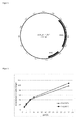
- S. cerevisiae cells transformed with pD1214_CbMOMT or pD1214_CbMOMT_SAMS were incubated at 30 ° C in SD Glu- Ura medium (1.9 g / L yeast nitrogen base [Formedium, UK], 0.77 g / L Complete Supplement Mixture without uracil [ Formedium, Great Britain], 20 g / L glucose, 5 g / L ammonium sulphate) to 0.2 to an optical density at 600 nm.
- SD Glu- Ura medium 1.9 g / L yeast nitrogen base [Formedium, UK], 0.77 g / L Complete Supplement Mixture without uracil [ Formedium, Great Britain], 20 g / L glucose, 5 g / L ammonium sulphate
- 1 mM ferulic acid was added directly to the medium after reaching the OD and the batch was incubated for 48 h at 30 ° C. and 200 rpm.
- the resulting reaction mixture was subsequently analyzed by HPLC.
- the cells were first centrifuged after reaching the OD, the supernatant discarded and the resulting pellet in SD Gal -Ura medium (1.9 g / L Yeast Nitrogen Base [Formedium, UK], 0.77 g / L Complete Supplement Mixture without uracil [Formedium, UK], 20 g / L galactose, 5 g / L ammonium sulfate). Then the addition of 1 mM ferulic acid and the incubation of the mixture for 48 h at 30 ° C and 200 rpm. The resulting reaction mixture was also analyzed by HPLC as described in Example 7.1.
Landscapes
- Chemical & Material Sciences (AREA)
- Organic Chemistry (AREA)
- Life Sciences & Earth Sciences (AREA)
- Engineering & Computer Science (AREA)
- Wood Science & Technology (AREA)
- Zoology (AREA)
- Health & Medical Sciences (AREA)
- Genetics & Genomics (AREA)
- Bioinformatics & Cheminformatics (AREA)
- General Health & Medical Sciences (AREA)
- General Engineering & Computer Science (AREA)
- Biochemistry (AREA)
- Biotechnology (AREA)
- Microbiology (AREA)
- General Chemical & Material Sciences (AREA)
- Chemical Kinetics & Catalysis (AREA)
- Medicinal Chemistry (AREA)
- Molecular Biology (AREA)
- Biomedical Technology (AREA)
- Nutrition Science (AREA)
- Food Science & Technology (AREA)
- Polymers & Plastics (AREA)
- Proteomics, Peptides & Aminoacids (AREA)
- Micro-Organisms Or Cultivation Processes Thereof (AREA)
- Preparation Of Compounds By Using Micro-Organisms (AREA)
Priority Applications (2)
| Application Number | Priority Date | Filing Date | Title |
|---|---|---|---|
| EP15153218.1A EP3050971B1 (fr) | 2015-01-30 | 2015-01-30 | Procédé enzymatique de production d'un amide d'acide cinnamique 4-O-méthylé |
| US15/011,855 US10227620B2 (en) | 2015-01-30 | 2016-02-01 | Method for biotechnological production of methylized cinnamic acids and cinnamic acid esters, methylized phenethylamines and the coupling products thereof, particularly of cinnamic acid amides |
Applications Claiming Priority (1)
| Application Number | Priority Date | Filing Date | Title |
|---|---|---|---|
| EP15153218.1A EP3050971B1 (fr) | 2015-01-30 | 2015-01-30 | Procédé enzymatique de production d'un amide d'acide cinnamique 4-O-méthylé |
Publications (2)
| Publication Number | Publication Date |
|---|---|
| EP3050971A1 true EP3050971A1 (fr) | 2016-08-03 |
| EP3050971B1 EP3050971B1 (fr) | 2020-06-24 |
Family
ID=52469607
Family Applications (1)
| Application Number | Title | Priority Date | Filing Date |
|---|---|---|---|
| EP15153218.1A Active EP3050971B1 (fr) | 2015-01-30 | 2015-01-30 | Procédé enzymatique de production d'un amide d'acide cinnamique 4-O-méthylé |
Country Status (2)
| Country | Link |
|---|---|
| US (1) | US10227620B2 (fr) |
| EP (1) | EP3050971B1 (fr) |
Cited By (1)
| Publication number | Priority date | Publication date | Assignee | Title |
|---|---|---|---|---|
| WO2021058783A2 (fr) | 2019-09-27 | 2021-04-01 | Symrise Ag | Procédés pour la fabrication biocatalytique de dihydrochalcones |
Families Citing this family (4)
| Publication number | Priority date | Publication date | Assignee | Title |
|---|---|---|---|---|
| AU2019207737B2 (en) | 2018-01-10 | 2023-07-13 | Brightseed, Inc. | Method for modulating metabolism |
| MX2022004794A (es) * | 2019-10-25 | 2022-07-11 | Brightseed Inc | Celula recombinante, extracto, producto consumible y metodo para la produccion de metabolito vegetal bioactivo. |
| CN115558686B (zh) * | 2022-10-10 | 2025-11-11 | 浙江工业大学 | 基于连续流生物反应器在线合成肉桂酰胺衍生物的方法 |
| WO2025160464A1 (fr) * | 2024-01-26 | 2025-07-31 | Cellibre, Inc. | Cellules modifiées et procédés de synthèse de caféoyltyramine et de feruloyltyramine |
Citations (5)
| Publication number | Priority date | Publication date | Assignee | Title |
|---|---|---|---|---|
| WO2011154147A1 (fr) | 2010-06-11 | 2011-12-15 | Icon Genetics Gmbh | Système et procédé de clonage modulaire |
| US20130078683A1 (en) * | 2010-10-15 | 2013-03-28 | The Regents Of The University Of California | Host Cells and Methods for Producing Cinnamoyl Anthranilate and Analogs Thereof |
| WO2014128252A1 (fr) * | 2013-02-21 | 2014-08-28 | Eviagenics S.A. | Biosynthèse de composés phénoliques o-méthylés |
| US8889392B2 (en) | 2010-10-28 | 2014-11-18 | Brookhaven Science Associates, Llc | Monolignol 4-O-methyltransferases and uses thereof |
| US20140370568A1 (en) * | 2013-06-18 | 2014-12-18 | Brookhaven Science Associates, Llc | Specialized (iso)eugenol-4-O-methyltransferases (s-IEMTs) and Methods of Making and Using the Same |
-
2015
- 2015-01-30 EP EP15153218.1A patent/EP3050971B1/fr active Active
-
2016
- 2016-02-01 US US15/011,855 patent/US10227620B2/en active Active
Patent Citations (5)
| Publication number | Priority date | Publication date | Assignee | Title |
|---|---|---|---|---|
| WO2011154147A1 (fr) | 2010-06-11 | 2011-12-15 | Icon Genetics Gmbh | Système et procédé de clonage modulaire |
| US20130078683A1 (en) * | 2010-10-15 | 2013-03-28 | The Regents Of The University Of California | Host Cells and Methods for Producing Cinnamoyl Anthranilate and Analogs Thereof |
| US8889392B2 (en) | 2010-10-28 | 2014-11-18 | Brookhaven Science Associates, Llc | Monolignol 4-O-methyltransferases and uses thereof |
| WO2014128252A1 (fr) * | 2013-02-21 | 2014-08-28 | Eviagenics S.A. | Biosynthèse de composés phénoliques o-méthylés |
| US20140370568A1 (en) * | 2013-06-18 | 2014-12-18 | Brookhaven Science Associates, Llc | Specialized (iso)eugenol-4-O-methyltransferases (s-IEMTs) and Methods of Making and Using the Same |
Non-Patent Citations (22)
| Title |
|---|
| ADESINA, S.K. & REISCH, J.: "AMIDES FROM ZANTHOXYLUM RUBESCENS", PHYTOCHEMISTRY, vol. 28, no. 3, 1989, pages 839 - 842, XP026616404 * |
| DATABASE EMBL [online] 16 April 2005 (2005-04-16), SCHRÖDER, G. ET AL:: "Catharanthus roseus caffeic acid O-methyltransferase (ComT1) mRNA, complete cds", XP002752113, Database accession no. AY028439 * |
| DATABASE EMBL [online] 23 June 2006 (2006-06-23), ZHOU, J.M. ET AL: "Triticum aestivum flavonoid O-methyltransferase mRNA, complete cds", XP002752115, Database accession no. DQ223971 * |
| DATABASE UniProt [online] 7 January 2015 (2015-01-07), MA, Q.J. & XU, Y.: "AltName: Full=Caffeic acid 3-O-methyltransferase; Short=TaCM", XP002752114, Database accession no. Q38J50 * |
| DATABASE UniProt [online] 7 January 2015 (2015-01-07), SCHRÖDER, G. ET AL.: "RecName: Full=Caffeic acid 3-O-methyltransferase; Short=CAOMT; Short=COMT; EC=2.1.1.68", XP002752112, Database accession no. Q8W013 * |
| FACCHINI ET AL.: "Plant aromatic L-amino acid decarboxylases: evolution, biochemistry, regulation, and metabolic engineering applications", PHYTOCHEMISTRY, vol. 54, 2000, pages 121 - 38 |
| FELLENBERG, C. ET AL.: "Tapetum-specific location of a cation-dependent O-methyltransferase in Arabidopsis thaliana", PLANT J., vol. 56, 2008, pages 132 - 45 |
| FRIEDHOFF, A.J.: "Biosynthesis of DMPEA and Its Metabolites in Mammalian Tissues", BIOLOGICAL PSYCHIATRY, vol. 6, no. 2, April 1973 (1973-04-01), pages 187 - 191, XP008178433 * |
| GANG, D. R. ET AL.: "Characterization of Phenylpropene O-Methyltransferases from Sweet Basil: Facile Change of Substrate Specificity and Convergent Evolution within a Plant O-Methyltransferase Family", PLANT CELL, vol. 14, 2002, pages 505 - 519 |
| IBDAH, M.; ZHANG, X.-H.; SCHMIDT, J.; VOGT, T. A: "novel Mg(2+)-dependent O-methyltransferase in the phenylpropanoid metabolism of Mesembryanthemum crystallinum", J. BIOL. CHEM., vol. 278, 2003, pages 43961 - 72 |
| KANG, K.; BACK, K.: "Production of phenylpropanoid amides in recombinant Escherichia coli", METAB. ENG., vol. 11, 2009, pages 64 - 68 |
| KIM, D.H. ET AL.: "Regiospecific methylation of naringenin to ponciretin by soybean O-methyltransferase expressed in Escherichia coli", JOURNAL OF BIOTECHNOLOGY, vol. 119, no. 2, 23 September 2005 (2005-09-23), pages 155 - 162, XP027663506 * |
| KOPYCKI, J.G. ET AL.: "Functional and Structural Characterization of a Cation-dependent O-Methyltransferase from the Cyanobacterium Synechocystis sp. Strain PCC 6803", JOURNAL OF BIOLOGICAL CHEMISTRY, vol. 283, no. 30, 23 May 2008 (2008-05-23), pages 20888 - 20896, XP002743302 * |
| LINDERMAYR, C. ET AL.: "Divergent members of a soybean (Glycine max L.) 4-coumarate:coenzyme A ligase gene family", EUR. J. BIOCHEM., vol. 1315, 2002, pages 1304 - 1315 |
| LOTTA, T. ET AL.: "Kinetics of Human Soluble and Membrane-Bound Catechol O-Methyltransferase: A Revised Mechanism and Description of the Thermolabile Variant of the Enzyme", BIOCHEMISTRY, vol. 34, 1995, pages 4202 - 4210 |
| MCFARLANE, I.J. & SLAYTOR, M.: "ALKALOID BIOSYNTHESIS IN ECHINOCEREUS MERKERI", PHYTOCHEMISTRY, vol. 11, no. 1, 1972, pages 235 - 238, XP026609831 * |
| NELSON, J. T.; LEE, J.; SIMS, J. W.; SCHMIDT, E. W.: "Characterization of SafC, a catechol 4-O-methyltransferase involved in saframycin biosynthesis", APPL. ENVIRON. MICROBIOL., vol. 73, 2007, pages 3575 - 80 |
| NELSON, T.N. ET AL.: "Characterization of SafC, a Catechol 4-O-Methyltransferase Involved in Saframycin Biosynthesis", APPLIED AND ENVIRONMENTAL MICROBIOLOGY, vol. 73, no. 11, 20 April 2007 (2007-04-20), pages 3575 - 3580, XP002743303 * |
| SMITH, T.F.; WATERMAN, M.S.: "Identification of common molecular subsequences", JOURNAL OF MOLECULAR BIOLOGY, vol. 147, no. 1, 1981, pages 195 - 197 |
| SUNG, S. H.: "Optimization of Rhamnetin Production in Escherichia coli.", J. MICROBIOL. BIOTECHNOL., vol. 21, 2011, pages 854 - 857 |
| YU, M.; FACCHINI, P. J.: "Purification, characterization, and immunolocalization of hydroxycinnamoyl-CoA: Tyramine N-(hydroxycinnamoyl)transferase from opium poppy", PLANTA, vol. 209, 1999, pages 33 - 44 |
| ZHANG, K. ET AL.: "An engineered monolignol 4-O-methyltransferase depresses lignin biosynthesis and confers novel metabolic capability in Arabidopsis", PLANT CELL, vol. 24, 2012, pages 3135 - 52 |
Cited By (2)
| Publication number | Priority date | Publication date | Assignee | Title |
|---|---|---|---|---|
| WO2021058783A2 (fr) | 2019-09-27 | 2021-04-01 | Symrise Ag | Procédés pour la fabrication biocatalytique de dihydrochalcones |
| WO2021058115A1 (fr) | 2019-09-27 | 2021-04-01 | Symrise Ag | Procédés de fabrication biocatalytique de dihydrochalcones |
Also Published As
| Publication number | Publication date |
|---|---|
| US20160281118A1 (en) | 2016-09-29 |
| EP3050971B1 (fr) | 2020-06-24 |
| US10227620B2 (en) | 2019-03-12 |
Similar Documents
| Publication | Publication Date | Title |
|---|---|---|
| JP5936548B2 (ja) | 細胞、核酸、酵素及びその使用並びにソホロリピッドの製造方法 | |
| EP2181195B1 (fr) | Production d'acétone par fermentation à partir de matières premières renouvelables, par nouvelle voie métabolique | |
| AU2012293402B2 (en) | Methods and materials for recombinant production of saffron compounds | |
| JP2023507482A (ja) | グアニジノ酢酸の発酵生産方法 | |
| EP3050971B1 (fr) | Procédé enzymatique de production d'un amide d'acide cinnamique 4-O-méthylé | |
| EP3071700B1 (fr) | Procédé de production d'une base sphingoïde acétylée | |
| CN105813625A (zh) | 生产酰基氨基酸的方法 | |
| WO2020083415A1 (fr) | Fourniture de malonyle-coa dans des bactéries corynéformes et procédé de production de polyphénols et de polycétides avec des bactéries corynéformes | |
| EP1240336A2 (fr) | Enzymes et genes pour produire de la vanilline | |
| KR20230143166A (ko) | 티로솔과 살리드로사이드의 미생물 생산 | |
| EP3050973A1 (fr) | Procédé de fermentation pour la production de monosaccharides sous forme libre à partir de sucres activés par des nucléotides | |
| EP3000888B1 (fr) | Procedée pour la conversion d'acide ferulique en vanilline | |
| JP6553963B2 (ja) | 改変スターメレラ属微生物 | |
| EP3158069B1 (fr) | Sélectivité améliorée de la production de vanilloïdes chez un hôte unicellulaire de recombinaison | |
| CN107099559B (zh) | 用于生物技术制备甲基化的肉桂酸和肉桂酸酯、甲基化的苯乙胺和其偶联产物、尤其肉桂酸酰胺的偶联产物的方法 | |
| EP1700864A1 (fr) | Procédé pour la production de S-adénosylméthionine par fermentation | |
| CN101098968A (zh) | 生产类鞘氨醇碱或其衍生物的微生物菌株 | |
| EP4103729B1 (fr) | Biocatalysateur comme composant principal d'un système redox catalysé par des enzymes pour la réduction biocatalytique de la cystine | |
| JP6635535B1 (ja) | Efpタンパク質を発現する大腸菌およびそれを用いたフラボノイド化合物製造方法 | |
| US7198932B1 (en) | Gdp-4-keto-6-deoxy-d-mannose-3,5-epimerase-4-reductase gene derived from arabidopsis thaliana | |
| WO2010031875A1 (fr) | Métabolisme de médicament | |
| JP2019071860A (ja) | ステロールの製造法 | |
| JP2017012011A (ja) | イソペンテニル二リン酸のメチル化方法及びメチル化イソペンテニル二リン酸の製造方法 | |
| Chu et al. | Jung HJ, Yamaguchi Tand Sohng JK (2018) Metabolic Engineering of Escherichia coli for Enhanced Production of Naringenin 7-Sulfate and Its Biological Activities. Front. Microbiol. 9: 1671. doi: 10.3389/fmicb. 2018.01671 | |
| WO2026072644A1 (fr) | Bioproduction d'acide kermésique et d'acide carminique |
Legal Events
| Date | Code | Title | Description |
|---|---|---|---|
| PUAI | Public reference made under article 153(3) epc to a published international application that has entered the european phase |
Free format text: ORIGINAL CODE: 0009012 |
|
| AK | Designated contracting states |
Kind code of ref document: A1 Designated state(s): AL AT BE BG CH CY CZ DE DK EE ES FI FR GB GR HR HU IE IS IT LI LT LU LV MC MK MT NL NO PL PT RO RS SE SI SK SM TR |
|
| AX | Request for extension of the european patent |
Extension state: BA ME |
|
| STAA | Information on the status of an ep patent application or granted ep patent |
Free format text: STATUS: REQUEST FOR EXAMINATION WAS MADE |
|
| 17P | Request for examination filed |
Effective date: 20170203 |
|
| RBV | Designated contracting states (corrected) |
Designated state(s): AL AT BE BG CH CY CZ DE DK EE ES FI FR GB GR HR HU IE IS IT LI LT LU LV MC MK MT NL NO PL PT RO RS SE SI SK SM TR |
|
| STAA | Information on the status of an ep patent application or granted ep patent |
Free format text: STATUS: EXAMINATION IS IN PROGRESS |
|
| 17Q | First examination report despatched |
Effective date: 20190603 |
|
| RIC1 | Information provided on ipc code assigned before grant |
Ipc: C12N 9/10 20060101ALI20191004BHEP Ipc: C12P 13/00 20060101ALI20191004BHEP Ipc: C12P 13/02 20060101ALI20191004BHEP Ipc: C12P 7/40 20060101AFI20191004BHEP Ipc: C12P 7/42 20060101ALI20191004BHEP |
|
| GRAP | Despatch of communication of intention to grant a patent |
Free format text: ORIGINAL CODE: EPIDOSNIGR1 |
|
| STAA | Information on the status of an ep patent application or granted ep patent |
Free format text: STATUS: GRANT OF PATENT IS INTENDED |
|
| INTG | Intention to grant announced |
Effective date: 20191125 |
|
| GRAJ | Information related to disapproval of communication of intention to grant by the applicant or resumption of examination proceedings by the epo deleted |
Free format text: ORIGINAL CODE: EPIDOSDIGR1 |
|
| STAA | Information on the status of an ep patent application or granted ep patent |
Free format text: STATUS: EXAMINATION IS IN PROGRESS |
|
| INTC | Intention to grant announced (deleted) | ||
| GRAP | Despatch of communication of intention to grant a patent |
Free format text: ORIGINAL CODE: EPIDOSNIGR1 |
|
| STAA | Information on the status of an ep patent application or granted ep patent |
Free format text: STATUS: GRANT OF PATENT IS INTENDED |
|
| GRAS | Grant fee paid |
Free format text: ORIGINAL CODE: EPIDOSNIGR3 |
|
| GRAA | (expected) grant |
Free format text: ORIGINAL CODE: 0009210 |
|
| STAA | Information on the status of an ep patent application or granted ep patent |
Free format text: STATUS: THE PATENT HAS BEEN GRANTED |
|
| INTG | Intention to grant announced |
Effective date: 20200504 |
|
| AK | Designated contracting states |
Kind code of ref document: B1 Designated state(s): AL AT BE BG CH CY CZ DE DK EE ES FI FR GB GR HR HU IE IS IT LI LT LU LV MC MK MT NL NO PL PT RO RS SE SI SK SM TR |
|
| REG | Reference to a national code |
Ref country code: GB Ref legal event code: FG4D Free format text: NOT ENGLISH |
|
| REG | Reference to a national code |
Ref country code: CH Ref legal event code: EP |
|
| REG | Reference to a national code |
Ref country code: AT Ref legal event code: REF Ref document number: 1283942 Country of ref document: AT Kind code of ref document: T Effective date: 20200715 |
|
| REG | Reference to a national code |
Ref country code: DE Ref legal event code: R096 Ref document number: 502015012842 Country of ref document: DE |
|
| REG | Reference to a national code |
Ref country code: IE Ref legal event code: FG4D Free format text: LANGUAGE OF EP DOCUMENT: GERMAN |
|
| PG25 | Lapsed in a contracting state [announced via postgrant information from national office to epo] |
Ref country code: SE Free format text: LAPSE BECAUSE OF FAILURE TO SUBMIT A TRANSLATION OF THE DESCRIPTION OR TO PAY THE FEE WITHIN THE PRESCRIBED TIME-LIMIT Effective date: 20200624 Ref country code: NO Free format text: LAPSE BECAUSE OF FAILURE TO SUBMIT A TRANSLATION OF THE DESCRIPTION OR TO PAY THE FEE WITHIN THE PRESCRIBED TIME-LIMIT Effective date: 20200924 Ref country code: LT Free format text: LAPSE BECAUSE OF FAILURE TO SUBMIT A TRANSLATION OF THE DESCRIPTION OR TO PAY THE FEE WITHIN THE PRESCRIBED TIME-LIMIT Effective date: 20200624 Ref country code: GR Free format text: LAPSE BECAUSE OF FAILURE TO SUBMIT A TRANSLATION OF THE DESCRIPTION OR TO PAY THE FEE WITHIN THE PRESCRIBED TIME-LIMIT Effective date: 20200925 Ref country code: FI Free format text: LAPSE BECAUSE OF FAILURE TO SUBMIT A TRANSLATION OF THE DESCRIPTION OR TO PAY THE FEE WITHIN THE PRESCRIBED TIME-LIMIT Effective date: 20200624 |
|
| REG | Reference to a national code |
Ref country code: LT Ref legal event code: MG4D |
|
| PG25 | Lapsed in a contracting state [announced via postgrant information from national office to epo] |
Ref country code: LV Free format text: LAPSE BECAUSE OF FAILURE TO SUBMIT A TRANSLATION OF THE DESCRIPTION OR TO PAY THE FEE WITHIN THE PRESCRIBED TIME-LIMIT Effective date: 20200624 Ref country code: HR Free format text: LAPSE BECAUSE OF FAILURE TO SUBMIT A TRANSLATION OF THE DESCRIPTION OR TO PAY THE FEE WITHIN THE PRESCRIBED TIME-LIMIT Effective date: 20200624 Ref country code: RS Free format text: LAPSE BECAUSE OF FAILURE TO SUBMIT A TRANSLATION OF THE DESCRIPTION OR TO PAY THE FEE WITHIN THE PRESCRIBED TIME-LIMIT Effective date: 20200624 Ref country code: BG Free format text: LAPSE BECAUSE OF FAILURE TO SUBMIT A TRANSLATION OF THE DESCRIPTION OR TO PAY THE FEE WITHIN THE PRESCRIBED TIME-LIMIT Effective date: 20200924 |
|
| REG | Reference to a national code |
Ref country code: NL Ref legal event code: MP Effective date: 20200624 |
|
| PG25 | Lapsed in a contracting state [announced via postgrant information from national office to epo] |
Ref country code: NL Free format text: LAPSE BECAUSE OF FAILURE TO SUBMIT A TRANSLATION OF THE DESCRIPTION OR TO PAY THE FEE WITHIN THE PRESCRIBED TIME-LIMIT Effective date: 20200624 Ref country code: AL Free format text: LAPSE BECAUSE OF FAILURE TO SUBMIT A TRANSLATION OF THE DESCRIPTION OR TO PAY THE FEE WITHIN THE PRESCRIBED TIME-LIMIT Effective date: 20200624 |
|
| PG25 | Lapsed in a contracting state [announced via postgrant information from national office to epo] |
Ref country code: SM Free format text: LAPSE BECAUSE OF FAILURE TO SUBMIT A TRANSLATION OF THE DESCRIPTION OR TO PAY THE FEE WITHIN THE PRESCRIBED TIME-LIMIT Effective date: 20200624 Ref country code: IT Free format text: LAPSE BECAUSE OF FAILURE TO SUBMIT A TRANSLATION OF THE DESCRIPTION OR TO PAY THE FEE WITHIN THE PRESCRIBED TIME-LIMIT Effective date: 20200624 Ref country code: RO Free format text: LAPSE BECAUSE OF FAILURE TO SUBMIT A TRANSLATION OF THE DESCRIPTION OR TO PAY THE FEE WITHIN THE PRESCRIBED TIME-LIMIT Effective date: 20200624 Ref country code: ES Free format text: LAPSE BECAUSE OF FAILURE TO SUBMIT A TRANSLATION OF THE DESCRIPTION OR TO PAY THE FEE WITHIN THE PRESCRIBED TIME-LIMIT Effective date: 20200624 Ref country code: CZ Free format text: LAPSE BECAUSE OF FAILURE TO SUBMIT A TRANSLATION OF THE DESCRIPTION OR TO PAY THE FEE WITHIN THE PRESCRIBED TIME-LIMIT Effective date: 20200624 Ref country code: EE Free format text: LAPSE BECAUSE OF FAILURE TO SUBMIT A TRANSLATION OF THE DESCRIPTION OR TO PAY THE FEE WITHIN THE PRESCRIBED TIME-LIMIT Effective date: 20200624 Ref country code: PT Free format text: LAPSE BECAUSE OF FAILURE TO SUBMIT A TRANSLATION OF THE DESCRIPTION OR TO PAY THE FEE WITHIN THE PRESCRIBED TIME-LIMIT Effective date: 20201026 |
|
| PG25 | Lapsed in a contracting state [announced via postgrant information from national office to epo] |
Ref country code: IS Free format text: LAPSE BECAUSE OF FAILURE TO SUBMIT A TRANSLATION OF THE DESCRIPTION OR TO PAY THE FEE WITHIN THE PRESCRIBED TIME-LIMIT Effective date: 20201024 Ref country code: PL Free format text: LAPSE BECAUSE OF FAILURE TO SUBMIT A TRANSLATION OF THE DESCRIPTION OR TO PAY THE FEE WITHIN THE PRESCRIBED TIME-LIMIT Effective date: 20200624 Ref country code: SK Free format text: LAPSE BECAUSE OF FAILURE TO SUBMIT A TRANSLATION OF THE DESCRIPTION OR TO PAY THE FEE WITHIN THE PRESCRIBED TIME-LIMIT Effective date: 20200624 |
|
| REG | Reference to a national code |
Ref country code: DE Ref legal event code: R097 Ref document number: 502015012842 Country of ref document: DE |
|
| PG25 | Lapsed in a contracting state [announced via postgrant information from national office to epo] |
Ref country code: DK Free format text: LAPSE BECAUSE OF FAILURE TO SUBMIT A TRANSLATION OF THE DESCRIPTION OR TO PAY THE FEE WITHIN THE PRESCRIBED TIME-LIMIT Effective date: 20200624 |
|
| PLBE | No opposition filed within time limit |
Free format text: ORIGINAL CODE: 0009261 |
|
| STAA | Information on the status of an ep patent application or granted ep patent |
Free format text: STATUS: NO OPPOSITION FILED WITHIN TIME LIMIT |
|
| 26N | No opposition filed |
Effective date: 20210325 |
|
| PG25 | Lapsed in a contracting state [announced via postgrant information from national office to epo] |
Ref country code: SI Free format text: LAPSE BECAUSE OF FAILURE TO SUBMIT A TRANSLATION OF THE DESCRIPTION OR TO PAY THE FEE WITHIN THE PRESCRIBED TIME-LIMIT Effective date: 20200624 Ref country code: MC Free format text: LAPSE BECAUSE OF FAILURE TO SUBMIT A TRANSLATION OF THE DESCRIPTION OR TO PAY THE FEE WITHIN THE PRESCRIBED TIME-LIMIT Effective date: 20200624 |
|
| REG | Reference to a national code |
Ref country code: CH Ref legal event code: PL |
|
| GBPC | Gb: european patent ceased through non-payment of renewal fee |
Effective date: 20210130 |
|
| PG25 | Lapsed in a contracting state [announced via postgrant information from national office to epo] |
Ref country code: LU Free format text: LAPSE BECAUSE OF NON-PAYMENT OF DUE FEES Effective date: 20210130 |
|
| REG | Reference to a national code |
Ref country code: BE Ref legal event code: MM Effective date: 20210131 |
|
| PG25 | Lapsed in a contracting state [announced via postgrant information from national office to epo] |
Ref country code: FR Free format text: LAPSE BECAUSE OF NON-PAYMENT OF DUE FEES Effective date: 20210131 |
|
| PG25 | Lapsed in a contracting state [announced via postgrant information from national office to epo] |
Ref country code: CH Free format text: LAPSE BECAUSE OF NON-PAYMENT OF DUE FEES Effective date: 20210131 Ref country code: GB Free format text: LAPSE BECAUSE OF NON-PAYMENT OF DUE FEES Effective date: 20210130 Ref country code: LI Free format text: LAPSE BECAUSE OF NON-PAYMENT OF DUE FEES Effective date: 20210131 |
|
| PG25 | Lapsed in a contracting state [announced via postgrant information from national office to epo] |
Ref country code: IE Free format text: LAPSE BECAUSE OF NON-PAYMENT OF DUE FEES Effective date: 20210130 |
|
| REG | Reference to a national code |
Ref country code: AT Ref legal event code: MM01 Ref document number: 1283942 Country of ref document: AT Kind code of ref document: T Effective date: 20210130 |
|
| PG25 | Lapsed in a contracting state [announced via postgrant information from national office to epo] |
Ref country code: AT Free format text: LAPSE BECAUSE OF NON-PAYMENT OF DUE FEES Effective date: 20210130 |
|
| PG25 | Lapsed in a contracting state [announced via postgrant information from national office to epo] |
Ref country code: IS Free format text: LAPSE BECAUSE OF FAILURE TO SUBMIT A TRANSLATION OF THE DESCRIPTION OR TO PAY THE FEE WITHIN THE PRESCRIBED TIME-LIMIT Effective date: 20201024 |
|
| PG25 | Lapsed in a contracting state [announced via postgrant information from national office to epo] |
Ref country code: BE Free format text: LAPSE BECAUSE OF NON-PAYMENT OF DUE FEES Effective date: 20210131 |
|
| PG25 | Lapsed in a contracting state [announced via postgrant information from national office to epo] |
Ref country code: HU Free format text: LAPSE BECAUSE OF FAILURE TO SUBMIT A TRANSLATION OF THE DESCRIPTION OR TO PAY THE FEE WITHIN THE PRESCRIBED TIME-LIMIT; INVALID AB INITIO Effective date: 20150130 |
|
| PG25 | Lapsed in a contracting state [announced via postgrant information from national office to epo] |
Ref country code: CY Free format text: LAPSE BECAUSE OF FAILURE TO SUBMIT A TRANSLATION OF THE DESCRIPTION OR TO PAY THE FEE WITHIN THE PRESCRIBED TIME-LIMIT Effective date: 20200624 |
|
| PG25 | Lapsed in a contracting state [announced via postgrant information from national office to epo] |
Ref country code: MK Free format text: LAPSE BECAUSE OF FAILURE TO SUBMIT A TRANSLATION OF THE DESCRIPTION OR TO PAY THE FEE WITHIN THE PRESCRIBED TIME-LIMIT Effective date: 20200624 |
|
| PG25 | Lapsed in a contracting state [announced via postgrant information from national office to epo] |
Ref country code: MT Free format text: LAPSE BECAUSE OF FAILURE TO SUBMIT A TRANSLATION OF THE DESCRIPTION OR TO PAY THE FEE WITHIN THE PRESCRIBED TIME-LIMIT Effective date: 20200624 |
|
| PG25 | Lapsed in a contracting state [announced via postgrant information from national office to epo] |
Ref country code: TR Free format text: LAPSE BECAUSE OF FAILURE TO SUBMIT A TRANSLATION OF THE DESCRIPTION OR TO PAY THE FEE WITHIN THE PRESCRIBED TIME-LIMIT Effective date: 20200624 |
|
| PGFP | Annual fee paid to national office [announced via postgrant information from national office to epo] |
Ref country code: DE Payment date: 20260120 Year of fee payment: 12 |