EP3050971B1 - Verfahren zur enzymatischen Herstellung eines 4-O-methylierten Zimtsäureamids - Google Patents
Verfahren zur enzymatischen Herstellung eines 4-O-methylierten Zimtsäureamids Download PDFInfo
- Publication number
- EP3050971B1 EP3050971B1 EP15153218.1A EP15153218A EP3050971B1 EP 3050971 B1 EP3050971 B1 EP 3050971B1 EP 15153218 A EP15153218 A EP 15153218A EP 3050971 B1 EP3050971 B1 EP 3050971B1
- Authority
- EP
- European Patent Office
- Prior art keywords
- nucleic acid
- seq
- optionally
- encoding
- fungus
- Prior art date
- Legal status (The legal status is an assumption and is not a legal conclusion. Google has not performed a legal analysis and makes no representation as to the accuracy of the status listed.)
- Active
Links
Images


Classifications
-
- C—CHEMISTRY; METALLURGY
- C12—BIOCHEMISTRY; BEER; SPIRITS; WINE; VINEGAR; MICROBIOLOGY; ENZYMOLOGY; MUTATION OR GENETIC ENGINEERING
- C12P—FERMENTATION OR ENZYME-USING PROCESSES TO SYNTHESISE A DESIRED CHEMICAL COMPOUND OR COMPOSITION OR TO SEPARATE OPTICAL ISOMERS FROM A RACEMIC MIXTURE
- C12P13/00—Preparation of nitrogen-containing organic compounds
- C12P13/02—Amides, e.g. chloramphenicol or polyamides; Imides or polyimides; Urethanes, i.e. compounds comprising N-C=O structural element or polyurethanes
-
- A—HUMAN NECESSITIES
- A23—FOODS OR FOODSTUFFS; TREATMENT THEREOF, NOT COVERED BY OTHER CLASSES
- A23L—FOODS, FOODSTUFFS OR NON-ALCOHOLIC BEVERAGES, NOT OTHERWISE PROVIDED FOR; PREPARATION OR TREATMENT THEREOF
- A23L27/00—Spices; Flavouring agents or condiments; Artificial sweetening agents; Table salts; Dietetic salt substitutes; Preparation or treatment thereof
- A23L27/20—Synthetic spices, flavouring agents or condiments
- A23L27/204—Aromatic compounds
-
- A—HUMAN NECESSITIES
- A23—FOODS OR FOODSTUFFS; TREATMENT THEREOF, NOT COVERED BY OTHER CLASSES
- A23L—FOODS, FOODSTUFFS OR NON-ALCOHOLIC BEVERAGES, NOT OTHERWISE PROVIDED FOR; PREPARATION OR TREATMENT THEREOF
- A23L27/00—Spices; Flavouring agents or condiments; Artificial sweetening agents; Table salts; Dietetic salt substitutes; Preparation or treatment thereof
- A23L27/20—Synthetic spices, flavouring agents or condiments
- A23L27/24—Synthetic spices, flavouring agents or condiments prepared by fermentation
-
- C—CHEMISTRY; METALLURGY
- C12—BIOCHEMISTRY; BEER; SPIRITS; WINE; VINEGAR; MICROBIOLOGY; ENZYMOLOGY; MUTATION OR GENETIC ENGINEERING
- C12N—MICROORGANISMS OR ENZYMES; COMPOSITIONS THEREOF; PROPAGATING, PRESERVING, OR MAINTAINING MICROORGANISMS; MUTATION OR GENETIC ENGINEERING; CULTURE MEDIA
- C12N9/00—Enzymes; Proenzymes; Compositions thereof; Processes for preparing, activating, inhibiting, separating or purifying enzymes
- C12N9/10—Transferases (2.)
- C12N9/1003—Transferases (2.) transferring one-carbon groups (2.1)
- C12N9/1007—Methyltransferases (general) (2.1.1.)
-
- C—CHEMISTRY; METALLURGY
- C12—BIOCHEMISTRY; BEER; SPIRITS; WINE; VINEGAR; MICROBIOLOGY; ENZYMOLOGY; MUTATION OR GENETIC ENGINEERING
- C12N—MICROORGANISMS OR ENZYMES; COMPOSITIONS THEREOF; PROPAGATING, PRESERVING, OR MAINTAINING MICROORGANISMS; MUTATION OR GENETIC ENGINEERING; CULTURE MEDIA
- C12N9/00—Enzymes; Proenzymes; Compositions thereof; Processes for preparing, activating, inhibiting, separating or purifying enzymes
- C12N9/10—Transferases (2.)
- C12N9/1085—Transferases (2.) transferring alkyl or aryl groups other than methyl groups (2.5)
-
- C—CHEMISTRY; METALLURGY
- C12—BIOCHEMISTRY; BEER; SPIRITS; WINE; VINEGAR; MICROBIOLOGY; ENZYMOLOGY; MUTATION OR GENETIC ENGINEERING
- C12P—FERMENTATION OR ENZYME-USING PROCESSES TO SYNTHESISE A DESIRED CHEMICAL COMPOUND OR COMPOSITION OR TO SEPARATE OPTICAL ISOMERS FROM A RACEMIC MIXTURE
- C12P13/00—Preparation of nitrogen-containing organic compounds
- C12P13/001—Amines; Imines
-
- C—CHEMISTRY; METALLURGY
- C12—BIOCHEMISTRY; BEER; SPIRITS; WINE; VINEGAR; MICROBIOLOGY; ENZYMOLOGY; MUTATION OR GENETIC ENGINEERING
- C12P—FERMENTATION OR ENZYME-USING PROCESSES TO SYNTHESISE A DESIRED CHEMICAL COMPOUND OR COMPOSITION OR TO SEPARATE OPTICAL ISOMERS FROM A RACEMIC MIXTURE
- C12P7/00—Preparation of oxygen-containing organic compounds
- C12P7/02—Preparation of oxygen-containing organic compounds containing a hydroxy group
- C12P7/22—Preparation of oxygen-containing organic compounds containing a hydroxy group aromatic
-
- C—CHEMISTRY; METALLURGY
- C12—BIOCHEMISTRY; BEER; SPIRITS; WINE; VINEGAR; MICROBIOLOGY; ENZYMOLOGY; MUTATION OR GENETIC ENGINEERING
- C12P—FERMENTATION OR ENZYME-USING PROCESSES TO SYNTHESISE A DESIRED CHEMICAL COMPOUND OR COMPOSITION OR TO SEPARATE OPTICAL ISOMERS FROM A RACEMIC MIXTURE
- C12P7/00—Preparation of oxygen-containing organic compounds
- C12P7/40—Preparation of oxygen-containing organic compounds containing a carboxyl group including Peroxycarboxylic acids
-
- C—CHEMISTRY; METALLURGY
- C12—BIOCHEMISTRY; BEER; SPIRITS; WINE; VINEGAR; MICROBIOLOGY; ENZYMOLOGY; MUTATION OR GENETIC ENGINEERING
- C12P—FERMENTATION OR ENZYME-USING PROCESSES TO SYNTHESISE A DESIRED CHEMICAL COMPOUND OR COMPOSITION OR TO SEPARATE OPTICAL ISOMERS FROM A RACEMIC MIXTURE
- C12P7/00—Preparation of oxygen-containing organic compounds
- C12P7/40—Preparation of oxygen-containing organic compounds containing a carboxyl group including Peroxycarboxylic acids
- C12P7/42—Hydroxy-carboxylic acids
-
- C—CHEMISTRY; METALLURGY
- C12—BIOCHEMISTRY; BEER; SPIRITS; WINE; VINEGAR; MICROBIOLOGY; ENZYMOLOGY; MUTATION OR GENETIC ENGINEERING
- C12P—FERMENTATION OR ENZYME-USING PROCESSES TO SYNTHESISE A DESIRED CHEMICAL COMPOUND OR COMPOSITION OR TO SEPARATE OPTICAL ISOMERS FROM A RACEMIC MIXTURE
- C12P7/00—Preparation of oxygen-containing organic compounds
- C12P7/62—Carboxylic acid esters
-
- C—CHEMISTRY; METALLURGY
- C12—BIOCHEMISTRY; BEER; SPIRITS; WINE; VINEGAR; MICROBIOLOGY; ENZYMOLOGY; MUTATION OR GENETIC ENGINEERING
- C12Y—ENZYMES
- C12Y201/00—Transferases transferring one-carbon groups (2.1)
- C12Y201/01—Methyltransferases (2.1.1)
-
- C—CHEMISTRY; METALLURGY
- C12—BIOCHEMISTRY; BEER; SPIRITS; WINE; VINEGAR; MICROBIOLOGY; ENZYMOLOGY; MUTATION OR GENETIC ENGINEERING
- C12Y—ENZYMES
- C12Y205/00—Transferases transferring alkyl or aryl groups, other than methyl groups (2.5)
- C12Y205/01—Transferases transferring alkyl or aryl groups, other than methyl groups (2.5) transferring alkyl or aryl groups, other than methyl groups (2.5.1)
- C12Y205/01006—Methionine adenosyltransferase (2.5.1.6), i.e. adenosylmethionine synthetase
-
- A—HUMAN NECESSITIES
- A23—FOODS OR FOODSTUFFS; TREATMENT THEREOF, NOT COVERED BY OTHER CLASSES
- A23V—INDEXING SCHEME RELATING TO FOODS, FOODSTUFFS OR NON-ALCOHOLIC BEVERAGES AND LACTIC OR PROPIONIC ACID BACTERIA USED IN FOODSTUFFS OR FOOD PREPARATION
- A23V2002/00—Food compositions, function of food ingredients or processes for food or foodstuffs
Definitions
- the present invention relates to both fermentative and biotechnological processes for the production of 4'-O-methylated cinnamic acid amides using a 4'-O-methyltransferase, optionally in combination with an S-adenosylmethionine synthase or a 3'-O-methyltransferase and others Enzymes.
- the present invention further relates to vector systems and recombinant microorganisms or fungi which can encode / express the enzymes for carrying out the present invention.
- caffeic acid is converted by various caffeoyl-CoA-O-methyltransferases (CcAOMT) or cathechol-O-methyltransferases (COMT) as well as transgenic microorganisms that form a CcAOMT or COMT ( Fellenberg, C. et al. Tapetum-specific location of a cation-dependent O-methyltransferase in Arabidopsis thaliana. Plant J. 56, 132-45 (2008 ); Ibdah, M., Zhang, X.-H., Schmidt, J. & Vogt, T.
- 4-methoxytyramine is also produced from dopamine by the activity of the enzyme SafC from the delta proteobacterium Myxococcus xanthus ( Nelson, JT, Lee, J., Sims, JW & Schmidt, EW Characterization of SafC, a catechol 4-O-methyltransferase involved in saframycin biosynthesis. Appl. Environ. Microbiol. 73, 3575-80 (2007 )).
- SAMSs S-adenosylmethionine synthases
- SAM S-adenosylmethionine
- CoA ligases The formation of coenzyme A esters of cinnamic acids through the activity of 4-coumarate: CoA ligases is also known ( Lindermayr, C. et al. Divergent members of a soybean (Glycine max L.) 4-coumarate: coenzyme A ligase gene family. Eur. J. Biochem. 1315, 1304-1315 (2002 )).
- the ligation the CoA ester formed with the amines by tyramine-N-hydroxycinnamoyltransferases has so far only been shown for non-permethylated substrates such as ferulic acid and dopamine ( Yu, M.
- hydroxycinnamoyl-CoA Tyramine N- (hydroxycinnamoyl) transferase from opium poppy. Planta 209, 33-44 (1999 )).
- a synthesis method based on cinnamic acids and L-DOPA is not known.
- the present invention is therefore based on the object of making available both fermentative and enzymatic biotechnological processes and the recombinant organisms necessary therefor, and vector systems by means of which both (i) methylated cinnamic acids and cinnamic acid esters, (ii) methylated phenethylamines and (iii ) under amide coupling, ie the merging of the biosynthetic pathways from (i) and (ii) at different levels of these synthetic pathways, also cinnamic acid amides, such as rubemamine, can be produced on an industrial scale.
- the reaction can take place either completely fermentatively or fermentatively as well as enzymatically or completely enzymatically, with the proviso that an enzyme which has been produced by one of the methods according to the invention is always used.
- suitable recombinant microorganisms and fungi as well as vector systems, nucleic acid sections and polypeptides are disclosed which are suitable for carrying out a method according to the present invention.
- a 3 ', 4'-O-methylated cinnamic acid or a 3', 4'-O-methylated cinnamic acid ester is used using a 4'-O-methyltransferase (4-OMT) and optionally additionally a 3'-O-methyltransferase (3-OMT) and an S-adenosylmethionine synthase (SAMS).
- 4-OMT 4'-O-methyltransferase
- 3-OMT 3'-O-methyltransferase
- SAMS S-adenosylmethionine synthase
- the conversion can be purely fermentative or the final conversion of the educts takes place enzymatically.
- 3,4-dimethoxyphenethylamine is obtained using a 4-OMT and a 3-OMT.
- the conversion can be purely fermentative or the final conversion of the educts takes place enzymatically.
- a 4'-O-methylated cinnamic acid amide is used using a 4-OMT, one 4-Coumarate: CoA ligase (CL) and a tyramine-N-hydroxycinnamoyl transferase (THT) and, if appropriate, further polypeptides, or of nucleic acids which encode these polypeptides.
- the conversion can take place completely fermentatively. In a further embodiment, the final conversion of the starting materials takes place enzymatically.
- the amide coupling can be carried out in the fermentative reaction using a CL and a THT.
- the amide coupling takes place during the enzymatic conversion by means of a lipase.
- the enzymatic step of the amide coupling can be catalyzed by a lipase.
- the amide coupling takes place in any Sequence for the reaction steps of the 4'-O-methylation and the optional 3'-methylation.
- recombinant microorganisms and fungi which carry the vectors or a vector system necessary for carrying out the methods according to the invention and thus code the nucleic acids for carrying out the methods according to the invention.
- nucleic acid segments and polypeptides which are particularly suitable for the use of the methods disclosed herein.
- composition which comprises the products of the method according to the invention.
- cinnamic acids disclosed can either be present in their free form or esterified on hemicelluloses, which occur, for example, as components of the plant cell wall.
- the nucleic acids which are used according to the present invention for the expression of a desired target protein can optionally be codon-optimized, ie the codon use of a gene is adapted to that of the recombinant microorganism or fungus chosen as the expression strain. It is known to those skilled in the art that a desired target gene encoding a protein of interest can be modified without changing the translated protein sequence to accommodate specific species-dependent codon usage.
- the nucleic acids of the present invention to be transformed can be specific to the codon use of E. coli or another bacterium, Saccharomyces spp. or another yeast or from Trichoderma spp. or another mushroom.
- descendant denotes in the context of a recombinant microorganism or fungus according to the present disclosure the offspring of such an organism which, through natural reproductive reproductive processes, result in a wide range of sexual and asexual origin from the original organism. It is known to the person skilled in the art that in the course of reproduction, mutations can be introduced into the genome of an organism in a natural manner, as a result of which the descendant is genomically different from the parent organism, but can still be assigned to the same (sub) species. Such offspring modified by natural processes are therefore also included in the term offspring according to the present disclosure.
- vector system denotes a system that consists of or contains at least one or more vectors or plasmid vectors.
- a vector system can contain a (plasmid) vector which encodes two different target genes.
- a vector system can also contain several (plasmid) vectors, which in turn contain at least one target gene according to the present disclosure.
- a vector system can thus comprise only one (plasmid) vector construct or several (plasmid) vector constructs, the latter being able to be transformed simultaneously or successively into the corresponding recombinant host organism, so that the target genes coded by the individual constructs are transcribed and translated by the host organism can.
- protein polypeptide and enzyme are used interchangeably due to the always enzymatic function of the gene products disclosed herein.
- gene and nucleic acid are also used interchangeably for the purposes of the present disclosure.
- a modified Smith-Waterman algorithm is used for the tools for local sequence alignments provided by the European Molecular Biology Laboratory (EMBL) European Bioninformatics Institute (EBI) (see http://www.ebi.ac.uk/Tools/psa/ and Smith, TF & Waterman, MS "Identification of Common Molecular Sequences” Journal of Molecular Biology, 1981 147 (1): 195-197 ).
- EMBL European Molecular Biology Laboratory
- EBI European Bioninformatics Institute
- a 3 ', 4'-O-methylated cinnamic acid or a 3', 4'-O-methylated cinnamic acid ester using a 4'-O-methyltransferase (4-OMT) and an S-adenosylmethionine synthase (SAMS).
- 4-OMT 4'-O-methyltransferase
- SAMS S-adenosylmethionine synthase
- This reaction is carried out by providing a recombinant microorganism or fungus containing (a1) a nucleic acid section comprising or consisting of at least one gene coding / coding for a 4'-O-methyltransferase (4-OMT), and (a2) optionally a nucleic acid section comprising or consisting of at least one gene coding / coding for 3'-O-methyltransferase (3-OMT), and (b) optionally for fermentative production a nucleic acid section comprising or consisting of a a gene coding / coding for an S-adenosylmethionine synthase (SAMS), and culturing the recombinant microorganism or fungus under conditions which allow expression of the nucleic acid section (s) to obtain the corresponding expression product (s); optionally isolating and optionally purifying the expression product (s) obtained and adding one or more hydroxycinnamic acid (s), preferably adding caffe
- the hydroxycinnamic acid can be in free form or esterified. Esters of hydroxycinnamic acids are found in the plant cell wall.
- E. coli spp. Such as E. coli BL21, E. coli MG1655, E. coli W3110 and their descendants, Bacillus spp., such as Bacillus licheniformis, Bacillus subitilis or Bacillus amyloliquefaciens, and their descendants Saccharomyces spp., e.g. S. cerevesiae, and their descendants, Hansenula or Pichia spp., e.g. P. pastoris and H.
- E. coli spp. Such as E. coli BL21, E. coli MG1655, E. coli W3110 and their descendants
- Bacillus spp. such as Bacillus licheniformis, Bacillus subitilis or Bacillus amyloliquefaciens, and their descendants Saccharomyces spp., e.g. S. cerevesiae, and their descendants, Hansenula or Pichia spp
- Kluyveromyces spp e.g. K. lactis
- Aspergillus spp. for example A. oryzae, A. nidulans, or A. niger
- Trichoderma spp. for example T. reesei or T. harzianum, and their descendants.
- 4'-O-Methyltransferases for use in accordance with all aspects of the present disclosure are those which, due to their substrate specificity and regioselectivity, are the methylation of a 4'-O group of a free or esterified hydroxycinnamic acid or of L-dihydroxyphenylalanine or a precursor or a derivative thereof or of coupling products of a free or esterified hydroxycinnamic acid or of L-dihydroxyphenylalanine or a precursor or a derivative.
- Preferred nucleic acids encoding the 4-OMTs of the present invention include those selected from the group consisting of SEQ ID NOs: 5, 6, 7, 8, 9, 15, 17, 18 and 85, and sequences with at least 80% , 81%, 82%, 83%, 84%, 85%, 86%, 87%, 88%, 89%, 90%, 91%, 92%, 93%, 94%, 95%, 96%, 97 %, 98% or 99% sequence homology to these sequences.
- Preferred 4-OMT polypeptides which are encoded by the nucleic acids according to the present invention include those selected from the group consisting of SEQ ID NOs: 25, 26, 27, 28, 29, 35, 37, 38 and 86, and sequences with at least 80%, 81%, 82%, 83%, 84%, 85%, 86%, 87%, 88%, 89%, 90%, 91%, 92%, 93%, 94%, 95%, 96%, 97%, 98% or 99% sequence homology to these sequences, which despite modification still fulfill the same enzymatic function as the non-modified polypeptide with the corresponding SEQ ID NO.
- the nucleic acid sequences mentioned can be codon-optimized or truncated, for example, or they can contain targeted point mutations.
- a preferred point mutation is at position 133 or 322 in relation to SEQ ID NO.35.
- Preferred point mutations are L322N (see SEQ ID NOs: 8 and 28) or T133S (see SEQ ID NOs: 9 and 29) or a combination of both mutations (SEQ ID NOs: 85 and 86 according to the corresponding nucleic acid or polypeptide sequence).
- 3'-O-Methyltransferases for use in accordance with all aspects of the present invention are those which, due to their substrate specificity and regioselectivity, methylate a 3'-O group of a free or esterified hydroxycinnamic acid or L-dihydroxyphenylalanine or a precursor or a derivative thereof or of coupling products of a free or esterified hydroxycinnamic acid or of L-dihydroxyphenylalanine or a precursor or a derivative.
- Preferred nucleic acids encoding the 3-OMTs of the present invention include those selected from the group consisting of SEQ ID NOs: 3, 4, 16, 19 and 20, and sequences with at least 80%, 81%, 82%, 83 %, 84%, 85%, 86%, 87%, 88%, 89%, 90%, 91%, 92%, 93%, 94%, 95%, 96%, 97%, 98% or 99% sequence homology to these sequences.
- Preferred 3-OMT polypeptides which are encoded by the nucleic acids according to the present invention include those selected from the group consisting of SEQ ID NOs: 23, 24, 36, 39 and 40, as well as sequences with at least 80%, 81%, 82%, 83%, 84%, 85%, 86%, 87%, 88%, 89%, 90%, 91%, 92%, 93 %, 94%, 95%, 96%, 97%, 98% or 99% sequence homology to these sequences, with the proviso that a sequence with a corresponding degree of homology to the respective SEQ ID NOs still fulfills the same enzymatic function as that each unmodified polypeptide with the corresponding SEQ ID NO.
- nucleic acid sequences mentioned can be codon-optimized or truncated, for example, or they can contain targeted point mutations.
- the use of a 3-OMT according to the processes of the present invention is optional for those processes in which the 3'-O-methylation is already present in the starting material.
- SAMSs S-adenosylmethionine synthases
- SAMSs for use in accordance with all aspects of the present invention are those which, owing to their substrate specificity and regioselectivity, can catalyze the conversion of ATP and methionine to S-adenosylmethionine.
- Preferred nucleic acids encoding the SAMSs of the present invention include those selected from the group consisting of SEQ ID NOs: 10, 65, 67, 69 and 71, and sequences with at least 80%, 81%, 82%, 83%, 84%, 85%, 86%, 87%, 88%, 89%, 90%, 91%, 92%, 93%, 94%, 95%, 96%, 97%, 98% or 99% sequence homology to these Sequences.
- Preferred SAMS polypeptides which are encoded by the nucleic acids according to the present invention include those selected from the group consisting of SEQ ID NOs: 30, 66, 68, 70 and 72, and sequences with at least 80%, 81%, 82% , 83%, 84%, 85%, 86%, 87%, 88%, 89%, 90%, 91%, 92%, 93%, 94%, 95%, 96%, 97%, 98% or 99 % Sequence homology to these sequences, with the proviso that a sequence with a corresponding degree of homology to the respectively listed SEQ ID NOs still fulfills the same enzymatic function as the respectively unmodified polypeptide with the corresponding SEQ ID NO.
- the nucleic acid sequences mentioned can be codon-optimized or truncated, for example, or they can contain targeted point mutations.
- SAMS S-adenosylmethionine synthase
- the implementation can be purely fermentative.
- the nucleic acid (s) of interest are / are expressed in a recombinant microorganism or fungus and the products are reacted in vivo in the recombinant microorganism or fungus.
- the final conversion of the starting materials takes place enzymatically.
- the nucleic acid (s) of interest are first expressed in a recombinant microorganism or fungus.
- the protein (s) thus obtained is then optionally purified and the purified protein (s) obtained is / are used in vitro to convert a selected starting material according to any aspect of the present Invention if necessary with the addition of further substances or enzymes in a suitable buffer which enables the implementation of the products and, if appropriate using further additives which are required for the reaction, under reaction conditions which ensure the activity of the protein (s) for a period of time which is sufficient to obtain a maximum conversion.
- reaction conditions such as buffers, additives, temperature and pH conditions and optionally further proteins can be described by a person skilled in the art with knowledge of a biosynthetic pathway disclosed herein and the enzymes required for this, which are also decisive for the choice of reaction conditions, in accordance with any aspect of present disclosure can be easily determined.
- a recombinant microorganism or fungus containing (a1) a nucleic acid section comprising or consisting of at least one gene coding for / coding for a 4'-O-methyltransferase, and (a2) a nucleic acid section, comprising or consisting of at least one gene coding / coding for a 3'-O-methyltransferase, and (b) optionally a nucleic acid section comprising or consisting of a gene coding / coding for an S-adenosylmethionine synthase, and (c) optionally a nucleic acid section comprising or consisting of a gene coding / coding for a DOPA decarboxylase (DDC), and culturing the recombinant microorganism under conditions which allow expression of the nucleic acid sections to obtain the corresponding expression products; and optionally isolating and optionally purifying the expression products obtained; Adding dopamine and
- Preferred precursors or derivatives of dopamine are selected from L-dihydroxyphenylalanine (L-DOPA), tyrosine or phenylalanine.
- the conversion can be purely fermentative or the final conversion of the educts takes place enzymatically.
- the step of methylation by the 4-OMT and the 3-OMT can take place simultaneously or in any order in succession.
- a nucleic acid section encoding a SAMS is also transcribed and translated by the recombinant microorganism or fungus.
- a nucleic acid section encoding a DDC is also transcribed and translated by the recombinant microorganism or fungus.
- S-adenosylmethionine is also preferably added to the batch.
- Preferred nucleic acids encoding the DOPA decarboxylases include those selected from the group consisting of SEQ ID NOs: 1 (DmDDC, codon-optimized), 2 (AmDDC, codon-optimized), 59, 61 and 63, and sequences of at least 80%, 81%, 82%, 83%, 84%, 85%, 86%, 87%, 88%, 89%, 90%, 91%, 92%, 93%, 94%, 95 %, 96%, 97%, 98% or 99% sequence homology to these sequences.
- Preferred DDC polypeptides which are encoded by the nucleic acids include those selected from the group consisting of SEQ ID NOs: 21, 22, 60, 62 and 64, and sequences with at least 80%, 81%, 82%, 83%, 84%, 85%, 86%, 87%, 88%, 89%, 90%, 91%, 92%, 93%, 94%, 95%, 96%, 97%, 98% or 99% sequence homology to these Sequences, with the proviso that a sequence with a corresponding degree of homology to the respectively listed SEQ ID NOs still fulfills the same enzymatic function as the respectively unmodified polypeptide with the corresponding SEQ ID NO.
- the nucleic acid sequences mentioned can be codon-optimized or truncated, for example, or they can contain targeted point mutations.
- a 4-OMT is specifically linked to a further enzyme, here a 3-OMT and optionally a SAMS and / or a DDC, as a result of which the biosynthetic pathway provided by the present invention is carried out while achieving the target products can be.
- a 4'-O-methylated cinnamic acid amide is used using a 4-OMT, one Received SAMS and a 3-OMT.
- a recombinant microorganism or fungus as defined above, additionally comprising: (d) a nucleic acid section comprising or consisting of at least one gene coding for / coding for a 4-coumarate: CoA ligase (CL), and (e) a nucleic acid section comprising or consisting of at least one for a tyramine-N-hydroxycinnamoyl transferase (THT) coding / coding gene, and (f) optionally a nucleic acid section comprising or consisting of a gene coding / coding for a DOPA decarboxylase (DDC), and culturing the recombinant microorganism or fungus under conditions which allow expression of the nucleic acid - Allow sections, while maintaining the appropriate expression products; optional: isolation and, if appropriate, purification of the expression products obtained; Adding dopamine and / or L-dihydroxyphenylalanine and a hydroxycinna
- the conversion can take place completely fermentatively. In a further embodiment, the final conversion of the starting materials takes place enzymatically.
- coenzyme A and adenosine triphosphate (ATP) are preferably also added to the batch.
- Preferred nucleic acids encoding the Coumarat: CoA ligases include those selected from the group consisting of SEQ ID NOs: 11, 12, 73, 75 and 77, and sequences with at least 80%, 81%, 82% , 83%, 84%, 85%, 86%, 87%, 88%, 89%, 90%, 91%, 92%, 93%, 94%, 95%, 96%, 97%, 98% or 99 % Sequence homology to these sequences.
- Preferred CL polypeptides which are encoded by the nucleic acids include those selected from the group consisting of SEQ ID NOs: 31, 32, 74, 76 and 78, and sequences with at least 80%, 81%, 82%, 83%, 84%, 85%, 86%, 87%, 88%, 89%, 90%, 91%, 92%, 93%, 94%, 95%, 96%, 97%, 98% or 99% sequence homology to these Sequences, with the proviso that a sequence with a corresponding degree of homology to the respectively listed SEQ ID NOs still fulfills the same enzymatic function as the respectively unmodified polypeptide with the corresponding SEQ ID NO.
- the nucleic acid sequences mentioned can be codon-optimized or truncated, for example, or they can contain targeted point mutations.
- Preferred nucleic acids encoding the tyramine-N-hydroxycinnamoyl transferases (THTs) of the present invention include those selected from the group consisting of SEQ ID NOs: 13, 14, 79 and 81, as well as sequences with at least 80%, 81%, 82%, 83%, 84%, 85%, 86%, 87%, 88%, 89%, 90%, 91% , 92%, 93%, 94%, 95%, 96%, 97%, 98% or 99% sequence homology to these sequences.
- Preferred THT polypeptides which are encoded by the nucleic acids according to the present invention include those selected from the group consisting of SEQ ID NOs: 33, 34, 80 and 82, and sequences with at least 80%, 81%, 82%, 83 %, 84%, 85%, 86%, 87%, 88%, 89%, 90%, 91%, 92%, 93%, 94%, 95%, 96%, 97%, 98% or 99% sequence homology to these sequences, with the proviso that a sequence with a corresponding degree of homology to the SEQ ID NOs listed in each case still fulfills the same enzymatic function as the respectively unmodified polypeptide with the corresponding SEQ ID NO.
- the nucleic acid sequences mentioned can be codon-optimized or truncated, for example, or they can contain targeted point mutations.
- Another preferred embodiment according to any aspect of the present disclosure also includes the use of nucleic acid sequences encoding polypeptides which are used for the purpose of purification, secretion, detection or localization of the decarboxylase and / or the 3'-O-methyltransferase and / or the 4'-O methyltransferase and / or the S-adenosylmethionine synthase and / or the 4-coumarate: CoA ligase and / or the tyramine-N-hydroxycinnamoyltransferase are used.
- nucleic acid sections are also referred to as tag sequences and can be the nucleic acid sections which are responsible for the decarboxylase and / or the 3'-O-methyltransferase and / or the 4'-O-methyltransferase and / or the S-adenosylmethionine synthase and / or the 4-coumarate: CoA ligase and / or the tyramine-N-hydroxycinnamoyltransferase encode before (N-terminal) and / or after (C-terminal).
- Tag sequences are particularly preferably selected from the following list: polyhistidine (His) tag, glutathione-S-transferase (GST) tag, thioredoxin tag, FLAG tag, green fluorescent protein (GFP) tag, streptavidin tag , Maltose binding protein (MBP) tag, chloroplast transit peptide, mitochondrial transit peptide and / or a secretion tag.
- His polyhistidine
- GST glutathione-S-transferase
- thioredoxin tag FLAG tag
- green fluorescent protein (GFP) tag green fluorescent protein
- streptavidin tag streptavidin tag
- Maltose binding protein (MBP) tag Maltose binding protein (MBP) tag
- chloroplast transit peptide mitochondrial transit peptide and / or a secretion tag.
- the lipase used is a lipase B.
- the lipase can be immobilized.
- the lipase is a lipase B from Candida antarctica.
- a nucleic acid or polypeptide sequence of a lipase B from Candida antarctica is shown in SEQ ID NOs: 83 and 84.
- Another embodiment also includes sequences with at least 80%, 81%, 82%, 83%, 84%, 85%, 86%, 87%, 88%, 89%, 90%, 91%, 92%, 93% , 94%, 95%, 96%, 97%, 98% or 99% sequence homology to these sequences from the present disclosure, with the proviso that a sequence with a corresponding degree of homology to the respectively listed SEQ ID NOs still the same enzymatic Function fulfills like the non-modified polypeptide with SEQ ID NO: 84.
- the lipase B from Candida antarctica can be in immobilized form. Suitable lipases for use in accordance with the present invention are commercially available (for example from Roche, Mannheim).
- the amide coupling in the fermentative reaction can be carried out using a 4-coumarate: CoA ligase (CL) and a tyramine-N-hydroxycinnamoyl transferase (THT).
- CL CoA ligase
- THT tyramine-N-hydroxycinnamoyl transferase
- the amide coupling takes place during the enzymatic conversion by means of a lipase.
- the enzymatic step of the amide coupling can be catalyzed by a lipase.
- the amide coupling takes place in any order for the reaction steps of 4'-O-methylation and the optional 3'-methylation.
- the 4'-O-methylated cimic acid amide according to aspect three is selected from the group consisting of rubemamine [(2E) -3- (3,4-dimethoxyphenyl) -N- [2- (3,4-dimethoxyphenyl) ethyl] prop-2-enamide], and 3,4-dimethoxycinnamoylmethoxytyramide [(2E) -3- (3,4-dimethoxyphenyl) -N- [2- (4-methoxyphenyl) ethyl] prop-2-enamide].
- This aspect of the present invention brings together two metabolic pathways. While intermediate products are provided by biotechnological processes, the merging and continuation of both routes according to the process leads to further more complex synthesis products. For all aspects of the present invention, this is achieved in a biotechnological way using a targeted linkage of metabolic pathways and using a recombinant microorganism or fungus and a 4-OMT.
- vector systems which comprise or consist of the nucleic acid segments or vectors according to one of the aspects of the present invention.
- a vector system in particular a plasmid vector system, consisting of or containing one or more vectors or plasmid vectors containing (a1) a nucleic acid section, comprising or consisting of at least one gene coding for / coding for a 4'-O-methyltransferase, and (a2) optionally a nucleic acid section comprising or consisting of at least one gene coding / coding for 3'-O-methyltransferase, and (b) optionally a nucleic acid section comprising or consisting of for an S-adenosylmethionine Synthase coding / coding gene, wherein in the presence of a nucleic acid section (a2) and / or a nucleic acid section (b) the nucleic acid sections are provided on the same vector or two or more separate vectors.
- a vector system in particular a plasmid vector system, containing one or more vectors or plasmid vectors containing (a1) a nucleic acid section comprising or consisting of at least one for a 4'-O-methyltransferase encode the / coding gene, and (a2) a nucleic acid section comprising or consisting of at least one gene coding / coding for a 3'-O-methyltransferase, and (b) optionally a nucleic acid section comprising or consisting of a gene encoding / encoding an S-adenosylmethionine synthase, and (c) optionally a nucleic acid segment comprising or consisting of a gene encoding / encoding a DOPA decarboxylase, the nucleic acid segments being on the same vector or two or more separate vectors are disclosed.
- a vector system in particular a plasmid vector system, comprising (a1) a nucleic acid section comprising or consisting of at least one gene coding / coding for a 4'-O-methyltransferase, and (a2) optionally a nucleic acid Section comprising or consisting of at least one gene coding / coding for 3'-O-methyltransferase, and (b) optionally a nucleic acid section comprising or consisting of a gene coding for an S-adenosylmethionine synthase and additionally containing one or more vectors or plasmid vectors containing (d) a nucleic acid section comprising or consisting of at least one gene coding for / coding for a 4-coumarate: CoA ligase, and (e) a nucleic acid section comprising or consisting of at least one gene coding / coding for a tyramine-N-hydroxycinnamoyl
- recombinant microorganisms and fungi which carry the vectors or a vector system necessary for carrying out the methods according to the invention and thus code the nucleic acids for carrying out the methods according to the invention according to one of the aspects described.
- the recombinant microorganism or fungus comprises a vector system, in particular a plasmid vector system, as described herein.
- Preferred recombinant microorganisms or fungi are selected from the group consisting of Eschericia coli spp., Preferably E. coli BL21, E. coli MG1655 or E. coli W3110 and their descendants, Bacillus spp., Preferably Bacillus licheniformis, Bacillus subitilis or Bacillus amyloliquefaciens, and their descendants Saccharomyces spp., preferably S. cerevesiae, and their descendants, Hansenula or Pichia spp., preferably P. pastoris and H. polymorpha, and their descendants, Kluyveromyces spp, preferably K.
- lactis lactis, and their descendants, Aspergillus spp ., preferably A. oryzae, A. nidulans, or A. niger, and their descendants, or Trichoderma spp., preferably T. reesei or T. harzianum, and their descendants.
- the present disclosure further relates to nucleic acid segments and polypeptides which have been mutated specifically for use in carrying out the methods according to the present invention and, if appropriate, codon-optimized.
- These nucleic acid segments are selected from, but not limited to, the group consisting of SEQ ID Nos: 8, 16, 17, 20 and 85.
- the mutant polypeptides are selected from, but not limited to, the Group consisting of SEQ ID NOs: 28, 36, 37, 40 and 86.
- a composition is also disclosed which comprises the products of the method according to the invention.
- the composition comprises rubemamine and at least one further substance selected from the group consisting of 3,4-dimethoxycinnamic acid, ferulic acid, caffeic acid, 3-methoxytyramine, 3-hydroxy-4-methoxyphenethylamine, L-DOPA, 3,4-dimethoxyphenethylamine.
- the composition comprises 50-99% by weight of rubemamine, 0.1-49.9% by weight of 3,4-dimethoxycinnamic acid and 0.1-49.9% by weight of 3,4-dimethoxyphenethylamine.
- Table 1 Overview of the cloned genes with the vector used and restriction sites gene SEQ ID NO (nucleic acid / protein) Vector used Restriction interfaces used CbIEMT1 15/35 pET28a BamH I, Xho I CbMOMT (also called MOMT4 or CbMOMT4) 7/27 pET28a BamH I, Xho I CrOMT 16/36 pET28a BamH I, Xho I GmSOMT 5/25 pET28a Nde I, BamH I McPFOMT 4/24 pET28a BamH I, Hind III MxSafC 6/26 pET28a BamH I, Hind III RcOMT 17/37 pET28a BamH I, Hind III AtCOMT 3/23 pQE30 BamH I, Hind III PsOMT 18/38 pQE30 BamH I, Kpn I SynOMT 19/39 pQE30 Bam
- the coding sequence of the target genes (SEQ ID NO: 1, SEQ ID NO: 2) as GeneArt ⁇ gene synthesis was commissioned by Life Technologies GmbH (Darmstadt) for later use in E. coli in one Synthesized codon-optimized variant.
- the coding sequence of the genes was then cut from the gene synthesis plasmid using restriction digestion with the restriction endonucleases BamHI and Ncol (New England BioLabs GmbH, Frankfurt) according to customary practice known to the person skilled in the art.
- the restriction approach was then separated on an agarose gel and the target fragment with A length of 1430 base pairs was eluted from the gel using the NucleoSpin® Gel and PCR Clean-up Kit (Macherey-Nagel GmbH & Co. KG, Düren).
- the base expression plasmid was digested with the restriction endonucleases BamHI and Ncol (New England BioLabs GmbH, Frankfurt) and the resulting DNA fragment with a length of 2981 base pairs was cleaned using the NucleoSpin® Gel and PCR Clean -up kit (Macherey-Nagel GmbH & Co. KG, Düren) eluted from an agarose gel after electrophoretic separation.
- the expression plasmid was generated by a ligation reaction with 50ng of the purified DNA fragments (target fragment and expression plasmid fragment) and T4 DNA ligase (New England BioLabs GmbH, Frankfurt) according to common practice known to the person skilled in the art. Using standard transformation methods (Maniatis et al. 1983), the reaction products were introduced into competent E. coli XL1-blue cells and the cells for 18 h at 37 ° C. on selective solid medium (LB + ampicillin (100 mg / L) + 6 g / L agar ) dressed. To identify positive clones, liquid medium (3 ml; LB + ampicillin (100 mg / L)) was inoculated with resistant individual colonies and grown as before.
- the plasmid DNA of the cells was then analyzed using the GeneJET plasmid miniprep kit (Thermo Scientific) and according to common practice known to those skilled in the art via restriction mapping.
- the cloned DNA sequences of positive clones were verified by GATC Biotech (Konstanz, Germany).
- the plasmid pET28a_CbMOMT_ScSAMS was produced using the Golden Gate technology ( WO2011 / 154147 A1 ). To prepare for this, the specific nucleic acid sequence (SEQ ID NO: 53) was first synthesized and then cut with the restriction enzymes BamHI and HindIII and into the vector pET28a (Merck Chemicals GmbH, Schwalbach) in a ligation mixture known to the person skilled in the art, whereby the plasmid pET28a_GG was obtained.
- the gene CbMOMT was amplified from plasmid DNA of the construct pET28a_CbMOMT (see Example 1) by means of the polymerase chain reaction (PCR) using DreamTaq DNA polymerase (Thermo Fisher Scientific, Bonn) according to common practice known to the person skilled in the art.
- the primers M_term-F (SEQ ID NO: 49) and M_term-R (SEQ ID NO: 50) were used.
- the PCR mixture was then separated on a 1% agarose gel and the target fragment with a length of 1280 base pairs was eluted from the gel using the QIAprep Spin Miniprep Kit (Qiagen, Hilden).
- the ScSAMS gene was amplified from plasmid DNA of the construct pCDFDuet-1_ScSAMS (see Example 1) by means of the polymerase chain reaction (PCR) using DreamTaq DNA polymerase (Thermo Fisher Scientific, Bonn) according to standard practice known to the person skilled in the art .
- the primers S_prom-F (SEQ ID NO: 51) and S_prom-R (SEQ ID NO: 52) were used.
- the PCR mixture was then separated on a 1% agarose gel and the target fragment with a length of 1425 base pairs was eluted from the gel using the QIAprep Spin Miniprep Kit (Qiagen, Hilden).
- step 3.1 a 100 ng of the plasmid pET28a_GG (see step 3.1 a) with 24 ng of the purified CbMOMT fragment and 25 ng of the purified ScSAMS fragment in a 15 ⁇ L reaction mixture with 1xNEB T4 ligase buffer (New England Biolabs, Frankfurt am Main), 0.1 mg / mL BSA (New England Biolabs, Frankfurt am Main), 20 U Bsa I (New England Biolabs, Frankfurt am Main) and 100 U NEB T4 DNA Ligase (New England Biolabs, Frankfurt am Main) for 1 h at 37 ° C, then incubated for 5 min at 50 ° C and to stop the reaction for 5 min at 80 ° C.
- 1xNEB T4 ligase buffer New England Biolabs, Frankfurt am Main
- BSA New England Biolabs, Frankfurt am Main
- 20 U Bsa I New England Biolabs, Frankfurt am Main
- 100 U NEB T4 DNA Ligase New England Biolabs, Frankfurt am
- a nucleic acid sequence comprising the T7 promoter, the coding sequence from McPFOMT and the T7 terminator together with recognition sequences for the restriction enzymes Sph I and Bgl II, respectively, was used using the OneTaq polymerase (New England Biolabs, Frankfurt am Main) according to a more common method known to the person skilled in the art Practice amplified in a polymerase chain reaction (PCR) from plasmid DNA of the construct pET28a_McPFOMT (see Example 1) (primer: SEQ ID NO: 54, SEQ ID NO: 55). The PCR mixture was then separated on a 1% agarose gel and the target fragment with a length of 1079 base pairs was eluted from the gel using the QIAprep Spin Miniprep Kit (Qiagen, Hilden).
- PCR polymerase chain reaction
- the respective coding sequences of the target genes (At4CL2: SEQ ID NO: 11, codon-optimized for T. reesei; CaTHT: SEQ ID NO: 14) were synthesized and then between the restriction sites Pst I and Not I (At4CL2 ) or Kpn I and Xho I (CaTHT) in the vector pCDFDuet (Merck Chemicals GmbH, Schwalbach) cloned.
- the codon usage on E. coli as a possible expression host was adapted for both genes.
- the corresponding translated sequences are shown as SEQ ID NOs: 31 and 34, respectively.
- the respective coding sequences of the target genes (Nt4CL1: SEQ ID NO: 12, codon-optimized for A. niger; NtTHT: SEQ ID NO: 13) were synthesized and then between the restriction sites Pst I and Not I (NtCL1 ) or Pac I and Avr II (NtTHT) in the vector pCDFDuet (Merck Chemicals GmbH, Schwalbach) cloned.
- the codon usage on E. coli as a possible expression host was adapted for both genes.
- the corresponding translated sequences are shown as SEQ ID NOs: 32 and 33, respectively.
- the plasmids generated in Example 1-4 were propagated by transforming the plasmid DNA into chemically competent E. coli NEB5 ⁇ cells (New England Biolabs, Frankfurt am Main). Cells aliquoted to 50 ⁇ L were incubated for 5 minutes on ice. After adding 1 ⁇ L of plasmid DNA, the suspension was mixed and incubated on ice for a further 30 minutes. The transformation was carried out by transferring the suspension for 30 s at 42 ° C. in a thermoblock and then for 2 min on wet ice. Then 600 ⁇ L Luria-Broth (LB) medium (Carl Roth GmbH, Düsseldorf) were added and the cells were cultured for 1 h at 37 ° C. and 180 rpm. Ultimately, 200 ⁇ L of the culture was spread on LB agar (Carl Roth GmbH, Düsseldorf) with the respective antibiotic. The petri dish was incubated at 37 ° C for 16 h.
- LB Luria-Broth
- the respective plasmid DNA was transformed into E. coli BL21 (DE) cells. Chemically competent cells aliquoted to 50 ⁇ L were incubated on ice for 5 minutes. After adding 1 ⁇ L of plasmid DNA, the suspension was mixed and incubated on ice for a further 5 minutes. The transformation was carried out by transferring the suspension for 30 s at 42 ° C. in a thermoblock and then for 2 min on wet ice. Then 250 ⁇ L LB medium (Carl Roth GmbH, Düsseldorf) were added and the cells were cultured for 1 h at 37 ° C. and 180 rpm. Ultimately, 200 ⁇ L of the culture was spread on LB agar (Carl Roth GmbH, Düsseldorf) with the respective antibiotic. The petri dish was incubated at 37 ° C for 16 h.
- a preculture of 5 mL LB medium (Carl Roth GmbH, Düsseldorf) with the corresponding antibiotic was first prepared and cells of the respective strain were removed from the agar plate using an inoculation loop and transferred to the preculture . This was then incubated for 16 h at 37 ° C and 150 rpm.
- the main culture was inoculated with 50 mL LB medium (Carl Roth GmbH, Düsseldorf) and the corresponding antibiotic from the preculture, so that there was an optical density at 600 nm of 0.1.
- the main culture was then incubated at 37 ° C and 150 rpm until an optical density at 600 nm of 0.4-0.8 was reached.
- the culture was incubated at 22 ° C. for a further 16 h.
- the main culture was centrifuged at 10,000 rpm for 10 min in order to obtain the cell pellet and then to be able to carry out the protein extraction and purification.
- the cell disruption was first carried out using the B-PER protein extraction reagent (Thermo Fisher Scientific, Bonn) according to the manufacturer's instructions.
- the cell lysate obtained was then either used directly or processed using a 1 mL HisPur Ni-NTA chromatography column (Thermo Fisher Scientific, Bonn) in accordance with the manufacturer's instructions.
- 2mM ferulic acid was dissolved in 50mM Tris buffer, pH 7.5 and together with 4mM S-adenosylmethionine and 50 ⁇ g CbMOMT-, CbMOMT-L322N-, CbMOMT-T133S-, CbMOMT-T133S / L322N- (SEQ ID NO: 86 ) or GmSOMT protein in a total volume of 350 ⁇ L for 6 h at 30 ° C. The reaction was then terminated by adding 350 ⁇ L acetonitrile. The reaction mixture obtained was subsequently analyzed by HPLC.
- a Poroshell 120 SB-C 18 (2.7 ⁇ m) separation column with a diameter of 2.1 mm and a length of 100 mm was used for the analysis.
- the separation was carried out at a column temperature of 40 ° C using the gradient method shown below.
- Water with 0.1% formic acid (A) and acetonitrile (B) at a flow rate of 0.4 ml / min served as the mobile phase.
- Detection was carried out at a wavelength of 320 nm.
- the determination of the retention times and the quantitative determination were carried out according to the external standard method with the respective reference substances.
- E.coli BL21 (DE3) cells transformed with pET28a_CbMOMT-L322N or with pET28a_CbMOMT-L322N_ScSAMS were in TB medium (23.6 g / L yeast extract, 11.8 g / L tryptone, 9.4 g / LK 2 HPO 4 , 2.2 g / L KH 2 PO 4 , 4 mL / L glycerol) up to an optical density at 600 nm of 0.6 and the protein production induced by the addition of 0.2 mM isopropyl- ⁇ -D-thiogalactopyranoside. Immediately after adding the inducer, the cultures were mixed with 5 mM ferulic acid and incubated at 30 ° C. for 48 h at 130 rpm. The reaction mixture obtained was subsequently analyzed by HPLC as described in Example 7.1.
- E. coli BL21 (DE3) cells transformed with pSYM_DDC and pET28a_McPFOMT_CbMOMT-T133S were separated in TB medium (23.6 g / L yeast extract, 11.8 g / L tryptone, 9.4 g / LK 2 HPO 4 , 2 , 2 g / L KH 2 PO 4 , 4 mL / L glycerol) to an optical density at 600 nm of 0.6 and then mixed so that both cultures were each with an optical density at 600 nm of 0.5 .
- E. coli BL21 (DE3) cells transformed with pET28a_McPFOMT_CbMOMT-T133S were in TB medium (23.6 g / L yeast extract, 11.8 g / L tryptone, 9.4 g / LK 2 HPO 4 , 2.2 g / L KH 2 PO 4 , 4 mL / L glycerol) cultivated up to an optical density at 600 nm of 1.1. This was followed by the addition of 0.2 mM isopropyl- ⁇ -D-thiogalactopyranoside to induce protein expression and 5 mM dopamine as a substrate. After incubation of the cultures at 30 ° C. and 150 rpm for 48 h, the fermentation supernatant was analyzed by means of HPLC as described in Example 8.1.
- E. coli BL21 (DE3) cells transformed with pCDFDuet_At4CL2_CaTHT, pMA7-1 and pET28a_CbMOMT-L322N_ScSAMS were separated in TB medium (23.6 g / L yeast extract, 11.8 g / L trypton, 9.4 g / LK 2 HPO 4 , 2.2 g / L KH 2 PO 4 , 4 mL / L glycerin) up to an optical density at 600 nm of 1.3 and then mixed so that all cultures with an optical density at 600 nm of 0.5 templates.
- E. coli BL21 (DE3) cells transformed with pCDFDuet_Nt4CL1_NtTHT and pMA7-2 were separated in TB medium (23.6 g / L yeast extract, 11.8 g / L tryptone, 9.4 g / LK 2 HPO 4 , 2 , 2 g / L KH 2 PO 4 , 4 mL / L glycerin) up to an optical density of 600 nm of 1.0 and then mixed so that both cultures were each with an optical density at 600 nm of 0.5.
- Example 11 Enzymatic preparation of (E) -3- (3,4-dimethoxyphenyl) -N- [2- (4-hydroxyphenyl) ethyl] prop-2-enamide starting from (E) -3- (4-hydroxy- 3-methoxy-phenyl) -N- [2- (4-hydroxyphenyl) ethyl] prop-2-enamide
- Example 12 Enzymatic preparation of dimethoxycinnamoyl methoxytyramide starting from (E) -3- (3,4-dimethoxyphenyl) -N- [2- (4-hydroxyphenyl) ethyl] prop-2-enamide
- Example 13 Investigation of the reaction of cinnamic acids, phenethylamines and cinnamic acid amides with different methyltransferases
- the sample was separated using an Acquity HSS T3 (1.8 ⁇ m) separation column with a diameter of 2.1 mm and a length of 150 mm at a column temperature of 50 ° C using the gradient method shown below.
- Water with 0.1% formic acid (A) and acetonitrile with 0.09% formic acid (B) at a flow rate of 0.35 ml / min served as the mobile phase.
- the determination of the retention times and the quantitative determination was carried out according to the external standard method with the respective reference substances.
- Example 14 Enzymatic conversion of cinnamic acid esters and phenethylamines to the corresponding cinnamic acid amides
- 0.1 mmol of the cinnamic acid methyl ester are dissolved with 0.1 mmol of the phenethylamine in 5 ml of triethylamine and stirred together with 50 mg of immobilized lipase B from Candida antartica (Roche, Mannheim) at 70 ° C. for 24 hours under reflux. The immobilized enzyme is then recovered by filtration. The filtrate was analyzed by LC-MS.
- the PCR mixture was then separated on a 1% agarose gel and the target fragment with a length of 1143 base pairs was eluted from the gel using the QIAprep Spin Miniprep Kit (Qiagen, Hilden). Subsequently, 100 ng of the vector with 20 ng of the purified PCR fragment in a 15 ⁇ L reaction mixture with 1xNEB T4 ligase buffer (New England Biolabs, Frankfurt am Main), 0.1 mg / mL BSA (New England Biolabs, Frankfurt am Main) ), 20 U Bsa I (New England Biolabs, Frankfurt am Main) and 100 U NEB T4 DNA Ligase (New England Biolabs, Frankfurt am Main) for 1 h at 37 ° C, then for 5 min at 50 ° C and to stop the reaction incubated for 5 min at 80 ° C.
- 1xNEB T4 ligase buffer New England Biolabs, Frankfurt am Main
- BSA New England Biolabs, Frankfurt am Main
- 20 U Bsa I
- the coding sequence of the gene together with recognition sequences for the restriction enzymes BamH I or Bgl II was used using the OneTaq polymerase (New England Biolabs, Frankfurt am Main) according to the more common method Practice known to those skilled in the art amplified in a PCR (primer: SEQ ID NO: 47, SEQ ID NO: 48).
- the PCR mixture was then separated on a 1% agarose gel and the target fragment with a size of 1175 base pairs was eluted from the gel using the QIAprep Spin Miniprep Kit (Qiagen, Hilden).
- a main culture with 150 mL YPD medium (Formedium, Great Britain) was inoculated from an overnight culture of the S. cerevisiae strain BY4741. After an OD 600 nm of ⁇ 0.2 was reached, the culture was centrifuged, the supernatant was discarded and the pellet obtained in 1.5 ml of 1xTE / 1xLiAc buffer (10 mM Tris-HCl, 1 mM EDTA, 0.1 M lithium acetate, pH 7.5) resuspended.
- 1xTE / 1xLiAc buffer (10 mM Tris-HCl, 1 mM EDTA, 0.1 M lithium acetate, pH 7.5
- Example 19 Fermentative preparation of 3,4-dimethoxycinnamic acid with Saccharomvces cerevisiae cells
- S. cerevisiae cells transformed with pD1214_CbMOMT or pD1214_CbMOMT_SAMS were at 30 ° C in SD Glu- Ura Medium (1.9 g / L Yeast Nitrogen Base [Formedium, Great Britain], 0.77 g / L Complete Supplement Mixture without uracil [ Formedium, Great Britain], 20 g / L glucose, 5 g / L ammonium sulfate) up to an optical density at 600 nm of 0.2.
- SD Glu- Ura Medium 1.9 g / L Yeast Nitrogen Base [Formedium, Great Britain], 0.77 g / L Complete Supplement Mixture without uracil [ Formedium, Great Britain], 20 g / L glucose, 5 g / L ammonium sulfate
- pD1214_CbMOMT was added to the medium immediately after reaching the OD 1 mM ferulic acid and the mixture was incubated for 48 h at 30 ° C
- the reaction mixture obtained was subsequently analyzed by HPLC.
- the cells were first centrifuged after reaching the OD, the supernatant was discarded and the pellet obtained in SD Gal -Ura medium (1.9 g / L yeast nitrogen base [Formedium, Great Britain], 0.77 g / L Complete Supplement Mixture without uracil [Formedium, Great Britain], 20 g / L galactose, 5 g / L ammonium sulfate) added. Then 1 mM ferulic acid was added and the mixture was incubated for 48 h at 30 ° C. and 200 rpm. The reaction mixture obtained was also analyzed by HPLC as described in Example 7.1.
Landscapes
- Chemical & Material Sciences (AREA)
- Organic Chemistry (AREA)
- Life Sciences & Earth Sciences (AREA)
- Engineering & Computer Science (AREA)
- Wood Science & Technology (AREA)
- Zoology (AREA)
- Health & Medical Sciences (AREA)
- Genetics & Genomics (AREA)
- Bioinformatics & Cheminformatics (AREA)
- General Health & Medical Sciences (AREA)
- General Engineering & Computer Science (AREA)
- Biochemistry (AREA)
- Biotechnology (AREA)
- Microbiology (AREA)
- General Chemical & Material Sciences (AREA)
- Chemical Kinetics & Catalysis (AREA)
- Medicinal Chemistry (AREA)
- Molecular Biology (AREA)
- Biomedical Technology (AREA)
- Nutrition Science (AREA)
- Food Science & Technology (AREA)
- Polymers & Plastics (AREA)
- Proteomics, Peptides & Aminoacids (AREA)
- Micro-Organisms Or Cultivation Processes Thereof (AREA)
- Preparation Of Compounds By Using Micro-Organisms (AREA)
Description
- Die vorliegende Erfindung betrifft sowohl fermentative als auch biotechnologische Verfahren zur Herstellung von 4'-O-methylierten Zimtsäureamiden unter Verwendung einer 4'-O-Methyltransferase ggf. in Kombination mit einer S-Adenosylmethionin Synthase bzw. einer 3'-O-Methyltransferase und weiterer Enzyme.
- Weiter betrifft die vorliegende Erfindung Vektorsysteme und rekombinante Mikroorganismen oder Pilze, welche die Enzyme zur Durchführung der vorliegenden Erfindung kodieren/exprimieren können.
- Auf dem Gebiet der industriellen Gewinnung von Geschmackstoffen besteht ein ständiger Bedarf nach effizienten und kostengünstigen Wegen der Synthese dieser Geschmacksstoffe. Ein Beispiel für derartige Geschmacksstoffe sind methylierte Zimtsäuren und Zimsäureester, methylierte Phenethylamine und deren Kupplungsprodukte, speziell von Zimtsäureamiden. Ein beispielhaftes Zimsäureamid ist Rubemamin. Rubemamin wurde als Naturstoff in der Pflanze Zanthoxylum rubescens identifiziert. Derzeit ist jedoch noch kein biotechnologisches Verfahren zur Herstellung dieser speziellen Substanz sowie ihrer direkten Vorstufen beschrieben worden.
- Aus dem Stand der Technik ist bekannt, dass Kaffeesäure durch verschiedene Caffeoyl-CoA-O-Methyltransferasen (CcAOMT) bzw. Cathechol-O-Methyltransferasen (COMT) sowie transgene Mikroorganismen, die eine CcAOMT oder COMT bilden, umgewandelt wird (Fellenberg, C. et al. Tapetum-specific location of a cation-dependent O-methyltransferase in Arabidopsis thaliana. Plant J. 56, 132-45 (2008); Ibdah, M., Zhang, X.-H., Schmidt, J. & Vogt, T. A novel Mg(2+)-dependent O-methyltransferase in the phenylpropanoid metabolism of Mesembryanthemum crystallinum. J. Biol. Chem. 278, 43961-72 (2003)). Dabei wird stets die 3'-Position modifiziert und es wird ausschließlich Ferulasäure gebildet. Die Methylierung der 4'-Position konnte bisher nur für Monolignole und Phenylpropanoide mit einer Variante der (Iso)eugenolmethyltransferase aus Clarkia breweri (
US 8,889,392 B2, Zhang, K. et al . An engineered monolignol 4-O-methyltransferase depresses lignin biosynthesis and confers novel metabolic capability in Arabidopsis. Plant Cell 24, 3135-52 (2012)) sowie mit weiteren O-Methyltransferasen an Phenylpropenen, wie Chavicol oder Eugenol gezeigt werden (Gang, D. R. et al. Characterization of Phenylpropene O-Methyltransferases from Sweet Basil: Facile Change of Substrate Specificity and Convergent Evolution within a Plant O-Methyltransferase Family. Plant Cell 14, 505-519 (2002). Ein Verfahren zur enzymatischen Permethylierung von Phenethylaminen wie Dopamin, 3-Methoxytyramin oder 3-Hydroxy-4-Methoxy-phenethylamin ist nicht bekannt. Die Umwandlung von L-DOPA zu Dopamin durch DOPA-Decarboxylasen sowie durch transgene Mikroorganismen, die diese Enzyme produzieren, wurde bereits beschrieben (Facchini et al. Plant aromatic L-amino acid decarboxylases: evolution, biochemistry, regulation, and metabolic engineering applications. Phytochemistry 54, 121-38 (2000)). - Die Modifikation des entstehenden Dopamins durch 3'-O-Methyltransferasen (3-OMTs) ist ebenfalls bekannt, wobei 3-Methoxytyramin als Produkt gebildet wird (Lotta, T. et al. Kinetics of Human Soluble and Membrane-Bound Catechol O-Methyltransferase: A Revised Mechanism and Description of the Thermolabile Variant of the Enzyme. Biochemistry 34, 4202-4210 (1995)). Weiterhin konnte gezeigt werden, dass auch 4-Methoxytyramin durch die Aktivität des Enzyms SafC aus dem Deltaproteobakterium Myxococcus xanthus aus Dopamin erzeugt werden (Nelson, J. T., Lee, J., Sims, J. W. & Schmidt, E. W. Characterization of SafC, a catechol 4-O-methyltransferase involved in saframycin biosynthesis. Appl. Environ. Microbiol. 73, 3575-80 (2007)). Eine Permethylierung ausgehend von Dopamin, 3-Methoxytyramin und/oder 3-Hydroxy-4-Methoxytyramin unter Bildung von 3,4-Dimethoxyphenethylamin wurde jedoch weder durch eine enzymatische Konversion noch durch eine Biotransformation mit transgenen Mikroorganismen oder Pilzen gezeigt.
- Weiterhin war bekannt, dass S-Adenosylmethionin-Synthasen (SAMSs) für die Produktion des S-Adenosylmethionin (SAM) eingesetzt werden können. Die kombinierte Expression von O-Methyltransferasen mit S-Adenosylmethionin-Synthasen zur verbesserten Bereitstellung des Kofaktors S-Adenosylmethionin wurde bisher nur zur Bildung von Flavonoiden gezeigt (Sung, S. H. Optimization of Rhamnetin Production in Escherichia coli. J. Microbiol. Biotechnol. 21, 854-857 (2011)), nicht aber zur Bildung von methylierten Zimtsäuren sowie Phenethylaminen. Die Bildung von Coenzym A Estern von Zimtsäuren durch die Aktivität von 4-coumarate:CoA Ligasen ist ebenfalls bekannt (Lindermayr, C. et al.Divergent members of a soybean (Glycine max L.) 4-coumarate:coenzyme A ligase gene family. Eur. J. Biochem. 1315, 1304-1315 (2002)). Die Ligation der gebildeten CoA-Ester mit den Aminen durch Tyramin-N-hydroxycinnamoyltransferasen konnte bisher jedoch nur für nicht permethylierte Substrate wie Ferulasäure und Dopamin gezeigt werden (Yu, M. & Facchini, P. J. Purification, characterization, and immunolocalization of hydroxycinnamoyl-CoA: Tyramine N-(hydroxycinnamoyl)transferase from opium poppy. Planta 209, 33-44 (1999)). Eine Synthesemethode ausgehend von Zimtsäuren und L-DOPA ist nicht bekannt.
- Weiterhin sind unter den aus dem Stand der Technik bekannten Verfahren keine biotechnologischen Verfahren zur Herstellung von Zimtsäureamiden im Sinne der vorliegenden Erfindung zu verstehen, insbesondere kein Verfahren, das sich zur industriellen Herstellung von Zimtsäureamiden eignet, da die Ausbeuten als sehr gering einzuschätzen sind (z.B. 215 mg/L in Kang, K. & Back, K. Production of phenylpropanoid amides in recombinant Escherichia coli. Metab. Eng. 11, 64-68 (2009)). Auch ist aus dem Stand der Technik ein biotechnologisches Verfahren zur Herstellung von Cinnamoylanthranilat unter Verwendung der Enzyme 4-Coumarat:CoA-Ligase sowie Hydroxycinnamoyl/-Benzoyl-CoA:Anthranilat-N-Hydroxycinnamoyl/-Benzoyltransferase offenbart. Die CoA:Anthranilat-N-Hydroxycinnamoyl/-Benzoyltransferase zeigt eine spezifische Aktivität gegenüber einem Anthranalit (
Loque,D. & Aymerick, G.E. US 2013/078683 ). - Es bestand somit ein Bedürfnis nach der Etablierung von biotechnologischen Verfahren, d.h. sowohl fermentativen als auch enzymatischen Verfahren, welche zumindest in einem Schritt die Verwendung eines rekombinanten Organismus vorsehen, welche für den industriellen Einsatz geeignet sind, um hierdurch methylierte Zimtsäuren sowie Phenethylamine sowie deren Derivate und Kupplungsprodukte in ausreichendem Maßstab reproduzierbar bereitzustellen.
- Der vorliegenden Erfindung liegt somit die Aufgabe zu Grunde, sowohl fermentative als auch enzymatische biotechnologische Verfahren sowie die dafür notwendigen rekombinanten Organismen, und Vektorsysteme zur Verfügung zu stellen, mittels derer sowohl (i) methylierte Zimtsäuren und Zimsäureester, (ii) methylierte Phenethylamine sowie (iii) unter Amidkupplung, d.h. der Zusammenführung der Biosynthesewege aus (i) und (ii) auf unterschiedlichen Ebenen dieser Synthesewege, auch Zimtsäureamide, etwa Rubemamin, großtechnisch hergestellt werden können.
- Diese Aufgaben wurden durch Bereitstellung von biotechnologischen Verfahren sowie dafür notwendigen Werkzeugen zur Herstellung von natürlichen 3',4'-O-methylierten Zimtsäuren, 3',4'-O-methylierten Zimtsäureestern, 3,4-Dimethoxyphenethylamin und Zimtsäureamiden in einem rekombinanten Mikroorganismus oder Pilz unter Verwendung mindestens einer 4'-O-Methyltransferase, einer 4-Coumarat:CoA-Ligase und einer Tyramin-N-hydroxycinnamoyltransferase (THT) gelöst. Weitere Enzyme, welche durch metabolic engineering etabliert wurden und für die genannten biotechnologischen Verfahren eingesetzt werden können, umfassen eine S-Adenosylmethionin-Synthase oder eine 3'-O-Methyltransferase sowie gegebenenfalls eine Decarboxylase.
- Die Reaktion kann entweder vollständig fermentativ oder fermentativ sowie enzymatisch oder vollständig enzymatisch erfolgen, mit der Maßgabe, dass stets ein Enzym, welches durch eines der erfindungsgemäßen Verfahren hergestellt wurde, eingesetzt wird. Des Weiteren werden geeignete rekombinante Mikroorganismen und Pilze sowie Vektorsysteme, Nukleinsäure-Abschnitte und Polypeptide offenbart, welche für die Durchführung eines Verfahrens gemäß der vorliegenden Erfindung geeignet sind.
- Beispielsweise wird ausgehend von einer Hydroxyzimtsäure oder einer an eine Hemicellulose veresterten Hydroxyzimtsäure eine 3',4'-O-methylierte Zimtsäure oder ein 3',4'-O-methylierter Zimtsäureester unter Einsatz einer 4'-O-Methyltransferase (4-OMT) sowie gegebenenfalls zusätzlich einer 3'-O-Methyltransferase (3-OMT) sowie einer S-Adenosylmethionin-Synthase (SAMS) erhalten.
- Beispielsweise kann die Umsetzung rein fermentativ erfolgen oder es erfolgt die finale Umsetzung der Edukte enzymatisch.
- Beispielsweise wird ausgehend von Dopamin und/oder L-Dihydroxyphenylalanin oder einer Vorstufe oder einem Derivat davon 3,4-Dimethoxyphenethylamin unter Einsatz einer 4-OMT sowie einer 3-OMT erhalten.
- Beispielsweise kann die Umsetzung rein fermentativ erfolgen oder es erfolgt die finale Umsetzung der Edukte enzymatisch.
- In einem Aspekt der vorliegenden Erfindung wird ausgehend von einer Hydroxyzimtsäure oder einer an eine Hemicellulose veresterten Hydroxyzimtsäure sowie von Dopamin und/oder L-Dihydroxyphenylalanin oder einer Vorstufe oder einem Derivat davon ein 4'-O-methyliertes Zimtsäureamid unter Verwendung einer 4-OMT, einer 4-Coumarat:CoA-Ligase (CL) und einer Tyramin-N-hydroxycinnamoyltransferase (THT) sowie gegebenenfalls weiterer Polypeptide, oder von Nukleinsäuren, welche diese Polypeptide kodieren.
- In einer Ausführungsform dieses Aspektes kann die Umsetzung vollständig fermentativ erfolgen. In einer weiteren Ausführungsform erfolgt die finale Umsetzung der Edukte enzymatisch.
- In einer Ausführungsform dieses Aspektes kann die Amidkupplung bei der fermentativen Umsetzung unter Einsatz einer CL sowie einer THT erfolgen. In einer weiteren Ausführungsform erfolgt die Amidkupplung bei enzymatischer Umsetzung durch eine Lipase. Hierbei kann der enzymatische Schritt der Amidkupplung durch eine Lipase katalysiert werden.
- In einer weiteren Ausführungsform dieses Aspektes erfolgt die Amidkupplung in beliebiger Reihenfolge zu den Reaktionsschritten der 4'-O-Methylierung und der optionalen 3'-Methylierung.
- Des Weiteren werden rekombinante Mikroorganismen und Pilze offenbart, welche die für die Durchführung der erfindungsgemäßen Verfahren notwendigen Vektoren oder ein Vektorsystem tragen und damit die Nukleinsäuren zur Durchführung der erfindungsgemäßen Verfahren kodieren.
- Weiter offenbart sind Nukleinsäure-Abschnitte sowie Polypeptide, welche speziell für die Anwendung der hierin offenbarten Verfahren geeignet sind.
- Ferner wird eine Zusammensetzung offenbart, welche die Produkte des erfindungsgemäßen Verfahrens umfasst.
- Aspekte und Ausführungsformen der vorliegenden Erfindung ergeben sich aus der folgenden detaillierten Beschreibung und den Beispielen, den Figuren, dem Sequenzprotokoll sowie den beigefügten Patentansprüchen.
-
-
Figur 1 (Fig. 1 ) zeigt das PlasmidSYM_OMT_SAMS mit Genen, die für eine 4'-O-Methyltransferase und die S-Adenosylmethionin Synthase kodieren. -
Figure 2 zeigt das Plasmid pSYM_OMT1_OMT2 mit Genen, die für die 3'-O-Methyltransferase und die 4'-O-Methyltransferase kodieren. -
Figur 3 zeigt das PlasmidpSYM_DDC_OMT1_OMT2 mit Genen, die für eine Decarboxylase, eine 3'-O-Methyltransferase und eine 4'-O-Methyltransferase kodieren. -
Figur 4 zeigt das Plasmid pSYM_DDC mit einem Gen, das für eine Decarboxylase kodiert. -
Figur 5 zeigt das Plasmid pSYM_4CL2_THT mit Genen, die für eine 4-Coumarat:CoA-Ligase und eine Tyramin-N-Hydroxycinnamoyltransferase kodieren. -
Figur 6 zeigt die biokatalytische Umwandlung von Ferulasäure zu 3,4-Dimethoxyzimtsäure. -
Figur 7 zeigt die gesteigerte Bildung von 3,4-Dimethoxyzimtsäure durch gemeinsame Expression von einer O-Methyltransferase mit einer S-Adenosylmethionin Synthase. -
Figur 8 zeigt ein LC-MS Chromatogramm einer enzymatischen Umwandlung von L-DOPA zu 3,4-Diemthoxyphentyhlamin. -
Figur 9 zeigt ein LC-MS Chromatogramm einer enzymatischen Umwandlung von Dopamin zu 3',4'-Diemthoxyphenetyhlamin. -
Figur 10 zeigt ein HPLC-Chromatogramm einer fermentativen Umwandlung von L-DOPA zu 3,4-Dimethoxyphenethylamin. -
Figur 11 zeigt ein HPLC-Chromatogramm einer fermentativen Umwandlung von Dopamin zu 3,4-Dimethoxyphenethylamin. -
Figur 12 zeigt ein LC-MS Chromatogramm einer enzymatischen Umwandlung von (E)-3-(4-hydroxy-3-methoxy-phenyl)-N-[2-(4-hydroxyphenyl)ethyl]prop-2-enamid zu (E)-3-(3,4-dimethoxyphenyl)-N-[2-(4-hydroxyphenyl)ethyl]prop-2-enamid. -
Figur 13 zeigt ein LC-MS Chromatogramm einer enzymatischen Umwandlung von (E)-3-(3,4-dimethoxyphenyl)-N-[2-(4-hydroxyphenyl)ethyl]prop-2-enamid zu Dimethoxycinnamoylmethoxytyramid. -
Figur 14 zeigt schematisch einen Biosyntheseweg zur Herstellung von Rubemamin ausgehend von einer Zimtsäure sowie von L-DOPA. Der Zimtsäure- und der L-DOPA-Weg konvergieren hier erst im letzten Schritt vor der Amidkupplung durch Lipase oder Co-Ligase (CL) und THT. -
Figur 15 zeigt schematisch einen weiteren Syntheseweg zur Herstellung von Rubemamin ausgehend von einer Zimtsäure sowie von L-DOPA. Hier erfolgt die Amidkupplung und damit die Zusammenführung beider Ausgangswege im Zimtsäureweg bereits vor Aktivität einer OMT. Vorab erfolgt hier die Zugabe einer Lipase bzw. einer Co-Ligase (CL) und THT. -
Figur 16 zeigt schematisch einen weiteren Syntheseweg zur Herstellung von Rubemamin ausgehend von einer Zimtsäure sowie von L-DOPA. Hier erfolgt die Amidkupplung und damit die Zusammenführung beider Ausgangswege durch Zugabe einer Lipase bzw. einer Co-Ligase (CL) und THT bereits vor der Methylierung der Zimtsäurekomponente. -
Figur 17 zeigt schematisch einen weiteren Syntheseweg zur Herstellung von Rubemamin ausgehend von einer Zimtsäure sowie von L-DOPA. Hier erfolgt die Amidkupplung und damit die Zusammenführung beider Ausgangswege durch Zugabe einer Lipase bzw. einer Co-Ligase (CL) und THT nach Methylierung der Zimtsäuren, jedoch vor der Methylierung von Dopamin. -
Figur 18 zeigt vergleichend die Umsetzungen von Ferulasäure zu 3,4-Dimethoxyzimtsäure mittels der CbMOMT und mittels der davon hergestellten Mutanten. - Die offenbarten Zimtsäuren können entweder in ihrer freien Form oder verestert an Hemicellulosen, welche etwa als Bestandteile der pflanzlichen Zellwand vorkommen, vorliegen.
- Die Nukleinsäuren, welche gemäß der vorliegenden Erfindung zur Expression eines gewünschten Zielproteins verwendet werden, können gegebenenfalls Codon-optimiert sein, d.h. die Codon-Verwendung eines Genes wird auf die des als Expressionsstamm gewählten rekombinanten Mikroorganismus oder Pilzes angepasst. Es ist dem Fachmann auf dem Gebiet bekannt, dass ein gewünschtes Zielgen, welches ein Protein von Interesse kodiert, ohne Änderung der translatierten Proteinsequenz modifiziert werden kann, um der spezifischen Spezies-abhängigen Codon-Verwendung Rechnung zu tragen. So können die zu transformierenden Nukleinsäuren der vorliegenden Erfindung spezifisch auf die Codon-Verwendung von E. coli oder eines anderen Bakteriums, von Saccharomyces spp. oder einer anderen Hefe oder von Trichoderma spp. oder eines anderen Pilzes angepasst werden.
- Der Begriff Abkömmling wie hierein verwendet bezeichnet im Kontext eines rekombinanten Mikroorganismus oder Pilzes gemäß der vorliegenden Offenbarung die Nachkommen eines solchen Organismus, welche durch natürliche reproduktive Vermehrungsvorgänge umfassend geschlechtliche und ungeschlechtliche aus dem Ursprungsorganismus hervorgehen. Es ist dem Fachmann auf dem Gebiet bekannt, dass im Zuge der Fortpflanzung auf natürliche Weise Mutationen ins Genom eines Organismus eingeführt werden können, wodurch sich der Abkömmling genomisch vom Elternorganismus unterscheidet, jedoch nach wie vor der gleichen (Sub-)Spezies zugeordnet werden kann. Auch derartige durch natürliche Vorgänge veränderte Abkömmlinge sind daher vom Begriff Abkömmling gemäß der vorliegenden Offenbarung umfasst.
- Der Begriff Vektorsystem wie hierein verwendet bezeichnet ein System, das aus mindestens einem oder mehreren Vektoren oder Plasmidvektoren besteht oder diese enthält. So kann ein Vektorsystem einen (Plasmid)vektor enthalten, welcher zwei unterschiedliche Zielgene kodiert. Ein Vektorsystem kann darüber hinaus auch mehrere (Plasmid)vektoren enthalten, die ihrerseits mindestens ein Zielgen gemäß der vorliegenden Offenbarung enthalten. Ein Vektorsystem kann somit nur ein (Plasmid)vektorkonstrukt oder mehrere (Plasmid)vektorkonstrukte umfassen, wobei letztere gleichzeitig oder hintereinander in den entsprechenden rekombinanten Wirtsorganismus stabil oder transient transformiert werden können, sodass die von den einzelnen Konstrukten kodierten Zielgene von dem Wirtsorganismus transkribiert und translatiert werden können.
- Die Anzucht und Kultivierung, Isolierung sowie Aufreinigung eines rekombinanten Mikroorganismus oder Pilzes bzw. eines Proteins bzw. Enzyms, welches von einer Nukleinsäure gemäß der Offenbarung der vorliegenden Erfindung kodiert wird, ist dem Fachmann auf dem Gebiet bekannt.
- Die Begriffe Protein, Polypeptid und Enzym werden auf Grund der stets enzymatischen Funktion der hierin offenbarten Genprodukte austauschbar verwendet. Ebenso werden die Begriffe Gen und Nukleinsäure(abschnitt) für die Zwecke der vorliegenden Offenbarung austauschbar verwendet.
- Wann immer die vorliegende Offenbarung auf Sequenzhomologien oder Sequenzidentitäten von Nuklein- oder Proteinsequenzen in Form von Prozentangaben Bezug nimmt, beziehen sich diese Angaben auf Werte, wie sie unter Verwendung von EMBOSS Water Pairwise Sequence Alignments (Nucleotide) (http://www.ebi.ac.uk/Tools/psa/emboss water/nucleotide.html) für Nukleinsäuresequenzen bzw, EMBOSS Water Pairwise Sequence Alignments (Protein) (http://www.ebi.ac.uk/Tools/psa/emboss water/) für Aminosäuresequenzen berechnet werden können. Bei vom European Molecular Biology Laboratory (EMBL) European Bioninformatics Institute (EBI) zur Verfügung gestellten Tools für lokale Sequenzalignments verwenden einen modifizierten Smith-Waterman Algorithmus (siehe http://www.ebi.ac.uk/Tools/psa/ und Smith, T.F. & Waterman, M.S. "Identification of common molecular subsequences" Journal of Molecular Biology, 1981 147 (1):195-197). Ferner wird hierbei bei der Durchführung des jeweiligen paarweisen Alignments zweier Sequenzen unter Verwendung des modifizierten Smith-Waterman Algorithmus auf die vom EMBL-EBI derzeit angegebenen Default Parameter Bezug genommen. Diese lauten (i) für Aminosäuresequenzen: Matrix = BLOSUM62, Gap open penalty = 10 und Gap extend penalty = 0,5 sowie (ii) für Nukleinsäuresequenzen: Matrix = DNAfull, Gap open penalty = 10 und Gap extend penalty = 0,5.
- Die vorliegende Erfindung wird durch die beigefügten Patentansprüche definiert.
- Beispielsweise kann ausgehend von einer Hydroxyzimtsäure oder einer an eine Hemicellulose veresterten Hydroxyzimtsäure eine 3',4'-O-methylierte Zimtsäure oder ein 3',4'-O-methylierter Zimtsäureester unter Einsatz einer 4'-O-Methyltransferase (4-OMT) sowie einer S-Adenosylmethionin-Synthase (SAMS) erhalten. Diese Umsetzung erfolgt durch das Bereitstellen eines rekombinanten Mikroorganismus oder Pilzes enthaltend (a1) einen Nukleinsäure-Abschnitt, umfassend oder bestehend aus mindestens ein/einem für eine 4'-O-Methyltransferase (4-OMT) kodierendes/kodierenden Gen, und (a2) optional einen Nukleinsäure-Abschnitt, umfassend oder bestehend aus mindestens ein/einem 3'-O-Methyltransferase (3-OMT) kodierendes/kodierenden Gen, und (b) optional für die fermentative Herstellung einen Nukleinsäure-Abschnitt, umfassend oder bestehend aus ein/einem für eine S-Adenosylmethionin Synthase (SAMS) kodierendes/kodierenden Gen, sowie Kultivieren des rekombinanten Mikroorganismus oder Pilzes unter Bedingungen, die die Expression des/der Nukleinsäure-Abschnitts/e gestatten, unter Erhalt des/der entsprechenden Expressionsprodukts/e; optional Isolieren sowie gegebenenfalls Aufreinigen des/der erhaltenen Expressionsprodukts/e und Hinzufügen von einer oder mehreren Hydroxyzimtsäure(n), vorzugsweise Hinzufügen von Kaffeesäure oder Ferulasäure, und/oder von einer oder mehreren Vorstufen oder einem oder mehreren Derivaten davon, insbesondere von einer Vorstufe oder einem Derivat von Kaffeesäure oder Ferulasäure verestert an eine Hemicellulose, zu dem kultivierten rekombinanten Mikroorganismus oder Pilz gemäß Schritt (ii) für eine fermentative Umsetzung oder zu dem/den Expressionsprodukt(en) gemäß Schritt (iii) für eine enzymatische Umsetzung; und Kultivieren oder Inkubieren des rekombinanten Mikroorganismus oder Pilzes oder des/der Expressionsprodukts/e unter Bedingungen, die die Umsetzung der Hydroxyzimtsäure bzw. der Vorstufe(n) oder des Derivats bzw. der Derivate davon, zu einer 3',4'-O-methylierten Zimtsäure oder einem 3',4'-O-methylierten Zimtsäureester ermöglichen, unter Erhalt der/des entsprechenden 3',4'-O-methylierten Zimtsäure bzw. 3',4'-O-methylierten Zimtsäureesters; sowie optional Isolieren sowie gegebenenfalls Aufreinigen der erhaltenen 3',4'-O-methylierten Zimtsäure oder des 3',4'-O-methylierten Zimtsäureesters sowie optional gegebenenfalls vorhandener weiterer Beiprodukte.
- Die Hydroxyzimtsäure kann in freier Form oder verestert vorliegen. Ester von Hydroxyzimtsäuren liegen etwa in der pflanzlichen Zellwand vor.
- Mikroorganismen sowie Pilze, welche sich im industriellen Maßstab für die Produktion von Zielproteinen gemäß aller Aspekte der vorliegenden Erfindung als rekombinante Organismen eignen, sind dem Fachmann auf dem Gebiet bekannt und umfassen bevorzugt, sind aber nicht beschränkt auf E. coli spp., wie z.B. E. coli BL21, E. coli MG1655, E. coli W3110 und deren Abkömmlinge, Bacillus spp., wie z.B. Bacillus licheniformis, Bacillus subitilis oder Bacillus amyloliquefaciens, und deren Abkömmlinge Saccharomyces spp., z.B. S. cerevesiae, und deren Abkömmlinge, Hansenula bzw. Pichia spp., z.B. P. pastoris und H. polymorpha, und deren Abkömmlingen, Kluyveromyces spp, z.B K. lactis, und deren Abkömmlinge, Aspergillus spp., z.B. A. oryzae, A. nidulans, oder A. niger, und deren Abkömmlinge, oder Trichoderma spp., z.B. T. reesei oder T. harzianum, und deren Abkömmlinge.
- Verfahren zur Anzucht und Kultivierung der rekombinanten Mikroorganismen und Pilze gemäß der vorliegenden Offenbarung, welche die Expression der Nukleinsäure-Abschnitte gemäß dieser Offenbarung sowie die Umsetzung der Edukte gemäß der vorliegenden Erfindung mit den offenbarten Enzymen erlauben, sind dem Fachmann bekannt.
- 4'-O-Methyltransferasen (4-OMTs) zur Verwendung gemäß aller Aspekte der vorliegenden Offenbarung sind solche, welche aufgrund ihrer Substratspezifität und Regioselekitvität die Methylierung einer 4'-O-Gruppe einer freien oder veresterten Hydroxyzimtsäure oder von L-Dihydroxyphenylalanin oder einer Vorstufe oder einem Derivat davon oder von Kupplungsprodukten einer freien oder veresterten Hydroxyzimtsäure oder von L-Dihydroxyphenylalanin oder einer Vorstufe oder einem Derivat katalysieren können. Bevorzugte Nukleinsäuren, welche die 4-OMTs der vorliegenden Erfindung kodieren, umfassen solche, ausgewählt aus der Gruppe bestehend aus SEQ ID NOs: 5, 6, 7, 8, 9, 15, 17, 18 und 85, sowie Sequenzen mit mindestens 80%, 81%, 82%, 83%, 84%, 85%, 86%, 87%, 88%, 89% ,90%, 91%, 92%, 93%, 94%, 95%, 96%, 97%, 98% oder 99% Sequenzhomologie zu diesen Sequenzen. Bevorzugte 4-OMT Polypeptide, welche von den Nukleinsäuren gemäß der vorliegenden Erfindung kodiert werden, umfassen solche, ausgewählt aus der Gruppe bestehend aus SEQ ID NOs: 25, 26, 27, 28, 29, 35, 37, 38 und 86, sowie Sequenzen mit mindestens 80%, 81%, 82%, 83%, 84%, 85%, 86%, 87%, 88%, 89% ,90%, 91%, 92%, 93%, 94%, 95%, 96%, 97%, 98% oder 99% Sequenzhomologie zu diesen Sequenzen, welche trotz Modifikation noch die gleiche enzymatische Funktion erfüllen wie das jeweils nicht modifizierte Polypeptid mit der entsprechenden SEQ ID NO. Die genannten Nukleinsäuresequenzen können etwa Codon-optimiert oder trunkiert sein, oder sie können gezielte Punktmutationen enthalten. Eine bevorzugte Punktmutation liegt an Position 133 oder 322 in Relation zu SEQ ID NO.35. Bevorzugte Punktmutationen sind L322N (siehe SEQ ID NOs: 8 und 28) oder T133S (siehe SEQ ID NOs: 9 und 29) oder eine Kombination beider Mutationen (SEQ ID NOs:85 und 86 gemäß der entsprechenden Nukleinsäure- bzw. Polypeptidsequenz).
- 3'-O-Methyltransferasen (3-OMTs) zur Verwendung gemäß aller Aspekte der vorliegenden Erfindung sind solche, welche aufgrund ihrer Substratspezifität und Regioselekitvität die Methylierung einer 3'-O-Gruppe einer freien oder veresterten Hydroxyzimtsäure oder von L-Dihydroxyphenylalanin oder einer Vorstufe oder einem Derivat davon oder von Kupplungsprodukten einer freien oder veresterten Hydroxyzimtsäure oder von L-Dihydroxyphenylalanin oder einer Vorstufe oder einem Derivat katalysieren können. Bevorzugte Nukleinsäuren, welche die 3-OMTs der vorliegenden Erfindung kodieren, umfassen solche, ausgewählt aus der Gruppe bestehend aus SEQ ID NOs: 3, 4, 16, 19 und 20, sowie Sequenzen mit mindestens 80%, 81%, 82%, 83%, 84%, 85%, 86%, 87%, 88%, 89% ,90%, 91%, 92%, 93%, 94%, 95%, 96%, 97%, 98% oder 99% Sequenzhomologie zu diesen Sequenzen. Bevorzugte 3-OMT Polypeptide, welche von den Nukleinsäuren gemäß der vorliegenden Erfindung kodiert werden, umfassen solche, ausgewählt aus der Gruppe bestehend aus SEQ ID NOs: 23, 24, 36, 39 und 40, sowie Sequenzen mit mindestens 80%, 81%, 82%, 83%, 84%, 85%, 86%, 87%, 88%, 89% ,90%, 91%, 92%, 93%, 94%, 95%, 96%, 97%, 98% oder 99% Sequenzhomologie zu diesen Sequenzen, mit der Maßgabe, dass eine Sequenz mit einem entsprechenden Homologiegrad zu den jeweils aufgeführten SEQ ID NOs noch die gleiche enzymatische Funktion erfüllt wie das jeweils nicht modifizierte Polypeptid mit der entsprechenden SEQ ID NO. Die genannten Nukleinsäuresequenzen können etwa Codon-optimiert oder trunkiert sein, oder sie können gezielte Punktmutationen enthalten. Der Einsatz einer 3-OMT gemäß den Verfahren der vorliegenden Erfindung ist optional für solche Verfahren, bei welchen die 3'-O-Methylierung bereits im Edukt vorhanden ist.
- S-Adenosylmethionin Synthasen (SAMSs) zur Verwendung gemäß aller Aspekte der vorliegenden Erfindung sind solche, welche aufgrund ihrer Substratspezifität und Regioselekitvität die Umsetzung von ATP und Methionin zu S-Adenosylmethionin katalysieren können. Bevorzugte Nukleinsäuren, welche die SAMSs der vorliegenden Erfindung kodieren, umfassen solche, ausgewählt aus der Gruppe bestehend aus SEQ ID NOs: 10, 65, 67, 69 und 71, sowie Sequenzen mit mindestens 80%, 81%, 82%, 83%, 84%, 85%, 86%, 87%, 88%, 89% ,90%, 91%, 92%, 93%, 94%, 95%, 96%, 97%, 98% oder 99% Sequenzhomologie zu diesen Sequenzen. Bevorzugte SAMS Polypeptide, welche von den Nukleinsäuren gemäß der vorliegenden Erfindung kodiert werden, umfassen solche, ausgewählt aus der Gruppe bestehend aus SEQ ID NOs: 30, 66, 68, 70 und 72, sowie Sequenzen mit mindestens 80%, 81%, 82%, 83%, 84%, 85%, 86%, 87%, 88%, 89% ,90%, 91%, 92%, 93%, 94%, 95%, 96%, 97%, 98% oder 99% Sequenzhomologie zu diesen Sequenzen, mit der Maßgabe, dass eine Sequenz mit einem entsprechenden Homologiegrad zu den jeweils aufgeführten SEQ ID NOs noch die gleiche enzymatische Funktion erfüllt wie das jeweils nicht modifizierte Polypeptid mit der entsprechenden SEQ ID NO. Die genannten Nukleinsäuresequenzen können etwa Codon-optimiert oder trunkiert sein, oder sie können gezielte Punktmutationen enthalten.
- Das Hinzufügen eines für eine S-Adenosylmethionin Synthase (SAMS) kodierenden Gens führt in diesem, wie auch in allen weiteren Aspekten der vorliegenden Erfindung, zu einer verbesserten Bereitstellung von S-Adenosylmethionin, was die Ausbeute des jeweiligen Prozesses erhöhen kann.
- In einer Ausführungsform der vorliegenden Erfindung kann die Umsetzung rein fermentativ erfolgen. Gemäß dieser Ausführungsform wird/werden die Nukleinsäure(n) von Interesse in einem rekombinanten Mikroorganismus oder Pilz exprimiert und die Umsetzung der Produkte erfolgt in vivo in dem rekombinanten Mikroorganismus oder Pilz.
- In einer weiteren Ausführungsform der vorliegenden Erfindung erfolgt die finale Umsetzung der Edukte enzymatisch. Hierbei wird/werden die Nukleinsäure(n) von Interesse zunächst in einem rekombinanten Mikroorganismus oder Pilz exprimiert. Das/die so erhaltene(n) Protein(s) wird/werden dann optional aufgereinigt und das/die erhaltene(n) gereinigte(n) Protein(e) wird/werden in vitro zur Umsetzung eines gewählten Edukts gemäß einem beliebigen Aspekte der vorliegenden Erfindung ggf. unter Zusatz weiterer Substanzen oder Enzyme in einem geeigneten Puffer, welcher die Umsetzung der Produkte ermöglicht sowie ggf. unter Einsatz weiterer Zusätze, welche für die Umsetzung benötigt werden, unter Reaktionsbedingungen, welche die Aktivität des/der Proteine gewährleisten, für eine Zeitdauer, die ausreicht, um eine maximale Umsetzung zu erhalten, zusammengeführt.
- Geeignete Reaktionsbedingungen wie Puffer, Zusätze, Temperatur- und pH-Bedingungen sowie ggf. weitere Proteine können vom Fachmann auf dem Gebiet in Kenntnis eines hierin offenbarten Biosyntheseweges und der dafür erforderlichen Enzyme, welche mitbestimmend für die Wahl der Reaktionsbedingungen sind, gemäß eines beliebigen Aspekts der vorliegenden Offenbarung leicht bestimmt werden.
- Beispielsweise wird ausgehend von Dopamin und/oder L-Dihydroxyphenylalanin (L-DOPA) oder einer Vorstufe oder einem Derivat davon 3,4-Dimethoxyphenethylamin unter Einsatz einer 4-OMT sowie einer 3'-O-Methyltransferase (3-OMT) erhalten. Dies erfolgt durch das Bereitstellen eines rekombinanten Mikroorganismus oder Pilzes, enthaltend (a1) einen Nukleinsäure-Abschnitt, umfassend oder bestehend aus mindestens ein/einem für eine 4'-O-Methyltransferase kodierendes/kodierenden Gen, und (a2) einen Nukleinsäure-Abschnitt, umfassend oder bestehend aus mindestens ein/einem für eine 3'-O-Methyltransferase kodierendes/kodierenden Gen, und (b) optional einen Nukleinsäure-Abschnitt, umfassend oder bestehend aus ein/einem für eine S-Adenosylmethionin Synthase kodierendes/kodierenden Gen, und (c) optional einen Nukleinsäure-Abschnitt, umfassend oder bestehend aus ein/einem für eine DOPA-Decarboxylase (DDC) kodierendes/kodierenden Gen, sowie das Kultivieren des rekombinanten Mikroorganismus unter Bedingungen, die die Expression der Nukleinsäure-Abschnitte gestatten, unter Erhalt der entsprechenden Expressionsprodukte; und optional dem Isolieren sowie gegebenenfalls Aufreinigen der erhaltenen Expressionsprodukte; Hinzufügen von Dopamin und/oder L-Dihydroxyphenylalanin und/oder von einer oder mehreren Vorstufen oder einem oder mehreren Derivaten davon, insbesondere von einer Vorstufe oder einem Derivat davon zu dem kultivierten rekombinanten Mikroorganismus gemäß Schritt (ii) für eine fermentative Umsetzung oder zu den Expressionsprodukten gemäß Schritt (iii) für eine enzymatische Umsetzung, wobei im Falle der enzymatischen Umsetzung vorzugsweise zudem S-Adenosylmethionin hinzugefügt wird; und Kultivieren oder Inkubieren des rekombinanten Mikroorganismus oder der Expressionsprodukte unter Bedingungen, die die Umsetzung von Dopamin oder L-Dihydroxyphenylalanin und/oder der Vorstufe(n) oder des Derivats bzw. der Derivate davon, zu 3,4-Dimethoxyphenethylamin ermöglichen, unter Erhalt von 3,4-Dimethoxyphenethylamin; sowie optional Isolieren sowie gegebenenfalls Aufreinigen des erhaltenen 3,4-Dimethoxyphenethylamin sowie optional gegebenenfalls vorhandener weiterer Beiprodukte.
- Bevorzugte Vorstufen oder Derivate von Dopamin sind ausgewählt aus L-Dihydroxyphenylalanin (L-DOPA), Tyrosin oder Phenylalanin.
- Beispielsweise kann die Umsetzung rein fermentativ erfolgen oder es erfolgt die finale Umsetzung der Edukte enzymatisch.
- Der Schritt der Methylierung durch die 4-OMT sowie die 3-OMT kann simultan oder in beliebiger Reihenfolge hintereinander erfolgen.
- In einer Ausführungsform wird neben der 4-OMT und der 3-OMT auch ein eine SAMS kodierender Nukleinsäure-Abschnitt von dem rekombinanten Mikroorganismus oder Pilz transkribiert und translatiert.
- In einer weiteren Ausführungsform, ausgehend von L-DOPA oder einer Vorstufe oder einem Derivat davon, wird zudem ein eine DDC kodierender Nukleinsäure-Abschnitt von dem rekombinanten Mikroorganismus oder Pilz transkribiert und translatiert.
- Im Falle der enzymatischen Umsetzung wird ferner vorzugsweise S-Adenosylmethionin zu dem Ansatz hinzugefügt.
- Bevorzugte Nukleinsäuren, welche die DOPA-Decarboxylasen (DDCs) kodieren, umfassen solche, ausgewählt aus der Gruppe bestehend aus SEQ ID NOs: 1 (DmDDC, Codon-optimiert), 2 (AmDDC, Codon-optimiert), 59, 61 und 63, sowie Sequenzen mit mindestens 80%, 81%, 82%, 83%, 84%, 85%, 86%, 87%, 88%, 89% ,90%, 91%, 92%, 93%, 94%, 95%, 96%, 97%, 98% oder 99% Sequenzhomologie zu diesen Sequenzen. Bevorzugte DDC Polypeptide, welche von den Nukleinsäuren kodiert werden, umfassen solche, ausgewählt aus der Gruppe bestehend aus SEQ ID NOs: 21, 22, 60, 62 und 64, sowie Sequenzen mit mindestens 80%, 81%, 82%, 83%, 84%, 85%, 86%, 87%, 88%, 89% ,90%, 91%, 92%, 93%, 94%, 95%, 96%, 97%, 98% oder 99% Sequenzhomologie zu diesen Sequenzen, mit der Maßgabe, dass eine Sequenz mit einem entsprechenden Homologiegrad zu den jeweils aufgeführten SEQ ID NOs noch die gleiche enzymatische Funktion erfüllt wie das jeweils nicht modifizierte Polypeptid mit der entsprechenden SEQ ID NO. Die genannten Nukleinsäuresequenzen können etwa Codon-optimiert oder trunkiert sein, oder sie können gezielte Punktmutationen enthalten.
- Es ist auch hier wesentlich, dass die spezifische Funktion einer 4-OMT gezielt mit einem weiteren Enzym, hier einer 3-OMT sowie optional einer SAMS und/oder einer DDC verknüpft wird, wodurch der von der vorliegenden Erfindung bereitgestellte Biosyntheseweg unter Erreichung der Zielprodukte durchgeführt werden kann.
- In einem Aspekt der vorliegenden Offenbarung wird ausgehend von einer Hydroxyzimtsäure oder einer an eine Hemicellulose veresterten Hydroxyzimtsäure sowie von Dopamin und/oder L-Dihydroxyphenylalanin oder einer Vorstufe oder einem Derivat davon ein 4'-O-methyliertes Zimtsäureamid unter Verwendung einer 4-OMT, einer SAMS sowie einer 3-OMT erhalten. Dies erfolgt durch das Bereitstellen eines rekombinanten Mikroorganismus oder Pilzes wie oben definiert, zusätzlich enthaltend: (d) einen Nukleinsäure-Abschnitt, umfassend oder bestehend aus mindestens ein/einem für eine 4-Coumarat:CoA-Ligase (CL) kodierendes/kodierenden Gen, und (e) einen Nukleinsäure-Abschnitt, umfassend oder bestehend aus mindestens ein/einem für eine Tyramin-N-hydroxycinnamoyltransferase (THT) kodierendes/kodierenden Gen, und (f) optional einen Nukleinsäure-Abschnitt, umfassend oder bestehend aus ein/einem für eine DOPA-Decarboxylase (DDC) kodierendes/kodierenden Gen, sowie Kultivieren des rekombinanten Mikroorganismus oder Pilzes unter Bedingungen, die die Expression der Nukleinsäure-Abschnitte gestatten, unter Erhalt der entsprechenden Expressionsprodukte; optional: Isolieren sowie gegebenenfalls Aufreinigen der erhaltenen Expressionsprodukte; Hinzufügen von Dopamin und/oder L-Dihydroxyphenylalanin und von einer Hydroxyzimtsäure, vorzugsweise von Kaffeesäure oder Ferulasäure, zu dem kultivierten rekombinanten Mikroorganismus oder Pilzes gemäß Schritt (ii) für eine fermentative Umsetzung, oder von einem Phenethylamin, insbesondere von Dopamin, 3-Methoxytyramin, 3-Hydroxy-4-Methoxyphenethylamin, 3,4-Dimethoxyphenethylamin und eines Zimtsäureesters, insbesondere von Estern von Kaffeesäure, Ferulasäure, Isoferulasäure oder 3,4-Dimethoxyzimtsäure, zu den Expressionsprodukten gemäß Schritt (iii) für eine enzymatische Umsetzung, wobei im Falle der enzymatischen Umsetzung vorzugsweise zudem S-Adenosylmethionin hinzugefügt wird; und Kultivieren oder Inkubieren des rekombinanten Mikroorganismus oder Pilzes oder der Expressionsprodukte, optional unter Hinzufügen einer Lipase unter Bedingungen, die die Umsetzung von Dopamin und/oder L-Dihydroxyphenylalanin und von einer Hydroxyzimtsäure zu einem 4'-O-methylierten Zimtsäureamid ermöglichen; sowie optional Isolieren sowie gegebenenfalls Aufreinigen des erhaltenen 4'-O-methylierten Zimtsäureamids sowie optional gegebenenfalls vorhandener weiterer Beiprodukte.
- In einer Ausführungsform dieses Aspektes kann die Umsetzung vollständig fermentativ erfolgen. In einer weiteren Ausführungsform erfolgt die finale Umsetzung der Edukte enzymatisch.
- Im Falle der enzymatischen Umsetzung nach Aspekt drei der vorliegenden Erfindung wird ferner vorzugsweise Coenzym A und Adenosintriphosphat (ATP) zu dem Ansatz hinzugefügt.
- Bevorzugte Nukleinsäuren, welche die Coumarat:CoA-Ligasen (CLs) kodieren, umfassen solche, ausgewählt aus der Gruppe bestehend aus SEQ ID NOs: 11, 12, 73, 75 und 77, sowie Sequenzen mit mindestens 80%, 81%, 82%, 83%, 84%, 85%, 86%, 87%, 88%, 89% ,90%, 91%, 92%, 93%, 94%, 95%, 96%, 97%, 98% oder 99% Sequenzhomologie zu diesen Sequenzen. Bevorzugte CL Polypeptide, welche von den Nukleinsäuren kodiert werden, umfassen solche, ausgewählt aus der Gruppe bestehend aus SEQ ID NOs: 31, 32, 74, 76 und 78, sowie Sequenzen mit mindestens 80%, 81%, 82%, 83%, 84%, 85%, 86%, 87%, 88%, 89% ,90%, 91%, 92%, 93%, 94%, 95%, 96%, 97%, 98% oder 99% Sequenzhomologie zu diesen Sequenzen, mit der Maßgabe, dass eine Sequenz mit einem entsprechenden Homologiegrad zu den jeweils aufgeführten SEQ ID NOs noch die gleiche enzymatische Funktion erfüllt wie das jeweils nicht modifizierte Polypeptid mit der entsprechenden SEQ ID NO. Die genannten Nukleinsäuresequenzen können etwa Codon-optimiert oder trunkiert sein, oder sie können gezielte Punktmutationen enthalten.
- Bevorzugte Nukleinsäuren, welche die Tyramin-N-hydroxycinnamoyltransferasen (THTs) der vorliegenden Erfindung kodieren, umfassen solche, ausgewählt aus der Gruppe bestehend aus SEQ ID NOs: 13, 14, 79 und 81, sowie Sequenzen mit mindestens 80%, 81%, 82%, 83%, 84%, 85%, 86%, 87%, 88%, 89% ,90%, 91%, 92%, 93%, 94%, 95%, 96%, 97%, 98% oder 99% Sequenzhomologie zu diesen Sequenzen. Bevorzugte THT Polypeptide, welche von den Nukleinsäuren gemäß der vorliegenden Erfindung kodiert werden, umfassen solche, ausgewählt aus der Gruppe bestehend aus SEQ ID NOs: 33, 34, 80 und 82, sowie Sequenzen mit mindestens 80%, 81%, 82%, 83%, 84%, 85%, 86%, 87%, 88%, 89% ,90%, 91%, 92%, 93%, 94%, 95%, 96%, 97%, 98% oder 99% Sequenzhomologie zu diesen Sequenzen, mit der Maßgabe, dass eine Sequenz mit einem entsprechenden Homologiegrad zu den jeweils aufgeführten SEQ ID NOs noch die gleiche enzymatische Funktion erfüllt wie das jeweils nicht modifizierte Polypeptid mit der entsprechenden SEQ ID NO. Die genannten Nukleinsäuresequenzen können etwa Codon-optimiert oder trunkiert sein, oder sie können gezielte Punktmutationen enthalten.
- Eine weitere bevorzugte Ausführungsform gemäß eines beliebigen Aspekts der vorliegenden Offenbarung beinhaltet auch die Verwendung von Nukleinsäuresequenzen, die für Polypeptide kodieren, welche zum Zwecke der Reinigung, Sekretion, Detektion oder Lokalisation der Decarboxylase und/oder der 3'-O-Methyltransferase und/oder der 4'-O Methyltransferase und/oder der S-Adenosylmethionin-Synthase und/oder der 4-Coumarat:CoA-Ligase und/oder der Tyramin-N-hydroxycinnamoyltransferase dienen. Diese Nukleinsäure-Abschnitte werden auch als tag-Sequenzen bezeichnet und können den Nukleinsäure-Abschnitten, die für die Decarboxylase und/oder die 3'-O-Methyltransferase und/oder die 4'-O Methyltransferase und/oder die S-Adenosylmethionin-Synthase und/oder die 4-Coumarat:CoA-Ligase und/oder die Tyramin-N-hydroxycinnamoyltransferase kodieren vorangestellt (N-terminal) und/oder nachgestellt (C-terminal) sein. Besonders bevorzugt sind tag-Sequenzen ausgewählt aus der folgenden Liste: Polyhistidin(His)-Tag, Glutathione-S-transferase (GST)-tag, Thioredoxin-Tag, FLAG-tag, green fluorescent protein (GFP)-tag, Streptavidin-Tag, Maltose-Bindeprotein(MBP)-Tag, Chloroplastentransitpeptid, Mitochondrientransitpeptid und/oder ein Sekretionstag.
- In einer bevorzugten Ausführungsform der vorliegenden Erfindung ist die verwendete Lipase eine Lipase B. Die Lipase kann immobilisiert vorliegen. In einer noch bevorzugteren Ausführungsform ist die Lipase eine Lipase B aus Candida antarctica. Eine Nukleinsäure- bzw. Polypeptidsequenz einer Lipase B aus Candida antarctica ist in SEQ ID NOs:83 und 84 dargestellt. Ein einer weiteren Ausführungsform sind auch Sequenzen mit mindestens 80%, 81%, 82%, 83%, 84%, 85%, 86%, 87%, 88%, 89% ,90%, 91%, 92%, 93%, 94%, 95%, 96%, 97%, 98% oder 99% Sequenzhomologie zu diesen Sequenzen von der vorliegenden Offenbarung umfasst, mit der Maßgabe, dass eine Sequenz mit einem entsprechenden Homologiegrad zu den jeweils aufgeführten SEQ ID NOs noch die gleiche enzymatische Funktion erfüllt wie das jeweils nicht modifizierte Polypeptid mit der SEQ ID NO:84. In einer Ausführungsform kann die Lipase B aus Candida antarctica in immobilisierter Form vorliegen. Geeignete Lipasen zur Verwendung gemäß der vorliegenden Erfindung sind kommerziell erhältlich (zum Beispiel von Roche, Mannheim).
- In einer Ausführungsform dieses Aspektes kann die Amidkupplung bei der fermentativen Umsetzung unter Einsatz einer 4-Coumarat:CoA-Ligase (CL) sowie einer Tyramin-N-hydroxycinnamoyltransferase (THT) erfolgen. In einer weiteren Ausführungsform erfolgt die Amidkupplung bei enzymatischer Umsetzung durch eine Lipase. Hierbei kann der enzymatische Schritt der Amidkupplung durch eine Lipase katalysiert werden.
- In einer weiteren Ausführungsform dieses Aspektes erfolgt die Amidkupplung in beliebiger Reihenfolge zu den Reaktionsschritten der 4'-O-Methylierung und der optionalen 3'-Methylierung.
- In einer Ausführungsform ist das 4'-O-methylierte Zimsäureamid nach Aspekt drei ausgewählt ist aus der Gruppe bestehend aus Rubemamin [(2E)-3-(3,4-Dimethoxyphenyl)-N-[2-(3,4-dimethoxyphenyl)ethyl]prop-2-enamid], und 3,4-Dimethoxycinnamoylmethoxytyramid [(2E)-3-(3,4-Dimethoxyphenyl)-N-[2-(4-methoxyphenyl)ethyl]prop-2-enamid].
- Dieser Aspekt der vorliegenden Erfindung führt zwei Stoffwechselwege zusammen. Während durch biotechnologische Verfahren Zwischenprodukte bereitgestellt werden, führt die Zusammen- und Weiterführung beider Wege gemäß dem Verfahren zu weiteren komplexeren Syntheseprodukten. Für alle Aspekte der vorliegenden Erfindung wird dies auf biotechnologischem Wege unter Einsatz einer gezielten Verknüpfung von Stoffwechselwegen und unter Verwendung eines rekombinanten Mikroorganismus oder Pilzes sowie einer 4-OMT erzielt.
- Des Weiteren werden vorliegend Vektorsysteme offenbart, welche die Nukleinsäure-Abschnitte oder Vektoren gemäß einem der Aspekte der vorliegenden Erfindung umfassen oder aus diesen bestehen.
- Beispielsweise wird ein Vektorsystem, insbesondere ein Plasmidvektorsystem, bestehend aus oder enthaltend einen oder mehrere Vektoren oder Plasmidvektoren enthaltend (a1) einen Nukleinsäure-Abschnitt, umfassend oder bestehend aus mindestens ein/einem für eine 4'-O-Methyltransferase kodierendes/kodierenden Gen, und (a2) optional einen Nukleinsäure-Abschnitt, umfassend oder bestehend aus mindestens ein/einem 3'-O-Methyltransferase kodierendes/kodierenden Gen, und (b) optional einen Nukleinsäure-Abschnitt, umfassend oder bestehend aus ein/einem für eine S-Adenosylmethionin Synthase kodierendes/kodierenden Gen, wobei bei Anwesenheit eines Nukleinsäure-Abschnitts (a2) und/oder eines Nukleinsäure-Abschnitts (b) die Nukleinsäure-Abschnitte auf dem gleichen Vektor oder zwei oder mehreren separaten Vektoren bereitgestellt sind, offenbart.
- Beispielsweise wird ein Vektorsystem, insbesondere ein Plasmidvektorsystem, enthaltend einen oder mehrere Vektoren oder Plasmidvektoren, enthaltend (a1) einen Nukleinsäure-Abschnitt, umfassend oder bestehend aus mindestens ein/einem für eine 4'-O-Methyltransferase kodieren des/kodierenden Gen, und (a2) einen Nukleinsäure-Abschnitt, umfassend oder bestehend aus mindestens ein/einem für eine 3'-O-Methyltransferase kodierendes/kodierenden Gen, und (b) optional einen Nukleinsäure-Abschnitt, umfassend oder bestehend aus ein/einem für eine S-Adenosylmethionin Synthase kodierendes/kodierenden Gen, und (c) optional einen Nukleinsäure-Abschnitt, umfassend oder bestehend aus ein/einem für eine DOPA-Decarboxylase kodierendes/kodierenden Gen, wobei die Nukleinsäure-Abschnitte auf dem gleichen Vektor oder zwei oder mehreren separaten Vektoren bereitgestellt sind, offenbart.
- In einer Ausführungsform wird ein Vektorsystem, insbesondere ein Plasmidvektorsystem, offenbart, umfassend (a1) einen Nukleinsäure-Abschnitt, umfassend oder bestehend aus mindestens ein/einem für eine 4'-O-Methyltransferase kodierendes/kodierenden Gen, und (a2) optional einen Nukleinsäure-Abschnitt, umfassend oder bestehend aus mindestens ein/einem 3'-O-Methyltransferase kodierendes/kodierenden Gen, und (b) optional einen Nukleinsäure-Abschnitt, umfassend oder bestehend aus ein/einem für eine S-Adenosylmethionin Synthase kodierendes/kodierenden Gen und zusätzlich enthaltend einen oder mehrere Vektoren oder Plasmidvektoren enthaltend (d) einen Nukleinsäure-Abschnitt, umfassend oder bestehend aus mindestens ein/einem für eine 4-Coumarat:CoA-Ligase kodierendes/kodierenden Gen, und (e) einen Nukleinsäure-Abschnitt, umfassend oder bestehend aus mindestens ein/einem für eine Tyramin-N-hydroxycinnamoyltransferase kodierendes/kodierenden Gen, und (f) optional einen Nukleinsäure-Abschnitt, umfassend oder bestehend aus ein/einem für eine DOPA-Decarboxylase kodierendes/kodierenden Gen, wobei die Nukleinsäure-Abschnitte auf dem gleichen Vektor oder zwei oder mehreren separaten Vektoren bereitgestellt sind.
- Zudem werden rekombinante Mikroorganismen und Pilze offenbart, welche die für die Durchführung der erfindungsgemäßen Verfahren notwendigen Vektoren oder ein Vektorsystem tragen und damit die Nukleinsäuren zur Durchführung der erfindungsgemäßen Verfahren nach einem der beschriebenen Aspekte kodieren.
- In einer Ausführungsform umfasst der rekombinante Mikroorganismus oder Pilz ein Vektorsystem, insbesondere ein Plasmidvektorsystem, wie hierin beschrieben.
- Bevorzugte rekombinante Mikroorganismen oder Pilze sind ausgewählt aus der Gruppe bestehend aus Eschericia coli spp., bevorzugt E. coli BL21, E. coli MG1655 oder E. coli W3110 und deren Abkömmlinge, Bacillus spp., bevorzugt Bacillus licheniformis, Bacillus subitilis oder Bacillus amyloliquefaciens, und deren Abkömmlinge Saccharomyces spp., bevorzugt S. cerevesiae, und deren Abkömmlinge, Hansenula bzw. Pichia spp., bevorzugt P. pastoris und H. polymorpha, und deren Abkömmlingen, Kluyveromyces spp, bevorzugt K. lactis, und deren Abkömmlinge, Aspergillus spp., bevorzugt A. oryzae, A. nidulans, oder A. niger, und deren Abkömmlinge, oder Trichoderma spp., bevorzugt T. reesei oder T. harzianum, und deren Abkömmlinge.
- Weiter betrifft die vorliegende Offenbarung Nukleinsäure-Abschnitte sowie Polypeptide, welche spezifisch zur Verwendung zur Durchführung der Verfahren gemäß der vorliegenden Erfindung mutiert und ggf. Codon-optimiert wurden. Diese Nukleinsäure-Abschnitte sind ausgewählt aus, aber nicht beschränkt auf, der/die Gruppe bestehend aus SEQ ID Nos:8, 16, 17, 20 und 85. Die eine Mutation tragenden Polypeptide sind ausgewählt aus, aber nicht beschränkt auf, der/die Gruppe bestehend aus SEQ ID NOs: 28, 36, 37, 40 und 86.
- Ferner wird eine Zusammensetzung offenbart, welche die Produkte des erfindungsgemäßen Verfahrens umfasst.
- Beispielsweise umfasst die Zusammensetzung Rubemamin und wenigstens eine weitere Substanz ausgewählt aus der Gruppe bestehend aus 3,4-Dimethoxyzimtsäure, Ferulasäure, Kaffeesäure, 3-Methoxytyramin, 3-Hydroxy-4-methoxyphenethylamin, L-DOPA, 3,4-Dimethoxyphenethylamin.
- Beispielsweise umfasst die Zusammensetzung 50 - 99 Gew.-% Rubemamin, 0,1 - 49,9 Gew.-% 3,4-Dimethoxyzimtsäure und 0,1 - 49,9 Gew.-% 3,4- Dimethoxyphenethylamin.
- Die vorliegende Erfindung wird weiter durch die folgenden, Beispiele erläutert.
- Für die Erzeugung der genutzten Einzelkonstrukte, d. h. ein für die Proteinexpression geeigneter Vektor mit einer kodierenden Sequenz, wurde die jeweilige kodierende Sequenz unterschiedlicher Zielgene synthetisiert und jeweils zwischen zwei Restriktionsschnittstellen in den Vektor pET28a (Merck Chemicals GmbH, Schwalbach) oder pQE30 (Qiagen, Hilden) oder pCDFDuet-1 (Merck Chemicals GmbH, Schwalbach) kloniert. Eine Übersicht der klonierten Gene mit den jeweils für die Klonierung genutzten Restriktionsschnittstellen ist in Tabelle 1 zusammengefasst. Für SEQ ID Nos: 7-9, 15, 17, 5 und 18 entsprechend CbMOMT und Varianten L322N und T133S davon, CbIEMT1, RcOMT, GmSOMT und PsOMT wurde die Codon-Nutzung des Gens auf E. coli als einem der geplanten Expressionswirte angepasst. Darüber hinaus tragen in SEQ ID Nos 8, 9, 16 und 17 eine oder mehrere Punktmutation(en) gegenüber der aus dem jeweiligen Organismus erhaltenen Ursprungssequenz.
Tabelle 1: Übersicht der klonierten Gene mit verwendetem Vektor und Restriktionsschnittstellen Gen SEQ ID NO (Nukleinsäure/Protein) Verwendeter Vektor Genutzte Restriktionsschnittstellen CbIEMT1 15/35 pET28a BamHI, XhoI CbMOMT (auch genannt MOMT4 oder CbMOMT4) 7/27 pET28a BamHI, XhoI CrOMT 16/36 pET28a BamHI, XhoI GmSOMT 5/25 pET28a NdeI, BamHI McPFOMT 4/24 pET28a BamHI, HindIII MxSafC 6/26 pET28a BamHI, HindIII RcOMT 17/37 pET28a BamHI, HindIII AtCOMT 3/23 pQE30 BamHI, HindIII PsOMT 18/38 pQE30 BamHI, KpnI SynOMT 19/39 pQE30 BamHI, HindIII TaOMT2 20/40 pQE30 SacI, KpnI ScSAMS2 10/30 pCDFDuet-1 PstI, HindII - Für die Erzeugung des Konstruktes pGJ3610_DmDDC wurde die kodierende Sequenz der Zielgene (SEQ ID NO: 1, SEQ ID NO: 2) als GeneArt© Gensynthese im Auftrag bei der Firma Life Technologies GmbH (Darmstadt) für die spätere Anwendung in E. coli in einer Codon-optimierten Variante synthetisiert. Anschließend wurde die kodierende Sequenz der Gene nach gängiger, dem Fachmann bekannter Praxis mittels Restriktionsverdau mit den Restriktions-Endonucleasen BamHI und Ncol (New England BioLabs GmbH, Frankfurt) aus dem Gensynthese-Plasmid geschnitten. Der Restriktions-Ansatz wurde anschließend auf einem Agarosegel getrennt und das Zielfragment mit einer Länge von 1430 Basenpaaren wurde mit Hilfe des NucleoSpin® Gel and PCR Clean-up-Kit (Macherey-Nagel GmbH & Co. KG, Düren) aus dem Gel eluiert. Zur Erstellung des Ziel-Expressionsplasmides wurde das Basis-Expressionsplasmid mit den Restriktions-Endonucleasen BamHI und Ncol (New England BioLabs GmbH, Frankfurt) verdaut und das erhaltenen DNA-Fragment mit einer Länge von 2981 Basenpaaren wurde mit Hilfe des NucleoSpin® Gel and PCR Clean-up-Kit (Macherey-Nagel GmbH & Co. KG, Düren) nach elektrophoretische Auftrennung aus einem AgaroseGel eluiert. Die Erstellung des Expressionsplasmids erfolgte über eine Ligationsreaktion mit je 50ng der gereinigten DNA-Fragmente (Zielfragmentes und Expressionsplasmid-Fragment) und T4 DNA Ligase (New England BioLabs GmbH, Frankfurt) nach gängiger, dem Fachmann bekannter Praxis. Mittel Standard-Transformationsmethoden (Maniatis et al. 1983) wurden die Reaktionsprodukte in kompetente E. coli XL1-blue Zellen eingebracht und die Zellen für 18h bei 37°C auf selektiven Festmedium (LB + Ampicillin (100mg/L) + 6g/L Agar) angezogen. Zur Identifikation positiver Klone wurde Flüssigmedium (3ml; LB + Ampicillin (100mg/L)) mit resistenten Einzelkolonien beimpft und wie zuvor angezogen. Anschließend wurde die Plasmid-DNA der Zellen mittels des GeneJET Plasmid Miniprep Kit (Thermo Scientific) und nach gängiger, dem Fachmann bekannter Praxis, über Restriktionskartierung analysiert. Die Verifikation der klonierten DNA-Sequenzen positiver Klone erfolgte über die Firma GATC Biotech (Konstanz, Germany).
- Ausgehend von dem Plasmid pET28a_CbMOMT wurden mit Hilfe des QuikChange II Site-Directed Mutagenese Kit (Agilent, Waldbronn) verschiedene Enzymvarianten erzeugt. Dabei wurden entsprechend der Herstellerangaben unter Verwendung spezifischer Primer gezielte Mutationen in der kodierenden Sequenz von CbMOMT eingeführt. Für die Variante 1 von CbMOMT wurden die Primer MOMT-L322N_for (SEQ ID NO:41) und MOMT-L322N_rev (SEQ ID NO:42) verwendet, für die Variante 2 die Primer MOMT-T133S_for (SEQ ID NO:43) und MOMT-T133S_rev (SEQ ID NO:44). Hierdurch wurden die Sequenzen gemäß SEQ ID NO: 8 und 9 erzeugt. Die Sequenzen der entsprechenden translatierten Proteine sind in SEQ ID NO: 28 und 29 wiedergegeben.
- Die Herstellung des Plasmids pET28a_CbMOMT_ScSAMS erfolgte mit Hilfe der Golden Gate Technologie (
WO2011/154147 A1 ). Zur Vorbereitung dazu wurde zunächst die spezifische Nukleinsäuresequenz (SEQ ID NO:53) synthetisiert und anschließend mit den Restriktionsenzyme BamHI und HindIII geschnitten und in den Vektor pET28a (Merck Chemicals GmbH, Schwalbach) in einem dem Fachmann bekannten Ligationsansatz eingebracht, wodurch das Plasmid pET28a_GG erhalten wurde. - Das Gen CbMOMT wurde aus Plasmid-DNS des Konstruktes pET28a_CbMOMT (siehe Beispiel 1) mittels der Polymerase-Ketten-Reaktion (PCR) unter Verwendung der DreamTaq-DNS-Polymerase (Thermo Fisher Scientific, Bonn) nach gängiger, dem Fachmann bekannter Praxis amplifiziert. Dabei wurden die Primer M_term-F(SEQ ID NO:49) und M_term-R (SEQ ID NO:50) verwendet. Der PCR-Ansatz wurde anschließend auf einem 1 %-igen Agarosegel getrennt und das Zielfragment mit einer Länge von 1280 Basenpaaren wurde mit Hilfe des QIAprep Spin Miniprep Kits (Qiagen, Hilden) aus dem Gel eluiert.
- Das Gen ScSAMS wurde aus Plasmid-DNS des Konstruktes pCDFDuet-1_ScSAMS (siehe Beispiel 1) mittels der Polymerase-Ketten-Reaktion (PCR) unter Verwendung der DreamTaq-DNS-Polymerase (Thermo Fisher Scientific, Bonn) nach gängiger, dem Fachmann bekannter Praxisamplifiziert. Hierbei wurden die Primer S_prom-F (SEQ ID NO:51) und S_prom-R (SEQ ID NO:52) eingesetzt. Der PCR-Ansatz wurde anschließend auf einem 1 %-igen Agarosegel getrennt und das Zielfragment mit einer Länge von 1425 Basenpaaren wurde mit Hilfe des QIAprep Spin Miniprep Kits (Qiagen, Hilden) aus dem Gel eluiert.
- Es wurden 100 ng des Plasmids pET28a_GG (siehe Schritt 3.1 a) mit 24 ng des gereinigten CbMOMT-Fragmentes und 25 ng des gereinigten ScSAMS-Fragmentes in einem 15 µL-Reaktionsansatz mit 1xNEB T4-Ligasepuffer (New England Biolabs, Frankfurt am Main), 0,1 mg/mL BSA (New England Biolabs, Frankfurt am Main), 20 U BsaI (New England Biolabs, Frankfurt am Main) und 100 U NEB T4 DNA Ligase (New England Biolabs, Frankfurt am Main) für 1 h bei 37°C, anschließend für 5 min bei 50°C und zum Stoppen der Reaktion für 5 min bei 80°C inkubiert.
- Eine den T7-Promotor, die kodierende Sequenz von McPFOMT und den T7-Terminator umfassende Nukleinsäuresequenzsamt Erkennungssequenzen für die Restriktionsenzyme SphI bzw. BglII wurde unter Verwendung der OneTaq-Polymerase (New England Biolabs, Frankfurt am Main) nach gängiger, dem Fachmann bekannter Praxis in einer Polymerase-Ketten-Reaktion (PCR) aus Plasmid-DNS des Konstruktes pET28a_McPFOMT (siehe Beispiel 1) amplifiziert (Primer: SEQ ID NO:54, SEQ ID NO:55). Der PCR-Ansatz wurde anschließend auf einem 1 %-igen Agarosegel aufgetrennt und das Zielfragment mit einer Länge von 1079 Basenpaaren wurde mit Hilfe des QIAprep Spin Miniprep Kits (Qiagen, Hilden) aus dem Gel eluiert.
- 1 µg des DNS-Fragmentes aus a) sowie 3 µg des Vektors pET28a_CbMOMT4 (siehe Beispiel 1) wurden unter Verwendung der Restriktionsenzyme SphI und BglII (New England Biolabs, Frankfurt am Main) nach gängiger, dem Fachmann bekannter Praxis geschnitten und anschließend auf einem 1 % Agarosegel aufgetrennt. Die entsprechenden Fragmente wurden aus dem Gel eluiert und mit Hilfe des QIAprep Spin Miniprep Kits (Qiagen, Hilden) gereinigt. Anschließend wurden 51,5 ng des gereinigten T7-Promotor_McPFOMT_T7-Terminator-Fragmentes mit 100 ng des gereinigten pET28a_CbMOMT4-Vektors zusammen mit 5 U ExpressLink T4 DNA Ligase (Life Technologies GmbH, Darmstadt) in einem 20 µL-Reaktionsansatz mit 1x ExpressLink Ligasepuffer (Life Technologies GmbH, Darmstadt) gemischt und für 5 min bei Raumtemperatur inkubiert.
- Für die Erzeugung dieses Konstruktes wurden die jeweiligen kodierenden Sequenzen der Zielgene (At4CL2: SEQ ID NO:11, Codon-optimiert auf T. reesei; CaTHT: SEQ ID NO:14) synthetisiert und anschließend zwischen die Restriktionsschnittstellen PstI und NotI (At4CL2) bzw. KpnI und XhoI (CaTHT) in den Vektor pCDFDuet (Merck Chemicals GmbH, Schwalbach) kloniert. Für beide Gene wurde dabei die Codon-Nutzung auf E. coli als einem möglichen Expressionswirt angepasst. Die korrespondierenden translatierten Sequenzen sind als SEQ ID NOs: 31 bzw. 34 wiedergegeben.
- Für die Erzeugung dieses Konstruktes wurden die jeweiligen kodierenden Sequenzen der Zielgene (Nt4CL1: SEQ ID NO:12, Codon-optimiert auf A. niger; NtTHT: SEQ ID NO:13) synthetisiert und anschließend zwischen die Restriktionsschnittstellen PstI und NotI (NtCL1) bzw. PacI und AvrII (NtTHT) in den Vektor pCDFDuet (Merck Chemicals GmbH, Schwalbach) kloniert. Für beide Gene wurde dabei die Codon-Nutzung auf E. coli als einem möglichen Expressionswirt angepasst. Die korrespondierenden translatierten Sequenzen sind als SEQ ID NOs: 32 bzw. 33 wiedergegeben.
- Für die Erzeugung der verwendeten Dreifachkonstrukte wurde jeweils ein Operon bestehend aus dem T7-Promotor, 3 variablen Ribosombindestellen (RBS1-3),3 kodierenden Nukleotidsequenzen (ORF1-3) und einem T7-Terminatorim synthetisiert und anschließend in den Vektor pMA7 kloniert (siehe Tabelle 2).
Tabelle 2: Übersicht der Konstrukte pMA7-1 und pMA7-2 mit den verwendeten RBS für die ORF1-3 (angegeben sind jeweils die entsprechenden SEQ ID NOs 56, 57 bzw. 58).) Konstrukt RBS für ORF1 RBS für ORF2 RBS für ORF3 ORF1 ORF2 ORF3 pMA7-1 58 57 56 1 9 4 pMA7-2 58 58 58 1 4 10 - Für die Vermehrung der in Beispiel 1-4 erzeugten Plasmide erfolgte eine Transformation der Plasmid-DNS in chemisch kompetente E. coli NEB5α-Zellen (New England Biolabs, Frankfurt am Main). Auf 50 µL aliquotierte Zellen wurden für 5 Minuten auf Eis inkubiert. Nach Zugabe von 1µL Plasmid-DNS wurde die Suspension gemischt und für weitere 30 Minuten auf Eis inkubiert. Die Transformation erfolgte, indem die Suspension für 30 s bei 42 °C in einem Thermoblock und nachfolgend für 2 min auf Nasseis überführt wurde. Danach wurden 600 µL Luria-Broth (LB)-Medium (Carl Roth GmbH, Karlsruhe) zugegeben und die Zellen wurden für 1 h bei 37 °C und 180 rpm kultiviert. Letztlich wurden 200 µL der Kultur auf LB-Agar (Carl Roth GmbH, Karlsruhe) mit dem jeweiligen Antibiotikum ausgestrichen. Die Petrischale wurde für 16 h bei 37°C inkubiert.
- Für die Vorbereitung zur Proteinexpression erfolgte die Transformation der jeweiligen Plasmid-DNS in E. coli BL21(DE)-Zellen. Auf 50 µL aliquotierte chemisch kompetente Zellen wurden für 5 Minuten auf Eis inkubiert. Nach Zugabe von 1 µL Plasmid-DNS wurde die Suspension gemischt und für weitere 5 Minuten auf Eis inkubiert. Die Transformation erfolgte indem die Suspension für 30 s bei 42 °C in einem Thermoblock und nachfolgend für 2 min auf Nasseis überführt wurde. Danach wurden 250 µL LB-Medium (Carl Roth GmbH, Karlsruhe) zugegeben und die Zellen für 1 h bei 37 °C und 180 rpm kultiviert. Letztlich wurden 200 µL der Kultur auf LB-Agar (Carl Roth GmbH, Karlsruhe) mit dem jeweiligen Antibiotikum ausgestrichen. Die Petrischale wurde für 16 h bei 37°C inkubiert.
- Zur Vorbereitung der Proteinexpression in einem Volumen von 50 mL wurde zunächst eine Vorkultur von 5 mL LB-Medium (Carl Roth GmbH, Karlsruhe) mit dem entsprechenden Antibiotikum angesetzt und mittels einer Impföse wurden Zellen des jeweiligen Stammes von der Agarplatte abgenommen und in die Vorkultur überführt. Diese wurde dann für 16 h bei 37°C und 150 rpm inkubiert. Aus der Vorkultur wurde die Hauptkultur mit 50 mL LB-Medium (Carl Roth GmbH, Karlsruhe) und dem entsprechenden Antibiotikum angeimpft, so dass eine optische Dichte bei 600 nm von 0,1 vorlag. Die Hauptkultur wurde anschließend bei 37°C und 150 rpm inkubiert, bis eine optische Dichte bei 600 nm von 0,4-0,8 erreicht war. Zur Induktion der Proteinexpression wurde zu diesem Zeitpunkt 1 mM Isopropyl-β-D-thiogalactopyranosid zugegeben und die Kultur für weitere 16 h bei 22°C inkubiert. Abschließend wurde die Hauptkultur für 10 min bei 10000 rpm zentrifugiert, um das Zellpellet zu erhalten und anschließend die Proteinextraktion und -reinigung durchführen zu können. Dafür wurde zunächst mit Hilfe der B-PER Protein Extraktionsreagenz (Thermo Fisher Scientific, Bonn) entsprechend der Herstellerangaben der Zellaufschluss durchgeführt. Daraufhin wurde das erhaltene Zelllysat entweder direkt verwendet oder unter Zuhilfenahme einer 1 mL HisPur Ni-NTA Chromatographiesäule (Thermo Fisher Scientific, Bonn) entsprechend der Herstellerangaben aufgearbeitet.
- 2mM Ferulasäure wurden in 50 mM Tris-Puffer, pH 7,5 gelöst und zusammen mit 4mM S-Adenosylmethionin und 50 µg CbMOMT-, CbMOMT-L322N-, CbMOMT-T133S-, CbMOMT-T133S/L322N- (SEQ ID NO:86) oder GmSOMT-Protein in einem Gesamtvolumen von 350 µL für 6 h bei 30°C inkubiert. Nachfolgend wurde die Reaktion durch Zugabe von 350 µL Acetonitril beendet. Das erhaltene Reaktionsgemisch wurde nachfolgend mittels HPLC analysiert. Zur Analyse wurde eine Poroshell 120 SB-C 18 (2,7 µm) Trennsäule mit einem Durchmesser 2,1 mm und einer Länge von 100 mm verwendet. Die Auftrennung erfolgte bei einer Säulentemperatur von 40°C mittels der unten dargestellten Gradientenmethode. Als mobile Phase dienten Wasser mit 0,1% Ameisensäure (A) und Acetonitril (B) bei einer Flussrate von 0,4 ml/min. Die Detektion erfolgte bei einer Wellenlänge von 320 nm. Die Bestimmung der Retentionszeiten sowie die quantitative Bestimmung erfolgte nach der externen Standardmethode mit den jeweiligen Referenzsubstanzen.
-
0.00 min A: 95% B: 5% 0.10 min A: 95% B: 5% 10.00 min A: 50% B: 50% 12.00 min A: 0% B: 100% 15.00 min A: 0% B: 100% 15.01 min A: 95% B: 5% - Mit pET28a_CbMOMT-L322N bzw. mit pET28a_CbMOMT-L322N_ScSAMS transformierte E.coli BL21 (DE3)-Zellenwurden in TB-Medium (23,6 g/L Hefeextrakt, 11,8 g/L Trypton, 9,4 g/L K2HPO4, 2,2 g/L KH2PO4, 4 mL/L Glycerin) bis zu einer optischen Dichte bei 600 nm von 0,6 kultiviert und die Proteinproduktion durch Zugabe von 0,2 mM Isopropyl-β-D-thiogalactopyranosid induziert. Direkt nach Zugabe des Induktors wurden die Kulturen mit 5 mM Ferulasäure versetzt und bei 30 °C für 48 h bei 130 rpm inkubiert. Das erhaltene Reaktionsgemisch wurde nachfolgend mittels HPLC wie in Beispiel 7.1 beschrieben analysiert.
- 1 mM L-DOPA wurden zusammen mit 50 µg McPFOMT, 50 µg CbMOMT, 50 µg DmDDC (SEQ ID NO:1, Codon-optimierte Sequenz),140 µM Magnesiumchlorid, 40 µM Pyridoxalphosphat und 4 mM S-Adenosylmethionin in 100 mM Kaliumphosphat-Puffer, pH 7,5 gemischt und für 24h bei 30°C inkubiert. Das erhaltene Reaktionsgemisch wurde nachfolgend mittels HPLC analysiert. Zur Analyse wurde eine Grom Sil ODS-4 HE (5µm) Trennsäule mit einem Durchmesser 4 mm und einer Länge von 250 mm verwendet. Die Auftrennung erfolgte bei einer Säulentemperatur von 40°C mittels der unten dargestellten Gradientenmethode. Als mobile Phase dienten 20 mM Kaliumphosphat-Puffer pH 4,0 (A) und Acetonitril (B) bei einer Flussrate von 0,8 ml/min. Die Detektion erfolgte bei einer Wellenlänge von 214 nm. Die Bestimmung der Retentionszeiten sowie die quantitative Bestimmung erfolgte nach der externen Standardmethode mit den jeweiligen Referenzsubstanzen.
-
0.00 min A: 100% B: 0% 15.00 min A: 80% B: 20% 16.00 min A: 100% B: 0% 21.00 min A: 100% B: 0% - Mit pSYM_DDC und pET28a_McPFOMT_CbMOMT-T133S transformierte E. coli BL21 (DE3)-Zellen wurden getrennt in TB-Medium (23,6 g/L Hefeextrakt, 11,8 g/L Trypton, 9,4 g/L K2HPO4, 2,2 g/L KH2PO4, 4 mL/L Glycerin) bis zu einer optischen Dichte bei 600 nm von 0,6 kultiviert und anschließend so gemischt, dass beide Kulturen jeweils mit einer optischen Dichte bei 600 nm von 0,5 vorlagen. Anschließend erfolgte die Zugabe von 1 mM Isopropyl-β-D-thiogalactopyranosid und 0,1 % Arabinose zur Induktion der Proteinexpression sowie 5 mM L-DOPA als Substrat. Nach Inkubation der Kulturen bei 30°C und 170 rpm für 48h wurde der Fermentationsüberstand mittels HPLC wie in Beispiel 8.1 beschrieben analysiert.
- 1,3 mM Dopamin wurden zusammen mit 50 µg McPFOMT, 50 µg CbMOMT, 50 µg DmDDC (SEQ ID NO:1, Codon-optimierte Sequenz), 140 µM Magnesiumchlorid, 40 µM Pyridoxalphosphat und 5,2 mM S-Adenosylmethionin in 100 mM Kaliumphosphat-Puffer, pH 7,5 gemischt und für 24 h bei 30°C inkubiert. Das erhaltene Reaktionsgemisch wurde nachfolgend mittels HPLC wie in Beispiel 8.1 beschrieben analysiert.
- Mit pET28a_McPFOMT_CbMOMT-T133S transformierte E. coli BL21 (DE3)-Zellen wurden in TB-Medium (23,6 g/L Hefeextrakt, 11,8 g/L Trypton, 9,4 g/L K2HPO4, 2,2 g/L KH2PO4, 4 mL/L Glycerin) bis zu einer optischen Dichte bei 600 nm von 1,1 kultiviert. Anschließend erfolgte die Zugabe von 0,2 mM Isopropyl-β-D-thiogalactopyranosid zur Induktion der Proteinexpression sowie 5 mM Dopamin als Substrat. Nach Inkubation der Kulturen bei 30°C und 150 rpm für 48h wurde der Fermentationsüberstand mittels HPLC wie in Beispiel 8.1 beschrieben analysiert.
- Mit pCDFDuet_At4CL2_CaTHT, pMA7-1 und pET28a_CbMOMT-L322N_ScSAMS transformierte E. coli BL21 (DE3)-Zellen wurden getrennt in TB-Medium (23,6 g/L Hefeextrakt, 11,8 g/L Trypton, 9,4 g/L K2HPO4, 2,2 g/L KH2PO4, 4 mL/L Glycerin) bis zu einer optischen Dichte bei 600 nm von 1,3 kultiviert und anschließend so gemischt, dass alle Kulturen jeweils mit einer optischen Dichte bei 600 nm von 0,5 vorlagen. Anschließend erfolgte die Zugabe von 0,8 mM Isopropyl-s-D-thiogalactopyranosid zur Induktion der Proteinexpression sowie die Zugabe von 5 mM L-DOPA und 5 mM Ferulasäure als Substrate. Nach Inkubation der Kulturen bei 30°C und 150 rpm für 48h wurde der Fermentationsüberstand mittels LC-MS analysiert. Zur Analyse wurde Waters Acquity UPLC mit einem Bruker micrOTOF Q-II-Detektor verwendet Die Auftrennung der Probe erfolgte mittels einer Phenomenex Kinetex C18 (1,7 µm) Trennsäule mit einem Durchmesser 2,1 mm und einer Länge von 100 mm bei einer Säulentemperatur von 50°C mittels der unten dargestellten Gradientenmethode. Als mobile Phase dienten Wasser mit 0,1 % Ameisensäure (A) und Acetonitril mit 0,09% Ameisensäure (B) bei einer Flussrate von 0,3 ml/min. Die Bestimmung der Retentionszeiten sowie die quantitative Bestimmung erfolgte nach der externen Standardmethode mit den jeweiligen Referenzsubstanzen.
-
0.00 min A: 90% B: 10% 25.00 min A: 65% B: 35% 26.00 min A: 0% B: 100% 30.00 min A: 0% B: 100% - Mit pCDFDuet_Nt4CL1_NtTHT und pMA7-2 transformierte E. coli BL21 (DE3)-Zellen wurden getrennt in TB-Medium (23,6 g/L Hefeextrakt, 11,8 g/L Trypton, 9,4 g/L K2HPO4, 2,2 g/L KH2PO4, 4 mL/L Glycerin) bis zu einer optischen Dichte 600 nm von 1,0 kultiviert und anschließend so gemischt, dass beide Kulturen jeweils mit einer optischen Dichte bei 600 nm von 0,5 vorlagen. Anschließend erfolgte die Zugabe von 1 mM Isopropyl-β-D-thiogalactopyranosid zur Induktion der Proteinexpression sowie die Zugabe von 5 mM L-DOPA und 5 mM Ferulasäure als Substrate. Nach Inkubation der Kulturen bei 30°C und 150 rpm für 48h wurde der Fermentationsüberstand mittels LC-MS wie in Beispiel 9 dargestellt analysiert.
- 0,64 mM (E)-3-(4-hydroxy-3-methoxy-phenyl)-N-[2-(4-hydroxyphenyl)ethyl]prop-2-enamid wurden zusammen mit 50 µg CbMOMT und 1,3 mM S-Adenosylmethionin in 50 mM Tris-Puffer, pH 7,5 gemischt und für 24 h bei 30°C inkubiert. Das erhaltene Reaktionsgemisch wurde nachfolgend mittels LC-MS wie in Beispiel 9 dargestellt analysiert.
- 1,22 mM (E)-3-(3,4-dimethoxyphenyl)-N-[2-(4-hydroxyphenyl)ethyl]prop-2-enamid wurden zusammen mit 1 mg CbMOMT-Lysat, 1 mg TaOMT2-Lysat oder 1 mg GmSOMT-Lysat und 4,88 mM S-Adenosylmethionin in 50 mM Tris-Puffer, pH 7,5 gemischt und für 24 h bei 30°C inkubiert. Das erhaltene Reaktionsgemisch wurde nachfolgend mittels LC-MS wie in Beispiel 9 dargestellt analysiert.
- 200 ppm des zu untersuchenden Substrates wurden zusammen mit der doppelten molaren Menge S-Adenosylmethionin im Verhältnis zum Substrat und 50 µg Enzym im jeweiligen Puffer (siehe Tabelle 3) gemischt und für 24 h bei 30°C inkubiert. Das erhaltene Reaktionsgemisch wurde nachfolgend mittels LC-MS analysiert. Dabei wurden die Reaktionsmischungen, die Zimtsäuren oder Zimtsäureamide enthielten wie in Beispiel 9 dargestellt analysiert. Zur Analyse der Phenethylamine wurde eine Waters Acquity UPLC mit einem Bruker micrOTOF Q-II-Detektor verwendet. Die Auftrennung der Probe erfolgte mittels einer Acquity HSS T3 (1,8 µm) Trennsäule mit einem Durchmesser 2,1 mm und einer Länge von 150 mm bei einer Säulentemperatur 50°C mittels der unten dargestellten Gradientenmethode. Als mobile Phase dienten Wasser mit 0,1 % Ameisensäure (A) und Acetonitril mit 0,09 % Ameisensäure (B) bei einer Flussrate von 0,35 ml/min. Die Bestimmung der Retentionszeiten sowie die quantitative Bestimmung erfolgte nach der externen Standardmethode mit den jeweiligen Referenzsubstanzen.
-
0.00 min A: 100% B: 0% 22.00 min A: 5% B: 95% 27.00 min A: 5% B: 95% 30.00 min A: 0% B: 100% Tabelle 3: Auflistung der in Beispiel 13 verwendeten Puffer Protein Puffer AtCOMT [SEQ ID NO:23] 50 mM Tris-HCI, pH 8,8 mit 2 mM MgCl2 CbIEMT1 [SEQ ID NO:35] 50 mM Tris-HCl, pH 7,5 CbMOMT [SEQ ID NO:27] 50 mM Tris-HCl, pH 7,5 CrOMT [SEQ ID NO:36] 50 mM Tris-HCI, pH 7,5 GmSOMT [SEQ ID NO:25] 50 mM Tris-HCI, pH 7,5 McPFOMT [SEQ ID NO:24] 100 mM KPi pH 7,5 mit 140 µM MgCl2 MxSafC [SEQ ID NO:26] 10 mM HEPES, pH 7,2 mit 100 µM MgCl2 PsOMT [SEQ ID NO:38] 100 mM HEPES pH 7,7 RcOMT [SEQ ID NO:37] 50 mM NaH2PO4 pH 8,0 mit 300 mM NaCl SynOMT [SEQ ID NO:39] 100 mM KPi pH 7,5 TaOMT2 [SEQ ID NO:40] 50 mM Tris-HCl, pH 7,6 - 0,1 mmol der Zimtsäuremethylesters werden mit 0,1 mmol des Phenethylamins in 5 mL Triethylamin gelöst und zusammen mit 50 mg immobilisierter Lipase B aus Candida antartica (Roche, Mannheim) bei 70°C für 24h unter Rückfluss gerührt. Das immobilisierte Enzym wird anschließend durch Filtration zurückgewonnen. Das Filtrat wurde mittels LC-MS analysiert.
- Für die Klonierung von CbMOMT (SEQ ID NO:7) in einen modifizierten pD1214-Shuttlevektor (von DNA2.0, USA bereitgestellt) wurde die kodierende Sequenz des Gens unter Verwendung der OneTaq-Polymerase (New England Biolabs, Frankfurt am Main) nach gängiger, dem Fachmann bekannter Praxis mittels Polymerase-Ketten-Reaktion (PCR) amplifiziert. Dabei wurden mit Hilfe spezifischer Primer (SEQ ID NO:45, SEQ ID NO:46) am 5'- und 3'-Ende des Fragmentes Schnittstellen für BsaI generiert. Der PCR-Ansatz wurde anschließend auf einem 1 %-igen Agarosegel getrennt und das Zielfragment mit einer Länge von 1143 Basenpaaren wurde mit Hilfe des QIAprep Spin Miniprep Kits (Qiagen, Hilden) aus dem Gel eluiert. Nachfolgend wurden 100 ng des Vektors mit 20 ng des gereinigten PCR-Fragmentes in einem 15 µL-Reaktionsansatz mit 1xNEB T4-Ligasepuffer (New England Biolabs, Frankfurt am Main), 0,1 mg/mL BSA (New England Biolabs, Frankfurt am Main), 20 U BsaI (New England Biolabs, Frankfurt am Main) und 100 U NEB T4 DNA Ligase (New England Biolabs, Frankfurt am Main) für 1 h bei 37°C, anschließend für 5 min bei 50°C und zum Stoppen der Reaktion für 5 min bei 80°C inkubiert.
- Für die Klonierung von SAMS in den Shuttlevektor pD1214_CbMOMT (siehe Beispiel 15) wurde die kodierende Sequenz des Gens samt Erkennungssequenzen für die Restriktionsenzyme BamHI bzw. BglII unter Verwendung der OneTaq-Polymerase (New England Biolabs, Frankfurt am Main) nach gängiger, dem Fachmann bekannter Praxis in einer PCR amplifiziert (Primer: SEQ ID NO:47, SEQ ID NO:48). Der PCR-Ansatz wurde anschließend auf einem 1 %-igen Agarosegel aufgetrennt und das Zielfragment mit einer Größe von 1175 Basenpaaren wurde mit Hilfe des QIAprep Spin Miniprep Kits (Qiagen, Hilden) aus dem Gel eluiert. Parallel dazu wurden 3 µg des Vektors pD1214_CbMOMT mit 10 U BamHI und 5 U BgllI (beide von New England Biolabs, Frankfurt am Main) in einem 30 µL Reaktionsansatz mit 1xNEB-Puffer 3 (New England Biolabs, Frankfurt am Main) für 4 h bei 37°C inkubiert. Nach anschließender Zugabe von 1 U Calf Intestine Alkaline Phosphatase (Life Technologies GmbH, Darmstadt) wurde der Ansatz 1 h bei 37°C inkubiert. Anschließend wurde der Ansatz auf einem 1 % Agarosegel chromatografisch getrennt und der linearisierte Vektor mit Hilfe des QIAprep Spin Miniprep Kits (Qiagen, Hilden) aus dem Gel eluiert. Für die Ligation wurden 30 fmol des eluierten Vektors mit 90 fmol des gereinigten PCR-Fragmentes zusammen mit 5 U ExpressLink T4 DNA Ligase (Life Technologies GmbH, Darmstadt) in einem 20 µL-Reaktionsansatz mit 1x ExpressLink Ligasepuffer (Life Technologies GmbH, Darmstadt) gemischt und für 5 min bei Raumtemperatur inkubiert.
- Zur Vermehrung der analog Punkt Beispiel 15 bzw. 16 hergestellten Plasmide wurden jeweils 5 µL der Reaktionsansätze in je 50 µL chemisch kompetente E. coli XL1blue-Zellen gegeben, nachdem diese zunächst für 5 Minuten auf Eis inkubiert wurden. Anschließend wurde der Ansatz für weitere 30 Minuten auf Eis inkubiert. Die Transformation erfolgte, indem die Suspension für 30 s bei 42 °C in einem Thermoblock und nachfolgend für 2 min auf Nasseis überführt wurde. Danach erfolgte die Zugabe von 600 µL LB-Medium (Carl Roth GmbH, Karlsruhe) sowie die Inkubation der Zellen für 1 h bei 37 °C und 180 rpm. Letztlich wurden 200 µL der Kultur auf LB-Agar (Carl Roth GmbH, Karlsruhe) mit dem jeweiligen Antibiotikum ausgestrichen und die Petrischalen für 16 h bei 37°C inkubiert.
- Für die Transformation der Plasmid-DNS aus Beispiel 15 bzw. 16 wurde zunächst aus einer über Nacht-Kultur des S. cerevisiae-Stammes BY4741 eine Hauptkultur mit 150 mL YPD-Medium (Formedium, Großbritannien) angeimpft. Nach Erreichen einer OD600nm von ∼ 0,2 wurde die Kultur zentrifugiert, der Überstand verworfen und das erhaltene Pellet in 1,5 mL 1xTE/1xLiAc-Puffer (10 mM Tris-HCl, 1 mM EDTA, 0,1 M Lithiumacetat, pH 7,5) resuspendiert. Parallel dazu wurden pro zu transformierender Plasmid-DNS 10 µL-Aliquots einer 10 mg/mL Heringssperma-DNS-Lösung (Life Technologies GmbH, Darmstadt) für 5 min bei 95°C denatuiert und daraufhin im Kühlschrank abgekühlt. Zu diesen Aliquots wurde anschließend 100 ng Plasmid-DNS sowie 100 µL der in 1xTE/1xLiAc-Puffer (10 mM Tris-HCl, 1 mM EDTA, 0,1 M Lithiumacetat, pH 7,5) resuspendierten S. cerevisiae-Zellen zugefügt. Nach Zugabe von 600 µL steriler PEG/LiAc-Lösung (40 % PEG 4000, 10 mM Tris-HCl, 1 mM EDTA, 0,1 M Lithiumacetat, pH 7,5) wurden die Proben für 10 s gevortext und anschließend für 30 min bei 30°C und 200 rpm inkubiert. Nach Zugabe von 70 µL DMSO erfolgte eine 15-minütige Inkubation bei 42°C, gefolgt von einer Abkühlung für 2 min auf Nasseis. Im Anschluss daran wurden die Zellen kurz zentrifugiert, der Überstand verworfen und das erhaltene Pellet in 500 µL 1xTE-Puffer (10 mM Tris-HCl, 1 mM EDTA, pH 7,5) aufgenommen. Von dieser Suspension wurden 100 µL auf entsprechende Selektionsmedien ausplattiert und für 48 h bei 30°C inkubiert.
- Mit pD1214_CbMOMT bzw. pD1214_CbMOMT_SAMS transformierte S. cerevisiae-Zellen wurden bei 30°C in SDGlu-Ura Medium (1,9 g/L Yeast Nitrogen Base [Formedium, Großbritannien], 0,77 g/L Complete Supplement Mixture ohne Uracil [Formedium, Großbritannien], 20 g/L Glukose, 5 g/L Ammoniumsulfat) bis zu einer optischen Dichte bei 600 nm von 0,2 kultiviert. Für die Umsetzung mit pD1214_CbMOMT wurde dem Medium direkt nach Erreichen der OD 1 mM Ferulasäure zugesetzt und der Ansatz für 48 h bei 30°C und 200 rpm inkubiert. Das erhaltene Reaktionsgemisch wurde nachfolgend mittels HPLC analysiert. Für die Umsetzung mit pD1214_CbMOMT_SAMS wurden die Zellen nach Erreichen der OD zunächst zentrifugiert, der Überstand verworfen und das erhaltene Pellet in SDGal-Ura Medium (1,9 g/L Yeast Nitrogen Base [Formedium, Großbritannien], 0,77 g/L Complete Supplement Mixture ohne Uracil [Formedium, Großbritannien], 20 g/L Galaktose, 5 g/L Ammoniumsulfat) aufgenommen. Dann erfolgte die Zugabe von 1 mM Ferulasäure und die Inkubation des Ansatzes für 48 h bei 30°C und 200 rpm. Das erhaltene Reaktionsgemisch wurde ebenfalls mittels HPLC wie in Beispiel 7.1 beschrieben analysiert.
-
- <110> Symrise AG
- <120> Verfahren zur biotechnologischen Herstellung von methylierten Zimtsäuren und Zimsäureestern, methylierten Phenethylaminen und deren Kupplungsprodukten, speziell von Zimtsäureamiden
- <130> SY 455-EP
- <160> 86
- <170> PatentIn version 3.5
- <210> 1
<211> 1428
<212> DNA
<213> Drosophila melanogaster (DmDDC) - <400> 1


- <210> 2
<211> 1614
<212> DNA
<213> Argemone mexicana (AmDDC) - <400> 2


- <210> 3
<211> 1092
<212> DNA
<213> Arabidopsis thaliana (AtCOMT) - <400> 3

- <210> 4
<211> 714
<212> DNA
<213> Mesembryanthemum crystallinum (McPFOMT) - <400> 4


- <210> 5
<211> 1077
<212> DNA
<213> Glycine max (GmSOMT) - <400> 5

- <210> 6
<211> 663
<212> DNA
<213> Myxococcus xanthus (MxSafC) - <400> 6

- <210> 7
<211> 1107
<212> DNA
<213> Clarkia breweri (CbMOMT) - <400> 7


- <210> 8
<211> 1107
<212> DNA
<213> Clarkia breweri (CbMOMT-L322N) - <400> 8

- <210> 9
<211> 1107
<212> DNA
<213> Clarkia breweri (CbMOMT-T133S) - <400> 9


- <210> 10
<211> 1155
<212> DNA
<213> Saccharomyces cereviasiae (ScSAMS) - <400> 10


- <210> 11
<211> 1671
<212> DNA
<213> Arabidopsis thaliana (At4CL2) - <400> 11


- <210> 12
<211> 1644
<212> DNA
<213> Nicotiana tabacum (Nt4CL1) - <400> 12


- <210> 13
<211> 681
<212> DNA
<213> Nicotiana tabacum (NtTHT) - <400> 13

- <210> 14
<211> 738
<212> DNA
<213> Capsicum annuum (CaTHT) - <400> 14


- <210> 15
<211> 1107
<212> DNA
<213> Clarkia breweri (CbIEMT1) - <400> 15


- <210> 16
<211> 1092
<212> DNA
<213> Catharanthus roseus (CrOMT) - <400> 16

- <210> 17
<211> 1098
<212> DNA
<213> Rosa chinensis var. spontanea (RcOMT) - <400> 17


- <210> 18
<211> 1095
<212> DNA
<213> Pinus sylvestris (PsOMT) - <400> 18


- <210> 19
<211> 663
<212> DNA
<213> Synechocystis sp. PCC 6803 (SynOMT) - <400> 19

- <210> 20
<211> 1071
<212> DNA
<213> Triticum aestivum (TaOMT2) - <400> 20


- <210> 21
<211> 475
<212> PRT
<213> Drosophila melanogaster (DmDDC) - <400> 21
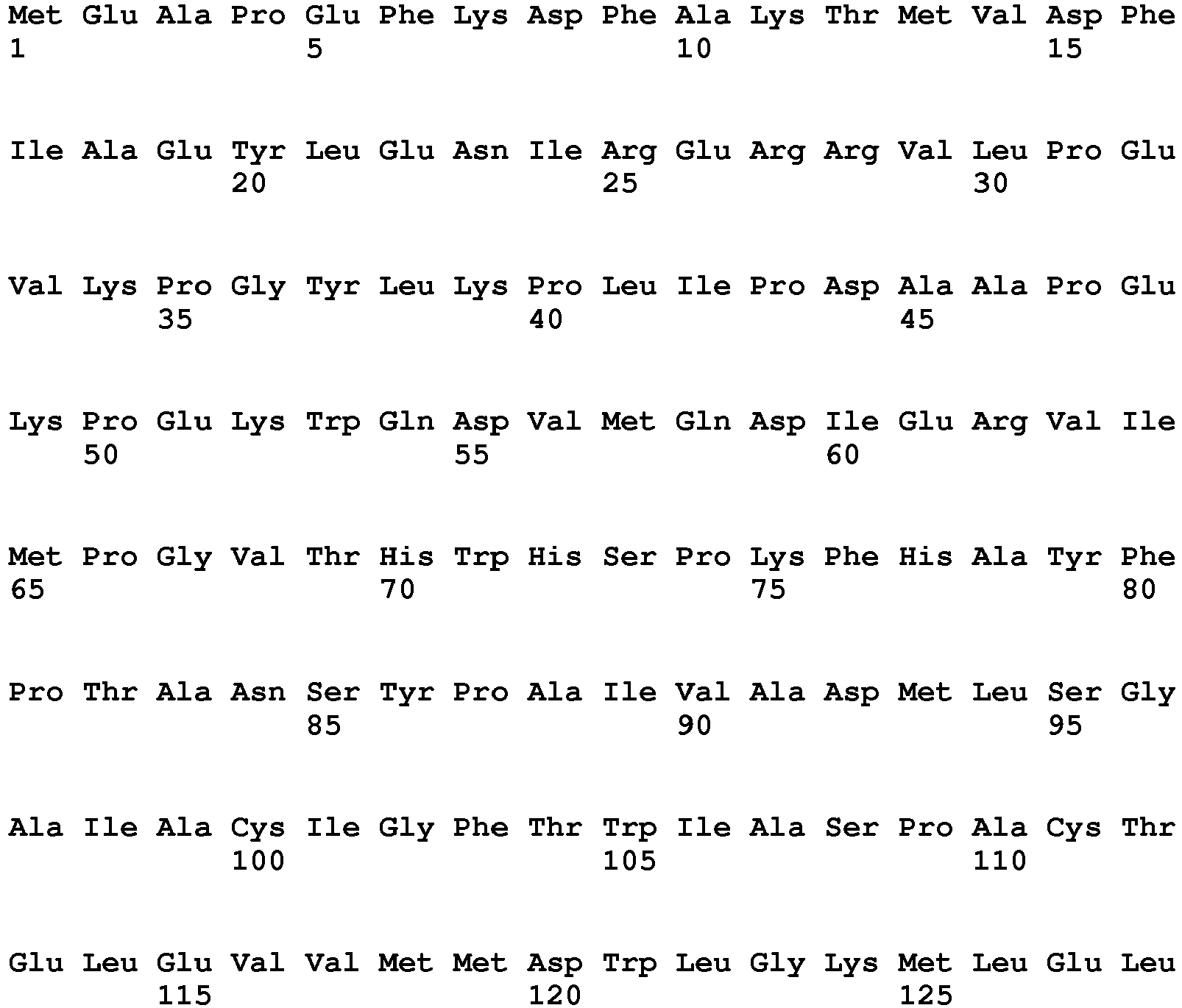


- <210> 22
<211> 537
<212> PRT
<213> Argemone mexicana (AmDDC) - <400> 22


- <210> 23
<211> 363
<212> PRT
<213> Arabidopsis thaliana (AtCOMT) - <400> 23
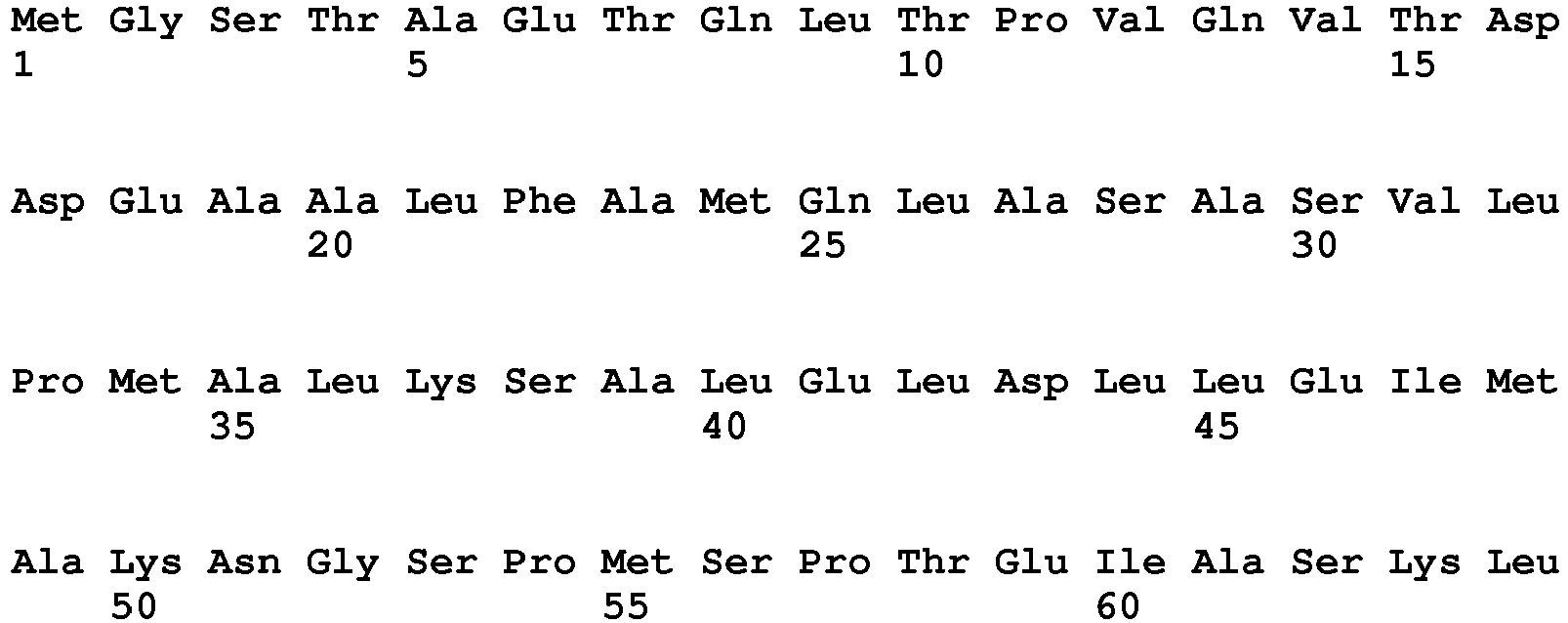


- <210> 24
<211> 237
<212> PRT
<213> Mesembryanthemum crystallinum (McPFOMT) - <400> 24
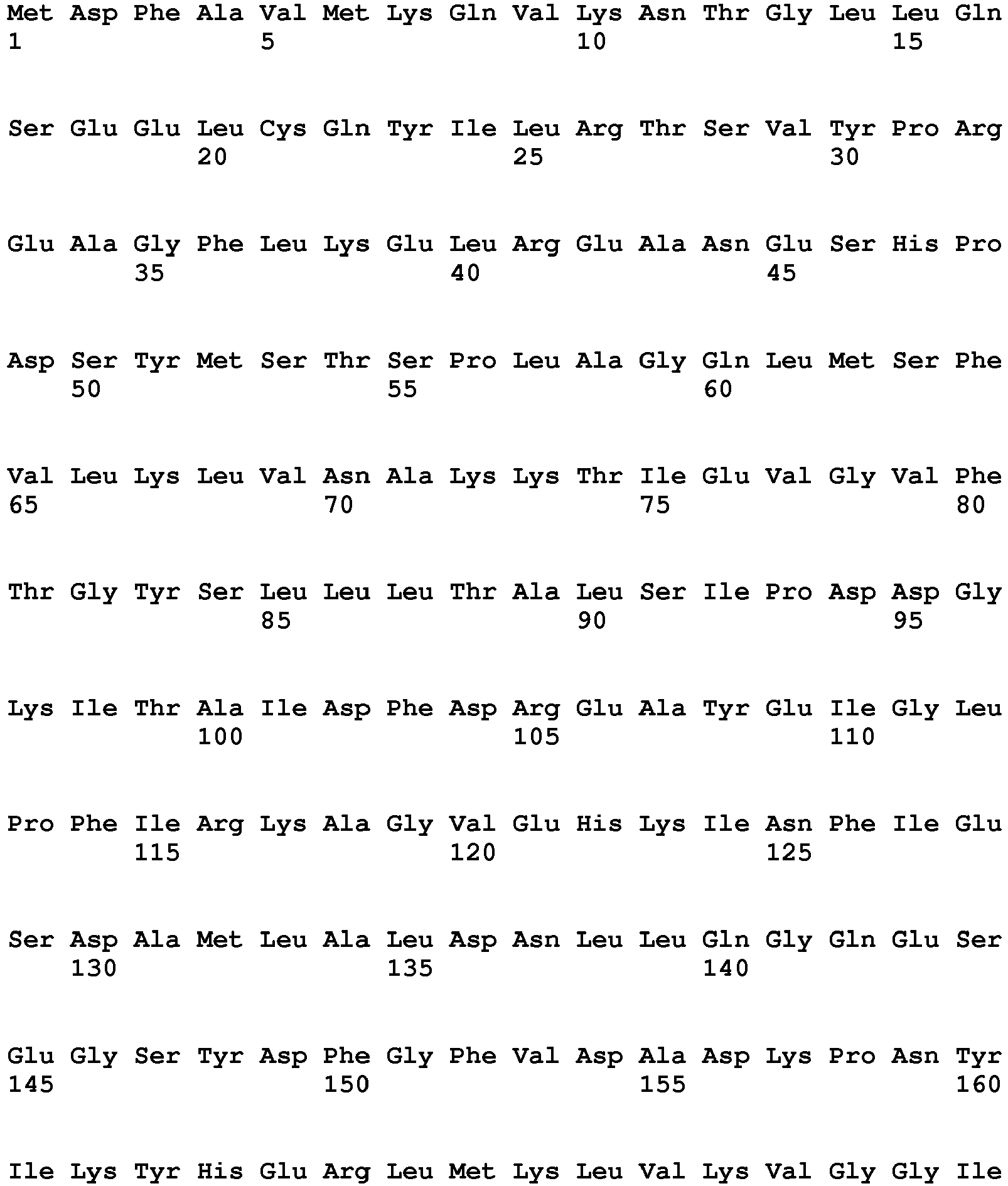

- <210> 25
<211> 358
<212> PRT
<213> Glycine max (GmSOMT) - <400> 25


- <210> 26
<211> 220
<212> PRT
<213> Myxococcus xanthus (MxSafC) - <400> 26


- <210> 27
<211> 368
<212> PRT
<213> Clarkia breweri (CbMOMT) - <400> 27


- <210> 28
<211> 368
<212> PRT
<213> Clarkia breweri (CbMOMT-L322N) - <400> 28

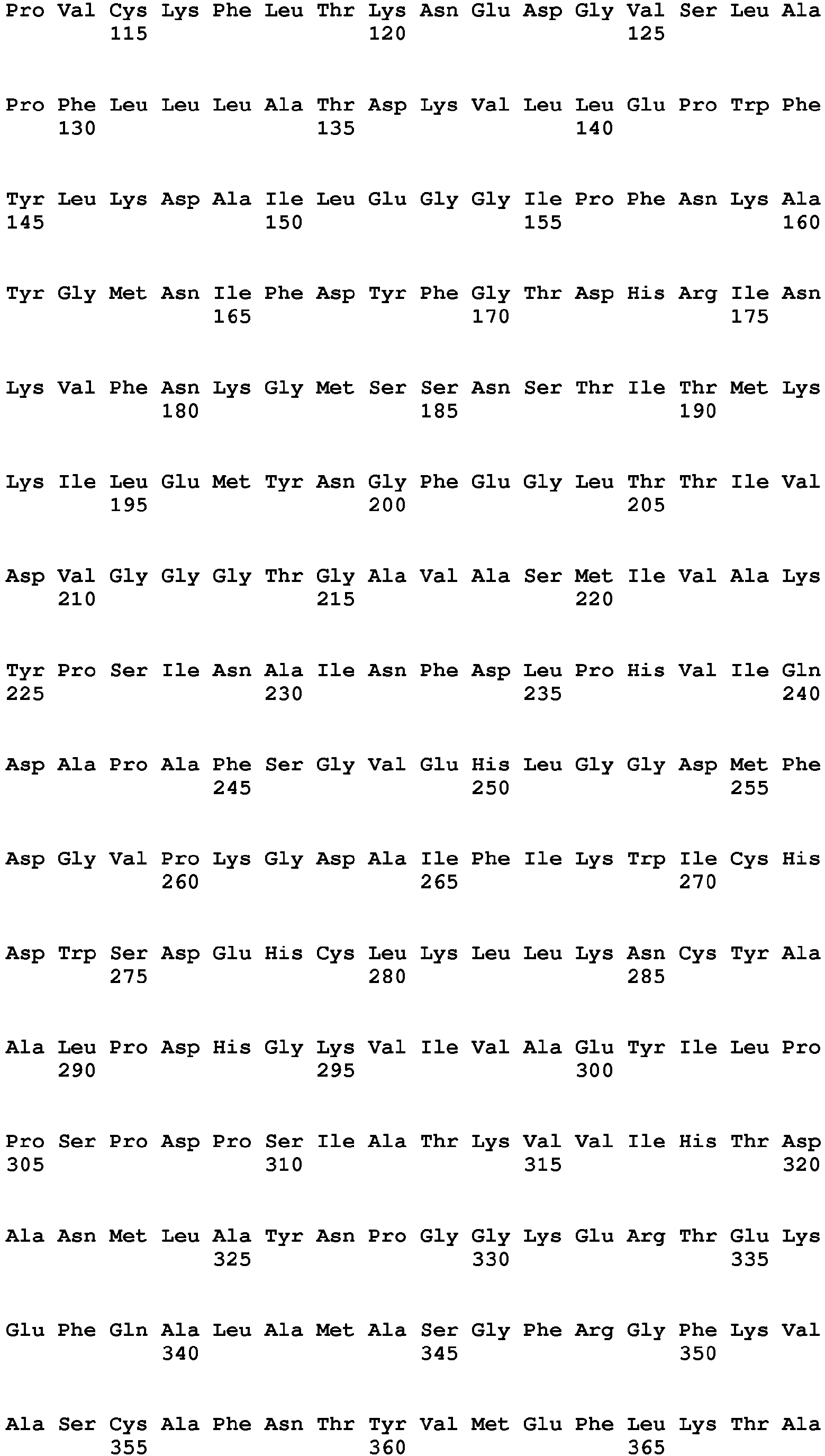
- <210> 29
<211> 368
<212> PRT
<213> Clarkia breweri (CbMOMT4-T133S) - <400> 29


- <210> 30
<211> 384
<212> PRT
<213> Saccharomyces cerevisiae (ScSAMS) - <400> 30


- <210> 31
<211> 556
<212> PRT
<213> Arabidopsis thaliana (At4CL2) - <400> 31


- <210> 32
<211> 547
<212> PRT
<213> Nicotiana tabacum (Nt4CL1) - <400> 32


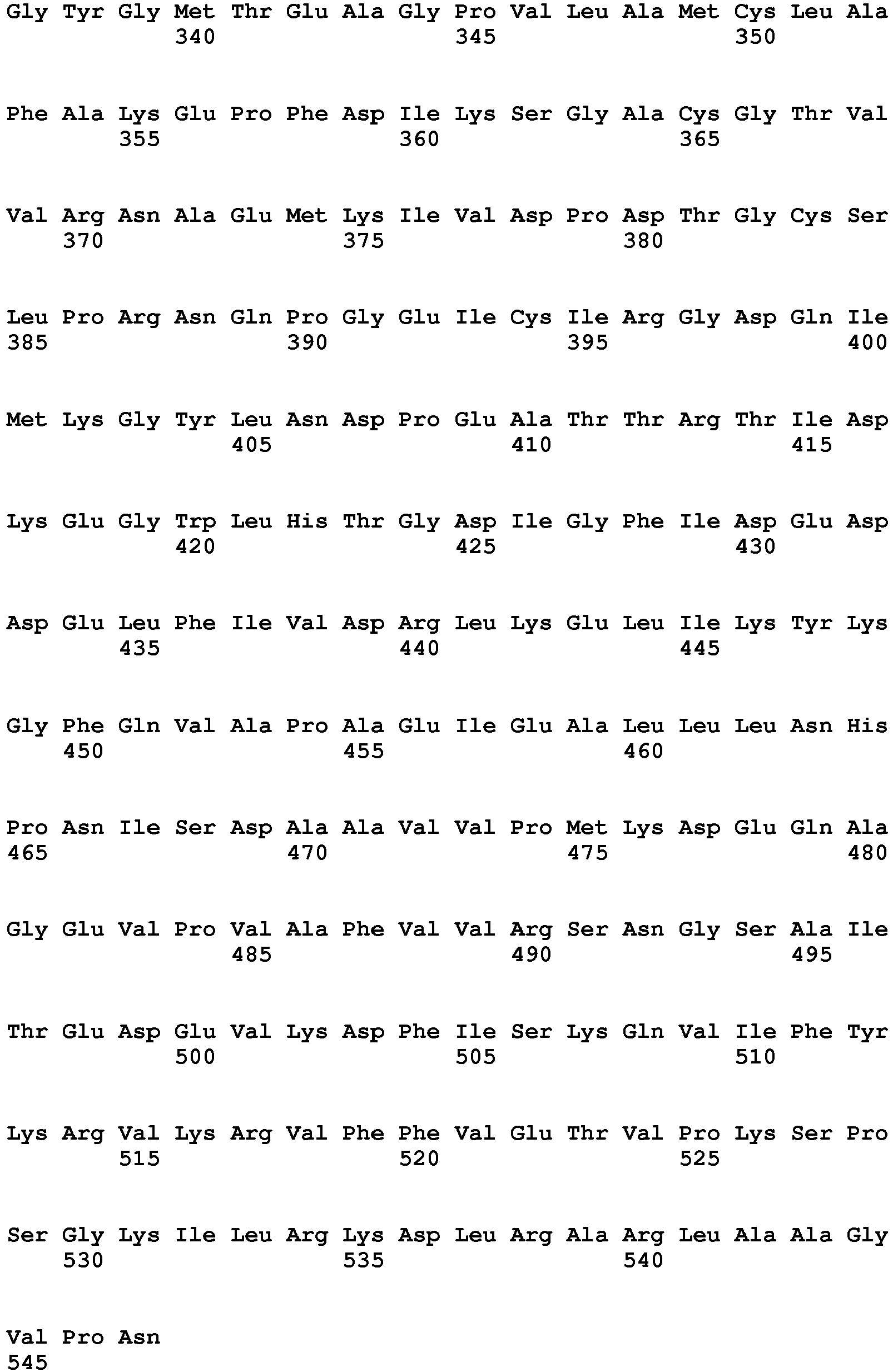
- <210> 33
<211> 226
<212> PRT
<213> Nicotiana tabacum (NtTHT) - <400> 33
Lys Val
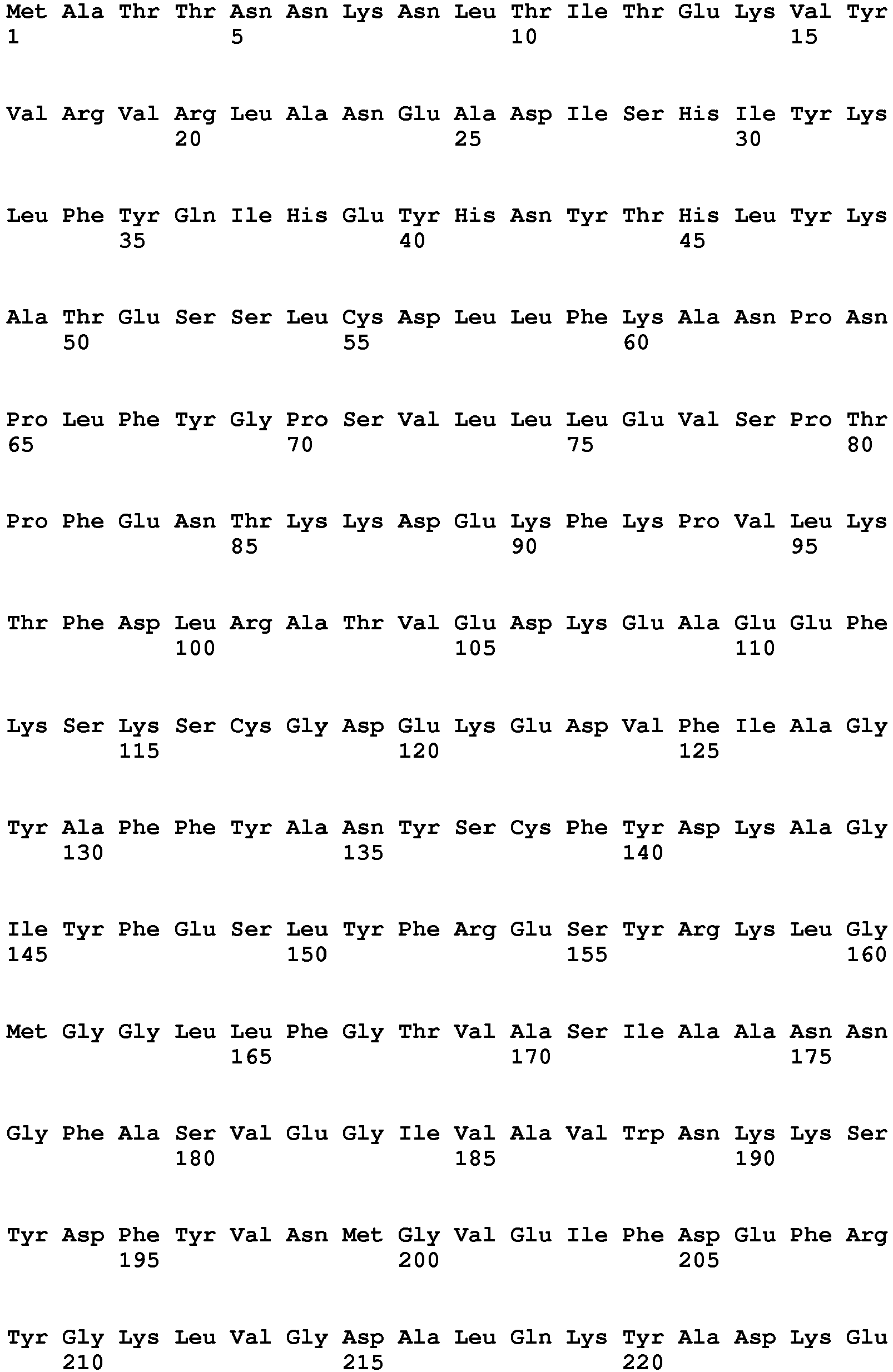
225 - <210> 34
<211> 245
<212> PRT
<213> Capsicum annuum (CaTHT) - <400> 34


- <210> 35
<211> 368
<212> PRT
<213> Clarkia breweri (CbIEMT) - <400> 35


- <210> 36
<211> 363
<212> PRT
<213> Catharanthus roseus (CrOMT) - <400> 36
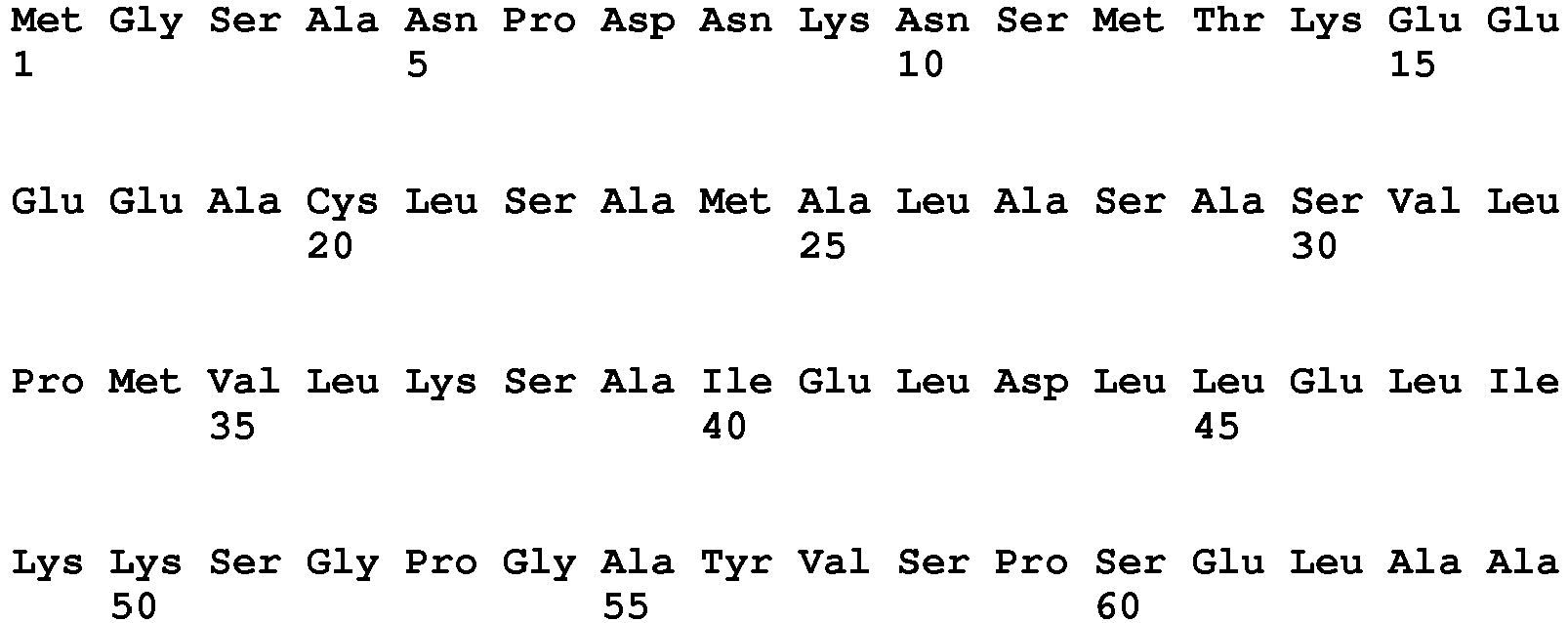


- <210> 37
<211> 365
<212> PRT
<213> Rosea chinensis var. spontanea (RcOMT) - <400> 37


- <210> 38
<211> 364
<212> PRT
<213> Pinus sylvestris (PsOMT) - <400> 38

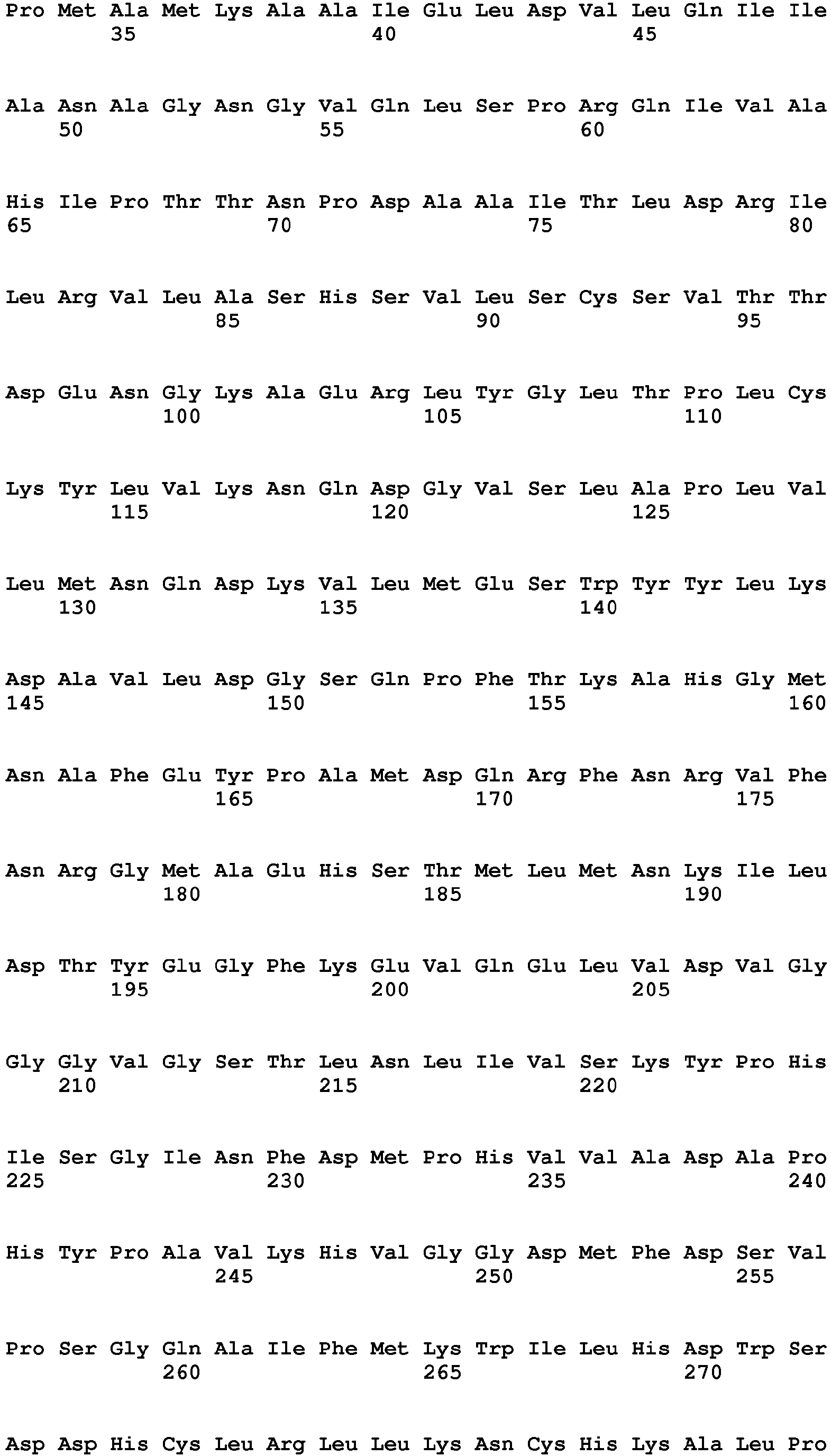

- <210> 39
<211> 220
<212> PRT
<213> Synechocystis sp. PCC 6830 (SynOMT) - <400> 39


- <210> 40
<211> 356
<212> PRT
<213> Triticum aestivum (TaOMT2) - <400> 40


- <210> 41
<211> 40
<212> DNA
<213> Artificial Sequence (MOMT4-L322N_for) - <220>
<223> Artificial DNA primer sequence - <400> 41
gtcatccata ccgacgctaa catgctcgcc tataaccctg 40 - <210> 42
<211> 40
<212> DNA
<213> Artificial sequence (MOMT4-L322N_rev) - <220>
<223> Artificial DNA primer sequence - <400> 42
cagggttata ggcgagcatg ttagcgtcgg tatggatgac 40 - <210> 43
<211> 39
<212> DNA
<213> Artificial sequence (MOMT4_T133S_for) - <220>
<223> Artificial DNA primer sequence - <400> 43
ctcgcaccct ttctgctctc ggcgacggat aaagtcctg 39 - <210> 44
<211> 39
<212> DNA
<213> Artificial sequence (MOMT4_T133S_rev) - <220>
<223> Artificial DNA primer sequence - <400> 44
caggacttta tccgtcgccg agagcagaaa gggtgcgag 39 - <210> 45
<211> 35
<212> DNA
<213> Artificial sequence (pD1214_MOMT-F) - <220>
<223> Artificial DNA primer sequence - <400> 45
gcgcggtctc acgtcttatg ggttcgacag gcaat 35 - <210> 46
<211> 36
<212> DNA
<213> Artificial sequence (pD1214_MOMT-R) - <220>
<223> Artificial DNA primer sequence - <400> 46
cgcgcggtct cttgtcactt aggccgtttt caggaa 36 - <210> 47
<211> 27
<212> DNA
<213> Artificial sequence (pD1214_MOMT-ScSAMS-F) - <220>
<223> Artificial DNA primer sequence - <400> 47
gcgcggatcc atgtccaaga gcaaaac 27 - <210> 48
<211> 31
<212> DNA
<213> Artificial sequence (pD1214_MOMT-ScSAMS-R) - <220>
<223> Artificial DNA primer sequence - <400> 48
gcgcagatct ttaaaattcc aatttctttg g 31 - <210> 49
<211> 38
<212> DNA
<213> Artificial sequence (M_term-F (GG_MPS/MSP_P1)) - <220>
<223> Artificial DNA primer sequence - <400> 49
gcgcggtctc acgtcttatg ggttcgacag gcaatgcg 38 - <210> 50
<211> 39
<212> DNA
<213> Artificial sequence (M_term-R (SMP_jedeKombi_P2)) - <220>
<223> Artificial DNA primer sequence - <400> 50
cgcgcggtct ctcaatacca aaaaacccct caagacccg 39 - <210> 51
<211> 36
<212> DNA
<213> Artificial sequence (S_prom-F (SMP_jedeKombi_P3)) - <220>
<223> Artificial DNA primer sequence - <400> 51
gcgcggtctc aattgtaata cgactcacta tagggg 36 - <210> 52
<211> 39
<212> DNA
<213> Artificial sequence (S_prom-R (GG_PMS/MPS_P4)) - <220>
<223> Artificial DNA primer sequence - <400> 52
cgcgcggtct cttgtcactt actcgcccag agcctcttt 39 - <210> 53
<211> 60
<212> DNA
<213> Artificial sequence (BsaI-Kassette) - <220>
<223> Artificial DNA sequence - <400> 53
gcgcggatcc cgtcagagac ccagcagcga tcgacagcag gtctcagaca aagcttgcgc 60 - <210> 54
<211> 31
<212> DNA
<213> Artificial sequence (pET28PromSphI-F) - <220>
<223> Artificial DNA primer sequence - <400> 54
gcgcgcatgc taatacgact cactataggg g 31 - <210> 55
<211> 30
<212> DNA
<213> Artificial sequence (pET28TermBglII-R) - <220>
<223> Artificial DNA primer sequence - <400> 55
gcgcagatct caaaaaaccc ctcaagaccc 30 - <210> 56
<211> 12
<212> DNA
<213> Artificial sequence (RBS1) - <220>
<223> Artificial DNA primer sequence - <400> 56
aggaggtttg ga 12 - <210> 57
<211> 16
<212> DNA
<213> Artificial sequence (RBS2) - <220>
<223> Artificial DNA primer sequence - <400> 57
aagttaagag gcaaga 16 - <210> 58
<211> 18
<212> DNA
<213> Artificial sequence (RBS3) - <220>
<223> Artificial DNA primer sequence - <400> 58
taagcaggac cggcggcg 18 - <210> 59
<211> 1638
<212> DNA
<213> Populus trichocarpa (PtTyDC) - <400> 59


- <210> 60
<211> 480
<212> PRT
<213> Populus trichocarpa (PtTyDC) - <400> 60

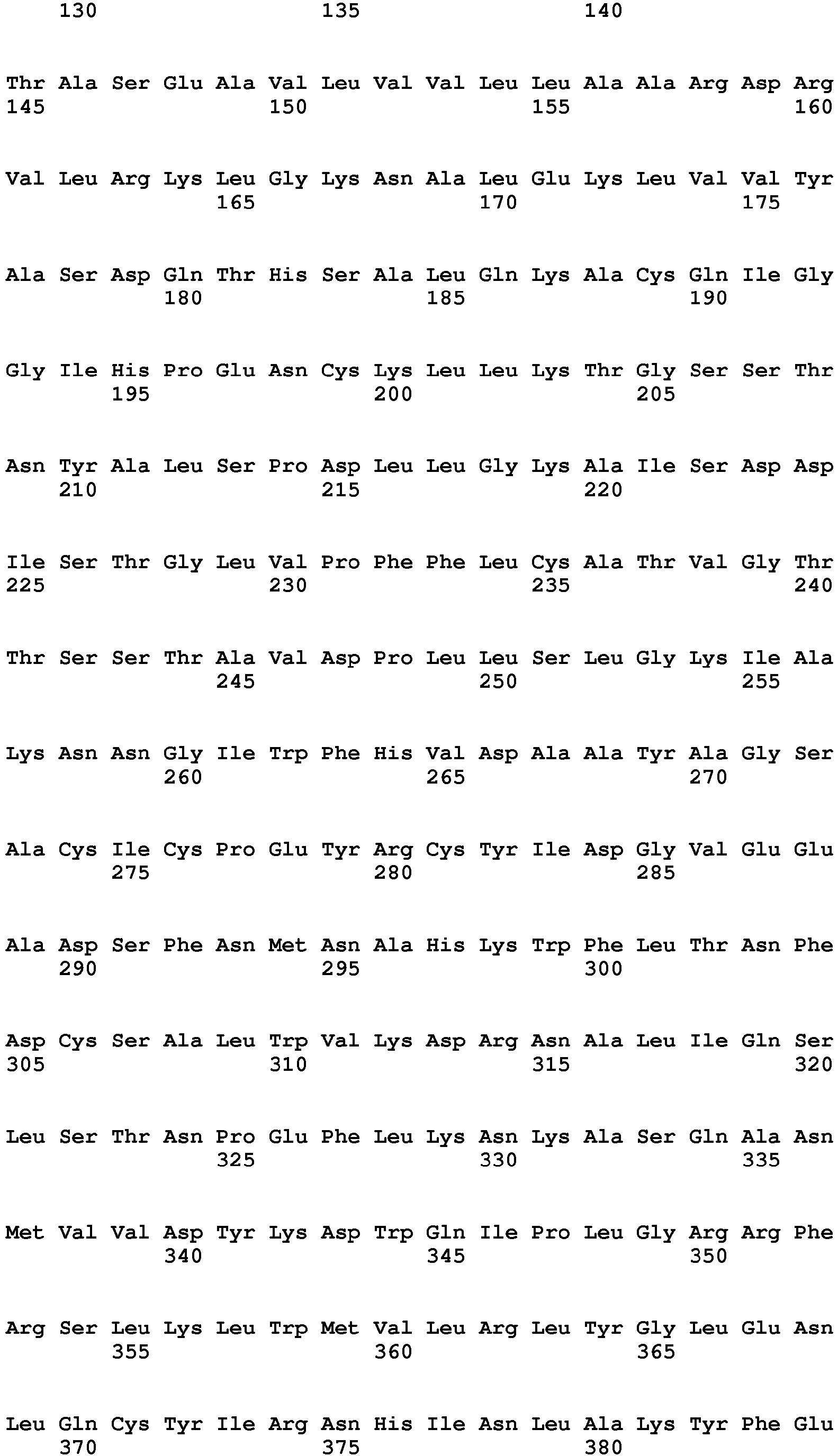

- <210> 61
<211> 2209
<212> DNA
<213> Sorangium cellulosum (ScDDC) - <400> 61


- <210> 62
<211> 512
<212> PRT
<213> Sorangium cellulosum (ScDDC) - <400> 62


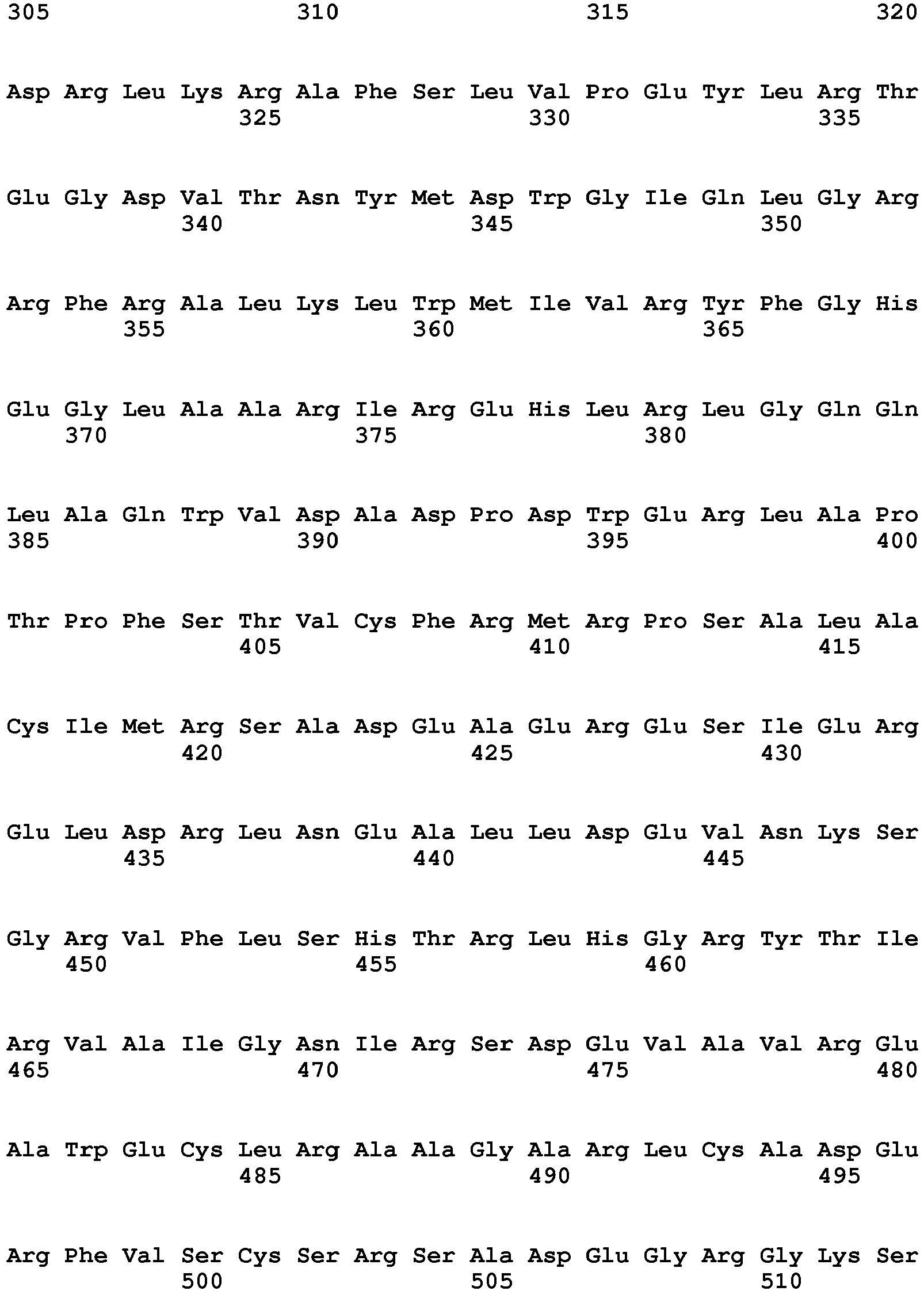
- <210> 63
<211> 1341
<212> DNA
<213> Ceratitis capitata (CcDDC) - <400> 63


- <210> 64
<211> 425
<212> PRT
<213> Ceratitis capitata (CcDDC) - <400> 64


- <210> 65
<211> 1221
<212> DNA
<213> Cryptosporidium parvum (CpSAMS) - <400> 65
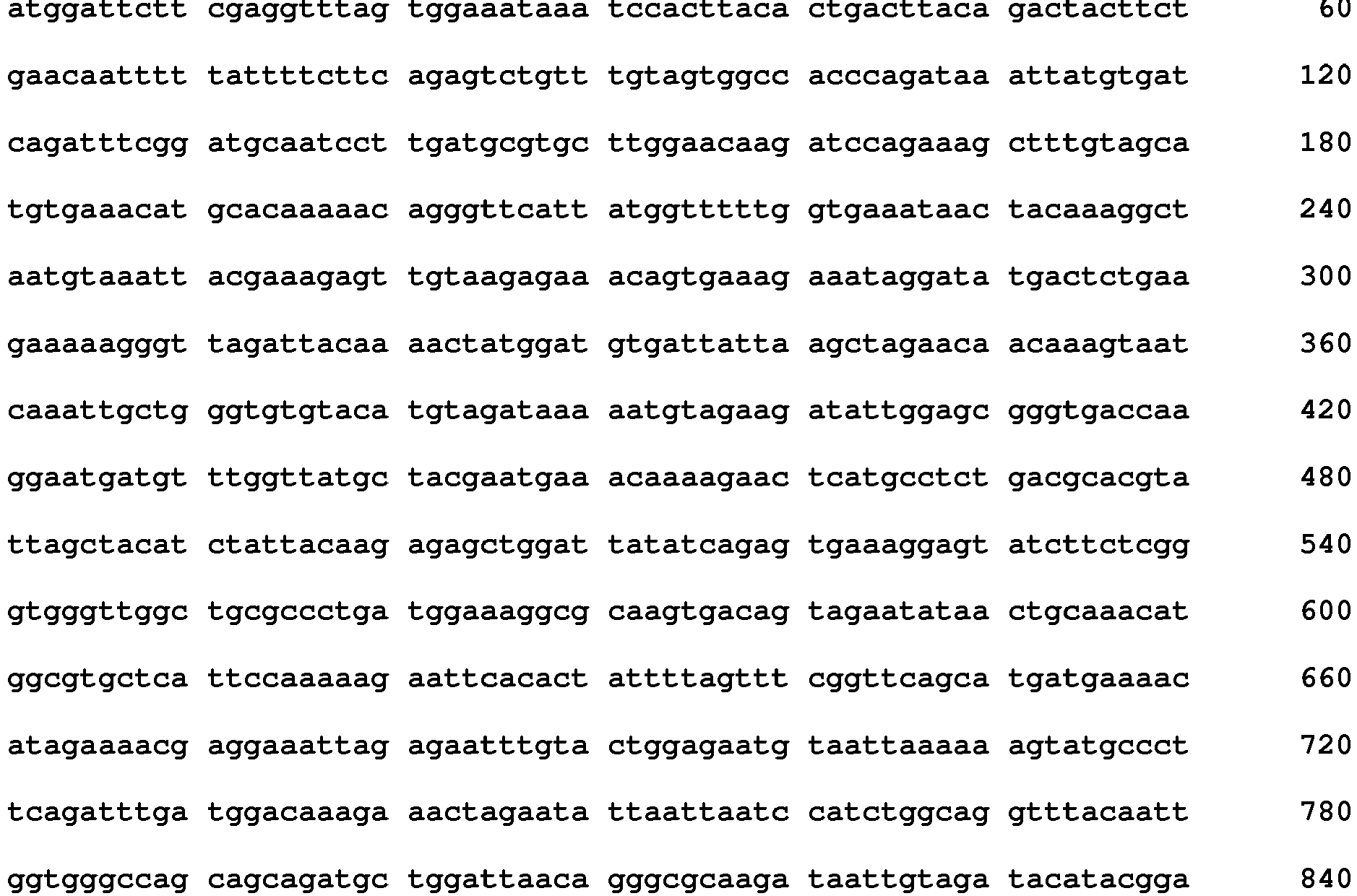

- <210> 66
<211> 406
<212> PRT
<213> Cryptosporidium parvum (CpSAMS) - <400> 66
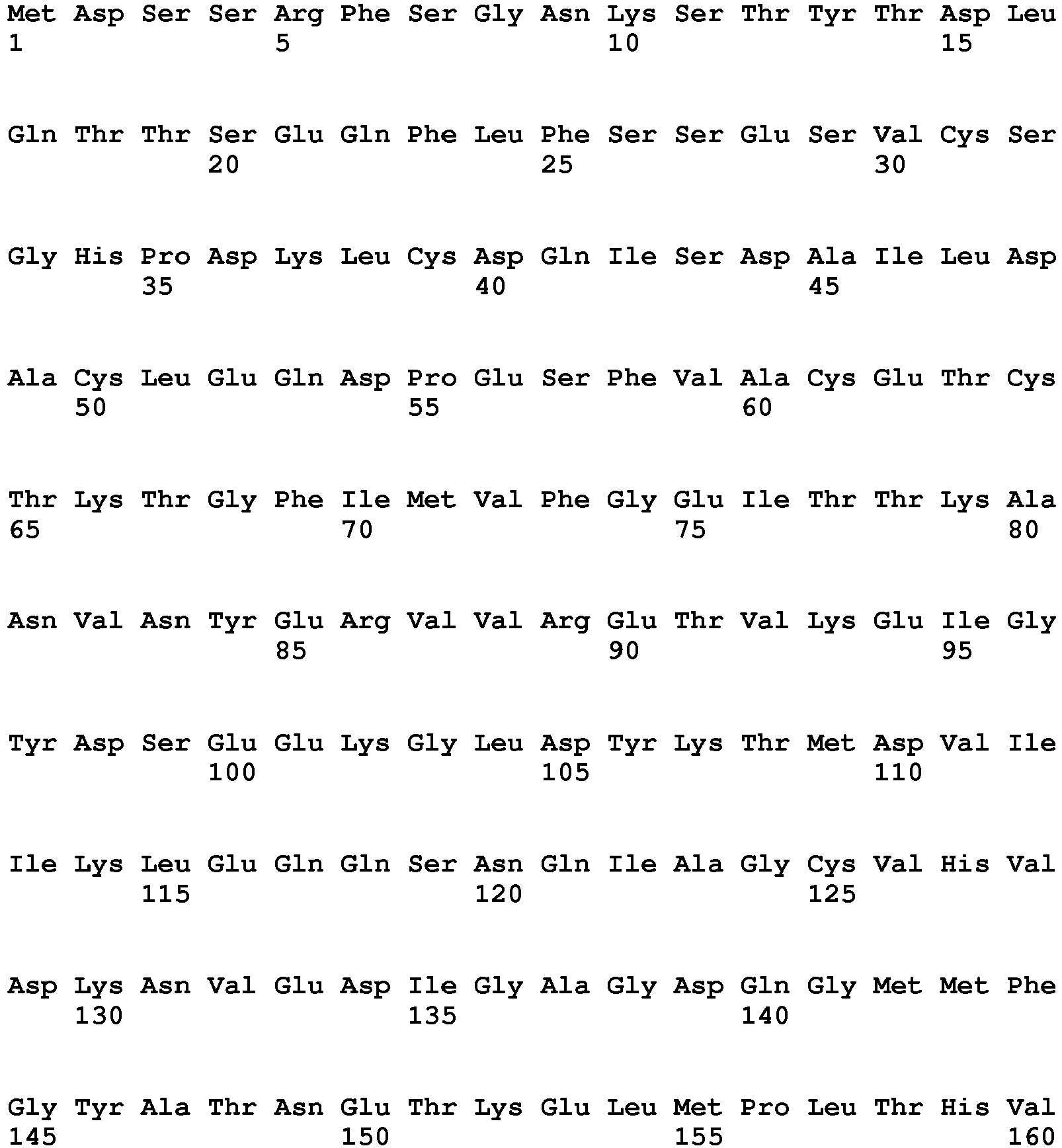

- <210> 67
<211> 1179
<212> DNA
<213> Leishmania donovani (LdSAMS) - <400> 67

- <210> 68
<211> 392
<212> PRT
<213> Leishmania donovani (LdSAMS) - <400> 68


- <210> 69
<211> 1200
<212> DNA
<213> Mycobacterium smegmatis (MsSAMS) - <400> 69


- <210> 70
<211> 399
<212> PRT
<213> Mycobacterium smegmatis (MsSAMS) - <400> 70


- <210> 71
<211> 3398
<212> DNA
<213> Bos taurus (BtSAMS) - <400> 71


- <210> 72
<211> 396
<212> PRT
<213> Bos taurus (BtSAMS) - <400> 72

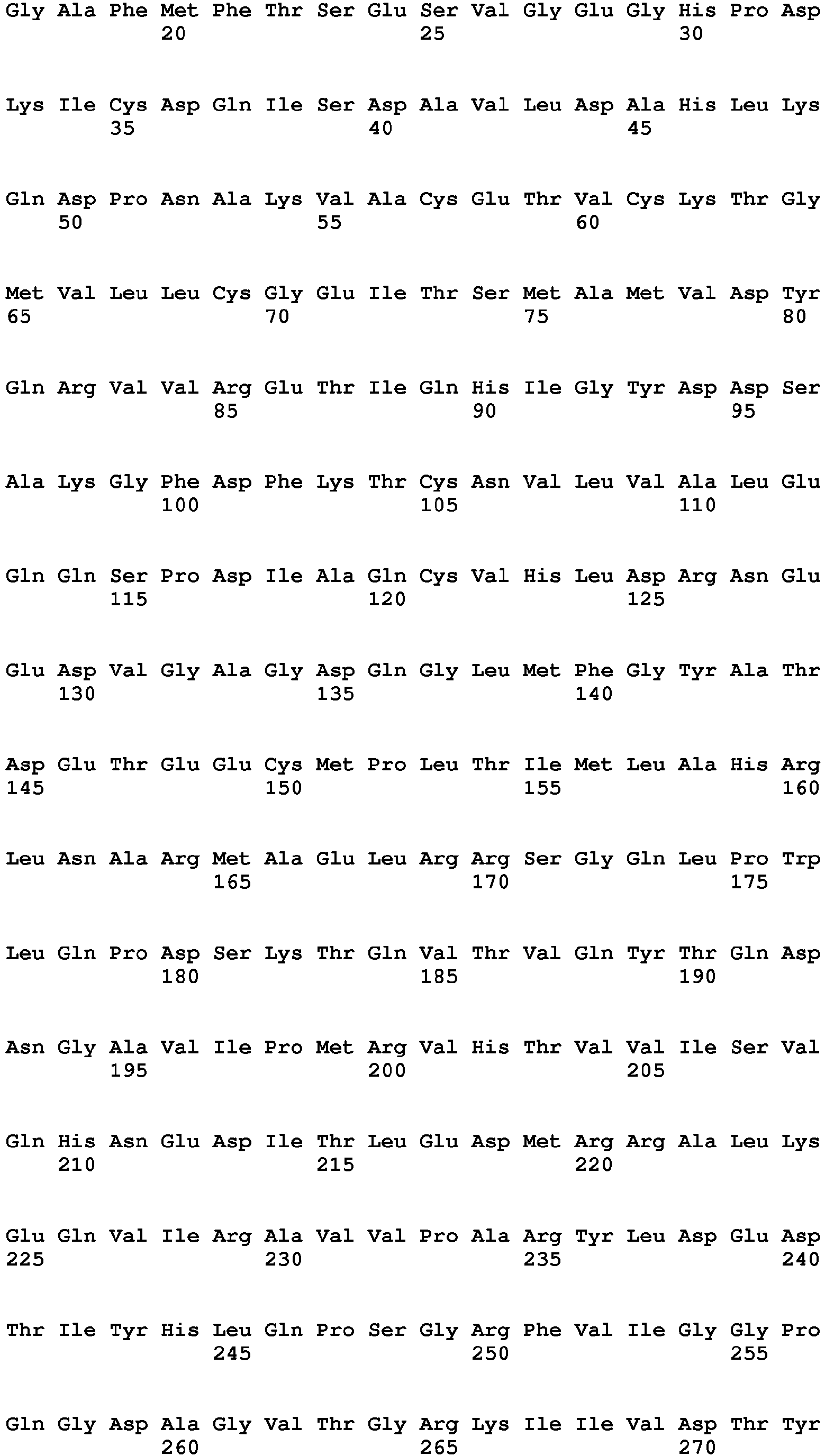

- <210> 73
<211> 1922
<212> DNA
<213> Populus x generosa strain H11 (Ptd4CL) - <400> 73


- <210> 74
<211> 548
<212> PRT
<213> Populus x generosa strain H11 (Ptd4CL) - <400> 74


- <210> 75
<211> 1941
<212> DNA
<213> Glycine max (Gm4CL) - <400> 75


- <210> 76
<211> 562
<212> PRT
<213> Glycine max (Gm4CL) - <400> 76


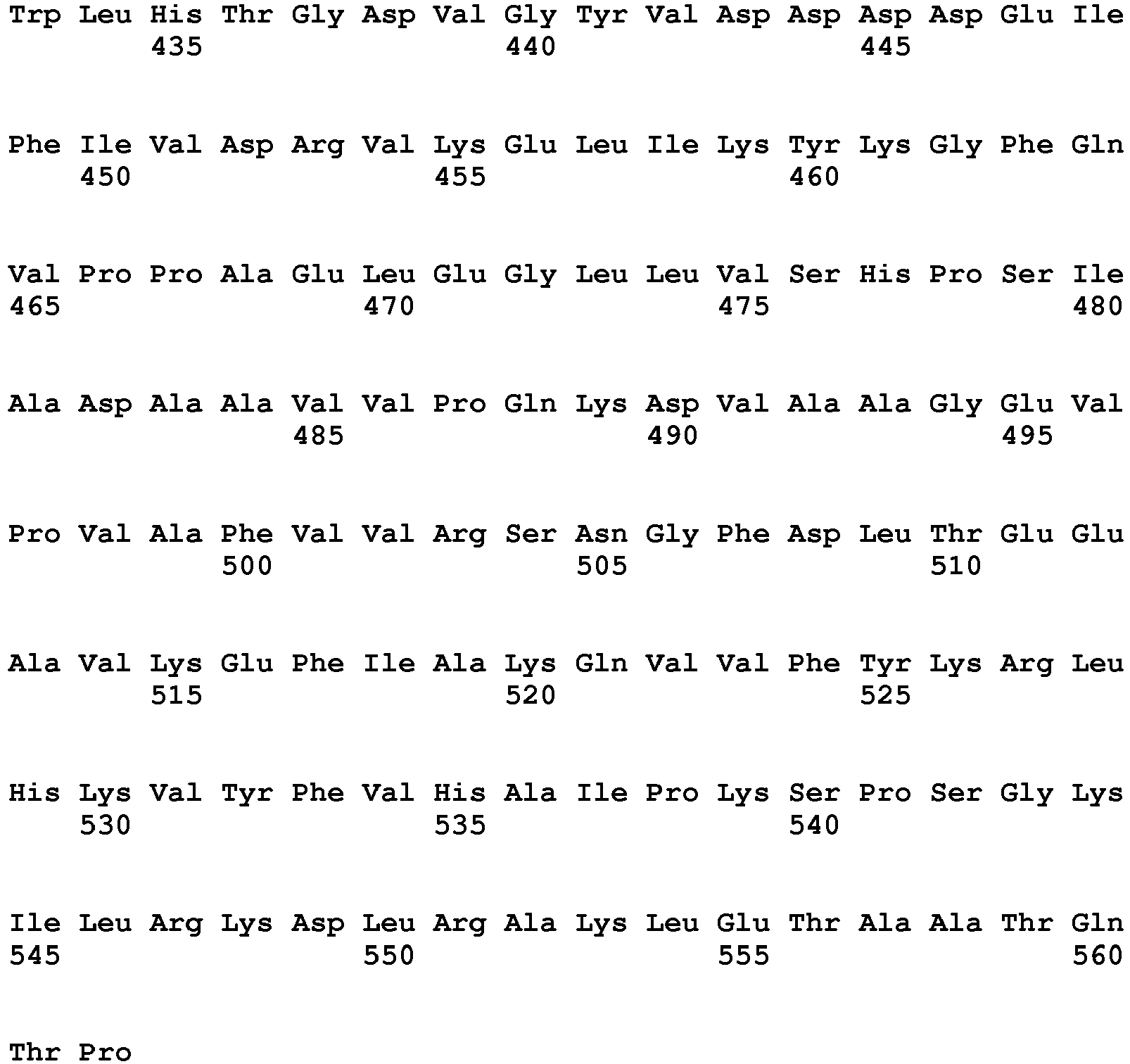
- <210> 77
<211> 4030
<212> DNA
<213> Solanum tuberosum (St4CL) - <220>
<221> misc_feature
<222> (3965)..(3965)
<223> n is a, c, g, or t - <400> 77


- <210> 78
<211> 545
<212> PRT
<213> Solanum tuberosum (St4CL) - <400> 78

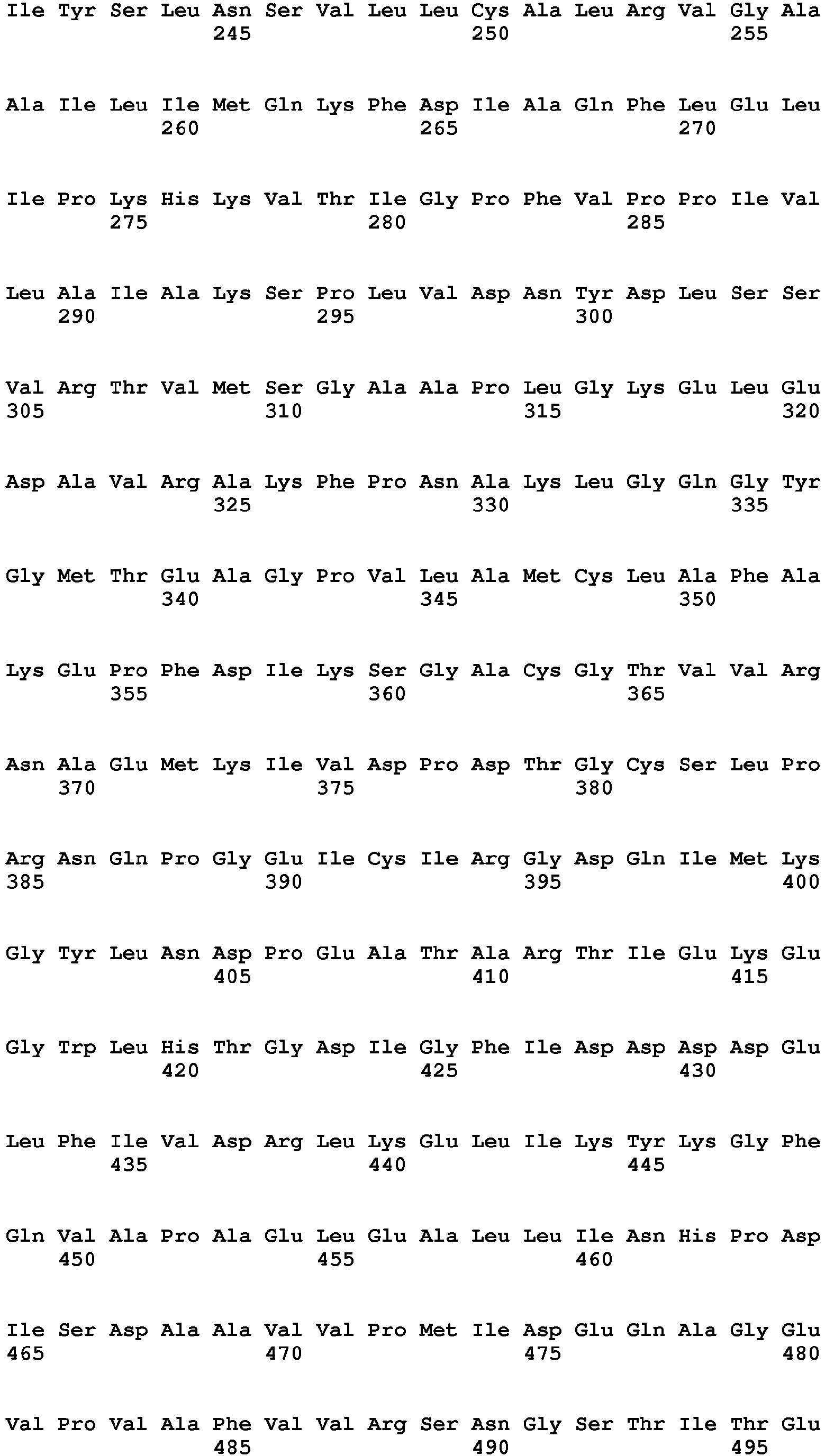

- <210> 79
<211> 917
<212> DNA
<213> Solanum tuberosum (StTHT) - <400> 79

- <210> 80
<211> 247
<212> PRT
<213> Solanum tuberosum (StTHT) - <400> 80

- <210> 81
<211> 1607
<212> DNA
<213> Lavandula angustifolia (LaTHT) - <400> 81

- <210> 82
<211> 460
<212> PRT
<213> Lavandula angustifolia (LaTHT) - <400> 82


- <210> 83
<211> 963
<212> DNA
<213> Candida antarctica (Lipase B) - <400> 83

- <210> 84
<211> 321
<212> PRT
<213> Candida antarctica (Lipase B) - <400> 84

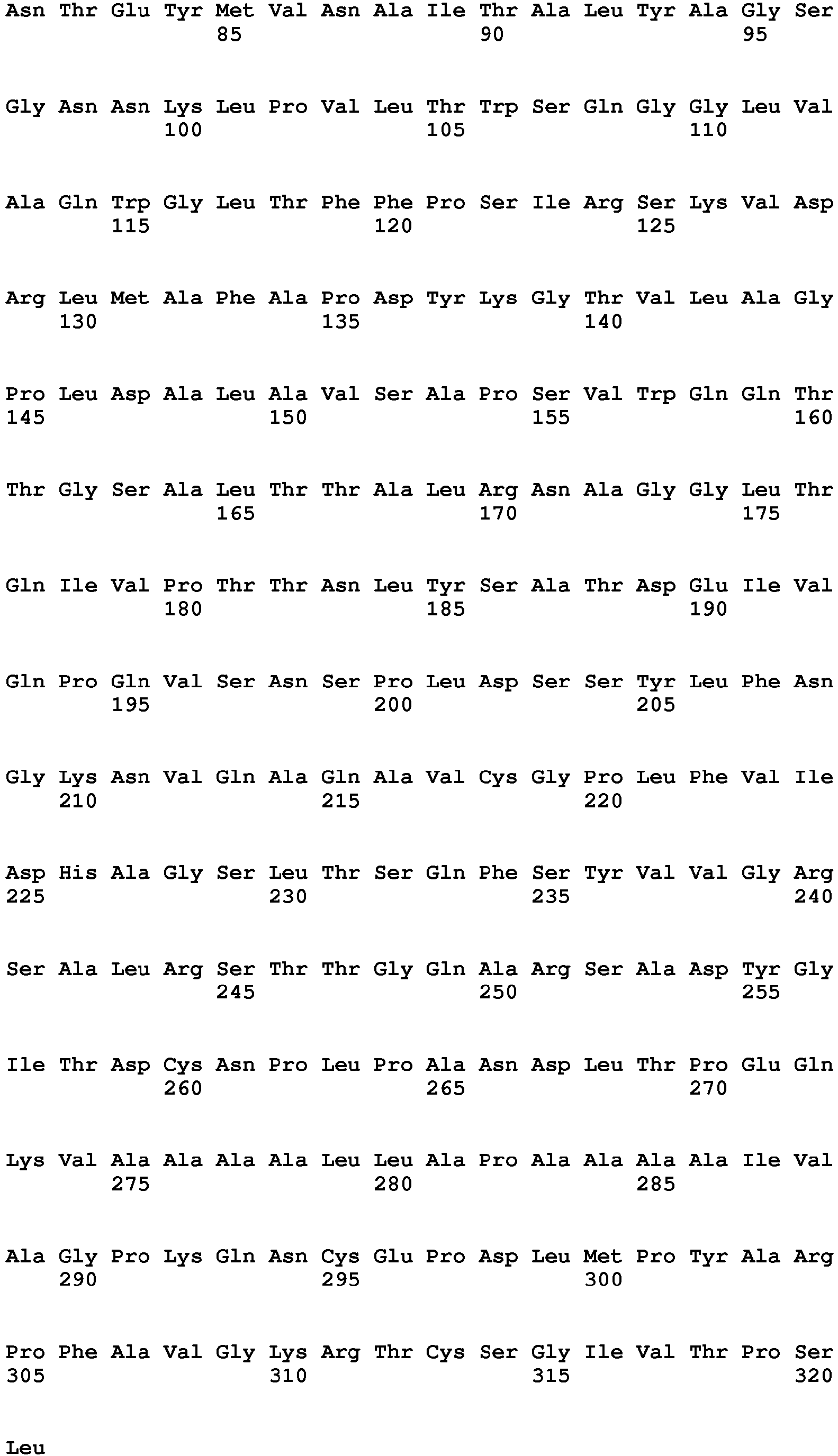
- <210> 85
<211> 1107
<212> DNA
<213> Clarkia breweri (CbMOMT T133S/L322N) - <400> 85

- <210> 86
<211> 368
<212> PRT
<213> Clarkia breweri (CbMOMT T133S/L322N) - <400> 86


Claims (11)
- Verfahren zur Herstellung eines 4'-O-methylierten Zimtsäureamids unter Verwendung eines rekombinanten Mikroorganismus oder Pilzes umfassend die folgenden Schritte:(i) Bereitstellen eines rekombinanten Mikroorganismus oder Pilzes, enthaltend- (a1) einen Nukleinsäure-Abschnitt, umfassend oder bestehend aus mindestens ein/einem für eine 4'-O-Methyltransferase kodierendes/kodierenden Gen, und- (a2) optional einen Nukleinsäure-Abschnitt, umfassend oder bestehend aus mindestens ein/einem 3'-O-Methyltransferase kodierendes/kodierenden Gen, und- (b) optional für die fermentative Herstellung einen Nukleinsäure-Abschnitt, umfassend oder bestehend aus ein/einem für eine S-Adenosylmethionin Synthase kodierendes/kodierenden Gen; und zusätzlich Bereitstellen eines rekombinanten Mikroorganismus oder Pilzes, enthaltend- (c) einen Nukleinsäure-Abschnitt, umfassend oder bestehend aus mindestens ein/einem für eine 4-Coumarat:CoA-Ligase kodierendes/kodierenden Gen, und- (d) einen Nukleinsäure-Abschnitt, umfassend oder bestehend aus mindestens ein/einem für eine Tyramin-N-hydroxycinnamoyltransferase kodierendes/kodierenden Gen, und- (e) optional einen Nukleinsäure-Abschnitt, umfassend oder bestehend aus ein/einem für eine DOPA-Decarboxylase kodierendes/kodierenden Gen,(ii) Kultivieren des rekombinanten Mikroorganismus oder Pilzes unter Bedingungen, die die Expression der Nukleinsäure-Abschnitte gestatten, unter Erhalt der entsprechenden Expressionsprodukte;(iii) optional: Isolieren sowie gegebenenfalls Aufreinigen der erhaltenen Expressionsprodukte;(iv) Hinzufügen von Dopamin und/oder von L-Dihydroxyphenylalanin, Tyrosin und/oder von Phenylalanin und von einer Hydroxyzimtsäure, zu dem mindestens einen kultivierten rekombinanten Mikroorganismus oder Pilz gemäß Schritt (ii) für eine fermentative Umsetzung, oder
Hinzufügen von einem Phenethylamin, und von einem Zimtsäureester zu den Expressionsprodukten gemäß Schritt (iii) für eine enzymatische Umsetzung; und(v) Kultivieren oder Inkubieren des rekombinanten Mikroorganismus oder Pilzes oder der Expressionsprodukte, optional unter Hinzufügen einer Lipase, unter Bedingungen, die die Umsetzung von Dopamin und/oder L-Dihydroxyphenylalanin und von einer Hydroxyzimtsäure zu einem 4'-O-methylierten Zimtsäureamid ermöglichen;(vi) optional Isolieren sowie gegebenenfalls Aufreinigen des erhaltenen 4'-O-methylierten Zimtsäureamids sowie optional gegebenenfalls vorhandener weiterer Beiprodukte. - Verfahren nach Anspruch 1, wobei das 4'-O-methylierte Zimsäureamid ausgewählt ist aus der Gruppe bestehend aus Rubemamin, [(2E)-3-(3,4-Dimethoxyphenyl)-N-[2-(3,4-dimethoxyphenyl)ethyl]prop-2-enamid],oder 3,4-Dimethoxycinnamoylmethoxytyramid [(2E)-3-(3,4-Dimethoxyphenyl)-N-[2-(4-methoxyphenyl)ethyl]prop-2-enamid].
- Verfahren nach einem der vorangehenden Ansprüche, wobei die 4'-O-Methyltransferase, oder der die 4'-O-Methyltransferase kodierende Nukleinsäure-Abschnitt ausgewählt ist aus SEQ ID Nos: 5, 6, 7, 8, 9, 15, 17, 18, 25, 26, 27, 28, 29, 35, 37, 38, 85 und 86, und/oder die 3'-O-Methyltransferase, oder der die 3'-O-Methyltransferase kodierende Nukleinsäure-Abschnitt ausgewählt ist aus SEQ ID Nos: 3, 4, 16, 19, 20, 23, 24, 36, 39 und 40 und/oder die S-Adenosylmethionin Synthase, oder der die S-Adenosylmethionin Synthase kodierende Nukleinsäure-Abschnitt ausgewählt ist aus SEQ ID Nos: 10, 30, und 65 bis 72, und/oder die DOPA-Decarboxylase, oder der die DOPA-Decarboxylase kodierende Nukleinsäure-Abschnitt ausgewählt ist aus SEQ ID Nos: 1, 2, 21, 22 und 59 bis 64, und/oder die Tyramin-N-hydroxycinnamoyltransferase, oder der die Tyramin-N-hydroxycinnamoyltransferase kodierende Nukleinsäure-Abschnitt ausgewählt ist aus SEQ ID Nos: 13, 14, 33, 34 und 79 bis 82 und/oder die 4-Coumarat:CoA-Ligase, oder der die 4-Coumarat:CoA-Ligase kodierende Nukleinsäure-Abschnitt ausgewählt ist aus SEQ ID NOs:11, 12, 31, 32 und 73 bis 78 und die Lipase eine Lipase B ist, wobei die Polypeptide und die die Polypeptide kodierenden Sequenzen Sequenzen mit mindestens 80% Sequenzhomologie zu den jeweiligen SEQ ID NOs umfassen, mit der Maßgabe, dass eine derart modifizierte Polypeptidsequenz mit einem entsprechenden Homologiegrad noch die gleiche enzymatische Funktion erfüllt wie das jeweils nicht modifizierte Polypeptid mit der entsprechenden SEQ ID NO.
- Verfahren nach einem der vorangehenden Ansprüche, wobei die in Schritt (iv) hinzugefügte Hydroxyzimtsäure Kaffesäure oder Ferulasäure, optional verestert an eine Hemicellulose, ist.
- Verfahren nach einem der vorangehenden Ansprüche, wobei in Schritt (iv) im Falle der enzymatischen Umsetzung zudem S-Adenosylmethionin hinzugefügt wird.
- Verfahren nach einem der vorangehenden Ansprüche, wobei das Phenethylamin in Schritt (iv) unabhängig ausgewählt ist aus der Gruppe bestehend aus Dopamin, L-Dihydroxyphenylalanin, Tyrosin, Phenylalanin, 3-Methoxytyramin, 3-Hydroxy-4-Methoxyphenethylamin, 3,4-Dimethoxyphenethylamin.
- Verfahren nach einem der vorangehenden Ansprüche, wobei der Zimtsäureester in Schritt (iv) ausgewählt ist aus Estern von Kaffeesäure, Ferulasäure, Isoferulasäure oder 3,4-Dimethoxyzimtsäure.
- Verfahren nach einem der vorangehenden Ansprüche, wobei die Lipase eine Lipase B aus Candida antarctica ist, wobei die Lipase B aus Candida antarctica, oder der die Lipase B aus Candida antarctica kodierende Nukleinsäure-Abschnitt ausgewählt ist aus SEQ ID NOs:83 und 84; wobei die Polypeptide und die die Polypeptide kodierenden Sequenzen mit mindestens 80% Sequenzhomologie zu den jeweiligen SEQ ID NOs umfassen, mit der Maßgabe, dass eine derart modifizierte Polypeptidsequenz mit einem entsprechenden Homologiegrad noch die gleiche enzymatische Funktion erfüllt wie das jeweils nicht modifizierte Polypeptid mit der entsprechenden SEQ ID NO.
- Vektorsystem enthaltend einen oder mehrere Vektor(en), enthaltend- (a1) einen Nukleinsäure-Abschnitt, umfassend oder bestehend aus mindestens ein/einem für eine 4'-O-Methyltransferase kodieren des/kodierenden Gen, und- (a2) optional einen Nukleinsäure-Abschnitt, umfassend oder bestehend aus mindestens ein/einem für eine 3'-O-Methyltransferase kodierendes/kodierenden Gen, und- (b) optional einen Nukleinsäure-Abschnitt, umfassend oder bestehend aus ein/einem für eine S-Adenosylmethionin Synthase kodierendes/kodierenden Gen, und- (c) optional einen Nukleinsäure-Abschnitt, umfassend oder bestehend aus ein/einem für eine DOPA-Decarboxylase kodierendes/kodierenden Gen, zusätzlich enthaltend einen oder mehrere Vektor(en) enthaltend- (d) einen Nukleinsäure-Abschnitt, umfassend oder bestehend aus mindestens ein/einem für eine 4-Coumarat:CoA-Ligase kodierendes/kodierenden Gen, und- (e) einen Nukleinsäure-Abschnitt, umfassend oder bestehend aus mindestens ein/einem für eine Tyramin-N-hydroxycinnamoyltransferase kodierendes/kodierenden Gen, und- (f) optional einen Nukleinsäure-Abschnitt, umfassend oder bestehend aus ein/einem für eine DOPA-Decarboxylase kodierendes/kodierenden Gen,wobei die Nukleinsäure-Abschnitte auf dem gleichen Vektor oder zwei oder mehreren separaten Vektoren bereitgestellt sind.
- Rekombinanter Mikroorganismus oder Pilz, enthaltend ein Vektorsystem nach Anspruch 9.
- Rekombinanter Mikroorganismus oder Pilz nach Anspruch 10, wobei der Mikroorganismus oder Pilz ausgewählt ist aus der Gruppe bestehend aus Eschericia coli spp., bevorzugt E. coli BL21, E. coli MG1655 oder E. coli W3110 und deren Abkömmlinge, Bacillus spp., bevorzugt Bacillus licheniformis, Bacillus subitilis oder Bacillus amyloliquefaciens, und deren Abkömmlinge Saccharomyces spp., bevorzugt S. cerevesiae, und deren Abkömmlinge, Hansenula bzw. Pichia spp., bevorzugt P. pastoris und H. polymorpha, und deren Abkömmlingen, Kluyveromyces spp, bevorzugt K. lactis, und deren Abkömmlinge, Aspergillus spp., bevorzugt A. oryzae, A. nidulans, oder A. niger, und deren Abkömmlinge, oder Trichoderma spp., bevorzugt T. reesei oder T. harzianum, und deren Abkömmlinge, wobei ein Abkömmling die Nachkommen eines Mikroorganismus oder Pilzes umfasst, welche durch natürliche reproduktive Vermehrungsvorgänge, umfassend geschlechtliche und ungeschlechtliche, aus dem Ursprungsorganismus hervorgegangen sind, wobei der Abkömmling nach wie vor der gleichen (Sub)Spezies zugeordnet werden kann.
Priority Applications (2)
| Application Number | Priority Date | Filing Date | Title |
|---|---|---|---|
| EP15153218.1A EP3050971B1 (de) | 2015-01-30 | 2015-01-30 | Verfahren zur enzymatischen Herstellung eines 4-O-methylierten Zimtsäureamids |
| US15/011,855 US10227620B2 (en) | 2015-01-30 | 2016-02-01 | Method for biotechnological production of methylized cinnamic acids and cinnamic acid esters, methylized phenethylamines and the coupling products thereof, particularly of cinnamic acid amides |
Applications Claiming Priority (1)
| Application Number | Priority Date | Filing Date | Title |
|---|---|---|---|
| EP15153218.1A EP3050971B1 (de) | 2015-01-30 | 2015-01-30 | Verfahren zur enzymatischen Herstellung eines 4-O-methylierten Zimtsäureamids |
Publications (2)
| Publication Number | Publication Date |
|---|---|
| EP3050971A1 EP3050971A1 (de) | 2016-08-03 |
| EP3050971B1 true EP3050971B1 (de) | 2020-06-24 |
Family
ID=52469607
Family Applications (1)
| Application Number | Title | Priority Date | Filing Date |
|---|---|---|---|
| EP15153218.1A Active EP3050971B1 (de) | 2015-01-30 | 2015-01-30 | Verfahren zur enzymatischen Herstellung eines 4-O-methylierten Zimtsäureamids |
Country Status (2)
| Country | Link |
|---|---|
| US (1) | US10227620B2 (de) |
| EP (1) | EP3050971B1 (de) |
Families Citing this family (5)
| Publication number | Priority date | Publication date | Assignee | Title |
|---|---|---|---|---|
| AU2019207737B2 (en) | 2018-01-10 | 2023-07-13 | Brightseed, Inc. | Method for modulating metabolism |
| WO2021058115A1 (en) | 2019-09-27 | 2021-04-01 | Symrise Ag | Methods for the biocatalytical manufacturing of dihydrochalcones |
| MX2022004794A (es) * | 2019-10-25 | 2022-07-11 | Brightseed Inc | Celula recombinante, extracto, producto consumible y metodo para la produccion de metabolito vegetal bioactivo. |
| CN115558686B (zh) * | 2022-10-10 | 2025-11-11 | 浙江工业大学 | 基于连续流生物反应器在线合成肉桂酰胺衍生物的方法 |
| WO2025160464A1 (en) * | 2024-01-26 | 2025-07-31 | Cellibre, Inc. | Engineered cells and methods for the synthesis of caffeoyltyramine and feruloyltyramine |
Family Cites Families (5)
| Publication number | Priority date | Publication date | Assignee | Title |
|---|---|---|---|---|
| EP2395087A1 (de) | 2010-06-11 | 2011-12-14 | Icon Genetics GmbH | System und Verfahren zur modularen Klonierung |
| US10280441B2 (en) * | 2010-10-15 | 2019-05-07 | The Regents Of The University Of California | Host cells and methods for producing cinnamoyl anthranilate and analogs thereof |
| US8889392B2 (en) | 2010-10-28 | 2014-11-18 | Brookhaven Science Associates, Llc | Monolignol 4-O-methyltransferases and uses thereof |
| WO2014128252A1 (en) * | 2013-02-21 | 2014-08-28 | Eviagenics S.A. | Biosynthesis of o-methylated phenolic compounds |
| US9556420B2 (en) * | 2013-06-18 | 2017-01-31 | Brookhaven Science Associates, Llc | Specialized (iso)eugenol-4-O-methyltransferases (s-IEMTs) and methods of making and using the same |
-
2015
- 2015-01-30 EP EP15153218.1A patent/EP3050971B1/de active Active
-
2016
- 2016-02-01 US US15/011,855 patent/US10227620B2/en active Active
Non-Patent Citations (1)
| Title |
|---|
| None * |
Also Published As
| Publication number | Publication date |
|---|---|
| EP3050971A1 (de) | 2016-08-03 |
| US20160281118A1 (en) | 2016-09-29 |
| US10227620B2 (en) | 2019-03-12 |
Similar Documents
| Publication | Publication Date | Title |
|---|---|---|
| AU2012293402B2 (en) | Methods and materials for recombinant production of saffron compounds | |
| JP5936548B2 (ja) | 細胞、核酸、酵素及びその使用並びにソホロリピッドの製造方法 | |
| EP2181195B1 (de) | Fermentative Gewinnung von Aceton aus erneuerbaren Rohstoffen mittels neuen Stoffwechselweges | |
| JP5528108B2 (ja) | ピノシルビンを生産するための代謝改変細胞 | |
| EP3050971B1 (de) | Verfahren zur enzymatischen Herstellung eines 4-O-methylierten Zimtsäureamids | |
| WO2017033463A1 (en) | Method for producing sphingoid base or sphingolipid | |
| JP2023507482A (ja) | グアニジノ酢酸の発酵生産方法 | |
| CN105813625A (zh) | 生产酰基氨基酸的方法 | |
| Park et al. | Production of 13S-hydroxy-9 (Z)-octadecenoic acid from linoleic acid by whole recombinant cells expressing linoleate 13-hydratase from Lactobacillus acidophilus | |
| EP1285962B1 (de) | NADH-Oxidase aus Lactobacillus | |
| EP3000888B1 (de) | Verfahren zur Umwandlung von Ferulasäure in Vanillin | |
| WO2020083415A1 (de) | Bereitstellung von malonyl-coa in coryneformen bakterien sowie verfahren zur herstellung von polyphenolen und polyketiden mit coryneformen bakterien | |
| EP1240336A2 (de) | Enzyme und gene für die herstellung von vanillin | |
| EP3158069B1 (de) | Verbesserte selektivität zur herstellung von vanilloiden in einem rekombinanten einzelligen wirt | |
| CN107099559B (zh) | 用于生物技术制备甲基化的肉桂酸和肉桂酸酯、甲基化的苯乙胺和其偶联产物、尤其肉桂酸酰胺的偶联产物的方法 | |
| WO2014128252A1 (en) | Biosynthesis of o-methylated phenolic compounds | |
| KR20160116775A (ko) | 스테비오사이드 생산능을 가지는 재조합 미생물 및 이를 이용한 스테비오사이드의 생산 방법 | |
| EP4103729B1 (de) | Biokatalysator als kernkomponente eines enzymkatalysierten redoxsystems zur biokatalytischen reduktion von cystin | |
| US7198932B1 (en) | Gdp-4-keto-6-deoxy-d-mannose-3,5-epimerase-4-reductase gene derived from arabidopsis thaliana | |
| JP2017012011A (ja) | イソペンテニル二リン酸のメチル化方法及びメチル化イソペンテニル二リン酸の製造方法 | |
| WO2026072644A1 (en) | Bioproduction of kermesic acid and carminic acid | |
| WO2017085028A1 (en) | Production of glycosylated nootkatol in recombinant hosts | |
| KR101859137B1 (ko) | 피노스틸벤 또는 프테로스틸벤 생산용 재조합 벡터 | |
| Beinhauer | Pantothenic acid catabolism in Trichoderma reesei |
Legal Events
| Date | Code | Title | Description |
|---|---|---|---|
| PUAI | Public reference made under article 153(3) epc to a published international application that has entered the european phase |
Free format text: ORIGINAL CODE: 0009012 |
|
| AK | Designated contracting states |
Kind code of ref document: A1 Designated state(s): AL AT BE BG CH CY CZ DE DK EE ES FI FR GB GR HR HU IE IS IT LI LT LU LV MC MK MT NL NO PL PT RO RS SE SI SK SM TR |
|
| AX | Request for extension of the european patent |
Extension state: BA ME |
|
| STAA | Information on the status of an ep patent application or granted ep patent |
Free format text: STATUS: REQUEST FOR EXAMINATION WAS MADE |
|
| 17P | Request for examination filed |
Effective date: 20170203 |
|
| RBV | Designated contracting states (corrected) |
Designated state(s): AL AT BE BG CH CY CZ DE DK EE ES FI FR GB GR HR HU IE IS IT LI LT LU LV MC MK MT NL NO PL PT RO RS SE SI SK SM TR |
|
| STAA | Information on the status of an ep patent application or granted ep patent |
Free format text: STATUS: EXAMINATION IS IN PROGRESS |
|
| 17Q | First examination report despatched |
Effective date: 20190603 |
|
| RIC1 | Information provided on ipc code assigned before grant |
Ipc: C12N 9/10 20060101ALI20191004BHEP Ipc: C12P 13/00 20060101ALI20191004BHEP Ipc: C12P 13/02 20060101ALI20191004BHEP Ipc: C12P 7/40 20060101AFI20191004BHEP Ipc: C12P 7/42 20060101ALI20191004BHEP |
|
| GRAP | Despatch of communication of intention to grant a patent |
Free format text: ORIGINAL CODE: EPIDOSNIGR1 |
|
| STAA | Information on the status of an ep patent application or granted ep patent |
Free format text: STATUS: GRANT OF PATENT IS INTENDED |
|
| INTG | Intention to grant announced |
Effective date: 20191125 |
|
| GRAJ | Information related to disapproval of communication of intention to grant by the applicant or resumption of examination proceedings by the epo deleted |
Free format text: ORIGINAL CODE: EPIDOSDIGR1 |
|
| STAA | Information on the status of an ep patent application or granted ep patent |
Free format text: STATUS: EXAMINATION IS IN PROGRESS |
|
| INTC | Intention to grant announced (deleted) | ||
| GRAP | Despatch of communication of intention to grant a patent |
Free format text: ORIGINAL CODE: EPIDOSNIGR1 |
|
| STAA | Information on the status of an ep patent application or granted ep patent |
Free format text: STATUS: GRANT OF PATENT IS INTENDED |
|
| GRAS | Grant fee paid |
Free format text: ORIGINAL CODE: EPIDOSNIGR3 |
|
| GRAA | (expected) grant |
Free format text: ORIGINAL CODE: 0009210 |
|
| STAA | Information on the status of an ep patent application or granted ep patent |
Free format text: STATUS: THE PATENT HAS BEEN GRANTED |
|
| INTG | Intention to grant announced |
Effective date: 20200504 |
|
| AK | Designated contracting states |
Kind code of ref document: B1 Designated state(s): AL AT BE BG CH CY CZ DE DK EE ES FI FR GB GR HR HU IE IS IT LI LT LU LV MC MK MT NL NO PL PT RO RS SE SI SK SM TR |
|
| REG | Reference to a national code |
Ref country code: GB Ref legal event code: FG4D Free format text: NOT ENGLISH |
|
| REG | Reference to a national code |
Ref country code: CH Ref legal event code: EP |
|
| REG | Reference to a national code |
Ref country code: AT Ref legal event code: REF Ref document number: 1283942 Country of ref document: AT Kind code of ref document: T Effective date: 20200715 |
|
| REG | Reference to a national code |
Ref country code: DE Ref legal event code: R096 Ref document number: 502015012842 Country of ref document: DE |
|
| REG | Reference to a national code |
Ref country code: IE Ref legal event code: FG4D Free format text: LANGUAGE OF EP DOCUMENT: GERMAN |
|
| PG25 | Lapsed in a contracting state [announced via postgrant information from national office to epo] |
Ref country code: SE Free format text: LAPSE BECAUSE OF FAILURE TO SUBMIT A TRANSLATION OF THE DESCRIPTION OR TO PAY THE FEE WITHIN THE PRESCRIBED TIME-LIMIT Effective date: 20200624 Ref country code: NO Free format text: LAPSE BECAUSE OF FAILURE TO SUBMIT A TRANSLATION OF THE DESCRIPTION OR TO PAY THE FEE WITHIN THE PRESCRIBED TIME-LIMIT Effective date: 20200924 Ref country code: LT Free format text: LAPSE BECAUSE OF FAILURE TO SUBMIT A TRANSLATION OF THE DESCRIPTION OR TO PAY THE FEE WITHIN THE PRESCRIBED TIME-LIMIT Effective date: 20200624 Ref country code: GR Free format text: LAPSE BECAUSE OF FAILURE TO SUBMIT A TRANSLATION OF THE DESCRIPTION OR TO PAY THE FEE WITHIN THE PRESCRIBED TIME-LIMIT Effective date: 20200925 Ref country code: FI Free format text: LAPSE BECAUSE OF FAILURE TO SUBMIT A TRANSLATION OF THE DESCRIPTION OR TO PAY THE FEE WITHIN THE PRESCRIBED TIME-LIMIT Effective date: 20200624 |
|
| REG | Reference to a national code |
Ref country code: LT Ref legal event code: MG4D |
|
| PG25 | Lapsed in a contracting state [announced via postgrant information from national office to epo] |
Ref country code: LV Free format text: LAPSE BECAUSE OF FAILURE TO SUBMIT A TRANSLATION OF THE DESCRIPTION OR TO PAY THE FEE WITHIN THE PRESCRIBED TIME-LIMIT Effective date: 20200624 Ref country code: HR Free format text: LAPSE BECAUSE OF FAILURE TO SUBMIT A TRANSLATION OF THE DESCRIPTION OR TO PAY THE FEE WITHIN THE PRESCRIBED TIME-LIMIT Effective date: 20200624 Ref country code: RS Free format text: LAPSE BECAUSE OF FAILURE TO SUBMIT A TRANSLATION OF THE DESCRIPTION OR TO PAY THE FEE WITHIN THE PRESCRIBED TIME-LIMIT Effective date: 20200624 Ref country code: BG Free format text: LAPSE BECAUSE OF FAILURE TO SUBMIT A TRANSLATION OF THE DESCRIPTION OR TO PAY THE FEE WITHIN THE PRESCRIBED TIME-LIMIT Effective date: 20200924 |
|
| REG | Reference to a national code |
Ref country code: NL Ref legal event code: MP Effective date: 20200624 |
|
| PG25 | Lapsed in a contracting state [announced via postgrant information from national office to epo] |
Ref country code: NL Free format text: LAPSE BECAUSE OF FAILURE TO SUBMIT A TRANSLATION OF THE DESCRIPTION OR TO PAY THE FEE WITHIN THE PRESCRIBED TIME-LIMIT Effective date: 20200624 Ref country code: AL Free format text: LAPSE BECAUSE OF FAILURE TO SUBMIT A TRANSLATION OF THE DESCRIPTION OR TO PAY THE FEE WITHIN THE PRESCRIBED TIME-LIMIT Effective date: 20200624 |
|
| PG25 | Lapsed in a contracting state [announced via postgrant information from national office to epo] |
Ref country code: SM Free format text: LAPSE BECAUSE OF FAILURE TO SUBMIT A TRANSLATION OF THE DESCRIPTION OR TO PAY THE FEE WITHIN THE PRESCRIBED TIME-LIMIT Effective date: 20200624 Ref country code: IT Free format text: LAPSE BECAUSE OF FAILURE TO SUBMIT A TRANSLATION OF THE DESCRIPTION OR TO PAY THE FEE WITHIN THE PRESCRIBED TIME-LIMIT Effective date: 20200624 Ref country code: RO Free format text: LAPSE BECAUSE OF FAILURE TO SUBMIT A TRANSLATION OF THE DESCRIPTION OR TO PAY THE FEE WITHIN THE PRESCRIBED TIME-LIMIT Effective date: 20200624 Ref country code: ES Free format text: LAPSE BECAUSE OF FAILURE TO SUBMIT A TRANSLATION OF THE DESCRIPTION OR TO PAY THE FEE WITHIN THE PRESCRIBED TIME-LIMIT Effective date: 20200624 Ref country code: CZ Free format text: LAPSE BECAUSE OF FAILURE TO SUBMIT A TRANSLATION OF THE DESCRIPTION OR TO PAY THE FEE WITHIN THE PRESCRIBED TIME-LIMIT Effective date: 20200624 Ref country code: EE Free format text: LAPSE BECAUSE OF FAILURE TO SUBMIT A TRANSLATION OF THE DESCRIPTION OR TO PAY THE FEE WITHIN THE PRESCRIBED TIME-LIMIT Effective date: 20200624 Ref country code: PT Free format text: LAPSE BECAUSE OF FAILURE TO SUBMIT A TRANSLATION OF THE DESCRIPTION OR TO PAY THE FEE WITHIN THE PRESCRIBED TIME-LIMIT Effective date: 20201026 |
|
| PG25 | Lapsed in a contracting state [announced via postgrant information from national office to epo] |
Ref country code: IS Free format text: LAPSE BECAUSE OF FAILURE TO SUBMIT A TRANSLATION OF THE DESCRIPTION OR TO PAY THE FEE WITHIN THE PRESCRIBED TIME-LIMIT Effective date: 20201024 Ref country code: PL Free format text: LAPSE BECAUSE OF FAILURE TO SUBMIT A TRANSLATION OF THE DESCRIPTION OR TO PAY THE FEE WITHIN THE PRESCRIBED TIME-LIMIT Effective date: 20200624 Ref country code: SK Free format text: LAPSE BECAUSE OF FAILURE TO SUBMIT A TRANSLATION OF THE DESCRIPTION OR TO PAY THE FEE WITHIN THE PRESCRIBED TIME-LIMIT Effective date: 20200624 |
|
| REG | Reference to a national code |
Ref country code: DE Ref legal event code: R097 Ref document number: 502015012842 Country of ref document: DE |
|
| PG25 | Lapsed in a contracting state [announced via postgrant information from national office to epo] |
Ref country code: DK Free format text: LAPSE BECAUSE OF FAILURE TO SUBMIT A TRANSLATION OF THE DESCRIPTION OR TO PAY THE FEE WITHIN THE PRESCRIBED TIME-LIMIT Effective date: 20200624 |
|
| PLBE | No opposition filed within time limit |
Free format text: ORIGINAL CODE: 0009261 |
|
| STAA | Information on the status of an ep patent application or granted ep patent |
Free format text: STATUS: NO OPPOSITION FILED WITHIN TIME LIMIT |
|
| 26N | No opposition filed |
Effective date: 20210325 |
|
| PG25 | Lapsed in a contracting state [announced via postgrant information from national office to epo] |
Ref country code: SI Free format text: LAPSE BECAUSE OF FAILURE TO SUBMIT A TRANSLATION OF THE DESCRIPTION OR TO PAY THE FEE WITHIN THE PRESCRIBED TIME-LIMIT Effective date: 20200624 Ref country code: MC Free format text: LAPSE BECAUSE OF FAILURE TO SUBMIT A TRANSLATION OF THE DESCRIPTION OR TO PAY THE FEE WITHIN THE PRESCRIBED TIME-LIMIT Effective date: 20200624 |
|
| REG | Reference to a national code |
Ref country code: CH Ref legal event code: PL |
|
| GBPC | Gb: european patent ceased through non-payment of renewal fee |
Effective date: 20210130 |
|
| PG25 | Lapsed in a contracting state [announced via postgrant information from national office to epo] |
Ref country code: LU Free format text: LAPSE BECAUSE OF NON-PAYMENT OF DUE FEES Effective date: 20210130 |
|
| REG | Reference to a national code |
Ref country code: BE Ref legal event code: MM Effective date: 20210131 |
|
| PG25 | Lapsed in a contracting state [announced via postgrant information from national office to epo] |
Ref country code: FR Free format text: LAPSE BECAUSE OF NON-PAYMENT OF DUE FEES Effective date: 20210131 |
|
| PG25 | Lapsed in a contracting state [announced via postgrant information from national office to epo] |
Ref country code: CH Free format text: LAPSE BECAUSE OF NON-PAYMENT OF DUE FEES Effective date: 20210131 Ref country code: GB Free format text: LAPSE BECAUSE OF NON-PAYMENT OF DUE FEES Effective date: 20210130 Ref country code: LI Free format text: LAPSE BECAUSE OF NON-PAYMENT OF DUE FEES Effective date: 20210131 |
|
| PG25 | Lapsed in a contracting state [announced via postgrant information from national office to epo] |
Ref country code: IE Free format text: LAPSE BECAUSE OF NON-PAYMENT OF DUE FEES Effective date: 20210130 |
|
| REG | Reference to a national code |
Ref country code: AT Ref legal event code: MM01 Ref document number: 1283942 Country of ref document: AT Kind code of ref document: T Effective date: 20210130 |
|
| PG25 | Lapsed in a contracting state [announced via postgrant information from national office to epo] |
Ref country code: AT Free format text: LAPSE BECAUSE OF NON-PAYMENT OF DUE FEES Effective date: 20210130 |
|
| PG25 | Lapsed in a contracting state [announced via postgrant information from national office to epo] |
Ref country code: IS Free format text: LAPSE BECAUSE OF FAILURE TO SUBMIT A TRANSLATION OF THE DESCRIPTION OR TO PAY THE FEE WITHIN THE PRESCRIBED TIME-LIMIT Effective date: 20201024 |
|
| PG25 | Lapsed in a contracting state [announced via postgrant information from national office to epo] |
Ref country code: BE Free format text: LAPSE BECAUSE OF NON-PAYMENT OF DUE FEES Effective date: 20210131 |
|
| PG25 | Lapsed in a contracting state [announced via postgrant information from national office to epo] |
Ref country code: HU Free format text: LAPSE BECAUSE OF FAILURE TO SUBMIT A TRANSLATION OF THE DESCRIPTION OR TO PAY THE FEE WITHIN THE PRESCRIBED TIME-LIMIT; INVALID AB INITIO Effective date: 20150130 |
|
| PG25 | Lapsed in a contracting state [announced via postgrant information from national office to epo] |
Ref country code: CY Free format text: LAPSE BECAUSE OF FAILURE TO SUBMIT A TRANSLATION OF THE DESCRIPTION OR TO PAY THE FEE WITHIN THE PRESCRIBED TIME-LIMIT Effective date: 20200624 |
|
| PG25 | Lapsed in a contracting state [announced via postgrant information from national office to epo] |
Ref country code: MK Free format text: LAPSE BECAUSE OF FAILURE TO SUBMIT A TRANSLATION OF THE DESCRIPTION OR TO PAY THE FEE WITHIN THE PRESCRIBED TIME-LIMIT Effective date: 20200624 |
|
| PG25 | Lapsed in a contracting state [announced via postgrant information from national office to epo] |
Ref country code: MT Free format text: LAPSE BECAUSE OF FAILURE TO SUBMIT A TRANSLATION OF THE DESCRIPTION OR TO PAY THE FEE WITHIN THE PRESCRIBED TIME-LIMIT Effective date: 20200624 |
|
| PG25 | Lapsed in a contracting state [announced via postgrant information from national office to epo] |
Ref country code: TR Free format text: LAPSE BECAUSE OF FAILURE TO SUBMIT A TRANSLATION OF THE DESCRIPTION OR TO PAY THE FEE WITHIN THE PRESCRIBED TIME-LIMIT Effective date: 20200624 |
|
| PGFP | Annual fee paid to national office [announced via postgrant information from national office to epo] |
Ref country code: DE Payment date: 20260120 Year of fee payment: 12 |