EP3052108B1 - Composition de traitement des plaies - Google Patents
Composition de traitement des plaies Download PDFInfo
- Publication number
- EP3052108B1 EP3052108B1 EP14793026.7A EP14793026A EP3052108B1 EP 3052108 B1 EP3052108 B1 EP 3052108B1 EP 14793026 A EP14793026 A EP 14793026A EP 3052108 B1 EP3052108 B1 EP 3052108B1
- Authority
- EP
- European Patent Office
- Prior art keywords
- gluconate
- composition
- wound
- sodium
- use according
- Prior art date
- Legal status (The legal status is an assumption and is not a legal conclusion. Google has not performed a legal analysis and makes no representation as to the accuracy of the status listed.)
- Active
Links
Images

Classifications
-
- A—HUMAN NECESSITIES
- A61—MEDICAL OR VETERINARY SCIENCE; HYGIENE
- A61K—PREPARATIONS FOR MEDICAL, DENTAL OR TOILETRY PURPOSES
- A61K33/00—Medicinal preparations containing inorganic active ingredients
-
- A—HUMAN NECESSITIES
- A61—MEDICAL OR VETERINARY SCIENCE; HYGIENE
- A61K—PREPARATIONS FOR MEDICAL, DENTAL OR TOILETRY PURPOSES
- A61K31/00—Medicinal preparations containing organic active ingredients
- A61K31/185—Acids; Anhydrides, halides or salts thereof, e.g. sulfur acids, imidic, hydrazonic or hydroximic acids
- A61K31/19—Carboxylic acids, e.g. valproic acid
- A61K31/191—Carboxylic acids, e.g. valproic acid having two or more hydroxy groups, e.g. gluconic acid
-
- A—HUMAN NECESSITIES
- A61—MEDICAL OR VETERINARY SCIENCE; HYGIENE
- A61K—PREPARATIONS FOR MEDICAL, DENTAL OR TOILETRY PURPOSES
- A61K33/00—Medicinal preparations containing inorganic active ingredients
- A61K33/06—Aluminium, calcium or magnesium; Compounds thereof, e.g. clay
-
- A—HUMAN NECESSITIES
- A61—MEDICAL OR VETERINARY SCIENCE; HYGIENE
- A61K—PREPARATIONS FOR MEDICAL, DENTAL OR TOILETRY PURPOSES
- A61K33/00—Medicinal preparations containing inorganic active ingredients
- A61K33/14—Alkali metal chlorides; Alkaline earth metal chlorides
-
- A—HUMAN NECESSITIES
- A61—MEDICAL OR VETERINARY SCIENCE; HYGIENE
- A61K—PREPARATIONS FOR MEDICAL, DENTAL OR TOILETRY PURPOSES
- A61K45/00—Medicinal preparations containing active ingredients not provided for in groups A61K31/00 - A61K41/00
- A61K45/06—Mixtures of active ingredients without chemical characterisation, e.g. antiphlogistics and cardiaca
-
- A—HUMAN NECESSITIES
- A61—MEDICAL OR VETERINARY SCIENCE; HYGIENE
- A61K—PREPARATIONS FOR MEDICAL, DENTAL OR TOILETRY PURPOSES
- A61K47/00—Medicinal preparations characterised by the non-active ingredients used, e.g. carriers or inert additives; Targeting or modifying agents chemically bound to the active ingredient
- A61K47/06—Organic compounds, e.g. natural or synthetic hydrocarbons, polyolefins, mineral oil, petrolatum or ozokerite
- A61K47/08—Organic compounds, e.g. natural or synthetic hydrocarbons, polyolefins, mineral oil, petrolatum or ozokerite containing oxygen, e.g. ethers, acetals, ketones, quinones, aldehydes, peroxides
- A61K47/10—Alcohols; Phenols; Salts thereof, e.g. glycerol; Polyethylene glycols [PEG]; Poloxamers; PEG/POE alkyl ethers
-
- A—HUMAN NECESSITIES
- A61—MEDICAL OR VETERINARY SCIENCE; HYGIENE
- A61K—PREPARATIONS FOR MEDICAL, DENTAL OR TOILETRY PURPOSES
- A61K47/00—Medicinal preparations characterised by the non-active ingredients used, e.g. carriers or inert additives; Targeting or modifying agents chemically bound to the active ingredient
- A61K47/30—Macromolecular organic or inorganic compounds, e.g. inorganic polyphosphates
- A61K47/36—Polysaccharides; Derivatives thereof, e.g. gums, starch, alginate, dextrin, hyaluronic acid, chitosan, inulin, agar or pectin
- A61K47/38—Cellulose; Derivatives thereof
-
- A—HUMAN NECESSITIES
- A61—MEDICAL OR VETERINARY SCIENCE; HYGIENE
- A61K—PREPARATIONS FOR MEDICAL, DENTAL OR TOILETRY PURPOSES
- A61K9/00—Medicinal preparations characterised by special physical form
- A61K9/0012—Galenical forms characterised by the site of application
- A61K9/0014—Skin, i.e. galenical aspects of topical compositions
-
- A—HUMAN NECESSITIES
- A61—MEDICAL OR VETERINARY SCIENCE; HYGIENE
- A61K—PREPARATIONS FOR MEDICAL, DENTAL OR TOILETRY PURPOSES
- A61K9/00—Medicinal preparations characterised by special physical form
- A61K9/06—Ointments; Bases therefor; Other semi-solid forms, e.g. creams, sticks, gels
-
- A—HUMAN NECESSITIES
- A61—MEDICAL OR VETERINARY SCIENCE; HYGIENE
- A61K—PREPARATIONS FOR MEDICAL, DENTAL OR TOILETRY PURPOSES
- A61K9/00—Medicinal preparations characterised by special physical form
- A61K9/08—Solutions
-
- A—HUMAN NECESSITIES
- A61—MEDICAL OR VETERINARY SCIENCE; HYGIENE
- A61P—SPECIFIC THERAPEUTIC ACTIVITY OF CHEMICAL COMPOUNDS OR MEDICINAL PREPARATIONS
- A61P17/00—Drugs for dermatological disorders
- A61P17/02—Drugs for dermatological disorders for treating wounds, ulcers, burns, scars, keloids, or the like
-
- A—HUMAN NECESSITIES
- A61—MEDICAL OR VETERINARY SCIENCE; HYGIENE
- A61K—PREPARATIONS FOR MEDICAL, DENTAL OR TOILETRY PURPOSES
- A61K47/00—Medicinal preparations characterised by the non-active ingredients used, e.g. carriers or inert additives; Targeting or modifying agents chemically bound to the active ingredient
- A61K47/06—Organic compounds, e.g. natural or synthetic hydrocarbons, polyolefins, mineral oil, petrolatum or ozokerite
- A61K47/08—Organic compounds, e.g. natural or synthetic hydrocarbons, polyolefins, mineral oil, petrolatum or ozokerite containing oxygen, e.g. ethers, acetals, ketones, quinones, aldehydes, peroxides
- A61K47/12—Carboxylic acids; Salts or anhydrides thereof
Definitions
- biofilm mode of growth of the infecting organisms is one of the obstacles to the healing of chronic wounds (Wolcott and Rhoads, 2008).
- biofilms are microbial populations that are attached to a surface, or to the surfaces of other organisms, and encase themselves in hydrated extracellular polymeric substance (EPS), which is also referred to as "slime”.
- EPS extracellular polymeric substance
- the chemical and physical properties of EPS will vary, but it is mainly composed of polysaccharides. EPS is also associated with other macromolecules such as proteins, DNA, lipids, and even humic substances (Nielsen et al., 1996, Tsuneda et al., 2003).
- wound-treatment agents which on the one hand clean a wound and remove wound coatings and on the other hand kill off germs, without acting in an allergizing, sensitizing or tissue-damaging manner.
- WO 03/004013 discloses a wound treatment agent that contains, in aqueous solution, polyhexamethylene biguanide ("PHMB”) and at least one surfactant which is a glycine derivative, in particular a betaine, and/or a sulfosuccinate and/or an amide based on an unbranched fatty acid.
- PHMB polyhexamethylene biguanide
- surfactant which is a glycine derivative, in particular a betaine, and/or a sulfosuccinate and/or an amide based on an unbranched fatty acid.
- WO 94/27440 describes anti-infective PHMB agents with a mean molecular weight Mw of 2,900 to 15,000, in particular 3,200 to 5,000, which are used as an injury antiseptic and/or injury-treatment agent or as an antimicrobial, antiviral and/or antiparasitic agent, preferably by intravenous administration.
- the PHMB disclosed here has a higher mean molecular weight Mw and exhibits an enhanced microbicidal action with lower toxicity.
- the anti-infective agent disclosed in WO 94/27440 exhibits reduced tissue damage as compared to other anti-infective agents, but its cleaning effect is low.
- WO 2011/117384 describes a wound dressing comprising a polymer substrate and a composition comprising a) at least one antimicrobial active agent and b) an agent that reduces the cytotoxicity, comprising an oil-in-water emulsion that additionally has one or more alkanediols and/or one or more glyceryl ethers.
- EP-A-1103264 describes a tissue cell growth-promoting solution comprising water-containing active oxygen as a prime ingredient which promotes the reconstruction of tissues, a process that corresponds to the last of the four main steps involved in wound healing biochemical processes: "blood vessel reaction”, “blood vessel coagulation”, “inflammation” and “reconstruction of tissues”, which would otherwise have to rely on the natural healing power of the biobody itself.
- EP-A-0601891 describes an antifungal and skin healing promoting agent comprising a hypochlorite, a sulfite, a nitrite, a chlorate, hydrogen peroxide, ozone water, a nitrate, and water.
- compositions comprising (a) metasilicate, (b) carbonate, (c) gluconate, and (d) sulfate for the treatment of human skin to alleviate the symptoms of cosmetic or dermatologic skin conditions, including acne, rosacea and wrinkling caused by photodamage or conditions related to aging, hormonal imbalances, hyper-pigmentation, melasma, keratosis, dandruff, or the like.
- the compositions are also useful for removing biofilms from contact lenses and for inhibiting the growth of microbials that are correlated to the formation of biofilm in the oral cavity.
- Embodiments of the compositions of the latter uses are, e.g., dentifrices and mouth washes. The potential use of such compositions in wound treatment on the human body is neither taught nor suggested.
- the technical problem underlying the invention is to provide a wound-treatment composition with a favorable cleaning effect which is suitable for cleaning wounds, dissolving incrustations and removing dressings and similar applications, which in combination with a common medicinal treatment, such as antibiotics treatment, has a curative effect on wound-healing and which is substantially free of undesirable side effects.
- the invention therefore relates to a pharmaceutical composition for use as a wound-treatment agent which comprises (a) at least one silicate, (b) at least one carbonate, (c) at least one gluconate, and (d) at least one sulfate.
- compositions according to the invention may further comprise (e) at least one salt selected from alkali metal and/or alkaline earth metal sulfates, borates, bromides, citrates, acetates and lactates.
- the salt should not interfere with the biological activity of the composition. When other materials are present, the salt should not degrade those materials or interfere with their properties or biological activity. In other words, the salt should be inert with respect to the other components.
- compositions according to the invention show a remarkable and unexpected effect especially when used in aqueous solution as a rinsing agent for cleaning wounds. It has been surprisingly found that pretreatment of wounds with a composition according to the invention has a beneficial and synergistic effect on the traditional treatment of wounds with antibiotics or oxidizing agents in that it makes the latter treatment more effective.
- the composition is working on the EPS matrix by opening and loosening the debris, so that antibiotics are able to better penetrate and get in a position to effectively combat the infection.
- Chronic biofilm infections such as endocarditis and osteomelitis, often persist indefinitely unless the infected material is removed.
- the invention however supports and improves the effect of antibiotics.
- compositions according to the invention are therefore especially suitable as rinsing or soaking agents for cleaning surfaces of a wound, for opening, loosening and removing biofilms from wound and other body surfaces, for dissolving incrustations or scabs from wound and other body surfaces and as dissolving agents for dressings.
- said at least one silicate is an alkali metal silicate selected from the group consisting of sodium or potassium metasilicate and sodium or potassium orthosilicate, and mixtures thereof, of which sodium metasilicate, in particular in the form of its pentahydrate is most preferred.
- said at least one carbonate is selected from the group consisting of sodium carbonate, sodium sesquicarbonate, sodium bicarbonate and mixtures thereof, of which sodium carbonate is most preferred.
- said at least one gluconate is selected from the group consisting of ammonium gluconate, lithium gluconate, sodium gluconate, sodium starch gluconate, potassium gluconate, ammonium acid gluconate, sodium acid gluconate, lithium acid gluconate, potassium acid gluconate, ammonium D-gluconate, lithium D-gluconate, sodium D-gluconate, potassium D-gluconate, gluconic acid, gluconic D-acid, gluconic L-acid, ammonium L-gluconate, lithium L-gluconate, sodium L-gluconate, potassium L-gluconate, calcium gluconate, calcium acid gluconate, calcium D-gluconate, calcium L-gluconate and mixtures thereof, of which sodium gluconate and potassium gluconate are most preferred.
- said at least one sulfate is selected from the group consisting of potassium aluminium sulfate, sodium sulfate, potassium sulfate, lithium sulfate, ammonium sulfate, magnesium sulfate, strontium sulfate, aluminium sulfate and mixtures thereof, of which potassium aluminium sulfate is most preferred.
- the at least one salt defined in (e) may be a single salt material or a mixture of two or more salts alone.
- those salts are preferably present in equal amounts, e.g., a mixture of two salts in a 1:1 ratio.
- suitable salts include, but are not limited to, sodium acetate, sodium bicarbonate, sodium borate, sodium bromide, sodium carbonate, sodium chloride, sodium citrate, sodium fluoride, sodium gluconate, sodium sulfate, calcium chloride, calcium lactate, calcium sulfate, potassium sulfate, tripotassium phosphate, potassium chloride, potassium bromide, potassium fluoride, magnesium chloride, magnesium sulfate and lithium chloride.
- Preferred salts are the inorganic salts, such as the Group 1 or 2 metal sulfates and chlorides.
- a particularly preferred salt because of their low cost, is sodium chloride.
- Sodium chloride maybe substantially pure or in the form of rock salt, sea salt, or dendrite salt. Of these, Reef Crystals synthetic sea salt (Aquarium Systems, Inc.) is most preferred.
- Silicates in the meta-forms of pentahydrates are known in the art of cleaning technology as good builders with high pH, buffering capacity and dirt removal.
- Meta-silicates are known to prevent Ca precipitation.
- Silicates are unique among the oxy-anions, the common ionic 3D raster of SiO 4 is the tetrahedral.
- Carbonates exemplified by soda (Na 2 CO 3 ), are known as effective builders with a high pH and effective buffering capacity. In very hard water precipitation may occur due to Ca and/or Mg carbonates. Soda performs well in dirt removal. Therefore, it is an active component in removal of extracellular Polymeric Substances (xPS) and soft not fully closed scaling.
- xPS Polymeric Substances
- Gluconates exemplified by sodium or potassium gluconate, are known sequestrants. Combined with additives, such as sodium carbonates and/or meta-silicates, gluconates are active in scale removal from surfaces, including the skin.
- Sulfates exemplified by sodium sulfate, are known for their coagulation action.
- compositions additionally comprise an emulsifying agent, a surfactant, a thickening agent, or a mixture thereof.
- compositions further comprise a physiologically acceptable carrier, preferably selected from liposomes, solutions, in particular aqueous solutions, preferably with demineralized water, creams, emollients, ointments, gels, solid formulations and liquid formulations, or diluent.
- a physiologically acceptable carrier preferably selected from liposomes, solutions, in particular aqueous solutions, preferably with demineralized water, creams, emollients, ointments, gels, solid formulations and liquid formulations, or diluent.
- compositions are preferably used in aqueous solution at a pH which is preferably in the range of about 7.5 to about 9.
- compositions according to the invention are especially suitable as rinsing or soaking agents for cleaning surfaces of a wound, for removing biofilms from wound and other body surfaces, for dissolving incrustations or scabs from wound and other body surfaces and as dissolving agents for dressings.
- the first step is the formation of a conditioning film of organic molecules.
- planktonic bacteria adhere irreversibly to the surface and proliferate to transform into bacterial micro-colonies.
- bacteria generate a coating of xPS, which is essential for the development of the architecture of any biofilm matrix; it provides a framework into which microbial cells are inserted.
- Confocal laser scanning microscopy indicates that micro-colonies within a biofilm are three-dimensional structures of mushroom-like bacterial growth with water channels running between them for a constant supply of nutrients. The most part of the biofilm, generally around 97%, consists of water. The microbial cells form only about 2-5 % of the biofilm.
- two compounds are selected for their builder activity, a meta-silicate and a carbonate. Both compounds creep behind the biofilm for loosening the xPS from the skin, and actually from the organic molecular layer on the skin. Together with two specific salts known for their coagulation and combined scale removing capabilities, a gluconate and a sulfate, the biofilm and existing scaling are removed with cleansing water.
- the zeta is higher at the surface and becomes lower when the distance between substrate and biofilm or dirt increases.
- composition comprises, in weight percent:
- the total percentage of ingredients in the composition is ⁇ 5 wt.%.
- a preferred composition When used in the form of a wound gel, a preferred composition contains 1 to 15 percent by weight of glycerine and 0.2 to 5 percent by weight of hydroxyethyl cellulose, especially 5 to 12 percent by weight of glycerine and 0.2 to 3 percent by weight of hydroxyethyl cellulose.
- the composition for use as a wound-treatment agent When the composition for use as a wound-treatment agent is used in the form of a wound gel, it contains the additives usually used in medical or cosmetic gels.
- additives for the compositions in accordance with the invention for use as a wound-treatment agent, additives of 1 to 15 percent by weight of glycerine and 0.2 to 5 percent by weight of hydroxyethyl cellulose, especially 5 to 12 percent by weight of glycerine and 0.2 to 3 percent by weight of hydroxyethyl cellulose, have proven to be advantageous for the mixtures as described above.
- compositions in accordance with the present invention for use as wound-treatment agents the additives and admixtures that are usually used for skin-cleaning, wound-cleaning and anti-infective agents can be present in addition to the mentioned components.
- Other preservatives, colorants, flavors and fragrances, binding agents, moisturizing or wetting agents, consistency regulators, solubilizers or the like can be mentioned, for example which can be added in the usual quantities.
- Either cleaned water or another aqueous solution as used otherwise in the field of medicine is suitable as a solvent in the compositions according to the invention for use as a wound-treatment agent.
- Suitable solvents are for example a saline or Ringer's solution.
- a saline solution of 0.4 to 1.2 percent of weight can be used for example.
- the saline or Ringer's solution is used especially preferably in a physiological dilution.
- the invention comprises both the solutions readily diluted and concentrates which need to be diluted prior to use.
- composition in accordance with the invention for use as a wound-treatment agent in gel form can be used as a moisturizing gel or moisture wound covering. Wound coatings can thus be detached, the wound can be cleaned.
- One application is the removal of scabs in patients' noses who are artificially respirated.
- the gel is also especially suitable for treating bums and skin transplants in order to keep the wound humid and smooth and to prevent forming breeding ground for bacteria and other germs. Application can be made directly on the wound or on a wound dressing.
- the gel layer reliably prevents recontamination of disinfected wounds by germs introduced from the outside.
- the main field of application of the composition according to the invention for use as a wound-treatment agent is, as mentioned before, the cleaning of wounds, wound conditioning and wound remediation. Main focus must be laid on the removal of wound coatings which delay the healing of wounds and form a breeding ground for the new settlement of pathogenic germs on non-infected wounds.
- planktonic cells in wound healing is outdated science.
- the focus of the composition according to the invention is based on wound bioburden.
- Naturally occurring bacteria attached to surfaces rarely behave like planktonic bacteria.
- Up to 80% of human infectious diseases are biofilm related (NIH).
- the remaining 20% are microbial cells that reside within a microbial community encased within the EPS matrix.
- Antibiotics fail to eradicate bioflms due to poor penetration, metabolic inhibition and the immune response to antimicrobials.
- composition according to the invention provides for the first time a composition for use as a wound-treatment agent which combines a favorable cleaning effect as a pretreatment of wounds with the traditional treatment of wounds with antibiotics or oxidizing agents, e.g. a peroxide ointment, in that it makes the latter treatment more effective, without leading to irritations or even destruction of the tissue. Wounds are reliably cleaned, odor formation is suppressed, and wound healing is promoted.
- Aqua Finesse a preferred composition according to the invention, hereinafter named "Aqua Finesse” is effective in the treatment of biofilms in vitro and in chronic wounds.
- Aqua Finesse had the same composition as the preferred composition disclosed in the general description:
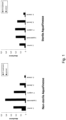
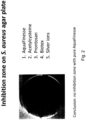
- a slime-test was performed with the above five bacteria strains and mixtures thereof, and with Pseudomonas aeruginosa at two different doses of "Aqua Finesse” to assess if it dissolved the “slime” layer of the biofilm. All these tests proved that "Aqua Finesse” had effect in removing the slime layer and making biofilms susceptible to antibiotics.
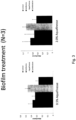
- An MTT assay was performed with the separate bacteria biofilms and a biofilm of the mixture exposed to 3 different doses of "Aqua Finesse” for 5 and 30 minutes. An MTT assay was also performed to assess the effectiveness of treatment with a combination of "Aqua Finesse” and antibiotics. Afterwards a confocal laser scanner microscope was used. It was demonstrated that antibiotic treatment is more effective after pre-treatment with "AquaFinesse”.
- An MTT assay showed that the metabolic activity of the bacteria does not change when exposed to "Aqua Finesse” in different concentrations. Performing multiple slime-tests showed that treatment with "Aqua Finesse” partially opens and loosens biofilm slime and resulted in fewer biofilm clumps.
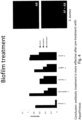
- MTT assay analysis showed prophylactic use of "Aqua Finesse” to have no noticeable effect. Furthermore treatment of biofilms with only “Aqua Finesse” or antibiotics showed no significant improvement, whereas treatment with "Aqua Finesse” followed by antibiotic treatment showed significantly better results. See Figs. 3 and 4 .
- the mixed biofilm of S . aureus and Pseudomonas was used for the Confocal laser scanning microscopy (CLSM).
- CLSM Confocal laser scanning microscopy
- the biofilm was tested in 4 different conditions.
- the first well was filled with an untreated biofilm of the mixture as control.
- antibiotics were added to the biofilm.
- "Aqua Finesse” was added to the third well.
- the fourth well was treated with a combination of "Aqua Finesse” and the antibiotics.
- Figure 5 shows the CLSM of the biofilm in the different conditions.
- the green dots show the living cells and the red dots show the death cells.
- the picture shows that "Aqua Finesse” in combination with the antibiotic kills many cells.
- a stock solution of a composition according to the present invention was made as follows.
- This solution was made sterile by gamma irradiation and used to fill 2 litre PE bottles, which were then sealed and provided with a batch number.
- Cytotoxicity of the solution prepared in Example 2, hereinafter also named Solution A is assessed by three independent methods in four different human fibroblast cell lines.
- Cell viability is determined using the Alamar Blue cell viability stain, the percentage of surviving cells after exposure is determined by cell count and the ability of cells to survive and recover after exposure is assessed using a clonal survival assay.
- Cells were exposed to the test solution for 30 minutes and cytotoxicity was determined 24 hr and 48 hr after exposure. All assays are performed in three independent tests.
- Solution A can induce cytotoxicity in cultured human fibroblasts, but the cytotoxic potency strongly depends on the cell type.
- composition A The efficacy of Composition A to biofilms was experimentally tested in a static system with different concentrations of the composition in sterile and non-sterile form (50%, 25%, 10%, 5%, 1%, 0.5% and 0.1% solutions in sterile MQ) .
- biofilm-generating microorganism strains were used: S. aureus ATCC 6538 and MRSA S-325, and S . epidermis 1457 and 0068.
- S. aureus MRSA S-325 formed the least extensive biofims, but also with this strain no significant reduction of the amount of biofilm was observed at any of the concentrations of the tested composition, neither for the treatment of 10 minutes, nor for the treatment of 30 minutes.
- S. aureus ATCC 6538 a clear and significant reduction was observed for the treatment of 10 minutes and 30 minutes at the 25%, 10%, 25%, 10% and 5% concentrations in a decreasing order with decreasing concentrations. No difference in efficiency was found between the sterile and non-sterile solutions. A longer treatment did not result in this case in an increase in the number of effective concentrations.
- the dosage which showed clear effects on the specific biofilm of a bacterial strain did not result in cytotoxic effects on the human fibroblast cell cultures.
Landscapes
- Health & Medical Sciences (AREA)
- Chemical & Material Sciences (AREA)
- Veterinary Medicine (AREA)
- Life Sciences & Earth Sciences (AREA)
- Public Health (AREA)
- General Health & Medical Sciences (AREA)
- Animal Behavior & Ethology (AREA)
- Medicinal Chemistry (AREA)
- Pharmacology & Pharmacy (AREA)
- Epidemiology (AREA)
- Inorganic Chemistry (AREA)
- Dermatology (AREA)
- General Chemical & Material Sciences (AREA)
- Chemical Kinetics & Catalysis (AREA)
- Engineering & Computer Science (AREA)
- Oil, Petroleum & Natural Gas (AREA)
- Organic Chemistry (AREA)
- Nuclear Medicine, Radiotherapy & Molecular Imaging (AREA)
- Bioinformatics & Cheminformatics (AREA)
- Pharmaceuticals Containing Other Organic And Inorganic Compounds (AREA)
- Medicinal Preparation (AREA)
Claims (15)
- Composition pharmaceutique destinée à être utilisée pour traiter ou nettoyer une plaie sur le corps humain et éliminer un biofilm d'une surface de la plaie, comprenant (en pourcentage en poids) :(a) d'environ 0,1 % à environ 2,5 % d'un méta-silicate,(b) d'environ 0,1 % à environ 2,0 % d'un carbonate,(c) d'environ 0,1 % à environ 1,0 % d'un gluconate,(d) d'environ 0,1 % à environ 1,0 % de sulfate d'aluminium et de potassium, et(e) d'environ 0,1 % à environ 1,0 % de chlorure de sodium ;l'utilisation comprenant l'application de ladite composition sur une plaie, éventuellement suivie de l'application d'un agent curatif sur la plaie
- Composition à utiliser selon la revendication 1, dans laquelle le chlorure de sodium est du sel marin synthétique.
- Composition à utiliser selon la revendication 1 ou la revendication 2, dans laquelle la composition est sous la forme d'une solution aqueuse ayant un pH de 7,5 à 9.
- Composition à utiliser selon l'une quelconque des revendications 1 à 3, dans laquelle ledit méta-silicate est un silicate de métal alcalin choisi dans le groupe constitué du méta-silicate de sodium ou de potassium, et de leurs mélanges.
- Composition à utiliser selon l'une quelconque des revendications 1 à 4, dans laquelle ledit carbonate est choisi dans le groupe constitué du carbonate de sodium, du sesquicarbonate de sodium, du bicarbonate de sodium et de leurs mélanges.
- Composition à utiliser selon l'une quelconque des revendications 1 à 5, dans laquelle ledit gluconate est choisi dans le groupe constitué du gluconate d'ammonium, du gluconate de lithium, du gluconate de sodium, du gluconate d'amidon sodique, du gluconate de potassium, du gluconate acide d'ammonium, du gluconate acide de sodium, gluconate acide de lithium, gluconate acide de potassium, D-gluconate d'ammonium, D-gluconate de lithium, D-gluconate de sodium, D-gluconate de potassium, acide gluconique, D-acide gluconique, L-acide gluconique, L-gluconate d'ammonium, L-lithium le gluconate, le L-gluconate de sodium, le L-gluconate de potassium, le gluconate de calcium, le gluconate acide de calcium, le D-gluconate de calcium, le L-gluconate de calcium et leurs mélanges.
- Composition à utiliser selon la revendication 1, dans laquelle la composition comprend (en pourcentage en poids) :a) d'environ 0,5 % à environ 2,0 % de métasilicate de sodium ;b) d'environ 0,5 % à environ 1,5 % de carbonate de sodium ;c) d'environ 0,3 % à environ 0,7 % de gluconate de sodium ;d) d'environ 0,3 % à environ 0,7 % de sulfate d'aluminium et de potassium ;e) d'environ 0,3 % à environ 0,7 % de chlorure de sodium.
- Composition à utiliser selon la revendication 7, dans laquelle le chlorure de sodium est du sel marin synthétique.
- Composition à utiliser selon l'une quelconque des revendications 1 à 8, dans laquelle la composition comprend en outre un agent émulsifiant, un tensioactif, un agent épaississant ou un mélange de ceux-ci.
- Composition à utiliser selon l'une quelconque des revendications 1 à 9, dans laquelle la composition comprend en outre un véhicule physiologiquement acceptable.
- Composition à utiliser selon la revendication 10, dans laquelle le support physiologique est choisi parmi les liposomes, les solutions, de préférence les solutions aqueuses, les crèmes, les émollients, les pommades, les gels, les formulations solides et les formulations liquides, ou les diluants.
- Composition à utiliser selon l'une quelconque des revendications 1 à 11, dans laquelle la composition se présente sous la forme d'un liquide, d'une crème, d'une huile, d'un gel, d'une crème fluide, d'une lotion, d'une émulsion ou d'une micro-émulsion.
- Composition à utiliser selon l'une quelconque des revendications 1 à 12, dans laquelle la composition est sous la forme d'une solution de rinçage des plaies, qui est constituée d'au moins 98 pour cent en poids d'eau ou d'eau déminéralisée.
- Composition pour utilisation selon l'une quelconque des revendications 1 à 13, dans laquelle la composition se présente sous la forme d'un gel pour plaies, qui contient de 1 à 15 pour cent en poids de glycérine et de 0,2 à 5 pour cent en poids d'hydroxyéthyl-cellulose, en particulier de 5 à 12 pour cent en poids de glycérine et de 0.2 à 3 pour cent en poids d'hydroxyéthylcellulose; ou sous forme de solution de rinçage ou de gel de lavage ou de douche pour le traitement des plaies, ou de gel hydratant ou de couverture humide des plaies, ou de gel dissolvant pour dissoudre les incrustations ou les croûtes de la surface du corps ou des plaies ou pour enlever les pansements ou pour changer les pansements humides, ou pour traiter les brûlures et les greffes de peau.
- Composition à utiliser selon l'une des revendications 1 à 14, dans laquelle l'agent curatif comprend au moins un agent antimicrobien et un agent oxydant, l'agent oxydant étant de préférence une pommade au peroxyde, la composition améliorant de préférence l'efficacité de l'antibiotique ou de l'agent oxydant lorsqu'elle est appliquée sur la plaie.
Priority Applications (1)
| Application Number | Priority Date | Filing Date | Title |
|---|---|---|---|
| EP14793026.7A EP3052108B1 (fr) | 2013-10-02 | 2014-10-02 | Composition de traitement des plaies |
Applications Claiming Priority (3)
| Application Number | Priority Date | Filing Date | Title |
|---|---|---|---|
| EP20130004755 EP2857025A1 (fr) | 2013-10-02 | 2013-10-02 | Composition de traitement des plaies |
| PCT/EP2014/071217 WO2015049364A1 (fr) | 2013-10-02 | 2014-10-02 | Composition de traitement de blessure |
| EP14793026.7A EP3052108B1 (fr) | 2013-10-02 | 2014-10-02 | Composition de traitement des plaies |
Publications (3)
| Publication Number | Publication Date |
|---|---|
| EP3052108A1 EP3052108A1 (fr) | 2016-08-10 |
| EP3052108B1 true EP3052108B1 (fr) | 2024-09-25 |
| EP3052108C0 EP3052108C0 (fr) | 2024-09-25 |
Family
ID=49304654
Family Applications (2)
| Application Number | Title | Priority Date | Filing Date |
|---|---|---|---|
| EP20130004755 Withdrawn EP2857025A1 (fr) | 2013-10-02 | 2013-10-02 | Composition de traitement des plaies |
| EP14793026.7A Active EP3052108B1 (fr) | 2013-10-02 | 2014-10-02 | Composition de traitement des plaies |
Family Applications Before (1)
| Application Number | Title | Priority Date | Filing Date |
|---|---|---|---|
| EP20130004755 Withdrawn EP2857025A1 (fr) | 2013-10-02 | 2013-10-02 | Composition de traitement des plaies |
Country Status (6)
| Country | Link |
|---|---|
| US (1) | US20160243159A1 (fr) |
| EP (2) | EP2857025A1 (fr) |
| AU (2) | AU2014331044A1 (fr) |
| CA (1) | CA2926116C (fr) |
| IL (1) | IL244862B (fr) |
| WO (1) | WO2015049364A1 (fr) |
Families Citing this family (4)
| Publication number | Priority date | Publication date | Assignee | Title |
|---|---|---|---|---|
| WO2020122007A1 (fr) * | 2018-12-14 | 2020-06-18 | 株式会社ビーエムジー | Matériau de renforcement d'adhésif de tissu en forme de feuille à deux réactifs |
| US20210322462A1 (en) * | 2020-04-17 | 2021-10-21 | California Institute Of Technology | Wound prevention and/or treatment and related compounds, matrices, compositions, methods and systems |
| CN115581797B (zh) | 2022-10-10 | 2023-05-30 | 淄博乐悠悠农业科技有限公司 | 一种促进创伤面愈合的液体敷料 |
| CN119280465A (zh) * | 2024-10-10 | 2025-01-10 | 泰州市榕兴医疗用品股份有限公司 | 一种水胶体敷料及其制备方法 |
Family Cites Families (13)
| Publication number | Priority date | Publication date | Assignee | Title |
|---|---|---|---|---|
| US4401651A (en) * | 1979-04-18 | 1983-08-30 | Knutson Richard A | Wound-healing compositions containing povidone-iodine |
| US5646190A (en) * | 1991-03-01 | 1997-07-08 | Warner-Lambert Company | Acne treating-wound healing compositions and methods for preparing and using same |
| JPH06206825A (ja) | 1992-12-11 | 1994-07-26 | Nippon Rooshiyon Kk | 白癬菌、湿疹等による皮膚病の治療剤及び 皮膚殺菌活性化剤 |
| ES2122288T3 (es) | 1993-05-26 | 1998-12-16 | Fresenius Ag | Antiinfeccioso. |
| US6607648B1 (en) * | 1998-11-10 | 2003-08-19 | Integrity Technologies Llc | Method and apparatus for generating aqueous silica network particles |
| JP2001139477A (ja) | 1999-11-17 | 2001-05-22 | Coherent Technology:Kk | 創傷部位の組織細胞増殖促進液 |
| EP1103284A3 (fr) | 1999-11-24 | 2001-09-19 | Siemens Building Technologies AG | Système de lutte contre l'incendie pour tunnels routier |
| DE10132817A1 (de) | 2001-07-06 | 2003-01-30 | Prontomed Gmbh | Wundbehandlungsmittel |
| DE102004022645A1 (de) * | 2004-05-07 | 2005-12-15 | Resorba Wundversorgung Gmbh & Co. Kg | Bioresorbierbares Material auf Kollagen-Basis |
| LT1791791T (lt) * | 2004-09-27 | 2019-09-10 | Special Water Patents B.V. | Vandens valymo būdai ir kompozicijos |
| WO2007099398A2 (fr) | 2005-09-27 | 2007-09-07 | Naturalite Benelux B.V. | procédés et compositions pour le traitement de la peau |
| DE102010013075A1 (de) | 2010-03-26 | 2011-09-29 | B. Braun Melsungen Ag | Antimikrobielle Wundauflage |
| KR20150013280A (ko) * | 2012-05-11 | 2015-02-04 | 스미스 앤드 네퓨, 인크. | 박테리아 균막을 제거하기 위한 세아프로제의 용도 |
-
2013
- 2013-10-02 EP EP20130004755 patent/EP2857025A1/fr not_active Withdrawn
-
2014
- 2014-10-02 CA CA2926116A patent/CA2926116C/fr active Active
- 2014-10-02 AU AU2014331044A patent/AU2014331044A1/en not_active Abandoned
- 2014-10-02 US US15/026,504 patent/US20160243159A1/en not_active Abandoned
- 2014-10-02 EP EP14793026.7A patent/EP3052108B1/fr active Active
- 2014-10-02 WO PCT/EP2014/071217 patent/WO2015049364A1/fr not_active Ceased
-
2016
- 2016-04-03 IL IL24486216A patent/IL244862B/en active IP Right Grant
-
2019
- 2019-12-12 AU AU2019280025A patent/AU2019280025A1/en not_active Abandoned
Also Published As
| Publication number | Publication date |
|---|---|
| IL244862B (en) | 2019-11-28 |
| EP3052108A1 (fr) | 2016-08-10 |
| EP2857025A1 (fr) | 2015-04-08 |
| AU2014331044A1 (en) | 2016-05-19 |
| AU2019280025A1 (en) | 2020-01-16 |
| IL244862A0 (en) | 2016-05-31 |
| EP3052108C0 (fr) | 2024-09-25 |
| NZ719455A (en) | 2021-11-26 |
| CA2926116C (fr) | 2023-05-02 |
| US20160243159A1 (en) | 2016-08-25 |
| CA2926116A1 (fr) | 2015-04-09 |
| WO2015049364A1 (fr) | 2015-04-09 |
Similar Documents
| Publication | Publication Date | Title |
|---|---|---|
| Topbas et al. | Endodontic irrigation solutions: A review: Endodontic irrigation solutions | |
| US12128120B2 (en) | Wound cleansing method | |
| CA2829931C (fr) | Solutions stabilisees d'acide hypohalogeneux | |
| AU2019280025A1 (en) | Wound treatment composition | |
| US20160324891A1 (en) | Nanoclustered water having improved medical utility | |
| MXPA05001240A (es) | Solucion acida fisiologicamente equilibrada, ionizada, y metodologia para usarla en la cicatrizacion de heridas. | |
| WO2015082937A2 (fr) | Composition et utilisations correspondantes | |
| GB2355190A (en) | Super-oxidised water based on hypochlorous acid in medical treatment | |
| MX2007013774A (es) | Metodo para utilizar solucion de agua con potencial oxido reductor en aplicaciones dentales. | |
| JP2014530176A (ja) | 消毒組成物及びそれらの使用 | |
| NZ719455B2 (en) | Wound treatment composition | |
| WO2024151155A1 (fr) | Procédé pour produire de l'acide hypochloreux | |
| CN116602986A (zh) | 一种用于人体组织的复合制剂 |
Legal Events
| Date | Code | Title | Description |
|---|---|---|---|
| PUAI | Public reference made under article 153(3) epc to a published international application that has entered the european phase |
Free format text: ORIGINAL CODE: 0009012 |
|
| 17P | Request for examination filed |
Effective date: 20160502 |
|
| AK | Designated contracting states |
Kind code of ref document: A1 Designated state(s): AL AT BE BG CH CY CZ DE DK EE ES FI FR GB GR HR HU IE IS IT LI LT LU LV MC MK MT NL NO PL PT RO RS SE SI SK SM TR |
|
| AX | Request for extension of the european patent |
Extension state: BA ME |
|
| DAX | Request for extension of the european patent (deleted) | ||
| STAA | Information on the status of an ep patent application or granted ep patent |
Free format text: STATUS: EXAMINATION IS IN PROGRESS |
|
| 17Q | First examination report despatched |
Effective date: 20170704 |
|
| RAP1 | Party data changed (applicant data changed or rights of an application transferred) |
Owner name: SPECIAL WATER PATENTS B.V. |
|
| RIN1 | Information on inventor provided before grant (corrected) |
Inventor name: DE RIJK, JAN |
|
| P01 | Opt-out of the competence of the unified patent court (upc) registered |
Effective date: 20230629 |
|
| GRAP | Despatch of communication of intention to grant a patent |
Free format text: ORIGINAL CODE: EPIDOSNIGR1 |
|
| STAA | Information on the status of an ep patent application or granted ep patent |
Free format text: STATUS: GRANT OF PATENT IS INTENDED |
|
| INTG | Intention to grant announced |
Effective date: 20240429 |
|
| GRAS | Grant fee paid |
Free format text: ORIGINAL CODE: EPIDOSNIGR3 |
|
| GRAA | (expected) grant |
Free format text: ORIGINAL CODE: 0009210 |
|
| STAA | Information on the status of an ep patent application or granted ep patent |
Free format text: STATUS: THE PATENT HAS BEEN GRANTED |
|
| AK | Designated contracting states |
Kind code of ref document: B1 Designated state(s): AL AT BE BG CH CY CZ DE DK EE ES FI FR GB GR HR HU IE IS IT LI LT LU LV MC MK MT NL NO PL PT RO RS SE SI SK SM TR |
|
| REG | Reference to a national code |
Ref country code: GB Ref legal event code: FG4D |
|
| REG | Reference to a national code |
Ref country code: CH Ref legal event code: EP |
|
| REG | Reference to a national code |
Ref country code: DE Ref legal event code: R096 Ref document number: 602014090911 Country of ref document: DE |
|
| REG | Reference to a national code |
Ref country code: IE Ref legal event code: FG4D |
|
| U01 | Request for unitary effect filed |
Effective date: 20241014 |
|
| P04 | Withdrawal of opt-out of the competence of the unified patent court (upc) registered |
Free format text: CASE NUMBER: APP_58875/2024 Effective date: 20241028 |
|
| U07 | Unitary effect registered |
Designated state(s): AT BE BG DE DK EE FI FR IT LT LU LV MT NL PT RO SE SI Effective date: 20241030 |
|
| U20 | Renewal fee for the european patent with unitary effect paid |
Year of fee payment: 11 Effective date: 20241111 |
|
| PG25 | Lapsed in a contracting state [announced via postgrant information from national office to epo] |
Ref country code: NO Free format text: LAPSE BECAUSE OF FAILURE TO SUBMIT A TRANSLATION OF THE DESCRIPTION OR TO PAY THE FEE WITHIN THE PRESCRIBED TIME-LIMIT Effective date: 20241225 |
|
| PG25 | Lapsed in a contracting state [announced via postgrant information from national office to epo] |
Ref country code: GR Free format text: LAPSE BECAUSE OF FAILURE TO SUBMIT A TRANSLATION OF THE DESCRIPTION OR TO PAY THE FEE WITHIN THE PRESCRIBED TIME-LIMIT Effective date: 20241226 |
|
| PG25 | Lapsed in a contracting state [announced via postgrant information from national office to epo] |
Ref country code: RS Free format text: LAPSE BECAUSE OF FAILURE TO SUBMIT A TRANSLATION OF THE DESCRIPTION OR TO PAY THE FEE WITHIN THE PRESCRIBED TIME-LIMIT Effective date: 20241225 |
|
| PG25 | Lapsed in a contracting state [announced via postgrant information from national office to epo] |
Ref country code: RS Free format text: LAPSE BECAUSE OF FAILURE TO SUBMIT A TRANSLATION OF THE DESCRIPTION OR TO PAY THE FEE WITHIN THE PRESCRIBED TIME-LIMIT Effective date: 20241225 Ref country code: NO Free format text: LAPSE BECAUSE OF FAILURE TO SUBMIT A TRANSLATION OF THE DESCRIPTION OR TO PAY THE FEE WITHIN THE PRESCRIBED TIME-LIMIT Effective date: 20241225 Ref country code: GR Free format text: LAPSE BECAUSE OF FAILURE TO SUBMIT A TRANSLATION OF THE DESCRIPTION OR TO PAY THE FEE WITHIN THE PRESCRIBED TIME-LIMIT Effective date: 20241226 |
|
| PG25 | Lapsed in a contracting state [announced via postgrant information from national office to epo] |
Ref country code: IS Free format text: LAPSE BECAUSE OF FAILURE TO SUBMIT A TRANSLATION OF THE DESCRIPTION OR TO PAY THE FEE WITHIN THE PRESCRIBED TIME-LIMIT Effective date: 20250125 |
|
| PG25 | Lapsed in a contracting state [announced via postgrant information from national office to epo] |
Ref country code: SM Free format text: LAPSE BECAUSE OF FAILURE TO SUBMIT A TRANSLATION OF THE DESCRIPTION OR TO PAY THE FEE WITHIN THE PRESCRIBED TIME-LIMIT Effective date: 20240925 |
|
| PG25 | Lapsed in a contracting state [announced via postgrant information from national office to epo] |
Ref country code: ES Free format text: LAPSE BECAUSE OF FAILURE TO SUBMIT A TRANSLATION OF THE DESCRIPTION OR TO PAY THE FEE WITHIN THE PRESCRIBED TIME-LIMIT Effective date: 20240925 |
|
| PG25 | Lapsed in a contracting state [announced via postgrant information from national office to epo] |
Ref country code: CZ Free format text: LAPSE BECAUSE OF FAILURE TO SUBMIT A TRANSLATION OF THE DESCRIPTION OR TO PAY THE FEE WITHIN THE PRESCRIBED TIME-LIMIT Effective date: 20240925 Ref country code: PL Free format text: LAPSE BECAUSE OF FAILURE TO SUBMIT A TRANSLATION OF THE DESCRIPTION OR TO PAY THE FEE WITHIN THE PRESCRIBED TIME-LIMIT Effective date: 20240925 |
|
| PG25 | Lapsed in a contracting state [announced via postgrant information from national office to epo] |
Ref country code: SK Free format text: LAPSE BECAUSE OF FAILURE TO SUBMIT A TRANSLATION OF THE DESCRIPTION OR TO PAY THE FEE WITHIN THE PRESCRIBED TIME-LIMIT Effective date: 20240925 |
|
| REG | Reference to a national code |
Ref country code: CH Ref legal event code: PL |
|
| PG25 | Lapsed in a contracting state [announced via postgrant information from national office to epo] |
Ref country code: MC Free format text: LAPSE BECAUSE OF FAILURE TO SUBMIT A TRANSLATION OF THE DESCRIPTION OR TO PAY THE FEE WITHIN THE PRESCRIBED TIME-LIMIT Effective date: 20240925 |
|
| PG25 | Lapsed in a contracting state [announced via postgrant information from national office to epo] |
Ref country code: CH Free format text: LAPSE BECAUSE OF NON-PAYMENT OF DUE FEES Effective date: 20241031 |
|
| PLBE | No opposition filed within time limit |
Free format text: ORIGINAL CODE: 0009261 |
|
| STAA | Information on the status of an ep patent application or granted ep patent |
Free format text: STATUS: NO OPPOSITION FILED WITHIN TIME LIMIT |
|
| 26N | No opposition filed |
Effective date: 20250626 |
|
| PG25 | Lapsed in a contracting state [announced via postgrant information from national office to epo] |
Ref country code: IE Free format text: LAPSE BECAUSE OF NON-PAYMENT OF DUE FEES Effective date: 20241002 |
|
| U20 | Renewal fee for the european patent with unitary effect paid |
Year of fee payment: 12 Effective date: 20251028 |
|
| PGFP | Annual fee paid to national office [announced via postgrant information from national office to epo] |
Ref country code: GB Payment date: 20251022 Year of fee payment: 12 |
|
| PG25 | Lapsed in a contracting state [announced via postgrant information from national office to epo] |
Ref country code: HR Free format text: LAPSE BECAUSE OF FAILURE TO SUBMIT A TRANSLATION OF THE DESCRIPTION OR TO PAY THE FEE WITHIN THE PRESCRIBED TIME-LIMIT Effective date: 20240925 |
|
| PG25 | Lapsed in a contracting state [announced via postgrant information from national office to epo] |
Ref country code: CY Free format text: LAPSE BECAUSE OF FAILURE TO SUBMIT A TRANSLATION OF THE DESCRIPTION OR TO PAY THE FEE WITHIN THE PRESCRIBED TIME-LIMIT; INVALID AB INITIO Effective date: 20141002 |
|
| PG25 | Lapsed in a contracting state [announced via postgrant information from national office to epo] |
Ref country code: HU Free format text: LAPSE BECAUSE OF FAILURE TO SUBMIT A TRANSLATION OF THE DESCRIPTION OR TO PAY THE FEE WITHIN THE PRESCRIBED TIME-LIMIT; INVALID AB INITIO Effective date: 20141002 |
|
| PG25 | Lapsed in a contracting state [announced via postgrant information from national office to epo] |
Ref country code: TR Free format text: LAPSE BECAUSE OF FAILURE TO SUBMIT A TRANSLATION OF THE DESCRIPTION OR TO PAY THE FEE WITHIN THE PRESCRIBED TIME-LIMIT Effective date: 20240925 |