EP3053014B1 - Verfahren zur erkennung mehrerer blicke und vorrichtung dafür - Google Patents
Verfahren zur erkennung mehrerer blicke und vorrichtung dafür Download PDFInfo
- Publication number
- EP3053014B1 EP3053014B1 EP14848407.4A EP14848407A EP3053014B1 EP 3053014 B1 EP3053014 B1 EP 3053014B1 EP 14848407 A EP14848407 A EP 14848407A EP 3053014 B1 EP3053014 B1 EP 3053014B1
- Authority
- EP
- European Patent Office
- Prior art keywords
- gaze
- display area
- display
- visual content
- area
- Prior art date
- Legal status (The legal status is an assumption and is not a legal conclusion. Google has not performed a legal analysis and makes no representation as to the accuracy of the status listed.)
- Not-in-force
Links
Images


Classifications
-
- G—PHYSICS
- G06—COMPUTING OR CALCULATING; COUNTING
- G06F—ELECTRIC DIGITAL DATA PROCESSING
- G06F3/00—Input arrangements for transferring data to be processed into a form capable of being handled by the computer; Output arrangements for transferring data from processing unit to output unit, e.g. interface arrangements
- G06F3/01—Input arrangements or combined input and output arrangements for interaction between user and computer
- G06F3/048—Interaction techniques based on graphical user interfaces [GUI]
-
- G—PHYSICS
- G06—COMPUTING OR CALCULATING; COUNTING
- G06F—ELECTRIC DIGITAL DATA PROCESSING
- G06F3/00—Input arrangements for transferring data to be processed into a form capable of being handled by the computer; Output arrangements for transferring data from processing unit to output unit, e.g. interface arrangements
- G06F3/01—Input arrangements or combined input and output arrangements for interaction between user and computer
- G06F3/048—Interaction techniques based on graphical user interfaces [GUI]
- G06F3/0484—Interaction techniques based on graphical user interfaces [GUI] for the control of specific functions or operations, e.g. selecting or manipulating an object, an image or a displayed text element, setting a parameter value or selecting a range
- G06F3/0485—Scrolling or panning
-
- G—PHYSICS
- G06—COMPUTING OR CALCULATING; COUNTING
- G06F—ELECTRIC DIGITAL DATA PROCESSING
- G06F3/00—Input arrangements for transferring data to be processed into a form capable of being handled by the computer; Output arrangements for transferring data from processing unit to output unit, e.g. interface arrangements
- G06F3/01—Input arrangements or combined input and output arrangements for interaction between user and computer
- G06F3/011—Arrangements for interaction with the human body, e.g. for user immersion in virtual reality
- G06F3/013—Eye tracking input arrangements
-
- G—PHYSICS
- G06—COMPUTING OR CALCULATING; COUNTING
- G06F—ELECTRIC DIGITAL DATA PROCESSING
- G06F3/00—Input arrangements for transferring data to be processed into a form capable of being handled by the computer; Output arrangements for transferring data from processing unit to output unit, e.g. interface arrangements
- G06F3/01—Input arrangements or combined input and output arrangements for interaction between user and computer
- G06F3/03—Arrangements for converting the position or the displacement of a member into a coded form
- G06F3/0304—Detection arrangements using opto-electronic means
-
- G—PHYSICS
- G06—COMPUTING OR CALCULATING; COUNTING
- G06F—ELECTRIC DIGITAL DATA PROCESSING
- G06F3/00—Input arrangements for transferring data to be processed into a form capable of being handled by the computer; Output arrangements for transferring data from processing unit to output unit, e.g. interface arrangements
- G06F3/01—Input arrangements or combined input and output arrangements for interaction between user and computer
- G06F3/048—Interaction techniques based on graphical user interfaces [GUI]
- G06F3/0487—Interaction techniques based on graphical user interfaces [GUI] using specific features provided by the input device, e.g. functions controlled by the rotation of a mouse with dual sensing arrangements, or of the nature of the input device, e.g. tap gestures based on pressure sensed by a digitiser
- G06F3/0488—Interaction techniques based on graphical user interfaces [GUI] using specific features provided by the input device, e.g. functions controlled by the rotation of a mouse with dual sensing arrangements, or of the nature of the input device, e.g. tap gestures based on pressure sensed by a digitiser using a touch-screen or digitiser, e.g. input of commands through traced gestures
-
- G—PHYSICS
- G06—COMPUTING OR CALCULATING; COUNTING
- G06F—ELECTRIC DIGITAL DATA PROCESSING
- G06F3/00—Input arrangements for transferring data to be processed into a form capable of being handled by the computer; Output arrangements for transferring data from processing unit to output unit, e.g. interface arrangements
- G06F3/14—Digital output to display device ; Cooperation and interconnection of the display device with other functional units
-
- G—PHYSICS
- G06—COMPUTING OR CALCULATING; COUNTING
- G06F—ELECTRIC DIGITAL DATA PROCESSING
- G06F2203/00—Indexing scheme relating to G06F3/00 - G06F3/048
- G06F2203/038—Indexing scheme relating to G06F3/038
- G06F2203/0381—Multimodal input, i.e. interface arrangements enabling the user to issue commands by simultaneous use of input devices of different nature, e.g. voice plus gesture on digitizer
Definitions
- the present specification relates to a method of recognizing multi-gaze and an apparatus therefor, and more particularly, to a method of controlling a scroll of a visual content displayed in a display device using a plurality of gazes and a multi-gaze recognition device therefor.
- a display device can be controlled by a user in a manner of actively reflecting a service condition of the display device, user convenience can be maximized.
- European Patent Application Publication No. 2 450 872 A1 refers to a method for controlling a display of a mobile device by capturing an image using a camera device of the mobile device, the camera device being directed in a same direction as the display of the mobile device and the image comprising one or more subjects; determining a point of regards in the image for at least one of the one or more subjects, the point of regard being indicative of an area on the display at which a gaze of the corresponding subject is directed; determining, based on the point of regard, an instruction for controlling the display; and controlling the display according to the instruction, wherein controlling the display includes reducing the visibility of at least one portion of a content displayed on the display.
- U.S. Patent Application Publication No. 2013/005443 A1 refers to methods and systems for implementing a mobile device with facial detection and eye tracking components which are operable to facilitate and/or implement different functionalities such as facial feature detection, facial expression recognition and eye tracking for detecting and tracking eye movements associated with a user that is interacting with the device.
- the "Cooperative Gameplay” allows to modify the single player mode of the game to introduce additional players, accordingly increasing the difficulty level of the game to compensate for the additional players.
- a display device can scroll the visual content according to a touch gesture signal using a sense of touch of a user. Since the touch gesture signal is inputted by the user, the visual content can be scrolled according to Intention of the user. Yet, as various display devices have been developed, a plurality of users may watch the visual content together. In this case, since the speed of reading the visual content varies according to each user, if the visual content is scrolled by a touch gesture signal of a prescribed user, the other users may feel inconvenience.
- the present specification is directed to an apparatus and method thereof that substantially obviate one or more problems due to limitations and disadvantages of the related art.
- the present specification provides a multi-gaze recognition device and a method therefor capable of scrolling a visual content using a plurality of gazes of users.
- the multi-gaze recognition device includes the features of claim 1.
- the method of recognizing multi-gaze and scrolling a visual content includes the features of claim 14.
- a multi-touch recognition device since a visual content can be provided according to a plurality of user gazes, user convenience can be maximized.
- a multi-touch recognition device since an operation of a display device can be controlled according to various user inputs, a more user-friendly user interface can be provided.
- terminologies used in the present specification are selected from general terminologies used currently and widely in consideration of functions, they may be changed in accordance with intentions of technicians engaged in the corresponding fields, customs, advents of new technologies and the like. Occasionally, some terminologies may be arbitrarily selected by the applicant(s). In this case, the meanings of the arbitrarily selected terminologies shall be described in the corresponding part of the detailed description of the specification. Therefore, terminologies used in the present specification need to be construed based on the substantial meanings of the corresponding terminologies and the overall matters disclosed in the present specification rather than construed as simple names of the terminologies.
- a display device when a visual content is displayed, can scroll the visual content according to a touch gesture signal using a sense of touch of a user.
- the touch gesture signal is inputted by a user, the visual content can be scrolled according to intention of the user.
- a plurality of users may watch the visual content together. In this case, since the speed of reading the visual content varies according to each user, if the visual content is scrolled by a touch gesture signal of a prescribed user, the other users may feel inconvenience.
- FIG. 1 is a diagram for a case that two users simultaneously watch a visual content displayed in a display device.
- a display device includes a display unit capable of displaying a visual content.
- a type and size of the display unit may be non-limited.
- the speed of watching or the speed of reading the visual content of the user 1 and the user 2 may be different from each other.
- a position of the visual content corresponding to each of a gaze of the user 1 and a gaze of the user 2 may vary.
- FIG. 1 is a diagram for a case that two users watch a visual content with a different speed.
- FIG. 1 indicates a gaze position of each user.
- a gaze of the user 1 and a gaze of the user 2 are called a first gaze 1000 and a second gaze 1100, respectively.
- the display device can display a display area 1200 including a visual content. Regarding the display area 1200, it shall be explained in detail later.
- the first gaze 1000 and the second gaze 1100 may correspond to specific positions in the display area 1200, respectively.
- a position of the first gaze 1000 can be located at the top of a position of the second gaze 1100 in the display area 1200.
- the user 2 may finish watching the currently displayed visual content.
- the user 1 may not watch the content since the visual content by which the user 1 is currently watching is scrolled at the same time. If the visual content is not scrolled while the user 1 watches the content, it may cause inconvenience of the user 2.
- the present specification proposes a method of controlling a scroll of the visual content using gazes of the user 1 and the user 2 and a multi-touch recognition device therefor.
- the multi-touch recognition device and the method therefor determine an amount of scroll area capable of scrolling the visual content using a gaze of a slower user, i.e., the first gaze 1000 depicted in FIG. 1 among users and may be able to determine whether an event initiating a scroll occurs using the second gaze 1100.
- the multi-touch recognition device and the method therefor determine an amount of scroll area capable of scrolling the visual content using a gaze of a slower user, i.e., the first gaze 1000 depicted in FIG. 1 among users and may be able to determine whether an event initiating a scroll occurs using the second gaze 1100.
- FIG. 2 is a diagram for a multi-touch recognition device according to one embodiment of the present specification.
- the multi-touch recognition device according to one embodiment of the present specification can include a display module 2000, an input module 2100, an image acquisition module 2200, and an analysis module 2300. The following description is explained centering on the operation of each module.
- the display module 2000 can display a display area including a visual content capable of being scrolled.
- the visual content may mean the visual content including a picture, a photo, a text, and the like.
- the input module 2100 can receive an input of a touch gesture signal to scroll the visual content.
- the touch gesture signal may include a multi-touch gesture signal.
- Various touch gesture signals can be used according to intention of a designer. And, all or a part of the visual content according to the present specification can be scrolled according to a touch duration of the touch gesture signal.
- the image acquisition module 2200 can acquire an image in front of a device. Subsequently, the analysis module 2300 detects gazes of both the user 1 and the user 2 from the image acquired in front of the device and can scroll the visual content using the detected gazes. As mentioned in the foregoing description, when the speed of watching the content of the user 1 and the speed of watching the content of the user 2 are different from each other, a position of a first gaze 1000 corresponding to the gaze of the user 1 can be located at the top of a position of a second gaze 1100 corresponding to the gaze of the user 2 in the display area 1200. A content included in the display area located at a position higher than a position of the first gaze 100 means that the content has already been watched by both the user 1 and the user 2.
- the analysis module 2300 can determine a maximum amount of the scroll area to scroll the visual content on the basis of the position of the first gaze 1000.
- the visual content included in the scroll area can be scrolled according to a touch gesture signal of a user within the determined maximum amount.
- the analysis module 200 can determine whether an event initiating a scroll of a visual content occurs using a position of the second gaze 1100. In this case, if it is judged that the position of the second gaze 1100 is located within a scroll initiation area, the analysis module 1100 according to one embodiment of the present specification can initiate a scroll according to a touch gesture signal.
- the scroll initiation area according to one embodiment of the present specification corresponds to an area to initiate a scroll when a touch gesture signal of a user is inputted.
- the scroll initiation area may be included in the display area 1200. Detailed content shall be described later.
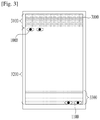
- FIG. 3 is a diagram for a display area according to one embodiment of the present specification.
- a display area 3000 according to one embodiment of the present specification is indicated in FIG. 3 .
- the display area 3000 according to one embodiment of the present specification can include the scroll area 3100 mentioned earlier in FIG. 2 and a first display area 3200.
- the first display area 3200 can include a scroll initiation area 3300. In the following description, each of the areas is explained.
- the first gaze 1000 and the second gaze 1100 can be positioned at parts different from each other in the display area 3000.
- the analysis module 2300 mentioned earlier in FIG. 2 can determine a maximum amount of the scroll area to scroll a visual content using the first gaze 1000.
- the first display area 3200 is an area to provide a user of the first gaze 1000 with the visual content.
- An amount of the first display area 3200 is determined according to the positions of the first gaze 1000 and the second gaze 1100.
- the visual content included in the first display area 3200 may include the visual content already seen by the user of the second gaze 1100.
- the scroll initiation area 3300 is an area to initiate a scroll when a touch gesture signal of a user is inputted by the touch gesture signal.
- the scroll initiation area 3300 may be included in the first display area 3200. Or, the scroll initiation area can be positioned at the top or bottom area of the first display area 3200 including a boundary of the first display area 3200. This is modifiable according to intention of a designer. And, the scroll initiation area 3300 and the scroll area 3100 can be simultaneously configured.
- the analysis module 2300 mentioned earlier in FIG. 2 judges whether the second gaze 1100 is positioned within the scroll initiation area 3300. If the second gaze 1100 is positioned within the scroll initiation area 3300, the analysis module can scroll the visual content according to a touch gesture signal. In this case, as mentioned in the foregoing description, the visual content can be scrolled within the maximum amount of the scroll area 3100.
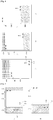
- FIG. 4 is a diagram for a scroll operation of a multi-touch recognition device according to one embodiment of the present specification.
- FIG. 4 indicates a process of scrolling a visual content according to a touch gesture signal after the scroll area and the first display area are determined.
- a display area can include a scroll area 4000 where a maximum amount of the scroll area is determined by the first gaze 1000. And, the display area can also include a first display area 4100 where an amount of the first display area is determined by the first gaze 1000 and the second gaze 1100. As mentioned earlier in FIG. 3 , if it is judged that the second gaze 1100 is included in the scroll initiation area 3300, the analysis module 2300 according to one embodiment of the present specification can scroll the visual content according to a touch gesture signal 4300 of a user.
- FIG. 4 (b) indicates a process of scrolling a visual content according to the touch gesture signal 4300 of the user.
- the analysis module 2300 can scroll the visual content as much as the maximum amount of the scroll area 4000 configured according to the first gaze 1000.
- the amount of scroll area 4000 included in the display area is reduced according to the touch gesture signal 4300.
- the display module 2000 can display a second display area 4200 including a visual content to provide a user of the second gaze 1100 with the visual content.
- the visual content provided to the user of the second gaze 1100 via the second display area 4200 may include content identical or contiguous to the visual content included in the first display area 4100.
- An amount of the second display area 4200 is identical to the amount of the scroll area 4000 reduced by the touch gesture signal.
- the sum of the amount of the scroll area 4000 displayed by the touch gesture signal 4300 and the amount of the second display area 4200 is identical to the amount of the scroll area 4000 depicted in FIG. 4 (a) .
- FIG. 4 (c) indicates a case that the visual content is scrolled up to the maximum amount of the scroll area 4000 by the touch gesture signal 4300.
- the second display area 4200 can be displayed as much as the maximum amount of the scroll area 4000.
- the multi-gaze recognition device can scroll the visual content using gazes of the users watching the visual content, although the speed of watching the visual content of each user is different from each other, each user can be provided with the visual content appropriate for each user.
- FIG. 5 to FIG. 6 is a diagram for a graphic image according to one embodiment of the present specification.
- the display module 2000 according to one embodiment of the present specification can display the first display area 4100 including the visual content for the user of the first gaze and the second display area 4200 for the user of the second gaze.
- the analysis module 2300 according to one embodiment of the present specification can independently scroll the visual contents included in the first display area 4100 and the visual content included in the second display area 4200 by the touch gesture of the user of the first gaze 1000 and the touch gesture of the user of the second gaze 1100, respectively.
- a difference may occur in content or a page number between the visual contents included in the first display area 4100 and the second display area 4200.
- the display module 2000 can display a graphic image like a folded visual content in a boundary between the first display area 4100 and the second display area 4200. And, the display module 2000 according to one embodiment of the present specification can display a graphic image like a folded visual content in the boundary between the first display area 4100 and the second display area 4200 irrespective of the difference in content or page number between the visual contents included in the first display area 4100 and the second display area 4200.
- the multi-gaze recognition device can provide the visual content appropriate for each user via visually divided display areas.
- thickness of the graphic image like the folded visual content may be more thickened.
- the difference in content or page number between the visual contents included in the first display area 4100 and the second display area 4200 decreases because the speed of watching the visual content of the user of the first gaze 1000 becomes faster, the thickness of the graphic image like the folded visual content may decrease.
- the display module 2000 does not display the graphic image like the folded visual content.
- the display module 2000 can display the graphic image like the folded visual content according to a first embodiment to a fourth embodiment as follows.
- the first and the second embodiment can be applied according to an input of a touch gesture signal of a user.
- the third and the fourth embodiment can be applied irrespective of whether a touch gesture signal of a user is inputted.
- the display module 2000 can display the graphic image to distinguish the first display area 4100 from the second display area 4200 when a touch gesture signal of a user is inputted and then the second display area 4200 is displayed.
- Second embodiment if a visual content is scrolled as much as a maximum amount of the scroll area 4000 by a touch gesture signal of a user, the display module 2000 according to one embodiment of the present specification can display the graphic image to distinguish the first display area 4100 from the second display area 4200.
- the display module 2000 can display the graphic image according to a distance between a position of a first gaze 1000 in the first display area 4100 and a position of a second gaze 1100 in the second display area 4200. Detailed content shall be described later.
- the display module 2000 when the first display area 4100 and the second display area 4200 are displayed together, if a position of the first gaze 1000 corresponds to a border line of the top of the first display area 4100, the display module 2000 according to one embodiment of the present specification can display the graphic image.
- the first display area 4100 and the second display area 4200 can be divided by the aforementioned graphic image.
- the analysis module 2300 can scroll the visual contents included in the first display area and the second display area with a speed different from each other.
- FIG. 5 and FIG. 6 are explained in the following description.
- FIG. 5 (a) is a diagram for a graphic image according to the first embodiment.
- a display area according to the first embodiment can include a scroll area 4000, a first display area 4100, and a second display area 4200.
- the display module 2000 can display a graphic image 5000 like a folded visual content.
- the graphic image 5000 according to the first embodiment may not be displayed.
- FIG. 5 (b) is a diagram for a graphic image according to the second embodiment.
- the display area according to the second embodiment can include a first display area 4100 and a second display area 4200.
- the second embodiment corresponds to a case that a visual content is scrolled as much as a maximum amount of a scroll area, the scroll area is not displayed.
- the display module 2000 according to the second embodiment can display a graphic image 5100 like a folded visual content.
- the graphic image 5000 according to the first embodiment of the present specification may not be displayed.
- the visual contents included in the first display area 4100 and the second display area 4200, respectively depicted in FIG. 5 (a) and FIG. 5 (b) can be scrolled with a speed different from each other.
- FIG. 6 is a diagram for a graphic image according to a third embodiment and a fourth embodiment of the present specification.
- FIG. 6 (a) is a diagram for a graphic image according to a third embodiment.
- a display area according to the third embodiment can include a first display area 4100 and a second display area 4200.
- a scroll area may or may not be included according to a touch gesture signal input.
- the analysis module 2300 according to the third embodiment can measure a distance between a position of a first gaze 1000 in the first display area 4100 and a position of a second gaze 1100 in the second display area 4200. After measuring the distance, if the distance between the position of the first gaze 1000 and the position of the second gaze 1100 is greater than a predetermined value, the display module 2000 according to the third embodiment can display the aforementioned graphic image.
- FIG. 6 (b) is a diagram for a graphic image according to the fourth embodiment.
- a display area according to the fourth embodiment can include a first display area 4100 and a second display area 4200.
- a scroll area may or may not be included according to a touch gesture signal input.
- the analysis module 2300 according to the fourth embodiment can judge whether a position of a first gaze 1000 corresponds to a top boundary of the first display area 4100. After judging, if the position of the first gaze 1000 corresponds to a border line of the top of the first display area 4100, the display module 2000 according to the fourth embodiment can display the aforementioned graphic image.
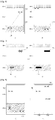
- FIG. 7 is a diagram for an indicator according to one embodiment of the present specification.
- the analysis module 2300 can control a visual content in a manner of detecting a first gaze 1000 and a second gaze 1100 from an image acquired in front of a device by the image acquisition module 2200.
- the analysis module 2300 can detect whether the first gaze 1000 or the second gaze 1000 has disappeared in a manner of acquiring an image in front of the device with a prescribed cycle.
- the display module 2000 can display an indicator indicating a last position corresponding to a lastly detected first gaze 1000 or a lastly detected second gaze 1100.
- FIG. 7 (a) indicates a case that the analysis module 2300 according to one embodiment of the present specification judges that the first gaze 100 does not exist in the first display area 4100 or the second gaze 1100 does not exist in the second display area 4200.
- the analysis module 2300 according to one embodiment of the present specification can simultaneously detect whether the first gaze 1000 and the second gaze 1100 exist. Or, the analysis module 2300 according to one embodiment of the present specification can sequentially detect whether the first gaze 1000 and the second gaze 1100 exist. This is modifiable according to intention of a designer.
- the display module 2000 can display indicators 7000/7100 indicating last positions corresponding to the lastly detected first gaze 1000 and the lastly detected second gaze 1100 in the first display area 4100 and the second display area 4200, respectively.
- the indicators 7000/7100 according to one embodiment of the present specification can be represented by at least one selected from the group consisting of a line, light and shade, number, and a graphic. This is modifiable according to intention of a designer.
- the indicators 7000/7100 according to one embodiment of the present specification can be simultaneously or sequentially displayed depending on whether the first gaze 1000 and the second gaze 1100 are detected.
- FIG. 8 is a diagram for a display area according to a different embodiment of the present specification.
- the display module 2000 can display a graphic image like a folded visual content in a boundary between a first display area 4100 and a second display area 4200.
- the analysis module 2300 can scroll a visual content included in the first display area 4100 and a visual content included in the second display area 4200, respectively by a touch gesture of a user of a first gaze 1000 and a touch gesture of a user of a second gaze 1100.
- the user of the second gaze 1100 may finish watching the visual content included in the second display area 4200 while the user of the first gaze 1000 is still watching the visual content included in the first display area 4100.
- the analysis module 2300 can judge whether the user of the second gaze 1100 has finished reading the visual content included in the second display area 4200 in a manner of detecting the second gaze 1100 irrespective of the touch gesture signal of the user.
- the display module 2000 can display a third display area to provide a new visual content to the user of the second gaze 1100.
- FIG. 8 (a) corresponds to a case that the display area 8000 according to one embodiment of the present specification displays the first display area 4100 and the second display area 4200.
- FIG. 8 (a) indicates a case that the first display area 4100 and the second display area 4200 are divided by the graphic image explained earlier in FIG. 5 to FIG. 6 .
- the visual content may not be scrolled.
- the analysis module 2300 can judge whether the user of the second gaze 1100 has finished reading the visual content included in the second display area 4200 in a manner of detecting the second gaze 1100 irrespective of the touch gesture signal of the user.
- the first display area 4100 can provide a visual content independent of the second display area 4200.
- the user of the first gaze 1000 is able to watch the visual content irrespective of a state of the user of the second gaze 1100.
- FIG. 8 (b) is a diagram for a third display area 8100 to provide a new content to the user of the second gaze 1100. If it is judged that the user of the second gaze 1100 has finished watching the visual content currently displayed in the second display area 4200, the display module 2000 according to one embodiment of the present specification can display the third display area 8000 to provide a new visual content. In this case, since the user of the first gaze 1000 is still watching the displayed visual content, the display module 2000 according to one embodiment of the present specification can provide the existing visual content in a manner of changing a size of the first display area 4100. Hence, the display area can include a size-changed first display area 8000 and the third display area 8100.
- the size-changed first display area 8000 and the third display area 8100 may include visual contents different from each other in a type and content, respectively. And, the analysis module 2300 can scroll the visual contents included in the first display area 8000 and the third display area 8100 with a speed different from each other.
- FIG. 9 is a diagram for an indicator according to a different embodiment of the present specification.
- FIG. 9 indicates a case that the visual content included in the display area according to one embodiment of the present specification corresponds to text content.
- the display area can include a scroll area 4000 and a first display area 4100 as well.
- the display module 2000 according to one embodiment of the present specification can display an indicator 9000 indicating a page of the currently displayed text content in the latter part of a last sentence of the text content displayed in the first display area 4100.
- the indicator 9000 indicating the page of the text content can be represented by at least one selected from the group consisting of a line, light and shade, number, and a graphic. This is modifiable according to intention of a designer.
- FIG. 10 is a diagram for an indicator according to a further different embodiment of the present specification.
- FIG. 10 corresponds to a case that text content is scrolled according to a touch gesture signal.
- FIG. 10 indicates a case that a graphic image like folded text content is displayed in a boundary between the first display area and the second display area.
- the first display area can include text content for the user of the first gaze and the second display area can include text content for the user of the second gaze.
- the text content included in the first display area and the text content included in the second display area can be independently scrolled by each user.
- the first display area and the second display area may include a part different from each other of a text content corresponding to an identical page.
- the first display area and the second display area may include a text content corresponding to a page different from each other.
- the display module 2000 can display an indicator if a page of the text content included in the first display area and a page of the text content included in the second display area are different from each other.
- the indicator 10000 depicted in FIG. 10 (a) is an indicator displayed in the latter part of a last sentence of the text content included in the second display area and indicates a page number of the text content currently included in the second display area.
- the indicator depicted in FIG. 10 (a) can be represented by at least one selected from the group consisting of a line, light and shade, number, and a graphic. This is modifiable according to intention of a designer.
- the display module 2000 can display the indicator 10000 indicating the page number of the text content currently included in the second display area in the latter part of the last sentence of the text content included in the second display area.
- the indicator 11000 depicted in FIG. 10 (b) indicate a difference between the page of the text content included in the first display area and the page of the text content displayed in the second display area.
- the indicator depicted in FIG. 10 (b) can be represented by at least one selected from the group consisting of a line, light and shade, number, and a graphic. This is modifiable according to intention of a designer.
- the indicator depicted in FIG. 10 (b) may indicate a summary of the text content corresponding to the page difference between the text content included in the first display area and the text content included in the second display area. This is modifiable according to intention of a designer.
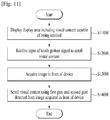
- FIG. 11 is a flowchart of a method of recognizing multi-gaze according to one embodiment of the present specification.
- the display module 2000 can display a display area including a visual content capable of being scrolled [S11000].
- the visual content may mean the visual content including a picture, a photo, a text, and the like.
- the input module 2100 can receive an input of a touch gesture signal to scroll the visual content [S12000].
- the touch gesture signal may include a multi-touch gesture signal.
- Various touch gesture signals can be used according to intention of a designer.
- all or a part of the visual content according to the present specification can be scrolled according to a touch duration of a touch gesture signal, and the like.
- the image acquisition module 2200 can acquire an image in front of a device [S13000].
- the analysis module 2300 detects a first gaze and a second gaze from the image acquired in front of the device and can scroll the visual content using the detected first gaze and the second gaze [S14000].
- the first gaze determines a maximum amount of a scroll area to scroll the visual content and the second gaze can determine whether an event initiating a scroll occurs.
- a position of the first gaze corresponding to the gaze of the user 1 may be located at the top of a position of the second gaze corresponding to the gaze of the user 2 in the display area.
- a content included in the display area located at the top of the position of the first gaze means that the content has already been watched by both the user 1 and the user 2.
- the corresponding area is scrolled by one of the user 1 and the user 2 since the visual content displayed in the scrolled area is already seen by all users, there is no inconvenience or problem in watching the displayed visual content.
- the analysis module 2300 can determine a maximum amount of the scroll area to scroll the visual content on the basis of the position of the first gaze.
- the visual content included in the scroll area can be scrolled within the determined maximum amount according to a touch gesture signal of a user.
- the analysis module 1100 can initiate a scroll according to a touch gesture signal.
- the scroll initiation area corresponds to an area to initiate a scroll when a touch gesture signal of a user is inputted.
- the scroll initiation area may be included in the display area.
- the display module 2000 can display a second display area including a visual content to provide a user of the second gaze with the visual content.
- a detail process of scrolling the visual content follows the embodiments explained earlier in FIG. 4 to FIG. 10 .
- a display area can include a scroll area.
- the display area can include a first display area where an amount of the first display area is determined by the first gaze and the second gaze.
- the display area according to one embodiment of the present specification can include a second display area according to a touch gesture signal of a user.
- a scroll initiation area can be included in the first display area and may be positioned at the top or bottom area of the first display area including a boundary of the first display area.
- the present invention is totally or partially applicable to electronic devices.
Landscapes
- Engineering & Computer Science (AREA)
- Theoretical Computer Science (AREA)
- General Engineering & Computer Science (AREA)
- Human Computer Interaction (AREA)
- Physics & Mathematics (AREA)
- General Physics & Mathematics (AREA)
- User Interface Of Digital Computer (AREA)
Claims (14)
- Mehrblickerkennungsvorrichtung, umfassend:ein Anzeigemodul (2000), das ausgelegt ist, einen visuellen Inhalt mittels Bildlaufen anzuzeigen, und das einen Anzeigebereich (3000), der einen Bildlaufbereich (3100) enthält, und einen ersten Anzeigebereich (3200) aufweist, der einen Bildlaufinitiierungsbereich (3300) enthält;ein Eingabemodul (2100), das ausgelegt ist, eine Eingabe eines Berührungsgestensignals von einem Benutzer (1, 2) zu empfangen, um den visuellen Inhalt durch Bildlauf zu durchblättern;ein Bilderfassungsmodul (2200), das ausgelegt ist, ein Bild vor einer Vorrichtung zu erfassen; undein Analysemodul (2300), das ausgelegt ist, Positionen eines ersten (1000) bzw. eines zweiten (1100) Blicks von jeweils einem ersten (1) bzw. einem zweiten (2) Benutzer in Übereinstimmung mit dem vor der Vorrichtung durch das Bilderfassungsmodul (2200) erfassten Bild zu erkennen, wobei der erste Blick (1000) und der zweite Blick (1100) in voneinander verschiedenen Teilen im Anzeigebereich (3000) positioniert sind, und den visuellen Inhalt auf Grundlage der erkannten Positionen des ersten Blicks (1000) und des zweiten Blicks (1100) mittels Bildlauf zu durchlaufen,wobei ein Ausmaß des ersten Anzeigebereichs (3200) in Übereinstimmung mit den Positionen des ersten Blicks (1000) und des zweiten Blicks (1100) ermittelt wird, wobei der erste Anzeigebereich (3200) ein Bereich ist, der ausgelegt ist, dem Benutzer (1) des ersten Blicks (1000), der eine langsamere Betrachtungsgeschwindigkeit als der zweite Benutzer (2) aufweist, den visuellen Inhalt bereitzustellen;wobei der Bildlaufinitiierungsbereich (3300) ein Bereich ist, der ausgelegt ist, einen Bildlaufvorgang zu initiieren, wenn ein Berührungsgestensignal des Benutzers (1, 2) über das Eingabemodul (2100) eingegeben wird; undwobei das Analysemodul (2300) ferner ausgelegt ist, ein Maximalausmaß des Bildlaufbereichs (3100) auf Grundlage der Position des ersten Blicks (1000) des ersten Benutzers (1) zu ermitteln, der eine langsamere Betrachtungsgeschwindigkeit als der zweite Benutzer (2) aufweist, und zu beurteilen, ob der zweite Blick (1100) innerhalb des Bildlaufinitiierungsbereichs (3300) positioniert ist, um einen Bildlauf des visuellen Inhalts innerhalb des Maximalausmaßes des Bildlaufbereichs (3100) in Übereinstimmung mit dem Berührungsgestensignal zu ermitteln.
- Mehrblickerkennungsvorrichtung nach Anspruch 1, wobei der erste Blick (1000) bzw. der zweite Blick (1100) jeweils spezifischen Positionen des Anzeigebereichs (3000) entsprechen und wobei sich eine spezifische Position, die dem ersten Blick (1000) entspricht, oben auf einer spezifischen Position befindet, die dem zweiten Blick (1100) im Anzeigebereich (3000) entspricht.
- Mehrblickerkennungsvorrichtung nach Anspruch 1 oder 2, wobei das Analysemodul (2300) ausgelegt ist, den gesamten visuellen Inhalt oder einen Teil des visuellen Inhalts mittels Bildlauf zu durchlaufen.
- Mehrblickerkennungsvorrichtung nach Anspruch 2 oder 3, wobei das Analysemodul (2300) ausgelegt ist, zu erkennen, ob der erste Blick (1000) oder der zweite Blick (1100) vom vor der Vorrichtung erfassten Bild mit einem vorgeschriebenen Zyklus verschwunden ist.
- Mehrblickerkennungsvorrichtung nach Anspruch 4, wobei, falls geurteilt wird, dass der erste Blick (1000) oder der zweite Blick (1100) verschwunden ist, das Anzeigemodul (2000) ausgelegt ist, einen Indikator anzuzeigen, der auf eine letzte Position hinweist, die einem zuletzt erkannten ersten Blick (1000) bzw. einem zuletzt erkannten zweiten Blick (1100) entspricht.
- Mehrblickerkennungsvorrichtung nach einem der Ansprüche 1 bis 5, wobei, falls der visuelle Inhalt mittels Bildlauf durchlaufen wird, das Anzeigemodul (2000) ausgelegt ist, einen zweiten Anzeigebereich (4200) anzuzeigen, der einen visuellen Inhalt enthält, der mit dem im ersten Anzeigebereich (3200) enthaltenen visuellen Inhalt identisch oder von diesem verschieden ist, wobei der zweite Anzeigebereich (4200) im Anzeigebereich (3000) enthalten ist und wobei ein Ausmaß des zweiten Anzeigebereichs (4200) in Übereinstimmung mit dem Berührungsgestensignal ermittelt ist.
- Mehrblickerkennungsvorrichtung nach Anspruch 6, wobei das Anzeigemodul (2000) ausgelegt ist, ein grafisches Bild anzuzeigen, das darauf hinweist, dass der visuelle Inhalt in einer Grenze zwischen dem ersten Anzeigebereich (3200) und dem zweiten Anzeigebereich (4200) gefaltet ist.
- Mehrblickerkennungsvorrichtung nach Anspruch 6, wobei, falls der visuelle Inhalt in Übereinstimmung mit dem Berührungsgestensignal mittels Bildlauf bis zum Maximalausmaß des Bildlaufbereichs (3100) durchlaufen wird, das Anzeigemodul (2000) ausgelegt ist, ein grafisches Bild anzuzeigen, das darauf hinweist, dass der visuelle Inhalt in einer Grenze zwischen dem ersten Anzeigebereich (3200) und dem zweiten Anzeigebereich (4200) gefaltet ist.
- Mehrblickerkennungsvorrichtung nach Anspruch 6 oder 8, wobei, falls eine Distanz zwischen einer Position des ersten Blicks (1000) im ersten Anzeigebereich (3200) und einer Position des zweiten Blicks (1100) im zweiten Anzeigebereich (4200) größer als ein vorbestimmter Wert ist, das Anzeigemodul (2000) ausgelegt ist, ein grafisches Bild anzuzeigen, das darauf hinweist, dass der visuelle Inhalt in einer Grenze zwischen dem ersten Anzeigebereich (3200) und dem zweiten Anzeigebereich (4200) gefaltet ist.
- Mehrblickerkennungsvorrichtung nach einem der Ansprüche 7 bis 9, wobei, falls der im zweiten Anzeigebereich (4200) enthaltene visuelle Inhalt mit dem im ersten Anzeigebereich (3200) enthaltenen visuellen Inhalt identisch ist, das Analysemodul ausgelegt ist, auf eine vom Berührungsgestensignal des Benutzers unabhängige Weise zum Erkennen des zweiten Blicks (1100) zu prüfen, ob ein Benutzer des zweiten Blicks (1100) ein Lesen des visuellen Inhalts beendet.
- Mehrblickerkennungsvorrichtung nach einem der Ansprüche 7 bis 10, wobei das Analysemodul ausgelegt ist, den im ersten Anzeigebereich (3200) enthaltenen visuellen Inhalt und den im zweiten Anzeigebereich (4200) enthaltenen visuellen Inhalt mit einer voneinander verschiedenen Geschwindigkeit mittels Bildlauf zu durchlaufen.
- Mehrblickerkennungsvorrichtung nach einem der Ansprüche 1 bis 11, wobei, falls der visuelle Inhalt einem Textinhalt entspricht,
das Anzeigemodul (2000) ausgelegt ist, einen Indikator anzuzeigen, der auf eine nächste Seite des Textinhalts im letzteren Teil eines letzten Satzes des Textinhalts hinweist, wobei, falls der Textinhalt mittels Bildlauf durchlaufen wird, das Anzeigemodul (2000) ferner ausgelegt ist, einen zweiten Anzeigebereich (4200) anzuzeigen, der einen mit einem im ersten Anzeigebereich (3200) enthaltenen Textinhalt identischen oder von diesem verschiedenen Textinhalt enthaltet, wobei der zweite Anzeigebereich (4200) im Anzeigebereich (3000) enthalten ist und
wobei ein Ausmaß des zweiten Anzeigebereichs (4200) in Übereinstimmung mit dem Berührungsgestensignal ermittelt wird. - Mehrblickerkennungsvorrichtung nach Anspruch 12, wobei, falls eine Seitendifferenz der Textinhalte, die im ersten Anzeigebereich und im zweiten Anzeigebereich enthalten sind, größer als ein vorbestimmter Wert ist, das Anzeigemodul (2000) ausgelegt ist, einen Indikator anzuzeigen, der auf eine Zusammenfassung für einen Textinhalt hinweist, der der Seitendifferenz der im ersten Anzeigebereich (3200) und im zweiten Anzeigebereich (4200) enthaltenen Textinhalte entspricht.
- Verfahren zum Erkennen von mehreren Blicken und zum Durchlaufen eines visuellen Inhalts mittels Bildlauf, das die Schritte umfasst zum:Anzeigen eines Anzeigebereichs (3000), der einen visuellen Inhalt enthält, der mittels Bildlauf durchlaufen werden kann;Empfangen einer Eingabe eines Berührungsgestensignals von einem Benutzer (1, 2), um den visuellen Inhalt mittels Bildlauf zu durchlaufen;
Erfassen eines Bilds vor einer Vorrichtung;Erkennen von Positionen eines ersten (1000) und eines zweiten (1100) Blicks von jeweils einem ersten (1) und einem zweiten (2) Benutzer in Übereinstimmung mit dem vor der Vorrichtung erfassten Bild, wobei der erste Blick (1000) und der zweite Blick (1100) in voneinander verschiedenen Teilen im Anzeigebereich (3000) positioniert sind;Ermitteln eines Ausmaßes eines ersten Anzeigebereichs (3200) in Übereinstimmung mit den Positionen des ersten Blicks (1000) und des zweiten Blicks (1100), wobei der erste Anzeigebereich (3200) ein Bereich ist, der ausgelegt ist, dem ersten Benutzer (1) des ersten Blicks (1000), der eine langsamere Betrachtungsgeschwindigkeit als der zweite Benutzer (2) aufweist, den visuellen Inhalt bereitzustellen;Ermitteln eines Bildlaufinitiierungsbereichs (3300), der im ersten Anzeigebereich (3200) enthalten ist, wobei der Bildlaufinitiierungsbereich (3300) ein Bereich ist, der ausgelegt ist, einen Bildlaufvorgang zu initiieren, wenn ein Berührungsgestensignal des Benutzers (1, 2) über das Eingabemodul (2100) eingegeben wird; undErmitteln eines Maximalausmaßes eines Bildlaufbereichs (3100) auf Grundlage der Position des ersten Blicks (1000) des ersten Benutzers (1) zu ermitteln, der eine langsamere Betrachtungsgeschwindigkeit als der zweite Benutzer (2) aufweist, und Beurteilen, ob der zweite Blick (1100) innerhalb des Bildlaufinitiierungsbereichs (3300) positioniert ist, um einen Bildlauf des visuellen Inhalts innerhalb des Maximalausmaßes des Bildlaufbereichs (3100) in Übereinstimmung mit dem Berührungsgestensignal zu ermitteln.
Applications Claiming Priority (3)
| Application Number | Priority Date | Filing Date | Title |
|---|---|---|---|
| KR1020130116090A KR102081935B1 (ko) | 2013-09-30 | 2013-09-30 | 멀티 시선 인식 장치 및 방법 |
| US14/167,446 US9436375B2 (en) | 2013-09-30 | 2014-01-29 | Method of recognizing multi-gaze and apparatus therefor |
| PCT/KR2014/000971 WO2015046680A1 (en) | 2013-09-30 | 2014-02-05 | Method of recognizing multi-gaze and apparatus therefor |
Publications (3)
| Publication Number | Publication Date |
|---|---|
| EP3053014A1 EP3053014A1 (de) | 2016-08-10 |
| EP3053014A4 EP3053014A4 (de) | 2017-05-10 |
| EP3053014B1 true EP3053014B1 (de) | 2019-01-02 |
Family
ID=52741458
Family Applications (1)
| Application Number | Title | Priority Date | Filing Date |
|---|---|---|---|
| EP14848407.4A Not-in-force EP3053014B1 (de) | 2013-09-30 | 2014-02-05 | Verfahren zur erkennung mehrerer blicke und vorrichtung dafür |
Country Status (5)
| Country | Link |
|---|---|
| US (1) | US9436375B2 (de) |
| EP (1) | EP3053014B1 (de) |
| KR (1) | KR102081935B1 (de) |
| CN (1) | CN105612474B (de) |
| WO (1) | WO2015046680A1 (de) |
Families Citing this family (27)
| Publication number | Priority date | Publication date | Assignee | Title |
|---|---|---|---|---|
| US11070860B2 (en) | 2013-02-14 | 2021-07-20 | Comcast Cable Communications, Llc | Content delivery |
| US10440499B2 (en) | 2014-06-16 | 2019-10-08 | Comcast Cable Communications, Llc | User location and identity awareness |
| US9766702B2 (en) | 2014-06-19 | 2017-09-19 | Apple Inc. | User detection by a computing device |
| US10045090B2 (en) * | 2014-08-11 | 2018-08-07 | Comcast Cable Communications, Llc | Merging permissions and content access |
| US9990044B2 (en) * | 2015-10-30 | 2018-06-05 | Intel Corporation | Gaze tracking system |
| CN105338192A (zh) * | 2015-11-25 | 2016-02-17 | 努比亚技术有限公司 | 移动终端及其操作处理方法 |
| US11605242B2 (en) * | 2018-06-07 | 2023-03-14 | Motorola Mobility Llc | Methods and devices for identifying multiple persons within an environment of an electronic device |
| CN117032450B (zh) | 2020-09-25 | 2024-11-08 | 苹果公司 | 用于操纵环境中的对象的方法 |
| EP4697149A3 (de) | 2020-09-25 | 2026-03-11 | Apple Inc. | Verfahren zur anpassung und/oder steuerung der immersion im zusammenhang mit benutzerschnittstellen |
| JP7784422B2 (ja) | 2020-09-25 | 2025-12-11 | アップル インコーポレイテッド | ユーザインタフェースをナビゲートする方法 |
| CN116670627A (zh) | 2020-12-31 | 2023-08-29 | 苹果公司 | 对环境中的用户界面进行分组的方法 |
| US11995230B2 (en) | 2021-02-11 | 2024-05-28 | Apple Inc. | Methods for presenting and sharing content in an environment |
| EP4388397A1 (de) | 2021-09-25 | 2024-06-26 | Apple Inc. | Vorrichtungen, verfahren und grafische benutzeroberflächen zur darstellung virtueller objekte in virtuellen umgebungen |
| US12456271B1 (en) | 2021-11-19 | 2025-10-28 | Apple Inc. | System and method of three-dimensional object cleanup and text annotation |
| CN119621211A (zh) * | 2022-01-03 | 2025-03-14 | 苹果公司 | 用于导航并输入或修订内容的设备、方法和图形用户界面 |
| CN119556830A (zh) | 2022-01-12 | 2025-03-04 | 苹果公司 | 用于在环境中显示、选择以及移动对象和容器的方法 |
| JP7843357B2 (ja) | 2022-01-19 | 2026-04-09 | アップル インコーポレイテッド | 環境内にオブジェクトを表示及び再位置決めするための方法 |
| US12321666B2 (en) | 2022-04-04 | 2025-06-03 | Apple Inc. | Methods for quick message response and dictation in a three-dimensional environment |
| EP4511722A1 (de) | 2022-04-20 | 2025-02-26 | Apple Inc. | Blockierte objekte in einer dreidimensionalen umgebung |
| US12394167B1 (en) | 2022-06-30 | 2025-08-19 | Apple Inc. | Window resizing and virtual object rearrangement in 3D environments |
| US20240036711A1 (en) * | 2022-08-01 | 2024-02-01 | Apple Inc. | Controlling an Interface Using Gaze Input |
| US12112011B2 (en) | 2022-09-16 | 2024-10-08 | Apple Inc. | System and method of application-based three-dimensional refinement in multi-user communication sessions |
| CN120266083A (zh) | 2022-09-24 | 2025-07-04 | 苹果公司 | 用于基于注意力与用户界面交互的方法 |
| US12524956B2 (en) | 2022-09-24 | 2026-01-13 | Apple Inc. | Methods for time of day adjustments for environments and environment presentation during communication sessions |
| KR20250075620A (ko) | 2022-09-24 | 2025-05-28 | 애플 인크. | 3차원 환경을 제어하고 그와 상호작용하기 위한 방법들 |
| CN121165940A (zh) | 2023-01-30 | 2025-12-19 | 苹果公司 | 用于响应于注视和/或手势输入来显示多组控件的设备、方法和图形用户界面 |
| US20250378645A1 (en) | 2024-06-09 | 2025-12-11 | Apple Inc. | Methods of interacting with content in a virtual environment |
Family Cites Families (20)
| Publication number | Priority date | Publication date | Assignee | Title |
|---|---|---|---|---|
| US8707185B2 (en) * | 2000-10-10 | 2014-04-22 | Addnclick, Inc. | Dynamic information management system and method for content delivery and sharing in content-, metadata- and viewer-based, live social networking among users concurrently engaged in the same and/or similar content |
| US6886137B2 (en) * | 2001-05-29 | 2005-04-26 | International Business Machines Corporation | Eye gaze control of dynamic information presentation |
| US7877460B1 (en) * | 2005-09-16 | 2011-01-25 | Sequoia International Limited | Methods and systems for facilitating the distribution, sharing, and commentary of electronically published materials |
| US7429108B2 (en) | 2005-11-05 | 2008-09-30 | Outland Research, Llc | Gaze-responsive interface to enhance on-screen user reading tasks |
| ES2556678T3 (es) * | 2006-07-28 | 2016-01-19 | Koninklijke Philips N.V. | Distribución automática de vitrinas privadas a lo largo de un escaparate |
| US20080040683A1 (en) * | 2006-08-11 | 2008-02-14 | David Walsh | Multi-pane graphical user interface with common scroll control |
| DE102007002074A1 (de) * | 2007-01-09 | 2008-07-10 | Deutsche Thomson-Brandt Gmbh | Verfahren zur Visualisierung einer durch Verschieben in eine Verschieberichtung bedingten Veränderung eines auf einem optischen Anzeigemittel dargestellten Ausschnitts eines Text und/oder einer Graphik |
| JP4683110B2 (ja) * | 2008-10-17 | 2011-05-11 | ソニー株式会社 | 表示装置、表示方法及びプログラム |
| JP5460691B2 (ja) | 2009-06-08 | 2014-04-02 | パナソニック株式会社 | 注視対象判定装置及び注視対象判定方法 |
| US8434001B2 (en) * | 2010-06-03 | 2013-04-30 | Rhonda Enterprises, Llc | Systems and methods for presenting a content summary of a media item to a user based on a position within the media item |
| US20110304606A1 (en) | 2010-06-14 | 2011-12-15 | Oto Technologies, Llc | Method and system for implementing look-ahead protection in a computing device |
| EP2450872B1 (de) * | 2010-11-03 | 2013-12-25 | BlackBerry Limited | System und Verfahren zur Ansteuerung der Anzeige einer mobilen Vorrichtung |
| US8493390B2 (en) | 2010-12-08 | 2013-07-23 | Sony Computer Entertainment America, Inc. | Adaptive displays using gaze tracking |
| US20120151351A1 (en) * | 2010-12-13 | 2012-06-14 | Yahoo! Inc. | Ebook social integration techniques |
| US10331754B2 (en) * | 2011-04-29 | 2019-06-25 | Charmtech Labs Llc | Combining web browser and audio player functionality to facilitate organization and consumption of web documents |
| WO2013006329A2 (en) | 2011-07-01 | 2013-01-10 | 3G Studios, Inc. | Automated facial detection and eye tracking techniques implemented in commercial and consumer environments |
| US8612584B2 (en) | 2011-08-29 | 2013-12-17 | Google Inc. | Using eBook reading data to generate time-based information |
| CN102761760A (zh) * | 2011-12-01 | 2012-10-31 | 联想(北京)有限公司 | 一种显示方法、装置及电子终端 |
| KR101850034B1 (ko) | 2012-01-06 | 2018-04-20 | 엘지전자 주식회사 | 이동 단말기 및 그 제어방법 |
| US9864498B2 (en) * | 2013-03-13 | 2018-01-09 | Tobii Ab | Automatic scrolling based on gaze detection |
-
2013
- 2013-09-30 KR KR1020130116090A patent/KR102081935B1/ko not_active Expired - Fee Related
-
2014
- 2014-01-29 US US14/167,446 patent/US9436375B2/en not_active Expired - Fee Related
- 2014-02-05 WO PCT/KR2014/000971 patent/WO2015046680A1/en not_active Ceased
- 2014-02-05 CN CN201480053995.6A patent/CN105612474B/zh not_active Expired - Fee Related
- 2014-02-05 EP EP14848407.4A patent/EP3053014B1/de not_active Not-in-force
Non-Patent Citations (1)
| Title |
|---|
| None * |
Also Published As
| Publication number | Publication date |
|---|---|
| EP3053014A4 (de) | 2017-05-10 |
| EP3053014A1 (de) | 2016-08-10 |
| US20150095844A1 (en) | 2015-04-02 |
| KR20150036976A (ko) | 2015-04-08 |
| CN105612474A (zh) | 2016-05-25 |
| WO2015046680A1 (en) | 2015-04-02 |
| US9436375B2 (en) | 2016-09-06 |
| CN105612474B (zh) | 2018-09-21 |
| KR102081935B1 (ko) | 2020-02-26 |
Similar Documents
| Publication | Publication Date | Title |
|---|---|---|
| EP3053014B1 (de) | Verfahren zur erkennung mehrerer blicke und vorrichtung dafür | |
| US11599154B2 (en) | Adaptive enclosure for a mobile computing device | |
| RU2638004C2 (ru) | Устройство обработки информации, способ управления отображением и программа | |
| US9582096B2 (en) | Information processing apparatus, information processing method, and program | |
| US9946338B2 (en) | Information processing to vary screen display based on a gaze point of the user | |
| US8532346B2 (en) | Device, method and computer program product | |
| US10558262B2 (en) | Component determination and gaze provoked interaction | |
| CN106201166A (zh) | 一种分屏显示方法及终端 | |
| US9823779B2 (en) | Method and device for controlling a head-mounted display by a terminal device | |
| RU2648627C1 (ru) | Способ и устройство для обработки операции | |
| US9485412B2 (en) | Device and method for using pressure-sensing touch screen to take picture | |
| CN106681612A (zh) | 一种应用于移动终端的调节方法及移动终端 | |
| CN105975550A (zh) | 一种智能设备的题目搜索方法和装置 | |
| US9971481B2 (en) | Method for displaying an interaction interface and an electronic device for the same | |
| US20160041616A1 (en) | Display device and control method thereof, and gesture recognition method | |
| JP2011243108A (ja) | 電子ブック装置及び電子ブック操作方法 | |
| EP2498256B1 (de) | Reproduktionsverarbeitungsvorrichtung, Bildgebungsvorrichtung, Reproduktionsverarbeitungsverfahren und Programm | |
| US20250306750A1 (en) | Split-screen display method, terminal, and storage medium | |
| CN110737882A (zh) | 电子设备及屏下指纹启用方法 | |
| US20170336962A1 (en) | Gesture response method and device | |
| US20240385727A1 (en) | User interface providing apparatus, method for providing user interface, and non-transitory computer-readable recording medium | |
| CN117851707A (zh) | 页面锚点下的定位方法、装置、设备及存储介质 | |
| HK40081513A (en) | Video searching method, apparatus, device, and storage medium | |
| CN120179118A (zh) | 应用界面显示方法、装置、智能穿戴设备及存储介质 | |
| KR20060104607A (ko) | 캠코더 기능을 이용한 유저 인터페이스 기능을 가진 휴대폰및 유저 인터페이스 방법 |
Legal Events
| Date | Code | Title | Description |
|---|---|---|---|
| PUAI | Public reference made under article 153(3) epc to a published international application that has entered the european phase |
Free format text: ORIGINAL CODE: 0009012 |
|
| 17P | Request for examination filed |
Effective date: 20160317 |
|
| AK | Designated contracting states |
Kind code of ref document: A1 Designated state(s): AL AT BE BG CH CY CZ DE DK EE ES FI FR GB GR HR HU IE IS IT LI LT LU LV MC MK MT NL NO PL PT RO RS SE SI SK SM TR |
|
| AX | Request for extension of the european patent |
Extension state: BA ME |
|
| DAX | Request for extension of the european patent (deleted) | ||
| REG | Reference to a national code |
Ref country code: DE Ref legal event code: R079 Ref document number: 602014039310 Country of ref document: DE Free format text: PREVIOUS MAIN CLASS: G06F0003048000 Ipc: G06F0003010000 |
|
| A4 | Supplementary search report drawn up and despatched |
Effective date: 20170410 |
|
| RIC1 | Information provided on ipc code assigned before grant |
Ipc: G06F 3/03 20060101ALI20170404BHEP Ipc: G06F 3/0488 20130101ALI20170404BHEP Ipc: G06F 3/0485 20130101ALI20170404BHEP Ipc: G06F 3/01 20060101AFI20170404BHEP |
|
| GRAP | Despatch of communication of intention to grant a patent |
Free format text: ORIGINAL CODE: EPIDOSNIGR1 |
|
| STAA | Information on the status of an ep patent application or granted ep patent |
Free format text: STATUS: GRANT OF PATENT IS INTENDED |
|
| INTG | Intention to grant announced |
Effective date: 20180720 |
|
| GRAS | Grant fee paid |
Free format text: ORIGINAL CODE: EPIDOSNIGR3 |
|
| GRAA | (expected) grant |
Free format text: ORIGINAL CODE: 0009210 |
|
| STAA | Information on the status of an ep patent application or granted ep patent |
Free format text: STATUS: THE PATENT HAS BEEN GRANTED |
|
| AK | Designated contracting states |
Kind code of ref document: B1 Designated state(s): AL AT BE BG CH CY CZ DE DK EE ES FI FR GB GR HR HU IE IS IT LI LT LU LV MC MK MT NL NO PL PT RO RS SE SI SK SM TR |
|
| REG | Reference to a national code |
Ref country code: GB Ref legal event code: FG4D |
|
| REG | Reference to a national code |
Ref country code: CH Ref legal event code: EP Ref country code: AT Ref legal event code: REF Ref document number: 1085202 Country of ref document: AT Kind code of ref document: T Effective date: 20190115 |
|
| REG | Reference to a national code |
Ref country code: IE Ref legal event code: FG4D |
|
| REG | Reference to a national code |
Ref country code: DE Ref legal event code: R096 Ref document number: 602014039310 Country of ref document: DE |
|
| REG | Reference to a national code |
Ref country code: NL Ref legal event code: MP Effective date: 20190102 |
|
| REG | Reference to a national code |
Ref country code: LT Ref legal event code: MG4D |
|
| REG | Reference to a national code |
Ref country code: AT Ref legal event code: MK05 Ref document number: 1085202 Country of ref document: AT Kind code of ref document: T Effective date: 20190102 |
|
| PG25 | Lapsed in a contracting state [announced via postgrant information from national office to epo] |
Ref country code: NL Free format text: LAPSE BECAUSE OF FAILURE TO SUBMIT A TRANSLATION OF THE DESCRIPTION OR TO PAY THE FEE WITHIN THE PRESCRIBED TIME-LIMIT Effective date: 20190102 |
|
| PG25 | Lapsed in a contracting state [announced via postgrant information from national office to epo] |
Ref country code: PT Free format text: LAPSE BECAUSE OF FAILURE TO SUBMIT A TRANSLATION OF THE DESCRIPTION OR TO PAY THE FEE WITHIN THE PRESCRIBED TIME-LIMIT Effective date: 20190502 Ref country code: NO Free format text: LAPSE BECAUSE OF FAILURE TO SUBMIT A TRANSLATION OF THE DESCRIPTION OR TO PAY THE FEE WITHIN THE PRESCRIBED TIME-LIMIT Effective date: 20190402 Ref country code: FI Free format text: LAPSE BECAUSE OF FAILURE TO SUBMIT A TRANSLATION OF THE DESCRIPTION OR TO PAY THE FEE WITHIN THE PRESCRIBED TIME-LIMIT Effective date: 20190102 Ref country code: SE Free format text: LAPSE BECAUSE OF FAILURE TO SUBMIT A TRANSLATION OF THE DESCRIPTION OR TO PAY THE FEE WITHIN THE PRESCRIBED TIME-LIMIT Effective date: 20190102 Ref country code: LT Free format text: LAPSE BECAUSE OF FAILURE TO SUBMIT A TRANSLATION OF THE DESCRIPTION OR TO PAY THE FEE WITHIN THE PRESCRIBED TIME-LIMIT Effective date: 20190102 Ref country code: PL Free format text: LAPSE BECAUSE OF FAILURE TO SUBMIT A TRANSLATION OF THE DESCRIPTION OR TO PAY THE FEE WITHIN THE PRESCRIBED TIME-LIMIT Effective date: 20190102 Ref country code: ES Free format text: LAPSE BECAUSE OF FAILURE TO SUBMIT A TRANSLATION OF THE DESCRIPTION OR TO PAY THE FEE WITHIN THE PRESCRIBED TIME-LIMIT Effective date: 20190102 |
|
| PG25 | Lapsed in a contracting state [announced via postgrant information from national office to epo] |
Ref country code: RS Free format text: LAPSE BECAUSE OF FAILURE TO SUBMIT A TRANSLATION OF THE DESCRIPTION OR TO PAY THE FEE WITHIN THE PRESCRIBED TIME-LIMIT Effective date: 20190102 Ref country code: GR Free format text: LAPSE BECAUSE OF FAILURE TO SUBMIT A TRANSLATION OF THE DESCRIPTION OR TO PAY THE FEE WITHIN THE PRESCRIBED TIME-LIMIT Effective date: 20190403 Ref country code: HR Free format text: LAPSE BECAUSE OF FAILURE TO SUBMIT A TRANSLATION OF THE DESCRIPTION OR TO PAY THE FEE WITHIN THE PRESCRIBED TIME-LIMIT Effective date: 20190102 Ref country code: BG Free format text: LAPSE BECAUSE OF FAILURE TO SUBMIT A TRANSLATION OF THE DESCRIPTION OR TO PAY THE FEE WITHIN THE PRESCRIBED TIME-LIMIT Effective date: 20190402 Ref country code: LV Free format text: LAPSE BECAUSE OF FAILURE TO SUBMIT A TRANSLATION OF THE DESCRIPTION OR TO PAY THE FEE WITHIN THE PRESCRIBED TIME-LIMIT Effective date: 20190102 Ref country code: IS Free format text: LAPSE BECAUSE OF FAILURE TO SUBMIT A TRANSLATION OF THE DESCRIPTION OR TO PAY THE FEE WITHIN THE PRESCRIBED TIME-LIMIT Effective date: 20190502 |
|
| REG | Reference to a national code |
Ref country code: CH Ref legal event code: PL |
|
| REG | Reference to a national code |
Ref country code: DE Ref legal event code: R097 Ref document number: 602014039310 Country of ref document: DE |
|
| PG25 | Lapsed in a contracting state [announced via postgrant information from national office to epo] |
Ref country code: SK Free format text: LAPSE BECAUSE OF FAILURE TO SUBMIT A TRANSLATION OF THE DESCRIPTION OR TO PAY THE FEE WITHIN THE PRESCRIBED TIME-LIMIT Effective date: 20190102 Ref country code: RO Free format text: LAPSE BECAUSE OF FAILURE TO SUBMIT A TRANSLATION OF THE DESCRIPTION OR TO PAY THE FEE WITHIN THE PRESCRIBED TIME-LIMIT Effective date: 20190102 Ref country code: AT Free format text: LAPSE BECAUSE OF FAILURE TO SUBMIT A TRANSLATION OF THE DESCRIPTION OR TO PAY THE FEE WITHIN THE PRESCRIBED TIME-LIMIT Effective date: 20190102 Ref country code: DK Free format text: LAPSE BECAUSE OF FAILURE TO SUBMIT A TRANSLATION OF THE DESCRIPTION OR TO PAY THE FEE WITHIN THE PRESCRIBED TIME-LIMIT Effective date: 20190102 Ref country code: LU Free format text: LAPSE BECAUSE OF NON-PAYMENT OF DUE FEES Effective date: 20190205 Ref country code: EE Free format text: LAPSE BECAUSE OF FAILURE TO SUBMIT A TRANSLATION OF THE DESCRIPTION OR TO PAY THE FEE WITHIN THE PRESCRIBED TIME-LIMIT Effective date: 20190102 Ref country code: MC Free format text: LAPSE BECAUSE OF FAILURE TO SUBMIT A TRANSLATION OF THE DESCRIPTION OR TO PAY THE FEE WITHIN THE PRESCRIBED TIME-LIMIT Effective date: 20190102 Ref country code: CZ Free format text: LAPSE BECAUSE OF FAILURE TO SUBMIT A TRANSLATION OF THE DESCRIPTION OR TO PAY THE FEE WITHIN THE PRESCRIBED TIME-LIMIT Effective date: 20190102 Ref country code: AL Free format text: LAPSE BECAUSE OF FAILURE TO SUBMIT A TRANSLATION OF THE DESCRIPTION OR TO PAY THE FEE WITHIN THE PRESCRIBED TIME-LIMIT Effective date: 20190102 |
|
| PLBE | No opposition filed within time limit |
Free format text: ORIGINAL CODE: 0009261 |
|
| STAA | Information on the status of an ep patent application or granted ep patent |
Free format text: STATUS: NO OPPOSITION FILED WITHIN TIME LIMIT |
|
| REG | Reference to a national code |
Ref country code: BE Ref legal event code: MM Effective date: 20190228 |
|
| REG | Reference to a national code |
Ref country code: IE Ref legal event code: MM4A |
|
| PG25 | Lapsed in a contracting state [announced via postgrant information from national office to epo] |
Ref country code: SM Free format text: LAPSE BECAUSE OF FAILURE TO SUBMIT A TRANSLATION OF THE DESCRIPTION OR TO PAY THE FEE WITHIN THE PRESCRIBED TIME-LIMIT Effective date: 20190102 |
|
| 26N | No opposition filed |
Effective date: 20191003 |
|
| GBPC | Gb: european patent ceased through non-payment of renewal fee |
Effective date: 20190402 |
|
| PG25 | Lapsed in a contracting state [announced via postgrant information from national office to epo] |
Ref country code: CH Free format text: LAPSE BECAUSE OF NON-PAYMENT OF DUE FEES Effective date: 20190228 Ref country code: LI Free format text: LAPSE BECAUSE OF NON-PAYMENT OF DUE FEES Effective date: 20190228 |
|
| PG25 | Lapsed in a contracting state [announced via postgrant information from national office to epo] |
Ref country code: IE Free format text: LAPSE BECAUSE OF NON-PAYMENT OF DUE FEES Effective date: 20190205 Ref country code: GB Free format text: LAPSE BECAUSE OF NON-PAYMENT OF DUE FEES Effective date: 20190402 |
|
| PG25 | Lapsed in a contracting state [announced via postgrant information from national office to epo] |
Ref country code: SI Free format text: LAPSE BECAUSE OF FAILURE TO SUBMIT A TRANSLATION OF THE DESCRIPTION OR TO PAY THE FEE WITHIN THE PRESCRIBED TIME-LIMIT Effective date: 20190102 Ref country code: BE Free format text: LAPSE BECAUSE OF NON-PAYMENT OF DUE FEES Effective date: 20190228 |
|
| PG25 | Lapsed in a contracting state [announced via postgrant information from national office to epo] |
Ref country code: TR Free format text: LAPSE BECAUSE OF FAILURE TO SUBMIT A TRANSLATION OF THE DESCRIPTION OR TO PAY THE FEE WITHIN THE PRESCRIBED TIME-LIMIT Effective date: 20190102 |
|
| PGFP | Annual fee paid to national office [announced via postgrant information from national office to epo] |
Ref country code: IT Payment date: 20200212 Year of fee payment: 7 |
|
| PG25 | Lapsed in a contracting state [announced via postgrant information from national office to epo] |
Ref country code: MT Free format text: LAPSE BECAUSE OF NON-PAYMENT OF DUE FEES Effective date: 20190205 |
|
| PGFP | Annual fee paid to national office [announced via postgrant information from national office to epo] |
Ref country code: FR Payment date: 20200108 Year of fee payment: 7 |
|
| PG25 | Lapsed in a contracting state [announced via postgrant information from national office to epo] |
Ref country code: CY Free format text: LAPSE BECAUSE OF FAILURE TO SUBMIT A TRANSLATION OF THE DESCRIPTION OR TO PAY THE FEE WITHIN THE PRESCRIBED TIME-LIMIT Effective date: 20190102 |
|
| PGFP | Annual fee paid to national office [announced via postgrant information from national office to epo] |
Ref country code: DE Payment date: 20210105 Year of fee payment: 8 |
|
| PG25 | Lapsed in a contracting state [announced via postgrant information from national office to epo] |
Ref country code: HU Free format text: LAPSE BECAUSE OF FAILURE TO SUBMIT A TRANSLATION OF THE DESCRIPTION OR TO PAY THE FEE WITHIN THE PRESCRIBED TIME-LIMIT; INVALID AB INITIO Effective date: 20140205 |
|
| PG25 | Lapsed in a contracting state [announced via postgrant information from national office to epo] |
Ref country code: FR Free format text: LAPSE BECAUSE OF NON-PAYMENT OF DUE FEES Effective date: 20210228 |
|
| PG25 | Lapsed in a contracting state [announced via postgrant information from national office to epo] |
Ref country code: IT Free format text: LAPSE BECAUSE OF NON-PAYMENT OF DUE FEES Effective date: 20210205 |
|
| PG25 | Lapsed in a contracting state [announced via postgrant information from national office to epo] |
Ref country code: MK Free format text: LAPSE BECAUSE OF FAILURE TO SUBMIT A TRANSLATION OF THE DESCRIPTION OR TO PAY THE FEE WITHIN THE PRESCRIBED TIME-LIMIT Effective date: 20190102 |
|
| REG | Reference to a national code |
Ref country code: DE Ref legal event code: R119 Ref document number: 602014039310 Country of ref document: DE |
|
| PG25 | Lapsed in a contracting state [announced via postgrant information from national office to epo] |
Ref country code: DE Free format text: LAPSE BECAUSE OF NON-PAYMENT OF DUE FEES Effective date: 20220901 |