EP3053128B1 - Pré-distribution conditionnelle de contenu à un dispositif utilisateur - Google Patents
Pré-distribution conditionnelle de contenu à un dispositif utilisateur Download PDFInfo
- Publication number
- EP3053128B1 EP3053128B1 EP14850868.2A EP14850868A EP3053128B1 EP 3053128 B1 EP3053128 B1 EP 3053128B1 EP 14850868 A EP14850868 A EP 14850868A EP 3053128 B1 EP3053128 B1 EP 3053128B1
- Authority
- EP
- European Patent Office
- Prior art keywords
- delivery
- content
- user device
- condition
- window
- Prior art date
- Legal status (The legal status is an assumption and is not a legal conclusion. Google has not performed a legal analysis and makes no representation as to the accuracy of the status listed.)
- Active
Links
Images


Classifications
-
- H—ELECTRICITY
- H04—ELECTRIC COMMUNICATION TECHNIQUE
- H04W—WIRELESS COMMUNICATION NETWORKS
- H04W4/00—Services specially adapted for wireless communication networks; Facilities therefor
- H04W4/18—Information format or content conversion, e.g. adaptation by the network of the transmitted or received information for the purpose of wireless delivery to users or terminals
-
- H—ELECTRICITY
- H04—ELECTRIC COMMUNICATION TECHNIQUE
- H04L—TRANSMISSION OF DIGITAL INFORMATION, e.g. TELEGRAPHIC COMMUNICATION
- H04L41/00—Arrangements for maintenance, administration or management of data switching networks, e.g. of packet switching networks
- H04L41/08—Configuration management of networks or network elements
- H04L41/0896—Bandwidth or capacity management, i.e. automatically increasing or decreasing capacities
-
- H—ELECTRICITY
- H04—ELECTRIC COMMUNICATION TECHNIQUE
- H04L—TRANSMISSION OF DIGITAL INFORMATION, e.g. TELEGRAPHIC COMMUNICATION
- H04L65/00—Network arrangements, protocols or services for supporting real-time applications in data packet communication
- H04L65/60—Network streaming of media packets
- H04L65/61—Network streaming of media packets for supporting one-way streaming services, e.g. Internet radio
- H04L65/612—Network streaming of media packets for supporting one-way streaming services, e.g. Internet radio for unicast
-
- H—ELECTRICITY
- H04—ELECTRIC COMMUNICATION TECHNIQUE
- H04L—TRANSMISSION OF DIGITAL INFORMATION, e.g. TELEGRAPHIC COMMUNICATION
- H04L65/00—Network arrangements, protocols or services for supporting real-time applications in data packet communication
- H04L65/80—Responding to QoS
-
- H—ELECTRICITY
- H04—ELECTRIC COMMUNICATION TECHNIQUE
- H04L—TRANSMISSION OF DIGITAL INFORMATION, e.g. TELEGRAPHIC COMMUNICATION
- H04L67/00—Network arrangements or protocols for supporting network services or applications
- H04L67/01—Protocols
- H04L67/06—Protocols specially adapted for file transfer, e.g. file transfer protocol [FTP]
-
- H—ELECTRICITY
- H04—ELECTRIC COMMUNICATION TECHNIQUE
- H04L—TRANSMISSION OF DIGITAL INFORMATION, e.g. TELEGRAPHIC COMMUNICATION
- H04L67/00—Network arrangements or protocols for supporting network services or applications
- H04L67/50—Network services
- H04L67/56—Provisioning of proxy services
- H04L67/568—Storing data temporarily at an intermediate stage, e.g. caching
- H04L67/5681—Pre-fetching or pre-delivering data based on network characteristics
-
- H—ELECTRICITY
- H04—ELECTRIC COMMUNICATION TECHNIQUE
- H04L—TRANSMISSION OF DIGITAL INFORMATION, e.g. TELEGRAPHIC COMMUNICATION
- H04L67/00—Network arrangements or protocols for supporting network services or applications
- H04L67/50—Network services
- H04L67/60—Scheduling or organising the servicing of application requests, e.g. requests for application data transmissions using the analysis and optimisation of the required network resources
- H04L67/61—Scheduling or organising the servicing of application requests, e.g. requests for application data transmissions using the analysis and optimisation of the required network resources taking into account QoS or priority requirements
-
- H—ELECTRICITY
- H04—ELECTRIC COMMUNICATION TECHNIQUE
- H04L—TRANSMISSION OF DIGITAL INFORMATION, e.g. TELEGRAPHIC COMMUNICATION
- H04L67/00—Network arrangements or protocols for supporting network services or applications
- H04L67/50—Network services
- H04L67/60—Scheduling or organising the servicing of application requests, e.g. requests for application data transmissions using the analysis and optimisation of the required network resources
- H04L67/62—Establishing a time schedule for servicing the requests
Definitions
- Many user devices include and support a varied suite of mobile applications, or "apps," enabling users to download and install many different applications to their user devices.
- the different applications may have different or custom online content interfaces and retrieval/delivery protocols. Additionally, the applications may request for and receive content (e.g., video content, audio content, and so on) from various different online, networked, and/or remote content sources, such as content delivery networks (CDNs), remote content servers, remote content storage sites, and so on.
- CDNs content delivery networks
- remote content servers remote content storage sites, and so on.
- Content is often delivered from remote content servers or associated edge caches to requesting devices (e.g., mobile or other user devices) over a network.
- a content provider or other network component utilizes cache controllers and associated algorithms to determine the content delivered to user devices that should be cached, such as content that is predicted to be popular, viral, and/or often requested by user devices. Therefore, when a user device requests delivery of a popular piece of content, the content provider, via the network edge cache, is able to quickly respond and deliver the requested content to the user device from the network edge cache that is proximate to the requesting user device.
- the delivery of content to a user device from a remote content source is less than optimal, especially when the user wishes to immediately consume the content.
- the delivery of content from a remote server to a user device may be slow or ineffective due to limitations at the content source, in the delivery network, and so on.
- Prior art document US 2012300687 A1 presents a method for delivering e.g. TV series content over Long Term Evolution network (LTE), wherein the pre-delivery service is managed by a controller which also takes into account network traffic congestion information.
- LTE Long Term Evolution network
- Document US 2001/014103 A1 presents a method for delivering large amounts of data, such as streaming audio and video data, over a network, wherein there is an intelligent, pre-caching and pre-loading of frequently requested content to the local service provider prior to expected peak times in the content demand, namely, when the content is likely to be requested by the subscribers.
- Document WO 2006/099230 A1 presents a method for scheduling content delivery over a distribution network during a selected time or window duration.
- the systems and methods include a pre-delivery system that selects delivery windows associated with one or more pre-delivery policy conditions associated with pre-delivery of content to a user device, and causes the content to be delivered to the user device upon commencement of the selected delivery window.
- the pre-delivery of content may include a delivery or transfer of content items from a remote content server to the user device before a user selects or identifies the content items for playback (or, before the user launches an application associated with the content items).
- the pre-delivery system therefore, may cause delivery of certain content items in advance and in anticipation of an application receiving a request from the user to playback the content items.
- a user e.g., a consumer
- a smart phone that includes a client or application configured to pre-deliver content to the smart phone.
- the client monitors and/or predicts past, current, and future network related conditions.
- the client Upon receiving an indication that a content item is available for pre-delivery, the client identifies a delivery window or time period that satisfies predetermined delivery conditions (e.g., a certain type of network at a certain time of day), and causes the content item (or, a portion of the content item) to be delivered to the smart phone during the identified delivery window.
- predetermined delivery conditions e.g., a certain type of network at a certain time of day
- the smart phone Once the content item, or portion thereof, is pre-delivered to the smart phone (e.g., to local storage of the smart phone), the smart phone, via a requesting application, can immediately play back the content item from the local storage, and thus provide a reliable and instantaneous playback experience to the user, among other benefits.
- the technology can be implemented in numerous ways, including as a process; an apparatus; a system; a composition of matter; a computer program product embodied on a computer readable storage medium; and/or a processor, such as a processor configured to execute instructions stored on and/or provided by a memory coupled to the processor.
- a component such as a processor or a memory described as being configured to perform a task may be implemented as a general component that is temporarily configured to perform the task at a given time or a specific component that is manufactured to perform the task.
- the term processor refers to one or more devices, circuits, and/or processing cores configured to process data, such as computer program instructions.
- FIG. 1 is a block diagram illustrating a suitable network environment 100 for the delivery of content to user devices, such as the pre-delivery or anticipated delivery of content to user devices.
- the network environment 100 includes one or more user equipment or user devices 110, one or more content servers 120a-c, and a policy server 140 that communicate with one another over a data communication network 130.
- any of the machines, databases, or devices shown in Figure 1 may be implemented in a general-purpose computer modified (e.g., configured or programmed) by software to be a special-purpose computer to perform the functions described herein for that machine, database, or device.
- any two or more of the machines, databases, or devices illustrated in Figure 1 may be combined into a single machine, and the functions described herein for any single machine, database, or device may be subdivided among multiple machines, databases, or devices.
- the policy server 140 and the content servers 120a-c may be combined as a single server (e.g., one content server that provides the functionality of delivering content and monitoring and applying pre-delivery policy conditions).
- the content servers 120a-c may provide a variety of different media and other content types, such as video content (e.g., movies, television shows, news programming, video clips), image content (e.g., image or picture slideshows), audio content (e.g., radio programming, music, podcasts), and so on.
- video content e.g., movies, television shows, news programming, video clips
- image content e.g., image or picture slideshows
- audio content e.g., radio programming, music, podcasts
- the content servers 120a-c may deliver, transfer, transport, and/or otherwise provide media files and other content to network edge caches (not shown), which may deliver, transfer, transport, and/or otherwise provide the content to requesting devices (e.g., user equipment 110a-c) via various media transfer protocols (e.g., Hypertext Transfer Protocol (HTTP), File Transfer Protocol (FTP), HTTP Live Streaming (HLS), HTTP Dynamic Streaming (HDS), HTTP Smooth Streaming (HSS), Dynamic Adaptive Streaming over HTTP (DASH), Real Time Streaming Protocol (RTSP), and so on).
- HTTP Hypertext Transfer Protocol
- FTP File Transfer Protocol
- HLS HTTP Dynamic Streaming
- HDS HTTP Smooth Streaming
- HSS Dynamic Adaptive Streaming over HTTP
- DASH Dynamic Adaptive Streaming over HTTP
- RTSP Real Time Streaming Protocol
- the network 130 may be any network that enables communication between or among machines, databases, and devices. Accordingly, the network 130 may be a wide access network (WAN), wired network, a fiber network, a wireless network (e.g., a mobile or cellular network), a cellular or telecommunications network (e.g., WiFi, Global System for Mobile Communications (GSM), Universal Mobile Telecommunications System (UMTS), Long Term Evolution (LTE) network), or any suitable combination thereof.
- the network 130 may include one or more portions of a private network, a public network (e.g., the Internet), or any suitable combination thereof.
- the user equipment 110 may include various types of user devices, such as mobile devices (e.g., laptops, smart phones, tablet computers, and so on), computing devices, set-top boxes, vehicle computing devices, gaming devices, and so on.
- the user equipment 110a-c may support and run various different operating systems, such as Microsoft® Windows®, Mac OS®, iOS®, Google® Chrome®, Linux®, Unix®, or any other mobile operating system, including Symbian®, Palm®, Windows Mobile®, Google® Android®, Mobile Linux®, and so on.
- the user equipment 110 may also support various components configured to request, receive, display, and/or present content to users associated with the user equipment 110.
- the user equipment 110 may include applications 116, such as an app, browser, or other component that sends requests for content to content servers 120a-c and presents received content to the users via various display or presentation components, such as a user interface 112.
- the user equipment 110 may also include a processor 114 and local storage or caches 118, such as a local cache or data store that stores received content (e.g., pre-delivered or device cached content) and provides the stored content to the requesting applications 112.
- a local cache or storage 118 may be, for example, a storage or memory component contained by the user equipment 110, a detachable storage component that may be attached to the user equipment 110, a storage device associated with a local access network (LAN) that includes the user equipment 110, and/or other storage locations or devices that store media, files, and other data for the user equipment 110 (e.g., a storage location or device that provides storage and is accessible only by a certain or associated user equipment 110).
- LAN local access network
- the user equipment 110 collects and stores a local application inventory list and application usage data, and provides or transmits application information to the policy server 140, information identifying one or more applications resident on the user equipment 110.
- the user equipment 110 may transmit an application information file, which includes information identifying applications 116 resident on the user equipment 110 and application usage information identifying historical usage of the applications resident on the user equipment 110.
- the user equipment 110 may periodically inventory the applications 116 currently installed on the user equipment 110. For example, the user equipment 110 may query the operating system (OS) of the user equipment 110 or an application registration service employed by the user equipment 110 to obtain a list of unique identifiers for the applications installed and resident on the user equipment 110. In some cases, the user equipment 110 may generate the list of unique identifiers by inspecting the storage 118 of the user equipment 110, such as by searching for executable files having known names.
- OS operating system
- an application registration service employed by the user equipment 110 to obtain a list of unique identifiers for the applications installed and resident on the user equipment 110.
- the user equipment 110 may generate the list of unique identifiers by inspecting the storage 118 of the user equipment 110, such as by searching for executable files having known names.
- the network environment 100 may include a delivery manager 155, which directs or otherwise manages the delivery of content between devices, such as from the content servers 120a-c to the user equipment 110, from the user equipment 110 to the content servers 120a-c, between user equipment, between content servers (e.g., from content server 120b to content server 120c), and so on.
- the delivery manager 155 may, when instructed, track, store, and/or provide information associated with various network delivery policies and/or protocols utilized during the delivery of content over the network 130.
- the delivery manager 155 is depicted as being separate from the content servers 120a-c, any of the content servers 120a-c and/or the policy server 140 may include some or all components of the delivery manager 155. Additionally, in some configurations, the delivery manager 155 and/or the content servers 120a-c may include some or all components of the policy server 140.
- the delivery manager 155 directs or manages the delivery of content via a delivery policy that utilizes or uses surplus network bandwidth or surplus network capacity.
- a surplus of network bandwidth or network capacity may be network bandwidth or network capacity that is determined to be available (e.g., idle or free) in a network in view of the total capacity of the network and/or and the total usage of the network.
- a network provider determines the amount of surplus network capacity available in a network in view of the total capacity of the network and/or and the total usage of the network.
- the surplus network capacity may be determined statically or dynamically, and, therefore, a determined surplus network capacity for a network may vary substantially and/or randomly over time (e.g., during peak use periods), for long or short time scales, and/or between one service provider to another.
- the surplus capacity may be the free bandwidth or capacity between an actual and/or current usage of the bandwidth a total capacity (or, a predetermined percentage of the total capacity). Therefore, the delivery manager 155 may direct or manage the delivery of content between content providers 120a-c, network edge caches (not shown), and user equipment 110 over various selected delivery policies or protocols that utilize free, available, idle, or otherwise surplus bandwidths or capacities of networks, such as paths or protocols that deliver data over currently underused networks that would not otherwise be in use, and/or without substantially impacting or altering the transport performance associated with other data traffic sharing the network.
- the user equipment 110 includes a conditional pre-delivery system 150 that includes components configured to select and cause pre-delivery of certain content items, such as content items identified via information (e.g., a manifest file) provided by the policy server 140, which stores information associated with pre-delivery policy conditions, mobile applications, content sources, and available content, and provides a customized manifest file to the user equipment 110 that is based on the custom configuration of the applications resident on the user equipment 110.
- the conditional pre-delivery system 150 may select or determine a delivery window, such as a current or future time period or event, within or during which to pre-deliver content to the user equipment 110.
- the conditional pre-delivery system 150 may include or be part of a device-resident content pre-delivery software client that detects one or combinations of past, current and/or future (predicted) conditions of the network 130 or networks linking the user equipment 110 with the remote content servers 120a-c.
- the conditional pre-delivery system 150 may evaluate or compare the network conditions against a set of determined policy rules stored at the policy server 140 or within local storage 118, and determine when to pre-deliver content based on the comparisons. Further details regarding the components and processes performed by the conditional pre-delivery system 150 are described herein.
- the conditional pre-delivery system 150 determines a delivery window, such as one or more instances of suitable conditions, one or more time periods of suitable conditions, and so on, within which to pre-deliver content items to user devices.
- a delivery window such as one or more instances of suitable conditions, one or more time periods of suitable conditions, and so on, within which to pre-deliver content items to user devices.
- Figure 2 is a block diagram illustrating the components of the conditional pre-delivery system 150.
- the conditional pre-delivery system 150 may include one or more modules and/or components to perform one or more operations of the conditional pre-delivery system 150.
- the modules may be hardware, software, or a combination of hardware and software, and may be executed by one or more processors.
- the conditional pre-delivery system 150 may include a content module 210, a policy module 220, and a pre-delivery module 230.
- the content module 210 is configured and/or programmed to receive an indication that content is available for pre-delivery from a content server to a user device over a network.
- the content module 210 may receive information from the policy server 140 that identifies content items available for pre-delivery to the user device 110, such as content items at the remote content servers 120a-c and associated with mobile applications 116 of the user device 110 that play multimedia content (e.g., video, audio, and so on), and/or may identify available content items as part of a pre-delivery client of the user device.
- multimedia content e.g., video, audio, and so on
- the pre-delivery of content is a delivery of content to the user device before a user of the user device inputs a request to retrieve or play back the content via the user device (e.g., pre-delivery of content anticipates the content of interest to the user at a later, future, time).
- the policy module 220 is configured and/or programmed to select or determine a delivery window that satisfies one or more pre-delivery policy conditions associated with pre-delivery of content to the user device. For example, the policy module 220 may determine a condition defining a suitable network type via which to pre-deliver content to the user device is currently satisfied and/or may predict one or more predetermined conditions associated with a suitable network via which to pre-deliver content to the user device will be satisfied at a future time.
- the policy module 220 may apply one or more pre-delivery policy conditions or rules when determining and/or selecting a time period within which to pre-deliver content to the user device 110.
- the conditions which may be predetermined and statically applied to some or all cases, may be configured by an administrator at the policy server 140, and defined by network condition metric checks.
- Example conditions include:
- the policy module 220 may apply various different logical constructs of one or more conditions when determining delivery windows within which to pre-deliver content.
- the policy module 220 may apply various different rules, such as the following example rules:
- the policy module 220 may identify the network related conditions associated with a current or future delivery window, and perform actions associated with the identified conditions, such as actions to pre-deliver content, actions to defer pre-delivery of content, actions to pre-deliver a portion or fraction of the content, and so on.
- the policy module 220 may utilize information identifying a usefulness or other play back metrics associated with the content available for pre-delivery. For example, the policy module 220 may determine a predicted time period within which a user of the user device will request playback of the content based on previous playback patterns associated with the user and/or based on previous playback patterns associated with the content, and select a delivery window that satisfies the one or more pre-delivery policy conditions and occurs before the predicted time period.
- the pre-delivery module 230 is configured and/or programmed to cause the content to be delivered to the user device upon commencement of the selected delivery window. For example, the pre-delivery module 230 causes the content, or a portion of the content, to be delivered to the user device during one or more delivery windows (e.g., during occurrences of suitable network and/or device conditions) before receiving a request from a user associated with the user device to playback the content.
- the pre-delivery module 230 causes the content, or a portion of the content, to be delivered to the user device during one or more delivery windows (e.g., during occurrences of suitable network and/or device conditions) before receiving a request from a user associated with the user device to playback the content.
- the conditional pre-delivery system 150 may perform various different methods, processes, and/or algorithms when determining when to pre-deliver content to the user device 110.
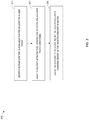
- Figure 3 is a flow diagram illustrating a method 300 for pre-delivering content to a user device within a determined delivery window. The method 300 may be performed by the conditional pre-delivery system 150 and, accordingly, is described herein merely by way of reference thereto. It will be appreciated that the method 300 may be performed on any suitable hardware.
- the conditional pre-delivery system 150 receives an indication that content is available for pre-delivery from a content server to a user device over a network.
- the content module 210 may receive information from the policy server 140 that identifies content items available for pre-delivery to the user device 110, such as content items at the remote content servers 120a-c and associated with mobile applications 116 of the user device 110 that play multimedia content (e.g., video, audio, and so on).
- multimedia content e.g., video, audio, and so on.
- the conditional pre-delivery system 150 selects a delivery window that satisfies one or more pre-delivery policy conditions associated with pre-delivery of content to the user device.
- the policy module 220 may select a delivery window that satisfies a condition defining a suitable network type via which to pre-deliver content to the user device and/or may select a future delivery window predicted to satisfy one or more predetermined conditions associated with a suitable network via which to pre-deliver content to the user device.
- the policy module 220 therefore, selects delivery windows for pre-delivery that are associated with certain pre-delivery conditions being currently satisfied and/or being predicted to be satisfied in the future.
- a delivery window or windows therefore, is associated with an occurrence, event, or time period when pre-delivery conditions are met, satisfied, or predicted to be met or satisfied.
- conditional pre-delivery system 150 may select a future time window predicted to satisfy the one or more pre-delivery policy conditions associated with pre-delivery of content to the user device and/or select a future time window associated with historical pre-delivery of content to the user device.
- conditional pre-delivery system 150 causes the content to be delivered to the user device upon commencement or occurrence of the selected delivery window.
- the pre-delivery module 230 causes the content, or a portion of the content, to be delivered to the user device within the delivery window before receiving a request from a user associated with the user device to playback the content.
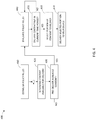
- FIG. 4 is a flow diagram illustrating a method 400 for providing content to a user device.
- the method 400 may be performed by the conditional pre-delivery system 150 and, accordingly, is described herein merely by way of reference thereto. It will be appreciated that the method 400 may be performed on any suitable hardware.
- the conditional pre-delivery system 150 establishes and configures delivery policy rules associated with allowable conditions (e.g., network conditions) for content pre-delivery.
- allowable conditions may include current conditions, past or historical conditions, and/or future, expected, or predicted conditions.
- the delivery rules which may be static and predetermined, are based on the conditions, and identify pre-delivery actions to be performed in response to a delivery window (e.g., a time period) satisfying certain conditions.
- the conditional pre-delivery system 150 identifies content available for pre-delivery to the user device.
- the conditional pre-delivery system 150 may receive information from the policy server 140 that identifies content items available for pre-delivery to the user device 110, such as content items at the remote content servers 120a-c and associated with mobile applications 116 of the user device 110 that play multimedia content (e.g., video, audio, and so on).
- multimedia content e.g., video, audio, and so on.
- conditional pre-delivery system 150 determines whether to pre-deliver some or all of the available content to the user device. As described herein, the conditional pre-delivery system 150 may determine whether to pre-deliver content based on an amount of available local storage for pre-delivered content, a determined likelihood that a user will consume the pre-delivered content, and so on.
- conditional pre-delivery system 150 determines whether to pre-deliver content at a current time or during an occurrence of a delivery window (e.g., determines whether pre-delivery conditions are met). In some embodiments, the conditional pre-delivery system 150 may periodically determine whether to pre-deliver content, may determine whether to pre-deliver content based on a triggering event (e.g., a change in network metrics or conditions), and so on.
- a triggering event e.g., a change in network metrics or conditions
- conditional pre-delivery system 150 determines that predetermined pre-delivery conditions are met or satisfied (e.g., there is an occurrence of a delivery window)
- the conditional pre-delivery system 150 in operation 460, selects a portion of the available content to pre-deliver, and, in operation 470, causes the pre-delivery of the selected portion to the user device.
- the conditional pre-delivery system 150 identifies conditions associated with content delivery networks and applies pre-delivery rules based on the conditions to determine an appropriate or suitable delivery window within which to pre-deliver content to user devices.
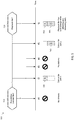
- Figure 5 is a block diagram 500 illustrating a sequence associated with a pre-delivery of content to a user device, between an action 510 to pre-deliver content to a user device, and an action 520 to playback the content at the user device.
- the client defers the pre-delivery of content, and consequently no file delivery action occurs.
- the conditional pre-delivery system 150 determines the network conditions meet the criteria for delivery of a first part 530 of the selected file.
- the size of the file part may be dependent on a pre-cache size algorithm and may be any fraction from 0 to 100% of the total file.
- Figure 5 depicts an example delivery window during which to pre-deliver content items as a window that includes time t2 and time t5 (e.g., multiple intermittent times within the sequence where pre-delivery conditions are met).
- a user requests access to the file via an application running on the user device.
- Playback of the file begins using the locally stored content, and, if the entire content file has not already been delivered, the remainder is downloaded in parallel with the playback process.
- the conditional pre-delivery system 150 determines an occurrence of one or more predetermined pre-delivery conditions associated with a network via which to pre-deliver content to the user device, identifies one or more content items located at a remote content server are available for pre-delivery to the user device, and causes at least a portion of the identified one or more content items to be delivered to the user device during the occurrence of the one or more predetermined pre-delivery conditions.
Landscapes
- Engineering & Computer Science (AREA)
- Computer Networks & Wireless Communication (AREA)
- Signal Processing (AREA)
- Multimedia (AREA)
- Information Transfer Between Computers (AREA)
Claims (18)
- Méthode réalisée par un dispositif utilisateur (110), la méthode comprenant :le fait de déterminer qu'un élément de contenu est disponible aux fins de pré-distribution, depuis un serveur de contenu (120) vers le dispositif utilisateur par le biais d'un réseau (130) via une indication reçue ;la sélection d'une fenêtre de distribution qui satisfait une première condition de politique de pré-distribution associée à une pré-distribution de contenu au dispositif utilisateur ; etl'identification d'actions déclenchant une demande de pré-distribution devant être réalisée en réponse à la fenêtre de distribution sélectionnée satisfaisant ladite condition lors du commencement de la fenêtre de distribution sélectionnée,caractérisée en ce que :
une partie entière de l'élément de contenu étant déclenchée aux fins de pré-distribution lorsque la fenêtre de distribution satisfait la première condition de politique de pré-distribution et une seconde condition de politique de pré-distribution, et une partie partielle de l'élément de contenu étant déclenchée aux fins de pré-distribution lorsque la fenêtre de distribution satisfait la première condition de politique de pré-distribution sans satisfaire la seconde condition de politique de pré-distribution. - Méthode selon la revendication 1, dans laquelle le fait d'amener l'élément de contenu à être pré-distribué au dispositif utilisateur lors du commencement de la fenêtre de distribution sélectionnée inclut le fait d'amener le contenu à être distribué au dispositif utilisateur avant la réception d'une requête depuis un utilisateur associé au dispositif utilisateur pour relire le contenu.
- Méthode selon la revendication 1, dans laquelle la sélection d'une fenêtre de distribution qui satisfait la première condition de politique de pré-distribution associée à une pré-distribution de contenu au dispositif utilisateur inclut la sélection d'une fenêtre de distribution lorsque le dispositif utilisateur est connecté à un type de réseau via lequel le contenu devra être pré-distribué au dispositif utilisateur.
- Méthode selon la revendication 1, dans laquelle la sélection d'une fenêtre de distribution qui satisfait la première condition de politique de pré-distribution associée à une pré-distribution de contenu au dispositif utilisateur inclut la sélection d'une fenêtre de temps qui satisfait actuellement la première condition de politique de pré-distribution associée à la pré-distribution de contenu au dispositif utilisateur.
- Méthode selon la revendication 1, dans laquelle la sélection d'une fenêtre de distribution qui satisfait la première condition de politique de pré-distribution associée à une pré-distribution de contenu au dispositif utilisateur inclut la sélection d'une future fenêtre de temps prédite pour satisfaire la première condition de politique de pré-distribution associée à une pré-distribution de contenu au dispositif utilisateur.
- Méthode selon la revendication 1, dans laquelle la sélection d'une fenêtre de distribution qui satisfait la première condition de politique de pré-distribution associée à une pré-distribution de contenu au dispositif utilisateur inclut la sélection d'une future fenêtre de temps associée à une pré-distribution historique de contenu au dispositif utilisateur.
- Méthode selon la revendication 1, dans laquelle la sélection d'une fenêtre de distribution qui satisfait la première condition de politique de pré-distribution associée à une pré-distribution de contenu au dispositif utilisateur inclut :la détermination d'une période de temps prédite pendant laquelle un utilisateur du dispositif utilisateur demandera la relecture du contenu sur la base de modèles de relecture précédents associés à l'utilisateur ; etla sélection d'une fenêtre de distribution qui satisfait la première condition de politique de pré-distribution et survient avant la période de temps prédite.
- Méthode selon la revendication 1, dans laquelle la sélection d'une fenêtre de distribution qui satisfait la première condition de politique de pré-distribution associée à une pré-distribution de contenu au dispositif utilisateur inclut :la détermination d'une période de temps prédite pendant laquelle un utilisateur du dispositif utilisateur demandera une relecture du contenu sur la base de modèles de relecture précédents associés au contenu ; etla sélection d'une fenêtre de distribution qui satisfait la première condition de politique de pré-distribution et survient avant la période de temps prédite.
- Méthode selon la revendication 1, dans laquelle les première et seconde conditions de politique de pré-distribution incluent une condition selon laquelle le dispositif utilisateur est connecté à un réseau de pré-distribution, le réseau de pré-distribution étant un réseau sans fil.
- Méthode selon la revendication 1, dans laquelle les première et seconde conditions de politique de pré-distribution incluent une condition selon laquelle le dispositif utilisateur est connecté à un réseau de pré-distribution, le réseau de pré-distribution fonctionnant au-dessus d'un certain seuil de qualité.
- Méthode selon la revendication 1, dans laquelle les première et seconde conditions de politique de pré-distribution incluent une condition selon laquelle le dispositif utilisateur est connecté à un réseau de pré-distribution, le réseau de pré-distribution ayant un opérateur spécifique associé au dispositif utilisateur.
- Méthode selon la revendication 1, dans laquelle les première et seconde conditions de politique de pré-distribution incluent une certaine période de temps pendant laquelle le contenu doit être pré-distribué au dispositif utilisateur.
- Méthode selon la revendication 1, dans laquelle les première et seconde conditions de politique de pré-distribution incluent une condition selon laquelle le dispositif utilisateur est situé à un certain emplacement auquel le contenu doit être pré-distribué au dispositif utilisateur.
- Dispositif utilisateur (110) qui inclut un système de pré-distribution conditionnelle (150), comprenant :un module de contenu (210) qui reçoit une indication selon laquelle un élément de contenu est disponible aux fins de pré-distribution depuis un serveur de contenu (120) connecté au dispositif utilisateur par le biais d'un réseau (130) ;un module de politique (220) qui sélectionne une fenêtre de distribution qui satisfait une première condition de politique de pré-distribution associée à une pré-distribution de contenu au dispositif utilisateur ; etun module de pré-distribution (230) qui identifie des actions déclenchant une demande de pré-distribution devant être réalisée lors du commencement de la fenêtre de distribution sélectionnée, en réponse à la fenêtre de distribution sélectionnée satisfaisant ladite condition,caractérisé en ce que :
une partie entière de l'élément de contenu étant déclenchée aux fins de pré-distribution lorsque la fenêtre de distribution satisfait la première condition de politique de pré-distribution et une seconde condition de politique de pré-distribution, et une partie partielle de l'élément de contenu étant déclenchée aux fins de pré-distribution lorsque la fenêtre de distribution satisfait la première condition de politique de pré-distribution sans satisfaire la seconde condition de politique de pré-distribution. - Dispositif selon la revendication 14, dans lequel le module de pré-distribution amène le contenu à être distribué au dispositif utilisateur avant la réception d'une requête depuis un utilisateur associé au dispositif utilisateur pour relire le contenu.
- Dispositif selon la revendication 14, dans lequel le module de politique sélectionne une fenêtre de distribution qui satisfait une condition selon laquelle le dispositif utilisateur est connecté à un type de réseau approprié via lequel le contenu doit être pré-distribué au dispositif utilisateur.
- Dispositif selon la revendication 14, dans lequel le module de politique sélectionne une future fenêtre de distribution prédite pour satisfaire la première condition de pré-distribution, la première condition de pré-distribution étant une condition selon laquelle le dispositif utilisateur est connecté à un réseau approprié via lequel le contenu doit être pré-distribué au dispositif utilisateur.
- Support de stockage lisible par ordinateur dont les contenus, lorsqu'ils sont exécutés par un dispositif utilisateur (110), amènent le dispositif utilisateur à réaliser des opérations, les opérations comprenant :la détermination d'une survenance d'une première condition de pré-distribution prédéterminée associée à un réseau (130) via lequel un contenu doit être pré-délivré au dispositif utilisateur ;l'identification d'un ou de plusieurs éléments de contenus situés au niveau d'un serveur de contenu distant (120) qui sont disponibles aux fins de pré-distribution au dispositif utilisateur ; etl'identification d'actions déclenchant une demande de pré-distribution devant être réalisée en réponse au fait que la fenêtre de distribution sélectionnée satisfait ladite condition, les un ou plusieurs éléments de contenu identifiés devant être pré-distribués au dispositif utilisateur durant la survenance de la première condition de pré-distribution prédéterminée, une partie entière des un ou plusieurs éléments de contenu étant pré-distribuée lorsque la fenêtre de distribution satisfait la première condition de politique de pré-distribution prédéterminée et une seconde condition de politique de pré-distribution prédéterminée, une partie partielle des un ou plusieurs éléments de contenu étant pré-distribuée lorsque la fenêtre de distribution satisfait la première condition de politique de pré-distribution prédéterminée sans satisfaire la seconde condition de politique de pré-distribution prédéterminée ; etle report d'une pré-distribution des un ou plusieurs contenus au dispositif utilisateur lorsque la première condition de politique de pré-distribution et la seconde condition de politique de pré-distribution ne sont pas satisfaites,dans lequel les première et seconde conditions de politique de pré-distribution incluent une condition selon laquelle une durée de vie de batterie du dispositif utilisateur est à un certain niveau.
Applications Claiming Priority (2)
| Application Number | Priority Date | Filing Date | Title |
|---|---|---|---|
| US201361886719P | 2013-10-04 | 2013-10-04 | |
| PCT/US2014/059164 WO2015051321A1 (fr) | 2013-10-04 | 2014-10-03 | Pré-distribution conditionnelle de contenu à un dispositif utilisateur |
Publications (3)
| Publication Number | Publication Date |
|---|---|
| EP3053128A1 EP3053128A1 (fr) | 2016-08-10 |
| EP3053128A4 EP3053128A4 (fr) | 2017-07-05 |
| EP3053128B1 true EP3053128B1 (fr) | 2019-02-20 |
Family
ID=52777872
Family Applications (1)
| Application Number | Title | Priority Date | Filing Date |
|---|---|---|---|
| EP14850868.2A Active EP3053128B1 (fr) | 2013-10-04 | 2014-10-03 | Pré-distribution conditionnelle de contenu à un dispositif utilisateur |
Country Status (3)
| Country | Link |
|---|---|
| US (2) | US10511688B2 (fr) |
| EP (1) | EP3053128B1 (fr) |
| WO (1) | WO2015051321A1 (fr) |
Families Citing this family (5)
| Publication number | Priority date | Publication date | Assignee | Title |
|---|---|---|---|---|
| US11095743B2 (en) | 2014-07-16 | 2021-08-17 | Tensera Networks Ltd. | Optimized content-delivery network (CDN) for the wireless last mile |
| US10432748B2 (en) | 2014-07-16 | 2019-10-01 | Tensera Networks Ltd. | Efficient content delivery over wireless networks using guaranteed prefetching at selected times-of-day |
| WO2017019458A1 (fr) * | 2015-07-24 | 2017-02-02 | Spotify Ab | Prédiction automatique de fractionnement d'artiste et de contenu |
| CN106850629B (zh) * | 2017-02-09 | 2020-05-12 | Oppo广东移动通信有限公司 | 一种流媒体数据的处理方法及移动终端 |
| US11790246B2 (en) | 2019-02-19 | 2023-10-17 | International Business Machines Corporation | Dynamic media use control service |
Family Cites Families (29)
| Publication number | Priority date | Publication date | Assignee | Title |
|---|---|---|---|---|
| US5991306A (en) * | 1996-08-26 | 1999-11-23 | Microsoft Corporation | Pull based, intelligent caching system and method for delivering data over a network |
| US6996393B2 (en) * | 2001-08-31 | 2006-02-07 | Nokia Corporation | Mobile content delivery system |
| JP2003256310A (ja) * | 2002-03-05 | 2003-09-12 | Nec Corp | サーバ負荷分散システム、サーバ負荷分散装置、コンテンツ管理装置、及びサーバ負荷分散プログラム |
| JP2003263454A (ja) * | 2002-03-11 | 2003-09-19 | Hitachi Ltd | 文書情報検索配信装置 |
| US7720024B2 (en) | 2004-03-31 | 2010-05-18 | Qualcomm Incorporated | Method and apparatus for obtaining server information in a wireless network |
| US7756913B1 (en) * | 2004-08-02 | 2010-07-13 | Cisco Technology, Inc. | System and methods for selecting content distribution |
| US8966111B2 (en) | 2005-03-10 | 2015-02-24 | Qualcomm Incorporated | Methods and apparatus for service planning and analysis |
| JP2007104577A (ja) * | 2005-10-07 | 2007-04-19 | Sony Corp | コンテンツ転送装置、コンテンツ転送方法及びコンテンツ転送プログラム |
| WO2007106826A2 (fr) * | 2006-03-13 | 2007-09-20 | Markmonitor Inc. | Validation de detention de noms de domaine |
| ATE515130T1 (de) * | 2006-04-07 | 2011-07-15 | Markport Ltd | Steuerung von echtzeitdiensten |
| KR20080019972A (ko) * | 2006-08-30 | 2008-03-05 | 김보성 | 컨텐츠의 일부를 선 전송하는 디지털 컨텐츠 서비스 방법및 시스템 |
| US8281077B2 (en) * | 2006-12-08 | 2012-10-02 | Sony Ericsson Mobile Communications Ab | Local media cache with leader files |
| WO2009042304A1 (fr) * | 2007-09-25 | 2009-04-02 | Goldspot Media | Transmission ciblée de publicité et diffusion dans un système sans fil multidiffusion à largeur de bande limitée |
| US8169916B1 (en) * | 2007-11-23 | 2012-05-01 | Media Melon, Inc. | Multi-platform video delivery configuration |
| KR20090076161A (ko) * | 2008-01-07 | 2009-07-13 | 에스케이 텔레콤주식회사 | 이동통신에서의 ucc 재생 시스템 및 방법 |
| US8763090B2 (en) * | 2009-08-11 | 2014-06-24 | Sony Computer Entertainment America Llc | Management of ancillary content delivery and presentation |
| US8862173B2 (en) * | 2009-12-10 | 2014-10-14 | Motorola Solutions, Inc. | Method for selecting media for delivery to users at an incident |
| US8495196B2 (en) * | 2010-03-22 | 2013-07-23 | Opanga Networks, Inc. | Systems and methods for aligning media content delivery sessions with historical network usage |
| US20120054336A1 (en) * | 2010-08-31 | 2012-03-01 | Apple Inc. | Management of content delivery networks based on campaign performance |
| US8769655B2 (en) * | 2010-12-30 | 2014-07-01 | Verisign, Inc. | Shared registration multi-factor authentication tokens |
| US8605640B2 (en) * | 2011-05-26 | 2013-12-10 | Verizon Patent And Licensing Inc. | Network aware content pre-delivery over a radio access network |
| US20130081072A1 (en) * | 2011-09-28 | 2013-03-28 | Cello Partnership | Preemptive video delivery to devices in a wireless network |
| WO2013067411A1 (fr) * | 2011-11-04 | 2013-05-10 | Opanga Networks, Inc. | Système et procédé de détermination de pré-positionnement de contenu |
| WO2013078620A1 (fr) * | 2011-11-29 | 2013-06-06 | 华为技术有限公司 | Procédé, dispositif et système de délivrance d'un contenu télédiffusé en direct |
| US9253051B2 (en) * | 2012-02-23 | 2016-02-02 | Ericsson Ab | System and method for delivering content in a content delivery network |
| US8930294B2 (en) * | 2012-07-30 | 2015-01-06 | Hewlett-Packard Development Company, L.P. | Predicting user activity based on usage data received from client devices |
| US9357021B2 (en) * | 2013-03-14 | 2016-05-31 | Comcast Cable Communications, Llc | Delivery of content |
| WO2014144338A1 (fr) * | 2013-03-15 | 2014-09-18 | Opanga Networks, Inc. | Fourniture préalable de contenu à des dispositifs |
| US9866529B2 (en) * | 2013-04-06 | 2018-01-09 | Citrix Systems, Inc. | Systems and methods for ETAG persistency |
-
2014
- 2014-10-03 WO PCT/US2014/059164 patent/WO2015051321A1/fr not_active Ceased
- 2014-10-03 EP EP14850868.2A patent/EP3053128B1/fr active Active
- 2014-10-03 US US14/506,492 patent/US10511688B2/en active Active
-
2019
- 2019-11-19 US US16/688,885 patent/US11303725B2/en active Active
Non-Patent Citations (1)
| Title |
|---|
| None * |
Also Published As
| Publication number | Publication date |
|---|---|
| US20200084294A1 (en) | 2020-03-12 |
| US11303725B2 (en) | 2022-04-12 |
| EP3053128A4 (fr) | 2017-07-05 |
| WO2015051321A1 (fr) | 2015-04-09 |
| EP3053128A1 (fr) | 2016-08-10 |
| US20150100666A1 (en) | 2015-04-09 |
| US10511688B2 (en) | 2019-12-17 |
Similar Documents
| Publication | Publication Date | Title |
|---|---|---|
| US11509741B2 (en) | Managing mobile device user subscription and service preferences to predictively pre-fetch content | |
| US11303725B2 (en) | Conditional pre-delivery of content to a user device | |
| CN107251525B (zh) | 用于支持移动设备用户的预测内容预取服务的分布式服务器架构 | |
| US10924577B2 (en) | Fractional pre-delivery of content to user devices for uninterrupted playback | |
| US9888003B2 (en) | Pre-delivery of content to devices | |
| US9906595B2 (en) | Content source discovery | |
| US9721616B2 (en) | Playback of content pre-delivered to a user device | |
| CN103262075B (zh) | 用于向用户设备预提取资产的资源简档调整 | |
| EP3123440B1 (fr) | Commande de la prédistribution de contenu à un dispositif mobile |
Legal Events
| Date | Code | Title | Description |
|---|---|---|---|
| PUAI | Public reference made under article 153(3) epc to a published international application that has entered the european phase |
Free format text: ORIGINAL CODE: 0009012 |
|
| 17P | Request for examination filed |
Effective date: 20160422 |
|
| AK | Designated contracting states |
Kind code of ref document: A1 Designated state(s): AL AT BE BG CH CY CZ DE DK EE ES FI FR GB GR HR HU IE IS IT LI LT LU LV MC MK MT NL NO PL PT RO RS SE SI SK SM TR |
|
| AX | Request for extension of the european patent |
Extension state: BA ME |
|
| DAX | Request for extension of the european patent (deleted) | ||
| A4 | Supplementary search report drawn up and despatched |
Effective date: 20170602 |
|
| RIC1 | Information provided on ipc code assigned before grant |
Ipc: H04L 12/26 20060101ALI20170529BHEP Ipc: G06Q 50/10 20120101AFI20170529BHEP Ipc: H04W 88/02 20090101ALI20170529BHEP Ipc: H04L 29/06 20060101ALI20170529BHEP |
|
| GRAP | Despatch of communication of intention to grant a patent |
Free format text: ORIGINAL CODE: EPIDOSNIGR1 |
|
| STAA | Information on the status of an ep patent application or granted ep patent |
Free format text: STATUS: GRANT OF PATENT IS INTENDED |
|
| INTG | Intention to grant announced |
Effective date: 20180829 |
|
| GRAS | Grant fee paid |
Free format text: ORIGINAL CODE: EPIDOSNIGR3 |
|
| GRAA | (expected) grant |
Free format text: ORIGINAL CODE: 0009210 |
|
| STAA | Information on the status of an ep patent application or granted ep patent |
Free format text: STATUS: THE PATENT HAS BEEN GRANTED |
|
| AK | Designated contracting states |
Kind code of ref document: B1 Designated state(s): AL AT BE BG CH CY CZ DE DK EE ES FI FR GB GR HR HU IE IS IT LI LT LU LV MC MK MT NL NO PL PT RO RS SE SI SK SM TR |
|
| REG | Reference to a national code |
Ref country code: GB Ref legal event code: FG4D |
|
| REG | Reference to a national code |
Ref country code: CH Ref legal event code: EP |
|
| REG | Reference to a national code |
Ref country code: DE Ref legal event code: R096 Ref document number: 602014041499 Country of ref document: DE |
|
| REG | Reference to a national code |
Ref country code: AT Ref legal event code: REF Ref document number: 1099190 Country of ref document: AT Kind code of ref document: T Effective date: 20190315 |
|
| REG | Reference to a national code |
Ref country code: IE Ref legal event code: FG4D |
|
| REG | Reference to a national code |
Ref country code: NL Ref legal event code: MP Effective date: 20190220 |
|
| REG | Reference to a national code |
Ref country code: LT Ref legal event code: MG4D |
|
| PG25 | Lapsed in a contracting state [announced via postgrant information from national office to epo] |
Ref country code: SE Free format text: LAPSE BECAUSE OF FAILURE TO SUBMIT A TRANSLATION OF THE DESCRIPTION OR TO PAY THE FEE WITHIN THE PRESCRIBED TIME-LIMIT Effective date: 20190220 Ref country code: NL Free format text: LAPSE BECAUSE OF FAILURE TO SUBMIT A TRANSLATION OF THE DESCRIPTION OR TO PAY THE FEE WITHIN THE PRESCRIBED TIME-LIMIT Effective date: 20190220 Ref country code: PT Free format text: LAPSE BECAUSE OF FAILURE TO SUBMIT A TRANSLATION OF THE DESCRIPTION OR TO PAY THE FEE WITHIN THE PRESCRIBED TIME-LIMIT Effective date: 20190620 Ref country code: LT Free format text: LAPSE BECAUSE OF FAILURE TO SUBMIT A TRANSLATION OF THE DESCRIPTION OR TO PAY THE FEE WITHIN THE PRESCRIBED TIME-LIMIT Effective date: 20190220 Ref country code: NO Free format text: LAPSE BECAUSE OF FAILURE TO SUBMIT A TRANSLATION OF THE DESCRIPTION OR TO PAY THE FEE WITHIN THE PRESCRIBED TIME-LIMIT Effective date: 20190520 Ref country code: FI Free format text: LAPSE BECAUSE OF FAILURE TO SUBMIT A TRANSLATION OF THE DESCRIPTION OR TO PAY THE FEE WITHIN THE PRESCRIBED TIME-LIMIT Effective date: 20190220 |
|
| PG25 | Lapsed in a contracting state [announced via postgrant information from national office to epo] |
Ref country code: IS Free format text: LAPSE BECAUSE OF FAILURE TO SUBMIT A TRANSLATION OF THE DESCRIPTION OR TO PAY THE FEE WITHIN THE PRESCRIBED TIME-LIMIT Effective date: 20190620 Ref country code: BG Free format text: LAPSE BECAUSE OF FAILURE TO SUBMIT A TRANSLATION OF THE DESCRIPTION OR TO PAY THE FEE WITHIN THE PRESCRIBED TIME-LIMIT Effective date: 20190520 Ref country code: RS Free format text: LAPSE BECAUSE OF FAILURE TO SUBMIT A TRANSLATION OF THE DESCRIPTION OR TO PAY THE FEE WITHIN THE PRESCRIBED TIME-LIMIT Effective date: 20190220 Ref country code: HR Free format text: LAPSE BECAUSE OF FAILURE TO SUBMIT A TRANSLATION OF THE DESCRIPTION OR TO PAY THE FEE WITHIN THE PRESCRIBED TIME-LIMIT Effective date: 20190220 Ref country code: LV Free format text: LAPSE BECAUSE OF FAILURE TO SUBMIT A TRANSLATION OF THE DESCRIPTION OR TO PAY THE FEE WITHIN THE PRESCRIBED TIME-LIMIT Effective date: 20190220 Ref country code: GR Free format text: LAPSE BECAUSE OF FAILURE TO SUBMIT A TRANSLATION OF THE DESCRIPTION OR TO PAY THE FEE WITHIN THE PRESCRIBED TIME-LIMIT Effective date: 20190521 |
|
| REG | Reference to a national code |
Ref country code: AT Ref legal event code: MK05 Ref document number: 1099190 Country of ref document: AT Kind code of ref document: T Effective date: 20190220 |
|
| PG25 | Lapsed in a contracting state [announced via postgrant information from national office to epo] |
Ref country code: CZ Free format text: LAPSE BECAUSE OF FAILURE TO SUBMIT A TRANSLATION OF THE DESCRIPTION OR TO PAY THE FEE WITHIN THE PRESCRIBED TIME-LIMIT Effective date: 20190220 Ref country code: ES Free format text: LAPSE BECAUSE OF FAILURE TO SUBMIT A TRANSLATION OF THE DESCRIPTION OR TO PAY THE FEE WITHIN THE PRESCRIBED TIME-LIMIT Effective date: 20190220 Ref country code: SK Free format text: LAPSE BECAUSE OF FAILURE TO SUBMIT A TRANSLATION OF THE DESCRIPTION OR TO PAY THE FEE WITHIN THE PRESCRIBED TIME-LIMIT Effective date: 20190220 Ref country code: AL Free format text: LAPSE BECAUSE OF FAILURE TO SUBMIT A TRANSLATION OF THE DESCRIPTION OR TO PAY THE FEE WITHIN THE PRESCRIBED TIME-LIMIT Effective date: 20190220 Ref country code: EE Free format text: LAPSE BECAUSE OF FAILURE TO SUBMIT A TRANSLATION OF THE DESCRIPTION OR TO PAY THE FEE WITHIN THE PRESCRIBED TIME-LIMIT Effective date: 20190220 Ref country code: DK Free format text: LAPSE BECAUSE OF FAILURE TO SUBMIT A TRANSLATION OF THE DESCRIPTION OR TO PAY THE FEE WITHIN THE PRESCRIBED TIME-LIMIT Effective date: 20190220 Ref country code: RO Free format text: LAPSE BECAUSE OF FAILURE TO SUBMIT A TRANSLATION OF THE DESCRIPTION OR TO PAY THE FEE WITHIN THE PRESCRIBED TIME-LIMIT Effective date: 20190220 Ref country code: IT Free format text: LAPSE BECAUSE OF FAILURE TO SUBMIT A TRANSLATION OF THE DESCRIPTION OR TO PAY THE FEE WITHIN THE PRESCRIBED TIME-LIMIT Effective date: 20190220 |
|
| REG | Reference to a national code |
Ref country code: DE Ref legal event code: R097 Ref document number: 602014041499 Country of ref document: DE |
|
| PG25 | Lapsed in a contracting state [announced via postgrant information from national office to epo] |
Ref country code: SM Free format text: LAPSE BECAUSE OF FAILURE TO SUBMIT A TRANSLATION OF THE DESCRIPTION OR TO PAY THE FEE WITHIN THE PRESCRIBED TIME-LIMIT Effective date: 20190220 Ref country code: PL Free format text: LAPSE BECAUSE OF FAILURE TO SUBMIT A TRANSLATION OF THE DESCRIPTION OR TO PAY THE FEE WITHIN THE PRESCRIBED TIME-LIMIT Effective date: 20190220 |
|
| PLBE | No opposition filed within time limit |
Free format text: ORIGINAL CODE: 0009261 |
|
| STAA | Information on the status of an ep patent application or granted ep patent |
Free format text: STATUS: NO OPPOSITION FILED WITHIN TIME LIMIT |
|
| PG25 | Lapsed in a contracting state [announced via postgrant information from national office to epo] |
Ref country code: AT Free format text: LAPSE BECAUSE OF FAILURE TO SUBMIT A TRANSLATION OF THE DESCRIPTION OR TO PAY THE FEE WITHIN THE PRESCRIBED TIME-LIMIT Effective date: 20190220 |
|
| 26N | No opposition filed |
Effective date: 20191121 |
|
| PG25 | Lapsed in a contracting state [announced via postgrant information from national office to epo] |
Ref country code: SI Free format text: LAPSE BECAUSE OF FAILURE TO SUBMIT A TRANSLATION OF THE DESCRIPTION OR TO PAY THE FEE WITHIN THE PRESCRIBED TIME-LIMIT Effective date: 20190220 |
|
| PG25 | Lapsed in a contracting state [announced via postgrant information from national office to epo] |
Ref country code: TR Free format text: LAPSE BECAUSE OF FAILURE TO SUBMIT A TRANSLATION OF THE DESCRIPTION OR TO PAY THE FEE WITHIN THE PRESCRIBED TIME-LIMIT Effective date: 20190220 |
|
| PG25 | Lapsed in a contracting state [announced via postgrant information from national office to epo] |
Ref country code: MC Free format text: LAPSE BECAUSE OF FAILURE TO SUBMIT A TRANSLATION OF THE DESCRIPTION OR TO PAY THE FEE WITHIN THE PRESCRIBED TIME-LIMIT Effective date: 20190220 |
|
| REG | Reference to a national code |
Ref country code: CH Ref legal event code: PL |
|
| PG25 | Lapsed in a contracting state [announced via postgrant information from national office to epo] |
Ref country code: LU Free format text: LAPSE BECAUSE OF NON-PAYMENT OF DUE FEES Effective date: 20191003 Ref country code: CH Free format text: LAPSE BECAUSE OF NON-PAYMENT OF DUE FEES Effective date: 20191031 Ref country code: LI Free format text: LAPSE BECAUSE OF NON-PAYMENT OF DUE FEES Effective date: 20191031 |
|
| REG | Reference to a national code |
Ref country code: BE Ref legal event code: MM Effective date: 20191031 |
|
| PG25 | Lapsed in a contracting state [announced via postgrant information from national office to epo] |
Ref country code: BE Free format text: LAPSE BECAUSE OF NON-PAYMENT OF DUE FEES Effective date: 20191031 |
|
| PG25 | Lapsed in a contracting state [announced via postgrant information from national office to epo] |
Ref country code: IE Free format text: LAPSE BECAUSE OF NON-PAYMENT OF DUE FEES Effective date: 20191003 |
|
| PG25 | Lapsed in a contracting state [announced via postgrant information from national office to epo] |
Ref country code: CY Free format text: LAPSE BECAUSE OF FAILURE TO SUBMIT A TRANSLATION OF THE DESCRIPTION OR TO PAY THE FEE WITHIN THE PRESCRIBED TIME-LIMIT Effective date: 20190220 |
|
| PG25 | Lapsed in a contracting state [announced via postgrant information from national office to epo] |
Ref country code: MT Free format text: LAPSE BECAUSE OF FAILURE TO SUBMIT A TRANSLATION OF THE DESCRIPTION OR TO PAY THE FEE WITHIN THE PRESCRIBED TIME-LIMIT Effective date: 20190220 Ref country code: HU Free format text: LAPSE BECAUSE OF FAILURE TO SUBMIT A TRANSLATION OF THE DESCRIPTION OR TO PAY THE FEE WITHIN THE PRESCRIBED TIME-LIMIT; INVALID AB INITIO Effective date: 20141003 |
|
| PG25 | Lapsed in a contracting state [announced via postgrant information from national office to epo] |
Ref country code: MK Free format text: LAPSE BECAUSE OF FAILURE TO SUBMIT A TRANSLATION OF THE DESCRIPTION OR TO PAY THE FEE WITHIN THE PRESCRIBED TIME-LIMIT Effective date: 20190220 |
|
| PGFP | Annual fee paid to national office [announced via postgrant information from national office to epo] |
Ref country code: DE Payment date: 20251029 Year of fee payment: 12 |
|
| PGFP | Annual fee paid to national office [announced via postgrant information from national office to epo] |
Ref country code: GB Payment date: 20251027 Year of fee payment: 12 |
|
| PGFP | Annual fee paid to national office [announced via postgrant information from national office to epo] |
Ref country code: FR Payment date: 20251027 Year of fee payment: 12 |