EP3059645A1 - Verfahren und computerprogrammprodukt zur steuerung anaerober codigester - Google Patents
Verfahren und computerprogrammprodukt zur steuerung anaerober codigester Download PDFInfo
- Publication number
- EP3059645A1 EP3059645A1 EP14854626.0A EP14854626A EP3059645A1 EP 3059645 A1 EP3059645 A1 EP 3059645A1 EP 14854626 A EP14854626 A EP 14854626A EP 3059645 A1 EP3059645 A1 EP 3059645A1
- Authority
- EP
- European Patent Office
- Prior art keywords
- ratio
- limit
- methane
- mixture
- hrt
- Prior art date
- Legal status (The legal status is an assumption and is not a legal conclusion. Google has not performed a legal analysis and makes no representation as to the accuracy of the status listed.)
- Granted
Links
Images

Classifications
-
- G—PHYSICS
- G05—CONTROLLING; REGULATING
- G05B—CONTROL OR REGULATING SYSTEMS IN GENERAL; FUNCTIONAL ELEMENTS OF SUCH SYSTEMS; MONITORING OR TESTING ARRANGEMENTS FOR SUCH SYSTEMS OR ELEMENTS
- G05B13/00—Adaptive control systems, i.e. systems automatically adjusting themselves to have a performance which is optimum according to some preassigned criterion
- G05B13/02—Adaptive control systems, i.e. systems automatically adjusting themselves to have a performance which is optimum according to some preassigned criterion electric
- G05B13/04—Adaptive control systems, i.e. systems automatically adjusting themselves to have a performance which is optimum according to some preassigned criterion electric involving the use of models or simulators
-
- C—CHEMISTRY; METALLURGY
- C02—TREATMENT OF WATER, WASTE WATER, SEWAGE, OR SLUDGE
- C02F—TREATMENT OF WATER, WASTE WATER, SEWAGE, OR SLUDGE
- C02F3/00—Biological treatment of water, waste water, or sewage
- C02F3/28—Anaerobic digestion processes
-
- C—CHEMISTRY; METALLURGY
- C12—BIOCHEMISTRY; BEER; SPIRITS; WINE; VINEGAR; MICROBIOLOGY; ENZYMOLOGY; MUTATION OR GENETIC ENGINEERING
- C12M—APPARATUS FOR ENZYMOLOGY OR MICROBIOLOGY; APPARATUS FOR CULTURING MICROORGANISMS FOR PRODUCING BIOMASS, FOR GROWING CELLS OR FOR OBTAINING FERMENTATION OR METABOLIC PRODUCTS, i.e. BIOREACTORS OR FERMENTERS
- C12M21/00—Bioreactors or fermenters specially adapted for specific uses
- C12M21/04—Bioreactors or fermenters specially adapted for specific uses for producing gas, e.g. biogas
-
- C—CHEMISTRY; METALLURGY
- C12—BIOCHEMISTRY; BEER; SPIRITS; WINE; VINEGAR; MICROBIOLOGY; ENZYMOLOGY; MUTATION OR GENETIC ENGINEERING
- C12M—APPARATUS FOR ENZYMOLOGY OR MICROBIOLOGY; APPARATUS FOR CULTURING MICROORGANISMS FOR PRODUCING BIOMASS, FOR GROWING CELLS OR FOR OBTAINING FERMENTATION OR METABOLIC PRODUCTS, i.e. BIOREACTORS OR FERMENTERS
- C12M41/00—Means for regulation, monitoring, measurement or control, e.g. flow regulation
- C12M41/48—Automatic or computerized control
-
- C—CHEMISTRY; METALLURGY
- C12—BIOCHEMISTRY; BEER; SPIRITS; WINE; VINEGAR; MICROBIOLOGY; ENZYMOLOGY; MUTATION OR GENETIC ENGINEERING
- C12P—FERMENTATION OR ENZYME-USING PROCESSES TO SYNTHESISE A DESIRED CHEMICAL COMPOUND OR COMPOSITION OR TO SEPARATE OPTICAL ISOMERS FROM A RACEMIC MIXTURE
- C12P5/00—Preparation of hydrocarbons or halogenated hydrocarbons
- C12P5/02—Preparation of hydrocarbons or halogenated hydrocarbons acyclic
- C12P5/023—Methane
-
- G—PHYSICS
- G16—INFORMATION AND COMMUNICATION TECHNOLOGY [ICT] SPECIALLY ADAPTED FOR SPECIFIC APPLICATION FIELDS
- G16C—COMPUTATIONAL CHEMISTRY; CHEMOINFORMATICS; COMPUTATIONAL MATERIALS SCIENCE
- G16C20/00—Chemoinformatics, i.e. ICT specially adapted for the handling of physicochemical or structural data of chemical particles, elements, compounds or mixtures
- G16C20/10—Analysis or design of chemical reactions, syntheses or processes
-
- G—PHYSICS
- G16—INFORMATION AND COMMUNICATION TECHNOLOGY [ICT] SPECIALLY ADAPTED FOR SPECIFIC APPLICATION FIELDS
- G16C—COMPUTATIONAL CHEMISTRY; CHEMOINFORMATICS; COMPUTATIONAL MATERIALS SCIENCE
- G16C99/00—Subject matter not provided for in other groups of this subclass
-
- A—HUMAN NECESSITIES
- A01—AGRICULTURE; FORESTRY; ANIMAL HUSBANDRY; HUNTING; TRAPPING; FISHING
- A01C—PLANTING; SOWING; FERTILISING
- A01C3/00—Treating manure; Manuring
- A01C3/02—Storage places for manure, e.g. cisterns for liquid manure; Installations for fermenting manure
- A01C3/023—Digesters
-
- C—CHEMISTRY; METALLURGY
- C02—TREATMENT OF WATER, WASTE WATER, SEWAGE, OR SLUDGE
- C02F—TREATMENT OF WATER, WASTE WATER, SEWAGE, OR SLUDGE
- C02F11/00—Treatment of sludge; Devices therefor
- C02F11/02—Biological treatment
- C02F11/04—Anaerobic treatment; Production of methane by such processes
-
- C—CHEMISTRY; METALLURGY
- C02—TREATMENT OF WATER, WASTE WATER, SEWAGE, OR SLUDGE
- C02F—TREATMENT OF WATER, WASTE WATER, SEWAGE, OR SLUDGE
- C02F2103/00—Nature of the water, waste water, sewage or sludge to be treated
- C02F2103/20—Nature of the water, waste water, sewage or sludge to be treated from animal husbandry
-
- C—CHEMISTRY; METALLURGY
- C02—TREATMENT OF WATER, WASTE WATER, SEWAGE, OR SLUDGE
- C02F—TREATMENT OF WATER, WASTE WATER, SEWAGE, OR SLUDGE
- C02F2209/00—Controlling or monitoring parameters in water treatment
- C02F2209/005—Processes using a programmable logic controller [PLC]
- C02F2209/006—Processes using a programmable logic controller [PLC] comprising a software program or a logic diagram
-
- C—CHEMISTRY; METALLURGY
- C02—TREATMENT OF WATER, WASTE WATER, SEWAGE, OR SLUDGE
- C02F—TREATMENT OF WATER, WASTE WATER, SEWAGE, OR SLUDGE
- C02F2209/00—Controlling or monitoring parameters in water treatment
- C02F2209/05—Conductivity or salinity
-
- C—CHEMISTRY; METALLURGY
- C02—TREATMENT OF WATER, WASTE WATER, SEWAGE, OR SLUDGE
- C02F—TREATMENT OF WATER, WASTE WATER, SEWAGE, OR SLUDGE
- C02F2209/00—Controlling or monitoring parameters in water treatment
- C02F2209/07—Alkalinity
-
- C—CHEMISTRY; METALLURGY
- C02—TREATMENT OF WATER, WASTE WATER, SEWAGE, OR SLUDGE
- C02F—TREATMENT OF WATER, WASTE WATER, SEWAGE, OR SLUDGE
- C02F2209/00—Controlling or monitoring parameters in water treatment
- C02F2209/16—Total nitrogen (tkN-N)
-
- C—CHEMISTRY; METALLURGY
- C02—TREATMENT OF WATER, WASTE WATER, SEWAGE, OR SLUDGE
- C02F—TREATMENT OF WATER, WASTE WATER, SEWAGE, OR SLUDGE
- C02F3/00—Biological treatment of water, waste water, or sewage
- C02F3/28—Anaerobic digestion processes
- C02F3/2846—Anaerobic digestion processes using upflow anaerobic sludge blanket [UASB] reactors
-
- Y—GENERAL TAGGING OF NEW TECHNOLOGICAL DEVELOPMENTS; GENERAL TAGGING OF CROSS-SECTIONAL TECHNOLOGIES SPANNING OVER SEVERAL SECTIONS OF THE IPC; TECHNICAL SUBJECTS COVERED BY FORMER USPC CROSS-REFERENCE ART COLLECTIONS [XRACs] AND DIGESTS
- Y02—TECHNOLOGIES OR APPLICATIONS FOR MITIGATION OR ADAPTATION AGAINST CLIMATE CHANGE
- Y02E—REDUCTION OF GREENHOUSE GAS [GHG] EMISSIONS, RELATED TO ENERGY GENERATION, TRANSMISSION OR DISTRIBUTION
- Y02E50/00—Technologies for the production of fuel of non-fossil origin
- Y02E50/30—Fuel from waste, e.g. synthetic alcohol or diesel
Definitions
- the invention relates to a control method for optimizing anaerobic digesters for the treatment of different organic waste by codigestion.
- the invention also relates to a computer program product control anaerobic digesters appropriate to carry out the method.
- the invention has application in biogas plants to improve their performance in terms of methane production, gas quality, digested quality and stability operation.
- the invention allows to optimize the use of organic waste as a source of renewable energy.
- the global primary energy supply for the period 2007-2030 will remain dominated by fossil waste according to the International Energy Agency (IEA). It is estimated that fossil waste contribute on average in this period by 77%, renewables 23%, and that global energy demand will continue to grow. However, it is expected that renewable energy will play a decisive role in current CO 2 mitigation policies. In this sense, energy from biomass and waste is positioned as one of the most important sources of renewable energy future.
- the anaerobic digestion process for treating organic waste has grown significantly in recent years, increasing the treatment capacity using this technology at rates of 25% per annum ( Appels et al., 2011, Renewable and Sustainable Energy Reviews 15, pp. 4295-4301 ).
- Anaerobic digestion is a biological process whereby any organic residue may be transformed into biogas (mixture of methane and carbon dioxide) through a complex mechanism of reaction, including serial and parallel reactions, which is catalyzed by different groups of microorganisms.
- Current advances in the design of bioreactors have increased the use of anaerobic digestion for the treatment of organic solid waste, achieving higher yields compared to conventional methods.
- there are many factors that can influence the performance of the digestion process such as the type and concentration of substrate, temperature, moisture, pH, etc., ( Khalid et al., 2011, 31 Waste management, 1737-1744 ).
- anaerobic co-digestion is an interesting technique that allows to improve the performance of anaerobic digestion of solid waste.
- the use of co-substrates can increase performance in biogas digesters due to the synergies that can be established between the different substrates, which allows, for example, improve the balance of nutrients or moisture content of the mixture, besides being a significant economic advantage by sharing equipment and facilities ( Mata-Alvarez et al., 2000, Bioresource Technology 74, pp. 3-16 ).
- codigestion By applying codigestion, a higher production of biogas and better quality digested can be obtained, depending on the proportions in which the different residues are combined. Most codigestion jobs that have been made so far are based on experimental tests of different mixtures of wastes in order to assess the feasibility of mixtures and biogas yield.
- the reaction mechanism is complex because it includes many reactions and different groups of microorganisms. As it is a biological process, the efficiency with which different microorganisms work largely depends on the conditions of pH and temperature of the system. The accumulation of intermediates compounds, the presence of toxic or inhibitors can lead to acidification of the system and therefore a loss of efficiency of the microorganisms with subsequent inactivation of these and interruption or loss of biogas production, and depending on the intensity of disturbance it can lead to irreversible destabilization process.
- the main operating parameters that are monitored on a continuous operation of an anaerobic digester are mainly: pH, alkalinity, concentration of volatile fatty acids (VFA), and the flow rate and composition of biogas.
- response and sensitivity of these parameters to a disturbance are different.
- Boe et al., 2010, Water Research 44, 5973-5980 studied the response of these process indicators exposing them to different types of disturbances in order to find the most suitable parameter for process monitoring. In particular, they studied the behavior of the following indicators: biogas production, pH, dissolved VFA and Hydrogen (measured on-line), and methane content in biogas and hydrogen (measured off-line). They noted that biogas production increased by increasing the organic load but with a slight decrease in methane content.
- the pH was relatively stable and did not show a clear response to hydraulic overload, but it was sensitive to organic overloads.
- the dissolved hydrogen was very sensitive to the presence of easily biodegradable compounds, and hydrogen in gas was increased after an organic overload. They found that the concentration of VFA was an effective indicator, where propionate was the most persistent acid after occurrence of the disturbance.
- the invention relates to a control method for the optimization of anaerobic digesters in terms of methane production.
- the invention relates to a method that controls codigestion anaerobic operations dealing simultaneously a mixture of two or more organic waste by anaerobic digestion.
- Feeding the digester comprises agroindustrial organic wastes such as pig manure, cow manure, waste from biodiesel production industry, distillery residues or residues of the canning industry.
- the method comprises the following steps:
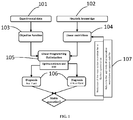
- Figure 1 shows a particular embodiment of the mehtod, in which the various blocks are shown.
- Both the experimental data (101), comprising the composition and methanogenic potential of each substrate, including heuristic knowledge of anaerobic digestion processes (102), which allows setting operation restrictions that must meet the feed mixture to the reactor, are the basis to pose and solve the optimization problem using linear programming (105).
- the optimization of an objective (103) function in order to maximize the production of methane and considering the restrictions mixtures (104), determines the operating conditions of the reactor (in terms of mixture of substrates and HRT system). These conditions are maintained for a certain time (time controller cycle), after which an assessment of the stability and performance of the process (106) is carried out.
- the results of the diagnosis determine to what extent operational food constraints need to be modified to more or less conservative scenarios (107).
- the control action modifies the limits of linear constraints (104) allowing to calculate a new feed mixture to the reactor.
- the control procedure allows its application both to a real plant anaerobic co-digestion as to a simulated plant containing a sufficiently accurate model Anaerobic Digestion as Model No. 1 (ADM1), developed by the International Water Association ( Batstone et al., 2002, Water Science and Technology 45, pp. 65-73 ).
- ADM1 Anaerobic Digestion
- the control method can be grouped into the following modules: linear programming or Blender (201), filter module (203), Diagnosis module (204) and controller module (205).
- linear programming or Blender 201
- filter module 203
- Diagnosis module 204
- controller module 205
- linear programming module (201) that returns the optimum reactor feed mixture and the hydraulic residence time (HRT) system runs.
- TRH and the mixture obtained in the optimal substrate Blender module applied in actual / simulated plant (202).
- Filtering module calculates the average value of the physicochemical parameters to be considered in the diagnosis module for each control cycle (1/4 TRH), which are alkalinities ratio (Ratio) and methane flow (QCH4) .
- the stability and performance of the operation of the digester is continuously monitored by specific indicators defined in the Diagnosis (204) module.
- the controller (205) module calculates an indicator at the end of each time the controller cycle (which is set in a quarter of time TRH system) and acts on the most active constraint optimization problem (one that has the potential to achieve a further increase in the value of the objective function).
- a restriction is activated when the solution of linear programming is in the upper or lower limit of that particular restriction. In case there is more than one active constraint, is considered the most active constraint that which involves a further increase in the value of the objective function.
- the Blender module calculates a new HRT and a new mix of substrates, initiating a new cycle control with the new limits of operational restrictions.
- the system is implemented using MATLAB® / Simulink.
- the optimization method using linear programming module applied in the Blender leads simultaneously optimizing the mixture of substrates and system HRT that maximize the objective function. For each value of HRT evaluated a mixture of substrates is obtained. The combination of HRT and substrate mixture which produces a higher methane production, considering the restrictions applied, is returned as optimal operation.
- x i the volume fraction of each substrate in the mixture
- CODt i the chemical oxygen demand, indicative of organic content of each substrate (obtained from the characterization of the substrate table)
- pMet i the percentage of methanation expected for a given HRT, which is obtained experimentally from the biodegradability test of each residue
- HRT is hydraulic residence time to be applied to the system and has been obtained from biodegradability tests of all waste mixture.
- the objective function returns the sum of the terms obtained by multiplying the fraction of each substrate in the mixture, xi, by its CODt i and the expected conversion rate of methanogenic (pMet i ) for the given HRT (taken from degradation test).
- the objective function units are g COD-CH 4 / L ⁇ d. Methane production, despite it is usually expressed in L CH 4 / L ⁇ d (or m 3 CH 4 / m 3 d), in this case it is expressed in g COD / L ⁇ d, allowing a direct comparison with the organic loading rate (OLR) system, which is expressed in the same units and it is one of the main operating parameters in anaerobic digestion together with TRH.
- OLR organic loading rate
- the definition of the objective function uses the information from each experimental biodegradability test substrates in discontinuous as well as the content of organic matter thereof. These assays are performed routinely in many installations anaerobic digestion and therefore not a further when implementing this control strategy requirement. Also, the value of total COD of the substrates is typically a known variable. Thus, direct application system is achieved even in installations with analytical instrumentation and limited capacity.
- Objective function units are g COD-CH4 / L ⁇ d. Methane production, althought it is usually expressed in L CH 4 / L ⁇ d (or m 3 CH 4 / m 3 ⁇ d), in this case expressed in g COD / L ⁇ d, allowing a direct comparison with system organic loading rate (OLR), which is expressed in the same units and is one of the main operating parameters in anaerobic digestion along with TRH. This way it can quickly be calculated the efficiency of methanation respect to the organic load that is fed to the digester.
- OLR system organic loading rate
- the definition of the objective function uses the information from each experimental biodegradability test substrates in discontinuous as well as the content of organic matter (COD) thereof.
- the optimization problem provides a set of linear restrictions based on operating experience of anaerobic digestion.
- Linear power restrictions are defined based on the characterization of available substrates.
- Restrictions begin with very conservative values of anaerobic digestion processes.
- VCO (7) quality of biogas and (8) digested quality characteristics are not obtained directly from the characterization of the substrates.
- the VCO of each substrate was calculated from the CODt of each substrate and HRT system being evaluated, and the quality of the digested from the biodegradable COD of each substrate.
- VCO COD t / HRT (expressed in g COD/L -d)
- Quality of the digested COD t ⁇ (pBiod - pMet) (expressed in g COD/L)
- pBiod is the maximum percentage of methanation (or% biodegradability, expressed in% / 100) obtained from tests of biodegradability of each substrate
- pMET is the methanation percentage (in% / 100) reached at the time instant curve biodegradability equal to TRH applied to the digester.
- the gas quality is calculated in terms of the maximum sulfur content (expressed in g H 2 S / L) that can be obtained from biogas. It is calculated from the mass balance of sulfur considering all the sulfur substrates is converted to H 2 S and it is completely eliminated in the gas stream :.
- the average value of the physico-chemical parameters to be considered in the Diagnosis module for each control cycle which are alkalinity ratio (Ratio) and methane flow (Q CH4 ) is calculated.
- the average of these parameters in each control cycle values are compared in the diagnostic module with a baseline or reference for evaluating the stability of the operation.
- Ratio is the relationshop of average alkalinities and Q CH 4 is the average methane flow.
- the integration time is equal to one fourth of the EI tiempo de integra
- the control system Diagnosis module of performance and stability monitors the parameters Average Alkalinity Ratio and Average Methane Flow.
- the ratio alkalinity ratio parameter is defined as the ratio of alkalinity due to volatile fatty acids (VFA) and alkalinity due to bicarbonate, and allows to predict organic acidification and system overload.
- the average methane gas flow is used as an indicator of the proximity of operation to the maximum capacity of the process.
- Diagnosis module returns two factors based on representative values Average Alkalinity Ratio and Average Methane Flow, which are the stability factor (f Ratio ) and methanogenic remaining capacity factor (f CH4 ).
- the stability factor (f Ratio ) is calculated using an empirical correlation ( Rodriguez et al., 2006, Water Science & Technology 54, pp. 57-62 ) based on the average Ratio, Ratio , with respect to the reference value Ratio* set as a limit system stability.
- the returned value is in the range [-1, 1] and serves as an indicator of process instability when negative, and as level of stability when is positive.
- the Remaining Methanogenic Potential Factor (f CH4 ) is calculated using an empirical correlation based on the average methane production, Q CH 4 , referenced to a value of methane flow established as maximum system capacity, Q CH4 * ( Rodriguez et al., 2006 , Water Science & Technology 54, pp. 57-62 ). The result is between [0,1] and serves to moderate the extent to which the changes of load applied to the organic system, avoiding for example, large increases in very stable conditions when methane production is close to estimated as maximum system capacity.
- the controller module calculates, at the end of each time cycle, a control flag, indicator I, which is the product of f Ratio and f CH4 factors when the system is stable (and therefore f Ratio is positive), and equal to f Ratio when the system is not stable (and therefore f Ratio is negative).
- Indicator I ⁇ f Ratio ⁇ f CH 4 if f Ratio > 0 f Ratio if f Ratio ⁇ 0
- the value of the indicator I is in the range [-1,1].
- the control action produces the modification of the limits of operational constraints of linear optimization problem.
- the indicator value I is applied directly to the most active linear constraint resulting from solving the linear programming problem.
- the solution of linear programming returns the active constraints of the system, which would allow to increase the value of the objective function if the limits of these restrictions would be extended.
- the control action modifies the limit of the most active restriction through an equation in which the new limit calculated taking into account the current value of the limit of the restriction, the range of the restriction (difference between the upper and lower limit restriction) and indicator I.
- Limit NEW Limit CURRENT + indicator I ⁇ Limit UP ⁇ Limit DOWN
- Limit NEW is the new limit
- Limit UP and Limit DOWN are respectively the upper and lower limits of the range.
- the I indicator whose values is comprised in the range between (0,1] when the system is stable, modifies the limit of the most active restriction modify and increase the range of values for that parameter.
- the solution of the linear programming problem will be different and it will promote a mixture with greater methane potential production, and therefore the system will work at a faster organic load.
- the limits of the restrictions imposed on the linear programming module which restricts the value of the objective function, the system can work with a mixture and HRT which allows to obtain a higher production of methane and therefore the system operates at greater VCO.
- the rate of conversion of organic matter to methane will be that that allows a compliance on the effluent quality in terms of COD, i.e., not exceeding the maximum considered in the restriction concerning quality digested.
- the system will tend to maximize the production of methane and simultaneously obtain a degree of conversion enabling to meet digested quality restriction.
- the invention provides a computer program product comprising program instructions for causing a computer system perform the procedure and process information concerning the composition of the mixture of organic waste.
- Said computer program may be stored in a physical storage media such as a recording means, a computer memory or a read only memory, or may be carried by a carrier wave such as electrical or optical.
- the control method of the present invention has been tested in simulation connected to a virtual ground anaerobic co-digestion.
- the virtual plant consists of an anaerobic co-digestion model implemented in MATLAB® / Simulink® and it allows to simulate processes in continuous and discontinuous operation ( Garc ⁇ a-Gen et al., 2013, Bioresource Technology 147, pp. 525-533 ).
- the model is based on a modification of Anaerobic Digestion Model No. 1 ( Batstone et al., 2002, Water Science and Technology 45, pp. 65-73 ).
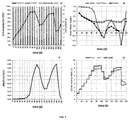
- the system HRT ranged between 32-40 days, with the average value for the entire operation of 39 days.
- the composition of the feed mixture and the organic loading rate (VCO) were modified during operation due to the control action.
- the cycle time of the controller was set at 10 days (one quarter HRT time) time interval in which the diagnosis of the digester and stability control action is performed.
- the system started operation at a low VCO of 1.5 g COD / L d and reached values of 8.5 g COD / L d after about 70 days.
- the control system increased the VCO, promoting an increase in methane production.
- the control action reduced the VCO during the time interval [ 100,120) to counteract destabilization of the digester system and lead to a safer operating state. With this action, the control system was able to bring the system to a more stable operation, reducing and moving the threshold parameter destabilization diagnosis.
- the control system began to increase VCO again until the process reached higher alkalinities ratio values than the setpoint. At that point, the control action reduces the increasing destabilization of the system, and as before, the VCO is reduced until the alkalinity ratio is in values away from the stability limit.
- the limits of the linear constraints that were applied to linear programming problem for the calculation of the optimal mixture is modified (increasing or reducing) in order to obtain an optimal mixture that maximizases the production of methane for a given VCO, or to obtain a mixture that would lead to a more stable operation, but also where methane production was the maximum possible given those conditions.
- the initial boundaries of the restrictions were established according to typical operating ranges in co-digestion plants. During optimization of this operation VCO, NTK, and total alkalinity restriction limits were modified.
- control strategy developed has worked well for 200 days in closed loop operation.
- the control system response has been effective in both directions, both to optimize the feed mixture to the reactor and to obtain the maximum production of methane when the system is stable, as to bring the digester to a state of safe operation when it is produced a destabilization.
- the limits of the restrictions were extended or reduced depending on system stability, obtaining in each case the optimal mix that maximized the production of methane.
Landscapes
- Life Sciences & Earth Sciences (AREA)
- Engineering & Computer Science (AREA)
- Chemical & Material Sciences (AREA)
- Organic Chemistry (AREA)
- Health & Medical Sciences (AREA)
- Microbiology (AREA)
- Bioinformatics & Cheminformatics (AREA)
- Zoology (AREA)
- Wood Science & Technology (AREA)
- Genetics & Genomics (AREA)
- Biochemistry (AREA)
- General Engineering & Computer Science (AREA)
- Environmental & Geological Engineering (AREA)
- Hydrology & Water Resources (AREA)
- Analytical Chemistry (AREA)
- Biotechnology (AREA)
- Molecular Biology (AREA)
- Water Supply & Treatment (AREA)
- General Health & Medical Sciences (AREA)
- General Chemical & Material Sciences (AREA)
- Chemical Kinetics & Catalysis (AREA)
- Computing Systems (AREA)
- Bioinformatics & Computational Biology (AREA)
- Biomedical Technology (AREA)
- Biodiversity & Conservation Biology (AREA)
- Theoretical Computer Science (AREA)
- Oil, Petroleum & Natural Gas (AREA)
- Sustainable Development (AREA)
- Medical Informatics (AREA)
- General Physics & Mathematics (AREA)
- Automation & Control Theory (AREA)
- Physics & Mathematics (AREA)
- Software Systems (AREA)
- Evolutionary Computation (AREA)
- Computer Vision & Pattern Recognition (AREA)
- Artificial Intelligence (AREA)
- Crystallography & Structural Chemistry (AREA)
- Computer Hardware Design (AREA)
- Treatment Of Sludge (AREA)
- Processing Of Solid Wastes (AREA)
Applications Claiming Priority (2)
| Application Number | Priority Date | Filing Date | Title |
|---|---|---|---|
| ES201331518A ES2516615B2 (es) | 2013-10-15 | 2013-10-15 | Procedimiento y producto de programa informático para el control de codigestores anaerobios |
| PCT/ES2014/070777 WO2015055880A1 (es) | 2013-10-15 | 2014-10-14 | Procedimiento y producto de programa informático para el control de codigestores anaerobios |
Publications (3)
| Publication Number | Publication Date |
|---|---|
| EP3059645A1 true EP3059645A1 (de) | 2016-08-24 |
| EP3059645A4 EP3059645A4 (de) | 2017-07-05 |
| EP3059645B1 EP3059645B1 (de) | 2022-06-01 |
Family
ID=51794502
Family Applications (1)
| Application Number | Title | Priority Date | Filing Date |
|---|---|---|---|
| EP14854626.0A Active EP3059645B1 (de) | 2013-10-15 | 2014-10-14 | Verfahren und computerprogrammprodukt zur steuerung anaerober codigester |
Country Status (3)
| Country | Link |
|---|---|
| EP (1) | EP3059645B1 (de) |
| ES (1) | ES2516615B2 (de) |
| WO (1) | WO2015055880A1 (de) |
Cited By (2)
| Publication number | Priority date | Publication date | Assignee | Title |
|---|---|---|---|---|
| WO2020047653A1 (en) * | 2018-09-05 | 2020-03-12 | WEnTech Solutions Inc. | System and method for anaerobic digestion process assessment, optimization and/or control |
| WO2023203300A1 (fr) * | 2022-04-21 | 2023-10-26 | Suez | Procédé de calcul d'un paramètre de fonctionnement d'un digesteur en présence d'au moins un inhibiteur |
Families Citing this family (6)
| Publication number | Priority date | Publication date | Assignee | Title |
|---|---|---|---|---|
| CN111370071B (zh) * | 2020-03-03 | 2023-03-28 | 重庆市环卫集团有限公司 | 一种餐厨垃圾厌氧沼液循环利用的方法 |
| CN112481095B (zh) * | 2020-12-11 | 2022-05-31 | 安徽永志环能科技有限公司 | 一种沼气发酵原料智能调配系统 |
| CN112708639B (zh) * | 2021-01-05 | 2022-06-21 | 北京化工大学 | 一种通过水力停留时间和进料浓度耦合提高秸秆厌氧消化产气效率的方法 |
| CN117903913B (zh) * | 2024-03-20 | 2024-06-04 | 黑龙江省农业机械工程科学研究院牡丹江分院 | 一种环保型农业废弃物处理系统及方法 |
| CN118942528B (zh) * | 2024-07-02 | 2025-03-18 | 同济大学 | 一种获取剩余污泥厌氧消化产甲烷的最优运行条件的方法 |
| CN120742696B (zh) * | 2025-09-02 | 2025-11-18 | 湖南农业大学 | 基于物联网的废弃菌棒畜禽粪便联合堆肥智能调控方法 |
Family Cites Families (2)
| Publication number | Priority date | Publication date | Assignee | Title |
|---|---|---|---|---|
| US7481940B2 (en) * | 2005-08-18 | 2009-01-27 | Newbio E-Systems, Incorporated | Biomass treatment of organic waste or water waste |
| US20120064506A1 (en) * | 2010-03-09 | 2012-03-15 | Enos Loy Stover | Optimized biogas (biomethane) production from anaerobic reactors |
-
2013
- 2013-10-15 ES ES201331518A patent/ES2516615B2/es active Active
-
2014
- 2014-10-14 EP EP14854626.0A patent/EP3059645B1/de active Active
- 2014-10-14 WO PCT/ES2014/070777 patent/WO2015055880A1/es not_active Ceased
Cited By (5)
| Publication number | Priority date | Publication date | Assignee | Title |
|---|---|---|---|---|
| WO2020047653A1 (en) * | 2018-09-05 | 2020-03-12 | WEnTech Solutions Inc. | System and method for anaerobic digestion process assessment, optimization and/or control |
| EP3847235A4 (de) * | 2018-09-05 | 2022-06-22 | Wentech Solutions Inc. | System und verfahren zur bewertung, optimierung und/oder steuerung eines anaeroben gärungsverfahrens |
| US11651117B2 (en) | 2018-09-05 | 2023-05-16 | WEnTech Solutions Inc. | System and method for anaerobic digestion process assessment, optimization and/or control |
| WO2023203300A1 (fr) * | 2022-04-21 | 2023-10-26 | Suez | Procédé de calcul d'un paramètre de fonctionnement d'un digesteur en présence d'au moins un inhibiteur |
| FR3134823A1 (fr) * | 2022-04-21 | 2023-10-27 | Suez | Procédé de calcul d’un paramètre de fonctionnement d’un digesteur en présence d’au moins un inhibiteur |
Also Published As
| Publication number | Publication date |
|---|---|
| WO2015055880A1 (es) | 2015-04-23 |
| EP3059645A4 (de) | 2017-07-05 |
| ES2516615B2 (es) | 2015-03-16 |
| ES2516615A1 (es) | 2014-10-30 |
| EP3059645B1 (de) | 2022-06-01 |
Similar Documents
| Publication | Publication Date | Title |
|---|---|---|
| EP3059645B1 (de) | Verfahren und computerprogrammprodukt zur steuerung anaerober codigester | |
| Wu et al. | Anaerobic digestion: A review on process monitoring | |
| Galí et al. | Modified version of ADM1 model for agro-waste application | |
| Sun et al. | Exploring stability indicators for efficient monitoring of anaerobic digestion of pig manure under perturbations | |
| Agneessens et al. | Parameters affecting acetate concentrations during in-situ biological hydrogen methanation | |
| Mauky et al. | Demand-driven biogas production by flexible feeding in full-scale–Process stability and flexibility potentials | |
| Aramrueang et al. | Effects of hydraulic retention time and organic loading rate on performance and stability of anaerobic digestion of Spirulina platensis | |
| Mairet et al. | Modeling anaerobic digestion of microalgae using ADM1 | |
| Ehimen et al. | Anaerobic digestion of microalgae residues resulting from the biodiesel production process | |
| Jimenez et al. | Instrumentation and control of anaerobic digestion processes: a review and some research challenges | |
| Madsen et al. | Monitoring of anaerobic digestion processes: A review perspective | |
| García-Gen et al. | Optimisation of substrate blends in anaerobic co-digestion using adaptive linear programming | |
| Razaviarani et al. | Pilot scale anaerobic co-digestion of municipal wastewater sludge with biodiesel waste glycerin | |
| Mendes et al. | Application of Anaerobic Digestion Model No. 1 for simulating anaerobic mesophilic sludge digestion | |
| Lübken et al. | Parameter estimation and long-term process simulation of a biogas reactor operated under trace elements limitation | |
| Schmidt et al. | Anaerobic digestion of grain stillage at high organic loading rates in three different reactor systems | |
| Bai et al. | Modified ADM1 for modeling free ammonia inhibition in anaerobic acidogenic fermentation with high-solid sludge | |
| García-Gen et al. | Control strategy for maximum anaerobic co-digestion performance | |
| US20220228174A1 (en) | Automatic start-up of anaerobic digestion reactors using model predictive control and practically feasible sets of measurements | |
| Normak et al. | Improving ADM1 model to simulate anaerobic digestion start-up with inhibition phase based on cattle slurry | |
| Bensmann et al. | Reactor configurations for biogas plants–a model based analysis | |
| Tao et al. | Predicting pH rise as a control measure for integration of CO2 biomethanisation with anaerobic digestion | |
| Rizwan et al. | Reliability & availability analysis of an anaerobic batch reactor treating fruit and vegetable waste | |
| Liang et al. | Start-up performance of chicken manure anaerobic digesters amended with biochar and operated at different temperatures | |
| Shen et al. | Methane production in an upflow anaerobic biofilm digester from leachates derived from poultry litter at different organic loading rates and hydraulic retention times |
Legal Events
| Date | Code | Title | Description |
|---|---|---|---|
| PUAI | Public reference made under article 153(3) epc to a published international application that has entered the european phase |
Free format text: ORIGINAL CODE: 0009012 |
|
| 17P | Request for examination filed |
Effective date: 20160513 |
|
| AK | Designated contracting states |
Kind code of ref document: A1 Designated state(s): AL AT BE BG CH CY CZ DE DK EE ES FI FR GB GR HR HU IE IS IT LI LT LU LV MC MK MT NL NO PL PT RO RS SE SI SK SM TR |
|
| AX | Request for extension of the european patent |
Extension state: BA ME |
|
| DAX | Request for extension of the european patent (deleted) | ||
| A4 | Supplementary search report drawn up and despatched |
Effective date: 20170601 |
|
| RIC1 | Information provided on ipc code assigned before grant |
Ipc: C02F 3/28 20060101ALI20170526BHEP Ipc: C02F 11/04 20060101AFI20170526BHEP Ipc: C12P 5/02 20060101ALI20170526BHEP Ipc: G05B 13/04 20060101ALI20170526BHEP |
|
| STAA | Information on the status of an ep patent application or granted ep patent |
Free format text: STATUS: EXAMINATION IS IN PROGRESS |
|
| 17Q | First examination report despatched |
Effective date: 20190514 |
|
| REG | Reference to a national code |
Ref country code: DE Ref legal event code: R079 Ref document number: 602014083915 Country of ref document: DE Free format text: PREVIOUS MAIN CLASS: G05B0013040000 Ipc: G16C0099000000 |
|
| GRAP | Despatch of communication of intention to grant a patent |
Free format text: ORIGINAL CODE: EPIDOSNIGR1 |
|
| STAA | Information on the status of an ep patent application or granted ep patent |
Free format text: STATUS: GRANT OF PATENT IS INTENDED |
|
| RIC1 | Information provided on ipc code assigned before grant |
Ipc: G16C 99/00 20190101AFI20210429BHEP Ipc: G16C 20/10 20190101ALI20210429BHEP Ipc: C12P 5/02 20060101ALI20210429BHEP Ipc: C02F 11/04 20060101ALI20210429BHEP Ipc: C02F 3/28 20060101ALI20210429BHEP Ipc: G05B 13/04 20060101ALI20210429BHEP |
|
| INTG | Intention to grant announced |
Effective date: 20210602 |
|
| RAP3 | Party data changed (applicant data changed or rights of an application transferred) |
Owner name: UNIVERSIDADE DE SANTIAGO DE COMPOSTELA |
|
| GRAJ | Information related to disapproval of communication of intention to grant by the applicant or resumption of examination proceedings by the epo deleted |
Free format text: ORIGINAL CODE: EPIDOSDIGR1 |
|
| STAA | Information on the status of an ep patent application or granted ep patent |
Free format text: STATUS: EXAMINATION IS IN PROGRESS |
|
| INTC | Intention to grant announced (deleted) | ||
| GRAP | Despatch of communication of intention to grant a patent |
Free format text: ORIGINAL CODE: EPIDOSNIGR1 |
|
| STAA | Information on the status of an ep patent application or granted ep patent |
Free format text: STATUS: GRANT OF PATENT IS INTENDED |
|
| INTG | Intention to grant announced |
Effective date: 20211213 |
|
| GRAS | Grant fee paid |
Free format text: ORIGINAL CODE: EPIDOSNIGR3 |
|
| GRAA | (expected) grant |
Free format text: ORIGINAL CODE: 0009210 |
|
| STAA | Information on the status of an ep patent application or granted ep patent |
Free format text: STATUS: THE PATENT HAS BEEN GRANTED |
|
| AK | Designated contracting states |
Kind code of ref document: B1 Designated state(s): AL AT BE BG CH CY CZ DE DK EE ES FI FR GB GR HR HU IE IS IT LI LT LU LV MC MK MT NL NO PL PT RO RS SE SI SK SM TR |
|
| REG | Reference to a national code |
Ref country code: GB Ref legal event code: FG4D |
|
| REG | Reference to a national code |
Ref country code: AT Ref legal event code: REF Ref document number: 1495949 Country of ref document: AT Kind code of ref document: T Effective date: 20220615 Ref country code: CH Ref legal event code: EP |
|
| REG | Reference to a national code |
Ref country code: IE Ref legal event code: FG4D |
|
| REG | Reference to a national code |
Ref country code: DE Ref legal event code: R096 Ref document number: 602014083915 Country of ref document: DE |
|
| REG | Reference to a national code |
Ref country code: FR Ref legal event code: PLFP Year of fee payment: 9 |
|
| REG | Reference to a national code |
Ref country code: LT Ref legal event code: MG9D |
|
| REG | Reference to a national code |
Ref country code: NL Ref legal event code: MP Effective date: 20220601 |
|
| PG25 | Lapsed in a contracting state [announced via postgrant information from national office to epo] |
Ref country code: SE Free format text: LAPSE BECAUSE OF FAILURE TO SUBMIT A TRANSLATION OF THE DESCRIPTION OR TO PAY THE FEE WITHIN THE PRESCRIBED TIME-LIMIT Effective date: 20220601 Ref country code: NO Free format text: LAPSE BECAUSE OF FAILURE TO SUBMIT A TRANSLATION OF THE DESCRIPTION OR TO PAY THE FEE WITHIN THE PRESCRIBED TIME-LIMIT Effective date: 20220901 Ref country code: LT Free format text: LAPSE BECAUSE OF FAILURE TO SUBMIT A TRANSLATION OF THE DESCRIPTION OR TO PAY THE FEE WITHIN THE PRESCRIBED TIME-LIMIT Effective date: 20220601 Ref country code: HR Free format text: LAPSE BECAUSE OF FAILURE TO SUBMIT A TRANSLATION OF THE DESCRIPTION OR TO PAY THE FEE WITHIN THE PRESCRIBED TIME-LIMIT Effective date: 20220601 Ref country code: GR Free format text: LAPSE BECAUSE OF FAILURE TO SUBMIT A TRANSLATION OF THE DESCRIPTION OR TO PAY THE FEE WITHIN THE PRESCRIBED TIME-LIMIT Effective date: 20220902 Ref country code: FI Free format text: LAPSE BECAUSE OF FAILURE TO SUBMIT A TRANSLATION OF THE DESCRIPTION OR TO PAY THE FEE WITHIN THE PRESCRIBED TIME-LIMIT Effective date: 20220601 Ref country code: ES Free format text: LAPSE BECAUSE OF FAILURE TO SUBMIT A TRANSLATION OF THE DESCRIPTION OR TO PAY THE FEE WITHIN THE PRESCRIBED TIME-LIMIT Effective date: 20220601 Ref country code: BG Free format text: LAPSE BECAUSE OF FAILURE TO SUBMIT A TRANSLATION OF THE DESCRIPTION OR TO PAY THE FEE WITHIN THE PRESCRIBED TIME-LIMIT Effective date: 20220901 |
|
| REG | Reference to a national code |
Ref country code: AT Ref legal event code: MK05 Ref document number: 1495949 Country of ref document: AT Kind code of ref document: T Effective date: 20220601 |
|
| PG25 | Lapsed in a contracting state [announced via postgrant information from national office to epo] |
Ref country code: RS Free format text: LAPSE BECAUSE OF FAILURE TO SUBMIT A TRANSLATION OF THE DESCRIPTION OR TO PAY THE FEE WITHIN THE PRESCRIBED TIME-LIMIT Effective date: 20220601 Ref country code: PL Free format text: LAPSE BECAUSE OF FAILURE TO SUBMIT A TRANSLATION OF THE DESCRIPTION OR TO PAY THE FEE WITHIN THE PRESCRIBED TIME-LIMIT Effective date: 20220601 Ref country code: LV Free format text: LAPSE BECAUSE OF FAILURE TO SUBMIT A TRANSLATION OF THE DESCRIPTION OR TO PAY THE FEE WITHIN THE PRESCRIBED TIME-LIMIT Effective date: 20220601 |
|
| PG25 | Lapsed in a contracting state [announced via postgrant information from national office to epo] |
Ref country code: NL Free format text: LAPSE BECAUSE OF FAILURE TO SUBMIT A TRANSLATION OF THE DESCRIPTION OR TO PAY THE FEE WITHIN THE PRESCRIBED TIME-LIMIT Effective date: 20220601 |
|
| PG25 | Lapsed in a contracting state [announced via postgrant information from national office to epo] |
Ref country code: SM Free format text: LAPSE BECAUSE OF FAILURE TO SUBMIT A TRANSLATION OF THE DESCRIPTION OR TO PAY THE FEE WITHIN THE PRESCRIBED TIME-LIMIT Effective date: 20220601 Ref country code: SK Free format text: LAPSE BECAUSE OF FAILURE TO SUBMIT A TRANSLATION OF THE DESCRIPTION OR TO PAY THE FEE WITHIN THE PRESCRIBED TIME-LIMIT Effective date: 20220601 Ref country code: RO Free format text: LAPSE BECAUSE OF FAILURE TO SUBMIT A TRANSLATION OF THE DESCRIPTION OR TO PAY THE FEE WITHIN THE PRESCRIBED TIME-LIMIT Effective date: 20220601 Ref country code: PT Free format text: LAPSE BECAUSE OF FAILURE TO SUBMIT A TRANSLATION OF THE DESCRIPTION OR TO PAY THE FEE WITHIN THE PRESCRIBED TIME-LIMIT Effective date: 20221003 Ref country code: EE Free format text: LAPSE BECAUSE OF FAILURE TO SUBMIT A TRANSLATION OF THE DESCRIPTION OR TO PAY THE FEE WITHIN THE PRESCRIBED TIME-LIMIT Effective date: 20220601 Ref country code: CZ Free format text: LAPSE BECAUSE OF FAILURE TO SUBMIT A TRANSLATION OF THE DESCRIPTION OR TO PAY THE FEE WITHIN THE PRESCRIBED TIME-LIMIT Effective date: 20220601 Ref country code: AT Free format text: LAPSE BECAUSE OF FAILURE TO SUBMIT A TRANSLATION OF THE DESCRIPTION OR TO PAY THE FEE WITHIN THE PRESCRIBED TIME-LIMIT Effective date: 20220601 |
|
| PG25 | Lapsed in a contracting state [announced via postgrant information from national office to epo] |
Ref country code: IS Free format text: LAPSE BECAUSE OF FAILURE TO SUBMIT A TRANSLATION OF THE DESCRIPTION OR TO PAY THE FEE WITHIN THE PRESCRIBED TIME-LIMIT Effective date: 20221001 |
|
| REG | Reference to a national code |
Ref country code: DE Ref legal event code: R097 Ref document number: 602014083915 Country of ref document: DE |
|
| PG25 | Lapsed in a contracting state [announced via postgrant information from national office to epo] |
Ref country code: AL Free format text: LAPSE BECAUSE OF FAILURE TO SUBMIT A TRANSLATION OF THE DESCRIPTION OR TO PAY THE FEE WITHIN THE PRESCRIBED TIME-LIMIT Effective date: 20220601 |
|
| PLBE | No opposition filed within time limit |
Free format text: ORIGINAL CODE: 0009261 |
|
| STAA | Information on the status of an ep patent application or granted ep patent |
Free format text: STATUS: NO OPPOSITION FILED WITHIN TIME LIMIT |
|
| PG25 | Lapsed in a contracting state [announced via postgrant information from national office to epo] |
Ref country code: DK Free format text: LAPSE BECAUSE OF FAILURE TO SUBMIT A TRANSLATION OF THE DESCRIPTION OR TO PAY THE FEE WITHIN THE PRESCRIBED TIME-LIMIT Effective date: 20220601 |
|
| 26N | No opposition filed |
Effective date: 20230302 |
|
| PG25 | Lapsed in a contracting state [announced via postgrant information from national office to epo] |
Ref country code: SI Free format text: LAPSE BECAUSE OF FAILURE TO SUBMIT A TRANSLATION OF THE DESCRIPTION OR TO PAY THE FEE WITHIN THE PRESCRIBED TIME-LIMIT Effective date: 20220601 Ref country code: MC Free format text: LAPSE BECAUSE OF FAILURE TO SUBMIT A TRANSLATION OF THE DESCRIPTION OR TO PAY THE FEE WITHIN THE PRESCRIBED TIME-LIMIT Effective date: 20220601 |
|
| REG | Reference to a national code |
Ref country code: BE Ref legal event code: MM Effective date: 20221031 |
|
| PG25 | Lapsed in a contracting state [announced via postgrant information from national office to epo] |
Ref country code: LU Free format text: LAPSE BECAUSE OF NON-PAYMENT OF DUE FEES Effective date: 20221014 |
|
| PG25 | Lapsed in a contracting state [announced via postgrant information from national office to epo] |
Ref country code: BE Free format text: LAPSE BECAUSE OF NON-PAYMENT OF DUE FEES Effective date: 20221031 |
|
| PG25 | Lapsed in a contracting state [announced via postgrant information from national office to epo] |
Ref country code: IE Free format text: LAPSE BECAUSE OF NON-PAYMENT OF DUE FEES Effective date: 20221014 |
|
| PG25 | Lapsed in a contracting state [announced via postgrant information from national office to epo] |
Ref country code: HU Free format text: LAPSE BECAUSE OF FAILURE TO SUBMIT A TRANSLATION OF THE DESCRIPTION OR TO PAY THE FEE WITHIN THE PRESCRIBED TIME-LIMIT; INVALID AB INITIO Effective date: 20141014 |
|
| PG25 | Lapsed in a contracting state [announced via postgrant information from national office to epo] |
Ref country code: CY Free format text: LAPSE BECAUSE OF FAILURE TO SUBMIT A TRANSLATION OF THE DESCRIPTION OR TO PAY THE FEE WITHIN THE PRESCRIBED TIME-LIMIT Effective date: 20220601 |
|
| PG25 | Lapsed in a contracting state [announced via postgrant information from national office to epo] |
Ref country code: MK Free format text: LAPSE BECAUSE OF FAILURE TO SUBMIT A TRANSLATION OF THE DESCRIPTION OR TO PAY THE FEE WITHIN THE PRESCRIBED TIME-LIMIT Effective date: 20220601 |
|
| PG25 | Lapsed in a contracting state [announced via postgrant information from national office to epo] |
Ref country code: TR Free format text: LAPSE BECAUSE OF FAILURE TO SUBMIT A TRANSLATION OF THE DESCRIPTION OR TO PAY THE FEE WITHIN THE PRESCRIBED TIME-LIMIT Effective date: 20220601 |
|
| PG25 | Lapsed in a contracting state [announced via postgrant information from national office to epo] |
Ref country code: MT Free format text: LAPSE BECAUSE OF FAILURE TO SUBMIT A TRANSLATION OF THE DESCRIPTION OR TO PAY THE FEE WITHIN THE PRESCRIBED TIME-LIMIT Effective date: 20220601 |
|
| PG25 | Lapsed in a contracting state [announced via postgrant information from national office to epo] |
Ref country code: BG Free format text: LAPSE BECAUSE OF FAILURE TO SUBMIT A TRANSLATION OF THE DESCRIPTION OR TO PAY THE FEE WITHIN THE PRESCRIBED TIME-LIMIT Effective date: 20220601 |
|
| PG25 | Lapsed in a contracting state [announced via postgrant information from national office to epo] |
Ref country code: BG Free format text: LAPSE BECAUSE OF FAILURE TO SUBMIT A TRANSLATION OF THE DESCRIPTION OR TO PAY THE FEE WITHIN THE PRESCRIBED TIME-LIMIT Effective date: 20220601 |
|
| REG | Reference to a national code |
Ref country code: CH Ref legal event code: U11 Free format text: ST27 STATUS EVENT CODE: U-0-0-U10-U11 (AS PROVIDED BY THE NATIONAL OFFICE) Effective date: 20251106 |
|
| PGFP | Annual fee paid to national office [announced via postgrant information from national office to epo] |
Ref country code: DE Payment date: 20251126 Year of fee payment: 12 |
|
| PGFP | Annual fee paid to national office [announced via postgrant information from national office to epo] |
Ref country code: GB Payment date: 20251030 Year of fee payment: 12 |
|
| PGFP | Annual fee paid to national office [announced via postgrant information from national office to epo] |
Ref country code: IT Payment date: 20251029 Year of fee payment: 12 |
|
| PGFP | Annual fee paid to national office [announced via postgrant information from national office to epo] |
Ref country code: FR Payment date: 20251007 Year of fee payment: 12 |
|
| PGFP | Annual fee paid to national office [announced via postgrant information from national office to epo] |
Ref country code: CH Payment date: 20251106 Year of fee payment: 12 |