EP3060197B1 - Freisetzung von wirkstoffen anhand metastabiler liposomen - Google Patents
Freisetzung von wirkstoffen anhand metastabiler liposomen Download PDFInfo
- Publication number
- EP3060197B1 EP3060197B1 EP14799587.2A EP14799587A EP3060197B1 EP 3060197 B1 EP3060197 B1 EP 3060197B1 EP 14799587 A EP14799587 A EP 14799587A EP 3060197 B1 EP3060197 B1 EP 3060197B1
- Authority
- EP
- European Patent Office
- Prior art keywords
- liposomes
- metastable
- formulation
- liposome
- lipid
- Prior art date
- Legal status (The legal status is an assumption and is not a legal conclusion. Google has not performed a legal analysis and makes no representation as to the accuracy of the status listed.)
- Active
Links
Images


Classifications
-
- A—HUMAN NECESSITIES
- A61—MEDICAL OR VETERINARY SCIENCE; HYGIENE
- A61K—PREPARATIONS FOR MEDICAL, DENTAL OR TOILETRY PURPOSES
- A61K9/00—Medicinal preparations characterised by special physical form
- A61K9/10—Dispersions; Emulsions
- A61K9/127—Synthetic bilayered vehicles, e.g. liposomes or liposomes with cholesterol as the only non-phosphatidyl surfactant
- A61K9/1271—Non-conventional liposomes, e.g. PEGylated liposomes or liposomes coated or grafted with polymers
- A61K9/1272—Non-conventional liposomes, e.g. PEGylated liposomes or liposomes coated or grafted with polymers comprising non-phosphatidyl surfactants as bilayer-forming substances, e.g. cationic lipids or non-phosphatidyl liposomes coated or grafted with polymers
-
- A—HUMAN NECESSITIES
- A61—MEDICAL OR VETERINARY SCIENCE; HYGIENE
- A61K—PREPARATIONS FOR MEDICAL, DENTAL OR TOILETRY PURPOSES
- A61K31/00—Medicinal preparations containing organic active ingredients
- A61K31/33—Heterocyclic compounds
- A61K31/395—Heterocyclic compounds having nitrogen as a ring hetero atom, e.g. guanethidine or rifamycins
- A61K31/435—Heterocyclic compounds having nitrogen as a ring hetero atom, e.g. guanethidine or rifamycins having six-membered rings with one nitrogen as the only ring hetero atom
- A61K31/4353—Heterocyclic compounds having nitrogen as a ring hetero atom, e.g. guanethidine or rifamycins having six-membered rings with one nitrogen as the only ring hetero atom ortho- or peri-condensed with heterocyclic ring systems
- A61K31/436—Heterocyclic compounds having nitrogen as a ring hetero atom, e.g. guanethidine or rifamycins having six-membered rings with one nitrogen as the only ring hetero atom ortho- or peri-condensed with heterocyclic ring systems the heterocyclic ring system containing a six-membered ring having oxygen as a ring hetero atom, e.g. rapamycin
-
- A—HUMAN NECESSITIES
- A61—MEDICAL OR VETERINARY SCIENCE; HYGIENE
- A61K—PREPARATIONS FOR MEDICAL, DENTAL OR TOILETRY PURPOSES
- A61K49/00—Preparations for testing in vivo
- A61K49/001—Preparation for luminescence or biological staining
- A61K49/0063—Preparation for luminescence or biological staining characterised by a special physical or galenical form, e.g. emulsions, microspheres
- A61K49/0069—Preparation for luminescence or biological staining characterised by a special physical or galenical form, e.g. emulsions, microspheres the agent being in a particular physical galenical form
- A61K49/0076—Preparation for luminescence or biological staining characterised by a special physical or galenical form, e.g. emulsions, microspheres the agent being in a particular physical galenical form dispersion, suspension, e.g. particles in a liquid, colloid, emulsion
- A61K49/0084—Preparation for luminescence or biological staining characterised by a special physical or galenical form, e.g. emulsions, microspheres the agent being in a particular physical galenical form dispersion, suspension, e.g. particles in a liquid, colloid, emulsion liposome, i.e. bilayered vesicular structure
-
- A—HUMAN NECESSITIES
- A61—MEDICAL OR VETERINARY SCIENCE; HYGIENE
- A61K—PREPARATIONS FOR MEDICAL, DENTAL OR TOILETRY PURPOSES
- A61K9/00—Medicinal preparations characterised by special physical form
- A61K9/0012—Galenical forms characterised by the site of application
- A61K9/0034—Urogenital system, e.g. vagina, uterus, cervix, penis, scrotum, urethra, bladder; Personal lubricants
-
- A—HUMAN NECESSITIES
- A61—MEDICAL OR VETERINARY SCIENCE; HYGIENE
- A61P—SPECIFIC THERAPEUTIC ACTIVITY OF CHEMICAL COMPOUNDS OR MEDICINAL PREPARATIONS
- A61P13/00—Drugs for disorders of the urinary system
- A61P13/10—Drugs for disorders of the urinary system of the bladder
Definitions
- the invention is generally in the field of metastable liposome for formulations of agents for the treatment of conditions such as of the bladder, especially hemorrhagic cystitis, cancer, and interstitial cystitis/painful bladder syndrome.
- Hemorrhagic cystitis is characterized by recurrent hematuria, urinary urgency, and supra pubic pain.
- IC/PBS is a chronic and painful inflammatory condition affecting about 700,000 to 1 million people in the U.S. alone, of which, ninety percent are women.
- Urinary bladder cancer is the fourth most frequently diagnosed cancer in men and the ninth most frequently diagnosed cancer in women. There are approximately 56,000 new cases of bladder cancer diagnosed each year. 12,000 deaths each year are attributed to bladder cancer.
- Liposomes are biodegradable, non-toxic, unilamellar or multilamellar vesicles formed from naturally occurring or synthetic phospholipids. Liposomes have an ability to entrap and retain a wide range of therapeutic agents, either in their aqueous (hydrophilic agents) or their lipid (hydrophobic) phases ( Senior, Crit. Rev. Ther. Drug Carrier Sys., 3, 123-193 (1987 ); Lichtenberg, Methods Biochem. Anal., 33, 337-362 (1988 ); Gregoriadis, Subcell.
- Liposomes containing therapeutic agents are delivered to a target cell primarily by whole-liposome endocytosis or phagocytosis and by direct fusion of a liposome membrane with a target cell membrane.
- Current liposomal therapies primarily utilize the endocytotic pathway due to the small (sub-micron), thermodynamically stable spherical structure of the constituent liposome particles liposomal particles.
- Hydrophobic compounds are often rapidly (within minutes) depleted from the lipid bilayers of liposomes by exchange mechanisms, leading to their equilibration amongst all other lipidic structures within systemic circulation (lipoproteins, erythrocyte membranes, etc.) ( Fatouros and Antimisiaris, J. Drug Target, 9,61-74 (2001 ); Fahr and Seelig, Crit. Rev. Ther. Drug Carrier Syst., 18,141-172 (2001 ); Ardhammar et al., J. Biomol. Struct. Dyn., 17,33-40 (1999 )). Rapid clearing of liposomes is not completely absolved by local delivery of liposomal formulations, as lipidic structures also exist in local environments. Uptake by endocytosis is comparatively slow compared to direct fusion with the target cell membrane.
- Metastable liposomal formulations have been developed. These are advantageous for hydrophobic drug delivery to a tissue or tissue lumen such as the bladder. These have a diameter of between one and 100 micrometers and formed of one or more lipids comprising sphingomyelin having entrapped in the lipid a hydrophobic therapeutic, prophylactic or diagnostic agent.
- the greater stability of these liposomes, as well as the enhanced transfer of entrapped agent into the adjacent tissue, provide for better delivery, especially of hydrophobic agents such as tacrolimus which does not penetrate tissue well.
- the metastable liposomal formulations can be administered locally, preferably by instillation, or topically, for example, by spraying or painting, to a tissue or tissue lumen such as the bladder in need of treatment.
- Active agent refers to a physiologically or pharmacologically active substance that acts locally and/or systemically in the body.
- An active agent is a substance that is administered to a patient for the treatment (e.g. , therapeutic agent), prevention (e.g. , prophylactic agent), or diagnosis (e.g. , diagnostic agent) of a disease or disorder.
- Hydrophilic refers to a non-polar molecule or part of a molecule that cannot form energetically favorable interactions with water molecules and therefore does not dissolve in water.
- Hydrophilic as used herein describes a polar molecule or part of a molecule that forms enough energetically favorable interactions with water molecules to dissolve readily in water.
- Amphiphilic as used herein describes a molecule having both hydrophobic and hydrophilic regions, as in a phospholipid or a detergent molecule.
- Effective amount or “suitable amount” as used herein is at least the minimum concentration required to effect a measurable improvement or prevention of any symptom or a particular condition or disorder, to effect a measurable enhancement of life expectancy, or to generally improve patient quality of life.
- the effective amount is thus dependent upon the specific biologically active molecule and the specific condition or disorder to be treated.
- Effective amounts of many proteins, such as monoclonal antibodies (mAbs) are well known in the art.
- the effective amounts of proteins hereinafter discovered or for treating specific disorders with known proteins, such as mAbs, to be clinically applied to treat additional disorders may be determined by standard techniques which are well within the craft of a skilled artisan, such as a physician.
- “Pharmaceutically acceptable” as used herein refers to those compounds, materials, compositions, and/or dosage forms which are, within the scope of sound medical judgment, suitable for use in contact with the tissues of human beings and animals without excessive toxicity, irritation, allergic response, or other problems or complications commensurate with a reasonable benefit/risk ratio.
- Fiberd shell macrostructure refers to the requirement that the arrangement of multiple shell layers maintains a constant topology.
- Continuous as used herein with reference to the degeneracy function refers to a mathematical function where there are no gaps among coordinates classified as inside a void. In this sense, continuous is synonymous with non-discretized.
- solvent refers to a liquid substance capable of dissolving other substances.
- Object refers to a tangible entity (that could include a portion of a solvent), or a portion of space that a tangible entity could occupy.
- Shell refers to a deformable boundary of a three-dimensional object that maintains a constant surface area, but not necessarily a constant void volume, during deformation.
- Vehicle refers to the three-dimensional space within a shell.
- Volume refers to the amount of three-dimensional space an object occupies.
- Vehicle volume refers to the volume of a void that is associated with a shell.
- Binding efficiency of a shell refers to the void volume of a shell divided by the volume of a sphere having the same surface area as that of the shell.
- Conformation of a shell refers to the shape of a shell.
- Disposinguishable conformations of a shell refers to conformations of a shell that are not identical.
- Conformational degeneracy of a shell refers to the number of distinguishable conformations that a shell could have if the shell were to be deformed in such a way that both the surface area of the shell and the bounding efficiency of the shell are not changed.
- “Most entropically favorable bounding efficiency of a shell” as used herein refers to the bounding efficiency of a shell that has the highest conformational degeneracy.
- Phospholipid shell refers to a collection of phospholipids in the form of a shell that results from the interaction of phospholipids and an aqueous (or polar) solvent.
- Liposome refers to a particle that is composed of one or more connected and/or concentric phospholipid shells.
- Plant projection of a liposome refers to the linear mapping of all points of a liposome to corresponding points on a two-dimensional plane such that all lines connecting liposome points to their corresponding projection points are parallel to each other and perpendicular to the projection plane.
- Projection diameter of a liposome refers to the diameter of a circle of a size such that it has an area equal to the mean of the areas of all of the liposome's possible planar projections.
- Conformational equilibrium of a liposome refers to the liposome being in a conformation that is among the set of conformations that corresponds to the most entropically favorable bounding efficiency of the liposome's collection of phospholipid shells.
- Relative diameter of a liposome refers to the ratio of a liposome's projection diameter to the projection diameter that the liposome would have if the liposome was in a state of conformational equilibrium.
- Expansive stress associated with membrane bending refers to the internal stress within a membrane, caused by membrane bending, that forces a curved membrane toward a conformation having a relatively larger radius of curvature.
- Metal liposome refers to a liposome that a) has a relative diameter different than 1, and b) is large enough such that the expansive stress associated with membrane bending is not strong enough to overcome the liposome's tendency toward conformational equilibrium.
- One unit in a Euclidean Space having Cartesian coordinates refers to the coordinate distance that corresponds to the smallest element of discretization in any of the space's principal directions.
- Adjacent coordinates within a Euclidean Space having Cartesian coordinates refers the six coordinates, each along a principle Cartesian axis, with a distance of one unit from the coordinate of concern.
- Counterability of a conformational degeneracy refers to a condition of a degeneracy such that the conformations within the degeneracy have a one-to-one correspondence with natural numbers.
- Membrane associated agent refers to an agent that preferentially partition within or adjacent to a biological membrane versus the membrane's surrounding aqueous solvent.
- Topical of a liposome refers to the way in which the liposomes constituent parts are arranged.
- Metastable liposomes having a diameter of between one and 100 microns provide enhanced delivery due to greater stability at the site of delivery. Further enhancement of delivery is achieved by entrapping hydrophobic therapeutic, prophylactic or diagnostic agents within the lipid forming the liposomes. It is believed these liposomes do not necessarily rely upon endocytosis to deliver a hydrophobic active agent to target cells. Instead, the large, metastable liposomes deliver a hydrophobic active agent, such as tacrolimus, by allowing a portion of the liposome containing the hydrophobic active agent to detach and fuse directly with the cell membrane of a target cell, preferably an urothelial cell.
- a hydrophobic active agent such as tacrolimus
- the liposomes are dispersed in a pharmaceutically acceptable carrier.
- the formulations can be in the form of a liquid or gel, preferably a liquid, for topical application.
- a liposome composed of phospholipid shells that have greater conformational degeneracies has a greater entropy than a liposome composed of the same topology but where its phospholipid shells have a lower conformational degeneracy.
- a liposome that has the maximal accessible entropy is at equilibrium. Disregarding the existence of external or internal forces, a liposome is stable when in its equilibrium configuration.
- a liposome has is composed of one or more connected and/or concentric phospholipid shells.
- the void volume of a phospholipid shell having a fixed surface area can vary.
- a maximum void volume for a shell having a fixed surface area corresponds to the void volume when the shell is in the conformation of a sphere.
- the minimum shell surface area containing a fixed void volume also is associated with the shell being in a conformation of a sphere.
- the bounding efficiency of a shell is positive, unit-less quantity that is normalized such that its maximum equals 1.00.
- the maximum bounding efficiency corresponds to the bounding efficiency of a spherical shell.
- the bounding efficiency equals 1.00.
- the bounding efficiency also equals 1.00 when the shell surface area is at the minimum and the void volume is fixed.
- the bounding efficiency associated with the maximum conformational degeneracy is the equilibrium bounding efficiency, barring influence of any outside potentials (such as membrane bending energies).
- a phospholipid shell is thermodynamically metastable if the bounding efficiency of the shell is different than the equilibrium bounding efficiency.
- An increase in bounding efficiency of a phospholipid shell can confer an increase in the relative diameter of the liposome that it is a constituent of.
- the preferred increase in relative diameter for a liposome to be considered metastable is greater than 1%. The larger the relative diameter becomes, the more reactive the liposome can be.
- the energy associated with a liposome having a bounding efficiency larger than its equilibrium bounding efficiency is equivalent to the amount of work required to expand the liposome into the entropically disfavored and less degenerate structural conformation.
- Liposomes having a projection diameter of less than one micron cannot achieve a metastable state. These liposomes have high membrane bending energies because of their small radii of curvature, which dominate the entropic effects. Typical small unilamellar liposomes have a spherical conformation with a bounding efficiency of 1.00 and low conformational degeneracy as a direct result of the membrane bending stress. It is impossible for small liposomes to achieve a metastable state because the overriding effects of the membrane bending stresses control the liposome conformation. Therefore, small liposomes are always thermodynamically stable (as opposed to metastable) even though they are not at entropic equilibrium.
- liposomes having a diameter of greater than one micron have greater radii of curvature and thus experience less expansive stress than small liposomes.
- large liposomes can be dominated by the entropic forces, as opposed to membrane bending stresses. Therefore, they are able to achieve a metastable state.
- the probability distribution of any macroscopic property of an ensemble is equivalent to the degeneracy function of the microstates associated with the macroscopic property of interest ( Tolman, Principles of Statistical Mechanics, Oxford University Press, (1938 )).
- the macroscopic property of interest is the bounding efficiency probability distribution.
- the bounding efficiency probability distribution of a phospholipid shell is equivalent to the degeneracy function of its allowable conformations.
- S the conventional thermodynamic entropy
- k b Boltzmann's constant
- g the conformational degeneracy.
- U energy and entropy
- This definition of temperature is synonymous to the quantity equal for two systems in thermal contact at equilibrium, assuming that such equilibrium occurs when the combined degeneracy of available microstates of the two systems is maximized ( Kittel, C. Thermal Physics. John Wiley & Sons, Inc. (1969 )).
- the bounding efficiency associated with the maximum conformational degeneracy (and thus maximal entropy), is the equilibrium bounding efficiency of the system.
- the energy associated with a system i.e. , a liposome
- having a bounding efficiency larger than its equilibrium bounding efficiency is equivalent to the amount of work, W , required to expand the liposome against the pressure, P , associated with the expansive decrease in conformational degeneracy, and a corresponding decrease in entropy.
- W the amount of work required to expand the liposome against the pressure
- P associated with the expansive decrease in conformational degeneracy
- a corresponding decrease in entropy The increase in energy is necessary to move the system away from the entropically favorable equilibrium configuration.
- Example 1 An exemplary calculation of a degeneracy function associated with an ensemble of hypothetical phospholipid shells is described in Example 1.
- the bounding efficiency probability distribution of a collection of shells is shown in FIG. 2 , assuming there are no non-entropic forces affecting the conformation of the liposomes (e.g. , membrane bending stresses).
- an ensemble of shells having a bounding efficiency probability distribution that is significantly different from the distribution at equilibrium is not at equilibrium.
- a collection of shells (that are temporarily impermeable to their void content) having a larger mean bounding efficiency than that of the equilibrium distribution is an example of shells that enclose volumes greater than they would if their membranes were permeable, and thus are consequently metastable as long as the impermeable condition of their constitutive membranes persists.
- the increase in volume can be as little as 1%.
- Liposomes are spherical vesicles composed of concentric phospholipid bilayers separated by aqueous compartments. Liposomes can adhere to and form a molecular film on cellular surfaces. Structurally, liposomes are lipid vesicles composed of concentric phospholipid bilayers which enclose an aqueous interior ( Gregoriadis, et al., Int. J. Pharm., 300, 125-30 2005 ; Gregoriadis and Ryman, Biochem. J., 124, 58P (1971 )). Hydrophobic compounds associate with the lipid phase, while hydrophilic compounds associate with the aqueous phase.
- Liposomes are formed from one or more lipids, which can be neutral, anionic, or cationic at physiologic pH.
- Suitable neutral and anionic lipids include, but are not limited to, sterols and lipids such as cholesterol, phospholipids, lysolipids, lysophospholipids, sphingolipids or pegylated lipids.
- Neutral and anionic lipids include, but are not limited to, phosphatidylcholine (PC) (such as egg PC, soy PC), including, but limited to, 1 ,2-diacyl-glycero-3-phosphocholines; phosphatidylserine (PS), phosphatidylglycerol, phosphatidylinositol (PI); glycolipids; sphingophospholipids such as sphingomyelin and sphingoglycolipids (also known as 1-ceramidyl glucosides) such as ceramide galactopyranoside, gangliosides and cerebrosides; fatty acids, sterols, containing a carboxylic acid group for example, cholesterol; 1 ,2-diacyl-sn-glycero-3-phosphoethanolamine, including, but not limited to, 1 ,2-dioleylphosphoethanolamine (DOPE), 1 ,2-dihexadecylphosphoethanol
- the lipids can also include various natural (e . g ., tissue derived L- ⁇ -phosphatidyl: egg yolk, heart, brain, liver, soybean) and/or synthetic (e . g ., saturated and unsaturated 1,2-diacyl-sn-glycero-3-phosphocholines, 1-acyl-2-acyl- sn -glycero-3-phosphocholines, 1,2-diheptanoyl-SN-glycero-3-phosphocholine) derivatives of the lipids.
- the liposomes contain sphingomyelin.
- the liposomes are generated from a single type of phospholipid, wherein the phospholipid is sphingomyelin
- the liposomes may include a sphingomyelin metabolite.
- Sphingomyelin metabolites used to formulate the liposomes include, without limitation, ceramide, sphingosine, or sphingosine 1-phosphate.
- the concentration of the sphingomyelin metabolites included in the lipids used to formulate the liposomes can range from about 0.1 mol % to about 10 mol %. Preferably from about 2.0 mol % to about 5.0 mol %, and more preferably can be in a concentration of about 1.0 mol %.
- Suitable cationic lipids in liposomes include, but are not limited to, N-[1-(2,3-dioleoyloxy)propyl]-N,N,N-trimethyl ammonium salts, also references as TAP lipids, for example methylsulfate salt.
- Suitable TAP lipids include, but are not limited to, DOTAP (dioleoyl-), DMTAP (dimyristoyl-), DPTAP (dipalmitoyl-), and DSTAP (distearoyl-).
- Suitable cationic lipids in liposomes include, but are not limited to, dimethyldioctadecyl ammonium bromide (DDAB), 1 ,2-diacyloxy-3-trimethylammonium propanes, N-[1-(2,3-dioloyloxy)propyl]-N,N-dimethyl amine (DODAP), 1 ,2-diacyloxy-3-dimethylammonium propanes, N-[1-(2,3-dioleyloxy)propyl]-N,N,N-trimethylammonium chloride (DOTMA), 1 ,2-dialkyloxy-3-dimethylammonium propanes, dioctadecylamidoglycylspermine (DOGS), 3 -[N-(N',N'-dimethylamino-ethane)carbamoyl]cholesterol (DC-Chol); 2,3-dioleoyloxy-N-(2-(sperminecar
- Cationic lipids can be 1-[2-(acyloxy)ethyl]2-alkyl(alkenyl)-3-(2-hydroxyethyl)-imidazolinium chloride derivatives, for example, 1-[2-(9(Z)-octadecenoyloxy)ethyl]-2-(8(Z)-heptadecenyl-3-(2-hydroxyethyl)imidazolinium chloride (DOTIM), and 1-[2-(hexadecanoyloxy)ethyl]-2-pentadecyl-3-(2-hydroxyethyl)imidazolinium chloride (DPTIM).
- DOTIM 1-[2-(hexadecanoyloxy)ethyl]-2-pentadecyl-3-(2-hydroxyethyl)imidazolinium chloride
- Cationic lipids can be 2,3-dialkyloxypropyl quaternary ammonium compound derivatives containing a hydroxyalkyl moiety on the quaternary amine, for example, 1 ,2-dioleoyl-3-dimethyl-hydroxyethyl ammonium bromide (DORI), 1 ,2-dioleyloxypropyl-3-dimethyl-hydroxyethyl ammonium bromide (DORIE), 1 ,2-dioleyloxypropyl-3-dimetyl-hydroxypropyl ammonium bromide (DORIE-HP), 1 ,2-dioleyl-oxy-propyl-3-dimethyl-hydroxybutyl ammonium bromide (DORIE-HB), 1 ,2-dioleyloxypropyl-3-dimethyl-hydroxypentyl ammonium bromide (DORIE-Hpe), 1 ,2-dimyristyloxypropyl-3-dimethyl-hydroxylethyl
- the lipids may be formed from a combination of more than one lipid, for example, a charged lipid may be combined with a lipid that is non-ionic or uncharged at physiological pH.
- Non-ionic lipids include, but are not limited to, cholesterol and DOPE (1,2-dioleolylglyceryl phosphatidylethanolamine), with cholesterol being most preferred.
- DOPE 1,2-dioleolylglyceryl phosphatidylethanolamine
- the molar ratio of a first phospholipid, such as sphingomyelin, to second lipid can range from about 5:1 to about 1:1 or 3:1 to about 1:1, more preferably from about 1.5:1 to about 1:1, and most preferably, the molar ratio is about 1:1.
- the liposomes typically have an aqueous core.
- the aqueous core can contain water or a mixture of water and alcohol.
- Suitable alcohols include, but are not limited to, methanol, ethanol, propanol, (such as isopropanol), butanol (such as n-butanol, isobutene, sec-butanol, tort-butanol, pentane (such as amyl alcohol, isobutyl carbinol), hexanol (such as 1-hexanol, 2-hexanol, 3-hexanol), heptanol (such as 1-heptanol, 2-heptanol, 3-heptanol and 4-heptanol) or octanol (such as 1-octanol) or a combination thereof.
- the liposomes have either one or several aqueous compartments delineated by either one (unilamellar) or several (multilamellar) phospholipid bilayers ( Sapra, et al., Curr. Drug Deliv., 2, 369-81 (2005 )).
- the liposomes are multilamellar.
- Multilamellar liposomes have more lipid bilayers for hydrophobic therapeutic agents to associate with.
- potentially greater amounts of therapeutic agent are available within the liposome to reach the target cell.
- the liposomal formulations contain large liposomes ranging from 1 to 100% of the liposome population in the formulation. In some embodiments, large liposomes represent greater than approximately 50% of the liposome population in the formulation.
- Agents that can be delivered via the metastable liposomal formulations include, but are not limited to, therapeutic, nutritional, prophylactic, and diagnostic agents, that can be encapsulated within the liposomes. These may be small molecules, sugars, polysaccharides, nucleotides, oligonucleotides, lipids, lipoproteins, proteins peptides that are hydrophobic.
- the active agent to lipid ratio (International units or weight, micrograms or milligrams, of active agent per mg of lipid) can be controlled to regulate the efficacy of the active agent.
- Suitable active agent to lipid ratios include, but are not limited to, 1:1, 1:0.9, 1:0.8, 1:0.7, 1:0.6, 1:0.5, 1 :0.4, 1:0.3, 1:0.2, or 1:0.1 (activity unit or weight of active agent per mg of lipid).
- the metastable liposomes contain one or more chemotherapeutic agent.
- the chemotherapeutic is a hydrophobic chemotherapeutic agent effective for treating bladder cancer.
- the agents may be inhibitory nucleic acids, including, but not limited to, ribozymes, triplex-forming oligonucleotides (TFOs), antisense DNA, siRNA, and microRNA specific for nucleic acids encoding the chemokines.
- the antisense DNA oligonucleotides typically include at least 18, 19, 20, 21, 22, 23, 24 or 25 nucleotides and are preferably at least 20 nucleotides in length.
- Inhibitory nucleic acids and methods of producing them are well known in the art. siRNA design software is available, for example, at http://i.cs.hku.hk/ ⁇ sirna/software/sirna.php.
- siRNA means a small interfering RNA that is a short-length double-stranded RNA that is not toxic. Generally, there is no particular limitation of the length of siRNA as long as it does not show toxicity. "siRNAs" can be, for example, 15 to 49 bp, preferably 15 to 35 bp, and more preferably 21 to 30 bp long.
- the double-stranded RNA portion of a final transcription product of siRNA to be expressed can be, for example, 15 to 49 bp, preferably 15 to 35 bp, and more preferably 21 to 30 bp long.
- the siRNA is at least 19, 20, 21, 22, or 23 nucleotides long.
- the double-stranded RNA portions of siRNAs in which two RNA strands pair up are not limited to the completely paired ones, and may contain nonpairing portions due to mismatch (the corresponding nucleotides are not complementary), or bulge (lacking in the corresponding complementary nucleotide on one strand). Non-pairing portions can be contained to the extent that they do not interfere with siRNA formation.
- the "bulge” preferably comprise 1 to 2 nonpairing nucleotides, and the double-stranded RNA region of siRNAs in which two RNA strands pair up contains preferably 1 to 7, more preferably 1 to 5 bulges.
- the "mismatch” used herein is contained in the double-stranded RNA region of siRNAs in which two RNA strands pair up, preferably 1 to 7, more preferably 1 to 5, in number.
- one of the nucleotides is guanine, and the other is uracil.
- Such a mismatch is due to a mutation from C to T, G to A, or mixtures thereof in DNA coding for sense RNA, but not particularly limited to them.
- the double-stranded RNA region of siRNAs in which two RNA strands pair up may contain both bulge and mismatched, which sum up to, preferably 1 to 7, more preferably 1 to 5 in number.
- the terminal structure of siRNA may be either blunt or cohesive (overhanging) as long as siRNA can silence, reduce, or inhibit the target gene expression due to its RNAi effect.
- the cohesive (overhanging) end structure is not limited only to the 3' overhang, and the 5' overhanging structure may be included as long as it is capable of inducing the RNAi effect.
- the number of overhanging nucleotide is not limited to the already reported 2 or 3, but can be any numbers as long as the overhang is capable of inducing the RNAi effect.
- the overhang consists of 1 to 8, preferably 2 to 4 nucleotides.
- the total length of siRNA having cohesive end structure is expressed as the sum of the length of the paired double-stranded portion and that of a pair comprising overhanging single-strands at both ends. For example, in the case of 19 bp double-stranded RNA portion with 4 nucleotide overhangs at both ends, the total length is expressed as 23 bp. Furthermore, since this overhanging sequence has low specificity to a target gene, it is not necessarily complementary (antisense) or identical (sense) to the target gene sequence.
- siRNA may contain a low molecular weight RNA (which may be a natural RNA molecule such as tRNA, rRNA or viral RNA, or an artificial RNA molecule), for example, in the overhanging portion at its one end.
- RNA which may be a natural RNA molecule such as tRNA, rRNA or viral RNA, or an artificial RNA molecule
- the terminal structure of the siRNA is not necessarily the cut off structure at both ends as described above, and may have a stem-loop structure in which ends of one side of double-stranded RNA are connected by a linker RNA.
- the length of the double-stranded RNA region can be, for example, 15 to 49 bp, preferably 15 to 35 bp, and more preferably 21 to 30 bp long.
- die length of the double-stranded RNA region that is a final transcription product of siRNAs to be expressed is, for example, 15 to 49 bp, preferably 15 to 35 bp, and more preferably 21 to 30 bp long.
- the length of the linker there is no particular limitation in the length of the linker as long as it has a length so as not to hinder the pairing of the stem portion.
- miRNAs are produced by the cleavage of short stem-loop precursors by Dicer-like enzymes; whereas, siRNAs are produced by the cleavage of long double-stranded RNA molecules. miRNAs are single-stranded, whereas siRNAs are double-stranded. Methods for producing miRNA are known in the art.
- CCL2 MCP-1
- CCL4 MIP-1 ⁇
- CCL1 1 eotaxin
- CXCL1 GRO- ⁇
- sCD40L IL-12p70/p40
- IL-5 IL-5
- sIL-2R ⁇ IL-6
- IL-10 IL-10
- EGF EGF
- Increasing the biological activity of growth factors relevant to urological disorders is effective to treat certain urological disorders, in particular interstitial cystitis/painfiil bladder syndrome and overactive bladder syndrome.
- the presence of elevated levels of EGF in urine of patients with overactive bladder syndrome is suggestive of tissue repair and fibrosis.
- An effective amount of one or more growth factors to diminish the severity or number of symptoms of a urological disorder is administered to a subject having one or more symptoms of a urological disorder.
- Preferred growth factors include, but are not limited to, vascular endothelial growth factor (VEGF), bone morphogenetic protein (BMP), a transforming growth factor (TGF) such as transforming growth factor ⁇ , a platelet derived growth factor (PDGF), an epidermal growth factor (EGF), a nerve growth factor (NGF), an insulin-like growth factor (e . g ., insulin-like growth factor I), scatter factor/hepatocyte growth factor (HGF), granulocyte/macrophage colony stimulating factor (GMCSF), a glial growth factor (GGF), and a fibroblast growth factor (FGF).
- EGF vascular endothelial growth factor
- BMP bone morphogenetic protein
- TGF transforming growth factor
- TGF transforming growth factor
- ⁇ transforming growth factor ⁇
- PDGF platelet derived growth factor
- EGF epidermal growth factor
- NGF nerve growth factor
- I insulin-like growth factor
- HGF scatter factor/hepat
- the metastable liposomes can be used to administer a toxin such as a botulinum toxin.
- Botulinum neurotoxin refers to botulinum serotypes A, B, C, D, E, F, G and all modified, substituted or fragment versions of these toxins that have a blocking effect on snare proteins. These include any substitution or modification of at least 1 amino acid of a naturally produced toxin or synthetically produced toxins. These modifications can be made with recombinant techniques. Also included are toxins with removal or substitution of the binding domain and/or translocation domain. Some of these variations of BoNT types A to G are discussed in US Patent No. 7,491,799 and by Bland et al. (Protein Expr. Purif., 71(1):62-73 (2010 )).
- Botulinum toxin is produced by Clostridium botulinum and is regarded as the most potent biological toxin known ( Smith & Chancellor, J. Urol., 171: 2128 (2004 )). BoNT has been used effectively to treat different conditions with muscular hypercontraction. BoNT-A is the most common clinically used botulinum toxin among seven immunologically distinct neurotoxins (types A to G). BoNT-A and BoNT-B have been used successfully for the treatment of spinal cord injured patients with neurogenic bladder hyperactivity using intradetrusor BoNT-A injection at multiple sites.
- BoNT is known to exert effects by inhibiting acetylcholine (“ACh”) release at the neuromuscular junction as well as autonomic neurotransmission. After intramuscular injection of BoNT, temporary chemodenervation and muscle relaxation can be achieved in skeletal muscle as well as in smooth muscle ( Chuang & Chancellor, J. Urol., 176(6 Pt 1):2375-82 (2006 )). Smith et al. (J.
- the BoNT can be BoNT A-G, preferably BoNT A, C or E, more preferably BoNT A.
- the formulations or liposomes optionally contain one or more drugs in place of or in addition to BoNT.
- drugs may include antiinfectives such as drugs to treat infections caused by bacteria, fungus, or viruses, analgesics, anti-inflammatories, anti-ulcer medications, antispasmodics, or other drugs used to treat gastric conditions.
- the BoNT to lipid ratio (unit of BoNT per mg of lipid) can be controlled to regulate the efficiency of the BoNT.
- Suitable BoNT to lipid ratios include, but are not limited to, 1:1, 1:0.9, 1:0.8, 1:0.7, 1:0.6, 1:0.5, 1:0.4, 1:0.3, 1:0.2 or 1:0.1 (unit of BoNT per mg of lipid) .
- the BoNT to lipid ratio is 1:0.5.
- Exemplary diagnostic agents include paramagnetic molecules, fluorescent compounds, magnetic molecules, radionuclides, and x-ray imaging agents, and MRI contrast agents.
- Preferred representative compounds include anti-inflammatories, angiogenesis inhibitors, and chemotherapeutic agents such as tacrolimus.
- Tacrolimus (FK-506 or fujimycin) is a potent immunosuppressive drug. It acts on the innate immune system, specifically the T-cells, by inhibiting calcineurin and resulting in a decrease in both T-lymphocyte signal transduction and interlukin-2 transcription ( Migita and Eguchi, Transplant Proc., 33, 2292 (2001 )). Despite being a potent immunomodulator, systemic administration of Tacrolimus is limited due to the high incidence of severe adverse effects, including nephrotoxicity and hypertension ( Naesens, et al., Clin. J. Am. Soc. Nephrol., 4, 481 (2009 ); Akar, et al., Clin.
- only one active agent is incorporated into the metastable liposome particles.
- the active agent is hydrophobic, as demonstrated in the Examples.
- two or more active agents are incorporated within the metastable liposomal particles.
- the liposomes are formulated with a pharmaceutically acceptable carrier for administration to tissue or a tissue lumen.
- suitable carriers include, but are not limited to, sterile liquids, such as water, saline and phosphate buffered saline, and aqueous or water soluble gels such as polyvinyl pyrrolidone, alginate, and hyaluronic acid.
- the formulations also can contain minor amounts of wetting or emulsifying agents, or pH buffering agents.
- the liposomes are supplied either separately or mixed together in unit dosage form, for example, as a dry lyophilized powder or water-free concentrate in a hermetically sealed container, such as an ampoule or sachet indicating the quantity of active agent.
- a hermetically sealed container such as an ampoule or sachet indicating the quantity of active agent.
- the formulation is to be administered by instillation, it can be dispensed with an instillation bottle containing sterile pharmaceutical grade water or saline.
- the metastable liposomes are obtainable from a homogenous dispersion of sphingomyelin in a tert-butyl alcohol (TBA)/water co-solvent system at a ratio of 2:1 mg sphingomyelin to mL TBA/water.
- TBA tert-butyl alcohol
- the isotropic monophasic solution of liposomes is freeze dried to generate dehydrated liposomal powder in a sterile vial.
- the freeze drying step leaves empty lipid vesicles or dehydrated liposomes after removing both water and TBA from the vial.
- the lyophilized product spontaneously forms a large, metastable liposome dispersion (see Example 3).
- a pharmaceutically acceptable carrier such as water, physiological saline or PBS
- the ratio of lipid to TBA is an important factor affecting the size and the polydispersity of resulting liposome preparation.
- metastable liposomal tacrolimus is prepared by a dehydration-rehydration method.
- the formulations are administered directly to the tissue or instilled into a tissue lumen.
- tissue lumens include those of the respiratory, gastrointestinal, and urogenital tracts. These include cavities such as the nasal, pulmonary, esophageal, rectal, bladder, vaginal, urethral, and uterine cavities.
- the liposomes are formulated into a gel which is applied to the tissue.
- the liposomes are suspended in a liquid and spray or painted onto a tissue or instilled into a lumen for an effective amount of time, typically 30 to 60 minutes.
- the formulations can also be delivered by cystoscopy and an applicator suitable to administer the formulation, including, but not limited to, a spraying device, gauze, roller or sponge.
- the formulations can be administered by spraying, painting, rolling or sponging, preferably by spraying using a spraying device.
- the liposomal encapsulated active agent is preferably administered by instillation into the bladder.
- Methods of instillation are known.
- the selected dosage depends upon the desired therapeutic effect, on the route of administration, and on the duration of the treatment desired. Generally dosage levels of 0.001 to 10 mg/kg of body weight daily are administered to mammals. Generally, for intravenous injection or infusion, dosage may be lower.
- compositions may also be administered orally, by parenteral (intramuscular, intraperitoneal, intravenous (IV) or subcutaneous injection), transdermal (either passively or using iontophoresis or electroporation), or transmucosal (nasal, vaginal, rectal, or sublingual) routes of administration and can be formulated in dosage forms appropriate for each route of administration.
- parenteral intramuscular, intraperitoneal, intravenous (IV) or subcutaneous injection
- transdermal either passively or using iontophoresis or electroporation
- transmucosal nasal, vaginal, rectal, or sublingual
- the formulations containing the metastable liposomal active agent can be administered to a desired location in the bladder, other body cavity, or skin by spraying, rolling, painting or sponging a liquid, viscous liquid or gel-like material using a cystoscopy, endoscope, or other suitable scope device.
- the use of a scope device allows identification of the area of administration before administering the formulation.
- the scope device can include an applicator for the formulation including, but not limited to, a spraying device, gauze, roller or sponge containing the formulation.
- the applicator can be protected using a suitable cover until the formulation is to be administered so the formulation is not accidentally applied to an undesired area.
- the applicator can be attached at the end of the scope device to allow high precision administration.
- Liquid spray tools for scope devices are known in the art, for example such tool is described in U.S. Patent Nos. 7,588,172 and 6,354,519 to Yamamoto and Kidooka .
- the formulations containing the metastable liposomal hydrophobic active agent can be sprayed in a suitable amount and concentration to a site in the bladder, other body cavity, or skin in need of treatment.
- the formulations containing metastable liposomal hydrophobic active agent can be painted on the surface of the site to coat the surface with the formulation.
- the formulation is a viscous formulation or gel-like formulation.
- metastable liposomal tacrolimus or other hydrophobic active agent delivery is the ability to decrease dosage compared to the dosage required when administering a formulation of unencapsulated, or the equivalent stable liposomal formulation, while achieving the same therapeutic effect.
- the large, metastable liposomes enhance the delivery of the tacrolimus or other hydrophobic active agent, resulting in the effectiveness of lower dosages (see Example 5).
- a dosage unit containing a dry powder of dehydrated metastable liposomal tacrolimus or other hydrophobic active agent can be reconstituted in a container with a pharmaceutically acceptable carrier.
- the pharmaceutically acceptable carrier is an aqueous carrier.
- Suitable amounts include, but are not limited to, 0.1-1 mg, 1-3 mg, 3-10 mg, 10-20 mg and 20-50 mg.
- Suitable concentrations include, but are not limited to, 0.05 mg/ml to 10 mg/ml, preferably 0.05 mg/ml to 5 mg/ml, more preferably 0.05 mg/ml to 2.5 mg/ml.
- the relief from a bladder disorder or one or more symptoms thereof can be greater than a week, a few weeks, one, two or three two months, preferably greater than 6 months, following administration of the formulation where the relief does not decline for a prolonged period of time relative to the current therapies.
- the formulation can be administered with such regularity to provide effective relief from one or more bladder disorder or symptoms associated with bladder disorders.
- the metastable liposomal tacrolimus or other active agent is administered to a patient with one or more bladder disorders in a sufficient dose to alleviate the bladder disorder or one or more symptoms of the bladder disorder. Improved efficacy in treatment of bladder disorders is obtained using large metastable liposomal formulations for administration of tacrolimus or other hydrophobic active agents.
- the liposomes are typically administered in a pharmaceutically acceptable carrier, such as saline or phosphate buffered saline by scintillation into the bladder.
- Representative bladder disorders that can be treated with the formulations include, but are not limited to, hemorrhagic cystitis, IC/PBS, and cancer. In a preferred embodiment the disorder is hemorrhagic cystitis.
- metastable liposomal formulations can also be used to treat disorders of other parts of the body including, but not limited to, the vagina, gastro-intestinal tract (upper and lower), mouth, airway, esophagus, nasal cavity, ear canal, and skin.
- Symptoms that can be alleviated by treatment with the metastable liposomal hydrophobic active agent therapies include, but are not limited to, hematuria, urinary urgency, supra pubic pain, inflammation, and urinary retention.
- Representative locations for administrations of the metastable liposomal formulations include, but are not limited to, the bladder, vagina, gastro-intestinal tract (upper and lower), mouth, airway, esophagus, nasal cavity, ear canal, and skin.
- the metastable liposome formulations are particularly well suited for treatment of the epithelial layers of the aforementioned body parts.
- the location treated with the metastable liposomal formulations is the bladder, particularly the epithelium.
- Example 1 Determination of the most entropically favorable bounding efficiency of a collection of phospholipid shells.
- the degeneracy function can be estimated computationally. This estimation begins with assuming an isotropic three-dimensional Euclidean space described with Cartesian coordinates.
- the Euclidean space can be considered continuous, but for computational purposes, the Euclidean space is discretized. The continuous case is an asymptotic limit of increasingly finer degrees of discretization.
- Each discrete Cartesian coordinate in the Euclidean space can be classified among one of two states: inside the void or outside the void.
- the volume of a void that is enclosed by a shell is computationally defined as the number of discrete coordinates classified as inside the void.
- the surface area of the shell that encloses a void is computationally defined as the number of coordinates adjacent to, but not among, the coordinates classified as within the void.
- Discretizing the Euclidean space within which the shell (and void) are defined confers countability to the conformational degeneracy.
- degeneracy is otherwise difficult to define numerically and thus, not particularly useful.
- the situation here is analogous to that of a discrete vs. continuous probability distribution when the computational results are interpreted in the context of being an approximation (or representation) of a continuous case.
- both shell surface area and void volume for the computational estimate of the degeneracy function are both a count of elements of a set of coordinates and are essentially unit-less, it is necessary to provide a distinction between the two regarding dimensionality.
- the surface area count is multiplied by the square of the unit distance, and the volume count is multiplied by the cube of the unit distance.
- the algorithm used to generate the degeneracy function involves the random generation of a large number of three dimensional shapes, where each of the shapes, as formed from discretization, are contiguous, and each of the shapes has the same volume ( i.e. , the same number of coordinates classified as inside the void).
- Each shape can be constructed starting with a void having one coordinate at an arbitrary point in the space. The arbitrary point, in each case, is the origin.
- a shell is generated about the void followed by adding a randomly chosen shell coordinate to the void.
- the process of adding a randomly chosen shell coordinate to the void is then repeated. The number of repetitions made is dictated by the desired size of the void.
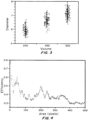
- FIG. 4 shows the bounding efficiency of a single growing void.
- the horizontal axis shows void volume in terms of volume as measured by voxels.
- the vertical axis shows calculated bounding efficiency, which is unit-less.
- this plot indicates that the likely range of bounding efficiencies to be expected for an ensemble of voids is generally independent of void volume.
- the 100 resulting bounding efficiencies is approximately normally distributed with an 80 percent confidence interval of bounding efficiencies ranging between 0.25 and 0.36, with a median value of 0.29.
- the bounding efficiency distribution of the sample set of 100 randomly generated voids is parametrically described with a mean of 0.300, standard deviation of 0.044, and skewness of 0.537.
- Example 2 Determination of the most entropically favorable bounding efficiency of a collection of liposomes.
- Bounding efficiency of liposomes is difficult to measure directly by experiment. Therefore, to determine the degree to which a liposomal formulation is metastable, the relative diameters of the liposomes contained within the formulation are considered.
- the degree to which a metastable liposome (or liposome formulation) is out of equilibrium is characterized by its relative diameter.
- the projection diameter of the metastable liposome is measured both before and after allowing the metastable liposome to reach conformational equilibrium. Then, the ratio (relative diameter) between the before equilibrium and the after equilibrium projection diameters is then evaluated.
- a liposome particle in the conformation with the most entropically favorable bounding efficiency has a relative diameter of 1.00. This is the liposome's conformational equilibrium configuration and is its most likely structural conformation, in the absence of other forces acting on or within the liposome.
- a metastable liposome that has a relative diameter greater than 1.00 would tend to release a portion of its void volume when permitted to reach an equilibrium conformation. This is typically conferred by increasing the permeability of the phospholipid shells of the liposome to the contents of their void volumes.
- SM sphingomyelin
- TSA tertiary-butyl alcohol
- This dispersion was then heated to 55 °C, which surpassed the gel-fluid phase transition of the sphingomyelin contents of the liposome's phospholipid shells ( Quinn, Langmuir, 29, 9447-9456 (2013 )). This phase transition permitted water to diffuse across the liposome's phospholipid shells, resulting in smaller liposomes having entropically favorable bounding efficiencies of their phospholipid shells.
- the dispersion was the cooled to 25 °C.
- the relative diameter associated with the original metastable distribution is 1.74.
- the experimental sphingomyelin liposome dispersion had a relative diameter (1.74) that was shifted away from the equilibrium relative diameter of a thermodynamically stable sphingomyelin liposome dispersion (1.00), and was thus metastable.
- Water did not diffuse back into the resuspended sphingomyelin particles upon subsequent cooling to 25 °C, as evidenced by a lack of re-inflation to their pre-heating size upon cooling to 25 °C, indicating that the temperature-associated reduction of relative diameter was irreversible.
- the resulting sphingomyelin dispersion was then at equilibrium, with regard to the relative diameter of the liposomes, and consequently the most entropically favorable bounding efficiency of the liposome's phospholipid shells.
- Example 4 Preparation of large metastable sphingomyelin liposomes that carry a near-infrared (NIR) dye.
- NIR near-infrared
- the lyophilate was then rehydrated with 40 mg of pure water at room temperature (25 °C). An aliquot of the re-suspension was heated to 55 °C for five-minutes. The heated aliquot was then cooled to 25 °C. The resulting non-heated and heated re-suspensions were diluted 20X and observed using light microscopy to determine conformation of resulting sphingomyelin-NIR dye liposomes.
- the sphingomyelin dispersions prepared with a membrane-associated NIR dye showed the same characteristics as the prepared particles of Example 3.
- the mean diameter of the non-heated, metastable NIR dye-liposomes was 39.7 ⁇ 3.0 microns.
- the mean diameter of the heated, stable NIR dye-liposomes was 22.9 ⁇ 1.9 microns.
- Example 5 Enhanced near-infrared (NIR) dye delivery via metastable liposomes in rat bladder.
- NIR near-infrared
- Example 3 To determine the effectiveness of membrane-associated drug delivery by large metastable particles, after emptying the bladder, 0.5 mL of each (non-heated or heated) dispersion prepared in Example 3 was instilled into the urinary bladder of an anesthetized Sprague-Dawley rat via urethra catheterization and occluding the ureters.
- the membrane-associated dye combined with the sphingomyelin liposomes was employed as a surrogate marker for any membrane-associated therapeutic agent.
- the suspensions were incubated in the bladders for 60 minutes. Following incubation, the bladders were harvested, opened, and rinsed in physiological saline. The luminal surfaces were imaged using a camera equipped with a NIR long-pass filter and an excitation source outside the filter range. Intraperitoneal tissue was used as a negative control, representing zero dye deposition.
- Example 6 Preparation of large metastable liposomes for treatment of conditions of the bladder.
- metastable liposomal formulations may be prepared as described in relation to Examples 3 or 4. However, instead of 0.5% (w/w) of a lipophilic NIR dye, a therapeutically appropriate amount (such as 0.5% to 10% w/w') of tacrolimus or other desired membrane-associated therapeutic agent is mixed with the sphingomyelin or other suitable phospholipid. The resulting metastable therapeutic agent is then instilled into a bladder into a patient thereof for an effective amount of time, typically 30-60 minutes.
Landscapes
- Health & Medical Sciences (AREA)
- Chemical & Material Sciences (AREA)
- Life Sciences & Earth Sciences (AREA)
- General Health & Medical Sciences (AREA)
- Veterinary Medicine (AREA)
- Public Health (AREA)
- Animal Behavior & Ethology (AREA)
- Epidemiology (AREA)
- Pharmacology & Pharmacy (AREA)
- Medicinal Chemistry (AREA)
- Dispersion Chemistry (AREA)
- Urology & Nephrology (AREA)
- Molecular Biology (AREA)
- Gynecology & Obstetrics (AREA)
- Reproductive Health (AREA)
- Engineering & Computer Science (AREA)
- Biophysics (AREA)
- Biomedical Technology (AREA)
- Chemical Kinetics & Catalysis (AREA)
- Bioinformatics & Cheminformatics (AREA)
- General Chemical & Material Sciences (AREA)
- Nuclear Medicine, Radiotherapy & Molecular Imaging (AREA)
- Organic Chemistry (AREA)
- Medicinal Preparation (AREA)
- Pharmaceuticals Containing Other Organic And Inorganic Compounds (AREA)
- Medicines That Contain Protein Lipid Enzymes And Other Medicines (AREA)
Claims (10)
- Dosierungsformulierung von metastabilen Liposomen, umfassend(a) metastabile Liposomen mit einem Durchmesser zwischen einem und 100 Mikrometer, die in einem pharmazeutisch verträglichen Träger dispergiert sind, wobei die metastabilen Liposomen aus Lipiden gebildet sind, die Sphingomyelin umfassen; und(b) ein oder mehrere hydrophobe therapeutische, prophylaktische oder diagnostische Mittel,wobei das eine oder die mehreren hydrophoben Mittel in dem Lipid eingeschlossen ist/sind,wobei die metastabilen Liposomen durch ein Verfahren erhältlich sind, das Folgendes umfasst:(i) homogenes Dispergieren des Sphingomyelins in einem Gewichts-Volumen-Verhältnis von 2:1 in einem tert-Butylalkohol/Wasser-Co-Lösungsmittel, um eine isotrope einphasige Lösung zu erzeugen;(ii) Lyophilisieren der isotropen einphasigen Lösung von Schritt (i), um eine lyophilisierte Formulierung in einem sterilen Fläschchen herzustellen; und(iii) Rehydratisieren der lyophilisierten Formulierung von Schritt (ii) mit dem pharmazeutisch annehmbaren Träger, um eine metastabile Liposomendispersion herzustellen.
- Formulierung nach Anspruch 1, die ferner ein oder mehrere therapeutische, prophylaktische oder diagnostische Mittel umfasst, die in den metastabilen Liposomen eingekapselt sind.
- Formulierung nach Anspruch 1, wobei die metastabilen Liposomen in einem Gel oder einer Lösung suspendiert sind, die zur direkten Verabreichung an ein Gewebe oder Gewebelumen geeignet sind.
- Formulierung nach Anspruch 1, wobei das hydrophobe Mittel Tacrolimus ist.
- Dosierungsformulierung von metastabilen Liposomen, umfassend(a) metastabile Liposomen mit einem Durchmesser zwischen einem und 100 Mikrometer, die in einem pharmazeutisch verträglichen Träger dispergiert sind, wobei die metastabilen Liposomen aus Lipiden gebildet sind, die Sphingomyelin umfassen; und(b) ein oder mehrere hydrophobe therapeutische oder prophylaktische Mittel, wobei das eine oder die mehreren hydrophoben Mittel in dem Lipid eingeschlossen ist/sind,zur Verwendung bei der Behandlung eines bedürftigen Individuums, wobei die Dosierungsformulierung einem Gewebe oder Gewebelumen verabreicht wird,wobei die metastabilen Liposomen durch ein Verfahren erhältlich sind, das Folgendes umfasst:(i) homogenes Dispergieren eines Gewichts/Volumen-Verhältnisses von 2:1 des Sphingomyelins in einem tert-Butylalkohol/Wasser-Co-Lösungsmittel, um eine isotrope einphasige Lösung zu erzeugen;(ii) Lyophilisieren der isotropen einphasigen Lösung von Schritt (i), um eine lyophilisierte Formulierung in einem sterilen Fläschchen herzustellen; und(iii) Rehydratisieren der lyophilisierten Formulierung aus Schritt (ii) mit dem pharmazeutisch annehmbaren Träger, um eine metastabile Liposomendispersion herzustellen.
- Dosierungsformulierung zur Verwendung nach Anspruch 5, wobei die metastabilen Liposomen ferner ein oder mehrere therapeutische, prophylaktische oder diagnostische Mittel umfassen, die in den Liposomen eingekapselt sind.
- Dosierungsformulierung zur Verwendung nach Anspruch 5, wobei die Formulierung aus einem trockenen Pulver in einem Dosierungseinheitsbehälter durch Rekonstitution mit einer sterilen wässrigen Lösung hergestellt wird, um ein metastabiles liposomales hydrophobes Mittel mit einer Massenkonzentration im Bereich von 0,05 mg/ml bis 10 mg/ml zu bilden.
- Dosierungsformulierung zur Verwendung nach Anspruch 5, wobei die Formulierung über ein Zystoskop verabreicht wird, das einen Applikator umfasst, der aus der Gruppe ausgewählt ist, die aus einer Sprühvorrichtung, Gaze, Rolle und Schwamm besteht.
- Dosierungsformulierung zur Verwendung nach Anspruch 5, wobei das Lumen ausgewählt ist aus der Gruppe bestehend aus Lumen des Respirationstrakts, des Gastrointestinaltrakts, des Urogenitaltrakts und des Fortpflanzungstrakts.
- Dosierungsformulierung zur Verwendung nach Anspruch 5, wobei(i) das hydrophobe Mittel Tacrolimus ist;(ii) das hydrophobe Mittel zur Behandlung einer Blasenerkrankung oder -störung dient, umfassend das Verabreichen der Liposomen in einer wirksamen Menge an ein Individuum mit einer Blasenerkrankung oder - störung, gegebenenfalls wobei die Blasenerkrankung oder -störung ausgewählt ist aus der Gruppe bestehend aus hämorrhagischer Zystitis, interstitieller Zystitis und Krebs;(iii) die Dosierungsformulierung durch Einträufeln verabreicht wird, gegebenenfalls in die Blase des Individuums; oder(iv) das Gewichtsverhältnis des hydrophoben Mittels zum Lipid eines von 1:1, 1:0,9, 1:0,8, 1:0,7, 1:0,6, 1:0,5, 1:0,4, 1:0,3, 1 :0,2 und 1:0,1 ist.
Applications Claiming Priority (2)
| Application Number | Priority Date | Filing Date | Title |
|---|---|---|---|
| US201361894334P | 2013-10-22 | 2013-10-22 | |
| PCT/US2014/061769 WO2015061449A1 (en) | 2013-10-22 | 2014-10-22 | Delivery of agents using metastable liposomes |
Publications (3)
| Publication Number | Publication Date |
|---|---|
| EP3060197A1 EP3060197A1 (de) | 2016-08-31 |
| EP3060197C0 EP3060197C0 (de) | 2023-06-07 |
| EP3060197B1 true EP3060197B1 (de) | 2023-06-07 |
Family
ID=51904237
Family Applications (1)
| Application Number | Title | Priority Date | Filing Date |
|---|---|---|---|
| EP14799587.2A Active EP3060197B1 (de) | 2013-10-22 | 2014-10-22 | Freisetzung von wirkstoffen anhand metastabiler liposomen |
Country Status (7)
| Country | Link |
|---|---|
| US (4) | US10639278B2 (de) |
| EP (1) | EP3060197B1 (de) |
| JP (1) | JP2016534087A (de) |
| AU (1) | AU2014340137B2 (de) |
| CA (1) | CA2927356C (de) |
| ES (1) | ES2952675T3 (de) |
| WO (1) | WO2015061449A1 (de) |
Families Citing this family (4)
| Publication number | Priority date | Publication date | Assignee | Title |
|---|---|---|---|---|
| EP3060197B1 (de) * | 2013-10-22 | 2023-06-07 | Lipella Pharmaceuticals Inc. | Freisetzung von wirkstoffen anhand metastabiler liposomen |
| SG11201809154UA (en) * | 2016-04-19 | 2018-11-29 | Univ Nanyang Tech | Nanoliposomes for sustained delivery of tacrolimus for treatment of anterior segment eye diseases |
| IL286910B2 (en) * | 2019-04-03 | 2026-04-01 | Univ New York | Liposome envelope for adenosine |
| CN114306242B (zh) * | 2021-12-29 | 2023-04-25 | 广州佰斯伦医疗器械有限公司 | 含生长因子纳米凝胶的脂质体微粒及其制备方法和应用 |
Family Cites Families (38)
| Publication number | Priority date | Publication date | Assignee | Title |
|---|---|---|---|---|
| US4837028A (en) | 1986-12-24 | 1989-06-06 | Liposome Technology, Inc. | Liposomes with enhanced circulation time |
| US5169636A (en) | 1988-03-17 | 1992-12-08 | Nippon Fine Chemical Co., Ltd. | Liposomes |
| US5043164A (en) | 1989-01-17 | 1991-08-27 | The University Of Tennessee Research Corporation | Blood-stable, cholesterol-free liposomes |
| US4999208A (en) * | 1989-06-07 | 1991-03-12 | Nabisco Brands, Inc. | Extrusion baking of cookies having liposome encapsulated ingredients |
| US5741516A (en) * | 1994-06-20 | 1998-04-21 | Inex Pharmaceuticals Corporation | Sphingosomes for enhanced drug delivery |
| US6015576A (en) * | 1997-08-29 | 2000-01-18 | Bio-Sphere Technology, Inc. | Method for inducing a systemic immune response to an antigen |
| JPH1059840A (ja) | 1996-08-16 | 1998-03-03 | Akira Kaji | リポソーム製剤 |
| AU753196B2 (en) | 1998-02-09 | 2002-10-10 | Bracco Research S.A. | Targeted delivery of biologically active media |
| IL144828A0 (en) * | 1999-03-11 | 2002-06-30 | Fujisawa Pharmaceutical Co | A pipecolic acid derivative containing liposome composition |
| US7049140B1 (en) | 1999-04-29 | 2006-05-23 | Vanderbilt University | X-ray guided drug delivery |
| JP2001137349A (ja) | 1999-11-16 | 2001-05-22 | Asahi Optical Co Ltd | 内視鏡用噴霧具 |
| AU2001260270A1 (en) * | 2000-05-02 | 2001-11-12 | Pharmacept Gmbh | Liposomes containing active substances |
| US20020012651A1 (en) * | 2000-05-10 | 2002-01-31 | Loeb Marvin P. | Release of therapeutic agents in a vessel or tissue |
| US7491799B2 (en) | 2000-07-21 | 2009-02-17 | Allergan, Inc. | Modified botulinum neurotoxins |
| TWI230616B (en) | 2000-09-25 | 2005-04-11 | Ind Tech Res Inst | Liposome for incorporating large amounts of hydrophobic substances |
| US20030083299A1 (en) | 2000-11-04 | 2003-05-01 | Ferguson Ian A. | Non-invasive delivery of polypeptides through the blood-brain barrier |
| US20040018228A1 (en) | 2000-11-06 | 2004-01-29 | Afmedica, Inc. | Compositions and methods for reducing scar tissue formation |
| US20060029655A1 (en) * | 2001-06-25 | 2006-02-09 | Yissum Research Development Company Of The Hebrew University Of Jerusalem | Method for preparation of vesicles loaded with biological material and different uses thereof |
| WO2003015698A2 (en) | 2001-08-13 | 2003-02-27 | University Of Pittsburgh | Application of lipid vehicles and use for drug delivery |
| US8110217B2 (en) * | 2001-08-13 | 2012-02-07 | University Of Pittsburgh | Sphingomyelin liposomes for the treatment of hyperactive bladder disorders |
| CA2369810C (en) | 2002-01-30 | 2007-08-07 | 1474791 Ontario Limited | Method of treating pain |
| US20040082521A1 (en) * | 2002-03-29 | 2004-04-29 | Azaya Therapeutics Inc. | Novel formulations of digitalis glycosides for treating cell-proliferative and other diseases |
| EP1601344A2 (de) * | 2003-03-07 | 2005-12-07 | Celator Technologies Inc. | Verbesserte verabreichung von sphingolipiden |
| WO2004087097A2 (en) * | 2003-03-31 | 2004-10-14 | Yissum Research Development Company Of The Hebrew University Of Jerusalem | Stable liposomes or micelles comprising a sphinolipid and a peg-lipopolymer |
| US20050119340A1 (en) * | 2003-06-13 | 2005-06-02 | David Anderson | Treatment methods with low-dose, longer-acting formulations of local anesthetics and other agents |
| US20060115523A1 (en) * | 2004-12-01 | 2006-06-01 | Konduri Kameswari S | Sterically stabilized liposome and triamcinolone composition for treating the respiratory tract of a mammal |
| US20050260260A1 (en) | 2004-05-19 | 2005-11-24 | Edward Kisak | Liposome compositions for the delivery of macromolecules |
| US8647613B2 (en) * | 2005-03-16 | 2014-02-11 | Jcr Pharmaceuticals Co., Ltd. | Drug carrier |
| US20090214670A1 (en) * | 2005-04-18 | 2009-08-27 | Optovent Ab | Rhcc peptide and uses thereof |
| US7682336B2 (en) | 2005-05-13 | 2010-03-23 | Micromedics, Inc. | Gas assisted endoscopic applicator system |
| US7910116B2 (en) | 2005-08-24 | 2011-03-22 | Allergan, Inc. | Use of a botulinum toxin to improve gastric emptying and/or to treat GERD |
| WO2007044748A2 (en) * | 2005-10-11 | 2007-04-19 | University Of Pittsburgh | Sphingomyelin liposomes for the treatment of hyperactive bladder disorders |
| JP4774290B2 (ja) | 2005-12-19 | 2011-09-14 | Hoya株式会社 | 内視鏡用液剤散布具 |
| US8299040B2 (en) * | 2006-10-18 | 2012-10-30 | Board Of Regents, The University Of Texas System | Methods for treating cancer targeting transglutaminase |
| BRPI0911098A2 (pt) | 2008-04-04 | 2015-10-06 | Lipella Pharmaceuticals Inc | formulação lipossomal e método para tratamento de bexiga hiperativa. |
| WO2010041255A2 (en) * | 2008-10-07 | 2010-04-15 | Yissum Research Development Company Of The Hebrew University Of Jerusalem, Ltd. | Liposomal systems comprising sphingomyelin |
| EP3060197B1 (de) * | 2013-10-22 | 2023-06-07 | Lipella Pharmaceuticals Inc. | Freisetzung von wirkstoffen anhand metastabiler liposomen |
| US11058779B2 (en) * | 2015-09-08 | 2021-07-13 | Sirnaomics, Inc. | Sirna/nanoparticle formulations for treatment of middle-east respiratory syndrome coronaviral infection |
-
2014
- 2014-10-22 EP EP14799587.2A patent/EP3060197B1/de active Active
- 2014-10-22 CA CA2927356A patent/CA2927356C/en active Active
- 2014-10-22 US US15/030,140 patent/US10639278B2/en active Active
- 2014-10-22 ES ES14799587T patent/ES2952675T3/es active Active
- 2014-10-22 JP JP2016526157A patent/JP2016534087A/ja active Pending
- 2014-10-22 AU AU2014340137A patent/AU2014340137B2/en active Active
- 2014-10-22 WO PCT/US2014/061769 patent/WO2015061449A1/en not_active Ceased
-
2020
- 2020-05-04 US US16/866,140 patent/US11357725B2/en active Active
-
2022
- 2022-06-01 US US17/829,960 patent/US12138345B2/en active Active
-
2024
- 2024-10-23 US US18/924,830 patent/US20250228776A1/en active Pending
Non-Patent Citations (1)
| Title |
|---|
| WEN CHEN ET AL: "Determination of the Main Phase Transition Temperature of Phospholipids by Nanoplasmonic Sensing", SCIENTIFIC REPORTS, vol. 8, no. 1, 4 October 2018 (2018-10-04), XP055760183, DOI: 10.1038/s41598-018-33107-5 * |
Also Published As
| Publication number | Publication date |
|---|---|
| WO2015061449A9 (en) | 2016-04-28 |
| WO2015061449A1 (en) | 2015-04-30 |
| EP3060197C0 (de) | 2023-06-07 |
| ES2952675T3 (es) | 2023-11-03 |
| AU2014340137B2 (en) | 2020-02-13 |
| US20160263031A1 (en) | 2016-09-15 |
| JP2016534087A (ja) | 2016-11-04 |
| US11357725B2 (en) | 2022-06-14 |
| CA2927356C (en) | 2022-08-23 |
| US20230098795A1 (en) | 2023-03-30 |
| EP3060197A1 (de) | 2016-08-31 |
| US10639278B2 (en) | 2020-05-05 |
| US12138345B2 (en) | 2024-11-12 |
| US20250228776A1 (en) | 2025-07-17 |
| AU2014340137A1 (en) | 2016-06-09 |
| CA2927356A1 (en) | 2015-04-30 |
| US20200261364A1 (en) | 2020-08-20 |
Similar Documents
| Publication | Publication Date | Title |
|---|---|---|
| US12138345B2 (en) | Delivery of agents using metastable liposomes | |
| JP6442551B2 (ja) | 薬物送達用の脂質ナノ粒子の生成方法 | |
| CN101291653B (zh) | 脂质包封的干扰rna | |
| KR20210008441A (ko) | 음이온성 약제를 제형화하는 방법 | |
| US20120263781A1 (en) | Methods and compositions for treating rhinitis | |
| Shanmugam et al. | Nanostructured self assembled lipid materials for drug delivery and tissue engineering | |
| US20070122466A1 (en) | Sphingomyelin liposomes for the treatment of hyperactive bladder disorders | |
| CN120693153A (zh) | 可离子化脂质和包括其的纳米颗粒 | |
| US20150037402A1 (en) | Methods and Compositions for Treating Gastric Disorders | |
| US20240115503A1 (en) | Intravesical delivery of hydrophilic therapeutic agents using liposomes | |
| WO2013116822A1 (en) | Methods and compositions for treating gastric disorders | |
| Louie | Stabilized antisense-lipid particles with enhanced intracellular delivery properties |
Legal Events
| Date | Code | Title | Description |
|---|---|---|---|
| PUAI | Public reference made under article 153(3) epc to a published international application that has entered the european phase |
Free format text: ORIGINAL CODE: 0009012 |
|
| 17P | Request for examination filed |
Effective date: 20160519 |
|
| AK | Designated contracting states |
Kind code of ref document: A1 Designated state(s): AL AT BE BG CH CY CZ DE DK EE ES FI FR GB GR HR HU IE IS IT LI LT LU LV MC MK MT NL NO PL PT RO RS SE SI SK SM TR |
|
| AX | Request for extension of the european patent |
Extension state: BA ME |
|
| DAX | Request for extension of the european patent (deleted) | ||
| STAA | Information on the status of an ep patent application or granted ep patent |
Free format text: STATUS: EXAMINATION IS IN PROGRESS |
|
| 17Q | First examination report despatched |
Effective date: 20180907 |
|
| GRAP | Despatch of communication of intention to grant a patent |
Free format text: ORIGINAL CODE: EPIDOSNIGR1 |
|
| STAA | Information on the status of an ep patent application or granted ep patent |
Free format text: STATUS: GRANT OF PATENT IS INTENDED |
|
| INTG | Intention to grant announced |
Effective date: 20230102 |
|
| GRAS | Grant fee paid |
Free format text: ORIGINAL CODE: EPIDOSNIGR3 |
|
| GRAA | (expected) grant |
Free format text: ORIGINAL CODE: 0009210 |
|
| STAA | Information on the status of an ep patent application or granted ep patent |
Free format text: STATUS: THE PATENT HAS BEEN GRANTED |
|
| AK | Designated contracting states |
Kind code of ref document: B1 Designated state(s): AL AT BE BG CH CY CZ DE DK EE ES FI FR GB GR HR HU IE IS IT LI LT LU LV MC MK MT NL NO PL PT RO RS SE SI SK SM TR |
|
| REG | Reference to a national code |
Ref country code: GB Ref legal event code: FG4D |
|
| REG | Reference to a national code |
Ref country code: CH Ref legal event code: EP Ref country code: AT Ref legal event code: REF Ref document number: 1572751 Country of ref document: AT Kind code of ref document: T Effective date: 20230615 |
|
| REG | Reference to a national code |
Ref country code: DE Ref legal event code: R096 Ref document number: 602014087213 Country of ref document: DE |
|
| U01 | Request for unitary effect filed |
Effective date: 20230704 |
|
| U07 | Unitary effect registered |
Designated state(s): AT BE BG DE DK EE FI FR IT LT LU LV MT NL PT SE SI Effective date: 20230714 |
|
| RAP4 | Party data changed (patent owner data changed or rights of a patent transferred) |
Owner name: LIPELLA PHARMACEUTICALS INC. |
|
| U1H | Name or address of the proprietor changed after the registration of the unitary effect | ||
| REG | Reference to a national code |
Ref country code: LT Ref legal event code: MG9D |
|
| PG25 | Lapsed in a contracting state [announced via postgrant information from national office to epo] |
Ref country code: NO Free format text: LAPSE BECAUSE OF FAILURE TO SUBMIT A TRANSLATION OF THE DESCRIPTION OR TO PAY THE FEE WITHIN THE PRESCRIBED TIME-LIMIT Effective date: 20230907 |
|
| REG | Reference to a national code |
Ref country code: ES Ref legal event code: FG2A Ref document number: 2952675 Country of ref document: ES Kind code of ref document: T3 Effective date: 20231103 |
|
| U20 | Renewal fee for the european patent with unitary effect paid |
Year of fee payment: 10 Effective date: 20231020 |
|
| PG25 | Lapsed in a contracting state [announced via postgrant information from national office to epo] |
Ref country code: RS Free format text: LAPSE BECAUSE OF FAILURE TO SUBMIT A TRANSLATION OF THE DESCRIPTION OR TO PAY THE FEE WITHIN THE PRESCRIBED TIME-LIMIT Effective date: 20230607 Ref country code: HR Free format text: LAPSE BECAUSE OF FAILURE TO SUBMIT A TRANSLATION OF THE DESCRIPTION OR TO PAY THE FEE WITHIN THE PRESCRIBED TIME-LIMIT Effective date: 20230607 Ref country code: GR Free format text: LAPSE BECAUSE OF FAILURE TO SUBMIT A TRANSLATION OF THE DESCRIPTION OR TO PAY THE FEE WITHIN THE PRESCRIBED TIME-LIMIT Effective date: 20230908 |
|
| PG25 | Lapsed in a contracting state [announced via postgrant information from national office to epo] |
Ref country code: SK Free format text: LAPSE BECAUSE OF FAILURE TO SUBMIT A TRANSLATION OF THE DESCRIPTION OR TO PAY THE FEE WITHIN THE PRESCRIBED TIME-LIMIT Effective date: 20230607 |
|
| PG25 | Lapsed in a contracting state [announced via postgrant information from national office to epo] |
Ref country code: IS Free format text: LAPSE BECAUSE OF FAILURE TO SUBMIT A TRANSLATION OF THE DESCRIPTION OR TO PAY THE FEE WITHIN THE PRESCRIBED TIME-LIMIT Effective date: 20231007 |
|
| PG25 | Lapsed in a contracting state [announced via postgrant information from national office to epo] |
Ref country code: SM Free format text: LAPSE BECAUSE OF FAILURE TO SUBMIT A TRANSLATION OF THE DESCRIPTION OR TO PAY THE FEE WITHIN THE PRESCRIBED TIME-LIMIT Effective date: 20230607 Ref country code: SK Free format text: LAPSE BECAUSE OF FAILURE TO SUBMIT A TRANSLATION OF THE DESCRIPTION OR TO PAY THE FEE WITHIN THE PRESCRIBED TIME-LIMIT Effective date: 20230607 Ref country code: RO Free format text: LAPSE BECAUSE OF FAILURE TO SUBMIT A TRANSLATION OF THE DESCRIPTION OR TO PAY THE FEE WITHIN THE PRESCRIBED TIME-LIMIT Effective date: 20230607 Ref country code: IS Free format text: LAPSE BECAUSE OF FAILURE TO SUBMIT A TRANSLATION OF THE DESCRIPTION OR TO PAY THE FEE WITHIN THE PRESCRIBED TIME-LIMIT Effective date: 20231007 Ref country code: CZ Free format text: LAPSE BECAUSE OF FAILURE TO SUBMIT A TRANSLATION OF THE DESCRIPTION OR TO PAY THE FEE WITHIN THE PRESCRIBED TIME-LIMIT Effective date: 20230607 |
|
| PG25 | Lapsed in a contracting state [announced via postgrant information from national office to epo] |
Ref country code: PL Free format text: LAPSE BECAUSE OF FAILURE TO SUBMIT A TRANSLATION OF THE DESCRIPTION OR TO PAY THE FEE WITHIN THE PRESCRIBED TIME-LIMIT Effective date: 20230607 |
|
| REG | Reference to a national code |
Ref country code: DE Ref legal event code: R097 Ref document number: 602014087213 Country of ref document: DE |
|
| PLBE | No opposition filed within time limit |
Free format text: ORIGINAL CODE: 0009261 |
|
| STAA | Information on the status of an ep patent application or granted ep patent |
Free format text: STATUS: NO OPPOSITION FILED WITHIN TIME LIMIT |
|
| 26N | No opposition filed |
Effective date: 20240308 |
|
| PG25 | Lapsed in a contracting state [announced via postgrant information from national office to epo] |
Ref country code: MC Free format text: LAPSE BECAUSE OF FAILURE TO SUBMIT A TRANSLATION OF THE DESCRIPTION OR TO PAY THE FEE WITHIN THE PRESCRIBED TIME-LIMIT Effective date: 20230607 |
|
| PG25 | Lapsed in a contracting state [announced via postgrant information from national office to epo] |
Ref country code: IE Free format text: LAPSE BECAUSE OF NON-PAYMENT OF DUE FEES Effective date: 20231022 |
|
| PG25 | Lapsed in a contracting state [announced via postgrant information from national office to epo] |
Ref country code: IE Free format text: LAPSE BECAUSE OF NON-PAYMENT OF DUE FEES Effective date: 20231022 |
|
| U20 | Renewal fee for the european patent with unitary effect paid |
Year of fee payment: 11 Effective date: 20241007 |
|
| PG25 | Lapsed in a contracting state [announced via postgrant information from national office to epo] |
Ref country code: CY Free format text: LAPSE BECAUSE OF FAILURE TO SUBMIT A TRANSLATION OF THE DESCRIPTION OR TO PAY THE FEE WITHIN THE PRESCRIBED TIME-LIMIT; INVALID AB INITIO Effective date: 20141022 |
|
| PG25 | Lapsed in a contracting state [announced via postgrant information from national office to epo] |
Ref country code: HU Free format text: LAPSE BECAUSE OF FAILURE TO SUBMIT A TRANSLATION OF THE DESCRIPTION OR TO PAY THE FEE WITHIN THE PRESCRIBED TIME-LIMIT; INVALID AB INITIO Effective date: 20141022 |
|
| REG | Reference to a national code |
Ref country code: CH Ref legal event code: U11 Free format text: ST27 STATUS EVENT CODE: U-0-0-U10-U11 (AS PROVIDED BY THE NATIONAL OFFICE) Effective date: 20251101 |
|
| U20 | Renewal fee for the european patent with unitary effect paid |
Year of fee payment: 12 Effective date: 20251022 |
|
| PG25 | Lapsed in a contracting state [announced via postgrant information from national office to epo] |
Ref country code: TR Free format text: LAPSE BECAUSE OF FAILURE TO SUBMIT A TRANSLATION OF THE DESCRIPTION OR TO PAY THE FEE WITHIN THE PRESCRIBED TIME-LIMIT Effective date: 20230607 |
|
| PGFP | Annual fee paid to national office [announced via postgrant information from national office to epo] |
Ref country code: GB Payment date: 20251023 Year of fee payment: 12 |
|
| PGFP | Annual fee paid to national office [announced via postgrant information from national office to epo] |
Ref country code: CH Payment date: 20251101 Year of fee payment: 12 |
|
| PGFP | Annual fee paid to national office [announced via postgrant information from national office to epo] |
Ref country code: ES Payment date: 20251209 Year of fee payment: 12 |
|
| REG | Reference to a national code |
Ref country code: CH Ref legal event code: R14 Free format text: ST27 STATUS EVENT CODE: U-0-0-R10-R14 (AS PROVIDED BY THE NATIONAL OFFICE) Effective date: 20260811 |