EP3061145B1 - Électrode positive pour batteries au lithium-soufre - Google Patents
Électrode positive pour batteries au lithium-soufre Download PDFInfo
- Publication number
- EP3061145B1 EP3061145B1 EP14786918.4A EP14786918A EP3061145B1 EP 3061145 B1 EP3061145 B1 EP 3061145B1 EP 14786918 A EP14786918 A EP 14786918A EP 3061145 B1 EP3061145 B1 EP 3061145B1
- Authority
- EP
- European Patent Office
- Prior art keywords
- composition
- monomer
- optionally
- weight
- surfactant
- Prior art date
- Legal status (The legal status is an assumption and is not a legal conclusion. Google has not performed a legal analysis and makes no representation as to the accuracy of the status listed.)
- Not-in-force
Links
Classifications
-
- H—ELECTRICITY
- H01—ELECTRIC ELEMENTS
- H01M—PROCESSES OR MEANS, e.g. BATTERIES, FOR THE DIRECT CONVERSION OF CHEMICAL ENERGY INTO ELECTRICAL ENERGY
- H01M4/00—Electrodes
- H01M4/02—Electrodes composed of, or comprising, active material
- H01M4/36—Selection of substances as active materials, active masses, active liquids
- H01M4/38—Selection of substances as active materials, active masses, active liquids of elements or alloys
-
- H—ELECTRICITY
- H01—ELECTRIC ELEMENTS
- H01M—PROCESSES OR MEANS, e.g. BATTERIES, FOR THE DIRECT CONVERSION OF CHEMICAL ENERGY INTO ELECTRICAL ENERGY
- H01M10/00—Secondary cells; Manufacture thereof
- H01M10/05—Accumulators with non-aqueous electrolyte
- H01M10/052—Li-accumulators
-
- H—ELECTRICITY
- H01—ELECTRIC ELEMENTS
- H01M—PROCESSES OR MEANS, e.g. BATTERIES, FOR THE DIRECT CONVERSION OF CHEMICAL ENERGY INTO ELECTRICAL ENERGY
- H01M10/00—Secondary cells; Manufacture thereof
- H01M10/05—Accumulators with non-aqueous electrolyte
- H01M10/058—Construction or manufacture
-
- H—ELECTRICITY
- H01—ELECTRIC ELEMENTS
- H01M—PROCESSES OR MEANS, e.g. BATTERIES, FOR THE DIRECT CONVERSION OF CHEMICAL ENERGY INTO ELECTRICAL ENERGY
- H01M4/00—Electrodes
- H01M4/02—Electrodes composed of, or comprising, active material
- H01M4/04—Processes of manufacture in general
- H01M4/0402—Methods of deposition of the material
- H01M4/0404—Methods of deposition of the material by coating on electrode collectors
-
- H—ELECTRICITY
- H01—ELECTRIC ELEMENTS
- H01M—PROCESSES OR MEANS, e.g. BATTERIES, FOR THE DIRECT CONVERSION OF CHEMICAL ENERGY INTO ELECTRICAL ENERGY
- H01M4/00—Electrodes
- H01M4/02—Electrodes composed of, or comprising, active material
- H01M4/04—Processes of manufacture in general
- H01M4/043—Processes of manufacture in general involving compressing or compaction
-
- H—ELECTRICITY
- H01—ELECTRIC ELEMENTS
- H01M—PROCESSES OR MEANS, e.g. BATTERIES, FOR THE DIRECT CONVERSION OF CHEMICAL ENERGY INTO ELECTRICAL ENERGY
- H01M4/00—Electrodes
- H01M4/02—Electrodes composed of, or comprising, active material
- H01M4/04—Processes of manufacture in general
- H01M4/043—Processes of manufacture in general involving compressing or compaction
- H01M4/0435—Rolling or calendering
-
- H—ELECTRICITY
- H01—ELECTRIC ELEMENTS
- H01M—PROCESSES OR MEANS, e.g. BATTERIES, FOR THE DIRECT CONVERSION OF CHEMICAL ENERGY INTO ELECTRICAL ENERGY
- H01M4/00—Electrodes
- H01M4/02—Electrodes composed of, or comprising, active material
- H01M4/13—Electrodes for accumulators with non-aqueous electrolyte, e.g. for lithium-accumulators; Processes of manufacture thereof
-
- H—ELECTRICITY
- H01—ELECTRIC ELEMENTS
- H01M—PROCESSES OR MEANS, e.g. BATTERIES, FOR THE DIRECT CONVERSION OF CHEMICAL ENERGY INTO ELECTRICAL ENERGY
- H01M4/00—Electrodes
- H01M4/02—Electrodes composed of, or comprising, active material
- H01M4/13—Electrodes for accumulators with non-aqueous electrolyte, e.g. for lithium-accumulators; Processes of manufacture thereof
- H01M4/136—Electrodes based on inorganic compounds other than oxides or hydroxides, e.g. sulfides, selenides, tellurides, halogenides or LiCoFy
-
- H—ELECTRICITY
- H01—ELECTRIC ELEMENTS
- H01M—PROCESSES OR MEANS, e.g. BATTERIES, FOR THE DIRECT CONVERSION OF CHEMICAL ENERGY INTO ELECTRICAL ENERGY
- H01M4/00—Electrodes
- H01M4/02—Electrodes composed of, or comprising, active material
- H01M4/13—Electrodes for accumulators with non-aqueous electrolyte, e.g. for lithium-accumulators; Processes of manufacture thereof
- H01M4/139—Processes of manufacture
-
- H—ELECTRICITY
- H01—ELECTRIC ELEMENTS
- H01M—PROCESSES OR MEANS, e.g. BATTERIES, FOR THE DIRECT CONVERSION OF CHEMICAL ENERGY INTO ELECTRICAL ENERGY
- H01M4/00—Electrodes
- H01M4/02—Electrodes composed of, or comprising, active material
- H01M4/13—Electrodes for accumulators with non-aqueous electrolyte, e.g. for lithium-accumulators; Processes of manufacture thereof
- H01M4/139—Processes of manufacture
- H01M4/1397—Processes of manufacture of electrodes based on inorganic compounds other than oxides or hydroxides, e.g. sulfides, selenides, tellurides, halogenides or LiCoFy
-
- H—ELECTRICITY
- H01—ELECTRIC ELEMENTS
- H01M—PROCESSES OR MEANS, e.g. BATTERIES, FOR THE DIRECT CONVERSION OF CHEMICAL ENERGY INTO ELECTRICAL ENERGY
- H01M4/00—Electrodes
- H01M4/02—Electrodes composed of, or comprising, active material
- H01M4/36—Selection of substances as active materials, active masses, active liquids
- H01M4/362—Composites
- H01M4/364—Composites as mixtures
-
- H—ELECTRICITY
- H01—ELECTRIC ELEMENTS
- H01M—PROCESSES OR MEANS, e.g. BATTERIES, FOR THE DIRECT CONVERSION OF CHEMICAL ENERGY INTO ELECTRICAL ENERGY
- H01M4/00—Electrodes
- H01M4/02—Electrodes composed of, or comprising, active material
- H01M4/36—Selection of substances as active materials, active masses, active liquids
- H01M4/362—Composites
- H01M4/366—Composites as layered products
-
- H—ELECTRICITY
- H01—ELECTRIC ELEMENTS
- H01M—PROCESSES OR MEANS, e.g. BATTERIES, FOR THE DIRECT CONVERSION OF CHEMICAL ENERGY INTO ELECTRICAL ENERGY
- H01M4/00—Electrodes
- H01M4/02—Electrodes composed of, or comprising, active material
- H01M4/62—Selection of inactive substances as ingredients for active masses, e.g. binders, fillers
- H01M4/621—Binders
-
- H—ELECTRICITY
- H01—ELECTRIC ELEMENTS
- H01M—PROCESSES OR MEANS, e.g. BATTERIES, FOR THE DIRECT CONVERSION OF CHEMICAL ENERGY INTO ELECTRICAL ENERGY
- H01M4/00—Electrodes
- H01M4/02—Electrodes composed of, or comprising, active material
- H01M4/62—Selection of inactive substances as ingredients for active masses, e.g. binders, fillers
- H01M4/621—Binders
- H01M4/622—Binders being polymers
- H01M4/623—Binders being polymers fluorinated polymers
-
- H—ELECTRICITY
- H01—ELECTRIC ELEMENTS
- H01M—PROCESSES OR MEANS, e.g. BATTERIES, FOR THE DIRECT CONVERSION OF CHEMICAL ENERGY INTO ELECTRICAL ENERGY
- H01M4/00—Electrodes
- H01M4/02—Electrodes composed of, or comprising, active material
- H01M4/62—Selection of inactive substances as ingredients for active masses, e.g. binders, fillers
- H01M4/624—Electric conductive fillers
-
- H—ELECTRICITY
- H01—ELECTRIC ELEMENTS
- H01M—PROCESSES OR MEANS, e.g. BATTERIES, FOR THE DIRECT CONVERSION OF CHEMICAL ENERGY INTO ELECTRICAL ENERGY
- H01M4/00—Electrodes
- H01M4/02—Electrodes composed of, or comprising, active material
- H01M2004/026—Electrodes composed of, or comprising, active material characterised by the polarity
- H01M2004/028—Positive electrodes
-
- Y—GENERAL TAGGING OF NEW TECHNOLOGICAL DEVELOPMENTS; GENERAL TAGGING OF CROSS-SECTIONAL TECHNOLOGIES SPANNING OVER SEVERAL SECTIONS OF THE IPC; TECHNICAL SUBJECTS COVERED BY FORMER USPC CROSS-REFERENCE ART COLLECTIONS [XRACs] AND DIGESTS
- Y02—TECHNOLOGIES OR APPLICATIONS FOR MITIGATION OR ADAPTATION AGAINST CLIMATE CHANGE
- Y02E—REDUCTION OF GREENHOUSE GAS [GHG] EMISSIONS, RELATED TO ENERGY GENERATION, TRANSMISSION OR DISTRIBUTION
- Y02E60/00—Enabling technologies; Technologies with a potential or indirect contribution to GHG emissions mitigation
- Y02E60/10—Energy storage using batteries
-
- Y—GENERAL TAGGING OF NEW TECHNOLOGICAL DEVELOPMENTS; GENERAL TAGGING OF CROSS-SECTIONAL TECHNOLOGIES SPANNING OVER SEVERAL SECTIONS OF THE IPC; TECHNICAL SUBJECTS COVERED BY FORMER USPC CROSS-REFERENCE ART COLLECTIONS [XRACs] AND DIGESTS
- Y02—TECHNOLOGIES OR APPLICATIONS FOR MITIGATION OR ADAPTATION AGAINST CLIMATE CHANGE
- Y02P—CLIMATE CHANGE MITIGATION TECHNOLOGIES IN THE PRODUCTION OR PROCESSING OF GOODS
- Y02P70/00—Climate change mitigation technologies in the production process for final industrial or consumer products
- Y02P70/50—Manufacturing or production processes characterised by the final manufactured product
Definitions
- the present invention relates to an electrode-forming composition suitable for use in a process for the manufacture of a positive electrode for a Lithium-Sulphur battery, to a process for the manufacture of said electrode-forming composition and to a process for the manufacture of said positive electrode for a Lithium-Sulphur battery.
- Lithium-Sulphur batteries are expected to satisfy this demand due to the abundance and low cost of elemental Sulphur (S 8 ). Also, according to the complete reduction from elemental Sulphur to Lithium Sulphide (Li 2 S), Sulphur is expected to deliver a specific capacity of 1675 Ah/Kg and an energy density of 2600 Wh/Kg, which are 3-5 folds higher than those of state-of-art Lithium-ion batteries.
- Lithium-Sulphur batteries are secondary batteries including a positive electrode, said positive electrode containing an active material selected from elemental Sulphur (S 8 ), a Sulphur-based compound and mixtures thereof, an electrically conductive material and a binder, a negative electrode made of Lithium and an electrolyte.
- S 8 elemental Sulphur
- S 8 Sulphur-based compound and mixtures thereof
- an electrically conductive material and a binder an electrically conductive material and a binder
- a negative electrode made of Lithium and an electrolyte.
- Vinylidene fluoride (VDF)-based polymers are known in the art to be suitable for use as binders for the manufacture of positive electrodes for use in Lithium-Sulphur batteries.
- NMP N-methyl-2-pyrrolidone
- the role of the organic solvent is typically to dissolve the VDF-based polymer in order to bind the powdery electrode material particles to each together and to the metal collector upon evaporation of the organic solvent.
- the polymer binder should properly bind the electrode material particles together and to the metal collector so that these particles chemically withstand large volume expansion and contraction during charging and discharging cycles.
- a poor cohesion within the powdery electrode material particles and an insufficient adhesion of these particles to the metal collector are typically responsible for high electrical resistance, low capacity and low ion mobility within the electrode.
- NMP has been notably classified according to the European regulation (EC) No1272/2008 in the hazard class Repr.1B code H360D (may damage the unburned child), Eye Irrit.2 code H319, STOT SE 3 code H335, Skin Irrit.2 H315 and according to the European directive 67/548/EEC it is classified as Reprotoxic Cat2 code R61, Xi codes R36/37/38. Furthermore, it is submitted to the Toxic Release Inventory (SARA Title III Section 313).
- US 2010/0304270 (ARKEMA INC.) 02.12.2010 discloses a process for the manufacture of either positive or negative electrodes suitable for use in non-aqueous-type batteries, said process comprising using a VDF-based polymer as binder in the form of an aqueous VDF-based polymer latex.
- elemental Sulphur sublimes at relatively low temperatures so that during drying of the electrodes at temperatures above room temperature, especially when operating under vacuum, there is often a loss of the Sulphur content in the electrode thereby provided leading to lower capacity values of the Lithium-Sulphur battery so obtained.
- the electrode-forming composition of the present invention advantageously enables manufacturing at relatively low temperatures positive electrodes particularly suitable for use in Lithium-Sulphur batteries.
- the process of the invention can be advantageously carried out in environmentally friendly waterborne media without the need for redispersing or solubilising polymer powders in liquid media such as toxic and polluting organic solvents.
- the electrode-forming composition of the present invention is successfully stable and its components are advantageously homogeneously dispersed therein in the long term.
- the electrode-forming composition of the invention successfully provides for positive electrodes particularly suitable for use in Lithium-Sulphur batteries having outstanding capacity values during charging and discharging cycles.
- composition (C) comprising:
- composition (C) in a second instance, pertains to a process for the manufacture of an electrode-forming composition [composition (C)], said process comprising the following steps:
- composition (C) of the present invention is advantageously obtainable by the process of the present invention.
- the present invention pertains to use of said composition (C) in a process for the manufacture of a positive electrode for a Lithium-Sulphur battery.
- the present invention also pertains to a process for the manufacture of a positive electrode for a Lithium-Sulphur battery, said process comprising the following steps:
- the positive electrode thereby provided is particularly suitable for use in a Lithium-Sulphur battery.
- the present invention pertains to use of the positive electrode obtainable by the process of the invention in a Lithium-Sulphur battery.
- composition (C) preferably comprises:
- composition (C) more preferably comprises:
- the aqueous latex of the composition (C) is typically obtainable by aqueous emulsion polymerization, typically in an aqueous medium, of vinylidene fluoride (VDF) and, optionally, at least one other monomer different from VDF.
- VDF vinylidene fluoride
- the aqueous emulsion polymerization is typically carried out in the presence of:
- the surfactant (S) may otherwise be added to the aqueous latex resulting from said aqueous emulsion polymerization subsequently to said polymerization by contacting said aqueous latex with said surfactant (S).
- surfactant for the purpose of the present invention, by “surfactant [surfactant (S)] it is intended to denote an amphiphilic organic compound containing both hydrophobic groups and hydrophilic groups.
- the surfactant (S) is typically selected from the group consisting of:
- the surfactant (H) may be a ionic hydrogenated surfactant [surfactant (IS)] or a non-ionic hydrogenated surfactant [surfactant (NS)].
- Non-limitative examples of suitable surfactants include, notably, 3-allyloxy-2-hydroxy-1-propane sulfonic acid salts, polyvinylphosphonic acid salts, polyacrylic acid salts, polyvinyl sulfonic acid salts and alkyl phosphonates.
- the surfactant (H) is preferably a surfactant (NS).
- Non-limitative examples of suitable surfactants include, notably, octylphenol ethoxylates and fatty alcohol polyethers comprising recurring units derived from ethylene oxide and/or propylene oxide.
- the surfactant (NS) has generally a cloud point of advantageously 50°C or more, preferably of 55°C or more, as measured according to EN 1890 standard (method A: 1% by weight water solution).
- the surfactant (NS) is preferably selected from the group consisting of non-ionic hydrogenated surfactants commercially available under the trademark names TRIXON® X and PLURONIC®.
- the surfactant (F) preferably complies with formula (I) here below: R f ⁇ (X - ) k (M + ) k (I) wherein:
- Non-limitative examples of surfactants (F) suitable for the aqueous emulsion polymerization process include, notably, the followings:
- the surfactant (F) preferably complies with formula (b') as defined above.
- the aqueous latex obtainable by aqueous emulsion polymerization advantageously comprises at least one polymer (F) preferably under the form of primary particles having an average primary particle size comprised between 50 nm and 450 nm, preferably between 250 nm and 300 nm, as measured according to ISO 13321.
- average primary particle size it is intended to denote the average size of primary particles of polymer (F) obtainable by aqueous emulsion polymerization.
- primary particles of polymer (F) are to be intended distinguishable from agglomerates of primary particles.
- Aqueous latexes comprising primary particles of polymer (F) are advantageously obtainable by aqueous emulsion polymerization.
- Agglomerates of primary particles of polymer (F) are typically obtainable by recovery and conditioning steps of polymer (F) manufacture such as concentration and/or coagulation of aqueous polymer (F) latexes and subsequent drying and homogenization thereby providing polymer (F) powders.
- the aqueous latex obtainable by aqueous emulsion polymerization is thus to be intended distinguishable from an aqueous slurry prepared by dispersing polymer (F) powders in an aqueous medium.
- the average particle size of polymer (F) powders dispersed in an aqueous slurry is typically higher than 1 ⁇ m, as measured according to ISO 13321.
- the aqueous latex obtainable by aqueous emulsion polymerization advantageously has homogeneously dispersed therein primary particles of at least one polymer (F) having an average primary particle size comprised between 50 nm and 450 nm, preferably between 250 nm and 300 nm, as measured according to ISO 13321.
- the aqueous emulsion polymerization is typically carried out at a pressure comprised between 20 bar and 70 bar, preferably between 25 bar and 65 bar.
- the skilled in the art will choose the polymerization temperature having regards, inter alia , of the radical initiator used.
- the aqueous emulsion polymerization temperature is typically carried out at a temperature comprised between 60°C and 135°C, preferably between 90°C and 130°C.
- radical initiator is not particularly limited, it is understood that water-soluble radical initiators suitable for aqueous emulsion polymerization are selected from compounds capable of initiating and/or accelerating the polymerization process.
- Inorganic radical initiators may be used and include, but are not limited to, persulfates such as sodium, potassium and ammonium persulfates, permanganates such as potassium permanganate.
- organic radical initiators may be used and include, but are not limited to, the followings: acetylcyclohexanesulfonyl peroxide; diacetylperoxydicarbonate; dialkylperoxydicarbonates such as diethylperoxydicarbonate, dicyclohexylperoxydicarbonate, di-2-ethylhexylperoxydicarbonate; tert-butylperneodecanoate; 2,2'-azobis(4-methoxy-2,4-dimethylvaleronitrile; tert-butylperpivalate; dioctanoylperoxide; dilauroyl-peroxide; 2,2'-azobis (2,4-dimethylvaleronitrile); tert-butylazo-2-cyanobutane; dibenzoylperoxide; tert-butyl-per-2ethylhexanoate; tert-butylper
- Redox systems comprising at least two components forming a redox couple, such as dimethylaniline-benzoyl peroxide, diethylaniline-benzoyl peroxide and diphenylamine-benzoyl peroxide may also be used as radical initiators to initiate the polymerization process.
- a redox couple such as dimethylaniline-benzoyl peroxide, diethylaniline-benzoyl peroxide and diphenylamine-benzoyl peroxide may also be used as radical initiators to initiate the polymerization process.
- ammonium persulfate is particularly preferred.
- the peroxides having a self-accelerating decomposition temperature (SADT) higher than 50°C are particularly preferred, such as for instance: di-tert-butyl peroxide (DTBP), diterbutylperoxyisopropylcarbonate, terbutyl(2-ethyl-hexyl)peroxycarbonate, terbutylperoxy-3,5,5-trimethylhexanoate.
- SADT self-accelerating decomposition temperature
- One or more radical initiators as defined above may be added to the aqueous medium of the aqueous emulsion polymerization process in an amount ranging advantageously from 0.001% to 20% by weight based on the weight of the aqueous medium.
- non-functional perfluoropolyether (PFPE) oil it is hereby intended to denote a perfluoropolyether (PFPE) oil comprising a (per)fluoropolyoxyalkylene chain [chain (R f )] and non-functional end-groups.
- the non-functional end groups of the non-functional PFPE oil are generally selected from fluoro(halo)alkyl groups having 1 to 3 carbon atoms, optionally comprising one or more halogen atoms different from fluorine or hydrogen atoms, e.g. CF 3 -, C 2 F 5 -, C 3 F 6 -, ClCF 2 CF(CF 3 )-, CF 3 CFClCF 2 -, ClCF 2 CF 2 -, ClCF 2 -.
- the non-functional PFPE oil has a number average molecular weight advantageously comprised between 400 and 3000, preferably between 600 and 1500.
- the non-functional PFPE oil is more preferably selected from the group consisting of:
- the non-functional PFPE oil is even more preferably selected from those having formula (1') as described above.
- aqueous emulsion polymerization as detailed above is typically carried out in the presence of a chain transfer agent.
- the chain transfer agent is generally selected from those known in the polymerization of fluorinated monomers such as ketones, esters, ethers or aliphatic alcohols having from 3 to 10 carbon atoms like, e.g., acetone, ethylacetate, diethylether, methyl-ter-butyl ether, isopropyl alcohol; chloro(fluoro)carbons, optionally containing hydrogen, having from 1 to 6 carbon atoms, like, e.g., chloroform, trichlorofluoromethane; bis(alkyl)carbonates wherein the alkyl has from 1 to 5 carbon atoms like, e.g., bis(ethyl)carbonate, bis(isobutyl)carbonate.
- the chain transfer agent may be fed to the aqueous medium at the beginning, continuously or in discrete amounts (step-wise) during the polymerization, continuous or stepwise feeding being preferred.
- Aqueous emulsion polymerization processes as detailed above have been described in the art (see e.g. US 4990283 (AUSIMONT S.P.A.) 05.02.1991 , US 5498680 (AUSIMONT S.P.A.) 12.03.1996 and US 6103843 (AUSIMONT S.P.A.) 15.08.2000).
- the aqueous latex preferably comprises from 20% and 30% by weight of at least one polymer (F).
- the aqueous latex may be up-concentrated according to any techniques known in the art.
- the polymer (F) may further comprise recurring units derived from at least one other monomer different from vinylidene fluoride (VDF).
- VDF vinylidene fluoride
- the monomer may be either a fluorinated monomer [monomer (F)] or a hydrogenated monomer [monomer (H)].
- fluorinated monomer [monomer (F)] it is hereby intended to denote an ethylenically unsaturated monomer comprising at least one fluorine atom.
- hydrophilic monomer [monomer (H)] it is hereby intended to denote an ethylenically unsaturated monomer comprising at least one hydrogen atom and free from fluorine atoms.
- the polymer (F) typically further comprises recurring units derived from at least one fluorinated monomer [monomer (F)] different from vinylidene fluoride (VDF).
- the polymer (F) typically further comprises recurring units derived from at least one hydrogenated monomer [monomer (H)].
- fluorinated monomer [monomer (F)]
- polymer (F) may comprise recurring units derived from one or more than one fluorinated monomers.
- fluorinated monomers is understood, for the purposes of the present invention, both in the plural and the singular, that is to say that they denote both one or more than one fluorinated monomers as defined above.
- the term "at least one hydrogenated monomer [monomer (H)]” is understood to mean that the polymer (F) may comprise recurring units derived from one or more than one hydrogenated monomers.
- hydrogenated monomers is understood, for the purposes of the present invention, both in the plural and the singular, that is to say that they denote both one or more than one hydrogenated monomers as defined above.
- the polymer (F) comprises typically at least 50% by moles, preferably at least 70% by moles, preferably at least 75% by moles of recurring units derived from vinylidene fluoride (VDF).
- VDF vinylidene fluoride
- Non limitative examples of suitable monomers (F) include, notably, the followings:
- Non limitative examples of suitable monomers (H) include, notably, ethylene, propylene and isobutylene, (meth)acrylic monomers [monomers (MA)] and styrene monomers such as styrene and p-methylstyrene.
- the polymer (F) typically further comprises at least 0.01% by moles, preferably at least 0.02% by moles, more preferably at least 0.03% by moles of recurring units derived from at least one monomer (MA) having formula (II) as defined above.
- the polymer (F) typically further comprises at most 10% by moles, preferably at most 5% by moles, more preferably at most 2% by moles of recurring units derived from at least one monomer (MA) having formula (II) as defined above.
- Determination of average mole percentage of monomer (MA) recurring units in polymer (F) can be performed by any suitable method. Mention can be notably made of acid-base titration methods, well suited e.g. for the determination of the acrylic acid content, of NMR methods, adequate for the quantification of monomers (MA) comprising aliphatic hydrogen atoms in side chains, of weight balance based on total fed monomer (MA) and unreacted residual monomer (MA) during polymer (F) manufacture.
- the monomer (MA) preferably complies with formula (III) here below: wherein R' 1 , R' 2 and R' 3 are hydrogen atoms and R' X is a hydrogen atom or a C 1 -C 5 hydrocarbon moiety comprising at least one hydroxyl group.
- Non limitative examples of monomers (MA) include, notably, acrylic acid, methacrylic acid, hydroxyethyl(meth)acrylate, hydroxypropyl(meth)acrylate, hydroxyethylhexyl(meth)acrylate.
- the monomer (MA) is even more preferably selected from the followings:
- the polymer (F) may be amorphous or semi-crystalline.
- amorphous is hereby intended to denote a polymer (F) having a heat of fusion of less than 5 J/g, preferably of less than 3 J/g, more preferably of less than 2 J/g, as measured according to ASTM D-3418-08.
- polysemi-crystalline is hereby intended to denote a polymer (F) having a heat of fusion of from 10 to 90 J/g, preferably of from 30 to 60 J/g, more preferably of from 35 to 55 J/g, as measured according to ASTM D3418-08.
- the polymer (F) is preferably semi-crystalline.
- the polymer (F) is preferably a polymer (F-1) comprising recurring units derived from vinylidene fluoride (VDF), at least one monomer (MA) as defined above, and, optionally, at least one other monomer (F) different from VDF.
- VDF vinylidene fluoride
- MA monomer
- F other monomer
- the polymer (F-1) preferably comprises:
- the composition (C) advantageously exhibits enhanced adhesion properties to a metal substrate during the process for the manufacture of a positive electrode for a Lithium-Sulphur battery.
- bindery electrode-forming material material (E)] it is intended to denote a non-electrically conducting particulate material which is able to be reduced and oxidised during battery charge/discharge cycles.
- the material (E) typically consists of elemental Sulphur.
- the material (E) is preferably selected from the group consisting of cyclic octasulphur (S 8 ) and its cyclic S 12 allotrope.
- the material (E) typically distinguishes from colloidal Sulphur powder in that said colloidal Sulphur powder is usually recovered from an aqueous suspension of elemental Sulphur in a gum base.
- the material (C) is preferably selected from the group consisting of:
- organic solvent solvent (S)]
- solvent (S) organic liquid medium
- liquid it is meant a substance in its liquid state at 20°C under atmospheric pressure.
- Non-limitative examples of suitable solvents (S) include, notably, the followings:
- composition (C) is preferably free from any solvent (S), more preferably free from any solvent (S) qualified as Carcinogenic, Mutagenic or Toxic to Reproduction according to chemical safety classification (CMR solvents).
- the composition (C) is even more preferably free from N-methyl-2-pyrrolidone (NMP), N,N-dimethylformamide (DMF) and N,N-dimethylacetamide (DMAC).
- the agent (B) is typically selected from the group consisting of carboxymethyl cellulose (CMC), polyethylene oxide, polytetrafluoroethylene and polyacrylonitrile.
- composition (C) comprise at least one binding agent [agent (B)]
- the composition (C) preferably comprises carboxymethyl cellulose (CMC), typically in an amount comprised between 0.2% and 10% by weight.
- the grinding can be carried out by any suitable techniques such as by using a ball mill, an impeller mill or other suitable devices.
- step (iv-1) of the process for the manufacture of a composition (C) the aqueous latex provided in step (i-1) is typically admixed, preferably under stirring, with the other components.
- composition (C) so as to enable obtaining a uniform distribution of said components within said aqueous latex.
- the metal substrate is typically a foil made of a metal selected from the group consisting of aluminium, copper, nickel, gold.
- the composition (C) is applied onto at least one surface of the metal substrate typically by any deposition techniques commonly known in the art.
- Non-limitative examples of suitable deposition techniques include, notably, casting, doctor blade, spray coating, brush, roller, screen printing, ink-jet printing techniques.
- step (iv-2) of the process for the manufacture of a positive electrode for a Lithium-Sulphur battery if any, the assembly provided in step (iii-2) is post-treated typically by pressing or calendering techniques. Other known methods are also suitable for post-treating the assembly provided in step (iii-2) which can provide for the desired thickness, density and porosity of the assembly thereby provided.
- step (v-2) of the process for the manufacture of a positive electrode for a Lithium-Sulphur battery the assembly provided in either step (iii-2) or (iv-2) is dried typically at a temperature of advantageously at most 60°C, preferably at a temperature comprised between 10°C and 40°C, under atmospheric pressure.
- Elemental Sulphur powder commercially available from Sigma Aldrich having a particle size of 100 mesh or 350 mesh.
- Colloidal Sulphur powder commercially available from Sigma Aldrich having a particle size of 50-100 mesh having a Sulphur content of 80% by weight.
- FLUOROLINK® 7800 SW fluorinated surfactant of formula Cl(C 3 F 6 O) n CF 2 COONa.
- Carboxymethyl cellulose having an average molecular weight of 700000.
- VDF-HFP-AA polymer so obtained contained 77.4% by moles of recurring units derived from VDF, 21.5% by moles of recurring units derived from HFP and 1.1% by moles of recurring units derived from acrylic acid (AA).
- the aqueous latex so obtained had a solid content of 25.4% by weight.
- VDF-HFP-AA polymer was dispersed in the aqueous latex under the form of particles having an average primary size of 275 nm, as measured according to ISO 13321.
- the aqueous latex so obtained had a solid content of 27.6% by weight.
- the VDF homopolymer was dispersed in the aqueous latex under the form of particles having an average primary size of 250 nm, as measured according to ISO 13321.
- An electrode-forming composition was prepared by wet milling in a mortar 20.37 g of elemental Sulphur powder having a particle size of 100 mesh and 2.55 g of SUPER P® carbon black in the presence of n-hexane. A homogeneous S/C mixture was obtained after evaporation of n-hexane.
- a positive electrode was prepared by tape casting of said homogeneous composition onto an aluminium foil having a thickness of 20 ⁇ m followed by drying at room temperature.
- Example 2 The same procedure as detailed under Example 1 was followed but using 16.7 g of elemental Sulphur powder having a particle size of 325 mesh and 2.09 g of SUPER P® carbon black. A homogeneous composition having a solid content of 22% w/w was obtained.
- a positive electrode was prepared by tape casting of said homogeneous composition onto an aluminium foil having a thickness of 20 ⁇ m followed by drying at room temperature.
- Example 2 The same procedure as detailed under Example 2 was followed but mixing, using a DISPERMAT® stirrer, 16.76 g of a 2% w/w CMC water solution, 0.41 g of a 10% w/w PLURONIC® F-108 hydrogenated surfactant water solution and 6.0 g of the S/C mixture prepared in Example 2. Then, 1.3 g of the 25.4% w/w VDF-HFP-AA polymer aqueous latex prepared as detailed hereinabove was added to the mixture. A homogeneous composition having a solid content of 27.4% w/w was obtained.
- a positive electrode was prepared by tape casting of said homogeneous composition onto an aluminium foil having a thickness of 20 ⁇ m followed by drying at room temperature.
- An electrode-forming composition was prepared by wet milling in a mortar 8.08 g of elemental Sulphur powder having a particle size of 100 mesh and 1.01 g of SUPER P® carbon black in the presence of n-hexane. A homogeneous S/C mixture was obtained after evaporation of n-hexane.
- a positive electrode was prepared by tape casting of said homogeneous composition onto an aluminium foil having a thickness of 20 ⁇ m followed by drying at 70°C.
- An electrode-forming composition was prepared by wet milling in a mortar, using a DISPERMAT® stirrer, 24.21 g of a 2% w/w CMC water solution, 0.29 g of a 10% w/w PLURONIC® F108 hydrogenated surfactant water solution and 4.33 g of the S/C mixture prepared in Example 2. A homogeneous composition having a solid content of 16.8% w/w was obtained.
- a positive electrode was prepared by tape casting of said homogeneous composition onto an aluminium foil having a thickness of 20 ⁇ m followed by drying at room temperature.
- An electrode-forming composition was prepared by wet milling in a mortar 13.9 g of colloidal Sulphur powder and 1.74 g of SUPER P® carbon black in the presence of n-hexane. A homogeneous S/C mixture was obtained after evaporation of n-hexane. Then, 7.33 g of a 1.5% w/w CMC water solution, 0.40 g of a 10% w/w PLURONIC® F-108 hydrogenated surfactant water solution, 9.86 g of the S/C mixture and 14.9 g of water were mixed using a DISPERMAT® stirrer.
- composition so obtained was processed by tape casting onto an aluminium foil having a thickness of 20 ⁇ m.
- An electrode-forming composition was prepared by wet milling in a mortar 4.44 g of elemental Sulphur powder having a particle size of 100 mesh and 0.56 g of SUPER P® carbon black in the presence of n-hexane. A homogeneous S/C mixture was obtained after evaporation of n-hexane.
- composition so obtained was processed by tape casting onto an aluminium foil having a thickness of 20 ⁇ m.
- Galvanostatic cycles consisting of series of charge-discharge cycles were carried out at defined electric currents between two cut-off potentials (upper and lower) in order to investigate performances of Lithium-Sulphur batteries manufactured as detailed hereinbelow.
- Electrochemical measurements were performed using a multichannel potentiostat/galvanostat VMP3 (BioLogic) onto 14 mm circular specimens of the electrodes prepared according to Examples 1 to 3 and Comparative Examples 1 and 2. Charge-discharge cycling tests were conducted by using a two-electrode configuration.
- the electrochemical cells were CR2032 coin cells assembled in a Argon-filled glove box using the positive electrode according to any of Examples 1 to 3 and Comparative Examples 1 and 2 as working electrode, a Lithium foil as counter and reference electrode and a two glass-fiber separator filled with an electrolyte solution consisting of 1 M Lithium bis(trifluoromethylsulfonyl)imide (LiTFSI) in tetra(ethylene glycol)dimethyl ether (TEGDME)/1,3-dioxolane (DIOX) (50:50 by volume).
- LiTFSI Lithium bis(trifluoromethylsulfonyl)imide
- TEGDME tetra(ethylene glycol)dimethyl ether
- DIOX tetra(ethylene glycol)dimethyl ether
- Cut-off voltages were 1-3 V versus Li.
- Cycle 1 579 606 598 546 605 Cycle 5 322 320 319 316 345 Cycle 10
- 302 289 294 286 298 Cycle 15 280 261 286 267 240 Cycle 20 257 244 274 257 - Cycle 25 240 229 254 - - Cycle 30 227 217 236 - - Columbic Efficiency [%] Cycle 1 113 115 134 113 107 Cycle 5 85 86 101 85 78 Cycle 10 82 84 99 83 68 Cycle 15 81 83 100 83 61 Cycle 20 80 83 98 81 - Cycle 25 79 84 97 - - Cycle 30 80 85 97 - -
Landscapes
- Chemical & Material Sciences (AREA)
- Chemical Kinetics & Catalysis (AREA)
- Electrochemistry (AREA)
- General Chemical & Material Sciences (AREA)
- Engineering & Computer Science (AREA)
- Manufacturing & Machinery (AREA)
- Materials Engineering (AREA)
- Composite Materials (AREA)
- Inorganic Chemistry (AREA)
- Battery Electrode And Active Subsutance (AREA)
- Addition Polymer Or Copolymer, Post-Treatments, Or Chemical Modifications (AREA)
Claims (14)
- Composition de formation d'électrode [composition (C)] comprenant :(a) un latex aqueux comprenant au moins un polymère fluoré [polymère (F)] comprenant des motifs récurrents dérivés de fluorure de vinylidène (VDF), d'au moins un monomère (méth)acrylique [monomère (MA)] répondant à la formule (II) ci-dessous :
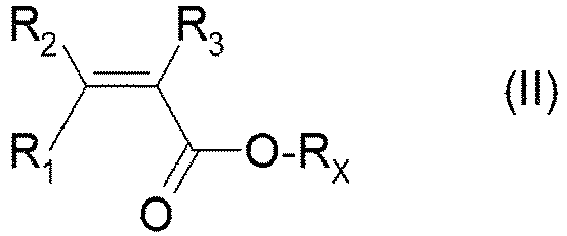 - R1, R2 et R3, identiques les uns aux autres ou différents les uns des autres, sont chacun indépendamment choisis entre un atome d'hydrogène et un groupe hydrocarboné en C1-C3 et- RX est un atome d'hydrogène ou une fraction hydrocarbonée en C1-C5 comprenant au moins un groupe hydroxyle,et, éventuellement, d'au moins un autre monomère fluoré [monomère (F)] différent du VDF et,
dispersés de façon homogène dans celui-ci,(b) au moins une matière de formation d'électrode pulvérulente constituée de soufre élémentaire [matière (E)],(c) au moins une matière électriquement conductrice pulvérulente [matière (C)],(d) éventuellement, au moins un tensioactif [tensioactif (S)],(e) éventuellement, au moins un agent liant [agent (B)] et(f) éventuellement, moins de 10 % en poids, par rapport au poids total de la composition (C), d'au moins un solvant organique [solvant (S)],le polymère (F) dans le latex aqueux étant sous la forme de particules primaires ayant une taille moyenne de particule primaire, telle que mesurée selon la méthode ISO 13321, inférieure à 1 µm. - Composition (C) selon la revendication 1, ladite composition (C) étant exempte d'un quelconque solvant organique [solvant (S)].
- Composition (C) selon la revendication 1 ou 2, ladite composition (C) étant exempte d'un quelconque solvant organique [solvant (S)] choisi dans le groupe constitué par la N-méthyl-2-pyrrolidone (NMP), le N,N-diméthylformamide (DMF) et le N,N-diméthylacétamide (DMAC).
- Composition (C) selon l'une quelconque des revendications 1 à 3, ladite composition (C) comprenant :(a) un latex aqueux comprenant au moins un polymère fluoré [polymère (F)] comprenant des motifs récurrents dérivés de fluorure de vinylidène (VDF), d'au moins un monomère (MA) et, éventuellement, d'au moins un autre monomère fluoré [monomère (F)] différent du VDF et,
dispersés de façon homogène dans celui-ci,(b) au moins une matière de formation d'électrode pulvérulente constituée de soufre élémentaire [matière (E)],(c) au moins une matière électriquement conductrice pulvérulente [matière (C)],(d) au moins un tensioactif [tensioactif (S)] et(e) éventuellement, au moins un agent liant [agent (B)],le polymère (F) dans le latex aqueux étant sous la forme de particules primaires ayant une taille moyenne de particule primaire, telle que mesurée selon la méthode ISO 13321, inférieure à 1 µm. - Composition (C) selon l'une quelconque des revendications 1 à 4, ladite composition (C) comprenant :(a) de 1 % à 20 % en poids, de préférence de 3 % à 15 % en poids d'un latex aqueux comprenant au moins un polymère fluoré [polymère (F)] comprenant des motifs récurrents dérivés de fluorure de vinylidène (VDF), d'au moins un monomère (MA) et, éventuellement, d'au moins un autre monomère fluoré [monomère (F)] différent du VDF et,
dispersés de façon homogène dans celui-ci,(b) de 40 % à 95 % en poids, de préférence de 60 % à 90 % en poids d'au moins une matière de formation d'électrode pulvérulente constituée de soufre élémentaire [matière (E)],(c) de 3 % à 60 % en poids, de préférence de 5 % à 40 % en poids d'au moins une matière électriquement conductrice pulvérulente [matière (C)],(d) de 0,1 % à 20 % en poids, de préférence de 0,2 % à 10 % en poids d'au moins un tensioactif [tensioactif (S)] et(e) éventuellement, de 0,1 % à 20 % en poids, de préférence de 0,2 % à 10 % en poids d'au moins un agent liant [agent (B)],le polymère (F) dans le latex aqueux étant sous la forme de particules primaires ayant une taille moyenne de particule primaire, telle que mesurée selon la méthode ISO 13321, inférieure à 1 µm. - Composition (C) selon l'une quelconque des revendications 1 à 5, le latex aqueux pouvant être obtenu par polymérisation en émulsion aqueuse, d'ordinaire dans un milieu aqueux, de fluorure de vinylidène (VDF), d'au moins un monomère (MA) et, éventuellement, d'au moins un autre monomère fluoré [monomère (F)] différent du VDF.
- Composition (C) selon la revendication 6, la polymérisation en émulsion aqueuse étant effectuée en présence de :- au moins tensioactif [tensioactif (S)],- au moins un amorceur radicalaire,- éventuellement, au moins une huile de polyéther perfluoré (PFPE) non fonctionnel et- éventuellement, au moins un agent de transfert de chaîne.
- Composition (C) selon l'une quelconque des revendications 1 à 7, la matière (E) étant choisie dans le groupe constitué par l'octasoufre cyclique (S8) et son allotrope S12 cyclique.
- Composition (C) selon l'une quelconque des revendications 1 à 8, la matière (C) étant choisie dans le groupe constitué par :- les matières à base de carbone telles que le carbone, le noir de carbone, le noir d'acétylène et le noir de fourneau,- les poudres métalliques de Ni, Co, Cu, Pt, Ag, Au et d'alliages de ceux-ci et- les polymères choisis dans le groupe constitué par la polyaniline, le polythiophène, le polyacétylène, le polypyrrole et les mélanges de ceux-ci.
- Procédé pour la fabrication d'une composition de formation d'électrode [composition (C)], ledit procédé comprenant les étapes suivantes :(i-1) la fourniture d'un latex aqueux comprenant au moins un polymère fluoré [polymère (F)] comprenant des motifs récurrents dérivés de fluorure de vinylidène (VDF), d'au moins un monomère (méth)acrylique [monomère (MA)] répondant à la formule (II) ci-dessous :
 - R1, R2 et R3, identiques les uns aux autres ou différents les uns des autres, sont chacun indépendamment choisis entre un atome d'hydrogène et un groupe hydrocarboné en C1-C3 et- RX est un atome d'hydrogène ou une fraction hydrocarbonée en C1-C5 comprenant au moins un groupe hydroxyle,et, éventuellement, d'au moins un autre monomère fluoré [monomère (F)] différent du VDF,
le polymère (F) dans le latex aqueux étant sous la forme de particules primaires ayant une taille moyenne de particule primaire, telle que mesurée selon la méthode ISO 13321, inférieure à 1 µm ;(ii-1) la fourniture d'un mélange comprenant :- au moins une matière de formation d'électrode pulvérulente constituée de soufre élémentaire [matière (E)] et- au moins une matière électriquement conductrice pulvérulente [matière (C)] ;(iii-1) le broyage du mélange fourni dans l'étape (ii-1),(iv-1) la mise en contact du latex aqueux fourni dans l'étape (i-1) avec les constituants suivants :- le mélange broyé fourni dans l'étape (iii-1),- éventuellement, au moins un tensioactif [tensioactif (S)],- éventuellement, au moins un agent liant [agent (B)] et- éventuellement, moins de 10 % en poids, par rapport au poids total de la composition (C), d'au moins un solvant organique [solvant (S)]. - Procédé pour la fabrication d'une électrode positive pour une batterie au lithium-soufre, ledit procédé comprenant les étapes suivantes :(i-2) la fourniture d'une composition (C) selon l'une quelconque des revendications 1 à 9,(ii-2) la fourniture d'un substrat métallique,(iii-2) l'application de ladite composition (C) sur au moins une surface dudit substrat métallique pour de cette manière fournir un ensemble comprenant au moins une couche constituée de ladite composition (C) collée sur au moins une surface dudit substrat métallique,(iv-2) éventuellement, le post-traitement de l'ensemble fourni dans l'étape (iii-2) et(v-2) le séchage de l'ensemble fourni dans l'une ou l'autre de l'étape (iii-2) ou de l'étape (iv-2).
- Procédé selon la revendication 11, dans lequel dans l'étape (iv-2) l'ensemble fourni dans l'étape (iii-2) est post-traité par des techniques de pressage ou de calandrage.
- Procédé selon la revendication 11 ou 12, dans lequel dans l'étape (v-2) l'ensemble fourni dans l'une ou l'autre de l'étape (iii-2) ou de l'étape (iv-2) est séché à une température d'au maximum 60 °C, de préférence à une température comprise entre 10 °C et 40 °C, sous pression atmosphérique.
- Procédé pour la fabrication d'une batterie au lithium-soufre, ledit procédé comprenant la fabrication d'une électrode positive selon l'une quelconque des revendications 11 à 13.
Priority Applications (1)
| Application Number | Priority Date | Filing Date | Title |
|---|---|---|---|
| EP14786918.4A EP3061145B1 (fr) | 2013-10-23 | 2014-10-21 | Électrode positive pour batteries au lithium-soufre |
Applications Claiming Priority (3)
| Application Number | Priority Date | Filing Date | Title |
|---|---|---|---|
| EP13189897 | 2013-10-23 | ||
| EP14786918.4A EP3061145B1 (fr) | 2013-10-23 | 2014-10-21 | Électrode positive pour batteries au lithium-soufre |
| PCT/EP2014/072572 WO2015059155A1 (fr) | 2013-10-23 | 2014-10-21 | Électrodes positives pour batteries de soufre-lithium |
Publications (2)
| Publication Number | Publication Date |
|---|---|
| EP3061145A1 EP3061145A1 (fr) | 2016-08-31 |
| EP3061145B1 true EP3061145B1 (fr) | 2018-12-12 |
Family
ID=49447489
Family Applications (1)
| Application Number | Title | Priority Date | Filing Date |
|---|---|---|---|
| EP14786918.4A Not-in-force EP3061145B1 (fr) | 2013-10-23 | 2014-10-21 | Électrode positive pour batteries au lithium-soufre |
Country Status (6)
| Country | Link |
|---|---|
| US (1) | US20160268599A1 (fr) |
| EP (1) | EP3061145B1 (fr) |
| JP (1) | JP2016534496A (fr) |
| KR (1) | KR20160075590A (fr) |
| CN (1) | CN105723547A (fr) |
| WO (1) | WO2015059155A1 (fr) |
Families Citing this family (17)
| Publication number | Priority date | Publication date | Assignee | Title |
|---|---|---|---|---|
| US10968362B2 (en) | 2016-07-15 | 2021-04-06 | Solvay Specialty Polymers Italy S.P.A. | Fluorinated surfactant-free aqueous dispersion of a vinylidene fluoride copolymer comprising hydroxyl groups |
| US10707531B1 (en) | 2016-09-27 | 2020-07-07 | New Dominion Enterprises Inc. | All-inorganic solvents for electrolytes |
| US20190379053A1 (en) * | 2016-12-20 | 2019-12-12 | Solvay Specialty Polymers Italy S.P.A. | Aqueous electrode binders for lithium ion batteries |
| SG11201909450WA (en) | 2017-04-11 | 2019-11-28 | Vid Scale Inc | 360-degree video coding using face continuities |
| HUE065402T2 (hu) | 2017-08-11 | 2024-05-28 | Solvay Specialty Polymers It | Eljárás fluorozott polimerek vizes diszperzióinak stabilizálására |
| DE102017010031A1 (de) * | 2017-10-23 | 2019-04-25 | Iontech Systems Ag | Alkali-Ionen Batterie, basieren auf ausgewählten Allotropen des Schwefels, sowie Methoden zu deren Herstellung |
| CN111684626A (zh) * | 2017-11-24 | 2020-09-18 | 索尔维特殊聚合物意大利有限公司 | 用于石墨/硅阳极的pvdf粘合剂 |
| KR102448074B1 (ko) * | 2017-11-29 | 2022-09-26 | 주식회사 엘지에너지솔루션 | 리튬-황 전지 양극용 슬러리의 제조방법 |
| JP2019164993A (ja) * | 2018-03-14 | 2019-09-26 | 株式会社リコー | 電極形成用組成物、電極の製造方法及び非水系蓄電素子の製造方法 |
| US11380935B2 (en) * | 2018-05-31 | 2022-07-05 | Kureha Corporation | Resin composition for nonaqueous electrolyte secondary battery, separator for nonaqueous electrolyte secondary battery using same, resin composition for electrode mixture layer, electrode for nonaqueous electrolyte secondary battery, and nonaqueous electrolyte secondary battery |
| JP2021533544A (ja) | 2018-08-02 | 2021-12-02 | ソルベイ スペシャルティ ポリマーズ イタリー エス.ピー.エー. | バッテリーセパレーターコーティング |
| KR102268184B1 (ko) * | 2018-08-08 | 2021-06-22 | 주식회사 엘지화학 | 황-탄소 복합체, 이의 제조방법, 이를 포함하는 양극 및 리튬 이차전지 |
| WO2020032454A1 (fr) * | 2018-08-08 | 2020-02-13 | 주식회사 엘지화학 | Composite soufre-carbone, son procédé de préparation, et électrode positive et accumulateur au lithium le comprenant |
| KR20220027877A (ko) | 2019-07-01 | 2022-03-08 | 솔베이 스페셜티 폴리머스 이태리 에스.피.에이. | 배터리 세퍼레이터 코팅재 |
| JP7431328B2 (ja) | 2019-12-17 | 2024-02-14 | ヘンケル・アクチェンゲゼルシャフト・ウント・コムパニー・コマンディットゲゼルシャフト・アウフ・アクチェン | 水性ポリマー分散液及びその使用 |
| KR102886508B1 (ko) * | 2021-01-15 | 2025-11-13 | 주식회사 엘지에너지솔루션 | 리튬 이차 전지용 양극 활물질, 이의 제조방법 및 이를 포함하는 리튬 이차 전지 |
| CN117897821A (zh) * | 2021-06-02 | 2024-04-16 | Ppg工业俄亥俄公司 | 使用连续涂覆线制造电极的方法 |
Family Cites Families (13)
| Publication number | Priority date | Publication date | Assignee | Title |
|---|---|---|---|---|
| IL82308A (en) | 1986-06-26 | 1990-11-29 | Ausimont Spa | Microemulsions containing perfluoropolyethers |
| IT1265067B1 (it) | 1993-05-18 | 1996-10-30 | Ausimont Spa | Processo di (co)polimerizzazione in emulsione acquosa di monomeri olefinici fluorurati |
| IT1276072B1 (it) | 1995-10-31 | 1997-10-24 | Ausimont Spa | Processo di (co)polimerizzazione di monomeri fluorurati per ottenere polimeri contenenti idrogeno |
| US7241535B2 (en) * | 2001-10-15 | 2007-07-10 | Samsung Sdi Co., Ltd. | Electrolyte for lithium-sulfur batteries and lithium-sulfur batteries comprising the same |
| KR100396492B1 (ko) * | 2001-10-17 | 2003-09-02 | 삼성에스디아이 주식회사 | 리튬-황 전지용 양극 활물질 및 이를 포함하는 양극활물질 조성물의 제조 방법 |
| KR100445434B1 (ko) * | 2002-07-10 | 2004-08-21 | 삼성에스디아이 주식회사 | 리튬-황 전지용 양극 활물질 조성물 및 이를 사용하여제조된 리튬-황 전지 |
| KR100454030B1 (ko) * | 2002-08-07 | 2004-10-20 | 삼성에스디아이 주식회사 | 리튬-황 전지용 양극, 이의 제조 방법 및 이를 포함하는리튬-황 전지 |
| KR100485093B1 (ko) * | 2002-10-28 | 2005-04-22 | 삼성에스디아이 주식회사 | 리튬-황 전지용 양극 및 이를 포함하는 리튬-황 전지 |
| US7147967B1 (en) * | 2003-07-29 | 2006-12-12 | The United States Of America As Represented By The Secretary Of The Army | Cathode for metal-oxygen battery |
| CN101171269A (zh) * | 2005-05-02 | 2008-04-30 | 大金工业株式会社 | 含氟聚合物的制造方法以及由该制造方法得到的含氟聚合物 |
| TWI437009B (zh) * | 2007-04-24 | 2014-05-11 | Solvay Solexis Spa | 1,1-二氟乙烯共聚物類 |
| MY159699A (en) * | 2009-05-29 | 2017-01-13 | Arkema Inc | Aqueous polyvinylidene fluoride composition |
| MY165000A (en) * | 2011-07-15 | 2018-02-28 | Solvay Specialty Polymers It | Aqueous vinylidene fluoride polymer latex |
-
2014
- 2014-10-21 US US15/032,047 patent/US20160268599A1/en not_active Abandoned
- 2014-10-21 KR KR1020167013046A patent/KR20160075590A/ko not_active Withdrawn
- 2014-10-21 WO PCT/EP2014/072572 patent/WO2015059155A1/fr not_active Ceased
- 2014-10-21 CN CN201480058361.XA patent/CN105723547A/zh active Pending
- 2014-10-21 JP JP2016522090A patent/JP2016534496A/ja active Pending
- 2014-10-21 EP EP14786918.4A patent/EP3061145B1/fr not_active Not-in-force
Non-Patent Citations (1)
| Title |
|---|
| None * |
Also Published As
| Publication number | Publication date |
|---|---|
| JP2016534496A (ja) | 2016-11-04 |
| EP3061145A1 (fr) | 2016-08-31 |
| US20160268599A1 (en) | 2016-09-15 |
| KR20160075590A (ko) | 2016-06-29 |
| CN105723547A (zh) | 2016-06-29 |
| WO2015059155A1 (fr) | 2015-04-30 |
Similar Documents
| Publication | Publication Date | Title |
|---|---|---|
| EP3061145B1 (fr) | Électrode positive pour batteries au lithium-soufre | |
| EP2731990B1 (fr) | Latex de polymère de fluorure de vinylidène aqueux | |
| JP6863470B2 (ja) | 二次電池用結着剤、二次電池用電極合剤、二次電池用電極及び二次電池 | |
| EP3033782B1 (fr) | Séparateur de fluoropolymère composite solide | |
| EP2436067B1 (fr) | Composition aqueuse de polyfluorure de vinylidène | |
| JP6269890B1 (ja) | 二次電池用結着剤及び二次電池用電極合剤 | |
| JP5573980B2 (ja) | 結着剤、正極合剤及び負極合剤 | |
| KR101993590B1 (ko) | 수분산 불소중합체 조성물 | |
| EP2815446A1 (fr) | Procédé pour la fabrication de séparateurs composites | |
| EP3407410B1 (fr) | Composition de liant, liquide de dispersion de liant, mélange pour électrode, électrode, batterie secondaire à électrolyte non aqueux et procédé de production de composition de liant | |
| JP2010514140A (ja) | リチウムイオン電池および電気二重層キャパシタのための電極バインダー組成物および電極 | |
| KR20150100754A (ko) | 고밀도 플루오로중합체 필름 | |
| KR102918894B1 (ko) | 전극-형성 조성물 | |
| JP2018060745A (ja) | 二次電池用結着剤及び二次電池用電極合剤 | |
| JP2018063932A (ja) | 二次電池用結着剤及び二次電池用電極合剤 | |
| KR20250088533A (ko) | 2차 배터리 전극 바인더 | |
| KR20250149696A (ko) | 리튬 배터리 전극 바인더 |
Legal Events
| Date | Code | Title | Description |
|---|---|---|---|
| PUAI | Public reference made under article 153(3) epc to a published international application that has entered the european phase |
Free format text: ORIGINAL CODE: 0009012 |
|
| 17P | Request for examination filed |
Effective date: 20160523 |
|
| AK | Designated contracting states |
Kind code of ref document: A1 Designated state(s): AL AT BE BG CH CY CZ DE DK EE ES FI FR GB GR HR HU IE IS IT LI LT LU LV MC MK MT NL NO PL PT RO RS SE SI SK SM TR |
|
| AX | Request for extension of the european patent |
Extension state: BA ME |
|
| RIN1 | Information on inventor provided before grant (corrected) |
Inventor name: DAMEN, LIBERO Inventor name: PETRICCI, SILVIA RITA Inventor name: PIERI, RICCARDO |
|
| DAX | Request for extension of the european patent (deleted) | ||
| STAA | Information on the status of an ep patent application or granted ep patent |
Free format text: STATUS: EXAMINATION IS IN PROGRESS |
|
| 17Q | First examination report despatched |
Effective date: 20171026 |
|
| REG | Reference to a national code |
Ref country code: DE Ref legal event code: R079 Ref document number: 602014037902 Country of ref document: DE Free format text: PREVIOUS MAIN CLASS: H01M0004139700 Ipc: H01M0004620000 |
|
| GRAP | Despatch of communication of intention to grant a patent |
Free format text: ORIGINAL CODE: EPIDOSNIGR1 |
|
| STAA | Information on the status of an ep patent application or granted ep patent |
Free format text: STATUS: GRANT OF PATENT IS INTENDED |
|
| RIC1 | Information provided on ipc code assigned before grant |
Ipc: H01M 4/62 20060101AFI20180529BHEP Ipc: H01M 4/13 20100101ALI20180529BHEP Ipc: H01M 4/38 20060101ALI20180529BHEP Ipc: H01M 4/04 20060101ALI20180529BHEP Ipc: H01M 10/052 20100101ALI20180529BHEP Ipc: H01M 4/139 20100101ALI20180529BHEP |
|
| INTG | Intention to grant announced |
Effective date: 20180614 |
|
| GRAS | Grant fee paid |
Free format text: ORIGINAL CODE: EPIDOSNIGR3 |
|
| GRAA | (expected) grant |
Free format text: ORIGINAL CODE: 0009210 |
|
| STAA | Information on the status of an ep patent application or granted ep patent |
Free format text: STATUS: THE PATENT HAS BEEN GRANTED |
|
| AK | Designated contracting states |
Kind code of ref document: B1 Designated state(s): AL AT BE BG CH CY CZ DE DK EE ES FI FR GB GR HR HU IE IS IT LI LT LU LV MC MK MT NL NO PL PT RO RS SE SI SK SM TR |
|
| REG | Reference to a national code |
Ref country code: GB Ref legal event code: FG4D |
|
| REG | Reference to a national code |
Ref country code: CH Ref legal event code: EP |
|
| REG | Reference to a national code |
Ref country code: AT Ref legal event code: REF Ref document number: 1077176 Country of ref document: AT Kind code of ref document: T Effective date: 20181215 |
|
| REG | Reference to a national code |
Ref country code: DE Ref legal event code: R096 Ref document number: 602014037902 Country of ref document: DE |
|
| REG | Reference to a national code |
Ref country code: IE Ref legal event code: FG4D |
|
| REG | Reference to a national code |
Ref country code: NL Ref legal event code: MP Effective date: 20181212 |
|
| REG | Reference to a national code |
Ref country code: LT Ref legal event code: MG4D |
|
| PG25 | Lapsed in a contracting state [announced via postgrant information from national office to epo] |
Ref country code: ES Free format text: LAPSE BECAUSE OF FAILURE TO SUBMIT A TRANSLATION OF THE DESCRIPTION OR TO PAY THE FEE WITHIN THE PRESCRIBED TIME-LIMIT Effective date: 20181212 Ref country code: BG Free format text: LAPSE BECAUSE OF FAILURE TO SUBMIT A TRANSLATION OF THE DESCRIPTION OR TO PAY THE FEE WITHIN THE PRESCRIBED TIME-LIMIT Effective date: 20190312 Ref country code: LV Free format text: LAPSE BECAUSE OF FAILURE TO SUBMIT A TRANSLATION OF THE DESCRIPTION OR TO PAY THE FEE WITHIN THE PRESCRIBED TIME-LIMIT Effective date: 20181212 Ref country code: HR Free format text: LAPSE BECAUSE OF FAILURE TO SUBMIT A TRANSLATION OF THE DESCRIPTION OR TO PAY THE FEE WITHIN THE PRESCRIBED TIME-LIMIT Effective date: 20181212 Ref country code: NO Free format text: LAPSE BECAUSE OF FAILURE TO SUBMIT A TRANSLATION OF THE DESCRIPTION OR TO PAY THE FEE WITHIN THE PRESCRIBED TIME-LIMIT Effective date: 20190312 Ref country code: LT Free format text: LAPSE BECAUSE OF FAILURE TO SUBMIT A TRANSLATION OF THE DESCRIPTION OR TO PAY THE FEE WITHIN THE PRESCRIBED TIME-LIMIT Effective date: 20181212 Ref country code: FI Free format text: LAPSE BECAUSE OF FAILURE TO SUBMIT A TRANSLATION OF THE DESCRIPTION OR TO PAY THE FEE WITHIN THE PRESCRIBED TIME-LIMIT Effective date: 20181212 |
|
| REG | Reference to a national code |
Ref country code: AT Ref legal event code: MK05 Ref document number: 1077176 Country of ref document: AT Kind code of ref document: T Effective date: 20181212 |
|
| PG25 | Lapsed in a contracting state [announced via postgrant information from national office to epo] |
Ref country code: AL Free format text: LAPSE BECAUSE OF FAILURE TO SUBMIT A TRANSLATION OF THE DESCRIPTION OR TO PAY THE FEE WITHIN THE PRESCRIBED TIME-LIMIT Effective date: 20181212 Ref country code: SE Free format text: LAPSE BECAUSE OF FAILURE TO SUBMIT A TRANSLATION OF THE DESCRIPTION OR TO PAY THE FEE WITHIN THE PRESCRIBED TIME-LIMIT Effective date: 20181212 Ref country code: RS Free format text: LAPSE BECAUSE OF FAILURE TO SUBMIT A TRANSLATION OF THE DESCRIPTION OR TO PAY THE FEE WITHIN THE PRESCRIBED TIME-LIMIT Effective date: 20181212 Ref country code: GR Free format text: LAPSE BECAUSE OF FAILURE TO SUBMIT A TRANSLATION OF THE DESCRIPTION OR TO PAY THE FEE WITHIN THE PRESCRIBED TIME-LIMIT Effective date: 20190313 |
|
| PG25 | Lapsed in a contracting state [announced via postgrant information from national office to epo] |
Ref country code: NL Free format text: LAPSE BECAUSE OF FAILURE TO SUBMIT A TRANSLATION OF THE DESCRIPTION OR TO PAY THE FEE WITHIN THE PRESCRIBED TIME-LIMIT Effective date: 20181212 |
|
| PG25 | Lapsed in a contracting state [announced via postgrant information from national office to epo] |
Ref country code: PT Free format text: LAPSE BECAUSE OF FAILURE TO SUBMIT A TRANSLATION OF THE DESCRIPTION OR TO PAY THE FEE WITHIN THE PRESCRIBED TIME-LIMIT Effective date: 20190412 Ref country code: CZ Free format text: LAPSE BECAUSE OF FAILURE TO SUBMIT A TRANSLATION OF THE DESCRIPTION OR TO PAY THE FEE WITHIN THE PRESCRIBED TIME-LIMIT Effective date: 20181212 Ref country code: IT Free format text: LAPSE BECAUSE OF FAILURE TO SUBMIT A TRANSLATION OF THE DESCRIPTION OR TO PAY THE FEE WITHIN THE PRESCRIBED TIME-LIMIT Effective date: 20181212 Ref country code: PL Free format text: LAPSE BECAUSE OF FAILURE TO SUBMIT A TRANSLATION OF THE DESCRIPTION OR TO PAY THE FEE WITHIN THE PRESCRIBED TIME-LIMIT Effective date: 20181212 |
|
| PG25 | Lapsed in a contracting state [announced via postgrant information from national office to epo] |
Ref country code: SM Free format text: LAPSE BECAUSE OF FAILURE TO SUBMIT A TRANSLATION OF THE DESCRIPTION OR TO PAY THE FEE WITHIN THE PRESCRIBED TIME-LIMIT Effective date: 20181212 Ref country code: EE Free format text: LAPSE BECAUSE OF FAILURE TO SUBMIT A TRANSLATION OF THE DESCRIPTION OR TO PAY THE FEE WITHIN THE PRESCRIBED TIME-LIMIT Effective date: 20181212 Ref country code: SK Free format text: LAPSE BECAUSE OF FAILURE TO SUBMIT A TRANSLATION OF THE DESCRIPTION OR TO PAY THE FEE WITHIN THE PRESCRIBED TIME-LIMIT Effective date: 20181212 Ref country code: RO Free format text: LAPSE BECAUSE OF FAILURE TO SUBMIT A TRANSLATION OF THE DESCRIPTION OR TO PAY THE FEE WITHIN THE PRESCRIBED TIME-LIMIT Effective date: 20181212 Ref country code: IS Free format text: LAPSE BECAUSE OF FAILURE TO SUBMIT A TRANSLATION OF THE DESCRIPTION OR TO PAY THE FEE WITHIN THE PRESCRIBED TIME-LIMIT Effective date: 20190412 |
|
| REG | Reference to a national code |
Ref country code: DE Ref legal event code: R097 Ref document number: 602014037902 Country of ref document: DE |
|
| PLBE | No opposition filed within time limit |
Free format text: ORIGINAL CODE: 0009261 |
|
| STAA | Information on the status of an ep patent application or granted ep patent |
Free format text: STATUS: NO OPPOSITION FILED WITHIN TIME LIMIT |
|
| PG25 | Lapsed in a contracting state [announced via postgrant information from national office to epo] |
Ref country code: SI Free format text: LAPSE BECAUSE OF FAILURE TO SUBMIT A TRANSLATION OF THE DESCRIPTION OR TO PAY THE FEE WITHIN THE PRESCRIBED TIME-LIMIT Effective date: 20181212 Ref country code: AT Free format text: LAPSE BECAUSE OF FAILURE TO SUBMIT A TRANSLATION OF THE DESCRIPTION OR TO PAY THE FEE WITHIN THE PRESCRIBED TIME-LIMIT Effective date: 20181212 Ref country code: DK Free format text: LAPSE BECAUSE OF FAILURE TO SUBMIT A TRANSLATION OF THE DESCRIPTION OR TO PAY THE FEE WITHIN THE PRESCRIBED TIME-LIMIT Effective date: 20181212 |
|
| 26N | No opposition filed |
Effective date: 20190913 |
|
| PG25 | Lapsed in a contracting state [announced via postgrant information from national office to epo] |
Ref country code: TR Free format text: LAPSE BECAUSE OF FAILURE TO SUBMIT A TRANSLATION OF THE DESCRIPTION OR TO PAY THE FEE WITHIN THE PRESCRIBED TIME-LIMIT Effective date: 20181212 |
|
| REG | Reference to a national code |
Ref country code: DE Ref legal event code: R119 Ref document number: 602014037902 Country of ref document: DE |
|
| PG25 | Lapsed in a contracting state [announced via postgrant information from national office to epo] |
Ref country code: MC Free format text: LAPSE BECAUSE OF FAILURE TO SUBMIT A TRANSLATION OF THE DESCRIPTION OR TO PAY THE FEE WITHIN THE PRESCRIBED TIME-LIMIT Effective date: 20181212 |
|
| REG | Reference to a national code |
Ref country code: CH Ref legal event code: PL |
|
| PG25 | Lapsed in a contracting state [announced via postgrant information from national office to epo] |
Ref country code: LU Free format text: LAPSE BECAUSE OF NON-PAYMENT OF DUE FEES Effective date: 20191021 Ref country code: DE Free format text: LAPSE BECAUSE OF NON-PAYMENT OF DUE FEES Effective date: 20200501 Ref country code: CH Free format text: LAPSE BECAUSE OF NON-PAYMENT OF DUE FEES Effective date: 20191031 Ref country code: LI Free format text: LAPSE BECAUSE OF NON-PAYMENT OF DUE FEES Effective date: 20191031 |
|
| REG | Reference to a national code |
Ref country code: BE Ref legal event code: MM Effective date: 20191031 |
|
| PG25 | Lapsed in a contracting state [announced via postgrant information from national office to epo] |
Ref country code: BE Free format text: LAPSE BECAUSE OF NON-PAYMENT OF DUE FEES Effective date: 20191031 |
|
| GBPC | Gb: european patent ceased through non-payment of renewal fee |
Effective date: 20191021 |
|
| PG25 | Lapsed in a contracting state [announced via postgrant information from national office to epo] |
Ref country code: IE Free format text: LAPSE BECAUSE OF NON-PAYMENT OF DUE FEES Effective date: 20191021 Ref country code: FR Free format text: LAPSE BECAUSE OF NON-PAYMENT OF DUE FEES Effective date: 20191031 Ref country code: GB Free format text: LAPSE BECAUSE OF NON-PAYMENT OF DUE FEES Effective date: 20191021 |
|
| PG25 | Lapsed in a contracting state [announced via postgrant information from national office to epo] |
Ref country code: CY Free format text: LAPSE BECAUSE OF FAILURE TO SUBMIT A TRANSLATION OF THE DESCRIPTION OR TO PAY THE FEE WITHIN THE PRESCRIBED TIME-LIMIT Effective date: 20181212 |
|
| PG25 | Lapsed in a contracting state [announced via postgrant information from national office to epo] |
Ref country code: HU Free format text: LAPSE BECAUSE OF FAILURE TO SUBMIT A TRANSLATION OF THE DESCRIPTION OR TO PAY THE FEE WITHIN THE PRESCRIBED TIME-LIMIT; INVALID AB INITIO Effective date: 20141021 Ref country code: MT Free format text: LAPSE BECAUSE OF FAILURE TO SUBMIT A TRANSLATION OF THE DESCRIPTION OR TO PAY THE FEE WITHIN THE PRESCRIBED TIME-LIMIT Effective date: 20181212 |
|
| PG25 | Lapsed in a contracting state [announced via postgrant information from national office to epo] |
Ref country code: MK Free format text: LAPSE BECAUSE OF FAILURE TO SUBMIT A TRANSLATION OF THE DESCRIPTION OR TO PAY THE FEE WITHIN THE PRESCRIBED TIME-LIMIT Effective date: 20181212 |