EP3061817B1 - Variants de protéase alcaline - Google Patents
Variants de protéase alcaline Download PDFInfo
- Publication number
- EP3061817B1 EP3061817B1 EP16163320.1A EP16163320A EP3061817B1 EP 3061817 B1 EP3061817 B1 EP 3061817B1 EP 16163320 A EP16163320 A EP 16163320A EP 3061817 B1 EP3061817 B1 EP 3061817B1
- Authority
- EP
- European Patent Office
- Prior art keywords
- seq
- amino acid
- dna
- oligonucleotide
- artificial
- Prior art date
- Legal status (The legal status is an assumption and is not a legal conclusion. Google has not performed a legal analysis and makes no representation as to the accuracy of the status listed.)
- Active
Links
Images


Classifications
-
- C—CHEMISTRY; METALLURGY
- C11—ANIMAL OR VEGETABLE OILS, FATS, FATTY SUBSTANCES OR WAXES; FATTY ACIDS THEREFROM; DETERGENTS; CANDLES
- C11D—DETERGENT COMPOSITIONS; USE OF SINGLE SUBSTANCES AS DETERGENTS; SOAP OR SOAP-MAKING; RESIN SOAPS; RECOVERY OF GLYCEROL
- C11D3/00—Other compounding ingredients of detergent compositions covered in group C11D1/00
- C11D3/16—Organic compounds
- C11D3/38—Products with no well-defined composition, e.g. natural products
- C11D3/386—Preparations containing enzymes, e.g. protease or amylase
- C11D3/38618—Protease or amylase in liquid compositions only
-
- C—CHEMISTRY; METALLURGY
- C11—ANIMAL OR VEGETABLE OILS, FATS, FATTY SUBSTANCES OR WAXES; FATTY ACIDS THEREFROM; DETERGENTS; CANDLES
- C11D—DETERGENT COMPOSITIONS; USE OF SINGLE SUBSTANCES AS DETERGENTS; SOAP OR SOAP-MAKING; RESIN SOAPS; RECOVERY OF GLYCEROL
- C11D3/00—Other compounding ingredients of detergent compositions covered in group C11D1/00
- C11D3/16—Organic compounds
- C11D3/38—Products with no well-defined composition, e.g. natural products
- C11D3/386—Preparations containing enzymes, e.g. protease or amylase
-
- C—CHEMISTRY; METALLURGY
- C11—ANIMAL OR VEGETABLE OILS, FATS, FATTY SUBSTANCES OR WAXES; FATTY ACIDS THEREFROM; DETERGENTS; CANDLES
- C11D—DETERGENT COMPOSITIONS; USE OF SINGLE SUBSTANCES AS DETERGENTS; SOAP OR SOAP-MAKING; RESIN SOAPS; RECOVERY OF GLYCEROL
- C11D3/00—Other compounding ingredients of detergent compositions covered in group C11D1/00
- C11D3/16—Organic compounds
- C11D3/38—Products with no well-defined composition, e.g. natural products
- C11D3/386—Preparations containing enzymes, e.g. protease or amylase
- C11D3/38681—Chemically modified or immobilised enzymes
-
- C—CHEMISTRY; METALLURGY
- C12—BIOCHEMISTRY; BEER; SPIRITS; WINE; VINEGAR; MICROBIOLOGY; ENZYMOLOGY; MUTATION OR GENETIC ENGINEERING
- C12N—MICROORGANISMS OR ENZYMES; COMPOSITIONS THEREOF; PROPAGATING, PRESERVING, OR MAINTAINING MICROORGANISMS; MUTATION OR GENETIC ENGINEERING; CULTURE MEDIA
- C12N9/00—Enzymes; Proenzymes; Compositions thereof; Processes for preparing, activating, inhibiting, separating or purifying enzymes
- C12N9/14—Hydrolases (3)
- C12N9/48—Hydrolases (3) acting on peptide bonds (3.4)
- C12N9/50—Proteinases, e.g. Endopeptidases (3.4.21-3.4.25)
- C12N9/52—Proteinases, e.g. Endopeptidases (3.4.21-3.4.25) derived from bacteria or Archaea
- C12N9/54—Proteinases, e.g. Endopeptidases (3.4.21-3.4.25) derived from bacteria or Archaea bacteria being Bacillus
Definitions
- the present disclosure relates to alkaline protease variants which are useful enzymes incorporated into liquid detergents, and to genes encoding the same.
- proteases have long been employed in industry for a wide variety of products, including detergents (e.g., laundry detergents), fiber-modifying agents, leather treatment agents, cosmetics, bath agents, food-modifying agents, and drugs.
- detergents e.g., laundry detergents
- fiber-modifying agents e.g., leather treatment agents
- cosmetics e.g., cosmetics
- bath agents e.g., food-modifying agents
- drugs e.g
- Protease is incorporated into a laundry detergent for providing the detergent with the ability to degrade dirt mainly composed of protein and deposited on clothing into low-molecular-weight products, to thereby promote solubilization of the thus-degraded products with a surfactant.
- deposited dirt is complex dirt containing, in addition to proteins, a plurality of organic and inorganic components such as sebum-derived lipid and solid particles. Therefore, there is a continuous demand for a detergent exhibiting excellent detergency to such complex dirt.
- alkaline proteases having a molecular weight of about 43,000, which maintain sufficient casein-degrading activity even in the presence of a fatty acid of high concentration and which exhibit excellent detergency to complex dirt containing proteins and sebum; and previously filed a patent application on the alkaline proteases (Patent Document 1).
- These alkaline proteases differ from conventionally known subtilisin, a serine protease derived from bacteria belonging to the genus Bacillus, in terms of molecular weight, primary structure, and enzymological characteristics, and having a very strong resistance to oxidizer.
- These alkaline proteases are suggested to be classified into a new subtilisin subfamily (Non-Patent Document 1).
- detergents can be categorized, by form thereof, into powder detergents and liquid detergents.
- liquid detergents have solubility higher than that of powder detergents, and neat liquid thereof can be directly applied to dirt.
- liquid detergents have such merits while powder detergents do not possess, liquid detergents are widely known to encounter technical difficulty in stable incorporation of an enzyme such as protease, while powder detergents do not encounter.
- an enzyme such as protease
- liquid detergents are stored at ambient temperature, the enzyme (protein) is readily denatured.
- liquid detergents contain a surfactant, fatty acid, solvent, etc., and the pH thereof falls within a weak alkaline range. Such conditions are very severe conditions for the enzyme.
- the protease which is a proteolytic enzyme, undergoes problematic self-digestion, further reducing storage stability of the enzyme in liquid detergents.
- an enzyme-stabilizing agent such as calcium ion, borax, boric acid, a boron compound, a carboxylic acid (e.g., formic acid), or a polyol.
- an enzyme-stabilizing agent such as calcium ion, borax, boric acid, a boron compound, a carboxylic acid (e.g., formic acid), or a polyol.
- Some studies have been carried out to cope with the problem of self-digestion based on inhibition of protease activity. Specifically, there have been reported methods for stabilizing protease through reversible inhibition of protease activity by use of 4-substituted phenylboronic acid (Patent Document 2) or a certain peptide-aldehyde and a boron composition (Patent Document 3). Also reported is that dextran-modified protease enhances stability of protease in aqueous solution containing a surfactant (Non-Patent Document 2) .
- protease-stabilizing effect due to addition of an enzyme-stabilizing agent e.g., calcium ion or boric acid
- an enzyme-stabilizing agent e.g., calcium ion or boric acid
- the inhibitory effect varies depending on the type of protease.
- use of such agents increases production cost.
- these countermeasures are not thought to be best solutions for the problems involved in liquid detergents.
- Chemical modification of the enzyme also has problems in terms of production cost.
- a surfactant is added to liquid detergents.
- a surfactant most severely impairs the stability of enzymes.
- an anionic surfactant and a nonionic surfactant are used in combination.
- a nonionic surfactant does not greatly damage enzymes
- an anionic surfactant is thought to greatly damage enzymes, since the anionic surfactant enters the enzyme via its hydrophobic moiety and breaks hydrophobic interaction of the enzyme as well as traps divalent metal ions (e.g., calcium ions) which stabilize the enzyme (Non-Patent Document 3).
- divalent metal ions e.g., calcium ions
- Patent Document 7 discloses JP170 like subtilases from wild-type bacteria, hybrids thereof and methods of construction and production of these proteases. Patent Document 7 also discloses to use these subtilases in detergents, such as a laundry detergent or an automatic dishwashing detergent. In an alkaline protease derived from KP43 [ Bacillus sp.
- KSM-KP43 (FERM BP-6532)]
- the specific activity to the activity of the parent alkaline protease is known to be enhanced through substitution of the amino acid residue at the position 15 of the amino acid sequence with a histidine residue; substitution of the amino acid residue at the position 16 of the amino acid sequence with a threonine or glutamine residue (Patent Document 4); substitution of the amino acid residue at the position 65 of the amino acid sequence with a proline residue (Patent Document 5); or substitution of the amino acid residue at the position 66 of the amino acid sequence with an aspartic acid residue (Patent Document 6).
- an alkaline protease variant which enhances the stability of an alkaline protease derived from KP43 in liquid detergents without reducing the specific activity.
- the present invention relates to the embodiments as defined in the claims.
- One aspect of the invention relates to an alkaline protease variant, wherein said alkaline protease variant
- the present invention also relates to a detergent composition comprising this alkaline protease variant; as well as a gene encoding this alkaline protease variant, a recombinant vector comprising said gene, and a non-human transformant comprising said recombinant vector.
- the invention also provides a method for producing the alkaline protease variant of the invention, which method comprises culturing this transformant.
- Also comprised by the present invention is a method for enhancing the stability of an alkaline protease in a liquid detergent, the method comprises
- the present disclosure is directed to an alkaline protease variant derived from an alkaline protease consisting of an amino acid sequence represented by SEQ ID NO: 2 or consisting of an amino acid sequence having an identity of 90% or more therewith, wherein one or more amino acid residues at positions selected from (a) position 6, (b) position 15, (c) position 16, (d) position 65, (e) position 66, (f) position 82, (g) position 83, (h) position 204, (i) position 319, and (j) position 337 of the amino acid sequence represented by SEQ ID NO: 2, or at positions corresponding thereto are substituted with the following amino acid residues:
- the present disclosure is also directed to a gene encoding the alkaline protease variant.
- the present disclosure is also directed to a recombinant vector including the gene.
- the present disclosure is also directed to a transformant comprisding the recombinant vector.
- the present disclosure is also directed to a detergent composition including the alkaline protease variant.
- the present disclosure is also directed to a method for enhancing the stability of an alkaline protease in a liquid detergent, the method including, in an alkaline protease consisting of an amino acid sequence represented by SEQ ID NO: 2 or consisting of an amino acid sequence having an identity of 90% or more therewith, substituting one or more amino acid residues at positions selected from (a) position 6, (b) position 15, (c) position 16, (d) position 65, (e) position 66, (f) position 82, (g) position 83, (h) position 204, (i) position 319, and (j) position 337 of the amino acid sequence represented by SEQ ID NO: 2, or at positions corresponding thereto with the following amino acid residues:
- the present disclosure is directed to provision of an alkaline protease variant having an enhanced stability in liquid detergents.
- the present inventors have found that, through substituting specific amino acid residue(s) among the amino acid residues characteristic to alkaline protease KP43 having a molecular weight of about 43,000 by other amino acid residues, the stability of the obtained alkaline protease variant in a liquid detergent is enhanced as compared with the parent alkaline protease.
- the present disclosure can provide an alkaline protease variant which maintains activity in a liquid detergent containing an anionic surfactant such as LAS, which has high specific activity, and which serves as a useful enzyme for detergents.
- an anionic surfactant such as LAS
- the alkaline protease variant of the present disclosure is an alkaline protease variant derived from an alkaline protease consisting of an amino acid sequence represented by SEQ ID NO: 2 or consisting of an amino acid sequence having an identity of 90% or more therewith, wherein one or more amino acid residues at a position selected from (a) position 6, (b) position 15, (c) position 16, (d) position 65, (e) position 66, (f) position 82, (g) position 83, (h) position 204, (i) position 319, and (j) position 337 of the amino acid sequence represented by SEQ ID NO: 2, or at positions corresponding thereto are substituted with other amino acid residues.
- the alkaline protease variant of the present disclosure may be a wild-type variant or an artificially created variant.
- alkaline protease consisting of the amino acid sequence represented by SEQ ID NO: 2
- examples of the alkaline protease consisting of the amino acid sequence represented by SEQ ID NO: 2 include an alkaline protease derived from KP43 [ Bacillus sp. KSM-KP43 (FERM BP-6532)] ( WO 99/18218 pamphlet).
- alkaline protease consisting of an amino acid sequence having an identity of 90% or more with the amino acid sequence represented by SEQ ID NO: 2 include those consisting of an amino acid sequence which differs from the amino acid sequence represented by SEQ ID NO: 2 but which has an identity of 90% or more, preferably 95% or more, more preferably 96% or more, even more preferably 97% or more, even more preferably 98% or more, even more preferably 99% or more with an amino acid sequence represented by SEQ ID NO: 2; or those consisting of a amino acid sequence represented by SEQ ID NO: 2, wherein one to several amino acids are deleted, substituted or added.
- these alkaline proteases have a function equivalent to or higher than that of the alkaline protease consisting of the amino acid sequence represented by SEQ ID NO: 2.
- alkaline protease consisting of an amino acid sequence having an identity of 90% or more with the amino acid sequence represented by SEQ ID NO: 2
- protease KP9860 protease derived from Bacillus sp. KSM-KP9860 (FERM BP-6534), WO 99/18218 , GenBank accession no. AB046403
- protease 9865 protease 9865 [protease derived from Bacillus sp. KSM-9865 (FERM BP-10139), GenBank accession no. AB084155].
- alkaline protease consisting of an amino acid sequence having an identity of 90% or more with the amino acid sequence represented by SEQ ID NO: 2 also include variants such as a variant consisting of an amino acid sequence represented by SEQ ID NO: 2 in which the amino acid residues at the positions 66 and 246 have been substituted with aspartic acid and serine, respectively, a variant consisting of an amino acid sequence represented by SEQ ID NO: 2 in which the amino acid residue at the position 103 has been substituted with arginine, and a variant consisting of an amino acid sequence represented by SEQ ID NO: 2 in which the acid residue at the position 195 has been substituted with alanine, glutamic acid, glutamine, valine, glycine, lysine, threonine, cysteine, proline, serine, arginine, asparagine, or histidine ( JP-A-2002-218989 ); variants such as a variant consisting of an amino acid sequence represented by SEQ ID NO: 2
- alkaline proteases and protease variants preferred are those having any of the following enzymatic properties which the alkalie protease consisting of an amino acid sequence represented by SEQ ID NO:2 has:
- the identity between amino acid sequences is calculated through the Lipman-Pearson method ( Science, 227, 1435, (1985 )). Specifically, the identity is calculated through analysis by use of a Search homology program of genetic information processing software Genetyx-Win (Ver. 5.1.1; Software Development'Co., Ltd.), wherein the unit size to compare (ktup) is taken as 2.
- the amino acid sequence in which one to several amino acids are deleted, substituted, or added is preferably an amino acid sequence in which one to ten amino acids are deleted, substituted, or added.
- the addition includes addition of one to several amino acids to both terminuses.
- alkaline protease variant of the present disclosure includes alkaline protease variants each consisting of an amino acid sequence represented by SEQ ID NO: 2 in which (a') the amino acid residue at the position 6 (glycine residue) has been substituted with tryptophan, leucine, valine, isoleucine, methionine, tyrosine, glutamine, lysine, threonine, phenylalanine, arginine, serine, cysteine, alanine, or histidine; (b') the amino acid residue at the position 15 (serine residue) has been substituted with glutamic acid, methionine, aspartic acid, valine, glutamine, arginine, cysteine, tryptophan, alanine, or phenylalanine; (c') the amino acid residue at the position 16 (serine residue) has been substituted with methionine, glutamic acid, arginine, valine, lysine, phen
- alkaline protease variant of the present disclosure also includes alkaline protease variants each consisting of an amino acid sequence having an identity of 90% or more with the amino acid sequence represented by SEQ ID NO: 2 in which (a") an amino acid residue at a position corresponding to the position 6 has been substituted with tryptophan, leucine, valine, isoleucine, methionine, tyrosine, glutamine, lysine, threonine, phenylalanine, arginine, serine, cysteine, alanine, or histidine; (b”) an amino acid residue at a position corresponding to the position 15 has been substituted with glutamic acid, methionine, aspartic acid, valine, glutamine, arginine, cysteine, tryptophan, alanine, or phenylalanine; (c”) an amino acid residue at a position corresponding to the position 16 has been substituted with methionine, glutamic acid, arginine,
- any one or a plurality of the amino acid residues may be simultaneously substituted at the position 6 or a position corresponding thereto, the position 15 or a position corresponding thereto, the position 16 or a position corresponding thereto, the position 65 or a position corresponding thereto, the position 66 or a position corresponding thereto, the position 82 or a position corresponding thereto, the position 83 or a position corresponding thereto, the position 204 or a position corresponding thereto, the position 319 or a position corresponding thereto, and the position 337 or a position corresponding thereto in the amino acid sequence represented by SEQ ID NO: 2.
- the amino acid residue at the position 6 or a position corresponding thereto has been substituted with tryptophan, leucine, valine or isoleucine; the amino acid residue at the position 15 or a position corresponding thereto has been substituted with glutamic acid, methionine aspartic acid or valine; the amino acid residue at the position 16 or a position corresponding thereto has been substituted with methionine, glutamic acid, arginine or valine; the amino acid residue at the position 65 or a position corresponding thereto has been substituted with tryptophan; the amino acid residue at the position 66 or a position corresponding thereto has been substituted with histidine; the amino acid residue at the position 82 or a position corresponding thereto has been substituted with alanine, glutamic acid, glutamine or serine; the amino acid residue at the position 83 or a position corresponding thereto has been substituted with alanine or serine;
- the amino acid residue at the position 6 or a position corresponding thereto has been substituted with tryptophan; the amino acid residue at the position 15 or a position corresponding thereto has been substituted with glutamic acid; the amino acid residue at the position 16 or a position corresponding thereto has been substituted with methionine; the amino acid residue at the position 65 or a position corresponding thereto has been substituted with tryptophan; the amino acid residue at the position 66 or a position corresponding thereto has been substituted with histidine; the amino acid residue at the position 82or a position corresponding thereto has been substituted with alanine; the amino acid residue at the position 83 or a position corresponding thereto has been substituted with alanine; the amino acid residue at the position 204 or a position corresponding thereto has been substituted with glutamic acid; the amino acid residue at the position 319 or a position corresponding thereto has been substituted with trypto
- the amino acid residue at a corresponding position can be identified through comparison of amino acid sequences of alkaline proteases by using a known algorithm (e.g., the Lipman-Pearson method), to thereby assign maximum homology to conserved amino acid residues present in the amino acid sequences.
- a known algorithm e.g., the Lipman-Pearson method
- the amino acid sequences of the alkaline proteases are aligned through such a method, no matter what insertion or deletion is present in the amino acid sequences, the positions of the homologous amino acid residues in each of the proteases can be determined.
- the homologous amino acid residues are located at the same positions in the three-dimensional structures of the alkaline proteases, and thus these proteases are analogous in terms of specificity-related functions.
- the alkaline protease variant of the present disclosure may be produced by incorporating a variation at a target position of a protease consisting of an amino acid sequence represented by SEQ ID NO: 2 or an alkaline protease consisting of an amino acid sequence having an identity of 90% or more with the amino acid sequence represented by SEQ ID NO: 2, which is not subjected to modification (hereinafter may be referred to as parent alkaline protease).
- the alkaline protease variant of the present disclosure may be obtained through, for example, the following procedure. Specifically, a cloned gene encoding a parent alkaline protease (e.g., a gene having a nucleotide sequence represented by SEQ ID NO: 1) is subjected to mutation; an appropriate host is transformed with the thus-mutated gene; and the thus-transformed host is subjected to culturing, followed by recovery of the alkaline protease from the cultured product.
- a parent alkaline protease e.g., a gene having a nucleotide sequence represented by SEQ ID NO: 1
- Cloning of the gene encoding the parent alkaline protease may be performed through a generally employed genetic recombination technique, for,example, a method described in WO 99/18218 pamphlet or WO 98/56927 pamphlet.
- Mutation of the gene encoding the parent alkaline protease may be performed through any of generally employed site-directed mutagenesis techniques. More specifically, mutation of the gene may be performed by use of, for example, a Site-Directed Mutagenesis System Mutan®-Super Express Km kit (product of Takara Bio Inc.). An arbitrary sequence fragment of the gene may be substituted with a sequence fragment of another gene that corresponds to the arbitrary sequence fragment through recombinant PCR (polymerase chain reaction) method (PCR protocols, Academic Press, New York, 1990 ).
- PCR polymerase chain reaction
- the method for producing the protease variant of the present disclosure by use of the above-obtained mutant gene is, for example, as follows: a method in which the mutant gene is ligated into a DNA vector which can consistently amplify the gene, followed by transformation of a host bacterium; or a method in which the mutant gene is introduced into chromosomal DNA of a host bacterium which can consistently maintain the gene.
- the host bacterium exhibiting the aforementioned characteristics include bacteria belonging to the genus Bacillus, Escherichia coli, mold, yeast, and Actinomyces.
- the protease variant can be produced by inoculating the host microorganisms containing the mutant gene into a culture medium containing an assimilable carbon source, a nitrogen source, and other essential nutrients, followed by culturing through a customary method.
- the thus-produced alkaline protease variant of the present disclosure exhibits oxidizer resistance, maintains casein-degrading activity even in the presence of a fatty acid of high concentration, has a molecular weight of 43,000 ⁇ 2,000 as determined through SDS-PAGE, and exhibits activity within an alkaline pH range and high specific activity.
- the alkaline protease variant of the present disclosure which maintains high specific activity, is provided with excellent characteristics; i.e., the alkaline protease variant exhibits stability in liquid detergents containing an anionic surfactant such as LAS higher than that of a parent alkaline protease.
- a method for stabilizing an alkaline protease in a liquid detergent including a step of substituting amino acid residue(s).
- the alkaline protease which is subjected to substitution is the aforementioned parent alkaline protease, and the amino acid residues involved in substitution are those described in the aforementioned (a) to (j).
- the alkaline protease variant of the present disclosure is useful as an enzyme to be incorporated into a variety of detergent compositions.
- useful enzymes to be incorporated into a variety of detergent compositions can be provided.
- the amount of the alkaline protease variant of the present disclosure to be incorporated into a detergent composition may be 0.1 to 5,000 PU on the basis of 1 kg of the detergent composition, but, from the viewpoint of economy, etc., the incorporation amount is preferably 500 PU or less.
- the detergent composition of the present disclosure may contain, in addition to the alkaline protease variant of the present disclosure, a variety of enzymes, for example, hydrolase, oxidase, reductase, transferase, lyase, isomerase, ligase, and synthetase.
- a variety of enzymes for example, hydrolase, oxidase, reductase, transferase, lyase, isomerase, ligase, and synthetase.
- protease other than the alkaline protease variant of the present disclosure cellulase, keratinase, esterase, cutinase, amylase, lipase, pullulanase, pectinase, mannanase, glucosidase, glucanase, cholesterol oxidase, peroxidase, laccase, and the like are preferred, with protease, cellulase, amylase, and lipase being more preferred.
- protease examples include commercially available products, such as Alcalase®, Esperase®, Savinase®, Everlase®, and Kannase® (Novozymes); Properase® and Purafect® (Genencor); and KAP (Kao Corporation).
- cellulase examples include Celluzyme® and Carezyme® (Novozymes); and KAC (Kao Corporation), alkaline cellulase produced by Bacillus sp. KSM-S237 strain described in JP-A-H10-313859 , and mutant alkaline cellulase described in JP-A-2003-313592 .
- amylase examples include Termamyl®, Duramyl®, and Stainzyme® (Novozymes); Purastar® (Genencor), and KAM (Kao Corporation).
- lipase examples include Lipolase®, Lipolase® Ultra, and Lipex® (Novozymes).
- the protease content is preferably 0.1 to 500 PU on the basis of 1 kg of the detergent composition.
- the cellulase content is preferably 300 to 3,000,000 KU on the basis of 1 kg of the detergent composition, wherein KU represents a unit as determined by the enzyme activity measuring method described in paragraph [0020] of JP-A-H10-313859 .
- the amylase content is preferably 50 to 500,000 IU on the basis of 1 kg of the detergent composition, wherein IU represents a unit as determined by the amylase activity measuring method described in paragraph [0040] of JP-A-H11-43690 .
- the lipase content is preferably 10,000 to 1,000,000 LU on the basis of 1 kg of the detergent composition, wherein LU represents a unit as determined by the lipase activity measuring method described in Example 1 of JP-A-H08-500013 .
- the detergent composition of the present disclosure may contain a known detergent component, examples of which include the following.
- a surfactant is incorporated into the detergent composition in an amount of 0.5 to 60 mass%, preferably 10 to 45 mass% in the case where the detergent composition is in a powder form, and 20 to 50 mass% in the case where the detergent composition is in a liquid form.
- the amount of surfactant to be incorporated is generally 1 to 10 mass%, preferably 1 to 5 mass%.
- surfactant to be employed in the detergent composition of the present disclosure include one species selected from among an anionic surfactant, a nonionic surfactant, an amphoteric surfactant, and a cationic surfactant; and a combination of these surfactants.
- an anionic surfactant or a nonionic surfactant is employed.
- anionic surfactants include C10-C18 alcohol sulfuric acid ester salts, C8-C20 alkoxy alcohol sulfuric acid ester salts, alkylbenzenesulfonic acid salts, paraffinsulfonic acid salts, ⁇ -olefinsulfonic acid salts, ⁇ -sulfo fatty acid salts, ⁇ -sulfo fatty acid alkyl ester salts, and fatty acid salts.
- preferred are linear alkylbenzenesulfonic acid salts having an alkyl chain of C10-C14, with being more preferably C12-C14.
- the counter ionic species is preferably an alkali metal salt or an amine salt, with being more preferably a sodium and/or a potassium; a monoethanolamine; or a diethanolamine.
- nonionic surfactants include polyoxyalkylene C8-C20 alkyl ethers, alkyl polyglycosides, polyoxyalkylene C8-C20 alkylphenyl ethers, polyoxyalkylene sorbitan C8-C22 fatty acid esters, polyoxyalkylene glycol C8-C22 fatty acid esters, and polyoxyethylene-polyoxypropylene block polymers.
- the nonionic surfactant is preferably a polyoxyalkylene alkyl ether obtained through addition of an alkylene oxide such as ethylene oxide or propylene oxide (4 to 20 mol) to a C10-C18 alcohol, the polyoxyalkylene alkyl ether preferably having an HLB value (calculated by the Griffin method) of 10.5 to 15.0, more preferably 11.0 to 14.5.
- an alkylene oxide such as ethylene oxide or propylene oxide (4 to 20 mol
- HLB value calculated by the Griffin method
- a divalent metal-ion trapping agent is incorporated in an amount of 0.01 to 50 mass%, preferably 5 to 40 mass%.
- the divalent metal-ion trapping agent to be employed in the detergent composition of the present disclosure include condensed phosphoric acid salts such as tripolyphosphoric acid salts, pyrophosphoric acid salts, and orthophosphoric acid salts; aluminosilicates such as zeolite; synthetic layered crystalline silicic acid salts; nitrilotriacetic acid salts; ethylenediaminetetraacetic acid salts; citric acid salts; isocitric acid salts; and polyacetal carboxylic acid salts.
- crystalline aluminosilicates are preferred.
- A-type, X-type, and P-type zeolites an A-type zeolite is preferred.
- the preferably employed synthetic zeolite has an average primary particle size of 0.1 to 10 ⁇ m, more preferably 0.1 to 5 ⁇ m.
- An alkaline agent is incorporated in an amount of 0.01 to 80 mass%, preferably 1 to 40 mass%.
- the alkaline agent to be employed in a powder detergent include alkali metal carbonates such as sodium carbonate, which is generally called dense ash or light ash, and amorphous alkali metal silicates of JIS No. 1, 2, or 3. These inorganic alkaline agents are effective in forming particle cores upon drying of a detergent to be able to provide a comparatively hard detergent having excellent fluidity.
- sodium sesquicarbonate or sodium hydrogencarbonate may be used, and a phosphoric acid salt such as a tripolyphosphoric acid salt also acts as an alkaline agent.
- the alkaline agent which may be employed in a liquid detergent and act as a counter ion to a surfactant include sodium hydroxide and mono-, di-, or triethanolamine, as well as the aforementioned alkaline agents.
- An anti-redeposition agent is incorporated in an amount of 0.001 to 10 mass%, preferably 1 to 5 mass%.
- the anti-redeposition agent to be employed in the detergent composition of the present disclosure include polyethylene glycol, a carboxylic acid polymer, polyvinyl alcohol, and polyvinylpyrrolidone.
- a carboxylic acid polymer has metal-ion trapping ability and ability to disperse solid particulate dirt from clothes to a washing bath, as well as anti-redeposition ability.
- the carboxylic acid polymer is a homopolymer or copolymer formed of acrylic acid, methacrylic acid, itaconic acid, etc., and the copolymer is preferably formed through copolymerization of the aforementioned monomer with maleic acid.
- the molecular weight of the copolymer is preferably some thousands to 100,000.
- a polymer such as a polyglycidic acid salt, a cellulose derivative such as carboxymethyl cellulose, or an aminocarboxylic acid polymer such as polyaspartic acid is preferably employed, since these substances also have metal-ion trapping ability, dispersibility, and anti-redeposition ability.
- a bleaching agent such as hydrogen peroxide or a percarbonate is preferably incorporated in an amount of 1 to 10 mass%.
- a bleach-activator such as tetraacetylethylenediamine (TAED) or one described in JP-A-H06-316700 may be incorporated in an amount of 0.01 to 10 mass%.
- fluorescent agent to be employed in the detergent composition of the present disclosure examples include biphenyl fluorescent agents (e.g., Tinopal® CBS-X) and stilbene fluorescent agents (e.g., DM-type fluorescent dyes). Such a fluorescent agent is preferably incorporated in an amount of 0.001 to 2 mass%.
- the detergent composition of the present disclosure may further contain a builder, a softening agent, a reducing agent (e.g., a sulfurous acid salt), a defoaming agent (e.g., silicone), or a perfume, which are known in the laundry detergent field; or other additives.
- a builder e.g., a softening agent, a reducing agent (e.g., a sulfurous acid salt), a defoaming agent (e.g., silicone), or a perfume, which are known in the laundry detergent field; or other additives.
- the detergent composition of the present disclosure can be produced through a customary method using the above-obtained alkaline protease variant of the present disclosure in combination with the aforementioned other enzymes and/or the aforementioned known detergent components, if needed.
- the form of the detergent composition may be appropriately selected in accordance with use thereof, and the detergent may assume the form of, for example, liquid, powder, granule, paste, or solid.
- the thus-produced detergent composition of the present disclosure can be employed as, for example, a laundry detergent, a bleaching agent, a detergent for cleaning hard surfaces, a detergent for drainpipes, a denture-cleaning agent, and a detergent for sterilizing medical instruments.
- a plasmid pHA64 (Japanese Patent No. 349293 , having a Bam HI site and an Xba I site on the downstream side of the expression promoter) was digested simultaneously with restriction enzymes Bam HI and Xba I (Roche), and the product was employed as a vector for gene insertion and gene expression.
- a DNA fragment represented by SEQ ID NO: 1 and including a wild-type KP43 protease gene (having Bam HI site at the 5'-terminus on the upstream side of the gene, and Xba I site at the 3'-terminus on the downstream side of the gene) was digested simultaneously with restriction enzymes Bam HI and Xba I and mixed with the above-prepared insertion and expression vector.
- the mixture was subjected to ligation by use of Ligation High (product of Toyobo).
- the ligation product was purified through ethanol precipitation, and Bacillus sp. KSM-9865 (FERM BP-10139) serving as a host was transformed with the purified product through electroporation.
- the product was applied to a skimmed milk-containing alkaline LB agar medium (containing 1% bactotrypton, 0.5% yeast extract, 1% sodium chloride, 1% skimmed milk, 1.5% agar, 0.05% sodium carbonate, and 15 ppm tetracycline). From the colonies appeared in the agar medium several days after, a transformant transfected with a protease gene was selected by confirming the presence of skimmed milk dissolution spots. Plasmid DNA was extracted from the transformant, and correct insertion of the protease gene represented by SEQ ID NO: 1 was confirmed. The thus-obtained plasmid was employed as plasmid pHA64TSA.
- a KSM-9865 transformant harboring pHA64TSA was inoculated to a seed medium (6.0% (w/v) polypeptone S, 0.1% yeast extract, 1.0% maltose, 0.02% magnesium sulfate heptahydrate, 0.1% potassium dihydrogenphosphate, 0.3% anhydrous sodium carbonate, 30 ppm tetracycline) (5 mL), and shake-cultured at 30°C for 16 hours.
- the seed culture medium was inoculated (1% (v/v)) to a culture medium (8% polypeptone S, 0.3% yeast extract, 10% maltose, 0.04% magnesium sulfate heptahydrate, 0.2% potassium dihydrogenphosphate, 1.5% anhydrous sodium carbonate, 30 ppm tetracycline) (30 mL), and shake-cultured at 30°C for three days.
- the culture liquid containing KP43 protease obtained through culturing was centrifuged, and the stability of the recovered pellet in a liquid detergent was evaluated.
- G6A the 6-position glycine (G6) in the amino acid sequence (SEQ ID NO: 2) of a wild-type mature KP43 protease region was mutated to alanine.
- PCR was performed by use of sufficiently diluted plasmid pHA64TSA as a template, primer KG24S2 (SEQ ID NO: 3, having Bam HI site) complementary to the upstream region of the initiation codon, and primer G6_R (SEQ ID NO: 4) complementary to the upstream region adjacent to the G6 codon, to thereby amplify a DNA sequence encoding the N-terminal portion of the KP43 protease.
- PCR was performed by use of plasmid pHA64TSA as a template, primer G6A_F (SEQ ID NO: 5, a 5'-terminal portion thereof being complementary to primer G6_R) for substituting the codon of G6 by the codon of alanine, and primer KG11S (SEQ ID NO: 6, having Xba I site) on the downstream side of the termination codon, to thereby amplify a DNA sequence encoding the C-terminal portion of the KP43 protease. Subsequently, the thus-obtained PCR products encoding the N-terminal and C-terminal portions were mixed and the mixture was employed as a template.
- PCR was performed by use of the primer KG24S2 and primer KG11S, to thereby obtain a PCR product containing the full-length of a KP43 protease variant gene in which the G6 codon had been substituted by the codon of alanine.
- the PCR product was purified through ethanol precipitation, and the purified product was digested simultaneously with restriction enzymes Bam HI and Xba I .
- the digested product was mixed with the vector for insertion and expression of Example 1, and the mixture was subjected to ligation by use of Ligation High (product of Toyobo).
- the ligation product was purified through ethanol precipitation, and Bacillus sp.
- KSM-9865 (FERM BP-10139) serving as a host was transformed with the purified product through electroporation.
- the product was applied to a skimmed milk-containing alkaline LB agar medium. From the colonies appeared in the agar medium several days after, a transformant transfected with a protease gene was selected by confirming the presence of skimmed milk dissolution spots.
- a transformant which produces a KP43 protease variant "G6A" in which G6 was mutated to alanine was produced.
- Protease activity was determined in the following manner. Specifically, 40mM Glt-Ala-Ala-Pro-Leu-pNA ⁇ H2O (AAPL) (product of Peptide Laboratory) dissolved in dimethyl sulfoxide (3 parts by volume), 200mM borate buffer (pH: 10.5) (10 parts by volume), and ion-exchange water (7 parts by volume) were mixed, to thereby prepare a substrate solution. The substrate solution was dispensed in a 96-well assay plate (50 ⁇ L/well). Each protease-containing solution was diluted with ion-exchange water to an appropriate concentration, and the diluted protease was added to the assay plate (50 ⁇ L/well), whereby reaction was initiated.
- AAPL Glt-Ala-Ala-Pro-Leu-pNA ⁇ H2O
- the plate was placed into a chamber (VersaMaxTM, product of Molecular Device) maintained at 30°C.
- the change in absorbance at 420 nm was monitored in the kinetic mode for 10 minutes.
- the measurements were processed by analysis software (Softmax®Pro, product of Molecular Device), and the output of absorbance change rate (mOD/min) was employed as a provisional activity value of the protease.
- Composition A (8% Softanol®, 70H, 14% Emulgen®, 120, 8% acid precursor for linear sodium alkylbenzenesulfonate liquid (LAS-S), 4% Lunac® L-55, 2% ethanol, 4% butoxydiglycol, 3.5% monoethanolamine, 0.1% sodium sulfite, 0.55% citric acid, pH: 9.0) was added to a 96-well plate (90 ⁇ L/well). Then, a culture supernatant containing a wild-type KP43 protease or each of the KP43 protease variants was added to a 96-well plate (10 ⁇ L/well), followed by sufficient stirring.
- LAS-S linear sodium alkylbenzenesulfonate liquid
- the 96-well assay plate to which each evaluation liquid (composition A and culture supernatant) had been added was maintained in a sealed container at 40°C. After storage for 72 hours, the plate was removed from the container, and the residual activity was determined through the same procedure as employed for the determination of the initial activity. The residual activity (relative value) of each KP43 protease variant was calculated, with respect to the residual activity of the wild-type KP43 protease as 100%.
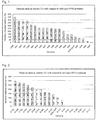
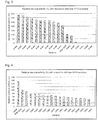
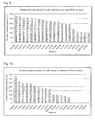
- Figs. 1 to 10 show the stabilities of wild-type protease and KP43 protease variants.
- the disclosure comprises the following:
Landscapes
- Chemical & Material Sciences (AREA)
- Life Sciences & Earth Sciences (AREA)
- Engineering & Computer Science (AREA)
- Wood Science & Technology (AREA)
- Organic Chemistry (AREA)
- Chemical Kinetics & Catalysis (AREA)
- Oil, Petroleum & Natural Gas (AREA)
- Health & Medical Sciences (AREA)
- Bioinformatics & Cheminformatics (AREA)
- Genetics & Genomics (AREA)
- Zoology (AREA)
- Biotechnology (AREA)
- Molecular Biology (AREA)
- Biomedical Technology (AREA)
- Microbiology (AREA)
- Medicinal Chemistry (AREA)
- Biochemistry (AREA)
- General Engineering & Computer Science (AREA)
- General Health & Medical Sciences (AREA)
- Enzymes And Modification Thereof (AREA)
- Micro-Organisms Or Cultivation Processes Thereof (AREA)
- Detergent Compositions (AREA)
Claims (11)
- Variant de protéase alcaline, dans lequel ledit variant de protéase alcaline(i) consistant en la séquence d'acides aminés de SEQ ID NO : 2, dans lequel le résidu d'acides aminés en position 83 de la séquence d'acides aminés de SEQ ID NO : 2 est remplacé par les résidus d'acides aminés suivants : alanine, serine ou cystéine, ou(ii) a une identité de 90 % ou plus avec SEQ ID NO : 2, dans lequel le résidu d'acides aminés dans la position correspondant à la position 83 de la séquence d'acides aminés de SEQ ID NQ : 2 est remplacé par les résidus d'acides aminés suivants : alanine, serine ou cystéine, et dans lequel le variant de protéase alcaline présente une activité dans une plage de pH alcalin.
- Variant de protéase alcaline selon la revendication 1, dans lequel en outre un ou plusieurs résidus d'acides aminés dans des positions sélectionnées parmi (a) position 6, (b) position 15, (c) position 16, (d) position 65, (e) position 66, (f) position 82, (g) position 204, (h) position 319 et (i) position 337 de la séquence d'acides aminés de SEQ ID NO : 2, ou dans des positions correspondant à celles-ci, sont remplacés par les résidus d'acides aminés suivants :(a) tryptophane, leucine, valine, isoleucine, méthionine, tyrosine, glutamine, lysine, thréonine, phénylalanine, arginine, serine, cystéine, alanine ou histidine ;(b) acide glutamique, méthionine, acide aspartique, valine, glutamine, arginine, cystéine, tryptophane, alanine ou phénylalanine ;(c) méthionine, acide glutamique, arginine, valine, lysine, phénylalanine, tyrosine, isoleucine, histidine, acide aspartique ou cystéine ;(d) tryptophane ;(e) histidine, tryptophane, serine ou leucine ;(f) alanine, acide glutamique, glutamine, serine, cystéine, glycine, histidine, lysine, arginine, méthionine ou asparagine ;(g) acide glutamique, acide aspartique, cystéine, valine, thréonine, proline, histidine, isoleucine, tryptophane, serine, asparagine, lysine ou arginine ;(h) tryptophane, valine, thréonine, leucine, isoleucine, cystéine, acide glutamique, lysine, tyrosine, arginine, phénylalanine, glutamine, méthionine, proline, acide aspartique, asparagine, histidine ou serine ; et(i) arginine, glycine, serine, lysine, glutamine, thréonine, histidine, alanine, cystéine ou valine.
- Gène codant le variant de protéase alcaline selon la revendication 1 ou 2.
- Vecteur recombinant comprenant le gène selon la revendication 3.
- Transformant non humain comprenant le vecteur recombinant selon la revendication 4.
- Transformant non humain selon la revendication 5, dont l'hôte est un microorganisme.
- Composition de détergent comprenant le variant de protéase alcaline selon la revendication 1 ou 2.
- Composition de détergent selon la revendication 7, qui comprend un tensioactif anionique.
- Procédé pour renforcer la stabilité d'une protéase alcaline dans un détergent liquide, le procédé comprenant(i) dans une protéase alcaline consistant en la séquence d'acides aminés de SEQ ID NO : 2 le remplacement du résidu d'acides aminés en position 83 de la séquence d'acides aminés de SEQ ID NO : 2 par les résidus d'acides aminés suivants : alanine, serine ou cystéine, ou(ii) dans une protéase alcaline ayant une identité de 90 % ou plus avec SEQ ID NO : 2, le remplacement du résidu d'acides aminés dans la position correspondant à la position 83 de la séquence d'acides aminés de SEQ ID NO : 2 par les résidus d'acides aminés suivants : alanine, serine ou cystéine, dans lequel le variant de protéase alcaline produit présente une activité dans une plage de pH alcalin.
- Procédé selon la revendication 9, dans lequel dans la protéase alcaline un ou plusieurs résidus d'acides aminés sont en outre remplacés dans des positions sélectionnées parmi (a) position 6, (b) position 15, (c) position 16, (d) position 65, (e) position 66, (f) position 82, (g) position 204, (h) position 319 et (i) position 337 de la séquence d'acides aminés de SEQ ID NO : 2, ou dans des positions correspondant à celles-ci, par les résidus d'acides aminés suivants :(a) tryptophane, leucine, valine, isoleucine, méthionine, tyrosine, glutamine, lysine, thréonine, phénylalanine, arginine, serine, cystéine, alanine ou histidine ;(b) acide glutamique, méthionine, acide aspartique, valine, glutamine, arginine, cystéine, tryptophane, alanine ou phénylalanine ;(c) méthionine, acide glutamique, arginine, valine, lysine, phénylalanine, tyrosine, isoleucine, histidine, acide aspartique ou cystéine ;(d) tryptophane ;(e) histidine, tryptophane, serine ou leucine ;(f) alanine, acide glutamique, glutamine, serine, cystéine, glycine, histidine, lysine, arginine, méthionine ou asparagine ;(g) acide glutamique, acide aspartique, cystéine, valine, thréonine, proline, histidine, isoleucine, tryptophane, serine, asparagine, lysine ou arginine ;(h) tryptophane, valine, thréonine, leucine, isoleucine, cystéine, acide glutamique, lysine, tyrosine, arginine, phénylalanine, glutamine, méthionine, proline, acide aspartique, asparagine, histidine ou serine ; et(i) arginine, glycine, serine, lysine, glutamine, thréonine, histidine, alanine, cystéine ou valine.
- Procédé pour produire le variant de protéase alcaline selon la revendication 1 ou 2, lequel procédé comprend la culture du transformant selon la revendication 5.
Applications Claiming Priority (6)
| Application Number | Priority Date | Filing Date | Title |
|---|---|---|---|
| JP2009110792 | 2009-04-30 | ||
| JP2009110793 | 2009-04-30 | ||
| JP2010093307A JP2010273672A (ja) | 2009-04-30 | 2010-04-14 | アルカリプロテアーゼ変異体 |
| JP2010093339A JP2010273673A (ja) | 2009-04-30 | 2010-04-14 | アルカリプロテアーゼ変異体 |
| PCT/JP2010/057838 WO2010126156A2 (fr) | 2009-04-30 | 2010-04-26 | Variants de protéase alcaline |
| EP10719131A EP2424981A2 (fr) | 2009-04-30 | 2010-04-26 | Variants de protéase alcaline |
Related Parent Applications (1)
| Application Number | Title | Priority Date | Filing Date |
|---|---|---|---|
| EP10719131A Division EP2424981A2 (fr) | 2009-04-30 | 2010-04-26 | Variants de protéase alcaline |
Publications (2)
| Publication Number | Publication Date |
|---|---|
| EP3061817A1 EP3061817A1 (fr) | 2016-08-31 |
| EP3061817B1 true EP3061817B1 (fr) | 2018-12-12 |
Family
ID=45541551
Family Applications (2)
| Application Number | Title | Priority Date | Filing Date |
|---|---|---|---|
| EP16163320.1A Active EP3061817B1 (fr) | 2009-04-30 | 2010-04-26 | Variants de protéase alcaline |
| EP10719131A Withdrawn EP2424981A2 (fr) | 2009-04-30 | 2010-04-26 | Variants de protéase alcaline |
Family Applications After (1)
| Application Number | Title | Priority Date | Filing Date |
|---|---|---|---|
| EP10719131A Withdrawn EP2424981A2 (fr) | 2009-04-30 | 2010-04-26 | Variants de protéase alcaline |
Country Status (5)
| Country | Link |
|---|---|
| US (1) | US8778650B2 (fr) |
| EP (2) | EP3061817B1 (fr) |
| CN (1) | CN102421893B (fr) |
| DK (1) | DK3061817T3 (fr) |
| WO (1) | WO2010126156A2 (fr) |
Families Citing this family (12)
| Publication number | Priority date | Publication date | Assignee | Title |
|---|---|---|---|---|
| CN102703482B (zh) * | 2011-08-01 | 2014-08-06 | 南京工业大学 | 一种耐有机溶剂碱性蛋白酶 |
| CN103275958B (zh) * | 2011-08-01 | 2014-07-16 | 南京工业大学 | 一种耐有机溶剂碱性蛋白酶 |
| JP6067409B2 (ja) * | 2012-04-10 | 2017-01-25 | 花王株式会社 | アルカリプロテアーゼの溶解性向上方法 |
| CN103409398B (zh) * | 2013-09-03 | 2014-12-24 | 广州立白企业集团有限公司 | 一种蛋白酶及突变体及其应用 |
| WO2017018863A1 (fr) * | 2015-07-29 | 2017-02-02 | 씨제이제일제당(주) | Mutant d'hexuronate c4-épimerase ayant une activité de conversion améliorée, et procédé de production de d-tagatose l'utilisant |
| CN109312323B (zh) * | 2016-06-09 | 2022-03-08 | 花王株式会社 | 突变碱性蛋白酶 |
| JP6289711B2 (ja) | 2016-06-09 | 2018-03-07 | 花王株式会社 | 変異アルカリプロテアーゼ |
| KR101946157B1 (ko) * | 2016-07-29 | 2019-02-11 | 씨제이제일제당 (주) | D-타가토스 전환 활성이 향상된 헥수론산 c4-에피머화 효소 변이체 및 이를 이용한 d-타가토스의 제조 방법 |
| JP7245676B2 (ja) | 2019-03-11 | 2023-03-24 | 花王株式会社 | 変異プロテアーゼ |
| EP3711772A1 (fr) | 2019-03-20 | 2020-09-23 | Oslo Universitetssykehus HF | Protéines recombinantes et protéines de fusion |
| CN116199746B (zh) * | 2022-11-29 | 2024-08-20 | 厦门大学 | 高亲和力靶向Trop2的多元环肽分子框架 |
| KR102888405B1 (ko) * | 2023-03-27 | 2025-11-21 | 씨제이제일제당 주식회사 | 프로테아제 활성을 갖는 변이형 폴리펩티드 |
Family Cites Families (25)
| Publication number | Priority date | Publication date | Assignee | Title |
|---|---|---|---|---|
| JPH0349293A (ja) | 1989-07-17 | 1991-03-04 | Toshiba Corp | 配線基板用印刷装置 |
| DK99492D0 (da) | 1992-08-07 | 1992-08-07 | Novo Nordisk As | Nyt enzym |
| JP2635288B2 (ja) | 1993-03-11 | 1997-07-30 | 花王株式会社 | 漂白剤組成物及び漂白洗浄剤組成物 |
| MA23346A1 (fr) * | 1993-10-14 | 1995-04-01 | Genencor Int | Variantes de la subtilisine |
| CN1113953A (zh) * | 1994-06-01 | 1995-12-27 | 中国科学院生物物理研究所 | 枯草杆菌碱性蛋白酶第118位的突变及其热稳定酶 |
| CN1103810C (zh) | 1995-06-13 | 2003-03-26 | 诺沃奇梅兹有限公司 | 含苯基硼酸衍生物酶稳定剂的液冻组合物 |
| WO1998013462A1 (fr) | 1996-09-24 | 1998-04-02 | The Procter & Gamble Company | Detergents liquides contenant un enzyme proteolytique, un aldehyde peptidique et une source d'acide borique |
| JP3512981B2 (ja) | 1997-05-19 | 2004-03-31 | 花王株式会社 | 耐熱性アルカリセルラ−ゼ、それを生産する微生物及びその製造方法 |
| US5891701A (en) | 1997-06-12 | 1999-04-06 | Novo Nordisk Biotech Inc. | Nucleic acids encoding a polypeptide having protease activity |
| JPH1143690A (ja) | 1997-07-28 | 1999-02-16 | Kao Corp | 自動食器洗浄機用洗浄剤組成物 |
| WO1999018218A1 (fr) | 1997-10-07 | 1999-04-15 | Kao Corporation | Protease alcaline |
| US6803222B2 (en) | 2000-11-22 | 2004-10-12 | Kao Corporation | Alkaline proteases |
| JP4143274B2 (ja) | 2001-04-12 | 2008-09-03 | 花王株式会社 | アルカリプロテアーゼ |
| JP2002218989A (ja) | 2000-11-22 | 2002-08-06 | Kao Corp | アルカリプロテアーゼ |
| JP4225721B2 (ja) | 2001-10-26 | 2009-02-18 | 花王株式会社 | アルカリプロテアーゼ |
| JP2004000122A (ja) | 2002-03-22 | 2004-01-08 | Kao Corp | アルカリプロテアーゼ |
| JP4324363B2 (ja) | 2002-06-06 | 2009-09-02 | 花王株式会社 | 変異アルカリプロテアーゼ |
| US7368273B2 (en) * | 2002-03-22 | 2008-05-06 | Kao Corporation | Alkaline protease |
| JP3872373B2 (ja) | 2002-04-18 | 2007-01-24 | 花王株式会社 | 粉末洗浄剤組成物 |
| US7996021B2 (en) | 2002-06-28 | 2011-08-09 | Hewlett-Packard Development Company, L.P. | Location determination in a wireless communication network |
| US7727756B2 (en) * | 2003-03-21 | 2010-06-01 | Novozymes A/S | Subtilases |
| JP2004305176A (ja) | 2003-04-10 | 2004-11-04 | Kao Corp | アルカリプロテアーゼ |
| JP2004305175A (ja) | 2003-04-10 | 2004-11-04 | Kao Corp | アルカリプロテアーゼ |
| WO2006032278A1 (fr) * | 2004-09-21 | 2006-03-30 | Novozymes A/S | Subtilases |
| ATE499439T1 (de) * | 2004-09-21 | 2011-03-15 | Novozymes As | Subtilasen |
-
2010
- 2010-04-26 DK DK16163320.1T patent/DK3061817T3/en active
- 2010-04-26 US US13/266,525 patent/US8778650B2/en active Active
- 2010-04-26 WO PCT/JP2010/057838 patent/WO2010126156A2/fr not_active Ceased
- 2010-04-26 EP EP16163320.1A patent/EP3061817B1/fr active Active
- 2010-04-26 EP EP10719131A patent/EP2424981A2/fr not_active Withdrawn
- 2010-04-26 CN CN201080019156.4A patent/CN102421893B/zh active Active
Non-Patent Citations (1)
| Title |
|---|
| None * |
Also Published As
| Publication number | Publication date |
|---|---|
| CN102421893A (zh) | 2012-04-18 |
| EP2424981A2 (fr) | 2012-03-07 |
| EP3061817A1 (fr) | 2016-08-31 |
| CN102421893B (zh) | 2014-10-29 |
| US8778650B2 (en) | 2014-07-15 |
| WO2010126156A3 (fr) | 2011-01-06 |
| WO2010126156A2 (fr) | 2010-11-04 |
| DK3061817T3 (en) | 2019-03-04 |
| US20120058928A1 (en) | 2012-03-08 |
Similar Documents
| Publication | Publication Date | Title |
|---|---|---|
| EP3061817B1 (fr) | Variants de protéase alcaline | |
| US8466098B2 (en) | Washing agent having stabilized enzymes | |
| EP2914720B1 (fr) | Compositions et procédés comportant des variants de thermolysine protéase | |
| JP5497440B2 (ja) | 洗剤組成物及び当該組成物における酵素の組み合わせ使用 | |
| EP1466962B1 (fr) | Protéase alcaline | |
| EP1209233B1 (fr) | Protéases alcalines | |
| US7405271B2 (en) | Alkaline protease | |
| US7473544B2 (en) | Alkaline protease | |
| US9650623B2 (en) | Improving the solubility of an alkaline protease in a liquid detergent by amino acid substitution | |
| US8309339B2 (en) | Alkaline protease | |
| JP2009034062A (ja) | アルカリプロテアーゼ | |
| JP2012196205A (ja) | 洗浄性向上剤及びこの洗浄性向上剤を含有する洗剤組成物 | |
| JP2010273673A (ja) | アルカリプロテアーゼ変異体 | |
| JP2010273672A (ja) | アルカリプロテアーゼ変異体 | |
| JP5727170B2 (ja) | 変異セルラーゼ | |
| WO2023190938A1 (fr) | Variant de l'alpha-amylase | |
| KR20250051664A (ko) | 성능이 향상된 프로테아제 변이체 x | |
| CN118891362A (zh) | α-淀粉酶突变体 | |
| WO2023176970A1 (fr) | VARIANT DE L'α-AMYLASE | |
| KR20250048548A (ko) | 성능이 향상된 프로테아제 변이체 ix | |
| JP2023138320A (ja) | α-アミラーゼ変異体 |
Legal Events
| Date | Code | Title | Description |
|---|---|---|---|
| PUAI | Public reference made under article 153(3) epc to a published international application that has entered the european phase |
Free format text: ORIGINAL CODE: 0009012 |
|
| AC | Divisional application: reference to earlier application |
Ref document number: 2424981 Country of ref document: EP Kind code of ref document: P |
|
| AK | Designated contracting states |
Kind code of ref document: A1 Designated state(s): AT BE BG CH CY CZ DE DK EE ES FI FR GB GR HR HU IE IS IT LI LT LU LV MC MK MT NL NO PL PT RO SE SI SK SM TR |
|
| STAA | Information on the status of an ep patent application or granted ep patent |
Free format text: STATUS: REQUEST FOR EXAMINATION WAS MADE |
|
| 17P | Request for examination filed |
Effective date: 20161122 |
|
| RBV | Designated contracting states (corrected) |
Designated state(s): AT BE BG CH CY CZ DE DK EE ES FI FR GB GR HR HU IE IS IT LI LT LU LV MC MK MT NL NO PL PT RO SE SI SK SM TR |
|
| STAA | Information on the status of an ep patent application or granted ep patent |
Free format text: STATUS: EXAMINATION IS IN PROGRESS |
|
| 17Q | First examination report despatched |
Effective date: 20171127 |
|
| GRAP | Despatch of communication of intention to grant a patent |
Free format text: ORIGINAL CODE: EPIDOSNIGR1 |
|
| STAA | Information on the status of an ep patent application or granted ep patent |
Free format text: STATUS: GRANT OF PATENT IS INTENDED |
|
| INTG | Intention to grant announced |
Effective date: 20180530 |
|
| GRAS | Grant fee paid |
Free format text: ORIGINAL CODE: EPIDOSNIGR3 |
|
| GRAA | (expected) grant |
Free format text: ORIGINAL CODE: 0009210 |
|
| STAA | Information on the status of an ep patent application or granted ep patent |
Free format text: STATUS: THE PATENT HAS BEEN GRANTED |
|
| RAP1 | Party data changed (applicant data changed or rights of an application transferred) |
Owner name: KAO CORPORATION |
|
| AC | Divisional application: reference to earlier application |
Ref document number: 2424981 Country of ref document: EP Kind code of ref document: P |
|
| AK | Designated contracting states |
Kind code of ref document: B1 Designated state(s): AT BE BG CH CY CZ DE DK EE ES FI FR GB GR HR HU IE IS IT LI LT LU LV MC MK MT NL NO PL PT RO SE SI SK SM TR |
|
| REG | Reference to a national code |
Ref country code: GB Ref legal event code: FG4D |
|
| REG | Reference to a national code |
Ref country code: CH Ref legal event code: EP |
|
| REG | Reference to a national code |
Ref country code: AT Ref legal event code: REF Ref document number: 1076001 Country of ref document: AT Kind code of ref document: T Effective date: 20181215 |
|
| REG | Reference to a national code |
Ref country code: DE Ref legal event code: R096 Ref document number: 602010055857 Country of ref document: DE |
|
| REG | Reference to a national code |
Ref country code: IE Ref legal event code: FG4D |
|
| REG | Reference to a national code |
Ref country code: DK Ref legal event code: T3 Effective date: 20190225 |
|
| REG | Reference to a national code |
Ref country code: NL Ref legal event code: FP |
|
| REG | Reference to a national code |
Ref country code: LT Ref legal event code: MG4D |
|
| PG25 | Lapsed in a contracting state [announced via postgrant information from national office to epo] |
Ref country code: BG Free format text: LAPSE BECAUSE OF FAILURE TO SUBMIT A TRANSLATION OF THE DESCRIPTION OR TO PAY THE FEE WITHIN THE PRESCRIBED TIME-LIMIT Effective date: 20190312 Ref country code: LT Free format text: LAPSE BECAUSE OF FAILURE TO SUBMIT A TRANSLATION OF THE DESCRIPTION OR TO PAY THE FEE WITHIN THE PRESCRIBED TIME-LIMIT Effective date: 20181212 Ref country code: ES Free format text: LAPSE BECAUSE OF FAILURE TO SUBMIT A TRANSLATION OF THE DESCRIPTION OR TO PAY THE FEE WITHIN THE PRESCRIBED TIME-LIMIT Effective date: 20181212 Ref country code: HR Free format text: LAPSE BECAUSE OF FAILURE TO SUBMIT A TRANSLATION OF THE DESCRIPTION OR TO PAY THE FEE WITHIN THE PRESCRIBED TIME-LIMIT Effective date: 20181212 Ref country code: NO Free format text: LAPSE BECAUSE OF FAILURE TO SUBMIT A TRANSLATION OF THE DESCRIPTION OR TO PAY THE FEE WITHIN THE PRESCRIBED TIME-LIMIT Effective date: 20190312 Ref country code: LV Free format text: LAPSE BECAUSE OF FAILURE TO SUBMIT A TRANSLATION OF THE DESCRIPTION OR TO PAY THE FEE WITHIN THE PRESCRIBED TIME-LIMIT Effective date: 20181212 Ref country code: FI Free format text: LAPSE BECAUSE OF FAILURE TO SUBMIT A TRANSLATION OF THE DESCRIPTION OR TO PAY THE FEE WITHIN THE PRESCRIBED TIME-LIMIT Effective date: 20181212 |
|
| REG | Reference to a national code |
Ref country code: AT Ref legal event code: MK05 Ref document number: 1076001 Country of ref document: AT Kind code of ref document: T Effective date: 20181212 |
|
| PG25 | Lapsed in a contracting state [announced via postgrant information from national office to epo] |
Ref country code: SE Free format text: LAPSE BECAUSE OF FAILURE TO SUBMIT A TRANSLATION OF THE DESCRIPTION OR TO PAY THE FEE WITHIN THE PRESCRIBED TIME-LIMIT Effective date: 20181212 Ref country code: GR Free format text: LAPSE BECAUSE OF FAILURE TO SUBMIT A TRANSLATION OF THE DESCRIPTION OR TO PAY THE FEE WITHIN THE PRESCRIBED TIME-LIMIT Effective date: 20190313 |
|
| PG25 | Lapsed in a contracting state [announced via postgrant information from national office to epo] |
Ref country code: CZ Free format text: LAPSE BECAUSE OF FAILURE TO SUBMIT A TRANSLATION OF THE DESCRIPTION OR TO PAY THE FEE WITHIN THE PRESCRIBED TIME-LIMIT Effective date: 20181212 Ref country code: IT Free format text: LAPSE BECAUSE OF FAILURE TO SUBMIT A TRANSLATION OF THE DESCRIPTION OR TO PAY THE FEE WITHIN THE PRESCRIBED TIME-LIMIT Effective date: 20181212 Ref country code: PT Free format text: LAPSE BECAUSE OF FAILURE TO SUBMIT A TRANSLATION OF THE DESCRIPTION OR TO PAY THE FEE WITHIN THE PRESCRIBED TIME-LIMIT Effective date: 20190412 Ref country code: PL Free format text: LAPSE BECAUSE OF FAILURE TO SUBMIT A TRANSLATION OF THE DESCRIPTION OR TO PAY THE FEE WITHIN THE PRESCRIBED TIME-LIMIT Effective date: 20181212 |
|
| PG25 | Lapsed in a contracting state [announced via postgrant information from national office to epo] |
Ref country code: EE Free format text: LAPSE BECAUSE OF FAILURE TO SUBMIT A TRANSLATION OF THE DESCRIPTION OR TO PAY THE FEE WITHIN THE PRESCRIBED TIME-LIMIT Effective date: 20181212 Ref country code: IS Free format text: LAPSE BECAUSE OF FAILURE TO SUBMIT A TRANSLATION OF THE DESCRIPTION OR TO PAY THE FEE WITHIN THE PRESCRIBED TIME-LIMIT Effective date: 20190412 Ref country code: RO Free format text: LAPSE BECAUSE OF FAILURE TO SUBMIT A TRANSLATION OF THE DESCRIPTION OR TO PAY THE FEE WITHIN THE PRESCRIBED TIME-LIMIT Effective date: 20181212 Ref country code: SK Free format text: LAPSE BECAUSE OF FAILURE TO SUBMIT A TRANSLATION OF THE DESCRIPTION OR TO PAY THE FEE WITHIN THE PRESCRIBED TIME-LIMIT Effective date: 20181212 Ref country code: SM Free format text: LAPSE BECAUSE OF FAILURE TO SUBMIT A TRANSLATION OF THE DESCRIPTION OR TO PAY THE FEE WITHIN THE PRESCRIBED TIME-LIMIT Effective date: 20181212 |
|
| REG | Reference to a national code |
Ref country code: DE Ref legal event code: R097 Ref document number: 602010055857 Country of ref document: DE |
|
| PLBE | No opposition filed within time limit |
Free format text: ORIGINAL CODE: 0009261 |
|
| STAA | Information on the status of an ep patent application or granted ep patent |
Free format text: STATUS: NO OPPOSITION FILED WITHIN TIME LIMIT |
|
| PG25 | Lapsed in a contracting state [announced via postgrant information from national office to epo] |
Ref country code: AT Free format text: LAPSE BECAUSE OF FAILURE TO SUBMIT A TRANSLATION OF THE DESCRIPTION OR TO PAY THE FEE WITHIN THE PRESCRIBED TIME-LIMIT Effective date: 20181212 Ref country code: SI Free format text: LAPSE BECAUSE OF FAILURE TO SUBMIT A TRANSLATION OF THE DESCRIPTION OR TO PAY THE FEE WITHIN THE PRESCRIBED TIME-LIMIT Effective date: 20181212 |
|
| 26N | No opposition filed |
Effective date: 20190913 |
|
| REG | Reference to a national code |
Ref country code: CH Ref legal event code: PL |
|
| REG | Reference to a national code |
Ref country code: BE Ref legal event code: MM Effective date: 20190430 |
|
| GBPC | Gb: european patent ceased through non-payment of renewal fee |
Effective date: 20190426 |
|
| PG25 | Lapsed in a contracting state [announced via postgrant information from national office to epo] |
Ref country code: LU Free format text: LAPSE BECAUSE OF NON-PAYMENT OF DUE FEES Effective date: 20190426 Ref country code: MC Free format text: LAPSE BECAUSE OF FAILURE TO SUBMIT A TRANSLATION OF THE DESCRIPTION OR TO PAY THE FEE WITHIN THE PRESCRIBED TIME-LIMIT Effective date: 20181212 |
|
| PG25 | Lapsed in a contracting state [announced via postgrant information from national office to epo] |
Ref country code: GB Free format text: LAPSE BECAUSE OF NON-PAYMENT OF DUE FEES Effective date: 20190426 Ref country code: LI Free format text: LAPSE BECAUSE OF NON-PAYMENT OF DUE FEES Effective date: 20190430 Ref country code: CH Free format text: LAPSE BECAUSE OF NON-PAYMENT OF DUE FEES Effective date: 20190430 |
|
| PG25 | Lapsed in a contracting state [announced via postgrant information from national office to epo] |
Ref country code: BE Free format text: LAPSE BECAUSE OF NON-PAYMENT OF DUE FEES Effective date: 20190430 Ref country code: FR Free format text: LAPSE BECAUSE OF NON-PAYMENT OF DUE FEES Effective date: 20190430 |
|
| PG25 | Lapsed in a contracting state [announced via postgrant information from national office to epo] |
Ref country code: TR Free format text: LAPSE BECAUSE OF FAILURE TO SUBMIT A TRANSLATION OF THE DESCRIPTION OR TO PAY THE FEE WITHIN THE PRESCRIBED TIME-LIMIT Effective date: 20181212 |
|
| PG25 | Lapsed in a contracting state [announced via postgrant information from national office to epo] |
Ref country code: IE Free format text: LAPSE BECAUSE OF NON-PAYMENT OF DUE FEES Effective date: 20190426 |
|
| PG25 | Lapsed in a contracting state [announced via postgrant information from national office to epo] |
Ref country code: CY Free format text: LAPSE BECAUSE OF FAILURE TO SUBMIT A TRANSLATION OF THE DESCRIPTION OR TO PAY THE FEE WITHIN THE PRESCRIBED TIME-LIMIT Effective date: 20181212 |
|
| PG25 | Lapsed in a contracting state [announced via postgrant information from national office to epo] |
Ref country code: HU Free format text: LAPSE BECAUSE OF FAILURE TO SUBMIT A TRANSLATION OF THE DESCRIPTION OR TO PAY THE FEE WITHIN THE PRESCRIBED TIME-LIMIT; INVALID AB INITIO Effective date: 20100426 Ref country code: MT Free format text: LAPSE BECAUSE OF FAILURE TO SUBMIT A TRANSLATION OF THE DESCRIPTION OR TO PAY THE FEE WITHIN THE PRESCRIBED TIME-LIMIT Effective date: 20181212 |
|
| PG25 | Lapsed in a contracting state [announced via postgrant information from national office to epo] |
Ref country code: MK Free format text: LAPSE BECAUSE OF FAILURE TO SUBMIT A TRANSLATION OF THE DESCRIPTION OR TO PAY THE FEE WITHIN THE PRESCRIBED TIME-LIMIT Effective date: 20181212 |
|
| P01 | Opt-out of the competence of the unified patent court (upc) registered |
Effective date: 20230522 |
|
| PGFP | Annual fee paid to national office [announced via postgrant information from national office to epo] |
Ref country code: DE Payment date: 20250305 Year of fee payment: 16 |
|
| PGFP | Annual fee paid to national office [announced via postgrant information from national office to epo] |
Ref country code: DK Payment date: 20250411 Year of fee payment: 16 |
|
| PGFP | Annual fee paid to national office [announced via postgrant information from national office to epo] |
Ref country code: NL Payment date: 20260317 Year of fee payment: 17 |