EP3063251B1 - Polymères d'hydrophilisation et leurs procédés d'utilisation - Google Patents
Polymères d'hydrophilisation et leurs procédés d'utilisation Download PDFInfo
- Publication number
- EP3063251B1 EP3063251B1 EP14837034.9A EP14837034A EP3063251B1 EP 3063251 B1 EP3063251 B1 EP 3063251B1 EP 14837034 A EP14837034 A EP 14837034A EP 3063251 B1 EP3063251 B1 EP 3063251B1
- Authority
- EP
- European Patent Office
- Prior art keywords
- soil
- group
- monomer
- polymer
- water
- Prior art date
- Legal status (The legal status is an assumption and is not a legal conclusion. Google has not performed a legal analysis and makes no representation as to the accuracy of the status listed.)
- Active
Links
- ZQRNRKASNNVFAJ-UHFFFAOYSA-O C[N+](C)(CCCS(O)(=O)=O)CCOC(C=C)=O Chemical compound C[N+](C)(CCCS(O)(=O)=O)CCOC(C=C)=O ZQRNRKASNNVFAJ-UHFFFAOYSA-O 0.000 description 1
Images







Classifications
-
- C—CHEMISTRY; METALLURGY
- C08—ORGANIC MACROMOLECULAR COMPOUNDS; THEIR PREPARATION OR CHEMICAL WORKING-UP; COMPOSITIONS BASED THEREON
- C08F—MACROMOLECULAR COMPOUNDS OBTAINED BY REACTIONS ONLY INVOLVING CARBON-TO-CARBON UNSATURATED BONDS
- C08F220/00—Copolymers of compounds having one or more unsaturated aliphatic radicals, each having only one carbon-to-carbon double bond, and only one being terminated by only one carboxyl radical or a salt, anhydride ester, amide, imide or nitrile thereof
- C08F220/02—Monocarboxylic acids having less than ten carbon atoms; Derivatives thereof
- C08F220/10—Esters
- C08F220/38—Esters containing sulfur
-
- A—HUMAN NECESSITIES
- A01—AGRICULTURE; FORESTRY; ANIMAL HUSBANDRY; HUNTING; TRAPPING; FISHING
- A01C—PLANTING; SOWING; FERTILISING
- A01C1/00—Apparatus, or methods of use thereof, for testing or treating seed, roots, or the like, prior to sowing or planting
- A01C1/06—Coating or dressing seed
-
- C—CHEMISTRY; METALLURGY
- C09—DYES; PAINTS; POLISHES; NATURAL RESINS; ADHESIVES; COMPOSITIONS NOT OTHERWISE PROVIDED FOR; APPLICATIONS OF MATERIALS NOT OTHERWISE PROVIDED FOR
- C09K—MATERIALS FOR MISCELLANEOUS APPLICATIONS, NOT PROVIDED FOR ELSEWHERE
- C09K17/00—Soil-conditioning materials or soil-stabilising materials
- C09K17/14—Soil-conditioning materials or soil-stabilising materials containing organic compounds only
- C09K17/18—Prepolymers; Macromolecular compounds
-
- E—FIXED CONSTRUCTIONS
- E02—HYDRAULIC ENGINEERING; FOUNDATIONS; SOIL SHIFTING
- E02D—FOUNDATIONS; EXCAVATIONS; EMBANKMENTS; UNDERGROUND OR UNDERWATER STRUCTURES
- E02D3/00—Improving or preserving soil or rock, e.g. preserving permafrost soil
- E02D3/12—Consolidating by placing solidifying or pore-filling substances in the soil
- E02D3/126—Consolidating by placing solidifying or pore-filling substances in the soil and mixing by rotating blades
-
- C—CHEMISTRY; METALLURGY
- C08—ORGANIC MACROMOLECULAR COMPOUNDS; THEIR PREPARATION OR CHEMICAL WORKING-UP; COMPOSITIONS BASED THEREON
- C08F—MACROMOLECULAR COMPOUNDS OBTAINED BY REACTIONS ONLY INVOLVING CARBON-TO-CARBON UNSATURATED BONDS
- C08F220/00—Copolymers of compounds having one or more unsaturated aliphatic radicals, each having only one carbon-to-carbon double bond, and only one being terminated by only one carboxyl radical or a salt, anhydride ester, amide, imide or nitrile thereof
- C08F220/02—Monocarboxylic acids having less than ten carbon atoms; Derivatives thereof
- C08F220/10—Esters
- C08F220/38—Esters containing sulfur
- C08F220/387—Esters containing sulfur and containing nitrogen and oxygen
-
- Y—GENERAL TAGGING OF NEW TECHNOLOGICAL DEVELOPMENTS; GENERAL TAGGING OF CROSS-SECTIONAL TECHNOLOGIES SPANNING OVER SEVERAL SECTIONS OF THE IPC; TECHNICAL SUBJECTS COVERED BY FORMER USPC CROSS-REFERENCE ART COLLECTIONS [XRACs] AND DIGESTS
- Y02—TECHNOLOGIES OR APPLICATIONS FOR MITIGATION OR ADAPTATION AGAINST CLIMATE CHANGE
- Y02A—TECHNOLOGIES FOR ADAPTATION TO CLIMATE CHANGE
- Y02A40/00—Adaptation technologies in agriculture, forestry, livestock or agroalimentary production
- Y02A40/10—Adaptation technologies in agriculture, forestry, livestock or agroalimentary production in agriculture
Definitions
- This invention relates to methods and compositions relating to soil treatment compositions and seed treatment compositions and, in particular, to hydrophilization polymers for contact with soil, seed and/or sand particles, and in particular to hydrophilization polymers for use in coating seeds and/or treating soil to improve, among other things, soil conditioning, grass establishment, improvement in yield, enhanced rooting effects, seed boosting, and/or increasing available water capacity in soil or sand.
- Water scarcity is a major constraint to human and agricultural development. Roughly 70% of the fresh water consumed is directed towards agricultural-related usage, for example as irrigation water, which in turn accounts for roughly 90% of agricultural usage. As the demand for fresh water through agricultural development as well as human development increases, more effective uses of water are becoming necessary. This need is even more pronounced in light of the increasing scarcity of fresh water. There is also an increasing demand for fresh water in food production and non-food related raw materials such as biofuel, biomass and renewable biomaterials apart from the aforementioned use. Accordingly, there is a growing need for an improved and more efficient usage of fresh water, especially in agricultural applications.
- run-off the slow or arrested penetration of water into soil will lead to run-off of water where the soil area is, in particular, sloped or angled.
- Another effect is an accumulation of water on a flat/level soil surface, which allows for water evaporation through extended exposure to the atmosphere.
- the slow permeation is caused by several mechanisms, such as the destruction of a soil's porous structure, as indicated by soil crust formation or compaction, or as a consequence of soils being water repellent.
- Water repellency is a property of soil that reduces infiltration capacity and crop germination, reduces nutrient and chemical holding capacity, and promotes erosion. Water repellent soil can develop when the soil becomes hydrophobic and substantially or totally resists the infiltration of water into it. The processes causing the non-wetting phenomenon are not completely understood. It is believed the phenomenon is due to the accumulation of long chained organic compounds on or between soil particles. These long-chained hydrophobic organic substances may be released from a range of plants, organisms, and decaying organic matter either naturally or during burning.
- surfactants One approach to address water repellency, and thus promote the more efficient usage of water, has been the use of surfactants.
- Typical surfactants that can be utilized include ethoxylates, alkyl phenols and the like.
- Surfactants have been found to reduce the amount and presence of localized dry spots and help in penetration of water when applied to such localized dry spots.
- localized dry spots is a problem within highly managed turf area and/or lawn, in particular those with sandy soils. Such dry spots are the result of the development of areas of varying degree of water repellency within and at the surface of the target soil.
- drawbacks when utilizing surfactants; one of which is that such treatments are not durable.
- the drainage of water out of the root zone may be caused by a low water holding capacity of the soil and/or uneven distribution of water.
- the soil water holding capacity is determined by the soil texture and amount of organic matter in soil. For example, usually coarse-textured soils, e.g., sandy soils, have a much smaller water holding capacity than fine-textured soils, e.g., loamy soil.
- the uneven distribution of water can be caused by the application method of irrigation water (e.g. furrow irrigation) and the heterogeneity of soil composition. Preferential flow may also occur in heterogeneous soils, and it funnels the water supply quickly out of the root zone and causes the inefficiency of water usage.
- Hydrogel or superabsorbent polymers include hydrolysis products of starch-acrylonitrile graft polymers, carboxymethylcellulose, cross-linked polyacrylates, cross-linked polyacrylamides, polyvinyl alcohols, polyacrylonitrile and polyethylene glycols. These highly cross-linked polymers form gel networks, absorbing many times their weight in water. However, due to their high gel strength these hydrogel polymers do not readily give up their water to the surrounding media, such as plants. Further, these superabsorbent or hydrogel polymers are gels and water-insoluble under use conditions.
- hydrogel polymers are also difficult to evenly distribute onto or into soil as a treatment because of the hydrogel polymers' tendency to agglomerate and clump.
- US 2012/0220454 A1 discloses coating compositions obtained from betainecontaining vinyl monomers and seeds coated with these compositions.
- a preventive treatment onto bare soil.
- the treatment can be a soil additive as described herein or the hydrophilization polymers as described herein. It is believed that the hydrophilization polymers (sometimes referred to herein as "polymer”) are absorbed or adsorbed onto the sand, resulting in durably enhanced surface hydrophilicity, water retention and/or restriction or prevention of sand contamination.
- the soil treatments and systems as described herein also facilitate improved water distribution through the soil and proper amounts of moisture to contact root systems in order to reduce dry spots.
- described herein are treatments to improve soil hydrophilicity, water retention, etc. to already contaminated sand.
- the present invention in another aspect, concerns a method to increase seed growth, seed germination or resulting plant growth by contacting or coating (in whole or in part) a seed of a plant with a composition comprising a polymer described herein.
- the present invention is a soil additive comprising a polymer comprising: monomer A b comprising at least one betaine group or at least one cationic group; and monomer B a comprising at least one non-ionic group or at least one anionic group, wherein the polymer is water-soluble or water-dispersible; and provided that if the monomer A b comprises a cationic group, the monomer B a comprises an anionic group.
- the polymer increases the hydrophilicity of soil to which the polymer is contacted.
- increasing hydrophilicity in soil correlates to such soil being able to retain and/or maintain increase amounts of water per area/volume.
- the soil additive can further comprise a seed or soil particle, wherein the polymer is at least partially coating the seed or soil particle.
- the betaine group is chosen from any one or more of the following a) - alkylsulphonates or -phosphonates of dialkylammonioalkyl acrylates or methacrylates, - acrylamides or -methacrylamides; b) - heterocyclic betaine monomers; c) - alkylsulphonates or -phosphonates of dialkylammonioalkylallylics; d) - alkylsulphonates or -phosphonates of dialkylammonioalkylstyrenes; e) - betaines resulting from ethylenically unsaturated anhydrides and dienes as defined below; or f) - phosphobetaines.
- monomer A b comprising the betaine group is selected from:
- the hydrophilization polymer comprises: (i) monomer Ab comprising at least one betaine group; and (ii) monomer B a comprising hydroxyethyl acrylate, hydroxyethyl methacrylate, hydroxypropyl acrylate, hydroxypropyl methacrylate, glycerol monomethacrylate, acrylamide (AM), methacrylamide, N-methylolacrylamide, dimethylacrylamide, dimethylmethacrylamide, poly(ethylene and/or propylene oxide), if appropriate random or in the block form, ⁇ -methacrylates, vinyl alcohol or vinylpyrrolidone.
- monomer Ab comprising at least one betaine group
- monomer B a comprising hydroxyethyl acrylate, hydroxyethyl methacrylate, hydroxypropyl acrylate, hydroxypropyl methacrylate, glycerol monomethacrylate, acrylamide (AM), methacrylamide, N-methylolacrylamide, dimethylacrylamide, di
- ampholytic polymers which comprise: (i) monomer A b comprising at least one cationic group; and (i) monomer B a comprising at least one non-ionic group or at least one anionic group.
- monomer A b comprising the cationic group is of general formula A(I): in which:
- a hydrophilization polymer or soil additive as described herein is contacted with "bulk soil".
- Bulk soil means soil or soil particles that are apart from the ground to which it will be eventually contacted.
- bulk soil is pre-treated with a soil additive composition, the resulting combination mixed to try to evenly distribute or make a homogenous or nearly homogenous mixture of the soil additive and bulk soil.
- the soil additive composition/bulk soil is then contacted with the ground.
- the mixing apparatus may be any equipment, device or system such as an industrial mixer, tank and impeller, cement mixer, industrial tumblers and blenders, ribbon blender, ribbon-paddle blenders and the like.
- soil/seed treatment compositions which comprise: a hydrophilization polymer; water; and optionally, a surfactant.
- Usual ingredients such as binders, active ingredients, colorants etc., as well as pesticides, fungicides, fertilizers and the like can be incorporated into these seed coating formulations.
- composite particles comprising a soil particle (such as, for example, a sand particle); and a plurality of hydrophilization polymers in contact with said soil particle.
- soil treatment systems comprising: (i) means for contacting the polymer to soil, and (ii) a polymer, wherein the polymer comprises:
- alkyl means a monovalent saturated straight chain or branched hydrocarbon radical, typically a monovalent saturated (C 1 -C 30 ) hydrocarbon radical, such as for example, methyl, ethyl, n-propyl, iso-propyl, n-butyl, sec-butyl, t-butyl, pentyl, or n-hexyl, which may optionally be substituted on one or more of the carbon atoms of the radical.
- an alkyl radical is substituted on one or more carbon atoms of the radical with alkoxy, amino, halo, carboxy, or phosphono, such as, for example, hydroxymethyl hydroxyethyl, methoxymethyl, ethoxymethyl, isopropoxyethyl, aminomethyl, chloromethyl or trichloromethyl, carboxyethyl, or phosphonomethyl.
- alkylene means a divalent saturated straight or branched chain hydrocarbon radical, such as for example, methylene, dimethylene, trimethylene.
- (C x -C y ) in reference to an organic group, wherein x and y are each integers, indicates that the group may contain from x carbon atoms to y carbon atoms per group.
- VWC Volumetric Water Capacity
- Water Holding Capacity means generally the amount of water that a soil can store that is available for use by plants. It is the water held between field capacity and the wilting point adjusted downward for rock fragments and for salts in solution. Field capacity is the water retained in a freely drained soil about 2 days after thorough wetting. The wilting point is the water content at which seedlings wilt irreversibly.
- the present invention is a method of hydrophilizing soil particles, which in one embodiment, comprise one or more particles of sand.
- the soil particles in another embodiment comprise peaty soil, clay (or clayey) soil, loamy soil, chalky soil, sand, or a mixture thereof. It is understood that when reference is made to a particular soil type, for example, sand or sandy soil, it means that the content of such soil is generally or significantly that designation, e.g., sandy, but other types of soils can be present.
- the soil particles, in yet another embodiment is sandy soil or soil made up of sand particles.
- bare sand or uncontaminated sand is treated with the soil treatment composition and/or hydrophilization polymer as described herein.
- treatment means contacting, via spray, immersion, watering, mixing or otherwise, the sand with the soil treatment composition as described herein.
- treatment means contacting (via spray, immersion, watering, or mixing) the sand with the hydrophilization polymer as described herein.
- sport fields such as for example golf courses and professional athletic fields, it is recommended to treat sand before or just after construction and/or before or just after proceeding to "top dress" aeration.
- sand is treated before put it in place on the field, as it is believed such polymer treatment will be more efficient.
- the polymer or compositions as described herein can, for example, be applied to the surface or near the top surface of the soil, into the soil or into a layer within the soil, in irrigation water or other carrier that is then applied to the soil, onto the seed or the like.
- This present invention is a method to treat soil by applying a preventive treatment onto soil, which in one embodiment is bare sand.
- the preventive treatment in one embodiment, can comprise either (i) the hydrophilization polymer or (2) a soil treatment composition containing the hydrophilization polymer as described herein.
- the polymer is durably adsorbed onto the soil (or sand) to enhance surface hydrophilicity, water retention and/or restrict or prevent the accumulation of hydrophobic materials in soil (which prevents the development of water repellency.
- the treatments described herein also permit a better water distribution through the soil and proper amounts of moisture to contact root systems in order to reduce dry spots.
- the benefits claimed are, in one embodiment, at least one chosen from: soil release effects, water retention when adsorb onto soil, sand or seeds (or high energy surfaces, oxide type surfaces such as ceramic, sand), prevent or delay sand contamination; enhanced hydrophilicity, water retention of bare sand (or high energy surfaces, oxide type surfaces such as ceramic, sand); long lasting beneficial effect as result of soil contact with the polymers described herein.
- polymer adsorption modifies the surface energy of the bare sand (need to be done onto bare sand), and the polymer layer protects the surface from soil adhesion or weakens it, and remain adsorbed during watering. Ionic interactions suspected (mainly cationic sites of the polymer with anionic sites of the surface).
- the present invention addresses one of the problems of prior art in that surfactant application effectiveness on soil is typically of short duration and limited effectiveness. While surfactants may reduce the surface tension of the irrigation water and enhance the water wetability of the soil, there are disadvantages. For example, surfactants are often intrinsically less effective to improve the soil water holding capacity; the duration of surfactants is usually short, and frequent application of surfactants, which is costly, may be needed to prevent the recurrence of soil water repellence, and; as small molecules.
- the present invention is a hydrophilization polymer, or a composition including a hydrophilization polymer, that can increase soil VWC.
- These hydrophilization polymers or compositions thereof when applied by themselves or with irrigation water and/or precipitation, can bind to soil particles, seed to render a favorable surface wetting properties and/or help to maintain porous soil structure to increase water holding capacity or VWC of the soil. Water can readily infiltrate into the soil and be stored in the treated soil and be available for plant usage.
- the present invention is a hydrophilization polymer or composition containing such polymer that is capable of hydrophilizing soil particles in a targeted area, and thereby increasing benefits to the targeted soil.
- described herein are treatments for soils, namely sandy soils, dealing for example with market such as: crop and horticulture, turf and ornamentals, lawns, golf, sports fields, athletic fields, and the like.
- Such application of the polymers and compositions described herein help to prevent or delay sand contamination, improve water efficiency for production in soil, conduct to greater yields and greater reduction of leaching, allow better penetration of water in lawns, fields, sports fields, athletic fields, and the like.
- described herein are treatments of seeds, such as for example bean, canola, corn, wheat, cabbage, and the like. Such application of the polymers and compositions described herein help to speed emergence of seeds, increase yield.
- the hydrophilization polymer comprises monomer A b and monomer B a .
- Monomer A b comprises at least one betaine group or at least one cationic group.
- Monomer B a comprises at least one non-ionic group or at least one anionic group. In one embodiment, monomer B a comprises at least one non-ionic group. In another embodiment, monomer B a comprises at least one anionic group.
- the hydrophilization polymer is such that if the monomer A b comprises a cationic group, the monomer B a comprises an anionic group, resulting in a soil or seed hydrophilization polymer that is an ampholytic polymer.
- the resulting hydrophilization polymer is water-soluble or water-dispersible.
- water-soluble polymers contain little or no crosslinking within or among the polymer particles.
- Water-dispersible polymers are polymers that are not substantially cross-linked or, otherwise, polymers that are only insignificantly cross-linked, such that when put in contact with water, water-dispersible polymers typically do not swell and/or form a gel.
- water-soluble and/or water-dispersible polymer are polymerized without any added cross-linkers, although they can be some minor cross-linking (through the general polymerization process or otherwise).
- water soluble or water dispersible means that the polymer (generally) contains no cross linking agent.
- the hydrophilization polymer composition of the present invention is a random copolymer, alternating copolymer, statistical copolymer, block copolymer, terpolymer, linear copolymer, branched copolymer or graft copolymer comprising monomeric units as described herein.
- the polymer composition comprises a random copolymer, statistical copolymer, alternating copolymer, block copolymer, or graft copolymer comprising monomeric units derived from the monomers described herein.
- the hydrophilization polymer in one embodiment, includes its homopolymer, copolymer, terpolymer, block copolymer, random polymer, linear polymer, or branched polymer. In one further embodiment, the hydrophilization polymer is a linear copolymer or homopolymer, or is a branched copolymer or homopolymer.
- the composition or hydrophilization polymer of the present invention comprises a polymer exhibiting, as a lower limit, a weight-average molecular weight (Mw) of 10,000 g/mol.
- the composition or hydrophilization polymer comprises a polymer as described herein exhibiting, as a lower limit, a weight-average molecular weight (Mw) of 15,000 g/mol.
- the composition or hydrophilization polymer comprises a polymer as described herein exhibiting, as a lower limit, a weight-average molecular weight (Mw) of 20,000 g/mol or 30,000 g/mol or 40,000 g/mol or 50,000 g/mol or 60,000 g/mol or 70,000 g/mol.
- composition or hydrophilization polymer comprises a polymer as described herein exhibiting, as a lower limit, a weight-average molecular weight (Mw) of 500,000 g/mol or 600,000 g/mol or 700,000 g/mol or 750,000 g/mol or 800,000 g/mol.
- Mw weight-average molecular weight
- the composition or hydrophilization polymer of the present invention comprises a polymer exhibiting, as an upper limit, a weight-average molecular weight (Mw) of 60,000 g/mol. In one embodiment, the composition or hydrophilization polymer of the present invention comprises a polymer exhibiting, as an upper limit, a weight-average molecular weight (Mw) of 80,000 g/mol. In yet another embodiment, the composition or hydrophilization polymer of the present invention comprises a polymer exhibiting, as an upper limit, a weight-average molecular weight (Mw) of 100,000 g/mol.
- the composition or hydrophilization polymer of the present invention comprises a polymer exhibiting, as an upper limit, a weight-average molecular weight (Mw) of 150,000 g/mol or 200,000 g/mol or 400,000 g/mol or 600,000 g/mol.
- the composition or hydrophilization polymer of the present invention comprises a polymer exhibiting, as an upper limit, a weight-average molecular weight (Mw) of 1,000,000 g/mol or 1,250,000 g/mol or 1,500,000 g/mol or 1,750,000 g/mol or 2,000,000 g/mol or 2,400,000 g/mol.
- composition or hydrophilization polymer of the present invention comprises a polymer exhibiting a weight-average molecular weight (Mw) ranging from 500,000 g/mol to 2,500,000 g/mol. In another embodiment, the composition or hydrophilization polymer of the present invention comprises a polymer exhibiting a weight-average molecular weight (Mw) ranging from 700,000 g/mol to 1,500,000 g/mol.
- the hydrophilization polymer is (i) a homopolymer comprising a monomer containing a betaine functional group or (ii) a copolymer comprising at least two monomers containing different betaine functional groups or (ii) a copolymer comprising at least one monomer containing a betaine functional group and at least one monomer containing a non-ionic group.
- the hydrophilization polymer is a copolymer comprising (i) at least one monomer containing a betaine functional group and (ii) at least one monomer containing a non-ionic group or at least one monomer containing an anionic group.
- Betaines are polymeric zwitterions carrying one or more positive charges and one or more negative charges on the same betaine monomer unit. On the same betaine monomer unit, the number of positive charge(s) is equal to the number of negative charge(s).
- the hydrophilization polymer is a homopolymer or copolymer comprising betaine units as described herein, wherein each betaine unit exhibits a permanent anionic charge and a permanent cationic charge both at highly acidic pH and at highly basic pH; these charges are permanent within a pH range from 1 to 14.
- the permanent anionic charge can be contributed by one or more sulfonate, phosphate, phosphonate, phosphinate or ethenolate anions, and the like.
- the cationic charge can be contributed by one or more onium or inium cations of the nitrogen (ammonium, pyridinium or imidazolinium cations), phosphorus (phosphonium, and the like) or sulfur (sulfonium, and the like) family.
- the betaine functional groups of the polybetaine are carried by pendent groups.
- the atom carrying the permanent cationic charge is, in one embodiment, connected to the anion carrying the permanent anionic charge via an optionally substituted polyvalent hydrocarbon group, in particular an alkylene group, optionally substituted by one or more hydroxyl groups.
- the betaine functional groups can be connected to the carbon atoms of the hydrocarbon chain (also known as backbone) of the hydrophilization polymer in particular via a divalent or polyvalent hydrocarbon unit (for example alkylene or arylene unit) optionally interrupted by one or more heteroatoms, in particular oxygen atoms, an ester unit or an amide unit or else via a valency bond.
- a divalent or polyvalent hydrocarbon unit for example alkylene or arylene unit
- heteroatoms for example oxygen atoms, an ester unit or an amide unit or else via a valency bond.
- the hydrocarbon chain (or backbone) of the hydrophilization polymer is a linear or branched polyalkylene chain, optionally interrupted by one or more nitrogen and/or sulfur heteroatoms. In one embodiment, the hydrocarbon chain (or backbone) of the hydrophilization polymer is a linear polyalkylene chain, optionally interrupted by one or more nitrogen and/or sulfur heteroatoms.
- the hydrophilization polymer according to one embodiment is a homopolymer formed of identical betaine units or a copolymer formed of betaine units, at least two of which are different.
- Said hydrophilization polymer can additionally comprise at least one unit which is nonionic or nonionogenic at the pH of the composition or at the pH of use of the composition comprising the hydrophilization polymer and/or at least one unit which is anionic or potentially anionic at the pH of the composition or at the pH of use of the composition comprising the hydrophilization polymer.
- These units can be hydrophilic or hydrophobic. They can represent, in one embodiment, up to 40% by weight, or up to 50% by weight, or up to 60% by weight, up to 70% by weight, or up to 80% by weight, or up to 90% by weight of the hydrophilization polymer.
- the nonionic, nonionogenic, anionic or potentially anionic units are limited in number in order for said hydrophilization polymer to retain its main characteristic of zwitterion.
- the hydrophilization polymer can comprise less than 50% of its weight or more specifically less than 70 mol% of nonionic, nonionogenic, anionic or potentially anionic units;in one embiodment, or the hydrophilization polymer can comprise less than 50 mol% and more typically than 30 mol% of nonionic, nonionogenic, anionic or potentially anionic units.
- nonionic units which can be present, of those derived from ethylenically unsaturated nonionic monomers, such as acrylamide, vinyl acetate (capable of forming vinyl alcohol units by hydrolysis), C1-C4 alkyl esters of acrylic acid and of methacrylic acid, C1-C4 hydroxyalkyl esters of acrylic acid and of methacrylic acid, in particular ethylene glycol and propylene glycol acrylate and methacrylate, polyalkoxyl esters of acrylic acid and of methacrylic acid, in particular polyethylene glycol and polypropylene glycol esters, and the like.
- nonionic monomers such as acrylamide, vinyl acetate (capable of forming vinyl alcohol units by hydrolysis), C1-C4 alkyl esters of acrylic acid and of methacrylic acid, C1-C4 hydroxyalkyl esters of acrylic acid and of methacrylic acid, in particular ethylene glycol and propylene glycol acrylate and methacrylate, polyalk
- monomers having at least one carboxyl functional group such as ⁇ , ⁇ -ethylenically unsaturated carboxylic acid or the corresponding anhydr
- the hydrophilization polymer as described herein does not comprise monomer units other than betaines carrying as many permanent anionic charges as permanent cationic charges at a pH ranging from 1 to 14. If other units are present, they are rather potentially anionic units in an amount of less than 50 mol%, typically less than 30 mol%.
- hydrophilization polymer can be obtained in particular by radical polymerization or copolymerization in aqueous solution of ethylenically unsaturated betaine monomers, in particular of ethylenically unsaturated monomers carrying at least one betaine functional group of formula (I) to (X) above, and optionally of other ethylenically unsaturated monomers.
- the polymerization or copolymerization of the hydrophilization polymer is conducted in the absence or substantial absence of added crosslinking agent, such as boron and the like.
- the soil hydrophilization contains no, a minimal amount or an insignificant number of intra-particulately cross-linked groups; resulting in a polymer that is water-dispersible or water-soluble.
- polymers that are significantly cross-linked become water-swellable, resulting in such polymers that "gel" as opposed to being water-soluble or water dispersible.
- Said monomers can exhibit, by way of examples:
- the monomer A b is, in one embodiment, chosen from one or more of the following:
- the monomer A b corresponds, for example, to one of the following formulae :
- monomer B a is a nonionic monomer: hydroxyethyl acrylate, hydroxyethyl methacrylate, hydroxypropyl acrylate and hydroxypropyl methacrylate, acrylamide (AM), methacrylamide, N-methylolacrylamide, dimethylacrylamide, dimethylmethacrylamide, poly(ethylene and/or propylene oxide), if appropriate random or in the block form, ⁇ -methacrylates, vinyl alcohol or vinylpyrrolidone.
- AM acrylamide
- methacrylamide methacrylamide
- N-methylolacrylamide dimethylacrylamide
- dimethylmethacrylamide poly(ethylene and/or propylene oxide)
- ⁇ -methacrylates vinyl alcohol or vinylpyrrolidone.
- the hydrophilic nonionic monomer B a is: acrylamide (AM),
- monomer A b is sulphopropyldimethylammonioethyl methacrylate (SPE) and/or SPP.
- SPE sulphopropyldimethylammonioethyl methacrylate
- the polymers are thus prepared by an inverse polymerization process which comprises the following stages:
- Stage a1) is carried out by emulsification of a mixture comprising the aqueous phase comprising the monomers, the external phase and at least one emulsifying agent.
- the polymerization is carried out by bringing together the monomers A b and optionally the monomers B a with a compound which generates free radicals and the polymerization is carried out at a temperature between, for example, ambient temperature and 75°C, depending on the initiating system chosen.
- monomers comprising the soil hydrpohpilization polymer are chosen from alkylsulfonates or hydroxyalkylsulfonates of dialkylammonium alkyl methacrylates or methacrylamides and sulfobetaines derived from a vinylpyridine. More preferably still, are alkylsulfonates or hydroxyalkylsulfonates of dialkylammonium methacrylamides.
- the soil hydrophilization is chosen from:
- the soil hydrophilization is a homopolymer formed the following formulae: (-SPE-). In one embodiment, the soil hydrophilization is a homopolymer formed the following formulae: (-SPP-). In one embodiment, the soil hydrophilization is a homopolymer formed the following formulae: (-SHPE-). In one embodiment, the soil hydrophilization is a homopolymer formed the following formulae: (-SHPP-).
- hydrophilization polymer comprising betaine units chosen from those of formulae (-SPE-), (-SPP-), (-SHPE-) and (-SHPP-) exhibit a weight-average molecular weight (Mw) ranging from 10,000 to 1,000,000 g/mol.
- hydrophilization polymer comprising betaine units as described herein chosen from those of formulae (-SPE-), (-SPP-), (-SHPE-) and (-SHPP-) exhibit a weight-average molecular weight (Mw) ranging from 20,000 to 500,000 g/mol.
- hydrophilization polymer comprising betaine units as described herein chosen from those of formulae (-SPE-), (-SPP-), (-SHPE-) and (-SHPP-) exhibit a weight-average molecular weight (Mw) ranging from 30,000 to 80,000 g/mol.
- hydrophilization polymer comprising betaine units as described herein chosen from those of formulae (-SPE-), (-SPP-), (-SHPE-) and (-SHPP-) exhibit a weight-average molecular weight (Mw) ranging from 40,000 to 60,000 g/mol.
- hydrophilization polymer comprising betaine units as described herein is of formulae (-SPE-) or (-SPP-), and exhibits a weight-average molecular weight (Mw) ranging from 40,000 to 60,000 g/mol.
- the hydrophilization polymer is an ampholytic polymer.
- the hydrophilization polymer is such that monomer A b comprises a cationic group, and the monomer B a is present and comprises an anionic group.
- Monomer A b in such embodiment, comprises a cationic monomer.
- the cationic monomer can comprise an ammonium group of formula -NR3+, wherein R, which is identical or different, represents a hydrogen atom, an alkyl group comprising 1 to 10 carbon atoms, or a benzyl group, optionally carrying a hydroxyl group, and comprise an anion (counter-ion).
- R which is identical or different, represents a hydrogen atom, an alkyl group comprising 1 to 10 carbon atoms, or a benzyl group, optionally carrying a hydroxyl group, and comprise an anion (counter-ion).
- anions are halides such as chloride and bromides, sulphates, hydrosulphates, alkylsulphates (for example comprising 1 to 6 carbon atoms), phosphates, citrates, formates, and acetates.
- cationic monomers examples include
- cationic monomers include compounds of general formula A(I): in which:
- monomer A b comprises is dimethyldiallylammonium chloride (DADMAC for diallyldimethylammonium chloride).
- DADMAC dimethyldiallylammonium chloride
- monomer A b comprises the monomer of formula A(I).
- monomer A b comprises the monomer of formula A(II).
- the monomer B a in one embodiment, comprises an anionic group. More specifically, monomer B a can comprise water-soluble C3-C8 carboxylic, sulfonic, sulfuric, phosphonic or phosphoric acids containing monoethylenic unsaturation, anhydrides thereof and water-soluble salts thereof.
- the monomer B a in another embodiment, can comprise acrylic acid, methacrylic acid, ⁇ -ethacrylic acid, ⁇ , ⁇ -dimethacrylic acid, methylenemalonic acid, vinylacetic acid, allylacetic acid, ethylideneacetic acid, propylideneacetic acid, crotonic acid, maleic acid, fumaric acid, itaconic acid, citraconic acid, mesaconic acid, N-methacryloylalanine, N-acryloylhydroxyglycine, sulfopropyl acrylate, sulfoethyl acrylate, sulfoethyl methacrylate, sulfoethyl methacrylate, styrenesulfonic acid, vinylsulfonic acid, vinylphosphonic acid, phosphoethyl acrylate, phosphonoethyl acrylate, phosphopropyl acrylate, phosphonopropyl acrylate,
- monomer B a comprises acrylic acid or methacrylic acid, or the ammonium or alkali metal salts of these acids.
- the monomer A b to monomer B a molar ratio (herein sometimes referred to as "monomer A b /monomer B a molar ratio”) is between 1/5 and 9/10, respectively. In one embodiment, the monomer A b /monomer B a molar ratio is between 1/4 and 4/5, respectively. In another embodiment, the monomer A b /monomer B a molar ratio is between 1/2 and 4/6, respectively. In another embodiment, the monomer A b /monomer B a molar ratio is about 1/2, respectively. In yet another embodiment, the monomer A b /monomer B a molar ratio is about 4/6, respectively.
- the monomer A b /monomer B a molar ratio has a lower limit chosen from one of following: 1/6, or 1/5, or 1/4 or 1/2, respectively. In another embodiment, the monomer A b /monomer B a molar ratio has an upper limit chosen from one of following: 9/10, or 4/5, or 7/10, or 3/5 or 1/2, respectively.
- the hydrophilization polymer comprises one of the following:
- Said hydrophilization polymer can also comprise at least one unit which is nonionic or nonionogenic at the pH of the composition or at the pH of use of the composition comprising the hydrophilization polymer and/or at least one unit which is anionic or potentially anionic at the pH of the composition or at the pH of use of the composition comprising the hydrophilization polymer.
- monomer A b can comprise, as an upper limit, up to 40% by weight, or up to 50% by weight, or up to 60% by weight, up to 70% by weight, or up to 80% by weight, or up to 90% by weight of the hydrophilization polymer or of the monomer units.
- monomer A b can comprise, as a lower limit, 1% by weight, or 2% by weight, or 10% by weight, or 70% by weight, or 80% by weight, or up to 90% by weight of the hydrophilization polymer or of the monomer units.
- copolymers as described herein can be obtained according to the known techniques for preparing copolymers, in particular by radical-mediated polymerization of the ethylenically unsaturated starting monomers which are known compounds or which can readily be obtained by a person skilled in the art using conventional synthetic processes of organic chemistry.
- the radical-mediated polymerization or copolymerization of the hydrophilization polymer is conducted in the absence or substantial absence of added crosslinking agent.
- the soil hydrophilization contains no, a minimal amount or an insignificant number of intra-particulately cross-linked groups; resulting in a polymer that is water-dispersible or water-soluble.
- polymers that are significantly cross-linked become water-swellable, resulting in such polymers that "gel" as opposed to being water-soluble or water dispersible.
- soil treatments include coating a seed of said plant with a composition comprising the hydrophilization polymer as described herein. Such methods and treatments increases seedling emergence, growth, as well as establishment, as compared with seed not coated with such polymer.
- the seed is a grass seed, including but not limited to the following: Perennial Ryegrass (Lolium perenne), Tall Fescue (Festuca arundinacea), Kentucky Bluegrass (Poa pratensis), Hard Fescue (Festuca longifolia) and Chewings Fescue (Festuca rubra commutata), Seashore Paspalum or Creeping Red Fescue.
- the seed is of the crop or plant species including but not limited to corn (Zea mays), Brassica sp. (e.g., B. napus, B. rapa, B. juncea), alfalfa (Medicago sativa), rice (Oryza sativa), rye (Secale cereale), sorghum (Sorghum bicolor, Sorghum vulgare), millet (e.g., pearl millet (Pennisetum glaucum), proso millet (Panicum miliaceum), foxtail millet (Setaria italica), finger millet (Eleusine coracana)), sunflower (Helianthus annuus), safflower (Carthamus tinctorius), wheat (Triticum aestivum), soybean (Glycine max), tobacco (Nicotiana tabacum), potato (Solanum tuberosum), peanuts (Arachis hypogaea), cotton (Gossypium
- the seed is of any vegetables species including but not limited to tomatoes (Lycopersicon esculentum), lettuce (e.g., Lactuca sativa), green beans (Phaseolus vulgaris), lima beans (Phaseolus limensis), peas (Lathyrus spp.), cauliflower, broccoli, turnip, radish, spinach, asparagus, onion, garlic, pepper, celery, and members of the genus Cucumis such as cucumber (C. sativus), cantaloupe (C. cantalupensis), and musk melon (C. melo).
- tomatoes Locopersicon esculentum
- lettuce e.g., Lactuca sativa
- green beans Phaseolus vulgaris
- lima beans Phaseeolus limensis
- peas Lathyrus spp.
- cauliflower broccoli, turnip, radish, spinach, asparagus, onion, garlic, pepper, celery, and members of the genus Cucumis such as
- the seed is of any ornamentals species including but not limited to hydrangea (Macrophylla hydrangea), hibiscus (Hibiscus rosasanensis), petunias (Petunia hybrida), roses (Rosa spp.), azalea (Rhododendron spp.), tulips (Tulipa spp.), daffodils (Narcissus spp.), carnation (Dianthus caryophyllus), poinsettia (Euphorbia pulcherrima), and chrysanthemum.
- hydrangea Macrophylla hydrangea
- hibiscus Hibiscus rosasanensis
- petunias Petunia hybrida
- roses Rosa spp.
- azalea Ralea
- Rhododendron spp. azalea
- tulips Tilipa spp.
- the seed is of any conifer species including but not limited to conifers pines such as loblolly pine (Pinus taeda), slash pine (Pinus elliotii), ponderosa pine (Pinus ponderosa), lodgepole pine (Pinus contorta), and Monterey pine (Pinus radiata), Douglas-fir (Pseudotsuga menziesii); Western hemlock (Tsuga canadensis); Sitka spruce (Picea glauca); redwood (Sequoia sempervirens); true firs such as silver fir (Abies amabilis) and balsam fir (Abies balsamea); and cedars such as Western red cedar (Thuja plicata) and Alaska yellow-cedar (Chamaecyparis nootkatensis).
- conifers pines such as loblolly pine (Pinus taeda), slash
- the seed is of any leguminous plant species including but not limited beans and peas.
- Beans include guar, locust bean, fenugreek, soybean, garden beans, cowpea, mungbean, lima bean, fava bean, lentils, chickpea, pea, moth bean, broad bean, kidney bean, lentil, dry bean, etc.
- Legumes include, but are not limited to, Arachis, e.g., peanuts, Vicia, e.g., crown vetch, hairy vetch, adzuki bean, mung bean, and chickpea, Lupinus, e.g., lupine, trifolium, Phaseolus, e.g., common bean and lima bean, Pisum, e.g., field bean, Melilotus, e.g., clover, Medicago, e.g., alfalfa, Lotus, e.g., trefoil, lens, e.g., lentil, and false indigo.
- Arachis e.g., peanuts
- Vicia e.g., crown vetch, hairy vetch, adzuki bean, mung bean, and chickpea
- Lupinus e.g., lupine, trifolium
- Phaseolus e.g., common bean and lim
- Typical forage and turf grass for use in the compositions and methods described herein include but are not limited to alfalfa, orchard grass, tall fescue, perennial ryegrass, creeping bent grass, lucerne, birdsfoot trefoil, clover, stylosanthes species, lotononis bainessii, sainfoin and redtop.
- Other grass species include barley, wheat, oat, rye, orchard grass, guinea grass, sorghum or turf grass plant.
- the seed is selected from the following crops or vegetables: corn, wheat, sorghum, soybean, tomato, cauliflower, radish, cabbage, canola, lettuce, rye grass, grass, rice, cotton, sunflower and the like.
- seed or “seedling” is not limited to a specific or particular type of species or seed.
- seed or “seedling” can refer to seed from a single plant species, a mixture of seed from multiple plant species, or a seed blend from various strains within a plant species.
- crop seeds include but are not limited to rice, corn, wheat, barley, oats, soybean, cotton, sunflower, alfalfa, sorghum, rapeseed, sugarbeet, tomato, bean, carrot, tobacco or flower seeds.
- the seed coating composition may also comprise a binder.
- the binder (or any of the layers) can be molasses, granulated sugar, alginates, karaya gum, jaguar gum, tragacanth gum, polysaccharide gum, mucilage, gelatin, polyvinyl acetates, polyvinyl acetate copolymers, polyvinyl alcohols, polyvinyl alcohol copolymers, styrene acrylate polymers, styrene butadiene polymers, celluloses (including ethylcelluloses and methylcelluloses, hydroxypropylcelluloses, hydroxymethyl celluloses, hydroxymethylpropyl-celluloses), polyvinylpyrolidones, dextrins, malto-dextrins, polysaccharides, fats, oils, proteins, gum arabics, shellacs, vinylidene chloride, vinylidene chloride copolymers, calcium lignosulfonates
- the seed coating composition contains at least one active ingredient.
- the active ingredient can be one or more herbicides, plant growth regulators, crop dessicants, fungicides, bacteriocides, bacteriostats, insecticides, insect repellants, triazine herbicides, sulfonylurea herbicides, uracils, urea herbicides, acetanilide herbicides, organophosphonate herbicides, glyphosate salts, glyphosate esters, nitrilo oxime fungicides, imidazole fungicides, triazole fungicides, sulfenamide fungicides, dithio-carbamate fungicides, chloronated aromatic, dichloro aniline fungicides, carbamate insecticides, organo thiophosphate insecticides; perchlorinated organic insecticides, methoxychlor, miticides, propynyl sulfite, triazapenta
- soil can be treated using the hydrophilization polymer as described herein, directly or as part of a composition.
- the soil hydrophilization is part of a soil treatment composition, where the soil treatment composition comprises: the hydrophilization polymer; water; and an optional surfactant.
- the hydrophilization polymer is part of a composite particle comprising a soil particle, such as for example a sand particle, and one or more hydrophilization polymers described herein. This embodiment, for example, can be used as a top dress treatment, where sand or soil particle mixed with the soil hydrophilization particle apart from the treatment field or area, then applied to the targeted field or ground area, e.g., golf green or athletic field during the construction thereof.
- the hydrophilization polymer (directly or as part of a composition), in one embodiment, is contacted with soil in an effective amount to increase the hydrophilicity of the soil as compared to soil without the hydrophilization polymer.
- the soil additive composition is contacted with soil in an effective amount to increase the duration of plant available water of the soil as compared to soil without the hydrophilization polymer.
- the duration (time) of plant available water can be increased in one embodiment to greater than 30% as compared to soil without the hydrophilization polymer.
- the duration (time) of plant available water can be increased in one embodiment to greater than 40% as compared to soil without the hydrophilization polymer.
- the duration (time) of plant available water can be increased in one embodiment to greater than 50% as compared to soil without the hydrophilization polymer.
- the duration (time) of plant available water can be increased in another embodiment to greater than 60% as compared to soil without the hydrophilization polymer.
- the duration (time) of plant available water can be increased in yet another embodiment to greater than 70% as compared to soil without the hydrophilization polymer.
- the effective amount is an amount of soil additive composition or hydrophilization polymer greater than 0.1 ppm of soil. In another embodiment, the effective amount is an amount of soil additive composition or hydrophilization polymer greater than 1 ppm of soil. In another embodiment, the effective amount is an amount of soil additive composition or hydrophilization polymer greater than 10 ppm of soil. In another embodiment, the effective amount is an amount of soil additive composition or hydrophilization polymer greater than 50 ppm of soil. In another embodiment, the effective amount is an amount of soil additive composition or hydrophilization polymer greater than 100 ppm of soil. In another embodiment, the effective amount is an amount of soil additive composition or hydrophilization polymer greater than 600 ppm of soil.
- One ppm is equivalent to 1 milligram of something per liter of water (mg/l) or, in the context of soil, 1 milligram of something per kilogram soil (mg/kg).
- the effective amount is an amount of soil additive composition or hydrophilization polymer greater than 400 ppm of soil.
- the hydrophilization polymer is contacted with soil in an effective amount to increase the root characteristics of a plant as compared to soil without the hydrophilization polymer.
- Root characteristics can be any of the following, among others: root length, root density, root surface area, or root volume.
- the hydrophilization polymer can be contacted with soil in an effective amount to increase the germination rate of a plant as compared to soil without the hydrophilization polymer.
- germination rate is characterized by at least one of the following characteristics: seed emergence, seedling density, plant coverage, plant yield and accelerated plant emergence.
- the hydrophilization polymer in another embodiment, is contacted with soil in an effective amount to increase the water holding capacity of the soil as compared to soil without the hydrophilization polymer.
- the soil additive composition is contacted with soil in an effective amount to increase the duration of plant available water of the soil as compared to soil without the hydrophilization polymer.
- the soil is bulk soil.
- the soil in another embodiment, can comprise a sand medium. Methods include applying the sand particle medium to a field area as a top dress.
- methods include increasing the growth of a plant which comprises coating at least partially a seed of said plant with a polymer comprising:
- the seed is at least partially coated with one or more polymers as described herein.
- the seed can be at least partially (or fully) coated with an additional compound selected from a binder, a pesticide, a fertilizer or a combination thereof.
- aqueous soil treatment composition comprising:
- composite particles comprising: (i) an organic or inorganic particle; and (ii) any one or more polymers as described herein in contact with said particle.
- the organic or inorganic particle is a soil particle.
- USGA sand (creepy CV30) used in golf green (French supplier (SIFRACO)) was utilized.
- the USGA sand has following characteristics: 99% pure Si0 2 , particles sizes: 75 % between 250 ⁇ m and 1 mm, with a measured d50 of 342 ⁇ m.
- a 0.33 mg dry polymer/g CV30 sand ratio (1.6 mg polymer/g sand) was utilized.
- a 0,5g dry polymer/l is prepared and contacted it in a plastic bottle with the ratio: 1litre solution/1,5 kg sand. The bottle is shacked for 24 hours at room temperature. The sand is removed under vacuum filtration on a frit glass funnel.
- Pine needles are dried at ⁇ 35 °C and grounded with a hammer mill equipped of a large grid (2mm). Extraction of the organic matters (contaminants) is carried out by mixing in a plastic bottle the grounded pine with water in the following proportions: 10 g grounded pine needles/100 ml water. The bottle is shacked for 24 hours at room temperature. In order to remove the grounded needles the solution is passed through two sieves 125 and 40 ⁇ m. Then the solution is centrifuged at 4000 rpm for one hour. The supernatant is filtered with a paper filter and to achieve the process ultra-filtered with a 0.8 ⁇ m membrane. The obtained solution is our contaminant solution (TQ).
- TQ contaminant solution
- Sand contamination was done by mixing a constant ratio of 150 g sand/100 ml contaminant solution. The contamination is carried out in a plastic bottle shacked for 4 days at room temperature. The contaminant solution is then removed under vacuum filtration on a frit glass funnel and the sand dried at 35°C for at least 24 hours.
- DV9599 refers to a hydrophilization polymer comprising betaine units
- DV9551 refers to a hydrophilization polymer comprising ampholytic polymers (which comprise: (i) monomer A b comprising at least one cationic group; and (i) monomer B a comprising at least one non-ionic group or at least one anionic group.)
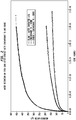
- the Blank shows water absorption as a function of time onto non-contaminated sand (bare sand).
- the two other curves show (i) water retention of contaminated sand in contact with a hydrophilization polymer as described herein and (ii) water retention of contaminated sand in contact without a hydrophilization polymer as described herein.
- the first sample (Contaminated sand with DV9599 + rinse), was pre-treated with DV9599, with a dry polymer/CV30 sand ratio of 0,33 mg/g (1.6 mg DV9599/g sand), filtered, contaminated by a contaminant solution (TQ), filtered and dried at 35°C for 24hours. Then the sample was water rinsed (667 ml water/100 g sand) and dried 24 hours at 35°C before filling the column and proceeding to capillary rise experiment.
- the other sand sample (Contaminated sand without polymer + rinse), was contaminated by a contaminant solution (TQ), filtered and dried at 35°C for 24hours. Then the sample was water rinsed (667 ml water/100 g sand) and dried 24 hours at 35°C before filling the column and proceeding to capillary rise experiment.
- TQ contaminant solution
- Figure 2 illustrates contamination and water rinse of a drastic sub-critical hydrophobization of sand with lower kinetic absorption combine with much less absorbed water through capillary rise.
- Presence of the polymer helps to prevent deposition and/or helps the departure of some contaminant (lower adhesion) through water rinse (rain or watering of the material in real case): soil (contaminant) release effect.
- the protocol is the same as in Example 2.
- the contaminant solution was diluted in water by a factor 2 (TQ/2). It was observed that the presence of the polymer as described herein prevents deposition and/or helps the departure of some contaminant (lower adhesion) through water rinse.
- the protocol is the same as in Example 2.
- the contaminant solution was diluted in water by a factor 4 (TQ/4). It was observed that the presence of the polymer as described herein prevents deposition and/or helps the departure of some contaminant (lower adhesion) through water rinse.
- the substrate treatments were as follows:
- root length is greater (approximately greater than 2x) of the treated soil versus the control.
- root surface area is greater (approximately up to 2x greater) of the treated soil versus the control.
- root volume is greater (approximately 1.5 to 2x greater) of the treated soil versus the control.
- root length density is greater (approximately 2x greater) of the treated soil versus the control.
- Soils utilized in this experiment were greens grade sand, synthetically prepared water repellent greens grade sand (of the same lot as above), and a naturally occurring sub-critically water repellent loam soil.
- 0.69075 g DV 9599 (20% a.i.) was added to a 250 mL beaker and filled to 150 g with deionized water and allowed to mix on a stir plate. After mixing, the entire 150 mL solution was sprayed onto 921 g of the test soil using a hand sprayer while hand-mixing continuously. This process was repeated for each of the varying treatment rates by adjusting the amount of DV 9599 to produce treatments of 300 and 600 ppm w/w DV 9599/soil. An untreated control was also conducted for each soil by spraying 150 mL deionized water onto each soil and mixing.
- the soil columns were assembled by clamping a piece of filter paper and screen to the bottom of the column.
- the columns were filled with either 150 g of treated loam, or 200 g of treated repellent and greens grade sand. Once the columns were filled, they were moved to the greenhouse to more closely mimic environmental conditions.
- the soil columns were watered to field capacity by placing the columns into a tray and filling the tray with water to the height of the soil in the columns. Water was poured through the top of the columns as well to ensure saturation. After the columns were saturated, they were taken from the tray and allowed to drain for 24 hours.
- Treatments at 150 ppm and 600 ppm had no positive effect.
- Treatment at 300 ppm resulted in a minimal increase of 2.8%.
- the 150 ppm treatment increased aggregate water by 5168%.
- Treatment at 300 ppm increased aggregate water by 5137% and treatment at 600 ppm increased aggregate water by 4995%.
- DV 9599 increased water holding capacity in a wettable sand, though not to the degree in a water repellent system. In a loam, there was little effect.
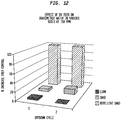
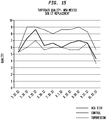
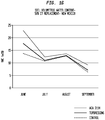
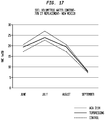
- the graphs illustrate the relative VWC between plots topdressed with ACA 3114, plots topdressed with untreated sand, and the untreated control.
- This example illustrates how DV9551 affects water holding capacity in two soil types, as well as how DV9551 moves down a soil profile with varying amounts of irrigation.
- Soils utilized in this experiment were (i) greens grade sand, (ii) synthetically prepared water repellent greens grade sand of the same lot as above (sometimes herein referred to as "repellent sand”), and (iii) natural sub-critically water repellent loam soil.
- 0.69075 g DV9551 (20% a.i.) was added to a 250 mL beaker and filled to 150 g with deionized water and allowed to mix on a stir plate. After mixing, the entire 150 mL solution was sprayed onto 921 g of the test soil using a hand sprayer while hand-mixing continuously. This process was repeated for each of the varying treatment rates by adjusting the amount of DV9551 to produce treatments of 300 and 600 ppm w/w DV9551/soil. An untreated control was also conducted for each soil by spraying 150 mL deionized water onto each soil and mixing.
- the soil columns were assembled by clamping a piece of filter paper and screen to the bottom of the column.
- the columns were filled with either 150 g of treated loam, or 200 g of treated repellent and greens grade sand. Once the columns were filled, they were moved to the greenhouse to more closely mimic environmental conditions.
- the soil columns were watered to field capacity by placing the columns into a tray and filling the tray with water to the height of the soil in the columns. Water was poured through the top of the columns as well to ensure saturation. After the columns were saturated, they were taken from the tray and allowed to drain for 24 hours.
- a control was included for each group by treating the soils with 150 mL distilled H2O. Each treatment was replicated three times
- Soil columns were assembled according the procedure as outlined above; each column filled with exactly six inches of soil.
- the columns were irrigated with 51.5, 38.6, 25.8, or 12.8 mL water corresponding to 1.0, 0.75, 0.5 and 0.25 inches of irrigation.
- the columns were allowed to sit for 24 hours post irrigation.
- a six-inch long core was taken from each column using a one-inch diameter soil corer.
- the core was divided into one-inch sections and samples were taken and placed into an aluminum tray to air dry for two weeks.
- the contact angle for each sample was determined using the Krüss Tensiometer, and compared to the calibration curve created by measuring contact angle of each different soil treated at various rates of DV9551 to detect polymer placement in the soil profile.
- treatment at 600 ppm resulted in an 18% increase in aggregate water content through all eight dry-down cycles.
- Treatments at 300 ppm and 150 ppm increased aggregate water content by 15.2% and 4.1%, respectively.
- the treatment rate in loam had a lesser effect on aggregate water content.
- Treatments at 150 ppm and 600 ppm similarly increased aggregate water content by 7.5% and 6.5%.
- Treatment at 300 ppm resulted minimal increase.
- Figure 21 illustrates that DV9551 effectively increased water holding capacity in both sands, more so in repellent sand, while having less effect on loam.
- the differences in water holding capacity between repellent sand and wettable sand are greater than those between wettable sand and loam.
- DV9551 appears to persist in the soil. Throughout the eight dry-down cycles, DV9551 increased water content at all three rates in repellent and wettable sands. In loam, water content was mostly increased at 150 ppm and 600 ppm.
- DV9551 in both blended repellent sand and loam, DV9551 can be placed down the soil profile quite readily. In loam, for example, DV9551 will move down six inches in the soil profile with one inch of irrigation. With 0.75 inches of irrigation, DV9551 moves down five inches with more remaining in the four inches above it. This trend continues down through 0.25 inches of irrigation. Table I. Effect of watering volume on amount of DV9551 remaining in a loam soil profile.
Landscapes
- Life Sciences & Earth Sciences (AREA)
- Engineering & Computer Science (AREA)
- Chemical & Material Sciences (AREA)
- Soil Sciences (AREA)
- Structural Engineering (AREA)
- General Life Sciences & Earth Sciences (AREA)
- Organic Chemistry (AREA)
- General Engineering & Computer Science (AREA)
- Agronomy & Crop Science (AREA)
- Civil Engineering (AREA)
- Mining & Mineral Resources (AREA)
- Environmental & Geological Engineering (AREA)
- Paleontology (AREA)
- Medicinal Chemistry (AREA)
- Health & Medical Sciences (AREA)
- Chemical Kinetics & Catalysis (AREA)
- Materials Engineering (AREA)
- Polymers & Plastics (AREA)
- Environmental Sciences (AREA)
- Compositions Of Macromolecular Compounds (AREA)
- Agricultural Chemicals And Associated Chemicals (AREA)
- Soil Conditioners And Soil-Stabilizing Materials (AREA)
- Addition Polymer Or Copolymer, Post-Treatments, Or Chemical Modifications (AREA)
Claims (15)
- Composition d'additif de sol comprenant :un polymère comprenant :(i) le monomère Ab comprenant au moins un groupe bétaïne ou au moins un groupe cationique ; et(ii) le monomère Ba comprenant au moins un groupe non ionique ou au moins un groupe anionique,dans laquelle le polymère est soluble dans l'eau ou dispersible dans l'eau ; et à condition que si, le monomère Ab comprend un groupe cationique, le monomère Ba comprend un groupe anionique ; etun germe au moins partiellement revêtu par le polymère.
- Composition d'additif de sol selon la revendication 1, dans laquelle le groupe bétaïne est choisi parmia) - des alkylsulfonates ou -phosphonates d'acrylates ou méthacrylates, acrylamides ou méthacrylamides de dialkylammonioalkyle ;b) - des monomères de bétaïne hétérocyclique ;c) - des alkylsulfonates ou -phosphonates de dialkylammonioalkylallyliques ;d) - des alkylsulfonates ou -phosphonates de dialkylammonioalkylstyrènes ;e) -
 f) - des phosphobétaïnes.
 - Composition d'additif de sol selon la revendication 1 dans laquelle le groupe bétaïne est un groupe correspondant à la formule (I) :

 R1 est hydrogène ou méthyle,R2 et R3 sont chacun indépendamment choisis parmi hydrogène ou des groupes alkyle ayant de 1 à 6 atomes de carbone,Y1 est un groupe divalent de formule -O- ou NR2,Z- est SO3 -,m est 2 ou 3, etn est 1 à 6.
 - Composition d'additif de sol selon la revendication 1 dans laquelle le monomère Ab comprenant le groupe bétaïne choisi parmi :méthacrylate de sulfopropyldiméthylammonioéthyle (SPE),méthacrylate de sulfoéthyldiméthylammonioéthyle,méthacrylate de sulfobutyldiméthylammonioéthyle,méthacrylate de sulfohydroxypropyldiméthylammonioéthyle (SHPE),sulfopropyldiméthylammoniopropylacrylamide,sulfopropyldiméthylammoniopropylméthacrylamide (SPP),sulfohydroxypropyldiméthylammoniopropylméthacrylamide (SHPP),méthacrylate de sulfopropyldiéthylammonioéthyle,bétaïne de 2-vinyl-1-(3-sulfopropyl)pyridinium,bétaïne de 4-vinyl-1-(3-sulfopropyl)pyridinium,méthacrylate de sulfopropyldiméthylammonioéthyle,bétaïne de 1-vinyl-3-(3-sulfopropyl)imidazolium ou bétaïne de sulfopropylméthyldiallylammonium.
- Composition d'additif de sol selon la revendication 1 comprenant :le monomère Ab comprenant au moins un groupe bétaïne ; etle monomère Ba comprenant l'acrylate d'hydroxyéthyle, le méthacrylate d'hydroxyéthyle, l'acrylate d'hydroxypropyle, le méthacrylate d'hydroxypropyle, le monométhacrylate de glycérol, l'acrylamide (AM), le méthacrylamide, le N-méthylolacrylamide, le diméthylacrylamide, le diméthylméthacrylamide, le poly(oxyde d'éthylène et/ou propylène), des α-méthacrylates, l'alcool vinylique ou la vinylpyrrolidone.
- Composition d'additif de sol selon la revendication 1 dans laquelle le polymère est un homopolymère, qui comprend le monomère Ab comprenant le groupe bétaïne, choisi parmi les suivants :méthacrylate de sulfopropyldiméthylammonioéthyle (SPE),méthacrylate de sulfoéthyldiméthylammonioéthyle,méthacrylate de sulfobutyldiméthylammonioéthyle,méthacrylate de sulfohydroxypropyldiméthylammonioéthyle (SHPE),sulfopropyldiméthylammoniopropylacrylamide,sulfopropyldiméthylammoniopropylméthacrylamide (SPP),sulfohydroxypropyldiméthylammoniopropylméthacrylamide (SHPP),méthacrylate de sulfopropyldiéthylammonioéthyle,bétaïne de 2-vinyl-1-(3-sulfopropyl)pyridinium,bétaïne de 4-vinyl-1-(3-sulfopropyl)pyridinium,méthacrylate de sulfopropyldiméthylammonioéthyle,bétaïne de 1-vinyl-3-(3-sulfopropyl)imidazolium oubétaïne de sulfopropylméthyldiallylammonium,de préférence dans laquelle le monomère Ab est le méthacrylate de sulfopropyldiméthylammonioéthyle (SPE) ou le sulfopropyldiméthylammoniopropylméthacrylamide (SPP).
- Composition d'additif de sol selon la revendication 1 dans laquelle le polymère est caractérisé par un poids moléculaire moyen en poids (Mw) dans la plage de 10 000 g/mol à 500 000 g/mol.
- Composition d'additif de sol selon la revendication 1 dans laquelle le monomère Ab comprend jusqu'à 50 % en poids par rapport au poids de motifs monomères.
- Composition d'additif de sol selon la revendication 1 dans laquelle le monomère Ab comprenant le groupe cationique est :de formule A(I) :
 R1 et R4 sont chacun indépendamment choisis parmi hydrogène ou un groupe alkyle en C1-C6 linéaire ouramifié ;R2 et R3 sont chacun indépendamment choisis parmi un groupe alkyle, un groupe hydroxyalkyle ou un groupe aminoalkyle, où le groupe alkyle est une chaîne en C1-C6 linéaire ou ramifiée ;n et m sont des entiers compris entre 1 et 3 ; etX- représente un contre-ion qui est compatible avec la nature soluble dans l'eau ou dispersible dans l'eau du polymère ;oude formule A(II) :
 dans laquelle R1 est choisi parmi hydrogène, un groupe méthyle ou un groupe éthyle ; dans laquelle R2 et R3 sont chacun indépendamment choisis parmi un groupe alkyle en C1-C6 ramifié, un groupe alkyle en C1-C6 linéaire, un groupe hydroxyalkyle ou un groupe aminoalkyle ;R4, R5 et R6 sont chacun indépendamment choisis parmi un groupe alkyle en C1-C6 linéaire ou un groupe alkyle en C1-C6 ramifié ;m est un entier de 0 à 10 ;n est un entier de 1 à 6 ;Z représente un groupe -C(O)O-, un groupe -C(O)NH- ou un atome d'oxygène ;A représente un groupe (CH2)P, p étant un entier de 1 à 6 ;B représente une chaîne polyméthylène en C2-C12 linéaire ou ramifiée facultativement interrompue par un ou plusieurs hétéroatomes ou hétérogroupes et facultativement substituée par un ou plusieurs groupes hydroxyle ou amino ; etX-, qui sont identiques ou différents, représentent des contre-ions ; ou des mélanges de ceux-ci,de préférence dans laquelle le rapport molaire monomère Ab/monomère Ba est compris entre 1/4 et 4/5, respectivement,ou dans laquelle le rapport molaire monomère Ab/monomère Ba est compris entre 1/2 et 4/6, respectivement.
 - Composition d'additif de sol selon la revendication 9 dans laquelle le monomère Ba comprenant le groupe anionique est choisi parmi l'acide acrylique, l'acide méthacrylique, l'acide α-éthacrylique, l'acide β,β-diméthylacrylique, l'acide méthylènemalonique, l'acide vinylacétique, l'acide allylacétique, l'acide éthylidèneacétique, l'acide propylidèneacétique, l'acide crotonique, l'acide maléique, l'acide fumarique, l'acide itaconique, l'acide citraconique, l'acide mésaconique, la N-méthacryloylalanine, la N-acryloylhydroxyglycine, l'acrylate de sulfopropyle, l'acrylate de sulfoéthyle, le méthacrylate de sulfoéthyle, le méthacrylate de sulfoéthyle, l'acide styrènesulfonique, l'acide vinylsulfonique, l'acide vinylphosphonique, l'acrylate de phosphoéthyle, l'acrylate de phosphonoéthyle, l'acrylate de phosphopropyle, l'acrylate de phosphonopropyle, le méthacrylate de phosphoéthyle, le méthacrylate de phosphonoéthyle, le méthacrylate de phosphopropyle et le méthacrylate de phosphonopropyle, ou les sels d'ammonium ou de métal alcalin de ces acides.
- Composition d'additif de sol selon la revendication 9 dans laquelle le polymère est caractérisé par un poids moléculaire moyen en poids (Mw) dans la plage de 100 000 g/mol à 2 500 000 g/mol, de préférence dans la plage de 500 000 g/mol à 1 500 000 g/mol.
- Composition d'additif de sol selon la revendication 9 dans laquelle le polymère est un copolymère aléatoire, un copolymère alterné, un copolymère statistique, un copolymère séquencé, un terpolymère, un copolymère linéaire, un copolymère ramifié ou un copolymère greffé.
- Procédé de traitement d'un sol comprenant la mise en contact d'un additif de sol avec le sol, dans lequel l'additif de sol comprend un polymère comprenant :un monomère Ab comprenant au moins un groupe bétaïne ou au moins un groupe cationique ; etun monomère Ba comprenant au moins un groupe non ionique ou au moins un groupe anionique,dans lequel le polymère est soluble dans l'eau ou dispersible dans l'eau ; et à condition que, si le monomère Ab comprend un groupe cationique, le monomère Ba comprend un groupe anionique.
- Procédé selon la revendication 13, dans lequel la composition d'additif de sol est mise en contact avec le sol en une quantité efficace pour augmenter l'hydrophilie du sol par rapport au sol sans la composition d'additif de sol.
- Procédé selon la revendication 13 dans lequel la composition d'additif de sol est mise en contact avec le sol en une quantité efficace pour augmenter les caractéristiques des racines d'une plante par rapport au sol sans le polymère d'hydrophilisation, dans lequel les caractéristiques des racines sont de préférence choisies parmi au moins l'un parmi : la longueur des racines, la densité des racines, l'aire de surface des racines, le poids des racine ou le volume des racines.
Applications Claiming Priority (2)
| Application Number | Priority Date | Filing Date | Title |
|---|---|---|---|
| US201361898068P | 2013-10-31 | 2013-10-31 | |
| PCT/IB2014/002980 WO2015063605A2 (fr) | 2013-10-31 | 2014-10-30 | Polymères d'hydrophilisation et leurs procédés d'utilisation |
Publications (2)
| Publication Number | Publication Date |
|---|---|
| EP3063251A2 EP3063251A2 (fr) | 2016-09-07 |
| EP3063251B1 true EP3063251B1 (fr) | 2021-08-25 |
Family
ID=52474021
Family Applications (1)
| Application Number | Title | Priority Date | Filing Date |
|---|---|---|---|
| EP14837034.9A Active EP3063251B1 (fr) | 2013-10-31 | 2014-10-30 | Polymères d'hydrophilisation et leurs procédés d'utilisation |
Country Status (6)
| Country | Link |
|---|---|
| US (1) | US20150113873A1 (fr) |
| EP (1) | EP3063251B1 (fr) |
| CN (1) | CN105874034A (fr) |
| AU (1) | AU2014343368B2 (fr) |
| ES (1) | ES2897645T3 (fr) |
| WO (1) | WO2015063605A2 (fr) |
Families Citing this family (5)
| Publication number | Priority date | Publication date | Assignee | Title |
|---|---|---|---|---|
| US10292426B2 (en) | 2016-06-24 | 2019-05-21 | Altria Client Services, Llc | E-vaping device cartridge with superabsorbent polymer |
| NZ752848A (en) | 2016-11-02 | 2022-10-28 | Paramount Products 1 Llc | Adjuvant compositions for plant treatment chemicals |
| WO2018156457A1 (fr) | 2017-02-24 | 2018-08-30 | Paramount Products 1 Llc | Traitement de plantes en conjonction avec la récolte |
| WO2021131479A1 (fr) * | 2019-12-24 | 2021-07-01 | 東京応化工業株式会社 | Liquide de traitement de surface, et procédé de traitement d'hydrophilisation |
| JP7474340B2 (ja) * | 2020-08-27 | 2024-04-24 | 東京応化工業株式会社 | 表面処理液、及び表面処理方法 |
Family Cites Families (7)
| Publication number | Priority date | Publication date | Assignee | Title |
|---|---|---|---|---|
| ES2150723T3 (es) | 1991-07-05 | 2000-12-01 | Biocompatibles Ltd | Recubrimientos de superficie polimericos. |
| FR2797381B1 (fr) * | 1999-08-09 | 2001-11-02 | Rhodia Chimie Sa | Utilisation d'un polymere hydrosoluble dans une composition biocide pour le traitement des surfaces dures |
| EP1286589A2 (fr) | 2000-06-08 | 2003-03-05 | Rhodia Chimie | Composition et procede pour le traitement biocide des surfaces |
| AU2003228167A1 (en) * | 2002-05-08 | 2003-11-11 | Fonterra Tech Limited | Polymeric bioactive seed coating composition and bioactive compound release method |
| UA109772C2 (uk) * | 2009-07-02 | 2015-10-12 | Агент для підвищення гідрофільності ґрунту і способи його застосування | |
| WO2012022046A1 (fr) * | 2010-08-20 | 2012-02-23 | Rhodia (China) Co., Ltd. | Additifs pour les sols destinés à empêcher l'évaporation de l'eau et procédés d'utilisation associés |
| EA027819B1 (ru) * | 2011-02-28 | 2017-09-29 | Родиа Оперейшнс | Покрытия семян, композиции покрытий и способы применения |
-
2014
- 2014-10-30 EP EP14837034.9A patent/EP3063251B1/fr active Active
- 2014-10-30 US US14/527,812 patent/US20150113873A1/en not_active Abandoned
- 2014-10-30 ES ES14837034T patent/ES2897645T3/es active Active
- 2014-10-30 AU AU2014343368A patent/AU2014343368B2/en active Active
- 2014-10-30 WO PCT/IB2014/002980 patent/WO2015063605A2/fr not_active Ceased
- 2014-10-30 CN CN201480071945.0A patent/CN105874034A/zh active Pending
Non-Patent Citations (1)
| Title |
|---|
| None * |
Also Published As
| Publication number | Publication date |
|---|---|
| ES2897645T3 (es) | 2022-03-02 |
| AU2014343368B2 (en) | 2018-03-08 |
| WO2015063605A2 (fr) | 2015-05-07 |
| EP3063251A2 (fr) | 2016-09-07 |
| US20150113873A1 (en) | 2015-04-30 |
| WO2015063605A3 (fr) | 2015-08-13 |
| CN105874034A (zh) | 2016-08-17 |
Similar Documents
| Publication | Publication Date | Title |
|---|---|---|
| EP3063251B1 (fr) | Polymères d'hydrophilisation et leurs procédés d'utilisation | |
| CN105567241B (zh) | 用于促进种子发芽、抑制蒸发的土壤添加剂及其使用方法 | |
| CN102480922B (zh) | 土壤亲水化试剂以及使用方法 | |
| AU2014343368A1 (en) | Hydrophilization polymers and methods for use | |
| CA2967072C (fr) | Amelioration de la croissance de plantes a l'aide de gommes guars cationiques | |
| EP2869687B1 (fr) | Amélioration de la croissance d'une plante | |
| US20150299975A1 (en) | Prevention of topsoil erosion with hydrogels | |
| AU2008235040B2 (en) | Apparatus and method for the application of soil conditioners | |
| Green et al. | Water release from cross-linked polyacrylamide | |
| US6733559B1 (en) | Method of reducing the availability of heavy metals in plants and the use of cross linked poly(meth)acrylates in said method | |
| EP3583157B1 (fr) | Conditionneur de sol permettant de réduire la sodicité et la dispersion afin d'améliorer la mobilité de l'eau dans divers sols | |
| AU2020366132B2 (en) | Growth enhancement of plant by using low molecular weight guar gum | |
| CN103314075B (zh) | 用于促进种子发芽、抑制蒸发的土壤添加剂及其使用方法 | |
| JP2865584B2 (ja) | 耐水性団粒構造緑化基盤の造成法 |
Legal Events
| Date | Code | Title | Description |
|---|---|---|---|
| PUAI | Public reference made under article 153(3) epc to a published international application that has entered the european phase |
Free format text: ORIGINAL CODE: 0009012 |
|
| 17P | Request for examination filed |
Effective date: 20160531 |
|
| AK | Designated contracting states |
Kind code of ref document: A2 Designated state(s): AL AT BE BG CH CY CZ DE DK EE ES FI FR GB GR HR HU IE IS IT LI LT LU LV MC MK MT NL NO PL PT RO RS SE SI SK SM TR |
|
| AX | Request for extension of the european patent |
Extension state: BA ME |
|
| DAX | Request for extension of the european patent (deleted) | ||
| STAA | Information on the status of an ep patent application or granted ep patent |
Free format text: STATUS: EXAMINATION IS IN PROGRESS |
|
| 17Q | First examination report despatched |
Effective date: 20181015 |
|
| RAP1 | Party data changed (applicant data changed or rights of an application transferred) |
Owner name: RHODIA OPERATIONS |
|
| GRAP | Despatch of communication of intention to grant a patent |
Free format text: ORIGINAL CODE: EPIDOSNIGR1 |
|
| STAA | Information on the status of an ep patent application or granted ep patent |
Free format text: STATUS: GRANT OF PATENT IS INTENDED |
|
| RIC1 | Information provided on ipc code assigned before grant |
Ipc: C09K 17/18 20060101AFI20210222BHEP Ipc: C08F 220/38 20060101ALI20210222BHEP Ipc: E02D 3/12 20060101ALI20210222BHEP |
|
| INTG | Intention to grant announced |
Effective date: 20210323 |
|
| GRAS | Grant fee paid |
Free format text: ORIGINAL CODE: EPIDOSNIGR3 |
|
| GRAA | (expected) grant |
Free format text: ORIGINAL CODE: 0009210 |
|
| STAA | Information on the status of an ep patent application or granted ep patent |
Free format text: STATUS: THE PATENT HAS BEEN GRANTED |
|
| AK | Designated contracting states |
Kind code of ref document: B1 Designated state(s): AL AT BE BG CH CY CZ DE DK EE ES FI FR GB GR HR HU IE IS IT LI LT LU LV MC MK MT NL NO PL PT RO RS SE SI SK SM TR |
|
| REG | Reference to a national code |
Ref country code: GB Ref legal event code: FG4D |
|
| REG | Reference to a national code |
Ref country code: CH Ref legal event code: EP |
|
| REG | Reference to a national code |
Ref country code: IE Ref legal event code: FG4D Ref country code: AT Ref legal event code: REF Ref document number: 1423800 Country of ref document: AT Kind code of ref document: T Effective date: 20210915 |
|
| REG | Reference to a national code |
Ref country code: DE Ref legal event code: R096 Ref document number: 602014079722 Country of ref document: DE |
|
| REG | Reference to a national code |
Ref country code: LT Ref legal event code: MG9D |
|
| REG | Reference to a national code |
Ref country code: NL Ref legal event code: MP Effective date: 20210825 |
|
| REG | Reference to a national code |
Ref country code: AT Ref legal event code: MK05 Ref document number: 1423800 Country of ref document: AT Kind code of ref document: T Effective date: 20210825 |
|
| PG25 | Lapsed in a contracting state [announced via postgrant information from national office to epo] |
Ref country code: HR Free format text: LAPSE BECAUSE OF FAILURE TO SUBMIT A TRANSLATION OF THE DESCRIPTION OR TO PAY THE FEE WITHIN THE PRESCRIBED TIME-LIMIT Effective date: 20210825 Ref country code: RS Free format text: LAPSE BECAUSE OF FAILURE TO SUBMIT A TRANSLATION OF THE DESCRIPTION OR TO PAY THE FEE WITHIN THE PRESCRIBED TIME-LIMIT Effective date: 20210825 Ref country code: SE Free format text: LAPSE BECAUSE OF FAILURE TO SUBMIT A TRANSLATION OF THE DESCRIPTION OR TO PAY THE FEE WITHIN THE PRESCRIBED TIME-LIMIT Effective date: 20210825 Ref country code: LT Free format text: LAPSE BECAUSE OF FAILURE TO SUBMIT A TRANSLATION OF THE DESCRIPTION OR TO PAY THE FEE WITHIN THE PRESCRIBED TIME-LIMIT Effective date: 20210825 Ref country code: AT Free format text: LAPSE BECAUSE OF FAILURE TO SUBMIT A TRANSLATION OF THE DESCRIPTION OR TO PAY THE FEE WITHIN THE PRESCRIBED TIME-LIMIT Effective date: 20210825 Ref country code: BG Free format text: LAPSE BECAUSE OF FAILURE TO SUBMIT A TRANSLATION OF THE DESCRIPTION OR TO PAY THE FEE WITHIN THE PRESCRIBED TIME-LIMIT Effective date: 20211125 Ref country code: FI Free format text: LAPSE BECAUSE OF FAILURE TO SUBMIT A TRANSLATION OF THE DESCRIPTION OR TO PAY THE FEE WITHIN THE PRESCRIBED TIME-LIMIT Effective date: 20210825 Ref country code: PT Free format text: LAPSE BECAUSE OF FAILURE TO SUBMIT A TRANSLATION OF THE DESCRIPTION OR TO PAY THE FEE WITHIN THE PRESCRIBED TIME-LIMIT Effective date: 20211227 Ref country code: NO Free format text: LAPSE BECAUSE OF FAILURE TO SUBMIT A TRANSLATION OF THE DESCRIPTION OR TO PAY THE FEE WITHIN THE PRESCRIBED TIME-LIMIT Effective date: 20211125 |
|
| PG25 | Lapsed in a contracting state [announced via postgrant information from national office to epo] |
Ref country code: PL Free format text: LAPSE BECAUSE OF FAILURE TO SUBMIT A TRANSLATION OF THE DESCRIPTION OR TO PAY THE FEE WITHIN THE PRESCRIBED TIME-LIMIT Effective date: 20210825 Ref country code: LV Free format text: LAPSE BECAUSE OF FAILURE TO SUBMIT A TRANSLATION OF THE DESCRIPTION OR TO PAY THE FEE WITHIN THE PRESCRIBED TIME-LIMIT Effective date: 20210825 Ref country code: GR Free format text: LAPSE BECAUSE OF FAILURE TO SUBMIT A TRANSLATION OF THE DESCRIPTION OR TO PAY THE FEE WITHIN THE PRESCRIBED TIME-LIMIT Effective date: 20211126 |
|
| REG | Reference to a national code |
Ref country code: ES Ref legal event code: FG2A Ref document number: 2897645 Country of ref document: ES Kind code of ref document: T3 Effective date: 20220302 |
|
| PG25 | Lapsed in a contracting state [announced via postgrant information from national office to epo] |
Ref country code: NL Free format text: LAPSE BECAUSE OF FAILURE TO SUBMIT A TRANSLATION OF THE DESCRIPTION OR TO PAY THE FEE WITHIN THE PRESCRIBED TIME-LIMIT Effective date: 20210825 |
|
| PG25 | Lapsed in a contracting state [announced via postgrant information from national office to epo] |
Ref country code: DK Free format text: LAPSE BECAUSE OF FAILURE TO SUBMIT A TRANSLATION OF THE DESCRIPTION OR TO PAY THE FEE WITHIN THE PRESCRIBED TIME-LIMIT Effective date: 20210825 |
|
| REG | Reference to a national code |
Ref country code: DE Ref legal event code: R097 Ref document number: 602014079722 Country of ref document: DE |
|
| REG | Reference to a national code |
Ref country code: CH Ref legal event code: PL |
|
| PG25 | Lapsed in a contracting state [announced via postgrant information from national office to epo] |
Ref country code: SM Free format text: LAPSE BECAUSE OF FAILURE TO SUBMIT A TRANSLATION OF THE DESCRIPTION OR TO PAY THE FEE WITHIN THE PRESCRIBED TIME-LIMIT Effective date: 20210825 Ref country code: SK Free format text: LAPSE BECAUSE OF FAILURE TO SUBMIT A TRANSLATION OF THE DESCRIPTION OR TO PAY THE FEE WITHIN THE PRESCRIBED TIME-LIMIT Effective date: 20210825 Ref country code: RO Free format text: LAPSE BECAUSE OF FAILURE TO SUBMIT A TRANSLATION OF THE DESCRIPTION OR TO PAY THE FEE WITHIN THE PRESCRIBED TIME-LIMIT Effective date: 20210825 Ref country code: EE Free format text: LAPSE BECAUSE OF FAILURE TO SUBMIT A TRANSLATION OF THE DESCRIPTION OR TO PAY THE FEE WITHIN THE PRESCRIBED TIME-LIMIT Effective date: 20210825 Ref country code: CZ Free format text: LAPSE BECAUSE OF FAILURE TO SUBMIT A TRANSLATION OF THE DESCRIPTION OR TO PAY THE FEE WITHIN THE PRESCRIBED TIME-LIMIT Effective date: 20210825 Ref country code: AL Free format text: LAPSE BECAUSE OF FAILURE TO SUBMIT A TRANSLATION OF THE DESCRIPTION OR TO PAY THE FEE WITHIN THE PRESCRIBED TIME-LIMIT Effective date: 20210825 |
|
| REG | Reference to a national code |
Ref country code: BE Ref legal event code: MM Effective date: 20211031 |
|
| PG25 | Lapsed in a contracting state [announced via postgrant information from national office to epo] |
Ref country code: MC Free format text: LAPSE BECAUSE OF FAILURE TO SUBMIT A TRANSLATION OF THE DESCRIPTION OR TO PAY THE FEE WITHIN THE PRESCRIBED TIME-LIMIT Effective date: 20210825 |
|
| PLBE | No opposition filed within time limit |
Free format text: ORIGINAL CODE: 0009261 |
|
| STAA | Information on the status of an ep patent application or granted ep patent |
Free format text: STATUS: NO OPPOSITION FILED WITHIN TIME LIMIT |
|
| RAP4 | Party data changed (patent owner data changed or rights of a patent transferred) |
Owner name: RHODIA OPERATIONS |
|
| PG25 | Lapsed in a contracting state [announced via postgrant information from national office to epo] |
Ref country code: LU Free format text: LAPSE BECAUSE OF NON-PAYMENT OF DUE FEES Effective date: 20211030 Ref country code: BE Free format text: LAPSE BECAUSE OF NON-PAYMENT OF DUE FEES Effective date: 20211031 |
|
| 26N | No opposition filed |
Effective date: 20220527 |
|
| PG25 | Lapsed in a contracting state [announced via postgrant information from national office to epo] |
Ref country code: SI Free format text: LAPSE BECAUSE OF FAILURE TO SUBMIT A TRANSLATION OF THE DESCRIPTION OR TO PAY THE FEE WITHIN THE PRESCRIBED TIME-LIMIT Effective date: 20210825 Ref country code: LI Free format text: LAPSE BECAUSE OF NON-PAYMENT OF DUE FEES Effective date: 20211031 Ref country code: CH Free format text: LAPSE BECAUSE OF NON-PAYMENT OF DUE FEES Effective date: 20211031 |
|
| REG | Reference to a national code |
Ref country code: DE Ref legal event code: R081 Ref document number: 602014079722 Country of ref document: DE Owner name: RHODIA OPERATIONS, FR Free format text: FORMER OWNER: RHODIA OPERATIONS, AUBERVILLIERS, FR Ref country code: DE Ref legal event code: R081 Ref document number: 602014079722 Country of ref document: DE Owner name: SPECIALTY OPERATIONS FRANCE, FR Free format text: FORMER OWNER: RHODIA OPERATIONS, AUBERVILLIERS, FR |
|
| PG25 | Lapsed in a contracting state [announced via postgrant information from national office to epo] |
Ref country code: IE Free format text: LAPSE BECAUSE OF NON-PAYMENT OF DUE FEES Effective date: 20211030 |
|
| PG25 | Lapsed in a contracting state [announced via postgrant information from national office to epo] |
Ref country code: HU Free format text: LAPSE BECAUSE OF FAILURE TO SUBMIT A TRANSLATION OF THE DESCRIPTION OR TO PAY THE FEE WITHIN THE PRESCRIBED TIME-LIMIT; INVALID AB INITIO Effective date: 20141030 |
|
| PG25 | Lapsed in a contracting state [announced via postgrant information from national office to epo] |
Ref country code: CY Free format text: LAPSE BECAUSE OF FAILURE TO SUBMIT A TRANSLATION OF THE DESCRIPTION OR TO PAY THE FEE WITHIN THE PRESCRIBED TIME-LIMIT Effective date: 20210825 |
|
| P01 | Opt-out of the competence of the unified patent court (upc) registered |
Effective date: 20230624 |
|
| REG | Reference to a national code |
Ref country code: GB Ref legal event code: 732E Free format text: REGISTERED BETWEEN 20240222 AND 20240228 |
|
| PG25 | Lapsed in a contracting state [announced via postgrant information from national office to epo] |
Ref country code: MK Free format text: LAPSE BECAUSE OF FAILURE TO SUBMIT A TRANSLATION OF THE DESCRIPTION OR TO PAY THE FEE WITHIN THE PRESCRIBED TIME-LIMIT Effective date: 20210825 |
|
| REG | Reference to a national code |
Ref country code: DE Ref legal event code: R081 Ref document number: 602014079722 Country of ref document: DE Owner name: SPECIALTY OPERATIONS FRANCE, FR Free format text: FORMER OWNER: RHODIA OPERATIONS, LYON, FR |
|
| PG25 | Lapsed in a contracting state [announced via postgrant information from national office to epo] |
Ref country code: TR Free format text: LAPSE BECAUSE OF FAILURE TO SUBMIT A TRANSLATION OF THE DESCRIPTION OR TO PAY THE FEE WITHIN THE PRESCRIBED TIME-LIMIT Effective date: 20210825 |
|
| REG | Reference to a national code |
Ref country code: ES Ref legal event code: PC2A Owner name: SPECIALTY OPERATIONS FRANCE S.A.S. Effective date: 20240814 |
|
| PG25 | Lapsed in a contracting state [announced via postgrant information from national office to epo] |
Ref country code: MT Free format text: LAPSE BECAUSE OF FAILURE TO SUBMIT A TRANSLATION OF THE DESCRIPTION OR TO PAY THE FEE WITHIN THE PRESCRIBED TIME-LIMIT Effective date: 20210825 |
|
| PGFP | Annual fee paid to national office [announced via postgrant information from national office to epo] |
Ref country code: GB Payment date: 20240906 Year of fee payment: 11 |
|
| PGFP | Annual fee paid to national office [announced via postgrant information from national office to epo] |
Ref country code: FR Payment date: 20240909 Year of fee payment: 11 |
|
| PGFP | Annual fee paid to national office [announced via postgrant information from national office to epo] |
Ref country code: IT Payment date: 20240910 Year of fee payment: 11 |
|
| PGFP | Annual fee paid to national office [announced via postgrant information from national office to epo] |
Ref country code: DE Payment date: 20240904 Year of fee payment: 11 |
|
| PGFP | Annual fee paid to national office [announced via postgrant information from national office to epo] |
Ref country code: ES Payment date: 20241101 Year of fee payment: 11 |