EP3065407A1 - Inhaltsbereitstellungsvorrichtung, inhaltsbereitstellungsverfahren, programm, endgerätevorrichtung und inhaltsbereitstellungssystem - Google Patents
Inhaltsbereitstellungsvorrichtung, inhaltsbereitstellungsverfahren, programm, endgerätevorrichtung und inhaltsbereitstellungssystem Download PDFInfo
- Publication number
- EP3065407A1 EP3065407A1 EP14857707.5A EP14857707A EP3065407A1 EP 3065407 A1 EP3065407 A1 EP 3065407A1 EP 14857707 A EP14857707 A EP 14857707A EP 3065407 A1 EP3065407 A1 EP 3065407A1
- Authority
- EP
- European Patent Office
- Prior art keywords
- mosaic
- usd
- content
- stream
- segment stream
- Prior art date
- Legal status (The legal status is an assumption and is not a legal conclusion. Google has not performed a legal analysis and makes no representation as to the accuracy of the status listed.)
- Ceased
Links
Images








Classifications
-
- H—ELECTRICITY
- H04—ELECTRIC COMMUNICATION TECHNIQUE
- H04N—PICTORIAL COMMUNICATION, e.g. TELEVISION
- H04N21/00—Selective content distribution, e.g. interactive television or video on demand [VOD]
- H04N21/40—Client devices specifically adapted for the reception of or interaction with content, e.g. set-top-box [STB]; Operations thereof
- H04N21/43—Processing of content or additional data, e.g. demultiplexing additional data from a digital video stream; Elementary client operations, e.g. monitoring of home network or synchronising decoder's clock; Client middleware
- H04N21/438—Interfacing the downstream path of the transmission network originating from a server, e.g. retrieving encoded video stream packets from an IP network
- H04N21/4383—Accessing a communication channel
- H04N21/4384—Accessing a communication channel involving operations to reduce the access time, e.g. fast-tuning for reducing channel switching latency
-
- H—ELECTRICITY
- H04—ELECTRIC COMMUNICATION TECHNIQUE
- H04L—TRANSMISSION OF DIGITAL INFORMATION, e.g. TELEGRAPHIC COMMUNICATION
- H04L65/00—Network arrangements, protocols or services for supporting real-time applications in data packet communication
- H04L65/60—Network streaming of media packets
- H04L65/75—Media network packet handling
- H04L65/762—Media network packet handling at the source
-
- H—ELECTRICITY
- H04—ELECTRIC COMMUNICATION TECHNIQUE
- H04N—PICTORIAL COMMUNICATION, e.g. TELEVISION
- H04N21/00—Selective content distribution, e.g. interactive television or video on demand [VOD]
- H04N21/20—Servers specifically adapted for the distribution of content, e.g. VOD servers; Operations thereof
- H04N21/23—Processing of content or additional data; Elementary server operations; Server middleware
- H04N21/234—Processing of video elementary streams, e.g. splicing of video streams or manipulating encoded video stream scene graphs
- H04N21/2343—Processing of video elementary streams, e.g. splicing of video streams or manipulating encoded video stream scene graphs involving reformatting operations of video signals for distribution or compliance with end-user requests or end-user device requirements
-
- H—ELECTRICITY
- H04—ELECTRIC COMMUNICATION TECHNIQUE
- H04N—PICTORIAL COMMUNICATION, e.g. TELEVISION
- H04N21/00—Selective content distribution, e.g. interactive television or video on demand [VOD]
- H04N21/20—Servers specifically adapted for the distribution of content, e.g. VOD servers; Operations thereof
- H04N21/23—Processing of content or additional data; Elementary server operations; Server middleware
- H04N21/234—Processing of video elementary streams, e.g. splicing of video streams or manipulating encoded video stream scene graphs
- H04N21/2343—Processing of video elementary streams, e.g. splicing of video streams or manipulating encoded video stream scene graphs involving reformatting operations of video signals for distribution or compliance with end-user requests or end-user device requirements
- H04N21/23439—Processing of video elementary streams, e.g. splicing of video streams or manipulating encoded video stream scene graphs involving reformatting operations of video signals for distribution or compliance with end-user requests or end-user device requirements for generating different versions
-
- H—ELECTRICITY
- H04—ELECTRIC COMMUNICATION TECHNIQUE
- H04N—PICTORIAL COMMUNICATION, e.g. TELEVISION
- H04N21/00—Selective content distribution, e.g. interactive television or video on demand [VOD]
- H04N21/20—Servers specifically adapted for the distribution of content, e.g. VOD servers; Operations thereof
- H04N21/25—Management operations performed by the server for facilitating the content distribution or administrating data related to end-users or client devices, e.g. end-user or client device authentication, learning user preferences for recommending movies
- H04N21/262—Content or additional data distribution scheduling, e.g. sending additional data at off-peak times, updating software modules, calculating the carousel transmission frequency, delaying a video stream transmission, generating play-lists
- H04N21/26258—Content or additional data distribution scheduling, e.g. sending additional data at off-peak times, updating software modules, calculating the carousel transmission frequency, delaying a video stream transmission, generating play-lists for generating a list of items to be played back in a given order, e.g. playlist, or scheduling item distribution according to such list
-
- H—ELECTRICITY
- H04—ELECTRIC COMMUNICATION TECHNIQUE
- H04N—PICTORIAL COMMUNICATION, e.g. TELEVISION
- H04N21/00—Selective content distribution, e.g. interactive television or video on demand [VOD]
- H04N21/60—Network structure or processes for video distribution between server and client or between remote clients; Control signalling between clients, server and network components; Transmission of management data between server and client, e.g. sending from server to client commands for recording incoming content stream; Communication details between server and client
- H04N21/63—Control signaling related to video distribution between client, server and network components; Network processes for video distribution between server and clients or between remote clients, e.g. transmitting basic layer and enhancement layers over different transmission paths, setting up a peer-to-peer communication via Internet between remote STB's; Communication protocols; Addressing
- H04N21/64—Addressing
- H04N21/6405—Multicasting
-
- H—ELECTRICITY
- H04—ELECTRIC COMMUNICATION TECHNIQUE
- H04N—PICTORIAL COMMUNICATION, e.g. TELEVISION
- H04N21/00—Selective content distribution, e.g. interactive television or video on demand [VOD]
- H04N21/60—Network structure or processes for video distribution between server and client or between remote clients; Control signalling between clients, server and network components; Transmission of management data between server and client, e.g. sending from server to client commands for recording incoming content stream; Communication details between server and client
- H04N21/63—Control signaling related to video distribution between client, server and network components; Network processes for video distribution between server and clients or between remote clients, e.g. transmitting basic layer and enhancement layers over different transmission paths, setting up a peer-to-peer communication via Internet between remote STB's; Communication protocols; Addressing
- H04N21/64—Addressing
- H04N21/6408—Unicasting
-
- H—ELECTRICITY
- H04—ELECTRIC COMMUNICATION TECHNIQUE
- H04N—PICTORIAL COMMUNICATION, e.g. TELEVISION
- H04N21/00—Selective content distribution, e.g. interactive television or video on demand [VOD]
- H04N21/80—Generation or processing of content or additional data by content creator independently of the distribution process; Content per se
- H04N21/83—Generation or processing of protective or descriptive data associated with content; Content structuring
- H04N21/845—Structuring of content, e.g. decomposing content into time segments
-
- H—ELECTRICITY
- H04—ELECTRIC COMMUNICATION TECHNIQUE
- H04N—PICTORIAL COMMUNICATION, e.g. TELEVISION
- H04N21/00—Selective content distribution, e.g. interactive television or video on demand [VOD]
- H04N21/80—Generation or processing of content or additional data by content creator independently of the distribution process; Content per se
- H04N21/83—Generation or processing of protective or descriptive data associated with content; Content structuring
- H04N21/845—Structuring of content, e.g. decomposing content into time segments
- H04N21/8456—Structuring of content, e.g. decomposing content into time segments by decomposing the content in the time domain, e.g. in time segments
-
- H—ELECTRICITY
- H04—ELECTRIC COMMUNICATION TECHNIQUE
- H04L—TRANSMISSION OF DIGITAL INFORMATION, e.g. TELEGRAPHIC COMMUNICATION
- H04L65/00—Network arrangements, protocols or services for supporting real-time applications in data packet communication
- H04L65/60—Network streaming of media packets
- H04L65/61—Network streaming of media packets for supporting one-way streaming services, e.g. Internet radio
- H04L65/612—Network streaming of media packets for supporting one-way streaming services, e.g. Internet radio for unicast
Definitions
- the present disclosure relates to a content supply apparatus, a content supply method, a program, a terminal apparatus, and a content supply system, and more particularly to a content supply apparatus, a content supply method, a program, a terminal apparatus, and a content supply system that allow to quickly check pieces of content delivered through a plurality of different channels, respectively.
- OTT-V Over The Top Video
- MPEG-DASH Moving Picture Experts Group-Dynamic Adaptive Streaming over HTTP
- DASH Moving Picture Experts Group-Dynamic Adaptive Streaming over HTTP
- an adaptive streaming technique is implemented. Specifically, a content supplier prepares and delivers a plurality of streams of the same content with different bit rates for different image qualities, different angle-of-view sizes, etc. On the other hand, a content receiver selects an optimal stream from among the plurality of streams prepared by the supplier, according to a communication environment, decoding capability thereof, etc., and receives and plays back the selected stream, and further switches the stream being received to another according to a change in the communication environment, etc.
- the content supplier supplies ametafile called a Media Presentation Description (MPD) to the receiver so that the receiver can adaptively select, receive, and play back a stream.
- MPD Media Presentation Description
- the MPD describes an address (url information) of a WEB server (supply source) that supplies files of segment streams where content streams (media data such as Audio/Video/Subtitle) are chunked, in response to a request from the receiver.
- a WEB server supply source
- content streams media data such as Audio/Video/Subtitle
- the receiver accesses the WEB server serving as the content supply source, to request a file of a segment stream (hereinafter, also referred to as segment file), and receives and plays back the segment file which is HTTP-unicast from the server in response to the request.
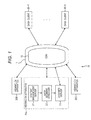
- Fig. 1 shows an example of a configuration of a content supply system that streams content based on DASH.
- This content supply system 10 is composed of a plurality of viewing CH apparatuses 20 (20A, 20B, and 20C in this case) corresponding to respective channels through which content is delivered; and multiple DASH clients 30 which are the receiving side of the content.
- the DASH clients 30 can be connected to the viewing CH apparatuses 20 through a Contents Delivery Network (CDN) 12 that uses Internet 11.
- CDN Contents Delivery Network
- the viewing CH apparatus 20A delivers, as a channel A, pieces of content of the same content by a plurality of streams with different bit rates.
- the viewing CH apparatus 20B delivers, as a channel B, pieces of content of the same content that differ from the pieces of content of the channel A, by a plurality of streams with different bit rates.
- the viewing CH apparatus 20C is also the same. In the following, when the viewing CH apparatuses 20A, 20B, and 20C do not need to be individually distinguished from each other, they are simply referred to as the viewing CH apparatuses 20.
- Each viewing CH apparatus 20 includes a content management server 21, a DASH segment streamer 22, and a DASH MPD server 23.
- the content management server 21 manages source data of content which is supplied to the DASH clients 30, and generates a plurality of pieces of streaming data with different bit rates from the source data, and outputs the plurality of pieces of streaming data to the DASH segment streamer 22.
- the DASH segment streamer 22 divides each piece of streaming data into segments in a temporal manner, and thereby generates a segment stream, e.g., fragmented MP4, and converts the segment stream into a file format on a segment-by-segment basis and holds the files, and notifies the DASH MPD server 23 of an address of a supply source of the files, as metadata. Furthermore, in response to an HTTP request from a DASH client 30 to request a file of a segment stream (hereinafter, also referred to as segment file), the DASH segment streamer 22 HTTP-unicasts, as a WEB server, the segment file to the request source.
- segment file hereinafter, also referred to as segment file
- the DASH MPD server 23 generates an MPD that describes, for example, the address indicating the supply source (i.e., the DASH segment streamer 22) of the segment files.
- the DASH MPD server 23 HTTP-unicasts, as a WEB server, the generated MPD to the request source.
- a DASH client 30 requests the DASH MPD server 23 for an MPD, and obtains the MPD which is HTTP-unicast in response to the request. In addition, based on the obtained MPD, the DASH client 30 requests the DASH segment streamer 22 for a segment file, and receives and plays back the segment file which is HTTP-unicast in response to the request.
- the CDN 12 includes a cache server (not shown), and the cache server caches MPDs and files of segment streams which are HTTP-unicast through the CDN 12. Then, instead of the DASH MPD server 23 or the DASH segment streamer 22 which serves as a WEB server, the cache server can HTTP-unicast a cached MPD or file of a segment stream to the DASH client 30 which is a request source.
- Non-Patent Document 1 " Achieving Uninterrupted Video Streaming Using Existing Web Servers", Mitsuhiro Hirabayashi, NIKKEI ELECTRONICS 2012.3.19
- the DASH clients 30 can select, receive, and play back content delivered through each of a plurality of channels.
- switching of a segment stream between channels in DASH is performed on a segment-by-segment basis or a subsegment-by-subsegment basis, the subsegment being obtained by further fragmenting the segment.
- description is continued assuming that switching of a segment stream between channels in DASH is performed on a segment-by-segment basis.
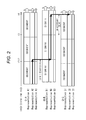
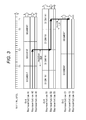
- Figs. 2 and 3 show a state of switching for when zapping is performed between channels, where each of channels A, B, and C in DASH prepares three segment streams (Representations) of pieces of content of the same content with different bit rates.
- segment length time length
- segment length does not always match between channels.
- playback start time of the first segment of content does not always match between channels.
- Fig. 2 shows an example of the case in which the segment length does not match between channels and the playback start time of the first segment of content does not match between channels, either.
- Fig. 3 shows an example of the case in which the playback start time of the first segment of content is allowed to match between channels in synchronization with an NTP time base, and the segment length does not match between channels.
- the switching is delayed to T2 which is a limit of a segment of the Representation B2. Furthermore, even if the user instructs to perform switching to a Representation C2 of the channel C before reaching T3 while viewing the Representation B2 of the channel B, the switching is delayed to T4 which is a limit of a segment of the Representation C2.
- the present disclosure is made in view of such circumstances and is to allow to quickly check a plurality of pieces of content delivered through a plurality of channels.
- the content supply apparatus includes: a combining unit that generates mosaic CH streaming data by disposing pieces of video of aplurality of pieces of content in a plurality of areas, respectively, and combining the pieces of video together, the plurality of pieces of content being delivered through different viewing channels, and the plurality of areas being obtained by dividing a screen; a mosaic CH segment stream generating unit that generates a mosaic CH segment stream based on the generatedmosaic CH streaming data, the mosaic CH segment stream being switchable to/from another mosaic channel at a minimum delay time; a USD generating unit that generates a USD having introduced therein a mosaic element related to a screen configuration of the mosaic CH segment stream; and a multicasting unit that multicasts the mosaic CH segment stream and the USD.
- the USD generating unit may generate, as the USD, an extended-HTML inclusion type USD including an extended HTML element, or an extended-HTML reference type USD including a reference to a file of the extended HTML element, the extended HTML element describing information about the screen configuration of the mosaic CH segment stream.
- the content supply apparatus may further include a unicasting unit that unicasts the mosaic CH segment stream and the USD.
- the content supply apparatus may further include an MPD generating unit that generates an MPD, the MPD being information for a receiver to receive the mosaic CH segment stream, the multicasting unit may also multicast the MPD, and the unicasting unit may also unicast the MPD.
- an MPD generating unit that generates an MPD, the MPD being information for a receiver to receive the mosaic CH segment stream
- the multicasting unit may also multicast the MPD
- the unicasting unit may also unicast the MPD.
- the USD generating unit may generate the USD in which an attribute is extended, the attribute indicating that the mosaic CH segment stream is switchable to/from another mosaic channel at the minimum delay time.
- the mosaic CH segment stream generating unit may generate the mosaic CH segment stream by dividing the generated mosaic CH streaming data according to timing and segment length, the mosaic CH segment stream being switchable to/from another mosaic channel at the minimum delay time, and the timing and the segment length being uniform between the mosaic channel and the another mosaic channel.
- the mosaic CH segment stream generating unit may generate the mosaic CH segment stream by making a cycle of switchable boundaries of the generated mosaic CH streaming data sufficiently short, the mosaic CH segment stream being switchable to/from another mosaic channel at the minimum delay time.
- the unicasting unit may HTTP-unicast the mosaic CH segment stream, and the multicasting unit may FLUTE-multicast a mosaic CH FLUTE stream gene rated based on the mosaic CH segment stream.
- the content supply apparatus may further include an RTP stream generating unit that generates a mosaic CH RTP stream based on the mosaic CH streaming data, and the multicasting unit may also RTP-multicast the mosaic CH RTP stream.
- the content supply method includes: a combining step of generating mosaic CH streaming data by disposing pieces of video of a plurality of pieces of content in a plurality of areas, respectively, and combining the pieces of video together, the plurality of pieces of content being delivered through different viewing channels, and the plurality of areas being obtained by dividing a screen; a mosaic CH segment stream generating step of generating a mosaic CH segment stream, based on the generated mosaic CH streaming data, the mosaic CH segment stream being switchable to/from another mosaic channel at a minimum delay time; a USD generating step of generating a USD having introduced therein a mosaic element related to a screen configuration of the mosaic CH segment stream; and a multicasting step of multicasting the mosaic CH segment stream and the USD, the steps being performed by the content supply apparatus.
- a program causes a computer that delivers content as a mosaic channel, to function as: a combining unit that generates mosaic CH streaming data by disposing pieces of video of a plurality of pieces of content in a plurality of areas, respectively, and combining the pieces of video together, the plurality of pieces of content being delivered through different viewing channels, and the plurality of areas being obtained by dividing a screen; a mosaic CH segment stream generating unit that generates a mosaic CH segment stream, based on the generated mosaic CH streaming data, the mosaic CH segment stream being switchable to/from another mosaic channel at a minimum delay time; a USD generating unit that generates a USD having introduced therein a mosaic element related to a screen configuration of the mosaic CH segment stream; and a multicasting unit that multicasts the mosaic CH segment stream and the USD.
- mosaic CH streaming data is generated by disposing pieces of video of a plurality of pieces of content delivered through different viewing channels, in a plurality of areas, respectively, and combining the pieces of video together, the areas being obtained by dividing a screen.
- a mosaic CH segment stream switchable to/from another mosaic channel at a minimum delay time is generated.
- a USD having introduced therein a mosaic element related to a screen configuration of the mosaic CH segment stream is generated.
- the mosaic CH segment stream and the USD are multicast.
- a USD and a mosaic CH segment stream are received.
- a stream of content of a viewing channel corresponding to the selected area is received and played back.
- the content supply apparatus includes: a combining unit that generates mosaic CH streaming data by disposing pieces of video of a plurality of pieces of content in a plurality of areas, respectively, and combining the pieces of video together, the plurality of pieces of content being delivered through different viewing channels, and the plurality of areas being obtained by dividing a screen; a mosaic CH segment stream generating unit that generates a mosaic CH segment stream based on the generated mosaic CH streaming data, the mosaic CH segment stream being switchable to/from another mosaic channel at a minimum delay time; a USD generating unit that generates a USD having introduced therein a mosaic element related to a screen configuration of the mosaic CH segment stream; and a multicasting unit that multicasts the mosaic CH segment stream and the USD.
- the terminal apparatus is configured to receive the USD and the mosaic CH segment stream, and receive and play back, according to a user operation to select an area on the screen, a stream of content of a viewing channel corresponding to the selected area, the screen playing back the mosaic CH segment stream.
- the content supply apparatus generates mosaic CH streaming data by disposing pieces of video of a plurality of pieces of content delivered through different viewing channels, in a plurality of areas, respectively, and combining the pieces of video together, the areas being obtained by dividing a screen, generates a mosaic CH segment stream switchable to/from another mosaic channel at a minimum delay time, based on the generated mosaic CH streaming data, generates a USD having introduced therein a mosaic element related to a screen configuration of the mosaic CH segment stream, and multicasts the mosaic CH segment stream and the USD.
- the terminal apparatus receives the USD and the mosaic CH segment stream, and receives and plays back, according to a user operation to select an area on the screen that plays back the mosaic CH segment stream, a stream of content of a viewing channel corresponding to the selected area.
- a plurality of pieces of content delivered through a plurality of different viewing channels can be checked quickly.
- Fig. 4 shows exemplary display of screens of mosaic channels (CHs) which are delivered by mosaic CH apparatuses 60 of a content supply system 50 ( Fig. 6 ) which is an embodiment of the present disclosure.
- CHs mosaic channels
- the mosaic channel is a channel used to deliver a mosaic CH stream
- the mosaic CH stream is a stream where video of a plurality of pieces of content delivered from viewing CH apparatuses 20, respectively, which correspond to normal channels (hereinafter, also referred to as viewing channels) is combined together.
- a screen for video of a mosaic CH stream is divided into a plurality of areas, and pieces of video of content of different viewing channels are disposed in the respective areas.
- a mosaic CH stream of each mosaic channel is formed by combining together video streams of a plurality of pieces of content which are grouped by genre (e.g., sports, variety, news, and movies).
- genre e.g., sports, variety, news, and movies.
- a mosaic CH stream of a multi-angle mosaic channel may be formed by combining together a plurality of different video streams which are delivered as a single piece of content and which are selectable by a receiver (a plurality of pieces of video of a shooting target, such as a concert venue, which is shot from a plurality of different positions, a plurality of pieces of video shot in different directions from one location, or the like).
- a terminal apparatus 80 that receives and plays back a mosaic channel can simultaneously check video of a plurality of (four in the case of Fig. 4 ) viewing channels on a mosaic channel screen.
- video of more viewing channels can be checked in a short period of time.
- Zapping between mosaic channels which is performed by the terminal apparatus 80 can be instructed, for example, by an operation on a channel up or down button of a remote control. Furthermore, on each mosaic channel screen, for example, a pointer is moved to any of a plurality of areas on the screen, according to an operation on an up, down, left, or right button of the remote control, by which the area can be focused, and furthermore, the focused area can be selected by an operation on a select button.
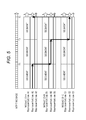
- Fig. 5 shows a state of switching for when zapping is performed between mosaic channels.
- each of mosaic channels A, B, and C prepares three segment streams (Representations) with different bit rates.
- segment streams of each mosaic channel are such that the limits of segments are synchronized with an NTP time base, and the segment length is uniform between a plurality of mosaic channels. Furthermore, the starting points of media playback times at the beginning of segments (MPD/@availabilityStartTime+Period/@start) match on the NTP time base.
- the switching is performed at T1 which is a limit of a segment of the Representation A2 and is also a limit of a segment of the Representation B2.
- zapping can be performed between a plurality of mosaic channels while the occurrence of unnecessary delay is inhibited.
- a mosaic CH stream of a mosaic channel is supplied as a segment stream to the terminal apparatuses 80 not only by HTTP-unicast, but also by FLUTE-multicast and RTP-multicast.
- a viewing CH stream of a viewing channel is HTTP-unicast as a segment stream.
- An MPD which is metadata required for the terminal apparatuses 80 to receive a mosaic CH stream and a viewing CH stream which are HTTP-unicast, is supplied not only by HTTP-unicast, but also by FLUTE-multicast and UPD-multicast (overlay multicast).
- USD User Service Description
- a mosaic CH stream which is multicast is received and played back using a USD and an MPD which are multicast, wherever possible. If this cannot be performed, a mosaic CH stream which is multicast is received andplayedback using a USD f ile and anMPD which are HTTP-unicast. If this cannot be performed, either, a mosaic CH stream which is HTTP-unicast is received and played back using a USD file and an MPD which are HTTP-unicast. By this, it is possible to inhibit excess load from being applied to the Internet or inhibit degradation of service quality from being caused.
- Fig. 6 shows an exemplary configuration of a content supply system which is an embodiment of the present disclosure.
- This content supply system 50 is composed of a plurality of viewing CH apparatuses 20 that deliver viewing CH streams as viewing channels; a plurality of mosaic CH apparatuses 60 that deliver mosaic CH streams as mosaic channels; and multiple terminal apparatuses 80.
- a viewing CH apparatus 20 corresponds to a viewing channel A
- a mosaic CH apparatus 60A corresponds to a mosaic channel A.
- the number of the viewing CH apparatuses 20 and the number of the mosaic CH apparatuses 60 do not need to be the same, and the number of the mosaic CH apparatuses 60 may be smaller than the number of the viewing CH apparatuses 20.
- a network 51 includes various types of broadcast networks that use terrestrial broadcast waves, satellite broadcast waves, cellular broadcast (e)MBMS, etc., in addition to bidirectional communication networks represented by the Internet and a CDN using the Internet.
- broadcast networks that use terrestrial broadcast waves, satellite broadcast waves, cellular broadcast (e)MBMS, etc., in addition to bidirectional communication networks represented by the Internet and a CDN using the Internet.
- An NTP server 52 that provides system time information conforming to UTC time format is connected to the network 51.
- the NTP server 52 can supply system time information to each viewing CH apparatus 20, each mosaic CH apparatus 60, each terminal apparatus 80, etc. Note that each viewing CH apparatus 20, each mosaic CH apparatus 60, and each terminal apparatus 80 operate such that their system times are synchronized with an NTP time base, according to the system time information from the NTP server 52.
- the viewing CH apparatuses 20 are configured in the same manner as those shown in Fig. 1 . Note, however, that the viewing CH apparatuses 20 of Fig. 1 supply segment streams and MPDs to a receiver only by HTTP-unicast, but in the content supply system 50 segment streams and MPDs may be supplied not only by HTTP-unicast, but also by FLUTE-multicast and RTP-multicast.
- Each mosaic CH apparatus 60 includes a mosaic CH builder 61, a mosaic CH segmenter 62, a mosaic CH USD generator 63, an RTP streamer 64, a FLUTE streamer 65, a WEB server 66, and a multicast server 67.
- the mosaic CH builder 61 to the multicast server 67 of the mosaic CH apparatus 60 may be collectively disposed, or maybe disposed in a distributed manner through the Internet, etc.
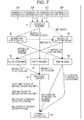
- Fig. 7 shows the flow of various types of data among the mosaic CH builder 61 to the multicast server 67.
- the mosaic CH builder 61 obtains streaming data of content which are delivered from a plurality of viewing CH apparatuses 20 (viewing CH apparatuses 20A to 20D in the case of Fig. 7 ) through their viewing channels. Then, the mosaic CH builder 61 divides a mosaic channel screen into four areas of 2 x 2, disposes pieces of video of content of viewing channels A to D in the respective areas, combines the pieces of video together, and thereby generates mosaic CH streaming data.
- the mosaic CH builder 61 outputs the generated mosaic CH streaming data to the mosaic CH segmenter 62 and the RTP streamer 64. Moreover, the mosaic CH builder 61 supplies metadata about the content which is delivered from each viewing CH apparatus 20 through its viewing channel (a URL of a supply source of a segment stream, etc.) and disposition information of the viewing CH streaming data on the mosaic screen, to the mosaic CH USD generator 63.
- the mosaic CH segmenter 62 converts the mosaic CH streaming data into a mosaic CH segment stream such as fragmentedMP4, and outputs the mosaic CH segment stream to the FLUTE streamer 65 and the WEB server 66.
- the segment length of the mosaic CH segment stream is made uniform with that of mosaic CH segment streams which are generated by mosaic CH apparatuses 60 of other mosaic channels, and the limits of segments are synchronized with the NTP time base. Therefore, zapping can be performed between mosaic channels without causing unnecessary delay.
- the mosaic CH segmenter 62 notifies the mosaic CH USD generator 63 of metadata of the generated mosaic CH segment stream (a URL of the WEB server 66 serving as a supply source of a file where the mosaic CH segment stream is stored, etc.).
- the mosaic CH USD generator 63 generates a USD for a mosaic CH (hereinafter, also referred to as mosaic CH USD) including a mosic element that directly describes an extended HTML element describing the disposition information of the viewing CH streaming data on the mosaic screen, etc., or that describes a reference to the extended HTML element, and outputs the mosaic CH USD to the FLUTE streamer 65 and the WEB server 66.
- mosaic CH USD a mosaic CH
- mosic element that directly describes an extended HTML element describing the disposition information of the viewing CH streaming data on the mosaic screen, etc., or that describes a reference to the extended HTML element
- the mosaic CH USD generator 63 generates an MPD for the mosaic CH (hereinafter, also referred to as mosaic CH MPD) which is required for the terminal apparatuses 80 to receive the mosaic CH segment stream and a mosaic CH RTP stream (described later), and outputs the mosaic CH MPD to the FLUTE streamer 65 and the WEB server 66.
- mosaic CH MPD an MPD for the mosaic CH
- the RTP streamer 64 stores, in RTP packets, the mosaic CH streaming data which is inputted from the mosaic CH builder 61, and thereby generates a mosaic CH RTP stream, and outputs the mosaic CH RTP stream to the multicast server 67. In addition, the RTP streamer 64 notifies the mosaic CH USD generator 63 of metadata of the mosaic CH RTP stream.
- the FLUTE streamer 65 stores, in FLUTE packets, the mosaic CH segment stream which is inputted from the mosaic CH segmenter 62, and thereby generates a mosaic CH FLUTE stream, and outputs the mosaic CH FLUTE stream to the multicast server 67.
- the FLUTE streamer 65 outputs the USD and MPD for the mosaic CH which are inputted from the mosaic CH USD generator 63, to the multicast server 67.
- the WEB server 66 In response to a request from a terminal apparatus 80, the WEB server 66 HTTP-unicasts the mosaic CH USD and the mosaic CH MPD to the request source. In addition, in response to a request from the terminal apparatus 80, the WEB server 66 HTTP-unicasts the mosaic CH USD to the request source. Furthermore, in response to a request from the terminal apparatus 80, the WEB server 66 HTTP-unicasts the mosaic CH segment stream to the request source.
- Each terminal apparatus 80 is connected to the viewing CH apparatuses 20 and the mosaic CH apparatuses 60 through the network 51.
- the terminal apparatus 80 performs zapping between mosaic channels, the terminal apparatus 80 obtains mosaic CH USDs and MPDs which are multicast, wherever possible, and receives and plays back mosaic CH FLUTE streams or mosaic CH RTP streams which are multicast, wherever possible, based on the obtained mosaic CH USDs and MPDs.
- mosaic CH USDs and MPDs which are HTTP-unicast are obtained, and mosaic CH FLUTE streams or mosaic CH RTP streams which are multicast are received and played back. If this cannot be performed, either, mosaic CH segment streams which are HTTP-unicast are received and played back, using mosaic CH USDs and MPDs which are HTTP-unicast.
- a mosaic CH USD is referred to.
- announcement information that describes a portal channel of the multicast server 67 that performs FLUTE-multicast is referred to.
- a USD is used for the announcement information.
- the USD is FLUTE-multicast only by cellular broadcast (e) MBMS included in the network 51, but the USD may be FLUTE-multicast in other broadcast networks included in the network 51, too.
- Fig. 8 shows the disposition of a USD in MBMS.
- the USD is delivered stored in Service Announcement&Metadata of MBMS.
- the Service Announcement&Metadata is disposed in an interaction channel and a broadcast/multicast channel of MBMS. Therefore, the USD is FLUTE-multicast through the broadcast/multicast channel.
- the USD can be HTTP-unicast through the interaction channel.
- mosaic CH USD There are two types of mosaic CH USD: an extended-HTML inclusion type mosaic CH USD and an extended-HTML reference type mosaic CH USD.
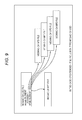
- Fig. 9 shows a relationship between a mosaic CH USD and MPD for when the mosaic CH USD is an extended-HTML inclusion type mosaic CH USD.
- a mosaic element is introduced in the extended-HTML inclusion type mosaic CH USD, and an extended HTML element is directly described in the mosaic element.
- a reference to a control target element is specified by an xlink:type attribute (the value "simple") and an xlink:href attribute so that a reference attribute to an AdaptationSet element, a Representation element, or a SubRepresentation element in a mosaic CH MPD which is a control description target can be specified.
- An address of a viewing stream to which switching is performed when a channel corresponding to an area specified by this div element is confirmed and selected is indicated.
- an xlink: actuate attribute (the value "onLoad")
- an xlink:type attribute (the value "simple")
- an xlink:href attribute an address of a stream to which switching is performed when a focus is moved to an area specified by this div element (simple pointer movement which is different from the above-described channel selection and confirmation operation) is indicated.
- Fig. 10 shows a relationship between a mosaic CH USD and MPD for when the mosaic CH USD is an extended-HTML reference type mosaic CH USD.
- a mosaic element is introduced in the extended-HTML reference type mosaic CH USD, and a reference to an extended HTML element and a reference to a mosaic CH MPD are described in the mosaic element.
- Synchronized Multimedia Integration Language (SMIL) may be used instead of using the extended HTML element.
- SMIL Synchronized Multimedia Integration Language
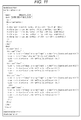
- Fig. 11 shows an example of the extended-HTML inclusion type mosaic CH USD.
- a mosaic element being present in an USD indicates that the USD is a mosaic CH USD.
- a div element in an extended HTML element describes information about an area provided on a mosaic CH stream screen.
- a body element describes a reference to an audio stream of a viewing CH that is outputted when a focus is moved to each area; and a reference to a video stream and an audio stream of the viewing CH that are received and played back when each area is selected.
- references to an audio stream that is outputted when a focus is moved to each area are in a mosaic CH MPD where the MPDURI is http://example.com/c.mpd.
- viewing MPDs which are different than the mosaic CH MPD are specified. Note, however, that references to a video stream and an audio stream for viewing that are received and played back when each area is selected are not limited to viewing MPDs.
- Fig. 12 shows an example of a mosaic CH MPD.
- an AdaptationSet element related to video stores the identifier of a Representation of a video stream of a mosaic CH.
- An AdaptationSet element related to audio stores the identifiers of RepresentationSet of audio streams of viewing CHs that are outputted when a focus is moved to the respective areas.
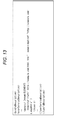
- Fig. 13 shows an example of the extended-HTML reference type mosaic CH USD.
- Fig. 14 shows an example of a file of an extended HTML element which is present as a different file than the extended-HTML reference type mosaic CH USD and which is referred to from the extended-HTML reference type mosaic CH USD.
- a mosaic element in the extended-HTML reference type mosaic CH USD describes a reference to an extended HTML element which is present as a different file, and a reference to a mosaic CH MPD.
- the extended HTML element of Fig. 14 describes the same content as that of the extended HTML element shown in Fig. 11 .
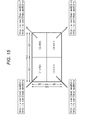
- Fig. 15 specifically shows the content of the extended HTML element shown in Fig. 11 or 14 .
- the entire screen with 1920 pixels x 1080 pixels is defined as Base, and an upper left area of the screen is defined as C1 area, an upper right area as C2 area, a lower left area as C3 area, and a lower right area as C4 area.
- the extended HTML element describes that Id-C1a as an audio stream for the C1 area, Id-C2a as an audio stream for the C2 area, Id-C3a as an audio stream for the C3 area, and Id-C4a as an audio stream for the C4 area are simultaneously outputted.
- the terminal apparatus 80 instead of the terminal apparatus 80 simultaneously outputting audio corresponding to the four audio streams, the terminal apparatus 80 outputs, by a function of a browser, etc., only Id-C1a when the C1 area is being focused, outputs only Id-C2a when the C2 area is being focused, outputs only Id-C3a when the C3 area is being focused, and outputs only Id-C4a when the C4 area is being focused.
- a viewing video stream specified by http://a.com/C1mpd.mpd#1d-v and a viewing audio stream specified by http://a.com/C1mpd.mpd#1d-a are received and played back.
- a viewing video stream specified by http://a.com/C2mpd.mpd#1d-v and a viewing audio stream specified by http://a.com/C2mpd.mpd#1d-a are received and played back.
- a viewing video stream specifiedbyhttp://a.com/C3mpd.mpd#1d-v and a viewing audio stream specified by http://a.com/C3mpd.mpd#1d-a are received and played back.
- a viewing video stream specified by http://a.com/C4mpd.mpd#1d-v and a viewing audio stream specified by http://a.com/C4mpd.mpd#1d-a are received and played back.
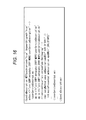
- Fig. 16 shows an example of a USD added with an attribute indicating that a corresponding mosaic CH stream is zappable.
- the class name "urn:streamType:forZapping" is defined and introduced as a flag attribute indicating that a stream can be used for zapping.
- the stream described in this USD is such that the segment length is sufficiently small or the cycle of switchable boundaries (e.g., I-pictures) is sufficiently small and the switchable boundaries are signaled, and thus, the stream is zappable.
- bundleDescription/@NTPSynchronized indicates that the limits of segments of a stream are synchronized with the NTP time base.
- bundleDescription/@SegmentAligned indicates that the segments of the streamhave a uniform segment length. Therefore, if bundleDescription/@NTPSynchronized and bundleDescription/@SegmentAligned are true, then it means that the stream can be switched without causing unnecessary delay.
- the starting points of media playback times at the beginning of segments are allowed to match on the NTP time base.
- the mosaic CH MPD it is essential to describe at least one of a segmentBase/@duration attribute that stores a value indicating segment length, and an MPD/@maxSegmentDuration attribute that stores a value indicating maximum segment length.
- a ServiceLocation element attribute is newly introduced in the mosaic CH MPD.
- an rtspRange attribute is introduced that indicates a section of a mosaic CH RTP stream to be sent by multicast, which corresponds to a byte range of a segment to be sent by HTTP-unicast.
- the rtspRange attribute is to identify a section of a mosaic CH RTP stream to be multicast, which is a switching target of a mosaic CH segment stream to be HTTP-unicast, and is disposed in a SegmentURL element.
- the rtspRange attribute stores a character string of a format (UTC format) of a range parameter identifying an RTP stream section, which is defined in Real Time Streaming Protocol (RTSP) used to control RTP streaming, which is defined in Request For Comment (RFC) 2326.
- RTSP Real Time Streaming Protocol
- RTC Request For Comment
- ServiceLocationAttributeUrl attribute that describes a url of a ServiceLocationAttribute file that stores the ServiceLocation element as a root element is disposed in BaseURL of the MPD.
- the ServiceLocation element includes a tuning parameter (DeliverySystemAttributes) and an IP multicast address (IPMulticastAddress).
- DeliverySystemIdentifier of DeliverySystemAttributes describes, for example, when a multicast bearer or a broadcast bearer of a mobile network such as MBMS is used, a format identifier (ID_MBMS in the case of MBMS) of a data structure of a tuning parameter adopted in multicast transmission or broadcast transmission by MBMS, etc.
- ID_MBMS format identifier
- ID_DVB_T a format identifier of a data structure of a tuning parameter adopted in broadcast transmission in the DVB terrestrial network
- DeliverySystemDescriptor of DeliverySystemAttributes describes a data structure (parameter itself) of a tuning parameter corresponding to a delivery mode which is identified by DeliverySystemIdentifier.
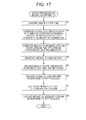
- Fig. 17 is a flowchart describing processes performed by each mosaic CH apparatus 60 to deliver a mosaic CH stream.
- the mosaic CH apparatus 60 allows its system time to be synchronized with an NTP time base, according to system time information provided from the NTP server 52.
- the mosaic CH segmenter 62, etc., of the mosaic CH apparatus 60 can operate in synchronization with the NTP time base.
- the mosaic CH builder 61 obtains streaming data of content (or source data thereof) delivered from a plurality of (four in the present embodiment) viewing CH apparatuses 20, respectively, as viewing channels, disposes the streaming data in a plurality of areas of a screen, combines the streaming data together, and thereby generates mosaic CH streaming data. Furthermore, the mosaic CH builder 61 outputs the generated mosaic CH streaming data to the mosaic CH segmenter 62 and the RTP streamer 64. Moreover, the mosaic CH builder 61 obtains metadata of the content delivered from the plurality of viewing CH apparatuses 20 through the viewing channels, and supplies the metadata together with disposition information of the viewing CH content in the mosaic CH streaming data to the mosaic CH USD generator 63.
- the mosaic CH segmenter 62 generates a mosaic CH segment stream such as fragmentedMP4 from the mosaic CH streaming data inputted from the mosaic CH builder 61, and outputs the mosaic CH segment stream to the FLUTE streamer 65 and the WEB server 66.
- the mosaic CH segmenter 62 notifies the mosaic CH USD generator 63 of metadata of the generated mosaic CH segment stream.
- the FLUTE streamer 65 stores, in FLUTE packets, the mosaic CH segment stream inputted from the mosaic CH segmenter 62, and thereby generates a mosaic CH FLUTE stream, and outputs the mosaic CH FLUTE stream to the multicast server 67.
- the RTP streamer 64 stores, in RTP packets, the mosaic CH streaming data inputted from the mosaic CH builder 61, and thereby generates a mosaic CH RTP stream, and outputs the mosaic CH RTP stream to the multicast server 67. In addition, the RTP streamer 64 notifies the mosaic CH USD generator 63 of metadata of the mosaic CH RTP stream.
- the mosaic CH USD generator 63 generates a mosaic CH USD and MPD based on the notified disposition information and metadata, and outputs the mosaic CH USD and MPD to the FLUTE streamer 65 and the WEB server 66.
- the FLUTE streamer 65 outputs the mosaic CH USD andMPD which are inputted from the mosaic CH USD generator 63, to the multicast server 67.
- the multicast server 67 FLUTE-multicasts and UDP-multicasts (including overlay multicast, etc.) the mosaic CH USD and MPD.
- step S6 when there is an HTTP request from a terminal apparatus 80 to request a mosaic CH USD and MPD, the WEB server 66 HTTP-unicasts the mosaic CH USD and MPD to the request source in response to the HTTP request.
- the multicast server 67 FLUTE-multicasts the mosaic CH FLUTE stream and RTP-multicasts the mosaic CH RTP stream.
- step S8 when there is an HTTP request from the terminal apparatus 80 to request a file of a mosaic CH segment stream, the WEB server 66 HTTP-unicasts the file of a mosaic CH segment stream to the request source in response to the HTTP request. Description of the processes performed by the mosaic CH apparatus 60 ends here.
- Fig. 18 is a flowchart for when the terminal apparatus 80 can receive mosaic CH USDs and MPDs which are multicast, and can receive and play back mosaic CH FLUTE streams or mosaic CH RTP streams which are multicast.
- a method of receiving viewing MPDs and viewing streams which are delivered from the viewing CH apparatuses 20 is any. Note, however, that since in many cases a viewing stream to be HTTP-unicast normally has higher image quality (higher bit rate) than a viewing stream to be multicast, a viewing stream to be HTTP-unicast is received wherever possible.
- the terminal apparatus 80 allows its system time to be synchronized with the NTP time base, according to system time information provided from the NTP server 52.
- the terminal apparatus 80 receives mosaic CH USDs and MPDs which are FLUTE-multicast in the process at step S5 of Fig. 17 .
- the terminal apparatus 80 having received the mosaic CH USDs and MPDs goes into a zapping phase.
- the terminal apparatus 80 receives and plays back mosaic CH FLUTE streams which are FLUTE-multicast or mosaic CH RTP streams which are RTP multicast in the process at step S7 of Fig. 17 .
- the terminal apparatus 80 can perform quick zapping between mosaic channels, by repeating the process at step S13 as appropriate.
- the terminal apparatus 80 obtains, during the zapping phase, viewing MPDs of a plurality of viewing channels that form a mosaic channel being received and played back. Specifically, at step S14, the terminal apparatus 80 requests viewing CH apparatuses 20 for viewing MPDs, the viewing CH apparatuses 20 corresponding to a plurality of viewing channels, respectively, that form a mosaic channel being received and played back. The terminal apparatus 80 receives viewing MPDs which are HTTP-unicast in response to the request in a process at step S21.
- the terminal apparatus 80 waits until any of the areas on a mosaic channel screen is selected. Then, when any of the areas on the mosaic channel screen is selected, the terminal apparatus 80 transitions to a viewing phase.
- the terminal apparatus 80 having transitioned to the viewing phase requests a corresponding viewing CH apparatus 20 for a viewing segment stream, based on a viewing MPD associated with the selected area which is included in the mosaic CH USD or which is obtained by analyzing an extended HTML element being referred to.
- the terminal apparatus 80 receives andplays back a viewing segment stream which is HTTP-unicast in response to the request in a process at step S22.
- the terminal apparatus 80 can also return to a zapping phase from the viewing phase and then again transition to a viewing phase. Description of the series of processes ends here. According to the above-described series of processes, quick zapping can be performed between mosaic channels, and a quick transition from a mosaic channel screen to a viewing channel can be performed.
- Fig. 19 is a flowchart for when the terminal apparatus 80 obtains mosaic CH USDs and MPDs which are HTTP-unicast and can receive and play back mosaic CH FLUTE streams or mosaic CH RTP streams which are multicast.
- a method of receiving viewing MPDs and viewing streams is any as with the above-described case of Fig. 18 .
- the terminal apparatus 80 allows its system time to be synchronized with the NTP time base, according to system time information provided from the NTP server 52.
- the terminal apparatus 80 requests the WEB server 66 of each mosaic CH apparatus 60 for a mosaic CH USD and MPD.
- the WEB servers 66 HTTP-unicast mosaic CH USDs and MPDs to an MPD obtaining portal 70 in the process at step S6 of Fig. 17 .
- the mosaic CH USDs and MPDs are sent to the terminal apparatus 80 which is the request source.
- the terminal apparatus 80 having received the mosaic CH USDs and MPDs goes into a zapping phase.
- the terminal apparatus 80 receives and plays back mosaic CH FLUTE streams which are FLUTE-multicast or mosaic CH RTP streams which are RTP-multicast in the process at step S7 of Fig. 17 .
- the terminal apparatus 80 can perform quick zapping between mosaic channels, by repeating the process at step S33 as appropriate.
- the terminal apparatus 80 obtains, during the zapping phase, viewing MPDs of a plurality of viewing channels that form a mosaic channel being received and played back. Specifically, at step S34, the terminal apparatus 80 requests viewing CH apparatuses 20 for viewing MPDs, the viewing CH apparatuses 20 corresponding to a plurality of viewing channels, respectively, that form a mosaic channel being received and played back. The terminal apparatus 80 receives viewing MPDs which are HTTP-unicast in response to the request in a process at step S41.
- the terminal apparatus 80 waits until any of the areas on a mosaic channel screen is selected. Then, when any of the areas on the mosaic channel screen is selected, the terminal apparatus 80 transitions to a viewing phase.
- the terminal apparatus 80 having transitioned to the viewing phase requests a corresponding viewing CH apparatus 20 for a viewing segment stream, based on a viewing MPD associated with the selected area which is included in the mosaic CH USD or which is obtained by analyzing an extended HTML element to be referred to.
- the terminal apparatus 80 receives andplays back a viewing segment stream which is HTTP-unicast in response to the request in a process at step S42.
- the terminal apparatus 80 can also return to a zapping phase from the viewing phase and then again transition to a viewing phase. Description of the series of processes ends here. According to the above-described series of processes, quick zapping can be performed between mosaic channels, and a quick transition from a mosaic channel screen to a viewing channel can be performed.
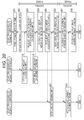
- Fig. 20 is a flowchart for when the terminal apparatus 80 obtains mosaic CH USDs and MPDs which are HTTP-unicast, and cannot receive mosaic CH FLUTE streams and mosaic CH RTP streams which are multicast, but can receive and play back mosaic CH segment streams which are HTTP-unicast.
- a method of receiving viewing MPDs and viewing streams is any as with the above-described case of Fig. 18 .
- the terminal apparatus 80 allows its system time to be synchronized with the NTP time base, according to system time information provided from the NTP server 52.
- the terminal apparatus 80 requests the WEB server 66 of each mosaic CH apparatus 60 for a mosaic CH USD and MPD.
- the WEB servers 66 HTTP-unicast mosaic CH USDs and MPDs to the MPD obtaining portal 70 in the process at step S6 of Fig. 17 .
- the mosaic CH USDs and MPDs are sent to the terminal apparatus 80 which is the request source.
- the terminal apparatus 80 having received the mosaic CH USDs and MPDs goes into a zapping phase.
- the terminal apparatus 80 requests the WEB servers 66 for mosaic CH segment streams.
- the WEB servers 66 HTTP-unicast mosaic CH segment streams to the terminal apparatus 80 in the process at step S8 of Fig. 17 .
- the terminal apparatus 80 receives andplays back the mosaic CH segment streams having been HTTP-unicast.
- the terminal apparatus 80 can perform quick zapping between mosaic channels, by repeating the process at step S53 as appropriate.
- the terminal apparatus 80 obtains, during the zapping phase, viewing MPDs of a plurality of viewing channels that form a mosaic channel being received and played back. Specifically, at step S55, the terminal apparatus 80 requests viewing CH apparatuses 20 for viewing MPDs, the viewing CH apparatuses 20 corresponding to a plurality of viewing channels, respectively, that form a mosaic channel being received and played back. The terminal apparatus 80 receives viewing MPDs which are HTTP-unicast in response to the request in a process at step S61.
- the terminal apparatus 80 waits until any of the areas on a mosaic channel screen is selected. Then, when any of the areas on the mosaic channel screen is selected, the terminal apparatus 80 transitions to a viewing phase.
- the terminal apparatus 80 having transitioned to the viewing phase requests a corresponding viewing CH apparatus 20 for a viewing segment stream, based on a viewing MPD associated with the selected area which is included in the mosaic CH USD or which is obtained by analyzing an extended HTML element to be referred to.
- the terminal apparatus 80 receives andplays back a viewing segment stream which is HTTP-unicast in response to the request in a process at step S62.
- the terminal apparatus 80 can also return to a zapping phase from the viewing phase and then again transition to a viewing phase. Description of the series of processes ends here. According to the above-described series of processes, quick zapping can be performed between mosaic channels, and a quick transition from a mosaic channel screen to a viewing channel can be performed.
- switching between channels in DASH is performed on a segment-by-segment basis
- the switching may be performed on a subsegment-by-subsegment basis, the subsegment being obtained by further fragmenting the segment.
- it is essential for a mosaic CH MPD and a viewing MPD to describe an MPD/@SubSegmentDuration attribute that stores a value indicating subsegment length, and the "segment" in the above-described description is read as "subsegment".
- a mosaic CH MPD which is an extended version of a conventional MPD
- an HTML file can be used instead of the mosaic CH MPD.
- the mosaic CH apparatuses 60 and the terminal apparatuses 80 that perform the above-described series of processes each can not only be configured by hardware, but also implemented by a computer executing software.
- the computer includes, for example, a computer that is incorporated in dedicated hardware and a general-purpose personal computer, for example, that can perform various types of functions by installing various types of programs.
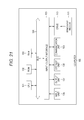
- Fig. 21 is a block diagram showing an exemplary hardware configuration of the above-described computer.
- a Central Processing Unit (CPU) 101 a Central Processing Unit (CPU) 101, a Read Only Memory (ROM) 102, and a Random Access Memory (RAM) 103 are connected to each other through a bus 104.
- CPU Central Processing Unit
- ROM Read Only Memory
- RAM Random Access Memory
- An input/output interface 105 is further connected to the bus 104.
- An input unit 106, an output unit 107, a storage unit 108, a communication unit 10 9, and a drive 110 are connected to the input/output interface 105.
- the input unit 106 is composed of a keyboard, a mouse, a microphone, etc.
- the output unit 107 is composed of a display, a speaker, etc.
- the storage unit 108 is composed of a hard disk, a nonvolatile memory, etc.
- the communication unit 109 is composed of a network interface, etc.
- the drive 110 drives a removable medium 111 such as a magnetic disk, an optical disk, a magneto-optical disk, or a semiconductor memory.
- the above-described series of processes are performed by the CPU 101, for example, loading and executing a program stored in the storage unit 108, in the RAM 103 through the input/output interface 105 and the bus 104.
- the program executed by the computer 100 can be provided by, for example, being recorded in the removable medium 111 serving as a package medium, etc.
- the program can be provided through a wired or wireless transmission medium such as a local area network, the Internet, or digital satellite broadcasting.
- the program can be installed on the storage unit 108 through the input/output interface 105 by placing the removable medium 111 into the drive 110.
- the program can be installed on the storage unit 108 by the communication unit 10 9 receiving the program through a wired or wireless transmission medium.
- the program can be pre-installed on the ROM 102 or the storage unit 108.
- the program executed by the computer 100 may be a program that performs processes chronologically in the order described in this specification, or may be a program that performs processes in parallel or at required timing such as when a call is issued.
- the present disclosure can also employ configurations such as those shown below.
Landscapes
- Engineering & Computer Science (AREA)
- Multimedia (AREA)
- Signal Processing (AREA)
- Databases & Information Systems (AREA)
- Computer Networks & Wireless Communication (AREA)
- Two-Way Televisions, Distribution Of Moving Picture Or The Like (AREA)
- Information Transfer Between Computers (AREA)
Applications Claiming Priority (2)
| Application Number | Priority Date | Filing Date | Title |
|---|---|---|---|
| JP2013225776 | 2013-10-30 | ||
| PCT/JP2014/073351 WO2015064210A1 (ja) | 2013-10-30 | 2014-09-04 | コンテンツ供給装置、コンテンツ供給方法、プログラム、端末装置、およびコンテンツ供給システム |
Publications (2)
| Publication Number | Publication Date |
|---|---|
| EP3065407A1 true EP3065407A1 (de) | 2016-09-07 |
| EP3065407A4 EP3065407A4 (de) | 2017-05-24 |
Family
ID=53003823
Family Applications (1)
| Application Number | Title | Priority Date | Filing Date |
|---|---|---|---|
| EP14857707.5A Ceased EP3065407A4 (de) | 2013-10-30 | 2014-09-04 | Inhaltsbereitstellungsvorrichtung, inhaltsbereitstellungsverfahren, programm, endgerätevorrichtung und inhaltsbereitstellungssystem |
Country Status (6)
| Country | Link |
|---|---|
| US (1) | US10034042B2 (de) |
| EP (1) | EP3065407A4 (de) |
| JP (1) | JPWO2015064210A1 (de) |
| CN (1) | CN105659614B (de) |
| RU (1) | RU2016115980A (de) |
| WO (1) | WO2015064210A1 (de) |
Cited By (1)
| Publication number | Priority date | Publication date | Assignee | Title |
|---|---|---|---|---|
| EP3249939A4 (de) * | 2015-02-12 | 2018-01-17 | Huawei Technologies Co. Ltd. | Verfahren zur darstellung von multimedia-streamingdiensten, entsprechende vorrichtung und entsprechendes system |
Families Citing this family (8)
| Publication number | Priority date | Publication date | Assignee | Title |
|---|---|---|---|---|
| US20160094600A1 (en) | 2014-09-30 | 2016-03-31 | The Nielsen Company (Us), Llc | Methods and apparatus to measure exposure to streaming media |
| EP3197151B1 (de) * | 2014-10-28 | 2019-08-14 | Huawei Technologies Co. Ltd. | Verfahren und vorrichtung zur mosaikdienstdarstellung/-bereitstellung |
| US10051031B2 (en) * | 2015-04-20 | 2018-08-14 | Qualcomm Incorporated | Further device timing adjustments and methods for supporting DASH over broadcast |
| WO2018072184A1 (en) * | 2016-10-20 | 2018-04-26 | Zte Corporation | Generation of mosaic channels for ott live broadcasts |
| JP2019036787A (ja) * | 2017-08-10 | 2019-03-07 | 株式会社ミクシィ | 情報処理装置、動画配信方法、及び動画配信プログラム |
| CN109348284A (zh) * | 2018-11-28 | 2019-02-15 | 深圳市创维软件有限公司 | 一种频道播放方法、装置、设备及介质 |
| CN109842814B (zh) * | 2018-12-26 | 2021-01-12 | 深圳Tcl数字技术有限公司 | 节目的切换方法、装置、电视机及可读存储介质 |
| US20230269417A1 (en) * | 2020-08-28 | 2023-08-24 | Lg Electronics Inc. | Signal processing device and image display apparatus including same |
Family Cites Families (10)
| Publication number | Priority date | Publication date | Assignee | Title |
|---|---|---|---|---|
| US7941554B2 (en) | 2003-08-01 | 2011-05-10 | Microsoft Corporation | Sparse caching for streaming media |
| BRPI0609491A2 (pt) | 2005-03-28 | 2010-04-13 | Directv Group Inc | canal de vìdeo de matriz interativo e canal de vìdeo interativo exibidos em um monitor |
| JP2007124047A (ja) * | 2005-10-25 | 2007-05-17 | Sony Corp | 表示制御装置、及び、表示制御方法 |
| KR101265635B1 (ko) * | 2007-01-10 | 2013-05-23 | 엘지전자 주식회사 | 방송 신호 수신 방법 및 방송 수신 장치 |
| CN101766010A (zh) * | 2007-06-19 | 2010-06-30 | 诺基亚公司 | 通信会话中会话特征的信号通知系统和方法 |
| US8875183B2 (en) * | 2008-10-31 | 2014-10-28 | International Business Machines Corporation | Intelligent TV mosaic for IPTV |
| US9026671B2 (en) | 2011-04-05 | 2015-05-05 | Qualcomm Incorporated | IP broadcast streaming services distribution using file delivery methods |
| CN102421014A (zh) * | 2011-11-22 | 2012-04-18 | 中兴通讯股份有限公司 | 实现自定义马赛克业务的方法、终端及系统 |
| US8953478B2 (en) * | 2012-01-27 | 2015-02-10 | Intel Corporation | Evolved node B and method for coherent coordinated multipoint transmission with per CSI-RS feedback |
| KR101459557B1 (ko) * | 2013-07-15 | 2014-11-17 | 주식회사 케이티 | 실시간 시청률에 기반한 모자이크 채널 가이드를 제공하는 서버 및 방법 |
-
2014
- 2014-09-04 JP JP2015544849A patent/JPWO2015064210A1/ja active Pending
- 2014-09-04 CN CN201480058470.1A patent/CN105659614B/zh active Active
- 2014-09-04 WO PCT/JP2014/073351 patent/WO2015064210A1/ja not_active Ceased
- 2014-09-04 US US14/917,186 patent/US10034042B2/en active Active
- 2014-09-04 EP EP14857707.5A patent/EP3065407A4/de not_active Ceased
- 2014-09-04 RU RU2016115980A patent/RU2016115980A/ru not_active Application Discontinuation
Cited By (2)
| Publication number | Priority date | Publication date | Assignee | Title |
|---|---|---|---|---|
| EP3249939A4 (de) * | 2015-02-12 | 2018-01-17 | Huawei Technologies Co. Ltd. | Verfahren zur darstellung von multimedia-streamingdiensten, entsprechende vorrichtung und entsprechendes system |
| US10637904B2 (en) | 2015-02-12 | 2020-04-28 | Huawei Technologies Co., Ltd. | Multimedia streaming service presentation method, related apparatus, and related system |
Also Published As
| Publication number | Publication date |
|---|---|
| US10034042B2 (en) | 2018-07-24 |
| CN105659614B (zh) | 2019-09-03 |
| JPWO2015064210A1 (ja) | 2017-03-09 |
| EP3065407A4 (de) | 2017-05-24 |
| US20160198220A1 (en) | 2016-07-07 |
| WO2015064210A1 (ja) | 2015-05-07 |
| RU2016115980A (ru) | 2017-10-25 |
| CN105659614A (zh) | 2016-06-08 |
Similar Documents
| Publication | Publication Date | Title |
|---|---|---|
| US10034042B2 (en) | Content supply apparatus, content supply method, program, terminal apparatus, and content supply system | |
| JP6570999B2 (ja) | コンテンツ供給装置、コンテンツ供給方法、プログラム、端末装置、およびコンテンツ供給システム | |
| US9615119B2 (en) | Method and apparatus for providing timeshift service in digital broadcasting system and system thereof | |
| JP6329964B2 (ja) | 送信装置、送信方法、受信装置、及び、受信方法 | |
| US10382801B2 (en) | Transmission apparatus, transmission method, reception apparatus, and reception method | |
| RU2656093C2 (ru) | Устройство поставки контента, способ поставки контента, программа, оконечное устройство и система поставки контента | |
| JP6630860B2 (ja) | 端末装置および受信方法 | |
| CN105706453B (zh) | 发送装置、发送方法、接收装置和接收方法 | |
| JP2014239291A (ja) | コンテンツ供給装置、コンテンツ供給方法、プログラム、端末装置、およびコンテンツ供給システム | |
| WO2015012140A1 (ja) | コンテンツ供給装置、コンテンツ供給方法、プログラム、端末装置、およびコンテンツ供給システム | |
| WO2015064384A1 (ja) | 送信装置、送信方法、受信装置、及び、受信方法 |
Legal Events
| Date | Code | Title | Description |
|---|---|---|---|
| PUAI | Public reference made under article 153(3) epc to a published international application that has entered the european phase |
Free format text: ORIGINAL CODE: 0009012 |
|
| 17P | Request for examination filed |
Effective date: 20160316 |
|
| AK | Designated contracting states |
Kind code of ref document: A1 Designated state(s): AL AT BE BG CH CY CZ DE DK EE ES FI FR GB GR HR HU IE IS IT LI LT LU LV MC MK MT NL NO PL PT RO RS SE SI SK SM TR |
|
| AX | Request for extension of the european patent |
Extension state: BA ME |
|
| DAX | Request for extension of the european patent (deleted) | ||
| A4 | Supplementary search report drawn up and despatched |
Effective date: 20170424 |
|
| RIC1 | Information provided on ipc code assigned before grant |
Ipc: H04N 21/435 20110101ALI20170418BHEP Ipc: H04N 21/6408 20110101ALI20170418BHEP Ipc: H04L 29/06 20060101ALI20170418BHEP Ipc: H04N 21/235 20110101AFI20170418BHEP Ipc: H04N 21/6405 20110101ALI20170418BHEP Ipc: H04N 21/2343 20110101ALI20170418BHEP Ipc: H04N 21/262 20110101ALI20170418BHEP Ipc: H04N 21/845 20110101ALI20170418BHEP |
|
| RAP1 | Party data changed (applicant data changed or rights of an application transferred) |
Owner name: SATURN LICENSING LLC |
|
| STAA | Information on the status of an ep patent application or granted ep patent |
Free format text: STATUS: EXAMINATION IS IN PROGRESS |
|
| 17Q | First examination report despatched |
Effective date: 20190723 |
|
| REG | Reference to a national code |
Ref country code: DE Ref legal event code: R003 |
|
| STAA | Information on the status of an ep patent application or granted ep patent |
Free format text: STATUS: THE APPLICATION HAS BEEN REFUSED |
|
| 18R | Application refused |
Effective date: 20220401 |