EP3067313A1 - Elektrodenmaterial mit siliciumnanodrähten, die mit mesoporöser oxidnanostrukturschicht beschichtet sind, und ionische liguidelektrolyten für energiespeicheranwendungen - Google Patents
Elektrodenmaterial mit siliciumnanodrähten, die mit mesoporöser oxidnanostrukturschicht beschichtet sind, und ionische liguidelektrolyten für energiespeicheranwendungen Download PDFInfo
- Publication number
- EP3067313A1 EP3067313A1 EP15158311.9A EP15158311A EP3067313A1 EP 3067313 A1 EP3067313 A1 EP 3067313A1 EP 15158311 A EP15158311 A EP 15158311A EP 3067313 A1 EP3067313 A1 EP 3067313A1
- Authority
- EP
- European Patent Office
- Prior art keywords
- mno
- ionic liquid
- sinws
- material according
- silicon nanowires
- Prior art date
- Legal status (The legal status is an assumption and is not a legal conclusion. Google has not performed a legal analysis and makes no representation as to the accuracy of the status listed.)
- Withdrawn
Links
Images





Classifications
-
- B—PERFORMING OPERATIONS; TRANSPORTING
- B82—NANOTECHNOLOGY
- B82Y—SPECIFIC USES OR APPLICATIONS OF NANOSTRUCTURES; MEASUREMENT OR ANALYSIS OF NANOSTRUCTURES; MANUFACTURE OR TREATMENT OF NANOSTRUCTURES
- B82Y10/00—Nanotechnology for information processing, storage or transmission, e.g. quantum computing or single electron logic
-
- B—PERFORMING OPERATIONS; TRANSPORTING
- B82—NANOTECHNOLOGY
- B82Y—SPECIFIC USES OR APPLICATIONS OF NANOSTRUCTURES; MEASUREMENT OR ANALYSIS OF NANOSTRUCTURES; MANUFACTURE OR TREATMENT OF NANOSTRUCTURES
- B82Y30/00—Nanotechnology for materials or surface science, e.g. nanocomposites
-
- H—ELECTRICITY
- H01—ELECTRIC ELEMENTS
- H01M—PROCESSES OR MEANS, e.g. BATTERIES, FOR THE DIRECT CONVERSION OF CHEMICAL ENERGY INTO ELECTRICAL ENERGY
- H01M10/00—Secondary cells; Manufacture thereof
- H01M10/05—Accumulators with non-aqueous electrolyte
- H01M10/052—Li-accumulators
- H01M10/0525—Rocking-chair batteries, i.e. batteries with lithium insertion or intercalation in both electrodes; Lithium-ion batteries
-
- H—ELECTRICITY
- H01—ELECTRIC ELEMENTS
- H01M—PROCESSES OR MEANS, e.g. BATTERIES, FOR THE DIRECT CONVERSION OF CHEMICAL ENERGY INTO ELECTRICAL ENERGY
- H01M4/00—Electrodes
- H01M4/02—Electrodes composed of, or comprising, active material
- H01M4/13—Electrodes for accumulators with non-aqueous electrolyte, e.g. for lithium-accumulators; Processes of manufacture thereof
- H01M4/131—Electrodes based on mixed oxides or hydroxides, or on mixtures of oxides or hydroxides, e.g. LiCoOx
-
- H—ELECTRICITY
- H01—ELECTRIC ELEMENTS
- H01M—PROCESSES OR MEANS, e.g. BATTERIES, FOR THE DIRECT CONVERSION OF CHEMICAL ENERGY INTO ELECTRICAL ENERGY
- H01M4/00—Electrodes
- H01M4/02—Electrodes composed of, or comprising, active material
- H01M4/13—Electrodes for accumulators with non-aqueous electrolyte, e.g. for lithium-accumulators; Processes of manufacture thereof
- H01M4/134—Electrodes based on metals, Si or alloys
-
- H—ELECTRICITY
- H01—ELECTRIC ELEMENTS
- H01M—PROCESSES OR MEANS, e.g. BATTERIES, FOR THE DIRECT CONVERSION OF CHEMICAL ENERGY INTO ELECTRICAL ENERGY
- H01M4/00—Electrodes
- H01M4/02—Electrodes composed of, or comprising, active material
- H01M4/13—Electrodes for accumulators with non-aqueous electrolyte, e.g. for lithium-accumulators; Processes of manufacture thereof
- H01M4/136—Electrodes based on inorganic compounds other than oxides or hydroxides, e.g. sulfides, selenides, tellurides, halogenides or LiCoFy
-
- H—ELECTRICITY
- H01—ELECTRIC ELEMENTS
- H01M—PROCESSES OR MEANS, e.g. BATTERIES, FOR THE DIRECT CONVERSION OF CHEMICAL ENERGY INTO ELECTRICAL ENERGY
- H01M4/00—Electrodes
- H01M4/02—Electrodes composed of, or comprising, active material
- H01M4/36—Selection of substances as active materials, active masses, active liquids
- H01M4/362—Composites
- H01M4/366—Composites as layered products
-
- Y—GENERAL TAGGING OF NEW TECHNOLOGICAL DEVELOPMENTS; GENERAL TAGGING OF CROSS-SECTIONAL TECHNOLOGIES SPANNING OVER SEVERAL SECTIONS OF THE IPC; TECHNICAL SUBJECTS COVERED BY FORMER USPC CROSS-REFERENCE ART COLLECTIONS [XRACs] AND DIGESTS
- Y02—TECHNOLOGIES OR APPLICATIONS FOR MITIGATION OR ADAPTATION AGAINST CLIMATE CHANGE
- Y02E—REDUCTION OF GREENHOUSE GAS [GHG] EMISSIONS, RELATED TO ENERGY GENERATION, TRANSMISSION OR DISTRIBUTION
- Y02E60/00—Enabling technologies; Technologies with a potential or indirect contribution to GHG emissions mitigation
- Y02E60/10—Energy storage using batteries
Definitions
- the present invention discloses a material comprising silicon nanowires and mesoporous oxide nanostructured coatings and its procedure of obtainment. Furthermore the material comprises an ionic liquid. It can be used as part of an energy storage device such as a micro-supercapacitor or a Li-ion battery.
- Micro-supercapacitors are miniaturized electrochemical energy storage devices, recently developed, which can offer power densities several orders of magnitude larger than those of conventional batteries and supercapacitors due to their short ion diffusion lengths.
- microdevices can be directly integrated into other miniaturized electronic devices such as sensors-actuators or energy-harvesting microsystems providing excellent nano-/micro-scale peak power.
- SiNWs silicon nanowires
- the present invention discloses a material comprising silicon nanowires (SiNWs) coated with oxide nanostructures, such as MnO 2 nanoflakes, and its procedure of obtainment.
- the material is a novel hierarchical core-shell hetero-structure, comprising SiNWs grown on a substrate and covered by mesoporous oxide nanostructure.
- the material comprises a ionic liquid, such as a salt-doped ionic liquid, which can be used as part of an energy storage device, for instance a high performance micro-supercapacitor comprising the hierarchical core-shell hetero-structure above mentioned, wherein the mesoporous oxide nanostructured coatings covering the silicon nanowires are working as at least one of the electrodes and the ionic liquid is working as electrolyte.
- the mesoporous oxide nanostructured coating covering the silicon nanowires are part of a silicon anode of a Li-ion battery.
- an unique 3D mesoporous MnO 2 @SiNWs in Li + -ion doped ionic liquid electrolyte can be cycled reversibly across a voltage of 2.2 V and exhibits a high areal capacitance of 13 mFcm -2 .
- the high conductivity of the SiNWs arrays combined with the large surface area of ultrathin MnO 2 nanoflakes are responsible for the remarkable performance of these MnO 2 @SiNWs hetero-structures which exhibit high energy density and excellent cycling stability.
- the present invention can also find useful application for the protection of Silicon nanowires (SiNWs) anodes in Lithium-ion batteries by using the demonstrated capacity of the mesoporous oxide layer to effectively filter Li+ ions, thus contributing to the control of the Solid Electrolyte Interphase (SEI) for application in energy storage, preferably for Li-ion batteries.
- SiNWs Silicon nanowires
- SEI Solid Electrolyte Interphase
- a first aspect of the present invention related to a material (hereinafter “material of the invention”) characterized in that it comprises
- the silicon nanowires have a length of between 1 ⁇ m and 100 ⁇ m, preferably between 5 ⁇ m and 50 ⁇ m and/or have a diameter of between 5 nm and 300 nm, preferably between 20 nm and 200 nm.
- the term “mesoporous oxide nanostructured coating” refers to a coating consisting of an oxide or a mixture of oxides which forms a nanostructure; said nanostructure refers herein to thin films, nanoplatelts, nanoflakes, nanoflowers or any type of agglomerated nanoparticles. Furthermore the term “mesoporous” relates herein to a material comprising pores of mesoscopic size, with at least pores in between 2 and 50 nm, said material may also include micropores and nanopores.
- the oxides of the mesoporous oxide nanostructured coating are selected from the list consisting of MnO 2 , TiO 2 , Li 4 Ti 5 O 12 , V 2 O 5 , VO 2 , CrO 2 , MoO 3 , WO 3 , LiMn 2 O 4 , Fe 2 O 3 , Fe 3 O 4 , CoO, NiO, Li(Ni-Co-Mn)O 2 and a combination thereof.
- the mesoporous oxide nanostructured coating is mesoporous MnO 2 nanoflakes.
- the term "mesoporous MnO 2 nanoflakes” refers to a material containing slit-like pores, a type of porosity which can be easily understood as a result of the stacking of MnO 2 flakes.
- the BET surface area of the material of the invention is calculated to be in the range of between 100 m 2 g -1 and 160 m 2 g -1 .
- the Barett-Joyner-Halenda (BJH) pore size distribution curves of the material of the invention feature a distinct maximum centered at between 2 nm and 5 nm.
- the mesoporosity of the material of the invention results from a combination of internal space of the agglomerated nanoflakes and surface rugosity of the individual nanoflakes.
- Such type of hierarchical surface morphologies with high surface area and mesoporous nature can enhance electrochemical properties since large pore channels permit rapid electrolyte transport, while the small pores provide more active sites for chemical reactions
- the mesoporous MnO 2 nanoflakes covering the silicon nanowires have a thickness of between 2 and 5 nm and/or have a lattice fringe with an interplanar spacing of between 0.2 nm and 1 nm.
- the material of the invention further comprises an ionic liquid on the surface of the mesoporous MnO 2 nanoflakes.
- ionic liquid refers herein to a salt which is in its liquid state at room temperature.
- the ionic liquid forming the material of the invention is a salt-doped ionic liquid, preferably a Li + salt-doped ionic liquid or an Na+ salt-doped ionic liquid.
- the ionic liquid electrolyte is selected from the list consisting of LiClO 4 /propylene carbonate and LiClO 4 /1-Methyl-1-propylpyrrolidinium bis(trifluromethylsulfonyl)imide. More preferably, the ionic liquid is LiClO 4 /1-Methyl-1-propylpyrrolidinium bis(trifluromethylsulfonyl)imide.
- Another aspect of the present invention relates to a process of obtainment of the material of the present invention (hereinafter “the process of the invention”), characterized in that it comprises the following steps:
- Step a) is performed by a chemical vapour deposition technique, preferably by vapor-liquid-solid method via gold catalysis.
- Step b) is performed by chemical bath deposition.
- the process of the invention further comprises a step c) of adding the ionic liquid onto the mesoporous oxide nanostructured coating grown in step b).
- Another aspect of the present invention relates to the use of the material of the invention comprising an ionic liquid as part of an energy storage device, preferably a micro-supercapacitor or a Li-ion battery.
- energy storage device refers herein to an electrochemical energy storage device made of two identical or different electrode materials with capacitive (Double Layer) and/or pseudocapacitive storage mechanisms separated by an electrolyte. Examples of these devices are batteries and supercapacitors.
- the mesoporous oxide nanostructured coating covering the silicon nanowires are working as at least one of the electrodes and the ionic liquid is working as electrolyte in the energy storage device. More preferably, electrodes and a separator are sandwiched; preferably the separator is polyvinylidene fluoride (PVDF).
- PVDF polyvinylidene fluoride
- SiNWs with a length of approximately 50 ⁇ m and a diameter of 50 nm were grown in a CVD reactor (EasyTube3000 First Nano, a Division of CVD Equipment Corporation) by using the vapor-liquid-solid (VLS) method via gold catalysis on highly doped n-Si (111) substrate.
- VLS vapor-liquid-solid
- Gold colloids with size of 50 nm were used as catalysts, H 2 as carrier gas, silane (SiH 4 ) as silicon precursor, phosphine (PH 3 ) as n-doping gas and HCl as additive gas.
- HCl has been proved to reduce the gold surface migration and improve the morphology of SiNWs.
- wafer surface Prior to the growth, wafer surface was cleaned by successive dipping in acetone, isopropanol and Caro (H 2 SO 4 -H 2 O 2 , 3:1 v/v) solutions in order to remove organic impurities, after that, the substrates were dipped in HF 10% and NH 4 F solution to remove the native oxide layer. Finally, the gold catalyst was deposited on the surface. The deposition was carried out using HF 10% from an aqueous gold colloid solution.
- the growth was performed at 600 °C, under 6 Torr total pressure, with 40 sccm (standard cubic centimeters) of SiH 4 , 100 sccm of PH 3 gas (0.2 % PH 3 in H 2 ), 100 sccm of HCl gas and 700 sccm of H 2 as supporting gas.
- the doping level (dl) of the SiNWs was managed by the pressure ratio: dopant gas/SiH 4 , which was evaluated in previous works (dl: 4x10 19 cm -3 ).
- the surface morphology was studied by scanning electron microscopy (FEI Quanta 650F Environmental SEM). TEM images were obtained with a field emission gun transmission electron microscope (Tecnai G2 F20 S-TWIN HR(S) TEM, FEI). Crystallographic study was carried out using Panalytical X'pert Pro-MRD instrument (Cu K ⁇ radiation and PIXel detector). The X-ray photoelectron spectra (XPS) data were obtained by X-ray photoelectron spectroscopy (XPS, SPECS Germany, PHOIBOS 150). N 2 adsorption/desorption was determined by Brunauer-Emmett-Teller (BET) measurements using Micromeritics instrument (Data Master V4.00Q, Serial#:2000/2400).
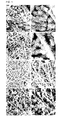
- FIG. 1 presents SEM images of the MnO 2 @SiNWs hetero-structures prepared for different deposition times at two different magnifications. From FIG. 1 a) and b) , one can see that surfaces of SiNWs nanowires are partly covered by MnO 2 nanoflakes after just 5 minutes of reaction. Yet, many of the nanowires remain uncoated, which indicates an insufficient deposition time. As the reaction time increased to 10 min, almost the whole surfaces of Si nanowires are homogenously covered by ultrathin MnO 2 nanoflakes ( FIG . 1 c) and d) ). Further increase in reaction time (15 min) results in SiNWs surfaces covered by highly mesoporous MnO 2 nanoflakes ( FIG.
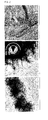
- FIG. 2 a) and b) show TEM images of the MnO 2 @SiNWs core-shell hetero-structure prepared in 15 min time.
- the surfaces of Si nanowires are uniformly covered by ultrathin nanoflakes ( FIG. 2 b) ).
- the surface of the nanoflake is highly transparent, suggesting very small thickness ( ⁇ 2-5 nm).
- Further analysis of the SAED pattern (inset of FIG. 2 b) ) taken from the nanoflake edge reveals the formation of birnessite-type polycrystalline MnO 2 . From the HRTEM image ( FIG.
- MnO 2 @SiNWs core-shell hetero-structure The possible growth mechanism for MnO 2 @SiNWs core-shell hetero-structure is as follows: Initially, MnO 4 - nuclei are produced and adsorbed on surfaces of SiNWs, and forms MnO 2 nuclei. With the increase in reaction time, the MnO 2 nuclei are aggregated and transformed to nanoflakes since thermodynamically, surface energy of individual nanoflakes is high hence they start to self-aggregate. At the end, the MnO 2 nanoflake is compact and totally covers the surface of Si nanowires, resulting in the formation of the hierarchical MnO 2 @SiNWs core-shell hetero-structure. Such process is supported by the morphology evolution at different growth stages via tuning the reaction time.
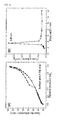
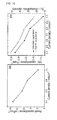
- X-ray diffraction (XRD) analyses were carried out, as shown in FIG. 3 A) , where XRD patterns of MnO 2 grown SiNWs at different deposition times are presented.
- the diffraction peaks can be indexed as (001), (002), (-111) and (020) corresponding to the birnessite manganese dioxide phase (JCPDS card no. 80-1098), and confirming the expected formation of MnO 2 .
- FIG. 3 B) and C) shows XPS spectra of the MnO 2 @SiNWs, which are calibrated with reference to C1s peak at 285 eV.
- the Mn2p XPS spectrum exhibits two major peaks at binding energies of 642.2 and 654 eV with a spin-energy separation of 11.8 eV ( FIG. 3 B )).
- the average oxidation state of Mn in manganese oxides can be determined by the energy separation of Mn3s peaks.
- the MnO 2 @SiNWs hybrid structures exhibit an energy separation of 4.85 eV for the Mn3s doublet ( FIG. 3 C ) ), indicating that Mn in the hetero-structure has an oxidation state of Mn(IV).
- the MnO 2 @SiNWs hybrid structure shows a typical IV- type isotherm with hysteresis loop in a relative pressure (p/p 0 ) range of 0.4-1.0, implying the formation of slit-like pores, a type of porosity which can be easily understood as a result of the stacking of MnO 2 flakes.
- the BET surface area of the MnO 2 @SiNWs core-shell hetero-structure is calculated to be 142 m 2 g -1 which is much higher than plate-like (23-43 m 2 g -1 ) or comparable to nanorods (100-150 m 2 g -1 ), hollow spheres (52-108 m 2 g -1 ) and urchin-like (80-119 m 2 g -1 ) MnO 2 structures [ W. Wei, X. Cui, W. Chen, D. G. Ivey, Chem. Soc. Rev., 40 (2011) 1697-1721 ].
- FIG. 4 (b) shows the Barett-Joyner-Halenda (BJH) pore size distribution curve with a distinct maximum centered at ⁇ 3.5 nm. This confirms the mesoporous nature of MnO 2 @SiNWs hybrid structure. The mesoporosity of MnO 2 @SiNWs samples results from a combination of internal space of the agglomerated nanoflakes and surface rugosity of the individual nanoflakes.
- BJH Barett-Joyner-Halenda
- Electrochemical characterization of MnO 2 @SiNW hybrid electrodes were carried out in 2-electrode configuration with Biologic VMP3 potentiostat.
- the electrolytes used in this study include 0.1 M of LiClO 4 /propylene carbonate, 1-Methyl-1-propylpyrrolidinium bis(trifluromethylsulfonyl)imide (PMPyrrBTA) (purchased from IOLITEC (Ionic Liquids Technologies GmbH, Germany) and 0.01 M LiClO 4 doped ionic liquid electrolyte (LiClO 4 -PMPyrrBTA). All cells were assembled and sealed in an Argon-filled glove box.
- PMPyrrBTA 1-Methyl-1-propylpyrrolidinium bis(trifluromethylsulfonyl)imide
- LiClO 4 -PMPyrrBTA LiClO 4 doped ionic liquid electrolyte
- FIG. 5 presents the CV curves of MnO 2 @SiNWs electrodes in three different electrolytes, namely i) LiClO 4 /propylene carbonate, ii) 1-Methyl-1-propylpyrrolidinium bis(trifluromethylsulfonyl)imide (PMPyrrBTA) and iii) LiCLO 4 doped ionic liquid electrolyte (LiClO 4 -PMPyrrBTA).
- PMPyrrBTA 1-Methyl-1-propylpyrrolidinium bis(trifluromethylsulfonyl)imide
- LiCLO 4 doped ionic liquid electrolyte LiClO 4 -PMPyrrBTA
- FIG 7 A) to B) shows the cyclic voltammograms (CVs) of MnO 2 @SiNWs at different scan rates from 0.01 Vs -1 to 10 Vs -1 suggesting that the MnO 2 @SiNWs devices can be operated over a wide range of scan rates.
- the CV profiles of the MnO 2 @SiNWs electrodes show the rectangular shape characteristic of capacitive energy storage. This shape remains unchanged as the scan rate increases from 0.01 Vs -1 to 10 Vs -1 , demonstrating good capacitive properties and high-rate capability.
- the area integrated within the current-potential curves greatly increases for the core-shell arrays as compared with bare SiNWs. This represents a much larger capacity for the hybrid nanowires, which must be attributed to the additional pseudocapacitance provided by the superficial intercalation of Li + ions into the thin MnO 2 flakes that form the nanowires shell.
- the high scan rate that MnO 2 @SiNWs can achieve (10 Vs -1 ) implies an ultrahigh power density for these unique core-shell hetero-structures.
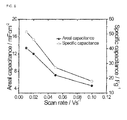
- FIG 8 shows the variation of areal and specific capacitance with scan rate for MnO 2 @SiNWs electrodes.
- the highest areal capacitance obtained for the MnO 2 @SiNWs electrode was 13.38 mFcm -2 (51.46 Fg -1 , for mass loading of 0.26 mgcm -2 ) at 0.01 Vs -1 , which is much higher than the values obtained for the pristine SiNWs (ranging from 10-51 ⁇ Fcm -2 ) and SiNWs based nanocomposites:
- MnO 2 /onion like carbon (MnO 2 /OLC) (7.04 mFcm -2 ) [ Y. Wang, Y. Shi, C. X. Zhao, J. I. Wong, X. W. Sun, H. Y. Yang, Nanotechnol. 25 (2014) 094010 ]
- MWCNT/MnO 2 (2.43 mFcm -2 ) [ L. Li, C. Chen, J. Xie, Z. Shao, F. Yang, J. Nanomaters.
- MnO 2 @SiNWs electrodes exhibit a good rate capability with capacity retention of 34.90 % of the initial capacitance as the scan rate increases from 0.01 to 0.1 Vs -1 .
- the MnO 2 @SiNWs hybrid symmetric micro-supercapacitors reported here also show better performance in terms of specific capacitance (13.9 mFcm -2 ) than interdigitated on-chip micro-supercapacitors based on carbide derived carbon films (e.g. SC: 1.5 mFcm -2 ) [ P. Huang, M. Heon, D. Pech, M. Brunet, P. L. Taberna, Y. Gogotsi, S. Lofland, J.
- This small ohmic drop can be the result of a series of low-resistance connections provided by the solid connection between the silicon substrate and Si nanowires, between the nanowires and MnO 2 thin sheets as well as the improved ionic conductivity resulting from the addition of a small amount of LiClO 4 to the PMPyrrBTA-ionic liquid.
- the areal, volume and specific capacitances of the MnO 2 @SiNWs symmetric device were derived from the discharging curves measured at different current densities and are plotted in FIG. 10 a) and b) .
- the MnO 2 @SiNWs device exhibits very high areal capacitance with values up to 13.92 mFcm -2 (51 Fg -1 , 0.26 Fcm -3 ) at a current density of 0.4 mAcm -2 .
- These exceptionally good capacitance values can be attributed to the highly porous structure and high specific surface area which facilitate ion transfer and thus enhance redox faradaic reactions and surface adsorption of electrolyte cations.
- the as-fabricated MnO 2 @SiNWs symmetric device features a maximum energy density of 9.1 ⁇ Whcm -2 (0.17 mWhcm -3 ) at a current density of 0.4 mAcm -2 , which stays in values of 4.02 ⁇ Whcm -2 (0.07 mWhcm -3 ) at 1 macm -2 , again confirming the excellent rate performance of the MnO 2 @SiNWs hybrid device.
- the obtained maximum volumetric energy density is comparable to:
- FIG 11 shows the evolution of areal capacitance and capacity retention for 5000 cycles.
- the areal capacitance decreases from 5.9 to 5.31 mFcm -2 after 5000 cycles.
- the overall capacitance loss for MnO 2 @SiNWs device is about 9.1 % (90.9 % stability) after 5000 cycles.
- the unique 3D hierarchical hybrid electrode shows high electrochemical stability for long cycle life applications at high current densities.
Landscapes
- Chemical & Material Sciences (AREA)
- Engineering & Computer Science (AREA)
- General Chemical & Material Sciences (AREA)
- Materials Engineering (AREA)
- Chemical Kinetics & Catalysis (AREA)
- Electrochemistry (AREA)
- Nanotechnology (AREA)
- Composite Materials (AREA)
- Physics & Mathematics (AREA)
- Crystallography & Structural Chemistry (AREA)
- Manufacturing & Machinery (AREA)
- Mathematical Physics (AREA)
- Theoretical Computer Science (AREA)
- Inorganic Chemistry (AREA)
- Condensed Matter Physics & Semiconductors (AREA)
- General Physics & Mathematics (AREA)
- Battery Electrode And Active Subsutance (AREA)
Priority Applications (2)
| Application Number | Priority Date | Filing Date | Title |
|---|---|---|---|
| EP15158311.9A EP3067313A1 (de) | 2015-03-09 | 2015-03-09 | Elektrodenmaterial mit siliciumnanodrähten, die mit mesoporöser oxidnanostrukturschicht beschichtet sind, und ionische liguidelektrolyten für energiespeicheranwendungen |
| PCT/EP2016/055058 WO2016142438A1 (en) | 2015-03-09 | 2016-03-09 | Electrode material comprising silicon nanowires covered by a mesoporous oxide nanostructured coating and ionic liquid electrolytes for energy storage applications |
Applications Claiming Priority (1)
| Application Number | Priority Date | Filing Date | Title |
|---|---|---|---|
| EP15158311.9A EP3067313A1 (de) | 2015-03-09 | 2015-03-09 | Elektrodenmaterial mit siliciumnanodrähten, die mit mesoporöser oxidnanostrukturschicht beschichtet sind, und ionische liguidelektrolyten für energiespeicheranwendungen |
Publications (1)
| Publication Number | Publication Date |
|---|---|
| EP3067313A1 true EP3067313A1 (de) | 2016-09-14 |
Family
ID=52780370
Family Applications (1)
| Application Number | Title | Priority Date | Filing Date |
|---|---|---|---|
| EP15158311.9A Withdrawn EP3067313A1 (de) | 2015-03-09 | 2015-03-09 | Elektrodenmaterial mit siliciumnanodrähten, die mit mesoporöser oxidnanostrukturschicht beschichtet sind, und ionische liguidelektrolyten für energiespeicheranwendungen |
Country Status (2)
| Country | Link |
|---|---|
| EP (1) | EP3067313A1 (de) |
| WO (1) | WO2016142438A1 (de) |
Cited By (5)
| Publication number | Priority date | Publication date | Assignee | Title |
|---|---|---|---|---|
| CN108682839A (zh) * | 2018-06-05 | 2018-10-19 | 合肥国轩高科动力能源有限公司 | 一种锂电子电池正极材料及其制备方法 |
| US20210172905A1 (en) * | 2018-01-04 | 2021-06-10 | Lyten, Inc. | Sensing device for detecting analytes in batteries |
| US11101082B2 (en) | 2017-03-07 | 2021-08-24 | University Of South-Eastern Norway | On-chip supercapacitor with silicon nanostructure |
| US20230303411A1 (en) * | 2020-07-23 | 2023-09-28 | Centre National De La Recherche Scientifique | Synthesis of composite beads coated with layered manganese oxide and use of such beads to remove toxic elements contained in fluids |
| US12033796B2 (en) * | 2017-03-07 | 2024-07-09 | University Of South-Eastern Norway | Deposited carbon film on etched silicon for on-chip supercapacitor |
Citations (5)
| Publication number | Priority date | Publication date | Assignee | Title |
|---|---|---|---|---|
| EP1207572A1 (de) * | 2000-11-15 | 2002-05-22 | Dr. Sugnaux Consulting | Mesoporöse Elektroden für elektrochemische Zellen und Hestellungsverfahren |
| US20080280169A1 (en) * | 2004-12-09 | 2008-11-13 | Nanosys, Inc. | Nanowire structures comprising carbon |
| US20090269511A1 (en) * | 2008-04-25 | 2009-10-29 | Aruna Zhamu | Process for producing hybrid nano-filament electrodes for lithium batteries |
| US20100297502A1 (en) * | 2009-05-19 | 2010-11-25 | Nanosys, Inc. | Nanostructured Materials for Battery Applications |
| US20140127578A1 (en) * | 2012-11-06 | 2014-05-08 | Samsung Sdi Co., Ltd. | Active material for a secondary battery, secondary battery including the active material, and method of preparing an active material |
-
2015
- 2015-03-09 EP EP15158311.9A patent/EP3067313A1/de not_active Withdrawn
-
2016
- 2016-03-09 WO PCT/EP2016/055058 patent/WO2016142438A1/en not_active Ceased
Patent Citations (5)
| Publication number | Priority date | Publication date | Assignee | Title |
|---|---|---|---|---|
| EP1207572A1 (de) * | 2000-11-15 | 2002-05-22 | Dr. Sugnaux Consulting | Mesoporöse Elektroden für elektrochemische Zellen und Hestellungsverfahren |
| US20080280169A1 (en) * | 2004-12-09 | 2008-11-13 | Nanosys, Inc. | Nanowire structures comprising carbon |
| US20090269511A1 (en) * | 2008-04-25 | 2009-10-29 | Aruna Zhamu | Process for producing hybrid nano-filament electrodes for lithium batteries |
| US20100297502A1 (en) * | 2009-05-19 | 2010-11-25 | Nanosys, Inc. | Nanostructured Materials for Battery Applications |
| US20140127578A1 (en) * | 2012-11-06 | 2014-05-08 | Samsung Sdi Co., Ltd. | Active material for a secondary battery, secondary battery including the active material, and method of preparing an active material |
Non-Patent Citations (27)
| Title |
|---|
| CUI ET AL., ENERGY ENVIRON. SCI., vol. 5, 2012, pages 792 |
| D. ARADILLA; G. BIDAN; P. GENTILE; P. WEATHERS; F. THISSANDIER; V. RUIZ; P. G6MEZ-ROMERO; T. SCHUBERT; H. SAHIN; S. SADKI, RSC ADV., vol. 4, 2014, pages 26462 - 26467 |
| D. ARADILLA; P. GENTILE; G. BIDAN; V. RUIZ; P. G6MEZ-ROMERO; T. J. S. SCHUBERT; H. SAHIN; E. FRACKOWIAK; S. SADKI, NANO ENERGY, vol. 9, 2014, pages 273 - 281 |
| D. PECH; M. BRUNET; H. DUROU; P. HUANG; V. MOCHALIN; Y. GOGOTSI; P. L. TABERNA; P. SIMON, NAT. NANOTECH., vol. 5, 2010, pages 651 - 654 |
| D. PECH; M. BRUNET; P. L. TABERNA; P. SIMON; N. FABRE; F. MESNILGRENTE; V. CONÉDÉRA; H. DUROU, J. POWER SOURCES, vol. 195, 2010, pages 1266 - 1269 |
| F. THISSANDIER; N. PAUC; T. BROUSSE; P. GENTILE; S. SADKI, NANOSCALE RES. LETT., vol. 8, 2013, pages 38 |
| J. CHMIOLA; C. LARGEOT; P. L. TABERNA; P. SIMON; Y. GOGOTSI, SCIENCE, vol. 328, 2010, pages 480 - 483 |
| J. H. SUNG; S. J. KIM; S. H. JEONG; E. H. KIM; K. H. LEE, J. POWER SOURCES, vol. 162, 2006, pages 1467 - 1470 |
| J. P. ALPER; M. VINCENT; C. CARRARO; R. MABOUDIAN, APPL. PHYS. LETT., vol. 100, 2012, pages 163901 |
| J. REN; L. LI; C. CHEN; X. CHEN; Z. CAI; L. QIU; Y. WANG; X. ZHU; H. PENG, ADV. MATER., vol. 25, 2013, pages 1155 - 1159 |
| J. REN; W. BAI; G. GUAN; Y. ZHANG; H. PENG, ADV. MATER., vol. 25, 2013, pages 5965 - 5970 |
| L. LI; C. CHEN; J. XIE; Z. SHAO; F. YANG, J. NANOMATERS, vol. 2013, pages 5 |
| M. BEIDAGHI; C. L. WANG, ADV. FUNCT. MATER., vol. 22, 2012, pages 4501 - 4510 |
| MIN-KYU SONG ET AL: "Nanostructured electrodes for lithium-ion and lithium-air batteries: the latest developments, challenges, and perspectives", MATERIALS SCIENCE AND ENGINEERING: R: REPORTS, vol. 72, no. 11, 1 November 2011 (2011-11-01), pages 203 - 252, XP055145161, ISSN: 0927-796X, DOI: 10.1016/j.mser.2011.06.001 * |
| N. BERTON; M. BRACHET; F. THISSANDIER; J. L. BIDEAU; P. GENTILE; G. BIDAN; T. BROUSSE; S. SADKI, ELECTROCHEM. COMMUN., vol. 41, 2014, pages 31 - 34 |
| P. HUANG; D. PECH; R. LIN; J. K. MCDONOUGH; M. BRUNET; P. L. TABERNA; Y. GOGOTSI; P. SIMON, ELECTROCHEM. COMMUN., vol. 36, 2013, pages 53 - 56 |
| P. HUANG; M. HEON; D. PECH; M. BRUNET; P. L. TABERNA; Y. GOGOTSI; S. LOFLAND; J. D. HETTINGER; P. SIMON, J. POWER SOURCES, vol. 225, 2013, pages 240 - 244 |
| S. DESPLOBAIN; G. GAUTIER; J. SEMAI; L. VENTURA; M. ROY, PHYS. STAT. SOL. (C, vol. 4, 2007, pages 2180 - 2184 |
| S. E. ROWLANDS; R. J. LATHAM, LONICS, vol. 5, 1999, pages 144 - 149 |
| SHA ET AL., J. POWER SOURCES, 2015, pages 273,479 |
| T. CHEN; L. QIU; Z. YANG; Z. CAI; J. REN; H. LI; H. LIN; X. SUN; H. PENG, ANGEW. CHEM. INT. ED., vol. 41, 2012, pages 11977 - 11980 |
| W. WEI; X. CUI; W. CHEN; D. G. IVEY, CHEM. SOC. REV., vol. 40, 2011, pages 1697 - 1721 |
| X. XIAO; T. LI; P. YANG; Y. GAO; H. JIN; W. NI; W. ZHAN; X. ZHANG; Y. CAO; J. ZHONG, ACS NANO, vol. 6, 2012, pages 9200 - 9206 |
| Y. FU; H. WU; S. YE; X. CAI; X. YU; S. HOU; H. KAFAFY; D. ZOU, ENERGY ENVIRON. SCI., vol. 6, 2013, pages 805 - 812 |
| Y. FU; X. CAI; H. WU; Z. LV; S. HOU; M. PENG; X. YU; D. ZOU, ADV. MATER., vol. 24, 2012, pages 5713 - 5718 |
| Y. MENG; Y. ZHAO; C. HU; H. CHENG; Y. HU; Z. ZHANG; G. SHI; L. QU, ADV. MATER., vol. 25, 2013, pages 2326 - 2331 |
| Y. WANG; Y. SHI; C. X. ZHAO; J. . WONG; X. W. SUN; H. Y. YANG, NANOTECHNOL., vol. 25, 2014, pages 094010 |
Cited By (6)
| Publication number | Priority date | Publication date | Assignee | Title |
|---|---|---|---|---|
| US11101082B2 (en) | 2017-03-07 | 2021-08-24 | University Of South-Eastern Norway | On-chip supercapacitor with silicon nanostructure |
| US12033796B2 (en) * | 2017-03-07 | 2024-07-09 | University Of South-Eastern Norway | Deposited carbon film on etched silicon for on-chip supercapacitor |
| US20210172905A1 (en) * | 2018-01-04 | 2021-06-10 | Lyten, Inc. | Sensing device for detecting analytes in batteries |
| US12119462B2 (en) * | 2018-01-04 | 2024-10-15 | Lyten, Inc. | Sensing device for detecting analytes in batteries |
| CN108682839A (zh) * | 2018-06-05 | 2018-10-19 | 合肥国轩高科动力能源有限公司 | 一种锂电子电池正极材料及其制备方法 |
| US20230303411A1 (en) * | 2020-07-23 | 2023-09-28 | Centre National De La Recherche Scientifique | Synthesis of composite beads coated with layered manganese oxide and use of such beads to remove toxic elements contained in fluids |
Also Published As
| Publication number | Publication date |
|---|---|
| WO2016142438A1 (en) | 2016-09-15 |
Similar Documents
| Publication | Publication Date | Title |
|---|---|---|
| Brousse et al. | Materials for electrochemical capacitors | |
| Niu et al. | Towards three-dimensional hierarchical ZnO nanofiber@ Ni (OH) 2 nanoflake core–shell heterostructures for high-performance asymmetric supercapacitors | |
| CN106463276B (zh) | 金属氧化物锚定的石墨烯和碳纳米管混合泡沫体 | |
| Zhou et al. | Ultrathin CoFe-layered double hydroxide nanosheets embedded in high conductance Cu 3 N nanowire arrays with a 3D core–shell architecture for ultrahigh capacitance supercapacitors | |
| Zhang et al. | Compression-tolerant supercapacitor based on NiCo2O4/Ti3C2Tx MXene/reduced graphene oxide composite aerogel with insights from density functional theory simulations | |
| Kim et al. | Development of high power and energy density microsphere silicon carbide–MnO 2 nanoneedles and thermally oxidized activated carbon asymmetric electrochemical supercapacitors | |
| Dubal et al. | 3D hierarchical assembly of ultrathin MnO2 nanoflakes on silicon nanowires for high performance micro-supercapacitors in Li-doped ionic liquid | |
| Xia et al. | Facile synthesis of manganese carbonate quantum dots/Ni (HCO 3) 2–MnCO 3 composites as advanced cathode materials for high energy density asymmetric supercapacitors | |
| Wang et al. | Controllable synthesis of 3D Ni χ Co 1− χ oxides with different morphologies for high-capacity supercapacitors | |
| Liu et al. | Vertically stacked bilayer CuCo 2 O 4/MnCo 2 O 4 heterostructures on functionalized graphite paper for high-performance electrochemical capacitors | |
| Singh et al. | Unique hydrogenated Ni/NiO core/shell 1D nano-heterostructures with superior electrochemical performance as supercapacitors | |
| Wang et al. | Graphdiyne nanowalls as anode for lithium—ion batteries and capacitors exhibit superior cyclic stability | |
| Ma et al. | Superior performance asymmetric supercapacitors based on ZnCo 2 O 4@ MnO 2 core–shell electrode | |
| Liu et al. | In situ fabrication of three-dimensional, ultrathin graphite/carbon nanotube/NiO composite as binder-free electrode for high-performance energy storage | |
| Xu et al. | Straightforward synthesis of hierarchical Co3O4@ CoWO4/rGO core–shell arrays on Ni as hybrid electrodes for asymmetric supercapacitors | |
| Gao et al. | Rutile-TiO 2 decorated Li 4 Ti 5 O 12 nanosheet arrays with 3D interconnected architecture as anodes for high performance hybrid supercapacitors | |
| Mao et al. | Nickel foam supported hierarchical Co 9 S 8 nanostructures for asymmetric supercapacitors | |
| Mohamed et al. | Efficient energy storage capabilities promoted by hierarchical MnCo 2 O 4 nanowire-based architectures | |
| Jin et al. | Ultrathin hexagonal 2D Co2GeO4 nanosheets: excellent Li-storage performance and ex situ investigation of electrochemical mechanism | |
| US20130115453A1 (en) | Hybrid nanostructure, a method for forming the hybrid nanostructure, and an electrode including a plurality of the hybrid nanostructures | |
| Zhang et al. | One-step in situ synthesis of ultrathin tungsten oxide@ carbon nanowire webs as an anode material for high performance | |
| Jiang et al. | Manganese oxides transformed from orthorhombic phase to birnessite with enhanced electrochemical performance as supercapacitor electrodes | |
| EP3067313A1 (de) | Elektrodenmaterial mit siliciumnanodrähten, die mit mesoporöser oxidnanostrukturschicht beschichtet sind, und ionische liguidelektrolyten für energiespeicheranwendungen | |
| Wang et al. | Hierarchical porous NiCo 2 O 4 nanograss arrays grown on Ni foam as electrode material for high-performance supercapacitors | |
| EP2457242B1 (de) | Nickel-kobalt-superkondensatoren und verfahren zu ihrer herstellung |
Legal Events
| Date | Code | Title | Description |
|---|---|---|---|
| PUAI | Public reference made under article 153(3) epc to a published international application that has entered the european phase |
Free format text: ORIGINAL CODE: 0009012 |
|
| AK | Designated contracting states |
Kind code of ref document: A1 Designated state(s): AL AT BE BG CH CY CZ DE DK EE ES FI FR GB GR HR HU IE IS IT LI LT LU LV MC MK MT NL NO PL PT RO RS SE SI SK SM TR |
|
| AX | Request for extension of the european patent |
Extension state: BA ME |
|
| STAA | Information on the status of an ep patent application or granted ep patent |
Free format text: STATUS: REQUEST FOR EXAMINATION WAS MADE |
|
| 17P | Request for examination filed |
Effective date: 20170220 |
|
| RBV | Designated contracting states (corrected) |
Designated state(s): AL AT BE BG CH CY CZ DE DK EE ES FI FR GB GR HR HU IE IS IT LI LT LU LV MC MK MT NL NO PL PT RO RS SE SI SK SM TR |
|
| STAA | Information on the status of an ep patent application or granted ep patent |
Free format text: STATUS: EXAMINATION IS IN PROGRESS |
|
| 17Q | First examination report despatched |
Effective date: 20200110 |
|
| RAP1 | Party data changed (applicant data changed or rights of an application transferred) |
Owner name: COMMISSARIAT A L'ENERGIE ATOMIQUE ET AUX ENERGIES ALTERNATIVES - CEA Owner name: COMMISSARIAT A L'ENERGIE ATOMIQUE ET AUX ENERGIES ALTERNATIVES |
|
| RAP1 | Party data changed (applicant data changed or rights of an application transferred) |
Owner name: COMMISSARIAT A L'ENERGIE ATOMIQUE ET AUX ENERGIES ALTERNATIVES (CEA) |
|
| STAA | Information on the status of an ep patent application or granted ep patent |
Free format text: STATUS: THE APPLICATION IS DEEMED TO BE WITHDRAWN |
|
| 18D | Application deemed to be withdrawn |
Effective date: 20210805 |