EP3067974B1 - Liant d'électrode de batterie et batterie et électrode faisant appel à celui-ci - Google Patents
Liant d'électrode de batterie et batterie et électrode faisant appel à celui-ci Download PDFInfo
- Publication number
- EP3067974B1 EP3067974B1 EP14858247.1A EP14858247A EP3067974B1 EP 3067974 B1 EP3067974 B1 EP 3067974B1 EP 14858247 A EP14858247 A EP 14858247A EP 3067974 B1 EP3067974 B1 EP 3067974B1
- Authority
- EP
- European Patent Office
- Prior art keywords
- meth
- acrylate
- structural units
- units derived
- monomer
- Prior art date
- Legal status (The legal status is an assumption and is not a legal conclusion. Google has not performed a legal analysis and makes no representation as to the accuracy of the status listed.)
- Not-in-force
Links
Classifications
-
- H—ELECTRICITY
- H01—ELECTRIC ELEMENTS
- H01M—PROCESSES OR MEANS, e.g. BATTERIES, FOR THE DIRECT CONVERSION OF CHEMICAL ENERGY INTO ELECTRICAL ENERGY
- H01M4/00—Electrodes
- H01M4/02—Electrodes composed of, or comprising, active material
- H01M4/62—Selection of inactive substances as ingredients for active masses, e.g. binders, fillers
- H01M4/621—Binders
- H01M4/622—Binders being polymers
-
- C—CHEMISTRY; METALLURGY
- C08—ORGANIC MACROMOLECULAR COMPOUNDS; THEIR PREPARATION OR CHEMICAL WORKING-UP; COMPOSITIONS BASED THEREON
- C08F—MACROMOLECULAR COMPOUNDS OBTAINED BY REACTIONS ONLY INVOLVING CARBON-TO-CARBON UNSATURATED BONDS
- C08F220/00—Copolymers of compounds having one or more unsaturated aliphatic radicals, each having only one carbon-to-carbon double bond, and only one being terminated by only one carboxyl radical or a salt, anhydride ester, amide, imide or nitrile thereof
- C08F220/02—Monocarboxylic acids having less than ten carbon atoms; Derivatives thereof
- C08F220/10—Esters
- C08F220/26—Esters containing oxygen in addition to the carboxy oxygen
- C08F220/28—Esters containing oxygen in addition to the carboxy oxygen containing no aromatic rings in the alcohol moiety
- C08F220/285—Esters containing oxygen in addition to the carboxy oxygen containing no aromatic rings in the alcohol moiety and containing a polyether chain in the alcohol moiety
- C08F220/287—Esters containing oxygen in addition to the carboxy oxygen containing no aromatic rings in the alcohol moiety and containing a polyether chain in the alcohol moiety and containing polypropylene oxide in the alcohol moiety
-
- C—CHEMISTRY; METALLURGY
- C09—DYES; PAINTS; POLISHES; NATURAL RESINS; ADHESIVES; COMPOSITIONS NOT OTHERWISE PROVIDED FOR; APPLICATIONS OF MATERIALS NOT OTHERWISE PROVIDED FOR
- C09J—ADHESIVES; NON-MECHANICAL ASPECTS OF ADHESIVE PROCESSES IN GENERAL; ADHESIVE PROCESSES NOT PROVIDED FOR ELSEWHERE; USE OF MATERIALS AS ADHESIVES
- C09J133/00—Adhesives based on homopolymers or copolymers of compounds having one or more unsaturated aliphatic radicals, each having only one carbon-to-carbon double bond, and at least one being terminated by only one carboxyl radical, or of salts, anhydrides, esters, amides, imides, or nitriles thereof; Adhesives based on derivatives of such polymers
- C09J133/04—Homopolymers or copolymers of esters
- C09J133/06—Homopolymers or copolymers of esters of esters containing only carbon, hydrogen and oxygen, the oxygen atom being present only as part of the carboxyl radical
- C09J133/10—Homopolymers or copolymers of methacrylic acid esters
- C09J133/12—Homopolymers or copolymers of methyl methacrylate
-
- C—CHEMISTRY; METALLURGY
- C09—DYES; PAINTS; POLISHES; NATURAL RESINS; ADHESIVES; COMPOSITIONS NOT OTHERWISE PROVIDED FOR; APPLICATIONS OF MATERIALS NOT OTHERWISE PROVIDED FOR
- C09J—ADHESIVES; NON-MECHANICAL ASPECTS OF ADHESIVE PROCESSES IN GENERAL; ADHESIVE PROCESSES NOT PROVIDED FOR ELSEWHERE; USE OF MATERIALS AS ADHESIVES
- C09J133/00—Adhesives based on homopolymers or copolymers of compounds having one or more unsaturated aliphatic radicals, each having only one carbon-to-carbon double bond, and at least one being terminated by only one carboxyl radical, or of salts, anhydrides, esters, amides, imides, or nitriles thereof; Adhesives based on derivatives of such polymers
- C09J133/04—Homopolymers or copolymers of esters
- C09J133/14—Homopolymers or copolymers of esters of esters containing halogen, nitrogen, sulfur or oxygen atoms in addition to the carboxy oxygen
-
- H—ELECTRICITY
- H01—ELECTRIC ELEMENTS
- H01G—CAPACITORS; CAPACITORS, RECTIFIERS, DETECTORS, SWITCHING DEVICES, LIGHT-SENSITIVE OR TEMPERATURE-SENSITIVE DEVICES OF THE ELECTROLYTIC TYPE
- H01G11/00—Hybrid capacitors, i.e. capacitors having different positive and negative electrodes; Electric double-layer [EDL] capacitors; Processes for the manufacture thereof or of parts thereof
- H01G11/22—Electrodes
- H01G11/30—Electrodes characterised by their material
- H01G11/32—Carbon-based
- H01G11/38—Carbon pastes or blends; Binders or additives therein
-
- H—ELECTRICITY
- H01—ELECTRIC ELEMENTS
- H01M—PROCESSES OR MEANS, e.g. BATTERIES, FOR THE DIRECT CONVERSION OF CHEMICAL ENERGY INTO ELECTRICAL ENERGY
- H01M10/00—Secondary cells; Manufacture thereof
- H01M10/05—Accumulators with non-aqueous electrolyte
- H01M10/052—Li-accumulators
- H01M10/0525—Rocking-chair batteries, i.e. batteries with lithium insertion or intercalation in both electrodes; Lithium-ion batteries
-
- H—ELECTRICITY
- H01—ELECTRIC ELEMENTS
- H01M—PROCESSES OR MEANS, e.g. BATTERIES, FOR THE DIRECT CONVERSION OF CHEMICAL ENERGY INTO ELECTRICAL ENERGY
- H01M10/00—Secondary cells; Manufacture thereof
- H01M10/05—Accumulators with non-aqueous electrolyte
- H01M10/056—Accumulators with non-aqueous electrolyte characterised by the materials used as electrolytes, e.g. mixed inorganic/organic electrolytes
- H01M10/0564—Accumulators with non-aqueous electrolyte characterised by the materials used as electrolytes, e.g. mixed inorganic/organic electrolytes the electrolyte being constituted of organic materials only
- H01M10/0566—Liquid materials
- H01M10/0568—Liquid materials characterised by the solutes
-
- H—ELECTRICITY
- H01—ELECTRIC ELEMENTS
- H01M—PROCESSES OR MEANS, e.g. BATTERIES, FOR THE DIRECT CONVERSION OF CHEMICAL ENERGY INTO ELECTRICAL ENERGY
- H01M10/00—Secondary cells; Manufacture thereof
- H01M10/05—Accumulators with non-aqueous electrolyte
- H01M10/056—Accumulators with non-aqueous electrolyte characterised by the materials used as electrolytes, e.g. mixed inorganic/organic electrolytes
- H01M10/0564—Accumulators with non-aqueous electrolyte characterised by the materials used as electrolytes, e.g. mixed inorganic/organic electrolytes the electrolyte being constituted of organic materials only
- H01M10/0566—Liquid materials
- H01M10/0569—Liquid materials characterised by the solvents
-
- H—ELECTRICITY
- H01—ELECTRIC ELEMENTS
- H01M—PROCESSES OR MEANS, e.g. BATTERIES, FOR THE DIRECT CONVERSION OF CHEMICAL ENERGY INTO ELECTRICAL ENERGY
- H01M10/00—Secondary cells; Manufacture thereof
- H01M10/05—Accumulators with non-aqueous electrolyte
- H01M10/058—Construction or manufacture
- H01M10/0585—Construction or manufacture of accumulators having only flat construction elements, i.e. flat positive electrodes, flat negative electrodes and flat separators
-
- H—ELECTRICITY
- H01—ELECTRIC ELEMENTS
- H01M—PROCESSES OR MEANS, e.g. BATTERIES, FOR THE DIRECT CONVERSION OF CHEMICAL ENERGY INTO ELECTRICAL ENERGY
- H01M4/00—Electrodes
- H01M4/02—Electrodes composed of, or comprising, active material
- H01M4/13—Electrodes for accumulators with non-aqueous electrolyte, e.g. for lithium-accumulators; Processes of manufacture thereof
- H01M4/131—Electrodes based on mixed oxides or hydroxides, or on mixtures of oxides or hydroxides, e.g. LiCoOx
-
- H—ELECTRICITY
- H01—ELECTRIC ELEMENTS
- H01M—PROCESSES OR MEANS, e.g. BATTERIES, FOR THE DIRECT CONVERSION OF CHEMICAL ENERGY INTO ELECTRICAL ENERGY
- H01M4/00—Electrodes
- H01M4/02—Electrodes composed of, or comprising, active material
- H01M4/36—Selection of substances as active materials, active masses, active liquids
- H01M4/38—Selection of substances as active materials, active masses, active liquids of elements or alloys
- H01M4/381—Alkaline or alkaline earth metals elements
- H01M4/382—Lithium
-
- H—ELECTRICITY
- H01—ELECTRIC ELEMENTS
- H01M—PROCESSES OR MEANS, e.g. BATTERIES, FOR THE DIRECT CONVERSION OF CHEMICAL ENERGY INTO ELECTRICAL ENERGY
- H01M4/00—Electrodes
- H01M4/02—Electrodes composed of, or comprising, active material
- H01M4/62—Selection of inactive substances as ingredients for active masses, e.g. binders, fillers
- H01M4/624—Electric conductive fillers
- H01M4/625—Carbon or graphite
-
- H—ELECTRICITY
- H01—ELECTRIC ELEMENTS
- H01M—PROCESSES OR MEANS, e.g. BATTERIES, FOR THE DIRECT CONVERSION OF CHEMICAL ENERGY INTO ELECTRICAL ENERGY
- H01M4/00—Electrodes
- H01M4/02—Electrodes composed of, or comprising, active material
- H01M4/64—Carriers or collectors
- H01M4/66—Selection of materials
- H01M4/661—Metal or alloys, e.g. alloy coatings
-
- H—ELECTRICITY
- H01—ELECTRIC ELEMENTS
- H01M—PROCESSES OR MEANS, e.g. BATTERIES, FOR THE DIRECT CONVERSION OF CHEMICAL ENERGY INTO ELECTRICAL ENERGY
- H01M50/00—Constructional details or processes of manufacture of the non-active parts of electrochemical cells other than fuel cells, e.g. hybrid cells
- H01M50/40—Separators; Membranes; Diaphragms; Spacing elements inside cells
- H01M50/409—Separators, membranes or diaphragms characterised by the material
- H01M50/411—Organic material
-
- H—ELECTRICITY
- H01—ELECTRIC ELEMENTS
- H01M—PROCESSES OR MEANS, e.g. BATTERIES, FOR THE DIRECT CONVERSION OF CHEMICAL ENERGY INTO ELECTRICAL ENERGY
- H01M10/00—Secondary cells; Manufacture thereof
- H01M10/05—Accumulators with non-aqueous electrolyte
- H01M10/052—Li-accumulators
-
- H—ELECTRICITY
- H01—ELECTRIC ELEMENTS
- H01M—PROCESSES OR MEANS, e.g. BATTERIES, FOR THE DIRECT CONVERSION OF CHEMICAL ENERGY INTO ELECTRICAL ENERGY
- H01M4/00—Electrodes
- H01M4/02—Electrodes composed of, or comprising, active material
- H01M2004/021—Physical characteristics, e.g. porosity, surface area
-
- H—ELECTRICITY
- H01—ELECTRIC ELEMENTS
- H01M—PROCESSES OR MEANS, e.g. BATTERIES, FOR THE DIRECT CONVERSION OF CHEMICAL ENERGY INTO ELECTRICAL ENERGY
- H01M4/00—Electrodes
- H01M4/02—Electrodes composed of, or comprising, active material
- H01M2004/026—Electrodes composed of, or comprising, active material characterised by the polarity
- H01M2004/027—Negative electrodes
-
- H—ELECTRICITY
- H01—ELECTRIC ELEMENTS
- H01M—PROCESSES OR MEANS, e.g. BATTERIES, FOR THE DIRECT CONVERSION OF CHEMICAL ENERGY INTO ELECTRICAL ENERGY
- H01M4/00—Electrodes
- H01M4/02—Electrodes composed of, or comprising, active material
- H01M2004/026—Electrodes composed of, or comprising, active material characterised by the polarity
- H01M2004/028—Positive electrodes
-
- H—ELECTRICITY
- H01—ELECTRIC ELEMENTS
- H01M—PROCESSES OR MEANS, e.g. BATTERIES, FOR THE DIRECT CONVERSION OF CHEMICAL ENERGY INTO ELECTRICAL ENERGY
- H01M2300/00—Electrolytes
- H01M2300/0017—Non-aqueous electrolytes
- H01M2300/0025—Organic electrolyte
- H01M2300/0028—Organic electrolyte characterised by the solvent
- H01M2300/0037—Mixture of solvents
-
- H—ELECTRICITY
- H01—ELECTRIC ELEMENTS
- H01M—PROCESSES OR MEANS, e.g. BATTERIES, FOR THE DIRECT CONVERSION OF CHEMICAL ENERGY INTO ELECTRICAL ENERGY
- H01M4/00—Electrodes
- H01M4/02—Electrodes composed of, or comprising, active material
- H01M4/04—Processes of manufacture in general
- H01M4/0402—Methods of deposition of the material
- H01M4/0404—Methods of deposition of the material by coating on electrode collectors
-
- H—ELECTRICITY
- H01—ELECTRIC ELEMENTS
- H01M—PROCESSES OR MEANS, e.g. BATTERIES, FOR THE DIRECT CONVERSION OF CHEMICAL ENERGY INTO ELECTRICAL ENERGY
- H01M4/00—Electrodes
- H01M4/02—Electrodes composed of, or comprising, active material
- H01M4/04—Processes of manufacture in general
- H01M4/043—Processes of manufacture in general involving compressing or compaction
- H01M4/0435—Rolling or calendering
-
- H—ELECTRICITY
- H01—ELECTRIC ELEMENTS
- H01M—PROCESSES OR MEANS, e.g. BATTERIES, FOR THE DIRECT CONVERSION OF CHEMICAL ENERGY INTO ELECTRICAL ENERGY
- H01M4/00—Electrodes
- H01M4/02—Electrodes composed of, or comprising, active material
- H01M4/04—Processes of manufacture in general
- H01M4/0471—Processes of manufacture in general involving thermal treatment, e.g. firing, sintering, backing particulate active material, thermal decomposition, pyrolysis
-
- H—ELECTRICITY
- H01—ELECTRIC ELEMENTS
- H01M—PROCESSES OR MEANS, e.g. BATTERIES, FOR THE DIRECT CONVERSION OF CHEMICAL ENERGY INTO ELECTRICAL ENERGY
- H01M4/00—Electrodes
- H01M4/02—Electrodes composed of, or comprising, active material
- H01M4/13—Electrodes for accumulators with non-aqueous electrolyte, e.g. for lithium-accumulators; Processes of manufacture thereof
- H01M4/139—Processes of manufacture
- H01M4/1391—Processes of manufacture of electrodes based on mixed oxides or hydroxides, or on mixtures of oxides or hydroxides, e.g. LiCoOx
-
- H—ELECTRICITY
- H01—ELECTRIC ELEMENTS
- H01M—PROCESSES OR MEANS, e.g. BATTERIES, FOR THE DIRECT CONVERSION OF CHEMICAL ENERGY INTO ELECTRICAL ENERGY
- H01M50/00—Constructional details or processes of manufacture of the non-active parts of electrochemical cells other than fuel cells, e.g. hybrid cells
- H01M50/40—Separators; Membranes; Diaphragms; Spacing elements inside cells
- H01M50/409—Separators, membranes or diaphragms characterised by the material
- H01M50/411—Organic material
- H01M50/414—Synthetic resins, e.g. thermoplastics or thermosetting resins
- H01M50/417—Polyolefins
-
- H—ELECTRICITY
- H01—ELECTRIC ELEMENTS
- H01M—PROCESSES OR MEANS, e.g. BATTERIES, FOR THE DIRECT CONVERSION OF CHEMICAL ENERGY INTO ELECTRICAL ENERGY
- H01M50/00—Constructional details or processes of manufacture of the non-active parts of electrochemical cells other than fuel cells, e.g. hybrid cells
- H01M50/40—Separators; Membranes; Diaphragms; Spacing elements inside cells
- H01M50/409—Separators, membranes or diaphragms characterised by the material
- H01M50/449—Separators, membranes or diaphragms characterised by the material having a layered structure
-
- H—ELECTRICITY
- H01—ELECTRIC ELEMENTS
- H01M—PROCESSES OR MEANS, e.g. BATTERIES, FOR THE DIRECT CONVERSION OF CHEMICAL ENERGY INTO ELECTRICAL ENERGY
- H01M50/00—Constructional details or processes of manufacture of the non-active parts of electrochemical cells other than fuel cells, e.g. hybrid cells
- H01M50/40—Separators; Membranes; Diaphragms; Spacing elements inside cells
- H01M50/489—Separators, membranes, diaphragms or spacing elements inside the cells, characterised by their physical properties, e.g. swelling degree, hydrophilicity or shut down properties
-
- Y—GENERAL TAGGING OF NEW TECHNOLOGICAL DEVELOPMENTS; GENERAL TAGGING OF CROSS-SECTIONAL TECHNOLOGIES SPANNING OVER SEVERAL SECTIONS OF THE IPC; TECHNICAL SUBJECTS COVERED BY FORMER USPC CROSS-REFERENCE ART COLLECTIONS [XRACs] AND DIGESTS
- Y02—TECHNOLOGIES OR APPLICATIONS FOR MITIGATION OR ADAPTATION AGAINST CLIMATE CHANGE
- Y02E—REDUCTION OF GREENHOUSE GAS [GHG] EMISSIONS, RELATED TO ENERGY GENERATION, TRANSMISSION OR DISTRIBUTION
- Y02E60/00—Enabling technologies; Technologies with a potential or indirect contribution to GHG emissions mitigation
- Y02E60/10—Energy storage using batteries
-
- Y—GENERAL TAGGING OF NEW TECHNOLOGICAL DEVELOPMENTS; GENERAL TAGGING OF CROSS-SECTIONAL TECHNOLOGIES SPANNING OVER SEVERAL SECTIONS OF THE IPC; TECHNICAL SUBJECTS COVERED BY FORMER USPC CROSS-REFERENCE ART COLLECTIONS [XRACs] AND DIGESTS
- Y02—TECHNOLOGIES OR APPLICATIONS FOR MITIGATION OR ADAPTATION AGAINST CLIMATE CHANGE
- Y02E—REDUCTION OF GREENHOUSE GAS [GHG] EMISSIONS, RELATED TO ENERGY GENERATION, TRANSMISSION OR DISTRIBUTION
- Y02E60/00—Enabling technologies; Technologies with a potential or indirect contribution to GHG emissions mitigation
- Y02E60/13—Energy storage using capacitors
-
- Y—GENERAL TAGGING OF NEW TECHNOLOGICAL DEVELOPMENTS; GENERAL TAGGING OF CROSS-SECTIONAL TECHNOLOGIES SPANNING OVER SEVERAL SECTIONS OF THE IPC; TECHNICAL SUBJECTS COVERED BY FORMER USPC CROSS-REFERENCE ART COLLECTIONS [XRACs] AND DIGESTS
- Y02—TECHNOLOGIES OR APPLICATIONS FOR MITIGATION OR ADAPTATION AGAINST CLIMATE CHANGE
- Y02P—CLIMATE CHANGE MITIGATION TECHNOLOGIES IN THE PRODUCTION OR PROCESSING OF GOODS
- Y02P70/00—Climate change mitigation technologies in the production process for final industrial or consumer products
- Y02P70/50—Manufacturing or production processes characterised by the final manufactured product
-
- Y—GENERAL TAGGING OF NEW TECHNOLOGICAL DEVELOPMENTS; GENERAL TAGGING OF CROSS-SECTIONAL TECHNOLOGIES SPANNING OVER SEVERAL SECTIONS OF THE IPC; TECHNICAL SUBJECTS COVERED BY FORMER USPC CROSS-REFERENCE ART COLLECTIONS [XRACs] AND DIGESTS
- Y02—TECHNOLOGIES OR APPLICATIONS FOR MITIGATION OR ADAPTATION AGAINST CLIMATE CHANGE
- Y02T—CLIMATE CHANGE MITIGATION TECHNOLOGIES RELATED TO TRANSPORTATION
- Y02T10/00—Road transport of goods or passengers
- Y02T10/60—Other road transportation technologies with climate change mitigation effect
- Y02T10/70—Energy storage systems for electromobility, e.g. batteries
Definitions
- the present invention relates to a binder used for an electrode of battery, the electrode manufactured by using said binder, and a battery manufactured by using said electrode.
- the battery includes an electrochemical capacitor and is a primary battery or a secondary battery. Examples of the battery are a lithium-ion secondary battery, and a nickel hydrogen secondary battery.
- a binder is known in an electrode of a battery.
- Representative examples of the battery having the electrode comprising the binder include a lithium-ion secondary battery.
- the lithium-ion secondary battery Since the lithium-ion secondary battery has a high energy density and a high voltage, the lithium-ion secondary battery is used for electronic apparatuses, such as a mobile phone, a laptop computer and a camcorder. Recently, because of a rise of consciousness to environmental protection, and enactment of related laws, the application in vehicles, such as an electric vehicle and a hybrid electric vehicle, and the application of a storage battery in electric power storage for home are also progressing.
- the lithium-ion secondary battery generally comprises a negative electrode, a positive electrode, a separator, a liquid electrolyte and an electrical collector.
- the negative electrode is obtained by applying a coating liquid which comprises a negative electrode active material, such as graphite and hard carbon capable of intercalating and deintercalating a lithium ion, an electrically conductive additive, a binder and a solvent onto an electrical collector represented by a copper foil, and drying the coating liquid.
- a dispersion comprising a styrene-butadiene rubber (abbreviated as "SBR" hereafter) dispersed in water is generally used as the binder.
- SBR styrene-butadiene rubber
- the positive electrode is produced by mixing a positive electrode active material such as layered lithium cobaltate and spinel-type lithium manganate, an electrically conductive additive such as carbon black, and a binder such as polyvinylidene fluoride and polytetrafluoroethylene, dispersing them in a polar solvent such as N-methylpyrrolidone to prepare a coating liquid, then coating the coating liquid, as in the same manner as the negative electrode, on an electrical collector foil represented by aluminum foil, and drying the coating liquid.
- a positive electrode active material such as layered lithium cobaltate and spinel-type lithium manganate
- an electrically conductive additive such as carbon black
- a binder such as polyvinylidene fluoride and polytetrafluoroethylene
- binders for lithium-ion batteries need to increase the addition amount of the binder, in order to secure the bondability, thereby causing the deterioration of the performances which is a problem of these binders.
- N-methylpyrrolidone is used for the slurry solvent, an aqueous binder is required from a viewpoint of a recovery, a cost, toxicity and an environmental load.
- SBR-base binder which is an aqueous binder, has the problem that oxidative degradation is caused under a positive electrode environment.
- the binders comprising polyvinylidene fluoride and/or polytetrafluoroethylene dispersed in N-methylpyrrolidone as a dispersing solvent are still used as the binder of the positive electrode.
- Urgently required is the development of the binder which is excellent in the bondability between the electrical collector and the active material, and between active materials, has a low environmental load, is an aqueous binder, and is suitable for manufacture of the electrode for secondary batteries having high oxidation resistance.
- Patent Documents 1 and 2 propose a binder comprising a copolymer which comprises an aromatic vinyl, a conjugated diene, an ethylenically unsaturated carboxylic acid ester and an unsaturated carboxylic acid (Patent Document 1), and a binder comprising an aqueous polymer dispersion selected from a styrene-butadiene polymer latex and an acrylic emulsion (Patent Document 2).
- Patent Documents 3 and 4 propose a binder comprising a copolymer which comprises an aromatic vinyl, a conjugated diene, a (meth)acrylate ester and an ethylenically unsaturated carboxylic acid (Patent Document 3), and a binder comprising a polymer which comprises a difunctional (meth)acrylate (Patent Document 4).
- An object of the present invention is to provide a water-based binder having a better coatability of an electrode slurry, a high bondability, no oxidative degradation in an electrode environment (particularly under a positive-electrode environment), and a small environmental load, and to provide an electrode and a battery comprising the water-based binder.
- the present inventors discovered, as a result of extensive studies in order to achieve the above object, that the use of a water-based binder comprising a polymer comprising structural units derived from a hydroxyl group-containing (meth)acrylic monomer, structural units derived from a vinyl ester monomer, and structural units derived from a multi-functional (meth)acrylate monomer can solve the above problems, to complete the present invention. That is, the present invention relates to the followings.
- the binder of the present invention is excellent in bondability to an active material, a conductive additive and a collector (an electrical collector).
- the excellent bondability strong binding property
- the excellent bondability is considered to be caused by a large surface area possessed by fine particles of the polymer dispersed in water and a use of the structural units derived from the hydroxyl group-containing monomer.
- the binder of the present invention provides an electrode having excellent flexibility.
- the binder of the present invention having suppressed dissolution of the electrolyte, is substantially insoluble in electrolyte.
- the insolubleness is considered to be caused by a highly cross-linked structure by using structural units derived from the polyfunctional (meth)acrylate monomer as a crosslinking component.
- the present invention provides a battery having a high capacity and a longer battery life, in particular a secondary battery.
- the secondary battery is excellent in charge-discharge cycle characteristics.
- the secondary battery has a long cycle life and an excellent cycle charge-discharge property at a high temperature (eg., 60°C).
- the secondary battery of the present invention can be used at a high voltage, and has excellent heat resistance.
- the binder is water-based (a medium is water), the binder has a less burden on the environment and does not require a system of recovering an organic solvent.
- the binder of the present invention is preferably a battery electrode binder comprising water and a polymer comprising:
- the hydroxyl group-containing (meth)acrylate monomer (A) is preferably an alkylene glycol mono(meth)acrylate having a molecular weight (number-average molecular weight) of 100 to 1000 (for example, 150 to 1000).
- the hydroxyl group-containing (meth)acrylate monomer (A) is a compound represented by the general formula: wherein R 1 is hydrogen or a linear or branched alkyl group having 1 to 4 carbon atoms, R 2 and R 3 each is hydrogen or a linear or branched alkyl group having 1 to 4 carbon atoms, and n is an integer of 1-30. n is an integer of 1-30, preferably n is an integer of 2-25, more preferably 4-20.
- hydroxyl group-containing (meth)acrylate monomer (A) examples include hydroxyethyl (meth)acrylate, diethylene glycol mono(meth)acrylate, triethylene glycol mono(meth)acrylate, tetraethylene glycol mono(meth)acrylate, polyethylene glycol mono(meth)acrylate, dipropylene glycol mono(meth)acrylate, tripropylene glycol mono(meth)acrylate, tetrapropylene glycol mono(meth)acrylate and polypropylene glycol mono(meth)acrylate. These can be used alone or in combination of at least two.
- tetraethylene glycol mono(meth)acrylate tetraethylene glycol mono(meth)acrylate, polyethylene glycol mono(meth)acrylate, tetrapropylene glycol mono(meth)acrylate and polypropylene glycol mono(meth)acrylate.
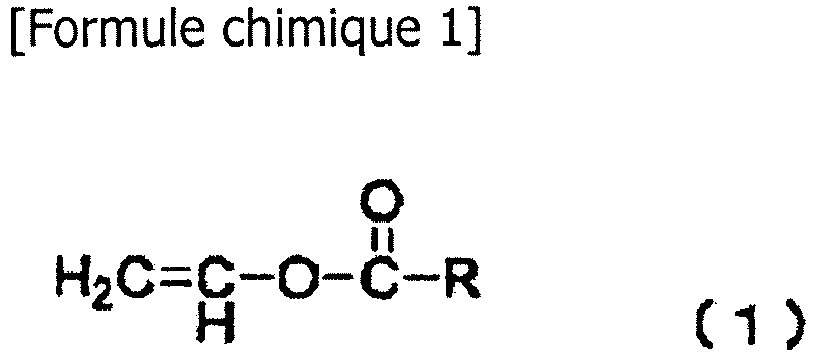
- R is a linear or branched alkyl group having 1 to 18 carbon atoms.
- R has preferably 1 to 12 carbon atoms, more preferably 1 to 6 carbon atoms.
- vinyl ester monomers include vinyl acetate, vinyl propionate, vinyl butyrate, vinyl trimethyl acetate, vinyl caproate, vinyl caprylate, vinyl laurate, vinyl palmitate and vinyl stearate. These can be used alone or in combination. Among these, preferable are vinyl acetate and vinyl propionate.
- the amount of the vinyl ester monomer may be from 1 to 700 parts by weight, for example, from 5 to 500 parts by weight, particularly from 10 to 400 parts by weight, based on (A) 100 parts by weight of the structural units of the hydroxyl group-containing (meth)acrylate monomer (A).
- the polyfunctional (meth)acrylate monomer (C) acts as a crosslinking agent.
- the Polyfunctional (meth)acrylate monomer include tri-to penta-functional (meth)acrylates.
- the tri-to penta-functional cross-linking agent has good dispersion in emulsion polymerization, and excellent physical properties as a binder (flexibility and bondability).
- the polyfunctional (meth)acrylate monomer (C) is a compound represented by the formula: wherein, R 11 each is, the same or different, hydrogen or a methyl group, R 12 is a tri-functional to penta-functional organic group having 2 to 100 carbon atoms, and m is an integer of 3-5 or less.
- R 12 is tri- to penta-functional, particularly tri to tetra-functional organic group, and m is an integer of 3-5, particularly an integer of 3-4.
- R 12 may be a hydrocarbon group, an oxyalkylene group (-(OA 1 )- where A 1 represents an alkylene group having 2 to 4 carbon atoms), a polyoxyalkylene group (-(OA 2 ) p - where A 2 is an alkylene group having 2 to 4 carbon atoms, and p is 2 to 30), or combinations of at least two thereof.
- R 12 may have substituents.
- substituents examples include a hydroxyl group, a carboxylic acid group, a nitrile group, a fluorine atom, an amino group, a sulfonic acid group, phosphoric acid group, an amide group, an isocyanuric acid group, oxyalkylene group (-(OA 3 )-H where A 3 is an alkylene group having 2 to 4 carbon atoms), a polyoxyalkylene group.
- the hydrocarbon group may be a linear or branched hydrocarbon group, preferably a branched hydrocarbon group.
- the number of carbon atoms in the hydrocarbon group is 2 to 100, for example 3 to 50, particularly 4 to 30.
- trifunctional (meth)acrylate monomers include trimethylolpropane tri(meth)acrylate, trimethylolpropane EO-modified tri(meth)acrylate, trimethylolpropane PO-modified tri(meth)acrylate, pentaerythritol tri(meth)acrylate, 2,2,2-tris(meth)acryloyloxyethyl methyl ethyl succinate, ethoxylated isocyanuric acid tri(meth)acrylate, ⁇ -caprolactone-modified tris-(2-(meth)acryloxy ethyl) isocyanurate, glycerol EO-modified tri(meth)acrylate, glycerol PO-modified tri(meth)acrylate and tris(meth)acryloyloxyethyl phosphate.
- preferable are trimethylolpropane tri(meth)acrylate, trimethylolpropane EO-modified tri(meth)
- tetrafunctional (meth)acrylate monomer examples include ditrimethylolpropane tetra(meth)acrylate, pentaerythritol tetra(meth)acrylate and pentaerythritol EO-modified tetra(meth)acrylate.
- pentafunctional (meth)acrylate monomer examples include dipentaerythritol penta(meth)acrylate.
- the polyfunctional (meth)acrylate monomer can be used alone or in combination of at least two.
- each of the monomers (A) to (D) can be used alone or in combination of at least two.
- the amount of the structural units of the polyfunctional (meth)acrylate monomer (C) is 0.1 to 100 parts by weight, for example, 0.5 to 80 parts by weight, particularly 1 to 70 parts by weight, based on 100 parts by weight of the structural units of the hydroxyl group-containing (meth)acrylate monomer (A).
- the polymer according to the present invention may have the following configuration units. Structural units A + B + C , or Structural units A + B + C + D .
- the acrylic monomer (D) is at least one monomer selected from the group consisting of the (meth)acrylic acid monomer and the (meth)acrylic acid ester monomer.
- the (meth)acrylic acid monomer is a compound represented by the formula: wherein R 31 is hydrogen or a methyl group.
- acrylic acid monomer examples include methacrylic acid and acrylic acid.
- the acrylic acid monomer may be used alone or in combination of at least two.
- a combination of methacrylic acid and acrylic acid may be used in a weight ratio of 1:99 to 99: 1, for example 5:95 to 95: 5, particularly 20:80 to 80:20.
- the (meth)acrylate ester monomer is a compound represented by the formula: wherein R 21 is hydrogen or a methyl group, and R 22 is a hydrocarbon group having 1 to 50 carbon atoms.
- R 22 is a monovalent organic group, and may be a saturated or unsaturated aliphatic group (for example, a chain aliphatic group, or a cyclic aliphatic group), an aromatic group or an araliphatic group.
- R 22 is preferably a saturated hydrocarbon group, particularly a saturated aliphatic group.
- the R 22 group is preferably a branched or linear alkyl group.
- the number of carbon atoms in R 22 is 1-50, for example, 1-30, particularly 1-20.
- the (meth)acrylate ester monomer examples include alkyl acrylate esters, such as methyl (meth)acrylate, ethyl (meth)acrylate, propyl (meth)acrylate, isopropyl (meth)acrylate, n-butyl (meth)acrylate, isobutyl (meth)acrylate n-amyl (meth)acrylate, isoamyl (meth)acrylate n-hexyl (meth)acrylate, 2-ethylhexyl (meth)acrylate and dodecyl (meth)acrylate.
- alkyl acrylate esters such as methyl (meth)acrylate, ethyl (meth)acrylate, propyl (meth)acrylate, isopropyl (meth)acrylate, n-butyl (meth)acrylate, isobutyl (meth)acrylate n-amyl (meth)acrylate, isoamyl
- methyl (meth)acrylate Preferable are methyl (meth)acrylate, ethyl (meth)acrylate, propyl (meth)acrylate and isopropyl (meth)acrylate.
- the (meth)acrylate ester monomer may be used alone or in combination of at least two.
- a vinyl monomer may be further used.
- the vinyl monomer include monomers which are a gas at standard conditions, such as ethylene, propylene and vinyl chloride, and monomers which are a liquid or solid at standard conditions, particularly, (meth)acrylic monomers other than the monomers (A), (B), and (C) and (D), such as a (meth)acrylic monomer having a substituent which may be a hydroxyl group, an amide group, a fluorine atom or a sulfonic acid group.
- the used monomers do not have a carbon-carbon double bond including an aromatic carbon-carbon double bond (a carbon-carbon triple bond), in addition to the ethylenically unsaturated double bonds contained in the (meth)acrylic group.
- the amounts of the structural units derived from the hydroxyl group-containing monomers (A), the structural units derived from the vinyl ester monomer (B), the structural units derived from the polyfunctional (meth)acrylate (C), and the structural units derived from the (meth)acrylic monomer (D) may be (A) 10-90 wt%, (B) 5-70 wt%, (C) 0.1-50 wt% and (D) 0-70 wt%, preferably (A) 15-80 wt%, (B) 8-60 wt%, (C) 0.5-40 wt% and (D) 1-60% by weight, more preferably (A) 20-70 wt%, (B) 10-55 wt%, (C) 1-30 wt% and (D) 2-50 wt%, based on the polymer.
- the upper limit of the amount of structural units derived from an (meth)acrylic monomer (D) may be 40 wt%, for example, 30 wt%,
- the amounts of the structural units derived from the hydroxyl group-containing monomers (A), the structural units derived from the vinyl ester monomer (B), the structural units derived from the polyfunctional (meth)acrylate (C), and the structural units derived from the (meth)acrylic monomer (D) may be: the structural units (B) 1 to 700 parts by weight, for example, 5 to 500 parts by weight, particularly 10 to 400 parts by weight, the structural units (C) 0.5 to 500 parts by weight, for example, from 0.5 to 80 parts by weight, particularly 1 to 70 parts by weight, and the structural units (D) 0 to 500 parts by weight, preferably 0.1 to 300 parts by weight , for example, 0.5 to 200 parts by weight, particularly 1 to 70 parts by weight, based on 100 parts by weight of the structural units (A).
- Examples of a method of obtaining the polymer of the present invention include a general emulsion polymerization method, a soap free emulsion polymerization method, a seed polymerization method, and a method of conducting a polymerization after swelling a monomer, etc. into seed particles.
- a composition comprising a monomer, an emulsifier, a polymerization initiator, water, and optionally a dispersing agent, a chain transfer agent and a pH adjuster is stirred at a room temperature under an inert gas atmosphere to emulsify the monomer in water.
- the emulsification method includes a stirring method, a shearing method and an ultrasonic wave method, and can use a stirring blade and a homogenizer. Subsequently, the initiation of the polymerization with stirring to raise the temperature can give a latex of a spherical-shaped polymer wherein the polymer is dispersed in water. Alternatively, it is possible to use a dispersion in an organic solvent such as N-methyl pyrrolidone, which is produced by using, for example, a dispersing agent, after the produced spherical-shaped polymer is isolated. Further, a monomer, an emulsifier, a dispersing agent, etc.
- a method of adding the monomer at the polymerization include a one-package charge method, a method of dropping the monomer and a pre-emulsion dropping method, and these method may be used in combination of at least two.
- the particle structure of the polymer in the binder of the present invention is not particularly limited.
- the present invention can use a latex of the polymer comprising the complex polymer particles of core/shell structure produced by a seed polymerization.
- a method described in " Chemistry of dispersion/emulsification system" (published by Kougaskutosho Co., Ltd. ) can be used for the seed polymerization method. Specifically, this method is that the monomer, the polymerization initiator and the emulsifier are added into a system dispersing the seed particles produced by the above-mentioned method, and nuclear particles are grown, and the above-mentioned method may be repeated once or more.
- the particles comprising the polymer of the present invention or a conventionally known polymer may be used.
- the conventionally known polymer include polyethylene, polypropylene, polyvinyl alcohol, polystyrene, poly(meth)acrylate and polyether.
- the conventionally known polymer is not limited to the above-mentioned examples, and another conventionally known polymer can be used.
- a homopolymer, or a copolymer or a blend may be used.
- Examples of a particle shape of the polymer in the binder of the present invention include a platelet structure, a hollow structure, a composite structure, a localized structure, a Daruma-shaped structure, an octopus-shaped structure and raspberry-shaped structure in addition to the spherical-shaped structure.
- the present invention can use particles having at least two structures and compositions.
- the emulsifier used in the present invention is not particularly limited.
- the present invention can use, for example, a nonionic emulsifier and an anionic emulsifier which are generally used in a conventional emulsion polymerization method.
- the nonionic emulsifier include a polyoxyethylene alkyl ether, a polyoxyethylene alcohol ether, a polyoxyethylene alkyl phenyl ether, a polyoxyethylene polycyclic phenyl ether, a polyoxyalkylene alkyl ether, a sorbitan fatty acid ester, a polyoxyethylene fatty acid ester, and a polyoxyethylene sorbitan fatty acid ester.
- anionic emulsifier examples include an alkylbenzene sulfonate salt, an alkyl sulfuric ester salt, a polyoxyethylene alkyl ether sulfate ester salt, and a fatty acid salt. These may be used alone or in combination of at least two.
- Representative examples of the anionic emulsifier include sodium dodecyl sulfate, sodium dodecylbenzenesulfonate, and dodecyl sulfate triethanolamine.
- the amount of the emulsifier used in the present invention may be an amount generally used in a conventional emulsion polymerization method. Specifically, the amount of the emulsifier is 0.01 to 10% by weight, preferably 0.05 to 5% by weight, more preferably 0.05 to 3% by weight, based on the amount of the charged monomer.
- the present invention can use a polymerization initiator generally used in a conventional emulsion polymerization method.
- the polymerization initiator include a water-soluble polymerization initiator represented by a persulfate salt, such as potassium persulfate, sodium persulfate, and ammonium persulfate; an oil-soluble polymerization initiator represented by cumene hydroperoxide and diisopropylbenzene hydroperoxide; hydroperoxide; an azo initiator such as 4-4'-azobis (4-cyanovaleric acid), 2-2'-azobis[2-(2-imidazoline 2-yl) propane, 2-2'-azobis(propane-2-carboamidine), 2-2'-azobis[N-(2-carboxyethyl)-2-methylpropanamide, 2-2'-azobis ⁇ 2-[1-(2-hydroxyethyl)-2-imidazoline 2-yl] propane ⁇ , 2-2'-azobis(1-imino-1-pyrrol
- the amount of the polymerization initiator used in the present invention may be an amount generally used in a conventional emulsion polymerization method. Specifically, the amount of the polymerization initiator is 0,01 to 5% by weight, preferably 0.05 to 3% by weight, more preferably 0.1 to 1% by weight, based on the amount of the charged monomer.
- Water used for producing the binder of the present invention is not particularly limited, and the present invention can use water generally used.
- water include tap water, distilled water, ion exchange water, and ultrapure water. Among them, distilled water, ion exchange water, and ultrapure water are preferable.
- a dispersing agent can be used according to necessity, and a type and a use amount are not particularly limited.
- the dispersing agent include sodium hexametaphosphate, sodium tripolyphosphate, sodium pyrophosphate and sodium polyacrylate.
- a chain transfer agent can be used according to necessity.
- the chain transfer agent include an alkyl mercaptan such as n-hexyl mercaptan, n-octyl mercaptan, t-octyl mercaptan, n-dodecyl mercaptan, t-dodecyl mercaptan and n-stearyl mercaptan; 2,4-diphenyl-4-methyl-1-pentene, 2,4-diphenyl-4-methyl-2-pentene; a xanthogen compound such as dimethylxanthogen disulfide and diisopropylxanthogen disulfide; terpinolene, a thiuram compound such as tetramethyl thiuram disulfide, tetraethyl thiuram disulfide, tetramethyl thiuram monosulfide; a phenol-based compound such
- a polymerization time and a polymerization temperature are not particularly limited.
- the polymerization time and the polymerization temperature can be suitably selected according to, for example, a type of the used polymerization initiator.
- the polymerization temperature is 20°C to 100°C, and the polymerization time is 0.5 hours to 100 hours.
- a pH can be adjusted by optionally using a base as a pH adjuster.
- the base include an alkali metal (Li, Na, K, Rb, Cs) hydroxide, ammonia, an inorganic ammonium compound, and an organic amine compound.
- the range of pH is pH of 1 to 11, preferably pH of 2 to 11, more preferably pH of 2 to 10, for example, pH of 3 to 10, particularly pH of 5 to 9.
- the binder of the present invention is a binder composition comprising the polymer and water, particularly a binder composition wherein the polymer is dispersed in water.
- the content (the solid concentration) of the polymer in the binder composition of the present invention is 1% to 80% by weight, preferably 5% to 70% by weight, more preferably 10% to 60% by weight.
- a particle diameter of the polymer in the binder of the present invention can be measured by, for example, a dynamic light scattering method, a transmission electron microscope method, and an optical microscopy method.
- the average particle diameter calculated from the dispersion intensity obtained by using the dynamic light scattering method is 0.001 ⁇ m to 1 ⁇ m, preferably 0.001 ⁇ m to 0.500 ⁇ m.
- Specific examples of a measurement apparatus include Zetasizer Nano manufactured by Spectris.
- the method of preparing the slurry for battery electrode comprising the binder of the present invention is not particularly limited.
- the binder of the present invention, an active material, an electrically conductive additive, water, and optionally a thickening agent may be dispersed by for example, a stirrer, a dispersion machine, a kneading machine, a planetary ball mill, and a homogenizer used usually.
- the slurry materials may be heated in order to increase the efficiency of dispersion, if the slurry material is not affected.
- a defoaming agent may be beforehand added to the binder composition, or added to the slurry liquid for battery electrode.
- the addition of the defoaming agent can increase the dispersibility of each component at the time of slurry preparation for battery electrode to improve the spreadability of slurry (a part where blisters remain by coating is a defect), and can suppress the remaining air bubbles in the electrode.
- the defoaming agent examples include a silicone-based defoaming agent, a mineral oil-based defoaming agent and a polyether-based defoaming agent.
- the silicone-based defoaming agent and the mineral oil-based defoaming agent are preferable.
- the silicone-based defoaming agent includes a dimethyl silicone-based defoaming agent, a methylphenyl silicone-based defoaming agent, and a methylvinyl silicone-based defoaming agent.
- the dimethyl silicone-based defoaming agent is preferable.
- the defoaming agent may be used as an emulsion-type defoaming agent dispersed in water together with a surface active agent.
- the defoaming agent may be used alone or in combination of at least two.
- the method of producing the electrode for battery is not limited, and a general method can be used.
- a slurry for battery electrode (a coating liquid) comprising a positive electrode active material or a negative electrode active material, an electrically conductive additive, the binder, water, and optionally a thickening agent is coated uniformly onto an electrical collector surface by, for example, a doctor blade method or a silk screen method, to give a suitable thickness of the coating.
- a slurry prepared by dispersing a negative electrode active material powder or a positive electrode active material powder, an electrically conductive additive, the binder, etc. in water is coated onto a metal electrode substrate, and is equalized into a suitable uniform thickness by a blade having a predetermined slit width.
- the electrode is dried under conditions of, for example, a 100°C hot blast or a 80°C vacuum, in order to remove excessive water and organic solvent.
- the dried electrode is press-treated by a press apparatus to produce the electrode material. After the press-treatment, the electrode may be heat-treated again to remove water, a solvent, an emulsifier, etc.
- the positive electrode material comprises, for example, a metal electrode substrate as a substrate for the electrode material; and a positive electrode active material, and a binder for sending and receiving well the ions to and from an electrolyte layer, and fixing the electrically conductive additive and the positive electrode active material onto the metal electrode substrate.
- the metal electrode substrate may be, for example, aluminum.
- the metal electrode substrate is not limited to this, and the metal electrode substrate may be nickel, stainless steel, gold, platinum, titanium, etc.
- the positive electrode active material used by the present invention is a lithium metal-containing composite oxide powder which may be at least one composition selected from LiMO 2 , LiM 2 O 4 , Li 2 MO 3 and LiMEO 4 .
- M mainly comprises transition metals, and contains at least one selected from Co, Mn, Ni, Cr, Fe and Ti.
- M comprises a transition metal, and may contain at least one of Al, Ga, Ge, Sn, Pb, Sb, Bi, Si, P and B in addition to the transition metal.
- E contains at least one selected from P and Si.
- a particle diameter of the positive electrode active material is 50 ⁇ m or less, more preferably 20 ⁇ m or less. These active materials have an electromotive force of at least 3 V (vs. Li/Li + ).
- positive electrode active material examples include lithium cobaltate, lithium nickelate, nickel/manganese/lithium cobaltate (three element systems), spinel-type lithium manganate, and lithium iron phosphate.
- the negative electrode material comprises, for example, a metal electrode substrate as a substrate for the electrode material; and a negative electrode active material, and a binder for sending and receiving well the ions to and from an electrolyte layer, and fixing the electrically conductive additive and the negative electrode active material onto the metal electrode substrate.
- the metal electrode substrate may be, for example, copper.
- the metal electrode substrate is not limited to this, and the metal electrode substrate may be nickel, stainless steel, gold, platinum, titanium, etc.
- Examples of the negative electrode active material used in the present invention include a powder comprising a carbon material (for example, natural graphite, artificial graphite, amorphous carbon) which has a structure (a porous structure) capable of intercalating and deintercalating a lithium ion; or a lithium compound, an aluminum compound, a tin compound, a silicon compound, and a titanium compound comprising a metal capable of intercalating and deintercalating a lithium ion.
- a particle diameter of the negative electrode active material is preferably from 10 nm to 100 ⁇ m, more preferably from 20 nm to 20 ⁇ m.
- a mixture active material between a metal and a carbon material may be used.
- the negative electrode active material preferably has a porosity of about 70%.
- the electrically conductive additive examples include graphite, and a conductive carbon black, such as furnace black, acetylene black, and ketchen black, and a metal powder.
- the electrically conductive additive may be used alone or a combination of at least two.
- the thickening agent examples include carboxymethyl cellulose, methyl cellulose, hydroxy methyl cellulose, ethyl cellulose, and a sodium salt, ammonium salt, polyvinyl alcohol and polyacrylate salt thereof.
- the thickening agent may be used alone or a combination of at least two.
- the following method of producing the battery is mainly a method of producing a lithium-ion secondary battery.
- the method of producing the battery, particularly the secondary battery is not particularly limited, and may be a conventionally know method of producing the battery comprises a positive electrode, a negative electrode, a separator, an electrolyte solution and an electrical collector.
- the positive electrode, the separator and the negative electrode are inserted into an external can.
- the electrolyte solution is charged into the external can, which is impregnated with the electrolyte solution.
- the external can is bonded to a sealing body by a tab welding to encapsulate the sealing body, and is caulked to obtain the storage battery.
- the shape of the battery is not limited and examples of the battery shape include a coin shape, a cylinder shape, and a sheet shape.
- the battery may have a structure wherein at least two batteries are stacked or laminated.
- the separator prevents the positive electrode and the negative electrode from directly contacting and short-circuiting within the storage battery, and a conventionally known material can be used for the separator.
- a conventionally known material can be used for the separator.
- Specific examples of the separator include a porous polymer film or a paper, such as a polyolefin.
- the porous polymer film, such as polyethylene and polypropylene is preferable, since this film is not affected with the electrolyte solution.
- the electrolyte solution is a solution which comprises a lithium salt compound for electrolyte and an aprotic organic solvent as a solvent.
- a lithium salt compound which is generally used for a lithium-ion battery and which has a wide potential window, is used as the lithium salt compound for electrolyte.
- the lithium salt compound include LiBF 4 , LiPF 6 , LiClO 4 , LiCF 3 SO 3 , LiN(CF 3 SO 2 ) 2 , LiN(C 2 F 5 SO 2 ) 2 and LiN[CF 3 SC(C 2 F 5 SO 2 ) 3 ] 2 , but the lithium salt compound is not limited to these. These may be used alone or in combination of at least two.
- aprotic organic solvent examples include propylene carbonate, ethylene carbonate, dimethyl carbonate, diethyl carbonate, methylethyl carbonate, 1,2-dimethoxyethane, 1,2-diethoxy ethane, gamma-butyrolactone, tetrahydrofuran, 1,3-dioxolane, dipropyl carbonate, diethylether, sulfolane, methylsulfolane, acetonitrile, propylnitrile, anisole, an acetate ester, a propionate ester, and a linear ethers such as diethylether, and a combination of at least two may be used.
- the ambient-temperature molten salt can be used as the solvent.
- the ambient-temperature molten salt means a salt, at least part of which exhibits a liquid at an ambient temperature.
- the ambient temperature means a temperature range assumed that a power source usually operates in said temperature range.
- the temperature range assumed that a power source usually operates means that the upper limit of the range is about 120°C, optionally about 60°C and the lower limit is about -40°C, optionally about -20°C.
- the ambient-temperature molten salt is also referred to as an ionic liquid
- the ambient-temperature molten salt is a "salt" consisting of an ion (an anion and a cation), and, in particular, a liquid compound is referred to as an "ionic liquid”.
- a tertiary ammonium organic substance cation such as a pyridine-base, a fatty amine-base, and a cycloaliphatic amine-base.
- a tertiary ammonium organic substance cation include an imidazolium ion such as dialkyl imidazolium and trialkyl imidazolium, a tetraalkyl ammonium ion, an alkyl pyridinium ion, a pyrazolium ion, a pyrrolidinium ion, and a piperidinium.
- the imidazolium cation is preferable.
- Examples of the tetraalkyl ammonium ion include a trimethyl ethylammonium ion, a trimethyl ethylammonium ion, a trimethyl propylammonium ion, a trimethylhexyl ammonium ion, a tetrapentylammonium ion, and a triethyl methylammonium ion.
- the tetraalkyl ammonium ion is not limited to these.
- alkyl pyridinium ion examples include a N-methyl pyridinium ion, a N-ethylpyridinium ion, a N-propylpyridinium ion, a N-butyl pyridinium ion, a 1-ethyl-2 methylpyridinium ion, a 1-butyl-4-methylpyridinium ion, and a 1-butyl-2,4-dimethylpyridinium ion.
- the alkyl pyridinium ion is not limited to these.
- Examples of the imidazolium cation include a 1,3-dimethyl imidazolium ion, a 1-ethyl-3-methyl imidazolium ion, a 1-methyl-3-ethyl imidazolium ion, a 1-methyl-3-butyl imidazolium ion, a 1-butyl-3-methyl imidazolium ion, a 1,2,3-trimethyl imidazolium ion, a 1,2-dimethyl-3-ethyl imidazolium ion, a 1,2-dimethyl- 3-propyl imidazolium ion, and a 1-butyl-2,3-dimethyl imidazolium ion.
- the imidazolium cation is not limited to these.
- an anion species include a halide ion, such as a chloride ion, a bromide ion and an iodide ion, a perchlorate ion, a thiocyanate ion, a tetrafluoroboronate ion, an inorganic acid ion such as a nitrate ion, AsF6- and PF6-, an organic acid ion such as a stearyl sulfonate ion, an octylsulfonate ion, a dodecylbenzenesulfonate ion, a naphthalene sulfonate ion, a dodecylnaphthalene sulfonate ion, and a 7,7,8,8-tetracyano-p-quinodimethane ion.
- a halide ion such as a chloride ion
- the ambient-temperature molten salt may be used alone or in combination of at least two.
- a flame retardant or a nonflammable agent examples include a halide, such as a brominated epoxy compound, a phosphazene compound, tetrabromobisphenol A and a chlorinated paraffin, antimony trioxide, antimony pentaoxide, aluminum hydroxide, magnesium hydroxide, a phosphate ester, a polyphosphate, and zinc borate.
- a negative electrode surface treatment agent examples include vinylene carbonate, fluoroethylene carbonate, and polyethylene glycol dimethyl ether.
- Examples of a positive electrode surface treatment agent include an inorganic compound, such as carbon and a metal oxide (for example, MgO and ZrO2), and an organic compound such as o-terphenyl.
- Examples of an overcharge inhibitor include biphenyl, and 1-(p-tolyl)-adamantane.
- electrodes and coin batteries were produced by using the binder of the present invention, and, in the following experiments, a bending test and an adhesion test were conducted for evaluations of the electrode, and a charge/discharge cycle characteristics test was conducted for evaluations of the coin battery.
- the bending test was conducted by a mandrel bending test. Specifically, the electrode was cut into a piece having a width of 3 cm and a length of 8 cm, and the state of a paint film of a bending portion was observed when the piece was bent at the longitudinal center (at 4 cm portion) position at an angle of 180 degrees around a support of a stainless steel stick having a diameter of 2 mm into a direction of a substrate (so that an electrode surface is outside). The measurement was conducted 5 times by this method. When no crack or peeling of the electrode surface was formed, the evaluation (flexibility) is "Good", and when one or more cracks or peeling of the electrode surface was formed even at one time, the evaluation is "Bad".
- the adhesion test was done by a cross cut test. Specifically, an electrode was sliced into pieces each having a width of 3 cm and a length of 4 cm, and cuts on the piece are made into a right angled lattice pattern with a cutter knife so as to prepare 25 squares (vertically 5 squares x horizontally 5 squares) each having 1 mm side in the pattern. A tape (CELLOTAPE (registered trademark) manufactured by Nichiban) was stuck on the 25 squares. When the tape was peeled off without pausing under the state that the electrode was fixed, the number of the squares, which remained without separating from the electrode, was measured. The test was carried out 5 times to determine an average value.
- Electrochemical characteristics which is a charge/discharge cycle characteristics of the battery, was evaluated with a charging/discharging device manufactured by Nagano & Co., Ltd. by flowing a constant electric current in the battery, at an upper limit of 4.2V and a lower limit of 2.5V under the test condition (C/8) that, at a first time to a 3rd time, a predetermined electrical charge/discharge in 8 hours can be conducted, and the test conditions (1C) that, at a 4th time or later, a predetermined charge/electric discharge in 1 hour can be conducted.
- a test temperature was a 60°C environment.
- a value of discharge capacity at the 4th cycle was taken as a reversible capacity.
- the capacity retention rate was evaluated by a ratio of a discharge capacity after conducting the 100 charge/discharge cycles, to a discharge capacity at the 4th cycle.
- Binder composition A Polymerization conversion of at least 99%, Solid concentration of 17 wt%).
- the obtained polymer had an average particle diameter of 0.107 micrometers.
- Binder composition B Polymerization conversion of at least 99% (Solid concentration of 16 wt%).
- the obtained polymer had an average particle diameter of 0.098 micrometers.
- Binder composition C Polymerization conversion of at least 99%
- Solid concentration of 16 wt% Solid concentration of 16 wt%.
- the obtained polymer had an average particle diameter of 0.233 micrometers.
- Binder composition D Polymerization conversion of at least 99%
- Solid concentration of 17 wt% The obtained polymer had an average particle diameter of 0.098 micrometers.
- Binder composition E Polymerization conversion of at least 99%
- Solid concentration of 16 wt% Solid concentration of 16 wt%.
- the obtained polymer had an average particle diameter of 0.098 micrometers.
- Binder composition F Polymerization conversion of at least 99%
- Solid concentration of 18 wt% The obtained polymer had an average particle diameter of 0.120 micrometers.
- the obtained slurry for positive electrode was applied onto an aluminum current collector having a thickness of 20 micrometer by using a blade coater having a gap of 65 micrometers and then dried under vacuum at 110°C for at least 12 hours, pressed with a roller press machine to produce a positive electrode having a thickness of 15 micrometers.
- the evaluation results of flexibility and bindability are shown in Table 1 for Example 1.
- a positive electrode was produced as in Preparation Example 1 for electrode except using Binder composition B obtained in Synthesis Example 2 for binder.
- a thickness of the obtained positive electrode was 16 micrometers.
- the evaluation results of flexibility and bindability are shown in Table 1 for Example 2.
- a positive electrode was produced as in Preparation Example 1 for electrode except using Binder composition C obtained in Synthesis Example 3 for binder.
- a thickness of the obtained positive electrode was 17 micrometers.
- the evaluation results of flexibility and bindability are shown in Table 1 for Example 3.
- a positive electrode was produced as in Preparation Example 1 for electrode except using Binder composition D obtained in Comparative Synthesis Example 1 for binder.
- a thickness of the obtained positive electrode was 15 micrometers.
- the evaluation results of flexibility and bindability are shown in Table 1 for Comparative Example 1.
- a positive electrode was produced as in Preparation Example 1 for electrode except using Binder composition E obtained in Comparative Synthesis Example 2 for binder.
- a thickness of the obtained positive electrode was 15 micrometers.
- the evaluation results of flexibility and bindability are shown in Table 1 for Comparative Example 2.
- a positive electrode was produced as in Preparation Example 1 for electrode except using Binder composition F obtained in Comparative Synthesis Example 3 for binder.
- a thickness of the obtained positive electrode was 16 micrometers.
- the evaluation results of flexibility and bindability are shown in Table 1 for Comparative Example 3.
- a positive electrode was produced as in Preparation Example 1 for electrode except using the thus obtained slurry.
- a thickness of the obtained positive electrode was 17 micrometers.
- the evaluation results of flexibility and bindability are shown in Table 1 for Comparative Example 4.
- the coin battery was produced as in Production Example 1 for coin battery except using the positive electrode obtained in Preparation Example 2 for electrode. Results of determining the capacity retention rate after 100 cycles are shown in Table 1 for Example 2.
- the coin battery was produced as in Production Example 1 for coin battery except using the positive electrode obtained in Preparation Example 3 for electrode. Results of determining the capacity retention rate after 100 cycles are shown in Table 1 for Example 3.
- the coin battery was produced as in Production Example 1 for coin battery except using the positive electrode obtained in Comparative Preparation Example 1 for electrode. Results of determining the capacity retention rate after 100 cycles are shown in Table 1 for Comparative Example 1.
- the coin battery was produced as in Production Example 1 for coin battery except using the positive electrode obtained in Comparative Preparation Example 2 for electrode. Results of determining the capacity retention rate after 100 cycles are shown in Table 1 for Comparative Example 2.
- the coin battery was produced as in Production Example 1 for coin battery except using the positive electrode obtained in Comparative Preparation Example 3 for electrode. Results of determining the capacity retention rate after 100 cycles are shown in Table 1 for Comparative Example 3.
- the coin battery was produced as in Production Example 1 for coin battery except using the positive electrode obtained in Comparative Preparation Example 4 for electrode. Results of determining the capacity retention rate after 100 cycles are shown in Table 1 for Comparative Example 4.
- Table 1 Ex. 1 Ex. 2 Ex. 3 Com. Ex. 1 Com. Ex. 2 Com. Ex. 3 Com. Ex. 4 Binder composition A B C D E F PVDF Flexibility of electrode Good Good Good Bad Bad Good Good Bondability of electrode 25/25 25/25 25/25 12/25 10/25 15/25 7/25 Capacity retention rate after 100 cycles 96 97 96 70 75 79 80
- the electrode binder (the binder for secondary lithium battery) of the present invention has the advantages that the binder has high bonding strength, the binder is in a water system giving a small environmental load, and performances are not influenced by a temperature. Accordingly, the secondary lithium-ion battery, comprising the present binder, can be suitably used as a secondary (rechargeable) battery ranging from small-scale batteries, such as electronic devices, e.g., cell phones, laptop computers and camcorders, to large-scale lithium-ion batteries such as storage batteries for house applications for power storage and automotive applications such as electric vehicles and hybrid electric vehicles.
- small-scale batteries such as electronic devices, e.g., cell phones, laptop computers and camcorders
- large-scale lithium-ion batteries such as storage batteries for house applications for power storage and automotive applications such as electric vehicles and hybrid electric vehicles.
Landscapes
- Chemical & Material Sciences (AREA)
- Engineering & Computer Science (AREA)
- Chemical Kinetics & Catalysis (AREA)
- General Chemical & Material Sciences (AREA)
- Electrochemistry (AREA)
- Materials Engineering (AREA)
- Manufacturing & Machinery (AREA)
- Organic Chemistry (AREA)
- Power Engineering (AREA)
- Inorganic Chemistry (AREA)
- General Physics & Mathematics (AREA)
- Condensed Matter Physics & Semiconductors (AREA)
- Physics & Mathematics (AREA)
- Microelectronics & Electronic Packaging (AREA)
- Health & Medical Sciences (AREA)
- Medicinal Chemistry (AREA)
- Polymers & Plastics (AREA)
- Battery Electrode And Active Subsutance (AREA)
- Addition Polymer Or Copolymer, Post-Treatments, Or Chemical Modifications (AREA)
- Electric Double-Layer Capacitors Or The Like (AREA)
Claims (15)
- Liant d'électrode de batterie qui est une composition de liant comprenant de l'eau et un polymère comprenant :(I) des unités structurales dérivées d'un monomère (méth)acrylate contenant un groupe hydroxyle (A), et(II) des unités structurales dérivées d'un monomère ester de vinyle (B) représenté par la formule générale (1) :
 (III) des unités structurales dérivées d'un monomère (méth)acrylate polyfonctionnel (C), qui est un (méth)acrylate trifonctionnel à pentafonctionnel.
 - Liant d'électrode de batterie selon la revendication 1, où le monomère (méth)acrylate contenant un groupe hydroxyle (A) est un mono(méth)acrylate d'alkylèneglycol ayant une masse moléculaire de 100 à 1000.
- Liant d'électrode de batterie selon la revendication 1 ou 2, où le monomère (méth)acrylate contenant un groupe hydroxyle (A) est un composé représenté par la formule générale :

- Liant d'électrode de batterie selon l'une quelconque des revendications 1 à 3, où le monomère (méth)acrylate polyfonctionnel (C) est un (méth)acrylate trifonctionnel ou tétrafonctionnel.
- Liant d'électrode de batterie selon l'une quelconque des revendications 1 à 3, où le monomère (méth)acrylate polyfonctionnel (C) est un composé représenté par la formule :
 où les R11 sont chacun, identiques ou différents, l'hydrogène ou un groupe méthyle,R12 est un groupe organique trifonctionnel à pentafonctionnel ayant 2 à 100 atomes de carbone, et m est un entier de 3-5 ou moins.
 - Liant d'électrode de batterie selon l'une quelconque des revendications 1 à 5, où le polymère comprend en outre des unités structurales dérivées d'au moins un monomère acrylique (D) choisi dans le groupe consistant en un monomère acide (méth)acrylique et un monomère ester (méth)acrylate.
- Liant d'électrode de batterie selon la revendication 6, où le monomère acide (méth)acrylique est un composé représenté par la formule :

le monomère ester (méth)acrylate est un composé représenté par la formule : où R21 est l'hydrogène ou un groupe méthyle, etR22 est un groupe hydrocarboné ayant 1 à 50 atomes de carbone.
 - Liant d'électrode de batterie selon l'une quelconque des revendications 1 à 7, où la teneur du polymère dans la composition de liant est 1 % à 80 % en poids.
- Liant d'électrode de batterie selon l'une quelconque des revendications 1 à 8, où les quantités des unités structurales dérivées des monomères contenant un groupe hydroxyle (A), des unités structurales dérivées du monomère ester de vinyle (B), des unités structurales dérivées du (méth)acrylate polyfonctionnel (C) et des unités structurales dérivées du monomère (méth)acrylique (D) sont (A) 10-90 % en poids, (B) 5-70 % en poids, (C) 0,1-50 % en poids et (D) 0-70 % en poids, sur la base du polymère.
- Liant d'électrode de batterie selon la revendication 9, où les quantités des unités structurales dérivées des monomères contenant un groupe hydroxyle (A), des unités structurales dérivées du monomère ester de vinyle (B), des unités structurales dérivées du (méth)acrylate polyfonctionnel (C) et des unités structurales dérivées du monomère (méth)acrylique (D) sont (A) 15-80 % en poids, (B) 8-60 % en poids, (C) 0,5-40 % en poids et (D) 1-60 % en poids, sur la base du polymère.
- Liant d'électrode de batterie selon la revendication 10, où les quantités des unités structurales dérivées des monomères contenant un groupe hydroxyle (A), des unités structurales dérivées du monomère ester de vinyle (B), des unités structurales dérivées du (méth)acrylate polyfonctionnel (C) et des unités structurales dérivées du monomère (méth)acrylique (D) sont (A) 20-70 % en poids, (B) 10-55 % en poids, (C) 1-30 % en poids et (D) 2-50 % en poids, sur la base du polymère.
- Liant d'électrode de batterie selon l'une quelconque des revendications 1 à 11, où une batterie est une batterie secondaire.
- Electrode de batterie comprenant le liant selon l'une quelconque des revendications 1 à 12, et une matière active.
- Batterie comprenant l'électrode de batterie selon la revendication 13.
- Utilisation d'un polymère comme liant d'électrode de batterie, où le polymère comprend :(I) des unités structurales dérivées d'un monomère (méth)acrylate contenant un groupe hydroxyle (A), et(II) des unités structurales dérivées d'un monomère ester de vinyle (B) représenté par la formule générale (1) :
 (III) des unités structurales dérivées d'un monomère (méth)acrylate polyfonctionnel (C), qui est un (méth)acrylate trifonctionnel à pentafonctionnel.
Applications Claiming Priority (2)
| Application Number | Priority Date | Filing Date | Title |
|---|---|---|---|
| JP2013224291 | 2013-10-29 | ||
| PCT/JP2014/078629 WO2015064570A1 (fr) | 2013-10-29 | 2014-10-28 | Liant d'électrode de batterie et batterie et électrode faisant appel à celui-ci |
Publications (3)
| Publication Number | Publication Date |
|---|---|
| EP3067974A1 EP3067974A1 (fr) | 2016-09-14 |
| EP3067974A4 EP3067974A4 (fr) | 2017-04-05 |
| EP3067974B1 true EP3067974B1 (fr) | 2019-02-20 |
Family
ID=53004172
Family Applications (1)
| Application Number | Title | Priority Date | Filing Date |
|---|---|---|---|
| EP14858247.1A Not-in-force EP3067974B1 (fr) | 2013-10-29 | 2014-10-28 | Liant d'électrode de batterie et batterie et électrode faisant appel à celui-ci |
Country Status (6)
| Country | Link |
|---|---|
| US (1) | US10003077B2 (fr) |
| EP (1) | EP3067974B1 (fr) |
| JP (1) | JP6164303B2 (fr) |
| KR (1) | KR101931418B1 (fr) |
| CN (1) | CN105830263B (fr) |
| WO (1) | WO2015064570A1 (fr) |
Families Citing this family (17)
| Publication number | Priority date | Publication date | Assignee | Title |
|---|---|---|---|---|
| PL3136483T3 (pl) | 2014-04-21 | 2018-12-31 | Fujifilm Wako Pure Chemical Corporation | Spoiwo dla ogniwa litowego |
| HUE049555T2 (hu) | 2015-11-19 | 2020-09-28 | Asahi Chemical Ind | Kötõanyag elektromosságot tároló eszközhöz és kötõanyag készítmény elektromosságot tároló eszközhöz |
| EP3396748B1 (fr) * | 2015-12-24 | 2023-05-03 | Zeon Corporation | Composition de liant pour électrode de pile rechargeable à électrolyte non aqueux, composition de suspension épaisse pour électrode de pile rechargeable à électrolyte non aqueux, électrode pour pile rechargeable à électrolyte non aqueux, et pile rechargeable à électrolyte non aqueux |
| US10707531B1 (en) | 2016-09-27 | 2020-07-07 | New Dominion Enterprises Inc. | All-inorganic solvents for electrolytes |
| JP6822892B2 (ja) * | 2017-04-18 | 2021-01-27 | 旭化成株式会社 | 二次電池負極用スラリー、二次電池電極、二次電池、二次電池電極の製法、及び水溶性バインダーの二次電池負極用スラリーとしての使用 |
| JP2020057579A (ja) * | 2017-12-26 | 2020-04-09 | 株式会社大阪ソーダ | 負極、及び蓄電デバイス |
| CN108359050B (zh) * | 2018-03-02 | 2020-06-09 | 瑞固新能(上海)材料科技有限公司 | 一种核壳结构的改性丁苯胶乳的制备方法 |
| JP7380579B2 (ja) * | 2018-09-28 | 2023-11-15 | 日本ゼオン株式会社 | 全固体二次電池用バインダー組成物、全固体二次電池用スラリー組成物、固体電解質含有層および全固体二次電池 |
| US12451560B2 (en) | 2019-03-22 | 2025-10-21 | Lg Chem, Ltd. | Polyolefin separator and method for manufacturing the same |
| CN110218285B (zh) * | 2019-05-09 | 2021-09-07 | 福建蓝海黑石新材料科技有限公司 | 一种水性粘合剂及其制备方法 |
| JP7460335B2 (ja) * | 2019-06-17 | 2024-04-02 | 株式会社大阪ソーダ | 電極用バインダー、電極用バインダー組成物、電極材料、電極、及び蓄電デバイス |
| PL4080619T3 (pl) | 2020-09-21 | 2025-01-20 | Lg Chem, Ltd. | Środek wiążący dla anody akumulatora, anoda akumulatora i akumulator |
| CN114920873B (zh) * | 2022-05-09 | 2024-08-13 | 瑞固新能(上海)材料科技有限公司 | 一种锂离子电池隔膜用聚合物微球及其制备方法 |
| CN119318035A (zh) * | 2022-06-23 | 2025-01-14 | 富士胶片株式会社 | 二次电池用粘合剂组合物、二次电池用含固体电解质组合物、全固态二次电池用片材及全固态二次电池 |
| CN115117356B (zh) * | 2022-08-30 | 2023-02-03 | 宁德时代新能源科技股份有限公司 | 核壳结构聚合物、制备方法和用途、正极浆料、二次电池、电池模块、电池包和用电装置 |
| CN118834636B (zh) * | 2024-09-18 | 2025-02-18 | 深圳好电科技有限公司 | 一种负极粘结剂、负极涂层组合物、负极极片和二次电池 |
| CN120329889B (zh) * | 2025-06-19 | 2025-11-11 | 深圳好电科技有限公司 | 一种粘结剂、负极片及锂离子电池 |
Citations (1)
| Publication number | Priority date | Publication date | Assignee | Title |
|---|---|---|---|---|
| JPH04270774A (ja) * | 1991-02-26 | 1992-09-28 | Nitto Denko Corp | 放射線硬化型感圧接着剤及びその接着シート |
Family Cites Families (17)
| Publication number | Priority date | Publication date | Assignee | Title |
|---|---|---|---|---|
| US3996394A (en) * | 1975-03-24 | 1976-12-07 | Union Carbide Corporation | Method of improving adhesion to plastic substrates |
| JP3721727B2 (ja) | 1997-07-04 | 2005-11-30 | Jsr株式会社 | 電池電極用バインダー |
| JP4325061B2 (ja) | 2000-03-09 | 2009-09-02 | 日本ゼオン株式会社 | リチウムイオン二次電池電極用バインダーおよびその利用 |
| US20020122985A1 (en) | 2001-01-17 | 2002-09-05 | Takaya Sato | Battery active material powder mixture, electrode composition for batteries, secondary cell electrode, secondary cell, carbonaceous material powder mixture for electrical double-layer capacitors, polarizable electrode composition, polarizable electrode, and electrical double-layer capacitor |
| JP4099637B2 (ja) | 2001-01-17 | 2008-06-11 | 日清紡績株式会社 | 分極性電極組成物及びその製造方法、分極性電極、並びに電気二重層キャパシタ |
| JP2003268053A (ja) * | 2002-03-13 | 2003-09-25 | Hitachi Chem Co Ltd | 電池用バインダ樹脂、これを含有する電極及び電池 |
| JP5077510B2 (ja) | 2005-03-15 | 2012-11-21 | Jsr株式会社 | 二次電池負極用バインダー組成物、二次電池負極用スラリー、及び二次電池負極 |
| JP4822726B2 (ja) * | 2005-03-30 | 2011-11-24 | 三洋電機株式会社 | リチウムイオン二次電池用ポリマー及びそれを用いたリチウムイオン二次電池 |
| JP4380608B2 (ja) | 2005-08-26 | 2009-12-09 | 日本ゼオン株式会社 | 有機溶媒系バインダー組成物、電極、および電池 |
| DE602006012040D1 (de) | 2005-11-01 | 2010-03-18 | Jsr Corp | Organische Polymerpartikel und Herstellungsverfahren dafür, magnetische Partikel zur Diagnose, Partikel mit einer Carboxylgruppe und Herstellungsverfahren dafür sowie sondengebundene Partikel und Herstellungsverfahren dafür |
| JP5783172B2 (ja) * | 2010-05-25 | 2015-09-24 | 日本ゼオン株式会社 | 二次電池用正極及び二次電池 |
| JP5803070B2 (ja) * | 2010-08-31 | 2015-11-04 | 日立化成株式会社 | バインダ樹脂組成物、エネルギーデバイス用電極及びエネルギーデバイス |
| JP2012238488A (ja) * | 2011-05-12 | 2012-12-06 | Sumitomo Chemical Co Ltd | 電極用バインダー、電極及び該電極を有するリチウムイオン二次電池 |
| JP5447720B1 (ja) * | 2012-05-31 | 2014-03-19 | ダイソー株式会社 | 電池電極用バインダー、およびそれを用いた電極ならびに電池 |
| JP6068973B2 (ja) * | 2012-12-21 | 2017-01-25 | デンカ株式会社 | 電極用バインダー組成物 |
| KR101858798B1 (ko) | 2013-01-29 | 2018-05-16 | 가부시키가이샤 오사카소다 | 전지 전극용 바인더, 및 그것을 사용한 전극 그리고 전지 |
| WO2015133492A1 (fr) * | 2014-03-04 | 2015-09-11 | ダイソー株式会社 | Liant pour électrodes de batterie, et électrode et batterie utilisant celui-ci |
-
2014
- 2014-10-28 US US15/032,693 patent/US10003077B2/en not_active Expired - Fee Related
- 2014-10-28 WO PCT/JP2014/078629 patent/WO2015064570A1/fr not_active Ceased
- 2014-10-28 CN CN201480059461.4A patent/CN105830263B/zh not_active Expired - Fee Related
- 2014-10-28 JP JP2015545003A patent/JP6164303B2/ja not_active Expired - Fee Related
- 2014-10-28 KR KR1020167010390A patent/KR101931418B1/ko not_active Expired - Fee Related
- 2014-10-28 EP EP14858247.1A patent/EP3067974B1/fr not_active Not-in-force
Patent Citations (1)
| Publication number | Priority date | Publication date | Assignee | Title |
|---|---|---|---|---|
| JPH04270774A (ja) * | 1991-02-26 | 1992-09-28 | Nitto Denko Corp | 放射線硬化型感圧接着剤及びその接着シート |
Also Published As
| Publication number | Publication date |
|---|---|
| JP6164303B2 (ja) | 2017-07-19 |
| US20160260976A1 (en) | 2016-09-08 |
| CN105830263B (zh) | 2018-09-14 |
| JPWO2015064570A1 (ja) | 2017-03-09 |
| WO2015064570A1 (fr) | 2015-05-07 |
| KR101931418B1 (ko) | 2018-12-20 |
| US10003077B2 (en) | 2018-06-19 |
| KR20160077064A (ko) | 2016-07-01 |
| CN105830263A (zh) | 2016-08-03 |
| EP3067974A1 (fr) | 2016-09-14 |
| EP3067974A4 (fr) | 2017-04-05 |
Similar Documents
| Publication | Publication Date | Title |
|---|---|---|
| US10483545B2 (en) | Binder for battery electrodes, and electrode and battery using same | |
| US10003077B2 (en) | Battery electrode binder and battery and electrode using same | |
| US9608273B2 (en) | Binder for battery electrode and electrode and battery using same | |
| US10014525B2 (en) | Binder for battery electrode, and electrode and battery using same | |
| JP6268988B2 (ja) | 電池電極用バインダー、およびそれを用いた電極ならびに電池 | |
| JP6300078B2 (ja) | 電池電極用スラリー組成物、およびそれを用いた電極ならびに電池 | |
| WO2017110901A1 (fr) | Liant pour électrode de batterie, électrode, et batterie | |
| JP2020057579A (ja) | 負極、及び蓄電デバイス | |
| WO2018151122A1 (fr) | Liant pour électrodes | |
| JP2016046231A (ja) | 電池正極用バインダー組成物、およびそれを用いた電極ならびに電池 | |
| WO2019017479A1 (fr) | Liant pour électrode, composition de liant pour électrode, matériau d'électrode, électrode et dispositif accumulateur de puissance | |
| JP2017117522A (ja) | 電池電極用バインダー、およびそれを用いた電極ならびに電池 | |
| JP2016192267A (ja) | 電池電極用バインダー、およびそれを用いた電極ならびに電池 | |
| JP2017091789A (ja) | 正極、二次電池およびその製造方法 | |
| JP2019021575A (ja) | 電極用バインダー、電極用バインダー組成物、電極材料、電極、及び蓄電デバイス | |
| JPWO2019017480A1 (ja) | 電極及び蓄電デバイス |
Legal Events
| Date | Code | Title | Description |
|---|---|---|---|
| PUAI | Public reference made under article 153(3) epc to a published international application that has entered the european phase |
Free format text: ORIGINAL CODE: 0009012 |
|
| 17P | Request for examination filed |
Effective date: 20160530 |
|
| AK | Designated contracting states |
Kind code of ref document: A1 Designated state(s): AL AT BE BG CH CY CZ DE DK EE ES FI FR GB GR HR HU IE IS IT LI LT LU LV MC MK MT NL NO PL PT RO RS SE SI SK SM TR |
|
| AX | Request for extension of the european patent |
Extension state: BA ME |
|
| DAX | Request for extension of the european patent (deleted) | ||
| A4 | Supplementary search report drawn up and despatched |
Effective date: 20170308 |
|
| RIC1 | Information provided on ipc code assigned before grant |
Ipc: H01G 9/04 20060101ALI20170302BHEP Ipc: H01M 4/62 20060101AFI20170302BHEP |
|
| STAA | Information on the status of an ep patent application or granted ep patent |
Free format text: STATUS: EXAMINATION IS IN PROGRESS |
|
| 17Q | First examination report despatched |
Effective date: 20180301 |
|
| GRAP | Despatch of communication of intention to grant a patent |
Free format text: ORIGINAL CODE: EPIDOSNIGR1 |
|
| STAA | Information on the status of an ep patent application or granted ep patent |
Free format text: STATUS: GRANT OF PATENT IS INTENDED |
|
| INTG | Intention to grant announced |
Effective date: 20180807 |
|
| GRAS | Grant fee paid |
Free format text: ORIGINAL CODE: EPIDOSNIGR3 |
|
| GRAJ | Information related to disapproval of communication of intention to grant by the applicant or resumption of examination proceedings by the epo deleted |
Free format text: ORIGINAL CODE: EPIDOSDIGR1 |
|
| GRAL | Information related to payment of fee for publishing/printing deleted |
Free format text: ORIGINAL CODE: EPIDOSDIGR3 |
|
| STAA | Information on the status of an ep patent application or granted ep patent |
Free format text: STATUS: EXAMINATION IS IN PROGRESS |
|
| GRAR | Information related to intention to grant a patent recorded |
Free format text: ORIGINAL CODE: EPIDOSNIGR71 |
|
| STAA | Information on the status of an ep patent application or granted ep patent |
Free format text: STATUS: GRANT OF PATENT IS INTENDED |
|
| INTC | Intention to grant announced (deleted) | ||
| GRAA | (expected) grant |
Free format text: ORIGINAL CODE: 0009210 |
|
| STAA | Information on the status of an ep patent application or granted ep patent |
Free format text: STATUS: THE PATENT HAS BEEN GRANTED |
|
| INTG | Intention to grant announced |
Effective date: 20190109 |
|
| AK | Designated contracting states |
Kind code of ref document: B1 Designated state(s): AL AT BE BG CH CY CZ DE DK EE ES FI FR GB GR HR HU IE IS IT LI LT LU LV MC MK MT NL NO PL PT RO RS SE SI SK SM TR |
|
| REG | Reference to a national code |
Ref country code: GB Ref legal event code: FG4D |
|
| REG | Reference to a national code |
Ref country code: CH Ref legal event code: EP |
|
| REG | Reference to a national code |
Ref country code: DE Ref legal event code: R096 Ref document number: 602014041515 Country of ref document: DE |
|
| REG | Reference to a national code |
Ref country code: AT Ref legal event code: REF Ref document number: 1099364 Country of ref document: AT Kind code of ref document: T Effective date: 20190315 |
|
| REG | Reference to a national code |
Ref country code: IE Ref legal event code: FG4D |
|
| REG | Reference to a national code |
Ref country code: NL Ref legal event code: MP Effective date: 20190220 |
|
| REG | Reference to a national code |
Ref country code: LT Ref legal event code: MG4D |
|
| PG25 | Lapsed in a contracting state [announced via postgrant information from national office to epo] |
Ref country code: LT Free format text: LAPSE BECAUSE OF FAILURE TO SUBMIT A TRANSLATION OF THE DESCRIPTION OR TO PAY THE FEE WITHIN THE PRESCRIBED TIME-LIMIT Effective date: 20190220 Ref country code: FI Free format text: LAPSE BECAUSE OF FAILURE TO SUBMIT A TRANSLATION OF THE DESCRIPTION OR TO PAY THE FEE WITHIN THE PRESCRIBED TIME-LIMIT Effective date: 20190220 Ref country code: NL Free format text: LAPSE BECAUSE OF FAILURE TO SUBMIT A TRANSLATION OF THE DESCRIPTION OR TO PAY THE FEE WITHIN THE PRESCRIBED TIME-LIMIT Effective date: 20190220 Ref country code: NO Free format text: LAPSE BECAUSE OF FAILURE TO SUBMIT A TRANSLATION OF THE DESCRIPTION OR TO PAY THE FEE WITHIN THE PRESCRIBED TIME-LIMIT Effective date: 20190520 Ref country code: SE Free format text: LAPSE BECAUSE OF FAILURE TO SUBMIT A TRANSLATION OF THE DESCRIPTION OR TO PAY THE FEE WITHIN THE PRESCRIBED TIME-LIMIT Effective date: 20190220 Ref country code: PT Free format text: LAPSE BECAUSE OF FAILURE TO SUBMIT A TRANSLATION OF THE DESCRIPTION OR TO PAY THE FEE WITHIN THE PRESCRIBED TIME-LIMIT Effective date: 20190620 |
|
| PG25 | Lapsed in a contracting state [announced via postgrant information from national office to epo] |
Ref country code: IS Free format text: LAPSE BECAUSE OF FAILURE TO SUBMIT A TRANSLATION OF THE DESCRIPTION OR TO PAY THE FEE WITHIN THE PRESCRIBED TIME-LIMIT Effective date: 20190620 Ref country code: RS Free format text: LAPSE BECAUSE OF FAILURE TO SUBMIT A TRANSLATION OF THE DESCRIPTION OR TO PAY THE FEE WITHIN THE PRESCRIBED TIME-LIMIT Effective date: 20190220 Ref country code: LV Free format text: LAPSE BECAUSE OF FAILURE TO SUBMIT A TRANSLATION OF THE DESCRIPTION OR TO PAY THE FEE WITHIN THE PRESCRIBED TIME-LIMIT Effective date: 20190220 Ref country code: GR Free format text: LAPSE BECAUSE OF FAILURE TO SUBMIT A TRANSLATION OF THE DESCRIPTION OR TO PAY THE FEE WITHIN THE PRESCRIBED TIME-LIMIT Effective date: 20190521 Ref country code: BG Free format text: LAPSE BECAUSE OF FAILURE TO SUBMIT A TRANSLATION OF THE DESCRIPTION OR TO PAY THE FEE WITHIN THE PRESCRIBED TIME-LIMIT Effective date: 20190520 Ref country code: HR Free format text: LAPSE BECAUSE OF FAILURE TO SUBMIT A TRANSLATION OF THE DESCRIPTION OR TO PAY THE FEE WITHIN THE PRESCRIBED TIME-LIMIT Effective date: 20190220 |
|
| REG | Reference to a national code |
Ref country code: AT Ref legal event code: MK05 Ref document number: 1099364 Country of ref document: AT Kind code of ref document: T Effective date: 20190220 |
|
| PG25 | Lapsed in a contracting state [announced via postgrant information from national office to epo] |
Ref country code: ES Free format text: LAPSE BECAUSE OF FAILURE TO SUBMIT A TRANSLATION OF THE DESCRIPTION OR TO PAY THE FEE WITHIN THE PRESCRIBED TIME-LIMIT Effective date: 20190220 Ref country code: AL Free format text: LAPSE BECAUSE OF FAILURE TO SUBMIT A TRANSLATION OF THE DESCRIPTION OR TO PAY THE FEE WITHIN THE PRESCRIBED TIME-LIMIT Effective date: 20190220 Ref country code: CZ Free format text: LAPSE BECAUSE OF FAILURE TO SUBMIT A TRANSLATION OF THE DESCRIPTION OR TO PAY THE FEE WITHIN THE PRESCRIBED TIME-LIMIT Effective date: 20190220 Ref country code: RO Free format text: LAPSE BECAUSE OF FAILURE TO SUBMIT A TRANSLATION OF THE DESCRIPTION OR TO PAY THE FEE WITHIN THE PRESCRIBED TIME-LIMIT Effective date: 20190220 Ref country code: SK Free format text: LAPSE BECAUSE OF FAILURE TO SUBMIT A TRANSLATION OF THE DESCRIPTION OR TO PAY THE FEE WITHIN THE PRESCRIBED TIME-LIMIT Effective date: 20190220 Ref country code: EE Free format text: LAPSE BECAUSE OF FAILURE TO SUBMIT A TRANSLATION OF THE DESCRIPTION OR TO PAY THE FEE WITHIN THE PRESCRIBED TIME-LIMIT Effective date: 20190220 Ref country code: IT Free format text: LAPSE BECAUSE OF FAILURE TO SUBMIT A TRANSLATION OF THE DESCRIPTION OR TO PAY THE FEE WITHIN THE PRESCRIBED TIME-LIMIT Effective date: 20190220 Ref country code: DK Free format text: LAPSE BECAUSE OF FAILURE TO SUBMIT A TRANSLATION OF THE DESCRIPTION OR TO PAY THE FEE WITHIN THE PRESCRIBED TIME-LIMIT Effective date: 20190220 |
|
| REG | Reference to a national code |
Ref country code: DE Ref legal event code: R097 Ref document number: 602014041515 Country of ref document: DE |
|
| PG25 | Lapsed in a contracting state [announced via postgrant information from national office to epo] |
Ref country code: SM Free format text: LAPSE BECAUSE OF FAILURE TO SUBMIT A TRANSLATION OF THE DESCRIPTION OR TO PAY THE FEE WITHIN THE PRESCRIBED TIME-LIMIT Effective date: 20190220 Ref country code: PL Free format text: LAPSE BECAUSE OF FAILURE TO SUBMIT A TRANSLATION OF THE DESCRIPTION OR TO PAY THE FEE WITHIN THE PRESCRIBED TIME-LIMIT Effective date: 20190220 |
|
| PLBE | No opposition filed within time limit |
Free format text: ORIGINAL CODE: 0009261 |
|
| STAA | Information on the status of an ep patent application or granted ep patent |
Free format text: STATUS: NO OPPOSITION FILED WITHIN TIME LIMIT |
|
| PG25 | Lapsed in a contracting state [announced via postgrant information from national office to epo] |
Ref country code: AT Free format text: LAPSE BECAUSE OF FAILURE TO SUBMIT A TRANSLATION OF THE DESCRIPTION OR TO PAY THE FEE WITHIN THE PRESCRIBED TIME-LIMIT Effective date: 20190220 |
|
| 26N | No opposition filed |
Effective date: 20191121 |
|
| PG25 | Lapsed in a contracting state [announced via postgrant information from national office to epo] |
Ref country code: SI Free format text: LAPSE BECAUSE OF FAILURE TO SUBMIT A TRANSLATION OF THE DESCRIPTION OR TO PAY THE FEE WITHIN THE PRESCRIBED TIME-LIMIT Effective date: 20190220 |
|
| PG25 | Lapsed in a contracting state [announced via postgrant information from national office to epo] |
Ref country code: TR Free format text: LAPSE BECAUSE OF FAILURE TO SUBMIT A TRANSLATION OF THE DESCRIPTION OR TO PAY THE FEE WITHIN THE PRESCRIBED TIME-LIMIT Effective date: 20190220 |
|
| REG | Reference to a national code |
Ref country code: DE Ref legal event code: R119 Ref document number: 602014041515 Country of ref document: DE |
|
| PG25 | Lapsed in a contracting state [announced via postgrant information from national office to epo] |
Ref country code: MC Free format text: LAPSE BECAUSE OF FAILURE TO SUBMIT A TRANSLATION OF THE DESCRIPTION OR TO PAY THE FEE WITHIN THE PRESCRIBED TIME-LIMIT Effective date: 20190220 |
|
| REG | Reference to a national code |
Ref country code: CH Ref legal event code: PL |
|
| PG25 | Lapsed in a contracting state [announced via postgrant information from national office to epo] |
Ref country code: DE Free format text: LAPSE BECAUSE OF NON-PAYMENT OF DUE FEES Effective date: 20200501 Ref country code: CH Free format text: LAPSE BECAUSE OF NON-PAYMENT OF DUE FEES Effective date: 20191031 Ref country code: LI Free format text: LAPSE BECAUSE OF NON-PAYMENT OF DUE FEES Effective date: 20191031 Ref country code: LU Free format text: LAPSE BECAUSE OF NON-PAYMENT OF DUE FEES Effective date: 20191028 |
|
| REG | Reference to a national code |
Ref country code: BE Ref legal event code: MM Effective date: 20191031 |
|
| PG25 | Lapsed in a contracting state [announced via postgrant information from national office to epo] |
Ref country code: BE Free format text: LAPSE BECAUSE OF NON-PAYMENT OF DUE FEES Effective date: 20191031 |
|
| GBPC | Gb: european patent ceased through non-payment of renewal fee |
Effective date: 20191028 |
|
| PG25 | Lapsed in a contracting state [announced via postgrant information from national office to epo] |
Ref country code: GB Free format text: LAPSE BECAUSE OF NON-PAYMENT OF DUE FEES Effective date: 20191028 Ref country code: IE Free format text: LAPSE BECAUSE OF NON-PAYMENT OF DUE FEES Effective date: 20191028 Ref country code: FR Free format text: LAPSE BECAUSE OF NON-PAYMENT OF DUE FEES Effective date: 20191031 |
|
| PG25 | Lapsed in a contracting state [announced via postgrant information from national office to epo] |
Ref country code: CY Free format text: LAPSE BECAUSE OF FAILURE TO SUBMIT A TRANSLATION OF THE DESCRIPTION OR TO PAY THE FEE WITHIN THE PRESCRIBED TIME-LIMIT Effective date: 20190220 |
|
| PG25 | Lapsed in a contracting state [announced via postgrant information from national office to epo] |
Ref country code: HU Free format text: LAPSE BECAUSE OF FAILURE TO SUBMIT A TRANSLATION OF THE DESCRIPTION OR TO PAY THE FEE WITHIN THE PRESCRIBED TIME-LIMIT; INVALID AB INITIO Effective date: 20141028 Ref country code: MT Free format text: LAPSE BECAUSE OF FAILURE TO SUBMIT A TRANSLATION OF THE DESCRIPTION OR TO PAY THE FEE WITHIN THE PRESCRIBED TIME-LIMIT Effective date: 20190220 |
|
| PG25 | Lapsed in a contracting state [announced via postgrant information from national office to epo] |
Ref country code: MK Free format text: LAPSE BECAUSE OF FAILURE TO SUBMIT A TRANSLATION OF THE DESCRIPTION OR TO PAY THE FEE WITHIN THE PRESCRIBED TIME-LIMIT Effective date: 20190220 |