EP3068384B1 - Complexe de fer pour la réduction de la colonisation du tractus gastro-intestinal par campylobactérie - Google Patents
Complexe de fer pour la réduction de la colonisation du tractus gastro-intestinal par campylobactérie Download PDFInfo
- Publication number
- EP3068384B1 EP3068384B1 EP13709500.6A EP13709500A EP3068384B1 EP 3068384 B1 EP3068384 B1 EP 3068384B1 EP 13709500 A EP13709500 A EP 13709500A EP 3068384 B1 EP3068384 B1 EP 3068384B1
- Authority
- EP
- European Patent Office
- Prior art keywords
- animal
- compound
- campylobacter
- feed
- gastrointestinal tract
- Prior art date
- Legal status (The legal status is an assumption and is not a legal conclusion. Google has not performed a legal analysis and makes no representation as to the accuracy of the status listed.)
- Active
Links
- 241000589876 Campylobacter Species 0.000 title claims description 126
- 210000001035 gastrointestinal tract Anatomy 0.000 title claims description 90
- 230000009467 reduction Effects 0.000 title claims description 17
- 150000002505 iron Chemical class 0.000 title 1
- 241001465754 Metazoa Species 0.000 claims description 228
- 150000001875 compounds Chemical class 0.000 claims description 165
- 241000589875 Campylobacter jejuni Species 0.000 claims description 107
- 238000000034 method Methods 0.000 claims description 81
- 235000013330 chicken meat Nutrition 0.000 claims description 37
- 241000287828 Gallus gallus Species 0.000 claims description 35
- 238000003307 slaughter Methods 0.000 claims description 35
- 239000003651 drinking water Substances 0.000 claims description 34
- 235000020188 drinking water Nutrition 0.000 claims description 34
- 239000004615 ingredient Substances 0.000 claims description 31
- 239000006052 feed supplement Substances 0.000 claims description 28
- 206010051226 Campylobacter infection Diseases 0.000 claims description 20
- 235000013622 meat product Nutrition 0.000 claims description 19
- 230000000249 desinfective effect Effects 0.000 claims description 16
- 241000282412 Homo Species 0.000 claims description 15
- 244000144992 flock Species 0.000 claims description 15
- 235000013594 poultry meat Nutrition 0.000 claims description 12
- 238000004519 manufacturing process Methods 0.000 claims description 11
- 244000144977 poultry Species 0.000 claims description 11
- ZHNFLHYOFXQIOW-LPYZJUEESA-N quinine sulfate dihydrate Chemical compound [H+].[H+].O.O.[O-]S([O-])(=O)=O.C([C@H]([C@H](C1)C=C)C2)C[N@@]1[C@@H]2[C@H](O)C1=CC=NC2=CC=C(OC)C=C21.C([C@H]([C@H](C1)C=C)C2)C[N@@]1[C@@H]2[C@H](O)C1=CC=NC2=CC=C(OC)C=C21 ZHNFLHYOFXQIOW-LPYZJUEESA-N 0.000 claims description 11
- 235000013305 food Nutrition 0.000 claims description 10
- 235000013372 meat Nutrition 0.000 claims description 10
- OUYCCCASQSFEME-QMMMGPOBSA-N L-tyrosine Chemical compound OC(=O)[C@@H](N)CC1=CC=C(O)C=C1 OUYCCCASQSFEME-QMMMGPOBSA-N 0.000 claims description 9
- 230000005540 biological transmission Effects 0.000 claims description 9
- 244000144980 herd Species 0.000 claims description 9
- 238000011282 treatment Methods 0.000 claims description 9
- WTDRDQBEARUVNC-UHFFFAOYSA-N L-Dopa Natural products OC(=O)C(N)CC1=CC=C(O)C(O)=C1 WTDRDQBEARUVNC-UHFFFAOYSA-N 0.000 claims description 7
- 239000000203 mixture Substances 0.000 claims description 7
- WTDRDQBEARUVNC-LURJTMIESA-N L-DOPA Chemical compound OC(=O)[C@@H](N)CC1=CC=C(O)C(O)=C1 WTDRDQBEARUVNC-LURJTMIESA-N 0.000 claims description 6
- OUYCCCASQSFEME-UHFFFAOYSA-N tyrosine Natural products OC(=O)C(N)CC1=CC=C(O)C=C1 OUYCCCASQSFEME-UHFFFAOYSA-N 0.000 claims description 6
- 241000251468 Actinopterygii Species 0.000 claims description 5
- 241000589877 Campylobacter coli Species 0.000 claims description 5
- 239000000654 additive Substances 0.000 claims description 5
- 230000000996 additive effect Effects 0.000 claims description 5
- 230000002265 prevention Effects 0.000 claims description 5
- 235000015170 shellfish Nutrition 0.000 claims description 5
- 241000272525 Anas platyrhynchos Species 0.000 claims description 4
- 241000272814 Anser sp. Species 0.000 claims description 4
- 235000019688 fish Nutrition 0.000 claims description 4
- 239000000047 product Substances 0.000 claims description 4
- 241000283690 Bos taurus Species 0.000 claims description 3
- 241000283707 Capra Species 0.000 claims description 3
- 241000282994 Cervidae Species 0.000 claims description 3
- 241001494479 Pecora Species 0.000 claims description 3
- 241000282887 Suidae Species 0.000 claims description 3
- 238000011321 prophylaxis Methods 0.000 claims description 3
- 235000019687 Lamb Nutrition 0.000 claims description 2
- 241000283973 Oryctolagus cuniculus Species 0.000 claims description 2
- 235000015278 beef Nutrition 0.000 claims description 2
- 230000037396 body weight Effects 0.000 claims description 2
- 235000015277 pork Nutrition 0.000 claims description 2
- 235000020991 processed meat Nutrition 0.000 claims description 2
- 101710164702 Major outer membrane protein Proteins 0.000 description 102
- 230000027455 binding Effects 0.000 description 49
- 108090000623 proteins and genes Proteins 0.000 description 31
- 102000004169 proteins and genes Human genes 0.000 description 30
- 210000003495 flagella Anatomy 0.000 description 22
- 239000000427 antigen Substances 0.000 description 21
- 102000036639 antigens Human genes 0.000 description 21
- 108091007433 antigens Proteins 0.000 description 21
- 230000013595 glycosylation Effects 0.000 description 21
- 230000032770 biofilm formation Effects 0.000 description 19
- 238000006206 glycosylation reaction Methods 0.000 description 18
- 208000015181 infectious disease Diseases 0.000 description 17
- 230000003993 interaction Effects 0.000 description 17
- XEEYBQQBJWHFJM-UHFFFAOYSA-N iron Substances [Fe] XEEYBQQBJWHFJM-UHFFFAOYSA-N 0.000 description 14
- 235000000346 sugar Nutrition 0.000 description 13
- 230000001580 bacterial effect Effects 0.000 description 12
- 230000000694 effects Effects 0.000 description 12
- 238000000329 molecular dynamics simulation Methods 0.000 description 12
- 108090001090 Lectins Proteins 0.000 description 11
- 102000004856 Lectins Human genes 0.000 description 11
- 108010084553 jacalin Proteins 0.000 description 11
- 239000002523 lectin Substances 0.000 description 11
- 210000004027 cell Anatomy 0.000 description 10
- 241000271566 Aves Species 0.000 description 9
- 238000002965 ELISA Methods 0.000 description 9
- 230000029586 bacterial cell surface binding Effects 0.000 description 9
- KDXKERNSBIXSRK-UHFFFAOYSA-N Lysine Natural products NCCCCC(N)C(O)=O KDXKERNSBIXSRK-UHFFFAOYSA-N 0.000 description 8
- 230000004989 O-glycosylation Effects 0.000 description 8
- 238000004458 analytical method Methods 0.000 description 8
- 239000011230 binding agent Substances 0.000 description 8
- 239000008280 blood Substances 0.000 description 7
- 238000012217 deletion Methods 0.000 description 7
- 230000037430 deletion Effects 0.000 description 7
- 230000002401 inhibitory effect Effects 0.000 description 7
- 210000004379 membrane Anatomy 0.000 description 7
- 239000012528 membrane Substances 0.000 description 7
- 108090000765 processed proteins & peptides Proteins 0.000 description 7
- 241000894006 Bacteria Species 0.000 description 6
- 108010040721 Flagellin Proteins 0.000 description 6
- 125000003275 alpha amino acid group Chemical group 0.000 description 6
- 230000000621 autoagglutination Effects 0.000 description 6
- 150000004676 glycans Chemical class 0.000 description 6
- 239000003446 ligand Substances 0.000 description 6
- 238000006467 substitution reaction Methods 0.000 description 6
- 208000005577 Gastroenteritis Diseases 0.000 description 5
- XDMCWZFLLGVIID-SXPRBRBTSA-N O-(3-O-D-galactosyl-N-acetyl-beta-D-galactosaminyl)-L-serine Chemical compound CC(=O)N[C@H]1[C@H](OC[C@H]([NH3+])C([O-])=O)O[C@H](CO)[C@H](O)[C@@H]1OC1[C@H](O)[C@@H](O)[C@@H](O)[C@@H](CO)O1 XDMCWZFLLGVIID-SXPRBRBTSA-N 0.000 description 5
- 101710116435 Outer membrane protein Proteins 0.000 description 5
- 101150093941 PORA gene Proteins 0.000 description 5
- 108010013381 Porins Proteins 0.000 description 5
- 102000017033 Porins Human genes 0.000 description 5
- 150000001413 amino acids Chemical class 0.000 description 5
- 238000011109 contamination Methods 0.000 description 5
- 230000035772 mutation Effects 0.000 description 5
- 150000008163 sugars Chemical class 0.000 description 5
- AAWZDTNXLSGCEK-UHFFFAOYSA-N 1,3,4,5-Tetrahydroxycyclohexanecarboxylic acid Chemical compound OC1CC(O)(C(O)=O)CC(O)C1O AAWZDTNXLSGCEK-UHFFFAOYSA-N 0.000 description 4
- 108091006146 Channels Proteins 0.000 description 4
- 102000004357 Transferases Human genes 0.000 description 4
- 108090000992 Transferases Proteins 0.000 description 4
- 201000004927 campylobacteriosis Diseases 0.000 description 4
- 238000002474 experimental method Methods 0.000 description 4
- 230000002349 favourable effect Effects 0.000 description 4
- 125000003147 glycosyl group Chemical group 0.000 description 4
- 229910052739 hydrogen Inorganic materials 0.000 description 4
- 239000001257 hydrogen Substances 0.000 description 4
- 230000005764 inhibitory process Effects 0.000 description 4
- 230000009545 invasion Effects 0.000 description 4
- 239000000178 monomer Substances 0.000 description 4
- 238000004088 simulation Methods 0.000 description 4
- AAWZDTNXLSGCEK-LNVDRNJUSA-N (3r,5r)-1,3,4,5-tetrahydroxycyclohexane-1-carboxylic acid Chemical compound O[C@@H]1CC(O)(C(O)=O)C[C@@H](O)C1O AAWZDTNXLSGCEK-LNVDRNJUSA-N 0.000 description 3
- 208000008589 Obesity Diseases 0.000 description 3
- 238000013459 approach Methods 0.000 description 3
- 230000015572 biosynthetic process Effects 0.000 description 3
- 210000004369 blood Anatomy 0.000 description 3
- 230000008859 change Effects 0.000 description 3
- 201000010099 disease Diseases 0.000 description 3
- 208000037265 diseases, disorders, signs and symptoms Diseases 0.000 description 3
- 230000012010 growth Effects 0.000 description 3
- 238000000338 in vitro Methods 0.000 description 3
- 238000001727 in vivo Methods 0.000 description 3
- 239000003112 inhibitor Substances 0.000 description 3
- 230000000813 microbial effect Effects 0.000 description 3
- 230000005012 migration Effects 0.000 description 3
- 238000013508 migration Methods 0.000 description 3
- 230000004899 motility Effects 0.000 description 3
- 235000020824 obesity Nutrition 0.000 description 3
- 244000052769 pathogen Species 0.000 description 3
- 230000004481 post-translational protein modification Effects 0.000 description 3
- 238000011533 pre-incubation Methods 0.000 description 3
- ZJOSXOOPEBJBMC-LJRWBPDUSA-N pseudaminic acid Chemical class CC(=O)N[C@@H]([C@@H](O)C)[C@@H]1O[C@](O)(C(O)=O)C[C@H](O)[C@@H]1NC(C)=O ZJOSXOOPEBJBMC-LJRWBPDUSA-N 0.000 description 3
- 241000894007 species Species 0.000 description 3
- 241000272517 Anseriformes Species 0.000 description 2
- 244000153387 Artocarpus integrifolia Species 0.000 description 2
- 235000008727 Artocarpus polyphema Nutrition 0.000 description 2
- 108010037833 Bacterial Adhesins Proteins 0.000 description 2
- 101100281119 Brachyspira hyodysenteriae flaA1 gene Proteins 0.000 description 2
- 108700014712 Campylobacter jejuni major outer membrane Proteins 0.000 description 2
- 241000219774 Griffonia Species 0.000 description 2
- 208000035895 Guillain-Barré syndrome Diseases 0.000 description 2
- 241000589989 Helicobacter Species 0.000 description 2
- 235000007688 Lycopersicon esculentum Nutrition 0.000 description 2
- 206010049567 Miller Fisher syndrome Diseases 0.000 description 2
- MBLBDJOUHNCFQT-UHFFFAOYSA-N N-acetyl-D-galactosamine Natural products CC(=O)NC(C=O)C(O)C(O)C(O)CO MBLBDJOUHNCFQT-UHFFFAOYSA-N 0.000 description 2
- 101100120228 Pseudomonas aeruginosa fliC gene Proteins 0.000 description 2
- AAWZDTNXLSGCEK-ZHQZDSKASA-N Quinic acid Natural products O[C@H]1CC(O)(C(O)=O)C[C@H](O)C1O AAWZDTNXLSGCEK-ZHQZDSKASA-N 0.000 description 2
- 240000003768 Solanum lycopersicum Species 0.000 description 2
- 244000061456 Solanum tuberosum Species 0.000 description 2
- 235000002595 Solanum tuberosum Nutrition 0.000 description 2
- 238000000692 Student's t-test Methods 0.000 description 2
- 238000002835 absorbance Methods 0.000 description 2
- 239000002253 acid Substances 0.000 description 2
- 230000006978 adaptation Effects 0.000 description 2
- 125000000539 amino acid group Chemical group 0.000 description 2
- 230000010065 bacterial adhesion Effects 0.000 description 2
- 238000004364 calculation method Methods 0.000 description 2
- 230000001332 colony forming effect Effects 0.000 description 2
- 239000000470 constituent Substances 0.000 description 2
- 239000003596 drug target Substances 0.000 description 2
- 210000002919 epithelial cell Anatomy 0.000 description 2
- 101150071682 flaA gene Proteins 0.000 description 2
- 230000006870 function Effects 0.000 description 2
- 229930182830 galactose Natural products 0.000 description 2
- 230000002496 gastric effect Effects 0.000 description 2
- 210000003736 gastrointestinal content Anatomy 0.000 description 2
- 108091005608 glycosylated proteins Proteins 0.000 description 2
- 102000035122 glycosylated proteins Human genes 0.000 description 2
- 230000007236 host immunity Effects 0.000 description 2
- 230000002209 hydrophobic effect Effects 0.000 description 2
- 210000002490 intestinal epithelial cell Anatomy 0.000 description 2
- 210000004347 intestinal mucosa Anatomy 0.000 description 2
- 238000001294 liquid chromatography-tandem mass spectrometry Methods 0.000 description 2
- 238000004949 mass spectrometry Methods 0.000 description 2
- 239000011159 matrix material Substances 0.000 description 2
- 230000004048 modification Effects 0.000 description 2
- 238000012986 modification Methods 0.000 description 2
- 230000004001 molecular interaction Effects 0.000 description 2
- 238000002887 multiple sequence alignment Methods 0.000 description 2
- 239000013642 negative control Substances 0.000 description 2
- 230000010807 negative regulation of binding Effects 0.000 description 2
- 238000003305 oral gavage Methods 0.000 description 2
- 230000008506 pathogenesis Effects 0.000 description 2
- 230000001717 pathogenic effect Effects 0.000 description 2
- 230000007918 pathogenicity Effects 0.000 description 2
- 230000037361 pathway Effects 0.000 description 2
- 101150068826 pglB gene Proteins 0.000 description 2
- 102000004196 processed proteins & peptides Human genes 0.000 description 2
- 238000002864 sequence alignment Methods 0.000 description 2
- 238000012163 sequencing technique Methods 0.000 description 2
- 230000009870 specific binding Effects 0.000 description 2
- 230000004083 survival effect Effects 0.000 description 2
- 238000012353 t test Methods 0.000 description 2
- 239000013638 trimer Substances 0.000 description 2
- 229960005486 vaccine Drugs 0.000 description 2
- 238000010200 validation analysis Methods 0.000 description 2
- 230000001018 virulence Effects 0.000 description 2
- RUDATBOHQWOJDD-UHFFFAOYSA-N (3beta,5beta,7alpha)-3,7-Dihydroxycholan-24-oic acid Natural products OC1CC2CC(O)CCC2(C)C2C1C1CCC(C(CCC(O)=O)C)C1(C)CC2 RUDATBOHQWOJDD-UHFFFAOYSA-N 0.000 description 1
- DLFVBJFMPXGRIB-UHFFFAOYSA-N Acetamide Chemical compound CC(N)=O DLFVBJFMPXGRIB-UHFFFAOYSA-N 0.000 description 1
- 208000010444 Acidosis Diseases 0.000 description 1
- 239000004475 Arginine Substances 0.000 description 1
- 206010003267 Arthritis reactive Diseases 0.000 description 1
- 101001089022 Axinella polypoides Lectin-2 Proteins 0.000 description 1
- 108010077805 Bacterial Proteins Proteins 0.000 description 1
- 208000034309 Bacterial disease carrier Diseases 0.000 description 1
- 241000606125 Bacteroides Species 0.000 description 1
- 241001078573 Campylobacter jejuni subsp. jejuni 81-176 Species 0.000 description 1
- 102000014914 Carrier Proteins Human genes 0.000 description 1
- 108010040220 Datura stramonium lectin Proteins 0.000 description 1
- 241001600125 Delftia acidovorans Species 0.000 description 1
- 206010012735 Diarrhoea Diseases 0.000 description 1
- SHIBSTMRCDJXLN-UHFFFAOYSA-N Digoxigenin Natural products C1CC(C2C(C3(C)CCC(O)CC3CC2)CC2O)(O)C2(C)C1C1=CC(=O)OC1 SHIBSTMRCDJXLN-UHFFFAOYSA-N 0.000 description 1
- 238000012286 ELISA Assay Methods 0.000 description 1
- 241000196324 Embryophyta Species 0.000 description 1
- 241001148568 Epsilonproteobacteria Species 0.000 description 1
- WQZGKKKJIJFFOK-GASJEMHNSA-N Glucose Natural products OC[C@H]1OC(O)[C@H](O)[C@@H](O)[C@@H]1O WQZGKKKJIJFFOK-GASJEMHNSA-N 0.000 description 1
- ODKSFYDXXFIFQN-BYPYZUCNSA-P L-argininium(2+) Chemical compound NC(=[NH2+])NCCC[C@H]([NH3+])C(O)=O ODKSFYDXXFIFQN-BYPYZUCNSA-P 0.000 description 1
- 239000000232 Lipid Bilayer Substances 0.000 description 1
- 241000124008 Mammalia Species 0.000 description 1
- OVRNDRQMDRJTHS-KEWYIRBNSA-N N-acetyl-D-galactosamine Chemical compound CC(=O)N[C@H]1C(O)O[C@H](CO)[C@H](O)[C@@H]1O OVRNDRQMDRJTHS-KEWYIRBNSA-N 0.000 description 1
- 230000004988 N-glycosylation Effects 0.000 description 1
- 206010028980 Neoplasm Diseases 0.000 description 1
- 108091028043 Nucleic acid sequence Proteins 0.000 description 1
- 206010057249 Phagocytosis Diseases 0.000 description 1
- 241000286209 Phasianidae Species 0.000 description 1
- 239000004793 Polystyrene Substances 0.000 description 1
- 244000269722 Thea sinensis Species 0.000 description 1
- 101710159648 Uncharacterized protein Proteins 0.000 description 1
- 108010038211 Vicia lectins Proteins 0.000 description 1
- 241000605941 Wolinella Species 0.000 description 1
- 230000007950 acidosis Effects 0.000 description 1
- 208000026545 acidosis disease Diseases 0.000 description 1
- 150000007513 acids Chemical class 0.000 description 1
- 230000001154 acute effect Effects 0.000 description 1
- 230000003044 adaptive effect Effects 0.000 description 1
- WQZGKKKJIJFFOK-PHYPRBDBSA-N alpha-D-galactose Chemical compound OC[C@H]1O[C@H](O)[C@H](O)[C@@H](O)[C@H]1O WQZGKKKJIJFFOK-PHYPRBDBSA-N 0.000 description 1
- 230000003078 antioxidant effect Effects 0.000 description 1
- ODKSFYDXXFIFQN-UHFFFAOYSA-N arginine Natural products OC(=O)C(N)CCCNC(N)=N ODKSFYDXXFIFQN-UHFFFAOYSA-N 0.000 description 1
- 238000003556 assay Methods 0.000 description 1
- 230000008901 benefit Effects 0.000 description 1
- WQZGKKKJIJFFOK-VFUOTHLCSA-N beta-D-glucose Chemical compound OC[C@H]1O[C@@H](O)[C@H](O)[C@@H](O)[C@@H]1O WQZGKKKJIJFFOK-VFUOTHLCSA-N 0.000 description 1
- 108091008324 binding proteins Proteins 0.000 description 1
- 230000031018 biological processes and functions Effects 0.000 description 1
- 150000001720 carbohydrates Chemical class 0.000 description 1
- 235000014633 carbohydrates Nutrition 0.000 description 1
- 210000004534 cecum Anatomy 0.000 description 1
- 210000002421 cell wall Anatomy 0.000 description 1
- 210000003850 cellular structure Anatomy 0.000 description 1
- 238000005119 centrifugation Methods 0.000 description 1
- 238000012512 characterization method Methods 0.000 description 1
- 238000000978 circular dichroism spectroscopy Methods 0.000 description 1
- 238000001977 collision-induced dissociation tandem mass spectrometry Methods 0.000 description 1
- 239000003086 colorant Substances 0.000 description 1
- 230000002860 competitive effect Effects 0.000 description 1
- 238000010276 construction Methods 0.000 description 1
- 238000010219 correlation analysis Methods 0.000 description 1
- 239000013078 crystal Substances 0.000 description 1
- 238000012926 crystallographic analysis Methods 0.000 description 1
- 238000012258 culturing Methods 0.000 description 1
- 238000013461 design Methods 0.000 description 1
- 238000001514 detection method Methods 0.000 description 1
- 238000011161 development Methods 0.000 description 1
- 235000015872 dietary supplement Nutrition 0.000 description 1
- QONQRTHLHBTMGP-UHFFFAOYSA-N digitoxigenin Natural products CC12CCC(C3(CCC(O)CC3CC3)C)C3C11OC1CC2C1=CC(=O)OC1 QONQRTHLHBTMGP-UHFFFAOYSA-N 0.000 description 1
- SHIBSTMRCDJXLN-KCZCNTNESA-N digoxigenin Chemical compound C1([C@@H]2[C@@]3([C@@](CC2)(O)[C@H]2[C@@H]([C@@]4(C)CC[C@H](O)C[C@H]4CC2)C[C@H]3O)C)=CC(=O)OC1 SHIBSTMRCDJXLN-KCZCNTNESA-N 0.000 description 1
- MHUWZNTUIIFHAS-CLFAGFIQSA-N dioleoyl phosphatidic acid Chemical compound CCCCCCCC\C=C/CCCCCCCC(=O)OCC(COP(O)(O)=O)OC(=O)CCCCCCC\C=C/CCCCCCCC MHUWZNTUIIFHAS-CLFAGFIQSA-N 0.000 description 1
- 150000002016 disaccharides Chemical class 0.000 description 1
- 239000003814 drug Substances 0.000 description 1
- 208000001848 dysentery Diseases 0.000 description 1
- 238000005516 engineering process Methods 0.000 description 1
- 108010053791 erythrina lectin Proteins 0.000 description 1
- 239000003797 essential amino acid Substances 0.000 description 1
- 235000020776 essential amino acid Nutrition 0.000 description 1
- 230000017188 evasion or tolerance of host immune response Effects 0.000 description 1
- 230000003203 everyday effect Effects 0.000 description 1
- 238000011832 ferret model Methods 0.000 description 1
- 235000012055 fruits and vegetables Nutrition 0.000 description 1
- 125000002519 galactosyl group Chemical group C1([C@H](O)[C@@H](O)[C@@H](O)[C@H](O1)CO)* 0.000 description 1
- 244000000075 gastric pathogen Species 0.000 description 1
- 238000003205 genotyping method Methods 0.000 description 1
- 239000008103 glucose Substances 0.000 description 1
- 239000001963 growth medium Substances 0.000 description 1
- 244000005709 gut microbiome Species 0.000 description 1
- 238000003306 harvesting Methods 0.000 description 1
- 230000008821 health effect Effects 0.000 description 1
- 230000005745 host immune response Effects 0.000 description 1
- 244000052637 human pathogen Species 0.000 description 1
- 230000005661 hydrophobic surface Effects 0.000 description 1
- 230000028993 immune response Effects 0.000 description 1
- 230000005847 immunogenicity Effects 0.000 description 1
- 230000006872 improvement Effects 0.000 description 1
- 238000000126 in silico method Methods 0.000 description 1
- 230000028709 inflammatory response Effects 0.000 description 1
- 230000010354 integration Effects 0.000 description 1
- 150000002500 ions Chemical class 0.000 description 1
- 229910052742 iron Inorganic materials 0.000 description 1
- 150000002605 large molecules Chemical class 0.000 description 1
- ZFZFJUIKYIVPNP-OWTNSLFHSA-N legionaminic acid Chemical compound C[C@@H](O)[C@@H](N)[C@@H]1O[C@](O)(C(O)=O)C[C@H](O)[C@H]1N ZFZFJUIKYIVPNP-OWTNSLFHSA-N 0.000 description 1
- 229960004502 levodopa Drugs 0.000 description 1
- 239000007788 liquid Substances 0.000 description 1
- 210000004185 liver Anatomy 0.000 description 1
- 125000003588 lysine group Chemical group [H]N([H])C([H])([H])C([H])([H])C([H])([H])C([H])([H])C([H])(N([H])[H])C(*)=O 0.000 description 1
- 229920002521 macromolecule Polymers 0.000 description 1
- 238000013507 mapping Methods 0.000 description 1
- 238000005259 measurement Methods 0.000 description 1
- 230000001404 mediated effect Effects 0.000 description 1
- 239000002609 medium Substances 0.000 description 1
- 230000037353 metabolic pathway Effects 0.000 description 1
- 230000004060 metabolic process Effects 0.000 description 1
- 239000002184 metal Substances 0.000 description 1
- 229910052751 metal Inorganic materials 0.000 description 1
- 230000003278 mimic effect Effects 0.000 description 1
- 238000003032 molecular docking Methods 0.000 description 1
- 108020004707 nucleic acids Proteins 0.000 description 1
- 102000039446 nucleic acids Human genes 0.000 description 1
- 150000007523 nucleic acids Chemical class 0.000 description 1
- 230000008782 phagocytosis Effects 0.000 description 1
- 150000002989 phenols Chemical class 0.000 description 1
- 229920002223 polystyrene Polymers 0.000 description 1
- 239000000843 powder Substances 0.000 description 1
- 239000002243 precursor Substances 0.000 description 1
- 238000002203 pretreatment Methods 0.000 description 1
- 238000000513 principal component analysis Methods 0.000 description 1
- 230000008569 process Effects 0.000 description 1
- 230000013777 protein digestion Effects 0.000 description 1
- 238000000746 purification Methods 0.000 description 1
- 208000002574 reactive arthritis Diseases 0.000 description 1
- 230000028327 secretion Effects 0.000 description 1
- 125000005629 sialic acid group Chemical group 0.000 description 1
- 239000007787 solid Substances 0.000 description 1
- 238000001228 spectrum Methods 0.000 description 1
- 238000010186 staining Methods 0.000 description 1
- 238000004659 sterilization and disinfection Methods 0.000 description 1
- 210000002784 stomach Anatomy 0.000 description 1
- 230000009469 supplementation Effects 0.000 description 1
- 238000004885 tandem mass spectrometry Methods 0.000 description 1
- 238000012360 testing method Methods 0.000 description 1
- 238000002560 therapeutic procedure Methods 0.000 description 1
- 210000001519 tissue Anatomy 0.000 description 1
- 238000012546 transfer Methods 0.000 description 1
- 238000012800 visualization Methods 0.000 description 1
- XLYOFNOQVPJJNP-UHFFFAOYSA-N water Substances O XLYOFNOQVPJJNP-UHFFFAOYSA-N 0.000 description 1
Images



Classifications
-
- A—HUMAN NECESSITIES
- A61—MEDICAL OR VETERINARY SCIENCE; HYGIENE
- A61K—PREPARATIONS FOR MEDICAL, DENTAL OR TOILETRY PURPOSES
- A61K31/00—Medicinal preparations containing organic active ingredients
- A61K31/28—Compounds containing heavy metals
- A61K31/295—Iron group metal compounds
-
- A—HUMAN NECESSITIES
- A23—FOODS OR FOODSTUFFS; TREATMENT THEREOF, NOT COVERED BY OTHER CLASSES
- A23K—FODDER
- A23K20/00—Accessory food factors for animal feeding-stuffs
- A23K20/10—Organic substances
- A23K20/111—Aromatic compounds
-
- A—HUMAN NECESSITIES
- A23—FOODS OR FOODSTUFFS; TREATMENT THEREOF, NOT COVERED BY OTHER CLASSES
- A23K—FODDER
- A23K20/00—Accessory food factors for animal feeding-stuffs
- A23K20/10—Organic substances
- A23K20/142—Amino acids; Derivatives thereof
-
- A—HUMAN NECESSITIES
- A23—FOODS OR FOODSTUFFS; TREATMENT THEREOF, NOT COVERED BY OTHER CLASSES
- A23K—FODDER
- A23K50/00—Feeding-stuffs specially adapted for particular animals
- A23K50/70—Feeding-stuffs specially adapted for particular animals for birds
- A23K50/75—Feeding-stuffs specially adapted for particular animals for birds for poultry
-
- A—HUMAN NECESSITIES
- A61—MEDICAL OR VETERINARY SCIENCE; HYGIENE
- A61K—PREPARATIONS FOR MEDICAL, DENTAL OR TOILETRY PURPOSES
- A61K31/00—Medicinal preparations containing organic active ingredients
- A61K31/13—Amines
- A61K31/132—Amines having two or more amino groups, e.g. spermidine, putrescine
-
- A—HUMAN NECESSITIES
- A61—MEDICAL OR VETERINARY SCIENCE; HYGIENE
- A61K—PREPARATIONS FOR MEDICAL, DENTAL OR TOILETRY PURPOSES
- A61K31/00—Medicinal preparations containing organic active ingredients
- A61K31/13—Amines
- A61K31/135—Amines having aromatic rings, e.g. ketamine, nortriptyline
- A61K31/136—Amines having aromatic rings, e.g. ketamine, nortriptyline having the amino group directly attached to the aromatic ring, e.g. benzeneamine
-
- A—HUMAN NECESSITIES
- A61—MEDICAL OR VETERINARY SCIENCE; HYGIENE
- A61K—PREPARATIONS FOR MEDICAL, DENTAL OR TOILETRY PURPOSES
- A61K31/00—Medicinal preparations containing organic active ingredients
- A61K31/16—Amides, e.g. hydroxamic acids
- A61K31/164—Amides, e.g. hydroxamic acids of a carboxylic acid with an aminoalcohol, e.g. ceramides
-
- A—HUMAN NECESSITIES
- A61—MEDICAL OR VETERINARY SCIENCE; HYGIENE
- A61K—PREPARATIONS FOR MEDICAL, DENTAL OR TOILETRY PURPOSES
- A61K31/00—Medicinal preparations containing organic active ingredients
- A61K31/185—Acids; Anhydrides, halides or salts thereof, e.g. sulfur acids, imidic, hydrazonic or hydroximic acids
- A61K31/19—Carboxylic acids, e.g. valproic acid
- A61K31/191—Carboxylic acids, e.g. valproic acid having two or more hydroxy groups, e.g. gluconic acid
-
- A—HUMAN NECESSITIES
- A61—MEDICAL OR VETERINARY SCIENCE; HYGIENE
- A61K—PREPARATIONS FOR MEDICAL, DENTAL OR TOILETRY PURPOSES
- A61K31/00—Medicinal preparations containing organic active ingredients
- A61K31/185—Acids; Anhydrides, halides or salts thereof, e.g. sulfur acids, imidic, hydrazonic or hydroximic acids
- A61K31/19—Carboxylic acids, e.g. valproic acid
- A61K31/195—Carboxylic acids, e.g. valproic acid having an amino group
- A61K31/197—Carboxylic acids, e.g. valproic acid having an amino group the amino and the carboxyl groups being attached to the same acyclic carbon chain, e.g. gamma-aminobutyric acid [GABA], beta-alanine, epsilon-aminocaproic acid or pantothenic acid
- A61K31/198—Alpha-amino acids, e.g. alanine or edetic acid [EDTA]
-
- A—HUMAN NECESSITIES
- A61—MEDICAL OR VETERINARY SCIENCE; HYGIENE
- A61K—PREPARATIONS FOR MEDICAL, DENTAL OR TOILETRY PURPOSES
- A61K31/00—Medicinal preparations containing organic active ingredients
- A61K31/33—Heterocyclic compounds
- A61K31/335—Heterocyclic compounds having oxygen as the only ring hetero atom, e.g. fungichromin
-
- A—HUMAN NECESSITIES
- A61—MEDICAL OR VETERINARY SCIENCE; HYGIENE
- A61K—PREPARATIONS FOR MEDICAL, DENTAL OR TOILETRY PURPOSES
- A61K31/00—Medicinal preparations containing organic active ingredients
- A61K31/33—Heterocyclic compounds
- A61K31/555—Heterocyclic compounds containing heavy metals, e.g. hemin, hematin, melarsoprol
-
- A—HUMAN NECESSITIES
- A61—MEDICAL OR VETERINARY SCIENCE; HYGIENE
- A61K—PREPARATIONS FOR MEDICAL, DENTAL OR TOILETRY PURPOSES
- A61K31/00—Medicinal preparations containing organic active ingredients
- A61K31/66—Phosphorus compounds
- A61K31/661—Phosphorus acids or esters thereof not having P—C bonds, e.g. fosfosal, dichlorvos, malathion or mevinphos
-
- A—HUMAN NECESSITIES
- A61—MEDICAL OR VETERINARY SCIENCE; HYGIENE
- A61K—PREPARATIONS FOR MEDICAL, DENTAL OR TOILETRY PURPOSES
- A61K31/00—Medicinal preparations containing organic active ingredients
- A61K31/70—Carbohydrates; Sugars; Derivatives thereof
- A61K31/7008—Compounds having an amino group directly attached to a carbon atom of the saccharide radical, e.g. D-galactosamine, ranimustine
-
- A—HUMAN NECESSITIES
- A61—MEDICAL OR VETERINARY SCIENCE; HYGIENE
- A61P—SPECIFIC THERAPEUTIC ACTIVITY OF CHEMICAL COMPOUNDS OR MEDICINAL PREPARATIONS
- A61P31/00—Antiinfectives, i.e. antibiotics, antiseptics, chemotherapeutics
- A61P31/04—Antibacterial agents
-
- C—CHEMISTRY; METALLURGY
- C12—BIOCHEMISTRY; BEER; SPIRITS; WINE; VINEGAR; MICROBIOLOGY; ENZYMOLOGY; MUTATION OR GENETIC ENGINEERING
- C12Q—MEASURING OR TESTING PROCESSES INVOLVING ENZYMES, NUCLEIC ACIDS OR MICROORGANISMS; COMPOSITIONS OR TEST PAPERS THEREFOR; PROCESSES OF PREPARING SUCH COMPOSITIONS; CONDITION-RESPONSIVE CONTROL IN MICROBIOLOGICAL OR ENZYMOLOGICAL PROCESSES
- C12Q1/00—Measuring or testing processes involving enzymes, nucleic acids or microorganisms; Compositions therefor; Processes of preparing such compositions
- C12Q1/02—Measuring or testing processes involving enzymes, nucleic acids or microorganisms; Compositions therefor; Processes of preparing such compositions involving viable microorganisms
- C12Q1/18—Testing for antimicrobial activity of a material
-
- Y—GENERAL TAGGING OF NEW TECHNOLOGICAL DEVELOPMENTS; GENERAL TAGGING OF CROSS-SECTIONAL TECHNOLOGIES SPANNING OVER SEVERAL SECTIONS OF THE IPC; TECHNICAL SUBJECTS COVERED BY FORMER USPC CROSS-REFERENCE ART COLLECTIONS [XRACs] AND DIGESTS
- Y02—TECHNOLOGIES OR APPLICATIONS FOR MITIGATION OR ADAPTATION AGAINST CLIMATE CHANGE
- Y02A—TECHNOLOGIES FOR ADAPTATION TO CLIMATE CHANGE
- Y02A50/00—TECHNOLOGIES FOR ADAPTATION TO CLIMATE CHANGE in human health protection, e.g. against extreme weather
- Y02A50/30—Against vector-borne diseases, e.g. mosquito-borne, fly-borne, tick-borne or waterborne diseases whose impact is exacerbated by climate change
Definitions
- This invention relates to uses and methods of preventing or reducing the colonisation of the gastrointestinal tract of an animal with Campylobacter. In particular, it relates to reduction or prevention of colonisation of the gastrointestinal tract of poultry with Campylobacter.
- Campylobacter are the commonest reported bacterial causes of gastroenteritis in the UK and industrialized world. Campylobacter jejuni ( C. jejuni) is responsible for about 90% of Campylobacter infections, the majority of the remainder being caused by C. coli. Campylobacter form part of the natural gastrointestinal flora of many birds and domestic animals, but chickens are thought to constitute the largest source of human infection. Infected chickens are asymptomatic despite harbouring up to 10 8 colony forming units (cfu) per gram of intestinal content. Meat, in particular chicken meat, is often contaminated with intestinal contents including Campylobacter during slaughter.
- Cfu colony forming units
- Campylobacter species cause diseases that vary in severity from mild watery diarrhoea to bloody dysentery. In a small subgroup of patients, the acute phase disease is followed by serious sequelae, including Guillain-Barre syndrome and reactive arthritis.
- Campylobacter Campylobacteriosis
- the present invention provides a compound for use in a method of reducing the number of Campylobacter present in the gastrointestinal tract of an animal and thereby disinfecting the animal, wherein the compound is selected from the group consisting of:
- the present invention also provides for the use of a compound as defined above, for reducing the number of Campylobacter present in the gastrointestinal tract of a non-human animal and thereby disinfecting the animal, by a method comprising administering at least one compound as defined above, in an effective amount to said animal to reduce the number of Campylobacter present in the gastrointestinal tract of said animal, and then slaughtering the animal.
- the compound is in the form of an animal feed, animal drinking water, feed ingredient or feed supplement that comprises the compound.
- the present invention also provides a method for reducing the number of Campylobacter present in the gastrointestinal tract of said non-human animal, and thereby disinfecting the animal prior to slaughter, the method comprising: i) administering at least one compound as defined above in an effective amount to said animal to reduce the number of Campylobacter present in the gastrointestinal tract of said animal; and ii) slaughtering the animal.
- the compound for use is in the form of an animal feed, animal drinking water, feed ingredient or feed supplement that comprises the compound.
- the present invention in accordance with Claim 1, also provides a compound as defined above for use in a method of preventing or reducing the colonisation of the gastrointestinal tract of animals with Campylobacter.
- the compound for use is in the form of an animal feed, animal drinking water, feed ingredient or feed supplement that comprises the compound.
- the present invention also provides for the use of a compound as defined above for preventing or reducing the colonisation of the gastrointestinal tract of non-human animals with Campylobacter, by a method comprising administering at least one compound as defined above to said animal, and then slaughtering the animal.
- the compound is in the form of an animal feed, animal drinking water, feed ingredient or feed supplement that comprises the compound.
- the present invention also provides, in accordance with Claim 1, a compound as defined above for use in a method of preventing Campylobacter from forming a biofilm in the gastrointestinal tract of an animal, or reducing the amount of biofilm formed by Campylobacter in the intestinal tract of an animal, and thereby disinfecting the animal.
- the compound for use is in the form of an animal feed, animal drinking water, feed ingredient or feed supplement that comprises the compound.
- the present invention also provides for the use of a compound as defined above, for preventing Campylobacter from forming a biofilm in the gastrointestinal tract of a non-human animal, or reducing the amount of biofilm formed by Campylobacter in the intestinal tract of an animal, and thereby disinfecting the animal, by a method comprising administering at least one compound as defined above in an effective amount to said animal to prevent Campylobacter from forming a biofilm in the gastrointestinal tract of said animal or to reduce the amount of biofilm formed by Campylobacter in the intestinal tract of said animal, and then slaughtering the animal.
- the compound is in the form of an animal feed, animal drinking water, feed ingredient or feed supplement that comprises the compound.
- the present invention also provides a method for preventing Campylobacter from forming a biofilm in the gastrointestinal tract of a non-human animal, or reducing the amount of biofilm formed by Campylobacter in the intestinal tract of an animal, and thereby disinfecting the animal the method comprising: i) administering at least one compound as defined above in an effective amount to said animal to prevent Campylobacter from forming a biofilm in the gastrointestinal tract of said animal or to reduce the amount of biofilm formed by Campylobacter in the intestinal tract of said animal; and ii) slaughtering the animal.
- the compound for use in the method is in the form of an animal feed, animal drinking water, feed ingredient or feed supplement that comprises the compound.
- the present invention also provides a compound as defined above for use in a method of preventing or reducing transmission of Campylobacter infection from one animal to another; wherein the method comprises administering the compound to said animals in an effective amount to prevent said Campylobacter from forming a biofilm in the gastrointestinal tract of said animal or to reduce the amount of biofilm formed by Campylobacter in the intestinal tract of said animal.
- the compound for use is in the form of an animal feed, animal drinking water, feed ingredient or feed supplement that comprises the compound.
- the present invention also provides for the use of a compound as defined above for the prevention or reduction of transmission of Campylobacter infection from one non-human animal to another; by a method comprising the administration of the compound to said animals in an effective amount to prevent said Campylobacter from forming a biofilm in the gastrointestinal tract of said animal or to reduce the amount of biofilm formed by Campylobacter in the intestinal tract of said animal, and then slaughtering the animals.
- the compound is in the form of an animal feed, animal drinking water, feed ingredient or feed supplement that comprises the compound.
- the present invention also provides, in accordance with Claim 7, a method for preventing or reducing transmission of Campylobacter infection from one non-human animal to another prior to slaughter, for example preventing or reducing spread of Campylobacter infection within a flock or herd of animals, for example preventing spread of Campylobacter infection within a flock of chickens; said method comprising administering to said animals, for example said herd or flock of animals, for example said flock of chickens, at least one compound as defined above in an effective amount to prevent said Campylobacter from forming a biofilm in the gastrointestinal tract of said animal or to reduce the amount of biofilm formed by Campylobacter in the intestinal tract of said animal; and slaughtering the animals.
- the uses and methods of the present invention may allow disinfection, prevention of biofilm formation and reduction of transmission of Campylobacter between animals by preventing or reducing adherence of Campylobacter to the gastrointestinal tract of said animals.
- This is advantageous because the fewer Campylobacter that are in the gastrointestinal tract of an animal at the time of slaughter, the lower the risk of contamination of meat from the animal with Campylobacter.
- the fewer Campylobacter that are in the gastrointestinal tract of an animal the lower the chance of the Campylobacter forming a biofilm in the gastrointestinal tract of the animal.
- the fewer Campylobacter that are in the gastrointestinal tract of an animal the lower the chance that the Campylobacter will spread from one animal to another, for example within a herd or flock of animals.
- Uses and methods of the present invention may be used to reduce the amount of colonisation of the gastrointestinal tract of any animal with Campylobacter. It is particularly advantageous to provide the compounds to animals that will be slaughtered for human consumption, such as, for example, cattle, sheep, pigs, goats, deer, fish, shellfish and poultry. Poultry includes birds that are used for human consumption such as chickens, geese, turkeys and ducks. It is particularly advantageous to use the compounds of the present invention to reduce or prevent colonisation of the gastrointestinal tract of poultry, in particular chickens, with Campylobacter because chickens are a leading source of human infection with Campylobacter.
- Campylobacter are gram negative, spiral rod shaped bacteria with a single flagellum at one or both poles. They belong to the epsilon proteobacteria class and are closely related to Helicobacter and Wolinella. Although these species are related they have very different culture requirements and different hosts. Campylobacter species usually live in the gut of animals, in particular chickens while Helicobacter lives in the stomach of humans. Although fastidious in their culture requirements, Campylobacter species, particularly C. jejuni and C. coli, are important human pathogens, causing gastroenteritis of varying severity. Under normal circumstances gastroenteritis is self-limiting, but sequelae associated with campylobacteriosis such as Guillain-Barre syndrome are potentially life threatening. There are many different reservoirs for Campylobacter but the most significant is contaminated meat, particularly poultry.
- the number of Campylobacter in the gastrointestinal tracts of animals may be reduced by the uses and methods of the present invention.
- the number of colony forming units (cfu) of Campylobacter in the gastrointestinal tract of an animal treated with the compounds of the present invention may be reduced by 50%, by 60%, by 70%, by 80%, by 90% or by 100%.
- Campylobacter may be substantially eradicated from the gastrointestinal tract of animals treated by the uses or method of the present invention.
- 10000 cfu of Campylobacter are enough for successful chicken colonization. 1000 cfu of Campylobacter are enough to infect a human and cause disease in a human. Therefore, an effective amount of a compound of the present invention is enough of the compound to reduce the number of Campylobacter in the gastrointestinal tract of an animal to a number that is unlikely to cause infection in humans.
- the number of cfu of Campylobacter that would be ingested by a human if they ate meat from an infected animal may be related to the number of Campylobacter in the gastrointestinal tract of the animal at the time of slaughter but also depends on other factors such as the amount of contamination of the meat with the contents of the gastrointestinal tract of the animal at the time of slaughter.
- An effective amount of the compound of the present invention is enough of the compound to prevent colonisation of the gastrointestinal tract of the animal with Campylobacter.
- the compounds of the present invention may make Campylobacter less virulent and less capable of infecting humans even if the total number of Campylobacter in the gastrointestinal tract does not decrease.
- administering a compound of the present invention to an animal may affect the metabolism of Campylobacter and make them less adaptive to the environment so that they can not colonize the gastrointestinal tract and are less likely to be transmitted to the other animals or to humans.
- An effective amount of a compound provided to an animal should be enough to provide the required degree of reduction of Campylobacter colonisation. This may depend on the type of compound and/or the size of the animal. In one embodiment an effective amount of the compound may be 0.3 to 32 mg/day/kg bodyweight of the animal.
- the uses and methods of the present invention preferably reduces colonisation of the gastrointestinal tract with Campylobacter species, for example Campylobacter jejuni or Campylobacter coli.
- Campylobacter jejuni is the commonest reported bacterial cause of gastroenteritis in the UK and industrialized world. Campylobacter jejuni ( C. jejuni) is responsible for about 90% of Campylobacter infections, the majority of the remainder being caused by C. coli. Campylobacter form part of the natural gastrointestinal flora of many birds and domestic animals and there is therefore a high risk of contamination of the carcasses of these animals when they are slaughtered.
- the compound used in the uses and methods of the present invention is preferably a compound that blocks the interaction of MOMP or FlaA on the surface of Campylobacter with the cells of gastrointestinal tract.
- the compound binds to MOMP or FlaA and competitively or non-competitively inhibits the binding of MOMP or FlaA on the Campylobacter with the cells of the gastrointestinal tract.
- the compound used in the present invention may bind to MOMP on the surface of Campylobacter jejuni.
- the compound used in the method of the present invention specifically binds to at least one of amino acid residues Arg 352 , Lys 278 , Lys 385 , Asn 258 , Leu 290 , Tyr 294 , Phe 395 Ile 337 , Arg 381 , Asp 261 and Ser 397 of MOMP.
- the compound of the present invention reduces the interaction between at least one of amino acid residues Arg 352 , Lys 278 , Lys 385 , Asn 258 , Leu 290 , Tyr 294 , Phe 395 Ile 337 , Arg 381 , Asp 261 and Ser 397 of MOMP and the gastrointestinal tract of an animal.
- the compound used in the uses and methods of the present invention may be ferric quinate.
- the compound used in the uses and methods of the present invention may have one of the following structures:
- the compound used in the uses and method of the present invention may be administered orally. This is advantageous because it is easy to administer compounds orally to animals. Oral administration is also a preferred method of administering a compound to ensure that it reaches the gastrointestinal tract.
- the compound may be administered in an animal's feed or drinking water.
- the compound may be administered to the animal at any time during its lifetime.
- the compound is administered to the animal at least once a day for a period of time before slaughter of the animal.
- the compound may be administered to the animal for between 1 and 10 days, preferably for between 1 and 8 days, between 1 and 6 days, between 1 and 4 days, before slaughter or for 2 or 1 days.
- a single dose of the compound may be administered to the animal between 1 and 4 days before slaughter.
- the compound may be administered to the animal every day for 3 days, 4 days or 5 days before slaughter. Chickens are often colonized by Campylobacter between 7 and 10 days before slaughter.
- the compound may be administered to a chicken less than 10 days before slaughter to disinfect the chicken and reduce colonisation of the gastrointestinal tract of the chicken before slaughter.
- the compound of the present invention may be administered to an animal before colonisation of the gastrointestinal tract of the animal with Campylobacter in order to prevent colonisation of the gastrointestinal tract of the animal with Campylobacter.
- the compound of the present invention is administered to a chicken more than 10 days before slaughter to prevent transmission of Campylobacter within a flock of chickens.
- the compound may be administered to an animal at a dosage of 0.3-32 mg/day/kilo as a solution having a range of concentration from 34-340 ⁇ M (0.02-0.2 g/L).
- a concentration of 0.2g/L has an effect on colonization during the first three days post-infection and also on the binding of Campylobacter to blood group antigens which may be reduced by 60%.
- the compound may be administered at a concentration of 2g/L, which may prevent Campylobacter colonisation of the gastrointestinal tract of the animal and/or reduce the number of Campylobacter in the gastrointestinal tract of the animal to substantially zero.
- the present invention also provides, in accordance with Claim 18, the use of a compound as defined above for reducing the amount of Camplyobacter in meat by a method comprising the steps of: providing a non-human animal, or a flock or herd of non-human animals, with a compound as defined above; and preparing a meat product from the animal.
- the compound is in the form of an animal feed, animal drinking water, feed ingredient or feed supplement that comprises the compound.
- the present invention also provides a method for reducing the amount of Campylobacter in meat comprising the steps of: Providing a non-human animal, or a flock or herd of non-human animals, with a compound as defined above; and preparing a meat product from the animal.
- the animal may be any type of animal, preferably a poultry bird, preferably a chicken.
- animal feed may be included in animal feed, as a feed ingredient or as a feed supplement.
- the animal feed, feed ingredient or feed supplement may be suitable for any animal, in particular animals that are to be slaughtered for human consumption, preferably poultry, more preferably chickens.
- Compounds as defined above that are useful in the uses and methods of the present invention may be provided to an animal in liquid or solid form or as a powder. They may be included as an ingredient in feed or animal food or as an ingredient in a feed or food supplement. In one embodiment the compounds are provided to chickens in chicken feed or as a feed ingredient mixed with chicken feed.
- a feed may be a food intended for or suitable for consumption by animals.
- a food or a foodstuff may be a food that is intended or suitable for consumption by humans.
- the present invention also provides, in accordance with Claim 23, an animal feed, comprising a compound as a feed ingredient or as a feed supplement, wherein the animal feed is a food intended for or suitable for consumption by animals, and the compound is: a complex of tyrosine with Fe III wherein the animal feed comprises the compound in an amount effective to reduce or prevent the colonisation of the gastrointestinal tract of an animal with Campylobacter.
- the present invention also provides, in accordance with Claim 24, an oral composition, animal feed or animal drinking water, comprising a compound that is: a complex of 3,4 dihydroxyphenylalanine with Fe III wherein the oral composition, animal feed, or animal drinking water comprises the compound in an amount effective to reduce or prevent the colonisation of the gastrointestinal tract of an animal with Campylobacter.
- the present invention also provides for the use of a compound, as defined by Claim 23 or 24, as a feed supplement or feed ingredient, in the manufacture of an animal feed, or as an additive in the manufacture of animal drinking water, as defined above.
- the present invention also provides a method for the manufacture of an animal feed or animal drinking water as defined above, wherein the method comprises the use of a compound, as defined by Claim 23 or 24, as a feed supplement or feed ingredient in the manufacture of the animal feed, or as an additive in the manufacture of animal drinking water.
- the present invention provides, in accordance with Claim 29, a method of disinfecting a foodstuff or a food comprising administering a compound as defined above in an effective amount to the foodstuff to reduce the amount of Camylobacter in the foodstuff.
- the present invention also provides for the use of a compound as defined above for disinfecting a foodstuff, by administering an effective amount of the compound to the foodstuff to reduce the amount of Campylobacter in the foodstuff.
- a foodstuff or a food may be for human consumption, in particular the food may be a meat product, for example a fresh meat product, a processed meat product, a chilled meat product, a frozen meat product or a cooked meat product.
- the meat product may be, for example a beef, lamb, pork, duck, chicken, goose, turkey, rabbit, fish or shellfish meat product.
- the meat product may be a poultry meat product, more preferably a chicken meat product.
- the present invention also provides a compound as defined above for use in the prophylaxis or treatment of Campylobacter infection in humans.
- a compound as defined above may be used in the manufacture of a medicament for the prophylaxis or treatment of Campylobacter infection in humans.
- the compound may be provided to humans to prevent or treat infection of humans with Campylobacter (campylobacteriosis). This is advantageous because the compounds prevent or reduce adhesion of Campylobacter to the epithelial cells in the gastrointestinal tract. This may prevent or reduce infection with Campylobacter because Campylobacter adheres to cells in the human gastrointestinal tract by docking onto human histo-blood group antigens that are expressed on the cells of the gastrointestinal tract. The compounds may compete with natural human histo-blood group antigens that are on the epithelial cells for binding of MOMP and FlaA and therefore reduce the amount of binding of Campylobacter to the cells.
- Campylobacter campylobacteriosis
- the present application also discloses a method of treating or preventing Campylobacter infection in humans comprising administering to the human an effective amount of a compound as defined above.
- the present application also discloses a kit comprising:
- Campylobacter jejuni is an important cause of human food-borne gastroenteritis.
- C. jejuni infection Despite the high prevalence and medical importance of C. jejuni infection, fundamental aspects of pathogenesis remain poorly understood, in particular the detailed molecular interactions between host and pathogen.
- Human histo-blood group antigens BgAgs
- BgAgs Human histo-blood group antigens
- the corresponding surface-exposed BgAgs-binding adhesins of C. jejuni were identified as the major subunit protein of the flagella (FlaA) and the major outer membrane protein (MOMP). O -glycosylation of FlaA has previously been reported, and is required for filament assembly and for modulating flagella functionality.
- O -glycosylation was localised to Thr 268 and suggested as Gal ⁇ 1-3 -(GalNAc) 3 - ⁇ 1-Thr 268 .
- Site-directed substitution of MOMP Thr 268 /Gly led to a significant reduction in binding to BgAgs.
- molecular dynamics (MD) simulation modelling techniques suggested that O -glycosylation of MOMP has a notable effect on the conformation of the protein.
- C. jejuni uses O -glycosylation of surface-exposed proteins to modulate the conformation and binding capability.
- C. jejuni specifically bind all human BgAgs, and identified the bacterial ligands responsible for binding. These are the flagellin protein FlaA and the major outer membrane protein MOMP.
- MOMP is O -glycosylated, and shares a common BgAg binding site with FlaA, which has already been shown to be O -glycosylated.
- Glycosylation of MOMP causes it to undergo conformational changes which alters its affinity for binding of, and hence recognition of, BgAgs compared with unglycosylated MOMP protein.
- Conformational MOMP epitopes are important in host immunity, and variation in surface-exposed regions probably occurs as a result of positive immune selection during infection. Identification of the protein glycosylation profile of C . jejuni, in the outer membrane is helpful in understanding the diverse pathogenicity of C. jejuni strains among different hosts.
- the present studies have created an in silico model of glycosylated MOMP, which have been used to identify the amino acids which mediate the bacterial binding to BgAgs.
- the model and the amino acids that are essential for binding to BgAgs may be used to identify candidate drug targets.
- the model may also be used to predict which molecules will bind to MOMP and can reduce the adhesion of the Campylobacter carrying MOMP to cell walls.
- BgAgs can inhibit bacterial adhesion and biofilm formation and have identified molecules that can be used (a) for treatment of humans suffering from Campylobacteriosis; (b) to prevent colonisation of chickens with Campylobacter ssp ; and (c) to eliminate chicken colonisation in infected flocks.
- Ferric Quinate (Fe-Q) may be used in the present invention.
- jejuni binds a wide range of human BgAgs.
- Blood group antigens were obtained from IsoSep (Sweden).
- the lab strain (ATCC11168) was obtained from ATCC bank and the clinical strains from a collection belong to Prof. Julian M. Ketley (Department of Genetics, University of Leicester, Leicester LE1 7RH, UK).
- H. pylori BgAg-binding adhesions The high degree of specificity by H. pylori BgAg-binding adhesions is in contrast to our findings with C. jejuni, which appears to bind to a wide range of related antigens. This may reflect the fact that H. pylori has a very restricted host range (infecting only humans), whereas C. jejuni is able to establish infection in a wide range of birds and mammals and may have gained an evolutionary advantage by broadening its specificity and maximising its survival in different hosts.
- C. jejuni FlaA and MOMP mediate the binding to a wide range of human BgAgs.
- MOMP major outer-membrane protein
- FlaA the major flagella component, 59 kDa
- the C. jejuni MOMP is a multifunctional porin and is essential for bacterial survival; it is predicted to comprise outer membrane-spanning beta stands separating periplasmic and surface-exposed loops. That it is encoded by the porA gene which is extremely genetically diverse and the variability of the porA surface loops provides evidence that immune selection strongly influences the diversity of this protein. Interestingly, the greatest variation in both putative amino acid sequence and length was formed in loop 4.
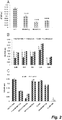
- MOMP was purified under native conditions from strain NCTC11168 and inhibition ELISA and confocal experiments showed that both purified MOMP and H-II significantly inhibited binding of NCTC11168 to H-II antigen ( Fig. 2A ).
- Ferric Quinate an inhibitor for C. jejuni adherence
- phenolic compounds including caffeic and quinic acids (Baqar et al .) have been shown to have high levels of antioxidant activity and other potentially health-promoting effects in vitro.
- quinic acid occurs in tea, coffee, fruits and vegetables.
- plants use the low molecular mass D-(-)-quinic acid (Baqar et al .) for mobilization of iron and further use of this metal by cellular structures in metabolic pathways (Menelaou et al., 2009).
- Ferric quinate Fe(QA)3 was identified as having promising inhibitory effects in vitro and in vivo on C. jejuni adhesion to BgAgs.
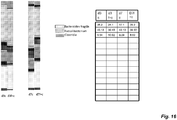
- the complex reduced significantly the adhesion of C. jejuni (2-3 Log at 0.34 mM concentration) to the intestinal mucosa and epithelial lining by inhibiting the binding between bacterial adhesins, such as MOMP (confirmed by model), may FlaA, and the corresponding binding sites in the host intestinal epithelium see Figures 14 and 15 .
- MOMP is O -glycosylated.
- Campylobacter specifically modify their flagellar proteins with O -linked glycans that can constitute up to 10% of the protein mass. These modifications are necessary for flagellum assembly, and thus affect secretion of virulence-modulating proteins, bacterial colonization of the gastrointestinal tract, autoagglutination and biofilm formation.
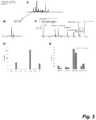
- MOMP was purified from strains NCTC11168 and Cj-281 under native conditions and analysed by Nanoflow LC-MS/MS FT/ICR following in-gel protein digestion as described in A. Shevchenko, M. Wilm, O. Vorm, M. Mann, Anal Chem 68, 850 (Mar 1, 1996 ).
- Flagellin is the only O -glycosylated C . jejuni protein to have been reported and glycans constitute ca. 10% to this protein's weight.
- the predominant O -glycans attached to the Campylobacter flagellum are derivatives of pseudaminic acid or legionaminic acid , which are C9 sugars that are related to sialic acids.
- the related human gastric pathogen H. pylori also O -glycosylates its flagella with Pse, similarly to C . jejuni, and modification is required for bacterial motility and flagellar assembly.
- PseD as a putative PseAm transferase showed that mutation in pseD lacked PseAm on flagellin and failed to auto-agglutinate.
- Pgl protein glycosylation pathway
- PglB is critical for protein N -glycosylation i.e. transfer of the first glycan molecules to the target proteins at specific Asn residues.
- C. jejuni strain NCTC11168 encodes a transferase that is involved in post-translational modification of protein, which plays an important role in bacterial adhesion and reveals unusual post-translational modifications; an O -linked Hex-(HexNAc) 3 at Thr 268 .
- These post-translational modifications might undergo phase variation and may also vary in structure from one generation of C. jejuni to the next, and have a function in immune escape.
- these findings provide new insights into MOMP structure and resolve long-standing issues regarding the adhesion molecules which mediate the bacterial binding to the BgAgs. The pathogenesis and study of the effects on processes such as colonization, invasion, and the ability to stimulate the host inflammatory response remain to be elucidated.
- Lectin kit was used for determination of the MOMP glycosylation constituent.
- the kit consists of 7 different lectins with overlapping specificity.
- the purified NCTC11168-MOMP in lectin array revealed significant binding to Jacalin lectin and in a lesser extent to GSL and LEL ( Fig. 3D ).
- the lectin from Artocarpus integrifolia known in the literature as Jacalin, exhibits specificity toward human tumour specific Thomsen-Friedenreich disaccharide (T-antigen, Gal ⁇ 1-3 GalNAc ⁇ 1 -Ser/Thr).
- the initial structure was constructed and showed to have 9 loops and 18 beta-strands.
- the lowest energy structure obtained from molecular dynamics (MD) simulations at 300 Kelvin (K). This structure was glycosylated at residue 268 with a glycosyl group.
- the lowest energy structure of glycosylated MOMP (gly-MOMP) obtained from MD simulations was superimposed on the lowest energy structure of MOMP to see the conformational changes induced by the introduction of glycosylation as presented in Figure 4B . It shows that the major changes occur in loops 4, 6 and 7 constructed roughly of 169-200, 256-274 and 296-333 residues where loop 6 bears the glycosyl group. However, it shows that a small change appears in the barrels.
- the MOMP protein has a canal-like cavity, which is expected to be capable of accommodating very large molecules.
- a mimic of Lewis antigen, type-1 Lewis carbohydrate determinant (Le b ) and type-2 H-II antigen were docked into the cavity of MOMP and gly-MOMP. These complexes were computed for MD simulations.
- the introduction of the ligands within the cavity of MOMP leads to a remarkable effect on conformational changes in the loops, especially in loops 4 and 7. These two loops are the longest among the rest and obviously undergo significant conformational changes compared with others.
- gly-MOMP has a relatively stable structure since it shows that only loop 7 slightly undergoes conformational changes upon this complex. This may mean that glycosylation enhances the stability of the protein and allow it to be immunologically inert through molecular mimicry of its host.
- the residues 352 and 385 are the members of the beta-barrel 7, which are the part of loop 7.
- This loop as mentioned earlier, mostly undergoes conformation changes during the molecular dynamic simulation ( Fig. 4B ).
- the glycosyl group interacts with this loop, thus leading to favourable conformational change for the interaction, and consequently resulting in a well-orientation of these residues to interact with Le b .
- the glycosyl group is sandwiched between loops 4 and 7, probably influencing the dynamics of these loops, thus contributing to the binding ability of the protein. Calculations also show that the glycosylated protein has more favourable van der Waals (vdw) interactions compared with MOMP.
- the other outcome gathered from MD calculations is the conformation and alignment of the ligands within the cavities of two proteins. They show that both ligands have different conformational orientations in the active sites of the proteins.
- the model for C. jejuni interaction to Le b and H-II antigens mediated by MOMP generated here substantially increases our knowledge about the protein and its glycosylation and the role in interactions detected thus far for the C. jejuni outer membrane.
- the structural glycobiology will play a key role in unravelling other glycan structures that mediate the host-bacteria interaction through MOMP/FlaA proteins, contributing decisively for identification and validation of new glycan receptors for these bacterial lectins. This information will be of major importance for the improvement and design of new therapies to overcome the C. jejuni infection.
- AAG Auto-agglutination
Landscapes
- Health & Medical Sciences (AREA)
- Life Sciences & Earth Sciences (AREA)
- Chemical & Material Sciences (AREA)
- General Health & Medical Sciences (AREA)
- Medicinal Chemistry (AREA)
- Public Health (AREA)
- Veterinary Medicine (AREA)
- Pharmacology & Pharmacy (AREA)
- Animal Behavior & Ethology (AREA)
- Epidemiology (AREA)
- Polymers & Plastics (AREA)
- Zoology (AREA)
- Engineering & Computer Science (AREA)
- Food Science & Technology (AREA)
- Animal Husbandry (AREA)
- Organic Chemistry (AREA)
- Birds (AREA)
- Proteomics, Peptides & Aminoacids (AREA)
- Molecular Biology (AREA)
- Wood Science & Technology (AREA)
- Bioinformatics & Cheminformatics (AREA)
- Microbiology (AREA)
- Genetics & Genomics (AREA)
- Toxicology (AREA)
- Physics & Mathematics (AREA)
- Analytical Chemistry (AREA)
- Biophysics (AREA)
- Biotechnology (AREA)
- Immunology (AREA)
- General Engineering & Computer Science (AREA)
- Biochemistry (AREA)
- Chemical Kinetics & Catalysis (AREA)
- General Chemical & Material Sciences (AREA)
- Communicable Diseases (AREA)
- Oncology (AREA)
- Nuclear Medicine, Radiotherapy & Molecular Imaging (AREA)
- Pharmaceuticals Containing Other Organic And Inorganic Compounds (AREA)
- Medicines Containing Material From Animals Or Micro-Organisms (AREA)
- Fodder In General (AREA)
- Medicines Containing Antibodies Or Antigens For Use As Internal Diagnostic Agents (AREA)
Claims (34)
- Composé destiné à être utilisé dans un procédé choisi parmi :un procédé de réduction du taux de Campylobacter présents dans le tractus gastro-intestinal d'un animal afin de le désinfecter ;un procédé de prévention ou de réduction de la colonisation du tractus gastro-intestinal des animaux infectés par Campylobacter; ouun procédé permettant d'empêcher le Campylobacter de former un biofilm dans le tractus gastro-intestinal d'un animal ou de réduire la quantité de biofilm formé par le Campylobacter dans le tractus intestinal d'un animal, afin de désinfecter l'animal ; dans lequel le composé est destiné à être utilisé éventuellement sous la forme d'un aliment pour animaux, de l'eau d'abreuvement, d'un ingrédient alimentaire ou d'un complément alimentaire qui comprend le composé, et dans lequel le composé est choisi dans le groupe constitué par :a) un complexe de tyrosine avec Fe III ;
 b) du quinate ferrique ; etc) un complexe de 3,4-dihydroxyphénylalanine avec Fe III.
- Utilisation d'un composé tel que défini dans la revendication 1, dans laquelle le composé, lors de son utilisation, se présente éventuellement sous la forme d'un aliment pour animaux, de l'eau d'abreuvement, d'un ingrédient alimentaire ou d'un complément alimentaire contenant le composé ;
ladite utilisation étant choisie parmi les possibilités d'utilisation suivantes :pour la réduction du taux de Campylobacter présents dans le tractus gastro-intestinal d'un animal non humain afin de le désinfecter, par un procédé comprenant l'administration audit animal d'au moins un composé en une quantité efficace, tel que défini dans la revendication 1, dans le but de réduire le taux de Campylobacter présent dans le tractus gastro-intestinal dudit animal, avant l'abattage de l'animal ;pour la prévention ou la réduction de la colonisation du tractus gastro-intestinal d'animaux non humains par le Campylobacter, par un procédé comprenant l'administration audit animal d'au moins un composé tel que défini dans la revendication 1, avant l'abattage de l'animal ; oupour empêcher le Campylobacter de former un biofilm dans le tractus gastro-intestinal d'un animal non humain, ou pour réduire la quantité de biofilm formé par le Campylobacter dans le tractus intestinal d'un animal non humain afin de désinfecter l'animal, par un procédé comprenant l'administration audit animal d'au moins un composé en une quantité efficace, tel que défini dans la revendication 1, dans le but d'empêcher le Campylobacter de former un biofilm dans le tractus gastro-intestinal dudit animal ou pour réduire la quantité de biofilm formé par le Campylobacter dans le tractus intestinal dudit animal, avant l'abattage de l'animal. - Procédé de réduction du taux de Campylobacter présents dans le tractus gastro-intestinal d'un animal non humain afin de désinfecter celui-ci avant l'abattage, le procédé comprenant :i) l'administration audit animal d'au moins un composé en une quantité efficace, tel que défini par la revendication 1, dans le but de réduire le taux de Campylobacter présents dans le tractus gastro-intestinal dudit animal, le composé à utiliser étant éventuellement sous la forme d'un aliment pour animaux, de l'eau d'abreuvement, d'un ingrédient alimentaire ou d'un complément alimentaire contenant le composé ; etii) l'abattage de l'animal.
- Procédé permettant d'empêcher le Campylobacter de former un biofilm dans le tractus gastro-intestinal d'un animal non humain, ou de réduire la quantité de biofilm formé par le Campylobacter dans le tractus intestinal dudit animal afin de désinfecter l'animal avant l'abattage, le procédé comprenant :i) l'administration audit animal d'au moins un composé en une quantité efficace, tel que défini dans la revendication 1, dans le but d'empêcher le Campylobacter de former un biofilm dans le tractus gastro-intestinal dudit animal ou pour réduire la quantité de biofilm formé par le Campylobacter dans le tractus intestinal dudit animal, le composé à utiliser se présentant éventuellement sous la forme d'un aliment pour animaux, de l'eau d'abreuvement, d'un ingrédient alimentaire ou d'un complément alimentaire contenant le composé ; etii) l'abattage de l'animal.
- Composé tel que défini par la revendication 1, destiné à être utilisé dans un procédé de prévention ou de réduction de la transmission de l'infection par Campylobacter d'un animal à un autre, dans lequel le composé destiné à être utilisé se présente éventuellement sous la forme d'un aliment pour animaux, de l'eau d'abreuvement, d'un ingrédient alimentaire ou d'un complément alimentaire contenant le composé ; et
le procédé comprenant l'administration du composé en une quantité efficace audits animaux, dans le but d'empêcher le Campylobacter de former un biofilm dans le tractus gastro-intestinal desdits animaux ou pour réduire la quantité de biofilm formé par le Campylobacter dans le tractus intestinal desdits animaux. - Utilisation d'un composé tel que défini par la revendication 1, pour la prévention ou la réduction de la transmission de l'infection par Campylobacter d'un animal non humain à un autre, dans laquelle le composé, lors de son utilisation, se présente éventuellement sous la forme d'un aliment pour animaux, de l'eau d'abreuvement, d'un ingrédient alimentaire ou d'un complément alimentaire contenant le composé ;
par un procédé comprenant l'administration du composé en une quantité efficace audits animaux, dans le but d'empêcher ledit Campylobacter de former un biofilm dans le tractus gastro-intestinal desdits animaux ou pour réduire la quantité de biofilm formé par le Campylobacter dans le tractus intestinal desdits animaux avant l'abattage des animaux. - Procédé de prévention ou de réduction de la transmission de l'infection par Campylobacter d'un animal non humain à un autre avant l'abattage, le procédé comprenant :i) l'administration audits animaux d'au moins un composé en une en quantité efficace, tel que défini dans la revendication 1, dans le but d'empêcher ledit Campylobacter de former un biofilm dans le tractus gastro-intestinal desdits animaux ou pour réduire la quantité de biofilm formé par Campylobacter dans le tractus intestinal desdits animaux, le composé à utiliser se présentant éventuellement sous la forme d'un aliment pour animaux, de l'eau d'abreuvement, d'un ingrédient alimentaire ou d'un complément alimentaire contenant le composé ; etii) l'abattage des animaux.
- Composé destiné à être utilisé selon la revendication 5, utilisation selon la revendication 6 ou procédé selon la revendication 7, pour la prévention ou la réduction de la propagation de l'infection par Campylobacter dans un cheptel ou un troupeau d'animaux, par exemple pour la prévention de la propagation de l'infection par Campylobacter dans un troupeau de poulets.
- Composé destiné à être utilisé selon la revendication 1, 5 ou 8, utilisation selon la revendication 2, 6 ou 8, ou procédé selon la revendication 3, 4, 7 ou 8, dans lequel/laquelle le Campylobacter est un Campylobacter jejuni ou un Campylobacter coli.
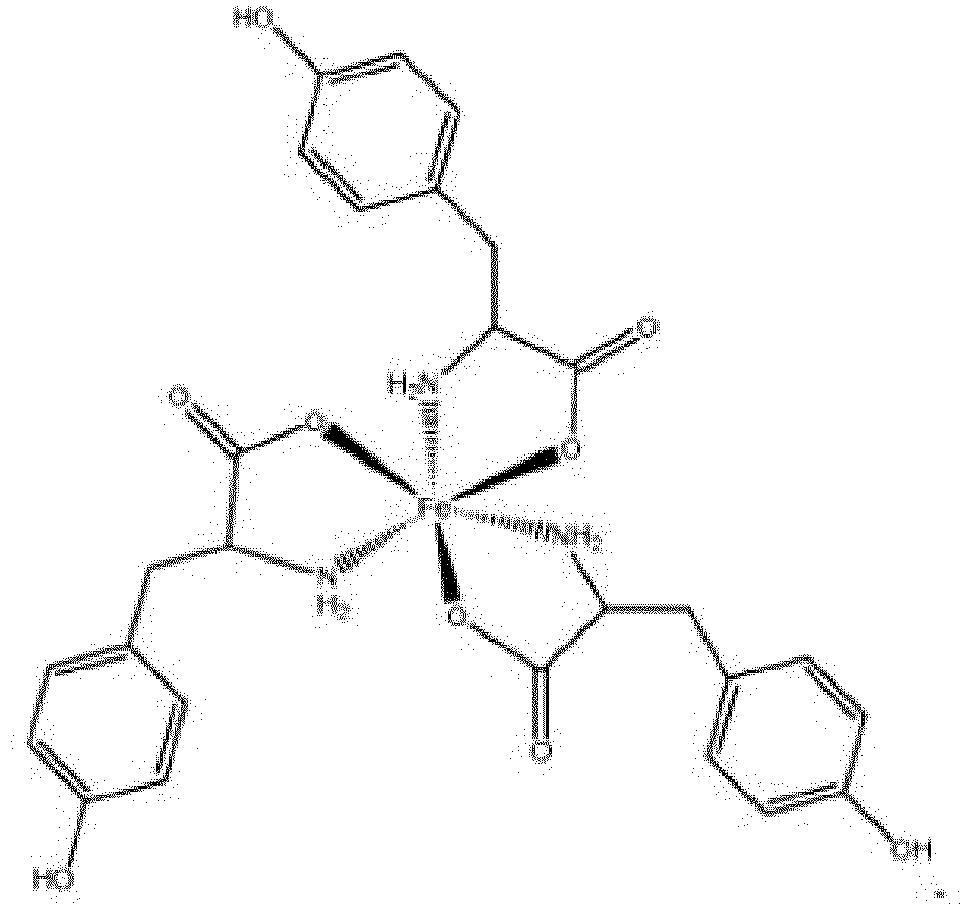
- Composé destiné à être utilisé selon la revendication 1, 5, 8 ou 9, utilisation selon la revendication 2, 6, 8 ou 9, ou procédé selon la revendication 3, 4, 7, 8 ou 9, dans lequel/laquelle le composé est un complexe de tyrosine avec Fe III.
- Composé destiné à être utilisé selon la revendication 1, 5, 8 ou 9, utilisation selon la revendication 2, 6, 8 ou 9, ou procédé selon la revendication 3, 4, 7, 8 ou 9, dans lequel/laquelle le composé est le quinate ferrique.
- Composé destiné à être utilisé selon la revendication 1, 5, 8 ou 9, utilisation selon la revendication 2, 6, 8 ou 9, ou procédé selon la revendication 3, 4, 7, 8 ou 9, dans lequel/laquelle le composé est un complexe de 3,4-dihydroxyphénylalanine avec Fe III.

- Composé destiné à être utilisé selon les revendications 1, 5, 8 ou 9 à 12, utilisation selon la revendication 2, 6, 8 ou 9 à 12, ou procédé selon les revendications 3, 4, 7, 8 ou 9 à 12, dans lequel/laquelle le composé est administré par voie orale.
- Composé destiné à être utilisé selon les revendications 1, 5, 8 ou 9 à 13, utilisation selon les revendications 2, 6, 8 ou 9 à 13, ou procédé selon les revendications 3, 4, 7, 8 ou 9 à 13, dans lequel/laquelle le composé est administré à l'animal à travers l'aliment pour animaux ou l'eau d'abreuvement.
- Composé destiné à être utilisé selon les revendications 1, 5, 8 ou 9 à 14, utilisation selon les revendications 2, 6, 8 ou 9 à 14, ou procédé selon les revendications 3, 4, 7, 8 ou 9 à 14, dans lequel/laquelle l'animal est un animal non humain et le composé est administré quotidiennement entre 1 et 10 jours ou entre 3 et 5 jours avant l'abattage de l'animal.
- Composé destiné à être utilisé selon les revendications 1, 5, 8 ou 9 à 14, utilisation selon les revendications 2, 6, 8 ou 9 à 14, ou procédé selon les revendications 3, 4, 7, 8 ou 9 à 14, dans lequel/laquelle le composé est administré à un poulet pendant plus de 10 jours avant l'abattage pour empêcher la transmission du Campylobacter dans un troupeau de poulets.
- Composé destiné à être utilisé selon les revendications 1, 5, 8 ou 9 à 16, utilisation selon les revendications 2, 6, 8 ou 9 à 16, ou procédé selon les revendications 3, 4, 7, 8 ou 9 à 16, dans lequel/laquelle le composé est administré en une quantité comprise entre 0,3 et 32 mg/jour/poids de l'animal en kilos.
- Utilisation d'un composé tel que défini dans l'une des revendications 1, 10, 11 ou 12 pour réduire la quantité de Campylobacter dans la viande par un procédé comprenant les étapes consistant à :i) administrer un composé à un animal non humain ou à un cheptel ou troupeau d'animaux non humains, tel que défini dans l'une des revendications 1, 10, 11 ou 12 ; etii) préparer un produit de viande de l'animal ; et
dans lequel le composé, lors de son utilisation, se présente éventuellement sous la forme d'un aliment pour animaux, de l'eau d'abreuvement, d'un ingrédient alimentaire ou d'un complément alimentaire contenant le composé. - Procédé de réduction de la quantité de Campylobacter dans la viande, comprenant les étapes consistant à :i) administrer un composé à un animal non humain ou à un cheptel ou troupeau d'animaux non humains, tel que défini dans l'une des revendications 1, 10, 11 ou 12, le composé à utiliser étant éventuellement sous la forme d'un aliment pour animaux, de l'eau d'abreuvement, d'un ingrédient alimentaire ou d'un complément alimentaire contenant le composé ; etii) préparer un produit de viande de l'animal.
- Composé destiné à être utilisé selon les revendications 1, 5, 8 ou 9 à 17, utilisation selon les revendications 2, 6, 8 ou 9 à 17, ou procédé selon les revendications 3, 4, 7, 8 ou 9 à 17, utilisation selon la revendication 18, ou procédé selon la revendication 19, dans lequel/laquelle l'animal est choisi parmi les bovins, les ovins, les porcins, les caprins, les cervidés, les poissons, les crustacés et la volaille.
- Composé destiné à être utilisé, utilisation, ou procédé selon la revendication 20, dans lequel/laquelle l'animal est un oiseau de volaille, tel qu'un poulet, une oie, une dinde ou un canard, et de préférence un poulet.
- Composé destiné à être utilisé, utilisation, ou procédé selon la revendication 20 ou 21, dans lequel/laquelle l'animal fait partie d'un cheptel ou troupeau.
- Aliment pour animaux contenant un composé comme ingrédient alimentaire ou comme complément alimentaire, l'aliment pour animaux étant un aliment destiné ou propre à la consommation par les animaux, et le composé étant :
un complexe de tyrosine avec Fe III
l'aliment pour animaux comprenant le composé en une quantité efficace pour réduire ou empêcher la colonisation du tractus gastro-intestinal d'un animal par le Campylobacter. - Composition orale, aliment pour animaux ou eau d'abreuvement, contenant un composé qui est un complexe de 3,4-dihydroxyphénylalanine avec Fe III

- Aliment pour animaux selon la revendication 23, ou composition orale, aliment pour animaux ou eau d'abreuvement selon la revendication 24, lequel/laquelle est destiné(e) à un animal choisi parmi les bovins, les ovins, les porcins, les caprins, les cervidés, les poissons, les crustacés et la volaille.
- Aliment pour animaux selon la revendication 23, ou composition orale, aliment pour animaux ou eau d'abreuvement selon la revendication 24, lequel/laquelle est destiné(e) à un oiseau de volaille, tel qu'un poulet, une oie, une dinde ou un canard, et de préférence un poulet.
- Utilisation d'un composé, tel que défini dans la revendication 23 ou 24, comme complément alimentaire ou ingrédient alimentaire dans la préparation d'un aliment pour animaux ou comme additif dans la préparation de l'eau d'abreuvement.
- Procédé de préparation d'un aliment pour animaux ou de l'eau d'abreuvement, le procédé comprenant l'utilisation d'un composé tel que défini dans la revendication 23 ou 24, comme complément alimentaire ou ingrédient alimentaire dans la préparation de l'aliment pour animaux, ou comme additif dans la préparation de l'eau d'abreuvement.
- Procédé de désinfection d'un produit alimentaire, comprenant l'administration au produit alimentaire d'un composé en une quantité efficace tel que défini dans l'une des revendications 1, 10, 11 ou 12, afin de réduire la quantité de Campylobacter dans le produit alimentaire.
- Utilisation d'un composé tel que défini dans l'une des revendications 1, 10, 11 ou 12 pour désinfecter un produit alimentaire, en administrant une quantité efficace du composé au produit alimentaire afin de réduire la quantité de Campylobacter dans le produit alimentaire.
- Procédé selon la revendication 29 ou utilisation selon la revendication 30, dans lequel/laquelle le produit alimentaire est un aliment destiné à la consommation humaine.
- Procédé selon la revendication 29 ou 31, ou utilisation selon la revendication 30 ou 31, dans lequel/laquelle le produit alimentaire est un produit de viande, par exemple un produit de viande fraîche, un produit de viande transformée, un produit de viande réfrigérée, un produit de viande congelée ou un produit de viande cuite.
- Procédé ou utilisation selon la revendication 32, dans lequel/laquelle le produit de viande est choisi parmi un produit de viande de boeuf, d'agneau, de porc, de canard, de poulet, d'oie, de dinde, de lapin, de poisson ou de crustacés.
- Composé tel que défini dans l'une des revendications 1, 10, 11 ou 12, destiné à être utilisé dans la prophylaxie ou le traitement de l'infection par Campylobacter chez l'homme.
Priority Applications (2)
| Application Number | Priority Date | Filing Date | Title |
|---|---|---|---|
| PL13709500T PL3068384T3 (pl) | 2012-02-16 | 2013-02-15 | Kompleksy żelaza do zmniejszania kolonizacji przewodu pokarmowego przez campylobacter |
| EP19164659.5A EP3569230A1 (fr) | 2012-02-16 | 2013-02-15 | Réduction de la colonisation du tractus gastro-intestinal par le campylobacter |
Applications Claiming Priority (3)
| Application Number | Priority Date | Filing Date | Title |
|---|---|---|---|
| GBGB1202681.1A GB201202681D0 (en) | 2012-02-16 | 2012-02-16 | Reduction of gastrointestinal tract colonisation by campylobacter |
| GBGB1220158.8A GB201220158D0 (en) | 2012-11-08 | 2012-11-08 | Reduction of gastrointestinal tract colonisation by campylobacter |
| PCT/GB2013/050367 WO2013121214A1 (fr) | 2012-02-16 | 2013-02-15 | Réduction de la colonisation du tractus gastro-intestinal par campylobactérie |
Related Child Applications (2)
| Application Number | Title | Priority Date | Filing Date |
|---|---|---|---|
| EP19164659.5A Division-Into EP3569230A1 (fr) | 2012-02-16 | 2013-02-15 | Réduction de la colonisation du tractus gastro-intestinal par le campylobacter |
| EP19164659.5A Division EP3569230A1 (fr) | 2012-02-16 | 2013-02-15 | Réduction de la colonisation du tractus gastro-intestinal par le campylobacter |
Publications (2)
| Publication Number | Publication Date |
|---|---|
| EP3068384A1 EP3068384A1 (fr) | 2016-09-21 |
| EP3068384B1 true EP3068384B1 (fr) | 2019-05-08 |
Family
ID=47884392
Family Applications (2)
| Application Number | Title | Priority Date | Filing Date |
|---|---|---|---|
| EP19164659.5A Withdrawn EP3569230A1 (fr) | 2012-02-16 | 2013-02-15 | Réduction de la colonisation du tractus gastro-intestinal par le campylobacter |
| EP13709500.6A Active EP3068384B1 (fr) | 2012-02-16 | 2013-02-15 | Complexe de fer pour la réduction de la colonisation du tractus gastro-intestinal par campylobactérie |
Family Applications Before (1)
| Application Number | Title | Priority Date | Filing Date |
|---|---|---|---|
| EP19164659.5A Withdrawn EP3569230A1 (fr) | 2012-02-16 | 2013-02-15 | Réduction de la colonisation du tractus gastro-intestinal par le campylobacter |
Country Status (9)
| Country | Link |
|---|---|
| US (4) | US9655912B2 (fr) |
| EP (2) | EP3569230A1 (fr) |
| CN (2) | CN104244940B (fr) |
| BR (1) | BR112014020171B1 (fr) |
| CA (1) | CA2901407C (fr) |
| DK (1) | DK3068384T3 (fr) |
| ES (1) | ES2738632T3 (fr) |
| PL (1) | PL3068384T3 (fr) |
| WO (1) | WO2013121214A1 (fr) |
Families Citing this family (7)
| Publication number | Priority date | Publication date | Assignee | Title |
|---|---|---|---|---|
| CA2957790A1 (fr) * | 2014-08-13 | 2016-02-18 | Akeso Biomedical, Inc. | Composes et compositions antimicrobiens ainsi que leurs utilisations |
| US10653658B2 (en) | 2015-08-11 | 2020-05-19 | Akeso Biomedical, Inc. | Biofilm inhibiting compositions enhancing weight gain in livestock |
| CA2995408C (fr) | 2015-08-11 | 2021-01-05 | Akeso Biomedical, Inc. | Compositions dinhibition de la formation de biofilm destinees a l'amelioration de prise de poids du betail |
| HUE052315T2 (hu) | 2017-08-24 | 2021-04-28 | Evonik Operations Gmbh | A gasztrointesztinális traktus campylobacter általi kolonizációjának csökkentése |
| NL2022942B1 (en) * | 2019-04-15 | 2020-10-22 | Intracare Bv | Use of iron chelate to reduce gastrointestinal tract colonisation by campylobacter |
| CN110218160B (zh) * | 2019-06-19 | 2022-05-24 | 暨南大学 | 一种奎宁酸衍生物及其制备方法与应用 |
| EP4552495A1 (fr) | 2023-11-08 | 2025-05-14 | Stiftung Tierärztliche Hochschule Hannover | Composition d'additif pour la réduction de charge bactérienne |
Family Cites Families (13)
| Publication number | Priority date | Publication date | Assignee | Title |
|---|---|---|---|---|
| US2049553A (en) | 1926-11-24 | 1936-08-04 | Raytheon Mfg Co | Electrical condenser |
| US4394451A (en) * | 1980-10-30 | 1983-07-19 | Biomagnetech Corp. | Culture medium and conditions for growth of magnetic bacteria |
| US6024979A (en) | 1995-06-06 | 2000-02-15 | Solvay Animal Health, Inc. | Oral veterinary composition containing a fluoroquinolone antibacterial agent possessing superior absorption properties and an extended duration of therapeutic antimicrobial blood levels, and a method of treating a microbial infection in a ruminant |
| US6242009B1 (en) * | 1999-04-20 | 2001-06-05 | Kareem I. Batarseh | Microbicidal formulations and methods to control microorganisms |
| US7431939B1 (en) | 2000-09-28 | 2008-10-07 | Mississippi State University | Inhibition of systemic infections in humans and vertebrates by dietary fibers |
| SE0103695D0 (sv) * | 2001-11-07 | 2001-11-07 | Thomas Boren | A novel non-antibiotic strategy against OGIP infections based on a cereal product |
| WO2005055944A2 (fr) * | 2003-12-05 | 2005-06-23 | Cincinnati Children's Hospital Medical Center | Composition d'oligosaccharides et leur utilisation dans le traitement d'infection |
| BRPI0517414B1 (pt) | 2004-10-20 | 2016-11-16 | Valspar Sourcing Inc | método para revestir lata para alimento ou bebida, lata para alimento ou bebida, e, composição para pulverização na parte interna para uso no revestimento de uma lata para alimento ou bebida |
| GB0423681D0 (en) | 2004-10-26 | 2004-11-24 | Sec Dep For Environment Food & | Vaccine and nucleic acids |
| JP2006321776A (ja) | 2005-05-18 | 2006-11-30 | Kyuuken:Kk | アミノ酸を配位して成る金属錯体である抗菌防カビ剤とその二次製品 |
| US20070269495A1 (en) * | 2006-05-18 | 2007-11-22 | Ashmead H Dewayne | Compositions and methods for enhancing mineral levels in animals with reduced environmental impact |
| US20120077884A1 (en) | 2009-06-08 | 2012-03-29 | Masami Mochizuki | Coccidiosis controlling agent and feed containing the same |
| WO2012034032A2 (fr) | 2010-09-10 | 2012-03-15 | The Board Of Regents Of Unbiversity Of Texas System | Solutions antimicrobiennes |
-
2013
- 2013-02-15 DK DK13709500.6T patent/DK3068384T3/da active
- 2013-02-15 CN CN201380020380.9A patent/CN104244940B/zh not_active Expired - Fee Related
- 2013-02-15 CA CA2901407A patent/CA2901407C/fr active Active
- 2013-02-15 EP EP19164659.5A patent/EP3569230A1/fr not_active Withdrawn
- 2013-02-15 BR BR112014020171-4A patent/BR112014020171B1/pt not_active IP Right Cessation
- 2013-02-15 EP EP13709500.6A patent/EP3068384B1/fr active Active
- 2013-02-15 US US14/379,473 patent/US9655912B2/en not_active Expired - Fee Related
- 2013-02-15 ES ES13709500T patent/ES2738632T3/es active Active
- 2013-02-15 PL PL13709500T patent/PL3068384T3/pl unknown
- 2013-02-15 WO PCT/GB2013/050367 patent/WO2013121214A1/fr not_active Ceased
- 2013-02-15 CN CN201810240700.6A patent/CN108524524B/zh not_active Expired - Fee Related
-
2017
- 2017-03-14 US US15/458,177 patent/US10195172B2/en active Active
-
2018
- 2018-08-06 US US16/055,935 patent/US20190083447A1/en not_active Abandoned
-
2019
- 2019-02-04 US US16/266,946 patent/US20190314323A1/en not_active Abandoned
Non-Patent Citations (1)
| Title |
|---|
| None * |
Also Published As
| Publication number | Publication date |
|---|---|
| WO2013121214A1 (fr) | 2013-08-22 |
| CA2901407A1 (fr) | 2013-08-22 |
| US10195172B2 (en) | 2019-02-05 |
| EP3068384A1 (fr) | 2016-09-21 |
| CN108524524B (zh) | 2021-03-19 |
| PL3068384T3 (pl) | 2019-11-29 |
| BR112014020171A2 (pt) | 2018-04-10 |
| ES2738632T3 (es) | 2020-01-24 |
| US20170231945A1 (en) | 2017-08-17 |
| US9655912B2 (en) | 2017-05-23 |
| CN104244940A (zh) | 2014-12-24 |
| CN108524524A (zh) | 2018-09-14 |
| US20190083447A1 (en) | 2019-03-21 |
| US20150025026A1 (en) | 2015-01-22 |
| CA2901407C (fr) | 2021-11-23 |
| CN104244940B (zh) | 2018-07-20 |
| DK3068384T3 (da) | 2019-08-12 |
| EP3569230A1 (fr) | 2019-11-20 |
| US20190314323A1 (en) | 2019-10-17 |
| BR112014020171B1 (pt) | 2021-12-21 |
Similar Documents
| Publication | Publication Date | Title |
|---|---|---|
| US10195172B2 (en) | Reduction of gastrointestinal tract colonisation by Campylobacter | |
| Mahdavi et al. | A novel O-linked glycan modulates Campylobacter jejuni major outer membrane protein-mediated adhesion to human histo-blood group antigens and chicken colonization | |
| Rubinchik et al. | Molecular mechanisms and biological role of Campylobacter jejuni attachment to host cells | |
| Ruggiero | Helicobacter pylori and inflammation | |
| Lin | Novel approaches for Campylobacter control in poultry | |
| Behnsen et al. | Probiotics: properties, examples, and specific applications | |
| Young et al. | Campylobacter jejuni: molecular biology and pathogenesis | |
| Lukáčová et al. | Role of structural variations of polysaccharide antigens in the pathogenicity of Gram‐negative bacteria | |
| Sima et al. | A novel natural antimicrobial can reduce the in vitro and in vivo pathogenicity of T6SS positive Campylobacter jejuni and Campylobacter coli chicken isolates | |
| EA025395B1 (ru) | Core-1 положительные микроорганизмы или их фракции, обеспечивающие активацию клеточного иммунитета против углеводов | |
| Jeon et al. | Advances in Campylobacter biology and implications for biotechnological applications | |
| Yang et al. | Effects of Christensenella minuta lipopolysaccharide on RAW 264.7 macrophages activation | |
| BR112020002212A2 (pt) | composições compreendendo cepas bacterianas | |
| Nothaft et al. | Detecting glucose fluctuations in the Campylobacter jejuni N-glycan structure | |
| Lodge | A Molecular investigation of Campylobacter jejuni pathogenesis | |
| DK1920781T3 (en) | Compositions comprising a Core-1 positive microorganism and its use in the treatment or prophylaxis of tumors | |
| Baquero et al. | Microcins, peptide antimicrobials from Enterobacterales in the eco-active intestinal chemosphere | |
| Han | Molecular mechanisms involved in the emergence and fitness of fluoroquinolone-resistant Campylobacter jejuni | |
| Fares | Molecular and functional characterization of the novel Lectin EclA from the enterobacter cloacae complex | |
| Wang | Diarrheagenic Escherichia coli signaling and interactions with host innate immunity and intestinal microbiota | |
| El Abbar | Campylobacter jejuni CsrA as A Regulator of Motility, Biofilm Formation, and Acetate Metabolism | |
| Baquero et al. | Microcins in Enterobacteriaceae: Peptide | |
| Sumrall | Virulence implications in the relationship between Listeria monocytogenes and bacteriophages | |
| Gundogdu | Re-annotation of the Campylobacter jejuni NCTC11168 genome and functional characterisation of selected genes involved in strain pathogenesis | |
| Duarte | Natural compounds as new antibacterials to control Campylobacter spp |
Legal Events
| Date | Code | Title | Description |
|---|---|---|---|
| PUAI | Public reference made under article 153(3) epc to a published international application that has entered the european phase |
Free format text: ORIGINAL CODE: 0009012 |
|
| 17P | Request for examination filed |
Effective date: 20150302 |
|
| AK | Designated contracting states |
Kind code of ref document: A1 Designated state(s): AL AT BE BG CH CY CZ DE DK EE ES FI FR GB GR HR HU IE IS IT LI LT LU LV MC MK MT NL NO PL PT RO RS SE SI SK SM TR |
|
| RIN1 | Information on inventor provided before grant (corrected) |
Inventor name: MAHDAVI, JAFAR Inventor name: ALA' ALDEEN, DLAWER |
|
| STAA | Information on the status of an ep patent application or granted ep patent |
Free format text: STATUS: REQUEST FOR EXAMINATION WAS MADE |
|
| STAA | Information on the status of an ep patent application or granted ep patent |
Free format text: STATUS: EXAMINATION IS IN PROGRESS |
|
| 17Q | First examination report despatched |
Effective date: 20170110 |
|
| GRAP | Despatch of communication of intention to grant a patent |
Free format text: ORIGINAL CODE: EPIDOSNIGR1 |
|
| STAA | Information on the status of an ep patent application or granted ep patent |
Free format text: STATUS: GRANT OF PATENT IS INTENDED |
|
| INTG | Intention to grant announced |
Effective date: 20171009 |
|
| GRAJ | Information related to disapproval of communication of intention to grant by the applicant or resumption of examination proceedings by the epo deleted |
Free format text: ORIGINAL CODE: EPIDOSDIGR1 |
|
| STAA | Information on the status of an ep patent application or granted ep patent |
Free format text: STATUS: EXAMINATION IS IN PROGRESS |
|
| INTC | Intention to grant announced (deleted) | ||
| GRAP | Despatch of communication of intention to grant a patent |
Free format text: ORIGINAL CODE: EPIDOSNIGR1 |
|
| STAA | Information on the status of an ep patent application or granted ep patent |
Free format text: STATUS: GRANT OF PATENT IS INTENDED |
|
| INTG | Intention to grant announced |
Effective date: 20180326 |
|
| GRAJ | Information related to disapproval of communication of intention to grant by the applicant or resumption of examination proceedings by the epo deleted |
Free format text: ORIGINAL CODE: EPIDOSDIGR1 |
|
| STAA | Information on the status of an ep patent application or granted ep patent |
Free format text: STATUS: EXAMINATION IS IN PROGRESS |
|
| GRAP | Despatch of communication of intention to grant a patent |
Free format text: ORIGINAL CODE: EPIDOSNIGR1 |
|
| STAA | Information on the status of an ep patent application or granted ep patent |
Free format text: STATUS: GRANT OF PATENT IS INTENDED |
|
| INTC | Intention to grant announced (deleted) | ||
| INTG | Intention to grant announced |
Effective date: 20180815 |
|
| RAP1 | Party data changed (applicant data changed or rights of an application transferred) |
Owner name: AKESO BIOMEDICAL INC. |
|
| GRAS | Grant fee paid |
Free format text: ORIGINAL CODE: EPIDOSNIGR3 |
|
| GRAA | (expected) grant |
Free format text: ORIGINAL CODE: 0009210 |
|
| STAA | Information on the status of an ep patent application or granted ep patent |
Free format text: STATUS: THE PATENT HAS BEEN GRANTED |
|
| AK | Designated contracting states |
Kind code of ref document: B1 Designated state(s): AL AT BE BG CH CY CZ DE DK EE ES FI FR GB GR HR HU IE IS IT LI LT LU LV MC MK MT NL NO PL PT RO RS SE SI SK SM TR |
|
| REG | Reference to a national code |
Ref country code: GB Ref legal event code: FG4D |
|
| REG | Reference to a national code |
Ref country code: CH Ref legal event code: EP Ref country code: AT Ref legal event code: REF Ref document number: 1129083 Country of ref document: AT Kind code of ref document: T Effective date: 20190515 |
|
| REG | Reference to a national code |
Ref country code: DE Ref legal event code: R096 Ref document number: 602013054964 Country of ref document: DE Ref country code: IE Ref legal event code: FG4D |
|
| REG | Reference to a national code |
Ref country code: NL Ref legal event code: FP |
|
| REG | Reference to a national code |
Ref country code: DK Ref legal event code: T3 Effective date: 20190807 |
|
| REG | Reference to a national code |
Ref country code: LT Ref legal event code: MG4D |
|
| PG25 | Lapsed in a contracting state [announced via postgrant information from national office to epo] |
Ref country code: AL Free format text: LAPSE BECAUSE OF FAILURE TO SUBMIT A TRANSLATION OF THE DESCRIPTION OR TO PAY THE FEE WITHIN THE PRESCRIBED TIME-LIMIT Effective date: 20190508 Ref country code: FI Free format text: LAPSE BECAUSE OF FAILURE TO SUBMIT A TRANSLATION OF THE DESCRIPTION OR TO PAY THE FEE WITHIN THE PRESCRIBED TIME-LIMIT Effective date: 20190508 Ref country code: LT Free format text: LAPSE BECAUSE OF FAILURE TO SUBMIT A TRANSLATION OF THE DESCRIPTION OR TO PAY THE FEE WITHIN THE PRESCRIBED TIME-LIMIT Effective date: 20190508 Ref country code: SE Free format text: LAPSE BECAUSE OF FAILURE TO SUBMIT A TRANSLATION OF THE DESCRIPTION OR TO PAY THE FEE WITHIN THE PRESCRIBED TIME-LIMIT Effective date: 20190508 Ref country code: PT Free format text: LAPSE BECAUSE OF FAILURE TO SUBMIT A TRANSLATION OF THE DESCRIPTION OR TO PAY THE FEE WITHIN THE PRESCRIBED TIME-LIMIT Effective date: 20190908 Ref country code: NO Free format text: LAPSE BECAUSE OF FAILURE TO SUBMIT A TRANSLATION OF THE DESCRIPTION OR TO PAY THE FEE WITHIN THE PRESCRIBED TIME-LIMIT Effective date: 20190808 Ref country code: HR Free format text: LAPSE BECAUSE OF FAILURE TO SUBMIT A TRANSLATION OF THE DESCRIPTION OR TO PAY THE FEE WITHIN THE PRESCRIBED TIME-LIMIT Effective date: 20190508 |
|
| PG25 | Lapsed in a contracting state [announced via postgrant information from national office to epo] |
Ref country code: LV Free format text: LAPSE BECAUSE OF FAILURE TO SUBMIT A TRANSLATION OF THE DESCRIPTION OR TO PAY THE FEE WITHIN THE PRESCRIBED TIME-LIMIT Effective date: 20190508 Ref country code: GR Free format text: LAPSE BECAUSE OF FAILURE TO SUBMIT A TRANSLATION OF THE DESCRIPTION OR TO PAY THE FEE WITHIN THE PRESCRIBED TIME-LIMIT Effective date: 20190809 Ref country code: BG Free format text: LAPSE BECAUSE OF FAILURE TO SUBMIT A TRANSLATION OF THE DESCRIPTION OR TO PAY THE FEE WITHIN THE PRESCRIBED TIME-LIMIT Effective date: 20190808 Ref country code: RS Free format text: LAPSE BECAUSE OF FAILURE TO SUBMIT A TRANSLATION OF THE DESCRIPTION OR TO PAY THE FEE WITHIN THE PRESCRIBED TIME-LIMIT Effective date: 20190508 |
|
| REG | Reference to a national code |
Ref country code: AT Ref legal event code: MK05 Ref document number: 1129083 Country of ref document: AT Kind code of ref document: T Effective date: 20190508 |
|
| REG | Reference to a national code |
Ref country code: ES Ref legal event code: FG2A Ref document number: 2738632 Country of ref document: ES Kind code of ref document: T3 Effective date: 20200124 |
|
| PG25 | Lapsed in a contracting state [announced via postgrant information from national office to epo] |
Ref country code: AT Free format text: LAPSE BECAUSE OF FAILURE TO SUBMIT A TRANSLATION OF THE DESCRIPTION OR TO PAY THE FEE WITHIN THE PRESCRIBED TIME-LIMIT Effective date: 20190508 Ref country code: RO Free format text: LAPSE BECAUSE OF FAILURE TO SUBMIT A TRANSLATION OF THE DESCRIPTION OR TO PAY THE FEE WITHIN THE PRESCRIBED TIME-LIMIT Effective date: 20190508 Ref country code: CZ Free format text: LAPSE BECAUSE OF FAILURE TO SUBMIT A TRANSLATION OF THE DESCRIPTION OR TO PAY THE FEE WITHIN THE PRESCRIBED TIME-LIMIT Effective date: 20190508 Ref country code: EE Free format text: LAPSE BECAUSE OF FAILURE TO SUBMIT A TRANSLATION OF THE DESCRIPTION OR TO PAY THE FEE WITHIN THE PRESCRIBED TIME-LIMIT Effective date: 20190508 Ref country code: SK Free format text: LAPSE BECAUSE OF FAILURE TO SUBMIT A TRANSLATION OF THE DESCRIPTION OR TO PAY THE FEE WITHIN THE PRESCRIBED TIME-LIMIT Effective date: 20190508 |
|
| REG | Reference to a national code |
Ref country code: DE Ref legal event code: R097 Ref document number: 602013054964 Country of ref document: DE |
|
| PG25 | Lapsed in a contracting state [announced via postgrant information from national office to epo] |
Ref country code: SM Free format text: LAPSE BECAUSE OF FAILURE TO SUBMIT A TRANSLATION OF THE DESCRIPTION OR TO PAY THE FEE WITHIN THE PRESCRIBED TIME-LIMIT Effective date: 20190508 |
|
| PLBE | No opposition filed within time limit |
Free format text: ORIGINAL CODE: 0009261 |
|
| STAA | Information on the status of an ep patent application or granted ep patent |
Free format text: STATUS: NO OPPOSITION FILED WITHIN TIME LIMIT |
|
| PG25 | Lapsed in a contracting state [announced via postgrant information from national office to epo] |
Ref country code: TR Free format text: LAPSE BECAUSE OF FAILURE TO SUBMIT A TRANSLATION OF THE DESCRIPTION OR TO PAY THE FEE WITHIN THE PRESCRIBED TIME-LIMIT Effective date: 20190508 |
|
| 26N | No opposition filed |
Effective date: 20200211 |
|
| PG25 | Lapsed in a contracting state [announced via postgrant information from national office to epo] |
Ref country code: SI Free format text: LAPSE BECAUSE OF FAILURE TO SUBMIT A TRANSLATION OF THE DESCRIPTION OR TO PAY THE FEE WITHIN THE PRESCRIBED TIME-LIMIT Effective date: 20190508 |
|
| REG | Reference to a national code |
Ref country code: CH Ref legal event code: PL |
|
| PG25 | Lapsed in a contracting state [announced via postgrant information from national office to epo] |
Ref country code: MC Free format text: LAPSE BECAUSE OF FAILURE TO SUBMIT A TRANSLATION OF THE DESCRIPTION OR TO PAY THE FEE WITHIN THE PRESCRIBED TIME-LIMIT Effective date: 20190508 Ref country code: LU Free format text: LAPSE BECAUSE OF NON-PAYMENT OF DUE FEES Effective date: 20200215 |
|
| PG25 | Lapsed in a contracting state [announced via postgrant information from national office to epo] |
Ref country code: LI Free format text: LAPSE BECAUSE OF NON-PAYMENT OF DUE FEES Effective date: 20200229 Ref country code: CH Free format text: LAPSE BECAUSE OF NON-PAYMENT OF DUE FEES Effective date: 20200229 |
|
| PG25 | Lapsed in a contracting state [announced via postgrant information from national office to epo] |
Ref country code: IE Free format text: LAPSE BECAUSE OF NON-PAYMENT OF DUE FEES Effective date: 20200215 |
|
| REG | Reference to a national code |
Ref country code: FR Ref legal event code: PLFP Year of fee payment: 10 |
|
| PGFP | Annual fee paid to national office [announced via postgrant information from national office to epo] |
Ref country code: GB Payment date: 20220217 Year of fee payment: 10 Ref country code: DK Payment date: 20220225 Year of fee payment: 10 Ref country code: DE Payment date: 20220215 Year of fee payment: 10 |
|
| PG25 | Lapsed in a contracting state [announced via postgrant information from national office to epo] |
Ref country code: MT Free format text: LAPSE BECAUSE OF FAILURE TO SUBMIT A TRANSLATION OF THE DESCRIPTION OR TO PAY THE FEE WITHIN THE PRESCRIBED TIME-LIMIT Effective date: 20190508 Ref country code: CY Free format text: LAPSE BECAUSE OF FAILURE TO SUBMIT A TRANSLATION OF THE DESCRIPTION OR TO PAY THE FEE WITHIN THE PRESCRIBED TIME-LIMIT Effective date: 20190508 |
|
| PGFP | Annual fee paid to national office [announced via postgrant information from national office to epo] |
Ref country code: PL Payment date: 20220215 Year of fee payment: 10 Ref country code: IT Payment date: 20220225 Year of fee payment: 10 Ref country code: FR Payment date: 20220221 Year of fee payment: 10 Ref country code: ES Payment date: 20220304 Year of fee payment: 10 Ref country code: BE Payment date: 20220221 Year of fee payment: 10 |
|
| PG25 | Lapsed in a contracting state [announced via postgrant information from national office to epo] |
Ref country code: MK Free format text: LAPSE BECAUSE OF FAILURE TO SUBMIT A TRANSLATION OF THE DESCRIPTION OR TO PAY THE FEE WITHIN THE PRESCRIBED TIME-LIMIT Effective date: 20190508 Ref country code: IS Free format text: LAPSE BECAUSE OF FAILURE TO SUBMIT A TRANSLATION OF THE DESCRIPTION OR TO PAY THE FEE WITHIN THE PRESCRIBED TIME-LIMIT Effective date: 20190908 |
|
| PGFP | Annual fee paid to national office [announced via postgrant information from national office to epo] |
Ref country code: NL Payment date: 20220401 Year of fee payment: 10 |
|
| REG | Reference to a national code |
Ref country code: DE Ref legal event code: R119 Ref document number: 602013054964 Country of ref document: DE |
|
| REG | Reference to a national code |
Ref country code: DK Ref legal event code: EBP Effective date: 20230228 |
|
| REG | Reference to a national code |
Ref country code: NL Ref legal event code: MM Effective date: 20230301 |
|
| REG | Reference to a national code |
Ref country code: BE Ref legal event code: MM Effective date: 20230228 |
|
| GBPC | Gb: european patent ceased through non-payment of renewal fee |
Effective date: 20230215 |
|
| PG25 | Lapsed in a contracting state [announced via postgrant information from national office to epo] |
Ref country code: NL Free format text: LAPSE BECAUSE OF NON-PAYMENT OF DUE FEES Effective date: 20230301 |
|
| PG25 | Lapsed in a contracting state [announced via postgrant information from national office to epo] |
Ref country code: GB Free format text: LAPSE BECAUSE OF NON-PAYMENT OF DUE FEES Effective date: 20230215 |
|
| PG25 | Lapsed in a contracting state [announced via postgrant information from national office to epo] |
Ref country code: IT Free format text: LAPSE BECAUSE OF NON-PAYMENT OF DUE FEES Effective date: 20230215 Ref country code: GB Free format text: LAPSE BECAUSE OF NON-PAYMENT OF DUE FEES Effective date: 20230215 Ref country code: FR Free format text: LAPSE BECAUSE OF NON-PAYMENT OF DUE FEES Effective date: 20230228 Ref country code: DK Free format text: LAPSE BECAUSE OF NON-PAYMENT OF DUE FEES Effective date: 20230228 Ref country code: DE Free format text: LAPSE BECAUSE OF NON-PAYMENT OF DUE FEES Effective date: 20230901 |
|
| PG25 | Lapsed in a contracting state [announced via postgrant information from national office to epo] |
Ref country code: BE Free format text: LAPSE BECAUSE OF NON-PAYMENT OF DUE FEES Effective date: 20230228 |
|
| PG25 | Lapsed in a contracting state [announced via postgrant information from national office to epo] |
Ref country code: ES Free format text: LAPSE BECAUSE OF NON-PAYMENT OF DUE FEES Effective date: 20230216 |
|
| REG | Reference to a national code |
Ref country code: ES Ref legal event code: FD2A Effective date: 20240426 |
|
| PG25 | Lapsed in a contracting state [announced via postgrant information from national office to epo] |
Ref country code: ES Free format text: LAPSE BECAUSE OF NON-PAYMENT OF DUE FEES Effective date: 20230216 |
|
| PG25 | Lapsed in a contracting state [announced via postgrant information from national office to epo] |
Ref country code: PL Free format text: LAPSE BECAUSE OF NON-PAYMENT OF DUE FEES Effective date: 20230215 |
|
| PG25 | Lapsed in a contracting state [announced via postgrant information from national office to epo] |
Ref country code: PL Free format text: LAPSE BECAUSE OF NON-PAYMENT OF DUE FEES Effective date: 20230215 |